
Reprint: The Tale of Maid Marion
By Guy Meilleur
(original version published in Tree
Care Industry magazine,
2016)

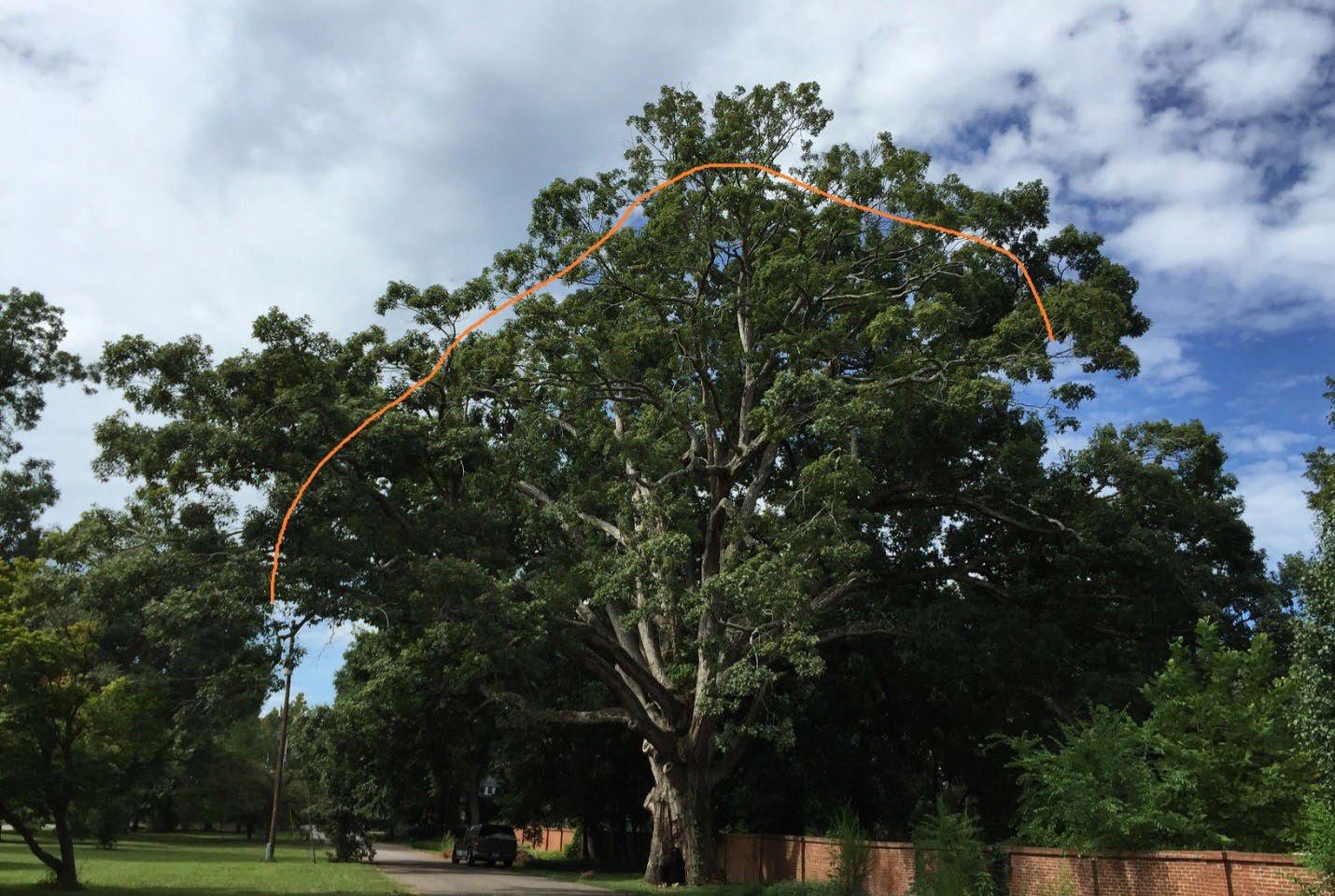
While attending the 2015 ISA conference in Orlando Florida I got a call telling me that Maid Marion was in trouble. Robin Hood’s girlfriend was in Sherwood Forest, while the call came from South Carolina. I later learned that Maid Marion (with an “o”) was a much-loved white oak (Quercus alba) tree on Marion Street in Aiken, South Carolina, US. When I got there, I learned some of its history:
• In 2011, city staff considered the tree “too big”, and amputated three big limbs over the road, exposing a huge amount of defenseless heartwood--just outside of a sizable cavity. Then, concrete and bricks were busted out of that cavity, exposing the interior to damage from drying.
• In the winter of 2014, two upright limbs directly above the amputation wounds broke off in a storm.
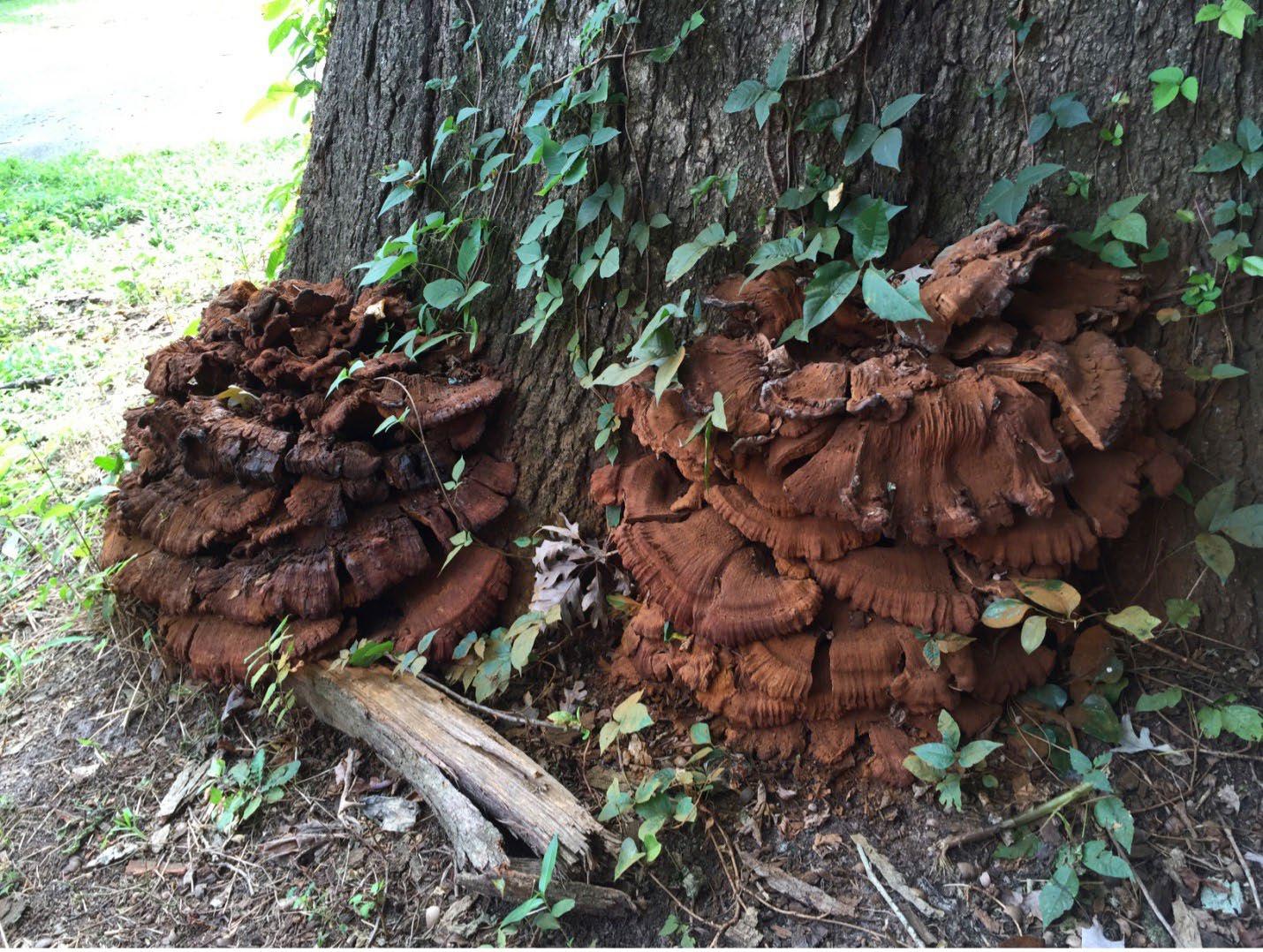
• In early 2015, fungal conks bloomed at the base. Four arborists recommended removal. One also suggested an alternative--closing off the road. All four reports pointed at potential targets. None described any other potential mitigation options.
In August 2015, I inspected the tree, following the inspection protocol detailed in the ANSI A300 Tree Care Standard Part 8 (2014). That level of diligence is so unusual today, it can be performed as a TRAQ Level III Assessment. No shiny toys required! A balanced “Inspection" should include:
• Stem tissue connecting the crown and the roots;
• Tree association with beneficial and harmful insects;
• Tree association with pathogenic and beneficial microorganisms;
• Wounds, and the tree’s response to wounds;
• Indications of root disease and response…
• Mulch, soil and foreign material should be removed as needed to allow inspection…Evaluate decay, callus and woundwood growth, and response growth in trunk and crown.
ANSI A300 Part 8 Influences
This Standard was guided by Germany’s ZTV Tree Care Standard. Its default objective was to “Provide maximum vitality health and safety of trees.” It continued, “Before contracts begin, a definite diagnosis…Inspect for… vitality, tipping and breaking safety…Investigation produces explicit and exhaustive specifications…Cost-benefit analysis considers ornamental, ecological, cultural, and functional significance of the tree. Consider supporting instead of pruning…Predict the trees reaction to the work…ability to compartmentalize…Coordinate any works on roots, stem and crown with each other.”
Another resource was 1999’s The Appropriate Response Process (ARP), a clunky phrase describing an elegant, simple tree care program. The arborist responds to the interactions of the tree, the pest, and the client in ongoing management decisions. ARP can be used with any tree pest, from aphids to Armillaria. (As noted in Fungal Strategies of Wood Decay in Trees, “it requires an effort to understand these…'trials of strength'…the only sensible approach to predicting the future expansion of a decay…” But there are “many trees, old and young, in which a decay has been successfully compartmentalized”).
When features on or in a tree cause concern about its health or structure, those features are monitored as the tree responds to work such as improving and mulching the soil, pruning overextended limbs, companion planting and irrigation. Response growth, including callus and woundwood and reinforcing ribs of bright orange reaction wood can show powerful expansion of the periderm. ARP documents these tree responses with images and measurements. The length, height and width of dead, infected and infested areas are also recorded, to get a balanced account of tree conditions. This host/pathogen relationship determines the dose of future treatments.
The tree’s fate is at stake, so it seems only fair to give it a say in the matter. If woundwood is growing thicker, the specified pruning dose may be small, or none at all. How much risk was there? This was pre-TRAQ, so no time was spent with likelihoods or ratings. We can’t *know* those things, but we do know:
• The benefits of the tree are lost forever if it is removed
• The tree has stood up to storms over the centuries
• Foliage and wound closure indicate very good vitality
• Loading will be far less after specified pruning
• Strength will be immensely improved by guying
• Vitality will increase after the soil is modified
Tree assessment incorporated the environmental, social and economic contributions to the property and the community. According to one study, this tree’s 150’ canopy (73,671 square feet) could compensate for 1,598,521 vehicle-years of CO2 output. Oaks “are the host plants for more than 1,000 kinds of moth and butterfly caterpillars. These Lepidoptera larvae, in turn, are the most important protein that virtually all parent songbirds need to successfully raise their offspring—from cardinals and chickadees to wrens…In fall, oaks produce copious amounts of nutritious acorns that feed dozens of other wildlife species.” (Entomologist Doug Tallamy)
Inspecting Maid Marion
The crown is imbalanced to the southeast and west. The forks have wide angles and no cracks. The eastern side of the trunk has 5 large wounds from limb removal. Below these wounds is an open cavity, near conks of Meripilus giganteus. According to Fungal Strategies, that fungus “grows quite slowly and reacts very sensitively to changing substrate conditions,” so improving the soil could stop its spread…” The occurrence of fruit bodies does not necessarily mean that stability is impaired. As long as the statically important lateral roots are intact, vitality and stability are not impaired.”
“When fruit bodies appear, the radius should be determined, and the statically effective root plate radius deduced from this and checked by careful excavation. Root decay is largely restricted to roots and then mainly on their underside…the ability of this fungus to degrade tension fibers is…noteworthy.” Some digging and sounding showed the tension roots were intact.
I saw only three cars use the other side of the street in 30 minutes on site. The road is even less likely to be occupied during an extreme weather event that would topple the tree. But the potential for failure is still a concern; the tree is its own “target.” Because tension strength is lost on the northwest side of the trunk, the crown should be reduced on the southeast side. There was good interior growth, so it could respond to reduction by regenerating a smaller crown. Reducing 15% of the “whip” can increase stability by 50%.
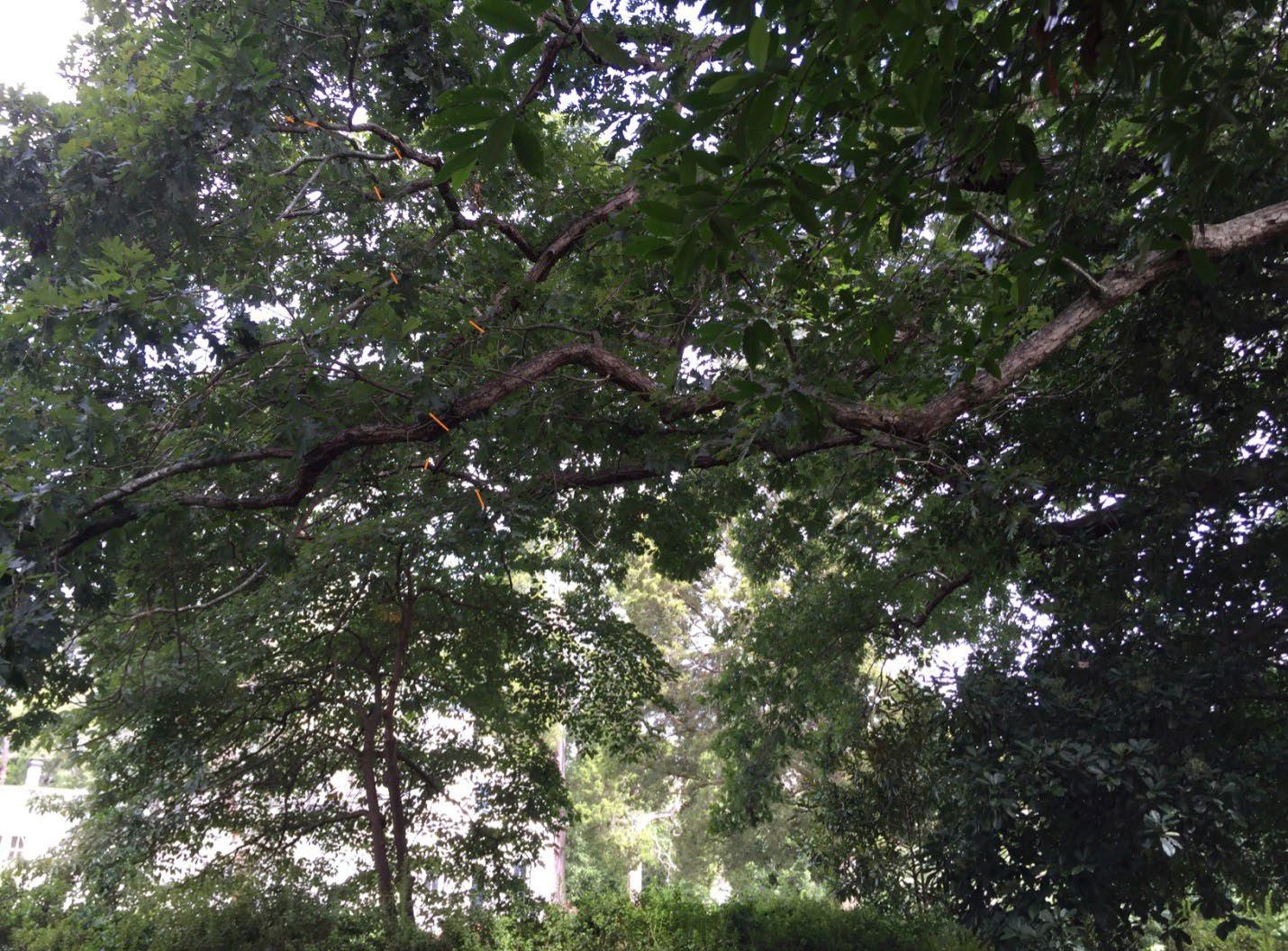
Specifications for Maid Marion’s Care
• Reduce southeast portion of the crown 20%. Cut back to vigorous upright laterals.
• Reduce the top portion 3’-6’ with <4” cuts at vigorous lateral(s) growing into the open.
• Reduce or remove downward growth from interior branches, to allow upward growth on branches below.
• Remove crowded branches back to their origin or the trunk.
Trunk: Using first blunt, then carefully with sharp noninvasive tools, clean loose, dead, foreign, and infectious material from the trunk. Rinse, and drench the area with fungistatic minerals such as phosphorous acid, and the growth regulator Paclobutrazol, per manufacturer’s recommendations. Mark the current extent of the infection. Document changes over time. Replace the insulating function of the bricks and concrete by sealing the opening of the cavity with windowscreen, stapled on the interior.
Soil: Confirm location of underground utilities. Remove grass and weeds closer than 4-6’ from the trunk. Remove soil <12” near the trunk that does not contain active roots > ¼”. Replace with 1-2” oak compost harvested from healthy white oaks. Add porous aggregate, stalite or equivalent, to grade. Maintain sterile zone >6” radius from trunk.
Use a ½” metal rod to make holes 12”-18” deep, 1-2’ apart. Use maximum air or water pressure to fracture soil. Fill the holes with 1 part porous aggregate and 2 parts oak compost and attached soil. Add compatible vegetation such as bulbs, flowers and clump grasses. Mulch with oak woodchips >6” from trunk, out to the dripline as practical.
Supplemental Support System
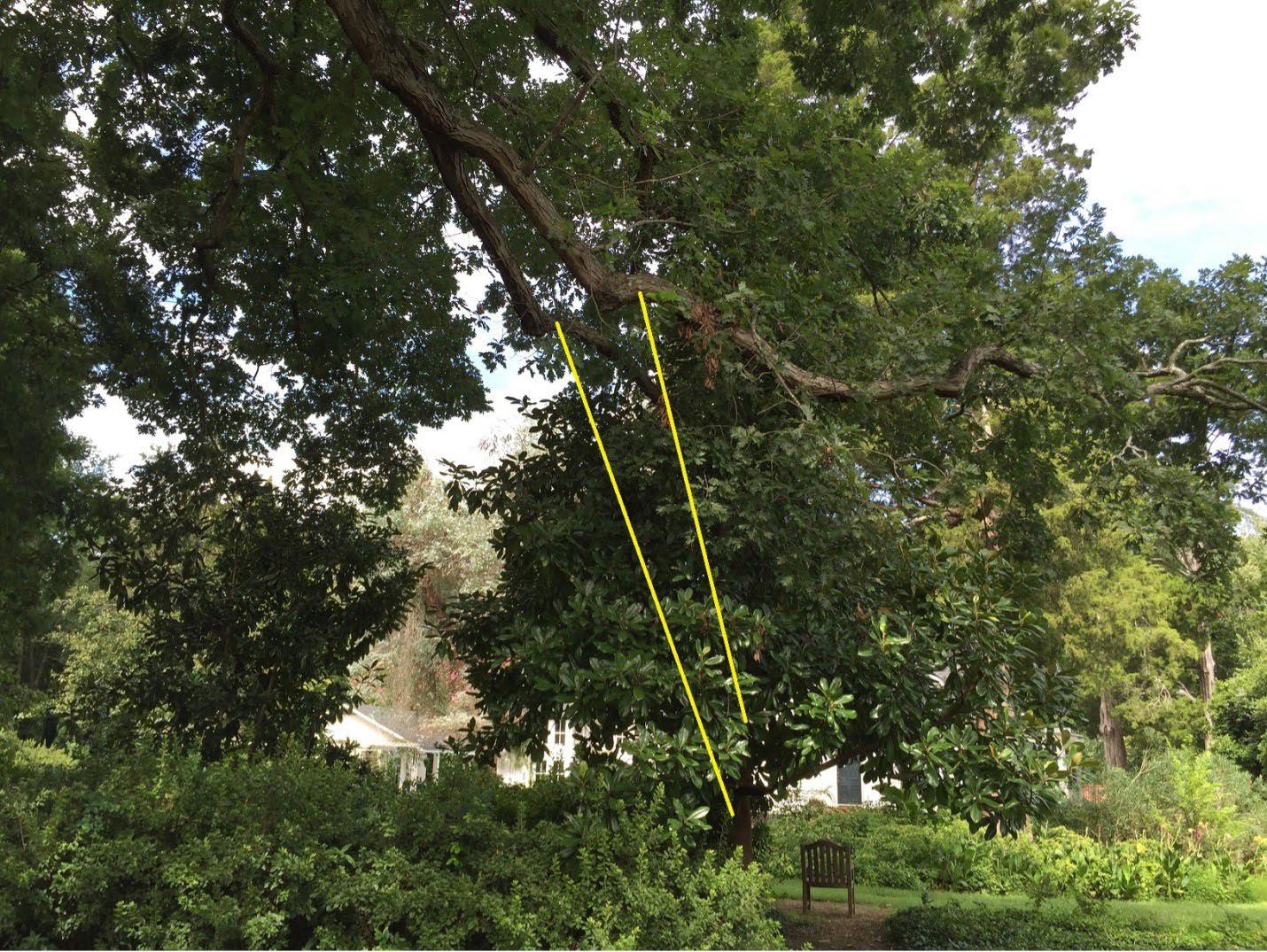
The city manager listened to this plan with interest, but faced with four contrary assessments, needed to hear more. “Is there any kind of support that can be installed?” he wondered. The amputation of lower limbs took propping off the table, so I proposed tree-to-tree guying, per ANSI A300. Four 3/16” EHS steel cables connecting lower limbs to magnolia trees below would only require ¼” holes to install, while adding 15,960 pounds of breaking strength. The report went to the city’s engineers, who approved the plan—a pleasant surprise!
Citizens were willing to cover most of the $5,000 cost for all the specified work, including the report, so I submitted a proposal. Up to then I’d been speculating that I might eventually get paid, and it was finally going to happen -- I could smell victory for the tree and for me. We waited for the permits, and for adjacent property owners to contribute their share. Weeks turned into months.
October 6, 2015, a long soaking rain was followed by a windstorm. In the dead of night her heart broke, and Maid Marion fell.
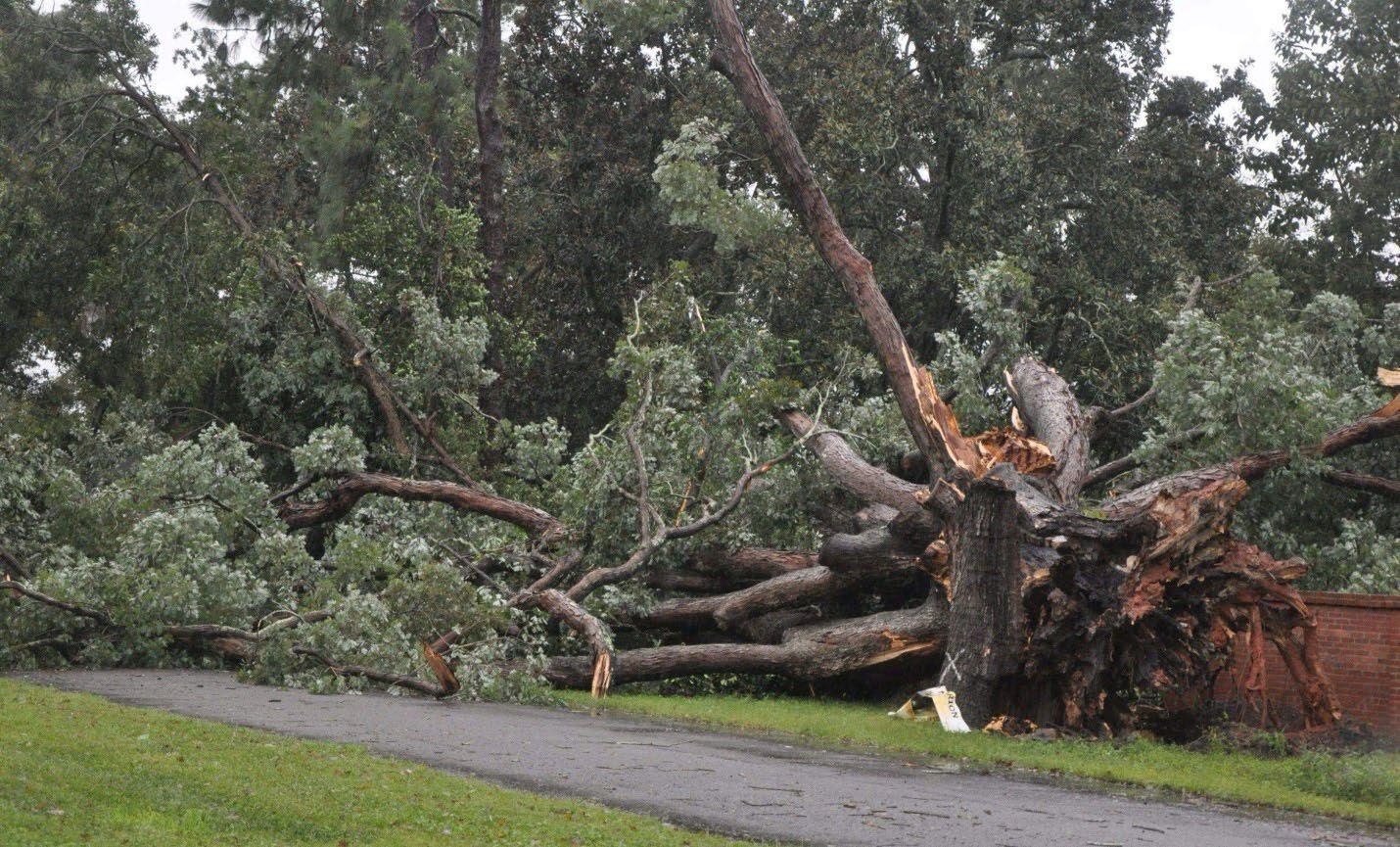
Careless amputations were the root cause of the failure, but nevertheless the city seized upon the tragedy to cut down other neglected trees. Citizens formed a Tree Committee, and the city committed to inventorying its trees, and specify standard care for them. They couldn’t save Maid Marion, but were cautiously optimistic. Since then, the city’s canopy has lost: Eight trees at the Aiken Farmers Market.
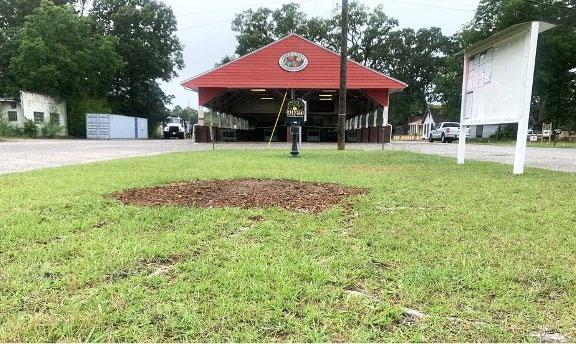
According to the city, the original plan to revitalize the street space included plans to chop down the eight trees, but those plans were revised leaving some of the trees standing. They said they don’t know who approved the old plan for the trees to be cut down in the first place. “This was a situation where, um, process and procedure, uh, wasn’t followed and should have been,” said a city manager.
Founder of the renowned Woodlanders Nursery Robert McCartney said it’s a sad reality to see the trees gone, especially the slash pine (Pinus elliotii var. Densa) he planted himself 20 years ago. The tree was part of the city Arboretum planted and cultivated over the past forty years by Woodlanders. “I was very upset…we had specimens of every pine species native to the southern United States in our collection,” he said.
Resident Lisa Smith noted, “No city meeting, no public hearing, no advanced notice. What is going to be done about this and what will prevent it in the future?”:
68 trees that once covered Smith-Hazel Park, due to miscommunication between the city and the state about rights-of-way.
Hundreds of trees, thanks to Hurricane Helene and its tornadoes.
22 water oaks on Charleston Street shaded two city blocks. After extensive utility cutting, oak wilt was detected in two of them. They were all cut down. The “revitalization” plan calls for dozens of azaleas and camellias, five Golden Globe ginkgoes, and lots of sunshine.
Keep Aiken County Beautiful launched in 2019. Since then, the group has planted close to 2,000 trees. In March of 2026, they planted over 400 trees to mitigate damage from Hurricane Helene, working with the Arbor Day Foundation and MathWorks, a private company. An arborist from the area ran the planting session, showing residents how to pick the right tree for each spot and keep them alive for years. How many will survive, and replace lost canopy? Citizens are helping with maintenance, and remaining cautiously optimistic.