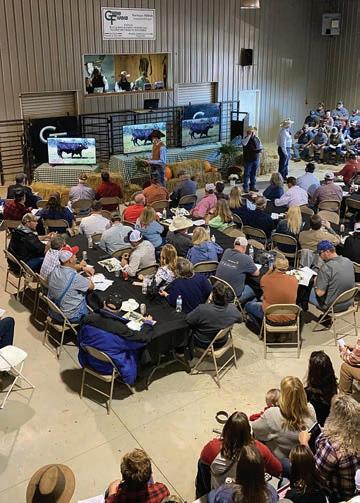
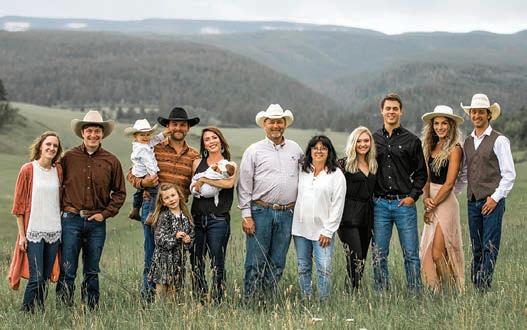
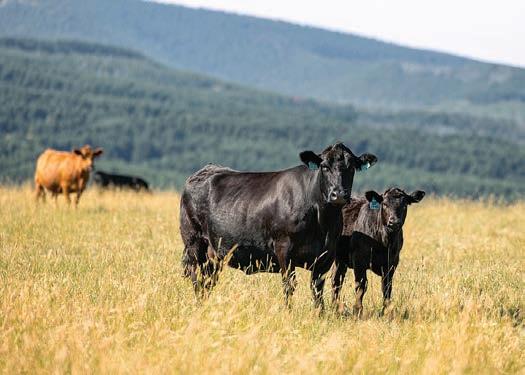
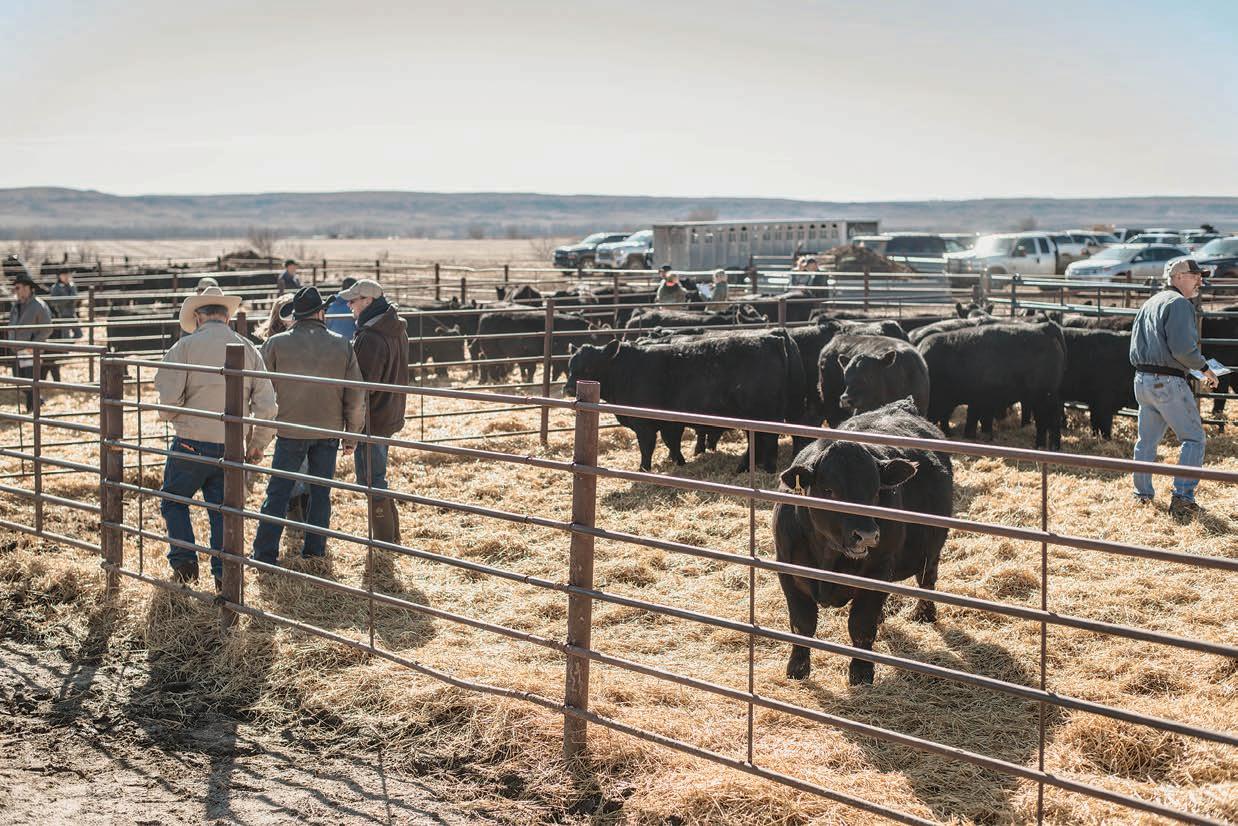
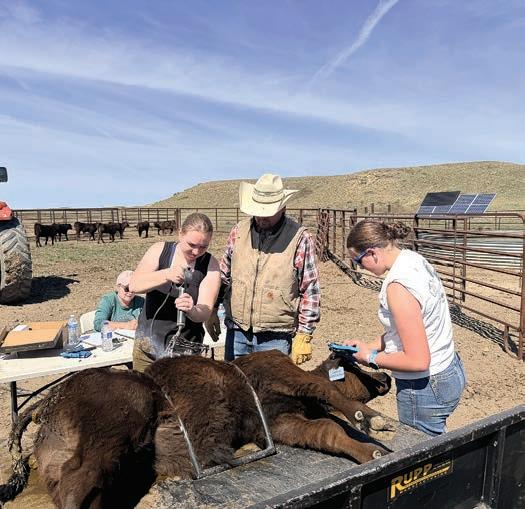
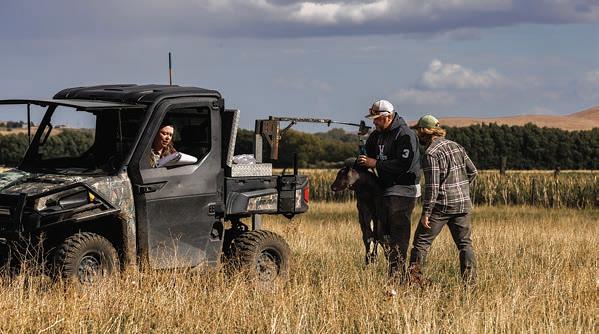
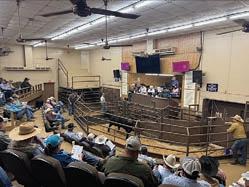
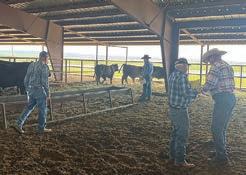
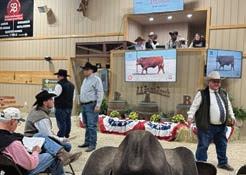
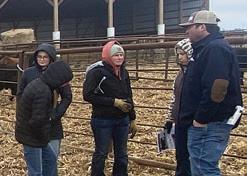
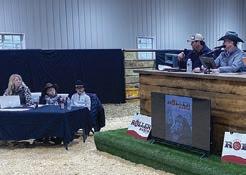
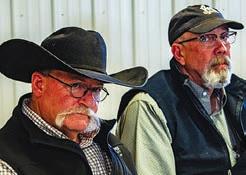
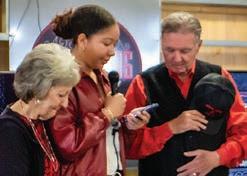
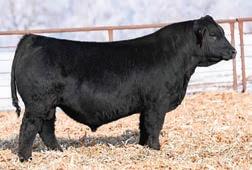
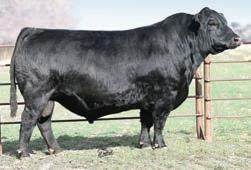
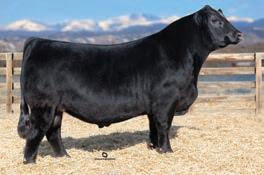
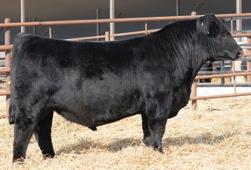
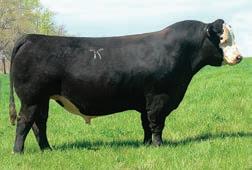
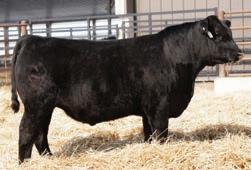
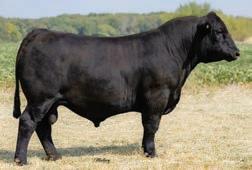
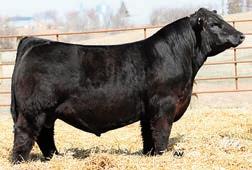
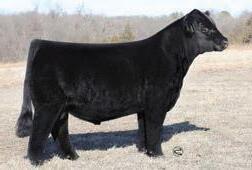
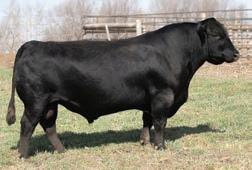
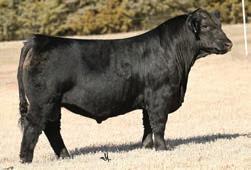
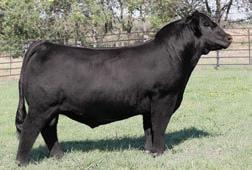
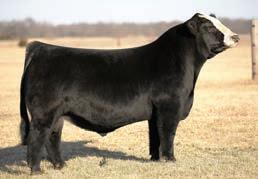
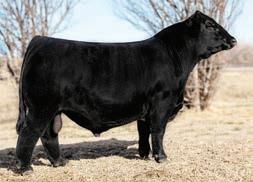
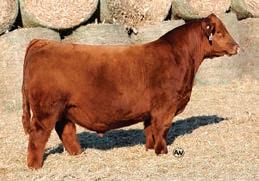
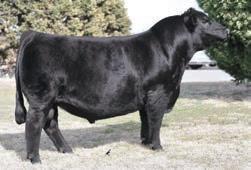
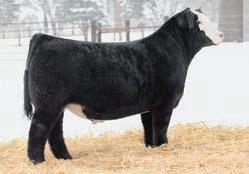
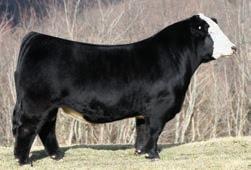
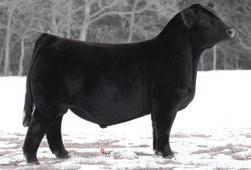
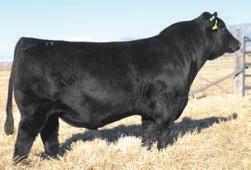
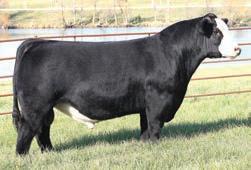
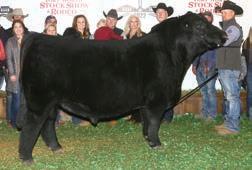
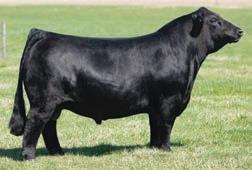
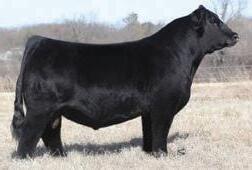
The entire website has a new look highlighting cattle sales, industry events, ASA’s programs, marketing opportunities, and breeders’ resources. simmental.org makes it easy for you. Breeders’ resources include information on:
by Dr. Jackie Atkins, director, Science and IGS Operations
How we think matters!
The quality of our thoughts impacts all aspects of our lives: our relationships with family, friends, coworkers, with our own selves, our communities, the success of our work, our financial security, our homes, our mental and physical health. We have multiple sources of bias that diminish the quality of our thinking. In his book, Clear Thinking , author Shane Parrish explains how our emotions, egos, peer pressure, status quo, inertia, and simply our surroundings can inhibit our ability to think clearly (or at all). Often these disruptors create a subconscious reactionary state rather than a thinking state. Parrish goes on to explain how selfaccountability, self-knowledge, self-control, and self-confidence aid our ability to think clearly. These helpers of clear thinking require a willingness to look inside, slow down, be humble, be curious, observe without judgement, and be present. The results — feeling clear, awake, and alive — create a much better state to make decisions.
We often form a conclusion with little to no information and then seek evidence that supports our prematurely formed conclusion — this is called confirmation bias. I am so guilty of doing this, especially with my kids. In this confirmation bias state of “thinking,” I stop deeply listening and look for evidence to support my conclusions in order to start problem-solving (silently in my head so as to appear as if I am still listening). And I swear my kids can feel it — the certainty in my “thinking” and therefore closed-minded to their perspective. When I catch myself and course correct to an open and genuinely curious state, it’s amazing how much I learn about their perspective. I usually have to scrap my prematurely formed conclusion as it was wrong or at least incomplete. When I am curious instead of certain, I come to a much more accurate understanding and a more successful outcome. But, UGH, is it hard! To slow down is so hard in our hustle culture. It takes being present and intentional to simply listen to them. It takes setting aside my “all knowing” mom ego and being humble to the fact that even as the mother who birthed them, I may not have all the answers or fixes to their problems.
Adam Grant, in his book Think Again: The Power of Knowing What You Don’t Know, encourages us to routinely rethink things on which we have already formed conclusions. Grant describes three personas we often take on in life: preacher, prosecutor, and
politician. “We go into preacher mode when our sacred beliefs are in jeopardy: we deliver sermons to protect and promote our ideals. We enter prosecutor mode when we recognize flaws in other people’s reasoning: we marshal arguments to prove them wrong and win our case. We shift into politician mode when we’re seeking to win over an audience: we campaign and lobby for the approval of our constituents. The risk is that we become so wrapped up in preaching that we’re right, prosecuting others who are wrong, and politicking for support that we don’t bother to rethink our own views.”
The antidote to these personas, Grant explains, is to think like a scientist. “Good scientists are aware of the limits of their understanding. They’re expected to doubt what they know, be curious about what they don’t know, and update their views based on new data.”
To be clear, scientists don’t always think like a scientist, nor are all preachers always preaching, prosecutors always prosecuting, or politicians always politicking. And there are circumstances when each of these personas is warranted. The key is to be conscious of your mental state. Actively choosing to be in a preacher state to inspire an audience to believe what you believe is very different from subconsciously preaching out of fear that your beliefs are in danger of changing.
A mindset that is willing to rethink conclusions while minimizing sources of bias or blockers of clear thought improves one’s quality of thinking. Grant talks about a rethinking cycle compared to an overconfidence cycle. The “rethinking” cycle starts with humility (knowing what you don’t know), followed by doubt, then curiosity, and finally discovery of new ideas. The overconfidence cycle, which starts with pride, followed by conviction, confirmation (or similar) bias, and validation of previously formed conclusions, leaves us stuck with the same conclusion not because the conclusion is right but because our behavior and mindset block our ability to evolve.
How we think matters. Are we even thinking or are we just reacting? Are we genuinely curious or seeking evidence to confirm we are right? We are not capable of good judgement when we are judgmental. We all have the ability for high-quality thinking and we are all susceptible to biases and reactionary states. The key is the self-awareness to be conscious of our biases. To rethink often. To question our beliefs. To be humble. To slow down. To get it right. To be curious instead of certain.
How we think matters! .
by Maureen Mai, Western Region
As the New World Screwworm makes its entrance into Texas, it becomes just another challenge to the American rancher. As many of our friends suffer from droughts, fires, tornados, winds, and more, this new little creature is here to attack what few animals we have left. Fortunately, time and again, the agriculture community works as a TEAM to get a job done.
TEAMS are essential to accomplish a goal. At our county fair, all the beef barn kids work as a TEAM to clean stalls. Everyone cleans the entire barn. It does no good if Susie cleans her slot and then Johnie comes an hour later to clean his slot since his steer has spread his dirty shavings into Susie’s spot by this time. Everyone is frustrated — well, maybe just Susie — but still. As a team, they move animals out. There are the wheelbarrow loaders, and haulers, taking dirty shavings out and hauling clean ones in. There are pickers, the stall freshener applier, the hose operator, and the stompers. It is nice to see kids talking, helping, and joking around at 7 am, working together. Kids interact with those they may not always talk with. They build self-confidence leading other animals. They build confidence and leadership… working as a TEAM.
As Simmental breeders we have the responsibility to keep up our due diligence in reporting all the data that we record. Add it to the list of things to do! It doesn’t do anyone any good sitting in your notebook on the counter. In the ASA and IGS database, data is the backbone for our science-based breed. The information helps improve our predictions on bulls, heifers, and their offspring for years to come. Data makes our EPD even better, more reliable, more predictable. When you only turn in your “good” animals, then that makes them average in your contemporary groups. If you turn in the runts and the studs, then it shows the genetic differences. If you say, “well I only have ten cows, it doesn’t count.” It does! Remember, teamwork is what builds our database successfully.
Phenotype information backs up the DNA that is getting added to the database as well. Remember, 2026-born bull calves are going to require DNA on file to register their calves. Now is the time to jump in and add data and DNA on all your calves. If you think you have a male that isn’t joining the steer pen, make sure to get DNA collected and sent into ASA. This will make your buyers’ lives much easier in the future. Consider though, if you enter the steer’s DNA and information as well, then he becomes part of the team, which could make the bulls look better. Not only are we making our breed better, but we are also making a better product for the beef industry. We must remember that as seedstock producers we are the stewards of the commercial beef industry. We must provide the most productive, correct, useful, predictable genetics available to make the commercial producer successful. If they are successful, we all win.
As I write this viewpoint, I am tired. Farming, breeding, fencing, meetings, and all those spring-like activities can wear a person out. I try to remember how each piece of the puzzle fits into a team. Don’t let the TEAM down, turn in your data because it does matter. .
2026 Golden Book Awards
by Lilly Platts
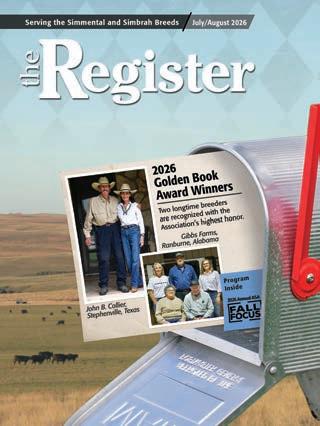
The World Simmental-Fleckvieh Federation (WSFF) Golden Book Award recognizes individuals and organizations that have made significant contributions to the development of the Simmental/Simbrah breeds. Two longtime Simmental breeders have received the Association’s highest honor.
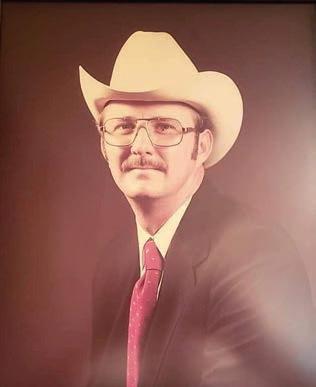
John B. Collier, Stephenville, Texas
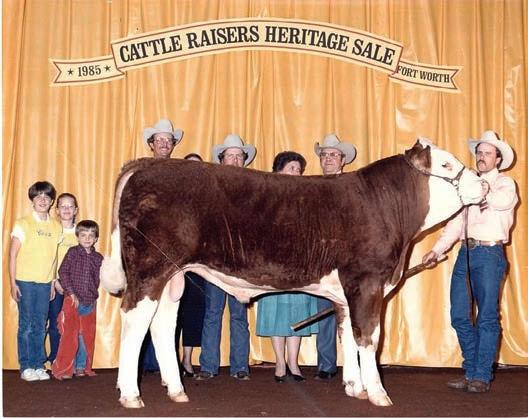
Using whole-herd AI and embryo transfer positioned the operation to be at the vanguard of the industry early on. Imported semen was becoming available at the time, and after trying a Simmental bull in the herd, the Collier family saw a new opportunity. Their Simmental calves were weaning at a significantly higher weight. John recalls selling a group of Simmental calves in the Fort Worth Stock Show, and receiving a premium. The Simmental calves were markedly heavier than their counterparts, and people took notice.
Part of this success was thanks to John’s ability to talk to people, and market his cattle. Simmental cattle, which looked very different from the standard Hereford or Angus of the time, stood out. John knew that for producers to buy them and see the benefit, he needed to be out talking to people. After his father died in a car accident, John became the lead at the ranch. He moved back home to Stephenville, and continued his efforts promoting their Simmental cattle.
John B. Collier was instrumental in the establishment of the Simmental breed in the United States. His family’s Collier Diamond C Ranch was an early adopter of whole-herd AI and embryo transfer.
John became a member of the ASA Board of Trustees, and in 1982, was elected as chairman. He recalls being one of the younger people in the room, but that didn’t stop him from sharing ideas. He was instrumental in the formation of a junior program, which became the American Junior Simmental Association. Youth was central to the promotion of his cattle at home, with Collier Diamond C organizing programs for young people to pick out and show a Simmental heifer.
John also published a national magazine focused on Simmental cattle called The North American Simmental. This publication was the precursor to the Simmental Shield, and eventually, the Register. John still has copies of these early publications, which helped solidify the importance of Simmental cattle in North America.
John served as the chairman of the ASA Board of Trustees in 1982, and was involved in many key decisions that still guide the breed today. He was especially focused on encouraging youth to become involved, and was at the
John and Metta Collier with their grandchildren.
forefront of establishing the American Junior Simmental Association (AJSA). After convincing his fellow Board members of the importance of a youth organization, he also guided the implementation of the educational contests that are still at the forefront of the AJSA.
John remains active in breeding SimGenetic and Red Angus cattle, and is known for being a wealth of information about the history of the Simmental breed, which he shares on Facebook. John and his wife, Metta, still reside near Stephenville, Texas. In addition to cattle, John is a lifelong, passionate golfer and big-game hunter.
Gibbs Farms, Ranburne, Alabama
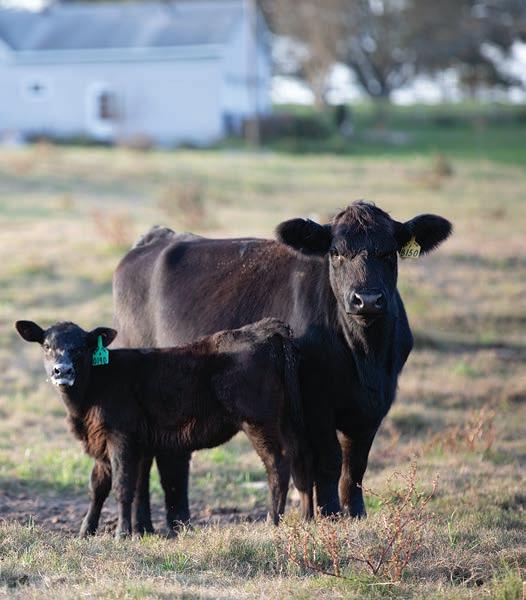
The Gibbs family has been raising SimGenetics cattle since 1972, when they transitioned their herd from polled Herefords. As the industry shifted toward black-hided cattle, Gibbs Farms was at the forefront, adding Angus to their program before SimAngus became an industryleading cross.
(Continued on page 14)
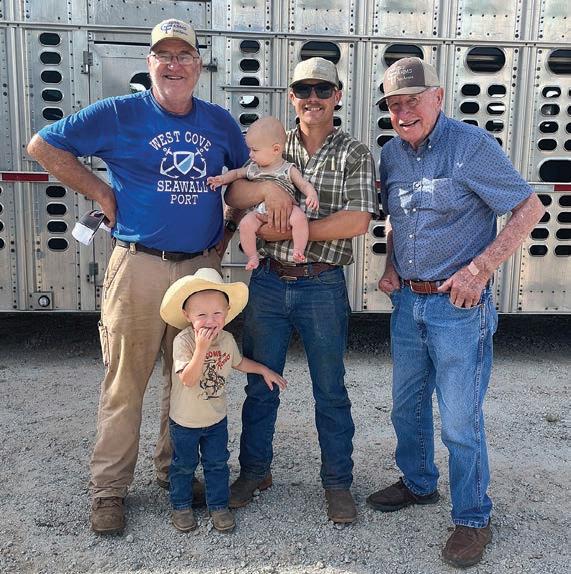
Wendell (R) with his son, Doug (L); grandson, Bradley (middle); and great-grandsons, Swayze and Sadler.
Above: Collier exhibited Simmental cattle at many events, winning many awards during his time in the show ring. Left: Collier took over management of his family’s ranch shortly after college.
2026 Golden Book Awards
(Continued from page 13)
Wendell grew up on a farm that raised cotton, and his father owned a feed mill and raised poultry. This instilled a lifelong interest in agriculture, which he has passed on to generations. Gibbs Farms started with a small plot of land, which has grown into a significant operation, raising seedstock and farming both crops and timber. Wendell worked as a bank executive before going full-time for the operation in 1988 following retirement. Alongside his wife, Nan, Wendell and his family have continually improved and grown their cow herd.
After first experimenting with breeding Angus cows to Simmental, Wendell planned to market these crossbred cattle as commercial feeder calves. Seeing the growth and other positive traits of this cross, he quickly realized an opportunity to do something entirely new. They started selling SimAngus seedstock, marketing the maternal strength of the females and the wide array of benefits commercial producers could get from hybrid vigor. After seeing success with SimAngus females, their customers started asking for crossbred bulls as well. This kickstarted what is now a decades-long focus on raising sought-after SimAngus genetics.
In 2005, Gibbs Farms decided to accelerate their already successful SimAngus seedstock business by purchasing the entire Simmental and Angus herd from Optimal Beef Genetics, Bell Farms, and Pineview Farms. This expansion allowed the Gibbs family to meet the demand for their SimAngus bulls.
Today, Gibbs Farms continues this commitment. Wendell and Nan’s son, Doug, and grandson, Bradley, lead the operation. Data collection — from carcass records to cow herd records — are meticulously kept and submitted to the Association. The family has been recognized as a Performance Advocate by ASA many times, and have participated in a range of whole-herd data collection programs. The Gibbs prefix appears in influential pedigrees throughout the breed, and their annual sale draws in seedstock and commercial producers from across the country. AI and ET technology are utilized throughout the operation.
Each generation of the Gibbs family has held leadership positions in the industry, including through the Alabama Cattleman’s Association, Alabama Beef Cattle Improvement Association, and both the Alabama and Georgia Simmental Associations. Beyond being stewards of their cow herd, the Gibbs family prioritizes the health of their land — rotational grazing, riparian area fencing, and more are utilized.
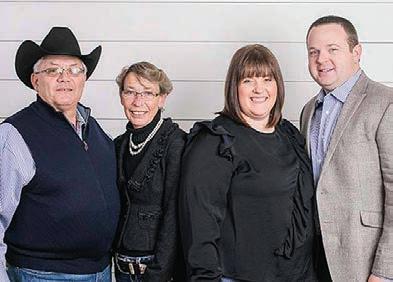
Doug and his wife, Lucretia, have three children: Whitney, Toni, and Bradley. Wendell and Nan’s daughter, Lorie, and her husband, Chad, have four children: Trey, Nancy, Grace, and Ella. Wendell and Nan’s daughter, Wendy, and her husband, Chad, have three children: Clayton, Samuel, and Madison. .
Above: The Gibbs family started breeding their Angus cows to Simmental bulls years before the term SimAngus was coined. Right: Producers travel from throughout the country to attend the annual Gibbs Farms sale.
Golden Book Award Recipients 1982 to Present
Jerry Moore, ’82, Canton, OH
Dr. Horst Leipold, ’82, Manhattan, KS
Dr. Harry Furgeson, ’82, Anaconda, MT
Don Vaniman, ’85, Bozeman, MT
Dr. Ray Woodward, ’86, Miles City, MT
Lou Chesnut, ’86, Spokane, WA
Jess Kilgore, ’87, Three Forks, MT
Arnold Brothers, ’87, McIntosh, SD
Rob Brown, ’88, Throckmorton, TX
Bob Dickinson, ’88, Gorham, KS
Tom Abell, ’89, Wharton, TX
Ron Baker, ’89, Hermiston, OR
Albert West, III, ’90, San Antonio, TX
Miles Davies, ’92, Deer Trail, CO
Henry Fields, ’92, Claude, TX
Dr. Earl Peterson, ’92, Littleton, CO
Colville Jackson, ’92, Gloster, MS
Ancel Armstrong, ’93, Manhattan, KS
Javier Villarreal, ’94, Acuna Coah, Mexico
Dr. Harlan Ritchie, ’94, East Lansing, MI
Bud Wentz, ’94, Olmito, TX
Kay Thayer, ’95, Bozeman, MT
Walt Browarny, ’95, Calgary, AB
Steve McGuire, ’96, Bozeman, MT
H.W. Fausset, ’96, Worland, WY
Hugh Karsteter, ’97, Cushing, OK
Nina Lundgren, ’97, Eltopia, WA
Don Burnham, ’99, Helena, MT
Dr. Bob Schalles, ’99, Manhattan, KS
Tom Risinger, ’99, Crockett, TX
Bill Spiry, ’00, Britton, SD
Bob Christensen, ’00, Malvern, IA
Kay Klompien, ’01, Bozeman, MT
Robert Haralson, ’01, Adkins, AR
Dr. John Pollak, ’02, Ithaca, NY
Dr. Dick Quaas, ’02, Ithaca, NY
Dr. Jerry Lipsey, ’03, Bozeman, MT
Marty Ropp, ’03, Bozeman, MT
Jim Taylor, ’03, Wallace, KS
Dr. Joe & Mary Prud’homme, ’04, Tyler, TX
Dr. Bob Walton, ’05, DeForest, WI
Sam Smith, ’05, Prague, OK
Emmons Ranch, ’05, Olive, MT
Hudson Pines Farms, ’06, Sleepy Hollow, NY
Dan Rieder, ’06, Bozeman, MT
Silver Towne Farms, ’07, Winchester, IN
Gateway Simmental, ’07, Lewistown, MT
Dr. Larry Cundiff, ’07, Clay Center, NE
Reese Richman, ’08, Tooele, UT
Clifford “Bud” Sloan, ’08, Hamilton, MO
Sally Buxkemper, ’09, Ballinger, TX
Nichols Farms, ’09, Bridgewater, IA
Triple C Farms, ’09, Maple Plain, MN
Linda Kesler, ’10, Bozeman, MT
Stuart Land & Cattle, ’10, Rosedale, VA
Powder Creek Simmentals, ’10, Molena, GA
Tom Clark, ’11, Wytheville, VA
Harrell Watts, ’11, Sardis, AL
Frank Bell, ’12, Burlington, NC
John Christensen, ’12, Wessington, SD
Bob Finch, ’12, Ames, IA
Willie Altenburg, ’13, Fort Collins, CO
Tommy Brown, ’13, Clanton, AL
Roger Kenner, ’13, Leeds, ND
Dr. Michael Dikeman, ’14, Manhattan, KS
Val & Lori Eberspacher, ’14, Marshall, MN
Hounshell Farms, ’14, Wytheville, VA
Verlouis Forster, ’15, Smithfield, NE
Jennie Rucker, ’15, Hamptonville, NC
Dr. Mike Tess, ’15, Bozeman, MT
Bill Couch, ’16, Owensville, IN
Billy Moss, ’16, McCormick, SC
Pine Ridge Ranch, ’17, Dallas & Athens, TX
Dr. Calvin Drake, ’17, Manhattan, KS
Jim Berry, ’17, Scales Mound, IL
Reflected R Ranch, ’18, Sugar City, CO
Swain Select Simmental, ’18, Louisville, KY
J.W. Brune, ’19, Overbrook, KS
Doug Parke, ’20, Paris, KY
Bob Volk, ’20, Arlington, NE
Gordon Hodges, ’21, Hamptonville, NC
Steve Reimer, ’21, Chamberlain, SD
Fred Schuetze, ’21, Granbury, TX
Tom Hook, ’21, Tracy, MN
Kevin Thompson , ’21, Almont, ND
Parke & Nina Vehslage, ’21, Brownstown, IN
Scott Riddle, ’22, Hubbard, TX
Wade Shafer, PhD, ’22, Bozeman, MT
Gib Yardley, ’22, Beaver, UT
Hart Simmentals, ’23, Frederick, SD
Neil Martin, ’23, Lyles, TN
Cynthia Conner, ’23, Bozeman, MT
Jim Largess, ’23, Bozeman, MT
Cow Camp Ranch, ’24, Lost Springs, KS
Dr. Henry Allen, ’24, Versailles, KY
Erroll and Gayle Cook, ’25, Walsh, CO
Darrell Stiles, ’25, Cushing, OK .
2026 Lifetime Promoter Awards
by Lilly Platts
Started in 2019, the Lifetime Promoter Award recognizes those who make significant contributions to the Simmental breed. Recipients of this distinguished award are selected based on major contributions to the promotion and advancement of SimGenetics and the American Simmental Association.
Jim Butcher, Lewistown, Montana
Jim Butcher is a lifelong SimGenetics breeder and leader in the industry. From his family’s Gateway Simmentals and Lucky Cross, to holding state, regional, and national leadership positions, Jim has been instrumental in the growth of the Simmental breed.
Jim’s father, Emmet, was a pioneer early in the breed’s history, helping solidify Simmental’s presence in the US. The Butcher family homesteaded near Winifred, Montana, 40 miles north of Lewistown. Though close in distance, the landscape in Winifred was more arid and harsh, making the move beneficial for the future success of the ranch. In 1972, Jim Butcher’s father, Emmet, sold the original ranch and purchased a place near Lewistown; in 1978, he added a ranch on the north side of the Snowy Mountains. Jim grew up here, where his love for cattle and agriculture were solidified.
The Butcher family bred a group of Hereford cows to Parisien, the first Simmental bull in North America, in 1961, making them not only one of the first operations to utilize AI, but also one of the first to use SimGenetics. Jim grew up on the family operation, and knew early on that he wanted to stay on the ranch. In 1989, Jim and his family saw an opportunity to keep the Simmental breed relevant by adding Angus genetics to the program. They became early SimAngus producers, and have since become a leading seedstock provider.
Jim always knew he would continue the family business, and fortunately there was a role for him and his brother, Tom, who leads the farming side of the operation. Jim eventually transitioned to leading the family’s seedstock business, continuing to grow and improve the cow herd.
Jim’s vision and leadership have reached beyond the ranch. He has been on the ASA Board of Trustees, serving a term as chairman. Jim remains active at Association meetings and events, and is known throughout the industry for supporting his fellow breeders, and the success of the Simmental breed. He also served as the Montana Simmental Association president, and has been involved with a number of local agricultural organizations.
Jim and his wife, Lynn, have four children: Logan, Austin, Brockton, and Gracia. Logan and his wife, Gabby, are raising their four children, Bentley, Brodi, Baker, and Bran, on the ranch. Brockton and his wife, Martha, are also back on the ranch with their children, Louisa, Emmet, and Silas.
The Butcher family started using Simmental genetics in 1961.
The Butcher family, left to right: Casey, Austin, Logan, Gabby, Jim, Lynn, Gracia, Wes, Martha, and Brockton.
Doug Parke, Paris, Kentucky
Doug Parke attended his first Simmental sale in 1973, kicking off a long career fostering the growth of the breed. After receiving a degree in animal science from Eastern Kentucky University, Doug worked for Kieckhefer Simmentals. He went on to work for and with many influential breeders, including time as manager for Breck Ellison Simmentals. In this role, he was especially focused on advertising and promoting SimGenetics seedstock. Armed with a belief that the Simmental breed could improve the US beef industry, Doug made every effort to help breeders, and encouraged the use of SimGenetics.
Doug’s talent in advertising and promotion, combined with his experience as herdsman for influential operations, led to the formation of DP Sales Management and DP Online Sales. Doug has traveled throughout the US as a consultant and has played a role in many successful sales and operations. Doug takes great pride in helping producers and seeing their successes. He continues to be a familiar face at sales, and is often called on for help and advice.
Youth is extremely important to Doug, and throughout his career, he has been involved in many efforts to help the industry’s next generation. He is a passionate supporter of the American Junior Simmental Association, rarely missing a National Classic, and was especially involved when his daughter, Holli, was coming up in the organization. She had a very successful career in the show ring, and many of her winning females became prominent cows in the industry.
Previous Award Recipients
2019 Ron Miller, Plattsmouth, Nebraska
2020 Carlos and Sister Guerra, La Muñeca Cattle Company, Linn, Texas
2021 Larry Martin, Clinton, Illinois
2021 Keith “Sundance” Ruff, Pleasant Hill, Illinois
Today, DP Sales and Management is operated by Doug, his wife, Debbie, Holli, and her husband, Drew Hatmaker. At in-person events and through hosting online sales, DP Sales Management has created opportunities for producers to reach the right customers. The business was an early adopter of online sale platforms, seeing an opportunity for producers to expand their reach.
Doug has held many leadership positions, including a term as chairman of the ASA Board of Trustees. He has also served on the North American Beef Breed Advisory Board, the Kentucky Simmental Association, Tennessee Simmental Association, the Kentucky Beef Expo, and much more. Doug and Debbie reside near Paris, Kentucky.
2022 Kansas State University Department of Animal Science and Industry
2023 Pearl Walthall, Windsor, Missouri
2024 Pam Haley, West Salem, Ohio
2025 Terry Burks, Scottsville, Kentucky; and Warren Garrett, Comanche, Texas .
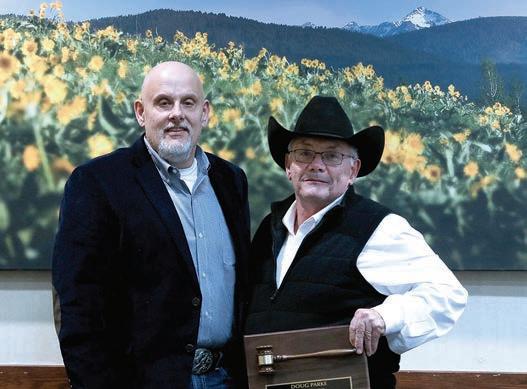
Doug Parke, pictured with Chris Ivie (left), served as chairman of the ASA Board of Trustees.
Doug and Debbie Parke, with Holli and Drew Hatmaker.
by Lilly Platts
Talks ASA Thorson SimGenetics
Current chairman of the American Simmental Association Board of Trustees, Ryan Thorson, discusses his Simmental story and leadership role.
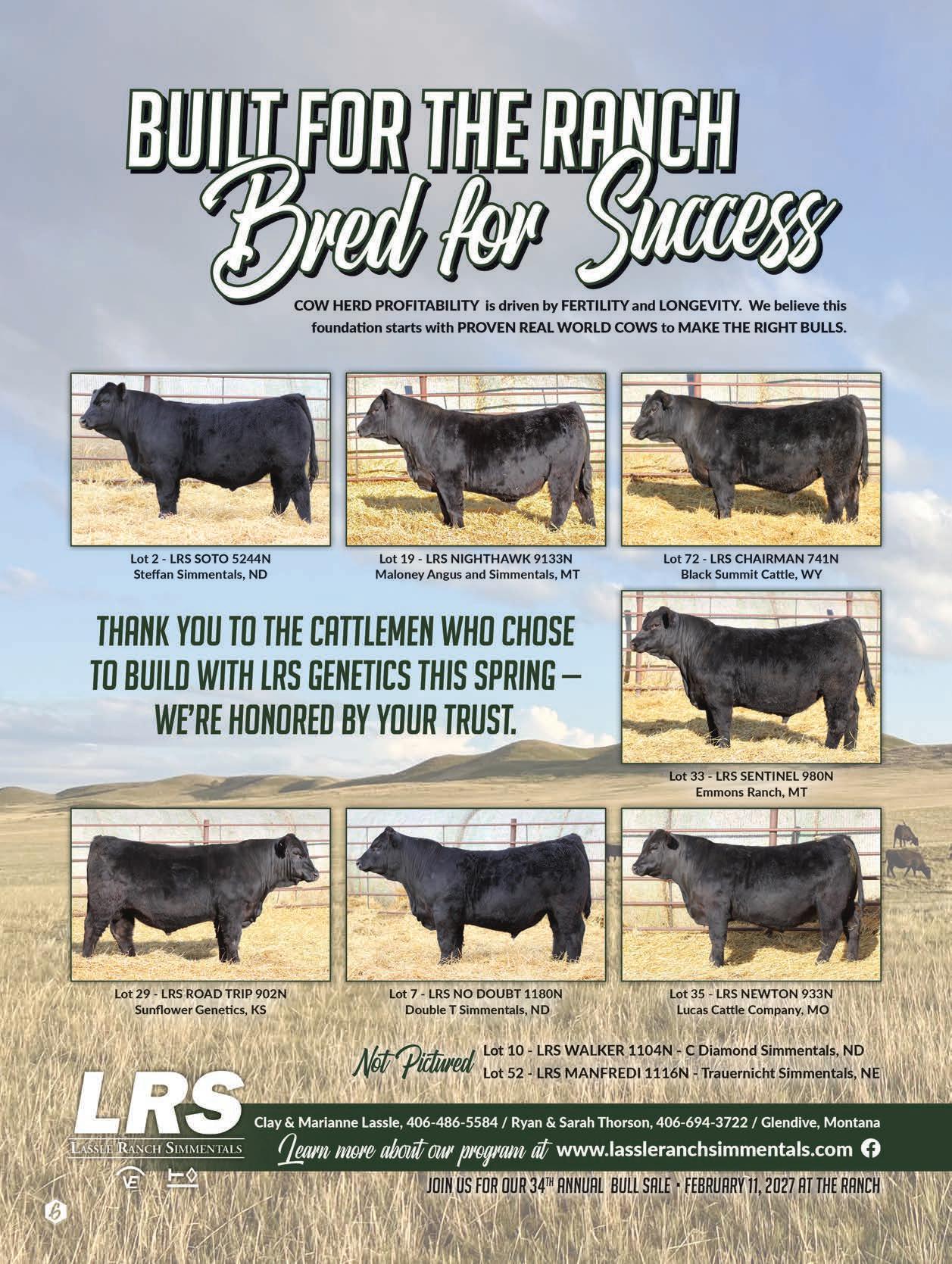
Ryan Thorson grew up in central Wisconsin, graduating from the University of Wisconsin–River Falls with a degree in animal science. While in his home state, Thorson started working for Genex, and met his wife, Sarah, who was attending Montana State University. Sarah also started working for Genex, moving to Wisconsin. In 2011, the opportunity to relocate to Montana arose, and Ryan started managing the Genex Hawkeye West bull stud in Billings. In 2017, the couple moved to Sarah’s family operation, Lassle Ranch Simmentals (LRS) near Glendive, Montana. Founded in the 1970s by Clay Lassle and his father, Erwin, LRS is known throughout the region for producing bulls that will hold up and perform for commercial producers. AI and ET are utilized extensively, as well as genomic testing. LRS holds an annual sale in February, marketing around 120 bulls. Ryan is an integral part of the family seedstock operation, working alongside his in-laws, Clay and Marianne, and Sarah. Ryan and Sarah’s daughters, Grace and Harper, grew up participating in the American Junior Simmental Association. Now the fourth generation to be involved in LRS, both are actively involved in the operation.
Platts: What were your thoughts when you became chairman of the Board? What do you hope to accomplish?
Thorson: I was humbled. I definitely did not join this board with aspirations of one day becoming chairman, and I believe that if that is your goal of joining any board, you are in it for the wrong reasons. I am still humbled halfway through my term, and I don’t take the confidence and trust that my fellow board members have shown to elect me to this position lightly.
I simply want to continue the positive trend of SimGenetics in the industry, see our Association continue to be a valuable source for our membership, and for our membership to utilize the many programs available to them in a way that positively benefits their respective operations. I would like to see our staff continue to update our genetic evaluation, ensuring it’s the most robust and accurate in the industry. There are many traits that have already been completed, and there are more being worked on throughout 2026. Completing this will be a testament to our staff, and the daily efforts they make for our membership. I have also emphasized challenging the ASA Publications Board and staff to be openminded, and explore new ways to recharge that part of our operations.
Dr. Jon DeClerck has now been ASA’s EVP for a full year, which has brought some change, and great new faces to ASA. It is critical that we as a Board listen to all of the new ideas being brought forward and more importantly, make sure everyone has the tools they need to continue keeping ASA at the forefront of our ever-changing industry.
The Board is very diverse, representing the wide range of SimGenetics operations across the country. How important is it to have that diversity on the Board?
Diversity is critical on any board. Our membership is diverse in their operations, from management styles, marketing programs, and customer base, to name a few. It should be our goal as a board to make decisions that are positive for all our members, no matter what segment of the industry they fit in. It is a challenge, however. We have to recognize that the needs of a breeder with 500
cows will vary a lot compared to a breeder with 20 cows, and also that the revenue generated to the Association from these operations will be different. This brings in the value of a diverse board, as you get elected trustees who are willing to work together, challenge each other, and make sure that every idea that is brought to the boardroom can benefit the entire membership. This gives producers who can utilize programs and add value to their home operations the chance to do so, and it should also allow for all board members to explain how these decisions benefit the whole membership.
How do you, as Board chairman, encourage all Trustees, including newly elected ones, to become active participants in the decision-making process?
Lead by example. I am not afraid to share my thoughts, ideas, and opinions, and I am never afraid to ask a question even if I might know the answer, because it can spur further discussion. Every individual is unique and has a different leadership style — some people are more outspoken and some are more quiet by nature. Getting to know my fellow board members, what drives them, and their reason for wanting to represent their members creates a friendly and open environment in the boardroom, and ensures that everyone is respectful. Another important aspect is assigning trustees to the different committees where they have more of a passion and insight to the needs of the members, which allows them to have an impact on the ASA and their fellow breeders.
What is the impact of International Genetic Solutions (IGS)?
It goes without saying the impact that IGS has had on the industry. Never before had breed associations collaborated to share data into one multi-breed genetic evaluation, benefiting not only each individual breed association, but the industry as a whole. It has not only allowed smaller breed associations access to a costeffective genetic evaluation, but more importantly, the sharing of data has allowed for strength in numbers with over 24 million animals in the database from 26 different partners and growing. Having the largest database in the industry, with many animals present in multiple breed databases, really connects all of the data to create a true multi-breed genetic evaluation, which is extremely accurate. I believe the story is just getting started, however, as we continue to bring in and look for more international partners. In the future, IGS will not only be the standard in North America, but the world. There are still incredible opportunities for IGS to make an even greater impact worldwide.
What has been the effect of Total Herd Enrollment (THE)? What is the impact of Performance Advocate recognition?
Accuracy. Accuracy is the number one reason for THE, because it allows ASA to get data on all of the animals in a herd, and not just the ones being registered. It is hard to have an accurate genetic evaluation with only part of the data. In 2025, roughly 20% of the entire membership was enrolled in THE. However, THE herds submitted over 80% of all the data to the Association, highlighting the impact of the THE program. THE is one of the best programs offered to our membership. However, it is not for all operations, and staff routinely works with members to see if it is the right fit.
A very small percentage of our members qualify to be a Performance Advocate. It is difficult and very timeconsuming to collect data on all the traits to meet the requirements to become a Performance Advocate. Phenotypic data is possibly the most valuable asset we can get as an Association, and it’s the hardest to get. As we continue to add new traits, this program requires evaluation to see if any changes need to be made to the number of
(Continued on page 20)
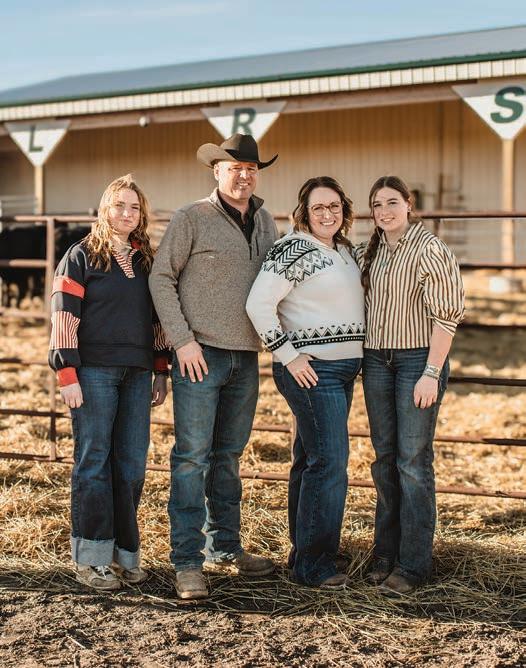
Above: Grace, Ryan, Sarah, and Harper Thorson. Opposite: LRS, located near Glendive, Montana, was started by the Lassle family in the 1970s.
Thorson Talks ASASimGenetics
(Continued from page 19)
traits submitted to qualify. With that, we need to continue to recognize the members that are achieving the highest rates of data submission.
How has ASA’s Progress Through Performance (PTP) program contributed to breed improvement?
Personally, I believe that the PTP program is not providing the impact that it probably had when it was originally implemented, with the goal of trying to keep the show ring connected to the commercial cattle industry. Over time, and as the industry and show ring have changed, the true merit of the PTP show has probably diminished as simply the two worlds are probably farther apart than they once were. With that said, it is still a great program to provide data on the animals that are entered into the PTP shows, and we can allow people to do with it how they see fit. The Phenotype and Genotype shows that were approved to begin at the AJSA Regional Classics this summer, and hopefully at future National Classics, will easily replace what I believe the true intention of the PTP program was when it was started. It will be accomplished through a different approach, and will probably just stay at the AJSA level for some time.
As a producer who has utilized DNA testing and genomic technology for some time, what is the impact you have seen?
Genomics has had an extremely large impact on the industry. This impact has probably been more visible on the commercially focused side of the business than some other segments, but there is no question the progress is only getting started. From an Association standpoint, we have been able to implement many great programs to assist our membership to take advantage of this new technology, including the Cow Herd Roundup, Calf Crop Genomics, and the Carcass Expansion programs. In just three years we have almost doubled the number of genotypes that are being used in the evaluation — it is not hard to see a trend line of what is happening in the industry. I know it is a topic that can cause some angst in our membership, and it has been the number one factor in my opinion of what has been driving competition from the private sector into the traditional space of a breed association, but it is here to stay, and our job as a board is to ensure we are utilizing it in an approach that is benefitting our members so they do not need to, or want to, go elsewhere. Phenotypic data is still key to making genomics accurate, and they need to continue to go hand in hand as one without the other does not work.
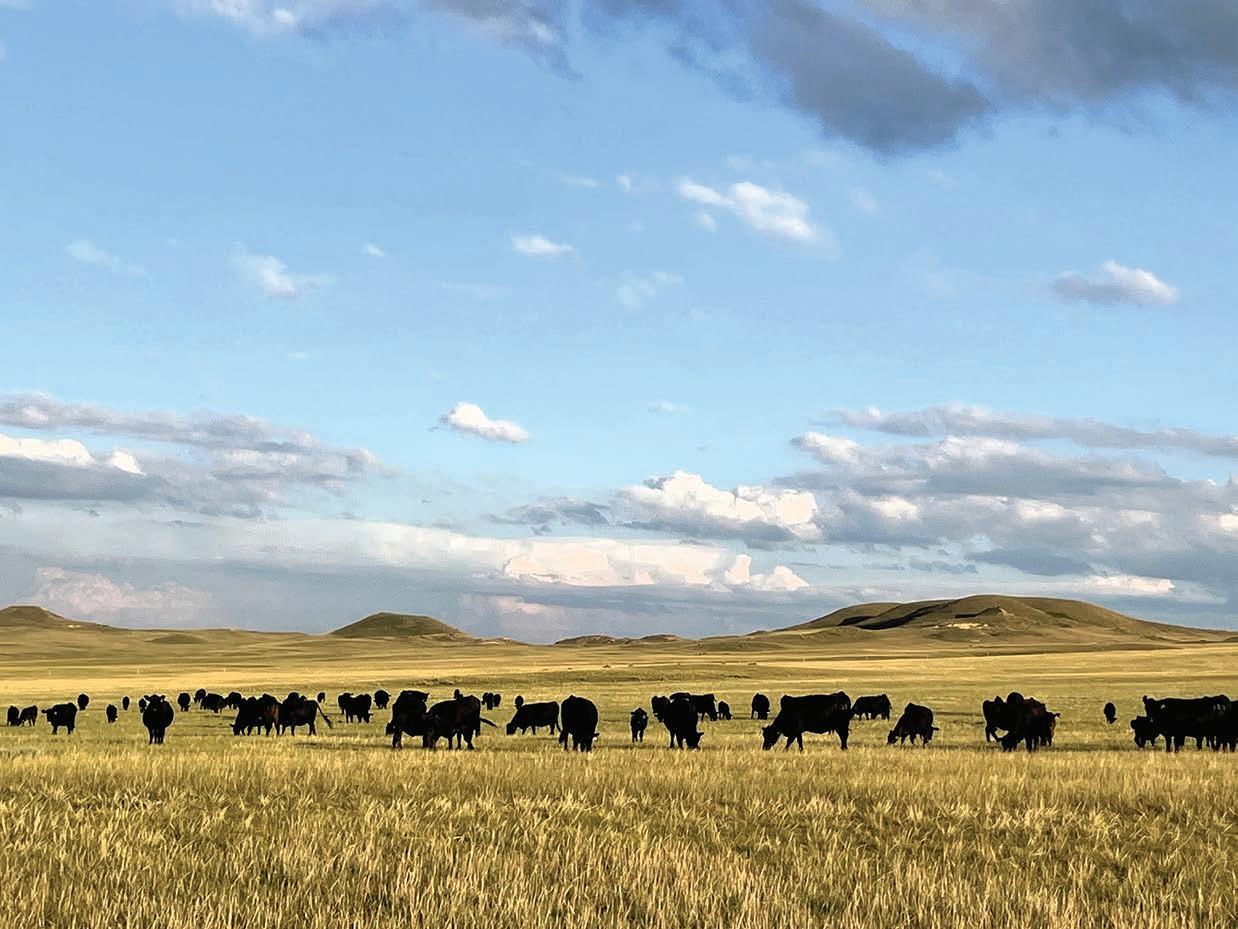
LRS holds an annual sale in February, featuring their range-raised SimGenetics bulls.
What is the impact of the American Junior Simmental Association (AJSA)?
The AJSA is a great youth organization. It helps build a great foundation for our next generation of leaders, not only in the Simmental breed, but for our communities at home and our nation. Both of my children have had the opportunity to be a part of this great organization, and whether it is the life skills that they are learning through the educational contests, the friends they meet, or the networking that is happening, the impact has been significant. There is a lot of competition for kids’ time today, whether it is sports, dance, jobs, or cattle, and if we can get them connected to the Simmental breed at a young age, there is opportunity to keep them a member of our Association as they get older.
How vital are strong state associations to the overall welfare of SimGenetics?
State associations are the grassroots of the ASA and our members. They are very important for spreading the message of SimGenetics across the country, and supporting the local members. Many of our great state associations are the stepping stones for our board members at the national level, as well as a great support system and encouragement for our youth to get involved in the AJSA. The ASA has a great program in place via the Cost Share program to help our state associations promote SimGenetics close to home.
How secure is the Association from a financial standpoint?
Financially the ASA is in a great spot. We have been profitable from a cash flow standpoint for many years now, but also thanks to previous boards and leadership, we have been able to grow a reserve fund through our investments. Again, through prior leadership at the ASA and the hard work of past boards, this has all happened without raising the many costs over the years to our membership, which is to be commended. It goes without saying that the rise in the acceptance of SimGenetics in all facets of the industry is the number one factor that puts us in the position we are in today.
How important is it for ASA members to be involved in the decision-making process, through voting and attendance at local, state, regional, and national meetings?
Get involved, be involved, and stay involved. It is a challenge to find time today, no matter what the organization is, but there is no better reward than serving others. This could be through 4-H or FFA, coaching, local boards, state associations, or the ASA. Most of our board meetings are open to the public, and all of us board members are available and willing to take your calls to listen to your ideas, thoughts, criticisms, and hopefully a few compliments as well. A small percentage of our membership votes in our annual elections. You have a say as a member, and I would encourage everyone to take advantage of it.
How does the Association support the membership through education, resources, etc.?
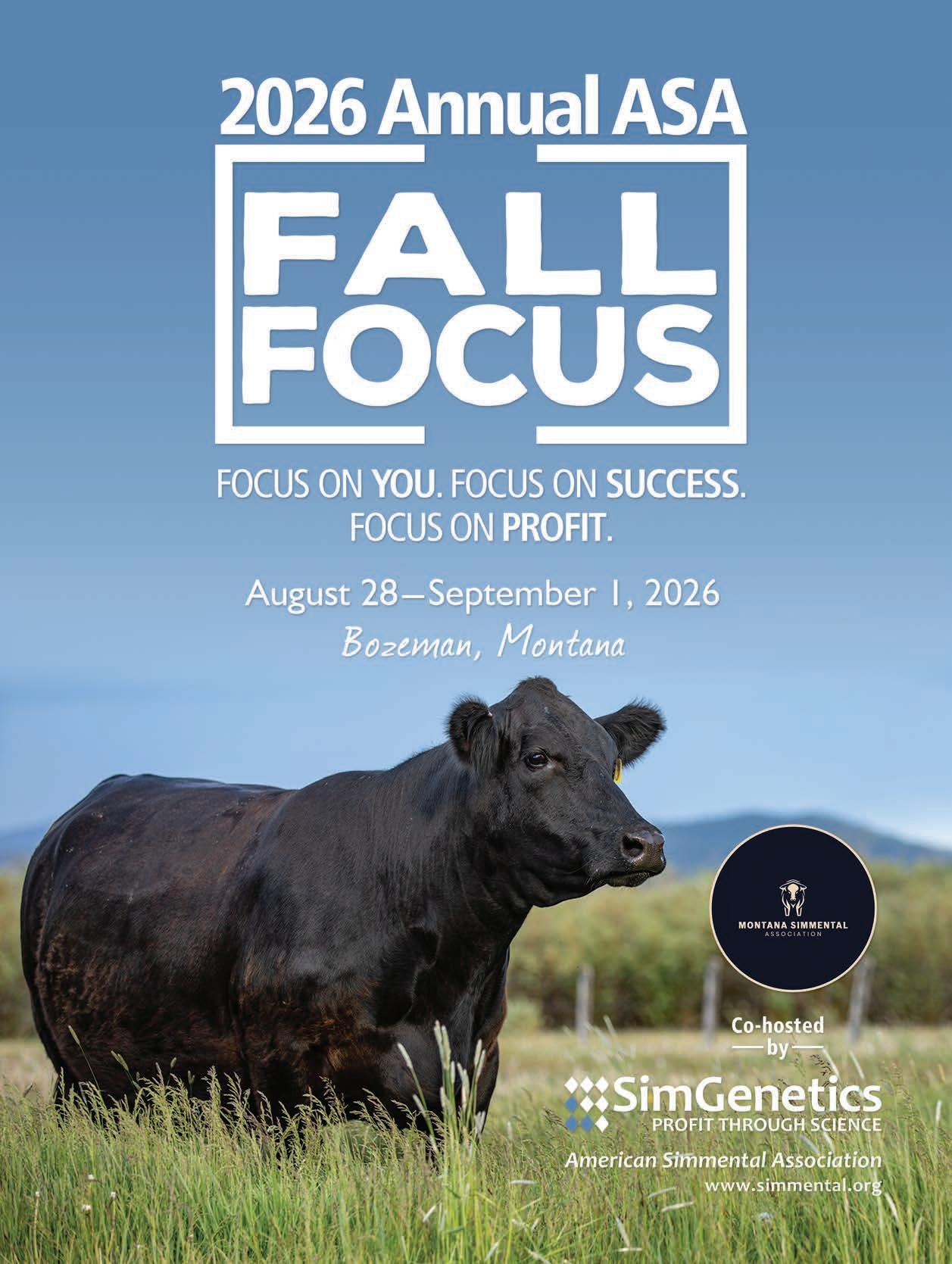
Education is a strong foundation at the ASA, and there are many opportunities throughout the year. Fall Focus is one of the biggest opportunities, and it coincides with our fall board meeting. The SimGenetics Training for Young Leaders and Entrepreneurs (STYLE) program is a great option for our younger adult members. The IGS Youth Leadership Summit, and the Steer Profitability Contest are a couple more. Our staff is always looking for ways to connect with our members either in person, or through media channels like IGSTV on YouTube.
(Continued on page 22)
Grace brands a calf at LRS.
Thorson Talks ASASimGenetics
(Continued from page 21)
During this time where people are increasingly reliant on the Internet and electronic communication, what do you perceive as the future for ASA Publication?
This is a million-dollar question, and one that many organizations are facing, not just the ASA. I still like to receive my Register magazine and SimTalk in print, but know that I might not be in the majority for much longer. I think the big question that will drive some tough decisions in the future is where our membership is going to allocate their advertising dollars. There are so many options available in today’s marketplace, and many of them are free options via social media, or more direct to customers as opposed to a shotgun approach, like a national publication. It will be extremely important for the Publication staff, Publication Board, and the ASA Board to be proactive and not reactive to the changing environment. It is not a matter of if it will change, but how we make changes and get ourselves in position to be on the front end. I believe we need to look at creative ideas where our team can be the catalyst for our members’ marketing programs, combining some more traditional print media with all the digital and social
media opportunities available in today’s world. The bottom line is that we have to make sure what we are doing is adding value to our members’ operations, or they will look elsewhere.
What are the historic and current strengths of this organization and our cattle?
Simmental cattle have evolved and changed throughout the years from when they were first imported to the USA, from being on the do-not-buy list, to once again being as commercially accepted in the industry as any breed available. The greatest strength of not only our Association, but our cattle, is our ability to adapt and change to meet the times. It is rooted in our mission statement to serve the industry, and if we keep that as our focus, the ASA will continue to be strong and our cattle will have a place no matter what segment of the industry our membership is in. .
Calving often starts at LRS before winter ends.
Powers
Genetic Evaluation
by Dr. Elizabeth Dressler, ASA Lead Geneticist
As rapidly as technology is advancing, it might be tempting to think that genetic progress happens automatically, somewhere behind the scenes without you. But that is far from the truth.
While genomics and advanced statistical models used by International Genetic Solutions (IGS) help accelerate genetic progress, those technologies can’t create it on their own. Every genetic evaluation still depends on one thing: phenotypes. The real-world performance of real cattle reported by real cattle producers.
The Role of Phenotypes in Genetic Evaluation
Collectively, member-reported data supplies the genetic evaluation system with the information necessary to calculate expected progeny differences (EPD). Every phenotype reported adds another piece to the puzzle. In other words, EPD aren’t just something that gets delivered back to you. They’re something that you help build.
• Phenotypes are the evidence that power EPD. An EPD is a prediction of future progeny performance. The evidence backing that prediction is the reported performance of relatives, the individual animal itself, eventually its progeny. As more data points are reported, the accuracy of that animal’s EPD improves, meaning you can feel more confident in your breeding decisions.
• Phenotypes anchor genomic predictions. In the era of genomics, phenotypes are even more important. DNA information (SNP markers) are only meaningful if we know what effect they have on actual animal performance. If we stop recording phenotypes today, our genomic “map” will quickly become outdated. We can’t have genomics without phenotypes.
• You can’t improve what you don’t measure. It’s a fundamental law of animal breeding. Without phenotypes, you’re “eyeballing” your way toward genetic progress, which is slow, inefficient, and expensive. To get where you want to go, you must first assess where you are currently.
Data Collection Opportunities this Fall
As fall data collection approaches for spring-calving herds, several traits deserve particular attention due to recent updates and new EPD releases.
Docility
You are likely already planning on reporting weaning weights, but do you plan to report docility scores? While approximately 60% of animals reported to ASA have a weaning weight, only about 20% have a docility score.
The docility evaluation was updated in April 2026 as part of an ongoing series of updates to the IGS genetic evaluation. As more breeders place greater emphasis on docility in selection decisions, reporting docility phenotypes is becoming increasingly important to maintain and improve the accuracy of docility EPD. Information on the docility genetic evaluation updates and how to collect docility scores is available on the ASA website.
A few tips for collecting docility scores:
• It is important to collect docility scores on the entire calf crop at the same time. So, collect a docility score on your entire calf crop this fall during weaning, instead of collecting some at weaning and others at yearling.
• Since docility is subjectively measured, consistency in scoring is very important. The same person should score all animals.
• It is not likely that every single animal should score a 1. There should be some variation in docility scores among a group. Scores should be reported without worry that one poor score will have a drastic negative effect on a sire’s docility EPD.
This fall during weaning, why not also collect and report a docility score in addition to a weaning weight? Let’s see if we can increase the percentage of animals reported to ASA with a docility phenotype from 20% to 25%, 30%, or higher!
Mature Weight
Released in February 2026, the mature weight (MW) EPD and cow energy requirement (CER) EPD are new tools that breeders can use to evaluate cow size and efficiency. Collecting and reporting mature cow weights will increase the accuracy of the MW and CER EPD for your animals while continuing to add valuable data to the genetic evaluation.
It is critical that mature cow weights are taken at the right time. Cow weights must be taken within 45 days of weaning a calf. Collecting weights at a standardized point in the production cycle helps reduce non-genetic differences in mature cow weights.
Because the MW EPD is now available for ASA members, this fall is the perfect opportunity to begin submitting MW phenotypes for your cow herd. Submitting MW phenotypes continues to add valuable data, which fuels the genetic evaluation generating this new EPD.
Heifer Pregnancy
The release of the heifer pregnancy (HP) EPD this May is another step forward in the development of genetic selection tools for maternal traits. The HP EPD characterizes differences in the percentage of daughters that become pregnant during their first breeding season as heifers. Development of this EPD wouldn’t be possible without the data submitted by ASA breeders through the
Total Herd Enrollment (THE) program. THE is a dam inventory program that facilitates data reporting on complete contemporary groups. If you are not already a participant, more information about the THE program can be found on the ASA website. For spring-calving herds, THE enrollment opens on October 15 for the following spring calving season. It is vitally important that dams are properly enrolled in THE and that productivity and removal codes are used correctly. It is the data submitted through THE that makes it possible to to calculate maternal EPD, including stayability and HP.
This fall, there may be an opportunity to collect one more trait than you have typically done in years past. Breeders committed to the phenotype reporting that fuels the genetic evaluation for 14 high-priority traits are recognized as Performance Advocates. You can check your progress toward earning performance advocacy status on your Herdbook account online.
Genetic progress doesn’t originate in Bozeman, Montana, at ASA’s headquarters. Genetic progress begins on the ranch with the collection and reporting of the critical phenotypes that fuel the genetic evaluation. .
Above: Phenotypes, and real-world performance data, are the foundation of genetic progress. Photo by the Grant Company. Opposite: With the release of the new Heifer Pregnancy EPD, THE dam inventory reporting is more important than ever. Photo by Chris Nicholson.
Dr . Jackie Atkins Steve McGuire
by ASA Staff
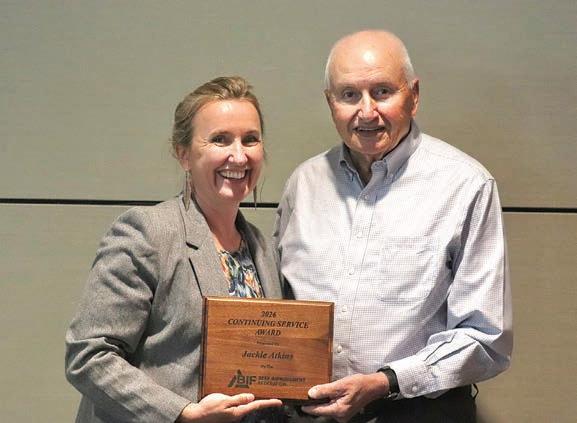
The Beef Improvement Federation (BIF) held their 58th Annual Symposium in Boise, Idaho, June 1–4. ASA’s Dr. Jackie Atkins and Steve McGuire were recognized by BIF for their contributions to the organization, and the genetic progress of beef cattle.
Dr. Jackie Atkins — Continuing Service Award
Dr. Jackie Atkins, ASA Director of Science, has been deeply engaged with the Beef Improvement Federation, serving two terms on the BIF Board of Directors as a breed representative. She has consistently championed research and innovation, advancing the industry’s understanding of economically relevant traits and strengthening the tools available to producers. Just as importantly, she is committed to developing people, investing her time in mentoring others and fostering both personal and professional growth across the industry.
Through her leadership within International Genetic Solutions (IGS), Dr. Atkins has been a steady advocate for collaboration across breed lines, helping align diverse organizations around a shared mission of improving the accuracy and relevance of genetic predictions. In an industry where independent interests can often compete, she has worked to foster cooperation, recognizing that collective data and shared science create stronger outcomes for all.
Dr. Atkins has played an important role in facilitating communication among IGS partners, helping maintain alignment across a broad network of associations spanning multiple breeds and countries. Her ability to connect people, navigate differing perspectives, and reinforce the broader purpose of the work has been central to the continued growth of the IGS platform.
As Director of Science for the American Simmental Association, Dr. Atkins has also provided leadership across genetic evaluation, DNA programs, and research
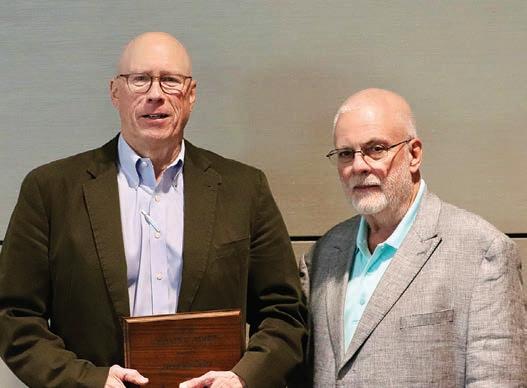
Steve McGuire — Pioneer Award
In 1973, Steve McGuire was hired by Don Vaniman to computerize ASA’s growing data system. Still in school at Montana State University, McGuire worked part-time for two years until he graduated with a degree in engineering, and became a full-time employee. In 1975, McGuire was placed in charge of databasing, registrations, and computer systems. McGuire went on to have a 46-year career at ASA, where he was involved in every major technical
initiatives. During her tenure, ASA has continued to advance its genetic tools and strengthen its position as a leader in multi-breed evaluation.
Continuing Service Award winners have made major contributions to the BIF organization. This includes serving on the board of directors, speaking at BIF conventions, working on BIF guidelines and participating in other behind-the-scenes activities. As BIF is a volunteer organization, it is this contribution of time and passion for the beef cattle industry that moves BIF forward.
advancement in the Association's genetic evaluation program, from its inception through the evolution of International Genetic Solutions.
Early in McGuire’s career, ASA was one of the first to begin using computers. Punch cards were flown to Boeing Aircraft weekly to process, which was a major undertaking for McGuire and the ASA staff. Under Earl Peterson’s leadership, the computer system was moved
Atkins and incoming BIF president, Dr. Ken Odde.
in-house. McGuire led these efforts, which positioned ASA as a leader in data management.
McGuire continued keeping ASA’s data management and genetic evaluation efforts at the forefront of the industry, leading a team and guiding critical decisions for decades. Before retiring, McGuire was at the helm of moving the International Genetic Solutions (IGS) evaluation to a pooled weekly analysis. With IGS partner breeds in the evaluation, this process involved developing a universal numbering system, and a portal to automatically upload data from each association every week.
The Pioneer Award recognizes individuals who have made lasting contributions to the improvement of beef cattle and honors those who have had a major role in acceptance of performance reporting and documentation as the primary means to make genetic change in beef cattle. .
AThe new heifer pregnancy (HP) expected progeny difference (EPD), available for all animals on Herdbook.org beginning the week of May 18, 2026, provides another tool for maternal trait selection.
fter extensive development and validation by International Genetic Solutions (IGS), the HP EPD is now available for ASA members. ASA remains committed to developing genetic selection tools for economically relevant traits, and the release of the HP EPD represents another advancement in maternal trait evaluation. For producers retaining replacement females, the HP EPD is a valuable addition to your selection criteria.
The Economic Value of Reproductive Performance
Reproductive performance is an important driver of profitability in a cow-calf operation because every open heifer represents an investment in development costs without producing a calf to generate a return. Open heifers still retain salvage value, which can help offset part of that investment. However, longer-term maternal traits such as Stayability are also important, as studies have estimated that a cow typically must remain in the herd until about five to seven years of age, producing a calf each year, before fully recovering her development and maintenance costs (Snelling et al., 1995). Reproductive success plays a major role in cow herd efficiency, longevity, and lifetime productivity, making replacement female selection an important economic consideration in breeding programs. Identifying productive, profitable females to retain is especially timely as the beef industry continues discussions around rebuilding the nation’s cow herd.
How to Use the HP EPD
The HP EPD is reported as the percentage of daughters expected to conceive and subsequently calve at two years of age. As with any EPD, it’s important to remember that an EPD predicts differences in progeny performance between animals. Therefore, a heifer’s HP EPD does not represent the likelihood that the individual herself will become pregnant. Rather, the HP EPD predicts differences among individuals (typically sires) in the percentage of their daughters that become pregnant during their first breeding season as heifers. Higher values are favorable.
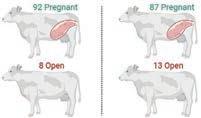
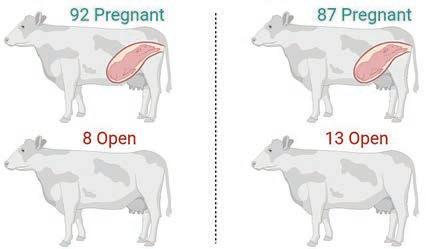
Consider the following example: Bull A has a HP EPD of 10 and Bull B has a HP EPD of 5. If each bull produced 100 heifer daughters, and all other factors were held equal, you would expect an average of five more daughters to become pregnant as heifers from Bull A compared to Bull B (Figure 1). Because reproductive success is a major driver of profitability, even modest differences in heifer pregnancy can add up to measurable economic differences across a cow herd over time.
Bull A
HP EPD = 10
Bull B HP EPD = 5
Difference = 5% or 5 out of 100 daughters
Figure 1: Example interpretation of a two-bull HP EPD comparison. (Pregnancy rates of 92% vs 87% were chosen as an example to display a 5% difference. Exact pregnancy rate outcomes will depend on the individual operation.)
There is a myth that selection for low heritability traits, like fertility, results in little genetic progress. However, it is possible to make improvements in traits like HP using genetic selection tools (EPD and indexes) in combination with sound management. Using an EPD for selection on female reproductive traits is especially important for several reasons: 1) the trait is observed later in life, 2) the trait is sex-limited (not directly observed in males), and 3) the trait has low heritability. For low heritability traits, most of the observable phenotypic differences are due to environment rather than genetics. That means selecting for HP by phenotype alone, instead of an EPD or index, would make genetic progress much slower and less accurate.
Phenotypic Data Reporting for HP
The Total Herd Enrollment (THE) program plays a critical role in collecting the phenotypic data needed to develop and maintain genetic evaluations for maternal traits, including HP. THE is a comprehensive dam inventory program designed to facilitate complete data reporting across contemporary groups. Dam enrollment, calving, and productivity information reported through THE is used to generate the HP phenotypic dataset. A heifer’s phenotype is categorized as either a success or failure of becoming pregnant over an entire 90-day breeding season. Proper dam enrollment, along with correct use of productivity and removal codes, is essential for maintaining accurate phenotypic records.
Genetic Trend in HP
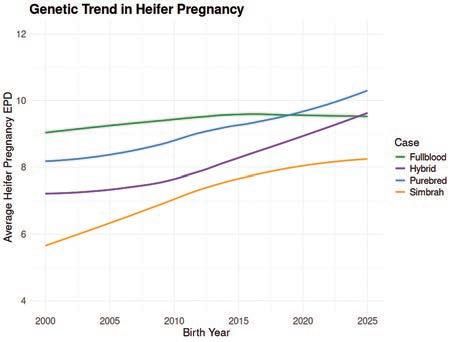
The Simmental population has made genetic improvement in HP over time. Since 2000, the average HP EPD of purebred animals has increased from 8.1 to 10.3 (Figure 2). Although the stand-alone EPD for HP is new, genetic progress in HP has still occurred over the past few decades. As ASA’s All Purpose Index ($API) indirectly incorporates HP (through weightings with correlated traits), selection for improved $API would also drive indirect genetic improvement in HP. Now that a stand-alone HP EPD is available, producers can make more targeted selection for this trait.
2: Genetic Trend in Heifer Pregnancy for the Simmental population.
Using Percentile Rankings to Compare HP EPD
Fullblood
Hybrid Purebred
Simbrah
rankings (%) under the EPD. There is also a percentile ranking table for all EPD available on Herdbook. This number will range from 1 to 99. For HP, larger values are more favorable and will rank closer to 1%, whereas lower numbers are unfavorable and will rank closer to 99%.
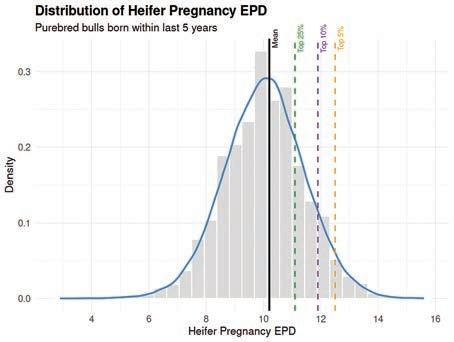
Figure 3 shows the distribution of HP EPD for purebred bulls born within the last five years with lines for the 5, 10, and 25 percentiles. To make genetic progress for HP, select sires that fall on the right side of Figure 3, or have rankings in the top percentage of the population.
Heifer Pregnancy EPD
Figure 3: Distribution of the HP EPD for purebred bulls born within the last five years. Lines for the 5, 10, and 25 percentiles are overlaid on the graph.
Key Takeaways
• The HP EPD available on Herdbook beginning the week of May 18, 2026, gives ASA members a new tool for maternal trait selection.
• The HP EPD predicts differences in the percentage of daughters that will conceive and calve at two years of age, with higher values being favorable.
• Lowly heritable traits, like HP, are heavily influenced by the environment, making phenotype alone a poor indicator of genetic merit; using EPD and indexes leads to faster and more effective genetic progress.
• Genetic trends show steady improvement in HP over time in the Simmental population, and producers can now use the HP EPD and percentile rankings to make more targeted selection decisions. .
References
Snelling, W. M., B. L. Golden, and R. M. Bourdon. 1995. Within-herd genetic analyses of stayability of beef females. J. Anim. Sci. 73:993-1001. doi: 10.2527/1995.734993x.
It can take some time to wrap our minds around a new EPD. Is my animal’s HP EPD good or bad? How does it compare to other sire options? A simple way to answer some of these questions is to look at percentile rankings. On an animal’s Herdbook page, there is a row for percentile
Figure
Most Prolific Donor Cows
by Larry H. Maxey, founder, NAILE Fullblood Simmental Shows
Our Pioneers — “Ike” Part 4
“The proudest thing I can claim is that I am from Abilene.”
At the conclusion of “Ike” Part 3, Eisenhower was en route to Washington, D.C. He had been ordered there after the December 7, 1941, attack on Pearl Harbor. The US was now officially a party to World War II. The War Department desperately needed Eisenhower’s expertise, and they got that and much more.
When I began this set of articles about the life and times of Dwight D. Eisenhower, also known as “Ike,” my intent was not to chronicle the massive number of his achievements during World War II, and later as a two-term president of the United States. Historians and scholars have filled libraries with innumerable works that literally capture the meticulous details of this remarkable man’s life during the period from 1941 through his presidency. What I learned from a study of his life experiences set in motion my attempts to describe his life in the context of a “full circle.” From his humblest of beginnings in a small cattle town, his great fortune to attend West Point, his many mundane years as a low-level military officer and missing out on battlefield experience in World War I, to rising to a fivestar general in World War II, and capping his career by becoming president of the United States, Eisenhower went far beyond his wildest expectations.
You would be hard-pressed to comprise a list of other Americans with the successes and achievements of Eisenhower. In filling out the content of that “full circle” life, it was notably a life of service to his country fully supported by his wife, Mary Geneva Doud, affectionately known as Mamie. They were wed on July 1, 1916, and as mentioned in Part 2, “in the first 35 years of their marriage, they moved 35 times.” That old adage “you can take the boy out of the country but you can't take the country out of the boy” accurately describes Eisenhower. Throughout all of the war years, with the unimaginable duties and responsibilities thrust upon him, he and Mamie dreamed of their “own” home. Eisenhower yearned to be reunited with country living. It was ingrained in his soul.
While Eisenhower became the 34th president of the United States, much like our country’s first president, he and Washington shared their appreciation for agrarian life. Historians described Washington as being obsessed with overseeing his vast land holdings, even during the many years of the American Revolution.
In 1950, Eisenhower and Mamie were visiting longtime friends, George and Mary Allen, in Gettysburg, Pennsylvania. The Eisenhowers confided in the Allens that they wished to purchase a farm. The Allens directed them to the nearby Redding Farm. It needed a lot of attention, but they decided to buy it nevertheless. It was the first and only home they ever owned.
During the four-year restoration of the Redding Farm, Eisenhower ran for president and won. Even though his public life required his residence to be in the White House, his thoughts often were of his Gettysburg farm. At the conclusion of his second term, on January 20, 1961, “a snowy and excessively cold
day in Gettysburg, crowds lined the streets in Lincoln Square to welcome home their favorite citizen. The Eisenhowers had come home to the farm—their own Gettysburg address.” (The Gettysburg Experience.)
The parallels between the first and 34th president’s determination to return to a life and place so pleasing in their thoughts were quite similar. Both men sought the relief, comfort, and peace the land offered.
The farm the Eisenhowers purchased was 189 acres of land, a home, barn, outbuildings, and farm machinery. Also included were 25 Holstein cows, a dozen heifers, and 500 white Leghorn chickens. Unable to be on the farm regularly, Eisenhower had others maintain operations. By 1954, he made the decision to sell the dairy herd, and began breeding high-quality Aberdeen Angus cattle. The bull Ankonian 3551, purchased from New York’s Ankony Farms in 1956, proved to be the perfect foundation sire to build his herd upon. The results from mating 3551 to top Angus cattle led to many cattle shows and championships, from the Pennsylvania Farm Show to the International Stock Show in Chicago (NAILE predecessor). Now, Eisenhower was achieving his “domestic felicity” so often espoused by George Washington. He not only raised prized cattle but also would have carried the honorable title of “planter” as well since numerous crops were planted and harvested on his Gettysburg farm.
Although Eisenhower was actually a “gentleman farmer,” with others actively doing the day-to-day work, he was heavily involved in its operations and planning. He had an interest in the latest farm techniques and implemented many. With declining health, Eisenhower Farm sold its herd in 1966. According to the National Park Service, which preserves the farm and leases land to local farmers, “By the time he passed away in 1969, he truly had left a piece of land better than he found it.”
The “full circle” referenced herein was now complete. A poor boy from the first “lowly cattle town” of Abilene, Kansas, had now come full circle. Eisenhower certainly is worthy of being profiled in the “Our Pioneer” series. Our nation is the beneficiary of his extraordinary sacrifices, perseverance, and dedication to a life of public service. .
Editor’s note: This is the fifty-third in the series Our Pioneers.
Is there a Simmental pioneer who you would like to see profiled in this series? Reach out to Larry Maxey or the editor to submit your suggestions: larryhmaxey@gmail.com • editor@simmgene.com
BULLETINS
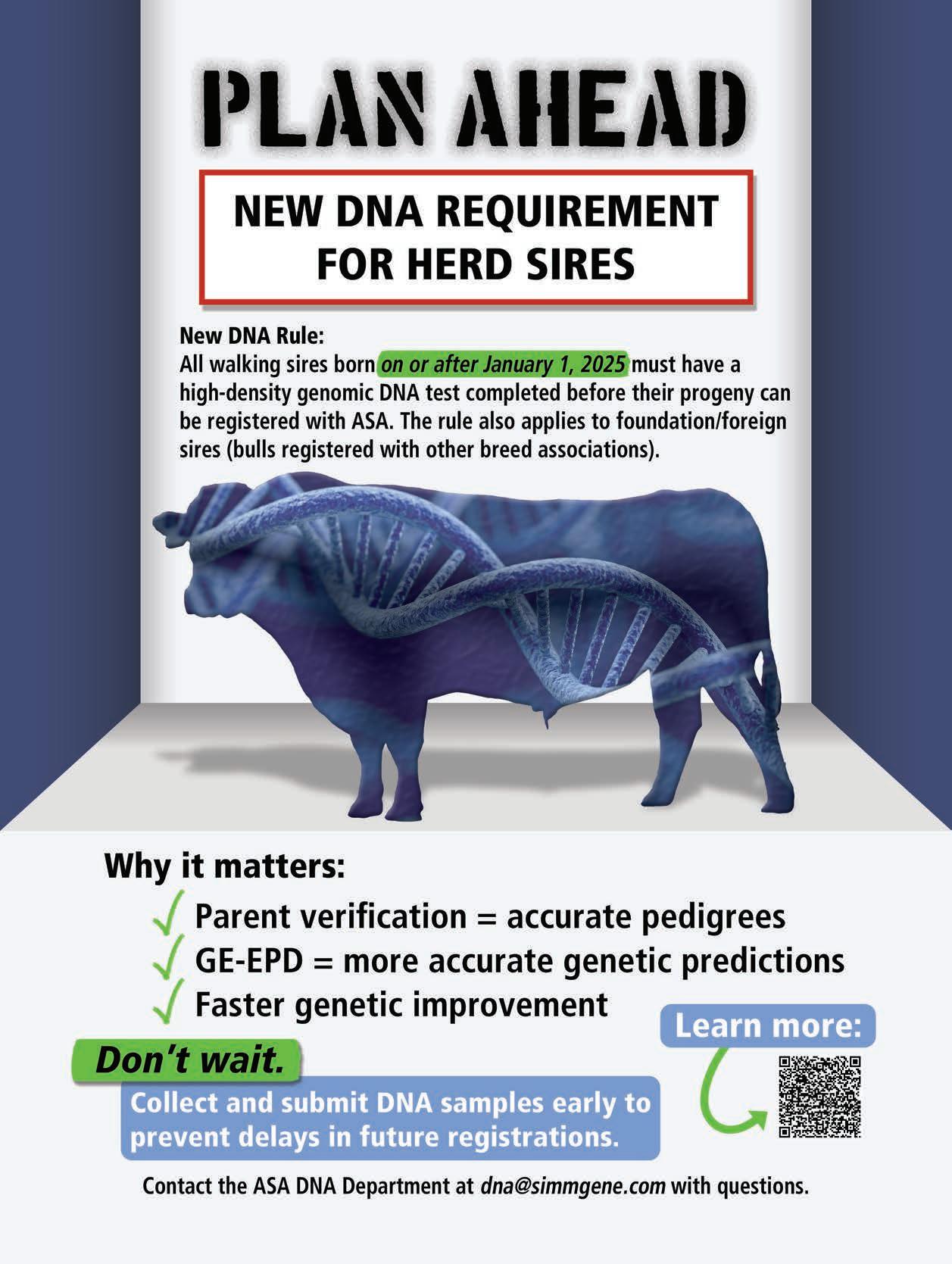
DNA Testing Requirements for Herdsires
In January, ASA membership voted to require a DNA test (GGP-100K genomic panel) on all herd bulls/natural service sires born on or after January 1, 2025. This new rule mimics the current DNA requirement for AI sires and donor dams.
Although the rule change isn’t immediately affecting membership, it is never too early to prepare. By collecting and submitting DNA samples on bull calves born this spring and beyond if they'll go on to sire registered calves, producers can avoid future issues.
ASA Conducts Internal Parentage Audit
As part of our ongoing commitment to industry’s best practices and continuous improvement, ASA is conducting an audit of its DNA parentage verification processes. This effort includes a review of historical parentage records to ensure consistency and reliability as our database continues to evolve with additional testing over time.
Through this audit, we identified a small number of parentage inconsistencies affecting a limited fraction of DNA-tested animals. These cases primarily stem from historical practices in which parentage was verified at a single point in time, often against only one parent, and subsequent additions of a second parent’s DNA did not automatically trigger re-verification. Importantly, this review has no impact on other DNA-based services. Genomically enhanced EPD and trait testing remain unaffected.
If any of your animals are involved in this review, you will be contacted directly by the ASA DNA team with specific information and recommended next steps. The vast majority of these cases are straightforward and can be resolved through standard collaboration, and we are confident in reaching appropriate outcomes.
Members are encouraged to ensure their contact information is current, including email address, mailing address, and phone numbers on all associated accounts, so that ASA staff can communicate efficiently if needed. Keeping this information up-to-date helps ensure timely and accurate communication. If you have questions, please feel free to contact the ASA office at 406-587-4531 and select Option 1.
DNA Test for Bovine Congestive Heart Failure (BCHF) Risk Now Available
A test estimating a genomic prediction for risk for development of Bovine Congestive Heart Failure (BCHF) is now available as an add-on the GGP100K ($9.50) or a standalone test ($19.50). This is not an IGS prediction but molecular breeding value based on the Simplot and Neogen partnership studying heart failure in feedlot cattle. Because this is a molecular breeding value, results will be based solely on the DNA marker information and will not include other pertinent information that goes into EPD like pedigree, breed, and performance records. The test returns a molecular breeding value for risk of progeny developing heart scores correlated to BCHF (lower number is better). The average accuracy of animals tested is 0.32 (standard deviation 0.09). At this time the results will be reported through an email but not uploaded to Herdbook. Please contact Jackie Atkins at jatkins@simmgene.com with any questions.
Seeking Sire Nominations for CMP
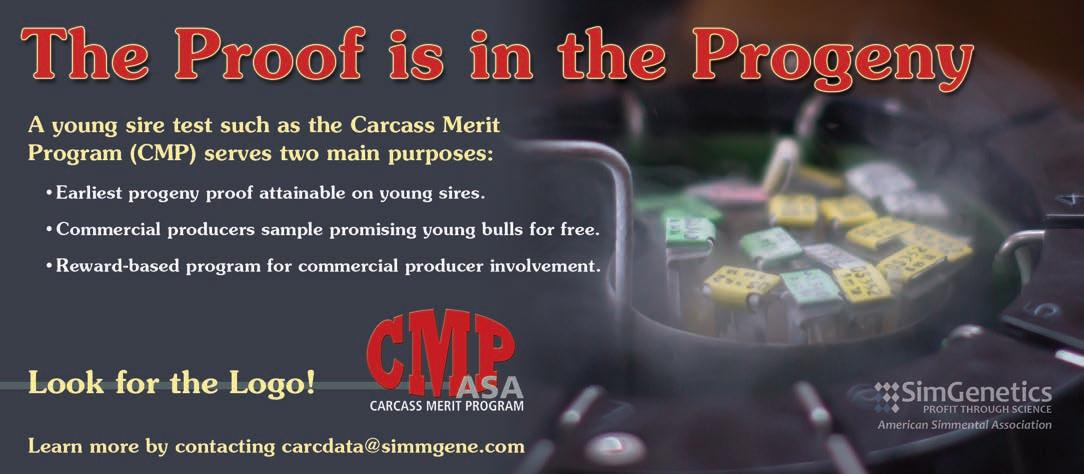
Looking to test your top young sire across different environments? Want to enhance accuracy and gain valuable data on your young sire? The Carcass Merit Program (CMP) is for you! Since 1997, the CMP has relied on select cooperator herds to test sires; however, ASA recently added a new CMP testing avenue, which will allow for MORE SIRES to be tested annually. CMP collects vital carcass data on calves, which improves carcass trait predictions and DNA marker predictions for all cattle in the IGS genetic evaluation, and supports breeders in evaluating their young sires and advancing their genetic programs. If you’re interested in nominating a sire, fill out the nomination form at simmental.org (Programs, ASA Programs, CMP).
Sale Catalog Resources Added to ASA Website
Looking to add some information about EPD and indexes, genomics, the IGS multi-breed genetic evaluation, or the benefits of participating in ASA’s programs to your sale catalog? Look no further! ASA has compiled a folder with various resources like logos, camera-ready ads, and answers to frequently asked questions that can be used in sale catalogs or other marketing materials. Visit www.simmental.org and click on “Sale Catalog Resources” under the Marketing tab to view the material.
Hydrops Update: TraitTrac and a Recommended Marketing Statement
ASA has been investigating a developing genetic condition that causes Hydrops pregnancies in a certain line of Simmental genetics. Here are some updates in relation to this research and ASA’s actions/suggestions:
Hydrops has been added to Herdbook’s TraitTrac with WS All Aboard B80 listed as a documented carrier. At this time there are no genetic holds placed on his descendants as there is not a DNA test available yet. Once there is a test, then Hydrops will follow the same policy as other genetic conditions.
Female progeny who are descendants of or are directly sired by WS All Aboard B80 (ASA# 2852207) are at risk for carrying a genetic abnormality called Hydrops. Daughters may develop a serious condition during late gestation that results in excess fluid in the fetal membrane, which typically causes the loss of the calf and occasionally the dam. There is no current test at this time to identify animals carrying this mutation. Research is ongoing regarding the transmission of the abnormality, and to develop a genetic test. Helping our producers navigate this issue is of the utmost importance to us. Therefore, given that there is neither a full understanding of this condition nor a test, careful consideration should be given regarding the question of whether to breed WS All Aboard B80 descendant females until more information is available to breeders.
For questions regarding established WS All Aboard B80 genetics, Hydrops symptoms, reporting an active case, or additional information, please visit the Hydrops Information Center at www.simmental.org or reach out to Jackie Atkins at jatkins@simmgene.com.
July 15 Deadline Approaching for State Association Programs
With the end of the fiscal year approaching, state associations have until July 15 to submit final cost share and check-off dollar requests. All state association forms and program information can be found at simmental.org. Contact the state association liaison at stateassoc@simmgene.com with questions.
2026 Year-Letter is P
In accordance with the Beef Improvement Federation guidelines, the year- letter animal identification for 2026 is P, and will be followed by R in 2027, and S in 2028. The letter N was the year-letter designated during 2025. Per BIF guidelines, the following letters are not used: I, O, Q, and V.
STATE SCENE
Colorado Junior Simmental Elects Officers
The Colorado Junior Simmental Association elected officers during its annual meeting held in conjunction with the two-day multi-breed field day in Brush, Colorado. President Jayme Gittlein presided over the May 30 meeting, with members electing Easton Hill as president, Adley Blach as vice president, and Jason Dias as secretary. Junior advisors are Nia Hill and Susan Russell. Simmental youth also successfully participated in the various multi-breed skill contests, showmanship, and breed shows during Colorado Breed Bash. A SimGenetics heifer won the Supreme contest that pitted eight breeds in the overall drive. Judge Dustin Frank also picked two more Simmental and SimGenetic heifers in his top five Supreme Female rankings, allowing the breed to dominate the female competition. .
Office Holiday Schedule
Friday, July 3
Fourth of July
Monday, September 7
Labor Day
Thursday, November 26 & Friday, November 27
Thanksgiving
Wednesday, December 23, Thursday, December 24 & Friday, December 25
Christmas .
Several of the Colorado Junior Simmental members, shown, successfully participated in the Colorado Breed Bash, a multi-breed field day on May 30–31, which is designed to help prepare youth for Junior Nationals.
Making the Cut: Why Timing and Method Matter in Castrating Bull Calves
by Paul Vining and Paul Beck, Oklahoma State University Extension
Castration remains one of the most important management practices in beef production, yet the timing and method continue to generate discussion among producers. Castration is a key component of calf preconditioning programs, which are designed to reduce stress, improve health, and enhance performance after calves leave the ranch of origin. Allowing adequate healing time following castration and other procedures is essential to realizing the benefits of preconditioning.
One consistent recommendation across research and veterinary guidance is to castrate calves as early in life as practical. Younger calves generally experience less stress, fewer complications, and recover more quickly than older, heavier animals. Early castration is also associated with reduced risk of sickness, less shrink, and improved overall health during the receiving and backgrounding phases. In addition, performing the procedure when calves are small typically requires less labor and reduces safety risks for both cattle and handlers. From both an animal welfare and management standpoint, earlier is better.
Bulls typically grow slightly faster and produce leaner carcasses than steers due to the effects of testosterone after the bull reaches puberty. However, those advantages come after the normal weaning time and with tradeoffs. Bull carcasses generally exhibit increased toughness, less marbling, and are more likely to result in dark cutters. The quality advantages of steers drives market demand for steers and consistent premiums compared to bulls.
Recent data suggest steers commonly sell for $6 to $15 per hundredweight more than comparable bull calves. For a fresh weaned calf, that can be a difference of $50 to $100 per head or more, which quickly adds up across a calf crop.
Selecting the appropriate castration method depends largely on calf size, labor availability, and management preferences. Surgical castration is fast and reliable, but it creates an open wound and carries risk of bleeding or infection. Elastrator banding uses a small latex band for young light bull calves, and other banding methods that use larger robust bands for bigger calves are bloodless alternatives to surgery. These banding methods restrict blood flow but require careful technique to avoid incomplete castration, and may increase the risk of tetanus if proper vaccination protocols are not followed.
Pain management is another consideration receiving increasing attention from both producers and consumers. Surgical castration causes more immediate, short-term pain, while banding results in less acute but longer-lasting discomfort. Veterinary-approved pain mitigation strategies, such as antiinflammatory medications or local anesthetics, can help reduce stress and improve animal welfare when feasible.
Ultimately, there is no single “best” method for every operation. The most successful programs match the castration method to calf size, perform the procedure early in life whenever possible, and allow adequate recovery time before marketing. Done correctly, castration remains a foundational management practice that supports calf health, carcass quality, and long-term profitability in the beef industry.
Managing Bloat in Beef Cattle
by AJ Tarpoff, DVM, Kansas State University Extension
Under normal function, gases are produced continuously by fermentation in the rumen and are regularly eructated or burped up. There are various scenarios that interfere with normal eructation and gas release in cattle. The outcome is a buildup of gases, distention of the rumen, and then ultimately a life-threatening situation. This is what we refer to as “bloat.”
The distention in the rumen is the primary clinical sign of bloat. Distention is noted in the animal’s left paralumbar fossa (high on the abdomen, behind the ribs, below the spine, in front of the hip). It is very evident if you observe the animal from behind. As the abdomen continues to expand, pressure is put on the diaphragm that increases difficulty to breathe. The pressure also compresses blood flow to the rear of the body leading to weakening rear legs. Without immediate intervention, the animal will suffocate and expire from the buildup of gas in the rumen.
There are two main forms of bloat in cattle: frothy and freegas. Frothy bloat occurs when gas produced from fermentation becomes entrapped in tiny bubbles in a foam-like consistency that cannot be burped out. There are many factors that can lead to this foam creation, but it is often attributed to consuming highly digestible, rapidly degraded soluble proteins in lush growing legumes on pasture. This form is often referred to as “pasture bloat” as that is where it is most often seen, but it can also occur in feedlot cattle depending on the rumen conditions and ration. In pasture scenarios, frothy bloat can be a concern for the entire grazing group.
Free-gas bloat, on the other hand, is typically seen in feedlot or growing scenarios, and involves issues with rumen motility and ability to burp. Free-gas bloat is often associated with bouts of acidosis, or due to vagal nerve entrapment. Acidosis-induced bloats occur by consuming finely ground grains and rapid fermentation leading to rapid gas production as well as reduced pH. Acidosis can cause direct damage to the rumen walls (rumenitis), and also lead to chemo-osmotic changes in the rumen. Both situations interfere with rumen contractility, leading to bloat. Vagal nerve entrapment can also lead to free-gas bloat. The vagal nerve travels through the chest cavity before it enters the abdomen. The vagal nerve sends signals to the rumen and the intestines to control contractions of the smooth muscle. In some situations after a bout of BRD (Bovine Respiratory Disease), the lymph nodes can swell near the lungs (mediastinal lymph nodes) leading to entrapment of the vagal nerve. If the rumen is no longer receiving complete signals to contract correctly, eructation interference occurs leading to bloat. Free-gas bloats are often an individual issue within larger groups.
Regardless of the root cause, bloat is an emergency situation. The goal of treatment is to relieve the pressure on the diaphragm to allow the animal to freely breathe. Ideally, the animal is mechanically restrained, an oral speculum is placed in the animal’s mouth, and a large bore stomach tube is passed through the speculum from the mouth into the rumen. Once the tube reaches the rumen, the gas or froth is immediately expelled, providing relief. In frothy bloat cases, complete alleviation of the bloat cannot be done until the gas trapped in the froth is released. In such cases, some type of surfactant is recommended to break down the foam and release the gas to be belched out. Common products that are used are poloxalene or mineral oil, and are administered orally through the stomach tube. Never drench the
products into a bloated animal, as swallowing ability is often impaired and puts the animal at risk of aspiration pneumonia.
If proper restraint is not available or the animal begins to go down (ultimately to expire), emergency trocarisation may be necessary. A large bloat needle, trocar, or pocket knife can work for this procedure. The tool is stabbed through the skin (high in the paralumbar fossa on the left side of the animal) into the rumen to relieve the pressure. This is a last resort, and veterinary intervention is essential for proper treatment to reduce the likelihood of severe infection in the abdomen, especially if froth was involved.
Relieved bloat cases should be monitored closely for a few days, as re-tubing and therapy for relief is often necessary. For animals that have chronic free-gas bloat, a small surgical fistula can be created by a veterinarian. These fistulas will provide relief to any bloat without intervention for 60–90 days (until they heal over).
Preventing bloat in most cases comes down to grazing and feeding management. For frothy bloat, this can entail utilizing free choice anti-foaming products as well as changing grazing practices to reduce the likelihood of problems. For free-gas bloat, the main goal is to reduce acidotic events and maintain consistent feed intake. Utilizing products like ionophores can moderate intakes to help reduce risk as well. If numerous free-gas bloats occur in a short period of time, it’s essential to investigate water tanks for availability or stray voltage, as well evaluating ration composition for problems.
Bloat is a relatively common issue that can occur on any cattle operation. Cattle producers should all consider prior planning, having the proper tools, and having the practical know-how to alleviate bloat. Your local veterinarian is an excellent resource to ensure you have a proper plan in place.
Mineral Strategies During Heat Stress: What to Watch this Summer
by Andrea Bedford, Bovine Veterinarian
Summer nutrition challenges are no longer limited to keeping cattle cool. As temperatures climb and forage conditions fluctuate, heat stress alters feed intake, grazing behavior, water consumption, and, ultimately, mineral status across the herd. In cow-calf production systems, those changes can show up in subtle ways first: inconsistent mineral intake, rough hair coats, reduced thriftiness, pica, or cattle simply “looking off” long before overt disease appears.
Greg Eckerle, technical services manager with Novonesis, notes that successful summer mineral programs depend on understanding how environmental stress changes both animal behavior and nutrient availability. “Maximizing the potential of what we’re putting out there to meet that animal’s needs is imperative,” Eckerle says.
Heat Stress Changes Intake Patterns
One of the biggest nutritional challenges during summer heat is reduced intake. To cope with heat stress, cattle naturally spend more time near shade and water, and less time actively grazing. This behavioral shift can dramatically affect mineral consumption patterns, particularly in regions facing prolonged heat and humidity.
Because of this, mineral feeder placement becomes critical. Positioning supplements between loafing and watering areas can
increase encounters with mineral sources during the hottest parts of the day. Introducing salt blocks or highly palatable delivery methods, such as lick tubs, can also help maintain consistent intake when cattle are eating less overall.
External stressors can further compound nutritional demands. “The big one for the United States cow-calf industry still remains to be the horn fly,” Eckerle explains. “They will take away more energy because they are big blood feeders.”
These pests worsen stress during already challenging environmental conditions, making targeted fly control a vital component of summer nutritional management.
Drought Changes Forage Quality and Mineral Availability
Heat stress rarely occurs in isolation. In many regions, rising temperatures trigger drought conditions that rapidly degrade forage quality and alter mineral availability throughout the grazing season.
As plants mature or become drought-stressed, digestibility drops and anti-nutritional compounds can become problematic. Water quality simultaneously deteriorates as ponds shrink, often causing sulfur concentrations to spike. These environmental shifts directly interfere with trace mineral absorption, driving up the need for more bioavailable sources.
“Looking away from oxide sulfates trending toward an organic or hydroxy trace mineral will be important as we move into those drier periods,” Eckerle advises.
While forage testing provides a useful baseline for evaluating changing pasture conditions, results should always be interpreted within the context of rapidly shifting weather patterns. Regional differences matter, too: Northern grazing systems may hold forage quality further into the summer, while southern regions typically face earlier forage decline and prolonged heat exposure.
Water
Remains the Foundation of Summer Nutrition
While mineral formulations receive significant attention during summer stress, Eckerle emphasizes water management may ultimately have the largest impact on herd performance. Poor water quality, elevated sulfur levels, toxic algae blooms, and inadequate access can all worsen heat stress and further suppress feed intake.
Clean, accessible water sources are the ultimate defense during high-stress periods, as dehydration triggers a cascading wave of nutritional and health issues. As Eckerle notes: “Water is the first limiting nutrient for all living things.”
How to Adjust Mineral Programs during Heat Stress
Because pasture, water, and intake patterns shift rapidly during a scorching summer, mineral programs cannot remain static. Producers and veterinarians should actively collaborate throughout the season to:
• Evaluate forage and water quality shifts regularly
• Monitor daily mineral intake patterns
• Assess cattle behavior, grazing habits, and physical appearance
• Troubleshoot early signs of declining performance
• Align mineral formulations with current, real-time environmental conditions
Periods of intense heat are also the right time to audit practical management setups — ensuring optimal feeder placement, aggressive fly control, easy water access, and highly palatable mineral options. .
CUTTING EDGE
The Hamburger Story
by Derrell S. Peel, Oklahoma State University Extension Livestock Extension
As total beef production falls and beef prices increase to record levels, demand for ground beef increases. In 2025, a 3.6% decrease in beef production was offset by increased net beef imports, holding total per capita beef consumption steady with the previous year. Per capita beef consumption for 2025 was estimated at 59.8 pounds per person. Total beef production thus far in 2026 is down 6.2%, and is expected to be down three to four percent points annually for the year, with per capita beef consumption declining despite additional beef imports this year.
A breakdown of beef consumption shows that per capita supplies of ground beef increased in 2025 to the highest level since 2004. Ground beef supplies were estimated at 28.6 pounds per person, up 0.61 pounds per person. Remaining beef consumption (carcass) was estimated at 31.2 pounds, down 0.44 pounds per person (Figure 1).
Figure 2 shows that ground beef currently makes up the highest percentage of total beef consumption back to 2003 and is probably at a record level in the US. Ground beef consumption has increased simultaneously with record ground beef prices. This happens because ground beef is still the beef product that consumers turn to when beef prices generally rise. Since 2022, the average wholesale price across 39 beef products has been an increase of over 44%. However, wholesale ground beef prices have increased over 57% over the same period.
The challenges of meeting ground beef demand are substantial. Ground beef utilizes fatty trimmings from fed cattle and lean trimmings from cull cows and other sources. Total cow slaughter
decreased 28.7% from 2022 through 2025, leading to a 24.8% decrease in nonfed beef production. This is the primary source of lean processing beef used in ground beef mixtures. There are a multitude of ways to prepare ground beef mixtures but a ratio of seven pounds of 90% lean to one pound of 50% lean is representative of a common 85% lean ground beef mixture. This means that seven pounds of cull cow-type beef is required for each pound of trimmings from fed steers and heifers. Fed carcasses produce 150–250 pounds of trim, which means that the lean trim from three to four cull cows is needed to utilize all of the fatty trimmings from each fed carcass. Not enough cow beef is available, and lean supplies are routinely supplemented by imported lean. Over the past 20 years, an average of 25% of total trim used for ground beef has been from imported beef. In 2025, imported trim accounted for an estimated 38.7% of total ground beef trim, leading to the domestic lean share of trim at the lowest level in more than 20 years — currently 61.3% (Figure 3). Increased imported trim in the current market is important to support the value of fatty trimmings from fed cattle.
Maintaining the ground beef market is critical in the current situation. Consumer demand for ground beef is high and the ability of beef to be competitive with other proteins depends on ground beef — and fast food demand for hamburgers, in particular.
Could Seaweed Work in Cattle Diets?
by Andrea Bedford, Bovine Veterinarian
Scientists have discovered cattle and other ruminants already harbor gut microbes capable of digesting compounds from seaweed, even when the animals have likely never been exposed to it before. The finding suggests the ruminant microbiome may be far more adaptable to alternative feed ingredients than previously believed, an important insight as the livestock industry explores seaweed-based methane reduction strategies.
The work led by Wade Abbott, a research scientist with Agriculture and Agri-Food Canada based in Lethbridge, Alberta, and published in Nature Communications , examined how the gut microbiomes of cattle responded to diets containing the red seaweed, Mazzaella japonica. Researchers found the populations of specialized bacteria in the gastrointestinal tract rapidly expanded in response to the seaweed and activated enzyme systems capable of breaking down carrageenan, a complex polysaccharide found in red seaweed.
The discovery adds a new layer to the growing conversation around seaweed supplementation in cattle diets. While some
seaweed species have attracted attention for their potential to reduce enteric methane emissions, questions have remained about how effectively ruminants can digest marine-derived carbohydrates.
Researchers found:
• Cattle already harbor gut microbes capable of digesting carrageenan
• Seaweed feeding increased populations of carrageenandegrading Bacteroides
• Most carrageenan digestion occurs in the lower gut, not the rumen
• Similar microbial pathways were identified across multiple ruminant species
• Ruminants may adapt more readily to seaweed-based feeds than previously believed
Researchers Identify Carrageenan-Digesting Gut Bacteria in Cattle
The researchers identified specific gut bacteria, particularly members of the Bacteroides genus, that flourished after cattle consumed the red seaweed supplement. These microbes carried clusters of genes known as carrageenan polysaccharide utilization loci, or CarPULs, which encode specialized enzymes capable of degrading carrageenan.
What surprised the team most was how widespread these pathways appeared to be. After analyzing public microbiome datasets from multiple herbivore species, they identified similar carrageenan-digesting genes in cattle, sheep, goats, buffalo, deer, yak, giraffes, and several other mammals. Comparable pathways were even detected in humans and great apes.
The findings suggest these seaweed-digesting capabilities may represent an ancient and conserved microbial trait, rather than a recent adaptation to marine feed exposure. This indicates ruminant microbiomes may already possess dormant metabolic pathways capable of responding to entirely new feed ingredients.
Seaweed Digestion Happens Mainly Outside the Rumen
One of the more unexpected findings was where the digestion appeared to occur. The rumen microbiome showed relatively modest changes following seaweed feeding. In contrast, fecal microbiomes shifted dramatically, with strong enrichment of carrageenan-degrading Bacteroides populations. That observation suggests carrageenan digestion may occur primarily in the lower gastrointestinal tract.
This distinction could become important for future feed formulation work. Many discussions around methane-reducing feed additives focus heavily on rumen interactions, but the study highlights downstream sections of the gut may also play a major role in how alternative ingredients are processed biologically.
The work also reinforces the idea that the ruminant digestive system functions as a highly interconnected microbial ecosystem rather than a rumen-only fermentation chamber.
Why Do We Care about Seaweed?
Interest in seaweed supplementation has expanded rapidly over the past several years because certain marine algae species have demonstrated the ability to suppress methane production during ruminal fermentation.
Methane reduction strategies have become a major research priority globally as livestock industries face increasing pressure
to reduce greenhouse gas emissions while maintaining productivity. However, introducing seaweed into terrestrial livestock systems presents both practical and biological challenges. Seaweed polysaccharides differ substantially from the plant fibers cattle have evolved to consume, and scientists have questioned whether ruminant microbiomes could adapt efficiently to these novel substrates.
This new study suggests the adaptation hurdle may be lower than expected. Rather than requiring entirely new microbial communities, cattle may already harbor low-abundance microbes equipped to process seaweed compounds when dietary conditions change.
Scientists Characterize
Specialized Seaweed-Digesting Enzymes
Researchers isolated live bacterial strains capable of growing on carrageenan as their sole carbon source and characterized several carrageenase enzymes involved in digestion. Some enzymes targeted specific forms of carrageenan, including κ-carrageenan and ι-carrageenan, while others acted on hybrid structures.
The team also resolved the crystal structure of one enzyme to better understand how it recognizes sulfate-rich polysaccharides. The structural analysis showed the enzyme contains highly specialized binding regions that allow it to distinguish between different carrageenan types based on their sulfate positioning and molecular shape.
“We’re only beginning to understand the genetic mechanisms that allow gut microbes to process these marine sugars,” Abbott said in a press release. “If we can map those pathways fully, the applications go well beyond cattle. We’re talking about a new framework for sustainable agriculture, one that embraces unconventional feed sources and works with the biology that’s already there, waiting to be activated.”
These newly identified enzymes could eventually have applications in:
• Feed innovation
• Food processing
• Biotechnology
• Biofuel production
• Industrial polysaccharide modification
What
this Research Reveals about the Cattle Gut Microbiome
This research highlights a broader concept increasingly shaping microbiome science: many microbial functions may remain effectively hidden until environmental conditions activate them.
The authors describe these pathways as part of the microbiome’s functional “dark matter,” meaning genetic capabilities are present within microbial communities but not always actively expressed.
As feed systems evolve in response to sustainability pressures, climate goals, and alternative ingredient development, the adaptability of the gut microbiome may prove to be one of the industry’s most valuable biological assets.
While substantial work remains before seaweed supplementation becomes a standardized commercial feeding strategy, the study provides evidence that the microbial foundation for adaptation may already exist within cattle themselves. .
China Suspends JBS Beef Plant over Hormone Detection
China has suspended beef imports from a plant belonging to JBS, the world’s largest meatpacker, in the northern Brazilian city of Vilhena, Reuters reported, citing Brazilian news outlet Globo Rural on Friday. The suspension comes after the detection of progesterone, a growth-promoting hormone, in shipments sent by the Brazilian company’s plant to China, Globo Rural said, citing a source. China’s General Administration of Customs (GACC) informed Brazilian authorities about the move on Tuesday, Globo Rural added.
JBS and Brazil’s Agriculture Ministry did not immediately respond to a request for comment. This makes the Vilhena plant the fifth Brazilian beef plant, and JBS’ second, currently suspended from exporting to China, according to Globo Rural.
Brazil Now US’s Biggest Imported Beef Supplier
After 40 years as the principal supplier of imported beef to the United States, Australia has been tipped-out of the top position in recent months by Brazil. Brazil’s exports to the US this year have
NEWSMAKERS
Rose Oie Joins ASA as Communications Intern
Rose Oie is a recent graduate of the University of Wyoming (UW), where she earned a BS in agricultural communications with a minor in music. Originally from North Dakota, Rose grew up with her four brothers on her family’s thirdgeneration registered Angus operation, Wendel Livestock, near LaMoure. Her upbringing on the ranch turned into a lifelong passion for the beef industry.
Growing up, Rose was actively involved in 4-H, FFA, and the American Junior Angus Association. In 2023, she served as National Miss Agriculture USA, where she built a platform on transparency and consumer confidence within the livestock industry. During her time at UW, she served as president of the Wyoming Collegiate Cattle Association and competed on both the livestock judging and meat animal evaluation teams. This past summer, she gained valuable experience as the communications intern for the Wyoming Stock Growers Association.
Now residing in Scobey, Montana, Rose is excited to build relationships within her rural community and establish her own registered Angus herd alongside her husband, Colter. In her free time, she enjoys helping as a florist, playing volleyball, and freelancing for livestock magazines and newsletters. Whether she’s behind a camera, creating content, or writing stories, Rose is beyond excited to join the Simmental team and contribute to the communication mission as it becomes more important to the beef industry than ever before. .
grown dramatically, driven by the big deficit in US domestic beef production as the US herd hits 70-year lows, and adjustments to tariff terms made by US president Donald Trump.
March exports from Brazil to the US reached 61,000 tons (measured as carcass weight equivalent, not boneless) compared with 54,000 tons from Australia. January and February exports showed a similar trend. Brazil operates under a tightly restricted ‘Other Country’ quota into the United States, filling the entire available quota for this calendar year by 6 January.
Unlike Australia, which has options in other large, well-paying markets like Japan and South Korea, Brazil has fewer export options once China trade becomes more expensive in coming months. “The Brazil tonnage is supplementing the reduction in US domestic production, and is gradually being accepted in more food service and manufacturing channels, but less-so in retail,” a meat trade source said on Friday.
With some analysts now suggesting herd recovery in the US will take another three to five years, at best, Brazil is likely to occupy a considerable chunk of the US imported beef market for the foreseeable future.
Lumpy Skin Disease Threat Heightens in Italy
The number of outbreaks of lumpy skin disease in Sardinia has risen to three, according to confirmation from the Experimental Zooprophylactic Institute of Abruzzo, an Italian reference center.
According to the national veterinary epidemiological bulletin, the number of infected animals increased from five (all calves born to vaccinated mothers) to seven: four have died, and the carcasses have already been disposed of. The cases were detected on three farms, which together house 178 cattle.
Upon discovering the first case two months after the sixmonth ban on animal movements, the regional health department, led by Alessandra Todde, reassured: “The situation is under control.”
But these reassurances aren’t enough to allay the anxieties and fears of politicians and farmers. “We cannot afford to underestimate what is happening: the resurgence of lumpy skin disease in Sardinia is a very serious alarm bell for the entire agricultural and livestock sector on the island,” said regional councilor Emanuele Cera of the Italian Democratic Party (FdI). He formally requested an urgent joint meeting of the Productive Activities (of which he is vice president) and Health committees to analyze the emergency and review the actions already undertaken or to be implemented immediately.
“The news of new outbreaks, with animals already dead and the concrete risk of the virus spreading, should not cause alarm, but neither should they leave us indifferent. We are facing a situation that could rapidly degenerate, with very serious economic consequences for farmers and the entire Sardinian rural economy,” he emphasizes. “We need clarity on what is happening, on the measures adopted and on those still missing, given the resurgence of the viral disease. It is essential to involve all the relevant authorities, from veterinary services to trade organizations, to convey our considerations to the ministry.”
According to Cera, “we need to identify adequate extraordinary funds to support farmers and strengthen containment measures. Any delay risks turning a health emergency into a fullblown economic crisis. The Region must be ready.” .
To learn more about the CMP visit www.simmental.org, then click Carcass Merit Program under the ASA Programs tab.
Questions, contact cmp@simmgene.com for more information regarding this program.
The American Simmental Association Carcass Merit Program (CMP) is the beef industry’s most demanding and informative young sire test. The program is a hallmark of ASA breed improvement for economically relevant carcass traits. Commercial producers play an integral part in this project.
Participants receive:
u $200 for each AI-sired calf with carcass information
u Free semen on top young herdsires
u Free ASA Genetic Evaluation on your cow herd
u Free genotyping on terminal progeny
u Keep any or all replacement females
Become a Carcass Merit Program test herd today
*The CMP is a structured young sire progeny test. Participating cooperator herds will random sample their cow herd with CMP semen, and the resulting male (or female) progeny will be harvested with individual carcass data gathered. ASA Staff will work with cooperator herds to provide bulls that fit the general criteria of your management program; however, only bulls nominated into the CMP program may be used. Producers are encouraged to be somewhat proficient in Microsoft Excel for accurate and consistent record-keeping.
Benda Ranch’s Annual Production Sale
February 9, 2026 • Kimball, SD
No. Category Average
54 Bulls
Auctioneer: Justin Tupper, SD
$9,240
Sale Representatives: Cattle Business Weekly, Tri-State Livestock News, and DVAuction.
Representing ASA: Ken Odde
High-Selling Lots:
$21,000 – PB SM Bull, “JBS Mr. Eagle 905N,” s. by Hook`s Eagle 6E, sold to Dylan Mohnen, White Lake.
$16,000 – PB SM Bull, “JBS Mr. Dakota 920N,” s. by KRJ Dakota Made J172, sold to Tom Gorzalka, Clearmont, WY.
$16,000 – 3/4 SM 1/4 AN Bull, “JBS Mr. Genesis 902N,” s. by LBRS Genesis G69, sold to Tom Gorzalka, Clearmont, WY.
$13,750 – PB SM Bull, “JBS Mr. Rest Easy 312N,” s. by W/C Rest Easy 752G, sold to Tom Gorzalka, Clearmont, WY.
$13,500 – 1/2 SM 1/2 AN Bull, “JBS Mr. Growth Fund 035N,” s. by Deer Valley Growth Fund, sold to Dale Miles, Montrose.
$12,750 – 1/2 SM 1/2 AN Bull, “JBS Mr. Growth Fund 930N,” s. by Deer Valley Growth Fund, sold to Greg Wettlaufer, Winfred.
$12,500 – 5/8 SM 3/8 AN Bull, “JBS Mr. Earl 639N,” s. by 3BS Earl 90G, sold to Nick Strand, Platte.
$12,500 – PB SM Bull, “JBS Mr. Hilger 061N,” s. by GW Hilger One 454H, sold to Brian Keiner, Chamberlain.
Cattlemen’s Kind Bull Sale
March 5, 2026 • San Saba, TX
Auctioneer: Jordan Cattle Auction, TX Representing ASA: Ben Spitzer
Kentucky Beef Expo Simmental Sale
March 7, 2026 • Louisville, KY
Auctioneer: Thomas Carper, VA
Sale Manager: DP Sales Management, LLC, KY High-Selling Lots:
$9,525 – Embryos out of, “JSUL Oh Boy Reba 0267G,” s. by THSF Lover Boy B33, cons. by Sullivan Farms, IA; sold to Franklin Cattle and Ridgeland Cattle, KY.
$9,000 – Open Female, “Dotson Georgina N13,” s. by Mr HOC Broker, cons. by Brew Time Simmentals, KY; sold to John Justice, TN.
$8,500 – Bull, “JCCO Country Mile 108N,” s. by JCCO All Terran 35K, cons. by Johnson Cattle Co., IL; sold to Terry Ruf, KY.
$7,500 – Bred Female, “Lady of Change CK,” s. by Holtkamp Change Is Coming, bred to THSF Lover Boy B33, cons. by Kinsella Farms, IL; sold to Woodlawn Farm, GA.
$7,000 – Open Female, “CMFM/RP Sheza Blackbird,” s. by Rocking P Private Stock, cons. by Circle M Farms and Rocking P Livestock, sold to Bruce Petow, KY.
$7,000 – Bred Female, “BF/BCII TL 3 Aces Selena M034,” s. by SO Remedy, bred to THSF Lover Boy B33, cons. by 3 Aces Cattle, TN; sold to Lundy Farms, KY.
R.A. Brown Ranch’s 11th Annual Bull and Female Sale
March 11, 2026 • Throckmorton, TX
$10,717
Auctioneers: Doak Lambert and Trent Stewart, TX
Representing ASA: Ben Spitzer
Comments: Also selling were nine registered Red Angus females at an average of $8,000.
Sale offering was well received by many repeat and new buyers. Looking over the offering.
The auction block. Capacity crowd on hand.
Yardley Cattle Company’s 54th Annual Bull Sale
March 14, 2026 • Beaver, UT
No. Category
133 SM and SimAngus Bulls
Auctioneer: Steve Bonham, New Castle, OK
$8,864
Marketing Representatives: Dustin Markham, DVAuction; Craig Talkington, Greg Goodram, and Brian Davis.
Representing ASA: Bill Zimmerman
Comments: Also selling were 15 PB Angus bulls at an average of $8,067 and three Maintainer bulls at an average of $5,067.
3C/NLC 55th Annual Bull Sale
March 20, 2026 • Wessington, SD
Auctioneer: Dustin Carter, Vermillion Sale Staff: Jeff Kapperman, Tri-State Neighbor; Kadon Leddy, Cattle Business Weekly; Kelly Klein, Tri-State Livestock News; Justin Dikoff, DVAuction; Wade Christensen, Kimball Livestock Exchange; Chris Effling; Jim Scheel; and Jeremie Ruble, Special Assignment. Representing ASA: Bill Zimmerman
High-Selling Lots:
$29,500 – 3/4 SimAngus Bull, “5228N,” s. by 3C Kilo 2216K, sold to Mallett Simmentals, Lampasas, TX.
$27,500 – PB SM Bull, “5176N,” s. by 3C Heath 0604H, sold to Ashworth Farm and Ranch, Oungre, SK.
$16,000 – 3/4 SM Bull, “5311N,” s. by 3C Fine 8587F, sold to Pat Crampton, Pretty Prairie, KS.
$16,000 – PB SM Bull, “561N,” s. by 3C Kinetic 2355K, sold to Frank Imhof, Pleasanton, CA.
$15,000 – 5/8 SM Bull, “5153N,” s. by 3C Heath 0604H, sold to Mike and Staci Aesoph, Highmore.
$15,000 – 5/8 SM Bull, “5153N,” s. by Clemson Elite 41J, sold to RL Fleckvieh Limerock Ranch, Russell, IA.
$7,000 – PB SM Open Heifer, “5517N,” s. by LCDR Anthem, sold to Jason Lee, Fergus Falls, MN.
$6,000 – PB SM Open Heifer, “575N,” s. by TRIF Kip 205K, sold to Joel Purdy, Summit.
Black Summit Annual Bull Sale
March 20, 2026 • Powell, WY
Auctioneer: Kyle Shobe, MT
Sale Manager: Allied Genetic Resources (AGR), IL
Marketing Representatives: Marty Ropp (AGR); Corey Wilkins (AGR); Rocky Forseth (AGR); Bo Beevis, Wyoming Livestock Roundup; Matt Wznick, Western Ag Reporter; and Derek Lachenmeier, Western Livestock Journal. Representing ASA: Andy Roberts
High-Selling Lots:
$40,000 – 5/8 SM, “BSUM 510N,” s. by BSUM Summit 303L, sold to Small Livestock, Winnemucca, NV.
$21,000 – 5/8 SM, “BSUM 5101N,” s. by BSUM Summit 303L, sold to Walking 5 Ranch, Broadview, MT.
$17,000 – 5/8 SM, “BSUM 5103N,” s. by CLRS Homeland 327H, sold to Walking 5 Ranch, Broadview, MT.
$17,000 – 3/4 SM, “BSUM 512N,” s. by Bridle Bit Resource G9117, sold to Lucase Cattle Co., Cross Timbers, MO.
$16,000 – 5/8 SM, “BSUM 5121N,” s. by Bridle Bit Blackout K249,” sold to Lee Grain and Livestock, Billings, MT.
Beautiful day for evaluating bulls.Sale host John Christensen welcomes the crowd.
Lining up for bidder numbers. Loading up after the sale.
Sale host Steven Yardley visits with Bill Zimmerman.
Gib and Steven Yardley.
Inside the unique sale facility. Good-sized crowd in attendance.
SALE RESULTS
(Continued from page 43)
Eastern Spring Classic Sale at the Ohio Beef Expo
March 21, 2026 • Columbus, OH
No. Category
89 Total Lots
Auctioneer: Ron Kreis, OH
Sale Manager: DP Sales Management, LLC, KY
High-Selling Lots:
$6,377
$20,000 – Cow/Calf Pair, “BOSC Summer M367,” s. by STCC Tecumseh, Calf s. by W/C Satisfied, cons. by Bosse Cattle, OH; sold to Kathryn Reed, OH.
$17,500 – Bull, “FSCI Loverboy N541,” s. by THSF Lover Boy, cons. by Ferguson Cattle Co., OH; sold to Harley Hamilton, OH.
$17,000 – Cow/Calf Pair, “FFSC Penny 100M,” s. by Mr HOC Broker, Calf s. by THSF Lover Boy, cons. by Fedderke Farms Show Cattle, OH; sold to Adelman Farms, OH.
$13,750 – Open Female, “JCCO Raya 27N,” s. by WLE Real World, cons. by Johnson Show Cattle, IL; sold to Jackson Merritt, IL.
$13,500 – Bull, “JCCO Bar None 20N,” s. by WINC All Right, cons. by Johnson Cattle Co., IL; sold to C-Mor Beef, IL.
Griswold Cattle’s Grass to Grid Bull and Female Sale
March 27, 2026 • Stillwater, OK
No. Category Average
195 Bulls
Auctioneer: Steve Bonham, OK
Representing ASA: Ben Spitzer
$14,060
Clear Choice Bull Sale
March 28, 2026 • Milan, IN No. Category Average
71 Lots
Auctioneer: Thomas Carper, VA Sale Manager: DP Sales Management, LLC, KY High-Selling Lots:
$6,353
$16,000 – Bull, “CLRWTR Woodford N5105D,” s. by WHF/JS/CCS Woodford, cons. by Clear Water Simmentals, sold to Dennis Hanzlik, NE.
$15,500 – Bull, “BESH Winchester M1013,” s. by RP/BCR Eminence H005, cons. by Beshears Simmentals, sold to Trennepohl Farms, IN.
$14,500 – Open Female, “BESH Ms Just Me N050,” s. by ZTGC Just Cuz 52K, cons. by Beshears Simmentals, sold to Moore Land and Cattle, IL.
$11,500 – Open Female, “CLRWTR Dakotas Dream N13R,” s. by Black Ace Double Run 4/8, cons. by Clear Water Simmentals, sold to Rebecca Ellington, KY.
$11,250 – Bull, “CLRWTR D2C M4S,” s. by JSUL Dare to Compare, cons. by Clear Water Simmentals, sold to Wayward Hill Farm, KY.
T-Heart Ranch’s High-Altitude Bull Sale
March 28, 2026 • La Garita, CO No. Category Average 130 SM and SimAngus Yearling Bulls $10,415
Auctioneer: Charly Cummings, Yates Center, KS
Sale Manager: Allied Genetic Resources (AGR), IL
Marketing Representatives: Marty Ropp (AGR); Corey Wilkins (AGR); Jared Murnin (AGR); CattleFax, DVAuction, Superior Livestock, and Western Ag Reporter
Representing ASA: Susan Russell
Comments: The PAP-tested offering was from T-Heart Ranch and Cambell Simmentals.
Inside the sale facility.
Looking over the offering.
Prospective buyers sort through the PAP-tested offering.
Robert Campbell and Shane Temple discuss their offering.
Shane Temple, Charly Cummings, and Corey Wilkins on the auction block.
Clear blue skies on sale day.
Hilbrands Cattle “Passion For Perfection” Online Sale
March 31, 2026 • SC Online Sales
Cow/Calf Pairs
Sale Manager: Eberspacher Enterprises Inc., MN
High-Selling Lots:
27th Annual Belles and Bulls of the Bluegrass Sale
April 4, 2026 • Lexington, KY
$10,215
$15,500 – “HILB A Tale Unleashed,” s. by Harkers Unleashed, sold to Billingsley Simmental, KY.
$15,500 – “HILB Blessed Vision M101E,” s. by VCL Foresight, sold to Fenton Farms, OK.
$14,000 – “STCC Diane 203M,” s. by STCC Tecumseh 058J, sold to Tanner Garrison, OK.
$13,500 – “HILB Electric Affection 109F,” s. by LLSF Vantage Point F398, sold to Kevin Winter, KS.
$13,000 – “HILB Double The Blessings,” s. by WHF/JS/CCS Double Up G365, sold to Matt Struss, MN.
$12,500 – “HILB/WCS Strawberry Blossoms,” s. by JSUL Something About Mary 8421, sold to Hanzlik Simmentals, NE.
$11,500 – “HILB/WWS Just One Look M010D,” s. by VCL Foresight, sold to Michael Sullivan, IL.
$11,500 – “HILB Ever N Always K872,” s. by W/C Executive Order 8543B, sold to Jason and Stephanie Rose, MN.
Roller Ranch’s 3rd Annual Bull and Female Sale
April 1, 2026 • Hewitt, MN
Auctioneer: Jered Shipman, TX
Sale Manager: Innovation AgMarketing, LLC, KS
Sale Representatives: Tony Heins, Western Ag Reporter
Representing ASA: Russ Danielson
High-Selling Lots:
$27,000 – PB SM Bull, “ROLR Mr Journeyman 227N,” s. by OMF Journeyman J24, sold to CK Cattle Company, Highmore, SD.
$26,000 – SimInfluenced Bulll, “ROLR Mr Next Level 220N,” s. by Next Level, sold to Yardley Cattle Company, Beaver, uT.
$18,000 – PB SM Bull, “ROLR Mr Journeyman 203N,” s. by OMF Journeyman J24, sold to Windy Creek Cattle Company, Spencer, SD.
$14,000 – PB SM Bull, “ROLR Mr Counterstrike 264N,” s. by KCC1 Counterstrike 2700K, sold to Mark Cotton, Orient, SD.
Auctioneer: Tommy Carper, IN
Marketing Representatives: Ryan Haefner, Dalton Lundy, Brent Tolle, Thomas Lundy, Lydell Meier, Todd Alford, Chad Joines, and Mike Berger. Representing ASA: Dr. Ben Crites
High-Selling Lots:
$90,000 – PB Bull, “WHF Risen N382,” s. by WHF Point Proven H45, sold to CK Cattle Co., Highmore, SD.
$42,000 – PB Bull, “WHF In Charge M414,” s by Bridle Bit Recharge K256, sold to A&A Cattle, Mt. Sterling.
$29,000 – PB Bull, “WHF Whiskers M410,” s. by Bridle Bit Recharge K256, sold to Dennis Moore, Jerseyville, IL.
$28,000 – PB Open Female, “WHF Delilah 513N,” s. by WHF/JS/CCS Woodford J001, sold to Scott Roberts, Athens, TN.
$22,000 – PB Bull, “Swain Relax C503N,” s. by Swain Advocate C309L, sold to Buck Creek Ranch, Yale, OK.
$22,000 – PB Bull, “WHF Sentinel N454,” s. by Swain Sentinel C102J, sold to Brent Mithoefer, Lafayette, IN.
$22,000 – half interest in Donor, “WHF Delilah 454H,” s. by KCC1 Exclusive 116E, sold to Mike Byers, Nicholasville.
$19,000 – 1/2 SM 1/2 AN Open Female, “WHF Delilah 515N,” s. by Rose MC Encore 0463, sold to Ashlyn Popp, Versailles.
$18,000 – PB Cow/Calf Pair, “WHF Delilah 406M,” s. by OMF Journeyman J24, sold to Bill Kaiser, Shelbyville.
Comments: Also selling was one Embryo Lot for $4,500. Sale hosts were Wayward Hill Farm and Swain Select Simmental.
The 15th Annual Gathering at Shoal Creek
April 4, 2026 • Excelsior Springs, MO
Auctioneer: Chisum Peterson, SD
Sale Manager: Eberspacher Enterprises Inc., MN
Marketing Representatives: Mike Sorensen; Bruce Brady; Buddy Robertson; Matt Owen; Brice Conover, Lee AgriMedia; and Wyatt Durst, CCi.Live.
(Continued on page 46)
Looking over the offering with sale host, Brent Roller. Family introductions from the auction block.
SALE RESULTS
(Continued from page 45)
Shoal Creek (continued)
High-Selling SimInfluenced Lots:
$19,000 – PB Open Female, “SC Mary N24,” s. by LLSF Dauntless K07, sold to Chase Litton, MO.
$11,500 – PB Cow/Calf Pair, “TESF Marley 209M,” s. by OMF Epic E27, Heifer Calf s. by LLSF Double Time K30, sold to Bill Robinson, OK.
$10,250 – PB Cow/Calf Pair, “TESF Lady Liberty L40,” s. by HILB Oracle C033R, Heifer Calf s. by LLSF Double Time K30, sold to Erica Graessle, MO.
$10,000 – PB Bull, “SC High Profile M109,” s. by LLSF High Profile J903, sold to Erickson Stock Farm, MO.
$9,750 – PB Cow/Calf Pair, “SC Donna M25,” s. by RVR Revolution 063K, Heifer Calf s. by KBHR Bold Ruler H152, sold to Gonsior Simmental, NE.
$9,700 – 1/2 SM Bull, “SC Capital Gain N10,” s. by Deer Valley Growth Fund, sold to C Bar J Back Simmental, MO.
$9,500 – 1/2 SM Commercial Bull, “SC High Profile M110,” sold to Matt Friedrich, MO.
$9,500 – PB Bull, “SC Revolution M134,” s. by RVR Revolution 063K, sold to Perry Vandiver, MO.
Comments: Also selling were four Red Angus fall open females at an average of $5,975. Guest breeders included Vestlane Farms and Erickson Stock Farm.
Lucas Cattle Company’s Spring Bull Sale
April 11, 2026 • Cross Timbers, MO
High-Selling Lots:
$34,000 – SimAngus Bull, “Lucas Notorious N229,” s. by 44 Victory, sold to T Heart Ranch, CO.
$19,000 – SimAngus Bull, “Lucas No Limits,” s. by E&B Wildcar, sold to Trails End Simmentals, MN.
New Day Genetics’ Spring Sale
Auctioneer: Matt Printz, NE
Sale Manager: Allied Genetic Resources (AGR), IL
Marketing Representatives: Marty Ropp (AGR); Corey Wilkins (AGR); Ted Cunningham (New Day); Bruce Bradley and Brady Hagler. Representing ASA: Mike Smith
Heartland Simmentals’ Performance with Class Sale
April 25, 2026 • Waverly, IA
Auctioneer: Tracy Harl, CO
Sale Manager: Allied Genetic Resources (AGR), IL
Marketing Representatives: Marty Ropp (AGR); Corey Wilkins (AGR); and Jared Murnin (AGR). Representing ASA: Mike Smith
Auctioneers: Phil Schooley, IA; and Jon Schaben, IA
Sale Manager: Eberspacher Enterprises (EE) Inc., MN
Marketing Representatives: Jared Ruter, Livestock Digital; Chris Beutler, The Stockman Magazine; Tom Roony, Lee AgriMedia; Brice Conover, LeeAgriMedia; Greg Miller, GEM Marketing; Jeremie Ruble, Ruble Cattle Services; and Amanda Hilbrands, LiveAuctions.TV.
Van Neidig and Dean Volk made the trip from Nebraska to attend.
Ed and Kathi Rule’s granddaughter, Olivia, gave the opening prayer.
Scott Akey and David Vest are the operating hands at Shoal Creek.
Buddy Robertson was a sales consultant for the sale.
Inside the sale facility.
Good-sized crowd on hand.
High-Selling Lots:
$13,000 – PB SM Bull, “HL Buddie M93,” s. by Rocking P Private Stock H010, sold to Henry Landon, Siek, IA.
$12,000 – PB SM Bull, “HL Money Maker M013,” s. by BAS Money Maker J801, sold to Horton Simmental, SD
$11,000 – 3/4 SM Bull, “HL Eagle M015,” s. by High Point Eagle J1274, sold to Winkelpleck Farms, IA.
$11,000 – 5/8 SM Bull, “HL Eagle M011,” s. by High Point Eagle J1274, sold to Paige Satcher, LA.
$10,250 – 3/4 SM Bull, “HL Mr M003,” s. by KRJ Amazing Grace K245, sold to Jake Huff, IA.
$10,000 – PB SM Bull, “HL Eagle M017,” s. by Gibbs 1026J Eagle, sold to T&D Thacker Farms, IA.
$10,000 – PB SM Bull, “HL Progressive M195,” s. by LHT Mr Progressive 32K, sold to Winkelpleck Farms, IA.
$9,750 – 3/4 SM Bull, “HL Money Maker M012,” s. by BAS Money Maker J801, sold to Steve Smith, IA.
Comments: Guest breeders included Echard Farms and Lone Oak Beef.
Fall Focus Sponsorship Opportunities
Gold Sponsor ($2,500 and above):
Includes all Silver-level benefits, plus:
• Opportunity to deliver a three-minute address to attendees on Saturday during Fall Focus
Silver Sponsor ($500 – $2,499):
Includes all Bronze-level benefits, plus:
• Opportunity to host a vendor booth on Saturday during Fall Focus
Bronze Sponsor (Under $500):
• Recognition in the official event program
• Inclusion in select pre-event promotional materials
• Name or logo listed on event signage
• Recognition in the sponsor slideshow during the event
Support of Fall Focus may also be extended through the donation of frozen genetics (semen or embryos), to be sold during the Recognition Dinner auction.
*Individuals who donated to the ASF Cash Cow fundraiser during 2025 Fall Focus in Columbia, MO, will be recognized as 2026 sponsors.
Kirk Lynch visits with Henry Siek and longtime Simmental breeder Richard Siek.
The founders of Heartland Simmental Tom and Cora Lynch visit with auctioneer Phil Schooley.
Kirk Lynch welcomes the crowd to their sale celebrating 50 years raising Simmental cattle
Mary Lynch introduces the recipients of the Kristine Martinson Scholarship.
NEW MEMBERS
ALABAMA
Short Creek Simmental 14397 AL Hwy 168 Boaz, AL 35957
ARKANSAS
Tribble, Rhett 10121 Mozelle Ln Dardanelle, AR 72834
GEORGIA
Clark Cattle Company 797 Lonnie Brookard Rd Norman Park, GA 31771
IDAHO
Ottley, Bowdrie & Kaylie 2832 E Somsen Rd American Falls, ID 83211
INDIANA
Hendress, Nick 697 S 300 W Reynolds, IN 47980
IOWA
JNH Farm Co LLC 4831 120th St Dolliver, IA 50531
Tessmer, Henry 19228 365th St Earlham, IA 50072
KENTUCKY
Courtney Farms 78 Snake Lick Road Berry, KY 41003
Demoss, Trent 2700 Big Brushy Road Morehead, KY 40351
Become an official sponsor of Fall Focus 2027 by contributing to the ASF fundraiser!
Winning ear tag will receive $2,000 cash!
Selling 95 ear tags for $100 each.
5 ear tags will be auctioned at Fall Focus. C a s h C o w Fun d r a i s e r
Purchase one or more of the 95 ear tags for a chance to be in the final draw-down during the Fall Focus Recognition Dinner.
• A total of ten will participate in the final draw-down.
• Five tags drawn from the 95 sold throughout the week; the other five will be auctioned off during the dinner.
• You’ll receive $2,000 cash if you have the last ear tag number drawn!
For more information or to purchase an ear tag, contact any Foundation Board Member or: Mia Bayer: 715-573-0139
Cathy Eichacker: 605-421-1138
Triple Z Angus 107 Lynx Street Valley Springs, SD 57068
TENNESSEE
3-V Cattle 2490 Rowe School Road Puryear, TN 38251
TEXAS
Frank Farms Cattle Co PO Box 181 Santo, TX 76472
UTAH
CR Simmentals PO Box 184 Altamont, UT 84001
WISCONSIN
B2K Farms 11643 E Minkey Rd Darien, WI 53114 .
Fall Focus | Bozeman, MT August 28 – September 1, 2026
R e g i s t r a t i o n
The American Simmental Association is pleased to offer free registration for Fall Focus 2026. While there’s no cost to attend, advance registration is essential for event planning. Please register by visiting www.fallfocus.org. After registering, you’ll receive a link to book your accommodations at the host hotel. Note: the group rate and room block will expire on July 24, so we encourage early registration and reservations.
If you have any questions, contact ASA’s Events Team at 406-587-4531 or visit www.fallfocus.org
Friday, August 28
Montana Simmental Association Showcase
9:00 am
Registration Desk Open in GranTree Lobby
Name badge and program pick-up available until 10:30 am
11:00 am
Montana State University and BART Farm Tours
5:00 pm
Social hour and dinner at ASA Headquarters
Saturday, August 29
7:00 am
Registration Desk open
Name badge and program pick-up available
8:00 am
Educational Symposium
6:00 pm
Recognition Dinner and Celebration
Sunday, August 30
8:00 am
Town Hall Meeting
9:45 am
Committee Meetings
3:30 pm
Board Meeting begins
Monday, August 31
8:00 am
Board Meeting continues
Tuesday, September 1
7:00 am
Board meeting concludes
MSA Breeders Map
SimGenetics breeders live across the state of Montana, showcasing the diversity and adaptability of the breed. While in Montana, consider visiting an MSA breeder!
The schedule is subject to change. Detailed schedules for each day can be found on the subsequent pages.
August 28, 2026
FridaySchedule
Montana State University Tours
9:00 am
Registration desk opens, located in the lobby of the Best Western GranTree Inn
Name badge pickup available until 10:30 am
10:30 am
Depart for Montana State University (MSU) Campus from GranTree (meet in hotel lobby). Carpooling is encouraged.
Details for parking at MSU will be shared in pre-event email.
Lunch
11:00 am
Lunch, and welcome to MSU
11:45 am
Depart campus to Bozeman Agriculture Research and Teaching (BART) Farm. 2730 West Garfield, Bozeman (directly across 19th Avenue from MSU)
12:00 pm
Tour of the MSU BART Farm. Learn about the MSU Steer-A-Year program, current research projects, and participate in technology demonstrations.
3:00 pm
Return to GranTree Inn
American Simmental Association Headquarters
5:00 pm
Welcome, and social hour
Tour the ASA’s national headquarters, meet and interact with ASA staff and leadership, and socialize with fellow SimGenetics breeders and enthusiasts.
6:00 pm
Dinner, hosted by the Montana Simmental Association
*The schedule is subject to change.
Tour and Event Previews:
Bozeman Agriculture Research and Teaching (BART) Farm
The Bozeman Agricultural Research and Teaching Farm (BART Farm), formerly known as the Towne Farm, is located west of the main MSU campus off 19th Avenue. The BART Farm is dedicated to the service and support of research, teaching and MSU Extension activities relating to livestock and livestock management. It comprises 474 acres and includes the Oscar Thomas Nutrition Center, Miller Pavilion, MSU Farrier School, and Horticulture Farm. BART also has a research feedlot, Calan gate facility, GrowSafe system, feedmill, and artificial insemination building. Surrounding pastures and hayfields help support the animals housed there, including beef cattle, sheep, and horses. The farm is dedicated to the service and support of research, teaching, and extension activities relating mainly to animals and animal management.
Montana State University Steer-A-Year Program
The MSU Steer-A-Year Program exposes students to the variety of elements involved in raising cattle. Students spend the academic year feeding and managing donated steers, caring for them through the winter and spring, collecting data on feed efficiency and weight gain, and studying livestock marketing. Producers who donate steers to the program receive useful data through regular reports on their donated animal’s growth and health, as well as detailed information about meat quality after the steers are harvested, that they can then use to benefit their operations. Proceeds from sales of donated steers support travel and other costs for various student teams and clubs in the College of Agriculture, as well as fund trips for students to meet with commodity groups and industry professionals, such as the National Cattlemen’s Beef Association, the Montana Stockgrowers Association, and the Montana Farm Bureau Federation, allowing for additional networking and learning opportunities.
American Simmental Association Headquarters
Built in 2015, the national headquarters replaced ASA’s original building, located just south of the current address. The move allowed the Association to take advantage of the unique opportunity to be in a more desirable location, while profiting from the sale of the original building. The new headquarters building features an open floor plan, state-of-the-art design, and a direct view of the Bridger Mountains. From daily Association activities to Board meetings and special events, One Genetics Way is at the heart of everything SimGenetics.
Saturday, August 29, 2026
Best Western GranTree Inn, Bozeman
Welcome and Opening Comments
8:00 am Welcome and opening comments –Dr. Jon DeClerck, ASA EVP, and Ryan Thorson, ASA Board Chairman
8:15 am A Reflection on Defining Moments in Simmental History — Moderated by Dr. Jerry Lipsey.
An interactive panel discussion where legends of the Simmental breed will reflect on turning points in ASA’s history.
9:30 am Break
Session I: Keeping the End in Mind
10:00 am Red Meat Yield: A New Era — Dr. Dale Woerner, Texas Tech University
10:45 am Stacking Gold on the Hoof: Today’s beef consumer, demand, and industry outlook — Dr. Andrew Griffith, University of Tennessee
11:30 am Roundtable Discussion with Drs. Woerner and Griffith –moderated by Dr. Jon DeClerck
12:00 pm Lunch
Session II: Focus on the International Genetic Solutions (IGS) Multi-breed Genetic Evaluation
1:00 pm IGS genetic evaluation updates and new trait development — Dr. Ryan Boldt Practical application for ASA members — Dr. Elizabeth Dressler
2:00 pm Panel discussion with Dr. Ryan Boldt, Dr. Elizabeth Dressler, and Dr. Jackie Atkins
2:30 pm Break
Session III: Focus on the Female, Selection Decisions for the Cow Herd
3:00 pm An economic perspective on female selection — Dr. Ryan Rathmann, Texas Tech University
3:45 pm More Than Just a Weight: The complex challenge of breeding more efficient cows — Dr. Troy Rowan, University of Tennessee
4:30 pm Wrap-up panel discussion with Drs. Rathmann and Rowan
6:00 pm Recognition Dinner and Celebration
*The schedule is subject to change.
Jackie Atkins, PhD
Director of Science, American Simmental Association; Director of Operations, International Genetic Solutions
Jackie Atkins grew up in Mandan, North Dakota, and became involved with cattle breeding at an early age. Her parents owned a veterinary clinic with a heavy emphasis on beef cattle, and also had their own commercial cow-calf operation. Her father was an early adopter of AI and estrus synchronization, and Atkins spent much of her youth heat detecting, breeding, riding, and fencing, which sparked her interest in cattle and reproduction. She completed her BS in veterinary biotechnology at Montana State University, and PhD and master’s in reproductive physiology at the University of Missouri. After graduation, she worked for Dr. Chuck Gue, Belgrade, Montana, as an embryologist for two years. This work involved significant travel, and upon having her first child, Atkins decided to transition.
A call from Dr. Jerry Lipsey led her to begin working on science projects for ASA in 2013. She now serves as ASA’s Director of Science and Education. Atkins has been involved in many programs and events, including the Carcass Merit Program, Cow Herd DNA Roundup, and Fall Focus. Atkins is the mother of three girls, Hazel, Ada, and Greta. She spends much of her free time helping with homework, at her girls’ events, gardening, and running.
Ryan Boldt, PhD
Lead Geneticist, International Genetic Solutions
Ryan Boldt is a native of northern Colorado, where he grew up on a small family farm. Boldt attended Texas Tech University, earning a BS in Animal Science. After graduation Boldt attended Colorado State University (CSU), where he earned an MS and PhD. While he was attending CSU his research focused on genetic relationships between fertility and other commonly recorded phenotypes, as well as Bovine Respiratory Disease. Currently, Boldt is the Lead Geneticist for International Genetic Solutions.
Jon DeClerck, PhD
Executive Vice President, American Simmental Association
Dr. Jon DeClerck is a forward-thinking leader with extensive experience in the cattle industry and a lifelong passion for advancing animal science. Holding a PhD in ruminant nutrition from Texas Tech University, he has excelled in technical consulting, education, and research. As a Technical Consultant for Purina Animal Nutrition, Dr. DeClerck has advised stakeholders across the beef production cycle in New Mexico, Texas, and Louisiana, combining innovative research with practical solutions to help producers maximize profitability. Previously, he served as a lecturer and livestock judging coach at Texas Tech and Iowa State University, mentoring students and leading multiple national champion livestock and meat evaluation teams. DeClerck has been recognized as a national champion team coach, and is the recipient of numerous industry awards. Raised on a diversified farm near Aledo, Illinois, featuring a Simmental and commercial cow herd, Dr. DeClerck has a deep connection to the breed. A lifelong advocate for Simmental cattle, he is committed to serving the membership and advancing the scientific innovation and growth that have long defined ASA.
Elizabeth Dressler, PhD
Lead Geneticist,
American Simmental Association
Dr. Elizabeth Dressler grew up on a small cow-calf operation in Berryton, Kansas, just south of Topeka. She received her undergraduate and graduate degrees at KSU, maintaining a 4.0 GPA throughout her studies. In her graduate work, Dressler conducted genetic evaluations, managing phenotype and genotype datasets. By working directly with cooperator herds, Dressler gained valuable experience working one-on-one with beef producers. Dressler’s research has been presented in a number of formats, from academic journals to industry events. In June of 2025, she received a Baker/Cundiff Award from the Beef Improvement Federation. Dressler joined the American Simmental Association staff after completing her studies at KSU. She is well-versed in novel trait collection and quantitative genetics, bringing real-world experience in the beef industry to her role at ASA. Dressler and her husband, Chase, reside in Manhattan, Kansas, with their miniature Australian Shepherd, Pepper. When she isn’t evaluating beef cattle genetics and gathering valuable data, Dressler enjoys kayaking, reading, country music concerts, and walks with Pepper.
M e e t Yo u r
Andrew Griffith, PhD
Professor and Extension Livestock Economist, University of Tennessee
Dr. Andrew P. Griffith is a professor and Extension livestock economist with the University of Tennessee. He started serving Tennessee producers in May 2012 after completing his PhD at Oklahoma State University. Prior to earning his terminal degree, he earned a BS degree in agriculture from Tennessee Tech University and an MS degree in agricultural economics at the University of Tennessee. He is originally from Hampshire, Tennessee, where he and his family produce soybeans, corn, stocker cattle, and have a cow-calf operation. His program has focused on price risk management strategies for both the input and output markets of stocker and feeder cattle. In addition, his program has included livestock production economics and forage production economics.
Jerry Lipsey, PhD
Past ASA EVP
Dr. Jerry Lipsey was raised on a small cattle and grain farm in Charlotte, Michigan. He obtained his bachelor’s and master’s degrees from Michigan State University and a doctorate in meat science from Kansas State University. He started his career in 1978 as the director of junior activities for the American Angus Association. In 1982, he began what would be a 15-year tenure as a University of Missouri (MU) meat science professor. Then, in 1996, he accepted the position of Executive Vice President at the American Simmental Association (ASA), which he held until 2013. Lipsey provided visionary and effective leadership to the ASA at a critical time in the organization’s life. Lipsey has had a significant effect on the beef industry as a highly respected animal scientist and college professor, a diligent and skilled breed association executive, an innovator, and a loyal friend. A devoted family man, Lipsey and his wife of 43 years, Peggy, have two children, Jason and Amanda, and one grandchild, Max.
Ryan Rathmann, PhD
Professor of Animal Science, Texas Tech University
Dr. Ryan Rathmann is a professor at Texas Tech’s animal science department. Rathmann teaches an array of classes in introductory animal science, animal breeding and genetics, management of beef production systems, artificial insemination in cattle, and multiple animal evaluation courses. In addition, Rathmann coordinates numerous judging-related and leadership activities for 4-H and FFA students that serve as key recruiting tools for the college. He also serves as a professional livestock judge at livestock events both internationally and domestically. Rathmann is the all-time winningest coach in the 100-plus-year history of collegiate livestock judging. In addition, Rathmann has coached four national champion meat animal evaluation teams at Texas Tech. Rathmann received his bachelor’s degree in animal science and master’s degree in beef cattle reproduction from Texas A&M. His doctorate in ruminant nutrition is from Texas Tech. Awards for Rathmann include the CASNR Instructor Award (2009); Albert Usener Award (2009); and CASNR Outstanding Professor Award (2010). He joined the Texas Tech faculty in 2009 as an assistant professor.
Troy Rowan, PhD
Assistant Professor and State Extension Specialist, University of Tennessee
Dr. Troy Rowan is an assistant professor and state Extension specialist at the University of Tennessee Institute of Agriculture Genomics Center for the Advancement of Agriculture. He holds dual appointments in the Department of Animal Science and in the College of Veterinary Medicine’s Large Animal Clinical Sciences Department. His research uses genomic and computational approaches to understand the biology that underlies a wide range of complex traits in beef cattle. He is particularly interested in local adaptation, heterosis, novel phenotype creation, and genomic approaches to increasing beef cattle sustainability. His work aims to deliver tangible solutions to US beef cattle producers while answering fundamental biological questions. Additionally, Dr. Rowan serves as the state Extension beef cattle genetics specialist, performing producer education and outreach in Tennessee and nationwide.
Ryan Thorson
Chairman, ASA Board of Trustees
Ryan Thorson operates Lassle Ranch Simmentals alongside his family. The extended family involved in Lassle Ranch Simmentals includes Thorson; his wife, Sarah; their children, Grace and Harper; plus Sarah’s parents, Clay and Marianne Lassle. Their cow herd is composed of 350 brood cows and 75–100 replacement heifers. All animals are registered through ASA’s THE program and include purebred and SimAngus. A Wisconsin native, Thorson graduated from the University of Wisconsin–River Falls in ag sciences, then joined GENEX, starting in the beef genetics division. He spent six years as manager of the GENEX Hawkeye West semen collection facility in Billings, Montana, before moving to the ranch full-time. About 125 bulls are sold through an annual bull sale. The ranch has started retaining ownership on steers and non-replacements in order to acquire additional carcass information. He has served on the Montana Simmental Association board for six years, including two as president, and worked as Simmental Show superintendent for five years at the NILE Stock Show.
Dale Woerner, PhD
Department of Animal and Food Sciences, Texas Tech University
Dr. Dale R. Woerner is the Cargill Endowed Professor of Sustainable Meat Science in the Department of Animal and Food Sciences at Texas Tech University. He earned both his BS (2003) and MS (2005) degrees in animal science from Texas Tech University, followed by a PhD in animal science with a focus on meat science from Colorado State University in 2009. Dr. Woerner served as a faculty member at Colorado State University for nine years before joining the faculty at Texas Tech University in 2018. Over his career, he has secured more than $15 million in industry-funded research and has published over 300 scholarly works, including peer-reviewed manuscripts and technical reports in the field of meat science.
Saturday, August 29, 6:00 pm
Join us to honor the Golden Book Award and Lifetime Promoter Award recipients.
Golden Book Awards
John B. Collier, Stephenville, Texas
John B. Collier was instrumental in the establishment of the Simmental breed in the United States. Collier took over the role as manager of his family’s Collier Diamond C Ranch, located near Stephenville, Texas, shortly after college. Collier Diamond C Ranch was an early adopter of whole-herd AI and embryo transfer. Collier remains active in breeding SimGenetic and Red Angus cattle, and is known for being a wealth of information about the history of the Simmental breed. Early in his career, Collier published a national magazine focused on Simmental Cattle called The North American Simmental. This publication was the precursor to the Simmental Shield, and eventually, the Register. Collier served as the Chairman of the ASA Board of Trustees in 1982, and was involved in many key decisions that still guide the breed today. He was especially focused on encouraging youth to become involved, and was at the forefront of establishing the American Junior Simmental Association (AJSA). After convincing his fellow Board members of the importance of a youth organization, he also guided the implementation of the educational contests that are still at the forefront of the AJSA.
Gibbs Farms, Ranburne, Alabama
The Gibbs family has been raising SimGenetics cattle since 1972, when they transitioned their herd from polled Herefords. As the industry shifted toward black-hided cattle, Gibbs Farms was at the forefront, adding Angus to their program before SimAngus became an industry-leading cross. Wendell and Nan planned to market these crossbred cattle as commercial feeder calves, but quickly realized an opportunity to do something entirely new. They started selling SimAngus seedstock, marketing the maternal strength of the females, and the wide array of benefits commercial producers could get from hybrid vigor. After seeing success with SimAngus females, their customers started asking for crossbred bulls as well. This kickstarted what is now a decades-long focus on raising sought-after SimAngus genetics.
Today, Gibbs Farms continues this commitment. Wendell and Nan’s son, Doug, and grandson, Bradley, lead the operation. Data collection — from carcass records to cow herd records — are meticulously kept and submitted to the Association. The GIBBS prefix appears in influential pedigrees throughout the breed, and their annual sale draws in seedstock and commercial producers from across the country.
Lifetime Promoter Awards
Jim Butcher, Lewistown, Montana
Jim Butcher is a lifelong SimGenetics breeder and leader in the industry. From his family’s Gateway Simmentals and Lucky Cross, to holding state, regional, and national leadership positions, Jim has been instrumental in the growth of the Simmental breed. Jim’s father, Emmet, was a pioneer early in the breed’s history, helping solidify Simmental’s presence in the US. The Butcher family bred a group of Hereford cows to Parisien, the first Simmental bull in North America, in 1961, making them not only one of the first operations to utilize AI, but also one of the first to use SimGenetics. Jim grew up on the family operation, and knew early on that he wanted to stay on the ranch. In 1989, Jim and his family saw an opportunity to keep the Simmental breed relevant by adding Angus genetics to the program. They became early SimAngus producers, and have since become a leading seedstock provider. Jim and his wife, Lynn, raised their four children, Logan, Austin, Brockton, and Gracia, on the family ranch. Jim has served in many leadership positions, including a term as chairman of the American Simmental Association Board of Trustees.
Lifetime Promoter Awards Continued
Doug Parke, Paris, Kentucky
Doug Parke attended his first Simmental sale in 1973, kicking off a long career fostering the growth of the breed. After receiving a degree in animal science from Eastern Kentucky University, Doug worked for Kieckhefer Simmentals. He went on to work for and with many influential breeders, including time as manager for Breck Ellison Simmentals. In this role, he was especially focused on advertising and promoting SimGenetics seedstock. Doug’s talent in advertising and promotion, combined with his experience as herdsman for influential operations, led to the formation of DP Sales Management and DP Online Sales. Today, the business is operated by Doug, his wife, Debbie, their daughter, Holli, and her husband, Drew Hatmaker. At in-person events and through hosting online sales, DP Sales Management has been instrumental in the growth of the Simmental breed.
Doug has held many leadership positions, including a term as chairman of the ASA Board of Trustees. He is a passionate supporter of the American Junior Simmental Association, rarely missing a National Classic.
Sunday, August 30 – Tuesday, September 1
GranTree Inn, Bozeman
Join Trustees and staff in open discussion relating to ASA programs via the town hall meeting, committee meetings, and board meeting. All are welcome and encouraged to attend.
Sunday, August 30
w Town hall meeting
w Committee meetings
s Activities & Events
s Breed Improvement
s Growth & Development
s Policies & Procedures
w Board meeting
s Approval of agenda and minutes
s Chairman’s report
s EVP’s report
s Financial report
s Foundation report
Lunch will be provided; dinner is on your own.
Monday, August 31
w Committee reports and presentation of directives and resolutions
w Bull session
Lunch and dinner are on your own.
Tuesday, September 1
w Voting on directives and resolutions
w Meeting adjourns
*The schedule is subject to change.
2026 – 2027
Back row left to right: Dr. Jon DeClerck, Mark Smith, Chris Effling, Loren Trauernicht, Greg Walthall, Ryan Thorson, Greg Burden, Victor Guerra, and Scott Trennepohl.
Front row left to right: Joseph Hensgens, Chad Cook, Chris Ivie, Chris Nicholson, Quin LaFollette, Tim Clark, Brandi Karisch, and Maureen Mai.
Mission Statement
The success of the American Simmental Association is dependent on our members’ cattle making a significant genetic contribution to the beef industry. By utilizing the most advanced science, the highest priority is to maintain services and products which bring value to ASA members’ customers.
Core Policies
Science
Commitment to science and development of the most effective selection tools. Advance ASA in the industry.
Membership
Development, registration, and promotion of SimGenetics.
Youth
Support junior programs. Guide the junior membership and their programs to learn life skills, science and use of technology, and financial responsibilities. Involve the Foundation.
Collaboration
Commitment to partnerships with industry leaders and universities to advance research and science. Advancing selection tools, DNA-enhanced EPD, and monitoring genetic defects.
Education
Promotion
Promotion and marketing to enhance our members’ market share. Ensure that SimGenetics continues to appeal to the commercial industry.
Data Growth
Offer the most advanced genetic evaluation services with the largest database regardless of breed.
Financial Stability
ASA will maintain sufficient financial reserves to ensure leadership in the beef industry, funds for continued research and development, and a thriving breed association.
Services
Offer programs relating to all beef production segments. Be leaders. Step outside traditional practices and offer opportunities for our members to grow in the industry. A S A B o a r d o f T r u s t e e s
For advancement and profit of our members and their customers.
Executive
Ryan Thorson, Chairman
Scott Trennepohl, Vice-Chairman
Greg Burden, Treasurer
Chris Ivie
Greg Walthall
Jon DeClerck, PhD (EVP)
Activities & Events
Review and recommend to the Board any new Association activities and events or changes to existing programs. An Association program is defined as any event that is sponsored in whole or in part by the Association in terms of financial support, staff time and effort, or the use of the Association name. It shall include, but not be limited to, such items as sales, contests, programs, and membership in other organizations.
Brandi Karisch, Chairwoman
Greg Burden
Chris Effling
Victor Guerra
Joseph Hensgens
Chris Ivie
Mark Smith
Ryan Thorson
Greg Walthall
Staff: Mia Bayer
Assets & Finance
This committee shall monitor the investment program of the Association on a periodic basis, review the income and expense reports monthly, prepare and submit to the Board of Trustees for approval an annual operating budget, and review proposed capital expenditures for approval or recommendation to the Board.
Greg Burden, Treasurer/Chairman
Quin LaFollette
Ryan Thorson
Loren Trauernicht
Staff: Jon DeClerck, PhD
Breed Improvement
All activities that would have a bearing on the improvement of the breed will be the responsibility of this committee. Performance guidelines, research, genetic monitoring, DNA analysis, and regulations for new technology are examples.
Quin LaFollette, Chairman
Tim Clark
Chad Cook
Maureen Mai
Chris Nicholson
Ryan Thorson
Loren Trauernicht
Scott Trennepohl
Staff: Jackie Atkins, PhD
Growth & Development Nominating
Review and recommend to the Board of Trustees new programs or activities that will foster and promote the continued growth and development of the breed and the Association. Functions such as promotion, public relations, member relations, advertising, and the role of the Association within the beef industry will be addressed by this committee.
Maureen Mai, Chairwoman
Greg Burden
Tim Clark
Chad Cook
Victor Guerra
Joseph Hensgens
Chris Ivie
Brandi Karisch
Mark Smith
Ryan Thorson
Staff: Ben Crites
Policies & Procedures
This committee shall be responsible for the aspects of Association life that require an interpretation of policy or procedural questions or the formulation of proposals that will have a bearing on the membership of this Association.
Mark Smith, Chairman
Chris Effling
Chris Nicholson
Scott Trennepohl
Loren Trauernicht
Ryan Thorson
Greg Walthall
Staff: Sheldon Ross and Molly Diefenbach
The objectives of this committee are to review policy, rules, regulations, activities, promotional methods, and materials that pertain to the Simbrah breed, and make recommendations to the ASA Board of Trustees.
Joseph Hensgens, Chairman
Greg Burden
Victor Guerra
Chris Ivie
Brandi Karisch
Mark Smith
Ryan Thorson
Greg Walthall
Staff: Elizabeth Dressler
The vice chairman shall serve as chairman. One trustee from each of the four regions will be appointed to complete the committee. A minimum of one (1) person, up to two (2) persons, for each vacancy on the Board will be presented for consideration as Board nominees. The Board shall then select a nominee whose name shall be placed on the nominating ballot.
Scott Trennepohl, Chairman
Tim Clark
Chad Cook
Victor Guerra
Chris Ivie
Staff: Sheldon Ross
ASA Publication Board
Scott Trennepohl, Chairman
Greg Burden, Vice-Chairman
Chris Ivie
Ryan Thorson
Greg Walthall
Jon DeClerck, PhD
Staff: Ben Crites
Foundation Board
Chris Ivie, Chairman
Chris Beins
David Clanton
Scott Cowger
Cathy Eichacker
Lori Eberspacher
Jill Harker
Carrie Horman
Kelly Schmidt
Adrianne Trennepohl
Staff: Mia Bayer
Guidelines for Committee meetings
u Moderated by Committee Chair
u Meetings will follow Robert’s Rules of Order
u Review of previous meeting’s minutes
u For each agenda item
v Review of reference material
v Committee discussion on agenda item
v Staff presentation(s), if any, relating to the agenda item
v Attendees: Open the floor for general discussion on agenda item
v Close floor
v Resolution or Directive Needed — Move and second by committee members only. Vote by committee members only
v Please use microphones when speaking
Simbrah
Hotel Information
Conference Headquarters: Best Western GranTree Inn
1375 N 7th Ave, Bozeman, Montana
Room rate: $249
*Shuttle from Bozeman Yellowstone International Airport available!*
The hotel block closes July 24. To make your room reservation, follow the link provided in the confirmation email received upon registering for Fall Focus.
An additional room block is available at the My Place Hotel for $179. Please ask for Brandy Edwards when making reservations. Hotel contact information and other accommodation details can be found at www.fallfocus.org.
Travel Information
The Bozeman Yellowstone International Airport is conveniently located about 15 minutes from the conference headquarters. The Best Western GranTree offers shuttle service to and from the airport.
Local Attractions
Bring the family and extend your trip to visit some of the great local attractions.
Outdoor & Scenic Must-Sees
w Hyalite Canyon Recreation Area
w Gallatin and Madison Rivers
w M Trail
Day Trips & Big Attractions
w Yellowstone National Park
w Local Hot Springs (Bozeman Hot Springs, Norris Hot Springs, Yellowstone Hot Springs, Chico Hot Springs are all within close proximity of Bozeman!)
w Museum of the Rockies
Adventure & Recreation
w Whitewater rafting or ziplining
w Mountain biking & hiking trails
w Fly fishing
Check out www.visitbozeman.com for more ideas.
Sponsorship Opportunities
Those who contribute to the American SimmentalSimbrah Foundation (ASF) fundraiser held during Saturday evening’s Recognition Dinner will be recognized as sponsors of Fall Focus 2027
Consider supporting this important event! Can’t attend in person but want to show your support?
Contact Cathy Eichacker at 605-421-1138 or Mia Bayer at 715-573-0139.
Industry Sponsors
Foundation Fundraiser Sponsors
2025 Cash Cow Fundraiser Contributors
Montana Sponsors
To Be Announced
State Marketplace
Cow Camp Ranch
Kent, Mark and Nolan Brunner 3553 Upland Rd. • Lost Springs, KS 785-466-6475 Kent 785-466-1129 Nolan 785-258-0173 Mark nolan@cowcampbeef.com
Steve & Cathy Eichacker 605-425-2391 or 605-421-1152 email: es@triotel.net 25446 445th Ave Salem, SD 57058
Annual Bull Sale • March 5, 2027
Clay Ekstrum 605-778-6185 (H) 605-730-1511 (C) John Ekstrum 605-778-6414 South Dakota’s Source for Outcross Performance Simmentals! – Specializing in Hard to Find Red Breeding
**Research Fee charged at $1.00/min – Includes but is not limited to: DNA re-checks to more than 2 additional parents, multi-sire pastures, excess time spent to confirm parentage, mis-identified samples, and samples arriving at lab without proper ASA paperwork.
***Prices are subject to change
Spring 2026 THE Enrollment — (dams calve January 1–June 30) —
Early enrollment open October 15 through December 15, 2025.
Late enrollment available until February 15, 2026.
Fall 2026 THE Enrollment — (dams calve July 1–December 31) —
Early enrollment open April 15 through June 15, 2026
Late enrollment available until August 15, 2026.
A re-enrollment fee of $35.00 applies to any dam that is removed from inventory and re-enters the herd at a later date.
A member who has dropped out of THE and wishes to return, may do so for the next enrollment season. Re-enrollment fee is $35 per animal (maximum of $350) plus enrollment fees. Non-THE registration fees will apply to the calendar year when a member did not participate in THE.
*After January 1: $105 for Adults and $40 for Juniors Annual Service Fee (ASF)*:
DATE BOOK
JULY
4–10 AJSA National Classic — Grand Island, NE
SEPTEMBER
5 North Carolina Fall Harvest Sale — Union Grove, NC
19 Fleckvieh Heritage Sale — Roland, OK
26 Seedstock Connection Sale — Nolensville, TN
OCTOBER
2 Birk Genetics’ Fall Production Sale — Jackson, MO
10 Trinity Farms’ Fall Female Sale — Ellensburg, WA
17 Fred Smith Company’s Extra Effort Sale — Clayton, NC
17 Sloup Simmentals’ New Direction Sale — Seward, NE (pg. 63)
24 Clear Choice Female Sale — Milan, IN (pg. 62)
24 PA Fall Classic Sale — Waynesburg, PA
30 32nd Annual Hokie Harvest Sale — Blacksburg, VA
31 Red Hill Farms’ “Bulls of Fall XII” Sale — Lafayette, TN
NOVEMBER
1 Triangle J Ranch’s Annual Female Sale — Miller, NE (pg. 63)
7 Cason’s Pride and Joy Female Sale — Albia, IA (pg. 62)
7 Irvine Ranch’s Annual Production Sale — Manhattan, KS
14 Lazy C Diamond Ranch’s Annual Production Sale — Kintyre, ND (BC)
16 Bichler Simmentals’ 22nd Annual Production Sale — Linton, ND
21 Stanley Martins’ Farms Bred Female Sale — Decorah, IA (pg. 6)
DECEMBER
1 Reflected R Ranch’s Complete Female Dispersal — Sugar City, CO
5 Legacy of the Big Sky Simmental Sale — Billings, MT (pg. 63)
11 NDSA’s Simmental Classic Sale — Mandan, ND
13 Trauernicht Simmental’s Nebraska Platinum Standard Sale — Beatrice, NE
18 Buck Creek Cattle’s Grand Event Sale — Yale, OK
JANUARY 2027
8 Diamond Bar S’s Annual Bull Sale — Great Falls, MT
22 Double J Farms’ 53rd Annual Bull and Female Sale — Garretson, SD (pg. 65)
22 Ellingson Simmentals’ Annual Production Sale — Dahlen, ND (pg. 64)
23 Cow Camp Ranch’s Annual Spring Bull Sale — Lost Springs, KS (pg. 62)
30 J&C Simmentals’ Annual Bull Sale — Arlington, NE (pg. 63)
31 Triangle J Ranch’s Annual Bull Sale — Miller, NE (pg. 63)
FEBRUARY 2027
3 Begger’s Diamond V Big Sky Genetic Source Bull Sale — Wibaux, MT (pg. 63)
4 Genetic Edge Production Sale — Mandan, ND
4 K-LER Cattle’s Annual Production Sale — St. Charles, MN (pg. 62)
4 Stavick Simmental’s Annual Sale — Veblen, SD (pg. 65)
5 Silver Dollar Simmentals’ Annual Bull Sale — Rugby, ND
6 Klain Simmental Ranch’s 45th Annual Production Sale — Ruso, ND
8 Bell Simmentals’ Annual Bull and Female Sale — Fordville, ND
8 Nelson Livestock Company’s Production Sale — Wibaux, MT
9 Kaelberer Ranch’s Production Sale — Mandan, ND (pg. 64)
10 Quandt Brothers Cattle Company’s Annual Production Sale — Oakes, ND (pg. 64)
10 River Creek Farms’ Annual Production Sale — Manhattan, KS (pg. 62)
6 Cason’s Pride and Joy Bull Sale — Albia, IA (pg. 62)
13 Carcass Performance Partners Annual Bull Sale — Lucedale, MS
13 Clear Choice Bull Sale, Milan, IN (pg. 62)
19 3C Christensen Ranch and NLC Simmental Ranch 56th Annual Production Sale — Wessington, SD (pg. 64)
20 Red Hill Farms’ “More Than a Bull XXII” Bull Sale — Lafayette, TN
22 Bridle Bit Simmentals’ All Terrain Bull Sale — Walsh, CO (pg. 62)
24 Diamond H Ranch’s Annual Production Sale, Victoria, KS (pg. 62)
27 T-Heart Ranch’s High-Altitude Bull Sale, La Garita, CO (pg. 62)
APRIL 2027
3 The Gathering at Shoal Creek, Excelsior Springs, MO
24 Clear Choice Customer Sale, Milan, IN (pg. 62)
JUNE 2027
23–26 AJSA Eastern Regional Classic — Bloomsburg, PA
JULY 2027
17–23 AJSA National Classic — Louisville, KY .
Scan this QR code to view Larry Becker's full video in the Stand Strong series.
RATES & POLICIES
Serving as the American Simmental Association’s (ASA) official publication, the Register is mailed nine times annually, has a circulation of 5,500+, and is focused primarily on ASA’s paid membership.
the Register is an 81/8 x 107/8 inch glossy, full-color publication that provides a direct and consistent line of communication to the ASA membership.
Ad Sales Staff
One Genetics Way Bozeman, Montana 59718 USA 406-587-2778 • Fax 406-587-8853 register@simmgene.com For All Your Advertising Needs
Advertising rates are for camera-ready ads only. Additional design charges will apply to any ad that is designed by ASA Publication, Inc.
the Register Deadlines for Publication:
’26
’26/Jan ’27 Oct 26 Oct 28 Nov 10 Dec 10–15 February ’27 Dec 18 Dec 22 Jan 4 Jan 30–Feb 4
March ’27 Jan 29 Feb 3 Feb 11 March 11–16
April ’27 Feb 26 March 3 March 11 April 8–12
Sire Source 2027 March 2 March 3 March 12 April 10–15 May/June ’27 March 30 April 2 April 9 May 8–13
*USPS delivery varies
Send all ad materials to: register@simmgene.com
A non-refundable fee of $50.00 will be assessed if a client does not meet deadlines or if the client commits to advertising and cancels after the deadline or if the ad must be dropped to ensure on time publication.
Advertising materials (including photos) must be in the Register office by the dates listed above. the Register, which mails by periodicals rate, assumes no responsibility for actual receipt date.
Digital Advertising
The ASA offers a variety of digital advertising options. For more details, visit simmental.org.
Layouts & Proofs
Every effort will be made to provide proofs on all ads — if all ad material arrive in the Register office prior to the deadline and a correct email address or fax number is provided.
Advertising Content
the Register and its staff assume no responsibility or obligation to verify the accuracy and truthfulness of advertising copy submitted to the Register. However, the Register reserves the right to reject any advertising copy or photo which the Register deems unsuitable for publication for any reason, including copy or photographs which are false or misleading.
the Register assumes no responsibility for the accuracy and truthfulness of submitted print ready ads. Advertisers shall indemnify and hold harmless the Register for any claims concerning advertising content as submitted. Advertising containing pedigrees or statements regarding performance must conform to records kept by the American Simmental Association. Copy deviating from official records may be changed as necessary without advertiser consent.
Editorial Policy
Opinions expressed are the writers’ and not necessarily those of the Register. Photographs are welcome, but no responsibility is assumed for material while in transit or while in the office.
Terms
All accounts are due and payable when invoiced. Interest charges of 1.5 percent per month (18 percent APR) will be added to accounts 30 days past due. If an account becomes 60 days delinquent, all ASA Publication, Inc. work may be suspended until full payment is made. After review by the ASA Executive Committee, ASA privileges may be denied to those with accounts over 90 days delinquent.