Two years ago, we set our strategic direction until 2027. Our work is guided by a simple belief:
THE NUMBERS TELL A POWERFUL STORY.
This year, our Advice Service supported 720 students through 885 cases, with 92% reporting positive outcomes. We increased the number of students engaged in clubs and societies to over 4,800 by expanding our offering to 30 sports clubs and 96 societies, and training 450 student community leaders. We delivered 60 creative professional development events, supporting over 1,000 students, and distributed £6,406 in funding to help students overcome financial barriers when pursuing their creative practice and graduate employment. We sold enough pints of beer to span 243 London buses.
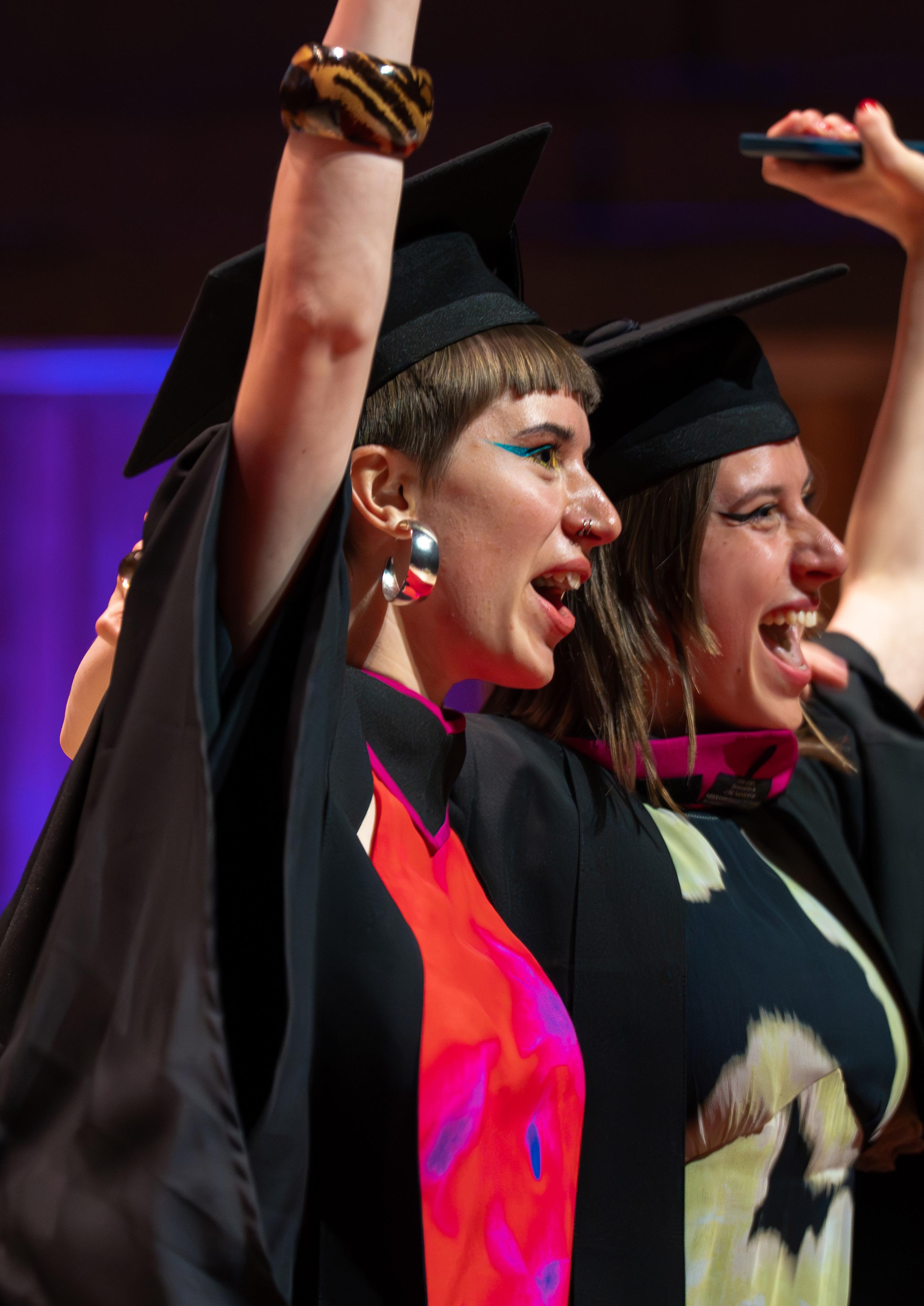
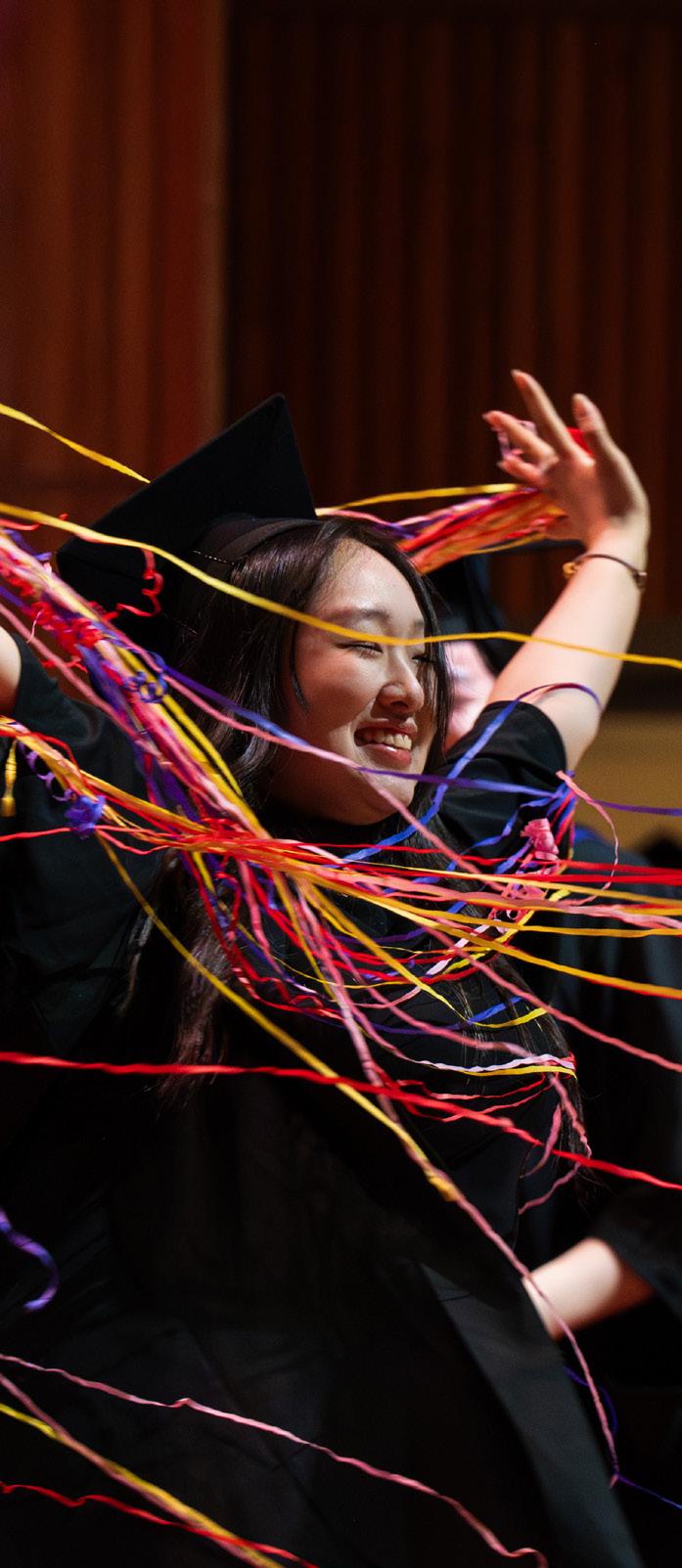
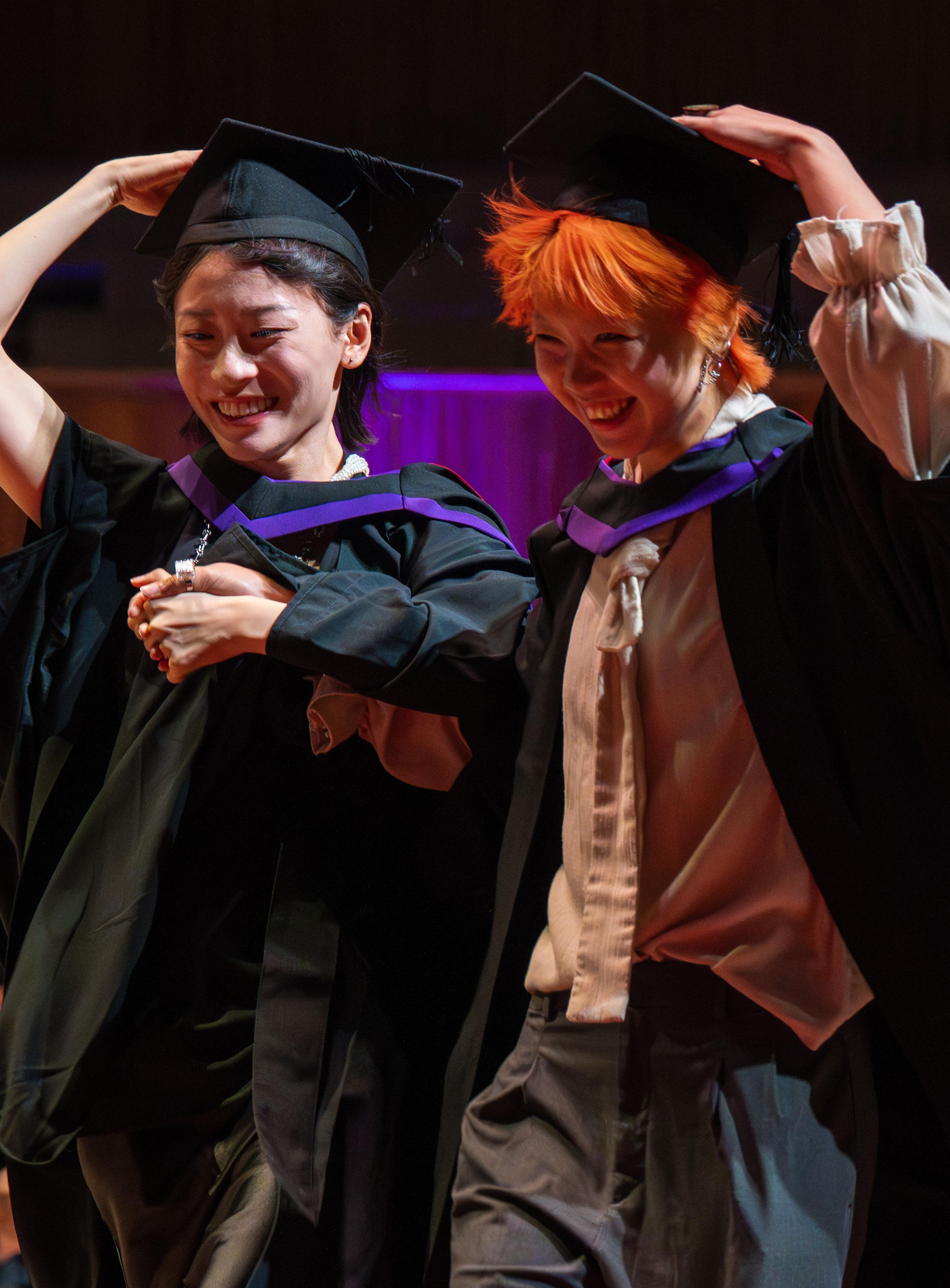
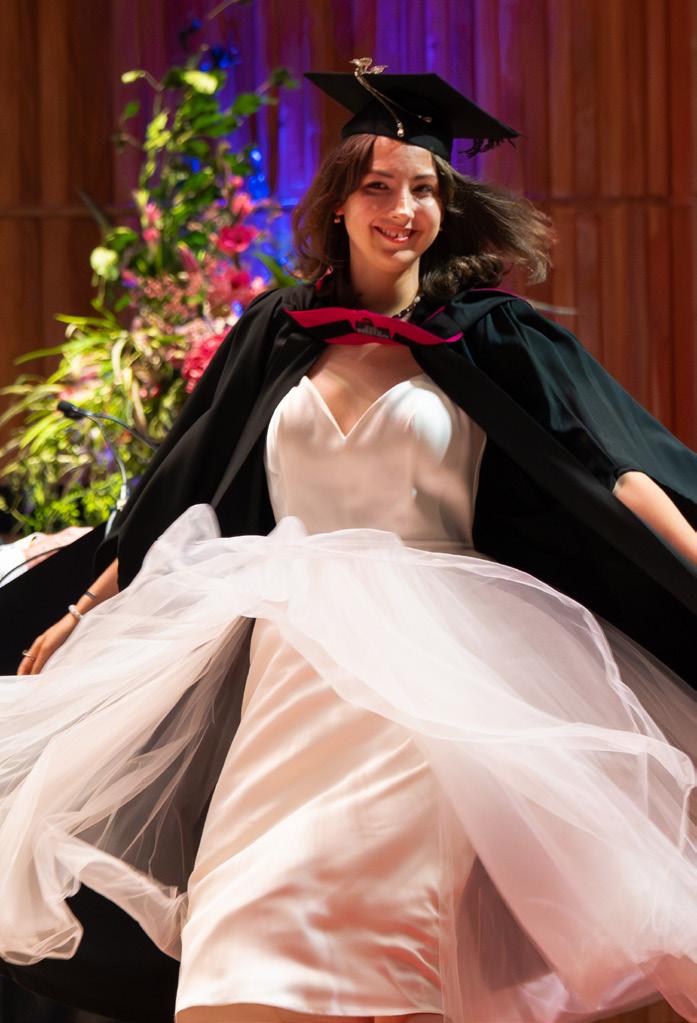
Our social media reached recordbreaking heights, with 7 million views on a single graduation video and nearly 500 new followers in just four days, while also shaping our campaigning efforts with UAL and beyond through our research and student-led projects.
“ARTS STUDENTS UNION EXISTS BECAUSE IT BELIEVES IN THE POWER OF STUDENTS TO CREATE TRANSFORMATIONAL CHANGE AND EXPERIENCES”
The 2024/25 academic year has been a year of growth, innovation and a relentless focus on our core purpose for Arts SU. Together, we have delivered thousands of opportunities, responded to the needs of students at University of the Arts London (UAL), and strengthened the foundations of a fair, inclusive, and ambitious Students’ Union.
We introduced a new integrated finance system and Amazon purchasing platform, saving time, money, and reducing complexity, while supporting better financial literacy for student groups. We recruited 36 student staff, achieved a 91% onboarding satisfaction rate, delivered 46 updated staffing policies, and saved over £8,000 annually by streamlining HR systems.
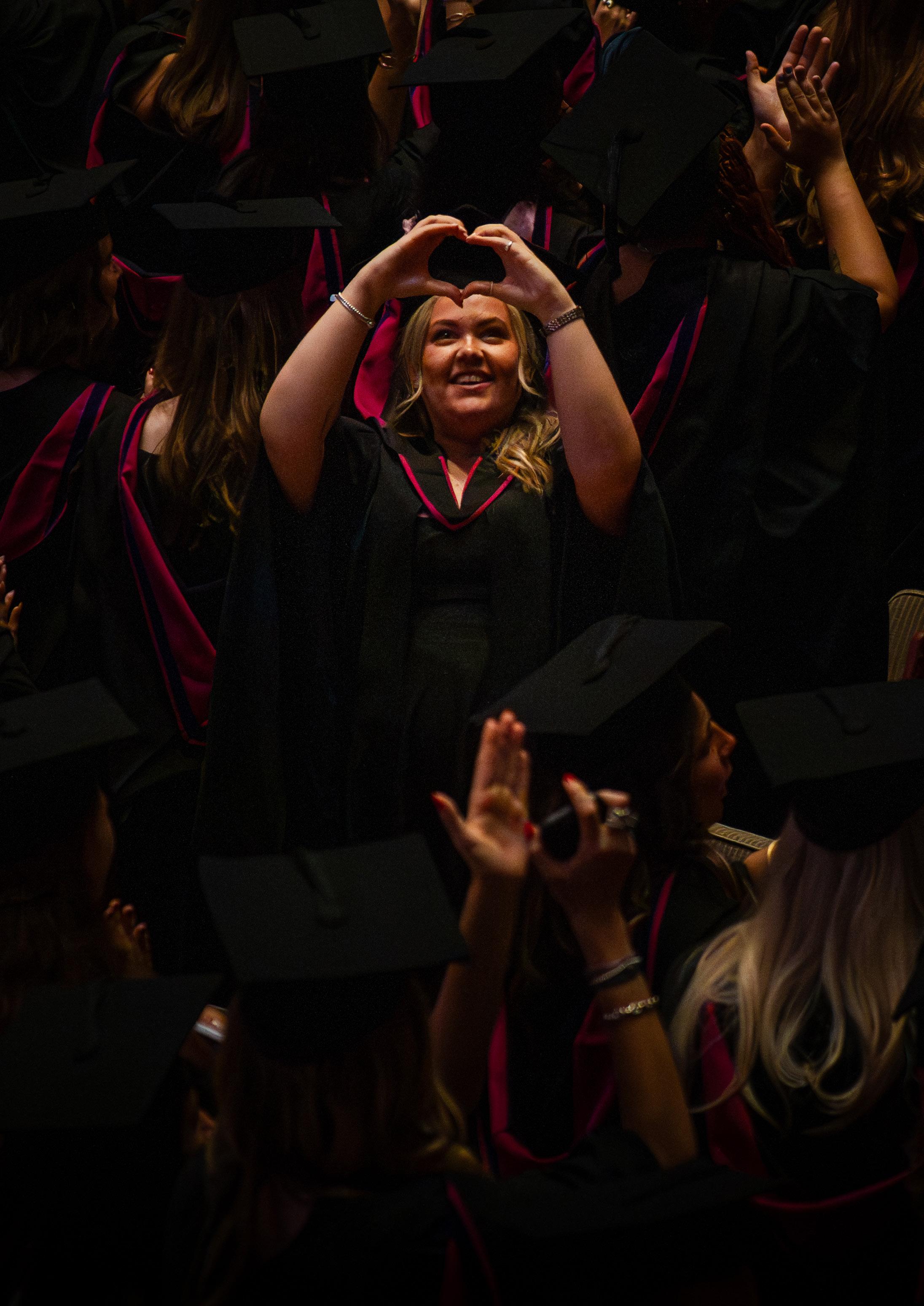
But behind the data are stories of transformation. We saw postgraduate, disabled, and international students share their voices through new research and focus groups; student staff developed skills that launched careers in international galleries and studios; societies ran inclusive events and fundraisers that built solidarity across our campuses; and communities came together in moments of celebration, protest, and belonging. Whether it was the launch of the Crits Hub, our work on AI in the creative sector, the first Course Reps Conference, the first International Student Career Forum, or a Varsity victor for the
4th year in a row, which united UAL, our work this year has consistently empowered students to lead, create, and thrive.
We are equally candid about the challenges we faced. From staffing capacity gaps to attendance drop-offs at specific events, to the financial and space pressures that accompany rapid growth in the student community, these experiences have sharpened our priorities. They remind us that sustainable finances, realistic planning, and equity-first approaches are essential if we are to continue meeting student needs with the care and innovation they deserve.
This report outlines not only what we achieved, but how we did it: through collaboration, creativity, and a relentless focus on the student experience.
TOGETHER, WE HAVE SHOWN THAT ARTS SU IS A CATALYST FOR COMMUNITY, CONFIDENCE, AND CHANGE.
STUDENT ADVICE & SUPPORT
WELLBEING & INCLUSION
COMMUNITY & STUDENT ENGAGEMENT
CREATIVE & PROFESSIONAL DEVELOPMENT
EMPLOYMENT & STAFF DEVELOPMENT
COMMUNICATION & REACH
RESEARCH & INSIGHTS
LEADERSHIP & REPRESENATION
RECOGNITION & AWARDS
THESE NUMBERS HAVE BEEN CALCULATED AS OF AUGUST 2025
OUR YEAR IN NUMBERS
STUDENT ADVICE & SUPPORT
ISSUES HANDLED
981 ACADEMIC (78%)
120 HOUSING (10%)
150 WELLBEING (12%)
STUDENTS SUPPORTED THROUGH 885 CASES
STUDENTS HAVE BEEN SUPPORTED ACROSS 4 FOOD PARCEL EVENTS
COURSE REPS SIGNED UP (TARGET 1270, 90% COVERAGE) 1312
ELECTION TURNOUT (HIGHEST EVER) 13.5 %
SCHOOL REPS RECRUITED (TARGET 26, 100% TRAINED) 24
STUDENT COMMUNITY LEADERS TRAINED 450
SPORT LEADS CERTIFIED IN FIRST AID 20
SABBATICAL OFFICER TRAINING SESSIONS 35 ATTENDEES AT REP CONFERENCE (TARGET 50) 57
CANDIDATE TRAINING SESSIONS 10+
ANNUAL MEMBERS’ MEETING 1
3
STUDENT FORUMS
COMMUNITY & STUDENT ENGAGEMENT
SPORTS CLUBS
30 SOCIETIES 96
STUDENTS ENGAGED IN CLUBS & SOCIETIES (+8%) 4.8k+
VARSITY WINNERS 4x
241
SOCIETY EVENTS & WORKSHOPS DELIVERED
4863
COMMUNITY GROUP MEMBERS
900
MEMBERS IN THE LARGEST CLUB, DANCE (18.5%)
CREATIVE & PROFESSIONAL DEVELOPMENT
T0 VIA £6406 89 PROFESSIONAL DEVELOPMENT FUND
ALLOCATED
CREATIVE PROFESSIONAL DEVELOPMENT EVENTS DELIVERED (TARGET 50)
STUDENTS
UNIQUE STUDENTS ENGAGED
1 162 495 60 12 1021
DELIVERY HOURS
STUDENT-LED EXHIBITIONS, SEVEN PRIVATE VIEWS
STUDENT APPLICATIONS FOR OPPORTUNITIES
NEW CRITS HUB LAUNCHED
COMMUNICATION & REACH
7,000,000+
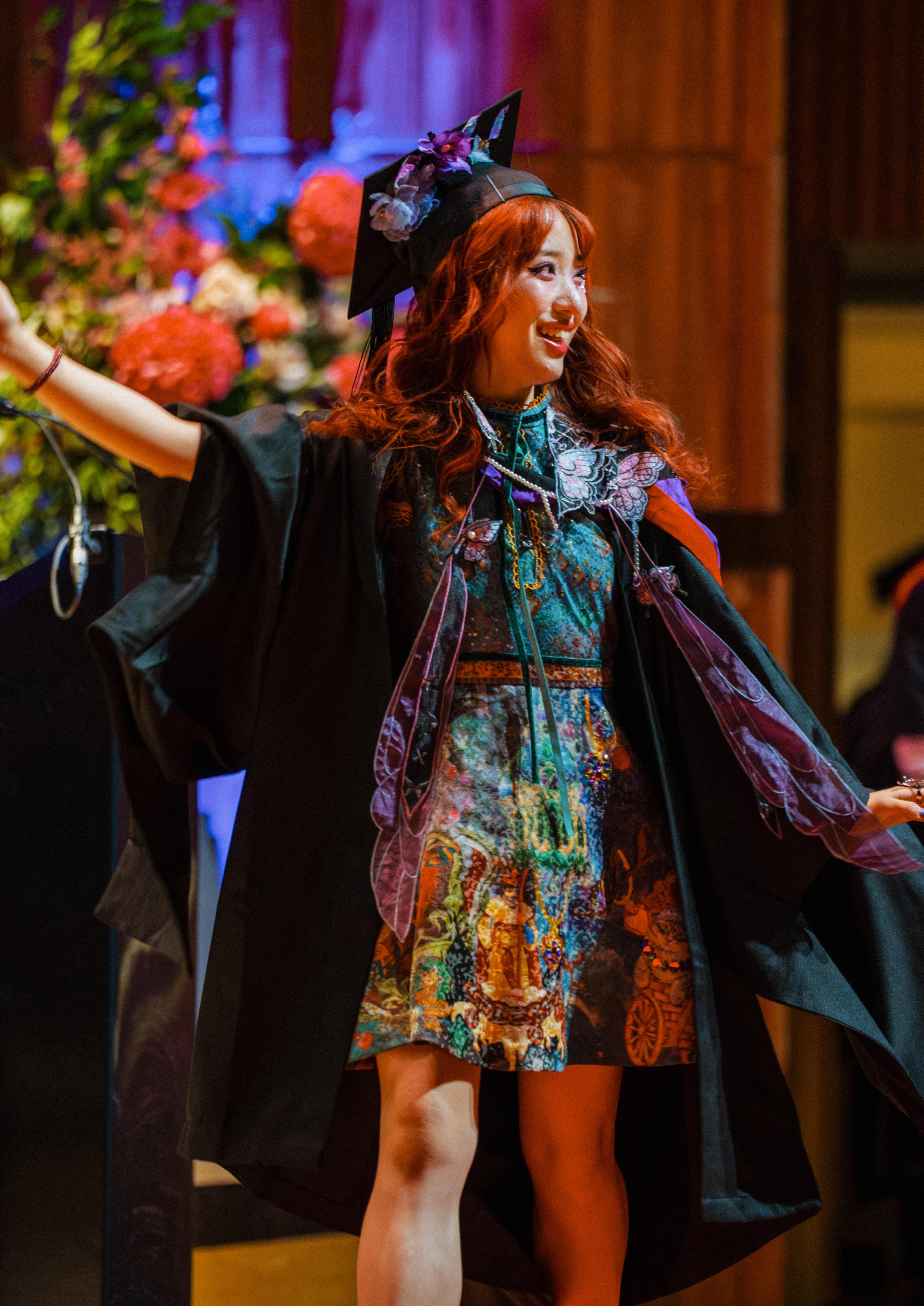
SOCIAL MEDIA VIEWS AT GRADUATION
28,300
PINTS SOLD
167,690
WEBSITE VISITORS
1,100+
ENQUIRIES HANDLED BY THE FRONT OF HOUSE IN 6 MONTHS
1,172,018
WEBSITE PAGE VIEWS
£32,871.85
MERCHANDISE SALES (RECORD HIGH)
6 RECOGNITION & AWARDS
ELITE ATHLETES IN THE PROGRAMME
ARTS AWARDS
1
INTERNATIONAL AWARD FOR SOCIAL JUSTICE
601
NOMINATIONS
87.5 %
FIRST TIME WINNERS
COMMUNITY AWARDS NIGHT NOMINATIONS
257 ATTENDEES
160
003
OUR STRATEGIC DIRECTION TO 2027
TRANSFORMING INDIVIDUALS
TRANSFORMING COMMUNITY
TRANSFORMING UAL
LIVING OUR VALUES
STUDENT LED SUPPORTIVE DARING COLLABORATIVE COMMITTED TO EQUITY AND SOCIAL JUSTICE
STUDENT LED
This year, we have seen students engage with us in record-breaking ways and from the highest election turnout on record to landmark research projects that influenced university policy, this year laid the foundations for a stronger and more democratic student voice at UAL.
The spring elections marked a milestone with a 13.5% voter turnout, the highest in Arts SU history. Alongside this, more than 10 training sessions for aspiring candidates gave students across UAL the confidence to stand in elections, resulting in 40 students running for leadership roles. This was followed by a comprehensive officer induction programme for the successful candidates, spanning six weeks and 35 individual training sessions, which equipped Sabbatical officers with the knowledge and skills to lead effectively during their terms of office in 2025/26.
Beyond elections, the team facilitated key democratic spaces, including three Student Forums and one Annual Members’ Meeting. Engagement with these spaces was below our intended targets and prompted an internal review of identifying and removing barriers students may face when engaging in our democratic processes. Our priority is to meet students where they are, both physically and digitally, to ensure these forums truly reflect the student body.
Our research into the views of students at UAL continues to be a defining strength. The team completed 10 research reports, including “Art or Algorithm?”, “Name Your Price: The Cost of Study at UAL” and “Craft Your Future: UAL Students’ Views on Skills, Graduate Preparedness, and the Creative Economy,” ranging from surveys to focus groups, directly inform campaigns and lobbying efforts. The Cost of Study report alone gathered 941 responses from across all colleges and sparked high-level discussions at UAL. Early wins from this work included the introduction of free materials on a CSM course, easing financial pressures for students.
Democratic engagement was also conducted through our “Ideas platform”, where students
could submit issues and campaigns that they wanted the Union to address. Officers and staff proactively went onto campuses to discuss these submissions, helping refine proposals and encouraging debate. As a result, several ideas were passed directly through the platform, with many more debated at Student Forums.
The team also ensured student voice shaped national and institutional debates. Working with UAL on trans and non-binary inclusion, the team pushed back on a rushed consultation process, successfully securing an extended timeline for Autumn 2025. This commitment to equity and justice reflects the Union’s core democratic values.
Challenges remain. Engagement with Student Forums and the
Annual Members’ Meeting was lower than hoped, underlining the need to rethink democratic structures to make them even more accessible and student-led.
An internal review of campaign provision has already produced a roadmap for reform, ensuring that future activism at Arts SU is fit for purpose for our students.
WITH RECORD-BREAKING VOTER TURNOUT, A SURGE IN RESEARCH ENGAGEMENT, AND HIGH-IMPACT WINS LIKE THE FEE FREEZE FOR STUDENTS ON PLACEMENT, WE HAVE SHOWN THE POWER OF DEMOCRATIC STRUCTURES WHEN THEY ARE PRIORITISED, INCLUSIVE, AND STUDENT-DRIVEN.
This year, we reimagined what it means to support students in their creative practice and create spaces which affirm them and their work.
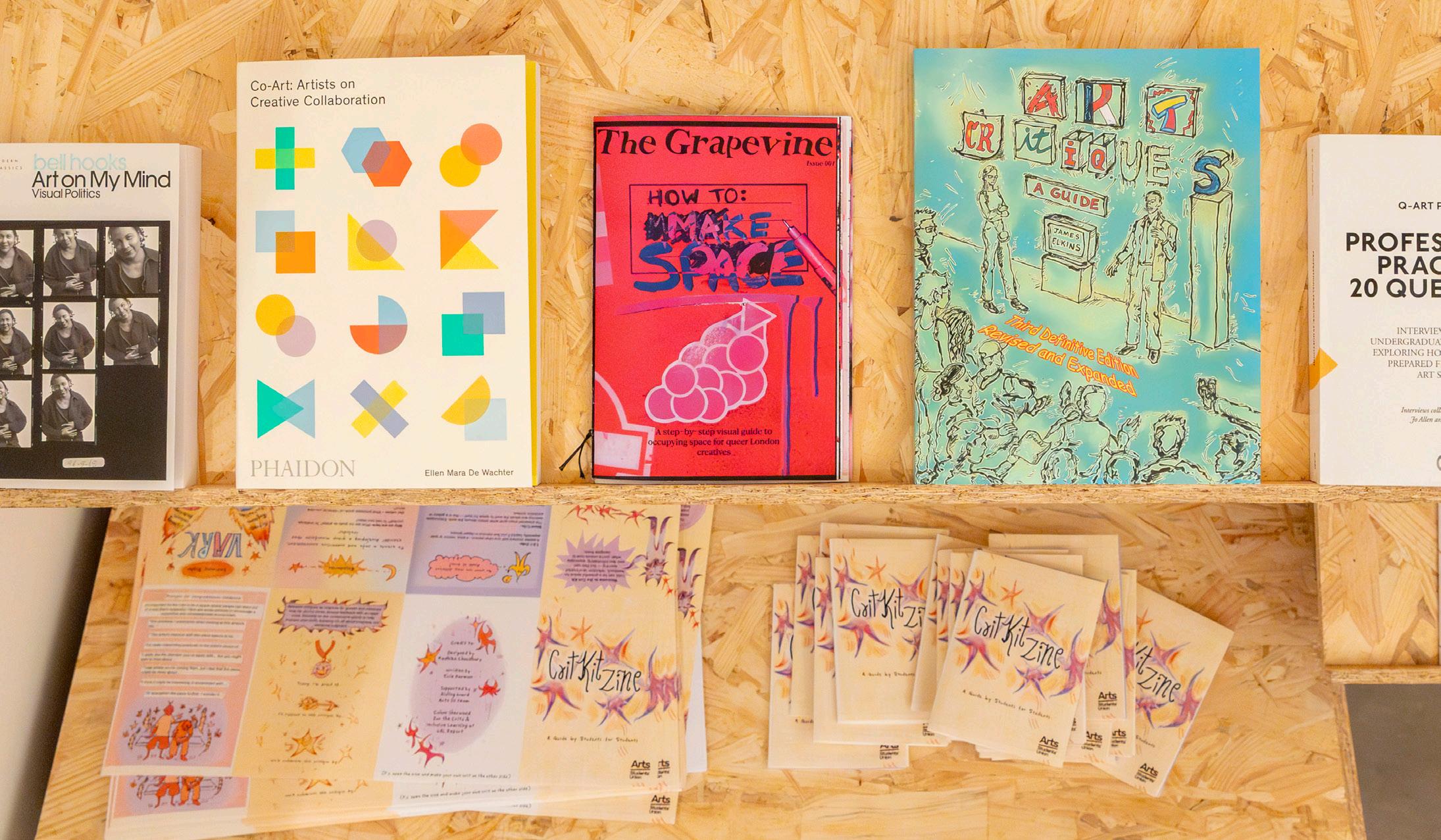
Responding to Arts SU’s Crits & Inclusive Learning research and UAL’s guidance, we opened the Crits Hub, an accessible, student-led space featuring a resource library and a studentmade Crit Kit zine, transforming crits from “firing squads” into collaborative and equitable learning experiences.
Meanwhile, a new Collaborative Residency brought crossdisciplinary students together to co-create INHALE WINTER, EXHALE SPRING, shown across SU Project Spaces at LCC, CSM, and Camberwell.
In addition, we recruited the UK’s first Student Basic Needs Coordinator, a two-year strategic initiative led by Arts SU to address critical barriers to student wellbeing and academic success across UAL. Grounded in equity and directly informed by student voice, the project focuses on identifying and addressing unmet student basic needs, such as food, housing, financial stability, and access to essential resources.
DARING
This year, we continued to innovate the way we talk to students about their experiences and views.
The Democracy and Influencing launched the “Research Insiders” project, a brand-new initiative designed to ensure student consultation throughout the academic year. While the original target was 50 sign-ups, nearly 200 students joined, actively engaging in consultations and demonstrating an appetite for participation when opportunities for student engagement are easily accessible.
We launched a new six-episode Communities Podcast with the Student Communities Officer, Sayali Waghmare. Focused on the experiences of international students, first-generation students, mature students,
parents/carers, postgraduate students and UAL staff, it amplifies diverse experiences at the University and allows students to find new ways of engaging with the UAL community. The podcast was a huge success with over 17,000 views on social media.
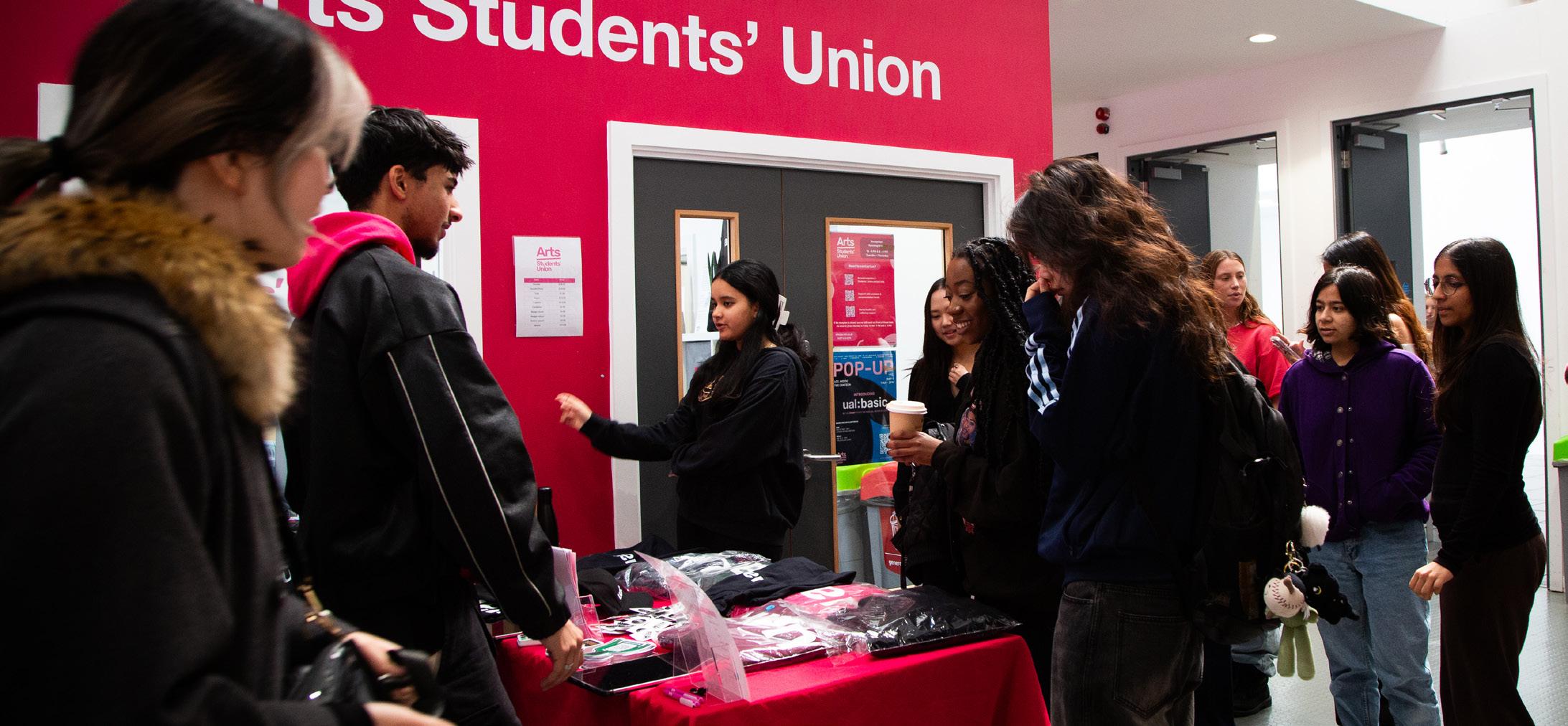
We also worked to innovate what it means to be visible and create belonging. We developed a new range of UAL merchandise, including limited-edition designs co-created with students and selected by members through online polls, thereby embedding democratic decision-making directly into the SU’s commercial offer. These items were then
launched at decision-making directly into the SU’s commercial offer. These items were then launched at Graduation and campus pop-up events. The response exceeded expectations, with over £30,000 in sales marking the highest retail performance in SU history. This expansion not only boosted income but also deepened students’ sense of connection to the University.
STUDENTS SAID THEY WERE PROUD TO WEAR MERCHANDISE THAT REPRESENTED THEM.
We strengthened our partnerships significantly.
Close collaboration with UAL teams such as Estates, Brand, Communications, Libraries, and Halls not only expanded the SU’s operational reach but also improved legitimacy.
For example, the strong partnership with the UAL Brand team enabled the launch of codesigned merchandise, while joint working with Estates supported events and ensured SU spaces were fit for purpose.
In addition, partnerships between Officers and staff at the Union translated into concrete wins for students.
A standout achievement was achieved through the Union Affairs Officer, Chihiro Tateno, whose campaign successfully secured a freeze on international fees for placement students for the 2025/26 academic year, a significant win for equity and accessibility.
AND SOCIAL JUSTICE
Our work on Social Justice remains a central theme in 2024/25.
Supported by the Social Justice Collective, we launched a new four-year Social Justice Strategy which sets out how we will embed our work on social justice across seven core areas, including diverse representation, accountability and resourcing, anti-oppression and solidarity in our culture, shared understanding, learning and development, equitable collaboration and partnerships, power and decision-making, and student voice and activities.
We also improved our support for disabled staff in the organisation to reduce barriers to work, including reviewing the Reasonable Adjustments (RA) offer and instigating new Disability Awareness session training for all staff.
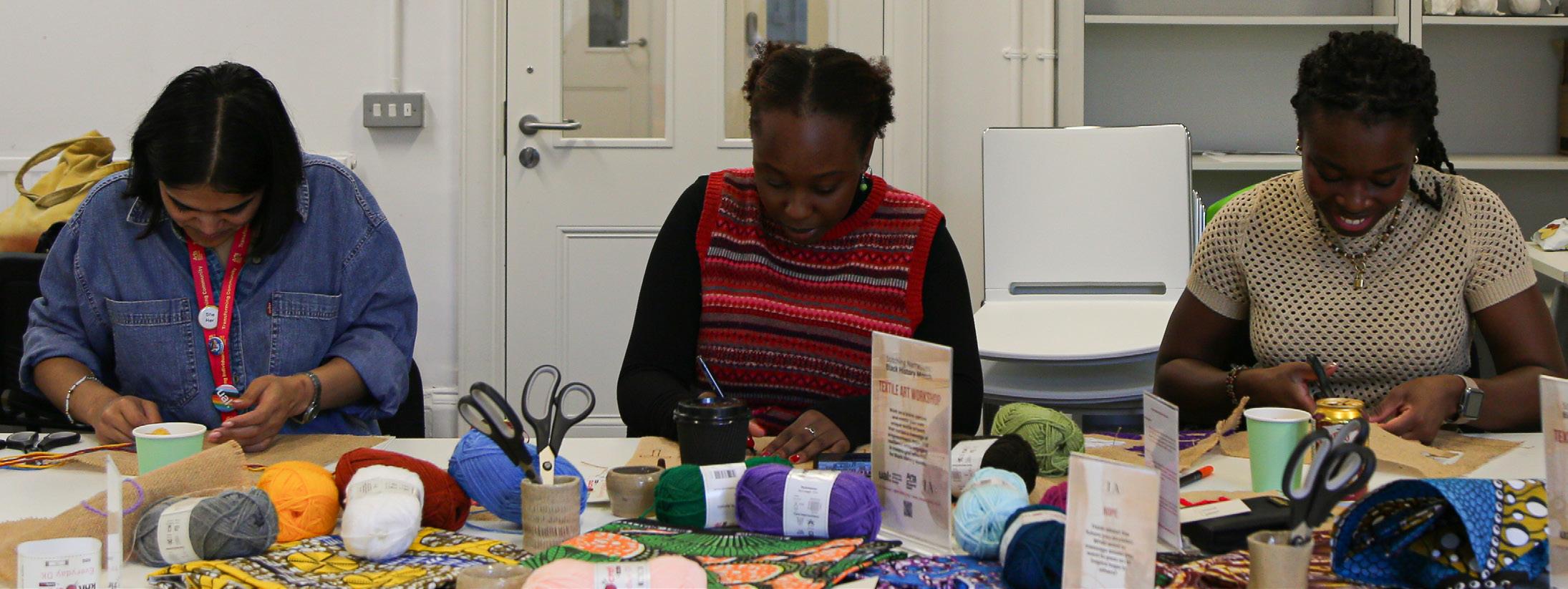
Arts Programme: Sustainability and justice ran throughout. Staff completed Carbon Literacy training; we commissioned a student write-up for Carbon Literacy Day of Action and delivered workshops on climateconscious practice. Our Black History Month programme featured Textile Narratives from the Front Room with Rose Sinclair MBE, spotlighting “quiet activism” in craft.
We supported liberation-focused exhibitions across Black History Month, LGBTQIA+ History Month, and South Asian Heritage, providing underrepresented students with platforms to be seen and celebrated.
We also made the creative economy feel less opaque. Students received market access through ticket giveaways to The Other Art Fair, funding for Christmas stalls, and a practical “how to do markets” video resource, hands-on pathways from studio to sales.
We also pushed for practical, dignity-first change around menstruation. Working towards Bloody Good Employers accreditation, we asked colleges to replace “feminine hygiene” with “period products” signage and advocated for sustainable products; 6 of 7 colleges now supply them. We created a Menstruation Hub for student staff and are extending this learning across the SU and UAL.
Despite operating with staffing gaps for much of the year, the team continued to provide timely, compassionate, and high-quality support, helping students navigate some of the most stressful and high-stakes challenges in their academic journeys.
This year, the Advice team has delivered a service that not only transformed individual student outcomes but also strengthened community belonging and influenced institutional practice across UAL.
The team then translated this casework evidence into institutional influence. Working with Registry, they successfully lobbied to retain self-certification and ‘no-detriment’ first attempt provisions in Extenuating Circumstances regulations, resisting proposals that risked disadvantaging vulnerable cohorts.
Student outreach was another major success. Partnering with UAL, the Advice team and Communities Team delivered inclusive Welcome events for specific groups, including students with disabilities, neurodiversity, and specific learning difficulties, as well as students of colour and FE students. We also introduced the first-ever Halls Life Roadshow, taking housing advice directly into student halls as they look to rent in the London housing market. The Buddy-Up scheme connected more than 300 students as pen pals, with a 99% successful match rate and particularly strong uptake from Wimbledon students.
This year, the Arts Programme Team reshaped what it means to provide students with technical and employability skills that will support their career journey. Guided by student feedback and the graduate job market, we developed a programme that enables students to try, sell, showcase, collaborate, and learn, while keeping equity, sustainability, and wellbeing at the centre.
WE FOCUSED ON EXPERIENCES THAT STUDENTS TOLD US WERE IMPORTANT.
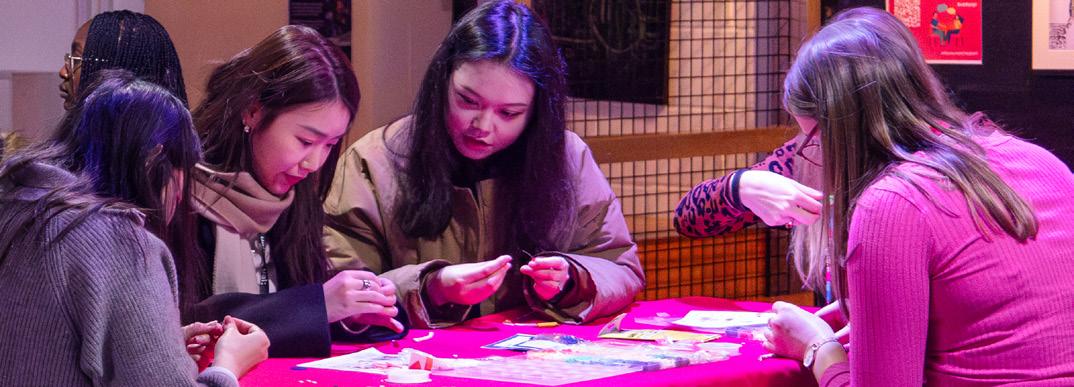
Students learned to sell their work through new markets and the first LGBTQIA+ Zine & Comic Fair; they tackled live briefs and gained technical skills through Arts & Technology workshops; and they explored how to create multiple income streams and business know-how with practical workshops from industry experts. We launched the Professional Development Fund, removing small but significant barriers to participation. Eighty-nine students received £6,406 to purchase materials, cover fees, and take advantage of opportunities they might otherwise miss.
“This funding will help me present my first solo show professionally and open doors for future work,” one student wrote.
In closing, this year has demonstrated the Union’s innovation in creating opportunities for students and its unwavering commitment to student success. From guiding hundreds of students through critical academic and personal moments, to shaping UAL’s institutional practices, to opening new pathways for skills, community, and careers, this work involves individuals and the wider University.
This year, the Union created a sense of belonging and collectivism that students could truly feel, focusing on spaces where friendships formed, leaders were developed, and belonging was not only visible but also accessible.
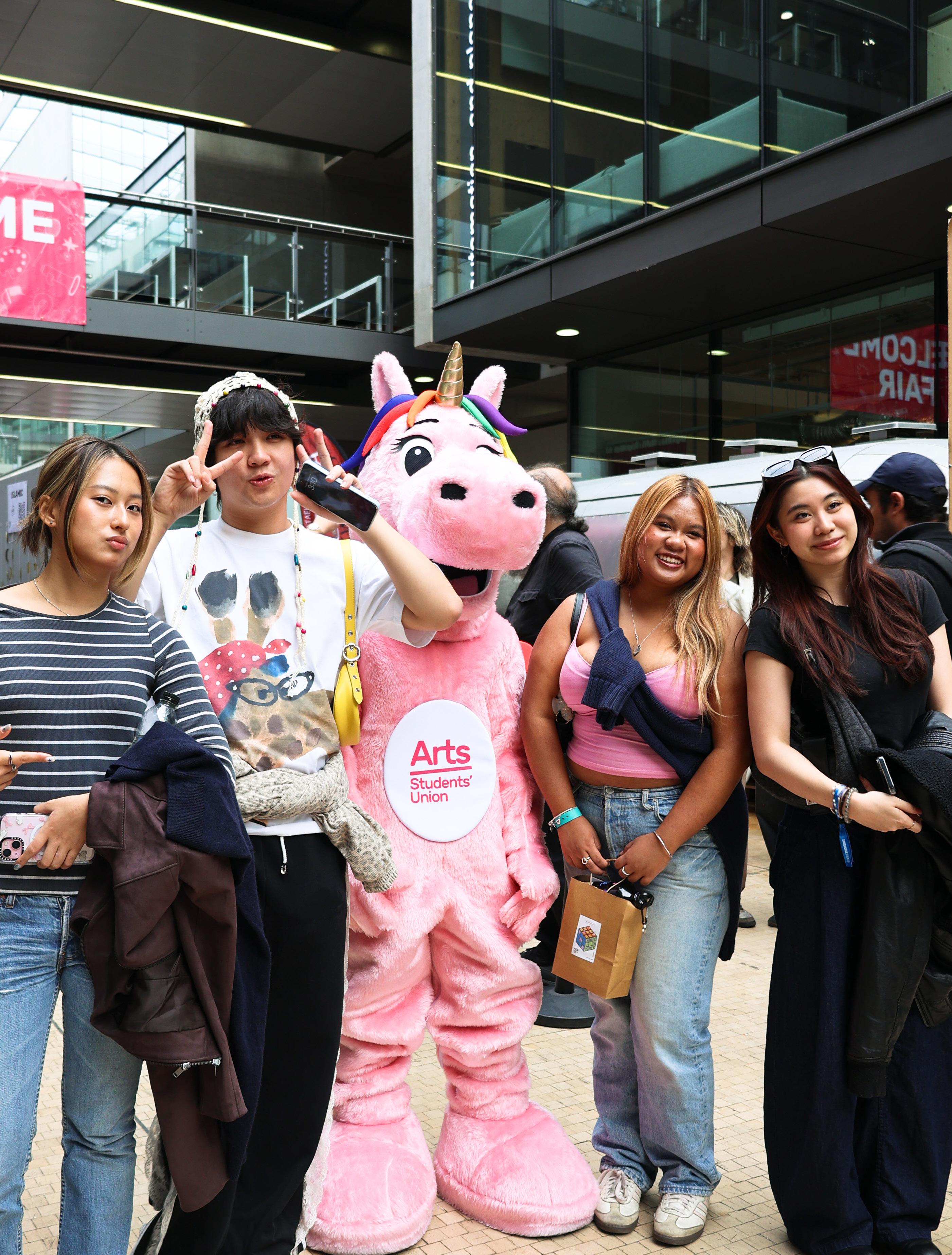
In Sept, we delivered a comprehensive program of Welcome events for students arriving and returning to UAL, which culminated in the Welcome Fair at Chelsea College of Arts, drawing in over 4,500 students. Sign-ups of students joining clubs and societies surged by 8%, as we supported growing student communities across every college.
Sports clubs rose from 26 to 30 with new groups including Jiu Jitsu, Muay Thai, Polo and Kung Fu. Societies expanded from 77 to 96. We supported over 300 committee members with training that combined finance, sponsorship, branding, social media, and Health and Safety. Two first-aid courses certified 20 sports committee leads. The need for these events was clear. Ninety-two per cent of trained committee respondents reported that they left with the confidence and knowledge to run their group.
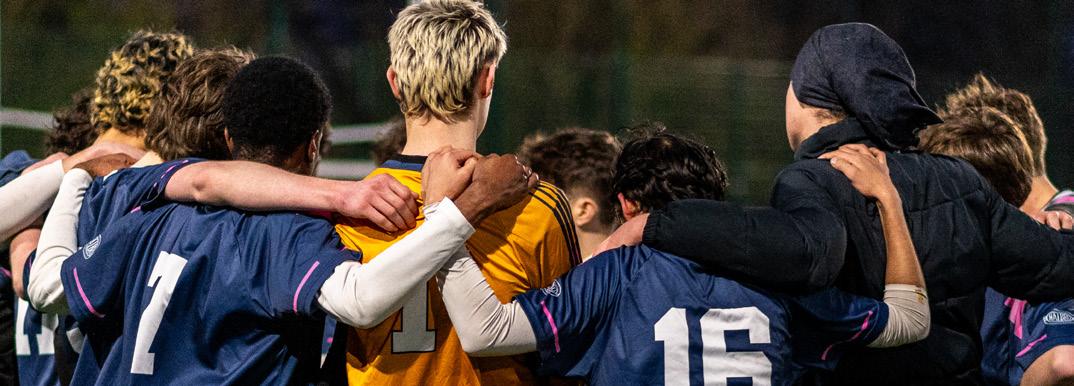
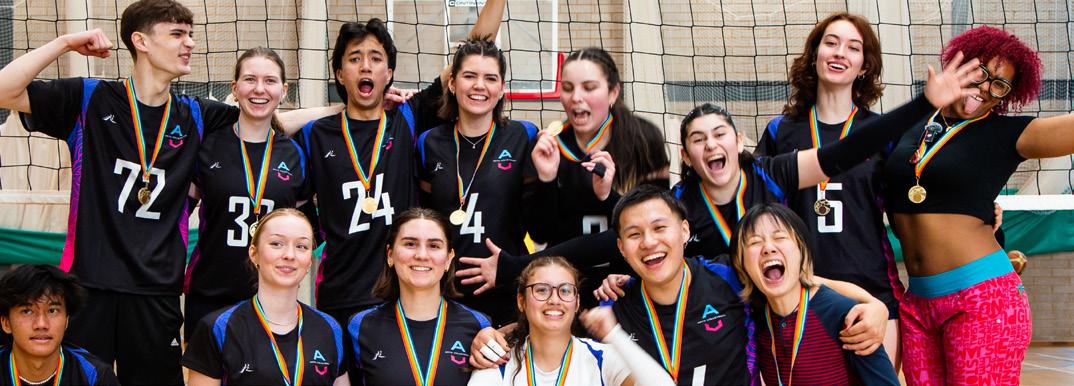
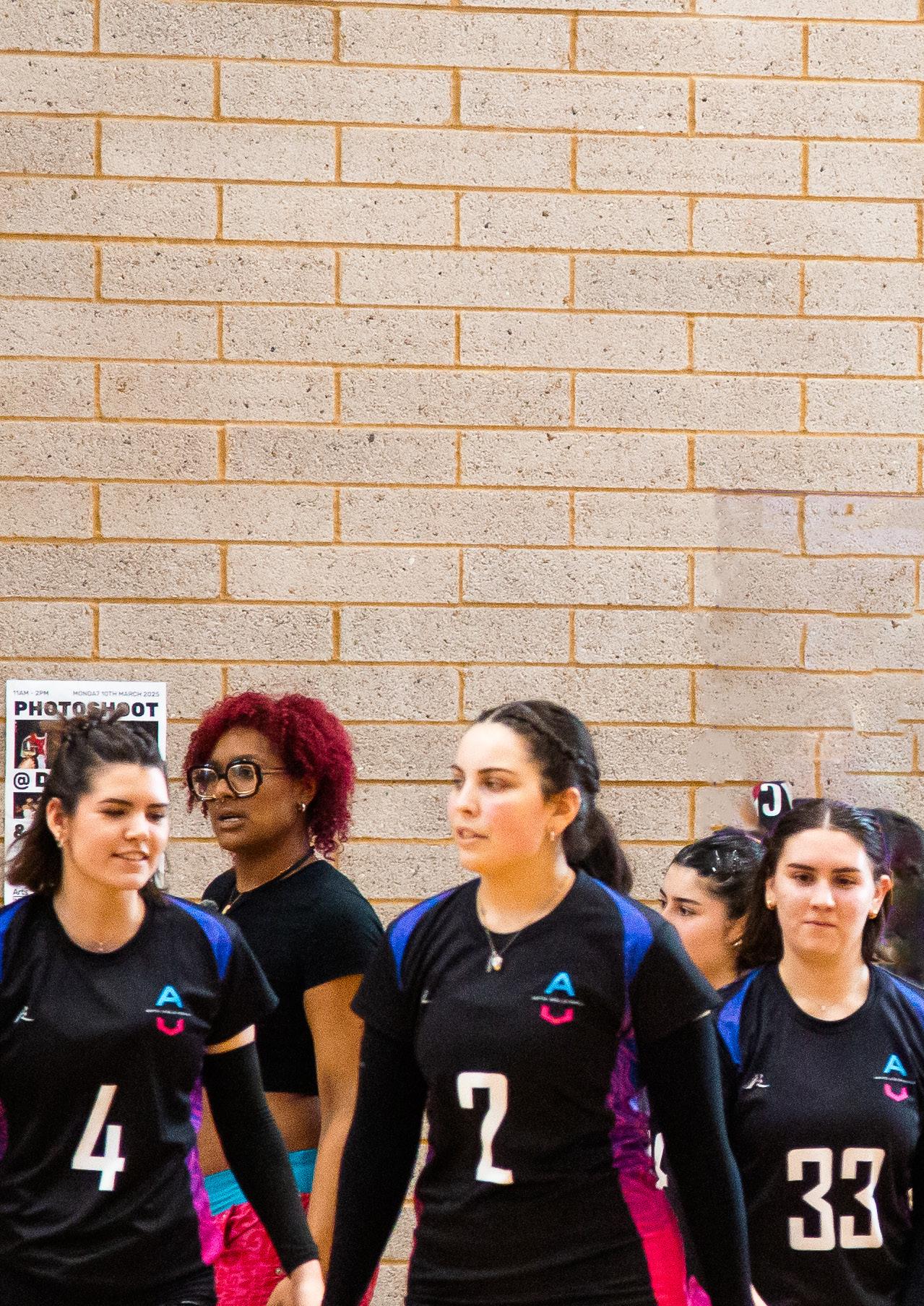
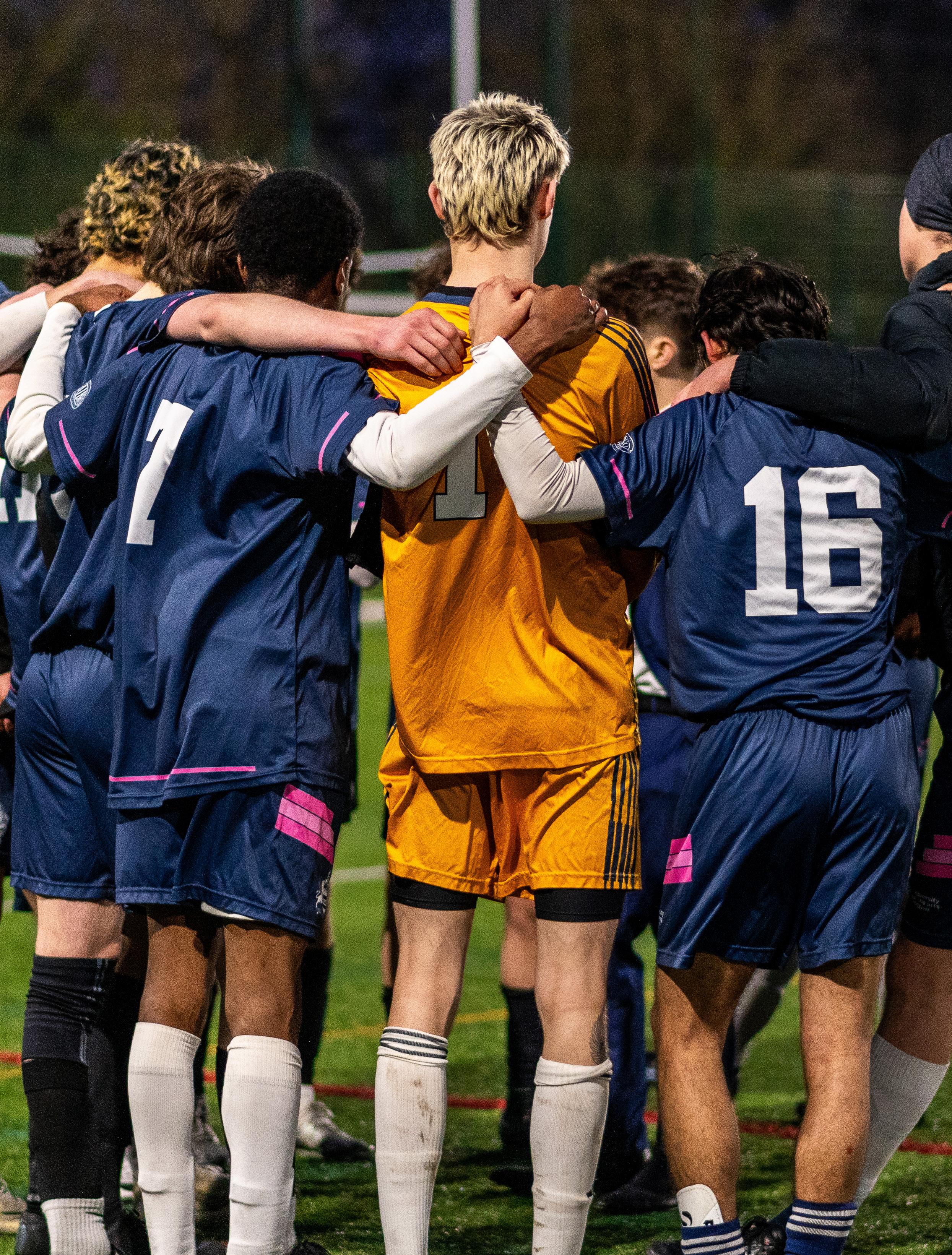
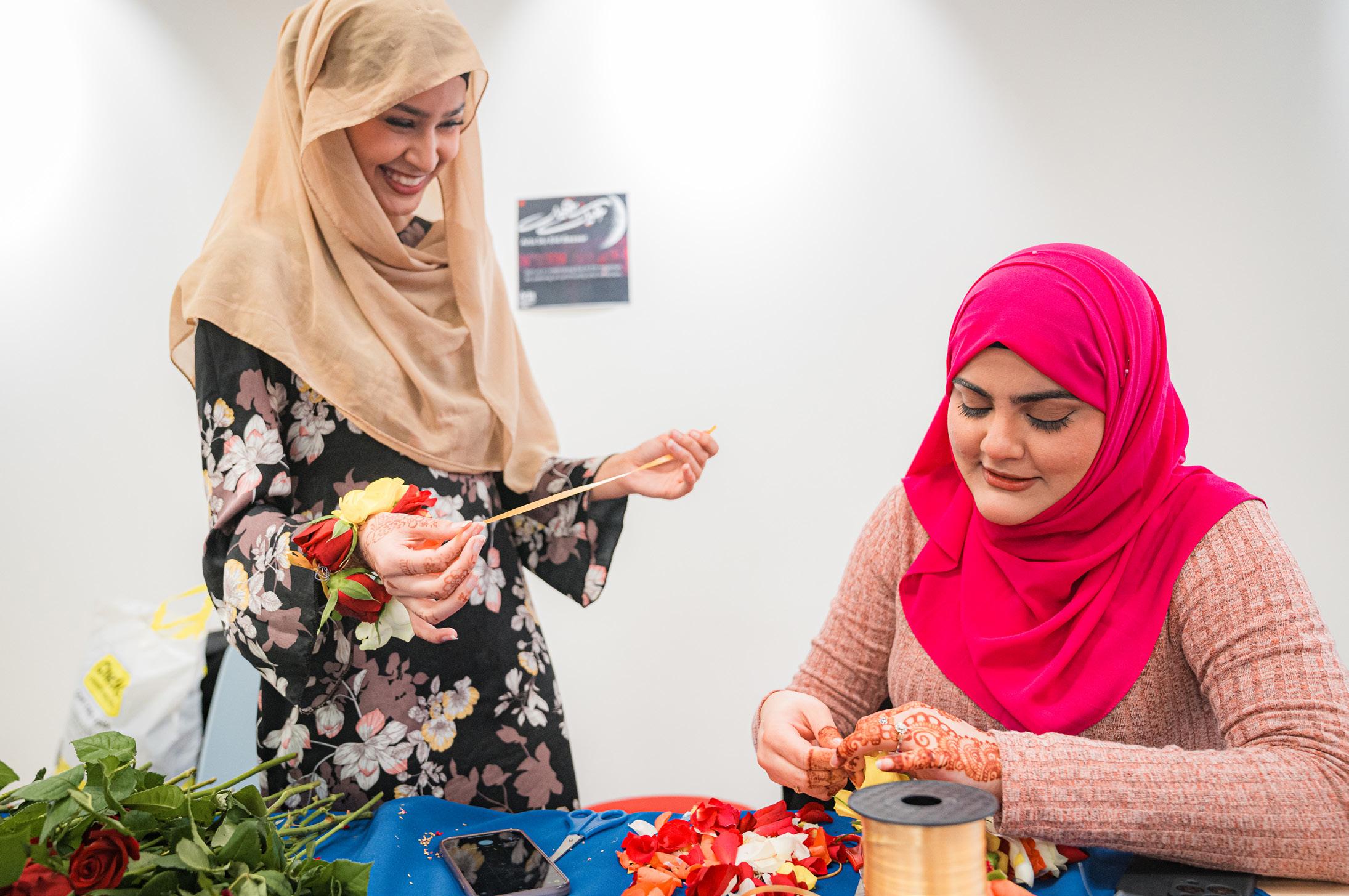
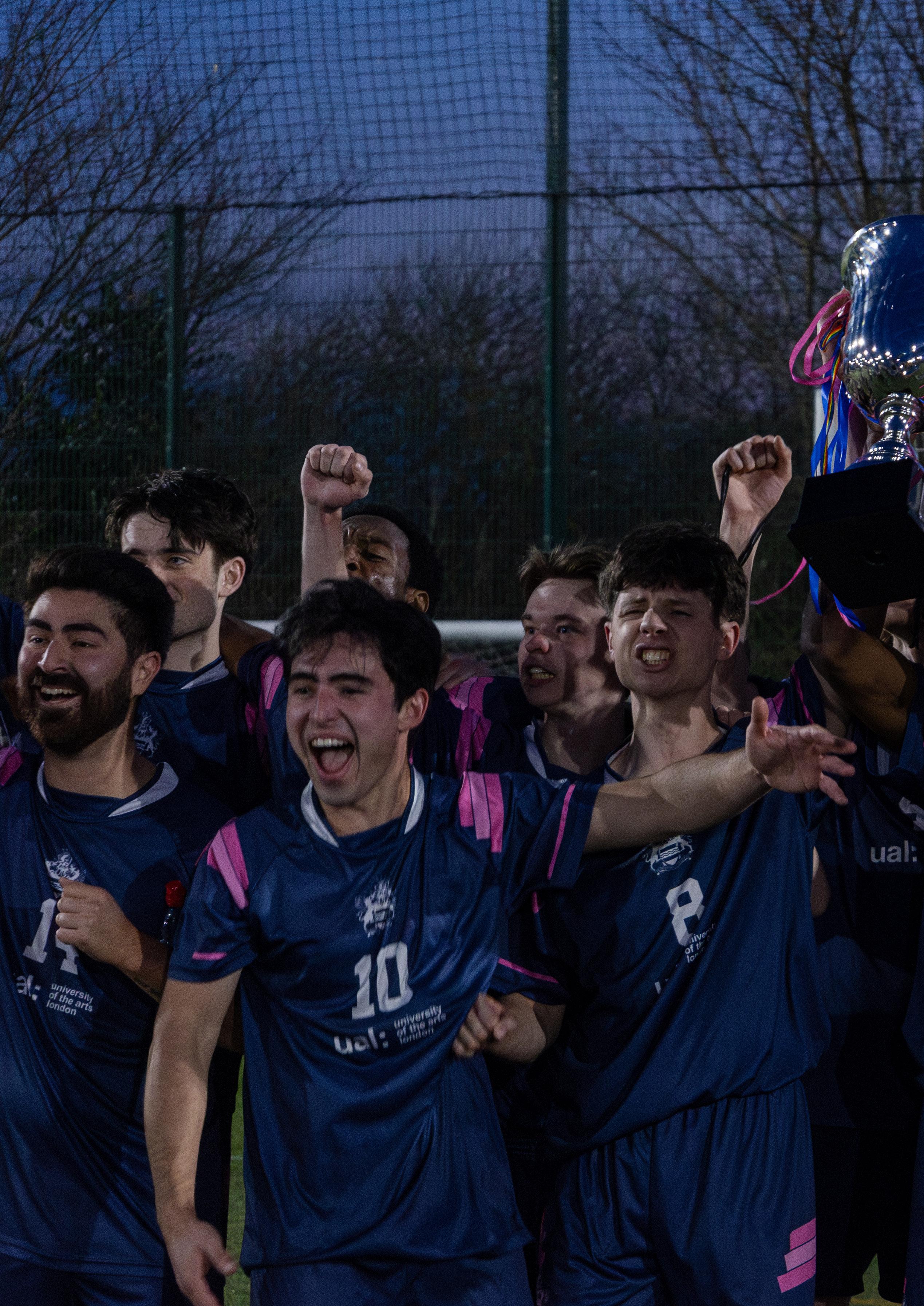
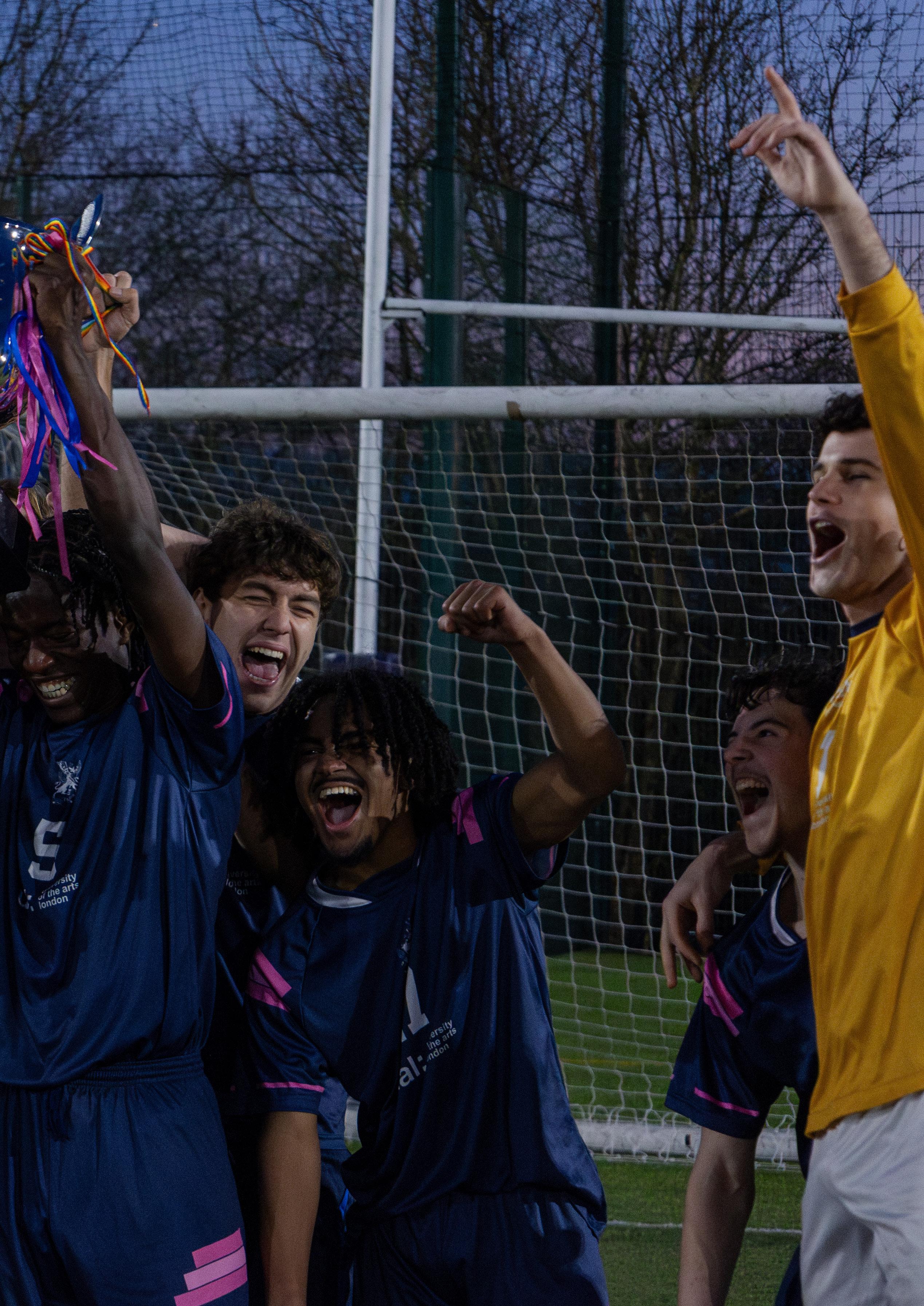
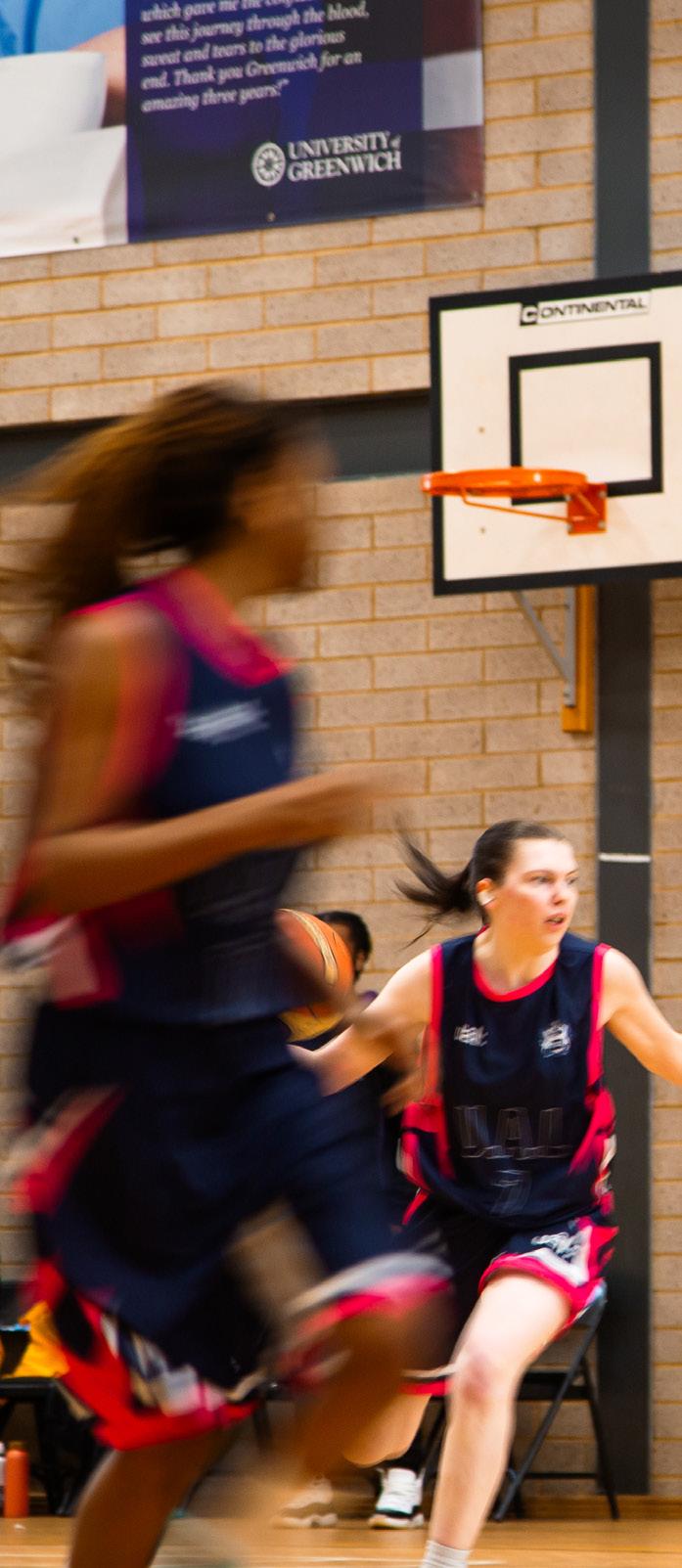
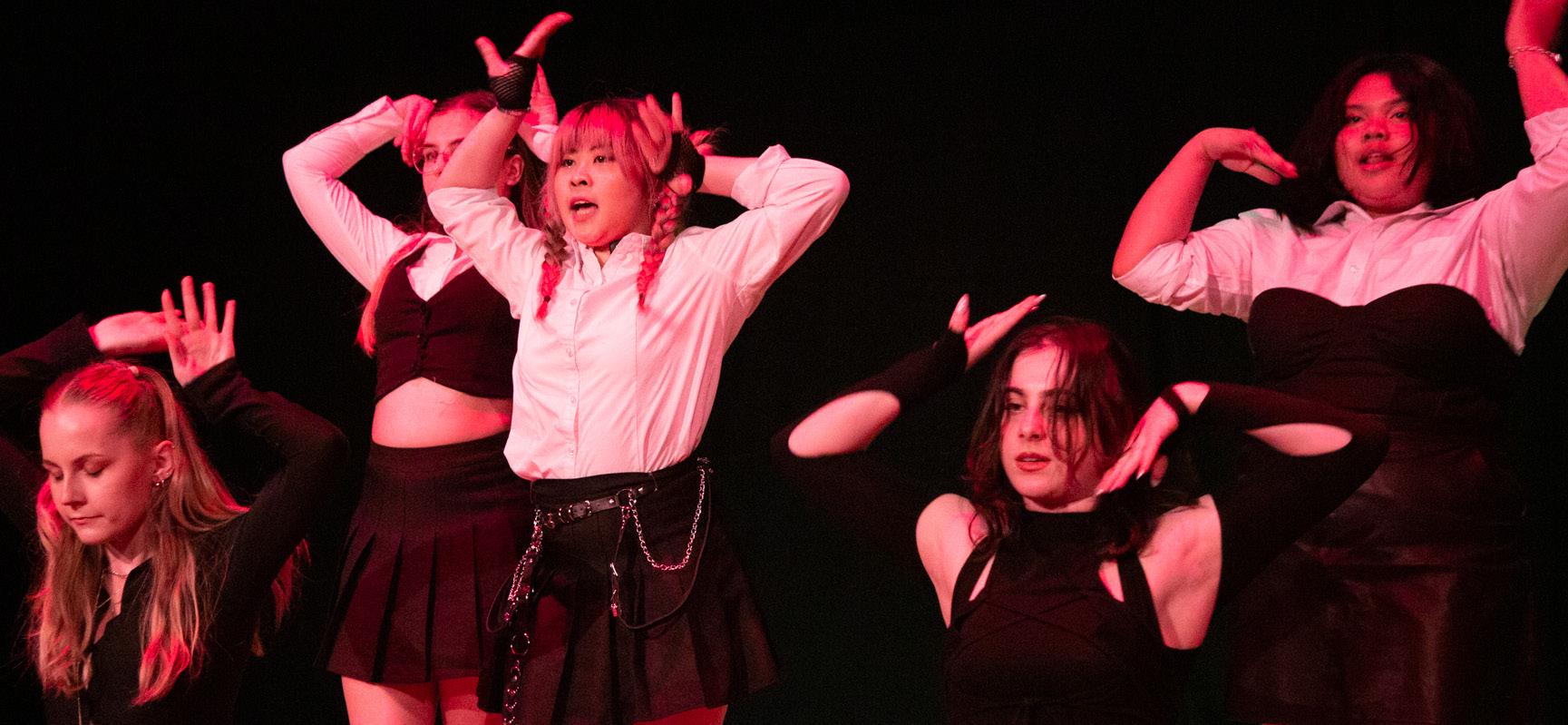
UAL pride was evident throughout the year. The Community Awards Night welcomed 160 students and a record 257 nominations. Clubs raised money for causes, including £300 for SWARM by Pole Dance Fitness Club and £200 for Women’s Aid by Netball. Our second Eid celebration held at LCC drew more than 80 students. We piloted the first UAL intermural Championship, which encouraged students to represent their colleges in sports such as dodgeball, basketball, volleyball, and netball. The event was a success, and we had almost 50 participants saying, “I had an amazing time… will this happen again next year?” At Varsity vs Goldsmiths, UAL lifted the trophy for the 4th year running across 10 fixtures, with over 800 attendees. The Dance Club, the Union’s largest student community with 900 members, staged its annual show at CSM, featuring 100 dancers and a sold-out performance, with many students performing for the first time in front of family and friends.
The scale of student engagement has also increased the impact of our work. For example, through student feedback on our Ideas Platform, we secured Wednesday afternoon access for Pre-Degree students, allowing them to join clubs and societies.
Students ran 241 society workshops and events, while sports clubs delivered over 100 fixtures across 13 teams. Men’s Football and Netball both won their leagues. We supported UK and international trips, including the Surf Club’s trip to San Sebastián and the Snow Club’s trip to Val Thorens, as well as the Rugby Club and Climbing Club, which hosted trips within the UK. Elections were held for over 350 committee roles across 90 groups. Our Elite Athlete Programme supported six students in sports such as Ultimate Frisbee, Distance Running, Beach Volleyball, Artistic Swimming, Boxing, and bodybuilding, providing financial support for items including competition entry fees, academic coordination, and coaching.
INCLUSIVE CELEBRATIONS, WHICH AFFIRMED THAT STUDENTS WERE A CONSTANT HIGHLIGHT OF THE STUDENT COMMUNITY AT UAL, WERE A CONSTANT HIGHLIGHT.
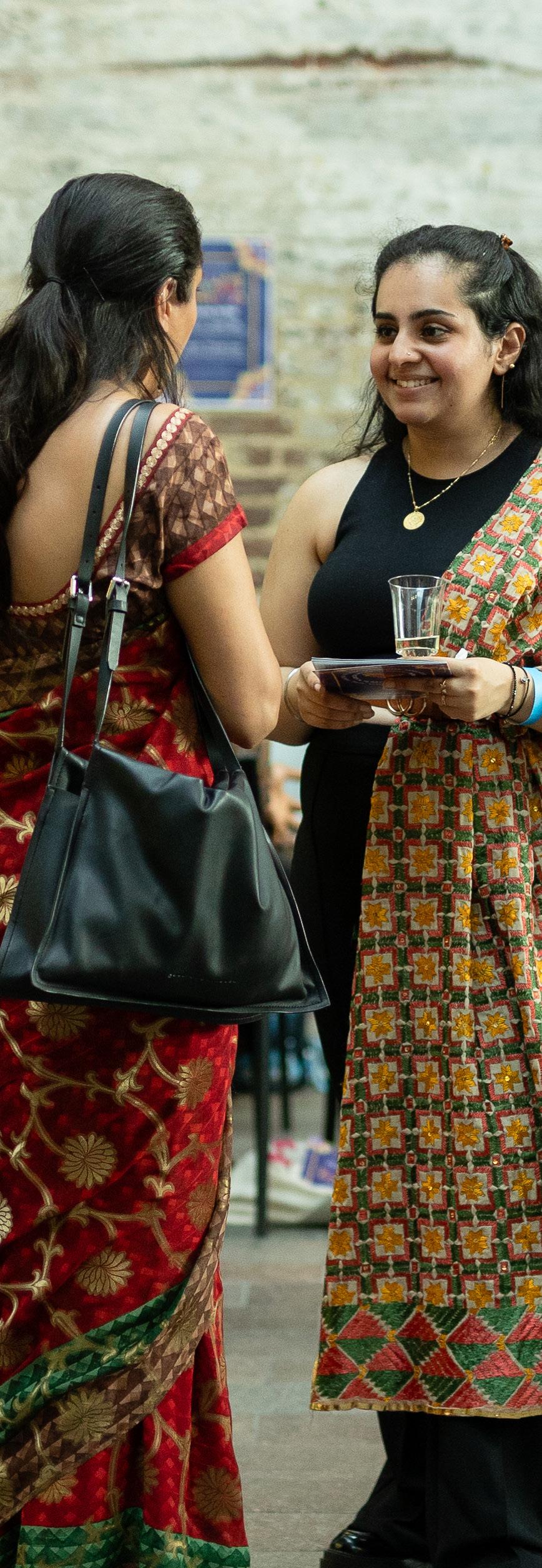
South Asian Heritage Month, featuring CSM Officer Zainab Goriawala, showcased an exhibition at Camberwell by 16 student artists, as well as stalls from the Calligraphy, South Asian, and Islamic societies, with nearly 150 students in attendance.
We also delivered four Food Parcel events for students under cost-of-living pressure, supporting over 550 students across four different campuses, and our work in supporting student basic needs is now informing a British Academy/ Leverhulme research project on student food provision.
However, with growth has also come constraints. Membership has more than doubled in two years, stretching our capacity and ability to develop student groups further. Sports facilities are costly and competitive in London, putting a strain on resources, and room bookings procedures at UAL have been challenging and bureaucratic, pushing societies off-campus. With all this friction, we have needed to adapt, triaging resources and support, and tightening processes for off-site activity.
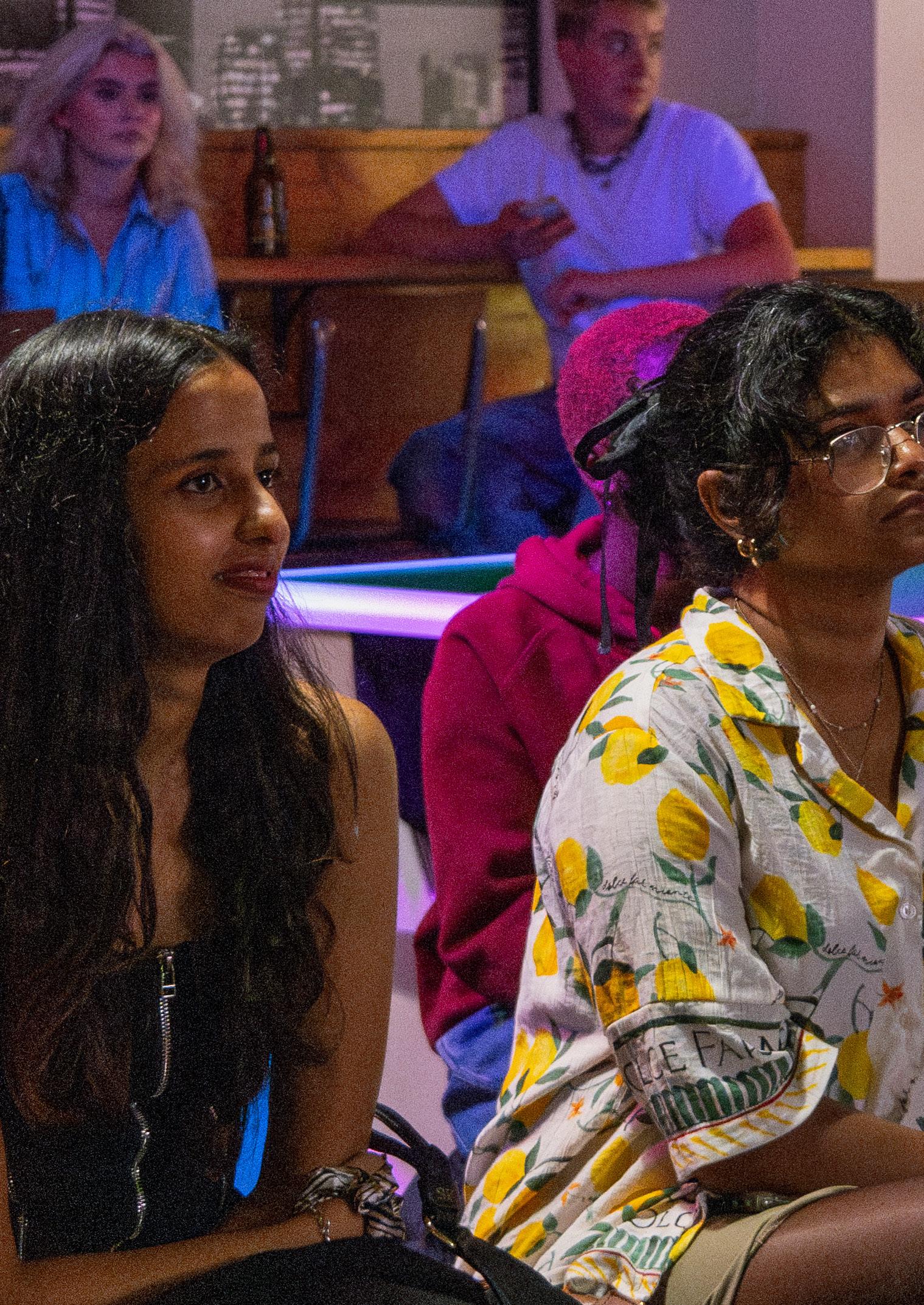
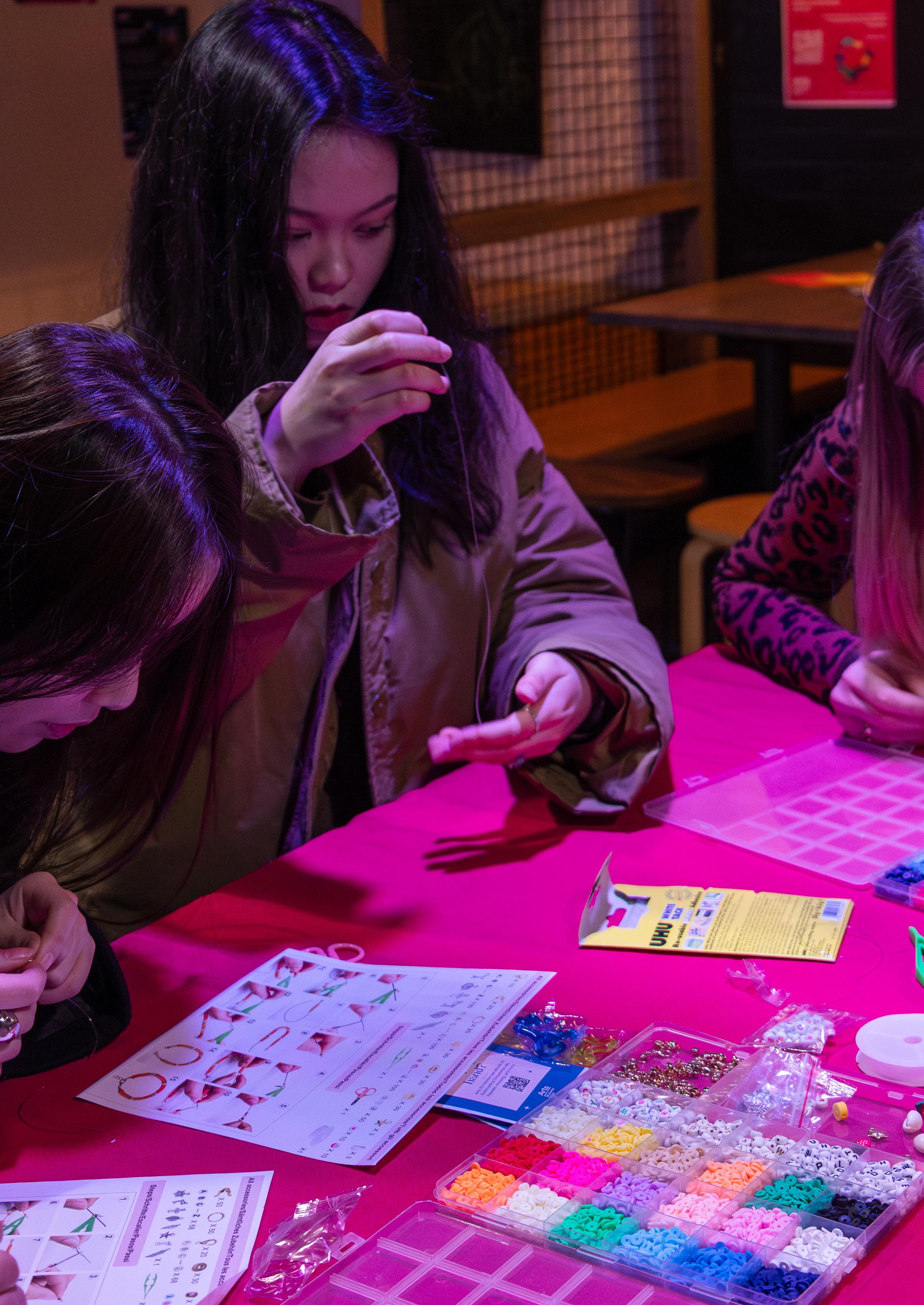
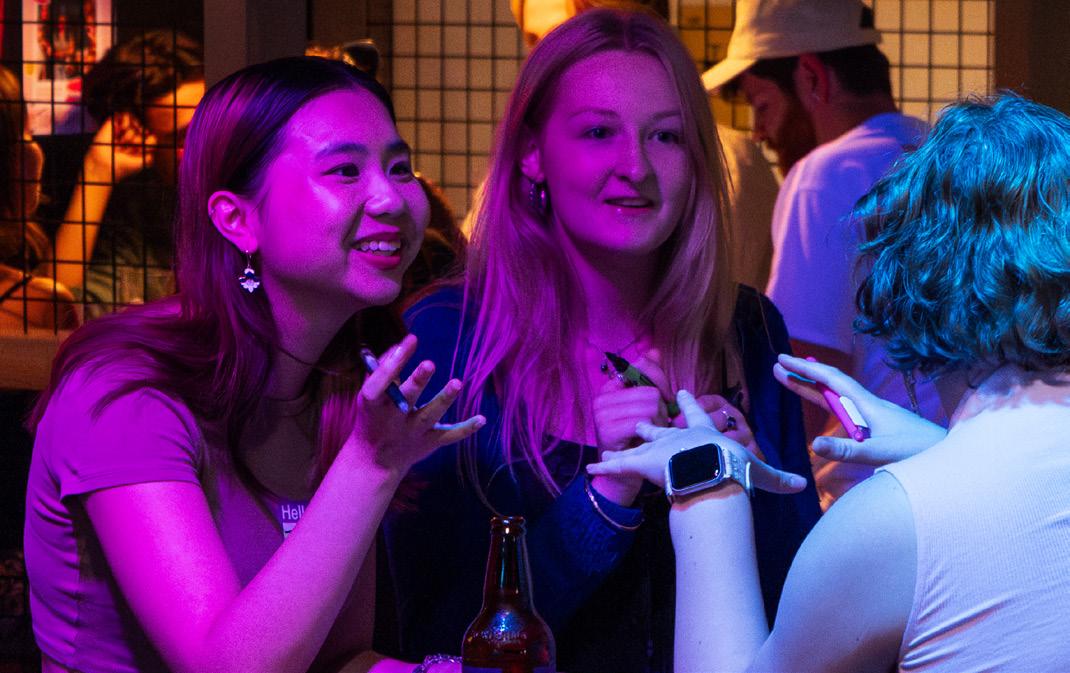
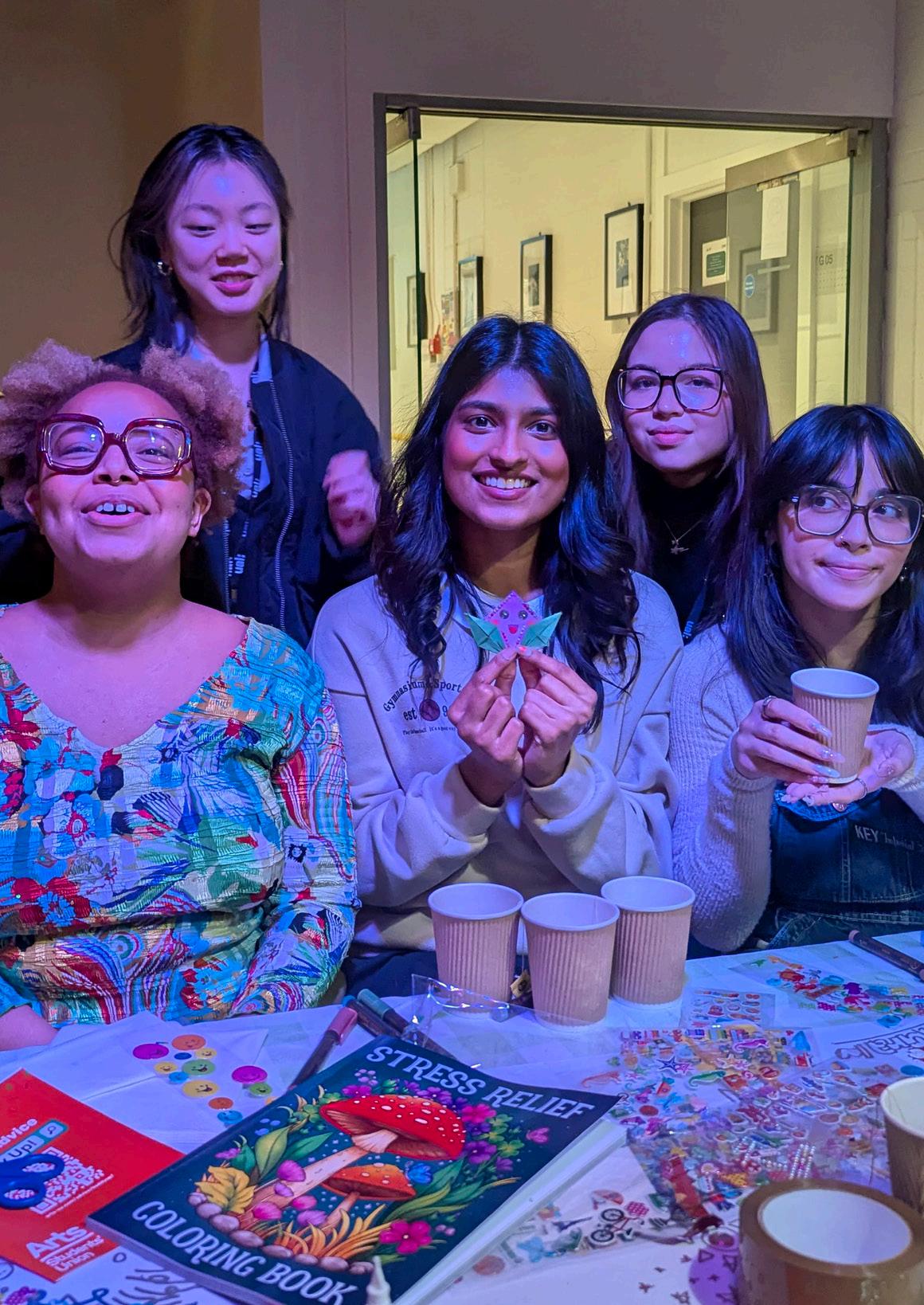
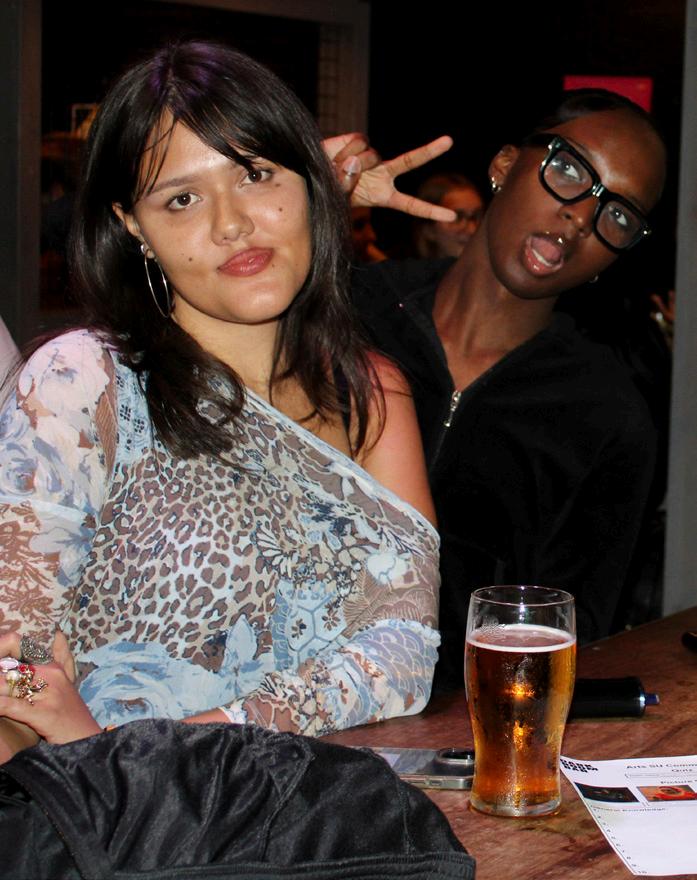
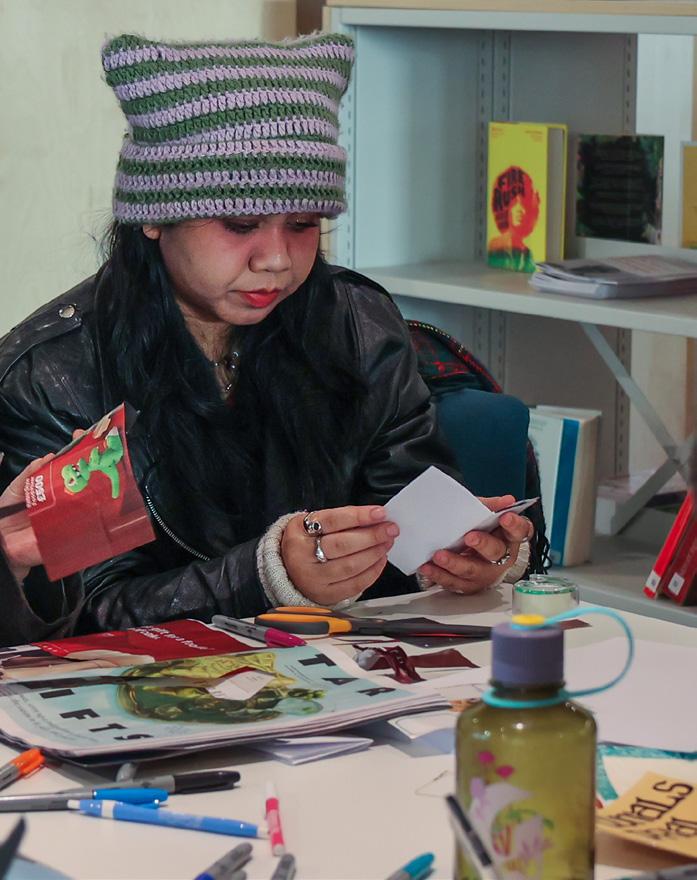
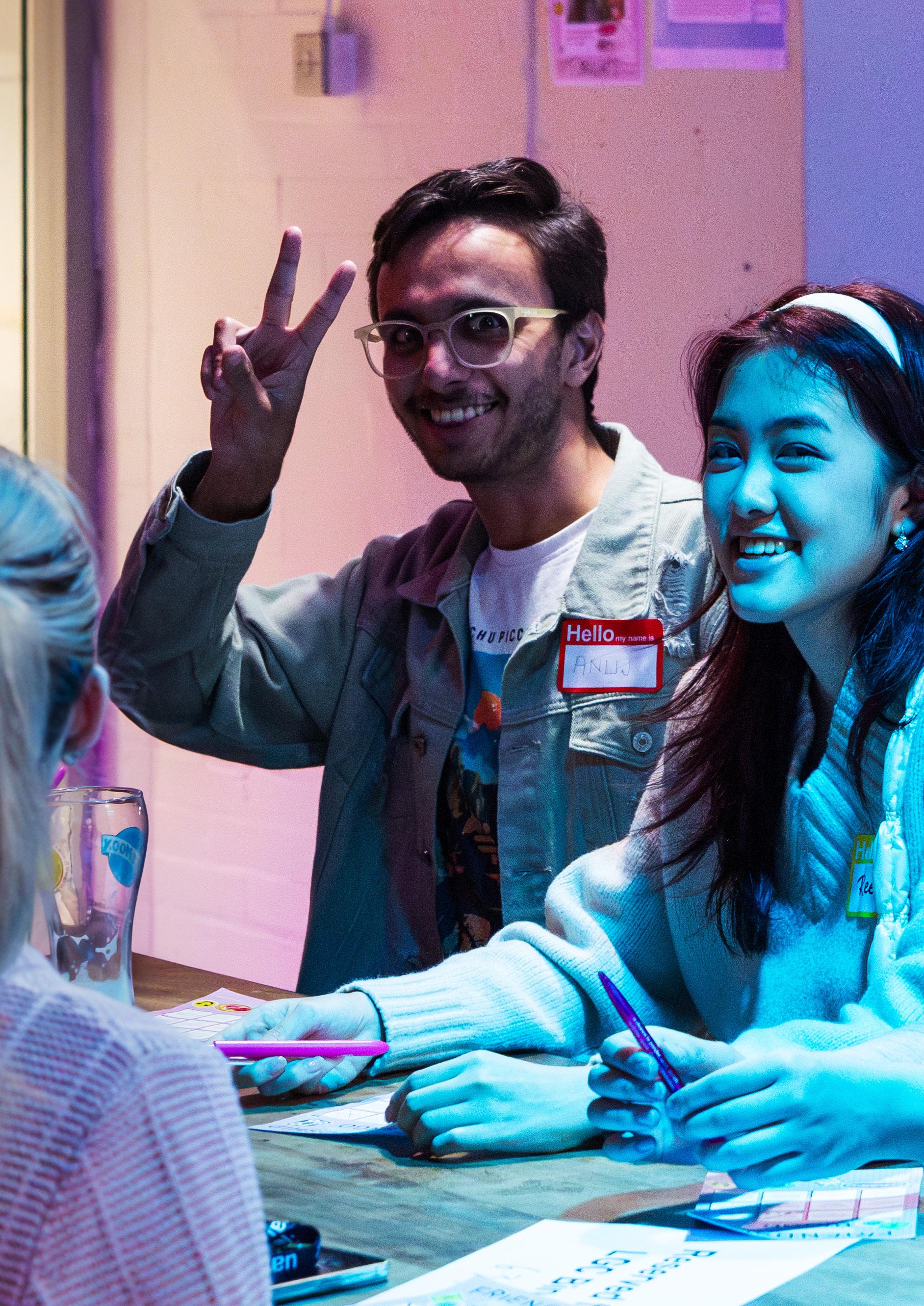
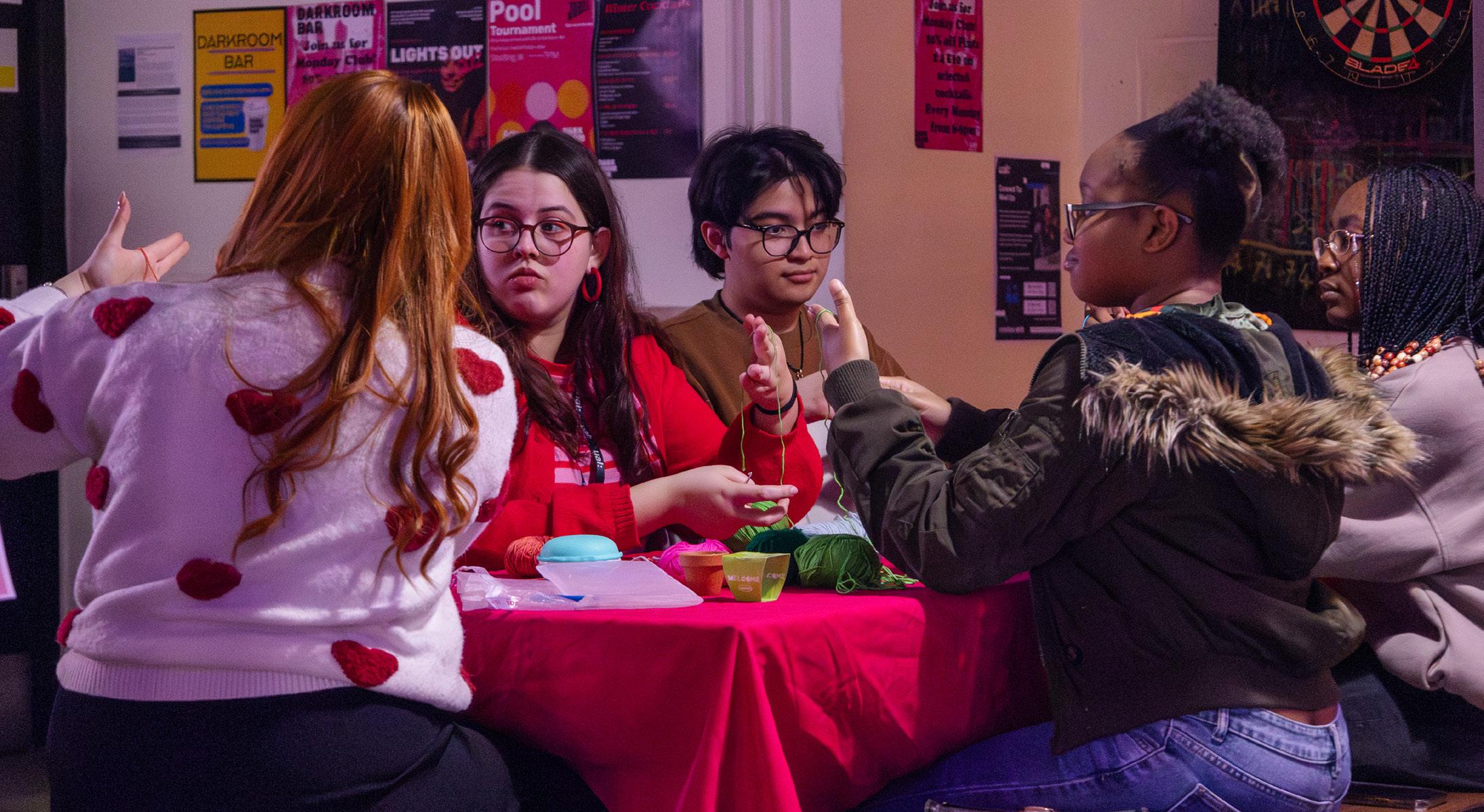
Our Darkroom Bar on the LCC campus is no longer just a place for a drink; it has become a central hub for community, creativity, and connection at UAL. We empowered students to take ownership of the space and bring their ideas to life, expanding our events offerings and allowing the bar to support new wellbeing, belonging, and cross-college collaboration.
In total, the bar hosted 55 society bookings and 74 course bookings, compared with 22 and 32, respectively, last year, representing an increase of more than 100% and a clear sign of how the bar’s reach has expanded.
The range of groups who made the bar their home was remarkable. Societies as diverse as the Afro-Caribbean Society, Anime Society, Jewish Society, Russian Speaking Society, Singaporean Society, and Nicki Minaj Society all held regular events. Alongside these, we marked cultural moments such as LGBTQIA+ History Month, Chinese New Year, and Black History Month, ensuring that the bar reflected and celebrated the diversity of UAL’s student body.
Students themselves spoke about the impact. One described the bar as having “improved their experience at UAL significantly,” becoming a place where they could meet new people, grow in confidence, and find a sense of belonging. An end-of-year survey confirmed that students from across UAL, not just LCC, frequented the bar, and staff reported that many students were making friends there and returning regularly to meet. This consistent use has made the bar one of the few genuine cross-campus community spaces available at UAL.
COMMUNITY WAS ALSO A CENTRAL FOCUS OF OUR PROFESSIONAL DEVELOPMENT PROGRAM FOR CREATIVES.
Our “Connection & Collaboration” events, run by the Arts Program Team, included an external networking evening at Somerset House, an internal session for Course Reps, our first Creative Mentoring event with five practitioners (with a guidance resource now in development), and “collectives” introductions to seed future partnerships.
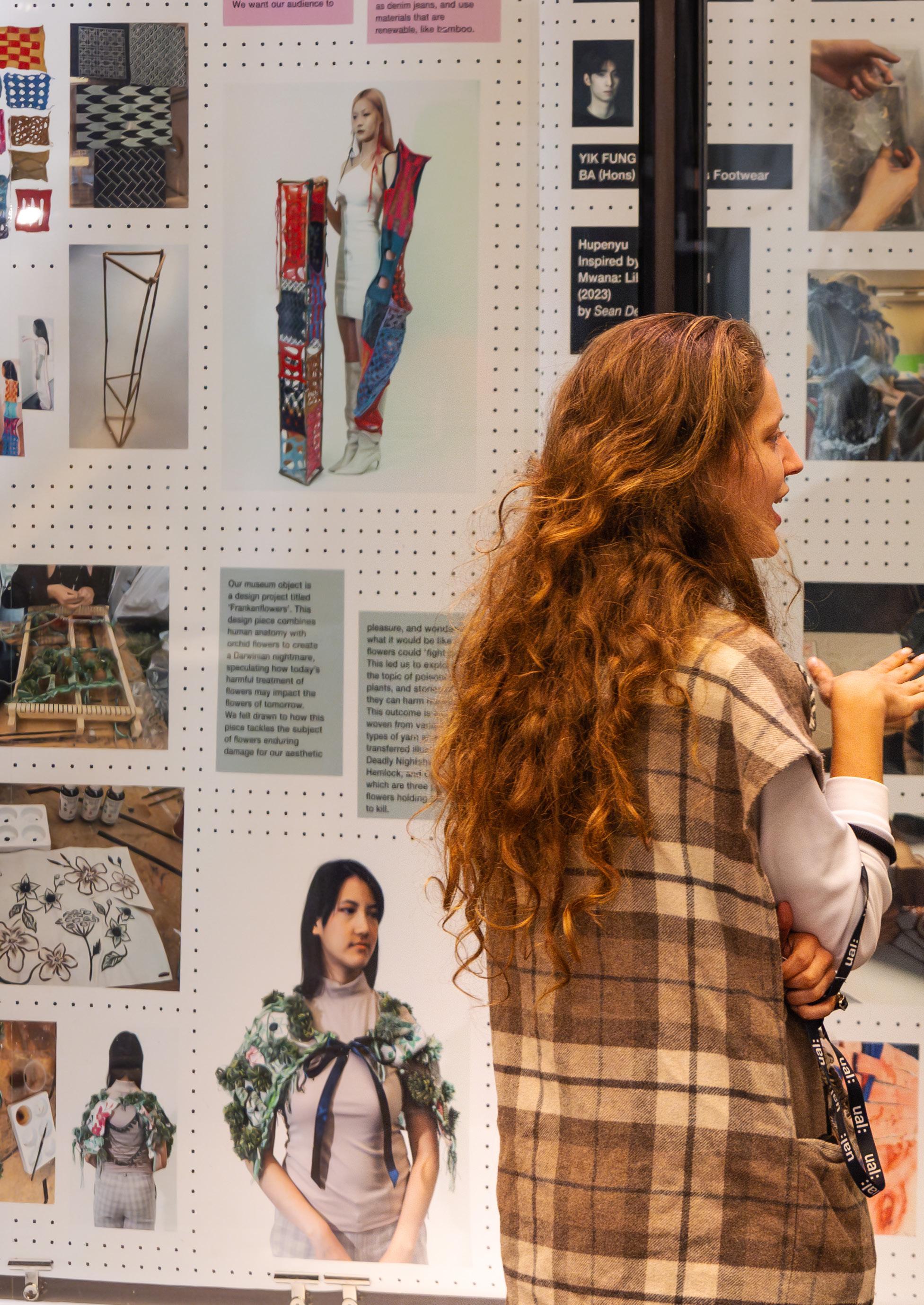
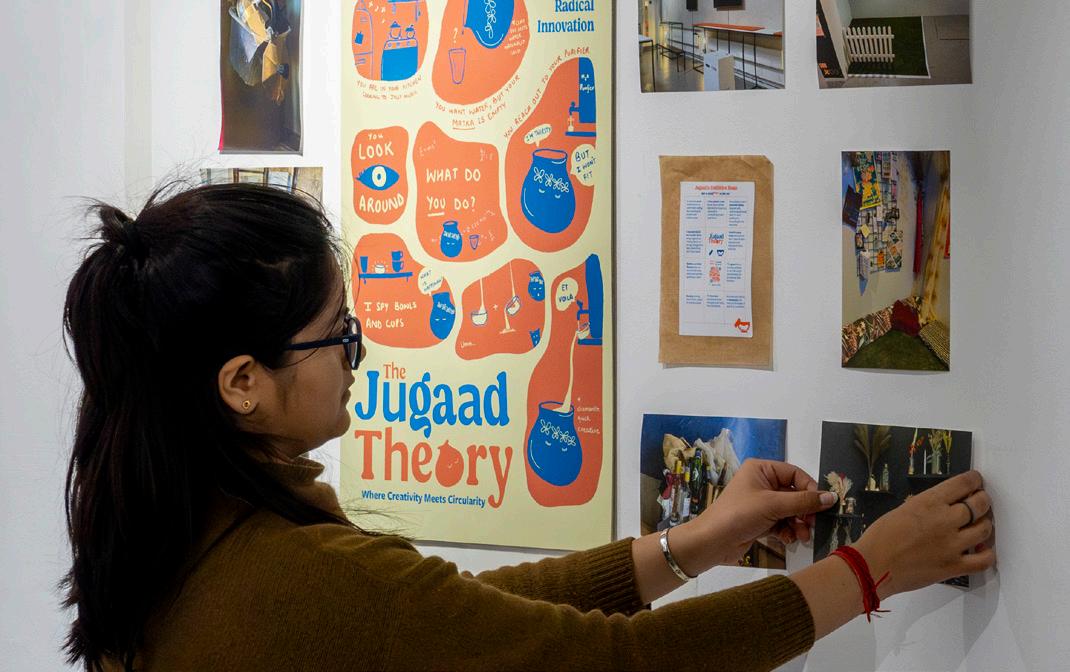
Our Exhibition Project Spaces hosted 12 student-led exhibitions and seven private views, providing curators and artists with hands-on experience, from installation to audience engagement. “It was one of my best experiences this year, [the Union’s] guidance made the show what I imagined,” a participant said.
For international students, we piloted the first International Student Career Forum, alum panels, tailored stalls, and a social at the Darkroom Bar, bringing practical career advice and community together. We recognised that students also want to learn at their own pace, so the team launched an online Recovering sources hub including topics such as creative selfworth, technical and practical skills, business sense for flexible, self-directed growth.
The scale of work supporting the creative professional development of students by the Arts Programme Team is unparalleled across UAL. We delivered 60 events (an increase of the target of 50), received 495 student applications for exhibitions/commissions/ opportunities, engaged over 1000 unique students in opportunities, and dedicated 162 delivery hours. Feedback on the program includes students who have said, “It’s so nice to learn new skills outside our course,” “The workshop was informative and helpful,” and “Mentors were patient, adaptable, and professional, please run more.”
Our work supporting creative professional development is not without its challenges. Sign-ups were strong, but attendance sometimes dipped. We will research barriers and seek feedback to tighten the registration-to-attendance ratio. We also led a strategic shift of the Made in Arts London program. We decided it was time to refocus our efforts so that we were supporting the whole UAL community. This has meant pausing the shop and replacing it with a more inclusive framework, selling opportunities, mentorships, bursaries, and targeted support for international students, after recognising visa and access constraints.
In closing, this year has been a celebration of what happens when students come together. From sports clubs and societies to cultural events, from the Darkroom Bar to professional development opportunities, the UAL community has grown in both scale and energy. Students have built friendships, discovered passions, and created spaces where everyone can belong.
Whether stepping onto a stage for the first time, leading a society, joining a workshop, or simply making friends at an event, students, supported by their Students’ Union, made this community what it is.
LOOKING AHEAD, WE ARE EXCITED TO KEEP BUILDING ON THIS ENERGY, ENSURING UAL REMAINS A PLACE WHERE EVERY STUDENT CAN FEEL AT HOME AND THRIVE.
This year, the Education Quality (EQ) team has reshaped the experience for student reps at UAL, creating an academic representative system which is a more accessible and impactful platform for student voice and has created a culture of leadership, recognition, and community across the University.
ACCESSIBILITY IN THE SYSTEM WAS A CORE TENET AT THE START OF THE YEAR.
A redesigned enrolment process ensured that over 1300 Course Reps were signed up, surpassing the target of 1,200. For School Reps, recruitment remained strong, with over 90% enrolled and 100% trained. Training itself was transformed, with three simultaneous in-person sessions across different UAL campuses building community, while new digital resources and online predegree training widened
access. These changes delivered measurable outcomes: 74% of Course Reps were fully trained, compared with 60% the previous year and exceeded the target of 70%.
Students recognised the difference. Feedback showed that 97% found training materials clear, 89% felt prepared to take on the role, and 87% agreed the training gave them the skills and confidence needed.
One Rep described the experience as “rewarding” and “empowering,” while another reflected, “It’s helped me grow both personally and professionally.”
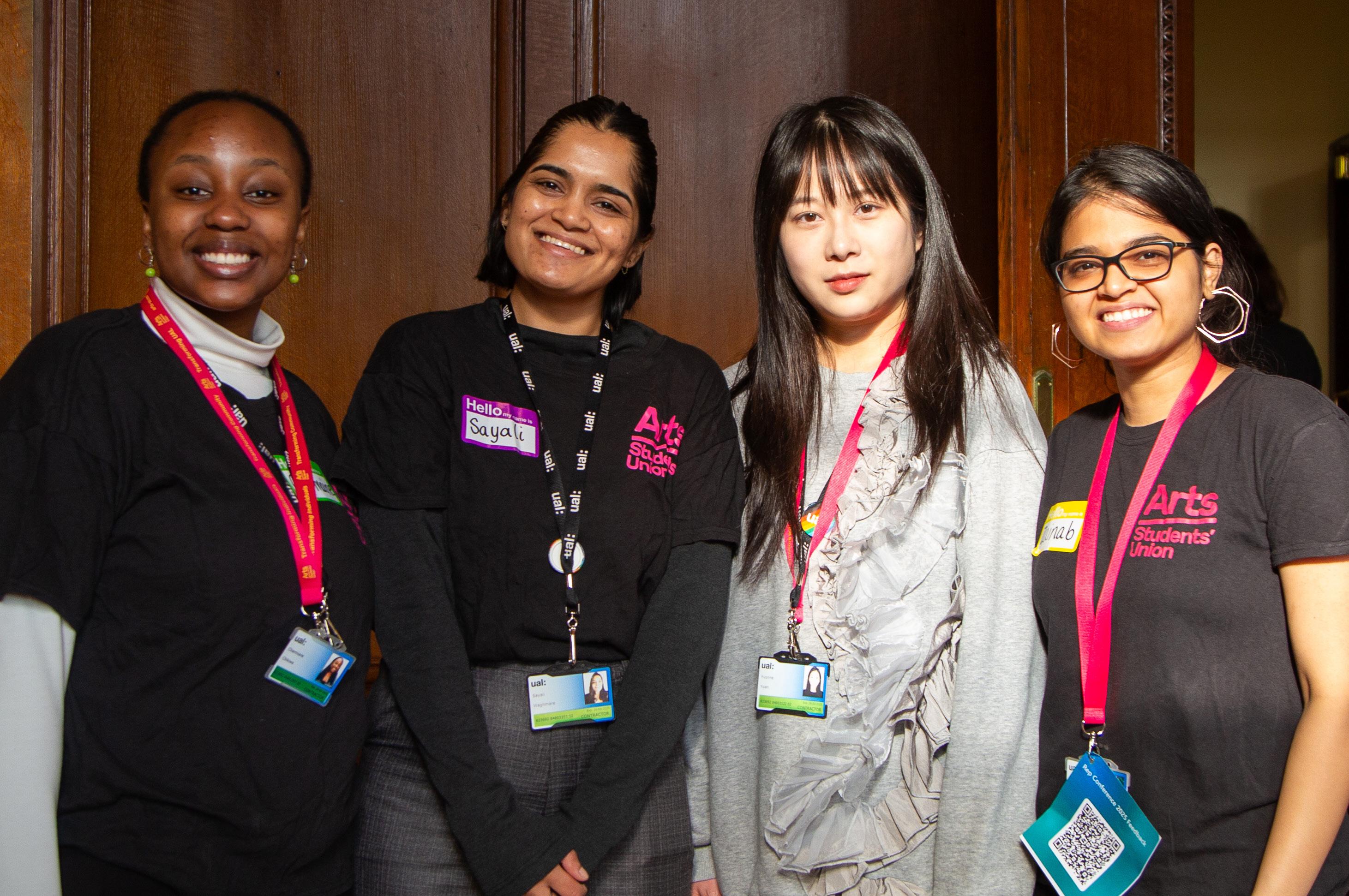
The team’s impact went beyond training. This year, we launched the first-ever UAL Rep Conference, a landmark event attended by 57 students, beating the target of 50. The conference brought together staff, students, and external speakers to celebrate leadership and highlight the tangible impact of Reps’ work. Most significantly, it provided a rare opportunity for students to engage directly with the ViceChancellor and senior leaders in a live panel debate, setting a new standard for transparency and dialogue at UAL.
We also made sure that the hard work of academic reps and staff at UAL was celebrated. The Arts Awards received 601 nominations across all colleges, including a new Student Services category that broadened inclusivity. 87.5% of winners were first-time recipients, with balanced representation across all six colleges. This year’s trophy was designed by a UAL student, reflecting on the pride and creative freedom the opportunity provided. Alongside initiatives such as Rep of the Month and Rep of the Year, these celebrations showcased the impact of individual students while inspiring the wider community.
Our outcomes had a tangible impact on students’ academic experience. Reps influenced changes such as clearer module briefs, revised assessment marking processes, and additional workshops and studio space for students. One Rep explained how feedback about unclear project guidance led to revised assessment criteria, updated marking schemes, and an extra Q&A session, changes that boosted confidence and set a precedent for transparent communication. Beyond the classroom, Reps also raised issues of equity and inclusion, helping to shape institutional conversations on studio access, anti-racism, and decolonising the curriculum.
Of course, challenges remain. Conflicting academic timetables limited attendance at events, engagement from some staff was inconsistent, and the team faced capacity pressures due to vacancies. Communication and transparency between UAL staff and the EQ team also require improvement to ensure data and processes align.
Despite these obstacles, the team has continued to innovate, co-founding a national Student Voice Coordinator network, embedding equity into Arts Awards processes with UAL’s EDI team, and strengthening communication channels through the first Course Leader newsletter.
In closing, the results this year are clear. With more students trained and prepared, we created stronger networks across colleges and had a measurable impact on the academic experience.
Through a blend of data-led improvements and studentcentred innovation, the team has embedded a culture of representation that ensures student voice not only speaks but is heard, shaping the future of UAL.
OUR STRATEGIC ENABLERS
OUR STRATEGIC ENABLERS ARE THE FOUNDATIONS THAT ALLOW ARTS SU TO DELIVER ON ITS PROMISES TO STUDENTS.
From communications that amplify student voice, to HR processes that enable our Union to develop an innovative workforce that delivers for students, to financial systems that empower student groups, these functions quietly but powerfully shape the student experience. This year, our enabling teams have transformed how we connect, work, and support both students and staff.
OUR PEOPLE
Student employment and development were central to the year’s impact. We welcomed 36 new student staff members and assisted them in starting their journey. The strength of our onboarding work for student staff is clear. Ninety-one per cent agreed that they felt wellinformed and comfortable in their role. We also expanded essential training for our student staff, with modules including Preventing Sexual Harassment and Mental Health Awareness / Dealing with Students in Distress, both crucial for student-facing roles. Students told us the tone and clarity helped them settle quickly, with one student saying, “A really welcoming day… timely comms made it easy to settle in.”
In total, we employed 44 members of student staff, providing over 9,500 hours of work and over £120,000 of wages back in the pockets of students. Many gained valuable
This year, we aimed to create a space where staff and students can do their best work and feel a sense of belonging. We achieved this through transparent processes, coupled with practical applications and data-driven decisions.
transferable skills in Microsoft 365, customer service, process documentation, and communication. For some, this was their first professional experience, and they spoke about the confidence it gave them to solve problems independently and work as part of a team. Our Alum student staff have since gone on to secure roles with international studios and design firms, underscoring the professional value of these opportunities.
For career staff, we focused on a culture of connection, care and clarity. The Employee Experience Committee (six staff + HR support) delivered a year-round calendar, from craft socials and a gallery visits celebration to May Day talks, keeping connection alive for staff who work across different sites and across busy periods. On International Women’s Day, we trialled a trio of formats, including learning,
recognition, and self-care, with feedback showing the importance of these events. “We’ve never had anything like this, please do more.”
Learning and development are central to developing an innovative workforce.
This year, we reviewed 46 policies with our trade union representatives, delivered 16 organisation-wide learning sessions, and approved 35 individual training requests, thereby opening up continuous professional development opportunities for the team. We have prepared a new student staff training programme for 2025/26, covering Customer Service, Financial Wellbeing, and Coordinator training (co-designed with an external provider and delivered in-house), to support supervisors and student teams as they grow together.
OUR PROCESSES
We worked to ensure that our governance, policies, and processes allowed us to be financially sustainable and deliver a high-quality, consistent, and responsive organisation.
The Advice team prepared for the Advice Quality Standard (AQS) by conducting a comprehensive internal audit, overhauling policies, and submitting an evidence pack. This work included refreshing handbooks, strengthening confidentiality policies, and aligning supervision and safeguarding practices with sector-leading standards.
The Finance team has transformed how financial processes support staff, students, and the wider Union. By introducing new purchasing and reporting systems, simplifying day-to-day tasks, and building financial confidence among student groups, the team has created a culture of transparency and efficiency across the SU.
The most significant milestone came in January 2024, when the team launched a new cloudbased finance system. This replaced a more costly platform and gave individuals direct access to management accounts, enabling them to review budgets and carry out financial analysis in real time.
We also sought to build confidence in student leaders’ understanding of finance. The team redesigned training for student leaders, making sessions more engaging, interactive, and focused on financial literacy. This helped student leaders gain a better understanding of budgeting, accountability, and decision-making. To reinforce learning, the team produced tailored student group finance reports and collaborated with the Community Development team to create a finance training video, providing an ongoing resource for clubs and societies.
The impact was clear. Student leaders reported that they felt more confident managing their budgets, were quicker to resolve finance queries, and could spend more time planning events and building communities rather than worrying about money. Staff also benefited from greater clarity, with improved management account reviews, budget reforecast meetings, and faster responses to finance-related queries.
The team supported the timely allocation of grants, ensured compliance across financial processes, and managed an increased volume of invoices and transactions without sacrificing service quality. Students and staff alike commented on the accessibility of finance support and the fairness of processes, noting that the new reports and training materials made finance more transparent and less intimidating.
OUR PLACES
This year, it was critical to ensure our physical and digital spaces deliver for our students and staff and create a two-way communication stream.
The Front of House Team introduced new structures and tools, including Planner, to streamline task management and inquiry handling. As a result, the team responded to over 1,100 reception enquiries between January and July 2025, providing timely and reliable support to students, staff, and external partners.
The team made visible improvements to SU’s physical spaces, ensuring that staff and students could work in safer, more comfortable environments. For example, the delivery of the new office space in CSM, as well as renovations of spaces at Chelsea College of Art and Wimbledon, marked a milestone in providing students with better and more direct, accessible support on campus.
The team also reinforced Health and Safety structures, improving compliance, transparency, and collaboration with UAL’s own Health and Safety staff to ensure our students and staff remain safe while engaging in the Union.
The creative campaigns created by the Marketing and Communications Team reached unprecedented levels of engagement.
Meanwhile, the Officer Intercollege Championship campaign achieved 10,000 views, and the Communities Podcast surpassed 17,000, creating new avenues for inclusion and connection. At Graduation 2025, a single video generated 7.3 million views across TikTok and Instagram, driving new followers to the organisation.
OUR PRACTICE
How we act is just as important as what we do, and it is essential that students feel the impact of our work in a way which matters to them.
This year, we saw student feedback on the National Student Survey for the core question “How well does the students’ union represent students’ academic interests?” increasing from 73.3% to 75.3%, showing that students continually value our work, and this is improving year on year. In addition, the Union was awarded the Association of College Union International’s Joseph H. Benedict Jr. Social Change Award for Racial Justice. This award is given to a global institution for its work in promoting racial equity and social change, and was given to Arts SU for its 2024 Black History Month program titled ‘The Art of Reclamation”
In the Annual Survey 2025, we sought views from students on our practice. Students told us
75% agreed our spaces and activities promote inclusion, 72% agreed we are a democratic organisation, and 74% said Welcome Week helped them settle in. When asked to describe the Union in three words, students most frequently chose student-focused (36%), community (32%), and societies (28%). Other high-ranking descriptors included supportive (21%), opportunities (19%), inclusive (19%), and creative (18%), which remind us of the importance of maintaining visibility and energy across all campuses.
In closing, the ability for the Union to deliver transformational change and experience for students is built on the systems, people, and spaces that support it every day.
THIS YEAR, WE HAVE SIMPLIFIED PROCESSES, BUILT TRANSPARENCY, AND CREATED OPPORTUNITIES FOR BOTH STUDENTS AND STAFF TO THRIVE.
They have shown that when we have strong foundations —when finance is accessible, HR is people-focused, communications are creative, and spaces are welcoming —students can focus less on navigating bureaucracy and more on belonging, leading, and creating. Looking ahead, these enablers will continue to evolve, ensuring
ARTS SU REMAINS RESILIENT, FAIR, AND STUDENT-CENTRED AT ITS CORE.
LOOKING AHEAD TO 2025/26
AS WE LOOK AHEAD TO 2025/26, WE WILL BUILD ON THE SUCCESSES OF THE PAST YEAR WHILE ADDRESSING THE CHALLENGES STUDENTS AND THE ORGANISATION CONTINUE TO FACE.
Every team has set clear priorities that reflect our shared mission: to empower individuals, strengthen communities, and influence lasting change across UAL. Together, these plans demonstrate our commitment to being daring, innovative, supportive, and unapologetically student-led, so that the students of UAL can have transformational experiences and change.
TRANSFORMING INDIVIDUALS
NEXT YEAR, WE WANT TO FOCUS EVEN MORE ON THE PERSONAL GROWTH AND DEVELOPMENT OF STUDENTS AND STAFF.
Training and workshops in financial literacy will give both student leaders and managers the confidence to handle budgets and make informed decisions. We are also expanding opportunities for student leadership across our exhibition project spaces, Union-led events and student groups, so that more students can design and deliver their own work.
New resources, such as an Exhibition Toolkit, a Sustainability Guide, and a Skills Recognition Framework, will support students in reflecting on and communicating their skills. Importantly, we will also be introducing a dedicated program to support neurodiverse creatives, ensuring that their talent is nurtured in ways that are both meaningful and practical. Alongside this, frontline staff and student-staff teams will receive training to enhance their ability to respond to students in distress, ensuring signposting and advice referrals are handled with confidence and care.
TRANSFORMING COMMUNITY
BUILDING COMMUNITY WILL CONTINUE TO BE CENTRAL TO OUR PLANS MOVING FORWARD.
We will carry on the journey of turning the Union bar into a welcoming, inclusive space for all UAL students. By diversifying our events programme and collaborating with UAL to explore new spaces, we aim to ensure that every student, from every college, feels represented and belongs at UAL. Societies and sports clubs will benefit from investment in more staff, more streamlined processes and stronger election structures, making it easier for them to flourish.
Welcome 2025/26 will be bigger and better, featuring a highquality Welcome Fair and events program that showcases the Union’s activities while helping new students feel supported from their first day. Advice will also become more accessible, with regular on-campus provision extended to at least two more sites, ensuring no student is left behind.
TRANSFORMING UAL
OUR AMBITION IS NOT ONLY TO SUPPORT STUDENTS DIRECTLY, BUT TO SHAPE UAL ITSELF.
Research projects, such as Craft Your Future and Name Your Price, will continue to inform policy discussions, ensuring that UAL’s direction is grounded in the student experience. Nationally, we will play our part in shaping the NUS Advice Apprenticeship pathway, positioning Arts SU as a sector leader and potentially one of the first Unions to host an advice apprentice.
Over the coming year, we will review our democratic structures and strengthen our campaign provision to ensure the Union truly lives its ethos of being student-led. This work will combine broad listening exercises with more detailed internal development, all focused on improving representation and influence.
OUR STRENGTH LIES IN OUR MEMBERS, AND NEXT YEAR WE WILL FOCUS ON SUPPORTING THEM MORE DEEPLY.
Training opportunities and Away Days will be expanded for our wider student staff team, recognising their contribution and supporting their development. Reviews of our campaigning and democratic structures will look to make access to the Union’s decision-making structures even more accessible. Societies and clubs will also benefit from more consistent training and clearer systems, making it easier for committees to lead effectively and for members to feel the value of their Union.
WE WANT EVERY UNION SERVICE TO FEEL EASY TO USE, SUPPORTIVE, AND RELIABLE.
Finance will continue its transformation, introducing digital expense reporting and new Finance Procedures to make processes clearer and more transparent. Staff and students will have access to updated training videos and resources through the Finance Library, ensuring they can find the answers they need quickly. In advice, we will look to introduce text message reminders to reduce appointment no-shows, while piloting telephone followups to capture richer student feedback. Together, these changes will make the Union’s services more consistent, responsive, and supportive.
We are determined to be bold in the year ahead. Our work on student basic needs will see an innovative approach to student support piloted, creating a benchmark for the entire sector.
New democratic tools will be piloted to widen participation and challenge traditional approaches to representation. Our Sabbatical Officers will lead the way in heritage and liberation celebrations, with South Asian Heritage Month, food justice projects, and employability campaigns showcasing the creativity and determination of our members. In advice, we will experiment with telephone followups to capture stories that data alone cannot show, ensuring that the Union continues to innovate in how it understands and responds to student needs.
Our work will continue to be rooted in equity and social justice. We will launch the first year of our Social Justice Strategy, creating tangible change at UAL and beyond for our members. We will deliver three major diversity events — Disability History Month, International Women’s Day, and LGBT Pride Month — while addressing barriers in recruitment by tackling the drop-off between application and shortlisting. Arts SU will also expand its outreach to students from disadvantaged backgrounds, tailoring financial literacy and creative opportunities in response to student research.
Cross-team collaborations will continue, with Advice, Communities, Education, and Democracy teams working together on campaigns that address housing rights, wellbeing, and inclusion.
THROUGH THESE COMMITMENTS, WE WILL ENSURE THAT THE UNION REMAINS A VOICE FOR FAIRNESS AND JUSTICE ACROSS UAL.