













Upcoming submission deadline for advertisers & contributors:
AUG ‘26 EDITION - 6TH JULY ‘26 | SEPT ‘26 EDITION - 10TH AUG ‘26
owdi readers, I say ‘Howdi’ not to infuriate Mike and his Americanism fixation (although that’s an added bonus! ), but because I’m as hot as a Texan Ranger looking for water in the desert at the time of writing! And I’m as grumpy as one too….as quite rightly all my sports have been cancelled to boot. I’m much happier when it’s warm, but as a country, we aren’t exactly set up for coping with heat…. roads will start melting in a minute…. hey, maybe it’ll fill in the pot holes!!?? I digress!
Also, at the time of writing, we’ve just watched England draw with Ghana……. my Grandma swore by the old saying of ‘bad start, good finish’ *crosses fingers*, mind you, she was cheating an 8yr old out of a victory in Ludo at the time, so I’m not sure how much stock I put in that, but the sentiment is nice, I guess!! Come on fella’s, time to show us why you earn the big bucks!!!
Speaking of a change in management…. looks like we will have a new PM by the end of this year. Like him or loathe him, 7 Prime Ministers in 10 Years doesn’t exactly scream stability and we will all feel the effects of that. But we have what we have I guess whilst ever we have the first-past-the-post electoral system. Anyway, that’s enough of that, we don’t do politics here and I don’t want my email inbox filling up with unnecessarily angry emails – I get enough of those thankyou!!
Anyway, in other news, Mr Emily had to renew his passport this month and what I can genuinely recommend is South Normanton Post Office, who literally take care of the whole thing digitally, photo and all. It’s still an expensive do getting your passport renewed but no more silly form filling and chasing around trying to find a small box that takes tiny pictures in a supermarket car park, adjusting the height of the stupid stool, getting 4 but only needing 1 at the cost of a tenner….what do you even do with the other 3??! I’m sure other Post Offices are available for this service….but if not, these are your guys – you heard it here first!!
Stay cool & hydrated peeps, Happy Reading, Emily x
WITH 11 MAGAZINES COVERING DERBYSHIRE & NOTTINGHAMSHIRE, Why not advertise in another area

Every year on 15th July, Britain marks the wonderfully quirky tradition of St. Swithin’s Day — a date wrapped in folklore, weather predictions, and a healthy dose of superstition. While modern meteorologists may raise an eyebrow at the idea, the legend remains one of the nation’s most charming seasonal sayings.
St. Swithin himself was an Anglo-Saxon bishop of Winchester in the 9th century. Known for his kindness and humility, he served as Bishop of Winchester during the reign of King Egbert. According to tradition, St. Swithin requested that when he died, he should be buried outside where “the sweet rain of heaven” could fall upon his grave. He died on 2nd July 862, and his wish was honoured.
However, several years later, the monks of Winchester decided they wanted to move his remains inside the cathedral to a grander resting place. Legend says that on the very day they attempted to move him — 15th July — a tremendous storm broke out, with rain pouring relentlessly for forty days and forty nights. Since then, folklore has claimed that whatever the weather is like on St. Swithin’s Day will continue for the next forty days.
The famous rhyme goes:
“St. Swithin’s Day, if thou dost rain, For forty days it will remain; St. Swithin’s Day, if thou be fair, For forty days ’twill rain nae mair.”
It is one of those gloriously British traditions that combines our love of discussing the weather with a touch of medieval mystery.
Whether people truly believe the forecast or not is beside the point — St. Swithin’s Day has become part of the nation’s cultural fabric.
Of course, scientifically speaking, the legend does not quite hold up. The Met Office has repeatedly explained that there is no evidence of a strict forty-day weather pattern beginning in mid-July. Yet there is a tiny grain of truth hidden in the tale. Around this time of year, Britain’s summer weather patterns often settle into longer spells of similar conditions, meaning wet or dry periods can indeed linger for a couple of weeks.
Beyond the weather lore, St. Swithin’s Day has inspired festivals, school rhymes, newspaper headlines, and endless cheerful debates over picnic plans and soggy barbeques. It also serves as a reminder of how deeply history and storytelling are woven into everyday British life. Few countries could turn a bishop’s rainy funeral into a national talking point more than a thousand years later.
Today, visitors can still explore Winchester Cathedral, where St. Swithin’s shrine once stood and where pilgrims travelled from far and wide during the Middle Ages. Although the grand shrine was destroyed during the Reformation, the legend has survived remarkably well.
So, when 15th July arrives each year, many people still glance nervously out of the window. Sunshine brings hope for a glorious summer ahead, while raindrops may inspire a resigned sigh and the inevitable phrase: “Typical British weather!”

















New 2, 3 and 4 bedroom homes for sale with the help of shared ownership
Marehay Road, Ripley, DE5 8LB
Example: Purchase a 50% share of a two-bedroom semi-detached house for £102,500.
Monthly rent on remaining share: £234.90
Monthly service charge: £61.57
Explore our new homes by scanning the QR code:
Show home now available by pre-booked appointment.

























Method:
1. Add half the strawberries and all the sweetener to your food processor, and whizz until smooth. Strain through a sieve into a pan and sprinkle over the jelly crystals. Put the pan over a very low heat and stir gently, until the crystals have completely dissolved. Take off the heat and leave to cool to room temperature. Once cooled, stir the vanilla extract and yogurt through the strawberry mixture until combined.
2. In a clean glass bowl, beat the egg whites with an electric hand
For more information visit www.slimmingworld.co.uk


These melt-in-themouth pots will go down a treat on a summer’s day.
whisk until they form stiff peaks. Stir 1 tbsp of the whites into the strawberry mixture to loosen it, then gently fold in the rest one third at a time, being careful not to knock out too much air.
3. Divide the mixture equally between 4 large dessert glasses or ramekins. Chill for at least 4 hours, or overnight if you can.
4. When you’re ready to serve, finely dice the rest of the strawberries, add to the mousses, and scatter over the basil leaves.
Serves: 4
Swips: 1 per serving
•

• 1 level tbsp sweetener granules
• ½ x 11.5g sachet strawberry sugar-free jelly crystals
• 2 tsp vanilla extract
• 2 x 115g pots Müllerlight Greek Style Strawberry yogurt
• 2 medium egg whites*
• Fresh basil leaves, to decorate
*When eating raw or partially cooked eggs or foods containing them, pregnant women, the elderly, babies and toddlers are advised to eat eggs showing the British Lion stamp or that are produced under the Laid in Britain scheme.
Ready in: 30 minutes plus 4 hours chilling
THE ROYAL EDINBURGH MILITARY TATTOO




£2999.00

A beautifully finished fireplace, expertly installed from start to finish:



Premium flue liner kit, vitreous pipe & register plate
Heritage stone hearth in olive or black
Oyster split slate chamber
Character beam in a choice of finishes
Choice of three eco-design multifuel stoves
Professional installation
Waste removal included
Carbon monoxide alarm fitted
HETAS certification for total peace of mind
June has been a month of celebration at Amber Valley RUFC as players, members and supporters came together to mark the end of another memorable season.
Our Senior Men’s and Women’s Presentation Evening was a fantastic opportunity to recognise the hard work, commitment and achievements of players throughout the 2025/26 season. It was particularly inspiring to see so many newer players picking up awards, highlighting the bright future ahead for both sections of the club. A wonderful evening was enjoyed by all, with plenty of laughter, celebrations and, by all accounts, a few sore heads the following morning! A huge thank you goes to Ormonde Fields Golf Club for hosting us and to our incredible sponsors for their continued support throughout the season.
The celebrations continued with our annual Presidents Day, which once again showcased everything that makes Amber Valley RUFC such a special place. After the minis and juniors got the day off to a fantastic start, the men’s and women’s teams took to the field for a “friendly” touch rugby match. Unsurprisingly, friendly quickly became competitive, with family rivalries, spectacular plays and a few fancy dress casualties along the way!
A massive thank you to all our volunteers who helped make both events such a success.
As one season ends, we’re already looking forward to the next. Why not join us this summer for any of our training of all ages? Whether you’re an experienced player or completely new to the sport, everyone is welcome. Keep an eye on our social media pages for


More than just a club, we are the #ValleyFamily. You can visit our website www.ambervalleyrfc.co.uk, Facebook & Instagram pages to contact us or follow what we do. You can find us at Lower Somercotes, Somercotes, Alfreton









Don’t forget to mention Voice




















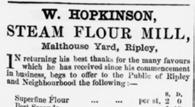
Malthouse Yard Mill 1866
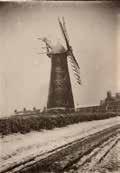

Heage windmill stands proudly as the area’s only surviving windmill, but at one time most towns and villages would have had a mill of some sort.
Ripley’s windmill was at the top of Peasehill. It seems to have been built around 1800, a brick tower mill with four sails. It was operated for around a hundred years, mainly by one extended family, the Stanleys and their sonin-law Thomas Steeples.
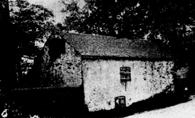
They also owned and operated a steam-powered mill down the hill towards Nottingham Road. There is little detail available about it, but it was likely to have been built, possibly as a replacement or an addition to an earlier water mill, around the same time as the windmill.
The first recorded steam-powered flour mill was Albion Mill in Southwark in 1784. This was very likely the mill that the poet William Blake was thinking of when he wrote the line about “Dark Satanic Mills” in “Jerusalem”. People in a mining area like Ripley might have been
a little more used to the smoke and noise of a steam engine.
There are records of other steam mills in Ripley. One at Greenhillocks, and another in Malthouse Yard, later possibly used as part of a brewery, and also operated by another member of the extended Stanley family. In 1866 this mill was offering “superfine flour” at two shillings per stone.
Both the Steam Mill Lane mills had closed by 1900, leaving only the name. Flour could now be brought in from large mills elsewhere. It is said that the bricks from the windmill were used to build the shops in Codnor Market Place, whilst the mill stone ended up as part of someone’s garden wall. Think what it might have been like had the mill survived and been restored like its cousin in Heage!


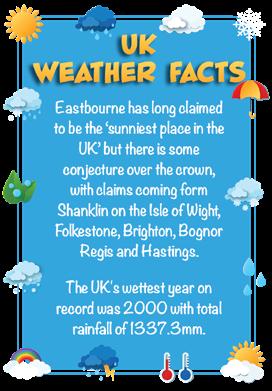
It’s very hot at the time of going to print and our four legged chums often find it harder to cool down than we do, so we have to be extra careful when taking our dogs out for walks. Obviously if it’s too warm err on the side of caution and leave it for another day, but if you are heading out, even on a cooler day, don’t assume there will be somewhere for them to drink and always take plenty of water!
A moderate walk for you and your dog. The route should take around 2-3 hours. Whilst a large part of the walk is trails and paths there are some fields to cross with uneven and potentially muddy sections, so a good pair of boots are advisable, especially if it has been wet. There are a few sections of road, so please take care and, as always, follow the countryside code.


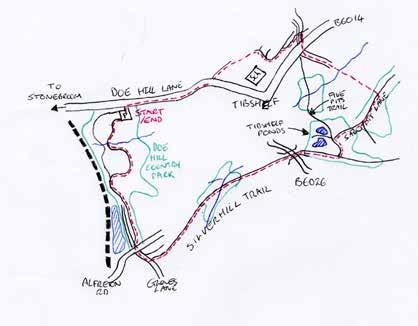

Start: Doe Hill Country Park Car Park, Doe Hill Lane, between Tibshelf and Stonebroom, DE55 6JS



1. Take the path that leads directly from the car park (by the poop bag bin). Follow this path as it winds around until it joins with another path from the right, then take the next left, almost immediately, heading uphill. Follow this path again as it winds until it joins with another path from the right and again take the next left, almost immediately. Follow this path until it brings you to Alfreton Road.



2. Cross the road and take the wide track (Gloves Lane) after a metal barrier on the other side. Follow this track for approximately 100 meters before taking the second of two paths on your left (the Silverhill Trail).
3. Continue along the trail until you meet a sign on your right. Take the horse stile on your left towards the ‘Five Pits Trail’. Follow this path until you meet a crossroads, taking the first path on your right. (This route can be fairly muddy. If you are keen to avoid this, you can continue ahead here on the Five Pits Trail to take you to point 5.)
4. Follow this path until it joins Saw pit lane, bearing left. After another 200 meters take a signposted footpath on your left. Follow the path as it joins Wetton Lane and follow until you reach the main road (B6014).
5. Turn left here and cross the road at the crossing before joining the five pits trail directly ahead. Keep to the main path downhill until a crossing of a small path. Turn left on the small path, cross over a lane and pass through a width restrictor.
6. Follow the path, ignoring steps on the right. Continue onto a road (Monsall Crescent) and keep ahead. At a T-junction, turn left and follow the road as it bends round to the right. Ignore roads leading off and then, as the road
bends round to the right again, take a short road onto a wide track footpath off to the left, just before a play park.
7. Keep ahead to the end of the path where there are turns left and right. Take the turn on the left to immediately pass through a gap in the hedge on your left. Turn right to walk alongside the field with the hedge on your right. At the bottom corner of the field pass through a kissing gate and turn left to walk alongside the field to cross a stile in the corner of the field, onto Doe Hill Lane.
8. Turn right here and follow Doe Hill Lane back to Doe Hill Country Park. Where appropriate cross the road to make use of the footpaths available.

This walk is for illustrative purposes only. Voice Magazines Ltd takes no responsibility for anyone who chooses to follow this route and encourages all walkers to obey all byelaws and signs and to respect the area they are walking in, ensuring they pick up all dog mess and obey the countryside code at all times.















We ran the most fabulous competition in May with amazing support from local companies and bumper entries from local residents. We wanted to share the happy winners to show that we didn’t just run off with the gifts ourselves (although we wanted to!!), and also to remind you all… “you’ve got to be in it to win it!!













Anna



Anna said “Excellent tour and taster. Many















www.pmlongden.co.uk


Helm is a wind. A real wind – the only named wind in the UK. It has blasted the Eden Valley in Cumbria for thousands of years. It’s also the name of an extraordinary novel by Sarah Hall who as fans will know, has used that part of the country for several of her earlier books.
This time the wind is the main character in the book, a being with a huge ego and the subject of many myths and investigation - again both in real life and in the novel. So where are the people we expect in novels you might ask? – They have lived with and been affected by Helm - from prehistoric cave people to wizards, little kids, magic mushroom munchers through to today’s pub lunchers, addicted to their phones. And Sarah Hall uses their stories to tell the story of the wind – and in a bigger sense to give us a sense of what might be happening to our nature and climate.
It may sound strange but it’s a spectacular book. Sarah Hall is a brilliant short story writer and while this book is longer it uses all her abilities to tell taut, sometimes mischievous sometimes moving, and sometimes thrilling tales around the human characters and bring them all together into a mind-bending whole linked by Helm.
It’s a very different kind of book, it changes from humorous to threatening to bleak and to hopeful.
A whirlwind in fact.
Pitcherwits® are crossword puzzles where some of the clues are in pictures.
Sound easy? It’s not called “Pit-your-wits” for nothing! The mixture of cryptic and picture clues, combined with Professor Rebus’ unique sense of humour, will keep you entertained for hours.
Across
9 Get a kick out of dangerous tactics (4)
10 Shrub wetland that could be Jimmy or Alan (4)
11 Run out of origanum? Embarrassing, me ol’ Spanish pal! (5)
12 Those people, as yet back in hospital (4)
14 Hunger (or conscience) feature of lifespan, generally (4)
Down
3 Legionnaires’ song? (3)
4 Rope formation sounds negative (3)
6 The mat that’s laid out for Empress Maude (7)
7 Nonsense article about change (3)
13 Early first listening gear (3)
16 Removal of eggs from Rome (3)
17 How about the one that was a doctor several times? (3)
1 An ace chord composed, but just not a bishop (10)
5 Mrs to stare rudely at chair sides (8)


15 Crown, all battered and left at the bottom of the land (8)
18 No room for compromise, as botulism is removed (10) Down
Act out aim of working like a robot (9)
Thermal beam from a hearty sort (4,3)


Tactics needing big biceps? (9)


Put ‘Cole’ into two-line verse (7)

















Many Sunday schools held an annual “walking round” procession with the church family parading through the streets and stopping at set points to sing hymns. My husband, Paul remembers one occasion when a piano accordion accompanied the singing, with mixed musical success.
After the “walking round,” the Sunday school anniversary was held in the chapel. Children performed presentations for the congregation, dressed in their new clothes and often taking part in action songs. Paul often retells the story of “Wide, Wide as the Ocean” being sung from wooden staging, only for the entire back row to disappear from view when the children enthusiastically threw back their arms. Visiting preachers were welcomed, and prizes—usually a Ladybird book—were awarded.
Some Sunday school chapels also organised an annual charabanc trip, often to the seaside and






usually accompanied by plenty of singing. Others held a sports day or tea party instead.

An annual “Festival of Queens” was sometimes held, with girls dressed as queens and donations from the sale of Sunny Smiles given to the National Children’s Home.
What Paul remembers most about these events is that there was always extra cake. Happy days.





Haigh


From
Stay
Protect
Secure












Fill in all the numbers!
This is a sudoku 1 square grid
81 cells
9 3x3 blocks
1 simple rule: Use all the numbers
1-9, with no duplicates allowed, in any row, column, or block.

These puzzles are devised by the brilliant Professor Rebus. For more of his puzzles visit www.pitcherwits.co.uk

























Over 20 years in business 10 year manufacturer’s guarantee Manufactured in Derbyshire, UK
• Fully Lined & Insulated Garden Rooms from £12,500
• Includes foundations, full installation, flooring, internal painting, and double sockets
• Free expert design - see your dream garden room in 3D
• Free site survey or video consultation
• Planning permission rarely required
• Use all year round for work or extra family space
• Bespoke builds from £14,400
Visit our outdoor show site open 7 days a week with over 40 buildings on display Studio Range from £12,500










Increasingly across the Peak District and surrounding areas, individual gardeners and others such as local authorities, have taken up the challenge of ‘No Mow May’ to benefit threatened pollinating insects alongside the wildflowers they depend on. Since the 1940s, the Peak itself lost over 97% of its one-time, species-rich old meadows; a clearly catastrophic decline. However, for several years now, the wildflower conservation body, ‘Plantlife’, has been running the ‘No Mow May’ campaign to encourage wildflower- and pollinatorfriendly meadow management. Alongside responsible organisations such as the National Park Authority, the Highways Agency, and the region’s local authorities, this initiative encourages gardeners and others to get involved and to do their bit for nature. Essentially this approach involves either or both, habitat creation and suitable meadow management. The latter including periods without mowing, but with a cut once or twice at the correct time, and preferably, also the removal of cut ‘hay’. This taking off of the grass cuttings or hay is necessary to reduce levels of nutrients in the soil which otherwise accumulate and lead to coarse grasses, tall herbs, and reduced biodiversity.
‘No Mow May’ has proved increasingly successful and links into other campaigns to protect and promote flower-rich grasslands and meadows. These generally look better in the countryside than do the intensively managed swards, and benefit tourism and recreational use. However, as one of my readers suggested, this campaign should be followed up by ‘Let them Bloom in June’, and then of course, the July hay-cut. If this isn’t



possible, then a later cut in say August or September, will deliver some benefits. The key steps described mimic the ways that traditional meadows were once managed as vital resources and an important part of the farming countryside. The other important step which is often hard to deliver today unless the site is in agricultural management, is that the cut meadow should also be grazed by farming livestock. This triggers what we call ‘micro-disturbance’ i.e., the breaking up of the grass sward to allow flowers to seed and germinate and often helped by animal dunging and associated transportation of seeds, ready fertilized, from other meadows recently grazed.
In terms of pollinators benefitting from wildflowers and meadows, the gardener can help enormously with native, traditional meadows, with annual ‘arable cornfield’ flowers, but also with old-fashioned cottage garden, herbaceous plants, a wildflower ‘lawn’ perhaps, and exotic species too. This is not just a case of growing native wildflowers but is much more inclusive and fun too. Of course, where hay-cutting or mowing are involved, this can be locally devastating for some insect populations, even if essential for longer-term conservation. With this in mind, it is important to leave corners and edges of habitats intact and undisturbed as sanctuary areas in our all-too-often tidy spaces and places. Try to remember that nature does like an untidy world! Butterflies, moths, bumblebees, honeybees, and hoverflies are just a few of the creatures that will benefit, along of course, with people.
Professor Ian D. Rotherham, researcher, writer, broadcaster on wildlife and environmental issues is contactable on ianonthewildside@ukeconet.org. Follow his website www.ukeconet.org, blog www.ianswalkonthewildside.wordpress.com/ & Twitter @IanThewildside Bluesky @ianthewildside.bsky.social



NEW 3.9 METRES 3.9m x 225mm x 38mm
Ideal for various projects including:
Decking Shelves


Raised beds
Planters Tables Rustic furniture Man cave Fencing



All types of new and reclaimed paving available; Yorkstone, Sandstone, Indian sandstone, Porcelain.
We also stock; Building Stone, Walling Stone, Setts, Coping, Bricks, Sealers, Jointing, Heads & Cills, Kerbs, Reclaimed Sleepers and much more…







Specialist garden maintenance and landscaping services in Derbyshire and surrounding areas


Independent, family-owned business



Multiple 5* customer reviews
Trust and satisfaction guaranteed
Professional qualifications
Book your free garden consultation now
T: 01773 317 432
E: info@lazydaysgardeningservices.com www.lazydaysgardeningservices.com
So, the British weather has done its usual crazy spring dance, and our gardens are still here and mostly looking blooming great.
As well as admiring our handiwork with a glass of something long and cool – or short and warm – there’s a few things to be keeping on top of this month, to keep it looking good and producing the goods.
Cucumbers and courgettes need to be picked as soon as they’re ready to keep them productive. A single courgette plant can give three courgettes a week and they very quickly turn from crisp and crunchy to huge marrows which are nice for a show bench but difficult to turn into an interesting ingredient for a meal. Likewise, cucumbers need to be harvested at their peak, so they’re constantly encouraged to produce more fruit and retain their sweetness. Apples and pears are starting to show their fruit clusters strongly now so it’s the best time to thin them out to give larger fruit in autumn.
And you also need to take this year’s growth back after mock orange has flowered so it will produce next year’s flower show. This works with smaller plants as well of course. Bedding plants are ideal for deadheading – usually you can just pinch flowers off behind the flower head when they have gone over. With roses you can take the flower off behind the head or take clusters back to just above the first leaf. Longer stemmed plants such as pelargoniums can be broken away from the plant where the stem attaches to the stem. Same goes for sweet peas. The idea is to stop them going to seed because for the plant that is when they’ve done their job – producing seed for the next generation. And if they no longer need to produce seed, they no longer need to produce flowers. Worth considering though that you might want that seed production to happen – with honesty or nigella for instance, or cotoneaster and big hip producing roses. They’ll all give you some winter interest from the seed head. And of course the birds will be grateful if you leave sunflower and rudbeckia heads intact – they’re a great source of food.
Don’t worry if we get a prolonged dry spell (you never know!!) and your lawn goes brown. It will recover very quickly after rain and our plants need the water more.


Boiler Breakdowns
Boiler Servicing
Radiators & Pipes
Tanks & Cylinders
Toilets & Taps
Leaks & Bursts
Showers
Clearing Blockages
Pipework Replacement
Gas