An accomplished and experienced artist herself, Bisa Bennett understands the importance of creating meaningful opportunities for artists to exhibit their work As a curator and multimedia designer, she is also well-versed in creating engaging opportunities for viewers to experience art.
“At our gallery, our vision is to serve as a dynamic and inclusive platform that fosters connections between artists and art enthusiasts, nurturing a vibrant and diverse artistic community,” she explains.
LUCID DREAMING–AN INTERVIEW WITH DANIEL VASILYONOK
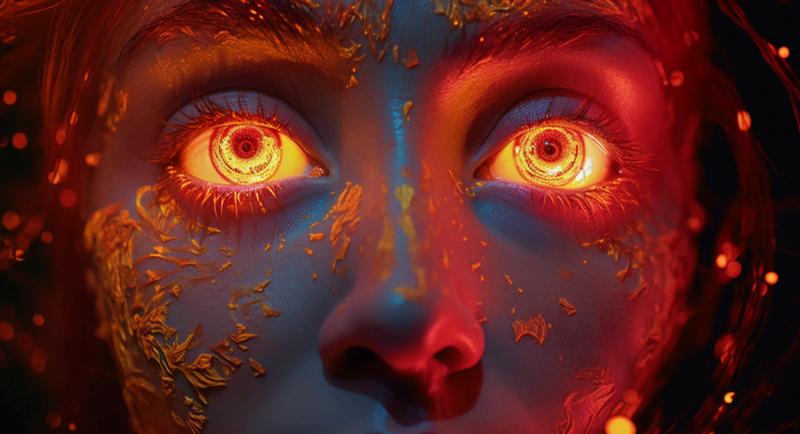
“My work is a form of lucid dreaming. I use Artificial Intelligence to capture fragments of the soul discovered within the infinity of human consciousness,” explains artist Daniel Vasilyonok, “My visions act as a fire in my blood that allow me to discover powerful, emotional, mystical art in otherworldly universes. When I pause the dream and find what I'm looking for, it's like I've discovered a new part of my soul to share with the world.”
Vasilyonok’s practice is hyper-contemporary and deeply personal; utilising AI as a creative tool that enables the artist to explore and visualise his own inner world The result is a remarkable body of work characterised by highly evocative and ethereal dreamlike images.
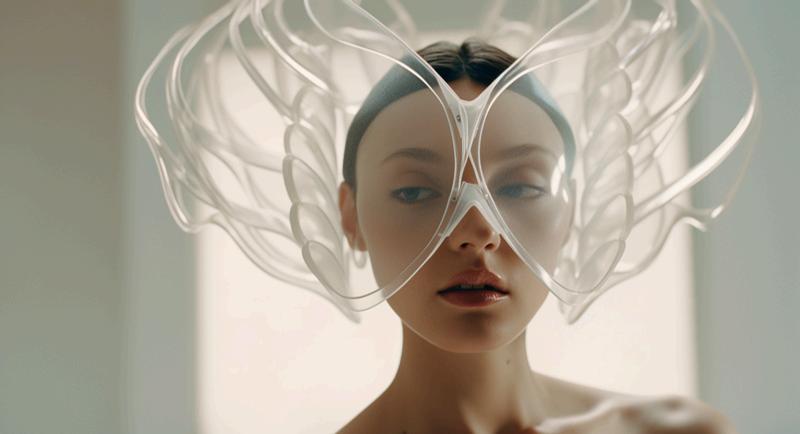
The Mnemosyne Diadem: A Fragment of a Forever Dream
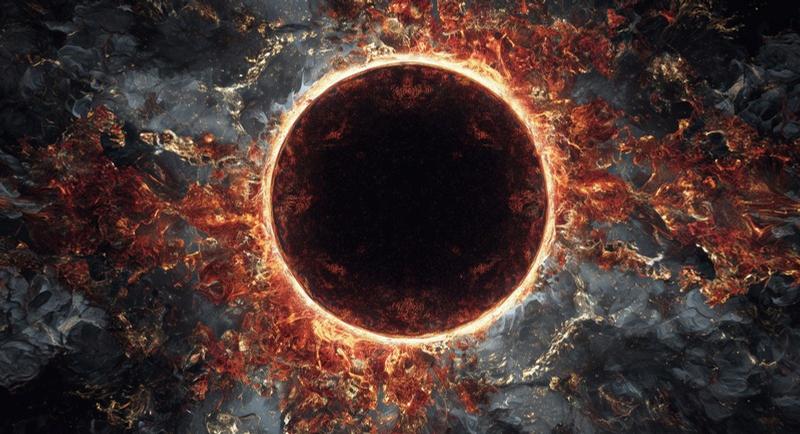
Amaterasu
The artist’s practice is fascinating, involving a method of conceptualisation, discussion and visualisation with AI, before cycling through hundreds of images and selecting a piece in a process the artist likens to pausing a dream. The practice is extremely personal and involves the artist exploring intensely vivid mental imagery. He explains, “While iterating, I find my mind is in a state of hyperphantasia visualising related objects, shapes, and scenes as the ones I’m creating.”
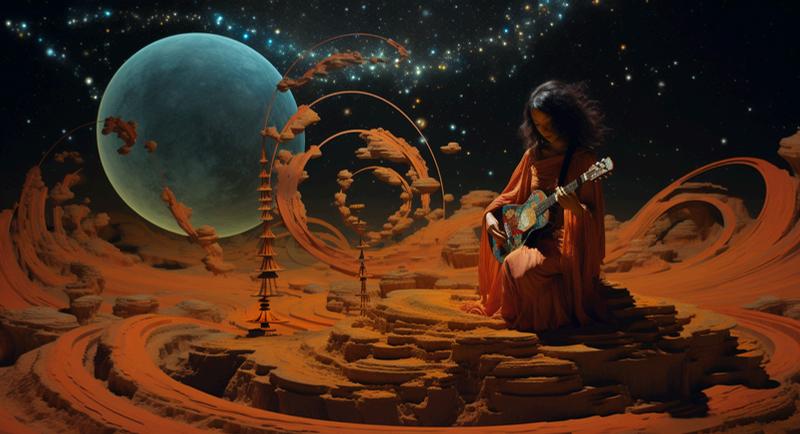
Works such as The Eye’s Judgement and Agape’s Song have a powerful cinematic and narrative quality, where figures inhabit otherworldly landscapes. In Agape’s Song, a woman sits serenely playing the guitar against the backdrop of a cosmic landscape. The crenulated surface of an unknown planet swirls against a glowing moon and a constellation of glimmering stars.
Agape’s Song
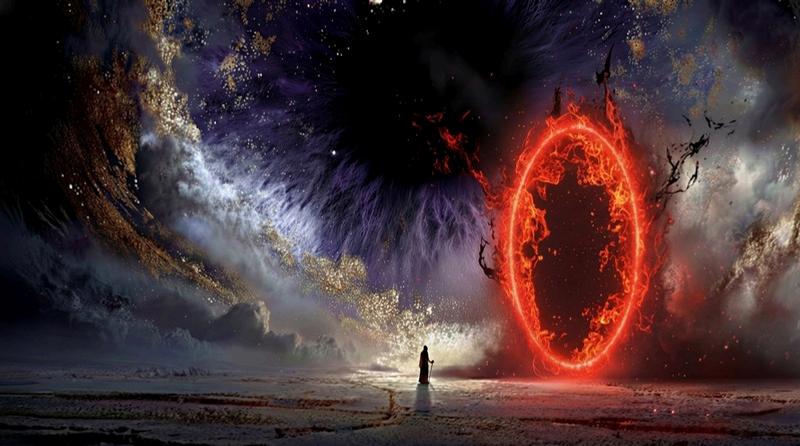
In The Eye’s Judgement, a lone figure stands within a forbidding environment, the dark, stormy sky reminiscent of an eye. The figure faces a fiery portal. These enigmatic images draw the viewer into a mythical space, where the imagination is left to construct what has already happened and what is yet to come.
The Eye's Judgement
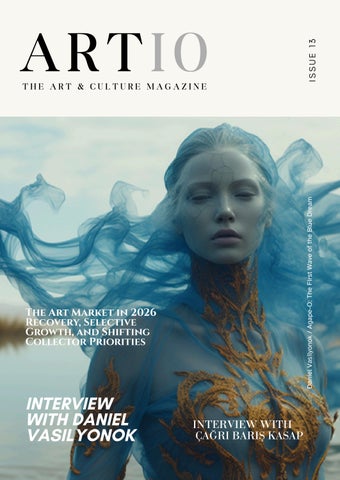
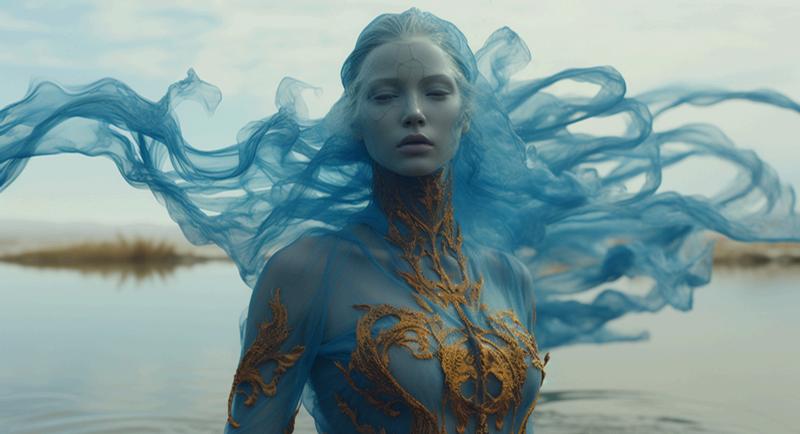
Agape's Ember and Agape-O: The First Wave of the Blue Dream are extraordinarily striking. The artist’s mastery of light and colour lends each piece a mesmerising quality Their composition, in which each figure dominates the frame, gives the work a monumental presence. Vasilyonok has developed his own visual language characterised by mythological fantastical imagery. With a background in Machine Learning and Computer Science, the artist uses new digital technology as a tool to explore new realms of imagination and creativity He summarises, “I feel the work I create with AI has feelings of mysticism, grandeur, otherworldliness. I want to communicate a sense of the mystery present in the vast universe. At the same time, I want to convey that the infinite mysteries of the universe can be explored visually through the creation of art with AI.”
Agape-0: The First Wave of the Blue Dream
Agape's Ember
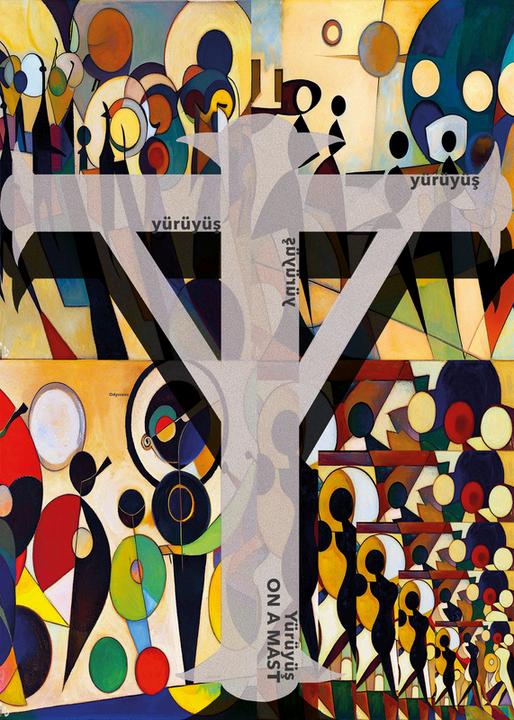
ÇAĞRI BARIŞ KASAP
Çağrı Barış Kasap’s highly contemporary conceptual practice invites us to rethink how we feel, perceive, and inhabit our digitally mediated world. Incorporating generative systems, interactive installations, the moving image, and digital manipulation, the artist explores technology as both a tool of creativity and a site of power. Through his work, he investigates the ways in which new technologies and computational systems shape our understanding of ourselves in the contemporary moment. He explains, “I hope viewers leave the work with a heightened awareness of their own relationship to technology and perception. Ideally, the work creates a moment of pause - a sense of entering an atmosphere where familiar systems suddenly feel strange again. I want viewers to feel both intellectually engaged and emotionally affected”
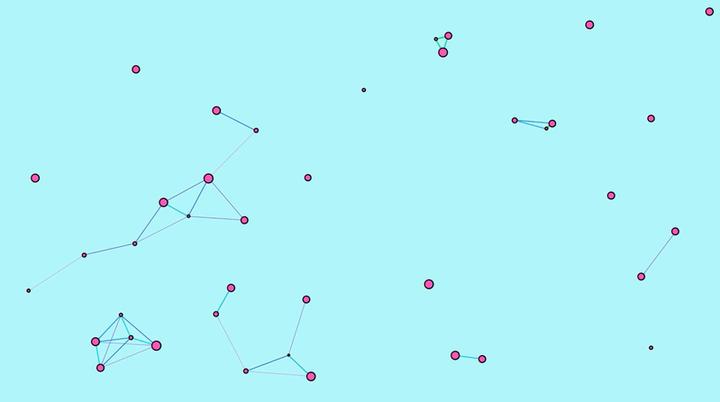
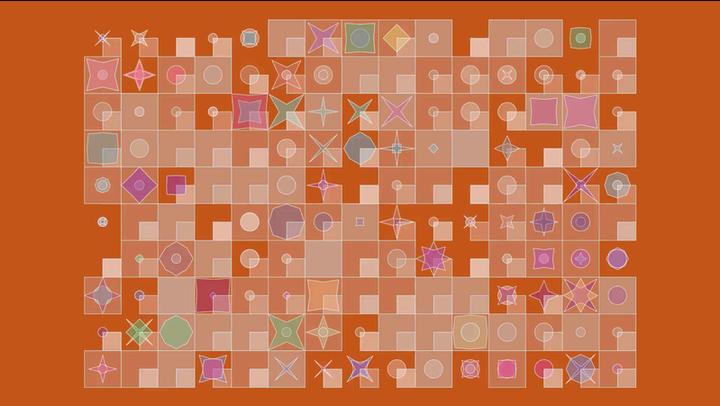
The artist’s work balances the personal and the universal It engages in philosophy, media archaeology, semiotics, and design research while being grounded in Kasap’s lived experience as a designer, educator, and researcher He explains, “In many ways, my practice began as an attempt to materialise invisible conditions: emotional atmospheres, digital anxieties, fragmented identities, and the increasingly blurred boundary between human and machine perception” Images from video works Blindness and Neurons capture abstract symbols and geometrical forms interacting with each other in digital landscapes. In Multiple Selves, Marching on, and Live Self-Portrait, the human figure becomes part of the computational space, either subsumed within it or seen navigating uncertain digital worlds.
Neurons, / 3024 x 1688 px
Digital video
Blindness / 3024 x 1076 px
Digital video
According to Kasap, a piece begins with an idea, rather than a predetermined visual outcome. Starting with a philosophical question, he undertakes an extensive research process that involves visual references as well as various technologies, including AI tools and coding environments A piece evolves intuitively and in dialogue with this unique process. The artist explains how colour plays an essential role, influencing the atmospheric and psychological effect of the work, “Certain tones can generate emotional density, ambiguity, intimacy, or tension before any recognisable image appears. My colour choices are influenced by cinema, digital interfaces, degraded media textures, urban nightscapes, and sometimes by the emotional residue of memory itself.”
M a r c h i n g O n2 / 5 0 x 7 0 c m / D i g i t a l a r t w o r k
ALBERT DEAK
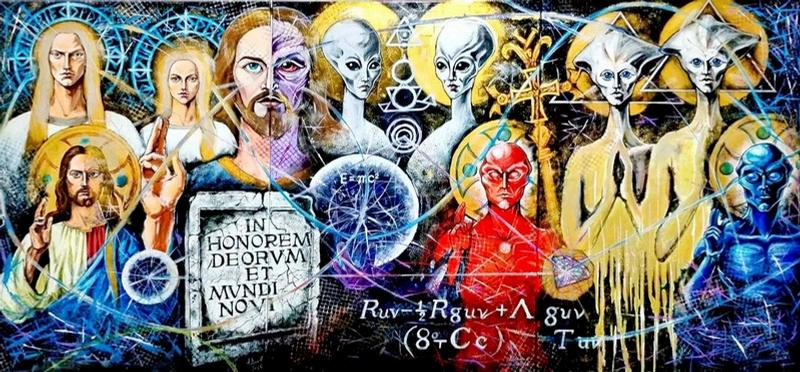
Albert Deak is a British visual artist whose multidisciplinary practice combines painting, digital composition, and conceptual inquiry, exploring the intersections of science, spirituality, and philosophy
In Salvator Mundi: The Cosmic Episode, Deak reimagines spiritual and cosmological archetypes through a richly symbolic triptych Blending sacred iconography, extraterrestrial imagery, scientific formulas, and esoteric symbols, the work creates a dialogue between faith, knowledge, and the unknown Through its layered composition, the artwork invites viewers to reflect on humanity’s enduring search for meaning and the evolving relationship between the divine, the cosmic, and the imagined.
Salvator Mundi: The Cosmic Episode / Triptych total size 180 × 84 cm; each panel 84 × 60 cm Acrylic on canvas
BRIGITTE B BURCKHARDT
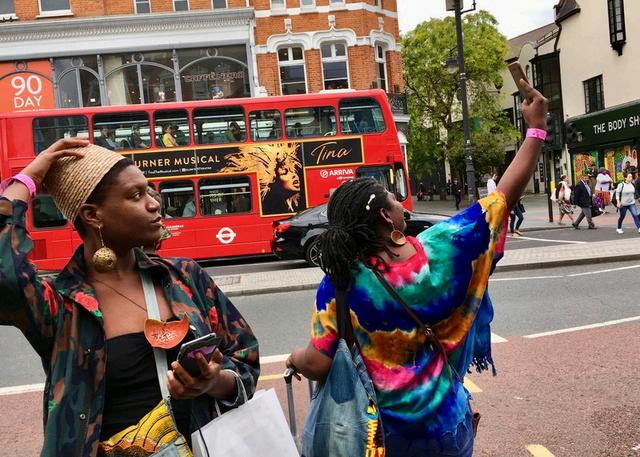
Brigitte B Burckhardt is a Swiss photographer whose intuitive practice explores the emotional and visual connections found within everyday life Through street, landscape, and abstract photography, she captures fleeting moments that reveal deeper human narratives
In Brixton, Burckhardt transforms a spontaneous street scene into a vibrant reflection on connection and cultural identity The interaction between the two women, set against the iconic red London bus and the image of Tina Turner, creates a layered composition that speaks to individuality, empowerment, and the unexpected relationships that emerge in public spaces. Through her keen eye for timing and gesture, the artist invites viewers to discover the stories hidden within everyday moments.
Brixton / 70x50cm / Digital Photography
CAROLYN HARDY
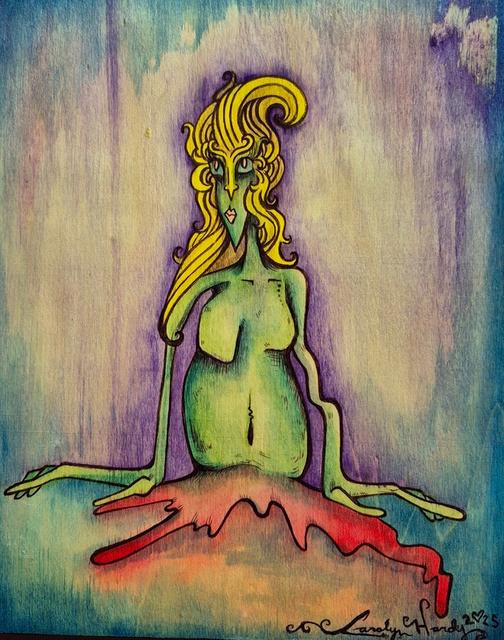
Carolyn Hardy is a Canadian surrealist artist whose self-taught practice invites viewers into imaginative inner worlds through vivid colour, symbolism, and dreamlike imagery. Her work explores the space between intuition, emotion, and the subconscious.
In Return of the Moon Time, Hardy presents an enigmatic feminine figure suspended between myth and imagination. Rendered with fluid lines and luminous colour, the work evokes themes of transformation, intuition, and cyclical renewal. The elongated form and surreal presence suggest a connection to archetypal feminine energy, inviting viewers to reflect on the mysteries of identity, nature, and the inner self.
ELLEN LINDGREN
Ellen Lindgren is a Swedish artist and psychologist whose multidisciplinary practice explores themes of love, loss, healing, and spiritual insight. Drawing from personal experience and psychological understanding, she creates works that invite reflection and connection.
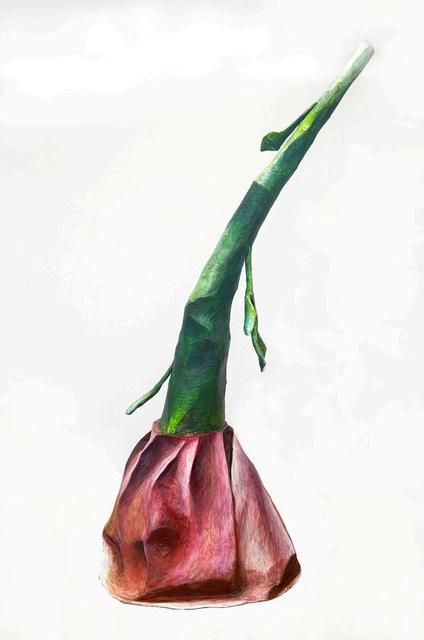
In Lost Love, Lindgren transforms emotional experience into a striking sculptural form The organic, flowerlike structure appears suspended between growth and decay, embodying both the beauty and fragility of human attachment Through its elegant verticality and subtle tension, the work becomes a poetic meditation on absence, resilience, and the lasting imprint of love after loss
Lost love / 225x101x92cm / Acrylic, papier-mache
JACK FARKAS
Jack Farkas is an American artist whose practice is rooted in the expressive power of color, shape, and symbolism Drawing inspiration from both artistic and human achievement, he creates works that explore emotion, connection, and the unseen energies that shape our experience
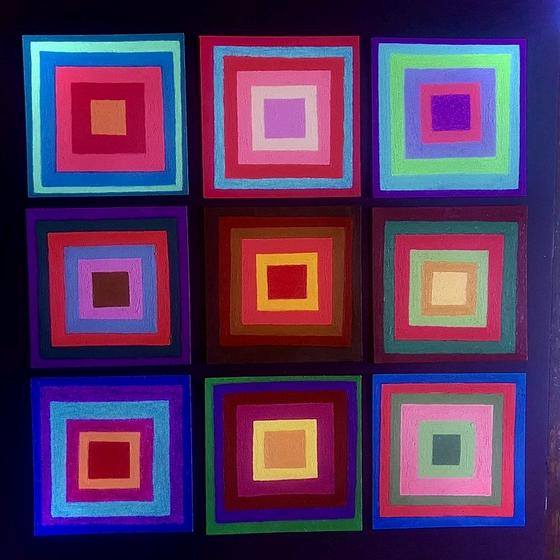
In 10 12 25, Farkas employs concentric squares and vibrant layers of color to create a dynamic visual meditation on harmony, rhythm, and perception The repetition of geometric forms generates a sense of movement and depth, while the shifting color relationships invite viewers to experience the emotional resonance of color itself. Balancing structure with intuition, the work reflects the artist’s ongoing exploration of color as a universal language capable of communicating beyond words.
JASON BENNETT
Jason Bennett is an American oil painter and singer-songwriter whose work blends elements of contemporary folk art and expressionism. Through textured surfaces, muted palettes, and an appreciation for storytelling, he creates evocative portraits that bridge memory, character, and emotion.
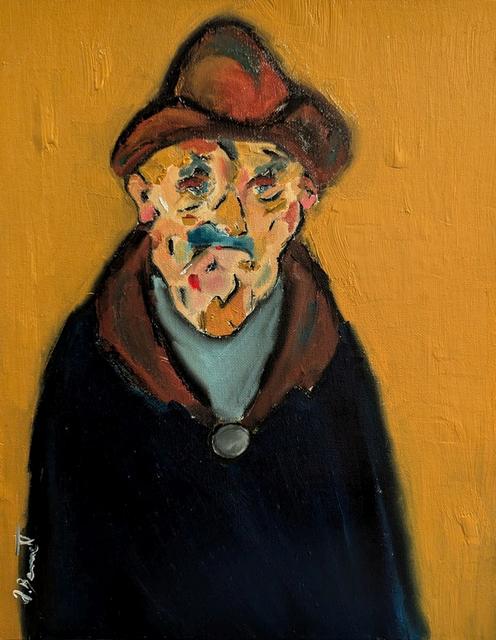
In Herman in Blue, Bennett presents a solitary figure rendered with expressive brushwork and quiet dignity. Set against a warm ochre background, the portrait balances vulnerability and resilience, inviting viewers to imagine the life and experiences carried within the subject's weathered features. The simplified composition and bold use of color emphasize emotional presence over realism, transforming an ordinary portrait into a timeless reflection on humanity and character
JOANNA LEVESLEY
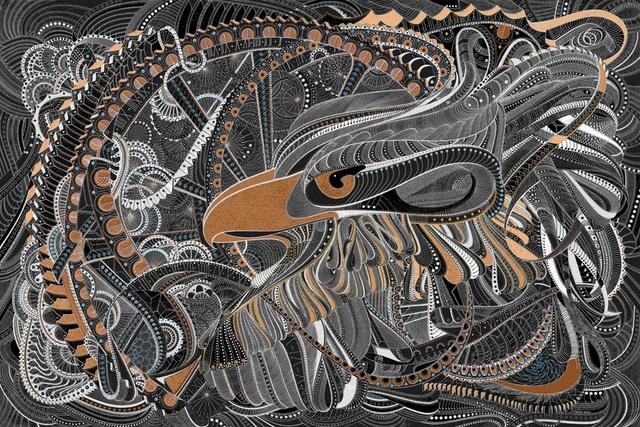
Eagle of Nations / Pen and ink / 80x120cm
Joanna Levesley is a British artist whose intricate pen-and-ink compositions blend realism, abstraction, and surrealism. Through meticulous linework and organic forms, she creates immersive visual worlds that invite contemplation and discovery.
In Eagle of Nations, Levesley transforms the majestic eagle into a complex tapestry of interwoven patterns, rhythms, and symbolic forms Built from thousands of carefully rendered lines, the composition balances strength and elegance, revealing new details with each viewing The eagle emerges as both a natural and mythical presence, embodying themes of unity, resilience, and interconnectedness Through its extraordinary intricacy and sense of movement, the work invites viewers to reflect on the relationships that bind nature, culture, and imagination into a shared visual language
MAGDALENA KAPELA
Magdalena Kapela is a Polish-born artist based in Paris whose practice spans experimental, portrait, and figurative-abstract painting. Through innovative layered techniques, she explores themes of human presence, emotion, and transformation.
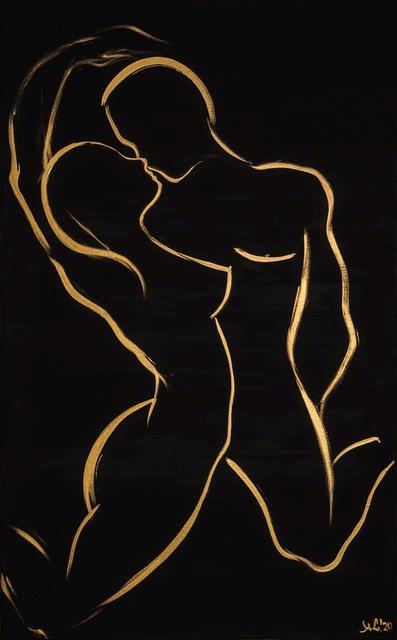
In Dancing, Kapela distills the human figure into a series of fluid, luminous contours that emerge from a deep black background. The elegant simplicity of the composition emphasizes movement, intimacy, and connection, transforming the embrace into a universal symbol of love and harmony Balancing abstraction with emotional clarity, the work captures a fleeting moment of unity, inviting viewers to reflect on the beauty of human relationships and shared experience
MARIA ISABEL ANTUNES
Maria Isabel Antunes is a Portuguese artist whose work is inspired by memories, emotions, and reflections on the world around her. Beginning her artistic journey during the pandemic, she has developed a practice that transforms personal experiences into expressive and heartfelt compositions.
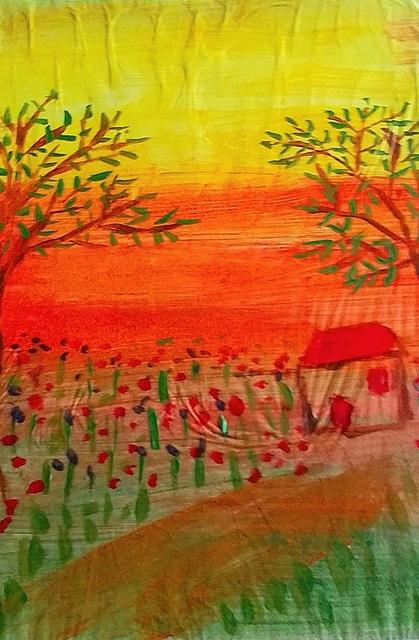
In Paisagem de Verão (Summer Landscape), Antunes captures the warmth and tranquility of the countryside through a vibrant interplay of color and simplified forms. Framed by trees and illuminated by a glowing sky, the scene evokes a sense of nostalgia and serenity, inviting viewers into an idyllic rural setting. Through its expressive palette and gentle atmosphere, the work celebrates the beauty of nature and the enduring comfort of cherished memories
PAISAGEM DE VERÃO / 30 x 40cm / Acrylic on canvas
MARIIA SHAPOVAL
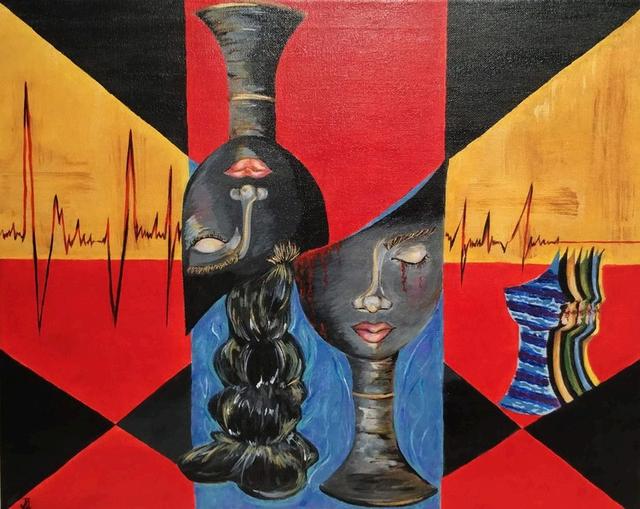
Blood and ash / 30 x 40cm / Acrylic on canvas
Mariia Shapoval is a Ukrainian symbolist artist whose work explores themes of transformation, resilience, and the search for meaning through emotionally charged and psychologically rich imagery. Drawing on personal experience and symbolic language, she creates works that engage both the subconscious and the spiritual dimensions of human existence.
In Blood and Ash, Shapoval constructs a powerful symbolic narrative that reflects themes of suffering, identity, and inner transformation. Fragmented faces, anatomical motifs, and rhythmic pulse-like lines converge within a striking geometric composition, suggesting the tension between physical existence and emotional endurance Through its layered symbolism and visual intensity, the work invites viewers to contemplate the processes of loss, survival, and the reconstruction of self in the aftermath of profound change
MIGUEL DE MIGUEL
Miguel de Miguel is a Spanish artist whose internationally exhibited practice combines figuration and abstraction through vibrant color, symbolic forms, and richly textured surfaces. His work explores themes of identity, memory, and the silent emotional landscapes that shape human experience.
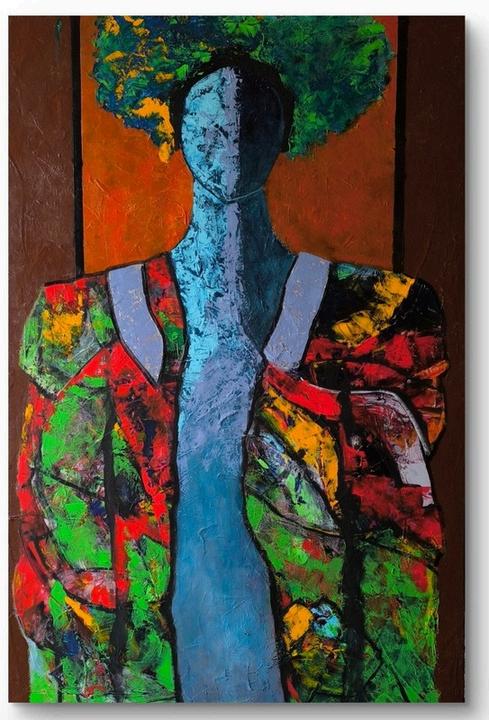
In Testa di Donna, Miguel de Miguel presents a powerful feminine presence suspended between representation and abstraction. The faceless figure becomes a universal symbol rather than a portrait, inviting viewers to project their own narratives and emotions onto the work. Through bold color contrasts, expressive textures, and a dynamic composition, the painting explores identity as something fluid and multifaceted, balancing individuality with collective human experience.
Testa di Donna / 150 x 100 cm / Acrylic on canvas
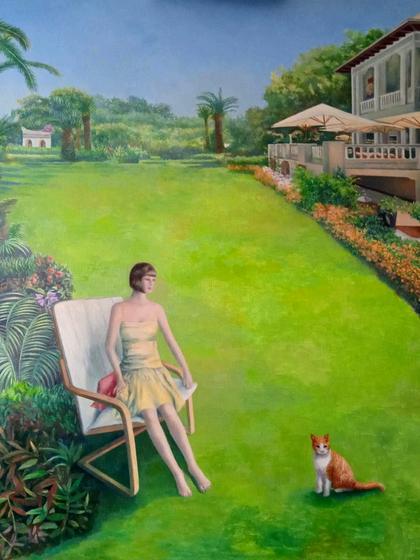
Consuelo Hernández is one of Spain’s most distinguished contemporary realist painters, celebrated for her masterful use of light, color, and atmosphere Her figurative and landscape works transform everyday places into deeply evocative reflections on memory, beauty, and human experience.
In Villa Josephine, Hernández captures a serene moment of contemplation within a lush Mediterranean landscape. Bathed in soft light, the composition balances the intimacy of the seated figure with the expansive tranquility of the surrounding garden. Through her refined realism and sensitive treatment of color, the artist creates a scene that evokes stillness, reflection, and the timeless dialogue between humanity and nature.
CONSUELO HERNÁNDEZ
Villa Josephine / 100x80cm/ Oil on panel
ROMY HOMMERSOM
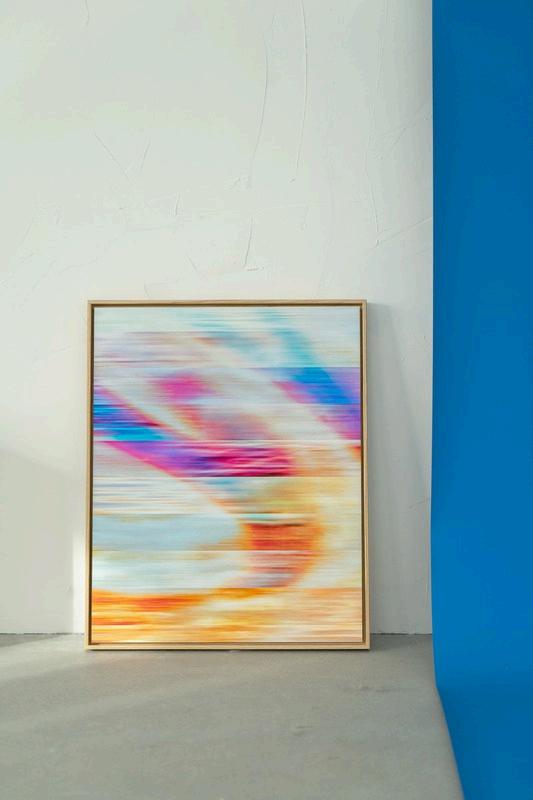
Universal Art - The Power of New / Digital art
Romy Hommersom is a Dutch soul artist, intuitive creator, and medium whose work explores emotion, healing, and self-discovery Through vibrant digital compositions, she creates visual spaces that encourage reflection, connection, and a deeper engagement with the inner self
In The Power of New, Hommersom captures the transformative energy of beginnings through a fluid interplay of color, light, and motion Soft yet vibrant forms appear to emerge and dissolve simultaneously, evoking the uncertainty and possibility that accompany personal growth. Balancing intuition with abstraction, the work invites viewers to embrace change as a creative force and to rediscover the beauty that arises when stepping into the unknown.
STEVE FOGEL
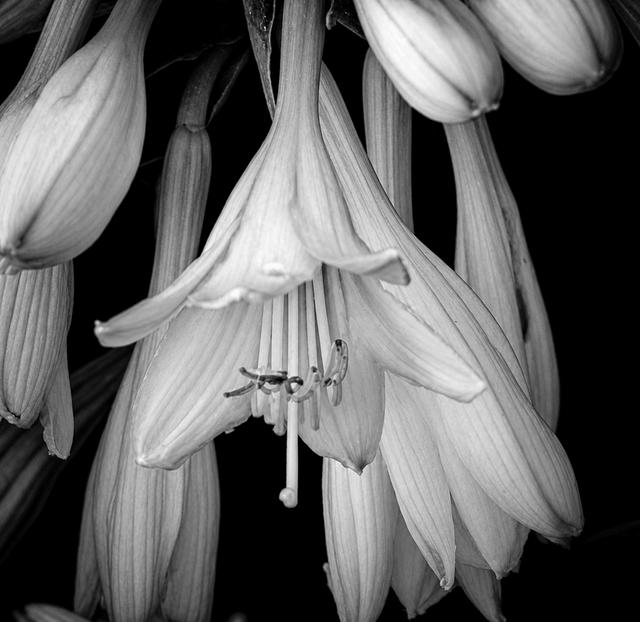
Steve Fogel is an American photographer whose work transforms ordinary subjects into compelling abstract compositions. Through close observation, monochrome imagery, and an emphasis on texture, light, and form, he invites viewers to discover unexpected beauty within the familiar.
In Botanical Gardens Flower Abstract, Fogel elevates a simple floral subject into a study of rhythm, structure, and elegance. The black-andwhite palette emphasizes the delicate contours and repeating forms of the blossoms, revealing a sculptural quality often overlooked in nature. By isolating the flower from its surroundings, the artist encourages a contemplative viewing experience, transforming a fleeting botanical moment into a timeless exploration of shape, contrast, and visual harmony.
ALEJANDRA EDITH GONZALEZ GAYTAN
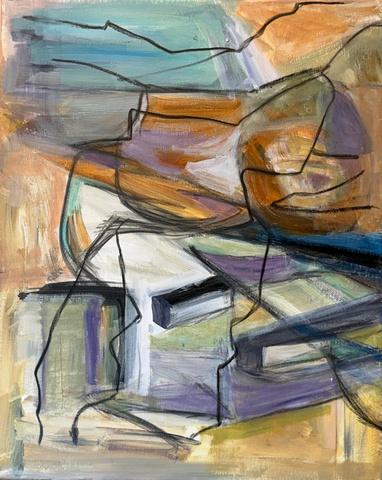
Alejandra Edith González Gaytán is a Mexican-born artist based in Houston, Texas, whose abstract paintings emerge through a process of experimentation, layered color, and expressive markmaking. Drawing on a lifelong connection to art and a rich cultural heritage, she creates compositions that invite personal interpretation and emotional engagement.
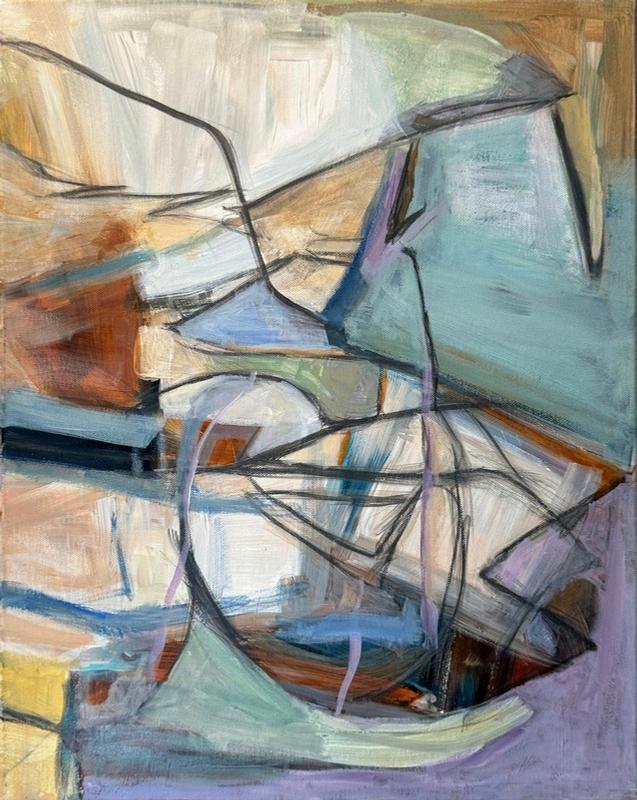
In Between Wind and Water and Entre Líneas, González explores the relationship between movement, memory, and space through translucent layers of color and fluid linear gestures. Soft blues, warm neutrals, and sweeping charcoal marks create compositions that feel both structured and spontaneous, evoking landscapes of sensation rather than fixed places.
The interplay of transparency, texture, and expressive line reveals traces of the creative process, while subtle shifts in form encourage viewers to navigate the works intuitively Balancing openness with structure, these paintings invite contemplation and reward prolonged viewing, allowing new connections between rhythm, depth, and movement to emerge over time
Entre Lineas / 508x4064 cm / Acrylic on canvas
Between Wind and Water / 50.80x40.46cm / Acrylic on canvas
ARIA ARTIS
Aria Artis is a Romanian-born contemporary abstract artist based in Germany whose work explores the intersection of architecture, emotion, and abstraction Through fluid geometries, luminous color transitions, and layered compositions, she creates visual spaces that exist between structure and movement, memory and imagination
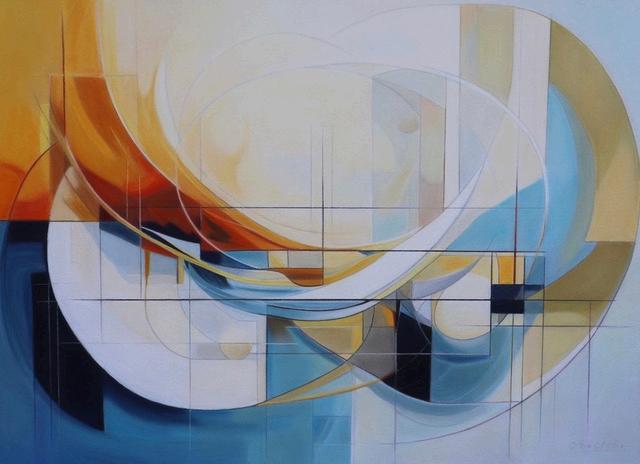
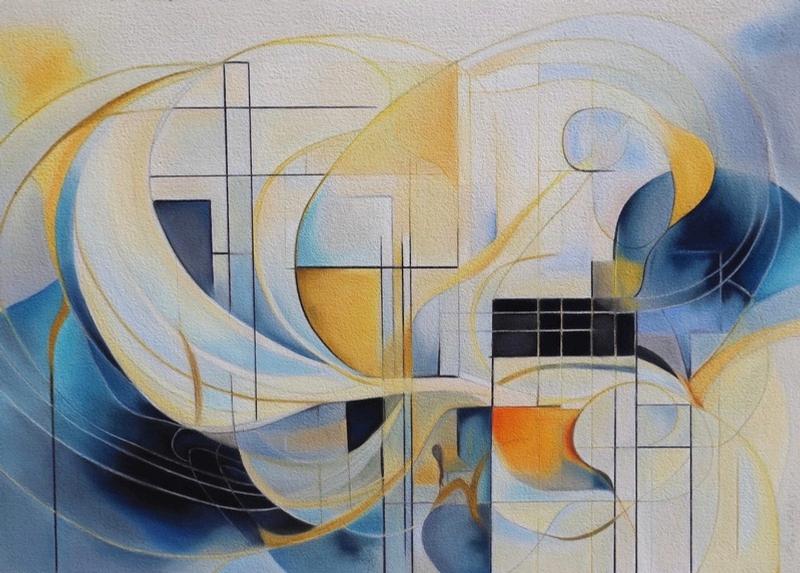
In The Breath of Space and Energy Lines, Artis develops a visual language of flowing forms and delicate architectural frameworks Sweeping curves move through carefully balanced geometric structures, creating a sense of rhythm, expansion, and harmony. Soft pastel tones of blue, gold, and ivory evoke light, air, and openness, while transparent layers suggest spaces that are both constructed and ephemeral.
The Breath of Space / 57x76cm / Pastel on 600 gsm Hahnemühle paper
Energy Lines / 57x76cm / Pastel on 600 gsm Hahnemühle paper
Suspended between abstraction and architecture, the works invite viewers to wander through fluid landscapes of thought and perception, where movement becomes form and space becomes an emotional experience.
CARLOS ABRAHAM
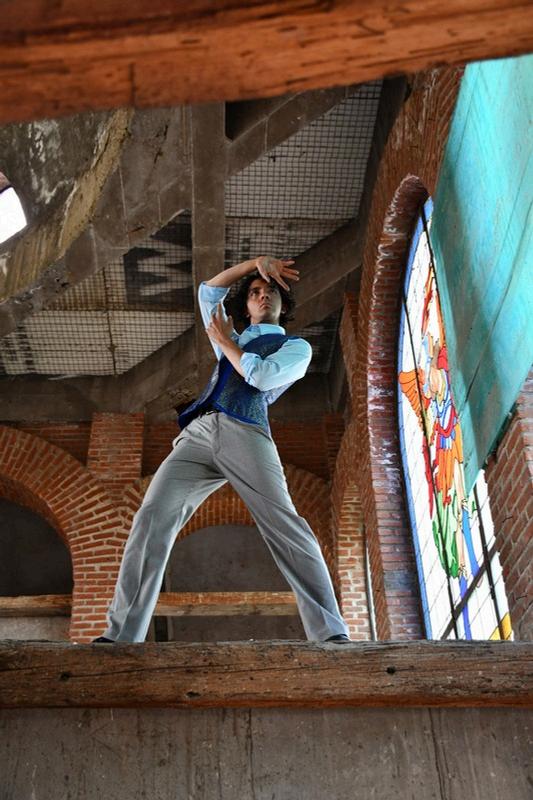
Carlos Abraham is a Lebanese-Mexican artist, architect, and photographer whose work celebrates the expressive beauty of the human body through carefully composed and emotionally resonant imagery. Combining an architect’s eye for structure with a photographer’s sensitivity to movement and form, he creates works that explore the relationship between the body and its surrounding environment
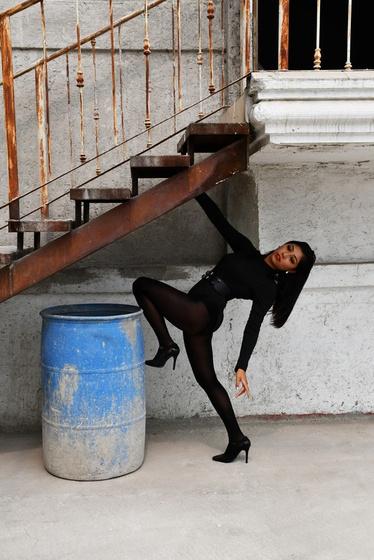
In Azul and Arriba, Abraham transforms architectural spaces into dynamic stages for human expression The figures engage in graceful, almost sculptural poses that interact with industrial structures, stairways, and historic interiors, creating a dialogue between strength and vulnerability, geometry and movement Through dramatic perspectives, thoughtful composition, and an acute awareness of spatial relationships, the artist invites viewers to reconsider the body not merely as a subject, but as an active force that reshapes and redefines the spaces it inhabits.
Azul / 60x40 cm / Photography
Arriba / 60x40 cm / Photography
DANA ROSU
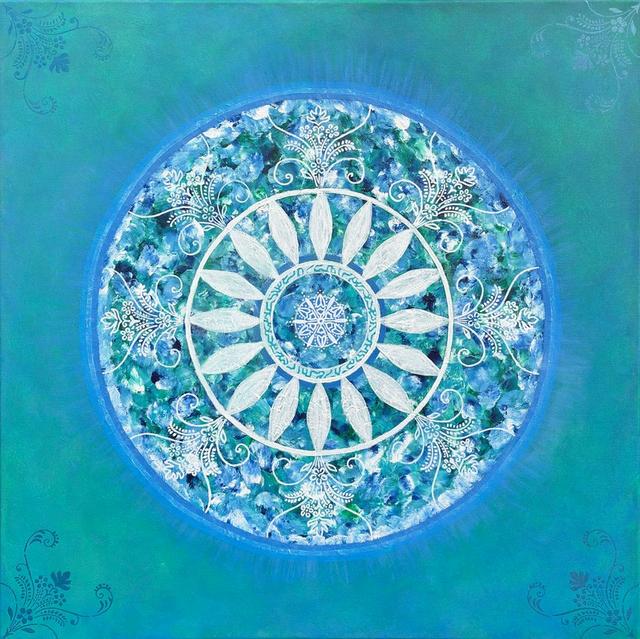
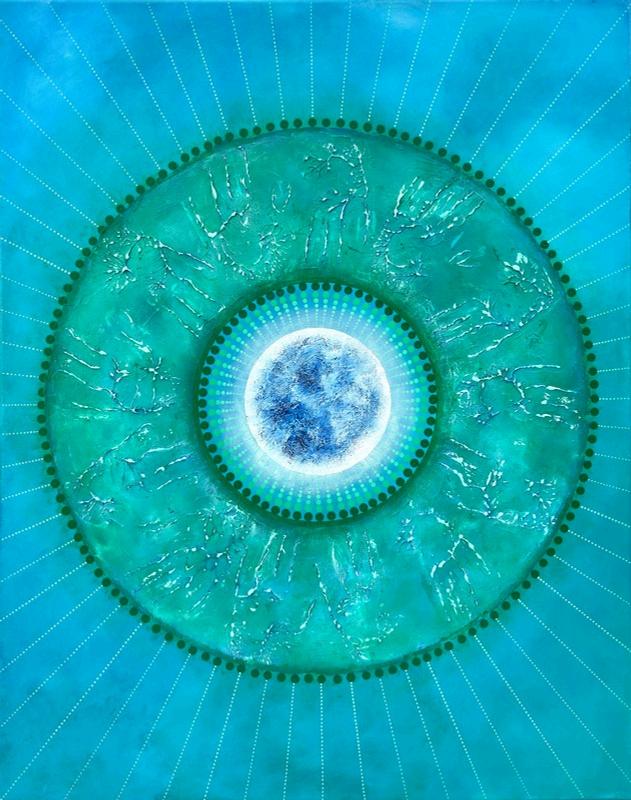
Dana Roșu is a Germany-based painter whose work explores sacred geometry, mandala-based forms, and the interconnected energies of the natural world. Through a meditative process of layering color, texture, and pattern, she creates contemplative works that invite reflection, balance, and a deeper sense of connection.
In Enjoy the Ride and Humanity, Roșu employs the mandala as a universal symbol of wholeness, harmony, and continuity. Rich turquoise, blue, and emerald tones radiate outward through carefully balanced circular compositions, evoking the rhythms of nature and the invisible forces that connect all living things. Combining intricate detail with a sense of stillness and clarity, the works encourage viewers to pause, reflect, and experience the profound unity that underlies both the natural world and human existence.
Humanity / Acryl on Canvas / 92x73cm
L. RENEE WILLIAMS
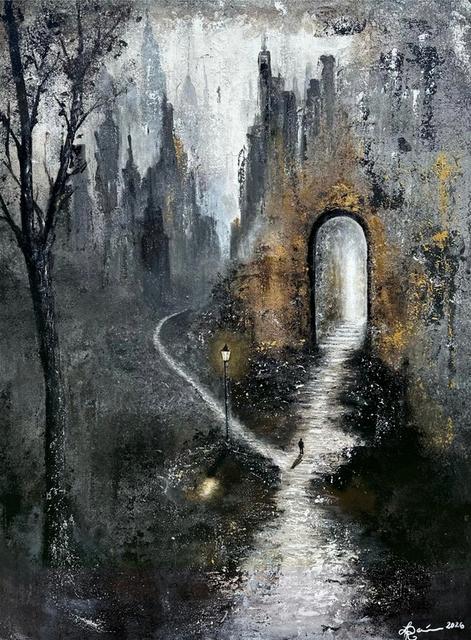
L. Renee Williams is a visual artist who returned to art during a season of deep reflection, rediscovering it as a place to process, ground herself, and express truth. Through textured mixed-media compositions, she explores the relationship between structure and emotion, creating spaces for reflection, honesty, and connection.
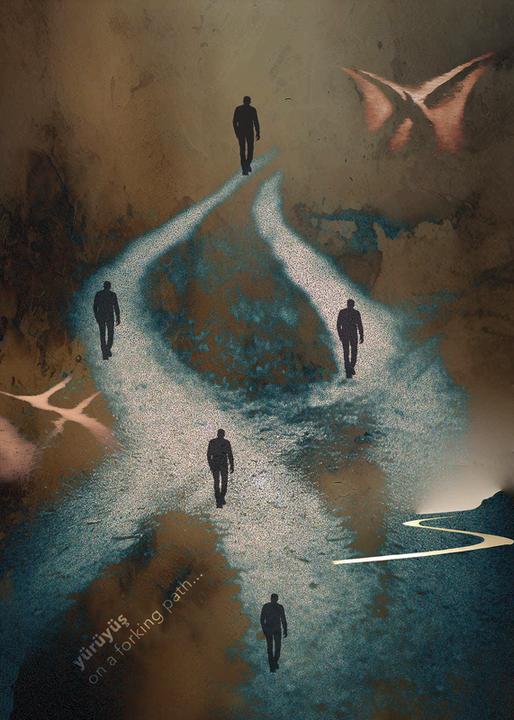
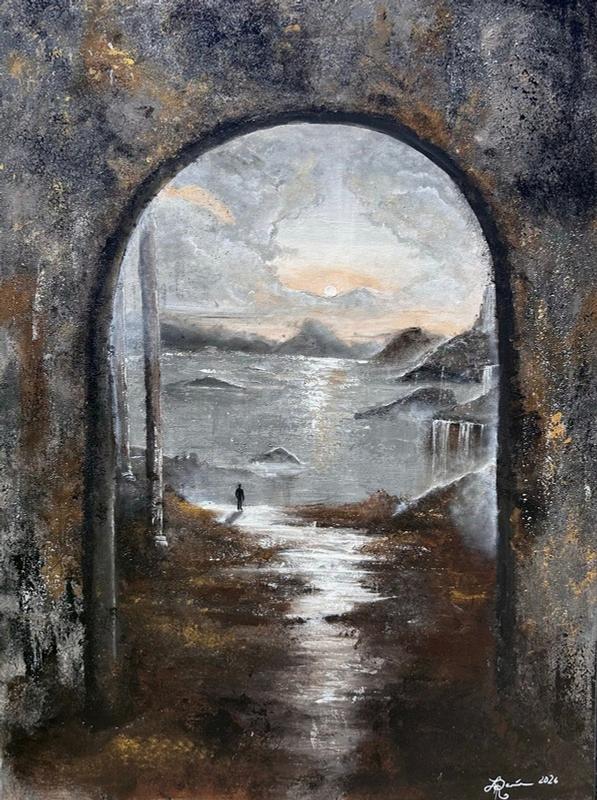
In Threshold I: The Between, Williams captures a pivotal moment of decision. A solitary figure stands at the intersection of two possible paths, suspended between familiarity and the unknown. The atmospheric cityscape, softened by texture and light, creates a sense of uncertainty, while the illuminated archway offers a quiet invitation toward transformation. The work reflects the internal tension that often accompanies change and the courage required to move beyond what is known.
Threshold II: The Arrival continues this narrative, presenting the moment after the choice has been made. The figure has passed through the threshold and entered a serene landscape where openness, stillness, and clarity replace uncertainty. Framed by the archway, the distant horizon and reflective waters symbolize fulfillment, acceptance, and alignment with one's purpose. Together, these two works form a contemplative visual journey, exploring the universal experience of trust, transition, and personal growth.
Threshold II: The Arrival / Acrylic on Canvas / 100x76cm
HUMANA PINTORA
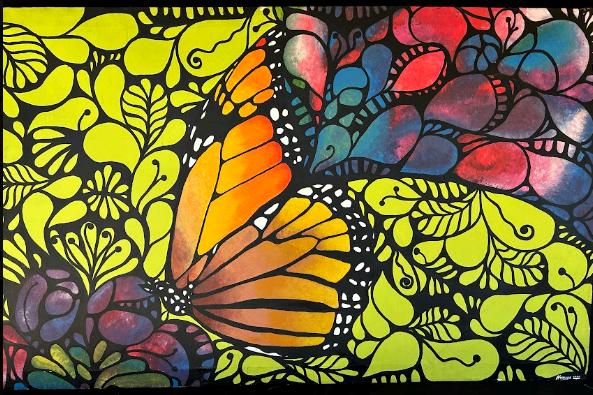
LLEGO MAYA / mixed media / 80x170cm
HUMANA PINTORA is a Chilean artist, educator, and creator of the interdisciplinary project Warawaranakaw an Aymara word meaning “thousands of stars.” Rooted in the belief that art is a form of collective memory, ritual, and shared human experience, her practice intertwines painting, education, symbolism, and ancestral knowledge. Through vibrant visual languages and deeply personal narratives, she seeks to reconnect individuals with creativity, intuition, and the subtle dimensions of existence, inviting viewers to rediscover art as a universal force that belongs to everyone.
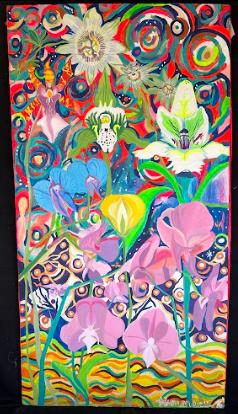
In Cósmico 1 and Llegó Maya, Aravena presents exuberant compositions where nature, symbolism, and imagination merge into immersive visual universes. Swirling forms, radiant color palettes, floral motifs, and recurring organic patterns create a sense of movement and spiritual vitality, reflecting her interest in the interconnectedness of all living things. While Cósmico 1 evokes a dreamlike landscape of growth and cosmic energy, Llegó Maya celebrates transformation and renewal through the image of the butterfly, a timeless symbol of metamorphosis and freedom. Together, these works embody the artist’s vision of art as a pathway toward collective healing, wonder, and reconnection with the human spirit.
COSMICO 1 / mixed media / 190x75cm
JOAQUIM BUTTIGLI
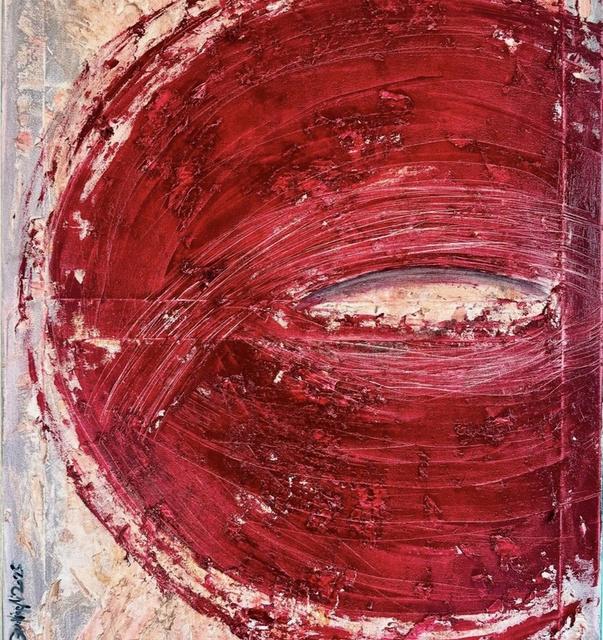
Joaquim Buttigli’s paintings emerge from an intuitive exploration of the subconscious, where emotion, transformation, and inner perception take visual form. Drawing on his background in psychology and coaching, the artist approaches painting as a process of introspection, allowing gesture, texture, and instinct to guide the development of each composition. His works inhabit a space between abstraction and figuration, inviting viewers to engage with their own memories, emotions, and unseen narratives.
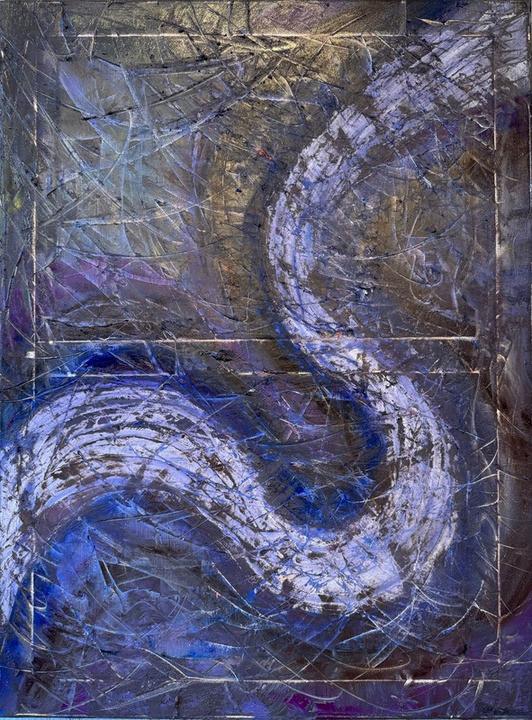
In Saxoflow and Borderline, sweeping circular forms and energetic markmaking create a sense of movement that feels both physical and psychological. Layers of texture, intersecting lines, and luminous color fields suggest shifting emotional states, while the recurring curved structures evoke cycles, resonance, and transformation. Saxoflow unfolds through cool blue and silver tones that generate a rhythmic, almost musical flow, whereas Borderline is dominated by intense reds and gestural sweeps that convey tension, vulnerability, and release. Together, the works reflect Buttigli’s ongoing investigation into the invisible forces that shape human experience, transforming inner landscapes into powerful visual expressions.
MARGARITA CANTÚ
Margarita Cantú is an Ecuadorian artist whose work is inspired by nature, spirituality, and the invisible connections that unite all living beings. Guided by a lifelong exploration of personal growth and healing, she transforms emotions, memories, and the silent wisdom of the Earth into vibrant visual narratives Through her paintings, Cantú invites viewers to reconnect with the natural world and recognize the profound beauty that exists within both the visible and unseen dimensions of life
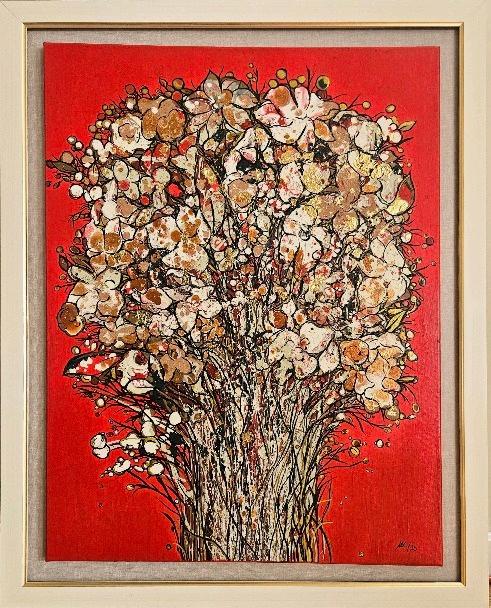
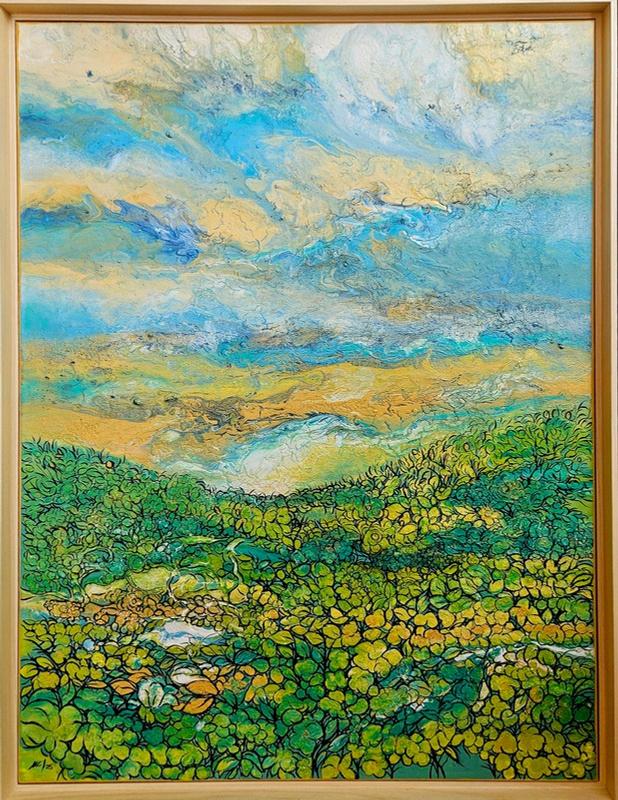
In Blooming Through Interwoven Lines and Andean Landscape, Cantú celebrates the vitality, resilience, and interconnectedness of nature. Blooming Through Interwoven Lines presents an abundant floral form emerging against a vivid red background, where delicate organic lines and layered blossoms evoke growth, harmony, and the intricate relationships that sustain life. In Andean Landscape, sweeping skies and flourishing vegetation create a luminous vision of the Ecuadorian landscape, capturing both its physical beauty and spiritual energy Together, these works reflect the artist’s belief that nature is both a teacher and a source of healing, encouraging contemplation of the deep bonds that connect humanity to the Earth
MARIA LEITE
Maria Leite is a Brazilian-born artist and educator whose practice investigates freedom, identity, environmental concerns, and the complexities of contemporary society Working through abstraction, she employs visual language as a means of revealing what often remains hidden beneath the surface emotionally, socially, and politically Her work challenges accepted realities and invites viewers to engage with layered narratives, metaphors, and experiences that resist straightforward interpretation Through a dynamic balance of geometric structure and expressive gesture, Leite creates spaces for reflection, encouraging deeper consideration of both individual and collective realities.
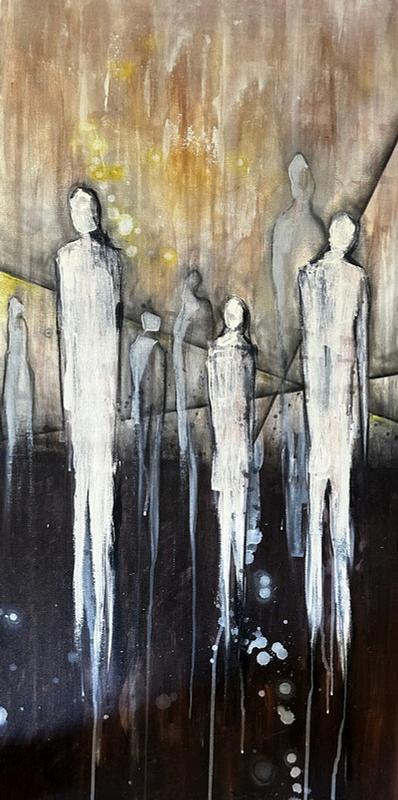
Ghost of Ourselves 1 / Acrylic on Canvas / 60x120cm
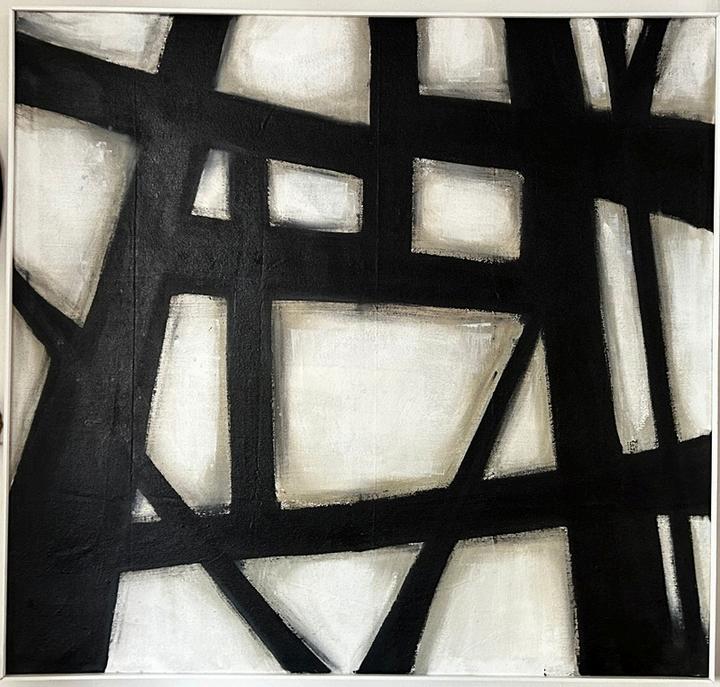
In Dance of Crosses and Ghost of Ourselves 1, Leite explores the relationship between structure and human presence. Dance of Crosses presents an intricate network of intersecting black forms against a luminous field, creating a visual rhythm that evokes both order and disruption, certainty and ambiguity. In contrast, Ghost of Ourselves 1 introduces ethereal, elongated figures that appear suspended between presence and absence, suggesting themes of memory, identity, and the traces individuals leave behind. Together, these works demonstrate the artist’s ability to transform abstract forms into powerful reflections on human experience, inviting contemplation of the invisible forces that shape our understanding of self and society.
MARZENA BUGAŁA
Marzena Bugała is a Polish visual artist whose multidisciplinary practice encompasses acrylic painting, pastel drawing, linocut printmaking, and public art. Her work explores inner landscapes and profound emotional states, examining the delicate tension between personal experience and collective perception. Through rich textures, expressive colour, and layered surfaces, Bugała transforms emotion into visual form, creating works that serve as records of sensitivity and introspection. Whether working on canvas, paper, or large-scale public interventions, she approaches each surface as a space for emotional translation, inviting viewers into moments of reflection and shared human experience. Her artistic achievements include participation in the 19th International Competition of Small Graphic Forms and Exlibris in Ostrów Wielkopolski, as well as exhibitions throughout Poland and works held in both museum and private collections.
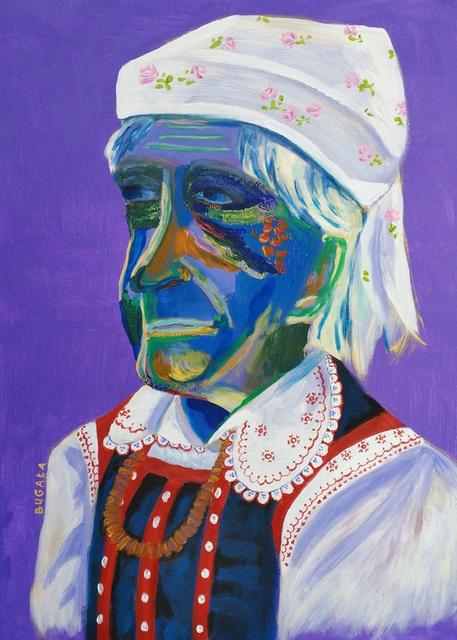
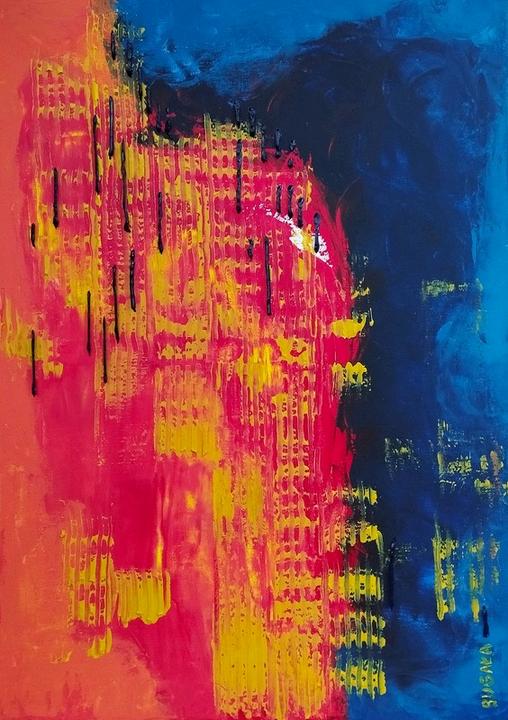
In States Series State 5 and Ethno-State 2, Bugała demonstrates two distinct yet interconnected approaches to emotional expression States Series State 5 is an exploration of psychological intensity through abstraction, where vibrant fields of pink, yellow, and deep blue interact in a dynamic visual dialogue Layered textures, drips, and gestural marks create a sense of movement and transformation, evoking shifting emotional states that resist fixed interpretation. In contrast, Ethno-State 2 combines portraiture with cultural symbolism, presenting a contemplative figure rendered in expressive, unconventional colour. The work merges personal identity with collective memory, using vivid tonal contrasts and traditional references to explore belonging, heritage, and the complexity of human character. Together, these works reveal the artist’s ability to navigate between abstraction and representation while remaining deeply engaged with the emotional and cultural dimensions of experience.
SABRINA PUPPIN
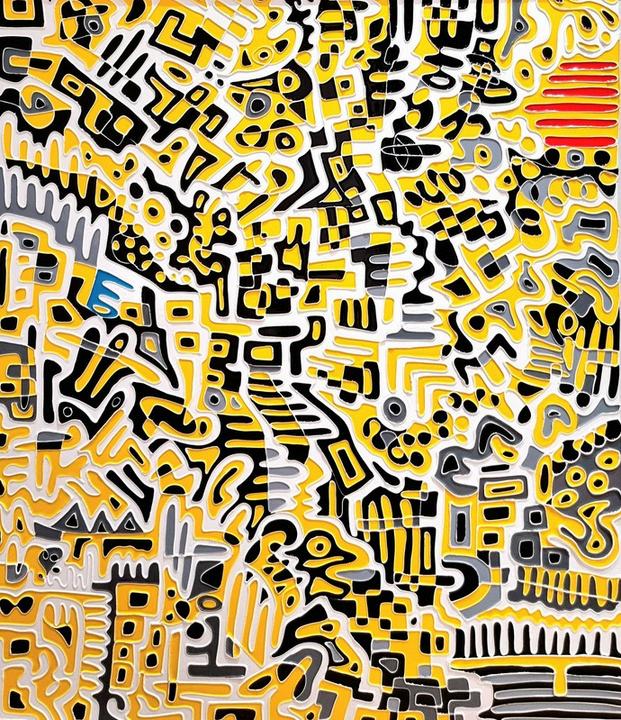
Sabrina Puppin is an internationally exhibited visual artist whose practice is rooted in an exploration of perception, reality, and the unseen dimensions of human experience Through vibrant color, dynamic compositions, and an intuitive yet highly disciplined approach to mixed media, she creates works that challenge viewers to move beyond surface appearances and engage with deeper layers of meaning Her artistic philosophy is centered on the belief that reality is shaped by sensory experience and interpretation, transforming each artwork into a space for contemplation, discovery, and personal reflection. Balancing spontaneity with technical mastery, Puppin employs glazes, layered pigments, and mixed-media techniques to construct complex visual environments that blur the boundaries between the known and the unknown. Her work has been exhibited extensively across Europe, Asia, the Middle East, and North America, earning international recognition and numerous prestigious awards for artistic excellence.
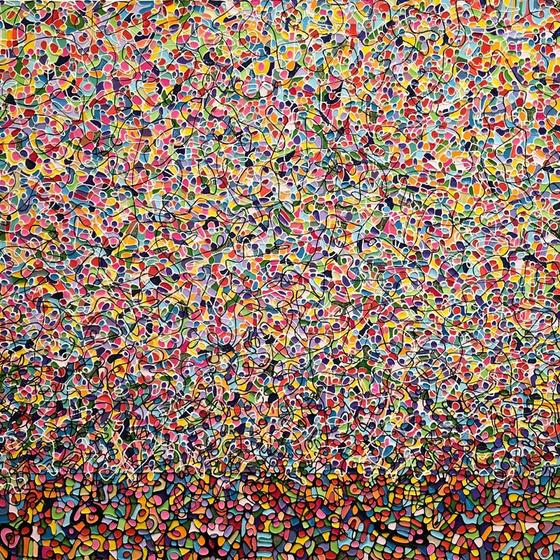
In New York’s Colors and Swarm, Puppin demonstrates her remarkable ability to translate energy, movement, and perception into compelling abstract visual language. New York’s Colors captures the pulse of an urban environment through a striking interplay of vivid yellows, blacks, whites, and flashes of red, creating a rhythmic composition that evokes the complexity and vitality of city life. In contrast, Swarm immerses the viewer in a dense network of colorful forms and interconnected lines, suggesting organic systems, collective movement, and the intricate relationships that shape both natural and human-made environments. While one work conveys structure and urban dynamism, the other embraces fluidity and multiplicity, yet both invite viewers to navigate layered fields of color and form where perception becomes an active process of discovery Together, these paintings exemplify Puppin’s ability to transform abstraction into an immersive experience that is both visually captivating and intellectually engaging
YURIY SHURKIN
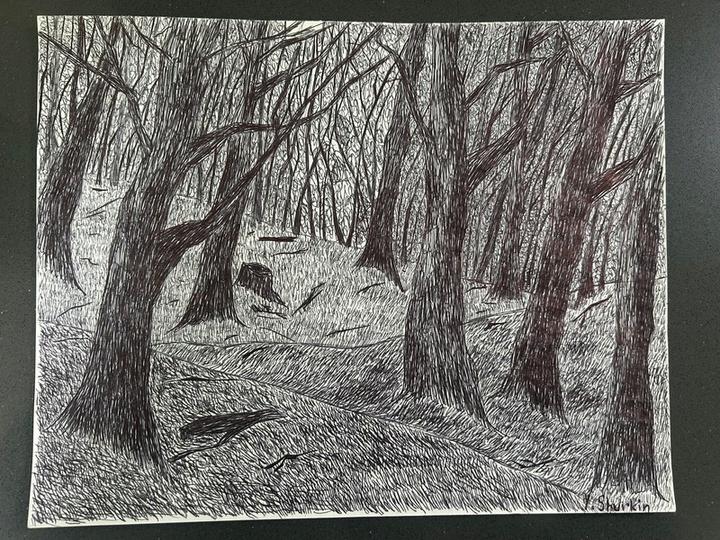
“ Forest “ / Pen on paper / 28x36cm
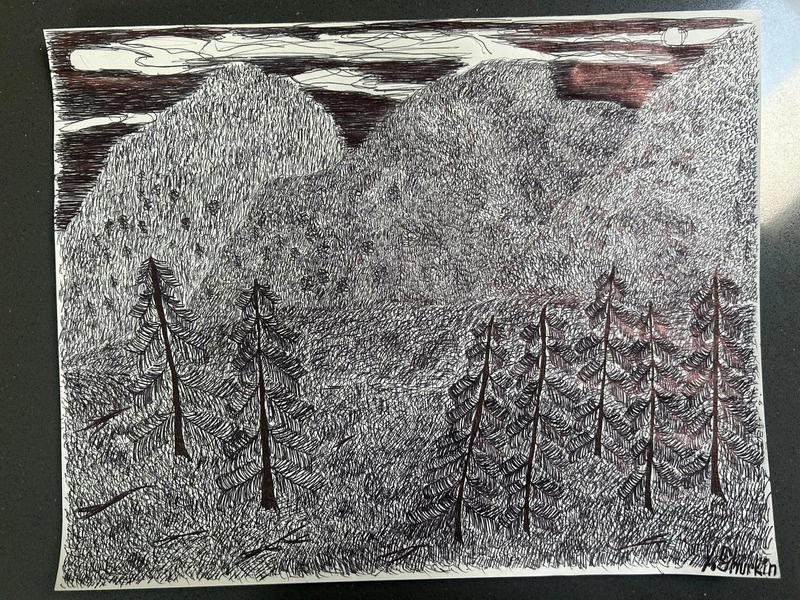
Yuriy Shurkin is a Canadian artist whose practice is driven by a lifelong passion for observation and image-making Working across drawing, painting, and mixed media, he explores a wide range of subjects, from landscapes and natural environments to portraits and scenes drawn from everyday life His approach is rooted in a deep appreciation for the creative process itself, finding fulfillment in the act of making and in the quiet discipline of developing an image through line, texture, and form. Having studied at an art academy in England before returning to Canada, Shurkin continues to cultivate a practice that balances technical skill with personal expression. Through the use of pen, pencil, acrylic, oil, and mixed media, he captures both the physical character and emotional atmosphere of his subjects, transforming familiar scenes into thoughtful visual studies.
Mountain view / Pen on paper / 41cm x 49cm
In Forest and Mountain View, Shurkin turns his attention to the natural world, demonstrating an exceptional sensitivity to structure, rhythm, and detail through the medium of pen drawing Forest immerses the viewer in a dense woodland setting where twisting trunks and layered vegetation create a sense of depth, movement, and quiet mystery. The intricate network of lines conveys both the complexity and vitality of the landscape, inviting prolonged observation. In Mountain View, the artist expands his perspective to encompass a broader terrain, where mountain forms rise behind a field of evergreens rendered through meticulous mark-making. The contrast between the sweeping landscape and the carefully articulated trees creates a compelling balance between grandeur and intimacy. Together, these works reveal Shurkin’s ability to translate the textures and patterns of nature into richly detailed compositions that celebrate both observation and craftsmanship.
A. ARTUR FERREIRA
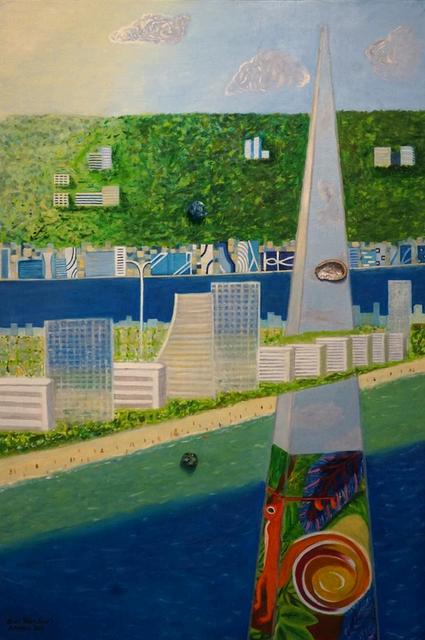
Artur Ferreira is a Portuguese conceptual artist whose practice is guided by ideas rather than aesthetics alone. Working primarily in oil on canvas and often incorporating minerals, stones, and gems, he creates works in which material and meaning are inseparable. Ferreira’s artistic research unfolds across three interconnected themes: society, the individual, and nature Through these lenses, he examines the forces that shape human experience, from collective belief systems and cultural transformation to personal identity, emotion, and humanity’s evolving relationship with the natural world His paintings function as visual investigations, translating complex philosophical, social, and environmental questions into layered symbolic compositions. By integrating geological materials that carry their own histories and symbolic resonance, Ferreira expands the narrative dimension of his work, creating pieces that invite reflection on both contemporary realities and enduring human concerns.
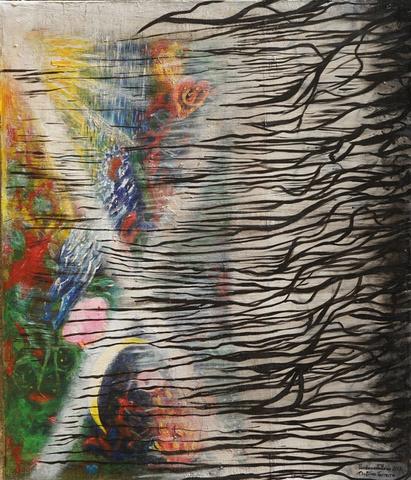
Fundamentalism / Oil on canvas / 70x60 cm
In Fundamentalism and The Miami Squirrel, Ferreira presents two distinct yet complementary explorations of human experience and place. Fundamentalism confronts the tension between rigid belief systems and the complexity of contemporary life. A dense network of dark, organic lines spreads across the composition like roots, barriers, or encroaching structures, partially obscuring vivid passages of color beneath. The visual contrast evokes the struggle between openness and restriction, individuality and ideology, creating a powerful metaphor for the forces that shape collective thought and identity. In The Miami Squirrel, the artist shifts his focus to location and cultural landscape, constructing a symbolic portrait of Miami through architecture, nature, and narrative imagery. The composition merges urban development, coastal geography, and vibrant visual motifs into a layered vision of the city, reflecting the intersection of environment, history, and human presence. Together, these works demonstrate Ferreira’s ability to transform conceptual inquiry into compelling visual language, inviting viewers to engage with broader questions about society, place, and the systems that define our understanding of the world.
ENEXZYA
Enexzya is an anonymous German artist whose practice explores memory, routine, and the unnoticed moments that quietly shape contemporary life. Through the lens of synesthesia, she translates fleeting sensations, emotions, and impressions into visual form, treating each artwork as a preserved fragment of experience. Every piece functions as a blueprint of lived experience, merging the transient with acts of preservation through art.
Enexzya made her debut in 2025 with the performance art series Stop Binging Social Media – Watch Art and Don’t Waste Your Life, which quickly gained attention and sparked public discussion. Recognized early by the international press, her work entered private collections across Europe and the United States. In 2026, her work will be exhibited at One Art Space in New York, represented by Artio Gallery, and at the European Museum of Modern Art (MEAM) in Barcelona. Balancing anonymity with a highly personal visual language, Enexzya invites viewers to pause, reflect, and reconsider the significance of moments that are often overlooked in an increasingly accelerated world.
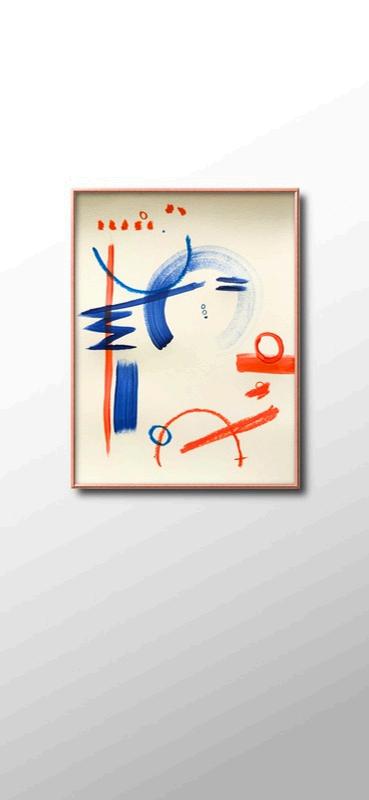
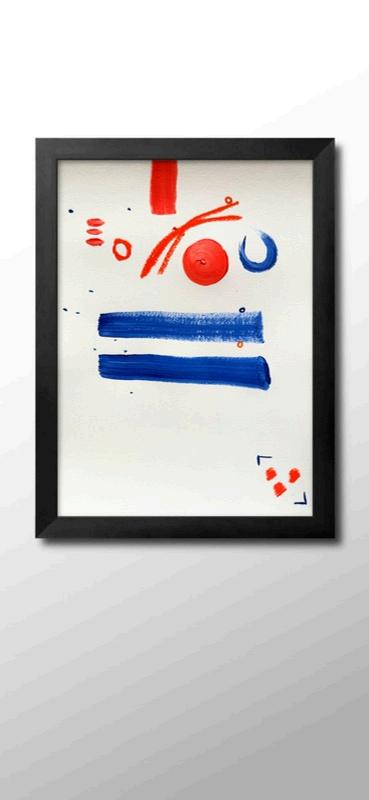
The works Lucky You 0 and Lucky You 3 exemplify Enexzya’s minimalist visual vocabulary, where a limited number of gestures become carriers of meaning. Set against expansive fields of white, vivid red and deep blue marks interact through balance, tension, and rhythm. Curved forms, linear interventions, and scattered points create compositions that feel simultaneously deliberate and spontaneous, suggesting fragments of a visual language that resists direct translation. Rather than offering a fixed narrative, the works operate as traces of perception and memory, inviting viewers to engage intuitively with relationships between form, space, and movement.
Their apparent simplicity conceals a careful orchestration of visual elements, encouraging sustained contemplation and highlighting how even the smallest marks can evoke broader emotional and conceptual associations. Together, these compositions reflect Enexzya’s interest in preserving ephemeral experiences while challenging the viewer to discover meaning within what might otherwise be dismissed as fleeting or ordinary.
THE ART MARKET IN 2026: RECOVERY, SELECTIVE GROWTH, AND SHIFTING
COLLECTOR PRIORITIES
After two years of contraction, the global art market has entered 2026 with renewed stability and cautious optimism. According to the Art Basel and UBS Global Art Market Report 2026, global art sales increased by 4% in 2025, reaching an estimated $59.6 billion and marking the market’s first significant return to growth since the post-pandemic slowdown.
While the recovery has been uneven, the strongest momentum has emerged at the high end of the market. Major auction houses reported substantial increases in sales during the recent New York season, driven by exceptional estates and renewed demand for blue-chip modern and postwar works. Collectors competed aggressively for historically significant pieces by artists such as Jackson Pollock, Mark Rothko, and Constantin Brâncuși, reinforcing the continued dominance of trophy works within the ultra-wealthy collecting sphere.
At the same time, the broader market is undergoing a structural shift. Speculative buying has slowed considerably compared to the rapid expansion seen during the NFT and post-pandemic boom years. Instead, collectors appear increasingly focused on quality, provenance, and long-term cultural value. Galleries and advisors report that buyers are taking more deliberate approaches to acquisition, prioritizing works with strong conceptual grounding and material presence over trend-driven investments.
Importantly, growth is no longer concentrated exclusively at the top. Lower and mid-tier markets have shown resilience, particularly for emerging and midcareer artists whose works remain relatively accessible. The number of transactions globally has continued to rise even during periods of market slowdown, suggesting sustained collector engagement despite economic uncertainty.
Contemporary figurative painting, material abstraction, and multidisciplinary mixed media practices remain among the strongest-performing categories within galleries and fairs. Collectors are increasingly drawn to works that feel emotionally resonant, process-oriented, and visibly handmade, an ongoing response to digital fatigue and the growing presence of AI-generated imagery within visual culture
The market in 2026 ultimately appears more selective, but also more mature Rather than chasing rapid speculation, collectors and institutions are demonstrating renewed interest in longevity, craftsmanship, and cultural relevance. In this environment, artists whose practices combine conceptual depth with material authenticity may be best positioned for sustained visibility within the evolving contemporary art landscape.