
6 minute read
ADVANCED

CLASSIC LINES
FROM BACH TO BASS
have to say, one major positive that has resulted from spending so much time in lockdown has been the amount of time I’ve spent studying and practicing on the bass. I’m sure many of you have been doing the same.
A couple of conceptual ideas have been my main focus for developing and expanding my vocabulary on the instrument. One has been the study of the bebop language through learning heads and specific solo sections. The other has been the study and transcription of pieces by Bach. Not the Cello Suites. Everyone does the Cello Suites... I especially love the Violin Partitas And Sonatas, and Bach’s Works For Lute.
The main goal when it comes to either transcribing a piece or learning a bit of music by ear is to understand the inner workings of the music you take into the shed. Gaining a deeper understanding of all the things that make the piece great to your ear will only stand to get you that much closer to what you want from your musical voice. So take the time to analyze everything, from the phrasing and ornamentation to the harmony and intervallic relationships, that make up the melodic content.
These concepts have been my main area of focus for the last few months. The result has been some of the most productive and eye-opening shed work I’ve ever done. There’s one concept in particular that I want to share with you today. Let’s dive in!
We’ll start with something we’ve all seen and likely played before. Exercise 1 is based
Rich Brown guides us to Advanced level every month. Read on as he takes us to the very top of bass theory!

The awe-inspiring Laura Lee of Khruangbin
EXERCISE ONE
EXERCISE TWO
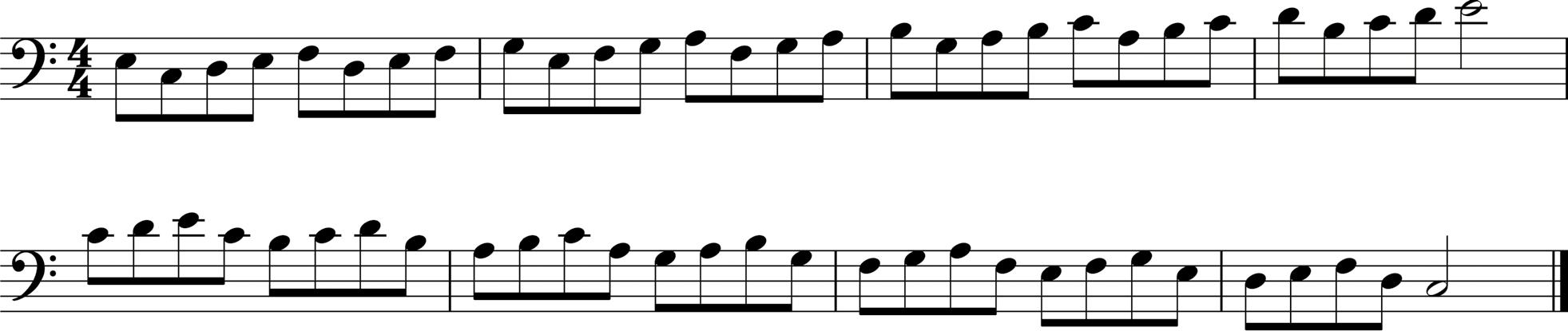
on a simple 1-2-3-1 pattern in C major. I’ve always been drawn to these types of scale patterns. They’re beautifully melodic despite their simplicity. Bach realized this and used this type of winding and weaving melodicism in much of his work. On further examination, you can begin to recognize patterns in the construction of these beautiful melodies.
When we take a closer look at Exercise 1, we see that this sequence is based on the interval of thirds. It also uses the notes— or note, in this case—between the lowest and highest note of the interval. Here, that interval is the root up to the third.
You may remember the idea of creating simple rules I talked about in a previous lesson. We can come up with some rules based on the information above. Using these new rules, we can compose etudes and exercises somewhat reminiscent of Bach’s beautifully spiraling melodies.
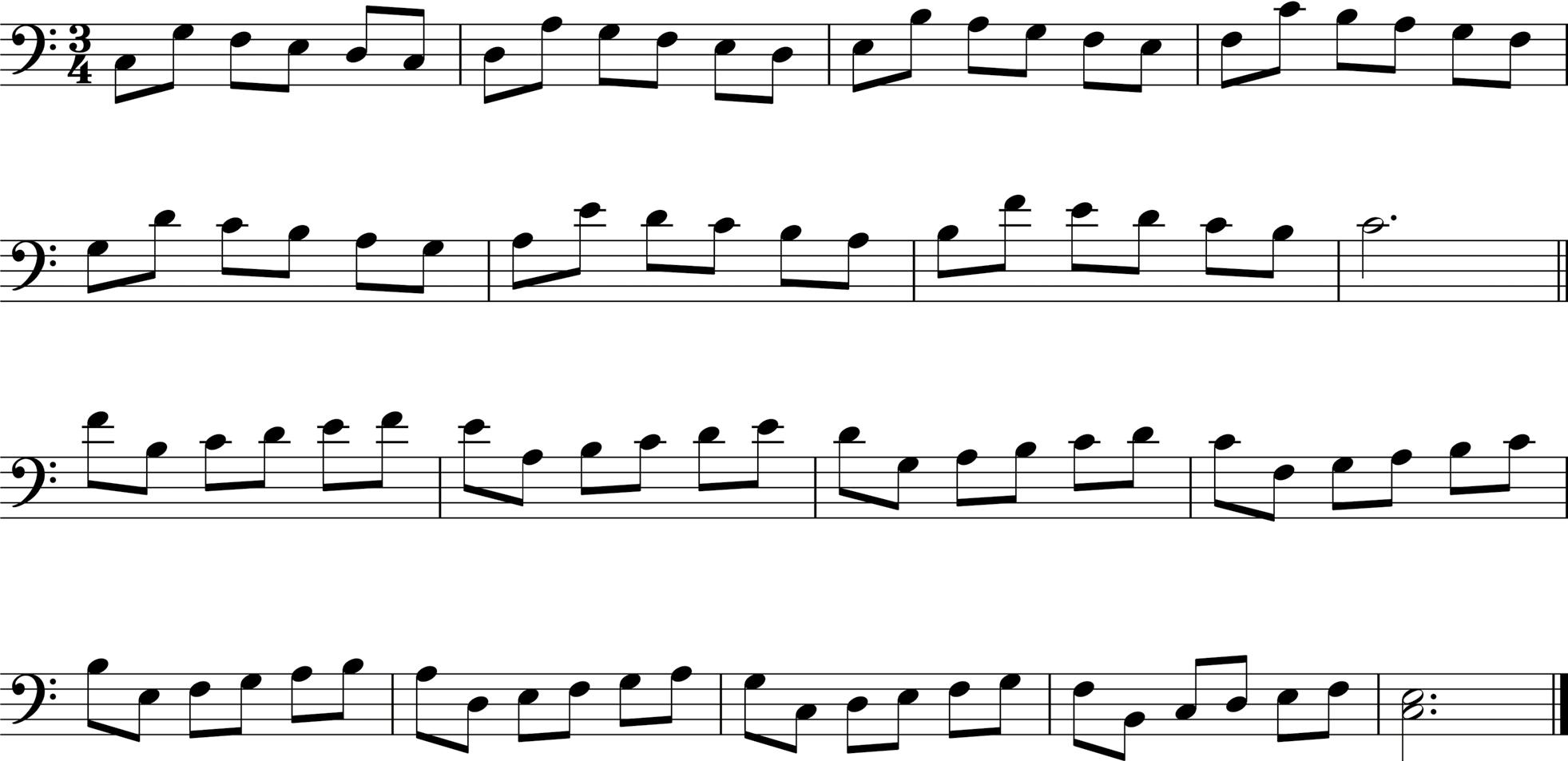
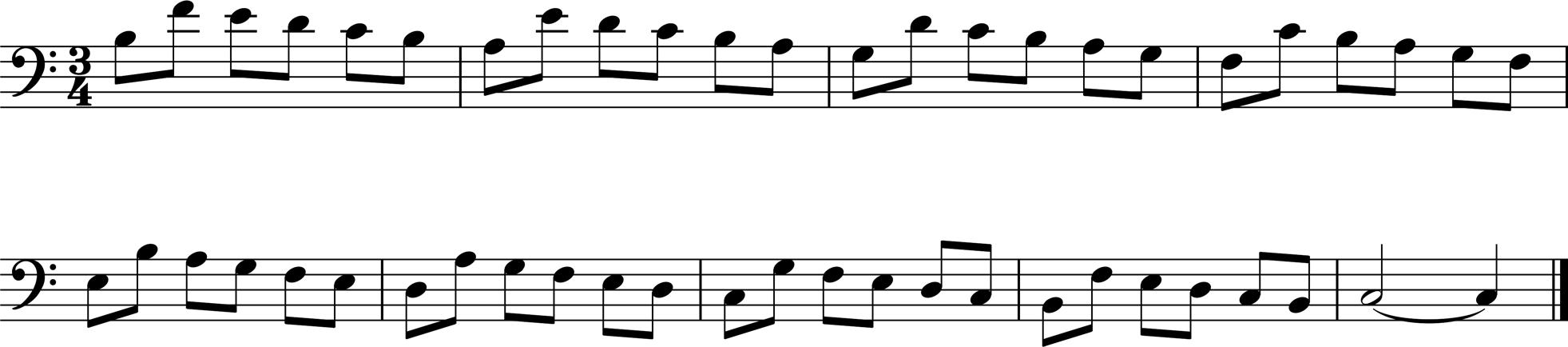
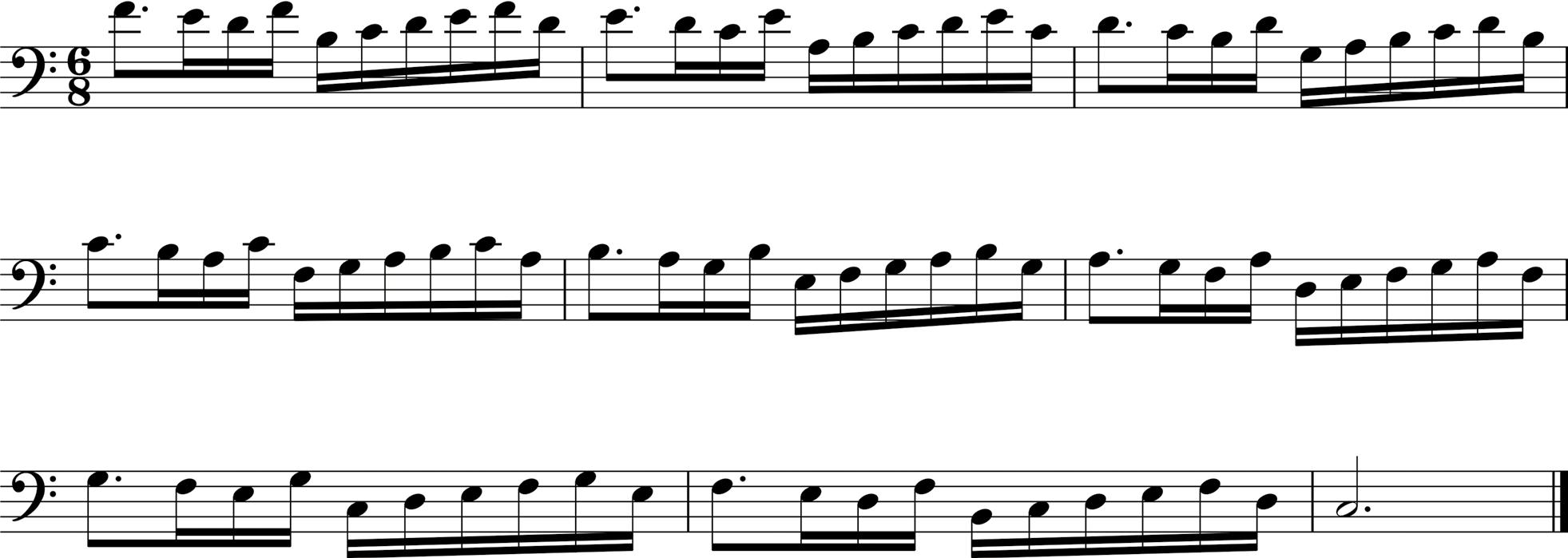
Have a look at Understanding the things that make the piece great to your ear will help you get closer to what Exercise 2. This example is based on the interval of a fifth. The you want from your musical voice sequence played here is 1-5-4-3-2-1. That sequence is then played on each ascending degree of the C major scale. The descending sequence of Exercise 2 is based on a 5-1-2-3-4-5 pattern, and the pattern continues on each descending degree of the C major scale. Exercise 3 can be played on its own or as an alternative to the last eight bars of Exercise 2. For this exercise, you’re playing the same 1-5-4-3-2-1 sequence starting
Jamie Law of Vistas picks out some Jazz tones

EXERCISE THREE
EXERCISE FOUR
from the major 7th. From there, you work your way down to the root. It would be best to play these exercises in the C major position located at the 8th fret of the E string, giving you easy access to the notes in the higher register.
All of these patterns are beautiful, but in addition to their exquisite melodicism, they also challenge the agility and dexterity of your fretting hand, so I would advise that you take them slowly—very slowly. Take as much time as you need to get these patterns under your fingers and into the muscle memory.
You can start by playing these exercises out of time and without a metronome. The introduction of time and tempo can happen later, as you become more comfortable with the patterns. I would highly recommend this, especially as we get into the following exercises in this lesson. Don’t be discouraged or intimidated by the 16th notes here. These exercises are meant to be played sloooooowly.
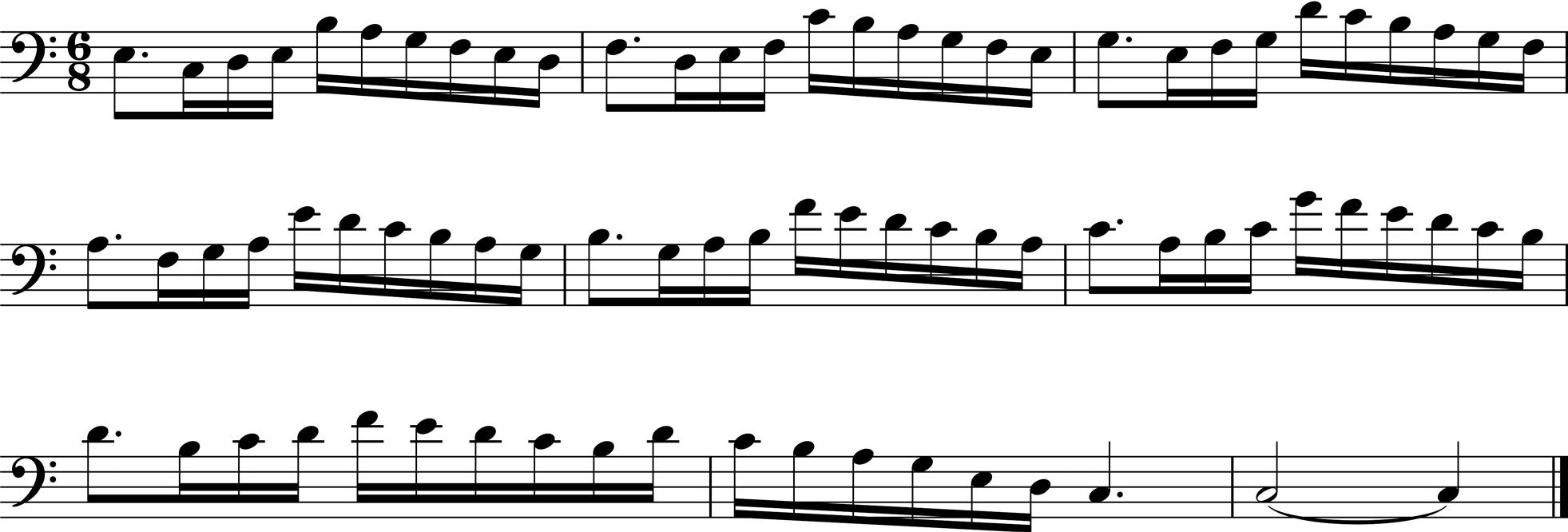
Now that we’ve established all of that, let’s look at Exercise 4. What’s interesting about this pattern is that we’ve combined the two intervals from the previous exercises to create a new melodic sequence. The sequence begins with a 3-1-2-3 pattern, based on the interval of a third. We then move up by a fifth to the 7th of the scale and play the scale descending to the 2nd. The entire sequence is 3-1-2-3-7-6-5-4-32. This one will be tricky for many of you, but that is only because it is a sequence
All of these patterns are beautiful, but they challenge the agility and dexterity of that is unfamiliar to you. So relax, take a deep breath, dedicate your fretting hand, so take them slowly yourself, and think positively. As it is with any sequential pattern, you’ll begin to hear the way the melody moves. You’ll start anticipating the right notes based on what you hear in the pattern. Next thing you know, you got this. When it comes to creating these... oh, let’s call them ‘Compound Sequences’, the exercises are constructed using just a few simple variables: 1) the combination of two (or more) intervals and the scale tones found within those intervals, 2) whether the intervals and scale tones will be played in an ascending or descending motion, and 3) whether the descending section of the exercise will play the sequence as is, or in reverse—I suggest you try to learn both.
EXERCISE FIVE
EXERCISE SIX
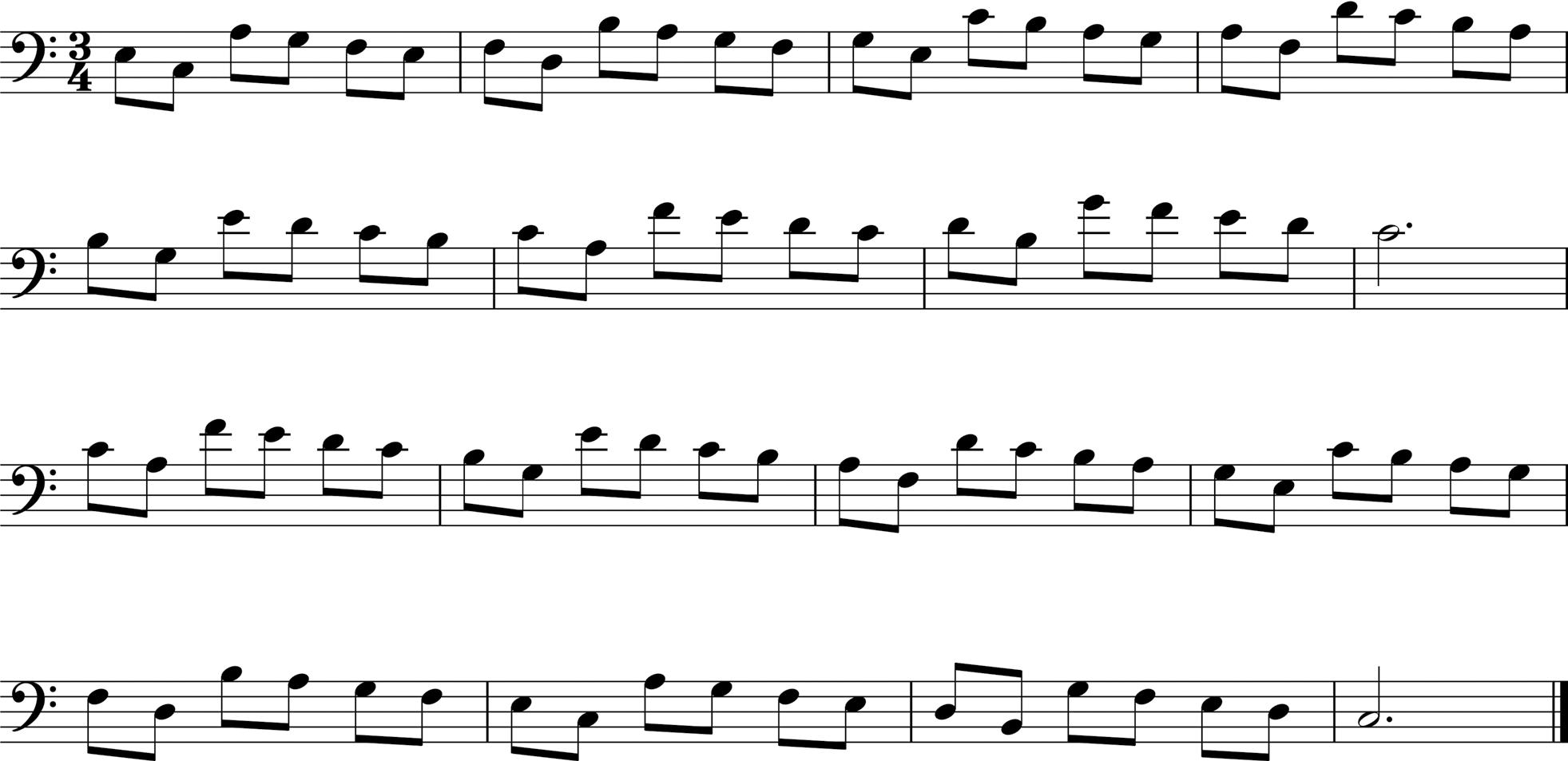
In the case of Exercise 4, we have a descending third that then ascends back up using the scale tones. That is immediately followed by an ascending fifth that descends back down using the scale tones. Exercise 5 is simply the reverse of Exercise 4.
With these simple rules, you can develop a plethora of beautiful ‘Bach-like’ etudes that are bound to keep you busy for a very long time. I’ve given you a lot to work on today, but I’ll leave you with one last exercise using the simple rules.
Exercise 6 is constructed using a descending third that immediately jumps up to the sixth and then descends back down using the scale tones, so the sequence is 3-1-6-5-4-3. It’s yet another beautiful melodic pattern to tie your fingers in knots for a while.
You can see how easy it is to put these sequences and exercises together. Try these, and try coming up with your own. They’re a great way to build your chops and expand your vocabulary. Make music. Have fun!