5 minute read
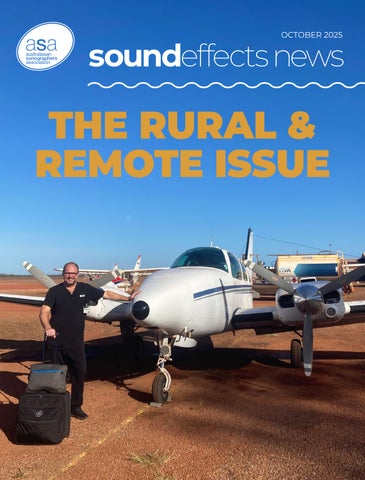
Interview with Tina Hamlyn – Darling Downs, Queensland

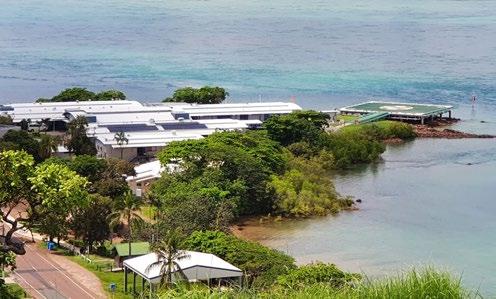
From the Torres Strait Islands to outback Queensland, Tina Hamlyn has built a career defined by adaptability, service, and a commitment to care. As a state reliever with Queensland Health, she travels wherever she’s needed most, often to communities with limited access to imaging. Tina reflects on the resourcefulness required in rural healthcare and the powerful connections formed through delivering essential imaging to patients who might otherwise go without.
What does your role as a state reliever with Queensland Health involve?
I provide general radiography and ultrasound services wherever Queensland Health requires relief. Assignments usually run for about three weeks and can be anywhere, from the Torres Strait Islands to outback towns like Charleville. Some placements also include outreach work, where I travel to smaller communities that don’t have ready access to imaging services. Over the years, many rural facilities have secured permanent radiographers, so not every posting requires me to use both skill sets – but having that flexibility can make a real difference in rural areas.
How do you balance both ultrasound and X-ray when working in smaller facilities?
It’s all about teamwork and understanding priorities. The medical and nursing staff are incredibly supportive – they know that urgent cases come first. Administration staff also build breathing space into the ultrasound schedule to allow for the X-ray side of things. Patients, too, show remarkable patience. Many travel long distances and often have other errands to run while they’re in town, so they’re quite adaptable. There’s a shared sense of ‘we’re all in this together’, which makes juggling both roles manageable.
What are the main challenges of moving between different sites and teams?
The trickiest part is always those first few hours –figuring out local processes and navigating the different IT systems. Luckily, hospital staff are consistently welcoming and quick to lend a hand. After more than 5 years as a reliever, you often cross paths with the same people at different sites, adding familiarity to the constant change. The work can feel isolating at times, so I make a point of staying connected with a network of sonographers I can call for advice or to exchange ideas. I also deliberately pick up contracts in regional and metropolitan hospitals now and then. It keeps my skills sharp, exposes me to new techniques, and reminds me of the variety that first drew me to this career.
Rural work is unique; the challenges are real, but the rewards are unmatched.
How important is access to imaging in the rural communities you support?
Access to imaging is absolutely vital in rural and remote communities. Without it, diagnoses are delayed, treatments are pushed back, and patients face poorer outcomes. On top of the health risks, there’s the personal toll – many people have to travel hours, sometimes days, away from their homes, families, and work. The costs of travel and accommodation add another heavy layer of stress. I’ve met patients who’ve postponed essential tests simply because they couldn’t afford the time or expense of travelling to a larger centre.
That’s where our work makes a real difference. And the gratitude is immense – you see it in the patients, and you feel it from the medical teams.
By providing imaging locally, we can also reduce unnecessary transfers for the purpose of imaging. This allows services such as the Royal Flying Doctor Service and Life Flight, which are heavily relied on, to keep their critical services available for genuine emergencies.
What kinds of cases or patient needs do you see most often in country towns like Charleville?
Everything walks through the door, like a mix between private practice and an emergency department. You’ll do the standard outpatient work, but trauma is a big part of the load: motor vehicle accidents, farm injuries, and the occasional horse mishap. Obstetrics also makes up a large share. We often manage high risk pregnancies in partnership with tertiary centres, doing scans locally to save women from constant travel to metropolitan hospitals.
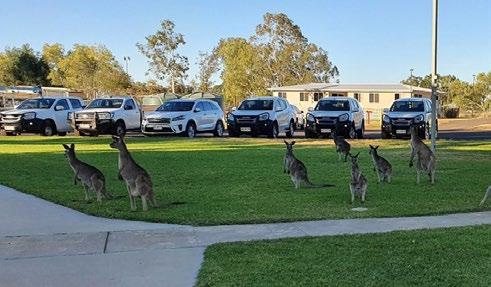
The work is anything but routine. Patients are tough – many won’t seek care until their symptoms seriously disrupt daily life – so you encounter conditions you’ve never even read about, let alone imaged. It keeps you on your toes, and it keeps the work fascinating.
Looking back on your experiences travelling across Queensland, what have been the most rewarding aspects of your job, and what advice would you give to other sonographers considering rural or relief work?
The greatest reward is simple: knowing you’re making an immediate difference. In places where medical resources are thin, every scan matters. Nearly every patient will remind you of that, often with a heartfelt ‘thank you’ that stays with you long after the day is done.
For anyone thinking about taking the leap into rural or relief work, do it. You’ll meet some of the toughest, most grateful people you’ll ever know, and you’ll collect stories that stay with you for life.
It will push you outside your comfort zone, but in the best way – it sharpens your skills and deepens your perspective. Rural work is unique; the challenges are real, but the rewards are unmatched.
My advice? Don’t go it alone. Build a support team of fellow sonographers you can call for advice, share ideas with, or simply debrief.
You’ll discover that the determination and heart of rural medical teams create a kind of healthcare that’s as special as it is inspiring. Medical resources might be limited, but the teamwork and the big-hearted spirit make it an incredibly special environment to work in.