8 minute read
On the road with the Deadly Heart Trek: Dr Lucy Law on cardiac care in remote Australia

Combining clinical expertise with a passion for equity in healthcare, Dr Lucy Law is a cardiac sonographer whose work spans some of the most remote communities in Australia. Based in Canberra and travelling regularly to the Northern Territory, she supports projects such as the NEARER SCAN initiative and the Deadly Heart Trek, providing lifesaving cardiac screening and education in Indigenous communities. Lucy shares how collaboration, cultural connection and innovation are helping to close the gap in access to cardiac ultrasound for Aboriginal and Torres Strait Islander peoples across rural and remote Australia.
Can you tell us a little about your current role as a cardiac sonographer and where you are based?
After completing my PhD and returning to Australia, I aimed to work in Indigenous health, particularly rheumatic heart disease (RHD). In 2023, I volunteered as an echocardiographer for the NEARER SCAN (Non-Expert Acquisition and Remote Expert Review of Screening Echocardiography images from Child and AnteNatal clinics) project (Jones et al., 2024) run by the Menzies School of Health Research.
This led to roles as a research officer on this and related projects and as an echocardiographer with a private company serving remote communities in the Top End and Central Australia. I’m based in Canberra and regularly travel to the NT.
What does your work usually involve, particularly in rural and remote communities?
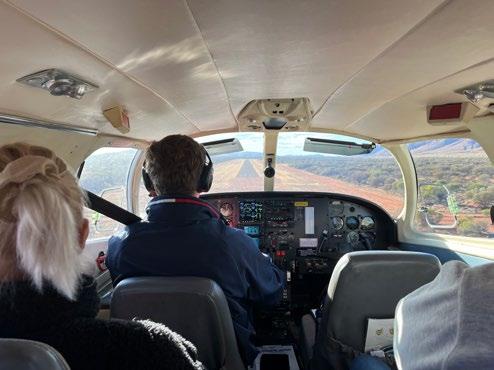
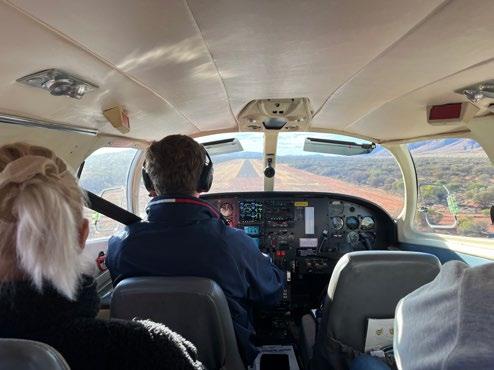
Before a trip, I pack personal items, the portable machine, and other equipment. The next morning often starts early for a flight or a long drive. On arrival, I meet the clinic manager, set up my space, and discuss the day’s workflow with the clinic staff.
Workflow often relies on word of mouth, patient availability and transport options, as well as community business. For screening, if appropriate, we may visit homes and schools with hand-held ultrasound gear, always guided by cultural liaisons and local health staff. Trips last 1–5 days. All scans are reviewed remotely, with cardiology support available by phone.
How did you first become involved in the Deadly Heart Trek, and what drew you to participate?
Deadly Heart Trek (DHT) was conceived and is currently led by a group of inspirational clinical and academic individuals with extensive experience in First Nations health provision and advocacy, with whom I have had the privilege of working during my time in the NT. My firsthand experience seeing the lack of resources, meeting the people this affects, as well as witnessing the wide range of avoidable consequences this has for First Nations health outcomes, motivates me to want to use my skill set, passion and privilege to be part of a sustainable, accessible and culturally safe solution to this problem. The DHT strives to make genuine connections with the communities they visit, not only offering essential services that are otherwise not accessible, but to providing education and support to these communities in person, on country.
The most outstanding thing about the experience was the teamwork.
What was your role during the Trek, and what stood out to you most from the experience?
Teams are small, so you have multiple roles. My expert role was as an echocardiographer performing RHD screening echoes, and when required, full studies.
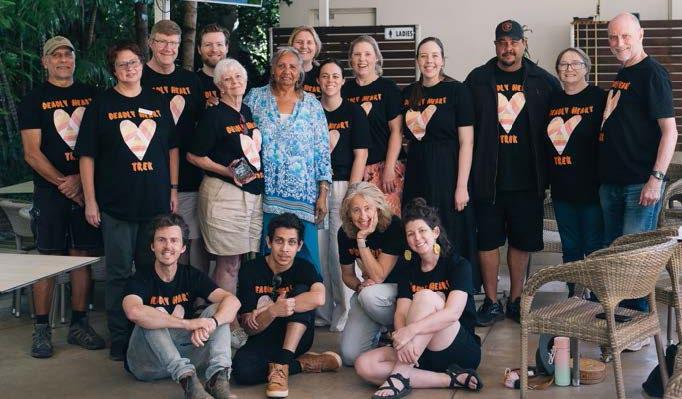
My additional roles included driver, car packing expert and interior designer. Interior design was the hardest role as you were in a different community space (classrooms or such) every day, so reorganising the room to create functional clinical and education spaces was a daily challenge. The most outstanding thing about the experience was the teamwork.
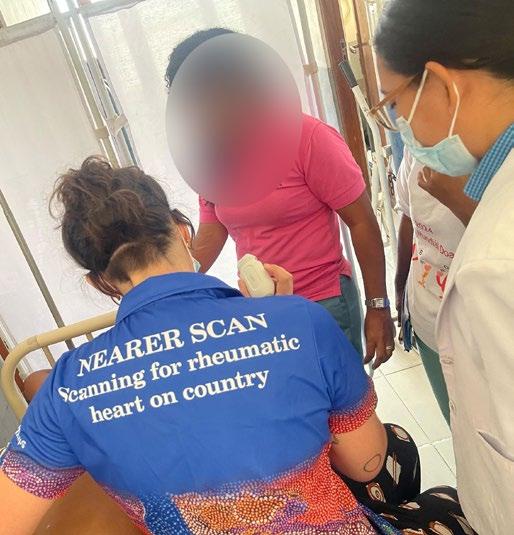
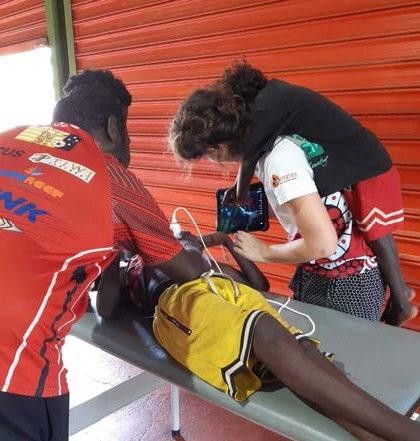
Each person worked hard to fulfil their multiple roles while keeping a happy and positive attitude, ensuring an efficient and high standard of workflow, as well as engaging with the community and all the chaos kids bring! Most of us had never worked together either!
Just shows how amazing teamwork can be if you all have a common goal.
From your perspective, what difference does the Deadly Heart Trek make for Aboriginal and Torres Strait Islander peoples in the communities you visited?
Most remote communities may never see a sonographer, cardiologist, paediatrician, or paediatric cardiologist. Having a specialist team on site to assess, consult, and develop a treatment plan with the clinic and family saves critical time and resources.
Advancements in AI for ultrasound may also enhance future screening and diagnostic capabilities, further supporting timely and accessible care.
Community education – through engagement, face-to-face interaction, and conversations on country – is vital to improving health outcomes. Working alongside local health professionals, community members, and families builds trust and mutual understanding. It also ensures care is delivered in a culturally safe and respectful way. Aboriginal Liaison Officers (ALOs) and senior community members, who speak the language and understand community dynamics, are essential to meaningful service delivery. Their role is irreplaceable. Data collected from these visits is shared with local health services, helping to refine care and build a clearer picture of disease burden. This collaborative, community-centred model supports sustainable improvements in healthcare access and outcomes for First Nations and Torres Strait Islander peoples in remote regions.
Looking more broadly, what do you see as the biggest challenges and opportunities in improving access to cardiac ultrasound in rural and remote Australia?
There are significant challenges in rural and remote healthcare, especially around funding, resources, and support.
Remote work requires diverse skills and strong cultural awareness. Increasing sonographer exposure and education in this space would help improve access. The NEARER SCAN project addresses this by training First Nations community members – such as Aboriginal Health Practitioners (AHPs), nurses, and some remote doctors – to use simplified echo protocols with handheld devices to screen for RHD. This collaborative, community-led approach builds local capacity and creates a sustainable care model. Studies are uploaded to a cloud server, reviewed by experts, and followed by a management plan.
The goal is to embed this process into routine care, enabling early detection and treatment for children and young people in remote areas. Advancements in AI for ultrasound may also enhance future screening and diagnostic capabilities, further supporting timely and accessible care.
What protocols are in place for urgent or abnormal findings when working in remote or rural clinics?
Each health service will have its own protocols. On arrival, it is very important to review these and speak with clinic management. Communication with the clinic staff is essential as they know their patients’ history and condition as well as the clinic’s capacity. Often, you will not be with a cardiologist, so it is important to have a good line of communication with them. Due to distance and limited resources, triaging of the situation is very important, and if deemed acute or in need of more advanced management, transport to another health facility can be arranged.
Taking time to find the best set-up that is both private for the patient and optimal for scanning is essential.
Do you always still scan a full TTE protocol on each patient, or are they more focused?
No. When screening for RHD, we use a highly abbreviated protocol (Remenyi et al., 2020), which allows for gross assessment of the left heart structure and function, which is primarily affected in RHD. If disease is detected, a full TTE protocol will be completed. If the patient is being followed by the cardiology team, a full protocol will be completed. The same goes if we have not seen the patient before or in a long time. In some cases, limited studies are all that can be acquired, but we do our best to get as much information as we can, as we know there is a high chance that the patient will not be able to have an echo again for some time.
Are ergonomic set-ups similar to metro areas (what are the facilities like)?
No. As we will take a portable ultrasound machine on these trips, we must get a little bit creative with how we set up the space we have access to. I have frequently worked on basketball courts, in classrooms and in mobile trailer clinics.
Taking time to find the best set-up that is both private for the patient and optimal for scanning is essential. I always try and arrive early (if possible) and ask for equipment or environment modifications if I can. Resources are limited, so being understanding and patient is key.
Are there strategies to help avoid burnout, especially if there are overbookings?
The workflow and patient load in a day can vary greatly. A lot of flexibility is required, so taking breaks when there is downtime is encouraged. Communication, support and understanding with your colleagues is crucial. We also strive to share the load with rural and remote trips where possible. Taking some creature comforts with you (noise-cancelling headphones, a book), eating well, stretching, fresh air, engaging with the communities you visit (speaking to elders, going to arts centres) and sleeping well also help me avoid burnout.
Remenyi B, Davis K, Draper A, Bayley N, Paratz E, Reeves B, Appelbe A, Wheaton G, da Silva Almeida IT, Dos Santos J, Carapetis J, & Francis JR (2020). Single parasternal-long-axis-view-sweep screening echocardiographic protocol to detect rheumatic heart disease: A prospective study of diagnostic accuracy. Heart Lung Circ, 29(6),859–866. https://doi. org/10.1016/j.hlc.2019.02.196