7 minute read
Historical and hysterical

Facts section: then and now Historical and hysterical: our cartoonist, George Booth
By Lori L. Mavrigian

Whether you’re guiltily gufawing at an episode of ‘South Park’ or quietly giggling at the latest New Yorker cartoon, laughing does you good. Laughter is a great form of stress relief, and that’s no joke,” says the Mayo Clinic.
Laughter increases the endorphins that are released by your brain, activates and relieves your stress response and soothes tension, according to the health organization. So we hope you get a chuckle out of the cartoon on our cover commemorating the 50th anniversary of our Facts Issue.
It is appropriate that we turned to cartoonist George Booth to create this cover. Booth is famous for the cover illustrations he did for Te New Yorker magazine. However, he was hired in 1959 as corporate art director for Bill Brothers in New York City, the company that owned MTD in those days. He worked for us until il
George Booth gained fame illustrating the covers of The New Yorker magazine. His cartoons often feature befuddled men, crazed cats and fat dogs.
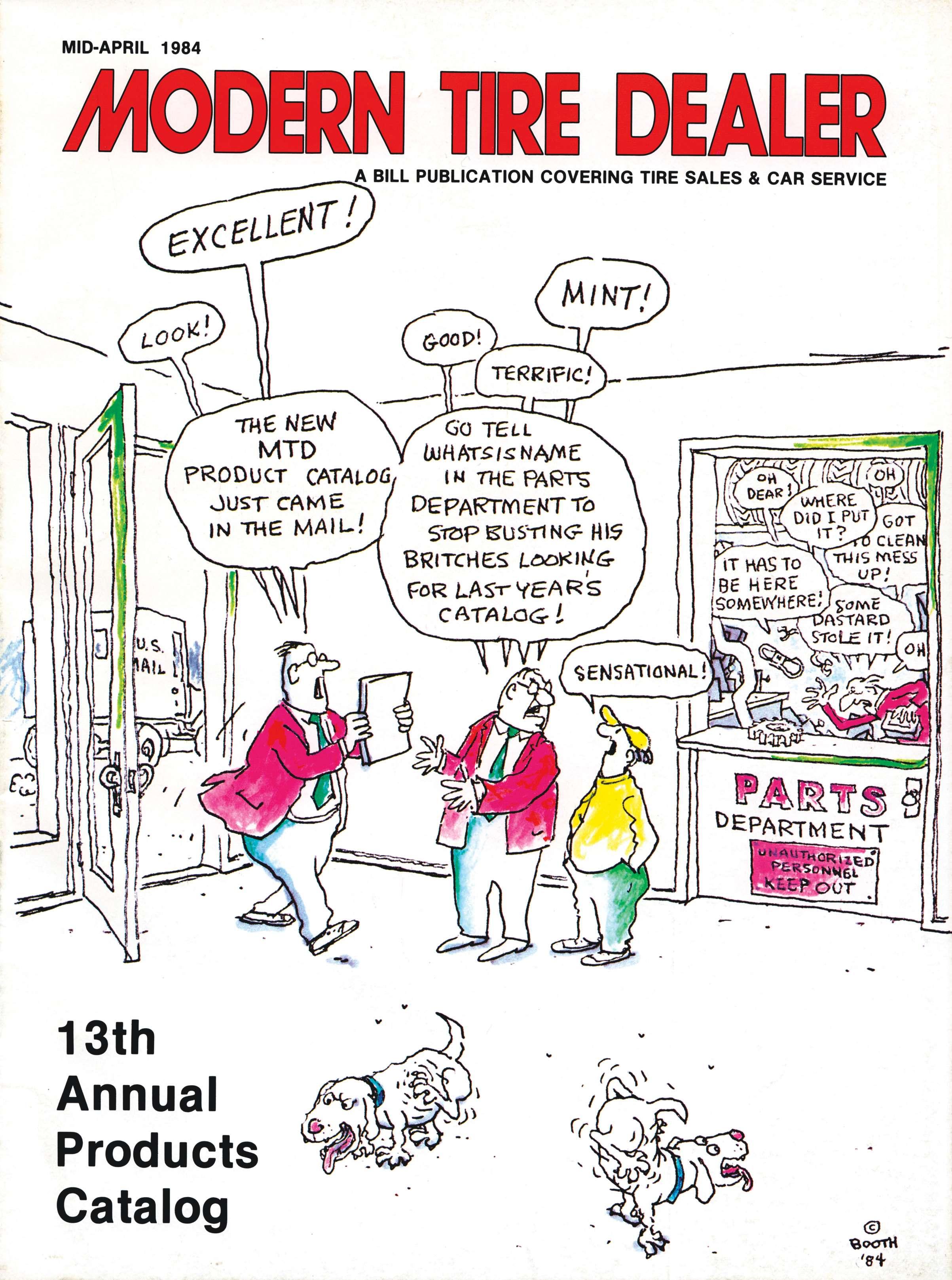

1968, lef to freelance full-time and sold his frst cartoon to Te New Yorker in 1969. (Want a good laugh? Check out his books, among them “About
Dogs,” “Tink Good Toughts about a Pussycat” and “Omnibooth: Te Best of George Booth.”) His freelance work for Modern Tire Dealer continued over the years and included covers and inside art to illustrate the important topics of the day such as tire labeling, tire grading, tire registration, Occupational Safety and Health Administration regulations and so on. “I loved working for MTD,” Booth told us. “It is a terrifc company, and I was grateful for the experience.” You will see some of his earlier cartoons reprinted on the following pages and to throughout the issue. thr
All ofer a litle stress relief from the heavy issues confronting All those in the tire industry.
It just goes to show you, it doesn’t mater if it’s 1966 or 2016, laughter is still the best medicine! ■
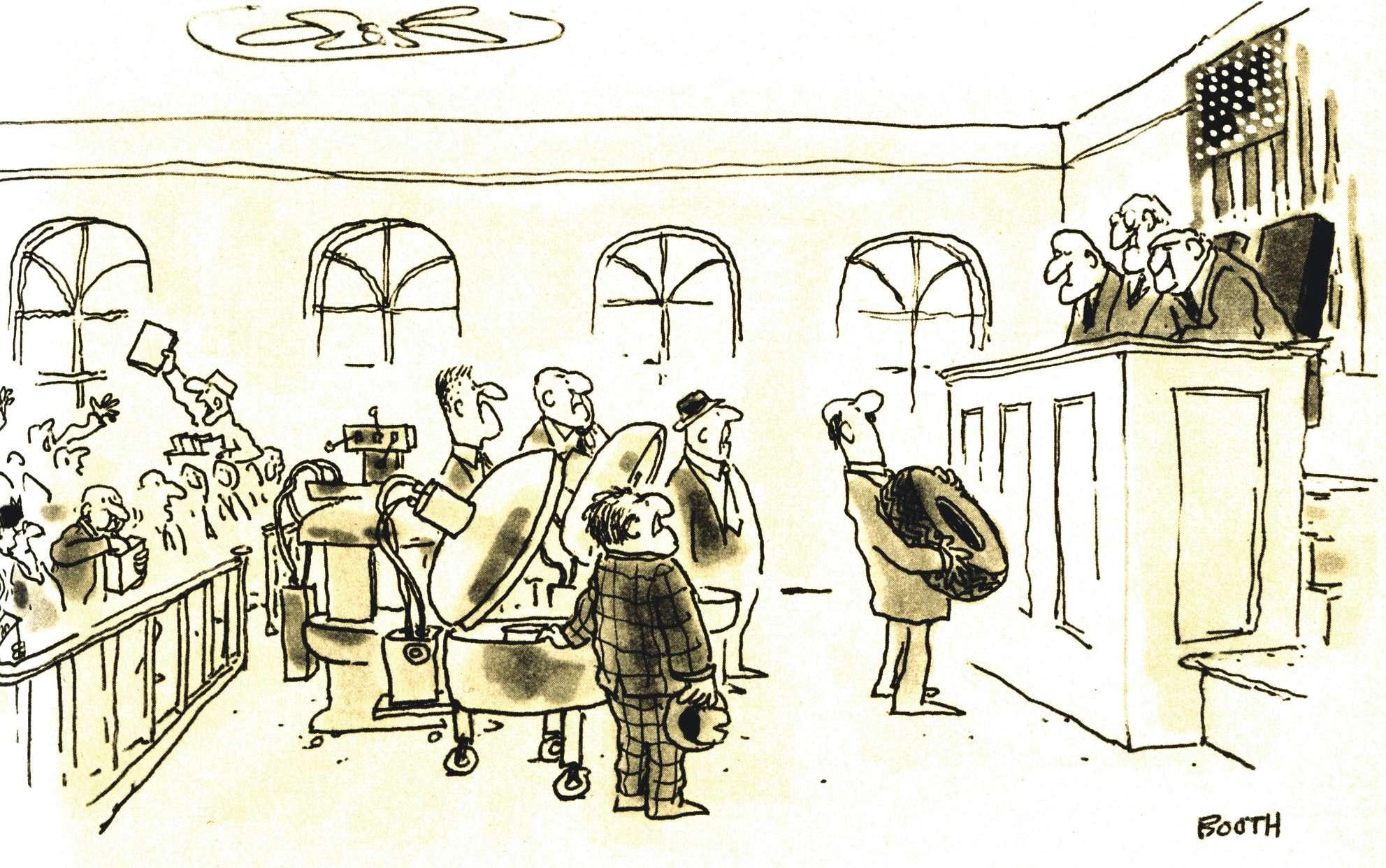
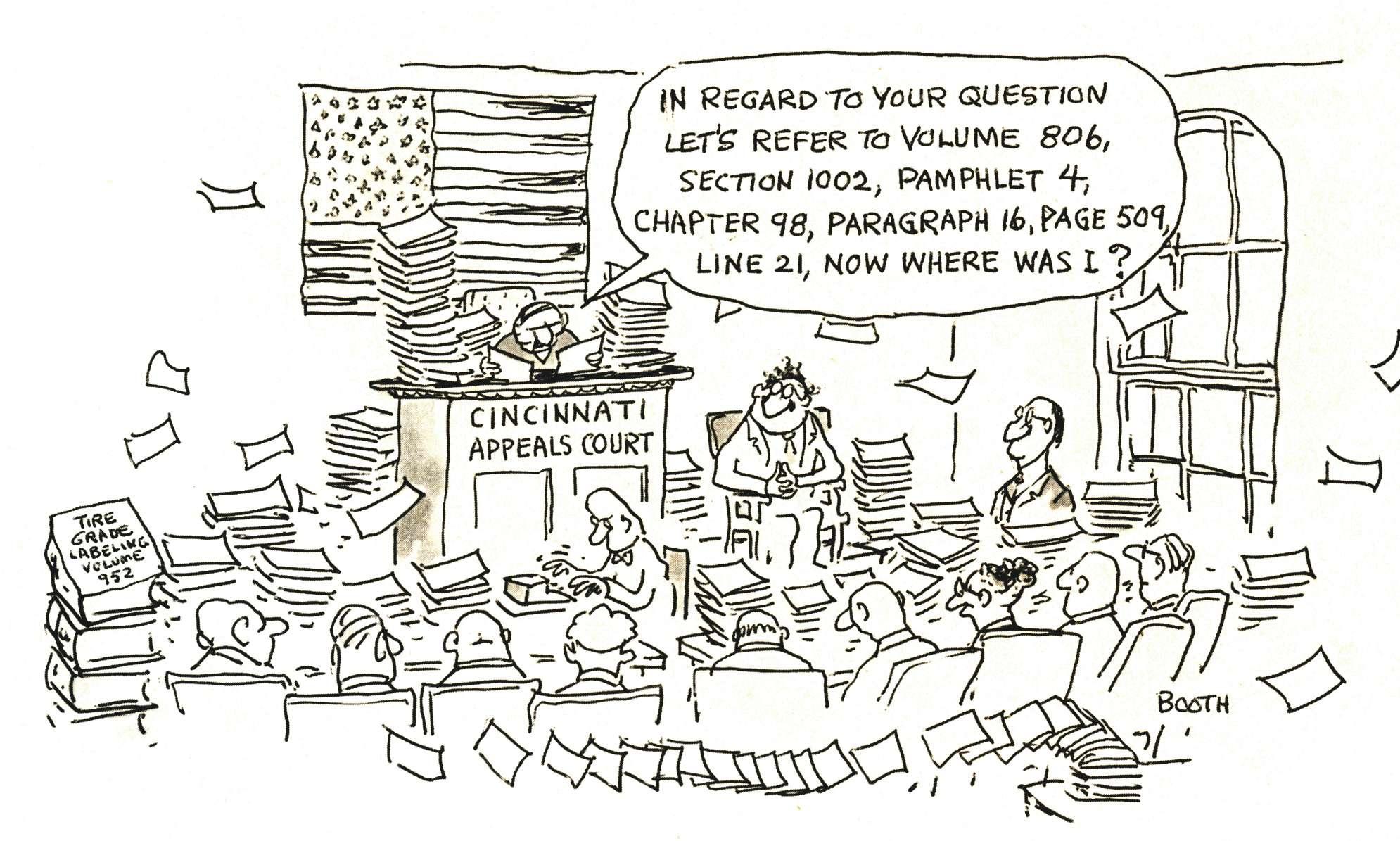
From August 1975: Grade labeling update: industry steps up battle
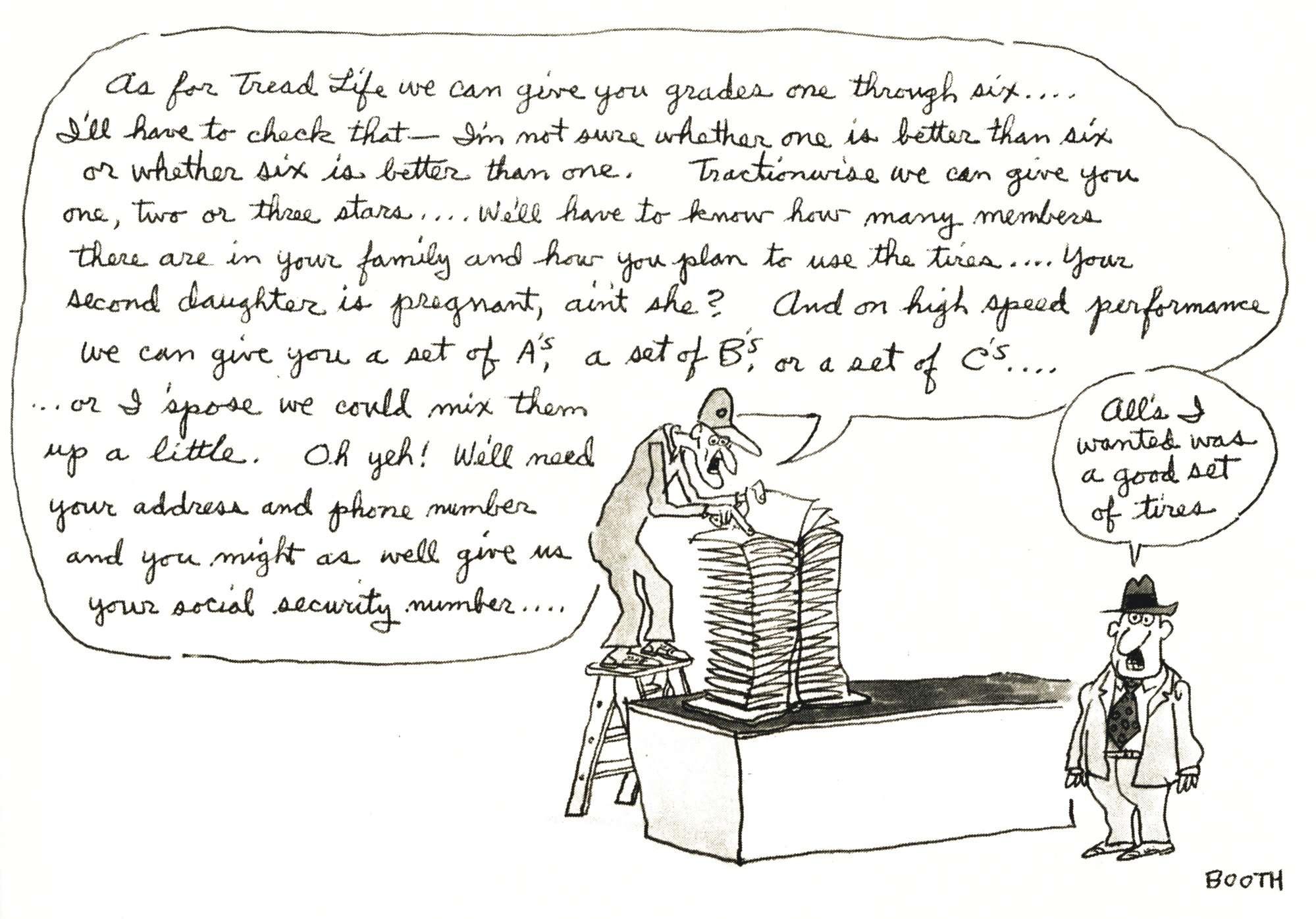
This August 1975 Booth cartoon illustrates the mindset of the tire manufacturers concerning the complexity of proposed quality gradings which would measure tire tread wear, traction and temperature resistance. The gradings were set up to “enable consumers to make informed choices in tire purchases,” said the National Highway Traffc Safety Administration (NHTSA). Tire manufacturers fought hard to prevent the government from implementing tire grade labeling, saying it would cause the industry “irreparable fnancial injury.” Despite the uproar, legislation passed, and a look at today’s tire ads fnds tire makers frequently use exceptional quality gradings to sell their tires. From April 1978: Dealers go to court over Michelin franchise cancellations
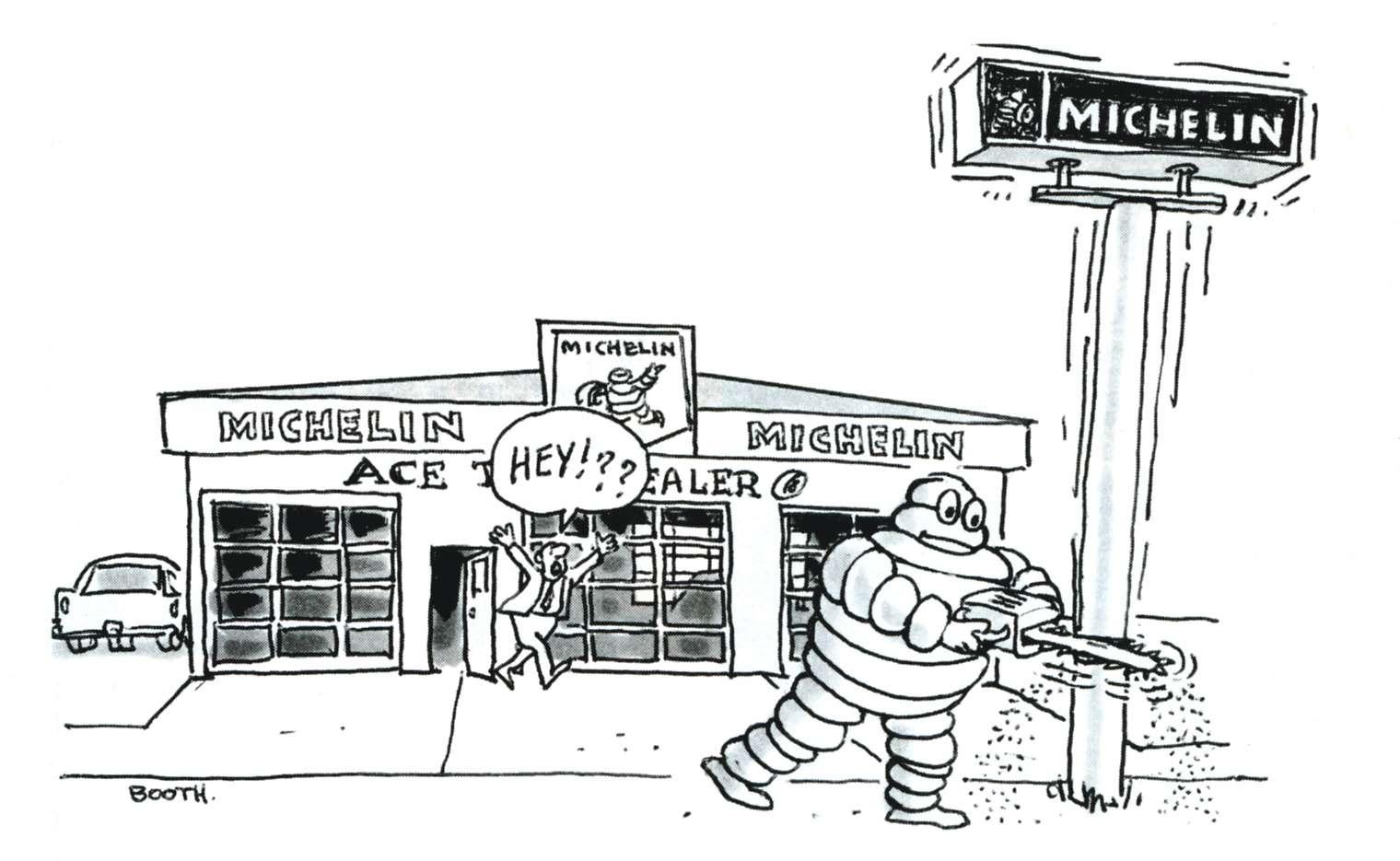
In early 1978, dealers sued Michelin claiming federal anti-trust violations when the tire maker canceled contracts with them. Dealers sought millions in damages citing violations of the Sherman Act, the Clayton Act and franchising statutes. The tire dealers claimed they had invested millions in the promotion and establishment of goodwill toward Michelin and its tires. Dealers felt Michelin was “trying to eliminate the middle man with the establishment of more company stores.” At the time, Michelin did not comment on the lawsuits. Differences must have been ironed out, as a check on the dealerships involved (which are still in business) show them selling Michelin tires today.
From February 1972: ARA launches surprise attack — No retread standards for now!
The American Retreaders Association (ARA) was in court to oppose Standard 117 of the Department of Transportation’s proposed retread tire safety standard. The ARA was not concerned that retreads posed any safety problems, but that the “government-sponsored tests show there is no correlation between the results of the laboratory tests proposed in Standard 117 and the actual performance of tires on the road.” Voluntary testing is still going on for retreads — this time around to verify them for the Environmental Protection Agency’s SmartWay program.
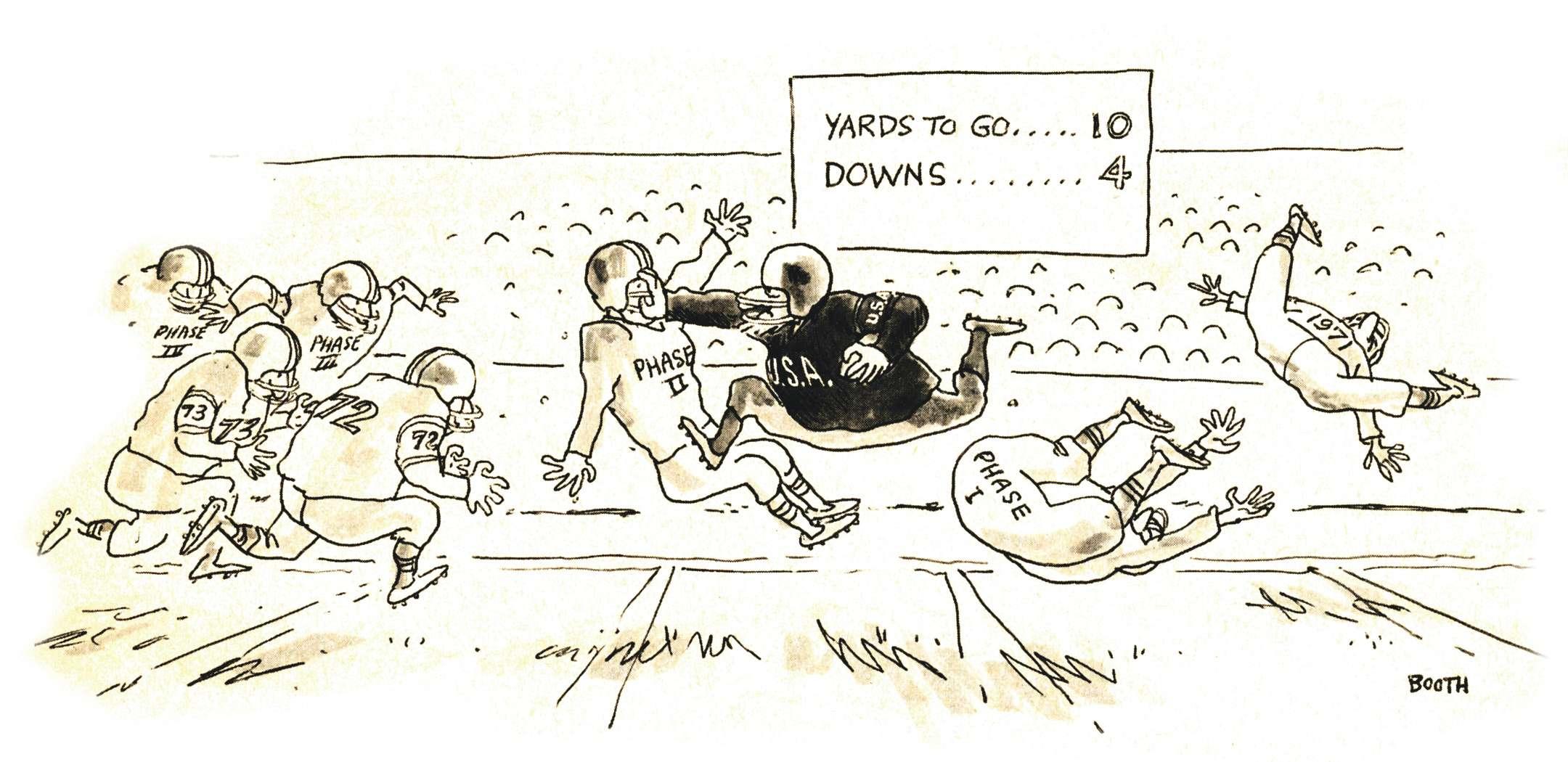
(Above) From January 1972: 1972 should be a real ground gainer!
Industry leaders predicted record-breaking tire shipments and in many cases, record-breaking capital expenditures for 1972. Goodyear Tire & Rubber Co. was forecasting a 5% increase in passenger tire shipments and a 6% increase in truck and bus tires. The company planned to spend $300 million on capital improvements. Russell DeYoung, the company’s chairman, was concerned about imports which “will exceed exports by about 6 million.” Sound familiar? Executives from Firestone Tire & Rubber Co. and BFGoodrich Tire expected a banner year, too. Estimates for all types of pneumatic tires ranged from 212.3 million units to 237 million units. Compare this with 2015’s 251.5 million units shipped (see page 46).
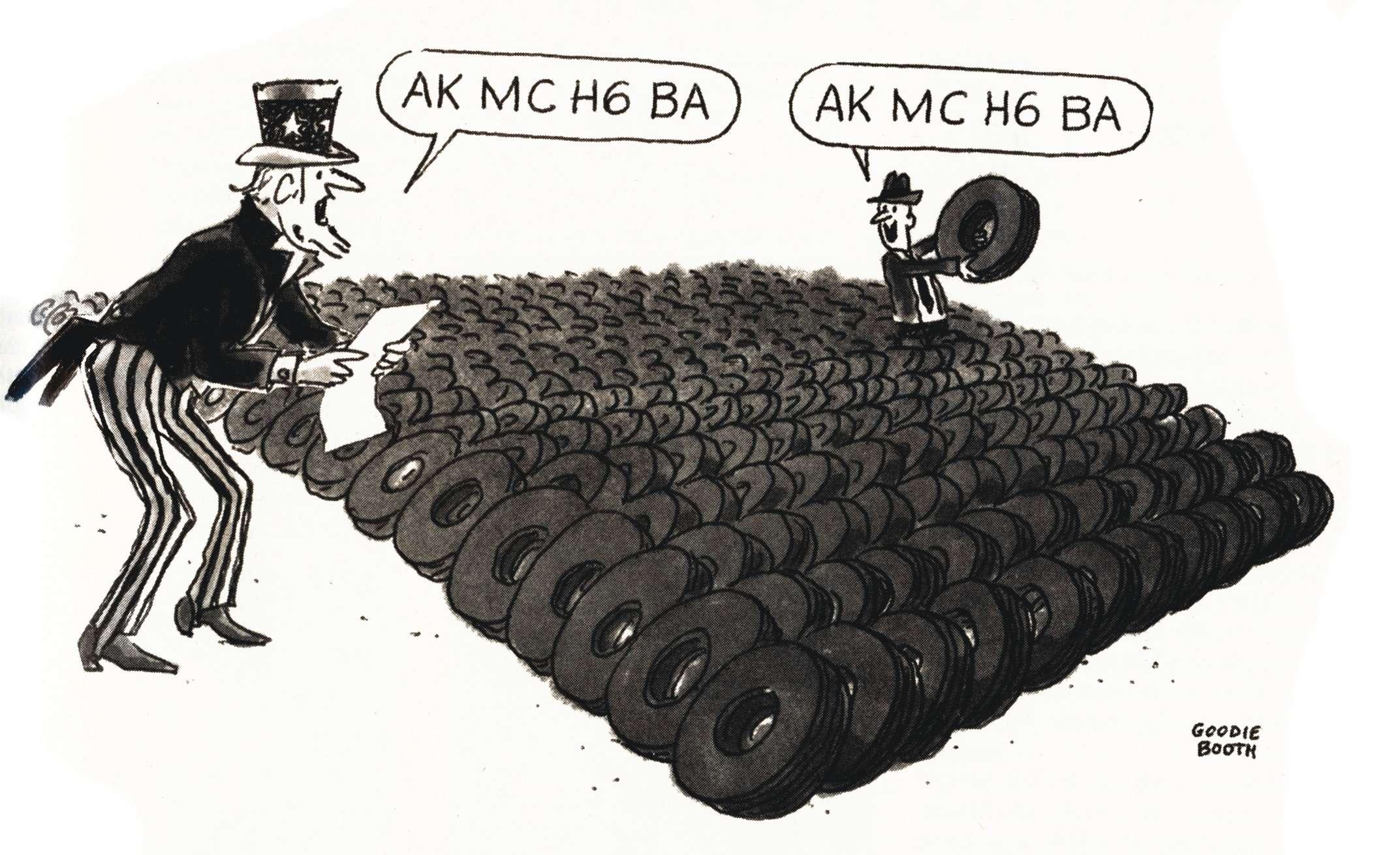
(Above) From July 1969: RMA proposes foolproof tire ID system!
Due to “government squawking” about poor tire recall results, the Rubber Manufacturers Association (RMA) pulled the wraps off a new tire identifcation system aimed at supplementing tire identifcation and defect notifcation. An ID program was proposed that uses an alpha-numerical code molded into the sidewall to indicate the week of production, the manufacturer, the plant in which the tire was produced, and the tire size and type. “This, coupled with a computerized storage of records, should supply ample information to enable an almost foolproof recall program,” MTD observed. The industry is still grappling with the best way to handle tire recalls. The “Tire Effciency, Safety, and Registration Act of 2015” recently made tire registration mandatory once again. See “No timeline for tire registration” on page 8.
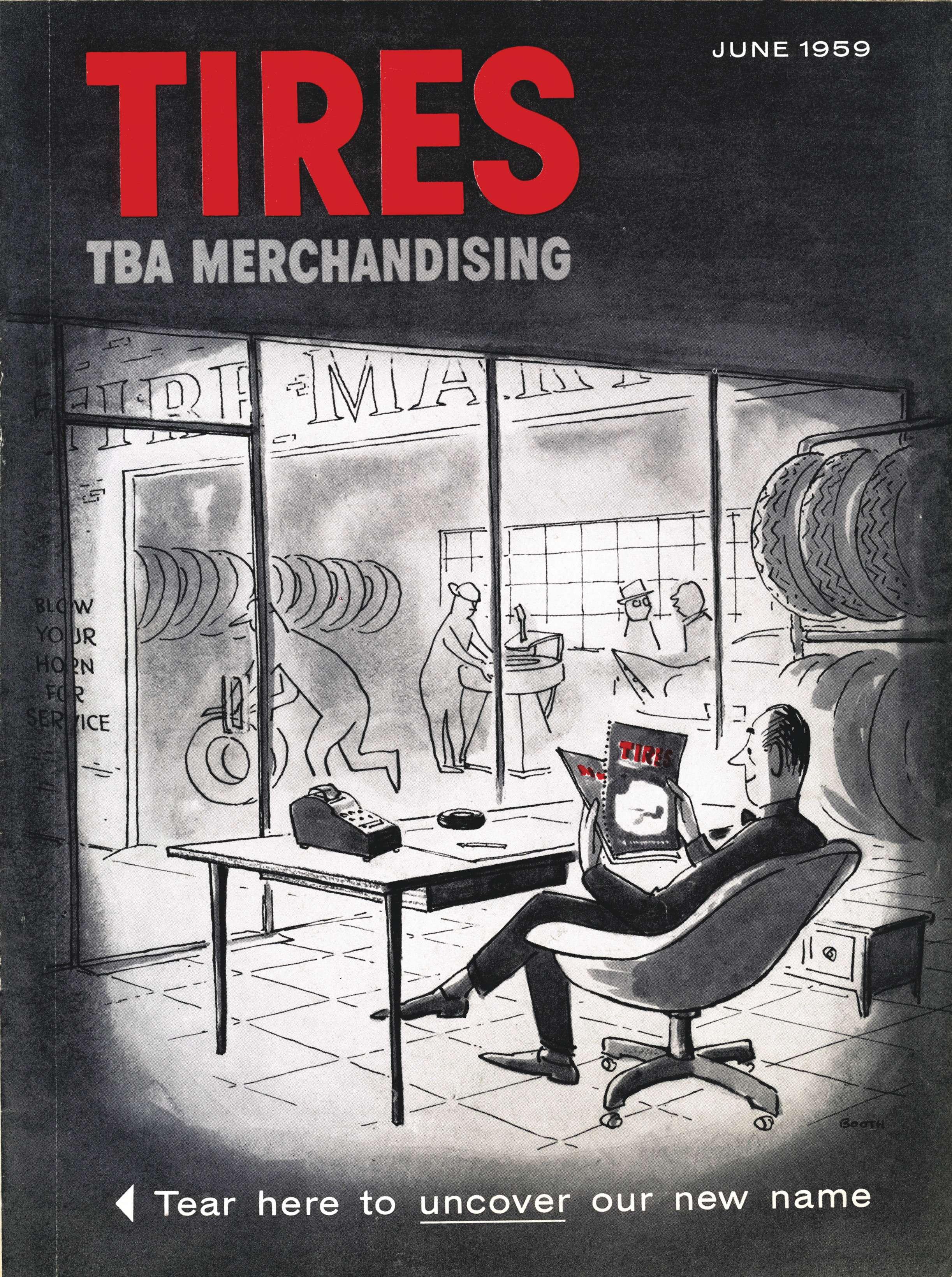
(Left) From June 1959: From Tires TBA Merchandising to Modern Tire Dealer!
Although Booth’s frst cartoon appeared in our magazine the month he was hired by our company, April 1959, his frst cover illustration was in June 1959 when the publication changed its name from Tires TBA Merchandising to Modern Tire Dealer (the magazine for the TBA dealer and retreader). MTD was being produced on Third Avenue in New York City at the time, later moving to what was referred to as the “Rubber Capital of the World,” Akron, Ohio.

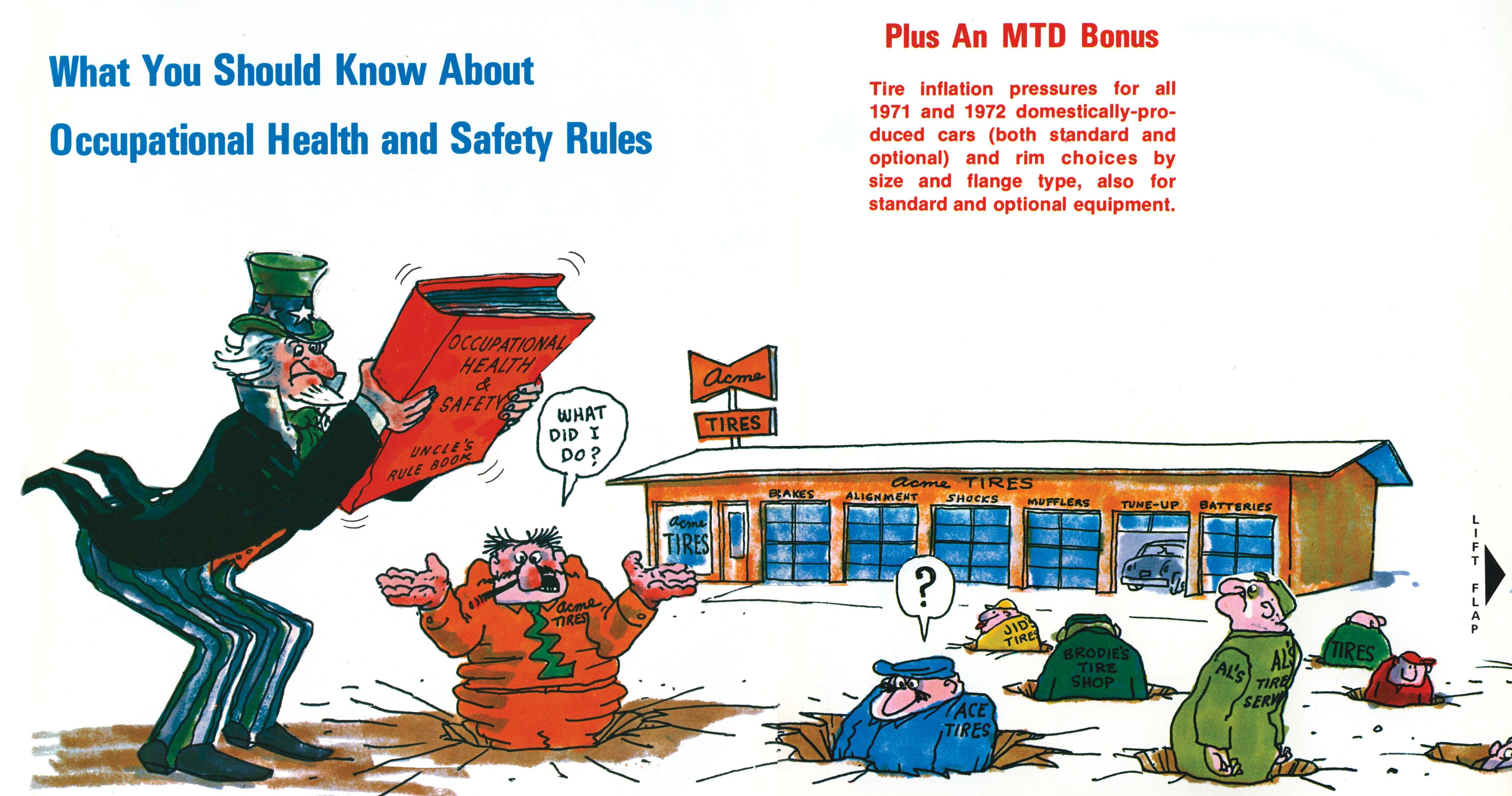
(Above and right) From May 1972: Health, safety and your dealership!
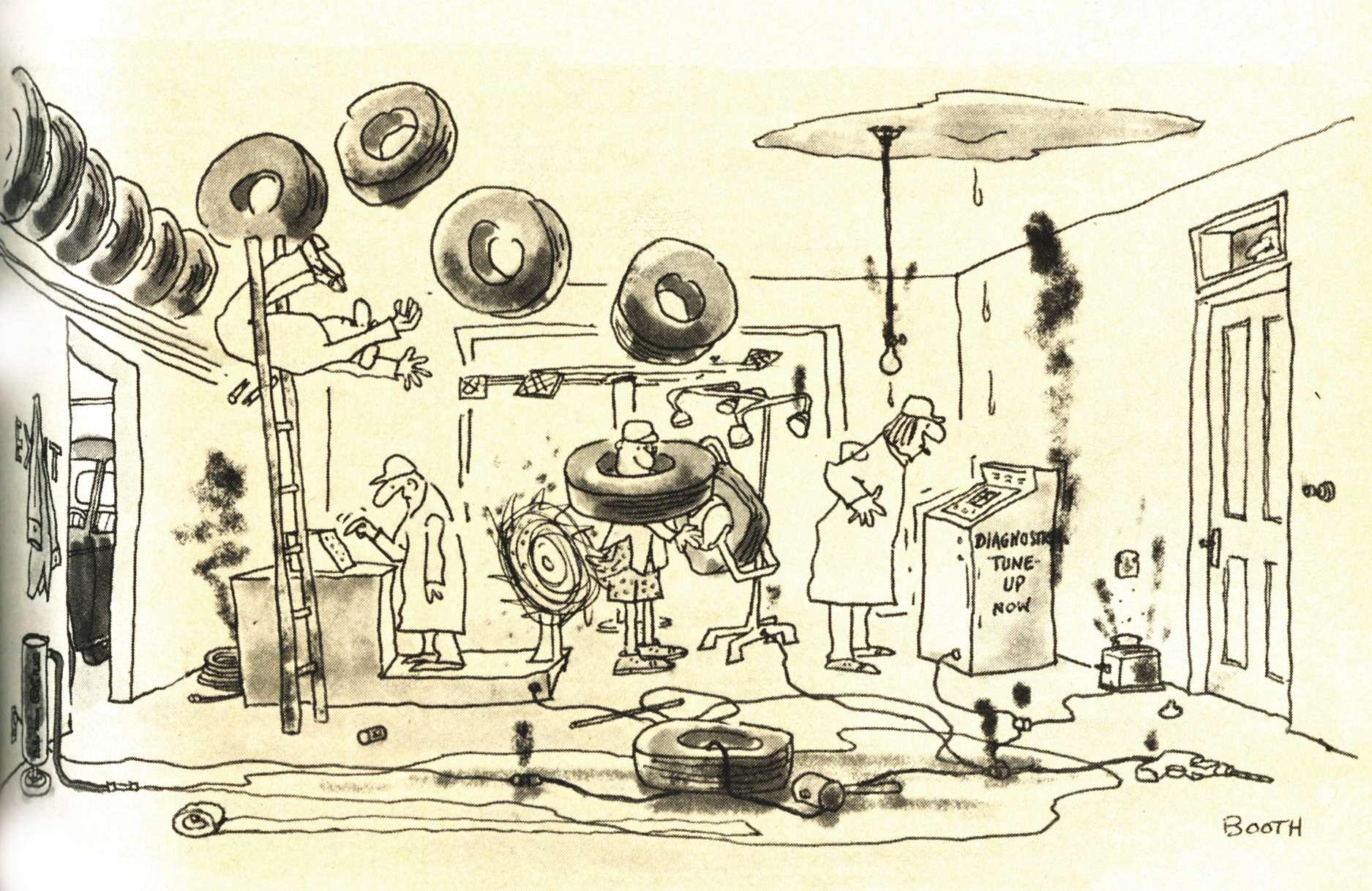
Regulations issued by the Labor Department’s Occupational Safety and Health Administration (OSHA) called the Williams-Steiger Occupational Safety and Health Act of 1970 took effect in April 1971. The National Tire Dealers and Retreaders Association (NTDRA), which later became the Tire Industry Association (TIA), put together a guide and held seminars to help dealers comply and prevent fnes or a business shutdown. The NTDRA urged dealers to become thoroughly acquainted with the act and resulting regulations of OSHA, establish a program of safety and health practices for their business, make sure that corrective action was taken to assure employees follow job safety rules, and conduct periodic safety inspections on their own. Regulations covered such things as the proper use of tire safety cages, having adequate fre extinguishers, proper electrical wiring, logging injuries on the correct OSHA form and properly marked exits. “OSHA regulations are not guidelines or recommended practices, they are the law,” Kevin Rohlwing, TIA’s senior vice president of training, wrote in our October 2015 issue in the article “Guilty until proven innocent.”
From October 1972: Akron makers among last to know — Tire grade labeling issuance near
The Department of Transportation (DOT) issued its frst notice of proposed rule making on tire grade labeling in September 1971. “Two months later at a discussion meeting, the proposals were universally assailed by the manufacturers, dealers and consumer advocates. Last May, DOT fnally retracted the proposal and announced it would try again with a ‘modifed version,’“ MTD reported. When fnally issued, tire dealers were to post explanations of the grading system in their showrooms. Similarly, information is now being posted explaining “green tire” technology. ■