1
2
Masthead Founding Editor
Laura Potomová
Assistant Editor
Caspar Lowenthal
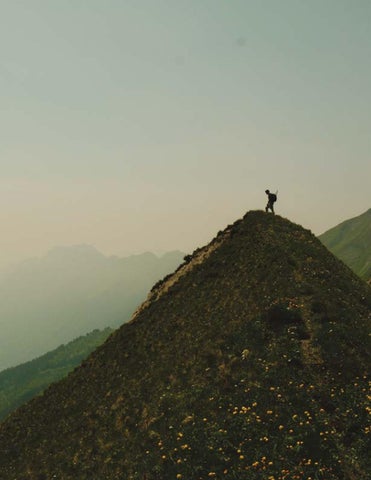
Advisory Board Raman Odgers Pau Torres Pagès & friends, who lent their generous eyes, ears, and brains to the creation of this publication Sponsored by Land & Colors // Cover Photo: Raman Odgers
1
Art House Magazine: Issue I June 2026
PROSE
Prince Acquah Sihao Zhang Pritha Deshpande Putri Maharani William Keiser Julia Bails Eden Knutilla Frankie B. Mars Berith Han Pau Torres Pagès Jonathan Griffin
The Church . . . . . . . . . . . . . . . . . . . . . . . . . . . . . . . . . . 8-13 Soft Scars . . . . . . . . . . . . . . . . . . . . . . . . . . . . . . . . . . . . 19-22 Hamnet, Review . . . . . . . . . . . . . . . . . . . . . . . . . . . 34-35 A daughter who mourns . . . . . . . . . . . . . . . . . . . 36-37 Feeling Purple . . . . . . . . . . . . . . . . . . . . . . . . . . . . 46-53 Julia’s Dreams . . . . . . . . . . . . . . . . . . . . . . . . . . . . . . 55 Gender is a Place . . . . . . . . . . . . . . . . . . . . . . . . . . . . 56-57 Gentrification . . . . . . . . . . . . . . . . . . . . . . . . . . . . . . . 62 The Voyage . . . . . . . . . . . . . . . . . . . . . . . . . . . . . . . . 64-65 The Park . . . . . . . . . . . . . . . . . . . . . . . . . . . . . . . . . . 68-69 Friction . . . . . . . . . . . . . . . . . . . . . . . . . . . . . . . . . . . . . 72-73
POETRY
Uma Vatsa Anonymous I wbafc
Ghost of a Kiss . . . . . . . . . . . . . . . . . . . . . . . . . . . . . . . . . . 18 The Seasonalities . . . . . . . . . . . . . . . . . . . . . . . . . . . . . . . 25 Garden . . . . . . . . . . . . . . . . . . . . . . . . . . . . . . . . . . . . . . . . 32 Untitled . . . . . . . . . . . . . . . . . . . . . . . . . . . . . . . . . . . . . . . . 71 You, I . . . . . . . . . . . . . . . . . . . . . . . . . . . . . . . . . . . . . . . 32 Haiku . . . . . . . . . . . . . . . . . . . . . . . . . . . . . . . . . . . . . . 60 in the garden . . . . . . . . . . . . . . . . . . . . . . . . . . . . . . . . . . 33 you used to call me ... . . . . . . . . . . . . . . . . . . . . . 75-77 Memories . . . . . . . . . . . . . . . . . . . . . . . . . . . . . . . . . . . 38 Sandspace . . . . . . . . . . . . . . . . . . . . . . . . . . . . . . . . . . . 44 my god . . . . . . . . . . . . . . . . . . . . . . . . . . . . . . . . . . . . . 63
Muya Guoji Frankie B. Mars Anonymous II Brendalys Lebron Lilliana Bollinger
ART
2
Laura Potomová Giacomo Ricciardi Tristan Spratt Gaspard Tissandier Manuel Scheuernstuhl Raman Odgers Giovanna Manga Guimarães Anonymous III Natania Ngawhau Marco van Wijk Caspar Lowenthal Sushmita Korishetty
Carte Blanche . . . . . . . . . . . . . . . . . . . . . . . . 6-7, 23-24 There is Light in the Dark . . . . . . . . . . . . . . . . . . .14-17 The New York Cold Spell . . . . . . . . . . . . . . . . . . . . . . . 28 Wines, Liquor . . . . . . . . . . . . . . . . . . . . . . . . . . . . . . . . 15 They told me not to worry . . . . . . . . . . . . . . . . . . . . . 29 don’t wait for the light to stay bright . . . . . . . . . . . . 71 Walking Man V . . . . . . . . . . . . . . . . . . . . . . . . . . . . 30-31 The Wanderer . . . . . . . . . . . . . . . . . . . . . . . . . . . . 38-39 Sunset at Atacama’s Desert . . . . . . . . . . . . . . . . . .42-43 Possibility . . . . . . . . . . . . . . . . . . . . . . . . . . . . . . . . . . . . . 45 Dancing Clowns . . . . . . . . . . . . . . . . . . . . . . . . . . . . . . . . 51 Triple Exposure on Expired Film . . . . . . . . . . . . . . .74 I will do it tomorrow . . . . . . . . . . . . . . . . . . . . . . . . . . . 54 City of Dreams . . . . . . . . . . . . . . . . . . . . . . . . . . . . . . 58-59 Untitled . . . . . . . . . . . . . . . . . . . . . . . . . . . . . . . . . . . . . 66-67 Skyscraper . . . . . . . . . . . . . . . . . . . . . . . . . . . . . . . . . . . .70
3
Editorial Note This magazine you are holding now is a repository for the thoughts and creations of International House residents. It grew from the belief that our writing and our art deserves a more permanent home. Its premise: the promise of a blank canvas, the complete freedom merely to create. This spontaneity of creation without the interference of an imposed theme or set of restrictions gave rise to a collection of works of immense breadth, each distinct in its singularity and personal voice. The resulting polyphony offers a glimpse into the diversity of artistic interests floating around I-House in the current moment. And yet, the cosmically mysterious order of things makes it so that governing principles inevitably emerge. Even in a “themeless” magazine, pieces converse with one another; they whisper, and form quiet attachments. It is the reader’s responsibility to find the threads of common ground that arise from the mingling voices within. The story I hear in these works is the story of a single year, told linearly in seasons. There are four chapters— Winter, Spring, Summer, Fall— which provide the magazine with an internal force. In my ear, each work seems to respond in its own way to these timekeepers that eternally return. But the truth, dear reader, is that the ground is alive and ever-shifting, and under the surface the works continue to talk. So lean in and listen close. Perk up your ears to the unique texture of each piece. Catch wisps of conversation, trace relations, and find your own line of flight through these pieces as they reassemble in front of your gaze. I leave you here. It is my hope that as time continues to run forward, and the body of I-House residents renews itself as it does each year, human creativity can continue to find its channel of release.
Laura Potomová
4
5
WIN TER
6
carte blanche no. 1 Laura Potomová
7
8
The Church Prince Acquah
There is Brother Theodore in the third pew, a compact man of considerable presence who has worn the same sequined blazer to every Sunday service for the past four years and considers this an act of devotion. He greets his neighbor, a willowy creature named Sister Margaux, who has painted her face with the precision of a Flemish master and is currently fanning herself with a laminated copy of last week’s program.
There is a church on the corner of Halsted and Grace, and on Sunday nights, the Holy Spirit arrives at ten o’clock sharp, wearing six-inch heels. The building itself is an unremarkable brick structure, the kind that in another life might have housed a laundromat or a tax office; but God, in His infinite and fabulous wisdom, had other plans. A neon cross glows above the door in pink and blue, humming with the low, electric frequency of something sacred. The congregation begins to gather around nine-thirty, dressed, as all devoted worshippers should be, in their Sunday best. Which is to say: in very little, and what little there is has been rhinestoned within an inch of its life. The ushers: broad-shouldered, oiled, wearing bow ties and nothing else above the waist, guide the faithful to their places with the solemn efficiency of men who understand that seating is, spiritually speaking, everything.
“You’re late,” Theodore says, without looking up. “I am fashionably punctual,” Margaux replies, sitting down in a single fluid motion that suggests either dance training or divine intervention. “There is a difference.” Behind them, a group of young congregants fills the back pews with the chaotic energy of apostles who haven’t yet decided which gospel they’re following. They are loud and beautiful and slightly consecrated on whatever pre-service sacrament they’d administered to themselves in the parking lot. One of them, a young man named Ezekiel, though everyone calls him Zeke, is wearing angel wings that keep knocking into his neighbor’s drink. He has apologized seven times. He will knock it again before the night is over. The air smells of incense and dry ice and something floral that someone has spilled near the altar and decided to leave as an offering.
9
The choir appears. They descend from the elevated platforms on either side of the altar: four on the left, four on the right, in a synchronized arrival that the congregation receives with the appropriate reverence, which is to say: screaming. The choir is dressed in white. All white. Tiny, transcendent, immaculate white. They take their positions with the kind of focused spiritual energy that could only be described as ministerial, their bodies tuned like instruments, their eyes fixed on some holy middle distance just above the congregation’s heads. Sister Margaux leans toward Theodore, pressing her fan to her chest. “The one on the left,” she whispers. “He has returned. He is resurrected.” Theodore does not look up. “He never left. He was on vacation.” Margaux straightens, utterly unmoved by this correction. “In this sanctuary,” she says, with great solemnity, “there is no difference.” The choir begins their opening hymn— a thundering, bass-heavy invocation that travels up through the soles of everyone’s shoes and lodges itself somewhere behind the sternum, which is, theologians have long argued, precisely where music is supposed to go. The congregation sways. Brother Zeke loses a wing. And then: the Pastor. She arrives the way all great leaders arrive— announced by light. A single white spotlight cuts through the dry ice from above, and into it walks Pastor Divine, and the congregation loses what is left of its collective mind. Pastor Divine stands six feet tall before the heels, and the heels are architectural. Her gown: silver, floor-length, structured at the shoulder like a cathedral, catches the light and throws it back at the crowd in small, glittering prophecies. Her face is a masterwork of painterly devotion: contoured cheekbones that could deliver a sermon on their own, lashes that sweep the air like the wings of something biblical.
She holds the microphone the way Moses held the staff — with absolute certainty that it will do what she needs it to do. She surveys her congregation Her congregation surveys her back. “Children,” she says, and her voice is a warm, low instrument, the kind that makes the room feel smaller and safer all at once. “We. Are. Gathered.” The crowd erupts. She lets them. She is a pastor who understands that joy, when it arrives, should not be rushed. The Scripture Reading is delivered by Deacon Marcus, a middle-aged man with a beard like a hedge and reading glasses balanced at the absolute end of his nose, who approaches the pulpit with the gravity of someone about to announce the terms of a peace treaty. He opens his text; the program, printed on cardstock, folded twice, and clears his throat with the authority of a man who has been clearing his throat in important rooms his entire life. “A reading,” he begins, “from the Book of Becoming, chapter four, verse eleven: And the people came as they were, which was, in every case, extraordinary. And they were told there was no room. And so, they built their own room. And they put a very good sound system in it. And they saw that it was good.” “This,” he says, closing the program, “is the word.” “Thanks be,” the congregation answers, with the rattling, satisfied sigh of people who have finally heard something that applies directly to them. The Homily. Pastor Divine does not stand behind the pulpit for her sermon. She walks. She is a shepherd who covers ground. “I want to talk to you today,” she begins, circling the altar slowly, her heels striking the floor like punctuation, “about belonging.” She lets the word sit in the air for a moment, the way you feel the weight of a word that has been used against you.
The Church
10
“People will tell you— people have told you— that there are places you don’t belong.” She stops. She looks directly at a man in the front row wearing a feather boa and holding a cocktail glass with the stem between two fingers like a prop in a very sophisticated play. “Brother Leonard. Has anyone ever told you that you don’t belong?” Brother Leonard considers this with the measured patience of a man reviewing a long list. “Honey,” he says finally, “they wrote me a pamphlet.” The congregation cackles. “They wrote you a pamphlet,” Pastor Divine repeats. “And what did you do with it, Leonard?” Leonard takes a long, slow sip of his drink, sets it down with a small, satisfied click. “I used it,” he says, “to press a corsage.” The laughter is enormous. It fills the room the way good laughter always does— from the bottom up, from the belly, finding every corner and dark place and filling it completely. Even Deacon Marcus allows himself a slow, dignified smile, which for Deacon Marcus is the emotional equivalent of a standing ovation. Pastor Divine smiles. It is the smile of a woman who has been preparing for this her entire life, which is precisely the case. “The thing about belonging,” she continues, quieter now, “is that nobody gives it to you. You claim it. You walk into the space; whatever space, whatever room, whatever corner of this world will hold you, and you say: I am here. I am exactly this. And I am not leaving.” The room goes still in the way rooms go still when something true has been said out loud in them. Theodore straightens in his blazer. Margaux stops fanning. Even Zeke, in the back, with one wing listing sideways off his shoulder, goes quiet. “And also,” Pastor Divine adds, pivoting on one heel, “the drinks are considerably better here than anywhere else they’d have you.”
The Communion. The ushers move through the pews distributing small cups of red wine with the ceremonial focus of men entrusted with something precious, which they have been. The choir hums a low, warm chord that seems to come from inside the walls. The lights shift into something amber and close; the kind of light that makes every face look like a painting of itself— luminous, specific, worth preserving. Pastor Divine returns to the altar. She lifts her cup. It catches the light and holds it. Margaux raises hers with both hands, as though presenting it to something larger than the ceiling. Theodore lifts his with one hand, the other smoothing the lapel of his blazer with the reflexive precision of a man who considers personal presentation a form of prayer. Zeke holds his aloft with one good wing, the other having fully detached and now resting on the shoulder of the person beside him, who has accepted this with the grace of someone accustomed to Zeke. Brother Leonard, who has by some minor miracle acquired a second cup, holds one in each hand with the unashamed ambition of a man who believes in abundance as a theological principle. The room holds itself. The choir’s hum drops lower, becomes less sound and more atmosphere, less music and more weather. Pastor Divine looks out over her congregation; all of them, every loud and tender and rhinestoned and feathered and wing-wearing one of them, and she raises her cup, and her voice fills every corner that the laughter had already opened. “To the storks,” she calls out, “that bring the good babies.” The congregation lifts their cups. “To the storks.” “To the crows,” she calls, her voice climbing, “that bring the bad babies.”
“To the
crows,” they answer together with considerable personal feeling. “And to the swallows,” she calls, the choir rising beneath her voice like a tide beneath a ship, lifting it, carrying it out through the brick,
The Church
12
into the street, into the night, “that bring no baby at all!” TO THE SWALLOWS! They drink. Every last one of them. The service concludes, as all true services must, in dancing. The choir descends from their platforms into the congregation like the best kind of flood— the kind that doesn’t destroy but rearranges, that moves things into positions they were always meant to occupy. The music shifts, opens up, finds its pulse. Theodore removes his sequined blazer, folds it carefully over the pew, which is brave, and joins Margaux on the floor, who is already moving with the loose, unhurried grace of a woman completely at home in her body— a thing that, in many other rooms over many difficult years, she was not permitted to be. Zeke retrieves his wing, reattaches it at an angle that serves no aerodynamic purpose whatsoever, and dances anyway, with the full commitment of a man who has never once let structural failure interrupt his joy. Brother Leonard finishes both cups, sets them downside by side like two small monuments to a good decision, and proceeds into a third act of his evening that no program could have anticipated or adequately described. Pastor Divine stands at the edge of the altar, microphone gone. She watches her congregation in the spinning light, in the glorious and ridiculous and holy noise of it all— all these people who were handed pamphlets instead of welcome, who were shown the door of one house and so, with considerable imagination and better taste, built another. She watches them receive, without condition or amendment, the grace that was always theirs.
Prince Acquah
13
__________________________________________ The church on the corner of Halsted and Grace does not appear in any diocese directory. It holds no tax-exempt status. Its pastor has no formal seminary training, though she has delivered more comfort to more people than most institutions three times her size and ten times her solemnity. Services are held every Sunday. All are welcome. Dress accordingly.
14
There is Light in the Dark Giacomo Ricciardi
15
Liquor, Liquor Wines, Wines Tristan Spratt
16
17
There is Light in the Dark Giacomo Ricciardi
18
With open eyes, I saw only you. With closed eyes, the same. We lived as one breath, until you flew away like a leaf untethered from the branch. On that corner, at that crossroad, Where your fingers traced that message on my palm; something twisted, something slant. And before I could read them, you kissed the lines, blew them into the wind, and rubbed my palm clean. Last night, when I passed that corner A silent wail lurked through the zephyr. Stuck in the draft and glued to the wall, I found that kiss, still murmuring in the wind. O Life, How many kisses we live through How many blows we see through
Ghost of a Kiss Uma Vatsa
19
Soft Scars
“Can you find your way back to yourself? Have you ever gone looking for yourself? When rain dries up, clouds are made; when clouds grow wet, rain begins to fall.”
Sihao Zhang
Have you heard the story? In Manzhouli, there is an elephant. It just sits there on the ground. People poke at it with branches, and still it does not move. It just sits there. I want to go see that elephant. Three years ago, I told this story to my parents, my face full of longing. They asked me in return: what does that have to do with you? Nothing. In truth, nothing has anything to do with me.
Soft Scars
20
Since I was little, I have been a person without a center. My only principle was to please other people. If people liked diligence, I would study through Lunar New Year’s Day; if they liked liveliness, I would force myself to be witty at the dinner table. It was a shortcut: give up thinking, win attention, win applause. Other people’s satisfaction became the only measure of life.
Sihao Zhang
21 In everything I do, I find myself asking what other people think—what about this, what about that—because I do not know how my own thoughts begin, whether they are right, whether my feelings are right, whether they matter at all. And all at once, it seemed some people my age had turned into adults, truly adult adults. As if once we had all been some muddled pack of wild creatures on a mountain, and a few among us had suddenly stood upright and grown into human form, while I remained among them in bewilderment, still bearing misshapen horns on my head, still dragging a tail behind me. So when I truly ran away from the place where I was born, I became intoxicated with using one kind of pleasure to fill another kind of emptiness, using one portion of guilt to purchase tears of self-pity—one person, two people, three people; one thing, two things, three things. Only much later did I realize how many things I had never truly thought through, not really, not to the end— until I, carrying my elephant and wandering nomadically from city to city, was injured again and again by myself and by my own choices. Making peace with oneself is an old cliché by now. Everyone says you should listen to your feelings. But only when I am making a decision—or trying to take it back— do I realize how uncertain these feelings are. And even after coming to know myself, I still do not know what I like, or what I do not want. I am intoxicated by immediate pleasure. I simply do not know whether delayed happiness is worth anything. To “play at being grown” does not mean consciously performing some image of adulthood. It means that, at too young an age and with too little lived experience, one tries—through an excess of empathy and observation— to imitate an emotional wisdom one has not earned by living. Chinese literature classes in school were one vast
theater of pretending to be grown. The greatest sorrow in daily life was proving a math problem, and yet at the same time it seemed so simple to analyze Du Fu’s grief for a ruined nation, Su Shi’s frustration at unrealized talent. But such feelings cannot truly be internalized. They only pass once through the mind, like scenery glimpsed from a moving carriage. If all my grandeur comes only from books and films, and not from my own bewilderment before life, my own entanglement with it—will I not grow further and further estranged from real life, sinking instead into conceptual justice and imagined emotion? I keep eating, and yet I remain hungry, so I keep eating. My life seems to have shifted from pursuing something of value to trying to stuff myself full of value, of meaning. So I go on searching, restless, frantic, pretending to be some hardened pilgrim, then using wave after wave of useless emotion to conceal the guilt of not being willing to try just a little harder. Perhaps the truth is simply that I can never be fully prepared to watch the people around me leave, one after another, while the things I have ruined begin collapsing like an avalanche. There is a phrase: the dizziness of freedom. It is not quite right, but here I mean that moment when you realize you no longer have to be the “good child,” and what follows is the desolation of losing the value that once came from other people’s approval. Some people, because of this, deceive themselves into thinking they have become free, while still clutching at mainstream recognition—like infants gripping the umbilical cord for an entire lifetime. Only by truly knowing oneself, and being willing to bear all the consequences of freedom, can one arrive at anything deserving the name. I am a coward. I have too many attachments, too many things I cannot let go. I know I do not even like the obedient sweetness I perform, and yet I do not dare to
Soft Scars
22 truly break away from everything in pursuit of freedom. So I can only split off one part of myself, train it to endure the erasure of nearly everything that makes me who I am, allow other people to go on changing my shape. It is not that I am disappointed in life. It is that this world—or life, or fate, or God, or whatever one wants to call it—is so unbearably shoddy. Now when I read fiction, if I come upon a morally tidy ending where virtue is rewarded and evil punished, I cry. I would rather people admit that some kinds of pain in this world cannot be reconciled. I hate hearing that suffering makes us better. I wish people would admit that some suffering is annihilating. I hate the lyrical tradition of the happy ending. But do you know what I hate even more? I would rather be vulgar. I would rather be ignorant. I would rather never have seen the reverse side of the world. What is it that I want? I only want to stuff everything into my bag. What is it that I want? I want to stain their relationship to me, and mine to them, with money. What is it that I want? I only want to go to that godforsaken park and see that godforsaken elephant. I like taking pictures of the sky, of buildings, of trees. I long to become a building that will never collapse: enduring solidity, inexhaustible strength. I long I
to become a giant tree clawing upward into a gray sky, with
endless nourishment beneath my feet, steadfast and safe. I also want to become a little bird, for whom there is no such thing as “what you should be doing right now”: no goal, drifting here and there, staying poor, shitting in ridiculous places. But yesterday, while I was running, I came across the corpse of a bird. Brown ants crawled through its eye sockets and along its neck; its body had already stiffened. I drove the ants away and threw the bird into the lake. Then I looked up at the sky. Gray wadding pressed heavily over every person’s head. Perhaps not every beautiful thing is meant to remain in life. Perhaps I can go on writing—writing down the ways life makes people stupid, affected, more and more equivocal, more and more shapeless. Perhaps I can go on writing until the day I have enough courage to declare that I have become an independent person, and seize back every part they once carved from my body, piece by piece. Perhaps I can go on writing until they understand that ordinary harm is no different from murder. Perhaps I can go on writing until I recover authorship over my own life. Until the day when, once I have written it down, life becomes as easy to set aside as a diary. Perhaps I can go on writing. Writing here. So that when you wake, you can read it. Have you ever heard of the elephant sitting in the zoo?
23
carte blanche no. 2 Laura Potomová
24
carte blanche no. 3 Laura Potomová
25
The Seasonalities I At dusk the house remembers what the heart would fain forget; the stair yet keeps thy footfall, the glass thy vanished light. I move as one who tends a chapel after prayer, and touches every silence as though it were a relic. II There are letters the fire did not wholly claim. Their edges sleep in ash, yet still the words breathe faintly. So doth affection outlive its own undoing, and keep, in ruin, a certain grave splendour. III The sea is a courteous keeper of old sorrows. It takes no oath, yet yields nothing back unchanged. I have stood where the wind made a banner of my grief, and found it gentler than the hands of time. IV Some loyalties ask neither witness nor reward. They abide as candles do in a draughty room: bowed for a moment, but not put out; small sovereignties against the encroaching dark. V Winter lends a strange honesty to all things. The branch confesses its bareness, the road its loneliness, and even the day, being brief, speaks plainly of what may be cherished and what must be borne. VI If destiny hath a voice, it is seldom loud. It comes rather as rain upon old stone, patient, unanswerable, and curiously tender, till one perceives one’s life hath long been listening.
Anonymous
SPRING
28
The New York Cold Spell Giacomo Ricciardi
29
They told me not to worry Gaspard Tissandier
30
Walking Man V Manuel Scheuernstuhl
A real-life walking man extending the sculpture series of Alberto Giacometti
31
“...every human being has to live in a society subject to multiple conflicts and challenges, and to both natural and man-made disasters”
Image: Nancy Kaszerman/ZUMA Wire/Alamy Live News
Guggenheim Bilbao 2026
Walking Man 1 by Swiss artist Alberto Giacometti (1901-1966) seen on display at the Giacometti exhibit held at the Guggenheim New York.
In my minds eye you walk a pace ahead, your dress trails and carves its path amongst the leaves your scent is spread about the garden, green and fully grown with roots of your own reaching to rediscover, i pause to watch your motion until you turn and speak my name, in this moment of reimagined reality, you play the role of lover.
Muya Guoji: You, I
wbafc: Garden
32
Look at me once more, like the first time our glances collided in Wonderland, And I will look at you too. Your face begins to fade as darkness overwhelms the light, yet my reflection in your eyes has never been clearer before. Do you see yourself in me too? You may ridicule me for mistaking butterflies for spring, mistaking rain for yesterday, but you will understand and, finally, wake me up from this curse of Sisyphus, wake me up from this fever dream of a home long gone. Between you and me, the distance is so close that we resemble each other’s shadow, and the desire is so strong we can hear the tremor of the soul.
Frankie B. Mars: in the garden
33
i
chased a and swore i caught them
few
butterflies
by the wings crushed their talent stalemate their existence a force like me was more than a wreckage — a kamikaze of insubordinations i
chased a few butterflies and they landed at my feet there was no mercy by the wait, only victims of Our creation a rendition of pollinated tomorrows i
chased a few butterflies often by running on empty breathes there is no mo(u)rning in which the sun does not rise. no other chance. a force like you left more than a contemplation— a tale as old as pimping the first butterfly
Hamnet
34
“This is my life. I give it to you.” Death is more than a spectral presence in Chloé Zhao’s sixth feature-length directorial venture Hamnet—it is a room, a place, a breathing darkness that circles high above like a hawk waiting for nature to take its course. It takes without rhyme or reason, an ever-hungering maw perennially unsated, but it is not the question of death itself that Hamnet is preoccupied with. It is what comes after, and that is the plight of the living. The living make meaning of death beyond senseless loss, beyond merely the final stage of life. The enduring soul of art is powered by the emotion that it was created with, imbued with it to give it everlasting life. People die, but the art they create does not. The art they inspire does not. And so, can it be said that the dead are truly gone? Based on the novel of the same name adapted here by Zhao and the novel’s author Maggie O’Farrell, Hamnet follows William Shakespeare and his wife Agnes, both played with powerful subtlety and deep humanity by Paul Mescal and Jessie Buckley, as they meet and fall in love. They marry despite their families’ disapproval, and Agnes soon gives birth to three children: Susanna, the eldest, and a few years later twins Hamnet and Judith. Judith is initially stillborn, but comes suddenly back to life in her mother’s arms—a scene whose mirror serves as the film’s pivotal moment midway through when the girl, sickly and ill, contracts the plague. Her twin brother, the plump-cheeked and healthy Hamnet (played with startling pathos and starkly precocious solemnity by a young Jacobi Jupe, a performance that will surely not escape notice), lies beside her and pleads with death
to switch their places. Come morning, his warped prayer has been answered; he sickens within hours while his sister recovers miraculously, suffering an agonizing and drawn-out death as his mother and grandmother try desperately but futilely to save him. The audience sees him on a stage set partially obscured by a thin scrim, lost and afraid, calling out for his mother.
Death is a room, a place, a breathing darkness that circles high above like a hawk. The final scene of Hamnet, in which Agnes watches the play her son’s death has inspired, is a breathtaking love letter to the power of theater, the power of Shakespeare. A testament to the sanctity of the age-old tradition of being a hairsbreadth from the action taking place on stage, the walls of the Globe theater trap within it the bated breath of all those standing and seated alike, as much a part of the production as the actors on stage. Stagings at the Globe in Shakespeare’s time would often get physical, with audience members shouting back at the actors or throwing things onto stage, with actors sometimes addressing them or involving them in the action. As the titular Hamlet (played by Jacobi Jupe’s older brother Noah) lays dying, Agnes reaches out and clasps his hand. The others packed around her follow suit, linking arms towards the stage, towards the boy “dying” before them whose desperate grief and supposed madness they have witnessed over the course of the last few hours. The realization as it
Paul Mescal stars as William Shakespeare in Hamnet (2025). Image: Capital Pictures / Alamy Stock Photo.
dawns on Agnes’ face is almost tangible, as she understands at last that the play is not a desecration of her son’s name but a eulogy, a helpless cry from a grieving father who implores all those watching to grieve with him. As though the revelation has brought his spirit peace, Hamnet’s ghost smiles and departs behind the stage, no longer floundering and lost as we see him in the wake of his death, becoming the essence of the play itself. An overhead shot captures the audience’s entwined limbs like the gnarled roots of a tree stretching towards the stage in a powerful display of the shared humanity of theater, a singular image that lingers long after the credits roll.
35
Review by Pritha Deshpande Though the titular role is played by Jupe and the name itself is inextricable from the play that he inspired written by Mescal’s Shakespeare, Hamnet’s heart and soul belongs to Jessie Buckley. She imbues the film with the physicality of Agnes as more than a mere character or a presence on screen; her playfulness and fortitude, her pain and grief, the sound of her wild laughter and harrowing screams, are all played with a deftness that richens their intensity. We see her as an outcasted and bold young woman, a playful lover, a forest-dwelling nymph, a loving sister, a grieving mother. Buckley plays Agnes as all of these things and more, standing at the film’s center in a stunningly powerful
performance that earned her the Academy Award for Best Actress in a Leading Role. Her chemistry with Mescal is palpable; also a seasoned actor in dramatic roles, Mescal’s turn as Shakespeare shrinks the larger-than life figure of the Bard into that of a man, a husband and a father before he is an artist, and one whose grief transforms his work into more than a mere drama. His delivery of the famous words, “To be, or not to be” comes not at a moment of triumph and creative genius but rather one of wretched, hapless vulnerability and sorrow, changing the meaning of the lines in the audience’s eyes.
Haunting and almost unendurably raw at times, Zhao’s tribute to grief and art tumbles through its given course as rough and untamable as a babbling forest brook before plunging to its roaring conclusion. Its most weighted moments are not in the scenes of intense emotion but rather its more subdued ones; in glimpses of a happy family and in the electricity of two young people falling in love, in the laughter between father and son and the piercing quiet in the wake of grief, and perhaps most memorably in the exalted revelation of experiencing theater in all its collective sublimity, in the quiet understanding in the midst of a crowd as we all weep together, that we are not alone.
She brought her dreams in stealth. With her hands, she built 36
A daughter who mourns Putri Maharani
A father once came to see his daughter after a while. He said nothing but just a smile. His daughter did not blink an eye looking at him. She pulled herself together and tried not to whim. “I didn’t get to see you,” she said. Then she perceived the kaleidoscope of life in the past two years in her mind. It was only her to see while others could not find. In her quarter life she hugged her father, wholeheartedly for the very first time. For all this time, her being a quiet daughter, she felt it was her biggest crime. “Sorry, I was never confident enough to start a conversation,” she started to shed. It was at the end of the outbreak that had brought everyone to the brink of death. She brought her dreams in stealth. With her hands, she built her boat to sail the sea, as her father, through the eyes of a son he never had, wished to see. “A fisher would make more than a farmer,” he whispered. As she collected the ironwood for her boat in the island of Celebes, her father stayed in the plain of Yavadwipa with a bunch of crops to harvest. While the hull was almost complete, her father’s breath had to deplete. In that seventh month of the year he rested there amidst the breezy field, where he persevered to grow the crops. He rested there while the crops had given the yield, but it had been destined that he would no longer have the next stops.
37 His feet that were used to pedal his old bicycle, at that time, could finally set straight to rest. His hands that were used to hold a sickle, at that time, could finally fold on his chest. Because her hull was not yet steady, she had to beg to get on whichever boat that was ready. Yet Heaven played with her feelings by sending storms to the whole ocean. Only the huge boat from Srivijaya could take her for her devotion. It was late for her, though. She tried hard enough, but it was not really enough with all of her hardships. She could only see the field and the crops he left, not him when he left. Then for the next two years, her regrets of time that flew by got her pierced. She was broken everyday for every tiny piece by tiny piece. The one who got away would not come back home in any way. Then she, seeing his epitaph, whispered, “Dad, I once thought that you were a man with no stride, for I kept seeing you stand still when mom yelled and complained at you. I once thought that you were a man with no pride, for I kept getting pearls from mom but nothing from you. But let me tell you something, dad. Now, mom understands that our home stands because of your perseverance. And now, I understand that there is strength in your patience.” Even though she hated him still a little bit, for he never taught her how to say “I love you” with a clear wit, for he stammered every time he uttered a word, for he made her jealous of her friends whose fathers were so eloquent in every word. Her final words, “Dad, I learned something from you. Let me say I love you.” She looked up to the azure and let the breeze wipe her cheeks. She looked around the Zinnia flowers that would burst their colors for many weeks. His grave now is no longer a hole of sorrow, but the path that leads her to grow.
her boat to sail to the sea the
Anonymous: Memories
38
The number on my jersey The cherries and the bread That smell when it gets rainy and the language in my head I wish I kept a diary, sometimes I wish I stayed instead I’m losing all the memories Of the neighborhood I fled I’ll give you others! Trust me there’s plenty of me I don’t need Dusty old pictures I’ll gladly concede J’ai des quartiers plein la tête qui coulent sur ma peau comme d’la sève Et des moitiés d’visages glacés j’y habite plus que dans mes rêves Laisse moi juste le rire d’mes gens et les chansons d’ma maman Une pincée d’sel de plus dans l’vent Et je n’aurai plus si peur du temps My puzzle’s got a few pieces missing that’s not new But at some point this picture’s gonna be a different view If the time grows as the tide flows I’ll be gone and made anew If the wind blows and my mind goes I just hope that it keeps you
39
The Wanderer Raman Odgers
SUM MER
42 Sunset at Atacama’s Desert. Atacama, Chile, 2019. Giovanna Manga Guimarães
43
44
Sandspace Above your eyes, eternity: its bright, Stellar gazes freely strewn Amidst eons in the night, Within a dark cocoon. In time lies cruelty, in infinity dust, But tides at night leave things upon the sand. What emerges disappears; it must Never stay for long on daylight’s land.
Brendalys Lebron
45
Possibility Anonymous
46
Feeling Purple William Keiser
There are two characters in this play: BRAIN and SOUL. They are both gay men. One wears a blue shirt, one wears red. Italian music plays. SOUL (blue) sits in a restaurant, at a table for two, decorated with candles, cloth napkins, and a red tablecloth.
47 BRAIN walks in late. SOUL waves to him. BRAIN stands and they embrace awkwardly. SOUL
Hi. Brain?
BRAIN
Yes. Soul, right? Your name is Soul?
SOUL
Yes, it is. My parents had a weird sense of humor. It’s nice to finally meet you.
BRAIN
Likewise. I’ve been looking forward to our date all week.
SOUL
Oh! Is it a date?
BRAIN
Sorry, did I read that wrong? I’m sorry.
SOUL
No! It can be. I - I wasn’t sure if it was a date - from your messages. But yeah. I mean, if you want it to be, it can be.
BRAIN
I want it to be a date. You’re really cute.
SOUL
You’re really cute.
BRAIN
Okay, good.
SOUL
Glad that worked out.
BRAIN and SOUL take their seats opposite each other at the table. For a long moment, they just stare at the place settings without moving. BRAIN moves first, to put his napkin on his lap, and SOUL looks up and smiles. BRAIN doesn’t say anything. SOUL laughs nervously. BRAIN laughs in response to the nervous laugh. SOUL
I’m gonna use the restroom really fast.
BRAIN
Yes, okay! Take your time. Tell me how it goes!
Soul laughs politely and exits. Brain stands up on his chair. The lights change. A crack of thunder is heard. BRAIN
Ohhhhhh no. It’s okay, we’re all thinking it. I’ll say it. ----- This is NEVER going to work. Also, not sure we’ve met properly. Hi, my name is Brain. Not Brian - common Starbucks mistake. B-R-A-I-N. So, here’s the thing. I’ve been on many first dates. I never get past the fifth one. It’s like a video game where you always lose at the same level. We go on a few dates and then I have to break up with them.
(whispers)
Because they’ve got nothing up here.
BRAIN pokes his noggin.
IT’S LIKE A VIDEOGAME WHERE YOU ALWAYS LOSE
William Keiser
William Keiser
49 49 BRAIN BRAIN
NotNot nicenice to say, to say, I know. I know. I hate I hate it!! But it!! But it’s the it’s the coldcold truth. truth. I don’t I don’t eveneven know know whywhy I bother. I bother. I’mI’m going going to die to alone. die alone. It’s It’s justjust likelike mother mother toldtold me.me. If she If she werewere here,here, she she would would say...say...
(accent) (accent)
Is this Is this someone someone you you really really want want to betowith? be with? NotNot just just a pretty a pretty face?face?
BRAIN BRAIN squeezes squeezes his own his own cheek, cheek, likelike an auntie. an auntie. SOUL SOUL returns returns fromfrom the bathroom. the bathroom. TheThe lights lights comecome up. up. SOUL SOUL
What What are you are you doing doing up there? up there?
BRAIN BRAIN
Wait, Wait, youyou can can see this? see this?
SOUL SOUL
AmAm I not I not supposed supposed to? to?
BRAIN BRAIN
(to the (to audience) the audience)
Hmm. Hmm. Noted. Noted.
BRAIN BRAIN sits.sits. TheyThey resume resume theirtheir non-eating. non-eating. BRAIN BRAIN
So, cutie. So, cutie. How How waswas the the bathroom? bathroom? How How big big waswas it? Did it? Did it have it have many many lightlight switches switches or just or just one?one? What What did did the the floorfloor looklook like?like? WasWas it tile? it tile?
SOUL SOUL
TheThe bathroom bathroom waswas fine,fine, I guess. I guess.
BRAIN BRAIN
No No more more adjectives? adjectives? What What waswas the the ceiling ceiling like?like?
SOUL SOUL laughs laughs nervously. nervously. BRAIN BRAIN takestakes a long a long gulpgulp of water, of water, thatthat turns turns intointo chugging. chugging. SOUL SOUL
You’re You’re really really thirsty. thirsty.
BRAIN BRAIN
Oops. Oops. Wrong Wrong pipe. pipe.
SOUL SOUL
So, the So, the floorfloor waswas done done withwith hexagon-shaped hexagon-shaped tiles,tiles, andand the the ceiling ceiling waswas white white popcorn. popcorn. There There werewere upturned upturned handblown handblown glassglass lamps lamps dyeddyed a deep a deep darkdark blue, blue, almost almost purple. purple. I don’t I don’t know know if if I’veI’ve mentioned mentioned this,this, butbut I love I love purple. purple.
He chokes He chokes on water. on water.
As SOUL As SOUL speaks, speaks, BRAIN BRAIN spitsspits the rest the rest of his of water his water on the on floor the floor andand turns turns all his all focus his focus to SOUL. to SOUL.
BRAIN BRAIN
YouYou haven’t. haven’t.
SOUL SOUL
Which Which made made me feel me feel royal, royal, almost. almost. Which Which thenthen made made me feel... me feel... I’mI’m so sorry. so sorry. I’mI’m talking talking too too much. much.
Feeling Purple
50
BRAIN has leaned in, elbows on the table, transfixed. BRAIN
No, go on.
SOUL
What was I saying?
BRAIN
How does purple make you feel?
SOUL
I don’t really remember.
BRAIN
No, you were saying purple made you feel something.
SOUL
I don’t know. How do you feel about purple?
BRAIN
No, I want you to know what you think of it! Try to remember what you were going to say! I’m going to take my turn in the bathroom. I’m going to see these purple lamps for myself. Remember your thought!
BRAIN exits. SOUL stands, slowly, on his chair, and faces the audience. The lights change again. We hear the sound of a rushing river. SOUL
Gosh, he’s intense, no? But, I am, too, in a different way. I actually didn’t have an easy time of it, growing up. Please stop me if I’m talking too much.
SOUL pauses. Then goes on, as if reassured. SOUL
I don’t want to bore you, but things were really hard where I come from. What am I looking for in a partner? I’m easy. I just want someone sweet, to enjoy life with. I don’t really know Brain -- I mean, we had a great conversation in the bar, and - he seemed sweet! So, yeah. I’m just going with the flow, seeing where things go. I just got out of a long-term relationship. So I’m down to keep things casual, see where things go. Sorry, I’m repeating myself. What was your question again? I’m talking a lot today.
The lights come up. Brain comes back from the bathroom, sees Soul on the chair, and sits in his own chair, then looks up at Soul. BRAIN Okay, when you get down, I cannot WAIT to tell you about all the things I noticed about the bathroom. SOUL (softly)
Wait, you can see this? Me, up here?
BRAIN
Of course! You’re standing on a chair. WAIT.
Brain stands on his chair. The lights change again. We hear water and lightning. The mood shifts. When they speak, now their tones are soft and gentle. Brain leans toward Soul and touches his cheek gently. BRAIN
I didn’t know we could do this. It feels... good, doesn’t it?
SOUL
It feels really good. Can I kiss you?
Dancing Clowns Natania Ngawhau
Feeling Purple
52
BRAIN I don’t even know what to say. So many thoughts. I don’t know which framework to use to process this experience. This is what they talk about, isn’t it? This is - it’s finally SOUL kisses BRAIN. When the kiss is over, they continue to look longingly into each other’s eyes. BRAIN starts to laugh. SOUL smiles in response. SOUL
What?
BRAIN
Nothing.
SOUL
What’s funny?
BRAIN
No, it’s just -- when we were talking, I had a thought.
SOUL
Of course you did. You’re always thinking. I love that about you.
BRAIN
It’s a curse. But.... aw, thank you. Anyway, you’re going to laugh. At first, when you came in, I thought - I thought we were just hopelessly incompatible! It’s so funny now.
SOUL
What do you mean?
BRAIN
I don’t know, I was scared - you know, with the way I was raised, because of the place I came from... God, I sound stupid. With the way I am -- I was scared we would never work. Because it seemed like you just didn’t value, you know. What I value. And then I would always be alone. Like I always am.
SOUL steps down, off the chair, to sit again. BRAIN
Wait. Where are you going?
SOUL sits and doesn’t look up. SOUL
I need to think for a second.
BRAIN
Please come back! I don’t think that way about you now!
SOUL
Come join me down here for a second.
BRAIN
Why? We made it up here!
SOUL
I want you to be with me down here.
BRAIN
No, come on, we went up. Join me up here! You said you liked it. You said it felt good.
SOUL
It did. But I don’t want to be up there. I grew up, up there. Now I live down here.
BRAIN climbs down. He sits across from SOUL. They look at each other a moment, then stand and start to put their coats on.
53 53
SOUL It was really nice meetSOUL It was really nice meeting you. ing you. BRAIN It was nice meetBRAIN It was meet- to ing you, too. Thisnice is going ing you,crazy, too. This sound but...is Igoing thinktoI’m sound going crazy, to missbut... you.I think I’m going to miss you. BRAIN Oh, my God! What am I doing? I know. We just met. I’m crazy. I’m so fucked up. I’m clinically insane. I need to see a psychiatrist immediately. I can see it now, you telling your roommates about this nuts guy you went on a date with - red flags waving - crazy - too intense -SOUL I’mmy going miss you BRAIN Oh, God!toWhat am Itoo. doing? I know. We just met. I’m crazy. I’m so fucked up. I’m clinically insane. I need to see a psychiatrist immediately. I can see it now, you telling your SOUL steps in and hugs BRAIN. embrace long second. Soul pulls away kindly. roommates aboutThey this nuts guy for youawent on a date with - red flagsgently, waving - crazy - too intense -They smile at each other. SOUL I’m going to miss you too. SOUL Bye. SOUL steps in and hugs BRAIN. They embrace for a long second. Soul pulls away gently, kindly. BRAIN Bye. They smile at each other. SOUL exits. BRAIN sits down in the chair and looks around at the restaurant, takes a deep breath. SOUL Bye. FADE TO BLACK. BRAIN Bye. SOUL exits. BRAIN sits down in the chair and looks around at the restaurant, takes a deep breath. FADE TO BLACK.
54
Marco van Wijk
J u l i a’ s
Dreams by Julia Bails
55
1 I was switching my room at I-House and the one they gave me was underwater. It had glass walls and was huge but of course the walls were windows and the water was clear and bright blue. 2 I was in this man’s random store in the city. He was trying to sell me a vape of some sort. All of a sudden, the cutest, sweetest, black and white pug appears. I had seen this dog before - maybe Mom had shown me ... or maybe I saw him on Hinge somehow and fell in love with him? But I was floored upon seeing him. I needed to adopt him. I went home to New Jersey, and told Mom. She said that I should
move out of I-House and adopt the dog. Of course, that could never happen, so I was mulling over my options - I knew I HAD to get the dog and figure everything else out later. So I got him. He ended up being what I knew he was when I met him: the sweetest thing. I just don’t know where I ended up living after that.
waves to our left. The whole ocean was terrifyingly dark, choppy, and almost blackand-white-looking, with waves going up so high, like a mountain. It looked like a big, moving mechanical machine, like if they were to make moving waves on stage for a play. Then all of a sudden I couldn’t find Mom. Jen and Jase were sleeping in the same weird seats we watched the movie 3 in. I started panicking and Mom, Jen, Jase, and I were looking for her everywhere, in Mexico City. The dream but no one matched my enstarted with getting oysters thusiasm, even Jen and Jase. and mango drinks at a ranThis whole saga of trying to dom place. It was surreal, find Mom lasted what felt loud, and super dark out. like hours - so long that the It looked almost like the whole dream began to feel setting in Poor Things. I so real. I found her phone got an oyster and spent a by her seat and unlocked ridiculously long amount it with her usual passcode of time trying to get a good but that gave me no answer, picture of it for my IG story and at that point I knew for and Mom was sitting next sure something was wrong. to me. Then, there was I tried to ask these men who some kind of outdoor dinewere standing there talking in movie playing Mamma for help, but they were rude Mia, we sat in these weird to me. Still up at the seats seats that were on an incline above the ocean, I heard and were overlooking the people gather on the shore as they pulled someone out of the water and I sprinted down to see who it was. They placed a body on the sand. It was a little white boy with his belly completely full and puffed out, who had likely drowned. He laid there on his back with a huge creepy smile on his face. Then wok I e up.
offerings of nighttime wi
There are queer realms with community closets like the Library of Alexandria, And hair dye shops like ice cream parlors, And experts in fermentations of all varieties,
And there are other realms. Some are very small, some are nameless and unnameable, and some are ruins lost to time.
And at the center is a temple which houses the infinite mystery of Being a Man. And to be a man is to worship this mystery.
And it is the same in the great Realm of Man. Where there are basketball games, and drag queens, and farmers markets, and goofy smiles, and spitting competitions, and bragging rights, and going on adventures, and coming home, and men with penises, and men with vaginas, and fathers, and carpenters, and doctors, and dancers, and everything that it might be to be a Man.
And at the center of the realm is a temple that houses the infinite mystery of Being a Woman. And to be a woman is to worship this mystery.
Traveling to one, we find the Realm of Woman. With beautiful gardens and comfy homes. Mechanic shops with greasy jumpsuit butches. Fluffy kitty kiosks run by bisexual femmes in frilly skirts and cat ears. There are women with vaginas and women with penises, and mothers, and scientists, and musicians, and priestesses, and everything that it might be to be a Woman and all these things are being co-created and tended by all the beings for whom that word woman is resonating.
And imagine on this planet a great ecosystem of cities and towns and histories.
Imagine a planet much like our own with beaches and swamps and alleys and sunrises and such.
Gender is a Place
Friends, this is a meditation on gender written from love, for love, and by love. It is for this time and it is like this:
56
Eden Knutilla
And in this way, we are free.
These places can change in ways beyond our control. But no one can keep us from our temples No one can force us to live anywhere And everyone is able to travel and find our own way of belonging.
The realms do not stand against one another. They are not opposites. Some of the realms have similar shops but the infinite mysteries that flow from their temples cast them in slightly different lights. And these mysteries call to us in our own way and we have our own relationships with them. And these mysteries are a love more powerful than any human law or cruelty. Sometimes we live in one place for a while and then move on or we live somewhere and visit others from time to time or different parts of ourselves might even live in different places at the same time or nowhere at all.
And between these places of gender stretches a still yet greater wilderness that contains in itself its own great mysteries and places that call to us and places we can call home.
And to be this mystery is to worship this mystery. And to worship this mystery is to be this mystery.
And the devotees arrive in the style of their mysteries with offerings of nighttime winking at possums, catching minnows, picking up your friend’s meds at the pharmacy, silk bootlaces, laying naked on the rock, gardening dandelions, orchids, and wearing your mother’s coat.
And spidermen in crop tops, And seven people riding a tandem bike who are all named Newt. And at the center of these realms are their own mutant, prismatic, orgasmic, technicolor temples
57
ing minnows, picking up you
nking at possums, catch
58
City of Dreams Caspar Lowenthal
59
60
Haiku The stars grew exhausted from waltzing around the moon, then sank into the boiling sea. Muya Guoji
61
FALL
62
Frankie B. Mars: Gentrification I’m going to destroy everything; it’s my destiny. Provided, I was born from two sparks missing an ignite in a town where the Sun recently stopped going down. I was the flower that grew from the crack in the sidewalk, the black stain on a white coat, the second generation of colored children going to the “nice white school, you know, the one with the paved playground and up-todate textbooks.” I had it good. I was a gentrified version of what I was supposed to be. I’ve stripped the hieroglyphics from my ancestors by perming my hair straight. I dedicated fifteen years to a name that still haunts my future. I wore a skort because ladies wore skirts but I was too rugged not to have on shorts, a compromise.
Now, when they say “a child who is not embraced by the village will burn it down to feel its warmth,” it’s true. I will. ⅔ of the block that sits by the highway and entrance to the old black neighborhood belongs to my elders. 120 years ago, my great great grandfather built a wooden house that I got to see get torn down without any chance of restoration. Black history does not matter to the white dollar. But these white folks don’t know what I was born from and that this was gasoline. Now I wear my hair like it’s a piece from the Louvre. My name’s formed for war and desire and I made her a deadname. I don’t wear skorts. I don’t wear skirts. I don’t compromise.
Fuck that.
Fuck that.
their God is in the Epstein files he’s recruiting for the military and he’s buying your loans, their God sent you to collections their God is abundant, and he’s giving you clothes stitched by prisoners’ hands, dyed with their blood he’s ticketing you for jumping the turnstile their God is a dating app algorithm he’s a chatbot and he’s writing your texts to your boss they made God and he worked in a union busting lawfirm his LinkedIn profile has over 5,000 connections
my God is not theirs. my God is a pack of chewing gum passed around a train car I found you on the ungovernable B38 in Brooklyn rushing past my stop, leaving early, half an hour between I found you in a fish bone lodged in my throat I found you in a recipe my mom wrote sideways and the brick thrown at the giant/tank/cop car the community garden and the footsteps of my upstairs neighbor, home late on a weeknight my God is a loud god a motorcycle, a siren, a pack of coyotes the man laughing maniacally on the street a recess field and a game of 4-square church choir, a group scream, applause in the theater my God is a drag queen DJ, she’s playing Gaga I found my God in a crossword puzzle with my dad you’re on a teen girl’s vision board between a concert and a palm tree and a spectacular brunch I found you in a shopping cart full of cans my God is a child’s god nails I learned not to bite a sister I learned not to pick on my God is a man at the bodega who says Salam Alaikum and glittery snowfall under a streetlight my God wasn’t born here she’s in Gaza with her baby, she’s swimming across the Rio Grande and she’s raising money for a bail fund all love is worship, says my most romantic friend my God is you
they made God and it was a white man they made him and he was an empty H&M store on a Friday night lights on, bored security guard, mannequins draped in someone’s watered down dreams they made God and he’s a data center where no one you know seems to work they made a God who answers incels’ prayers he’s gooning and drinking chocolate milk they made God and he’s an advertisement and he’s a horny 58 year old loser reading your texts and emails
63
Lilliana Bollinger: my god
64
The Voyage Berith Han
I want to hold onto the beauty they say exists in the world. The better tomorrow that holds us close. But I wonder if they know what it feels like to think there will be no tomorrow. Words were not something that ever evaded me. But in America, the place of dreams and opportunities, I was silenced. It was better to be forgotten than to be misunderstood. I remember the day I realized I was different. That the world that I lived in was not crafted with me in mind. That realization came from an 8-yearold child… one that looked just like me. We were all just scrambling to survive. Taking each breath as if it will run out. I was asking for permission that I didn’t need, simply to exist. With the truth of my existence weighing heavy on my shoulders I continued moving through the world. I promised myself that I would never ask for permission again. As if the lie I told myself was enough to keep me alive. I had no room to see beyond myself… I was just 7 years old.
The harsh lights of hatred, racism, prejudice, and boxes of stereotypes, casting their shadow on me. Painting me in their image. No matter how hard I scrub, the color never fades. The zipper I can’t quite reach, the layers I know I’ll never be able to shed. So instead, I promised myself that I would love every version of myself, as if the lie I told myself was enough to keep me alive. Maybe if I loved me they would see it too? The shots were fired. Our neighbors, ripped from their homes. They held our hands and squeezed it three times. An admirable discovery they have suddenly made for themselves. I remember the day I saw the fear in my little brother’s eyes. “What if the world hates our mother the way they hated the others?” he asked. For once in my life, I didn’t have the answers to keep him safe. The person I am today, they would say is strong. But do they ever ask what it took for me to get this far? The bravery they attribute to my pain. As if they weren’t the ones who wrote the script to begin with.
You are strong, you are brave, you are good they say. But what if I don’t want to be. I never asked to be this way. This isn’t the version of life I chose. The broken cannot help the broken yet I find myself trying to duct tape shattered pieces so I can mend the broken bones of others. I promised myself that this is not where our story ends. No longer needing a lie to keep me alive. Where you see pain I see beauty. You cry tears for my broken story and I thank you for your empathy. But I stand strong today because of my story of yesterday. I wear my scars with pride. Not because they define me. But because they hold me whole. The voyage was treacherous. Men, belongings, and our pride flying overboard. Just left with the stories our parents cling onto. I remember it for them. And one day the rest of the world will know it too.
The broken cannot help the broken yet I find myself trying to duct tape shattered pieces so I can mend the broken bones of others.
65
Caspar Lowenthal 66
67
The Park
I re. the
d
I’m re e h ww o n k
he ad
ing o
g I’ll stay
on n. I d
ot on Id
a stupid app. I don’t
o not bike.
r, y et r he ema n. T o i in wi t thout destina
cou nt s teps o n
wa nd e
the f o s nes cold
fe lef t to
The change is just enough for a cart ice cream that I consume in angst in front of SHEEP MEADOW. On a summer’s day, it would be packed with celebrations. I like that a park is not a forest. I walk by teenagers smoking joints, grandparents intertwining arms, tourists in awe, passionate volleyball players, and musicians no longer looking for a break. Somehow, I hear both traffic and the birds.
Tony Kushner, Angels in America: Perestroika (1992)
ot ru
I enter through COLUMBUS CIRCLE, seeking refuge from MIDTOWN worries. I only come to THE PARK in moments of need. I’m fidgeting. My phone is almost dead, with just enough life left to count steps on a stupid app. I don’t know where I’m heading or how long I’ll stay there. I do not run. I do not bike. I do not wander, yet remain without destination. The coldness of the day doesn’t stop my sweat; the sun defies the month.
“This is my favorite place in New York City. No, in the whole universe. The parts of it I have seen. On a day like today. A sunny winter’s day, warm and cold at once. The sky’s a little hazy, so the sunlight has a physical presence, a character.”
r h o w lon
68
r ing k s ee
efu
g
me e co
HE to T
m in mo K R PA
phon ing. My t e g d i f m need. I’ ents of
th , wi d a e os t d e is alm
ug no e t jus
hl
i
No matter where I go, I always reach the BETHESDA FOUNTAIN. I am not in control; all roads lead to Rome. The statue of the Angel of the Waters—in the Bible, a healer of body and mind—is the only force powerful enough to pause me. I bow to it in reverence to another sacred text. This is where the epilogue of Angels in America, one of the most consequential plays of the 20th century, takes place. The angel doesn’t pass judgment nor does it offer compassion. I breathe in.
69
My legs take ten steps to THE LAKE. An irrational thought, an ideation: I should dive in. Soak myself head to toe. Not swim; walk in, walk out. I need to purge, to purify. The water is disgustingly green and I’ll probably get arrested, but I don’t care. I need to feel.
I border the lake, ready to jump in at any moment. No one is looking. Who would judge me? But before I commit to the idea, I awake when the water ends at 79TH TRANSVERSE. For the next thirty-one blocks, I feel numb, a waking delirium that lasts for way too long. With every step, I slowly return to myself. My problems are not solved, but life feels light again. I exit the Park at 110TH WEST. Pau Torres Pagès
s doe y a d
n
un defi es the month. The eat; the s chang w s y e is j pm o ust t s ’t
eno ugh for a
car t ic ec rea
m
th at I
co ns u
n
m ei
an gs
n
ti o nt fro
H fS EE
PM
O W. DO EA na
sum
me
r
Laura Potomová
70
Skyscraper Sushmita Korishetty
don’t wait for the light to stay bright Gaspard Tissandier
wbafc
it’s a pull, a cognitive turn where rotation renders a visceral response instinctive of the way we are wired. a detailed desire that grips and manipulates the metaphorical mine field of my mind, waiting for an ounce of pressure to pounce instead idolising the signs, left behind like a scent of self sabotage.
72
Jonathan Griffin
Friction
As a child I never struggled with the idea that two things can be true at once—a trick I developed out of necessity. I was taught rather explicitly not to question adults, my parents, or the Bible. Stifling insurgent thoughts was the key to a frictionless life and doing so certainly made things easier at the time. It certainly made it easy to be a Christian. Any questions I had were immediately quelled by the concept of faith or by the potential accusation of sinful irreverence. Eventually, the questions didn’t come anymore.
It’s likely the black box that is Instagram’s algorithm knew I was struggling with my faith. I tend to be apprehensive about it—the algorithm, that is—but recently, I’ve found myself wondering if there’s some silver lining. My lingering on the pages of heterodox Christian thinkers curated a very specific feed—one that harpooned a concept that had tacitly shaped core beliefs about my faith and about how I think. Fundamental Christianity, as the hashtag of several posts read, can be succinctly summarised by this axiom: the Bible is inerrant.
But a recent social media encounter called this habit into question. One day, while mindlessly scrolling, a flagrant, pointed and perhaps somewhat destined quote populated my feed:
Since arriving in New York, I’ve noticed that each street is a catalyst for curiosity. A very specific tension is always building here. This city has a way of presenting inquiry through contrast: a pride flag on the facade of a church, the closed gates of a university campus, modern doors forced upon a centuries-old building. The questions
“The image of God is created by whomever has power.”
73
were relentless and compounding—each one further undermined my trick, resulting in a slow, disorienting unraveling of my faith.
The institution of Christianity has used its power to construct and project an image of a boring, rigid, and deeply inhumane God. A God that penalizes curiosity.
As I felt the prowess of my technique being eroded, I forced myself to carefully evaluate it. If I hold my technique in my hands and peel back the layers, I recognize that its core is composed of fear. Fear that I don’t know enough to form my own opinions. Fear that I’m playing with my existential fate. Fear that I’ll make a mistake. A fear of questions.
I’m grateful the algorithm set ablaze an internal conflict that I had successfully sedated for some 20 years. The unraveling of my faith is exactly what has allowed me to deconstruct this contrived, manipulative visage of God and begin the arduous process of replacing it with an expansive, amorphous being.
I began to have the gradual and perturbing realization that my “skill” —which for years I mistook for nuance— was merely an avoidance of critical thought. And its real goal was less about accepting conflicting ideas than about avoiding conflict entirely.
There’s a freedom here that I’m still exploring and that gives me the privilege of choice. There’s nothing easier than being told what to do and believe, but I realized that for me, following blindly will not suffice. Ironically, critical thought is what will allow me to preserve my faith.
74
Triple Exposure on Expired Film Natania Ngawhau
75
you used to call me... Frankie B. Mars
ring ring, ring ring
i held my breath as if angels landed like dandelion cotton, twirling wired rosary through my fingers in the dead of night when boys with hearts bigger than hercules made the first move. — tell them to get OFF THE PHONE, I’m waitin’ on a call from Ricky. Well I don’t care if you’re waitin’ on a call from Bobby Brown, go away... i’m sorry, hello? hey. silence fell upon us. i knew she was there, her breaths moving from calm to nervous, syncing with mine. hi. remember me? like the first time I’ve seen snow, you need no introduction. don’t make me blush... i called to tell you that i couldn’t sleep. why’s that? when i’m awake, i dream of you and when i’m asleep i dream of us.
you used to call me...
76
my feet matched the pace of the kitchen clock which mocked my confidence and attempted to make me sweat. us? somber laughter– boy, you prefer to dream? why would i? when i’m awake i’m an active participant. so you called me? i wanted to make sure you were home. the cord only extends so far and i don’t have a beeper to flex. she was piecing words together in her mind when the receiver cracked and a muffled voice snuck on the line. Susan!?! Get off the phone and stop listening to my conversation! Then hurry up! I’m waiting for Ricky. Click. I’m sorry. don’t apologize, just meet me at the spot where i can flow to you and we never have to wake up. or hang up. silence. let me put on my shoes. Click.
Frankie Mars
77
beep, beep, beep, beep...
Prince Acquah Julia Bails Lilliana Bollinger wbafc Pritha Deshpande Jonathan Griffin Muya Guoji is a writer at heart. He believes writing is lifeblood to the soul. His work embodies his belief that the world could be a better place, inspiring readers to imagine such a world.
is a New Yorker / New Jerseyan who studied in the city for many years and is now working in geopolitical intelligence.
was at I-House in 2024-2025, for a masters in Islamic Studies. Her work often deals with grief and justice, and she is particularly passionate about the liberation of Palestine, which has shaped her view of the world, Columbia University, and I-House.
is a recent graduate of the English and American literature program at New York University. In her free time (and sometimes even when she has work to do) you can find her sitting in a sunny spot in the park with a book. If you don’t, she’s at the movies.
is a recent graduate and aspiring writer. He is passionate about film, languages, and friendship. His favorite author is Toni Morrison.
is a student studying Industrial Engineering and Operations Research at Columbia University. While her studies are technical, she finds deep inspiration in the arts— specifically the poetry of Pablo Neruda and Xi Murong, the magical realism works of Gabriel García Márquez, dystopian literature, and the musicality of Romantic-era piano compositions.
is a screenwriter and new fiction writer currently pursuing a Film MFA at Columbia University. He believes in the death penalty for schoolyard bullies and that straight men should be ineligible for public office. William would like to live in a large Victorian house by the seashore, filled with artist friends, silk rugs, cats, and parrots, but is regrettably holed up at I-house to “finish [his] degree.”
is a bard and artist based in New York, NY. Their work is in service to the erotic, poetic desires of the unfolding, dying, decaying, playful, relational, artificial, trans, queer, trashed and dreaming worlds. Emerging through sound, scent, and slathering, their performance, sculpture, word and sound work is a devotional act to the selfish generosity of ecological creation.
is a student based in New York City. She takes photographs of everyday city life while moving through the city, capturing small details in streets, parks, and architecture that stand out in passing.
Brendalys Lebron Caspar Lowenthal Putri Maharani
Berith Han William Keiser Eden Knutilla Sushmita Korishetty would describe herself as a passive feeler. Someone who often retrospectively experiences the emotions that come with life and requires an external source of expression to process them. She is not an artist by nature, but she will always be a creator when the moment presents itself.
is a writer, teacher, and second-year International House resident living in New York City. She was born and mostly raised in Central Texas, has family roots in Puerto Rico, and moved to New York after living abroad for several years.
is an Indonesian language instructor at Columbia University. Her piece was created in memory of her late father, who passed away on July 29, 2021, while she was studying on Sulawesi Island and her father was living on Java Island. Strict travel restrictions prevented her from returning home, and she was unable to see her father one last time. The grief and regret of that farewell left unspoken stayed with her, becoming a loss she struggled to let go of during the two years that followed.
Giovanna Manga Guimarães Frankie B. Mars Natania Ngawhau Raman Odgers Giacomo Ricciardi Pau Torres Pagès Manuel Scheuernstuhl is a Brazilian PhD student in health sciences who has also long nurtured a passion for the arts. In recent years, she has embraced photography as a means of expressing her perspective and creativity, while believing it to be a powerful tool for activism and critical reflection. Her work is inspired by Sebastião Salgado, a renowned Brazilian photographer, and by her father, who has always used photography to capture life’s beauty.
(they/she) is a MFA student of Creative Writing Fiction at NYU. They received grants from the Trans Justice Funding Project and the Black Trans Leadership of Austin for their use of writing to advocate for Black TGNC lives. Currently, she lives at I-House where they’re thankful to have escaped the Texas heat and built community with other residents.
is a trombonist from New Zealand, currently pursuing a Master of Music in Orchestral Performance at the Manhattan School of Music. She grew up on a farm in the small coastal town of Kaikōura where she was homeschooled, learned to ride horses, surf and dive. For her, the appeal of film photography lies in its ability to immortalise a fleeting moment as a physical imprint of light.
Australian Columbia Alum, not an artist, likes making things, and photography is the easiest way to do that.
is based in New York City, currently pursuing his Finance PhD, constantly capturing moments of daily life in pictures and writing. Making mundane objects and scenes more visible is a key component of his work.
is a Catalan writer, journalist, and researcher based in New York City. He reports on the intersection of international affairs and culture. His work has been recognized by the Overseas Press Club Foundation.
says his favorite subject in school was art. Interpreting Marcel Duchamp, Erwin Wurm, or Joseph Beuys, he enjoyed the Dadaismus movement, and the definition that emerged from it: “everything can be art.” Just put the everyday life in perspective. Shoutout to Frau Lutz.
discovered photography two years ago in New York City after buying an old film camera in Harlem. Being deeply passionate about urban life, NYC was the perfect playground to develop his love for “urban landscape”, a style in which humans shape every element of the scenery, yet are nowhere to be seen.
is from Ithaca, NY, and grew up traveling between there, Italy and the Netherlands. He is in NYC finishing his MSc in sustainability management at Columbia University, with a focus on food systems and the clean energy transition. In his free time, he loves to doodle, run, read and cook.
A nomad wandering between cities.
Anonymous I Anonymous II
Sihao Zhang
Uma Vatsa
Gaspard Tissandier Marco Van Wijk
Tristan Spratt came to New York to study Neuroengineering at Columbia. He now splits his time working in an Agritech startup and trying to befriend the racoons in Riverside.
Amateur poet and fiction writer. Works in Tech. Loves a chitchat. Can be contacted at uv2109@ columbia. edu.
82
ART HOUSE MAGAZINE is an independent publication. The views expressed in this publication are those of the ARTISTS and DO NOT reflect the views of the institution of International House.
83
84