ArtHouse Jersey does something unusual. It brings together, under one umbrella, work that elsewhere would be spread across many organisations. Based in Jersey, it’s partly a reflection of the Island's size. But it has also become one of our defining strengths.
We support audiences, communities and artists, while presenting a year-round programme that is both ambitious and rooted in where we are.
The numbers tell something of the story, with more than 70,000 people engaging with our work across the year; 42,000 alone through Bubbletecture, our immersive installation in the International Finance Centre. Across schools and other sites, 7,481 students took part in arts-focused activities amounting to more than 15,000 hours of engagement. The charity directly supported 229 creatives and invested over £450,000 very significantly into Jersey’s creative economy through grants, commissions, and paid work. These figures matter because they speak to the reach and relevance of the work. They show creativity being encountered in public spaces, schools, in community settings and in venues across the Island.
But what is particularly striking is the breadth and depth of the work. The charity is not only presenting exhibitions, performances and public art. We are also producing new work, nurturing talent, investing in artists’ development, supporting education, building partnerships and helping shape a landscape in which culture and creativity can flourish. This report demonstrates how interconnected those roles are.
Ideas that start in quiet conversation can end up connecting with the whole Island. They may begin with a third sector organisation, a member of the community, or develop through support we’re offering artists. This ability to connect different parts of the cultural ecology is one of the charity's defining qualities.
On behalf of the charity, I would like to thank all of those whose support made this work possible in 2025. This includes our generous donors, sponsors, corporate partners, trusts and foundations that have supported us, community partners and all those who have worked alongside the charity this year. Their support is integral to what we do. I would also like to thank Ministers and officers across the Government of Jersey for their continued engagement and support.
Shared understanding and public trust are essential to our being able to deliver for Islanders. It is important to state clearly that Government funding remains the bedrock of everything ArtHouse Jersey is able to do. It provides the platform on which all else can be built. It allows the charity to plan with confidence, to invest in people and the programme, and to use that public platform to secure further support through sponsorship, philanthropy, and earned income.
Without that core public investment, the scale, accessibility and consistency of the work described in this report would simply not be possible. The Board of ArtHouse Jersey is clear that public funding for the arts is not an optional extra.
Such investment makes a significant contribution to both society and the economy. In the UK it’s been shown that for every £1 generated in the arts and culture, an additional £1.23 gross value added was generated in the wider economy. And the evidence is overwhelming that the arts support wellbeing, strengthen community connection and help develop the creative thinking and confidence that future generations will need. This report makes clear, I hope, how seriously we take our responsibility to deliver clear public value through the arts.
That wider contribution is central to how we understand the charity’s role. The arts help strengthen community life, support wellbeing, nurture creativity in young people (something that is also essential for the Island’s future), create opportunities for connection, and contribute to Jersey’s attractiveness as a place to live, work and invest.
Throughout the year, the Board has remained focused on ensuring that the charity is properly structured for long-term success. During 2025, we strengthened governance and organisational resilience. The transition to a Company Limited by Guarantee was an important step in that regard, helping ensure that ArtHouse Jersey’s legal structure is fit for purpose and supports sustainable success into the future. This sits alongside continued attention on financial oversight, risk management, reserves, policy, systems and organisational development. Just as much care is required in maintaining strong foundations for the charity as in delivering an ambitious programme, and I am grateful to my fellow trustees for their diligence and careful stewardship.
My thanks go to our wonderful team, and to the artists, participants, visitors, supporters, funders and partners who bring this work to life.
What this report reflects is not only a successful year, but a charity that is continuing to grow in confidence, and continuing to deliver meaningful public value. ArtHouse Jersey plays a vital role in Island life, and I am proud to support its work.
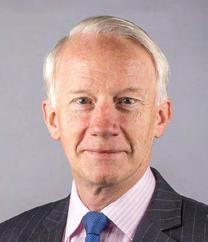
Stephen Dalton | Chair
Throughout 2025 ArtHouse Jersey has helped deliver real cultural impact across the Island.
Audiences & public impact
Bringing art into Jersey's everyday life
Actively engaged over
70,000
people in our work
22% first-time visitors to Capital House
of visitors had never visited an art gallery before 6% Our charity creating & sharing art with Islanders
Education & participation
Providing skills and inspiration for the next generation.
7,481
students engaged across schools and sites
68 workshops delivered across eight schools
These are young Islanders discovering creativity and confidence.
Artists & sector support
Enabling opportunities for professional artists to build careers and an environment for art to benefit everyone.
229
creatives benefited directly from funding from ArtHouse, with up to 216 further creatives also benefiting indirectly.
£290,902
This is investment in Jersey’s cultural future. paid directly to local creatives
£451,160 directly invested in the creative economy through commissions, grants, projects and paid work.
Profile & reach
Putting Jersey's creativity on the map locally and internationally
15,156
Together, these numbers tell a simple story. ArtHouse Jersey is helping creativity reach more people than ever before. student engagement hours delivered
62,000 website visits
274 press mentions in 2025
7 million impressions on social media
We would like to sincerely thank all of our partners who made our work possible in 2025. Your support, collaboration, and shared commitment have played a vital role in everything we achieved this year. Together, we've been able to expand our reach, deliver meaningful projects, and strengthen the arts ecosystem across Jersey. Wetruly value your ongoing partnership.































We present work to the public, we produce new work, we nurture artists, young people and our community. We build the systems, processes and relationships that enable this to happen.
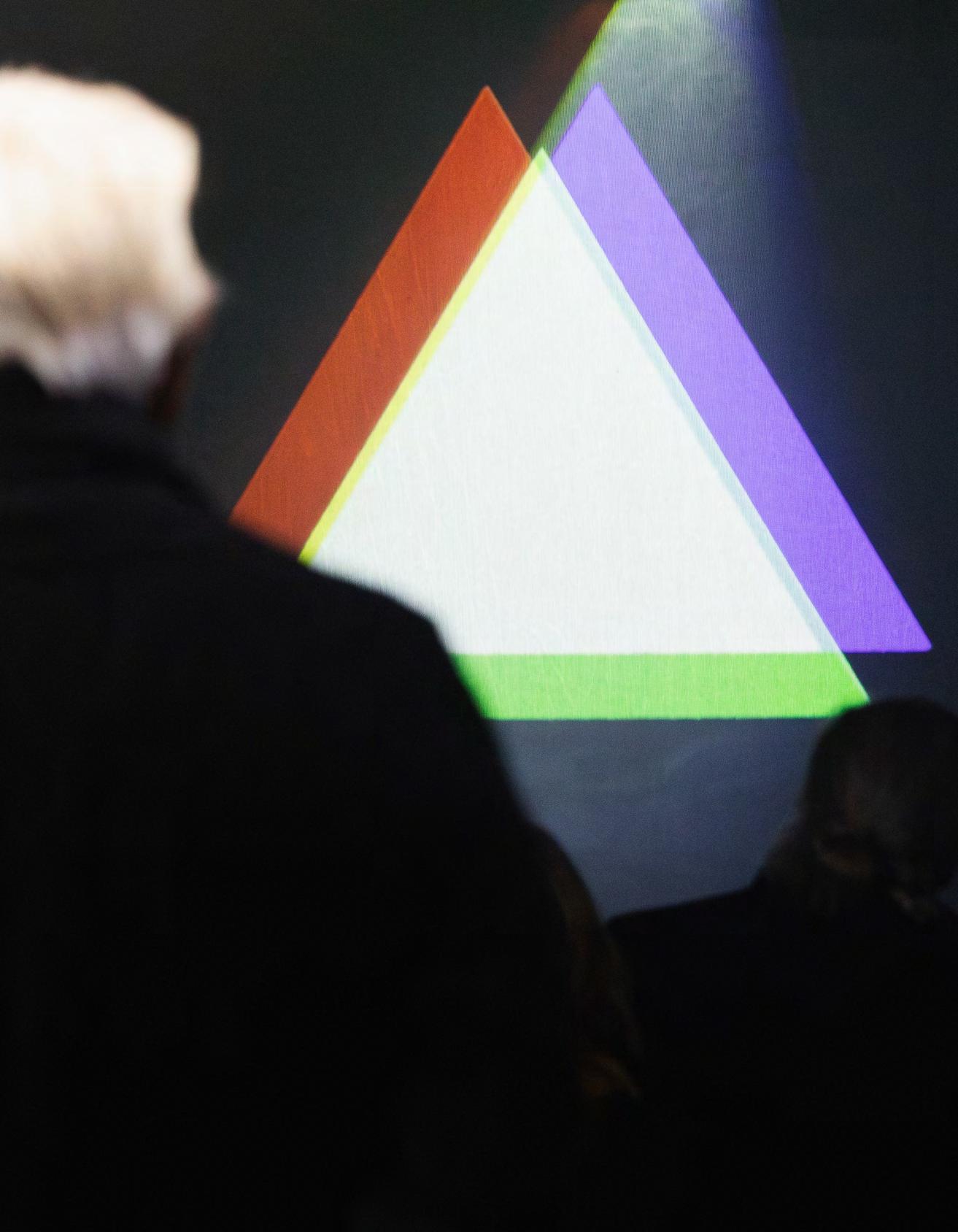
ArtHouse Jersey exists to serve the people of Jersey through the arts. We do so by making work that people can gather round, enjoy, walk into, argue with, be surprised by, or remember later. It means backing artists to create something ambitious that couldn’t be made anywhere but in Jersey, and it means keeping a cleareyed focus on ensuring that creativity is not only reserved for those who are already comfortable in arts spaces.
I tend to think in metaphors and I often find myself imagining our charity as some sort of kitchen. Not the polished, front of house, the working part behind it. Bustling, sometimes a bit chaotic, full of energy, packed with people with passion for what they do. Ingredients coming from different places, people bringing different skills, ideas, and ways of doing things. Some ingredients are combined in line with a plan (if I’m keeping the metaphor going, recipe), some are unique creations that come about as a result of curiosity, luck or instinct. When it works, things come together that could never have happened in isolation.
That’s why the scope of our work is so broad. We present work to the public, we produce new work, we nurture artists, young people and our community. We build the systems and processes and relationships that enable this to happen. In reality, these different aspects of our work are fluid and crossover significantly. Some of our most interesting work draws on different parts of what we do and brings things together in ways that are not always predictable. The Kupala Festival is a good example. It grew out of our Abundant Futures project, working with Jersey communities whose experiences and cultural traditions are not always recognised in Island life. Kupala emerged as a midsummer celebration at our headquarters, the Greve de Lecq Barracks. People came to make, listen, share food, take part in rituals, shelter from the rain, and spend time together, creating an event that felt shared, open and welcoming.
Our education work is in many ways the most important part of what we do, even if, because it’s working with young people, it isn’t always the most visible. If we as an Island are serious about our future, we have to be serious about creativity in schools. It’s not decoration around the edges of a child’s education, it’s key to how young people learn to think, solve problems, work with others, take risks, imagine and come up with plan B when things don’t work out as anticipated.
The 7,481 students we worked with this year, and the more than 15,000 hours of engagement delivered, represent a significant investment in the Island’s future workforce, civic life and wellbeing. And for anyone who questions the value of arts education, I’d point to the World Economic Forum, which has consistently referenced creative thinking as a distinctly human capability that will only grow in importance in the future.
Recent work looking at Jersey’s finance industry has explicitly recognised arts and culture as part of what makes the Island an attractive place to live, work and invest in. That reflects something many of us have understood for a long time, that culture is part of the serious work of building a strong economy.
Jersey cannot hope to attract talent, retain young people, look outwards or strengthen community connections without investing in culture. UK research has consistently shown that public investment in the arts generates a strong economic return through jobs, tourism & skills and alongside this sits a wider social return, from improved wellbeing and health outcomes, to a strong community and improved educational attainment.
This is why the Island’s commitment to spending on the arts matters so much. Public funding gives us the stability to plan properly, employ amazing people, support artists, work with schools, keep the vast majority of our programme free or low cost, and, crucially, provides us with a platform to fundraise and generate income through corporate partnerships, philanthropy and other sources. We are extremely grateful for that public trust and take our responsibility very seriously, placing great emphasis on ensuring that every pound is well spent.
I want to thank our Board for their guidance and challenge, and our staff team for the imagination, graft and care they bring to their roles every day. I also want to thank the artists, freelancers, volunteers, partners, sponsors, patrons, donors, foundations, and Government colleagues who made this year successful. ArtHouse Jersey’s name might be at the front of the project, but many hands are involved behind the scenes and we are very grateful to everybody who makes our work possible.
This report shows a strong year, but there’s always more we can do. We will continue to combine ingredients and come up with something uniquely Jersey, and we will continue to invite Islanders in, whether they already know the arts are for them or are still to find out.

Tom Dingle | CEO
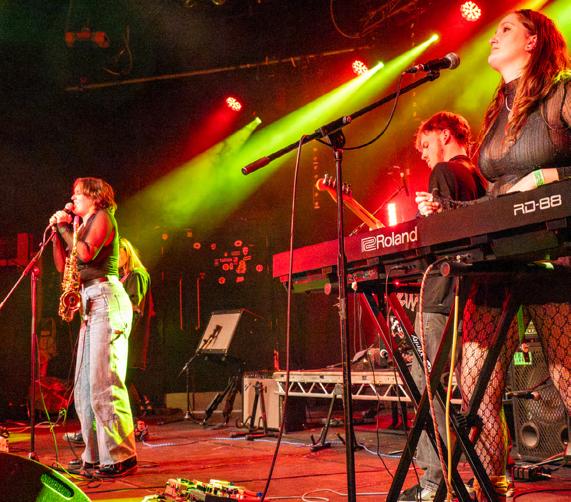
We seek to bring art into everyday Island life credit enabling artists to create ambitious work, and opening opportunities for people across Jersey to experience and participate in creativity.
Ultimately, the charity seeks to contribute to our community’s wellbeing and to ensure that we are able to do so, we developed our strategy with reference to the Government’s Performance Framework for sustainable wellbeing.
Our charity is a grant-funded organisation and as such, a strategic partner to Government. Although we’re only one of the numerous actors in the Island’s creative ecosystem, we know that we have an important role to play in seeking to ensure that everyone has the chance to experience and participate in art and in doing so, contributing to improving the long-term community, economic and environmental wellbeing of Islanders. In line with this, a key priority while curating our programme was to ensure that, wherever possible, experiences remained free to access. Recognising the potential implications of this priority for direct fundraising and income generation, we factored this into our business plan to maintain financial sustainability alongside our programme.
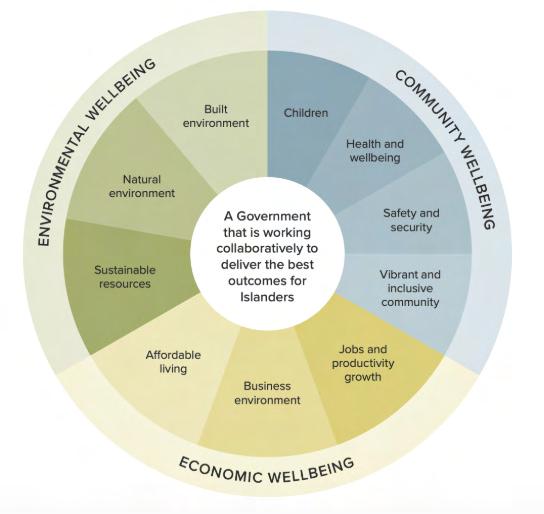
We have four strategic aims, which inform our objectives and priorities, our programme and our performance. No one project, exhibition, workshop, or public realm art installation sits under just one of our strategic aims; projects frequently encompass all four:
Present: Providing our community with access to compelling and diverse art.
Produce: Creating art that is relevant and ambitious, rooted in Jersey with an international outlook.
Nurture: Supporting the development of the creative ecosystem and broadening access to the arts.
Enable: Delivering a responsible business model that supports continual learning and the deepening of relationships between audiences and art.
The charity is uniquely positioned to support creatives, foster the production of Jersey-relevant projects, and make these initiatives accessible to Islanders. Our strategy provides a solid foundation and the flexibility needed to curate a successful arts programme that serves our community.
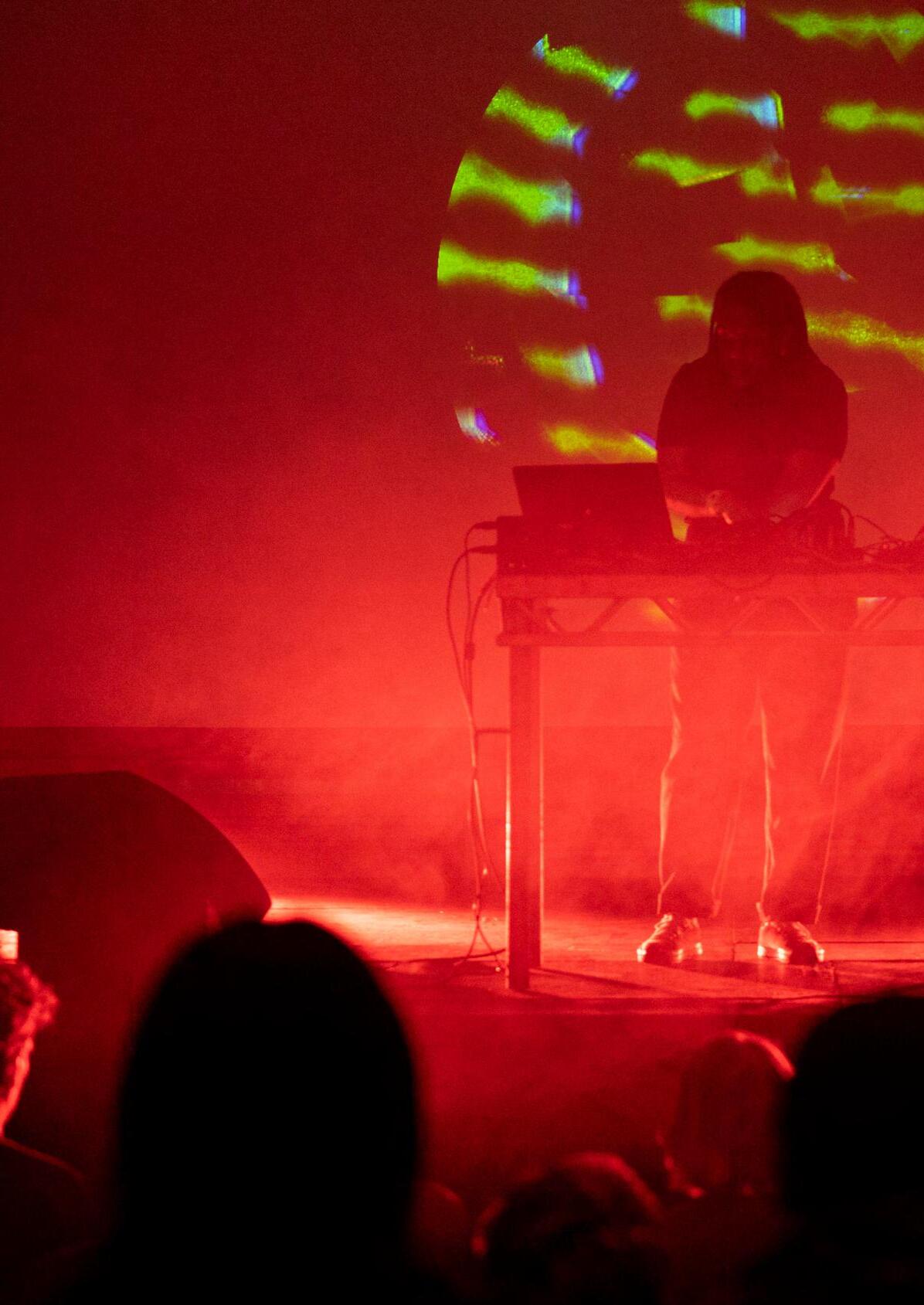
We measure our performance quantitatively and qualitatively to ensure that we understand the impact our work has across our Island community.
Our key performance indicators are divided into four categories, present, produce, nurture and enable.
We focused on achieving 16 objectives throughout the year
4
Number of key performance indicators we track
Percentage of our year-end targets achieved
63 94%
Providing our community and other audiences with access to compelling and diverse art.
Objective Performance
To present accessible work that engages a broad cross section of our Island community, removing barriers to access.
4 out of 5 KPIs delivered
We had significant success in delivering accessible work at scale and engaging a broad cross-section of the Island community. Public realm programming was a particular highlight, most notably Bubbletecture, which attracted over 42,000 visitors and demonstrated clear success in reaching new audiences, with nearly a third of surveyed attendees reporting no prior experience of public art. Additional projects such as Fish Wish, Art in the Arches, the Kupala Festival and Folk Festival further extended reach across a wide range of demographics, contributing to a substantial number of days where art was freely accessible in public spaces. Pleasingly, community-led work involving target groups reached over 7,600 people, evidencing both strong participation and visibility. In our Capital House gallery programme we did not have a blockbuster hit, but throughout the year we did successfully programme a diverse and artistically ambitious range of shows providing a platform for local artists to reach an audience.
To run a year-round programme at our own venues that offers the public a broad spectrum of artistic practice supporting our values of diversity, accessibility and artistic innovation.
3 out of 4 KPIs delivered
To work in partnership with other organisations to co-present work that would not be possible working in isolation.
2 out of 2 KPIs delivered
Delivery was strong in terms of programme breadth, artistic quality and diversity. A full year-round programme was delivered, including four major exhibitions alongside a range of shorter-run projects, performances and community initiatives, successfully presenting a broad spectrum of artistic practice. The balance between local and international artists was broadly maintained, and the pop-up exhibition programme at the Barracks exceeded expectations, attracting 1,650 visitors across eight weekends. Audience engagement across exhibitions and events remained solid overall, with over 7,200 adults attending indoor exhibitions and more than 2,200 tickets sold across 95 events. Qualitative feedback remained very strong, with increased dwell time and positive audience responses to the ambition and quality of the work presented. Overall, the objective was delivered in terms of programme richness, diversity and artistic innovation, but we plan to strengthen audience volume at our core venue alongside continued growth in wider programme reach.
We are proud of the high-value partnerships we developed both locally and internationally this year. We successfully co-presented work with key Jersey partners, most notably through our collaboration with Jersey Opera House on the development and forthcoming presentation of Held in the Tide (formerly Raise Your Voice, Jersey!), as well as with Jersey Arts Centre on Chrome Yellow, which also achieved a further life at the Edinburgh Fringe. These partnerships enabled the realisation and extension of ambitious work that would not have been possible independently. Internationally, we deepened relationships and delivered cross-border projects aligned with cultural diplomacy priorities, including the Puglia artist exchange, which culminated in presentations in Italy, Guernsey and Jersey. Overall, this reflects a confident and outward-facing approach, with partnerships significantly enhancing both the scale and impact of the programme.

Aim: Nurture
Strategic Aim: Enable
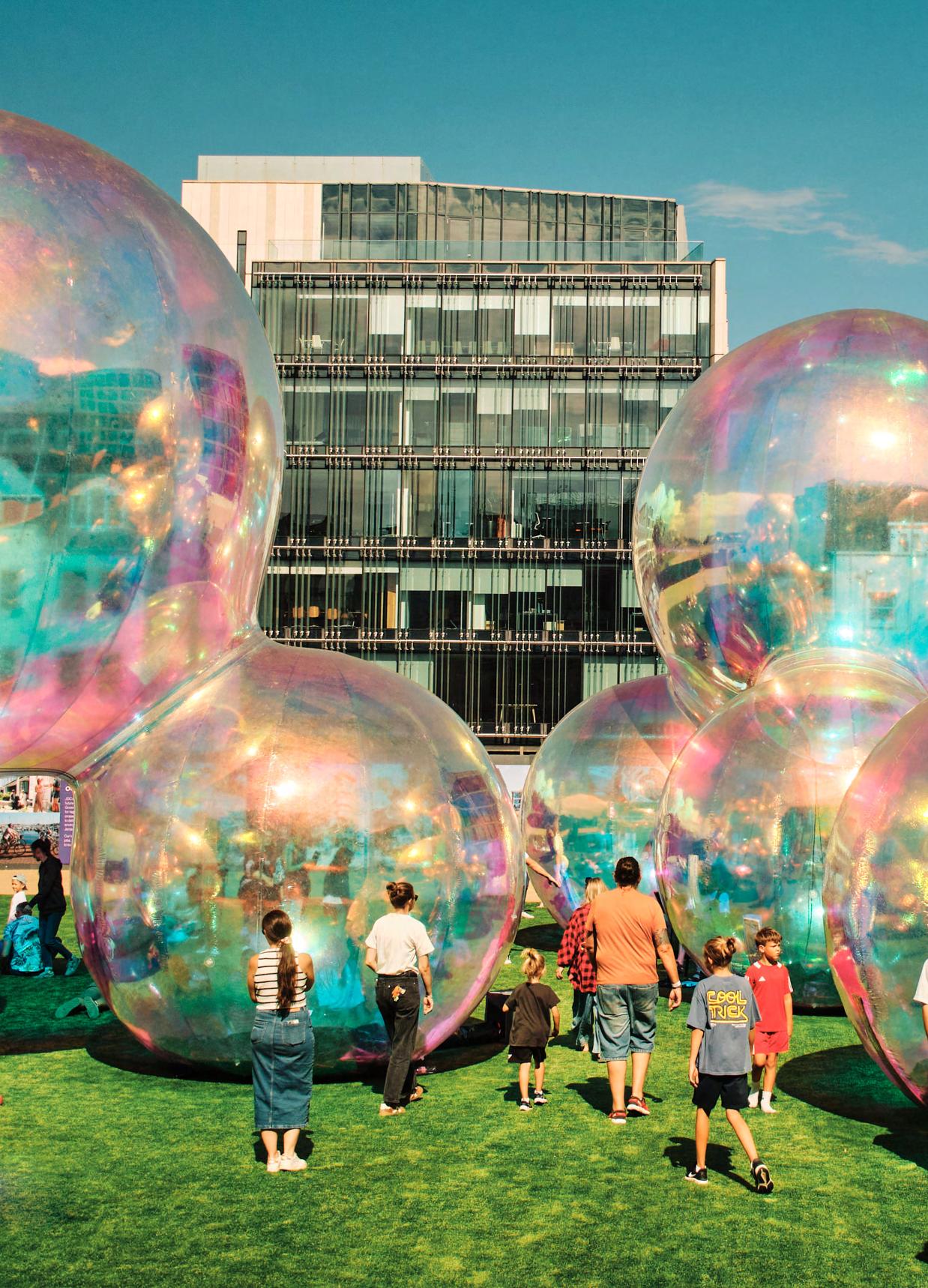
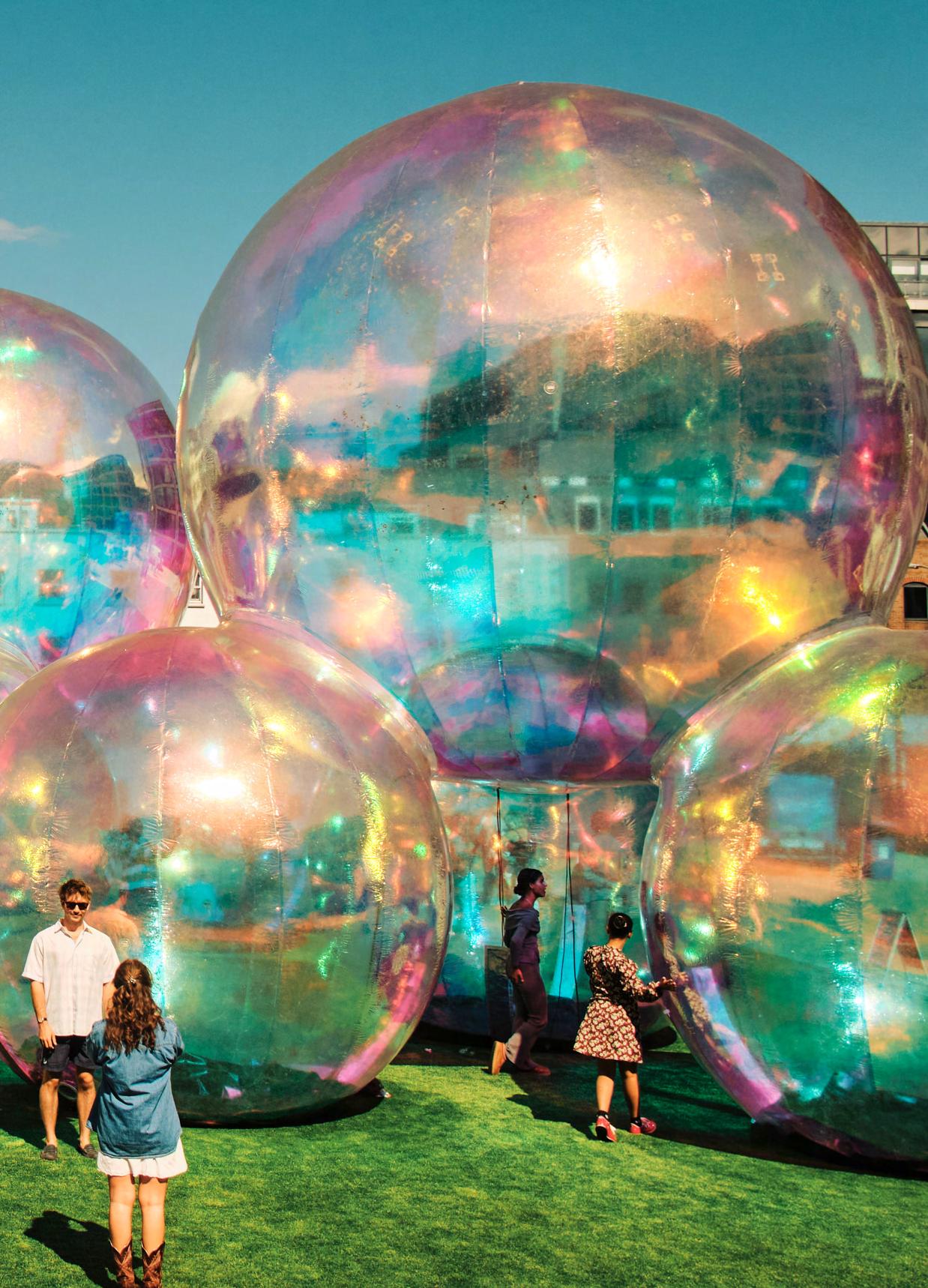
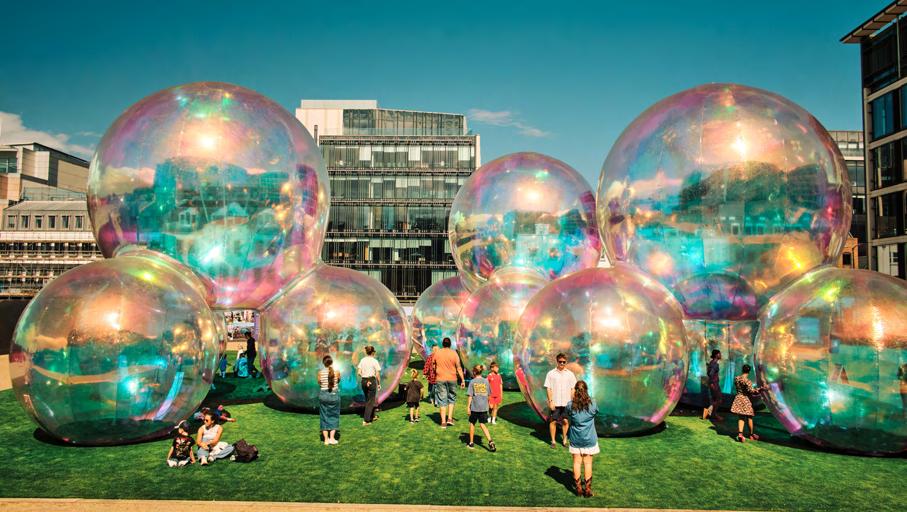
Bubbletecture was the Butterfield Public Art Series 2025 edition, and one of our most successful public realm projects to date, attracting 42,000 visitors during its three-week run. Created by internationally renowned artists Atelier Sisu and delivered in partnership with the Jersey Development Company at the IFC2 site, the installations transformed a prominent, central space into a vivid landscape of colour, bringing ambitious yet accessible contemporary art into the centre of St Helier.
The project demonstrated the power of highaccess public art to reach far beyond traditional gallery audiences. Survey responses showed that we welcomed a broad and varied audience, with strong representation from Islanders alongside a meaningful visitor cohort. The artwork was promoted as being free to visit and designed for all ages, with no prior cultural knowledge required. This translated into very significant numbers of visitors, with 37% of those surveyed reporting no prior contact with our projects.
The installation’s impact was further enhanced by a rich programme of 27 free events and activities, including live music, yoga, DJs sets, arts & crafts, and children’s entertainment, alongside performances of a newly commissioned dance work by Ballet d’Jerri. These events added energy and variety, helping deepen participation while preserving the openness of the experience.
Visitor feedback showed that the artwork's strongest effects were social and emotional. People described delight, playfulness, surprise and happiness, often in relation to sharing the experience with children, friends and family. The installation’s impact did not depend on specialist art knowledge. Instead, it was the simple pleasure of seeing a public space animated in an unexpected and creative way.
Bubbletecture was an opportunity for the charity to present ambitious work of international quality in a way that felt welcoming, memorable and connected to everyday Island life. It generated exceptionally strong word-of-mouth, created shared moments of enjoyment at scale and acted as a gateway to the wider programme. Alongside gallery-based and community-based work, projects of this kind are central to building a vibrant and inclusive creative culture for Jersey. It was only made possible through the generous support of the Bank of Butterfield, whose ongoing commitment enables ArtHouse Jersey to present work of this scale and ambition in the public realm.
We asked visitors what they enjoyed most and they said:
“The fact that it’s in town and easy to reach”
“The diverse and inclusive eventsgood for the community”
“Colours, shapes and watching the children run around and have fun”
“Playing hide and seek with grandchildren”
“Great for taking pictures, great space for kids to play, love seeing them lit up at night, really enjoyed the yoga and ballet on the weekend”
“From the outset, my experience working with ArtHouse Jersey was hugely positive.
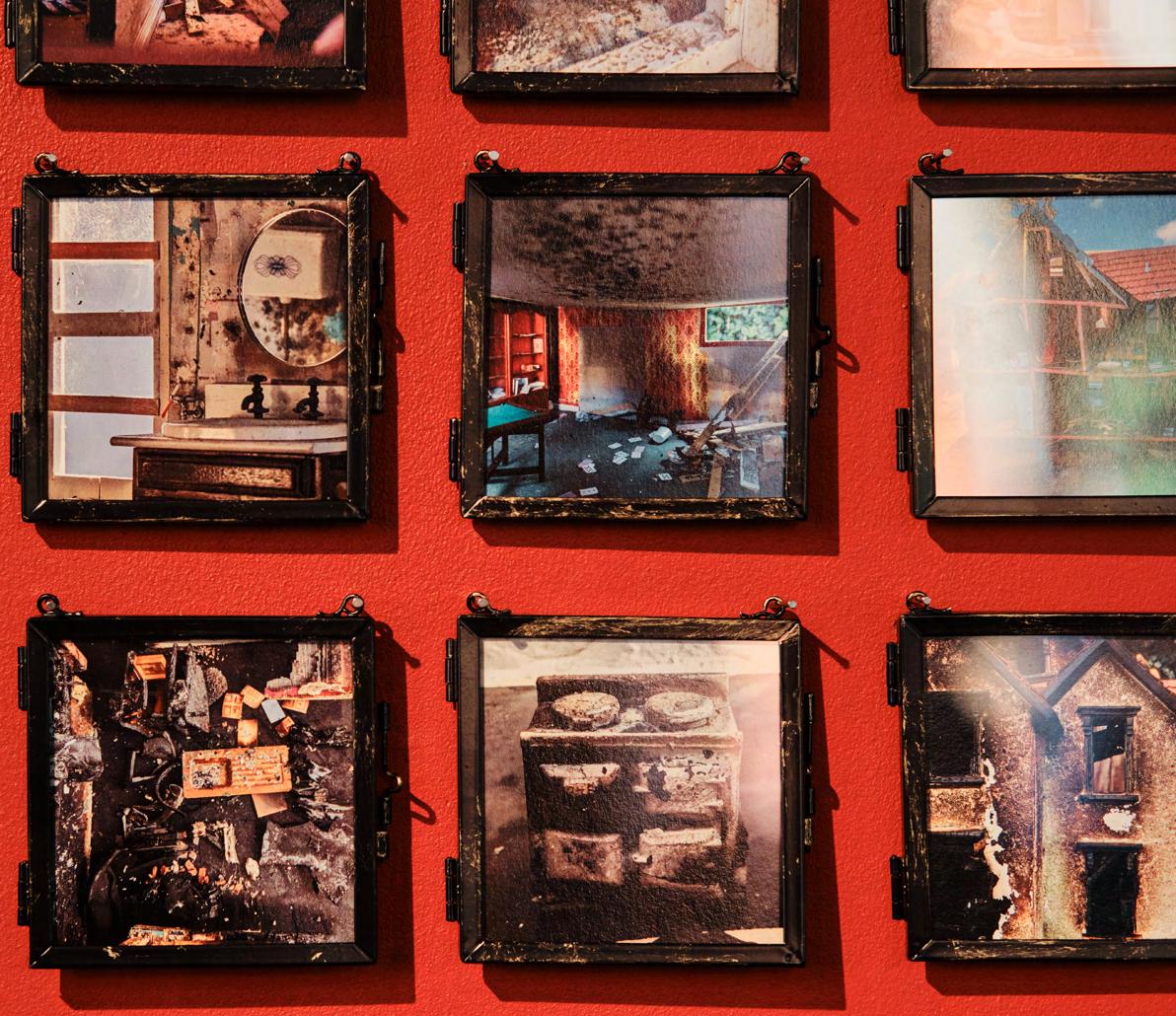
I first reached out in early 2023 after seeing the Paul John Kilshaw exhibition at Capital House, sharing images of my abstract expressionist paintings and hoping for the opportunity to develop a solo, site-specific body of work. What followed was a process that allowed the idea to evolve organically, moving away from abstraction towards what eventually became Fallowfield. That evolution felt natural, shaped by curiosity, dialogue and the freedom to explore.
Time, funding and trust were the foundations that made the project what it was. From my initial contact in January 2023 to the exhibition in summer 2025, I was able to develop the work slowly and thoughtfully. The financial support enabled me to make ambitious work and realise the project just as I had imagined it. Just as importantly, being able to show in Capital House was fantastic, rooting the work in a gallery it was specifically designed for.
What truly elevated the experience, however, was the people. The ArtHouse Jersey team brought skill, care and an extraordinary attention to detail
Strategic Aim: Present
Strategic Aim: Produce
Strategic Aim: Nurture
Strategic Aim: Enable
at every stage. James, Katherine, Nicole, JP, Carrie, Rosanna, Amy, Rob (the van man), Project Trident Nicole - everyone was so supportive. Their insight and problemsolving strengthened the final result in ways I could not have achieved alone.
The wider programme, including events, stewards, and free public access, created an environment where audiences could fully engage. Seeing visitors return multiple times, discovering new layers with each visit, was the most rewarding outcome. I felt involved at every stage of the journey, and it remains one of the most meaningful and creatively fulfilling projects I have ever undertaken.”
Clare Ormsby, Artist
• 1,062 people visited Fallowfield, with 20% of these international visitors.
• 28% surveyed were first-time visitors to ArtHouse Jersey exhibitions and events.
• 100 visitors utilised our descriptive audio tour, offering an inclusive deep-dive for both visually impaired guests and curious explorers.
Strategic Aim: Present
Strategic Aim: Produce
Strategic Aim: Nurture
Strategic Aim: Enable
“I haven’t been out like this in years.”
“It made me feel part of something again.”
“Uplifting, joyful, and full of warmth.”
Bringing culture to the heart of every parish.
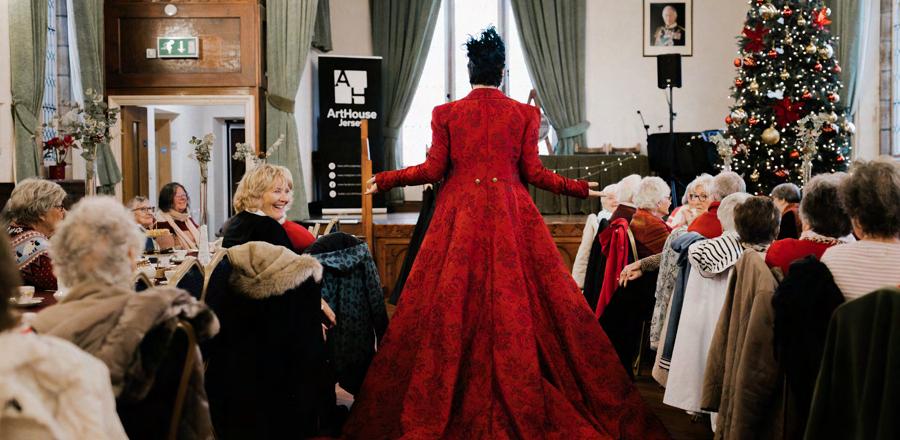
Cake & Cabaret is a clear expression of our ‘Present’ aim: providing our community with access to compelling and diverse art. At a time when many older parishioners face increasing isolation, particularly during the winter months, this project reimagines how and where culture can be experienced. By transforming parish halls across Jersey into welcoming cabaret venues, it sought to remove barriers to access and placed artistic excellence at the heart of community life.
Familiar civic spaces became places of music, laughter, and shared experience. Rather than expecting audiences to travel to traditional venues, Cake & Cabaret met people where they already felt comfortable, creating an environment rooted in hospitality and connection, at a time of day best suited to those attending.
The artistic collaboration between Adam Perchard and Georgi Mottram blended opera, musical theatre, and storytelling with humour and skill. The shows were commissioned and produced specifically for these audiences, with each event designed to feel personal, distinctive, and meaningful.
Evaluation findings demonstrate that the project’s impact was deeply felt. Parishioners reported feeling welcomed, uplifted and more connected, with many making new friends or being reunited with old acquaintances for the first time in years. For some, Cake & Cabaret offered a rare opportunity to leave home and participate in a shared cultural moment, for others it provided a renewed sense of confidence or belonging. The feedback highlights the powerful role that accessible cultural provision can play in supporting wellbeing and strengthening social bonds.
While the project was highly successful, it also provided valuable learning for future delivery. Touring across ten parish halls introduced logistical complexity, offering valuable learning for future iterations of the programme. The personalised booking approach, while important for accessibility, was resource intensive, and transport remained a barrier for some, particularly those without companions, suggesting scope to explore coordinated solutions.
At the same time, Cake & Cabaret demonstrated the strength of partnership and collective effort. Collaboration with Parish teams and volunteers enabled the attendance of 350 people. With a total delivery value of £19,800, comprising both direct project expenditure and significant in-house planning, production and delivery, the programme represents a strong return on investment. It was only possible thanks to the generous £12,000 support from Jersey Freemasons, whose funding underpinned the project and ensured it could remain free and accessible to those who benefit most.
• 10 parish halls transformed into live performance venues across the Island.
• 350 parishioners attended.
• 85% spoke with someone new during the event.
• Eight care homes engaged.
• 4.9 / 5 average enjoyment rating.
• Nearly 90% of attendees want more events like this in their parish.

Creating art that is compelling, relevant and ambitious, rooted in Jersey with an international outlook.
Objective Performance
To produce work that develops an artistic and organisational personality that is of this place, yet connected to and engaged with the wider world, welcoming international artists to our shores to feature in our programme.
4/4 KPIs delivered
To keep our programme dynamic, balanced and relevant, offer an environment that enables experimentation and artistic risk.
1/1 KPIs delivered
To work in partnership with other arts organisations and to pursue new co-production possibilities.
1/1 KPIs delivered
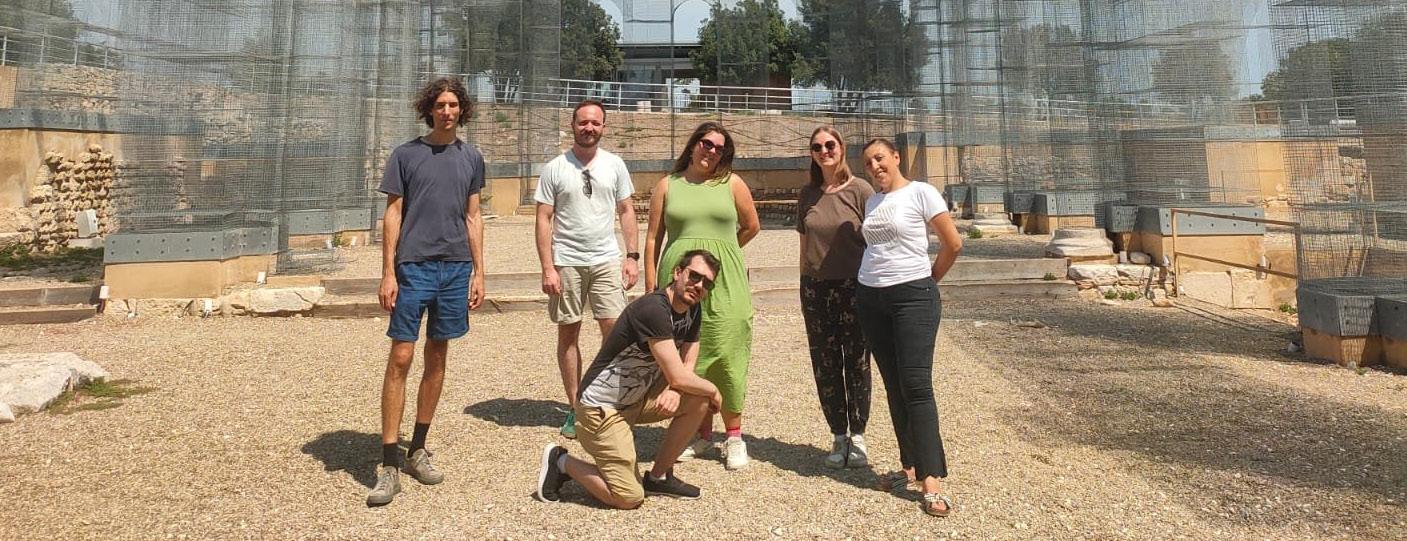
We are pleased with delivery across key measures and can evidence a clear articulation of an artistic identity that is both locally rooted and internationally connected. We exceeded our targets for engaging international artists, welcoming 89 visiting artists who contributed over 2,900 hours of research and development and delivered 20 public presentations. Alongside this, we produced and commissioned a wide range of work grounded in Jersey’s stories, landscapes and communities, including projects such as Structures & Memory linked to Liberation 80, environmental themes and communityled initiatives. Partnerships with non-arts organisations and civic bodies further strengthened the relevance of our programme, ensuring that the work produced was connected to lived experience on the Island while remaining outward-looking. Investment and commissioning demonstrated a confident, development-led approach, positioning ArtHouse Jersey as a place where ambitious ideas are generated and tested. The charity further developed a distinctive and maturing artistic voice, successfully combining local relevance with global engagement.
There is clear evidence that our programme actively supported creative experimentation. We delivered research and development activity across more than 15 projects and worked with a wide range of artists and partners to test new ideas across disciplines. These included international residencies, cross-border exchanges and early-stage commissions, creating a dynamic pipeline of work that will feed into future presentation. This work contributes to a healthy and forward-looking programme, where risk-taking and creative exploration are not only enabled but central to how we operate.
We co-produced multiple projects with organisations both on and off the Island, including the Puglia–Channel Islands artist exchange, the Channel Islands Contemporary Art Show with Art for Guernsey and collaborations linked to the Edinburgh Fringe. These partnerships enabled the development and presentation of ambitious work that extended beyond our own capacity, while also strengthening relationships with key cultural partners locally, nationally and internationally. The breadth of activity demonstrates a proactive approach to collaboration, with co-production embedded as a core delivery model.
Strategic
In late 2025, ArtHouse Jersey delivered Memory Bar, a scaled evolution of our Society of Cocktails series, produced annually with international artists Thomas Buckley and Kate Phillips, that boldly challenges the traditional boundaries of the gallery. This ambitious 2025 commission was designed to alchemise local identity within a reimagined and innovative sensory setting, and in doing so turn personal recollections into a shared, communal moment for new audiences to enjoy. The high-concept production fused mixology, scent, sound, light and tactile artworks, representing memories told by Islanders earlier in the year, providing a platform for meaningful, unconventional storytelling, bringing fresh perspectives and connection to the community. The model for this project allowed us to support both artistic risk and deliver work rooted in Jersey, while attracting new-to-art audiences.
The initiative functioned as a powerful vehicle for both cultural currency and commercial sustainability, achieving an unprecedented fourfold increase in audience reach. By positioning contemporary art at the intersection of the nighttime economy, Memory Bar successfully engaged a mainstream demographic that rarely interacts with traditional arts venues, hosting 1,005 guests and reaching 83 percent of ticket capacity. This broadening of the audience base translated into significant revenue generation of £43,016, which significantly helped to offset the research, development and delivery costs of the production. The unique and experiential nature of the event also sustained vital relationships with corporate partners, reinforcing the reputation of ArtHouse Jersey as a leader in delivering highimpact, original cultural content that resonates with both the community and the commercial sector.
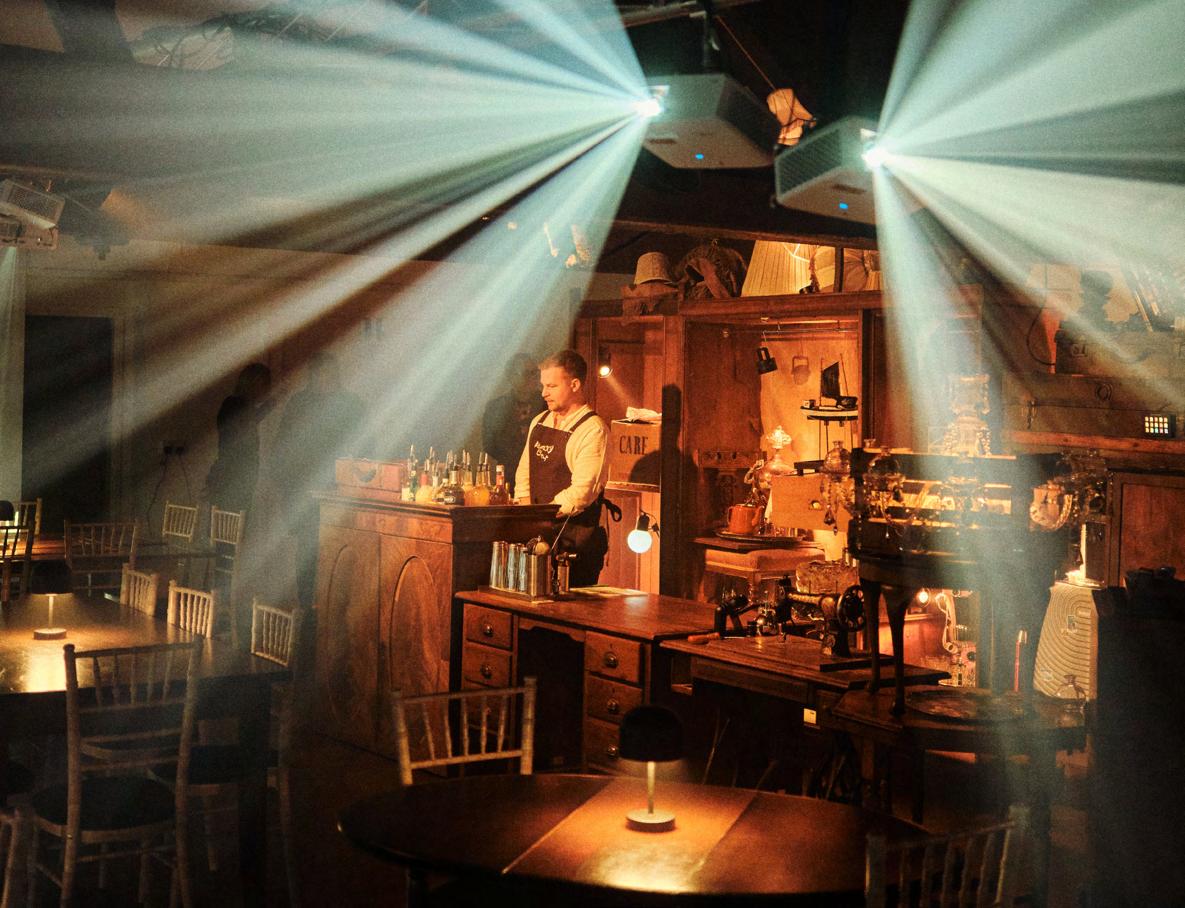
12 bespoke, sensory artworks created as immersive memorytellings. 12
The audience said:
1005
1,005 participants across thirteen shows.
Attracted a mix of immersive experience fans and new audiences seeking an unusual social night in town.
"Like stepping into a story with each sip."
-"A sense explosion... elegance infused memories."
"Dream-like wonder. The atmosphere of discovery was magical."
"Unique, thoughtful, and moving. How it all worked together –drinks, props, sounds, lights - was incredible."
Investing in Jersey artists with global potential. Two projects that exemplify a growing confidence in both the scale and distinctiveness of ArtHouse Jersey’s performing arts offer are Witches, Britches & B*tches: A mezzo life for me by Georgia Mae Bishop (hereafter referred to as Witches) and Glampires by Adam Perchard & Rose Lewenstein. Together, they demonstrate a confident and strategic approach to developing work at different stages of its lifecycle. From early-stage incubation to audience-led programme building, these projects show us championing local artists and ideas, creating experiences that resonate deeply with audiences.
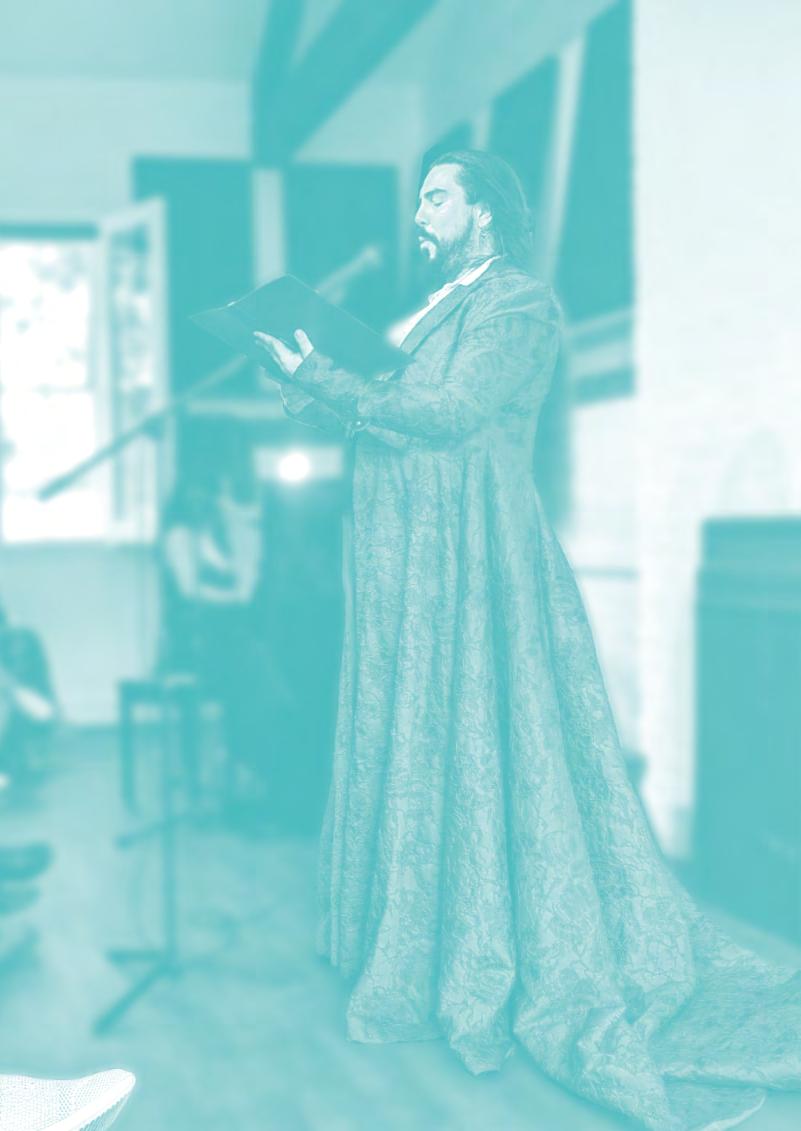
Blending satire, cabaret, and contemporary performance, Glampires began as a residency at ArtHouse Jersey’s Grève de Lecq Barracks. We invested in dedicated development time to evolve the work’s lyrical and compositional language. The project is now moving towards securing producing and commissioning partners, signalling a clear pathway from incubation to future presentation. This process not only strengthened the work itself but also built capacity within the local creative community, supporting artists to develop their practice within a professional and collaborative framework.
In contrast, Witches reflects a responsive and audience-led approach to programming. Originally curated in 2024 and performed to a sold-out audience, the work returned in 2025 in response to clear demand and as part of a wider strategic aim to build audiences for contemporary vocal performance through Raise Your Voice, Jersey!. Featuring Jersey-born mezzo-soprano Georgia Mae Bishop and pianist Collin Shay, the project was originally developed with Ashley Beauchamp. The show combines opera, musical theatre, and pop with personal narrative, offering insight into the realities of a career in opera. Audience feedback highlighted the show’s warmth, humour, and accessibility, alongside a strong appreciation for the versatility and skill required to move between genres.
Both projects reflect a commitment to accessibility without compromising artistic integrity. Glampires invited audiences into the development process, offering a sense of discovery and investment in new work, while Witches created an intimate and welcoming environment that broadened perceptions of classical performance. Both Glampires and Witches have secured UK performance dates in 2026 at Crazy Coqs and Brighton Fringe respectively.
Strategic Aim: Present
Strategic Aim: Produce
Strategic Aim: Nurture
Strategic Aim: Enable
These works also highlight the value of producing as a sustained relationship rather than a single moment of presentation. Through residencies, returns, and iterative development, ArtHouse Jersey is building a pipeline that supports artists over time, enabling ideas to be tested, refined, and reimagined in dialogue with audiences. This approach is strengthened by structured feedback and evaluation, ensuring that learning is embedded and that projects are positioned for future touring, partnership, and investment. Together, and through sustained producing support from ArtHouse Jersey, these projects reflect a producing model that is both deeply rooted in Jersey while actively building pathways beyond it: one that champions Jersey-based artists while positioning the work for national and international touring opportunities.
“Innovative, exciting, and full of potential" on Glampires
“Warm, funny, and completely engaging” on Witches, Britches & B*tches
“A brilliant way to experience something new.”

New work in development, continuing into 2026. 73% of audiences want to see largerscale productions with local artists.
“An absolutely fab day.”
“Brilliant atmosphere and a nice balance of music.”
“The variety of acts meant there was something for everyone.”
“It was amazing to have such a grassroots event supported by ArtHouse Jersey.”
Sold-out performances driving return programming.
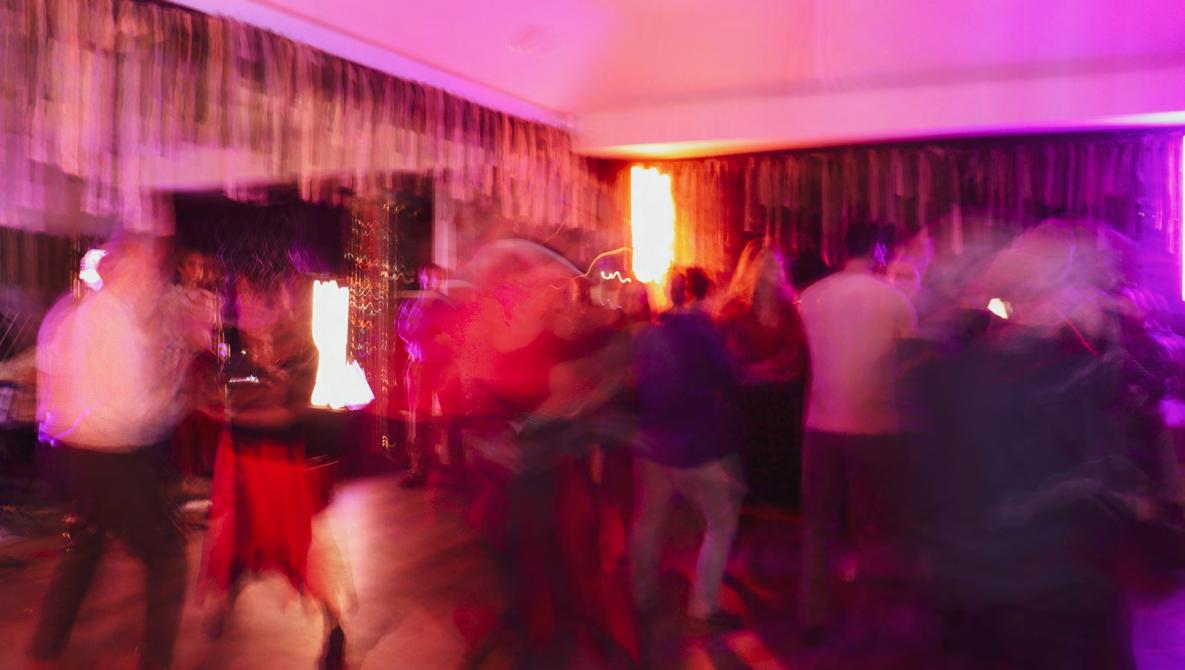
Jersey Folk Festival 2025 was developed in response to a clear community need: to create space for the Island’s folk musicians and audiences to gather, share, and participate in live music-making. Building on Jersey’s history of informal folk gatherings and past folklore festivals, the project reimagined this tradition for a contemporary context, transforming L’Auberge Du Nord into a vibrant hub of music, storytelling, and Island spirit. Curated in collaboration with local artists including Colin Lever, Jo Thorpe, and Tom Oxenham, the festival placed community voices at its centre, enabling artists and audiences to shape the experience together.
The festival combined a free daytime programme with a ticketed evening event. This approach enabled broad public access while generating some income. The daytime offer welcomed audiences of all ages to move between spaces, discover new artists and participate informally, while the evening culminated in a sold-out ceilidh and concert. This structure not only expanded reach but encouraged audiences to deepen their engagement over time.
Audience response was overwhelmingly positive, with over 400 people attending across the day and 106 attending the sold-out evening event. Feedback highlighted the quality and diversity of performances, the warmth of the atmosphere, and the strong sense of shared experience. Crucially, audiences reported discovering new artists and forms of music, demonstrating the festival’s role in building ongoing relationships between audiences and live performance.
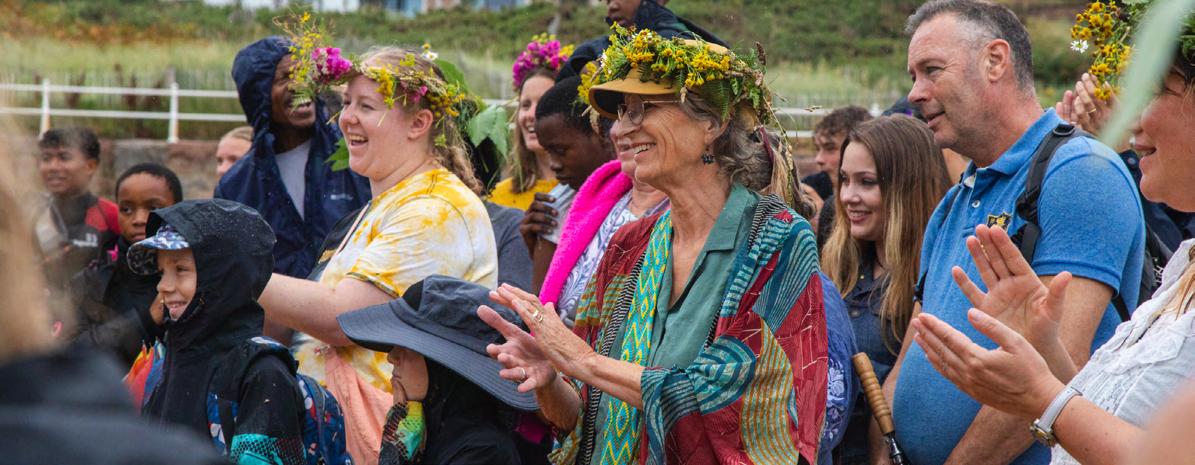
Strategic
Strategic
The partnership with Randalls was central to the project’s success. The venue’s character and history as a social space for music-making contributed to an environment that felt authentic, informal, and welcoming. While capacity pressures in certain areas highlighted the limits of the space at peak times, these challenges provided valuable learning for future iterations and informed conversations around potential development. Strategic
Delivered within a short planning period and alongside changes in venue management, the festival required a responsive and proactive production approach. ArtHouse Jersey led on planning, compliance, and delivery. The introduction of a waiting list for the evening event, while resourceintensive, enabled fair access and demonstrated a commitment to audience care and transparency. These processes contributed to a smooth and professionally managed event, building trust with both audiences and partners.
Notably, 58% of the project budget was allocated directly to artist fees, ensuring meaningful investment in the local creative community. Jersey Folk Festival 2025 demonstrates how artist-led, community-rooted programming can support continual learning while deepening relationships between audiences and art. By enabling participation, fostering discovery, and testing a sustainable delivery model, the project strengthened ArtHouse Jersey’s connection to new and existing audiences.
Our highlights:
• 500+ attendees across daytime and evening programmes.
• 106 tickets sold for the evening ceilidh (sold out).
• 58% of the budget paid directly to artists.
• 100% of respondents want the festival to return in 2026.
• 10+ local acts programmed across multiple spaces.
• New audiences reached beyond traditional arts settings.
Supporting the development of the creative ecosystem and broadening access to the arts.
To support artist development through financial investment, provision of space, professional advice and wider opportunities.
5/6 KPIs delivered
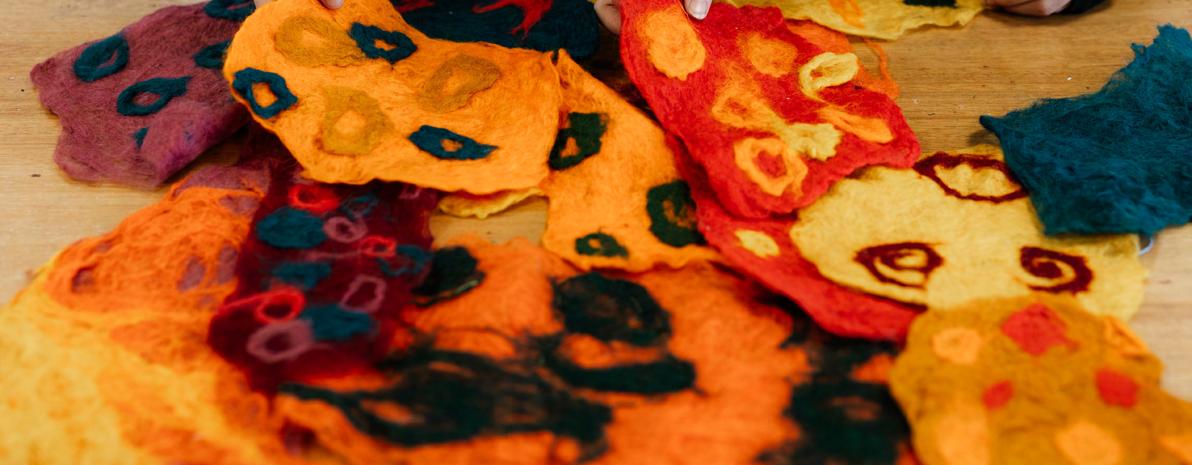
To broaden access to the arts ensuring that our work is representative of our Island community by removing barriers and putting in specific measures to ensure that we are able to serve those who stand to benefit the most.
3/3 KPIs delivered
To embed creativity in the curriculum and access to the arts across schools in partnership with CYPES.
5/5 KPIs delivered
Performance was strong overall, with £451,160 of financial investment and direct support to artists across commissions, paid work and development grants, reaching 445 creatives in total. Alongside this, artist development was supported through a wide range of opportunities including commissions, R&D activity and work in schools, with commissioned activity in education also meeting its forecast target.
Provision of space and wider support mechanisms were partially delivered.
Studio provision at our Greve de Lecq Barracks Headquarters was maintained for four resident artists and studio utilisation was strong, with 52% of bookings used for artistic, educational or community purposes. However, no progress was made on expanding affordable studio provision, with no suitable premises or partners identified.
Work to better understand and broaden representation within the artist cohort was completed, alongside the introduction of profiling processes that will strengthen future targeting.
We are pleased with the breadth and depth of engagement and partnership with a range of charitable organisations including Dementia Jersey, Ocean Culture Life and Jersey Cheshire Homes. Our community programmes significantly exceeded targets, engaging approximately 2,678 people and delivering over 4,600 hours of active participation. These included both intensive, small-group initiatives and larger-scale public-facing projects, ensuring a balance between depth of impact and wider reach. This work demonstrates a consistent focus on removing barriers and creating meaningful opportunities for those who stand to benefit most. Alongside programme delivery, we made steady progress in improving accessibility and inclusivity across our spaces and operations.
Artist-led activity in care settings and community environments further extended reach to underrepresented groups, including older people and those in supported living contexts. Taken together, this reflects a maturing and increasingly embedded approach to access, where partnership, programme design and operational practice are working together to broaden participation across the Island.
Across the year, 7,481 students were engaged through in-school and off-site activity, alongside 15,156 hours of engagement. Commissioned artist time in schools reaching 1,695 hours, seeing creative practice embedded directly into learning environments. Delivery was supported through a suite of projects including MAPS, Gem of the Sea and Paper Doves, which collectively integrated creativity into curriculum areas, supported teachers and expanded access to high-quality arts experiences for students across multiple schools. Alongside this, targeted work to develop teachers and artist-educators were successfully delivered, with eight artists working in partnership with eight schools and contributing to an expanded programme of workshops and in-school sessions. The MAPS programme and associated exhibition provided both professional development and a public platform for student work, reinforcing the link between education and wider cultural participation. Engagement with exhibitions and events also exceeded targets, with over 1,100 students attending ArtHouse Jersey sites. Taken together, this reflects a well-established and increasingly systemic approach to embedding creativity in education, with strong foundations in place for continued growth and deeper integration within the curriculum.
Throughout the year, we delivered arts programmes across Island schools completely free of charge to the end user.
The targeted, Island-wide education programme was designed to reposition art and creativity as core tools for learning across the curriculum. Developed in close consultation with CYPES policy officers, teachers and students to ensure that it responds directly to the needs and realities of schools in Jersey, it focuses on:
- Embedding artists in schools.
- Supporting and upskilling teachers through CPD.
- Co-designing curriculum-linked learning with schools.
- Providing free, high-quality teaching resources.
- Removing barriers to participation, particularly for schools and students with fewer resources.
- Offering moments of inspiration for students through engagement in our programme.
At the heart of the programme sit two flagship strands that operate across primary, secondary and specialist educational settings. They include direct work with students, professional development for teachers, public exhibitions of student work, and sustained partnerships with schools across the Island.
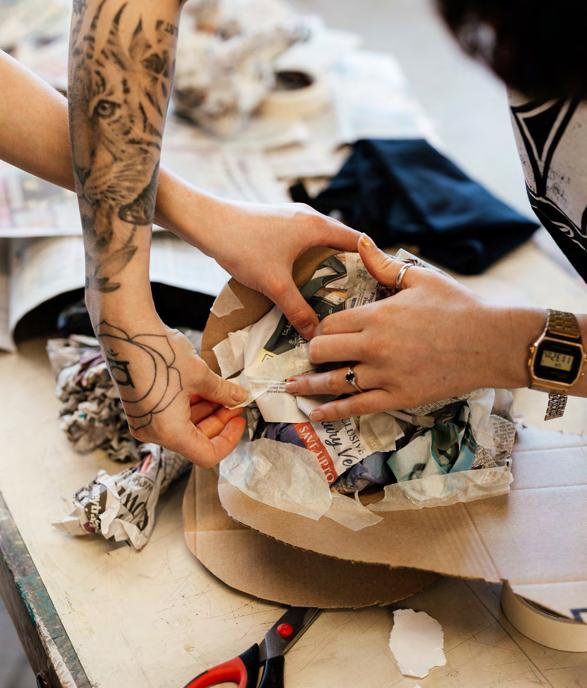
Making Art Partnerships with Schools (MAPS) Artists and teachers work together to co-design and deliver lessons that meet curriculum objectives while developing creativity, confidence and critical thinking; and
Gem of the Sea A free online teaching resource available to all Key Stage 2 and 3 groups, extending the impact of the programme beyond in-person delivery.
The overall programme has made a very real impact across schools.
• More than 70 teachers and educators took part in CPD and skills development workshops.
• Delivery of rich arts learning experiences to 7,481 students.
• More than 15,000 hours of student engagement in arts-based learning.
• Students worked with professional artists and artist-educators across a wide range of disciplines including photography, sculpture, painting, animation, printmaking, illustration and mixed media.
• Student work was celebrated through two public exhibitions, including shows at Capital House
• All services were provided free of charge, ensuring equitable access across schools
• The programme particularly supported schools and students from less affluent backgrounds and those with stretched resources.
By aligning closely with Jersey’s Arts Strategy and education priorities, the programme continues to demonstrate how sustained investment in arts education can deliver meaningful outcomes for students, teachers and the wider community. It has helped to:
• Strengthen young people’s creativity, confidence and engagement in learning.
• Support teachers with practical tools, resources and new approaches to curriculum delivery.
• Embed long-term cultural and educational impact beyond one-off projects.
• Reduce barriers to participation in arts education.
• Connect young people with professional artists and creative career pathways.
• Support young people to build a creative community and connect with others.
We provide grants to local professional artists of any discipline. We look to fund artists creating work that has the potential to reach and inspire audiences whilst also supporting them to achieve identified goals in their own practice. This includes learning or honing skills, developing new projects, building audience engagement and their professional networks.
In 2025 we received 59 applications requesting £156,943 investment. Following a thorough assessment process, 35 awards were made to a value of £55,050 that will benefit over 250 creatives, representing the full budget allocation available.
Strategic Aim: Present
Strategic Aim: Produce
Strategic Aim: Nurture
Strategic Aim:
In 2025 we received 59 applications requesting £156,943.

Following a thorough assessment process, 35 awards were made.
250 creatives will benefit with £55,050 in awards.
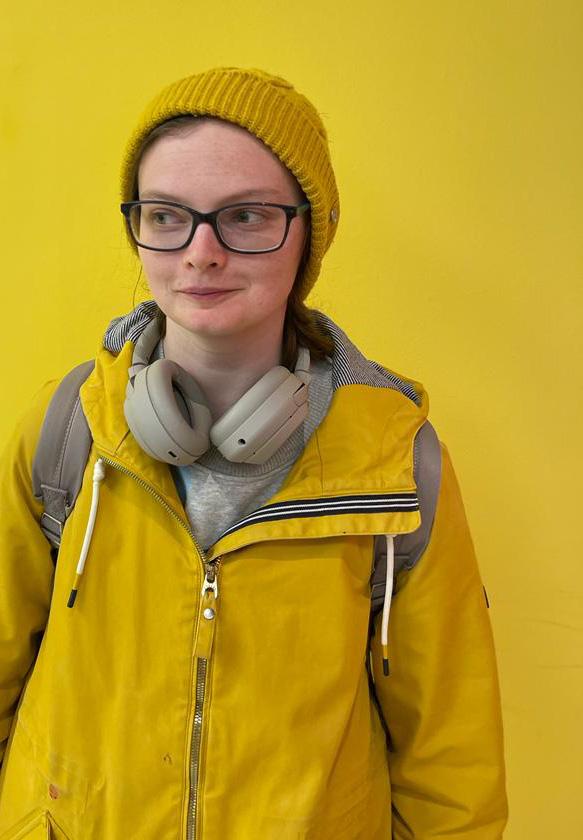
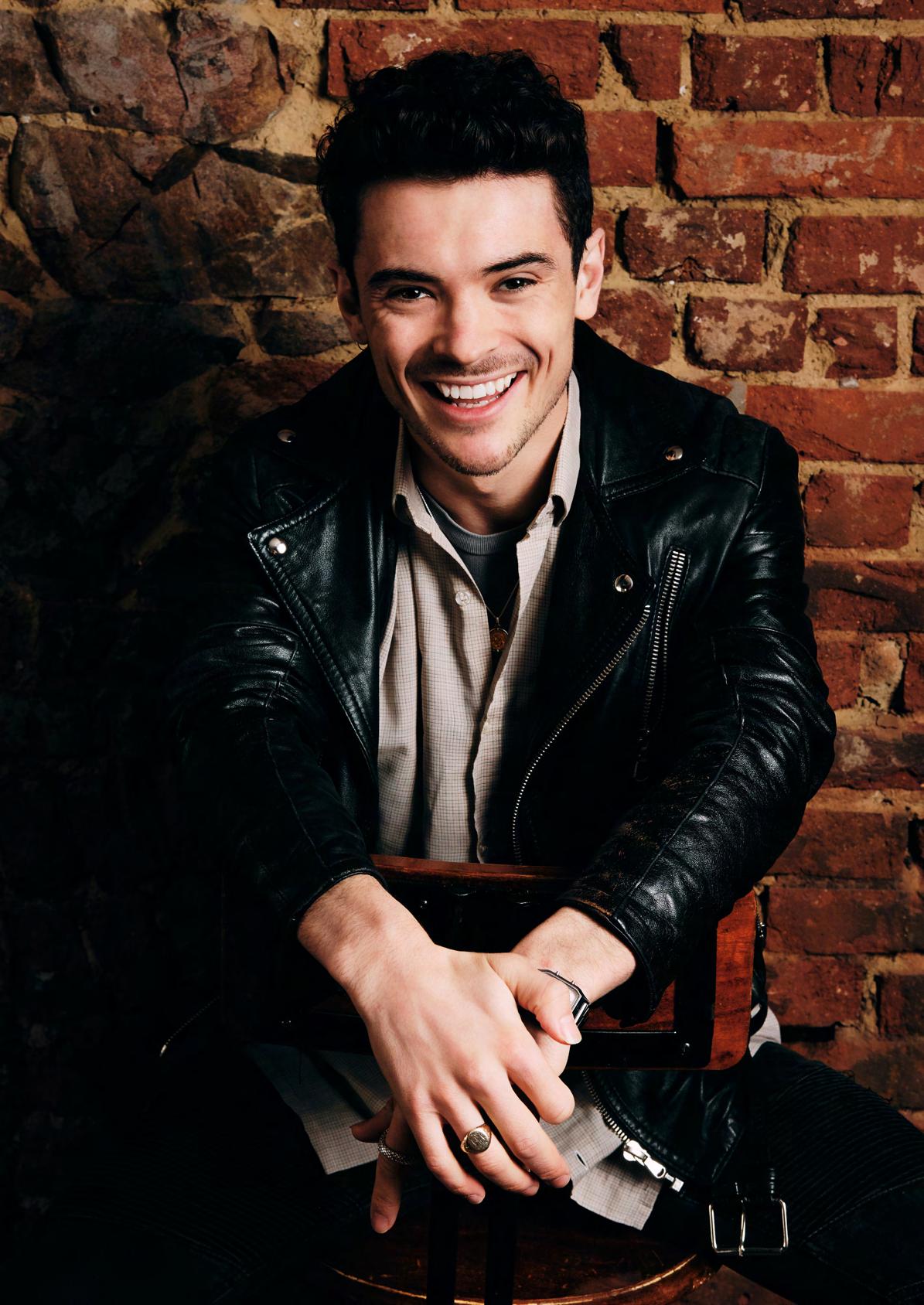
“ArtHouse Jersey's ethos as an organisation and everything they have taught me over the years is to harness local Jersey talent and steer it brightly into the future.”
Jonny Labey was awarded funding towards capture of the initial footage for his new film 'Gi', that explores masculinity, vulnerability, and personal reclamation.
It will be used as a proof of concept to secure further investment for the full production. He was awarded a grant in 2023 for his first short film ‘Swirl State’ and since then has established his own production company, developing original films based on personal life experiences.
Can you tell us a bit about yourself and your background with ArtHouse Jersey?
I'm a Jersey-born actor, dancer, and filmmaker based in Liverpool and have grown up alongside ArtHouse Jersey. From as young as I remember, ArtHouse Jersey has been the driving force for local artists, championing emerging and developing talent.
You were awarded a Development Grant for your first short film 'Swirl State' in 2023. Can you tell us about the experience of creating this?
Mad, mad, and madder! Firstly, I was so grateful to be awarded the grant in the first place, and as we worked our way through it, it was so incredible to know that it was on home soil, supported by the organisation that has been there since day one. It ended up being the most incredible experience of my career so far. It's really tough to fully back yourself as a creative, to take on something as huge as making a film, especially within such short pre-production time. Yes, it was terrifying and stressful, and all of
the things that make this industry seem strangely masochistic, but it was also hugely empowering— and if I say so myself, we absolutely smashed it! It had been a little while since I'd been on a set, and although I have a wealth of experience throughout my career, this was completely a new direction. As soon as we stepped onto set and got going with it, it just felt right!
Can you tell us more about this new project?
The story follows an amateur ballet dancer, Remy, and after an altercation, he stumbles upon a martial arts dojo. ArtHouse Jersey is funding all of the scenes set in the ballet studio, for which we will be bringing over some stars as well as auditioning some local ballet students. The project is one of my favourite things I've written and has a punchy British comedy style, inspired by my favourite all-time film, Billy Elliot.
How will the funding from ArtHouse Jersey help you to achieve your overall aims as an artist?
The funding support is absolutely crucial for developing as an artist; however, not only that, ArtHouse Jersey's ethos as an organisation and everything they have taught me over the years is to harness local Jersey talent and steer it brightly into the future. I feel like every new finding I have, every stone I overturn, feels like I need to share and hopefully inspire others to do the same. The importance of what it means to me to be able to translate my life experiences into films gives me hope that someone might watch them and not feel alone. ArtHouse Jersey support has meant that to me my entire life.
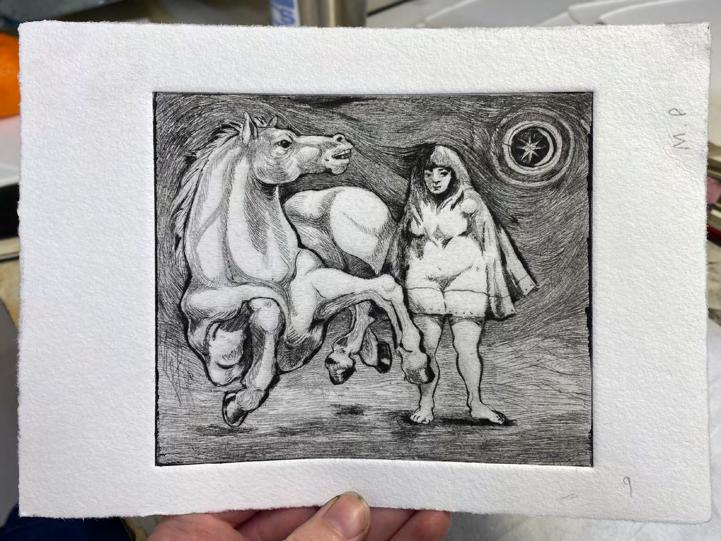
Minna Pemberton is a multidisciplinary artist with a background in illustration. She is looking to transition toward a fine art discipline with deeper conceptual communication and technical refinement.This three-month drawing course at the Royal Drawing School will provide the facilities, structure and high-level tuition that she needs to build her portfolio.
What can you share about your project you're developing with this grant?
I applied for a grant through ArtHouse Jersey to help fund an autumn term intensive course at The Royal Drawing School in London. This course provides an extremely dedicated level of teaching for 10 weeks, focussing on the skill of observational drawing. It provides a dedicated space for me to develop my practice in my three areas of interest: figure drawing, etching and narrative illustration.
What inspired this idea or direction in your creative practice?
Access to teaching is one of the most vital aspects to improving an artistic practice, and seemingly very hard to come by, even at university level. After graduating, I found that I had a very negative and obscured relationship with my artistic practice. I was searching for something that would provide me with
this teaching, specifically in the area of drawing and hands-on practices. Ultimately, funding for this course has provided me the space, time and teaching to do what it is that I love and improve at it. Which is an enormous privilege.
How does this project fit into your overall artistic journey?
My goal for this course is to redevelop my portfolio so that I can successfully apply to the Drawing Schools’ ‘Drawing Year’ in 2026. The Drawing Year is a scholarship that is offered entirely free to 35 applicants each year and provides students with free studio space in London, 15 months of teaching and options for teaching training and international residencies. ArtHouse Jersey’s grant is contributing towards this goal in such a beneficial way that is accelerating my artistic development.
How has this grant helped you? In ways which may not have been otherwise possible?
I feel so grateful to receive this grant. Not only is it a huge privilege financially, but It means so much to know I have endorsement from an organisation that sees potential in my practice and is willing to invest in my development. I have felt a huge shift in my creative outlook for the better since being in the environment of The Royal Drawing School. Knowing that this course is being supported by ArtHouse Jersey gives me so much freedom, confidence and determination to investigate what options are open to me in my future.
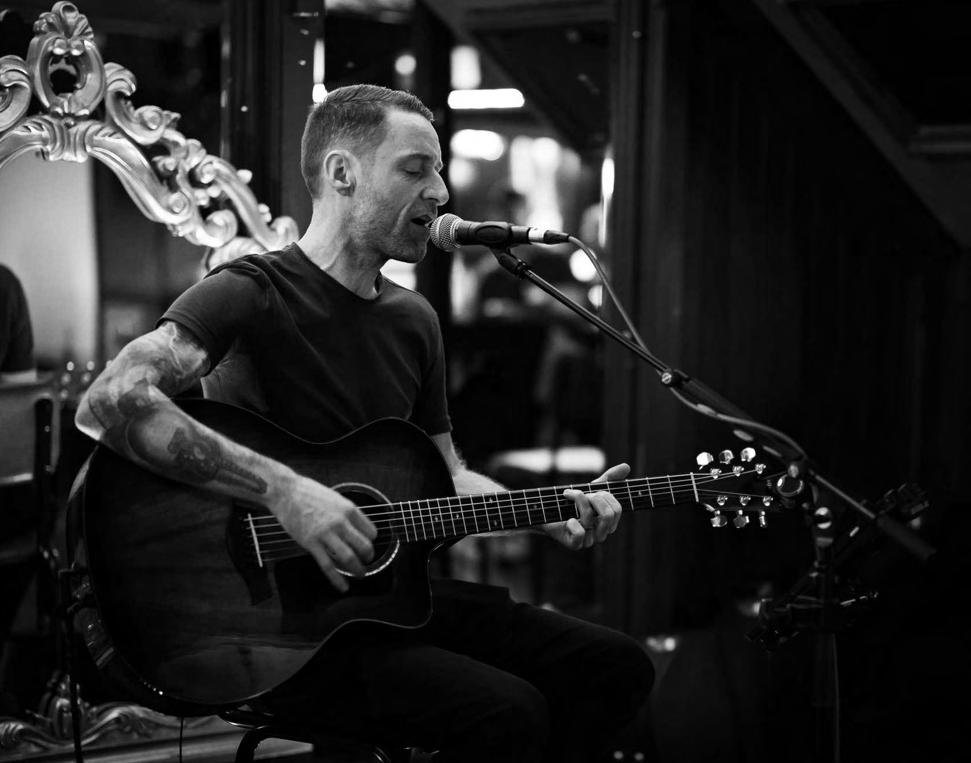
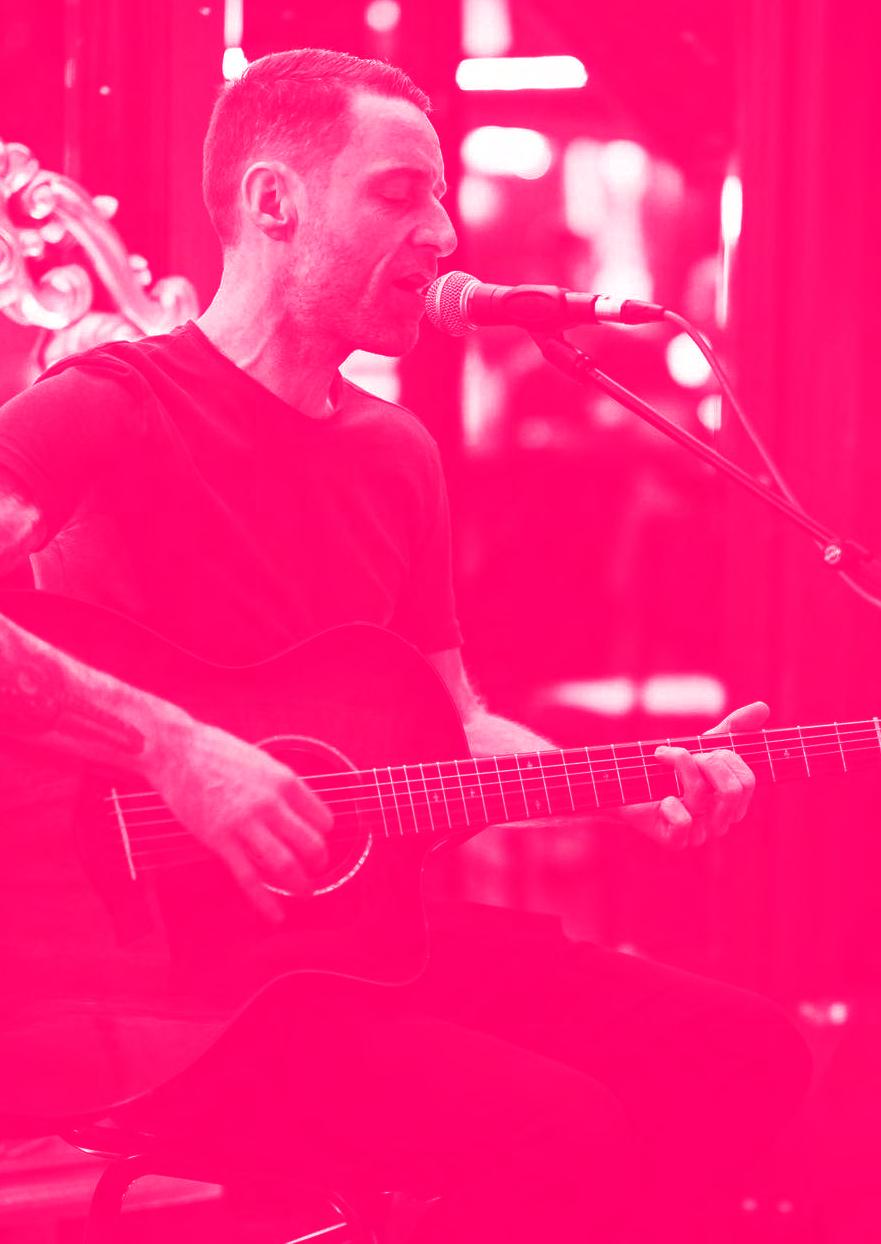
The Songwriters Showcase aims to give original music a sustainable platform in Jersey. They run monthly events showcasing different artists and were awarded funding to support a series of public showcases at the Liberation Square Amphitheatre in summer 2026 accompanied by their new album.
What can you share about your project you're developing with this grant?
We are putting on a series of free public events at the Amphitheatre at Liberation Square. Each event will showcase the talents of five local songwriters, each performing 20 mins of their own original songs.
What inspired this idea or direction in your creative practice?
I have long thought of The Amphitheatre as a great venue for music and it seemed like a natural step for the Songwriters Showcase to put on a show here and take original music to the public.
How does this project fit into your overall artistic journey?
The Songwriters Showcase gives a stage to the Island's best songwriters and we need more venues accepting original music. This will be a great advert for the incredible musicians Jersey has and will help whet people’s appetite for original music.
What impact do you hope this project will have on audiences?
By taking the show to the people, we gain a wider audience and get to show how good the songwriters in Jersey are. We can put original music in the ears of people who would not normally have the chance to go to gigs. Music is a great part of our culture and these shows will help enrich that.
How has this grant helped you? In ways which may not have been otherwise possible?
The support from ArtHouse Jersey is absolutely brilliant. The work they do to help local artists is what keeps culture thriving. This grant has helped with all of our logistics, from staging to permits and without ArtHouse Jersey it wouldn't have been possible.
Nurturing belonging through shared cultural experience.
“Welcoming, peaceful, and therapeutic.”
“A renewed sense of place, community, and heritage.”
“It made me feel more connected to Jersey.”
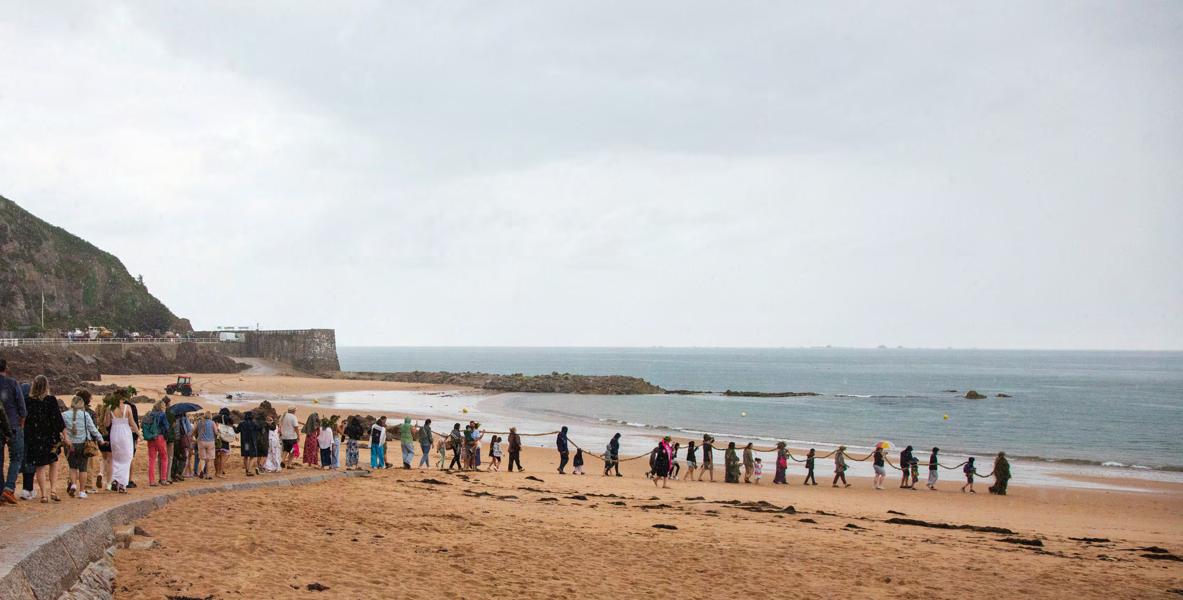
Abundant Futures embodies our commitment to nurturing a more inclusive, interconnected creative ecosystem in Jersey. Made possible through Spoor & Fisher’s sponsorship, the project brought together artists, researchers, and communities, the programme created space for shared exploration around belonging, ecology, and cultural identity.
Rooted in artist-led practice, the project prioritised participation, dialogue, and care, supporting creative development not only through production, but through meaningful engagement with people and place. Participants reported making new connections and deepening relationships, contributing to a strengthened sense of belonging among participants - a key measure of success for Abundant Futures. The majority of respondents reported a significant positive impact on their sense of connection to Jersey, with many expressing a desire to continue exploring creativity, heritage, and community through future events. Meanwhile, artists and facilitators built confidence in active engagement and cross-cultural collaboration. The project was underpinned by a wider programme of research and engagement. Central to this is our research partnership with Dr Mariana Pinto Leitão Pereira (University of York), whose work explores how migration shapes cultural heritage, belonging, and ways of knowing. Through interviews, stakeholder conversations, and embedded participation within the programme, Mariana began to build a nuanced picture of how people in Jersey understand locality, identity, and contribution to community life. This positions Abundant Futures as a leading example of how artist-led programmes can integrate research, participation, and cultural production to generate deeper social insight and long-term impact. This research has been vital in deepening the impact of the programme, ensuring that activity is not only participatory, but also reflective and responsive to lived experience. It asks critical questions about who gets to feel ‘local’, whose knowledge is recognised, and how migrant-led perspectives can shape the Island’s cultural future. In doing so, Abundant Futures moves beyond event-based engagement towards a model of practice that connects artistic work with social insight and long-term change.
Central to Abundant Futures was the Kupala Festival, a free, intergenerational celebration of midsummer that welcomed nearly 400 people to ArtHouse Jersey’s headquarters Grève de Lecq Barracks and the surrounding landscape. The festival combined craft, music, storytelling, and ritual, drawing on ancient Slavic traditions while responding to Jersey’s own ecology. Despite challenging weather conditions, the event thrived, with the elements becoming part of the experience and deepening connections between audiences, artists, and the environment. A core aim of Abundant Futures was to broaden access to the arts through low-barrier, participatory experiences, and the festival was designed as a free public event with multiple points of entry. Kupala invited audiences of all ages to actively shape their engagement: from hands-on making to shared rituals. In doing so it fostered meaningful cultural exchange and created a space where people felt both included and empowered to take part.
These outcomes demonstrate how participatory arts can act as a powerful tool for social cohesion, particularly when rooted in shared experience and cultural exchange. As Abundant Futures evolves, this research will be shared through the forthcoming report ‘What Does It Mean To Be Local In Jersey?’, opening dialogue with policymakers and the public alike. With continued support from partners including Spoor & Fisher, the project is actively shaping a more inclusive, connected, and resilient cultural landscape.
Our highlights:
• 400 participants gathered for a free, intergenerational cultural celebration.
• 100% of respondents said they would engage with future activity.
• The majority reported an increased sense of belonging to Jersey.
• Free, low-barrier access enabled participation across ages and backgrounds.
A responsible business model that supports continual learning and the deepening of relationships between audiences and art.
Objective Performance
To advocate for and develop understanding around the value of the arts for society.
4/4 KPIs delivered
To enable the achievement of our objectives through a range of funding sources.
1/2 KPIs delivered
To invest in and develop our team to establish a platform for exceptional performance.
5/5 KPIs delivered
To develop a learning culture throughout the organisation, building on what we learn from our monitoring and evaluation and to embed appropriate impact assessment tools across our programme of activities.
3/3 KPIs delivered
To prioritise communication that makes art accessible and available to the broadest possible audience, recognising the full spectrum of Jersey’s communities.
7/7 KPIs delivered
KPIs DELIVERED 31/32
We maintained structured, regular engagement with Government through quarterly meetings covering performance, strategy and sector-wide issues, while actively contributing to the development of shared understanding through KPI reporting and data-led insight. Our participation in the Creative Island Partnership (CAP) and wider sector forums strengthened coordination and collective voice across the arts landscape. In parallel, we engaged consistently with a broad range of stakeholders including policymakers, business leaders and community partners, positioning ArtHouse Jersey as a key advocate for the value of the arts in supporting social, cultural and economic outcomes for the Island.
Our fundraising efforts exceeded our target and demonstrated a robust and diversified funding model. Across five income streams, we generated £545,281 against a budgeted target of £483,128, outperforming expectations. This reflects sustained effort alongside a growing culture of innovation in income generation. This is only possible with the generous support of donors and corporate partners, for which we are very grateful. This demonstrates public funding as a platform to leverage additional support and strengthen resilience. The KPI that wasn’t delivered is related to engagement with Locate Jersey; we will be working with Government to see whether we can work with Locate Jersey in 2026 to build relations with potential high net worth donors who are passionate about the arts.
Key governance tools, including the Financial Management & Controls Manual, were reviewed, updated and implemented, with further iterations in development to reflect evolving practice and team feedback. Dedicated HR provision was maintained throughout the year, ensuring consistent support across the employee lifecycle, while staff appraisals and organisational development activity were used to identify training needs and support team development. The charity invested in its people and systems to underpin high performance.
Survey response rates reached over 10% of exhibition visitors, indicating good performance. Structured data collection, analysis and reporting processes were embedded, with regular sharing of insights to inform team and Board decision-making. This represents a maturing approach to evaluation, with strong foundations in place to further strengthen impact measurement and audience understanding.
Communications were effectively aligned with programme delivery, helping to increase visibility, articulate impact and support participation across a diverse range of audiences. This work also contributed to fundraising and stakeholder engagement, reinforcing the charity's profile and strengthening relationships with partners and supporters. Communications are increasingly embedded as a strategic function within the organisation.

To communicate the value and impact of our work, promoting understanding of our charitable status and contribution to the Island.
4/4 KPIs delivered
To provide strong foundations through the development and maintenance of appropriate organisational processes and governance arrangements.
8/8 KPIs delivered
Strong performance with consistent highlighting of the charity’s impact on the Island community, with significant content focused on public benefit and community impact. Relations built with sponsors and effective plans in place to celebrate their support for the charity. Effective support for apartment rentals and studio hires translating to positive occupancy performance.
Throughout the year, the Board maintained robust oversight through its committee structure, ensuring regular scrutiny of financial performance, risk management and organisational planning. The annual audit was completed and published in line with requirements, and core financial controls were reviewed and updated, reinforcing a strong and reliable operating framework. Governance was further strengthened through the development of Board and committee structures, alongside early work on succession planning, ensuring that the organisation remains well-led and appropriately skilled as it evolves. The Board also ensured that effective relationships with Government and key stakeholders were maintained, supporting transparency and alignment. Progress was made in areas that support longer-term organisational development, including sustainability.
Effectively communicating with our audiences and stakeholders is central to our work. It enables us to connect people with our programme, articulate the value of the arts in Jersey, and build long-lasting relationships with supporters, partners and communities. By communicating clearly and consistently, we build understanding, participation and support for the role the arts play in Jersey.
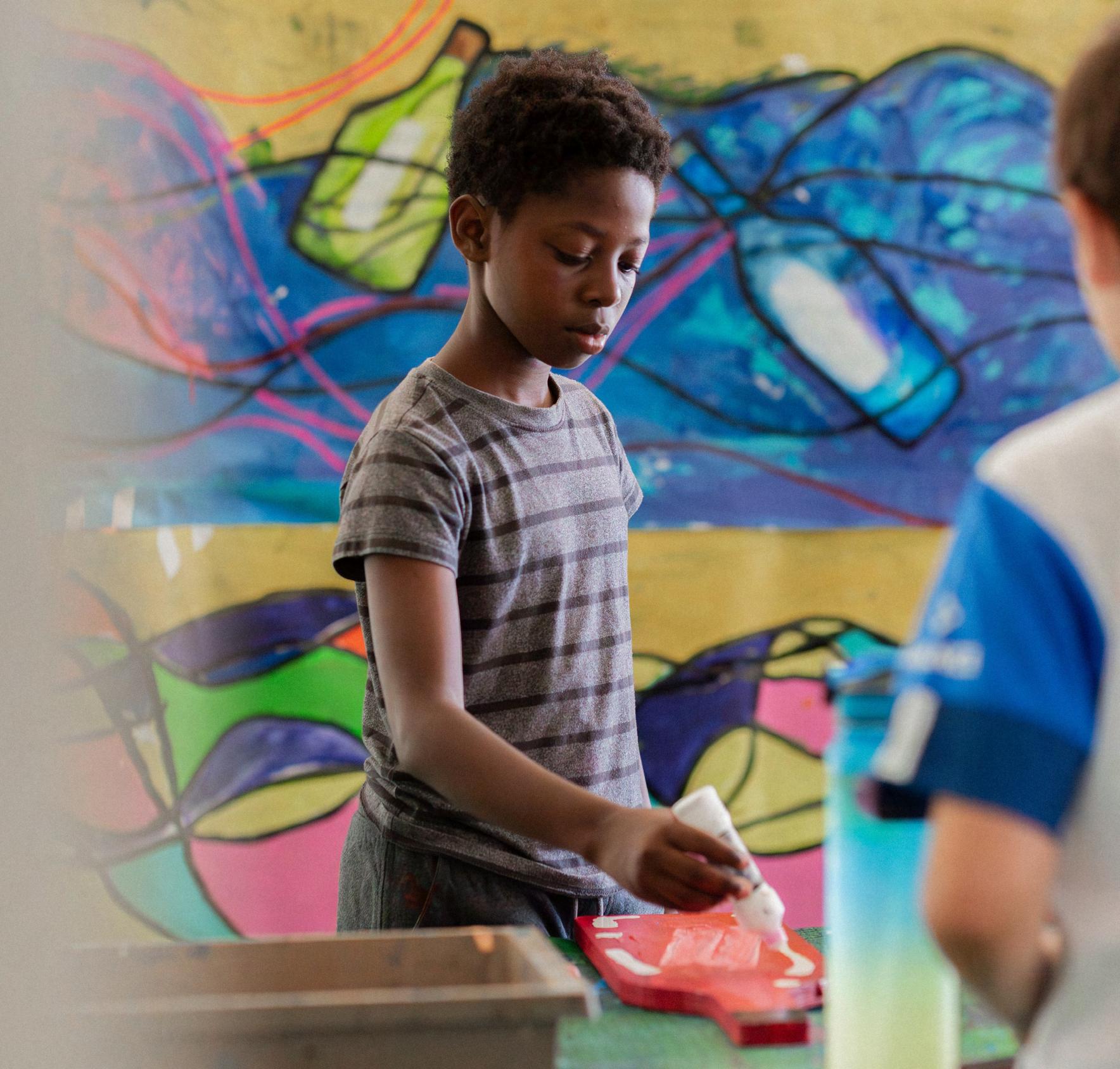
Communications played a key role in enabling artist development in 2025, increasing the visibility of creative work and the artists behind it through sustained, impactled storytelling. During the year we supported 35 artist-led projects through Development Grants, directly benefiting over 250 creatives through collaborative delivery. Communications activity ensured that the artists’ work, processes and progression were visible to wider and more targeted audiences, with 274 press mentions (almost 6% year-on-year growth). With over 25% of all communications focused on impact, campaigns consistently foregrounded artistic development, participation and creative outcomes, helping artists build recognition, connect with new audiences, and embed their work within the wider cultural and community landscape. This approach positioned communications not just as a promotional function, but as an active enabler of artistic growth and opportunity.
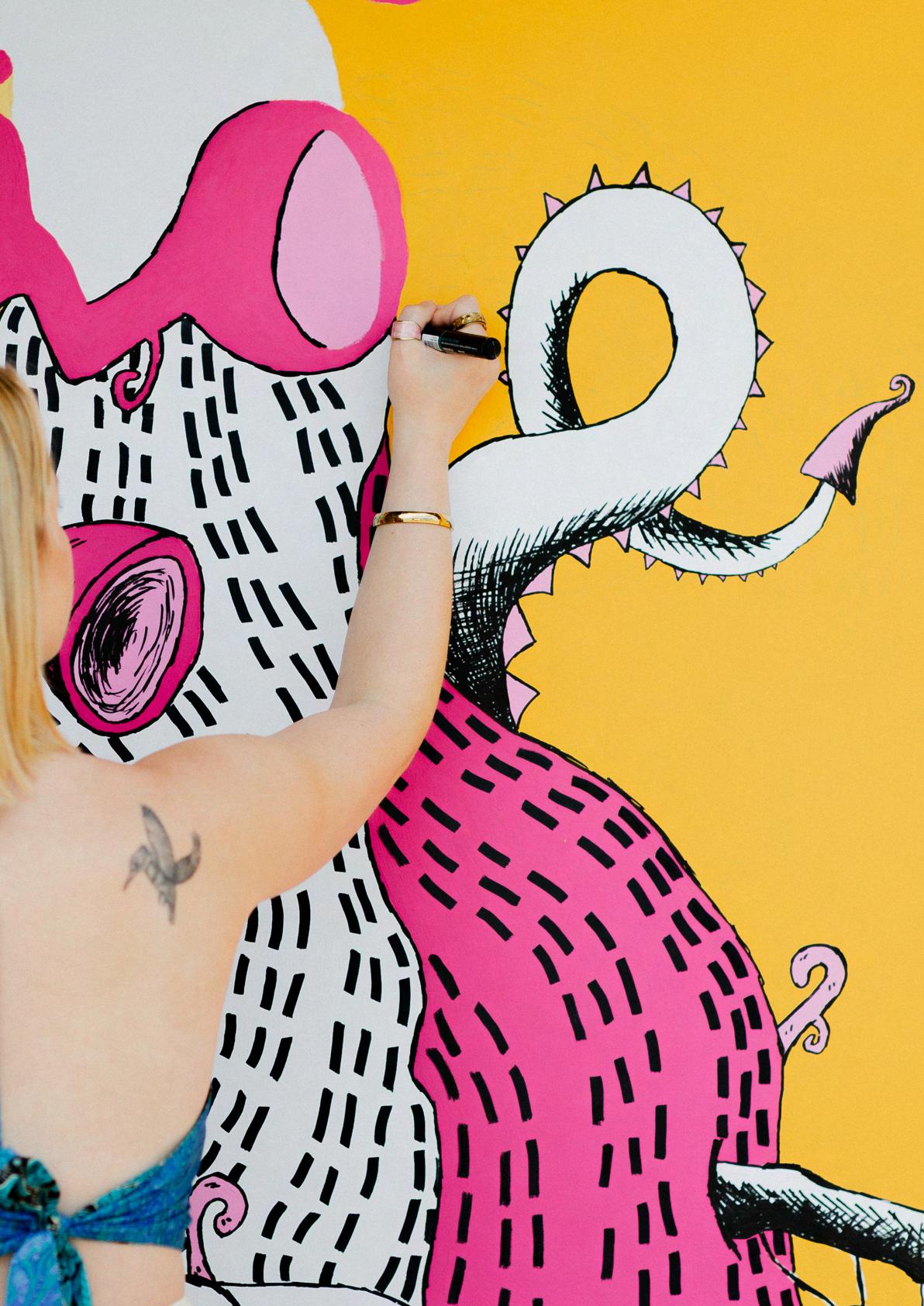
Art in the Arches demonstrates how the charity delivers on its ‘Produce’ aim, creating community-driven public art through collaborative processes and strong creative leadership. Our communications supported the project through targeted campaign activity and consistent storytelling, amplifying participation in an open call that brought together five professional artists, four schools and a wide range of community groups to co-create permanent murals across Elizabeth Marina. By making both the artistic outcomes and the process visible, our communications highlighted the contributions of young people, neurodiverse participants and underrepresented communities, ensuring the work reflected a broad range of voices. This approach fostered strong public engagement throughout the project and a sense of shared ownership in the final artworks. The result is a transformed public space and a lasting creative legacy, demonstrating how communications enables the production of ambitious, inclusive public art that is rooted in community and place.
Communications played a central role in enabling the success of Bubbletecture, transforming the project into a widely recognised and highly-engaged public art experience. Through a coordinated campaign of press, digital content and partner amplification, the project achieved exceptional reach, securing 25 pieces of media coverage and reaching over 600,000 people across social platforms, generating 1.1 million impressions and more than 74,700 engagements. This visibility translated directly into public participation, with over 42,000 visitors attending across the 18-day installation, demonstrating the effectiveness of communications in driving sustained audience engagement, often despite challenging weather conditions! The campaign also sparked a significant volume of user-generated content, extending the project’s reach organically and embedding it within the public consciousness. With overwhelmingly positive audience sentiment and strong community participation, communications not only elevated the profile of the work and its artists, but actively enabled the project to deliver on its aims of accessibility, inclusivity and large-scale cultural impact.
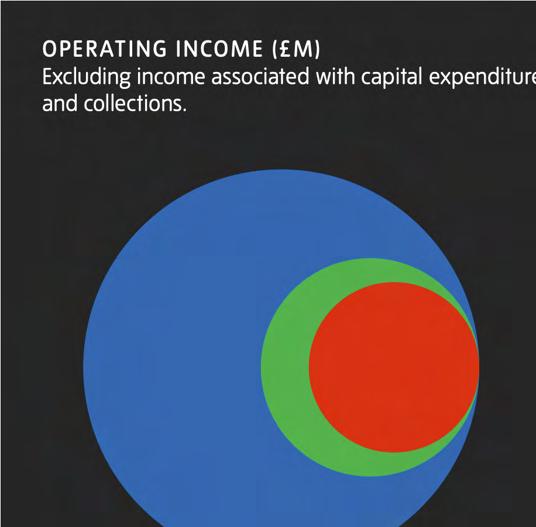
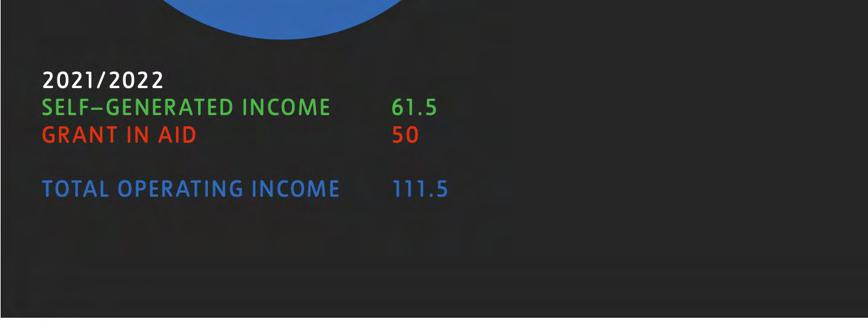
Public sector investment is key to enabling ArtHouse Jersey to continue to make a significant contribution to Jersey’s population -level objectives.
Our projects benefit Islanders, providing entertainment, supporting mental health and wellbeing, creating spaces for education and debate, enabling arts sector professionalism, attracting and retaining talent, and acting as a platform for economic growth and diversification. As such, the charity offers the taxpayer a significant social return on investment.
Public sector funding provides ArtHouse Jersey with a solid platform from which we are able to fundraise through sponsorship, earned income, commissions, donations and grants.
Robust financial management is in place and supports a prudent attitude to finances. This ensures that appropriate, adequately mitigated risks can be taken when developing our programme and delivering public benefit through the arts.
In 2025 our total revenue was £1,766,867. Of this, public funding, for which we are incredibly grateful, was our largest income source, representing 69% of total budget at £1,231,587. This essential funding enables us to serve the public of Jersey, but also acts as a platform from which we are able to fundraise. Indeed, during the year we managed to exceed our fundraising target by £60,686, raising £545,281 thanks to strong performance across earned income, commissions, corporate partnerships, foundations and through the generosity of donors.
Across the charity we were focused on cost control, given the challenging and unpredictable economic context. In staffing, premises, operations and communications we either spent less than or very close to budgeted, without any drop off in performance. We intentionally increased spend in programme and fundraising in order to invest in and deliver the impressive income performance outlined above.
During the year, following the transition of shares to Jersey Opera House Limited, we wrote-off £1,000, meaning we end 2025 with a net surplus of £36,694. This will help bolster charitable reserves, which the Board considers a prudent step at a time of significant turbulence.
ArtHouse Jersey is an independent charity that places significant emphasis on financial resilience and stability. In 2025, in recognition of the importance of maintaining appropriate reserves to support longterm sustainability we undertook benchmarking and analysis to determine an appropriate level of reserves. The Board agreed a target of approximately four months of operating reserves, providing a prudent buffer to manage risk while ensuring the charity can continue to deliver its programme with confidence. This approach reflects a commitment to responsible financial management and transparency, ensuring that the charity is well placed to navigate changes in the funding environment.
The Board also agreed a measured plan to build these reserves up to the target level over time, balancing the need for financial stability with continued investment in artistic and community activity. As part of this, 2026 will focus on strengthening fundraising capacity and embedding a culture of income generation across the charity, whilst also controlling expenditure and focusing on achieving value for money. Any surplus generated will be directed towards our reserves, supporting a gradual and sustainable increase in financial resilience. This approach ensures that ArtHouse Jersey can continue to deliver ambitious work for the Island while building a secure foundation for the future.
The charity maintains a structured and proactive approach to risk management, recognising its importance in supporting both organisational resilience and the delivery of an ambitious programme.
During 2025 we continued to strengthen this framework, ensuring that risk management is embedded within planning, financial oversight and programme delivery, and that it supports informed decision-making across the charity.
Risks are reviewed regularly by the executive team and overseen by the Board. Each risk is assessed in terms of its likelihood and impact, with clear ownership and mitigations in place. Risks are then categorized using a red, amber, green (RAG) traffic light system, with changes carefully tracked to identify trends. The risk register is reviewed quarterly at every Board meeting as part of a standing agenda.
This framework allows us to confidently navigate uncertainties and adapt our daily operations, while staying true to our creative mission.
As in recent years, it is essential that the charity evaluates risk appropriately, recognising that risks in relation to the artistic and creative programme differ from risks relating to operational matters. In relation to financial sustainability, governance and legal compliance, regulation, reputation, partnerships, operations and organisational culture, the charity’s appetite for risk is low to ensure stability and compliance. However, when it comes to our programming, we have a greater risk appetite, this being essential to the delivery of a programme. To remain effective and relevant, we must embrace a level of creative risk. Examples of how we mitigate this include, investing small amounts in research and development or piloting new creative projects before committing to full production. This allows us to test ideas, evaluate their impact, and adapt accordingly.
The principal risks facing the charity relate to financial sustainability, including the need to grow fundraised income and manage wider economic pressures, alongside maintaining appropriate reserves. External factors such as public funding policy, cost of living pressures and the wider cultural policy environment also continue to shape the context in which we operate. Operational risks include delivery capacity, reliance on key partners, alongside organisational risks such as cybersecurity, recruitment and reputation. These risks are actively managed through careful financial planning, investment in fundraising capacity, strong governance and continued engagement with Government, partners and the wider community, ensuring that the organisation remains resilient while continuing to deliver public value.
Principal risks in 2025
Public funding and policy
Fundraising & income generation
Reduction in Government funding or changes to policy, including risk that the Arts Strategy does not demonstrate sufficient value to Islanders.
Significant impact on core income and programme scale; reduced sector confidence
Macroeconomic environment
Failure to achieve self-generated income targets across multiple streams.
Reduced ability to deliver programme; pressure on financial sustainability.
Inflation and cost pressures impacting delivery and income.
Increased costs; reduced income from corporates and individuals.
Financial resilience
Programme delivery capacity
Insufficient reserves to manage financial shocks.
Capacity constraints affecting delivery of programme.
Cybersecurity & Data Protection Cyberattack or data breach.
People & workforce
Challenges in recruitment, retention and team resilience.
Creative ecosystem & infrastructure
Failure to effectively reach audiences or manage public perception.
Strategic partnerships
Reliance on partners facing financial or operational pressures.
Reduced organisational resilience and ability to respond to change.
Risk to quality, timelines and delivery of commitments
Operational disruption; reputational and regulatory risk.
Reduced organisational capacity and effectiveness.
Reduced participation, impact and stakeholder confidence.
Disruption to delivery of projects and coproductions.
Strong alignment to Arts Strategy; clear evidence of impact; regular engagement with Government; active advocacy and sector leadership; diversified income strategy.
STABLE
Development of a fundraising strategy; recruitment of development capacity; corporate and donor engagement; CRM and pipeline development; monthly monitoring. → STABLE
Regular forecasting; cost control; diversified income; prudent financial planning. ↑ INCREASING
Agreed reserves policy (c. four months); phased approach to building reserves; ongoing monitoring
Strengthened team structure; improved planning and prioritisation; targeted recruitment.
→ STABLE
→ STABLE
Cyber controls; staff training and awareness; alignment with Government standards; ongoing monitoring. ↑
HR support; improved structure; appraisals and wellbeing focus; targeted recruitment.
Strong communications strategy; audience development; public programming; stakeholder engagement.
→ STABLE
→ STABLE
Clear agreements; active relationship management; diversification of partners. ↑ INCREASING
ArtHouse Jersey is fortunate to have a dedicated Board of Trustees who champion our vision and whose skills and expertise are well-placed to support the delivery of our goals. Board members are appointed for their interest in the arts as well as the relevant experience they bring to the charity.
While the day-to-day strategic operations and leadership of the charity are delegated to the Chief Executive, the Board is collectively responsible for the long-term resilience and success of ArtHouse Jersey.
They are responsible for ensuring that effective systems of internal control are in place, that we meet our strategic objectives, and that we remain operationally and financially resilient for sustainable success.
The Board was assisted in fulfilling its oversight responsibilities by the Audit and Finance Committee, which met three times during 2025. The Committee is chaired by Natalie Passmore, with members Sam Mackelden, Rebecca Bettany and Gailina Liew, who was replaced on her standing down as a member by Rory Forrest, who joined the Board in September.
Throughout the year, the Committee:
• Monitored and reviewed financial performance.
• Identified, managed, mitigated and reported on financial risk.
• Reviewed key financial policies.
• Ensured adequacy of financial reporting and internal controls.
• Oversaw appropriateness of the forecasting and budgeting process.
• Checked competencies and sufficiency of staff.
• Considered the level of pay and benefits of employees.
The Chair oversees the charity’s effectiveness and the work of the Board. Throughout the year, members’ performance was assessed to inform decision-making about skills present in the existing Board. Members agreed that the structure of Board meetings, with key members of the executive team being invited to join discussions, enabled them to gain a good sense of the charity’s work as well as the challenges and opportunities it faces now and will be facing in the future.
The Board remains committed to ensuring effective governance arrangements are in place, ensuring that the charity operates efficiently and transparently whilst achieving value for money.
We continue to uphold best practices in governance, ensuring that decisions are guided by our purpose and strategic aims. In addition to ArtHouse Jersey’s own governance structure, an assessment of the performance of the charity was undertaken throughout the year by the Government of Jersey’s Department of the Economy under the terms of our partnership agreement.
No member of the Board at any time has benefited from ArtHouse Jersey’s funds in their capacity as a Trustee, except through reasonable reimbursement of expenses. No member holds any entity directorships nor other significant interests which may conflict with their board responsibilities.
The Board met five times in 2025 to review the performance of the charity and provide strategic direction. The fifth meeting was to focus on the charity’s change of legal structure to a Company Limited by Guarantee.
Key areas of focus, discussion and consideration during 2025 included
Public funding, policy environment and strategic positioning
The Board considered the charity’s position and role within the wider cultural and policy landscape, recognising the importance of continuing to demonstrate clear value for Islanders in order to sustain public investment. Discussions reflected the interdependence between the success of the Arts Strategy, public perception of impact and future funding decisions. The importance of articulating the contribution to population-level objectives, including social, cultural and economic value was highlighted. Members highlighted the creation of the Creative Advisory Panel, which brought together the grant funded arts and cultural organisations, as a positive step forward.

Fundraising, income diversification and resilience
The Board identified fundraising and income diversification as a critical strategic priority, particularly in the context of wider economic uncertainty and importance of public funding as a proportion of total revenue. Members agreed that achieving growth of self-generated income would require investment, leadership and a shift in organisational culture. Alongside this, the Board considered the importance of building financial resilience through an appropriate reserves policy.
The Board reaffirmed the importance of aligning programme delivery, communications and evaluation with Island priorities and public value. This will strengthen the charity’s position in relation to its most important risk, ensuring that the charity continues to evidence its relevance and contribution. The Board signalled their support for continued engagement with the Creative Advisory Partnership.
Governance, legal structure and organisational development
The Board approved the transition of the charity to a new legal structure, establishing ArtHouse Jersey as a company limited by guarantee. Members noted that this was an important governance development that ensured the charity’s legal framework was fit for purpose and provided clarity in relation to responsibilities, liabilities and regulatory compliance. Members noted that Viberts were supporting this work and not charging the charity for their services, recognising that in doing so they were showing themselves to be true corporate partners. Alongside this, the Board also considered wider organisational development, including workforce capacity, remuneration and responsible adoption of new technologies such as AI.
Public engagement, audiences and relevance
The Board identified audience development as the charity’s principal strategic priority, with a strong focus on deepening engagement with Islanders and ensuring the programme is accessible and relevant. Discussion centred on attendance trends, with Members highlighting the importance of clear interpretation, accessibility, evaluation and the role of communications in connecting audiences with the full breadth of the charity’s public offering.
Programme strategy
The Board reviewed the charity’s programme in the context of its four strategic aims, considering the necessary balance between artistic ambition, pushing boundaries, accessibility and public engagement. Members discussed the need for clarity of purpose in programming decisions, supported by the charity’s impact assessment framework, acknowledging the importance of maintaining artistic and creative integrity and the development of new ideas whilst ensuring the charity’s work resonates with a broad audience. The relationship between ‘Nurture’, ‘Produce’ and ‘Present’ was explored, noting how these strategic aims often overlapped across and within projects.
The Board agreed that a comprehensive fundraising strategy should be developed that embeds increased capacity and expertise alongside the development of organisational culture to support fundraising efforts across the charity. The Board adopted an updated reserves policy, setting out a clear approach to target the equivalent of four months of operating costs and a phased approach to achieving this level of financial resilience over time. Through such steps the Board sought to directly mitigate key risks related to income generation, reserves and long-term sustainability.
The Board endorsed a focus on audience engagement and development, including targeted engagement with schools & community partners, and the use of audience feedback and data to inform programming. This work directly addressed risks related to community engagement, reputation and programme relevance, ensuring that the charity continues to broaden participation and engagement whilst maintaining artistic integrity and the taking of creative risk.
The Board endorsed a balanced and intentional programming approach to ensure artistic development, local relevance and audience engagement are considered together. This supports mitigation of risks relating to programme delivery, reputation and audience engagement, while reinforcing ArtHouse Jersey’s distinctive artistic identity.
Environmental and social responsibility
The Board maintained active oversight of how ethical, inclusive and sustainable practices were being implemented throughout the charity. Across all aspects of its work, the Board considered how the organisation functions, how it engages with partners and manages its impact. Alongside this, the Board oversaw the approach to environmental sustainability, building on work undertaken with Acacia Consulting using the Future-Fit Business Benchmark (thanking them for their support in this area). This provides a structured framework to assess both positive and negative impacts across environmental and social dimensions, and to identify areas for long-term improvement. The organisation also maintained a strong commitment to its team, fostering an inclusive and supportive working environment and ensuring that appropriate policies and safeguards are in place.
The Board considered the charity’s physical infrastructure, noting the value in exploring future options for more flexible and accessible spaces. This was discussed alongside wider considerations, including capacity for delivery and the importance of maintaining appropriate facilities to support artists, particularly in light of pressure on artist studio provision.
The Board oversaw the implementation of the legal status change, which provided for a legal separation and limitation of the liability of the members and, as such, was suitable for a charity that undertakes trading activities, employs paid staff, and delivers charitable services under contractual agreements. The effective date of this change was 31 December 2025, with the charity taking all necessary steps to ensure that required actions were in place in order for the new company limited by guarantee structure to be seamlessly in place for 1 January 2026. Members noted that the legal change had no impact whatsoever on the charity’s work or charitable status. This was complemented by the adoption of an enhanced risk management framework and continued focus on organisational development, ensuring that the charity is well positioned to manage complexity and change, as well as respond to emerging risks. Together, these changes strengthened resilience across key areas including governance, compliance, and operational effectiveness.
The charity continued to build on foundations established in previous years, strengthening its approach to equality, diversity and inclusion through practical measures designed to remove barriers to participation. These included accessible exhibition formats such as quiet hours, audio interpretation, multilingual materials and sensory-aware design, alongside a continued commitment to free and pay-whatyou-can access. Outreach activity remained central to this work, with programmes designed in response to the specific needs of different communities, including care settings, migrant groups and families, ensuring that participation was meaningful and inclusive. The work with Acacia Consulting puts the charity in a position to broaden participation, strengthen its contribution to social cohesion and community wellbeing, and establish a clear framework for long-term environmental sustainability aligned with the UN Sustainable Development Goals. The Board will continue to monitor progress in this area, recognising its importance to the organisation’s public value and future development.
The Board supported further exploration of future spaces with strategic partners and engagement with the members of the Creative Advisory Partnership to develop a shared sector view of requirements. Members recognised the issue’s importance, highlighting this as a key enabler of audience growth and long-term development. In parallel, efforts to identify opportunities for artist workspaces were encouraged. In doing so the Board sought to address risks related to creative ecosystem capacity and long-term programme delivery.
ArtHouse Jersey is compliant with the Data Protection (Jersey) Law 2018 and has a nominated data protection lead. No incidents were reported to the Jersey Data Protection Authority in 2025.
Throughout the year our incredible ArtHouse Jersey team went above and beyond to bring art to the public of Jersey. From our dedicated staff, skilled practitioners and freelancers to the volunteers, students, and partners we collaborate with, each person brings their passion, expertise, and commitment to delivering impactful art experiences for our Island community.
Throughout the year we implemented our staffing plan to ensure a suitable balance of skills and capacity across all areas of the charity’s work.
Come the end of the year we had an executive team of 12, representing 11.6 FTE, five of whom make up the senior management. We had three
team members leave the charity during the year and we thank them for their work. We were also supported throughout the year by a wider network of freelance creatives, technicians, facilitators and project-focused colleagues whose expertise and commitment played an important role in delivering our programme.
Remuneration is benchmarked against comparable roles across the creative sector, relevant grant-funded bodies and other Jersey charities. Pay at all levels is considered appropriate. The salaries of senior management are considered proportionate and justifiable. The charity is confident that it secures value for money from its employees. Eligible employees can benefit from a match-funded pension contribution of up to 5% of their salary.
Throughout the year we continued to revise and implement employee resources, such as our comprehensive Staff Handbook and Financial Management and Controls Manual, which serve as a point of reference for both new and existing staff on policies, procedures, and workplace expectations.



We continued to invest in training opportunities for our staff, growing our team’s skills to best support the community through the delivery of our programme. In 2026 we are looking to further enhance development with an internal staff training programme, focusing on key skill development.
Our appraisal process seeks to improve communication between line managers and reports to offer greater clarity on the charity’s strategic objectives and the opportunity to identify areas where further learning and training are required. Throughout the year staff benefitted from a diverse range of career development opportunities, including wholeteam organisational development workshops, AI courses, first aid, art handling, and fine arts technical install training. This diversity reflects the broad competencies required of a multidisciplinary producing arts organisation.
During the year we continued to use two gamified learning programmes, one focused on cybersecurity and another on sustainability to ensure that these two important issues are at the forefront of our team’s minds, the latter thanks to our ongoing collaboration with Acacia Consulting.
Our designated safeguarding lead continues to deliver relevant guidance to our team, including appropriate steps to fulfil our commitments under the new Children and Young People (Jersey) Law 2022. Learnings from the Foundation in Safeguarding course from safeguarding.je are integrated into our internal training curriculum. This addition is part of our ongoing commitment to enhanced safety and professional development within our team.
Our ability to deliver an ambitious and impactful programme depends on attracting, developing and retaining a skilled and committed team. We continued to focus on ensuring roles, responsibilities and structures were aligned with our strategic priorities. This included ongoing review of team capacity, recruitment and investment in organisational processes to support effective and sustainable delivery.
Throughout the year, we maintained a focus on creating a positive and supportive working environment, underpinned by clear structures and regular performance review processes. We believe that staff wellbeing and development are fundamental if the charity is to continue to thrive, and place great importance on fostering a culture in which our team feel valued and able to contribute fully to the charity’s work.
Our Board and staff will continue to monitor workforce capacity and development closely, ensuring that the charity remains well-positioned to attract and retain the talent required to serve the public of Jersey.
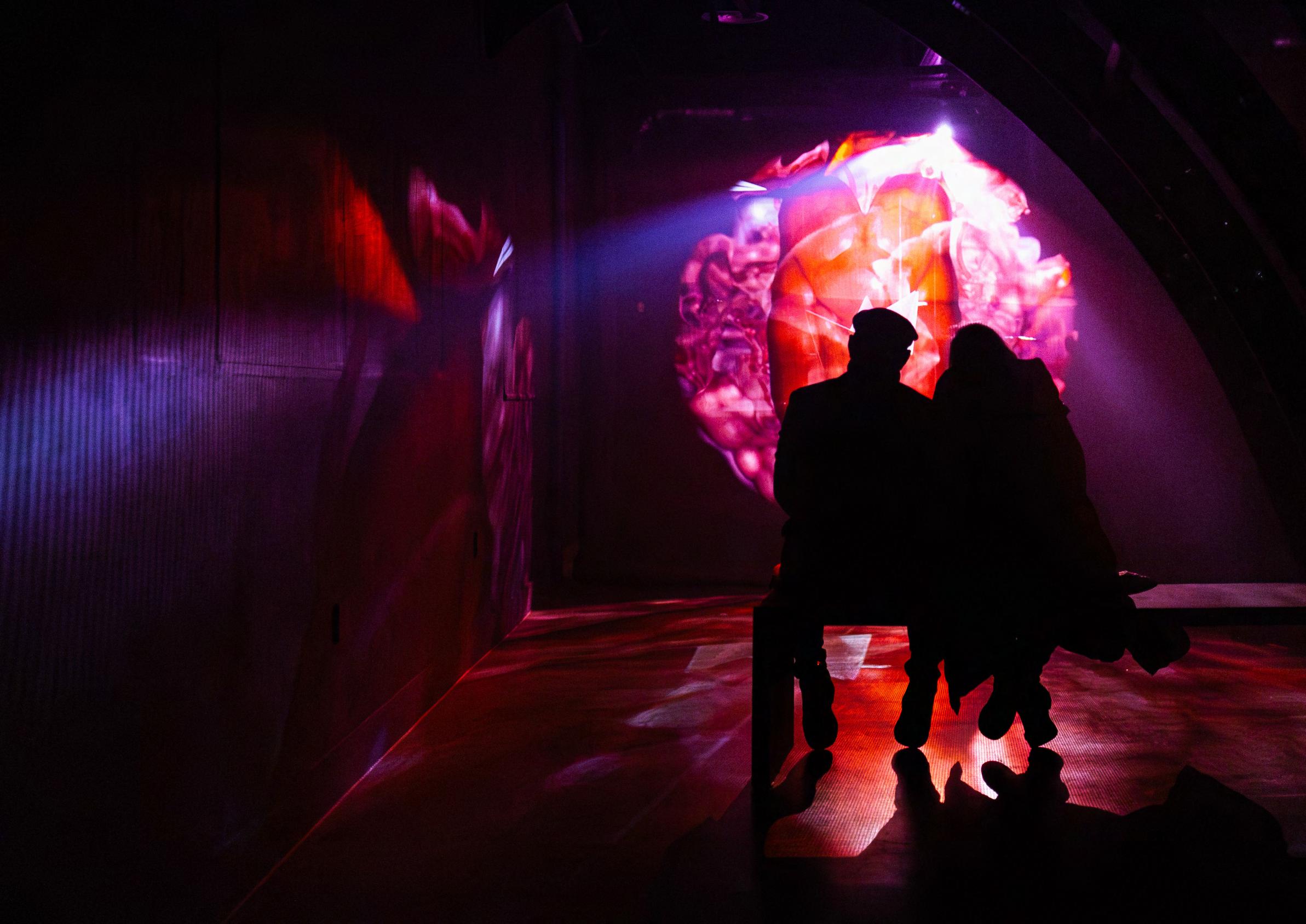
“It was a joy to volunteer alongside creative people and interact with the public who were so engaged with the installation. ArtHouse has helped me reconnect with the community and broaden my appreciation for art” Bubbletecture volunteer
“I volunteered for Bubbletecture and the Folk festival at L'Auberge for 2026. There was fantastic interaction with the public this year. Such positive feedback and realisation of the work ArtHouse Jersey is putting into the community” Tracey, volunteer
“It was a really enjoyable, rewarding experience. Great to be a part of some of the amazing ArtHouse Jersey projects" Kathy, volunteer
“Volunteering for Arthouse Jersey has been a genuinely rewarding experience, it’s given me the chance and opportunity to meet inspiring new people, be part of a creative community and to contribute to something meaningful” Michael, volunteer
Following our commitment in 2024 to expand our volunteer engagement, 2025 saw our programme reach new heights of efficiency and influence. With 48 volunteers contributing a combined 594 hours of their time, the programme has evolved into a robust network of advocates who extend ArtHouse Jersey’s capacity far beyond our core team. The support of our volunteers has been invaluable across our programme from engaging with Islanders during bold public realm projects to supporting the logistics at social inclusion events to help bring our Parish elderly together.
Our volunteers bring energy, passion and community knowledge to our projects, and in turn, we provide behind-the-scenes access to innovative, professional art with a front-row seat to the creative process. Beyond the excitement of our ambitious programming, we offer a strong sense of camaraderie, where volunteers from all walks of life connect over our shared mission to make Jersey a more creative and connected place to live.
ANNUAL REPORT AND AUDITED FINANCIAL STATEMENTS FOR THE YEAR ENDING 31 December 2025
(Dissolved 1 January 2026)
Jersey Arts Trust operating as ArtHouse Jersey
Director Thomas Dingle
Trustees:
Sir Stephen Dalton, Chair
Ms Gailina Liew, Vice Chair (resigned on 09 September 2025)
Ms Natalie Passmore, Treasurer
Ms Samantha Mackelden
Mr James Corbett QC (resigned on 03 June 2025)
Ms Daniela Raffio
Ms Rebecca Bettany
Ms Ashley Proudfoot
Marianne Jersey
Rory Forrest (appointed on 09 September 2025)
Principal office:
Greve de Lecq Barracks, St.Mary, Jersey
JE3 3AA
Bankers:
Barclays Bank, PO Box 8, 13 Library Place
St. Helier, Jersey
JE4 8NE
Independent Auditors
PKF CI Assurance Limited
9 Bond Street
St. Helier, Jersey
JE2 3NP
TheBoardofTrustees(the"Trustees"orthe"Board")areresponsibleforpreparingtheAnnualReportandthe financial statementsinaccordancewithapplicablelawandtheCharitiesSORP(FRS102)'AccountingandReportingby Charities:StatementofRecommendedPracticeapplicabletocharitiespreparingtheiraccountsinaccordancewiththe Financial Reporting Standard applicable in the UK and Republic of Ireland (FRS 102) (effective 1 January 2019).
TheTrusteesarerequiredtoprepare statementsforeach yearwhichgiveatrueandfairviewofthe stateofaffairsoftheArtHouseJersey(the"Trust")andoftheincomingresourcesandapplicationofresourcesduringthe year. In preparing these statements, the Trustees are required to:
-select suitable accounting policies and then apply them consistently;
-statewhetherapplicableaccountingstandardsandstatementsofrecommendedpracticehavebeen followed,
-make judgements and estimates that are reasonable and prudent; and
-preparethe statementsonthegoingconcernbasisunlessitisinappropriatetopresumethatthe Trust will continue in operation.
TheTrusteesareresponsibleforkeepingadequateaccountingrecordsthatdisclosewithreasonableaccuracythe positionoftheTrustandenablethemtoensurethatthe statementscomplywiththe relevant requirements.TheyarealsoresponsibleforsafeguardingtheassetsoftheTrustandhencefortakingreasonablesteps for the prevention and detection of fraud and other irregularities.
AsfarasTrusteesareawarethereisnorelevantauditinformationofwhichthe auditorsareunaware.Trustees havetakenallthestepsthattheyoughttohavetakentomakethemselvesawareofanyrelevantauditinformationandto establish that our auditors are aware of that information.
Going concern
Intheirassessmentregardinggoingconcern,theTrusteeshavehadregardtothefactthattheJerseyArtsTrust,asa legalentity,hasbeendissolvedfollowingthetransferofitsassets,rightsandliabilitiestoArtHouseJerseyLimited,a companylimitedbyguaranteeincorporatedasitssuccessorbody.Thetransfertookeffecton1January2026, pursuant toanorderoftheRoyalCourtdated19December2025.ForthesolereasonthattheTrust,asalegalentity,nowceases toexist,thesefinancialstatementsarepreparedonabasisotherthangoingconcern.Thecharitableoperationsofthe organisationcontinuewithoutinterruptionthroughArtHouseJerseyLimited,whichhasbeenestablishedforthatpurpose andwhichassumedallassetsandliabilitiesoftheTrustatthetransferdate.Therehasbeennocessationofactivity,no lossoffundingandnomaterialchangeinthescaleornatureofoperations.Forthisreason,whilstthelegalentityisnota going concern, its operations are, and continue without issue.
TheBoardhasreasonablyconcludedthatthesuccessorbodyhasadequateresourcestocontinuein operational existencefortheforeseeablefuture.TheorganisationhasreceivedanannualgrantfromtheGovernmentevery year agreementinplacethroughto2028.TheBoardmaintainsapositiveandproductiverelationshipwiththe Government, andtheorganisationhasperformedwellagainstkeyperformanceindicatorsandactedasastrategicpartnerinthe deliveryofthe artsstrategy.Theorganisationhasalsobeensuccessfulingrowingotherincomestreamsand achievingconsistentresultsagainsttarget,whichtogetherwitheffectivecostcontrolhasenabledtheorganisationto reliably operate within budget parameters.
Auditors
PKF CI Assurance Limited have expressed their willingness to continue to act as auditors for the next financial year.
This report was approved by the Board on 2 June 2026 and signed and authorised on their behalf by:
Independent auditor’s report to the trustees of Jersey Arts Trust (operating as ArtHouse Jersey) for the year ended 31 December 2025
Opinion
We have audited the financial statements of Jersey Arts Trust (the ‘trust’) for the year ended 31 December 2025 which comprise the Statement of Financial Activities, Statement of Financial Position, Cash Flow Statement and Notes to the Financial Statements, including significant accounting policies. The financial reporting framework that has been applied in their preparation is United Kingdom Accounting Standards, including Financial Reporting Standard 102 The Financial Reporting Standard applicable in the UK and Republic of Ireland (United Kingdom Generally Accepted Accounting Practice)
In our opinion, the financial statements: give a true and fair view of the state of the trust’s affairs as at 31 December 2025 and of its results for the year then ended;
have been properly prepared in accordance with United Kingdom Generally Accepted Accounting Practice.
Basis for opinion
We conducted our audit in accordance with International Standards on Auditing (UK) (ISAs (UK)) and applicable law. Our responsibilities under those standards are further described in the Auditor’s responsibilities for the audit of the financial statements section of our report. We are independent of the trust in accordance with the ethical requirements that are relevant to our audit of the financial statements in the UK, including the FRC’s Ethical Standard, and we have fulfilled our other ethical responsibilities in accordance with these requirements. We believe that the audit evidence we have obtained is sufficient and appropriate to provide a basis for our opinion.
Emphasis of matter – financial statements prepared on a basis other than going concern
We draw attention to Note 2.2 in the financial statements, which explains that the Trustees have dissolved the trust following the transfer on 01 January 2026 of its assets, rights and liabilities to ArtHouse Jersey Limited, a company limited by guarantee incorporated as its successor body, and whilst the operations are a going concern in the successor body, as the trust has been dissolved, do not consider it to be appropriate to adopt the going concern basis of accounting in preparing the financial statements. Accordingly the financial statements have been prepared on a basis other than going concern as described in Note 2.2. Our opinion is not modified in respect of this matter.
Other Information
The other information comprises the information included in the report other than the financial statements and our auditor’s report thereon. The trustees are responsible for the other information contained within the report. Our opinion on the financial statements does not cover the other information and, except to the extent otherwise explicitly stated in our report, we do not express any form of assurance conclusion thereon. Our responsibility is to read the other information and, in doing so, consider whether the other information is materially inconsistent with the financial statements or our knowledge obtained in the course of the audit, or otherwise appears to be materially misstated. If we identify such material inconsistencies or apparent material misstatements, we are required to determine whether this gives rise to a material misstatement in the financial statements themselves. If, based on the work we have performed, we conclude that there is a material misstatement of this other information, we are required to report that fact.
We have nothing to report in this regard.
Matters on which we are required to report by exception
We have nothing to report in respect of the following matters in relation to which the engagement letter requires us to report to you if, in our opinion:
Adequate accounting records have not been kept, or returns adequate for our audit have not been received from branches not visited by us; or
The financial statements are not in agreement with the accounting records and returns; or
We have not received all the information and explanations we require for our audit.
Responsibilities of trustees
The trustees are responsible for the preparation of the financial statements and for being satisfied that they give a true and fair view, and for such internal control as the trustees determine is necessary to enable the preparation of financial statements that are free from material misstatement, whether due to fraud or error. In preparing the financial statements, the trustees are responsible for assessing the trust’s ability to continue as a going concern, disclosing, as applicable, matters related to going concern and using the going concern basis of accounting unless the trustees either intend to liquidate the trust or to cease operations, or have no realistic alternative but to do so.
Auditor’s Responsibilities for the audit of the financial statements
Our objectives are to obtain reasonable assurance about whether the trust financial statements as a whole are free from material misstatement, whether due to fraud or error, and to issue an auditor’s report that includes our opinion. Reasonable assurance is a high level of assurance but is not a guarantee that an audit conducted in accordance with ISAs (UK) will always detect a material misstatement when it exists. Misstatements can arise from fraud or error and are considered material if, individually or in the aggregate, they could reasonably be expected to influence the economic decisions of users taken on the basis of these trust financial statements.
Irregularities, including fraud, are instances of non-compliance with laws and regulations. We design procedures in line with our responsibilities, outlined above, to detect material misstatements in respect of irregularities, including fraud. The extent to which our procedures are capable of detecting irregularities, including fraud is detailed below:
We obtained an understanding of the legal and regulatory framework applicable to the trust through enquiry of management, review of trustee board minutes, industry research and the application of cumulative audit knowledge. We identified the following principal laws and regulations relevant to the trust:
Charities (Jersey) Law 2014
The Financial Reporting Standard applicable in the UK and Republic of Ireland (United Kingdom Generally Accepted Accounting Practice) including the requirements of Charities SORP (FRS 102) (second edition – October 2019).
We developed an understanding of the key fraud risks to the trust (including how fraud might occur), the controls in place to help mitigate those risks, and the accounts, balances and disclosures within the financial statements which may be susceptible to management bias. Our understanding was obtained through review of the financial statements for significant accounting estimates, analysis of journal entries, walkthrough of the key control cycles in place and enquiry of management.
Our procedures to respond to those risks identified included, but were not limited to:
Identifying and assessing the design of key controls implemented by management to prevent and detect fraud;
Enquiry of management and those charged with governance;
Performance of analytical procedures to identify unusual relationships which may indicate a risk of fraud or an irregularity;
Review of board minutes
Journal entry testing - including analysis of the general ledger to identify entries deemed to represent a higher risk of fraud or error; and
Assessment of the reasonableness of judgements made by management in significant accounting estimates.
The inherent limitations of an audit mean that there will always be a risk that irregularities will go undetected, including those which may ultimately lead to a material misstatement. This risk is considered greater where an irregularity results from fraud including misrepresentation, collusion, and forgery.
A further description of our responsibilities is available on the Financial Reporting Council’s website at: www.frc.org.uk/auditorsresponsibilities. This description forms part of our auditor’s report.
This report is made solely to the trustees, as a body, in accordance with our engagement letter. Our audit work has been undertaken so that we might state to the trustees those matters we are required to state to them in an auditor’s report and for no other purpose. To the fullest extent permitted by law, we do not accept or assume responsibility to anyone other than the trust and the trustees as a body, for our audit work, for this report, or for the opinions we have formed.

PKF CI Assurance Limited
9 Bond Street, St. Helier, Jersey, JE2 3NP
Date: 16 June 2026
For the year ended 31 December 2025
32,28532,28533,960
700430,045430,745358,429 700462,330463,030392,389
700306,574307,274264,358
700321,038321,738285,044
700321,038321,738285,044
There were no recognised gains or losses for the year other than those included in the Statement of Financial Activities.
Thesurplusfortheyearisderivedfromcontinuingoperations,whichhavebeentransferredtoasuccessorbodyfrom01 January 2026.
funds 20 700 - 700 700 700321,038321,738285,044
The prior year Statement of Financial Position is provided in note 23.
TheTrustwasdissolvedon1January2026andthesefinancialstatementswereapprovedandauthorisedforissuebythe boardofTrusteesinplaceatthatdateon2June2026.TheboardofTrusteesformtheboardofDirectorsofthe successor body.
Signed on behalf of the board of Trustees:
Natalie Passmore Treasurer
TheTrust'sfinancialstatementshavebeenpreparedinaccordancewiththeCharitiesSORP(FRS102)(effective 1 January 2019). The notes to the financial statements form part of these financial statements.
ended 31 December 2025
TheJerseyArtsTrust(the"Trust")isaregisteredCharityincorporatedanddomiciledinJerseyoperatingasArtHouse Jersey. Its principal office is Greve de Lecq Barracks, St Mary, Jersey, JE3 3AA. The Trust is a public benefit entity.
Thefinancialstatementshavebeenpreparedunderthehistoricalcostconventionandinaccordancewiththe Charities SORP(FRS102)'AccountingandReportingbyCharities:StatementofRecommendedPracticeapplicableto charitiespreparingtheiraccountsinaccordancewiththeFinancialReportingStandardapplicableintheUKand Republic of Ireland (FRS 102) (effective 1 January 2019)' and applicable Law in Jersey.
ThepreparationoffinancialstatementsincompliancewithFRS102requirestheuseofcertain critical accountingestimates.ItalsorequiresmanagementtoexercisejudgmentinapplyingtheTrust'saccounting policies (see note 3).
The following principal accounting policies have been applied.
TheJerseyArtsTrust,asalegalentity,hasbeendissolvedfollowingthetransferofitsassets,rightsandliabilitiesto ArtHouseJerseyLimited,acompanylimitedbyguaranteeincorporatedasitssuccessorbody.Thetransfertook effect on1January2026,pursuanttoanorderoftheRoyalCourtdated19December2025.Forthesolereasonthatthe Trust,asalegalentity,nowceasestoexist,thesefinancialstatementsarepreparedonabasisotherthangoing concern.ThecharitableoperationsoftheorganisationcontinuewithoutinterruptionthroughArtHouseJersey Limited, whichhasbeenestablishedforthatpurposeandwhichassumedallassetsandliabilitiesoftheTrustatthe transfer date.Therehasbeennocessationofactivity,nolossoffundingandnomaterialchangeinthescaleornature of operations. For this reason, whilst the legal entity is not a going concern, its operations are, and continue without issue.
RegardingArtHouseJerseyLimited,towhichtheoperationsoftheTrusthavetransferred,theTrusteeshavea reasonableexpectationthatthisentityhasadequateresourcestocontinueinoperationalexistenceforaperiodof at least twelve months from the date of approval of these financial statements.
UnrestrictedfundsareavailableforuseatthediscretionoftheTrusteesinfurtheranceofthegeneralobjectivesofthe Trust and have not been designated for other purposes.
DesignatedfundscompriseunrestrictedfundsthathavebeensetasidebytheTrusteesforparticularpurposes.The aim and use of each designated fund is set out in the notes to the financial statements.
Restrictedfundsarefundswhicharetobeusedinaccordancewithspecificrestrictionsimposedbydonorsorwhich havebeenraisedbytheTrustforparticularpurposes.Thecostsofraisingandadministeringsuchfundsarecharged against the specific fund. The aim and use of each restricted fund is set out in the notes to the financial statements.
Investment income, gains and losses are allocated to the appropriate fund.
AllincomingresourcesareincludedintheStatementofFinancialActivities("SoFA")whentheTrust has entitlement to the funds, certainty of receipt and the amount can be measured with sufficient reliability.
Giftsinkinddonatedfordistributionareincludedatvaluationandrecognisedasincomewhentheyare distributedtotheprojects.Giftsdonatedforresaleareincludedasincomewhentheyaresold.Donated facilitiesareincludedatthevaluetotheTrustwherethiscanbequantifiedandathirdpartyisbearingthecost.No amounts are included in the financial statements for services donated by volunteers.
Otherincomeisrecognisedintheperiodinwhichitisreceivableandtotheextentthegoodshavebeen provided or on completion of the service.
Investment income is included in the Statement of Financial Activities when receivable.
Expenditureisaccountedforonanaccrualsbasisandhasbeenincludedunderexpensecategories that aggregateallcostsforallocationtoactivities.Wherecostscannotbedirectlyattributedtoparticularactivitiestheyhave been allocated on a basis consistent with the use of the resources.
Fundraisingcostsarethoseincurredinseekingvoluntarycontributionsanddonotincludethecosts of disseminatinginformationinsupportofthecharitableactivities.Supportcostsarethosecostsincurreddirectlyin supportofexpenditureontheobjectsoftheTrustandincludeprojectmanagementcarriedout at headquarters.GovernancecostsarethoseincurredinconnectionwithadministrationoftheTrustand compliance with constitutional and statutory requirements.
Grantspayablearechargedintheyearwhentheofferismadeexceptinthosecaseswheretheoffer is conditional,suchgrantsbeingrecognisedasexpenditurewhentheconditionsattachingarefulfilled. Grants offeredsubjecttoconditionswhichhavenotbeenmetattheyearendarenotedasacommitment,but not accrued as expenditure.
Allassetscostingmorethan £3,000 arecapitalised.Amountssmallerthanthisarecapitalisedwheretheyformpartofa programme of improvements to new or existing property which exceeds £3,000 in total.
Tangiblefixedassetsarestatedatcostlessdepreciation.Depreciationisprovidedatratescalculatedtowriteoffthe cost of fixed assets, less their estimated residual value, over their expected useful lives on the following bases:
Attheendofeachreportingdate,theTrustreviewsthecarryingamountsofitstangiblefixedassetsto determinewhetherthereisanyindicationthatthoseassetshavesufferedanimpairmentloss.Ifsuchindication exists, therecoverableamountoftheassetisestimatedinordertodeterminetheextentoftheimpairmentloss.Recoverable amount is the higher of fair value less costs to sell and value in use.
Iftherecoverableamountofanassetisestimatedtobelessthanitscarryingamount,thecarryingamountofthe asset isreducedtotherecoverableamount.AnimpairmentlossisrecognisedimmediatelyintheStatementof Financial Activities.
Investmentsarestatedatcostvalueatthebalancesheetdate.TheStatementofFinancialActivitiesincludesthe net gains and losses arising on revaluations and disposals throughout the year.
2.9Debtors
DebtorsincludeamountsowedtotheTrustfortheprovisionofgoodsandservicesoramountsthecharityhaspaidin advanceforthegoodsandservicesitwillreceive.Debtorsaremeasuredattheirrecoverableamounts(theamountthe Trustanticipatesitwillreceivefromadebtortheamountithaspaidinadvanceforgoodsorservices). Prepayments arevaluedattheamountprepaidnetofanytradediscountsdue.Accruedincomeandtaxrecoverableisincludedatthe best estimate of the amounts receivable at the balance sheet date.
2.10Cash
Cashandcashequivalentsincludecashinhand,depositsheldatcallwithbanks,othershorttermhighlyliquid investmentswithoriginalmaturitiesofthreemonthsorlessandbankoverdrafts.Bankoverdrafts,whenapplicable,are shown within borrowings in current liabilities.
2.11Creditors and accruals
CreditorsarerecognisedattheamountthattheTrustanticipatesitwillpaytosettlethedebtortheamountit has received as an advance payment for goods or services it must provide.
Jersey Arts Trust operating as ArtHouse Jersey
Notes to the Financial Statements
For the year ended 31 December 2025 (continued)
2. Summary of significant accounting policies (continued)
Itemsincludedinthefinancialstatementsaremeasuredusingthecurrencyoftheprimaryeconomicenvironmentin whichtheTrustoperates("thefunctionalcurrency").ThefinancialstatementsarepresentedinPoundSterling ("GBP"), which is the Association's functional and presentational currency.
Nogroupconsolidatedfinancialstatementshavebeenprepared.IntheopinionoftheTrustees,whilsttheTrust owns 100%ofthesharesinTheJerseyOperaHouseLimited,ithasdivestedcontrolovertheoperationsand management decisionstakenthataffectthatCompanytoanindependentboardofdirectors.Accordingly,theTrusteeshavechosen to exclude this subsidiary from consolidation, on the basis of the lack of control.
3. Judgments in applying accounting policies and key sources of estimation uncertainty
Estimatesandjudgmentsarecontinuallyevaluatedandarebasedonhistoricalexperienceandotherfactors,including expectations of future events that are believed to be reasonable under the circumstances.
Key accounting estimates and assumptions: (a)Impairment of accounts receivable (b)Useful economic lives and impairment of tangible assets
TheTrustmakesanestimateoftherecoverablevalueoftradeandotherdebtors.Whenassessingimpairmentoftrade andotherdebtors,managementconsidersfactorsincludingthecurrentcreditratingofthedebtor,theageingprofile of debtors and historical experience.
Theannualdepreciationchargefortangibleassetsissensitivetochangesintheestimatedusefuleconomiclivesand residualvaluesoftheassets.Theusefuleconomiclivesandresidualvaluesarere-assessedannually. They areamendedwhennecessarytoreflectcurrentestimates,basedontechnicaladvancement,future investments, economic utilisation and the physical condition of the assets.
TheTrusteesusetheirjudgementtoreviewthecarryingamountsoftangiblefixedassetstodeterminewhetherthereis any indication that those assets have suffered an impairment loss.
4. Income from donations
1,662,8301,497,945
TheTrusthasonlyonecharitableactivitywhichistosupportartistsmakingnewwork.Asafundamentalpartofthissupport,the Trustgivesgrantstosupporttheworkofartistsontheisland.Thesegrantsareawardedtoindividualsandno grants have been awarded to institutions during the year.
TheTrustengagedPKFCIAssuranceLimitedforauditandfinancialstatementpreparationservices.ItalsoengagedPKF CI Limitedforbookkeepingservices.PKFCIAssuranceLimitedhavesufficientsafeguardsinplacetoenablethemtooffer non-audit services concomitant to the audit.
Thefinalnumberofemployeesatthereportingperiodwas12,ofwhich9arefull-timeemployeesand3arepart-time.This results inanaveragemonthlynumberoffulltimeemployeesof13fortheyear.Fiveemployeesreceivedemployeebenefits(excluding employerpensioncosts)ofmorethan£60,000inyear(2024:fiveemployees).Threeoftheseemployeesfallwithinthe £60,001 - £70,000 band, one falls within the £70,001 to £80,000 band and the one within the £80,001 to £90,000 band.
CapitalimprovementsrelatetotherenovationoftheTrust'spremisesattheGrevedeLecqBarracks.Theleasetermisfor9 years and as such the capital improvements have been depreciated on a straight line basis over the life of the lease.
DuringtheyearnoneoftheTrusteesorconnectedpersonswereremuneratedinanywayforworkcarriedoutonbehalfofthe Trust (2024: £Nil).
OneofthetrusteeshasclaimedexpensesorhadtheirexpensesmetbytheTrust,theseexpensesrelatedtotravelcostsandthe total amount of expenses paid during the year was £688 (2024: £408).
NochargetotaxationisincludedwithinthesefinancialstatementsastheTrusthasbeengrantedexemptionunderthe provisions of Article 115(a) of the Income Tax (Jersey) Law 1961.
TheTrust'sotherfixedassetscomprisethepropertyimprovementsmadetoTheJerseyOperaHouse.TheTrustexpendedthese amountsforthebenefitoftheJerseyOperaHouseLimited,awhollyownedsubsidiarywhichisseparatelymanagedand controlled.
ConsequenttotheloanfortheOperaHouseImprovementsbeingsettledinfullin2020,theTrusteesundertookan impairment reviewofthisassetandconcludedthattherewasnovaluetotheTrustandthatthecarryingvalueshouldbereduced to nil.
TheJerseyOperaHouseisownedbytheGovernmentofJersey.Atpresent,thepropertyisoccupiedbyagreementwiththe Government of Jersey Property Holding Department ("Property Holdings") in the absence of a formal lease.
TheJerseyArtsTrusthasnothadanyoperationalroleintherunningoftheJerseyOperaHousesincetheintroduction ofthefirstculturalstrategyin2006,withtheGovernmentofJerseyassumingultimateresponsibilityforthebuildingand its operations.TheJerseyOperaHouseclosedalloperationsinMarch2020duetotherestrictionsassociatedwiththeCOVID-19 pandemicandhasnotre-openedsinceduetothereportedstateofdisrepairofthebuilding.Itiscurrentlythesubjectofareview beingundertakenbytheGovernmentofJerseyDepartmentoftheEconomywhichisexpectedtorecommendanew governance and operating structure, which will sever all formal ties to the Jersey Arts Trust.
TheJerseyOperaHouseLimited(the'Company')sharecapitalwaswhollyownedbytheTrust.However,intheopinion oftheTrustees,thecontroloftheassets,operationsandmanagementofthatCompanyvestwithanindependentboard of directors.Consequently,theTrustdoesnotconsiderthattheCompanyisasubsidiaryundertakenforconsolidation purposes.
Aseffectivefrom01January2025,awrittenresolutionwassignedthatchangedthememorandumofassociationofthe Company tobelimitedbyguaranteeratherthanbyshares,andtheTrustisnottheguarantormember.Assuch,the £1,000investmentin the sharecapitalheldbytheTrusthasbeenwrittenoffasatthisdate.Therealisedlossoninvestmentsisshownin the Statement of Financial Activities for the year ended 31 December 2025.
Jersey Arts Trust operating as ArtHouse Jersey Notes to the Financial Statements For the year ended 31 December 2025 (continued)
20. Statement of Funds
In2020,theBoardclosedadesignatedfund Development combineditwithoperationalreservesandfreecash tocreateadesignatedoperationalreserveof£165,000.In2021thiswasincreasedto£195,000inrecognitionofthe additional liabilitiesassociatedwithagrowingorganisationandattheendof2022itwasagreedthatthiswouldneedtobeincreased further
Inadditiontotheoperationalreserves,theTrustestablisheda£20,000sinkingfundforfuturerepairsin2021tohonourthe commitmentsoutlinedintheleasewiththeNationalTrust(GreveDeLecqBarracks)andwiththelandlordatCapitalHouse.A further £10,000 was added to this fund in 2022 bringing the total held on reserve for this purpose to £30,000.
21.Comparatives for the Statement of Funds (year ended 31 December 2024)
Jersey Arts Trust operating as ArtHouse Jersey Notes to the Financial Statements
For the year ended 31 December 2025 (continued)
22.Comparatives for the Statement of Financial Activities (year ended
Jersey Arts Trust operating as ArtHouse Jersey
Notes to the Financial Statements
For the year ended 31 December 2025 (continued)
24.Related Party transactions
Duringtheyeargovernmentgrantstotaling£1,231,586(2024:£1,186,500)werereceivedunderthetermsofthePartnership AgreementwiththeGovernmentofJersey.TheTrustsroleunderthetermsoftheagreementistodevelopanddeliverthe aims andobjectivesoftheGovernmentplan2022-2025,theCommonStrategicPolicy2018-2022andtheArtsStrategyforJersey 20222027. The Trust achieves this through its charitable activities, including investing in artists and new work.
TheTrust'sotherfixedassetscomprisethepropertyimprovementsmadetoTheJerseyOperaHouse,andTheJerseyOpera House is owned by the Government of Jersey. Please see Notes 15 & 16 for further details.
TheRivingtonFundismanagedbytheGovernmentofJersey,withadministrationsupportedbyArtHouseJersey.TheRivington FundprovidesfundingtoJerseyresidentswhocouldnototherwiseaffordtotraveloutoftheIslandtocultivatetheirpassion for arts,craftsorhistory.TheincomereceivedfromtheGovernmentofJerseytocoverthecostsoftheadministrativesupporttotaled £3,274 (2024: £6,166).
Duringtheyearnosponsorshipincome(2024:£10,000)wasreceivedfromJerseyWater,arelatedpartythrougha trustee, Natalie Passmore who is also Finance Director at Jersey Water.
25. Events after the reporting date
Subsequenteventshavebeenevaluateduptothedatethatthefinancialstatementswereapprovedandauthorisedforissue by the board of Trustees.
On19December2025,theRoyalCourtofJerseyapprovedthetransferofallassets,rightsandliabilitiesoftheJerseyArts Trust toArtHouseJerseyLimited,acompanylimitedbyguaranteeincorporatedinJerseyasthesuccessorbodytotheTrust.The transfer took effect on 1 January 2026.
Followingthetransfer,theJerseyArtsTrustwasdissolved.ArtHouseJerseyLimitedcontinuesthecharitableoperationsofthe TrustwithoutinterruptionandhasassumedallobligationsandcommitmentsoftheTrustfromthetransferdate.Thishasbeen treated as a non-adjusting event under FRS 102 Section 32, as the transfer itself took effect after the reporting date.
IntheopinionoftheBoardofTrustees,therehavebeennoothermaterialeventsafterthereportingdaterequiringadjustment or disclosure in these financial statements.