el circuito internacional del arte continúa expandiendo sus fronteras. La llegada de Art Basel a Qatar marca un hito en la consolidación de Medio Oriente como nuevo polo cultural y financiero, evidenciando el interés de la región por posicionarse en el mapa global del arte contemporáneo. Este movimiento no solo amplía el mercado, sino que redefine las rutas tradicionales de circulación de obras, artistas y coleccionistas, obligando a repensar el eje histórico entre Europa, Estados Unidos y en los últimos 20 años en China, dando paso a un escenario cada vez más extenso.
En Latinoamérica, el calendario se mantiene en el sur entre Ch.ACO, en Chile, y Pinta, en Perú, que continúan fortaleciendo el ecosistema artístico, abriendo espacios de visibilidad y comercialización para artistas del continente.
Mientras tanto, en España las galerías han protagonizado una inédita semana de huelga frente al aumento de impuestos y cobros que superan los de otros países europeos, poniendo en evidencia las tensiones que atraviesan al sector. La discusión sobre sostenibilidad económica, tributación y políticas culturales vuelve a instalarse como un tema urgente: ¿cómo sostener la producción artística en contextos donde las condiciones para su circulación se vuelven más restrictivas?
A estas transformaciones, se suma el avance de la tecnología y la inteligencia artificial, que continúa redefiniendo los modos de creación, exhibición y circulación del arte. Museos y centros culturales han comenzado a integrar experiencias inmersivas y dispositivos digitales que expanden la relación entre obra y espectador, proponiendo recorridos sensoriales que desdibujan los límites entre lo físico y lo virtual. Estas nuevas formas de exhibición no solo responden a innovaciones tecnológicas, sino también a la necesidad de atraer públicos diversos y generar experiencias significativas en un mundo saturado de imágenes.
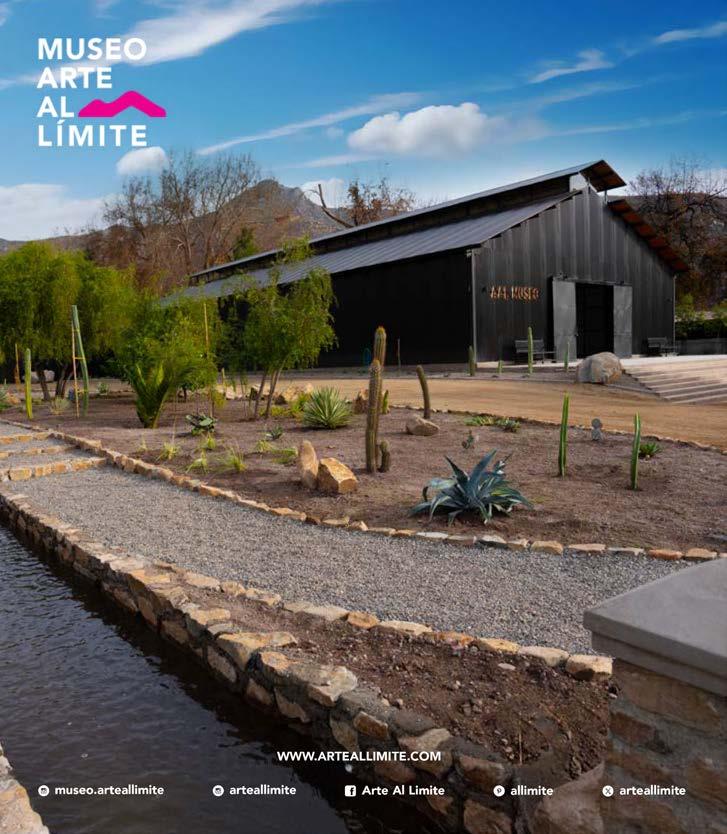
En este contexto de cambios y proyecciones, Museo Arte Al Límite presenta sus próximas exposiciones. La mujer en el centro creativo será el eje de la muestra curada por Marisa Caichiolo, donde una mirada sensible basada en la colección de cuatro mujeres chilenas ocupará los muros del espacio, con la exposición Ella, en Foco. Junto a esta muestra, se realizará una nueva edición de Pangue, Festival de Video Arte, esta segunda versión propone reducir el número de creadores para profundizar en la praxis artística, priorizando temáticas ambientales y una perspectiva regional con impacto global. Así, el museo continúa reafirmando su compromiso con la reflexión crítica y la visibilización de voces contemporáneas en un escenario artístico en permanente transformación.
the international art circuit continue to expand its frontiers. The arrival of Art Basel in Qatar marks a milestone in consolidating the Middle East as a burgeoning cultural and financial hub, highlighting the region’s commitment in establishing itself on the global stage of contemporary art. This movement does not only broaden the market; it redraws traditional dissemination pathways for artwork, artists and collectors, shifting the dominant historical route between the US and Europe—and also China over the last 20 years—and giving way to an increasingly broader stage.
In Latin America, the art-related events calendar remains in the south, where Ch.ACO in Chile and Pinta in Peru continue to nurture the art ecosystem and open spaces for the visibility and trade of the work by the continent’s artists.
Meanwhile, in Spain, galleries have led an unprecedented weeklong strike to protest increased taxes and fees that surpass those of other European countries, evincing the tensions in the sector. Debate about economic sustainability, taxation and cultural policies becomes a pressing issue once again. How can we sustain art production in contexts where conditions for dissemination become more and more restrictive?
In addition to these transformations, the advent of technology and artificial intelligence continues to redefine methods of art creation, exhibition and circulation. Both museums and cultural centers have started to incorporate immersive experiences and digital devices to broaden the relationship between artwork and viewer, offering sensory journeys that blur the limits between the physical and virtual. These new methods of showcasing art do not merely respond to technological innovations, but the need to attract wide audiences and provide significant experiences in a world saturated by images.
In this context of change and possibilities, AAL Museum presents its upcoming exhibitions. Women at the core of creation is the foundation of the sample Her, in Focus, curated by Marisa Caichiolo, which takes over the museum walls to offer a sensible look into the collections of four Chilean women. Along with the exhibition, comes a new edition of the Pangue Video Art Festival. The aim of the second edition of the festival is to reduce the number of creators to examine their artwork more thoroughly, prioritizing environmental themes and regional perspectives with global impact. Through these upcoming shows, the museum continues to reaffirm its commitment to critical thinking and to amplify contemporary voices in a constantly evolving art stage.


DIRECTORES
Ana María Matthei
Ricardo Duch Marquez
DIRECTOR COMERCIAL
Cristóbal Duch Matthei
DIRECTORA DE ARTE Y EDITORIAL LIBROS
Catalina Papic
PROYECTOS CULTURALES
Camila Duch Matthei
EDITORA
Elisa Massardo
DISEÑO GRÁFICO
María Nestler
CORRECCIÓN DE TEXTOS
Javiera Fernández
ASESORES
Benjamín Duch Matthei
Ricardo Duch Matthei
Milagros Duch Matthei
Felipe Duch Matthei
REPRESENTANTES INTERNACIONALES
Julio Sapollnik (Argentina)
REPRESENTANTE LEGAL
Orlando Calderón
TRADUCCIÓN
Adriana Cruz
SUSCRIPCIONES
info@arteallimite.com
IMPRESIÓN
A Impresores
DIRECCIONES
Chile / Francisco Noguera 217 oficina 30, Providencia, Santiago de Chile. www.arteallimite.com
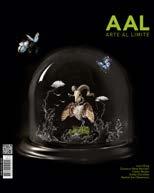
PORTADA
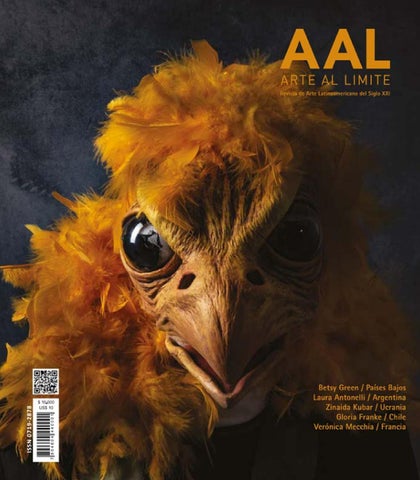
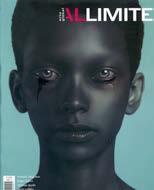
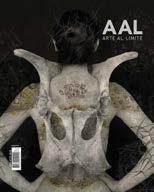
Laura Antonelli. De la serie El País de las Maravillas , Sin título, 2023, toma directa, papel epson luster 260 mg, 120 x 80 cm. Ed. 1/15VENTA PUBLICIDAD +56 9 99911933. info@arteallimite.com marketing@arteallimite.com
Derechos reservados
Publicaciones Arte Al Límite Ltda.



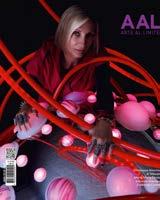
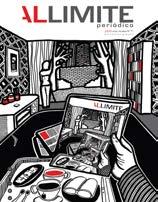
arte Al Límite cumple 25 años celebrando una trayectoria sostenida en el arte contemporáneo nacional e internacional. Como plataforma independiente dedicada a la difusión del trabajo de cientos de artistas —a través de su participación en bienales, ferias de arte, exposiciones y diversos eventos que sostienen este ecosistema—, ha establecido redes de colaboración y una participación activa en el circuito.
Revistas impresas y online, periódicos, libros, sitio web y redes sociales han sido producidos por Arte Al Límite durante largo tiempo, con la intención de mantenerse en la vanguardia del arte, entregando una plataforma válida y de gran valor para distribuir creaciones de los artistas con los que hemos trabajado durante años y que son la base de nuestra existencia. Junto a ello, la inauguración de Museo Arte Al Límite consolida nuestras intenciones, esta vez con un espacio expositivo de alto interés nacional e internacional.
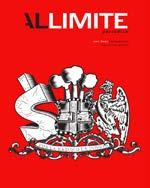
Arte Al Límite ha sabido adaptarse a los cambios del contexto mundial sin perder su identidad. Su labor ha sido clave para construir archivo y pensamiento en torno al arte contemporáneo latinoamericano, ampliando el acceso a discursos curatoriales, entrevistas, perfiles y registros que hoy forman parte de un acervo cultural fundamental para las futuras generaciones. En este proceso de renovación constante, hemos decidido actualizar nuestra imagen con un cambio de logo que promueva los movimientos propios de las artes visuales, mostrando que somos una plataforma viva, que se transforma y mira hacia el futuro sin olvidar su historia.
Un espacio no existe sin liderazgo
La trayectoria de Ana María Matthei, fundadora y directora de Arte Al Límite, está estrechamente ligada a esta experiencia. Su trabajo en gestión cultural nace desde la necesidad de crear espacios independientes para el arte contemporáneo. Galería Matthei fue el punto de partida: un lugar decisivo, que se surgió como una manera de entender la gestión cultural de Santiago y regiones de Chile, buscando acompañar la internacionalización de cada artista que representaba.
Ese impulso inicial fue el origen de Arte Al Límite como un proyecto de largo aliento, cumpliendo hoy 25 años. “Han sido tiempos maravillosos, de mucho esfuerzo. Un trabajo constante, que se realiza con el apoyo de mi familia y muchos colaboradores para mantener esta plataforma, generando un círculo virtuoso junto a artistas, instituciones y agentes del arte a nivel nacional e internacional. Promovemos el arte contemporáneo, a sus creadores y a nuestro país, posicionándolos en todo el mundo”, señala su fundadora.
arte Al Límite celebrates 25 years of sustained success in national and international contemporary art. As an independent platform dedicated to promoting the work of hundreds of artists through biennials, art fairs, exhibitions, and other events that sustain this ecosystem, AAL has fostered collaboration networks and active participation in the art world.
For a long time, AAL has published print and online magazines, bulletins, books, and managed a its website and social media, striving to stay at the forefront of art. To do so, it offers a valuable and robust platform for disseminating the creations of the artists we have worked with for years, who are the foundation of our existence. Moreover, the inauguration of AAL Museum consolidates our intentions—this time with an exhibition space of great national and international interest.
AAL has managed to adapt to changes in the global context without losing its identity. Its work has been key to building an archive and discourse around Latin American contemporary art, broadening access to curatorial narratives, interviews, profiles, and records that are now part of a fundamental cultural heritage for future generations. In this process of constant renewal, we have decided to update our image with a new logo that promotes the shifts inherent to visual arts, showing that we are a living platform that evolves and looks to the future without forgetting our history.
A space cannot exist without leadership
Ana María Matthei’s career, founder and director of AAL, is closely linked to this experience. Her work in cultural management stems from the need to create independent spaces for contemporary art. Galería Matthei was the starting point: a pivotal hub conceived as a way of understanding cultural management in Santiago and other regions of Chile that sought to support the internationalization of each represented artist.
That initial drive was the origin of AAL, a long-term project that is now celebrating its 25th anniversary. “These have been wonderful times, requiring a lot of effort. It has been constant work, carried out with the support of my family and the many collaborators that sustain this platform, creating a virtuous circle with artists, institutions, and art agents both nationally and internationally. We promote contemporary art, its creators, and our country, positioning them around the world,” says the founder.
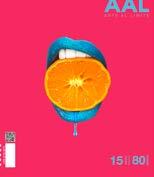
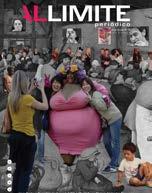
“Un aporte que favorece el prestigio que la cultura chilena posee en el escenario global”,
Julio Sapollnik, crítico de arte, Argentina.
“Es una impresionante revista, que ha tenido una gran duración en el tiempo”,
Guillermo Bert, EE.UU.-Chile.
“Es importante la difusión de arte contemporáneo a nivel global que realiza Arte Al Límite”,
Ariana Macedo Domínguez, artista visual, Perú.
“AAL tiene un gran compromiso por visibilizar el arte contemporáneo en Chile y el extranjero”, Bernardita Garib, artista visual, Chile.
“AAL, es un ejemplo de constancia, perseverancia y creencias en arte latinoamericano, sin importar el contexto político o social”,
Erika Ewel, artista visual, Bolivia.
“Felicidades por la larga trayectoria, las revistas impresas son importantes hoy en día, así como los libros y las exposiciones en el museo”,
Luis Moro, artista visual, España-México.
“Felicito a Arte Al Límite por mantenerse en la actualidad y el arte por tantos años, resulta imprescindible su vigencia en el arte contemporáneo en América Latina”,
Milagro Torreblanca, artista visual, Argentina.
l a mujer en el centro creativo y como creadora. De esto se trata la próxima exposición curada por Marisa Caichiolo en Museo Arte Al Límite, donde una mirada sensible basada en la colección de 4 mujeres chilenas se toma los muros del espacio para una exposición única.
Junto a esta muestra, podremos ver una nueva versión de Pangue, Festival de Video Arte, con foco en América. Esta segunda edición busca reducir el número de artistas y propuestas para profundizar en la praxis artística, priorizando temas ambientales y una mirada regional con impacto global.
Ella, en Foco
Maya Castro, Geraldine Compton y Andrea Yarur Ready dialogan con la colección de Ana María Matthei y el Centro de Fotografía de Los Ángeles, institución invitada bajo la mirada de su directora Rotem Rozental. Entre las artistas que participan se encuentran Liliana Porter, Eugenia Vargas Pereira, Nicola Costantino, Aline Smithson, Bootsy Holler, Zaida González, Ana de Orbegoso, entre otras. De esta manera se busca cuestionar la relación entre la obra y su custodio, para comprender cómo una mirada femenina, sustentada por un marco de apoyo, negociación y circulación, puede configurar una narrativa que trasciende las fronteras de una pieza aislada.
¿Cuáles son los desafíos curatoriales que se enfrentaron en esta oportunidad?
Destaca consolidar un eje temático común, como así también armonizar las voces de coleccionistas chilenas con propuestas de prácticas internacionales en fotografía y con la visión de la curaduría, sin perder la singularidad de cada colección.
Se agrega la gestión de archivos y derechos, coordinar la revisión y el acceso a las fichas técnicas, correspondencias y material de archivo. Mantener el equilibrio entre lo íntimo y lo público. Traducir la intimidad del acto de coleccionar en una narrativa expositiva que dialogue con el público, respetando la privacidad de las coleccionistas y al mismo tiempo destacando sus aportes.
Ha sido interesante el diálogo intercultural para articular miradas de Chile, Estados Unidos y otros contextos curatoriales para construir una narrativa cohesionada que atraviese geografías. A ello se suma la integración de archivos como fuente de investigación, vinculado al archivo vivo de la colección AAL para que sirva de soporte interpretativo. En cuanto a la perspectiva de género, garantizar una curaduría que propicie una mirada femenina explícita y compleja, evitando esencialismos y promoviendo múltiples capas de interpretación.
women as creators at the core of creative hubs is what the next exhibition at AAL Museum is all about. Curated with a keen eye by Marisa Caichiolo, the sample takes over the exhibition space to showcase a unique exhibition with artwork from the collections of 4 Chilean women.
Alongside the exhibition, comes a new edition of the Pangue Video Art Festival, this time focusing on America. The second edition aims to limit the number of artists and proposals to examine artistic practices more thoroughly, prioritizing environmental issues and regional perspectives with a global impact.
Focus on Her
Maya Castro, Geraldine Compton, and Andrea Yarur Ready interact with the collections of Ana María Matthei and the Los Angeles Photography Center—a guest institution participating under the watchful eye of its director, Rotem Rozental. Featured artists include Liliana Porter, Eugenia Vargas Pereira, Nicola Costantino, Aline Smithson, Bootsy Holler, Zaida González, and Ana de Orbegoso, among others. The aim is to question the relationship between artwork and their custodians, to understand how a female gaze—backed by system of support, negotiation, and dissemination—can shape a narrative that transcends the boundaries of an isolated piece.
What were the curatorial challenges you faced this time around?
First, consolidating a common thematic thread and harmonizing the voices of Chilean collectors with both international photography practices and the curatorial vision, without losing the unique nature of each collection. Additionally, the management of archives and property rights was also challenging, i.e., coordinating the review and access to technical data sheets, correspondence, and archival material. Another challenging aspect was keeping the balance between the intimate and public. Translating the intimacy in the act of collecting into an exhibition narrative that the audience can engage with, while respecting the privacy of collectors but also highlighting their contributions. Intercultural exchanges have been interesting in articulating perspectives from Chile, the United States, and other curatorial contexts to construct a cohesive narrative that transcends geography. Likewise, integrating archival materials as part of the research, alongside the still growing AAL collection, served as interpretive support.
In terms of the gender perspective, the aim was to create a curatorship that emphasizes an explicitly female and complex perspective, ensuring that the essence of the artworks is not reduced and that multiple layers of interpretation are promoted.



¿De qué manera se integran las artistas de la colección a esta exposición? La propuesta conceptual propone que las coleccionistas mujeres sostienen y fortalecen la práctica de otras mujeres artistas. Las artistas concentran su enfoque en la imagen femenina desde una mirada contemporánea y una poética de lo femenino. Este diálogo no reduce la mirada a un único canon; la multiperspectiva subraya que la fotografía es un lenguaje compartido, capaz de atravesar geografías para revelar similitudes y diferencias en las historias de la mujer como artista, como coleccionista y como mediadora cultural. Con el Centro de Fotografía se establece un espacio de diálogo e intercambio. Las obras se exhibirán en todo su conjunto bajo la selección y mirada de la directora y curadora del Centro Rotem, generando una memoria compartida y una red de apoyo que trasciende fronteras. Ella, en Foco, como exhibición propone cuestionar la figura de la coleccionista como mero guardián de objetos. Ana María Mathei, con 25 años dirigiendo la revista AAL, se presenta como una catalizadora de trayectorias y gestora de redes. Este relato invita a celebrar el poder de la imagen y la colaboración femenina: cuando una imagen dialoga con su público y con otras voces (en este caso, otras coleccionistas), se teje un entramado de significados que enriquece la circulación cultural.
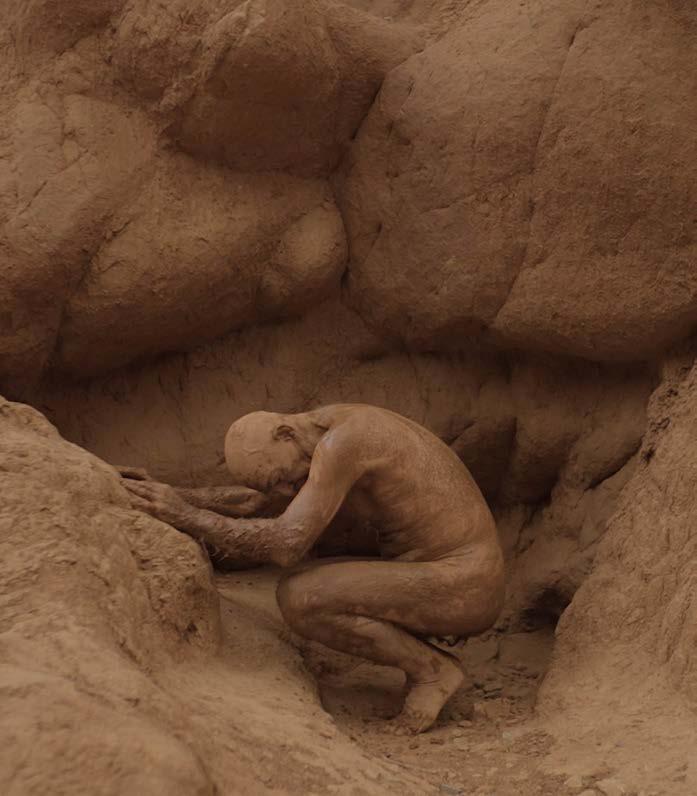
Pangue, Festival de Video Arte
El planeta y la naturaleza toman el centro de la exposición, con obras que destacan procesos, metodologías y los ritmos creativos de cada artista. De esta manera, el jurado seleccionará en torno a la profundidad de la presentación individual de cada obra y sobre las decisiones curatoriales que conectan los trabajos entre sí.
El jurado está conformado por Laura Ayala, curadora independiente, Guadalajara, México; Gustavo Ortiz, Director Museo de Arte Contemporáneo, Bogotá, Colombia; Julio Sapolnik, crítico de arte y curador, Buenos Aires, Argentina; Marisa Caichiolo, curadora, Building Bridges Art Foundation, Los Ángeles, EE.UU. Los premios, por su parte, serán otorgados por la Fundación Building Bridges Art Exchange, y serán denominados por Lidia & Eduardo Rubinstein, directores de la institución.
¿Cómo ha sido la recepción internacional de este proyecto?
La respuesta internacional ha sido muy positiva, de hecho sorpresivamente positiva, destacando el interés de curadores y públicos en torno a la mirada regional con alcance global. Ha habido interés en colaboraciones institucionales y en consolidar el festival como plataforma de intercambio entre comunidades artísticas diversas. Nuestra proyección incluye Nueva York, en Julio, y Baja California en Octubre de 2026. Esto permite fortalecer alianzas institucionales con partners previos de Building Bridges Art Foundation, como en el caso del Museo el Sol del Niño en Baja California, y nuevos que se han ido gestando con ambas instituciones encargadas del Festival el AAL Museo en Chile y la Fundación Building Bridges Art Exchange, en Estados Unidos.
¿De qué manera dialoga el Festival con la crisis climática y los incendios que asolan Chile y California anualmente?
Creo que nuestro enfoque es el compromiso temático. La mayor parte de las propuestas de artistas actuales aborda la temática climática y ecológica en crisis, desde incendios y degradación de hábitats hasta resiliencia comunitaria. La relevancia regional y global es que el festival sitúa estas narrativas en un marco global, conectando experiencias de Chile y California en EE.UU. (lugares donde están sus sedes creadoras Museo AAL y BBAX Foundation), y otros contextos afectados por desastres y cambios ambientales. El enfoque práctico y crítico es que se busca mostrar procesos creativos que no solo documentan, sino que cuestionan y proponen rutas de acción, promoviendo un diálogo informado entre artistas, comunidades y público, e invitando a la acción colectiva.
How are the female artists in the collection involved in this exhibition?
The conceptual proposal suggests that female collectors support and strengthen the practice of other female artists. The artists focus on the female image from a contemporary perspective and the poetry of womanhood. This dialog does not reduce the view to a single canon; multiple perspectives emphasize that photography is a shared language, able of crossing geographies to reveal similarities and differences in women’s stories as artists, collectors, and cultural mediators.
The Photography Center provides a space for dialog and exchange. The works will be exhibited in their entirety under the selection and supervision of the Center’s director and curator, Rotem Rozental, creating a shared memory and a support network that transcends borders.
Focus on Her is an exhibition that questions the role of the collector as a mere guardian of objects. Ana María Mathei—who has also been running AAL magazine for 25 years—represents a catalyst for careers and a network manager. This story invites us to celebrate the power of images and female collaboration. When the audience can engage with an image and with other voices—in this case, other collectors—it weaves a web that enriches cultural dissemination.
Pangue Video Art Festival
The planet and nature take center stage in the exhibition, with works that highlight the processes, methodologies, and creative paces of each artist. The jury will select winners based on the depth of each individual presentation and the curatorial decisions that connect the works.
The jury is composed of Laura Ayala, independent curator (Guadalajara, Mexico); Gustavo Ortiz, Director of the Museum of Contemporary Art (Bogotá, Colombia); Julio Sapolnik, art critic and curator (Buenos Aires, Argentina); Marisa Caichiolo, curator, Building Bridges Art Foundation (Los Angeles, USA). The awards will be presented by the Building Bridges Art Exchange Foundation and announced by Lidia & Eduardo Rubinstein, directors of the institution.
How has this project been received internationally?
The international response has been very positive—surprisingly positive, in fact. Curators and audiences have been interested in the festival’s regional perspective with global reach. There has been interest in institutional collaborations and in consolidating the festival as a platform for exchange among several artistic communities.
Our plans include New York in July and Baja California in October 2026. This allows to strengthen institutional alliances with Building Bridges Art Foundation’s previous partners—such as the Museo el Sol del Niño in Baja California—and new ones that have been established with both institutions in charge of the Festival, the AAL Museum in Chile and the Building Bridges Art Exchange Foundation in the United States.
How does the festival address the climate crisis and the fires that ravage Chile and California every year?
I believe our approach is thematic engagement. Most of the proposals from current artists address the climate and ecological crisis, from fires and habitat degradation to community resilience.
The regional and global relevance lies in the fact that the festival places these narratives within a global framework, connecting experiences from Chile and California in the US—where the headquarters of AAL Museum and BBAX Foundation are located—with other contexts affected by disasters and environmental changes. The practical and critical approach seeks to showcase creative processes that not only document but also question and propose courses of action, promoting informed conversations among artists, communities, and the public. And why not take collective action?

Por Julio Sapollnik. Crítico de arte (Argentina) Imágenes cortesía de la artista.
Representada por Galería Imaginario.
De la serie El País de las Maravillas , Sin título, 2021, toma directa, papel epson luster 260 mg,120 x 80 cm. Ed. 3/15.
Pasión por la creatividad
l aura Antonelli define su trabajo como la acción de fotografiar para descubrir lo invisible en lo cotidiano. Se trata de un desafío que sostiene la pasión por la creatividad, atravesada por la exaltación y la sorpresa ante la imagen hallada. Por ello no dudó en elegir como título El País de las Maravillas : una serie fotográfica que registra el encuentro notable con una imagen capaz de provocar asombro, a partir del empleo de una técnica nacida desde la excelencia.
La sucesión iconográfica se encadena mediante una estructura compositiva que le otorga cohesión visual y conceptual. Las figuras se asientan bajo la forma de pirámide o triángulo, reiterando una base ancha y un vértice superior. Este ordenamiento genera un ritmo fantasioso y a la vez, ligeramente delirante, mientras que la estructura triangular transmite estabilidad y solidez. La elección de esta composición —en la que el personaje ocupa el centro de la imagen— guía la mirada del contemplador hacia un recorrido natural, sin sobresaltos para el ojo, tal como ocurrió durante siglos con la figura renacentista.
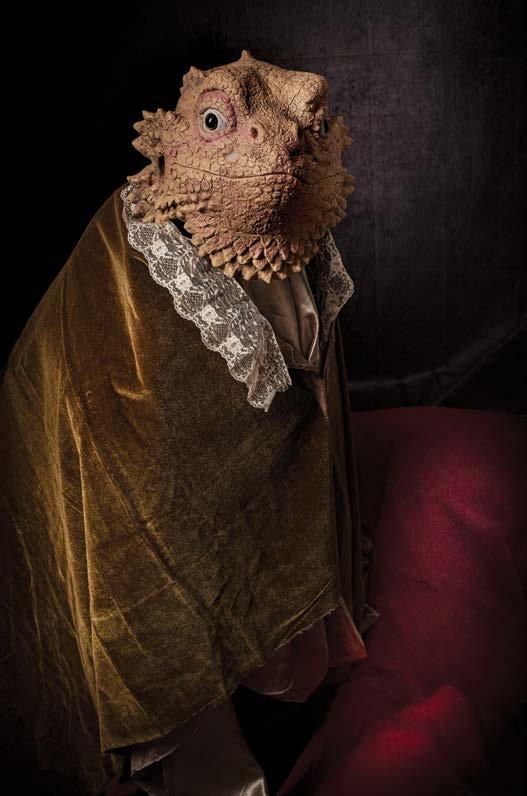
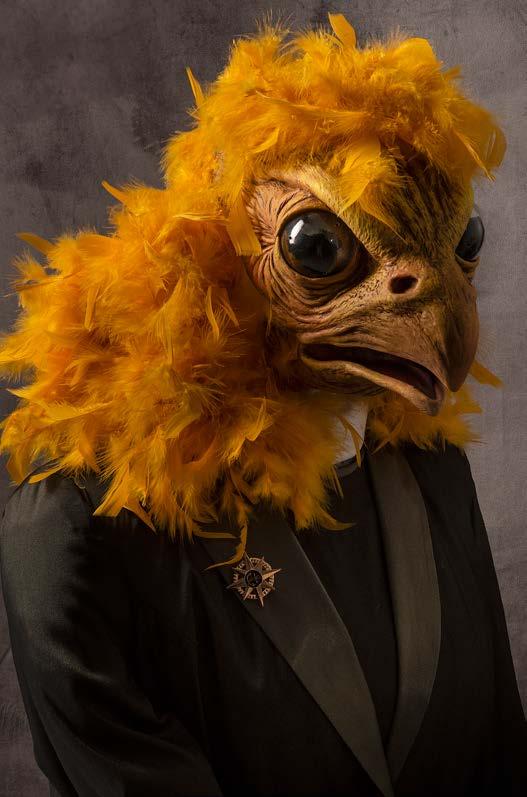
Antonelli trabaja sus fotografías mediante toma directa digital. Como si se tratara de retratos clásicos de Nadar, realizados a fines del siglo XIX —como los dedicados a Charles Baudelaire, Sarah Bernhardt o Franz Liszt—, la artista resignifica ese legado sustituyendo la figura humana por cuerpos híbridos: una hortaliza, un dinosaurio y otras combinaciones de animales, objetos y materiales que se adaptan a la forma humana.
Así reflexiona Laura Antonelli sobre su obra: “Toda imagen es una máscara: un espacio donde jugamos roles, negociamos apariencias y dejamos entrever nuestras fragilidades. En esa tensión, la obra nos recuerda que todos usamos máscaras y que cada gesto frente a la cámara —o frente a la vida— es también una forma de representación”.
Cabe preguntarse entonces por qué los personajes llevan máscaras. El rostro oculto se aleja del drama de lo humano, se muestra sin desaparecer. Como señala Byung-Chul Han, la máscara ya no se impone desde fuera: se interioriza; ya no llevamos máscaras, nos convertimos en ellas . La máscara deja de ser mero disfraz para convertirse en una falsa apariencia que encubre la identidad o las emociones. La artista comprende que el rostro es presencia: expone la verdad del ser. La máscara, en cambio, funciona como mediación; se interpone entre el yo y el mundo. El rostro mira; la máscara representa, oculta y abre la posibilidad de ser otro.
l aura Antonelli defines her work as the action of shooting photographs to discover invisible elements in everyday life. This challenge sustains her passion for creativity, heightened by the excitement and surprise of finding images. For this reason, she did not hesitate to title her photo series Wonderland (El País de las Maravillas), which captures the remarkable meeting of awe-inspiring images and her masterful use of technique.
The successive iconography is threaded by a compositional structure that lends the series visual and conceptual cohesion. The figures sit under a pyramidal or triangular shape with a wide base and a top vertex. This order creates a fantastical, yet slightly delirious rhythm, while the triangular structure conveys stability and robustness. The chosen composition—where characters take center stage in the image—guides viewers’ gaze on an organic journey, seamless to the eye, as it happened for centuries with Renaissance figures.
Antonelli captures photographs through direct digital shooting. Similarly to Nadar’s 19th century classic portraits of Charles Baudelaire, Sarah Bernhardt or Franz Liszt, the artist breathes new meaning to that photographic legacy, substituting human figures for hybrid bodies: a vegetable, a dinosaur, other animals, objects and materials that adapt to the human shape.
In regards to her work, Laura Antonelli reflects: “All images are masks: a space where we take on a role, negotiate appearances and reveal our weaknesses. In this tension, artwork reminds us that we all wear masks, and that every gesture before a camera—or in life—is also a form of representation.”
One might wonder then, why do the characters wear masks? The hidden faces remove themselves from human drama, showing themselves without disappearing. As Byung-Chul Han would state, the mask is no longer worn only on the outside—we interiorize it. We no longer wear the mask, we become it. The mask ceases being a mere costume, to become a false appearance that conceals identity and emotions. The artist regards faces presence: they expose the truth of the self. In turn, the masks serve as a mediation; it comes between the self and the world. While the face observes, the mask represents, conceals, and opens the possibility for another identity.
De la serie El País de las Maravillas , Sin título, 2025, toma directa, papel epson luster 260 mg, 120 x 80 cm. Ed. 1/15.
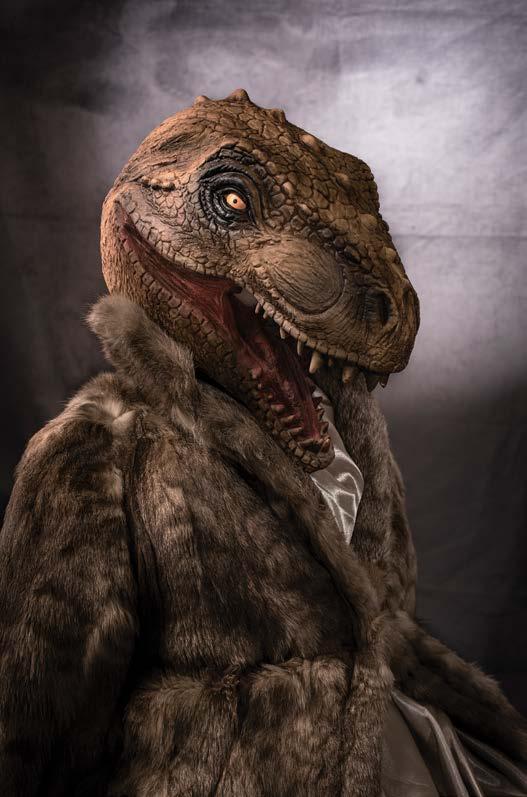
De la serie El País de las Maravillas , Sin título, 2025, toma directa, papel epson luster 260 mg, 120 x 80 cm. Ed. 2/15
De la serie El País de las Maravillas , Sin título, 2025, toma directa, papel epson luster 260 mg, 120 x 80 cm. Ed. 1/15.
Al contemplar estas imágenes, nuestra memoria cultural nos prepara para el acontecimiento que implica enfrentarnos a un rostro. Sea ave, hortaliza o dinosaurio, el encuentro con la máscara deviene en una forma abrupta que, frente a la hipocresía del mundo, grita un exceso de verdad. Georges Didi-Huberman afirma que ver es siempre perder algo, y en esta pérdida —la del rostro humano— la imagen gana potencia simbólica y poética.
En una de las fotografías, una de las figuras tiene el privilegio de sostener el libro “Alicia en el país de las maravillas”, texto en el que, al igual que en la imagen, las reglas de la lógica y la realidad se desvanecen. Esta referencia funciona como metáfora para explorar miedos y deseos en un mundo donde las normas se vuelven cada día más inestables y difíciles de comprender.
¿Por qué elegir una vaca para sostener el libro? La vaca simboliza la maternidad, la nutrición y la fertilidad; representa la vida y la no violencia. Su significado se extiende también a la calma y la serenidad. La imagen adquiere así una fuerte dimensión simbólica al unir fantasía y realidad, cuestionando la naturaleza de nuestras propias experiencias y percepciones. Toda la serie invita a reflexionar sobre cómo la mente humana procesa y comprende el mundo que la rodea, sugiriendo que la realidad es, en gran medida, una construcción subjetiva influenciada por el subconsciente, tal como señalara Roland Barthes al afirmar que “la fotografía es un mensaje sin código”, pero nunca sin interpretación.
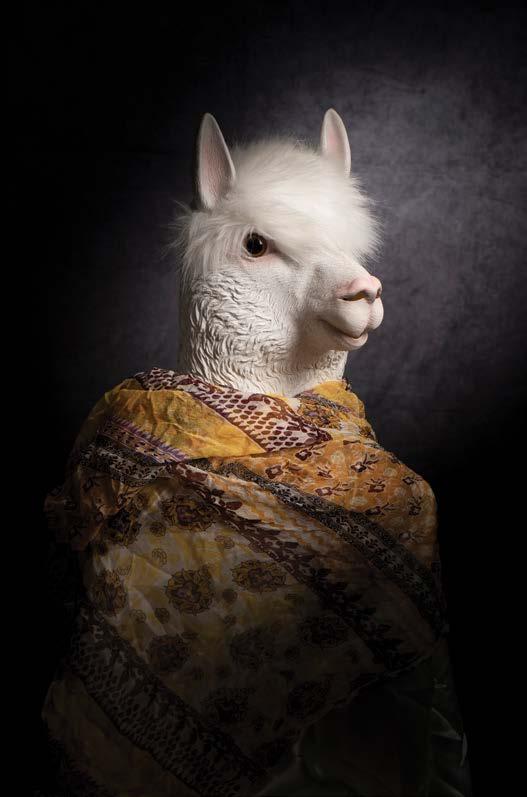
Algunas imágenes ponen en evidencia lo simbólico-colectivo, como sucede con la de la Alpaca. En el cosmos andino, la Alpaca representa un puente entre las personas y la Pachamama, la Madre Tierra. Consideradas regalos de la Pachamama, su presencia y bienestar reflejan el estado de la tierra y sus bendiciones. En otras representaciones invita a reflexionar sobre lo simbólico-individual.
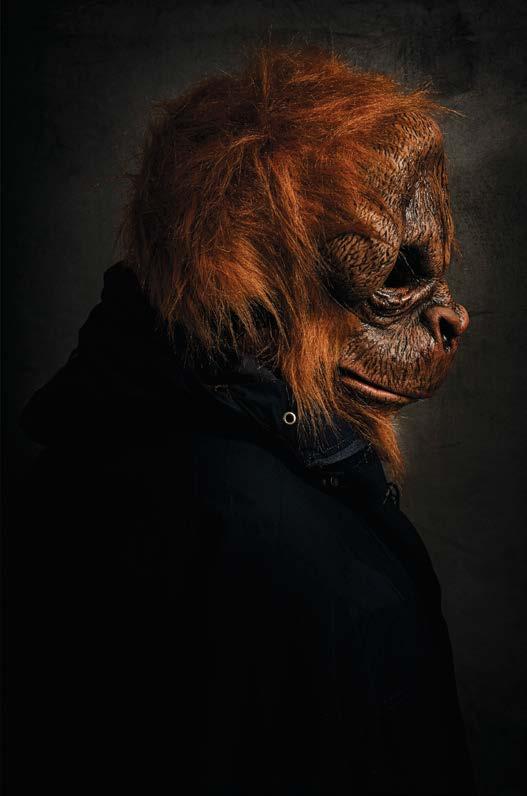
La fotografía del orangután, por ejemplo, destaca por su luz, color y textura. Su nombre proviene del malayo-indonesio “orang hutan”, que significa “persona del bosque” y se los considera seres sabios, en parte porque no hablan en exceso. La ciencia ha demostrado que los humanos comparten aproximadamente el 97 % de su ADN con estos primates, a partir de un ancestro común del que se separaron hace unos quince millones de años.
La serie El País de las Maravillas de Laura Antonelli se abre al público tanto por su capacidad de sorprender, como por la densidad conceptual de unas imágenes que invitan a pensar, a interrogar el sentido de lo visible y a reconocer que, detrás de cada máscara, la imagen sigue siendo un espacio de revelación.
Upon looking at these images, our cultural memory prepares us for the ordeal of encountering a face. Whether it be a bird, vegetable or dinosaur, the mask becomes an abrupt shape that speaks volumes on truth, in a world where hypocrisy rules. Georges Didi-Huberman argues that seeing always involves something slipping away. In this loss—the loss of the human face—images become powerful, symbolic, and poetic.
In one of the photographs, the figure has the privilege of holding the book Alice in Wonderland, a text that, just like the image, captures a world where the rules of logic and reality fade. The reference works as a metaphor to explore fears and wishes in a world where rules have become increasingly unstable and hard to understand.
And why choose a cow to hold the book? Cows symbolize maternity, nutrition, and fertility. They represent life and non-violence. Their meaning extends further, to calmness and serenity. The image thus acquires a compelling symbolic dimension by merging fantasy and reality, questioning the nature of our own experiences and perceptions. The entire series encourages reflection on how the human mind processes and understands the world around it, suggesting the reality is largely a subjective construction influenced by the subconscious—just as Roland Barthes states: “photography is a message without a code,” though never without interpretation.
In other pictures, an alpaca alludes to a collective symbolism. In Andean worldview, alpacas represent a bridge between people and Pacha Mama, or Mother Earth. Regarded as presents from Mother Earth, the presence and wellbeing of alpacas reflects the state of the Earth and its blessings. Other representations urge viewers to reflect on individual symbolism instead.
The picture of the orangutan, for instance, stands out for its lighting, color, and texture. The word orangutan comes from Malay-Indonesian “orang hutan,” which means “person of the forest,” and they are considered wise beings, partly because they do not talk excessively. Science has determined that humans share approximately 97% of their DNA with these primates, due to a common ancestor from whom they branched off some 15 million years ago.
The Wonderland series by Laura Antonelli unfolds before the audience both for its ability to surprise, as for the conceptual intensity of these thought-provoking images, prompting us to question the meaning of what is visible and to acknowledge that, behind every mask, images still constitute a space for revelation.
De la serie El País de las Maravillas , Sin título, 2023, toma directa, papel epson luster 260 mg, 120 x 80 cm. Ed. 1/15.
Por Ivón Figueroa Taucán. Magíster en Teoría e Historia del Arte (Chile) Imágenes cortesía de la artista.
mientras crecía, su padre tenía en casa un laboratorio de fotografía, un cuarto oscuro que permanecía con la puerta cerrada. Hasta entonces, era un lugar secreto donde no se podía ingresar, una fuente de preguntas, curiosidad y misterio. Al llegar a la adolescencia, él la invitó a esta zona prohibida de la casa donde se usaban químicos para transformar la realidad. Su padre amplió una fotografía y después le entregó un papel para sumergir en el revelador: lo entendió como magia y decidió que en la adultez quería dedicarse a ella, nunca tuvo dudas.
Cristina quería hacer magia como su padre, ingresar a una habitación oscura, impregnar papeles con sustancias y dirigir su paso a la luz. En su formación, fue central el contacto con la imagen, con los objetos que permiten crearla y, subsecuentemente, con el laboratorio, espacio central para su familia y vida personal.
¿Te sientes más familiarizada con la fotografía analógica o con la fotografía digital?
Yo me formé con la fotografía analógica al cien por ciento. La fotografía digital entra en mi vida de una forma un poco abrupta, porque me piden un trabajo para un periódico chileno que consistía en hacer fotografías del barrio de Coyoacán. Le dije a la persona del periódico, “¿te mando las imágenes en diapositiva o cómo las quieres?”. Y me respondió, “no, las quiero digitales”. Yo no tenía ni siquiera una cámara digital. Tuve que comprarla, aprender todo el proceso. Realmente son dos lenguajes y dos formas de trabajar muy distintas. Una cosa es lo analógico, el laboratorio, revelar la película, las impresiones, toda esta mística y magia. De un día para otro empecé a trabajar con bastante desconcierto, aprendí qué es JPG, qué es RAW y TIFF, usar Photoshop en vez de trabajar las imágenes en el laboratorio.
while she was growing up, her father had a film developing studio at home—a dark room that always had its door closed. At the time, it was a secret place, barred from entry and shrouded in questions, curiosity, and mystery. As a teenager, her father invited her into that previously forbidden area of the house, where chemicals were used to transform reality. He enlarged a photograph and gave her a paper to submerge in the developer. She understood this as magic and decided that was what she wanted to do as an adult, without any hesitation.
Cristina wanted to do magic just like her father: go into the darkroom, soak papers with substances, and guide them toward the light. During her training, handling images, the objects used to make them, and, subsequently, the darkroom, were crucial. The space became a cornerstone of her family and personal life.
Are you more familiar with analog or digital photography?
I trained with analog photography, 100%. Digital photography came into my life a bit abruptly. I was commissioned by a Chilean newspaper to shoot photographs in the Coyoacán borough. I asked my contact at the paper, “Should I send in the slide films? How would you like the pictures?” They answered: “No, I want digital images.” I didn’t even have a digital camera. In truth, analog and digital are two very distinct languages and approaches to the work. Analog photography is one thing. It is about the lab, developing film, making prints—a whole magical mystique. From one day to the next, I was quite startled to find myself working in a digital format. I had to learn what JPGs, RAWs, and TIFFs were and use Photoshop instead of developing my pictures.
Fue un momento muy conflictivo. Durante un tiempo, te confieso que estaba muy peleada con lo digital, porque una parte de mi trabajo consiste en el contacto con el material, el papel, el intervenir la imagen, el revelado de la película, todo eso para mí era la fotografía.
Hoy día no tengo una predilección, porque lo que he aprendido es que una parte de mi trabajo está hecha en digital, pero trabajada de forma híbrida, porque hago negativos digitales y después con esos negativos puedo trabajar cianotipia, impresión en platino paladio, incluso plata sobre gelatina. Ya una vez que me reconcilié con lo digital, empecé a trabajarlo como me gusta: haciendo el negativo a partir de la imagen digital.
¿Podrías compartir algunas reflexiones sobre tu serie más reciente, titulada Crecí a la sombra de los árboles (2024)?
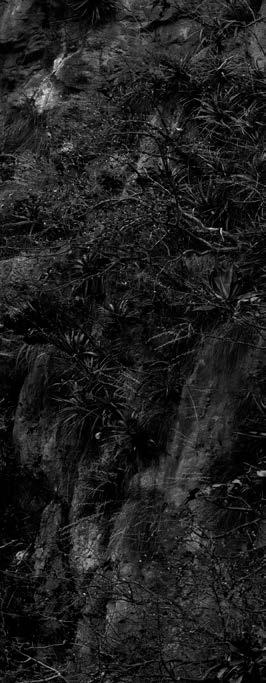
Es un proyecto que habla del tiempo y es muy autobiográfico, en el sentido de que hay toda una secuencia de imágenes que vienen desde hace muchos años a la fecha. Cuando yo empiezo a trabajar estas imágenes en torno a los árboles, se me empiezan a aparecer otras historias que no necesariamente tienen que ver conmigo, pero que funcionan como fuente de inspiración. Por ejemplo, el mito de Apolo y Dafne, que es una mujer que se transforma en árbol. Esa idea coincide con todo lo que estoy tratando de expresar a través de esas imágenes. También tiene que ver con mi infancia, en la que íbamos mucho al campo. Por otra parte, cuando vino el COVID, creo que hubo una reflexión en torno a la naturaleza como un ciclo de vida: algo muere y a la vez está surgiendo todo el tiempo. Todo eso se fue sumando hasta que surgió la exposición. Fue un viaje de magia, autobiografía y ciclos de vida.
¿Cuál es el lugar de las aves en este viaje?
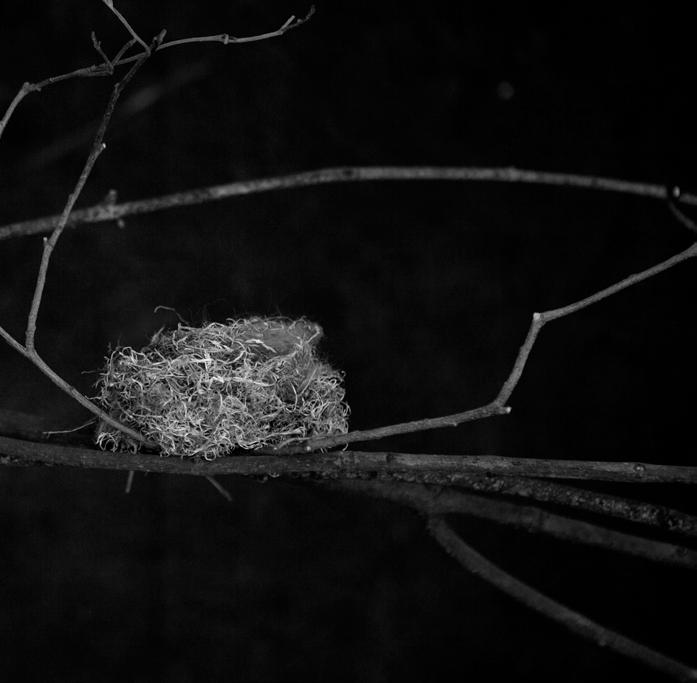
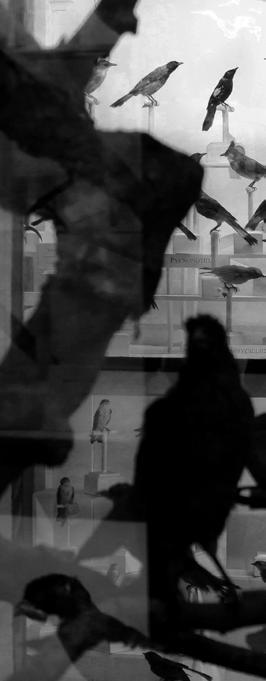
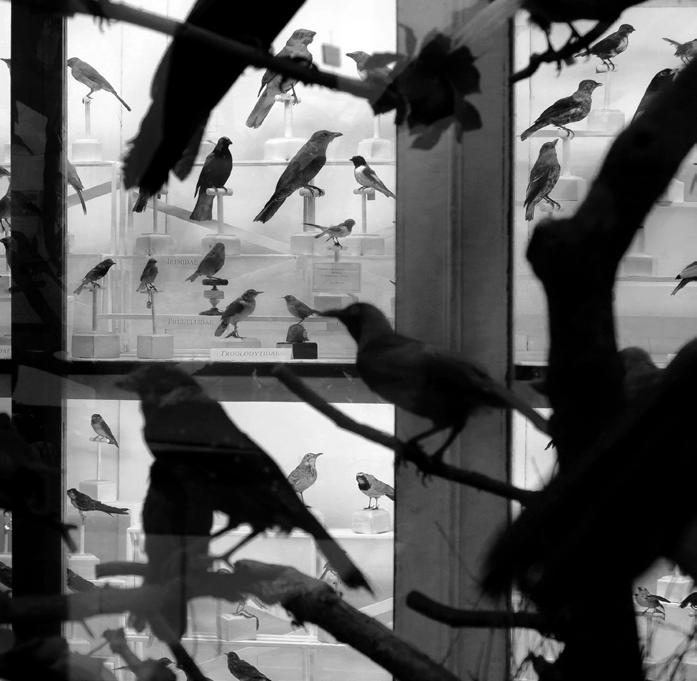
Me interesan los árboles y quienes los habitan. Tengo una pequeña terraza, un día encontré un nido que cayó ahí, lo guardé y se transformó en imagen. También me gustan mucho los museos de historia natural, donde sea que llegue me encanta visitar ese tipo de museos, a veces me
It was an unsettling time. I confess that, for a while, I was at odds with digital photography because a part of my work involves coming into contact with the material—the paper, intervening pictures, developing film—photography encompasses all that for me.
Nowadays, because what I’ve learned is that part of my work is done digitally, but it is also a hybrid. I make digital negatives and then with those negatives I can work with cyanotype, platinum palladium printing, even silver on gelatin. Once I made up with digital techniques, I started to work the way that I like, which involves creating negatives through digital images.
Could you share some insights into your most recent series, titled I grew up under the shadows of trees (2024)?
It is a project that speaks to time and is largely autobiographical, in the sense that it presents a sequence of images spanning many years to the present day. When I start working on these images of trees, other stories emerge that don’t necessarily relate to me, but they serve as a source of inspiration. For example, the myth of Apollo and Daphne, in which a woman is transformed into a tree. That idea coincides with everything I am trying to express through these images. It also has to do with my childhood, when we used to go to the countryside a lot. On the other hand, when COVID came along, I think it prompted a reflection on nature as a cycle of life: something dies, and simultaneously, something else emerges. All of that came together until the exhibition was completed. It was a journey of magic, self-discovery, and life cycles.
What role do birds play in this journey?
I’m interested in trees and the beings who inhabit them. I have a small terrace, and one day I found a nest that had fallen there. I kept it, and it became an image. I also really like natural history museums. Wherever I go, I love visiting them. Sometimes they sur -
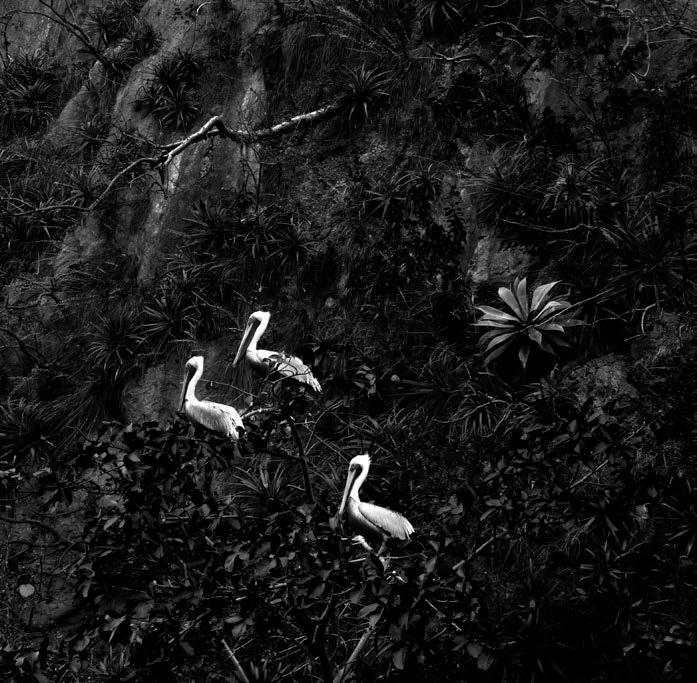
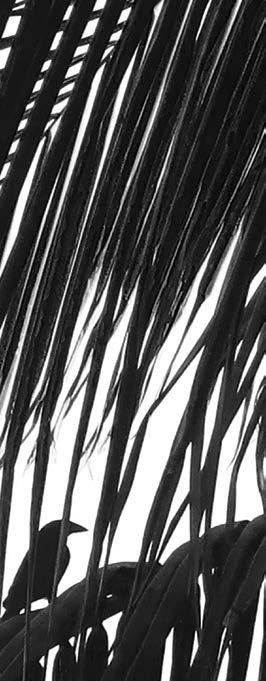
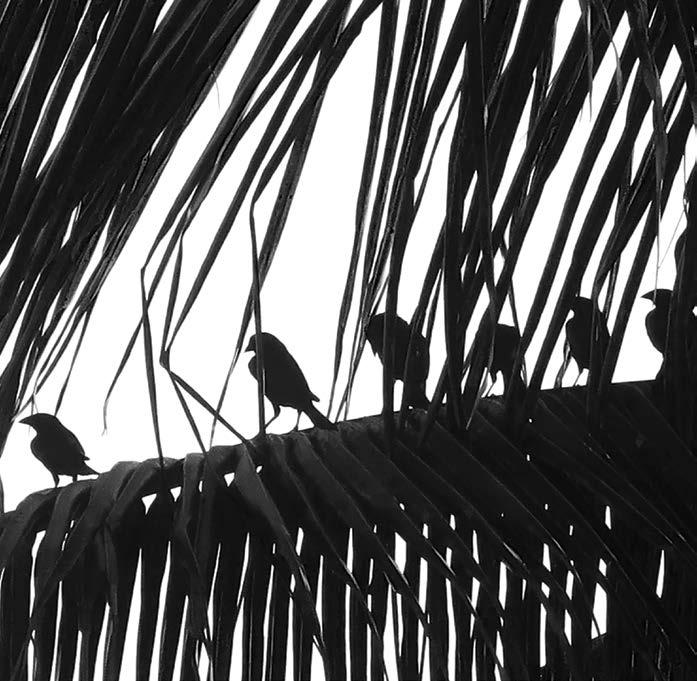
sorprenden más que los de arte por esta convivencia con los animales, pero de forma estática. Estoy constantemente viajando y una de las cosas que me interesa es la movilidad del ser humano, cómo te desplazas dentro del espacio, pero también cómo tu cuerpo se va transformando con el tiempo. Los pájaros reflejan mucho ese constante movimiento, estar en lugares diferentes, conocer gente y trabajar cosas nuevas. Hace poco me preguntaban si consideraba mi fotografía como mexicana y yo dije que no, porque realmente me identifico con muchas otras cosas, con muchos lugares.
Las aves son criaturas aladas que migran por los cielos, ¿cómo se sitúa tu obra en torno a ellas frente a la crisis migratoria?
Estamos viviendo un momento tremendo, sobre todo en México. Hay ciudades y poblados en la frontera que están vacíos, la gente tiene que migrar y actualmente no hay certezas sobre dónde están todas esas personas. A la vez, en México estamos recibiendo mucha migración por situaciones complejas para buscar una mejor posibilidad de vida. Los pájaros podrían ser una metáfora en torno a esto. Hay un libro persa llamado “El lenguaje de los pájaros”, que es una historia en la que hay un pájaro que pierde una pluma mientras está volando sobre China. Otros pájaros se juntan con la fascinación de esta pluma y organizan un viaje para buscar al que fue el portador, que resulta ser un Simurg, una criatura mitológica. Este libro es una metáfora del ser humano, porque a lo largo del recorrido, mientras tres mil pájaros pretenden encontrarlo, algunos se van quedando en el camino y al final solamente llegan treinta pájaros. La lectura de ese libro me llevó a otra escritora llamada Len Howard, una inglesa que convive con pájaros en su casa. El libro se llama “Los pájaros y su individualidad”, y plantea que incluso los pájaros que corresponden a una misma especie tienen personalidades distintas. Entonces, con esas lecturas a un lado, con el tema de los viajes, del desplazamiento, se fueron conformando las imágenes.
prise me more than art museums because of the communion with animals, but in a way that is static. I am constantly traveling, and one of the things that interests me is human mobility, how you move through space, but also how your body changes over time. Birds really embody that constant movement, being in different places, meeting people, and working on new things. Recently, I was asked if I considered my photography to be Mexican photography , and I said no, because I really identify with many other things, with many places.
Birds are winged creatures that migrate across the skies. How does your work relate to them in the context of the migration crisis?
We are living through a tumultuous time, especially in Mexico. There are cities and towns on the border that are empty; people have to migrate, and currently there is no certainty about where all these people are. At the same time, Mexico is welcoming a lot of migrants who are fleeing complex situations in search of a better life.
Birds could be a metaphor for this.
There is a Persian book called The Language of Birds, a story in which a bird loses a feather while flying over China.
Other birds are fascinated by this feather and organize a journey to find its owner, who turns out to be the Simurgh, a mythological creature. The book serves as a metaphor for humanity; as three thousand birds attempt to find the owner of the feather, many fall along the way, and ultimately only thirty make it. Reading that book led me to another writer named Len Howard, an Englishwoman who lives with birds in her home. The book is called “Birds as Individuals”, and it suggests that even birds of the same species have different personalities. With those readings in mind and focusing on travel and displacement, the images started to take shape.
Por Karla Siguelnitzky. Lic. en Historia del Arte (Chile)
Imágenes cortesía de la artista y Frock Gallery.
El paisaje como encuentro, tiempo y memoria activa
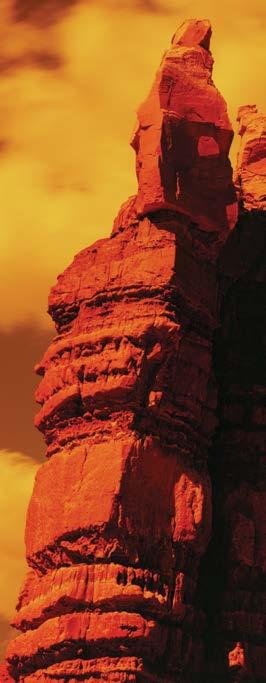
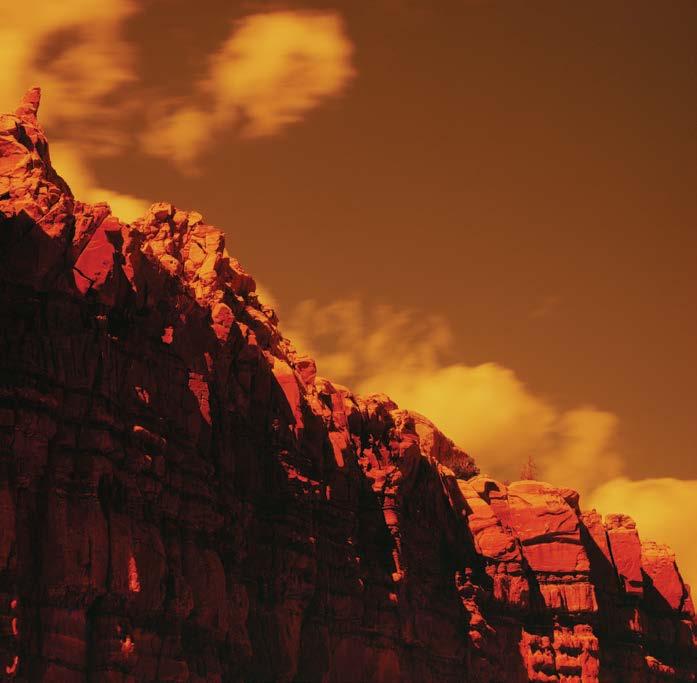
en un contexto marcado por la aceleración de la imagen y la sobreproducción visual, la obra de Betsy Green propone una relación radicalmente distinta con el paisaje y con el tiempo de la fotografía. Su práctica se sitúa en un espacio de atención sostenida, donde el territorio no se presenta como un motivo disponible para la captura inmediata, sino como una presencia compleja, atravesada por capas de experiencia, historia y memoria.
Landscapes as encounters, time and active memory
i n a world characterised by rapid images and an excess of visual content, Betsy Green’s artwork offers a fundamentally different approach to landscapes and the timing of photography. Her practice exists in a space of sustained attention, where the landscape is not simply a subject for quick snapshots but a complex presence that involves layers of experiences, history, and memory.
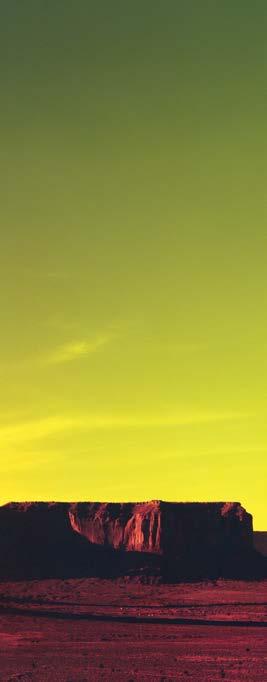
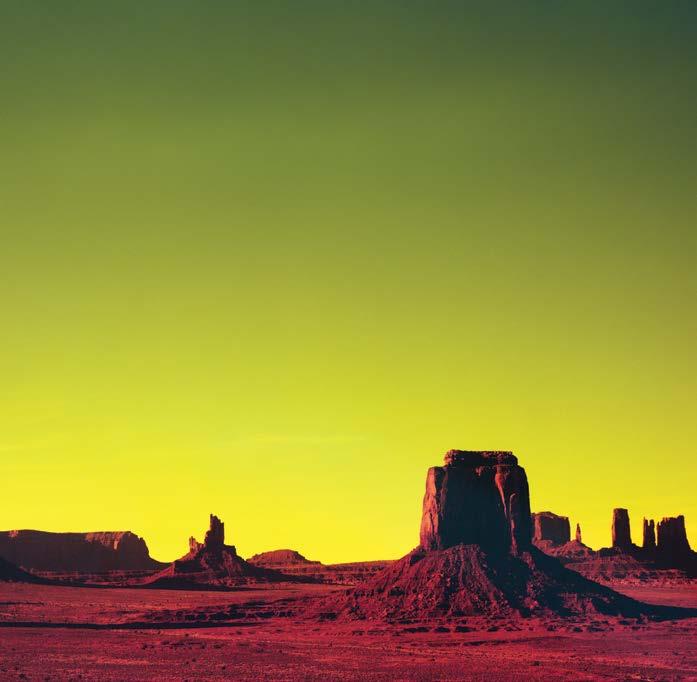
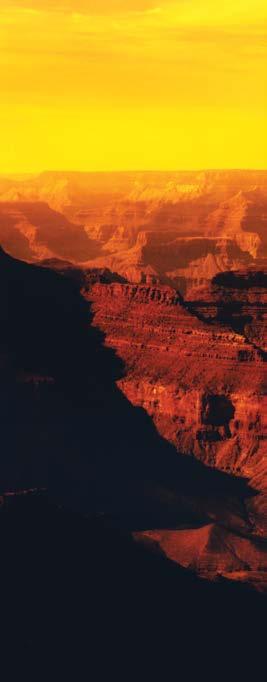
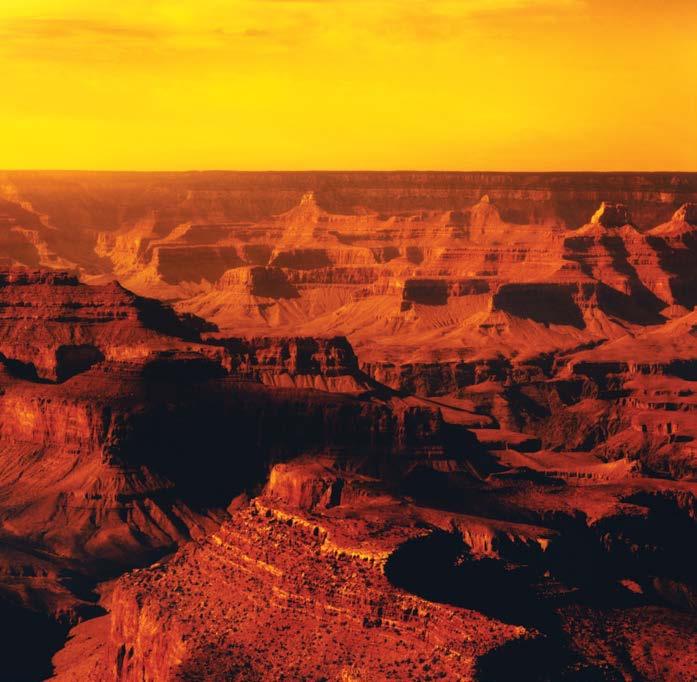
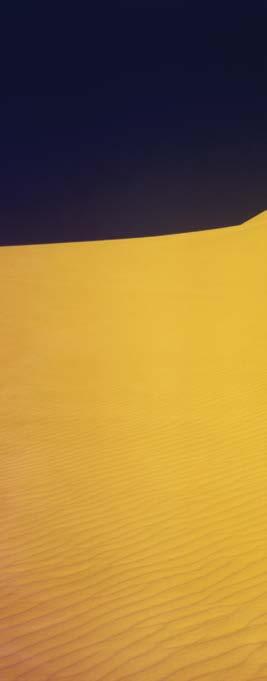
Esta aproximación se vuelve especialmente visible en American Sublime, un proyecto iniciado antes de la pandemia, en el que Green revisita algunos de los paisajes más emblemáticos del suroeste estadounidense. Lejos de reafirmar el imaginario romántico del viaje por carretera o la épica de la frontera, su trabajo introduce una mirada situada y crítica, consciente de las tensiones que atraviesan estos territorios: cuestiones relacionadas con el agua, la tierra y los derechos de quienes habitan esos espacios. La monumentalidad del paisaje convive así con aquello que permanece latente, no dicho, pero profundamente inscrito en el lugar.
Trabajando con una cámara de placas del siglo XIX combinada con película analógica de gran formato, Green introduce una temporalidad que desestabiliza la lógica dominante de la imagen contemporánea. Su elección técnica no responde a la nostalgia, sino a una necesidad material y corporal de estar con el paisaje, de habitar el acto fotográfico como una experiencia vívida. En sus imágenes, el paisaje no se fija ni se conserva: permanece abierto, disponible para nuevas lecturas y desplazamientos.
Esta entrevista propone un recorrido por los ejes centrales de su investigación artística: el paisaje como memoria activa, la tecnología como toma de posición estética, la fotografía como experiencia encarnada y la contención formal como respuesta crítica a la saturación visual y narrativa del presente. Más que declarar significados, la obra de Betsy Green invita a construirlos lentamente, desde el tiempo, la persistencia y una forma de mirar que entiende el paisaje no como imagen, sino como relación.
This approach becomes evident in American Sublime , a project she started before the pandemic, in which Green revisits some of the most emblematic landscapes of the Southwestern United States. Far from reaffirming the romanticized imagery of road trips or the epic of borders, her work introduces a well-grounded, critical eye, aware of the tensions plaguing territories: issues related to water, land ownership, and the rights of inhabitants. The monumental nature of landscapes coexists with hidden, untold subjects that are deeply rooted in place.
Using a 19th century plate camera and large-format analogue film, Green creates a sense of time that destabilizes the dominant logic of contemporary images. Her chosen technique does not answer to nostalgia, but to a material and corporeal need to exist in the landscape and to inhabit the act of photography as lived experience. In her images, landscapes are not fixed or preserved—they remain open, available for new interpretations and displacement.
In this interview, she proposes a journey around the central axes of her artistic quest: landscapes as active memory, technology as an aesthetic stance, photography as embodied experiences, and formal containment as a critical response to current visual saturation and narratives. Betsy Green’s artwork goes beyond proclaiming meaning; it invites slow construction, persistence over time, and an observational approach that the landscape not as a mere image, but rather as a relationship.
Tu trabajo se despliega en paisajes que parecen resistir una lectura de meras imágenes. Desde tu investigación artística, ¿cómo entiendes el paisaje hoy?
Hoy entiendo el paisaje como tres cosas: una representación cultural, una experiencia física y una forma de memoria activa que emerge con el encuentro. Nunca escojo los paisajes a fotografiar de forma aleatoria. Intencionalmente selecciono lugares que tienen diversas referencias y que investigo con antelación. Asimismo, el acto de observar y crear funde lo estudiado con lo intuitivo. Siempre parto de una conexión personal y emocional con el paisaje como algo activo y presente.
El uso intencional de tecnología anacrónica introduce una temporalidad que se distingue de la lógica dominante de la creación de imágenes contemporáneas. Más allá de una elección técnica, ¿podría el uso de una cámara de placas entenderse como una postura en contra de la aceleración y producción masiva de imágenes?
Si bien la tecnología es anacrónica, la combino con película análoga moderna. Sus propiedades—la existencia tangible y física de la película— son esenciales para mi proceso. El trabajo físico con película real y una cámara de gran formato es visceral. Me vuelvo una con la cámara.
Sí es una declaración, pero no de activismo. Se trata más de presencia y encarnación que de oposición.
Your work unfolds within landscapes that seem to resist being read as mere images. From your artistic research, how do you understand landscape today?
I understand landscape today as all three together: as a cultural representation, a physical experience, and as a form of active memory that emerges through encounter. The landscapes I choose to photograph are never random. I deliberately select locations that carry multiple known references and that are researched beforehand. At the same time, it is the act of seeing and making that binds the studied to the intuitive. I always begin from a personal, emotional sense of connection to the landscape as something active and present.
Your deliberate use of an anachronistic technology introduces a temporality that stands apart from the dominant logic of contemporary image-making. Beyond a technical choice, could the use of a plate camera be understood as a position taken against visual acceleration and the mass production of images?
It is an anachronistic technology, but one that I combine with modern analogue sheet film. The properties of film —its tangible, physical existence— are essential to my process. Physically working with real film and a large-format camera is visceral; I become one with the camera.
Yes, it is a statement, but not an activist one. It is more about presence and embodiment than opposition.
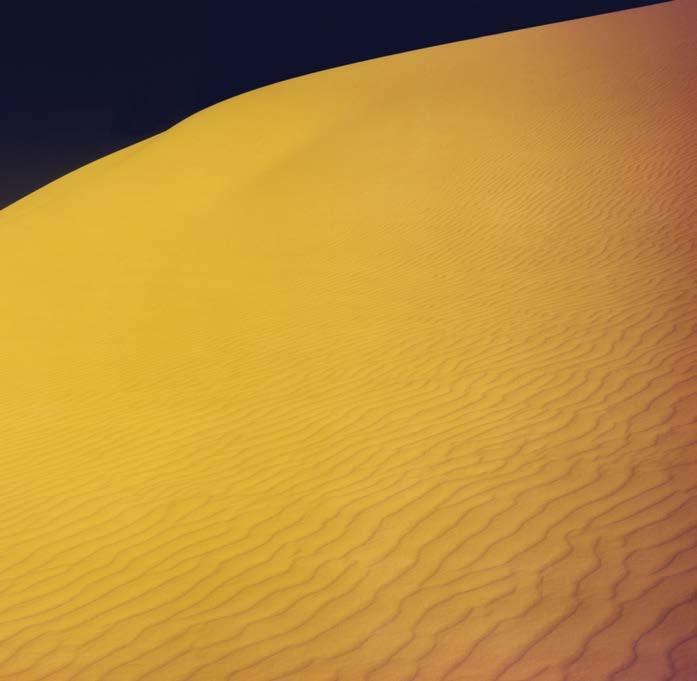
En muchas de tus fotografías, el paisaje no parece fijo o conservado, sino suspendido en un estado de latencia. ¿Concibes la fotografía como un espacio en que la memoria no solo se archiva, sino que se activa de manera inestable, abierta al desplazamiento y nuevas lecturas?
Para mí, la memoria no se archiva, se vive.
Incluso cuando busco ciertas condiciones adrede, el proceso depende del estar plenamente presente en el momento: observar, esperar y seleccionar lentamente. La fotografía se activa de formas inesperadas, abiertas a la disociación, imaginación y nuevas interpretaciones. Permanece inestable, ultraterrenal y abierta.
En un momento en que la fotografía de paisaje se ve marcada cada vez más por discursos ecológicos, extractivos y posthumanos, tu obra evita los gestos explícitos y opera con un control formal y preciso. ¿Te parece que el silencio, la distancia y lo inconcluso son estrategias claves para responder a la saturación visual y narrativa actual?
El silencio, la distancia y lo inconcluso son referencias a la condición humana, sin depender de una narrativa explícita. Facilitan una lectura más universal e inferida.
Mi postura se opone a la saturación visual y narrativa actual. Creo que el significado se construye, no se declara. Requiere tiempo, persistencia, aprender cómo observar lo que ya existe, y paciencia. No se trata de documentar, sino de interpretar el paisaje como una experiencia transformadora.
In many of your photographs, the landscape does not appear to be fixed or preserved, but rather held in a state of latency. How do you conceive photography as a space in which memory is not archived, but activated in unstable ways, open to displacement and renewed readings?
For me, memory is not archived, it is lived.
Even when I intentionally seek certain conditions, the process depends on being fully present in the moment: observing, waiting, and selecting slowly. Photography becomes activated in unforeseen ways, open to dissociation, imagination, and renewed readings. It remains unstable, otherworldly, and open-ended.
At a moment when landscape photography is increasingly shaped by ecological, extractive, and posthuman discourses, your work avoids explicit gestures and operates through a precise formal restraint. Do you see silence, distance, and incompleteness as critical strategies in response to visual and narrative saturation today?
Silence, distance, and incompleteness are all referential to the human condition, without relying on an explicit narrative. They allow for a more universal, inferred reading.
My stance is opposed to the visual and narrative saturation of today. I believe meaning is built, not declared. It requires time, persistence, learning how to see what is already there, and patience. This is not about documenting, but about interpreting the landscape into a transformative experience.
Lucía Rey Orrego. Académica e investigadora independiente (Chile)
Imágenes cortesía de la artista y ©Lafotogràfica.
Representada por Pigment Gallery.
Ama: cuando lo femenino desciende a las profundidades del mar
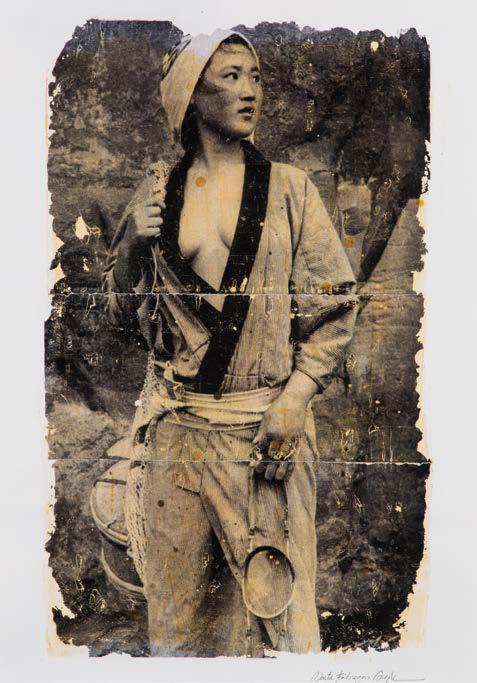
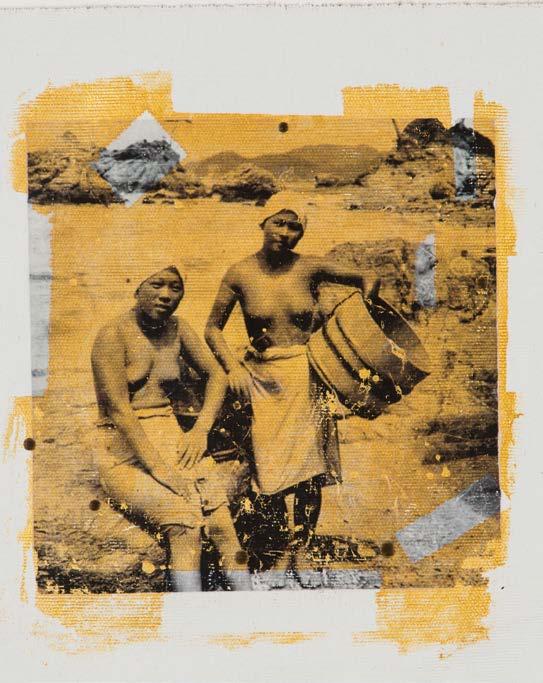
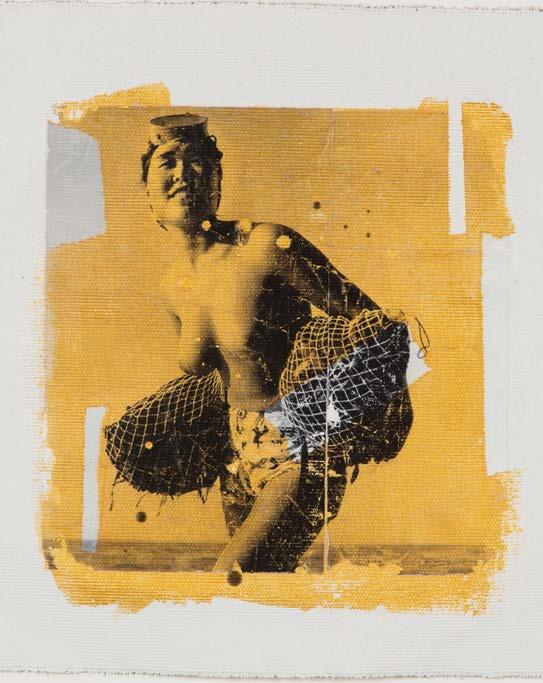
as Ama fueron y son mujeres buceadoras de las costas de Japón, recolectoras de perlas y mariscos en la profundidad del mar a pulmón libre, siendo parte de una práctica ancestral, cuya antigüedad llega a los 2000 años, y que, principalmente debido a la pesca industrial, hoy corre el riesgo de desaparecer. Las obras aquí presentes forman parte de la serie homónima, gestada en el contexto de una investigación artística enfocada en la revisión crítica de los imaginarios femeninos heredado s, observando, especialmente la relación de la mujer y la naturaleza, para construir artísticamente narrativas mnémicas que nutran los feminismos contemporáneos.
La artista busca rescatar estas memorias femeninas específicas que han sido silenciadas por el ruido del mundo industrial, como también contribuir al acervo mnémico del mundo premoderno, en donde la mujer tuvo una connotación de independencia, tanto en la recolección de alimentos como en la crianza, en un vínculo sabio y respetuoso con la naturaleza. Estos archivos trabajados desde el arte portan una memoria de resistencia que muestra una forma de existencia opuesta a los modelos extractivistas y patriarcales del sistema – mundo que hoy nos asfixia.
Poniendo un horizonte ancestral como guía hacia el futuro en el presente, la artista rescata archivos de los años 1920 al 1940, que son registros fotográficos de la vida, el trabajo y rituales de estas mujeres Ama, documentadas por el antropólogo italiano Fosco Maraini. Aunque sus fotografías tienen gran valor documental, también pueden ser vistas críticamente como un ojo que mira la otredad y el cuerpo femenino unido a la naturaleza.
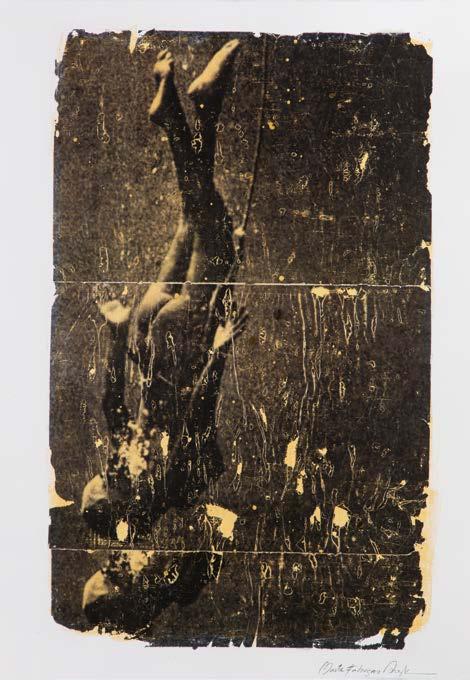
Con su impulso intuitivo, la artista se propone modular las imágenes de estos archivos en una poética visual que potencia sus sentidos simbólicos como donación para el presente, a través de lo que ella llama una transfotografía, intervenida con pintura acrílica de color dorado. La artista traslada a blanco y negro las fotografías de archivo en un proceso manual de reactivación, que combina con la intervención pictórica en dorado, lo que hace que la paleta cromática se reduzca para eliminar cualquier otro color, evitando lecturas decorativas.
La apertura a lo que no se controla o calcula es relevante en la poética del arte, pues hace que la pieza sea irrepetible. Fàbregas comenta que el proceso de transferencia es central en estas obras, pues en ese procedimiento la imagen se comporta de forma completamente imprevisible, dando espacio a cierta pérdida de “información” material que potencia la imagen visual, como si se tratara de una falta en el archivo, metáfora de una memoria erosionada, pero activada artísticamente. El pálpito de la memoria en la imagen artística se subraya en el fallo, en la ausencia de la totalidad, que literaliza el recuerdo. Cada transferencia es única, como únicas e intransferibles son las memorias de las experiencias en las profundidades. El procedimiento técnico desplegado en cada obra resuena como una ritualidad, que no busca reproducir, sino invocar el contenido simbólico que desborda en ellas, tras la donación de s í que la artista realiza en cada imagen.
Ama: When women descend into the depths of the sea
ama were—and still are—female freedivers on the coasts of Japan who collect pearls and shellfish from the depths of the sea. They are part of an ancestral practice that dates back 2,000 years and is currently at risk of disappearing, mainly due to industrial fishing. The works depicting Ama in this article comprise Fabrega’s namesake series, created within the framework of an artistic research project that critically reviews inherited female imagery , particularly focusing on the relationship between women and nature to build memory-based art narratives that nurture contemporary womanhood.
The artist seeks to portray these specific female memories that have been silenced by the noise of the industrial world and to contribute to the pre-modern world’s memory heritage, where women enjoyed a sense of independence, both in gathering food and in their upbringing, and in a wise and respectful relationship with nature. These archival records, crafted through art, carry a memory of resistance, revealing a way of life that stands in contrast to the extractivist and patriarchal models of the current system—a world that suffocates us.
Extending the horizon from this ancestral practice to guide the future at present, the artist salvages 1920-1940s archival photographic records of Ama women’s lives, work, and rituals, documented by Italian anthropologist Fosco Maraini. While these photographs hold significant documentary value, they can also be critically analyzed, showcasing otherness and female bodies communing with nature.
With her intuitive drive, the artist endeavors to articulate these archival images into visual poetry, heightening their symbolic meaning. This exercise serves as a ‘donation’ for the present, a gesture she coins ‘transphotography’—that is, images intervened with gold acrylic paint. The artist renders the photographic records in black and white, through a manual reactivation process she combines with a golden pictorial intervention, thus reducing the color palette to avoid interpretations that might classify them as merely decorative.
Being open to uncontrolled and uncalculated gestures is relevant in the poetry of art, as it makes pieces unrepeatable. Fàbregas comments that the transference process is essential for these artworks, since the images’ behavior during the procedure is entirely unpredictable. The transference gives way to a sort of “data” loss of the original material, which boosts the visuals, making the images seem like flaws in the archive, a metaphor for an eroded memory, but one that has been artistically activated. The flaws further emphasize the beating memories in the artistic images, the absence of the whole that makes recollections literal. Every transference is unique, just as the memories of the experiences in the depths of the sea are unique and untransferable. The technical procedure that unfolds with every piece echoes a ritual that does not aim to reproduce, but evokes the symbolic content that overflows from them, after the artist’s own ‘donation’ to the images.
Ama no13 , “Recolectoras de perlas Japón, 1929”, 2024, transfotografia sobre lienzo y acrílico a partir de fotografía antigua, 26 x 26 cm. Pieza única.
“La ecoespiritualidad, como el desarrollo de la sensibilidad profunda por el otro y el entorno, es también un nivel sutil de orden complejo que emerge y se manifiesta en el devenir de la evolución”
Ana M. Llamazares
El pensamiento científico busca explicar y sistematizar la realidad; mientras que el simbólico busca comprenderla mediante la propia experiencia del encuentro con lo que ella oculta. Por ello Eliade indica en su “Tratado de Historia de las Religiones”, que “un símbolo siempre revela, cualquiera que sea el contexto, la unidad fundamental de varias zonas de lo real”. Estos aspectos ocultos no pueden ser conocidos directamente o, dicho de otra forma, literalmente en la observación de la realidad, están velados para la mirada superficial. Por ello, los mitos o símbolos no son creaciones irresponsables de la psique, sino que funcionan como posibles aperturas de sentido que exceden la explicación racional, donde ingresar en ellas es una pseudo gnosis, una experiencia de conocimiento interior secreto no verificable.
El dorado en las imágenes simbólicas indica una dimensión de lo sagrado, como experiencia que nos lleva hacia el brillo oculto de la realidad. El dorado hace un guiño a la sutil técnica japonesa de restauración de vasijas llamada kintsug, técnica que pone el valor de la historia del objeto vivo, resiliente. De manera que estas imágenes, saliendo del marco etnográfico inicial, habitan en un “entre”, pulsando lo femenino entre lo político, lo cultural y lo espiritual, señalando y acentuando con ello que la experiencia del sumergirse en lo profundo del mar es más que sobrevivencia, siendo parte de una cosmovisión premoderna respetuosa con la vida.
La profundidad del mar en el imaginario arquetípico simboliza la exploración de lo inconsciente, de las aguas primigenias. Ingresar a las aguas maternas, a la oscuridad sagrada de las emociones. Como indica Juan Eduardo Cirlot, el mar simboliza la inmensidad misteriosa de la que todo surge y a la que todo retorna. En sus palabras, “el mar, los océanos, se consideran, así como la fuente de la vida y el final de la misma. ‘Volver al mar’ es como ‘retornar a la madre’, morir”. Estas imágenes artísticas pueden atraer al imaginario Lemanjá, fuerza primigenia de los orishas , diosa yoruba, madre de las grandes mares, protectora de la fertilidad y vigilante de quienes navegan y penetran. Ingresar a los misterios más profundos de las aguas internas no solamente nos puede llenar de coraje, sino que también del vacío necesario para poder fluir en la oscuridad misteriosa de lo impredecible. En esta hermenéutica simbólica, el mensaje que portan estas imágenes artísticas es el poder femenino del descenso y la fusión existencial con las aguas primigenias, que en la cultura patriarcal muchas veces resulta literalizado en cierta psico-pornografía sentimental.
Junto a esta simbólica forma de comprender las aguas, la mirada hacia el gesto corporal del descenso nos recuerda figuras míticas, diosas sumerias como Inanna o Ishtar en acadio, diosa de la fertilidad con gran fuerza creadora y destructiva, que enseña el poder de atravesar umbrales mistéricos aún estando desnuda de escudos protectores y talismanes, para así integrar la oscuridad de las profundidades en su regreso a la superficie de la tierra. En esta dirección múltiple, Fàbregas aporta con su arte a la reconstrucción simbólica de las memorias eco-espirituales de nuestras ancestras, para que pervivan en nuestras corporalidades y en cada brote que emerge en medio de la devastación.
“Ecospirituality—as the process of developing a deep sensitivity towards others and the environment—is also a subtle level of complex ordering that emerges and manifests in
the course of evolution”
Ana M. Llamazares
Scientific thought strives to explain and systematize reality. Instead, symbolism seeks to understand reality by revealing its hidden aspects. In this regard, Eliade states in “Patterns in Comparative Religions:” “Whatever its context, a symbol always reveals the basic oneness of several zones of the real.” Hidden aspects are not directly understood—or, simply put, they cannot be found in the literal observation of reality. They are shrouded from superficial glances. For this reason, myths and symbols are not irresponsible creations of the psyche; they serve as possible interpretations of meaning that go beyond rational explanations. Delving into them is a pseudo-gnosis, an experience of secret inner knowledge that cannot be verified.
The gold in these symbolic images reveals a sacred dimension, an experience that takes us to the hidden glow of reality. Moreover, gold subtly hints at the Japanese pottery restoration technique of kintsugi, a tradition that highlights the value of history in vibrant, resilient objects. Beyond their original ethnographic framework, these images inhabit an in-between space, intertwining womanhood and politics, culture and spirituality. They emphasize that plunging into the deepest blues is about more than just survival; the act pertains to a premodernism worldview that respects life.
In archetypal imagery, the depths of the ocean symbolize explorations of the subconscious, of the primordial waters. To enter into maternal waters is to enter the sacred darkness of emotions. According to Juan Eduardo Cirlot, the sea symbolizes the mysterious vastness from which everything originates and to which everything returns. In his words, “the sea, the oceans, are considered, the source and the end of life. ‘To return to the sea’ is to return to the mother—to die.” These artworks might also evoke the imagery of Yemoja, mother of the Orishas, a Yoruba goddess, patron of the seas, and protector of fertility and navigators. Exploring the deepest mysteries of our inner waters can not only fill us with courage, but also with the emptiness necessary to flow into the mysterious darkness of the unpredictable. In this symbolic hermeneutics, one message conveyed by these artworks is the female power in the descent towards and existential fusion with primordial waters, which in patriarchal culture is often literally represented in a sort of sentimental psycho-pornography.
Alongside this symbolic way of understanding water, analyzing the physical act of descending into the waters reminds us of mythical figures—Sumerian goddesses such as Inanna or Ishtar in Akkadian, goddess of fertility with great creative and destructive power. She teaches the power of crossing mysterious thresholds even when stripped of protective shields and talismans, in order to integrate the darkness of the depths into her return to the surface of the Earth. In various ways, Fàbregas contributes with her art to the symbolic reconstruction of our female ancestors’ ecospiritual memories, so that they may live on in our bodies and in every sprout that emerges amid the devastation.
Por Julio Sapollnik. Crítico de arte (Argentina)
Imágenes cortesía de la artista.
Representada por Galería Imaginario.
durante más de treinta años pasé mis vacaciones en la Patagonia. Me gustaba encontrar senderos de vacas para adentrarme en el bosque: escuchar los pájaros, observar cómo las especies originarias se elevaban 70 u 80 metros del suelo en busca del sol. Desde lejos llegaba el murmullo del arroyo, preanunciando el agua fresca del deshielo, destinada a apagar la sed. Todo era armonía, silencio, paz. Una experiencia que hoy podría leerse, en palabras del filósofo Byung-Chul Han, como una forma de presencia plena, ajena a la lógica de la productividad y del consumo acelerado del paisaje.
Una mañana al despertar, el aroma a madera quemada interrumpió bruscamente la calma: el bosque se estaba incendiando. Aquello que la naturaleza me había dado y que mi sensibilidad había sabido atesorar comenzaba a desaparecer. El paisaje ya no ofrecía refugio; se volvía herida. Georges Didi-Huberman ha escrito que toda catástrofe nos obliga a reaprender a mirar, a aceptar que incluso en la destrucción persisten restos, huellas, fragmentos que exigen ser pensados y no simplemente olvidados.
En viajes posteriores caminé por esa zona devastada. Árboles caídos, ceniza, olor a carbón: parecía cubrirlo todo. Sin embargo, con el paso del tiempo comenzaron a aparecer brotes verdes que lentamente ocuparon el suelo ennegrecido. Año tras año, la vegetación volvió a elevarse y en temporadas sucesivas resultaba difícil identificar con precisión el área dañada. Lo mismo ocurrió en las caminatas por el Cerro Catedral y en el Valle del Chalhuaco, cuando regresaron las flores de Amancay. Allí se hacía visible aquello que el antropólogo Tim Ingold señaló: la naturaleza no es un objeto estable, sino un proceso continuo de regeneración, una trama de relaciones vivas que nunca se detiene del todo.
for over 30 years, I spent my holidays in Patagonia. I used to like finding cattle trails to led deep into the forest, where I would listen to birds and see native tree species rising 70 or 80 meters above the ground in search for sunlight. The rushing of a creek came from afar, announcing the fresh meltwater that could quench my thirst. Everything was harmony, silence, and peace. Philosopher ByungChul Han would describe such an experience as a way of being fully present, far removed from the logic of accelerated productivity and consumption of landscapes.
One morning, when I woke up, the smell of burning wood abruptly interrupted the calmness. The forest— the gift nature had bestowed upon me and that I had treasured—was on fire; it was starting to disappear. The landscape no longer offered refuge; it became a wound. Georges Didi-Huberman has written that catastrophes force us to relearn how to observe, accepting that even traces remain after destruction, fragments that demand consideration and reject oblivion.
In later trips, I walked across the devastated area. Fallen trees, ashes, the smell of coal: everything seemed to be covered in these. However, as time went on, green sprouts started blooming and slowly taking over the blackened soil. Year after year, the vegetation rose again and, in the seasons that followed, it became harder to accurately identify the previously affected area. The same thing happened during my walks in Cerro Catedral and Valle del Chalhuaco when the Amancay flowers started blooming again. This brings mind the postulates by anthropologist Tim Ingold, as he argues that nature is not a static object but an ongoing process of regeneration—a meshwork of living relations in that truly never stops.
Fue entonces cuando pensé: por aquí pudo estar Olga Autunno. Su trabajo parece inscribirse en esa zona sensible donde arte y naturaleza se tocan sin jerarquías. Sus acciones no buscan restaurar un paisaje perdido ni estetizar la catástrofe, sino acompañar las heridas del territorio, transformándolas en metáforas. En este sentido, su obra dialoga con las reflexiones de la pensadora Anna Tsing sobre el Antropoceno: incluso en escenarios de ruina, la vida persiste y se reorganiza, generando nuevas formas de convivencia y sentido.
El tiempo, ese gran agente de transformación, aparece también inscrito en su apellido. Autunno —otoño en italiano— remite a la madurez, al cierre de ciclos, a la plenitud previa al desprendimiento. Deriva del latín autumnus, entendido como la “llegada de la plenitud del año”. El otoño no es sólo caída y pérdida, sino preparación, transición, un momento de equilibrio frágil antes del descanso. Una imagen que atraviesa la obra de la artista y que refuerza su reflexión sobre el desapego y la regeneración.
Recuerdo la muestra que Olga Autunno presentó en el Museo Eduardo Sívori de la ciudad de Buenos Aires: El bosque encendido. La exposición reunía registros de sus performances realizadas sobre el suelo aún humeante del valle del lago Cholila, en el Parque Nacional Los Alerces, Patagonia cordillerana de Chubut, donde más de 41 mil hectáreas ardieron durante un mes.
Autunno viajó al lugar cuando la tierra todavía conservaba el calor del incendio para realizar y documentar distintas intervenciones artísticas. Las fotografías muestran cómo administraba sueros vitales a troncos heridos o señalaba con tules verdes los sitios donde antes se alzaban coníferas: pinos, abetos, alerces, cipreses, abedules. Gestos mínimos, casi rituales, que operan como actos de cuidado simbólico. No intentan borrar la devastación, sino señalarla, hacerla visible y pensable. Como sugiere Byung-Chul Han, sólo cuando la herida no se oculta puede abrirse la posibilidad de una verdadera transformación.
En tiempos marcados por la crisis ambiental y la sobreexplotación de los territorios, la obra de Olga Autunno propone una pausa: una forma de atención ética y estética que no separa arte y naturaleza, sino que los entiende como partes de un mismo proceso vital. Su trabajo no ofrece soluciones, pero sí preguntas urgentes sobre cómo habitar un mundo dañado sin renunciar a la esperanza de su regeneración.
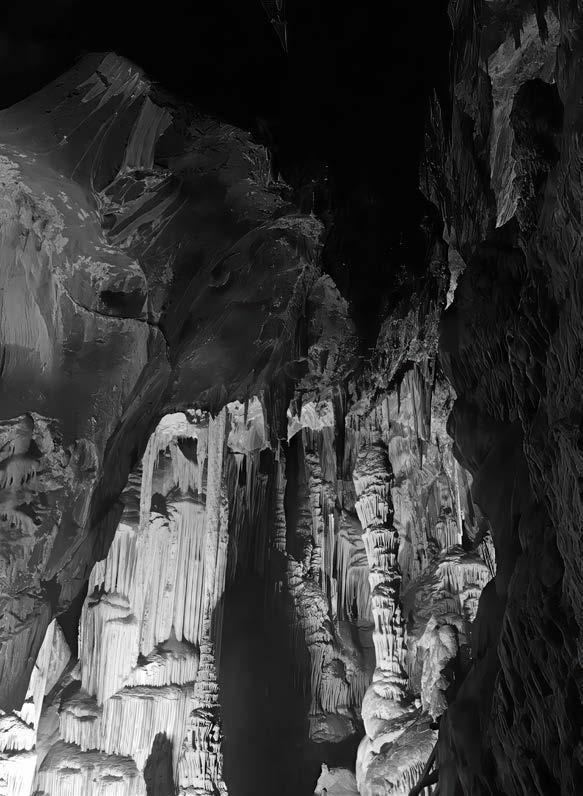
Cuando presentó su nueva serie fotográfica titulada Los secretos de la tierra, Olga Autunno alcanzó una notable potencia expresiva. Lejos de interesarse por la mera documentación, su mirada se desplazó hacia un territorio más profundo y menos evidente. No quiso registrar el movimiento de las sombras que, según Platón, dan forma al engaño en el mito de la caverna. Eligió, en cambio, fotografiar la pared del fondo.
Ese gesto, aparentemente simple, resultó decisivo. Al dirigir la cámara hacia la superficie que sostiene la proyección, Autunno pone al descubierto la fuerza de la textura, revelando un relieve visual que activa la imaginación del espectador. Allí, donde nada parece suceder, la imagen se vuelve densa.
That is when I thought: Olga Autunno might have been here. Her work seems to fall within that sensitive area where art and nature meet without hierarchies. Her endeavors do not seek to restore lost landscapes or aestheticize catastrophes, but to bear witness to the wounds of the land, transforming them into metaphors. In this sense, her work interacts with thinker Anna Tsing’s reflections on the Antropocene—even in ruins, life persists, rearranges itself, and creates new ways of coexisting and building meaning.
Time, that great agent of transformation, is also inscribed in her surname. Autunno—autumn in Italian—symbolizes maturity, closing cycles, the splendor before detachment. It derives from the Latin autumnus, or the “coming of the peak of the year.” Autumn is not only about falling and loss, it is also preparation, transition, a moment of fragile balance before a rest. The artist conveys this image in her work to reinforce her reflections on regeneration and letting go.
I remember Olga Autunno’s exhibition in the Eduardo Sívori Museum in Buenos Aires, entitled The Lit Forest . The exhibition showcased records of her performances in the then-still-smoking valley of Lake Cholila, Los Alerces National Park, in the mountainous Patagonia region of Chubut, where more than 41,000 hectares burned for a month.
Autunno went there when the land was still hot from the fire to carry out and document several artistic interventions. The photographs feature IVs administered to injured trunks or green tulle signaling the sites where conifers once stood: pines, firs, larches, cypresses, birches. These minimal, almost ritualistic gestures serve as acts symbolizing care. They do not attempt to erase the devastation, but rather to point it out, to make it visible and thought-provoking. As Byung-Chul Han suggests, true transformation can only occur when the wound is not hidden.
In times of environmental crisis and land overexploitation, Olga Autunno’s work proposes a pause: a form of ethical and aesthetic attention that does not separate art from nature, but rather understands them as parts of the same vital process. Her work does not offer solutions. Instead, it poses urgent questions about how to inhabit a damaged world without giving up hope for its regeneration.
In her new photoseries entitled The Secrets of the Earth, Olga Autunno has achieved remarkable expressive power. Far from being interested in mere documentation, her gaze shifted to a deeper and less obvious territory. Instead of capturing the movement of shadows—which, according to Plato, are what shape the deception in the myth of the cave—she chose to photograph the back wall.
That seemingly simple gesture was decisive. By directing the camera toward the surface supporting the projection, Autunno reveals the power of texture, revealing a visual depth that activates the viewer’s imagination. There, where nothing seems to happen, the image becomes dense.
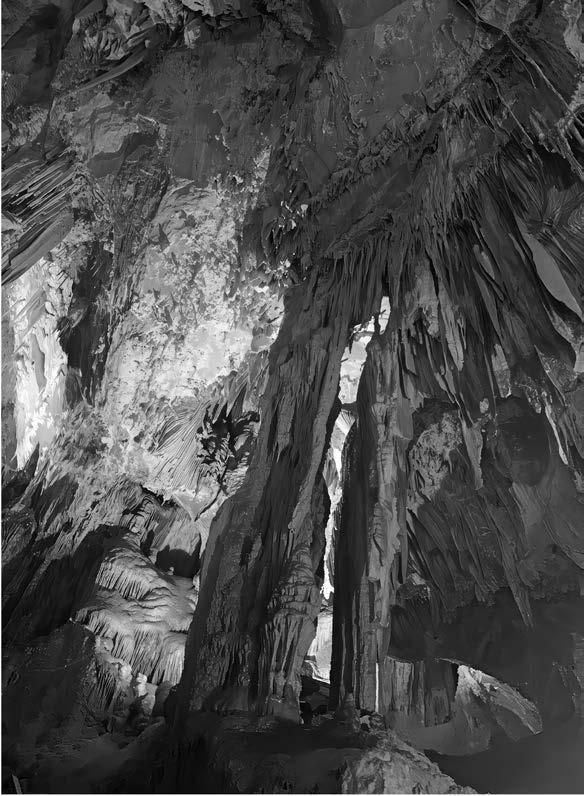
De la serie La piel del mundo , “La piel de mundo VI”, 2025, fotografía digital, impresión fine art, calidad museo, 100 x 75 cm. Ed. 1/3 cm.
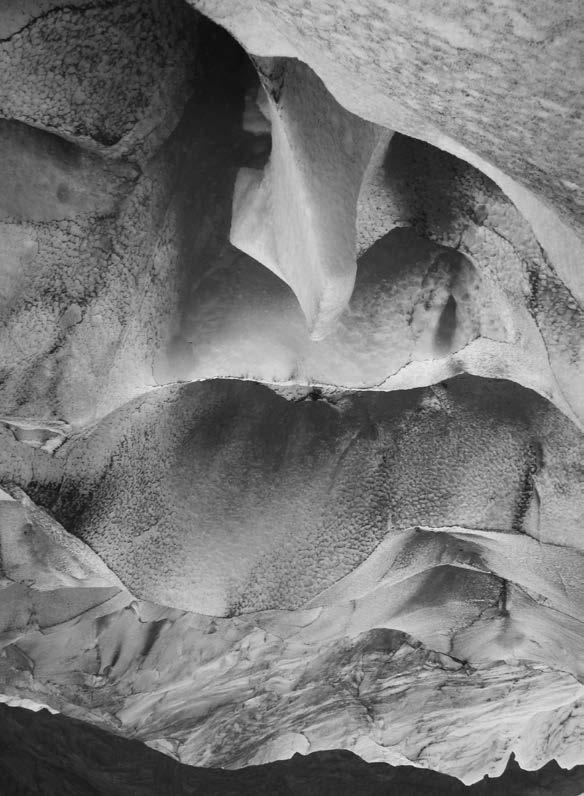
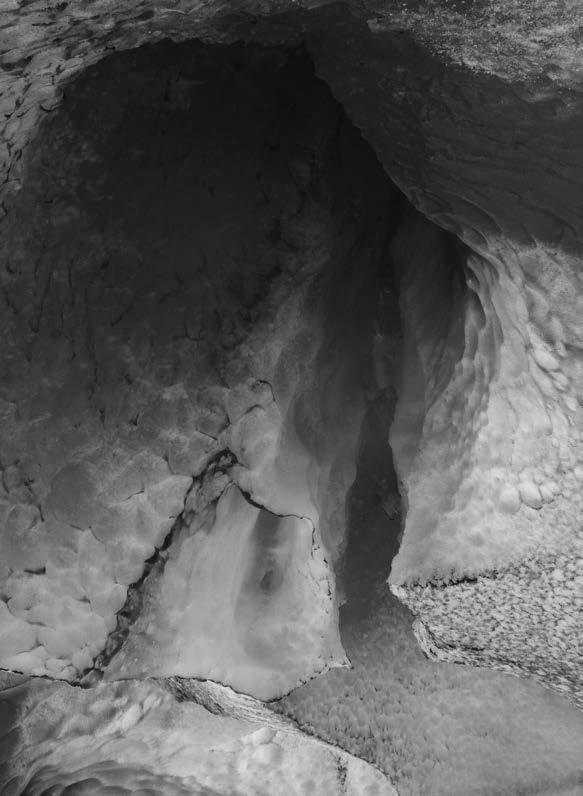
La pared fotografiada deja de ser un fondo pasivo para convertirse en protagonista. Sus pliegues, grietas y asperezas construyen una superficie cargada de tiempo, capaz de sugerir las sombras ausentes, esas que —en la alegoría platónica— ocultan la verdad más que revelarla. En este desplazamiento, la fotografía ya no reproduce una ilusión, sino que la desarma.
Los secretos de la tierra proponen así una inversión de la mirada: en lugar de perseguir la apariencia móvil, la artista se detiene en lo que permanece. La textura se vuelve relato, el relieve deviene pensamiento visual. La cámara no busca captar lo visible, sino interrogar las condiciones que lo hacen posible. Como escribió Roland Barthes, la fotografía más intensa no es la que explica, sino la que obliga a pensar.
En otra serie que denominó La piel del mundo, Olga Autunno despliega una sensibilidad fotográfica que se sitúa más allá del registro documental. Las imágenes, realizadas en un austero blanco y negro, parecen reclamar una coloración epidérmica apenas sugerida, como si la fotografía no renunciara al color, sino que lo desplazara hacia el terreno de la imaginación. No se trata de lo que la imagen muestra, sino de lo que convoca.
El acercamiento de Autunno a la materia natural rompe con la tradición de la fotografía de paisaje entendida como representación. Aquí la piel ya no es aquello que recubre, sino una condición perceptiva: una superficie sensible donde la mirada se detiene y roza. La cámara no observa a distancia; se aproxima. En términos de Roland Barthes, estas imágenes abandonan el orden del studium —el interés cultural o informativo— para activar un punctum silencioso, una herida leve que no se ve de inmediato, pero que insiste en el cuerpo del espectador.
La piedra, motivo central de la serie, deja de ser un dato geológico para devenir sensación. ¿Cómo logró la artista transformar la rudeza mineral en una suavidad casi carnal, capaz de instalarse en la proyección imaginaria de quien mira? Allí reside la potencia de su gesto fotográfico. Como sugiere Geoffrey Batchen, la fotografía no es sólo un medio técnico, sino un modo de pensar el contacto entre el mundo y el cuerpo. En La piel del mundo, ese contacto se vuelve táctil, íntimo, casi erógeno, sin abandonar nunca la sobriedad formal.
El blanco y negro refuerza esta operación. Al despojar a la imagen de su referencia cromática inmediata, Autunno libera la superficie fotografiada de su identidad reconocible. Joan Fontcuberta ha señalado que toda fotografía es una ficción que se presenta como verdad; aquí, esa ficción opera como una estrategia de desplazamiento sensorial. La piedra ya no “es” piedra: se vuelve piel, pliegue, respiración detenida.
La magia de la creación aparece entonces como una forma de transmutación fotográfica: transformar lo duro en lo blando, lo pesado en superficie vulnerable, el reconocimiento visual en percepción corporal. La cámara funciona como un instrumento de traducción, no de captura. No fija el mundo; lo vuelve permeable.
La piel del mundo se inscribe así en una línea contemporánea de la fotografía que renuncia al dominio de lo visible, buscando explorar sus zonas de ambigüedad. Autunno no busca revelar lo oculto, sino permitir que la materia se deje sentir. En ese gesto, la fotografía deja de ser imagen para convertirse en experiencia.
The photographed wall ceases to be a passive background and becomes the protagonist. Its folds, cracks, and roughness construct a surface laden with time, capable of suggesting absent shadows, those that—in the Platonic allegory—hide the truth rather than reveal it. In this shift, photography no longer reproduces an illusion, but rather dismantles it.
The secrets of the earth thus propose a reversal of the gaze: instead of pursuing the fleeting appearance, the artist dwells on what remains. Texture becomes narrative, relief becomes visual thought. The camera does not seek to capture the visible, but rather to question the conditions that make it possible. As Roland Barthes wrote, the most intense photograph is not the one that explains, but the one that forces us to think.
In another series she called The Skin of the World, Olga Autunno displays a photographic sensibility that goes beyond documentary recording. The images, rendered in an austere black and white, seem to call for a seemingly skin-like coloration. It seems as though the photographs did not renounce color, but rather direct it into the realm of the imagination. It is not about what images show, but what they evoke.
Autunno’s approach to natural matter breaks with the tradition of landscape photography understood as representation. Here, skin is no longer a covering, but a perceptual condition: a sensitive surface that the gaze can stop on and brush against. The camera does not observe from a distance; it draws closer. Drawing on Roland Barthes’s terms, these images abandon the order of studium—cultural or informational interest—to activate a silent punctum—a minor wound that is not immediately visible but that persists on the viewer’s body.
Stone, the central motif of the series, ceases to be a geological element and becomes a sensation. How did the artist manage to transform the roughness of the mineral into an almost carnal softness, capable of settling into the imaginary projection of the viewer? Therein lies the power of his photographic gesture. As Geoffrey Batchen suggests, photography is not only a technical medium, but a way of regarding the encounter between world and body. In The Skin of the World, this touch becomes tactile, intimate, almost erogenous, without ever abandoning formal sobriety.
The black and white palette reinforces this operation. By stripping the image of its immediate color reference, Autunno frees the photographed surface from its recognizable identity. Joan Fontcuberta has pointed out that all photography is fiction presented as truth. Here, that fiction operates as a strategy of sensory displacement. Stone is no longer stone: it becomes skin, a fold, suspended breath.
The magic of creation then appears as a form of photographic transmutation: transforming the hard into the soft, the heavy into a vulnerable surface, visual recognition into bodily perception. The camera serves as a tool for translation, not capture. It does not capture the world; it makes it permeable.
The Skin of the World is thus inscribed in a contemporary line of photography that renounces the dominance of the visible, seeking to explore its areas of ambiguity. Autunno does not seek to reveal the hidden, but rather to allow matter to be felt. In this gesture, photography ceases to be an image and becomes an experience.
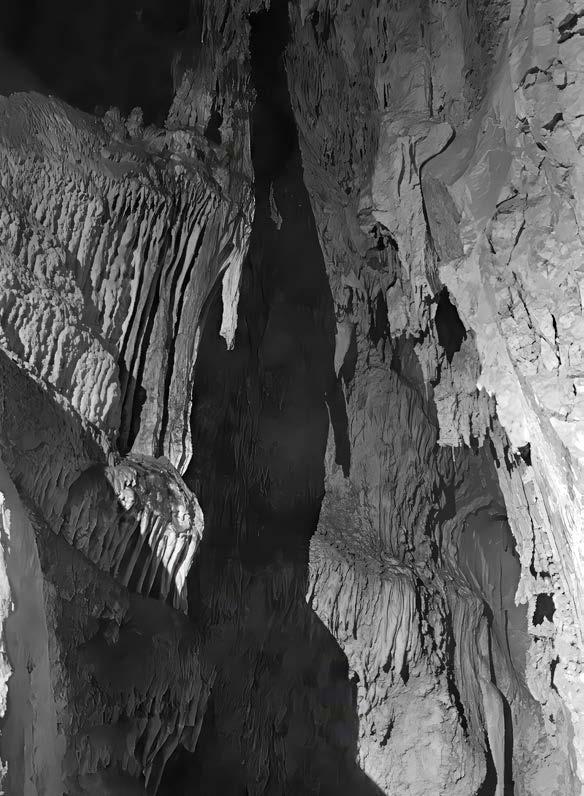
Por Camilo Cáceres. Periodista (Chile)
Imágenes cortesía de la artista.
Homenaje generativo: “El vergel de silicio”
algo salvaje late en la vegetación de Irene Mamiye. Es una libertad que observa el mundo a través de los bordes del bastidor, donde la vida, intervenida por pantallas, sucede en escenas simultáneas que se abren como pétalos en un vergel eléctrico. En la serie Generative Homage, el píxel no es solo una unidad de medida; es una semilla que se riega con colores y algoritmos.
Mamiye nos propone una abstracción construida desde la fotografía digital rica en color, donde la Inteligencia Artificial no es un fin, sino una herramienta de montaje para una naturaleza que se niega a ser domesticada. Aquí, la tecnología no busca la perfección fría, sino la calidez que baña la flor y le da belleza espontánea.
En esta serie, Irene Mamiye no solo nos muestra flores; nos muestra el sistema nervioso de la naturaleza filtrado por la lente contemporánea. Sin fichas técnicas que nos anclen a la lógica, la obra nos obliga a sentir la vibración del color puro.
something wild pulsates in Irene Mamiye’s floral artwork. It is a freedom that observes the world across the edge of a canvas. In it, life—mediated by screens—occurs in simultaneous scenes that blossom like petals in an electric orchard. In the series Generative Homage, a pixel is not a unit of measurement, but a seed watered with colors and algorithms.
Mamiye offers us abstract artwork built through color-packed digital photography, in which the use of artificial intelligence is not the end, but a means, a tool for montages of a wild nature that refuses domestication. In her work, technology does not strive for cold perfection; it seeks the warmth that showers flowers with spontaneous beauty.
In the series, Irene Mamiye does not just showcase flowers; she shows us nature’s nervous system, filtered through a contemporary lens. Without any technical sheets to anchor the logic, the artwork forces us to feel the vibration of pure color.
En un mundo habituado a buscar el orden y la repetición, tu trabajo parece resistirse a la estructura. ¿Qué evita que el espectador encuentre patrones en tu obra? ¿Qué elemento de tu proceso es el que fractura o deconstruye la mirada predecible? El collage siempre ha sido la lógica subyacente a mi práctica, independientemente del medio. Desde las manipulaciones fotográficas al inicio de mi carrera hasta el uso de software personalizado, mi trabajo siempre ha implicado el ensamblar fragmentos de distintos registros visuales, temporales y culturales. Estos fragmentos no se alinean de forma orgánica y me interesa conservar esa fricción en vez de resolverla. En esta serie, la resistencia al patrón se torna más explícita, ya que la acción de realizar el collage se le delega parcialmente a una máquina. El sistema está entrenado con categorías de imágenes que he construido en el transcurso de mucho años: flores, gestos pictóricos, texturas, grafitis, modelos CMYK, blancos, fondos ornamentales. Cada uno de estos elementos posee su propio comportamiento visual. Si bien el algoritmo introduce repetición, lo hace a través de lógicas incompatibles. El resultado no es la aleatoriedad, sino la inestabilidad.
Lo que fractura la mirada predecible es la constante desalineación. El espectador siente la estructura, pero no termina de cobrar coherencia. Esto refleja nuestra condición visual contemporánea, en donde la percepción se forja con sistemas automatizados que organizan las imágenes por nosotros, pero que nunca consideran por completo el sentido, la memoria o el afecto.
Tus obras habitan un espacio liminal entre lo táctil y lo intangible. ¿Cómo construyes los requerimientos que le entregas al sistema para las pinceladas digitales, de modo tal que asegures que respete los materiales oníricos o reales con los que lo programas?
No veo el requerimiento como una instrucción en términos tradicionales. Funciona más bien como un esquema, un ecosistema construido a partir de materiales acumulados.
In a world accustomed to seeking order and repetition, your work seems to resist structure. What is it that prevents the observer from finding patterns? What element in your process breaks or deconstructs the predictable gaze? Collage has always been the underlying logic of my practice, regardless of medium. From early photographic manipulations to customized software, my work has consistently involved assembling fragments from different visual, temporal, and cultural registers. These fragments do not naturally align, and I’m interested in preserving that friction rather than resolving it. In this series, the resistance to pattern becomes more explicit because the act of collaging is partially delegated to the machine. The system is trained on image categories I’ve built over many years—flowers, painterly gestures, textures, graffiti, CMYK fields, whites, ornamental backgrounds—each carrying its own visual behavior. While the algorithm introduces repetition, it does so across incompatible logics. The result is not randomness, but instability.
What breaks the predictable gaze is this constant misalignment. The viewer senses the structure, but it never fully coheres. This reflects our contemporary visual condition, where perception is shaped by automated systems that organize images for us, yet never fully account for meaning, memory, or affect.
Your pieces inhabit a liminal space between the tactile and the intangible. How do you construct the prompt for a digital brushstroke, ensuring that the drawn stroke remains faithful to the dream-like or real materials that programmed it?
I don’t think of the prompt as an instruction in the traditional sense. Instead, it functions as a framework, an ecosystem built from accumulated materials. The source images I work with are not neutral: they include scanned paint
Las imágenes recolectadas con las que trabajo no son neutras: incluyen pinceladas escaneadas, fotos de flores, texturas desgastadas, capturas de pantalla, superficies ornamentales y archivos digitales comprimidos. Cada una de estas imágenes incluye rastros de tacto, tiempo, deterioro y circulación. Al permitirle a una máquina realizar los collages con estos materiales, no le estoy pidiendo inventar un gesto, sino recombinar los existentes. La pincelada digital sigue siendo fiel a su origen porque se compone de marcas, fotografías y artefactos de compresión y degradación reales. Mantengo de forma deliberada las inconsistencias en la resolución, la escala y la claridad para que sigan siendo visibles. Así es como la obra habita un espacio liminal. Es digital, pero nunca inmaterial. Retiene la memoria de los procesos físicos sin olvidar que hoy en día las imágenes se suelen observar más a través de pantallas, algoritmos y sistemas automatizados.
La serie presenta capas sobre capas de intervención. En este constante diálogo con el montaje digital, ¿cuál es el momento correcto de “cosechar” una obra? En esta serie, el momento de cosechar la obra no es una decisión subjetiva o intuitiva en un sentido tradicional. El momento está integrado en la estructura del propio sistema. Cada obra se genera a través de una secuencia definida en la que la máquina se mueve a través de un conjunto de categorías y atributos de imágenes que establezco previamente, como flores, texturas, elementos pictóricos, sistemas gráficos, blancos o ruido digital.
Guío el proceso seleccionando un tema que determina los tipos de imágenes que se utilizarán y una lógica compositiva, que determina cómo se colocan y superponen esas imágenes. Los atributos adicionales, como elementos de redes sociales, mariposas o motivos más infrecuentes, como la rosa negra, introducen variaciones dentro de un marco controlado. El sistema ejecuta estos parámetros durante un tiempo limitado, normalmente entre veinte y veinticinco segundos, y luego se detiene.
strokes, photographed flowers, worn textures, screenshots, ornamental surfaces, and compressed digital files. Each carries traces of touch, time, decay, and circulation.
By allowing the machine to collage these materials, I’m not asking it to invent a gesture, but to recombine existing ones. The digital brushstroke remains faithful to its origins because it is composed of real marks, photographs, and artifacts of compression and degradation. I deliberately allow inconsistencies in resolution, scale, and clarity to remain visible.
This is where the work inhabits a liminal space. It is digital, but never immaterial. It holds onto the memory of physical processes while acknowledging that images today are increasingly encountered through screens, algorithms, and automated systems.
The series presents layer upon layer of intervention. In this constant dialogue through digital montage, when is the right moment to “harvest” a work? In this series, harvesting is not a subjective or intuitive decision in the traditional sense. The moment is built into the structure of the system itself. Each work is generated through a defined sequence in which the machine moves through a set of image categories and attributes that I have previously established—such as flowers, textures, painterly elements, graphic systems, whites, or digital noise.
I guide the process by selecting a theme, which determines the types of images that will be used, and a compositional logic, which governs how those images are placed and layered. Additional attributes—such as social media elements, butterflies, or rarer occurrences like the black rose—introduce variation within a controlled framework. The system runs through these parameters over a limited duration, usually between twenty and twenty-five seconds, and then stops.
Lo que me interesa es que el punto de finalización no es ni arbitrario ni infinitamente abierto. El trabajo concluye cuando el sistema ha agotado su lógica interna. De esta manera, el momento de cosechar de la imagen está inscrito dentro del propio proceso. La máquina crea collages, pero dentro de los límites que yo establezco, revelando cómo la autoría hoy en día suele funcionar estableciendo condiciones en lugar de componiendo cada gesto directamente.
Tu obra utiliza materiales naturales: pistilos, corolas y anteras de flores silvestres que parecen estar a punto de articular su propio lenguaje, un código que transmite la esencia de la inspiración. ¿Dónde se puede admirar un paisaje como este en la vida real, o solo se puede acceder a él a través del arte?
Este paisaje existe en fragmentos, más que como un lugar único y coherente. Se puede encontrar en jardines, en la memoria, en referencias de la infancia y, cada vez más, en archivos digitales donde la naturaleza es fotografiada, difundida, categorizada y recombinada sin cesar. Lo que hace mi obra es reunir estos encuentros dispersos en un único campo visual. Al permitir que la máquina realice un collage con estos elementos naturales, la serie refleja cómo nuestra relación con la naturaleza actualmente se ve mediada por las imágenes, la tecnología y la automatización. Rara vez nos encontramos con la naturaleza directamente; nos encontramos con representaciones moldeadas por la selección, el encuadre y la repetición.
El arte se convierte en el espacio donde esta mediación se puede visibilizar. En lugar de ofrecer un retorno idealizado a la naturaleza, mi obra propone un paisaje que reconoce su construcción: un territorio híbrido donde conviven lo orgánico, lo artificial, la memoria y el algoritmo.
What interests me is that the point of completion is neither arbitrary nor endlessly open. The work concludes when the system has exhausted its internal logic. In this way, harvesting is embedded in the process itself. The machine collages, but within boundaries I’ve designed, revealing how authorship today often operates through setting conditions rather than composing every gesture directly.
Your work utilizes the materials of nature: wild stamens, corollas, and anthers that seem on the verge of articulating their own language—a code that transmits the essence of inspiration. Where can a landscape like this be admired in real life, or can it only be accessed through art?
This landscape exists in fragments rather than as a single, coherent place. It can be found in gardens, in memory, in childhood references, and increasingly in digital archives where nature is photographed, circulated, categorized, and endlessly recombined. What my work does is gather these dispersed encounters into a single visual field. By allowing the machine to collage these natural elements, the series reflects how our relationship with nature is now mediated through images, technology, and automation. We rarely encounter nature directly; we encounter representations shaped by selection, framing, and repetition.
Art becomes the space where this mediation can be made visible. Rather than offering an idealized return to nature, my work proposes a landscape that acknowledges its construction—a hybrid territory where the organic, the artificial, the remembered, and the algorithmic coexist.
Por Ricardo Rojas Behm. Escritor y Crítico (Chile)
Imágenes cortesía de la artista.
puede parecer una paradoja, pero los conflictos bélicos traen aparejado, además del horror, el volcarse hacia la patria. Un apego primordial, puesto que sin él es imposible continuar. Porque gracias a esa umbilical conexión retornas al inigualable cobijo del vientre materno y más allá del sacrificio que acarree, la palabra rendirse no existe, sino todo lo contrario. La mejor muestra de ello, es precisamente la obra de la ucraniana Zinaida Kubar, quien vive y trabaja en Kiev. Fotógrafa y multifacética artista audiovisual, que se mueve con toda naturalidad en los más diversos formatos como el video, las instalaciones, las performances, y la pintura.
although might seem paradoxical, armed conflicts bring with them not only horror, but also a turning toward the motherland. This is a primal attachment, without which carrying on is impossible. Thanks to this umbilical cord connection, one returns to the incomparable shelter of the motherly womb. No matter what sacrifices it might imply, there is no giving up, quite the contrary, actually. The artwork by Ukrainian artist Zinaida Kubar, who resides and works in Kiev, is the best example of this. Photographer and multifaceted audiovisual artist, she moves with the utmost ease among diverse formats such as video, installation, and performance art, as well as painting.
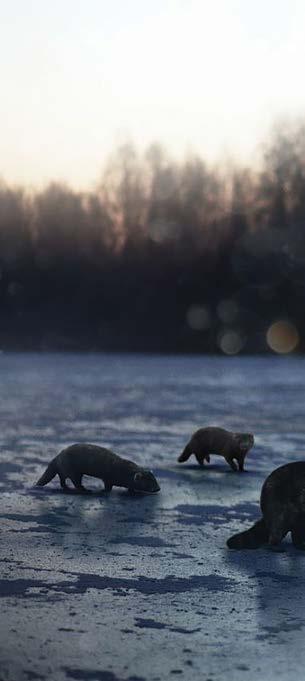
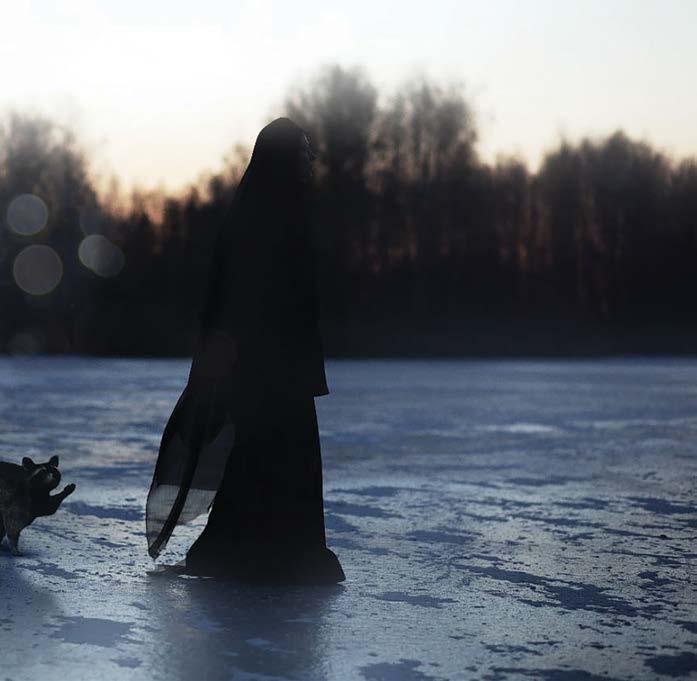
Lo sobresaliente de esta artista es que enciende una alerta en temas sobre la cultura tradicional y las problemáticas de la mujer que explora mediante un hablante femenino. Porque asume que la mujer y la patria son su trinchera. Zinaida comenzó a trabajar con la imagen de Batkivshina Matir, una icónica estatua de Ucrania, que simboliza la fuerza y resistencia nacional y que fue realizada cuando aún pertenecían a la Unión Soviética. Al respecto, explica: “Era consciente de que se trata de una imagen soviética compleja y controvertida, pero también conlleva múltiples capas de significado que exceden la ideología. Incluso antes de la invasión a gran escala, busqué reinterpretar esta figura y devolverle un sentido de autenticidad y feminidad viva”. Así, creó una serie de obras a través de merchandising, con accesorios e impresiones, en las que la “madre patria” aparecía adornada con elementos étnicos como collares tradicionales ucranianos, patrones ornamentales en su ropa y símbolos sagrados del arte popular. “Buscaba suavizar su fría monumentalidad y reconectarla con el cuerpo, la tierra y la tradición. Tras la invasión, esta figura adquirió una resonancia nueva y poderosa, convirtiéndose en un emblema de resiliencia y fuerza inquebrantable”. De esta forma, logró que la imagen de Batkivshina Matir se reinterpretara en un nuevo contexto. Lo más impactante y significativo fue que Ucrania reconoció oficialmente esta interpretación, “incluyendo la emisión de un sello postal con mi obra. Confirmó que el proceso de repensar este símbolo, que inicié mucho antes de la guerra, se había alineado profundamente con el presente”, señala Zinaida.
Las icónicas mujeres cuyas hazañas moldearon el curso de la historia, la estética y la espiritualidad de toda una nación, son un motivo de profunda reflexión y un homenaje a ese legado: “Para mí, expresar un espíritu rebelde nunca es un fin en sí mismo, siempre requiere un motivo. En mi vida cotidiana, soy una persona tranquila y pacífica.
What makes this artist stand out is that she raises awareness about traditional culture and women’s issues. She explores these issues through a female spokesperson, as she believes that women and motherland are her bastions. Kubar started working with the image of Batkivshchýna-Máty—or Mother Motherland—an iconic statue that symbolizes national strength and resistance in the Ukraine, created when the country was still part of the Soviet Union. In this regard, she explains: “I was aware that it is a complex and controversial Soviet image, yet it also carries many layers of meaning that extend far beyond ideology. Even before the full-scale invasion, I sought to reinterpret this figure and restore a sense of authenticity and living femininity to it.” Using the iconography of Mother Motherland, she created a series of works—primarily in the form of merchandise, accessories, and prints—featuring the statue adorned with ethnic elements: traditional Ukrainian necklaces, ornamental patterns on her clothing, and sacred folk symbols. “I aimed to soften her cold monumentality and reconnect her with the body, the land, and tradition. After the invasion, this figure gained a new and powerful resonance, becoming a symbol of resilience and unbreakable strength.” Through these artworks, Kubar successfully reinterpreted Batkivshchýna-Máty within a new context. A surprising and meaningful acknowledgement came when the Ukraine officially recognized this reinterpretation, as they featured her work on a post stamp. “It confirmed that the process of rethinking this symbol, which started long before the war, had become deeply aligned with the present moment,” Kubar states.
The iconic women whose feats shaped the course of the entire country’s history, aesthetics, and spirituality represent a call for deep reflection and a tribute to that legacy: “For me, expressing a rebellious spirit is never an end in itself—it always requires a reason. In my everyday life, I am a peaceful and calm person.
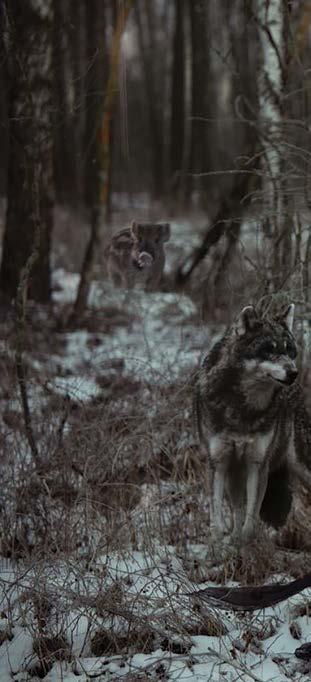
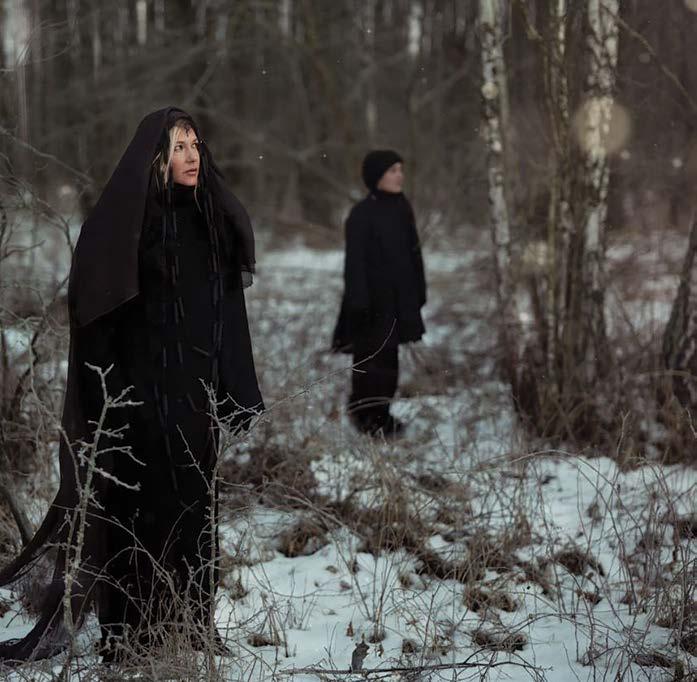
Busco la armonía y relaciones basadas en la igualdad, observando cómo operan las leyes de la naturaleza y alineándome con ellas. Al mismo tiempo, sé que en momentos críticos no puedo permanecer neutral. Cuando se cruzan los límites, cuando mi pueblo, la justicia, la fe o la verdad están amenazados, siempre estoy dispuesta a levantarme y defenderlos. En este sentido, mi «rebeldía» no es agresión, sino una forma de responsabilidad interior y una postura claramente articulada”.
Para quien creció rodeada de asfalto, sus primeras experiencias artísticas se forjaron principalmente en el entorno urbano y en las áreas suburbanas de Kiev, así como en sus bosques. Todo ese entorno se convirtió en un punto de inflexión silencioso, donde sintió por primera vez una cualidad diferente del tiempo, llena de silencio, misticismo, atención y respeto por la naturaleza. Lo que la hizo enfocarse en la dimensión mística de la cultura ritual ucraniana y ese inmenso poder interior se convirtió en la base de su lenguaje artístico, al ver que las personas vivían en estrecha conexión con las fuerzas naturales, sanaban sin medicina y se apoyaban en la tradición como fuente de identidad y resiliencia. La cultura folclórica y espiritual se instaló gradualmente como una metáfora que emana en su obra, haciendo que aflore todo un cosmos interior, que refleja esa perpetua búsqueda de la esencia del ser.
Un ser que, por antonomasia, no puede ser estático: no podía ser otro que la mujer, pero una mujer que se aleja de los roles impuestos —culturales, sociales, educativos o religiosos— en un proceso de liberación y transformación, reconstruyéndose desde su propia naturaleza interior. Algo que recalca la misma Zinaida: “Esta transformación se expresa a menudo mediante la metáfora de la interacción con la naturaleza, como un espacio de confianza, donde el equilibrio entre recibir y dar se vuelve esencial.
I seek harmony and relationships built on equality, observing how the laws of nature operate and aligning myself with them. At the same time, I know that in critical moments I cannot remain neutral. When boundaries are crossed, when my people, justice, faith, or truth are under threat, I am always ready to stand up and defend them. In this sense, my ‘rebellion’ is not aggression, but a form of inner responsibility and a clearly articulated stance.”
As someone who grew up surrounded by asphalt, her first artistic experiences were mainly set in the urban environment and suburban areas of Kiev, as well as in its forests. This whole environment became a silent turning point, where she first experienced a different quality of time, full of silence, mysticism, care, and respect for nature. As she zeroed in on the mystic dimension of Ukrainian ritualistic culture, that inner power became the foundation for her artistic language, after encountering people who lived in close connection with natural forces, healed without medicine, and relied on tradition as a source of identity and resilience. Folk and spiritual culture gradually cemented as a metaphor in her work. The whole inner cosmos that arose as a result reflects a constant pursuit for the essence of the self.
By definition, this self cannot be static. This self could not be anyone other than a woman. However, it had to be a woman that strayed from imposed roles—both cultural, social, educational, and religious. She had to have undergone a liberation and transformation process to rebuild herself listening to her own inner nature instead of external expectations. Kubar stresses the importance of this saying: “This transformation is often expressed through the metaphor of interaction with nature as a space of trust, where the balance between receiving and giving becomes essential.
La naturaleza nos enseña a no tomar más de lo necesario, recordándonos que la verdadera fuerza reside en la capacidad de dar sin autolesionarnos. Porque es innegable que ha cobrado especial relevancia en la Ucrania actual la transformación de las relaciones entre mujeres. Como resultado de la guerra, las mujeres ahora superan significativamente en número a los hombres, lo que antes se manifestaba como rivalidad o rechazo mutuo se está transformando cada vez más en hermandad. Las mujeres se apoyan mutuamente, formando redes de voluntariado, comunidades y movimientos colectivos. Estos procesos se reflejan en mis obras ADN de Libertad, Doncellas Escuderas y Vestiduras de Luz, donde la fuerza femenina se presenta no como confrontación, sino como una fuerza colectiva, solidaria y que afirma la vida”.
En una tierra donde la cultura espiritual siempre ha sido no solo parte de la experiencia mística, sino también la base de la existencia. La proximidad de lo dual es un componente más que imprescindible en esta artista y no hay que hurgar mucho para ver cómo la vida y la muerte se entrelazan, o como el envejecimiento trae consigo la floración. En el caso de Zinaida esto se hace presente en todo lo que hace. Un ejemplo de ello es que no se restringe a trabajar con la fotografía en un sentido clásico. Opta por hacer un trasvasije entre el video, la imagen y su transformación, permitiéndose crear foto-collages derivados de secuencias de video y fotogramas extraídos de numerosos fragmentos en movimiento, casi como huellas del tiempo. En lugar de capturar un instante único, la imagen sufre un proceso de transformación a través de la postproducción donde se suman nuevas capas, manipulación de luces, efectos visuales y elementos simbólicos adicionales.
Y quien mejor que ella para cerrar este artículo: “Para mí, la fotografía no es un fin en sí mismo, sino una herramienta, un material. Mediante su transformación, la imagen se aleja de la documentación para adentrarse en un espacio metafísico, casi alquímico”.
Nature teaches us not to take more than is necessary and reminds us that true strength lies in the ability to give without self-violation. Another important theme that has become especially relevant in Ukraine today is the transformation of relationships between women. As a result of the war, women now significantly outnumber men. What once manifested as rivalry or mutual rejection is increasingly transforming into sisterhood. Women are supporting one another, forming volunteer networks, communities, and collective movements. These processes are reflected in my works DNA of Freedom, Shieldmaidens, and Light Garments, where female strength is presented not as confrontation, but as a collective, supportive, and life-affirming force.”
In her land, spiritual culture has always constituted a part of the experience of mysticism, but also the basis of existence. Proximity to duality is an essential component in this artist’s work, and one does not have to look far to see how life and death are intertwined, or how aging brings with it blossoming. In Kubar’s case, this duality is evident in everything she does. For instance, she is not constrained to working with photography in the traditional sense. She has chosen to combine video, image, and video/image manipulations to create photo collages through from video sequences and stills extracted from numerous moving fragments, almost like traces of time. Instead of capturing a single moment, the image undergoes a process of transformation through post-production, where she adds new layers, light manipulation, visual effects, and additional symbolism.
There is no one better than her to conclude this article: “For me, photography is not an end in itself but a tool, a material. Through its transformation, the image shifts away from documentation and enters a metaphysical, almost alchemical space.”
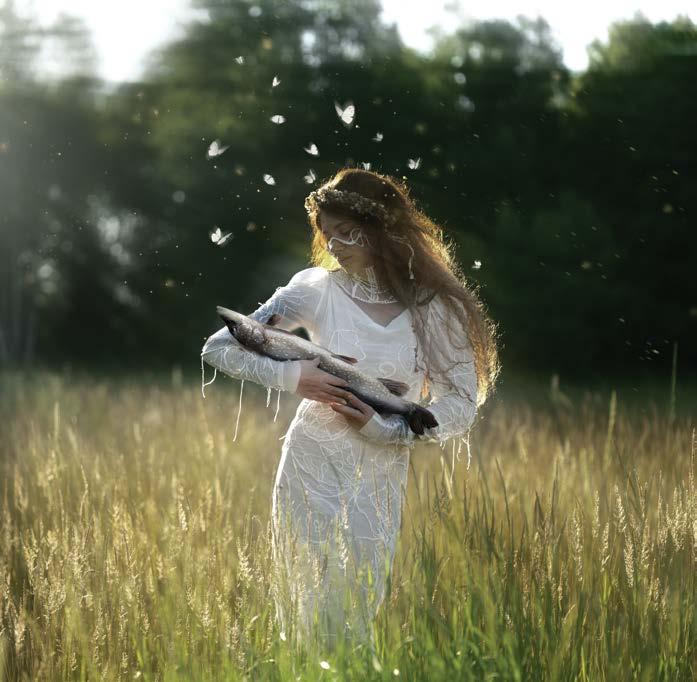
Por Ivón Figueroa Taucán. Magíster en Teoría e Historia del Arte (Chile)
Imágenes cortesía de la artista.
La naturaleza imprimiéndose a sí misma
esta escena la miramos desde el cielo, como si fuésemos un ave sobrevolando amplios campos verdes con espejos azules que reflejan las nubes. Carolina es solo un punto de la imagen, un detalle de esta composición ecosistémica. Prepara grandes polípticos de papeles y los arroja a las aguas de una laguna. La cámara se acerca al musgo y al barro, para volver a centrarse en el papel, que ahora vislumbramos con mayor detalle. Se trata de un políptico que contiene cuarenta piezas unidas entre sí. Sobre él, un montón de tierra traza formas tan irregulares como la Pampa Húmeda en Argentina, que se despliega ante nuestros ojos y se posa sobre una emulsión azulada que cubre por completo este soporte flotante que, unos minutos después, es retirado del agua con cautela, pero sin solemnidad. Vemos a la artista arrodillada en el pasto, reconstruyendo pieza por pieza su obra ya seca que, en su colorimetría bicolor, es un grabado del instante preciso en que el firmamento y las aguas se miran entre sí. Parece la huella de una ola inexistente que chocó contra un papel blanco y se quedó allí para siempre. Los resultados de este proceso repetido en el tiempo pueden visualizarse en las imágenes que acompañan este texto.
w e watch this scene from the sky, as if we were birds soaring over vast green fields with blue mirrors reflecting the clouds. Baldomá is just a dot in the image, a detail in this ecosystem of a composition. She prepares large paper polyptychs and throws them into the waters of a lake. The camera zooms in on the moss and mud, then refocuses on the paper, which we can now see in greater detail. The polyptych is made up of forty pieces joined together. On top of it, a pile of soil forms irregular shapes reminiscent of the Humid Pampas in Argentina. This pile rests on a bluish emulsion that completely covers the floating support. A few minutes later, the support is carefully removed from the water, but without any sense of solemnity. We see the artist kneeling on the grass, carefully reconstructing her now dry artwork piece by piece. Using a two-color palette, she captures a snapshot of the exact moment when the sky and the waters gaze at each other. It resembles sand ripples left behind by a non-existent wave crashing on a white sheet of paper, leaving its mark there forever. The results of this time-consuming process can be seen in the images featured in this article.
¿Cómo describirías la Pampa Húmeda en Argentina?
La Pampa Húmeda es un territorio aparentemente homogéneo, extenso y llano, pero profundamente complejo. Su horizontalidad extrema y la continuidad del horizonte construyen una experiencia espacial particular, donde la mirada se expande sin puntos de anclaje claros. En palabras de Borges: “Pampa: yo diviso tu anchura que ahonda las afueras”. Una imagen que condensa la sensación de amplitud y profundidad que define a este paisaje. Más que un espacio vacío, me interesa mucho esa visión borgiana donde la Pampa Húmeda se presenta como una geografía cargada de matices, donde lo visible y lo intangible conviven en una tensión constante. Así que en lo geográfico es eso, grandes pastizales, muchas herbáceas, ríos y cursos de agua que lo cruzan. Por supuesto ese es su estado natural, pero también es una zona que se fue definiendo como el corazón de la producción agrícola-ganadera del país. A mí me gusta encontrarlo y habitarlo en esos lugares donde la naturaleza no está intervenida.
¿En qué consiste la cianotipia y por qué la utilizas para experimentar con este territorio?
La cianotipia es un proceso fotográfico del siglo XIX que se basa en la acción de la luz solar sobre una emulsión fotosensible de sales de hierro, revelada con agua. En términos técnicos es un procedimiento directo, pero conceptualmente es muy rico: la imagen aparece por contacto, por exposición, por reacción química, no por captura óptica tradicional. Es un modo de trabajo manual, corporal e inmersivo, donde el entorno forma parte del proceso productivo y mi rol de artista se puede pensar como el de mediadora entre el soporte y el territorio.
How would you describe the Humid Pampas in Argentina?
The Humid Pampa is a seemingly homogeneous, vast, and flat territory, but one that is deeply complex. It’s extremely flat terrain and uninterrupted horizon create a unique spatial experience, where the gaze expands without any clear anchor points.
In Borges’s words: “I behold your vastness deepening the outskirts.” This image embodies the sense of breadth and depth that distinguishes the Pampa landscape. I am intrigued by Borges’ interpretation of the Humid Pampa, viewing it not just as an empty space but as a geography rich in nuances where the visible and the intangible coexist in constant tension. Geographically speaking, the region is a vast grassland with lots of herbaceous plants, rivers, and flowing waterways—that is it. While this certainly describes its natural state, the Humid Pampa is also an area that has come to be recognized as the heart of the Argentina’s agricultural and livestock production. I like finding and inhabiting places where nature remains unspoiled by human intervention.
What is cyanotype and why do you use it to experiment in this territory?
Cyanotype is a 19th-century photographic process based on the action of sunlight on a photosensitive emulsion of iron salts, developed with water. In technical terms, it is a direct procedure, but conceptually it is very rich: the image appears through contact, exposure, and chemical reaction, not through traditional optical capture. It is a manual, physical, and immersive way of working. The environment takes part in the production process, and my role as an artist can be thought of as that of a mediator between the medium and the territory.
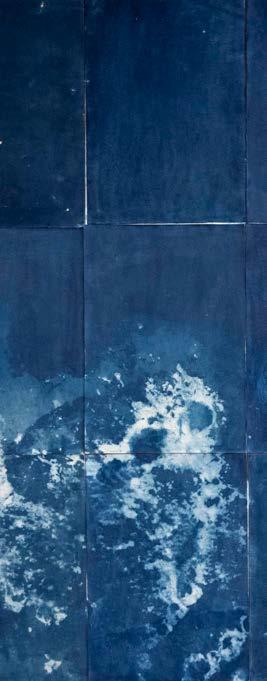
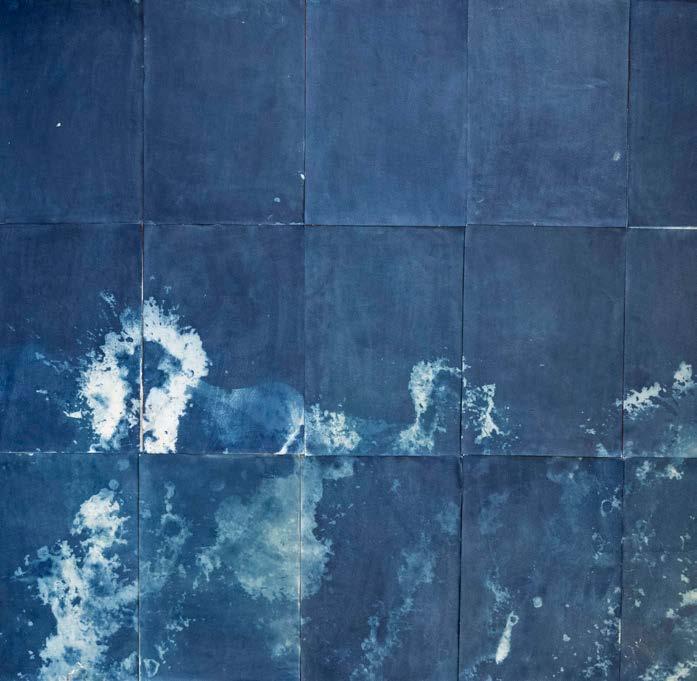
La obra resultante es una co-creación con el ambiente natural, que es a la vez mi laboratorio. La utilizo porque me permite trabajar con el territorio de manera literal, donde el sol, el agua, la temperatura, el viento y el soporte inciden directamente en el resultado. En la serie Impresiones de la Naturaleza dejo que la naturaleza se imprima a sí misma en la obra. En ese sentido, la cianotipia funciona para mí como un dispositivo de diálogo con el entorno que habito.
¿Podrías compartir paso a paso el procedimiento que desarrollaste en la serie Impresiones de la Naturaleza?
Este cuerpo de obra que se encuentra en expansión, se desarrolla a partir de 2021 y continúa hasta la actualidad. El procedimiento comienza con la preparación manual del soporte — papel o tela— al que aplico la emulsión fotosensible. Luego lo expongo directamente en el territorio: a orillas de lagunas, en el mar o en cursos de agua, donde la materia presente en el lugar (sedimentos, arena, tierra, etc.), junto con el sol y el agua, definen la obra. Luego llevo ese papel con la materia que se haya acumulado encima, lo sumerjo y dejo que el agua haga el proceso final del revelado, permitiendo que el movimiento, la salinidad, los sedimentos o la temperatura modifiquen la imagen. Después de un rato lo retiro, lo protejo y lo guardo. Es muy liberadora esta sensación de entrega, sentir la pérdida de control. A veces como artista me gusta controlar algunos factores, soy perfeccionista, pero dejar hacer solamente a la naturaleza es un ejercicio muy potente. Cada pieza es única e irrepetible, contiene información y es una memoria sensible de tiempo y naturaleza.
The resulting work is a co-creation with the natural environment, which is also my laboratory. I use this technique because it allows me to work with the land in a literal way—the sun, water, temperature, wind, and the medium directly influence the result. In the series Impressions of Nature, I allow nature to imprint itself on the work. In that sense, cyanotype works for me as a device for dialogue with the environment I inhabit.
Could you share the step-by-step process you developed for the Impressions of Nature series?
This body of work, which is still expanding, began in 2021 and continues to this day.
The process begins with the manual preparation of the support—paper or fabric—to which I apply the photosensitive emulsion. Then, I develop the piece directly on site: on the shores of lakes, in the sea, or other bodies of water, where the materials present (sediment, sand, earth, etc.), together with the sun and water, determine the final outcome of the work. I subsequently take the paper, along with any materials that have accumulated on it, and submerge it. Afterwards, I let the water carry out the final developing process, letting movement, salinity, sediments, and temperature modify the image. After a while, I remove it, protect it, and store it.
This feeling of surrender, of losing control, is very liberating. Sometimes, as an artist, I like to control certain factors. I am a perfectionist, but letting nature take its course is a very powerful exercise. Each piece is unique and unrepeatable, containing information and serving as a sensitive memory of time and nature.
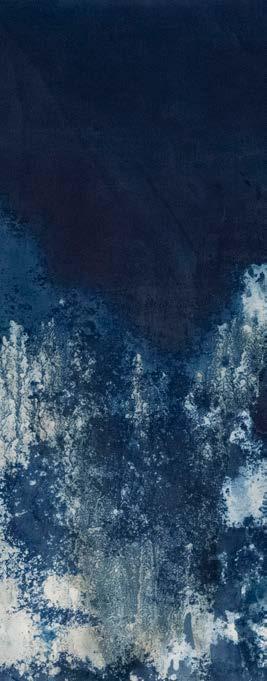
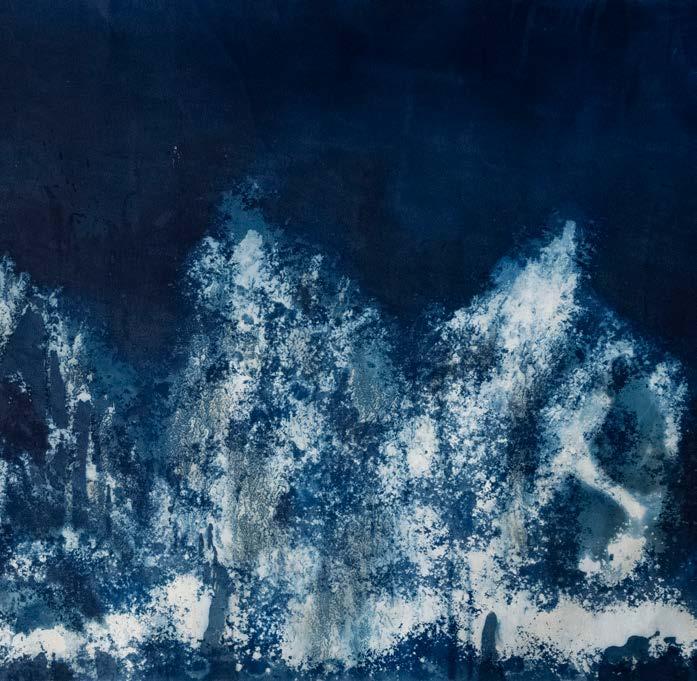
¿Qué rol ocupa el registro fotográfico y audiovisual en el proceso de creación y circulación de tu obra?
El registro fotográfico y audiovisual cumple un doble rol. Por un lado, documentan procesos efímeros que no siempre quedan visibles en la obra final, como el movimiento del agua, la acción del cuerpo y el contexto. Por otro, funcionan como una extensión conceptual de la obra, especialmente en las imágenes cenitales de revelado en el mar, lagunas o ríos que muestran el proceso como obra en sí misma, que puede inscribirse como land-art . Estas imágenes no son meros documentos, son parte del trabajo. Permiten que el proceso circule, se comparta y se piense como una práctica situada y performativa.
¿Recuerdas cuál fue la primera vez que hiciste un revelado flotando sobre el agua?
No me voy a olvidar nunca más. Fue en Necochea durante un viaje de estudios de mis hijos. Dije, “bueno, voy a probar, voy a ver qué pasa si revelo con agua salada”, porque lo que yo hacía hasta ese entonces era revelar con agua dulce. Al lanzarlos a la inmensidad del mar y ver que se estaba imprimiendo la arena, las piedritas o lo que sea, fui testigo de cómo sucede la metamorfosis. Lo entregué al agua sin saber si regresaría y luego volvió ya enjuagado y convertido en esos azules. Fue un gesto de confianza en el proceso y en el entorno, que me ayudó a aceptar el azar como parte constitutiva de la obra.
What role does photographic and audiovisual documentation play in the process of creating and disseminating your work?
Photographic and audiovisual records play a dual role. On the one hand, they document ephemeral processes that are not always visible in the final work, such as the movement of water, the action of the body, and the context. On the other hand, they function as a conceptual extension of the work, especially in the overhead images of development process in the sea, lakes or rivers. These capture the process as artwork in itself, which can be classified as land art. These images are not mere documents, they are part of the work. This enables dissemination and sharing of the process, allowing it to be understood as a situated and performative practice.
Do you remember the first time you developed a photo floating on water?
I’ll never forget it. It was in Necochea during a school trip with my children. I said, “Well, I’ll give it a try, I’ll see what happens if I develop with salt water,” because up until then I had always developed with fresh water. When I threw the papers into the vastness of the sea and saw that the sand, the pebbles, and everything else left their mark, I witnessed a metamorphosis. I handed them over to the water without knowing if they would return, and then they came back rinsed and transformed into those blues. It was a gesture of trusting the process and the environment, which helped me accept chance as an integral part of my work.
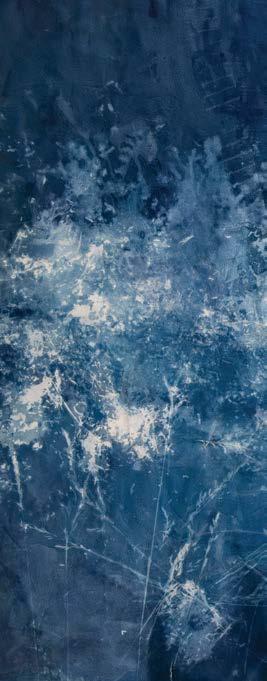
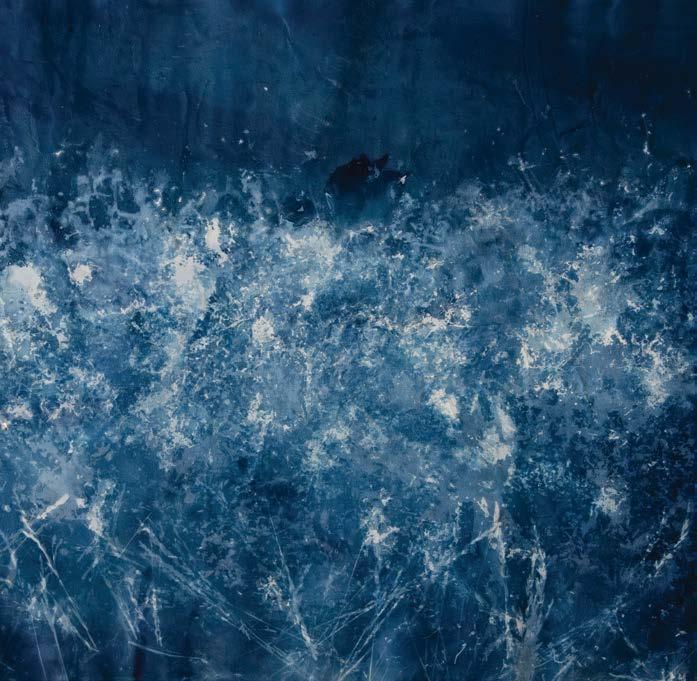
Por Javiera Paz Fernández. Magíster en Estéticas Americanas (Chile) Imágenes cortesía de la artista.
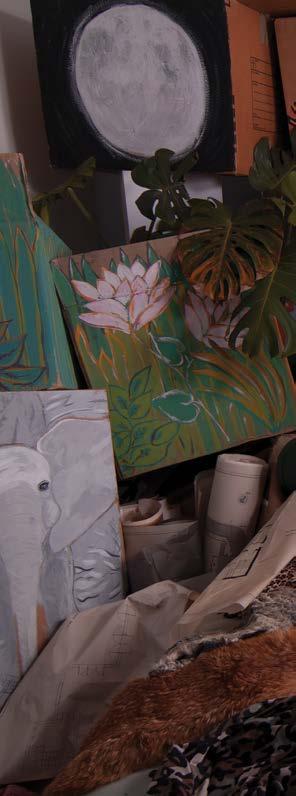
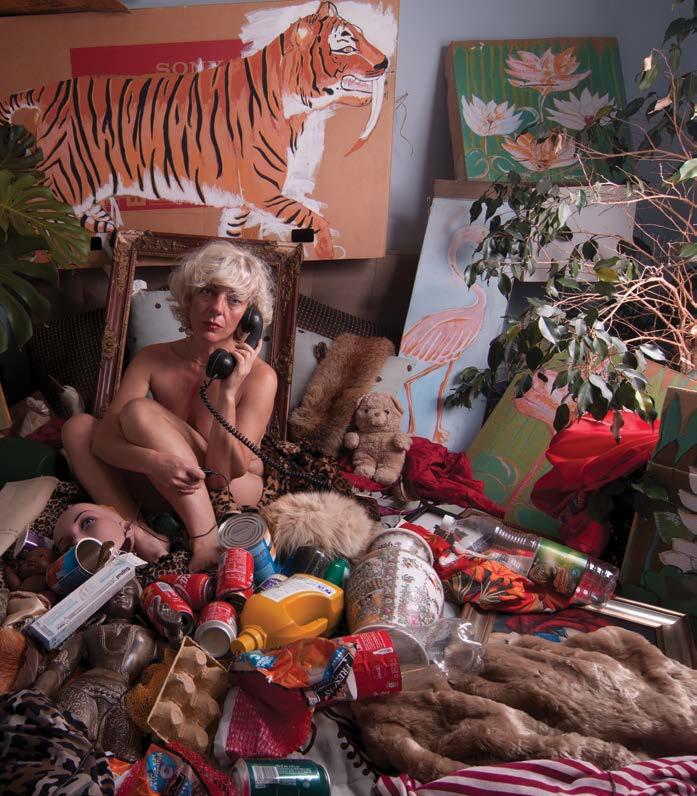
De la serie Never be a Robot , “Diente de sable”, 2018, fotografía sobre papel hahnemühle Albrecht Dürer, 71 x 100 cm.
e l manifiesto que mejor resume la obra de Mónica Vázquez Ayala, si se le pidiera señalar uno solo, es que la obra siempre habla más que el artista. Bajo ese principio, la artista radicada en Andalucía despliega un territorio fotográfico a través de instalaciones y espacios con una atmósfera onírica, construida manualmente por ella misma, donde busca plasmar sentimientos particulares con los que, según explica, “cualquier persona puede llegar a identificarse”.
Pero ¿qué vuelve universales a las emociones y sensaciones dispuestas en sus imágenes? Por sobre todo y, es por eso que su cuerpo protagoniza varias de ellas, se trata de la desnudez. El propio cuerpo de Vázquez Ayala, desvestido, aparece como un torrente que sigue el curso de su instinto, sabiéndose observado. “La figura desnuda convierte la obra en atemporal e impersonal y, por lo tanto, universal, permitiendo que cualquier persona pueda proyectarse en ella. Además, también funciona como una metáfora de la exposición del artista y de la vulnerabilidad que implica mostrar cada obra”, explica.
En las imágenes de Mónica Vázquez Ayala, el cuerpo desnudo, dispuesto en poses acurrucadas y reduciéndose, como consciente de la fragilidad inherente a la vida, aparece acompañado de escenarios construidos específicamente para cada instante fotográfico. Con cartones, materiales de tiendas de segunda mano, papeles y otros objetos, así como dibujos pensados para sesiones concretas, la artista construye instalaciones que configuran un universo visual donde la realidad se entrelaza con la ficción.
Sus resultados fotográficos, plantean una alternativa a la realidad que cuestiona las sensaciones y procesos sociales contemporáneos que nublan el bienestar, entre ellos, según explica la artista, el miedo voraz a la soledad, el positivismo tóxico en tiempos digitales y la desconexión humana con la naturaleza.
En esa línea, las obras que aquí se observan —”Diente de sable” (2018), “Santa” (2016), “El sueño de Rousseau” (2016) y “Neptuno” (2016)— forman parte del proyecto Never Be A Robot, una serie que hace una advertencia ética: la conciencia ecológica y consumista se entrelaza con la manera en que nos vinculamos cotidianamente con otras personas y con los elementos que nos rodean. Entre residuos, escenografías construidas y cuerpos que parecen habitar un territorio entre lo salvaje y lo artificial, la obra recuerda que cada gesto tiene consecuencias. La diferencia entre una frase lanzada con desdén o una sonrisa ofrecida a tiempo no es menor: es, en el fondo, la decisión sobre el tipo de mundo que elegimos habitar y producir.
the single statement that can best summarize Mónica Vázquez Ayala’s work—if only one could be given—is that the artwork speaks more than the artist. Bearing this in mind, the artist, who resides in Andalusia, creates a world where photography, through installations and dream-like environments she manually crafts, seeks to evoke specific feelings that “anyone can relate to,” as she explains.
But what makes the emotions and feelings in her artwork universal? Above all else—and also the reason why her own body takes center stage in several of the pieces—it is because of nudity. Vásquez Ayala’s naked body emerges as a flowing river that follows her instinct—aware it is being watched. “Naked figures make the works timeless and impersonal and, therefore, anyone can relate to them. They also serve as metaphors for the exposure and vulnerability that comes with artists sharing their work,” she explains.
In Mónica Vázquez Ayala’s pictures, naked bodies arranged in curled-up and shrinking poses—as if aware of the inherent fragility of life—is set in stages specifically built for each shot. With cardboard, thrift store materials, papers, and other objects, as well as session-specific drawings, the artist builds installations that create a visual universe where reality intertwines with fiction.
The resulting pictures propose an alternate reality that questions the feelings and contemporary social processes that affect our well-being. The artist explains these include fierce fear of loneliness, toxic positivity in the digital era, and humanity’s disconnection from nature.
The artworks featured here—Saber Tooth (2018), Santa (2016), Rousseau’s Dream (2016), and Neptune (2016)—are part of the Never Be a Robot project, a series that serves as an ethical warning about how environmental and consumerist logics influence our daily connections with other people and our surroundings. Among the waste, built scenes, and bodies that inhabit a realm fluctuating between the wild and artificial, her artwork reminds us that every gesture has its consequences. The difference between uttering a phase with disdain or a timely smile is not minor—it is, in essence, a decision on the sort of world we choose to inhabit and create.
De la serie Never be a Robot , “Santa”, 2016, fotografía sobre papel hahnemühle Albrecht Dürer, 100 x 66 cm.

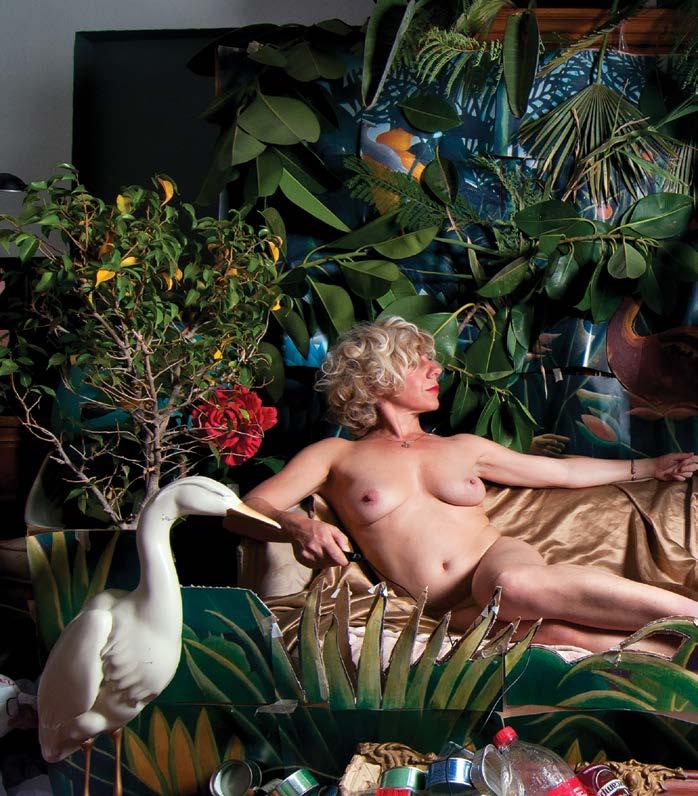
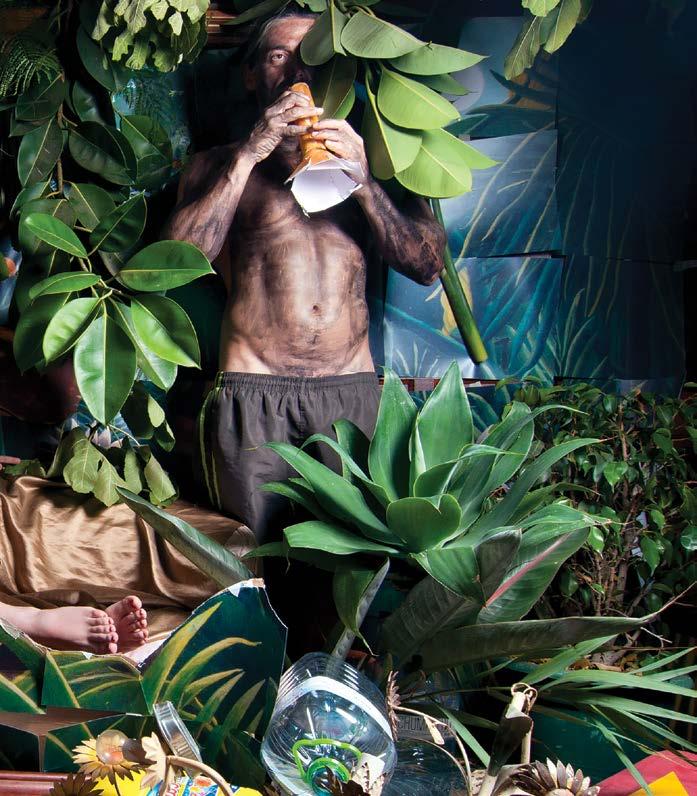
De la serie Never be a Robot , “El sueño de Rousseau”, 2016, fotografía sobre papel hahnemühle Albrecht
Desde su hogar, Vázquez Ayala construye escenarios visuales que nacen de un diálogo interno, en el que selecciona cuidadosamente objetos, materiales y paisajes necesarios para plasmar sus ideas y traducirlas a bocetos. No obstante, muchos de sus primeros procesos fueron más intuitivos. Así como descubrió en la habitabilidad de los espacios las emociones que quería expresar, fue a través de la fotografía que encontró su lenguaje, decidiendo formarse en fotografía análoga. “Conocí la fotografía con 26 años, en un curso que hice en Barcelona. Antes era una pintora frustrada y, con la cámara, se me abrió un mundo infinito de posibilidades. Empecé haciendo fotografía callejera y retratos, y con el tiempo la cosa evolucionó hacia la creación de mis propios escenarios y realidades, cuando ya tenía un discurso y una imagen en mente”, cuenta.
Como un espacio curatorial creado por la propia artista, en el que selecciona cuidadosamente los elementos que acompañan su cuerpo al posar, se podría pensar en una dualidad entre la materia corpórea —su cuerpo o el de otra persona performando— y la materialidad artificial que acompaña su vivencia. Para la fotógrafa, sin embargo, no hay artificio, más bien todo está unido en una misma experiencia vital. “Lo artificial es parte del cuerpo, ya que ha salido de mi imaginación. Es como bailar conmigo, con mis pensamientos. Lo orgánico y lo artificial son, en el fondo, lo mismo: materia. Al igual que la dualidad, son dos caras de la misma moneda. Más allá de la polarización, existe una misma idea vista desde distintos puntos. No se trata de una lucha entre partes opuestas, sino de mirarse frente a frente y dialogar hasta complementarse”.
El mundo onírico que retrata Mónica, radica en un momento exacto de su vida. Aquella época adolescente en que el mundo se hace una “alpargata vieja” frente a las ganas de vivir. En ese momento, a los 17 años, sus padres la castigaron durante meses, impidiéndole salir de casa. Ella, en lugar de verlo como una pesadilla, se lo tomó como si fuera el mejor sueño del mundo, un momento que recuerda como “una de las mejores épocas de mi vida”. Durante ese periodo de encierro, tenía sueños largos, muy vívidos, recuerda. “Deseaba acostarme para volver a ese mundo onírico. De ahí nació, años después, este proyecto, en el que plasmé los sueños que habían quedado grabados en mi memoria”.
Para la artista, en los sueños está todo, como un portal eterno y regenerador de ideas. Por eso, en sus narraciones fotográficas parece no haber límites y, como una oda a lo onírico, destacan mundos habitados por animales libres, escaleras sin fin, basura desparramada en paisajes idílicos, satélites naturales y cuerpos contorneados.
From her home, Vásquez Ayala builds visual scenes that stem from an inner dialog. She carefully selects the objects, materials, and landscapes necessary to capture her ideas, which she translates into sketches first. However, her early work processes were more intuitive. In fact, by inhabiting spaces, she discovered the emotions that she wanted to convey and found a means of expression through photography, ultimately choosing to pursue training in analog photography. “My first encounter with photography was at the age of 26, during a course I took in Barcelona. Prior to that, I was a frustrated painter, but with a camera, an infinite world of possibilities opened up for me. I started with street photography and portraits, and in time, it evolved into creating my own scenes and realities, once I already had a narrative and an image in mind,” she narrates.
Similar to a curatorial space, the scenes created by the artist incorporate carefully chosen elements that interact with her body in various poses. This reflects a duality between physical matter—whether it be her own body performing or those of others—and the artificial materials of her experiences. For the photographer; however, there is no scheme. Everything is encapsulated within the same vital experience. “The artificial is part of the body because it comes from my imagination. It is like dancing with myself and my thoughts. In essence, the organic and artificial are the same: matter. Just like with duality, there are two sides to the same coin. Beyond polarization, the same idea is viewed from different perspectives. It is not about two opposing sides battling against each other, but about facing one another and having a conversation until they can complement each other.”
The dream-like world that Vásquez Ayala portrays stems from a specific moment in her life. It was during her teenage years, when the world felt like a worn-out rag next to your urge to live. At 17 years old, her parents grounded her for months, forbidding her from leaving the house. Instead of regarding this a nightmare, she took it as the best dream in the world, a moment she remembers as “one of the greatest times in my life.” During that period of isolation, she had long, vivid dreams. She recalls, “I wanted to go back to sleep to return to that dream world. Years later, that inspired this project in where I captured the dreams that stuck in my memory.”
For the artist, dreams are everything—they are like an eternal threshold and source of ideas. This belief results in photography narratives that feel limitless. In a tribute to dreams, her work features worlds populated by free-roaming animals, endless staircases, trash scattered across idyllic landscapes, natural satellites, and contoured bodies.
Never be a Robot , “Neptuno”, 2016, fotografía sobre papel hahnemühle Albrecht Dürer, 100 x 80 cm.
De la serie
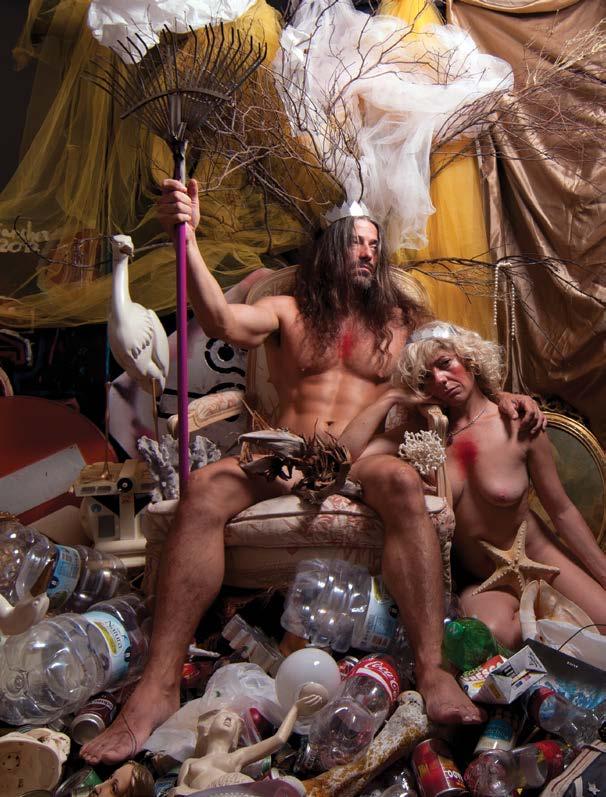
FRANCE
Por Lucía Rey Orrego. Académica e investigadora independiente (Chile) Imágenes cortesía de la artista.
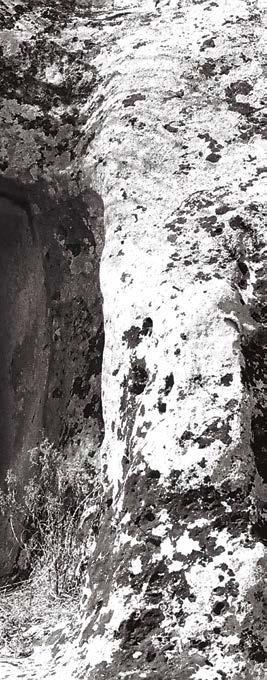
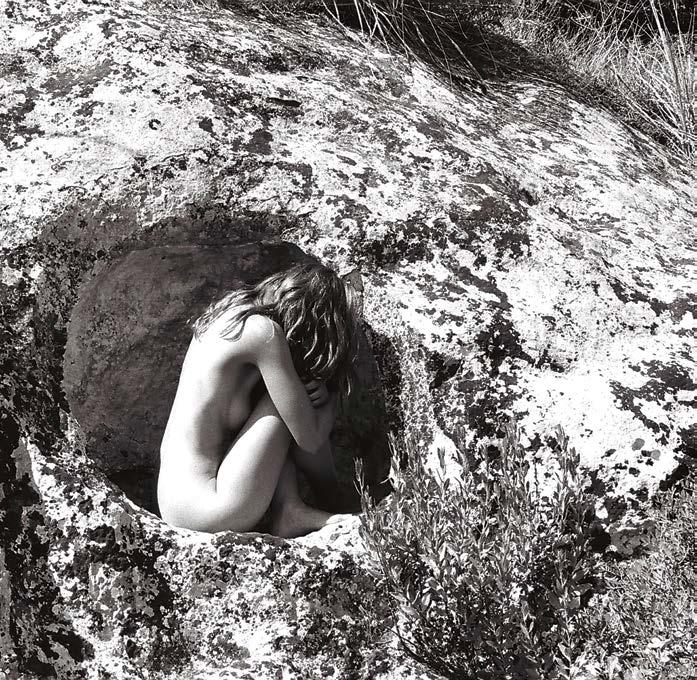
La dimensión sagrada de la naturaleza como epifanía artística
l a obra de Verónica Mecchía está tocada por una sensibilidad espiritual ante la idea de temporalidad para captar la esencia de un momento específico, constituido por historia, naturaleza y corporalidad. En una sociedad cada vez más acelerada, su obra llama al espectador a demorarse en la contemplación, invitando a una observación reflexiva de re-conocimiento, en un vaivén poético, que abre la posibilidad de una actualización artística del pasado profundo en el presente que transcurre de manera permanente. Los sentidos simbólicos que en ella pulsan son polisémicos e inagotables, porque muestran indirectamente a la vez que ocultan lo evidente.
Si bien estas fotografías son parte de distintas series, en su conjunto tienen de fondo la continuidad de una emoción de la experiencia de la naturaleza, desde su propia vivencia. Algunas de estas series son: Vanitas, comenzada en 1998 (aún abierta); Habiter poétiquement le monde, creada en torno al 2018 (aunque incluye fotografías anteriores); La Nature est un temple, creada en 2022; La nostalgia de l’infini (título inspirado en un cuadro de De Chirico), creada en 2023; En pleine lumière (título inspirado en el poema “L’Amoureuse” de Paul Éluard), creada en 2024.
Su trabajo fotográfico se basa en una reflexión poética y filosófica oriental en torno a las ideas de impermanencia, transitoriedad y ciclicidad. En lo visual, se inspira inicialmente en la tradición occidental que impregna su hábitat (Italia), desde la pintura de naturaleza muerta hacia la inclusión de elementos arqueológicos. En este trayecto estético la idea de temporalidad se ha ido modulando reflexivamente, desde una visión melancólica ante lo efímero hacia una perspectiva de celebración ante el cambio y los procesos de transformación que decantan en una poética simbólica ante la vida, tejida con el hilo del nacimiento, la muerte y el renacimiento.
Así, la naturaleza ha ido tomando una relevancia creciente en su creación artística, a través de la que experimenta –como en una epifanía–, la fuerza vital y la unidad de los seres vivos y los elementos naturales Estas experiencias de lo sagrado en el arte actualizan una función arcaica de lo artístico, que es el cultivo espiritual de la humanidad en el acto creativo.
The sacred dimension of nature as an artistic epiphany
veronica Mecchia’s work is touched by a spiritual sensitivity to the idea of temporality, capturing the essence of a given moment with its own history, nature, and corporeality. In an increasingly fast-paced society, her work calls on the viewer to linger in contemplation, inviting a reflective observation of recognition. This poetic exchange provides an opportunity to artistically update the deep past within our ever-changing present. The symbolic meanings that pulsate within her are polysemic and inexhaustible, because they indirectly reveal while concealing the obvious.
Although these photographs are part of different series, as a whole they share the continuity of an emotion derived from communing with nature, from her own experiences. Some of these series include: Vanitas (1998, ongoing), Habiter poétiquement le monde (circa 2018, includes earlier photographs), La Nature est un temple (2022), La nostalgie de l’infin i (2023, title inspired by a painting by De Chirico); and En pleine lumière (2024, title inspired by Paul Éluard’s poem “L’Amoureuse”).
Her photography artwork is founded on reflections of poetry and Eastern philosophical concepts exploring impermanence, transience , and cyclicality . Visually, she draws her initial inspiration from the Western tradition that permeates her habitat—Italy—ranging from still life painting to archaeological elements. In this aesthetic journey, the idea of temporality has been thoughtfully shaped, starting from a melancholic view of the ephemeral and shifting to a perspective that celebrates change and transformation processes. This perspective results in a symbolic poetry of life, woven with the thread of birth, death, and rebirth.
Nature has thus increasingly taken on more prominence in her artistic creation, through which she experiences—as in an epiphany—the vital forc e and unity of living beings and natural elements . These experiences of the sacred in art bring to life an ancient function of art: the spiritual cultivation of humanity in the act of creation.
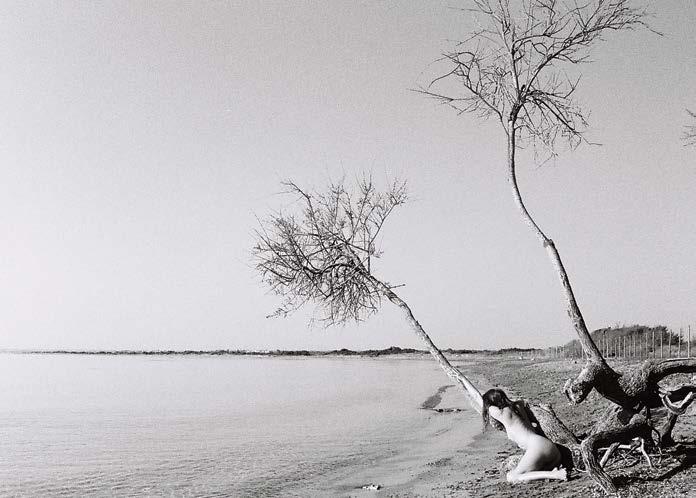
Tanto el encuentro con paisajes de naturaleza intacta, como algunos paisajes con dimensiones arqueológicas y ruinas, transportan al ojo mnémico hacia temporalidades de civilizaciones antiguas, en donde palpitan las huellas de cultos a la Gran Diosa Madre, principio generativo de toda la realidad como naturaleza sagrada.
La artista comenta que Sicilia está salpicada de evidencias del culto a esta diosa: desde estatuillas neolíticas encontradas en cuevas y necrópolis, hasta yacimientos prehistóricos, donde las tumbas talladas en la roca evocan simbólicamente un útero primordial. “En estos lugares, mi intención ha sido capturar y restaurar la dimensión uterina y acogedora de la tierra, transformándola en una imagen poética”.
Su obra opera simbólicamente como una ritualidad que repara, a través de su repetición, la rotura de la separación entre el ser humano y la naturaleza, o lo que desde la antropología se llama el distanciamiento por oposición entre la cultura y la naturaleza. Este distanciamiento comienza desde el siglo XVII y hoy, en su paroxismo, puede ser apreciada en la exaltación de un yo separado del nosotros, insaciable y consumista, que busca el desarrollo sin fin, con el costo de la destrucción del mundo.
Desde la hermenéutica simbólica, obras como estas, según Blanca Solares, llaman a “descubrir la persistencia de la naturaleza como misterio insondable o Eterno Femenino (Goethe)”, donde los imaginarios de la transición ecológica empujan a una reconstrucción mítica de la memoria, como símbolos de la naturaleza viva de la humanidad.
En sus fotografías se puede contemplar una tripartición del mundo moderno que palpita buscando su unificación. La persistencia del cuerpo desnudo de la artista rememora a la gran madre sin rostro, como si Verónica quisiera dar ánima al paisaje que le acoge. Su cuerpo, en este sentido, es metáfora animista de una unidad trascendental de la Natura Naturans (naturaleza creadora).
La corporalidad sin rostro aparece fundida y/o mimetizada en y con su entorno.
Both encounters with pristine natural landscapes, as well as landscapes featuring archaeological elements and ruins, bring to mind the memories of ancient civilizations. These traces of worship toward the Great Mother Goddess—the generative principle of all reality as sacred nature—continue to resonate.
The artist notes that Sicily is filled with remnants of worship to the goddess: from Neolithic statuettes discovered in caves and necropolises to prehistoric sites featuring rock-carved tombs that symbolically represent a primordial womb. “In these places, my intention has been to capture and restore the womb-like and welcoming nature of the Earth, transforming it into a poetic image.”
Her work serves as a symbolic ritual that aims to heal the divide between human beings and nature through repetition. This separation, often described in anthropology as the distancing by opposition between culture and nature, began in the 17th century. Today, this divide is at its peak, manifesting in an obsession with an insatiable consumerist self that is disconnected from the collective. This self is in pursuit of never-ending development, often at the expense of the destruction of the world.
From a symbolic hermeneutic perspective, artworks like these, as stated by Blanca Solares, invite us to “discover nature’s persistence as an unfathomable mystery” or what Goethe referred to as the “Eternal Feminine.” In this context, the concepts of ecological transition urge us to engage in a mythical reconstruction of memory, serving as symbols of humanity’s connection to the living world.
In her photographs, one can contemplate a tripartite division of the modern world striving for unification. The reiteration of the artist’s naked body recalls the great faceless mother, as if Veronica wanted to breathe life into the landscape that welcomes her. In this sense, her body is an animistic metaphor for a transcendental unity of Natura Naturans (creative nature). The faceless corporeality appears fused and/or camouflaged in and with its surroundings.
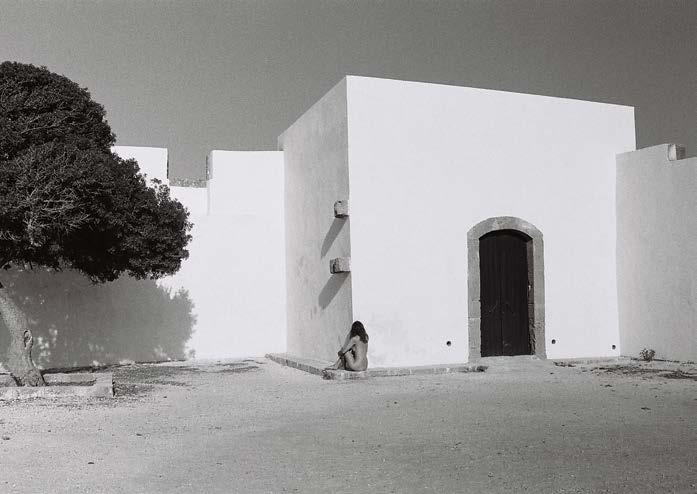
Su obra puede comprenderse como una fotografía psico-performativa, ya que la artista compone la imagen en un procedimiento poético de espejo, vale decir, que su composición y encuadre fotográfico enfoca desde la acción de incluir su propio cuerpo ante el mismo ojo que observa. Con esta acción intuitiva-instintiva, la fotógrafa sale metafóricamente del lugar moderno del ojo objetivo, distante y científico, que objetifica la naturaleza cuando la mira. En esta praxis psico-performativa la artista unifica lo observado y el observador (al sueño y el soñador, al tejido y al tejedor), como si la imagen fuera un espejo que se puede atravesar.
Desde la fotografía análoga Verónica Mecchia experimenta la iluminación en escala de grises, dejando intacta la imagen tomada. Ante un mundo que rinde culto a la alta definición, este gesto en escala de grises puede llevar a una sensación cromática de ocultamiento, recordándonos el aforismo mistérico de Heráclito: la naturaleza ama esconderse , donde el “como si” del juego y la repetición de la mímesis artística pudiera ir más allá de la imagen congelada. Aquí, el “cómo si”, de la imagen fotográfica se vuelve un azogue, marcando dos lados del espejo, donde el espectador, dejándose tocar por esta sensibilidad, ingresase al otro lado de la imagen, allí donde ella está viva y no congelada, más bien, donde la obra es vivificada y completada a través de su correspondencia mimética con el espectador. Un suceso perceptivo, alquímico, transdimensional, donde la experiencia sensible que vive la artista con/en la naturaleza del trayecto fotográfico logra la hiper-identificación en un afuera que ingresa y le actualiza como imagen.
Aquí radica lo simbólico del arte, promesa de integridad de un fragmento que busca completarse. Esta mímesis entre paisaje, cuerpo e historia, fundida en la idea de una naturaleza primigenia, Gran Madre, habla de una mímesis que juega en su repetición ritual como búsqueda de imagen, haciéndose de esta manera, poiesis , pues haciendo aparecer el otro lado, también lo crea, en un “como si” la ocultación cromática fuese a sí mismo demostración de sentido, moviéndonos a demorarnos en la contemplación.
Her work can be understood as psycho-performative photography, since the artist composes the image in a poetic mirroring process, that is to say, her composition and photographic framing focus on the action of including her own body before the very eye that observes. With this intuitive-instinctive action, the photographer metaphorically leaves the modern place of the objective, distant, and scientific eye that objectifies nature when it gazes upon it. In this psycho-performative practice, the artist unifies observed and observer—dream and dreamer, fabric and weaver—creating an image that serves as a mirror to traverse.
Using analog photography, Veronica Mecchia experiments with grayscale lighting, leaving the captured image intact. In a world that worships high definition, this gesture in grayscale can create a sense of concealment, reminding us of Heraclitus’ enigmatic aphorism: “ Nature loves to hide ,” as though the ‘as if’ of this game and the reiterative gesture of artistic mimesis could go beyond a fixed image. Here, the ‘as if’ of the photographic image becomes a dynamic experience., marking two sides of the mirror. Viewers find themselves affected by the sensitivity of the image and step into its other side, where it is alive and not frozen in time. The artwork is invigorated and completed through its mimetic connection with the viewer. A thoughtful, alchemical, and trans-dimensional event takes place, where the artist’s sensory engagement with the photographic journey results in a profound connection to the outside world, bringing it to life as an image.
This embodies the symbolism of art—a promise of integrity, representing a fragment in search of wholeness. This mimesis between landscape, body, and history, fused in the idea of a primal nature—the Great Mother—speaks of a connection that serves as a search for image in its ritual repetition. This process becomes poiesis , because it not only reveals the other side but also brings it into existence. In this ‘as if’, the chromatic concealment is itself a demonstration of meaning, making us linger in contemplation.
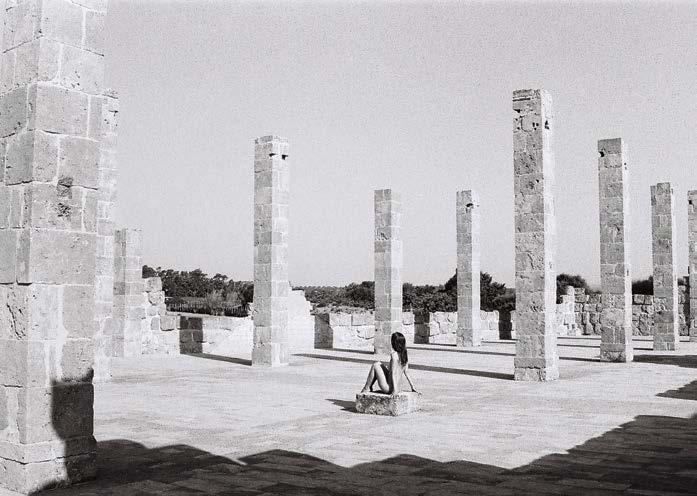
Por Vania Oyarzún López. Periodista (Chile)
Imágenes cortesía de la artista.
Representada por Galería Patricia Ready.
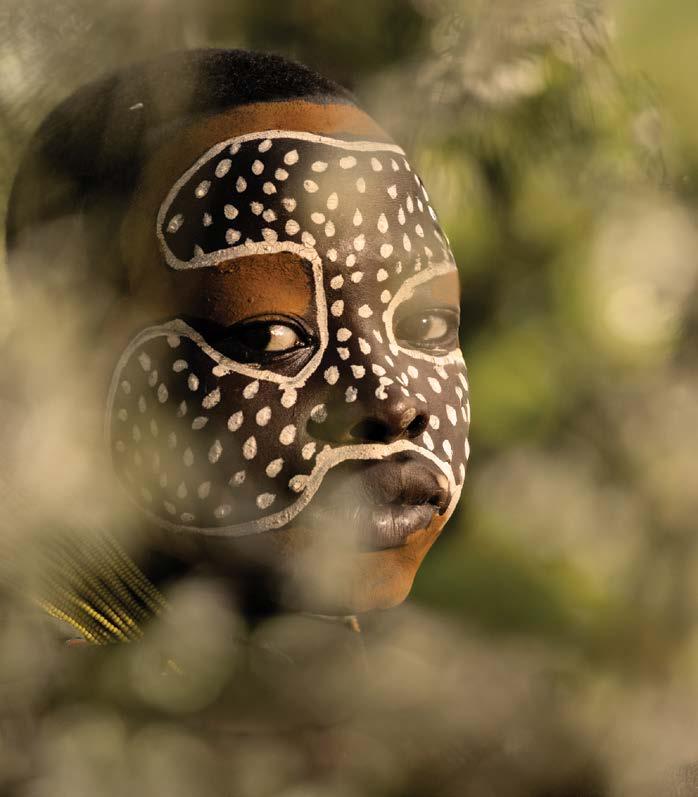
luz como puente entre cuerpos, territorio y memoria
tras décadas de distancia con la fotografía, el retorno de Gloria Franke ocurre en tránsito y no desde la comodidad del estudio. Primero en India, donde el color, la devoción y la persistencia de lo ritual encendieron una energía latente; luego en plena pandemia, cuando la iluminación se convirtió en el portal técnico para una nueva mirada. Desde entonces la artista ha tejido un trayecto que incluye retratos, pueblos originarios y expediciones hacia territorios donde la identidad aún dialoga con la herencia ancestral.
En Travesía de Luz, Valle del Omo, la artista instala un estudio fotográfico portátil en el sur de Etiopía para retratar distintas comunidades que conservan tradiciones milenarias. Con imágenes construye un acercamiento donde el cuerpo, el ornamento y la luz se entrelazan en un registro que oscila entre el documento y la construcción estética: una presencia que revela “lo que el ojo no ve”.
Después de un largo período alejada de la fotografía, tu retorno ocurre desde un viaje a India y luego desde la investigación lumínica en plena pandemia. ¿Qué activó ese reencuentro con la imagen y qué dirección tomó desde entonces?
El punto de quiebre fue un viaje a India, en 2017. Me impactaron profundamente sus colores, sus olores, sus tradiciones y, sobre todo, la forma en que las personas siguen conectadas con sus ancestros. Esos rostros llenos de fuerza despertaron algo que no podía dejar de fotografiar. Ahí se reactivó una pasión que había estado guardada por casi treinta años. Al volver a Chile retomé la rutina y la cámara volvió al clóset, hasta que durante la pandemia, junto a una amiga, comenzamos a hacer gigantografías con esas imágenes. Mientras las editaba sentí que faltaba algo: la luz. Eso me llevó a estudiar iluminación, comprar mis primeros flashes y, poco a poco, sin darme cuenta terminé armando un estudio de fotografía. Comencé retratando alumnas de cuarto medio para sus fotos de egreso, lo que fue una gran escuela para aprender a modelar rostros. En paralelo desarrollé series como Movimiento y Siluetas, donde entendí cómo un destello podía transformar completamente una imagen y revelar “lo que el ojo no ve”. Cuando terminó la pandemia comprendí algo clave: nunca existe el momento perfecto para estar completamente preparada. Si uno espera sentirse listo, los sueños se postergan indefinidamente. Entendí que había que atreverse.
Ahí surgió también la pregunta de por qué ir tan lejos si en nuestro propio país existen pueblos originarios con una riqueza cultural inmensa. Comencé entonces a recorrer Chile fotografiando distintas comunidades, en un proyecto que sigue en desarrollo y que convive con mis otros trabajos. En ese mismo proceso empecé a aplicar la iluminación de estudio en distintos contextos y a retratar otra de mis grandes pasiones: los caballos. Ese recorrido culminó en el libro Alma Equina, Retratos de Luz y Sombra. Todo este camino fue dando forma a mi manera de mirar y preparó el terreno para proyectos como Travesía de Luz, Valle del Omo.
En esta serie, trabajas con un estudio portátil para retratar distintas comunidades del sur de Etiopía. ¿Cómo fue incorporar un dispositivo técnico —como la iluminación controlada— en un contexto cultural y territorial tan distinto al propio?
Para llegar a cada tribu viajaba con mi hijo, un guía principal, un cocinero y, en cada comunidad, un guía local que nos ayudaba a comunicarnos, ya que cada tribu tiene sus propios dialectos y códigos. Con su apoyo conversábamos con los integrantes de la tribu, les explicábamos el trabajo y les mostraba ejemplos en el computador antes de comenzar.
Light as a bridge between bodies, territory and memory
after decades away from photography, Gloria Franke’s return took place on the road rather than from the comfort of her studio. The first stop was in India, where color, devotion, and constant ritualism ignited a dormant energy within her. Then, in the midst of the pandemic, lighting became a technical gateway towards a new perspective. Since then, the artist has traced a journey that includes portraits, indigenous peoples, and expeditions to territories where identity still dialogues with ancestral heritage.
In Journey of Light, Omo Valley, the artist sets up a portable photo studio in southern Ethiopia to portray different communities that preserve ancient traditions. Through images, she builds an approach where the body, ornamentation, and light intertwine in a register that fluctuates between documentation and aesthetic construction: a presence that reveals “what the eye cannot see.”
After a long period away from photography, your return came about following a trip to India and then light research in the midst of the pandemic. What triggered this reunion with the image and what direction has it taken since then?
The turning point was a trip to India in 2017. I was deeply struck by its colors, its smells, its traditions, and above all, the way people remain connected to their ancestors. Those faces full of strength awakened something that I couldn’t stop photographing. That’s when my passion— dormant for almost thirty years—was reactivated.
When I returned to Chile, I went back to my routine and the camera went back into the closet. Then, during the pandemic, along with a friend, I started making giant posters with those images. While editing them, I felt that something was missing: light. That led me to study lighting, buy my first flashes, and little by little, without realizing it, I ended up setting up a photography studio. I started by photographing high school seniors for their graduation photos, which was a great way to learn how to render faces. At the same time, I created several series such as Movement and Silhouettes, which helped me understand how a flash could completely transform an image and reveal “what the eye cannot see.”
When the pandemic ended, I learned a key thing: there is never a perfect moment to be completely prepared. If you wait until you feel ready, your dreams will be postponed indefinitely. I understood that you have to take the plunge.
Back then, I also questioned the need of traveling so far when there are indigenous peoples in our own country with immense cultural wealth. I then began traveling around Chile, photographing different communities. That project is still ongoing and it coexists with my other work. Within that same process, I began applying studio lighting in different contexts, and photographing another of my great passions: horses. This journey culminated in the book Equine Soul, Portraits of Light and Shadow. That entire journey shaped my perspective and paved the way for projects such as Journey of Light, Omo Valley.
In this series, you work with a portable studio to portray different communities in southern Ethiopia. What was it like to incorporate a technical device such as controlled lighting into a cultural and territorial context so different from your own?
To reach each tribe, I traveled with my son, a head guide, a cook, In every community, a local guide also helped us communicate, as tribes have their own dialects and codes. With the guide’s support, we talked to tribe members, explaining the project and showing them examples on the computer before we started.
Photo Rag ultra Smooth de 305 gramos 100% algodón libre de ácidos; luz de estudio, 90 x 135 cm. Ed. 3 + 1PA.
Mursi 1 , 2014, papel Hahnemühle
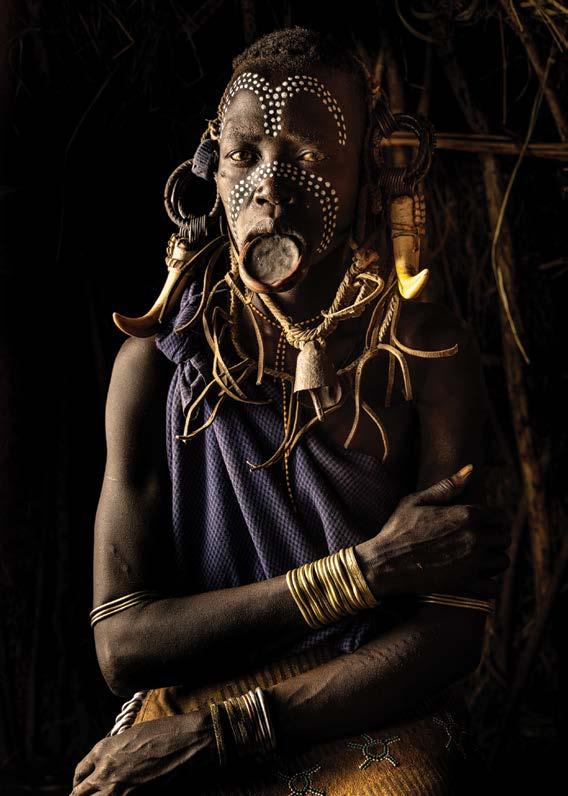
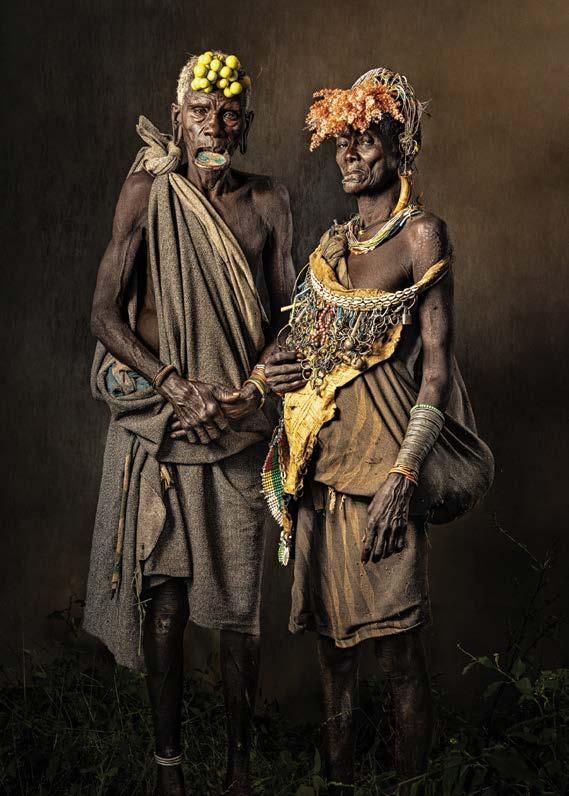
Mujer Suri 3 , 2014, papel Hahnemühle Photo Rag ultra Smooth de 305 gramos 100% algodón libre de ácidos; luz de estudio, 90 x 135 cm. Ed. 3 + 1PA.
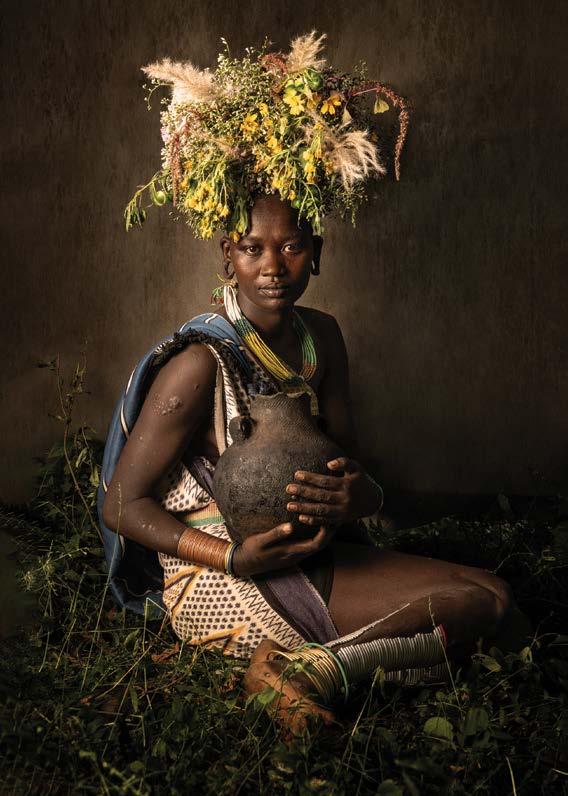
Durante las mañanas o tardes combinaba la iluminación natural con luz de estudio en su propio entorno. En la tarde armaba espacios más contenidos utilizando telones de fondo para centrar la mirada en las personas: sus rasgos, sus gestos, sus ornamentos, sus pinturas corporales, sus tatuajes y su forma de habitar el cuerpo. Al trabajar conectada al computador, ellos podían verse en tiempo real, lo que generaba curiosidad, asombro y participación. La fotografía se transformó en una experiencia compartida basada en el respeto.
Las imágenes dialogan con tradiciones que siguen vivas y en transformación. Desde tu lugar de observación, ¿qué dimensiones culturales se volvieron esenciales de aprender, respetar o comprender antes de fotografiar?
Desde el inicio fue fundamental observar desde el respeto, sin juicios ni interpretaciones externas. Estas comunidades viven desde la subsistencia, desde lo esencial, con una relación muy directa con la naturaleza y con sus tradiciones. Esa forma de vida les da una fuerza y una presencia muy potentes. Compartir con ellos me llevó a reflexionar sobre nuestra propia cultura y cómo muchas veces nos alejamos de lo simple y de lo verdaderamente importante.
Las composiciones revelan un cruce entre luz, cuerpo y ornamento. ¿Qué decisiones formales —y eventualmente éticas— guiaron la forma en que modelaste el rostro, el volumen y la identidad de quienes retrataste? Utilicé la iluminación para modelar volúmenes, resaltar texturas y destacar rasgos representativos de cada persona. Más allá de lo técnico, todo estuvo guiado por el respeto. No me interesa la fotografía robada ni capturar desde la distancia. Prefiero que las personas sepan que están siendo fotografiadas y participen conscientemente del proceso. Desde ese acuerdo nace una entrega distinta: cada retrato muestra lo que ellos desean compartir de sí mismos, su fuerza, su identidad y su belleza.
Tu obra ha transitado por series como Movimiento y Siluetas, Pueblos Originarios, Retratos Tribales y Retratos de Sacerdotes. ¿Qué continuidad reconoces en ese trayecto y dónde percibes un punto de inflexión con respecto a este nuevo proyecto?
En todas mis series hay un hilo conductor claro: la luz como herramienta de transformación. A eso lo llamo “lo que el ojo no ve”. Ese concepto atraviesa desde Movimiento y Siluetas hasta los retratos tribales donde la luz se convierte no solo en técnica, sino en lenguaje.
En tu trabajo conviven la dimensión documental y la construcción estética. ¿Cómo se articulan el registro cultural y la luz como lenguaje propio dentro de esa tensión?
Mi trabajo no parte desde una división rígida entre lo documental y lo artístico, sino desde la intuición. Tomé la decisión de viajar con un estudio itinerante porque la iluminación es una herramienta fundamental para impregnar mi sello. El primer destello marca el inicio del proceso creativo y, luego, me dejo guiar completamente por el instinto.
Si pensamos la luz como metáfora —de viaje, de memoria o de sentido—, ¿qué ilumina hoy tu obra y hacia dónde te conduce esa travesía?
Siento que la fotografía me guía. No es solo un recorrido geográfico, sino también interior. Estar en contextos que me sacan de mi zona de comodidad me lleva a cuestionar y a abrir estructuras internas. Hoy mi camino continúa hacia nuevas travesías, como Papúa Nueva Guinea. Cada experiencia deja una huella profunda. La fotografía ha transformado mi manera de mirar el mundo y de mirarme a mí misma.
In the morning or afternoon, I combined natural lighting with studio lighting in their own environments. In the afternoon, I created more contained spaces using backdrops to draw attention to the people: their features, gestures, ornaments, body paint, tattoos, and the way they inhabited their bodies.
Thanks to the computer connection, they could see themselves in real time, which fostered curiosity, amazement, and participation. Photography became a shared experience based on respect.
The images speak on traditions that are still alive and evolving. From your perspective, what cultural elements became essential to learn, respect, or understand before shooting the photographs?
From the outset, it was essential to observe with respect, without judgment or external interpretations. These communities live for survival, with the bare essentials, and a very direct relationship with nature and their traditions. This way of life gives them a very powerful strength and presence. Spending time with them led me to reflect on our own culture and how we often stray from what is simple and truly important.
The compositions reveal an intersection between light, body, and ornament. What formal—and possibly ethical—decisions guided the way you rendered the faces, volume, and identity of the subjects?
I used lighting to shape volumes, highlight textures, and emphasize each person’s unique features. Beyond the technical aspects, everything was driven by respect. I am not interested in stealing candid photographs or capturing images from a distance. I rather people know they are being photographed so they consciously participate in the process. A different kind of dedication come from that agreement, as each portrait shows what they want to share about themselves: their strength, identity, and beauty.
Your work has spanned series such as Movement and Silhouettes, Indigenous Peoples, Tribal Portraits, and Portraits of Priests. What common thread do you see in that journey? Does this new project represent a turning point?
There is a clear common thread running through all my series: light as a tool for transformation. I call that “what the eye does not see.” That concept runs from Movement and Silhouettes to the tribal portraits. In those series, light is not only a technique but also a language.
Your work combines documentary elements with aesthetic construction. How do cultural documentation and light as language fit into this tension?
My work is not based on a rigid division between the documentary and the artistic, but rather on intuition. I decided to travel with a mobile studio because lighting is a fundamental tool for infusing my work with my signature style. The first flash marks the beginning of the creative process, and then I let myself be guided entirely by instinct.
If we think of light as a metaphor—for travel, memory, or meaning—what illuminates your work today, and where is that journey taking you to?
I feel that photography guides me. It is not only a geographical journey, but also an inner one. Being in contexts that take me out of my comfort zone leads me to question and loosen internal structures. Today, my path continues toward new journeys, such as Papua New Guinea. Each experience leaves a deep mark. Photography has transformed the way I see the world and myself.
Photo Rag ultra Smooth de 305 gramos 100% algodón libre de ácidos; luz de estudio, 90 x 114 cm. Ed. 3 + 1PA.
Mujer Nyangatom , 2014, papel Hahnemühle
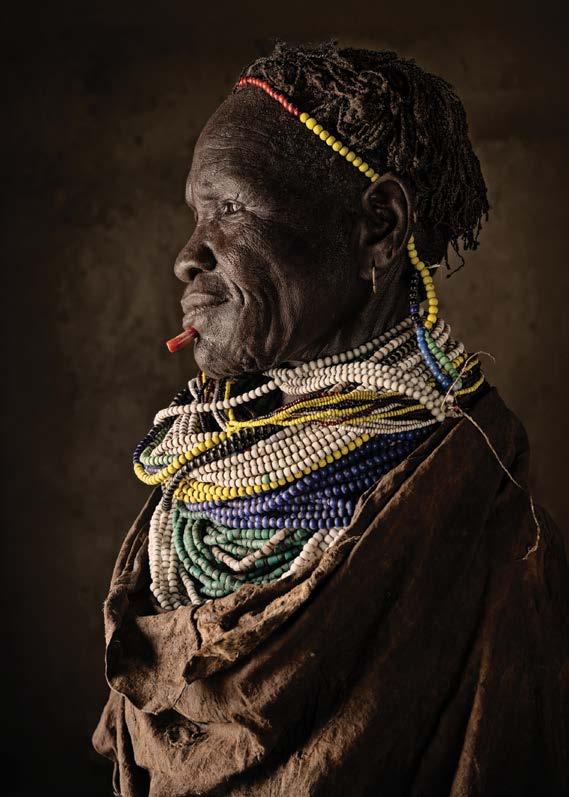
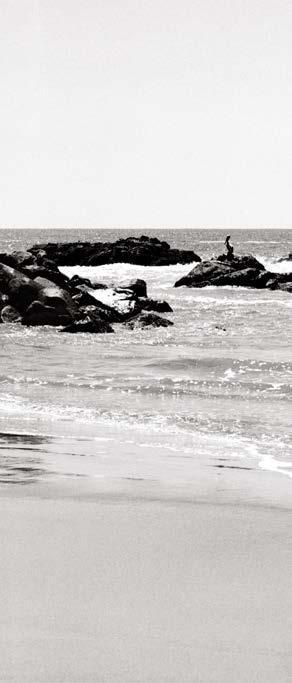
Por Felipe Forteza. Curador y gestor de arte (Chile) Imágenes cortesía de la artista.
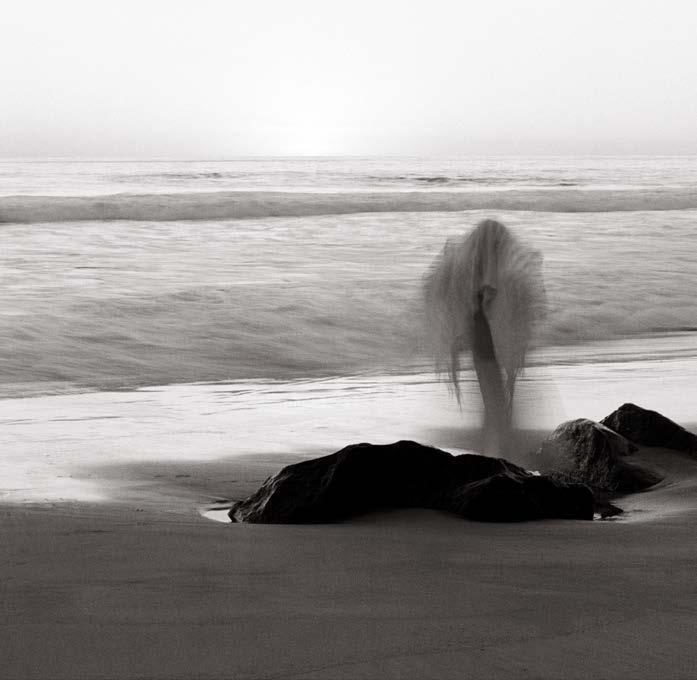
l os cuerpos parecen sacados de escenas fílmicas. El movimiento, la languidez, la sensación de que todo aquí fluye como el agua que acompaña a estas personas te sumergen en escenas vívidas, donde la narrativa se hace incuestionable. Quizás es por la amplia formación de Lourdes, quien ha realizado múltiples exposiciones, publicado diversos libros y colaborado como directora de arte en diversas películas. Sin embargo, su trabajo es netamente la fotografía.
Lourdes Almeida es una figura clave en la fotografía contemporánea de su país. A lo largo de su carrera, ha explorado temas como la familia, lo femenino, la migración y la religiosidad, con un lenguaje artístico donde predominan trabajos análogos, junto a la experimentación con textiles y la conocida máquina fotográfica Polaroid. Estos elementos analógicos los combina además con técnicas fotográficas experimentales. De ello queda registro en sus libros “El pájaro azul de la felicidad” (2010), “Apuntes sobre papá. Centenario de su natalicio”(2012), “Laberinto de quimeras” (2015), “Apuntes sobre mamá. Centenario de su natalicio” (2015), publicaciones que ha gestionado de manera independiente.
the bodies seem straight out of film scenes. Their movement, sluggishness, and the sensation that everything flows like water around them immerses you in vivid imagery with an undeniable narrative. Perhaps this is due to Almeida’s extensive training, having held numerous exhibitions, published several books, and collaborated as an art director on several films. However, her work is purely photography.
Lourdes Almeida is a key figure in contemporary photography in her country. Throughout her career, she has explored themes such as family, womanhood, migration, and religion, using a predominantly analog language, explorations of textiles, and the well-known Polaroid camera for her artwork. She also combines these analog elements with experimental photographic techniques. This is documented in her independently published books “The Blue Bird of Happiness” (2010), “Notes on Dad. Centenary of His Birth” (2012), “Chimeras Labyrinth” (2015), and “Notes on Mom. Centenary of Her Birth” (2015).
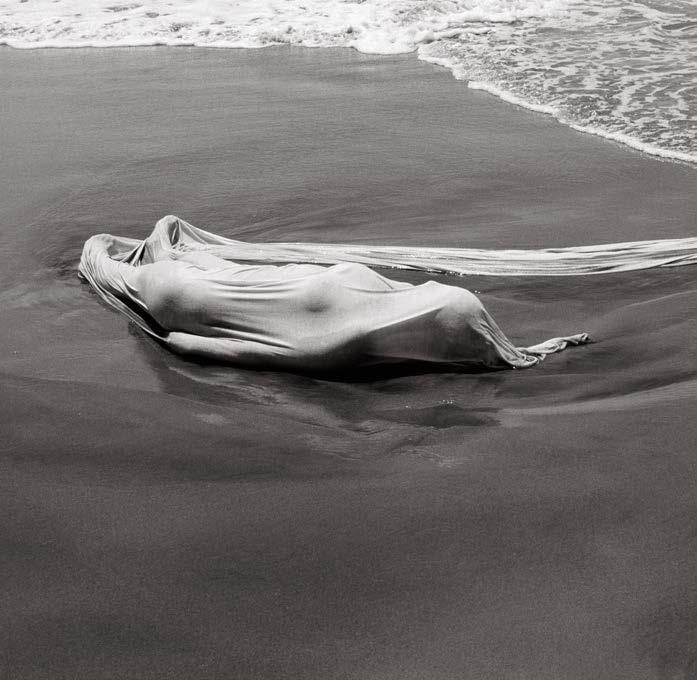
La serie fotográfica de Lo que el mar me dejó de Lourdes Almeida fue trabajada entre 1987 y 1989, mostrando el cuerpo femenino como protagonista a la orilla del mar, en cuyo entorno aparecen mujeres con rostros que escapan a la mirada del espectador y donde sus cuerpos se mueven en forma misteriosa, como si de un rito se tratara. Cuerpos embutidos en neutros ropajes monocromáticos y desdibujados que se integran al entorno que las rodea, crea una imagen inusual. Por medio de seductoras posturas van creando coreografías, ya sea en solitario o en grupo, con gestos sensuales y a la vez angustiantes, como si debajo de estos géneros indefinidos trataran de comunicarse en su propio idioma.
“De niña mi mamá me leía historias de mujeres donde las sirenas eran recurrentes”, indica su creadora. De esta forma la artista evoca sus recuerdos y con la ayuda de 10 modelos (todas amigas suyas), compone una historia en blanco y negro, donde estas mujeres se mueven al son de la marea, como si ésta las impulsara, creando secuencias sugerentes y oníricas, donde cada una da rienda suelta a sus particulares emociones, creando fotografías de una gran carga emocional y fuerza interpretativa.
En algunas mujeres instruidas en México, como en gran parte del mundo occidental, esta apertura debió generar cambios significativos en su percepción de la vida y en la experiencia de ser mujer, lo que se refleja en este trabajo.
Lourdes Almeida’s photoseries What the Sea Left Me , created between 1987 and 1989, features the female body as the protagonist on the seashore. In this environment, the faces of the portrayed women appear to escape the viewer’s gaze, and their bodies move mysteriously, as if in a ritual. Bodies encased in neutral, monochromatic, blurred clothing that blends into their surroundings create unusual images. Through seductive postures, the either solo or grouped bodies create choreographies, with gestures that are both sensual and distressing, as if beneath these sheer fabrics they were trying to communicate in their own language.
“As a child, my mother used to read me stories in which mermaids were a recurring theme,” says the creator. In the series, the artist evokes her memories and, with the help of 10 models—all friends of hers. She composes a black and white story with the women moving to the beat of the tides. It seems as though the waves somehow drove them to move, creating suggestive and dreamlike sequences, each woman giving free rein to her own emotions. This process resulted in photographs with great emotional charge and interpretive power.
Clearly, 1960s and 1970s feminism—which fought for equal civil rights—is an indelible part of the artist’s vision. For some women educated in Mexico, as in much of the Western world, civil rights vindications must have brought about significant changes in their perception of women’s lives, which is reflected in this work.
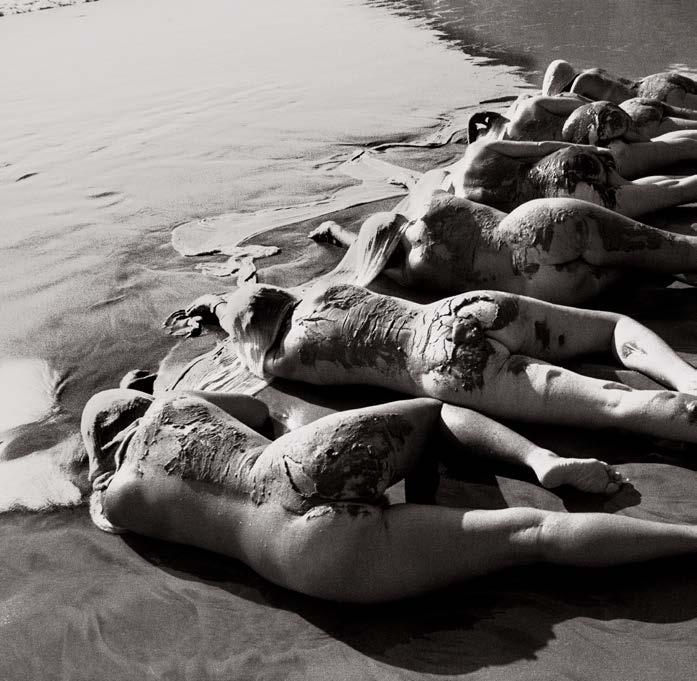
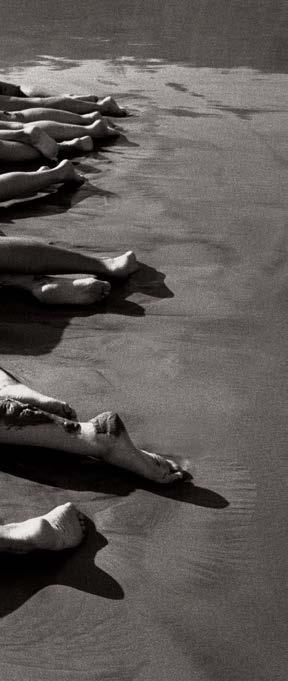
Nelson Oxman captura poética y acertadamente la visión de la fotógrafa y sus obras: “Una de la intenciones principales de Almeida es mostrar el cuerpo femenino desvinculado de la carga ideológica que le ha conferido la cultura moderna. El erotismo de los cuerpos recupera la inocencia original. La sensualidad del oleaje del mar se enreda con la sensualidad de los cuerpos. La naturaleza recobra su ancestral capacidad de figurar miles de formas. La propuesta significa un reto contra la lógica de la razón desprovista de imaginación mítica. Los cuerpos femeninos vuelven a ser los propuestos por la cultura clásica. No se alude al sexo, ni al cuerpo femenino como un objeto de consumo, sino más bien como una posibilidad de establecer un vínculo entre ilusión y realidad. El acierto principal de Almeida consiste en liberar a la fotografía de su obligado destino testimonial, para darle la posibilidad de ser un instrumento de la imaginación”.
El interés de Lourdes por guardar testimonios sin maquillaje y simbólicos, como los que vemos en esta serie, es de gran repercusión, tal como hacen los fotógrafos cuando registran momentos cruciales de la humanidad a través de su lente. Y eso es precisamente lo más relevante de la artista al momento de desarrollar estas imágenes: las dota de humanidad, simple y pura. Sin efectos, en un paisaje común, creando una atmósfera sigilosa, atemporal, de esas que solo la fuerza de la simpleza bien ejecutada puede generar.
Nelson Oxman poetically and accurately captures the photographer’s vision and her works: “One of Almeida’s main intentions is to show the female body detached from the ideological burden that modern culture has placed on it. The eroticism of the bodies restores their original innocence. The sensuality of the ocean waves intertwines with the sensuality of the bodies. Nature recovers its ancestral capacity to take on thousands of forms. The proposal challenges the logic devoid of mythical imagination. Female bodies revert to those prescribed by classical culture. There is no allusion to sex, nor to the female body as an object of consumption, but rather as a possibility of establishing a link between illusion and reality. Almeida’s main achievement is to free photography from its obligatory testimonial fate, allowing it to become a tool instrument for imagination.”
Lourdes’ interest in preserving unembellished and symbolic testimonies—such as the ones in this series—has a great impact, just as the works of photographers who have recorded crucial moments in humanity through their lenses. This is precisely the most remarkable signature of this artist’s work: when she creates images, she has the ability to infuse them with a sense of humanity that is simple and pure. Without effects, she poses her subjects in ordinary landscapes to evoke a secretive, timeless atmosphere. This unique quality is achieved through the power of well-executed simplicity.
Lucía Rey Orrego. Académica e investigadora independiente (Chile)
Imágenes cortesía de la artista.
Representada por Albuquerque Contemporânea y Galería Anita Schwartz.
De la serie Vivarium , “Samambaias”, 2024, impresas en photorag metálica, hahnemühle 340 g, 44 x 30 cm.
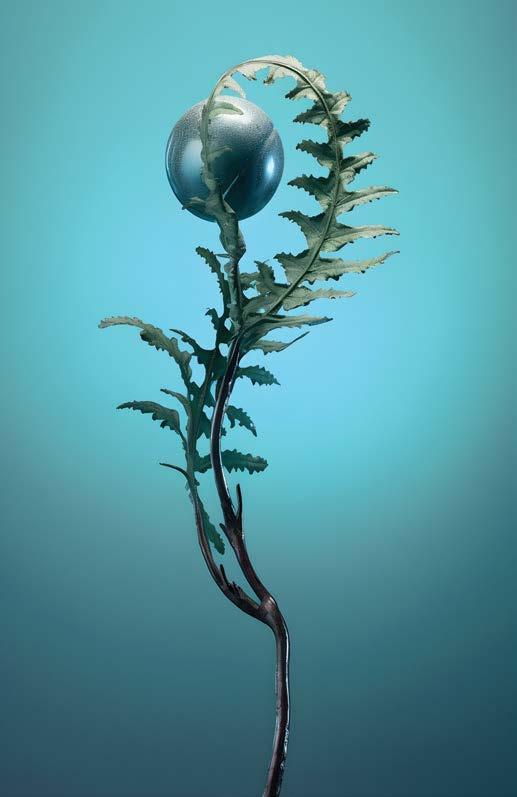
e“Physis
es, en primer lugar, el título de una pregunta: ‘¿de dónde vienen las cosas?
¿Cómo nacen y crecen?’”
P. Aubenque
n el mundo contemporáneo, la tecnología ha ido cobrando protagonismo. Primero, en su aspecto más invisibilizado; luego en lo más evidente, los resultados de experimentos con lo vivo y la cultura. A partir de este contexto, muchos/ as artistas han ido tomando caminos, tanto de fascinación por los cambios, como también por la vía del pensamiento crítico ante la devastación de la naturaleza. Existen artistas que trabajan en la vía ecológico espiritual, como otros que intentan experimentar el acople de estos cambios a sus procedimientos técnicos de obra, reflexionando sobre las implicancias estéticas de la percepción de la realidad.
Las obras aquí expuestas comienzan con una amplia investigación activa desde el 2008, con el libro “When I Saw”. Son parte de la serie Vivarium, expuesta en 2025 en el Hangar Art Center, en Bélgica y este año proximamente en el Museo de Arte Contemporáneo de São Paulo.
En ellas, la artista brasilera Claudia Jaguaribe investiga inicialmente los cambios atravesados en la fotografía artística, desde los tiempos análogos y post/ digitales (hoy ya existen computadores cuánticos); lo que luego la condujo a pensar desde sus códigos plásticos y las inquietudes contemporáneas, en una posible ampliación de la técnica fotográfica a través del uso de collages emitidos por la I.A. y otras operaciones relativas a la manipulación química de plantas con fines estéticos. Con esto, la artista reflexiona en torno a la representación de la naturaleza y la “esencia” misma de ella. Esta reflexión que en un momento pudo ser procedimental y estética, inevitablemente le llevó a pensar la relación del ser humano con la naturaleza, en cómo la experimenta y percibe en este nuevo contexto tecnocultural.
Esta es una reflexión en torno a una época geológica que algunos han llamado antropoceno, que alude a tiempos de aceleración de la destrucción de la naturaleza por los supuestos progresos de la humanidad, donde más claramente hoy, desde algunos sectores intelectuales, se busca comprender al ser humano en fusión con la máquina, para construir lo que llaman una postnaturaleza. Sin embargo, el Antropoceno, como hipótesis ha tenido otros planteos que no responsabilizan al humano sino especialmente a una determinada cultura humana, usando otros términos como Plantacionoceno, Tecnoceno, Capitaloceno u Occidentaloceno, que explican la destrucción y el extractivismo por manos de un sistema capitalista o post/industrial, aunque Antropoceno posiblemente sea el término más difundido culturalmente.
Estas obras pueden ser expresión de una reflexión en torno a la post verdad, donde lo que es, se hace indistinguible de lo que no es. En ese sentido, el concepto de naturaleza se ha tensionado a través de los ejes experimentales del pensamiento científico y tecnológico, relativizando los límites humanos para experimentar con ella. Aquí la “naturaleza” (physis en la Grecia antigua, en su sentido más profundo: el principio intrínseco de crecimiento, cambio y desarrollo de todas las cosas, principio fundamental del cosmos, aquello que tiene su origen y razón de ser en sí mismo, a diferencia de lo artificial), es penetrada y modificada por elementos culturales externos a ella.
“Physis is thus first of all, the title of a question: Where do things come from? How are they born and how do they grow?”
P. Aubenque
in the contemporary world, technology has gained prominence. First, in its most invisible form—but in the most obvious form: the outcomes of experiments involving living organisms and culture. In this context, many artists have embarked on different paths—some fascinated by the changes, others critical towards the devastation of nature. Some artists have chosen the path of environmental spiritualism, while others have experimented with incorporating these changes to their artistic techniques, reflecting on the aesthetic implications of perceptions of reality.
The road that led to these works by Brazilian artist Claudia Jaguaribe started in 2008 with a thorough research project for the book When I Saw. Exhibited in 2025 at the Hangar Art Center in Belgium and soon to be showcased at the São Paulo Museum of Contemporary Art, these specific pieces are part of Jaguaribe’s Vivarium series.
In it, the artist investigates the changes undergone in artistic photography, from analog and post-digital times—now that quantum computers already exist. This exploration then led her to consider, based on her artistic codes and contemporary concerns, a possible expansion of photographic technique through AI-generated collages and chemical manipulations of plants for aesthetic purposes. Through these practices, Jaguaribe reflects on representations and the very “essence” of nature. Although perhaps the exploration began as a procedural and aesthetic endeavor, it inevitably led her to ponder on human beings’ relationship with nature and how she regards this relationship in this new techno-cultural era.
The reflection centers around a geological epoch many have called the Anthropocene to allude to a time of accelerated devastation of nature caused by humanity’s alleged progress. Nowadays, some intellectual circles are seeking to understand human beings and their fusion with machines, resulting in the concept they have coined post-nature. However, as a hypothesis, the Anthropocene has led to other postulates that do not find human beings themselves at fault, but rather a specific human culture. Other terms such as the Plantationocene, Technocene, Capitalocene, and Westernocene have emerged to explain the destruction and overexploitation by the hand of a capitalist or post-industrial system, although Anthropocene is perhaps the most widely spread term in our culture.
These works can be regarded as manifestations of post-truth reflections, where reality becomes indistinguishable from falsehood. In this sense, the concept of nature has been strained through the experimental axes of scientific and technological thought, relativizing human limits to experiment with it. “Nature”—or physis in ancient Greece—refers to, in its most profound definition, the intrinsic principle of growth, change, and development that governs all things. It is the fundamental principle of the cosmos, originating from and existing for itself, in contrast to the artificial. However, nature is influenced and altered by external cultural elements.
De la serie Vivarium , “Samambaias”, 2024, impresas en photorag metálica, hahnemühle 340 g, 44 x 30 cm.
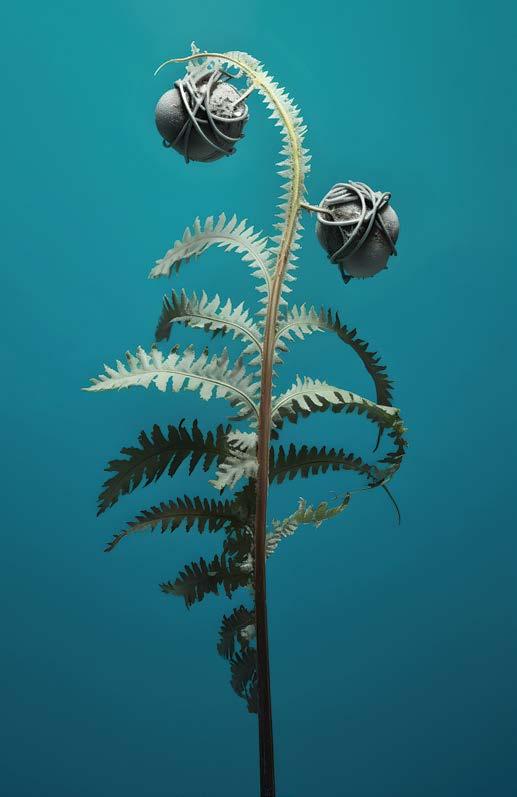
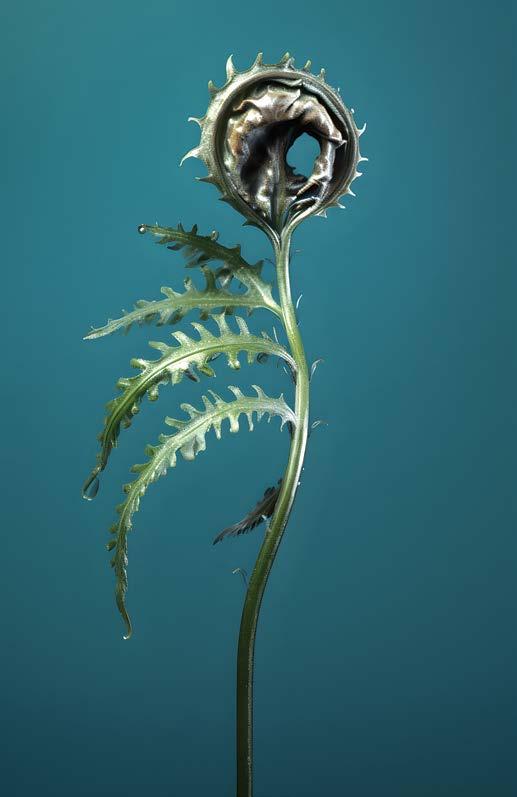
De la serie Vivarium , “Samambaias”, 2024, impresas en photorag metálica, hahnemühle 340 g, 44 x 30 cm.
De la serie Vivarium , “Samambaias”, 2024, impresas en photorag metálica, hahnemühle 340 g, 44 x 30 cm.
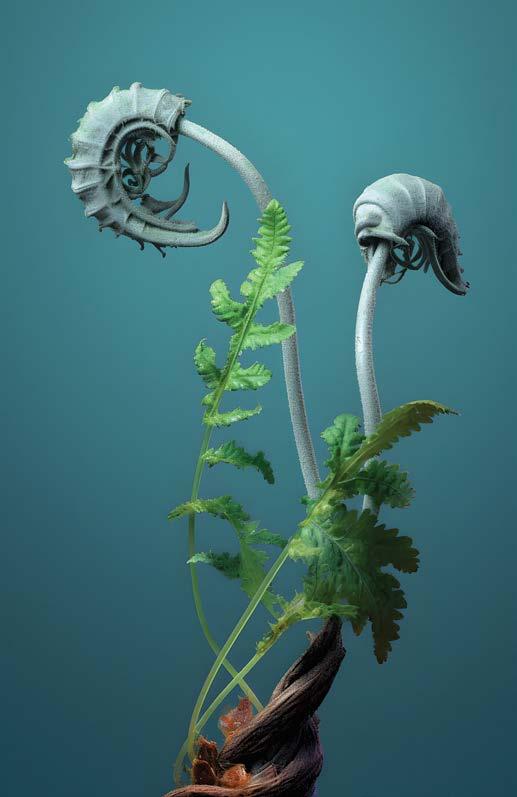
En este contexto, estas obras nos emplazan hacia una pregunta contemporánea en torno a la separación que hay entre la naturaleza y la cultura capitalista y tecnocientífica y hasta qué punto nosotros mismos deseamos ser transformados tecnológicamente.
Brasil, abundante en naturaleza, hoy ve amenazado sus territorios selváticos tanto por el cambio climático como por el extractivismo neoliberal, cuestión que lejos de poder imaginar, tensiona las imaginaciones para poder sobrellevar el costo del ecocidio en lo biológico y estético que éste implica. Los artistas muchas veces son una antena que cataliza los cambios frecuenciales y las emociones colectivas. En este sentido, desde su lugar específico, se hacen cargo de reflejar los problemas y las constricciones, así como las alternativas existenciales o materiales, ya sea de fuga o de integración.
Así encontramos estas fotografías extendidas como collage en la tecnología generativa, que pone de manifiesto nuestro presente. ¿Qué es lo que sentimos en relación a las fuerzas de la naturaleza? ¿Podemos distinguir donde empieza y dónde termina? La filosofía de la tecnología ha desplegado fundamentos para pensar una imparable, progresiva y acelerada fusión entre la máquina y lo humano, y por tanto nuevas hipótesis en relación a lo que entendemos por la naturaleza primigenia. También, en el campo de lo religioso, hoy existen religiones que tributan el despertar de una I.A. que suplante al humano en todas sus actividades.
Hay obras que nos colocan no en el lugar de la contemplación de la belleza, sino más bien frente a un espejo laberíntico y reflexivo para oír lo que aparentemente no se expresa, o más bien, no escuchamos. Estas imágenes cuentan con una fría “perfección” tecnológica, como si fueran una fotografía de alta definición, pero si calmamos la visión y vamos más allá de lo aparente, nos pueden conducir a lo que Zizek llamó el chirrido de lo real , dejando “plantada” en la retina la pregunta en torno a la realidad que nos habita. Así, en este proyecto la artista figura la voz de plantas heridas pero maquilladas por lo que llama los efectos del Antropoceno.
A estas obras le preceden fases creativas, como la serie Cuando lo vi, Jardín imaginario y Flor de asfalto, donde reflexiona estéticamente en torno a cómo las plantas logran superponerse a entornos hostiles y al dolor vivo generado por el tecnoceno. Vivarium en este sentido es una ficción estética, donde plantas antiguas logran coexistir entre los algoritmos de la ilusión post/digital, tensionando los límites de lo ético y lo estético.
Bearing this in mind, these artworks make us question the large divide between nature and our capitalist and techno-scientific culture, and to what extent we wish to be transformed by technology.
Brazil, renowned for its wealth of natural resources, is facing significant threats to its lush jungles due to climate change and neoliberal resource exploitation. This issue challenges our capacity to comprehend the profound biological and aesthetic costs associated with the destruction of the environment. Often, artists become antennas that catalyze changes in frequency and collective feelings. In this sense, they take on the task of mirroring issues, constraints, and existential or material questions—whether the response is escape or integration.
Thus, we find these photographs spread out as collages through generative technology, which brings the current state of affairs onto the table. How do we feel about the forces of nature? Can we distinguish where they begin and where they end? The philosophy of technology has laid the groundwork for thinking about an unstoppable, progressive, and accelerated fusion between machines and humans, therefore giving rise to new hypotheses for what we understand as primal nature. In the religious realm, there are now religions that pay homage to the awakening of an AI that can replace humans in all their activities.
Some artworks do not aim to submerge us in the contemplation of beauty. Instead, they invite us to face a labyrinth-like reflective mirror to listen to what is not expressed—or rather what we often cannot hear. These images display a cold technological “perfection,” as if they were high-definition photographs. However, if we steady our gaze and look beyond the apparent, they can lead us to what Zizek called the “ squeaking of the real ”, leaving the question of the reality that inhabits us “planted” in our retinas. Thus, in this project, the artist gives voice to plants that are wounded but disguised by what she calls the effects of the Anthropocene
These works are preceded by other creative phases, such as the series When I Saw, Imaginary Garden , and Asphalt Flower, in which she reflects aesthetically on how plants manage to overcome hostile environments and the poignant pain caused by the Technocene . In turn, Vivarium is an aesthetic fiction, where ancient plants manage to coexist among the algorithms of post-digital illusion, straining the limits of ethics and aesthetics.
De la serie Vivarium , “Samambaias”, 2024, impresas en photorag metálica, hahnemühle 340 g, 44 x 30 cm.
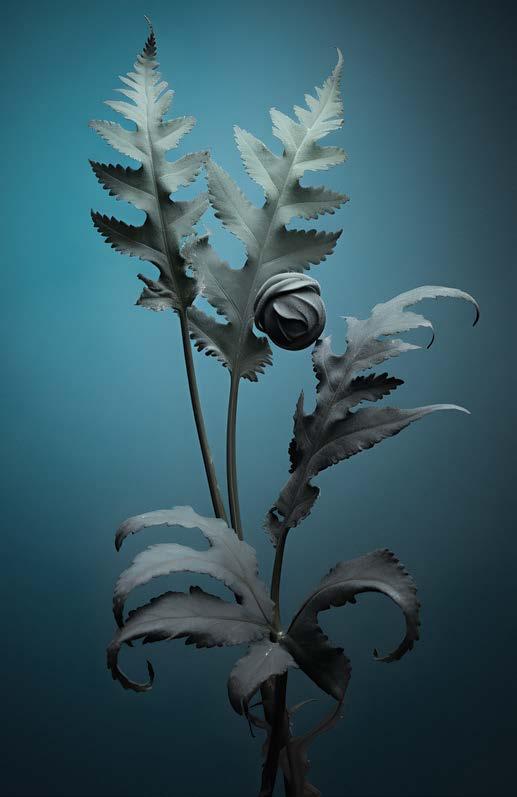
CUBA | CUBA
Por Ricardo Rojas Behm. Escritor y Crítico (Chile)
Imágenes cortesía de la artista.
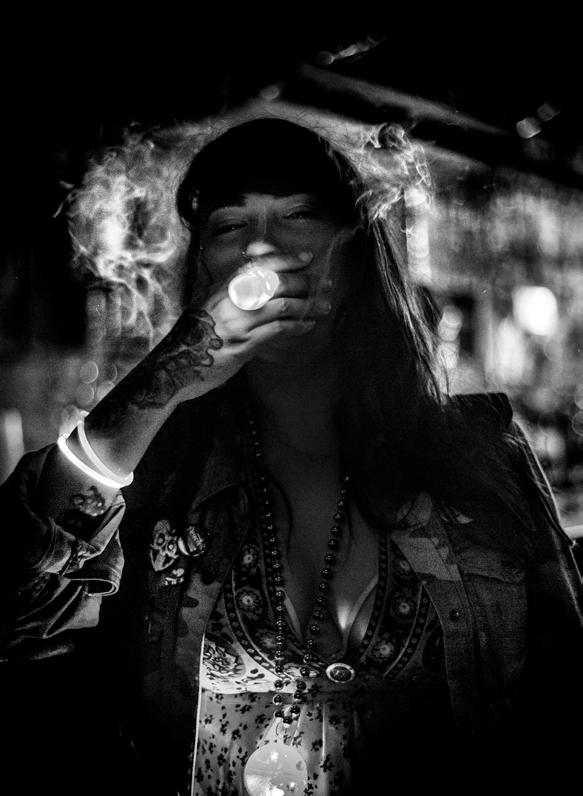
Una fotógrafa que sabe hablar en nosotros
dotada de una sensibilidad particular, la fotógrafa cubana Evelyn Sosa sabe hablar de “nosotros”, ese pronombre personal en primera persona, masculino y femenino, plural, mediante el cual percibe lo que relata como una mirada, un gesto o incluso un objeto, como parte de un código secreto descubierto a partir de hundirse en todo cuanto ve.
En ella deglutir ligeramente una imagen involucra desembarazarse del estereotipo, accediendo a un espacio interpretativo que la diferencia desde un primer momento, cuando una amiga le obsequió una cámara profesional. Regalo que significó un giro total en su vida, ya que había abandonado la ingeniería luego de graduarse y entonces comenzó su carrera como fotógrafa. Diez años después estaba partiendo a Estados Unidos a estudiar práctica documental y periodismo visual en el International Center of Photography (ICP) de New York. Desde entonces, concibe la fotografía como un puente que une muchas vidas, noción que ha sido fundamental en su obra: “Mis primeras influencias vienen del cine, tuve una etapa bastante cinéfila antes de comenzar a mirar fotografía. Cuando jovencita hice dos documentales, muy malos, pero los disfruté. Todo lo fui aprendiendo de manera autodidacta, como iba llegando a mí por azar. Eso me gusta, creo que quizás es la razón de que mi trabajo resulte diferente”, explica la artista.
¿Cómo te visualizas en un contexto donde el enfoque de múltiples fotógrafas redunda en un cuerpo femenino sexualizado, cosificado, maltratado e irrespetado, y “rotulado” por algunos como feminista? Cuando comencé a hacer fotografía, nunca me percibí como una mujer haciendo fotografía. Yo era una persona haciendo fotografía, jamás pensé en eso hasta una exposición que hice en La Habana. Allí un fotógrafo preguntó, asombrado, que si aquellas fotos las había hecho una mujer. Creo que tiene que ver mucho con mi personalidad. Yo soy una persona bastante sensible, me afecta lo negativo, me corroe y entonces evito mirar hacia allí y prefiero andar en busca de otras cosas, que pueden ser fuertes, dolorosas y duras, pero también luminosas, hacia la luz, lo positivo y lo bello. Me gusta fotografiar desde el amor, me involucro y creo que eso influye. Como te decía antes, viene de adentro. No me siento como una artista feminista, nunca me han gustado las etiquetas ni las clasificaciones. Yo siento eso desde una sensación de claustrofobia. Soy una artista, es suficiente, bastante tiempo me costó asimilar eso. Mi trabajo puede considerarse feminista y para mí eso está muy bien, pero que lo consideren otros, yo me quedo en mi libertad. A mí me interesa hacer un retrato honesto, íntimo y humano, y yo encuentro bellas a las personas cuando las estoy retratando. Creo que en el momento de la foto hay una magia donde genero mucha empatía, por eso puedo lograr que se borren estereotipos, porque me interesa llegar a lo más profundo, a lo más humano y ahí todos somos iguales, la sangre es roja.
A photographer who knows how to speak about us
Gifted with a special sensitivity, Cuban photographer Evelyn Sosa knows how to speak about “us”—that first-person, plural, both male and female pronoun—through her lens, capturing what she refers to as a gaze, a gesture, or even an object, all of which form a secret code discovered by immersing herself into everything she sees.
For her, gently digesting an image involves breaking free from stereotypes, accessing an interpretive space that has set her apart from the outset, when a friend gave her a professional camera. This gift marked a complete turning point in her life, as she had abandoned engineering after graduating and then began her career as a photographer. Ten years later, she set sail to the United States to study Documentary Practice and Visual Journalism at the International Center of Photography (ICP) in New York. Since then, she regards photography as a bridge that connects many lives—a notion that has been key to her work: “My earliest influences came from cinema. I went through a phase of being quite the film buff before I started looking at photography. When I was young, I made two documentaries. They were terrible, but I enjoyed making them. I taught myself everything as it came to me by chance. I like that. I think that’s perhaps why my work is different,” explains the artist.
How do you see yourself in a context where many female photographers’ approach results in a sexualized, objectified, abused, and disrespected female body, and it is still “labeled” by some as feminist?
When I started doing photography, I never saw myself as a woman doing photography. I was a person doing photography. I never thought about it until I had an exhibition in Havana, where a photographer with shock asked me if those photos had been taken by a woman. I think it has a lot to do with my personality. I am a very sensitive person. Negativity affects me, it eats away at me, so I avoid looking in that direction and prefer to seek out other things, which may be heavy, painful, and hard, but ultimately lead me toward the light, positivity, and beauty. I like to photograph from a place of love, I get involved and I think that influences my work. As I said before, it comes from within.
I don’t feel like a feminist artist; I’ve never liked labels or classifications. I feel as though those labels make me claustrophobic. I am an artist, that’s enough. It took me long enough to come to terms with that. My work can be considered feminist and that’s fine with me. However, that is for others to think, I remain free. I’m interested in creating honest, intimate, and human portraits, and I find people beautiful when I’m photographing them. I think there’s a magic in the moment I’m shooting; I feel a lot of empathy then. That is why I can break down stereotypes, because I’m interested in reaching the deepest, most human level, where we are all equal, all red-blooded.
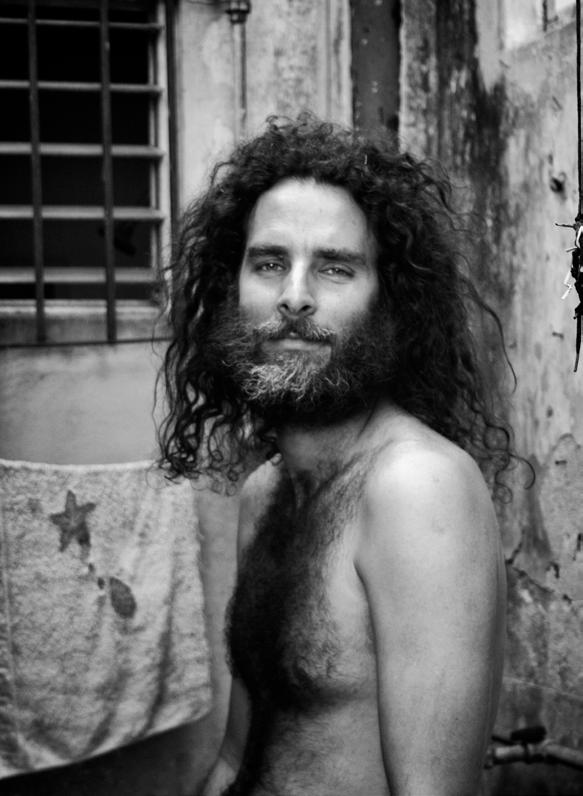
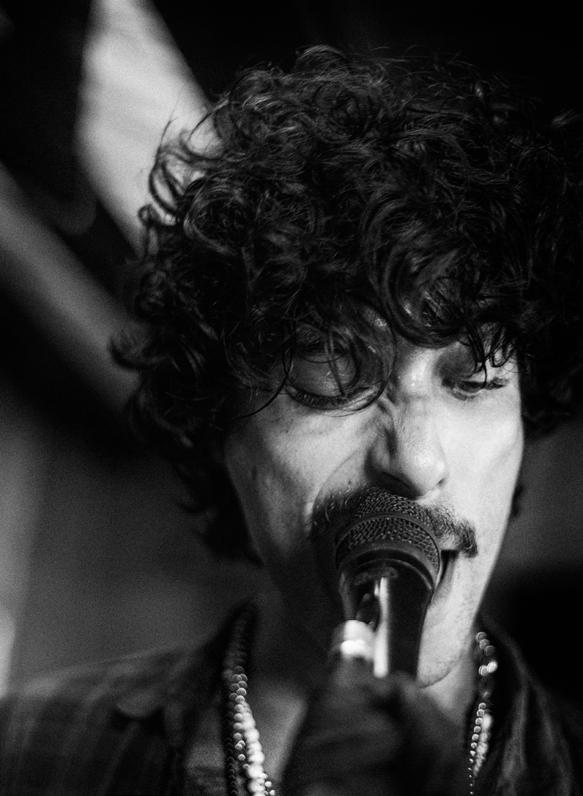
Desde un plano ontológico, Jorge Rodríguez Diez sitúa tu trabajo cercano al deseo, con una dualidad voyerista, no acusadora, sino más bien de quien también está mirando. ¿Qué piensas de esa complicidad no recesiva, tácita, que se transforma en un bucle?
Esto es tremendamente rico. Esto hace de todas las experiencias algo completamente extraordinario, porque es como una retroalimentación que va fluyendo de manera natural. Yo estoy fotografiando, pero la persona que me mira me dicta cómo debo hacerlo, por eso me gusta fluir sin presiones, no me gusta la rigidez. Cuando estoy fotografiando soy libre y los demás también. Y cuando logro que la persona a la que voy a retratar se sienta libre, sin miedo, sin prejuicio, entonces yo sé que conseguí algo.
Si hablamos de exilio, uno de los hechos que más te impresionó fue saber que un hombre trajo sólo la foto de su madre envuelta en una bolsa de nylon guardada en su bolsillo, cuando cruzó el océano en una balsa. ¿Por eso en la serie Ning ú n lugar est á lejos / No Place Is Far Away , simbolizas ese recuerdo en el objeto y no sólo en sus protagonistas?
En esa serie fotografío los objetos que las personas se llevaron consigo al emigrar, pero también hago retratos de ellos y fotografío la interacción, las personas con sus objetos. Lo hago durante una entrevista donde pregunto sobre su experiencia de migración. Este es un trabajo un poco más elaborado, pero mantengo la espontaneidad y la intimidad que me interesa proyectar. Este trabajo fotográfico va acompañado por fragmentos de testimonios.
Este trabajo sobre el exilio me gusta mucho, porque mezclo fotografía analógica con digital, retrato con fotografía ambiental de espacios interiores y retratos de objetos con fondo negro. Ahí solo estamos el objeto y yo, porque me interesa que éste sea bello, magnificarlo, como si fuese para un catálogo de museo, de antigüedades, algo importante. Un registro de lo más importante tiene que ser bello. Nace de mí, de una necesidad muy grande que surgió cuando me fui de Cuba. Esta serie para mí es muy distinta y muy especial.
Para quien detesta lo literal y que busca una narrativa visual hecha fotografía, la obra de Evelyn Sosa es la respuesta, pero no como una instantánea más que resiste el momento, sino como una historia que nunca termina de ser contada.
From an ontological perspective, Jorge Rodríguez Diez associates your work with desire, presenting a voyeuristic duality that is not judgmental but rather represents someone who is also observing. What are your thoughts on this non-recessive, tacit complicity that becomes a loop?
This is tremendously profound. It makes all experiences completely extraordinary, because it’s like feedback that flows naturally. I’m shooting, but the person looking at me dictates how I should do it, which is why I like to flow without pressure; I don’t like rigidity. When I’m photographing, I’m free, and so are the others. And when I manage to make the person that I’m going to photograph feel free, without fear, without prejudice, then I know I’ve achieved something.
When it comes to exile, one of the things that struck you most was learning that a man brought only a photo of his mother wrapped in a nylon bag tucked into his pocket when he crossed the ocean on a raft. Is that why in the series No Place Is Far Away, you use the symbolism of that memory in the object and not just in its protagonists?
In that series, I photograph the objects that people took with them when they emigrated, but I also take portraits of them and photograph the interaction—people with their objects. I do this during an interview where I ask them about their migration experience. This is a slightly more elaborate project, but the spontaneity and intimacy that I want to convey still remains. This photography artwork is complemented by fragments of testimonies.
I really like this work on exile because I merge analog and digital photography. The portraits feature environmental photography of interior spaces and portraits of objects against a black background. There is only the object and me, because I want it to be beautiful, to magnify it, as if it were for a museum catalog, an antiques catalog, something important. A record of the most important things has to be beautiful. It comes from me, from a great need that arose when I left Cuba. This series is very different and very special to me.
For those who detest the literal and seek a visual narrative crafted through photography, Evelyn Sosa’s work is the answer—not merely as a snapshot that captures a moment, but as a story that continues to unfold.
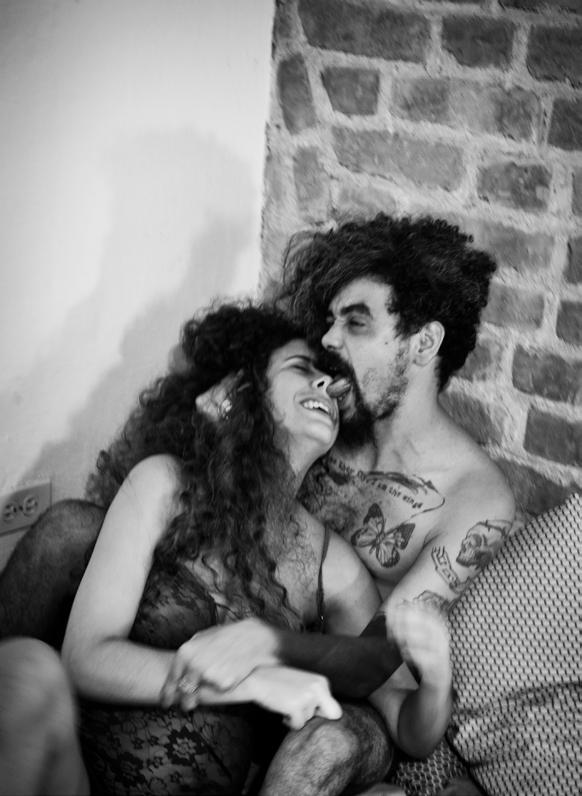
Por Javiera Paz Fernández. Magíster en Estéticas Americanas (Chile) Imágenes cortesía de la artista.
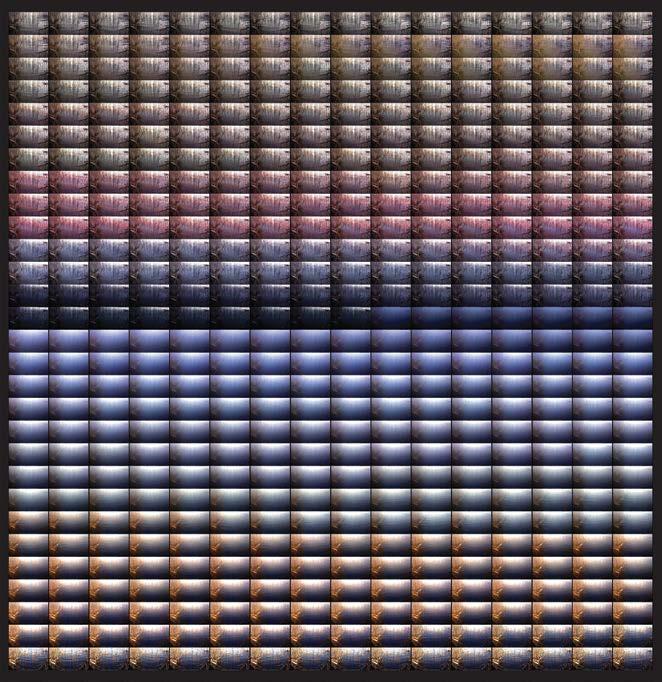
Capturar el transcurrir del tiempo
aproximarse a la obra de Renata Padovan requiere comprender que la naturaleza ocupa un lugar respetado y que la vida, en su conjunto, y no solo el ser humano, constituye el eje del sistema planetario. Con esta perspectiva, la artista brasileña erige su mirada de forma contra-antropocéntrica, mostrando que la fotografía no le pertenece como territorio exclusivo y que los lugares que captura hablan por sí mismos. De este modo, las imágenes se vuelven no un fin, sino una herramienta para abrir reflexiones: “No me considero fotógrafa, sino más bien una artista que utiliza la fotografía como medio”, explica.
Con el propósito de que la fotografía se deje guiar por los territorios, sus historias y sus huellas, Renata Padovan desarrolla Um dia depois do outro, una de sus series más emblemáticas dentro del paisaje simbólico que ha construido como artista visual. En 2012, durante una residencia artística en el Centro Creativo Arteles en Finlandia, comenzó esta serie de imágenes que registran un mismo espacio exterior rodeado de vegetación, organizadas en un recuadro donde la misma fotografía se repite una y otra vez mostrando sus variaciones de luz. “Era una región con muchos lagos y en mayo los días eran muy largos, con una gran variación de colores y luces. Quise capturar ese tiempo, de ahí la idea de instalar la cámara time-lapse en días y lugares variados, siempre buscando registrar el paso del tiempo a través del reflejo de la luz en el agua”, cuenta la artista.
Posteriormente, su serie se fue actualizando. En 2016 produjo otra edición de Um dia depois do outro, capturando un paisaje del río Tupana, en el Amazonas, y la más reciente se realizó en el río Jaú, también en el estado de Amazonas, Brasil, que actualmente está en proceso de montaje. En todas estas imágenes, el principio que guía su trabajo es observar cómo el tiempo actúa sobre los lugares fotografiados, un gesto que refleja la manera en que Renata Padovan se sitúa y observa el mundo, reflexionando sobre cómo la naturaleza nos habla y nos afecta si se la contempla en pausa, sin situarnos sobre ella. Esto explica por qué gran parte de sus obras —fotografías, instalaciones, esculturas, videos y archivos sonoros— cuestionan el impacto diario que los seres humanos ejercen sobre el medio ambiente, dañando ecosistemas completos bajo la lógica de un desarrollo que favorece intereses particulares por sobre el bienestar común y la preservación ambiental.
Capturing the passage of time
to appreciate Renata Padovan’s work, one must understand that nature holds a significant place in her life and that all life, not just human beings, is part of the foundation of the planet’s system. From this perspective, the Brazilian artist establishes her gaze in a counter-anthropocentric manner, showing that photography does not exclusively belong to her and that the places she captures speak for themselves. Images thus serve primarily as a means for reflection rather than as the ultimate end: “I don’t see myself as a photographer but rather as an artist who uses photography as a tool,” she explains.
Aiming for her photographs to be guided by territories, their stories, and the traces left behind, Renata Padovan created Um dia depois do outro, one of her most emblematic series, set in a symbolic landscape that she has developed as a visual artist. She started developing the series in 2012, during an artist-in-residence program in the Arteles Creative Center in Finland. The images in the series capture outdoor natural settings, featuring consistently repeated photographs arranged in a box. Each photograph is taken in the same location to highlight the changes in lighting. “That region had a lot of lakes. In May, the days were very long, with many changes in color and lighting. I wanted to capture that, hence the installation of a time-lapse camera in different locations on different days. I always sought to record the passage of time through the light reflecting on the water,” the artist narrates.
Later, the series was gradually updated. In 2016, she produced another edition of Um dia depois do outro, capturing a landscape of the Tupana River in the Amazonas state, Brazil. The most recent edition was shot in the Jau River, in the same state, and it is now in the mounting stage. In all these images, the guiding principle of her work is to observe how time acts on the photographed locations. This gesture reflects how Renata Padovan engages with and observes the world, contemplating how nature communicates with and affects us when we observe it calmly, without imposing over it. This explains why a large portion of her work—photographs, installations, sculptures, videos and sound art—question the daily impact of human beings on the environment, which has damaged entire ecosystems to pursue development in favor of individual interests over the common good and environmental conservation.
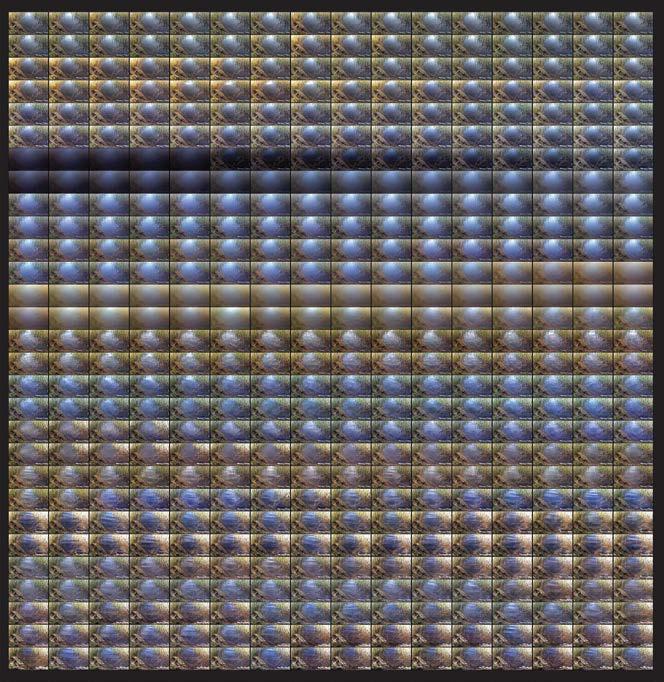
¿Qué reflexiones sobre el territorio, sus cambios o historias surgieron al trabajar sobre el entorno?
Mi trabajo está pautado en una tradición latinoamericana, principalmente de mujeres artistas que establecen vínculos con cuestiones ambientales y sociales, provocando cuestionamientos que van más allá del entendimiento de la naturaleza como sujeto, como lo que hace, por ejemplo, la artista brasileña Anna Bella Geiger. En Un día después del otro, creo que se trata más bien de una explicitación de la variación de luz y de las condiciones atmosféricas: la incidencia del sol, las nubes, el viento que mueve el agua. Lo que más me fascinó y todavía me fascina de la serie, es revelar estas variaciones. Son ellas las que constituyen lo “fotografiado”. El paisaje enmarcado en la cámara es exactamente el mismo y se vuelve irrelevante, porque en la secuencia de listas que componen la imagen final, lo que me interesa es la variación de luz y color.
¿Cómo se construye tu vínculo con los paisajes que fotografías, especialmente aquellos afectados por la intervención humana y el deterioro ambiental?
Mi práctica se basa en la investigación. Lo veo como un entrelazamiento de conocimientos científicos formales, informales y ancestrales, sumados a mi propia experiencia de vida. Se enraíza principalmente en cuestiones relativas a la degradación del medio ambiente y sus consecuencias socioeconómicas y culturales. Trabajo con diversos medios, elegidos según el eje conceptual de cada idea. La fotografía entra en este contexto como una herramienta más para la realización de los trabajos.
En tu trabajo, parece que no eliges el espacio para fotografiar, sino que es el paisaje el que te guía y te hace estar presente en él ¿Coincides con esta lectura de tu práctica?
Sí, puede ser visto de esa forma, porque me interesan los procesos de estar, mirar y sentir los lugares. No me considero fotógrafa, sino más bien una artista que también usa la fotografía como medio, al igual que el video, la escultura, intervenciones, etc. Siempre es una interacción con un lugar determinado, sus historias y las marcas que se han impuesto sobre él.
What reflections on the territory, its changes, or stories, emerged while working with the environment?
My work is based on a Latin American tradition, namely the tradition of female artists who connect environmental and social issues. These artists—like Brazilian artist Anna Bella Geiger, for instance—pose questions that go beyond simply viewing nature as a subject.
In Um dia depois do outro , I think it is more about making light variations and atmospheric conditions explicit: the effects of the sun, the clouds, and the wind moving the water. What fascinated me most about the series—and still does—is revealing these variations. These changes constitute the ‘subject’ of the photographs. The landscape framed in the camera is exactly the same. It becomes irrelevant because I am drawn to color and lighting changes in the sequences that make up the final images.
How do you build the connections to the landscapes you photograph, particularly those affected by human intervention and environmental degradation?
My practice is based on research. I see it as an intersection of formal scientific knowledge, informal and ancestral insights, and my own life experiences. It is mainly rooted in issues related to environmental degradation and its socioeconomic and cultural repercussions. I work with different media, which I choose depending on the conceptual approach to each idea. Photography enters this context as another tool for creating my work.
In your work, it seems you don’t choose the locations, rather the landscape guides you to be present within it. Do you agree with this interpretation of your practice?
Yes, it can be regarded that way, since I am drawn to the processes of experiencing, observing, and feeling places. I don’t consider myself a photographer; instead, I view myself as an artist who uses photography as one of many tools, similar to video, sculpture, and intervention. My work always involves an interaction with a specific space, its stories, and the traces left behind.
MÉXICO | MEXICO
Por Ivón Figueroa Taucán. Magíster en Teoría e Historia del Arte (Chile)
Imágenes cortesía de la artista.
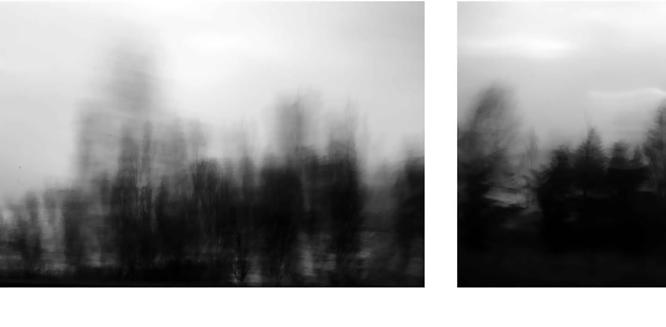
La contemplación no niega los conflictos
es el invierno de 2009 en Barcelona.
La artista mexicana Ana Paula M. Lanz vive en esa ciudad mientras estudia un máster en antropología visual y expone en una galería en el centro de Madrid. Los días son fríos y se encuentra atravesando un proceso emocional marcado por la soledad, lejos de su tierra y de su familia.
Los árboles están perdiendo sus hojas y ve dibujos en blanco y negro entre las ramas que se extienden contra el cielo nublado. Toma su cámara y sale a caminar para crear las imágenes que conformarán su serie Interludio, en la que las ramas y hojas de los árboles junto a mechones de su cabello funcionan como líneas y trazos. En estas obras, propone que lo humano y lo vegetal están atravesados por el crecimiento, la fragilidad y la transformación, manifestados en una frontera difusa que impacta su relación con las técnicas artísticas. Al momento de decidir qué soportes le permitirán exhibir estas creaciones, se inclina hacia marcos blancos con un gran espacio entre el borde y la fotografía, centímetros que podrían ser kilómetros y que traducen las vivencias que impulsaron el proceso creativo en objetos físicos listos para circular.
¿De qué manera la imagen fotográfica puede adquirir cualidades propias del dibujo y la gráfica?
Para mí, esto sucede cuando existen decisiones formales, técnicas y conceptuales que van más allá de un registro documental. Por ejemplo, cuando la fotografía enfatiza líneas, siluetas, tensiones y recorridos visuales, la imagen comienza a leerse como un dibujo.
Contemplation does not deny conflicts
It was winter of 2009 in Barcelona.
Mexican artist Ana Paula M. Lanz was living in Barcelona while pursuing her master’s degree in visual anthropology, and she was invited to exhibit her work in a gallery in downtown Madrid. The days were cold, and Lanz was going through an emotional process marked by loneliness, while far away from her native land and family.
Trees were losing their leaves, and she saw drawings in the branches extending against the cloudy sky. She took her camera and started going on walks to shoot the pictures that would later become the series Interludio, in which tree branches and leaves, along with locks of her hair, serve as lines and outlines. With the pieces she postulates that both humans and plant life are shaped by growth, fragility, and transformation, blurring the lines that affect her relationship with artistic techniques. When deciding the support for displaying her creations, she prefers white frames with wide passepartouts dividing the frame from photographs. These centimeters that feel like kilometers symbolize the experiences that have transformed her creative process into objects ready for circulation.
How do photographs acquire the qualities traditionally associated with drawings and graphic art?
For me, this happens when formal, technical, and conceptual decisions go beyond mere documentation. For instance, when photographs emphasize lines, outlines, tensions, and visual paths, they can be interpreted as drawings.
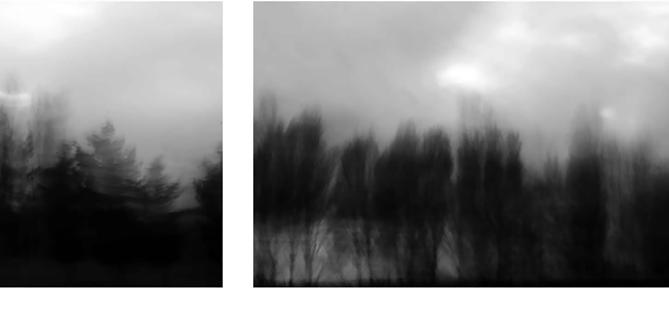
A través de la fotografía se puede también enfatizar la materialidad de la superficie: la corteza de un árbol, la fibra de una tela, la rugosidad del entorno natural. Estas texturas evocan la huella manual del grabado o la fricción del lápiz sobre el papel, generando una sensación táctil que va más allá de lo meramente óptico. Los procesos de impresión y la elección de soportes, como papel de algodón, canvas o papeles no brillantes, modifican la percepción de la imagen. Con ello la fotografía se acerca a la materialidad del grabado o del dibujo, donde el soporte es parte activa de la obra. En cuanto a la intención conceptual, cuando la fotografía se concibe no como documento, sino como acto gráfico, la imagen funciona como huella, marca o inscripción. En este sentido, la cámara opera como una herramienta de dibujo expandido: en lugar de trazar sobre papel, se traza en el paisaje y en el tiempo. Así, la fotografía adquiere cualidades del dibujo y la gráfica, convirtiéndose en un espacio híbrido donde los lenguajes se entrelazan y se redefinen.
¿Qué buscas encontrar en las materialidades que utilizas para tus procesos de impresión?
La exploración de las materialidades en los procesos de impresión forma parte fundamental de mi práctica artística. Es una extensión conceptual del proceso fotográfico. Cada soporte y cada tipo de tinta activan lecturas distintas y sitúan la imagen en un lugar específico entre la fotografía, el dibujo y la gráfica. El papel de algodón, por ejemplo, introduce una materialidad porosa, absorbente y táctil que se aleja de la superficie lisa de la fotografía comercial.
The material of surfaces can also be highlighted through photography: the bark of a tree, the fiber of a fabric, the roughness of nature. These textures evoke the manual imprint of etchings, or the friction of pencil on paper, creating a tactile sensation that goes beyond the merely visual. The printing process and the choice of supports, such as cotton paper, canvas, or non-glossy paper, change the perception of the image. Through these choices, photography moves closer to the materials of etchings or drawings, in which the support becomes an active part of the piece.
As for the conceptual intention, when photography is not conceived as a document but a graphic act, images serve as traces, marks, or inscriptions. In this sense, the camera operates as an expanded drawing tool: instead of sketching on paper, one sketches on landscapes and time. Thus, photography acquires the qualities of drawing and graphic art, becoming a hybrid space where languages intertwine and are redefined.
What do you aim to find in the materials you use to print your creations?
Exploring the materials with which I print my works is a fundamental part of my artistic practice. It is a conceptual extension of the photography process. Every support and type of ink activates different interpretations, and position the image in a specific place between photography, drawing, and graphic art. Cotton paper, for instance, introduces a porous, absorbent and tactile material, different from the smooth surfaces of commercial photography.
Interludio X , 2009, impresión en papel de algodón con tintas de carbón, 108 X 113 cm.
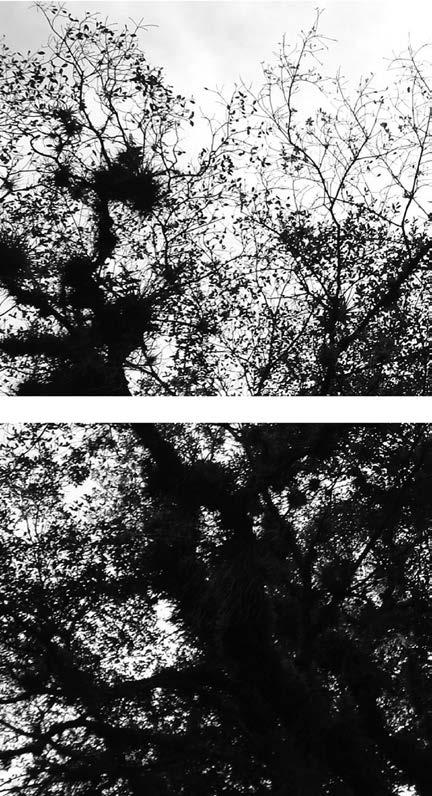
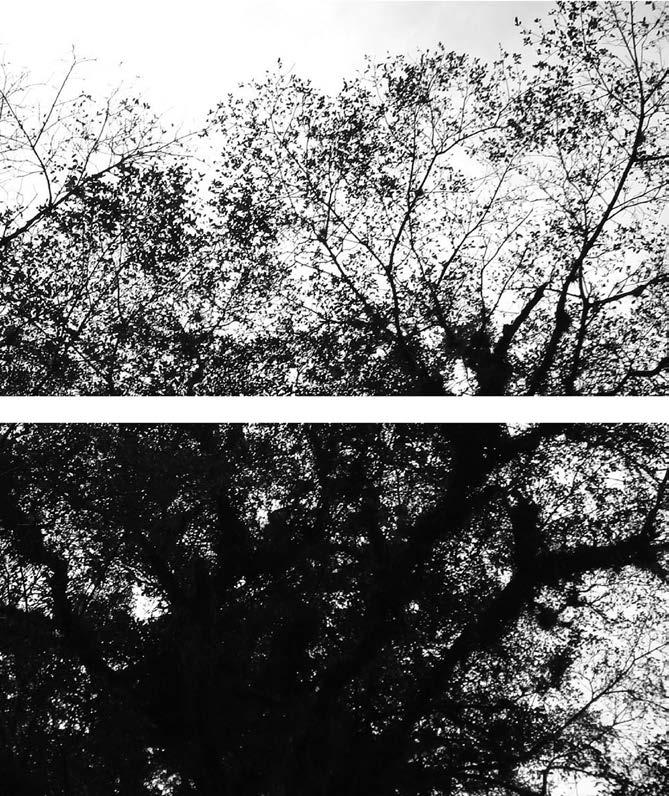
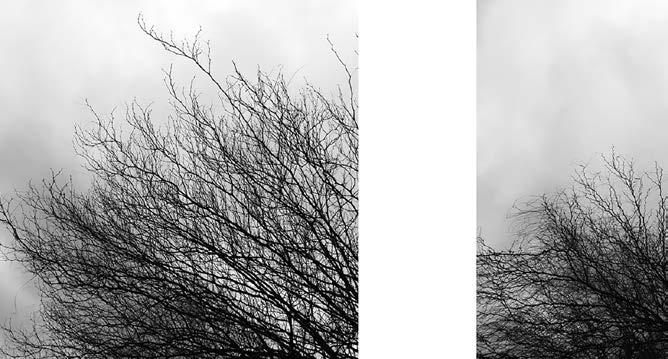
Al trabajar con tintas pigmentadas, especialmente en gamas profundas de negro, la imagen adquiere una densidad cercana al carbón o a la tinta gráfica. La tela, como soporte, desplaza la fotografía hacia el territorio de la pintura y del objeto. En este soporte, la fotografía pierde su cualidad de ventana y se afirma como superficie. La imagen se vuelve más corpórea, más presente y establece una relación directa con el espacio expositivo, acentuando su condición de pieza física. Los papeles mate eliminan el brillo, favoreciendo una lectura silenciosa y cercana. Este tipo de papel refuerza la cualidad contemplativa de las imágenes, subrayando las sutilezas tonales y la delicadeza de las texturas. En conjunto, estas exploraciones materializan la idea de que la fotografía no es sólo imagen, sino materia, superficie y tiempo.
¿Qué búsquedas te hicieron cambiar de rumbo entre las serie Interludio (2009) e Injerto s (2015)?
En Interludio, el interés principal está en encontrar similitudes visuales entre el cuerpo y la naturaleza. Las preguntas giran en torno a la forma: ¿cómo el cabello y los árboles pueden leerse de manera similar?, ¿cómo una fotografía puede parecer un dibujo a través de la línea, el contraste y la repetición? En esta serie, la imagen se construye a partir de la observación y el encuadre, sin intervenir en el entorno. Injertos aparece cuando esa búsqueda pasa de la imagen a la acción. La pregunta cambia hacia el acto de intervenir: ¿qué sucede cuando el “dibujo” se realiza directamente sobre el árbol?, ¿cómo intervenir el paisaje sin dañarlo?, ¿hasta dónde un gesto puede ser sutil, temporal y
By working with pigmented inks—especially deep black hues—images acquire a density reminiscent of charcoal of graphic ink. Canvas prints shifts photography into the realm of painting and objects. In this medium, photography loses its window-like quality and asserts itself as a surface. Images become more corporeal and present, engaging more directly with the exhibition space and accenting its physical object status. Matte papers remove shine, facilitating a quiet and intimate reading. This kind of paper reinforces the contemplative quality of images, stressing the subtleties of the tones and the daintiness of textures. As a whole, these explorations materialize the idea that photography is not only about the image, but matter, surface and time.
What quests led you to shift paths between the series Interludio (2009) and Injertos (2015)?
In Interludio, the main focus was to find visual similarities between bodies and nature. My questions centered around shape: How can hair and trees be interpreted in a similar fashion? How can photographs resemble drawing through lines, contrast, and repetition? In the series, images are built through observation and framing, without any manipulation of the environment.
Injertos came about when that quest became more about actions than images. Questions shifted towards the act of intervening: What happens when “drawings” are done directly on trees? How can we intervene in the landscape without damaging it? To what extent can an intervention be subtle, temporary, and respectful?
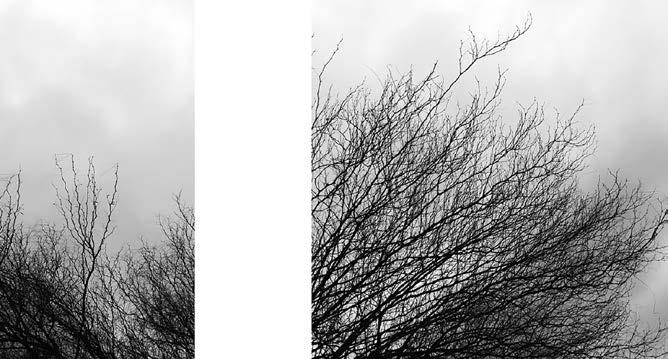
respetuoso? Las telas, hilos y plásticos funcionan como trazos físicos que se integran de manera frágil al entorno natural.
El uso de materiales delicados introduce otra pregunta importante: ¿qué significa agregar algo artificial a un organismo vivo? Las intervenciones no buscan transformar al árbol, sino establecer un contacto breve que haga visible la relación entre lo natural y lo construido, lo que crece y lo que se coloca.
Tu trabajo está atravesado por la contemplación de la naturaleza, los paisajes grises y las texturas ambiguas. ¿Cómo puede esta práctica visual meditativa convivir con los problemas sociopolíticos del territorio donde realizas tu trabajo?
Detenerse a mirar puede ser un gesto significativo. Trabajar con tiempos lentos y con imágenes que invitan a la pausa va en contra del ritmo acelerado y de la saturación de información que muchas veces impide reflexionar. La contemplación no niega los conflictos, sino que crea un espacio para procesarlos con mayor atención. Las intervenciones sutiles en la naturaleza también expresan una postura. Al trabajar de manera respetuosa y temporal con el paisaje, la obra sugiere otras formas de habitar el territorio, alejadas de la explotación o el control. Creo que mi trabajo, planteado como una práctica visual meditativa, puede convivir con los problemas sociopolíticos no a través de la denuncia directa, sino creando un espacio que invita a pensar cómo miramos, cómo vivimos y cómo nos relacionamos con el lugar que habitamos.
Fabrics, threads, and plastics act as physical lines that are delicately integrated into the natural environment.
The use of delicate materials raises another important question: What does it mean to add something artificial to a living organism? The interventions were not intended to transform trees but to create a brief connection that highlights the relationship between the natural and the constructed, between what grows and what is placed.
Your work is shaped by nature contemplation, gray landscapes, and ambiguous textures. How does this meditative visual practice coexist with the sociopolitical issues of the territory where you carry out your work?
Pausing to observe can be a meaningful gesture. Working with slow rhythms and images that invite pauses goes against the fast pace and information overload that often prevent us from reflecting. Contemplation does not deny conflicts, but rather creates a space to process them with greater attention. Subtle interventions in nature also express a stance. By working respectfully and temporarily with the landscape, the work suggests other ways of inhabiting the territory, far removed from exploitation or control. I believe that my work—conceived as a meditative visual practice—can coexist with socio-political problems not through direct denunciation, but by creating a space that invites us to think about how we observe, experience, and relate to the place we inhabit.