Art + Object

Proudly New Zealand since 1987
www.workingstyle.co.nz
Pac Studio
Pac Studio
Architecture
Architecture
Interior Design
09 973 5050
hello@ pacstudio.nz pacstudio.nz
Interior Design 09 973 5050 hello@pacstudio.nz pacstudio.nz

















We are regularly commissioned to undertake large-scale and complex valuation advice to museums and public institutions as well as private collectors. In the past twelve months we have undertaken important valuation mandates for: Christchurch Art Gallery Te Puna o Waiwhetū, MTG Hawke's bay Tai Ahuriri, Te Whare o Rehua Sarjeant Gallery, Whanganui, Greymouth District Council, Invercargill Public Art Gallery, Auckland Council Te Kaunihera o Tāmaki Makaurau, Hocken Collections, Dunedin Public Art Gallery, Museum of New Zealand Te Papa Tongarewa, University of Waikato Te Whare Wānanga o Waikato, Taupō District Council, Te Manawa Museum of Art, Science and Heritage.
Important Paintings and Contemporary Art — March 25
Sale Total $2 545 446
58% Sold by Volume
New, New Zealand record prices achieved at auction for the work of: Paul Dibble, Winston Roeth, Terry Stringer, Francis Upritchard.
T h e Art s H o u se Tru s t a t P a h H o m es t ead a rts h ousetrust.co.nz • @t h earts h ousetrust


October 20, 2026 6:00pm
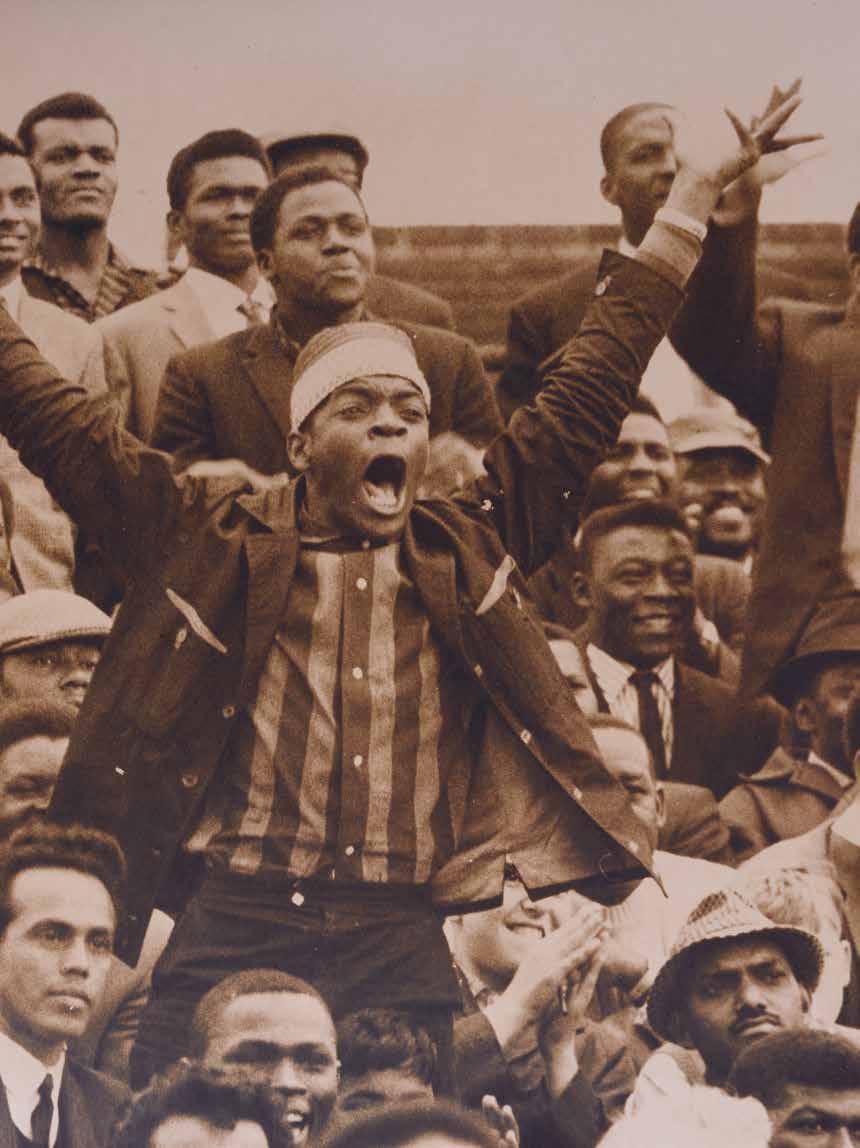
One of a sequence of images documenting the historic pitch invasion at The Oval on 28 August 1963, when the West Indies cricket team secured a legendary 3-1 Test series victory against England. Provenance
From the library of Ray Saunders, a long-time and well known collector of cricket, rugby, golfing books, photographs and ephemera.


Welcome to Art+Object’s winter auction of Important Paintings and Contemporary Art. The auction opens with a superb consignment from a private Wellington collection. A number of Art+Object’s most high-profile and successful collection auctions have had their origins in Wellington; the Paris, Francis, Corner and Brow collections were all firmly rooted in the Capital city. This latest offering builds on that lineage of dedicated collectors, acknowledging the long term, positive impact of a number of Wellington’s art dealers.
Collections like this remind us of the crucial role that collectors themselves play in the cultural ecosystem. They act as the passionate custodians of artworks, preserving our history and providing inspiration for future generations. Our collector writes of the central role that art collecting played in their family life— forging connections through spirited discussion, gallery visits, and the shared act of observation. It is always exciting for us to bring these artworks to market, with the opportunity for other collectors to develop their own stories and legacies.
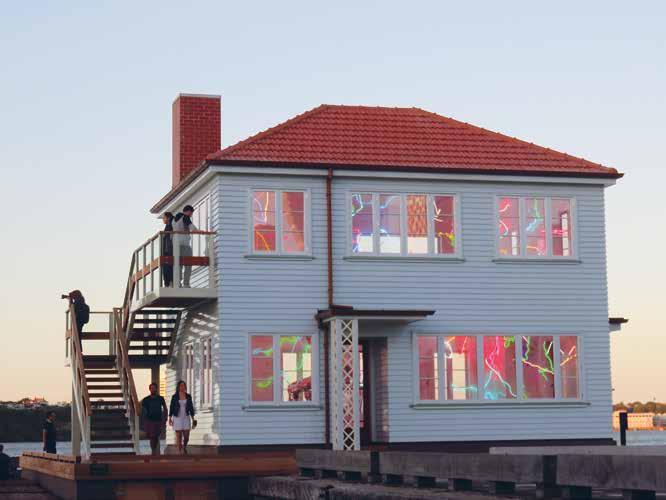
Further to this, the catalogue contains superb local and international works by artists including Colin McCahon, two arresting portraits by Peter Stichbury repatriated from New York, Don Binney’s Tui over Te Henga that has been cherished by one family over two generations, several photographs by Fiona Pardington, fresh from her outstanding exhibition Taharaki Skyside at the 61st Venice Biennale. Also included is a four panel work Waves of Light by the international art collective teamLab; the first time a teamLab artwork has come to auction in Australasia.
Please join us in the rooms to view this outstanding selection of artworks and celebrate the enduring spirit of New Zealand collecting.
Ngā mihi nui
Leigh Melville
Tuesday 28 July, 5–7pm 3 Abbey Street, Newton, Auckland
Monday 3 August at 6pm 3 Abbey Street, Newton, Auckland
Wednesday 29 July
Thursday 30 July
Friday 31 July
Saturday 1 August
Sunday 2 August
Monday 3 August 9am–5pm 9am–5pm 9am–5pm 10am–4pm 10am–4pm 9am–2pm
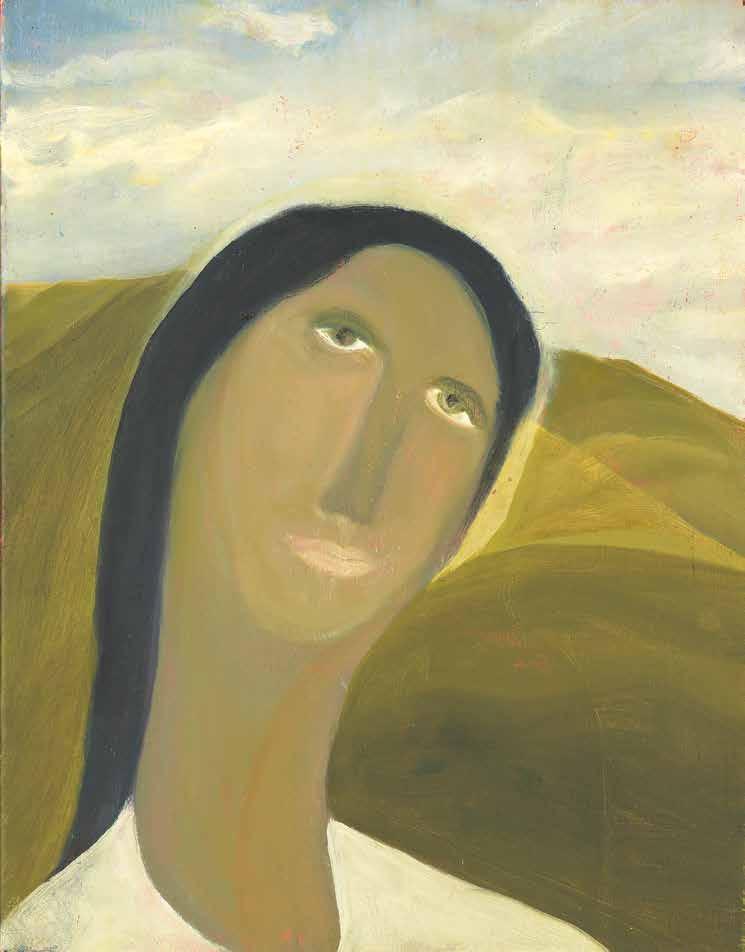
1
Star Gossage Sky Lark
oil on linen
title inscribed, signed and dated May 2004 verso 458 x 358mm
Provenance
Purchased from Tinakori Gallery, Wellington in 2007.
$12 000 – $18 000
“The Past is Present” A generational collector speaks…
It would be impossible to talk about our collection without mentioning a lifetime of growing up with art, and the influence of my parents, and of growing up in what was, at the time, a still-bohemian Days Bay.
Our neighbour was Muriel Moody, and down the road, her good friend Gwen Knight. Muriel was a real conduit for the arts community in Wellington in those years. At the firings of her kiln, it was not unusual to share a glass of wine with Barry Brickell, Juliet Peter, Roy Cowan, and others of the New Zealand arts community who had gathered, as they often did, around the warmth of a kiln and the promise of what it would give up.
My father was an educationalist, in the mould of the itinerant art specialists you see in Luit Bieringa’s documentary The heART of the Matter — if you’ve seen that film, you’ll know exactly what I mean; that generation of teachers who came out of Gordon Tovey’s scheme and carried art, quite literally, into New Zealand’s classrooms. It was in the spirit of that same conviction, that art belonged in ordinary life, not behind glass, that my parents built their own collection through the sixties and seventies. As children, we were regularly taken to art openings, creative workshops and galleries, given experiences we didn’t yet know to value.
I remember the hearty discussions around the dining table: Gordon Walters and the question of whether the koru paintings amounted to an appropriation of Māori form; the merits of Gretchen Albrecht set against a Colin McCahon done on an old canvas tent, which was, for my mother’s taste, a bridge too far. These weren’t abstract arguments, they were about paintings that were possibly going to end up on our walls.
I did, in the end, live with some beautiful things, most notably works by Michael Smither and Don Binney, which stayed with me long after I’d left my parents’ house.
It was in the late nineties that I found myself back in this world in a different way, working in the central city, the new owner of a house, in a relationship, and starting a family of my own. It was around this time that my wife and I began revisiting this interest in art, and in doing so, rediscovered the same Wellington world my parents had moved through
a generation earlier: Peter McLeavey, Marcia Page, Jenny Neligan, all of whom, it turned out, remembered my parents fondly. It felt less like starting a new collection than picking up a thread that had simply been set down for a while.
Working on Cuba Street, in central Wellington, meant I could get out almost daily to do the rounds of the dealer galleries. I spent many hours at Peter McLeavey’s and Hamish McKay’s talking about art and life. I treasure these memories.
Our collection grew over time, with each purchase becoming, for a while, our current favourite, and that remains true today, as is the case with the Andrew McLeod work, our most recent acquisition.
The artwork became part of the fabric of our lives, integral to the spirit of our house. And our own children, now adults, have had the pleasure of growing up amongst contemporary New Zealand art, an experience that has no doubt shaped them, and their friends, in turn.
We have an immense appreciation for the artists who have dedicated their lives to conveying political, emotional, and deeply personal messages, to us, and to others. The spirit and emotion that come through in their work, brought into our home and into our lives, meant that our house became, in its own way, a home for those emotions and messages, and for the heart that went into their making.
We have gained immense pleasure from owning this collection, and we let it go now with heavy hearts. But we do so in the understanding that you do not truly own a work of art, you are merely its caretaker, for a time.
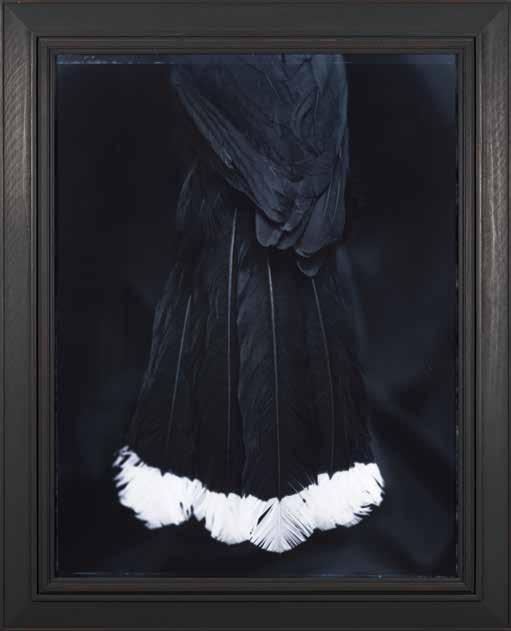
2 Fiona Pardington
Ake Ake Huia
mural-scale gelatin silver print, 3/3 title inscribed, signed and dated 2004 on artist’s label affixed verso 1275 x 980mm
Provenance
Purchased from Ngaumatau Gallery, Arrowtown in 2004.
$45 000 – $65 000
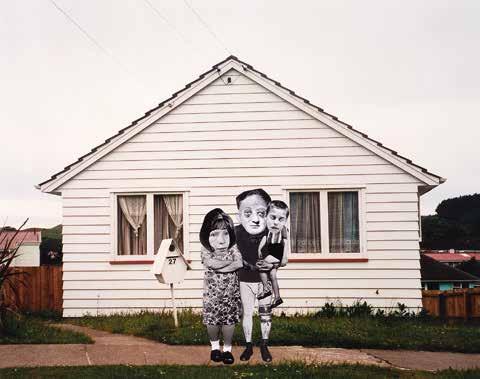
Ava Seymour
House at Cannons Creek (from Health, Happiness and Housing)
chromogenic colour print, 3/5 title inscribed verso
750 x 915mm
Provenance
Purchased from Peter McLeavey Gallery, Wellington in 2009.
$4000 – $7000
‘A Private Collection of Contemporary Art from Wellington’ is lots 1–24 in this catalogue. Further works from the collection will be offered in the September 8 New Collectors auction.
4
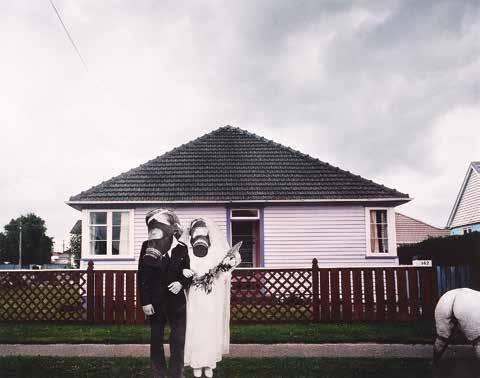
Ava Seymour
Gas Mask Wedding (from Health, Happiness and Housing)
chromogenic colour print, 2/5 title inscribed verso 750 x 915mm
Provenance
Purchased from Peter McLeavey Gallery, Wellington in 2009.
$4000 – $7000
Brett Graham
Te Honongo
stained and waxed timber (2005)
900 x 900 x 200mm
Provenance
Purchased from Bartley Nees Gallery, Wellington in 2005.
$20 000 – $30 000

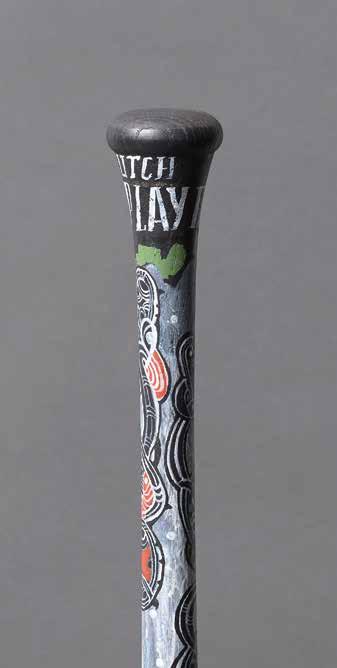
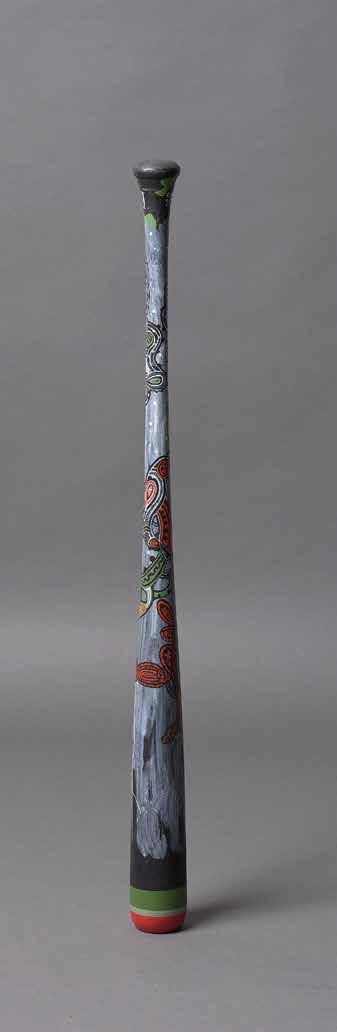
Shane Cotton Clutch Play III
acrylic on ash baseball bat title inscribed, signed with artist’s initials SWC and dated 2011
855 x 65 x 65mm
Provenance
Purchased from Hamish McKay Gallery, Wellington in 2011.
$12 000 – $18 000
7
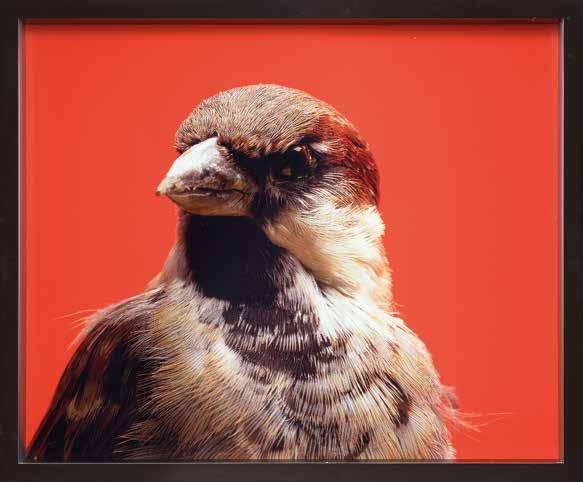
Michael Parekōwhai
Elmer Keith (from the Beverly Hills Gun Club)
type C print, edition of 10 (2000)
original Michael Lett label affixed verso 440 x 535mm
Provenance
Purchased from Michael Lett, Auckland in 2012.
$10 000 – $15 000
8
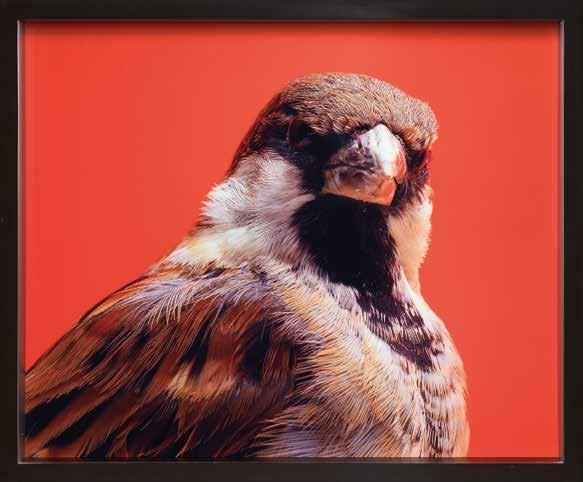
Michael Parekōwhai
Pat Covert (from the Beverly Hills Gun Club)
type C prints, edition of 10 (2000)
original Michael Lett labels affixed verso 440 x 535mm
Provenance
Purchased from Michael Lett, Auckland in 2012.
$10 000 – $15 000
9
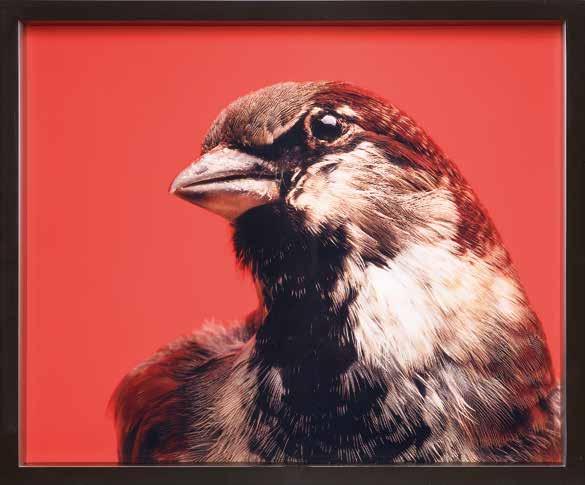
Michael Parekōwhai
Ed Brown (from the Beverly Hills Gun Club)
type C prints, edition of 10 (2000)
original Michael Lett labels affixed verso 440 x 535mm
Provenance
Purchased from Michael Lett, Auckland in 2012.
$10 000 – $15 000
Bill Hammond
Untitled
acrylic on canvas signed and dated 2012
400 x 300mm
Illustrated
Sarah Pepperle (ed), Bill Hammond: Across the Evening Sky (Christchurch, 2021), p. 143, 144–145.
Provenance
Purchased from Peter McLeavey Gallery, Wellington in 2012.
$60 000 – $85 000
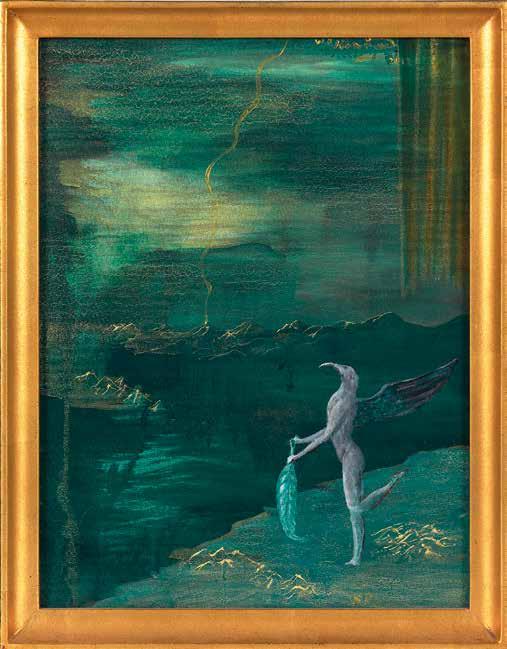
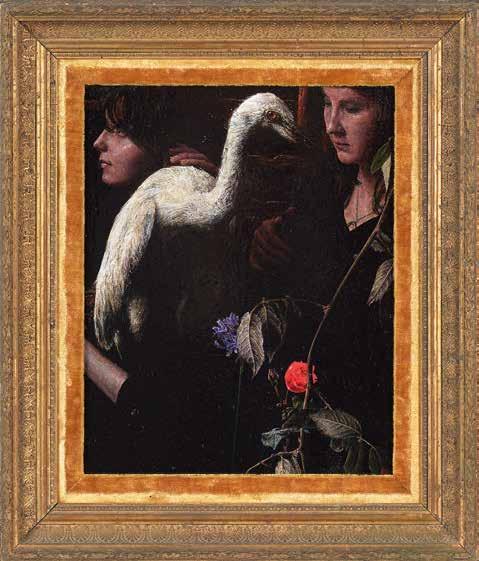
Andrew McLeod
Sophie and Alexa with Rose oil on board signed
368 x 293mm
Provenance
Purchased from Robert Heald Gallery, Wellington in 2025.
$25 000 – $35 000
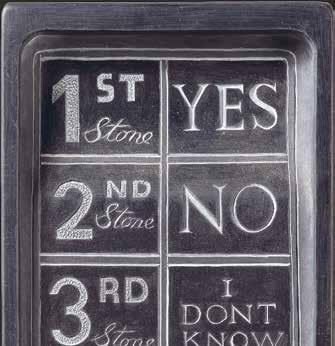
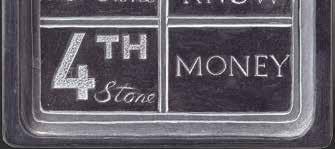
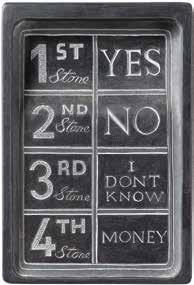
Denis O’Connor
The Fifth Stone
slate
title inscribed, signed and dated 2005 and inscribed Pillowstone after Sam Beckett verso
title inscribed, signed and dated 4. 2005 verso
170 x 120 x 25mm
Provenance
Purchased from Mark Hutchins Gallery, Wellington in 2007.
$1500 – $2500
13
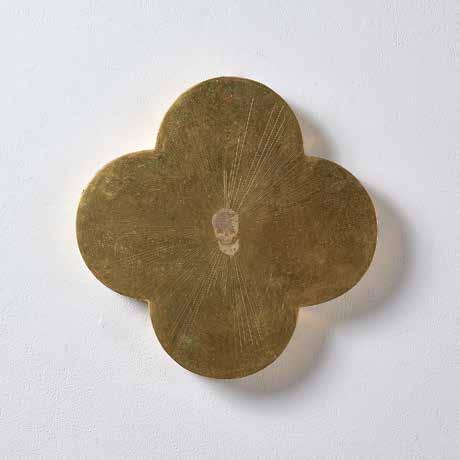
Max Gimblett
That Place
black clay and gold on shaped board
title inscribed, signed and dated 2007/08 and inscribed ‘Mark and Mandy love max’ verso
380 x 380mm
Provenance
Purchased from Page Blackie Gallery, Wellington in 2008.
$8000 – $12 000
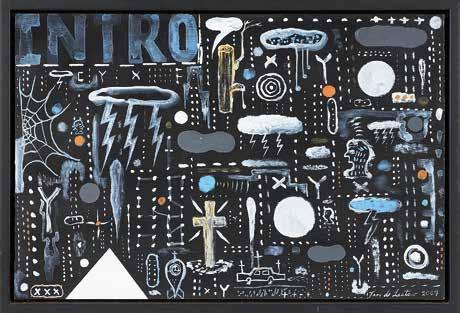
Tony de Lautour
Intro
acrylic on board title inscribed, signed and dated 2007 300 x 455mm
Provenance
Purchased from Hamish McKay Gallery, Wellington in 2007.
$3500 – $5500
15
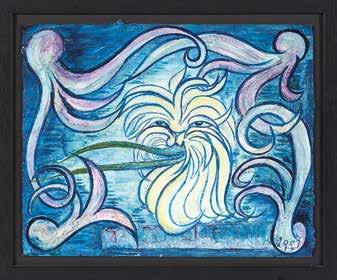
Tony de Lautour Trophy
oil on canvasboard
title inscribed, signed and dated 1997 240 x 300mm
Provenance
Purchased from Brooke Gifford Gallery, Christchurch in 2007.
$1000 – $2000
16
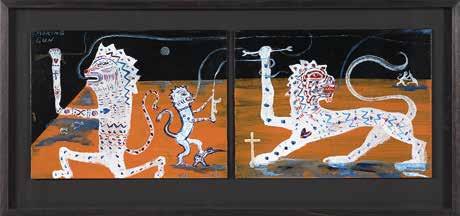
Tony de Lautour
Smoking Gun
oil and acrylic on canvasboard, diptych title inscribed, signed and dated 2004 230 x 600mm: overall
Provenance
Purchased from Hamish McKay Gallery, Wellington in 2018.
$5000 – $8000
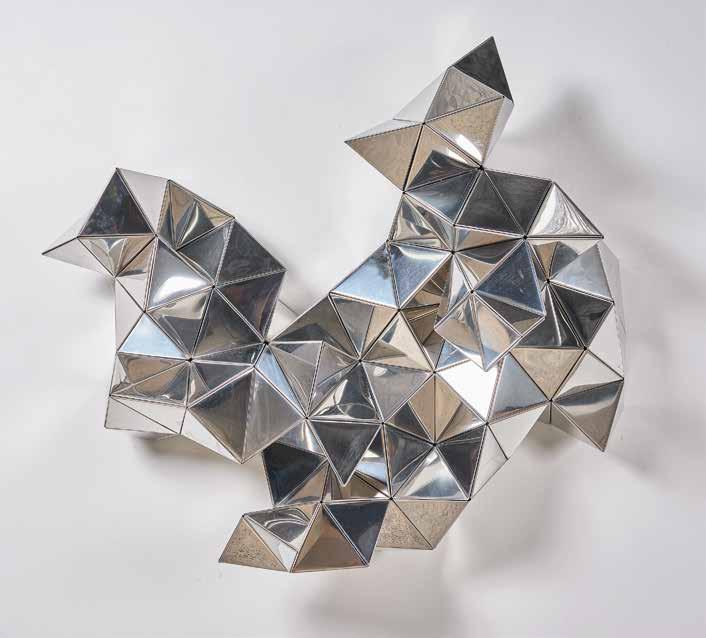
Gregor Kregar
Reflective Simulations III
stainless steel signed and dated ’08 verso 1750 x 1500 x 650mm
Provenance
Purchased from Bowen Galleries, Wellington in 2008.
$15 000 – $25 000
18
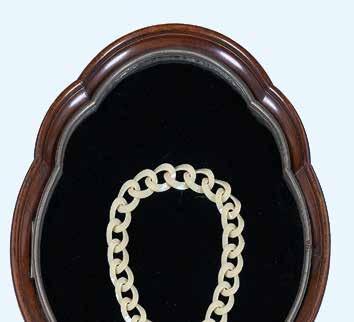
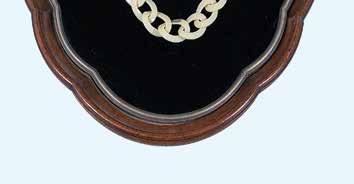
Octavia Cook
Pure Ivory Acrylic Chain
acrylic and gold in Edwardian case
750 x 570 x 600mm
Provenance
Purchased from Peter McLeavey Gallery, Wellington in 2012.
$5000 – $8000
19
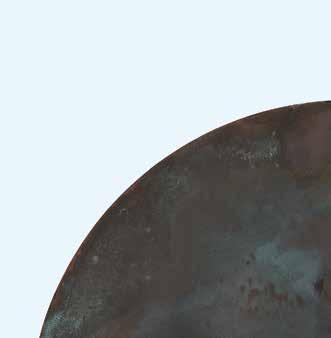
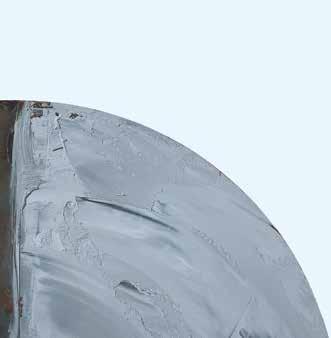
Gretchen Albrecht
Stormy Weather
oil and patina on copper title inscribed, signed and dated 2015 verso 175 x 350mm
Provenance
Purchased from Nadene Milne Gallery, Arrowtown in 2020.
$8000 – $12 000
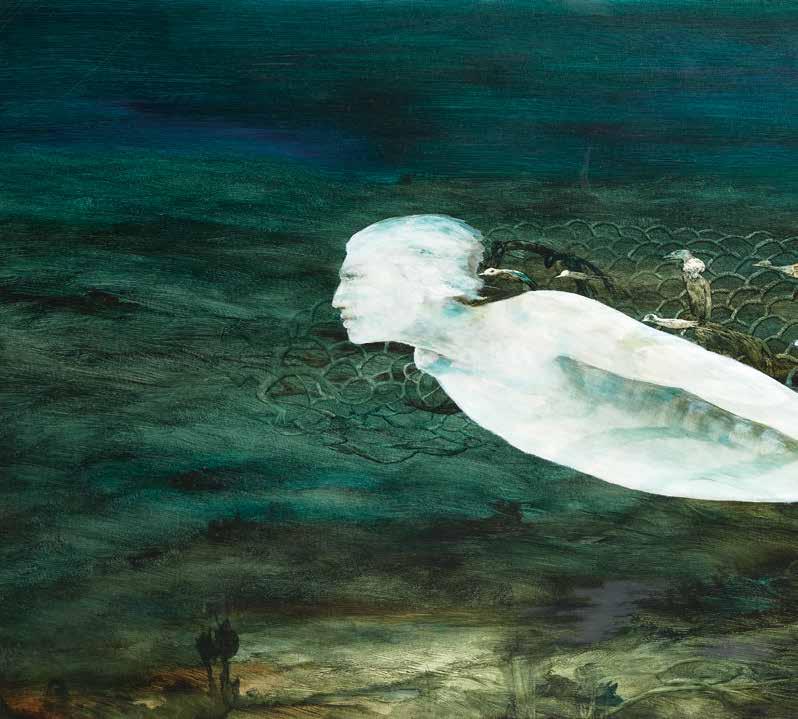
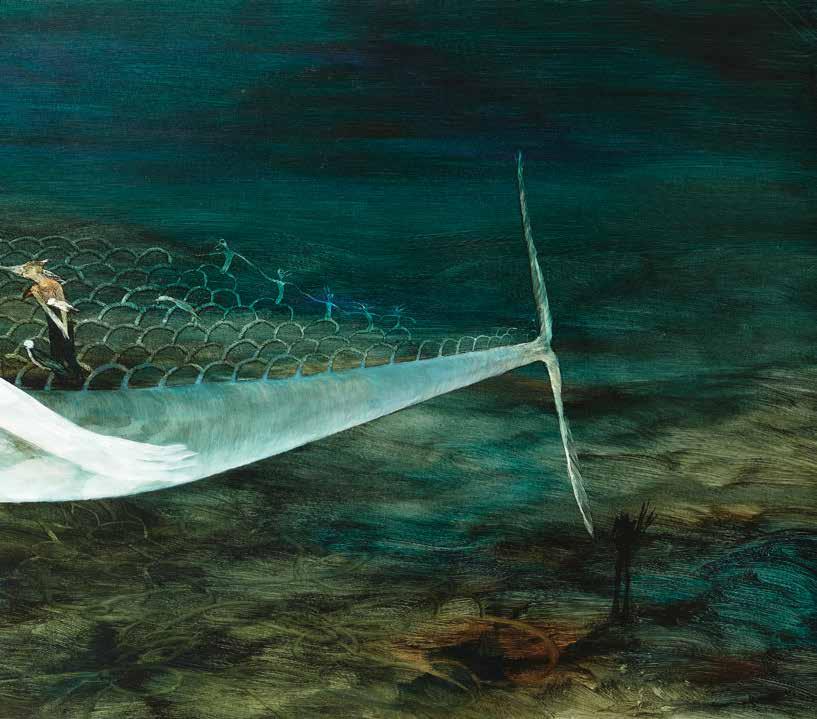
John Walsh
Marakihau (Post-Homo Travellus)
oil on canvas title inscribed, signed and dated 2007 verso 1100 x 2400mm
Exhibited
‘John Walsh: Flying Solo’, The Dowse Art Museum, Lower Hutt, 2 May – 13 September, 2009. ‘Matakite’, Pātaka, Porirua, 19 June – 18 September, 2016.
Provenance
Purchased from Janne Land Gallery, Wellington in 2007.
$35 000 – $55 000
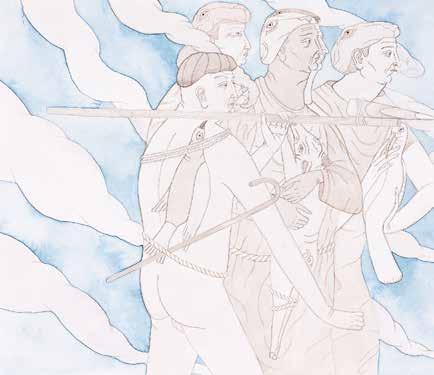
Kushana Bush
Hunters in Smoke
bistre, ink and watercolour on paper title inscribed, signed and dated 2018 verso
280 x 320mm
Provenance
Purchased from Brett McDowell, Dunedin in 2018.
$3500 – $5000
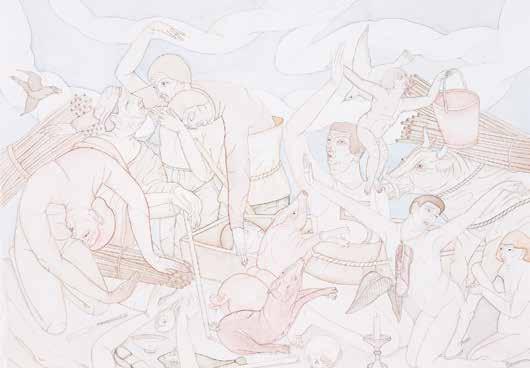
22
Kushana Bush
Untitled watercolour title inscribed, signed and dated 2018 verso
370 x 510mm
Provenance
Purchased from Brett McDowell, Dunedin in 2018.
$4500 – $7000
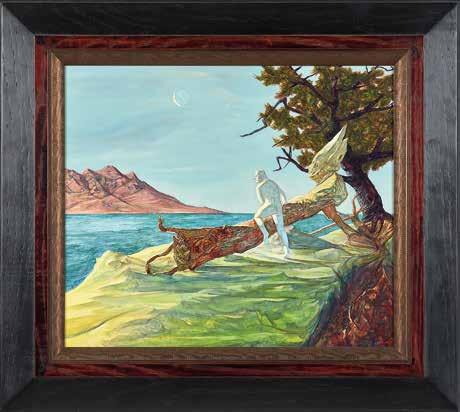
Jason Greig
Of Earth and Sky (Norwegian Wood) oil on board
title inscribed, signed and dated 2016 verso
380 x 448mm
Provenance
Purchased from Hamish McKay Gallery, Wellington in 2016.
$7500 – $12 000
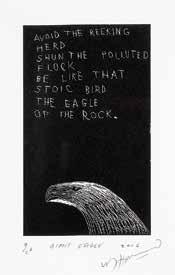
24
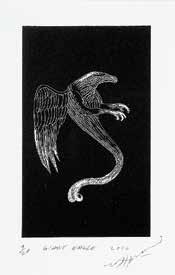
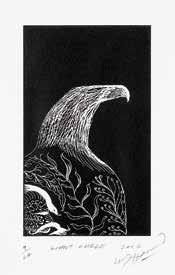
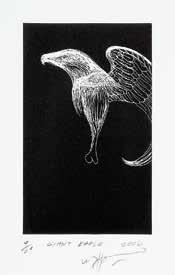
Bill Hammond
Giant Eagle
etchings, set of four, 9/24
title inscribed, signed and dated 2006
205 x 130mm: each
Provenance
Purchased from Peter McLeavey Gallery, Wellington in 2006.
$10 000 – $15 000
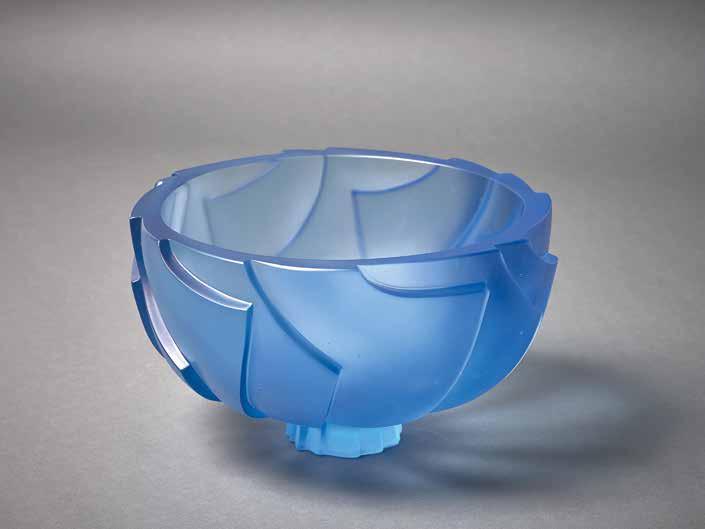
Ann Robinson Ice Bowl
cast glass signed and dated 2002 inscribed No. 79 to underside 230 x 380 x 1380mm
Provenance
Private collection, Auckland. Purchased from the artist.
$25 000 – $35 000
Barry Lett
Spotty Dog
steel armature, builder’s bog and paint, edition of 2 (2002)
430 x 300 x 180mm
Provenance
Collection of the artist’s estate.
$3000 – $4500
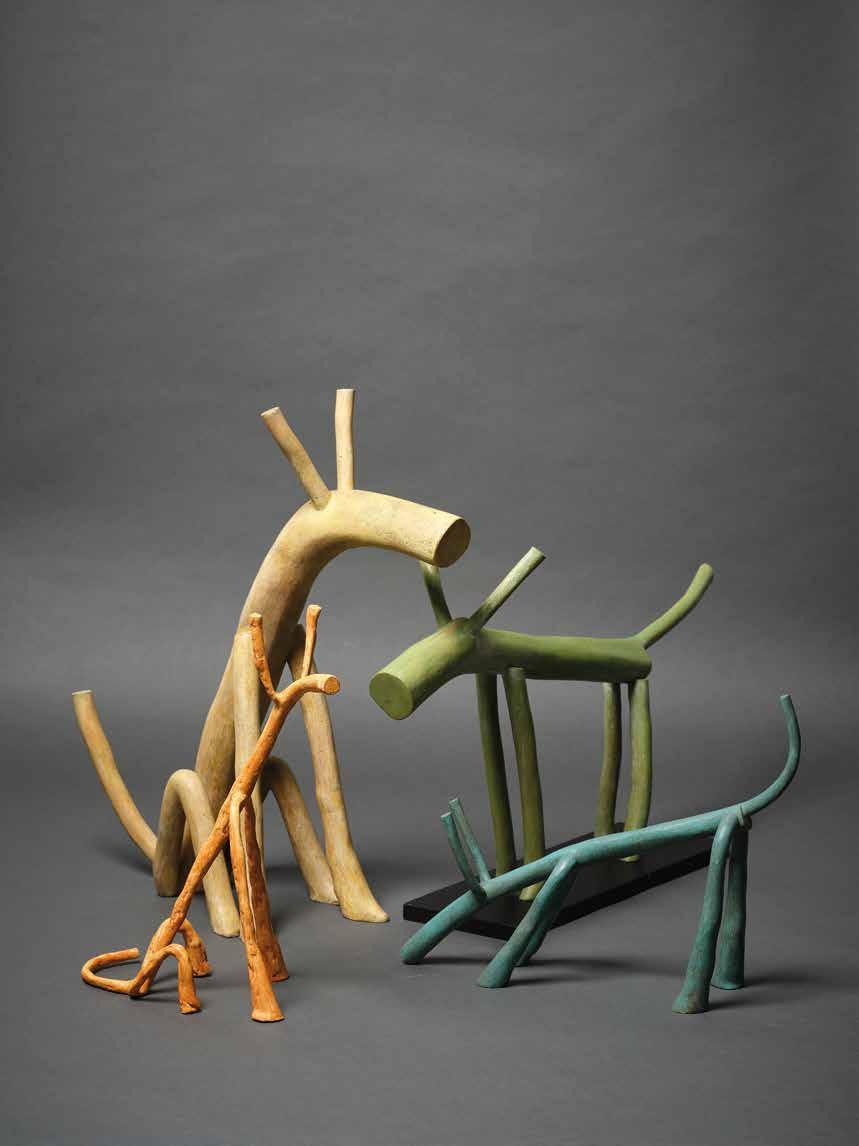
27 Barry Lett Thin Dog
wooden tree branches, paint, artist’s base, edition of 6 (2002)
490 x 786 x 160mm
Provenance
Collection of the artist’s estate.
$6000 – $10 000
28
Barry Lett Green Dog Sniffing
steel armature, builder’s bog and paint, edition of 10 (2005)
340 x 490 x 125mm
Provenance
Collection of the artist’s estate.
$4000 – $7000
29
Barry Lett Carter Dog
steel armature, builder’s bog and paint, edition of 2 (2003)
650 x 600 x 240mm
Provenance
Collection of the artist’s estate.
$6000 – $10 000
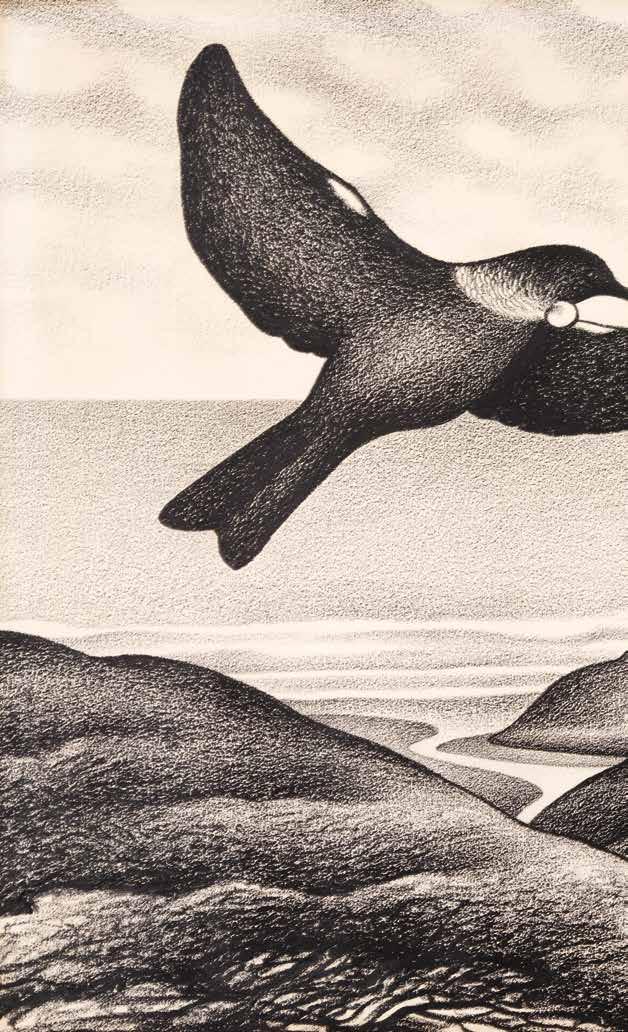
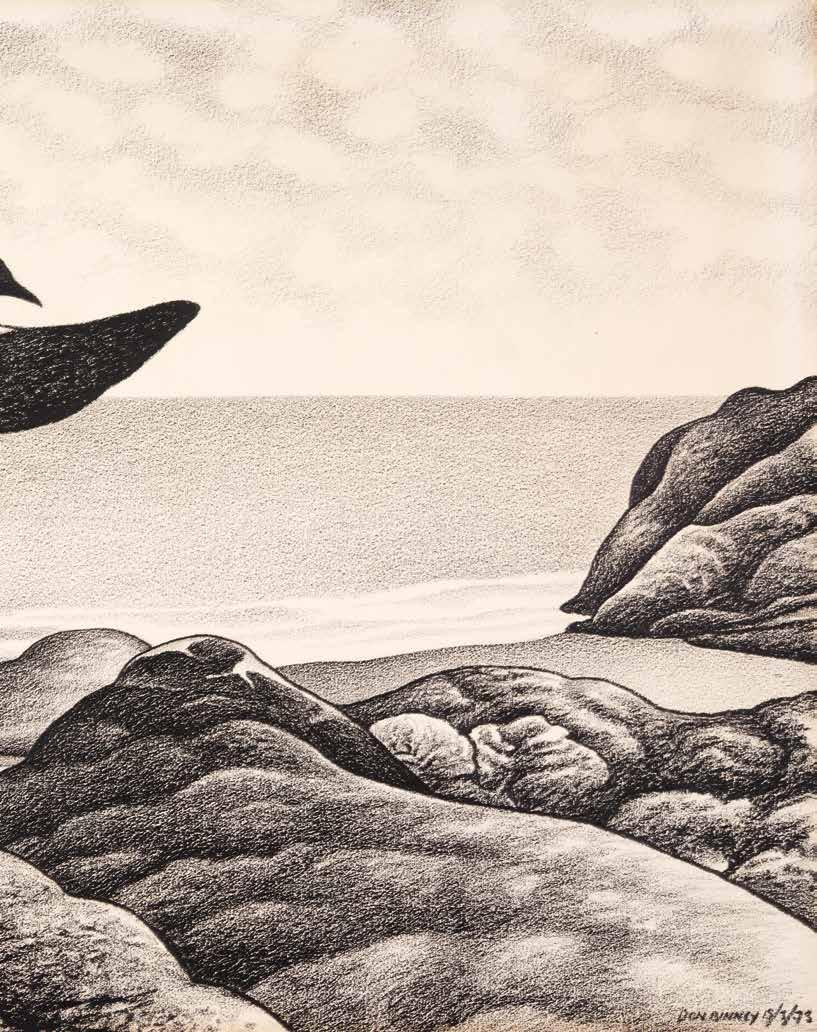
Don Binney
Tui over Te Henga
charcoal on paper signed and dated 15/3/75 555 x 760mm
Provenance
Private collection, Auckland. Originally purchased directly from the artist. Thence by descent to the current owner.
$65 000 – $85 000
31
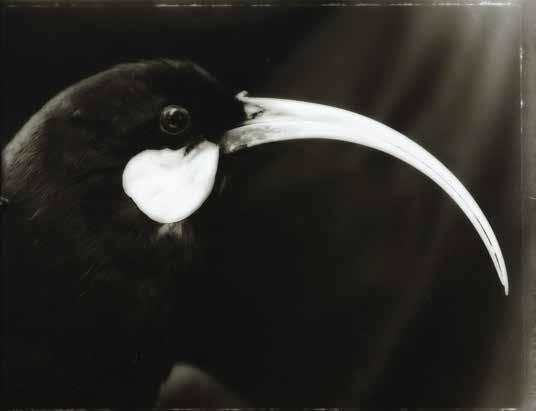
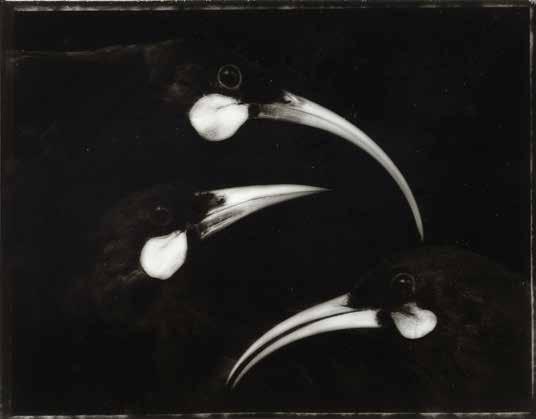
Fiona Pardington
Portrait of a Female Huia
gelatin silver handprint, edition of 5 (2004)
450 x 597mm
Provenance
Private collection, Taranaki.
$14 000 – $22 000
32
Fiona Pardington
Huia Love Triangle
gelatin silver handprint, edition of 5 (2006)
420 x 540mm
Provenance
Private collection, Wellington. Purchased from Webb’s, Auckland, March 27 2012, Lot No. 13.
$14 000 – $22 000
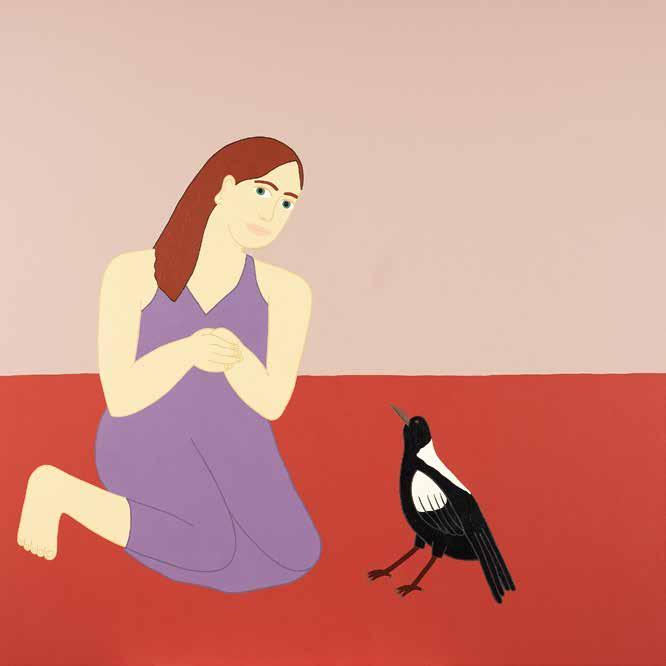
Ayesha Green
Self Portrait with Magpie
acrylic on canvas title inscribed, signed and dated 2021 verso 1200 x 1200mm
Provenance
Private collection, Auckland.
$12 000 – $18 000
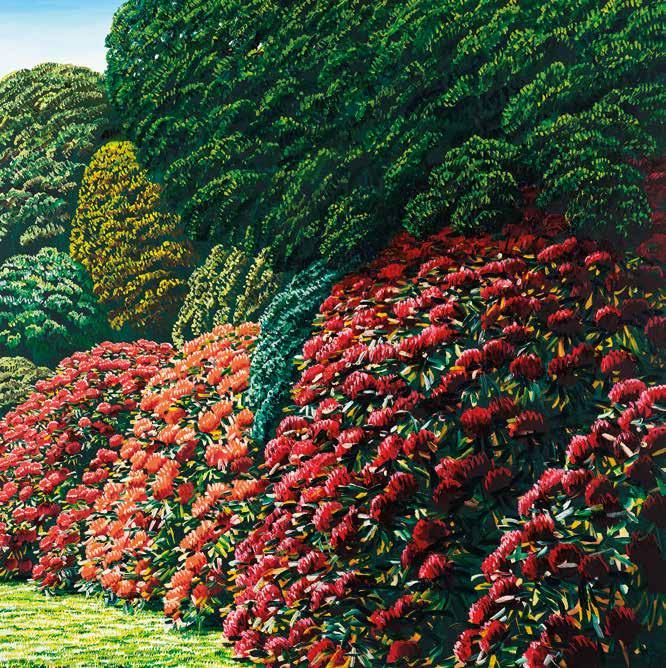
Karl Maughan Ashhurst
oil on canvas title inscribed, signed and dated 10/2/2009 verso 1220 x 1220mm
Provenance
Private collection, Auckland.
$25 000 – $40 000
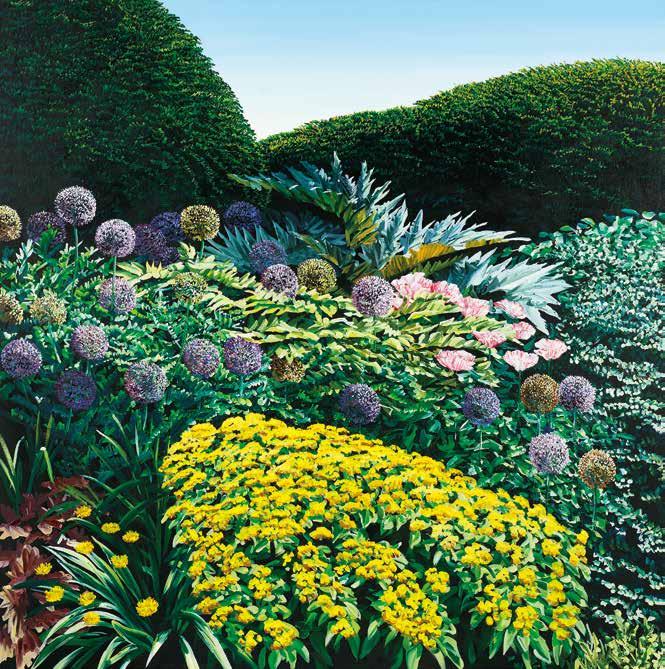
Karl Maughan
David Hicks
oil on canvas title inscribed, signed and dated 10/3/2001 verso 1220 x 1220mm
Provenance
Private collection, Auckland.
$30 000 – $45 000
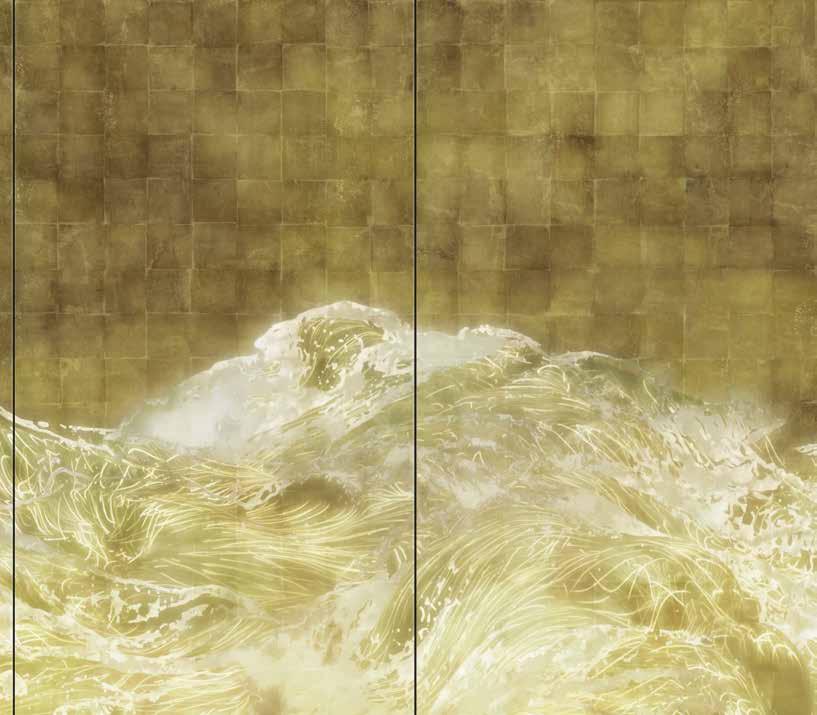
teamLab (international art collective, founded 2001)
Waves of Light
digital work, four channels, continuous loop, edition No. 4/4 (2018)
1210 x 2730 x 210mm: installation size
Note
Lot is sold with the inclusion of four digital panels, Apple Mac minis, HDMI cables and brackets.
Private collection, Auckland. Purchased from James Blackie Gallery, Wellington, 21 August 2020.
Exhibited
'teamLab: Massless Suns', Pace Gallery, Seoul, 2 September – 24 December, 2022.
'Noor Riyadh: 2022', Saudi Arabia, 3 November – 19 November, 2022.
'Kei Imazu', Ueshima Museum Annex, Tokyo, 15 January – 31 March, 2025.
$100 000 – $200 000
Image: teamLab, Waves of Light © teamLab
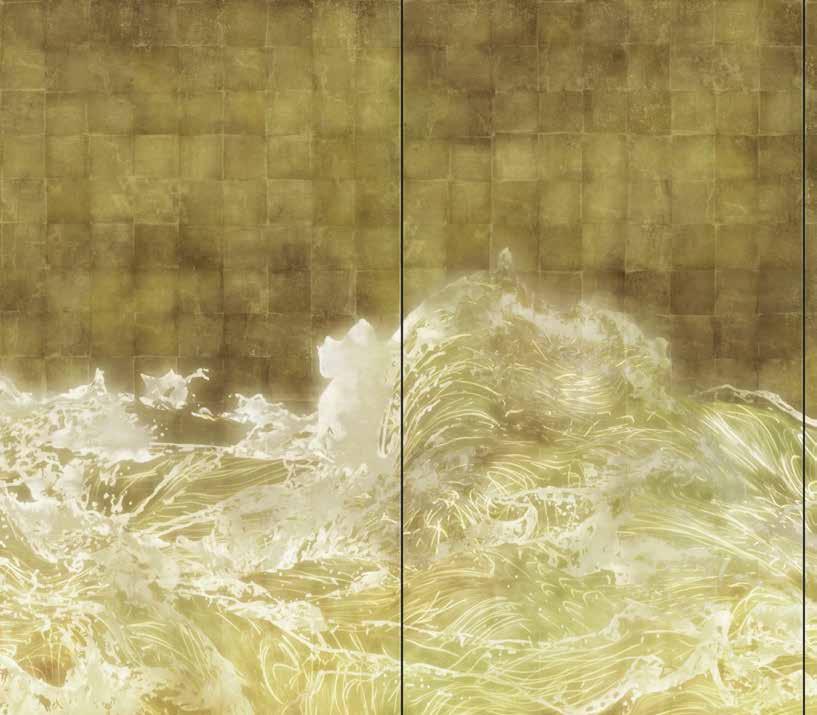
All oceans are connected to each other, and so are all the waves in this world.
In classical East Asian art, waves are often expressed using a combination of lines. These waves created by lines allow us to realize that each wave is one part of a larger flow, and conveys life as though the waves are a living entity.
When the waves rise, we can feel a powerful breath of life, as though life is blooming. It feels as though each wave has a life of its own. But when the waves collapse and disappear, we realize, with a sense of fragility, that they were a part of the ocean. And that ocean is connected to all of the other
oceans. In other words, all of the waves in the world are connected to each other.
The waves seem alive because life is like a rising wave. It is a miraculous phenomenon that continuously emerges from a single, continuous ocean.
The waves are expressed through a continuous body of countless water particles. The interactions of particles are calculated, and then the movement of water is simulated in threedimensional space. Lines are created along the trajectories of the water particles, and drawn on the surface
layer of the three-dimensional waves.
The lines are created with what teamLab refers to as Ultrasubjective Space. In contrast to space that is created through, or cut out by, lenses and perspective, Ultrasubjective Space does not fix the viewer’s viewpoint and in turn frees the body. The wall that the waves are seen on does not become a boundary between the viewer and the artwork, and the artwork space is continuous with the space of the viewer’s body.
teamLab
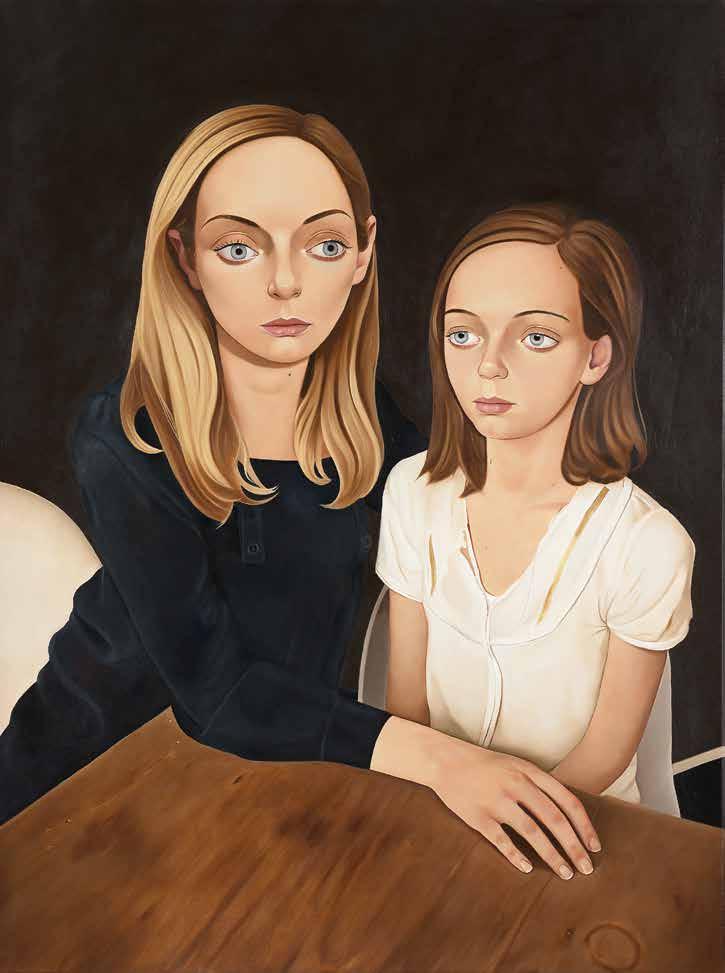
Peter Stichbury
Estelle and Helena
acrylic on linen title inscribed, signed and dated 2012 verso; original Tracy Williams LTD, New York label affixed verso 1600 x 1200mm
Provenance
Private collection, Australia. Purchased from Tracy Williams LTD, New York.
$80 000 – $120 000
The works of Peter Stichbury must be taken at face value. They are portraits, fashioned like amalgams to represent contemporary influencers. Perhaps it is true that their genesis is from the great wall of the internet that brings all history into a single vertical plane standing before our eyes. Perhaps it is true that Stichbury picks small brickettes from this digital wall, polishes them, exaggerates them, airbrushes them and builds up faces: he paints with these lips, these eyes, and chooses these noses. He builds his portraits then, like an AI master would build them from all that is out there. Yes, they are paintings, true bricks and mortar acrylic paintings that are masterfully crafted. They are, in the end, not digital.
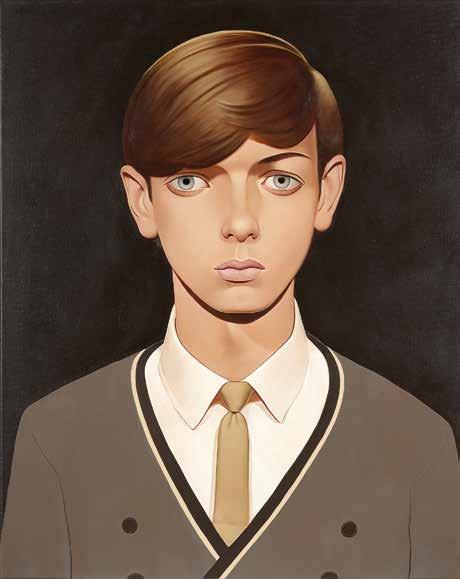
But for all this synthesis, some remarkable things happen in the final layer of paint. He achieves a specificity from the digital soup by creating what appears to be a specific ‘real person’ as reinforced through his ‘real person’ titles. Joseph Honeywell, 2012, shows all the androgenicity so currently fashionable. His narrow tie comes straight from the dress sense of a GBN newsreader, the smoothed skin, the swished hair and the square jaw places him in that youthful quest for beauty that young men must accomplish through looksmaxxing—literally smashing on the face to improve its structure. From a painting point of view, leaving behind digital flatness, Stichbury inserts shadows at the chin and highlights lips to move them forward in the picture plane, so that the painted face asserts itself in front of us as if it were about to speak. It would come as no surprise to find a viewer talking to influencer Joseph Honeywell: What do you do? Who do you hang with? Where do you train?
Yes, we are drawn into a quiet conversation with these paintings of influencers and are ready to subscribe to their podcasts. Estelle and Helena, 2012, was shown at Tracy Williams Ltd, New York, 2012 in Stichbury’s solo show Superfluous Man, an exhibition conceived with literary underpinnings but brimming with fake over-perfections. Estelle embodies what many women may look for when they peer into the mirror. Hair? Coloured. Skin? Moisturised. Eyes? Lashed. Is it possible that they see themselves with these exaggerated features? That these features need to be even further exaggerated with Botox and lip filler? Estelle’s arm moves forward to cradle the
slightly nervous testimony of Helena. The platform Artinfo at the time described the look as ‘anhedonic’ where pleasure is dissipated from physical sensation. Eyes are averted. The podcast is underway and full of advice.
Make no mistake. When we look into the mirror, who knows what we are seeing. Maybe we are observing the self, and then some. With dopamine shackled, reports back to the brain contain things that are not really there. Exaggerated things. Eyes and lips made big. It is curious that when an individual creates a digital avatar to represent themselves online, all these enhancements become noticeable. They have seen themselves in the mirror and they know what needs fixing. And Stichbury reports brilliantly on this grandiose anxiety as he fashions his painted avatars to fit out specific personality types and names them with the names of ‘real people’.
Peter James Smith
Peter Stichbury
Joseph Honeywell
acrylic on linen title inscribed, signed and dated 2012 verso; original Tracy Williams LTD, New York label affixed verso 1000 x 800mm
Provenance
Private collection, Australia. Purchased from Tracy Williams LTD, New York.
$60 000 – $80 000
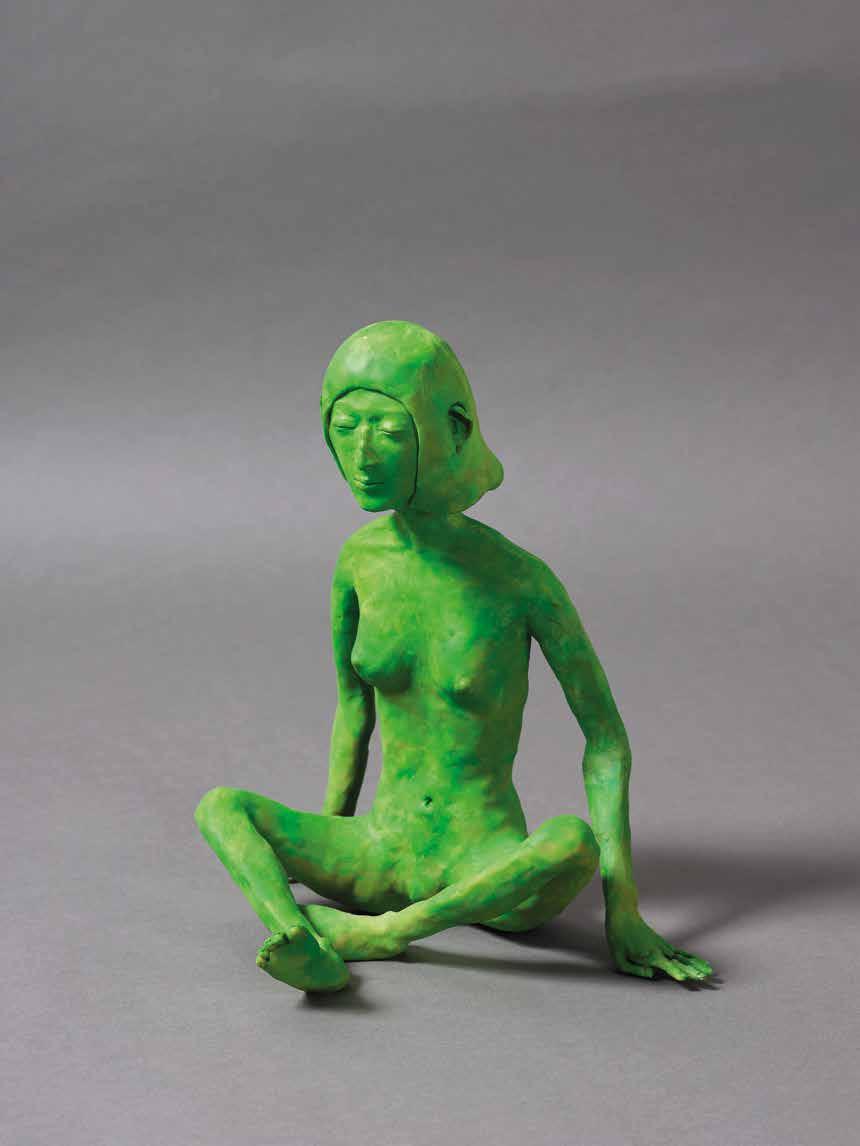
Francis Upritchard
Aphid
modelling material, wire and polymer paint (2008)
340 x 340 x 240mm
Exhibited
‘Rainwob i’, GovettBrewster Gallery, New Plymouth, 1 March – 18 May 2008.
Illustrated
Heather Galbraith (ed), Francis Upritchard: Save Yourself (New Plymouth, 2009), p. 6.
Private collection, Taranaki. Purchased from Ivan Anthony Gallery, Auckland in 2008.
$25 000 – $40 000
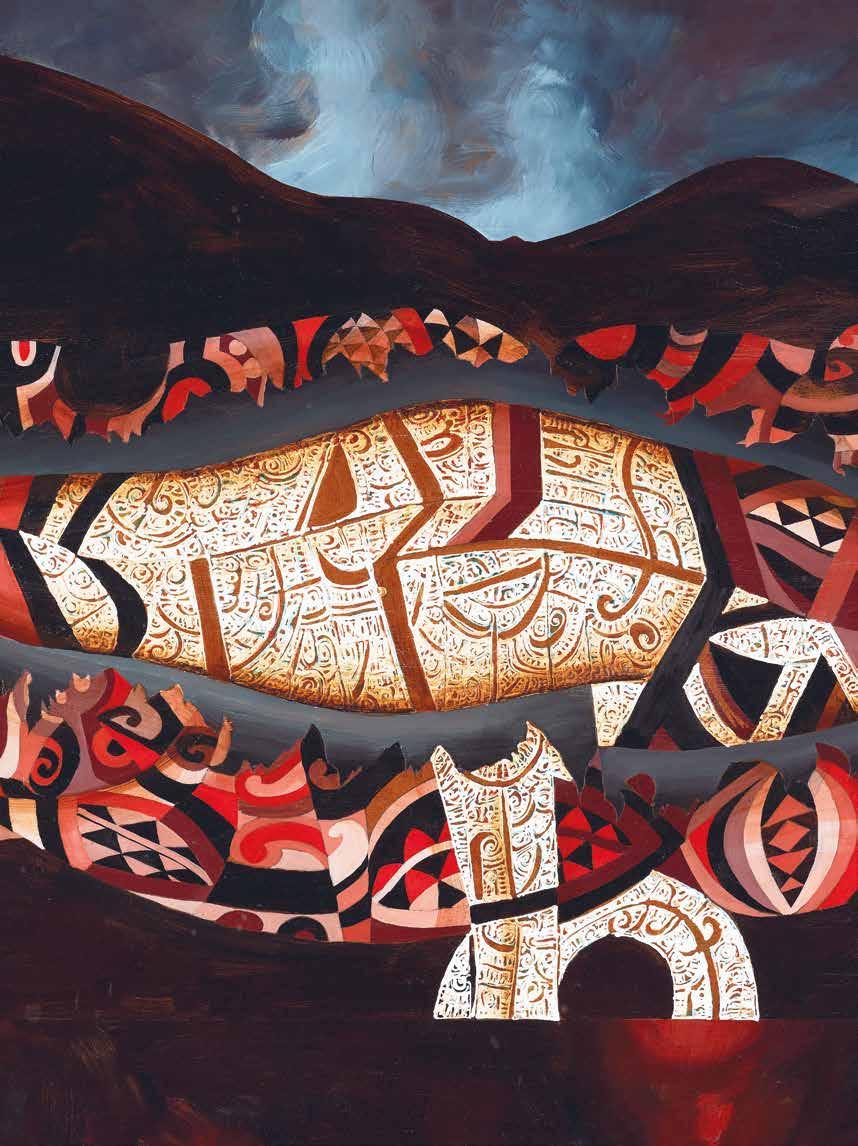
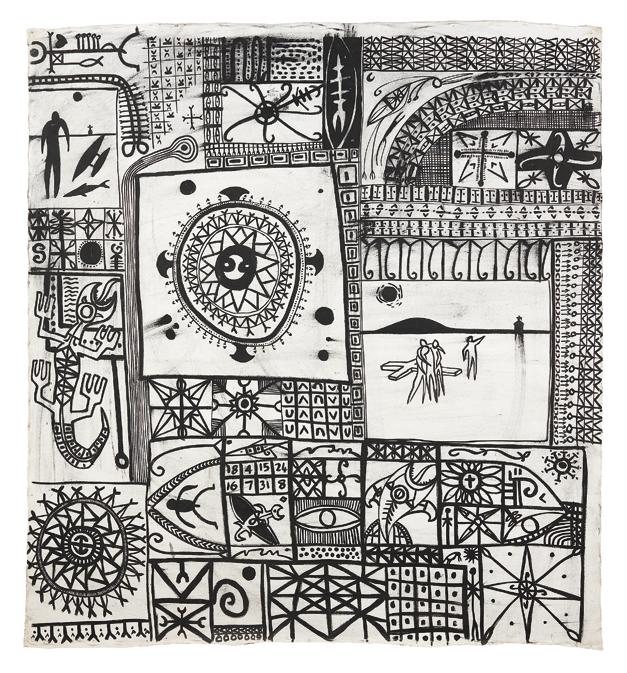
John Pule Kapaleto
oil on unstretched canvas title inscribed, signed and dated 1995 and inscribed No. 3 verso 1950 x 1805mm
Provenance
Private collection, Auckland.
$35 000 – $45 000
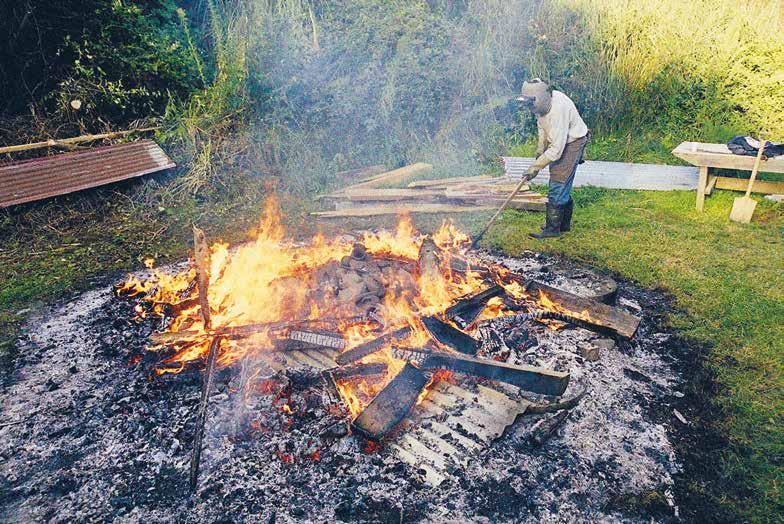
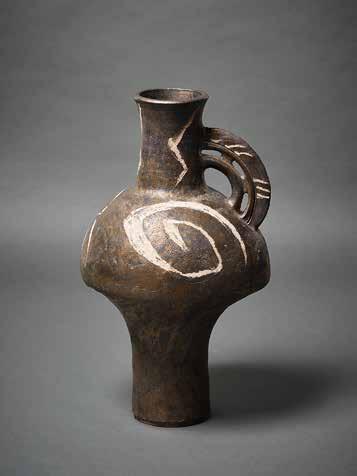
41 Baye Riddell
Ceremonial
gas-fired red earthenware clay signed and dated ’21 to underside 640 x 350 x 350mm
Illustrated
Baye Riddell, Ngā Kaihanga Uku: Māori Clay Artists (Toi Māori Aotearoa/Te Papa Press, 2023).
$3000 – $6000
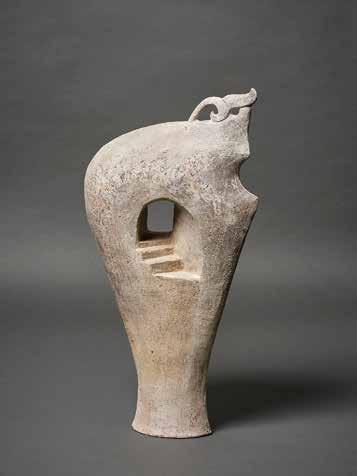
gas-fired white raku clay signed and dated ’22 1460 x 450 x 200mm
Illustrated
Riddell,
$12 000 – $18 000
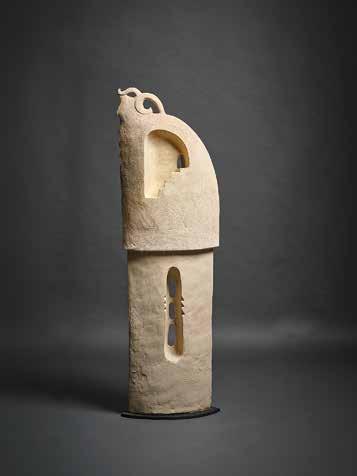
42
gas-fired white clay signed and dated ’20 740 x 380 x 160mm
Illustrated
Baye Riddell, Ngā Kaihanga Uku: Māori Clay Artists (Toi Māori Aotearoa/Te Papa Press, 2023), cover.
$4000 – $7000
John Drawbridge
Provence
oil on board
signed and dated 1961 800 x 1150mm
Provenance
Private collection, Auckland. Purchased from the artist’s family.
Ilustrated
Damian Skinner and Rob McDonald, John Drawbridge (Ron Sang, 2008), p. 55.
Literature
Gregory O’Brien, ‘Wide Open Interior’. In, Gregory O’Brien (ed), John Drawbridge: Wide Open Interior (Wellington, 2001), p. 15.
Exhibited
‘John Drawbridge: Wide Open Interior’ City Gallery, Wellington, 7 December 2001 – 10 February 2002.
$30 000 – $50 000
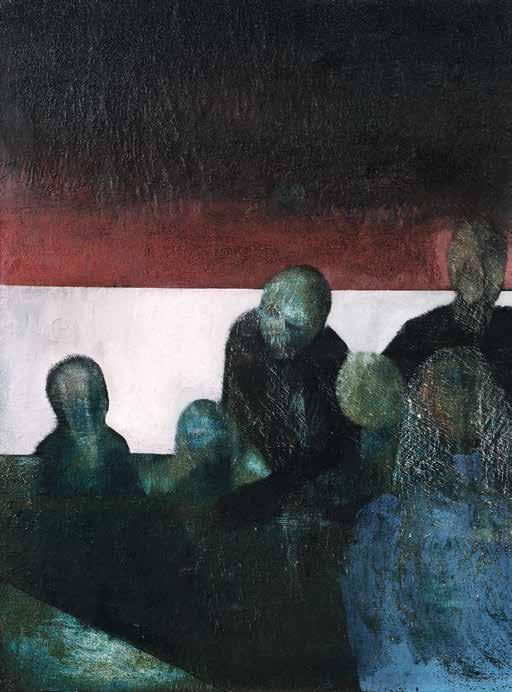
Writing on John Drawbridge’s time at the Central School of Arts and Crafts in London 1957-1960, Lara Strongman notes that three years after his arrival he was identified as a promising “newcomer in abstraction” by the prestigious Apollo magazine. This followed his exhibiting in the Royal Academy Summer Exhibition and election as a member of the Royal Society of Printmakers, and the display of paintings at Zwemmer and Piccadilly galleries before his solo exhibition at the Redfern in 1963. Significantly, four of his works were selected for the First Commonwealth Biennale of Abstract Art. By 1960 he had married silversmith Tanya Ashken, and was a kiwi comet blazing a trail in the British art world.
Awarded a Diploma of Distinction, Drawbridge gained a year’s extension to his travelling scholarship to work with master printmaker and surrealist Stanley Hayter at his
Atelier 17 in Paris. Important works were produced: two French paintings were purchased by the Leicestershire County Council, and two prints acquired by the Victoria and Albert Museum. One of his thickly textured paintings, set in Montmartre, was bought for the Dunedin Public Art Gallery, Barmaid, 41 Rue Lepic, Paris (1961). Drawbridge later recalled, “when I lived in Paris people came into my paintings a lot, as one is very much aware of the human element in France.”
In curating Wide Open Interior, the artist’s retrospective at City Gallery in Wellington in 2001, Greg O’Brien wrote how Provence exemplifies Drawbridge’s style at the time: “the balancing of figurative and abstract concerns, and of narrative and formal resolution.” Around a central standing figure are arranged seven others who are seated at a long slanting table, while an eighth stands behind with head bowed. In
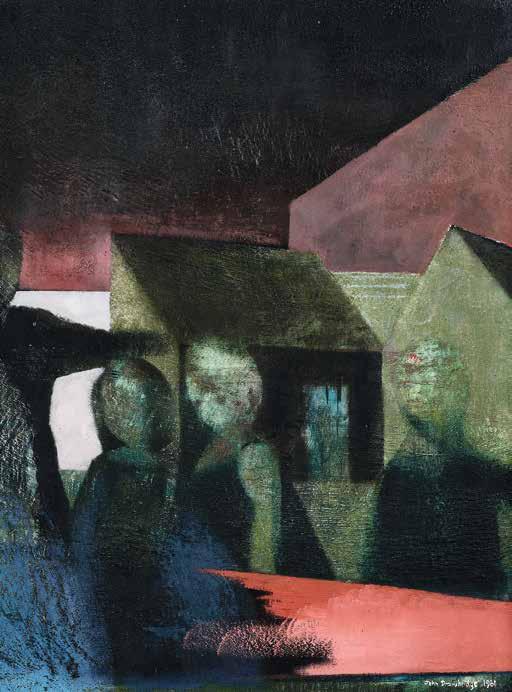
the catalogue for the City Gallery exhibition, Drawbridge suggests that the girl-child at the centre of the composition is based on his then 22-year-old wife, Tanya Ashken, but Tanya herself sees only an echo of the Infanta Margaret Theresa from Velásquez’s Las Meninas (1656), an iconic composition referenced by many artists. A cluster of small houses to the right with steeply pitched rooves suggests a European village setting. Tanya remembers the inspiration for this composition, “We had seen a film in Paris [The Little World of Don Camillo, 1952] about an Italian black frocked priest, played by a wonderful French actor called Fernandel, who was visiting an inbred family seated at their table outside at their farm, eating. They were all just blank figures, not interacting with each other. The simplicity of the vision made a big impression on John.”
With its measured modernist sensibility, evident love of threshold spaces, and acute feel for light translated into structure. Provence shows Drawbridge’s skill at creating a painting where the mood shifts between interior reflection and the luminous exterior world. Colour is saturated but tempered with a palette keyed to the architecture: the warm ochres of the ceiling locked against the dark blues and greens of the figures, with small emphases—the red tabletop, the violet cast of the wall—used as nodes that anchor the geometry. Here is the intimacy of a room set against the vastness of sky, exemplifying the wide-open interior concept which is a Drawbridge hallmark.
Linda Tyler
Buck Nin
acrylic and fluorescent paint on board signed and dated ’84 1150 x 990mm
Provenance
Private collection, Waikato.
$25 000 – $35 000
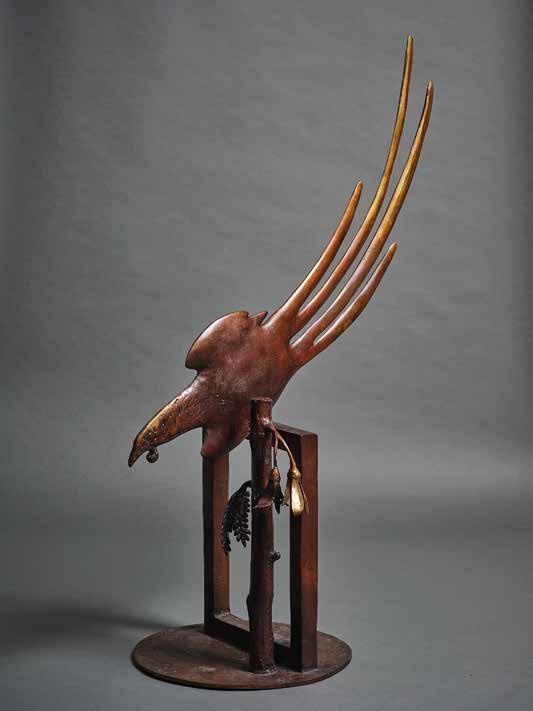
Paul Dibble
Abstracted Tūi in the Kōwhai
cast bronze, edition of 2 plus 1 A/P signed and dated 2010 1110 x 930 x 400mm
Provenance
Private collection, Auckland.
$30 000 – $45 000
Paul Dibble
The Rotating Rhythms of the Twentieth Century
cast bronze (two parts), unique edition signed
2150 x 1600 x 780mm: spinning top
1800 x 1040 x 780mm: torso
2150 x 3000 x 780mm: overall
Exhibited
‘Paul Dibble’, City Gallery, Wellington, May 1 – May 31, 1996.
‘Paul Dibble’, Gow Langsford Gallery, Auckland, September 18 – October 5, 1996.
Provenance
Private collection, Auckland.
$200 000 – $300 000
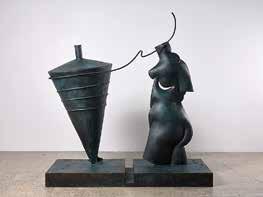
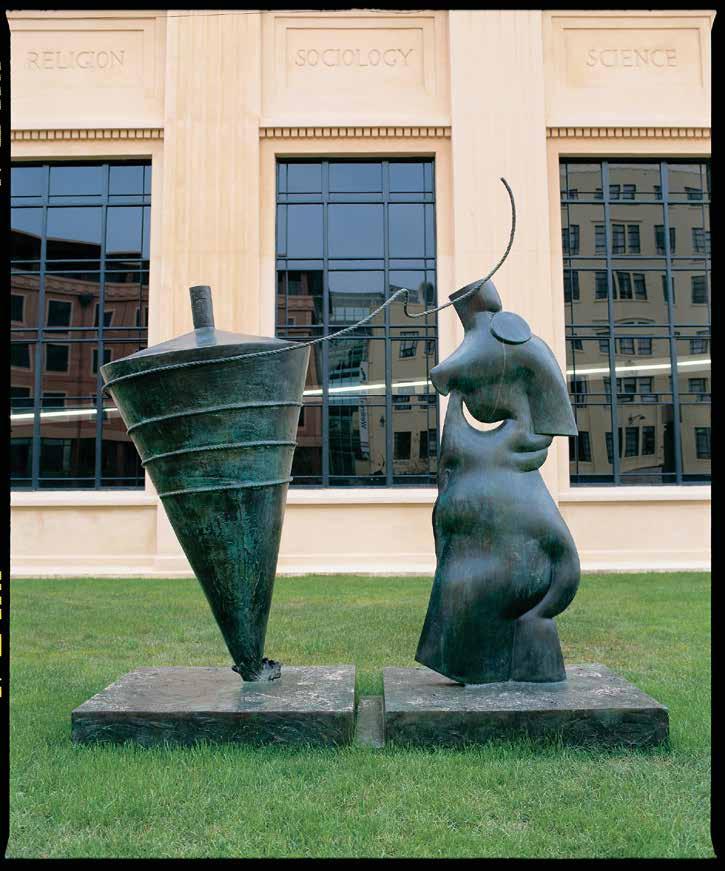
Standing more than person-tall, Paul Dibble’s Rotating Rhythms of the Twentieth Century, 1996, may be seen as an early insight into his tableaux series, in this case set on a monumental scale. Although uniquely cast as two individual bronzes, the side-by-side juxtaposition allows the eye to flow on through, searching the space between for visible connections.
To the right stands a figure formed from the planes and curves of European modernism. It has the cold-hearted diffractions of a Picasso—but maintains a warmth in the very human curves of the flesh, despite the modernist truncations. Breasts and buttocks flow to new locations on the body, as the pose of the figure launches, just for a split second, into movement. It is a movement that aims to bring Broadway Boogie-woogie into a New Zealand context. Dibble plants modernism firmly here. (For here, imagine shovelling the New Zealand soil ready to take the weight of the plinth.)
Dibble’s New Zealand context is one of flatness. The figure is essentially flat—broad, but not deep. As he explains in notes on the exhibition of the installed work in the grounds of City Gallery, Wellington in 1996, it is a flatness “like the side profile of a tiki, a fish or a mere”. He succeeds in accomplishing this through his technique of cutting canvas like a dress-maker’s cloth, sewing the edges, and casting the contents of the shaped form. The view from the photogenic front is one of activating mass, but as the viewpoint changes to the side, the mass dissipates.
The figure’s mass is further questioned by a central void cutting through space to uncover the shape of the crescent moon, with this arc replicated in the curvature of the ribs. There are modernist echoes here, of Barabara Hepworth and Henry Moore cutting through. Undeniably, the piercing gives the figure a surprising lightness, levity even, as the surrounding space is framed and activated. The curious viewer cannot help but circumnavigate the piece while reaching out to touch.
If there is a hint that the figure is about to boogie, then this feeling is compounded by the adjacency of a spinning top. It too is cast in bronze and defying gravity as it stands on point, teetering, seemingly about to topple. But it can never be toppled. Once cultural influences reach New Zealand shores they cannot be stopped. The sense of rotation is palpable. The spinner rope remains attached, wrapped like the rope of Ahab’s harpoon in the flank of the great white whale. The end is flung out towards the figure in the ultimate expression of movement, like a gesture frozen in time.
The title of the work, Rotating Rhythms of the Twentieth Century, also points the other way: it is perhaps the figure that has flung the coiled top, sending it spinning on its modernist way, teetering across a range of cultural influences that are taken up in New Zealand.
Peter James Smith
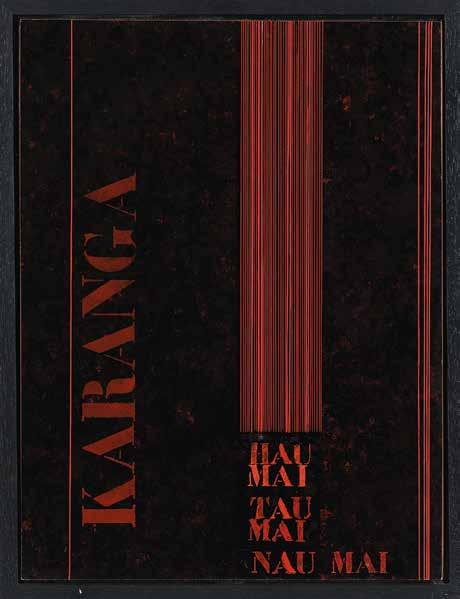
Ralph Hotere
Karanga
brolite lacquer and enamel on board
title inscribed and inscribed Hau Mai Tau Mai Nau Mai; inscribed Hone, Yvonne, He taonga iti ngā mihi o te wā verso
530 x 400mm
Provenance
Private collection, Bay of Plenty.
$45 000 – $65 000
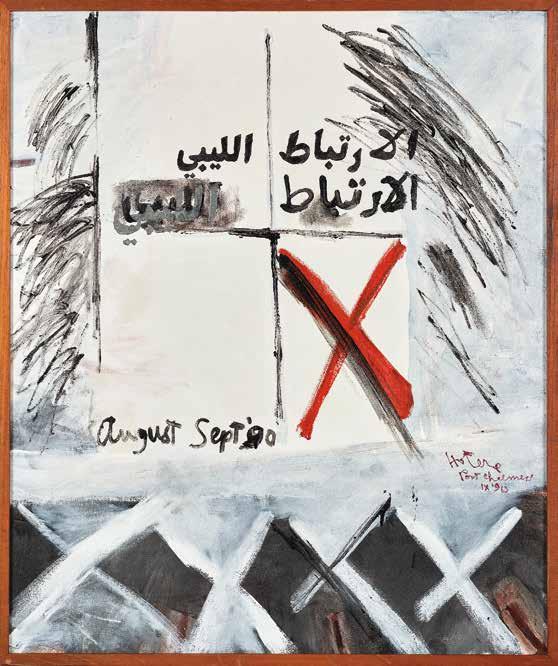
Ralph
Hotere
Untitled
acrylic on canvas signed and dated August – Sept ’90 and IX ’90 Port Chalmers
908 x 760mm
Provenance
Private collection, Auckland.
$55 000 – $75 000
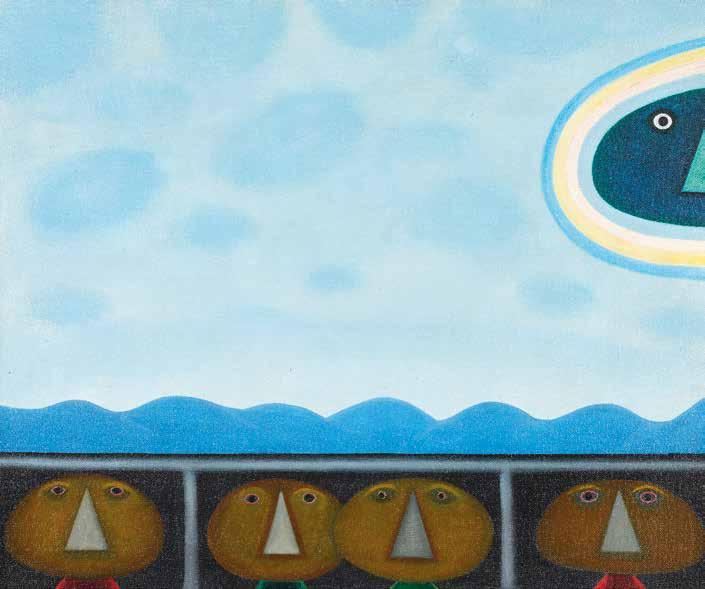
Many years ago I heard a story about Illingworth (as everybody called him then). Through a mate in the freezing works, he got hold of a load of offal and dumped it on the front doorstep of the house of a man who sat on the Orewa Council. The councillor was instrumental in an act of environmental vandalism and this was Illingworth’s protest against that. It was a Sunday night, I believe, so the fellow would probably not have seen that pile of guts on his welcome mat until he went out next morning.
The act was motivated by a deep and righteous anger but there was in it a kind of humour too, even a whimsicality, which you also find in the paintings. They are on the face of it simple, even naïve, but when examined more carefully reveal complexities and idiosyncrasies which can’t be reduced to slogans or messages. Works like Painting with Rainbow both invite and resist interpretation. Why, for instance, is the rainbow sideways in the sky? And who is the person whose face half appears within it?
I’d suggest, without any actual evidence, that the personification is more likely to be Uenuku than, say, the God of the Old Testament who spoke to Noah. And that the sideways rainbow is a compositional strategy rather than a symbol. In a study for the painting, the elements of which it is made — the face inside the rainbow, the people in their boxes, the vestigial landscape, the sky — all appear but in a different configuration. For the painting, they are shifted around like pieces on a chess board to make an arrangement that is both enigmatic and evocative.
The chess pieces analogy isn’t random. Illingworth was a thoughtful man and he once said of his generic figures, so like pawns: ‘The shape of my heads I take from that which nature has drafted as the shape strongest for protection (seen in such as an egg). My bodies come from the pyramid. The head I make is often to act as a canopy against nuclear fallout. The pyramid seems a sensible fallout shelter also.’ Again there is a whimsicality to the statement that underlines, rather than undermines, its seriousness.
And those four figures in their three boxes along the bottom of the painting do resemble timid or frightened humans sheltering in a bunker against the vastness of the sky and the incommensurability of a rainbow, especially a sideways rainbow. For Noah, however, the rainbow was a sign of the covenant that God would not attempt to drown the world again; whereas in Māori thought (of which Illingworth was cognizant) a taua, a war party, inside a rainbow meant defeat but one outside, or at either end, meant victory. On the other hand, one party’s victory is always another party’s defeat.
Aaron Lister and Damian Skinner, in the catalogue for A Tourist in Paradise Lost: The Art of Michael Illingworth (City Gallery, 2001), wrote: ‘The idea of critical vision is central to Illingworth’s projected artistic identity, continually rehearsed in notions of seeing through the façade of civilisation, or identifying the extraordinary and poetic in nature.’ You can see both the façade and the poetic in Painting with Rainbow; just as you can, in a rather different way, also see both in a pile of fragrant offal dumped on a suburban doorstep in Orewa in 1972.
Martin Edmond
Michael Illingworth
Painting with Rainbow oil on canvas title inscribed, signed and dated '66 and inscribed Cat No. 12 verso; reproduction of Auckland City Art Gallery exhibition label affixed verso 800 x 920mm
Exhibited
'New Zealand Painting: 1966', Auckland City Art Gallery, November 1966, Cat No. 5.
Provenance
Private collection, Canterbury.
$150 000 – $200 000
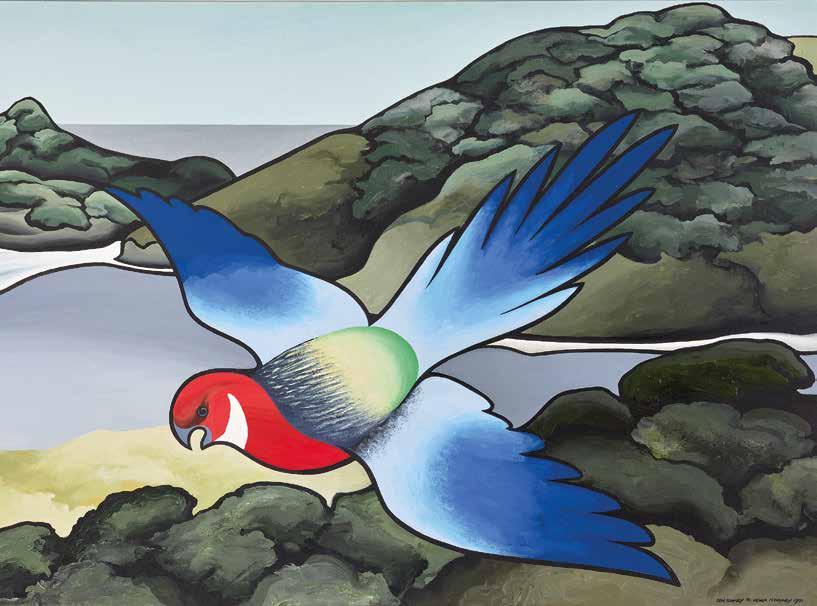
Don Binney
Rosella, Te Henga
oil and acrylic on Steinbach on board signed and dated 1971 and inscribed Te Henga 735 x 1100mm
Provenance
Private collection, Marlborough.
$300 000 – $450 000
Don Binney made two paintings of a rosella over a Te Henga landscape, both in 1971. This one is the first; the other, owned by the Suter Te Aratoi o Whakatū, has a two in Roman numerals after the title. They are very different, both formally and in symbolic or emotional terms. The Suter parrot is a pretty polly flying inland, away from the sea, from left to right across the picture plane and over a benign, if rather anodyne, pastoral scene featuring a green field in the foreground. This one is going the other way, out to sea, over a dark volcanic landscape and the black sands of Auckland’s west coast beaches, uttering what looks like a barbaric yawp.
On other words there is something feral, even predatory, about this parrot, with its open beak and fixed reptilian eye. It resembles, not coincidentally I think, the famous painting Binney made of a hawk turning its head in flight, featured on the cover of Don Binney Nga Manu / Nga Motu — Birds / Islands by Damian Skinner (2003). With its vivid blue outspread wings and tail, its green body, its red head with the white slash at the neck, this rosella looks very much like a wild bird in a wild place.
From early in his career as a painter, Binney was inclined to use te reo Māori for both his bird and his place names; but here he opts for the common Australian term ‘rosella’, colonies of which have flourished in New Zealand since early in the twentieth century. These kākā uhi whero, however, were not blown across the Tasman the way other Australian bird species have been; they were either deliberately introduced or else the offspring of released or escaped caged birds.
Their name is actually a contraction of what the convict era Sydneysiders called a parrot seen in great flocks in the west of the nascent town: Rose Hillers, after Rosehill, in Parramatta. Binney, who was a keen bird watcher (in his own writing he preferred the term ornithologist) must have observed examples of the immigrant coloniser in the time he spent out at Bethels Beach aka Te Henga.
There is something odd about the perspective, or rather the point of view, of Binney’s bird paintings. Greg O’Brien, in his recent book Don Binney: Flight Path (2023), called it the eye in the sky, with an obvious pun on the I / eye homophone. The point of view, as here, is not just above the landscape, looking down, it is also above the bird itself, so we see it, as it were, dorsally. There is also an incongruity of scale, in which bird dominates landform, which Binney himself once explained as an effect of studying his subjects through the lenses of binoculars in which they, are, of course, enlarged.
This is a magnificent painting, with a weight and heft to the seemingly three dimensional landscape forms below, contrasting with the buoyancy, ebullience and brilliant colour of the bird in flight. And, as mentioned, that open beak suggests a cry echoing above the sound of the waves: no doubt the strident, brassy cussikcussik call rosellas make in flight, usually in the company of a pair; which here seems to be, mysteriously, both present and absent.
Martin Edmond

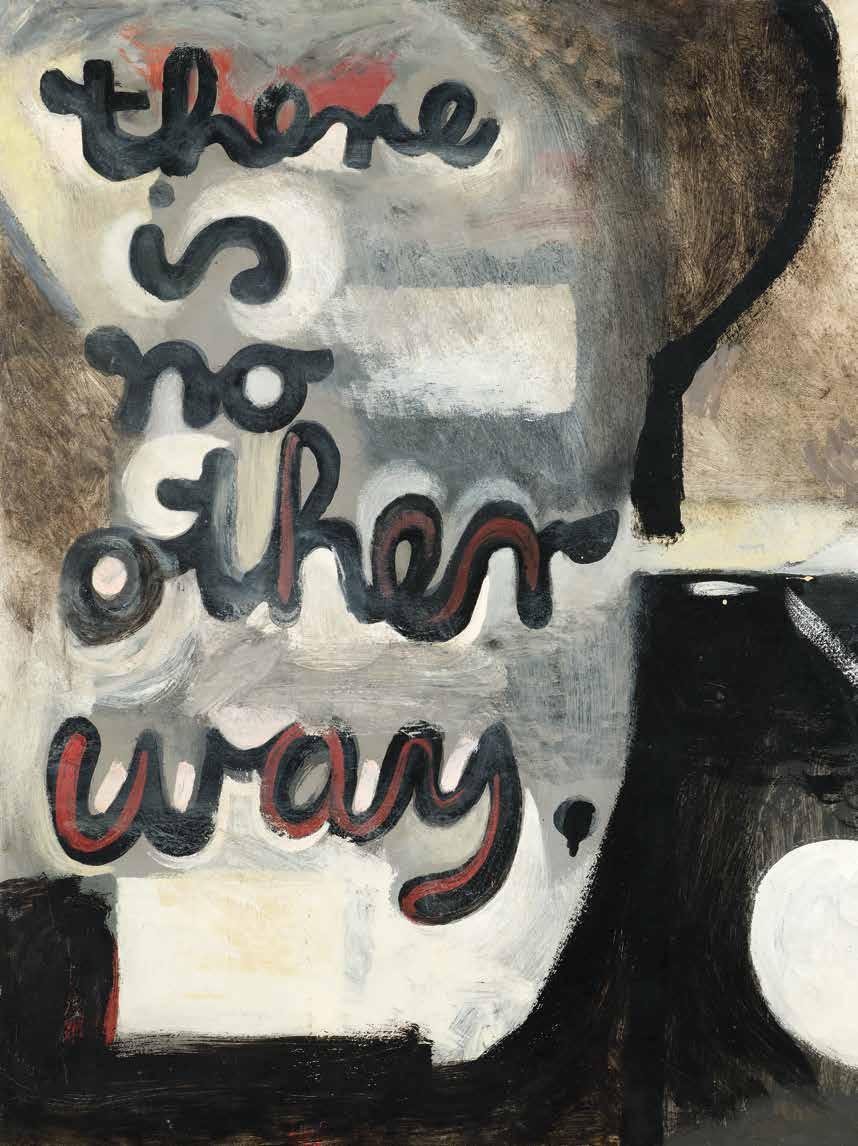
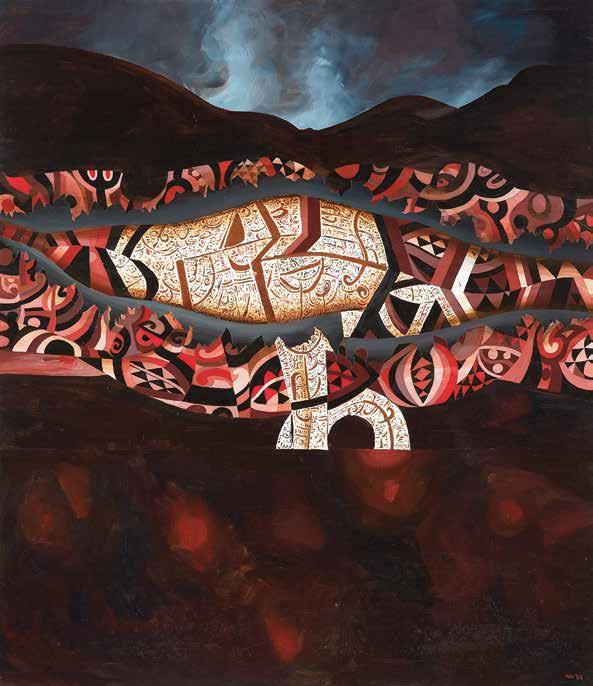
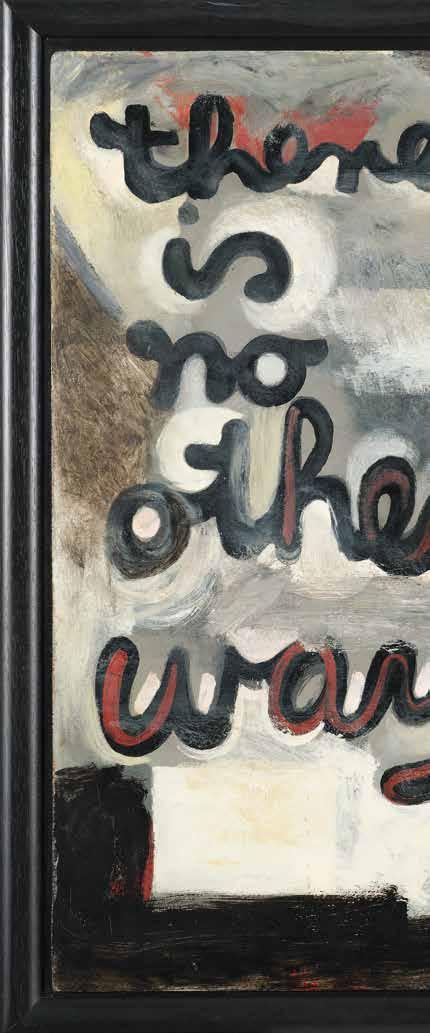
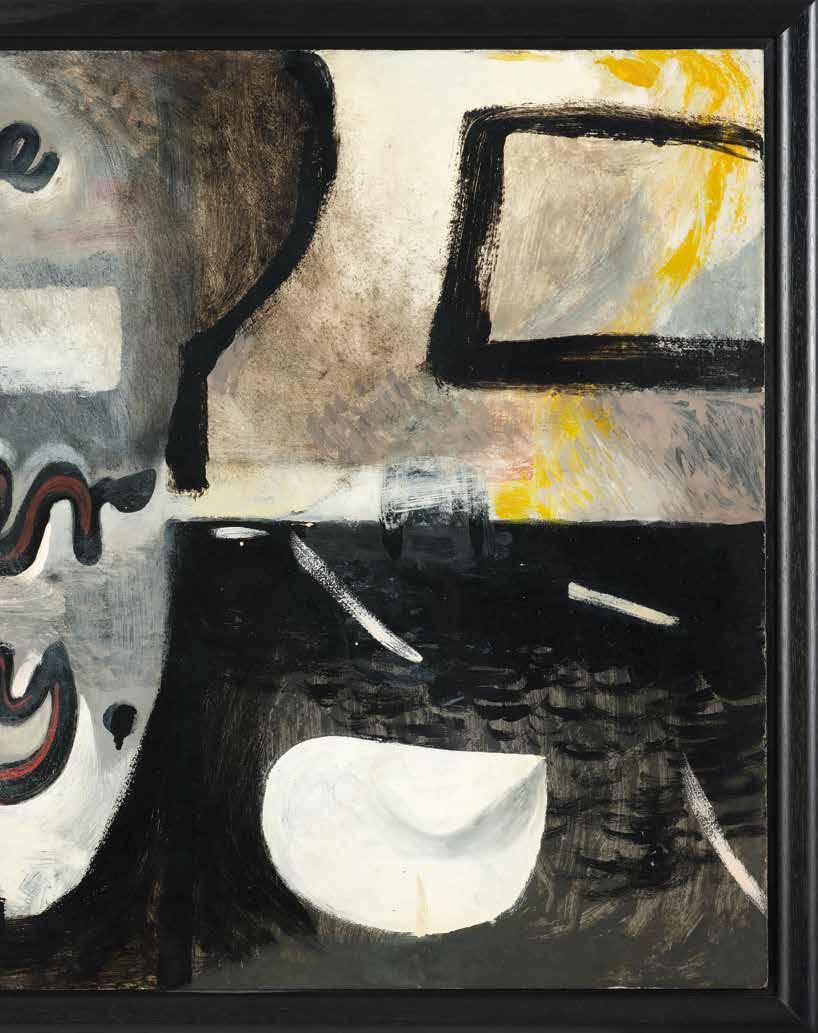
Perhaps the most striking feature of Colin McCahon’s painting, There is no other way, is its extreme hybridity. It contains elements of landscape, abstraction, text, sign and symbolism all brought together in a surprising and compelling fashion. It may have even caught the artist himself somewhat unawares. It remained in his wife Anne’s collection from its making in the late 1950s until 1972 when he sent it for sale to his Wellington dealer Peter McLeavey, describing it as ‘a very old painting which I worked on for a very long time & never worked out fully. It’s never been Exhibited & I’ve always liked it. What it does do on the right is, I know now, refer to a lot of solutions to problems largely solved in later paintings. I can only give you a circa date 1958–9. It has a written side which I’ll take for the title, a question mark middle, and a right side which I see now foresees Muriwai but with the addition of an abstract arum lily – if arum lilies can be abstracted’ (quoted in Simpson, There is Only One Direction, p. 289).
This informative comment helps explain aspects of the painting which might otherwise be puzzling. By proposing 1958-59 as the date McCahon locates the work within the ‘flood’ (his word) of new work completed after his return from America in 1958, alongside such works as the Elias series which similarly combine text with abstraction and other elements in commercial enamel paint on hardboard. The lettering is cursive (joined up) and without capitals, much as in an earlier text painting: Let us possess one world (1955). As for the meaning of the stacked and clearly written statement, it is reminiscent of declarations elsewhere in McCahon’s work such as There is only one direction – the title of a 1952 work in which the context is explicitly religious: a portrait of Mary and Jesus. It is worth noting that on the back of 1958-59 painting, McCahon clearly wrote the title differently as ‘There is only one way’, phrasing which echoes the 1952 painting and underlines its religious implications.
In There is no other way the religious reference is present only by implication, given its proximity (in date and style) to the Elias paintings, and is reinforced by the symbolism of the abstracted white arum lily, widely associated with purity and grace, as in McCahon’s Hail Mary (1948) which features three lilies as within Mary’s womb.
However, the connotations of the phrase ‘there is no other way’ may equally apply to the aesthetic realm – the search for true direction as an artist, a central idea in McCahon’s writing and teaching. Meaning is further complicated by the presence of the rounded shape with vertical stem at top centre identified by the artist as ‘a question mark middle’. Reading the title phrase as a question not a statement immediately complicates its meaning, introducing an element of doubt or uncertainty, also present throughout the Elias paintings.
It is possible also to read the work as a landscape painting with an irregular black shape across the bottom of the work (a steep sided valley, a plateau, also a suggestion of waves on water and an agitated, multi-coloured sky above?), especially evident at the top right which might signify as sunshine breaking through a cloudy sky.
Against this background are overlaid the written words to the left and various shapes to the right – an open rectangle, a scattering of enigmatic white on black marks, a roughly circular blob of white paint – which invite various readings both abstract and symbolic. The open rectangle cropped by the right edge of the painting is reminiscent of shapes suggestive of barriers and ‘ways through’ that would appear in the Gate series of the 1960s (such as How is the hammer broken) and also of various Muriwai paintings of the 1970s, where light falls on dark landforms.
However the painting is finally interpreted, its multiplicity of elements, looking both backwards and forwards to other paintings, implicitly contradicts the bald assertion of the title read as a statement and suggests that, in painting at least, far from there being ‘no other way’, there are in fact many possible ways – a truth which McCahon’s evolving career would progressively reveal.
Peter Simpson
Colin McCahon
There is no other way enamel on board title inscribed; signed and dated c. 1958 – ’59 and inscribed There is only one way verso 736 x 876mm
Reference
Colin McCahon Database (mccahon.co.nz) cm000255.
Illustrated
Peter Simpson, Colin McCahon: There is Only One Direction –Volume I, 1919 – 1959 (Auckland University Press, 2019), p. 320.
James Ross (ed), Paintings from the Gibbs Collection: New Zealand Modernism – Figuration and Expression (Auckland, 1996), p. 13.
Literature
Peter Simpson, ‘“Masking Tape” and or the human situation’, in James Ross (ed), Paintings from the Gibbs Collection: New Zealand Modernism – Figuration and Expression (Auckland, 1996), pp. 13–16.
Peter Simpson, Colin McCahon: There is Only One Direction –Volume I, 1919 – 1959 (Auckland University Press, 2019), p. 289.
Provenance
Collection of the artist, 1958–1970s.
Collection of Dame Jenny Gibbs, Auckland.
Private collection, Auckland. Purchased from Gow Langsford Gallery, circa 2011.
$500 000 – $750 000
Colin McCahon
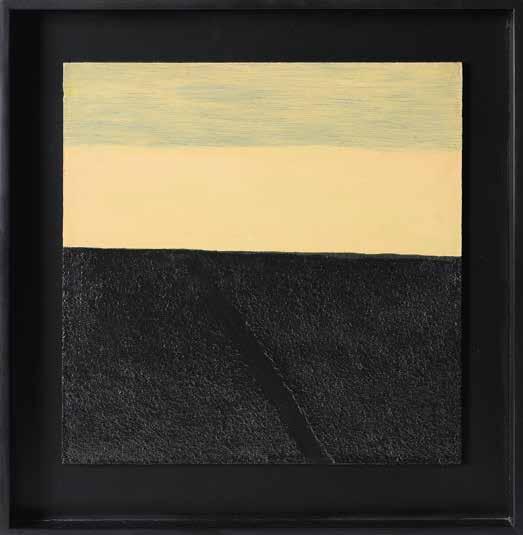
Landscape Multiple No. 7
synthetic polymer paint and sawdust on board title inscribed, signed and dated May – June ’68 and inscribed No.7 of a series of 12 verso 302 x 302mm
Provenance
Private collection, Auckland.
Reference
Colin McCahon Database (mccahon.co.nz) cm001863.
$80 000 – $120 000
This gem of a landscape painting is from a small series of twelve paintings the artist Exhibited at Barry Lett Galleries in 1968, under the unusually jovial exhibition title: ‘Colin McCahon’s Bargain Basement!’. Landscape
Multiple No. 7 (1968) is also somewhat of a misnomer in that there were twelve paintings in the series, each of which are completely unique. Exhibited alongside three other bodies of work, the exhibition included, together with the twelve ‘Landscape Multiples’, the equally reductive ‘Helensville’ landscape series, the ‘South Canterbury’ paintings, and the artist’s eight work ‘Visible Mysteries’ series.
Each of the twelve ‘Landscape Multiple’ paintings share the same format, scale and formal orientation: two zones, one zone representing sky and one the earth, divided by a horizontal line, with the upper zone constituting approximately one third of the picture plain and the lower zone approximately two thirds. They were all completed across a twomonth period in Autumn of 1968 and each differs, particularly, in the upper third of the composition where the artist varies the treatment of the sky and atmosphere.
Appearing ostensibly to be of the Otago and Canterbury region, these paintings represent a landscape which is both specific and universal. Landscape is perhaps the defining trope in McCahon’s oeuvre, a constant presence in a large and often challenging body of work. As the title suggests, this is a painting designed to evoke an emotional and contemplative response rather than to depict a certain place, the specifics of locality being of somewhat less importance than the symbolic content embodied by the landscape.
Despite this, the series takes its cue from a body of South Island landscapes the artist began working on in the previous year: the ‘North Otago’, ‘South Canterbury’ and ‘Craigieburn’ landscape series. All of which share a broadly similar palette and the same two-part division between land and sky. As with the small ‘Craigieburn’ series, here McCahon uses sand and sawdust to create texture and depth and as a means of not just depicting the landscape, but of making of the painting of the land itself. The textured landscape is disrupted by a diagonal line denoting a ridge or gully in the Southern Alps, where the plains abruptly meet the mountains.
Born just north of the region in Timaru on August 1st 1919, the artist was raised in Dunedin and attended secondary school in Oamaru at Waitaki Boys High School, making the journey on State Highway 1 through the heart of the coastal Otago region many times as a boy. The artist revisited the North Otago and Canterbury region three times during 1967 and 1977 and was completely captivated by the region’s beauty and solitude. These trips south constituted somewhat of a re-familiarization with a land the artist new well and were all undertaken in winter. The artist recounting: “Each time it has been windless and cold. Once a thin snowfall lay over the hills…”. In gazing upon Landscape Multiple No.7 one can feel the icy chill of the region’s infamous Southerly wind on a cool Autumn morning.
Landscape Multiple No. 7 represents the artist’s landscape painting at among its most refined, eloquent and reductive. This is a place both specific and universal, literal and transcendent.
Ben Plumbly
Colin McCahon
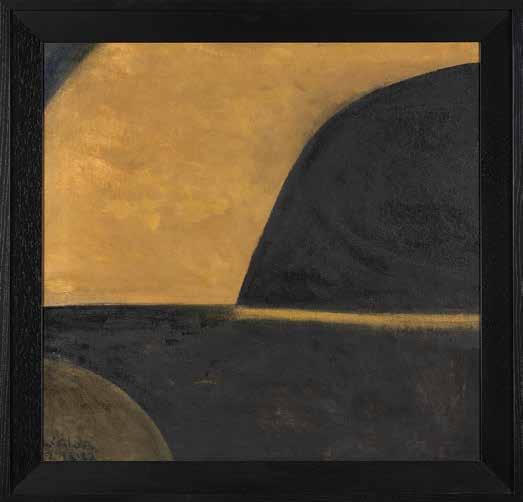
Northland
oil on canvas signed and dated 2. 12. 62 785 x 820mm
Exhibited
'Colin McCahon: A Question of Faith', Stedelijk Museum, Amsterdam, 30 August – 10 November 2002 (touring to Auckland Art Gallery Toi o Tāmaki, City Gallery, Wellington, National Gallery of Victoria, Melbourne and the Art Gallery of New South Wales, 2002–2004).
Illustrated
Marja Bloem and Martin Browne, Colin McCahon: A Question of Faith (Craig Potton Publishing, 2002), p. 94.
Reference
Colin McCahon Database (mccahon.co.nz) cm001283.
Provenance
Private collection, Sydney. Private collection, Auckland.
$350 000 – $450 000
The McCahon database includes 58 works with ‘Northland’ in their title but, as McCahon notes in his survey exhibition catalogue, there were about 150 Northland drawings. This profusion of painting and drawing with a seemingly localised subject all derive from McCahon’s Northland panels, a major iconic work consisting of eight separate pieces of unstretched, unframed, hanging canvas, each one depicting a scene of rural Northland, painted in 1958. Emerging from the four-month trip he made with his wife Anne through the United States to study professional museum practice, McCahon writes in the same catalogue:
We went home to the bush of Titirangi. It was cold and dripping and shut in — and I had seen deserts and tumbleweed in fences and the Salt Lake flats, and the Faulkner country with magnolias in bloom, cities — taller by far than kauri trees. I fled north in memory and painted the Northland panels. … I was just bursting for the wide-open spaces.
Perhaps ‘fleeing in memory’ is the key phrase in McCahon’s typically eloquent description here. He was painting not from location, nor en plein air, but from ‘recollection’ prompted by the experience of the diverse American landscape. It is clear, too, that the pictorial space is not a realistic one, but rather an amalgam of hills, horizon lines and limited colour. While the Northland works are diverse, Northland (2.12.62) is a classic example of the series. Perhaps it was for this iconicity that it was selected for the major touring exhibition of the early 2000s, Colin McCahon: A Question of Faith Northland lives in the play between the horizon line and the obtrusive rounded verticality of the hills depicted. It is this that makes the painting verge on the abstract, non-recognisable, turning it into something to be contemplated at a distance. Is it because of this that the painting, therefore, hardly has any perspectival depth, and limited dark colours? Neither abstract nor figurative Northland is a work of parts — it is relational and it uses surprising harmonies of shape, texture and restricted colour with aplomb. The sensibility is contrapuntal between horizon and sky and hills, the disparate forms join together to create an imagistic gestalt. The landscape depicted is insignificant, or at least it is not a matter of the picturesque or the sublime. This landscape also appears deserted and yet it is not — for, we as viewers are drawn into its resonance, and will make it oscillate. It isn’t visual reality McCahon brings us close to here, but emotional reality. As architect and critic, Imric Porsolt, reflected, in an early review of the Northland Panels, Northland provokes ‘a longing to love what one feels one ought to.’1 The painting guides us with feeling to our own unreachable places. Australian writer Gerald Murnane, in his collection of stories Landscape with Landscape, repeatedly draws our attention to a different realm: ‘to any path that wound away between hills to a place beyond the reach of the characters in the story.’2 This is perhaps the clearest way to gesture to a space that Murnane alternately calls the landscape of the mind and the landscape of history. It is a realm of imagination, a place that opens out into another place you have thought, read or dreamt about, a continuous landscape that is all your own, and the task of the painter like McCahon is first to discover, then to describe it.
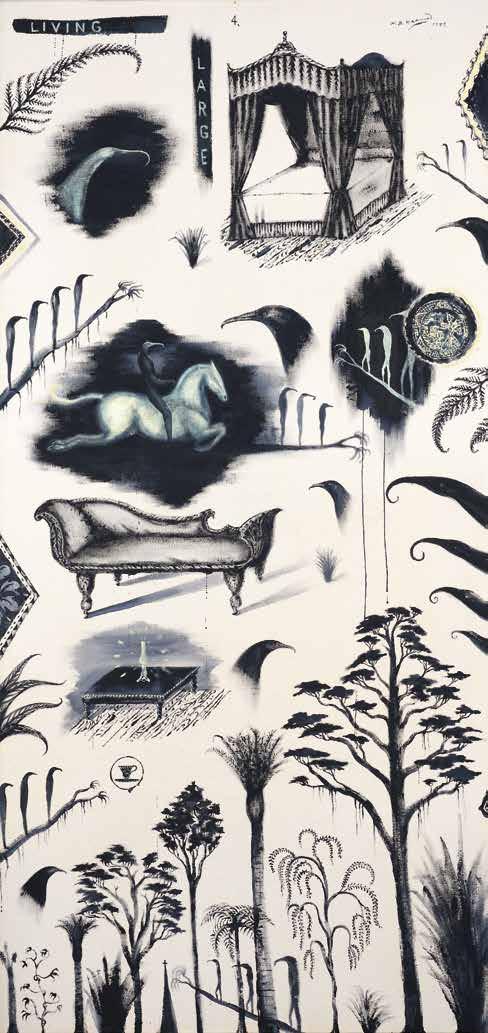
Bill Hammond
Living Large No. 4
oil on Belgian linen laid onto canvas
title inscribed, signed and dated 1995
2185 x 1030mm
Exhibited
‘W. D Hammond: Living Large –6 Recent Works’, Peter Mcleavey Gallery, Wellington, 24 October – 11 November 1995.
Provenance
Collection of Tim and Sherrah Francis, Wellington. Purchased from Peter McLeavey Gallery, December 1995.
Private collection, Auckland. Purchased from Art+Object, 7 September 2016, Lot No. 77.
$500 000 – $750 000
1 Justin Paton, ‘Bill Hammond’s Apocalyptic Wallpaper’, Bill Hammond: 23 Big Paintings, Dunedin Public Art Gallery: Dunedin, 1999, p9
2 Allan Smith, ‘Bill Hammond paints New Zealand—Stuck here in paradise with Buller’s Blues again’, Art Asia Pacific, 1999, 23, p48
3 Ibid p53
4 Ron Brownson, ‘Hammond’s Humaniforms’, Bill Hammond: Jingle Jangle Morning, Christchurch Art Gallery Te Puna o Waiwhetu, 2007, p53
5 www.teara.govt. nz/ en/speech/10106/ josephbankss-journal accessed 28/07/16
W.D. Hammond’s images from the early 1980s inhabit a state of anxious flux; caught in the roadway like rabbits in headlights they dive screaming to the roadside as visual roadkill. Justin Paton asserts a more historical context : ‘The gleeful grotesquerie of his images secures Hammond’s place in a tradition of shape-changing and spatial unease that runs from Bosch’s phantasmagoria to Goya’s dark hybrids, from de Chirico’s anxious arcades to the scrunched and snoutish figures of Jim Nutt.’1 His painted figures in ‘striking poses of manic and paranoid hyperactivity’2 are on a sonic outing from his early days as a rock musician—restless and unrepentant.
Then in 1989 Hammond visited the Auckland Islands and saw in the subAntarctic an isolated paradise, windswept and lonely, lost from human view, its peace shattered only by the call of mollymawks and albatross. The experience left him able to conjure an alternative introspective space for his images: a tableau of curved waves reminiscent of Hokusai’s (1760-1849) woodblock tsunami, beating against the jagged cliffs of Enderby; a tableau populated initially by sea birds with fighter-jet wingspan standing against the wind. Perhaps in the Neverland that he created, he saw a new Darwinian evolution, speeded up, where humans and animals constantly undergo change—birds becoming very human, and humans becoming very birdlike.
A turning point in this process of bird metamorphosis occurred in 1993 with the triumphant painting of Watching for Buller, now in the Wallace Trust Collection. This painting calls to New Zealand’s extinct bird species and the transformation process as a species moves towards extinction. It critiques the noted ornithologist Sir Walter Lawry Buller’s (1838–1906) killing, collecting and recording of these animals on the brink of extinction, then so lovingly rendering them for posterity in his book’s romantic Victorian images.
Since 1994, silent, sentient and sentinel birds have populated Hammond’s images. Living Large 4, 1995, is a major canvas from this early post-1993 period. Its loose curtain fall fits well with Hammond’s paradigm for painting on renegade surfaces: plywood; breadboard; wallpaper; aluminium and finally, loose canvas, liberated from the stretcher. It is a hanging tableau of dozens of individual dark-profiled images of birds and forest awnings of nikau, silver fern and kowhai. In describing similar works of the period, Allan Smith suggests these graphic avian signs are ‘woven into a loose graphic netting of shaggy foliage, skinny branches, twisty roots and tendrils’ conjuring ‘both primaeval luxuriance and rococo Chinoiserie fantasy’.3 And what of the birds themselves? The roosting groups of birds lined up on the branches are curiously elegant, stylised and melancholic. Their careful placement on the white ground is very unlike the threatening line-up from Alfred Hitchcock’s Birds, or the wired images from Hammond’s heady rock music days. Hammond’s inner Mick Jagger is now singing a folk song of regret.
In Living Large 4, Hammond’s evolving birds are silently poised and watching the shadow-play of Victorian images of childhood through their painted environment. The gas lamp; the four-poster bed; the chaise lounge; the Victorian brocade trim; the merry-go-round horse—all symbols perceived by the watching birds as colonising objects from a period that ultimately lead to many species’ extinction, or near extinction. Vale the Haast’s eagle, the moa, the huia, and sing chants for the kakapo, the kokako, the tieke and others that ‘live on the cusp of their own annihilation’4 . When Captain James Cook first arrived in Ship Cove, Queen Charlotte Sound, on the Endeavour in 1770, his botanist Joseph Banks recorded in a journal entry 17 January 1770: ‘This morn I was awakd by the singing of the birds ashore from whence we are distant not a quarter of a mile, the numbers of them were certainly very great who seemd to strain their throats with emulation.’5 Most walkers of the Queen Charlotte Track now record this isolated setting to be terrifyingly silent.
Peter James Smith
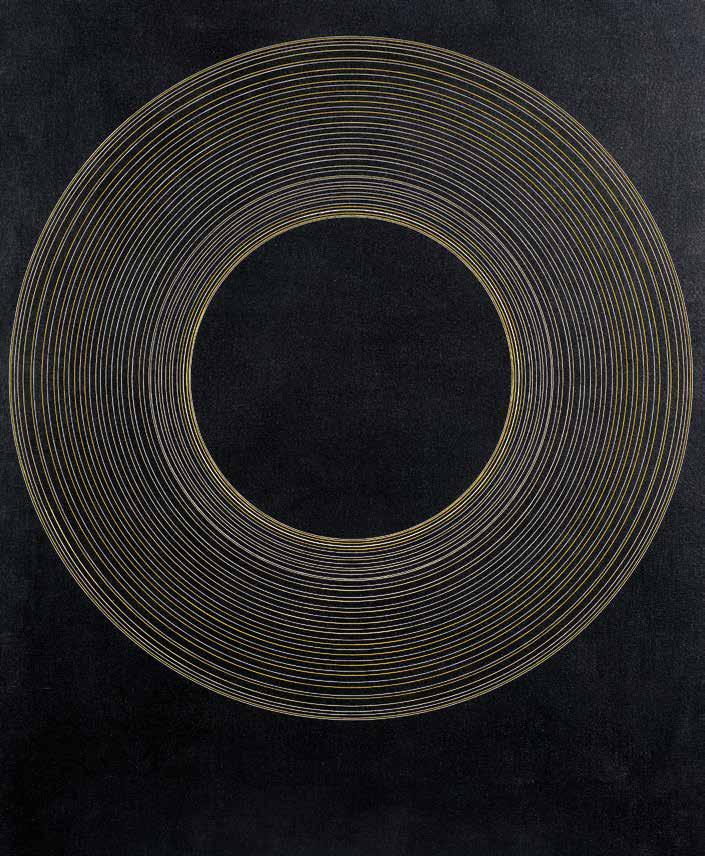
Ralph Hotere
Black Painting
acrylic on canvas title inscribed, signed and dated 1969 verso 1120 x 915mm
Provenance
Collection of O. E (Ted) Middleton, Dunedin. Acquired from the artist in 1969. Private collection, Tauranga.
$130 000 – $180 000
Like the artist himself, the title here gives away very little. It is both descriptive and typically matter of fact. Ralph Hotere, famously taciturn when it came to explaining his work, here provides us with what is, in essence, a series of finely inscribed circles on a matte black, rectangular formatted background. Painted in 1969, the year the artist moved to Dunedin to take up the Frances Hodgkins fellowship, Hotere famously never left, remarking: “in Dunedin they accept I am a painter and leave me to go about my work.” The Hodgkins fellowship was the country’s first and foremost visual arts residency and many of the country’s finest artworks have come directly out of it. It is a sad footnote that the fellowship, begun in 1966, was last year temporarily suspended by the university due to ‘financial pressure’. However, in late breaking news it will be offered in 2027.
Black Painting (1969) counts as one of the most austere, reductive and challenging artworks to come directly out of the fellowship. It also counts as one of the most masterful. Part of a small body of paintings produced by Ralph Hotere in the late 1960s and early 1970s which often share the same title, these paintings each share the same vertical orientation and are marked by finely inscribed concentric circles and vertical lines. All are abstract in the purest sense of the word, offering viewers little or no reference outside of their self-contained worlds of darkness. However, the perfectly calibrated circular lines do recall musical chords and the etched tracks of a vinyl record. This musical allusion is one the artist would often return to, most overtly in his late series ‘Round Midnight’ which was inspired by the American Jazz musician Thelonius Monk.
No artist in this country has worked as single-mindedly and extrapolated as much from as limited and demanding means as Ralph Hotere. As David Eggleton has observed, seemingly everything the artist touches turns to black. The artist’s lifelong attraction to working with darkness can be traced art historically to the work of Ad Reinhardt and Rembrandt. It also has roots in the identity of Hotere’s own Te Aupōuri tribe, the people of the far north who, when besieged, escaped across Whangapē in dense, dark smoke. It is, after all, the dark which absorbs the light, reflecting and animating it, it is both life and death, celebration and mourning.
The vast majority of works from this series are conceived in the immediately seductive allure and sheen of brolite lacquer on board. ‘Brolite’ lacquer was a nitrocellulose-based paint used predominantly in the automotive industry during this period. Hotere here however presents us with a quieter and more hermetic aesthetic, through the yielding softness of acrylic paint and canvas. The resultant effect is especially quiet and contemplative. Like the shifting tides of Whangapē harbour, Black Painting moves slowly, the concentric circles gently washing over us in a gentle but unerring tide of darkness.
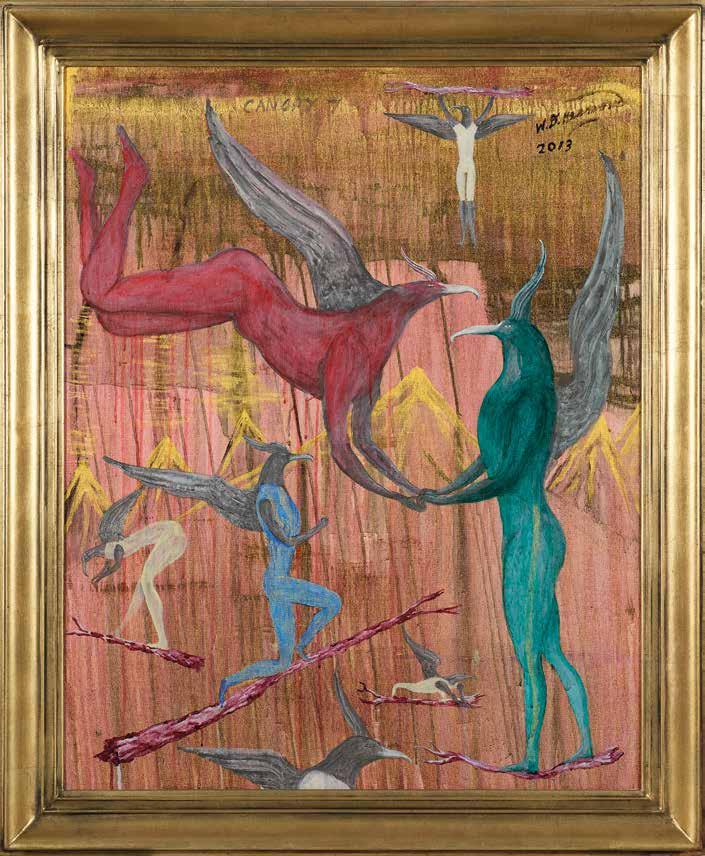
Why have birds fixed themselves so obsessively and ubiquitously in our restless imaginations and dominated our art? Is our fascination deeply rooted in the concept of envy — do we humans covet what birds possess (wings, song, absolute freedom)? Is this why we have spent millennia capturing, caging and consuming them? Or is our relationship with birds one of similarity and recognition because, like us, birds are bipedal? What does our relationship with birds tell us about how we treat the natural world? These are all questions I imagine Bill Hammond might have posed himself at one time or another. Hammond’s painted birds are clothed and anthropomorphised suggesting both inbetweeness and metamorphosis across the divide between human and animal. In Canopy No. 7 they balance on fuschia branches engaging in calisthenics and playing among goldcapped alps. But they are all alone, even the red and green central pair who join hands. No matter how crowded the landscape is with birds, the various solitudes never really merge into a collective experience, there is always distance between them. Each fragile perch is separated from the next; each upright figure from the one next to it; each tree limb from the ground beneath or beyond it, floating. That is why the most characteristic lietmotif in Hammond’s painting is the bird-figure standing, looking out of one world, peering absorbed and attentively across into another. The important recurrent feature of Hammond’s birds is their bipedalism. It is the key to their being in the world. This thematics of bipedalism and standing upright shapes his anthropology. Hammond’s birds rise on two feet and acquire a sense of balance, a feeling for the laws of the physical universe, legs offsetting each other, or kneeling outstretched along a branch, or sitting astride a tree limb. It is their standing upright that encompasses a fantasy of uplifting, of transcendence, and, at the same time, a preoccupation with downfall and ruin. It is difficult to know which comes first in this symbiosis. The verticality of Hammond’s birds becoming-human is the clue to their vulnerability but also their strangeness — their quality of perpetual unfinishedness and their air of melancholy and sad ominscience. Like dolls dressed up Hammond’s birds are clothed. And their clothing is a source of endless fascination because it combines with the body in unexpected ways. In Canopy No. 7 the coloured tight-fitting gym smocks take on a life of their own. Sometimes revealing their wearers, sometimes articulating them, sometimes concealing and muffling them. The birds are not bodies, even when they stand there as human analogues, they are outfits which hide the body. Because they have none, we are reminded of our love of plumage which transcends cultures, but also that the vibrantly coloured costumes, headdresses and cloaks we covet are testimony to the destruction of hundreds of thousands of birds. The proliferation of connotation in Hammond’s canvas defies any settled statement but it does mean that he is constantly presenting motifs to ponder, and seeking answers to those questions I posed at the beginning.
Bill Hammond Canopy No. 7
acrylic and metallic pigment on canvas
title inscribed, signed and dated 2013 987 x 786mm
Provenance
Private collection, Auckland.
$250 000 – $400 000
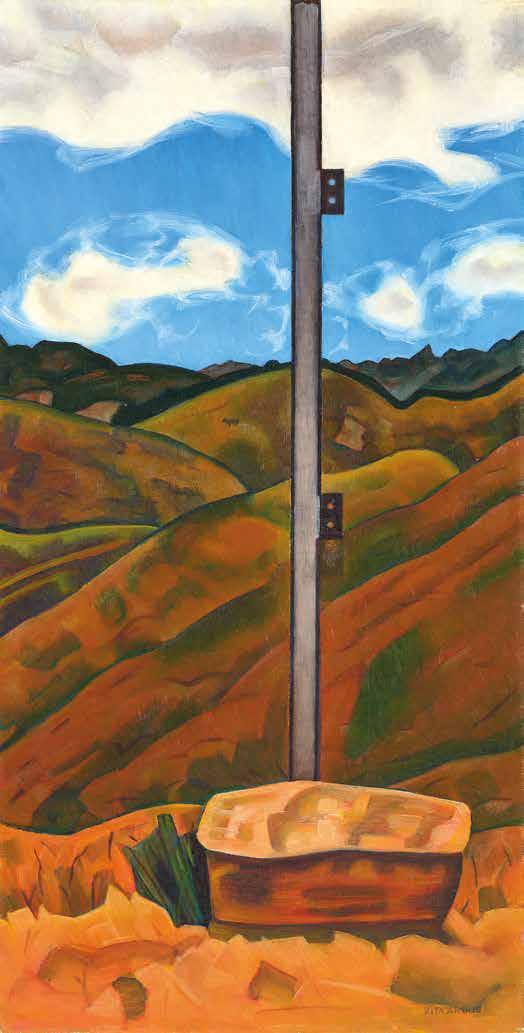
Rita Angus
Barn Construction, Northern Hawke’s Bay oil on board signed 580 x 300mm
Exhibited
‘The Group Show’, Christchurch, 1965, Cat No. 50.
Provenance
Collection of Gordon H. Brown OBE (12 April 1931 – 16 March 2025), pivotal figure in the development of New Zealand art history and notable author and scholar on the work of Colin McCahon.
Private collection, Auckland. Purchased from Dunbar Sloane, Wellington, 13 February 1994, Lot No. 39.
$100 000 – $150 000
In the late summer of 1965, Rita Angus went to stay with her younger sister Jean’s son, Anton Jones, known as Tony, at Maungataniwha, in the Wairoa District. It is a remote settlement in the lee of the 1300 metre mountain which gives the area its name. Lying southwest of Lake Waikaremoana, and due east of the summit of the Napier-Taupo road, the journey to get there from Wellington was long and arduous. But this was her first and perhaps favourite nephew she was going to see, her close connection to him evident in her watercolour of Mother and Child (Jean and Anton Jones with Portrait of Fred Jones Behind) (1942) in the Auckland Art Gallery collection.
At Maungataniwha she had the perfect conditions for concentrating on her painting: her own hut and dinner provided each evening with 26-year-old Tony, who had recently returned from living in Britain where he had met and married his English wife, Judy. He was employed as a forestry supervisor by the Maungataniwha Development Company, an entity founded in 1946 by Rita Angus’s father William McKenzie Angus to log the native forest and open the land up for agriculture. Working on prepared boards which she had brought with her, she began portraits of Judy and the two daughters, Julie and Jennifer to give to Tony. On fine days, she explored the surrounding area on foot. “Every turn of the road brings new material” she wrote to her sister Jean Jones, and to Douglas Lilburn, she wrote of her drive to document both the untouched quality of the land, and the incipient development her family was involved in.
Rita Angus’s best-known representation of the Maungataniwha area is Scrub Burning, Northern Hawke’s Bay (1965) purchased by the Auckland Art Gallery the year after it was completed. That work was occasioned by watching the drift of billowing clouds of smoke created by a scrub-clearing fire which Tony had lit. The surrealist quality of that painting is continued in Barn Construction: a dominant vertical steel post erected behind the covered pile of timber in the foreground bisects the cleared landscape in the background and extends beyond the top of the painting. As in her iconic Canterbury landscape of thirty years earlier, Cass (1936) with its telegraph poles, Angus is recording infrastructure encroaching on a timeless hilly vista, emphasising the human impact on the land.
Black outlines create decisive contours, and her vertical perspective stacks the forms of the hills two-thirds the way up the picture plane like a Chinese scroll painting. The predominance of strawcoloured grass and ochre on the slopes indicates the time of year, late summer, typifying the drought-prone Hawkes Bay region in February. The warm earthy reds and golds are the colour complement to the cerulean-blue sky above. Thematically, the work connects to Angus’s other depictions of specific places, and her family’s interest in building, with the pole at the work’s centre working symbolically as a hinge between intention and completion in the taming of the land.
Linda Tyler
Judy Millar
acrylic on canvas
signed and dated 2019 verso 2300 x 1650mm
Provenance
Private collection, Auckland.
$45 000 – $65 000
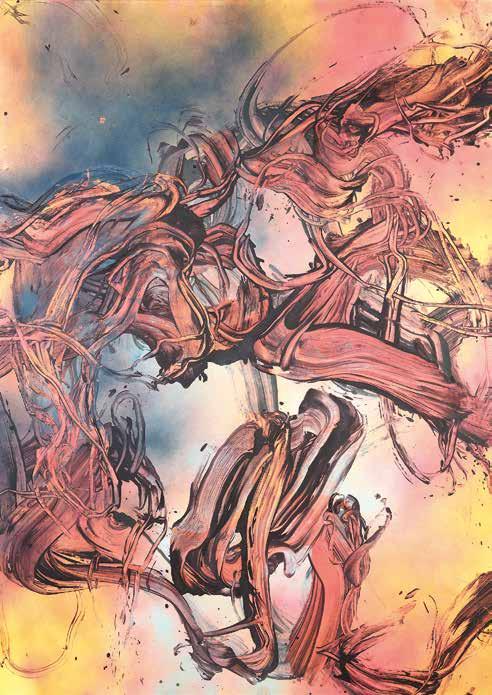
Dale Frank Untitled
pigmented varnish on linen canvas signed and dated 2006 verso 1600 x 1200mm
Provenance
Private collection, Auckland.
$30 000 – $40 000
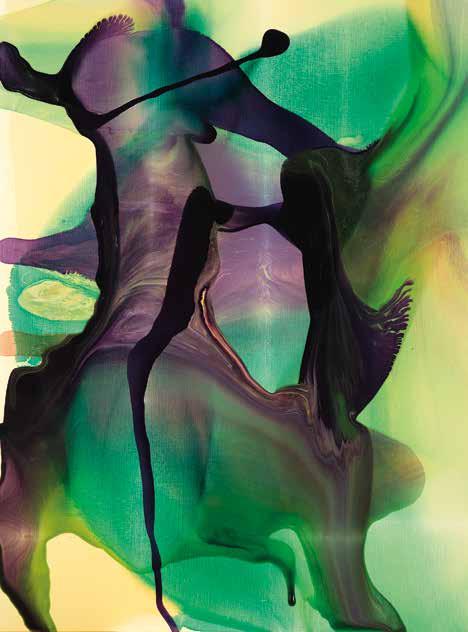
Tony Fomison
Two comedians on a poster
oil on canvas in circular artist’s frame title inscribed, signed and dated 1978 and inscribed Cat No. 228 verso; original Elva Bett Gallery label affixed verso Reference: Ian Wedde (ed), Fomison: What shall we tell them? (City Gallery, Wellington, 1994), Supplementary Cat No. 465.
247mm: diameter (internal)
350mm: diameter (external)
Provenance
Private collection, Auckland.
$40 000 – $60 000
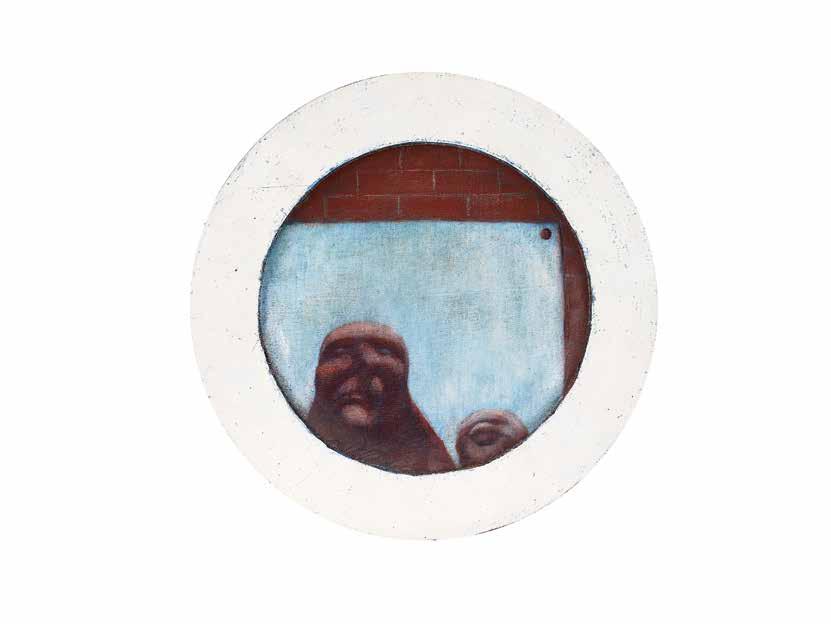
Tony Fomison
Closing time at the zoo
oil on jute canvas laid onto board title inscribed, signed and dated ’81 and inscribed started 14.4.81 verso 207 x 283mm
Provenance
Collection of P. Fraser, Wellington. Private collection, Auckland Reference, Ian Wedde (ed), Fomison: What shall we tell them? (City Gallery, Wellington, 1994), Supplementary Catalogue No. 71. $40 000 – $60 000
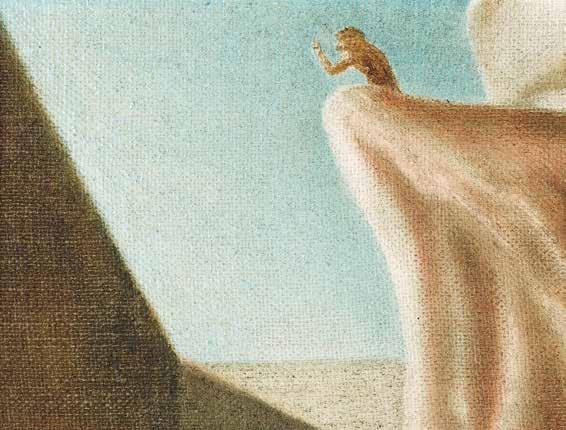
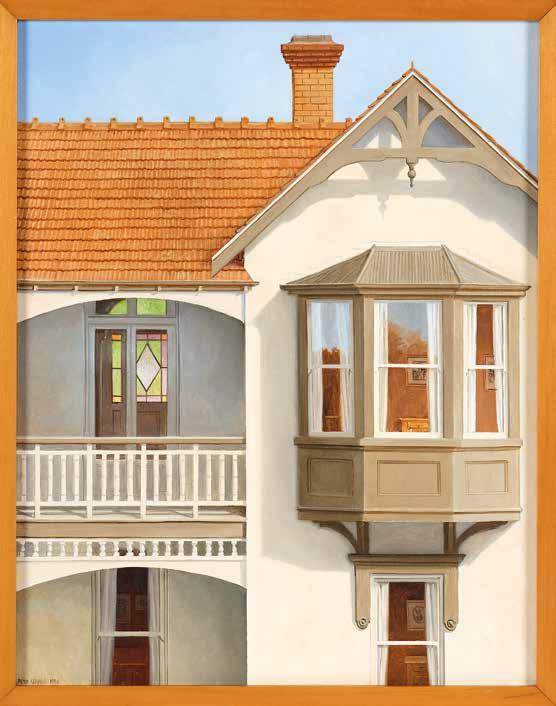
Peter Siddell
Dilworth Terrace
oil on canvas
signed and dated 1990
505 x 395mm
$25 000 – $40 000
Reuben Paterson
Untitled
glitter on canvas, diptych signed and dated 2013 verso 1200 x 1200mm: each panel 1200 x 2400mm: overall Provenance
Private collection, Auckland.
$35 000 – $55 000
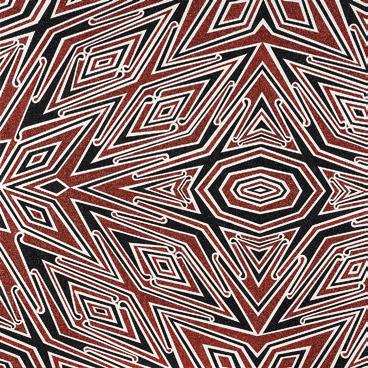
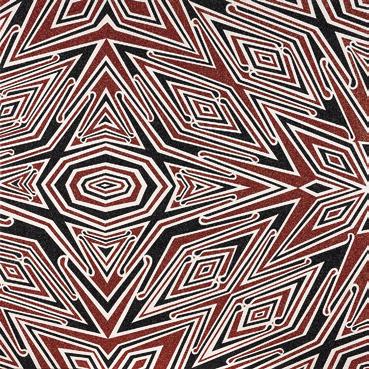
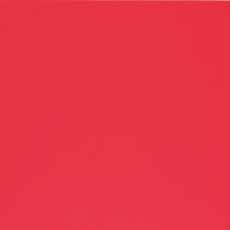
Milan Mrkusich
Three Part Painting (Primary)
alkyd on Belgian linen title inscribed, signed and dated 1993 each part verso
460 x 460mm: each panel
460 x 1380mm: overall
Provenance
Private collection, Auckland. Purchased by the current owner from Artis Gallery, Auckland.
$30 000 – $45 000

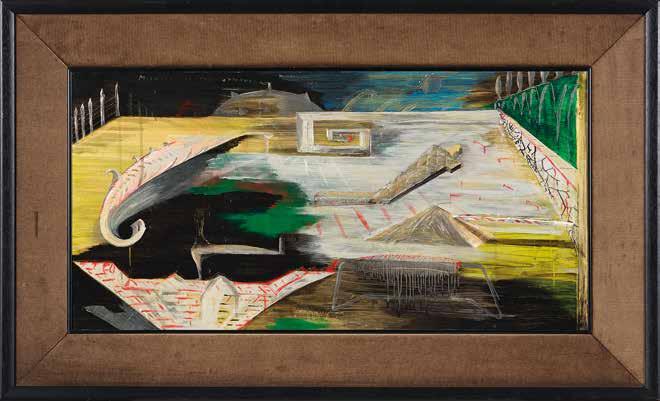
66
Bill Hammond
Midnite at the Gymkhana enamel on metal title inscribed, signed and dated 1989 390 x 780mm
Provenance
Private collection, Wellington.
$25 000 – $35 000
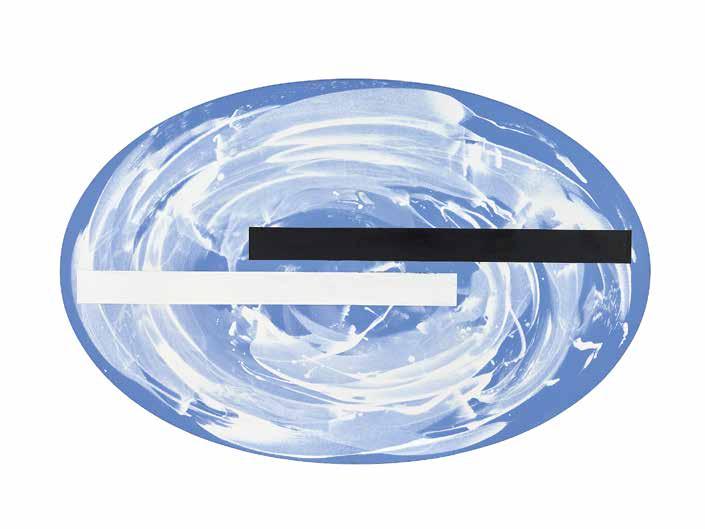
Gretchen Albrecht
China (Blue)
oil and acrylic on shaped canvas title inscribed, signed and dated 2000 verso; inscribed Cat. No. 0/00 – 28 on artist’s original catalogue label affixed verso 980 x 1500mm
Provenance
Private collection, Wellington.
$35 000 – $50 000
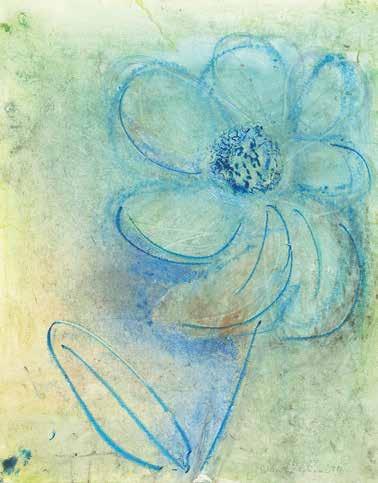
Colin McCahon Flower
pastel and watercolour on paper signed and dated ’70 575 x 448mm
Reference
Colin McCahon Database (mccahon.co.nz) cm001854.
Provenance
Collection of the artist Marilynn Webb (1937–2021), Dunedin. Private collection, Auckland.
$25 000 – $35 000
Michael Parekōwhai
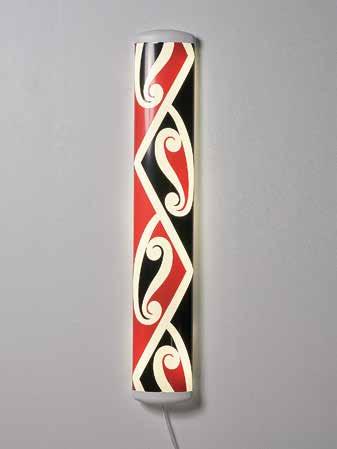
The Bosom of Abraham screenprinted vinyl on fluorescent light housing
1300 x 200 x 80mm
Provenance
Private collection, Wellington.
$18 000 – $26 000
70
Michael Parekōwhai
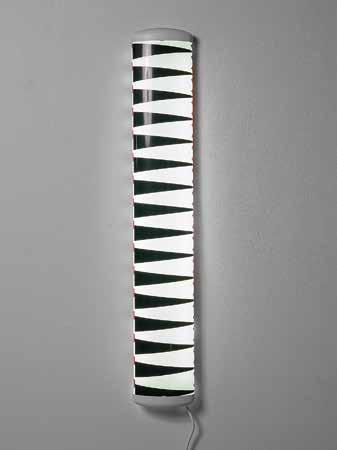
The Bosom of Abraham screenprinted vinyl on fluorescent light housing
1300 x 200 x 80mm
Provenance
Private collection, Wellington.
$18 000 – $26 000
Michael Parekōwhai
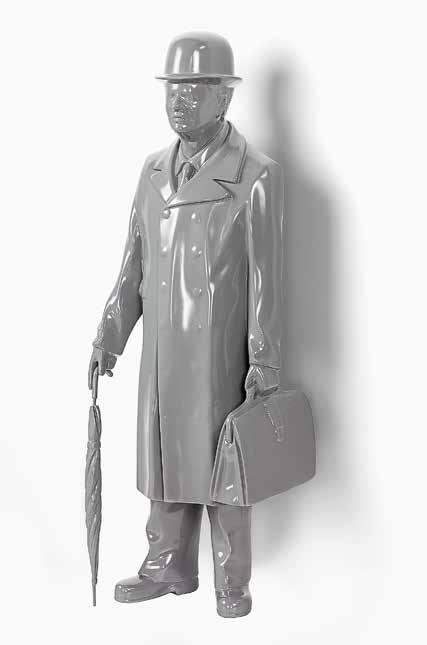
Rainbow Servant Dreaming
automotive paint on fiberglass 420 x 180 x 100mm
Provenance
Private collection, Auckland.
$25 000 – $40 000
Sam Rountree Williams
Going In
oil on linen
title inscribed, signed and dated 2020 verso 1440 x 1920mm
Provenance
Private collection, Auckland. Purchased from Sumer, Auckland, April 2021.
$7500 – $12 000
73
Graham Fletcher
Untitled (Mother, Child and Animal Figure)
acrylic on canvas
title inscribed, signed and dated 2018 verso 1220 x 1220mm
$14 000 – $20 000
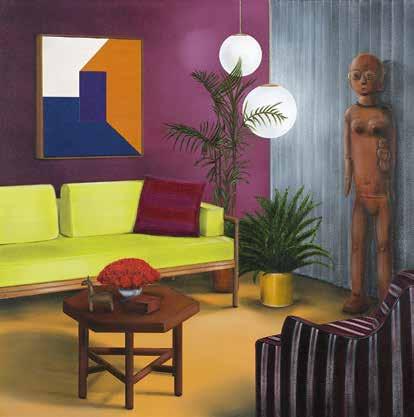
Séraphine Pick
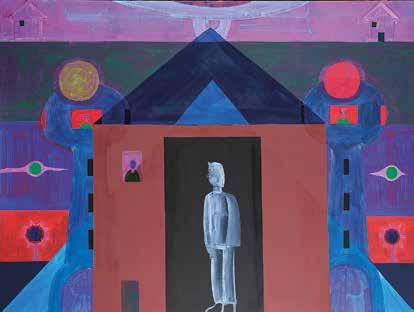
Seventh Sense
oil on Belgian linen signed and dated 2020
1300 x 1050mm
Provenance
Private collection, Auckland.
$14 000 – $22 000
75
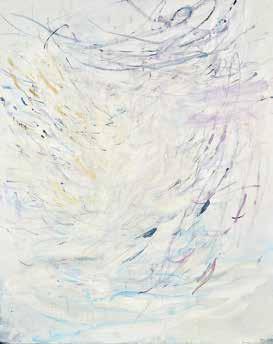
Andy Leleisi’uao Untitled
acrylic on canvas signed 1500 x 1200mm
$10 000 – $16 000
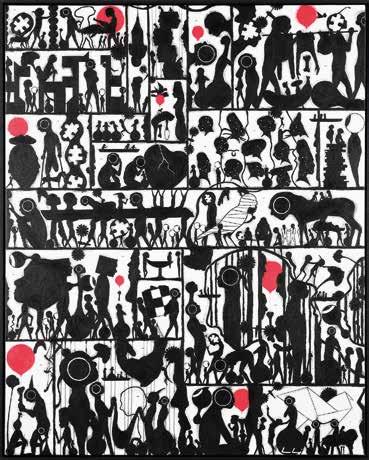
Jeffrey Harris
Every Soul is a Circus oil on canvas
signed and dated 1984; title inscribed and dated 25 October 1984 and inscribed Cat No. 9 Dunedin verso 2140 x 1530mm
Exhibited
‘Paintings: 1983–1984’ Bosshard Galleries, Dunedin, 1985.
‘Jeffrey Harris: New Paintings’, Auckland City Art Gallery, 18 June – 4 August 1985, Cat No. 9.
Literature
Ian Wedde, ‘Like Tears in Rain: Recent work by Jeffrey Harris’, Art New Zealand, No. 37, pp. 34–39.
Illustrated
Art New Zealand, No.37, p. 39.
Provenance
Private collection, Whanganui. Private collection, Auckland. Purchased from Webb’s, Auckland, June 26, 2001, Lot No. 73.
$25 000 – $40 000
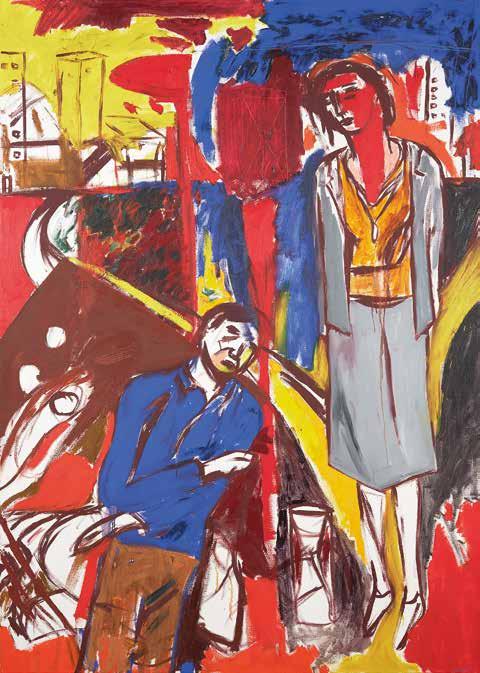
Jeffrey Harris
The Dead Christ oil on board title inscribed, signed and dated Oct ’71 and inscribed Cat No. 39 verso; original National Gallery of New Zealand loan label affixed verso 325 x 323mm
Exhibited
‘Jeffrey Harris: Drawings and Paintings’, Otago Museum, 1972. ‘Jeffrey Harris: Paintings’, Canterbury Society of Arts Gallery, Christchurch.
Provenance
Private collection, Gisborne. Purchased by the current owner in 1972.
$4000 – $7000
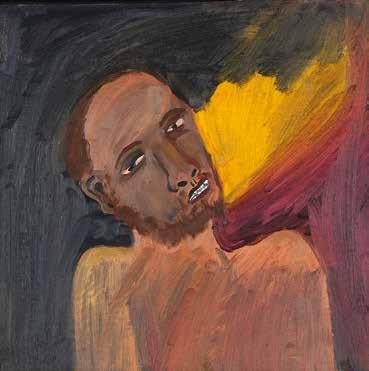
78
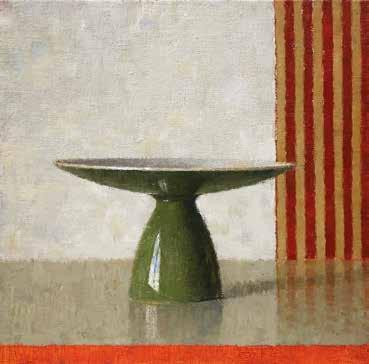
Jude Rae
Still Life No. 478
oil on linen canvas title inscribed, signed and dated 2023 verso 410 x 410mm
Provenance
Private collection, Auckland. Purchased from Two Rooms, Auckland in August 2023.
$15 000 – $22 000
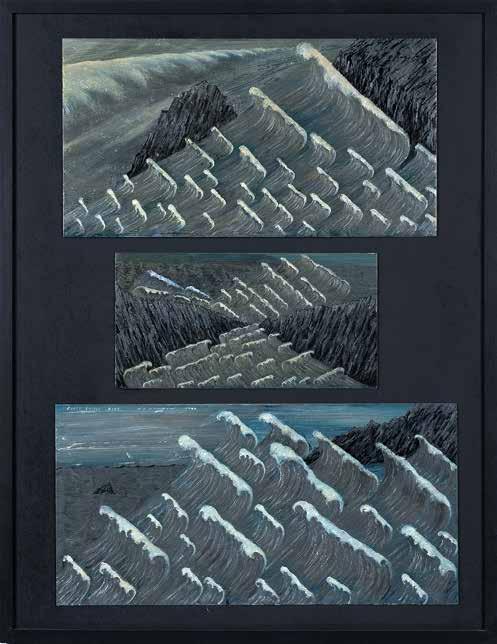
Bill Hammond
Derry Castle Reef
acrylic and metallic pigment on metal, three parts
title inscribed, signed and dated 1990
250 x 468mm: top panel
170 x 328mm: central panel
250 x 503mm; bottom panel
Provenance
Private collection, Auckland.
$30 000 – $45 000
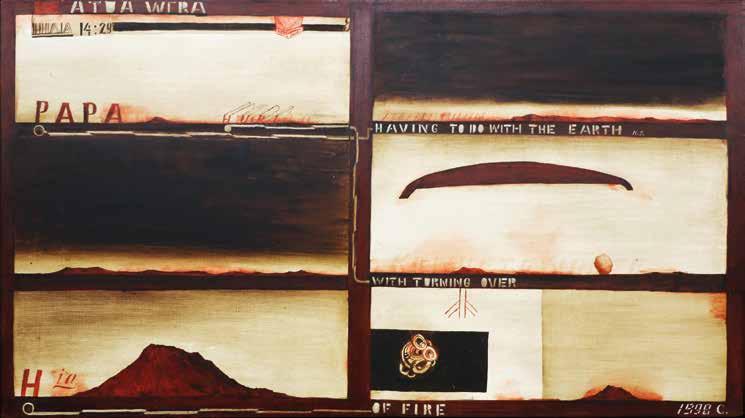
oil on canvas
title inscribed, signed and dated 1998
560 x 1010mm
Provenance
Private collection, Auckland.
$35 000 – $55 000
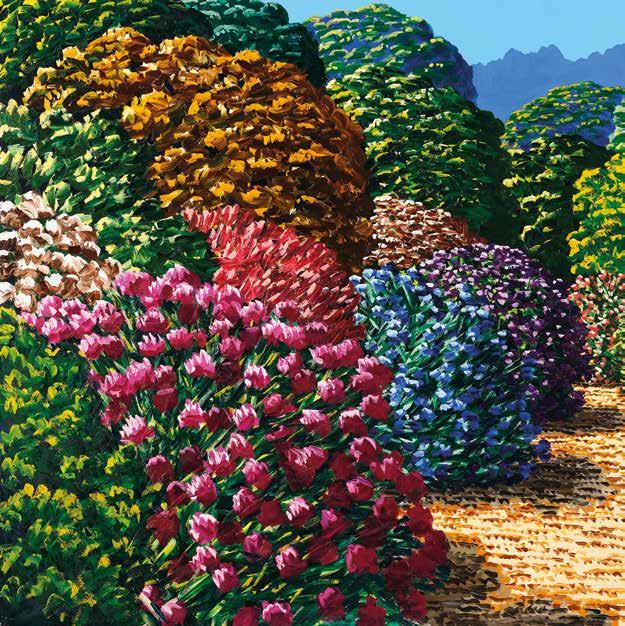
Karl Maughan Whawharua
oil on canvas
title inscribed, signed and dated 2021 verso
1000 x 1000mm
Provenance
Private collection, Auckland. Purchased from Milford Galleries, Queenstown in February 2022.
$25 000 – $35 000
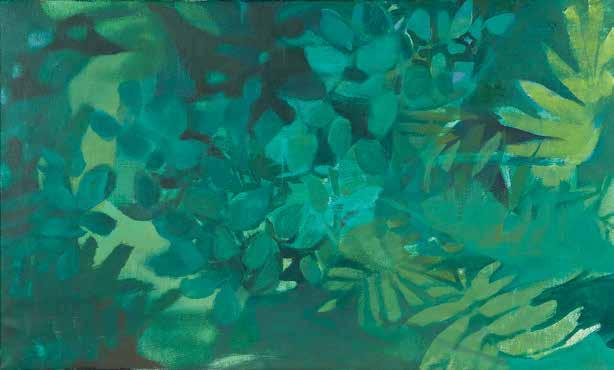
Louise Henderson
Untitled – Bush Series
oil on canvas in original frame signed and inscribed Cat No. 12 verso 550 x 915mm
$16 000 – $25 000
83
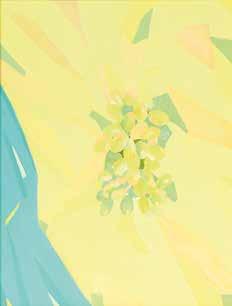
Saskia Leek
Grape and Teal
oil on board
title inscribed, signed and dated 2008 verso; original Jack Hanley Gallery, San Francisco label affixed verso 355 x 273mm
Provenance
Private collection, Auckland.
$2500 – $4000
84
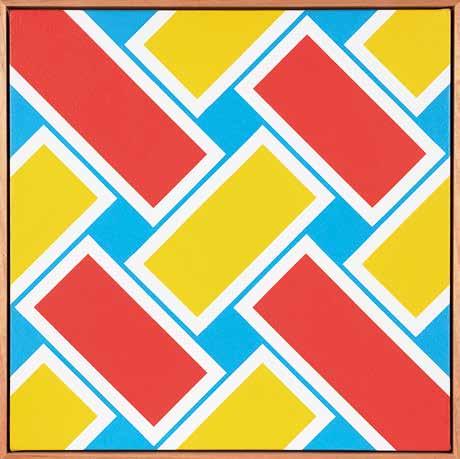
Ian Scott
Small Lattice No. 175
acrylic on canvas title inscribed, signed and dated 1988 verso 610 x 610mm
Provenance
Private collection, Taranaki. Purchased from Hamish McKay Gallery, Wellington.
$10 000 – $16 000
85
Kushana Bush
Other Instincts
gouache and watercolour on paper (2019)
title inscribed on original Ivan Anthony Gallery receipt affixed verso
193 x 275mm
Provenance
Private collection, Auckland.
$4000 – $6500
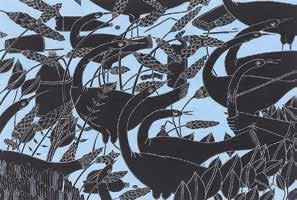
86
Tony de Lautour
Monument Plan
acrylic on linen canvas title inscribed and signed on artist’s catalogue label affixed verso
800 x 1000mm
Provenance
Private collection, Wellington.
$12 000 – $18 000
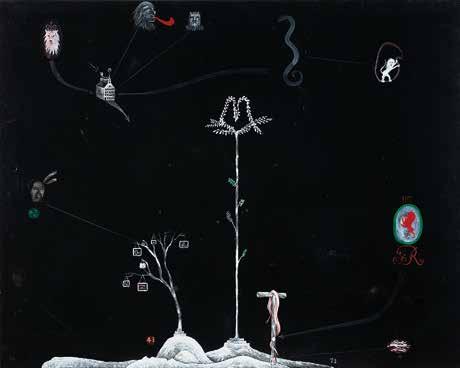
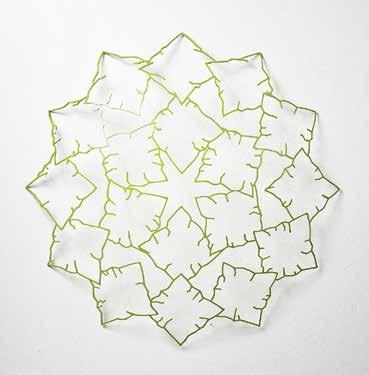
Neil Dawson
Dome – Crumpled Plains
painted steel signed and dated 2004 verso
900 x 900 x 155mm
Provenance
Private collection, Taranaki.
$11 000 – $16 000
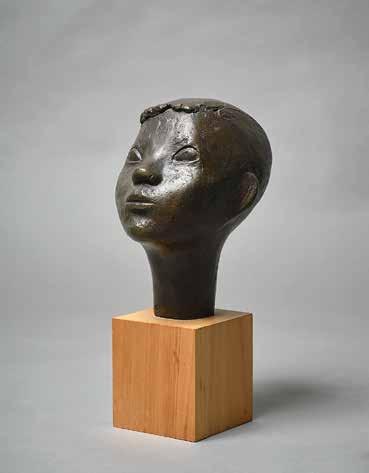
88
Jim Allen
Portrait of the Artist’s Son, Tony
cast bronze on timber base (1950)
200 x 120 x 160mm: excluding base
Exhibited
‘Jim Allen’, The Royal Academy, London, 1951.
Illustrated
Gwynneth Porter (ed), Jim Allen: The Skin of Years (Auckland, 2014), p. 46.
Provenance
Private collection, Auckland. Passed by descent to the current owner.
$14 000 – $20 000
Robyn Kahukiwa
He Aroha Whaereere, He Potiki
Piri
Poho
title inscribed oil on unstretched linen canvas, circa 1985
890 x 650mm
Provenance
Private collection, Wellington. Purchased from Dunbar Sloane, Wellington, April 20 2005, Lot No. 41.
$8000 – $12 000
90
Paul Dibble
Huia Talks to Death
cast bronze, 10/10 (2019) signed
300 x 270 x 120mm
Provenance
Private collection, Auckland. Purchased from Gow Langsford Gallery, Auckland.
$13 000 – $18 000
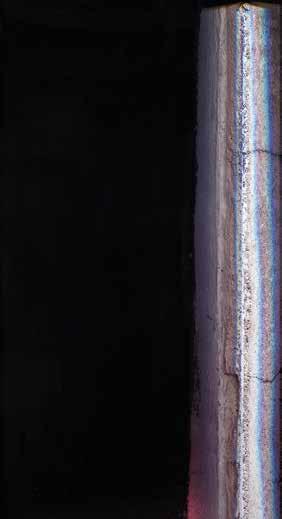
Dane Mitchell
Meanwhere No. 9
type C print, edition of 2 plus an A/P (2020) 2300 x 1270mm
Exhibited
‘Meanwhere: Dane Mitchell’, Mossman Gallery, Wellington, 15 May – 27 June 2020.
Provenance
Private collection, Auckland.
$8000 – $12 000
92
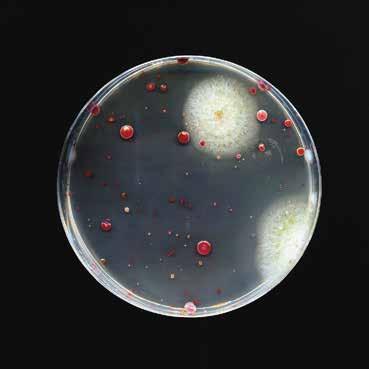
Dane Mitchell
Dust Archive (National Gallery of Australia) 2003 – 2019
archival inkjet print on dibond, edition of 3
800 x 800mm
Provenance
Private collection, Auckland.
$6000 – $9000
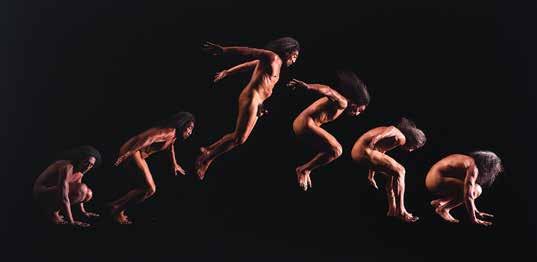
Shigeyuki Kihara
Leaping
type C print mounted to aluminium, 1/11 (2015) accompanied by original signed certificate of authenticity
500 x 1000mm
Exhibited
‘Middle of Now/Here’, Honolulu Biennale, Hawaii, 8 March – 8 May 2017.
‘A Study of a Samoan Savage’, Te Uru Gallery, Waitakere, Auckland, 27 February – 22 May 2016.
Provenance
Private collection, Auckland. Purchased from Milford Galleries, Dunedin in February 2017.
$2500 – $4000
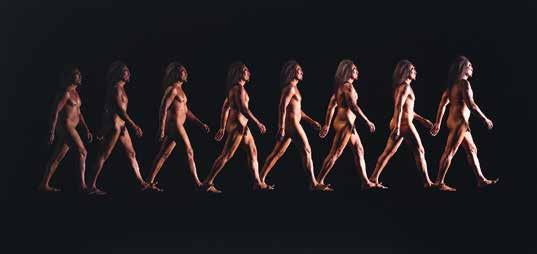
Shigeyuki Kihara
Walking I
type C print mounted to aluminium, 1/11 (2015) accompanied by original signed certificate of authenticity
500 x 1000mm
Exhibited
‘Middle of Now/Here’, Honolulu Biennale, Hawaii, 8 March – 8 May 2017.
‘A Study of a Samoan Savage’, Te Uru Gallery, Waitakere, Auckland, 27 February – 22 May 2016.
Provenance
Private collection, Auckland. Purchased from Milford Galleries, Dunedin in February 2017.
$2500 – $4000
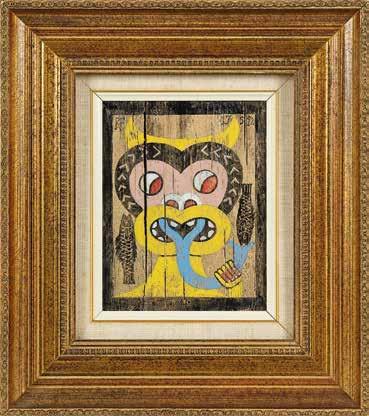
Dick Frizzell For All Intents and Purposes
metallic pigment and enamel on board
signed with artist’s initials and dated 17. 5. 92; original Gow Langsford Gallery, Parnell label affixed verso
193 x 150mm
Provenance
Private collection, Auckland.
$9500 – $14 500
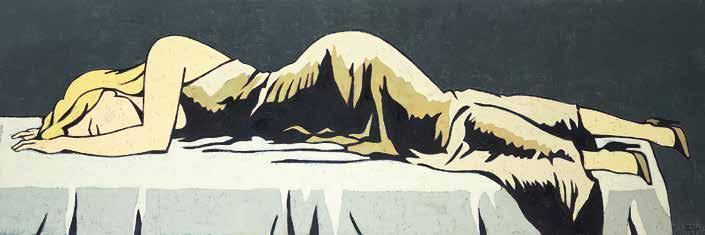
96
Dick Frizzell After the Ball
oil on canvas
title inscribed, signed and dated 16/5/2007
700 x 2100mm
Provenance
Private collection, Hawke’s Bay.
$25 000 – $35 000
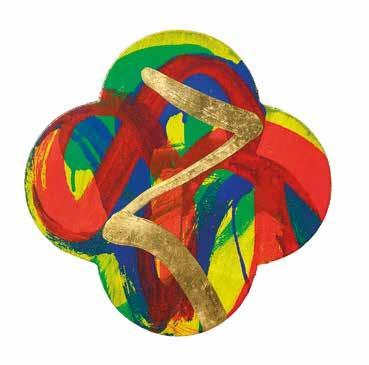
Max Gimblett Zigzag
gesso, acrylic and vinyl polymers, EX–74 resin, water-based size, 23.75 carat Rosanoble gold leaf on shaped canvas
title inscribed, signed and dated 2014 verso 385 x 385mm
$10 000 – $16 000
98
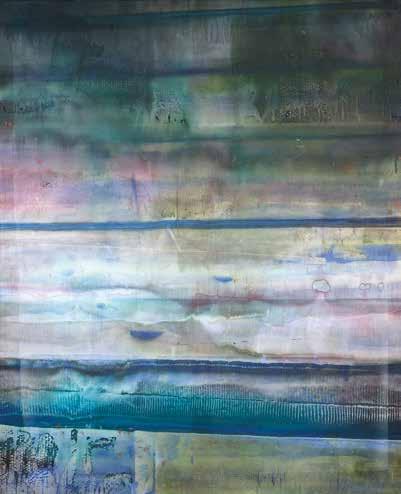
Matt Arbuckle
Whispering Loudly
acrylic and oilstick on knitted polyester voile
title inscribed, signed and dated 2021 verso 1635 x 1330mm
Provenance
Private collection, Auckland. Purchased from Two Rooms, Auckland, October 2021.
$7000 – $10 000
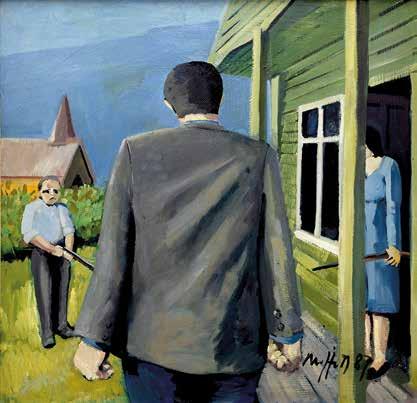
Trevor Moffitt
Sergeant Cooper Talking to Mr and Mrs Graham
oil on board
signed and dated ’87; title inscribed and inscribed 8th Oct, No. 3, Stan Graham series verso 900 x 890mm
Provenance
Private collection, Taranaki.
$15 000 – $22 000
100
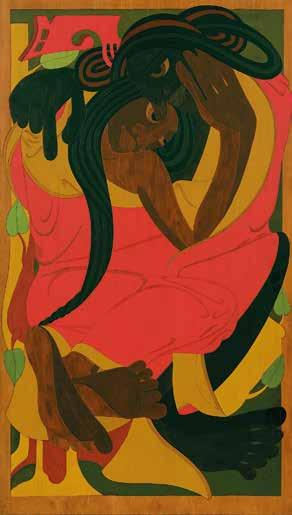
Pauline Yearbury
Hinemoa and Tutanekai
incised wood panel signed with artist’s monogram; artist’s original catalogue label affixed verso 810 x 470mm
$6000 – $10 000
Colin McCahon
Fifteen Drawings for Charles Brasch
26 individually framed lithographs (16 illustrated below) published by the Hocken Library in Dunedin signed and dated 1952 on the plate 275 x 207mm: each
Reference
Colin McCahon Database (mccahon.co.nz) cm001655. Provenance
Private collection, Auckland.
$7000 – $12 000
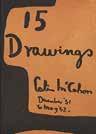
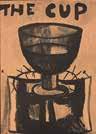
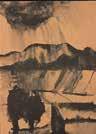
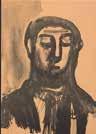
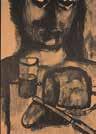
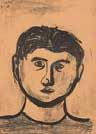
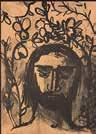
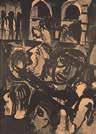
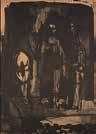
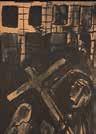
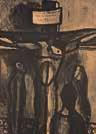
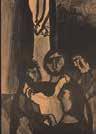
Toss Woollaston
Figure Study (Rodney Kennedy)
ink on paper
signed and dated 1938; original Manawatu Art Gallery label affixed verso; inscribed This work was gifted to Margart Mackean Taylor by the artist in appreciation of her acquiring for the Manawatu Art Gallery a large collection of his works on paper. It was given by her to Peter Ireland on 3rd January 2017. The subject is very probably Rodney Kennedy, given the shortness of the subject’s legs. It relates to a drawing once owned by Bill Sutton and gifted to the Christchurch Art Gallery 2000/122.
230 x 140mm
$2500 – $4000
103 Jenny Dolezel Life as Usual
oil pastel on paper
title inscribed, signed and dated 1991
532 x 810mm
$8000 – $14 000
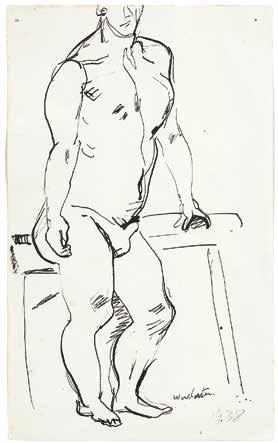
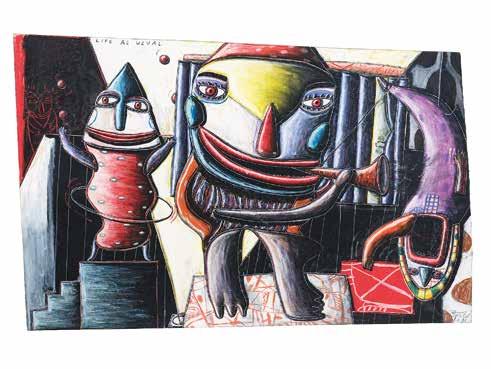
Roy Good
Parallel Universe No. 2
acrylic on shaped wood title inscribed, signed and dated 2013 verso 1210 x 1000mm
$7000 – $10 000
A Single Tear
oil and gold leaf on gesso panel title inscribed, signed and dated 1999 verso 385 x 385mm
$6000 – $9000
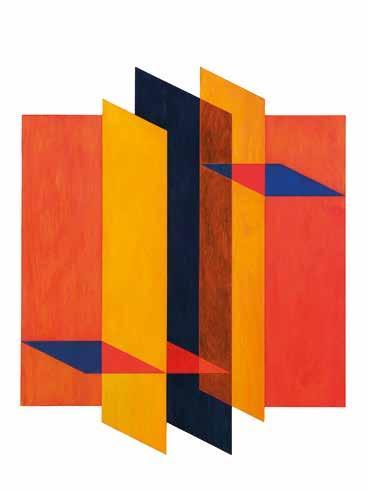
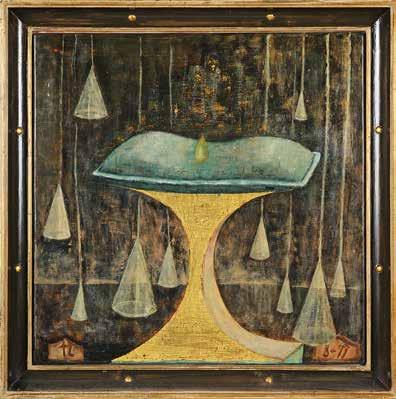
PLEASE NOTE: it is assumed that all bidders at auction have read and agreed to the conditions described on this page. Art+Object directors are available during the auction viewing to clarify any questions you may have.
1. REGISTRATION: Only registered bidders may bid at auction. You are required to complete a bidding card or absentee bidding form prior to the auction giving your correct name, address and telephone contact and supplementary information such as email addresses that you may wish to supply to Art+Object.
2. BIDDING: The highest bidder will be the purchaser subject to the auctioneer accepting the winning bid and any vendor’s reserve having been reached. The auctioneer has the right to refuse any bid. If this takes place or in the event of a dispute the auctioneer may call for bids at the previous lowest bid and proceed from this point. Bids advance at sums decreed by the auctioneer unless signaled otherwise by the auctioneer. No bids may be retracted. The auctioneer retains the right to bid on behalf of the vendor up to the reserve figure.
3. RESERVE: Lots are offered and sold subject to the vendor’s reserve price being met.
4. Lots offered and sold as described and viewed: Art+Object makes all attempts to accurately describe and catalogue lots offered for sale. Notwithstanding this neither the vendor nor Art+Object accepts any liability for errors of description or faults and imperfections whether described in writing or verbally. This applies to questions of authenticity and quality of the item. Buyers are deemed to have inspected the item thoroughly and proceed on their own judgment. The act of bidding is agreed by the buyer to be an indication that they are satisfied on all counts regarding condition and authenticity.
5. BUYERS PREMIUM: The purchaser by bidding acknowledges their acceptance of a buyers premium of 19% + GST to be added to the hammer price in the event of a successful sale at auction.
6. ART+OBJECT IS AN AGENT FOR A VENDOR: A+O has the right to conduct the sale of an item on behalf of a vendor. This may include withdrawing an item from sale for any reason.
7. PAYMENT: Successful bidders are required to make full payment immediately post sale – being either the day of the sale or the following day. If for any reason payment is delayed then a 20% deposit is required immediately and the balance to 100% required within 3 working days of the sale date. We accept payment
via Eftpos, cash (under $5000.00) and direct credit. Visa and MasterCard credit cards are accepted, however a surcharge of 2.5% will be added. Payments over $10,000.00 must be made by direct credit to our bank account. Our bank details for deposits are 12–3107–0062934–00. Please use your buyer number as transaction reference. Please refer to point 7 of the Conditions of Sale in the catalogue for a detailed description of payment terms.
8. FAILURE TO MAKE PAYMENT: If a purchaser fails to make payment as outlined in point 7 above Art+Object may without any advice to the purchaser exercise its right to: a) rescind or stop the sale, b) re offer the lot for sale to an underbidder or at auction. Art+Object reserves the right to pursue the purchaser for any difference in sale proceeds if this course of action is chosen, c) to pursue legal remedy for breach of contract.
9. COLLECTION OF GOODS: Purchased items are to be removed from Art+Object premises immediately after payment or clearance of cheques. Absentee bidders must make provision for the uplifting of purchased items (see instructions on the facing page).
10. BIDDERS OBLIGATIONS: The act of bidding means all bidders acknowledge that they are personally responsible for payment if they are the successful bidder. This includes all registered absentee or telephone bidders. Bidders acting as an agent for a third party must obtain written authority from Art+Object and provide written instructions from any represented party and their express commitment to pay all funds relating to a successful bid by their nominated agent.
11. BIDS UNDER RESERVE & HIGHEST
SUBJECT BIDS: When the highest bid is below the vendor’s reserve this work may be announced by the auctioneer as sold ‘subject to vendor’s authority’ or some similar phrase. The effect of this announcement is to signify that the highest bidder will be the purchaser at the bid price if the vendor accepts this price. If this highest bid is accepted then the purchaser has entered a contract to purchase the item at the bid price plus any relevant buyers premium.
The following information does not form part of the conditions of sale, however buyers, particularly first time bidders are recommended to read these notes.
A. Bidding at auction: Please ensure your instructions to the auctioneer are clear and easily understood. It is well to understand that during a busy sale with multiple bidders the auctioneer may not be able to see all bids at all times. It is recommended that you raise your bidding number clearly and without hesitation. If your bid is made in error or you have misunderstood the bidding level please advise the auctioneer immediately of your error – prior to the hammer falling. Please note that if you have made a bid and the hammer has fallen and you are the highest bidder you have entered a binding contract to purchase an item at the bid price. New bidders in particular are advised to make themselves known to the sale auctioneer who will assist you with any questions about the conduct of the auction.
B. ABSENTEE BIDDING: Art+Object welcomes absentee bids once the necessary authority has been completed and lodged with Art+Object. A+O will do all it can to ensure bids are lodged on your behalf but accepts no liability for failure to carry out these bids. See the Absentee bidding form in this catalogue for information on lodging absentee bids. These are accepted up to 2 hours prior to the published auction commencement.
C. TELEPHONE BIDS: The same conditions apply to telephone bids. It is highly preferable to bid over a landline as the vagaries of cellphone connections may result in disappointment. You will be telephoned prior to your indicated lot arising in the catalogue order. If the phone is engaged or connection impossible the sale will proceed without your bidding. At times during an auction the bidding can be frenetic so you need to be sure you give clear instructions to the person executing your bids. The auctioneer will endeavour to cater to the requirements of phone bidders but cannot wait for a phone bid so your prompt participation is requested.
D. NEW ZEALAND DOLLARS: All estimates in this catalogue are in New Zealand dollars. The amount to be paid by successful bidders on the payment date is the New Zealand dollar amount stated on the purchaser invoice. Exchange rate variations are at the risk of the purchaser.
Auction No. 216
Important Paintings and Contemporary Art 3 August 2026 at 6.00pm
Description
This completed and signed form authorises Art+Object to bid on my behalf at the above mentioned auction for the following lots up to prices indicated below. These bids are to be executed at the lowest price levels possible.
I understand that if successful I will purchase the lot or lots at or below the prices listed on this form and the listed buyers premium for this sale (19%) and GST on the buyers premium. I warrant also that I have read and understood and agree to comply with the conditions of sale as printed in the catalogue.
Bid maximum in New Zealand dollars (for absentee bids only)
Art+Object will advise me as soon as is practical that I am the successful bidder of the lot or lots described above.
I agree to pay immediately on receipt of this advice. Payment will be by Eftpos, cash (under $5000.00) or direct credit. I understand that there is a 2.5% surcharge for payment by Visa or MasterCard credit cards. I understand that payments over $10,000.00 must be made by direct credit to Art+Object’s bank account as shown on the invoice.
I will arrange for collection or dispatch of my purchases. If Art+Object is instructed by me to arrange for packing and dispatch of goods I agree to pay any costs incurred by Art+Object. Note: Art+Object requests that these shipping arrangements are made prior to the auction date to ensure prompt delivery processing.
Please indicate as appropriate by ticking the
Mr/Mrs/Ms:
To register for Absentee or Phone Bidding this form must be lodged with Art+Object by 2pm on the day of the published sale time in one of three ways:
1. Email a printed, signed and scanned form to Art+Object: info@artandobject.co.nz
2. Fax a completed form to Art+Object: +64 9 354 4645
3. Post a form to: Art+Object, PO Box 68345 Wellesley Street, Auckland 1141, New Zealand
Albrecht, Gretchen 19, 67
Allen, Jim 88
Angus, Rita 58
Arbuckle, Matt 98
Binney, Don 30, 51
Bush, Kushana 21, 22, 85
Cook, Octavia 18
Cotton, Shane 6, 80
Dawson, Neil 87
de Lautour, Tony 14, 15, 16, 86
Dibble, Paul 46, 47, 90
Dolezel, Jenny 103
Drawbridge, John 44
Fletcher, Graham 73
Fomison, Tony 61, 62
Frank, Dale 60
Frizzell, Dick 95, 96
Gimblett, Max 13, 97
Good, Roy 104
Gossage, Star 1
Graham, Brett 5
Green, Ayesha 33
Greig, Jason 23
Hammond, Bill 10, 24, 55, 57, 66, 79
Harris, Jeffrey 76, 77
Henderson, Louise 82
Hotere, Ralph 48, 49, 56
Illingworth, Michael 50
Kahukiwa, Robyn 89
Kihara, Shigeyuki 93, 94
Kregar, Gregor 17
Lane, Tony 105
Leek, Saskia 83
Leleisi’uao, Andy 75
Lett, Barry 26, 27, 28, 29
Maughan, Karl 34, 35, 81
McCahon, Colin 52, 53, 54, 68, 101
McLeod, Andrew 11
Millar, Judy 59
Mitchell, Dane 91, 92
Moffitt, Trevor 99
Mrkusich, Milan 65
Nin, Buck 45
O’Connor, Denis 12
Pardington, Fiona 2, 31, 32
Parekōwhai, Michael 7, 8, 9, 69, 70, 71
Paterson, Reuben 64
Pick, Séraphine 74
Pule, John 40
Rae, Jude 78
Riddell, Baye 41, 42, 43
Robinson, Ann 25
Rountree Williams, Sam 72
Scott, Ian 84
Siddell, Peter 63
Seymour, Ava 3, 4
Stichbury, Peter 37, 38
teamLab 36
Upritchard, Francis 39
Walsh, John 20
Woollaston, Toss 102
Yearbury, Pauline 100
August 3