INDEX
Dear CONTACTO,
On behalf of VG+VM, am pleased to provide you with a proposal of design consultancy services to carry out a 12week concept masterplan for a Smart City in Mexico.
would like to thank LAS EMPRESAS for the opportunity to participate in the selection and/or execution of a master planner for this unique and exciting project.
It would be a great honor to work with LAS EMPRESAS to develop your new vision of what a city should be in Mexico. We believe our collaboration will achieve a succesfull and thoughtful understanding of what a city should look forward to, that could achieve life quality for its residents adn the implementation of tecnologies that are a fundamental component of the world we live in. This platform shall achieve a sustainable lifestile that is responsible, and ultimatelly provides with wellness to its habitants.
We trust that our proposal is aligned with the project requirements and we look forward to your feedback following your review.
Should you have any need for clarifications, please do not hesitate to contact me.
Kind regards,
Rodrigo Vega González
Socio Director, VG+VM Arquitectos Querétaro.
REQUIREMENTS
Story Board Cost Comparison
ANALYSIS Scale Housing Industry Automotive Industry Services & Infrastructure SMART CITIES Smart Cities Cisco Leed One Planet Living FRAMEWORK New Babylon Garden City Industrial City New Urbanism
APPROACH Why Mexico? City Learning Cycle Strategies Application Symbiotic Origin Symbiotic Relationships
PORTFOLIO Housing Industry Education Services & Infrastructure Commerce Urban Key Personnel Team
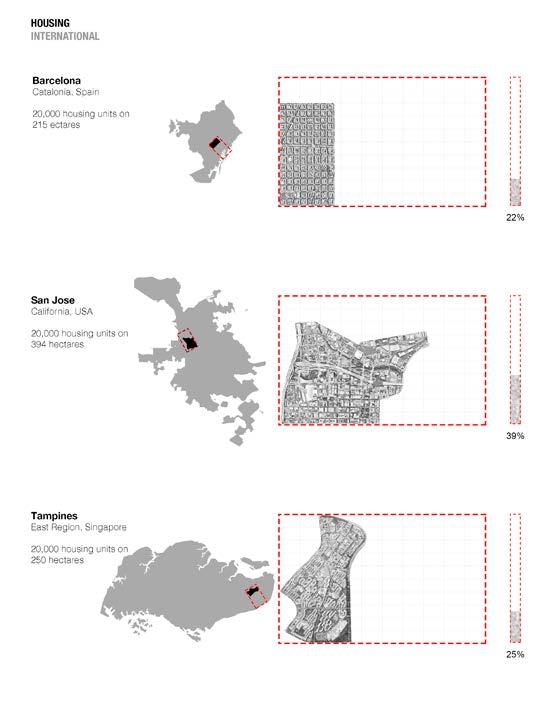
$7.5 Billion 20,000 Housing Units 100 Warehouses 1,000 Hectares Services Infrastructure
Hectares 2 3 1 5 4 6
PROJECT REQUIREMENTS
1,000
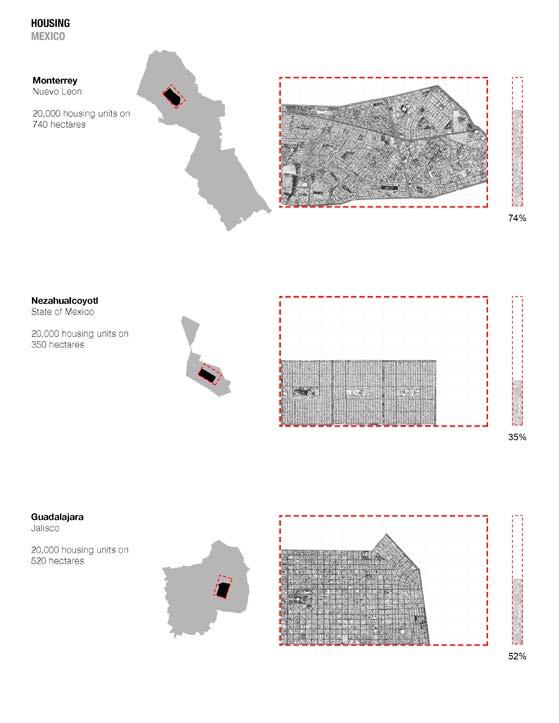
single family - individual multi-family - collective
500 to 5,000 inhabitants > 60 homes per hectare 5,001 to 15,000 inhabitants > 70 homes per hectare more than15,000 inhabitants > 80 homes per hectare
block 100 to 1,000 inhabitants barrios 1,000 to 5,000 inhabitants neighborhood 5,000 to 25,000 inhabitants
rough / heavy property / equipment light use consumption extraction steelmaking metallurgical petrochemical heavy chemistry 1 to 10 employees annual sales 21.5 md 40% represent the country
food tobacco home appliances pharmaceutical biotechnology textileleather and footwear
Micro industry Small industry Medium industry Big industry
more than 250 employees annual sales more than 13.4 mdd 10% represent the country
construction aeronautics 11 to 50 employees annual sales 21.5 md to 5.4mmd 15% represent the country 51 to 250 employees annual sales 5.4 mdd to 13.4 17% represent the country
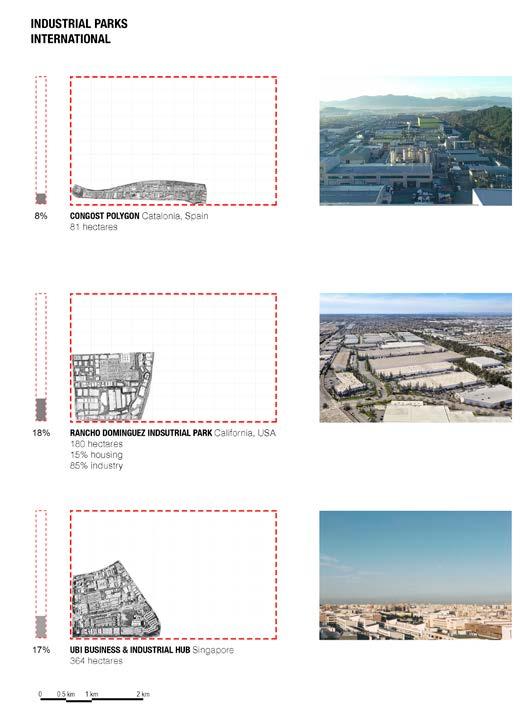
Industrial Park
ANALYSIS
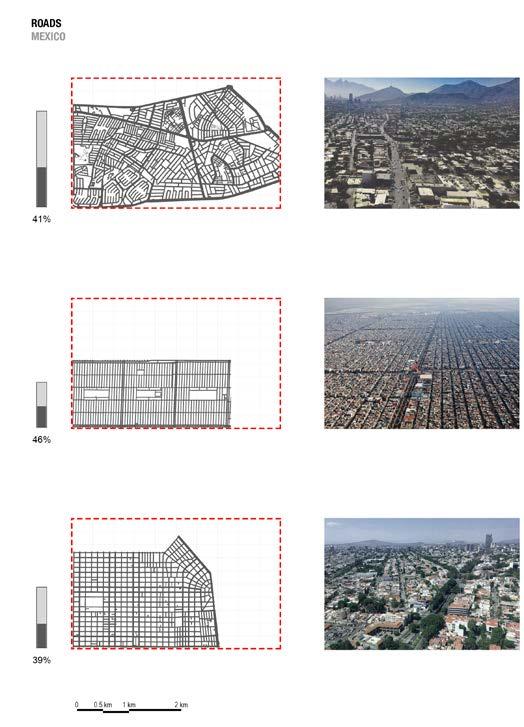
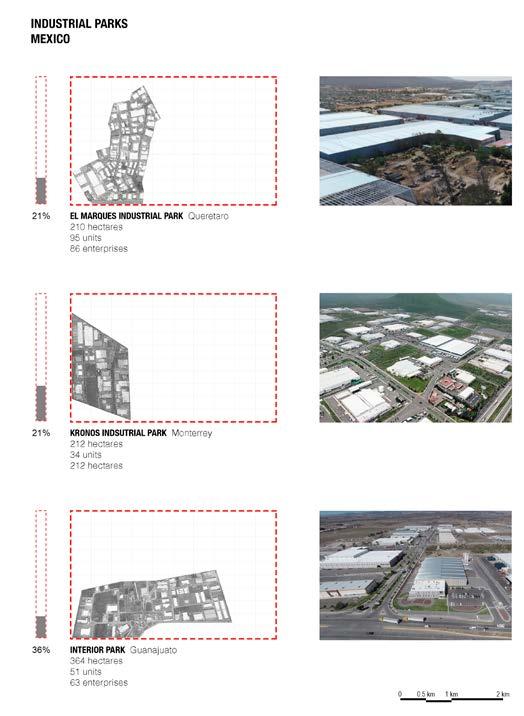
Maximum sliding surface industrial development must have a minium of 10 hectares of urbanized surface source: Inegi_industry_2019
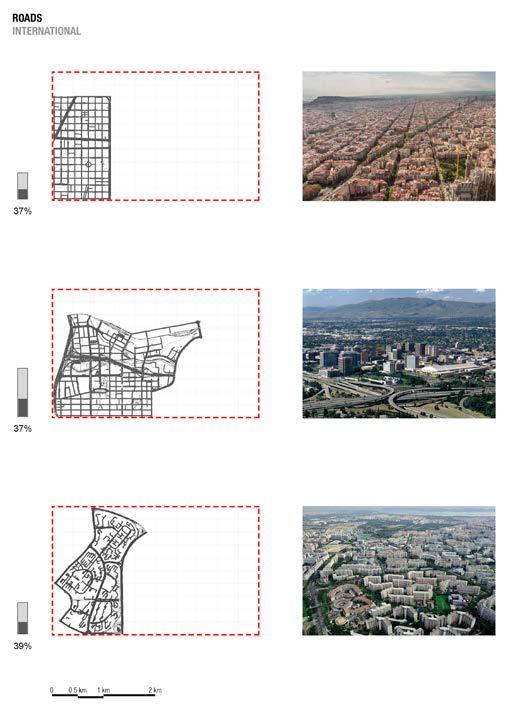
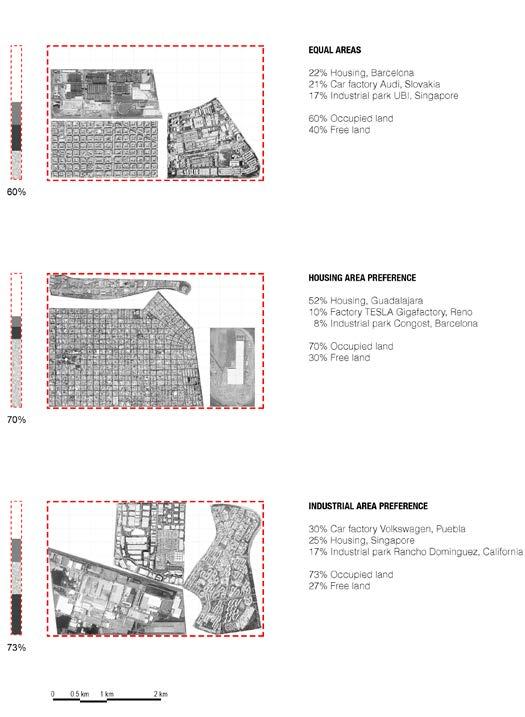
Construction density maximum sliding surface 70% 30% 100% open space land HOUSING INDUSTRY
SMART CITIES

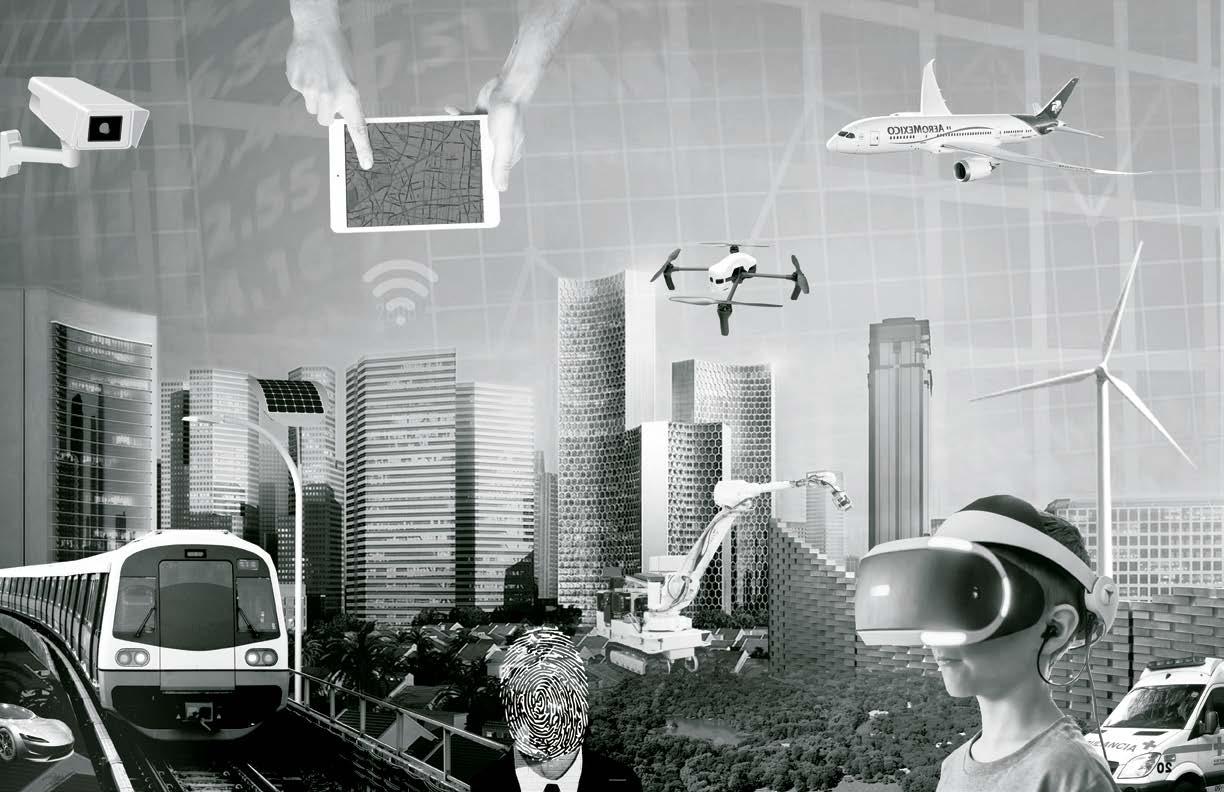
According to a study by the University of Glasgow, Barcelona is the third smartest city in the world, just after
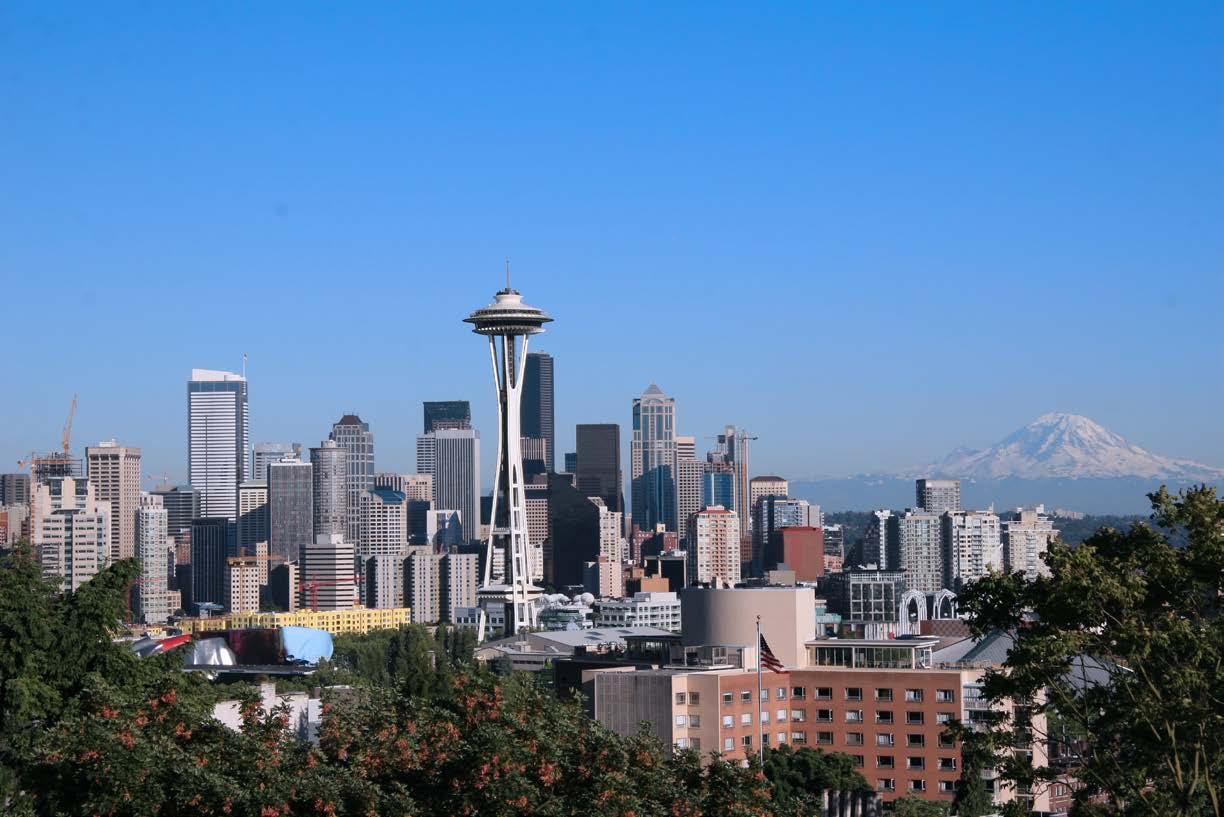
Seattle has an Innovation Advisory Council (IAC) to come up with innovative solutions for issues such as
As part of Barcelona’s smart strategy, the city has developed apps like CityBikes which is a bike sharing network that shows the availability of bikes and stations.
Seattle aims to become the hub for smart and energy-efficient buildings. These buildings use sensors, data and analytics to measure energy consumption and
Barcelona uses the Internet of Things (IoT) to improve the quality of life of its citizens; for example, the city has installed sensors in trash bins to manage
LED street lighting allows to reduce energy consumption in the city. It detects when there are no people to reduce the light intensity which represents up to a
A system of video cameras placed in key spots around the city, allow for
Seattle is a leading city in transportation electrification. The use of electric and hybrid cars has resulted in a decrease of 16% in gasoline consumption.
Today, Barcelona has a wi-fi network that covers almost the entire city. Free wi-fi
More than a 1,000 open data sets encourage the growth of startups which
Sensors collect information about the quality of the air so that the government
Seattle has an adaptive transportation management system that enables traffic
The local government has developed some apps such as Apparkb, which shows the users information about available parking, points of interest and a
Together with the University of Washington, Seattle developed RainWatch to monitor precipitation in real time and send warnings when there’s a chance of
According to the Inter-American Development Bank (IDB), Mexico has 4 intelligent areas: Maderas in Quereta-
Urban Mobility Connect different transportation modes Improve traffic management
This type of technology allows for a person to be quickly recognized in a group
These sensors are connected through internet to monitor the air quality, climate
Any person can use the system of alerts, which activates immediate government assistance and allows to involve simultaneously any other required service.
Different monitors allow to analyze the levels of pollution in the city and enable
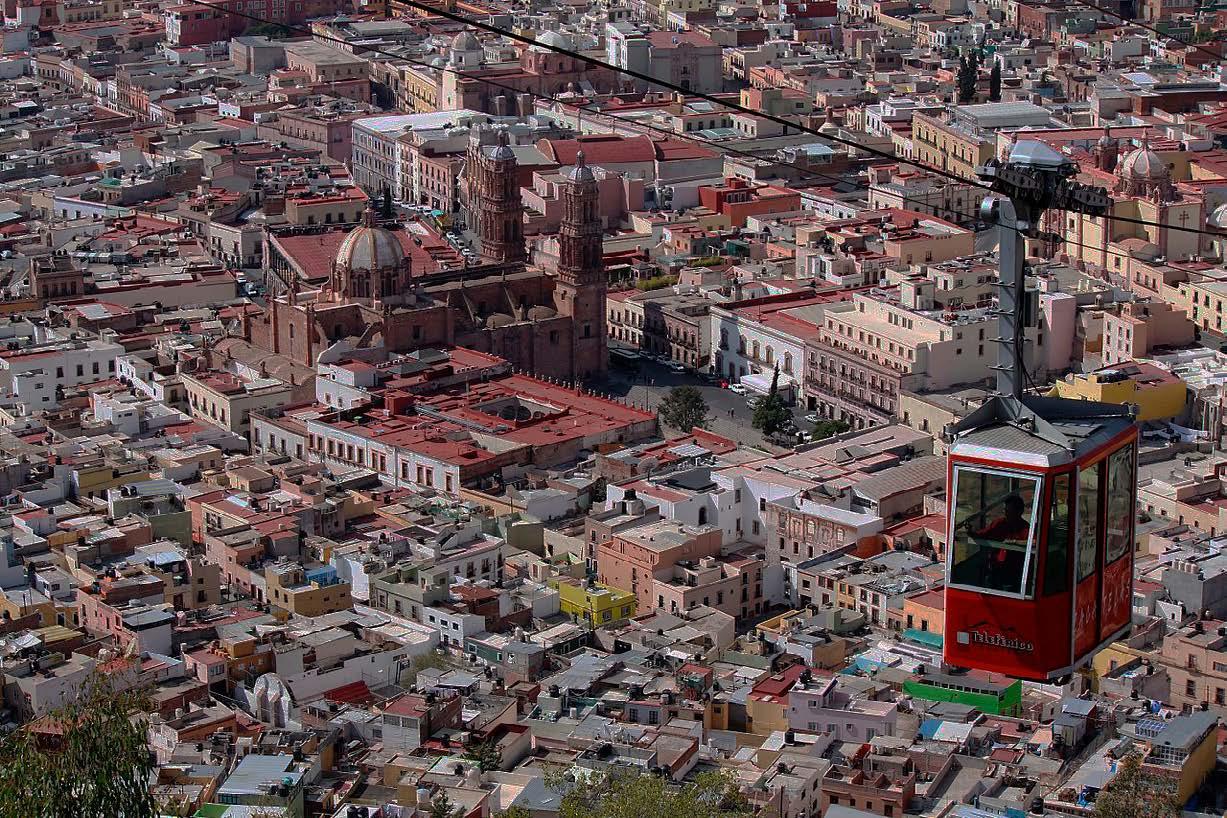
The city’s government promotes tourism in order to boost economy through an app which provides information regarding points of interest and cultural events.
Video surveillance as well as the management of an advanced traffic control
Connect the campus Pomote active learning Fuel research Financial Services
Education
Better customer experiences Operational efficiency Prioritize security Government
Enhance data sharing Optimize operations

Engage citizens Healthcare
Improve care remotely Instant health information and patient’s records Wayfinding maps
Synchronize content and engage the audience Manage all displays from a control planel Targeted branding, advertising and promotions
Retail
Collect and analyze in-store data Inventory management Digital marketing
Sports & Entertainment KEY SECTORS
SOLUTIONS
Parking Generate revenue Reduce time search Safety & Security Detect incidents Protect against crime Waste Management Track & collect Avoid overflow Avoid health hazards Water Management Track water safety Efficient water flow Environment Hyperlocalized monitoring Predictive modeling Lighting Low energy consumption Cut costs Simplify maintenance KEY
Manufacturing Industrial security Flexible and efficient communication Improve operations, margins and quality
Location and Linkages
Sustainable Cities Water Efficiency
Energy and Atmosphere
Material and Resources Indoor Enviromental Quality
Regional Priority
Innovation and Design
Access to Quality
Transit
Affordable Housing Alternatives Fuel Vehicles
Compact, Mixed Use and Transit Orienented Development
Construction Activity Pollution Prevention
Construction and Demolition Waste Management
Demographic Assesment
Economic Growth
Ecosystem Assesment
Emergency Management and Response Energy Efficiency Storm Water Management Energy and Greenhouse Gas Emissions Management Green Building Policy and Incentives

Grid Harmonization Green Spaces High Priority Site Innovation Organic Waste Treatment Integrated Planning and Design Process.

Integrated Water Management Light Pollution Reduction
Low Carbon Economy
Power Acces, Reliability and Reliliency
Public Health
Recycling Infrastructure Regional Priority
Renewable Energy Resilience Planning


Responsible Sourcing Infrastructure


Smart Mobility Smart Water System
Social Infrastructure Solid Waste Management Walkability and Bikeability

Wastewater Management Water Acces and Wuality
Natural Resources Conservation
People first it’s grounded in the reality of how people live their lives rather than box ticking Holistic nothing will drop through the gaps with our 10 principles True sustainability there’s no greenwashing Reaching hearts as well as minds
One Planet Living is used to inspire people across the world to get involved in sustainable change.
Health and happiness

Equity and Local Economy
Culture and Community Land and Nature
Sustainable Water
Local and Sustainable food
Tlavel and Transport
Materials and products
Zero Waste
Zero Carbon Energy
There are now 595,000 people around the world living in, working at or visiting organizations and communities with a deep commitment to One Planet Living.
GREEN BUILDING RATING SYSTEM
A FRAMEWORK FOR SUSTAINABLE LIVING
FRAMEWROK
1. Constant. New Babylon Nord (detail). Plan, 1958 https://static2.museoreinasofia.es/sites/default/files/ styles/ficha_actividad_exposicion/public/actividades/ babylon.jpg?itok=g2lQ0Wp8
2. Constant. New Babylon
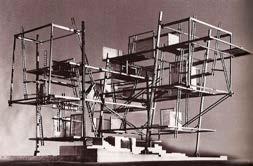
3. Constant. New Babylon, model.
New Babylon is an anti-capitalist city perceived and designed in 1959-74 as a future potentiality by visual artist Constant Nieuwenhuys
The goal was the creating of alternative life experiences, called ‘situations’. Nieuwenhuys’ New Babylon was based on the idea that architecture itself would allow and instigate a transformation of daily reality.
In the 1950s, Constant had already been working for years on his “New Babylon” series of paintings, sketches, texts,and architectural models describing the shape of a post-revolutionary society. Constant’s New Babylon was to be a series of linked transformable structures, some of which were themselves the size of a small city--what architects call a megastructure. Perched above ground, Constant’s megastructures would literally leave the bourgeois metropolis below and would be populated by homo ludens--man at play.
In the New Babylon, the bourgeois shackles of work, family life, and civic responsibility would be discarded. The post-revolutionary individual would wander from one leisure environment to another in search of new sensations. Beholden to no one, he would sleep, eat, recreate, and procreate where and when he wanted. Selffulfillment and self-satisfaction were Constant’s social goals. Deductive reasoning, goal-oriented production, the construction and betterment of a political community-all these were eschewed.
New Babylon was based on the idea that architecture itself would allow and instigate a transformation of daily reality.
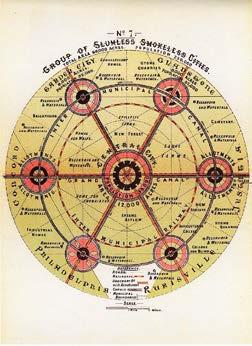
The garden city movement is a method of urban planning in which self-contained communities are surrounded by “greenbelts”, containing proportionate areas of residences, industry, and agriculture.
The idea was initiated in 1898 by Ebenezer Howard in the United Kingdom and aims to capture the primary benefits of a countryside environment and a city environment while avoiding the disadvantages presented by both.
While garden cities were praised for being an alternative to overcrowded and industrial cities, along with greater sustainability, garden cities were often criticized for damaging the economy, being destructive of the beauty of nature, and being inconvenient. According to A.
Trystan Edwards, garden cities lead to desecration of the country side by trying to recreate country side houses that could spread themselves; however, this was not a possible feat due to the limited space they had.
More recently the environmental movement’s embrace of urban density has offered an “implicit critique” of the garden city movement.2 In this way the critique of the concept resembles critiques of other suburbanization models, though author Stephen Ward has argued that critics often do not adequately distinguish between true garden cities and more mundane dormitory city plans.
It is often referred to as an urban design experiment which is typified by failure due to the laneways used as common entries and exits to the houses helping ghettoise communities and encourage crime; it has ultimately lead to efforts to ‘de-Radburn’ or partially demolish American Radburn designed public housing areas.
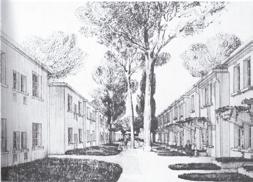
Industrial City
The industrial revolution had the effect of bringing more and more people from the countryside into the heart of the city looking for work. Such dramatic overpopulation and unrestricted urban growth led to slum housing, dirty, disease and a lack of communal green spaces within the city landscape.1
After that term, modern urban planning arose in response to this disorder. Reformation of these areas was the objective of the early city planners, who began to impose regulatory laws establishing housing standards for housing, sanitation etc. Urban planners also introduced parks, playground in the city neighborhoods, for recreation as well as visual relief.2
The notion of zoning was a major concept of urban planning at this time. Some urban planners worked on urban planning and one of them was the Tony Garnier.3
Garnier ‘s proposal was an industrial city for approx 35.000 inhabitants situated on a area in southeast France on a plateau with high land and a lake to the north, a valley and river to the south. He envisaged a town of segregated uses with a residential area, a train station quarter and an industrial zone.
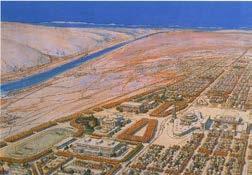
Concept of zoning was strongly similar with Ebenezer Howard Garden Cities of To-morrow because he divided the city into three parts as well like Garnier. Garnier tries to take into account all aspects of the city including governmental, residential, manufacturing and agricultural practices. The various functions of the city were clearly related, but separated from each from by location and patterns.
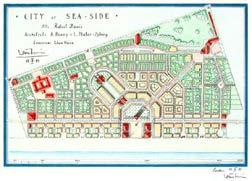
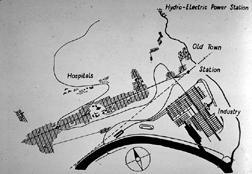
The city of labor divided into Four main Functions: Work, housing, health and leisure. The public area at the heart of the city was grouped into three sections: Administrative services and assembly halls, museum collections and sport facilities.
New Urbanism is an urban design movement which promotes environmentally friendly habits by creating walkable neighborhoods containing a wide range of housing and job types.
It arose in the United States in the early 1980s, and has gradually influenced many aspects of real estate development, urban planning, and municipal land-use strategies. New urbanism attempts to address the ills associated with urban sprawl and post-Second World War suburban development.
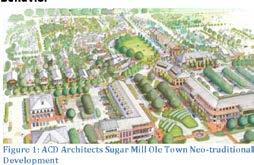
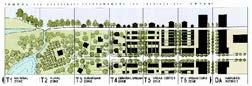
New Urbanism is strongly influenced by urban design practices that were prominent until the rise of the automobile prior to World War II; it encompasses ten basic principles such as traditional neighborhood design (TND) and transit-oriented development (TOD). These ideas can all be circled back to two concepts: building a sense of community and the development of ecological practices.
“We advocate the restructuring of public policy and development practices to support the following principles: neighborhoods should be diverse in use and population; communities should be designed for the pedestrian and transit as well as the car; cities and towns should be shaped by physically defined and universally accessible public spaces and community institutions; urban places should be framed by architecture and landscape design that celebrate local history, climate, ecology, and building practice.”4
Henri Lefebvre on the Situationist International. Interview conducted and translated 1983 by Kristin Ross. Printed in October 79, Winter 1997
Sarah Williams Goldhagen (July 2006) ON ARCHITECTURE Extra-Large in The New Republic
1.
1 A. Trystan Edwards (January 1914). “A Further Criticism of the Garden City Movement”. The Town Planning Review. 4 (4): 312–318. JSTOR 40100071
2 Stephen Ward (18 October 2005). The Garden City: Past, present and future. Routledge. pp. 205–. ISBN 978-1-135-82895-0.
3 Dylan Welch (2009-01-08). “Demolition ordered for Rosemeadow estate”. The Sydney Morning Herald. Archived from the original on 2015-09-24. Retrieved 2015-09-17.
1. Tony Garnier. (detail).https://senacatal. files.wordpress.com/2016/03/cite_indu strielle13179371441051366370620480145bd53109e1a099fd6.png?w=768
2. Tony Garnier. https://senacatal.files.wordpress. com/2016/03/aoc263.jpg
3. Tony Garnier. https://senacatal.files.wordpress. com/2016/03/hospital-tony1.jpg
Anderson, Lawrence B.(1987 ). Tony Garnier. Places, 3(4), 3-13.
Rudlin, David & Falk, Nicholas(1999). Sustainable Urban Neighbourhood. USA Dora Wiebenson, ” Utopian Aspects of Tony Garnier’ City Industrielle ,” Journal of the society of Architectural Historians, Vol.19, No.1(Mar., 1960), pp.16-24.
4 KAHYA, G. Y., 2007. Kentsel Gelişme Olgusu Ba lam nda Gelecek Öngörüleri: Siberşehirler, Yüksek Lisans Tezi, şTU, Fen Bilimleri Enstitüsü, şstanbul.
1 Boeing; et al. (2014). “LEED-ND and Livability Revisited”. Berkeley Planning Journal. 27: 31–55. Retrieved 2015-04-15.
2 Caves, R. W. (2004). Encyclopedia of the City. Routledge. p. 491. ISBN 9780415252256.
3 Kelbaugh, Douglas S. 2002. Repairing the American Metropolis: Common Place Revisited. Seattle: University of Washington Press. 161.
4 “The Charter of the New Urbanism”. 2015-04-20.
New Babylon
Garden City
Ebenezer Howard Tomorrow: A Peaceful Path to Real Reform.
New
Urbanism
APPROACH
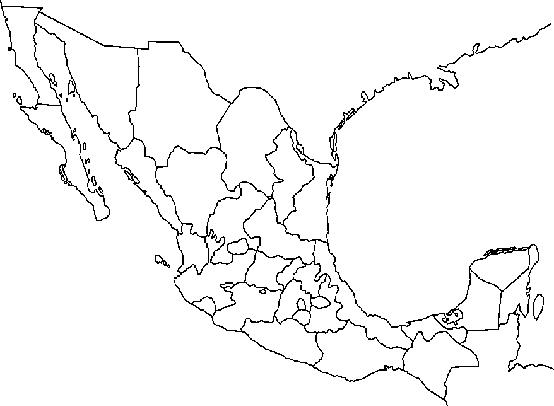
WHY MEXICO?
Airports Seaports
Main roads
MONTERREY
Nuevo León
GDP US$81.4 billions.


2ND Best city to do buisness in Mexico.
5TH place in terms of quality of life, according to Mercer Human Resource Consulting.
The city is a modern industrial and buusiness center with an official population of 1.1 million and a metropolitan area of at least 3.8 million.

IT Infrastructure: Advanced high-bandwidth, secure communications network, government supported research and technology parks.


GUADALAJARA
Jalisco
GDP US$63.9 billions.
2ND Most populous municipality.


FDIMagazine ranked Guadalajara highest among major mexican locations in terms of potential and designated the city as having the 2ND strangest economic potential of any major North American city after Chicago.
Guadalajara is known as the Silicon Valley of Mexico due to its electronic industry.
NEZAHUALCOYOTL
State of Mexico
GDP US$90.9 billions.
With more than 14 million inhabitants living in 22,500 square kilometers, it is the most populated state in Mexico and the largest producer of manufactured goods nationwide.
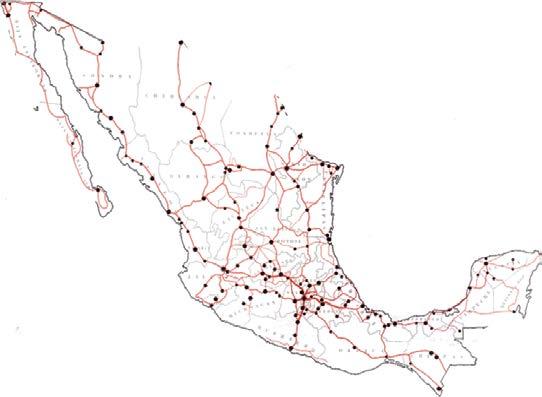
It is one of the most robust, diverse, and dynamic areas in the nation and offers ample opportunities in the IT and BPO world.
The state already offers a high level of infrastructure that is continuously being expanded as the state government actively supports foreign investments in IT.
United Startes of America Atlanta Dallas Mexico City Monterrey
Guadalajara Cancun
1. TECHNOLOGY FOR HUMAN CITIES
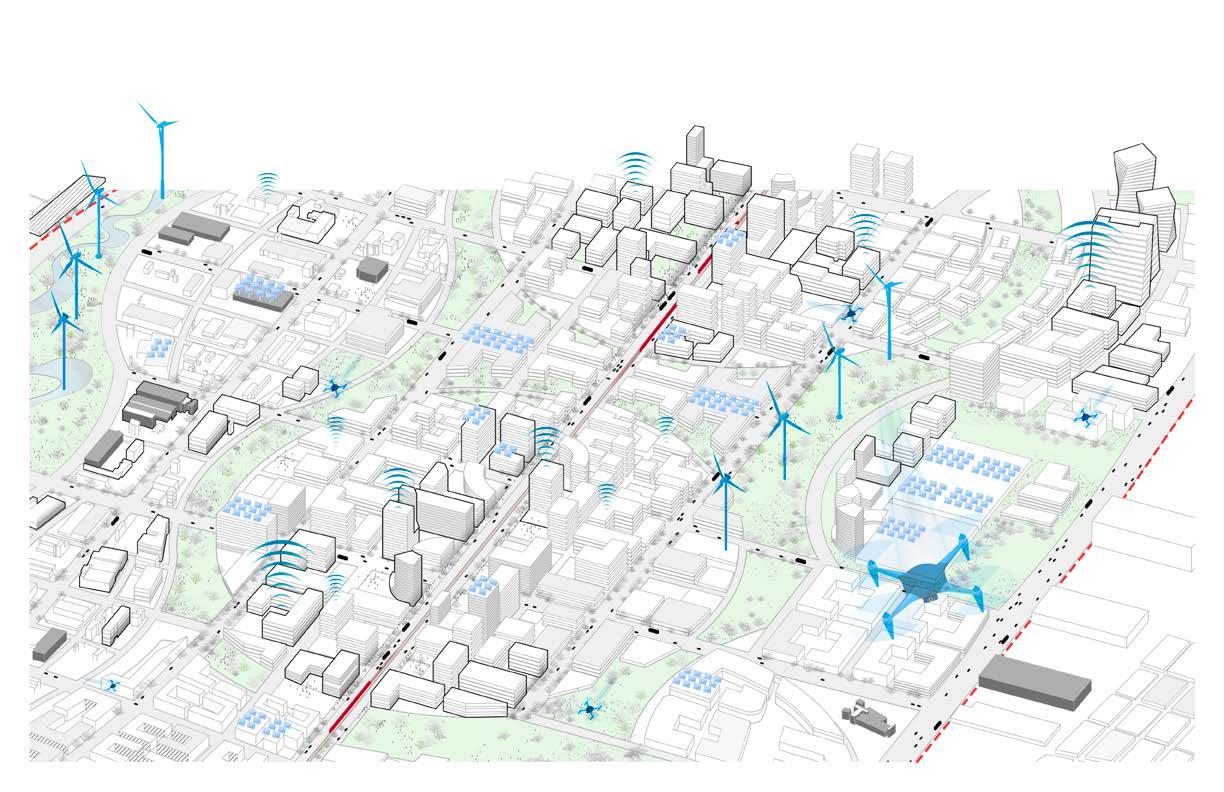
a. The premises for a Smart City rely on the idea of bringing wellness and life quality to its citizens.
b. Technology is not new. Cities have relied on the capabilities that technology has offered since the first human settlements to empower, grow and better appropriate territory.
c. Technology solves old problems that bring new challenges. In a never-ending evolution cycle, the desire to improve solutions or solve older problems offer a constant challenge for cities to redefine and self-improve.
d. If Design is the ultimate human invention, tools and technology are the vehicle that redefine the meaning of what is human itself.
2. PRE-EXISTANCE IS NOT MANDATORY, YET PREFERED.
a. Smart Cities rely on basic pillars that have been essential for cities to function. Although it can be presumed that a city could spontaneously emerge, recognizing cities or parts of it that could evolve into more sustainable, efficient and open patterns of development.
b. A city is not about self-invention as much as it is empowered growth. A territory that has been meaningful and appropriated has a stronger chance of developing into an accurate solution, rather than a potential answer to a hypothesis.
3. SPARKS ENGAGE URBAN SYMBIOSIS
a. Identity is a key factor for a settlement to encourage. When a common idea becomes an element of pride and identity, chances of success are high.
b. Sparks fuel dynamics and synergy.
4. SMART DIAGNOSE
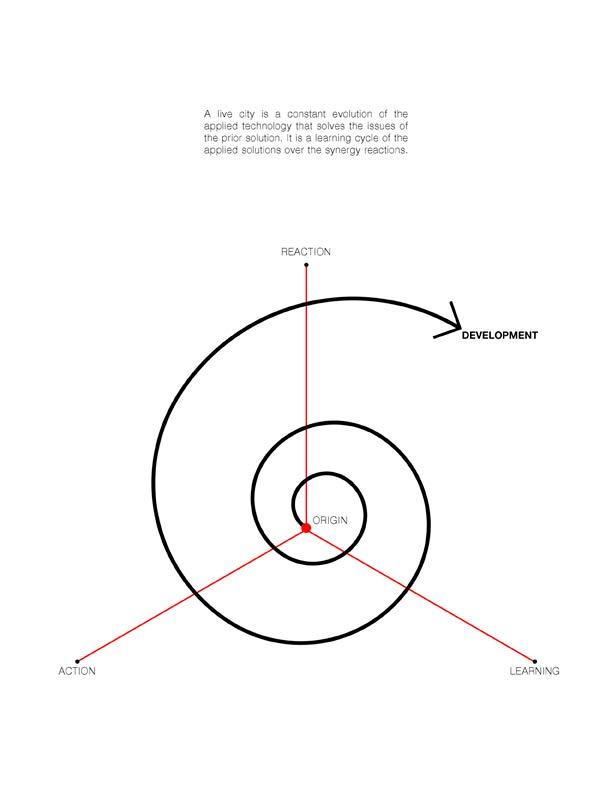
a. To develop solutions for future crisis rather than present urgencies. To develop intelligence for the “reaction” rather than the “action” by opening information and urban management.
b. Resilient approach through systematic information update
CITY LEARNING CYCLE







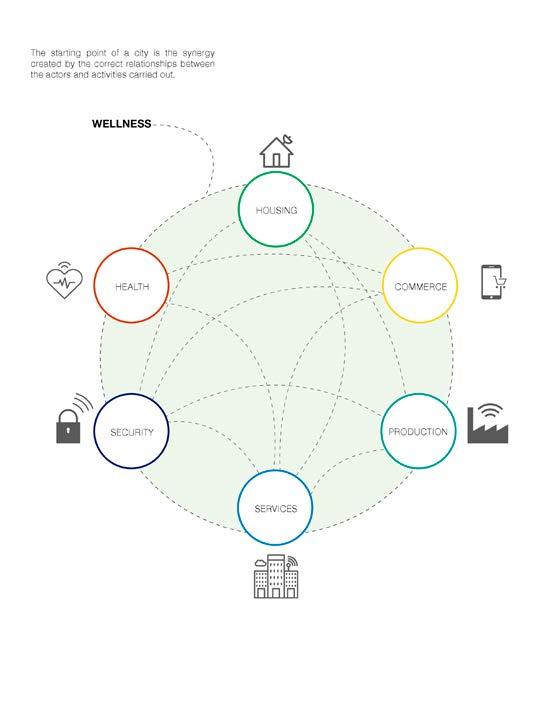
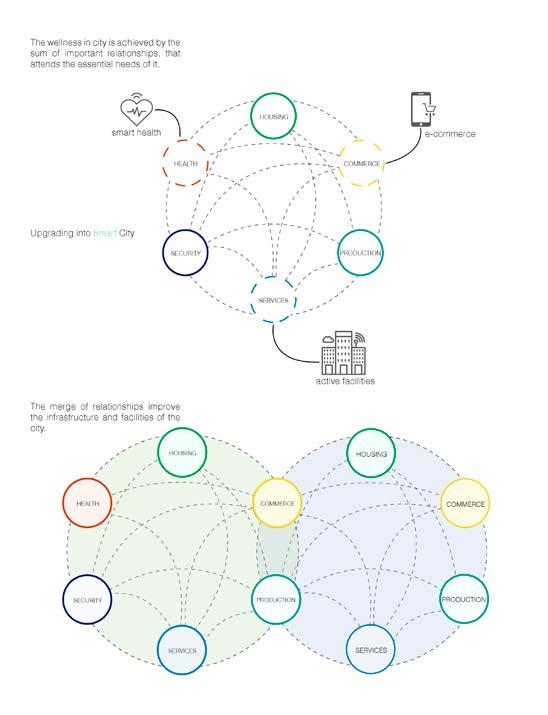
Technology application STRATEGYS APPLICATION SYMBIOTIC ORIGIN SYMBIOTIC RELATIONSHIPS
Passive systems Sustainability