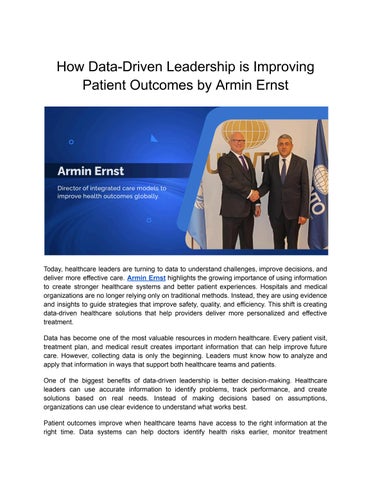
How Data-Driven Leadership is Improving Patient Outcomes by Armin Ernst

Today, healthcare leaders are turning to data to understand challenges, improve decisions, and deliver more effective care Armin Ernst highlights the growing importance of using information to create stronger healthcare systems and better patient experiences Hospitals and medical organizations are no longer relying only on traditional methods. Instead, they are using evidence and insights to guide strategies that improve safety, quality, and efficiency This shift is creating data-driven healthcare solutions that help providers deliver more personalized and effective treatment
Data has become one of the most valuable resources in modern healthcare Every patient visit, treatment plan, and medical result creates important information that can help improve future care However, collecting data is only the beginning Leaders must know how to analyze and apply that information in ways that support both healthcare teams and patients.
One of the biggest benefits of data-driven leadership is better decision-making Healthcare leaders can use accurate information to identify problems, track performance, and create solutions based on real needs. Instead of making decisions based on assumptions, organizations can use clear evidence to understand what works best
Patient outcomes improve when healthcare teams have access to the right information at the right time Data systems can help doctors identify health risks earlier, monitor treatment
progress, and adjust care plans when needed This approach allows providers to respond faster and offer support before small issues become serious problems.
Technology has also made it easier for healthcare organizations to manage and use data Electronic health records, digital monitoring tools, and advanced analytics platforms help teams organize important information These tools allow medical professionals to understand patient conditions more clearly and improve communication between different departments
However, successful data-driven leadership requires more than technology Leaders must build a culture where teams understand the value of information and use it responsibly Healthcare workers need training, support, and clear processes to make sure data improves care instead of creating extra challenges
Another important advantage of using data is improving operational efficiency. Hospitals can study patterns in patient flow, resource use, and staffing needs By understanding these trends, leaders can reduce delays, improve planning, and create smoother experiences for patients and healthcare professionals.
Data also supports preventive care Instead of focusing only on treating illnesses, healthcare organizations can use information to identify risks and encourage healthier choices. This proactive approach helps patients receive support earlier and can reduce the impact of serious health conditions
Strong leadership remains essential because healthcare data can be complex. Leaders must connect information with human understanding Numbers can show trends, but healthcare professionals provide the compassion and judgment needed to make the best decisions for each patient.
As healthcare continues to evolve, organizations that embrace data-driven leadership will have a stronger ability to improve outcomes. patient outcome improvement will depend on combining technology, skilled teams, and thoughtful leadership By using data wisely, healthcare leaders can create systems that deliver safer care, better experiences, and stronger results for communities around the world.