From Summit to success: Stories of innovation, opportunity and community
ISSUE 4, JULY 2026
A shared love of old machinery is bringing generations together
laying foundations in civil construction
reveals how species survive change
Celebrating 30 years of Armidale bellringers
Holding Court
Breathing life into Armidale’s historic courthouse
Ground Breakers
Women
Sweet Tweets
Birdsong
Ringing Legacy
From Summit to success: Stories of innovation, opportunity and community
Summit magazine has been produced by Armidale Regional Council’s Communications and Engagement team
Paulette Chavez-Henry, Jo Harrison, Cherene Spendelove, Dane Townsend and Rochelle Tubb
Editor: Rochelle Tubb
Photography: Simon Scott, Jo Harrison and Paulette Chavez-Henry and Dane Townsend.
Design: Kassandra Hunt
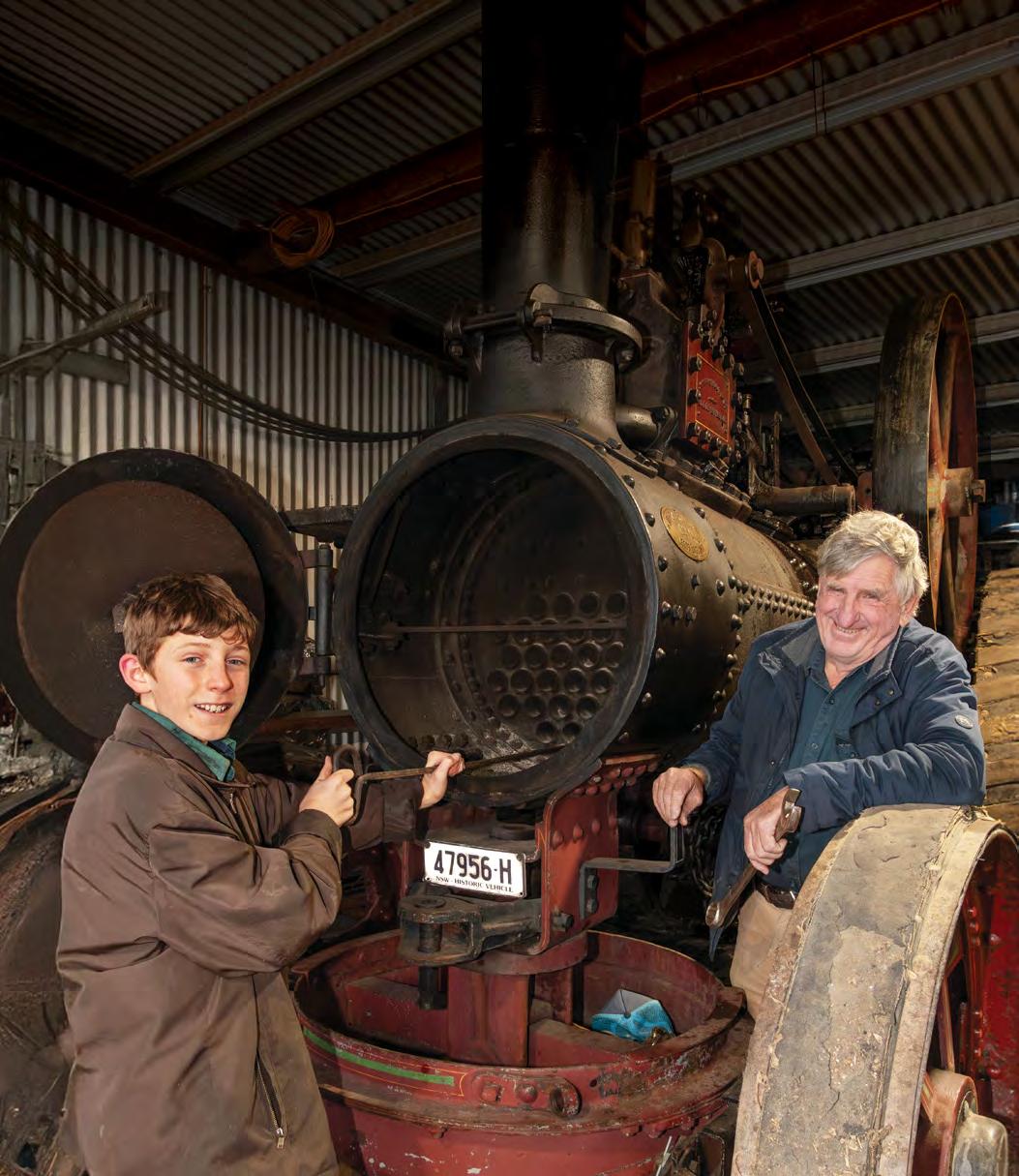
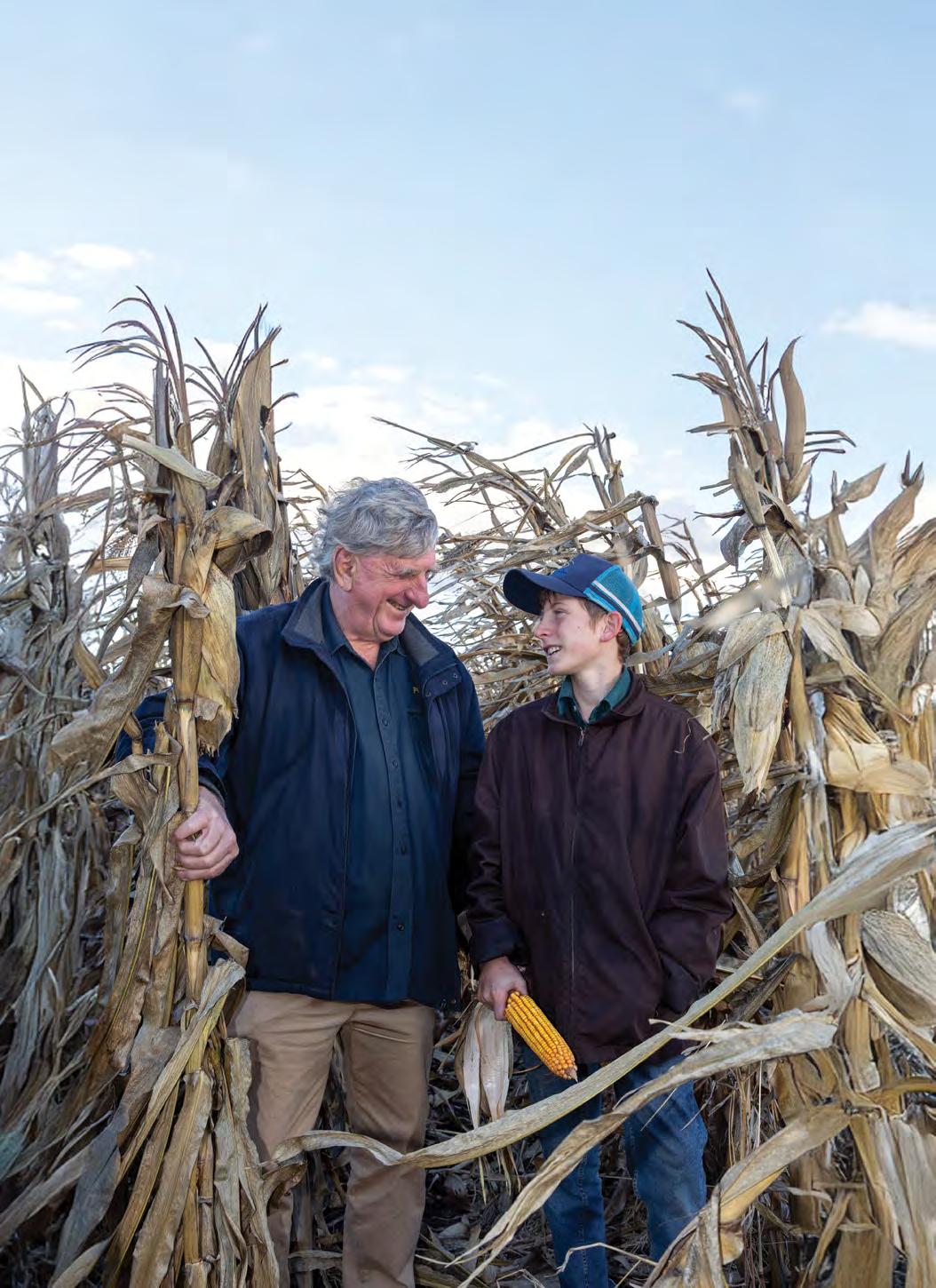
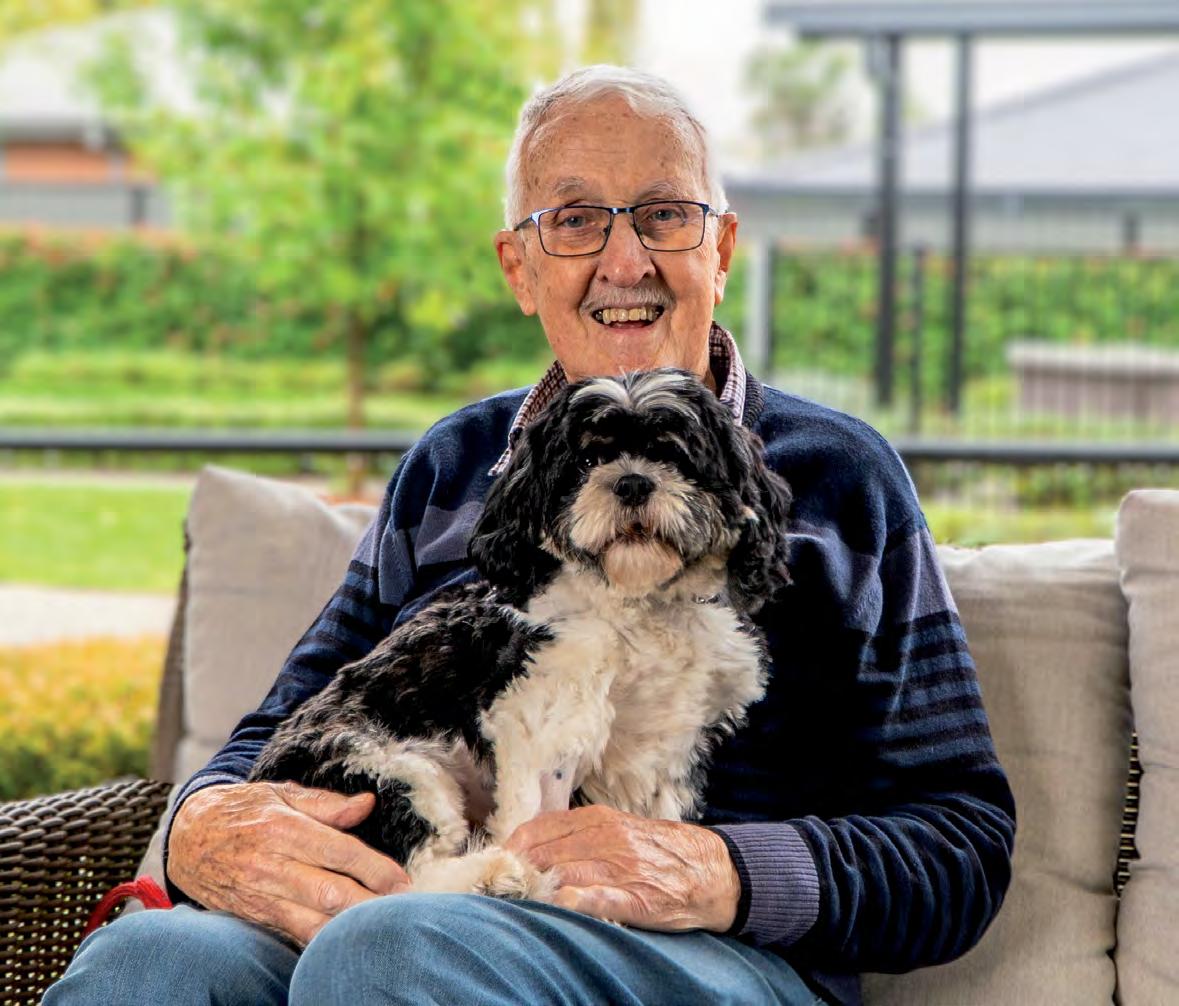
Cover photo: Angus Dalgleish and his grandfather, Rob Taber. Image by Jo Harrison.
MAYOR’S RAMBLE WITH SAM COUPLAND
Welcome to the winter edition of
Summit isn’t your average council newsletter. It’s a vibrant, people-first magazine that delves into the heart of Armidale and Guyra, showcasing how council services and upgrades are making a real difference in everyday lives.
Summit tells the stories behind the services – through the voices of the people who benefit from them. You’ll meet inspiring locals who go above and beyond for their community and discover how council initiatives are helping shape a more connected, resilient, and thriving region.
Whether it’s infrastructure, events, tourism or essential services, Summit brings it all together in a compelling read that celebrates the power of community and the role council plays in supporting it.
Real stories. Real impact. Real community.
Winter in the Armidale region brings a distinctive charm, where crisp mornings, clear skies and the quiet beauty of frosted landscapes invite us to slow down and appreciate our surroundings. It’s a season that highlights the character of our region – from cosy cafes and vibrant cultural experiences to the warmth of community connections that make Armidale feel like home.
This time of year continues to attract visitors seeking a true New England winter experience. Their presence provides a welcome boost to our local businesses and helps share the unique appeal of our region more broadly.
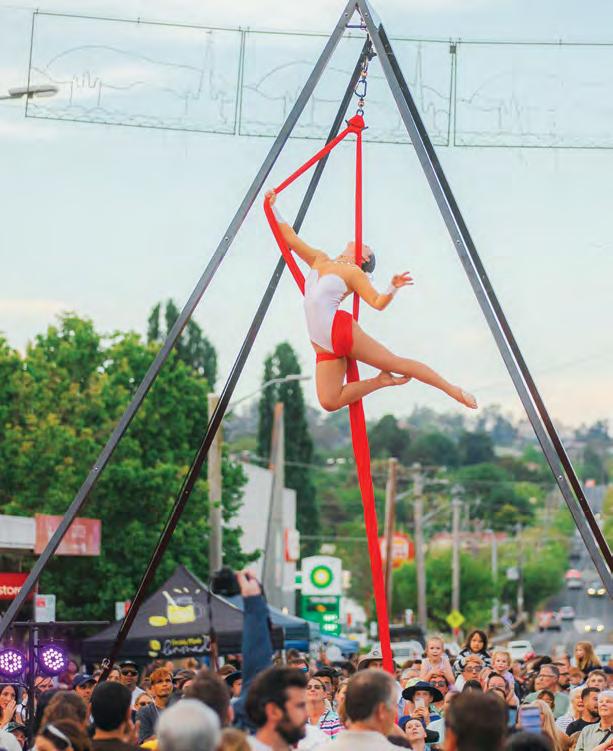
As we look ahead, anticipation is already building for Creative Streets, running from Saturday 17 October to Sunday 8 November 2026. This much-loved program showcases the creativity, talent and vibrancy of our region, transforming our streets and public spaces into places of connection and inspiration.
I’m also pleased to acknowledge that this is the fourth issue of Summit Magazine, which continues to grow as a meaningful platform for sharing our stories and celebrating our community. Its nomination in the LGNSW Local Government Week Awards 2026 for Excellence in Communications is a testament to the quality of work and the strong sense of identity it reflects.
As we embrace winter, I encourage everyone to enjoy the season, support local initiatives, and take pride in the spirit that defines the Armidale region.
Summit is published by Armidale Regional Council. © 2026, Summit. All rights reserved. No part of this publication may be reproduced, distributed, or transmitted in any form or by any means, including photocopying, recording, or other electronic or mechanical methods, without the prior written permission of the publisher.
Disclaimer: While every effort has been made to ensure the accuracy of the information contained herein, Armidale Regional Council assumes no responsibility for errors, omissions, or outcomes resulting from the use of this material. All content is provided for general informational purposes only and should not be construed as professional advice. Readers are encouraged to seek independent advice before acting on any information contained in this publication.
Summit is a people–first magazine that shares the stories behind council services and initiatives in Armidale Region, highlighting real locals, real impact, and the vibrant community they help to create.
A major revitalisation project breathes new life into Saumarez Homestead.
Leigh Ramage has been honoured as Guyra Citizen of the Year.
Bellringing is a centuriesold craft keeping Armidale’s soundscape alive.
One UNE researcher is using data and birdsong to reveal how species survive change.
Four young women are laying the foundations for new careers in civil construction.
Community-led vision breathes new life into Armidale’s historic courthouse.
Armidale Folk Museum re-opens with accessible upgrades while honouring its rich heritage.
A shared love of old machinery is bringing generations together.
A bold vision helped deliver a successful new running carnival for Armidale
An 1852 landmark returns, blending heritage restoration with modern design.
A grassroots sewing hub is giving clothes – and community – a second life.
Get the inside scoop from the friendly experts who know the region best.
Two dedicated locals are quietly transforming Guyra’s landscapes.
Celebrating Jane Davies and what’s next after the Armidale Volunteer Referral Service.
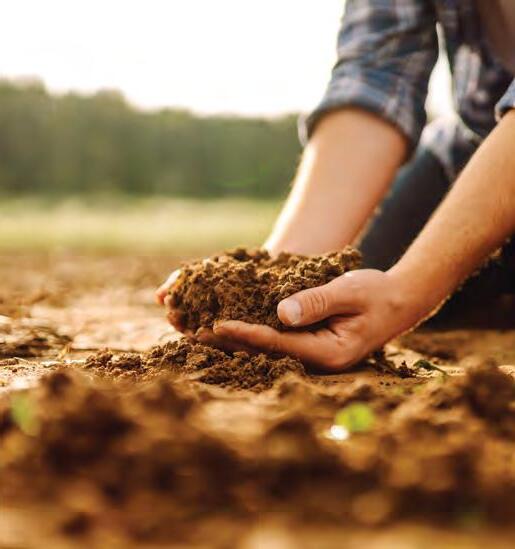
Read how a local landholder has embarked on a rehydration journey.
From art exhibitions to opera – don’t miss these fantastic regional events.
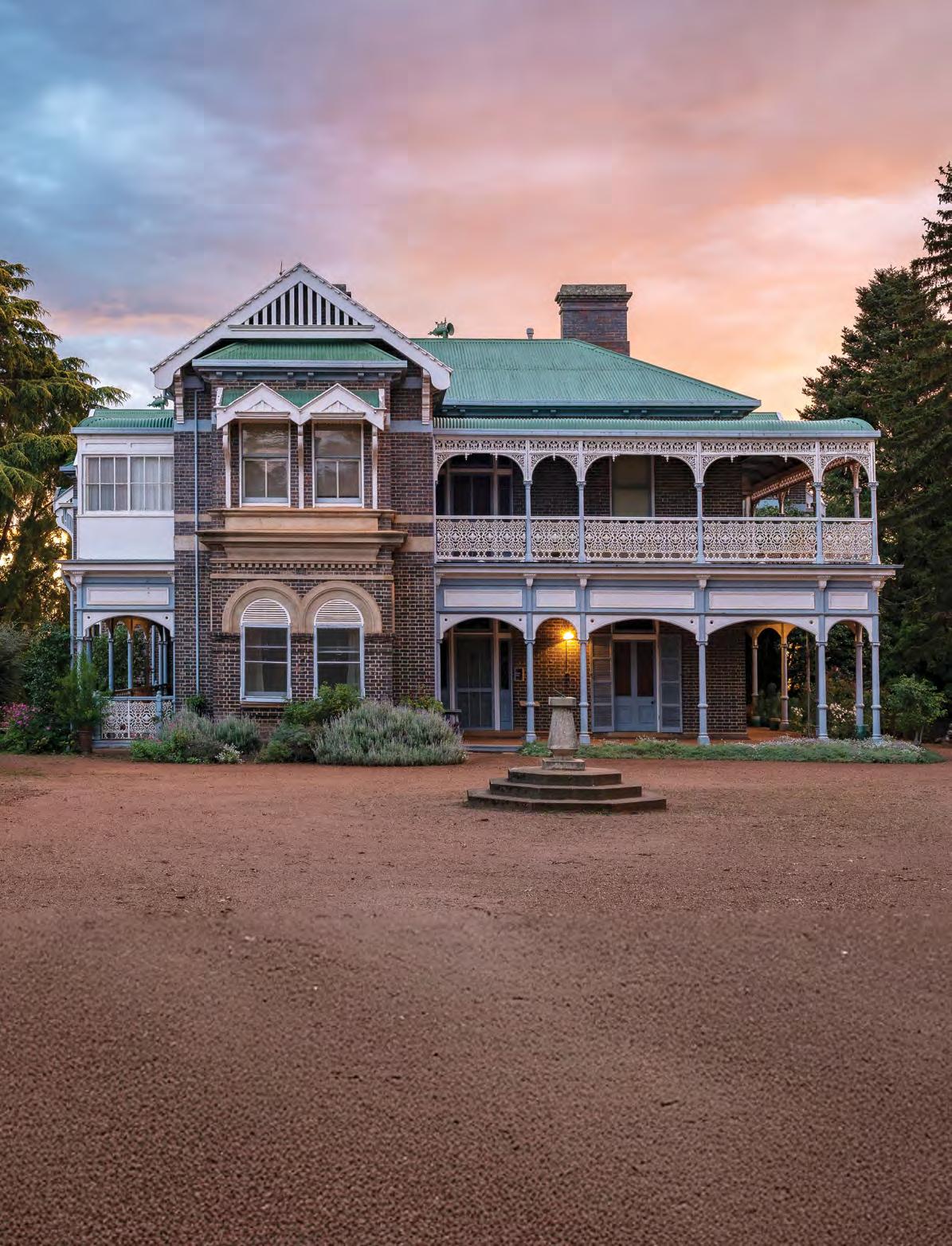
Saumarez Homestead, long regarded as the heritage jewel of the New England, has entered an exciting new chapter.
The completion of a $2.7 million revitalisation project – delivered through a partnership between the NSW Government, Armidale Regional Council and the National Trust (NSW) – marks one of the most significant transformations in the site’s 19th century pastoral history.
As the National Trust noted, the project ensures that,
“Saumarez is not frozen in time, but alive, evolving, and welcomes all, now and into the future.”
Situated on Anaiwan Country, just minutes from Armidale Airport, Saumarez Homestead has been a landmark of the region since the 1830s.
Pastoralist Henry Dumaresq first established the property, which in its early years included “a wellstocked store, with tools, clothing and food provisions for those moving north beyond the boundaries of civilisation”.
After changing hands to the Thomas family and later the Whites, the homestead grew into one of New England’s most successful rural enterprises. The White family’s stewardship lasted more than a century, culminating in their generous gift of the historic precincts to the National Trust in 1984.
Today, the 30 room Edwardian mansion, its formal gardens and its collection of 31 historic buildings remain a rare and remarkably intact window into Australia’s pastoral past. But the latest revitalisation project has ensured that Saumarez Homestead is not only preserved – it is reimagined for future generations.
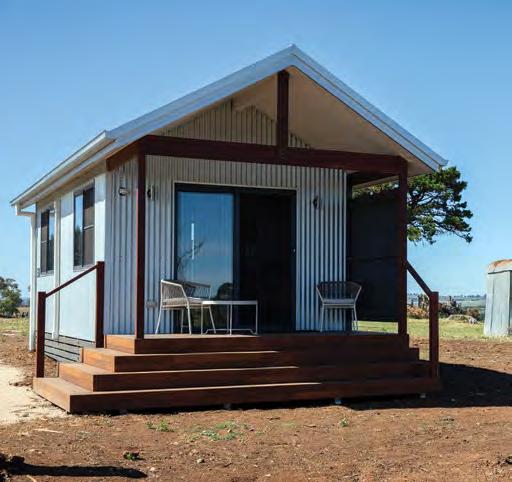
The newly completed works introduce modern visitor amenities while honouring the character and cultural significance of the site. The project includes new self-contained accommodation – two studio cabins, a larger cabin and the beautifully restored
Thomas House – each thoughtfully integrated into the heritage landscape.
The development also expands Saumarez’s capacity as a regional events destination. New and upgraded meeting and venue facilities now support weddings, retreats, business gatherings and educational programs. The Jackson Centre, in particular, offers a flexible space for community and private events, strengthening Saumarez’s role as a cultural hub.
National Trust CEO Debbie Mills said the project’s aim was to “enhance the natural and heritage surrounds of Saumarez Homestead, create a genuine destination, with improved access… and to provide an authentic place for all to learn about Australia’s history through special experiences.”
With its revitalised facilities, expanded visitor experiences and renewed commitment to cultural storytelling, Saumarez Homestead is ready to welcome a new generation of visitors. Whether exploring the mansion’s untouched Edwardian interiors, wandering through the seasonal gardens or staying overnight in the new accommodation, guests can immerse themselves in a place where history and modern regional tourism meet.
This vision is now a reality, with the site poised to attract heritage enthusiasts, nature lovers and tourists from across the state.
Armidale Regional Council played a crucial role in delivering the revitalisation project, administering the grant and undertaking essential infrastructure upgrades. These upgrades included 700 metres of improved access road, drainage works, a gravel overlay, two passing bays, a new footpath and a heritage appropriate bitumen seal. A new turning circle now enhances traffic flow and visitor safety.
For more than five decades, Leigh Ramage has quietly dedicated her time, energy and heart to the Guyra community, a commitment now recognised with the honour of Guyra Citizen of the Year.
Originally from the small community of Tenterden, Leigh became a Guyra resident 53 years ago after marrying, quickly building strong roots in the town she proudly calls home.
Her passion for community service began early. At just 14 years old, she stepped into the role of secretary/treasurer for the Tenterden Tennis Club, where, under the guidance of the club president, she spent nine years organising tournaments and coordinating teams to compete across the Guyra and District competition.
Despite the recognition, Leigh remains deeply humble about the award.
“It was overwhelming and emotional,” she said. “I feel very proud, not just personally, but of the Guyra community. It is such a generous and caring place, especially in times of need, and I feel very fortunate to be part of it.”
Her contribution spans decades and countless organisations. Leigh has volunteered with Meals on Wheels for 25 years, offering not just assistance but connection to those who need it most.
For more than 43 years, she has been a dedicated member of the Guyra CWA Day Branch, helping raise vital funds through street stalls, fashion parades, catering and community fetes. Leigh’s involvement has also extended to the Kolora Residents Committee, Guyra Central School Mothers’ Club and canteen, Little Athletics, the Delta Club and many other local groups –as well as supporting countless community initiatives behind the scenes.
For Leigh, it is the people and relationships that matter most.
“I enjoy helping those in need and welcoming new people to our town,” she said. “Through my involvement, I’ve made some wonderful friendships. It’s very rewarding and fulfilling.”
Leigh credits the generation before her, mentors, family and community members, for shaping her values and encouraging her to give back.
“I was influenced
by those
who came before me. They supported and guided me, and my family has always been there too. I just hope my contribution has made a difference.”
And when challenges arise, Leigh takes them in her stride.
“I take a deep breath, reassess and keep working,” she said.
Looking to the future, she hopes to see Guyra continue to grow and thrive, with more homes, expanding local businesses and new opportunities, while keeping the strong sense of connection that defines the community.
Leigh believes that connection is the foundation of a strong town.
“Communities stay strong by working together, listening to each other and respecting different views,” she said.
“That’s how friendships grow.”
For those thinking about getting involved, Leigh’s advice is simple.
“Check out local groups, service clubs, church groups or sporting organisations, and give it a go,” she said. “You’ll be made welcome. Work as a team, listen to each other and support one another. There’s always someone who needs a helping hand.”
After a lifetime of service, Leigh continues to embody the spirit of Guyra – one built on kindness, connection and community.
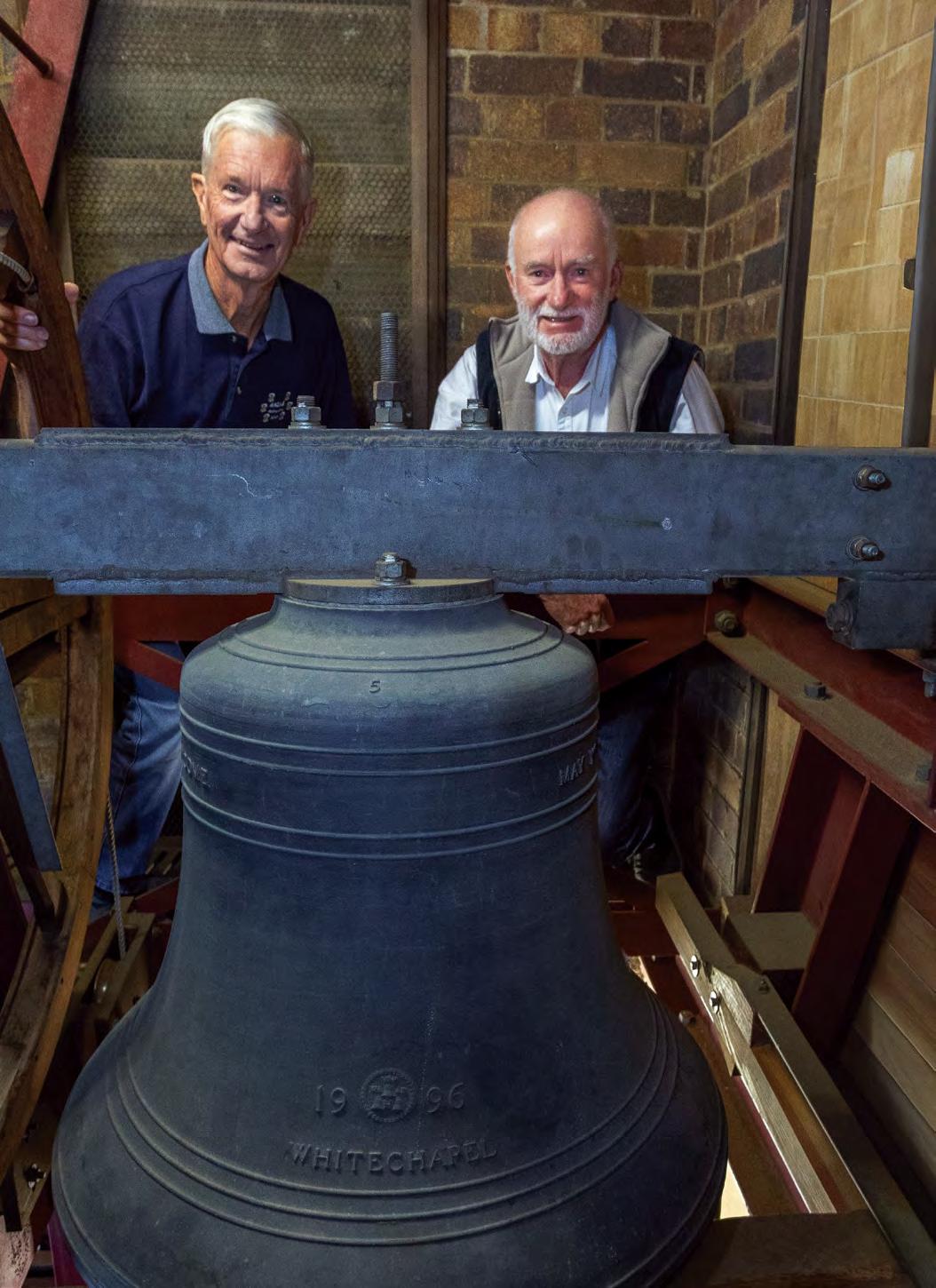
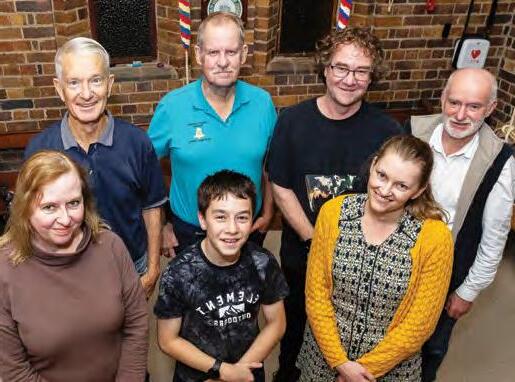
Bellringing depends on good teamwork – we’re not called a band for nothing!” laughed Simon McMillan, the tower captain of St Peter’s Cathedral bellringers in Armidale.
Celebrating its 30-year anniversary in 2026, the band is keeping the art and tradition of bellringing alive – something Simon admits can be a challenge.
“The strength of our band derives from sharing a common interest (some would say an obsession) and enjoying working and progressing together,” he said.
“The tradition of bellringing is also an attraction for those who come to appreciate the history of what we do. Bell-ringing, like many other activities, is full of fascinating jargon and ‘stuff’ that dates from more than four centuries of usage. And, ringers have been doing what they do for nearly as long, using a technology that is essentially the same as it was back then.
“It is very easy to get hooked.”
Bellringers can be aged from 12 to 100, according to Simon, but the best time to learn is in your teens and 20s.
“It does get harder to learn with age, but once you’ve learnt to ring well it doesn’t desert you,” said Simon.
The bellringers group was formed some time prior to the installation of the bells at St Peter’s Cathedral in 1996. This was to enable the band to seek out training at other bell towers, mainly in Sydney, and at Turramurra in particular.
Training takes time, but the band embraces it. New recruits start on a single bell, learning control and rhythm before joining the wider group. It’s a slow, methodical process – but one that reinforces the very heart of bellringing: trust.
“There’s no shortcut, you’ve got to feel the bell, understand its movement, and listen to the others. That’s when it all comes together.”
Simon said the art of bellringing survives because people pass it on. And that means welcoming newcomers, being patient, and remembering that every experienced ringer was once a beginner.
For those who venture up the narrow tower stairs at the Catherdal, there’s often surprise at what they find. The bells themselves remain hidden above, while the ringers stand below, each gripping a rope that disappears into the ceiling. The movement is physical, almost like a dance, as ringers pull and release in carefully timed sequences.
“It’s not what people expect,” said Simon. “They imagine we’re just tugging on ropes randomly, but it’s incredibly precise. Every movement matters.”
And then, of course, there’s the sound – rolling out across Armidale, marking weddings, celebrations and moments of remembrance. Over three decades, that sound has marked countless occasions. From competitions and visiting ringers to unexpected moments of humour, the band has built not just skill, but a strong sense of community.
“That’s what keeps us going,” said Simon. “The friendships, the shared experiences, and that special feeling when everything just works.”
The band reflects a wide cross-section of the community, with members aged 14 to 82, united by a shared passion for the centuries-old craft. And despite the challenges of maintaining numbers, the group remains optimistic about its future.
“Interest often begins with curiosity – a tour, a chance visit, or simply hearing the bells and wondering how they work,” said Simon.
“The hardest part is getting people through the door. After that, it tends to take hold. The ringing bug is elusive, but it’s very much worth catching.”
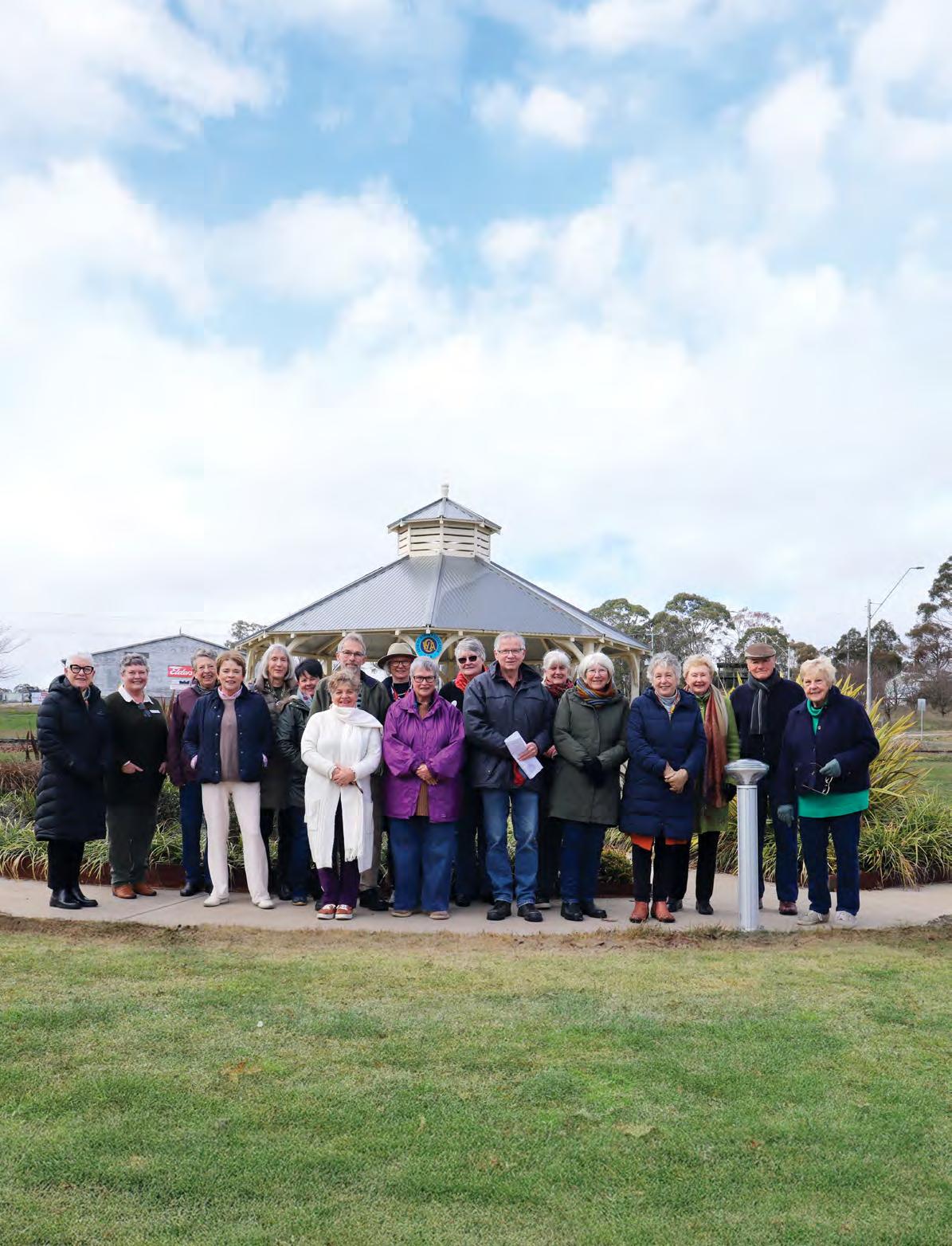
For the past three years, the St Peter’s Cathedral Bellringers have proudly heralded the start of Armidale Regional Council’s Autumn Festival, sending their distinctive peals across the city to mark the beginning of the parade.
Ringers practise every Thursday evening from 5:30pm to 7pm and perform regularly before Sunday services from 9am to 9:25am.
Beyond weekly ringing, the bells play a role in marking significant moments throughout the year. Alongside Easter, Christmas and ANZAC Day, the band provides commemorative ringing for a range of occasions.
If you thought statistics was a boring subject, you need to park that thought for a minute.
Anam Shabir loves numbers and statistics, but she also has a passion for ecology, threatened species and conservation. After completing a Bachelor of Honours and a Master of Philosophy majoring in Botany from Government College University of Lahore in Pakistan, Anam wanted to pursue further education in Australia. This led her to the University of New England (UNE) and the Master of Scientific Studies.
“When I decided to pursue further studies, I sought a program offered by UNE that would allow me to bridge my botanical expertise with contemporary environmental problem solving. My ultimate goal is biodiversity conservation, specifically focused on endangered species,” said Anam.
“I was drawn to the Master of Scientific Studies at UNE because it offered a major in Quantitative Ecology, a rare and advanced field available at only two Australian universities. This field is emerging globally.”
For those who rely on AI and phones to crunch numbers, you may be asking how statistical modelling can help save threatened species.
According to Anam, it provides a rigorous, data driven framework for informed conservation decisions.
“By interpreting complex data, we can move beyond simple observations to identify underlying interactions within ecosystems.”
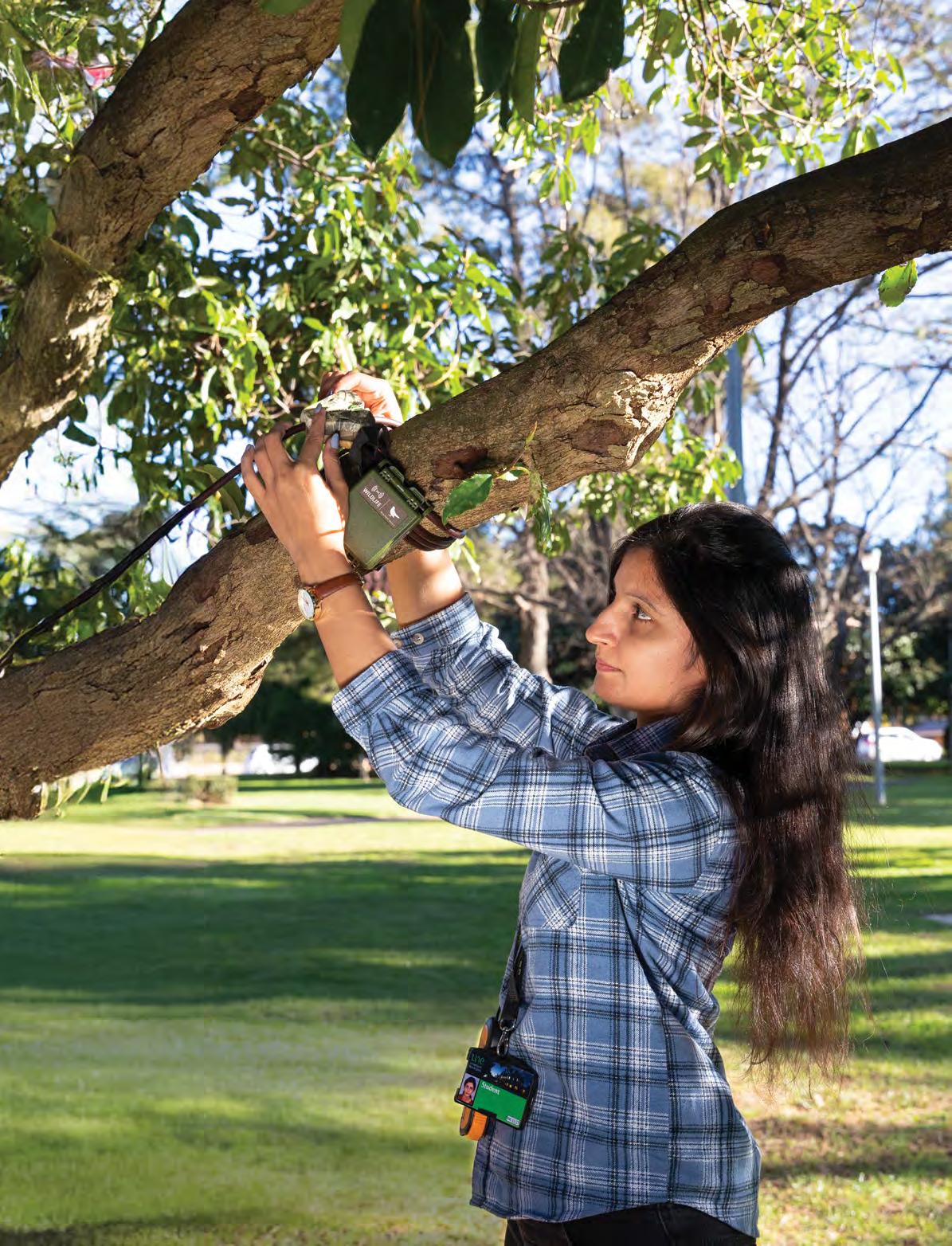
Anam’s research, A Comparative Analysis of Australian Songbirds’ Acoustic Signatures across Rural and Urban Habitats in the New England Region, NSW, uses Passive Acoustic Monitoring (PAM) to analyse bird vocalisations.
“In Armidale, I monitored songbirds from rural sites to high noise urban environments, including the Armidale Bicentennial Arboretum, Central Park, Civic Park, and the UNE campus,” she said.
“I used software (Kaleidoscope Pro) for cluster analysis to detect songbirds species. This approach allowed me to gather over 1,200 hours of audio data, focusing on dawn and dusk choruses when vocal activity peaks.”
Recordings were analysed using spectral and temporal features and Hidden Markov Models to identify species by their acoustic signatures.
“This enabled me to quantify traits like frequency bandwidth and song complexity, offering a detailed look at the region’s acoustic life,” said Anam.
While the statistical analysis focused on five species, the Australian Magpie, Pied Currawong, Grey Butcherbird, Silvereye and Red Wattlebird, the research captured a broader avian community.
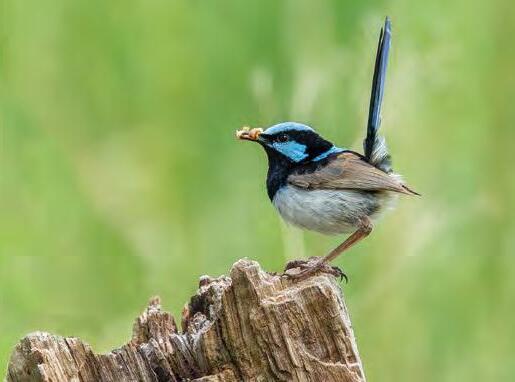
“My inventory includes species such as the Grey Fantail, Superb Fairy-wren, Noisy Miner and Yellow-faced Honeyeater, as well as more elusive birds like the Eastern Yellow Robin, Golden Whistler and Eastern Whipbird. From forest species to urban dwellers, these recordings highlight the region’s rich but pressured biodiversity.”
The results showed no one size fits all response to urban environments.
Pied Currawongs were the most flexible, increasing song complexity and delivery rates, while Silvereyes shifted frequencies to avoid masking. Australian Magpies raised minimum frequencies but reduced repetition. Evidence of the Lombard effect suggests birds adjust amplitude or timing in noise. Other species, like Grey Butcher birds and Red Wattlebirds, showed little change. Flexibility appears key to survival in urban environments.
Anam’s experience in Armidale has been transformational, often described by friends as a caterpillar becoming a butterfly.
“As an international student, and the only Pakistani Muslim girl on campus, I have found a supportive academic community that celebrates my identity,” said Anam.
“My journey hasn’t been without hurdles, but the resilience I’ve built here is something I value. I’ve been mentored by my supervisor, Dr Sophie Collins, whose guidance helped me complete this research and supported my dream of pursuing my own project. Without my supervisor, my parents, and my best friend Ahmad, this would not have been possible.”
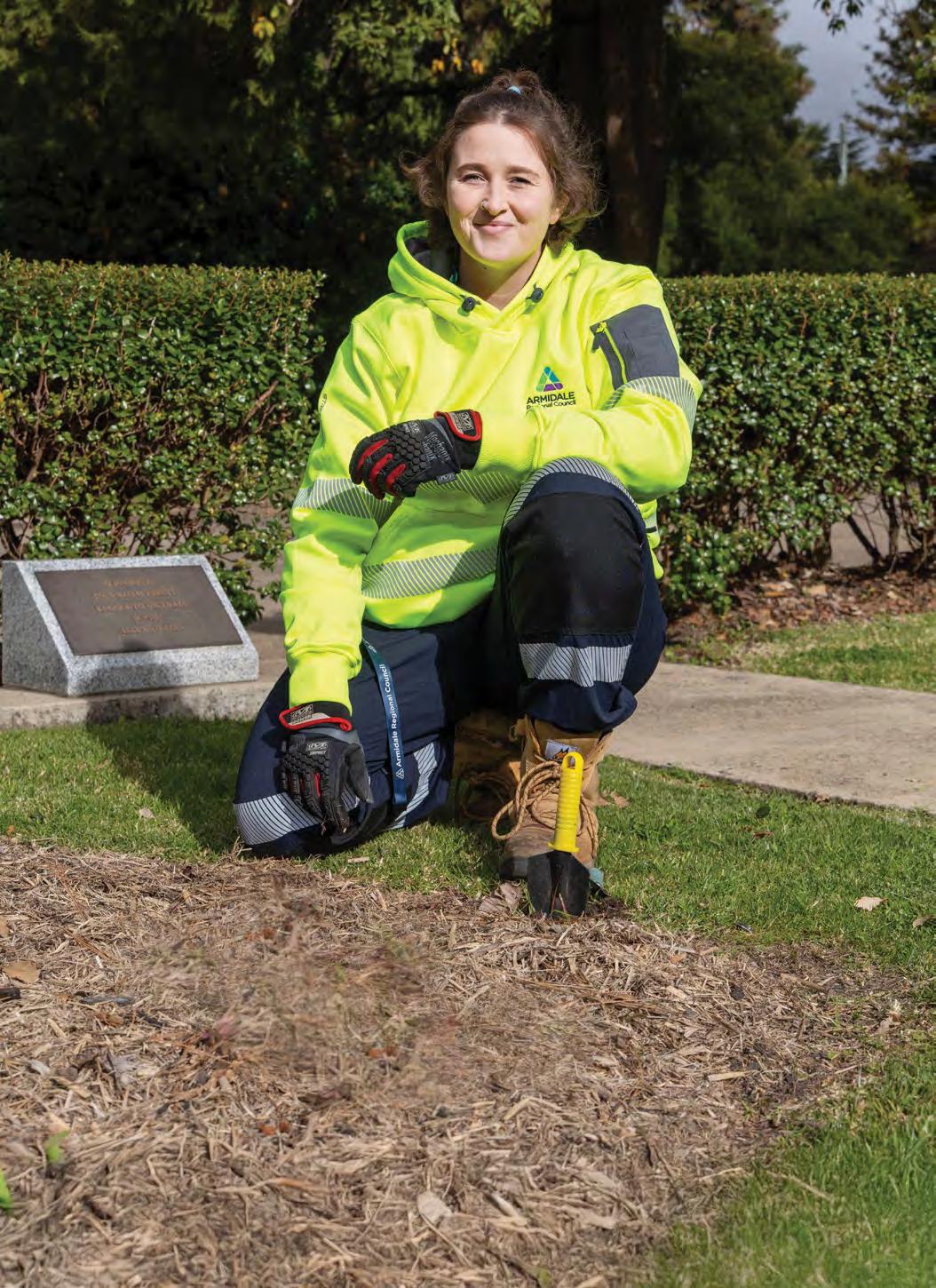
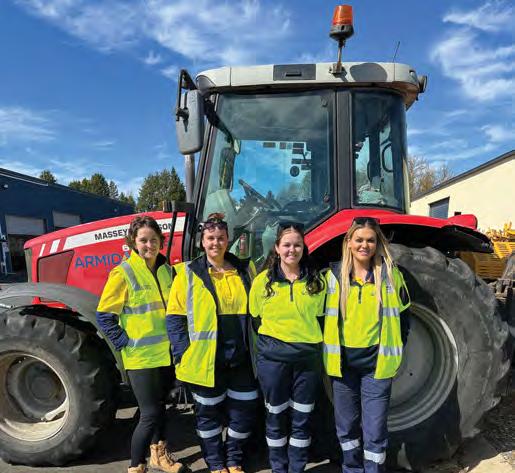
Four young women have commenced their civil construction careers, undertaking apprenticeships as the first cohort of Armidale Regional Council’s Building Futures program.
Cassie had been working in early childhood and has completed her Diploma in Early Childhood Education and Care.
“While I really enjoyed supporting children’s learning and development, I was looking for a new challenge and a more hands-on career path,” said Cassie.
“I was ready for a career change and wanted to work in a more physical role that offered opportunities to learn practical skills. The traineeship stood out because it combines on-thejob experience with formal training as well as exposure to different areas across council.”
Cassie, who was born and grew up in Armidale, is excited to have the chance to build a career in her hometown in a role that also contributes to the community.
“I like seeing the impact our work has,” she said. “So far, I have been working with the parks and gardens team. It’s been a great introduction to the industry, and I’ve enjoyed learning about the work that goes into maintaining and improving the parks, gardens, and public spaces around Armidale.”
Cassie said that everyone has been extremely welcoming and supportive.
“It’s great learning new practical skills and being part of a team that takes pride in keeping our parks and public spaces looking their best.”
“There’s a lot of knowledge within the team. Coming from a completely different industry, it’s been a big change, but the crew has been great to learn from and has made me feel part of the team from day one.”
Like Cassie, Astashia is from Armidale. She is currently working with council’s transport team, enjoying the role and working with the people in that team.
“I like that each day is different,” said Astashia.
“I’ve been on the tar truck one day and installing signage out of town another. I have now also earned my heavy rigid truck learner licence, and am keen to start utilsing that.”
Jessie moved to Armidale with her partner two years ago and is working in the Roads Maintenance Council Contracts (RMCC) team.
“I come from a family of heavy machinery diesel mechanics, and while I had not initially thought about this career, I have been keen to pursue a non-traditional role,” said Jessie.
“Civil construction has always interested me, and I am considering a future career in the mines.”
Haylee, who lives in Tamworth and commutes to Armidale each day for this role, is currently working in council’s Capital Works crew.
“It’s worth the drive,” said Haylee. “I’m grateful for the opportunity at Armidale Regional Council. I’ve learned so much already and am enjoying the work and the people.”
“My dad has an earthmoving business which I have grown up with, and I have thought about a mining career. My existing interest helped me step into this traineeship keen to learn. I can see many possibilities in the future!”
Each of the women in the program have settled into their crews and feel they have found their place in those teams.
Part of the traineeship though is that they will complete their qualifications as a group, while rotating through key operational areas including parks, transport, capital works and regional roads.
Armidale Regional Council is building a sustainable workforce while creating real career opportunities for women through a new Civil Construction apprenticeship initiative, the Building Futures program.
Building Futures builds on ARC’s successful Girls in Civil program and has been made possible thanks to funding via the NSW Government’s Fresh Start Program.
A
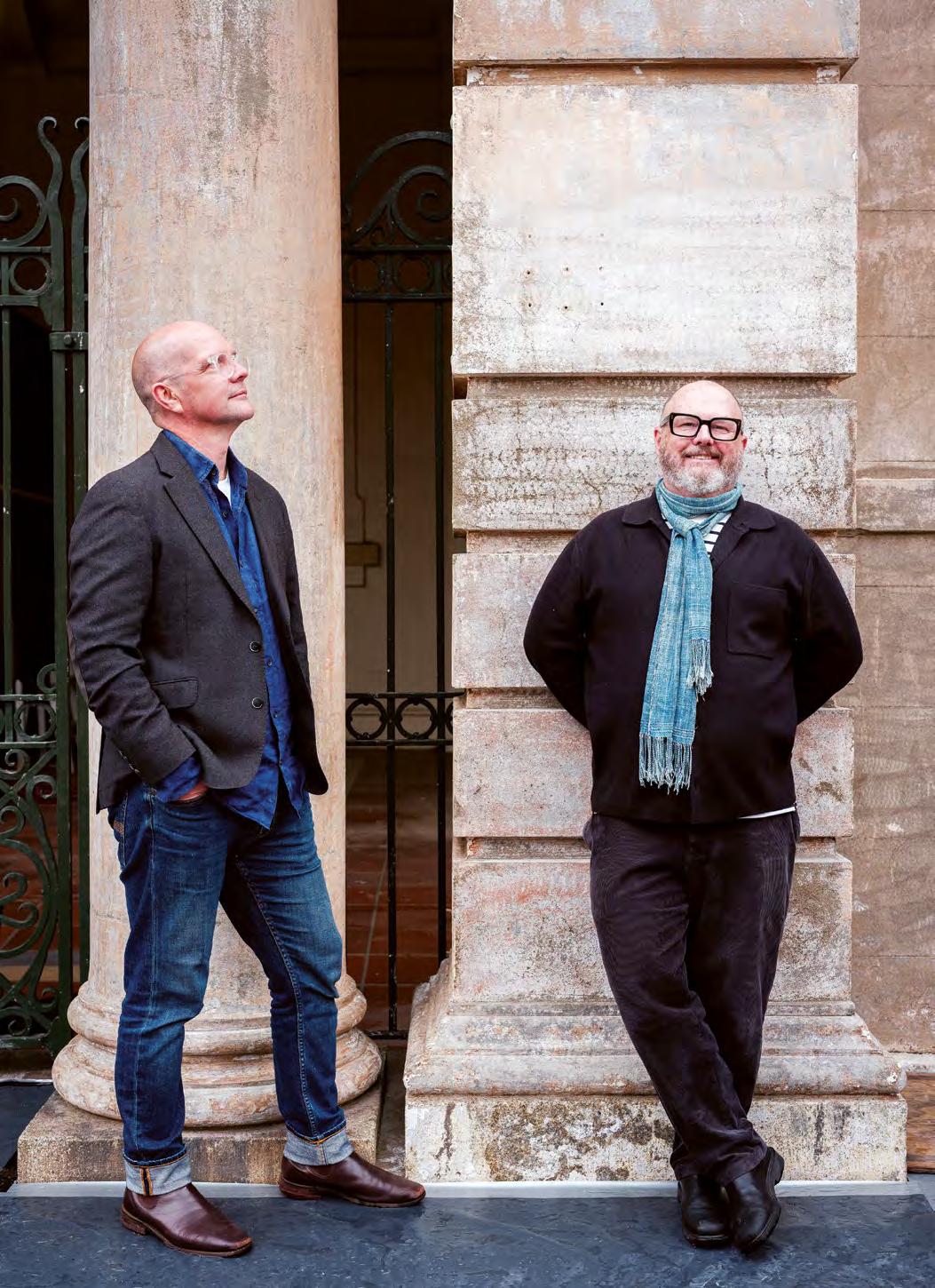
ccording to architect Ashley Dunn, the key to repurposing historic buildings like the old Armidale Courthouse is deeply rooted in understanding and interpreting the needs of the local community and those who have lived with it and are passionately engaged in what happens to the building.
Ashley is principal of Dunnhillam Architecture + Urban Design, the architecture firm tasked by Armidale Regional Council to develop a masterplan and a repair and maintenance schedule for the adaptive reuse of the 166-year-old building.
Ashley and the team at Dunnhillam are no strangers to giving old buildings new purpose and have extensive experience across regional NSW and Sydney with state-listed and locally listed buildings, giving them another 150 years of new life for their communities.
“We do a lot of community-based work where consultation is a priority, often funded through local and state government,” said Ashley
“We were drawn to this project because Armidale is such a beautiful place and the old courthouse is an incredible building; it is an important building. It’s imperative that the team working on it really pays the respect to it that it deserves. We were very pleased that we won the tender.”
Armidale Regional Council secured the Old Armidale Courthouse from the NSW Government for one dollar to ensure the property remained a community asset. In 2023, extensive community consultation was conducted and a report compiled, with feedback and submissions included.
The team at Dunnhillam have over 25 years of experience on heritage and adaptive reuse projects and have been in Armidale recently documenting the building and speaking with key stakeholders.
“It isn’t up to me and the team to decide what happens to the building in isolation; it is our job to help the local community to make good decisions,” said Ashley.
“There is a wealth of information already there for us to review from previous consultation. We are experts in being able to take the feedback, listen carefully to people who have lived here, and interpret what we hear into an appropriate architectural response.”
The project team includes heritage architect Matt Devine who specialises in the care and management of historic buildings. Matt’s role is to analyse the various layers of construction and their importance for preservation or change.
“There were three major phases of development for the Old Armidale Courthouse building over its history, and multiple minor modifications ever since,” said Matt.
“My role is to try and work out how important each stage is, and where change could occur and where it shouldn’t occur, and to think about opportunities where intervention can happen to provide new uses for the building.”
A Conservation Management Plan is a key aspect of the deliverables for the masterplan and focuses on the protection, conservation, and heritage values of the building over time.
“I have been obsessed with history all my life and am passionate about the retention of historic buildings, the stories they tell, and the energy embodied in them. We should avoid building as many new things as possible when there are so many fantastic older buildings that are often not being used,” said Matt.
Historic buildings often present many challenges when being repurposed to meet modern building, access, and safety standards.
“In buildings, where once people were okay with being a bit cold and a bit hot, people today don’t really tolerate that, and in Armidale, where there are extremes of climate, we have to address that,” said Matt.
“Where do you put some of these services in an old building? This is part of the challenge of working with these buildings.”
The Old Armidale Courthouse is a state-listed item protected under the Heritage Act. While there is robust protection over the building, there is nothing under the Act that says you can or cannot do something in it as a use. What it does say is that the building is important for several reasons, and there needs to be justification for any planned use.
“We apply a document called the Burra Charter, which is the overarching document of how to work with heritage buildings,” said Ashley.
“The program, what you do with the building, and what can happen in it aren’t limited under the legislation; however, the building itself limits what can be done with it. This is what we aim to achieve by working with council over the next six months. We’ve already held one workshop but three more are scheduled in for feedback and information gathering, and it’s envisaged that the masterplan will then be placed on exhibition early next year.”
Armidale Folk Museum has officially re-opened to the public after completion of significant work to upgrade access and amenities. The renovations ensure that people of all abilities can utilise the facility and explore its educational, cultural and recreational opportunities.
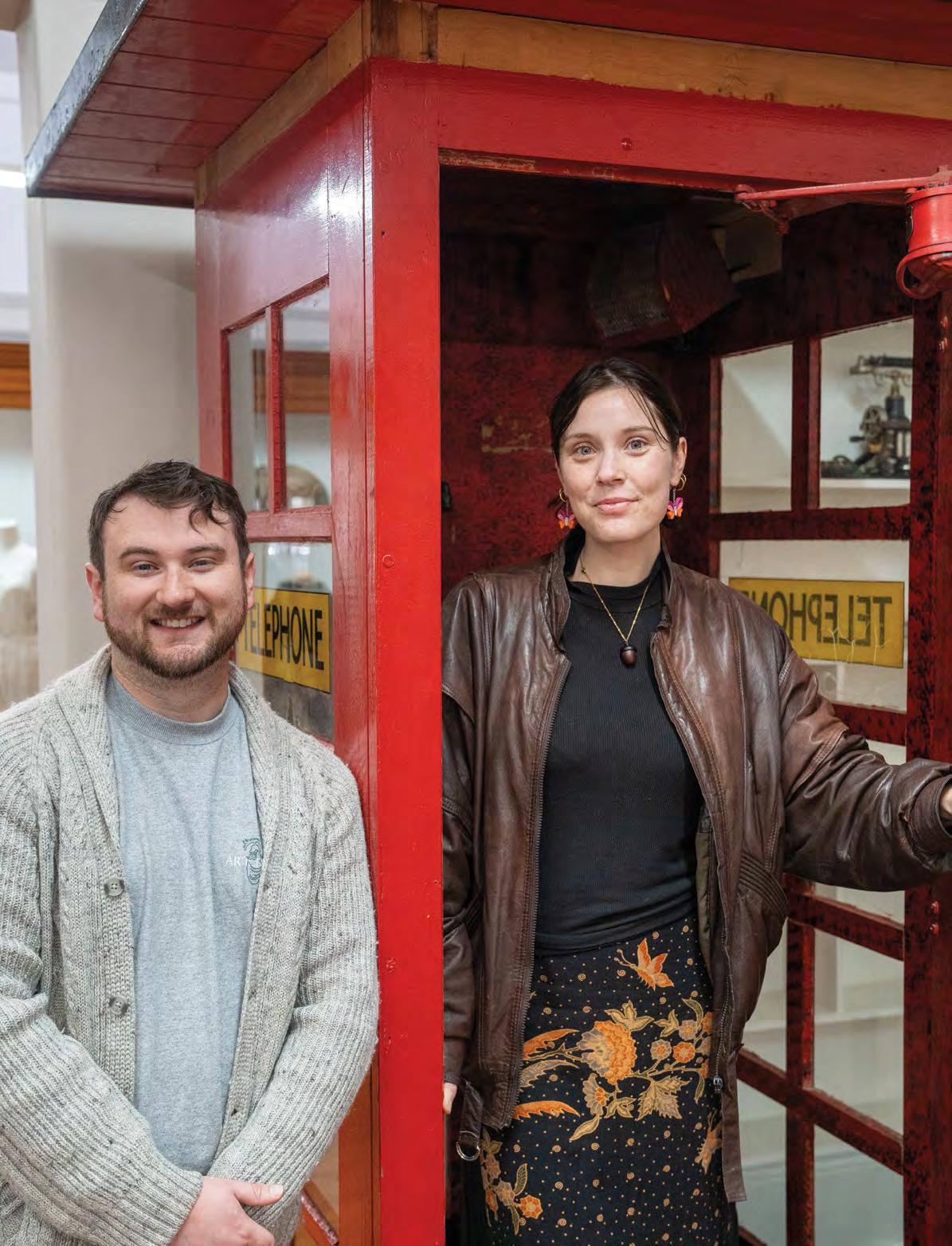
The museum team’s Liam O’Neill said the recent work respects the building’s heritage, but ensures facilities are accessible and appropriate for the 21st century.
“Until now, the building has not had an accessible entry or bathroom,” said Liam.
“I’m thrilled that it will now be easier for everyone in our community, as well as visitors to the region, to come into the Folk Museum, explore the collection, and enjoy the exhibitions and public programs we are keen to share.”
Since its original construction in the 1860s, the museum building has been a Literary Institute, Arts and Mechanics Institute, public library and museum. It is the longest serving public use building in Armidale, and home to a significant collection of items with local and regional significance.
“Armidale Folk Museum is important to our community, and people connect with the objects and stories there,” said Liam.
“Many local children visit in their first years of school and then come back with their parents or grandparents who then have great prompts for sharing stories.”
Visitors to the region keen to learn a little of the history of the area appreciate the museum. It is also a valuable resource for students, researchers, and historians.
Ahead of the re-opening, museum assistant Eva Rummery curated a special exhibition that focuses on women’s perspectives, and their role in Armidale’s history.
“With the new layout of the museum, exhibitions will be able to change more regularly and visitors will be able to see parts of the collection that have never been seen before,” said Eva.
“It was a pleasure to examine and select items in our collection that tell stories of local, historical service women and the work they did in our community.”
Future planned exhibitions will showcase the fire service, the history of immigration to Armidale and medical care.
“It was a huge effort moving the collection off-site for the duration of works, and then bringing it back ready for the re-opening,” said Liam. “The contractors, and especially the museum staff and volunteers have been amazing.
“We are excited to welcome everyone back into the Folk Museum, and look forward to co-designing exhibitions and programs that will resonate with our community and visitors alike.”
The Armidale Folk Museum access and amenities upgrade has been funded through Armidale Regional Council and received almost $250,000 in funding support from the NSW Government via the Stronger Country Communities Fund.
This project has restored the museum’s Rusden Street entrance, creating an accessible entry that enables more people to visit and utilise the museum space. Other improvements include installation of toilets (including an accessible toilet) and a kitchenette, ensuring all public spaces are accessible for wheelchair users.
Armidale Folk Museum is open Wednesday to Monday 10am to 2pm, closed Tuesdays.
Angus Dalgleish loves to get his hands dirty and tinker with machinery; it’s a passion he shares with his grandfather, Rob Taber.
When Angus was just two years old, his grandparents brought home a John Fowler steam traction engine built in 1904. Angus’ grandmother, Sally, recalls the cherished family memory with fondness and a chuckle, as two-year-old Angus, in just nappies, was so excited to see the new engine arrive. There’s photographic evidence, of course, in the family photo album. No doubt the photo will surface when Angus turns 21, but that’s a way off yet and Angus has much to learn.
This was the moment a bond was cast between Angus and his grandfather “Gump”, and a shared love and interest in old machinery has meant many hours together working on machinery and joining his grandparents at shows like the annual Armidale Autumn Festival, where the steam traction engine is a highlight of the parade.
“Whenever we take the engine out to shows, I look after the wood and check the oil and water,” said Angus.
“My dad will drop me off really early and grandfather Gump and I start the engine.”
At just 14 years old, Angus is a wise soul who’s learnt to listen and absorb from anyone prepared to give him the time of day.
“It is the people and their love of these engines that is important to me,” said Angus.
“People like my grandfather and those who share the love of old machinery are who I enjoy learning from. I’m only 14 and they have so much experience and knowledge that I want to absorb.”
Angus is now one of the youngest members of the New England Antique Machinery Club. A couple of his friends have also joined the club, where the average age is around 70.
“When I was younger and a student at Kelly’s Plains Primary School, we had a couple of excursions to the Armidale Show, where we got to see all the old tractors and engines,” said
Angus. “All my friends thought it was the greatest thing and loved the noise of the engines and wanted to learn more about it.
“Now I am a member of the club, I want to go to more shows and teach other people how the engines and tractors work.”
Rob is always so surprised at how young people adapt so quickly to learning about old machinery and how they run.
“Young people learn so much more easily than older people; it always amazes me,” said Rob. “Particularly Angus, who has been so keen to understand how things work. He spends nearly every Saturday out on the farm with me in the shed, where we make all sorts of things.
“What’s lacking so much with this younger generation is that they don’t really understand how these things work and there is nobody to teach them. I think it is now up to the older generation to pass on some of these skills back on to younger people. And Angus is a typical example of that.”
Angus knows that he wants his future to be around engines and machinery and hopes maybe to be a mechanic. But for now, grandfather Gump is keen for him to learn lathes, the milling machine and other metal work.
The Armidale Autumn Festival is a long-standing community celebration that showcases the region’s seasonal beauty, cultural vibrancy, and rich local heritage since its inception in 1992.
A key contributor to the festival’s enduring appeal has been the New England Antique Machinery Club, which has been involved since the festival began. The club brings history to life through engaging displays of restored machinery, vintage engines, and working demonstrations that highlight the region’s agricultural and mechanical heritage. These exhibits not only offer entertainment but also provide valuable educational insights into the technologies and skills that shaped rural life in earlier generations.
Looking to the future, there is exciting potential to further expand the heritage aspects of the festival. By building on the Antique Machinery Club’s contributions, the festival can deepen its focus on historical storytelling, traditional crafts, and interactive experiences.
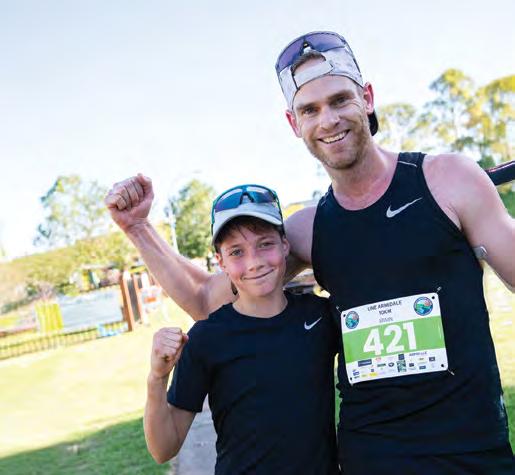
When the first runners crossed the finish line at the inaugural Armidale Running Festival, it marked more than the end of a race, it signalled the beginning of something much bigger for the region. At the centre of it all was Ryan Kelso, whose vision and leadership brought the event to life.
A proud local and successful business owner, Kelso (as he is known in the community) has long believed Armidale deserves greater recognition, not just for its natural beauty, but for the strength of its community, its businesses and its people.
Having travelled widely to running events with friends, Kelso had seen how these weekends could transform towns. They drew visitors, energised local economies and created a sense of shared experience that extended well beyond the course itself. Inspired by those experiences, he set out to create something similar at home.
“The focus was broader than running alone,” said Kelso. “The festival was designed to be inclusive, welcoming experienced athletes, casual joggers and first-time participants alike.
“It was about getting people outdoors, encouraging movement, and creating an environment where everyone felt part of something positive.”
That philosophy was shaped by Kelso’s own journey. Only a few years earlier, he had taken up running as a way to support his mental health and find balance.
What started as a personal outlet quickly became something more meaningful, reinforcing the connection between physical activity, wellbeing and community. That perspective helped guide many of the decisions behind the festival, ensuring it prioritised participation, encouragement and accessibility.
Turning the idea into a reality, however, required an enormous amount of work.
As the lead organiser of a brand-new event, Kelso faced months of planning without a clear template to follow. Every detail carried uncertainty, from course design and logistics to scheduling, merchandising and importantly, expectations. What followed, though, was a strong show of community support.
“More than 40 volunteers dedicated their time across the weekend, taking on a wide range of roles, many of them behind the scenes,” said Kelso.
“They helped set up courses, guide runners, manage registrations and ensure everything ran smoothly from start
to finish. Local businesses also played a significant role, with more than 20 sponsors backing the event and contributing to its success.”
Across the weekend, more than 800 participants took part, with over 40 percent travelling from outside the region, a strong result for a first-time event.
One of the most memorable moments of the weekend came from local runner Mack Oxley, who delivered an extraordinary performance in his hometown. Completing his first half marathon, he set a course record and broke the Under-13 world record, cheered on by the local community.
For Kelso, these moments highlighted the true impact of the event.
“The success of the festival was not simply measured in numbers, but in the way people came together to make it happen, from volunteers and sponsors to participants and spectators,” said Kelso.
“Running this event was always about building something lasting, an event that reflects the spirit of Armidale and continues to grow in the years ahead.”
Armidale Regional Council played a key role in supporting the inaugural Armidale Running Festival.
Council’s support focused on enabling the event to succeed, from facilitating infrastructure and approvals through to providing practical, behind-the-scenes assistance.
Council’s Sport and Recreation Development Officer, Chaise Doran, also played an important role behind the scenes, helping link organisers with key resources while contributing her own time to support planning and logistics.
Armidale’s hospitality scene is set to expand with an exciting new addition, as one of the region’s most historic venues prepares to reopen under a refreshed vision, bridging heritage, community, and modern design.
The transformation of the former Wicklow Hotel into its original identity, The Armidale Hotel, represents more than a refurbishment as it highlights a story of connection between people, place, and the future of the city.
At the centre of the project is an unlikely but compelling career shift. After three decades working in finance broking derivatives across Sydney and Tokyo, project manager Alister Killen was searching for a change of pace and a new challenge. Regular visits to family in Armidale planted the seed for something different, and when the Wicklow Hotel came onto the market, the opportunity was clear.
With established connections to the Feros Group through mutual friends, Alister’s idea to redevelop the iconic site quickly gained traction. He brought the opportunity to the Feros team, who travelled to Armidale to inspect the property and, recognising its potential, moved swiftly to partner on the acquisition.
The site’s significance became even clearer once work began, with Alister closely involved in uncovering its history as the oldest licensed premises in the New England region, first opening its doors in 1852. Restoring its original name, The Armidale Hotel, is a deliberate nod to that proud past.
For Alister, the decision to leave his long-standing finance career and relocate to Armidale marked a major personal shift.
“I am now working on the ground with the Feros Group and will eventually become the venue’s licensee,” said Alister. “I have been deeply involved in guiding the project from concept through to construction, bridging both the strategic vision and day-to-day delivery.”
The project also carries a strong personal connection for the Feros family. Founded in the early 1970s by Nick Feros, who was born in nearby Uralla and educated in Armidale, redeveloping this site represents a meaningful homecoming.
The family’s ethos has long shaped their venues: welcoming, community-oriented spaces where quality food and connection are at the forefront. That philosophy is central to the Armidale Hotel’s reinvention and is something Alister has embraced as part of his transition into the hospitality industry.
Equally important to the project’s momentum has been the positive relationship with Armidale Regional Council. From the outset, council demonstrated a proactive approach, helping to ensure confidence in the region’s growth and potential.
“The first meeting with council was a real incentive,” said Alister.
“It was clear they were committed to making Armidale a place where people genuinely want to spend their time.”
This alignment between private investment and public vision has been a key factor in shaping a development that is not only commercially viable, but community-minded.
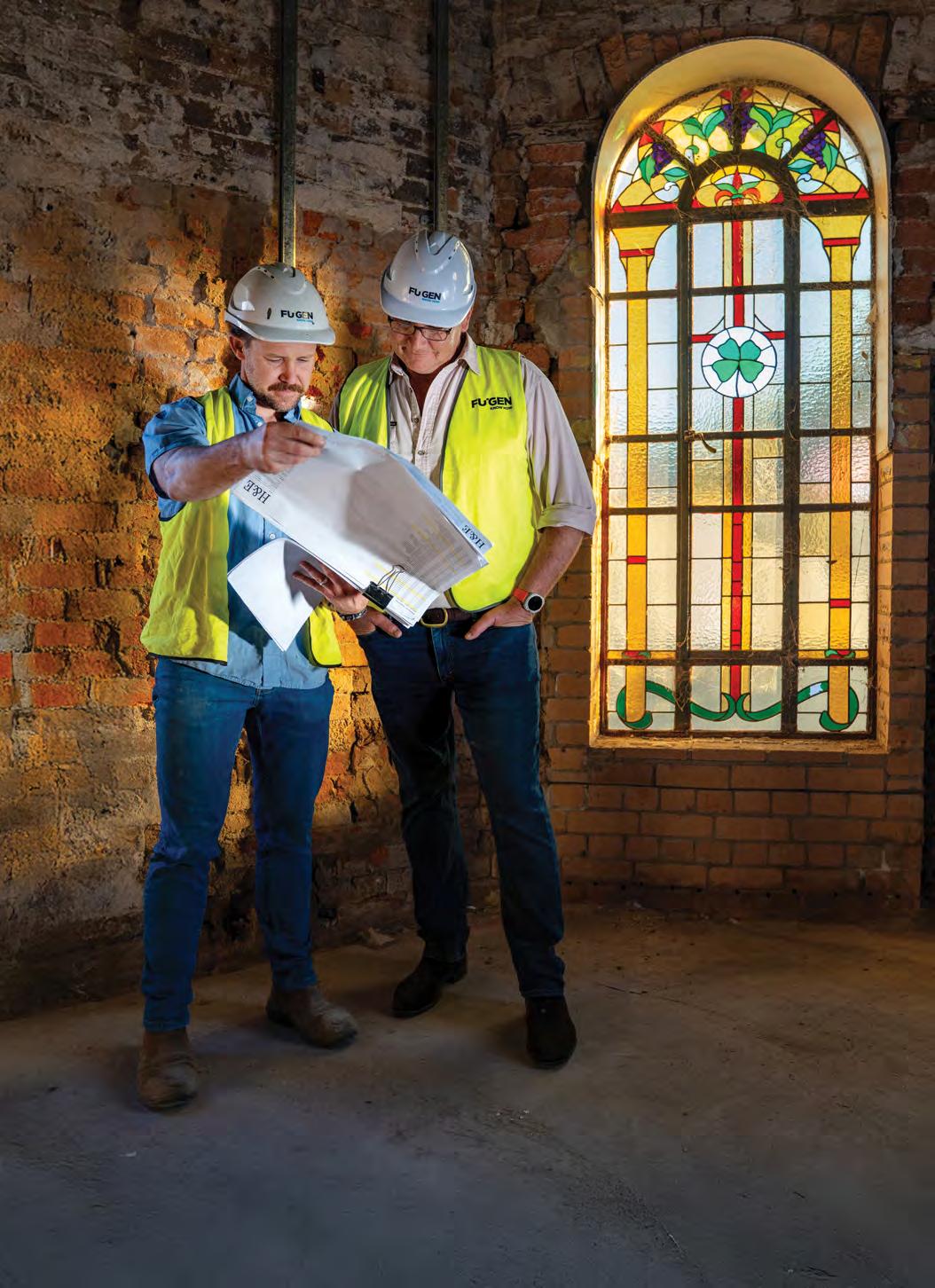
The renovation itself is extensive. After sitting closed for 18 months, the site required significant structural and design work. Its previous layout posed challenges, with a disjointed flow that limited how patrons could move through the space. Throughout this process, Alister has worked closely with experienced builders Fugen and architects H and E, gaining first-hand insight into the complexities of reimagining such a significant venue.
“The redesign has focused on opening the space up and creating a seamless customer experience while retaining the charm of its heritage features,” said Alister.
“The reimagined Armidale Hotel will offer a diverse range of spaces to cater to different groups and occasions. The Sports Bar will maintain an intimate feel, preserving original elements alongside modern additions such as large screens, a pool room, and an open fireplace.
“Beyond this, the venue expands into a lounge bar and a semicovered beer garden, blending indoor and outdoor environments to suit Armidale’s seasons.”
Unique features, including a library room that doubles as a private dining space, add character and flexibility. For families, a thoughtfully designed indoor play area, positioned with views towards open green space, reflects the venue’s commitment to inclusivity.
Alister said the redevelopment was not just about reworking a building; it is about re-establishing a gathering place.
“We really want the Armidale Hotel to become a venue where locals can celebrate milestones, enjoy casual meals, attend events, and connect with one another,” said Alister.
When Dr Rachael Wallis moved to Armidale 18 months ago, she came looking for a walkable town with a cool climate, reasonable house prices, and a community with both values and backbone. What she didn’t expect was how quickly Armidale would hand her the keys and say: ‘go ahead, build something’.
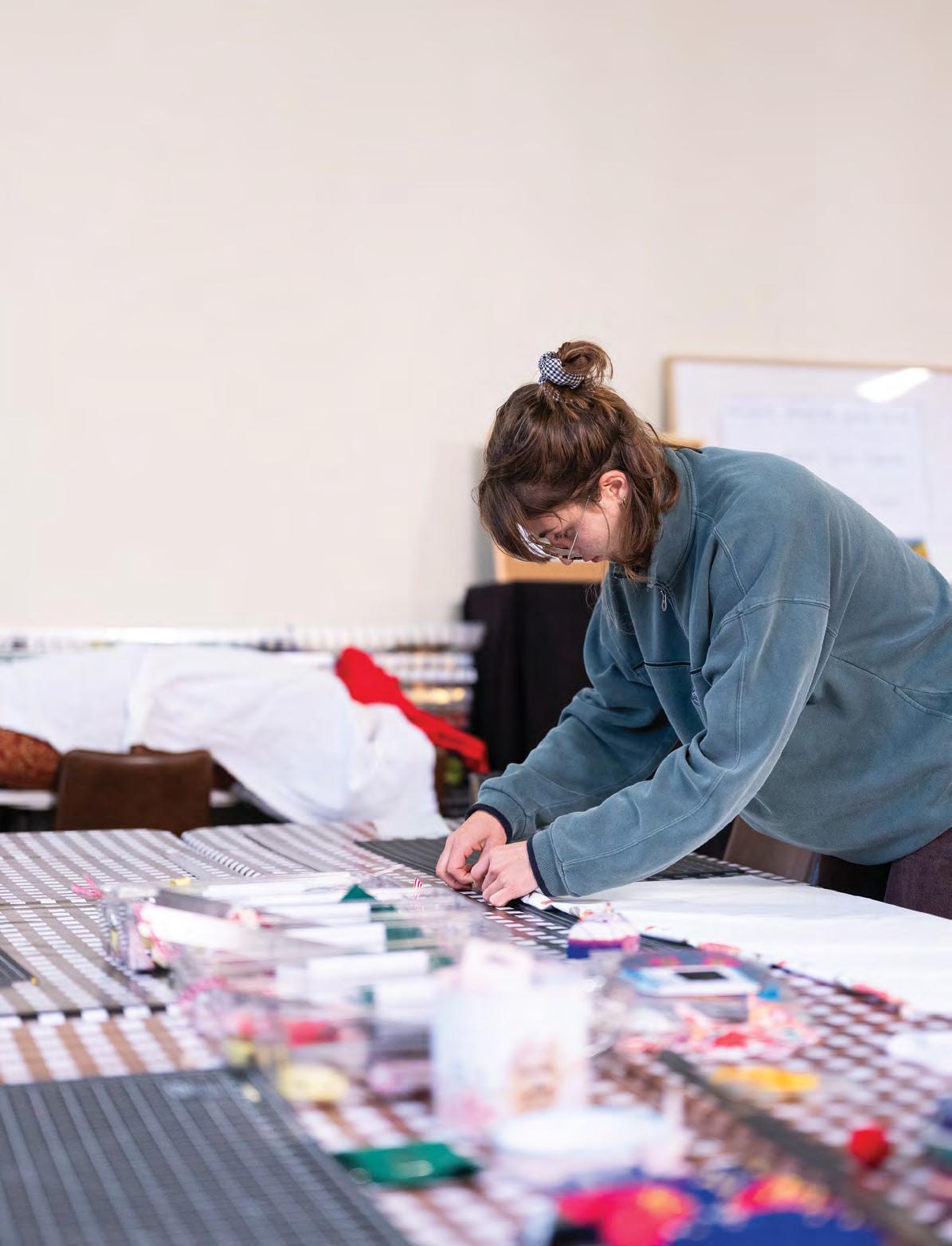
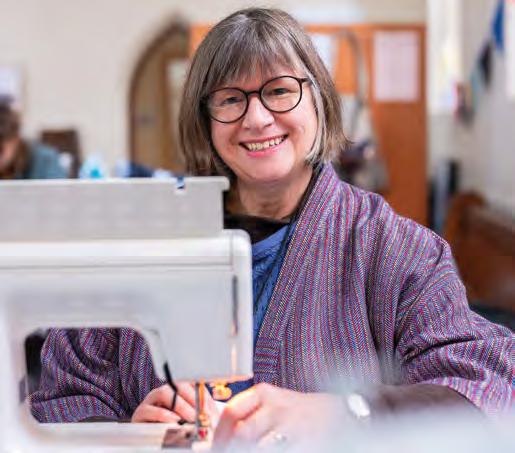
Thread Shed Armidale opened its doors on 23 April, 2026, in Wesley Hall at the Uniting Church on Rusden Street and Armidale was ready. To date, over 600 visitors have come through, attending more than 35 classes and workshops on top of the regular drop-in sessions. Eight donated sewing machines and an overlocker hum in a studio beautifully stocked through community generosity.
Happily, ensconced in that studio, a local volunteer is carefully stitching together the shoulder seams of a used, handknitted, mustard jumper. A tiny tear meant the garment was destined for landfill until Thread Shed’s Mending for Op Shops program intervened. Volunteers collect lightly damaged garments from Vinnies and Lifeline, repair them, tag them as mended, and return them to the shelves. A split seam. A missing button. Twenty minutes of skill and attention, and a beautiful thing gets another decade of life.
It’s a quietly radical idea and one that founder Rachael Wallis is passionate about. Research shows that most textiles in landfill have nothing seriously wrong with them. Thread Shed’s mission is to teach people that mending is not a lost art – it’s a practical act of defiance, that sparks resilience and creativity.
The community that has gathered around this mission is wonderfully diverse. Fathers learning to make school clothes for their kids. A man in his 20s who brings his own machine to sew dice bags for his gaming group. A banker who wants to surprise his partner – the “creative one” in the relationship – with
something handmade. Ezidi and Congolese women who come for a Thursday morning session, stay through the lesson, and come back the following week.
Thanks to the Rotary Club of Armidale, a series of structured sewing lessons has been offered to members of Armidale’s Ezidi and Congolese communities – pillowcases, bags, elasticwaist skirts, zipped cushion covers, and mending – and the second funded series is already fully booked.
In October, Thread Shed will take part in the Armidale Creative Streets Festival – three weeks celebrating creativity as a living, breathing part of daily life in this region. With support from an Armidale Regional Council grant, Thread Shed is bringing Nina Gbor to Armidale on October 24. A celebrated NigerianAustralian fashion sustainability advocate, Gbor will show how a single garment can be styled in radically different ways – helping people fall back in love with what’s already in their wardrobe.
For Rachael, it all connects. “Ultimately,” she said, “I’m aiming to show people ways of reducing their wardrobe size and buying fewer items – because we really can’t keep digging the hole deeper.”
And Armidale, it seems, is ready to hear it.
Armidale Creative Streets Festival opens 17 October with a street festival (4pm–9pm across the Mall, East Beardy Mall, Beardy Street and Marsh Street) and runs until 8 November, 2026. The program includes the New England Garden Festival, New England Sings, Black Gully and much more. If you would like to register for Nina Gbor’s workshop at the Thread Shed, visit threadshed.org for more details and to register your place.
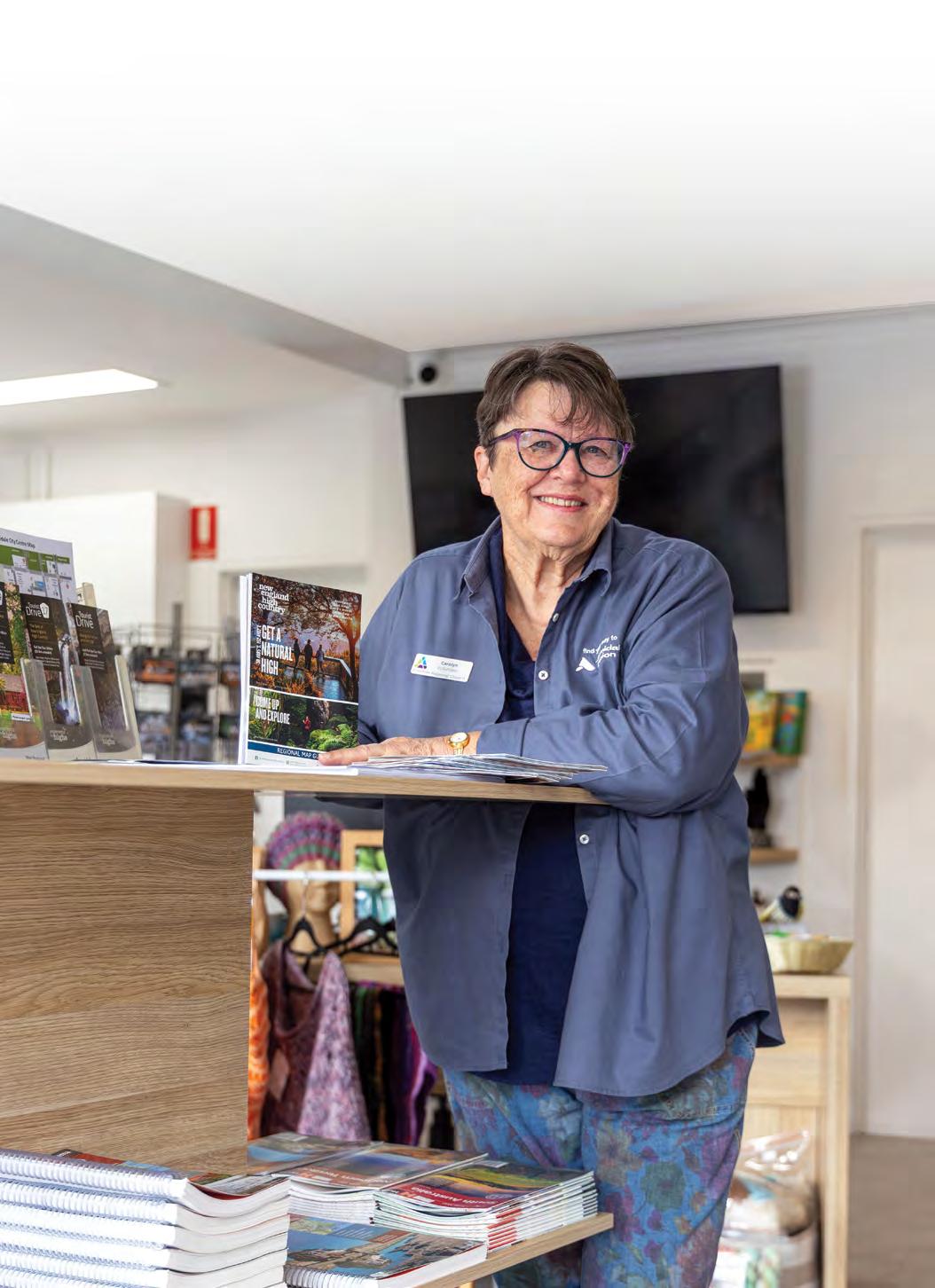
Step through the doors of Armidale’s Visitor Information Centre (VIC), and you’ll quickly understand why it has so many five-star Google reviews. Time and again, visitors leave glowing feedback – not just for the wealth of information on offer, but for something far more memorable: the people behind the counter.
At the heart of this success is a dedicated team of volunteers whose warmth, knowledge and genuine pride in Armidale transform a simple stop for ideas on what to see in the region into a highlight of any trip.
For Carolyn Gadd, volunteering at the VIC has been a natural extension of a lifetime spent in the community. Since 2020, she’s been welcoming visitors, restocking shelves, folding brochures and sharing stories.
“I love meeting the visitors to our town,” she said.
“People come from all over Australia and overseas, and often they teach us as much as we teach them.”
It’s this two-way exchange that defines the VIC experience. Travellers wander in with questions, curiosity or simply a need for connection – and leave with tailored recommendations, local insights and, often, a deeper appreciation of the region.
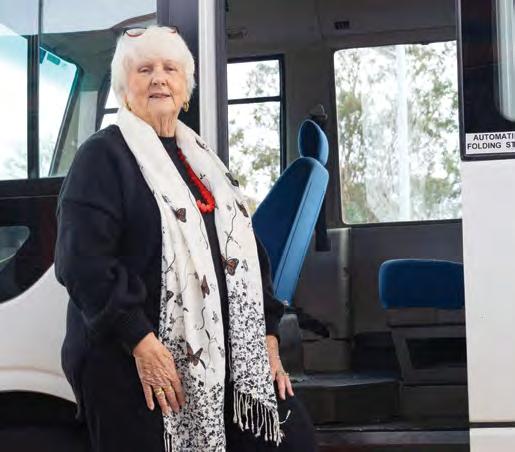
Carolyn’s role expanded when she became a Heritage Bus Tour guide, a position perfectly suited to her background as a longtime resident and former teacher. On board, history comes alive – not just in dates and landmarks, but in personal anecdotes and a palpable sense of place.
“I’m able to share the story of Armidale’s past, but also what’s happening now,” she explains. “There’s wonderful work being done in the community, from BackTrack to the Urban Rivercare Group, and it’s important visitors hear about that too.”
Back inside the VIC, the simple act of helping someone unfold a paper map becomes something special. While digital tools may dominate, Carolyn notes that traditional maps remain “very popular” and the VIC’s collection is among the best.
“Helping people use our maps to find their way is one of my favourite things,” she said. “It’s a real moment of connection.”
That connection is what visitors remember most. Flick through the Visitors’ Book and a consistent theme emerges: friendly
faces, helpful advice and beautifully presented resources.
Carolyn believes the VIC’s remarkable run of five-star reviews comes down to one thing: personalisation.
That might mean recommending iconic stops like the Aboriginal Cultural Centre and Keeping Place or the New England Regional Art Museum (NERAM). Or it could be guiding someone through the mall’s self-guided heritage walk. For nature lovers, the nearby gorges and waterfalls are unforgettable.
And while the locations are impressive, it’s the storytelling that brings them to life.
For fellow volunteer Glenys Williams, that storytelling is second nature. With 30 years’ experience in a local travel agency as a tour guide and consultant, she brings a wealth of knowledge –and passion – to the Friday heritage bus tour.
“I really get a lot of enjoyment out of taking the tours and showing people around our beautiful city,” she said. “I tell them all about the history of Armidale, where it is today, and our strong links to agriculture and local business.”
For Carolyn, joining the VIC team came at a time of personal change, offering both purpose and connection.
“Volunteering is very good for your wellbeing,” she said. “It gets me out of the house, lets me use my skills, and most importantly, gives me the chance to meet such a wide range of people. You get back as much as you give – and I love it.”
The Armidale Visitor Information Centre (VIC) is open 7 days a week Monday – Friday 9-5, Saturday 9-3 & Sunday 9-1. The VIC is run by 7 staff and 11 volunteers who also run the free Guided Heritage Tour which runs Monday, Tuesday, Thursday & Friday leaves from VIC at 10am.
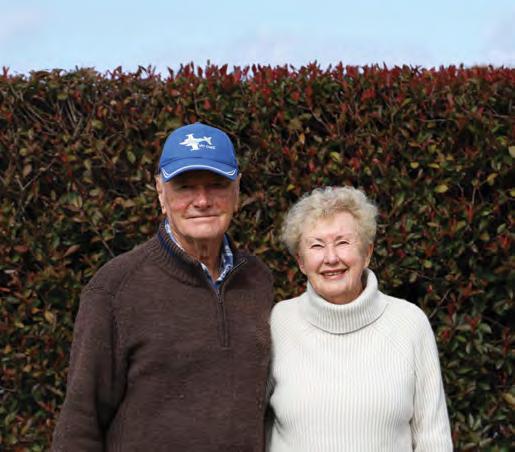
Age is not a barrier for Barbara and John Ross, who are helping to shape a greener, more sustainable Guyra through practical ideas and a shared commitment to community.
Barbara and John are a familiar presence in Guyra, quietly contributing to the kind of work that strengthens a community from the ground up. Barbara brings the ideas, John brings the steady support, and together they turn thoughtful concepts into practical outcomes that people can see and enjoy.
“After retiring into Guyra from our farm at Black Mountain, we began looking for projects that would continue to give our lives purpose” said Barbara.
Long-time members of the Guyra Garden Club, they both had participated over the years with other club members in maintaining the lovely McKie Park garden at the southern entrance to the town.
Sadly, the garden had suffered badly because of the drought that was gripping the region and many of the trees and plants had died. Council had removed the dead trees, but the garden was in a sorry state.
Compounding this, COVID-19 arrived, which meant that working bees could no longer be held, so they decided that, as a couple, they could spend the lockdown restoring the garden.
At a time when community connection mattered more than ever, Barbara and John were right in the middle of it, helping create a place people could feel proud of again.
“The experience gained from more than 30 years of gardening in this sometimes challenging area, along with the wise advice of fellow Garden Club members, has fostered an appreciation for gardens that are both beautiful and practical, and well suited to local conditions,” said Barbara.
That same mindset has carried into their work with the Guyra & Community Progress Association, where their ideas have continued to take shape.
On a road trip in Western Queensland, the couple noticed that every small shire office building was beautifully landscaped and recognised the potential for something similar in Guyra.
Armidale Regional Council senior staff welcomed the plan and what followed was an example of what can be achieved when groups work together.
“Council staff removed the existing plants and old shrubs and replaced the dangerous path into the building,” said Barbara. “Then, as a project of the Progress Association, and with the help of participants in the Dept. of Corrective Services Community Service Programme, new gardens were created and planted. And council provided the drip watering system and mulch.
“The project was all about creating something that looks good, works well and lasts.”
What followed was a clear focus on sustainability, designing landscaping that council can maintain with minimal water and low ongoing upkeep.
Their concept not only revives the Guyra Council building precinct but also extends to the Bradley Street car park, where drip irrigation supports a practical, water-wise design and helps create a more cohesive and welcoming civic space.
Barbara and John’s contribution is something many in the community understand well – that lasting change begins with simple ideas, shared effort and people who genuinely care about the place they call home.
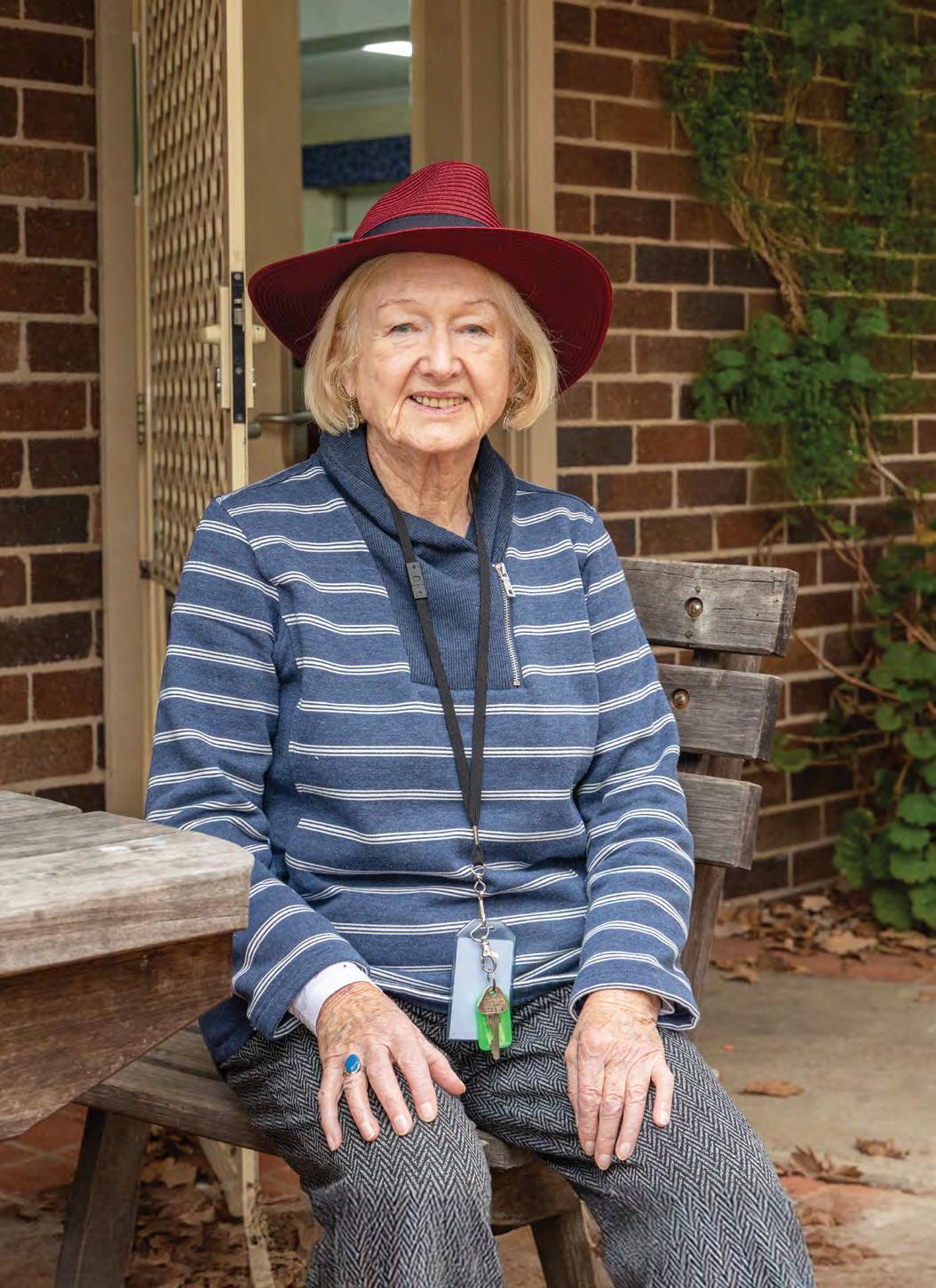
For more than 19 years Jane Davies has led the Armidale Volunteer Referral Service (AVRS). She has been an integral part of Armidale Regional Council’s community services team, but most importantly she is an important part of the Armidale region’s community.
The AVRS was established in 1998 with funding from The Centre for Volunteering and the Australian Government Department of Social Services.
Since then, it has been connecting volunteers with the organisations who rely on volunteers. People keen to become actively involved in their community by volunteering time and skills, had a point of contact – a person who could assist them to match their interests to current volunteer roles.
For almost two decades Jane has been the face of the AVRS, the friendly voice at the end of the phone, the welcoming host (and expert cake-baker) of volunteer morning teas, and the ‘expert-in-the-room’ when it came to promoting the value of volunteering and connecting volunteers and organisations.
Jane enjoys working with people, especially those who genuinely want to put something back into their community.
“Their motivation is always good,” she said.
“I love supporting people to give back, and I want to help organisations to access the extra hands they need to make a positive difference in our community.”
Funding for the AVRS has now been discontinued and the service in its current form has ceased, leaving space for a new model.
While disappointed that the AVRS was ending, Jane and many of those she has supported in her role gathered for one final AVRS Volunteer Morning Tea in June.
It was a moment to thank and celebrate Jane for her work and the positive impact she has made so far.
The group included representatives and volunteers from organisations such as Armidale Neighbourhood Centre, Community Support Hub, Community Corrections, Sanctuary, Saumarez Homestead, and the Visitor Information Centre.
As was usual at AVRS morning teas, there were also fresh faces keen to begin volunteering.
So, what next? Jane will take a short break to travel but is keen to reconnect with everyone on her return.
The group agreed the network Jane has built through the AVRS is a valuable social resource. They appreciate the opportunity to build connection and community
Plans were quickly afoot to collaborate and establish regular opportunities to gather and share – to build on Jane’s great work.
“The network and knowledge-sharing is so important to individuals, organisations, and the community,” said Jane. “It connects those who should be connected, minimises project duplication, and strengthens all the good things.
“Everyone benefits.”
The AVRS, auspiced by Armidale Regional Council and funded by The Centre for Volunteering and the Australian Government Department of Social Services, was established in 1998.
The service promoted the values of volunteering, assisted volunteers to match their skills and interests to current volunteer roles, and connected organisations and volunteers.
The AVRS hosted regular gatherings for volunteers as well as events to celebrate National Volunteer Week and International Volunteer Day and managed the annual New England Regional Volunteer Awards.
For more about volunteering and current opportunities: armidale.nsw.gov.au/Council/Volunteer
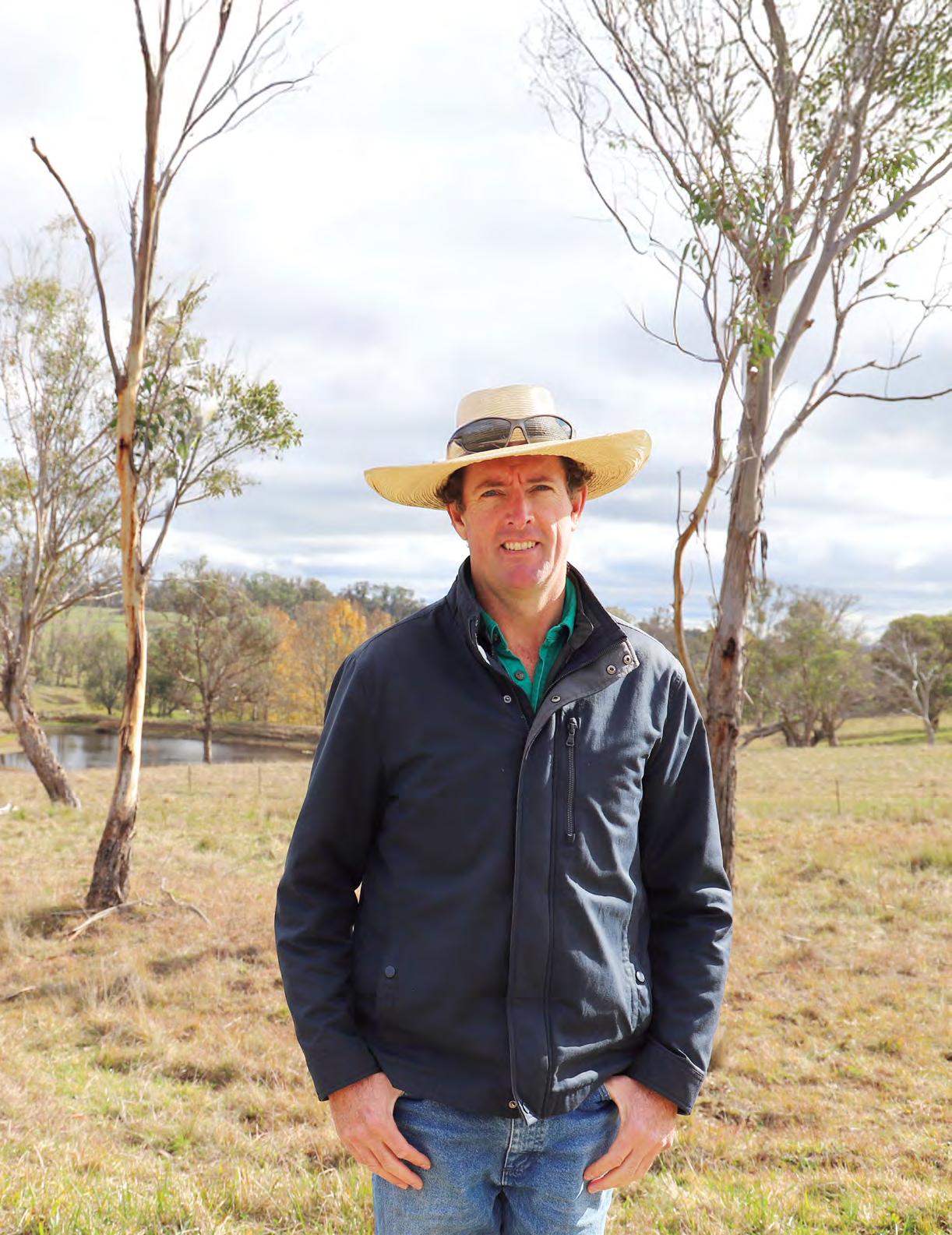
For local landholder Ben Evans, attending the Landscape Rehydration Seminar in Guyra wasn’t about starting from scratch. It was about building on experience and deepening a long-standing commitment to better land and water management.
Having completed rehydration training in the past, Ben saw the multi-day seminar as an opportunity to refresh his knowledge and explore new ideas.
The hands-on program moved across several locations, from Kentucky to CSIRO’s Chiswick site, before concluding on his own property, offering practical insights grounded in real landscapes.
One of the most valuable takeaways was refreshingly simple. There are many ways to slow water down.
Rather than replacing existing practices, the seminar reinforced and expanded Ben’s approach, highlighting how careful observation and small, timely interventions can create meaningful, lasting change.
“It’s about reading the landscape more closely, seeing where issues exist, where they might develop, and how to respond early.”
Inspired by what he learned, Ben is now planning to trial flow-through structures in smaller gullies where head cuts have formed.
Using brush packs made from materials already available on the farm, these structures aim to slow water movement, reduce erosion, and support healthier soils.
“It’s practical, low-cost, and something we can implement ourselves,” he said.
While the seminar focused on the Guyra region, the principles reach far beyond it.
“Landscape rehydration is relevant right across Australia, whether conditions are dry or wet,” he said.
Located near the headwaters of the Clarence River catchment, Ben’s property, Rampsbeck, plays an important role in influencing downstream outcomes. By slowing water and retaining topsoil, rehydration practices can reduce erosion and help moderate flows during heavy rainfall, benefiting both the landholder and the wider community.
But just as valuable as the technical insights, were the connections made along the way.
“It’s always enjoyable to meet like-minded people who are trying to improve their practices,” said Ben. “Sharing different perspectives can lead to really positive outcomes.”
Armidale Regional Council is working in partnership with Mulloon Institute and Southern New England Landcare to deliver Landscape Rehydration Seminars to the region. Visit snelandcare.org.au for upcoming events.
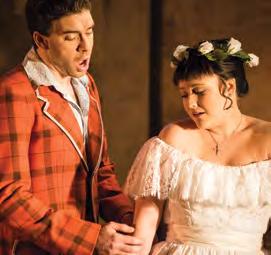
Opera Australia presents Don Giovanni
6 August | NECOM
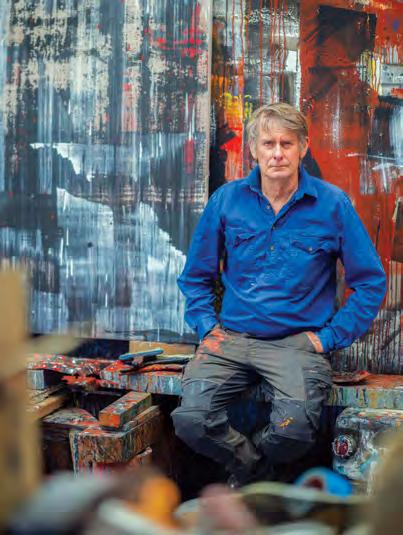
Unfamiliar Territory: Angus Nivison
31 July to 18 October | New England Regional Art Museum
Unfamiliar Territory is a major survey exhibition celebrating five decades of practice by one of Australia’s most respected contemporary painters. Bringing together significant works from public and private collections alongside the artist’s own holdings, the exhibition traces the evolution of Nivison’s deeply atmospheric and abstract engagement with the land. Based in Walcha in the New England region of New South Wales, Nivison’s practice is grounded in place yet resists literal representation. His paintings operate within an abstract and affective register, where landscape persists as an emotional and conceptual presence rather than a fixed image.
Marking the largest solo exhibition of his work to date, Unfamiliar Territory reveals an artist continually pushing the possibilities of abstraction while creating space for reflection, memory and wonder to emerge through the act of looking.
Don’t miss the opening night at NERAM which will run from 6pm-8pm on Friday 31 July. An artist talk will be held at 10.30am on Saturday 1st August.
Visit: neram.com.au
Armidale Vinnies Community Sleepout 2026
28 August | Sport UNE
NECOM is proud to present Opera Australia’s newest touring production of Don Giovanni for a onceonly performance in Armidale on Thursday 6 August at 7pm.
It’s the last day of Don Giovanni’s life, but he doesn’t know that. For opera’s own Casanova, it’s just another day of pleasure seeking. Seducing a bride on her wedding day. Breaking into a woman’s bedroom in the dead of night. Killing her furious father.
Even before the curtain rises, Mozart reveals Don Giovanni’s fate. An earth-shattering chord from the orchestra signals the gates of hell clanging open. The scoundrel’s debauched days are at an end.
Book here: trybooking.com/events/landing/1511632
Help Vinnies break the cycle of Homelessness by joining our Community Sleepout and braving the cold for one night at Sport UNE to raise funds for the Start Fresh Community Connections Program at Freeman House.
Make up a team from family and friends. Experience sleeping rough with just cardboard and a sleeping bag and pillow.
A warm meal and light breakfast will be provided. Hear inspiring speakers, take part in a trivia quiz and be present for our major raffle draw.
For more information visit: my.fundraise.vinniesnsw.org.au/armidalevinnies-community-sleepout-2026
Photo: Mike Terry.