

Dear readers,
The security situation in cyberspace remained tense in 2025 For example, according to the National Cyber Security Centre (NCSC), 164 security incidents affecting critical infrastructure were reported between April and September 2025 A continuous and strong commitment from all public and private actors to improve their cyber security posture is needed to address these and many other emerging threats.
The Cyber-Defence Campus (CYD Campus) of armasuisse Science and Technology contributes to this collective effort through various activities centred around its core task of anticipating, monitoring and advancing technological developments in cyber defence It remains fully committed to putting its knowledge and expertise at the service of sustainably strengthening Switzerland's cyber resilience in an increasingly complex and digital environment
This strategic focus is also reflected in close collaboration with the Swiss startup ecosystem and academic institutions In this regard, the Cyber Startup Challenge 2025, on the theme of ‘Graph Analytics Technologies’, provided innovative young companies with a platform to present high-potential solutions The startup Pometry stood out by winning this edition, demonstrating the relevance and maturity of its approach to current cyber security challenges
The CYD Campus is also heavily involved in promoting young talents To this end, the CYD Campus offers students opportunities to gain practical experience in the field of cyber security More than 30 students, 10 interns and 20 fellows have taken part in internships and research projects at the CYD Campus this year They have worked on topics like automation of security testing, the security of artificial intelligence, post-quantum cryptography, or electronic identities, contributing advances that inform practice, policy, and implementation For the CYD Campus, these initiatives not only strengthen its workforce, but also promote the emergence of a wider Swiss community of former participants: the CYD Alumni Association This association was created last year to maintain lasting links between participants after their active involvement with the CYD Campus
Over the course of the year, the CYD Campus successfully strengthened exchange, dialogue and collaboration within the Swiss cyber community through a wide range of activities and events Numerous networking formats contributed to an active and sustained interaction between stakeholders from academia, industry, and the federal administration A highlight was the CYD Campus Conference held on 29 October in Bern, which brought together nearly 300 participants to discuss «The Role of Cyber in Conflicts and (Hybrid) Warfare»
The CYD Campus has also organised two hackathons focusing on topical issues: satellite security and building automation and control systems (BACS) Thanks to these practical formats, participants from industry, academia, the public sector, critical infrastructure operators and the Armed Forces were able to deepen their practical knowledge, exchange insights and strengthen cross-sector collaboration to address current and future cyber security challenges
In order to identify cyber threats and their potential impact at an early stage and develop innovative solutions to mitigate them, the CYD Campus continued its research programme, which is being developed in close cooperation with partners from academia, industry, and stakeholders from the federal administration. These
efforts led to the publication of more than 50 scientific papers covering a wide range of technology areas, including artificial intelligence, large language models (LLMs), security testing, quantum computing, cyber security of space technologies, and the security of communication networks. In addition, the CYD Campus played a key role in identifying and responsibly reporting numerous security vulnerabilities in software and devices, thereby contributing to the protection and resilience of Switzerland’s digital infrastructure.
Before you delve deeper into the report, where we provide you with more detailed insights into our projects and activities, I would like to thank all employees, partners, and everyone else who contributed to them. In particular, I would like to thank Dr Vincent Lenders, who led the development and success of the CYD Campus since its foundation and whose lead I succeeded in November 2025.
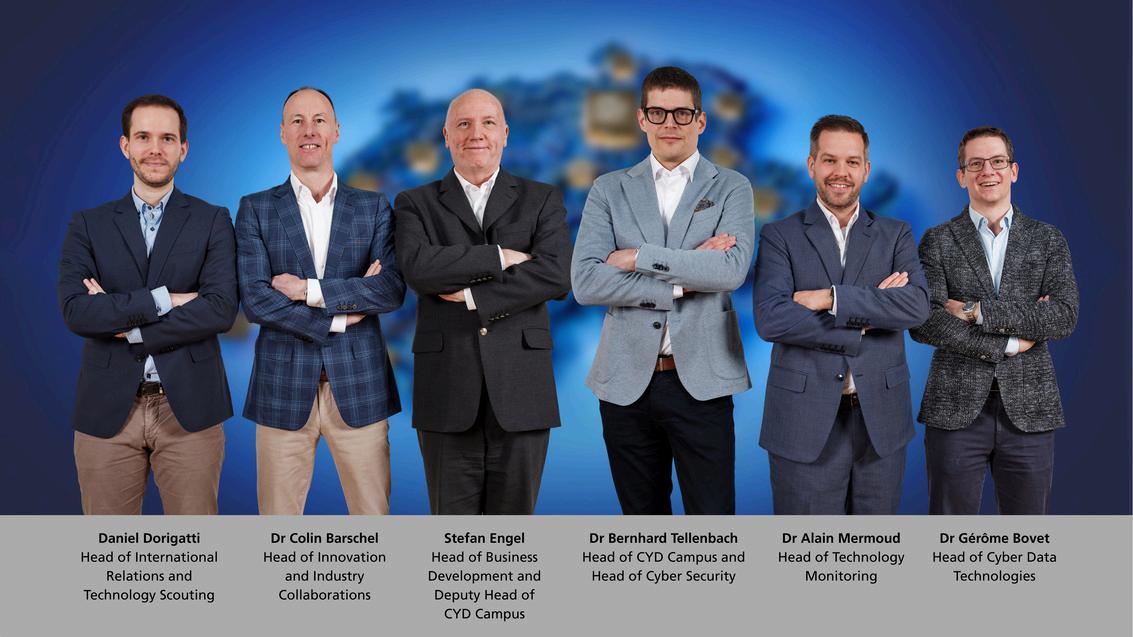
Dr Bernhard Tellenbach Head of Cyber-Defence Campus
Due to the continued growth of the digital environment and the increasing number of cyber threats affecting all sectors, the Swiss government considers cyber security to be a major issue for national security. In response to this, the Federal Department of Defence, Civil Protection and Sport (DDPS) has made cyber defence a strategic and operational priority and has increased the resources allocated to this area. In 2016, the Action Plan for Cyber-Defence (APCD) was introduced to provide a structured approach to cyber security. As the cyber threat landscape has changed significantly in recent years, the DDPS subsequently adopted a cyber strategy (“Strategie Cyber VBS”), building on the foundations of the APCD. These two strategic frameworks are aligned with the overarching National Cyber Strategy (NCS).
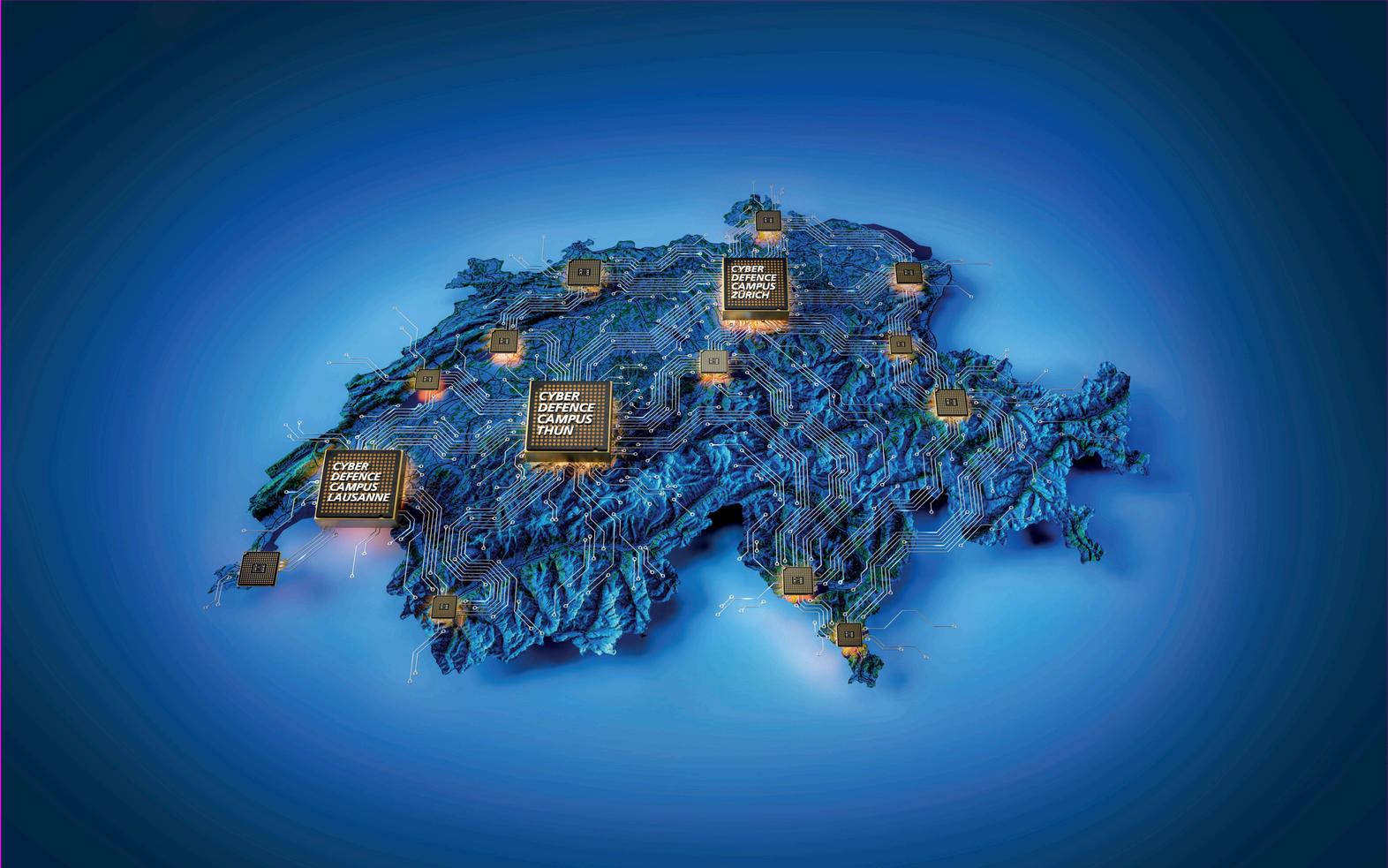
The Cyber-Defence Campus (CYD Campus) has been a central part of these efforts since its creation in 2019 and is part of the Federal Office for Defence Procurement (armasuisse). As a platform for anticipation and knowledge, the CYD Campus enables the DDPS to identify and evaluate new technological, scientific and societal trends in the cyber domain. The CYD Campus acts as a link between the DDPS, academia, and industry. To promote close collaboration with universities, industrial partners and the DDPS, the CYD Campus is located at three strategic sites: in Thun at the home base of armasuisse Science and Technology, in Lausanne at the EPFL Innovation Park, and in Zurich close to ETH Zurich. This multi-site organization enables it to effectively develop its expertise throughout Switzerland and fulfil the three main tasks of the campus:
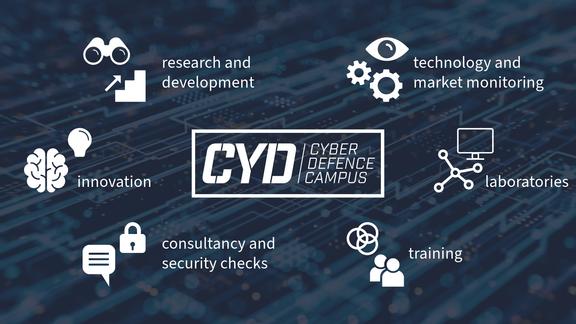
Early identification of trends in the cyber sector: This involves comprehensive technology and market monitoring, international
scouting of startups, and the development of a strong collaboration network.
Research and innovation in cyber technologies: By working closely with academia and industry, the CYD Campus identifies emerging cyber risks and develops innovative solutions. Furthermore, the CYD Campus strengthens the security and resilience of existing cyber systems by analysing them for vulnerabilities.
Training of cyber specialists: At the CYD Campus, students at bachelor’s, master’s, doctoral and postdoctoral level, are developed to meet future challenges. Guided by experts of the CYD Campus, students work on impactful projects and take part in joint training initiatives, such as hackathons, to strengthen their skills and promote innovation.
The year 2025 marked the departure of the inaugural head of CYD Campus, Dr Vincent Lenders and the appointment of Dr Bernhard Tellenbach as his successor
Since its creation in 2019, the CYD Campus has been shaped by the vision and guidance of Dr Vincent Lenders. Under his leadership, it rapidly evolved into an important element of Switzerland’s cyber posture. His tenure was characterised by the creation of a national and international research network, the development of innovative technologies to counter cyber attacks, and the strengthening of collaboration between the DDPS and academia and industry After more than 17 years at armasuisse, Dr Lenders left armasuisse at the end of July 2025 to assume a full professorship in cyber security at the University of Luxembourg.
As the CYD Campus bids farewell to Dr Vincent Lenders, it welcomes Dr Bernhard Tellenbach who took over management of the specialty area Cyberdefence at armasuisse Science and Technology and assumed responsibility for the strategic development of the CYD Campus starting on 1 November 2025.
As head of the cyber security team and leader of research programme “Cyberspace”, Dr Tellenbach made significant contributions to advancing research and operational priorities since he joined armasuisse S+T in 2022. In his role, he led and oversaw numerous research projects, mentored students, and set substantive priorities in areas such as network traffic analysis, attacks on networks and highly secure mobile platforms. His academic and professional background—including over ten years at the Zurich University of Applied Sciences (ZHAW) and a scientific career rooted in a doctoral thesis at ETH Zurich—reflects a deep commitment to cyber security research and innovation. His longstanding involvement in the Swiss cyber security community, notably through Swiss Cyber Storm and the SATW Advisory Board on Cyber Security, further underscores his alignment with the CYD Campus’ mission.
The communication of the Cyber-Defence Campus supports the mandate of armasuisse Science and Technology (S+T) by making its research, innovation, and testing activities in the cyber and emerging-technology domain visible and understandable to stakeholders.
The CYD Campus uses communication to convey scientific competence, build trust, and increase the impact of its research activities. Scientific publications and research results are disseminated to expert audiences to document findings, ensure traceability, and contribute to the scientific discourse. Participation in conferences, exhibitions, and specialist events enables the presentation of ongoing projects, exchange with national and international partners, and the fostering of collaboration in research and innovation. Information events and outreach activities for students and early-career researchers support knowledge transfer and contribute to the visibility of research and innovation pathways within the federal context.
Digital channels complement these activities. LinkedIn remained a central communication channel in 2025, with 64 posts published. Between January 2025 and January 2026, the CYD Campus reached approximately 110,300 LinkedIn users. The strongest reach peak occurred in October 2025, driven by communication around the CYD Campus Conference and the Cyber Startup Challenge, with a singleday reach of around 35,000 users. Beyond social media, the CYD Campus ensured consistent institutional communication through more than 15 official communications and two media releases, covering public announcements, educational content, and research and collaboration outcomes.
By ensuring that research and testing activities are clearly explained and accessible to relevant stakeholders, the CYD Campus supports the effective use and impact of armasuisse S+T’s contributions to Switzerland’s security.
10/02/2025: Vulnerabilities in TCAS II collision warning system for civil aircraft identified by CYD Campus
12/02/2025: Exploring Security for Building Automation and Control Systems
23/05/2025: Cyber-Defence Campus Technology Day
26/05/2025: National Cyberstrategy 2024: The Cyber-Defence Campus’ contribution to the digital resilience of Switzerland
11/07/2025: Research reports Cyberspace and Cyber & Intelligence Analytics
07/08/2025: Strengthening cyber defence and security: New study shows sustainable ways forward
01/09/2025: Success of the Technology Monitoring Day at EPFL
30/10/2025: Cyber Start-up Challenge 2025: The start-up Pometry Ltd from London wins over the DDPS


The CYD Campus competence network includes various national and international partners from industry and academia.
Bern University of Applied Sciences (BFH)
Center for Digital Trust (C4DT)
Eastern Switzerland University of Applied Sciences (OST)
HES-SO Valais-Wallis
Lucerne University of Applied Sciences and Arts (HSLU) Military Academy at the ETH Zurich (MILAK)
Paul Scherrer Institute PSI
School of Business and Engineering Vaud (HEIG-VD)
Swiss Federal Institute of Technology in Lausanne (EPFL)
Swiss Federal Institute of Technology in Zurich (ETHZ)
University of Applied Sciences of North-Western Switzerland (FHNW)
University of Applied Sciences and Arts of Western Switzerland (HES-SO)
University of Applied Sciences and Arts of Southern Switzerland (SUPSI)
University of Fribourg University of Geneva University of Lausanne
University of Neuchâtel
University of St.Gallen
University of Zurich
Zurich Information Security and Privacy Center (ZISC)
Zurich University of Applied Sciences (ZHAW)
Higher Education Institutions and Centres
IMDEA Networks, ESP
KTH Royal Institute of Technology, SWE
KU Leuven, BEL
Northeastern University, USA
Portland State University, USA
RPTU Kaiserslautern-Landau, GER
Ruhr University of Bochum, GER
University of Luxembourg, LUX
University of Murcia, ESP
University of Oxford, UK
Ad Novum
Anapaya
Astrocast
Brunner Elektronik
CYSEC
Decentriq
Effixis
FLARM Technologies
IBM Research
InfoSec Global
Kudelski Security
Modulos
Nationales Testzentrum für Cybersicherheit
Noser Engineering
Nozomi Networks
RUAG
SBB
Softcom Technologies
Swisscom
Tune Insight
Industry Partners
CounterCraft, USA, ENG, ESP
CybExer Technologies, EST
ONEKEY, GER
Ostorlab, USA
Patronus AI, USA
Plug and Play, FRA
Quarkslab, FRA
SeRo Systems, GER

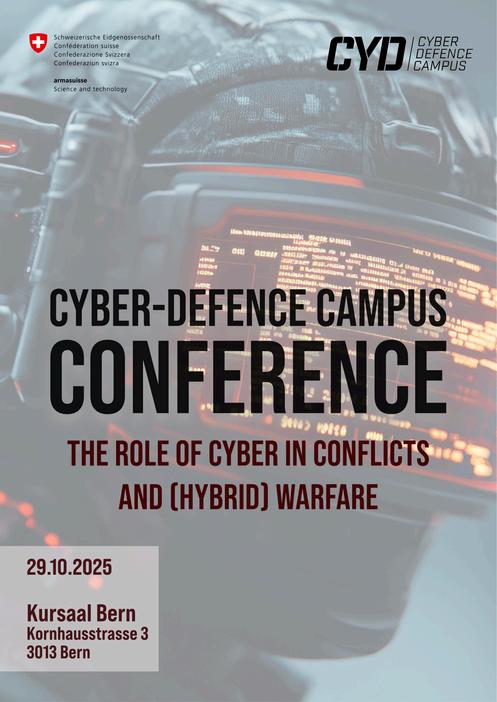
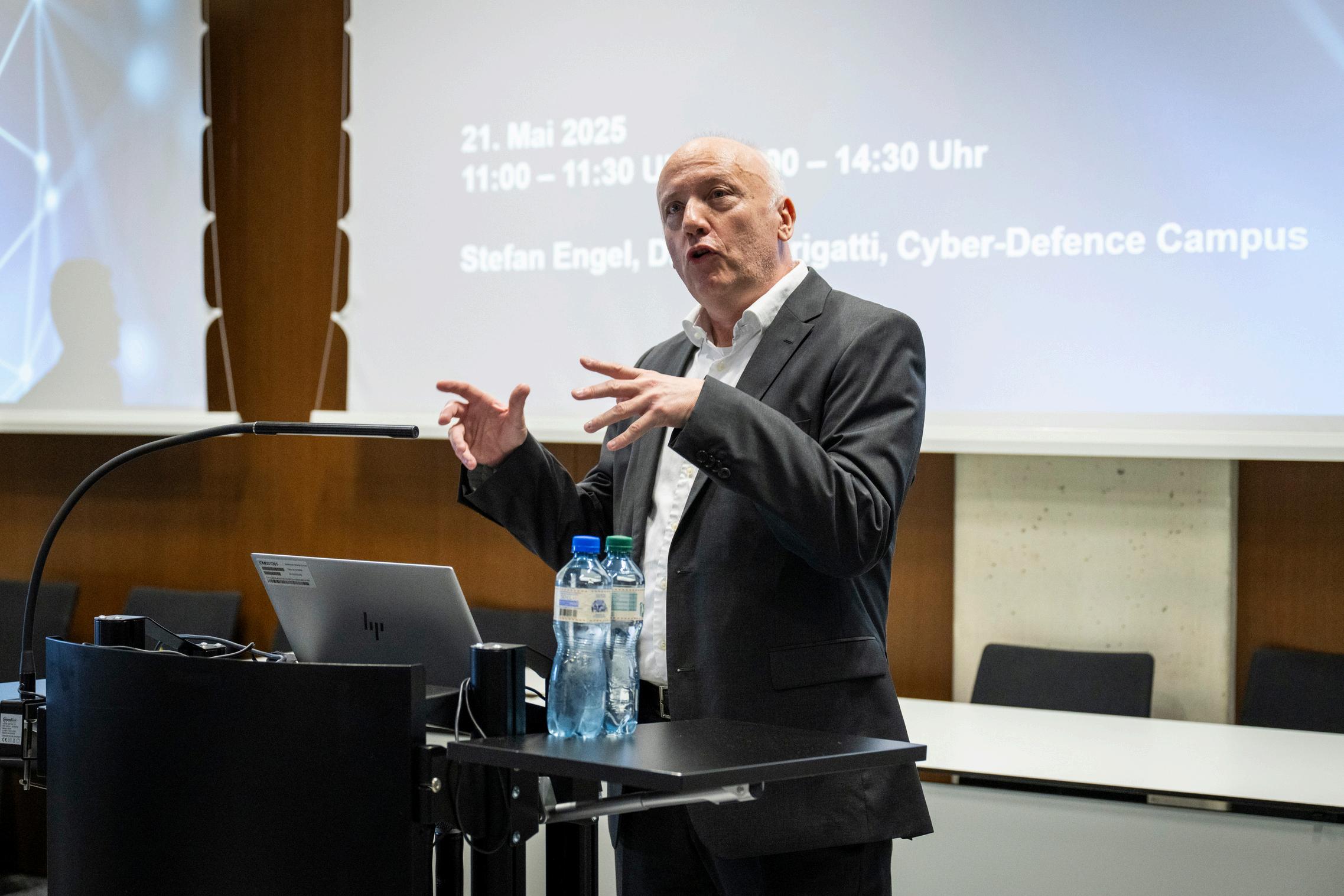
The annual CYD Campus Conference took place on 29 October 2025 at the Kursaal in Bern and brought together nearly 300 participants from the public and private sector. Under the theme ‘The Role of Cyber in Conflicts and (Hybrid) Warfare’, it highlighted the growing role of cyberspace in modern conflicts and hybrid warfare.
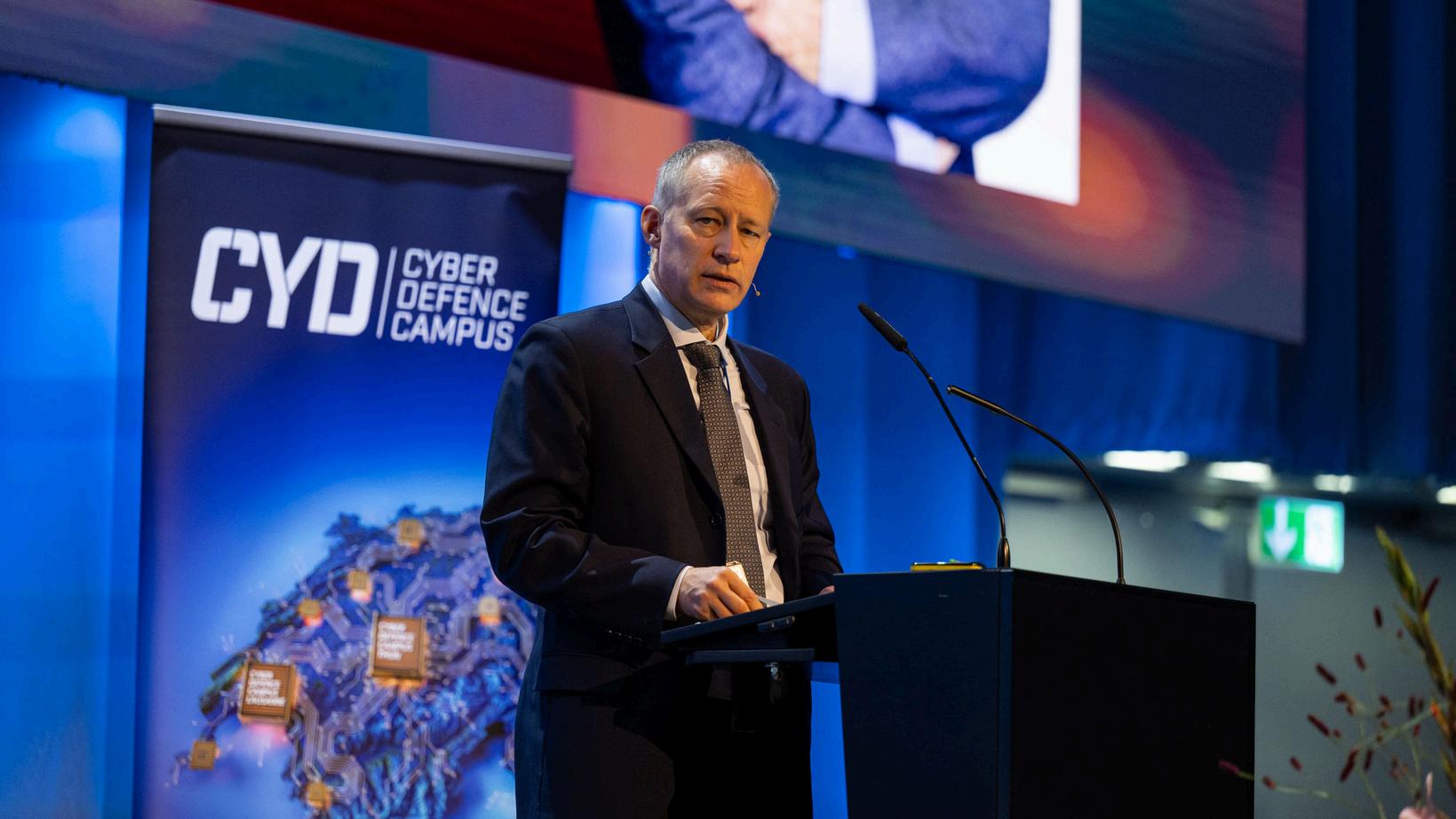
The day began with a welcome address by Dr Bernhard Tellenbach, head of the CYD Campus, followed by a keynote speech by Dr Markus Mäder, State Secretary for Security Policy. He emphasised the strategic importance of IT systems, the need for swift action in response to state and criminal cyber threats, and the necessity of an appropriate political response. Marcus Willett, Senior Adviser for Cyber at the International Institute for Strategic Studies (IISS), then discussed the uses and risks of escalation in cyber operations, emphasising the need for responsible conduct in accordance with international humanitarian law. Dr Myriam Dunn Cavelty from the Center for Security Studies (ETH Zurich), presented the current limitations in assessing the long-term effects of cyber operations, which are often gradual and difficult to measure. Dr Raphael Meier, project manager at the CYD Campus, concluded the morning by outlining the threats associated with cyber influence operations and possible countermeasures. Before lunch, four students from the CYD Campus presented their thesis projects.
The afternoon session offered a practical approach to the main topics. Dr Camino Kavanagh, Visiting Senior Fellow at Department of War Studies of King's College London, spoke about the threats to submarine cables as critical infrastructure. Iana Peix, OT Security Specialist at Alpiq, spoke about the impact of conflicts on the energy sector and Tobias Castagna from the National Test Institute for Cybersecurity (NTC) used examples to show where we stand in
terms of vulnerability and what needs to be done to reduce it. This was followed by a talk by Dr Anil Kurmus, senior research scientist at IBM Research Zurich, on automated generation of exploits to determine whether a potential vulnerability is indeed a vulnerability The conference concluded with the announcement of the winner of the Cyber Startup Challenge 2025: The London-based startup Pometry, which will develop a proof-of-concept project together with the CYD Campus by 2026.
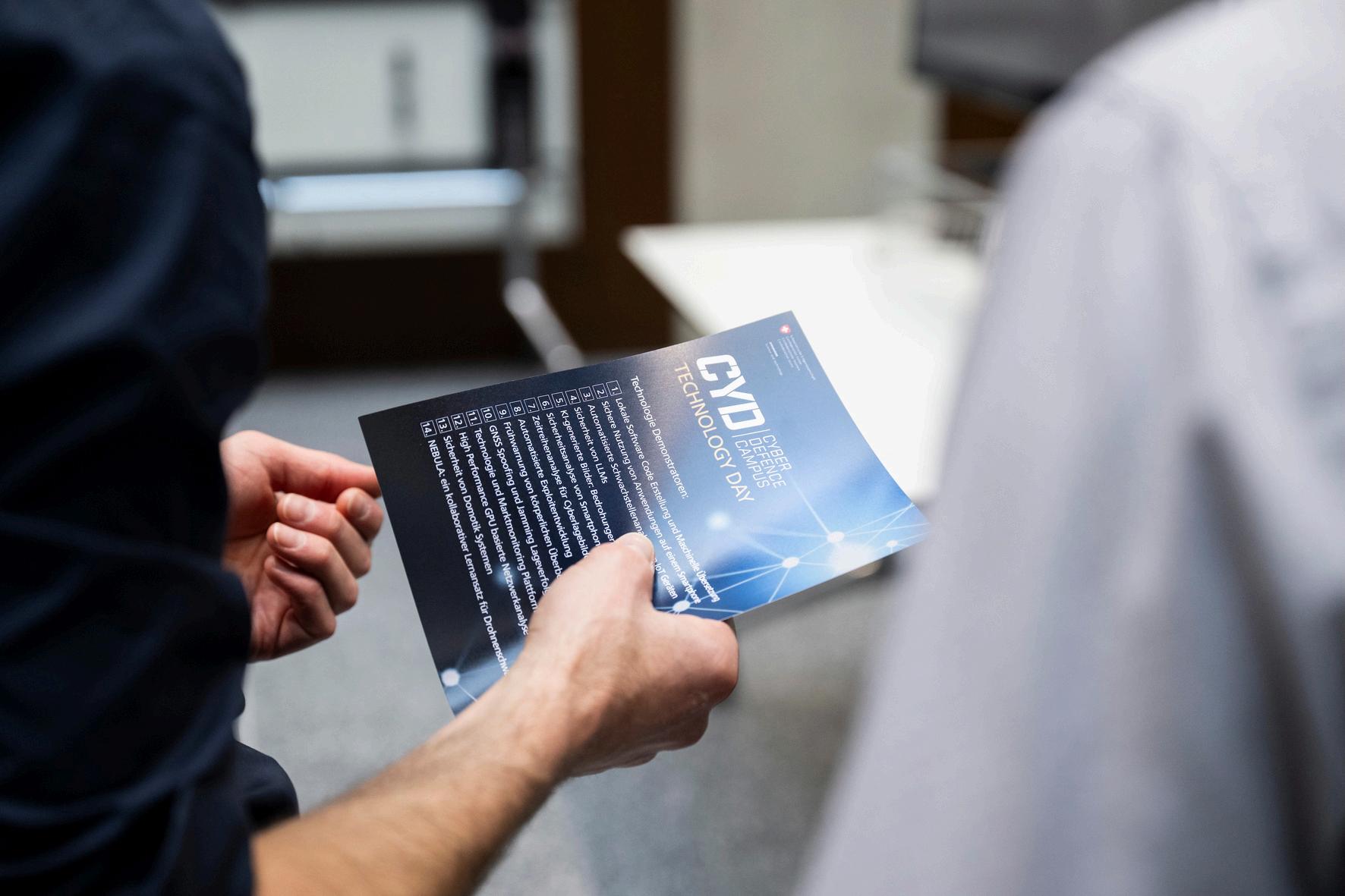
The technology day is our new instrument for presenting technology demonstrators with different levels of technological maturity to the various customer groups and to establish a connection between research, innovation, technology, and military and civilian users.
In its first iteration, it attracted over 300 guests from various DDPS organisations. The event was greatly appreciated by participants, as it built a bridge between military capability planning, military operational units, procurement, operational cyber security units, and the scientific staff of armasuisse Science and Technology including the CYD Campus.
Along the sensor intelligence-command-action network, the various technologies for deployment were presented and the technology demonstrators were divided into different groups according to their area of application.
In total, fourteen different technology demonstrators were presented to participants at stands. To get an overview of the demonstrators and their benefits and use in a military environment, participants could attend a thirty-minute presentation in the morning or afternoon.
In detail, the following demonstrators were shown:
Local software code creation and machine translation
Phone+: Secure use of military and private applications on a smartphone
Automated vulnerability analysis of IoT devices
Security of LLMs
AI-generated images: threats and countermeasures
Security analysis of smartphone applications
Time series analysis for cyber situation pictures
Automated exploit development
Early warning of physical overexertion
GNSS spoofing and jamming situation tracking
Technology and market monitoring platform
High-performance GPU-based network analysis
Security of building automation and control systems
Collaborative learning for autonomous drone swarms
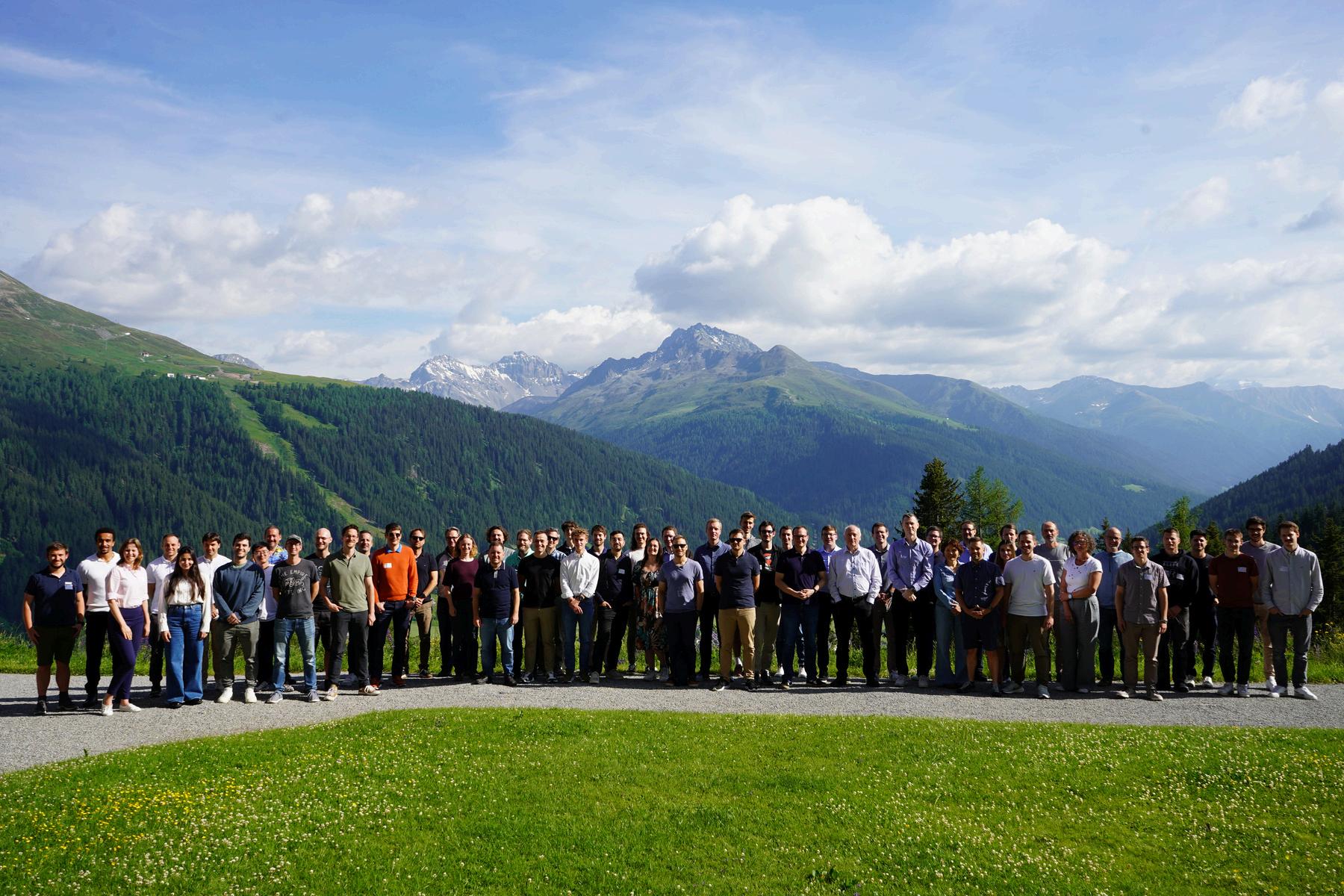
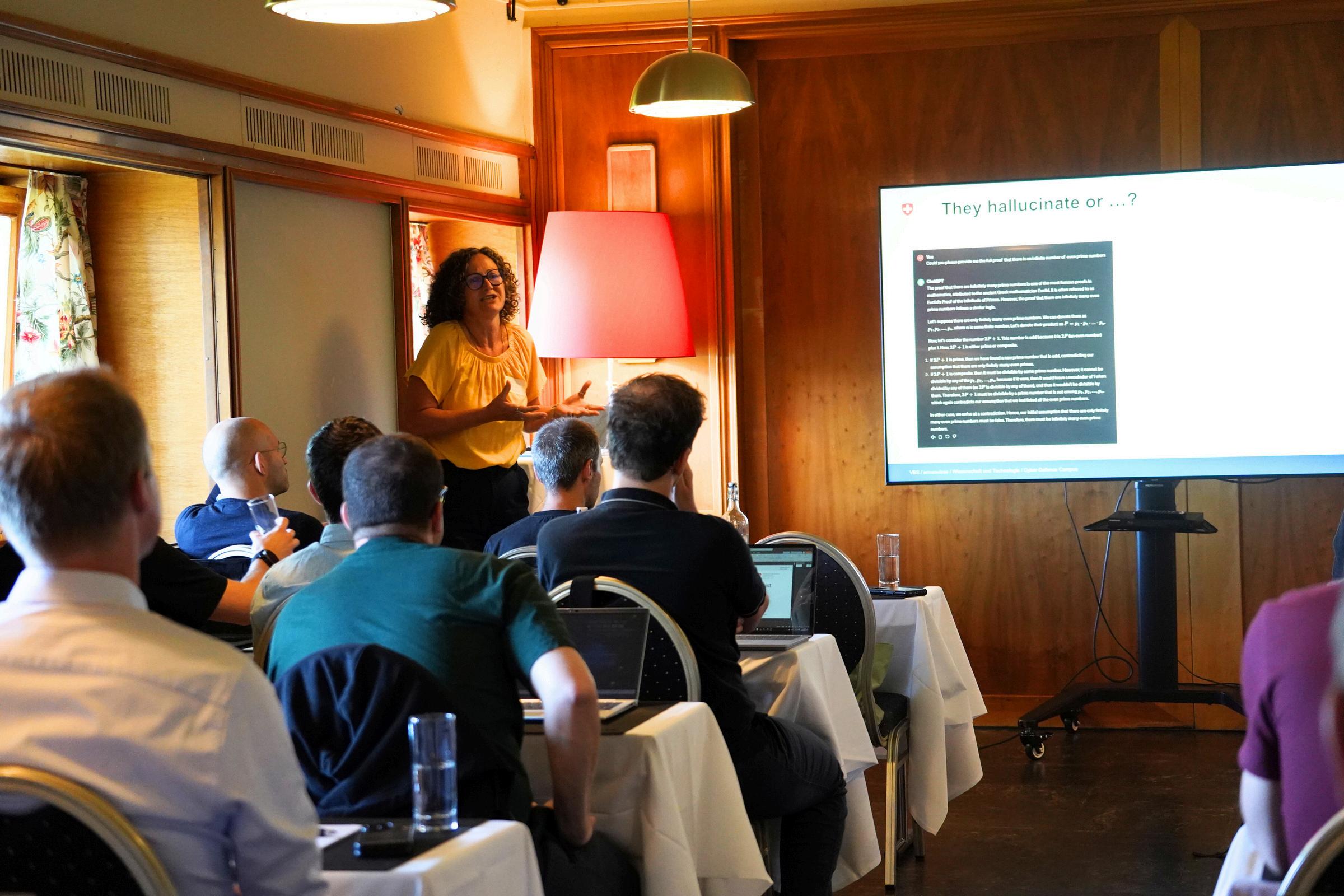
From 16 to 20 June 2025, the CYD Campus organised the Cyber Alp Retreat 2025, an event bringing together leading researchers from Swiss and international research institutions and industry partners. Held in the inspiring setting of the Swiss Alps, the retreat fostered in-depth interdisciplinary exchanges on the key cyber defence technologies of tomorrow It strengthened existing networks and opened up new perspectives for addressing complex cyber security challenges.
Over the course of five days, several thematic areas were addressed.
The Cyber Security Track highlighted the diversity and excellence of Swiss research in cyber security, with contributions focusing on smartphone security, DNS resilience, privacy protection, vulnerability detection and AI-assisted phishing defence.
The Cyber Data Technologies Track explored the growing role of data technologies in cyber defence, including data fusion, remote sensing, and federated learning. Discussions highlighted the potential of these approaches to strengthen decentralised, secure and autonomous systems, ranging from next-generation networks to critical applications in operational environments.
The Aerospace & Transport Security Track broadened the perspective beyond traditional IT systems, addressing cyber threats targeting transportation infrastructure and aerospace systems. Presentations covered topics such as satellite security, GPS jamming, Bluetooth vulnerabilities, rail security and drones, highlighting the importance of a comprehensive approach to cyber resilience. The work of the Cyber-Defence Campus, particularly in the context of the LeoCommon initiative, illustrated ongoing efforts to strengthen the security and verifiability of satellite constellations.
An entire day was devoted to generative AI technologies, with a particular focus on robustness, security, and the evaluation of fundamental models. Discussions centred on language model hallucinations, the reliability of training data, protection against prompt injection attacks, and the challenges associated with multimodal and visual systems. Interdisciplinary contributions highlighted the technical, ethical, and societal issues associated with the adoption of these technologies.
Finally, the retreat concluded with a forward-looking discussion focused on emerging trends, such as the impact of quantum computing, the strategic use of AI for technology monitoring and planning, and the implications for national security On this occasion, a contribution to a new national initiative aimed at systematically mapping the Swiss cyber security ecosystem, in collaboration with HES-SO Valais-Wallis and SATW, was also presented.

Students, academic interns, and fellows from the CYD Fellowship Programme are a central component of the CYD Campus for two reasons. Firstly, they make an important contribution to various projects and activities at the CYD Campus. Without them, the CYD Campus' performance would be severely limited. And secondly, training, promoting, and supporting high-potential students fulfils a task assigned to the CYD Campus in the “Strategie Cyber VBS”. The internships and the work conducted by the fellows and bachelor's or master's students take place at the CYD Campus facilities in Thun, Lausanne and Zurich.
For fellowships at doctoral and postdoctoral level, it is expected that students propose their own project, in line with the priorities and objectives of the CYD Campus. Topics of interest and project proposals from CYD Campus mentors are published on a dedicated web page: https://cyber-defence-campus.github.io/projects/
Academic Interns
To develop the cyber expertise among students and strengthen Switzerland's long-term resilience to cyber threats, the CYD Campus offers internships for students from Swiss universities. In 2025, 13 people were able to start their internship and gain practical experience in the field of cyber defence.
The CYD Campus mentors propose and supervise student research projects at the bachelor’s, master’s, and PhD levels. In 2025, the CYD Campus supported 35 students in their academic projects, contributing to the training of the next generation of cyber defence specialists.
CYD Fellows
Launched in 2020 by the CYD Campus in collaboration with EPFL, the CYD Fellowship Programme offers students the opportunity to deepen their expertise in cyber defence while strengthening Switzerland’s capabilities in this strategically important field. As a talent programme, it is highly selective and provides close support from a CYD Campus mentor to promote the respective project and the further development of the CYD Fellows in the best possible way.
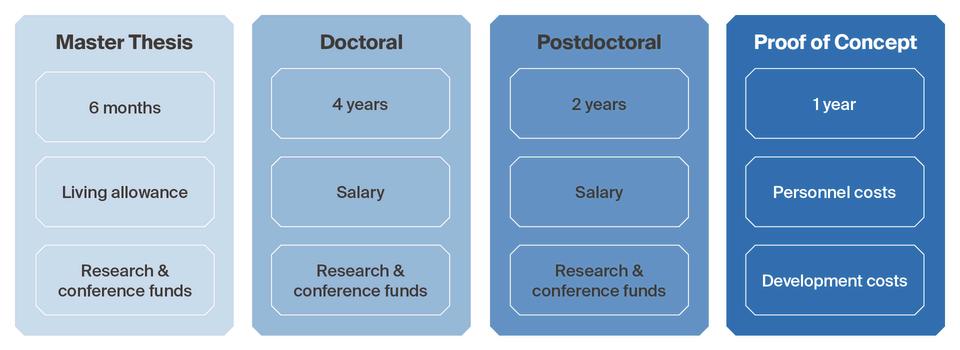
The CYD Fellowship Programme offers fellowships at the master, doctoral, and postdoctoral level. CYD Master Fellows must be enrolled, and Doctoral and Postdoctoral Fellows must be employed by a higher education institution in Switzerland during their fellowship. Furthermore, in 2023, the Proof-of-Concept Fellowship was added to the portfolio to bridge the gap between academic research and
practical application. It supports validating a concept or idea with a proof-of-concept prototype and testing its practicality Master and Proofof-Concept Fellowships can be submitted and awarded anytime during the year Doctoral and Postdoctoral Fellowships are subject to two calls per year.
The programme has expanded steadily since its inception and published its eleventh and twelfth call for applications in 2025. In 2025, a total of 24 fellowships were active, including 14 at the master, 5 at the doctoral, 3 at the postdoctoral, and 2 at the proof-of-concept level. During the same year, 12 new fellowships started, including 2 Doctoral Fellowships, 8 Master Thesis Fellowships, 1 Postdoctoral Fellowship, and 1 Proof-of-Concept Fellowship. The active fellowships are marked by significant institutional diversity The institutions represented are EPFL (6 fellowships), ETH Zürich (12 fellowships), OST (1 fellowship), SkAI Data Services GmbH (1 fellowship), USG (1 fellowship), UZH (2 fellowships) and ZHAW (1 fellowship).
These interviews highlight the diversity of backgrounds, projects, and ambitions of CYD Fellowship recipients. Whether they are working on a master's thesis, a proof of concept or a postdoctoral research project, these CYD Fellows share their experiences, motivations and the opportunities offered by the programme. Their stories illustrate how the CYD Campus supports the development of talent and promotes high-impact projects in the field of cyber defence
Dimitri Francolla CYD Master Thesis Fellow ETHZ
How did you find out about the CYD Fellowships and what motivated you to apply?
I am part of a student association called ETH Cyber Group, and some time ago the CYD Campus organised an office visit for the association’s members. During this event, they explained to us the mission and goals of the CYD Campus and introduced the opportunity to apply for the CYD Fellowship.
Later, I carried out an internship at the CYD Campus, and I was extremely satisfied with the work environment that I found. In addition, I found the project offering to be extremely interesting and fitting what I was looking for. Having already had a very enjoyable experience at the CYD Campus and being drawn to the research topics offering, applying for the CYD Fellowship was a natural next step for me.
What was your CYD Fellowship project about?
My CYD Master Thesis Fellowship project is part of a larger research area called “Automating Cyber-Defence”. The goal is to develop, with the use of new AI-powered techniques, a fully automated player to deploy during cyber-defence exercises such as Locked Shields. More specifically, my project is concerned with the development of LLM-powered network-traffic-based security tools for network detection and response.
What were the advantages of conducting your master thesis project at the CYD Campus?
The CYD Campus is an extremely stimulating environment: it is a place where talented students gather, and it is possible to learn a lot just by being around and talking to others. In addition, the Scientific project managers who supervise the student projects afford the right amount of independence and freedom to the students to stimulate and foster this kind of environment. Finally, the facilities are furnished with anything that can support the students, and the living allowance from the CYD Fellowship allows me to be fully focused on my project.
What were your expectations about the CYD Fellowships?
Having already carried out an internship at the CYD Campus, I knew what to expect in terms of environment and support. The main difference is that the goals and deliverables for my internship were aimed at internal use within the CYD Campus, while my thesis is aimed at the broader research world. For this reason, I was expecting my work to be able to have a much greater impact on the cyber security world.
Could you share some tips with future applicants who are considering applying for the CYD Fellowships?
First: apply for the CYD Fellowship, do not hesitate to put yourself into play! It is truly a worthwhile experience, the CYD Campus is a great place to carry out such important work for your career. My advice for your application is to select a topic that you enjoy and that is important for you, and then to clearly and convincingly explain the potential impact of your work for the CYD Campus and for the world of cyber security research in general.
Raphael Monstein & Benoit Figuet
CYD Proof-of-Concept
Fellows
SkAI Data Services
How did you find out about the CYD Fellowships and what motivated you to apply?
We were both employed at the ZHAW and were already in contact with the CYD Campus. While working on our concept, we talked with the CYD Campus and they suggested the Proof-of-Concept Fellowship. It looked like a perfect match for us.
What was your CYD Fellowship project about?
The goal of the fellowship is to enhance our solution for monitoring GPS interference using airplanes as sensors. This technology enables us to detect and analyse jamming and spoofing in real-time that can pose risks to aviation and other critical infrastructures. It also provided us with an opportunity to understand the market and develop our business case.
What were the advantages of conducting your project at the CYD Campus?
The most important advantage is the financial support, which gave us the possibility to dedicate significant time and resources to developing our solution. Coming from an aviation background and being relatively new to the cyber-defence domain, we greatly benefited from the mentoring and expertise of cyber defence domain specialists. Finally, the fellowship opened doors to key CYD partners and stakeholders we would not have been able to reach otherwise.
Ultimately, we already have companies integrating the solution we have developed, and this would not have been possible without the fellowship.
What were your expectations about the CYD Fellowships?
We expected the fellowship to provide financial support and mentoring to develop our idea further, mentorship from the experts of the CYD Campus, as well as opportunities to connect with partners and stakeholders in the cyber defence ecosystem.
Could you share some tips with future applicants who are considering applying for the CYD Fellowships?
If you have an idea or a concept that you are interested in, and you would like to pursue it: Go for it and contact the CYD Campus! It is an excellent way to work on something you are passionate about. The application process is efficient and reasonably structured. The bureaucracy is kept to a minimum while still ensuring high quality in the approved applicants.
Francesca Falzon
Distinguished Postdoctoral Fellow ETHZ
How did you find out about the CYD Fellowships and what motivated you to apply?
Having completed two internships in Zürich during my PhD, I knew that the computer security research community in Switzerland is vibrant and exciting and something that I wished to be a part of I loved the work I had done during those internships, and I wanted to continue fostering my research collaborations in Zürich. The CYD Fellowship offered such an opportunity – and more – so it seemed like a perfect fit.
What was your CYD Fellowship project about?
My CYD Fellowship project is focused on the secure outsourcing of data. Nowadays, it is very common to outsource data to a thirdparty cloud service. Nevertheless, we may not want to share our sensitive data with said third-party I seek to build and analyse cryptographic solutions that enable a client to encrypt their data, securely outsource it to the cloud, and then later privately query that data. The goal is to design solutions that are efficient and nearterm deployable, whilst still ensuring query and data privacy to the client.
What were the advantages of conducting your master thesis project/doctoral project/post-doctoral project at the CYD Campus?
Conducting my postdoctoral project at the CYD Campus has provided me with numerous advantages — most important of which includes a network of smart and motivated people with whom I can collaborate. I get to discuss my work with my CYD Campus mentors, other CYD Fellows, and academics outside of my host institution. Beyond that, my fellowship has provided me with many resources to facilitate my research.
What were your expectations about the CYD Fellowships?
Through the CYD Fellowship, I hoped to do exciting research and get the opportunity to interact with researchers across academia, government, and the private sector In addition, I thought it would be a great way to connect with other early career researchers interested in cyber security and cryptography The fellowship has indeed delivered on all accounts, and I am excited to continue my postdoctoral journey as part of the CYD Fellowship cohort.
Could you share some tips with future applicants who are considering applying for the CYD Fellowships?
I think it is important to find an intersection between your own research interests and the real-world cyber security problems affecting our world today The existing problems faced by government and industry give rise to very challenging and pressing open problems that make for exciting research projects.

In 2025, the Cyber-Defence Campus has solidified its training offers. As part of its activities to support the national cyber strategy, it dedicates part of its activities to provide technical training and continuous education to experts in the cyber defence community inside the federal administration. The approach adopted covers both technical and strategical skills and includes dedicated training to learn new skills as well as exercises designed to foster retention and improve mastery over time. The trainings are specifically designed for experts of the federal administration, with possible support from the critical infrastructure community when their duties overlap with public responsibilities.
Regularly, the CYD Campus invites experts from the cyber community in Switzerland to give an academic-style lecture about topic relevant to technological development in the field of cyber defence.
In 2025, seminars on the following topics were given:
Quantum safe cryptography
Network traffic analysis and its challenges with encrypted traffic
Security challenges in building automation and control systems
Use of data science for detection of heat collapses in the Armed Forces
Operational security in the age of cyber threats
Formal methods for software verification
The CYD Campus provides hands-on training on technical and strategic skills for our partners in the federal administration, to improve their capabilities to fulfil their tasks successfully. Those
classes are realised on demand according to the specific needs of our partners and focus on hands-on training by teaching a specific skill on hardware provided by the CYD Campus. This provides the opportunity for experts to hone their skills using advanced hardware. By using the network of the CYD Campus, we can invite experts from elite institutions around the country for this purpose. In 2025, two classes were provided to experts:
Adapting and mastering Scapy for BACnet
Fuzzing for IoT devices
Twice a year, the Cyber-Defence Campus organises a hackathon, inviting experts from its network of partners to work on a specific problem for one week. Hackathons gather people from different backgrounds to collaborate with the goal of developing a solution on a specific topic. Participants include experts from the CYD Campus, critical infrastructures, and partners from the public and private sector to practice and experiment using state of the art or researchgrade technologies.
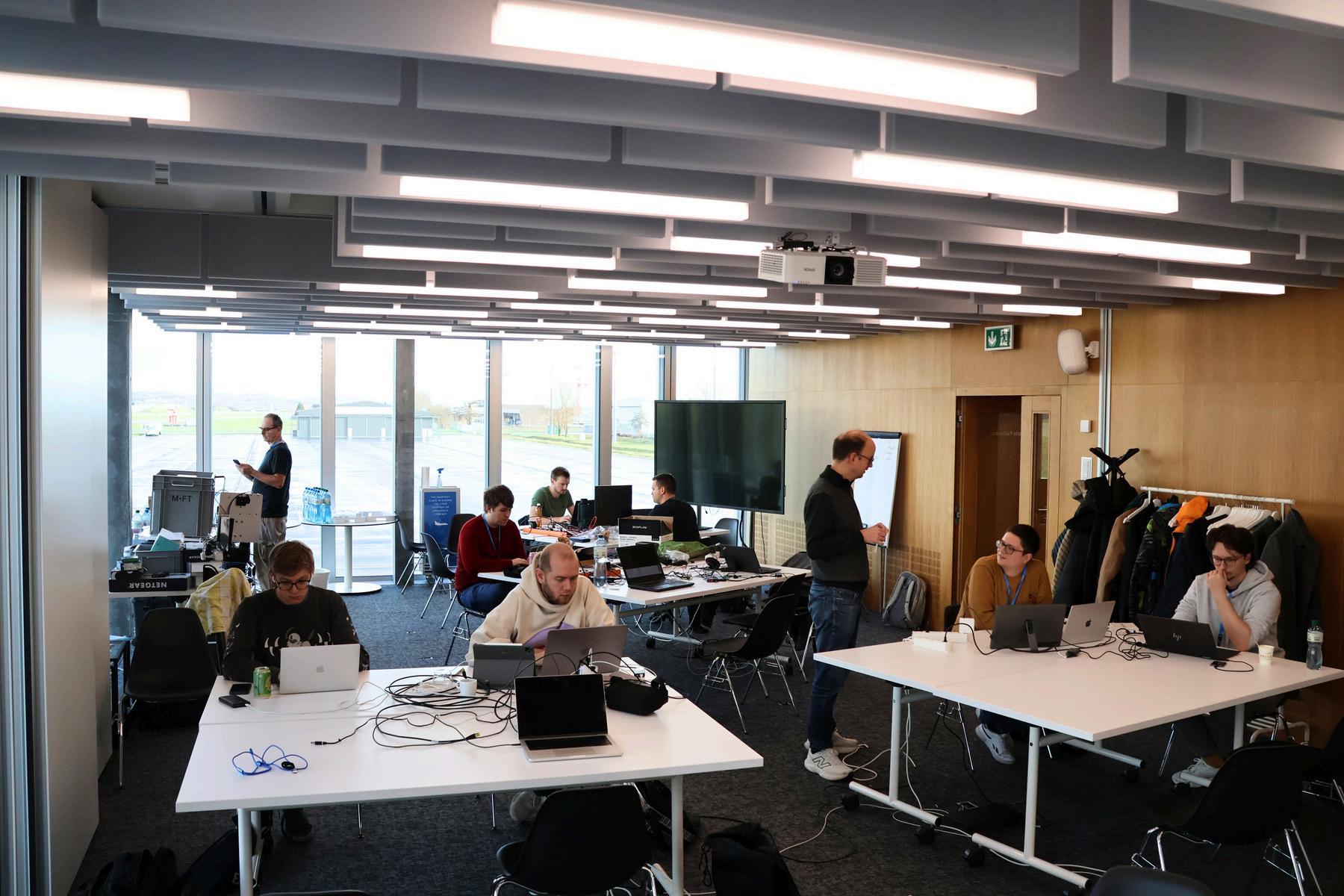
In 2025, a first hackathon took place in February on the topic of building automation and control systems. This enabled the discovery of multiple vulnerabilities in the control systems used by the federal administration, and to strengthen the capacities of providers of those systems to detect and solve those vulnerabilities. A second hackathon in November on the topic of satellite security allowed academic researchers from across Switzerland and Europe to develop the capacities of the LEOCommon network and build a system reinforcing the capacity to detect and track satellites for cyber security purposes.

The CYD Campus is active across a broad range of topics in the field of cyber security. The activities presented in this chapter span from lowlevel foundations and enabling technologies, through vulnerability discovery and mitigation, to the design and protection of secure digital and cyber-physical infrastructures, as well as the human aspects of cyber security.
These activities strengthen Switzerland’s cyber security capabilities by advancing scientific knowledge, developing practical tools and methods, and translating research results into real-world impact in the cyber defence domain of the federal administration.
The e-ID, Switzerland's new digital identity, is set to be available as early as 2026. During the referendum on the e-ID Act in fall 2025, the importance of data protection for the success of the digital identity card was emphasised. Back in 2021, when the first version of the e-ID was rejected, concerns about citizens' privacy were a decisive factor. To address these concerns, the new e-ID is based on Self-Sovereign Identity (SSI) principles. The EU is also following this paradigm with its eIDAS 2.0 programme.
The CYD Campus has supported the Federal Office for Police (FEDPOL) and the Federal Office of Information Technology, Systems and Telecommunication (FOITT) on various topics related to e-ID The main focus was on researching methods for protecting personal data So-called zero-knowledge proofs make it possible to cryptographically prove statements about digital credentials (such as the e-ID) without having to disclose the corresponding attributes. For example, this can be used to prove that the owner of an e-ID is of legal age without disclosing their date of birth. Or it could be shown that an owner has undergone a security check without having to disclose the name and social security number. Zeroknowledge proofs would also improve the unlinkability of e-ID .
presentations. Even if the verifiers were to collude with the issuer of the e-ID (Fedpol), the person and their use of the e-ID could not be tracked. Although the technology is already practicable for simple proofs, further research is needed before it can be used in practice with millions of users. In addition to scalability, questions about the post-quantum security of such methods must be clarified.
The digital processing of biometric data, such as facial photos or fingerprints, is particularly sensitive in terms of data protection. Once this data is leaked, it cannot simply be changed like a stolen password. Photos in particular can easily be misused for criminal purposes, for example through the use of generative AI. One of our research projects is therefore looking into how biometric data can be compared with a central database for access control without the data having to be processed in clear
We also examined the security of the SWIYU infrastructure. As part of a master's thesis, a comprehensive threat model with corresponding attack paths was developed. A total of 95 confirmed vulnerabilities were discovered. The student presented his findings to the general public at the participation meeting of the e-ID project. Many of the vulnerabilities found had already been remedied by the time of the presentation.
Forecasting when practically relevant quantum computers will become available remains challenging. However, many experts estimate that a machine capable of breaking a 2048-bit RSA key within 24 hours could emerge within the next 10-20 years. In anticipation of such developments, NIST has already standardised new encryption and signature algorithms designed to resist quantum attacks. Most of these new algorithms, however, rely on the same underlying mathematical foundation: lattices. While lattice-based cryptography is currently considered secure, relying too heavily on a single mathematical assumption poses a systemic risk. A large portion of the post-quantum ecosystem could be affected if a breakthrough attack should be discovered. Diversifying the mathematical structures behind cryptographic schemes therefore strengthens overall resilience. For this reason, the CYD Campus supports research into alternative mathematical foundations, including one drawn from an unexpected domain: knot theory. A mathematical knot is a closed loop tangled in threedimensional space. It may be stretched, twisted, or deformed, but not cut. Two knots are considered equivalent if one can be smoothly transformed into the other. Knot theory has a rich history and applications in fields such as chemistry and biology. The cryptographic approach builds on a core insight: knots can be combined using an operation called the connected sum, and reversing this combination - i.e., “untangling” the sum into its components - is believed to be computationally infeasible, even for quantum computers. Leveraging this hardness, researchers have designed a knot-based key exchange protocol analogous to the classical Diffie–Hellman protocol, but with operations grounded in knot manipulation rather than arithmetic operations.
The vulnerability research programme has three main objectives: Analyse hardware and software in order to identify vulnerabilities that could directly impact the federal administration's IT systems
Validate and refine the used tools and techniques in order to maximize effectiveness, with a focus on automation
Demonstrate the real-world impact of attacks on a wider audience to raise awareness of critical security risks
Over the past year, our vulnerability research has focused on embedded and building automation and control systems. In this area, we have identified and responsibly reported multiple vulnerabilities impacting internal platforms. In parallel, we expanded our research scope by initiating work on drone security, particularly drone firmware analysis and emerging attack surfaces. This years’ results include a Binary Ninja plugin called Mole, which we developed and published as open source software. Mole performs static backward slicing on variables using Binary Ninja's Medium-Level Intermediate Language in its Static Single Assignment form to find interesting data flows between defined sources and sinks. This can be used to find vulnerabilities; for example, it can be used to search for paths where untrusted inputs influence sensitive operations in a potentially dangerous way. We showcased the realworld use of Mole by finding multiple vulnerabilities in products used by the federal administration.
The Linux kernel serves as the foundation for numerous operating systems powering a wide range of devices: from desktop PCs and servers to mobile and embedded devices. Due to its widespread deployment, the Linux kernel has also become an attractive target
for attackers. In a multi-year collaboration with IBM Research Zurich, we are researching methods to automatically determine whether potential bugs in the Linux kernel are security-relevant. This question is crucial, as automated bug discovery frameworks like syzkaller identify and publish new bugs daily. Being able to automatically distinguish which of these bugs are exploitable would enable more effective prioritisation of critical vulnerabilities for remediation.
Over the past year, our work has focused on advancing the proof-ofconcept (PoC) tool developed in previous phases. The tool has been improved to generalise across a broader set of bugs, and for several cases, it successfully generated end-to-end automated exploits. In parallel, we systematically evaluated the previously identified dataonly targets, revealing additional kernel objects that could be abused by attackers to escalate their capabilities. Moreover, a new heap massaging component has been integrated into the PoC tool, enabling it to automatically position vulnerable and target objects adjacently in memory – a key step for successful exploitation.
Wide-Area Networks (WANs) form the backbone of modern digital infrastructure, enabling organisations to interconnect geographically distributed sites and services. These networks often carry mission-critical traffic, making their security and availability essential. While confidentiality and integrity are often addressed through cryptographic mechanisms, ensuring availability remains a bigger challenge, particularly when WANs are built on top of the public Internet. Especially volumetric distributed denial-of-service (DDoS) attacks can severely disrupt communication.
In this multi-year collaboration with ETH Zürich, we perform research on how the security of WANs can be improved. This year, we focused on strengthening WAN availability by developing a new system for secure and deployable bandwidth reservation as a defence against volumetric DDoS attacks. Our work addresses a long-standing challenge on the public Internet: achieving fair bandwidth allocation across competing traffic streams, especially when different congestion control algorithms operate simultaneously and when malicious traffic attempts to overwhelm the network.
Existing approaches to bandwidth fairness typically fall into two extremes. On the one hand, lightweight mechanisms are easy to deploy but fail to provide strong, in-network isolation between traffic streams. On the other hand, systems that offer strong isolation guarantees often rely on complex assumptions or heavyweight mechanisms that limit their practicality. Our work bridges this gap by introducing a new fairness model based on the concept of a per-stream Fractional Fair Share (FFS). FFS is the first system to combine low implementation and deployment complexity with strong resilience against source address spoofing and volumetric DDoS attacks. It provides robust bandwidth isolation while maintaining low latency and jitter Our high-speed implementation sustains line rates of up to 160 Gbps on commodity hardware, demonstrating that the approach is practical for realworld requirements.
In today’s rapidly evolving cyber threat landscape, the automation of cyber defence becomes more and more important. Building on our previous work, this year we focused on extending an established architecture for automated blue teams to reflect recent advances in artificial intelligence. Originally developed before the widespread adoption of large language models (LLMs), we have updated our
architecture to incorporate their potential. Beyond conceptual work, we also engaged in practical experimentation during the Locked Shields cyber-defence exercise, the world’s largest exercise of its kind. In collaboration with the NATO CCDCOE, the Swiss blue team, an international research team, and many students, we participated in the exercise to collect data and to test our newly developed tools under realistic conditions. This collaboration enabled the validation of our assumptions in a complex environment and provided valuable insights into the practical constraints of automated blue team operations.
In a related effort, we conducted a systematic literature review examining the role of AI in security operation centres (SOCs). We analysed 189 scientific publications, classified them according the NIST Cybersecurity Framework. Our review shows how AI is reshaping SOC operations, particularly in the area of detection, which accounts for approximately 65% of reported use cases. At the same time, the analysis reveals persistent gaps: recovery functions remain underexplored, explainable AI is significantly underutilised with the vast majority of studies relying on non-explainable models.
Together, these activities advance our long-term vision of a fully automated cyber-defence. Even if this is a distant goal, insights gained along the way allow a continuous assessment of the potential and limitations of AI in cyber defence. With this expertise, we support the federal administration in various internal projects related to its current and future cyber defence.
Aside from user-installed apps, mobile devices contain many other software components, for example pre-installed applications and system components from manufacturers. These play an important role in security and functionality While there are already numerous
tools available for automatically analysing individual apps, examining the deeper system layers is much more difficult. The main reason for this is that there is currently no available emulation solution that can realistically replicate the complete Android firmware from different manufacturers. For dynamic analyses, real devices must be used and specially adapted. This approach is costly, poorly scalable, and excludes certain analysis methods from the outset.
In previous work, we first systematically investigated which methods and tools for the dynamic analysis of Android firmware already exist and where their limitations lie. We developed an initial solution for analysing pre-installed Android apps and selected operating system components without the need for a physical device and special system privileges. This is made possible by so-called re-hosting: the app and system layer is extracted from a firmware and transferred to an emulator environment. After overcoming several technical hurdles, tests with firmware from several manufacturers showed that this approach works. However, depending on the component to be rehosted, challenges remain.
In 2025, our focus was on advancing the existing prototype such that it can execute more Android firmware in an emulator environment. In particular, the Android framework itself and manufacturerspecific adaptations to the operating system were examined and successfully re-hosted.
In this project, we design a secure platform for smartphones that allows security-sensitive apps to execute in a sovereign domain with isolated resources (e.g., CPU, memory). This will protect security-
sensitive apps from other applications as well as the operating system. In past years, we built two key prototypes of such a platform and demonstrated compatibility with legacy operating systems (e.g., Linux, PureOS) and support for peripherals such as storage, display, and network card. One prototype was built on the Arm FVP emulator and uses Arm TrustZone for isolating the sovereign domain. The other one was built on a Librem 5 phone and run the messenger app Signal in the sovereign domain. In 2025, we applied the sovereign smartphone concept to software isolation mechanisms that are present in current smartphone systems. In particular, we examined the virtualisation capabilities in current smartphones that allow trusted software to execute in protected virtual machines (pVMs), which are isolated from the operating system. We found that the isolation mechanisms of the pVMs are typically managed by a vendor-controlled hypervisor, which prevents users from independently executing security critical or privacy sensitive software. To address this limitation, we investigated how confidential virtual machines (CVMs), which are already widely deployed in cloud environments, can be adapted to smartphones. Our results show that deploying CVMs on smartphones to replace pVMs can reduce the trust required to the firmware of the phone, which aligns with the goals of the sovereign smartphone concept.
Securing Infrastructure as Code
Infrastructure as Code (IaC) is a widely used approach for defining and managing cloud infrastructures. While IaC improves automation and reproducibility, errors can lead to security vulnerabilities and service outages. Existing verification approaches often require deploying the infrastructure before issues can be detected, which delays feedback, increases costs, and limits integration into modern CI/CD workflows .
In this project, we continued our collaboration with the University of St. Gallen to investigate how cloud infrastructure configurations can be verified before deployment. The main objective is to provide developers and cloud administrators with early feedback on potential issues without interacting with the cloud environment itself The core idea is to construct a local model of the target infrastructure directly from IaC programs and to validate desired properties against this model.
In 2025, we developed a general methodology for pre-deployment verification of IaC programs. Our methodology derives the intended target state from declarative IaC code and builds a local, abstract representation of the infrastructure, including resource dependencies and implicit cloud defaults. This model enables the analysis of properties that span multiple resources and cannot be captured by simple rule-based checks. We instantiated this methodology in a prototype tool focusing on network reachability analysis for Terraform configurations targeting AWS. This tool allows users to express reachability queries between resources and evaluates them locally, without deploying any infrastructure. The evaluation on a large collection of publicly available Terraform programs shows that our tool can analyse a substantial portion of real-world configurations, provides results within milliseconds, and scales significantly better than deployment-based approaches, while maintaining high accuracy.
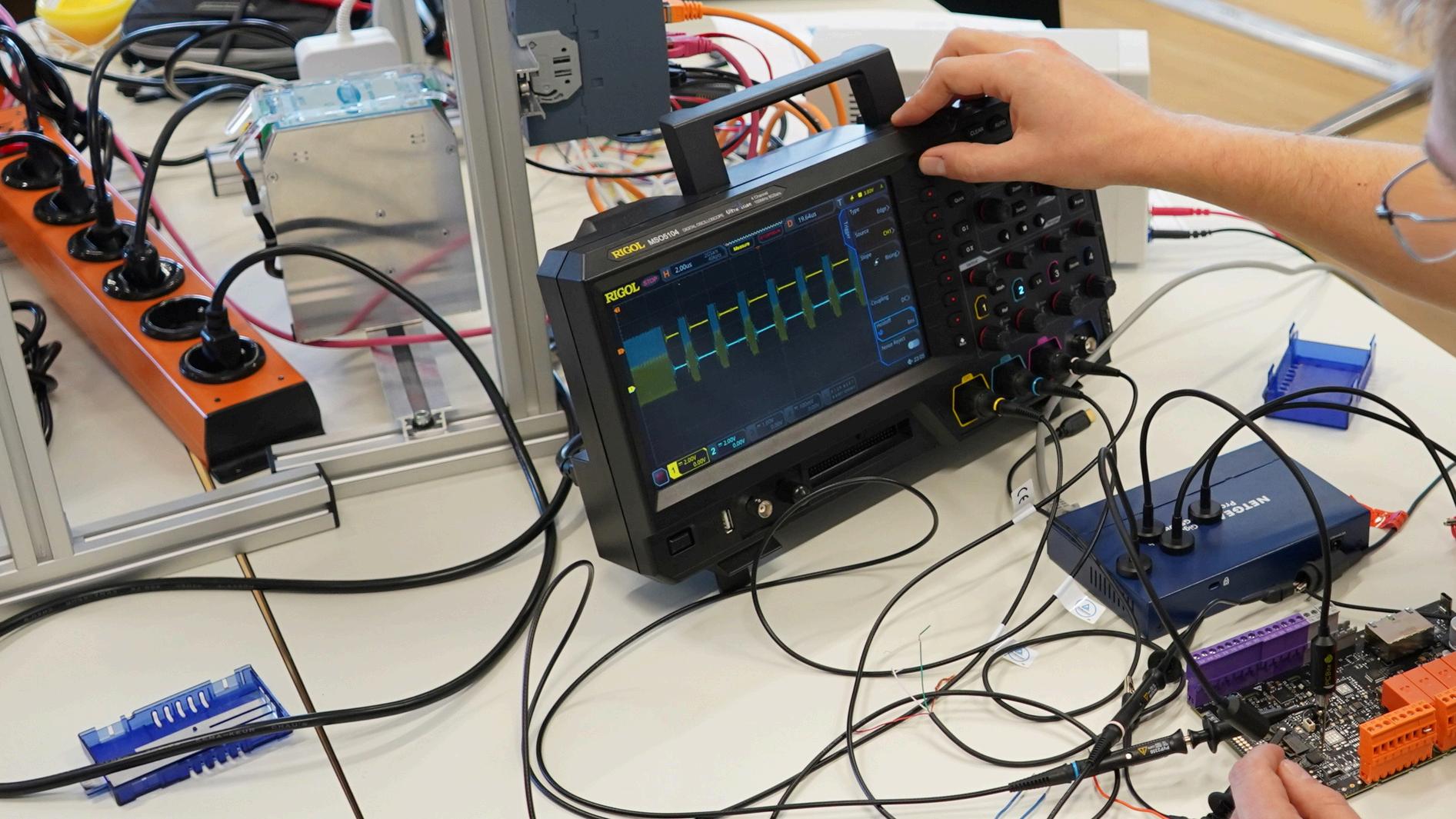
As buildings are getting more and more smart, the connectivity needs for their equipment also increase. Unfortunately, many of the devices that are used in this domain were not designed for today's threat landscape. Their security posture is often weak but slowly increasing with the introduction of cyber security standards and norms along with new and more secure communication protocols. The CYD Campus recognises the growing relevance of this topic and the lack of existing research, which is why we intensified our efforts in the past year
Among others, we organised a hackathon, allowing people from the building automation industry, academics and security professionals to gather and work together on multiple environments during one week. This event was supported by several manufacturers who helped us build testbenches simulating real buildings together with the HSLU Lucerne. These testbenches mimic building automation and control systems (BACS) that could be found in the federal administration and will allow for performing more accurate cyber
security evaluations. They take place in the form of racks that simulate an individual building system. Those racks were then connected together in order to form a wider network of centrally managed buildings. In total, more than a hundred devices were available for testing during the event. The setup work was also publicly presented at the CISBAT 2025 conference. Around 50 people attended the hackathon and found more than twenty vulnerabilities in the various devices. The vulnerabilities were then responsibly disclosed to the affected manufacturers. The collaboration between the CYD Campus and the manufacturers to fix the vulnerabilities was fruitful and it is worth mentioning that two manufacturers added vulnerability management to their processes because of this event. The hackathon kicked off additional research projects which led to the creation of new open source tools like BACteria which help security researchers interact with BACnet and BACnet/SC protocol.
As the year progressed, even more vulnerabilities were found and reported, with a grand total of 63 vulnerabilities found and disclosed to manufacturers. Most of these vulnerabilities are fixed in the meantime through firmware updates published by the vendors.
We also leverage the expertise built in this area in our involvement in procurement projects. For example, by building a cyber security testing procedures for products that will be used in the federal administration. This improves the baseline security of new building automation systems by providing guidelines and procedures to harden the default settings and provide best practice in the deployment of solutions.
With the success of the first iteration, a second hackathon is already planned in April 2026, focusing on the most recent version of BACnet/SC and its security features.
This research project addresses cyber security risks common in all critical mobility systems, where long equipment lifecycles, complex supply chains, and safety certification constraints often mean that insecure technologies remain operational for decades. We focus on several domains, specifically automotive and electric mobility, rail transport, and aviation, combining real-world measurements, practical attack evaluations, and the development of mitigation concepts that can be integrated into operational environments.
In cars and electric mobility, we investigated the security of EV charging infrastructure, where vehicles and chargers must negotiate power delivery through complex protocols. The widely deployed Combined Charging System (CCS) standard is known to exhibit wireless leakage. We designed a robust wireless Man-in-the-Middle (MitM) attack, with which we show that it is possible to manipulate safety-critical information related to power delivery.
For rail transport, in close collaboration with the SBB, we examined cyber security limitations in onboard train systems. We systematically identified weaknesses and translated the results into a practical defence-in-depth strategy compatible with safety-critical constraints. A key result was the development of a dedicated Intrusion Detection System (IDS), which detected all tested attacks during a two-hour live test run, demonstrating that resilience can be improved without disruptive changes to legacy systems.
In aviation, we address cyber risks rooted in legacy radio and navigation systems that frequently lack authentication and encryption. In 2025, we contributed work on emerging GNSS threats in conflict regions, and we continued research on vulnerabilities in modern aviation technologies such as CPDLC/ADS-C, electronic flight bags, and future autonomous systems.
Cyber security challenges in modern space infrastructure abound, as legacy technologies and long update cycles often lead to persistent vulnerabilities. Many satellite and ground communication links still operate with limited or no authentication and encryption, while proprietary mechanisms are frequently used instead of wellscrutinised open standards. At the same time, the rapid growth of commercial LEO constellations and small satellites expands the attack surface significantly and raises new security and privacy questions.
In 2025, our research focused on strengthening the resilience of satellite communications against realistic adversaries with softwaredefined radios and affordable RF equipment. We published new results on protocol-aware jamming attacks against standardised space communication protocols, demonstrating that attackers can achieve disproportionate disruption by exploiting protocol structure rather than relying on brute-force interference alone. We also advanced physical-layer security methods such as satellite transmitter fingerprinting, including adversarial attacks on fingerprinting systems and new measurement-driven work extending fingerprinting to additional LEO constellations (e.g., Orbcomm). A major activity in 2025 was a security analysis of the Iridium LEO network, where we assessed practical risks in real-world operational environments. Furthermore, in November 2025, we organised a satellite security hackathon in Payerne at the swiss aeropole in the context of the COREB project. International researchers and students collaborated for one week using CYD Campus-provided satellite hardware and resources. Outcomes included installation of new ground stations, development of a satellite data visualisation centre, and privacy measurements in the Starlink network. Overall, the project contributes to secure and robust space-based communications and supports Switzerland’s capability development in space cyber security research and practice.
The human factor is a crucial cornerstone of cyber security: humans remain both a primary attack vector (e.g., via social engineering) and an important defensive layer that can be strengthened through better training, interfaces, and decision support. The project aims to systematically understand how cognition, perception, and behaviour influence security outcomes, and to eventually use this understanding to design interventions that measurably reduce phishing risks.
One key focus area is (spear-)phishing, which continues to be highly effective even in organisations with mature security programmes, including targeted attacks against public-sector and military personnel. Despite years of awareness efforts, phishing remains an unsolved challenge. We therefore investigate novel approaches beyond traditional training, in particular interventions based on Augmented Reality (AR) and Virtual Reality (VR). These technologies can deliver contextual and independent security cues directly in the user’s environment, potentially improving detection of deceptive content and supporting safer decision-making under time pressure.
In 2025, we strengthened the scientific basis for human-centred phishing defences and published new research on phishing training and interventions, including work on personalisation and the alignment of training methods with user characteristics. We also contributed evidence on how cognitive biases and situational factors (e.g., authority effects, urgency, stress) can be exploited by attackers and how interventions can be designed to mitigate them. We further evaluate personalised training approaches based on phishing knowledge and detection capabilities, providing concrete insights for designing more effective awareness programmes in institutions.

In 2025 the CYD Campus initiated a strategic shift towards applied research in the fields of AI for cyber defence and security of AI. Those two domains are crucial for future defence capabilities. Building on our expertise in AI and data science for the cyber domain, we address pressing challenges in cyber defence. Recent advances in AI, particularly transformer-based architectures underpinning large language models (LLMs), have demonstrated strong potential for cyber applications. Emerging AI paradigms enhance the detection of attacks and malware, enable faster response, and support smart mitigation strategies that reduce operational impact. At the same time, AI systems introduce new vulnerabilities. Machine learning models are not secure by default and can be targeted through adversarial manipulation, model exploitation, or data poisoning. Such attacks can alter system behaviour and provide malicious actors with a strategic advantage. Ensuring robustness before deployment is therefore essential. AI security has become a major research priority, and we actively monitor evolving AI-related threats while developing dedicated testing and evaluation capabilities. In parallel, we explore new approaches to make Big Data infrastructures more adaptive, efficient, and easier to manage, with AI playing a central role in improving automation and operational resilience.
DECIMAL: DECentralised Intelligent Multimodal Adaptive Learning for IoT Malware Detection
The DECIMAL project focuses on optimising Decentralised Federated Learning (DFL) environments. As modern networks move away from centralised dependencies, the DECIMAL framework addresses the critical needs for multimodal data fusion, communication efficiency, and trust management.
It successfully transitioned from theoretical design to practical validation. The consortium delivered a robust modular framework capable of handling heterogeneous data (text, images, timeseries) across decentralised nodes while significantly reducing bandwidth consumption through novel distillation techniques. Furthermore, the integration of reputation mechanisms has secured the network against adversarial threats, a capability validated through specific defence-oriented use cases. The successful integration of multimodal prototype learning and trust-based client selection provides a
solid foundation for deploying secure, collaborative AI in heterogeneous, sensitive environments, such as military reconnaissance and critical infrastructure protection.
The project contributes to understanding how distributed federated learning could be used in military scenarios. Centralised approaches will not be the answer when ML algorithms must be deployed in the field. Considering the OODA loop, heterogenous data will be used. The use of federated approaches in conjunction with heterogeneous data might give a tactical advantage. It is therefore crucial to understand the advantages and limitations of such approaches. Robustness aspects are especially relevant, as adversaries could manipulate the results of the federation through the use of rogue nodes.
In recent years, interest in AVs (Autonomous Vehicles) has increased in both research and industrial sectors. Companies like Tesla, Cruise
and General Motors have already deployed AVs on public roads alongside human-driven vehicles. This is only the beginning. Key industries such as agriculture, construction, last-mile delivery, military, rescue or clean/maintenance are almost ready to start deploying ITS (Intelligent Transport Systems) to make tasks usually performed by humans in an easier and more efficient way.
The AI-CYBER-ITS project presents the development of an unsupervised deep learning framework designed to detect anomalies, such as technical failures and cyber-attacks, within Intelligent Transportation Systems (ITS). The project addresses the critical vulnerabilities of Autonomous Vehicles (AVs) across internal systems (CAN bus), and perception sensors (Li-DAR/Cameras), all of which directly impact vehicle decision-making. We propose an architecture using Bi-LSTM with attention layers to capture the complex, hidden correlations between heterogeneous subsystems like perception, navigation, and the CAN bus. To validate the framework, the CARLA simulator was used. A first contribution of the work is the DatasetViewer tool, which translates highcomplexity data, such as visual semantic segmentation, into time series to facilitate the understanding of the Bi-LSTM model. The project also involved comparing the AI agent's (autopilot) behaviour against a human driver using real actuators to establish a baseline for normal versus anomalous driving patterns.
Autonomous vehicles are getting more attention, especially for logistics use cases. Automated convoys could carry equipment or troops from one place to another. While the benefits of such ITS are obvious, it does also involve high risks, especially from a cyber perspective. Adversaries could remotely take control of vehicles. It is therefore crucial to detect anomalies in the behaviour of ITS, which could indicate that a vehicle is the subject of a cyberattack. In this project, we explored if the internal states of the vehicle intelligence system are affected by cyber-attacks and identify such attacks.
Cyber attacks never occur in isolation. In this project, we search for the semantic contexts of cyber attacks in relationship patterns between geopolitics and cyber activity As a first approximation, we only consider correlative patterns between geopolitical events or decisions and cyber offensives. For example, do planned state visits, votes or geopolitical decisions, such as sanctions, trigger certain reactions in cyberspace?
Far beyond correlation analysis, we are fundamentally interested in proving causal relationship patterns between the two worlds. Since causes and effects in causal systems always show an orderly, chronological sequence, causal interpretation is also associated with a predictive or early warning capability With reliable predictions, we would greatly improve the current situation – which is almost purely reactive in terms of dealing with cyber attacks – and also enables proactive measures. Initial results are promising and show causal relationships using special causal models. With the help of Convergent Cross Mappings (CCM), for example, genuine causal dependencies between different time series can be identified that link geopolitical events causally with cyber activities.
Exploring the Potential of Explainable AI for Intrusion Detection Systems
Artificial intelligence is increasingly used in intrusion detection systems to identify malicious network behaviour, yet many highperforming approaches remain difficult to interpret and therefore challenging to trust in real environments. This project examined how modern, explainable AI methods can improve both detection performance and transparency in cyber defence applications.
A systematic review of current AI-based intrusion detection techniques was combined with experimental evaluations on realistic, publicly available datasets. The results indicate that transformer-based models achieve very strong detection performance compared to classical machine learning approaches. At the same time, these models provide explainability by design through their attention mechanisms, which expose relevant temporal patterns and influential features associated with anomalous behaviour. This enables human analysts to better understand and contextualise model decisions. The project also revealed limitations related to dataset quality and the transferability of models across different environments. Overall, the findings highlight transformer-based, explainable AI models as a promising foundation for future intrusion detection systems that combine high accuracy with improved transparency and trust.
Machine Learning is increasingly used for a wide variety of critical tasks for military and intelligence purposes including e.g. the analysis of satellite images, visual surveillance of sensitive perimeters, or machine translation of text documents. Every Machine Learning (ML) model is trained on a data sample drawn from a population. After training, the expectation is that the ML model generalises to unseen data freshly drawn from the entire population. However, the statistical properties of the population or the data might evolve over time, i.e. data drift occurs, and thus models may fail to perform. The goals of this project included i) acquisition of knowledge on data drift, model decay, and mitigation strategies ii) development of approaches to mitigate data drift in an energy-efficient manner, iii) development of a demonstrator application to highlight insights from the project. Over the course of the first phase of the project, the conceptual and practical foundation for understanding data drift and its consequences in modern AI systems were established through an extensive literature review The second phase of the project resulted in a workflow for evaluating susceptibility to model decay under data drift that can be applied to various use cases. In the third and final phase, a Pythonbased demonstrator was developed for the use case of object detection. In particular, the scenario of object detection from webcams of airport perimeters were investigated, which included seasonal changes that led to different data drift phenomena. The project provides relevant theoretical and practical insights for the detection and mitigation of data drift and model decay, which are relevant to any stakeholder using AI systems in real-world applications. Furthermore, the provided demonstrator application can be used to educate stakeholders about data drift and model decay to better understand limitations of current AI systems.
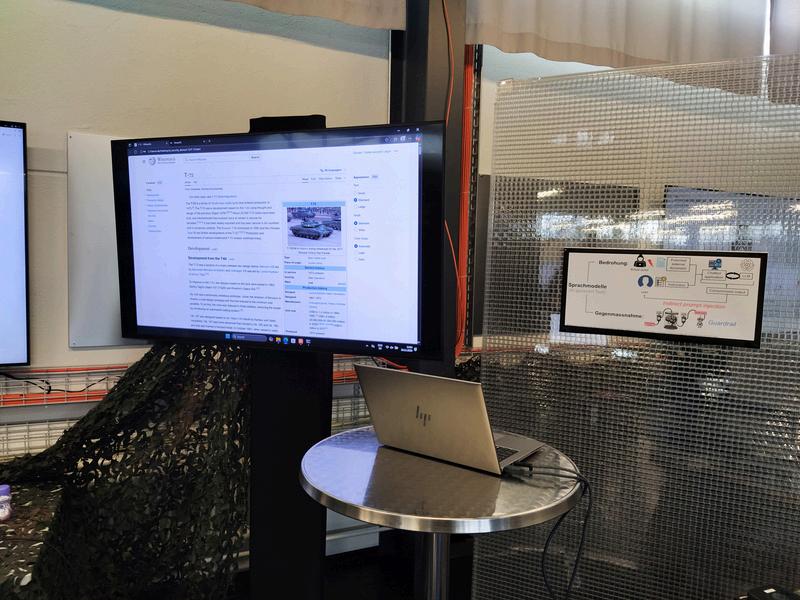
Although the large language models (LLMs) show impressive performance across many complex tasks, they often struggle to consistently produce structured responses, a key element in many applications such as agent orchestration. While template-based methods or in-context learning can improve structure compliance, constrained decoding and additional context have been shown to skew the distribution of the responses and may result in suboptimal performance. In this project, we show that the number of in-context examples is a key factor: in many settings, one to two shots are sufficient to reliably produce the predefined structures, while additional examples may degrade the response quality. In addition, handling of probabilities in the form of uncertainty or partial information is an essential task for LLMs in many settings and applications. A common approach to evaluate an LLM’s probabilistic reasoning capabilities is to assess its ability to answer questions pertaining to probability through the use of multiple-choice questions (MCQs). However, this paradigm, which we refer to as explicit probabilistic reasoning, has been shown in the literature to yield significant limitations (e.g., sensitivity to answer ordering). Thus, we introduce an alternative approach, named implicit probabilistic reasoning, which evaluates the models’ ability to integrate probabilistic reasoning into their text generation process. To achieve this, we rephrase MCQs as text-completion scenarios with a determined set of outcomes and compare the model’s nexttoken probability assignments to the true likelihood of the outcomes.
Language Preference and Hallucination Investigation in Multilingual RAG (LPHI-mRAG)
Retrieval-augmented generation (RAG) models represent a significant advancement in language model capabilities, enhancing LLMs by integrating relevant texts from external knowledge resources. These systems are particularly valuable for providing upto-date or domain-specific knowledge. While RAG has been extensively studied for English, extending these systems to multilingual settings introduces substantial challenges. Multilingual RAG (mRAG) scenarios - where user queries and knowledge datastores exist in multiple languages - are realistic (e.g. in a multilingual society such as Switzerland), where relevant information may not be available in the same language as a user's query Data availability and quality remain significant concerns, especially for low-resource languages. The utilisation of different writing systems, particularly non-Latin alphabets, introduces additional complexity Code-switching (when multiple languages or dialects are mixed within a single sentence) further complicates both retrieval and generation. Traditional evaluation metrics, designed for monolingual contexts, often prove unsuitable for multilingual settings. This project tackled three main research questions. 1. How capable are smaller language models in detecting the hallucination in LLM outputs?, demonstrating that various merging techniques yield the most promising results. 2. Whether models that can answer questions in one language can successfully transfer this capability to other languages within the same genus? With results indicating that the resource distribution during training, rather than language relationship, remains the primary driver of multilingual performance patterns. 3. How aware of the scripts the models are?, indicating that the considered models possess script knowledge to be capable to follow the explicit user request involving specific script, suggesting that this knowledge goes beyond superficial pattern matching.
Ensuring LLM Security and Safety through Transition and Gradient Graphs
As LLMs become increasingly widespread, understanding how specific training data shapes their outputs are crucial for
transparency, accountability, privacy, and fairness. To explore how LLMs leverage and replicate their training data, this project introduces a systematic approach centred on analysing low perplexity sequences high-probability text spans generated by the model. Its pipeline reliably extracts such long sequences across diverse topics while avoiding degeneration, then traces them back to their sources in the training data. However, substantial portion of these low-perplexity spans cannot be mapped to the corpus. For those that do match, we quantify the distribution of occurrences across source documents. The proposed pipeline to identify and analyse low-perplexity sequences in LLM outputs, categorising sequences by their match frequency in the training data and identified four distinct behaviours. This approach improves understanding of how models recall learned information and, in some cases, enables more efficient training data attribution.
The main objective of the CyberDFL project is to research, design, and implement a framework that provides a range of measures to train and evaluate trustworthy and secure federated learning models in a decentralised manner. The framework had focused on strengthening critical pillars of Decentralised Federated Learning (DFL), such as robustness, privacy, reputation, and trustworthiness, ensuring resilience against cyber threats. We incorporated a new sustainability pillar into a broader trustworthy AI framework for federated learning, together with a qualitative methodology for assessing environmental impact. In addition, we proposed a comprehensive method to quantify the energy consumption and carbon emissions of DFL systems. Building on this framework, we introduced two optimisation mechanisms focusing on aggregation strategies and node-selection policies to enhance the environmental sustainability of DFL. We also developed a trust computation model and a corresponding selection strategy to assess node reliability and contribution quality. This mechanism enables decentralised systems to prioritise more trustworthy participants, thereby improving model utility and convergence stability under non-IID data distributions. The approach was evaluated across heterogeneous datasets and decentralised topologies.
The project contributes to understanding how distributed federated learning could be used in military scenarios. Centralised approaches will not be the answer when ML algorithms must be deployed in the field. It is therefore crucial to understand the advantages and limitations of such approaches.
Today disinformation, “fake news”, and other forms of influencerelated activities (Beinflussungsaktivitäten) are widely acknowledged to be a form of warfare. In the public, especially social media, deepfakes and other synthetically generated media have the potential of disruption and destabilisation. AI image generators are possible threats for any political and social system –especially democracies, in which public opinion is a fundamental pillar of daily life. Historically, propaganda and disinformation have always been part of warfare, yet especially since the advanced development of artificial intelligence, information warfare has risen to a problem that has to be taken seriously. In the context of AI development, many speak of a new arms race of artificial intelligence. To get an overview and fundamental knowledge to model and simulate influence-related activities through images in such arms races, the overall goal of this project was to explore the dynamics of arms races of image generators and define the engineering requirements for modelling and simulation of that arms race. The project delivered four important contributions: i) metaethical framework for AI arms races in context of cyber influence operations, ii) list and description of relevant actors in such arms races, iii) characterisation of AI arms race from Hobbesian
viewpoint, iv) basic engineering requirements to model and simulate such arms races. The provided insights on AI arms races are particularly relevant to all stakeholders that are confronted with the management, oversight, or research of AI arms races.
Safe LLM Generation through Verification and Watermarking
LLMs have shown remarkable proficiency in code generation tasks across various programming languages. However, their outputs often contain subtle but critical vulnerabilities, posing significant risks when deployed in security-sensitive or mission critical systems. This project introduces Type- Pilot, an agentic AI framework designed to enhance the security and robustness of LLM generated code by leveraging strongly typed and verifiable languages, using Scala as a representative example. We evaluate the effectiveness of our approach in two settings: formal verification with the Stainless framework and general-purpose secure code generation. Our experiments with leading open-source LLMs reveal that while direct code generation often fails to enforce safety constraints, just as naive prompting for more secure code, our type focused agentic pipeline substantially mitigates input validation and injection vulnerabilities. The results demonstrate the potential of structured, type-guided LLM workflows to improve the SotA of the trustworthiness of automated code generation in high-assurance domains. In addition, a major promise of coding LLMs has been the simplification and streamlining of software development. Where a single character error could have previously led to a fatal flow, coding LLMs promise secure, comprehensive, and running code. Our research shows that this promise does not hold, and that a singlecharacter error, even the most LLM-friendly language – namely Python, can switch the generated code from being secure to being vulnerable.
Tokenization Fairness in Relation to Non-Latin Scripts: Impact on Downstream LLM Applications (fairTOK)
Primary focus of this project is to investigate how diverse writing systems (scripts) interact with contemporary tokenizers used to preprocess text data for LLMs. A range of popular modern LLMs (e.g. Llama, Gemini, Phi) tokenizers were compared to find out how they deal with non-Latin scripts and how the processing can be improved for such scripts. This study includes analyses at two levels: intrinsic evaluation of the tokenizers and extrinsic evaluation on downstream tasks. To quantify the variation across model tokenizers, we use two kinds of intrinsic measures. First, tokenisation parity is used as a relative measure of how different tokenisation is in a given language compared to English. Second, a number of absolute intrinsic measures, such as tokenisation, fertility, and Rényi entropy are calculated to assess the degree of oversegmentation in a given language. As extrinsic measures, we evaluated various types of LLMs on a range of multilingual and dialectal tasks to correlate their performance with the intrinsic tokenisation measures. Parallel to this, we also qualitatively studied the behaviour of tokenizers to identify possible misalignments and misinterpretations, which was the driving motivation for exploring tokenisation behaviours in depth. Focusing on the Script Type (Latin vs non-Latin scripts), we could show that tokenisation quality varies much more in non-Latin scripts. As for the impact on the downstream performance (extrinsic measures), we found that it depends on the task: the impact is stronger in surface-level tasks (such as detection of relevant spans for question answering) than in semantic tasks such as topic modelling.
ARFON: Adversarial Robustness of Foundation Models
The rapid progress of LLMs, notably the GPT series, has advanced natural language generation, reasoning and contextual understanding, attracting widespread academic and commercial
interest. Despite these gains, today’s autoregressive (AR) LLMs remain vulnerable to jailbreak attacks, highlighting unresolved safety and alignment challenges. Meanwhile, diffusion models have become the state of the art in high-fidelity image synthesis, conditional editing, and in-painting. Motivated by that success, several works have introduced discrete diffusion processes for text generation. Initial large-scale experiments suggest diffusion-based language models can approach the capabilities of comparably sized AR baselines while enabling parallel decoding and new controllability options.
The LLaDA prototype reports performance on par with 8B parameter AR models on a variety of benchmarks. However, these findings lack a full safety analysis, especially given that this new generation paradigm introduces unique safety challenges. For instance, the simple any-order nature of diffusion generation expands the attack surface, since harmfulness can emerge anywhere, and at any step, during the decoding process.
We studied activation-based safety interventions for the diffusion language model LLaDA along two paths: (i) steering with safety classification probes trained on prompt embeddings, and (ii) steering with probes trained on jailbreak-shift features. For the first setup, probe variants showed that strong classifier F1 does not guarantee effective or stable control at generation time: the domain invariant probe achieved the best out of distribution (OOD) F1, yet produced brittle steering and capability drops, whereas a simpler vanilla probe yielded the most balanced safe steering. In the second setup, the learned probes delivered strong in-attack ASR reductions across several families; However, under OOD evaluation, we saw modest positive safe steering while maintaining general reasoning capability. Overall, activation steering can reduce harmfulness, but effectiveness depends strongly on the probe design and application. Limitations include inconsistent generalization under OOD attacks and the rigidity of linear, static interventions.
ANORA: Anomalous Regime Detection in Dynamic Networks
Detecting anomalies or change points in time series is an area that has been widely explored, and machine learning has proved very effective for this task. Similar techniques are emerging but lack maturity to detect anomalies in graph time series (dynamic networks). This scenario is for example interesting for the study of dynamic communication networks where it can be assumed that the content of communications is encrypted and inaccessible.
We developed a novel framework that characterizes the evolution of dynamic graphs as trajectories along geodesics in a suitably defined graph space. This perspective allows us to formally define regimes as periods of coherent evolution along a single geodesic, and regime changes as significant drifts toward a new trajectory. Based on this formalism, we defined a new deviation cost that measures the cumulative distance of sequences of observed graphs from the estimated geodesics between their endpoints. Through experiments on continuously changing graphs, and on mobility data, we showed that our method can identify meaningful change points.
Anticipating, detecting and predicting security risks is a fundamental task in the field of intelligence services. The analysis of conflict risks for the purpose of anticipation and early detection is traditionally carried out using human resources. The available data is qualitative and unstructured. However, the quality and quantity of this data is evolving, enabling a more quantitative approach. A fundamental problem is defining the term ‘conflict’ in qualitative and quantitative terms. This term differs depending on the objectives to be achieved
and influences the selection of data for making predictions. As part of this project, we conducted an inventory of various techniques and freely accessible data for this purpose. We also defined the term “conflict” in accordance with best practices and requirements.
Mapping the Landscape of Visually Perceptible Artifacts in Generative AI
Recent advances in synthetic image generation, such as generative adversarial networks (GANs) and in particular (latent) diffusion models (DMs), have spurned concern about their abuse by malign actors. Synthetic imagery has been used in various malicious contexts, such as social engineering, cybercrime or cyber influence operations, and impacts individual and societal levels. This project aimed to develop a fundamental technological framework that enables human analysts to investigate recent text-to-image generators for image artifacts.
Based on experiences from previous research projects, we discovered that synthetic images can be distinguished from real photographs by identifying distinct visual artifacts (e.g., hand artifacts or physical artifacts in generated images). Building on this finding, we developed a framework that resulted in a demonstrator application, implementing all necessary steps to identify, catalogue, and categorise image artifacts in AI-generated images. The demonstrator application enables human analysts without extensive prior experience in AI image generation to investigate specific image generators for the appearance of visual artifacts. For a given text-toimage generator, the analyst can generate an arbitrary number of images for a number of specific user prompts. Subsequently, the images can be examined for visual artifacts, which can be identified and named. Finally, the discovered visual artifacts can be
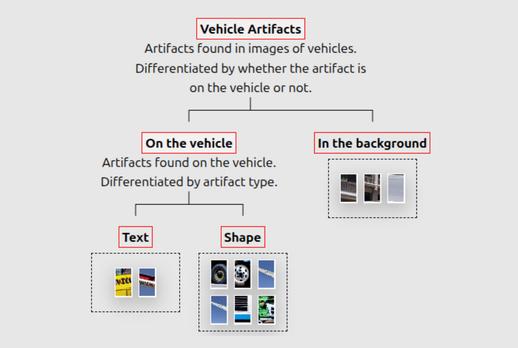
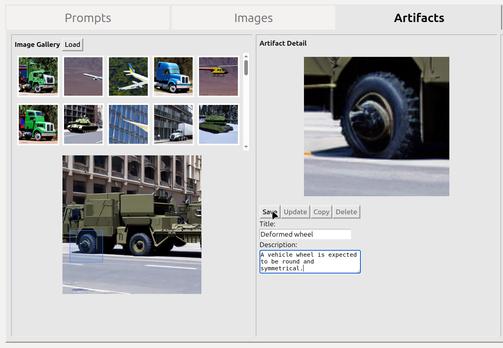
categorised in form of an adaptable taxonomy. As such, the taxonomy can be further exploited to contrast the appearance of visual artifacts among different text-to-image generators. Therefore, this project provides the technological foundations for improved manual forensic analysis of modern text-to-image generators.
Privacy-Preserving and Distributed Processing of Public Data in Hybrid Trust Networks
Organisations increasingly depend on untrusted cloud resources for machine learning, raising significant privacy risks. The central problem is enabling collaboration with untrusted nodes without exposing sensitive data or suffering performance degradation. This project proposes a trust-aware decentralised learning framework that enforces a strict one-way information flow from public to private models using a dual-pipeline architecture. This design allows trusted nodes to exploit untrusted computational power for general learning while ensuring privacy-by-design for sensitive datasets. Experiments on example datasets, like CIFAR-10, show that the approach substantially reduces catastrophic forgetting, achieving up to 48.9% higher accuracy than traditional private fine-tuning. Moreover, it matches the performance of standard decentralised algorithms within 0.5%, demonstrating strong utility with preserved privacy.
Autonomous Infrastructure as Code: Leveraging Agentic LLM Verifiers for Robust Infrastructure Monitoring
Cloud systems often drift from their specifications due to bugs, manual edits, or system updates. LLM-based agents could detect this drift by analysing telemetry, but they incorrectly assume tool outputs are always reliable. Erroneous tool responses, caused by API failures or network issues, mislead agents and degrade detection accuracy. To address this, this project introduces robust infrastructure verification even under incorrect or misleading tool outputs.
This framework uses two cooperating agents, a verifier and a toolgeneration agent, engaging in iterative cross-validation and multiperspective checks. It also tracks tool-call history to separate genuine drift from faulty tool behaviour. On a well-known benchmark, like AIOpsLab, the framework boosts accuracy from 27.3% (baseline under tool errors) to 50.0%. Even without tool errors, the framework improves accuracy from 28% to 43.8%. These results show that cross-validated, diverse tool calls significantly enhance autonomous infrastructure verification.
– Personalised Agentic Self-Hosted Coding Assistant with LLMs
LLMs are particularly useful as coding assistants, interfaced with IDEs for code completion and other tasks. It is now possible to run coding assistants locally on an affordable infrastructure running onpremises. However, when used independently, the code generated by LLMs does not consider the existing private codebase of a team, and in particular the parts of their project that have already been developed. To address this limitation, we implemented a local framework for coding assistance enhanced with the Retrieval Augmented Generation (RAG) approach. This enables the code generated by an LLM to exploit existing code from private projects, maintaining privacy as it is run on-premises.
In the PASCAL project, we have built and delivered an additional layer between an IDE and a model server, which retrieves relevant chunks from a private codebase that is stored server-side, and uses them to make personalised suggestions for autocompletion or to
answer questions about an ongoing project in chat mode. An original contribution of the PASCAL project is the evaluation of the solution using a dataset designed for this purpose and two metrics, one using CodeBERTScore and another one comparing AST representations. Quantitative evaluation enabled us to compare design choices and hyperparameters of the solution.
Warning System for Biomedical Data and Central Hub Device for Data Offloading
Wearable edge devices offer new possibilities for detecting physiological stress and medical risks in soldiers before critical incidents occur. In this project, we extended an existing wearable sensing platform with real-time data analysis and collaborative device-to-device communication. We enabled multiple devices to exchange anonymised health and activity indicators, allowing individuals to be evaluated in the context of their group rather than in isolation. This group-based perspective improves the detection of abnormal physiological responses during shared activities. We also analysed long-term heart-rate and movement data to model expected cardiovascular responses during sustained physical effort. The results show that individual heart-rate behaviour can be predicted with good accuracy from motion data alone, and that deviations from this expected behaviour can serve as early indicators of fatigue, overheating, or excessive strain. In addition, we redesigned the central data offload station to improve robustness, usability, and reliability during operational data collection. Overall, we demonstrate that real-time, group-aware physiological monitoring using battery-powered edge devices is technically feasible and provides a solid foundation for future operational deployment and further development.
Advances in mobile and aerial spectrum monitoring increasingly require compact sensing platforms capable of detecting and analysing radio signals under strict hardware and energy constraints. In this project, we investigated how signal detection
and identification can be efficiently performed on resource-limited software-defined radios, with a particular emphasis on timing accuracy, robustness across signal types, and the feasibility of advanced learning-based techniques. A key outcome was a detailed experimental evaluation of packet detection algorithms on embedded SDR hardware, demonstrating how design choices directly affect timestamp precision and, consequently, localisation performance. In parallel, the project explored deep learning–based representations for signal matching and compression, showing that neural models can significantly reduce data volumes while preserving relevant information for downstream tasks. This was validated with aircraft and Internet-of-Things transmissions and could be extended to other technologies. Overall, the work provides both practical design guidelines and experimental evidence supporting the deployment of intelligent, hardware-aware spectrum sensing nodes for mobile and non-terrestrial applications.
Reliable detection and classification of radio-frequency signals is a prerequisite for effective spectrum monitoring and signal intelligence, particularly in environments with large data volumes and unknown signal structures. In this project, we focused on developing and evaluating automated signal processing methods that operate directly on raw I/Q data collected by software-defined radios. The work centered on the systematic extraction of signal features and the assessment of classical detection and classification techniques using real-world measurements. These measurements comprised aircraft and Internet-of-Things data. By leveraging extensive experience in RF monitoring and wireless transmitter positioning, the project established practical workflows for analysing diverse signal types and benchmarking algorithmic performance. The resulting methods and datasets provide a solid foundation for scalable, automated RF signal analysis in operational monitoring scenarios.
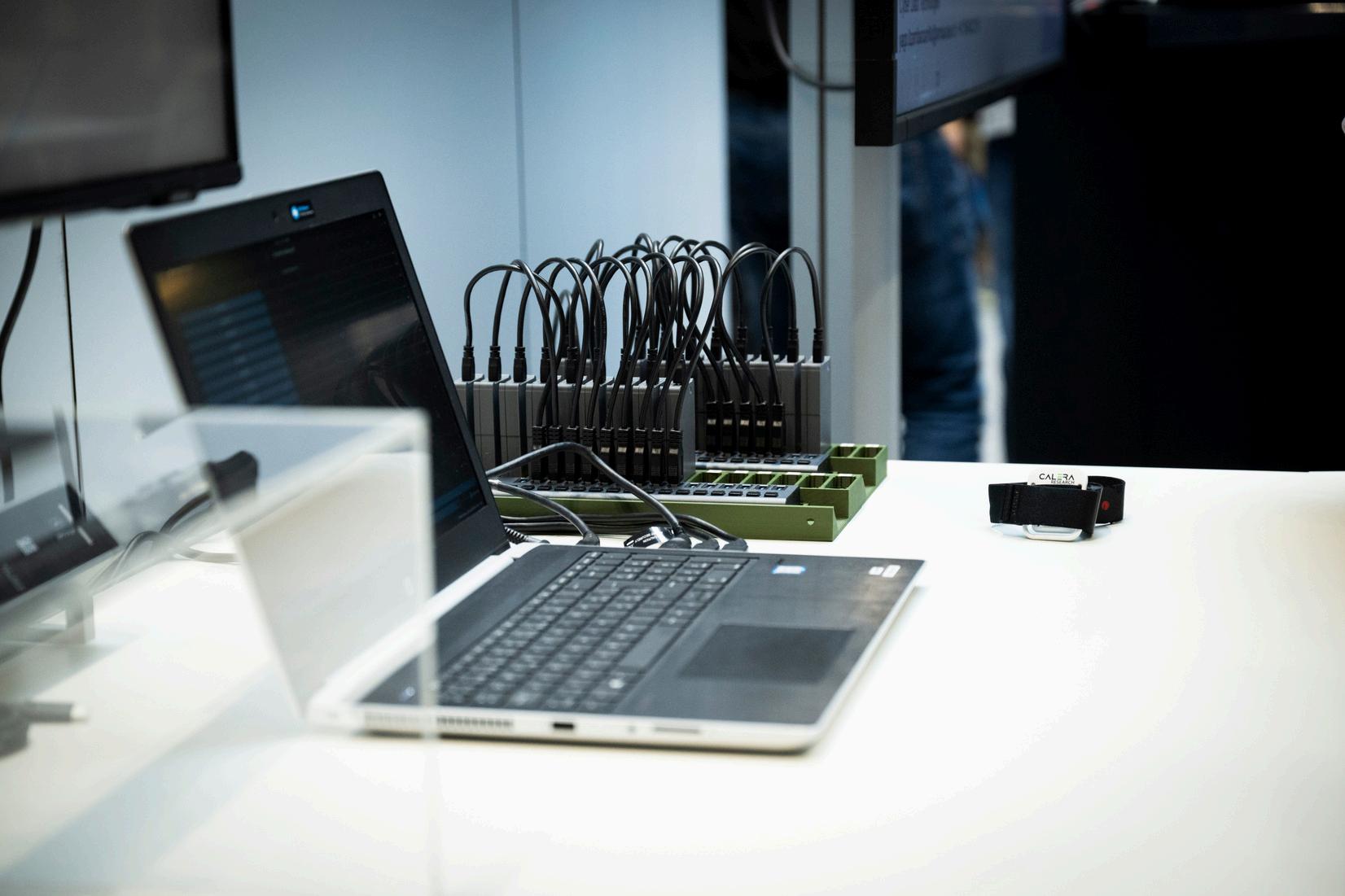

In today’s digital landscape, cyber threats, which harness the latest digital technologies, evolve at an unprecedented speed. Keeping up with the latest threat intelligence and assessing their potential impact is challenging.
Traditionally, technology monitoring (TM) heavily relied on manual and qualitative methods. In contrast, the CYD Campus utilises recent advances in Big Data and Artificial Intelligence to enhance TM, offering not only a more quantitative approach but also integrating predictive methods. The approach is mainly based on open data and rigorous scientific methodologies.
In the past and present phases, the focus has been on assessing high-impact digital and security-related technologies such as blockchain, 5G and next-generation networks, large language models, generative artificial intelligence, and quantum technologies. We addressed these topics through technology reviews and extended studies to build foundational understanding, evaluate opportunities and risks, and guide capability development. In parallel, continuous monitoring of rapidly evolving fields, particularly artificial intelligence and quantum technologies, ensures close tracking of technological developments and emerging trends.
Looking ahead, the roadmap anticipates a shift towards emerging and disruptive technologies, including new application domains such as cyber security in space and human–computer interfaces. By combining short-term assessments, in-depth studies, and ongoing monitoring, this approach enables early identification of technological trends and potential disruptions, ensuring preparedness for future challenges and opportunities in an increasingly complex technological landscape.
The CYD Campus actively contributes to the SwissCyber Initiative, a crucial national project launched in January 2025. The SwissCyber initiative seeks to provide a comprehensive overview of Switzerland’s cyber security research landscape at both academic and business levels. This initiative addresses critical gaps in knowledge by building on previous studies of university research and expanding to include startups, SMEs, and private research institutions. The HES-SO Valais-Wallis is leading the project with the support of the Cyber-Defence Campus (CYD Campus) and the Swiss Academy of Engineering Sciences (SATW). The initiative is structured into five core work packages: data collection and analysis, target state analysis, platform development, delta analysis and recommendations, and dissemination. It runs until December 2026. The CYD Campus ensures robust support and guidance through close collaboration with the project's host, HES-SO Valais-Wallis.
Quantum technologies are poised to transform various industries, from cyber security and communication to finance and pharmaceuticals. The increasing development of quantum computers, quantum communication systems, and hybrid quantum classical solutions represents not just a technological revolution but also a significant strategic shift in global cyber security efforts. This extended study brings together comprehensive trends, research, and insights from more than 40 leading experts from around the globe to provide a deep understanding of the opportunities, challenges, and implications of quantum technologies for cyber defence.
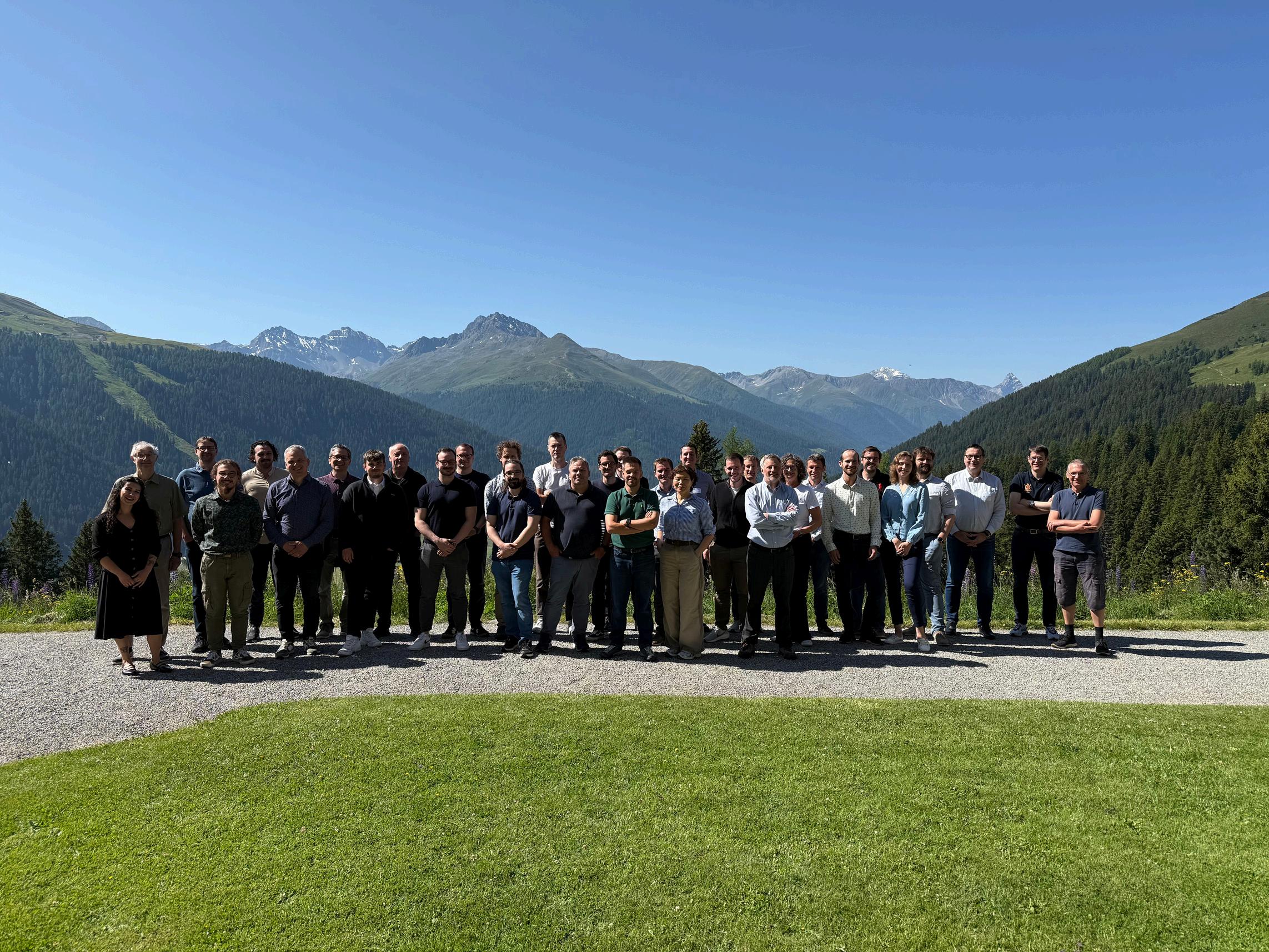
Each chapter underwent a rigorous single-blind peer-review process, involving both feedback from fellow authors and evaluations by external experts. This thorough review process was crucial to ensure the highest quality and scientific rigor, reinforcing the credibility and depth of the presented content.
Divided in three parts, the book examines core advancements in various types of quantum technologies, addressing the key obstacles that limit progress. It also explores the potential disruptions to current cryptographic standards alongside potential solutions, as well as global quantum strategies and tools designed to monitor trends in quantum technologies.
This extended study is intended to serve as a resource for researchers, policymakers, cyber security specialists, and industry leaders navigating the rapidly evolving quantum landscape. It aims to foster informed decision-making and encourage collaboration across sectors to ensure that quantum technologies contribute to a secure and prosperous digital future.
The hardcover book is available in open access from December 2025 on Springer Nature website.
Mapping and Predicting Emerging Topics Using BERTbased Embeddings and Knowledge-Weighted Graphs: Quantum Computing as Use Case
Artificial intelligence (AI) is increasingly shaping the field of scientometrics, offering new methodologies for mapping and predicting emerging research trends across disciplines. In this study, we introduce an AI-based framework that combines BERT-based embedding models, knowledge-weighted graphs, and a machine learning classifier to monitor the development of scientific concepts over time. BERT-based embeddings, such as SPECTER and KeyBERT,
enable our framework to perform more accurate, semantics-driven keyword extraction that surpasses traditional frequency-based approaches. These keywords are subsequently used to retrieve relevant publications and to construct evolving, knowledgeweighted graphs that capture balanced and meaningful interconnections between research topics, by reducing the bias introduced by short-term spikes in the popularity of certain research topics.
We perform a temporal trend analysis based on keyword frequency and interconnection, while a Random Forest model is used to forecast short-term increases in research activity. Using quantum computing as a case study, we identify prominent emerging themes —including NISQ devices and quantum machine learning—and observe growing interdisciplinary convergence involving quantum technologies, AI, and materials science. The model also achieves 77% accuracy in predicting research surges within a three-month window, demonstrating its potential for early trend detection in rapidly evolving fields.
From Explainable AI to Evidence-Based Foresight: Forecasting Scientific Breakthroughs through Concept Network Dynamics in Quantum Computing
Scientific and technological breakthroughs increasingly emerge from complex recombinations of knowledge across interconnected domains. Anticipating these transitions has become critical for both research strategy and governance under technological uncertainty In partnership with the University of Geneva, we investigated an interpretable, machine learning–based framework for forecasting scientific breakthroughs through the structural dynamics of concept networks. Using the OpenAlex corpus covering 1990–2023, we reconstructed the evolving topology of quantum computing research. We predicted both the appearance and growth strength of
conceptual connections that signal emerging ideas. A LightGBM model trained on 59 topological and semantic features achieved stable classification performance (AUC ≈ 0.95) and robust regression behaviour.
The regression model maintains only a modestly increasing absolute error over time: the Root Mean Squared Logarithmic Error (RMSLE) grows from approximately 0.45 for one-year predictions to 0.6 at five years, corresponding to relative deviations of 57% and 82%, respectively. The most influential features—Adamic–Adar, degree Hadamard, and weighted degree—show that breakthroughs arise from cohesive, high-connectivity subnetworks where conceptual recombination amplifies innovation potential.
Two use cases, quantum annealing and AI-enabled quantum architectures, validated the model’s capacity to replicate expertanticipated trends in emerging fields. Beyond prediction, we introduced an evidence-based decision architecture integrating automated detection, expert translation, and policy integration layers, linking interpretable AI forecasts to anticipatory governance and strategic investment. The results demonstrate how explainable machine learning can transform large-scale knowledge data into actionable foresight, bridging the science of science, technological forecasting, and responsible innovation.
PromptSight: Forecasting Emerging Technologies via Iterative
Forecasting emerging technologies is a critical need for guiding innovation and national security policy; however, traditional methods often struggle to keep pace with rapid change. Recent advances in machine learning (ML) and large language models (LLMs) are creating new possibilities by accelerating the review and summarisation of technical expertise, yet effective prompting strategies to fully leverage these benefits remain largely underexplored. In partnership with the Institute of Entrepreneurship & Management, HES-SO Valais-Wallis, we explored the use of an agentic AI's capability for a self-prompting framework, using satellite communication as a use case. Benchmarked against four popular LLM models—including Gemma3-27b-it, DeepSeek-R1-Distill-Qwen-32B, and Phi-3.5-mini-instruct— our findings indicate that LLMs can contribute to improved breakthrough technology identification and field introduction using the latest advancements in LLM self-scaffolding and self-prompting techniques.
As nations increasingly depend on space assets for secure communications, intelligence gathering, navigation (e.g., GPS), and military operations, the cyber security of this domain becomes a strategic imperative. This growing reliance means that the security of everything from satellites in orbit to the ground systems that control them is a matter of national security. Traditional foresight exercises for cyberspace technologies still rely heavily on expert intuition. Yet, no single analyst can maintain a holistic view of the sprawling, cross-domain landscape that links space-based assets, ground-based networks, and AI-enabled security tools. To close that knowledge gap, we have combined curated domain expertise with a fully automated bibliometric pipeline driven by large language models.
The study extracted relevant literature from the OpenAlex database across satellite and cyber security domains. It then extracted literal KeyBERT keywords from scientific abstracts and translated them into temporal co-occurrence tensors for graph neural forecasts of technological emergence. This process allowed us to systematically
analyse vast amounts of data to find patterns and predict future developments.
The resulting evidence points to a sharp convergence between satellite deployment workflows and cyber defence practices. These findings flag areas where near-term acceleration is most likely, specifically in ensuring secure satellite navigation and data transmission resilience.
The insights from this study provide an early warning system, helping national security teams proactively address vulnerabilities in satellite systems and related ground infrastructure before they can be exploited by hostile actors, thereby safeguarding critical national functions and capabilities.
Private investors are putting money into companies that protect space technology from cyberattacks. This includes everything from the satellites in orbit to the control centres on the ground and the rockets that launch them. The study looked at where this money is going across the US, Europe, and Asia. It found that the investment is mainly coming from large defence companies, tech giants like cloud providers, and specialised startups that focus on securing things like satellite signals and data.
The research also shows that most of this money is concentrated in the US and Europe. In Asia, it's harder to get a full picture because of less transparency and biased data.
Looking ahead, the study suggests that the way we invest in space cyber security needs to change. It recommends using smarter financial models that put a value on a company's ability to withstand a cyberattack. These models should use information from security tests designed for space equipment and take into account that security incidents in space are often kept private, which makes it harder to estimate the risks and rewards.
The report provides an analysis of the technological progression towards Artificial Superintelligence (ASI), which it defines as an intelligence capable of exceeding human cognitive abilities across all domains. This progression is conceptualised as a gradual evolution starting from current Artificial Narrow Intelligence (ANI) systems, moving through Artificial General Intelligence (AGI), and finally reaching the theoretical stage of ASI. This trajectory is supported by ongoing advancements in key technologies, including diverse reinforcement learning techniques, specific neural network architectures like Transformer and Mixture-of-Experts models, multimodal systems that integrate various data types, the use of external memory systems, and methods enabling self-improvement and metacognitive reasoning.
Despite these advances, the report identifies several critical limitations in current AI, such as the lack of physical embodiment, an absence of true causal understanding, and symbolic disconnection. To overcome these hurdles and move beyond current capabilities, the report highlights essential cognitive principles that future systems must integrate, including structured memory, symbolic anchoring (connecting abstract concepts to real-world context), and sensory interaction.
Furthermore, the document addresses the significant risks associated with the development of AGI and ASI, primarily focusing on the potential for loss of human control, the misalignment of AI
objectives with human values, and the possibility of malicious use. A key finding emphasised is the inadequacy of current regulatory frameworks, notably the EU AI Act, to manage the complex and unpredictable challenges posed by autonomous, self-improving systems. The report concludes by proposing a summarised technology roadmap that outlines three distinct phases of AI evolution and stresses four cross-cutting priorities for future development: sustainability, security, agile regulation, and international cooperation.
From 2023 to 2025, the Swiss Confederation was targeted by a series of DDoS (Distributed Denial of Service) attacks against several of its websites. While these attacks did not massively affect the federal administration's operational capabilities, they garnered significant media attention. Questions surrounding these events have prompted a broader interrogation of Switzerland’s general resilience against cyberattacks, specifically DDoS operations targeting critical infrastructure. Our report details the various types of DDoS attacks and current trends, such as the rise of multi-vector campaigns, application-layer threats, AI-driven attack automation, and easily accessible "DDoS-for-hire" services. It discusses a range of mature, ready-to-deploy DDoS mitigation solutions available on the market, including on-premises appliances, cloud-based scrubbing centres, Content Delivery Networks (CDNs), and Web Application Firewalls (WAFs). The document analyses the pros and cons of these different solutions, spanning from immediate on-premises protection to the high scalability of cloud services.
The report emphasises that there is no one-size-fits-all approach. Organisations must conduct their own risk assessments to determine the best mix of mitigation services for their specific needs, considering factors like potential downtime tolerance and cost-effectiveness. It concludes with general recommendations for developing a robust, multi-layered defence strategy, including
ongoing traffic monitoring, implementing rate limiting, creating a well-structured incident response plan, and continuous testing, which may involve potential reliance on specialised third-party service providers.
Up until 2024, we produced technology review reports focused on the development of quantum technologies relevant to cyber security, including analyses and comparisons of Post-Quantum Cryptography (PQC) and Quantum Key Distribution (QKD). These reports combined two complementary approaches: a quantitative, data-driven methodology to support systematic trend analysis, and a qualitative approach capturing expert perspectives from leading quantum specialists on key topics.
From 2025 onwards, these reports have been broadened in scope and rebranded as Emerging and Disruptive Technologies (EDT) reports. In addition to quantum technologies, they now encompass other high-impact technology domains—such as artificial intelligence and superintelligence—reflecting their increasing significance within the cyber security-focused EDT landscape. The rebranded EDT reports consolidate multiple emerging technologies within a single analytical framework, enabling cross-technology comparisons using common indicators of technological advancement, including publication activity, patent filings, and private investment data. This enhanced EDT content enables the CYD Campus to track interactions and relative momentum across fields (for example, quantum versus AI) and to position cyber defence implications within a broader, multi-technology risk-andopportunity context.
The following figures illustrate examples of visualisations included in the trend analysis section of the EDT reports, providing data-driven insights into the development of selected EDT topics.
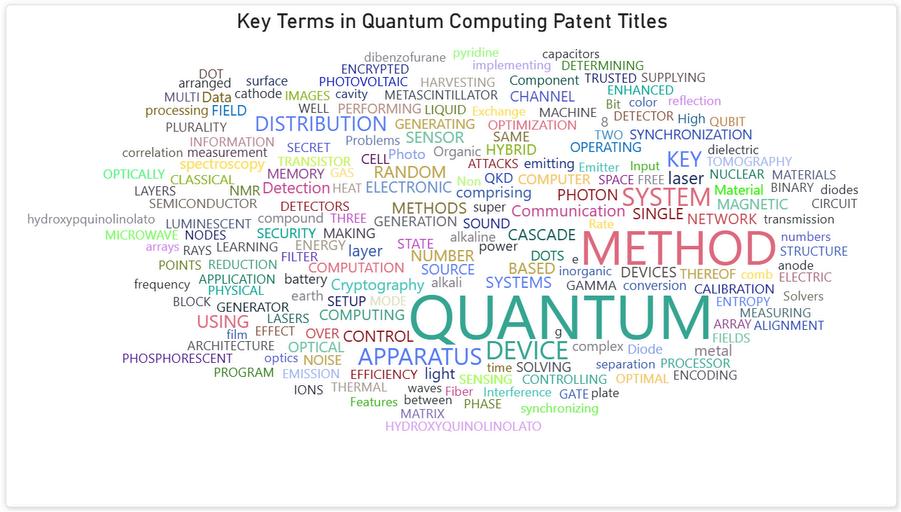
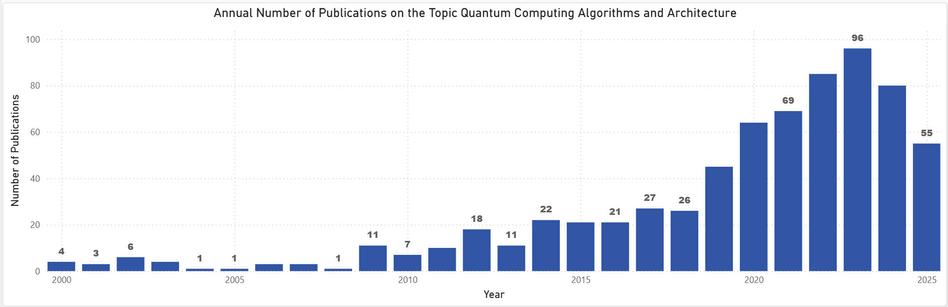
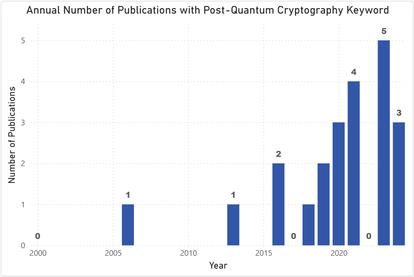
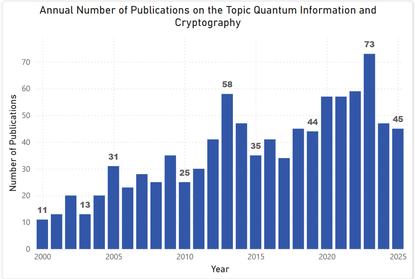
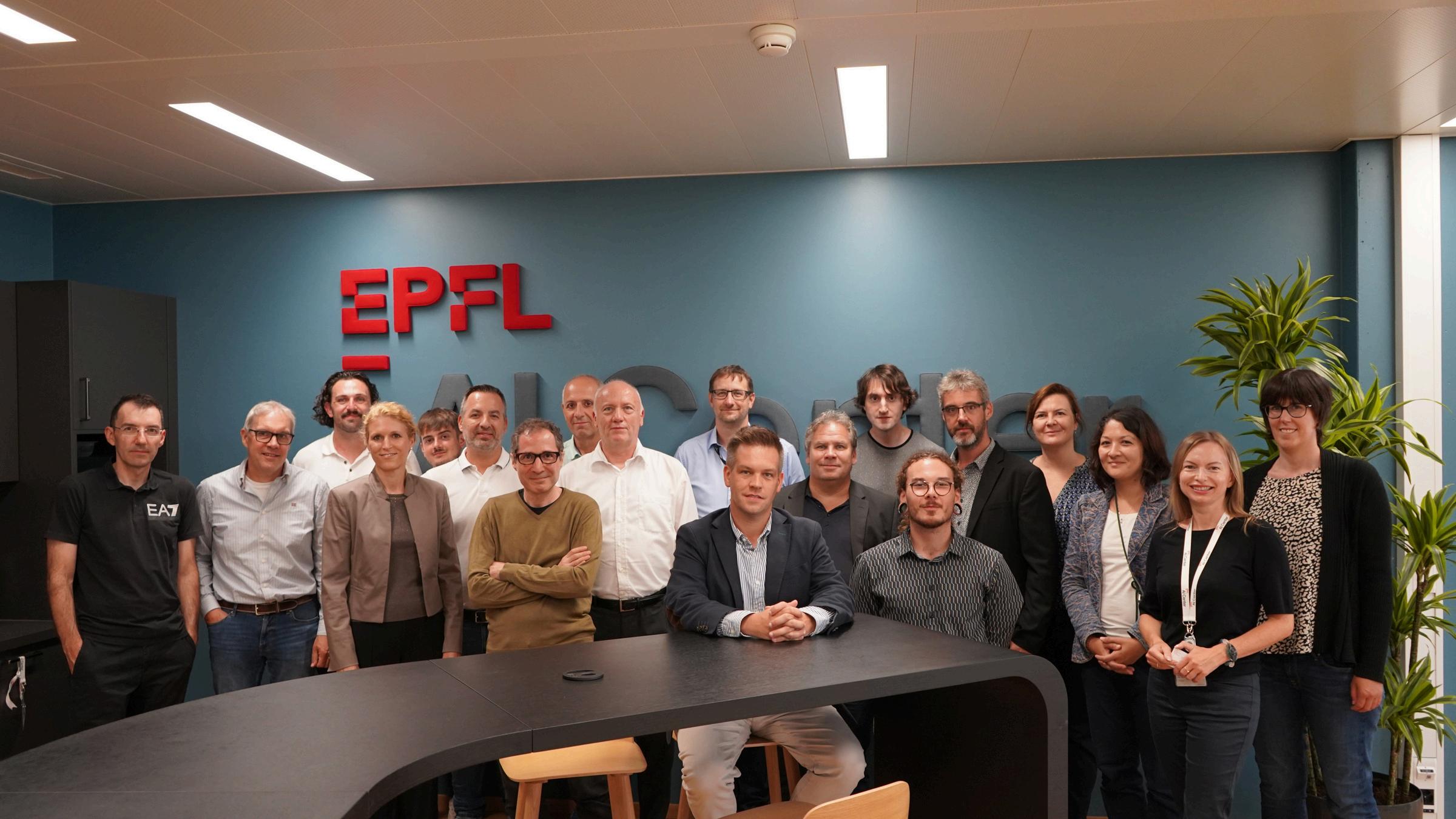
The TMM platform aggregates valuable insights, which our technology analysts then combine with their research and scouting expertise to provide a comprehensive analysis. In 2025: The TMM 2.0 platform was further strengthened through the introduction of Power BI dashboards, which translate technology and market intelligence into clear, interactive visualisations. These dashboards have made insights more accessible to the CYD Campus stakeholders and partners, enabling consistent exploration of signals, comparison of trends, and monitoring of developments. As a result, TMM 2.0 has become an increasingly reliable data source for internal decision-making and multiple research projects, ensuring that analyses across the organisation are grounded in shared, validated data sources and metrics.
Another significant advancement in 2025 was the improvement of matching and interoperability across the databases feeding the platform. In collaboration with EPFL students, targeted efforts were undertaken to refine entity alignment and reduce duplication across patent, scientific, company, and labour market datasets. These improvements resulted in cleaner linkages between sources, enabling more precise mapping of technologies to actors and markets. Overall, these enhancements have significantly increased the analytical quality of TMM outputs and strengthened the platform’s capacity to deliver comprehensive, integrated technology intelligence.
On 28 August 2025, the CYD Campus organised a work visit on the EPFL campus, giving participants a full overview of the activities, research projects and partnerships of the CYD Campus through laboratory visits and tailored sessions. The CYD Campus acts as a technology observatory with a strong focus on analysing emerging and disruptive technologies such as artificial intelligence, quantum computing and space-based technologies, and evaluating the implications for cyber security and defence.
Highlights of the day included:
A presentation in the Center for Digital Trust (C4DT) on data protection and cyber security;
A visit to the BOLO Museum, which covers the history of IT, digital culture and video gaming and explores what lies ahead;
Two talks at the CYD Campus external office in Lausanne on quantum computers and superintelligence;
An insight session at the EPFL AI Center focusing on the technical challenges of artificial intelligence;
A visit to the laboratories of the Center for Quantum Science and Engineering (QSE)
The day ended with a networking session on the EPFL campus, an ideal environment for holding discussions and sharing experiences. The Technology Monitoring Day served to strengthen the synergies between academic players and the armasuisse S+T staff while opening new prospects for innovative projects.

At the CYD Campus, we identify emerging digital trends at an early stage, help translate cutting-edge scientific insights into practical solutions, and transfer them to operational use. By connecting the Federal Administration, the Armed Forces, academia and industry we create a dynamic competence network that strengthens technological innovation and sovereignty. Through targeted research programmes, startup challenges, proof-of-concept projects and real-world testing environments, we help to transform new technologies in areas such as artificial intelligence, secure systems, or secure communication networks into tangible capabilities for Switzerland’s security.
To illustrate this dynamic approach in action, the following sections highlight key milestones from the past year that reinforce Switzerland’s digital sovereignty and security.
As part of the project evaluating SCION, a secure routing protocol with full control over the data path, we helped define two use cases for highly available communication infrastructures: the national networking of federal authorities and an international connection to the SWISSINT location in Kosovo. The cyber command of the Armed Forces, in close cooperation with industry partners Anapaya and Noser Engineering, implemented them. Afterwards, the CYD Campus carried out a security assessment of one of the use cases. The results confirm once more that SCION can play an essential role in protecting data connections by using path-aware networking with cryptographically verified paths, ensuring traffic follows trusted routes and remains resilient against hijacking and interception.
In 2024, the CYD Campus sought innovative solutions related to AI security. The search, conducted in the form of a startup challenge, was won by Patronus AI, whose solution we took a closer look at this year in a proof-of-concept focusing on the implementation and evaluation of the Patronus AI platform as a central solution for testing the security of AI. The project, which will continue into 2026, involves comprehensive testing of the software's ability to mitigate various attack vectors on LLMs. Systematic experiments validate how the platform automatically evaluates responses from LLMs and whether it reliably identifies typical security issues. The aim of the overall project is to provide solid evidence of the practical suitability of the solution for securing AI infrastructures and to fully exploit its potential for detecting vulnerabilities.
The founders of the startup SkAI Data Services were the first entrepreneurs to be awarded the Proof-of-Concept Fellowship, during which they received intensive support and presented at various events. At the heart of the company is the development of the GPSWise service, an innovative solution for detecting GPS spoofing and jamming. As modern navigation and logistics systems are heavily dependent on precise satellite signals, GPSWise is a crucial security tool: it detects targeted interference signals (jamming) and the transmission of false location data (spoofing) in real time. The service thus enables critical infrastructure, autonomous vehicles and global supply chains to react to such events and increases their resilience to them.
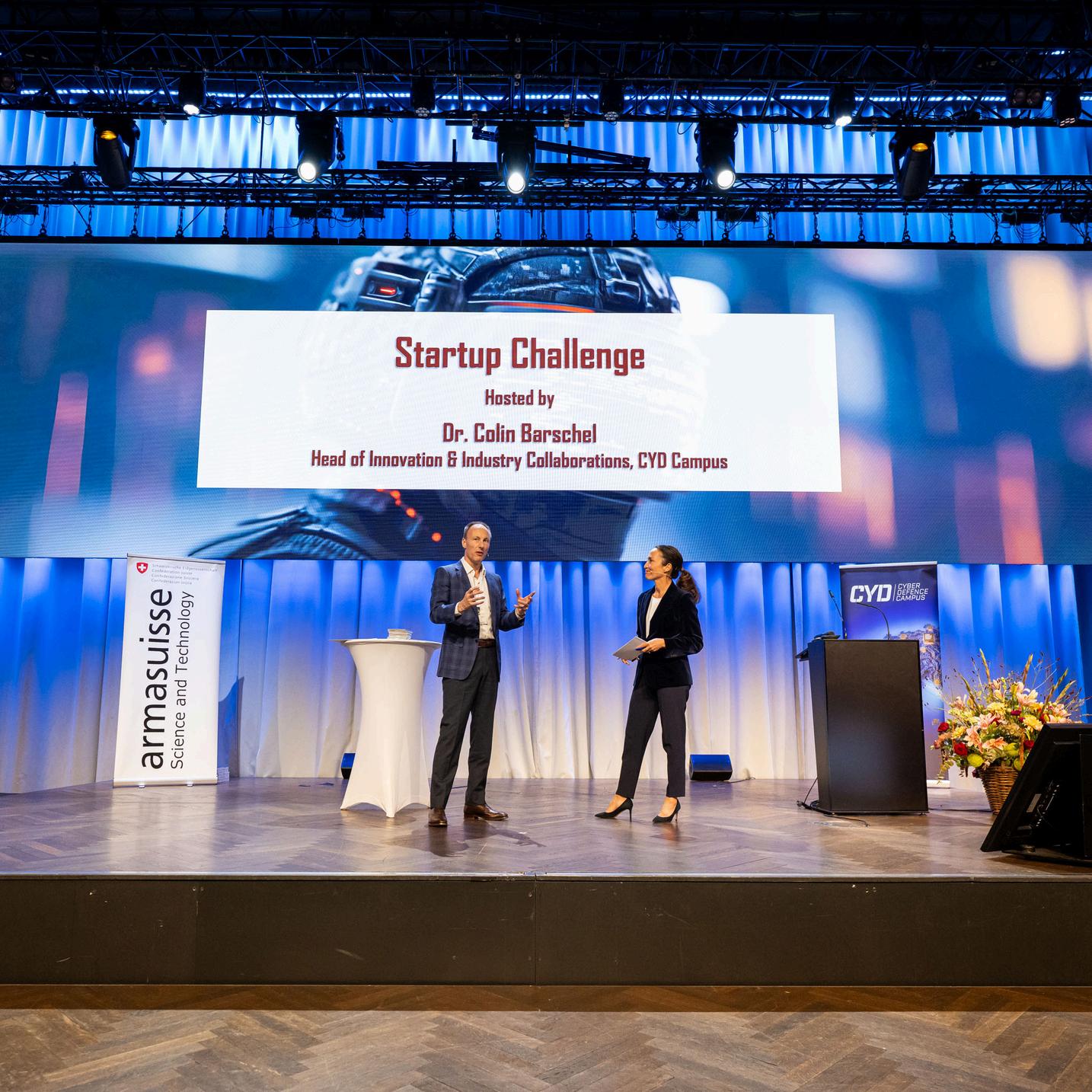

In 2025, we concentrated our scouting efforts primarily on Europe while keeping a global outlook. Our goal was to identify emerging cyber security and AI technologies early, map key players, and anticipate trends that matter for our stakeholders and Switzerland as a whole. To reach promising early-stage startups, we leveraged a broad network of accelerators, ambassadors, and economic development organisations. However, when we wanted to meet companies and potential partners efficiently and in large numbers, our preferred tool remained participation in a small number of major international conferences and trade fairs. We complemented this outreach with interviews of startups and established companies. The resulting insights were shared with interested stakeholders, supporting procurement processes and enhancing understanding of the cyber market. Several proof-of-concept projects emerged from this pipeline, demonstrating the concrete value of scouting for innovation uptake.
International cooperation remained a cornerstone of our activities. The CYD Campus represents Switzerland in the European Defence Agency’s CapTech Cyber, a forum that facilitates expert exchange and help shape European priorities. Where appropriate, our researchers deepen discussions on specific projects and assess whether a Swiss contribution would be useful. Bilateral collaboration with partner organisations of the Swiss Federal Department of Defence, Civil Protection and Sport (DDPS) in selected countries across Europe, the Americas, and Asia is of high
importance. We work with large countries, offering specialised expertise, and agile smaller partners facing similar challenges. Depending on the context, cooperation can involve connecting researchers with aligned interests, sharing expertise, methods and data, or launching joint research projects. These collaborations take place in all our thematic areas, from technology and market analysis to cyber security, data science, and machine learning. Project coordination benefits from close ties with the armasuisse office in Washington and with Swiss embassies and defence attachés worldwide. In parallel, we conduct research with scientists from leading universities across the globe.
The NATO Cooperative Cyber Defence Center of Excellence (CCDCOE) is also an important cooperation partner. Since 2022, Switzerland has had a permanent presence at the CCDCOE with the Cyber-Defence Campus contributing one delegate to this presence. In 2025, Peter Hladký, our current delegate, coordinated all AIrelated initiatives across multiple branches, turning previously unaligned efforts into a coherent and efficient structure. This effort significantly strengthened the Programme of Work for 2026 and secured essential computing resources for AI research through negotiations with external partners. For his impactful work, Peter Hladký has been awarded an official recognition by the NATO Cooperative Cyber Defence Centre of Excellence (CCDCOE).
Switzerland (via armasuisse Science and Technology) and the U.S. (via the U.S. Air Force Research Laboratory (AFRL)) launched the joint research project “Automated Vulnerability Identification Prioritisation for Embedded Resources (A VIPER).” The project builds on the existing RDT&E framework agreement between the Swiss DDPS and the U.S. Department of Defense, in force since 2019.
A VIPER aims to advance automated methods that identify, analyse, and prioritise software vulnerabilities in security-critical systems. armasuisse Science and Technology is responsible for methods to analyse binary code, while the AFRL develops complementary source-code-based analysis methods. Both approaches are being integrated into a shared analysis environment that consolidates tools and procedures, detects and investigates vulnerabilities and assesses criticality. The overarching objective is to generate new scientific knowledge that improves the quality of software security analyses and, over time, makes security-critical systems more resilient to attacks. A VIPER is designed to deepen technological cooperation between Switzerland and the USA and to lay the groundwork for future cyber-defence research. The project runs for five years, until 2030.
The CYD Campus is expanding its research on cyber security automation through a new partnership with CybExer Technologies. Based on experience gained in large-scale cyber exercises, this public-private partnership combines CybExer’s advanced training environments and rich exercise datasets with the CYD Campus’ research expertise, development capabilities, and academic collaborations. The joint objectives are to improve automated defence systems and ultimately strengthen future cyber resilience.
Following approval by the Council of the European Union on 20 May 2025, Switzerland will participate in the PESCO project “Cyber Ranges Federation” (CRF). The CRF aims to interconnect national cyber training infrastructures across multiple European countries, enabling joint exercises, training, and research in a realistic, ambitious, and efficient environment. For Switzerland, participation will be selective and needs-based via the Swiss Cyber Training Range, bringing benefits such as strengthened international cooperation, opportunities to test new technologies in diverse virtual settings, and enhanced training for Armed Forces cyber specialists. The cooperation is based on a non-binding administrative arrangement compatible with Switzerland’s neutrality obligations. Launched by the Council of the EU in 2017, PESCO focuses on jointly developing defence capabilities through shared training and armament projects; 26 out of 27 EU member states currently participate in more than 60 projects.

In addition to its research, innovation, and technology monitoring activities, the Cyber-Defence Campus, as part of the armasuisse Science and Technology organisation, was assigned the following tasks:
Security analysis and penetration testing of IT systems in the context of procurement projects
Penetration testing of selected critical federal systems. Conducting studies to evaluate and select cyber technologies, particularly with regard to their opportunities and risks. Development of technology demonstrators as a basis for subsequent technology transfer
Addressing customer-driven research questions within technology or capability development projects in selected fields with elevated protection requirements
In 2025, we conducted a series of security audits on military systems and components. These activities included testing KVM (keyboard, video, mouse) switches, assessing the security of end-user encryption solutions, evaluating hardware security modules (HSMs), authentication portals, and identifying vulnerabilities in command and control information systems.
The security analysis of the Swiss E-ID ecosystem applied a structured, multi phase methodology combining STRIDE based (STRIDE is a Microsoft-developed framework used to identify security threats by classifying them into six categories: Spoofing, Tampering, Repudiation, Information disclosure, Denial of service, and Elevation of privilege) threat modelling, attack tree construction, and targeted code level penetration testing. The Cyber-Defence Campus and its researchers analysed all core
components—issuer, wallet, verifier, and the central registries— under both a web attacker and a compromised infrastructure model. Systematic vulnerability discovery was guided by attack trees for four critical goals: credential forgery, data exfiltration, availability disruption, and compromise exploitation. The review uncovered 95 vulnerabilities, including issues in SD JWT (Selective Disclosure for JWT / JSON Web Token) parsing, DID (DID Decentralized Identifier) resolution, trust statement validation, JSONPath based filtering, and status list handling. Several findings enabled high impact attacks such as credential forgery, DID fork exploits, side channel leakage, ReDoS (regular expression denial of service), and registry based user tracking. More than half of the findings were fixed or accepted during the project, with the remainder under remediation.
The aim of vulnerability research is to identify new vulnerabilities in products used in military defence, administration, and critical infrastructure. The CYD Campus independently determines which products are tested, but the selection is based on the criticality of the component. Any vulnerabilities found are published in accordance with the Coordinated Vulnerability Disclosure guidelines, allowing the vulnerabilities to be remedied before they become public knowledge. As part of the Coordinated Vulnerability Disclosure process, manufacturers are informed of the vulnerabilities found and how they could potentially be exploited.
The table on the following page lists the vulnerabilities published in 2025 along with their criticality ratings.
CVE-2024-13502
CVE-2024-13503
ICSA-25-021-01
Improper Neutralization of Special Elements
Improper Neutralisation of Special Elements used in an OS Command ('OS Command Injection') vulnerability
Buffer Copy without Checking Size of Input
Buffer Copy without Checking Size of Input ('Classic Buffer Overflow') vulnerability
Traffic Alert and Collision Avoidance System (TCAS) II
Successful exploitation of these vulnerabilities could allow an attacker to manipulate safety systems and cause a denial-of-service condition
Improper Validation of Syntactic Correctness of Input
CVE-2025-41719
CVE-2025-41720
CVE-2025-41721
CVE-2025-41722
A low privileged remote attacker can corrupt the webserver users storage on the device by setting a sequence of unsupported characters which leads to deletion of all previously configured users and the creation of the default Administrator with a known default password
Reliance on File Name or Extension of Externally-Supplied File
A low privileged remote attacker can upload arbitrary data masked as a png file to the affected device using the webserver API because only the file extension is verified
Improper Neutralization of Special Elements used in a Command ('Command Injection')
A high privileged remote attacker can influence the parameters passed to the openssl command due to improper neutralisation of special elements when adding a password protected self-signed certificate
Use of Hard-coded Credentials
The wsc server uses a hard-coded certificate to check the authenticity of SOAP messages An unauthenticated remote attacker can extract private keys from the Software of the affected devices
Path Traversal: ' / //'
CVE-2025-41723
CVE-2025-41724
CVE-2025-41730
The importFile SOAP method is vulnerable to a directory traversal attack An unauthenticated remote attacker bypass the path restriction and upload files to arbitrary locations
Failure to Handle Incomplete Element
An unauthenticated remote attacker can crash the wscserver by sending incomplete SOAP requests The wscserver process will not be restarted by a watchdog and a device reboot is necessary to make it work again
Remote stack buffer overflow
The vulnerabilities are exploitable without authentication and may allow remote code execution or cause denial of service Exploitation can disable the web interface until manual intervention, as no automatic recovery mechanisms are in place
Stack-based Buffer Overflow
CVE-2025-41732
CVE-2025-1718
An unauthenticated remote attacker can abuse unsafe sscanf calls within the check cookie() function to write arbitrary data into fixed-size stack buffers which leads to full device compromise
Reboot Vulnerability
An authenticated user with file access privilege via FTP access can cause the Relion 670/650 and SAM600IO series device to reboot due to improper disk space management
Pending Stack

We are committed in providing the scientific expertise and skills needed to combat modern cyber threats. Our publications offer useful insights into our activities and present the results of our work carried out in collaboration with our partners.
December
Better Together: Towards Localizing Fact-Related Hallucinations using Open Small Language Model
David Kletz, Sandra Mitrovic, Ljiljana Dolamic, Fabio Rinaldi, CHOMPS 2025 workshop, International Joint Conference on Natural Language Processing & Asia-Pacific Chapter of the Association for Computational Linguistics, Mumbai, India.
Two Shots Are Enough: Reliable Constrained Generation with LLMs
Manuel Mondal, Ljiljana Dolamic, Philippe Cudré-Mauroux, Julien Audiffren, BigData MLBD 2025, Macau, China.
Practical Challenges in Executing Shor's Algorithm on Existing Quantum Platforms
Paul Bagourd, Julian Jang-Jaccard, Vincent Lenders, Alain Mermoud, Torsten Hoefler, Cornelius Hempel, arXiv.
Evaluating Concept Filtering Defenses against Child Sexual Abuse Material Generation by Text-to-Image Models
Ana-Maria Cretu, Klim Kireev, Amro Abdalla, Wisdom Obinna, Raphael Meier, Sarah Adel Bargal, Elissa M. Redmiles, Carmela Troncoso, arXiv.
Quantum Technologies: Trends and Implications for Cyber Defense
Julian Jang-Jaccard, Philippe Caroff, Evan Blezinger, Valentin Mulder, Alain Mermoud, Vincent Lenders, In: Springer Nature.
November
SatIQ: Extensible and Stable Satellite Authentication Using Hardware Fingerprinting
Joshua Smailes, Sebastian Köhler, Simon Birnbach, Martin Strohmeier, Ivan Martinovic, ACM Transactions on Privacy and Security, 2025.
Extreme Multi-label Completion for Semantic Document Labelling with Taxonomy-Aware Parallel Learning
Julien Audiffren, Christophe Broillet, Ljiljana Dolamic, Philippe Cudré-Mauroux, CIKM '25: Proceedings of the 34th ACM International Conference on Information and Knowledge Management, Seoul, Republic of Korea.
From Model to Breach: Towards Actionable LLM-Generated Vulnerabilities Reporting
Cyril Vallez, Alexander Sternfeld, Andrei Kucharavy, Ljiljana Dolamic, arXiv.
Are cybersecurity firms different? Intra-sector and cross-industry comparisons of financial performance
Loïc Maréchal, Alain Mermoud, Dimitri Percia David, Mathias Humbert, Journal of Cybersecurity, Oxford Academic.
Low-Resource Languages LLM Disinformation is Within Reach: The Case of Walliserdeutsch
Andrei Kucharavy, Sherine Seppey, Cyril Vallez, Dimitri Percia David, Ljiljana Dolamic, Findings of the Association for Computational Linguistics: EMNLP 2025, Suzhou, China.
Tokenization and Representation Biases in Multilingual Models on Dialectal NLP Tasks
Vani Kanjirangat, Tanja Samardzic, Ljiljana Dolamic, Fabio Rinaldi, Proceedings of the 2025 Conference on Empirical Methods in Natural Language Processing, Suzhou, China.
Understanding Citizen Science: Insights from the 2024/2025 OpenSky Network User Survey
Janina Inauen, Karsten Donnay, Vincent Lenders, Martin Strohmeier, Journal of Open Aviation Science.
Lost in Compression? Matching Signals from Compressed I/Q Data
Dieter Verbruggen, Sofie Pollin, Matthias Schäfer, Yago Lizarribar, Gérôme Bovet, 16th IFIP Wireless and Mobile Networking Conference (WMNC), Leuven, Belgium.
Timing Evaluation of Energy-Based Packet Detection Algorithms on SDRs for Spectrum Sensing Applications
Raquel Marina Noguera Oishi, Franco Minucci, Yago Lizarribar Carrillo, Gérôme Bovet, Sofie Pollin, 16th IFIP Wireless and Mobile Networking Conference (WMNC), Leuven, Belgium.
October
Monitoring Transformative Technological Convergence Through LLM-Extracted Semantic Entity Triple Graphs
Alexander Sternfeld, Andrei Kucharavy, Dimitri Percia David, Alain Mermoud, Julian Jang-Jaccard, Nathan Monnet, arXiv.
Are the LLMs Capable of Maintaining at Least the Language Genus?
Sandra Mitrović, David Kletz, Ljiljana Dolamic, Fabio Rinaldi, arXiv.
Reassessing the market impact of cyber incidents: A bias-adjusted event study approach
Loïc Maréchal, Daniel Celeny, Evgueni Rousselot, Alain Mermoud, Mathias Humbert, SSRN.
TypePilot: Leveraging the Scala Type System for Secure LLM-generated Code Alexander Sternfeld, Andrei Kucharavy, Ljiljana Dolamic, arXiv.
TRIP: Coercion-resistant Registration for E-Voting with Verifiability and Usability in Votegral
Louis-Henri Merino, Simone Colombo, Rene Reyes, Alaleh Azhir, Shailesh Mishra, Pasindu Tennage, Mohammad Amin Raeisi, Haoqian Zhang, Jeff R. Allen, Bernhard Tellenbach, Vero Estrada-Galiñanes, Bryan Ford, SOSP '25: Proceedings of the ACM SIGOPS 31st Symposium on Operating Systems Principles, Seoul, Republic of Korea.
September
Exploring Data and Parameter Efficient Strategies for Arabic Dialect Identifications Vani Kanjirangat, Ljiljana Dolamic, Fabio Rinaldi, arXiv.
Secure and Scalable Rerouting in LEO Satellite Networks
Lyubomir Yanev, Pietro Ronchetti, Joshua Smailes, Martin Strohmeier, arXiv.
Exploring the Role of Artificial Intelligence in Enhancing Security Operations: A Systematic Review
Despoina Giarimpampa, Roland Meier, Tegawendé F. Bissyande, Vincent Lenders, Jacques Klein, ACM Computing Surveys.
NEBULA - Decentralized Federated Learning for Heterogeneous Networks
Enrique Tomás Martínez Beltrán, Gérôme Bovet, Gregorio Martínez Pérez, Alberto Huertas Celdrán, ACM SIGCOMM Posters and Demos '25: Proceedings of the ACM SIGCOMM 2025 Posters and Demos, Coimbra, Portugal.
August
Bluetooth Security Testing with BlueToolkit: a Large-Scale Automotive Case Study
Vladyslav Zubkov, Tommaso Sacchetti, Daniele Antonioli, Martin Strohmeier, WOOT’25 19th USENIX WOOT Conference on Offensive Technologies, Seattle, USA.
SoK: Automating Kernel Vulnerability Discovery and Exploit Generation
Anil Kurmus, Andrea Mambretti, Alessandro Sorniotti, Vincent Lenders, Damian Pfammatter, Bernhard Tellenbach, WOOT’25 19th USENIX WOOT Conference on Offensive Technologies, Seattle, USA.
DSNS: The Deep Space Network Simulator
Joshua Smailes, Filip Futera, Sebastian Köhler, Simon Birnbach, Martin Strohmeier, Ivan Martinovic, arXiv.
HyperDtct: Hypervisor-based Ransomware Detection using System Calls
Jan von der Assen, Alberto Huertas Celdrán, Jan Marc Lüthi, José María Jorquera Valero, Francisco Enguix, Gérôme Bovet, 2025 IEEE International Conference on Cyber Security and Resilience (CSR), Chania, Greece.
July
A Crowdsensing Intrusion Detection Dataset For Decentralized Federated Learning Models
Chao Feng, Alberto Huertas Celdran, Jing Han, Heqing Ren, Xi Cheng, Zien Zeng, Lucas Krauter, Gérôme Bovet, Burkhard Stiller, arXiv.
De-VertiFL: A Solution for Decentralized Vertical Federated Learning
Alberto Huertas Celdrán, Chao Feng, Sabyasachi Banik, Gérôme Bovet, Gregorio Martínez Pérez, Burkhard Stiller, NOMS 2025-2025 IEEE Network Operations and Management Symposium, Honolulu, USA.
Aircraft Takeoff Weight Estimation: The EUROCONTROL PRC 2024 Data Challenge
Enrico Spinielli, Junzi Sun, Martin Strohmeier, Xavier Olive, Quinten Goens, Rainer Koele, Allan Tart, John Fitzgerald, Journal of Open Aviation Science.
Probing LLMs’ Collective Intelligence for Multilingual Hallucination Detection
Sandra Mitrović, Joseph Cornelius, David Kletz, Ljiljana Dolamic, Fabio Rinaldi, Proceedings of the 19th International Workshop on Semantic Evaluation (SemEval-2025).
June
Universal Spoofing of Real-World Aircraft Multilateration
Oliver Senn, Giorgio Tresoldi, Daniel Moser, Vincent Lenders, Martin Strohmeier, WiSec 2025: 18th ACM Conference on Security and Privacy in Wireless and Mobile Networks, Arlington, USA.
SpaceJam: Protocol-aware Jamming Attacks against Space Communications
Edd Salkield, Sebastian Köhler, Simon Birnbach, Martin Strohmeier, Ivan Martinovic, WiSec 2025: 18th ACM Conference on Security and Privacy in Wireless and Mobile Networks, Arlington, USA.
GuardFS: A file system for integrated detection and mitigation of Linux-based ransomware
Jan von der Assen, Chao Feng, Alberto Huertas Celdrán, Róbert Oleš, Gérôme Bovet, Burkhard Stiller, Journal of Information Security and Applications.
A Manually Annotated Image-Caption Dataset for Detecting Children in the Wild
Klim Kireev, Ana-Maria Creţu, Raphael Meier, Sarah Adel Bargal, Elissa Redmiles, Carmela Troncoso, arXiv.
Rethinking Backdoor Unlearning by Linear Task Decomposition
Amel Abdelraheem, Alessandro Favero, Gérôme Bovet, Pascal Frossard, arXiv.
ProFe: Communication-Efficient Decentralized Federated Learning via Distillation and Prototypes
Pedro Miguel Sánchez Sánchez, Enrique Tomás Martínez Beltrán, Miguel Fernández Llamas, Gérôme Bovet, Gregorio Martínez Pérez, Alberto Huertas Celdrán, ICC 2025 - IEEE International Conference on Communications, Montreal, Canada.
SATversary: Adversarial Attacks on Satellite Fingerprinting
Joshua Smailes, Sebastian Köhler, Simon Birnbach, Martin Strohmeier, Ivan Martinovic, arXiv.
May
Next Steps in Cyber Blue Team Automation – Leveraging the Power of LLMs
Allard Dijk, Roland Meier, Cosimo Melella, Mauno Pihelgas, Risto Vaarandi, Vincent Lenders, CyCon 2025: The Next Step, 17th International Conference on Cyber Conflict, Tallinn, Estonia.
Multi-Agent Reinforcement Learning in Cybersecurity: From Fundamentals to Applications
Christoph R. Landolt, Christoph Würsch, Roland Meier, Alain Mermoud, Julian Jang-Jaccard, arXiv.
Towards the ideals of Self-Recovery and Metadata Privacy in Social Vault Recovery
Shailesh Mishra, Simone Colombo, Pasindu Tennage, Martin Burkhart, Bryan Ford, arXiv.
Demo: A Practical Testbed for Decentralized Federated Learning on Physical Edge Devices
Chao Feng, Nicolas Huber, Alberto Huertas Celdran, Gérôme Bovet, Burkhard Stiller, arXiv.
Navigating Turbulence: Understanding New GNSS Risks in Conflict Zones
Michael Felux, Benoit Figuet, Vincent Lenders, Raphael Monstein, Martin Strohmeier, 2025 17th International Conference on Cyber Conflict: The Next Step (CyCon), Tallinn, Estonia.
TerraDS: A Dataset for Terraform HCL Programs
Christoph Bühler, David Spielmann, Roland Meier, Guido Salvaneschi, 2025 IEEE/ACM 22nd International Conference on Mining Software Repositories (MSR), Ottawa, Canada.
Stop the Clock - Counteracting Bias Exploited by Attackers through an Interactive Augmented Reality Phishing Training
Lorin Schöni, Martin Strohmeier, Ivo Sluganovic, Verena Zimmermann, CHI '25: Proceedings of the 2025 CHI Conference on Human Factors in Computing Systems, Yokohama, Japan.
It's a Match - Enhancing the Fit between Users and Phishing Training through Personalisation
Lorin Schöni, Neele Roch, Hannah Sievers, Martin Strohmeier, Peter Mayer, Verena Zimmermann, CHI '25: Proceedings of the 2025 CHI Conference on Human Factors in Computing Systems, Yokohama, Japan.
OpenSky Report 2025: Improving Crowdsourced Flight Trajectories with ADS-C Data
Junzi Sun, Xavier Olive, Martin Strohmeier, Vincent Lenders, 2025 Integrated Communications, Navigation and Surveillance Conference (ICNS), Brussels, Belgium.
March
Threats and Opportunities in AI-generated Images for Armed Forces
Raphael Meier, arXiv.
Flighter: Decentralized Federated Learning and Situational Awareness for Secure Military Aerial Reconnaissance
Enrique Tomás Martínez Beltrán, Pedro Miguel Sánchez Sánchez, Gérôme Bovet, Burkhard Stiller, Gregorio Martínez Pérez, Alberto Huertas Celdrán, IEEE Communications Magazine.
OrbID: Identifying Orbcomm Satellite RF Fingerprints
Cédric Solenthaler, Joshua Smailes, Martin Strohmeier, arXiv.
CyberForce: A Federated Reinforcement Learning Framework for Malware Mitigation
Chao Feng, Alberto Huertas Celdrán, Pedro Miguel Sánchez Sánchez, Jan Kreischer, Jan von der Assen, Gérôme Bovet, IEEE Transactions on Dependable and Secure Computing.
February
Multimodal Deep Learning for Android Malware Classification
James Arrowsmith, Teo Susnjak, Julian Jang-Jaccard, Multimodal Deep Learning for Android Malware Classification.
GreenDFL: a Framework for Assessing the Sustainability of Decentralized Federated Learning Systems
Chao Feng, Alberto Huertas Celdrán, Xi Cheng, Gérôme Bovet, Burkhard Stiller, arXiv.
Assessing the Sustainability and Trustworthiness of Federated Learning Models
Chao Feng, Alberto Huertas Celdran, Pedro Miguel Sánchez Sánchez, Lynn Zumtaugwalda, Gérôme Bovet, Burkhard Stiller, SSRN.
DMPA: Model Poisoning Attacks on Decentralized Federated Learning for Model Differences
Chao Feng, Yunlong Li, Yuanzhe Gao, Alberto Huertas Celdrán, Jan von der Assen, Gérôme Bovet, Burkhard Stiller, arXiv.
LeoCommon – A Ground Station Observatory Network for LEO Satellite Research
Eric Jedermann, Vincent Lenders, Martin Strohmeier, Jens Schmitt, Workshop on the Security of Space and Satellite Systems, Internet Society NDSS Symposium, San Diego, USA.
January
S-VOTE: Similarity-based Voting for Client Selection in Decentralized Federated Learning
Pedro Miguel Sánchez Sánchez, Enrique Tomás Martínez Beltrán, Chao Feng, Gérôme Bovet, Gregorio Martínez Pérez, Alberto Huertas Celdrán, arXiv.
ColNet: Collaborative Optimization in Decentralized Federated Multi-task Learning Systems
Chao Feng, Nicolas Fazli Kohler, Zhi Wang, Weijie Niu, Alberto Huertas Celdran, Gérôme Bovet, Burkhard Stiller, arXiv.
A test environment for evaluating the cybersecurity of building automation
Reto Marek, Nicolas Oberli, Sebastian Obermeier, Raphael Bolfing, Daniel Wolfensberger, Bernhard Tellenbach, Olivier Steiger, Journal of Physics: Conference Series.
From Models to Network Topologies: A Topology Inference Attack in Decentralized Federated Learning
Chao Feng, Yuanzhe Gao, Alberto Huertas Celdran, Gérôme Bovet, Burkhard Stiller, arXiv.
Contact
Cyber-Defence Campus
Feuerwerkerstrasse 39
CH-3602 Thun
cydcampus.admin.ch
cydcampus@armasuisse.ch
Tel +41 58 462 99 00