DOCKET

By Andrea McCurdy


By Andrea McCurdy
A publication of the Arkansas Trial Lawyers Association
Publisher
Stephanie Malone McLean
Editor
Katie Clifford
Graphic Designer
Dave Lewis
Advertising Manager
Jennifer Irwin
Publications Committee (2025-2026)
Co-chairs:
Taylor Chaney
Alan LeVar
George Wise
Chris Heil
Carter Stein
Sarah Jewell
Geoff Hamby
Corey McGaha
Jim Lyons
Brian Brooks
Brett McDaniel
Tim Watson
Lyndsey Dilks
Geoffrey Kearney
Whitney Cossio
Daniel Holland
ATLA Docket is published quarterly by the Arkansas Trial Lawyers Association, PO Box 3486, Little Rock, AR 72203. Telephone (501) 376-ATLA. All rights reserved. Statements or expressions of opinions are those of contributors and are not necessarily those of the Arkansas Trial Lawyers Association or the editor of ATLA Docket. The editor of ATLA Docket reserves the right to edit and condense all materials herein. All advertising copy is the sole responsibility of the advertisers.
PRESIDENT’S COLUMN 2
Jess Virden Mallett, Esquire, ATLA President
PRESIDENT ELECT’S COLUMN 4
Ryan Scott, Esquire, ATLA President-Elect
By BW Walas

By Jess Virden Mallett, Esquire, ATLA President
I am proud of what we as an organization have done over the past year. We continue to have a strong membership with great CLE and the best fellowship of any legal organization. The Day at the Races was a great success, like always! If you
In the primary elections, we were very successful with candidates who support the 7th Amendment. We helped our friends hold on to two seats, gained an open seat, and flipped another one. People are starting to get tired of watching insurance companies line their pockets at the expense of everyday folks. Tort reform is not at the top of voters concerns, and they are starting to understand it hurts them and helps the rich. Kudos to Stephanie, Katie, and the lobby team for a great primary election!

25%
*Outcomes are based on customer-reported averages. See more details at supio.com/customers.
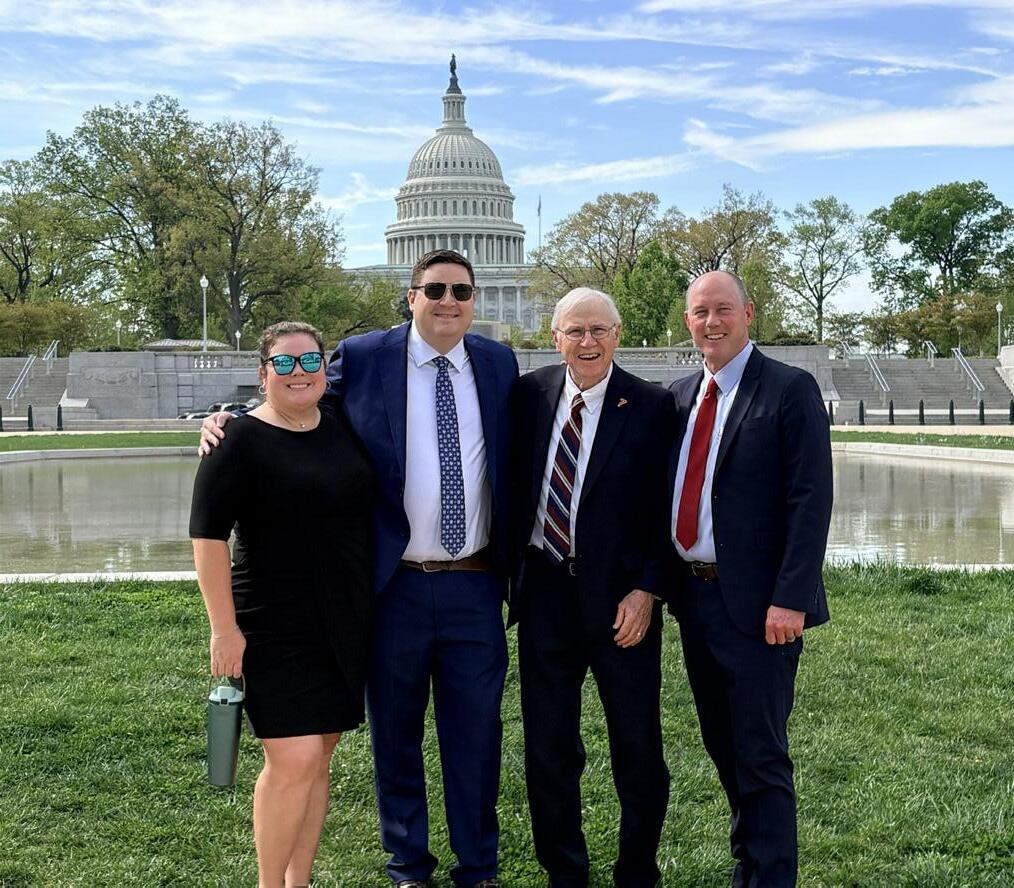
In April the Executive Committee and staff flew to Washington, DC, to meet with our federal delegation. This is something new we are trying out this year. We met with our Senators and Representatives on issues affecting Arkansans, including the price of insurance and why federal tort reform would be a terrible idea. We have been working hard to build relationships with legislators in the state, and we are going to start building at the federal level, too.
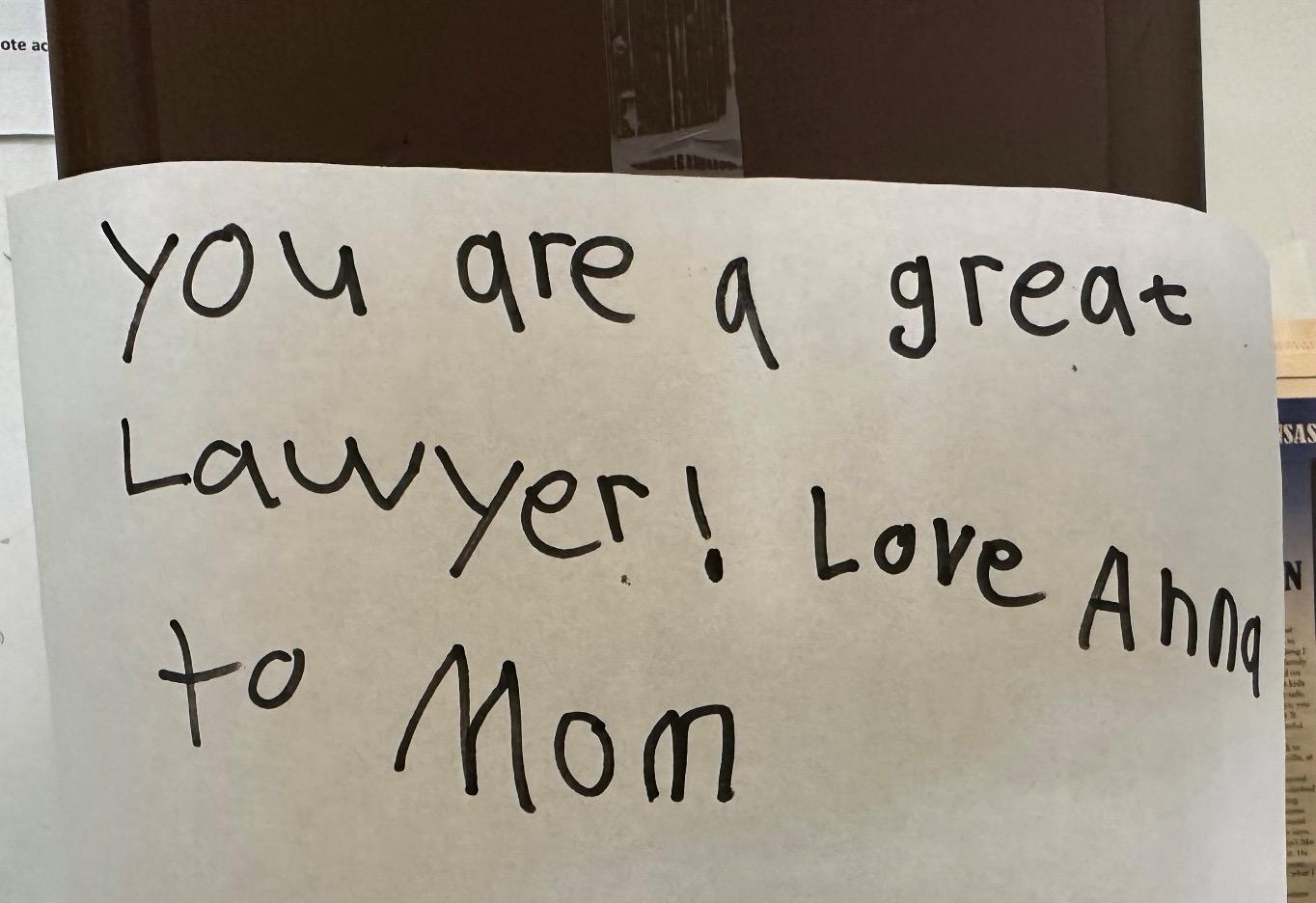
I want to thank everyone for a great year. We may have had a few small fires, but we were able to put them out with a little foot tap. We are an organization full of passionate people, so there are times we may disagree on who or what to support, but at the end of the day, we’re all on the same team. We all want what’s best for our clients. We all understand that a strong coalition of passionate Plaintiff attorneys can overcome any challenge. I have a note on my office wall that my daughter left for me on my desk a few summers ago, and I think it applies to all of our members.
You are all great lawyers! This organization makes us all even better lawyers. Keep being great! From the bottom of my heart, thank you for giving me the honor of serving as your President for the last year.
"Now this is not the end. It is not even the beginning of the end. But it is, perhaps, the end of the beginning"
– Winston Churchill
The primary elections are over (for the most part) and the investments of ATLA members have earned dividends. From early morning coffee, to lunch, to a cocktail after work, ATLA leadership and members committed to getting involved and building relationships with candidates that share our values and are open to honest discussions. The result -- ATLA supported candidates dominated in their respective primary elections or are in a position to win their runoff. But the work is not over. In fact, it has just begun.
If you donated during the primary season…THANK YOU! If you set up a meeting…THANK YOU! If you encouraged a candidate to run … THANK YOU! If you haven’t done anything, don’t fret, there is still plenty of time. With the primaries coming to an end, and the general election just around the corner, the new political season begins.
The real work starts now. ATLA must be vigilant in the fiscal session that just begun. Even more, we must continue to grow the relationships that the hard work and sacrifices of our members have afforded us.
Please continue to stay in contact with your representatives. The time will come when they will want to know your thoughts on a particular bill or idea. Please don’t let that pass. The opportunity to be in the discussion and to lend a helping hand to those honestly

By Ryan Scott, Esquire, ATLA President-Elect
seeking guidance is what ATLA has worked so hard to achieve. If you are uncomfortable or just want a second chair, call on ATLA staff and leadership.
Most of all, THANK YOU. And please, stay in tune, stay involved, and keep doing the good work.

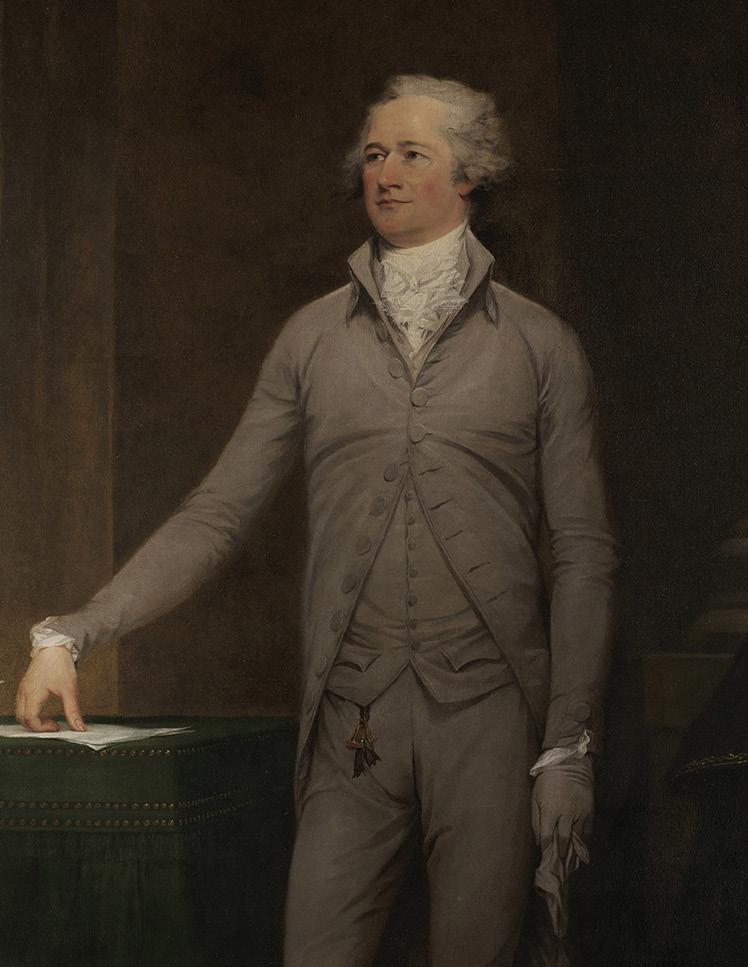

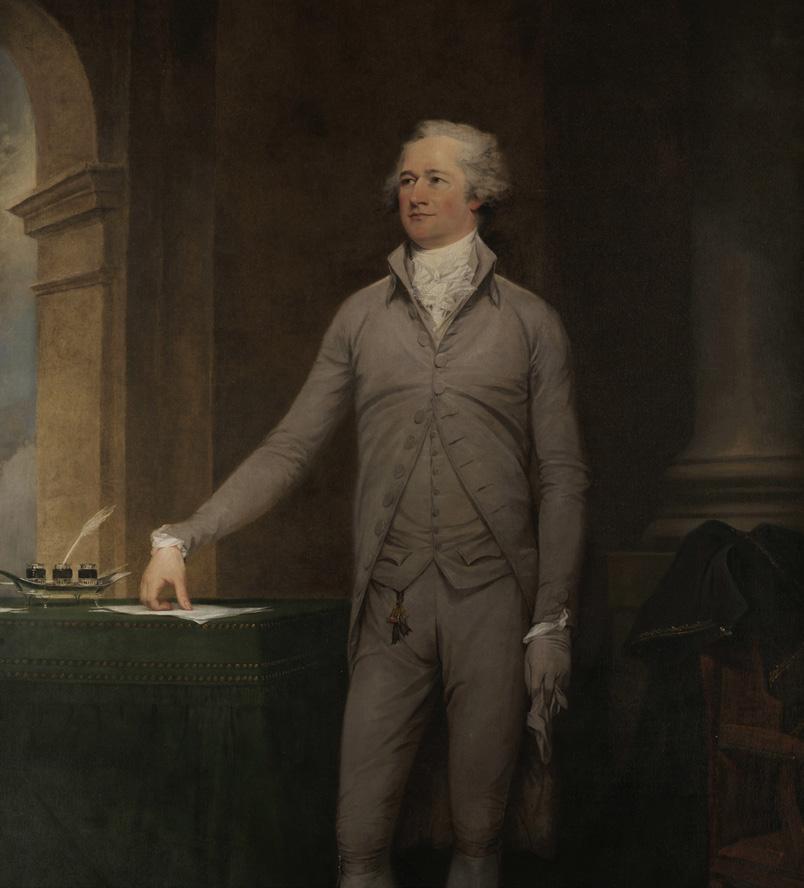
An Examination of Federalist No. 78 (“The Judicial Department” by Alexander Hamilton) and Article IV of the Arkansas Constitution of 1874 BY BW WALAS,
ESQ.

Alexander Hamilton wrote Federalist No. 78 (“The Judicial Department”) in 1788. It is the primary source for understanding the importance of judicial independence for civil and just government. Scores of articles, books, etc. have been written on the topic. Supreme Court justices have spoken about it over the decades, including current Chief Justice John Roberts in his 2024 and 2025 year-end reports on the federal judiciary and former Chief Justice William Rehnquist in his 2004 reports.1 What follows is merely a CliffNotes® version of Federalist No. 78.
The judiciary is the weakest of the three departments of power that make up our federal and state governments. Yet, the judiciary is the keystone to a civil and just society. For this reason, the judiciary must be “independent” –or free from “the influence of particular conjectures” or political whims. What does this mean? The judiciary must always be “truly distinct from both the legislature and the executive.” Otherwise, “there is no liberty.”
The judiciary is “the citadel of public justice and the public security.” This again calls for “complete independence of the courts of justice.” For, “the courts were designed to be an intermediary body between the people and the Legislative, in order, among other things to keep the latter within the lines assigned to their authority.” What does this mean? Judicial independence is required “to guard the Constitution and the rights of individuals from the effects of those ill humors, which the arts of designing men, or the influence
of particular conjectures, sometimes disseminate among the people themselves, and which … have a tendency … to occasion dangerous innovations in the government, and serious oppression of the minor party in the community.”
The judiciary is “an essential safeguard against … unjust and partial laws” and judges are “faithful guardians of the Constitution.” Thus, judicial independence cannot be obtained merely by a declaration by the judges themselves. While integrity is an important character trait of any judge, judicial independence is obtained through an adherence to the rule of law. What does this mean? To obtain true judicial independence, “it is indispensably that [judges] should be bound down by strict rules and precedents, which serve to define and point out their duty in every particular case that comes before them; and it will readily be concerned from the variety of controversies which grow out of the folly and wickedness of mankind, that records of those precedents must unavoidably swell to a very considerable bulk, and must demand long and laborious study to acquire a competent knowledge of them.” In laymen’s terms, judges cannot make up the law, they must look to the constitution and legal precedent to decide. The judiciary cannot be swayed by majority thought or political influence.
Why is this concept of “judicial independence” – as pronounced by Alexander Hamilton – important in Arkansas? Because the Arkansas Constitution of 1874 also affirms the importance of judicial independence to the operation of a civil and fair society governed by the people. In Article 4, sections 1 and 2 of the Arkansas Constitution, it is announced that
there shall be three separate departments of government – legislative, executive, and judicial. Thus, it is the public policy of this State that the judiciary is not to be swayed by the other branches and vice versa: “[n]o person or collection of persons, being one of those departments, shall exercise any power belonging to either of the others, except [when] expressly directed or permitted” by the Constitution. 2
In sum, it is abundantly clear that in our country and in Arkansas, “[j]udicial independence is a hallmark of our system of government and, we cannot abide the entanglements between the judicial and other branches of government to which lobbying executive and legislative officials would unquestionably lead.”3 It “is a fundamental principle to which the people of this state … have subscribed.”4 Or, as late Arkansas Supreme Court Chief Justice Jim Hannah said, “[a]n independent and honorable judiciary is indispensable to justice in our society.”5
We must continue to protect the independence of the judiciary with the same zeal at which we protect the right to a jury trial. Our clients depend on it. █
Endnotes
1 See Roberts, John., 2024 Year-End Report on the Federal Judiciary (https://www.supremecourt. gov/publicinfo/year-end/2024year-endreport.pdf)
2 Ark. Const., Art. 4, § 2 (1874); see also Arkansas Code of Judicial Conduct; Griffen v. Ark. Judicial Discipline & Disability Comm’n, 355 Ark. 38, 51, 130 S.W.3d 524, 532 (2003).
3 Griffen, 355 Ark. at 51, 130 S.W.3d at 532.
4 Griffen, 355 Ark. at 51, 130 S.W.3d at 532.
5 Ark. Judicial Discipline & Disability Comm’n v. Simes, 2011 Ark. 193, at 6, 381 S.W.3d 764, 770.

Relationships, Protecting Rights
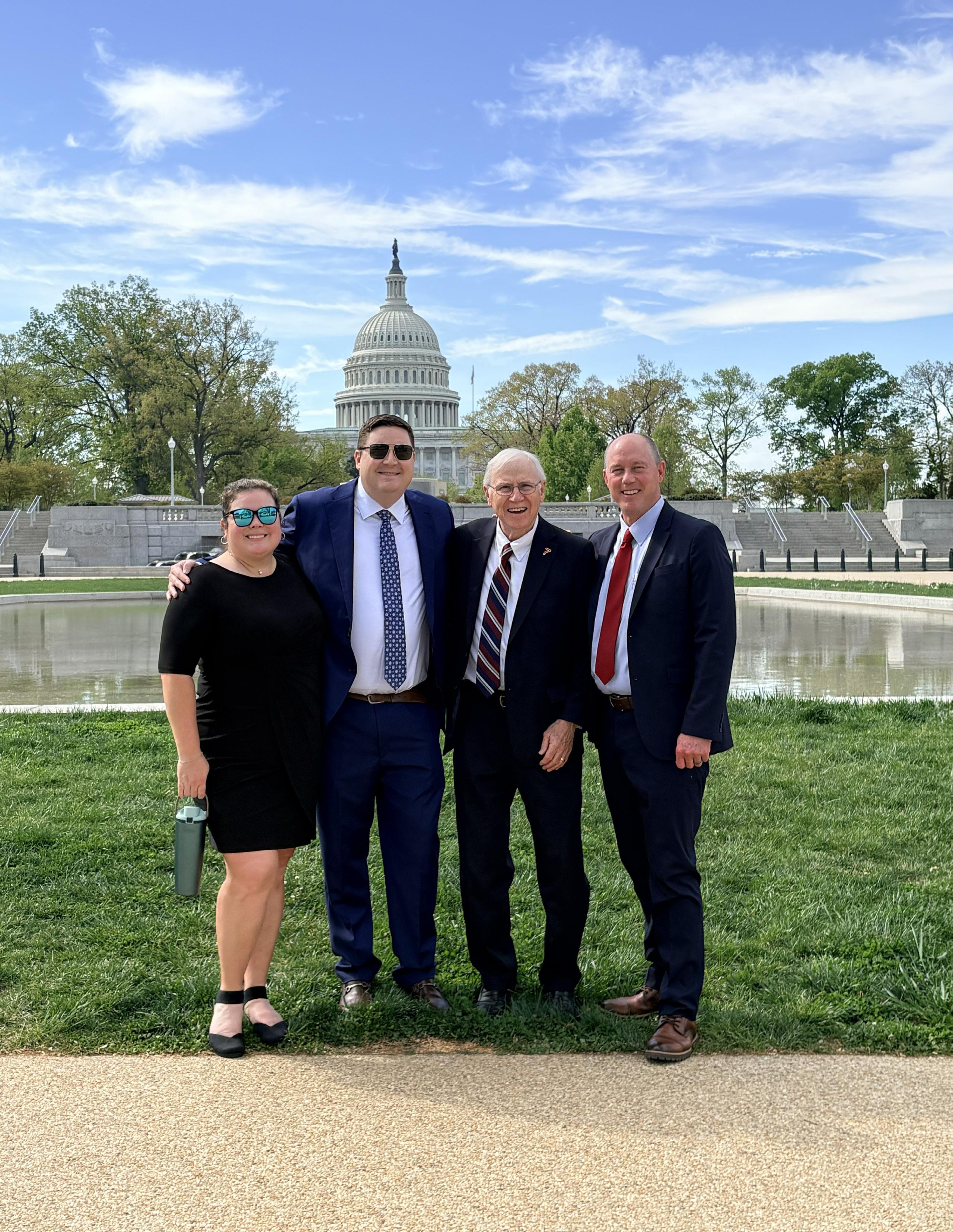
By Justin Zachary, Vice President, Arkansas Trial Lawyers Association

In a profession built on advocacy, relationships matter. That principle extends beyond the courtroom and into the halls of government— where policy decisions shape the very framework within which we fight for our clients.
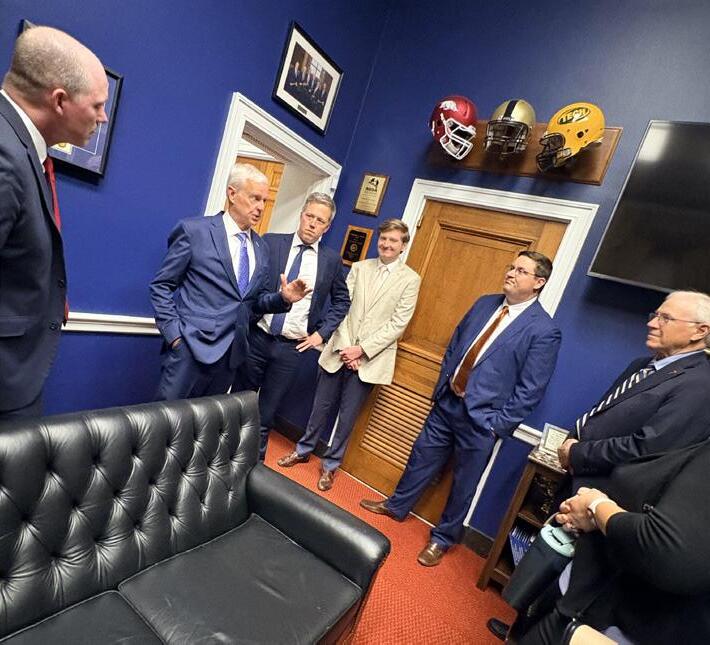
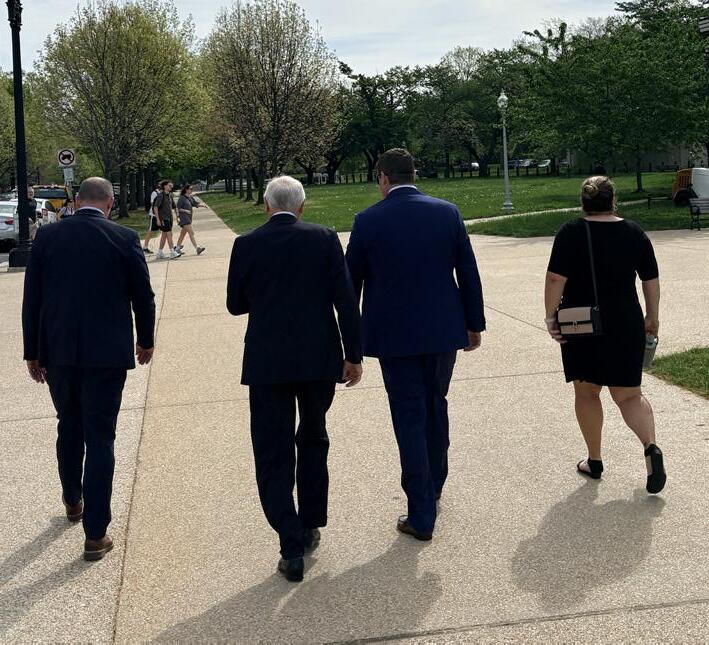
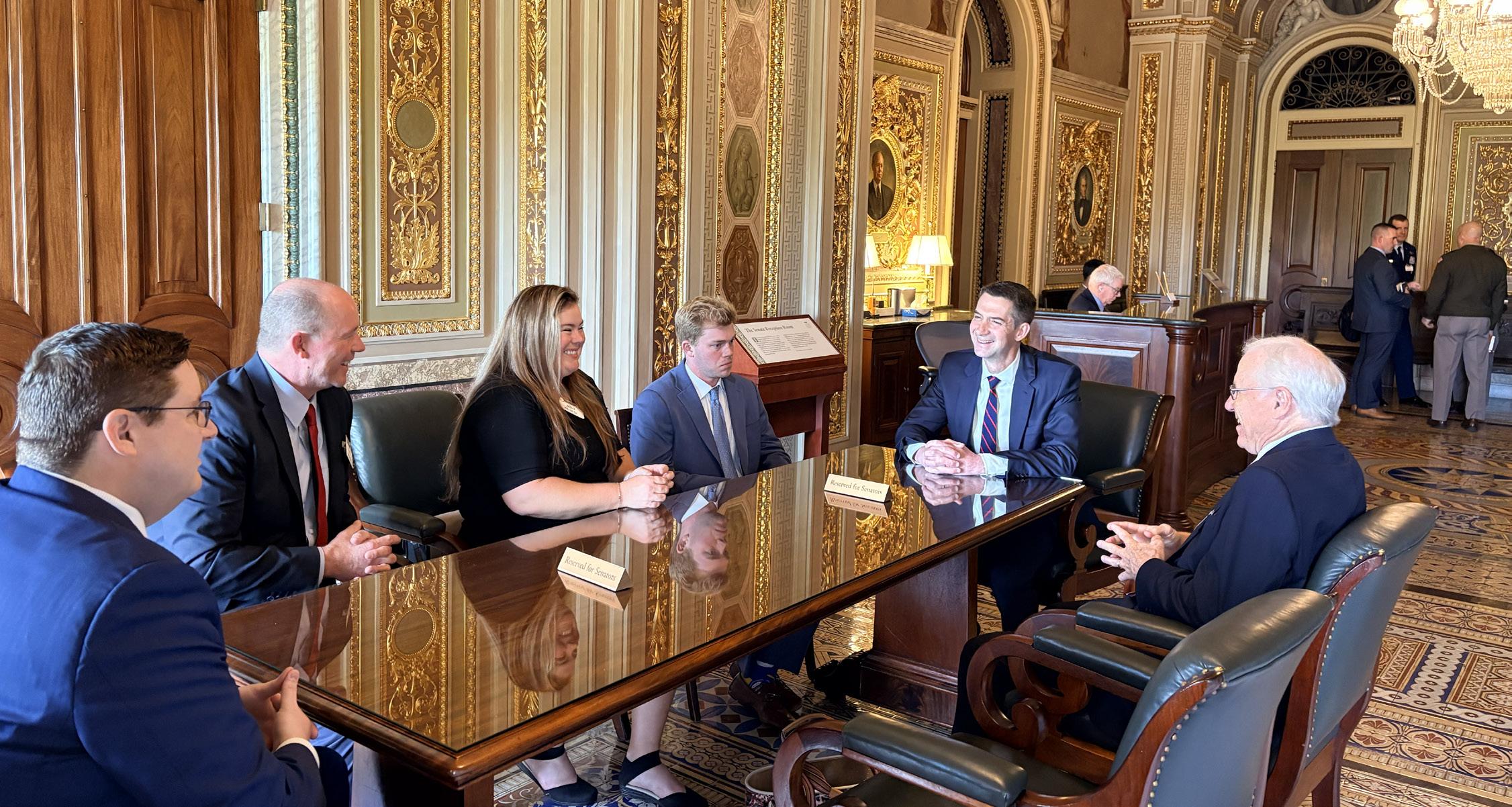
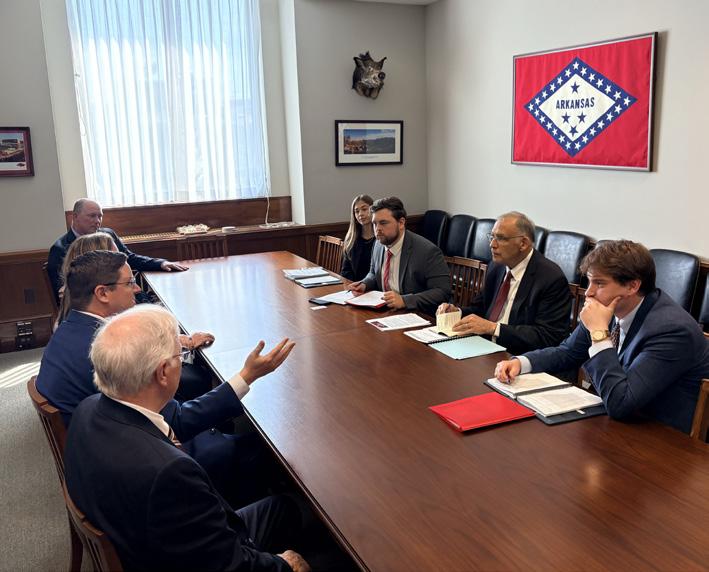
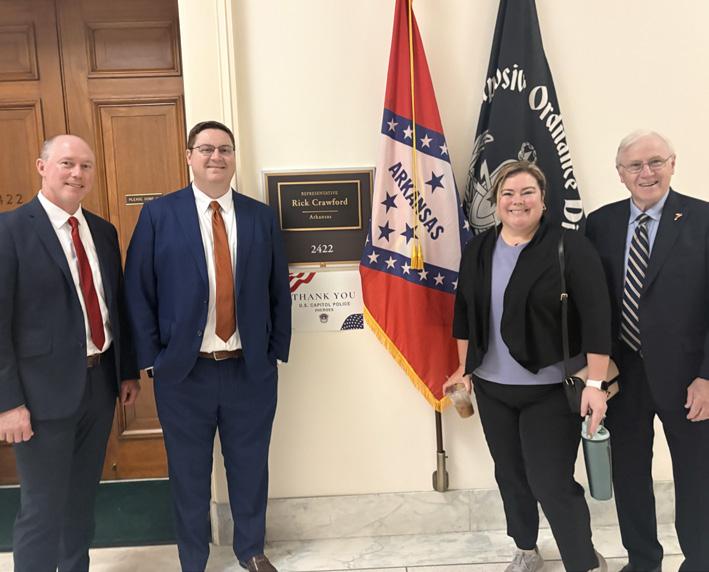
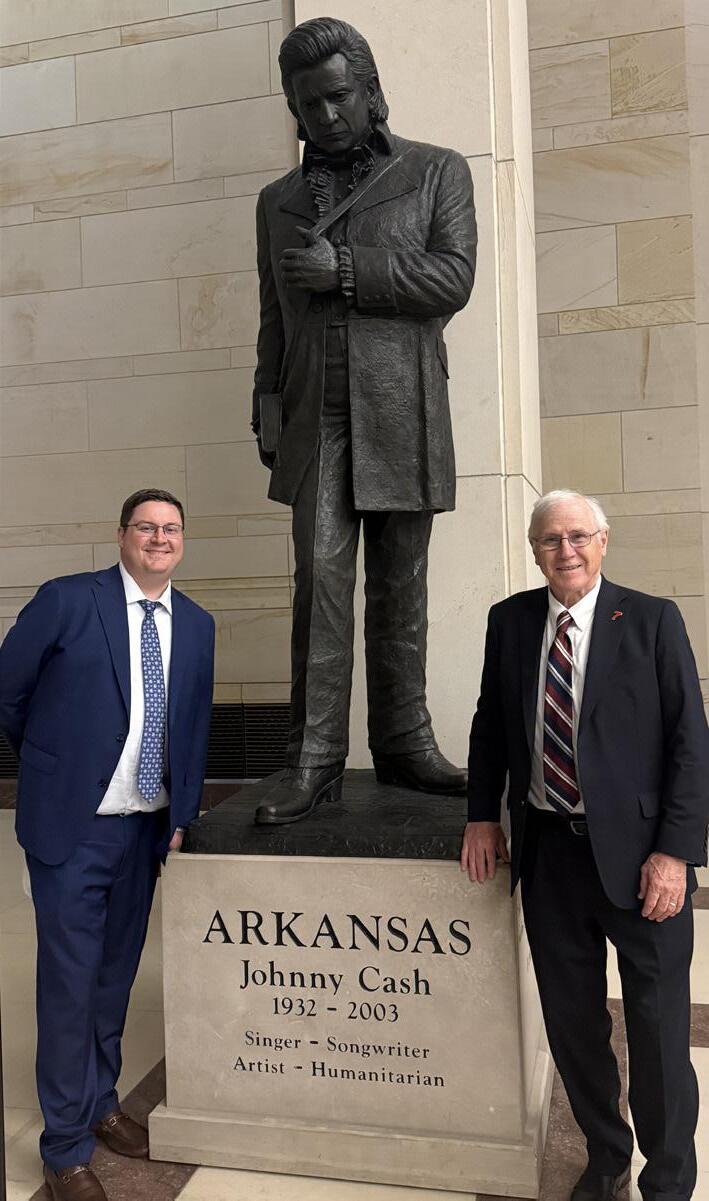
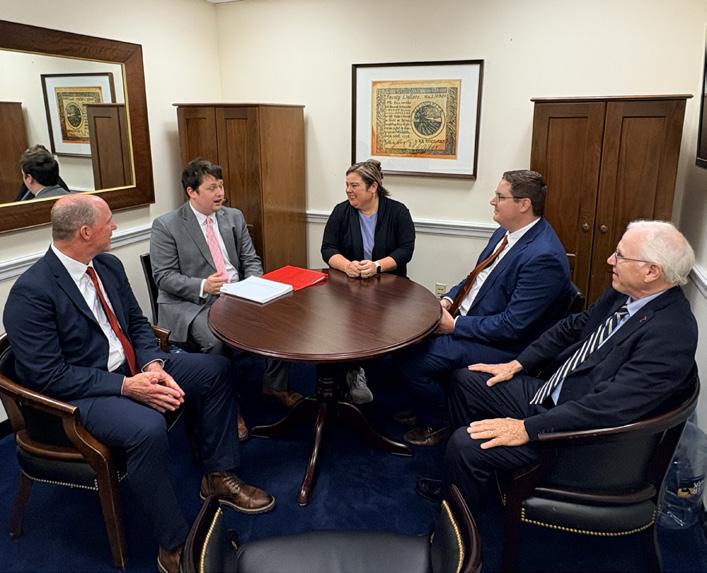
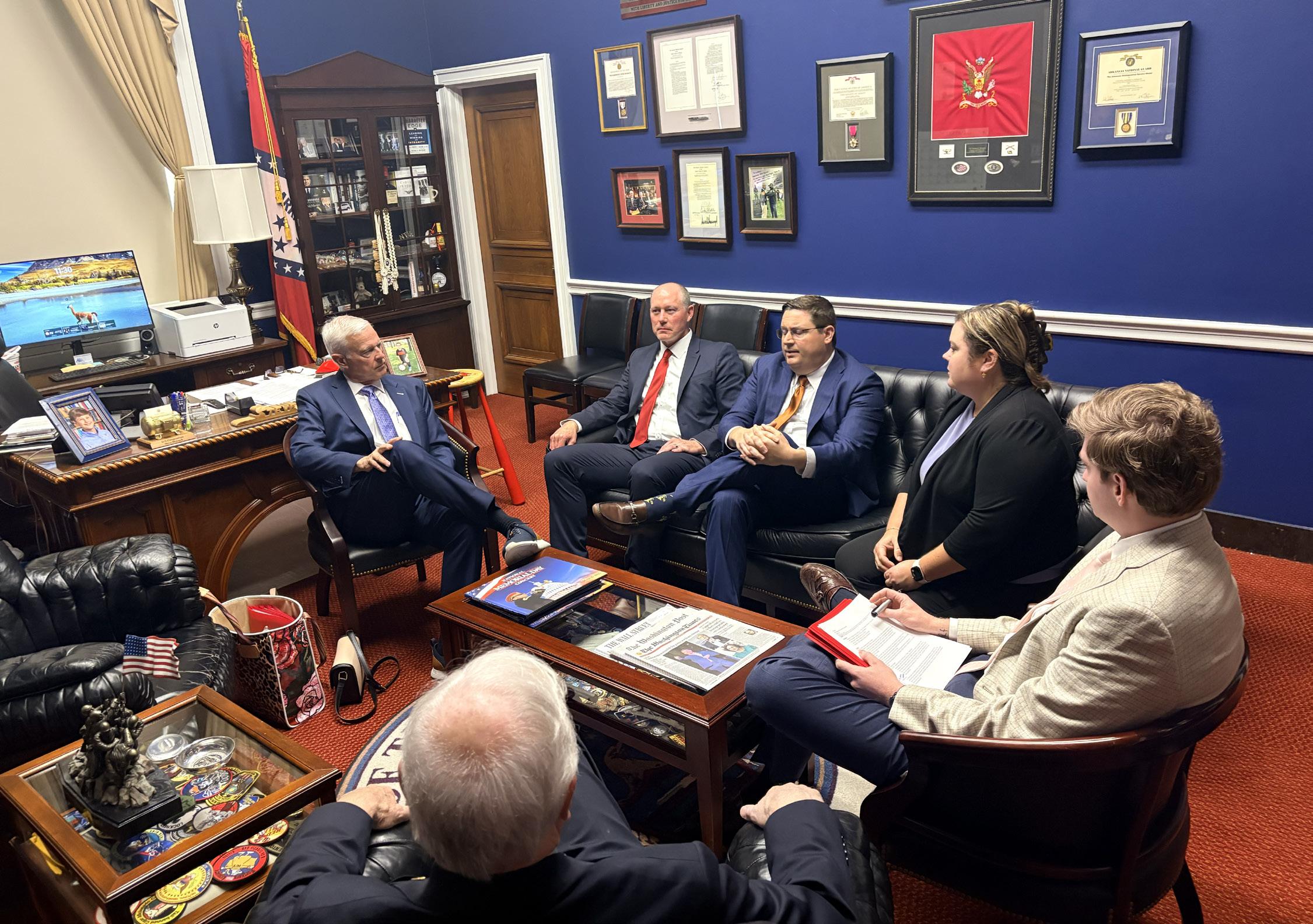
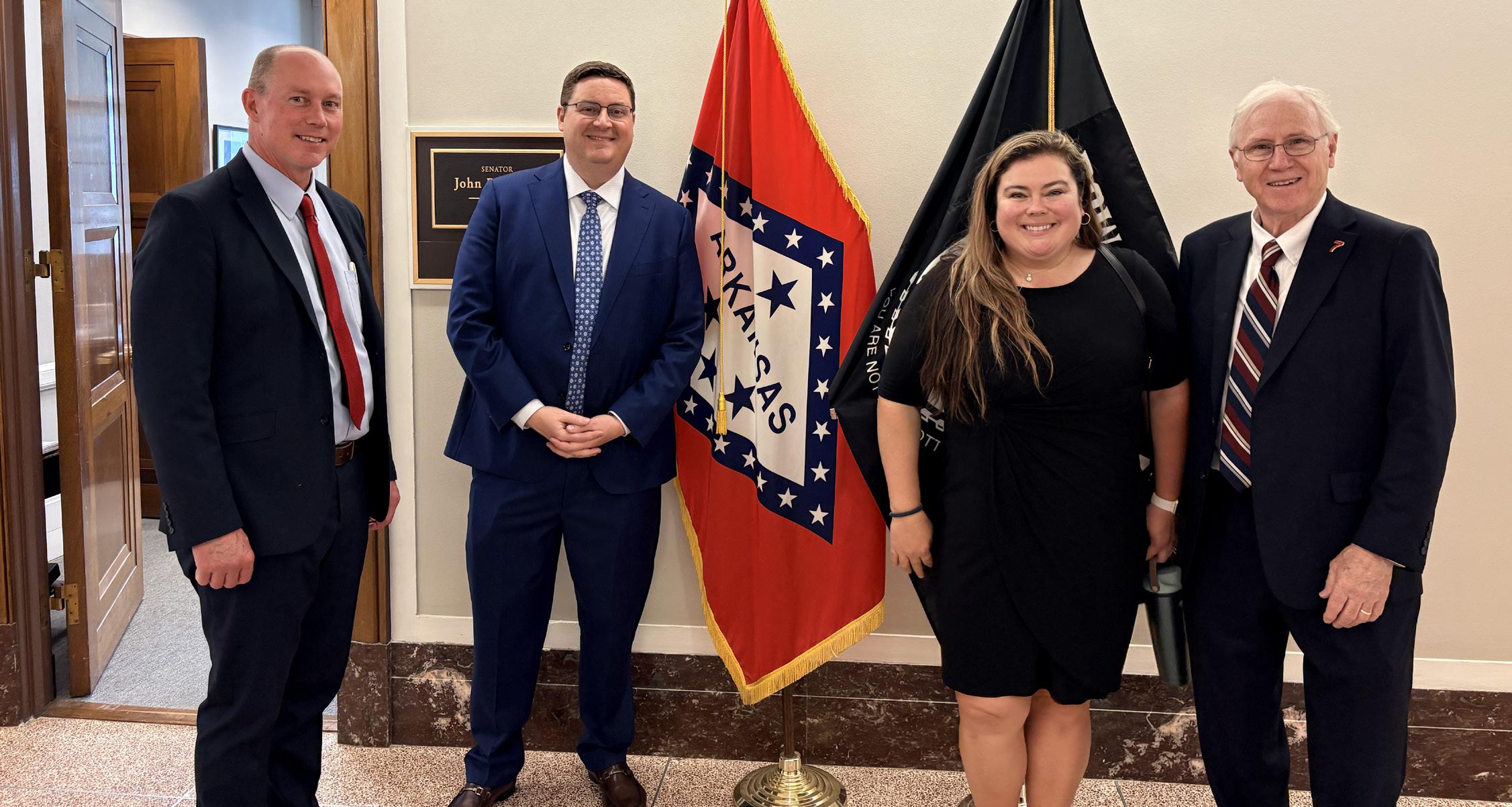
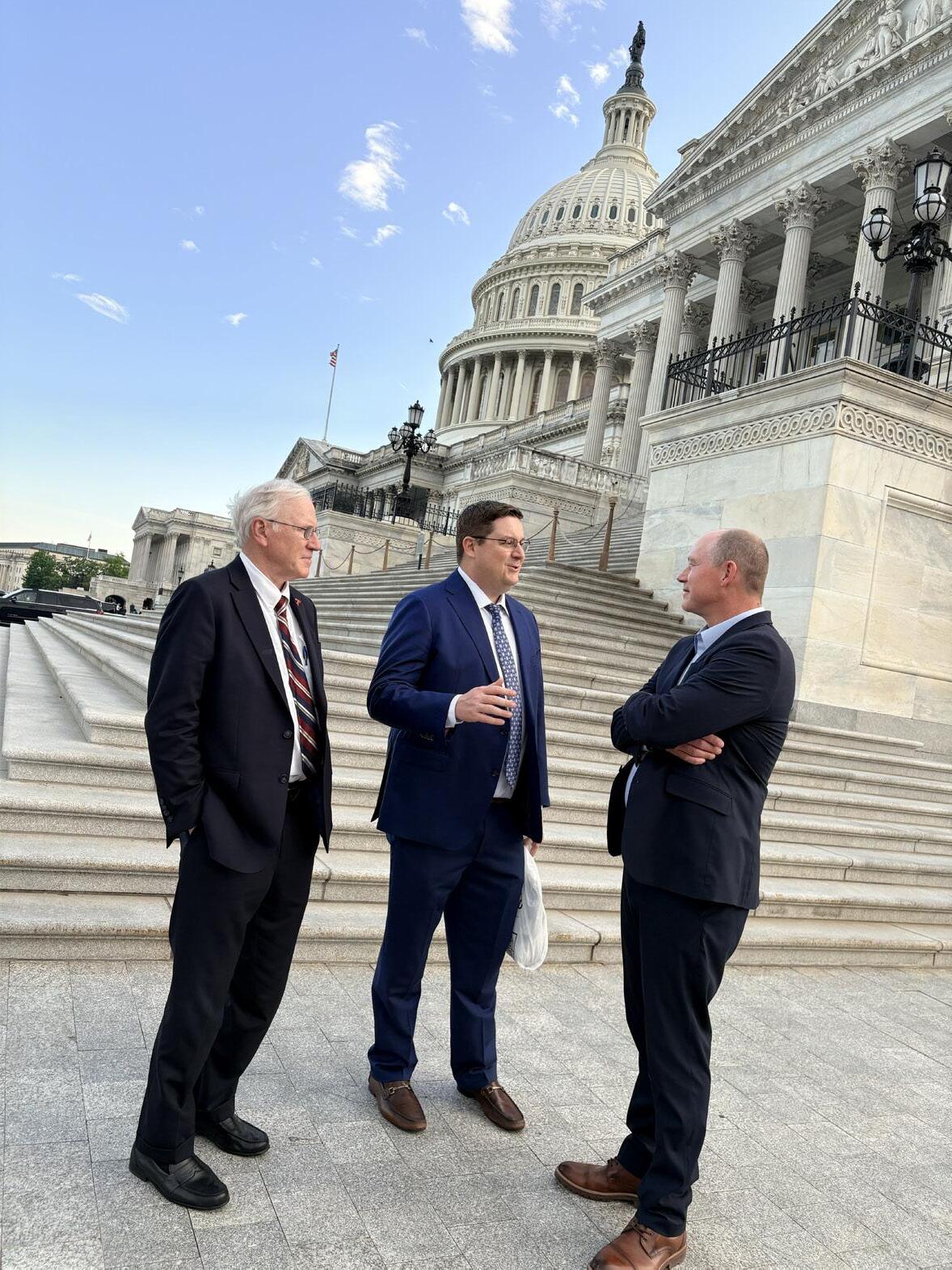
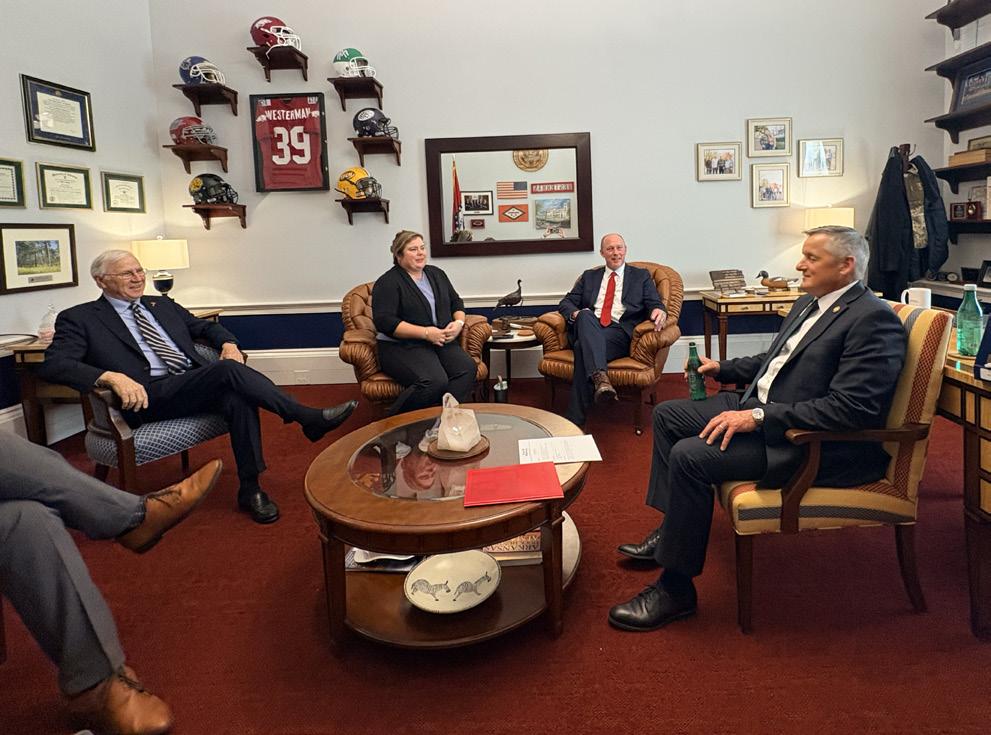
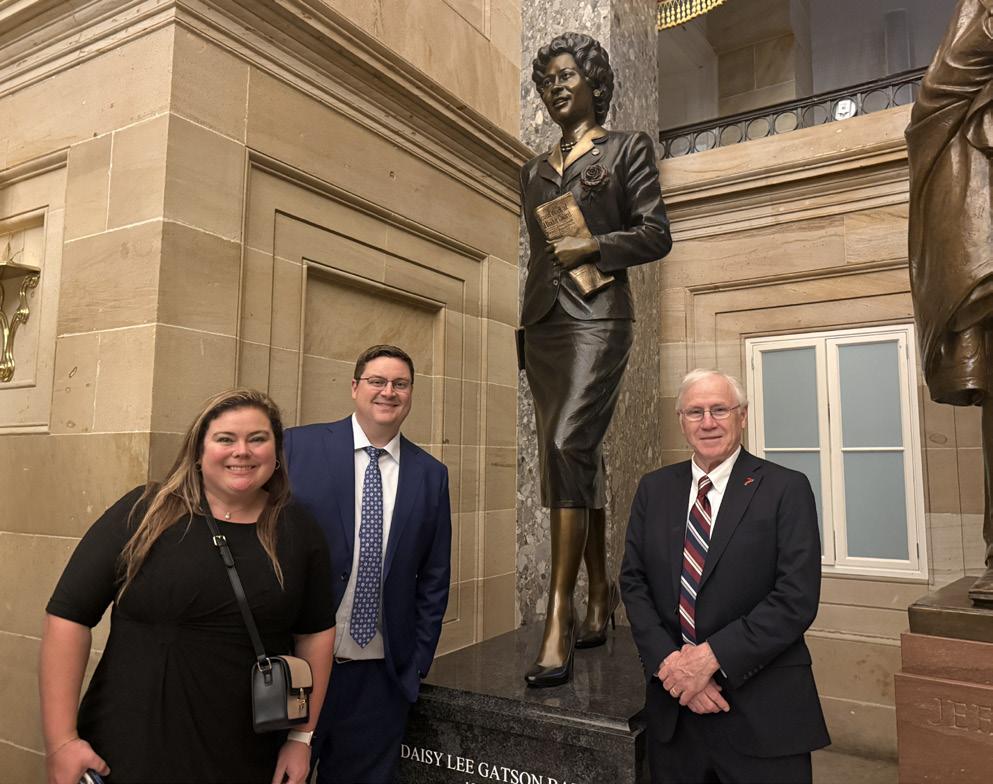
Recently, the leadership of the Arkansas Trial Lawyers Association (ATLA) took an important step in strengthening those relationships. ATLA President Jess Virden, Past Presidents Paul Byrd and Alan Lane, Executive Director Stephanie Malone, and I traveled to Washington, D.C. to meet directly with Arkansas’s federal delegation. This marked the first time ATLA has formally made such a visit—an intentional effort to ensure that the voice of Arkansas trial lawyers, and the clients we serve, is heard at the national level.
While much of our work is grounded in state courts, federal policy increasingly influences access to justice. Issues like liability immunity, federal preemption, and interstate trucking regulations can directly impact the ability of Arkansas citizens to bring claims and hold wrongdoers accountable.
Our goal in Washington was straightforward: to build relationships and communicate clearly who we are, what we do, and why it matters.
We met with Tom Cotton and John Boozman, along him with members of Arkansas’s congressional delegation and their staff. These conversations were candid, substantive, and—most importantly—productive.
During our meetings, we focused on several issues that are critically important to our members and to the citizens we represent:
• Opposition to overbroad immunity provisions that would shield corporations from accountability
• The growing problem of “chameleon” trucking companies, which evade safety regulations and liability by dissolving and reforming under new identities
• The importance of preserving state causes of action, ensuring that Arkansas courts remain open to Arkansans seeking justice
These are not abstract policy concerns. They are real-world issues that affect real people—families harmed in trucking crashes, patients injured by negligent care, and individuals whose lives are permanently altered by preventable misconduct.
Our message was simple: the civil justice system is not an obstacle—it is a safeguard. It ensures accountability, promotes safety, and provides a path for ordinary citizens to be heard.
What made this trip especially meaningful was not just the policy discussions, but the relationships that began to take shape.
Our federal legislators and their teams were engaged, thoughtful, and receptive. They asked questions. They listened. And they expressed a genuine interest in continuing the dialogue with ATLA moving forward.
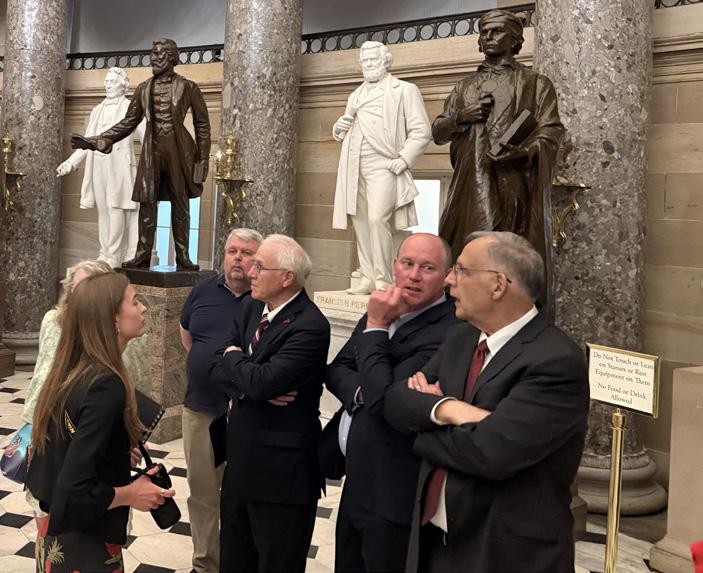
One of the highlights of the trip came when Senator Boozman graciously hosted our group for a personal evening tour of the U.S. Capitol. Walking through the Capitol after hours—away from the crowds—offered a powerful reminder of the history and responsibility tied to public service. It also provided an invaluable opportunity to connect on a more personal level, reinforcing that effective advocacy is built on trust and familiarity.
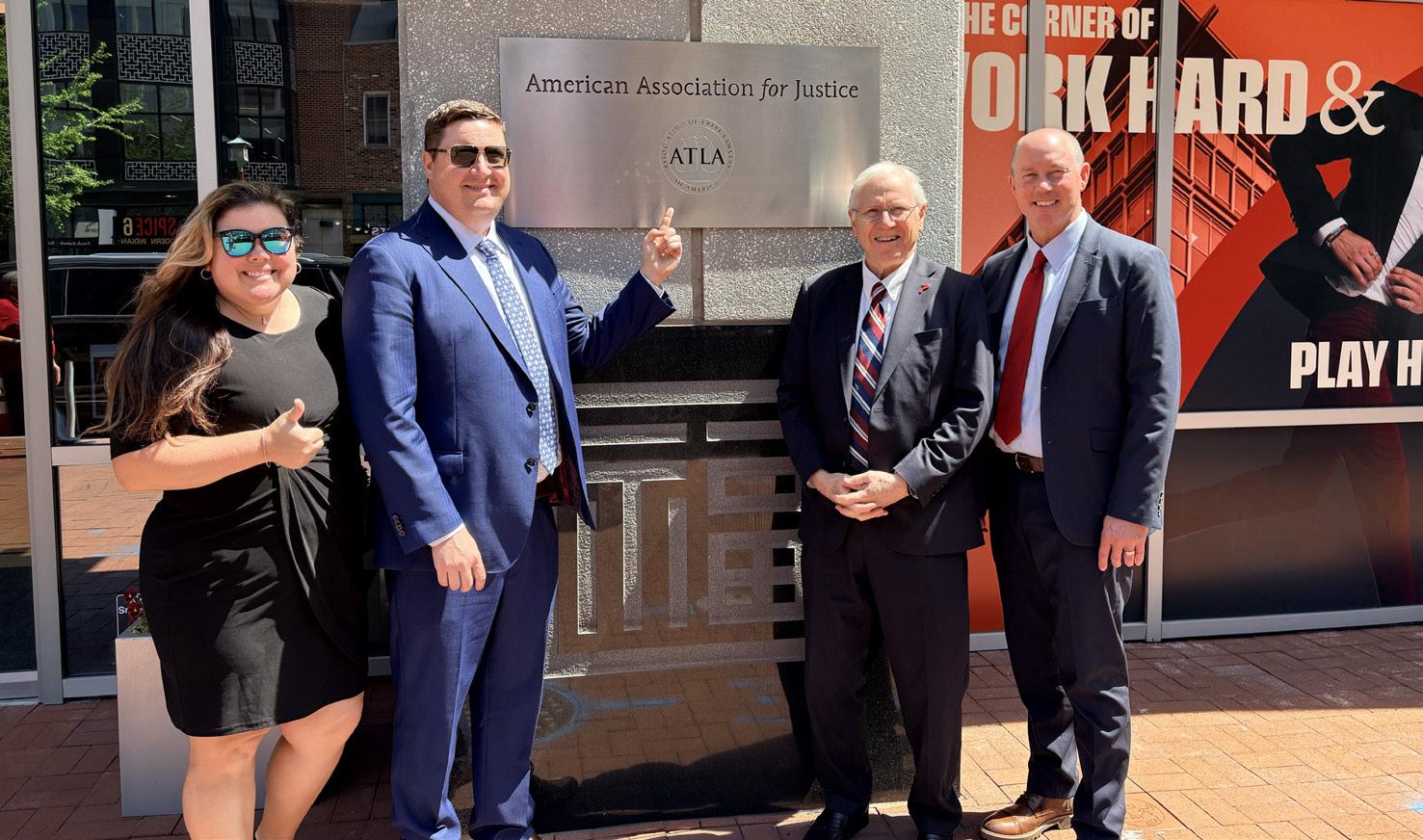
In addition to our meetings with Arkansas’s delegation, we spent time with the American Association for Justice. AAJ continues to be a critical partner in monitoring federal developments and coordinating advocacy efforts nationwide.
These conversations reinforced the importance of alignment between state and national organizations. By working together, we can ensure that the interests of Arkansas lawyers—and Arkansas citizens—are represented effectively at every level.
This trip represents an important milestone for ATLA. For the first time, our organization formally







stepped into the federal arena with a unified voice. But this is not a onetime effort—it is the beginning of a long-term commitment.
Relationships like these require consistency. They require follow-up.
They require a willingness to engage, educate, and advocate over time.
As officers of ATLA, we view this as part of our responsibility to the membership: not only to support you in your practice today, but to
protect the legal landscape in which you will practice tomorrow.
At its core, this trip was about service. Service to our members—by ensuring their voices are heard where decisions are made.
Service to our clients—by protecting their access to justice.
And service to the broader public— by reinforcing the role of the civil justice system as a cornerstone of accountability.
We returned from Washington encouraged. Encouraged by the openness of our federal delegation. Encouraged by the strength of our partnerships. And encouraged by the opportunity ahead.
ATLA has always been a powerful advocate within Arkansas. Now, we are ensuring that advocacy extends beyond our state borders—into the places where the rules of the game are written.
And we are just getting started. █
BY Geoffrey Kearney

Introduction
Representing employment law plaintiffs can be challenging. The longestablished doctrine of at-will employment, judicial interpretations of employment protection statutes that have rendered them less potent over the years, and the fact that the most compelling witnesses are often still reliant on the defendant employer for their livelihoods all present obstacles to the successful pursuit of such claims. And government employees1 often have it worse, as various immunity principles, the unavailability of punitive damages under federal statutes, the likelihood that jurors will be more reticent to enter a large damages award against the government than they would a private corporation, the fact that many government employers have salaried lawyers at their disposal and therefore have less concern about litigation costs than other employers, and other factors, all make employment law claims for government employees an at least somewhat riskier proposition than those brought against private employers.
However, while such employees often have a more difficult path to relief than private employees, they do have some rights that private employees do not. Specifically, they have the option of seeking relief under 42 U.S.C. § 1983 (“Section 1983”). Section 1983, which provides a cause of action for any U.S. citizen or person within the country’s jurisdiction for the deprivation of a federal constitutional or statutory right by a person acting under the color of state law, is a pathway for all manner of claims by government employees. In addition to providing a means of
1 This article focuses on claims brought under the Free Speech Clause by employees of state, local, and political subdivision employees.
pursuing claims that parallel those set out in, most prominently, Title VII, it also provides a path to claims that do not exist for private employers.
A sometimes overlooked cause of action in that vein is a claim for First Amendment retaliation. For a number of reasons, counsel representing government employees should consider whether their client has a First Amendment retaliation claim. Such claims come with the broad panoply of damages available under Section 1983. They concern a right that is subject to less skepticism from judges and juries than some other sorts of employment law claims. And there is a lower causation standard than many other sorts of claims. While such a claim will not be appropriate in every public employee case, attorneys who are pursuing or evaluating claims of current or former government employees should consider whether such a claim has potential merit.
This article will provide an overview of First Amendment retaliation claims in the workplace. This area of law is nuanced in ways that a single brief article simply cannot fully explore. However, the hope is that this piece2 will give the reader a decent grounding in what such claims look like.
Amendment
The first question is a simple yet important one: What are the elements of a First Amendment retaliation claim. As one might expect, the answer looks
2 Though the law of some other jurisdictions is cited, given the nature of the claim and the audience of this piece, this work is primarily concerned with the law in effect in the Eighth Circuit.
a lot like it does for other retaliation claims:
To establish a prima facie case of retaliation, a plaintiff must allege and prove that: (1) she engaged in activity protected by the First Amendment; (2) the defendant took an adverse employment action against her; and (3) the protected conduct was a substantial or motivating factor in the defendant’s decision to take the adverse employment action.3
Concerning the first element, it is well-established that what is protected by the First Amendment is “a public employee’s right, in certain circumstances, to speak as a citizen addressing matters of public concern.”4 While there is no fixed definition of what precisely a matter of public concern is, there is a good deal of guidance on the matter. For instance, the Supreme Court has stated qualifying speech concerns a “matter of political, social, or other concern WW to the community[.]”5 Moreover, courts are to look to “the content, form, and context of a given statement, as revealed by the whole record”6 to ascertain “whether the
3 Davison v. City of Minneapolis, 490 F.3d 648, 655 (8th Cir. 2007) (citing Mt. Healthy City Sch. Dist. v. Doyle, 429 U.S. 274, 287 (1977)).
4 Garcetti v. Ceballos, 547 U.S. 410, 417 (2006) (citations omitted).
5 Connick v. Myers, 461 U.S. 138, 146 (1983).
6 Id. at 147-148; City of San Diego v. Roe, 543 U.S. 77, 83–84 (2004) (quoting Connick).
speaker was acting primarily as a concerned citizen or as an employee. If the speech was mostly intended to further the employee’s private interests rather than to raise issues of public concern, her speech is not protected[.]”7
For instance, the plaintiff employee in Connick was a prosecutor who was faced with a transfer that she found undesirable. In the course of resisting that transfer, she drafted and distributed a questionnaire to colleagues that touched on a number of issues of office policy, ultimately leading to her termination: Myers prepared a questionnaire soliciting the views of her fellow staff members concerning office transfer policy, office morale, the need for a grievance committee, the level of confidence in supervisors, and whether employees felt pressured to work in political campaigns. Early the following morning, Myers typed and copied the questionnaire. She also met with [District Attorney] Connick who urged her to accept the transfer. She said she would “consider” it. Connick then left the office. Myers then distributed the questionnaire to 15 assistant district attorneys. Shortly after noon, [first assistant DA] Dennis Waldron learned that Myers was distributing the survey. He immediately phoned Connick and informed him that Myers was creating a “mini-insurrection” within the office. Connick returned to the office and told Myers that she was being terminated because of her refusal to accept the transfer. She was also told that her distribution of the questionnaire was considered an act of insubordination. Connick particularly objected to the question which inquired whether employees “had confidence in and would rely on the word” of various superiors in the office, and to a question concerning pressure to work in political campaigns which he felt would be 7 Schilcher v. Univ. of Ark., 387 F.3d 959, 963 (8th Cir.2004).
damaging if discovered by the press.8 Though Myers asserted that her First Amendment rights had been violated, the Court held that, under the circumstances, “Myers’ questionnaire touched upon matters of public concern in only a most limited sense”, as it was “most accurately characterized as an employee grievance concerning internal office policy”; therefore, it was not protected activity under the First Amendment.9
Accordingly, this principle from Connick is often used to dismiss claims that are held to be meaningfully rooted in an attempt to simply settle a score between the employee and the employer.10 The Eighth Circuit follows
8 Connick, 461 U.S. at 141.
9 Id. at 154.
10 See, e.g., Brooks v. Arthur, 685 F.3d 367, 372 (4th Cir. 2012) (“Examining Hamlette’s allegations, we conclude that his speech pertained to personal grievances and complaints about conditions of employment rather than broad matters of policy meriting the protection of the First Amendment. As Connick directs courts to look at the “content, form, and context” of employee statements, Connick, 461 U.S. at 147, 103 S.Ct. 1684, we shall take them up in turn.”); Boyce v. Andrew, 510 F.3d 1333, 1344–45 (11th Cir. 2007) (“The record in this case reveals that the speech of Boyce and Robinson, while ostensibly intermingled with issues of child safety and DeKalb DFCS mismanagement, was not intended to address matters of public concern from the perspective of a citizen.”) (citing Connick and White Plains Towing, infra); White Plains Towing Corp. v. Patterson, 991 F.2d 1049, 1059 (2d Cir. 1993) (“Even as to an issue that could arguably be viewed as a matter of public concern, if the employee has raised the issue solely in order to further his own employment interest, his First Amendment right to comment on that issue is entitled to little weight in the balancing analysis.”) (citing Connick and Piesco v. City of New York, Dept. of Personnel, 933 F.2d at 1157 (2d Cir. 1991); but see Cioffi v. Averill Park Cent. Sch. Dist. Bd. of Ed., 444 F.3d 158, 165–66 (2d Cir. 2006) (holding that Connick Court’s conclusion that one of the survey questions did “touch upon a matter of public
this principle.11
However, while it is possible for a claim to be extinguished due to the point of discussion not qualifying as a matter of public concern, there are nonetheless many scenarios that comfortably satisfy this requirement.
One type of complaint that typically suffices is corruption, especially where it does not directly affect the plaintiff in their capacity as an employee.
For instance, after a public tow lot employee who attempted to resolve issues of what she perceived as mismanagement and corruption by both passing them up the internal chain and assisting the media in investigating them prevailed at trial, the city appealed.12 Though the appellant sought reversal on numerous points, there was not even a challenge to the idea that the employee had been speaking on a matter of public concern. Similarly, police officers who assembled a lengthy “Complaint Packet” of the failures they believed lay at the feet of the police chief that they then distributed to the mayor and city council before being terminated easily satisfied the requirement:We also agree with the district court’s assessment that the Officers’ speech was a matter of
concern” despite overall personal motivation and direction to undertake an examination of “the content, form, and context of a given statement” supports conclusion that personal motivation is not be-all, end all).
11 See, e.g., Nagel v. City of Jamestown, N. Dakota, 952 F.3d 923, 930 (8th Cir. 2020) (“[I] n determining whether employee speech addressed a matter of public concern, we examine the content, form, and context of the speech. If the employee’s main motivation is to further a private interest, his speech is not protected, even if the public would have an interest in the topic of his speech.”) (cleaned up).
12 Woods v. City of St. Louis, 170 F.4th 1164 (8th Cir. Mar. 30, 2026).
public concern. The issues raised in the Complaint Packet largely concerned the integrity of the Department and its leadership. The Complaint Packet included concerns about corruption, financial mismanagement, and investigative failures. Such allegations are related to institutional integrity— an important governmental function.13 Broad concerns about public wellbeing, such as was the case in Mayfield v. Missouri House of Representatives. 14 In that case, a state legislative employee advocated by email to legislative leaders for a Capitol building mask mandate during the COVID-19 pandemic before being fired three days later. In holding that he engaged in protected speech, the court primarily focused on the extent to which the correspondence was centered not on the health and safety of the employee himself on all who would come to the Capitol and those who would subsequently encounter such people, as opposed to the employee himself:
We agree with the district court that Mayfield’s speech in the August 3 email was a matter of public concern. First, the email’s content focused on protecting the public from the COVID-19 pandemic. Mayfield wrote that he was advocating “[f]or the health and well-being of all who enter [the] Capitol” and requested that leadership “adhere to CDC guidelines and implement a mandatory face mask policy for all spaces within [the] Capitol, excluding the personal office spaces of Members.” In the email, Mayfield did not express personal concerns, but rather addressed the welfare of communities across Missouri. Mayfield reasoned that without a masking requirement, “all who enter[ed] [the] Capitol [building were] at greater risk of contracting COVID-19.” And he said that, with the special session, “Members from every
district” would come to the Capitol, “unknowingly contract or transmit COVID-19, due to the lack of a mask mandate in [the] Capitol, and then return home to unknowingly transmit it to their constituents.”15
Another recent case was brought by a firefighter who posted an anti-abortion image on social media that some complained to city officials was racially insensitive. In quickly dispensing of the “public concern” element, an Eighth Circuit panel stated, “The record is clear on the first issue. Melton posted the image to his personal page on his own time, and there is no dispute that race and abortion are matters of ‘political, social, or other concern to the community.’”16 While speech need not touch on clearly political issues to be protected, speech concerning highly politically relevant issues seems quite likely to qualify as protected speech.
In sum, while not everything qualifies as a “matter of public concern”, the burden on this issue is a reasonable, meetable one.
“Who” is speaking?
While much of the disputed ground is often centered on whether the speech itself is a matter of public concern, the question of whether the employee is acting as a private citizen, as opposed to doing so within their scope of employment, also may arise. Perhaps unsurprisingly, “when a public employee speaks on a matter of public concern pursuant to his official duties, the speech is unprotected against employer retaliation.”17
A prime example of this idea is found in Garcetti, supra, which, like Connick, concerned a terminated prosecutor. However, instead of distributing a questionnaire on office operations, the plaintiff in Garcetti circulated a disposition memo arguing that a case should be dismissed due to governmental misconduct, leading to his termination. The Court held that he was speaking “as a prosecutor fulfilling a responsibility to advise his supervisor about how best to proceed with a pending case”, “that when public employees make statements pursuant to their official duties, the employees are not speaking as citizens for First Amendment purposes,” and that in such cases, “the Constitution does not insulate their communications from employer discipline.”18
However, this bar is not invoked merely because speech “concerns” those duties. Indeed, employees who speak out on issues relevant to their work may still be held to have done so in their capacity as citizen. Rather, the “critical question under Garcetti is whether the speech at issue is itself ordinarily within the scope of an employee’s duties[.]”19
The next step of analysis is concerned with the balance between an individual public employee’s right to expression and a public employer’s right to promote an efficient workplace. Here, an employer presents evidence that the speech is or would be disruptive. If the speech is or would be disruptive, it is less likely to be protected than if this showing is not made. Though courts
13 Noon v. City of Platte Woods, 94 F.4th 759, 764–65 (8th Cir. 2024) (cleaned up).
14 122 F.4th 1046, 1053–54 (8th Cir. 2024).
15 122 F.4th 1046, 1053–54 (8th Cir. 2024) (emphasis added).
16 Melton v. City of Forrest City, 147 F.4th 896, 902 (8th Cir. 2025).
17 Lyons v. Vaught, 875 F.3d 1168, 1173 (8th Cir. 2017) (emphasis in opinion) (citing Garcetti).
18 Garcetti, 547 U.S. at 421.
19 Lane v. Franks, 573 U.S. 228, 239 (2014) (emphasis added); see also, e.g., Nagel v. City of Jamestown 952 F.3d 923 (8th Cir. 2020) (holding police officer who spoke to press was speaking in a professional capacity despite some attempt to hold himself out as speaking in a less public capacity).
do not uncritically accept claims of disruption, employers20 are allowed some deference on this point.21 For instance, evidence that colleagues have diminished confidence in or desire to work with the speaker may provide sufficient evidence of disruption.22 Nonetheless, employers’ burden on this point is a meaningful one.23 For instance, in Melton, supra, the court held that mere outside complaints, without clear evidence of how the workplace has been
20 Public safety employers appear to receive the highest level of deference. See, e.g., Tyler v. City of Mountain Home, 72 F.3d 568, 570 (8th Cir. 1995) (“The public safety employer’s determinations of both the potential for disruption as a result of the speech, as well as the employer’s response to the actual or perceived disruption, are entitled to “considerable judicial deference.”) (quoting Shands v. City of Kennett, 993 F.2d 1337, 1345 (8th Cir.1993)).
21 Henry v. Johnson, 950 F.3d 1005, 1012 (8th Cir. 2020) (“Next, a public employer must ‘with specificity, demonstrate the speech at issue created workplace disharmony, impeded the plaintiff’s performance, or impaired working relationships.’ However, it is not necessary to show actual disruption. An employer need not allow events to unfold to the extent that the disruption of the office and the destruction of working relationships is manifest before taking action. Courts will give substantial weight to government employers’ reasonable predictions of disruption, even when the speech involved is on a matter of public concern.”)
22 See, e.g., Nagel, supra; Hemminghaus v. Missouri, 756 F.3d 1100 (8th Cir. 2014).
23 See, e.g., Sexton v. Martin, 210 F.3d 905, 911–12 (8th Cir. 2000) (“Before the Court commences the Pickering balancing test, however, it is critical to determine whether the defendant has produced sufficient evidence that the speech had an adverse effect on the efficiency of the employer’s operations. In other words, to put the Pickering balancing test at issue, the public employer must proffer sufficient evidence that the speech had an adverse impact on the department. The more the employee’s speech reflects matters of public concern, the greater the employer’s showing must be that the speech was disruptive before the speech can be punished.”) (citations omitted).
or might reasonably be expected to be affected, potentially represent a heckler’s veto and are insufficient.24
If the government fails to show disruption, the speech at issue is considered protected. But if there is a sufficient showing of disruption, the deciding court then engages in a balancing test intended to take into account both the government employer’s interests in an efficient workplace and employees who meet a certain conduct standard and the interest in protecting employees’ First Amendment rights.25 This balancing is rooted in the principles set forth in Pickering v. Board of Education, 26 and its progeny. The Eighth Circuit has set forth that analysis as follows:
Under the Pickering test,27 a number of interrelated factors are taken into account in balancing the competing interests of government-employer and citizenemployee. These factors include: (1) the need for harmony in the office or work place; (2) whether the government’s responsibilities require a close working relationship to exist between the plaintiff and co-workers when the speech in
24 See Melton, 147 F.4th at 903-04.
25 Hinshaw v. Smith, 436 F.3d 997, 1005 (8th Cir. 2006) (“[In] applying the Pickering test[,] we weigh the employee’s right to engage in the particular speech at issue with such considerations as “whether the statement impairs discipline by superiors or harmony among co-workers, has a detrimental impact on close working relationships for which personal loyalty and confidence are necessary, or impedes the performance of the speaker’s duties or interferes with the regular operation of the enterprise.”) (quoting Rankin v. McPherson, 483 U.S. 378, 388, 107 S.Ct. 2891, 97 L.Ed.2d 315 (1987)).
question has caused or would cause the relationship to deteriorate; (3) the time, manner, and place of the speech; (4) the context in which the dispute arose; (5) the degree of public interest in the speech; and (6) whether the speech impeded the employee’s ability to perform his or her duties.28
Though the balancing itself is a matter of law, the questions of fact underlying that determination are for the finder of fact, and should be submitted to a jury by interrogatories or special verdict forms at trial.29
The Eighth Circuit requires plaintiffs to show that they suffered an adverse employment action.30
Though termination is the clearest qualifying consequence, less burdensome actions, either alone or in aggregate, may also suffice:An adverse employment action is a tangible change in working conditions that produces a material employment disadvantage. This might include termination, cuts in pay or benefits, and changes that affect an employee’s future career prospects. Wagner “need not prove that [s]he was terminated to demonstrate an adverse action; however not everything that makes an employee unhappy is an actionable adverse
28 Hemminghaus, 756 F.3d at 1113–14 (quoting Belk v. City of Eldon, 228 F.3d 872, 880 (8th Cir. 2000).
29 Belk, 228 F.3d at 881 (citation omitted).
26 391 U.S. 563 (1968).
27 It is also sometimes referred to as the “Pickering-Connick” test. See, e.g., Dunn v. Carroll, 40 F.3d 287, 293 (8th Cir. 1994).
30 Interestingly, this is not the rule in every circuit. See Grooms v. Privette, 127 F.4th 730, 734 (8th Cir. 2025) (stating that “[t]he general rule in our circuit is that a government employee asserting a First Amendment discrimination or retaliation claim must show she suffered an “adverse employment action” while acknowledging that this approach is not necessarily required by Supreme Court precedent or taken by all circuits) (collecting cases).
action. Minor changes in duties or working conditions, even unpalatable or unwelcome ones, which cause no materially significant disadvantage, do not rise to the level of an adverse employment action. Lesser actions than demotion, suspension, and termination can be adverse employment actions if their cumulative effect causes an employee to suffer serious employment consequences that adversely affect or undermine her position.31 To prevail, the plaintiff must show that their speech was a “substantial or motivating factor” in the employer’s decision. This requires a showing only that the decision was “in part motivated by [the plaintiff’s] constitutionally protected activities.”32 However, as is generally the case with employment retaliation claims, there is a burdenshifting framework by which the employer will have the opportunity to demonstrate that it would have taken the adverse employment action even in the absence of the protected speech; if the employer succeeds in doing so, the employee will need to present evidence of pretext for the claim to survive.
Evidence commonly relevant to this analysis includes the decisionmaker’s knowledge of the conduct, the extent to which the activity has frustrated policy priorities of the decisionmaker, indicia that it was a source of frustration, the plaintiff’s work record, the presence of unprotected speech that would justify the adverse employment action, close temporal proximity between the protected speech and adverse employment action, employer reasoning that is unsupported in fact and/or shifts over time, and proof of better treatment for similarly situated employees who
did not engage in protected activity.33
“[E]vidence of pretext and discrimination is viewed in the light of the employer’s justifications.”34
Perhaps, after having had a few conversations with the potential client and reviewed some key documents, it appears that there is a colorable claim for Free Speech retaliation. But one more consideration comes to mind: the specter of qualified immunity.
31 Wagner v. Campbell, 779 F.3d 761, 766–67 (8th Cir. 2015) (emphasis added) (cleaned up).
32 Davison, supra, 490 F.3d at 657 (citations omitted).
33 See, e.g., Woods, 170 F.4th at 1173 (affirming jury verdict in favor of plaintiff and noting, inter alia, that she provided evidence at trial refuting that she was guilty of conduct she was accused of or that it was typically a basis for discipline, that hers was the only pretermination hearing held by her supervisor during his tenure, and termination came one day after news story on purported corruption that relied on information provided by her ran); Mayfield, 122 F.4th at 1055–56 (upholding plaintiff verdict and noting that evidence that decision to terminate was made one day after an email expressing an unwelcome opinion and contradiction between claims of “poor performance” a seven year tenure marked by good performance reviews counseling for only one minor workplace incident provided sufficient support for verdict); Henry, 950 F.3d at 1014–15 (assuming that protected speech engaged in by plaintiff was basis for prima facie case, determining that employer’s consideration of disfavored speech that was not protected set forth legitimate, nondiscriminatory reason for decision and stating that “pretext typically may be shown by offering evidence the employer’s explanation lacked basis in fact, evidence the employee recently received favorable reviews, evidence the employer’s proffered reason for its employment decision changed over time, or with evidence the employer treated similarly situated employees who [did not engage] in the protected activity more favorably”) (citing Ebersole v. Novo Nordisk, Inc., 758 F.3d 917, 935 (8th Cir. 2014)); Davison, 490 F.3d 648, 658 (8th Cir. 2007) (“In sum, we disagree with the district court and hold that the evidence of Chief Forte’s knowledge of her protected activities and his expressed displeasure with them, in combination with the proximity of the three promotion denials, constitutes sufficient evidence to create a genuine issue of material fact as to whether the promotion decisions were at least in part motivated by Captain Davison’s constitutionally protected activities.”).
34 Henry, 950 F.3d at 1014.
Workplace Free Speech cases will generally be brought, at least in part, against supervisors in their individual capacities. These claims are subject to the same danger as all such Section 1983 claims: The possibility that they will be held subject to qualified immunity. As such, the plaintiff must show that the defendant has violated a clearly established constitutional right. However, unlike the analysis is other areas, such as, most prominently, the use of force context, the Eighth Circuit has “taken a broad view of what constitutes ‘clearly established law’ for the purposes of a qualified immunity inquiry” in speech cases.35
For instance, in Mayfield, supra, the defendant legislative body attempted to impose a stringent analysis for whether the right allegedly violated was clearly established:
Defendants argue that for a right to be clearly established, a plaintiff must cite cases where the speech was on the same topic (here, public health and safety), and the speech must have been made by a particular kind of employee (nonpartisan), within a particular type of government body (deliberative), and to a particular colleague (partisan leadership). 36
The court, relying on both
35 Lindsey v. City of Orrick, 491 F.3d 892, 902 (8th Cir. 2007) (citing Sexton v. Martin, 210 F.3d 905, 909 (8th Cir. 2000)).
36 Mayfield, 122 F.4th at 1057.
Supreme Court and Eighth Circuit precedent, rejected this parsing. It held that the plaintiff-appellee “had a First Amendment right to speak on a matter of public concern as a public employee, and that right was clearly established in August 2020.”37 Indeed, this straightforward formulation of the right at issue appears to be the court’s general approach to the run of the mill speech retaliation case.38
Relatedly, the Eighth Circuit has held that failure to show disruption can obviate a qualified immunity defense, while a showing of disruption will likely doom the plaintiff’s case on qualified immunity grounds.39
37 Id.
38 See, e.g., Noon, 94 F.4th 759, 766 (8th Cir. 2024); Williams v. Tucker, 857 F.3d 765, 770–71 (8th Cir. 2017) (“Tucker argues that even if he violated Jenkins’ First Amendment right to support an electoral candidate, the contours of that right were not clearly established at the time of any such violation. Tucker frames the right at issue as the right to remain a full time court employee, but the issue is properly characterized as whether Tucker impermissibly retaliated against Jenkins by causing her to become a part time employee. It is clearly established that a government employer cannot take adverse employment actions against its employees for exercising their First Amendment rights” by participating in electoral activities. This right was clearly established at the time of the alleged violation.” ) (citation and quotations omitted).
Notwithstanding the generally speechprotective orientation of the courts, plaintiffs should probably expect more scrutiny of more unique fact patterns.40
Money damages are generally not available against the state itself (including a defendant in his or her official capacity). Injunctive relief may be available under Ex Parte Young.41 Though reinstatement may be ordered, an alternative award for front pay is not available against the state.42
However, the broad damages purview of Section 1983, which is available against state actors in their individual capacities, local government actors in their individual capacities, and local government entities, includes, inter alia, back pay and emotional distress and potentially punitive damages
have notice that his termination of an insubordinate employee who compromised the propriety and efficiency of his courtroom could violate her right to free speech. The district court correctly determined Judge Gaertner was entitled to qualified immunity on Hemminghaus’s § 1983 claim.”) (cleaned up). A finding in favor of the defendant on the Pickering factors also supports a grant of qualified immunity See Anzaldua v. Ne. Ambulance & Fire Prot. Dist., 793 F.3d 822, 836 (8th Cir. 2015) (“In sum, we find the Pickering factors favor the defendants and thus agree with the district court that the defendants are entitled to qualified immunity because they did not violate Anzaldua’s First Amendment right to free speech.); Grantham v. Trickey, 21 F.3d 289, 293 (8th Cir.1994) (noting that a case in which the court has to engage in a Pickering analysis likely will be dismissed on qualified immunity grounds).
against individual capacity defendants, as well as, under some circumstances, reputational and other harms; moreover, attorney fees and costs are recoverable by the prevailing party.43 Importantly, there is no damages cap under Section 1983.
Equitable relief may also be available.44 Prevailing against the government entity or an actor in his or her official capacity, like any Section 1983 claim, requires a successful showing of municipal conduct directly attributable to the entity or official.45
A First Amendment workplace retaliation claim is a potentially powerful cause of action. This cause of action involves a right seen by all as central to American life, is, from a legal standpoint, somewhat more accessible than other claims that may be brought against government employers, and is unencumbered by a damages cap. Plaintiff-side employment counsel should be vigilant, especially in cases based on retaliation in other areas and/or whistleblowing, in exploring whether such a claim should be asserted on behalf of a public employee client. █
39 See Melton, 147 F.4th at 904 (“If the First Amendment protects Melton’s speech, one last hurdle remains: any constitutional violation must have been clearly established. The jury’s findings will play a role in making that determination too. Insufficient evidence of a disruption would be fatal to the claim of qualified immunity because there would be no governmental interest to weigh. If the jury finds sufficient evidence of disruption to get to Pickering balancing, on the other hand, then the asserted First Amendment right is rarely considered clearly established.”) (cleaned up); Hemminghaus, 756 F.3d at 1114 (8th Cir. 2014) (“Because Hemminghaus spoke mostly about her own private case, and disruption in the workplace was substantial and not minimal at best, it was not clearly established that Pickering balancing would fall in Hemminghaus’s favor. Judge Gaertner did not
40 See, e.g., Grooms v. Privette, 127 F.4th 730, 734 (8th Cir. 2025) (holding judge and his deputy clerk wife who had political conflict with elected clerk were entitled to qualified immunity, as initiation of failed contempt prosecution, as well as other workplace unpleasantness, did not constitute adverse employment action, supporting grant of qualified immunity).
41 209 U.S. 123 (1908).
42 See Campbell v. Arkansas Dept. of Correction, 155 F.3d 950, 962 (8th Cir. 1998) (citations omitted).
43 See, e.g., Woods, supra (affirming award of undifferentiated compensatory damages, punitive damages, attorney fees, and costs, and noting that punitive damages award must be based on conduct “motivated by evil motive or intent” or “involv[ing] reckless or callous indifference to the federally protected rights of others”); Naucke v. City of Park Hills, 284 F.3d 923 (8th Cir. 2002) (affirming jury verdict that awarded back pay, emotional distress damages, and punitive damages); 42 U.S.C. § 1988 (permitting grant of attorney fees to prevailing party in Section 1983 cases).
44 See 42 U.S.C. § 1983.
45 See, e.g., Dahl v. Rice Cnty., 621 F.3d 740, 743 (8th Cir. 2010) (citing Monell v. Dep’t of Soc. Servs., 436 U.S. 658, 694 (1978)).






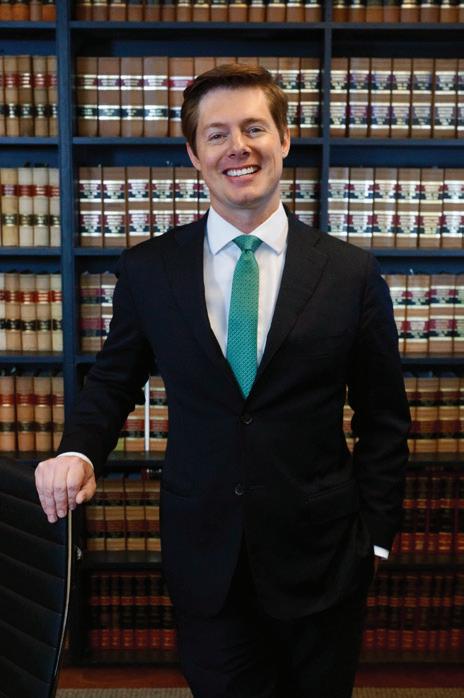
By The Forge Companies

The mediation ends the way plaintiff lawyers hope it will: a hard-fought case, a seven-figure number, and a client who finally exhales. The family hugs in the hallway. Someone says, “Now we can move forward.”
Two days later, the client calls with a different kind of fear.
A benefits caseworker has warned that the settlement could jeopardize Medicaid. A family member is asking for “just a small loan.” The treating physician is recommending additional procedures—expensive ones. And the client asks the question no one wants to answer off the cuff: “How do I make this money last?”
Settlements don’t arrive in a vacuum. They land in the middle of real life—public benefits, medical uncertainty, family pressure, and financial inexperience. The recovery meant to provide security can, without coordinated planning, create immediate risk.
Today, the size of the settlement is only half the outcome. The other half is whether the client can preserve health coverage, maintain stability, and sustain longterm security.
At the same time, the settlement planning landscape has grown significantly in both scale and complexity. Industry reporting shows structured settlement annuity premium reached approximately $9.5 billion in 2024—the highest annual volume on record¹. As that market has expanded, structured decisions increasingly intersect with Medicaid and SSI eligibility rules, Special Needs Trust requirements, tax considerations, and long-term financial planning. For catastrophically injured clients, these are not abstract concerns—they often determine whether a recovery protects the future or creates new complications within months of distribution.
Public benefits are often the first pressure point. Medicaid and Supplemental Security Income are asset-tested programs, and distributing funds without a coordinated strategy can disrupt eligibility before safeguards are in place.
Future medical needs create another layer of exposure. Clients frequently assume Medicare will seamlessly step in. In reality, Medicare Secondary Payer considerations and forwardlooking treatment planning require deliberate attention, and late-stage discussions limit flexibility.
And then there is the human element. A lump sum offers freedom— but it also concentrates risk. Market volatility, taxable investment earnings, medical unpredictability, and family expectations converge at once. Without a structure that balances liquidity and long-term stability, a recovery can erode far faster than anyone anticipates.
The common thread is not the client— it is the process. Settlement planning is still too often handled in pieces, requiring attorneys to coordinate structured settlements, trusts, benefits analysis, and long-term financial planning across multiple providers.
Over the last two decades, The Forge Companies have worked alongside plaintiff firms as this landscape has evolved. Founded in 2003, Forge was built around a simple premise:
settlement planning should not be an afterthought, and it should not require attorneys to coordinate disconnected providers.
Today, Forge brings structured settlement planning, government benefits considerations, Medicare Set-Asides, trust planning and administration, long-term financial planning, and law-firm-focused financial services into one integrated platform. By aligning these moving parts early, the focus shifts from reacting to post-settlement surprises to proactively protecting outcomes.
Winning the case is a milestone. Protecting the recovery is what makes it last.
For more information about how The Forge Companies can support you and your clients, contact our team at 866-683-6743 or info@forgeconsulting.com



Since 2003, The Forge Companies (Forge) have been a trusted partner for plaintiff attorneys and their clients, guiding them through the complexities of the settlement planning process. Forge’s platform spans four core business lines—Forge Consulting, Advocacy Wealth Management, Advocacy Trust, and Forge Capital—delivering customized structured settlement annuity planning and insurance solutions; wealth management and longterm financial planning for injured families; Special Needs Trust planning and administration; and law-firm-focused financial services, including streamlined E&O underwriting, IOLTA organization and audit support, payroll administration, case cost accounting, plaintiff advance solutions, and enhanced financial reporting. One integrated platform delivering long-term strategies designed to support clients not only through the settlement process but also through the rest of their lives.
By Brian Brooks


Iencouraged you recently to write short, and to quit wasting words. One method for doing so is to write in the active rather than the passive voice. Active sentences are shorter and more forceful. They focus attention on the actor whose behavior is at issue, which quite often is the whole point of our writing. Legal writing’s goal is to persuade, clarify, and define. The active voice does just that.
So, how do we write actively? Active voice writing occurs when the subject of the sentence performs the action. Of course, the action the subject performs is the verb in the sentence (those action words we learned about in second grade). Sentence structure is subject + verb + object. Here’s an example: “Dr. Jones breached the standard of care.”
The subject of the sentence, Dr. Jones, breached, the verb or the action, the standard of care, the subject. We’ve drawn a straight line to what our bad
actor did wrong and made him and his wrongdoing the focus of attention.
Contrast that with passive writing. The subject of the sentence is acted upon by the verb. That means the object of an active sentence becomes the subject of the passive sentence. A typical sentence structure is subject + a “be” word + past participle + by + agent construction. Using the same facts as our active sentence above, here is the sentence using a passive voice: “The standard of
care (subject) was breached (be + past participle) by Dr. Jones (agent). Along with constructing a wordy and inefficient sentence, we’ve deemphasized Dr. Jones’s wrongdoing and drawn attention away from him. Legal writing is meant to persuade. The passive voice lulls one to sleep instead.
Now, we’re not all grammarians. I certainly am not one. But some watchwords can be used to clue us in when we’re lapsing into a passive voice. Look for a form of “to be” in the sentence, like “is,” “are,” “was,” “were,” “has been,” “have been,” “had been,” “will be,” “will have been,” “being.” In our sentence about Dr. Jones breaching the standard of care, “was” is a signal to us that we structured our sentence in a passive voice. (I initially wrote this sentence “In our sentence about Dr. Jones breaching the standard of care, ‘was’ is a signal to us that our sentence may be structured in a passive voice,” which is
a passive sentence. So, I re-wrote it as you see.) Also be on the lookout for a past participle in the sentence, which is a form of a verb you would use after had, like had breached or had rejected or had approved. Once you see these watchwords, restructure the sentence to read actively. Thus, “The bill was approved by Congress,” becomes “Congress approved the bill.”
It helps if you identify the actor in your argument first and structure the sentences in such a way that the actor takes action. “Dr. Jones breached the standard of care;” “Congress passed the bill;” “the Court overturned the conviction.” Dr. Jones, Congress, and the Court take action in these sentences. (once again, I almost wrote, “Dr. Jones, Congress, and the Court are the actors in these sentences,” which is passive writing). That structure focuses attention on them and their actions in a clear, succinct way.
Of course, if what the writing is trying to do is to draw attention away from the actor, use the passive voice. If you are defending a breach of contract you might not like the active sentence “John signed the contract without reading the terms,” and reject it in favor of “the contract was signed by John without a full reading of the terms.” But if you are trying to move the court to take action, write in the active voice.
I’ll see you next time from The Writer’s Block. █
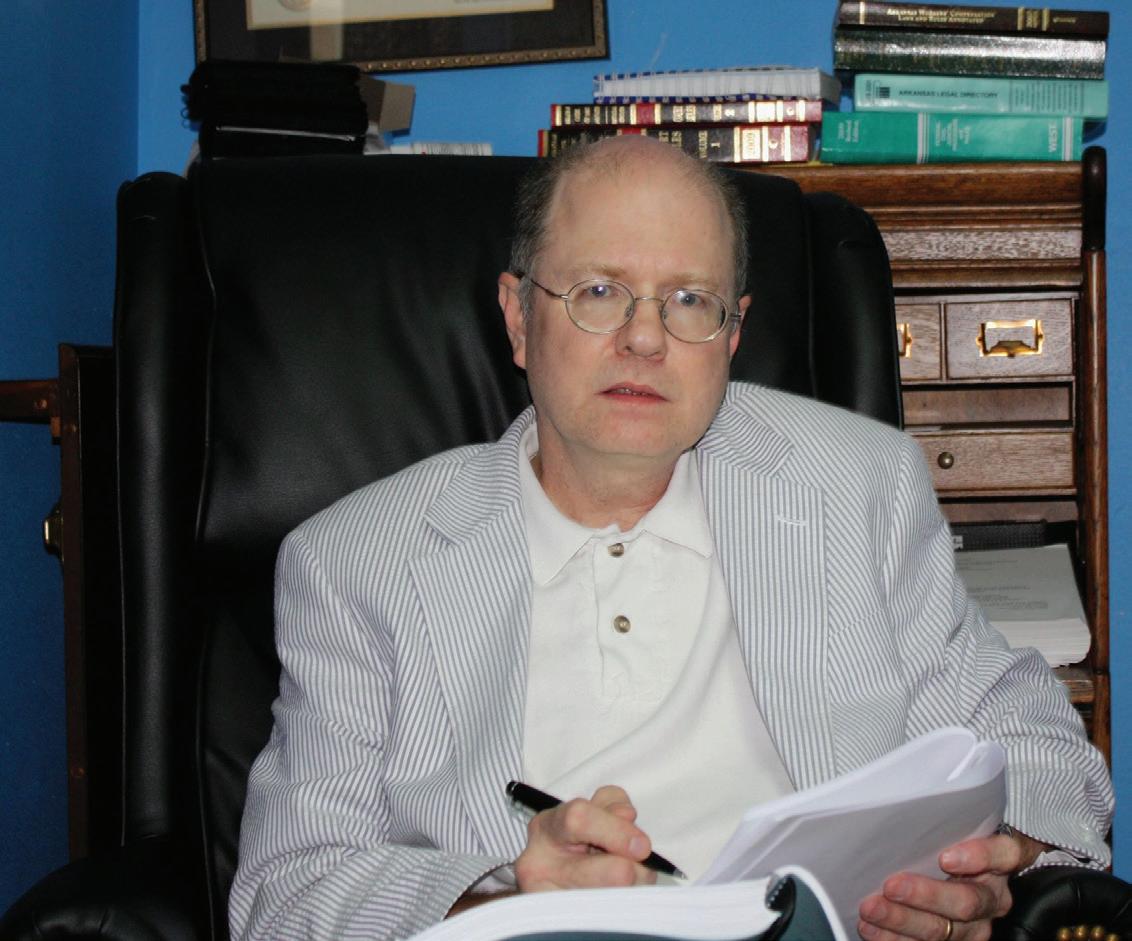
Robert Tschiemer is the author of the Arkansas Bar Association Weekly Case Summaries available at www.arkbar.com
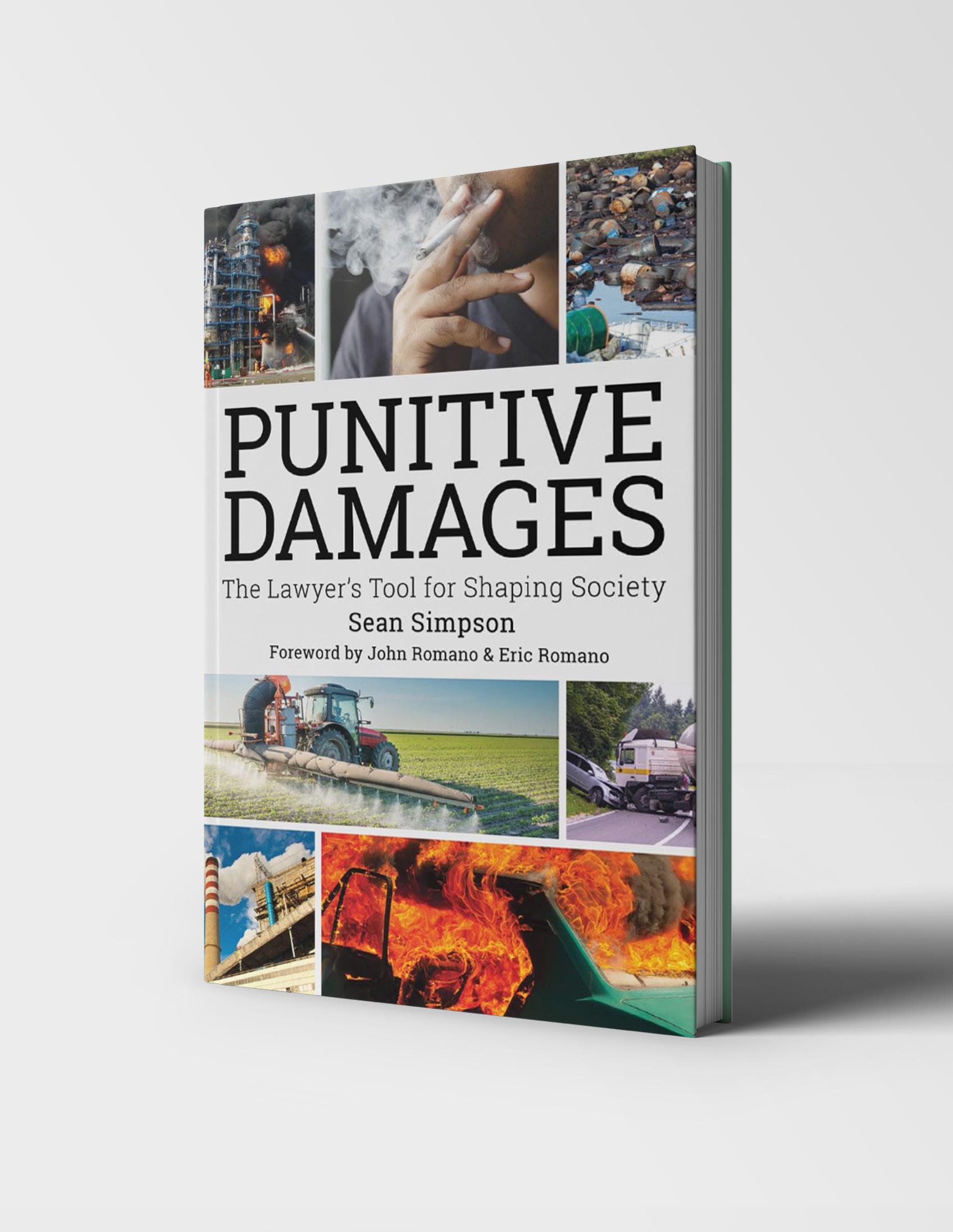
ean Simpson’s Punitive Damages is a focused examination of one of the most controversial and impactful areas of civil litigation. Walking through the history, case law, and modern methodology, Punitive Damages presents a roadmap for the reader to follow, using Simpson’s approach to bridge the gap between compensation and punishment.
Simpson does a fantastic job in creating a coherent legal framework that is easy to understand and implement when addressing punitive damages. Intertwining punitive limitations imputed by case law and the practical theories and constraints is the key to obtaining a punitive award. Sean walks the reader through this in easy-to-follow methodology.
As a trial attorney for Oliver Law Firm, I not only appreciate Sean’s nod to Sach Oliver’s deposition methodology in Chapter 6 of the Basic Steps, but also appreciate the takeaway that sound, proven methodology begins at the beginning of a case. Using safety principles to “dig the hole,” it becomes easier to have the corporate deponent under oath as the authority that ratified the reckless conduct that led to injury or death.
BY SEAN SIMPSON
Embedded throughout the book are compelling examples of using jury instruction language in each process of litigation. As Simpson explains, this includes demand letters that articulate punitive theories and place insurers on notice for potential bad faith exposure and reserve setting. The book also walks the reader through incorporating inconsistencies in policies and procedures, as well as digging into the facts through discovery and fitting them into the punitive framework. The reader is taken through step-by-step ways to lock in defense inconsistencies and excuses, digging the hole at each phase. By the time the case reaches the jury, the court, defense lawyers, and each juror should already be familiar with the punitive language, reinforcing credibility and aligning your arguments with the court’s authority. This is how punitive awards are won, and Simpson walks the reader through the process methodically.
Extremely helpful are the examples from various states incorporated, and the “blocks” of helpful tips and strategies for plaintiff attorneys throughout the book. Even newer plaintiff attorneys can understand the necessary strategies that must be implemented, and the reasons behind them, from this reading.
I found this book to be a perfect combination of instruction and implementation of punitive language throughout the case, and the incorporation of reckless or outrageous conduct in each stage of litigation. The only critique I could possibly find is that often there are developments in a case that are out of our control, and some jurisdictions impute stronger limitations on when you can plead punitives. As attorneys, we must pivot to a plan that still incorporates the same steps “behind the scenes.” Sean’s underlying strategy and methodology are still both sound and adaptable, however.
The biggest takeaway I think readers can fully understand is to consistently mirror the jury instruction language throughout each step of the litigation process, planting the seeds of a punitive damages award long before a jury is seated.
Ultimately, Punitive Damages is a handbook all plaintiff attorneys should incorporate into their practice. This is a vital mindset shift into understanding that punitive damages are not a late-stage argument, but are a theory of the case that should shape every move from intake through verdict. This should be a first read for all new associates or sole practitioners, and a yearly read for all plaintiff attorneys. █
ATLA’s Elite Members are the members who have gone the extra mile to help preserve the jury system, promote individuals’ rights, and educate the public by supporting ATLA, Justice PAC, and AAJPAC, the political action arm of the American Association for Justice. Thanks to them, ATLA makes a difference!
PLATINUM FOUNDER — $50,000+
Rainwater Holt & Sexton
GOLD LEADER — $25,000+
Taylor King AAJ
BRONZE BARRISTER — $6,000+
Paul Byrd AAJ
Jason Hatfield AAJ
George Niblock
Carter Stein AAJ
CHAMPION BENEFACTOR — $3,000+
Rob Beard AAJ
Thomas Buchanan
Taylor Chaney AAJ
Joe Denton
Austin Easley AAJ
Paige Edgin AAJ
Bob Edwards AAJ
Craig Friedman AAJ
Joseph Gates AAJ
Josh Gillispie AAJ
Geoff Hamby AAJ
John Houseal
Q. Byrum Hurst AAJ
Jim Jackson
Joseph P. Jaynes
Sarah Jewell AAJ
Sean Keith AAJ
Brandon Lacy AAJ
Alan Lane AAJ
Alan LeVar AAJ
CHAMPION PATRON — $1,200+
Hank Bates AAJ
Will Bond AAJ
Neil Chamberlin AAJ
Shawn Daniels AAJ
Steven Davis
Terry Dugger AAJ
Bob Estes
Greg Giles
Matthew Lindsay AAJ
Bobby McDaniel AAJ
Brett McDaniel AAJ
Timothy J. Myers AAJ
Andrew Norwood AAJ
Jeff Priebe AAJ
John Rainwater
Ryan Scott AAJ
Chad Trammell AAJ
Jess Virden Mallett AAJ
BW Walas AAJ
Tim Watson AAJ
Les Weisbrod AAJ
Phillip Wells AAJ
George Wise AAJ
Heather Zachary
Justin Zachary AAJ
Keith Grayson AAJ
Melanie Grayson
Todd Griffin
Denise Hoggard AAJ
Bill Horton
Kenneth Kieklak
Conrad Odom AAJ
Cary Patterson
Mark Rees AAJ
Marc Stewart AAJ
Tom Thrash
Marcus Vaden
Stevan Vowell
Lorie Whitby
Russell Winburn AAJ
GUARDIAN OF JUSTICE — BASED ON YEARS OF PRACTICE
James Bargar AAJ
Robert Cortinez
Wesley Cottrell
Hani Hashem AAJ
Thomas Jones AAJ
Darren O’Quinn AAJ
Michael Ray
Clay Sexton
J.T. Skinner
Tim Smith AAJ
Bill Stanley AAJ
Thomas Bargar
Bodie Cotter
Michael Fechner
William Groustra
Finlay Ladd
Blakely McKay
Sarah Mullinix
Annesly Pruitt
Jeffery Shaver
Royce Smith
Published quarterly, The Docket is distributed to more than 1,000 attorneys and law professionals throughout Arkansas. These attorneys and professionals, in turn, contribute articles to the publication in the spirit of advancing legal knowledge and strengthening the bonds of the legal community. Members of the ATLA Communications/Publications Committee approve editorial content for The Docket. Each quarterly issue typically includes thematic articles, ATLA news, lifestyle feature, practice management information, and more.
Subscriptions to The Docket are free of charge to association members. Additional subscriptions are available for purchase by calling (501) 376-2852. For more information, or to purchase ad space, contact Jennifer Irwin at jirwin@arktla.org or by calling the number above.
Arkansas Trial Lawyers Association PO Box 3486 Little Rock, Arkansas 72203