PHILLIP POWELL









































JUNE 2026
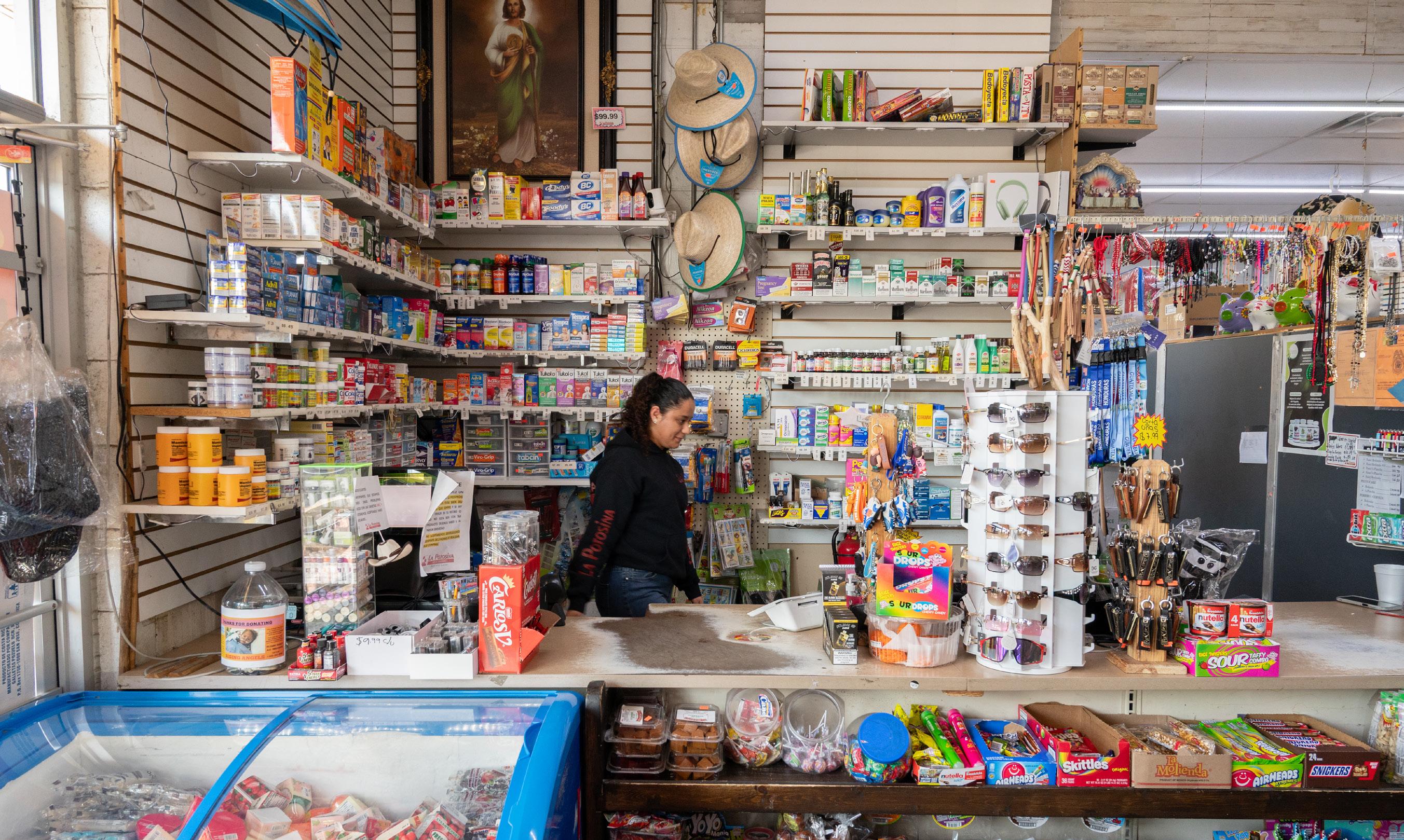
MELTING POT: Ali Baba Mediterranean Restaurant and Market on South University
grocery stores.

PHILLIP POWELL
JUNE 2026
MELTING POT: Ali Baba Mediterranean Restaurant and Market on South University
grocery stores.
How a queer men’s group in Arkansas is building a social network beyond the transactional world of dating apps.
By Frederick McKindra
A new lineup of young civic leaders is taking shape in Helena-West Helena. Will their vision and vigor be enough to reverse the city's decline?
By Phillip Powell
Q&A: Pine Bluff native Walter Pryor carries on the unlikely writing legacy of his grandmother. From the Farm: Working in the dirt, even when you'll soon be 6 feet under it. Big Pic: Pride month, gamified.
Arkansas Folklife Festival at Riverfront Park, “Ain’t Misbehavin’” at The Rep, Juneteenth in Da Rock at Mosaic Templars Cultural Center, “Keith Haring in 3D” at Crystal Bridges and more.
Arkansas is the hungriest state in the country, but also one of the stingiest when it comes to SNAP benefits. Plus, a Supreme Court decision that threatens Black representation might also drive voter turnout.
By Byron Tate and Jay Barth
40
“Cave Mountain” author Benjamin Hale explores a mysterious synchronicity among two young girls who went missing in the Ozarks.
By Michael Ray Taylor
Everything you’ve (n)ever wanted to know about group snake sex. By Elizabeth L. Cline
60
Spice up your routine with a tour of Little Rock’s international grocery store scene.
By Milo Strain
66
Turns out that riding bikes with friends is always super fun, even when you're a grown-up. See you at Pedal Party!








PUBLISHER Alan Leveritt
EDITOR-IN-CHIEF Austin Gelder
CREATIVE DIRECTOR Mandy Keener
MANAGING EDITOR Byron Tate
PRINT EDITOR Daniel Grear
INVESTIGATIVE REPORTER Matt Campbell
AGRI AND ENVIRONMENT REPORTER Phillip Powell
REPORTER Milo Strain
VIBE CHECKER Stephanie Smittle
EDITOR EMERITUS Max Brantley
CONTRIBUTING EDITOR Mara Leveritt
PHOTOGRAPHER Brian Chilson
DIRECTOR OF DEVELOPMENT Bob Edwards
ADVERTISING ART DIRECTOR Mike Spain
GRAPHIC DESIGNER Katie Hassell
DIRECTOR OF ADVERTISING/ SPECIAL PUBLICATIONS PUBLISHER Brooke Wallace
SENIOR ACCOUNT EXECUTIVE Wendy Hickingbotham
ACCOUNT EXECUTIVES
Terrell Jacob, Kaitlyn Looney
ADVERTISING TRAFFIC MANAGER Roland R. Gladden
DIGITAL MARKETING DIRECTOR Lyndsey Huddleston
DIGITAL AD COORDINATOR Sarah Richardson
EVENTS DIRECTOR Donavan Suitt
IT DIRECTOR Robert Curfman
CIRCULATION DIRECTOR Anitra Lovelace
BILLING/COLLECTIONS Charlotte Key
CHAIR MAN Lindsey Millar NACHO EDITOR Rhett Brinkley
PRODUCTION MANAGER Ira Hocut (1954-2009) CONTROLLER Weldon Wilson (1967-2025)

ARKANSAS TIMES (ISSN 0164-6273) is published each month by Arkansas Times Limited Partnership, 201 East Markham Street, Suite 150, Little Rock, Arkansas, 72201, phone (501) 3752985. Periodical postage paid at Little Rock, Arkansas, and additional mailing offices. POSTMASTER: Send address changes to ARKANSAS TIMES, 201 EAST MARKHAM STREET, SUITE 150, Little Rock, AR, 72201. Subscription prices are $60 for one year. For subscriber service call (501) 375-2985. Current single-copy price is $5, free in Pulaski County. Single issues are available by mail at $5.00 each, postage paid. Payment must accompany all orders. Reproduction or use in whole or in part of the contents without the written consent of the publishers is prohibited. Manuscripts and artwork will not be returned or acknowledged unless sufficient return postage and a self-addressed stamped envelope are included. All materials are handled with due care; however, the publisher assumes no responsibility for care and safe return of unsolicited materials. All letters sent to ARKANSAS TIMES will be treated as intended for publication and are subject to ARKANSAS TIMES’ unrestricted right to edit or to comment editorially.
©2026 ARKANSAS TIMES LIMITED PARTNERSHIP











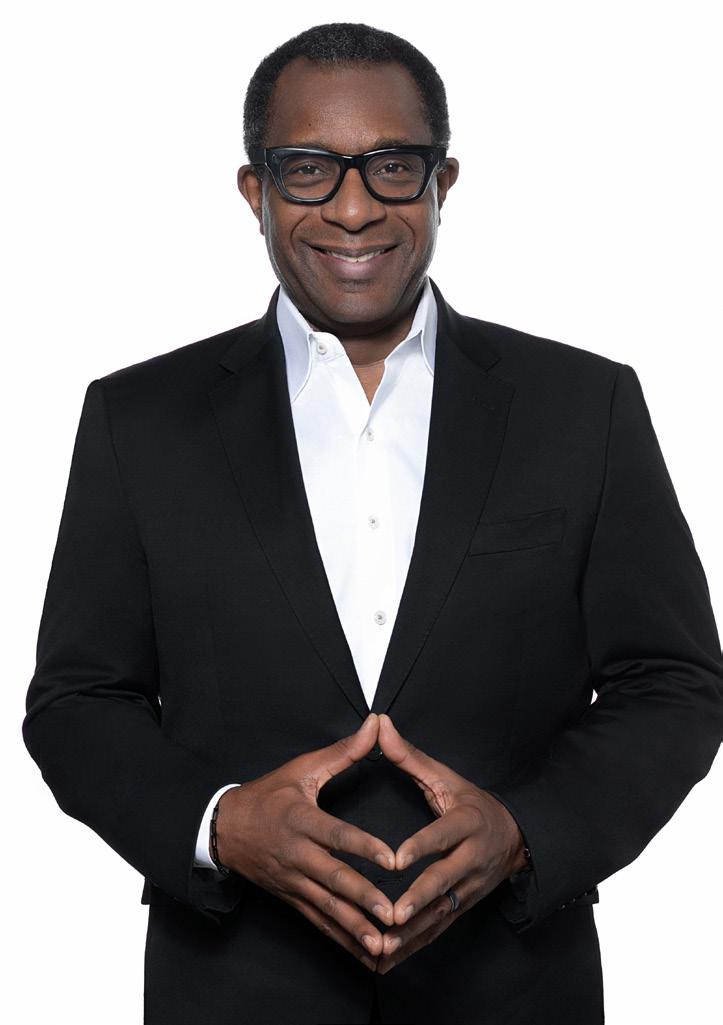
It’s not so hard to find examples of luminaries raised and nurtured in Arkansas who’ve left for loftier opportunities, taking their brilliance and talents with them. From the outside, Pine Bluff native Walter Pryor seems to fit the mold. A graduate of Hendrix College who then shipped out to Georgetown Law, Pryor is the chief administrative officer for Southern Bancorp. His own work and his wife Juliette Pryor’s role as chief counsel for Lowe’s saw the family shuttling through mailing addresses from Chicago to Washington, D.C., to Charlotte, North Carolina.
Stretched over time and distance, Pryor’s ties to Arkansas never frayed. The work of investing in traditionally overlooked and under-resourced opportunities moors him to the South. And a sprawling network of friends and family keeps his heartstrings woven thick and tight to home.
Pryor explores family ties with his memoir “This Leaves Me Okay: Race, Legacy, and Letters From My Grandmother,” a gorgeous love letter to a matriarch with only an eighth-grade education who nonetheless showed him the enduring power of the written word. Lucille Hatch Eldridge, or simply Mama Ceal to her family, had a real knack for correspondence. Pryor answered questions from fellow banker and longtime friend Martie North about the book at the CALS Main Library in May.
estimated. We tried to be conservative. She didn’t write every week, but she wrote most weeks, and we figured out she must have written me over 1,000 letters, and that’s just to me. So that means my sister had probably 1,000 letters. My mother had something like that. And then other people that she was writing also had letters.
And so the sacrifice of it, the practical demonstration of love, is hard to really get your head around. And I don’t think she had any concept that this was a huge thing. I think it was what she could do.
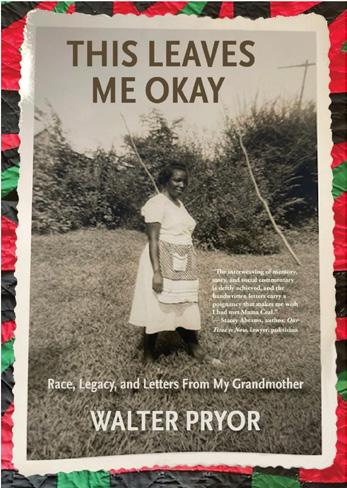
FAVORITE BOOKS YOU’VE READ RECENTLY? “James” by Percival Everett and “Theo of Golden” by Allen Levi.
BEST ADVICE YOU’VE EVER RECEIVED? Take the time and have the courage and discipline to know what you want and to be your authentic self without regard to expectations or convention.
FAVORITE PLACES TO VISIT? Jamaica, Martha’s Vineyard and Chicago.
How do Mama Ceal’s letters function as acts of resistance, love and legacy in a society that often devalued her? My grandmother had an eighth-grade education, and it was a time when education for Black people was not very good, so the simple fact that she even decided to write letters in and of itself is really momentous in a lot of ways. But when you think back and put it in greater context, within her lifetime and certainly within her parents’ lifetime, it had been a criminal offense for Black people to be able to read or write to the point of risking their lives. The fact that she wrote coming from the background that she did, and the fact that she was a maid who was not valued in society, and no one would have expected her to write letters — why wouldn’t that be a practice that she would take up as an act of resistance?
Why did she write these letters, and how many did she send? I believe that part of the reason she wrote was to stay connected to family, to let family know that they were thought of, that she loved them. The interesting piece, and a lot of people focus on the fact that she wrote me, but my grandmother wrote tons of people. She wrote me and my sister and my mother. She was writing many other family members, and this was over the course of 30 years. And so my wife and I sat down and we
What specific choices or attitudes in your grandmother’s life illustrate how hope can be practiced under oppressive conditions? I think what she most demonstrated was faith in action. We talk about it on Sundays, and we preach about it. But faith really is walking in what isn’t there yet, but you believe it’s to come. And that is exactly what she did, because she didn’t have a model for sending my mother to college, but she believed that she could make it happen.
And just to put that in context, my grandparents had been married for five or six years before they had my mother. And when you think about this time, these are not people who are planning their pregnancies. They didn’t say, “Oh, we’ll wait until we have money. We’ll wait until we’ve been married for a few years.” No, that’s not how it worked. She either lost children or she couldn’t get pregnant. So now, after four or five years, she finally has this child that she has wanted. Imagine the struggle, the angst, the grief of coming to the realization that if I want to be right by my child, I have to send her away, because I want an opportunity for her that’s better than what I have and that I see available to her here. So the most practical acts of faith and hope was to take her child who she had wanted for so long, to finally have her and then to relinquish her with the hope, the faith, that this was going to make her life better.
By the end of the book, what do you think the phrase “This leaves me okay” truly means? I don’t know that I landed on a meaning. I think I still am of the mind that there are plenty of ways to interpret. I think in some ways it was just a statement to say, “I’m doing well.” I think in some ways it served as a mantra for her to encourage herself, even if she wasn’t doing OK at the time. I think it was an exhortation to me at times, in case I wasn’t doing OK, to think about how to be OK. I think it was an affirmation. I think it could be all of those things.
BY ALAN LEVERITT
Many years ago, I sat visiting with my friend and early mentor James Scudder as he lay on his deathbed in Park Hill. James smoked Kent cigarettes — lots of them — and now it was too late. But that day, we were not talking about cigarettes but about gardening.
James had lived with his mother until she died the year before. Their yard was full of flowers, a testament to a mother and son’s talent and passion for cultivating beauty.
In the fall of her last year, James’ mother planted a sack full of daffodils. The plants would bloom in March, but she knew she was dying and would never see them. She took pleasure in the work, James said, planting flowers even though she would be gone before they bloomed. That was what she did.
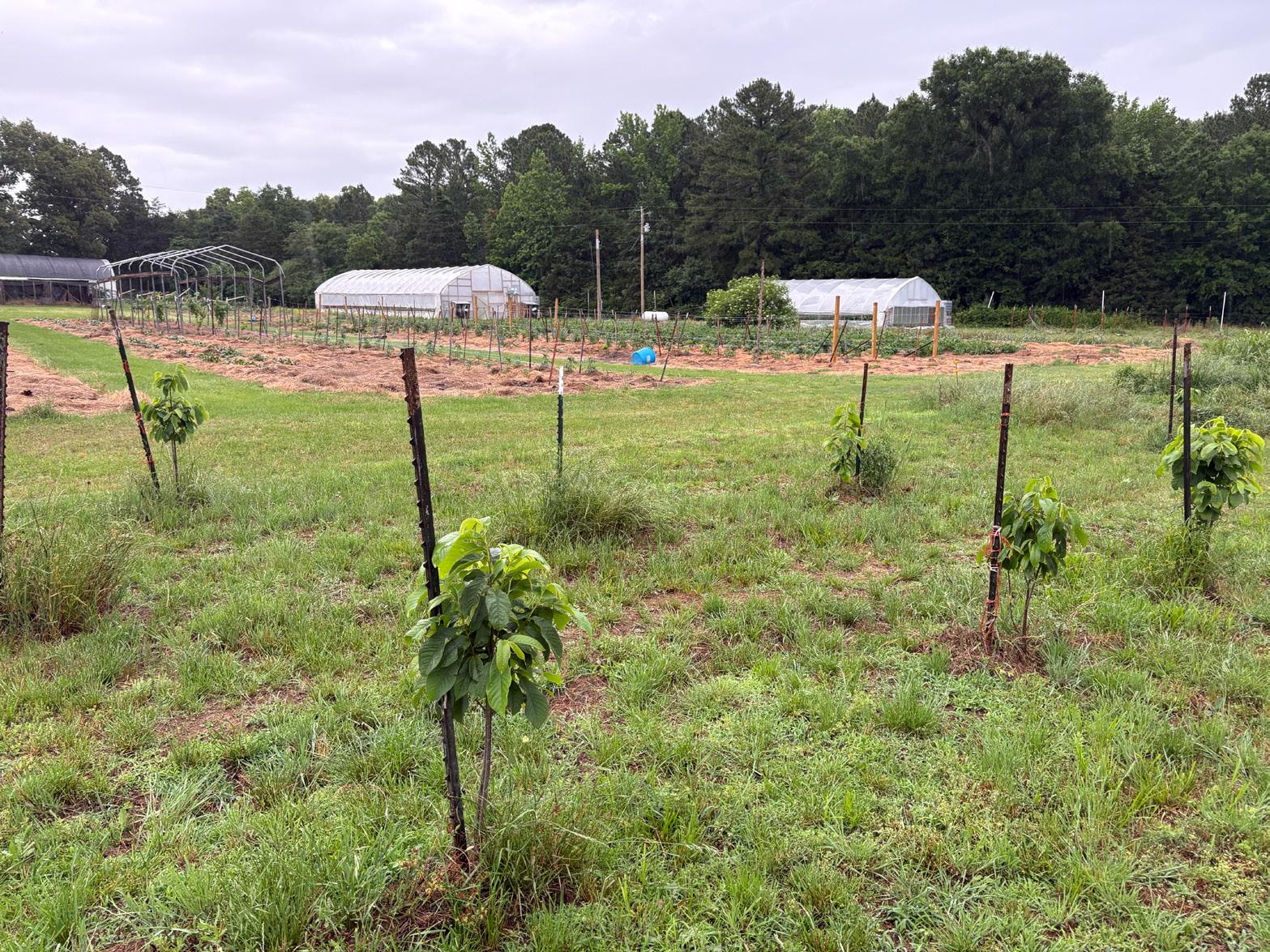
That story has stuck with me over the years. I find that as I grow older and my horizon shortens, there is a temptation to discard long-term projects. Two years ago, I planted a small orchard of pawpaw trees, the only subtropical fruit native to Arkansas. The literature described the fruit’s flavor as a cross between a mango and a banana. For me, the flavor was unlike anything I had ever tasted. To taste something totally new when you are past 70 years old is a rare delight. The problem is that pawpaws usually take between seven and 10 years to mature. I could be well past 80 before I see my first mottled green fruit — if I’m still here.
outcome. Life becomes a monoculture of annuals, devoid of perennials. It becomes poorer as projects that bring delight are discarded because their fruition is too far down the road.
I love the foxy, wild flavor of muscadines.
multitask, working on my tan while I worked on my tomatoes. I have the skin cancers and wrinkles to prove it. Now I raise over half my vines hydroponically in protected high tunnels. But even with the added production from this technology, I cannot keep up with demand. So this fall, I decided to convert two of my largest high tunnels into heated and cooled greenhouses with a goal of raising heirlooms yearround. I finished the conversion in midFebruary and planted about 400 tomato vines the next week. It was stupid expensive. Perhaps I will have it paid off in five years when I’m 78. Or not. It just depends on how much extra production I can generate between each November to May.
Anticipating death tempts us to abandon life’s long game for a less joyous, short-term
Unlike domestic grapes, muscadines don’t need endless spraying, and a single vine can yield 50 pounds of fruit. I have been researching trellises for muscadines, eyeing an open, 150-foot row in my field next to a new planting of blackberries. But I will spend the first year training the vines up 5 feet to the horizontal wire, the second year training them horizontally along that same wire, and then maybe, just maybe, I’ll see fruit the third year. I’ll be 77 then, of that I am certain. But will I still be up to harvesting 350 pounds of muscadines in August? Less certain.
I have raised heirloom tomatoes for nearly 40 years. When I was young, I would
I hope to be sowing until my death day. Like James’ mother, it’s what I do. Perhaps I will be there for the harvest, but I know death will interrupt at some point. If I yielded to the temptation to swap long-term big dreams for shortterm little ones, then I would be letting the anticipation of death hollow out my life. No otherworldly tasting pawpaws when I’m 80, no sweet purple muscadines at 77, no deadripe heirloom tomatoes in February.
I hope I will still be here for the harvest, but even if I am not, the dreaming, the planting, the nurturing and the anticipation of something wondrous is worth the uncertainty. I know death will take my life. But I don’t have to let it steal the richness of living.





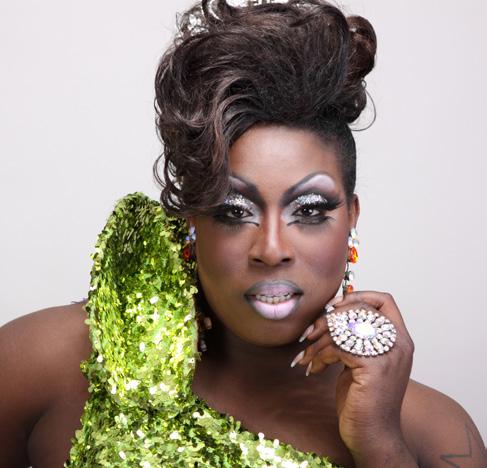
SoMa Pride, the celebration of love, diversity and queerness taking place in Little Rock’s South Main District on Saturday, June 13, will look in many ways like any other community celebration. Vendors of all kinds will line Main Street, kids will consume 785% of their recommended daily sugar intake in the form of frozen lemonade, sounds from live performances will echo from the facades of historic buildings, and the corner Walgreens will absolutely sell out of sunscreen. In other ways, it’s a distinctly subversive gathering, honoring not only the activists of the Stonewall uprising, but a long tradition of Black, transgender and gay Americans fighting for dignity, liberation and the right to fair and equal treatment under the law. It’s also a fabulously good time for a game of bingo; rip out this page to play along.

Rainbow outfit















By Sister Sledge










BY
FRIDAY 6/26-SUNDAY 6/28. RIVERFRONT PARK, NORTH LITTLE ROCK. FREE.
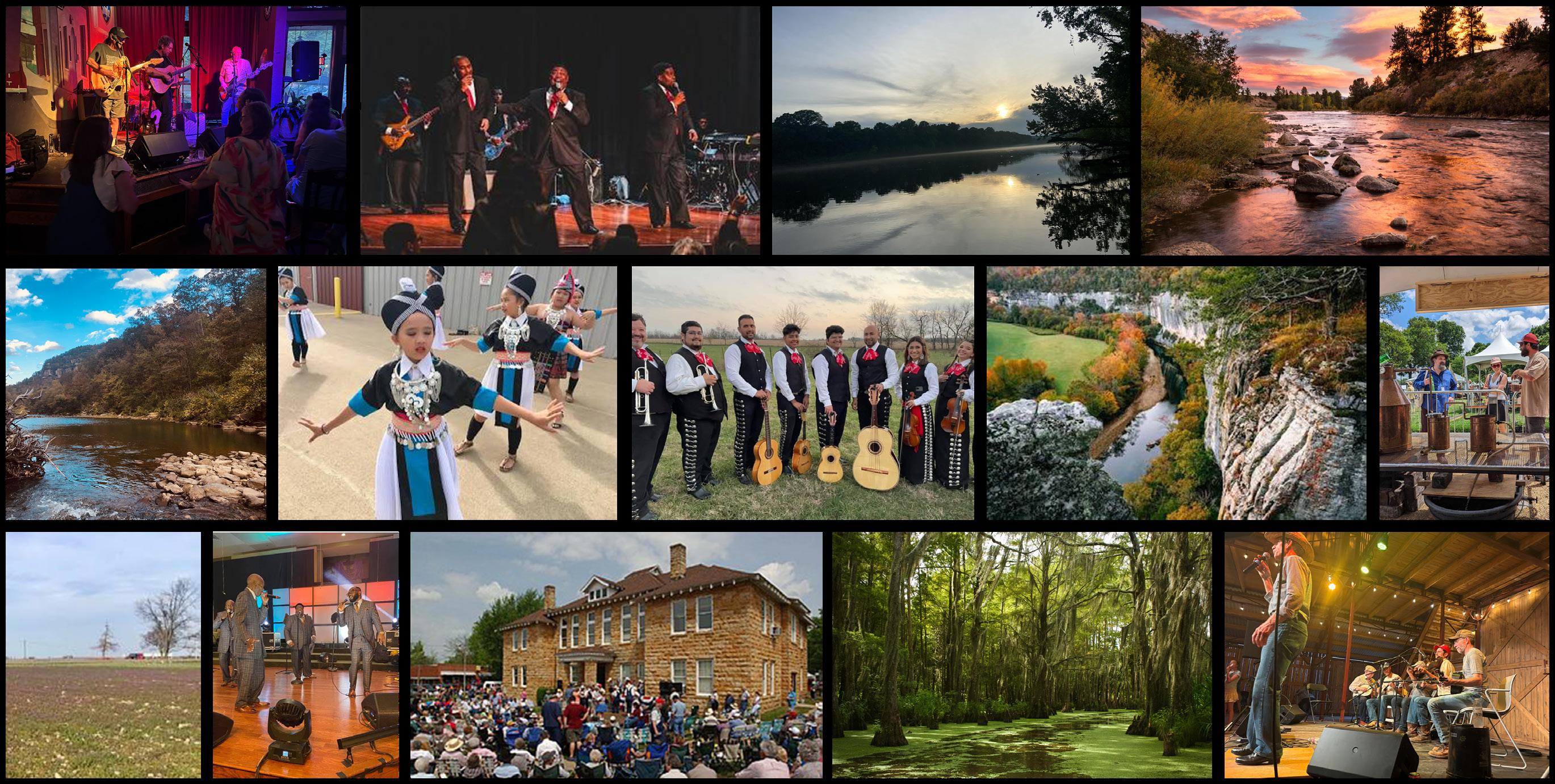
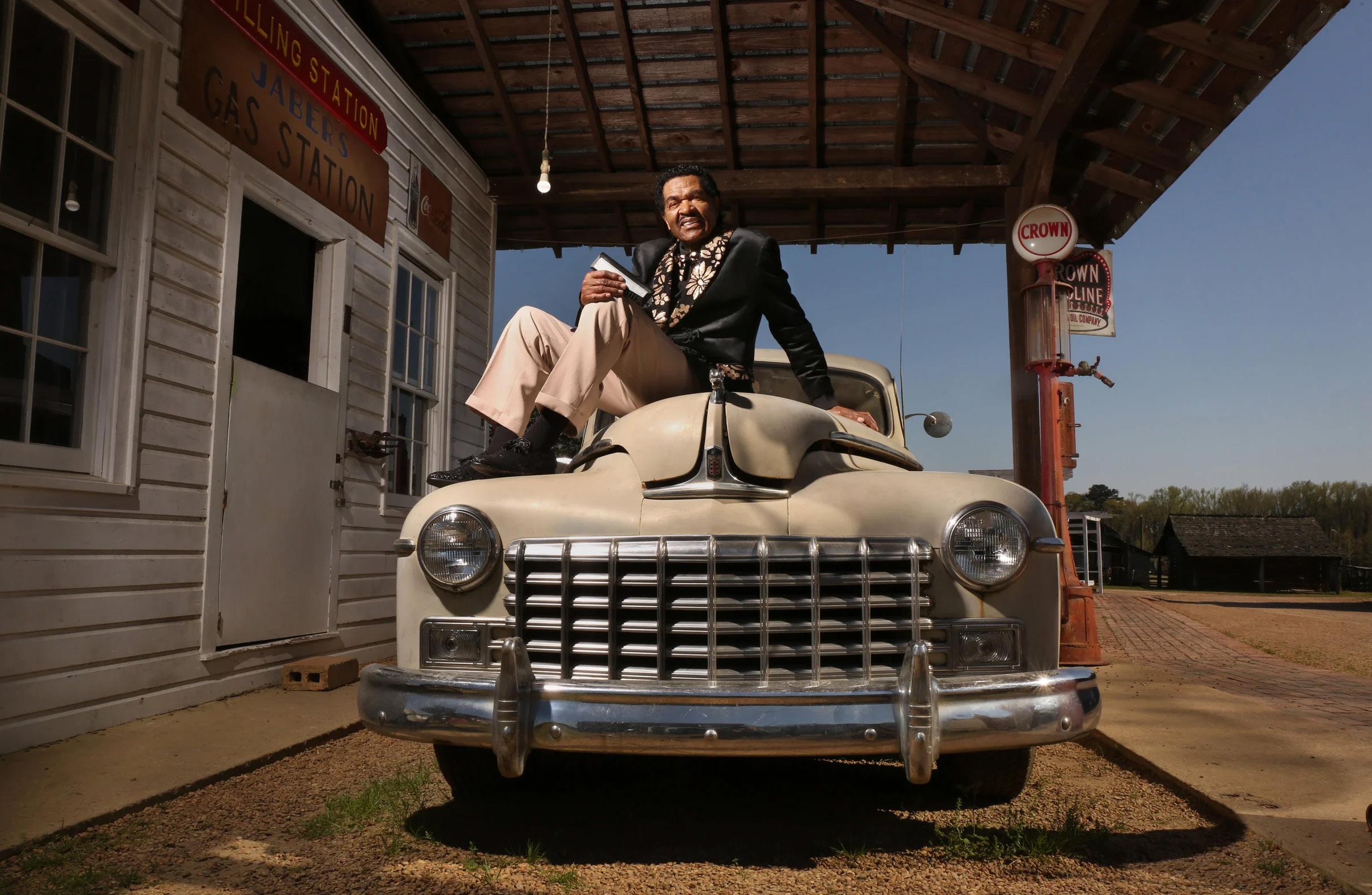
Thanks to the Smithsonian Institute, a free festival honoring America’s semiquincentennial is headed to Arkansas. In what they’ve dubbed a “festival of festivals,” the Smithsonian Center for Folklife and Heritage is partnering with dozens of festivals across the country, including major cultural fetes like Burning Man and the National Folk Festival, to expand its annual Folklife Festival, usually held at the National Mall in Washington, D.C. The Natural State’s contribution to the venture is the Arkansas Folklife Festival, a three-day, family-friendly romp in North Little Rock’s Riverfront Park headlined by two artists with connections to Arkansas: alt-country superstar songwriter Lucinda Williams, who lived in Fayetteville as a young woman and attended the University of Arkansas (where her father, poet Miller Williams, was a professor), and blues legend Bobby Rush (pictured above), who grew up in Pine Bluff. Spotlighting Arkansas’s six “culturesheds” — the Arkansas Delta, Northwest Arkansas, North Central Arkansas, Southeast Arkansas, Southwest Arkansas and the East Central River Valley — the “music, food, craft, and … people” of each region will be represented at the festival. Learn more at arkansasfolklifefestival.org. MS

THURSDAY 6/4-SATURDAY 6/6. DOWNTOWN LITTLE ROCK. $20 PER DAY; $60 WEEKEND PASS.
If there’s anyone you can depend upon for a crash course in heavy music both past and present, it’s Christopher “C.T.” Terry. A scene veteran who fronts enduring Arkansas doom metal band Rwake, Terry puts those sensibilities to good use annually with Mutants Fest (previously Mutants of the Monster), a multi-day musical affair that spills across a handful of Little Rock venues. This year’s festival begins at CALS Ron Robinson Theater on June 4 with Foundations of the Arkansas Underground, an event designed to pay homage to the influence of bygone Natural State acts and musicians like Substance, Living Sacrifice, Sickshine, 2 Minutes Hate and Mike “Burger” Scoggins, all of whom will be honored through tribute performances featuring a smattering of original members. The rest of the weekend, split between Ron Robinson, Stickyz Rock ’n’ Roll Chicken Shack and the Rev Room, will include appearances from — just to scratch the surface — out-oftowners Chained to the Bottom of the Ocean (Springfield, Massachusetts), Suplecs (New Orleans) and Intercourse (New Haven, Connecticut) as well as locals Coachlight, Mammoth Caravan and Adam Faucett. Get tickets at lastchancerecords.com. DG
SATURDAY 6/13. SOMA. 10:30 A.M.-4 P.M. FREE.
When SoMa Pride launched three years ago, the event was met with an “of course” from queer people and allies across Little Rock and beyond. As in, Central Arkansas Pride is great, but of course we also need an annual event that actually falls within the confines of Pride Month. As in, other locations work too, but of course South Main Street is an ideal spot for a celebration of this nature. This year’s parade kicks off at noon, but the whole shebang runs from 10:30 a.m.-4 p.m., so if you want to make the most of the vendors, drag performances and general revelry, prepare for a full day of festivities. If you’re feeling especially on a roll, consider finishing your night at Stickyz Rock ’n’ Roll Chicken Shack, where pop-up series Hairpins is throwing its latest dance party focused on “lesbians, queers, and gender-diverse cuties” from 9 p.m.-1 a.m. Tickets for the latter, available in the link in bio on the @ droppinghairpins Instagram page, are $15-$20. Also of note: Little Rock Black Pride is hosting a free Pride in the Park celebration from 1-6 p.m. on Sunday, June 7 at MacArthur Park. DG
FRIDAY 6/19-SATURDAY 6/20. ROBINSON CENTER AND MOSAIC TEMPLARS CULTURAL CENTER. FREE.
Arkansas’s largest celebration of Juneteenth, the national holiday commemorating the end of slavery in the United States, returns to Little Rock June 1920. Day one of Juneteenth in Da Rock consists of a day-long summit at Robinson Center featuring Little Rock Nine members Elizabeth Eckford, Terrence Roberts and Carlotta Walls LaNier and dozens of other speakers, including former NFL players Darren McFadden and Fred Taylor. The summit, which runs from 9 a.m.-5 p.m., is free but you must register ahead of time at arkansasheritage.com to get a spot. After the summit, enjoy the jazz-funk fusion of the Rodney Block Collective on the Arkansas River at the First Security Amphitheater, starting at 6 p.m. On day two, West Ninth Street in downtown Little Rock turns into a street festival with food trucks, vendors, a kids’ zone, live music and a 5K run/walk, anchored by the Mosaic Templars Cultural Center, which has organized and grown Juneteenth in Da Rock since 2009. The music lineup features national headliners Keri Hilson and Lloyd, along with a cohort of Black musicians (mostly) from Arkansas, including Big Piph, Crissy P, Bijoux, DJ Nick Hud and more. MS
SATURDAY 6/20. SIMMONS BANK ARENA. 8 P.M. $35-$128.
Authenticity circa 2026 is such a strange bird. How, in a time when our five senses were nurtured to maturity by swimming in a neurological sea of 24/7 digital impressions and signals, does one thoughtfully do the work of figuring out which opinions and quirks and mannerisms were generated on one’s own, and which ones were assimilated, consciously or subconsciously, from the external vastness of that sea? Is there, as the scripture says, “nothing new under the sun?” Does it matter? I don’t know the answer to those questions, but I do know this: In this particular capitalist nightmare sea, Alfred Matthew “Weird Al” Yankovic is an octopus with two of its tentacles wielding an accordion, unmistakably his authentic self even as he dexterously shapeshifts his way through parodies of the billboard hits of his time, all the while churning out some poignant reflections of American culture (lookin’ at you, “The Biggest Ball of Twine in Minnesota”), running occasionally afoul of evolving comedic sensibilities (“Eat It” and “Fat” have aged like milk), and, as he himself put it, generally daring to be stupid. Highly recommend pregaming with a double-feature screening of “UHF” (1989) and “Weird: The Al Yankovic Story” (2022), both equal parts brilliant and boisterous. Fellow parody artist Puddles Pity Party opens the show; grab tickets at simmonsbankarena.com. SS

SATURDAY 6/6-MONDAY 1/25. CRYSTAL BRIDGES
MUSEUM OF AMERICAN ART, BENTONVILLE. $18.
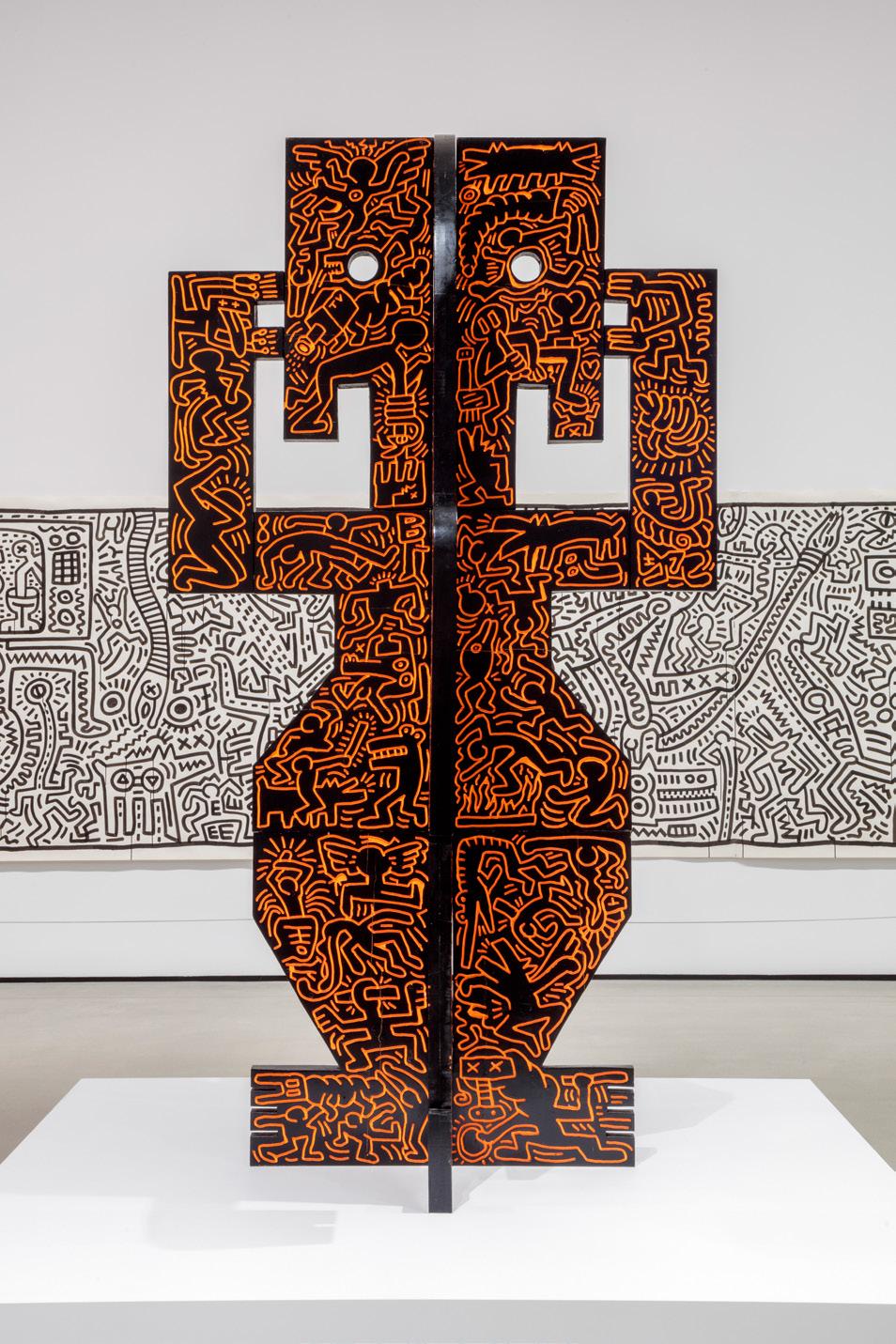
The rudimentary yet strikingly recognizable work of New York artist Keith Haring is ubiquitous, his iconic paintings finding their way to the masses through both legitimate and unauthorized means in the form of clothing, magnets, prints and more. A lesser known side of Haring, who died at 31 in 1990 due to complications with AIDS, is his three-dimensional art, which includes sculptures, totems and masks, boomboxes, skateboards, full-size cars and more. Debuting in June at Crystal Bridges Museum of American Art, “Keith Haring in 3D” is the first major exhibition dedicated to Haring’s explorations outside the confines of a single plane. Another reason to stop by Crystal Bridges this summer: An expansion that “increases the museum’s size by 50% and introduces 114,000 square feet of additional galleries, art studios and gathering spaces” opens concurrently with the Haring show. Admission to Crystal Bridges in general is free, but tickets for this individual exhibition can be purchased at crystalbridges.org. DG
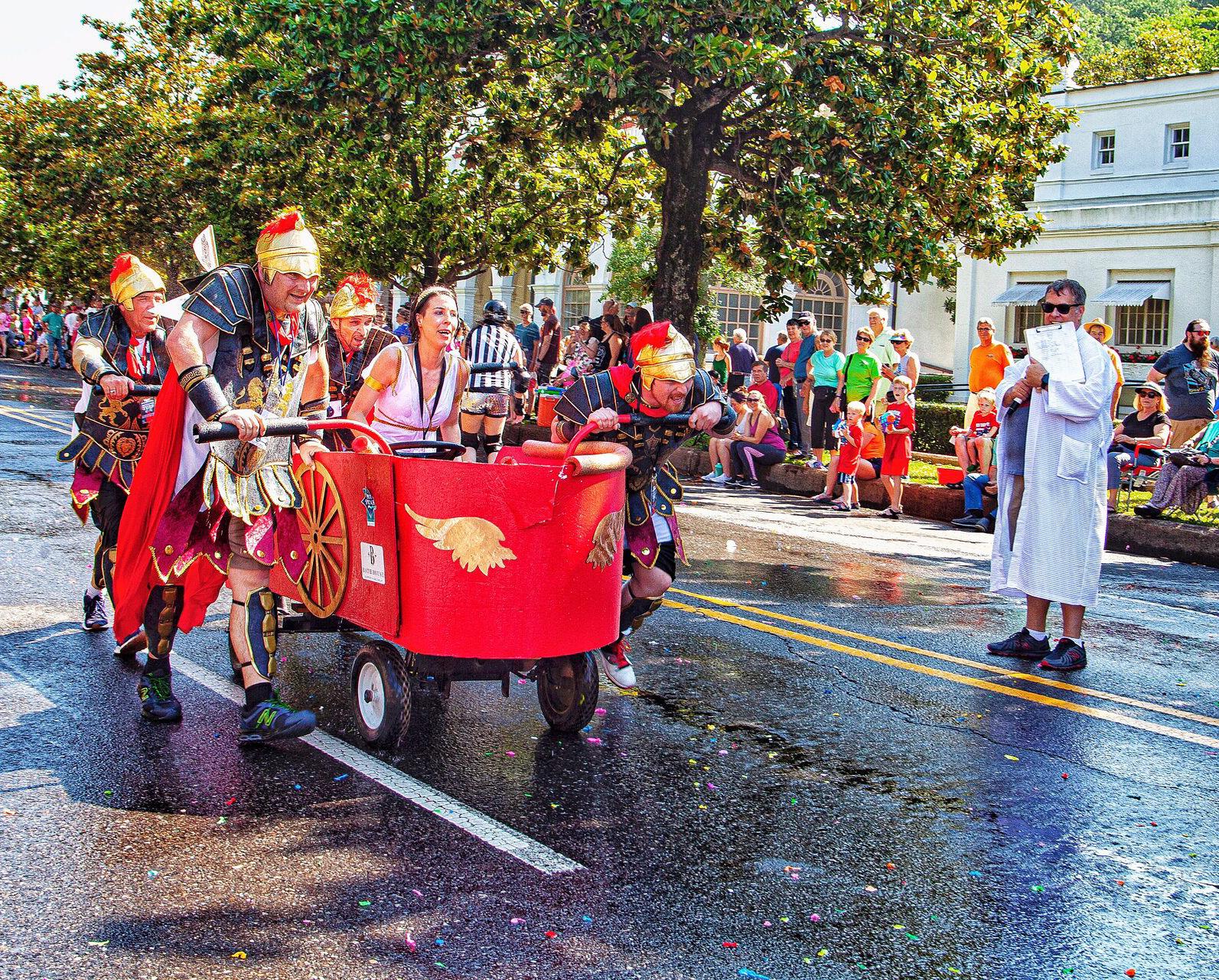
SATURDAY 6/6. BATHHOUSE ROW, DOWNTOWN HOT SPRINGS. 9 A.M. FREE.
If there’s one thing we can glean from the modern-day Guinness Book of World Records, it’s that the key to achieving global distinction in this hyperdocumented world of ours is to get very, very specific. Such is perhaps the case for Hot Springs’ World Championship Running of the Tubs, which honors the city’s thermal water-soaked history by pitting teams of costumed competitors against one another on historic Bathhouse Row, each equipped with a themed and decorated bathtub on wheels, racing to the finish line as they’re doused and drenched by onlookers with water guns. Think: Thailand’s Songkran festival meets Spain’s Running of the Bulls, but make it Garland County. Like any great athletic competition, the victors are those who strike a delicate balance between speed and finesse; in order to win, each team must arrive at the end with at least 10 gallons of water left in their tubs. To spectate or spray your water gun at aspiring tub race champions, be near Hill Wheatley Plaza (605 Central Ave.) at 9 a.m. to watch the parade of the tubs before the big race begins, or follow the crowd to the end of the race path to catch the photo finish. All you really need to know is that it is a thing to behold and you should get there early, but if you’re hellbent on having more information, visit runningofthetubs.org. SS
TUESDAY 6/16-SUNDAY 6/28. ARKANSAS REPERTORY THEATRE. $25-$70.
If a fear of losing track of the plot ever deterred you from heading out to the latest play at the Arkansas Repertory Theatre, then “Ain’t Misbehavin’” is the show for you. Set in the ballrooms and nightclubs of the Harlem Renaissance and anchored in the music of jazz legend Fats Waller, who spent his short life churning out hits like “Ain’t Misbehavin’,” “Honeysuckle Rose” and “The Joint Is Jumpin’” while influencing generations of stridestyle pianists, this revue musical is less the spooling out of a linear story than the vibrant conjuring of a time when New York was alive with a specific strand of Black excellence. Previously performed at The Rep in 1984 and 2005, “Ain’t Misbehavin’” is part of the theater’s 50th anniversary efforts to revive some of its best-received productions from years past. Get tickets at therep.org. DG
TUESDAY 6/16. RIVERDALE 10 VIP CINEMA. 7 PM. $12-$14.
Lee Van Cleef was a working actor mostly known for supporting roles when Italian director Sergio Leone cast him in “For a Few Dollars More” (1965) alongside Clint Eastwood. Thus began Van Cleef’s career as a spaghetti Western mainstay. Just a year later, he starred in another Italian film, Sergio Sollima’s “The Big Gundown,” playing Jonathan Corbett, a bounty hunter who’s thinking of retiring into politics when an influential railroad tycoon entices him to take one last job in hopes it could enhance his political prospects. His target is Cuchillo Sanchez (Tomas Milian), a knife-wielding bandit accused of a grisly crime. What proceeds is a series of often bizarre set pieces, sometimes likened to a “Looney Toons” cartoon, as Cuchillo is chased all the way to Mexico in an attempt to maintain his freedom — all set to one of the best scores Ennio Morricone ever produced. Get tickets at riverdale10.com. OJ











10:30am-1:30pm


Prepare to indulge in delicious brunch samples from your favorite local spots, hang with local celebrity judges, and get your brunch groove on with music, mimosas & more.
All for children and families in need... it's brunching with a purpose!
This year’s BrunchFest is chaired by Madi & Jacob Sutter, hosted by the Ambassadors of Hope and The Centers Auxiliary and is presented by





BY BYRON TATE PHOTOGRAPHY BY BRIAN CHILSON
You might expect hungry people to take money for food when given the chance. But those opportunities don’t always arise in Arkansas.
In a state that, for three years running now, lays claim to being the most food insecure in the nation, the percentage of Arkansans enrolled in the Supplemental Nutrition Assistance Program, or SNAP, ranks us at 42nd in the country — actually 43rd if you throw in the District of Columbia.
That’s right. Arkansas is the hungriest state in the nation, but also among the stingiest, leaving people in need to fend for themselves.
One might also think that this disconnect would be an embarrassment all the way from the pulpit to the C-suites to the governor’s doorstep. But a just-concluded legislative session ended without so much as an extra crumb for people enduring poverty in Arkansas. Lawmakers did, however, avert their gaze and cut income taxes for the wealthy.
Speaking of pulpits, here’s a fun fact: Arkansas has one of the highest numbers of churches per capita in the country, and its citizens attend church in far greater numbers than the national average. And yet, Nevada, one of the most god-indifferent states there is, does a far better job of enrolling people in SNAP, signing up about 15% of its population and giving it a ranking of sixth in the nation, according to SmartAsset, a financial advising company. Arkansans may know what Jesus
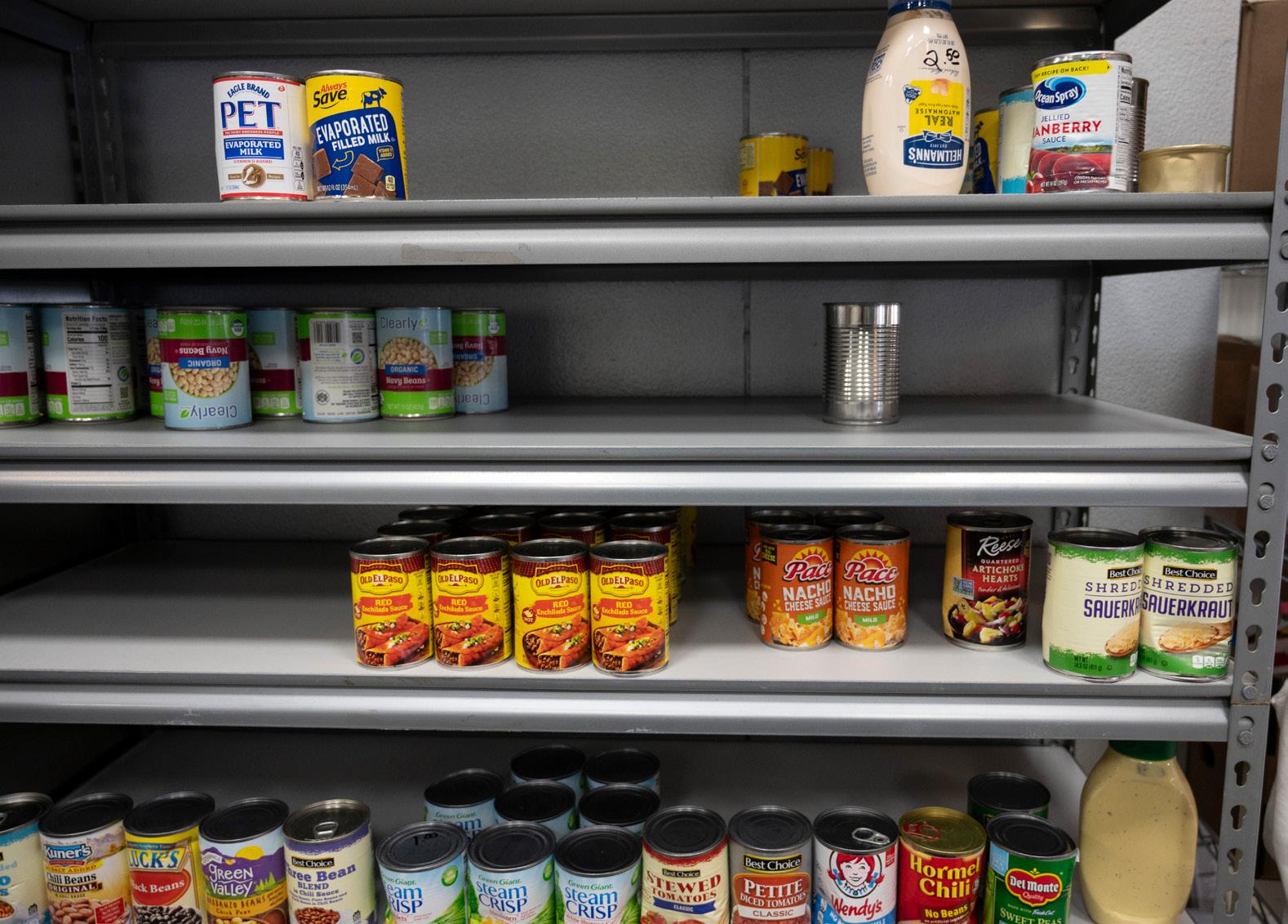
MISMATCH: Despite being the most food insecure state in the nation, Arkansas ranks 42nd for enrollment in the Supplemental Nutrition Assistance Program, or SNAP.
said about taking care of the poor, but those godless Nevadans are actually taking care of the poor.
The story has been told, well, three times now, but it’s worth noting what it means to be food insecure because the state is getting worse, not better. A February 2026 article from the University of Arkansas cited the Arkansas Health Survey showing that nearly 30% of Arkansans are food insecure. “In other words, approximately 688,000 adult Arkansans lack consistent, reliable access to nutritious food they need for an active, healthy life,” according to the article. That figure, the report said, “is approximately 10% higher than recent reports, which already ranked the state’s food insecurity as the worst in the nation.”
That doesn’t seem all that surprising, given the cold shoulder the state gives to those experiencing hunger. Also not surprising is the fact that poverty is a big predictor of hunger. The state consistently has one of the highest poverty rates in the country and the lowest household income levels. Other factors, however, also contribute. Jack Boles, a longtime extension agent with the University of Arkansas Division of Agriculture, did his thesis on the subject.
“There’s much more to it than just treating hunger,” Boles, who spent a career working with small farm owners, said. “You can’t just solve food insecurity by handing out Burger King coupons. That won’t solve it. Food inse-
curity is a complex problem. Ultimately, it is an outgrowth of poverty. But it’s also about the lack of transportation. If you live in rural Arkansas, transportation is a huge deal. If you can’t drive to town, you can’t get the commodities you need. It’s that simple sometimes.”
There is no one reason Arkansas scores so poorly when it comes to SNAP participation, but one of the most significant is self-imposed: asset limits.
Sylvia Blain knows a lot about those and how they work against people trying to get help. She’s the head of the Arkansas Hunger Relief Alliance, a nonprofit that strives to assist people in need. Arkansas’s asset limit of 130% of the federal poverty level is one of the lowest in the country. Even if you earn 100% of the poverty amount, it’s a no-go.
“Saving for school or a car? You have too much to qualify,” Blain said. “In Arkansas, if you make minimum wage [$11 an hour] — and we know how far that gets you — and you work full time, you make too much to qualify for SNAP.”
Brian Burton, director of the Arkansas Food Bank in Little Rock, said asset limits are self-defeating.
“You could be saving money for your own funeral and be kicked off of SNAP,” he said. “But we should be encouraging people to amass assets. That’s how they will get out of poverty. But we shoot ourselves in the foot.”
Asset limits are so onerous that most states have dropped them or raised the limits high enough to allow individuals some breathing room. Arkansas, however, is one of 13 states still using them — to its own detriment, as Blain said.
As part of the Big Beautiful Bill, a state will pay a progressively larger share of the SNAP tab based on its error rate, which includes overpayments and underpayments. Arkansas’s error rate was around 9.5% in 2024, and it was down to 7% last year. But if the rate is still over 6% after June of this year, Arkansas will be on the hook for an additional $27 million in SNAP costs. And no one has said how that figure is going to be accommodated in the state budget.
“We don’t see the error rate going down as long as there are so many restrictions to verify,” Blain said. “The state chose to have asset limits, and we spend so much time manually investigating and verifying them that it’s not surprising that it leads to more errors.”
Legislative efforts to raise the asset limit have failed, with lawmakers saying it would invite government dependency.
Sen. Jonathan Dismang (R-Searcy) recently told the Arkansas Advocate he had been “assured repeatedly” that the state would find a way to absorb the SNAP shortfall into its budget.
Big picture, Blain said, the state expends too much effort in trying to keep people from getting SNAP and not enough effort in enrolling them. Currently, about 220,000 Arkansans get SNAP, or about 7% of the population.
“I’d like to see fewer people on SNAP,” Blain said. “But the people truly needing it are not getting it.”
A spokesman with the Arkansas Department of Human Services said hunger in the state is a top priority.
“... [T]he Arkansas Department of Human Services is proud to administer the Supplemental Nutrition Assistance Program to more than 100,000 households,” Gavin Lesnick said. “While we cannot weigh in on the rate of participation in other states, we work every day all across Arkansas to ensure that eligible families can use this benefit to increase access to nutritious meals.”
The state has also turned to something called the 10:33 Initiative, a reference to a Bible verse, Luke 10:33, which tells the story of the good Samaritan. The initiative is a faithbased program aimed at lifting “Arkansans out of poverty by aligning work by community and faith-based partners and state agencies through Restore Hope’s Hope Hub case management and data sharing platform,” Lesnick said. “The Arkansas Department of Human Services administers programs including Medicaid and SNAP, and we protect children and strengthen families through our work in child welfare. Providing healthcare, tackling






food insecurity and empowering families are all key issues that the 10:33 Initiative is designed to address, so we are directly tied to the case management effort central to the program and the Hope Hub platform. We are proud to support this work and look forward to continued progress on helping Arkansans move from crisis to career.”
The program received a $6 million allocation from the state in the recent budget session.
If, however, the state is hoping the nonprofit sector can pull the state out of its last-place finishes in hunger, Burton thinks otherwise.
“We can’t replace SNAP,” he said. “Charity didn’t send man to the moon or build the Hoover Dam. There are things that government needs to do.”
There is a misconception about people who receive SNAP as being lazy or fraudulent. Most people who receive the aid have high school educations or beyond, and most are working.
“That has been a myth for some time,” Blain said, adding that now that there is a work requirement for receiving SNAP, the state should step up to help.
“If you’re in an urban area, finding a place to work or volunteer might not be challenging,” she said. “But if you’re in Delight, Arkansas, what are the options for you? If the work requirement is going to persist, Arkansas’s workforce development needs to make sure those jobs are around.”
Oh, and don’t confuse the error rate with fraud. Whereas the state can’t seem to score high enough to stay out of the penalty box, Blain said, the actual fraud rate for SNAP is around 2%. “There’s just almost not any,” she said.
There are also the hurdles of filling out the long and complicated forms to apply for SNAP and whether the benefits are worth the effort. We polled food bank executives, a pantry director and Blain about the form, and they all expressed dismay with it.
“It’s horrible,” the Arkansas Food Bank’s Burton said.
“It is so difficult to fill out, in my opinion,” Christie Jordan of the Food Bank of Northeast Arkansas said, “and I’ve helped many people do it. But it’s very disheartening and frustrating.”
The pantry executive, who asked to remain anonymous, said they simply don’t have the staffing to have someone sit with people for hours at a time to help them fill out the form.
Blain said the 30-plus-page form may be a case of “be careful what you ask for.” She said the form combines SNAP and other fed-
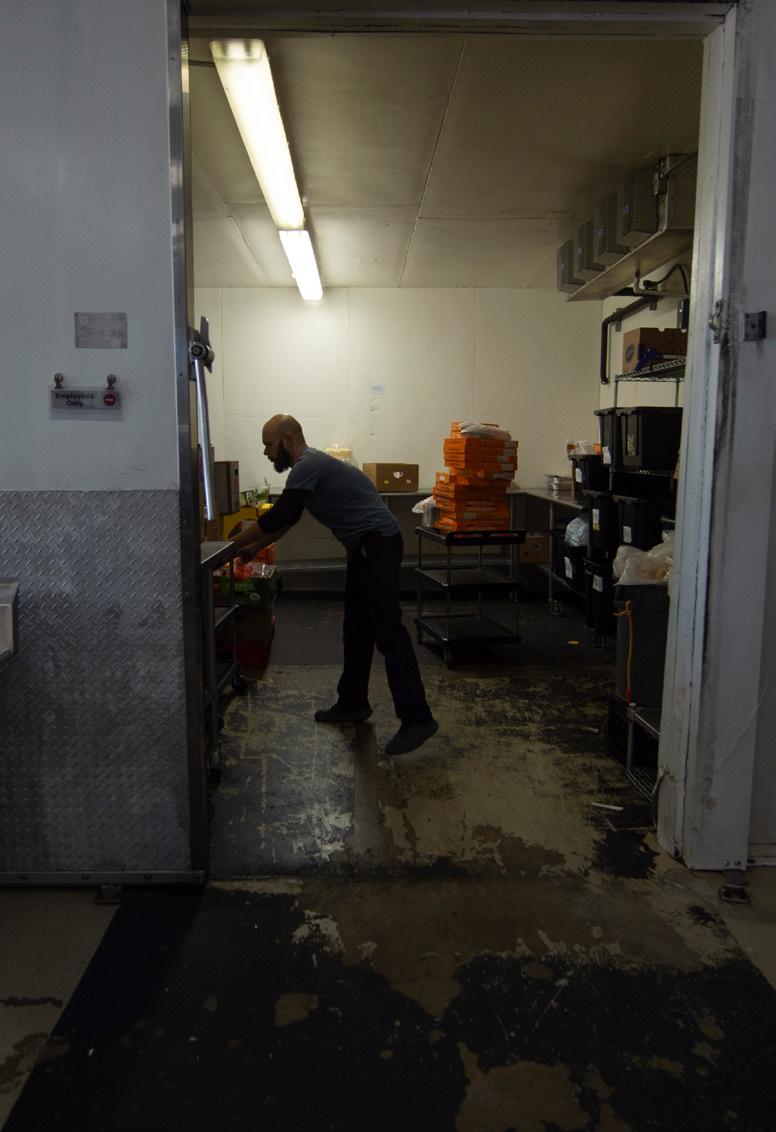
PUSHED OUT: Leaders at organizations like the Arkansas Hunger Relief Alliance (pictured above) believe that the obstacles to receiving SNAP benefits in Arkansas are too stringent.
eral programs and was intended to make the application process simpler. “But that’s not really how it worked out,” she said. “Other states use a SNAP-only form, but Arkansas does not, and I don’t know why.”
Is all that effort worth the payoff?
Blain said SNAP works out to be about $6 a day per person — a number that hasn’t moved much over the years.
“It’s not that it’s dropped; it’s just that it isn’t keeping up with inflation,” she said. “President Biden, by executive order, created the ‘Thrifty Food Plan’ in 2021 as a way to have SNAP keep up with rising food costs, whereas before, it had not been tied to the cost of living. That executive order raised the price of SNAP by about 25%, and it really upset the Republicans because he did it without the consent of Congress. When H.R. 1 [the Big Beautiful Bill] was on the table, the amount of money for the Thrifty Food Plan was rolled back.” Without that protection, she said, “the amount of money for SNAP recipients just won’t go that far.”
Another federal program suffering in Arkansas is WIC, the Special Supplemental Nutrition Program for Women, Infants, and Children, which is aimed at helping low-income pregnant women and their children. According to Centers for Disease Control and Preven-
tion data, the state ranks near the bottom in maternal mortality. A UAMS study said that if more mothers took advantage of all that WIC had to offer, the mortality rate would drop.
“This simple yet impactful change would not only enhance program engagement but also help improve maternal and child health outcomes across our communities,” the study stated.
But like SNAP participation, the percentage of women enrolled in WIC in Arkansas is in the 35% range, which is well below the national average of 51%.
Blain said that in many cases, the problem with WIC is logistical.
“WIC is different. It’s run by the Department of Health because there’s a health component to it,” she said. “So women have to go to a Health Department office in their area. They may go and sit for many hours just waiting to make an appointment for their actual visit. And a lot of them just throw up their hands and say, ‘I can’t do that. This isn’t working for me.’ The cost-benefit is that it’s too much trouble for what you get. Some states use telehealth for these appointments, but Arkansas doesn’t. We took it to Sen. [John] Boozman and he said [government officials] don’t like to use anything that can be done online where fraud can happen.”
Another place where people need help is in housing assistance and childcare, Blain said. “Students start college but then drop out with debt and no degree because they can’t afford both to go to school and take care of their housing costs,” Blain said. “And all childcare is expensive, and that digs into people’s pockets and their health and welfare spending, and they have to ask themselves, what do you do with your kids if you want to go to work? I think that’s something the business community should step into with both feet.”
There’s also a business element to SNAP, Blain said. With fewer and fewer people getting SNAP benefits, that’s money that grocery stores never see.
“I’ve heard conservative commentators on the radio say Arkansas has the best SNAP program in the country,” Blain said. “What they mean is we have the fewest number of people on it.”
She said she would love for the state’s economy to be such that everyone was fully employed and making enough to take care of their needs and no one needed SNAP.
“Let’s work on that,” she said. “But in the meantime, let’s take care of the people who need help.”
A BUSYBODY SUPREME COURT OVERTURNED ROE V. WADE IN 2022, PROPELLING PROGRESSIVES TO THE POLLS. WILL THE CALLAIS DECISION SUPERCHARGE DEMOCRATS AGAIN IN 2026?
BY JAY BARTH
Four years ago, a U.S. Supreme Court decision had an outsized impact in shaping voters’ choices in the midterm elections. In 2022, the Dobbs decision that overturned nearly five decades of precedent on abortion rights was a force in the midterms, becoming the single most important issue in the vote decisions of about a quarter of those who turned out. Fallout from the court’s Dobbs decision helped Democrats avoid an expected “red wave” election and kept their losses to a minimum. Indeed, despite deepening concerns about inflation, President Biden’s party came within only a few seats of maintaining control of the U.S. House.
From anger expressed from church pulpits to social media posts, something similar is in the political air today with the Supreme Court’s April decision in Louisiana v. Callais that promises to decimate Black representation across the South. The Callais decision gutted the significant 1982 amendment to the Voting Rights Act that ensured representation where communities of color have less opportunity than others to elect representatives of their choice. That guarantee was present whether or not explicit discrimination steered the drawing of district lines.
In April, though, the Supreme Court eviscerated that provision by saying it violated the Fourteenth Amendment equal protection rights of white Louisianans. Unless explicit race-based discrimination could be proved to have shaped district lines, Justice Samuel Alito wrote, this key amendment was null and void. Henceforth, as long as those responsible for reapportioning districts emphasize partisanship rather than race in their line-drawing decisions, all is constitutionally hunky-dory.
Starting with Tennessee (where new district lines passed within days of Callais did to Memphis what, in a rare case of being ahead of the curve, Arkansas lawmakers did to Little Rock in 2021), state legislatures across the South are scurrying to imple-
ment new districts for this election cycle. The fact that primaries have already taken place or are imminent in several states makes the timeline complicated. Regardless, the Trump administration is offering forceful encouragement that more states take action now.
By 2028, many majority Black districts will disappear, and civil rights icons like James Clyburn of South Carolina and Bennie Thompson of Mississippi will be forced from Congress to be replaced by, in all likelihood, white Republicans.
Eliminating rights that have come to be accepted across decades is what turns a Supreme Court decision into a potent political weapon. While the damage Callais will inflict on American representation is real and likely only to grow as other states get their chance to redraw district lines, anger about it in the moment is likely to have a positive impact for Democrats writ large in 2026 by producing a different electorate and different outcomes, as did Dobbs.
The politics around Callais will matter more in some places than in others. Indeed, the greatest impact may be in determining control of the U.S. Senate, the very body that gets to approve, or reject, Supreme Court appointments. As it turns out, several states with large nonwhite populations — Georgia, Texas, North Carolina and Ohio — are on the shortlist of states most important in determining control of the Senate.
Look out for the possibility that the Callais decision will energize voters in a couple of other statewide races: what has always been a sleeper race for the U.S. Senate seat in Mississippi held by Republican Sen. Cindy Hyde-Smith, and former Sen. Doug Jones’ attempt at a political comeback in his bid to become governor in Alabama. Will anger and determination on the part of Democrats give him a boost?
Callais becomes just one more reminder that, when it comes to shaping the future of American democracy, there has never been an election cycle like the one taking place in 2026.


BY FREDERICK MCKINDRA
WHOLESOME FUN: In 2024, Paul Whannel founded the Arkansas Queer Men’s Social Club as a way to combat loneliness and isolation among gay men in Little Rock. The group, which is decidedly focused on friendship rather than romance, meets several times a month for happy hours, game nights and more.
Watch enough movies with gay characters at the center of the plot, and you’ll become convinced that the closet is, to put it in video game terms, a gay person’s final boss. But one of the hardest things about gay life in a flyover state in the 21st century for me had little to do with coming out. It was a problem of volume. There weren’t many meet-cutes in the course of my day-to-day life. The chances of the handsome guy at the gym, the charming barista working behind the counter, or the Clark Kent lookalike who came to fix my work computer being available were slim.
The hookup culture of the pre-internet era, already a poor fit for gay men seeking a connection beyond an evening’s duration, shapeshifted long ago into a network of singles apps, edging out any horny humanity that remained of the cruising scene and reducing it to a solitary (and often monetized) swipe gesture. This circumscribed the physical places I could go with the actual hope of meeting a romantic partner to, for the most part, bars or clubs. And once I aged out of my 20s and 30s, going out and spending money on drinks — just to wake up in the morning hungover and still alone — became less enticing.
Sometimes, connection comes by way of serendipity, as it did for Daniel Spillers, who grew up the son of a university professor. Spillers, 48, attended school in the Bryant School District and, as a member of their first gifted and talented cohort, spent third through seventh grade in an isolated class that stayed together, instead of mixing with the larger student population.
“We were this tight-knit group,” he said. “If I hadn’t had that group of people who knew me for five years before we were let out into the larger population for high school, I don’t know that I would have had as good of a growing-up-gay experience as I did. I felt I was protected by that group.”
Spillers’ high school experiences as a queer person were relatively positive, if unremarkable.
“I don’t know if I was ever in the closet. … I just kind of was myself. I wasn’t saying that I was gay, except to very few people when I was actually ready to come out,” he said. “But I don’t ever think anybody had any doubt. And I felt a little bit oblivious to it all, maybe.”
He remembers finding his tribe, spending nights and weekends driving into Little Rock and hanging out on Kavanaugh Boulevard in the Hillcrest neighborhood where his parents had lived as newlyweds, inhabiting Cafe D’Roma.
During his senior year of high school, Spillers worked on the University of Arkansas at Little Rock campus where his father taught, and in the fall he enrolled there as a student.
And yet, while he did manage to arrive into young adulthood mostly unscathed, Spillers still felt himself isolating, single into middle age and struggling to meet other gay men.
“While I say I had a charmed existence, it was definitely a delayed existence,” he said. “Being gay meant that I, like many people, especially in the South, wasn’t able to be visibly gay. I wasn’t able to date. So all of the skills, the relationship skills, those things that heterosexual people really are able to do a lot easier and a lot more publicly, I did not.”
Spillers said he compartmentalized that part of his life because dating just wasn’t an option. This was aided by his un-

assuming presence and a measured manner; flamboyant gestures aren’t part of Spillers’ personality. The lone distinguishable feature about his presentation: a sort of edgy, curly short mullet gone a little long, like a member of Best Buy’s Geek Squad who’s aged out, counterbalanced by a preppy uniform, head to toe. Classic Midwestern creative class professional vibes with a full beard.
“I always say I’m like 10 years behind,” he said. “And when you develop that kind of isolation early on, for survival, you develop an independence. I got really, really good at being by myself.”
Spillers tried breaking out of that lonesomeness by going to Central Arkansas Pride in October, where he came across a booth for the Arkansas Queer Men’s Social Club, a group founded in 2024 by Paul Whannel to combat loneliness and isolation among queer men in Little Rock.
“You know things are bad when an IT guy who’s an introvert decides, ‘I’m going to start a social club,’” Whannel, 43, joked.
A system administrator at the William H. Bowen School of Law in Little Rock, Whannel knew all too well the impact of technology on feelings of disconnection and community. His idea was to rescue queer men like himself from the loneliness epidemic — nearly one in two American adults experiences significant, measurable loneliness, according to former Surgeon General Vivek Murthy — by planning outings for them in Central Arkansas.
“I went out and I printed up the brightest, eye-catchingest rainbow posters you can, and just said, ‘Hey, we’re going to have our first meeting at Blackberry Market, and if you want community, show up,’” he said. “The first 10 times I did it were just terrifying. But as every person showed up, they kept saying the same thing: ‘What took so long for this to happen? This is such an obvious need.’” The terror makes sense, given Whannel’s self-effacing, guy-next-door style — most comfortable in a pair of jeans, or khakis probably, and a slim-fit polo.
Members of the social club now meet for a planned roster of activities five to eight times a month. Their new member gatherings bring out about six people per session. Their game night at Caverns & Forests Board Game Cafe in the Argenta Arts District welcomes about 18-22 people every two weeks. Roughly 100 people have signed up either to join their Discord server or receive emails, and they have an even broader footprint via social media. The club maintains a roster of a few dozen
active members, with a couple hundred in a larger orbit, “some [of whom] we only see once a year, and that’s OK,” Whannel said.
‘THE
There’s a saturation point you reach when, putting yourself out there as a gay man in Little Rock, you begin to recognize the same profile pics across dating apps. A fierce, animal loneliness kicks up, and you begin to wonder what will even become of your appetite for companionship. Will it become feral, romping through your insides while you careen from bar to bar, or will you stay in, taking your discontent out on yourself?
“In the bars, you see the same few hundred people night after night after night. And you start to think that those are the gay community,” Whannel said. “But the gay community really, truly isn’t that. They’re integrated. They’re all out trying to live their lives. They’re going to work 9 to 5. They come home, they’ve got a mortgage, they’ve got pets. They’re living their lives. And so a lot of them have the same feeling of disconnect.”
And once the situation IRL has become stale, many default to the apps.
“The apps have really replaced the community. And that’s terrible, because the apps are like people at their worst,” Whannel said. “People are trying to get laid, they’re being really ruthlessly mean. There’s transphobia, there’s racism, it’s just a toxic kind of environment. And so people get the idea that that’s the gay community.” The legacy of “cruising” in gay male culture, a heedless
pursuit of sexual encounters defined by a system of performative gestures meant to exhibit one’s availability or appetite, can exert a substantial pressure, and is only juiced by the anonymity afforded by the internet.
Eric Wells, a member of the social club, faced discrimination on the apps for being HIV-positive.
“I stopped using the dating apps over a year ago, and started with the social club because the toxic environment on Grindr and on the regular dating apps that don’t have an option to disclose made for some really uncomfortable conversations,” Wells, 44, said. “I mean, there have been people who have said, ‘You should have died.’ People online who are like, ‘What are you even doing here?’”
Wells’ boyfriend recognized how deep he himself had fallen into a rut after moving to Arkansas to help care for his ailing mother and younger brother before venturing out into the club.
“For the first five or six years I’d been here, it had been so much of me just taking care of my mother, taking care of my brother. But before I realized it, it had been almost 10 years since I’d had friends in person that I hung out with,” he said. “All of my friends that I talked to were all on the internet. It would be nice to have friends that I didn’t have to hide being gay from.”
In fact, many of the group’s members are like me — men who wound up as adults in Central Arkansas serving as caregivers for sick relatives. Upon returning to my hometown of Little Rock about a decade ago, I found myself bewildered by the prospect of

making a life that resembled what I’d grown accustomed to in New York. Most remnants from that world that I rediscovered here paled in comparison. Also, while I’d fooled myself into thinking the closet had become a relic of the past, even here in Arkansas, trying to find folks willing to go on the record about their experience of gay life for this essay quickly disabused me of that fantasy.
Whannel and his partner moved to Little Rock in 2015 to support family, but Whannel, a native of Iowa, spent many years on the West Coast after college. He sometimes still imagines his life elsewhere.
“Brain drain is such a problem for us,” Whannel said. “You know, a lot of the really capable, smart, bright young people, especially young gay people, young queer people, when they get to be the age where they can cut it and get the hell out of here, they do what I did. They get the hell out of here. And I can understand that. The call of the coast will always be there.”
But while the allure of bigger cities abides, Whannel has set about the task of building space for queer men here, in the heartland.
“People shouldn’t feel like that’s their only option,” Whannel said. “You should feel confident that if you have a life here, that it’s going to be a good life where you can be your true self and you’re not afraid to express yourself. That’s not a life that I would want anybody to live, where you’re half in a closet and you fear going into certain counties or certain communities.”
Whannel advocates for sticking around and taking up space here in Arkansas.
“In America right now, it feels like all the values I grew up with — multiculturalism and diversity — are just being destroyed,” he said. “There’s a part of me that’s like, ‘God, if I could make it to Canada or Australia or one of these other countries, would I?’ But I’m just argumentative enough and I’m just cantankerous enough that I’m like, ‘No, I deserve a place on this earth, too, right here. And if you want me to leave, you’re gonna have to fight me for it.’”
Whannel contends that there’s something special about Central Arkansas that distinguishes it from urban centers on the coasts.
“If you have the ambition, Little Rock will let you do it,” he said. “You just have to have that ambition. You can be the person that you want to be. It may not be every single aspect that you want it to be, but that’s a hell of a leg up that you don’t get in coastal cities.”
The room for development in Little Rock doesn’t mean that starting something here is easy, though.
“When we moved here, I was like, ‘Where is the community?’ We went to [The New 610 Center, formerly 610 Center, a gay bar] in the middle of the daytime on a Saturday or something, and I started talking to one of the owners, and I’m like, ‘Well, what do you guys do?’ He’s like, ‘We try and stay open.’”
Organization in the gay community, Whannel found, waxed and waned. Central Arkansas Pride was getting started then, and has grown into a massive annual gathering, but it’s largely a one-day affair. Other queer
gatherings, like the sapphic-leaning Hairpins events, wouldn’t be dreamed up for many more years.
“If I wanted to start a powerhouse, if I wanted to start a gay army, how do I do that? The first step was like, ‘Well, we need people,’” Whannel said.
“It’s a known fellowship,” Spillers said of the outings thrown by the Queer Men’s Social Club. “You know ahead of time that you don’t have to guess if somebody’s going to be accepting. That’s off the table. So you can get to, ‘OK, now who are these interesting people? Let’s have some conversations.’”
The group, at present, is really just a blank slate. It is intergenerational, not very cruisy, spans a masc-femme spectrum in terms of its members’ presentation, and skews overwhelmingly white and cis gay despite bisexual men, trans men and nonbinary people being welcome. There’s a loquaciousness among this many gay men given a sudden captive audience. Joining an event is somewhat like slinking into a new school or summer camp, demanding equal parts performativity and self-deprecation, wanting to be liked but not necessarily wanting to be too boisterous.
Despite all of the camaraderie, convincing other local gay queer interest groups of the club’s resilience was a challenge from the outset. Whannel said that Zack Baker, the former executive director of Central Arkansas Pride, told him he should “expect some reluctance from other groups to work with you because they’re going to go, ‘Oh yeah, you’re the
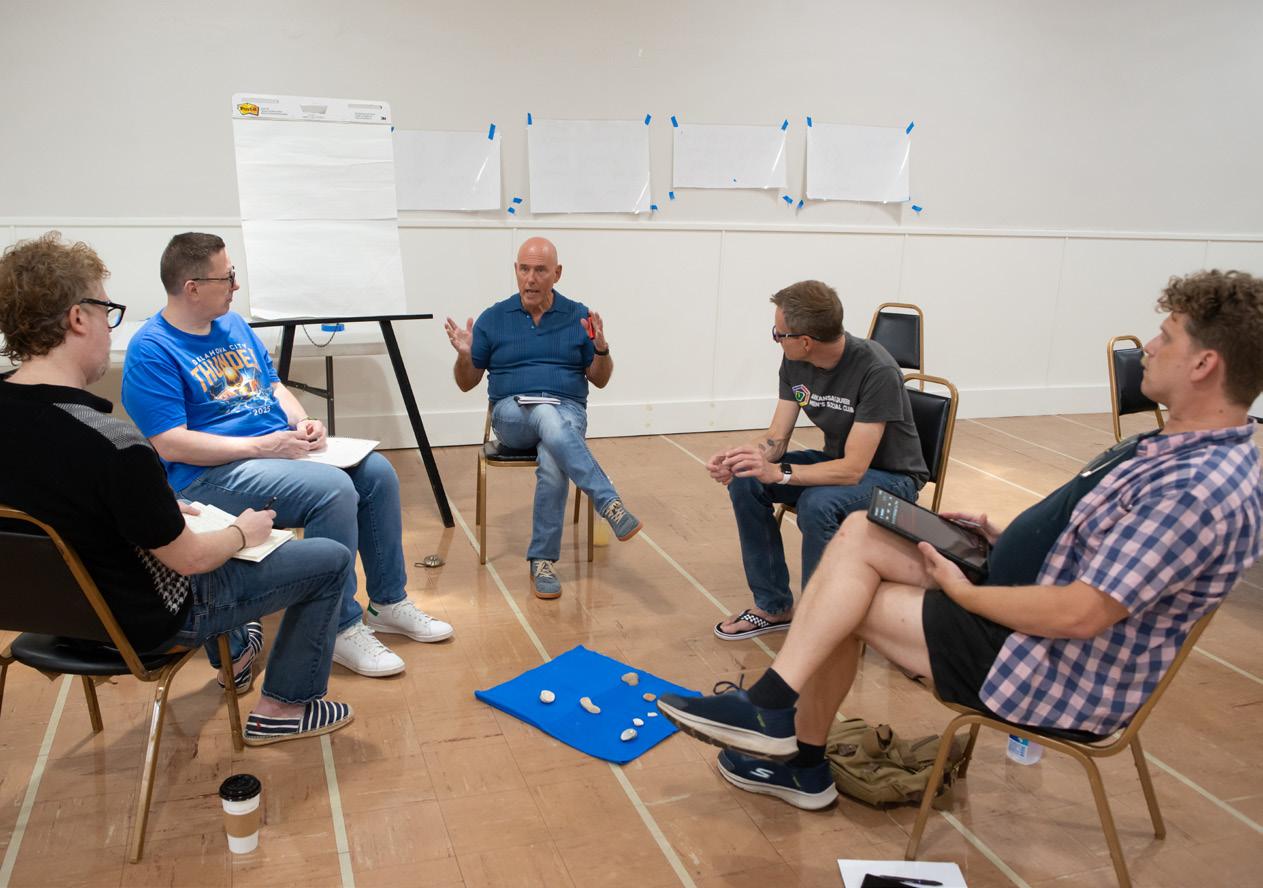
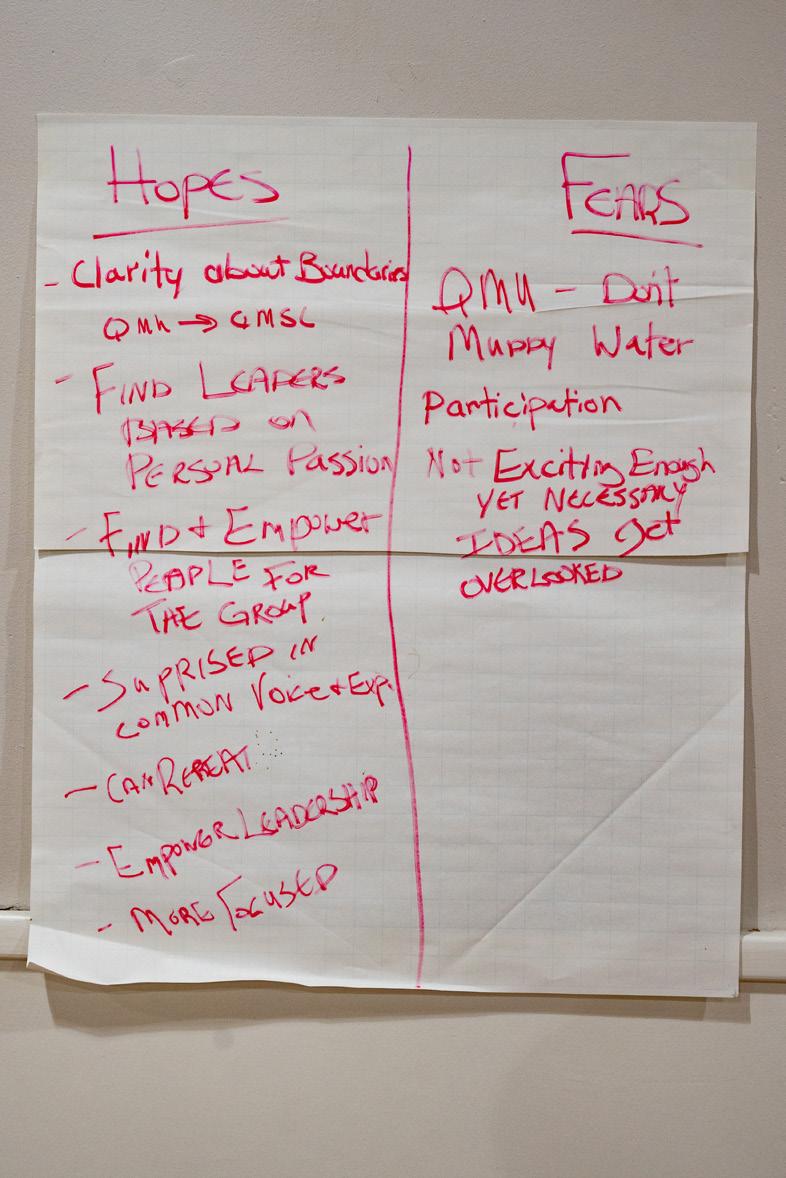
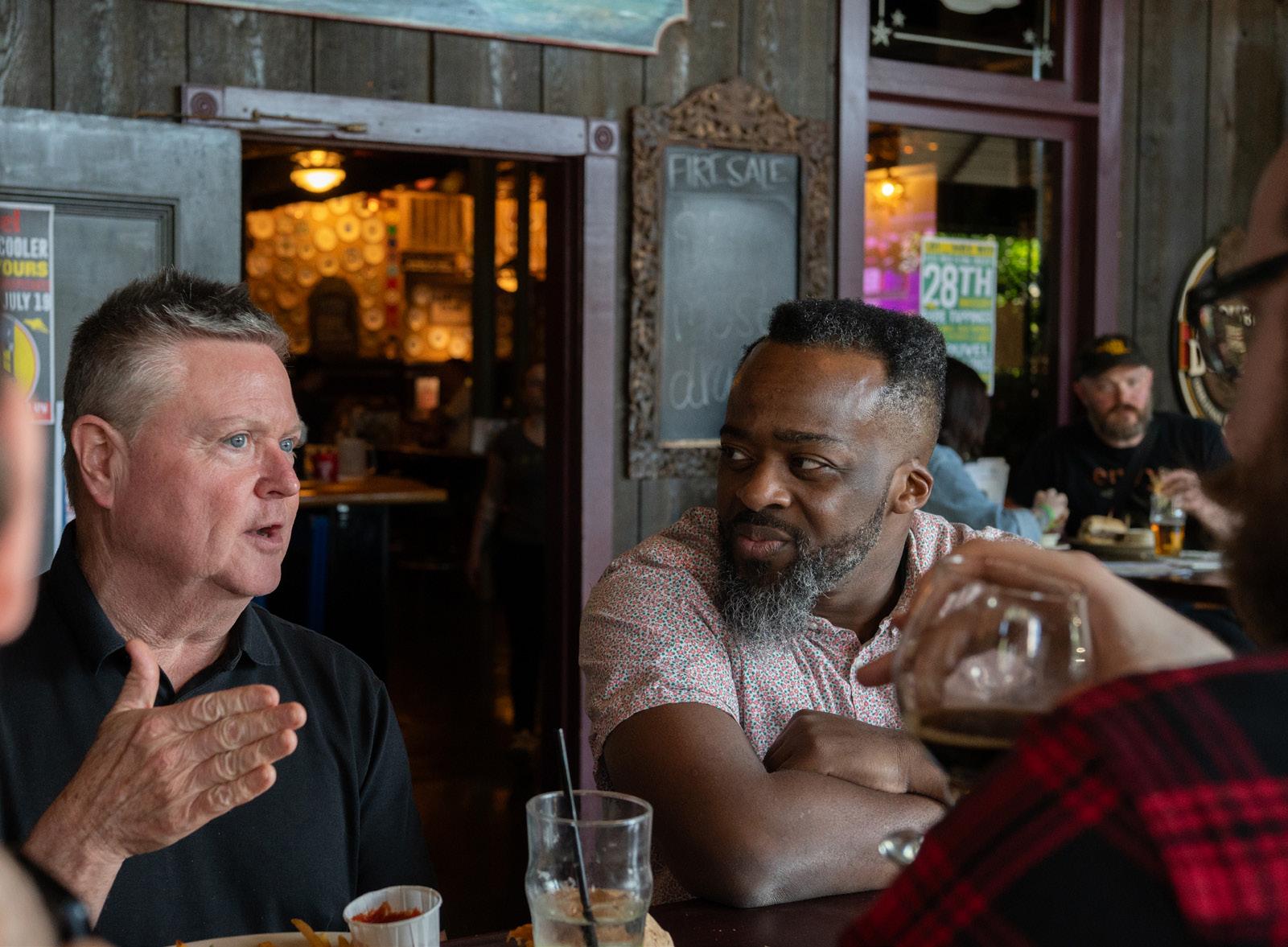
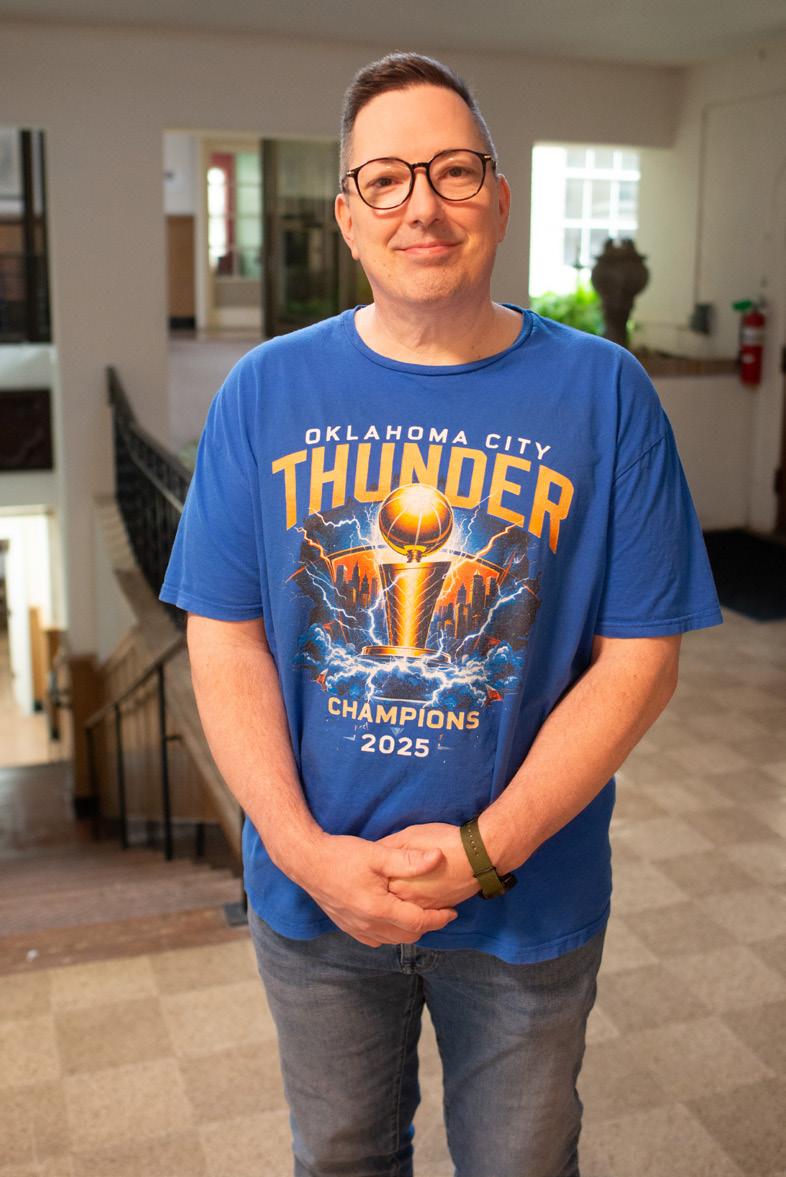
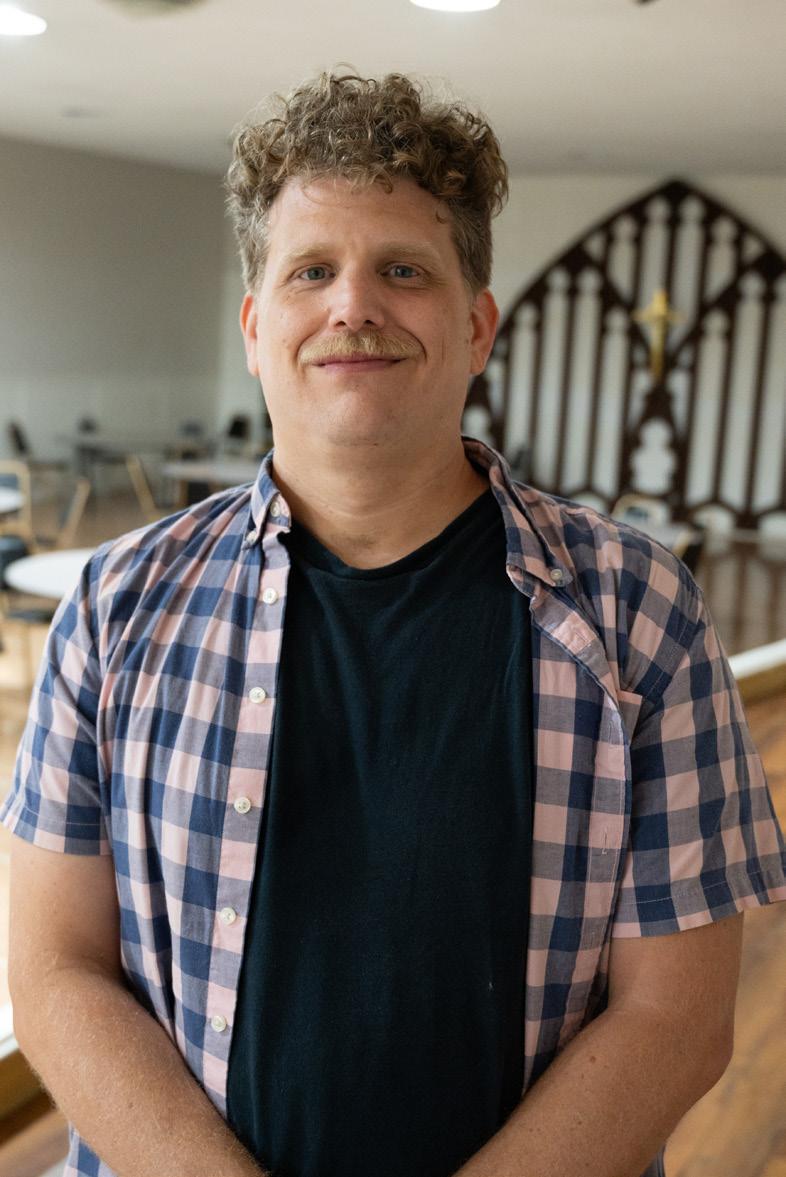
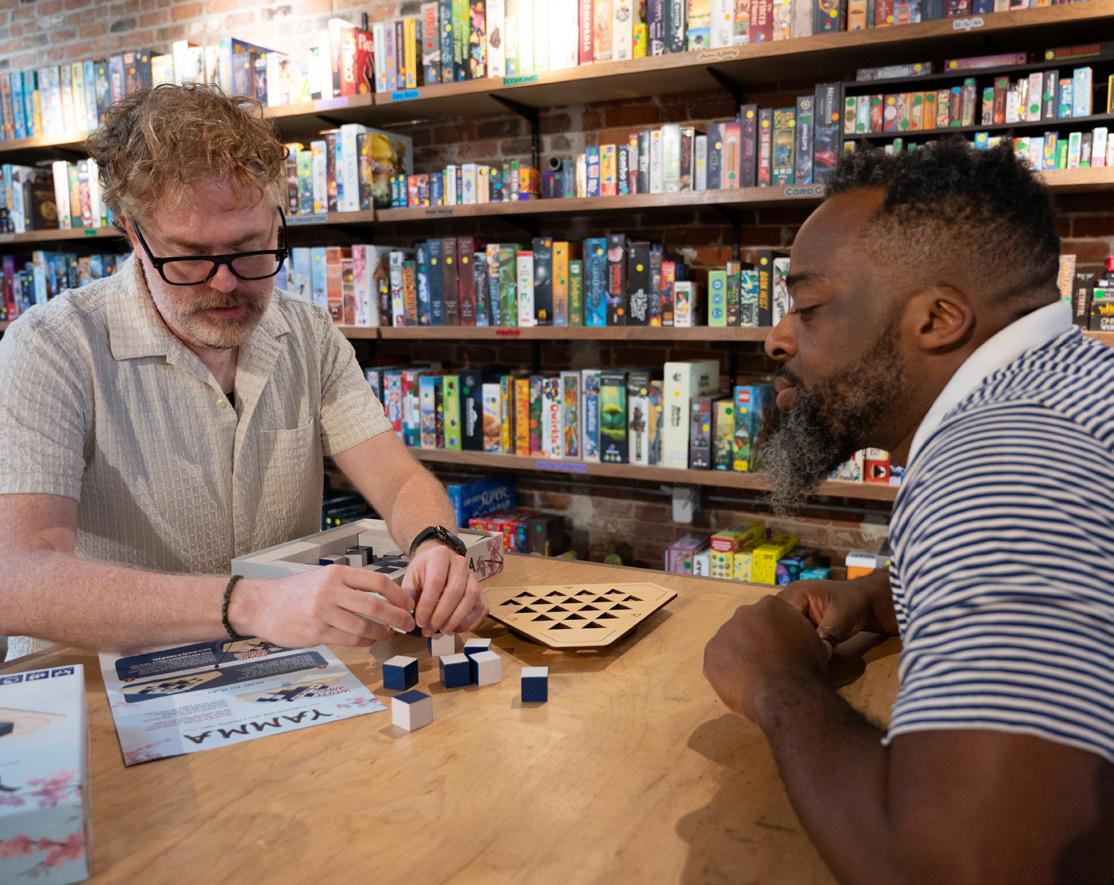
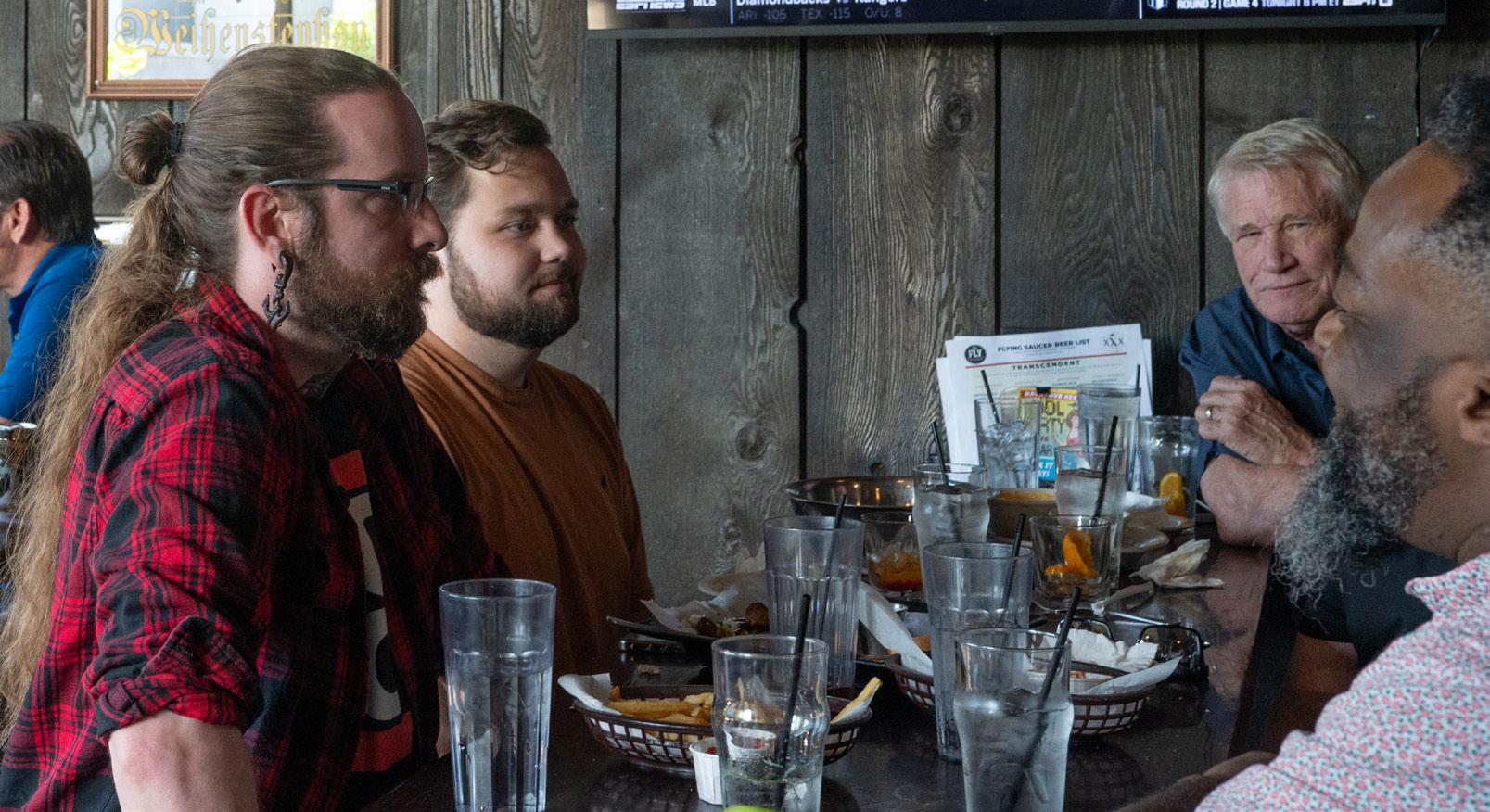
ABOUT TOWN: Counterclockwise from top left, a Queer Men’s Social Club board meeting at First Presbyterian Church; members Frederick McKindra and Daniel Spillers at Caverns & Forests Board Game Cafe; members Thomas Goss, Barrett Hunnicutt and Keith Lenz at Flying Saucer Draught Emporium.
latest guy doing this. You’re going to disappear on us.’”
Baker was right. Groups like the Arkansas Black Gay Men’s Forum were understandably reticent, having
the ability to do.”
Much of the group’s communication now takes place online, in a members-only Discord server.
“It’s a double-edged sword because there’s a learning curve with [Discord],” Whannel said. “We really don’t want to exclude the older people and the people that are not tech-centric. So we really try hard not to become so dependent on it ... to the exclusion of others. But I can say on Saturday morn-
spent years cultivating their community and retaining their space.
“Other groups were really frank from the get-go, saying, ‘You’ve got to bring us something to the table. You’ve got to keep coming to the table, or else we’re not going to waste our time interfacing with you,’” Whannel said. “And I’m like, ‘OK. We have a lot of IT people in our group.’ Groups have a hard time with websites. You know, we do web design. So it became like a ‘how can we plug in and inform service.’”
Whannel and the group developed an organization called Queer Men United, meant to be a behind-the-scenes team dedicated to building up digital scaffolding in Arkansas’s queer circles, and to connect their political power to like-minded organizations across the state. Queer Men United has partnered with the BGM Forum on volunteer opportunities and worked with Intransitive to keep their text messaging system online.
Whannel and Spillers also leaned into their shared IT backgrounds to build the Queer Men’s Social Club’s infrastructure.
“We really started off with the idea that we should be an offline group doing things in real life, because that’s where the connection forms,” Whannel said. “People can’t hide behind screens. … But we actually outgrew Blackberry Market, so people started putting together a text messaging list so we could all chat offline. Then somebody started a WhatsApp channel. That worked for a while, but we quickly realized there were some things we wanted to do beyond what it gave us
ing, ‘Hey, I’m going to go for a hike this afternoon. Who wants to come? And we’ll have half a dozen people go on a hike. That’s cool. And that’s something you can’t just do with an e-mail list or a Facebook group.”
Though the club doesn’t blush at members hooking up, Whannel is frank about the intention behind the group being beyond sexual desire. This poses one of the challenges particular to a social group for gay men — redirecting baser energies toward something more chaste.
“We have this goody two-shoes, Pollyanna feel that we’re very wholesome. But we’re a sexual people, and that’s not a bad thing. We should have a place to embrace that,” Whannel said. “But some people see there’s a social club and think that’s another name for sex club. People would come in and they had never been to an event. And they’re like, ‘Hey, who’s here that’s my type?’ And we’d have to shut that down and be like, ‘Listen, there’s a time and a place. But this is for friendship.’”
I was surprised to discover that the origin of the social club dates to Whannel’s early involvement with political organizing in Iowa, particularly his work to create a suicide prevention program in his teens. His intention behind the social club was less to create dates than to create the kind of group cohesion that could inspire political action.
“We’ve hosted more than 100 events now,” he said, “and every time we learn something. We’ve got our first really good shot at a grant this year for $15,000, which would give us some capacity-building. In 10 years’ time, my goal for this is that we would have a community center that operates every day, where you can just go, and maybe you’re a trans kid, maybe you’re a 50-year-old guy that just moved here. Maybe you just got out of a divorce. Whatever it is, you can go find
community.”
In the meantime, he lists last year’s Pride near the top of his experiences with the club because of the merging of the celebration with a No Kings protest.
“The last Pride was really perfect, especially where the No Kings march integrated with Pride. They were so smart about how they did that,” Whannel said. When organizers discovered they were planning simultaneous events, they decided to combine them rather than reschedule.
“I’m like, ‘That is brilliant,’” Whannel said. “So we’re right in the view of the Capitol and people are thinking politically because it’s right there. And then we have a political march come through it and lead up to the steps of the Capitol. I mean, I got chills. I was just like, ‘This is fucking amazing. This is what I wanted to see happen.’”
Yet another challenge for a gay men’s social club: retaining the group’s aspirations to create fun opportunities for members to socialize in the face of dire political realities that demand their attention and action.
“We are really focused on the social element. But in my mind, as we’ve spun off this parent organization, these are all building stones to a bigger goal,” Whannel said. “From what I understand, this state used to be blueish. I think it could be again, but that’s only going to happen if all of the groups come together and focus their power and build themselves up to be something that’s really unstoppable. Eventually, it should be to the point where it’s politically unwise for legislators to attack us and to write this legislation because they know that we have a power block.”
Members of the club come from very disparate circumstances.
There’s Pastor Victor (a pseudonym), in his 60s, a former Presbyterian minister who came out somewhat recently following two marriages. He’s not out to his family, nor to some people in his church, but has found in the club a way of growing in his own awareness of this newly claimed identity.
“I had a lot of friends and acquaintances in the straight world and in the church world, but they couldn’t really relate to what it was like to be gay,” he said, living life “very much unsure of what it meant to be who I was.”
Victor has found a sense of purpose in the group, helping the fledgling bunch get organized. “In the church, that was kind of my specialty,” he said. “If you wanted to discern a new mission or something, then I would come in and help churches do that.” Gay men
bring a wealth of professional capacity to an organization, and as with the mission of the IT-focused Queer Men United, the Queer Men’s Social Club tries to allow them to make use of these varied skills.
Victor has also found a use for his spiritual inclination among the assemblage, helping members who struggle to reconcile their faith with their sexual orientation.
“What I see among a lot of gay men who were raised in the South and were raised in
said. “I really didn’t go into this saying, ‘I’m looking to find a partner.’ I went into this saying, ‘I need to have more opportunities to be myself around other gay men.’”
The group also struggles sometimes with internal conflict, but tries to hold space for everyone, even those who might want to leave and eventually rejoin.
the church is that when they decided to be the person that God was calling them to be, their faith tradition told them they could not be that,” he said. “So I see a lot of gay men who are confused about what it means to have a spirit or be a spiritual being, and how do we nurture that in a way that is both affirming to who we are and honors our wounds.”
Another member, Leslie Campbell, 51, has been out since 1999. Born in Conway, Campbell has lived his whole life in Central Arkansas. The group has given him a way to socialize after a devastating breakup, a former lover having been convinced that an illness caused by a genetic disorder was a spiritual punishment by workers at a religious hospital from which he was receiving treatment.
“It took me like four or five years to even go out on another even casual date,” Campbell said. Carrying the pain of that rejection, along with an adolescence spent among a family that nearly sent him to a conversion therapy camp, Campbell said the social club has been a welcome relief: “I feel comfortable. And it has so far been very accommodating, welcoming.”
But what of the prospect of making a love connection through the Queer Men’s Social Club?
“We have definitely had a number of people meet each other through the group. It’s just kind of not the primary thing,” Spillers
“People have come and gone. Sometimes it’s because it’s not a right fit for them,” Spillers said. “There’s friction with any social organization. There’s going to be personalities and friction and valid feelings. Our whole thing is: If this is not a good fit for you, you are always welcome back. People have taken breaks.”
Whannel said, “One of the biggest reasons that we have to keep marketing ourselves and be always recruiting is because people come and they kind of come in cohorts or in waves, and they start to get to know each other. They form a friend group. And then they start to fall away as that friend group goes and does stuff. When that’s perfect, that’s what we want.”
Still, love in the club sometimes just happens, like for Wells and his boyfriend.
“We were quiet about the fact that we were seeing each other because we didn’t know how to handle it,” Wells said. “It’s not frowned upon or anything like that. But that’s the opposite of why most of the people that I had met were going … It is not the focal point.” Wells and his boyfriend met at one of the group’s events at a local kava bar. They began discussing cartoons, then Wells started talking about “X-Men” and “Storm.”
“I think that’s kind of where we first started to click,” his boyfriend said. “I was like, ‘OK, you know, this is something we have in common. That’s dope. I found out that he was a ‘Star Trek’ nerd and we just hit it off.”
And there you have it. A gay meet-cute between comic book nerds at a cafe in Central Arkansas, mundane and poetic enough to convince us there’s still hope for us all.

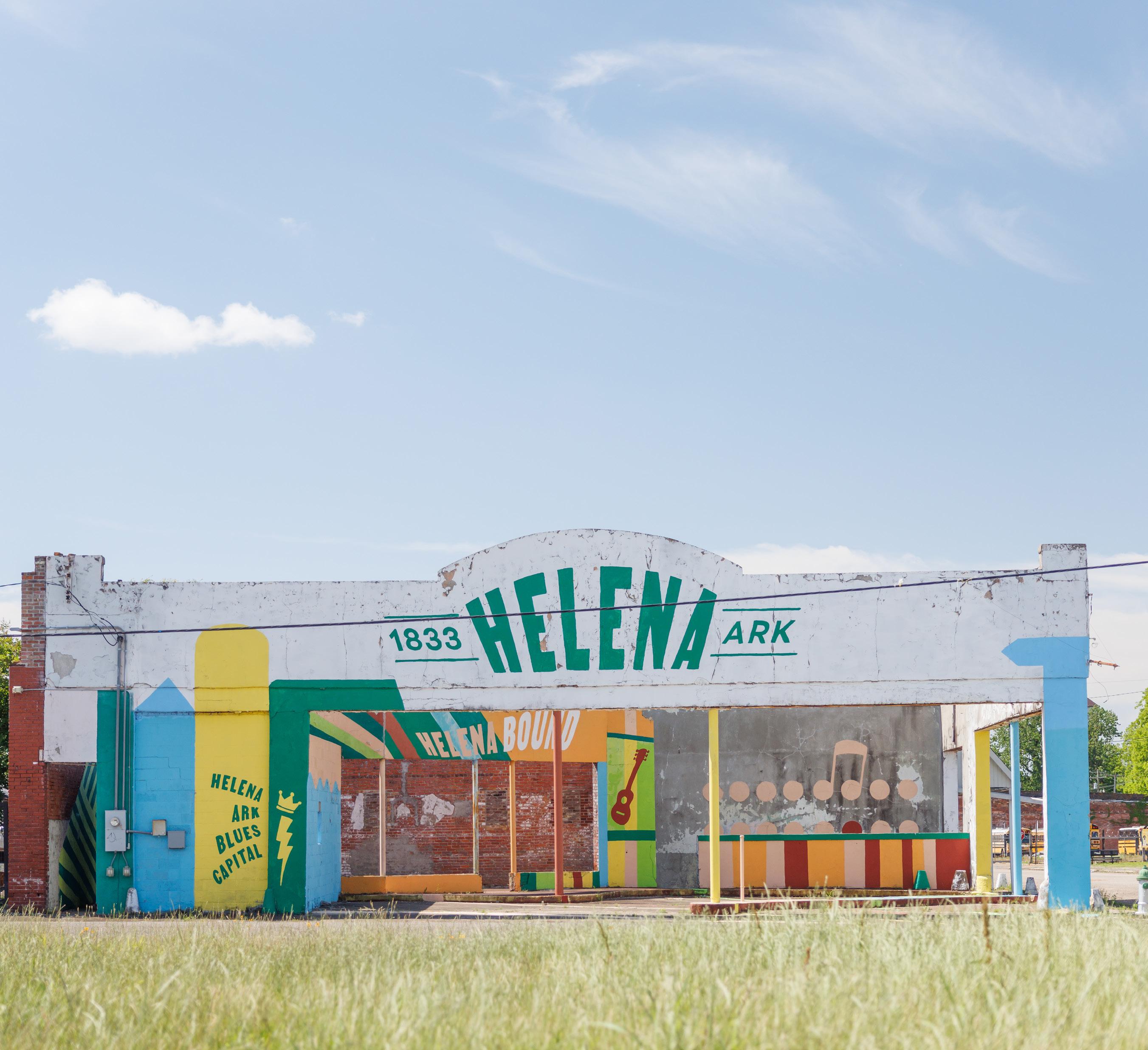
ECONOMIC DECLINE, POLITICAL INFIGHTING AND A SHRINKING POPULATION HAVE LONG PLAGUED HELENA-WEST HELENA. CAN AN ACCIDENTAL MAYOR DEFY HISTORY AND TURN IT ALL AROUND?
BY PHILLIP POWELL PHOTOGRAPHY BY SARA REEVES
a sunny Saturday in April, the young mayor of Helena-West Helena woke up early and rode his gravel bike down to historic Cherry Street to take on a 100-mile, all-day bike ride with other eager fitness enthusiasts. The challenge, part of a campaign to rebrand the Arkansas Delta as an outdoor destination, attracted hundreds to run, bike, kayak and birdwatch. But few of Mayor Joseph Whitfield’s 8,500 or so citizens in the once-thriving town seemed as interested in participating for 1 or 2 miles, let alone the day-long trip he was taking on.
“I’m not the golden boy riding in on the white horse about to turn everything around; I don’t view myself that way. I just want to do the right thing. I am not the white mayor, nor the Black mayor,” said Whitfield, who is Black. “I’m not the Republican mayor and I’m not the Democratic mayor. I’m the mayor for the whole city of Helena-West Helena. Every corner of this city is important and every issue a citizen has is relevant. And that needs to be reflected through policy and city services.”
Whitfield, 33, embraces promoting his hometown to the outside world as part of the role. But he just as easily could’ve needed a break from the chaos he has been plunged into. While young and ambitious, Whitfield is mayor by accident; he wasn’t chosen in an election, but rather by Gov. Sarah Huckabee Sanders, who appointed him to office in October 2025, upon the previous mayor’s ouster by a Phillips County circuit judge. Whitfield says he never wanted or expected to be mayor.
“All I knew is that I wanted to do something that was impactful for others, and I wanted to be in a field or industry that allowed me to make other people’s lives better. That was the one thing I had boundless energy for. At Colby College, I was class president for all four years, and all my peers were telling me I would have a career in politics,” Whitfield said. “So when the governor reached out to me, you can imagine the excitement. But I never had that itch to get into politics.”
Whitfield seemingly possesses the fortitude, education and vision to turn a dying town around. But now his talents are running up against the messy reality of turning around a local government in crisis, a town in economic decline and a dispirited population that
sometimes struggles to move forward. Even as Whitfield takes on the challenge, questions remain as to whether the citizens of Helena-West Helena will show up for him and choose his vision.
Whitfield’s predecessor, Christopher “Foe Foe” Franklin, won an extremely close election in 2022 over incumbent Kevin Smith, and then was indicted on tax evasion charges in June 2025. A circuit court judge removed him from office by citing a little-known law giving the court the power to remove local officials for “nonfeasance of duties.” Franklin has appealed the decision to the Arkansas Supreme Court. Regardless of how the appeal plays out, Franklin’s short tenure as mayor and the myriad crises and dysfunction he governed over from January 2023 until his removal left behind a town in tatters.
In recent years, Helena-West Helena’s aging water system left thousands without running water for weeks, requiring the National Guard to come to the rescue with a tanker truck of potable water. The water crisis, ongoing population decline and Franklin’s personal conduct made all the kinds of headlines no city wants.
Today, downtown is a collection of once-bustling stores and hotels reduced to crumbling buildings and pavement, much of it painted over with murals and graffiti. According to U.S. census data, the then-separate towns of Helena and West Helena had a combined population hovering around 20,000 from the late 1950s to the late 1970s. The 1990 census was the first to record a precipitous drop, and the decline hasn’t stopped since. Phillips County went from the 11th most populous county in the state in 1970 to the 45th most populous by 2020.
Phillips County’s poverty rate sits at around 35%, roughly three times the national average. According to the Arkansas Center for Health Improvement, Phillips County has some of the worst health outcomes in the state in everything from premature death to lack of access to nutritious food.
As is the case with many Delta towns, Helena-West Helena has a deep and troubled history of racial injustice, economic oppression and segregation, whose traumatic legacy lives on. In recent decades, people
HANDBASKET: Helena-West Helena holds a special place in Arkansas history, but the Delta town’s recent years have been marked by political turmoil and economic depression.
with the resources to leave the town did so. Today, Helena-West Helena is 75% Black. In the early 2000s, that figure was 65%.
The exodus of residents with the means and opportunity has been part of Helena-West Helena’s story for decades. David Solomon Jr., is a white man who grew up as part of a small but thriving Reform Jewish community in Helena during the years of segregation, but he left at a young age and made a career in information technology in New York City. His father, David Solomon Sr., was an attorney and businessman, and upon his death
in 2017, was the last member of the historic Jewish community left in the town.
“Helena has always had a thin upper class of mostly planters. And the heirs to these businesses, like me, didn’t live in Helena. They owned the land and lived somewhere else,” Solomon said. “I don’t know exactly when it all started falling apart, but it did. My two brothers and I were raised to get the hell out of Helena.” Solomon frequently returned from New York to visit his parents. He watched more shops close and houses be abandoned year after year.
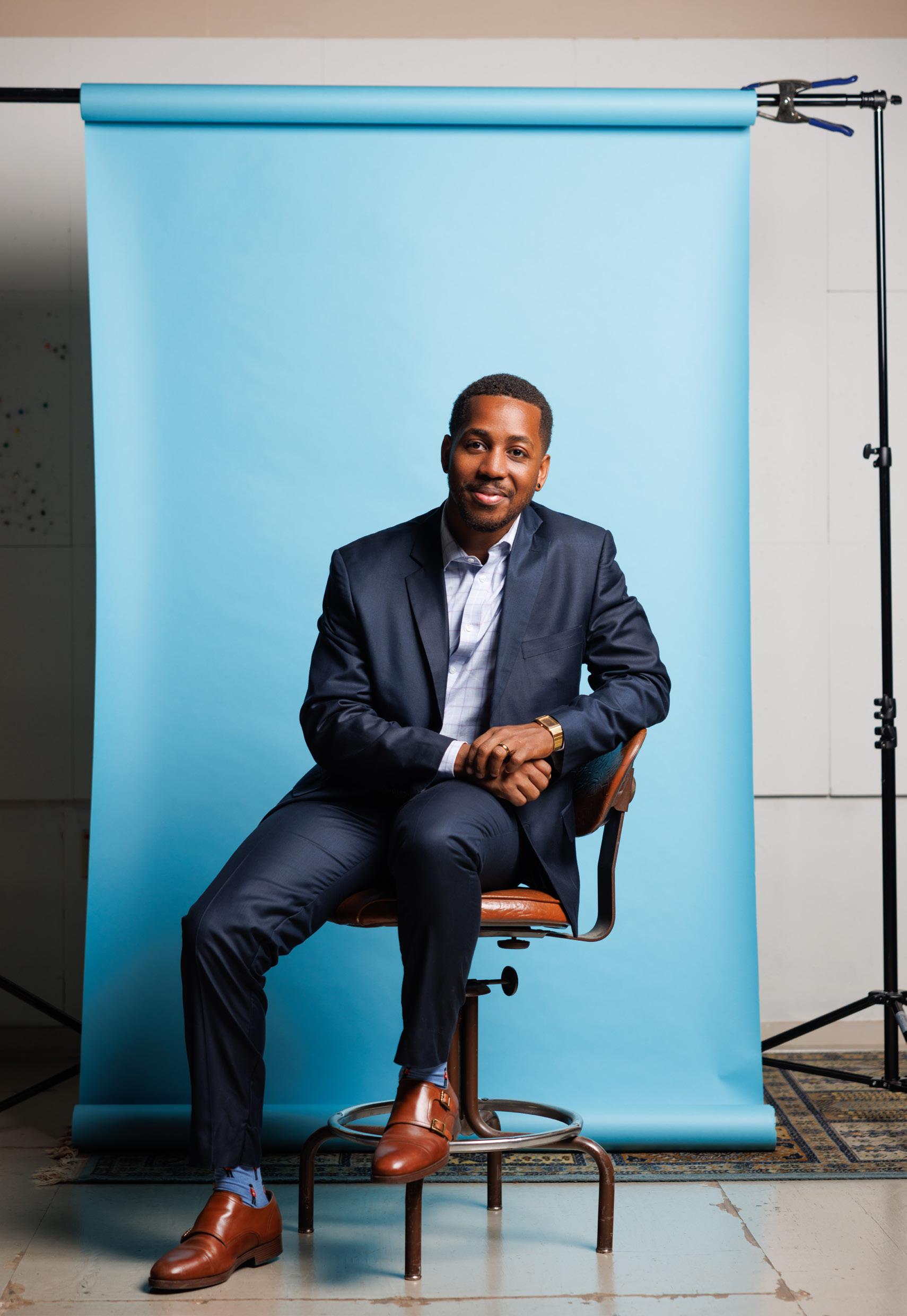
ACCIDENTAL MAYOR: Appointed by Gov. Sarah Huckabee Sanders in October 2025 after the former mayor was ousted, Joseph Whitfield never planned on being Helena-West Helena’s leader. Still, many onlookers believe he can lead the town forward with integrity and vision.
John Edwards, a former state representative and state director of Rural Development for the U.S. Department of Agriculture under President Clinton, has been working as the economic development director for the Helena Harbor for years. He pins the modern decline of Phillips County to the 1970s, when Mohawk Tire Co. closed its doors and unemployment surged. Around the same time, machinery took the place of human labor in row crop farming. Data from the U.S. Department of Agriculture shows farms have shed hundreds of jobs since the late 1970s. Growing unemployment eroded the tax base, compromising leaders’ abilities to provide basic city services.
To counteract that, Edwards has made it his mission to attract employers, investment and industry to the town, with mixed success. According to data from the Arkansas Economic Development Commission, the town only has two large private employers — one of which is the Walmart Supercenter. Other major employers are all educational institutions. No private industry savior has emerged yet.
“There are no silver bullets; it will take a lot of components to pull a successful economy and community around. It’s not just any one thing,” Edwards said. “Helena is like many other places you look at. There are friction points here and there, but we have an opportunity now. Today, with our new mayor leading the city, we have an opportunity that I have not seen in a number of years with this new leadership to make some good things happen.”
Kevin Smith, who served as mayor of Helena-West Helena from 2019 to 2023 and now leads charter school system KIPP Delta Public Schools, is excited about Whitfield’s potential.
“Whitfield hasn’t been there long, but he has set a positive tone for the future, and he’s a generational change, and that is desperately what we need. We need younger people and people with good educations, and both Joseph and [chief of staff] Kevin [Martin-Arnold] have that. They are excellent role models for other young people,” Smith said. “They are here and doing it for the right reasons, and people know that. From a leadership point of view, he can be the biggest
“[MAYOR] WHITFIELD HASN’T BEEN THERE LONG, BUT HE HAS SET A POSITIVE TONE FOR THE FUTURE, AND HE’S A GENERATIONAL CHANGE, AND THAT IS DESPERATELY WHAT WE NEED. WE NEED YOUNGER PEOPLE AND PEOPLE WITH GOOD EDUCATIONS, AND BOTH JOSEPH AND [CHIEF OF STAFF] KEVIN [MARTIN-ARNOLD] HAVE THAT.” — FORMER MAYOR KEVIN SMITH
solution to our problems. Whitfield’s vision, example and energy are absolutely exciting.”
A teacher by trade, Whitfield attended Colby College in Maine and returned to Helena-West Helena to teach in the KIPP Delta Public Schools, where he graduated in 2011. He left again for New York City to get a master’s degree and teach in New York schools before returning home.
Even as Whitfield and his allies push a narrative of a positive change, messy political squabbling remains entrenched. Some longtime influential city councilors are increasingly critical of his handling of the immediate political and governance crisis he inherited from Franklin. Two scions of local political families, including one sitting city councilor, Maxine Miller, are openly considering challenging Whitfield with their own mayoral runs, and of course, Franklin himself could always make a comeback bid.
Whitfield wants to remain in the mayor’s office, and he is testing the waters with his residents to see if he’s a placeholder or a long-term fixture in Helena-West Helena’s volatile politics.
“I will be running, and I’m starting to snap into campaign mode. The day-to-day is tedious, but I’ve spoken about it with my wife. I understand what is at stake,” Whitfield said. “We want to make sure people understand what it will take to get this done. I’ve learned a lot in seven months, and I’m not the only person in the world that can do this job.”
Regardless of how many candidates jump in and the ultimate outcome of the election, Helena-West Helena seems to be running out of chances to begin its long-awaited turnaround. The town has been at a similar inflection point before. Twenty years ago, in the midst of the legal and political fight to consolidate the declining towns of Helena and West Helena, another young, inspiring mayor declared he would lead a great turnaround. It didn’t work out then. Will it work this time?
Helena-West Helena’s new guard includes two of Whitfield’s good friends, who also took their own paths away from Helena-West Helena before circling back just as the town seemed to need leadership most. They’re
Whitfield’s handpicked chief of staff, Kevin Martin-Arnold, 28, and Drew Smith, 36, scion of a prominent Helena political family and member of the school board.
The three men don’t agree on everything, politically or otherwise, but their camaraderie is undeniable, and they share the experience of leaving home to return and teach in KIPP Delta Public Schools. And they do agree that a new generation of leadership is needed to get the town into shape. That work started with Delta Magic, an organization Smith founded with the town’s most successful recent entrepreneur, Delta Dirt Distillery owner Harvey Williams, and one in which Martin-Arnold and Whitfield quickly became involved. Delta Magic aims to build community and reach the younger generation to instill a genuine love of their town’s unique culture and character.
Like the younger men, Williams, 57, has generational roots in the community, but he worked in corporate America for years before returning to Phillips County with his family to turn his father’s vegetable farm into a successful vodka company.
“Whether it is this community or any community, the leadership matters,” Williams said. “I’m a Whitfield fan, and he has the potential to lead this city in this moment and beyond. The small wins he is racking up, those wins will build up to big wins, and he can continue with that momentum. People just need to see the small wins and the community will see that it is different, positive and can help us.”
The three are not the first ambitious young teachers to try to make a positive impact. In the 2010s, a legion of young educators with the national service program Teach for America flooded into Helena with the mission of leaving lasting change in the town’s ailing schools. Whitfield and Martin-Arnold benefited from those teachers and later became them, but like Smith, they consistently received the message that because they were smart, they should leave for greener pastures. Some of those teachers include Chintan Desai, who ran against Rick Crawford for Congress, and Doug Friedlander, who ran the city’s chamber of commerce years ago. The New York Times even wrote a profile about
how they were changing the culture of the town.
Doug Bielemeier was one of many young, talented teachers showing up at little struggling schools in the Delta from faraway lands (in his case, Oregon), and years later, he’s one of the only ones who has stayed. He said he understood why so many of the Teach for America teachers left to start families or pursue opportunities elsewhere, but he stayed because he fell in love with the community. Bielemeier now teaches at the Phillips County Community College.
The constant cycle of young Teach for America hires coming in and out of students’ lives and encouraging them to achieve their potential elsewhere left a complicated legacy.
“I felt like KIPP was rooted in assimilation and this idea of us, the students, shedding the culture of Helena to put on a mask of what we should be in educational and professional spaces,” Martin-Arnold said. “And a lot of it made people internalize that there was something wrong with where we were from. And that to be successful, we needed to get out of here, just get the education and go. We would often be punished for things they perceived as anti-professional, but we were Black, though, and just being Black, and we should have been able to show up as ourselves.”
Will Staley, a graphic artist from Little Rock who is the rare true Helena-West Helena transplant, having landed there after graduate school at the Pratt Institute of Design in New York City, said he was happy to see Whitfield, Martin-Arnold and other young people stepping up to lead. Staley has been doing social entrepreneurship and community-building projects in Helena-West Helena for years, culminating in a community splash pad he helped develop downtown.
“Drew and Joseph are just bringing that 30-something energy that I once had, and it’s pretty cool,” Staley said. “These things work in cycles and I feel like I’m lucky to see a new cycle of leaders. What is different now is that this younger group is from here, they have people here, and they have roots. Because Joseph and Drew are from here, people really care about that. Joseph is from here and he has charisma and he is smart, and it seems basic, but he casts a vision for the future.

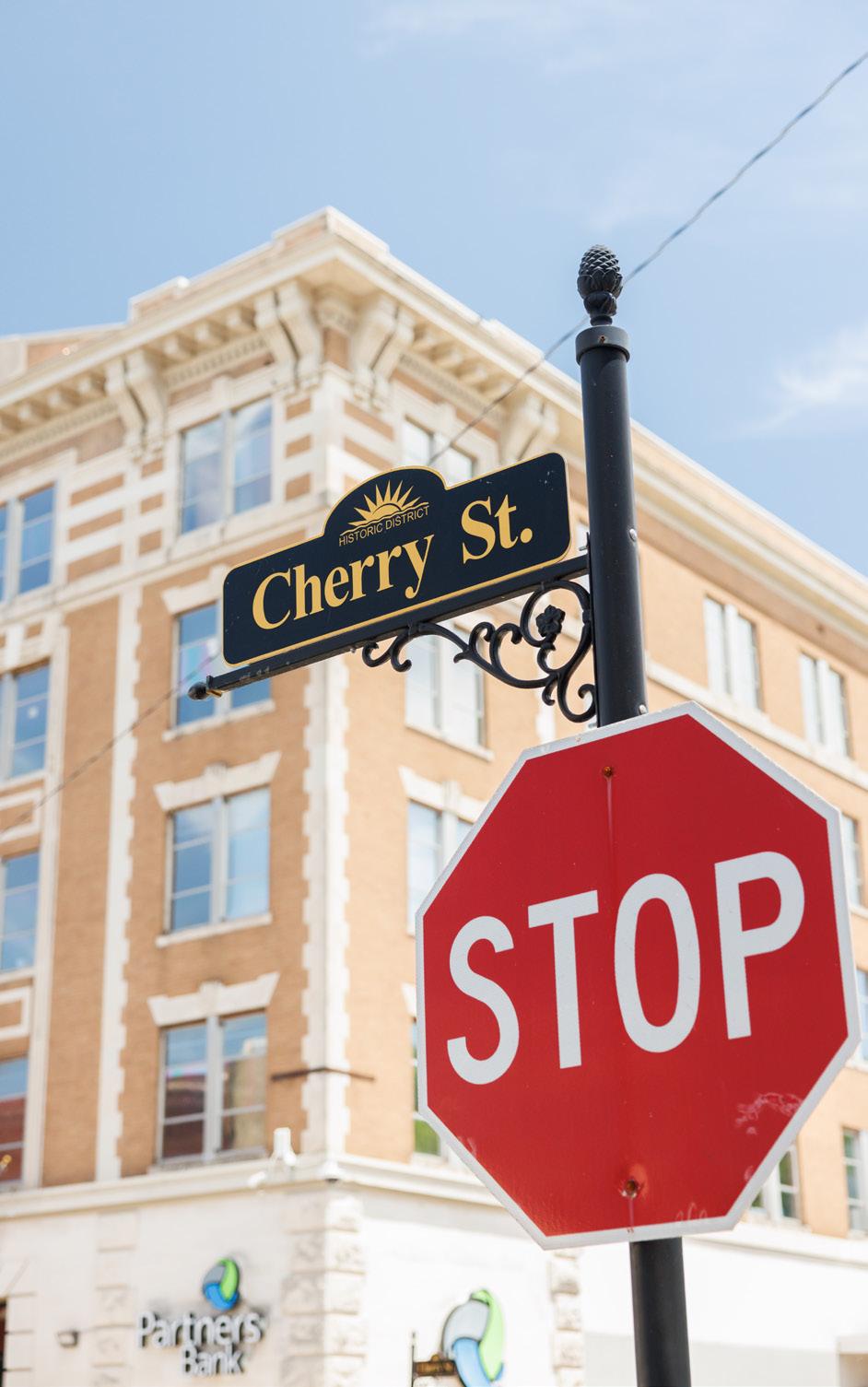
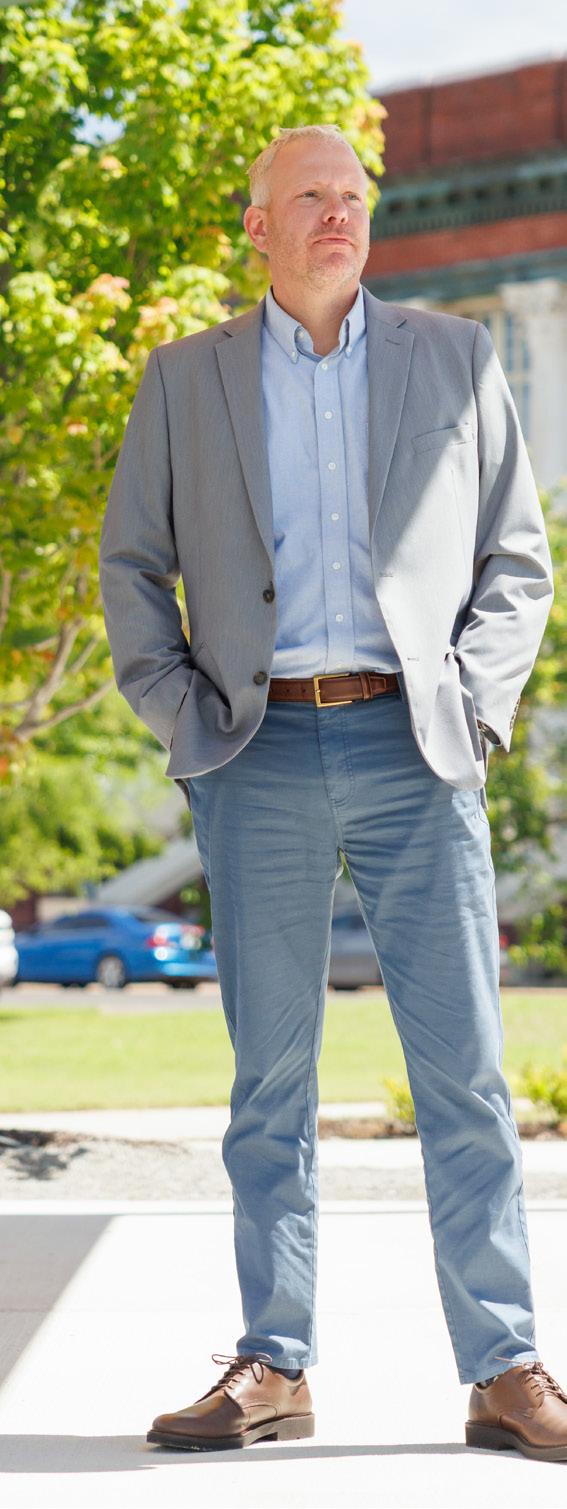
TEAMWORK: Kevin Martin-Arnold (left), Will Staley (middle) and Drew Smith (right) are some of Joseph Whitfield's most important allies as the young mayor tries to get a handle on moving Helena-West Helena out of crisis and toward a path of prosperity.
There is a spirit in this moment to get it right because we are working on borrowed time. We don’t have time to fool around.”
Other Black social entrepreneurs, such as Patricia Ashanti and Kyeshia Ward-Jordan, are also running projects aimed at entrepreneurial support (Ashanti) and improving health outcomes (Ward-Jordan). Much of the social development work in the community is bankrolled by the Walton Family Foundation, which includes the Arkansas-Mississippi Delta in its definition of its home region.
The foundation has poured millions into projects in Phillips County and Helena-West Helena over the past few years, supporting everything from KIPP Delta, the King Biscuit Blues Festival, grants to the city and county, and grants to Thrive Inc. and Delta Magic. Despite the investment, Helena-West Helena hasn’t managed its turnaround. Now the Walton Family Foundation wants to take a new tack in the Delta, rolling out a fresh strategy for how they will invest in the home region in 2026.
With new strategies and investment pledged to the Delta, and Whitfield and his allies taking a more prominent role in leading the city functions, one can almost believe
his and his allies’ optimism for the future is well-founded. The men are up against history, though, and a culture where politics has often come before public service.
Years before the fall of Christopher Franklin and Joseph Whitfield’s ascendence, another young Black mayor was supposed to shape the newly formed Helena-West Helena into a mecca of the Delta. James Valley was that young mayor. In his late 30s, Valley led the campaign to consolidate Helena and West Helena in 2005 and then was elected to office after receiving support from white and Black residents for his platform of racial unity, municipal reform and “moving forward together.”
In 2007, Arkansas Times reporter Warwick Sabin traveled to Helena and wrote that Valley was leading a “Delta resurgence.” Andrew Bagley, a young teacher who served on the Phillips County Quorum Court at the time, told Sabin “... James could end up being the guy that goes down in the history books as the one who turned this around.”
Twenty years later, Helena-West Helena is in a worse spot than before, and Bagley is eat-
ing his words.
“Helena has a knack of getting in its own way. We will get things headed in the right direction in the schools or city and have some opportunities, and then we go to the ballot box and blow things up,” Bagley said. “Go back 21 years, where there was a lot of optimism for James Valley, he was on the cover of the Arkansas Times, and folks at the time would describe James, me, Don Etherly and others as the new generation the torch was passed to. And then on the night of the first council meeting, they started fighting about salaries in a short meeting to pass a budget. It was a lengthy, testy, thorny council meeting that set the tone for the years ahead. We missed our opportunity there to bring folks together.”
Today, Bagley publishes The Helena World and teaches at Phillips County Community College.
“There was optimism everywhere, but we missed the opportunity there to do some great things. Could some of the younger guys like me and James have done some things differently? Probably so, in hindsight,” Bagley said. “And I think that is a cautionary tale for the young guys coming up now. Maybe
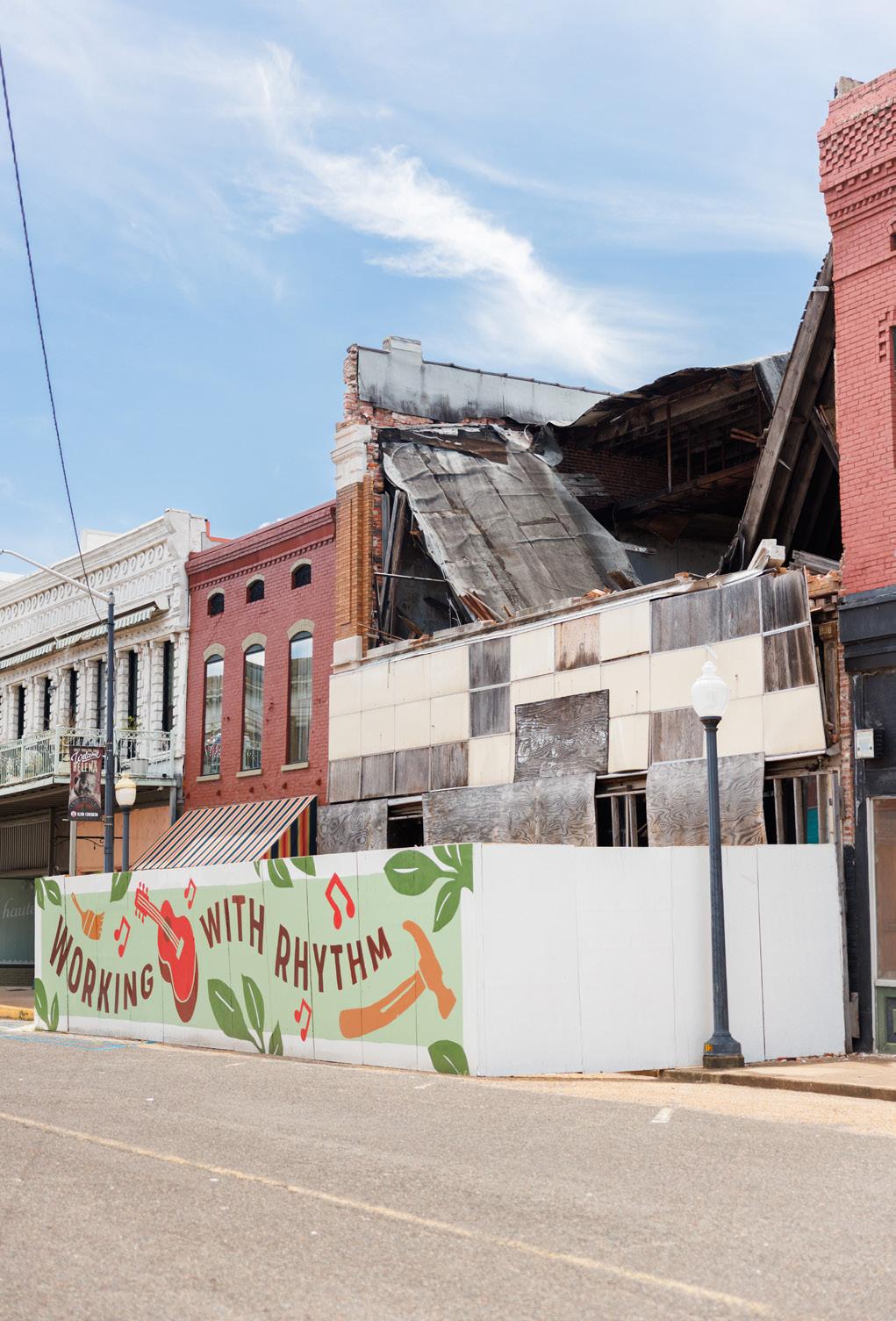
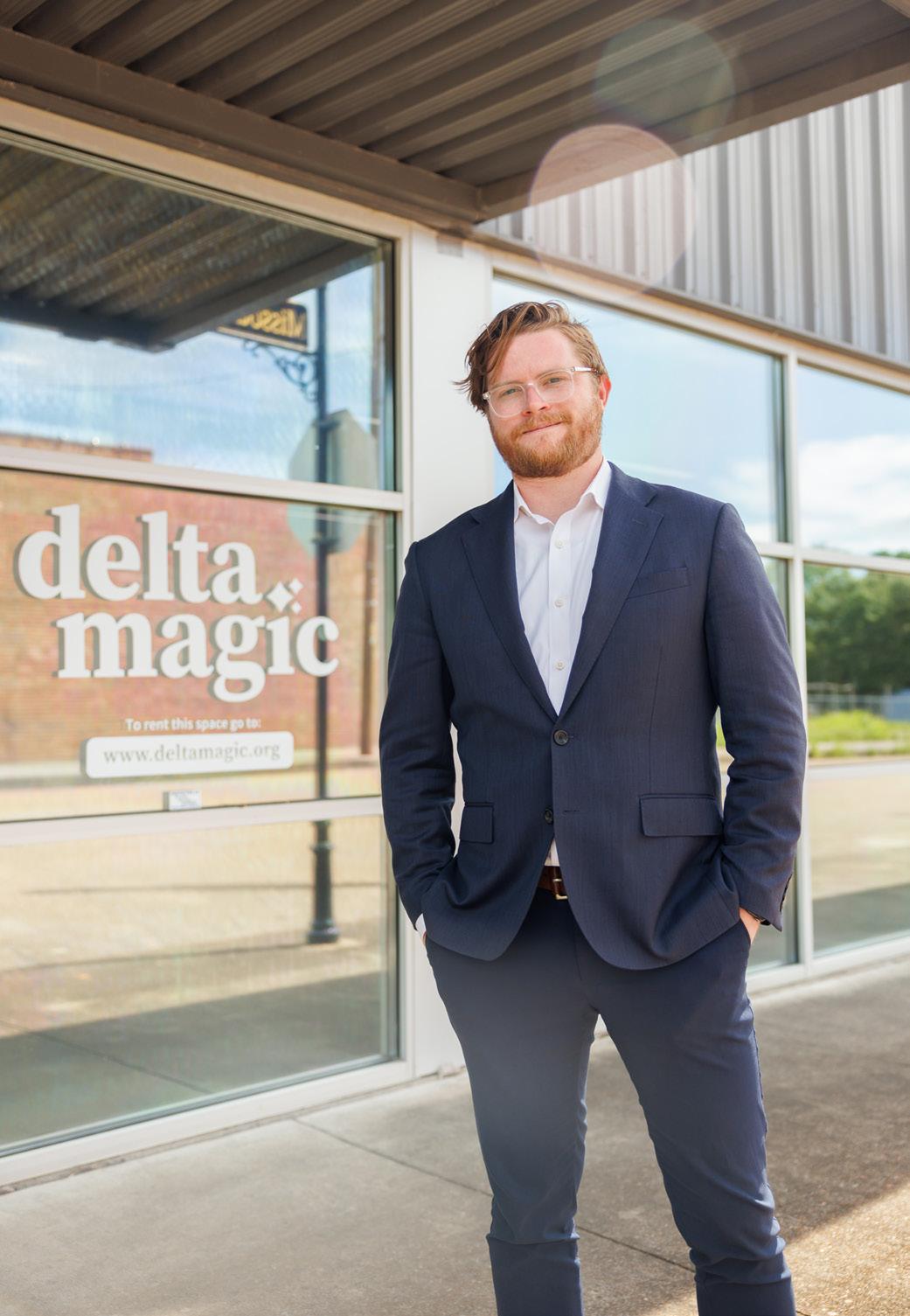
we were a bit too eager to take the torch, and didn’t listen to the older guys enough.”
Valley lost his reelection bid in 2010, and one-term mayor after one-term mayor followed, running on a platform of changing what they alleged the previous mayor was getting wrong.
According to Bagley, during the last decade the City Council has always turned on the mayor, and so have the voters. The constant battles at council meetings have often prevented elected officials from getting on the same page about what the future of the town would look like. Things rarely got so acrimonious and the divide between officials so stark as the four years when Kevin Smith was mayor and Christopher Franklin was his main opponent on the City Council.
“We have always had factions, whether they were in charge at the time or not, who have worked against the best interest of the town,” former Mayor Smith said. “The problem is declining resources, and some of the factions, which have shifted over time, are always fighting over scraps and accessing resources using politics.”
From the start of Smith’s mayoral tenure in January 2019, Franklin made every coun-
cil meeting a war zone, with headlines like “Franklin and Smith Face-Off at Council Meeting” and “Franklin lashes out at Mayor again” becoming commonplace in The Helena World, and occasionally, the Arkansas Democrat-Gazette. At one low point in 2021, Franklin and Smith got into a verbal altercation in Franklin’s neighborhood, and Franklin was charged with harassing the mayor.
Smith’s term in office, from 2019 to 2023, was defined by his push to consolidate and invest in public services versus some City Council members’ lobbying for pay raises and bonuses for themselves and city employees. In Smith’s last two years as mayor, 20212022, the council reappropriated $800,000 in federal water funding to give them all $5,000 bonuses along with bonuses for city workers and then sued Smith to ensure the bonuses went to elected officials. The City Council also voted to increase the pay of several other elected officials.
“The council was against me for four years, I didn’t have four solid votes for my whole tenure,” Smith said. “And if I didn’t have the votes, I got tired of beating my head up against the door. I wanted to get as much done for the city as I could, with or without
the council, and I was trying my best but they were playing politics. City Hall was not for me when I ran for mayor.”
After Smith lost the runoff election to Franklin on Dec. 6, 2022, the council rejected Smith’s proposal to repair a second well in West Helena that was needed as a backup in case the only operating well on that side of town went down. They also approved raises for Franklin and his yet-to-be-announced chief of staff, former Mayor James Valley, who supported Franklin over Smith in the runoff. They also created a new position in the mayor’s office that an outgoing city councilmember, Ever Jean Ford, would be chosen to fill. Franklin inherited a positive general fund balance of about $450,000, according to the Arkansas Legislative Audit. After his first year, there was a deficit of around $170,000. Over Franklin’s subsequent year and a half in office, the town’s debt ballooned to over $4 million, including roughly $600,000 in payroll tax debt owed to the state and feds. While debt accumulated, Franklin approved, without going through City Council conflict of interest approval, thousands of dollars worth of landscaping contracts to a mowing business he used to own, a business that had con-
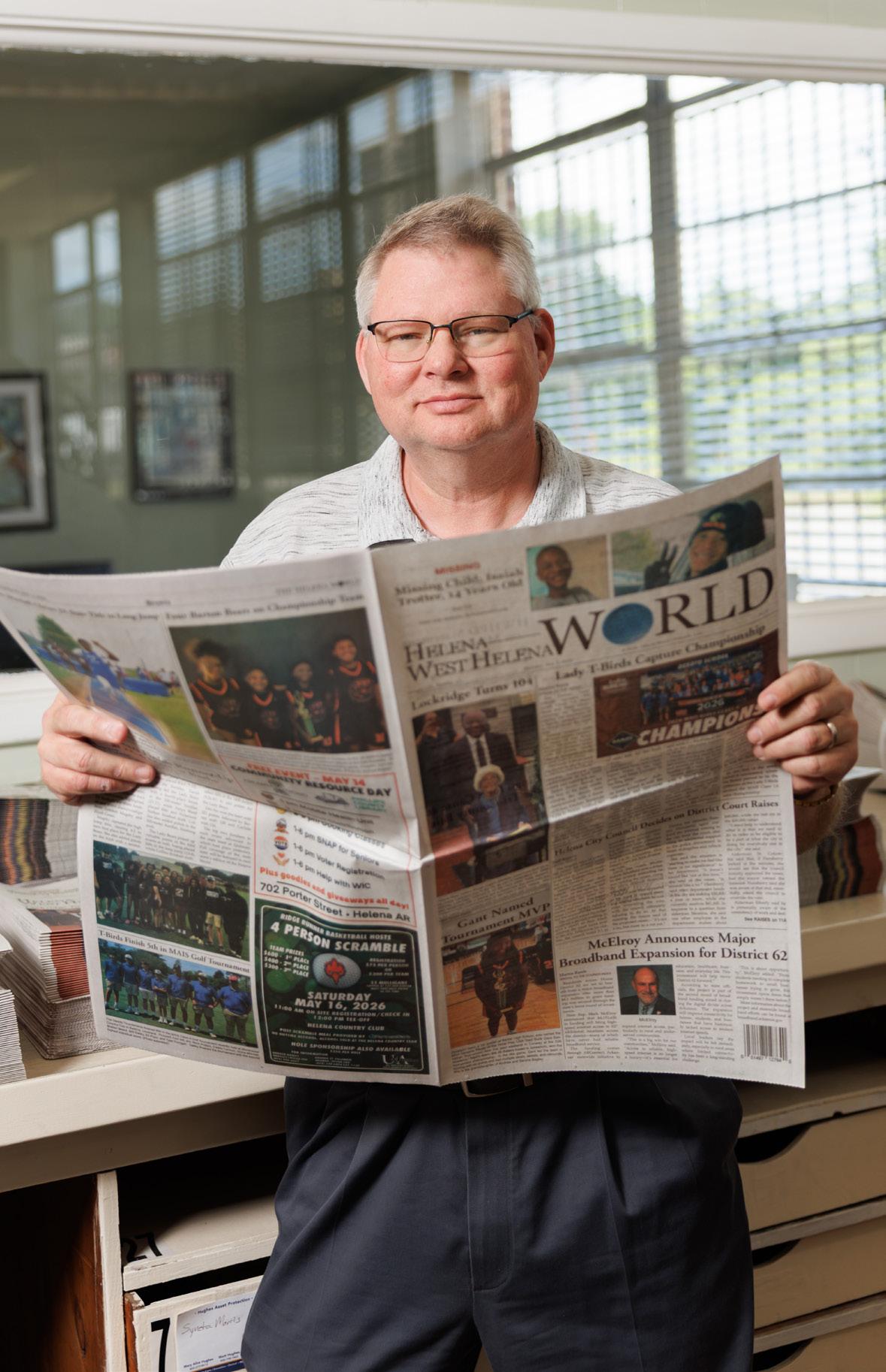
“IF YOU GET ELECTED MAYOR OF HELENA, YOU ARE LIKE THE DOG WHO CAUGHT THE CAR. THE CITY IS BROKEN. THEY HAVE TOTAL DEBTS OF OVER $4 MILLION, AND THEY DON’T EVEN REALLY KNOW HOW MUCH THEY DON’T HAVE BECAUSE THE NUMBER KEEPS MOVING.”
— ANDREW BAGLEY, PUBLISHER OF THE HELENA WORLD
nections with a former councilmember.
Attempts to reach Franklin for this story were unsuccessful.
The water system in West Helena failed twice in 2023 and there wasn’t enough money in city coffers to fix it.
“If you get elected mayor of Helena, you are like the dog who caught the car. The city is broken. They have total debts of over $4 million, and they don’t even really know how much they don’t have because the number keeps moving,” Bagley said. “And we don’t have tens of millions of dollars for needs, except the money for water and sewer, and that is still insufficient to meet our needs.”
As an appointee with no mandate from voters like Valley had in 2006, Whitfield is taking his case to the people well before the November election and trying to build support for his vision. Some council members are not on his bandwagon.
Longtime councilmember Don Etherly, who served as interim mayor of the town between Franklin’s ouster in July 2025 and Whitfield’s appointment in October 2025, said Whitfield is “too green” and not focused on the pressing issues of the town’s financial crisis and aging, leaky water system.
And Maxine Miller, 63, who is Black, described her own aspirations for the mayor’s seat. She joined the council in 2023 along with her brother Kyle Miller as an opponent of Franklin. A speech pathologist by training and the daughter of a former Helena mayor, Miller is hoping, if elected, to focus on dayto-day operations.
“It’s been difficult, and it is very sad when you have a vision that goes back all the way to my father’s administration of what Helena is able and capable of, and to see us just struggle the way we have has been difficult and painful,” Miller said. “My father died saying Helena was going to turn around, and
I believe my father was right, and I believe my thoughts on doing that are different from others I’ve heard. We aren’t going to get a windfall miracle. The answer isn’t coming in a miracle. At the end of the day, if the people of this town are not willing to share in the collective responsibility of where we are, in full transparency and honesty, we will not have a turnaround. It’s not glamorous, it’s not easy.”
Miller said she thought Etherly would have been a better choice to continue serving as interim mayor.
“I like Joseph, and I loved his mother. His mother and my mother were close. But I believe that he is in some ways overwhelmed. And to his credit, he is jumping in there and listening to every idea that comes across his desk. He meets us at the table, but I wish he would have more meetings with us individually,” Miller said.
Another oldtimer, Raymond Simes, the owner of the local radio station and a member of another political family, threw his hat into the mayoral race in April. While indicted, Franklin could still run in the November election to try to reclaim the mayorship, and most observers think he’d be very competitive. And if Franklin wins his appeal at the Arkansas Supreme Court, he could be reinstated as mayor before the November election.
As tensions with the council rise, the young mayor’s ideas are stalling. Whitfield proposed citizen committees chaired by council members that would work on the long-term, major issues facing the town, and he proposed consolidating the street and sanitation departments to reduce costs and improve service. He was shot down on both. He’s proposing a new code enforcement team to help with blight and fire safety of abandoned buildings. The council seems pretty lukewarm on that idea so far.
Whitfield countered Etherly’s and Miller’s assertions that he isn’t open to their insight by saying he has an open-door policy. Still, Whitfield is sticking to his guns that he and his allies can be the clean start the town needs.
“Long-tenured professionals, I don’t think that is a bad thing, and I don’t want to seem like I am saying that,” Whitfield said. “But when I talk about my age, that has become a sticking point for some folks. Then I remind them that you have had 30 years to turn things around, and what do we have to show for it? In some aspects, we need youth. We don’t only need youth, but people with institutional knowledge should boost the youth to then take on the next challenges and not just stick around. I am sitting with people who have created some of the issues I’m dealing with now and I have to fix it with them.”
Some of Whitfield’s allies are more direct in saying the council is the problem.
“We are trying to balance doing what we can while we can, with also trying to set Helena up down the line. We can’t do too much because we might not be in office in a little while, and that might not be someone else’s priority, but we aren’t going to turn down this opportunity,” Martin-Arnold said. “I would appreciate it if the voters gave Joseph four more years, and it would be great if they gave him eight to develop and implement his vision. So there is a contest between those two ideologies, and having to deal with negative attitudes toward change because a lot of voters are older, and we are trying to engage them, and we have to hope that they can have some hope in the youth voice and in what we are trying to do, rather than stick with the old guard. The City Council is the biggest barrier we are facing as a community, as well as the internalized feeling that people don’t deserve nothing here.”
Smith said the City Council needs a “clean slate.”
“My school board reelection was a litmus test for me to think about this upcoming election and what people want. And I think that people want positivity and optimistic and actionable leaders. They want people that do things and that are positive, believe in this place and bring people together,” Smith said. He was reelected to the school board with over 70% of the vote against James Valley in the latest edition of the Valley-Smith rivalry that Bagley and his staff often play up in The Helena World.
Smith and Martin-Arnold say they aren’t recruiting challengers, but their ideas of ushering in an entirely new slate of city leaders understandably rub some sitting council members the wrong way.
“Joseph talked to me for two hours on his first day and hasn’t asked me a single question since then,” Etherly said. “At some point, Joseph let me know he wasn’t interested in what I was thinking. Not in an aggressive way, but it seemed like he wanted me to stay in my lane. I gave him time to adjust and figure out what is going on. And in January, I started to get the word that he is assembling people to run against people on the council. And that’s why he doesn’t talk to me, because I’m one of the old people.”
Etherly was able to substantially cut city operation costs in his 93 days by outsourcing emergency dispatches to the county and trimming city employment. Despite the criticism from some on the council, Whitfield has continued the work. But policy success won’t necessarily guarantee political success, and ultimately, the voters will have to decide which way to go and what kind of change they want.
Bagley said, “You have a lot of people that are very concerned about the infrastructure
residents use, particularly water, sewer and streets. And that is salient on the West-Helena side because we had no water for 14 days. I was one of those people, and I told [KATV] Channel 7 we had reverted to third-world living conditions during those two weeks.”
The 2026 budget the City Council passed in March trimmed positions and payroll expenses by more than $1 million. Whitfield has raised water rates and vetoed a proposal to give district court employees raises. He’s put more effort into aggressive code enforcement and has a plan to pay off outstanding debt in 18 to 24 months so the city can turn once more to investing in neglected public services like parks, animal control, events and public safety.
On water issues, Whitfield will be rolling out over $20 million in state and federal funding for repairs and replacements that was secured by Franklin, Etherly and economic development director John Edwards.
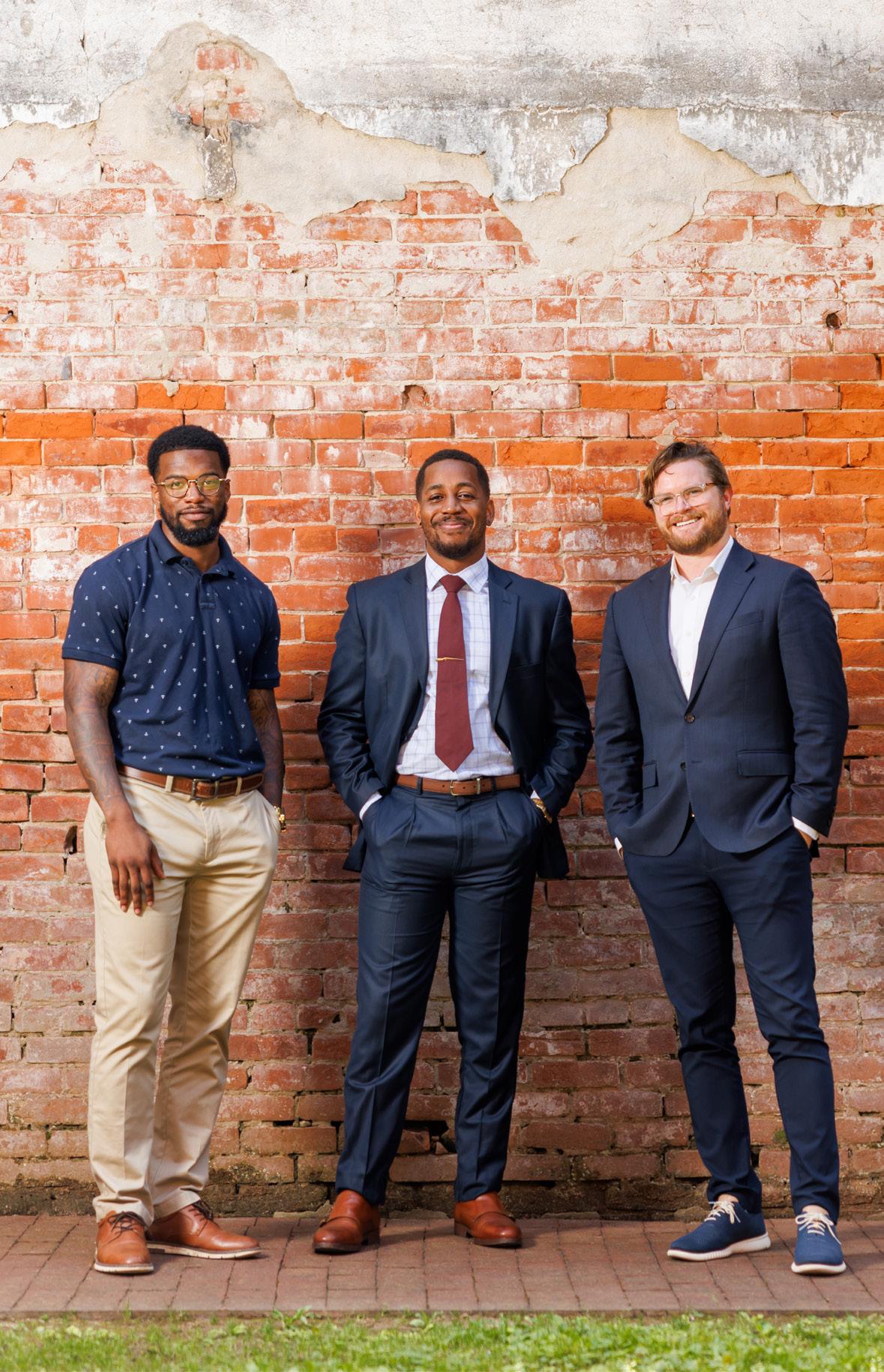
In November, Whitfield will ask voters for a chance to stay the course as mayor for four more years. Maybe he will be the change candidate who voters will finally stick with.
“I’m not a pessimist, I’m a realist. Every election is important, but this election coming up in November is very important. We cannot afford more leadership that is elected because of a last name, or a friendship people have through a church or civic group,” Whitfield said. “We were almost placed under a receivership, we had citizens calling for us to dissolve our charter within the last two years, and Helena-West Helena isn’t going anywhere because there is too much history. But our situation is dire. And if we don’t get our act together right now, I do believe a golden opportunity would’ve been passed. We cannot keep doing what we have been doing.”
share similar backgrounds in education and an abiding love for the hometown that they now have an opportunity to lead as public officials. The three men are attempting to build community through Smith’s nonprofit, Delta Magic, but questions remain on whether voters will stick with them.
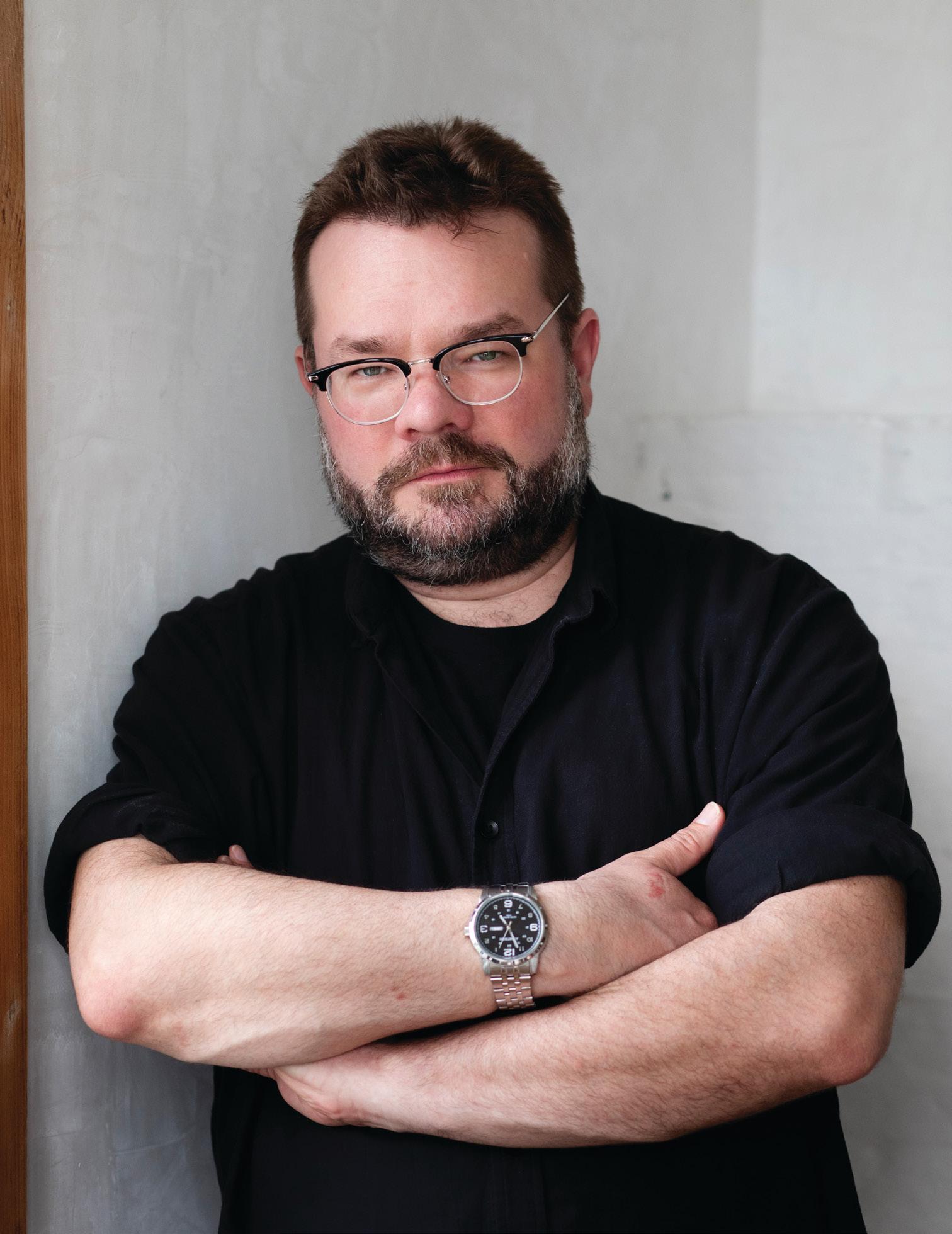
MOUNTAIN MYSTERY: Benjamin Hale’s “Cave Mountain: A Disappearance and a Reckoning in the Ozarks” reads by turns like a true crime story, a nature memoir and a Southern Gothic ghost tale.
BY MICHAEL RAY TAYLOR
In April 2001, 6-year-old Haley Zega mysteriously vanished on a hike with her grandparents on Cave Mountain, along the trail to Hawksbill Crag above the Buffalo National River. As days passed, her disappearance became “the largest search-and-rescue mission in Arkansas history.”
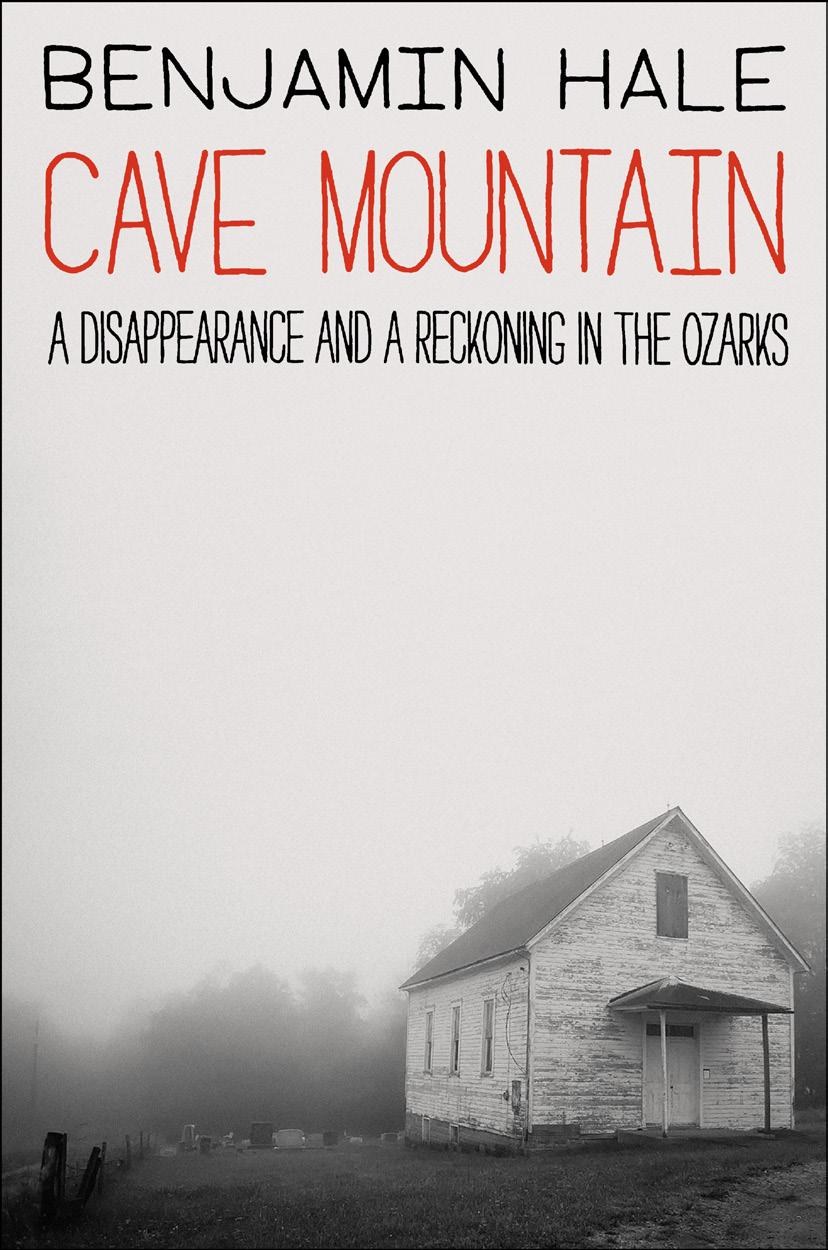
The girl is a cousin of writer Benjamin Hale, who in 2023 detailed her disappearance — and ultimate rescue — for Harper’s Magazine. During Hale’s investigation, he uncovered an eerily similar case from 1978, of a notquite-4-year-old girl who vanished less than 3 miles from where Haley went missing. That girl, who Hale calls Bethany, was later found to have been murdered by members of an odd religious cult: the Church of God in Christ through the Holy Spirit, Inc. Hale, who has also written a novel, “The Evolution of Bruno Littlemore,” and a story collection, “The Fat Artist and Other Stories,” has now expanded his article into “Cave Mountain: A Disappearance and a Reckoning in the Ozarks,” a book that reads by turns like a true crime story, a nature memoir and a Southern Gothic ghost tale. Although Hale dismisses some seemingly supernatural connections between the two cases that his research uncovered, some details will send shivers down readers’ spines. Yet the disappearances are just a part of the story. Hale’s rich digressions wind like a trail above the Buffalo, from a chapter explaining odd characters and crooked politics of the Ozarks in the 1970s and ’80s to a section that follows the poet Allen Ginsberg and Fayetteville’s literary elite to a concrete statue in 1969.
“I go with Hansel and Gretel and the rude mechanicals and Dante Alighieri into the woods,” Hale writes in the first pages of the book. Luckily, he proves an able guide. “Cave Mountain” was published in March, and Hale will speak about the book on Saturday, Oct. 3, at the Six Bridges Book Festival in Little Rock.
You describe growing up as a suburban kid who spent summers and holidays in the Ozarks, running barefoot in the woods with cousins, shooting guns and so on. How did that shape you as a writer?
I grew up in a boring suburb in Colorado, but I loved the times that I spent with my aunt and uncle in the woods at what they called “Hale Holler” outside of Pea Ridge, in way Northwest Arkansas, almost on the Missouri border. And, yeah, it was a lot of learning to shoot guns and running around barefoot in the woods and catching crawdads in the creek that ran behind their house. I have very distinct memories of going on hikes in the Ozark woods with my uncle, who would teach me how to recognize different kinds of trees and so on. They both had a very great reverence for land, the wilderness and the woods.
It was my uncle Jay [Haley’s grandfather] who introduced me to Edward Abbey, who became a formative lodestar for me as a writer. Through Abbey, I discovered a tradition of nature writing that includes Thoreau and Robinson Jeffers. That led to great books like J.A. Baker’s “The Peregrine,” which is very important to me. I had never really planned on writing about nature or wilderness or hiking or the environment like Robert Macfarlane, for instance, who writes about that stuff beautifully. This book gave me an excuse to indulge my fantasy of nature writing, which I’d always had but had never really planned to do, if that makes sense.
Do you think perhaps one reason it took about 20 years to start writing “Cave Mountain” was the fact that you were going to have to interview family members about one of the most difficult times in their lives?
Yes. For years, I had been imagining that it would be more difficult than it turned out to be. It really wasn’t. My main regret is that I wish I had started writing the book soon-

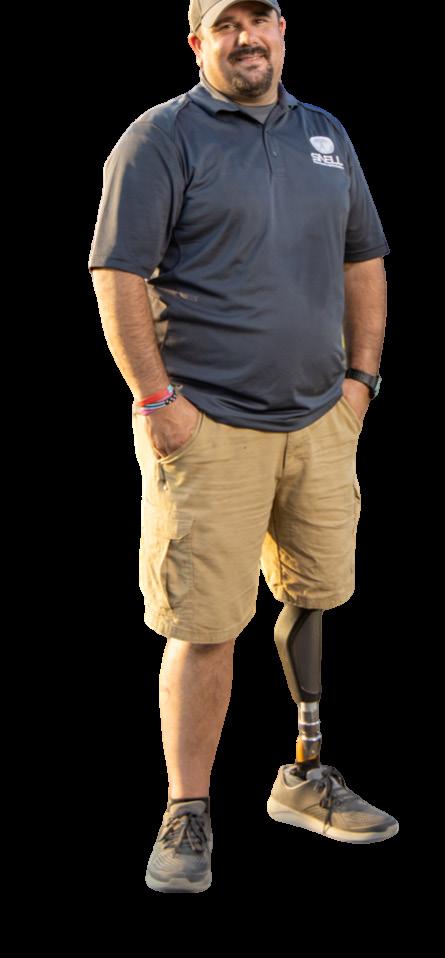
MEET
“I think that everybody has two choices in life: either to go forward or to stop, and I just don’t like stopping.”

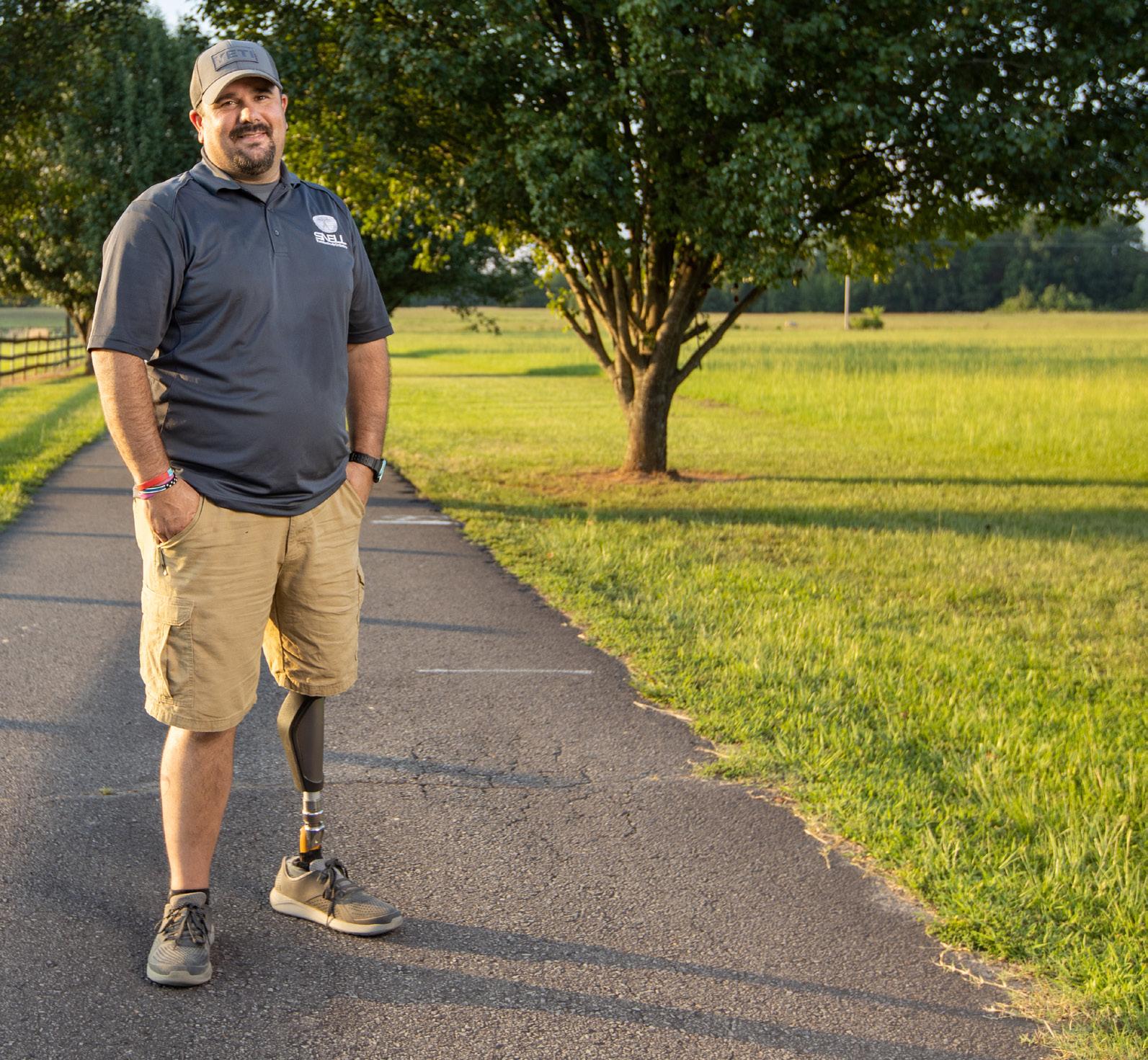

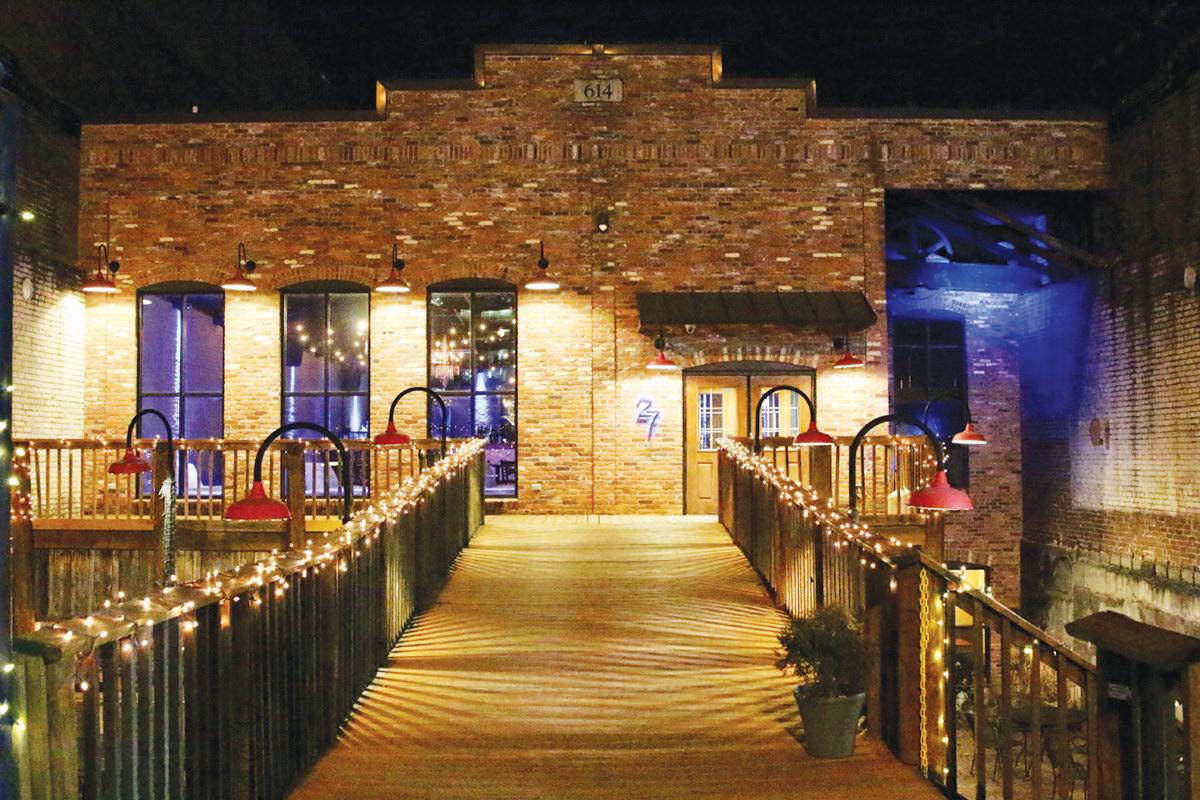
Corporate Events
Weddings
Birthday Parties
Christmas Parties

Tuesdays 7:45pm-10:30pm
Fridays 8:30pm-2am
Starts with a one-hour Salsa/Bachata lesson.
No partner or experience required.
er than I did, because even if I had started, say, five years earlier, several key people from the story that happened in 1978 would have been alive. Judge Tom Keith, Suzette Freeman, Larry Freeman, Winston Van Harris [the public defender of the mother of the murdered girl and three key members of the cult that killed her] — they died within a span of a couple of years, right before I started working on the book, so I wasn’t able to talk to any of them.
Speaking of research, I really liked the almost miraculous way you stumbled upon an interview with the former Newton County sheriff. Were there similar “aha” discoveries as you investigated this story?
That was probably the funniest moment that I had of finding somebody. When I first went to the Newton County Sheriff’s Office in Jasper, I asked the officer working there if I could see their records from the ’70s. He said, “Sure, come on back.” He took this cardboard box down from a shelf in a back room that had “1975 to 1980” written on it. I combed through the records they had, mostly just manila envelopes with just scraps of paper scrawled on with pencil, notes about stolen canoes and things like that.
Then the guy said, “Yeah, they weren’t too good about keeping records back then. But the guy that works at the hardware store used to be the sheriff in the ’70s and ’80s, and they’re open for another half-hour. You might go down there. If you just show up, you might catch him.”
So I did. There was an 80-something-yearold man sitting behind the counter. I asked him if he was the former sheriff, Ray Watkins. “Yeah,” he said.
I asked, “You know anything about this case that I’m trying to find information about from 1978 where these cult members murdered a 3-year-old girl?”
“Yeah, I was the one who arrested them,” he said.
He proceeded to help give me one of the most incredible interviews I recorded. When I listen to it now, it’s kind of funny that there are periodic pauses where somebody needs to buy something and he checks them out on the register.
That was probably the most incredible moment like that, but there were others. For instance, another person I interviewed, Katherine Nance — and I hope she’s still alive, since she was in her early 90s when I interviewed her and her husband for the
book a couple of years ago — she was the foreman of the jury during the trial of the person I called Lucy Clark in the book. Finding her was kind of funny in that I knew she lived somewhere near Jasper, but that was all I knew. At a certain point, I literally just pulled over to a gas station somewhere between Harrison and Jasper and asked the guy working there if he happened to know Katherine Nance. Everybody knows everybody there.
He gave me directions to her house that were a little difficult to follow. But at the time, Katherine and John Nance lived in a beautiful house just south of the ruins of [theme park] Dogpatch USA, off Highway 7. I knocked on the door, and they invited me right in. That’s how I got that interview. I didn’t have a phone number or anything, so I couldn’t announce myself, but they were a friendly elderly couple in their 90s who said, “Come right in.”
And it just so happened that Johnny Morris, the billionaire who owns Bass Pro Shops, had just bought the ruins of Dogpatch, a beautiful property with significant acreage. The Nance’s house directly abutted the Dogpatch land, and Morris had just bought it. He plans a big network of hiking trails, wants to put fish in the Buffalo tributary running through there, and build a big nature park. The land he bought from Katherine and John Nance had been in their family since the Civil War. They were just starting to pack up the day I arrived.
How did you write about things that happened so long ago with such vivid narrative and physical descriptions?
I was kind of in the woods, funnily enough, no pun intended, with writing it because I had so little information. A good example, kind of an astounding detail of the story, is that the members of the cult were caught the day after they had murdered and buried Bethany, as I call her in the book, just because the game warden of Newton County happened to be out hunting the following morning with his friend. There were exactly three law enforcement officers employed in all of Newton County in 1978. To have one of them just happen to walk by their campsite is kind of incredible. A detail of the story that everybody involved remembered is that Fred Bell and his friend, Ed Burton, came across their campsite because they were out hunting turkeys. So a friend of mine, a hunting journalist, took me turkey hunting so I could feel and describe the experience.
What sort of responses have you received from those who appear in the book?
Thankfully, my aunt Joyce, the person I was kind of most worried about as a major character [and the grandmother who was hiking with Haley when she got lost], really likes the book. Also my cousins ... well, I call Haley my cousin. She’s a first cousin once removed, because my cousin is her mother, Kelly. Kelly and Haley both really liked the book.
The “disappearance” part of the subtitle for “Cave Mountain” is obvious. Yet that other word, “reckoning,” seems more important. What led you to choose it?
I wanted the reader to come away at the end of the book with reckoning in a religious sense, about redemption. For me, reckoning meant changing my attitudes and opinions on religion [Hale writes, “I went through a hatred-of-religion phase à la Sam Harris/Christopher Hitchens in my angry young man days”]. At least, that was an important thing for me about the book. And privately, just for me, it’s a bit of a pun because Arkies say “reckon” all the time.
I’m guessing from his chapter near the end that Mark Harris, one of the last survivors of those convicted of murdering Bethany in 1978, had something to do with that.
Absolutely. I guess my reckoning was changing some opinions about religion but also changing what I thought about the story. When I finally met Mark Harris, I found him to be not at all the scary villain looming in the background when I first started researching — or rather, when I thought about the story over the past 20 years or so. I thought about it often, long before I began researching and writing this book. Mark Harris’ story really became the surprising emotional climax of the book. I hope readers read his story as a sympathetic one. Coming to feel deep, serious compassion for a man who was once convicted of murder was a reckoning for me.
Bonus question: Out of curiosity, how did you score a jacket blurb from Patton Oswald?
In 2023, I published the Harper’s article that was kind of the first draft of this book. He read the article and tweeted about it. I was astounded, because I’m a fan of Patton Oswald. I’ve been listening to his comedy albums for years. I was really flattered to get a compliment from somebody like that! Later, he provided the blurb.



WHAT’S UP WITH THE CREEPY TANGLE OF SNAKES WE FOUND IN SUBURBAN NORTH LITTLE ROCK?
BY ELIZABETH L. CLINE
In late April, as I was tooling around Lake No. 1 in North Little Rock, I caught my local diamondback water snake (which my neighbor calls Ivan) in a compromising position. Ivan, it turns out, is Ivy, a female water snake — a nonvenomous species that is generally harmless to humans — who was intertwined with at least two to five other water snakes of a smaller circumference. They were locked together, seemingly in a trance, unbothered by my existence. I was seeing a snake mating ball in person for the first time.
I admit that I felt queasy, and my throat started to close, as a primordial part of my brain imagined the snake ball unwinding and rolling toward me — or devouring the baby ducks sweetly swimming nearby in one unified gobble. If you’ve seen when the den of snakes flies out of a cave and envelops and annihilates a baby iguana in “BBC Earth,” you know what I was picturing.
In a bid to dispel my own ignorance, I called snake expert Amanda Bryant, a herpetologist at the Arkansas Game and Fish
Commission, to share some grainy photos of the experience with and to educate me on snake mating activities. Turns out, Bryant explained, witnessing a snake ball is a great time to address one’s inner fear of snakes, and by late summer, there should be a snakey bundle of joy on my lake. Yay?
The internet tells me I’ve witnessed some sort of mating habit. What’s your analysis of what I saw?
Those kinds of breeding or mating aggregations are really, really common in snakes. You see it in garter snakes, where there can be huge balls of snakes, 20 or 30 animals. You see it in water snakes where there’s more like a handful, maybe five or 10. Sometimes you see it in pythons. What you’re seeing is one female snake, which is your big one, and then a bunch of smaller male snakes, sort of like wrapped around her, and they’re all fighting and competing to mate with this female snake. The female snake has pheromones that attract these male snakes to her, and that’s how you get these mating balls, or
aggregations of snakes. The technical term for that behavior is a breeding aggregation.
Be as graphic as you can be. What is snake sex — what was I witnessing on a technical level?
So, a male snake has hemipenes [Editor’s note: please enjoy Googling this], and they’re basically trying to insert that into a female snake’s cloaca, so they actually have to put something inside of this female snake. When they’re fighting [to access the female], they’re getting pushed out of the way of this female snake’s cloaca. Some animals have broadcast spawning, where they shoot their shot, and if the females use it, that’s great, but with snakes, they actually have to be linked together.
You’re saying that this is common, but I would say a snake mating ball is not something many people have seen with their own eyes
Sometimes snakes overwinter communally. Garter snakes are a great example of this;
SURVIVAL OF THE FITTEST: According to Amanda Bryant, a herpetologist at the Arkansas Game and Fish Commission, the natural phenomenon we stumbled upon was several male snakes competing to mate with a single female snake.
they’ll often use a lot of the same hibernacula [a shelter occupied during the winter by a dormant animal, such as a snake]. So sometimes these mating aggregations won’t be super far from where they’re hibernating.
So maybe these snakes were hibernating together somewhere close by?
Right, and maybe they emerged in close proximity to one another. It’s warming up, it’s springtime, and the snakes are starting to move away, and especially females are starting to roam around and look for food. The snakes might not always be in the places that you associate with seeing that animal all the time, or in the summer.
Also, it’s springtime, and it’s rainy, and the weather is bad, and people might just be outside less often when these kinds of things are usually done. Human activity doesn’t always match up with when these guys are breeding and becoming active for the year.
Was this the only snake ball that will happen on my lake this year — and how long does the mating season last?
You probably wouldn’t see the same female [mate] again, but we’re having kind of a hot and cold spring where we’re swinging back and forth between temperatures, so it’s always possible that mating extends into May or the early June timeframe. It just depends on the year. If it’s a spring that’s really, really cold, and it takes these guys a long time to get up and get active for the year, it’s going to stretch farther into the spring than if you have a really warm and mild kind of season.
The snake ball I saw was very still, almost like the snakes were in a trance. Is that normal?
It could be that there was a male mating with the female actively when you walked up on this, so the other snakes can’t really push him out of the way. He’s locked in. Or, it could be that it’s a little cold, and so they’re slow-moving right now because they’re cold-blooded. They need it to be warm out for them to be active, to have enough energy for them to do things.
Let’s assume I witnessed a successful mating session. When will these baby snakes be born?
What happens next is your female snake
is going to spend the spring and mid-summer months trying to be really warm, trying to eat as much as possible, grow those babies, and then sometime in the mid-to-late summer, like July and August, she will either give birth or lay eggs. In the case of the water snake, they will give birth to live young. When they’re born, they’re about the size of a pencil. The female snake can give birth to between five and 50 babies, depending on the year and the condition of the mom. They have a pretty wide range in terms of how many babies they have.
I appreciate snakes, but I have to say that seeing a pile of them like that gave me a major case of the heebie-jeebies. Does that happen to you?
No, there’s not a whole lot that goes on, wildlife-wise, that still gets me at this point. And also, I learned about this behavior before I ever saw it in person. I knew that this was a thing that could happen before I ever got to see it. But if you don’t know, and you just come upon a pile of snakes, and especially if they’re being really active and all wiggling and writhing and rolling around, I can totally understand why somebody who doesn’t know what they’re looking at would be like, “What is happening?”
I had this terror that they would see me, and then it wouldn’t just be one snake coming at me, it would be all of them. But it sounds like, actually, they were pretty occupied?
Right. They’ve got bigger fish to fry. There are all sorts of pheromones everywhere; their brains are screaming at them to do exactly one thing, so it’s like you’re not even there, and these snakes probably aren’t going to notice you.
If you like snakes or you’re curious about them, [a breeding aggregation] is a cool opportunity to just sit and watch them without them trying to run away from you. It’s like watching a turtle basking on a log. If you come up and you’re quiet and you’re slow, you can sit there and watch it go about its day for a while. It’s a great opportunity to become less fearful, because they’re just going to sit there, and you can just watch them. They’re not doing anything except trying to make babies.
DEPARTMENT OF SHARED ADMINISTRATIVE SERVICES – Little Rock, AR IT Infrastructure Analyst Data Scientist
Apply online with job title at: https://arcareers.arkansas.gov/go/ Shared-AdministrativeServices/8525600/

PERSONAL ASSISTANT NEEDED Remote position available. Applicants may apply from any part of the state. Duties include light errands 1–2 times weekly.
CLEANER NEEDED
Applicants may apply from anywhere in Arkansas. Duties include light errands 1–2 times weekly.
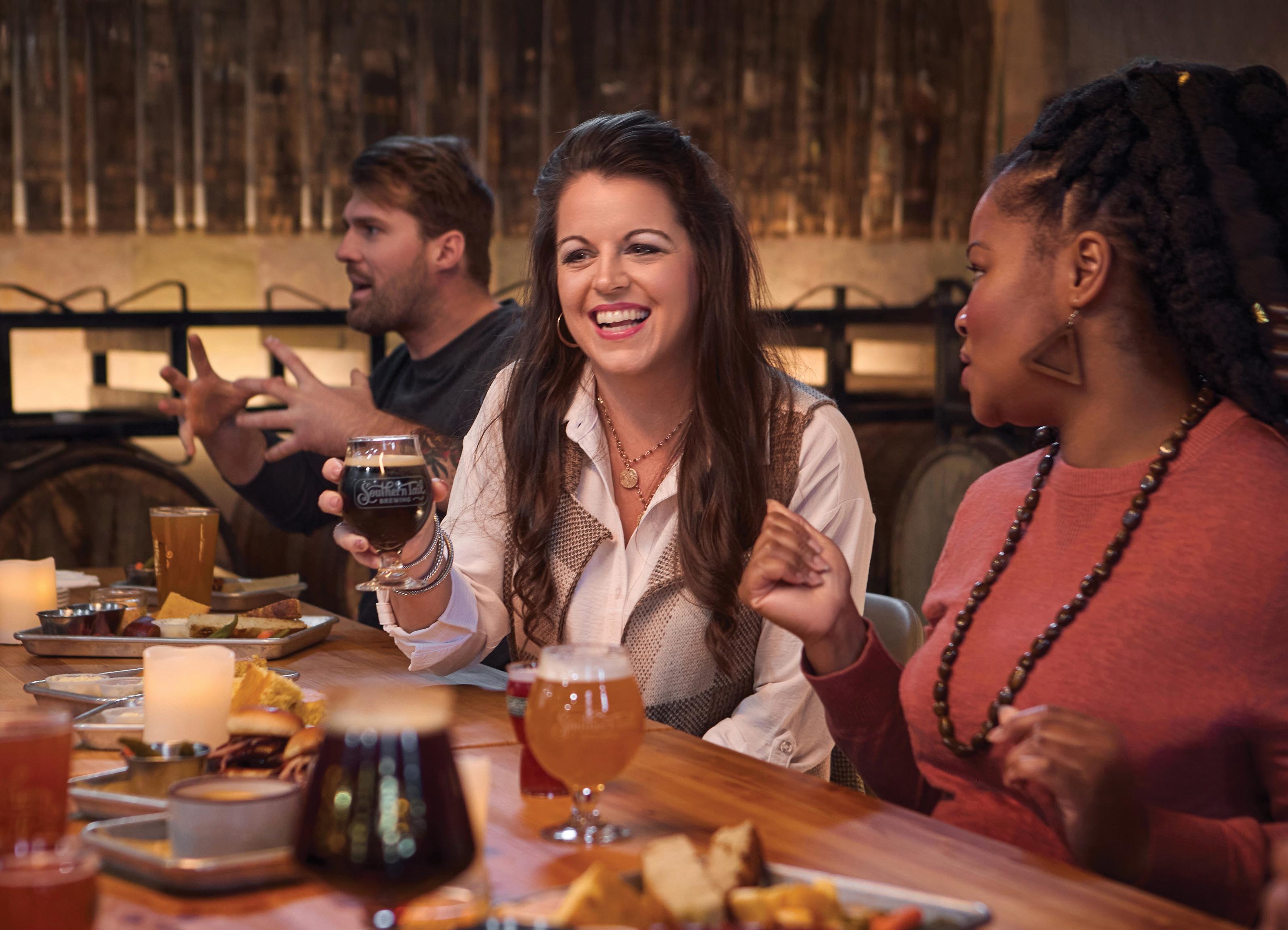
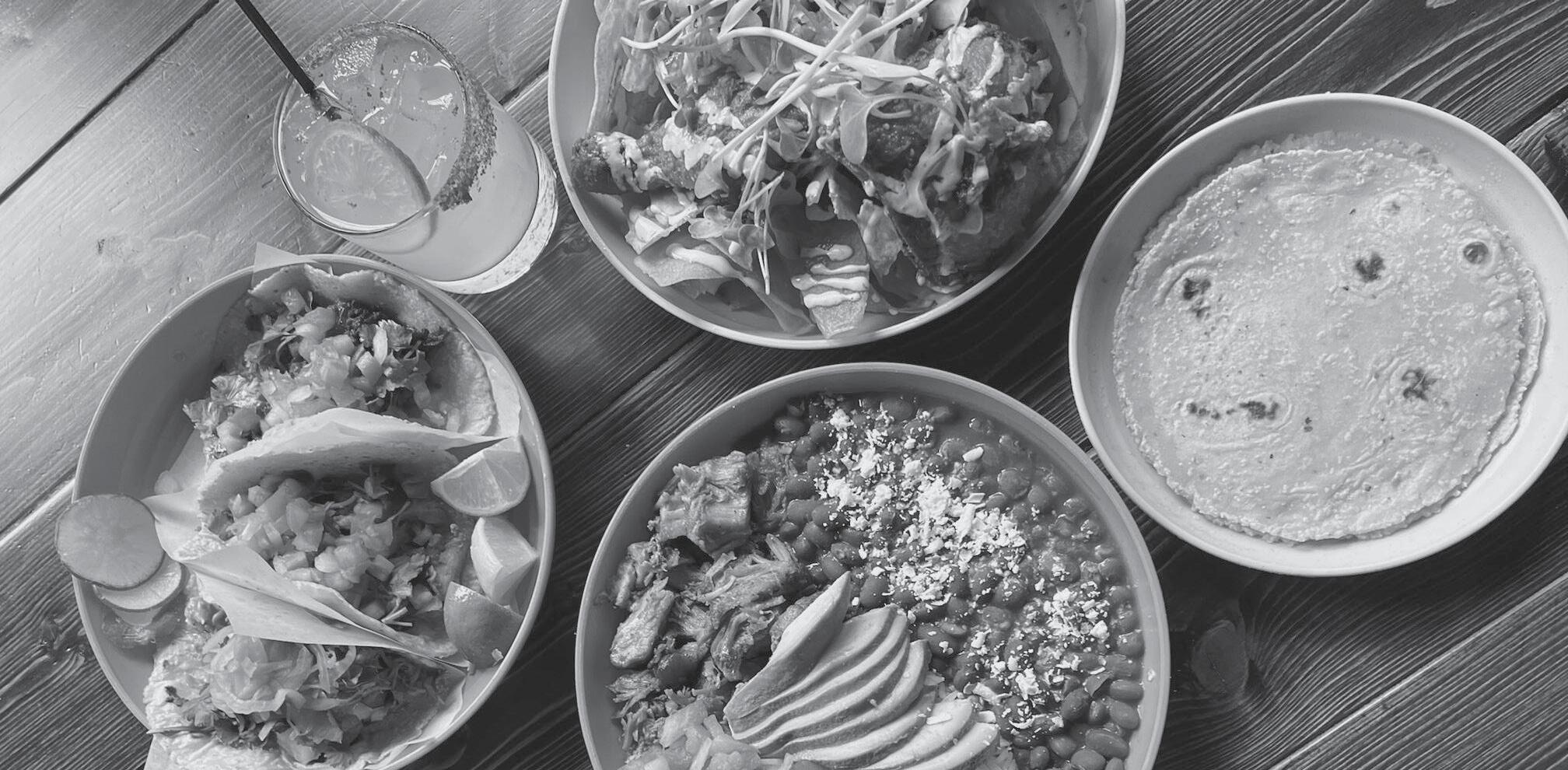
From SCRATCH to SOPHISTICATED this is FOODIE
With everything from farm-to-table fare to award-winning fine dining, this is a place for anyone with good taste. So treat your tastebuds to an adventure. You won’t just like your time here, you’ll Love You Some Little Rock.
You know the feeling: hunger strikes and you have to decide on where you're going to eat.


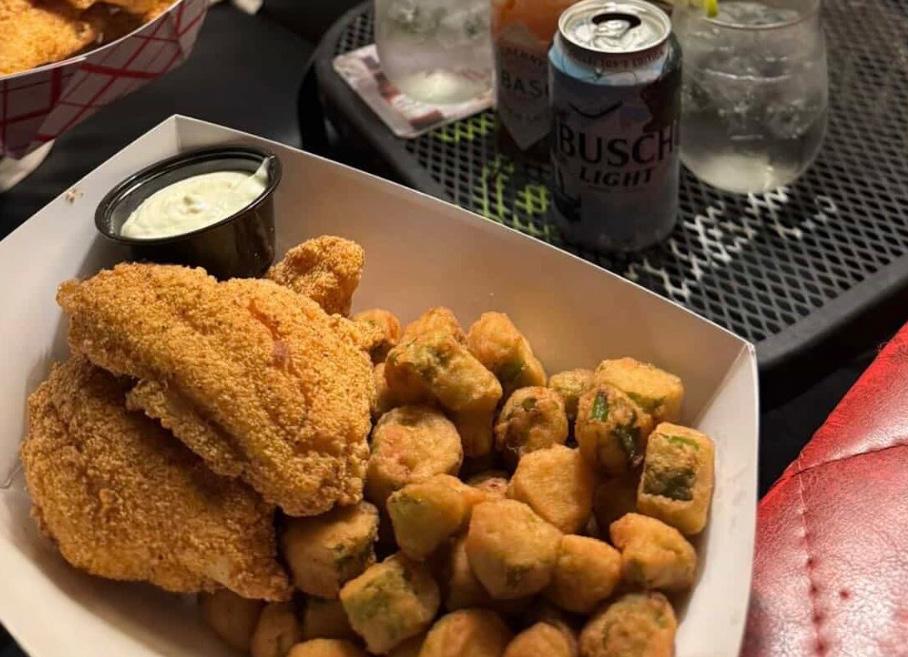
Easily the best catfish in Little Rock lives at The Legendary White Water Tavern. Since the beloved dive and venue reopened (Natalee Miller and Travis Hill) after COVID in 2021, the catfish has been sought after by patrons and listed in the Arkansas Times RCA polls as “Best Catfish in Little Rock” for a number of years. Shane Clinton, who curated the menu, added the item when the restaurant reopened. It’s farm-raised, hand-battered, cornmeal-breaded and deep-fried with your choice of chips, fries or fried okra and tartar sauce. Frequently ordered at happy hour or later in the evening when the drinks are flowing. It’s perfectly paired with a draft beer or a cold Busch Light from behind the bar.
2500 WEST 7TH ST. | LITTLE ROCK WHITEWATERTAVERN.COM
“The first thing that someone thinks about when they walk into a pizzeria is probably not a burger, but when you walk into Problem Child you better change that mindset. I knew when I started building the menu for our little pizza shop at the top of Cantrell, under the radio tower, that I wanted to offer a warm hug of a cheeseburger. Nothing fancy, no hype words or special sourcing to brag about… just a double stack, 3 slices of American cheese, thin sliced onion and lettuce, and fat dill pickle chips on a potato bun (and of course our “special sauce” to glue it all together). And any place that doesn’t serve fries with a burger automatically probably has a sadist in the kitchen! Next time you have a free afternoon I invite you to belly up to our bar and grab one, preferably with an ice cold PBR.”
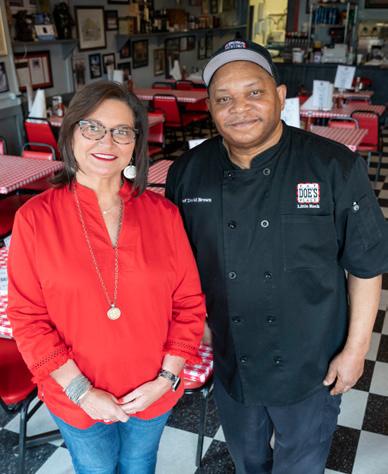
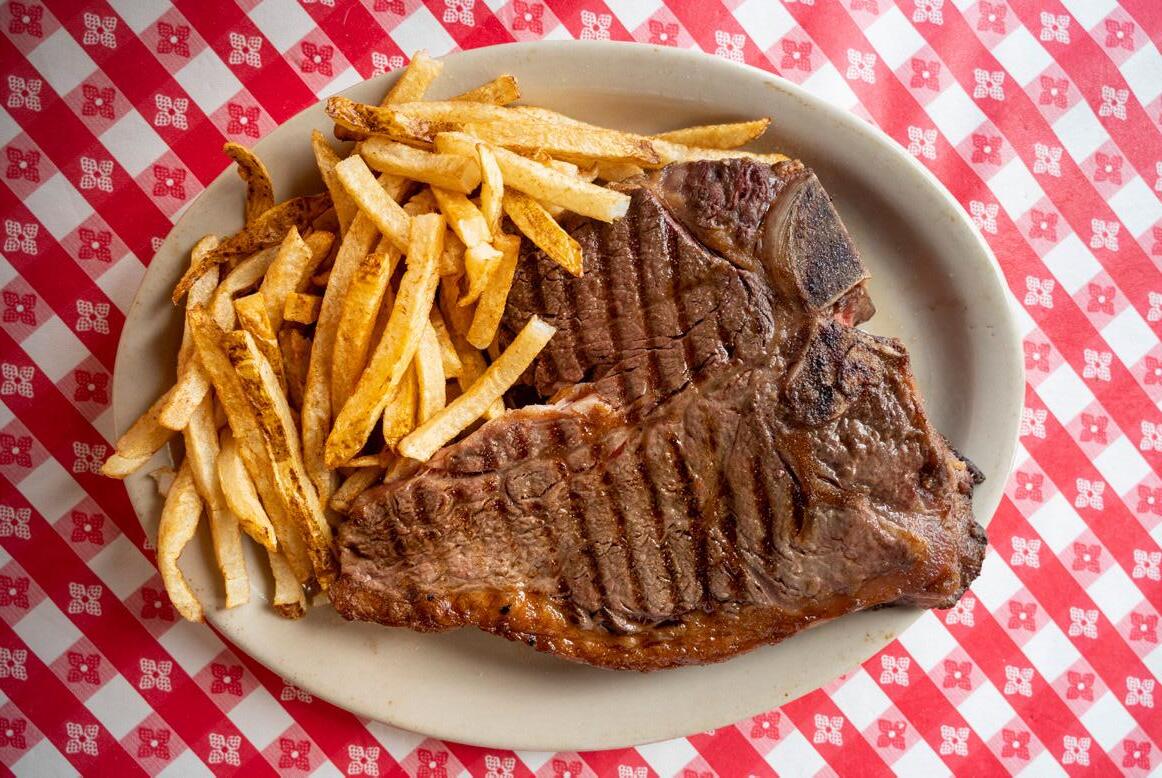
Doe’s Eat Place offers convenient curbside parking and your choice of inside or outside dining. It is a down-to-earth, no frills southern atmosphere. A longtime regional favorite. We have your favorite steaks and all the fixings. We also offer big servings of our famous hot tamales with chili, broiled shrimp, grilled salmon, hamburgers, cheeseburgers and more at a reasonably good price.
1023 W. MARKHAM | DOWNTOWN LITTLE ROCK 501-376-1195 | DOESEATPLACELR.COM
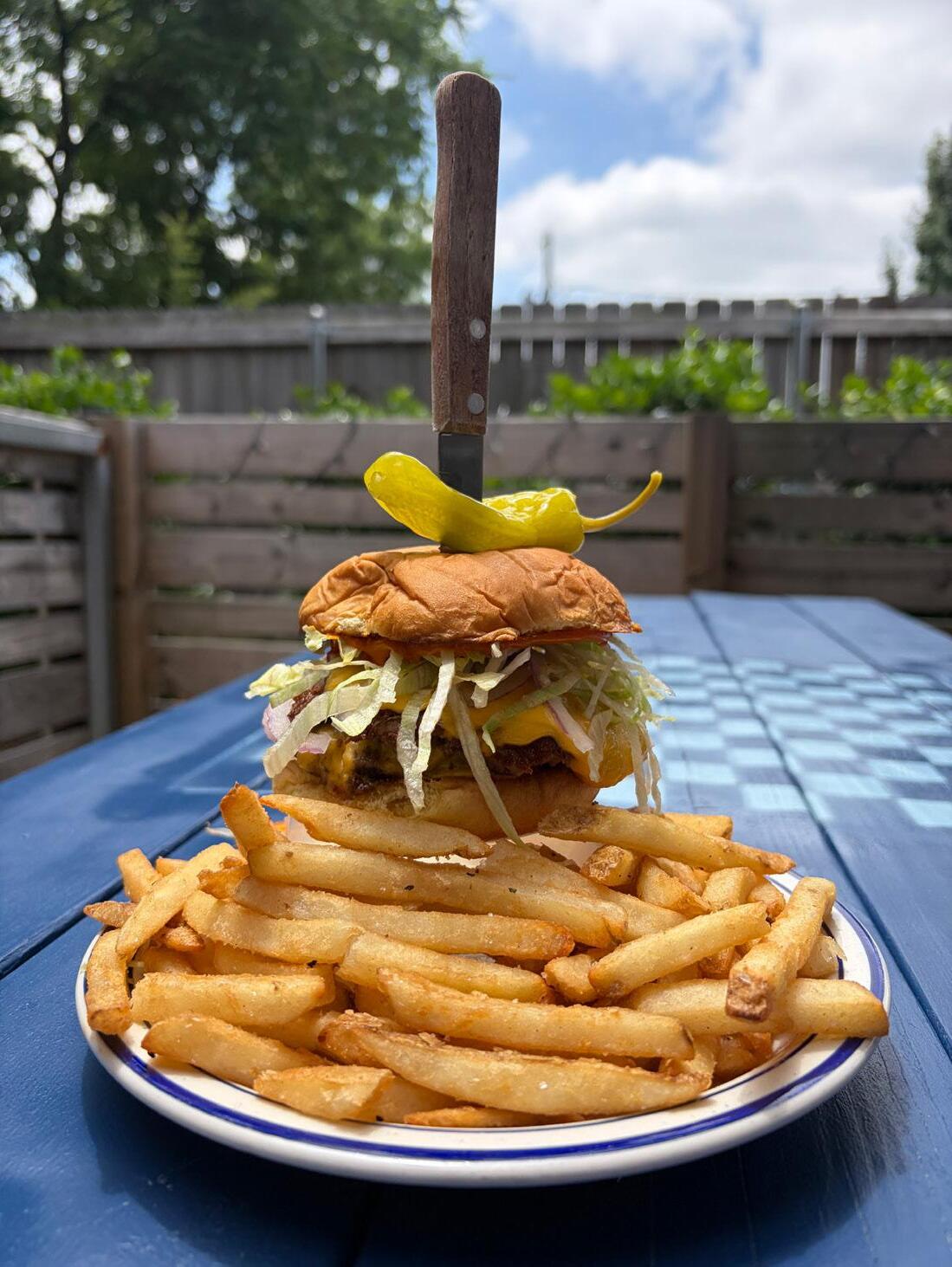
With 29 years in the restaurant industry, Heather Baber is the owner and chef behind three beloved central Arkansas restaurants collectively known as the Taco Society: Baja Grill, Revival, and RŌBER. Known for her relentless attention to detail and heartfelt hospitality, Baber has built each concept around creating memorable guest experiences while empowering the teams that bring them to life every day.
At Baja Grill, she recommends favorites like the Honey Chipotle or Cuban Nachos, crediting the restaurant’s success to “a great staff who have a lot of love for the place.”
At Revival, she enjoys the Gyro or The Melt. The restaurant’s weekly live music in the beer garden has become a community favorite, and Baber praises the team’s ability to serve such a large venue with consistency and care.
RŌBER, her upscale American concept inspired by the Sunday dinners she cooked for her family, holds a special place in her heart and attracts guests from across the country. There, her favorites are the Short Rib Ragu and the Surf + Turf.
“I obsess over the small details,” Baber says. “But it’s the details that make these places so special.”
Above all, she remains deeply grateful to every guest who chooses to dine with her restaurants, never taking their support for granted.

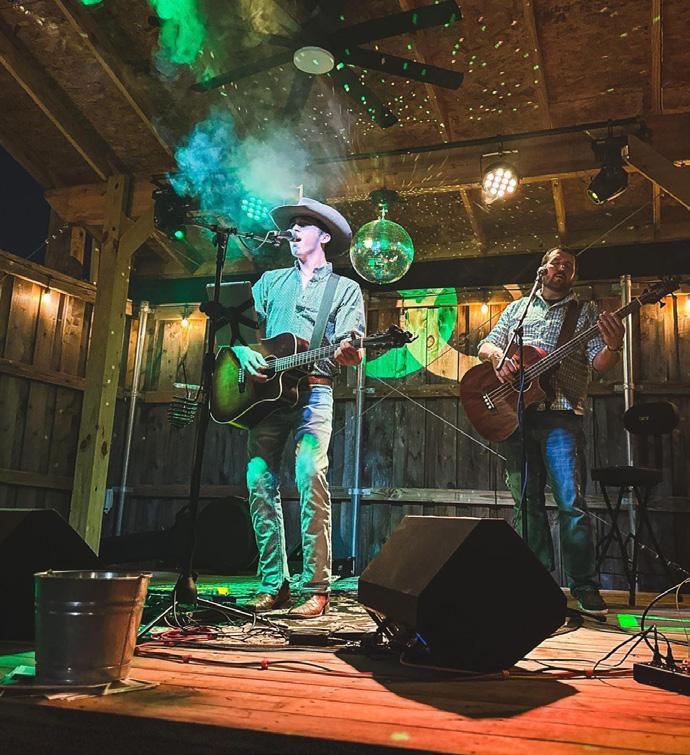
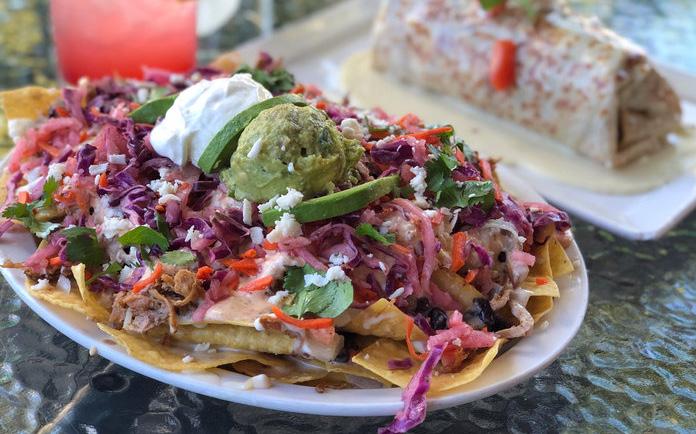
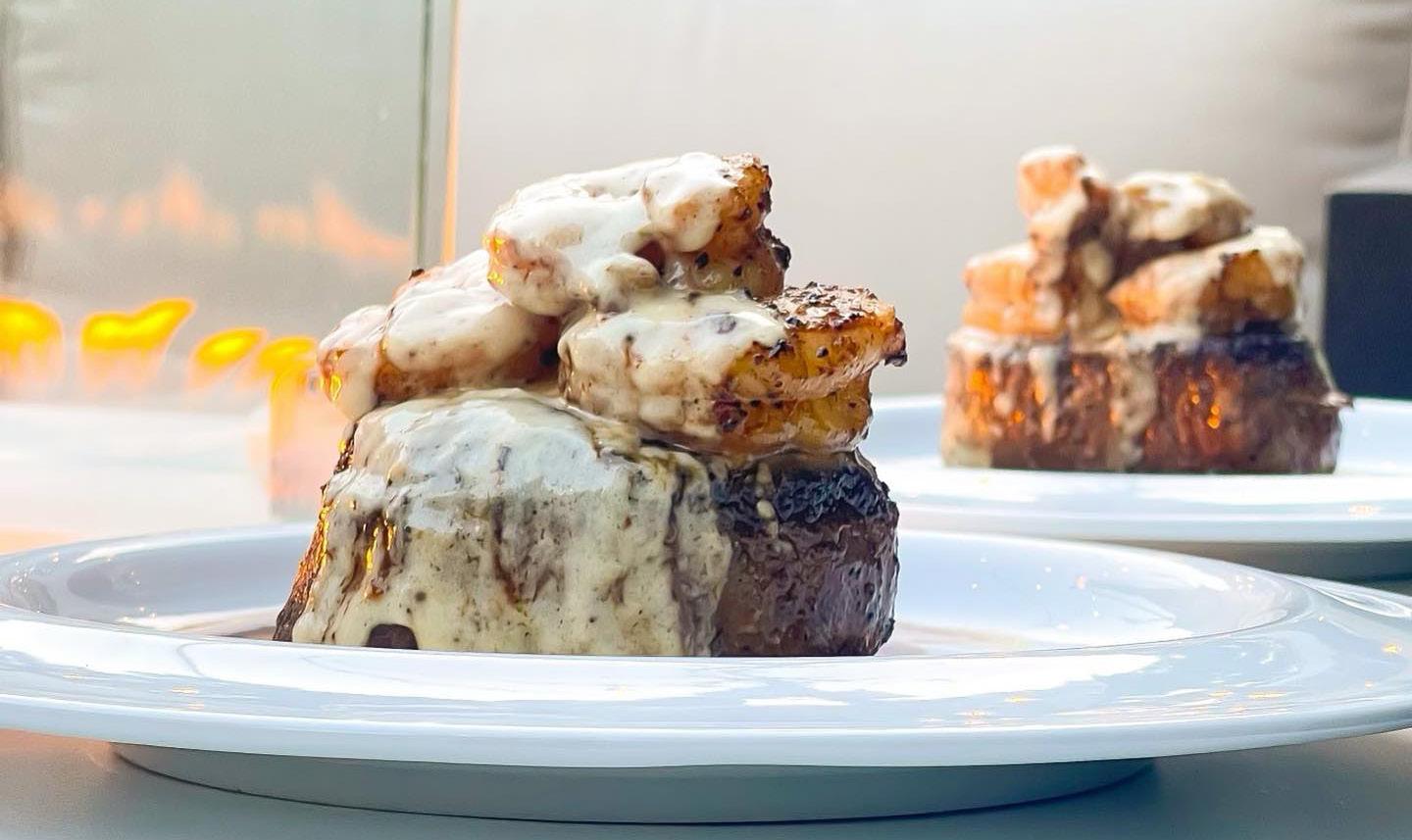
Located in the heart of Historic Hillcrest, HAM Market has been a staple of the Little Rock community for more than a decade. After moving across the street from its original location to alongside its sister endeavor Hill Station, the specialty market and butcher shop has earned a loyal following for its expertly sourced meats, handcrafted sandwiches, house-made sausages, charcuterie boards, local pantry items, and hard-to-find staples — all served with a strong focus on quality and hospitality.
At the center of HAM Market is its butcher counter, where premium meats are carefully selected from trusted farms and producers, with an emphasis on sourcing close to Little Rock whenever possible. Known for high-quality steaks and housemade sausages, the team specializes in custom cuts prepared to guests’ exact specifications, whether it’s a thick-cut ribeye for the grill or tenderloins for a dinner party.
HAM Market is led by co-owners Tim Bryant, brother of owner Daniel Bryant, and Christin Hula-Bryant, whose leadership has helped shape the business into a destination recognized for creativity, craftsmanship, and exceptional service. Like the “mad scientists of meat,” the team continuously experiments with sausage recipes, dry-aging techniques, curing methods, and bold flavor combinations while honoring traditional butchery practices.
Beyond the butcher program, HAM Market is equally known for its fresh lunch sandwiches, including favorites like The Georgie and The Squash Blossom. Made daily with house-prepared meats, fresh bread, and high-quality ingredients, the sandwiches often sell out quickly. The menu changes regularly with seasonal inspiration, giving guests something new to enjoy with every visit.
HAM Market also offers custom sausage orders, charcuterie boards, specialty cuts, and special requests for everything from backyard cookouts to holiday meals.
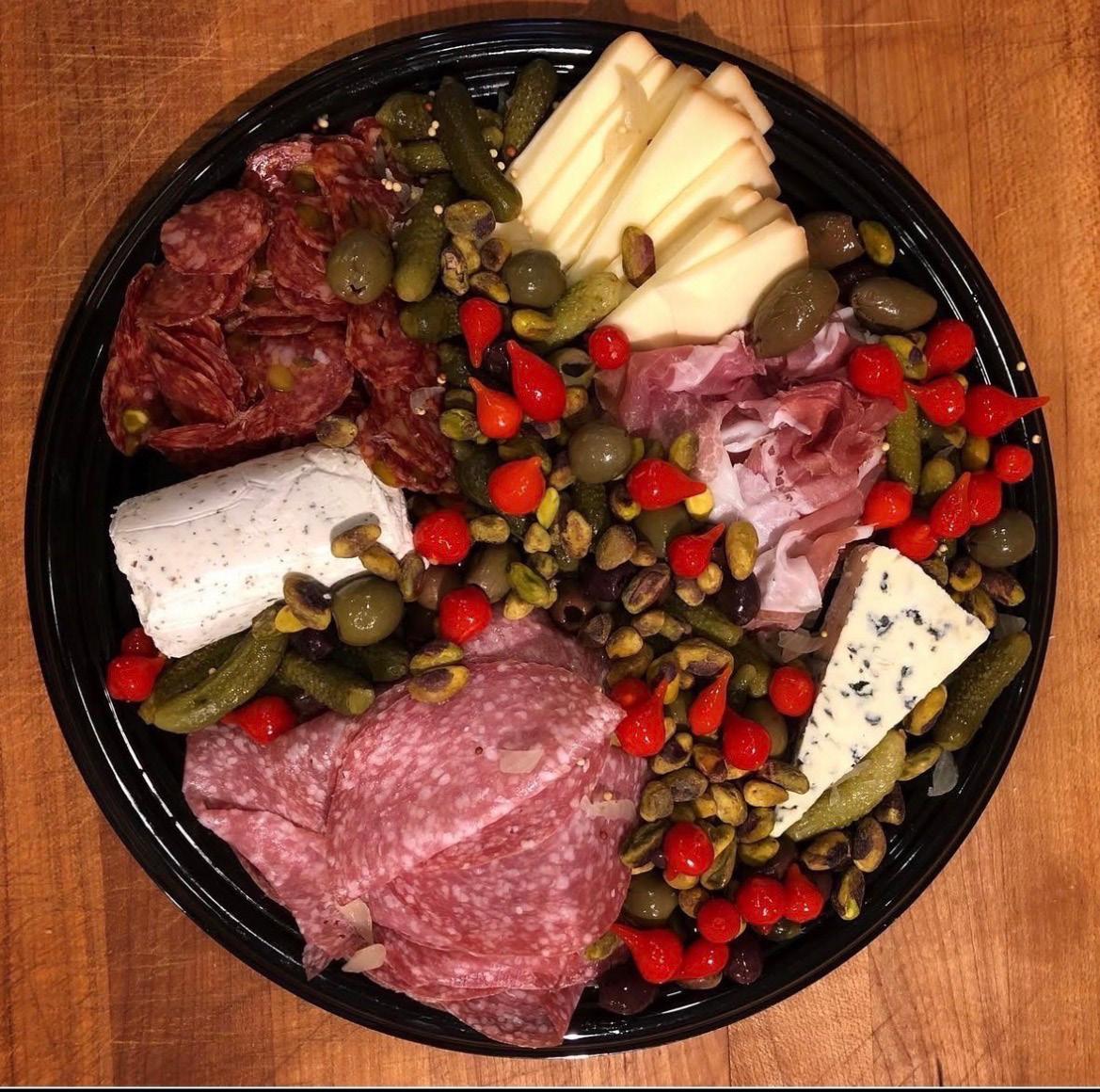

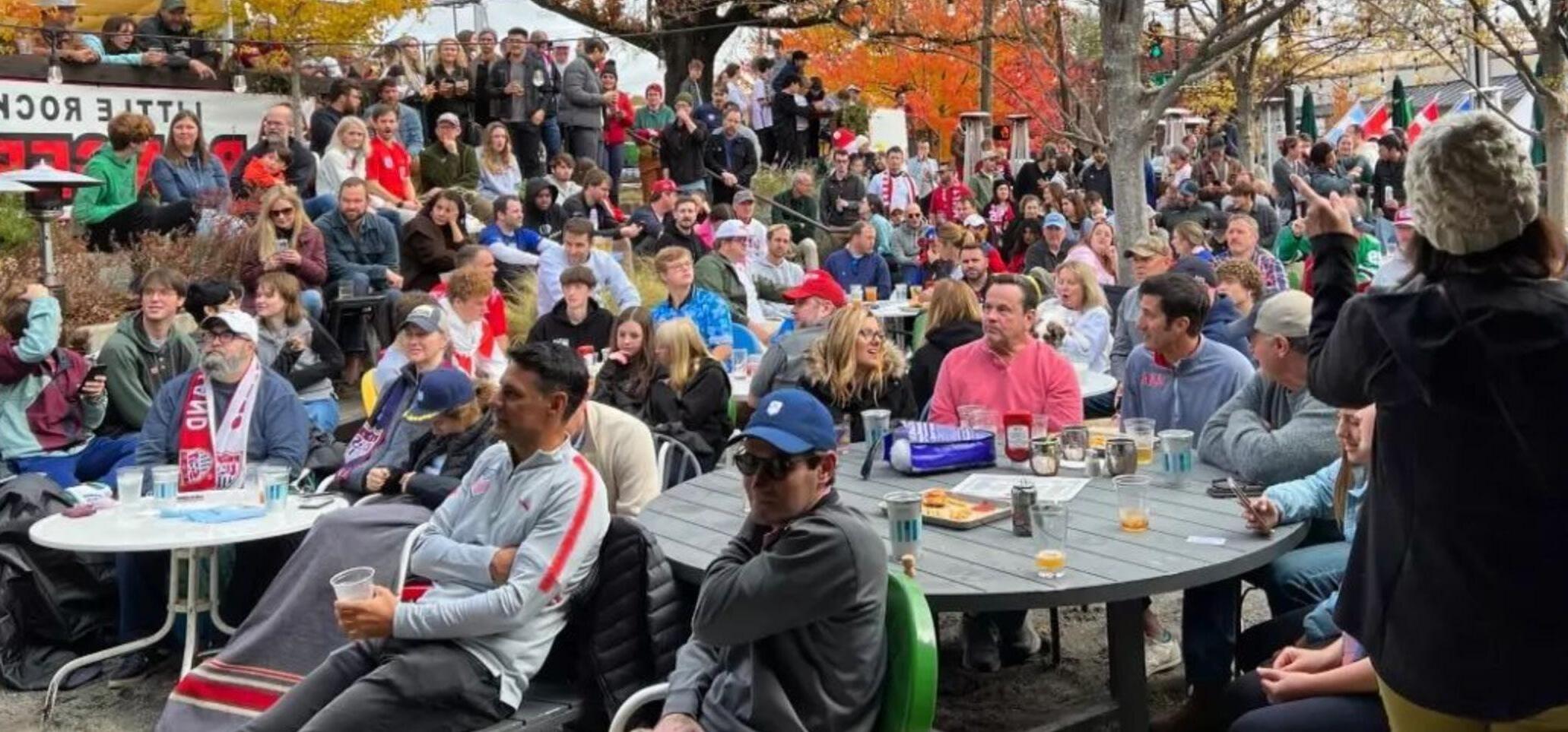
After riding the one-of-a-kind wave of Qatar’s fall iteration in 2022, we at Hill Station can hardly believe the World Cup is already upon us again. Apparently if you stay busy enough four years can fly right by. It seems like we just rolled up the turf from the impromptu playing field on Kavanaugh, said goodbye to our group of 4 a.m. regulars, and handed out the flags for the last two teams standing.
When Cup fans last parted, we’d just been treated to a blessing of a match that pitted heavyweights France and Argentina against one another. In the end, after penalties, it was Messi finally lifting the trophy for his side and country. And like all soccer fans, we are now eagerly awaiting as this Cup’s storyline’s take shape. The big names are at the top with France and Spain listed as the co-favorites, England and Brazil right behind them, and Argentina once again within striking distance.
Hopefully, all of the tournament’s players get healthy and the USA, in the upper third, finds a way to make some noise.
The flags along Kavanaugh will soon be up as will additional large screens for better outdoor viewing than last time around. You might also notice the flag line will be a little more populated in 2026 as FIFA has, for better or worse, grown the number of qualifying teams from 32 to 48. The merch has been ordered, special promotions laid out, and the staff has gotten mentally prepared.
With World Cup 2026 being hosted in North America we hope you find the opportunity (and considerable money) to catch a match in person. But for those who can’t, and I think that’s most of us, rest assured that we are working hard to create the most immersive and best local World Cup experience we can. And 2022, we will be showing EVERY-SINGLE-MATCH…Thankfully just not at 4 a.m.!
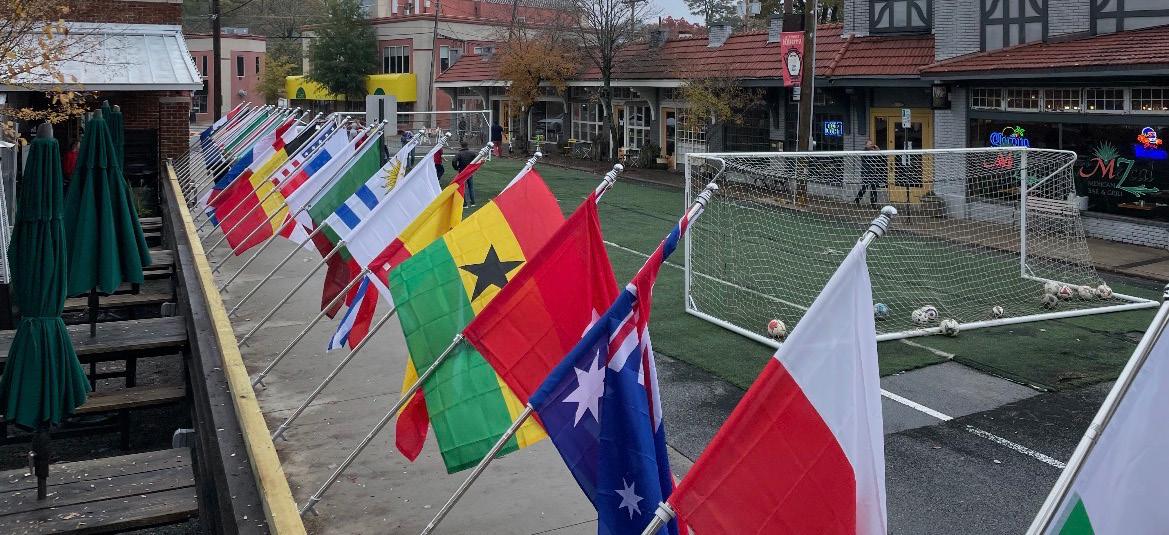
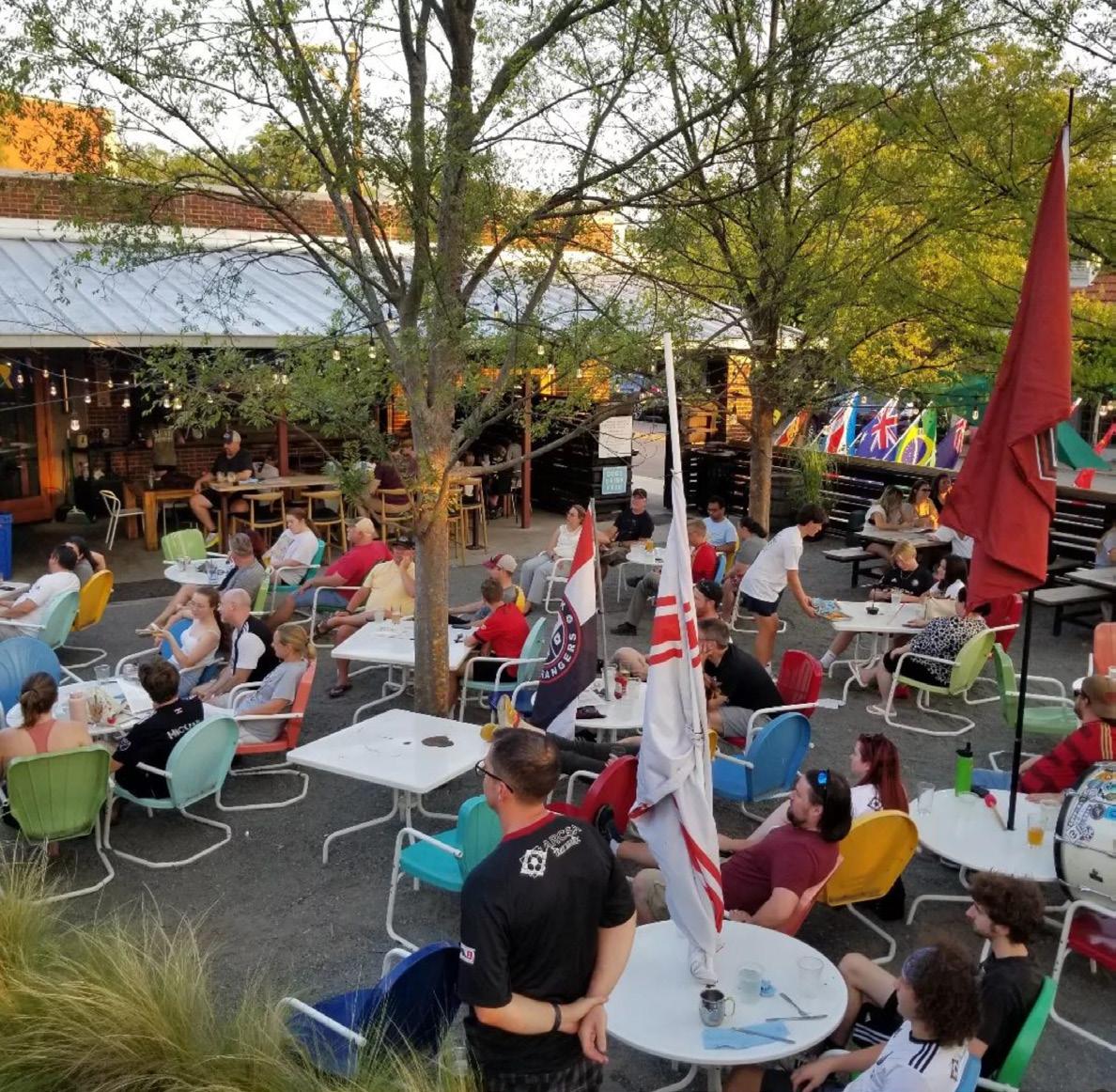
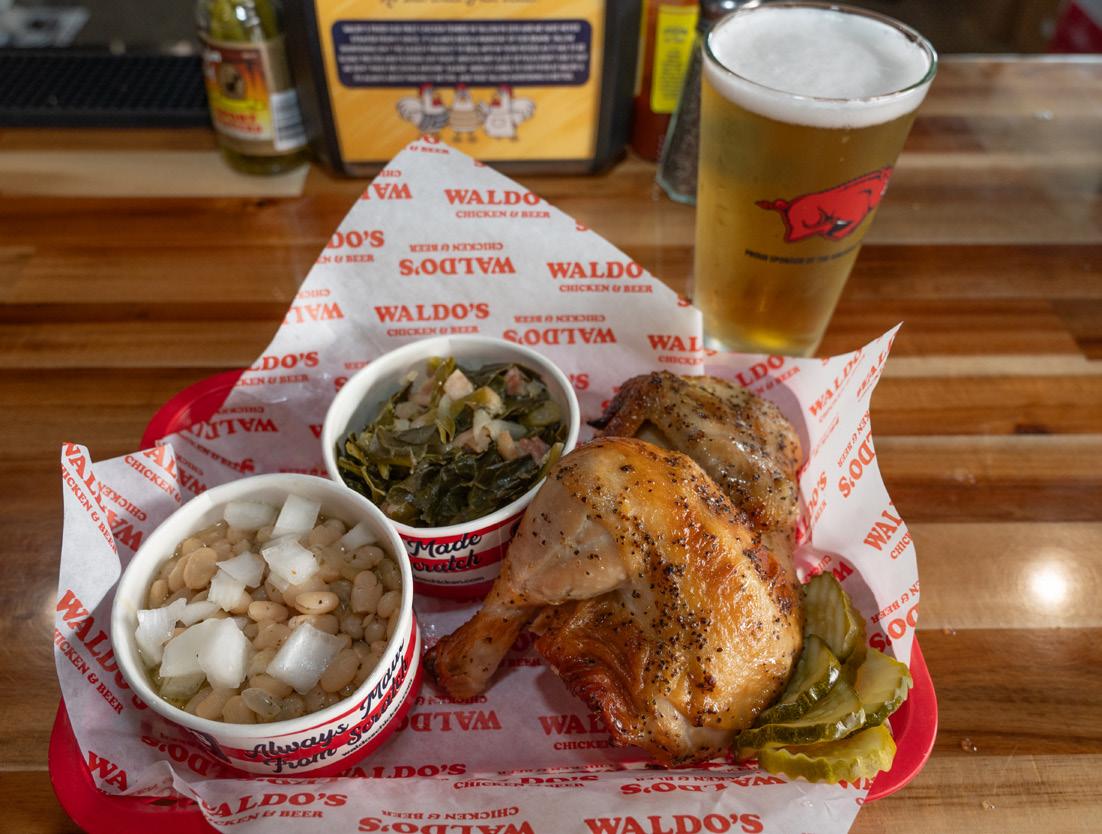
“Lately, I’m trying to be more mindful of what I’m eating, and the Rotisserie Chicken is absolutely my go to at Waldo’s. We marinate whole birds overnight in a slightly spicy, slightly sweet brine that keeps the chicken flavorful and juicy while it cooks on the rotisserie. I typically order the 1/4 white, but I prefer the 1/4 dark meat. I ALWAYS get the collards and white beans because they are my favorite sides and two of the most healthful options.”
BRECKENRIDGE VILLAGE | NORTH LITTLE ROCK | BASS PRO DR. WALDOSCHICKEN.COM
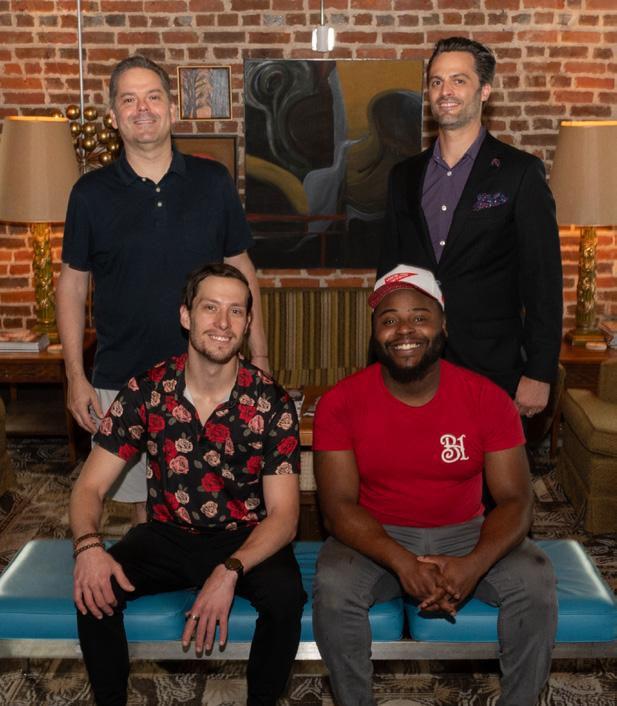

Whether you’re walking into Midtown at 3 p.m. for happy hour or 3 a.m.
after a bartending shift, Midtown has your cravings covered. Owner David Shipps added the longtime favorite “Gutbomb” to the menu years ago after former owner Maggie Hinson approved the kitchen experiment that became a beloved staple. Packed with a half-pound burger patty, cheddar and pepper jack cheese, bacon, Spam, fried egg and your choice of fixings, it’s worth every penny. They also serve a standout BLT made on the famous Midtown grill. Chefs Lawrence Pickard and Mel Jones bring 32 years of combined experience to every order—stop by and see them today!
“I’d recommend our Crunchwrap, it’s our take on the late night fast food classic made with our delicious barbecued meats from downstairs at Back Home.”-Chase Rittelmeyer, Attic Bar
“Our Charcuterie Board an ensemble of flavors you can explore in any way you choose, evoking delightful pairings with a wide array of beverages.” -Jared Browner, Bartender at Attic Bar
This ain’t your grandma’s attic. Sitting just above Back Home Barbecue is a cozy upstairs hideaway built for kicking back after a long day. The stairs are steep, but the vibes are high. With craft cocktails, eclectic charm, and a laidback atmosphere, Attic Bar is perfect for happy hour, celebrations, date nights, and private gatherings. It’s the ideal place to unwind after the workday so come on in for a drink and enjoy a little bar food with some Back Home flavor.
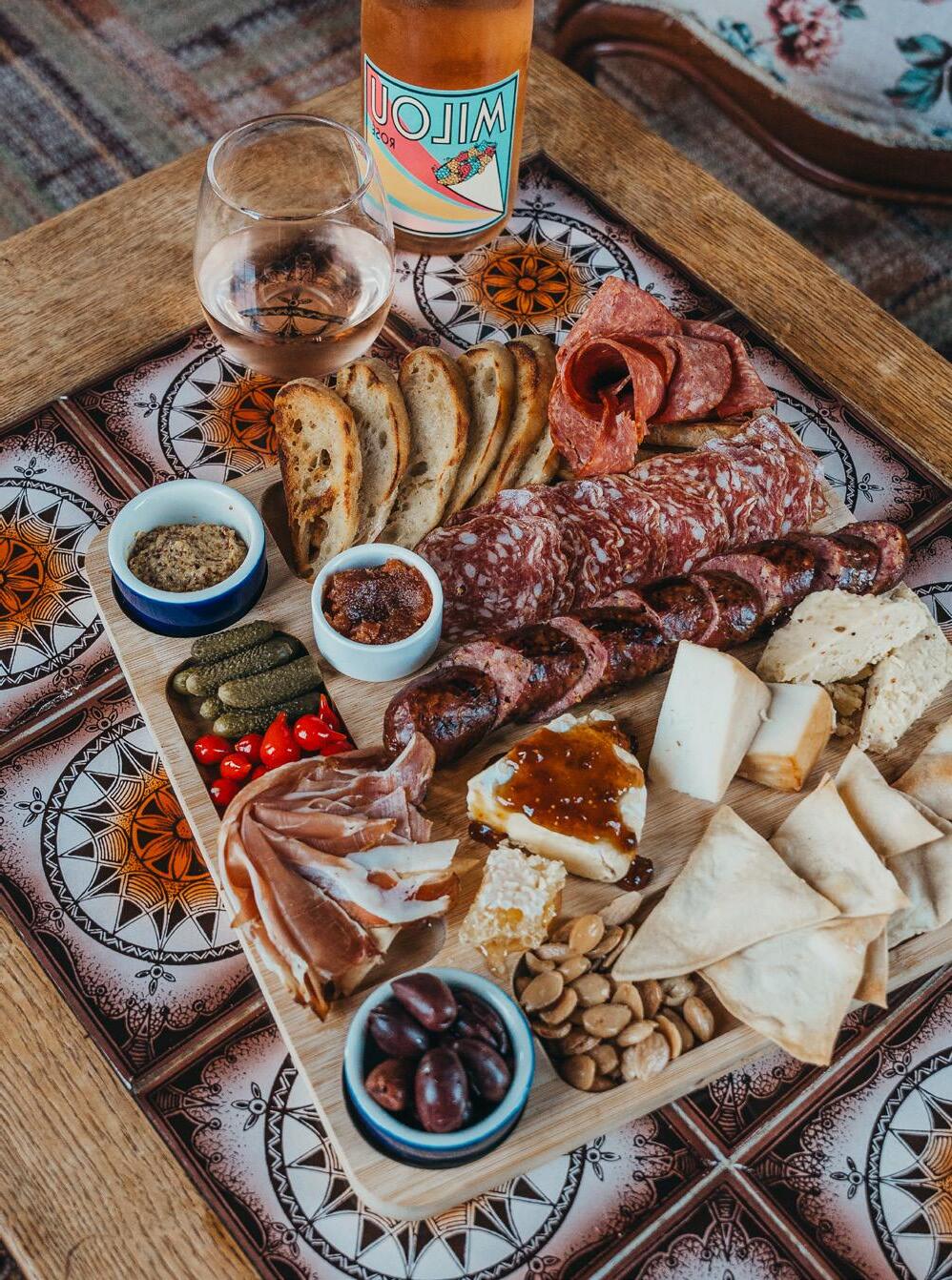
W. MARKHAM ST. | LITTLE ROCK
Prepare yourself for a culinary journey at Cache, where sophisticated “Southern New American” cuisine meets exquisite technique! This isn’t just dining; it’s an experience meticulously crafted by Chef Payne, winner of the 2026 Delta Diamond Chef award, and deeply inspired by both classical training and rich Cajun/Creole traditions.
Cache is renowned for its Friday Fried Chicken, a downtown legend served with double sides and cornbread — a truly elevated take on Southern comfort, based on a cherished family recipe. But the excitement truly ignites with Cache’s nightly dinner service. Everything is made fresh daily, presented beautifully. The star of the show for many is the fresh fish, flown in weekly. Imagine vibrant, cherry-red tuna from Hawaii, expertly prepared — perhaps with orzo, peppers and a delicate honey-soy glaze, a recent tantalizing special.
Beyond the beloved staples, the menu constantly evolves with two to three seasonal items introduced every few months alongside daily specials that push creative boundaries. Indulge in innovative dishes like a perfectly slow-cooked duck confit with a bright, fruity, citrusy sauce, or savor Cache’s popular shrimp and grits, infused with a delightful Cajun flair.
And for dessert? Prepare to be amazed. Cache boasts an incredible array of house-made sweet treats. Its creme brûlée features a perfect, crisp crust, while the warm bread pudding with cinnamon brioche croutons and bourbon caramel sauce is pure indulgence. Don’t miss the skillet cookie with ice cream, scratch-made key lime pie or the sweet biscuit with fresh strawberries and whipped cream. Cache offers a truly unforgettable dining experience, proving that world-class cuisine thrives in Little Rock.

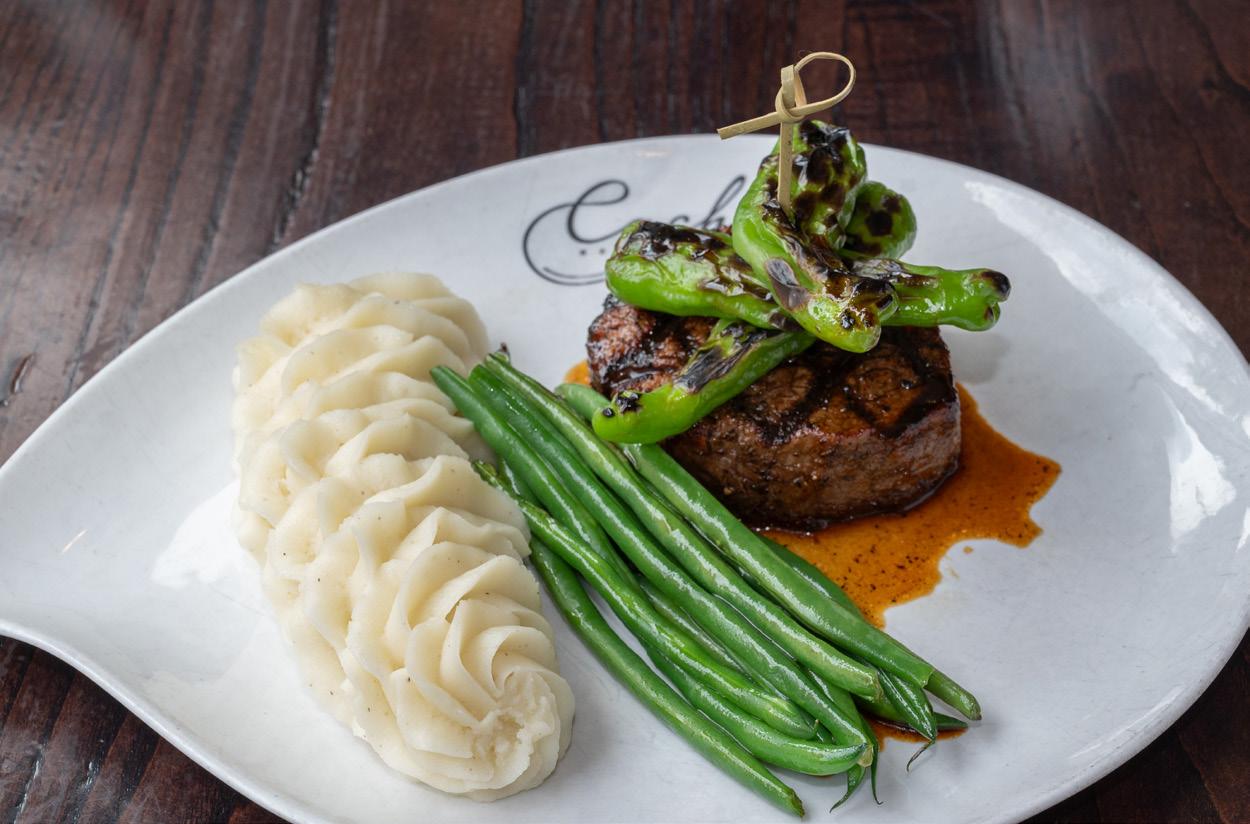

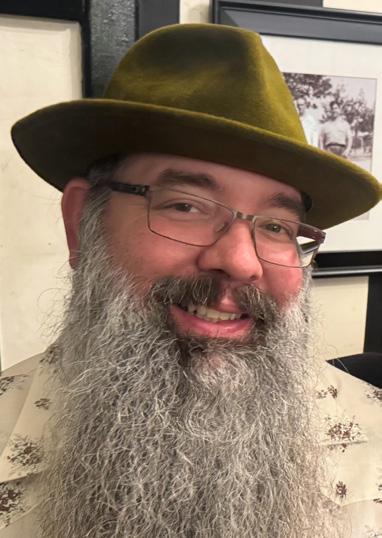
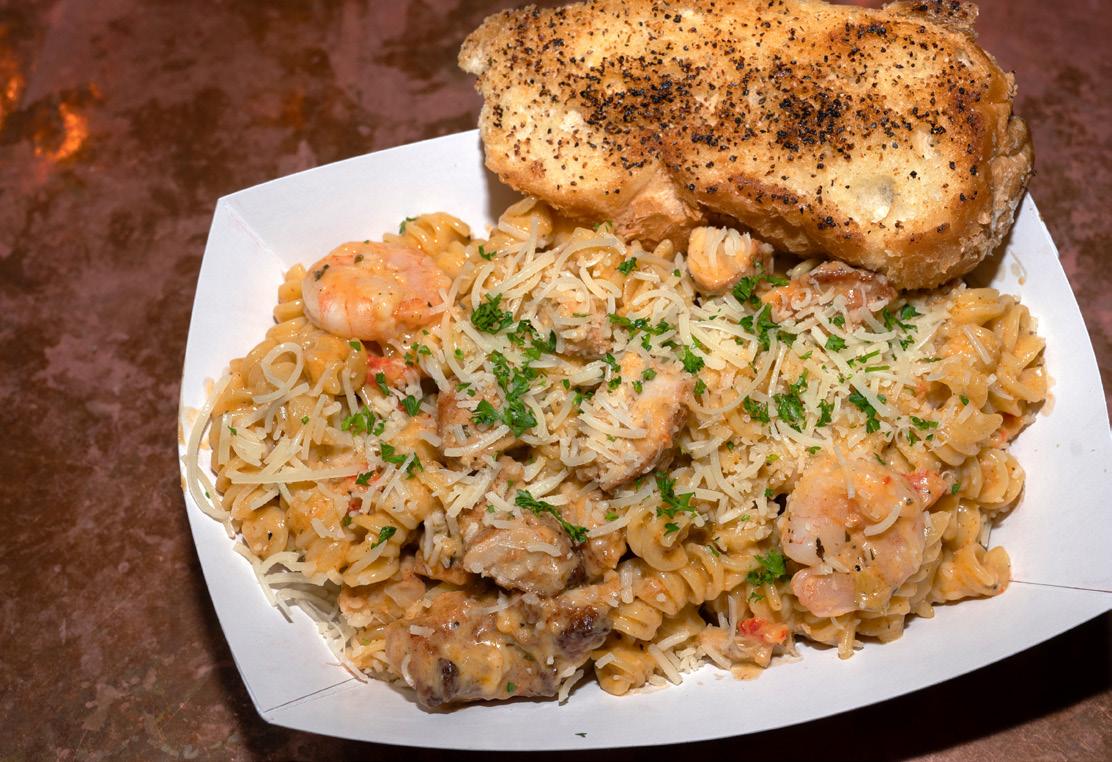
Picture this: a generous bowl of Four Quarter Bar’s French Quarter Pasta, where perfectly cooked rotini swims in a luscious, house-made sauce. Each forkful bursts with the taste of the Gulf, thanks to tender crawfish and plump shrimp, mingling with the smoky undertones of shredded chicken. A secret blend of Cajun spices adds a gentle heat, awakening your palate. This isn’t just pasta; it’s a comforting, flavorful journey to the French Quarter, complete with crusty garlic bread for soaking up every last bit of deliciousness. Craving satisfied.
415 MAIN ST., NORTH LITTLE ROCK FOURQUARTERBAR.COM
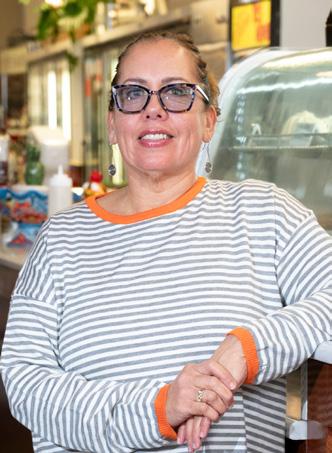
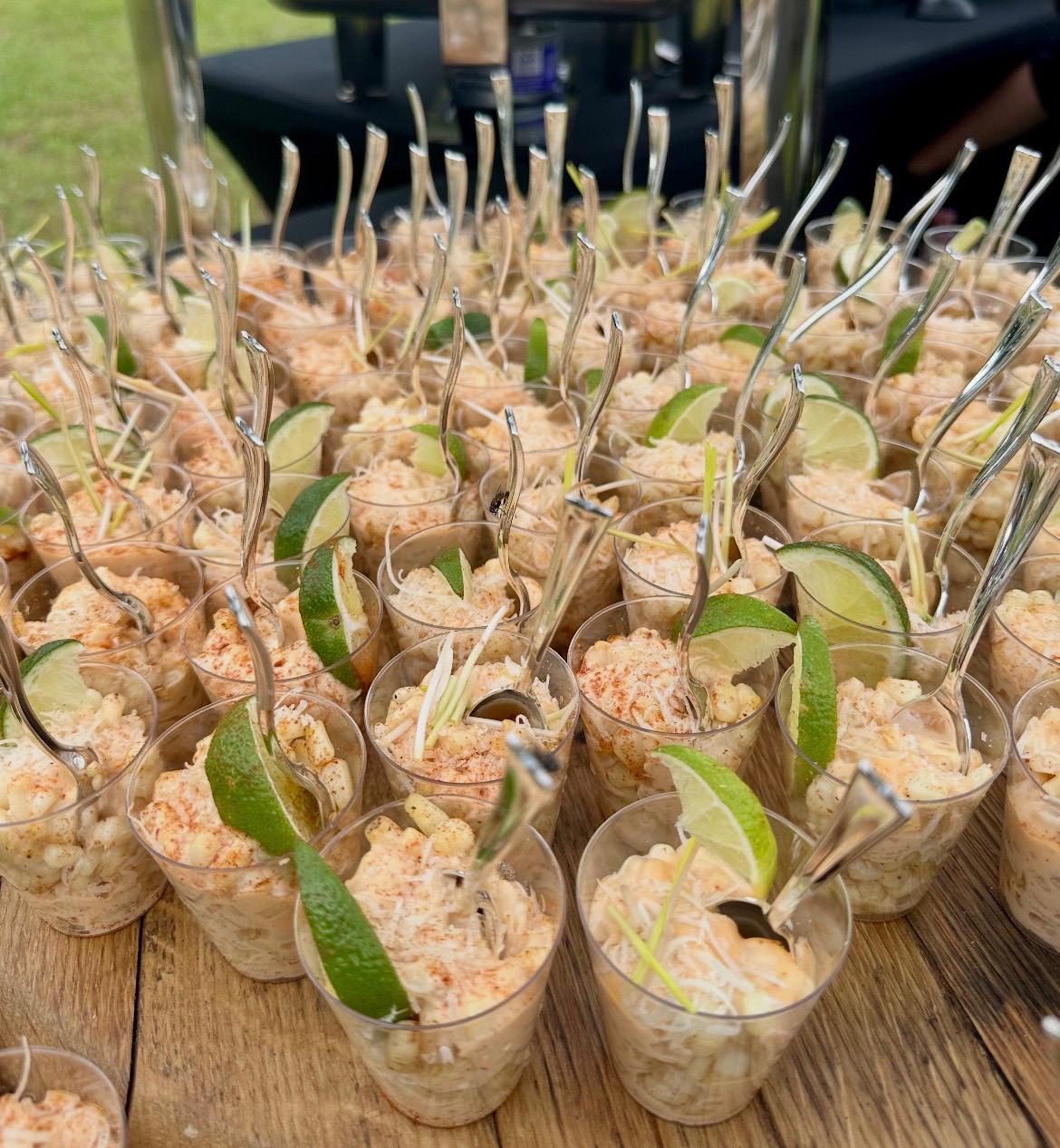
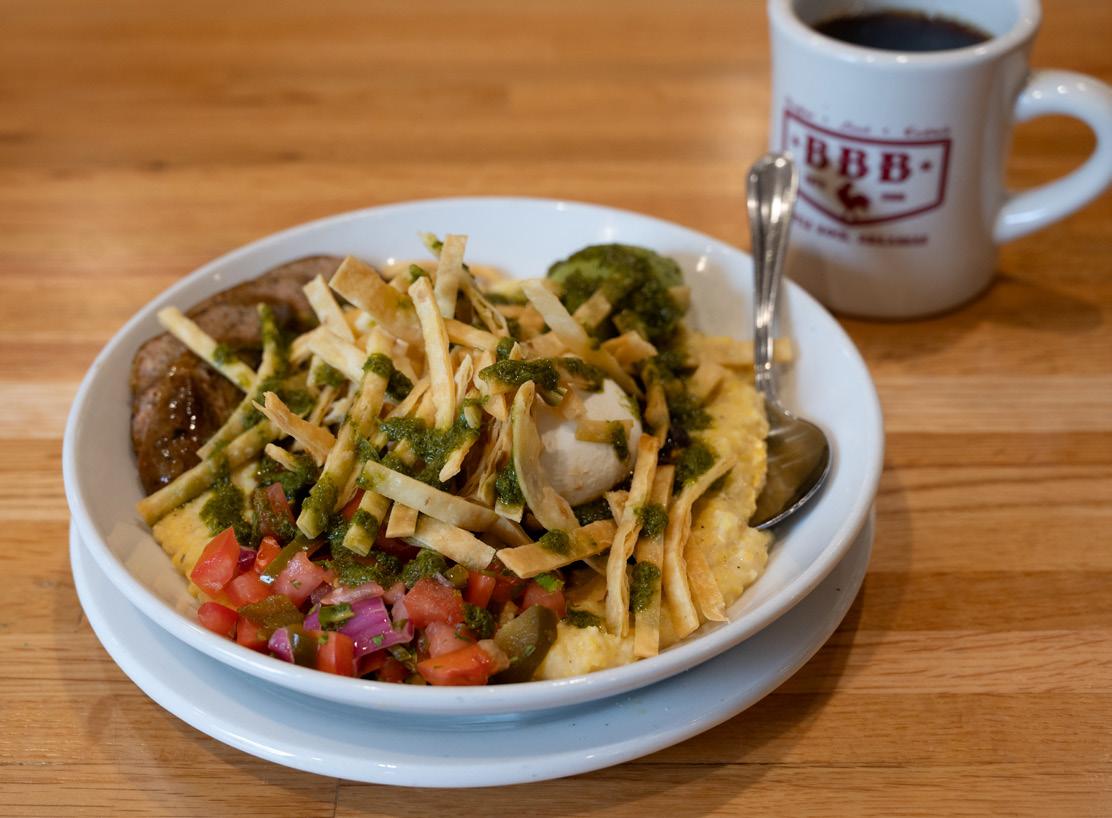
“I’ve spent too much time in Mexico not to love Huevos Rancheros and this is a fabulous nod to that classic dish. We serve it with our cheese grits, freshly made pico de gallo, zesty black beans and our pork and chicken sausage. I prefer my eggs poached, but many people order them with a fried egg as well. The fresh avocado and our Mojo Verde sauce brighten the entire dish beautifully.”
WEST LITTLE ROCK, DOWNTOWN BIGBADBREAKFAST.COM/LOCATIONS/LITTLE-ROCK/

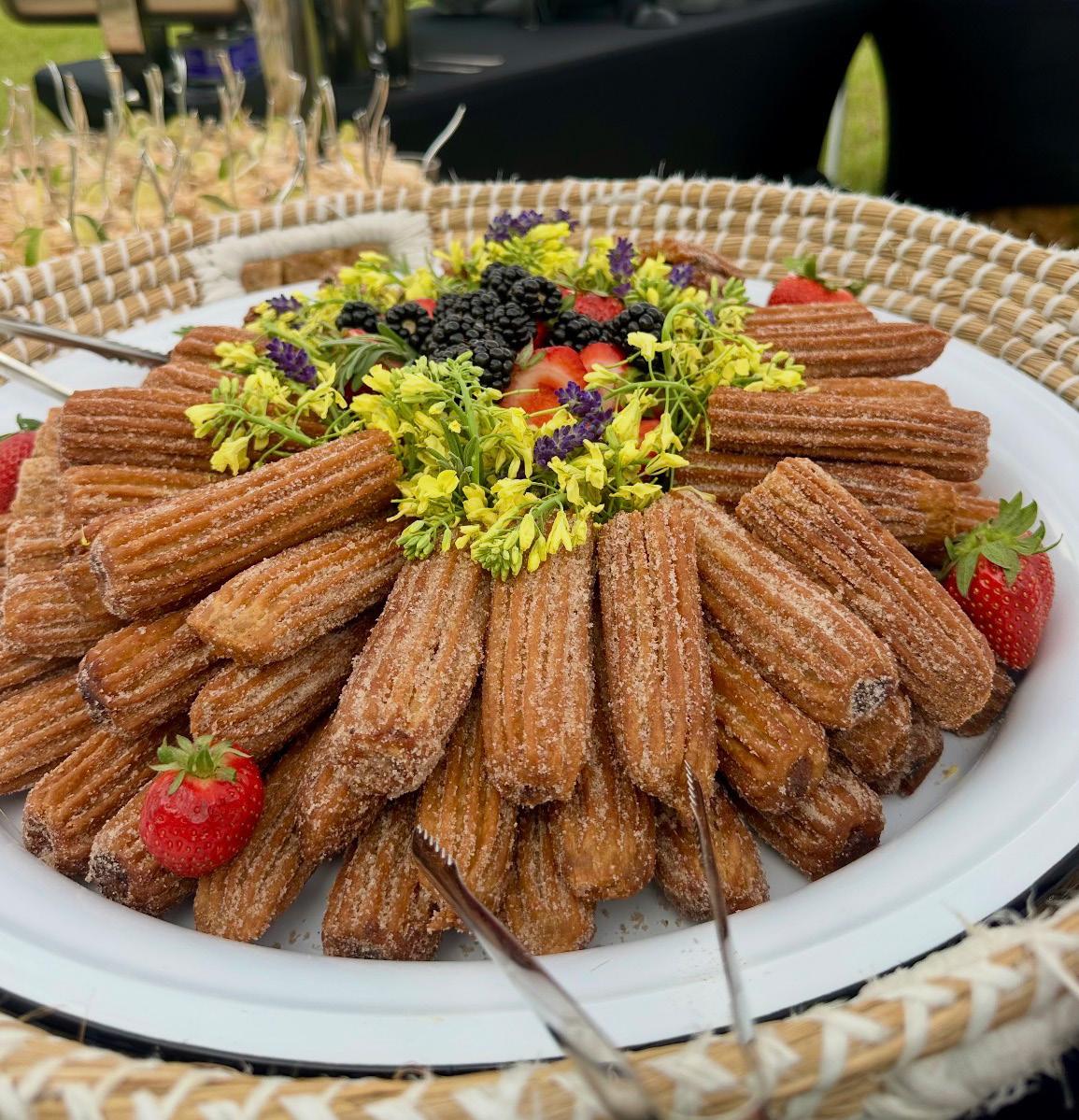
At Taco Mama, Chef Diana Bratton blends Texas roots, Arkansas hospitality and decades of culinary experience into a restaurant and catering brand built on bold flavor and scratch-made cooking. Taco Mama has become known for its vibrant Mexican cuisine — house-made tortillas, layered sauces, slow-smoked meats and fresh ingredients prepared with care and authenticity. But Bratton’s culinary style reaches far beyond one lane. Through Diana Bratton Catering, she creates elevated Southern dishes, refined brunch menus, elegant wedding dinners and chef-driven seasonal experiences inspired by Southern, Mediterranean, Latin and contemporary American influences. Whether serving tacos, tenderloin or thoughtfully crafted small plates, Bratton’s philosophy remains the same: “Flavor is everything.” Weddings, rehearsal dinners, office parties and much more! For catering inquiries, call or text 501-547-1590. MALVERN & SIDE TOWN | HOT SPRINGS | TACOMAMA.NET
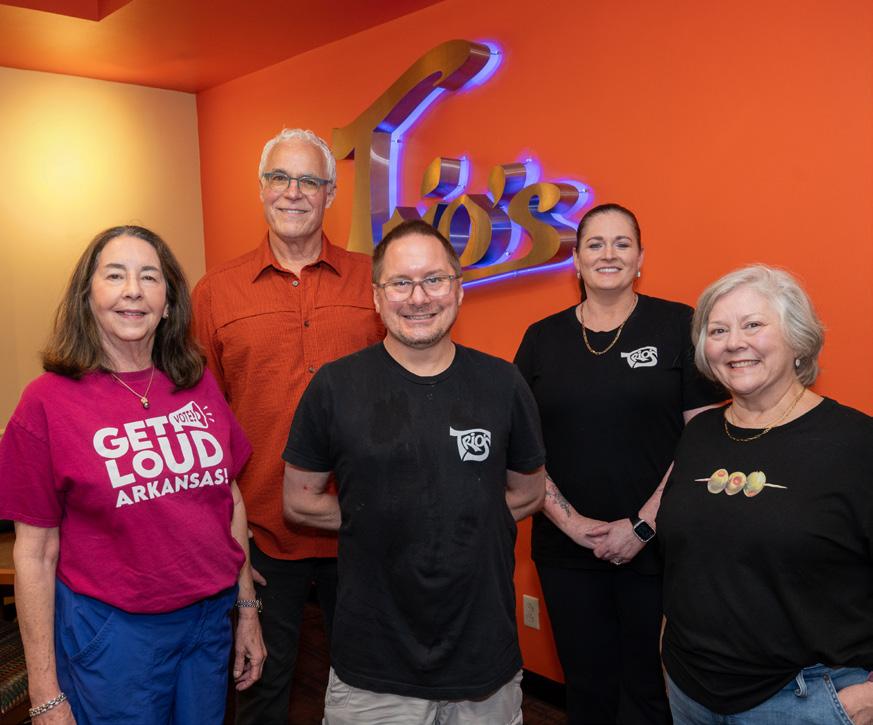
Trio’s celebrates our 40th anniversary this year. Our chef-driven menu and friendly service put us on the map in Central Arkansas. Great food and a staff-wide commitment to genuine hospitality are our trademark. We treat you like a guest in our own home. A few restaurants change their menu seasonally, but we change 11 items on our dinner menu every month. Several of our favorites never go away. Chicken Enchiladas or Voodoo Pasta anyone? Chef Shanna Merriweather, a 25-year Trio’s veteran, fosters relationships around Arkansas and beyond bringing the best of the season to you. Our regular guests remind us that we’re groundbreaking: one of the first restaurants to go non-smoking, to go green, and even to make Jello cool again. Trio’s is where innovation comes to dine, which doesn’t mean we don’t honor tradition. Several menu favorites made their way from the legendary Sam Peck Hotel kitchen … that’s a 75-year legacy!
If you haven’t been to Trio’s in a while, it’s been too long! We can’t wait to see you.

TRIO’S | 8201 CANTRELL ROAD SUITE 100 | TRIOSRESTAURANT.COM
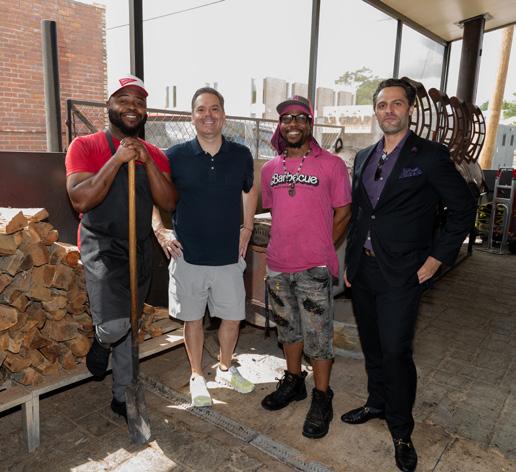
“Our Texas Twinkies are the most succulent bite ever brought to town. Jalapeno poppers stuffed with brisket, cream cheese, three different cheeses and stuffed with brisket then smoked and grilled to perfection. Perfect for an on the go snack.” -Curtis Guerrero, Pitmaster at Back Home
Self described “Fire Lord” of back Home BBQ, Shannon’s go to plate at Back home is a brisket plate, with fatty side brisket, along with some cream corn and cheesy potatoes. -Shannon Hartley, Pit Crew
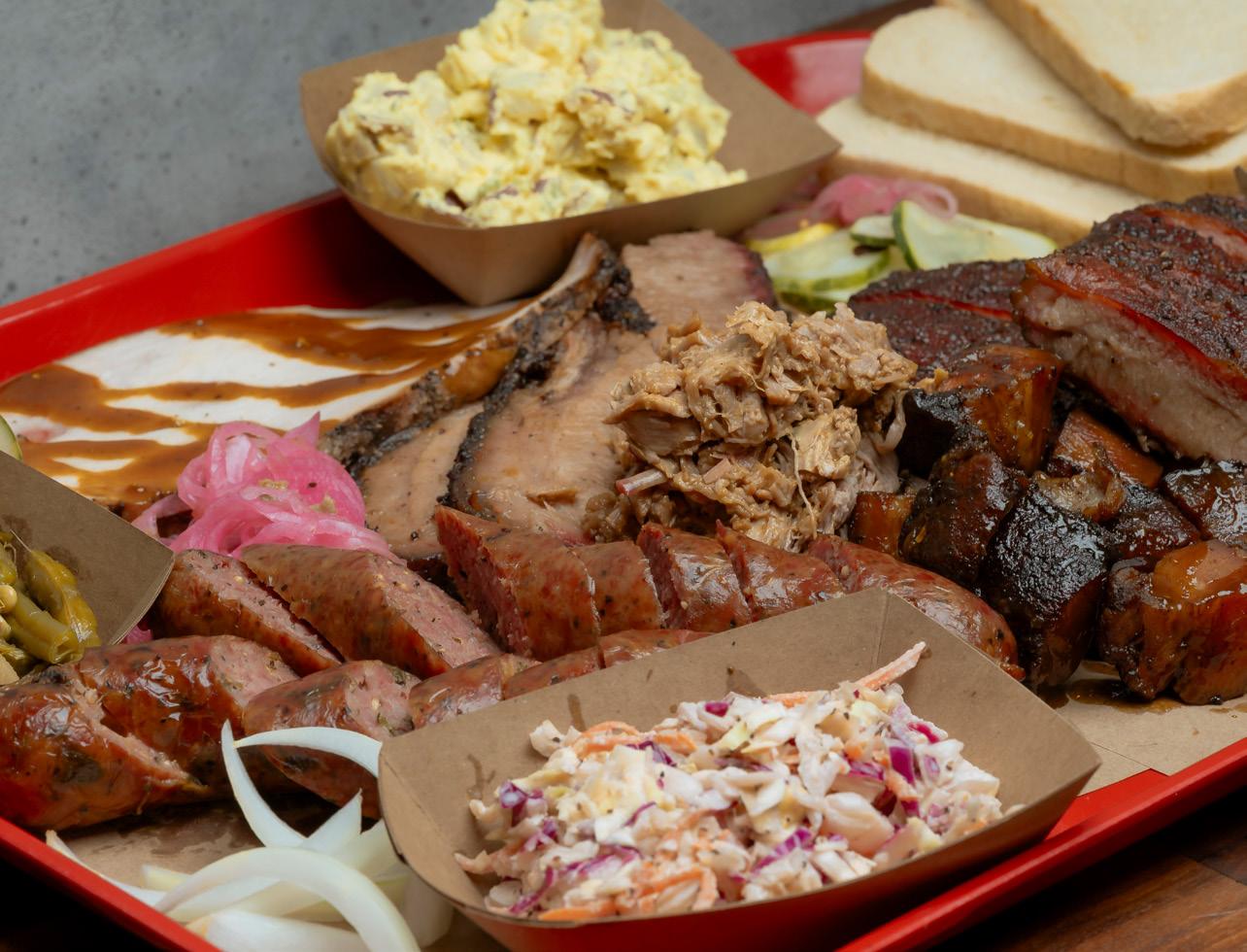
In the heart of Little Rock, Back Home Barbecue lives up to its name by bringing people together over familiar flavors, warm hospitality, and slow-smoked barbecue that feels like home. No matter where you’re from, there’s something comforting about the atmosphere. From the moment you walk in, it feels less like a restaurant and more like gathering around a table with family and friends. Behind every plate is a team effort led by skilled pitmasters who know great barbecue is built together, from the smokers to the serving line. That shared passion creates an atmosphere that feels relaxed, welcoming, and genuine, where strangers quickly become friends, and every guest is treated like family. In a city filled with flavor, Back Home Barbecue stands out by serving more than great food. It delivers the kind of meal and experience that keeps bringing people back home.
801 W. MARKHAM ST. | LITTLE ROCK | BHBBQ.COM
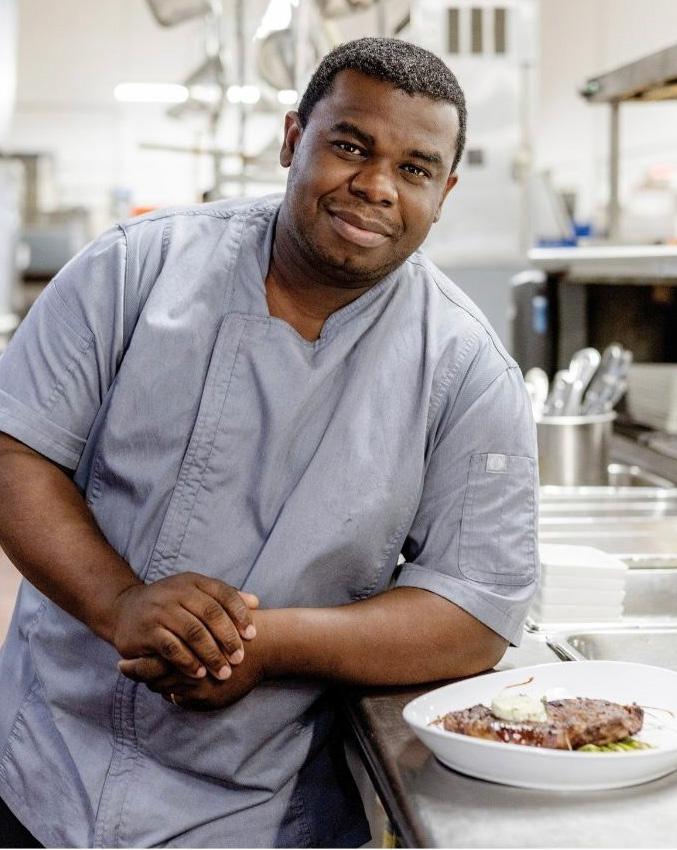
Step into a dining experience as legendary as The Arlington itself in the Venetian Dining Room, where historic elegance meets bold, unforgettable flavor in the heart of Hot Springs. From delicious breakfasts served seven days a week to elevated lunch and dinner offerings Thursday through Saturday, every meal is designed to delight. Guests eagerly gather for the beloved Friday Night Seafood Buffet for an abundant spread of fresh seafood and chef-crafted specialties, like the sushi display and seafood scampi flambe station, while the iconic Sunday Brunch remains a can’t-miss tradition for locals and visitors alike.
At the center of it all is Executive Chef John Teah, whose innovative culinary style brings fresh excitement to timeless classics. Combining refined techniques with vibrant flavors and Southern hospitality, Chef Teah creates dishes that are both comforting and extraordinary. Whether you’re savoring a leisurely brunch, gathering for an elegant evening meal, or discovering a new favorite dish, the Venetian Dining Room offers more than a meal — it’s a true Hot Springs dining experience steeped in history, flavor, and unforgettable charm.
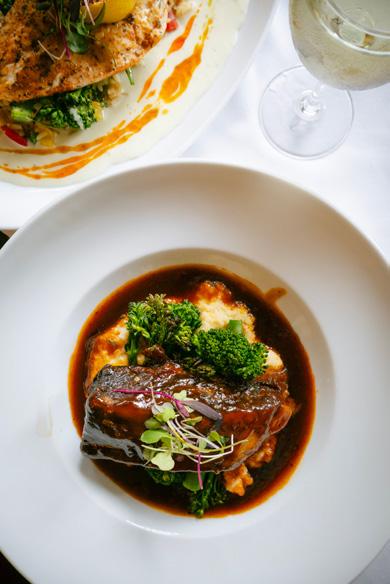
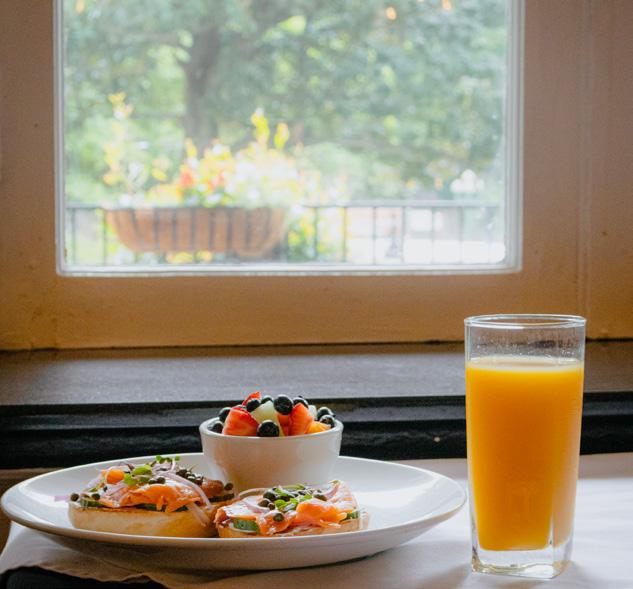

239 CENTRAL AVE. | HOT SPRINGS | ARLINGTONHOTEL.COM

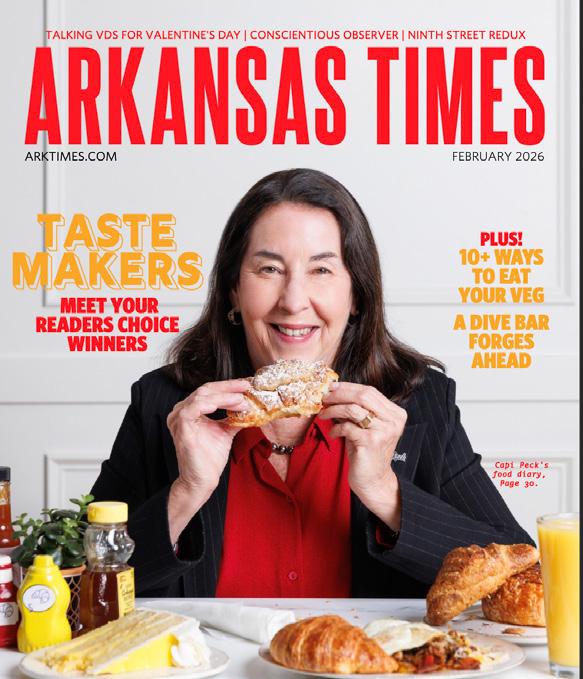

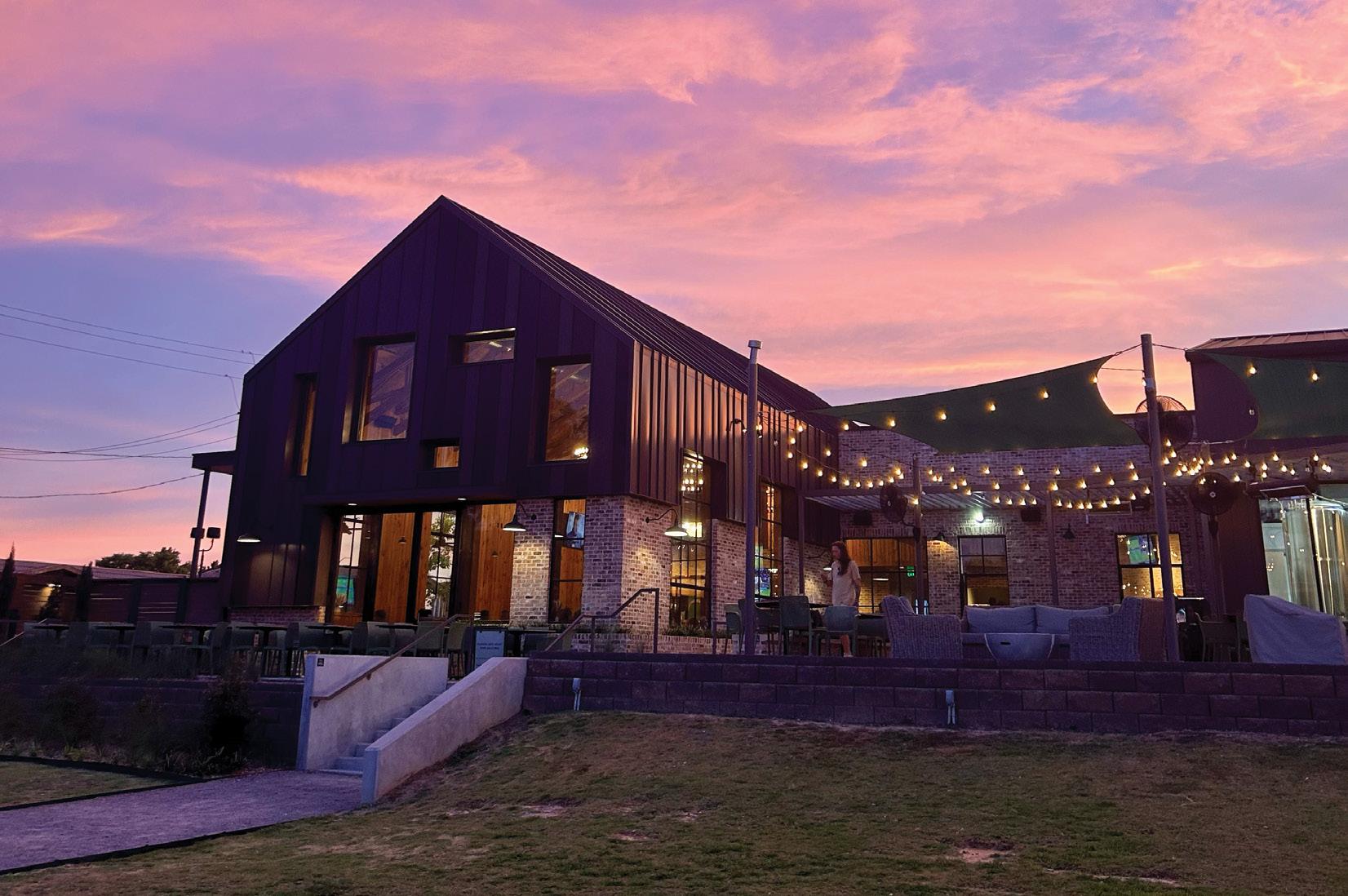
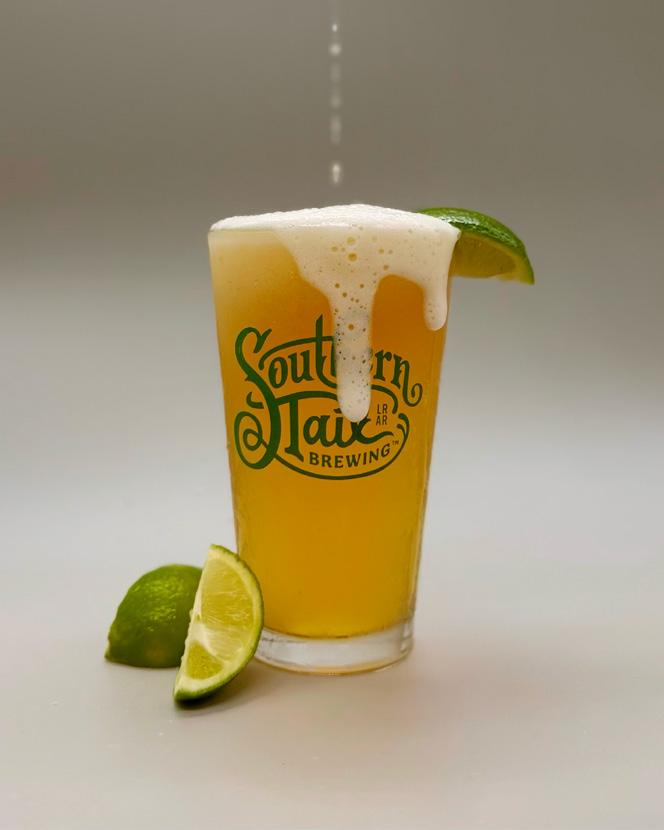

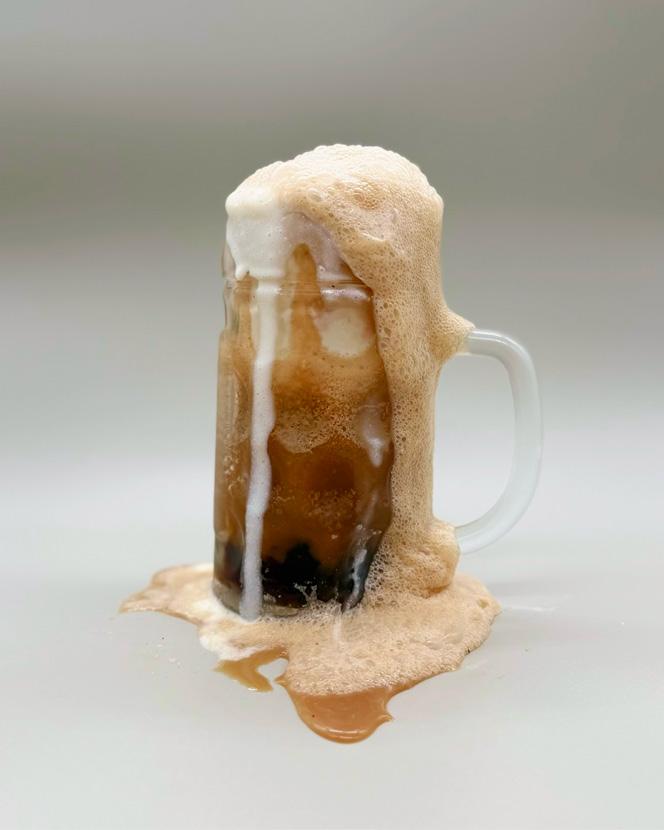
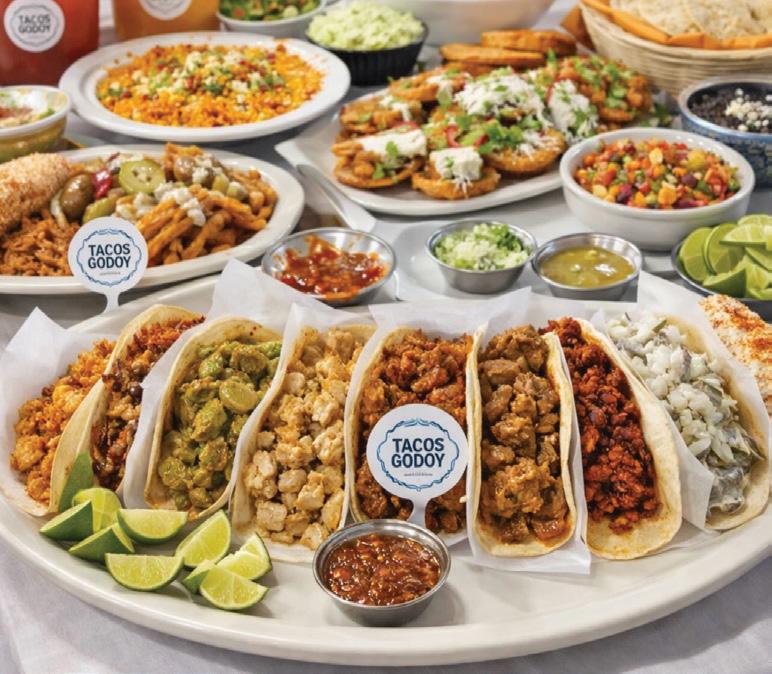

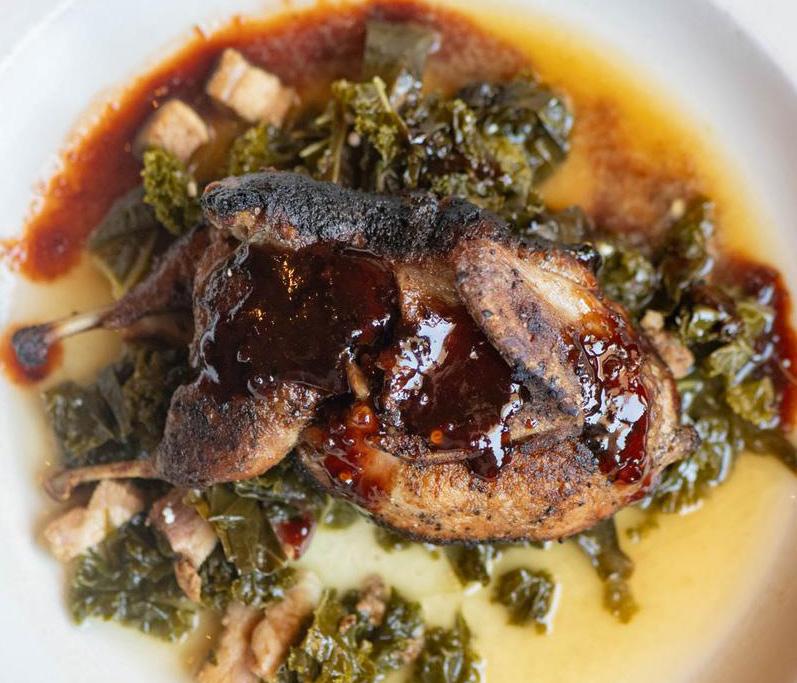


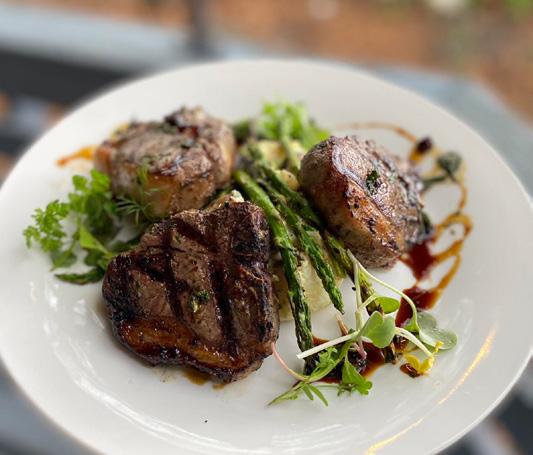







THE WORLD FROM LITTLE ROCK, ONE GROCERY STORE AT A TIME.
BY MILO STRAIN
ILLUSTRATION BY @OATMEALGOTH PHOTOGRAPHY BY BRIAN CHILSON
It’s easy to fall into a rut when it comes to grocery shopping. Humdrum chain options like Kroger and Walmart offer a level of convenience and variety that shoppers couldn’t have imagined even 20 years ago. You can even skip the store entirely, and instead have exploited and underpaid workers deliver your provisions right to your doorstep.
But to get lulled into a shopping routine is to forgo much of what Little Rock has to offer when it comes to groceries. If you know where to look and are down to get a bit out of your comfort zone, there’s a modest yet robust cohort of locally owned, international grocery stores ready to literally spice up your fridge and pantry with goods from around the world, most of which you’d never find on the shelves of your standard-issue bigbox outlet. We talked to the owners of five international stores in Little Rock to see what makes them unique and score some recommendations to help you get started on your international grocery journey.
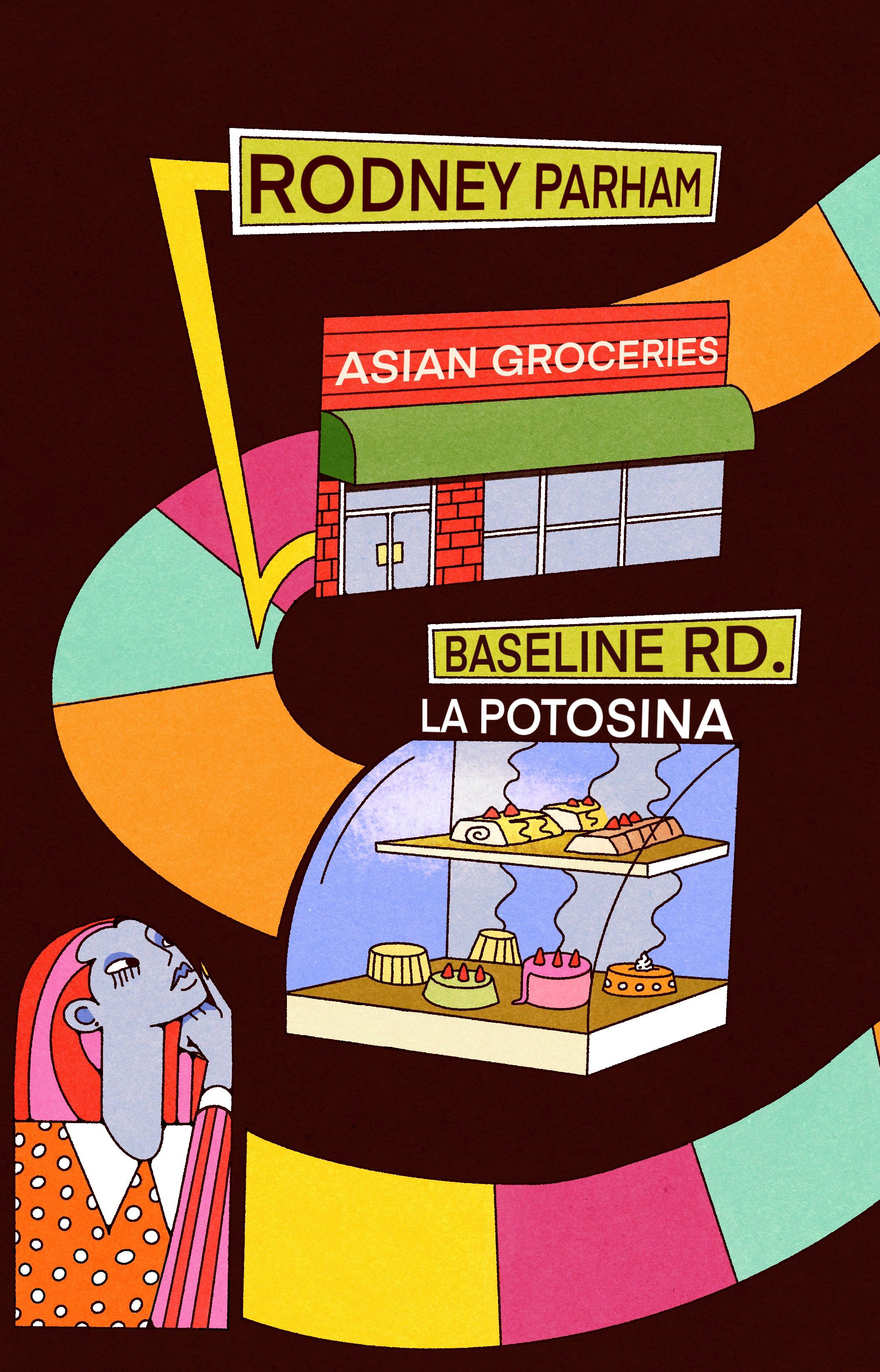
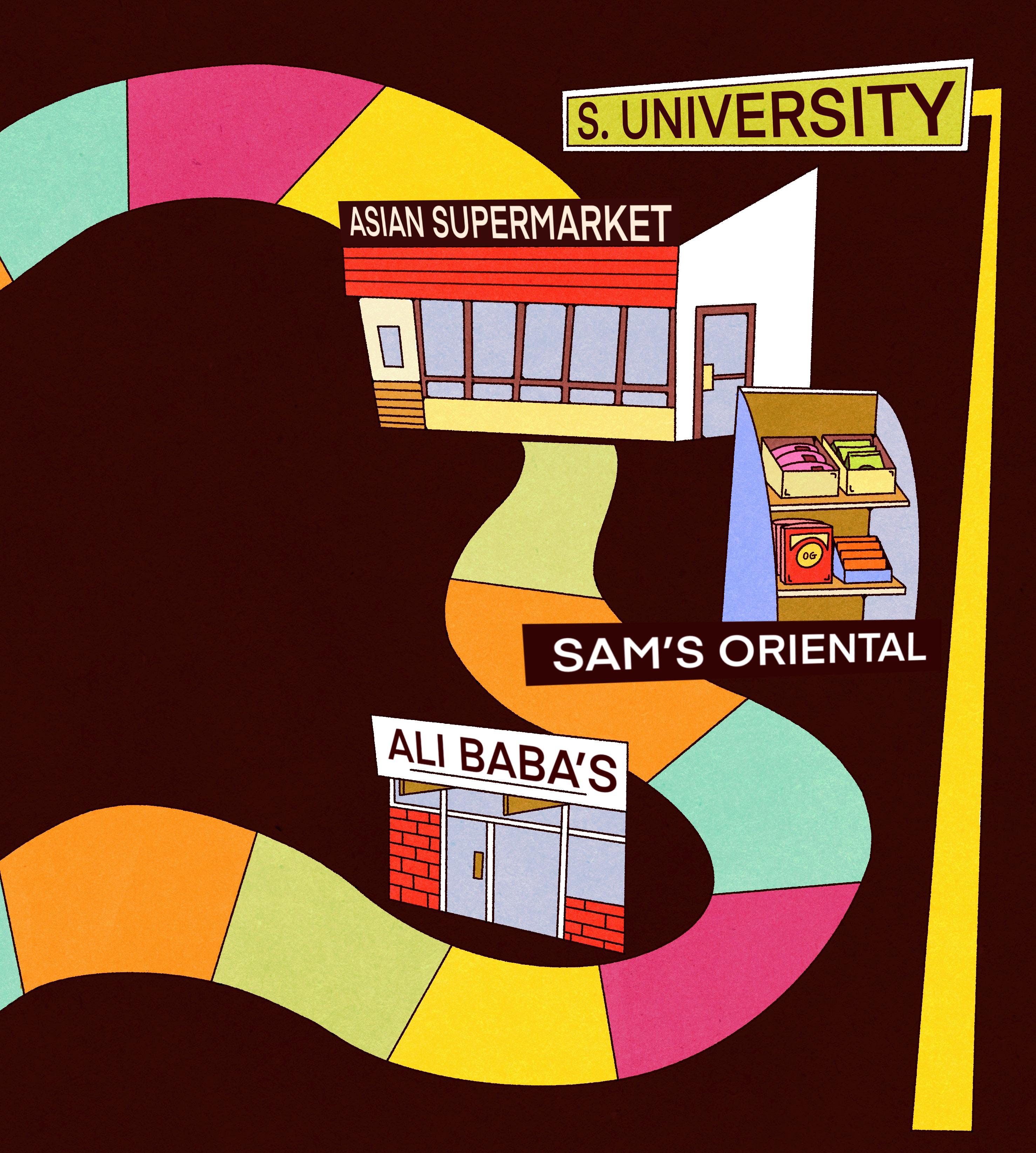
4601 S. University Ave.
Asian Super Market stands out as one of the most recent additions to Little Rock’s international grocery store scene. It’s also one of the largest in town, with a footprint somewhere between an Aldi and a Walmart. Kevin and Linh Nguyen, who opened Asian Super Market in 2023, have taken full advantage of the large space, offering a huge selection of fresh produce, meat and seafood, as well as shelves, fridges and freezers stocked with imported goods. There’s even a Vietnamese deli counter slinging banh mi sandwiches and other housemade grub. It might be the only place in Arkansas where you can get fresh-squeezed sugarcane juice. The Nguyens, originally from Vietnam, have lived in Little Rock since the ’90s and opened Asian Super Market to help fill a gap left by other Asian stores that didn’t focus on Vietnamese goods.
BESTSELLERS: Fresh produce and viral foods, such as fruit-shaped ice cream from China or Dongwon canned tuna from Korea, are popular.
FIRST-TIME RECOMMENDATION: Linh recommends trying South Korean Turtle Chips or Japanese chocolate-covered almonds.
RECIPE RECOMMENDATION: Linh suggests a simple dish using their fresh produce, such as stir-fried bok choy with garlic and oyster sauce.

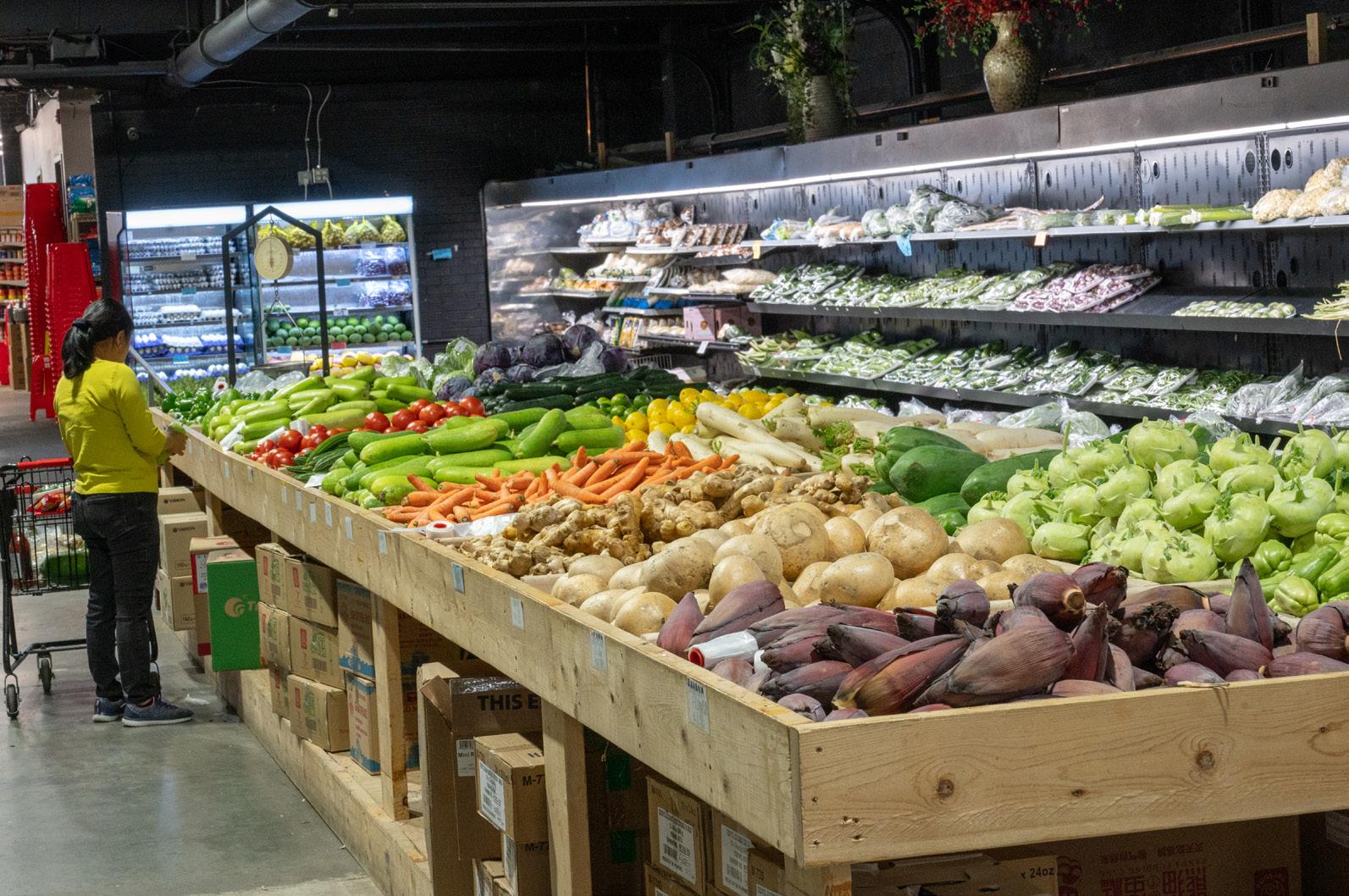
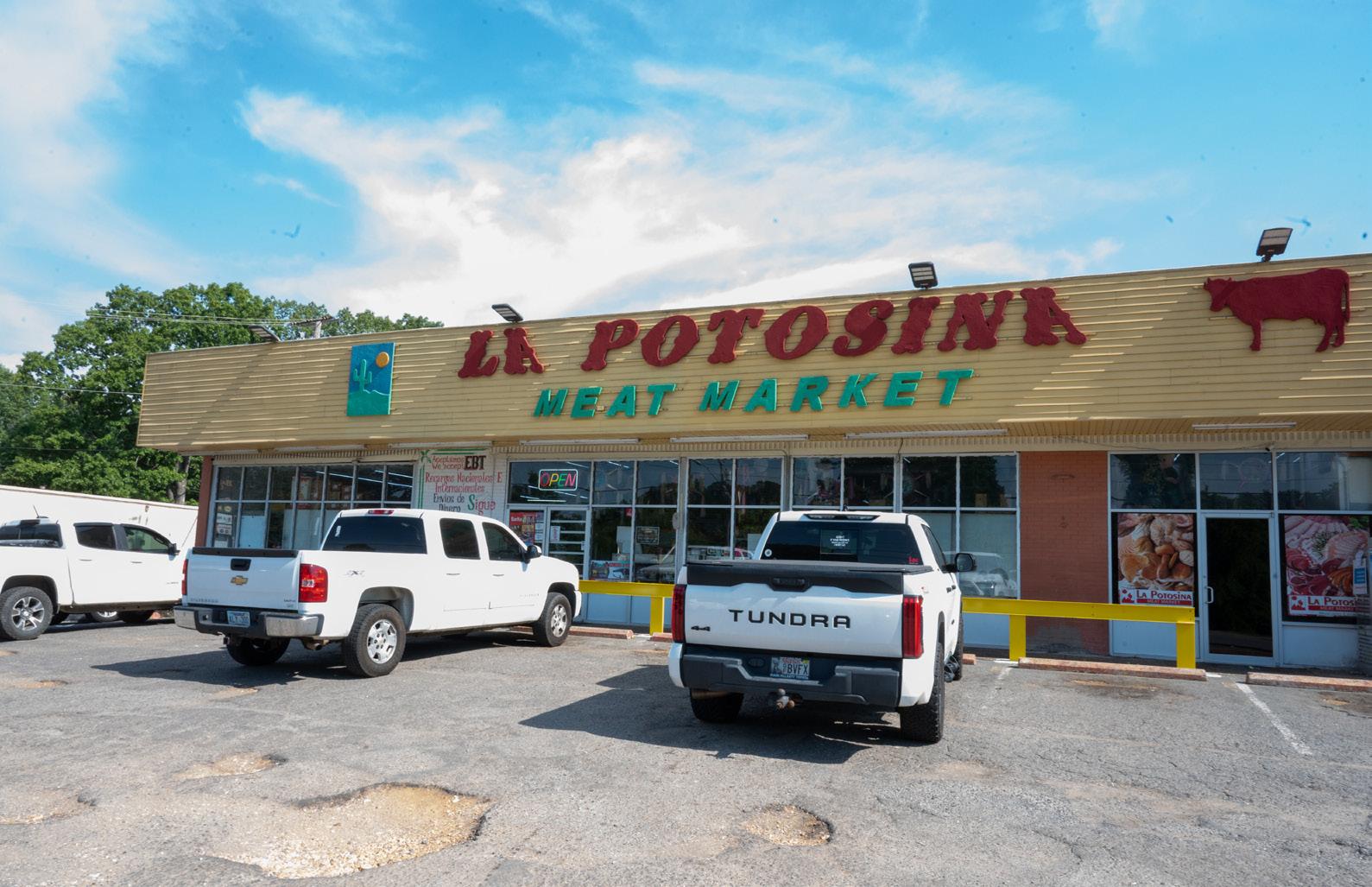

5412 Baseline Road, #A
We had to show some love to Southwest Little Rock, where La Potosina has been selling Mexican and Central American goods out of a strip mall on Baseline Road for over 20 years. Owner Jordan Narvaez took over the family business after his father and the original owner, Raul Narvaez, passed away, and he has grown the operation to three locations across Central Arkansas, with a fourth set to open before July. La Potosina is known for its marinated meats, Narvaez said, as well as its salsas. Beef, chicken, pork, taco meat and chorizo are all marinated in-house and sold ready to throw on the grill. La Potosina also operates a bakery in the store, pumping out freshly baked pastries and cakes on the daily. “We give you a cake that looks really presentable for an affordable price,” Narvaez said. La Potosina isn’t a large place, but its wares have caught some national attention; in 2024, the store was featured in an episode of “TrueSouth,” an Emmy-winning documentary series on the SEC Network exploring food and culture all over the South.
BESTSELLERS: Meats and pastries.
FIRST-TIME RECOMMENDATION: A slice of cake.
RECIPE RECOMMENDATION: Taco night with La Potosina’s house-marinated taco meat.


3704 S. University Ave.
Back on South University Avenue you’ll find Sam’s Oriental Store, possibly the oldest international market in town. Current owner Jiksu Shin took over Sam’s from his fatherin-law, who opened the store in 1988. Shin, like the majority of the inventory at Sam’s, hails from Korea. In addition to snacky staples like instant noodles and tteokbokki (chewy Korean rice cakes usually served in a sauce or soup), Shin’s mother keeps Sam’s Oriental stocked with homemade Korean delicacies like kimchi, kimbap and dried shredded squid. Sam’s Oriental is also one of the few places in town where you can get genuine sushi-grade fish, safe and ready to eat raw. “A lot of people don’t know we have sushi-grade salmon and sushi-grade tuna,” Shin said. Shin travels weekly to Dallas, home to Asian superstores like H Mart, to stock up on sushi-grade fish and other items. For years, Sam’s was also known for only accepting cash or checks, but we’re happy to report that’s no longer the case; bring that card and get some snacks.
BESTSELLERS: Spicy instant noodles.
Korean ice cream, Turtle Chips or Choco Pie, a Korean snack cake similar to a Moon Pie.
RECIPE RECOMMENDATION: Soontofu soup, a spicy Korean soup made with extra silky, soft tofu. Shin said people often come in wanting to make Korean recipes from YouTube videos, and he’s happy to help them grab the right ingredients and give some tips.
DAL HOUSE: Pankaj Patel, owner of Asian Groceries, stands behind the register at his store, which has been a source of South Asian goods for more than three decades. Whether you’re looking for a taste of home or want to expand your repertoire as a home cook, Patel has your back.
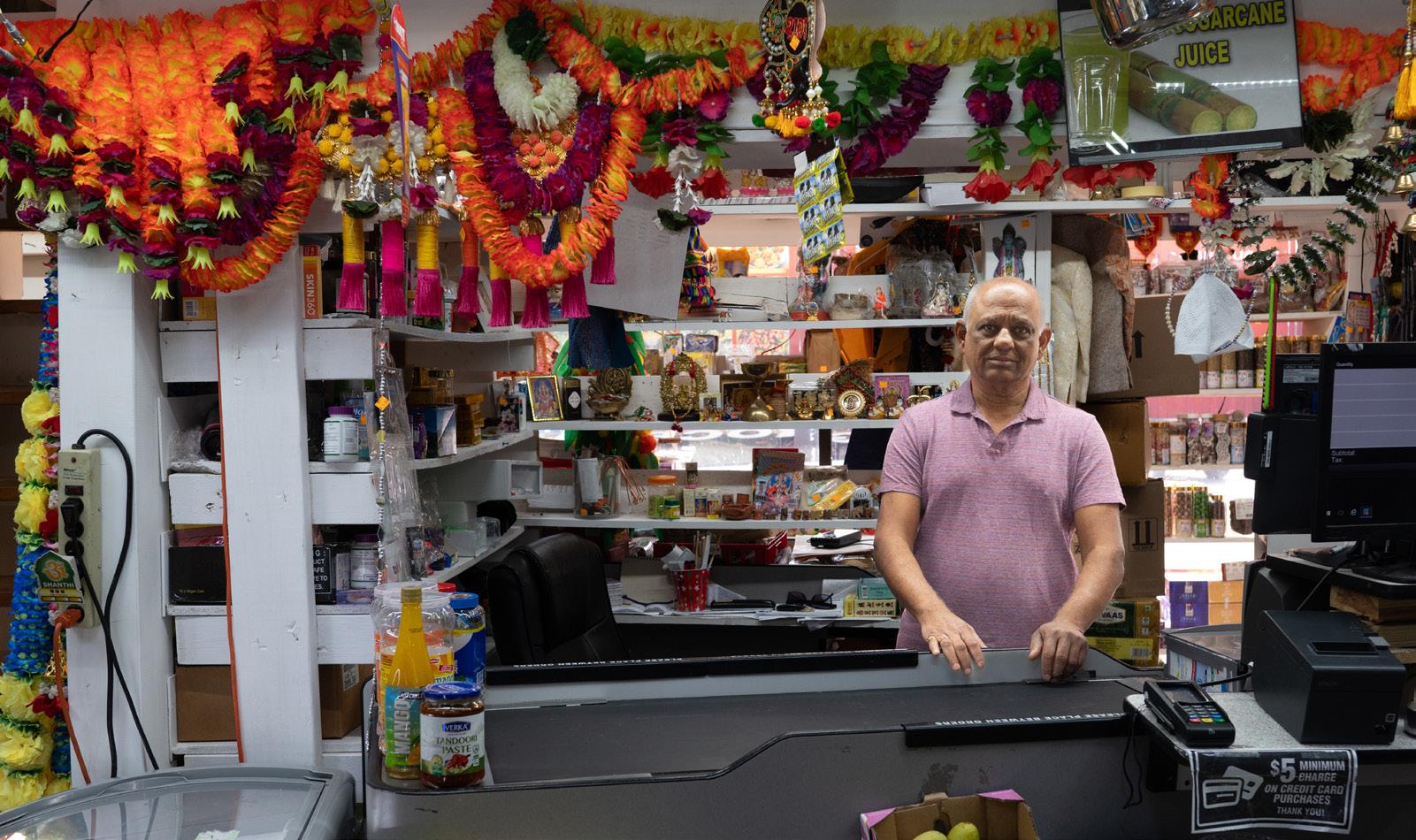
ALI BABA MEDITERRANEAN RESTAURANT AND MARKET
3400 S. University Ave.
A couple of minutes down the road on South University Avenue, where many of Little Rock’s international stores are clustered, is Ali Baba Mediterranean Restaurant and Market, tucked away behind a Subway. No disrespect to Subway (well, maybe some disrespect), but Ali Baba is the clear choice here. Owned by Mohammad Mousa, an immigrant from Jerusalem, Ali Baba is a full Mediterranean restaurant with a small grocery store inside. Several aisles of shelves house goods from all over the Middle East, such as baklava, dates, coffee, tea, olive oil, cheese and dolma. In one of the freezers on the wall hung what appeared to be an entire lamb. It isn’t clear if it was for sale or to be broken down and used in Ali Baba’s restaurant, but it felt very authentic. The restaurant has all your standard halal fare — hummus, kabab, shawarma, falafel, gyros, etc. — as well as American classics like burgers and Philly cheesesteaks.
BESTSELLERS: Baklava, dates, yogurt and cheese.
FIRST-TIME RECOMMENDATION: Hummus or falafel from the restaurant.
RECIPE RECOMMENDATION: When asked for a recipe suggestion, Mousa suggested people come and try the restaurant and leave the cooking to him, adding that the chicken shawarma with a mango juice to drink is a popular combination.
ASIAN GROCERIES
9112 N. Rodney Parham Road, #102
Rodney Parham Road is home to several interesting grocery stores — Drug Emporium, Natural Grocers and several international stores — but for this story, we turned our focus to a longtime anchor of the Ashley Square shopping center: Asian Groceries, which has been selling South Asian goods since 1995. Owner Pankaj Patel, who bought the store in 2021 after the original owner’s visa expired and he had to return to India, said Asian Groceries is the first Indian grocery store in Arkansas. The majority of the inventory is Indian, but they carry goods from Pakistan and Bangladesh as well, Patel said. It’s bigger than it looks from the outside, too. Meat, produce, frozen and shelf-stable food — it’s all there. A doorway in the back of the store leads to a restaurant space that’s been home to a few tenants over the years and is currently occupied by Vijayawada Indian House, which primarily does carry-out service but has a few tables for people to dine in.
BESTSELLERS: Frozen samosas and kachori.
FIRST-TIME RECOMMENDATION: Chickpeas, nuts and gathiya, a deep-fried Indian snack made from chickpea flour.
RECIPE RECOMMENDATION: Dal (dried lentils) with khichdi rice, or curry.
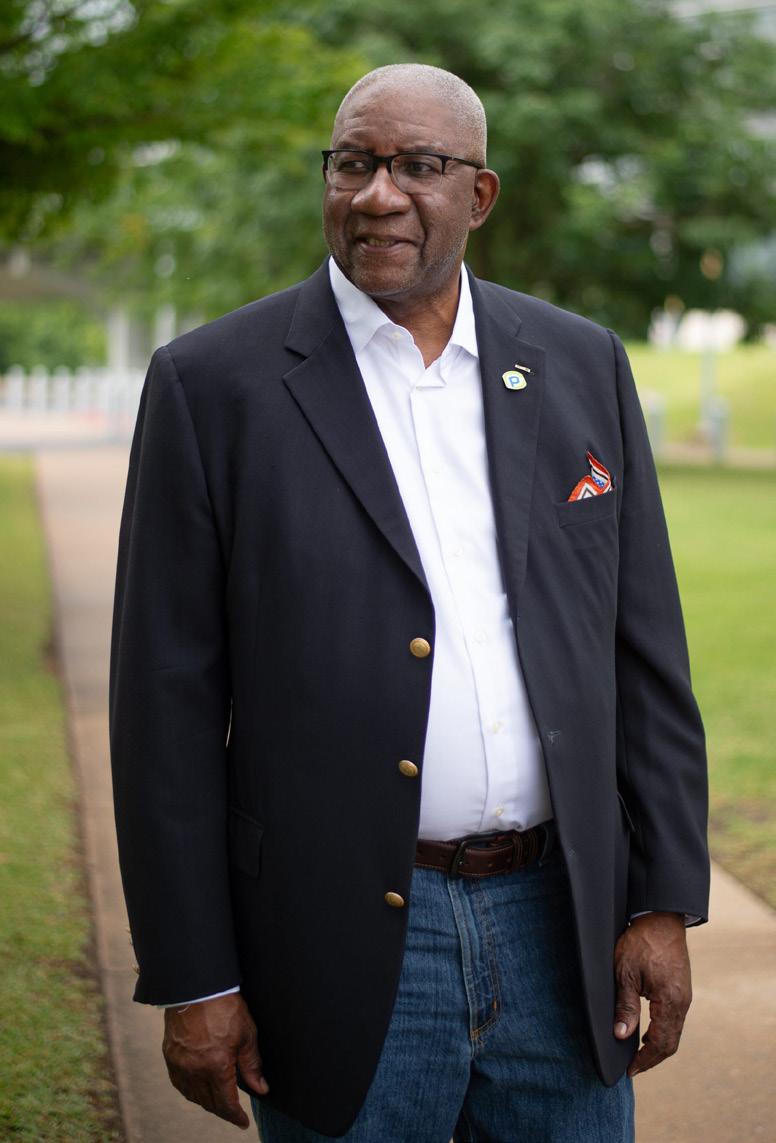
FAREWELL TO INNOCENCE APOLOGIES TO ALLAN AUBREY BOESAK AND ROLLO MAY
THURSDAY, JUNE 18
LUNCH 11:30 A.M. LECTURE 12 P.M.
COPPER GRILL LITTLE ROCK
GET YOUR TICKETS TODAY!
The Observer is slow to change. I once mentioned in a column many moons ago that one of my New Year’s resolutions was to simply find the drive to put up all of my art on the walls of my new apartment. Three years have passed now, and a good number of my photographs, paintings and posters still remain unhung and dusty. It should come as no surprise, then, that I’ve been meaning for a very long time — about as long as I’ve been neglecting the decorating, in fact — to check out Pedal Party, a very casual weekly cycling group formed in 2022 that bills itself on social media as “Little Rock’s raddest, chillest, most epic, least hyperbolic Monday SOCIAL ride w/ beer/food stops.”
Were there legitimate obstacles in the way of me going? Not really. I know one of the group’s founders, Dominique Kellybrew, from college, and he’s maybe the nicest guy in the world, offering more than once to track down a bike on my behalf. Plus, I’d heard that the whole affair is about as newbie-friendly as imaginable, firmly prioritizing relationships over rigor. Each Pedal Party route is different, but they typically span no more than 6 or 7 miles and involve multiple leisurely stops at downtown businesses, breweries and restaurants, where riders are encouraged to shop, fuel up and mingle.
While I was busy making excuses, the rest of Little Rock, it seems, discovered the wonders of Pedal Party. When I first learned about the group, which meets every Monday from April to October (and on occasional days in the off-season), it was averaging about 50 rid-
ers a week; that already impressive number has more than tripled since, with the current record for most participants in a single meetup being 243. The “party” in Pedal Party is clearly no joke.
In early May, I borrowed a bike from a friend and finally convinced myself to show up for my inaugural ride. Upon arriving at the starting location, I found dozens of pedalers of all ages spilling out of Bella Vita Jewelry and The Window on Sixth, gifts and goodies in hand just in time for Mother’s Day. More riders clustered outside, small groups of friends and strangers forming on the sidewalk and in the parking lot across the street. A not insignificant number of folks were dressed in “Star Wars” garb, this being “May the Fourth,” after all. Pedal Party was proving to be as wholesome as advertised.
A call over a megaphone ushered in the start of the ride, and once I gained my balance, I began turning over the thought that always comes on the rare occasion that I step on a bike: Why don’t I do this more often?
The bicycle is a sacred invention, so simple yet elegant, and it fits to the body like a glove, a sort of natural extension of the legs. And rather than being designed for obsolescence like so many pieces of contemporary tech, bikes are in it for the long haul. Sure, modernity offers bells and whistles not available to previous generations, but if we’re being honest, how fundamentally different are today’s bicycles from those of 100 years ago? Was this basic act of transit actually making me feel a faint kinship with my ancestors?
The next thing I was struck by was just how satisfying it is to ride in a pack, spreading over the full breadth of the road. Forget sidewalks or bike lanes — when you’re traveling in these kinds of numbers, cars have no choice but to bow down. We own these streets! I thought to myself, tapping into a distant wavelength of childhood rebellion and freedom. One rider even felt safe enough to let his dog run leashless beside us for the full duration of the route.
Glancing around, it dawned on me just how many fellow riders I recognized. I quickly spotted a co-worker, some acquaintances from college, and an older couple who were regulars at a restaurant I used to work at years ago. I felt a connection to the attendees I didn’t know, too, as if we shared an unspoken agreement that we were all looking out for one another. At busy intersections, a rider or two would invariably plant themselves sideways, stopping traffic like the volunteer crosswalk guards of my youth.
By the time we’d been riding for 15 or 20 minutes, after onlookers from many a porch had waved to us in neighborly pride, I started to wonder if maybe Little Rock is more special than I’ve given it credit for. I’ve existed on the precipice of claiming this place as my home for longer than I’m proud to admit, and maybe it’s time to take the leap. This city will never be the hip and bustling urban center I fantasize about living in, but there are good people here who’d rather be together than alone, who’d rather be moving than static, and that has to count for something.