• Five-minute shuttle to casino (24/7 )
• Spacious pull-through sites
• Clean, hot showers

• Laundry facilities
• Pool, playground, and game room
• Free Wi-Fi


Recipient of the Distinguished Alumnus Award from The University of Arkansas in 2010

• Five-minute shuttle to casino (24/7 )
• Spacious pull-through sites
• Clean, hot showers
• Laundry facilities
• Pool, playground, and game room
• Free Wi-Fi
Recipient of the Distinguished Alumnus Award from The University of Arkansas in 2010
“In Reading Whispers, Book of Triple Haiku, J. Chester Johnson offers an evocative innovation to the haiku. The Japanese form is one that offers a great spatial experience by presenting images that go beyond a narrative frame. J. Chester Johnson goes further by juxtaposing three haiku and adding a title to allow the images to reverberate even more. His American-style haiku follow in the footsteps of those Japanese writers who wrote linked verse. In this case, he arranges the links. A heartfelt collection!”
Kimiko Hahn
2023 Recipient of the Ruth Lilly Poetry Prize from the Poetry Foundation for Lifetime Achievement in Poetry.













J. Chester Johnson, Poet

BlazeVOX [ books ]
ISBN: 978-1-60964-524-3


“In his remarkable book, Reading Whispers, Book of Triple Haiku, J. Chester Johnson has a haiku warn a poet ‘the longer you try/ the smaller I get’, but there is nothing small in these pages; in fact, this is a book that shows you how much space there is between these strong, wise and open lines. Enough space to untangle our overloaded days. Enough space to fit a world, once the reader accepts this poet’s invitation to sit, take a breath. The closer we get the more we know.”
Cornelius Eady
2025 Recipient of the Wallace Stevens Award from the Academy of American Poets for Lifetime Achievement in Poetry.
SAMPLE VENUES FOR WRITINGS AND RELATED PRESENTATIONS BY J. CHESTER JOHNSON
The New York Times, BBC, Washington National Cathedral, The Carter Center, Harvard University, Trinity Church Wall Street, Library of Congress Shop, Times Square Jumbotron, Troubadour (London)
St. Paul’s Chapel & Selected Shorter Poems: “Undoubtedly, this is a work headed for literary permanence.”– Major Jackson. In 2017, American Book Review said of the signature poem: “Johnson’s ‘St. Paul’s Chapel’ is one of the most widely distributed, lauded, and translated poems of the current century.”
Now And Then: Selected Longer Poems: “The scope of Now And Then is epic. It provides its readers with the same amplitude of intelligence, passion and formal achievement as our great American epics – Melville’s Moby Dick, Whitman’s Leaves of Grass, and Ginsberg’s Fall of America.” – Lawrence Joseph
Damaged Heritage: The Elaine Race Massacre and A Story of Reconciliation: “Only a poet can see this clearly, be this honest, and still hope this much.” – Douglas A. Blackmon, Winner of the Pulitzer Prize



Auden, The Psalms, and Me: “Both poets, Auden and Chester Johnson, challenge us. . .extending the public and political role of the poet writing in his day and writing to the eternal struggle of man.” – Literary Matters (published on March 4, 2018) by the Association of Literary Scholars, Critics, and Writers (ALSCW). Psalms of The Book of Common Prayer : J. Chester Johnson (1971-1979) and W. H. Auden (1968-1971) were the two poets over the course of the twelve-year retranslation of the Psalms by the national Episcopal Church (USA); those retranslated Psalms are now contained in The Book of Common Prayer and have become a standard. Johnson is the sole surviving member of the Psalter Retranslation Drafting Committee that produced the version contained in The Book of Common Prayer

Natural State bests, picked by our staff and readers.
34
Gitti Studio is your one-stop shop for vintage women’s clothing at a reasonable price.
By Elizabeth L. Cline
38 ELAINE IN FOCUS
Photographer Harlan Bozeman turns his lens on contemporary life in a Delta town with a violent racial history.
By Frederick McKindra
44 IT’S A DRAW
The couple behind Herron Horton Architects reflects on 25 years of inspired design.
By Daniel Grear
50
Fayetteville burlesque artist Raven Rose shakes and shimmies to the top of the list. By Anne-Elise Tidwell
54 ROGERS
Is Heirloom at The 1907 the most luxurious restaurant in Arkansas? By Milo Strain
63 TALLY UP
The winners and finalists from our annual readers poll.
Q&A: With Parker Reid, fresh face of The Van.
First Person: Scholar Jay Barth considers the politics of joy. Inconsequential News Quiz.
15
Evanescence at Simmons Bank Arena, “Joseph and the Amazing Technicolor Dreamcoat” at The Rep, Wic Whitney at the White Water Tavern, The Effigies at Vino’s and more.
A daily audience arrives to catch a glimpse of the shackled detainees caught up in immigration enforcement’s web.
By Byron Tate
A young journalist throws in the towel — at least for now. JULY 2026
90
The second act of Sibling Rivalry Press.
By Daniel Ford
94 HISTORY
The fight for direct democracy in Arkansas is more than a century long.
By Ernest Dumas
98 THE OBSERVER
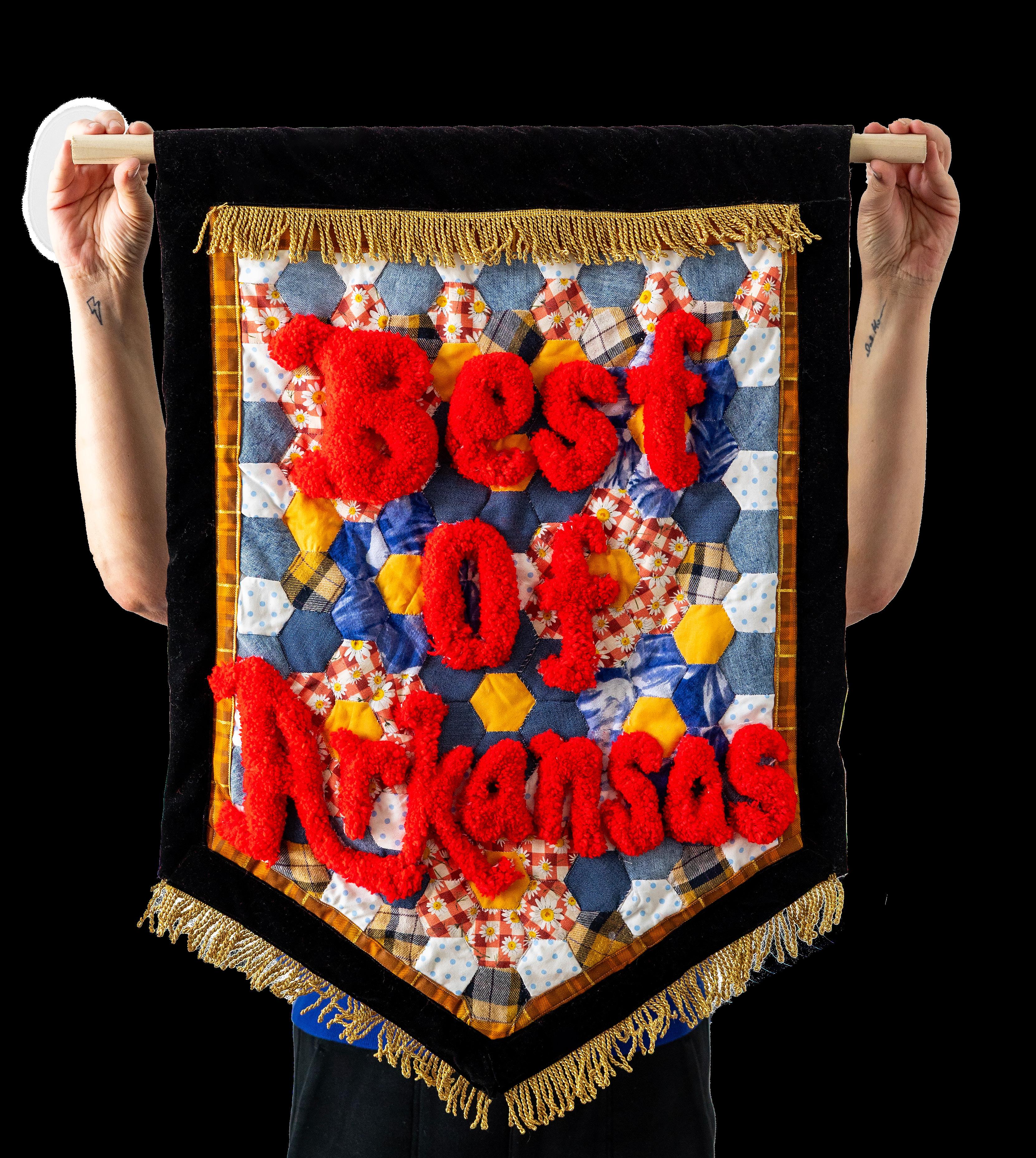
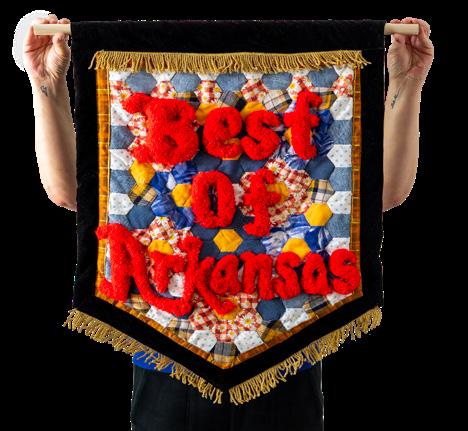
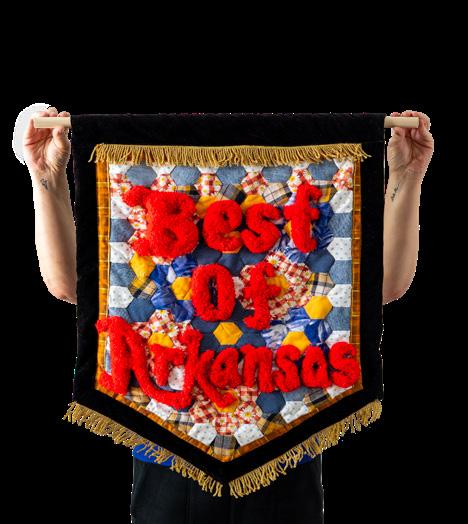
ON THE COVER: In honor of our annual Best of Arkansas poll, Arkansas artist Katy Faucett fashioned this masterful banner. Find more of her work @tuft_sht on Instagram. Photography by Katie Childs. Art direction by Mandy Keener.




















PUBLISHER Alan Leveritt
EDITOR-IN-CHIEF Austin Gelder
CREATIVE DIRECTOR Mandy Keener
MANAGING EDITOR Byron Tate
PRINT EDITOR Daniel Grear
INVESTIGATIVE REPORTER Matt Campbell
AGRI AND ENVIRONMENT REPORTER Elizabeth L. Cline
REPORTER Milo Strain
VIBE CHECKER Stephanie Smittle
EDITOR EMERITUS Max Brantley
CONTRIBUTING EDITOR Mara Leveritt
PHOTOGRAPHER Brian Chilson
DIRECTOR OF DEVELOPMENT Bob Edwards
ADVERTISING ART DIRECTOR Mike Spain
GRAPHIC DESIGNER Katie Hassell
DIRECTOR OF ADVERTISING/ SPECIAL PUBLICATIONS PUBLISHER Brooke Wallace
SENIOR ACCOUNT EXECUTIVE Wendy Hickingbotham
ACCOUNT EXECUTIVES Terrell Jacob, Kaitlyn Looney
ADVERTISING TRAFFIC MANAGER Roland R. Gladden
DIGITAL MARKETING DIRECTOR Lyndsey Huddleston
DIGITAL AD COORDINATOR Sarah Richardson
EVENTS DIRECTOR Donavan Suitt
IT DIRECTOR Robert Curfman
CIRCULATION DIRECTOR Anitra Lovelace
BILLING/COLLECTIONS Charlotte Key
CHAIR MAN Lindsey Millar NACHO EDITOR Rhett Brinkley
PRODUCTION MANAGER Ira Hocut (1954-2009) CONTROLLER Weldon Wilson (1967-2025)



ARKANSAS TIMES (ISSN 0164-6273) is published each month by Arkansas Times Limited Partnership, 201 East Markham Street, Suite 150, Little Rock, Arkansas, 72201, phone (501) 3752985. Periodical postage paid at Little Rock, Arkansas, and additional mailing offices. POSTMASTER: Send address changes to ARKANSAS TIMES, 201 EAST MARKHAM STREET, SUITE 150, Little Rock, AR, 72201. Subscription prices are $60 for one year. For subscriber service call (501) 375-2985. Current single-copy price is $5, free in Pulaski County. Single issues are available by mail at $5.00 each, postage paid. Payment must accompany all orders. Reproduction or use in whole or in part of the contents without the written consent of the publishers is prohibited. Manuscripts and artwork will not be returned or acknowledged unless sufficient return postage and a self-addressed stamped envelope are included. All materials are handled with due care; however, the publisher assumes no responsibility for care and safe return of unsolicited materials. All letters sent to ARKANSAS TIMES will be treated as intended for publication and are subject to ARKANSAS TIMES’ unrestricted right to edit or to comment editorially.
©2026 ARKANSAS TIMES LIMITED PARTNERSHIP



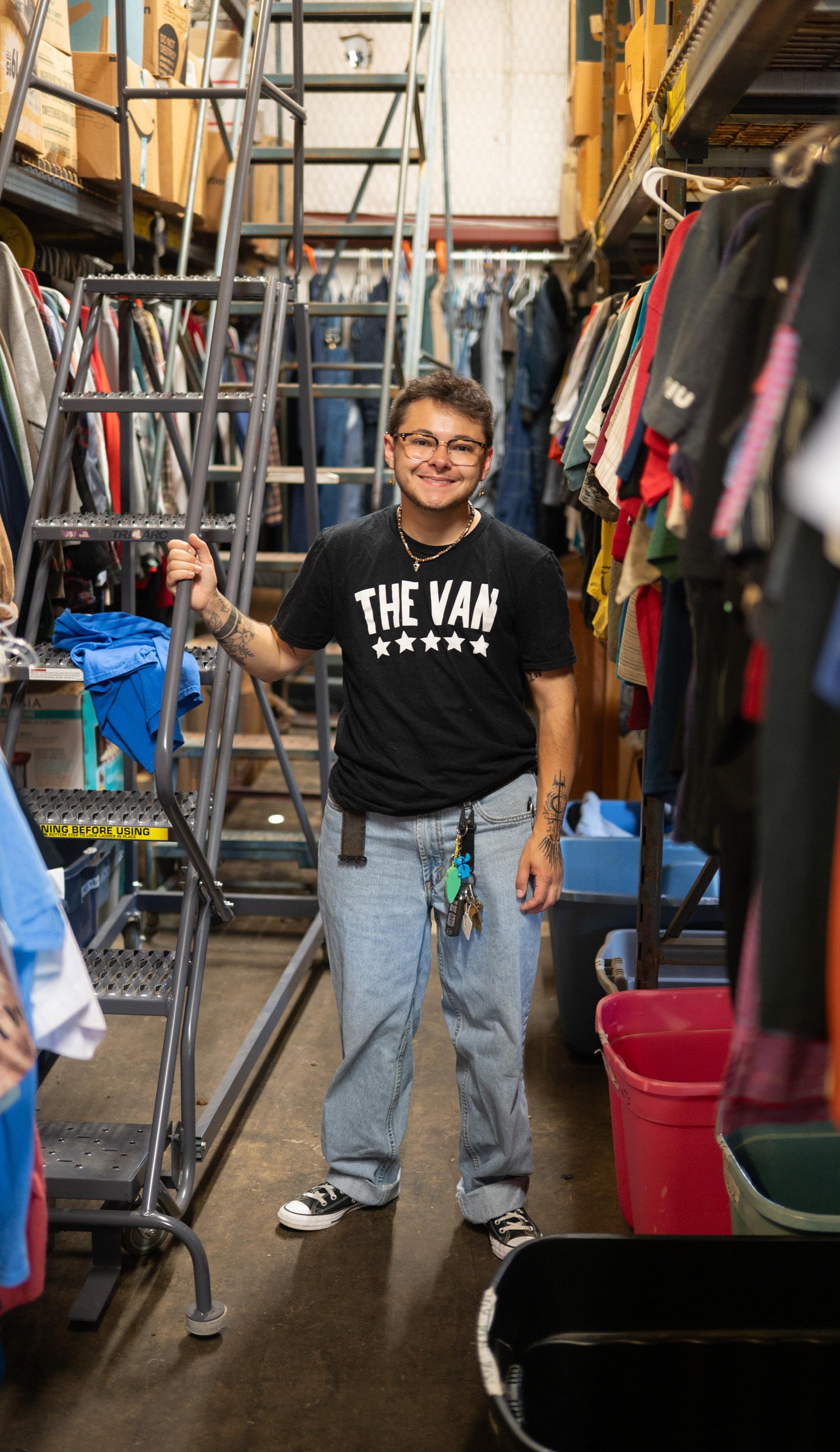
A Q&A WITH PARKER REID, THE VAN’S NEW EXECUTIVE DIRECTOR.
Parker Reid is the new executive director of The Van, a Little Rock nonprofit organization that helps unhoused people and has been doing so for 15 years. He took the helm in April, after founder Aaron Reddin stepped away from the position due to health complications. (Reddin is now on the board.)
Reid grew up in Little Rock and knew early on what he wanted to do, getting his bachelor’s and then a master’s degree in social work with an emphasis on community organizing and nonprofit advocacy work. He first started working in the medical field, helping patients with crisis management and connecting them to social safety nets. He also helped establish a Central Arkansas chapter of Food Not Bombs, which provides meals and builds community engagement for those in poverty as a way to protest the government’s financing of war over food. Reid had been volunteering for a few years at The Van — which actively looks for homeless camps, “taking supplies such as food, water, clothing, and hygiene products to people where they are,” according to its website — when Reddin approached him about taking over as director.
“There was no way I could turn this down because I’ve been preparing for this moment my whole life,” Reid said. We asked Reid to tell us more about himself and his work.
BRIAN CHILSON
FAVORITE BOOK YOU’VE READ LATELY? The Licanius Tilogy by James Islington
FAVORITE LOCAL BAND? Wild Onions
FAVORITE LOCAL MARKET? Misfits Maker Market
WE
SEEN
What attracted you — and continues to attract you — to this work? The basis of my work has and always will be my desire to connect with my community. While advocating and providing supplies is part of my job that I love, what attracted me most to The Van and the work we do is our focus on building relationships. The people we work with need the supplies we bring, but they also need to know that there’s someone who cares about them as a person and wants to hear their story and their goals. The relationships we build make our successes mean more and make our setbacks seem less bad. There is no work without the people we meet, and I love that I get to know everyone we come into contact with.
It seems as though society as a whole has less and less interest in helping those experiencing poverty. Explain how that is or isn’t an accurate assessment of the current state of the world. When trying to gauge society’s interest in helping those who are unsheltered or experiencing poverty, I think it is important to remember that our city and state officials are separate from our community as a whole. We have seen our representatives push for the criminalization of homelessness, bulldoze camps and create additional barriers to entry into programs. However, there are so many nonprofits, businesses and community groups that are actively working to reach people who need support and provide care in whatever way they can. So many people in our communities fight for things like accessible housing, food access and increased resources, but it can be hard to see the successes due to the red tape many experience while trying to access resources. It’s not always that people are less interested in helping, but also that helping is harder when a lot of our community works multiple jobs just to keep a roof over their own heads, too.
On the other hand, on your Facebook page, you take note of the enthusiastic support The Van continues to elicit from the public.
What do you attribute that to? The historic and continued community support of The Van shows that our neighbors understand and want to contribute. Our organization is 99% community funded with no tax dollars or public funds taken. This means that the work we do year-round, from distributing necessities throughout the week to sheltering approximately 200 people each winter weather event, is only possible because of the financial and physical support of the community members. I attribute a lot of the support we get from our community to the foundation built by our founder, Aaron. The Van was built purely out of seeing a need and wanting to support in whatever way we can. I think people see our commitment to building consistent relationships and streams of support, and that it is something that is deeply needed in our community.
From your experience, what are the main barriers to people being housed? One of the main barriers I see our unsheltered community face is barriers to getting legal documents. Many people don’t have the resources to get things like birth certificates, social security cards and IDs that are needed to find employment and housing. Our state IDs require an address on record, which many people don’t have access to through a friend or family member. Another major barrier is finding accessible and affordable housing to enter into, especially for individuals who are on limited incomes due to disability or other factors. Finding work when you don’t have legal documents, a place to shower and rest, transportation or an address for employment forms is extremely difficult and makes finding housing even harder.
Part of what your organization does is operate a 10-acre farm. How does that fit into your overall goals? Our 10-acre farm, Back 5 Fields, is a branch of our work that focuses on creating fresh produce and job opportunities for our unsheltered neighbors. We grow peppers, cucumbers, tomatoes and
more, as well as flowers and honey. All sales we make go to funding outreach and ensuring we have the necessities our neighbors need to survive. We also set aside half of our produce to distribute to unsheltered neighbors to ensure access to fresh foods.
Has the current affordability crisis exacerbated homelessness? And if so, how? The rising costs of housing, food, transportation and healthcare are all definitely contributing factors to homelessness. Everyone’s story is different, so I don’t think there is a onesize-fits-all answer to why. However, lacking access to resources or not being able to pay your rent despite having multiple jobs is definitely a huge issue. Most of our community is one missed paycheck away from being at risk of losing their home. For those without a strong network of support, a missed check due to illness or a lost job can leave them with very few resources available to avoid eviction.
What are the best ways that the public can engage with the work your organization does? We have so many ways to get involved, from donating to volunteering. Anyone interested in helping our mission can visit our website at www.itsthevan.org to find a link to our volunteer interest form, which goes directly to our volunteer coordinator. We have opportunities for people to help sort donations and load our van, help with our beehives or produce at the farm, or get involved with our winter emergency shelters. We welcome anyone to reach out with any other ways they can contribute as well. We also have multiple ways for people to donate on our website. People can find a list of donation dropoff locations on our website for things like clothes, toiletries, blankets or tents as well as an Amazon list that people can purchase items from that ship directly to our HQ. We also welcome people to use the PayPal or Venmo links to provide one-time or recurring donations that allow us to continue our work.
—Byron Tate
BY JAY BARTH
New York Mayor Zohran Mamdani’s first half-year in office has been a mixed bag when it comes to policy outcomes — an early win on the expansion of early childhood education, failures to convince state officials on major initiatives to tax the wealthiest New Yorkers, and delays until at least 2027 in creating cityowned grocery stores.
There is, however, one area of unquestioned success for Mamdani: the forging of a sustained politics of joy unmatched by that of any major American politician in recent decades. It’s much needed in this dark moment for the state of politics.
An authentic politics of joy places a celebration of human connection at its center. Humor isn’t required, but when it’s present, it differs from other political humor in that it avoids ridiculing opponents. Instead, it is practiced in a manner that lifts up others. Such politics of joy may reference public policies, but just as commonly, it has little or nothing to do with policy. From his showing up unannounced at the Manhattan Marriage Bureau to perform weddings of six surprised couples in February to his signing of a playful executive order rescinding New York children’s bedtimes during the NBA Finals to his creation of “Soccer Streets,” a traveling series of field days at 50 public schools across the city ahead of the World Cup, examples of Mamdani’s politics of joy abound. Social media is a perfect delivery system for such politics, particularly when the central figure has deep affection for others. Obviously, the inherent joy in New Yorkers’ celebration of the Knicks’ wins has created numerous opportunities for Mandami as he popped from one Knicks watch party to another. Across the five games of the series and the Knicks’ ultimate victory, Mamdani acted as Celebrator-in-Chief for his city.
In a world of ill-willed Truth Social posts and anonymous memes, joy is generally lacking in today’s political rhetoric. That’s
also true in Arkansas, a place where a joyous element was historically central. At the time of Sen. Dale Bumpers’ funeral in early 2016, the humor practiced not just by Bumpers but by two other Democratic political stars, David Pryor and Bill Clinton, who eulogized him that day was noteworthy. Former President Clinton remarked that the absence of goodwill resulting from good humor was one reason for the depth of anger present in the American electorate at that moment. Clinton’s summation in eulogizing the great loss of Bumpers’ purposeful humor seems prophetic of the next decade: “We’re all mad, and mad people make bad decisions.” Indeed, bad decisions have become encrusted atop one another in the past decade. That’s why Mamdani’s joy-filled politics is such a welcome relief.
A politics of joy isn’t correlated with political ideology. Indeed, Mamdani’s two most important high-profile political allies — U.S. Rep. Alexandria Ocasio-Cortez and Sen. Bernie Sanders — are obviously lacking in it. AOC is quite masterful in talking about the impact of public policy on people’s lives, but she does so with a very serious demeanor. And while Sanders shows deep caring for these two thirtysomethings who have picked up his democratic socialist mantle, he is downright brusque and curmudgeonly in his political rhetoric.
Bad things can happen, and a terrorist attack, a blackout or some other crisis — the challenges of being mayor of a thoroughly complicated city — will inevitably test Mamdani’s politics of joy. But because Mamdani has such a high level of emotional intelligence, he likely will perform ably when it comes to responding to the human suffering that may emanate from such crises. The biggest challenge for him and his practice of politics will come from events involving the inevitable failings of government bureaucracy or scandal within his administration. If Mamdani makes it through those tests, it may
allow him to broaden his political appeal beyond what is still a subset of Americans who buy his ideology (although Mamdani has generational politics on his side).
That said, much of Mamdani’s joy is tied to a specific locale as he honors New York City and the distinctiveness found in its diverse people. Interestingly, much of the joyous humor employed by Bumpers, Pryor and Clinton reveled in the people of Arkansas.
To revitalize the connection between rank-and-file Arkansans and their public servants, we need to experience the sort of joy practiced by Mamdani on a daily basis — both in person and via social media. It would serve the politicians well, but, more importantly, it would serve the fragile civic health of Arkansas well, too.
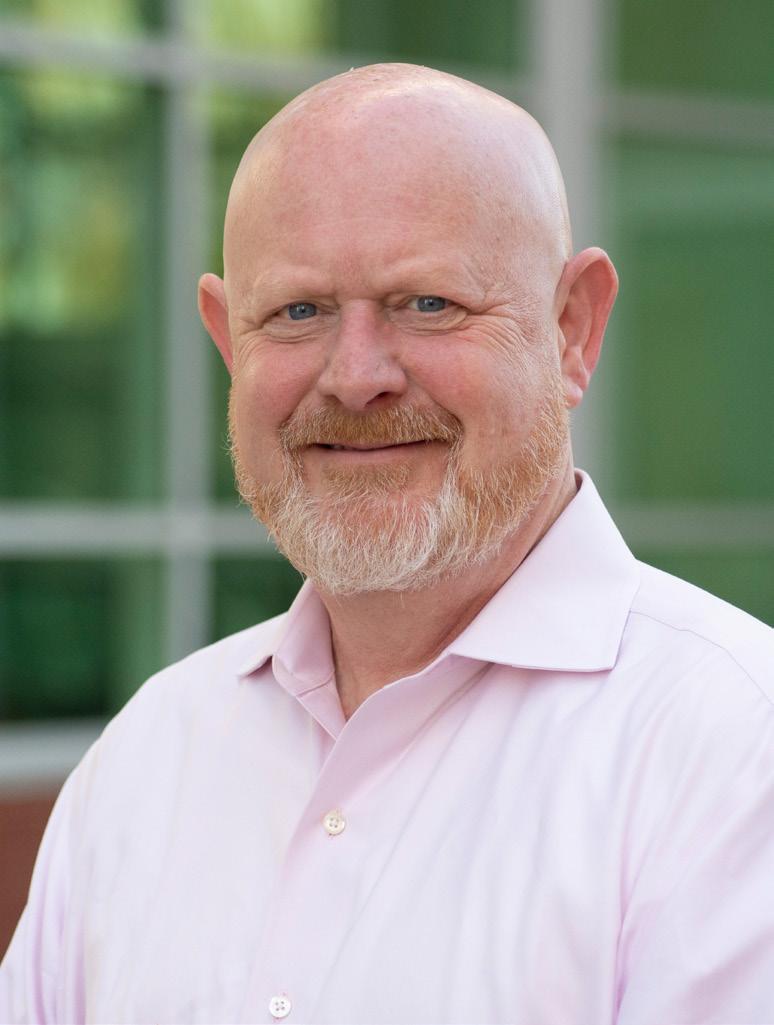
Jay Barth is a native Arkansan, longtime professor of politics at Hendrix College, and an expert on the politics of Arkansas and the South.






























BY ARKANSAS TIMES STAFF
1. Just days ahead of the summer solstice, how did Arkansas Gov. Sarah Huckabee Sanders embrace her inner pagan spirit?
A. Sacrificed a feral hog in the rotunda of the Capitol
B. Attended a sweat lodge retreat with “social club” sisters from Ouachita Baptist
C. Led a sunrise meditation at Plum Bayou
Mounds Archeological State Park
D. Watched bare-chested savages compete in open-air battle
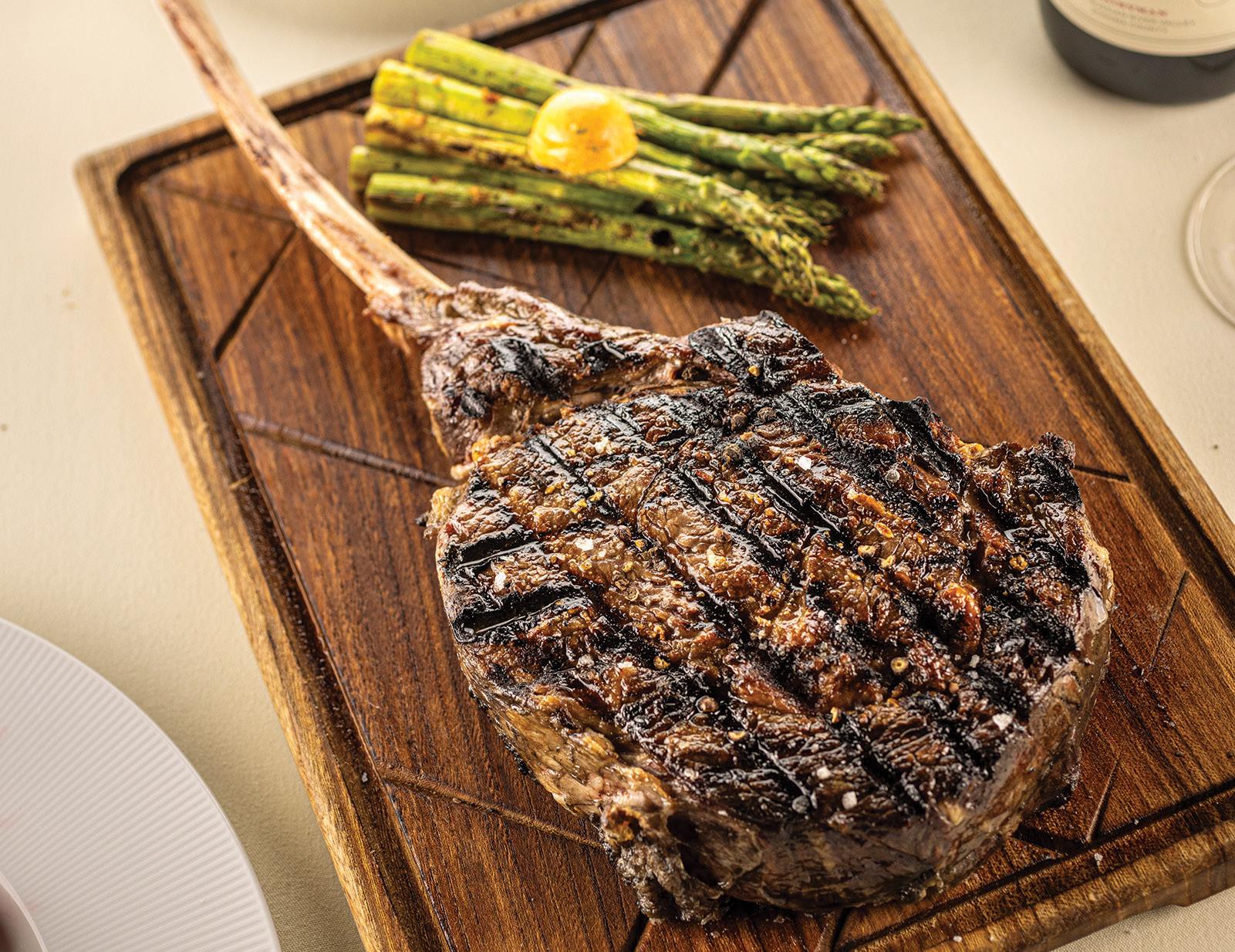
2. Outdoorsy types who contract the tick-borne illness alpha-gal syndrome typically have to avoid what?
A. Ivermectin paste
B. Successful women (i.e., Alpha gals)
C. Sunlight
D. Red meat
3. In making sure Arkansas’ part of the America250 festivities complied with President Donald Trump’s whitewashing of American history, which of the following bits of history that are unflattering to white people was omitted from a display at the Old State House?
A. The Trail of Tears
B. The Elaine Massacre of 1919
C. The role of slavery on cotton plantations
D. All of the above
4. Based solely on postseason performance, the most successful college baseball team in Arkansas in 2026 was?
A. University of Arkansas at Fayetteville
B. University of Central Arkansas
C. Arkansas State University
D. University of Arkansas at Little Rock
5. Which of the following recent U.S. actions is most likely to have tickled Tom Cotton’s fancy?
A. The bombing of an Iranian school, killing 120 children
B. The extrajudicial killing of fishermen off the coast of South America
C. The blockade of oil to Cuba, which is causing daily blackouts, food shortages and deaths
D. All of the above
6. Which town in Arkansas produces the best watermelons in the state?
A. It’s Hope, and anyone who says different is a liar!
B. It’s Cave City, and anyone who says different is a liar!
C. C’mon, guys, can’t we all just get along?
D. Real ball knowers know Hope grows the biggest and Cave City grows the sweetest, and there’s room at the table for both.
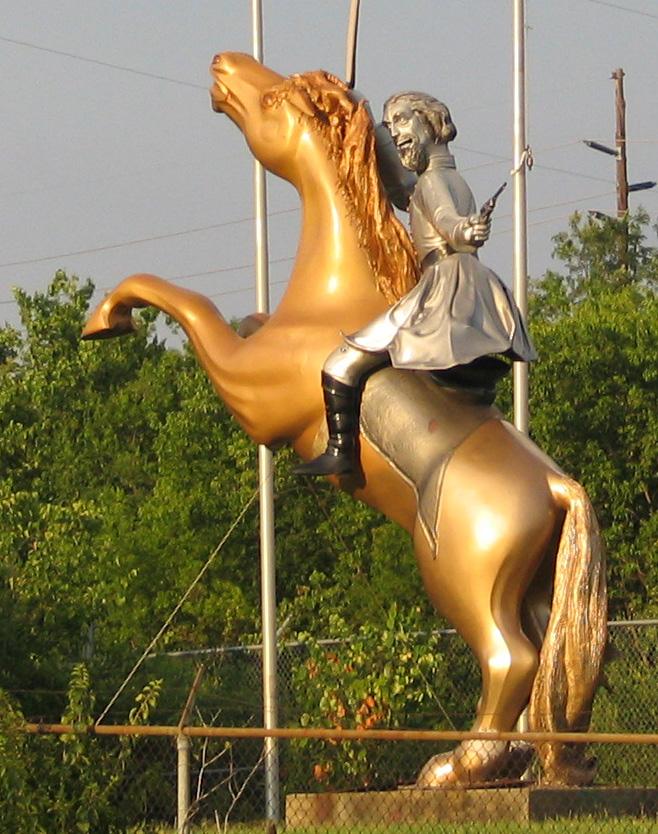
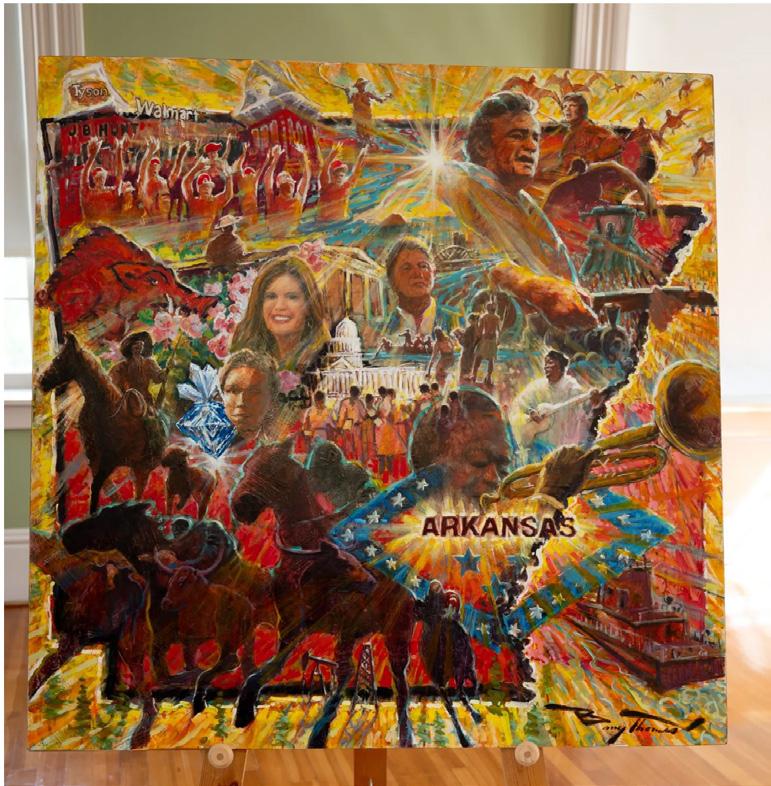
7. North Little Rock artist Barry Thomas collected a $20K purse for creating this artwork, chosen as the state’s official semiquincentennial work.
B.
















BY DANIEL GREAR AND STEPHANIE SMITTLE

SATURDAY 7/11. WHITE WATER TAVERN. 8 P.M. $18-$20.
Strummy and sun-kissed, the music of mononymous Nashville singer-songwriter Tristen is a delightfully uncomplicated merging of pop and folk that invites the listener to pull up a chair and bob along. Imagine the tunefully twee energy of Belle and Sebastian, but make it a little less melancholy, and you’ll find yourself in Tristen’s ballpark. Her latest album, 2025’s wryly titled “Unpopular Music,” hits its stride on tracks like “Hey La” (“The mother is a glutton for pain / She wants to feel so deep / She’ll never talk about it with you / Cuz you’d want the truth”) and “Mona Lisa” (“There’s something in her smile / The colors are okay / She’s got her own two-dimensional way”). Get tickets at whitewatertavern.com. DG

SUNDAY 7/26. WHITE WATER TAVERN. 6 P.M. $30.
Little Rock native and Central High School graduate Wic Whitney — now a rapper and singer-songwriter based in Chicago who puts his queerness center stage — has an effervescent energy. Spend a little time on his Instagram page, where he boasts over 200,000 followers, and you’ll start to get it. Across clips both silly and sincere, Whitney showcases a keen sense of musicality as well as fashion, delivering a quirky message of self-acceptance and Southern pride while sporting some of the most whimsical mumus, robes and jewelry you’ve ever seen. A teaser for the kind of spirited bars he’s capable of: On “Kitty,” a dense yet springy track from his debut LP “Foolhardy,” Whitney rhymes “cookin’ barbacoa” with “sodomistic yoga.” It’s pretty freaking awesome. Get tickets at whitewatertavern.com. DG
SATURDAY 7/11. SIMMONS BANK ARENA. 7 P.M. STARTING AT $52.
Despite first forming in Little Rock in 1994, Evanescence’s rise to national fame in the early 2000s was so swift that it makes sense if you don’t really think of them as an Arkansas band. Still, I can’t help but be surprised that they haven’t played a single show in The Natural State in over a decade. Sure, they’re not the most active group in the world, and their heyday was two decades ago, but two album releases — 2017’s “Synthesis” and 2021’s “The Bitter Truth” — and a substantial amount of touring stand between the current moment and their last Arkansas appearance in 2012. On July 11, that long absence will end, when Evanescence performs at Simmons Bank Arena alongside Spiritbox and Nova Twins. I’m choosing to believe that the band’s cameo on Nathan Fielder’s “The Rehearsal” in 2025 had something to do with making this homecoming concert possible. Get tickets at simmonsbankarena.com. DG

WEDNESDAY 7/8-SUNDAY 7/26.
ARGENTA CONTEMPORARY THEATRE. $30-$60.
For better or worse, the premise of “The Cake” is ripped straight out of the headlines of yesteryear. Inspired by the much-talked-about (and eventually much-litigated) rift between a gay couple and a religious baker who in 2012 refused to make them a wedding cake, the play concerns a similar tension between two young brides-tobe, Jen and Macy, and Della, a proxy mother to Jen who’s also a religious baker. While culture wars around queerness surely still whirl in 2026 America, I wonder how much today’s audiences will struggle with Della’s perspective, which writer Bekah Brunstetter apparently took great pains to portray with “humanity and heart,” according to The New York Times. Still, if there’s anyone who can salvage such an unsympathetic role, it’s Natalie Canerday, a Russellville native who, among dozens of other film and TV roles, played the sweet small-town mother in 1999’s “October Sky.” Get tickets at argentacontemporarytheatre. org. DG
MONDAY 7/27. ARGENTA CONTEMPORARY THEATRE. 7 P.M. $45.
On its face, it sounds impossibly shambolic: Six writers, six directors, 24 actors and “a small army of designers and volunteers” — all of them local heavy-hitters in the theater scene — create, stage and perform six entirely new short plays in a 24-hour span. They wield their formidable creative chops at breakneck speed, presenting a high-wire act of a production in front of a live audience and, more often than not, yielding some surprisingly polished and poignant moments. Like Food Network’s “Chopped,” but make it thespian! It’s a daunting feat and a galloping good time for folks in attendance, not to mention a rock-solid testament to the city’s absolute wealth of theatrical talent. This year, the event benefits Arkansas Enterprises for the Developmentally Disabled, a Little Rock-based organization dedicated to helping individuals with intellectual and developmental disabilities lead independent and fulfilling lives. Get tickets at argentacontemporarytheatre.org. SS

THURSDAY 7/9. VINO’S BREW PUB. 8 P.M. $15.
When John Kezdy, frontman for the influential Chicago punk band The Effigies, died in a bicycle accident in 2023, towering producer Steve Albini tweeted the following: “John Kezdy was a hero of mine. Effigies were the first great band from Chicago’s scene … Not overstating to say that without John and the Effigies, I would never have made any records.” Just a year later, the band released “Burned,” their fifth album and the final recording to feature Kezdy. The blog Punk Rock Mag called it “grim, heavy, and uncomfortably honest — a final middle finger to false hope, polished scenes, and the ticking clock.” Though The Effigies have carried a variety of lineups since their inception in 1980, the crew on deck for this show at Vino’s Brew Pub includes two founding members: Paul Zamost on bass and Steven Economou on drums, both of whom rejoined the band in 2004. Get tickets at vinosbrewpub.com. DG
TUESDAY 7/21. CALS RON ROBINSON THEATER. 7 P.M. FREE.
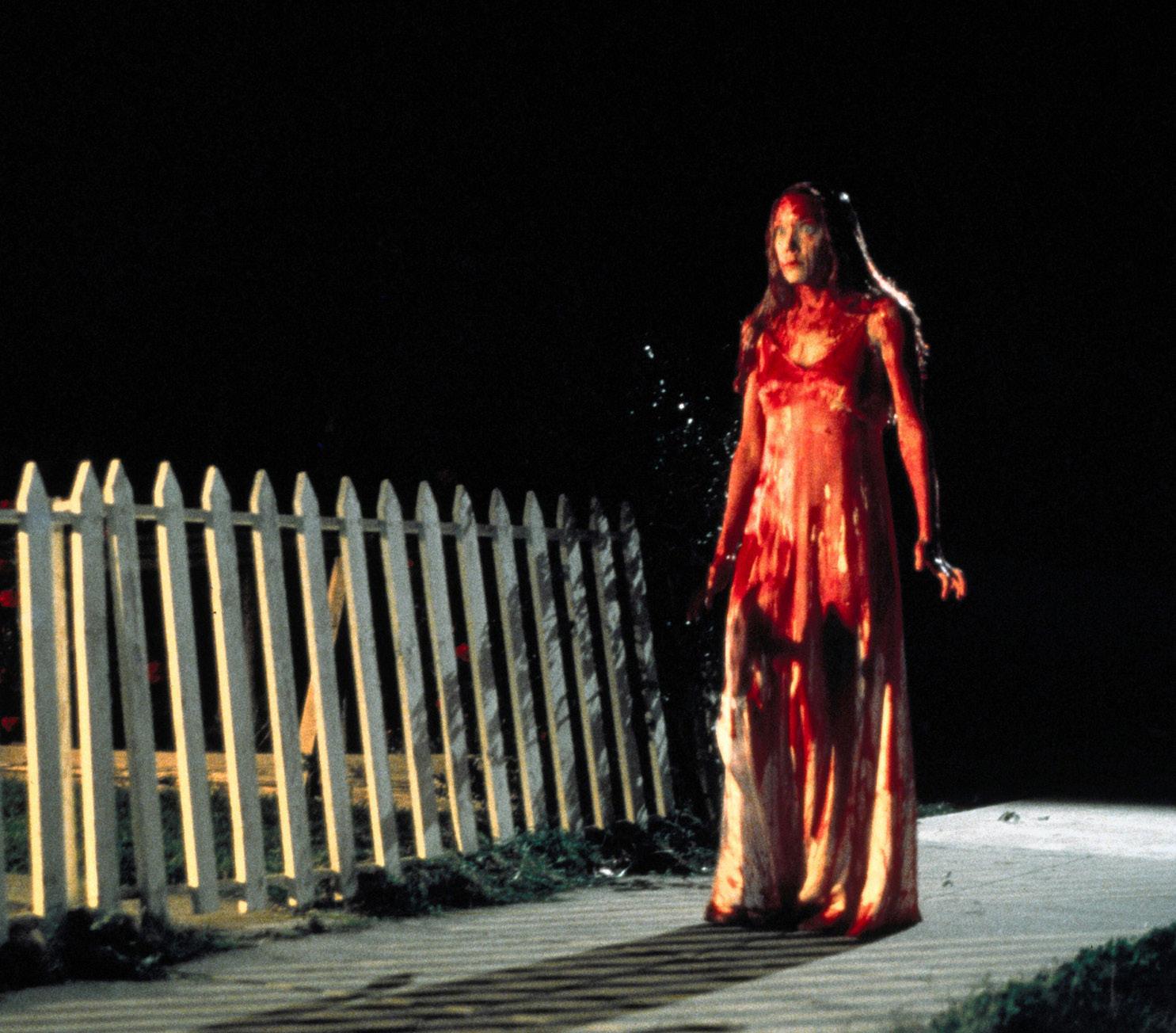
If we’re being honest, the Arkansas Times Film Series has had little to do with the Arkansas Times for a while now. To that end, the series is officially being absorbed by Cinema I/O, a Little Rock nonprofit that’s responsible for some of the most thoughtful film programming in town. The organization is helmed by local cinephile Omaya Jones, who was already doing most of the work of keeping our series afloat anyway. Rebranded as Cinema I/O Presents, the monthly screening is moving to CALS Ron Robinson Theater, where — get this! — it will be free and accompanied by a riveting discussion. The inaugural showing from Cinema I/O Presents is the horror classic “Carrie,” Brian De Palma’s 1976 adaptation of Stephen King’s first-published novel about a bullied teenage outcast whose arrival into womanhood includes telekinetic abilities. Revenge, to put it lightly, ensues. Reserve your spot at ronrobinsontheater.simpletix.com. DG
FRIDAY 7/10. ARKANSAS MUSEUM OF FINE ARTS. $15.
It’s always a good time to revisit “10 Things I Hate About You” (1999), the loosely Shakespeareinspired teen rom-com that launched the careers of Heath Ledger and Julia Stiles. But what if your next viewing of the film could be in the presence of one of its screenwriters? That’s what’s on offer July 10, when writer Kirsten Smith — also responsible for “Legally Blonde,” “She’s the Man” and “Ella Enchanted,” among others — stops by the Arkansas Museum of Fine Arts for a screening and Q&A. If that strikes you as a bit random, the event is part of AMFA’s Shakespeare Summer, a programming series that includes a showing of a filmed stage production of “The Taming of the Shrew” (the play that inspired “10 Things”) on July 11, performances of “The Comedy of Errors” July 16-19, and a “Shakespeare and Puppetry Workshop” from New York theater artist Josh Rice on July 18. Get tickets to all of the above at arkmfa.org/series/ shakespeare-summer. DG
WEDNESDAY 7/8-SUNDAY 7/26. ARKANSAS REPERTORY THEATRE. $25-$70.
The first-ever show to be staged of the many collaborations between composer Andrew Lloyd Webber and lyricist Tim Rice, “Joseph and the Amazing Technicolor Dreamcoat” was only 22 (some sources even say 15) minutes long when it debuted as a pop cantata in 1968, performed by the students of Colet Court School, a private academy in London for boys aged 7-13. Based on the story of Joseph, a biblical figure from the Book of Genesis, the play grew in scope and popularity until it became a full-fledged musical, landing on the West End in 1973 and Broadway in 1982. Previously performed at the Arkansas Repertory Theatre in 2000 and 2009, the show will be directed by Caelon Colbert, who said this summer’s rendition of “Joseph” was conceived of “through the lens of imagination and adventure” and is “inspired by the vibrant worlds of 1990s video games.” Get tickets at therep.org. DG


Where you start doesn’t define you. What you do next does. At UA Little Rock, students become leaders and innovators. You have big goals. We help you get there.


SNATCHED AND SHACKLED: Plucked away from their families and friends by ICE, people are shackled together and bused to prisons in Louisiana on their way to being deported.
EVERY DAY, A WHITE BUS WITH TINY WINDOWS CARTS SHACKLED PASSENGERS FROM A TEMPORARY HOLDING CENTER IN LITTLE ROCK TO LONGER-TERM IMMIGRANT DETENTION FACILITIES IN LOUISIANA. PROTESTERS MAKE IT THEIR JOB TO BEAR WITNESS.
BY BYRON TATE PHOTOGRAPHY BY BRIAN CHILSON
Acorporate jet just taking off roared up and across the stage where the play had just started. It could have been Warren Stephens, he of many jets, at least the Warren Stephens of a couple of years ago when he would fly here and there, closing big deals and — along with other fabulously rich people — contributing $6 million to enable Donald Trump and buy himself a cool ambassadorship. He is now yucking it up with the king of England — insert a bent-knee curtsy to the American king for that — but Stephens, because of his largesse, is also one of the co-producers of the play, which has just literally slayed audiences across the country. Acquiescing politicians have done the rest to ensure the play — a humorless spectacle of protesters carrying signs and yelling insults and occasional obscenities; ICE agents who make only rare appearances and have no
audible speaking parts; shackled men being marched to their fates — never closes.
We wondered if the jet passengers saw from their fleeting vantage point the collection of actors taking part in the daily drama not far from the Bill and Hillary Clinton National Airport entrance. Probably not.
The star of the show is Elder Matthew Bryant, who leans a protest sign against his legs and yells into his bullhorn. A whistle and camera hang around his neck, as well as a stun pen “in case things get out of hand.”
Bryant worked as a chemist — he holds a doctorate from MIT — at the National Center for Toxicological Research, located between Little Rock and Pine Bluff, until Elon Musk’s DOGE campaign cut a big swath of employees from the center. Bryant didn’t get eliminated when the layoffs took place in April 2025, but he was 65, old enough to retire, and decided
to turn in his paperwork. He said he could have worked longer. “I’m in good condition,” he said, “but I thought, why bother? They don’t appreciate research, and I figured if I quit, maybe someone earlier in their career would be able to keep their job.”
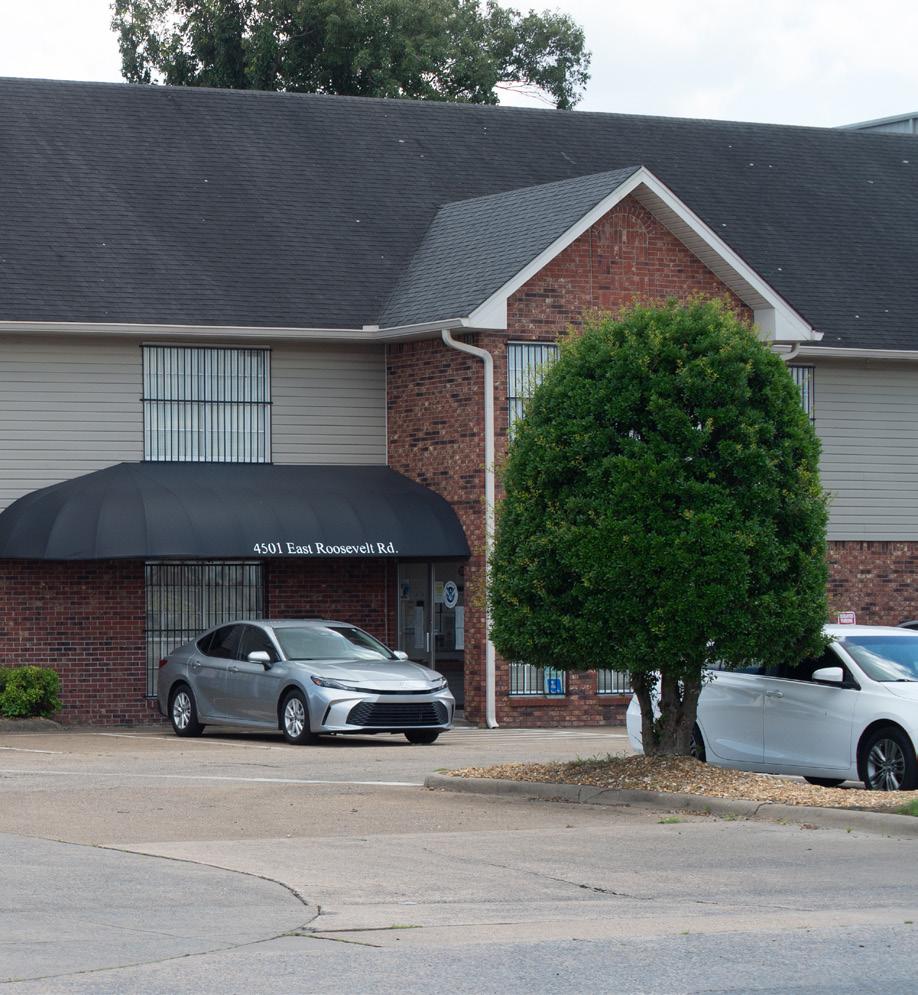
Bryant, who is also the pastor of the Community of Christ church in North Little Rock, shows up every weekday across the street from the ICE Enforcement and Removal Operations field office at 4501 E. Roosevelt Road. It is there that individuals — mostly Hispanic men — are held, then chained together, loaded on a bus with tiny windows, hauled to a holding facility in Louisiana and then flown out of the country to parts unknown.
The reverend is joined by an eclectic group of like-minded actors. On this summer day, there was a young waiter, a retired Methodist minister, a retired government attorney and


his wife, who, also retired, worked as a journalist and in communications, among others. The cast changes each day, except for Bryant.
The protests started back in early November when Kara Dominguez’s husband, Olvin, in his 30s like Kara, was scooped up by ICE and whisked away, through the ICE office on Roosevelt Road, to Honduras.
As Kara Dominguez described it, Olvin Dominguez, who ran a roofing crew, was on his way to work when he was stopped by ICE agents on the morning of Nov. 4.
‘WORST
Trump said ICE would focus on the “worst of the worst” criminals, but that promise was, of course, not real. Now, just looking like someone who maybe isn’t from the United States is enough to be arrested. They’re called “Kavanaugh stops,” because of Supreme Court Justice Brett Kavanaugh’s opinion in the Noem v. Vasquez Perdomo case. A lower court had issued a temporary restraining order barring federal officials in Southern California from using race, language, location or
TANGLED: One of the two people in the cab of the prison bus works to untangle shackles that will be used on immigrants arrested by ICE. Silent protests line the roadside.
occupation to initiate law enforcement stops. Kavanaugh said, in essence, no, it’s OK to do that, meaning that ICE agents now have free rein to stop and question people based on such criteria.
The reason Olvin Dominguez was arrested was, perhaps, worse. He had been living in the U.S. for more than a dozen years and, according to his wife, had never had so much as a traffic ticket.
His sin, according to Kara Dominguez, was being married to her. She had worked with the Hispanic community in a variety of ways, helping them with legal and medical matters, getting food to them and keeping them plugged into whatever social networks were available. Part of that work was also keeping up with ICE and relaying what they were doing to the broader community. Eventually, her activism turned into the nonprofit La Vox del Pueblo, meaning “the voice of the people.”
“Basically, I pissed somebody off,” Kara Dominguez said. “That’s what they told my husband when they arrested him. They had opened an investigation into me — not Arkansas, but Texas and Louisiana — and had run my license plates several times. It was insane and unfair, but I was also naive in thinking that if I was polite to ICE agents, they would return the favor. That was privileged thinking.”
Like others who are led away in chains, Olvin Dominguez was taken to a holding facility at the Winn Correctional Center in Louisiana and then quickly — too quickly, his wife said — removed to Honduras.
“They had flown him away in four days,” she said, “which is unusual. They’re usually held there for several weeks. Of course, having him taken out of the country makes it harder to fight whatever is going on.”
Kara Dominguez said her husband told her he was given brown water to drink. That made him sick, and he required medical attention when he got to Honduras.
In protest of that event and all the others like it, every day, rain or shine, through sleet and snow and now heat, the protesters show up, waiving signs, yelling, giving the thumbs up to the many beep beep shows of support and the occasional middle finger, sometimes two, to the handful of haters who drive by and lay on their horns to deafen them. The signs tell the story: “Dissolve ICE, Impeach Trump,” “Immigrants Are Not Criminals, But The President Is,” “Immigrants Make Ameri-



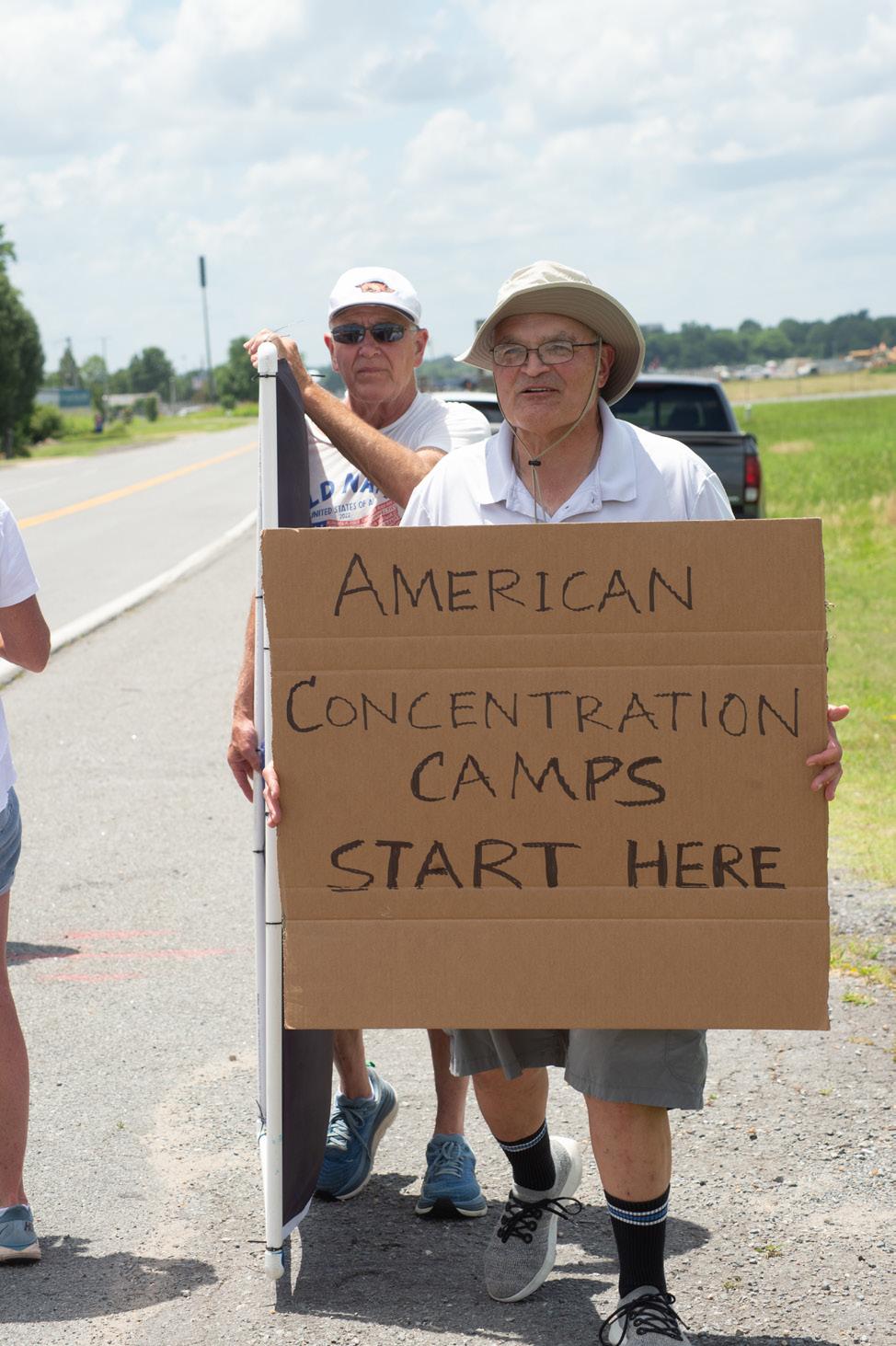
ca Great Again,” “Our Ancestors Didn’t Have Papers.”
Protestor Sam Taylor plays the part of the angry young man. He’s wearing a snug-fitting sleeveless athletic shirt, and his dark hair is tinged with green and blue as if he had brushed up against wet paint. He’s also the outlier, playing alongside men and women who could be his grandparents. While the oldsters stand in one spot, or nearly so, Taylor moves with purpose up and down the road to get a better view of the ICE agents who dare to be seen, hollering at them, sometimes crudely, about how they make his “butt flutter,” among other insults.
“Couldn’t find a real job, ICE reject? How’s that ICE bonus coming along? We’re hearing those checks aren’t cashing. Explain to me why you’re a good person,” Taylor said, interspersing piercing whistles between his comments.
He apologized for his abrasive language, but also defended it.
“I spend most of my time heckling them,” he said. “I think the best use of my time is to piss them off and show them they are having another hated day at work. I do this because I see the way they treat citizens and noncitizens, and I just can’t sit at home and not say something about people being treated unfairly.”
Bryant, who wore a ball cap with the word
UNJUST: Lawyer Kent Holt gets emotional when talking about the shattering of legal norms suffered by undocumented immigrants.
COEXIST on the front, had a little different take. First off, he doesn’t condone cursing at the agents — at least not in English — but he said it “does relieve some of the stress of those protesting.”
Mainly, though, he said, the group is there to offer some bit of solace to the people being held. Beyond that, he sees his job as raising awareness of the issue with the public.
“I want people to know how many rights are being trampled on by this administration,” he said. “I want them to know that this is what mass deportation looks like.”
Playing the dynamic character, the one who experiences an internal shift, is Kent Holt. He is, perhaps, the protester with the most experience with how people should and should not be treated when being arrested and incarcerated. He was a prosecutor and then worked for the state attorney general’s office in the criminal division. So he lived by the rule of law, those high guardrails that keep society organized and civil. Holt said he was once described as “being to the right of Attila the Hun.” But that doesn’t stop him from objecting stridently to what is going on around the country today. In talking about the governmental excesses, he gets emotional describing the dismantling of those guardrails and has to wait for the tightening in his throat to subside before he can continue.
“These people are not being afforded any due process,” he said, wearing a floppy hat to combat the hot sun. “And now we’re moving them to detention centers like we did to Japanese American citizens in World War II. This is a civil violation, but they’re incarcerating people and giving them no access to lawyers. Instead, they are put in cages.”
If you need more evidence that Trump has single-handedly shredded the rule of law and due process, consider the more than 200 people he has murdered — people who were blown out of the water while on boats, in the Caribbean Sea and Pacific Ocean, that Trump claims, without offering any evidence, were carrying narcotics. THE
On an ICE website, under a Frequently Asked Questions tab, the agency poses
question of whether people arrested by ICE are given due process. The answer: “Everyone ICE arrests receives due process.” One sentence.
But not really. Part of the adjudication process for immigrants is for them to go in front of an immigration judge. But those seasoned individuals were gumming up the works with their reasoned and measured decisions that, too often for Trump’s purposes, allowed arrestees to stay in the country. The result is that Trump has fired more than 100 immigration judges and replaced them with military lawyers and political appointees — people who have little training or experience in the complexities of immigration law but who do the president’s bidding by quickly deporting those being held.
Trump has also done away with requiring ICE to get a judicial warrant, signed by a judge, before pursuing an individual. Now, all it takes is an administrative warrant, a simple bit of paperwork that ICE approves for itself. How convenient.
Holt recalled that Trump actively worked against immigration reform, telling Congressional Republicans not to approve a comprehensive immigration bill because it would give Democrats a win. Trump then used immigration as the key element of his platform when he ran for president against Kamala Harris.
“These are the new American concentration camps,” Holt said. “We have a felon in the White House who just cares about the numbers of people deported. That’s all he wants. He’s also an adjudicated rapist. That doesn’t say much for the state of our country. I never thought I’d see that.”
Also co-starring in today’s production is Amber, who is playing the role of the fearless woman. She asked that her last name not be used because she is married to a Hispanic man and doesn’t want to cause him problems. But that situation doesn’t make her leery about being in the public eye. Kara Dominguez had called her that morning and said ICE had picked up a man who was “checking in” with the authorities, thinking he was doing the right thing because he was trying to gain citizenship. Instead, ICE arrested him.
At Kara Dominguez’s request, Amber, after dropping an f-bomb or two, marched herself into the ICE building and demanded the keys to the man’s truck, which was sitting adjacent to the ICE parking lot. At least his family will have access to his vehicle, she said.
The “ruse,” as it’s called, that the arrested
man experienced is when ICE tricks someone as a way to arrest them, and it’s something that Cynthia Cortez sees often. Cortez is the field director for Migra (Immigration) Watch in Central Arkansas, a volunteer-run organization that assists immigrants in a variety of ways, from keeping them posted on law enforcement methods used to arrest people to providing a hotline so families and friends can stay connected after someone is taken into custody.
In one case, a man was arrested after he was told ICE had his wife and infant. When he arrived, he was nabbed and they were released. According to the Immigrant Defense Project, ICE agents are encouraged to use such deceitful methods.
“One common ruse is where ICE agents pretend to be local law enforcement in order to hide that they are ICE,” according to the project’s website. “ICE agents rarely have judicial warrants, so they need consent to be able to enter a home. Knowing that people are unlikely to give consent if they know the agents are ICE, ICE agents lie about who they are and what they are doing so that unsuspecting individuals will let them into the home and won’t know that they can exercise their rights.”
Migra Watch first started as a group that helped trans individuals and immigrants “because they are the most attacked groups in the country,” Cortez said. But for the past nine years, Migra Watch helps anyone and everyone.
“When Trump was elected, we knew there would be a greater need for Migra Watch,” she said.
Cortez said there are only about eight ICE agents in the immediate area, but pretty much anyone wearing a law enforcement uniform can pick up immigrants, thanks to a 2025 law pushed by Gov. Sarah Huckabee Sanders that requires certain agencies — the Arkansas State Police being one of them — to register to help ICE. Even local police departments can voluntarily sign up for the extra duty.
“Every jail and county sheriff has to sign up for this program,” Cortez said. “So now, anytime anyone is picked up or taken to jail, ICE is alerted and then there’s a hold put on the person for 24 to 48 hours. After that, ICE picks up the person, in violation of due process.”
The cooperating law enforcement agencies are then paid by ICE.
“There’s definitely a financial incentive,” she said.
Many individuals are picked up for minor


The mission of Arkansas Advocates for Children and Families is to ensure that all children and their families have the resources and opportunities to lead healthy and productive lives and to realize their full potential



traffic violations.
“It might be a broken taillight or even a flat tire,” Cortez said. “The State Police rolled up to one man fixing his tire and asked him if he was a legal resident. He got deported.”
Cortez said another method ICE uses to arrest immigrants is to snatch them while they are in the middle of their efforts to stay in the country.
“They are trying to get legal status,” she said. “They’ve got an immigration lawyer, and now they’re in debt. They may have been reporting to an immigration center on their own, or ICE will call them and say something is wrong with their ankle monitor. They may be a DACA [Deferred Action for Childhood Arrivals]. They may have a work permit. Now those individuals are being detained and deported, and many of them have no criminal record. Trump is killing all legal avenues for immigration.”
Cortez said the areas where many arrests are made are many but predictable.
“It’s really happening everywhere,” she said. “Not just here in Southwest Little Rock. It’s also in West Little Rock. There are also a lot of rural areas — Cabot, Clarksville, Beebe, Ward, Austin and all along the highways going to those rural areas. Wherever Hispanic people live.”
Construction zones have become favorite ICE haunts because that’s where many Hispanic men work, she said.
“Interstate 57 around Jacksonville and the roadwork around White Hall,” she said, “those highways are hotspots. They target those work areas and pick people up going to work and going home from work. They especially target work trucks.”
Once arrested, these individuals who, Cortez said, just came to the United States to work — and at jobs Americans aren’t interested in taking — are treated in ways that would not be acceptable if the facility were a state prison or county lock-up.
“They’re chained at the hands, waist and feet, so that’s dehumanizing, and they stay chained all the way to the prison in Louisiana, which is the worst in the country,” Cortez said. “They’re fed spoiled food, the conditions are deplorable with people packed in there, there’s no clean water. And some of these people are U.S. residents, some have work permits and some are U.S. citizens. They detain first and ask questions later. Then those detained are cut off from the world with very little ability to communicate.”
Even though the chance of helping the people arrested avoid being deported is small, Cortez said it’s important for her group to try.
“It does matter,” she said. “We try to figure out what can be done. We don’t give up. If they want to keep fighting, we support them
SEE
“THESE PEOPLE ARE NOT BEING AFFORDED ANY DUE PROCESS. AND NOW WE’RE MOVING THEM TO DETENTION CENTERS LIKE WE DID TO JAPANESE AMERICAN CITIZENS IN WORLD WAR II. THIS IS A CIVIL VIOLATION, BUT THEY’RE INCARCERATING PEOPLE AND GIVING THEM NO ACCESS TO LAWYERS. INSTEAD, THEY ARE PUT IN CAGES.”
in every way we can. That’s why it’s important to do the work that we do. We can’t allow people to go through this alone.”
There are currently some 60,000 people in immigration custody. Since the beginning of 2025, there have been more than 50 deaths of individuals in ICE custody. The American Civil Liberties Union said the deaths stemmed from poor medical attention, mental health crises and overcrowding. Add to those numbers the 34 shootings by immigration agents since the beginning of 2025 that resulted in nine deaths.
We made email contact with a public information officer at ICE in an attempt to get a response for this story. The person invited us to submit questions, which we did, but we never received an answer.
When Trump was running this last time, he campaigned heavily on ridding the country of violent immigrants, pledging to expel millions of them. But, as facts would bear out, that pledge was more about the number of immigrants being deported than in finding
violent people to deport.
According to an ABC News story that aired June 12, “Only 3% of individuals detained by U.S. Immigration and Customs Enforcement during the first 14 months of the second Trump administration had a violent felony conviction,” according to an analysis of government data.
The story went on to say that their findings showed that “immigration enforcement has affected more than 400,000 individuals with no violent criminal history, including parents and spouses of U.S. citizens.”
And according to the Cato Institute, 73% of detainees have no criminal conviction whatsoever.
Trump whisperer Stephen Miller made the bold directive last year that 3,000 undocumented immigrants would be arrested each day. The problem for him and the president was that ICE was unable to round up that many “bad hombres,” as Trump has called them — maybe because they don’t exist. What’s a president to do? Keep the arrest numbers up, apparently, and hope no one notices that solid citizens — citizens that





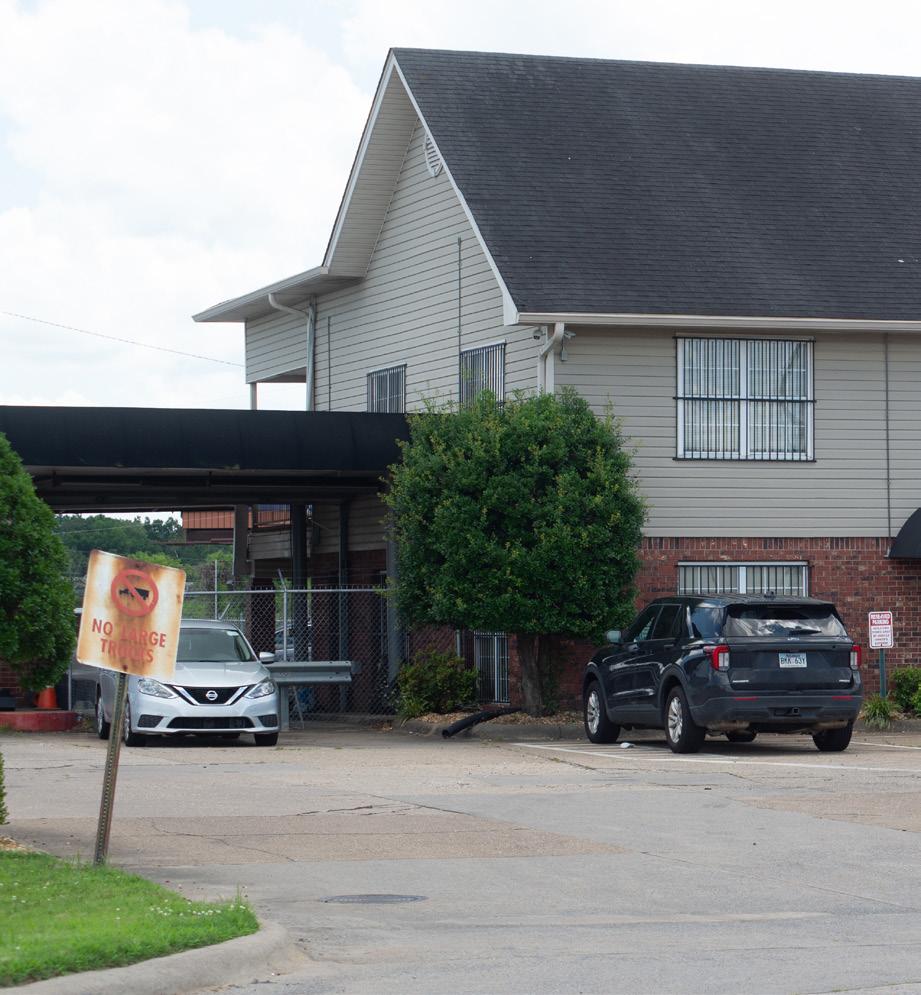
BEHIND CLOSED DOORS: Undocumented immigrants are held in this ICE facility on Roosevelt Road, near the Clinton National Airport, before being bused away and deported.
were paying into the nation’s dwindling Social Security reserves, it’s worth noting — are now being arrested and kicked out of the country.
To keep the process moving along, Congress appropriated $70 billion to fund ICE and the U.S. Border Patrol for the remainder of Trump’s term in office, with all Democrats in the House and Senate voting against the spending measure.
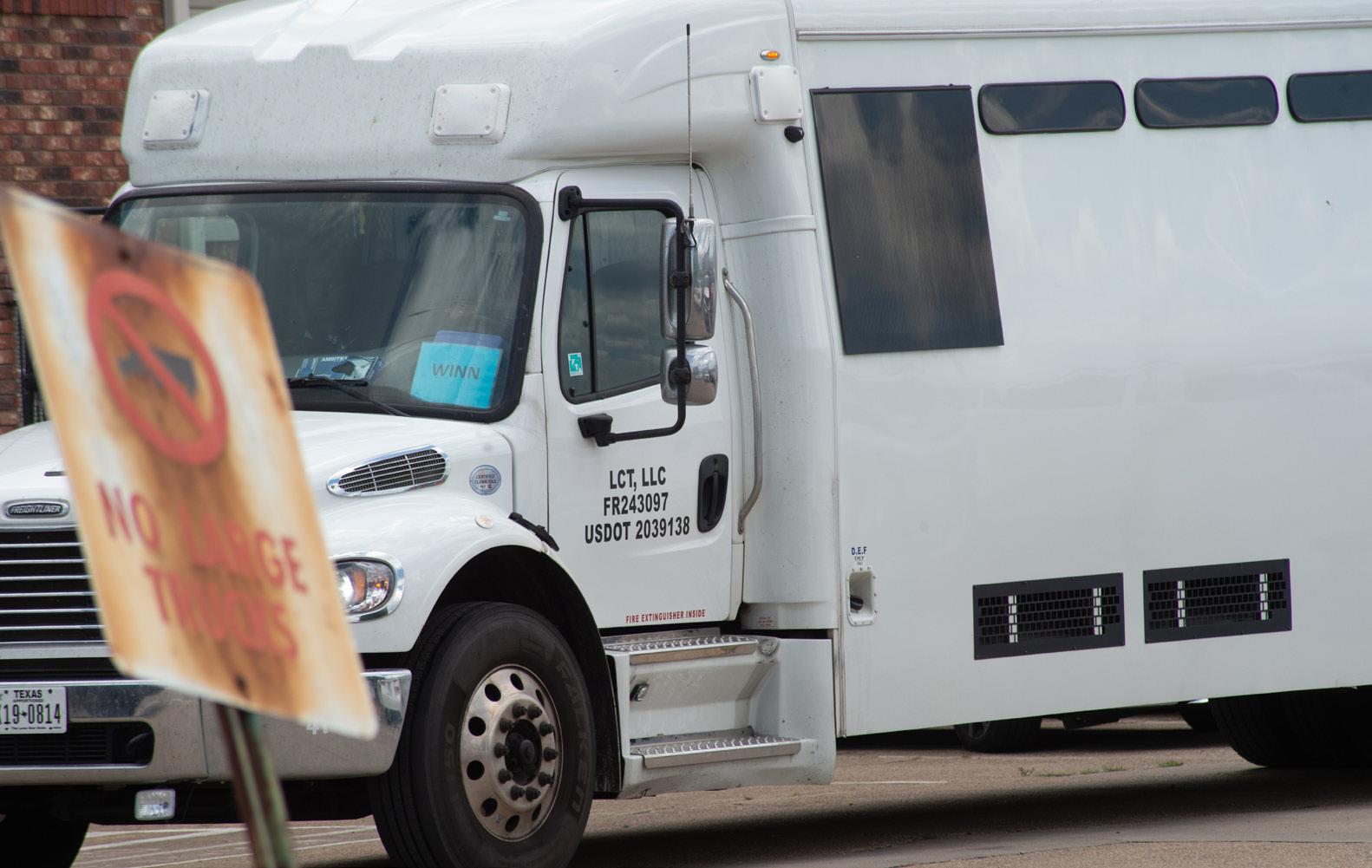
The play doesn’t end until the bus happens. It usually arrives around 2 p.m., but on this day it was closer to 3. It is unlike anything else on the road: a separate driving compartment attached to a passenger area with a series of long, narrow horizontal windows across the top of each side. Not a school bus, not a Greyhound. Even state penitentiary inmates can see trees and traffic go by when they are being transported, but not the passengers in these things.
The bus comes to a stop. A woman is driving, and a man is in the passenger seat. The woman gets out. The man goes to the back of the passenger area, opens the big double doors and pulls out an armful of chains. It takes him a while to untangle them.
“OK, we’re going to play Marco Polo,” Taylor, the young protester with colorful hair, hollers to the man readying the chains. “I”ll yell white supremacist and you yell, ‘Here I am.’ WHITE SUPREMACIST. … What, can’t speak? Let’s try it again. WHITE SUPREMACIST. …”
The man never looks up, and eventually gathers up the chains and takes them inside. Fifteen minutes later, the door opens and out steps the first of 14 or 15 detainees, all attached to the chain.
Bryant lays it on thick. “CHINGA LA MIGRA!,” he yells again and again into the bullhorn. (You can translate that yourself.)
“ESTAMOS CON TIGO! [We are with you.] Are you prepared to take care of the families you are ripping apart? You are violating these people’s constitutional rights. When a responsible administration takes over in America, Donald Trump is not going to save you.”
“LO SIENTO! LO SIENTO!” someone else yells.
The chained — all men — look up with what appears to be some surprise at the commotion across the street as they make their way to the bus. The last one waves, with the chains following his raised hands into the air. That one motion punctuates the end of the production. Perhaps he and his fellow detainees are the actual stars, as no one would attend if it weren’t for them. The doors close, and after a few minutes, the bus drives away.
A big passenger plane scorches the relative quiet of the afternoon as it climbs skyward. We wonder if some on board will notice the disbanding of the small group of actors as they leave their stage, make their way to their cars, and stuff their sign props into back seats and trunks. Possibly. Maybe. At some point, someone has to take notice. Right?
If you missed this production, there’s always tomorrow’s and the one the day after that and the day after that. Tickets are free. Water and sunscreen are recommended.


Clean rivers and flowing streams don’t happen by chance.
At LRWRA , we treat and reclaim used water to protect the natural spaces you love – whether for quiet nature walks or family outings. We work behind the scenes to protect Little Rock’s outdoor spaces because public health & a healthy environment go hand in hand.























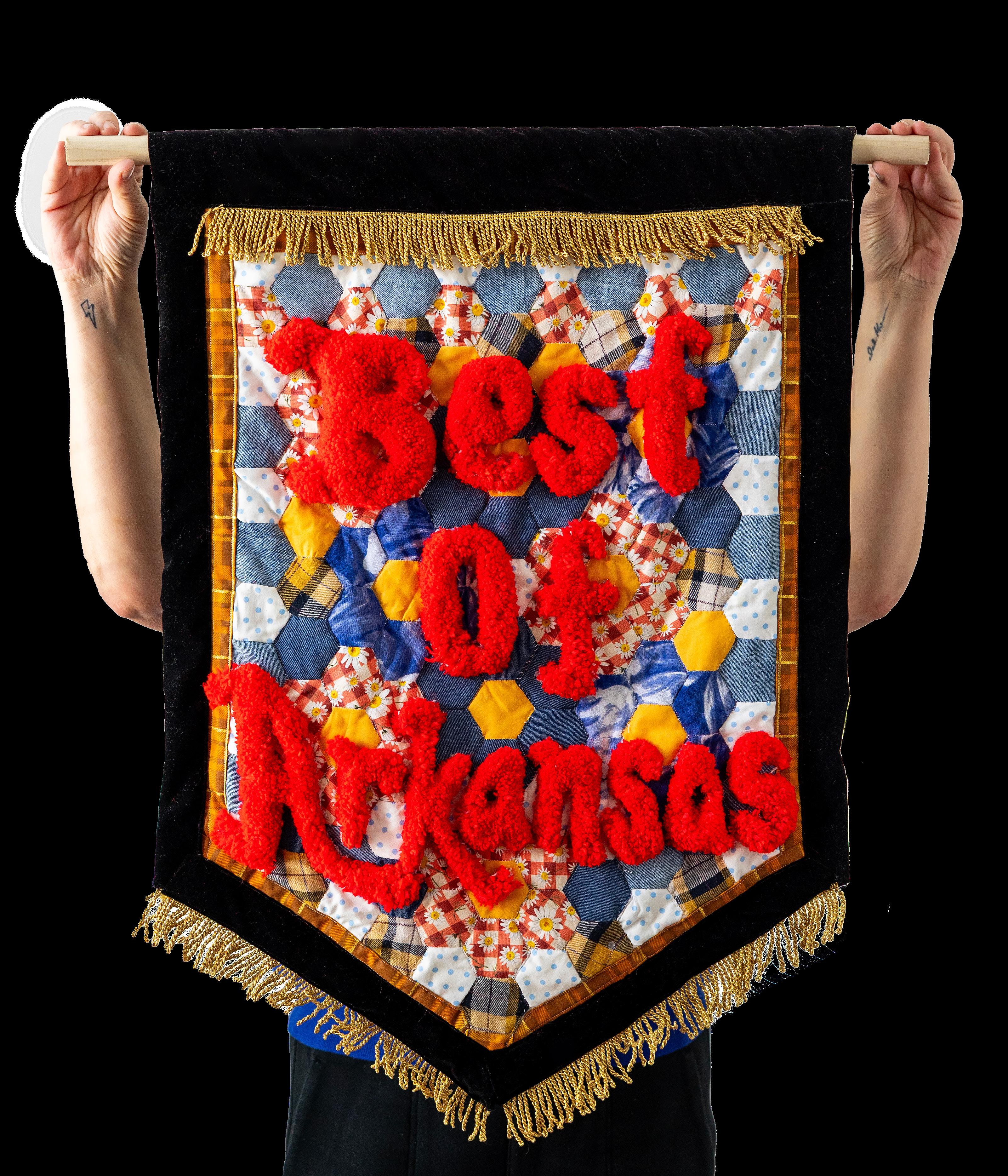

Of the three Arkansas Times polls we host every year, Best of Arkansas covers the most ground, calling upon our readers to weigh in on their favorite places and entities across the realms of recreation, dining, medicine, commerce, culture and beyond. Sure, there’s plenty to complain about in Arkansas, but when presented with such a broad catalog of Natural State treasures, it’s hard not to feel some pride in our state.
In the pages ahead, you’ll find the exhaustive list of winners and finalists from the poll, paired with a selection of stories plucked directly from or inspired by your selections.
Elizabeth L. Cline visited Gitti Studio in Pettaway Square, where she chatted with shop owner Anne Dudash, a German immigrant with impeccable tastes in vintage women’s clothing. Frederick McKindra sat down with Arkansas photographer Harlan Bozeman, whose moving images of Elaine, the site of Arkansas’ bloodiest act of racial violence, straddle tragedy and hope. Daniel Grear got chummy with the folks behind Herron Horton Architects, a husband-andwife firm in Little Rock specializing in modern designs that privilege natural light. Anne-Elise Tidwell caught up with Fayetteville burlesque performer Raven Rose, an unexpected winner in a category typically dominated by visual artists. And last, but certainly not least, Milo Strain drove up to Rogers, where he experienced the best meal of his life at Heirloom at The 1907, an intimate tasting menu restaurant helmed by James Beard Award finalist Jason Paul.
BY ELIZABETH L. CLINE, DANIEL GREAR, FREDERICK MCKINDRA, MILO STRAIN AND ANNE-ELISE TIDWELL
BY ELIZABETH L. CLINE PHOTOGRAPHY BY BRIAN CHILSON
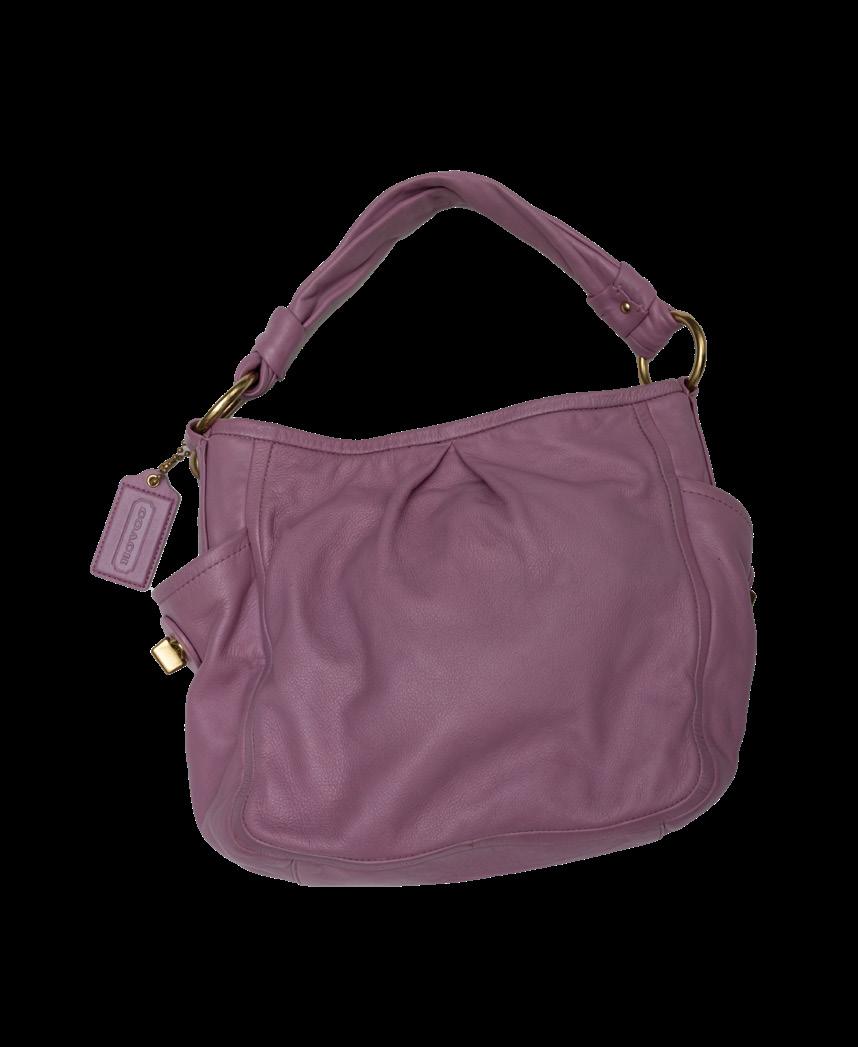
Gitti Studio, a 9-month-old shop at Pettaway Square and the women’s clothing category winner in our 2026 Best of Arkansas poll, has the feel of a very expensive big-city boutique. Tiny, quiet and organized by color, the store’s racks drip with silk slip dresses, vintage Christian Dior skirt sets and Y2K Dooney & Bourke and Coach shoulder bags. It would be an intimidating place to step into if not for owner Anne Dudash’s sunny, enthusiastic presence, steering customers to her enchanting and surprisingly affordable finds.
“People need to start having more fun again with their wardrobes,” said Dudash, 39, who moved to Arkansas from Germany two years ago. “I know it’s comfortable to be out in your Lululemon leggings and all of that, but let’s get back to dressing up.”
Selling tightly curated vintage with a feminine, grown-up aesthetic, Dudash is doing something unique in Central Arkansas.
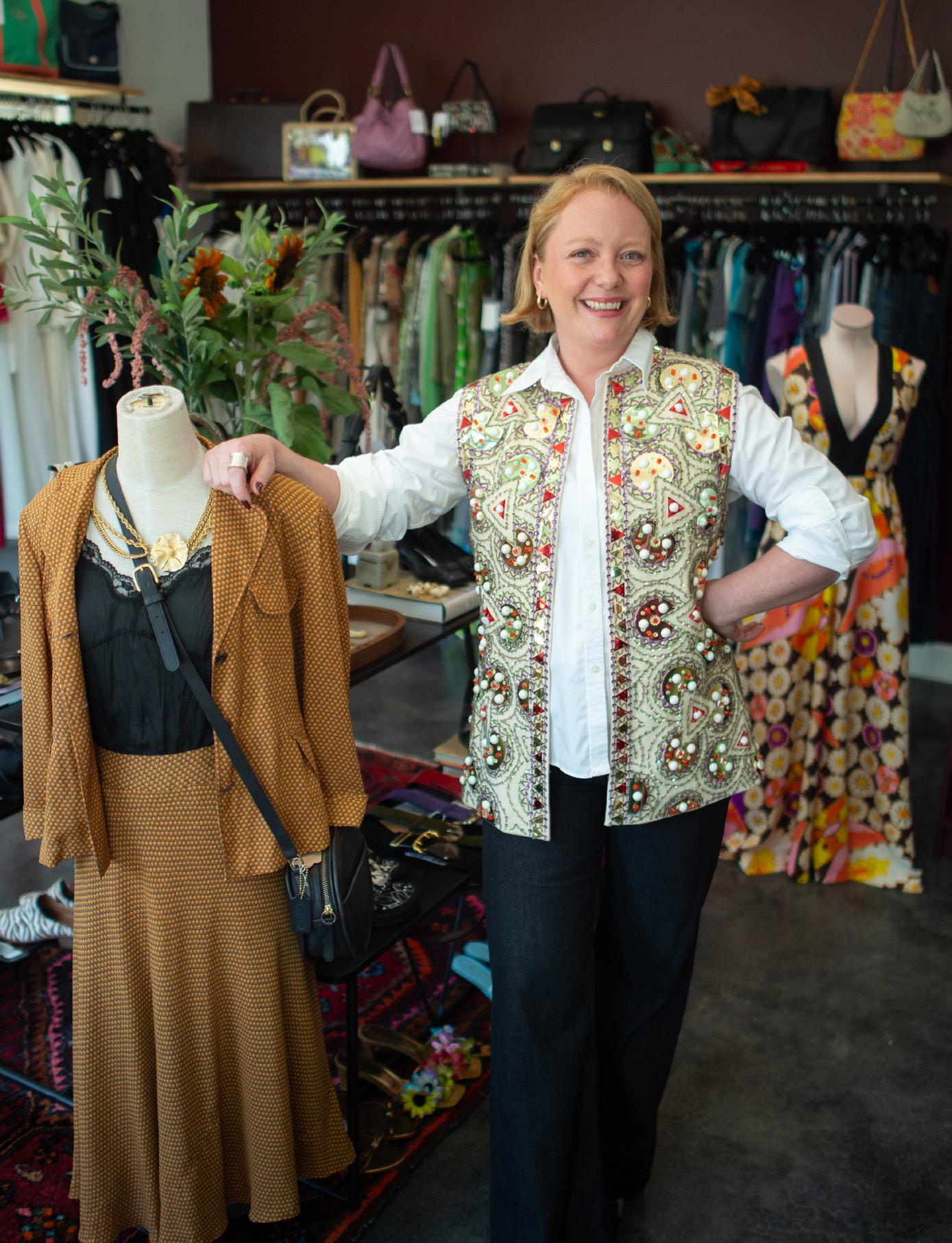
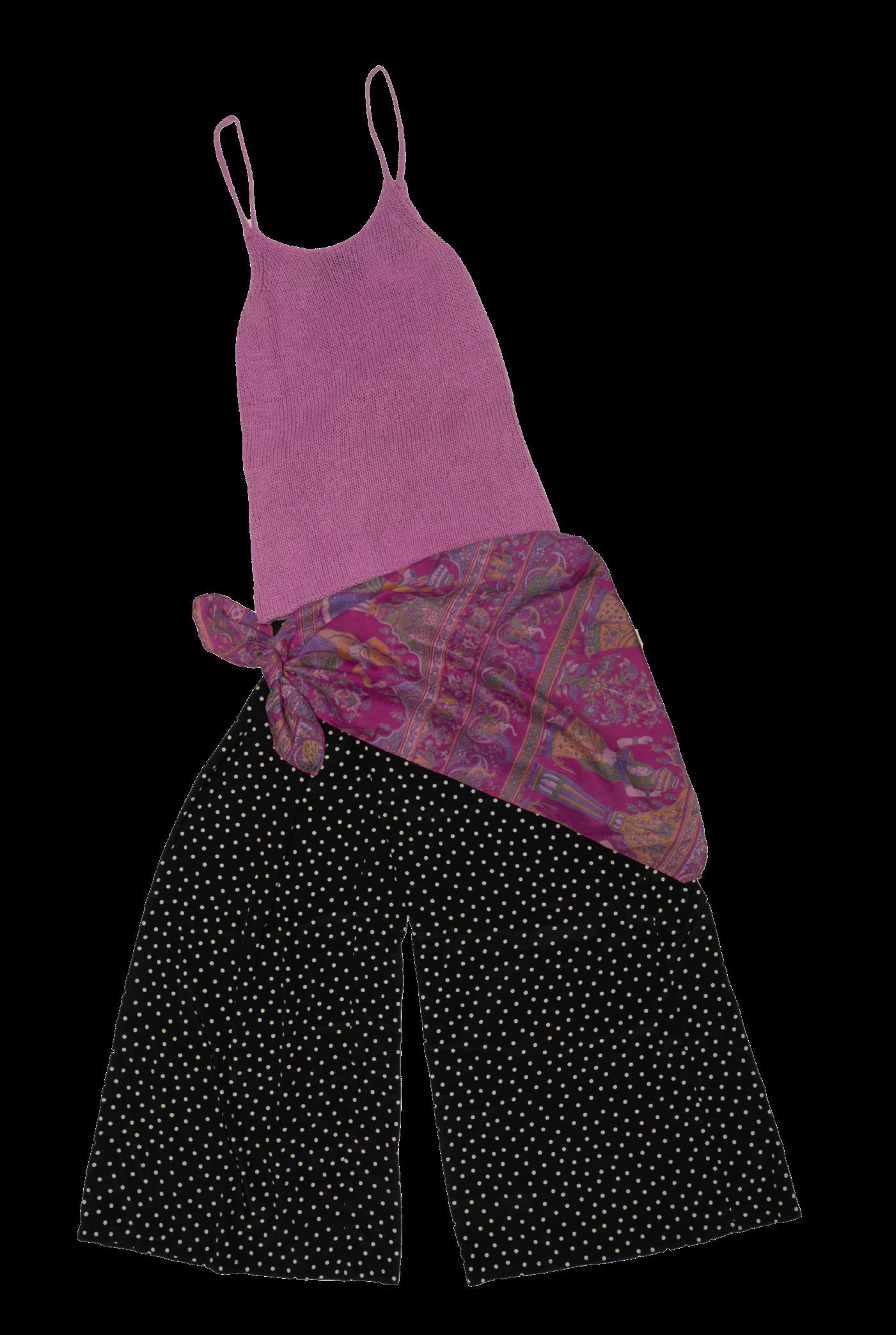
The pieces at Gitti Studio lean flirty — think printed silk midi skirts and peasant blouses — mixed with high-end designer labels like Giorgio Armani and Mara Hoffman and everyday basics made from high-quality materials at prices that won’t wreck your budget. Most pieces fall between $25 and $65. Chunky earrings and statement jewelry start at $19.
“I put an emphasis on quality,” Dudash said. “I want silks, I want cotton, I want linen, I want great manufacturing. And then, of course, I also want the quirky, exceptional, fun stuff.”
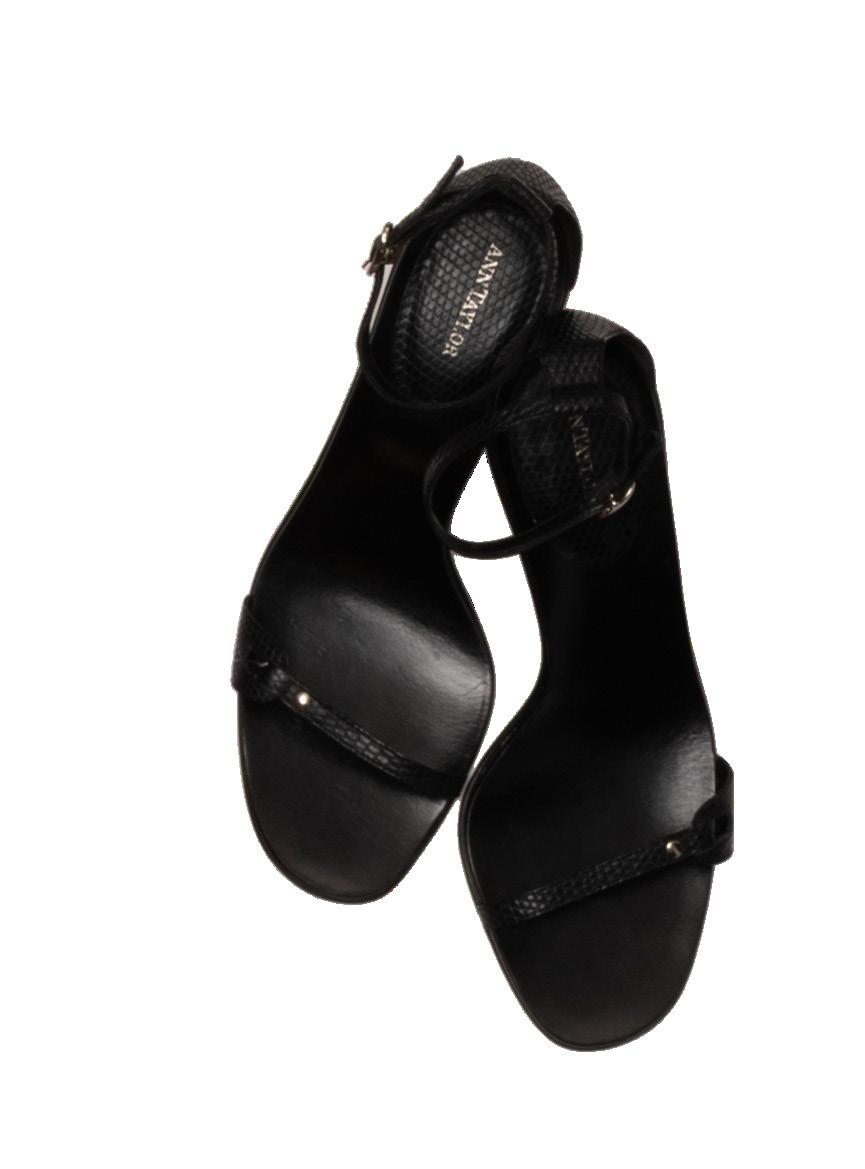
Mixed into the racks at Gitti Studio, you’ll find designer labels marked at fair prices ($29 for a Diane von Furstenberg knitted tank, $129 for gold leather Moschino heels). She’s wellknown around town for stocking an array of ’90s and early 2000s designer handbags. But Dudash is just as excited to point out a classic linen dress or a button-down shirt from a ’90s mall brand.
Customers may be surprised to find an array of wedding gowns tucked into the corner of the shop, some hand-beaded and priced starting at $90, a tiny fraction of what modern brides pay. Dudash also has a small collection of formal gowns and has turned informally to styling her regulars for events. “I get people who text me and are like, ‘Hey, I have seen this on Pinterest. Do you have something like this?’ Or, ‘I have an event, do you have a gown?’” she said. Though some sourcing tricks are closely guarded secrets, she shared that local estate sales, thrift stores and buying trips that stretch to Memphis are some of her go-tos.
Dudash first moved to Arkansas in January 2024, after her husband was stationed at the Little Rock Air Force Base in Jacksonville. Having grown up in a small village in southern Germany, where people walk and bike everywhere, she was bowled over by the isolation of car-dependent life. “Everything is by
car, and that felt very weird to me at the beginning. I felt alienated from other people,” she said.
Dudash found her footing through thrifting. It was at the Goodwill Outlet Store — a by-the-pound warehouse of old clothes not for the faint of heart — out near Bryant that she made friends. “I met a lot of funny and quirky and artistic people there that gave me my first sense of community,” she said. She started selling her finds at outdoor mar kets and pop-ups around Central Arkansas, including the East Village Art Market, and quickly developed a following.
Dudash got her eye for fashion — and the name of her store — from her mother Brigit ta, or “Gitti” for short. “She worked in retail before she got pregnant with me, and she loved fashion, and she loved dressing up,” she said. Growing up poor, Dudash learned that thrifting was a way to look stylish on a budget and spent weekends scouring flea markets with her dad. At 12 years old, she stumbled across a snakeskin Christian Dior handbag in a thrift store — her first real find.
After selling vintage on online resale plat forms in college — mostly ’90s “grandpa” sweaters, she said — Dudash learned the foundations of the resale trade. It helped her to notice a gap in the market once she started doing pop-ups in Arkansas. Observing that many local thrift stores specialized in T-shirts and streetwear or required hours of digging to uncover great pieces, Dudash realized she could build a brand by letting her personal aesthetic shape what she sold to customers.
“The joke I always make is kind of like the store is an extension of my closet,” she said. “I would not put anything in the store that I wouldn’t wear myself.”
The decision to open the store happened naturally. Customers kept asking for a brickand-mortar location where they could try on clothes and shop during regular business hours. Arkansas weather made the decision even clearer. After one too many sweltering days selling clothes at outdoor markets, Dudash decided it was time for a fitting room and air conditioning.

It’s time to heal. You have goals to reach, experiences to process, and your future ahead of you. Let’s work together to get you where you want to be.


“I lived in Africa, and the heat there is not as bad,” she said. Pettaway Square was an added draw, the walkability and tight-knit feel reminding her a bit of the European village life she had left behind.
For newcomers to resale shopping, Dudash understands the hesitation. Vintage sizing is inconsistent. The labels may be unfamiliar. There is only ever one of a particular item. But her advice is simple: Try things on and keep an open mind.
Dudash is an expert in fashion eras from the 1910s through today and knows her in-

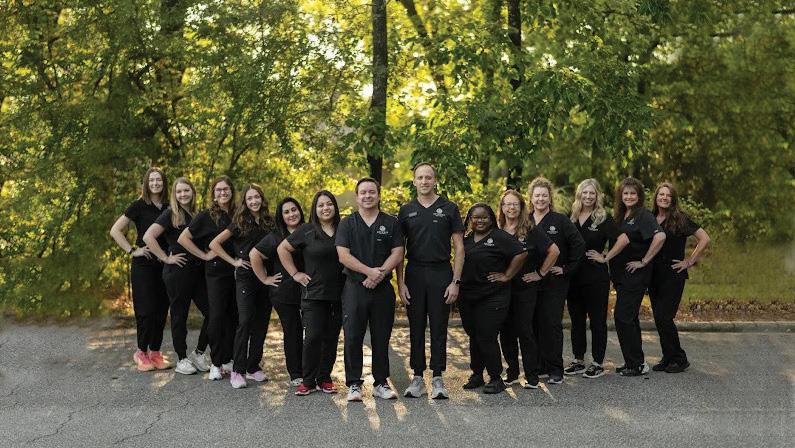
Ask her loyal patients and you’ll hear comments like: “Her staff are both professional and always helpful,” “I would trust her skills with anyone in my family,” “…loves what she does and cares for her patients,” or our favorite, “Best chiropractor in the world!”




ventory well enough to help you see possibilities you might have otherwise walked right past.
On the afternoon I visited, she was wearing a vintage red blazer over a Razorback T-shirt paired with sparkly silver Isabel Marant sneakers (thrifted, obviously). After showing me a red silk polka dot slip dress and an off-white ruffled midi skirt, she urged me to try on a bronze silk halter top that’s exactly my style and showed me one of her favorite current finds, a two-piece printed skirt set by Christian Dior. In the bridal racks, we gazed appreciatively at a cowl-back wedding dress by a Japanese designer, fashioned in soft, thin silk with a mermaid train. “Look at this? Incredible, right?” she whispered, her eyes
aflame.
In an era of fast fashion and wardrobes dominated by overpriced designers or dressed-down athleisure, Dudash sees her mission as something larger than selling clothes. That philosophy stems from her own upbringing. Raised with little money in Germany, she learned early that dressing well had less to do with wealth than having a good eye or a great local shop where someone with the instinct and the thirst for the hunt will help you on your journey.
“You can find something no matter your budget,” Dudash said. “I promise you, you can come in here and you can find something for yourself that will enrich your wardrobe.”
Vintage sizing is all over the map. A size 10 from the 1970s may fit like a modern size 4, while trousers from the 1990s might have different proportions than today’s clothing. “The size doesn’t mean anything,” Dudash said. “Try things on.”
You don’t need to wander aimlessly. If you need advice, tell the shop owner what you’re looking for, whether it’s a wedding guest dress, a work wardrobe refresh or a gift for your wife’s anniversary. “I know my store,” Dudash said. “I can pick for you.”
A well-made vintage Laura Ashley silk dress or rattan Salvatore Ferragamo pumps may outlast modern pieces. Dudash encourages shoppers to pay attention to fabrics and construction. Look for natural fibers like silk, linen and cotton, as well as quality stitching and details.
Resale prices aren’t based solely on age. Designer names, rarity, condition, craftsmanship and demand all factor in. That’s why a vintage Christian Dior piece may cost hundreds, while a classic linen dress runs you only $35. In a curated resale store, you’re paying not only for the garment, but for the time spent sourcing, cleaning and evaluating it.
Dudash believes Americans have become too cautious with their wardrobes. Vintage shopping is a chance to experiment. That 1970s jumpsuit, bold printed skirt or unusual handbag may become the piece you wear most. “People need to start having more fun again with their wardrobe,” she said.





CARTI began in 1976 with a singular focus: delivering high-quality radiation therapy to cancer patients in Arkansas. In the decades since, that mission has grown, but our purpose has remained the same: to make trusted cancer care accessible for every patient we serve.
Since those early days, we’ve expanded into a comprehensive network with 18 locations across the state. Today, CARTI offers a full spectrum of services, including medical, surgical and radiation oncology, research, imaging, urology and much more, all grounded in leading-edge, compassionate care and clinical excellence.
As we mark 50 years of service, we honor the trust of our patients, the legacy of our founders and the dedication of countless team members and volunteers. While treatments continue to evolve, our lasting commitment to those facing cancer will never change.
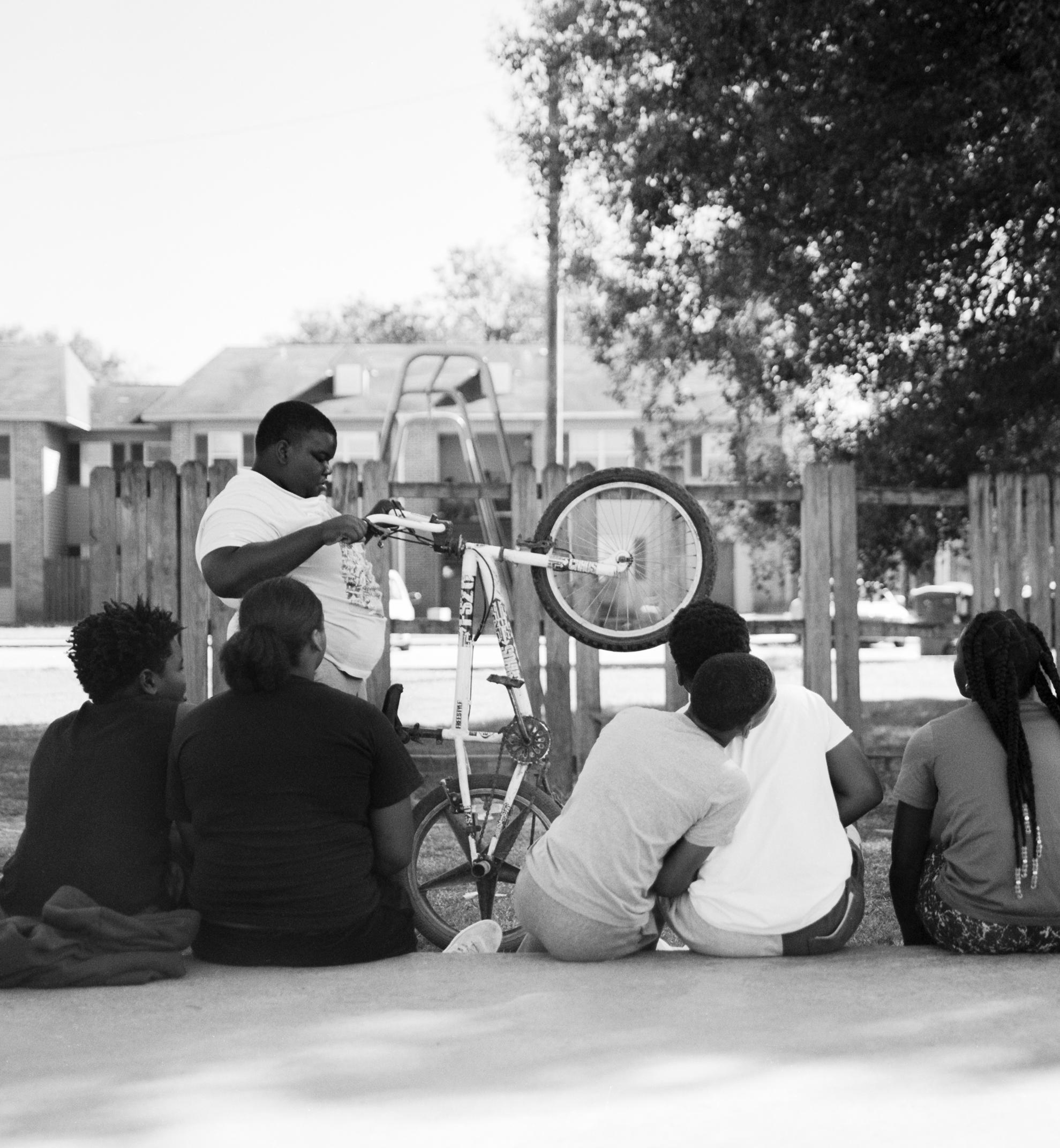
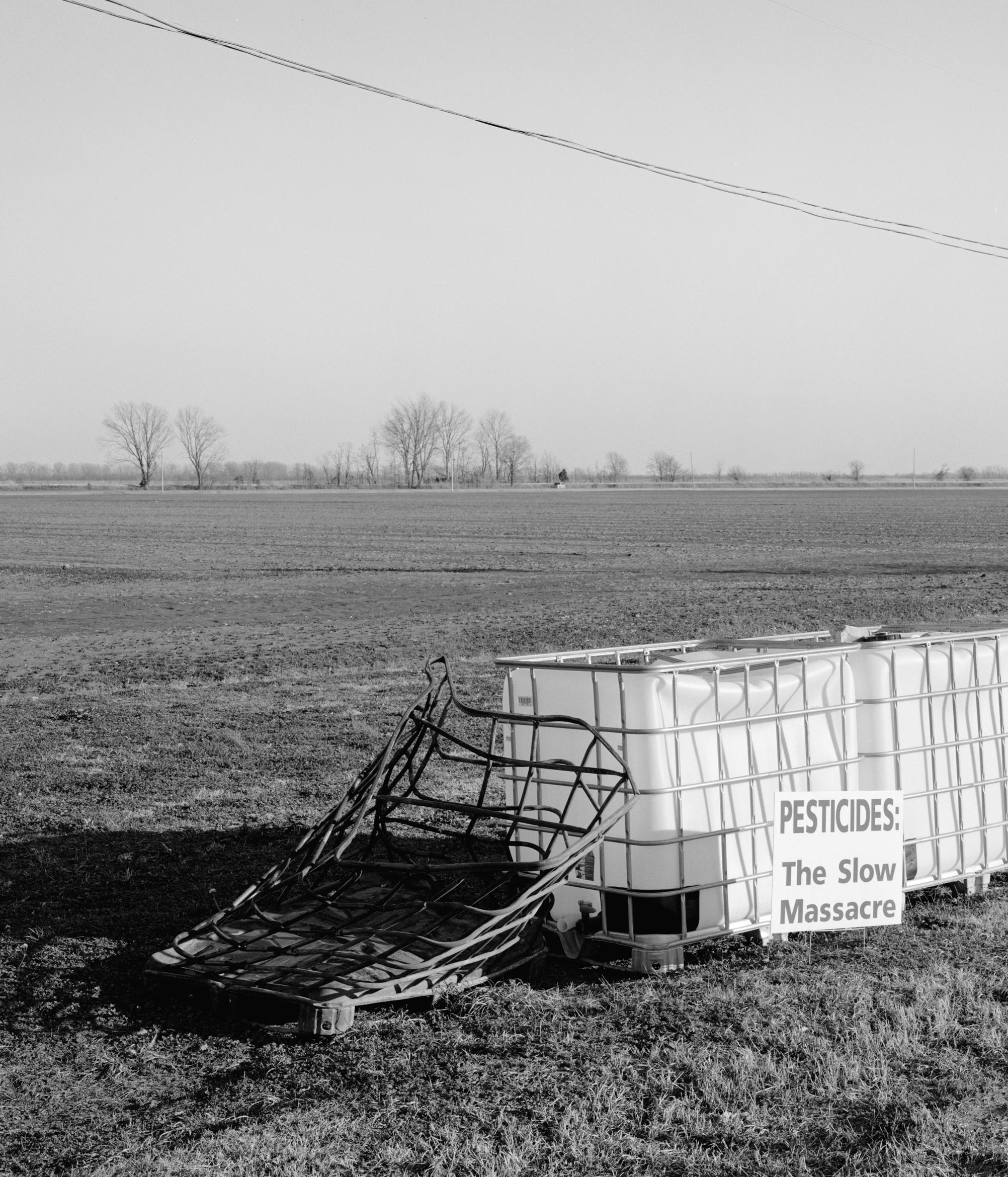
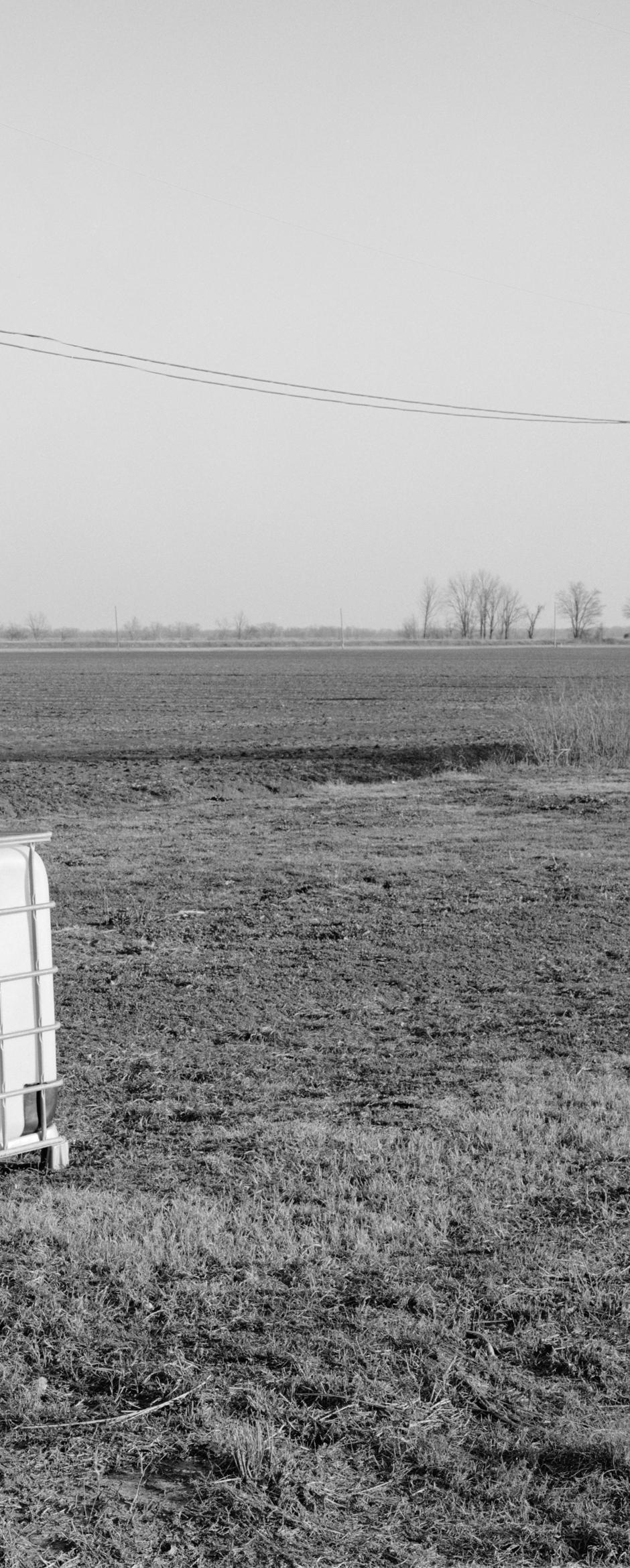
THE NEXT GENERATION: Many of the images in “Out the E,” a photography series by Harlan Bozeman spotlighting contemporary life in Elaine, focus on youth, as if to amplify the message that life is still flourishing in this place.

BY FREDERICK MCKINDRA
PHOTOGRAPHY BY HARLAN BOZEMAN
In a photo from Harlan Bozeman’s forthcoming series “Out the E,” an audience of six preteen onlookers sit rapt, their backs blithely turned to the camera as one member of their troop demonstrates the physics of popping a wheelie on a bicycle, one of the universal physical feats of adolescence. Another picture captures an in-progress game of hoops on a basketball court that spills out onto a field adjacent to an apartment complex. Bozeman trains his eye on youth in both these images, almost insistently, as if to amplify the message that life is still flourishing in this place.
Look once at Bozeman’s photographs of mostly Black subjects, and his work appears like the documented evidence of their lives. Look again, and it appears as portraiture. Straddling that line between candid realism and heightened sophistication has enabled him to snap images that have gained notice from The New York Times, which described his work at the Studio Museum in Harlem as “a tender record of present-day life in the Black community of Elaine, Ark.” This year, the burgeoning photographer, who spent his formative years in Bentonville, and until last year lived in Little Rock, was named a Guggenheim Fellow.
Bozeman, 33, develops an intimacy with his subjects and their environs akin to James Van Der Zee or Ernest Cole, according to Zora J. Murff, his former photography professor at the University of Arkansas at Fayetteville. Bozeman possesses “the ability to capture a breadth of experiences that come to constitute a place,” Murff said, and is part of a tradition of a certain kind of photographer “who operate[s] in community, but [is] actually like a part of that community.”
Bozeman found his way to the U of A right before the COVID-19 pandemic, lured by the opportunity to work with Murff and the promise of enjoying more lucrative funding. He’d already begun a Master of Fine Arts program in photography at Arizona State University, but left after one year. Having lived in Northwest Arkansas from about second grade until high school, this was something of a homecoming, too, 15 years later.
He arrived at a graduate program newly underwritten by a $120 million endowment from Alice Walton, the largest philanthropic gift in the history of the United States to an art school. But the university also found itself wrestling with matters of race, as members of the Sigma Chi fraternity made a video mocking the death of George Floyd. Around the same time, a Twitter hashtag — #BlackatUARK — started to gain momentum, documenting the experiences of microaggressions and overt racism suffered by students on the U of A campus.
Bozeman himself had only just begun to develop the kind of nuanced cultural consciousness that would affect his work while studying. His political awakening originated with finding his way to the work of theorists like Christina Sharpe, Kimberlé Crenshaw and Frank B. Wilderson III.
Soon after beginning the program, though, the campus shut down due to COVID, and Bozeman sheltered at his parents’ place in rural Bentonville. He did most of
CANDID CAMERA: Harlan Bozeman’s “Out the E” series now contains more than 100 photos — all shot on film — taken around the Elaine community, sometimes picturing local people, sometimes town landmarks, sometimes the mundane fragments of life there.
his early graduate coursework remotely, so when the idea came to photograph Elaine, he jumped at it for the chance to get out.
“I was auditing a course before classes started that summer with Zora [Murff] titled ‘Intersectional Practice,’ and one day, we were looking at lynching photographs and we were talking about the seriality of those images, how you would see them in postcards and it was like an event for people,” he said. “And that’s when I found out about the history of the Red Summer of 1919. I had no idea this happened. You know, you look at maps, you see the dots all throughout the Northeast, Midwest, South, of all of these tragic incidents spurred by racial violence, which all happened in, like, a couple months’ period, and it all stems from Black military officers returning from World War I.”
This discovery led him to consider a trip to Elaine, where Arkansas’ bloodiest act of racial violence took place. There, in 1919, while about 100 Black sharecroppers gathered at a church to discuss union organizing efforts, a shootout occurred outside. Historians aren’t certain who fired the first shot, but the melee resulted in the death of a white security officer and the wounding of a white deputy sheriff. The next morning, hundreds of armed white people were deployed from the surrounding area to put an end to a rumored “insurrection” among the Black sharecroppers. It’s estimated that more than 200 Black people were killed in the incident.
“I decided to go out to Elaine for the first time after knowing about the town for maybe about two months. And I didn’t have a specific plan,” Bozeman said. “It sounds really simple because it really was. I went to the basketball court because that’s where I saw people. And I didn’t know that would turn into a six-plus-year project.”
The visit prompted a photography project that would become “Out the E,” a sustained look at the contemporary reality of a town marked by an incendiary racial past. The series now contains more than 100 photos — all shot on film — taken around the Elaine community, sometimes picturing local people, sometimes town landmarks, sometimes the mundane fragments of life there.
It was a struggle to prevent Elaine’s history from subsuming the project, though, a concern that kept coming up in conversations with Bozeman’s graduate school peers and faculty.
“Being in graduate school while developing the project was difficult,” he said. “I was getting a lot of questions, or at least I was early on, around my subjectivity to the work. And then also, ‘What is this work about? Is it about the tragedy that happened 100-plus years ago, or is it focusing on the now?’”
Murff remembers watching Bozeman reckon with the implications of his work, which can elicit a strong reaction, not least of which comes from a white audience seeking to reassure its own moral station or perhaps absolve itself or find catharsis from feelings of guilt over the Elaine Massacre.
“Because of what was going on with George Floyd, what was sort of the zeitgeist socially at the time even before George Floyd, just thinking about police murders and anti-Black violence, people always tried to push Harlan back to that, which is like a part of the work, yes, from a material and historical standpoint of the place,” Murff said. “But it was more about the aftermath, and how mundane life exists in that environment. How are people surviving? And then what are the sort of lingering ghosts, thinking about the water issues, the lack of infrastructure, lack of employment opportunities, poor schooling, all of those things.”
And so Bozeman fashioned a way of communicating that this project
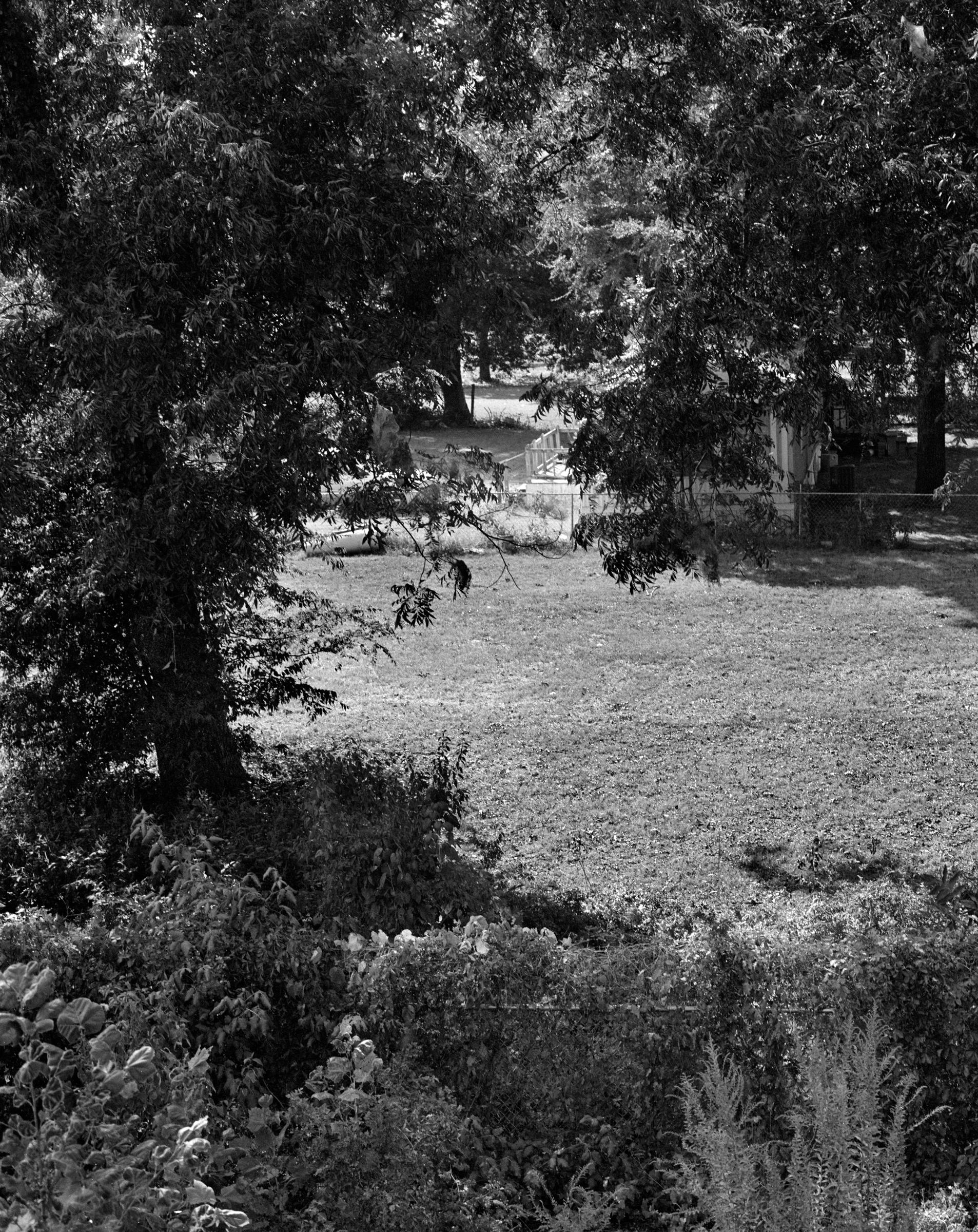

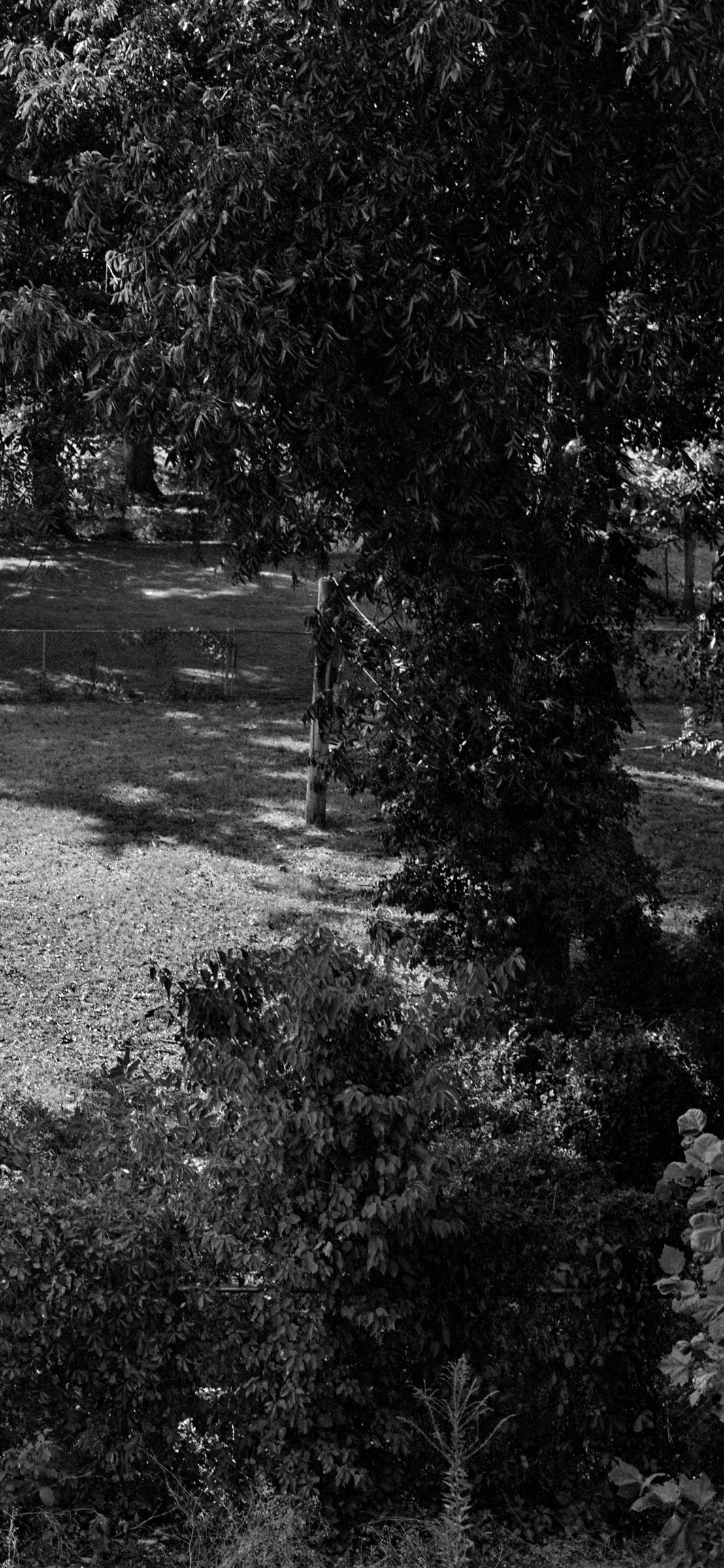
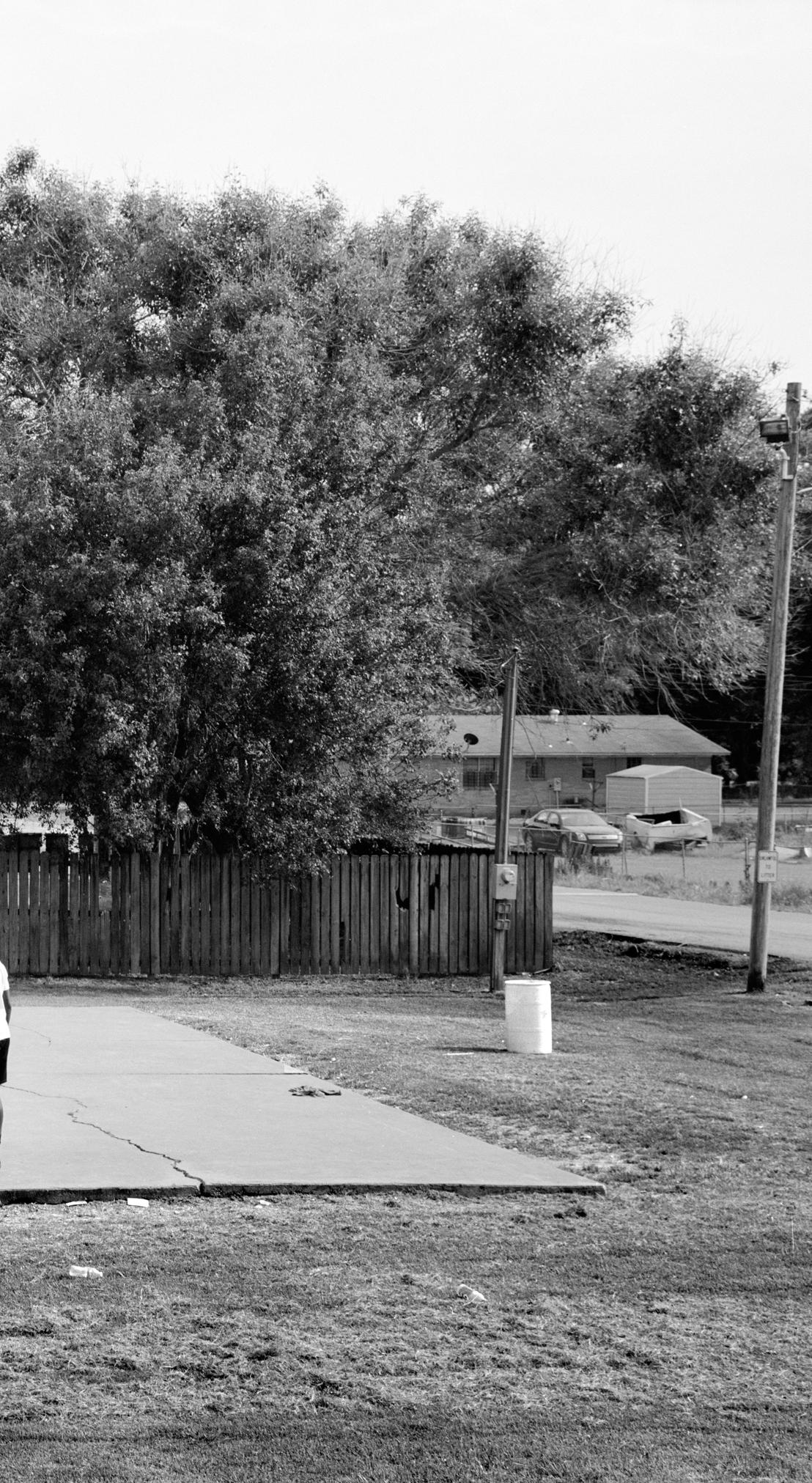
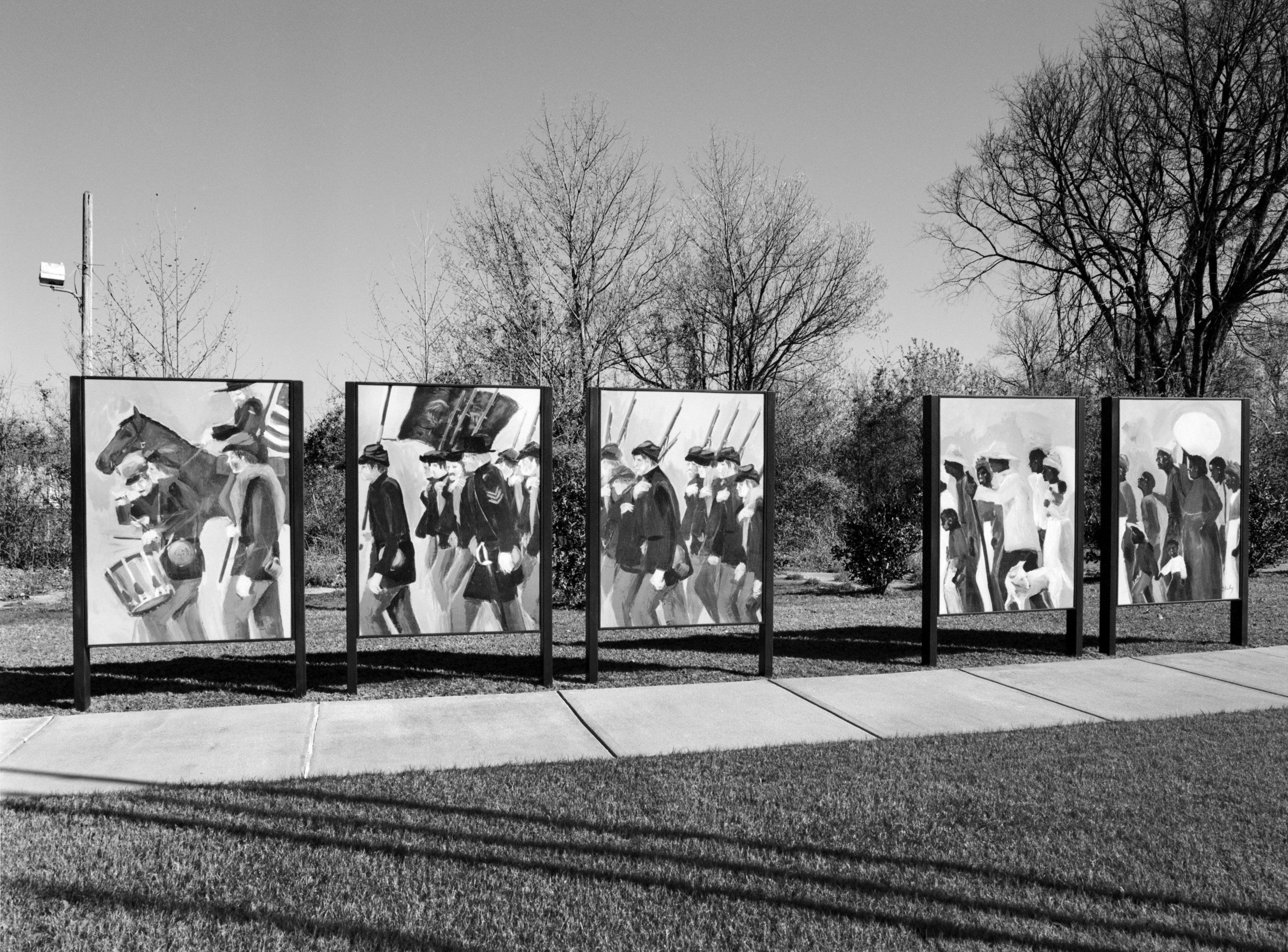
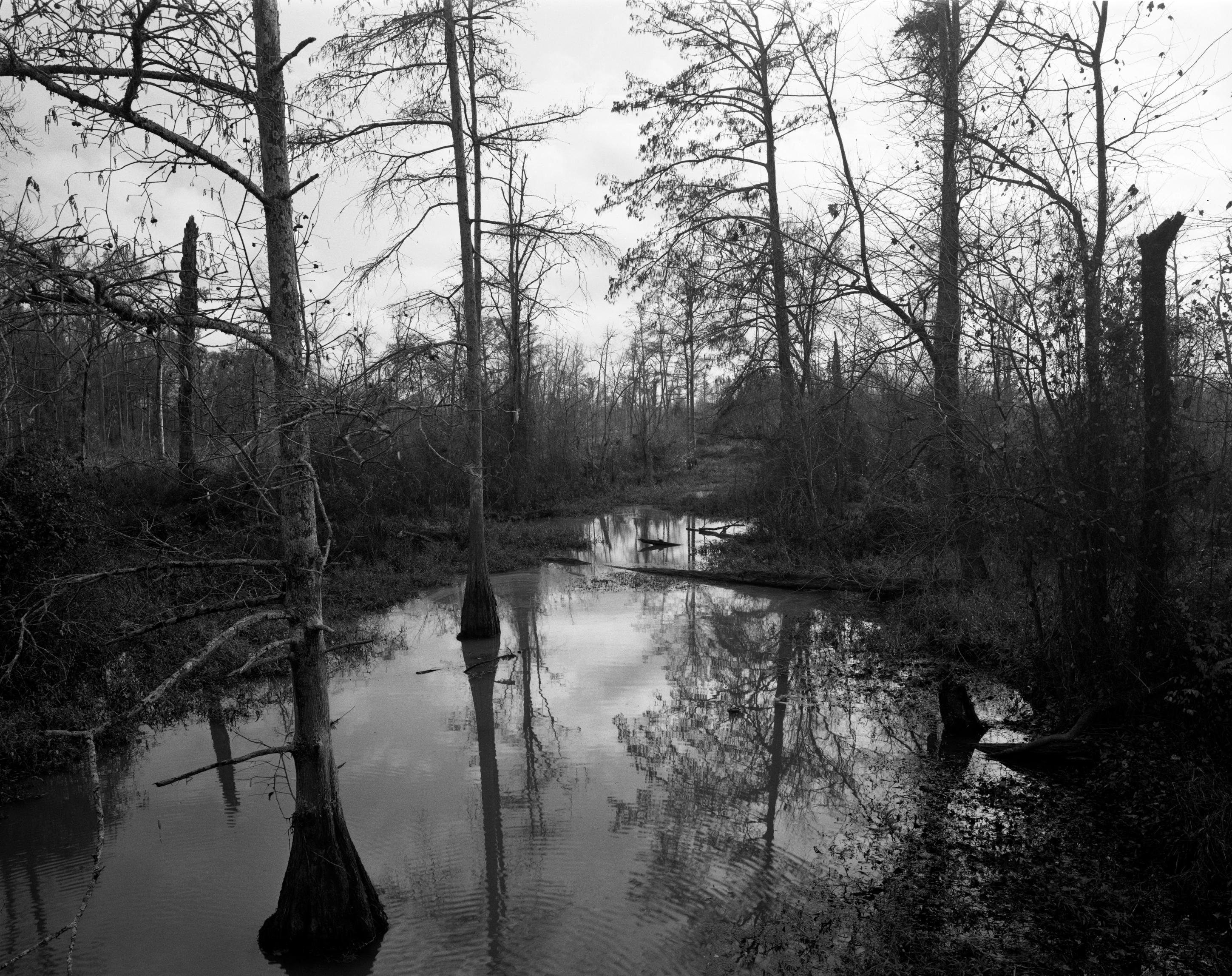
‘OUT THE E’: The work of photographer
considers the legacy of the Elaine
while prioritizing the Delta town’s present.
intended to depict the present-day circumstances of a Delta town marred by a painful history of racial violence, giving himself space to acknowledge the town’s past while emphasizing the lives of residents today. His initial attempts to get to know the community, however, were met with suspicion. Trying on one of his early trips to strike up a conversation with a community member, Bozeman realized that the man he was speaking to was in the middle of a phone conversation. The person on the other end of the line “overheard me introducing myself, and she got on the speakerphone and was just kind of, like, telling me off, like, ‘Where are you from? What are you doing? There are a lot of Black poor folks around here. What are you doing?’”
Fortunately, he’d scheduled to meet with members of a local church congregation to introduce himself and the project. After sharing this with his interrogator, she responded, “Yeah, that’s good that you’re doing that. Like you’re gonna have to do things like that in order to be a part of this.”
Bozeman remembers getting into his car and thinking, “Am I the right person to do this? I was really just like, ‘Oh man, am I, can I commit to this? We can’t be lazy about this. We need to be careful and sensitive about it.’”
Though he shares a cultural background with the people of Elaine, having relatives from nearby Memphis, Bozeman recognized the difference between the lived realities of the people he was depicting and his own life. “I have family in Memphis. The lingo’s the same, the accent’s the same, but day-to-day lived experience, it’s dissimilar, for sure,” he said. “Hanging out and making work in Elaine isn’t a pretty thing. … There’s nowhere to hang out indoors, no gathering space that’s just casual.”
Securing the community’s blessing became a significant part of the project. “The first couple of months, there was a lot of skepticism, like, ‘Who are you? Where are you from? You’re not from here,’” he said. “But I was also always going back and giving prints, showing people work. And that changes everything when you see your cousin or your daughter, and I’m also just giving you the print because I don’t need to keep it. That helped.”
He also returned to offer a photography camp to local youth in the community.
Perhaps most importantly, Bozeman has made sure to be super protective of the work, keeping a tight rein on the display of his output to limit voyeurism. He decided to show only a limited number of the photographs at shows and on his website. He also decided not to show people’s faces in any of those images. “There are not many photos of the work just, like, lying around on the internet,” he said.
“When people see photos of Elaine, it’s probably going to be my images, you know, above anything else. That kind of freaks me out. But that’s what happens when you photograph a really small place. Not that other people haven’t come in and photographed Elaine, but no one’s invested that amount of time,” he said.
Now, preparing for the release of his first monograph containing photos from the project this fall from TBW Books, Bozeman still marvels at the sustained interest in his subject.
“I didn’t know if the investment in a project like ‘Out the E’ would pay off in terms of doing things in the world, or people seeing it. But I just knew that I hadn’t seen something like this in a long time,” he said. “I’m not the first to embark on a long-term photo project that’s centered around social engagement. But I thought this was different because it’s such a small community, 500-something people.”
Soon, he’ll have taken that small community before the eyes of the art world. And he’s feeling more comfortable about the prospect of sharing the work this time.
“I value the work so much and the people’s energy and time that they gave to me to make the work. And I think that made me really private about not showing a lot of pictures,” he said.
But a book, tailored exactly to his specifications, is different. “It’s something that I feel like I have more agency around putting out in the world.”
COUPLE BEHIND HERRON HORTON ARCHITECTS MAKE A PERFECT TEAM.
BY DANIEL GREAR PHOTOGRAPHY BY KATIE CHILDS
Collaboration is hard. We learn this early on from the litany of group projects forced upon us by well-meaning teachers insisting that adult life will require oodles of cooperation and compromise. Most of us, however, choose mostly to go it alone once we come of age and are thrust into the workforce, doing the best we can to avoid the challenges of true teamwork.
The folks at Herron Horton Architects, a husband-and-wife firm in Little Rock that’s consistently won honors in the architect category of our Best of Arkansas poll, see things differently.
“We both have different skill sets that really mesh well together,” Jeff Horton said. “I’m good at starting projects because I have a sense of being able to take these big programs of people telling you exactly what they want inside of a building, and I can compartmentalize that into smaller chunks to be able to make it manageable, to design it on the front end, to get the overall form working. And then I can pass it to Jennifer because she’s really good at dissecting each individual space to see how it is on a human level.”
Jennifer Herron’s strengths lie in the details, she said, “like light, textures, volume, what the ceiling plane is doing, how it’s interacting with the rest of the structure.”
“It’s very much a back and forth,” Horton added.
Horton, who grew up outside of Kansas City, and Herron, a Little Rock native, met

DESIGNING FOR GOOD: Founded in Little Rock in 2000 by Jennifer Herron and Jeff Horton, Herron Horton Architects work with plenty of residential and commercial clients, but their “heartstrings” lie with nonprofit organizations.

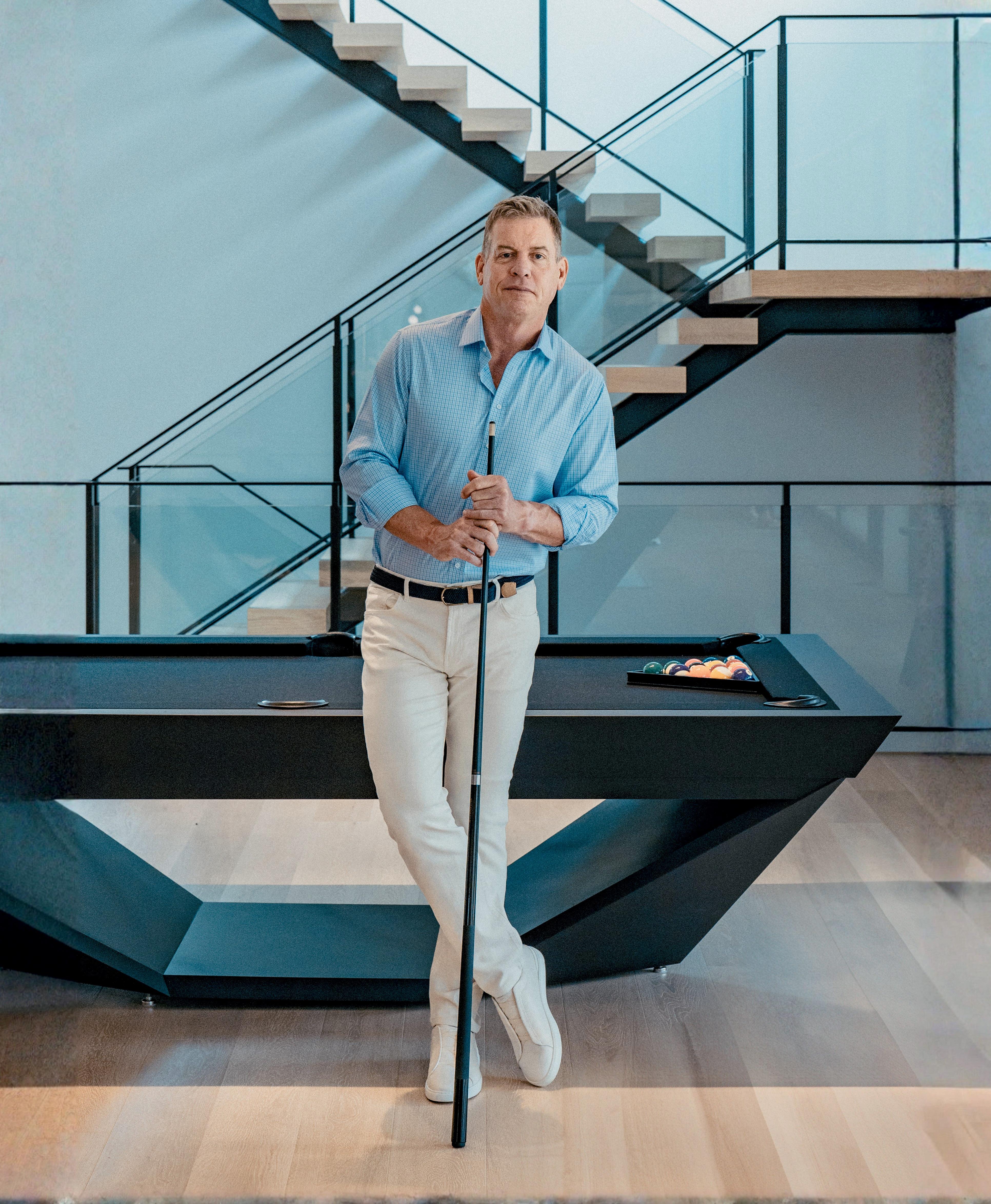


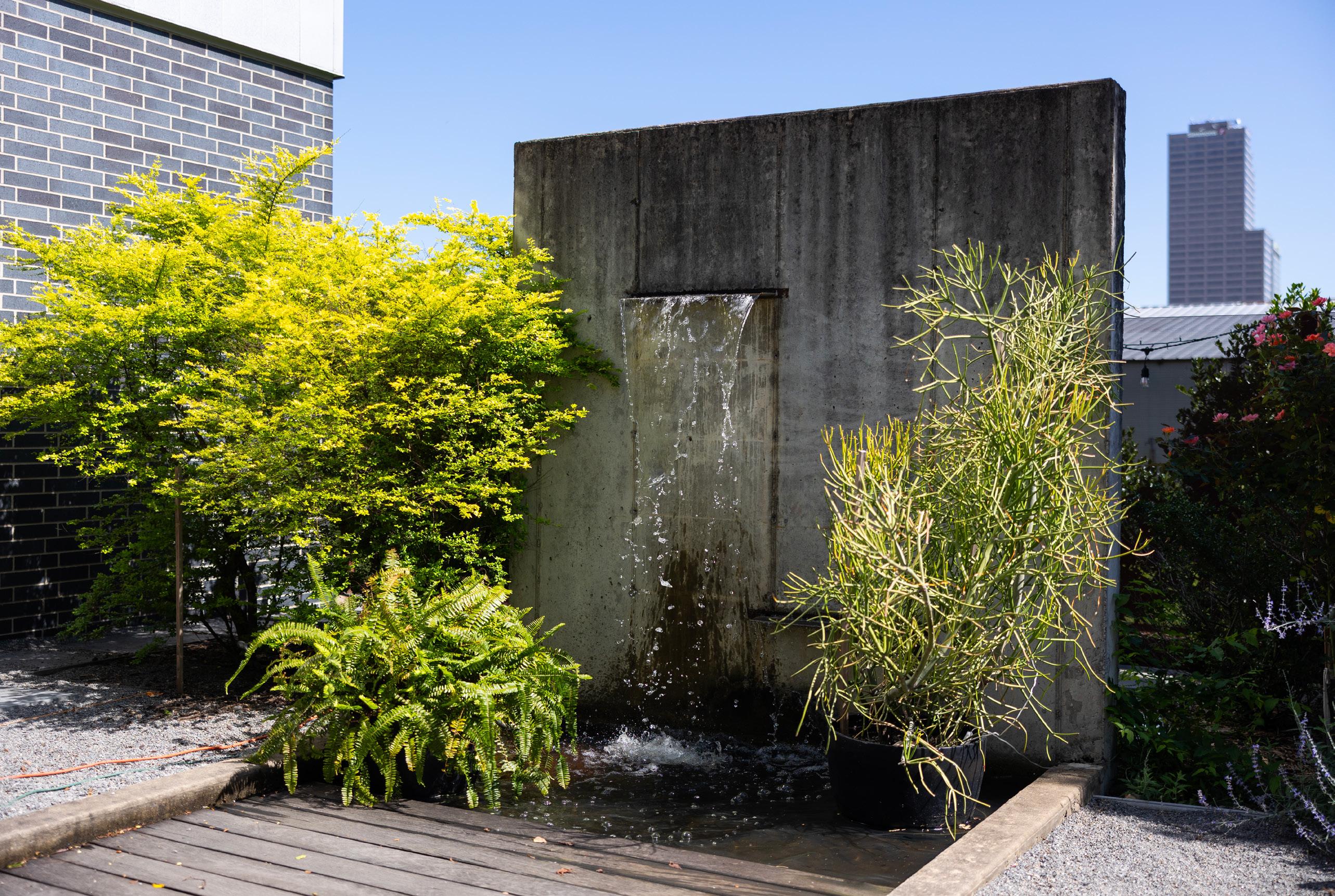
NATURAL LIGHT: Horton and Herron’s design philosophy focuses on “bringing the outside in.” It’s no wonder that the large windows lining their combined home and office privilege a view of this wondrous patio.
“WHAT IS YOUR VISTA? WHAT IS YOUR VIEW TO CONNECT YOU TO THE OUTSIDE?”
— JENNIFER HERRON
at the University of Kansas, where they both studied architecture. After a handful of years working at separate firms in Little Rock, they struck out on their own in 2000, looking for more flexibility as they started having kids. The intuitiveness of their dynamic took them by surprise.
“We had no idea,” Horton said.
“We knew what each other’s sensitivities were, but we hadn’t actually worked together,” Herron said.
Still, the chemistry of Horton and Herron as creative partners eventually became so woven into the fabric of their relationship that the pair’s office and home are now on the same plot of land. Located in the SoMa neighborhood at 1219 S. Spring St., their gorgeously open dwelling consists of two linked structures, each meticulously designed in the late 2000s by Horton and Herron themselves.
The compound — high-ceilinged and flooded with natural light coming through an abundance of large windows — is reminiscent of their general style.
“Bringing the outside in — that would definitely be a trademark of ours,” Horton said.
“The idea that bringing natural light into your space connects you to nature, which makes your life more healthy.”
“When you’re walking through the spaces we design, we’re always looking out. ‘What is your vista? What is your view to connect you to the outside?’” Herron said.
Horton added that they typically work in the modernist tradition of architecture, designing from “the inside out” and incorporating only “minimal details on the outside.” Those choices, too, are reflected in their house/office, which has an uncomplicated exterior and a simple roofline.
Given the proximity of the couple’s personal and work lives, it’s easy to imagine those lines getting blurry for Horton and Herron, but they don’t seem to mind. In fact, just above their office is a spacious studio dedicated to Horton’s visual art practice. His paintings and sculptures, which clearly interact with his work as an architect, combine an angular, spatially conscious sensibility with unmistakably human drips and brushstrokes.
“For the longest time, I was like, ‘They’re

At Arkansas Children’s, every medical breakthrough begins with imagination. Visit our hospitals, and you’ll see evidence of our biggest expansion of pediatric health care ever. Our doctors, nurses and researchers are constantly imagining new possibilities in cardiology and allergy care, or the safest treatments for diabetes and cancer. From life-saving pediatric heart surgeries to the discoveries yet to come, imagine what’s next with Arkansas Children’s.
Learn more about how we’re expanding pediatric health care at archildrens.org/Imagine
Imagine


not linked. I’m not doing architecture [when I’m painting],” Horton said. “And then, within the past 10 years, I’m like, ‘Well, basically that’s my unique angle. I’m an architect who’s painting.’ I’m a painter first, but the architecture seeps in. And they go back and forth. I’m seeing now how useful it is. … You need to know how to draw by hand in this industry.”
Herron, who is a photographer in her spare time, said she always recommends that aspiring architects “stay in the art world.”
“A lot of counselors will say, ‘Oh, you’re good at math. You should go into architecture.’ But really it’s the art,” she said. “The art keeps asking the questions, like, ‘What if I did it this way? What if I drew it this way? What if I use this media?’”
While Horton and Herron frequently work with commercial and residential clients, they particularly love partnering with nonprofit organizations. “It’s where our heartstrings are,” Herron said.
They’re especially proud of their contributions to the Our House campus, where
they’ve designed several buildings and facilities across multiple renovations since 2010.
“Everyone deserves a well-designed space to live, work and grow,” Herron said to Our House in 2014, right as the 19,000-squarefoot Children’s Center they dreamed up for the organization opened its doors. “We didn’t want to give Our House a clinical-type building, which it very easily could’ve been. Just because these children are homeless or on the edge of becoming homeless doesn’t mean they deserve anything less than other children. We are all human.”
“The staff is all mostly younger and full of energy,” Horton said. “Their programmatic needs are very unique, so each project pushed us. … They didn’t have tons of money to spend on these buildings, but they had to be durable and creative, too, because it was a creative bunch of people that worked there.”
Horton and Herron’s work in the community extends to education as well. Recently, they finished up a months-long residency at the University of Central Arkansas.
“[UCA] has an artist-in-residency fund
that’s open to any of the programs,” Horton said. “The interior design program had never applied to get an artist in residence implemented, so they thought of us because we do both art and architecture.”
“We helped the students transform this existing gallery space — which was kind of blah — into a space that would exhibit Jeff’s artwork,” using the artwork itself as an aesthetic guide, Herron said. “They drew the gallery, measured it, drew it on CAD, did physical models, looked at his paintings, looked at his palette.”
The resulting exhibition, which involved a fair bit of physical construction, debuted in April.
“We were using table saws and chop saws and sanders, nail guns and all this stuff,” Horton said. “It was really cool for [the students] because a lot of them had never touched those kinds of tools before.”
Unsurprisingly, the project also relied on a lot of collaboration.
“It’s amazing how you learn from each other,” Horton said.









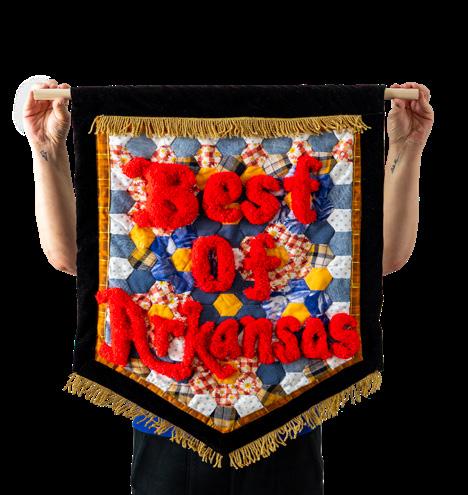
BY ANNE-ELISE TIDWELL PHOTOGRAPHY BY JONATHAN MOONEN
Billing herself as the “Sapphic Sensation,” Fayetteville performer Raven Rose has not slowed down since winning the Miss Viva Las Vegas crown in April, one of the most sought-after honors in the national burlesque scene. Originally from California, she began her dazzling burlesque journey in 2012, shortly after moving from Los Angeles to live a quieter life in Arkansas with her family. Although Rose, 40, frequently travels around the country to perform, she still considers Arkansas home and proudly represents The Natural State’s burlesque community wherever she goes.
After landing at the top of the artist category in our annual Best of Arkansas poll, Rose spoke with the Arkansas Times about her lifelong fascination with performing and how embracing burlesque full time changed the trajectory of her life. Catch her in Northwest Arkansas on July 18 as part of a sultry summer burlesque showcase at Backroom Social Club in Springdale.
Take us back to the beginning. When was the first time you tried burlesque dancing and what was that experience like? What compelled you to pursue it as something more than just a hobby?
My interest in burlesque was first piqued after being approached by a group of people who were putting on a fundraiser. At that time, I really liked the pin-up style, and Dita Von Teese kept flying into my life in random ways. I also danced my whole life and made and sewed costumes, so it was a really cool way the things I enjoyed intersected. I gave it a shot, and I’ve been doing it for the past 15 years now.
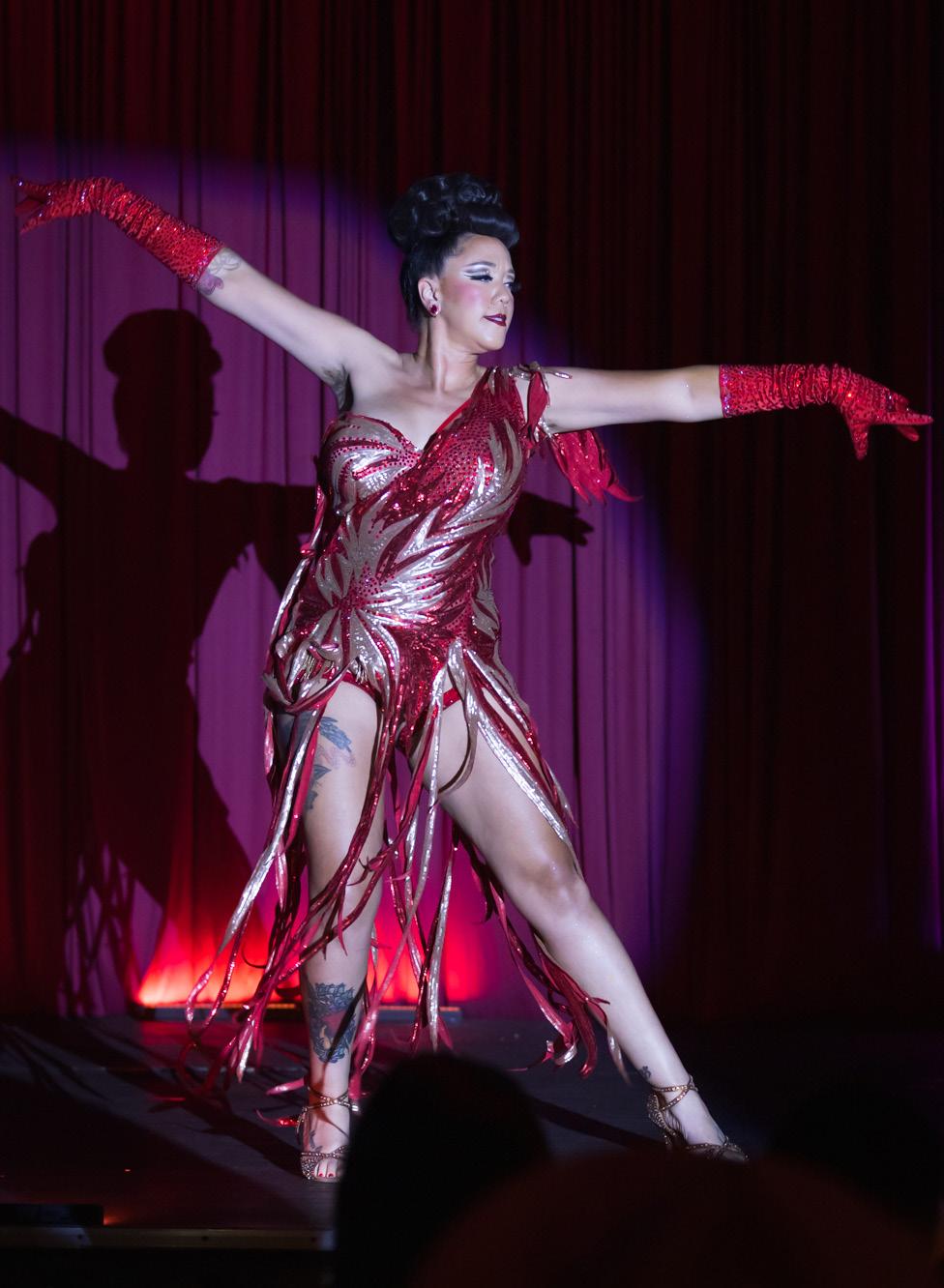
My relationship with burlesque really shifted during COVID, but [seriously performing] had been a desire long before that. Like I said before, I danced my whole life. My first job was even teaching dance. But I eventually got sucked into corporate life, and so burlesque was just the hobby. When COVID hit, I started thinking, “What if I quit corporate life to do this full time?” Like so many others were feeling back then, I felt that if everything was falling apart, I might as well spend my time doing something I truly love, you know?
How has performing as Raven Rose over the last 15 years shaped you both creatively and personally? Do you think your rela-
After years of dancing as a hobby, Raven Rose stepped up to the plate as a fulltime burlesque artist during the COVID-19 pandemic.
tionship with performing changes based on what stage of life you are in?
I know a lot of people approach burlesque through building and personifying a character, but I think Raven is like a sliver of my true identity and who I really am, just very exaggerated. I think it has been really fun to approach it in a way that genuinely feels like me.
I think, like anything, performing ebbs and flows. There are times where I really just am having the time of my life and I’m loving it. Then there are some days where I don’t want to go to work and want to hang up the pasties, but I’m still going to put on the best show I can because that is showbiz. The show must






go on, and you got to razzmatazz no matter what. I love this art form, and I know it’s something that I will do until I’m 90 years old if I can.
Looking back, what advice or insights do you wish someone had shared with you before you committed to being a full-time performer?
You don’t have to follow any sort of specific path. You can definitely blaze your own trail and represent your art the way you want to. As a professional performer, I wish that I would have taken the time to really surround myself with people who were confident in me and supported me. I would say to make sure the people you get your advice from and surround yourself with really love your art form and support your version of it. Embrace everything that you have to offer.
You mentioned in an interview before that venue support is dwindling in the constantly evolving burlesque scene, especially regionally. What do you think meaningful community support for Arkansas-based performers looks like?
Finding venues is hard, and times are hard for people right now, so selling tickets can be difficult. If [the performance community] could find a way to come together and own a venue for us and by us, that would be ideal. I think it would take a lot of cooperation across different art forms, so that may be a challenge. Nonetheless, I think that we have a very solid community here in Arkansas. There is drama, of course, but we all support each other and want to see each other thrive, for the most part.
By definition, burlesque is a dramatic theatrical performance style. But what does burlesque mean to you on a grander scale?
As a queer woman of color during these times, burlesque is a protest in its own way. I have autonomy over my body and I am the sole person commanding attention in a space. I think for me, that’s what it has always come down to, and it is especially evident during times like these. It’s been a long road getting here, but I am loving it so far.

You took the top spot in the artist category of our Best of Arkansas poll. Congratulations! Going along with this newest achievement, what is the proudest moment of your career, or what has been your most memorable performance so far?
I feel super honored. When I initially started my career, I was really inspired by my love of performing — the costumes and the whole artistic aspect of it all. However, the bigger
purpose of it was to represent the Arkansas burlesque scene, like, “Hey! Burlesque is here in Arkansas, too!” So it feels so cool to be recognized here specifically. I spend a lot of time outside of it trying to let people know that Arkansas is here.
I do this because I love it, so anytime I am able to unlock a new stage or meet new people is really exciting. I would definitely say that competing and winning the Miss Viva Las Vegas title this past April meant the world to me. Vegas is the showgirl capital of the world, and to be recognized on that specific stage feels really, really big to me. I also got to compete at the Burlesque Hall of Fame in May, which is essentially where the ultimate burlesque title is crowned. I didn’t win, but just being on that stage was a huge accomplishment. As far as I know, nobody from Arkansas has competed as a solo artist in my category, so I feel incredibly proud to represent my community as a queer, Black and indigenous artist from Arkansas.
What’s a piece of burlesque history you think everyone should know?
If you are interested in burlesque at all, I think researching it from a decolonized lens would be so beneficial. There are so many aspects of this art form that people know just out of pop culture moments. Dita Von Teese marrying Marilyn Manson was a pop culture moment. Mae West is a pop culture moment. Marilyn Monroe is a pop culture moment. People know those things, but it’s also filtered through a very colonized lens. Once you remove that and focus on learning burlesque history through other perspectives — from the Chitlin’ Circuit or from performers who were dancers in segregated speakeasies — I think that would be a huge benefit to the culture overall.
Are there any Arkansas-based resources or recommendations for people who want to go see a burlesque show?
I would say to just keep your eyes peeled; look at your local Eventbrite and try to go down some social media rabbit holes. If you search for Arkansas burlesque, you can normally find something going on. Drag shows also overlap often and will bring a burlesque performer in between drag sets. I know [Club] Sway does that from time to time. I would also check out Birdies [Cabaret Theater & Lounge in North Little Rock]. For Northwest Arkansas, I would look into Backroom [Social Club in Springdale].
As for my shows, I try to stay jam-packed and keep everything linked in my social media (@raven_rose_burlesque_ on Instagram). There are a few dates open, so get with me if you want to book.


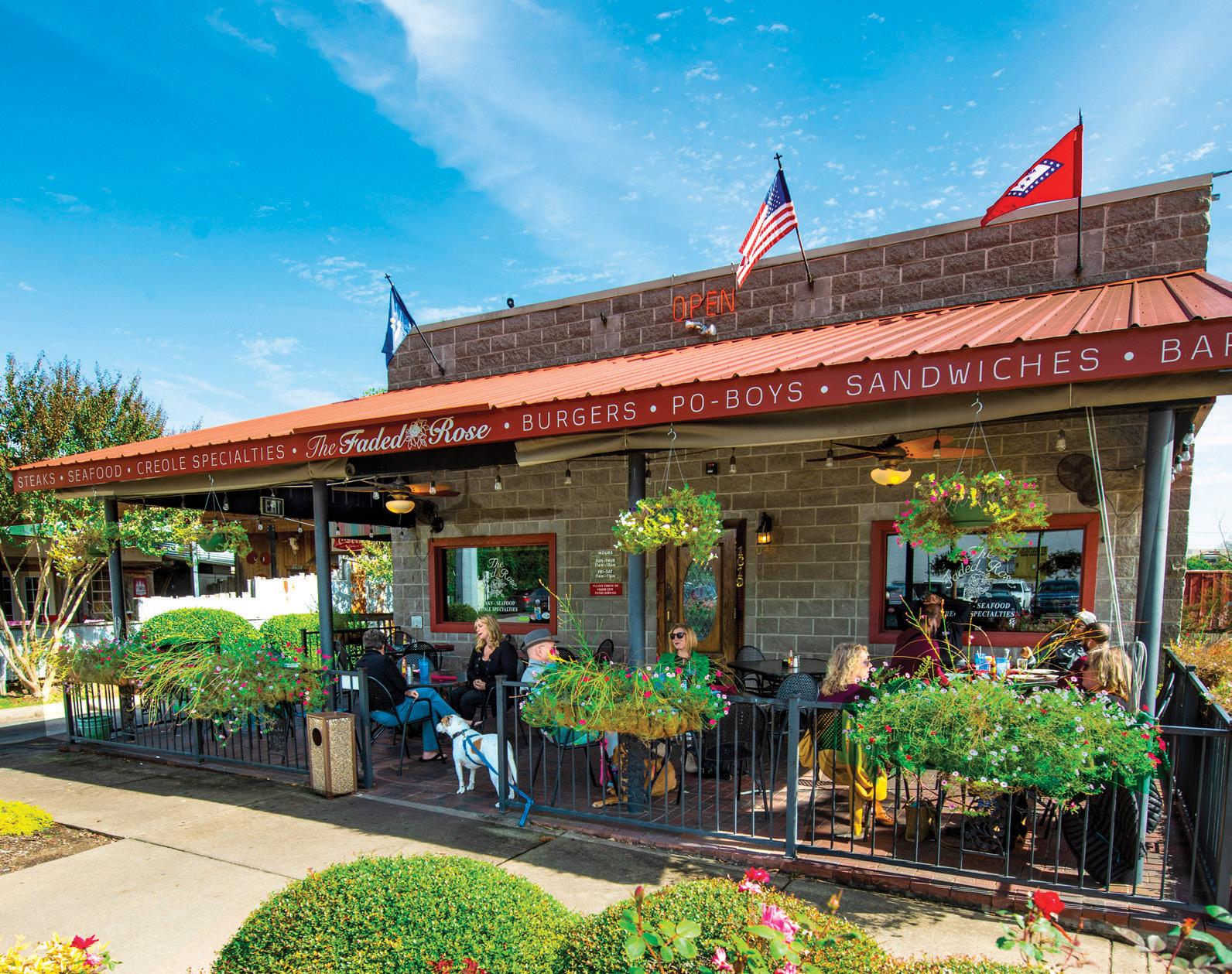


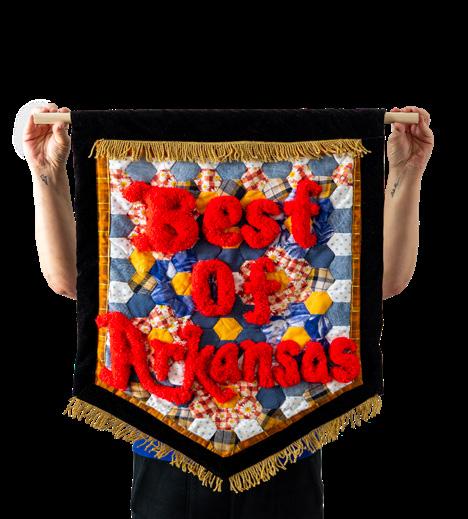
DINING AT HEIRLOOM AT THE 1907, NWA’S HOTTEST RESTAURANT, ON THE EVE OF THE JAMES BEARD AWARDS.
BY MILO STRAIN PHOTOGRAPH BY NOVO STUDIO
It’s early June, and anticipation hangs in the air as I walk into Heirloom at The 1907, an intimate tasting menu restaurant tucked away in downtown Rogers that’s become one of the hardest places in Arkansas to get a dinner reservation.
Dinner service is set to begin shortly. Heirloom only serves 20 people a night and only takes reservations three or four nights a week. The multi-course menu — dolled out at a flat rate of $145 per person plus tax and tip — changes monthly, and they don’t take reservations more than a month in advance. When new bookings open up on the 15th of every month, they are usually snatched up within minutes. I have no idea what I will be eating.
But it isn’t just my own excitement for what lies ahead of me in the next few hours, or the staff buzzing around the open-air kitchen doing their pre-service run-through, adding energy to the small room. No, something more momentous is on the horizon. Heirloom chef and co-owner Jason Paul, 44, is a regional finalist for best chef in the 2026 James Beard Awards, one of the most prestigious culinary honors in the country, and the ceremony is less than a week away in Chicago.
“It’s our first time even being nominated at all, so the fact that we’re going all the way to the finals feels a little bit crazy,” Paul said. Paul was named a semifinalist in January and moved on to the finals in March. His
competition in the South region — consisting of Alabama, Arkansas, Florida, Louisiana, Mississippi and Puerto Rico — includes chefs from restaurants with spots in the Michelin Guide and on the North America’s 50 Best Restaurants list. This is the big leagues.
“There’s a couple other restaurants that are much more in the spotlight nationally than we have been, so I think they probably technically have a better chance, but I don’t know how the process works well enough to know how they actually choose,” Paul said.
While it may be his first rodeo in the James Beard arena, Paul is no greenhorn. Originally from Phoenix, he cut his teeth working as a teenager in the ’90s under chef Alex Stratta, himself now a Michelin-starred, James Beard Award-winning chef.
“I started going into the kitchen after school when I was 14,” Paul said. “Bit of a different time, so they allowed me to do that.”
Paul, barely a high schooler, had inadvertently secured a spot at one of the finest restaurants in Arizona: Mary Elaine’s, a legendary, now-defunct French restaurant in The Phoenician, a ritzy resort.
“It was like the best restaurant in Arizona. I didn’t know that at the time when I showed up,” he said.
After stints cooking in Las Vegas, Los Angeles and Maine, Paul and his partner, Danielle Ribaudo, moved to Northwest Arkansas
HUSTLE AND BUSTLE: Chef Jason Paul, the blur in the center, and the rest of the Heirloom at The 1907 crew scurry around the kitchen, preparing for another night of service at their intimate tasting menu restaurant in downtown Rogers.
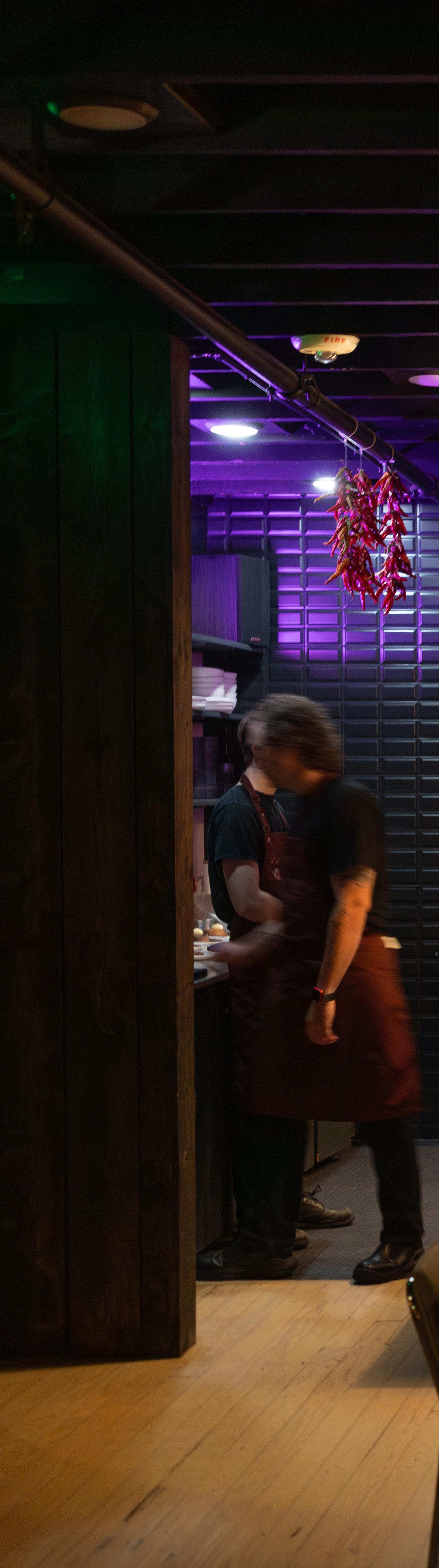
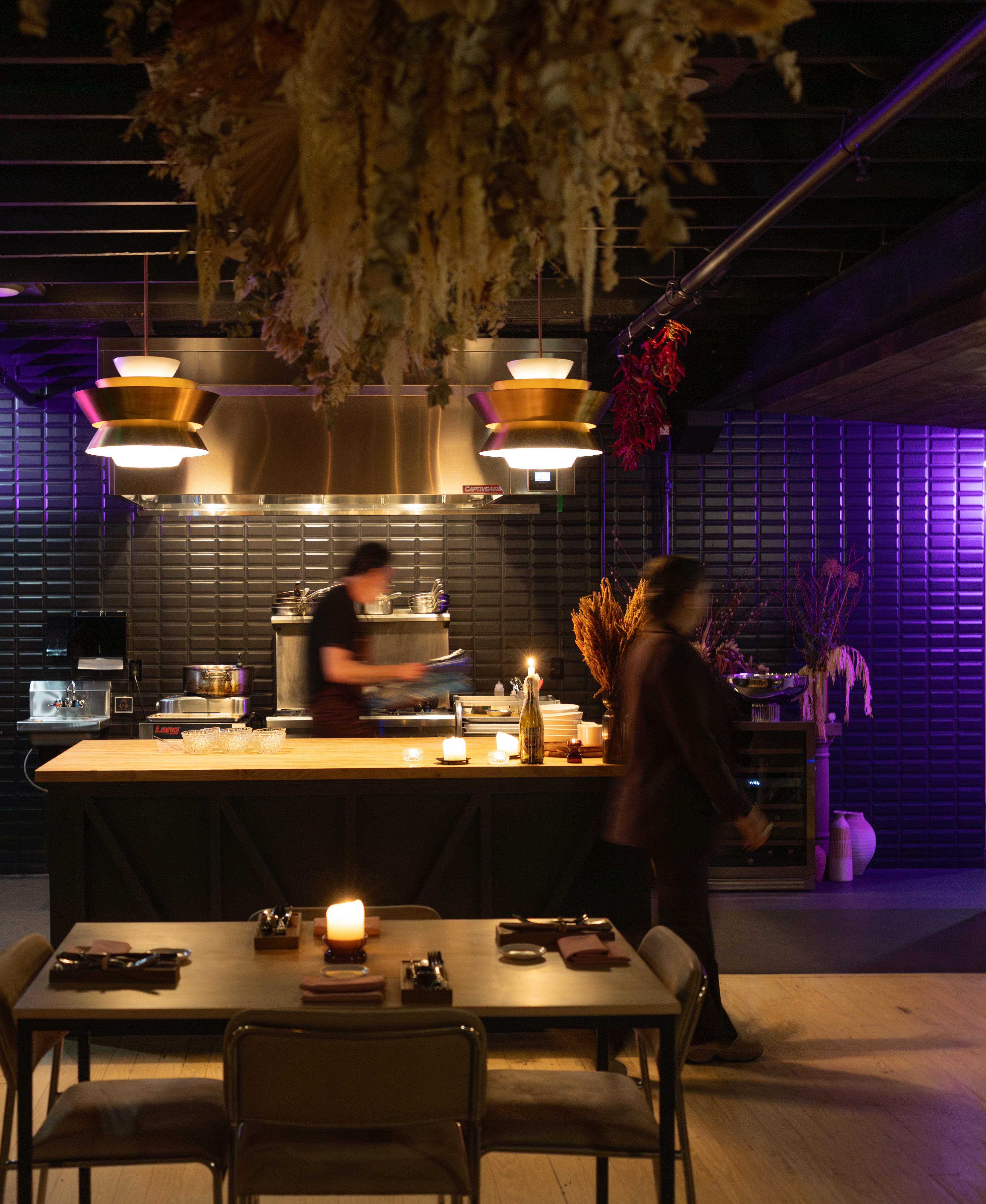
in 2014.
“My dad retired here from Walmart. That’s what brought us to Arkansas, and we did not expect to be here long term,” Paul said.
Soon after landing in the area, Paul and Ribaudo started Heirloom After Dark, a popup restaurant serving a three-course dinner menu.
“Danielle and I have been together 16 years. We met in Phoenix, and we’ve been working together basically since Heirloom began,” Paul said.
A lunch-only spot in downtown Rogers provided a suitable space for their evening-only operation, and word spread. The two soon took over the full space, and Heirloom was on its own feet — at least for a couple of years.
“Someone bought that building, didn’t renew our lease, and we started working on this project in 2016,” Paul said.
Heirloom was resurrected in 2019 as Heirloom at The 1907, named for the large historic building it now inhabits. Ribaudo, also a co-owner, handles front-of-house duties and serves as Heirloom’s sommelier. Paul, with his sous-chefs Graham Sloter and Christian Kruse, handles the cooking.
Just a short stroll away from Heirloom’s original location, The 1907 building was acquired and renovated by Onyx Coffee Lab in 2018 to serve as both its headquarters and a community gathering place. Onyx Coffee Lab was also a James Beard Award finalist this year for outstanding bar, the first coffee shop ever nominated in the category, giving The 1907 the rare distinction of being home to two different James Beard Award finalists.
The space also houses a taqueria, a mezcal bar and Pinky Swear, a speakeasy-style bar that Paul and Ribaudo opened in 2023. Heirloom guests pass through Pinky Swear to enter the Heirloom dining room, and can bookend their dinner with a rotating selection of craft cocktails and a menu of pizzas and small bites designed by Paul.
Heirloom is the main attraction here, though, and the tasting menu I experienced exceeded my wildest expectations. But, some caveats before we break it down: This was easily the best meal I’ve ever had in my life. It is also the first encounter I’ve had with real fine dining. I’ve been to nice places, but never anywhere that made it to the final round of the James Beard Awards. I have no other tasting menu experiences to compare Heirloom against, so take my recommendation with a grain of fancy flaky salt. Still, it doesn’t take a gastronome to know when something tastes incredible or to appreciate the thought and consideration that goes into its creation.
I ordered a Hokkaido After Dark, Heir-


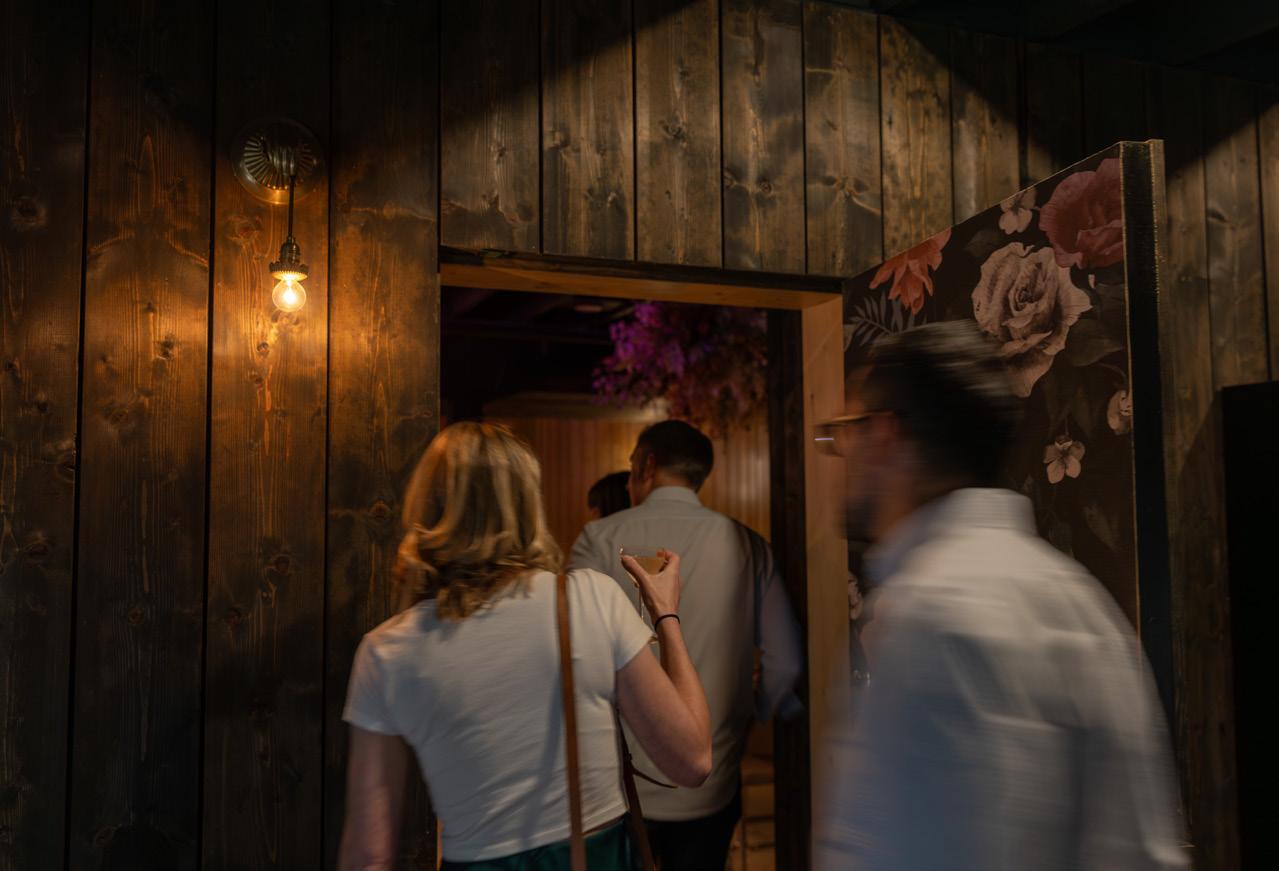
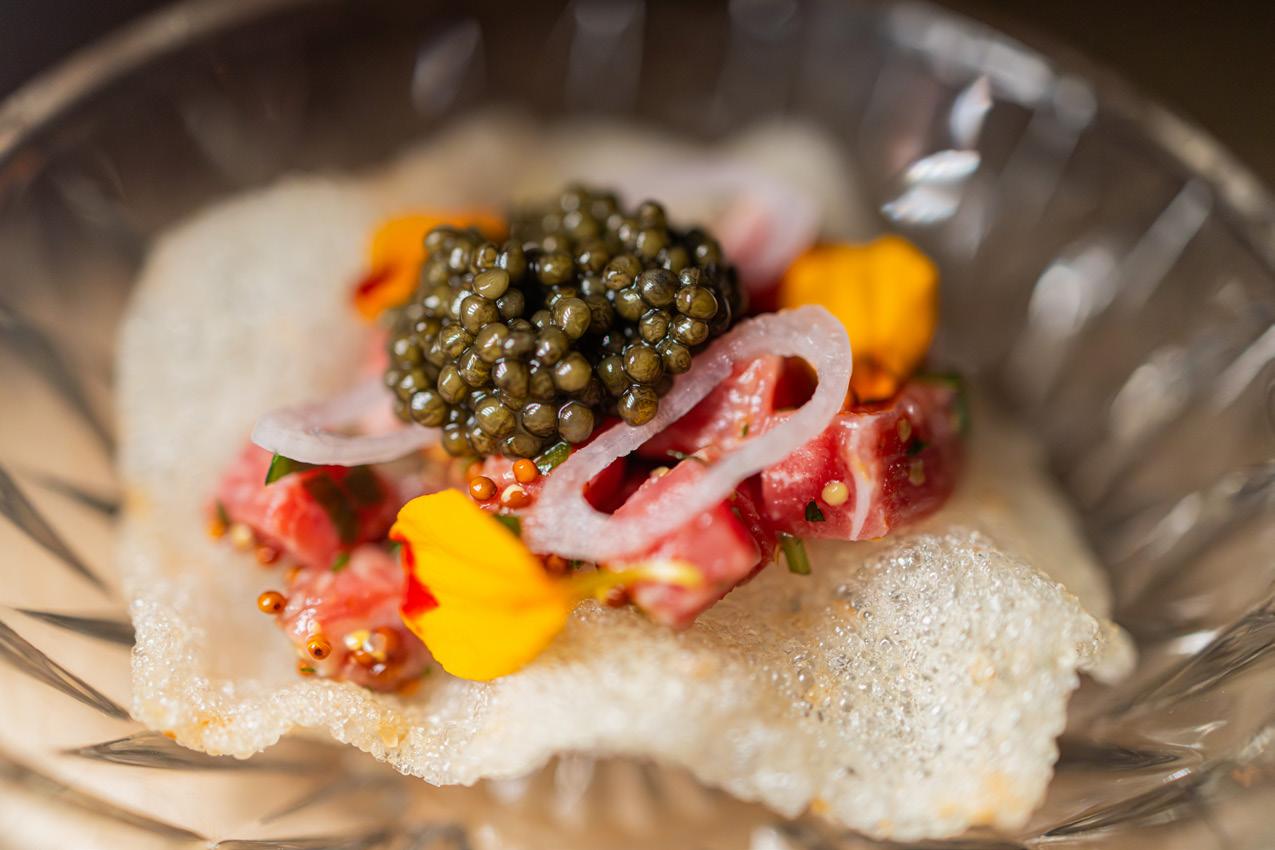
IF YOU HAVE THE CHANCE TO DINE AT HEIRLOOM, DO NOT MISS IT.
FINISHING TOUCHES: Chef Jason Paul, left, fine-tunes one of the night’s dishes before delivering it to a hungry table. At top right, guests file in to Heirloom, which is tucked inside a bar owned by Paul and his partner, Danielle Ribaudo. Wagyu beef tartare with caviar, pictured on the bottom right, was one of the standout courses.
loom’s take on an Old-Fashioned, to nurse while I waited on the food.
Oat bread with butter, cultured and churned in-house, came first. Shaped like a madeleine and gently tucked into a cloth napkin, the bread’s delicate crust hid an explosive medley of sweet and salty within its spongy interior. It radically reshaped my perception of what bread is capable of and left me bewildered at what could possibly come next.
I can only describe the dishes that followed as some real fine-dining shit.
Picture this: two small cylinders, one made of a potato chip and stuffed with onions and creme fraiche, the other made of tostada and full of spicy tuna — Paul’s reinterpretation of chips and dip.
Next, the big guns: wagyu beef tartare topped with pricey Ossetra caviar, sitting atop a crunchy sesame puff. I’d never had tartare — wagyu or otherwise — or caviar before and just ate them both in the same bite. The sesame puff and some sliced shallot balanced the buttery, decadent (yet still surprisingly fresh and bright) union of caviar and beef. I had Taco Bell for lunch earlier today, I found myself thinking. This is absurd.
After that came my favorite dish of the night: dry-aged black cod, lightly oven-poached, with cucumber sorbet, pickled kumquat and a miso emulsion sauce. Did you know you could dry-age fish? I did not.
Paul explained that dry-aging the cod in a temperature-controlled chamber forces water out of the fish, causing its natural oils and fats to become more concentrated. Additional casual research indicates that the process causes enzymes in the fish to break down muscle tissue, making it more tender and deepening its flavor.
This was another dish of contrasts working together to create a harmonious balance. Cold sorbet with warm fish may sound weird, but the difference in temperature just worked here.
We were about halfway through the tasting menu, which is as good a time as any to pause and talk about the dining room, where every possible detail appears to have been care-
MIND-BENDING MUNCHIES: Top left, a potato chip cylinder stuffed with onions and crème fraîche. Top right, spinach and artichoke lasagna, braised lamb shoulder and edible nasturtium flower. Bottom left, a deboned chicken wing, stuffed with duck mouse rests atop a bed of snap peas, bok chop and radish. Bottom right, dry-aged black cod, lightly oven-poached, with cucumber sorbet, pickled kumquat and a miso emulsion sauce.
fully considered. The space is small, but doesn’t feel crowded, even at full capacity with chef Paul and company delivering food around the room. I couldn’t hear conversations from any other tables despite our proximity.
Candles and understated light fixtures bathe everything in a warm glow, their soft radiance gently bouncing off the cozy wood-paneled interior and highlighting a massive arrangement of dried flowers that hangs from the center of the room like a chandelier.
One end of the room is the open-air kitchen, shiny metal cooking apparatuses and all, which provides a more modern, sleek contrast to the earthiness of the dining area. Strategically positioned mood lights add pops of pink and purple, and chef Paul’s curated playlist — featuring songs with a variety and range not unlike his cooking — ensures there’s never a palpable lull in the evening. It’s a very nice place to enjoy a meal.
Up next on the menu was a duck-stuffed chicken wing. Here’s how Paul described it, which is better than any hamfisted attempt I could make to recount this particular piece of culinary magic:
“We take the bone out, except for the wingtip … The rest of it, we debone it fully. We stuff it with a mousse we made from duck breast and a little bit of dried fruit. Roast the whole thing in the oven … We glaze these in a cherry gochujang, a Korean chili paste that we blend fresh cherries into, which are in season at the moment. Underneath, you got a little salad we made from local snap peas, local bok choy, radish and a touch of crispy duck skin.”
This was another first for me: eating a bird stuffed with parts from another bird. It was also another winner, with the cherry gochujang sauce a serious highlight in the ensemble.
The next dish of the evening — spinach and artichoke lasagna and braised lamb shoulder with vermouth butter, garlic focaccia bread and an edible nasturtium flower — brought me closer to familiar territory. This, as with everything else, was delectable. Lasagna and braised meat executed at a level I’ve never seen. But if I were to rank the 10 courses, this one would probably be at the bottom, which simply speaks to how great everything is.
The final dish before we crossed the dessert threshold was the heaviest bite of the night. We’re talking about smoked beef tenderloin, cooked to perfection, with porcini mushroom rice, Dijon-hollandaise sauce, smoked white asparagus and little flakes of crispy fried ham, paired with a roll fla-

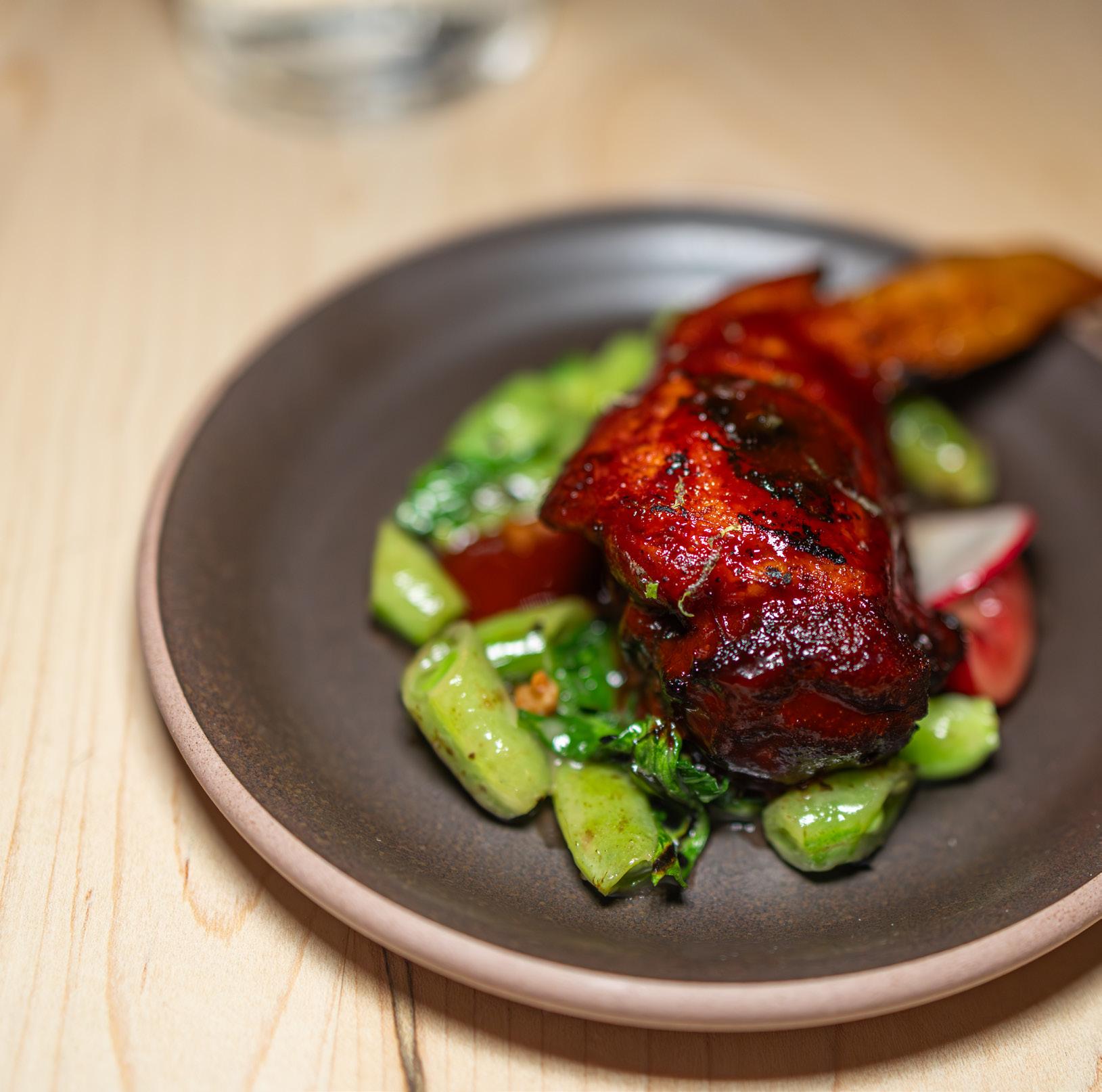

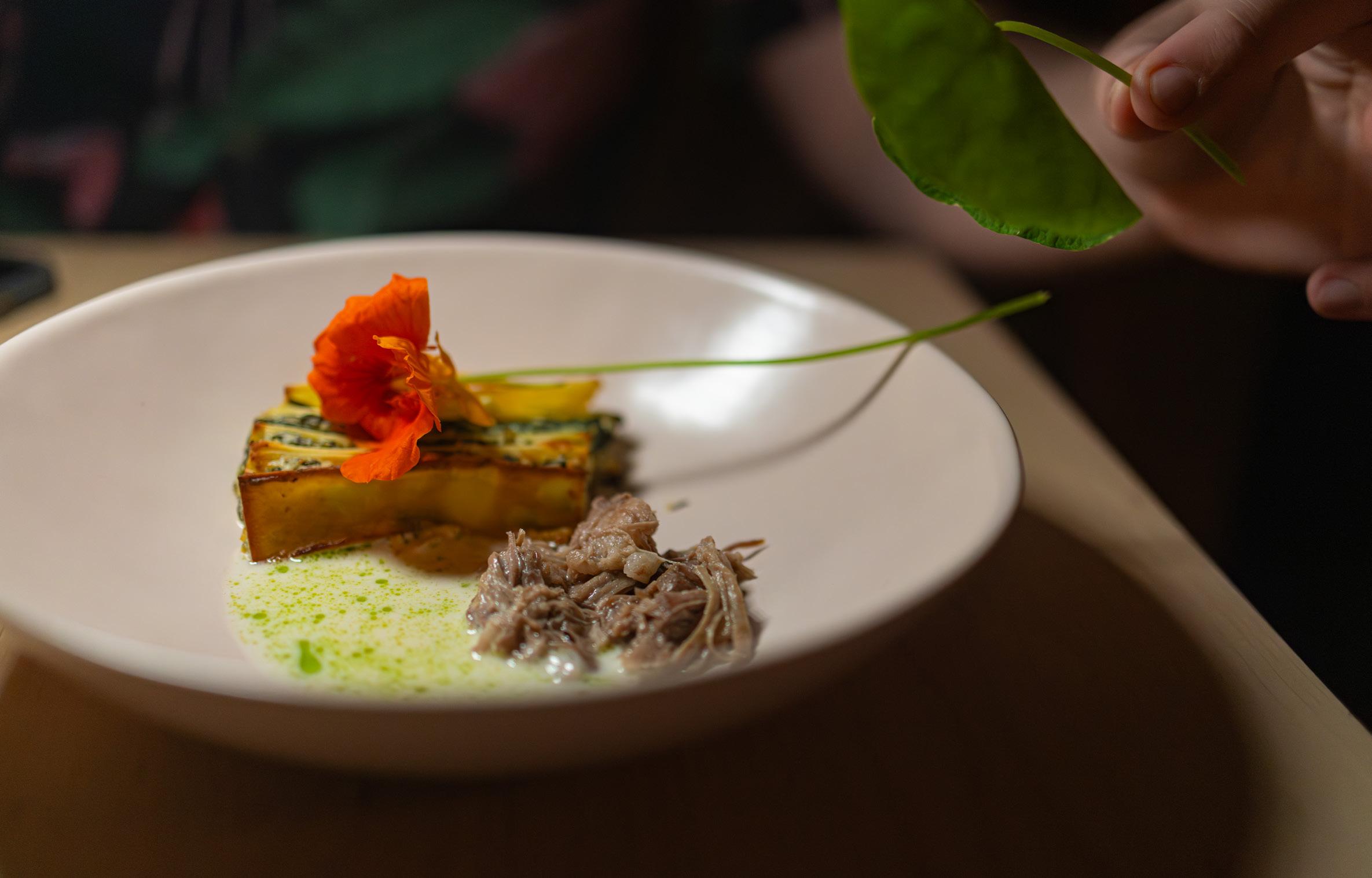



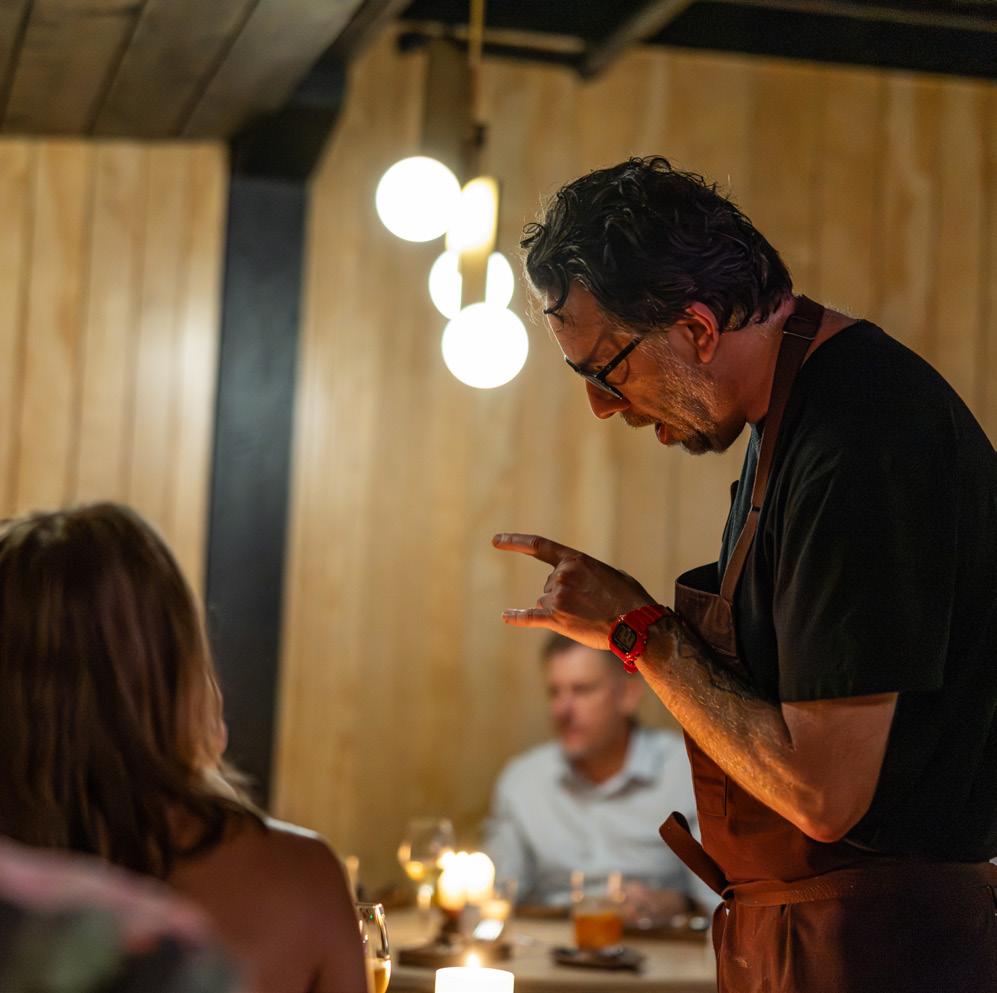
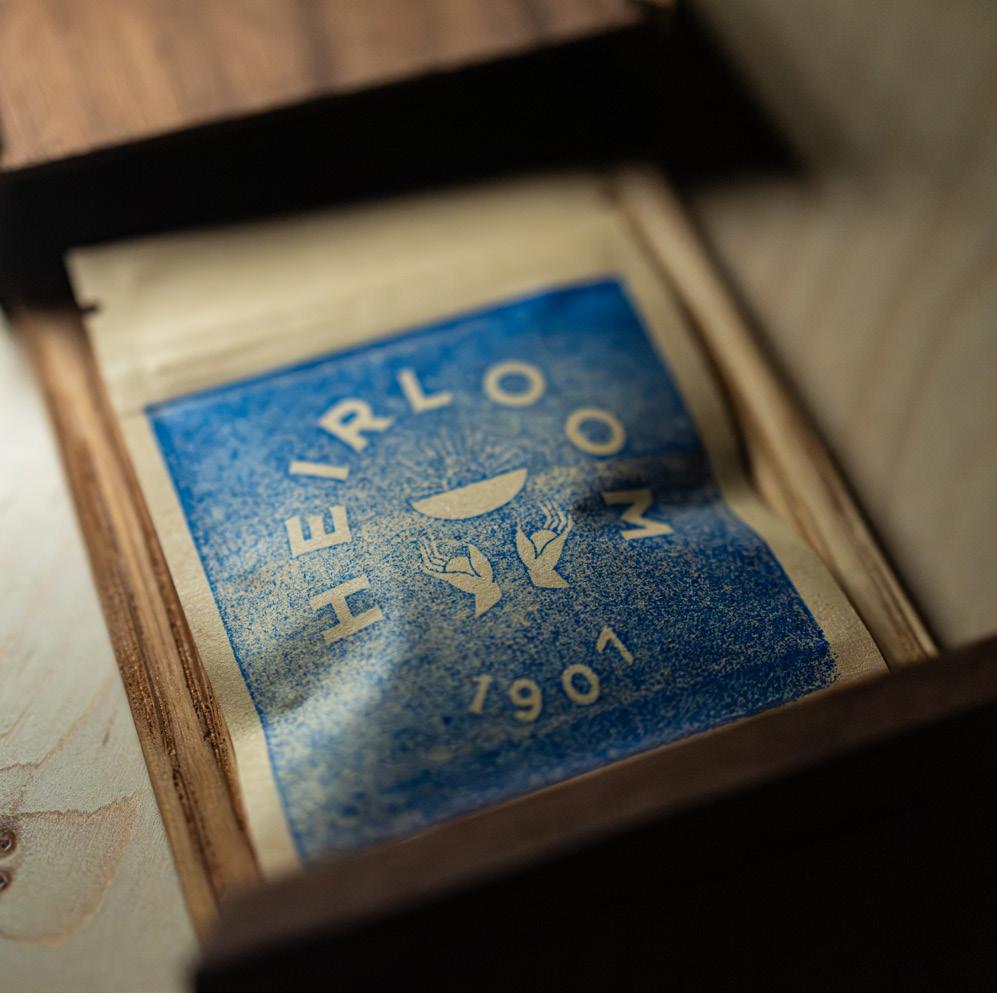
DECADENT DESSERTS: Top left, black pepper cake, compressed strawberries, amazake semifreddo and yuzu sorbet with a brown butter-washed strawberryand-rhubarb broth. Left, Paul explains one of his culinary creations to dinner guests at Heirloom. Bottom left, a take-home packet of salt and dried herbs, taken from sous chef Graham Sloter’s farm, served as the final course. Right, double-chocolate caneles and pâte de fruit, a gummy desert made with pinot noir grapes and rhubarb.

vored with truffle and a little bit of whipped wagyu beef fat in place of butter.
Per Paul’s suggestion, I put a dollop of the wagyu fat directly on the steak, which thrust the dish to near-dangerous levels of sheer decadence. But I didn’t care. I was alive. And ready for dessert, which shortly came in two parts.
Phase one was a complex layered arrangement consisting of a small black pepper cake, compressed strawberries, amazake semifreddo and yuzu sorbet with a brown butter-washed strawberry-and-rhubarb broth poured over. Amazake is a sweet, fermented rice drink from Japan, while a semifreddo is a cold Italian dessert, translating to “semi-frozen” in English; it reminded me of ice cream. The whole shebang looked like a fancy strawberry shortcake and it rocked my world.
Phase two featured three individual bites. The first: a pâte de fruit — a traditional French jelly candy — composed of rhubarb and pinot noir grapes. Next was a double-chocolate canelé, a notoriously difficult-to-bake French pastry. I haven’t had a canelé before this meal, but I feel pretty confident in saying they got it right. Last up was a lavender buttermint, inspired by — but much better than — the chalky mints found at weddings and social gatherings.
At the end of the evening, Paul instructed us to take a look at our silverware, specifically the wooden boxes that our forks and
knives had been sitting on when I arrived. Pulling on one end of the box like a drawer revealed a compartment containing a little packet of salt blended with dried herbs from sous-chef Sloter’s farm. I’m a sucker for audience participation and little souvenirs, and was delighted at my salt packet, which is sitting on my desk right now as I contemplate a future meal worthy of its use.
If you have the chance to dine at Heirloom, do not miss it.
***
By the time you’re reading this, the 2026 James Beard Awards have come and gone, and while Paul didn’t bring home the Beard, he and Ribaudo were named two of the best-dressed attendees by Bon Appétit magazine, which is pretty cool as far as consolation prizes go.
I caught up with Paul one more time after the awards, and though he said he was disappointed he couldn’t bring an award home for Arkansas, it isn’t getting him down. Heirloom is operating even better now than when it was nominated in January, he said, adding that many James Beard winners were nominated several times before they finally got it.
“We do it for the love of the game, to be honest, and if those [awards] come, that’s a bonus,” Paul said. “This one is a passion project.”













We are proud to be the sponsor of the 2026 BEST OF ARKANSAS competition in the Arkansas Times.
Your customers have rated you above your competitors as one of the best in the state. DATAMAX is proud to be associated with you. Whether you are a coffee shop owner, plumber or investment advisor, achieving “best” status hinges on the perception of those you serve. While opinions vary from customer to customer, there are a few universal principles that Datamax lives by every day, to not only create longevity for our organization, but to aim toward being our absolute best.
A RELEVANT APPROACH. What’s relevant to our customers trumps any assumptions we might make regarding those needs. Dig in. Do the research to find out exactly what your customers value the most.
RAPID RESPONSE/RESOLUTION. It’s simple, really… your customers don’t like waiting. Providing a rapid response to needs, and resourceful resolution to issues applies to a chiropractor as much as it does HVAC repair.
REAL ENTHUSIASM – INSIDE AND OUT. Culture trumps everything. Exerting energy and passion, both to your clients and promoting it internally within your organization, rubs off on everyone around you. At Datamax, we recognize that enthusiasm must be authentic.



BIKE TRAIL
Winner: Arkansas River Trail
Finalists: Allsopp Park Trail, Back 40 Loop (Bella Vista), Northwoods Trails (Hot Springs), Tucker Creek Trail (Conway)
FAMILY ATTRACTION
Winner: Little Rock Zoo
Finalists: Arkansas Museum of Fine Arts, Motley’s Tree Farm, Museum of Discovery, CALS Children’s Library
GYM/PLACE TO WORK OUT
Winner: Rock City Complete Fitness
Finalists: Jolly Bodies, Bolte Fitness, Jim Dailey Fitness and Aquatic Center, Blue Yoga Nyla
HIKING TRAIL
Winner: Pinnacle Mountain State Park (Roland)
Finalists: Devil’s Den State Park (West Fork), Rattlesnake Ridge Natural Area (Roland), Northwoods Trails (Hot Springs)
OUTDOOR ATTRACTION
Winner: Buffalo National River
Finalists: Hot Springs National Park, Little Rock Zoo, Petit Jean State Park (Morrilton), Pinnacle Mountain State Park (Roland)
PARK
Winner: Two Rivers Park
Finalists: Allsopp Park, Burns Park (North Little Rock), Hot Springs National Park, Pinnacle Mountain State Park (Roland)


PLACE TO CANOE/KAYAK/TUBE
Winner: Buffalo National River


Finalists: Caddo River, Fourche Creek, Little Maumelle River, Ouachita River
PLACE TO MOUNTAIN BIKE
Winner: Two Rivers Park
Finalists: Back 40 Loop (Bella Vista), Mt. Nebo State Park Monument Trails (Dardanelle), Northwood Trails (Hot Springs), Pinnacle Mountain State Park Monument Trails (Roland)
PLACE TO SWIM
Winner: Greers Ferry Lake
Finalists: Bishop Park (Bryant), Buffalo National River, Conway Recreation Center, Jim Dailey Fitness and Aquatic Center
Winner: Mount Magazine Lodge
Finalists: Oaklawn Racing Casino Resort (Hot Springs), Gaston’s White River Resort (Lakeview), In the Trees (Hot Springs), Lindsey’s Resort (Heber Springs)
Winner: Eureka Springs
Finalists: Hot Springs National Park, Gaston’s White River Resort (Lakeview), Cherokee Casino & Hotel (Roland, Oklahoma), Angel at Rose Hall (Eureka Springs)
EDUCATION
BEST PRE-K OR PRESCHOOL
Winner: The Anthony School
Finalists: Pulaski Academy, Ferncliff Nature Preschool, Episcopal Collegiate School, ABC Pre-K (Ashdown)
COMMUNITY COLLEGE
Winner: UA Pulaski Technical College (North Little Rock)
Finalists: University of Arkansas Community College at Morrilton, Arkansas Northeastern College (Blytheville), Shorter College (North Little Rock), East Arkansas Community College (Forrest City)
FOUR-YEAR COLLEGE OR UNIVERSITY
Winner: University of Central Arkansas (Conway)
Finalists: Hendrix College, University of Arkansas at Little Rock, University of Arkansas (Fayetteville), Arkansas State University (Jonesboro)
PRIVATE SCHOOL
Winner: Mount St. Mary Academy
Finalists: Pulaski Academy, Catholic High School for Boys, Central Arkansas Christian Schools, St. Joseph School (Conway)
PUBLIC SCHOOL
Winner: Little Rock Central High School
Finalists: Conway High School, Parkview Arts and Science Magnet High School, Don R. Roberts Elementary School, Lakeside High School (Hot Springs)
TUTORING
Winner: Huntington Learning Center
Finalists: Academic Advantage, College Prep Coach, Mathnasium, Odyssey College Prep



Independent Living, 62+



Proud sponsor of the Arkansas Times Best of Arkansas 2026



Finalists: CC Mercer Watson, Dylan Dugger, Envy S. Hart, Norwood Day Floral Company
CASINO
Proud sponsor of the Arkansas Times Best Of Arkansas 2022
Winner: Oaklawn Racing Casino Resort (Hot Springs)
Finalists: Saracen Casino Resort (Pine Bluff), Cherokee Casino and Hotel (Roland, Oklahoma)
COMEDIAN
Winner: Gene Berry
Finalists: Brett Ihler, Dawnie Hesselbein, Keith Glason, May Gayden
COUNTRY/FOLK BAND/ARTIST
Winner: Ashley McBryde
Finalists: Bonnie Montgomery, Arkansauce, Buckshot Princess, Emily Fenton, Mark Currey
DANCE CLUB
Winner: Club Sway
Finalists: Discovery, Maxine’s (Hot Springs), Eureka Live (Eureka Springs), Peppermint Hippo (North Little Rock)
DJ
Winner: Mike Poe
Finalists: Dripfunk, g-force, Kecia, PorterHaus
DRAG KING/QUEEN
Winner: Gage Leon
Finalists: Akasha Adonis, Melanie Masters, Stormy Weather, Sugga Cookies
EVENT VENUE
Winner: Birdie’s Cabaret Theater and Lounge (North Little Rock)
Finalists: The Hall, Rusty Tractor Vineyards, Cherokee Casino & Hotel (Roland, Oklahoma), Reynolds Performance Hall (Conway)
FILMMAKER
Winner: Jeff Nichols
Finalists: Corbin Pitts, Graham Gordy, Mark Thiedeman, Shelley Rose










Finalists: Club Sway, Triniti Nightclub, The New 610 Center, Reno’s Argenta Cafe
HIP-HOP ARTIST
Winner: Big Piph
Finalists: Baang, 501Bryze, DesD1, Penn Davis
JAZZ BAND/GROUP
Winner: The Big Dam Horns
Finalists: Rodney Block Collective, Ricky Howard, Dave Williams and Christopher Parker, The Goat Band
LATE-NIGHT SPOT
Winner: White Water Tavern
Finalists: Four Quarter Bar (North Little Rock), Midtown Billiards, Club Sway, Birdie’s Cabaret Theater and Lounge (North Little Rock)
LIBRARY BRANCH
Winner: CALS Main Library
Finalists: Fayetteville Public Library, Laman Library (North Little Rock), Terry Library, McMath Library
LIVE MUSIC FESTIVAL
Winner: Argenta Vibe Music Series (North Little Rock)
Finalists: Hillberry Music Festival (Eureka Springs), King Biscuit Blues Festival (Helena-West Helena), Mutants Fest, Valley of the Vapors Independent Music Festival (Hot Springs)
LIVE MUSIC VENUE
Winner: The Hall
Finalists: White Water Tavern, Cherokee Casino & Hotel (Roland, Oklahoma), George’s Majestic Lounge (Fayetteville), Birdie’s Cabaret Theater and Lounge (North Little Rock)
LOCAL ACTOR/ACTRESS
Winner: Natalie Canerday
Finalists: Steve Farrell, Willie Lucius, Jonathan Fili, Quinn Gasaway
LOCAL THEATER
Winner: Actors Theatre of Little Rock
Finalists: Arkansas Repertory Theatre, Argenta Contemporary Theatre (North Little Rock), Stage 13, Birdie’s Cabaret Theater and Lounge (North Little Rock)

From SCRATCH to SOPHISTICATED this is FOODIE HEAVEN .
With everything from farm-to-table fare to award-winning fine dining, this is a place for anyone with good taste. So treat your tastebuds to an adventure. You won’t just like your time here, you’ll Love You Some Little Rock.

Clinton Presidential Library & Museum, Birdie’s Cabaret Theater and Lounge (North Little Rock)
MOVIE THEATER
Winner: CALS Ron Robinson Theater
Finalists: Riverdale 10 VIP Cinema, Regal McCain Mall (North Little Rock), Film Alley Breckenridge, Cinemark Tinseltown USA (Benton)
MUSEUM
Winner: Arkansas Museum of Fine Arts
Finalists: Crystal Bridges Museum of American Art (Bentonville), Museum of Discovery, Mosaic Templars Cultural Center, Gangster Museum of America (Hot Springs)
NEIGHBORHOOD FESTIVAL
Winner: SoMa Pride
Finalists: Hillcrest HarvestFest, SoMardi Gras, Lost Forty Festival of Darkness, Dogtown Throwdown (North Little Rock)
PERFORMING ARTS GROUP
Winner: Argenta Contemporary Theatre
Finalists: Arkansas Symphony Orchestra, Actors Theatre of Little Rock, Ballet Arkansas, Murry’s Dinner Playhouse, Foul Play Cabaret (Hot Springs)
PHOTOGRAPHER
Winner: Caroline Holt
Finalists: Katie Childs Photo, Matt White, Julie Gayler, Jenn Terrell Photography
PLACE FOR KARAOKE
Winner: White Water Tavern
Finalists: The New 610 Center, Birdie’s Cabaret Theater and Lounge (North Little Rock), Town Pump, Midtown Billiards
PLACE FOR TRIVIA
Winner: Birdie’s Cabaret Theater and Lounge (North Little Rock)
Finalists: Fassler Hall, Flyway Brewing (North Little Rock), Stone’s Throw Brewing, The Pizza Pub (North Little Rock)
Winner: Caroline Earleywine
Finalists: Kai Coggin, Bryan Borland, Kalina Smith, R.J. Looney
ROCK BAND
Winner: The Big Dam Horns
Finalists: OrOrOr, Pallbearer, Bad Habit, Dark From Day One
LOCAL MEDIA
COLUMNIST/REPORTER
Winner: Dwain Hebda (Ya!Mule Wordsmiths)
Finalist: Elizabeth L. Cline, Andrew DeMillo, Joseph Flaherty, Josie Lenora
LOCAL MAGAZINE
Winner: Arkansas Times
Finalists: AY Magazine, Inviting Arkansas, Little Rock Soirée, Arkansas Money & Politics
PODCAST
Winner: Rex Nelson’s Southern Fried Podcast
Finalists: Couples Inc., Track One (Little Rock Public Radio), Woman-Run (Wright Lindsey Jennings)
RADIO STATION
Winner: KABZ-FM, 103.7 The Buzz Finalists: KUAR-FM, 89.1; KABF-FM, 88.3; KMJX-FM, 105.1 The Wolf; KIPRFM, Power 92 Jams
TV METEOROLOGIST
Winner: Todd Yakoubian (KARK, Channel 4)
Finalists: Tom Brannon (THV11), Melinda Mayo (KATV, Channel 7, retired), Joel Young (KLRT, FOX16), Tracy Beene (THV11)
TV PERSONALITY
Winner: Melinda Mayo (KATV, Channel 7, retired)
Tracy Beene (THV11), Nichole Niemann (KARK, Channel 4), Ashley King (THV11), Daniela Dehaghani (KATV, Channel 7)
TV STATION
Winner: KTHV (THV11)
Finalists: KARK, Channel 4; KATV, Channel 7; Arkansas PBS


Catch the current.
The podcast for women who aren't afraid of the deep end.
We’re proud to be recognized in the Top 5 of the 2026 Best of Arkansas for the Woman-Run Podcast! Wright Lindsey Jennings was also voted a Top 5 Law Firm and Top 5 Company to Work For. Thank you to the readers and listeners for these honors.

Because of you, Rock Town has been named:
Best Place For A Guy’s Night Out
Best Whiskey Bar
Since 2010, we’ve been proud to help put Arkansas whiskey on the map. Today, Rock Town spirits are poured in more than 20 states, but Little Rock will always be home.
Thanks for your continued support and for making Rock Town a part of your nights out.



WEBSITE
Winner: arktimes.com
Finalists: arkansasadvocate.com, arkansasonline.com, onlyinark.com, thv11.com
PEOPLE AND POLITICS
ARKANSAN
Winner: Chris Jones
Finalists: Alice Walton, Aaron Reddin, Hallie Shoffner, Wendell Griffen
AUTHOR
Winner: Bryan Borland
Finalists: Eli Cranor, John Grisham, Joseph Scott Ford, Monica Robinson
CELEBRITY
Winner: Billy Bob Thornton
Finalists: Mary Steenburgen, Bill Clinton, Ashlie Atkinson, Wes Bentley
CHARITY EVENT
Winner: Soup Sunday (Arkansas Advocates for Children and Families)
Finalists: Taste of Little Rock (UA Little Rock Alumni Association Scholarship Fund), Cupcakes for Goodness Sake (CareLink), Festival of Trees (CARTI), Miracle Ball (Arkansas Children’s Hospital)
CHIEF EXECUTIVE OFFICER
Winner: Adam Head (CARTI)
Finalists: Brock Hoskins (Garver), Marcy Doderer (Arkansas Children’s Hospital), Steve Arrison (Visit Hot Springs), Troy Wells (Baptist Health)
LITTLE ROCK CITY DIRECTOR
Winner: Kathy Webb
Finalists: Andrew Lewis, Antwan Phillips, Capi Peck, Virgil Miller Jr.
LITTLE ROCKER
Winner: Chris Jones
Finalists: Capi Peck, David Bazzel, Matt White, Tippi McCullough
NONPROFIT
Winner: The Van (The One, Inc.)
Finalists: Arkansas Advocates for Children and Families, Argenta Contemporary Theatre, Dropping Hairpins Project, LifeTouch Health
PHILANTHROPIST
Winner: Christian Gwatney
Finalists: Alice Walton, Will Feland,
Winthrop Rockefeller Foundation, Wal
Finalists: Clarke Tucker, Greg Leding, Hallie Shoffner, Tippi McCullough
WORST ARKANSAN
Winner: Gov. Sarah Huckabee Sanders
Finalists: Jason Rapert, Dan Sullivan, Tom Cotton
FOOD AND DRINK
ARKANSAS-BREWED BEER
Winner: Lost Forty Brewing
Finalists: Flyway Brewing (North Little Rock), Moody Brews, Stone’s Throw Brewing, Superior Bathhouse Brewery (Hot Springs)
BREAD
Winner: The Croissanterie
Finalists: Boulevard Bread Company, Community Bakery, Sterling Market, Buckman Brewhouse (Cabot)
CATERING
Winner: Two Sisters Catering
Finalists: Heritage Catering, RX Catering, Vibrant Occasions Catering (Hot Springs), Whole Hog Cafe (North Little Rock)
COMFORT FOOD
Winner: The Faded Rose
Finalists: Big Bad Breakfast, Ciao Baci, Copper Grill, Homer’s Kitchen Table
HANGOVER FOOD
Winner: Señor Tequila
Finalists: Leo’s Greek Castle, Four Quarter Bar (North Little Rock), Ciao Baci, Midtown Billiards
LIQUOR STORE
Winner: Colonial Wines & Spirits
Finalists: Legacy Wine and Spirits, 107 Liquor (Sherwood), JFK Liquor (Sherwood), Sullivant’s Liquor Store
MOST CREATIVE MENU
Winner: Funky Stretch Pizza (North Little Rock)
Finalists: Brave New Restaurant, Ciao Baci, Raduno Brick Oven & Barroom, Rōber :: Cocktails + Culinary (Benton)
Little Rock), Ciao Baci, Hill Station, Professor Bowl
OUTDOOR DINING
Winner: Hill Station
Finalists: Cypress Social (North Little Rock), Southern Tail Brewing, Ciao Baci, U.S. Pizza Co.
PLACE FOR A GIRL’S NIGHT OUT
Winner: BCW (Bread Cheese Wine)
Finalists: Ciao Baci, Copper Grill, Crush Wine Bar, Cherokee Casino & Hotel (Roland, Oklahoma)
PLACE FOR A GUY’S NIGHT OUT
Winner: Rock Town Distillery
Finalists: Ciao Baci, Four Quarter Bar (North Little Rock), Swing Social, Cherokee Casino & Hotel (Roland, Oklahoma)
RESTAURANT FOR A FIRST DATE
Winner: Raduno Brick Oven & Barroom
Finalists: Brood & Barley (North Little Rock), Ciao Baci, Copper Grill, Problem Child
VIBES
Winner: Brood & Barley (North Little Rock)
Finalists: Attic Bar, Ciao Baci, Moody Brews, The Fold Botanas & Bar
WHISKEY BAR
Winner: Rock Town Distillery
Finalists: Four Quarter Bar (North Little Rock), Brood & Barley (North Little Rock), Copper Grill, The Bourbon Bar at 501 Prime (Hot Springs)
WINE BAR
Winner: Crush Wine Bar
Finalists: Ciao Baci, By The Glass, Samantha’s Tap Room & Wood Grill, Zin Wine Bar
Winner: Kiehl Avenue Flea Market (Sherwood)
Finalists: Midtown Vintage Market, Fabulous Finds Antiques and Designs, The Cotton Shed Vintage Market (Bryant), The Punchbowl

Pagnozzi “Gravy”


Winner: Arkansas Museum of Fine
Finalists: M2 Gallery, Art Group Gal lery, Boswell Mourot Fine Art Gallery, Lucky Star Handmade (Yellville)
BICYCLE SHOP
Winner: Spokes


Finalists: Shift Modern Cyclery, The Ride (Conway), Trackstand Cyclery and Tavern (Bentonville), Pedego Electric Bikes (Fayetteville)
Winner: Paper Hearts Bookstore
Finalists: WordsWorth Books, Beautywood Books (North Little Rock), Pocket Dimension Bookshoppe, Books by the Pound
BRIDAL STORE
Winner: Low’s Bridal (Brinkley)
Finalists: The Bridal Cottage (North Little Rock), The Vogue Veil (Cabot), Unveiled Bridal Collection, Monica’s Bridal (Jonesboro)
FABRICS AND DRAPERY
Winner: Cynthia East Fabrics
Finalists: Fabrics Etc, Mountjoy’s Custom Draperies, Rushin Upholstery Supply, Simply Charming Window Works & Design
FLEA MARKET
Winner: Y’allternative Market (Sherwood)
Finalists: Midtown Vintage Market, South Main Creative, The Bee’s Knees (Searcy), Flip Flop Flea Market (Bryant), Kiehl Avenue Flea Market (Sherwood)
FLOORING STORE
Winner: Akel’s Carpet One
Finalists: C&F Flooring, Arnold’s Flooring America, Carpet Barn (North Little Rock), Acme Brick, Tile & Stone (North Little Rock)
FLORIST
Winner: Norwood Day Floral Company
Finalists: North Hills Florist & Gifts (Sherwood), Tipton & Hurst, Buds N Bows (North Little Rock), Sherwood Florist & Every Blooming Thing








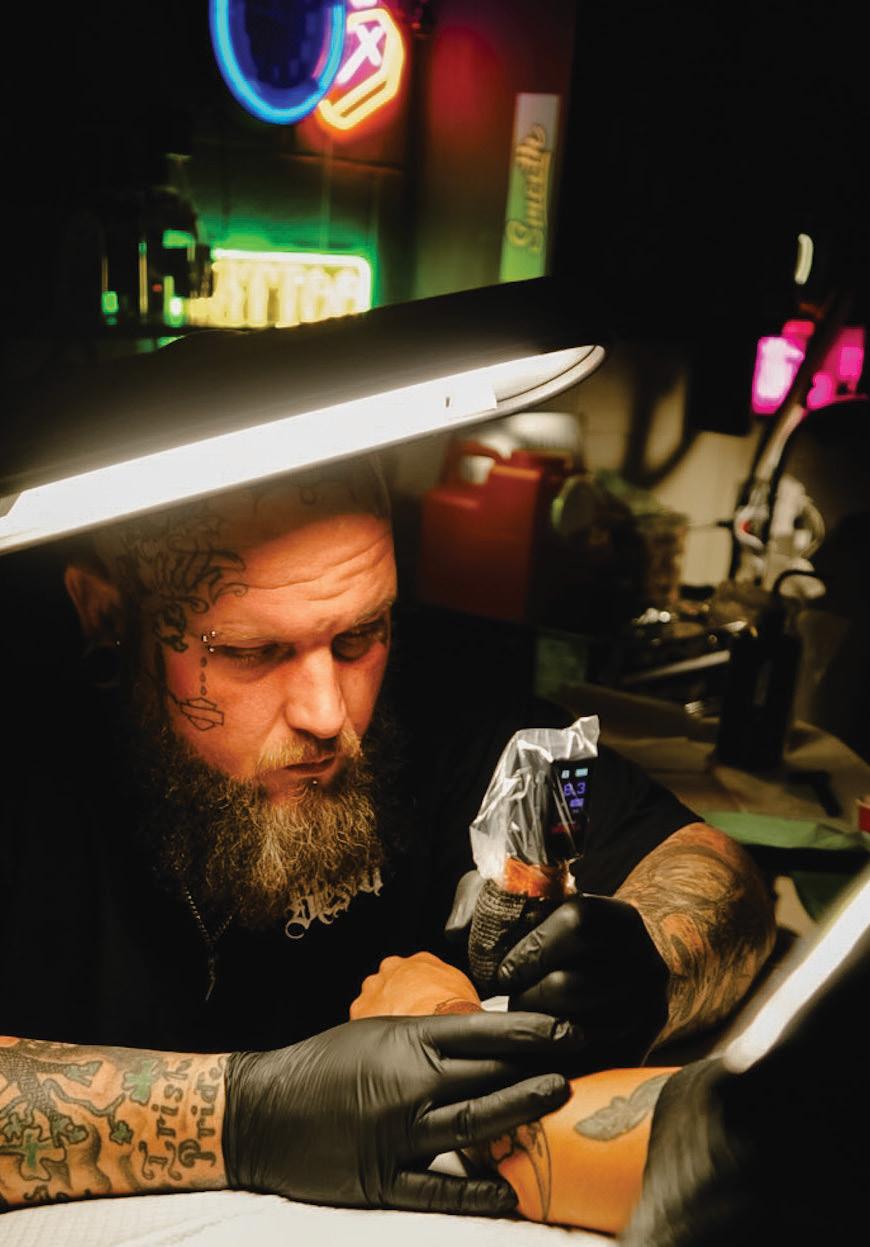
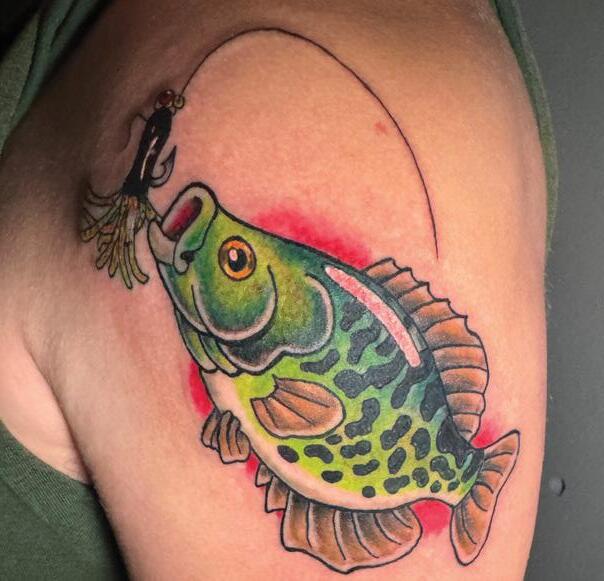


Proud sponsor of the Arkansas Times Best Of Arkansas 2022 Proud sponsor of the Arkansas Times Best of Arkansas 2026
Winner: Midtown Vintage Market
Finalists: Cantrell Furniture Design Center, Cobblestone & Vine, Down South Furniture (El Paso), Ivory & Oak Design (Searcy)
GARDEN STORE
Winner: The Good Earth Garden Center
Finalists: Plantopia (North Little Rock), Cantrell Gardens Nursery, Botanica Gardens, The Plant Outlet (Conway)
GIFT SHOP
Winner: Y’allternative Market (Sherwood)
Finalists: Box Turtle, North Hills Florist & Gifts (North Little Rock), Norwood Day Floral Company, Kiehl Avenue Flea Market (Sherwood)
GROCERY STORE
Winner: Edwards Food Giant

Finalists: Kroger, The Fresh Market, Ozark Natural Foods (Fayetteville), Whole Foods
HARDWARE/HOME IMPROVEMENT
Winner: Fuller & Son Hardware
Finalists: Ace Hardware Cantrell, Hiegel Supply (Conway), Kraftco Hardware, Stanley Hardware (North Little Rock)
HOBBY SHOP
Winner: Argenta Bead Company
Finalists: ART Outfitters, AlchemyXXII, Game Goblins, Gracefully Stitched
JEWELER
Winner: Bang-Up Betty (North Little Rock)
Finalists: Sissy’s Log Cabin, Bella Vita Jewelry & Gifts, Hillcrest Designer Jewelry, Cecil’s Fine Jewelry
MEN’S CLOTHING
Local Winner: J Duke and Co.
Finalists: Mr. Wicks, Rye 51 (formerly Q Clothier), Baumans
OUTDOOR STORE
Winner: Ozark Outdoor Supply
Finalists: Gene Lockwood’s, Gearhead Outfitters, Bass Pro Shops, Pack Rat Outdoor Center (Fayetteville)


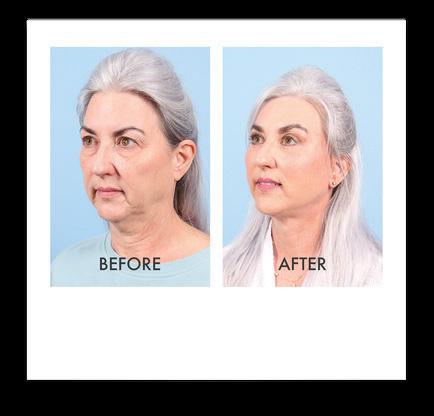









Finalists: Rock City Kicks, Warren’s Shoes, Barbara/Jean, Tops Shoes
VINTAGE CLOTHING
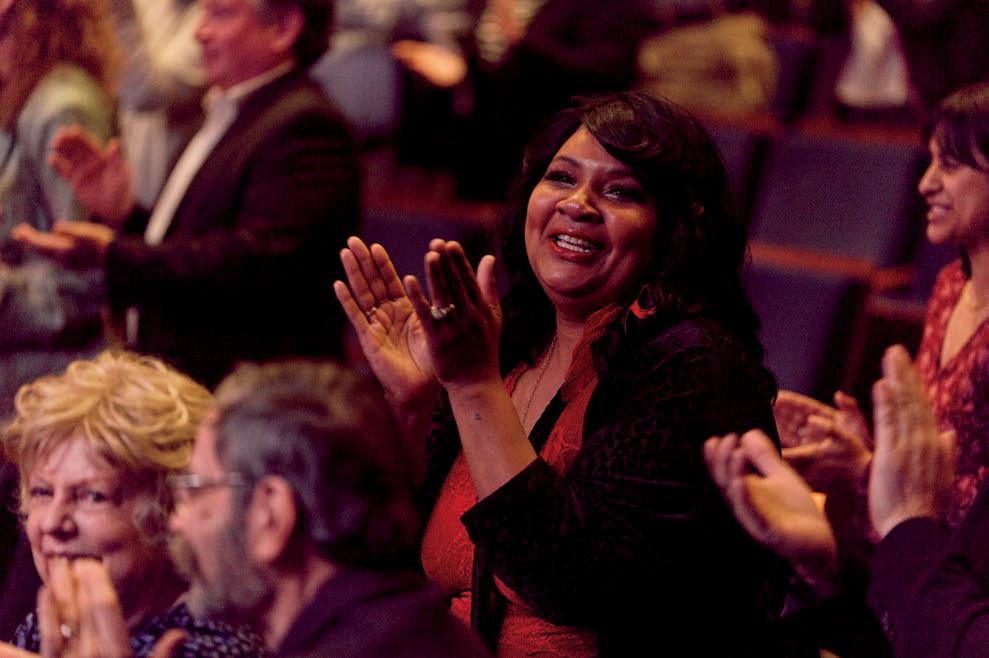
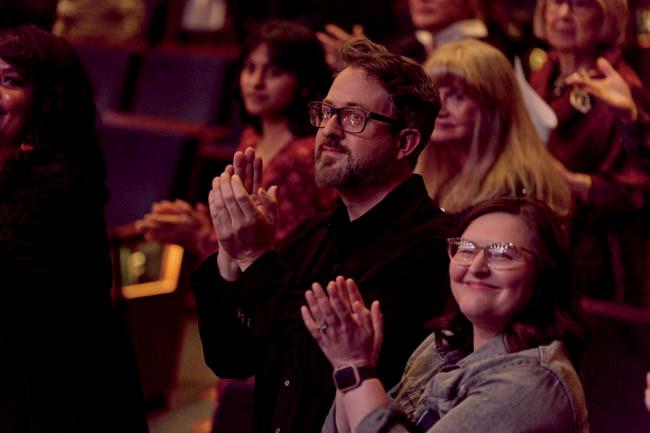
Winner: Y’allternative Market
Finalists: Kiehl Avenue Flea Market (Sherwood), Thriftpologie, Sylvercreek Vintage, Eanes Road Vintage
WOMEN’S CLOTHING
Winner: Gitti Studio
Finalists: Barbara/Jean, Dillard’s, E. Leigh’s Contemporary Boutique, Thriftpologie
GOODS AND SERVICES
ACCOUNTING FIRM
Winner: Frost PLLC
Finalists: Forvis Mazars; Kathy Turner CPA; Landmark CPAs; Mann, Hasson & Co.
APARTMENT COMPLEX
Winner: The Fitzroy Promenade
Finalists: Bowman Pointe, The Point Brodie Creek Apartments, Chenal Woods, The Fairways at Nutters Chapel (Conway)
ARCHITECT
Winner: Wendell Kinzler (Polk Stanley Wilcox Architects)
Finalists: Herron Horton Architects, David French (French Architects), James Sullivan (AMR Architects), Jim Yeary (Lindsey Yeary Architects)
ARKANSAS-BASED COMPANY

Winner: Nabholz Construction Group (Conway)
Finalists: Lion Legal, AlchemyXXII, North Hills Florist & Gifts (North Little Rock), Arkansas Asphalt Solutions
ARTISAN
Winner: Bang-Up Betty (Stacey Bowers)
Finalists: Bella Vita Jewelry (Brandy McNair), Aubrey Hagel (Slyvana Studio), Shelby Brewer (Whimsey and Wondercat), Ashley Llyn (AlchemyXXII)







OAKLAWN HOT SPRINGS VOTED “BEST CASINO” IN ARKANSAS























From the thrill of our 24/7, smoke-free casino and the luxurious comfort of our resort hotel to award-winning dining and Arkansas’ only Forbes® Four-Star spa, Oaklawn Hot Springs o ers a getaway experience unlike anywhere else in the state. Being named “Best Casino” in the Arkansas Times Best Of Reader’s Poll is an incredible honor. To everyone who voted for Oaklawn Hot Springs, thank you for your support — we can’t wait to welcome you back!












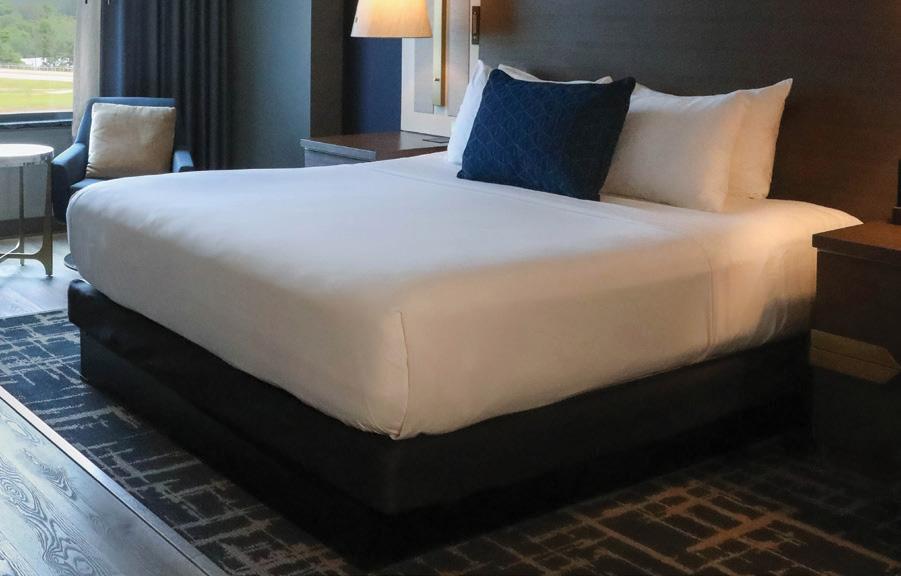



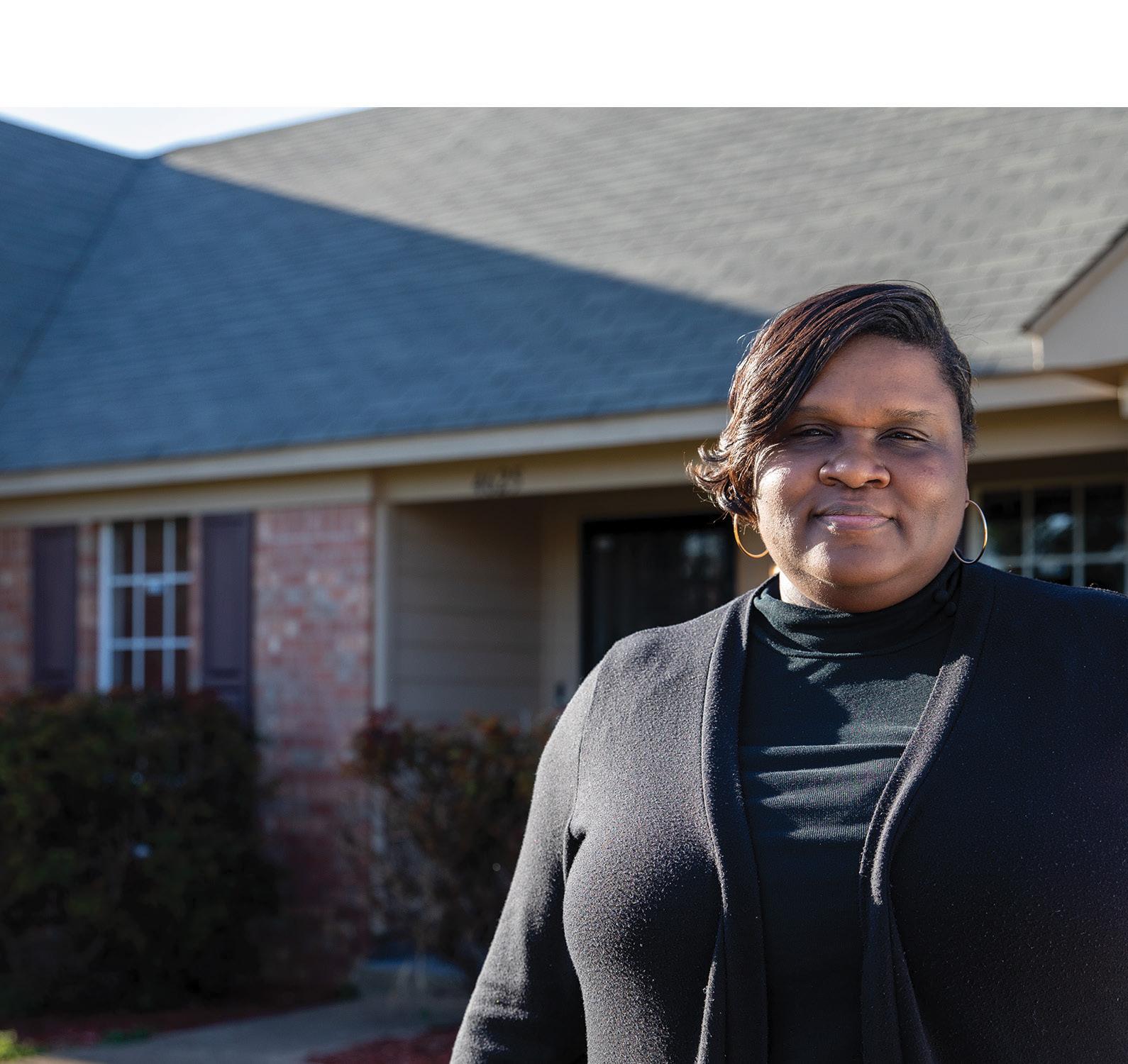




Winner: Subaru of Little Rock
Finalists: Crain Automotive Team, Win rock Automotive Group, Top Choice Auto Group (Cabot), Red River Auto Group (Heber Springs)
Winner: Paulie’s VW Audi Specialist
Finalists: Jett’s Gas & Service, Joe Hudson’s Collision (Jonesboro), The Shop GM Repair (North Little Rock), Titan Auto Services (Jacksonville)
Winner: Arkansas Federal Credit Union
Finalists: Arvest Bank, Bank of Little Rock, First Security Bank, Southern Bancorp
Winner: Dustin Dean (Parker Lexus)
Finalists: Chad Stephenson (Subaru of Little Rock), Matt Ingram (Porsche Little Rock), Micah Rhodes (Crain Kia of Conway), Anthony Burnett (Gwatney Buick GMC)
COMMERCIAL INSURANCE AGENCY
Winner: State Farm (Conway)
Finalists: Darling Bell Insurance Solutions (Conway), Insurance Center Inc., JTS Financial, Mike Fason (Farmers Insurance)
COMMERCIAL REAL ESTATE AGENCY
Winner: SVN ArkBest Realty
Finalists: Moses Tucker Partners, Century 21, Kelley Commercial Partners
COMPANY TO WORK FOR
Winner: CARTI Cancer Center
Finalists: Lion Legal, North Hills Florist & Gifts (North Little Rock), Saracen Casino Resort (Pine Bluff), Wright Lindsey Jennings
CONTRACTOR
Winner: Hines Homes (Maumelle)
Finalists: Nabholz Construction (Conway), Haney Contractors, Scott Lucas Construction & Remodeling (Conway), Sullivan Contracting Services (Bentonville)











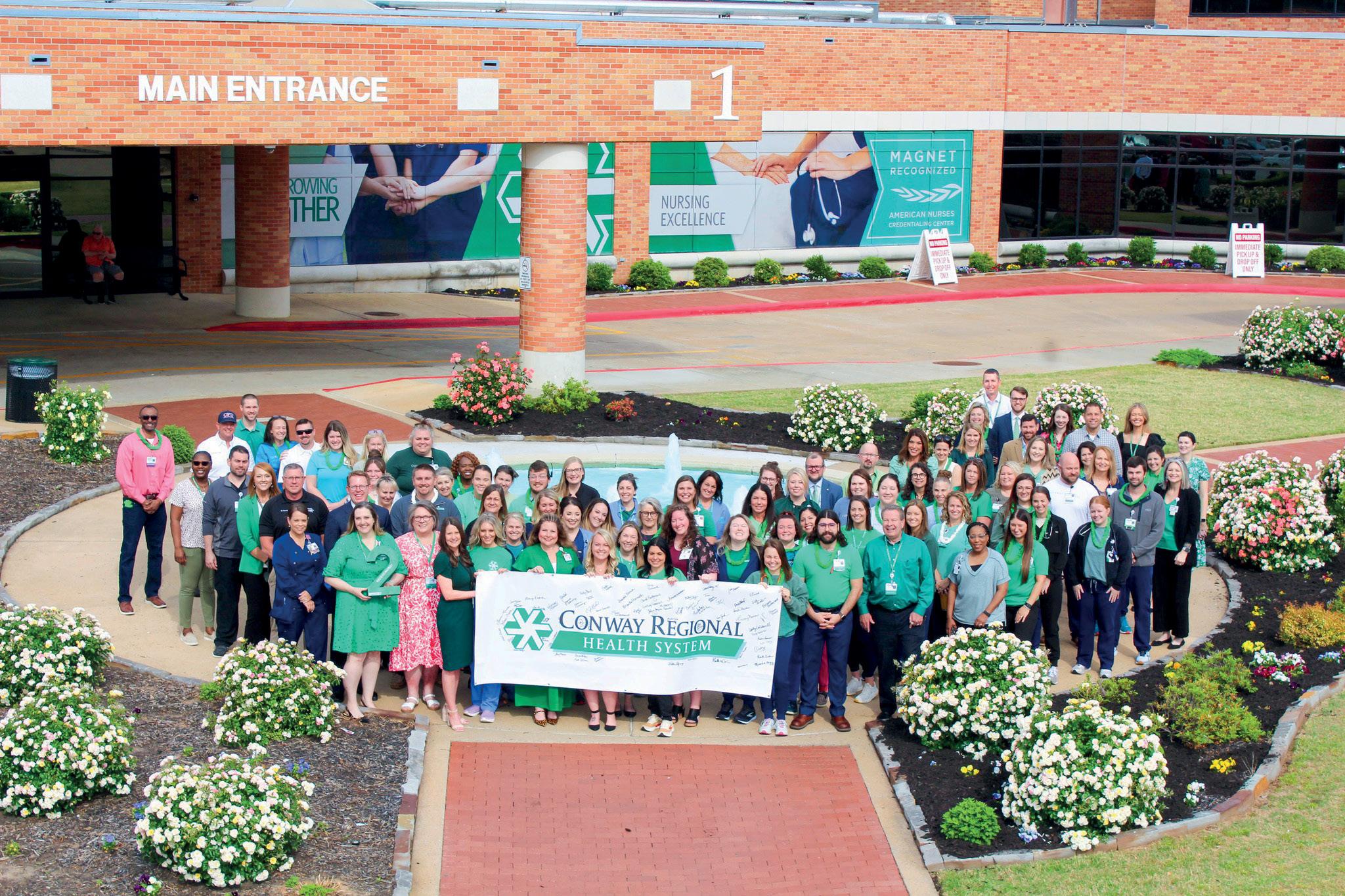
Winner: Hatim Smouni (Merrill
Conway Regional is honored to be a finalist for the Best Hospital category in Arkansas Times’ Best of Arkansas!
At Conway Regional, care is never mass-produced. We bring together expert providers, advanced technology, and a deep understanding of the communities we serve to create patient experiences that are highly intentional.
For generations, families across central Arkansas have trusted Conway Regional through life’s biggest moments. That trust continues to inspire our commitment to care that feels personal, connected, and thoughtfully curated every step of the way.
Finalists: Chris Harkins (Harkins Raf ferty Wealth Management of Raymond Jones), Debbie Elgen (Edward Jones), Mason Laws (Modern Woodmen of America), Sarah Catherine Gutierrez (Aptus Financial)
Winner: Pinnacle IT
Finalists: Arkansas Network Experts (Conway), BizTek Connection, PCA Technology Solutions, Southwest Power Pool
Winner: The Good Earth Garden Center
Finalists: Exterior Solutions, NLS Lawn & Landscape (Maumelle), Village Precision Pros (Hot Springs)
Winner: Lion Legal

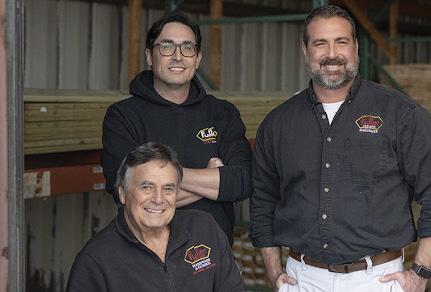
Finalists: Wright Lindsey Jennings, Turner & Rasch, JW Law Firm (Sherwood), DZN Law Firm
LAWYER
Winner: Zoe Robinson (Lion Legal)
Finalists: Victoria Leigh (Lion Legal), Rebecca Ferguson (Lion Legal), Tara Pool (Lion Legal), Andrew Norwood (DZN Law Firm), Jud Kidd (Dodds, Kidd & Ryan)
Winner: Hummingbird Media
Finalists: CMW Marketing + Creative, Eric Rob & Isaac, Vines/Brookshire, Waveline Studio
Winner: Two Men and a Truck (North Little Rock)
Finalists: Brandon Moving & Storage (North Little Rock), All My Sons Moving & Storage, Arkansas River Valley Moving (Russellville), College Hunks Hauling Junk & Moving


Winner: Guitar Center (Little Rock)
Finalists: Renown Music (North Little Rock), Quattlebaum Music (Searcy), Rosen Music Company, Saied Music Company
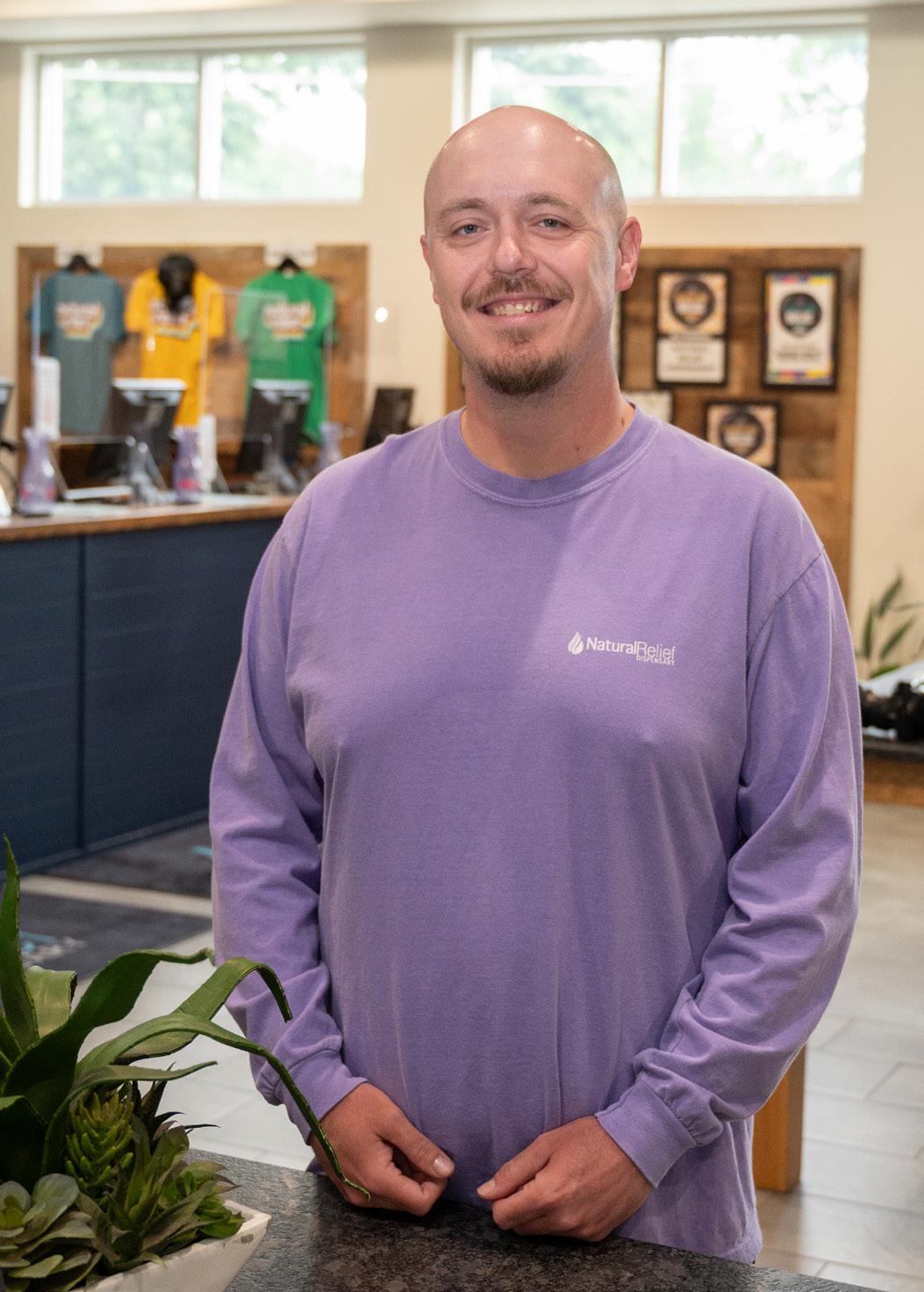




Congratulations to the outstanding UAMS health care team recognized as the WINNER in these Best of Arkansas categories!
• Best Hospital- UAMS Medical Center
• Best OB/GYN Clinic- UAMS Health Women's Center
• Best Dietitian- Alyssa Frisby, MS, RD, LD
• Best Oncologist - Dr. Sindhu Malapati
At UAMS Health, we’re here to ensure you have access to the best care, right here close to home. With a staff of the best and brightest, personalized medicine and convenient access to clinics, you can feel confident knowing the



PEST CONTROL AND TERMITE SERVICE
Winner: Adams Pest Control
Finalists: Best Pest Control, Bug Mas ters, Empire Pest Solutions (Conway), Thomas Pest Control
Winner: Catfish Jimmy’s Tattoo Shop
Finalists: 7th Street Tattoos, Lucky Bella Tattoos (North Little Rock), Black Cobra Tattoos (Sherwood), Brickhouse Tattoo Studio (Cabot)
Day Farm), Christey Dodson (Sepakeasy, Pine Bluff), Marcie (Good Day Farm, Monticello)
PET GROOMERS
Winner: SouthPaw Grooming (North Little Rock)
Finalists: Purrfectly Pawlished Pet Grooming, Pretty Paws Grooming, Hillcrest Dog Spot, Golden Touch Grooming (Jacksonville)
PLUMBER
Winner: Cogan Plumbing
Finalists: Victory Plumbing (North Little Rock), Sanders Plumbing HVAC (North Little Rock), Bert Black — AC Heating Plumbing Electric, Airco Service (North Little Rock)
PROPERTY MANAGEMENT
Winner: J&K Premier Properties
Finalists: Block Multifamily Group, Platform Residential, Turnkey Property Management, Unwind Luxury Vacations
REALTOR
Winner: Jay Calhoun (Signature Properties)
Finalists: Allison Pickell (Coldwell Banker RPM Group), Amber Wood (Mid South Realty), Ashley Watters (eXp Realty), J Kirt Thomas (Bailey and Company Real Estate), Karena Malott (Keller Williams Realty)
RESIDENTIAL REAL ESTATE AGENCY
Winner: eXp Realty
Finalists: The Janet Jones Company, Jon Underhill Real Estate, Keller Williams Realty, Mid South Realty
SIDING, WINDOWS AND ROOFING
Winner: Roelke Roofing
Finalists: Arkansas Roofing Kompany (Conway), EZ Roofing, Regal Construction, Rock City Roofing (Maumelle)
SOLAR COMPANY
Winner: Everything Solar
Finalists: Delta Solar, Arkansas Solar Solutions (North Little Rock), EZ Roofing
TRAVEL AGENCY
Winner: Poe Travel
Finalists: Sue Smith Vacations (North Little Rock), Clark Custom Travel, Dream Vacations, Travel with Friends
WEALTH MANAGEMENT
Winner: Edward Jones
Finalists: Chris Harkins (Raymond James), Hatim Smouni (Merrill Lynch), Modern Woodmen of America, Mendel Capital Management
WEB DESIGN
Winner: Hummingbird Media
Finalists: Few, Silverlake Design + Marketing (Conway), SixtyOne Celsius (Hot Springs), Ward Brothers Digital
WINDOW TINTING
Winner: D&D Sun Control, Inc. (North Little Rock)
Finalists: Diamond State Car Salon, Monster Tint (Malvern), Signature Window Tinting
MEDICAL AND PERSONAL CARE
ASSISTED LIVING FACILITY
Winner: Fox Ridge Luxury Senior Living
Finalists: Ridgemere Senior Living (Conway), StoneBridge Senior Living (Cabot), Superior Health & Rehab (Conway), Woodland Heights Senior Living
AUDIOLOGY
Winner: CARTI Audiology
Finalists: Little Rock Audiology, UAMS, Arkansas Children’s Hospital, Nathan Darby (Chenal Hearing)
BARBERSHOP
Winner: Dogtown Barber Lounge (North Little Rock)
Finalists: Park Hill Barbershop (North Little Rock), Sydney Hunsicker (Iconic Salon Suites), The Men’s Den Grooming Lounge (Ward), V’s Barbershop
CARDIOLOGY CLINIC
Winner: Arkansas Heart Hospital
Finalists: UAMS Cardiology Clinic, CHI St. Vincent Heart Clinic, Baptist Health Heart Institute
CHIROPRACTOR
Winner: Beverly Foster (Chiropractic Health & Rehabilitation)
Finalists: Ashley Mann (Life Wellness and Spinal Care), Jonathan Jamison (Pinnacle Chiropractic), Shawn McGehee (Lamey Chiropractic), Brady DeClerk (Omnis Chiropractic)
CONCIERGE DOCTOR
Winner: Dr. Siobhan Hruby (Pinnacle Internal Medicine)
Finalists: Dr. Allan D. McKenzie, Dr. D. Bart Sills (Sills Family Medicine), Dr. I. Torin Gray, Dr. Preston McCormack (Perspective Health)
COSMETIC DENTIST
Winner: Buchman Family Dental
Finalists: Dr. DJ Dailey (Smile Dailey General and Cosmetic Dentistry), Dr. Ethan Erwin (Smile Hot Springs), Dr. Samuel Strong (Dentalways), Dr. Jeff Garner (The Smile Doctor)
COSMETIC SURGEON
Winner: Dr. Suzanne Yee (Cosmetic & Laser Surgery Center)
Finalists: Dr. Kris Shewmake (Shewmake Plastic Surgery), Dr. Melanie Prince, Dr. Rhys Branman (Cosmetic Surgery Center), Dr. Gene Sloan (Aesthetic Plastic Surgery)
COUNSELOR/THERAPIST
Winner: Stacy Kinzler Therapy
Finalists: Alex Sprouse (Courage Counseling), Beth Rogers (New Path Mental Health & Wellness), Carrie Calhoon, Stacey Reynolds (Blue Yoga Nyla)





















Winner: Arkansas Dermatology
Finalists: Dr. Andrea Mabry (Pinnacle Dermatology), Dr. Sara Shalin (UAMS), Dr. Hayden Franks (Franks Dermatology), Gibson & Guthrie Dermatology
Winner: Alyssa Frisby (UAMS)
Finalists: Courtney Sutterfield (Arkansas Heart Hospital), Julie Olson (ArCare), Meg Green
Winner: Natural Relief Dispensary (Sherwood)
Finalists: Suite 443 Dispensary (Hot Springs), Good Day Farm, Codes Dispensary, Speakeasy Dispensary (Pine Bluff)
FAMILY DENTIST
Winner: Otter Creek Family Dentistry
Finalists: Buchman Family Dental, Cooper Family Dentistry (Jacksonville), Kitchens Pediatric Dentistry, Nichols Family Dental
FAMILY PHYSICIAN
Winner: Dr. Alison Richardson (Arkansas Family Medicine)
Finalists: Dr. John Jayroe (Little Rock Family Medicine), Dr. Archie Hearne (CHI St. Vincent), Dr. Michael Gann (UAMS), Dr. Brad Jenkins (Baptist Health)
FITNESS INSTRUCTOR
Winner: Stacey Reynolds (Blue Yoga Nyla)
Finalists: Alexander Winans (ZenStudio Fitness), Anna Bolte (Bolte Fitness), Jean Paul Francoeur (JP Fitness + Recovery), Tara Stevens (Rock City Complete Fitness)
HAIR REMOVAL
Winner: Studio Von (North LIttle Rock)
Finalists: European Wax Center, Infidimensional Skin, Milan Laser Hair Removal, Revolution Med Spa (Cabot)
HAIR SALON
Winner: Bloom Salon
Finalists: Alexander’s Salon (North Little Rock), Carter | Miller Hillcrest, Red Beauty Lounge
HEALTH COACH
Winner: Anna Bolte (Bolte Fitness)
Finalists: Jolly Bodies, Jean Paul Francoeur (JP Fitness + Recovery), The Wellthy Healthy Life (Nicole Johnson)
HEALTH-RELATED PRODUCTS
Winner: Bio-Tech Pharmacal (Fayetteville)
Finalists: Alliance Home Care Equipment, FarmaKeio (Conway), Hot Springs Natural
HOSPICE CARE
Winner: Hospice Home Care
Finalists: Baptist Health Hospice, LifeTouch Health (El Dorado), LifeTouch Health (Conway), LiftTouch Health Ottenheimer Inpatient Center
HOSPITAL
Winner: UAMS
Finalists: Arkansas Children’s Hospital, Conway Regional, Baptist Health, CHI St. Vincent
IN-HOME CARE
Winner: CareLink (North Little Rock)
Finalists: Hospice Home Care, Miracle Hands In Home Care (Cabot), Right at Home, CrossRidge Community Hospital Home Health (Wynne)
MASSAGE THERAPIST
Winner: Delaney Davis (Touch of Sky Spa)
Finalists: Ava Bella Day Spa, Dawn Eick (Copper Well Retreat), Samern Turner (Arkansas Healing Arts), Zach Turner (Zach Turner Massage and Wellness)
MED SPA
Winner: Beauty Boss Co.
Finalists: Rejuvenation Clinic Day Spa, Skin Fix Med Spa, Dr. Suzanne Yee
Cosmetic & Laser Surgery Center, THE SPA’AH (Conway)
MEMORY CARE FACILITY
Winner: Fox Ridge Chenal
Finalists: Pinnacle Place Memory Care, Landmark Lifestyles at Bryant, Providence Assisted Living, Ridgemere Senior Living (Conway)
MENTAL HEALTH FACILITY
Winner: Stacey Kinzler Therapy (North Little Rock)
Finalists: The BridgeWay (North Little Rock), New Path Mental Health & Wellness, Catalyst Counseling (Conway), The Break Room









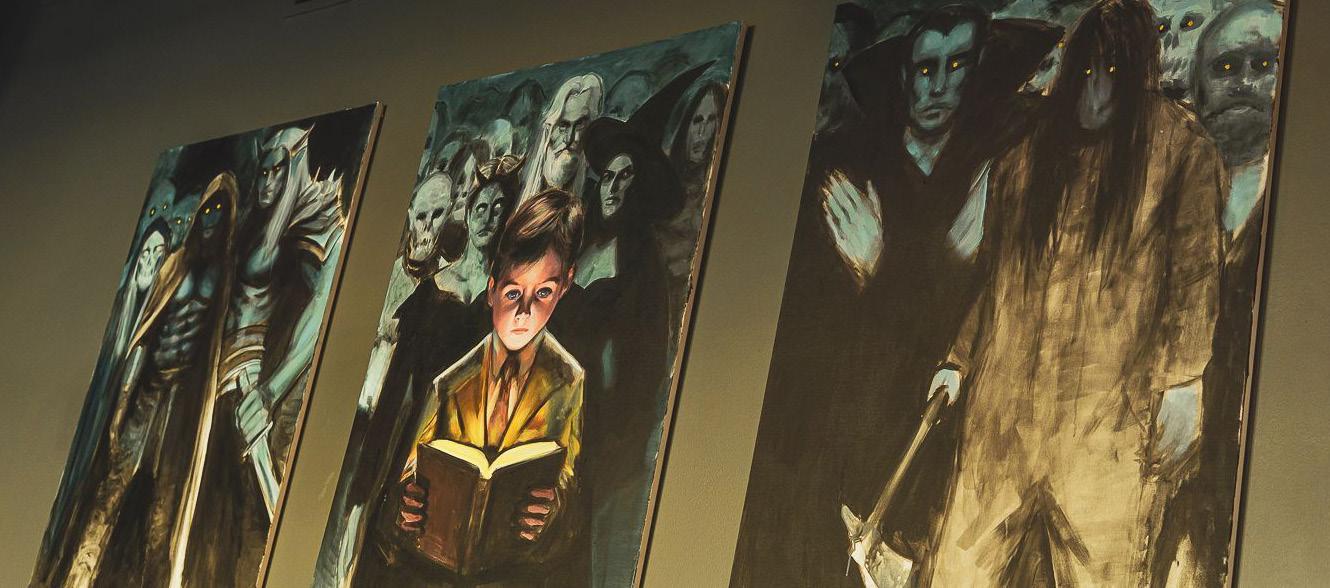


Winner (tie): Chelsea Presson (CHI St. Vincent) and Dr. Kelli Schlesinger (Legacy Spine & Neurological Spe









Finalists: Dr. Keith Schluterman (Conway Regional), Dr. Reza Shahim (Neurological Surgical Associates), Dr. Tim Freyaldenhoven (Conway Regional)
Winner: Dr. Ali Krisht (CHI St. Vin-
Finalists: Dr. Zachary Mason (Arkansas Surgical Hospital), Dr. Ali Raja (Arkansas Surgical Hospital), Dr. Gautam Gandhi (Pinnacle Spine & Neurosur-
Winner: Briarwood Nursing & Rehabilitation
Finalists: Cabot Health and Rehab, Greystone Nursing & Rehabilitation (Cabot), Presbyterian Village, Woodruff County Health Center (McCrory)
Winner: UAMS Health Women’s Center
Finalists: Central Clinic for Women, Cornerstone Clinic for Women, North Little Rock Women’s Clinic, Women’s First Gynecology and Wellness Clinic
Winner: Dr. Sindhu Malapati (UAMS)
Finalists: Dr. Diane Wilder (CARTI Cancer Center), Dr. Thomas Sneed (CARTI Cancer Center), Dr. Ron Kuhn (CARTI Cancer Center)
Winner: Dr. Tracy Baltz (Little Rock Eye Clinic)
Finalists: Dr. Christian Hester (Little Rock Eye Clinic), Dr. Edward Penick (Central Arkansas Ophthalmology), Dr. R. Scott Lowery (UAMS), Dr. Joseph Chacko (UAMS)
Winner: Dr. Bailey Zachry (Little Rock Family Eyecare)
Finalists: Dr. Angela Rose (Rose Eye Clinic), Dr. Nicholas Sachse (Patterson Eye Care), Dr. Bryan G. Armstrong (Bryant Eyecare Clinic)




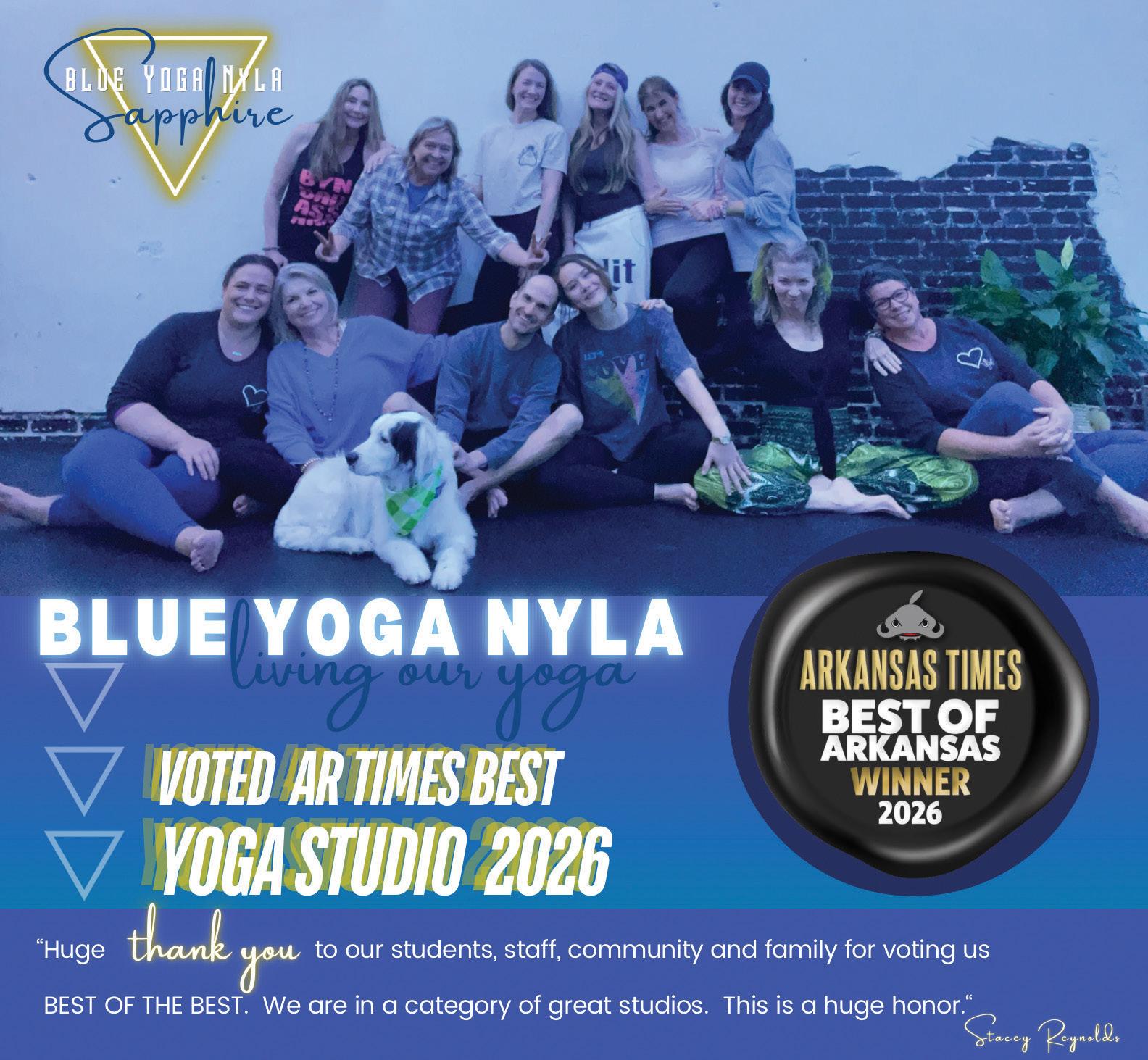

Proud sponsor of the Arkansas Times Best of Arkansas 2026
Winner: Dr. Andy Vondran (Vondran
Proud sponsor of the Arkansas Times Best Of Arkansas 2022
Finalists: Dr. Michael Quick (Orthodontics Associates), Wardlaw Orthodontics, Dr. Clayton Owen (Owen Orthodontics), Dr. Michael Ashcraft (Orthodontics Associates)
Winner: Dr. Adam Norwood (Baptist Health)
Finalists: Dr. C. Lowry Barnes (UAMS), Dr. Simon Mears (UAMS), Dr. William Hefley (Bowen Hefley Orthopedics), Dr. Ethan Schock (OrthoArkansas)
Winner: Dr. Drew Beasley (OrthoArkansas)
Finalists: Dr. Aparna Jindal (UAMS), Dr. Johnathan Goree (UAMS), Martin Eisele (Evergreen Acupuncture), Dr. Christopher Mocek (Mocek Spine Clinic)

Winner: Dr. Chad Rodgers (Little Rock Pediatric Clinic)
Finalists: Dr. Dawn Martin (All for Kids Pediatric Clinic), Dr. Aaron Strong (Little Rock Pediatric Clinic), Dr. Jeremy Harwood (CHI St. Vincent), Dr. Leah Youngblood (Little Rock Children’s Clinic)
Winner: Stacey Reynolds (Blue Yoga Nyla)
Finalists: Lee Ann Jolly (Jolly Bodies), Lori Forrester (Rock City Complete Fitness), Jean Paul Francoeur (JP Fitness + Recovery), Anna Bolte (Bolte Fitness)
Winner: The Pharmacy at Wellington
Finalists: Cornerstone Pharmacy, Kavanaugh Pharmacy, Park West Pharmacy, Rhea Drug Store
Winner: Edward Drangle (Ageless Health and Fitness)
Finalists: Andrew Musgrove (Baptist Health), Bo Renshaw (Harris & Ren-
shaw Physical Therapy), Jack Bridges (Cabot Physical Therapy), Nathan Tumlinson (Associates Physical Therapy)
Winner: OrthoArkansas
Finalists: Advanced Physical Therapy, Baptist Health Therapy Center, Blue Rose Physical Therapy, Cabot Physical Therapy
PROSTHETICS
Winner: Snell Prosthetics & Orthotics
Finalists: Horton’s Orthotics & Prosthetics, Advanced Prosthetics Services (Searcy), Hanger Clinic: Prosthetics & Orthotics, Johnson Prosthetics & Orthotics (Fayetteville)
Winner: Good Shepherd Community
Finalists: College Square Retirement Community (Conway), Harding Place Retirement (Searcy), Orchards at Cabot, Parkway Village
SPA
Winner: Touch of Sky Spa (Sherwood)
Finalists: Arlington Resort Hotel & Spa (Hot Springs), Astral Spa Oaklawn (Hot Springs), Rejuvenation Clinic Day Spa, THE SPA’AH (Conway)
SPORTS MEDICINE CLINIC
Winner: OrthoArkansas
Finalists: Arkansas Children’s Hospital Sports Medicine Clinic, Conway Orthopedic & Sports Medicine Center, UAMS Orthopaedics and Sports Medicine, Jonesboro Orthopaedics and Sports Medicine
VETERINARIAN
Winner: Dr. Stacey Greathouse (Cantrell Animal Clinic)
Finalists: Pleasant Valley Veterinary Clinic, Dr. Katelyn Lang (Healthy Life Pet Clinic), Dr. Greg Hartman (Hartman Animal Hospital), Dr. Brian Barron (Shackleford Road Veterinary Clinic)
YOGA
Winner: Blue Yoga Nyla (North Little Rock)
Finalists: Barefoot Studio, Camp Yoga & Pilates, Go Inside Yoga (Conway), Arkansas Yoga Collective


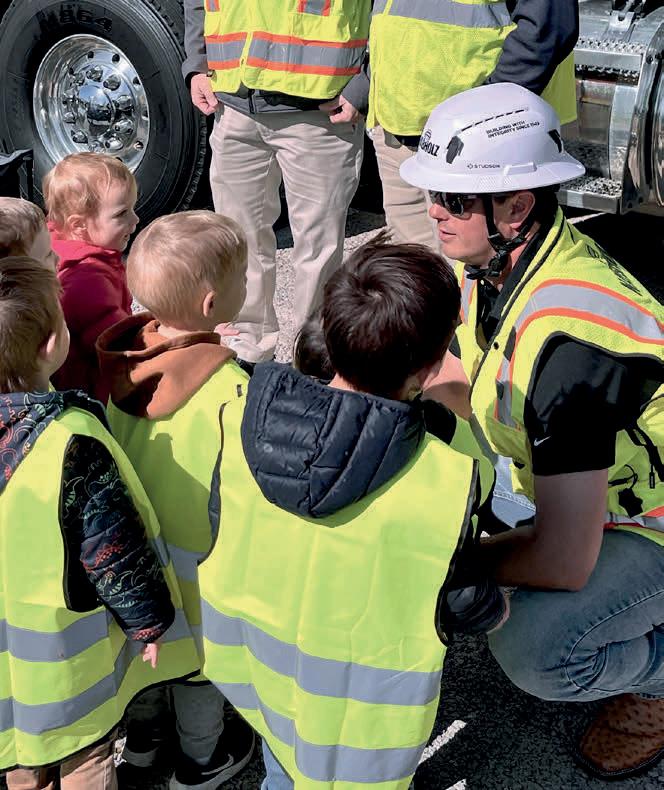


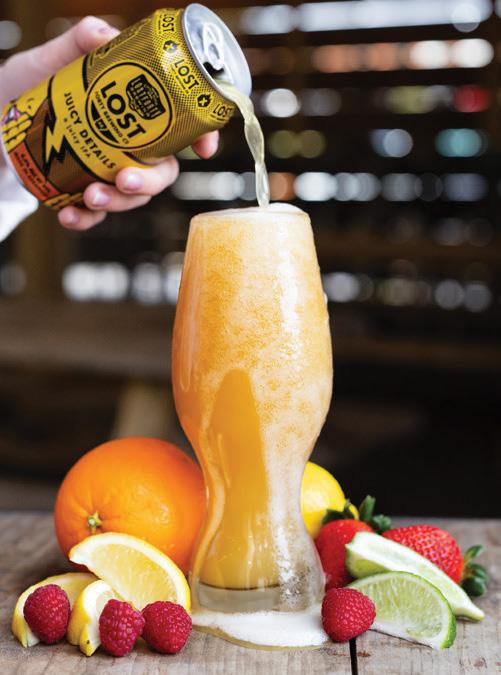



BY DANIEL FORD PHOTOGRAPHY BY BRIAN CHILSON
In poetry, there is something called a volta. Italian for “turn,” a volta is a moment in a poem that marks a sudden change in direction, often revealing the poem’s true meaning to the reader. In Shakespearean sonnets, the volta typically occurs before the final couplet.
For Arkansas native Bryan Borland, 46, the founder of North Little Rock-based poetry publishing house Sibling Rivalry Press, the volta happened in January 2025, when the Arkansas Choral Director’s Association bowed to political pressure and removed a song with lyrics by trans poet Amir Rabiyah from the All-State Choir audition and performance repertoire, likely due to Rabiyah’s gender identity.
At the time, Sibling Rivalry Press, started by Borland in 2010 and publishing at a consistent and prolific pace through 2021, had been on indefinite hiatus for four years. But for Borland and Sibling Rivalry, whose stated mission is to champion and platform LGTBQ+ authors and artists from across the country, continued retirement began to feel uneasy.
Even more so because one of the many books Sibling Rivalry published during the previous decade was Rabiyah’s 2017 collection “Prayers For My 17th Chromosome.”
“We had published Amir’s first book in 2017,” Borland said. “So I knew Amir. But I wasn’t back in publishing. I’d moved on. I’ve used the term retired sometimes. There was a time that if that would have happened, I would have had a reading and a protest and brought authors here to fight,” Borland said. “Not doing anything felt like a defeat, not true to myself.”
Borland and his husband, SA Borland, who have run the press together since 2012, were still processing how they wanted to respond and what the future of Sibling Rivalry might look like, when Bryan Borland visited Wash-
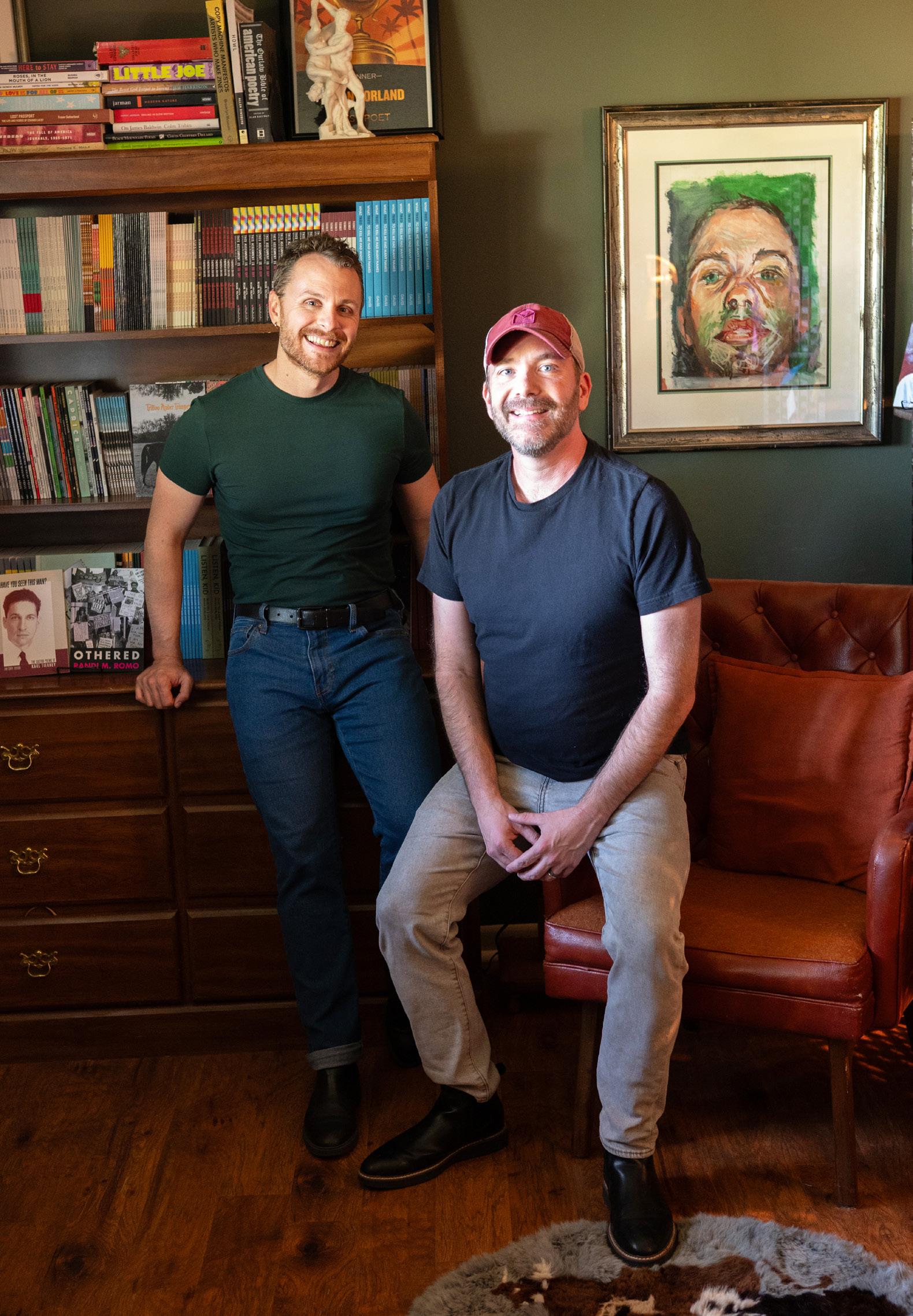
DIY: Bryan Borland (right) founded Sibling Rivalry Press, a nationally recognized publishing house for queer poetry, in Little Rock in 2010. His husband, SA Borland, joined the team soon after.
ington, D.C., bookstore Busboys and Poets a few months later.
The first thing he saw upon entering the bookstore was a cardboard cutout of Oprah Winfrey and bestselling writer and poet Ocean Voung, who published his debut chapbook “Burning” with Sibling Rivalry in 2010, becoming the press’ inaugural author. Then, he glimpsed a copy of the novel “Martyr” by Kaveh Akbar, another major writer who got his start with Sibling Rivalry.
“It was this otherworldly thing, it made me very emotional,” Borland said. “I just felt that electricity.”
Charged with renewed purpose and ener-
gy and armed with a $10,000 Catalyze grant from the Windgate Foundation, Borland decided to awaken Sibling Rivalry from its slumber.
Beginning in 2010 with the publication of Vuong’s chapbook, Sibling Rivalry has punched far above its weight class in the poetry world, publishing such acclaimed poets as Akbar, Saeed Jones, Joseph Osmundson and Pulitzer Prize winner Carl Phillips, among many other authors both established and emerging.
“I count myself both lucky and supremely proud to say that my career began in Little Rock, Arkansas, by an even littler publisher called Sibling Rivalry Press,” Vuong wrote in a June 2024 address to a reunion of Sibling Rivalry poets that serves as a forward to Borland’s forthcoming book “Listen, Kid,” out in August via his own press.
Referring to Borland, Vuong writes in praise of “an editor whose vision, generosity, and perennial kindness sees the seed in you long before you realize it,” while placing Sibling Rivalry in a hallowed literary lineage alongside New Directions, City Lights in San Francisco and New York Review Books.
Watching Borland at a back table at Vino’s Brew Pub in May, drinking pints of beer and eating slices of pizza with his husband and two of Sibling Rivalry’s newest additions to its roster of poets, it’s easy to see what Vuong means.
Self-deprecatingly pointing to his graying beard as evidence of the grind of small press publishing, Borland is warm and engaging, apt to soliloquize about the power of poetry in a way to which I am usually allergic, but that coming from Borland is genuinely inspiring. His enthusiasm for his authors — poets Toni Garcia-Butler and JC Andrews in this instance — is impossible to hide, with Borland often interjecting praise for their works into our conversation and taking every possible opportunity to extoll the prizes, accolades and virtues of theirs and other Sibling Rivalry poets’ work.
“The only way I know how to critique a poem is to say, ‘That’s beautiful, that line is beautiful, that line made me feel something,’” Borland said. “I don’t know how to critique. And now I’m so fucking glad I don’t know that, because that’s what makes the difference.”
Borland views his role as an amplifier rather than a gatekeeper, focusing on platforming as wide a variety of voices as possible. As stated on the press’ website, “we wanted our ages to be diverse, our faces to be diverse, and our accents to be diverse.”
“That’s one of the reasons why Sibling Rivalry has been successful is we’ve kept that door open for anybody that calls themselves a poet,” Borland said. “It can be from the












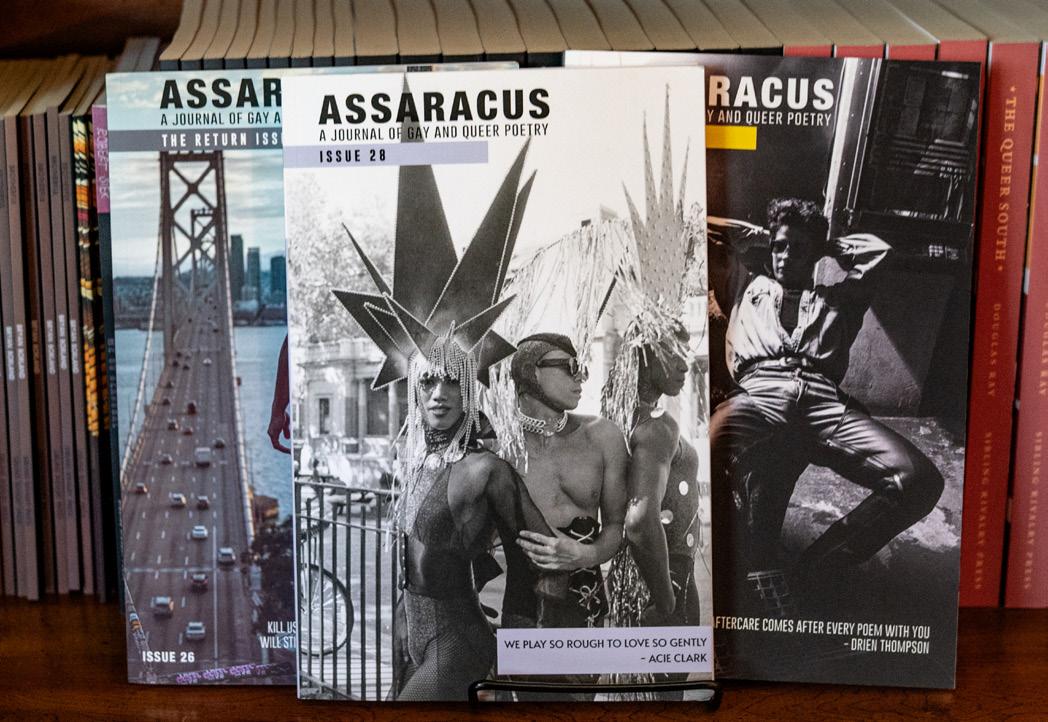
“ANYTIME YOU PUSH ART DOWN, ANYTIME YOU PUSH POETRY DOWN, ANYTIME YOU TRY TO SILENCE … THAT’S WHEN IT TURNS PUNK, THAT’S WHEN IT RISES, THAT’S WHEN IT GETS EXCITING.”
— BRYAN BORLAND, FOUNDER OF SIBLING RIVALRY
spoken-word world, it can be from the academic world, it can be from the elderly people that get together Saturday mornings at the library.”
***
The reincarnation of Sibling Rivalry is centered on several publishing initiatives, most immediately the quarterly journal Assaracus and the Arkansas Queer Poets Series.
Originally published from 2011 to 2017, Borland imagines the booklength literary magazine Assaracus as a broad and unapologetic hub for queer poetry publishing.
“I want it to be like walking into a really queer flea market and you walk down an aisle and you find something you like, or there might be something that’s really weird, or there might be something that you absolutely do not like,” Borland said. “You’re gonna get complete diversity of voice, diversity of experience, diversity of the entire LGBTQ spectrum.”
While Borland usually gives the poets he selects for Assaracus the space and freedom to publish whatever portfolio of their work they choose, he immediately knew the first poem he wanted to publish in the journal’s revival issue: Rabiyah’s “Release,” the lyrics to the song
erased from the Arkansas All-State Choir repertoire in early 2025.
“It was a way to honor Amir that would give me a way to make the wrong that happened to Amir, right, in a way,” Borland said. “I love that now more people than ever would have known about that piece have now read it.”
In addition to the rebirth of Assaracus and its national roster of poets, Sibling Rivalry is resuming its fullspeed-ahead publishing schedule with non-series titles like “Gay Sex” by Charlie Lou Evans and “A Litter of Lists” by Alex Gildzen, both released in June, and its Bridges series, in which a single poet annually curates four books from emerging writers.
But Sibling Rivalry’s relaunch, both for Assaracus (whose recent and upcoming issues feature Arkansas poets Acie Clark and Kai Coggin, among others) and beyond, is fueled by a focus on amplifying Arkansan voices.
“The first time around, we did not focus on Arkansas. All our success was outside of Arkansas,” Borland said. “We used Arkansas to get attention because that made us unique, but our authors were from all over. But Arkansas is on fire; Arkansas is doing it.”
Little Rock poet Toni Garcia-Butler, whose chapbook “DIY Body” is
the fourth entry in Sibling Rivalry’s Arkansas Queer Poets Series, sees Arkansas’ conservatism playing a role in why the thriving poetry scene here is often overlooked.
“We were talking about these places where we’re from, and people would look at these states and look at the politics,” Garcia-Butler said, “and they would never imagine the gold, the depth of what we’re doing, what we’ve built here.”
JC Andrews’ “Trillion Amber Trumpets,” released in April, and Garcia-Butler’s “DIY Body,” released in June, are Sibling Rivalry’s most recent additions to the Arkansas Queer Poet Series, which began in 2018 with the publishing of Randi Romo’s “Othered.” The two chapbooks represent not only the talent on display from Arkansas poets, but the diversity in style and content.
Andrews’ chapbook is a stunning collection of clear-eyed poems largely drawing on her time growing up in the Ozarks with striking imagery and lines that stop you in your tracks: “the clean algebra /of the sky,” a teenage girl underneath a smokehouse reckoning with her burgeoning sexuality, the “sound / of lying down / in between / two rows / of corn did not / remember me / the same way / in which / I remember / it which is / young / breathing / and deeply / invisible.”
“Queerness, especially combined with rurality, is a strange thing,” Andrews said. “Existing within those two things coinciding is just strange, and it’s lonely, but it’s also really rich.”
Many of the poems in “Trillion Amber Trumpets” also appear in the forthcoming collection “Of An Ilk,” which won the prestigious 2026 Yale Younger Poets Prize, given annually to a poet who has yet to publish a full-length book of poetry.
Garcia-Butler’s debut “DIY Body” is vibrant, conversational and playful, a collection of poems written over the past decade that colorfully document, as Garcia-Butler puts it, “my own kind of awakening and presence in my body.”
Through their focus on food, music (especially karaoke) and sex, the poems of “DIY Body” are a document of Garcia-Butler proudly proclaiming the essentiality of his Filipino, Black and trans identities.
those working through Sibling Rivalry to cre ate a more inclusive Arkansas, Gov. Sarah Huckabee Sanders declared June to be Fideli ty Month, focusing on fidelity to “God, family, community and country” and posting a link to a Daily Wire article on her Facebook page which labeled the declaration “counter-pro gramming” to Pride Month.
“It reminded me (again) that in a red state, simply being LGBTQ+ is an act of civil dis obedience,” Borland wrote to me following the declaration. “I can aspire to transcend politics, but that is not a reality when queer people and other minorities are erased, re districted, bullied and attacked by those in power.”
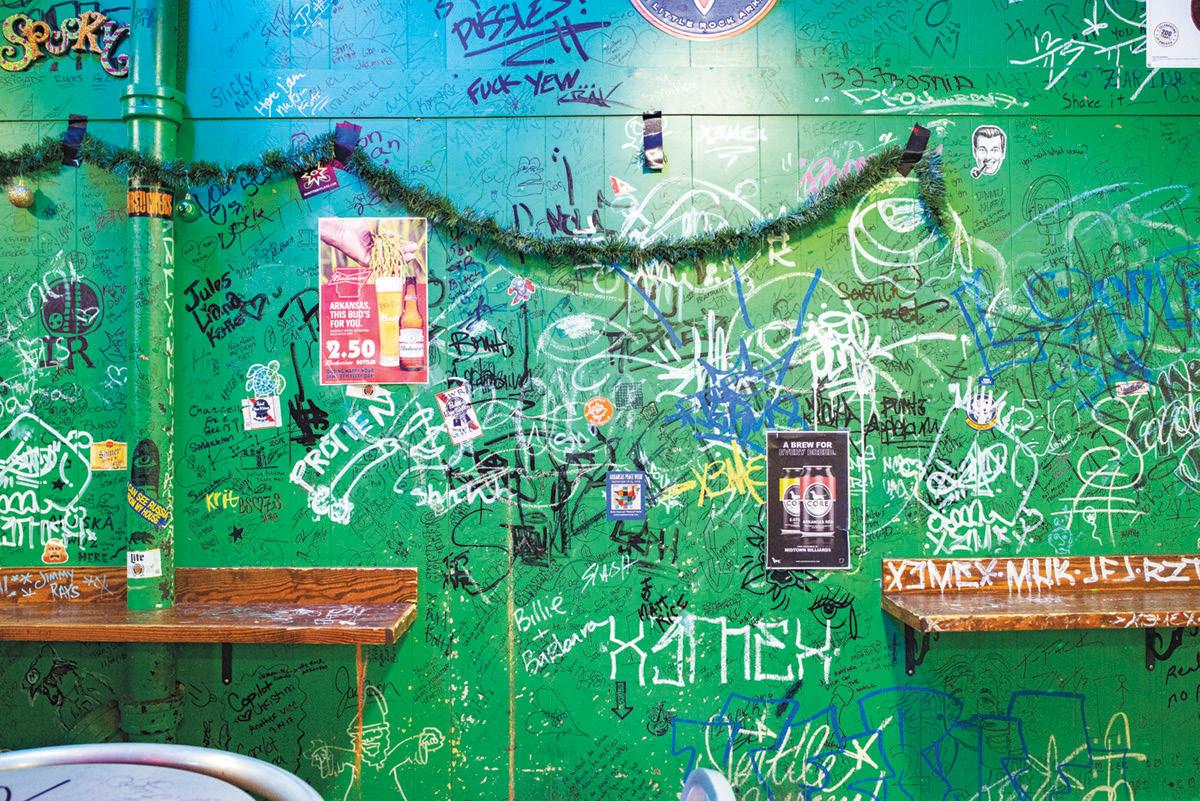
Garcia-Butler described the inability to disentangle art and politics for queer and marginalized people. “I can write a poem about Spam, and it’s going to be political in some way,” he said. “In this era of renewed mass censorship and erasure, to create from your own experience is a political, revolutionary act in and of itself.”
The power of this revolutionary act of queer visibility as fostered by Sibling Rivalry is a refrain among its authors. Caroline Earleywine, whose excellent chapbook “Lesbian Fashion Struggles” was published by Sibling Rivalry in 2020, said that “This Assignment Is So Gay,” a 2013 Sibling Rivalry anthology of LGBTQ+ poets on the art of teaching, had a profound effect on her far before the press put out her work.
“I was a closeted teacher at the time feeling isolated and alone, and all of a sudden I had in my hands reflections of my experience,” Earleywine said. “That’s the magic of the press, and why we are so lucky to have them here in Arkansas.”
For Borland, it is those types of interactions that provide the motivation to keep Sibling Rivalry active.
“You can’t squander opportunities to lift other people up,” Borland said. “We all have this opportunity: If something you do gets somebody to their next day, you may never know it. You may never know the impact on somebody, but if you help somebody get to their next day … damn. Not much more than that.”



The importance of Sibling Rivalry existing within and highlighting Arkansas is made even more potent by the starkness of the contrast between the abundance of queer joy on the pages of its books and the oppressive political environment in which those books are born.
Just one day after I left Vino’s feeling deeply energized by the conversation I had with
And, as Borland points out, inane proclamations like that of Sanders and other bigoted Arkansans only fuels the creation of more and more outstanding art. Much of which, luckily for Arkansas and the wider literary world, Sibling Rivalry plans to publish in the years to come.
“Anytime you push art down, anytime you push poetry down, anytime you try to silence, or sit, or censor or tell people what they can and can’t say,” Borland said, “that’s when it turns punk, that’s when it rises, that’s when it gets exciting.”
EVERY TUES. AT 6 P.M. FUN AND GAMES ON THURSDAY SPECIALS EVERY DAY OF THE WEEK LADIES GET IN FREE ON MONDAY


10th - Ed Bowman and the Rock City Players
17th - Jimmy Lynn’s Psychedelic Velocity
18th - Boysterus
24th - DeFrance
25th - Chad Marshall Band
31st - Drew




BY ERNEST DUMAS
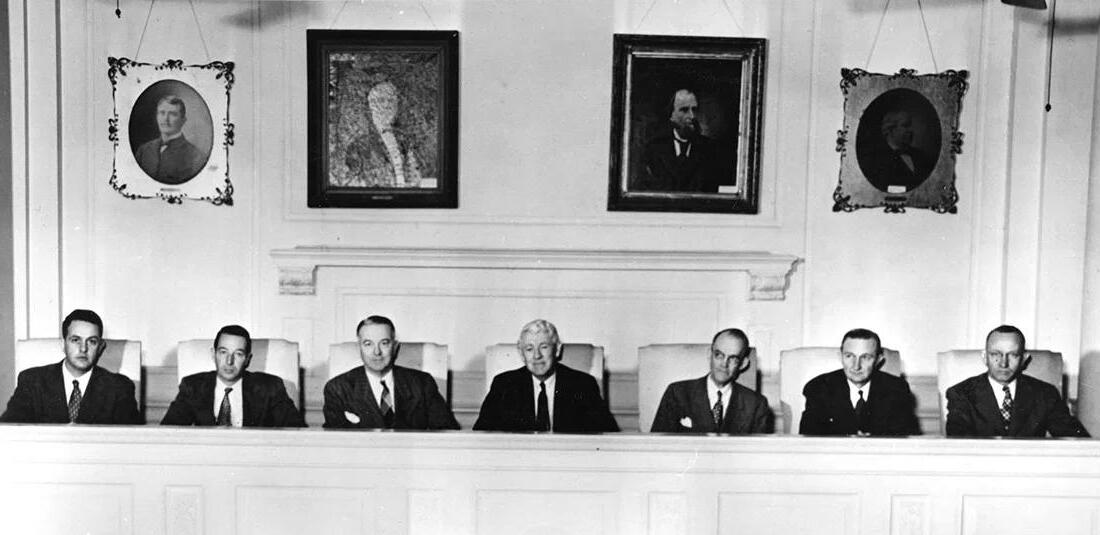
HALCYON DAYS: These justices of the Arkansas Supreme Court in 1950 would likely be wholly unimpressed with today's bench.
From most news accounts, it was just another day at the court on Dec. 11 when the Arkansas Supreme Court upended 115 years of direct democracy in the state by holding that the Arkansas Legislature — a Republican Legislature, at least in this instance — can amend or even obliterate any law ever generated by Arkansas voters.
That includes all the articles of the state Constitution that originated with initiative petitions circulated among the state’s voters and then adopted by them. These peoplepowered amendments represent about a fourth of the 104 amendments made to the Arkansas Constitution since it was ratified in 1874. Without citizens’ initiatives, Arkansans would likely not enjoy a minimum wage higher than the federal rate or access to medical marijuana.
U.S. District Judge Timothy Brooks ruled a month before the Dec. 11 order that no, the Legislature cannot amend or repeal a constitutional provision enacted by citizens
through the initiative process. Brooks, however, was appointed by neither Donald Trump nor Gov. Sarah Huckabee Sanders, but rather by Barack Obama. That made Judge Brooks’s holding meaningless in Republican Arkansas.
Baloney, said the novice Arkansas Supreme Court justices, all but two of them appointed or endorsed by Sanders. Their nominally unanimous decision in State of Arkansas v. Good Day Farm represents one of the most stupefying decisions in the court’s nearly 200-year history. Curtailing people’s power through initiative and referendum may not be the worst act ever of the Supreme Court — we can hearken to a century of slavery and Jim Crow judgments and maybe a 1968 decision that upheld a ban on the teaching of evolution (Epperson v. Arkansas) for that — but it is surely the most witless. Choose your own adjective after you read the justices’ opinion declaring that a previous and unanimous state Supreme Court in
1951, in the case of Arkansas Game and Fish Commission v. Edgmon, erred by ruling that a foolish sentence inserted into a bit of legislation in 1920, at the last minute and in the wrong place, gave legislators power to undo any initiated act or constitutional amendment and do virtually anything they wanted to make it difficult to impossible for citizens to put proposals on the ballot. That sweeping decision registered only two dissents among the seven justices, and those dissents were couched weirdly as “concurring” opinions. (Two sitting justices recused for unknown reasons, and Sanders appointed her supporters as substitutes for them, as has become her habit.) The two justices who halfway dissented but nominally affirmed the decision pointed out the absurdity of the decision but concluded by saying “I respectfully concur,” because they concurred with the nominal result that a constitutional amendment legalizing medical marijuana met constitutional
requirements. The usual language when a justice disagrees is “I respectfully dissent,” but no loyal Republican can afford to dissent on such an important issue for the party and for its leaders, so they recorded themselves as “concurring” with the opinion written by Associate Justice Cody Hiland.
Hiland, incidentally, was the chairman of the Arkansas Republican Party when Sanders appointed him to fill a vacancy on the state’s highest court in 2023. Before that, Hiland had been U.S. Attorney for the Eastern District of Arkansas, appointed by President Donald Trump. Is it worth noting that the Arkansas Constitution, in an amendment ratified by voters in 2000, prohibits partisanship in the election and appointment of judges and in any appellate or trial court’s judgments? How a bunch of judges could reach a decision so contrary to universally established law — that a legislative body cannot arbitrarily amend or even abolish constitutional law but only propose such changes to the voters — is a mystery.
The proposal to establish Arkansans’ rights to drive initiatives and referendums was adopted overwhelmingly by the voters in 1910. George Donaghey, the great progressive who followed the flamboyant bigot Jeff Davis in office, was elected governor in 1908 on a promise to amend the Arkansas Constitution to empower voters to draft and to enact by majority vote the state direct-democracy laws that were the primary goals of the national progressive movement led by William Jennings Bryan.
When Gov. Donaghey and the legislators — all Democrats — took office in 1909, they put forth a short constitutional amendment to make Arkansas the first (and ultimately the only) Southern state to implement the great progressive and populist program of giving the people hegemony over the legislative branch by allowing voters to circulate petitions to put statutes and constitutional amendments on the ballot and to refer acts passed by the Legislature to the voters. Once voters enacted a proposed constitutional amendment, neither the governor nor the Legislature would be able to alter it in any way.
Donaghey had run for governor criticizing the Legislature, where corruption had erupted on a large scale in the first decade of the new century. There were charges of bribery in the construction of the new state Capitol, and lawmakers had lengthened every session so that they could collect per diem while partying in the capital city. Legislators regularly absorbed contributions
WITHOUT
WOULD LIKELY NOT ENJOY A MINIMUM WAGE HIGHER THAN THE FEDERAL RATE OR ACCESS TO MEDICAL MARIJUANA.
from railroads and liquor interests. Regardless, grumbling lawmakers approved Donaghey’s resolution, and it went on the 1910 general-election ballot as one of the Legislature’s three proposed amendments that are allowed every two years by the constitution. That resolution carried no language that would empower the Legislature to amend or scrap any constitutional provision. That is still not possible anywhere in the land — except now in Arkansas.
Even before the actual election in 1910, Donaghey and other champions of direct democracy recognized that drafting oversights — they were referred to as “the jokers” that no one had caught beforehand — would make the initiative and referendum amendment unworkable even though it was now in the constitution. The biggest joker was that it neglected to change the part of the 1874 Constitution, which said that only three amendments could be put on the ballot every two years. Fixes would be done at a convention to rewrite the whole state Constitution in 1917-18, amid the closing battles of World War I and raging flu and smallpox epidemics. The modernized constitution, which included an initiative and referendum law that made all the effective changes to offset the “jokers” and also gave women the right to vote, was quickly drafted in the summer of 1918 and placed on the ballot at a special election. The initiative and referendum provisions in the proposed constitution were declared to be in
perfect harmony with the Oregon initiative and referendum law, which was considered the model, but turnout was low and the proposed constitution was defeated.
The initiative and referendum provisions of the defeated constitution were still considered the model when the Legislature assembled again for the 1919 legislative session, and this time the legislators, cheered on by the new reform governor, Charles H. Brough, drafted a new constitutional amendment to replace the defective one from 1910.
If the justices last December were really interested in how bizarre language implying that two-thirds of the Legislature might amend or dissolve a constitutional amendment arising from initiative petitions somehow got into the law, they might have consulted the actual record of the legislative drafting that created it. It was basically the version included in the failed 1918 constitutional revision. The legislative authors drafted new provisions enabling local governments to refer local laws to the voters in a referendum and a requirement that 10% of Arkansas voters, instead of only 6%, sign petitions to put constitutional amendments on the ballot. It clearly separated the requirements for petitioning constitutional amendments and for referring legislative acts to the voters.
Tom M. Mehaffy, a prominent Little Rock lawyer and later a Supreme Court justice for 15 years, helped draft the initiative and urged voters to approve it. In a piece he wrote for the Arkansas Gazette, there was no mention of language that could be interpreted as empowering the Legislature to throw out constitutional law established by voters. The reason for the perplexing language at the root of our current predicament, as a Gazette legislative article explained, was that just before the House and Senate voted on the 1910 resolution, several sentences were moved around. One moved sentence was about the Legislature amending referred measures (those measures they send to the voters themselves, not the initiated measures driven by citizens) near a sentence saying the word “measure” where the term encompassed both an initiated constitutional amendment or statute and referred documents written by either the state or by local legislative bodies. That last-minute sentence reconfiguration was what Republican justices, or at least Hiland, jumped on back in December. Because an initiated constitutional amendment was a “measure,” Hiland’s opinion said, it meant that the Legislature could change any part of the constitution drafted by voters or abolish it with the votes of two-thirds of the members of each house.
It helps to understand how and why this mess started, which was with a labormanagement scuffle over minimum-wage laws. Arkansas was the first of the 11 states of the old Confederacy to enact a minimumwage law. Gov. Winthrop Rockefeller, the most liberal governor in Arkansas history and still in his first term, summoned a special legislative session in February 1968 to establish a minimum wage of $1.20 an hour by 1971. Arkansas and Virginia to this day are the only states of the old Confederacy to set minimum wages. Workers in the other states are protected by the federal minimum wage, which was last raised to $7.25 an hour in 2009 by a Democratic Congress under Obama. The election of a Black Democrat as president moved Arkansas voters to dramatically shift both houses of the Legislature from historically Democratic to large Republican majorities. The Arkansas House turned red in 2010, followed by the Senate in 2012. The newly Republican Legislature would be enacting no more minimum-wage bills.
That is when the people rose up and exercised the right given to them by the great progressive victory of 1910. A Methodist preacher in North Little Rock, Arkansas Advocates for Children and Families, Arkansas Community Organizations and others drafted an initiated act establishing a higher minimum wage, collected the signatures of the required 8% of Arkansas’ registered voters and won big in the general election of 2014, raising the state minimum wage to $8.50 an hour by 2017. Then the same reformers circulated petitions again, put another wage bill on the ballot, the voters again approved it, and the minimum wage soared to $11 an hour by 2021.
That was the beginning of the end for Arkansas direct democracy.
Enough was enough! The chamber of commerce and business interests had to put a stop to the tender treatment of povertylevel workers. The Legislature could still amend or repeal the minimum-wage law because it was merely a statute and not a part of the constitution, but the change required a supermajority of 67 votes in the House and 24 in the Senate. Very few legislators, even Republicans, wanted to touch it.
The solution was to make it difficult and even scary to put wage bills or any other bills on the ballot. Having sympathetic Republicans in the two state jobs — attorney general and secretary of state — that regulated the petition and ballot process helped. They could throw up procedural roadblocks to the petition process that would discourage, delay and even intimidate petitioners gathering signatures. This is the playbook that’s been in place for more than a decade.
There have been 37 citizeninitiated amendments to the Arkansas Constitution since 1912, any of which the Arkansas Legislature is now free to amend or delete as they see fit, following the Arkansas Supreme Court’s decision in Arkansas v. Good Day Farm in December. These include:
• Amendment 7, which gives Arkansans the power to initiate amendments in the first place;
• Amendment 29, which prohibits the governor from appointing a new lieutenant governor in the case of a vacancy in office and prohibits the governor from appointing his or her spouse to fill vacancies in the U.S. Congress or the Arkansas Legislature;
• Amendment 33, which prohibits the governor from removing members of state boards or meddling with the powers of a board, and which was passed specifically because a governor did exactly that;
• Amendment 35, which created and defined the powers of the Arkansas Game and Fish Commission and imposed requirements on the qualifications for members of the commission;
• Amendment 51, which established a system of permanent voter registration and defined the duties of voter registration officials;
• Amendment 63, which set fouryear terms for constitutional officers;
• Amendment 73, which set term limits for constitutional officers;
• Amendment 87, which established the state lottery;
• Amendment 98, which allows for the sale of medical marijuana in the state;
• Amendment 100, which authorized up to four casinos in Arkansas.
Legislators have said they don’t anticipate changing any of these amendments, noting the public backlash that might follow. Guess we’ll see.
Since 2016, the Legislature has passed bill after bill to make it harder and scarier for people to collect signatures on ballot proposals. Even that wasn’t enough for opponents of direct democracy. A remarkably robust citizens’ showing in 2024, when a grassroots group collected enough signatures to put on the ballot a measure rolling back Arkansas’s near-total abortion ban, sent conservative lawmakers and elected officials scrambling. The state ultimately wiggled out of honoring the people’s will, kicked that measure off the ballot, and then set out to put initiatives and referenda further out of reach.
Thus arose the case of State of Arkansas v. Good Day Farm, where groups seeking to put on the ballot a constitutional amendment legalizing medical marijuana sales pointed out that the state Supreme Court had ruled, unanimously, back in 1951 that the Legislature had no power to amend the constitution and could not arbitrarily change any part of it without a vote of the people. That ruling came after the Legislature in 1949 passed a bill requiring the Arkansas Game and Fish Commission to pay bounties for wolf pelts, in violation of the initiated constitutional Amendment 35, adopted by the voters in 1944, which made the commission and the agency independent and protected from such interference by the Legislature or the governor.
Only the people — never the Legislature acting alone — could change the Arkansas Constitution, the seven Supreme Court justices said unanimously in 1951 in the case of Game and Fish v. Edgmon. It was at this point that the drafting oversight from years before was investigated and rejected. One sentence of the “General Provisions” section of the lengthy amendment, entitled “Definition,” said the word “measure” referred to “any bill, law, resolution, ordinance, charter, constitutional amendment or legislative proposal or enactment.” In a later paragraph that obviously referred to initiated acts — not constitutional amendments — at the state or municipal level, but used that word “measure,” the amendment said that when the Legislature or a local governing body amended or repealed a measure, it had to get the votes of at least two-thirds of the legislative body, not the usual simple majority.
Those were the sentences that were moved around just before the 1919 Legislature voted to put it on the ballot. Legislators tested the garbled amendment in 1949 by passing the wolf-pelt law that violated the autonomy of the AGFC, whose independence was established by one of several initiated constitutional amendments enacted to avert political meddling by governors and
Legislatures in the work of major state agencies like highways, public lands and prisons. The unanimous Arkansas Supreme Court of 1951 suggested that it was ridiculous to suppose that the Legislature and the voters in 1910, 1919 and 1920 intended to let the Legislature so easily do away with the hardwon fruits of direct democracy.
WHO’S RIGHT?
That precedent enshrining Arkansans’ power, in place for more than a century, flipped in December thanks to Hiland and his young cohorts. This roster of justices paid no heed to the wolf-pelt debacle of 1949, and called the 1951 decision “demonstrably erroneous.”
The current state Supreme Court, the weakest on judicial experience in modern history, thus overruled a longstanding precedent and implied the 1950 justices were simpletons who didn’t know what they were doing.
WHO WERE THOSE SIMPLETONS?
• Chief Justice Griffin Smith, who wrote the Edgmon decision, may have been the most eloquent justice in Arkansas history.
• Dr. Robert A. Leflar, owner of two Harvard law degrees, longtime dean of the University of Arkansas Law School, author of criminal code revisions and initiated acts in the 1930s, the head of the state constitutional revision commission in 1967, and president of two constitutional conventions.
• Edwin Eagle Dunaway, a Columbia University honors law graduate, state legislator during the Great Depression, prosecuting attorney and civil rights lawyer.
• J. Seaborn Holt, who practiced civil and criminal law for 54 years, including terms as a U.S. attorney and 23 years as a state Supreme Court justice.
• Minor W. Millwee was a city attorney, prosecutor and circuit judge before he ran for and was elected to the Supreme Court in 1944.
• George Rose Smith offered $100 to anyone who could ever find a single grammatical error in one of his opinions. He never had to cough up a buck. He often wrote clever little notes to journalists (including the present author) pointing out their grammatical miscues.
• Ed F. McFaddin, with degrees from the University of Texas and Columbia University Law School, would have been appalled if anyone even raised the prospect that the Legislature could repeal any or all of the amendment that they were promoting in 1909, 1918 and 1920.






The Observer stared at his last assignment for the Arkansas Times with apprehension. While it was fitting that my final contribution — writing this very column — should be the same as my first two years ago, reflecting on dozens of months of living and learning in Little Rock in less than a thousand words is not an easy task.
Packing boxes, renting U-Hauls, apartment hunting and searching for cheap, used furniture shouldn’t be difficult in theory, but when you’re leaving a place you love, each item you cross off on the to-do list makes you feel a little heavier. How can I be sure that moving to Fayetteville for a new job is the right thing to do?
Writing for the Times, the proud home of progressive politics in Arkansas, was a little surreal. In just two years, I observed nearly every part of the state, putting thousands of miles on my beater car on the interstate, winding highways, main streets and rural backroads I had no business being on. I talked with all kinds of farmers and community activists, politicians and professors, and regular old Arkansans like me, trying to put one foot in front of the other. I met very cynical readers among Delta cypress trees, farmers markets, protests, government halls, mountain biking trails and just about every coffee shop in Little Rock. I yapped with mayors, oligarchs and peasants, homesteaders, liberals, idiots, spinmasters and good old boys. I networked and brownnosed my way into countless stories I didn’t need to be in, and hated that I started using the term “networking” and hated also that I was kind of stellar at brownnosing. I even saw Erika Kirk up close at the Governor’s Mansion with her fake tears and acid wash jeans, and didn’t stop laughing about it for days. I made
countless friends around Little Rock who I will miss dearly, and I watched many of them leave one by one at going-away parties at the many bars we frequented together. I lived and I loved from my home base in Little Rock, and I had the opportunity to write about so much of it.
Through all that travel, talk and triumph, I filled up my voice notes app, my camera roll and about a hundred reporter’s notebooks with the mementos of each adventure, evidenced by the nearly permanent ink stains on my hands. Most importantly, I realized I didn’t know and appreciate the state I grew up in until the Times gave me the chance to see it through a million different pairs of eyes. Thank you all for showing me Arkansas through your eyes.
Greener pastures await me; my feet are itchy. A higher-paying job, a larger and more affordable apartment, and a shorter commute to see my sweetheart in Kansas City won’t hurt. I’ll make new friends and go to plenty of new bars; I hear that Dickson Street is cool before the college crowd shows up. New quirky managers will banter with me and keep me on my toes, and this time they’ll be attorneys: yuck! I’ll replace the River Trail with the Razorback Greenway, Nexus with Onyx, Kroger with Walmart, Fassler Hall with Pinpoint, and Wright’s Barbecue with … Wright’s Barbecue in Johnson.
Monthly meetings with the Arkansas Community Organization and the Ozark Society will still be there. Things may not be so different after all. Though I’ll miss the laughter around the downtown office, the unhinged emails from readers and sources and their mothers, and the quirky dysfunction of a newsroom just trying to hold it together every day. I’ll miss getting sloshed at the yearly Christmas party, the eclectic stream of
visitors, making fun of the eclectic stream of visitors and the weirdos running our government, and the crude rantings on our virtually unknown virtual workplace platform Basecamp.
Folks, I’m retiring from journalism at the ripe age of 25. Am I washed up yet? Have I sold out? I think some of the fuel for my negative feelings is that I either can’t, or I won’t, stay in the press corps on the outside of these institutions and keep up the fight. I’ve chosen not to continue doing the thing, journalism, that was supposed to be my thing, even though I knew going in that it wasn’t exactly a thing that lent itself to the material comforts I hate to say I’ve been craving. I’ll admit, I’m a little disappointed in myself. Despite my disappointment, though, I keep asking how I would know I’m meant to be a journalist if I’ve never done anything else but be a journalist and a college student with some odd jobs?
Perhaps I’ll kick my feet up and get a cat. Perhaps I’ll enjoy only going to a city council meeting or other government functions and surrounding cocktail parties for pure pleasure and not for any deadlines. Perhaps I’ll wheel and deal without recording the audio — everything will be off the record now. Fuck it, I’m going to stop reading the news and touch some grass. Hopefully, I’ll continue to see my byline from time to time during my premature retirement, giving me a little exciting taste of the fray I’m limping away from. You really can’t take the player out of the game. I fear that I will quickly learn the grass is only greener on the other side because I forgot to mow my damn yard.
What’s the first thing that this washed-up expat of Little Rock journalism will do on the outside? Get a subscription to the Arkansas Times