PLAYING POLITICS WILL ARKANSANS HOLD THEIR CARDS, OR MAKE SOME TRADES?
AUGUST 2026
FEATURES
27 PRIVATE HELL
Despite reports of physical abuse and student mistreatment, a private school in Jonesboro continues to collect state money with little oversight.
By Jennifer Smith Richards and Jodi S. Cohen
34 CARD-CARRYING CONTENDERS
There’s a Republican stronghold in Arkansas. Do Democrats and Libertarians have a fighting chance?
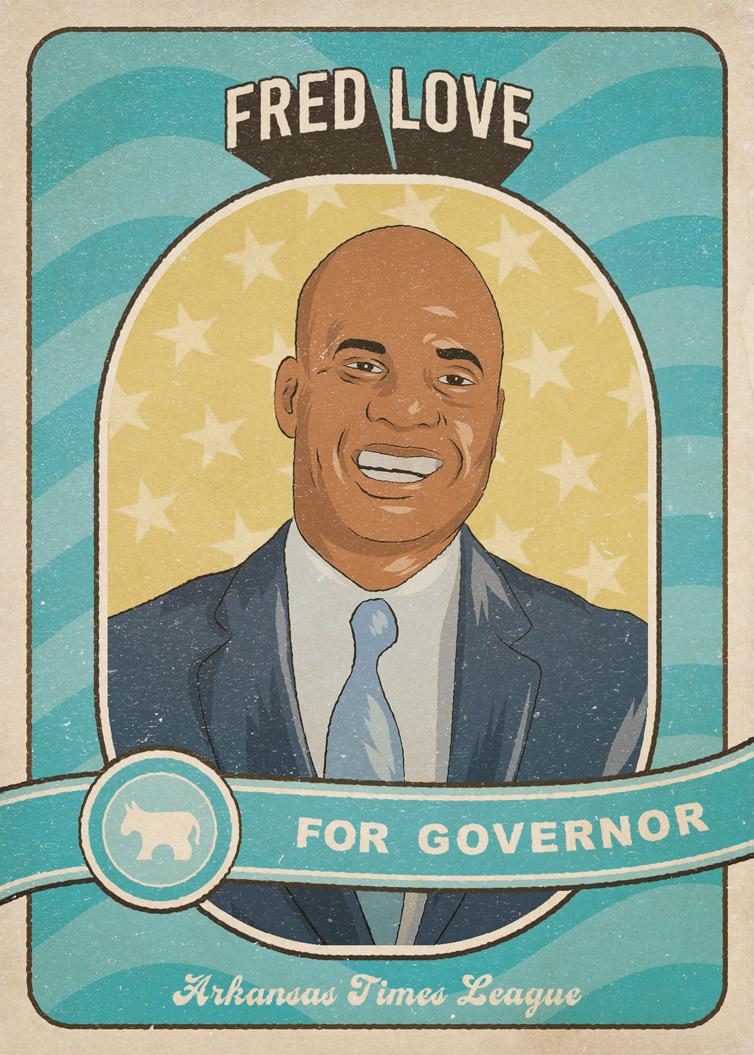
35 THE LOVE GOV
A Q&A with gubernatorial candidate Fred Love.
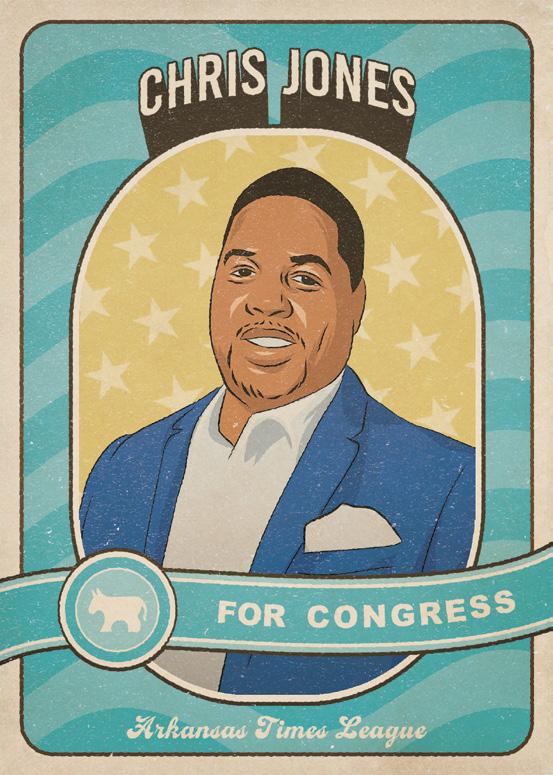
36 JONESING FOR SOMETHING SWEET
Get friendly with the family cake recipe that’s fueling Chris Jones’ congressional campaign.
38 A
DAY IN THE LIFE
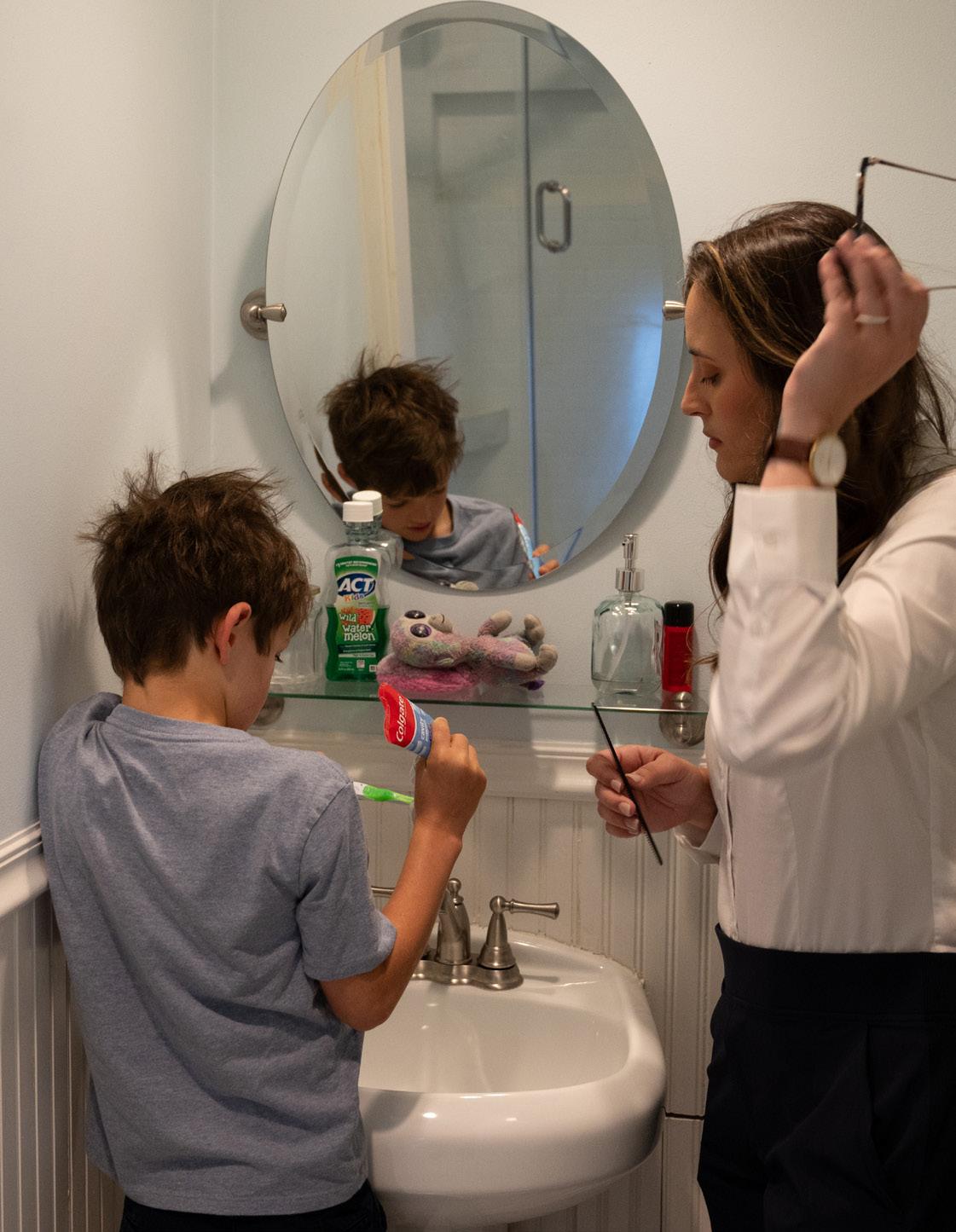
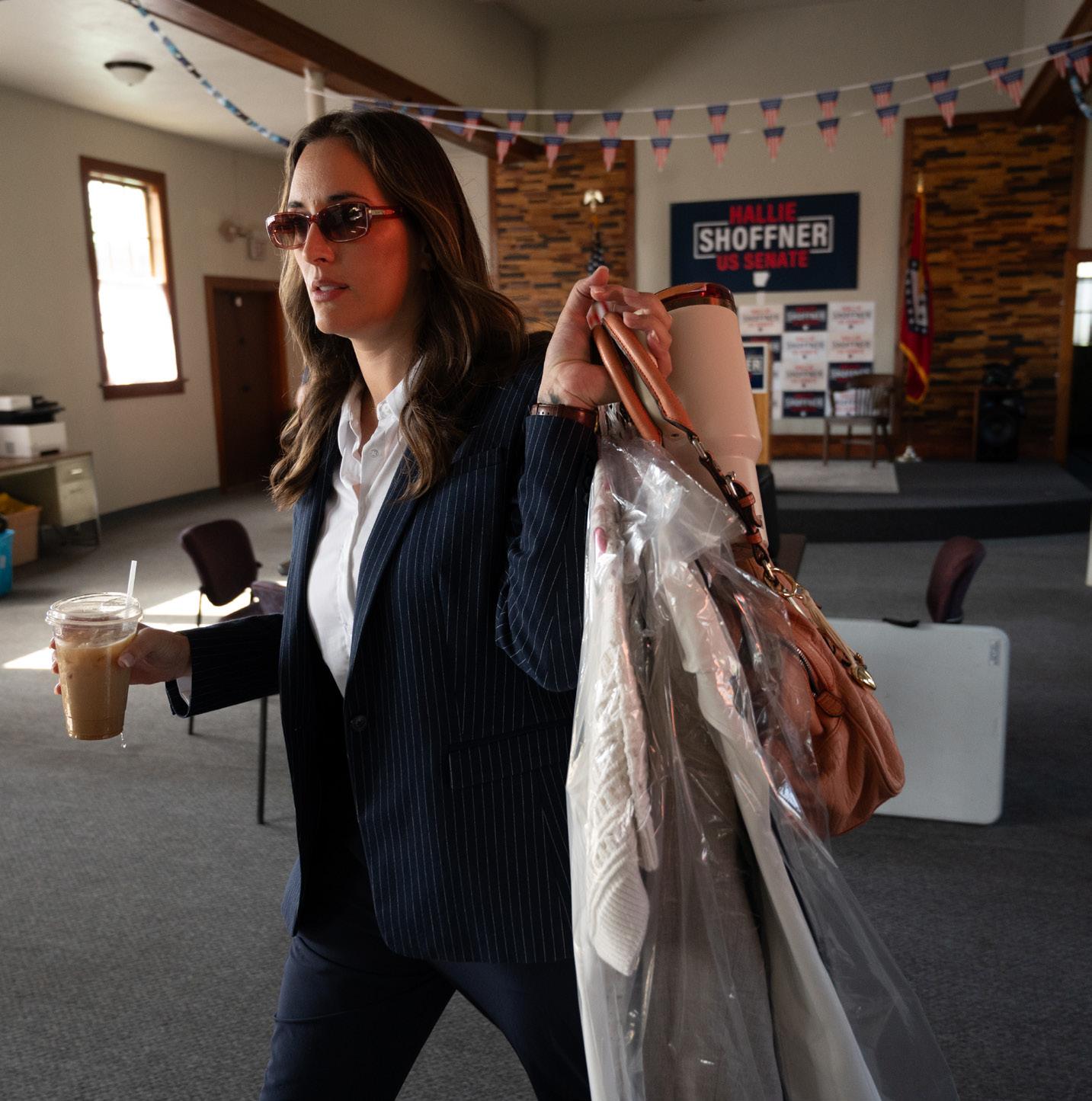
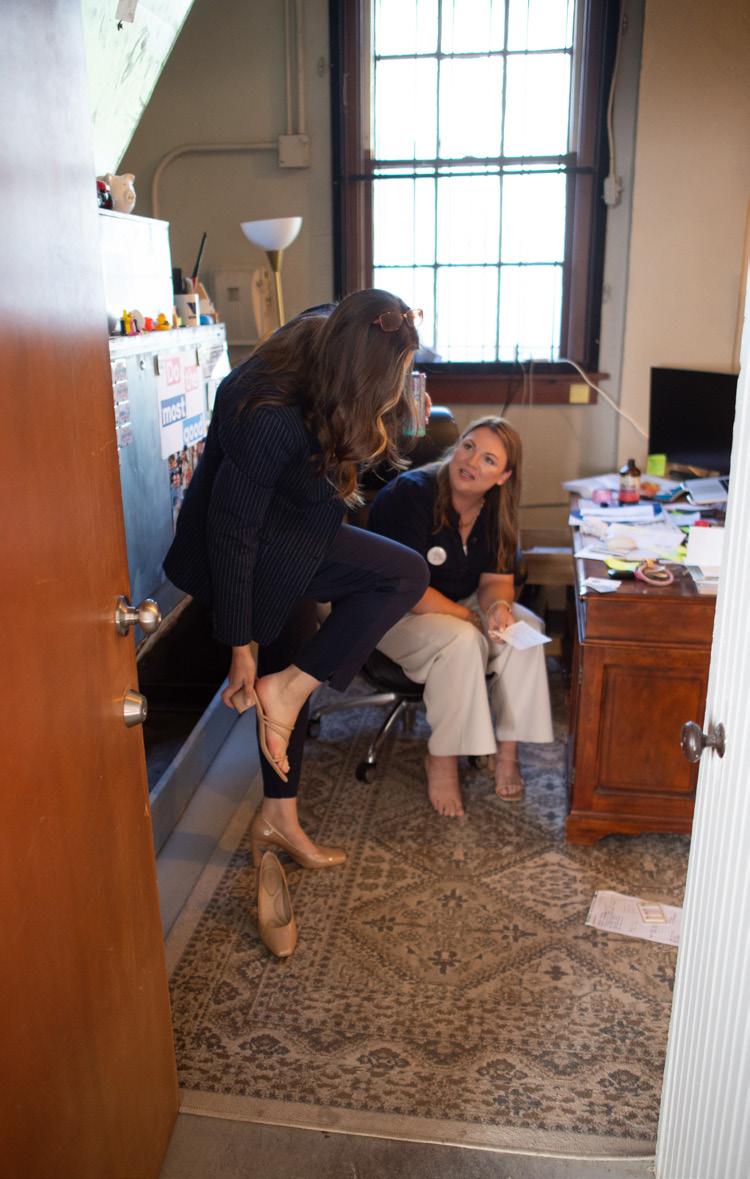
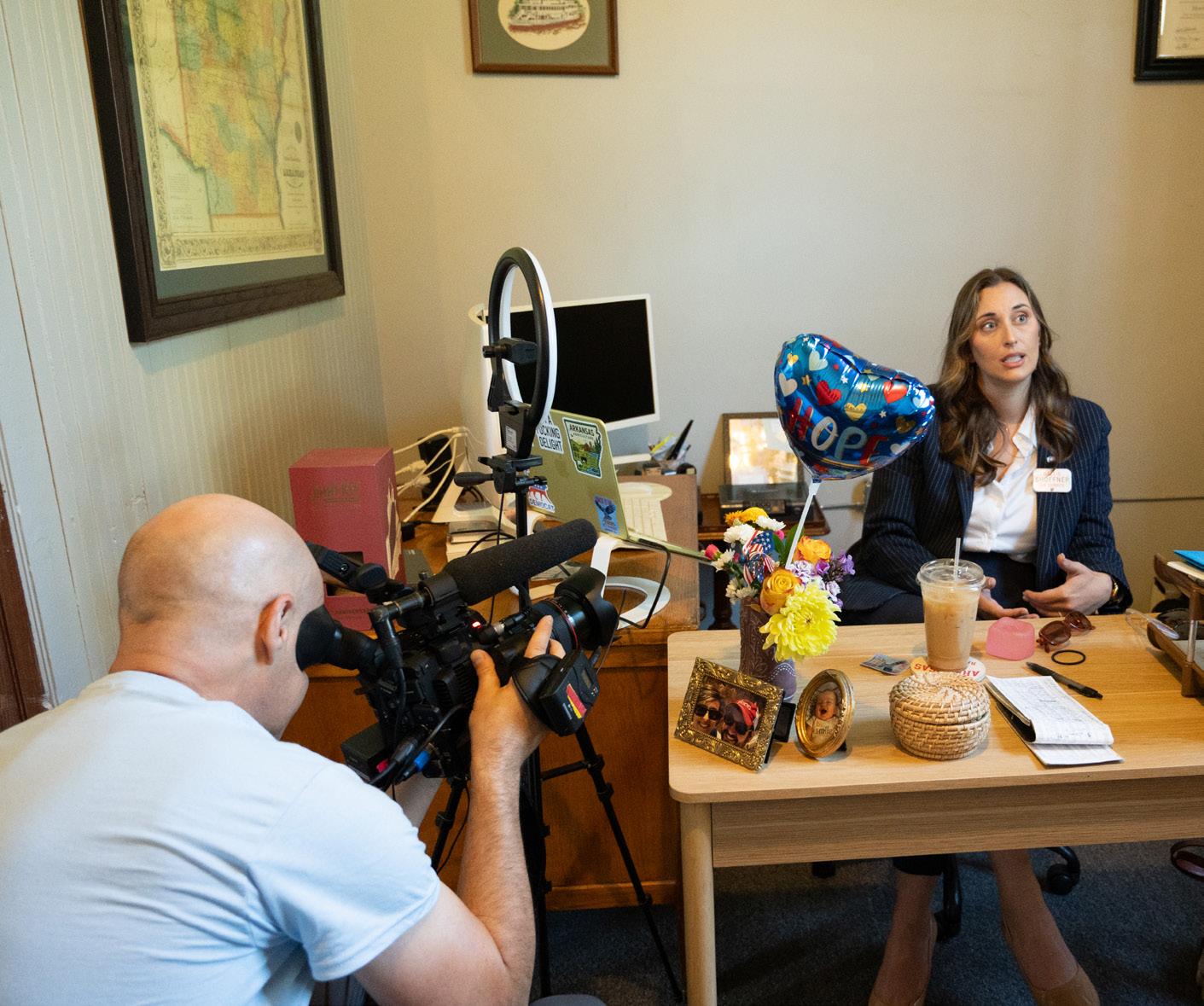
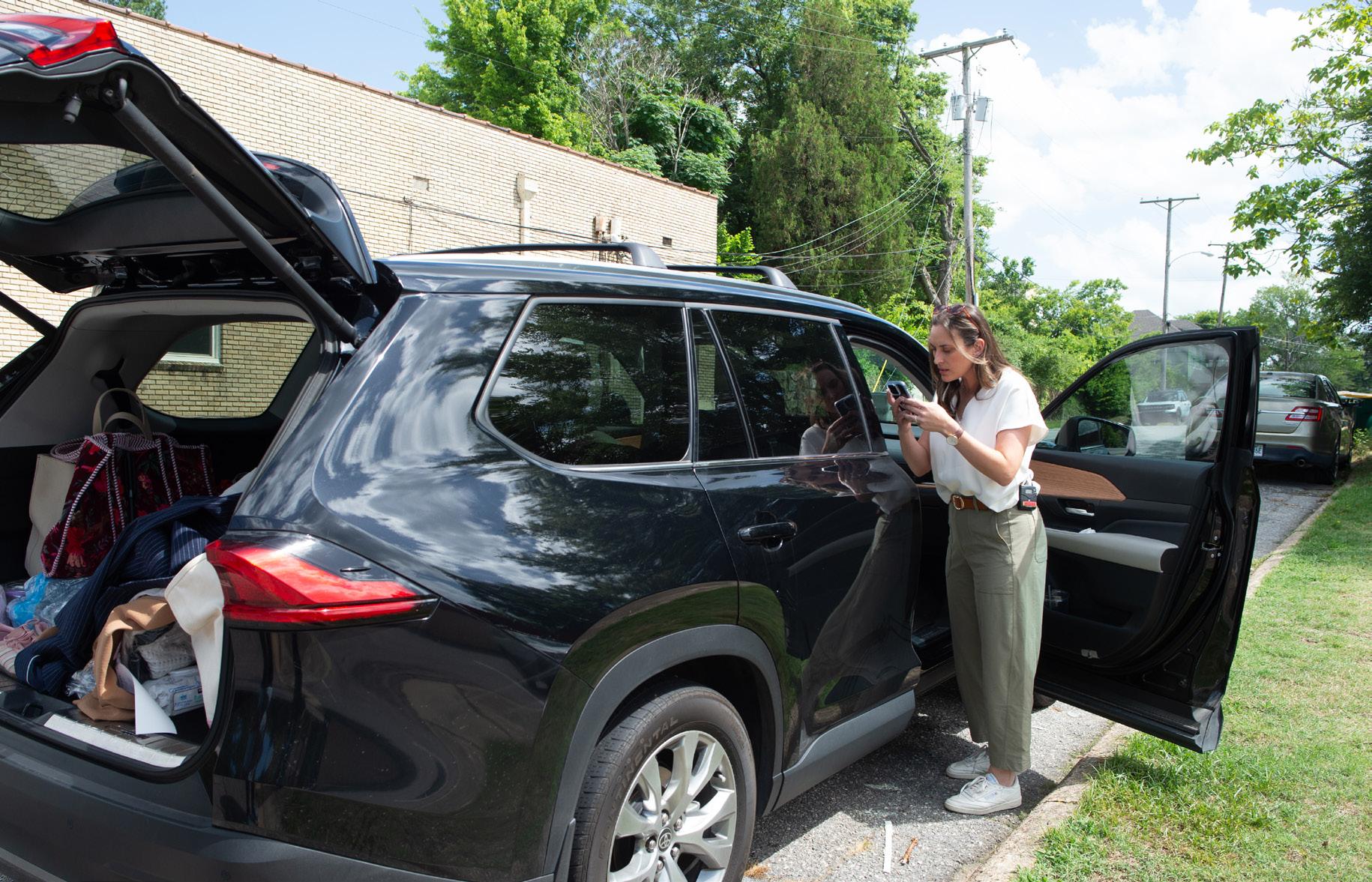
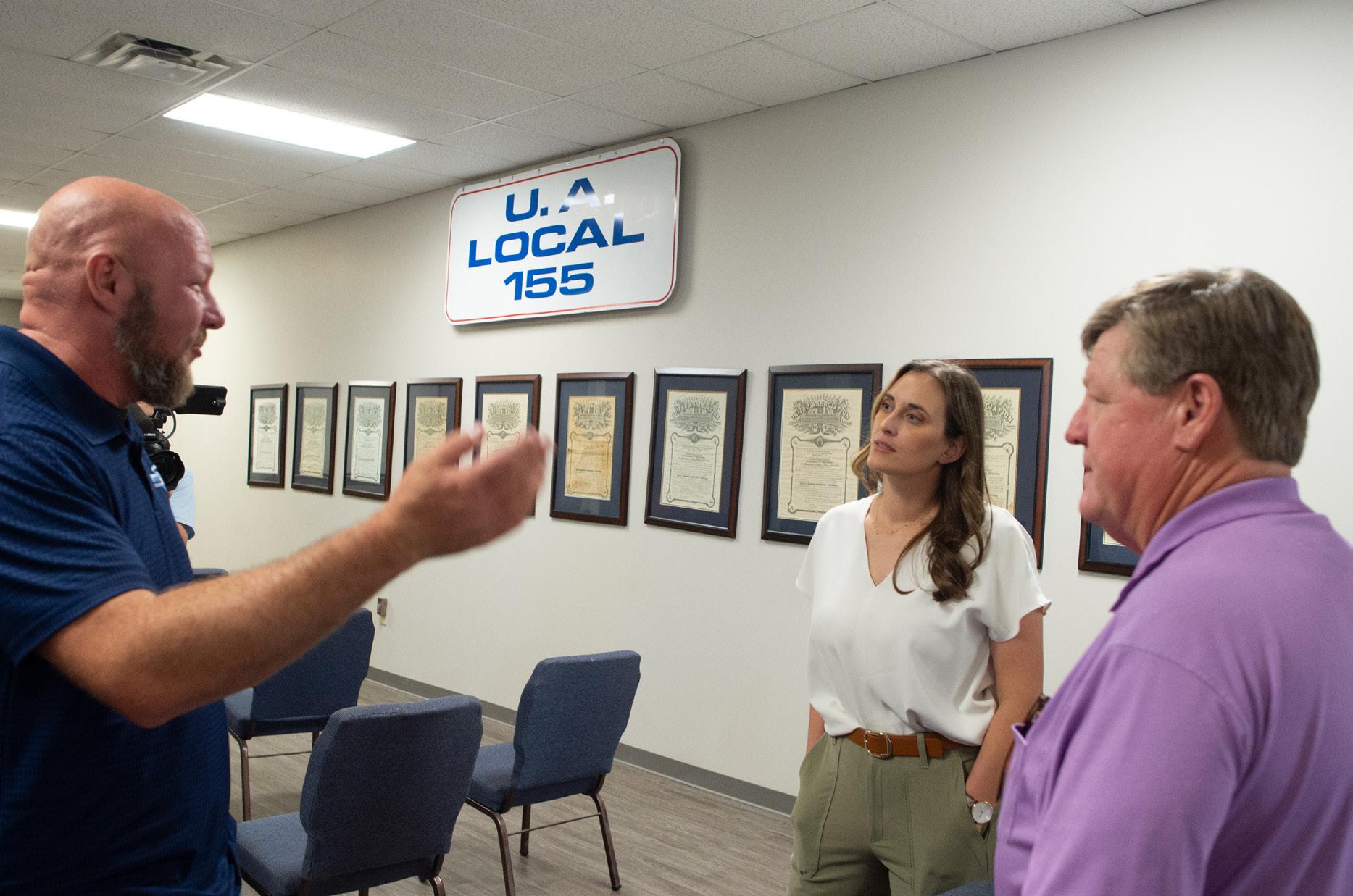
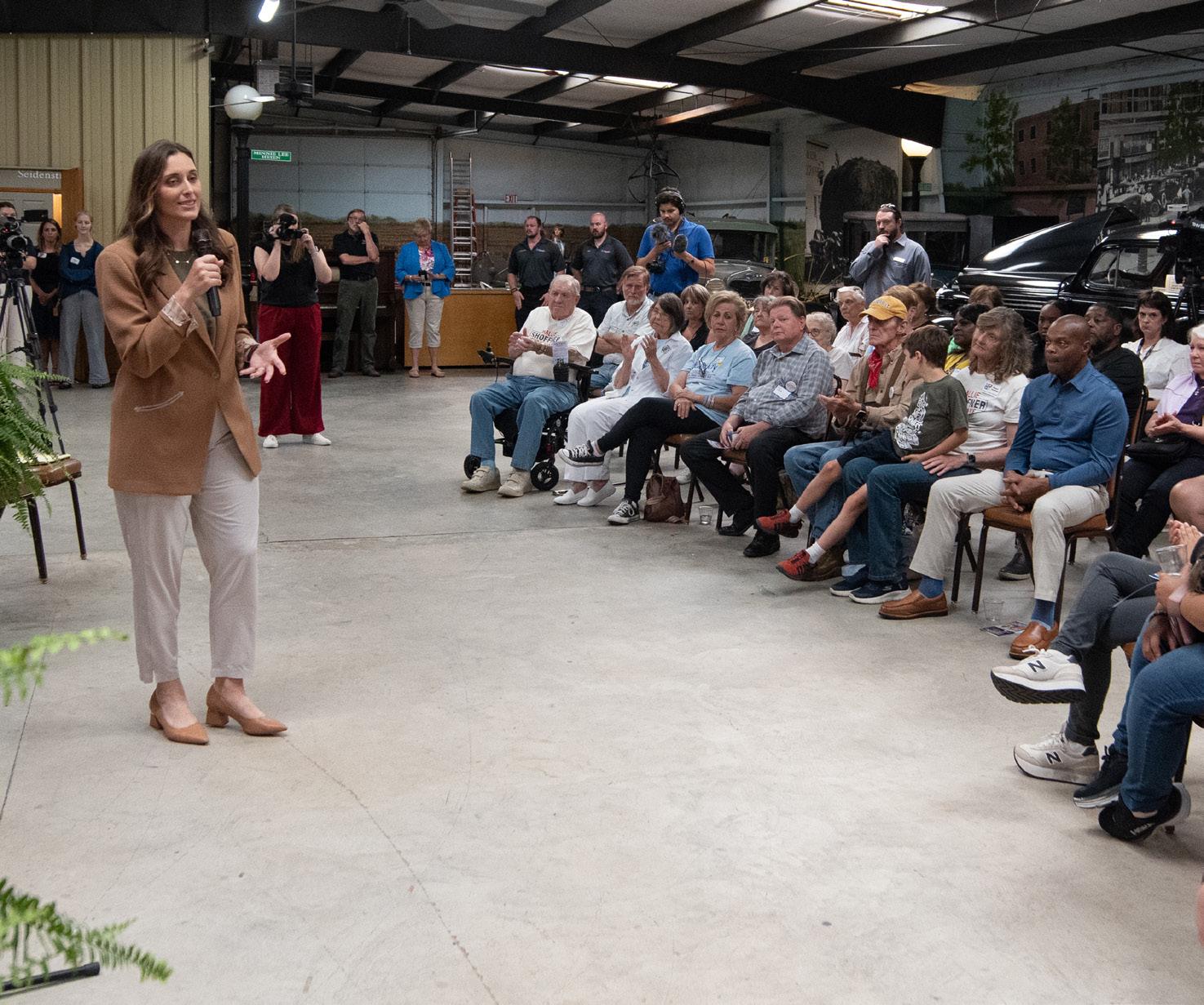
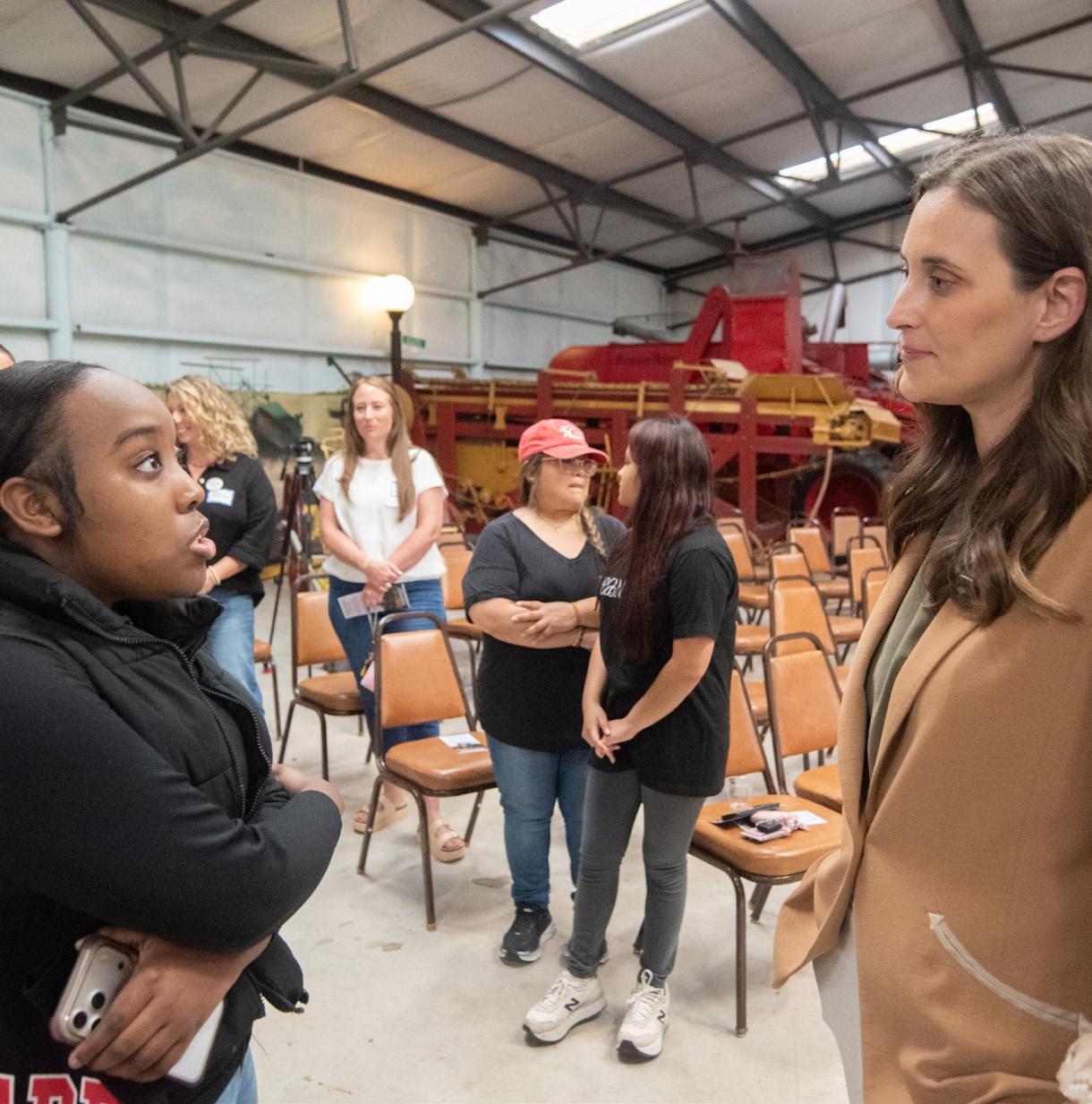
Hitting the streets with Hallie Shoffner, the Senate hopeful with Tom Cotton in her sights. By Elizabeth L. Cline and Brian Chilson
44
COLT OF PERSONALITY
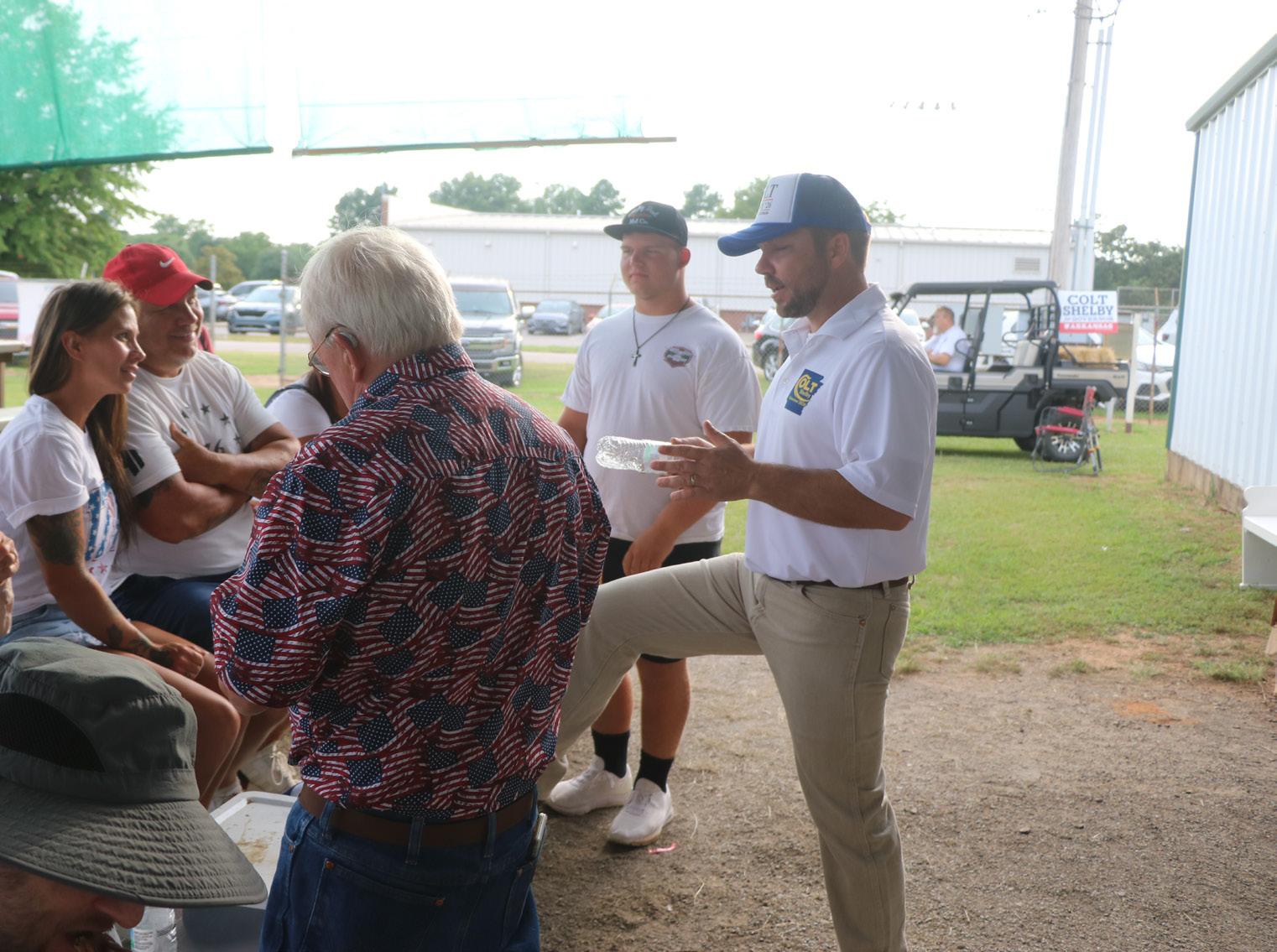
Could Libertarian Colt Shelby have the best shot against Gov. Sarah Sanders? By Matt Campbell
8 THE FRONT
Q&A: Does Fort Smith vant a vampire for mayor?
First Person: Scholar Jay Barth ponders the possibility of a blue trickle in the Arkansas Legislature.
Big Pic: Election memorabilia from Natural State campaigns of yore.
15 THE TO-DO LIST
Big Thief at The Momentary, Filmland at AMFA, Cedric and Garry Burnside at the White Water Tavern, Bryan Adams at Simmons Bank Arena and more.
CHOOSE YOUR PLAYER: As election season heats up, underdog candidates like Colt Shelby are working to win the trust of Arkansas voters.
21 NEWS & POLITICS
An Old State House employee uncovered evidence that the sale of slaves once took place on what are now museum grounds. Her higher-ups told her to stay silent.
By Byron Tate
87 CULTURE
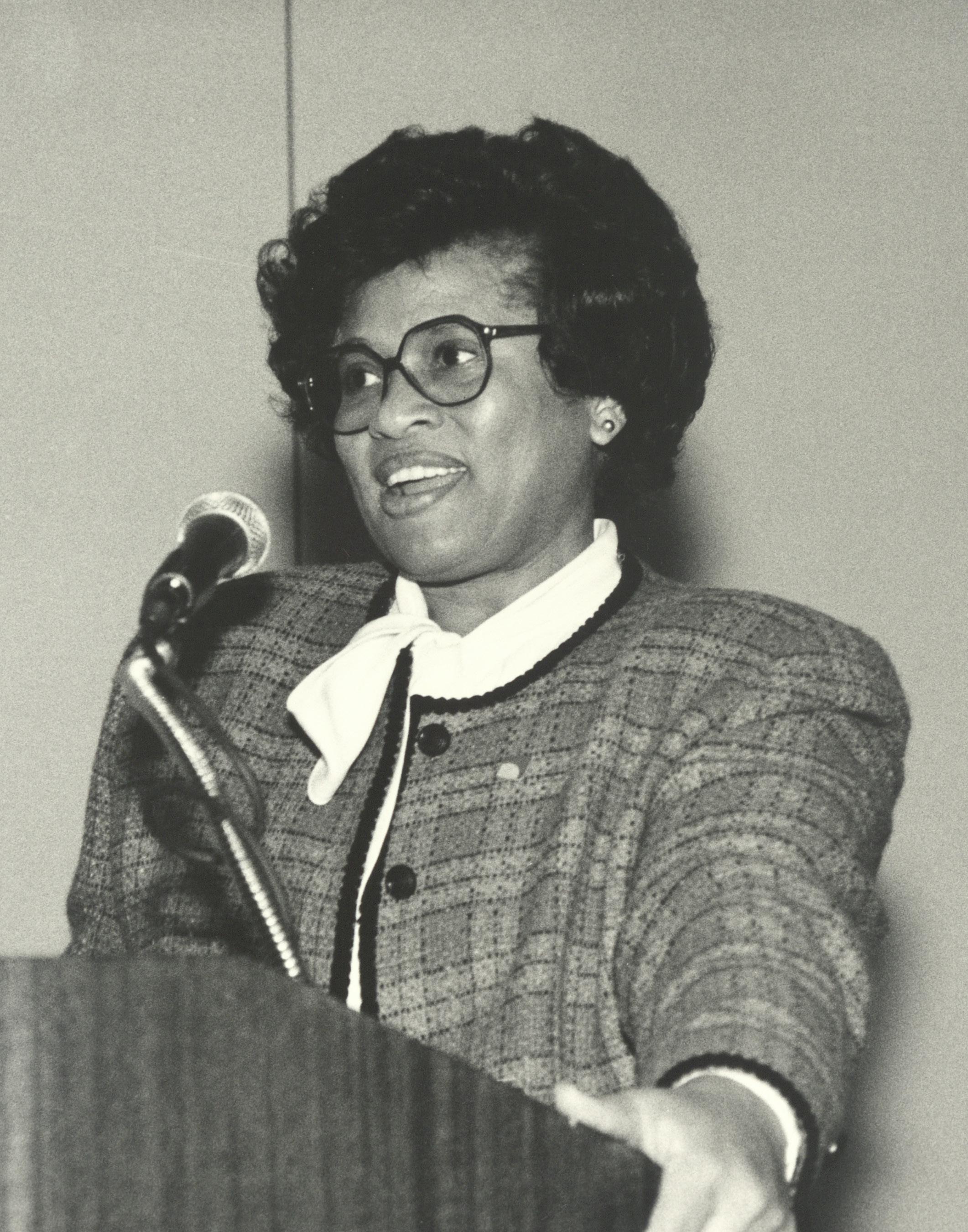
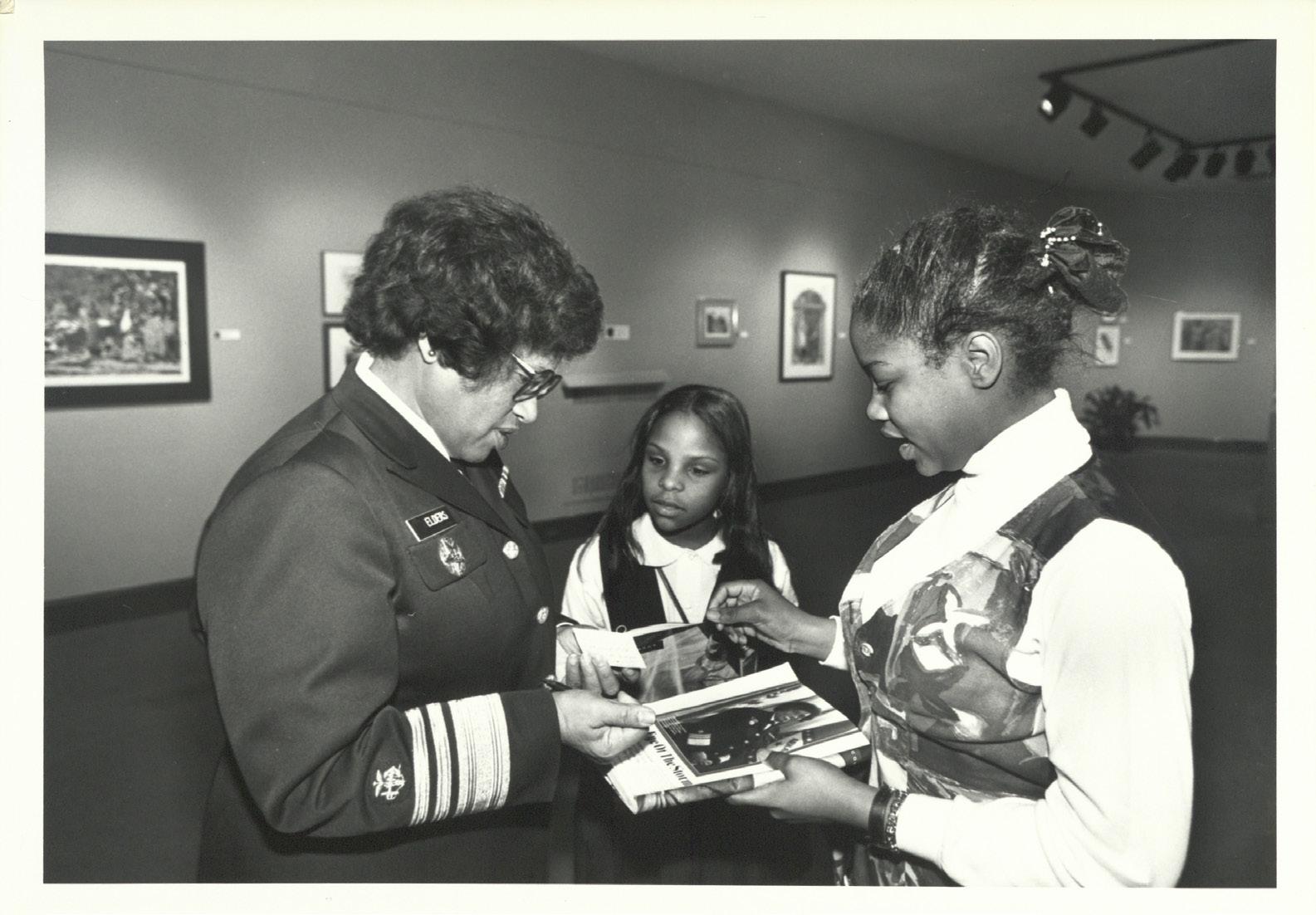
A new play at The Rep solidifies the legacy of Dr. Joycelyn Elders, former U.S. surgeon general. By Daniel Grear
90 THE OBSERVER
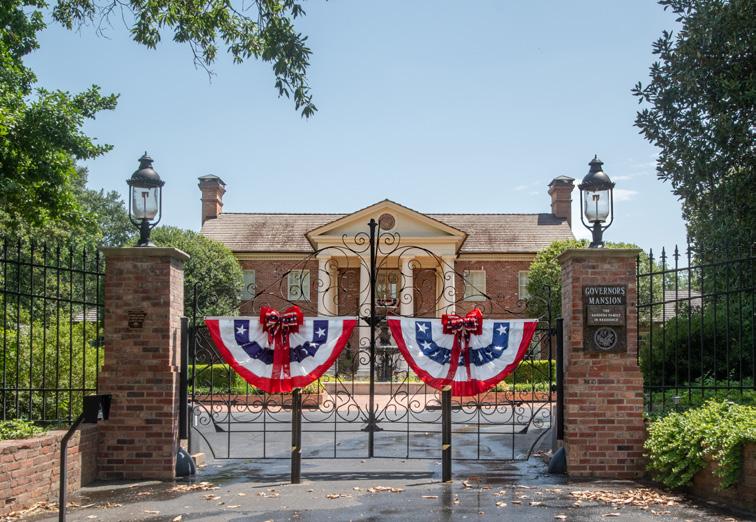
What’s it like to live next door to the Governor’s Mansion?
ILLUSTRATION
BY
PHILLIP HUDDLESTON
ON THE COVER: Photo illustration by Shoshana Gordon/ProPublica.
NATURE WALKS
PUBLISHER Alan Leveritt
EDITOR-IN-CHIEF Austin Gelder
CREATIVE DIRECTOR Mandy Keener
MANAGING EDITOR Byron Tate
PRINT EDITOR Daniel Grear
INVESTIGATIVE REPORTER Matt Campbell
AGRI AND ENVIRONMENT REPORTER Elizabeth L. Cline
REPORTER Milo Strain
VIBE CHECKER Stephanie Smittle
EDITOR EMERITUS Max Brantley
CONTRIBUTING EDITOR Mara Leveritt
PHOTOGRAPHER Brian Chilson
ADVERTISING ART DIRECTOR Mike Spain
GRAPHIC DESIGNER Katie Hassell
DIRECTOR OF ADVERTISING/ SPECIAL PUBLICATIONS PUBLISHER Brooke Wallace
SENIOR ACCOUNT EXECUTIVE
Wendy Hickingbotham
ACCOUNT EXECUTIVES
Terrell Jacob, Kaitlyn Looney
ADVERTISING TRAFFIC MANAGER Roland R. Gladden
DIGITAL MARKETING DIRECTOR Lyndsey Huddleston
DIGITAL AD COORDINATOR Sarah Richardson
EVENTS DIRECTOR Donavan Suitt
IT DIRECTOR Robert Curfman
CIRCULATION DIRECTOR Anitra Lovelace
BILLING/COLLECTIONS Charlotte Key
CHAIR MAN Lindsey Millar
NACHO EDITOR Rhett Brinkley
PRODUCTION MANAGER Ira Hocut (1954-2009) CONTROLLER Weldon Wilson (1967-2025)
call (501)
Current
free in Pulaski County. Single issues are available by mail at $5.00 each, postage paid. Payment must accompany all orders. Reproduction or use in whole or in part of the contents without the written consent of the publishers is prohibited. Manuscripts and artwork will not be returned or acknowledged unless sufficient return postage and a self-addressed stamped envelope are included. All materials are handled with due care; however, the publisher assumes no responsibility for care and safe return of unsolicited materials. All letters sent to ARKANSAS TIMES will be treated as intended for publication and are subject to ARKANSAS TIMES’ unrestricted right to edit or to comment editorially.
A Q&A WITH SHAYNE MCKINNEY, FORT SMITH’S VAMPIRE MAYORAL CANDIDATE.
Shayne McKinney wears a lot of hats. Besides currently running for mayor of his native Fort Smith and organizing a petition to let residents vote on changing from a city administrator-board of directors system to a mayor-council system, he’s a real estate investor, a landlord and a digital creator with over half a million TikTok followers and a couple hundred thousand more across other platforms.
He also appears to be a vampire. McKinney’s campaign website is VampireMayor.com. One of his campaign slogans is “Revamp Fort Smith.” In his most-viewed TikTok video, McKinney’s reflection doesn’t appear in a mirror as he gives a house tour of a vampire-themed Airbnb he manages. He even has visible fangs.
Taking all of that into account, I, perhaps naively, went into my interview with McKinney, 44, as if I were talking to not just a mayoral candidate, but a real vampire. I genuinely wanted to learn about — in addition to his policies — what it’s like to be a vampire living and working in society in 2026.
But when my questions veered toward his vampirism, McKinney bared his teeth, not wanting the spectacle to overshadow the grassroots campaign he’s been building since last Halloween (when he, fittingly, officially announced his mayoral bid), and his ambitions to deregulate Fort Smith, improve its infrastructure and increase transparency in its government operations.
The following is taken and edited from my late June conversation with McKinney, who described himself as “libertarian leaning” and “independent.”
How did your vampirism start? Fifteen years ago, I was bitten by a bat. It was close to Halloween, and there was a bat. It was in a cage, and had been handled by me and others many, many times. But I startled it one morning, and it bit me. Many years later, people continued to identify me as a vampire — not myself identifying as a vampire — but other people began to see me as a vampire and say, “You really remind me of a vampire? Are you a vampire?” … Much like you just accept at one point that everybody talks about you as though you are a human. At some point, there is no value in arguing anymore. Let people see you the way they are already seeing you anyway, and embrace that. When you want to educate somebody about something difficult to understand, like the inner workings of a municipal city as complex as Fort Smith, Arkansas, the subject is inherently boring. People don’t pay attention. The best way to educate someone is to become more interesting than the problem is difficult to understand. If my vampirism causes people to pay attention long enough to become educated, then that seems like a valuable tool that I should use.
What made you want to run for mayor?
I wouldn’t say I want to run for mayor. Sometimes you see a problem that needs to be fixed, and if you don’t take action to fix it, if you think you know what could be done to fix it, you are now contributing to that problem. The primary problems we have in Fort Smith are communication- and operations-related. In other words, in Fort Smith, we have many different committees that have good purposes and do good things individually, but often don’t communicate what they’re actually doing to the people effectively, or to organizations or businesses that could benefit from the services. This leads to redundancies where the same thing is done by multiple different people.
There’s a significant lack of leadership in our city. There is no clear “this is the person that’s in charge.” When I started this campaign to change our form of government, less than four out of 100 people even knew we had a city administrator that was supposed to be in charge. In the past 19 months, we haven’t had a city administrator. They haven’t been able to fill the position with someone qualified.
Tell me about your policies. Politically speaking, I am in favor of the people having as much freedom as possible.
That means when in doubt, err on the side of the citizen can do whatever the citizen is trying to do. The city of Fort Smith is notoriously — infamously, I would say — difficult to do business with.
I’ve started numerous businesses in Fort Smith over the years, and it’s always a fight against the city itself. This isn’t unique to me. People literally give warnings about dealing with the city of Fort Smith. From a business perspective, that is not what we want for a city. That hinders economic development because that warning could have been to the next major employer coming here. My policy is to reduce the impact of our city’s inspectors on building and planning, and publicly advertise that Fort Smith has changed. If you’ve tried doing business with us in the past, give us another shot. We will be much easier to work with from this day going forward. “What can we do to help you when you call us?” will be our motto — not “What are you doing wrong? What have you messed up?”
The major policies relating to the citizens of Fort Smith are our city not taking responsibility for major infrastructure expenses, to the tune of almost a billion dollars between our consent decree and our water system. That has been kicked down the road for five decades now, and it’s totaling more money than our city can put together, which has to be addressed.
My first actions in office would be starting with cameras. I livestream my life and my real estate development and other things. I intend to livestream city meetings and to increase the live-action access to information about what’s happening in what meetings and who’s doing what. … If something is relevant to a citizen, the city needs to be proactively going to that citizen and saying, “Look, this is relevant to you, and this is why this is a project we’re doing in your neighborhood.”
—Milo Strain
FAVORITE BOOKS? “Rich Dad, Poor Dad” by Robert T. Kiyosaki and Sharon Lechter, “Varney the Vampire” by James Malcolm Rymer and Thomas Peckett Prest, and “The Lord of the Rings” by J.R.R. Tolkien
FAVORITE FORT SMITH AREA RESTAURANTS? 21 West End, Piatto and The Vault 1905
FAVORITE MOVIE? “Harvey” (1950)
SLOW GOING
DEMOCRATS HAVE REASON TO BE HOPEFUL IN THREE STATE LEGISLATIVE BATTLEGROUNDS. BY JAY BARTH
It often feels like it is moving about as quickly as cold syrup, but Arkansas Democrats are in the midst of a comeback in the state Legislature. In both 2024, with a win by Diana Gonzalez Worthen over a GOP incumbent in a Springdale district, and in a March 2026 special election, with a solid victory by Alex Holladay in a GOP-held seat in North Little Rock, Democrats have picked up two seats, oozing their way toward the magic number of 26 in the House of Representatives.
That number would provide Democrats meaningful power, as 75 votes are needed for passage of almost all budgetary and tax items in the House. Not only would it give Democrats power over money matters from school vouchers to the progressivity of tax policy, but it would also allow Democrats to make deals to advance their own substantive priorities (or to stop the GOP social issue agenda that in recent years has prioritized censorship in schools and libraries and curtailed rights for transgender Arkansans).
The Democrats now hold 20 seats in the House, meaning they’ve still got much work to get to the magic number. Two or three pickups this cycle would bring the party’s shortterm goal within sight.
There are three parts of the state where multiple, quite competitive races have developed. In each of these battleground regions — one in northern Pulaski County, another in Northwest Arkansas and a third in the heart of the Arkansas Delta — Democrats have to defend at least one seat while trying to make gains.
• In Pulaski County, all the action is north of the river. First up is the defense of Holladay’s newly won District 70 seat. Claimed just months ago in a March special election to replace Republican Carlton Wing after he resigned to head up Arkansas TV, the seat is on the ballot again in November’s general election. The fall electorate will be larger and different in composition from the spring special election, and there are signs that much more money may enter the race on the GOP side this time. Additionally, two districts at the top of the county are GOP-controlled, but have become thoroughly competitive. Educator Cassandra Green, a Democrat, is running in the Maumelle-focused District 71 for an open seat against Republican newcomer Stephen
Bright. The seat is being vacated by Republican Brandon Achor, who’s running for Senate this time. In District 67 that runs from Sherwood to Jacksonville, U.S. Army veteran and Democrat Andrew Eberly returns to challenge veteran Rep. Karilyn Brown in a race Brown won by fewer than 600 votes two years ago. The power of repeat performances is shown in the successes of both Gonzalez Worthen and Holladay, who had run in the same districts in the most recent election, coming up just short. The second time around, candidates typically are sharper communicators, better fundraisers (especially when one can claim justifiably that they were on the cusp of a win), and know how to reach voters in the district more efficiently.
• In Northwest Arkansas, Gonzalez Worthen must defend her Springdale seat, but Democrats are looking at two additional pickups in the increasingly Democratic Washington County. Two-term GOP Rep. Steven Unger represents Democrats’ best hope for an additional win in this quick-growing (and quick-changing) region. Unger’s district covers south Springdale, Johnson and parts of north Fayetteville. Jamie Atkinson, with a background in the U.S. State Department and in business, is running a business-focused candidacy and emphasizing state policies that have the best “return on investment.” Just to the north, in a district that covers the heart of fast-growing Rogers, Democrat Dan Holtmeyer is challenging another two-term GOP incumbent, John Carr. Along with districts in Bentonville/Bella Vista that Democrats hope will become winnable before the decade ends, Democratic growth in this Northwest Arkansas region — anticipated for over a decade but slow to solidify — is essential for breaking the supermajority in the House.
• Perhaps the most frustrating region among Arkansas Democrats is the Arkansas Delta. Even in counties where Democratic presidential candidates prevailed because of strong African American majorities, white Republicans have been able to break through in recent state House elections. Perhaps the most frustrating district for Democrats has been a majority Black district that covers all or part of six counties in the middle and southern Delta. Back for his third effort to defeat Re-
publican Mark McElroy of Tillar is educator Dexter Miller of Helena-West Helena. A former Democrat, McElroy eked back into office in 2020 by a mere 50 votes. He’s since claimed two close wins over Miller. As in the other regions, however, there is an endangered Democratic district in the Delta. Another majority Black district covering portions of Crittenden and Cross counties, controlled by Democrats for generations, is imperiled by partisan factionalism linked to a five-way Democratic primary ultimately won by Audrey Willis of West Memphis. The seat, open after Democratic Rep. Jessie McGruder decided to run for state Senate, is in play thanks to low voter participation and a very strong Republican candidate — Robert Thorne Jr., a Crittenden County Quorum Court member from Marion, who’s making his own second run for the House district that he barely lost in 2024. Clearly, most of the attention in this cycle will be given to the races at the top of the ticket. But this array of state House districts may say a great deal about the future of policymaking at the state Capitol and the partisan divide in this emphatically Republican state.
Jay Barth is a native Arkansan, longtime professor of politics at Hendrix College, and an expert on the politics of Arkansas and the South.
WHERE CARING INSPIRES
“I
HOT-BUTTON ISSUES
WOODEN NICKELS, PLASTIC THIMBLES AND A SWEET PAIR OF SHADES! A HISTORIAN VOTES ON THE WINNERS AND LOSERS AMONG A VINTAGE BATCH OF ARKANSAS CAMPAIGN SWAG.
BY GUY LANCASTER
Arkansas has many museums, but the Museum of American History in Cabot is the only one operated by students. Located at 811 S. Pine St., the museum was established in 1985 as part of the Cabot School District, giving students hands-on experience in collecting, preserving and interpreting historical artifacts. Notable among those artifacts is a large collection relating to Arkansas political campaigns of years gone by. Cabot High School history teacher Mike Polston, who also works as the staff historian of the Central Arkansas Library System’s Encyclopedia of Arkansas, put together
1. This battery-operated, moving-andgrooving Bill Clinton action figure wasn’t manufactured until 1999, so it’s hardly campaign swag, but it was too charming not to include.
2. He could have handed out hammers with his name on them. John Paul Hammerschmidt, the first Republican elected to Congress in Arkansas since Reconstruction, handed out these hats. Hammers, JP — it’s right there in the name! Or maybe shot glasses. Anything would be better than a hat that looks like you cut it out of a cereal box.
3. Before Mark Zuckerberg launched the Ray-Ban Meta AI Glasses, you had the Mike Huckabee U.S. Senate ’92 Glasses. Huckabee was offering the same sense of style, the same threats to personal privacy, the same general vibe of creepiness — and more than 30 years ago! Who says Arkansas is perpetually behind the times?
4. Dale Alford was an ophthalmologist and rabid segregationist elected to Congress after a furious write-in campaign in 1958, beating Brooks Hays — the kinder, gentler sort of segregationist falling out of fashion after the Central High Crisis. Appropriate, then, that Alford invested in pencils, being a write-in candidate. Appropriate, too, that they are white with red necks.
5. “Sheffield Nelson Sponge” sounds like some kind of contraceptive device for newly minted Republicans (he left the Democratic Party in 1989, running for governor as a Republican the following year). But no, it’s a regular household sponge. As a bit of campaign merchandise, this one’s all wet.
6. When life hands you a generic last name like Wood, you make a wooden nickel. Doug Wood made the most of his life, too, serving in the state legislature for 20 years and in the Civil Air Patrol nearly up to the day he died. With a bio like that, you don’t waste your time mourning “Wood.”
7. My uncle ran a county-line liquor store and would hand out cheap corkscrews and screwdrivers with “Lan’s Liquor —
We Screw the Middle Man and Pass the Savings on to You!” on the handle. Most promotional merchandise follows that kind of pun-based logic. But what's up with these thimbles? All I can find is this line from Pryor's 2008 autobiography, “A Pryor Commitment,” reflecting upon his 1960 election to the state Legislature: “Thimbles had become my campaign's familiar symbol, a holdover from my dad’s and my grandfather’s earlier county-sheriff campaigns.”
8. Wife of notorious segregationist “Justice Jim” Johnson, and the first woman to run for governor in the state of Arkansas, Virginia Johnson came in second in the Democratic primary in 1968 but lost her runoff to Marion Crank. In Democratic Party politics of those days, you could indeed have a lot of fans but still not beat a real crank.
9. As the son of a seamstress, I declare this the best of the lot. More women sewed back in the day, and this handy packet of needles would have been a constant reminder of Rockefeller’s campaign. Plus, the wordplay is solid.
10. I look at this golf ball, and all I can see is a bunch of plutocrats out on the greens, worrying about how the election might mess with their bottom line, when one of them chuckles and says, “Don’t you worry about us getting our tax cuts, gentlemen. I’ve got Asa’s balls right here in my pocket!”
11. There are many stories about how athlete and war hero Maurice Britt received the nickname “Footsie,” but his size 13 shoes seem likely. Whether this insole-shaped bumper sticker was actually modeled on Footsie’s foot or not, it measures a good size 13 in the cleverness department.
12. Many historians say that Orval Faubus stole Jim Johnson’s racial politics as a means of staying in office, so it’s only appropriate that the campaign of “Justice Jim” stole ideas from Faubus, albeit with a cruder streak. The whole state was up a creek back in them bad ol’ days, but at least we had a paddle or two.
BIG THIEF
BY DANIEL GREAR, STEPHANIE SMITTLE AND OMAYA JONES
WEDNESDAY 8/19. THE MOMENTARY. 7 P.M. $62-$135.
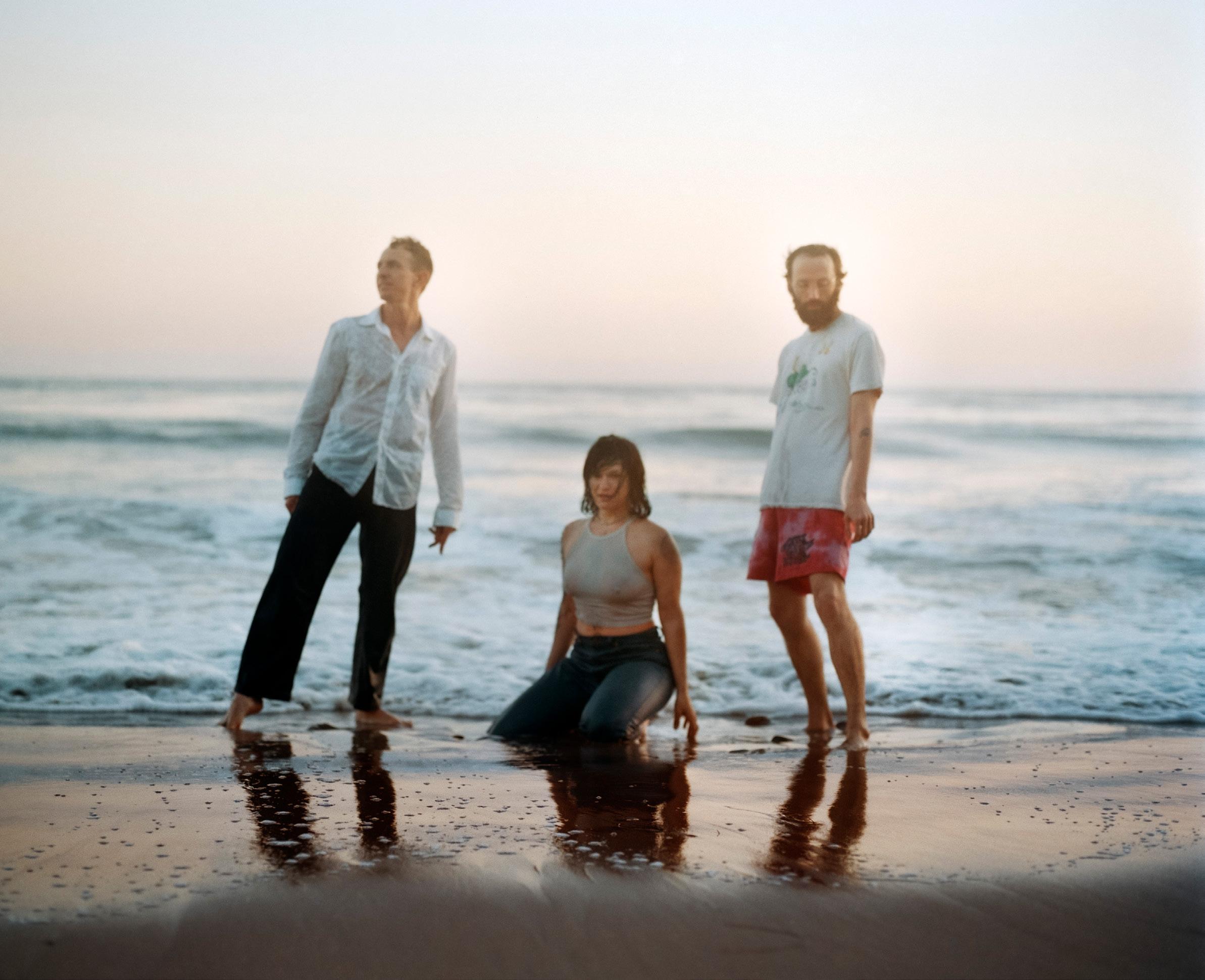
No canonical assessment of creative excellence is going to satisfy everyone, but when The New York Times Magazine published a splashy package this spring crowning “The 30 Greatest Living American Songwriters,” I was shocked not to find Big Thief frontwoman Adrianne Lenker among the ranks. At 35 years old, Lenker is still young, but she’s proven time and time again — across six albums with Big Thief and several powerhouse solo records — that she’s seemingly incapable of penning a less-than-great tune. Capacious yet straightforward, wonder-prone yet fierce, Lenker’s compositions combine the familiarity of an old friend with the strangeness of a wild animal. The sonic glue lent by Lenker’s bandmates, particularly the tastefully meandering guitar work of Buck Meek, only elevates that singular vision to the next level. Get tickets at themomentary.org. DG
CEDRIC AND GARRY BURNSIDE
FRIDAY 8/7. WHITE WATER TAVERN. 8:30 P.M. $25.
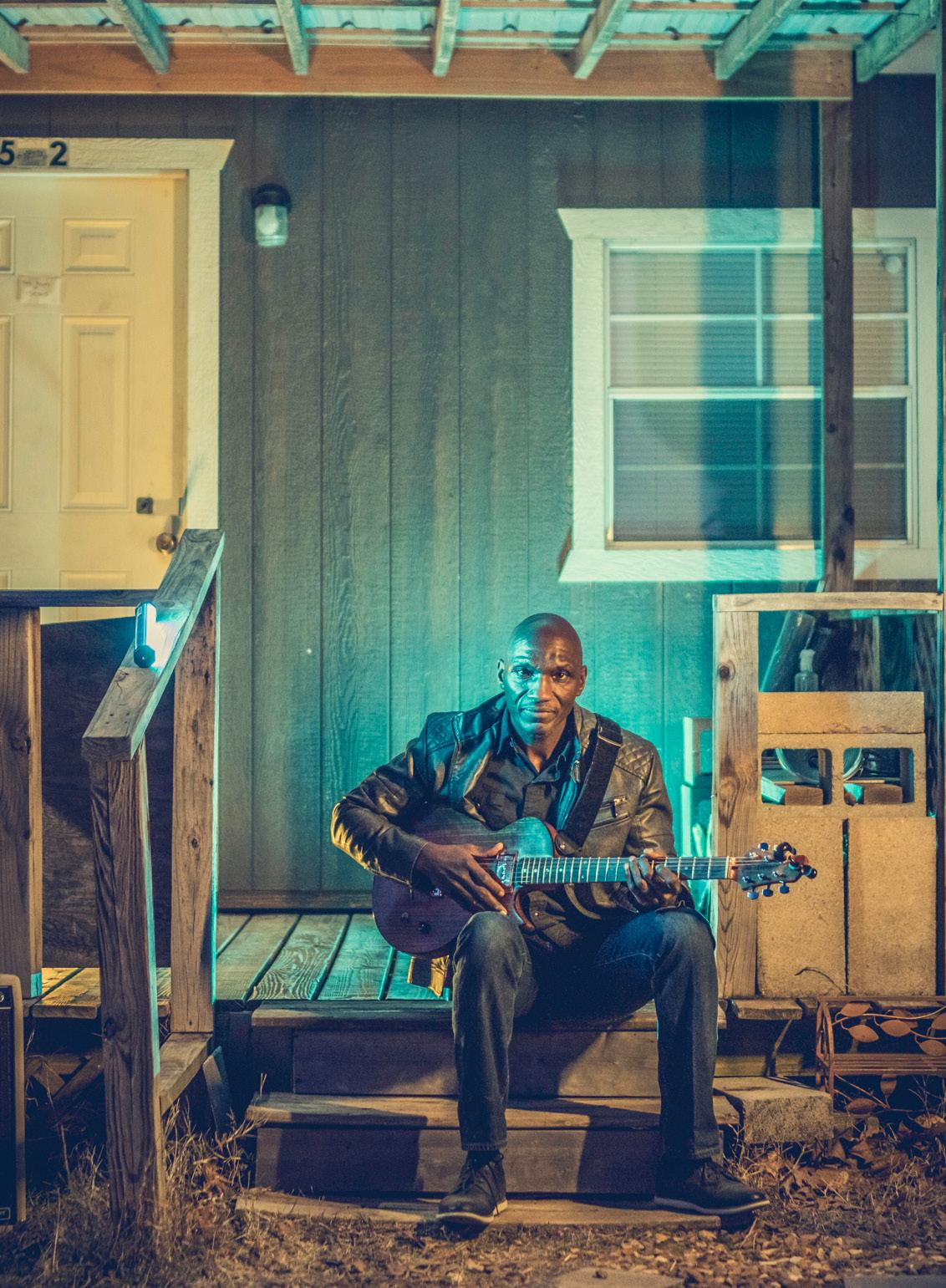
Cedric and Garry Burnside each have formidable careers deserving of individual attention, but it’s hard to talk about one of them without the other. The two bluesmen grew up in poverty together in Mississippi — Garry is Cedric’s uncle, and they’re only two years apart — where their musical potential was nurtured by Garry’s father, R.L. Burnside, who was a “master of raw Mississippi blues,” according to his obituary in The New York Times. From the time they were young teenagers stepping in to fill vacancies in R.L.’s band, Cedric (pictured above) and Garry’s creative lives have remained intertwined, most significantly with 2006’s “The Record,” a duo album released under the name Burnside Exploration, and 2015’s Cedric Burnside Project album “Descendents of Hill Country,” which scored them a Grammy nomination for Best Blues Album. Get tickets at whitewatertavern.com. DG
FRIDAY NIGHT
JAZZ
FRIDAYS THROUGH OCTOBER. MOODY BREWS. 6-9 P.M. FREE.
To get a full, poetic picture of what’s been happening behind Moody Brews in Pettaway Square on Friday nights when weather allows, follow tenor saxophonist Dave Williams II on social media and scroll until you find his introspective narratives on how the jazz jams took shape — and how he’s watching his bassplaying son participate in its evolution. In a way, the sessions that soundtrack the astroturf-carpeted courtyard each week are an entirely new phenomenon, in a microbrewery relatively new to the Pettaway neighborhood. In another way, they are part of a long-running, complicated, nomadic and undersung jazz scene here in town, one that reaches back to lively late nights at the bygone Afterthought, to the familial and casual jams at Williams’ dad’s shuttered downtown cafe, to the avant-garde recordings out of Chad Fowler’s Hot Springs Village-based jazz label, to the endlessly fruitful collaborations sparked by Chris Parker and Kelley Hurt’s “No Tears Suite,” written to commemorate the 60th anniversary of the Little Rock Nine in 2017. Musicians wander in and out of the ensemble seamlessly and informally, augmenting Parker’s piano and Williams’ sax as the courtyard fills up and the sun goes down. Kids and dogs abound, conversations mingle and overlap and expand to include acquaintances at the next table and, without the transactional pressure of menus and servers and table turnover times, the whole collective pace seems to shift into low gear. These days, Moody Brews has set up Tent City — a network of pop-up pavilion shade tents and heavy-duty oscillating fans — to make the summer evenings bearable. We highly recommend pairing your leisurely hang with a smoked tofu banh mi from the brewery and a generous pour of Stomp, the breezy new salted lime lager they’re making with Isbell Farms rice. Follow @moodybrewsbeer on Instagram for updates. SS
JIM ARBOGAST
REEL QUEER FILM FESTIVAL
THURSDAY 8/27-SUNDAY 8/30. CALS RON ROBINSON THEATER. $50-$95.
How is it possible that there are this many new, rad-sounding movies that I’ve never heard of made by an abundance of talented actors, writers and directors that I’ve also never heard of, all of whom are united in the cause of earnestly exploring the limitlessness of queer life? That’s a gussied-up version of the question that crosses my mind every time the Reel Queer Film Festival, Little Rock’s annual showcase of LGBTQ+ cinema, drops its roster of feature-length and short film screenings. This year’s lineup, among dozens of other offerings, includes “Test,” a drama about a small-town bodybuilder juggling ambition, substance abuse, burgeoning queer desire and an overbearingly religious mother; “She’s the He,” a subversive high school sex comedy about unexpected trans discovery that NPR called “a raucous, touching, seriously fun charmer — think ‘Some Like It Hot’ meets ‘American Pie’ with a ‘Heartstopper’ vibe”; and “Adam’s Apple,” a documentary directed by Amy Jenkins, who, through intimate footage spanning several years, tenderly presents her trans son’s gender journey while also mapping other adolescent milestones familiar to all families. Get tickets, including $12 passes for individual screenings, at reelqueerfilm.org. DG
BRYAN ADAMS
SATURDAY 8/1. SIMMONS BANK ARENA. 7:30 P.M. $73 AND UP.
There’s nothing I could say about Canadian legend Bryan Adams that hasn’t already been more emphatically and eloquently said — he wrote freaking “Summer of ’69,” after all — but I’d be remiss if I didn’t recommend this nostalgia-fueled night of anthemic and arena-friendly rock that also features two more legends as openers: Pat Benatar and Neil Giraldo. A 2025 review of the same tour — “Roll With the Punches” — from American Songwriter said that Adams’ “reedy voice was as clear and strong as ever” across a 28-song set. Get tickets at simmonsbankarena.com. DG
CINEMA I/O PRESENTS: ‘MARATHON MAN’
TUESDAY 8/18. CALS RON ROBINSON THEATER. 7 P.M. FREE.
Babe Levy, the protagonist of John Schlesinger’s 1976 thriller “Marathon Man,” is a Columbia University graduate student and a long-distance runner. He’s planning to write his dissertation on the subject of tyranny, motivated by the desire to clear the name of his father, a fellow academic who committed suicide after falling victim to the communist witch hunts of the McCarthy era. Firmly situated in the paranoid cinema of the 1970s, “Marathon Man” turns into a story of espionage and intrigue after Babe gets unwittingly caught in an international conspiracy involving his brother Doc (Roy Scheider), a super secret government agent masquerading as an oil company executive, and Dr. Christian Szell, a Nazi war criminal and dentist who’s remembered as one of the most frightening villains in film history. Reserve your spot for this month’s Cinema I/O Presents screening — a recent rebranding of the Arkansas Times Film Series — at ronrobinsontheater.simpletix.com. OJ
FILMLAND
WEDNESDAY 8/12-SUNDAY 8/16. ARKANSAS MUSEUM OF FINE ARTS.
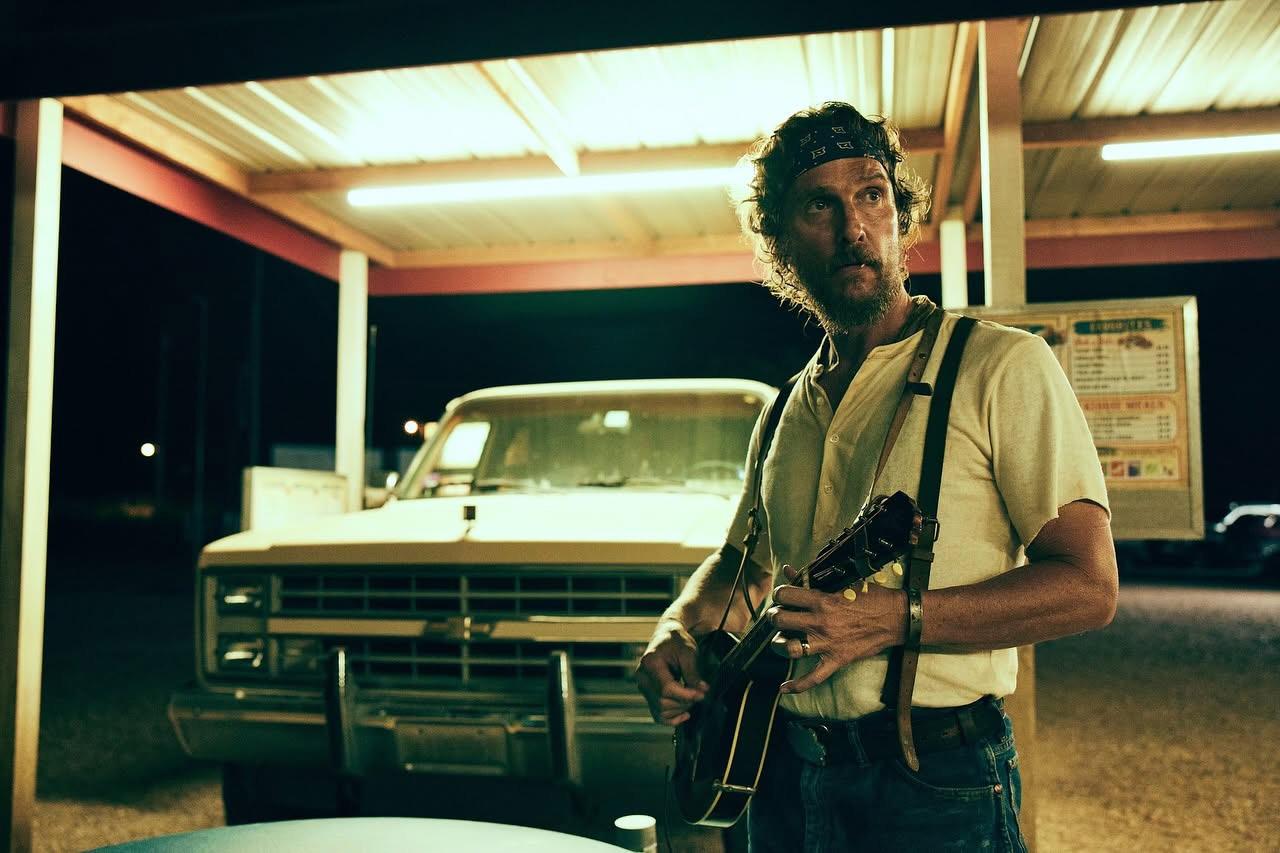
Filmland, the annual festival spearheaded by filmmaker Jeff Nichols and Arkansas Cinema Society Executive Director Kathryn Tucker, always seems to have something momentous up its sleeve. One of this year’s bombshells came in June, when it was revealed that Academy Award winner and consummate beguiler Matthew McConaughey would be attending Filmland for a Q&A alongside the screening of his forthcoming movie, “The Rivals of Amziah King,” which RogerEbert.com labeled “a new classic of the American South” when it premiered at SXSW in 2025. Tickets sold out in minutes for McConaughey’s event, but have no fear! If 2026’s Filmland is anything like festivals of yore, buzzworthy announcements will keep coming until just days before the party starts and long past when this blurb gets sent off to the printer. What we can tell you now is that the part of the Filmland itinerary that has already been disclosed — its Arkansas-focused programming — is as robust as ever, featuring nearly two dozen short and feature-length pictures from Natural State filmmakers Ben Harrison, Molly Wheat, Raeden Greer and more. Get tickets at arkansascinemasociety.org/filmland-2026. DG
‘SANDWICHING
‘THE REMARKABLE RESIGNATION OF DR. JOYCELYN ELDERS’
Seeing a show that’s well-loved and widely performed is all fine and dandy, but there’s something about the anticipatory sizzle of being in the audience for a world premiere that’s unbeatable, especially when that fresh production concerns The Natural State. All of the above is true of “The Remarkable Resignation of Dr. Joycelyn Elders,” a “play with music” written and directed by Little Rock native Steve H. Broadnax III, the Arkansas Repertory Theatre’s artistic director. Elders, the titular Arkansas physician at the center of this story, is as remarkable as she is real. Born to a poor sharecropping family in Schaal (Howard County) in 1933, Elders (who, by the way, is still alive at the ripe age of 92!) went on to become the first Black person and second woman to serve as U.S. surgeon general. Elders’ appointment, however, was short-lived after her candid support of abortion access, possible drug legalization and masturbation landed her in hot water with the Clinton administration. Her forced resignation came in 1994, just 15 months after she was sworn into office. I’m dying to learn how Broadnax took those charged events and transformed them into a stage-ready show. Get tickets at therep.org. DG
IN HISTORY’:
MISSIONARY BAPTIST CHURCH
FRIDAY 8/7. FIRST MISSIONARY BAPTIST CHURCH. NOON. FREE.
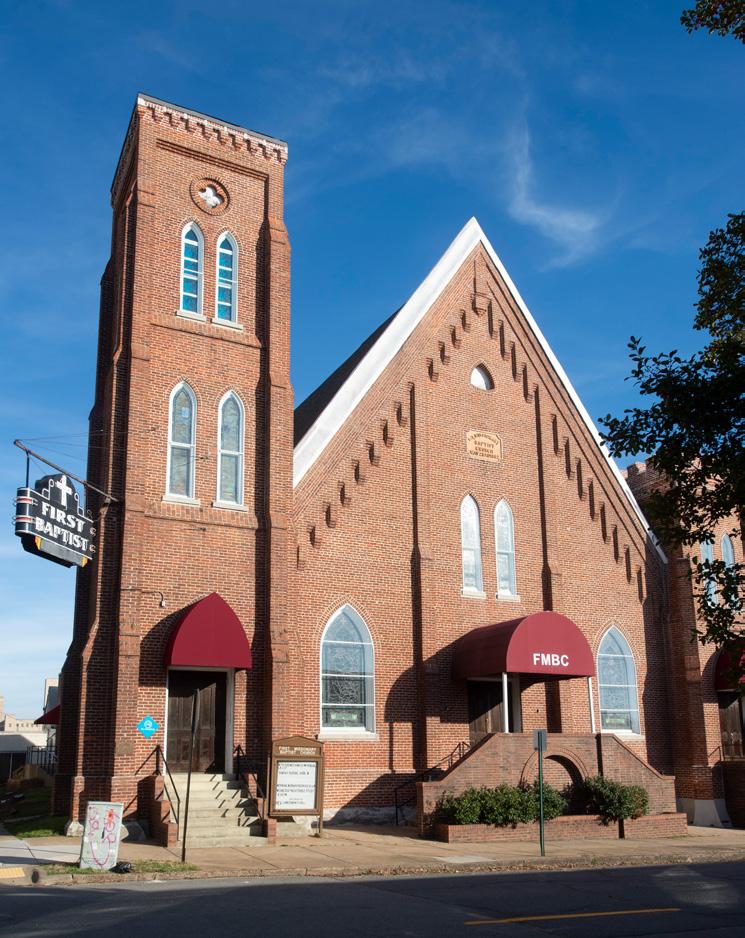
The next stop on the Arkansas Historic Preservation Program’s lunchtime history tours is a big one in Little Rock’s story: the First Missionary Baptist Church at 701 S. Gaines. Home to the capital city’s oldest Black congregation, First Missionary was founded in 1845 by a then-enslaved man, the Rev. Wilson Brown, and its current building — a Gothic Revival church in red brick that still houses the original stained glass and pipe organ — was built in 1882 by formerly enslaved craftsmen. For many years, it was the religious cornerstone of Little Rock’s Ninth Street corridor and a hub for activism well before and during the civil rights movement; Booker T. Washington visited the church in 1913, and Dr. Martin Luther King Jr. preached from its pulpit in 1963, only a few months before delivering his “I Have a Dream” speech on the steps of the Lincoln Memorial. See arkansasheritage.com/events for details. SS
BRIAN
CHILSON
BURIED HISTORY
WORKING AT THE OLD STATE HOUSE, RESEARCHER TESSA WAHLQUIST
DISCOVERED PEOPLE HAD BEEN AUCTIONED AS SLAVES ON THE GROUNDS. HER BOSSES PRESSURED HER TO KEEP THE DISCOVERY QUIET, SHE SAID.
STORY AND PHOTOGRAPHY
BY BYRON TATE
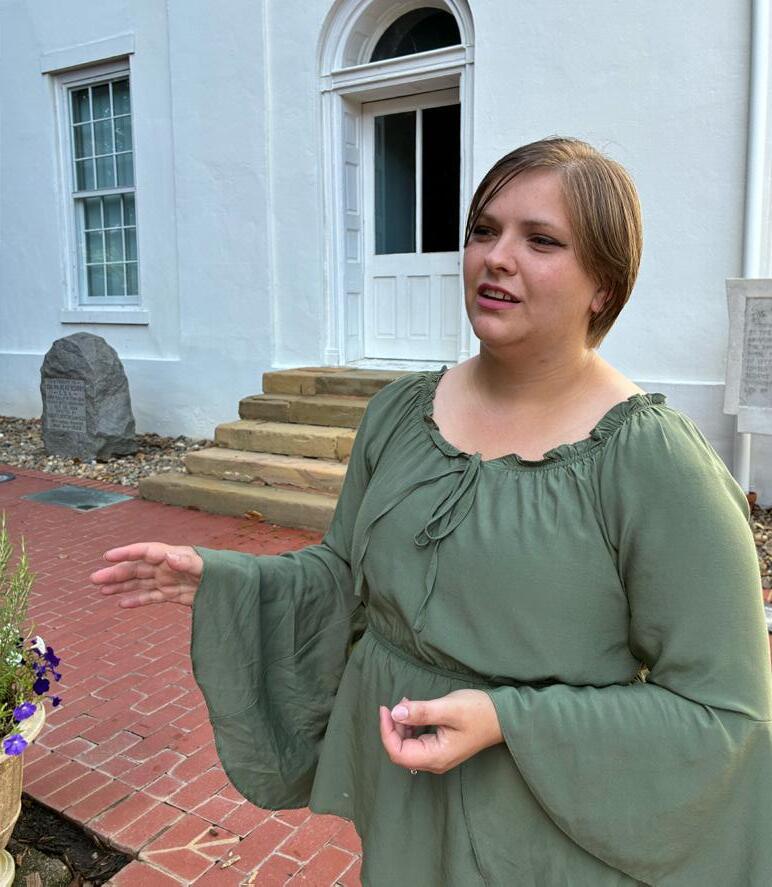
When Tessa Wahlquist wasn’t leading groups or talking to visitors and had spare time on her hands as a tour guide at the Old State House Museum, she was told to learn as much as she could about the 184-year-old building. She took that seriously.
Wahlquist turned up interesting stories about the historic building’s planning and construction, the materials used and such. But, as she broadened her search, she kept bumping into evidence that didn’t fit neatly into the accepted historical narrative. Surrounded by other tour guides who had helped her put some of the pieces together, she had an aha moment.
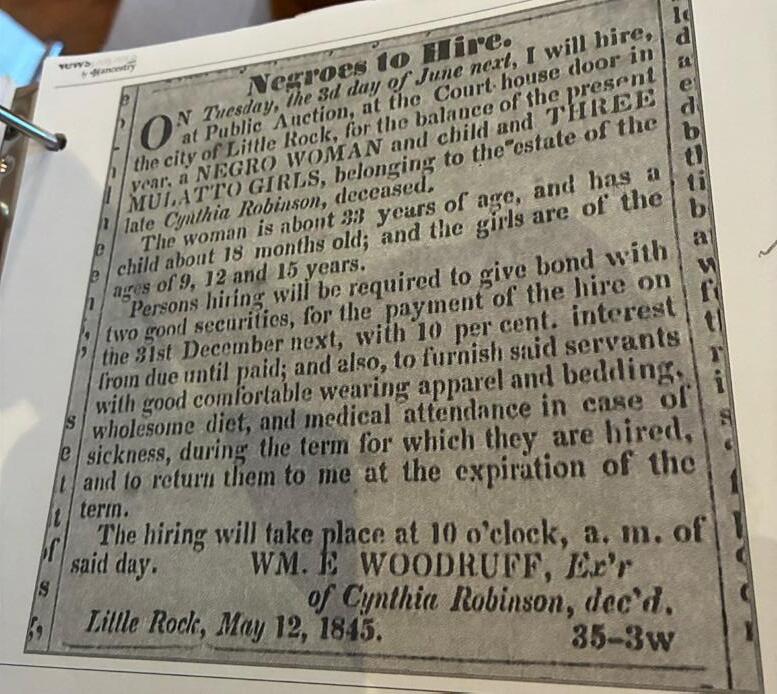
“I was looking at newspaper clippings and kept coming across ads that had to do with slave auctions at the ‘door of the courthouse,’” Wahlquist, 28, said. “I thought, ‘Oh, that’s weird, because we didn’t have a county courthouse here then.’”
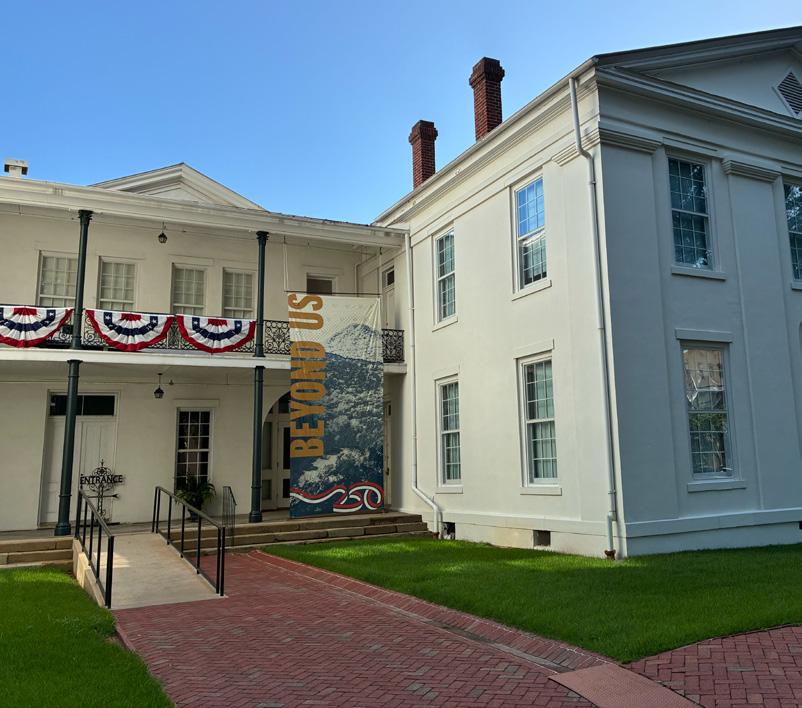
What passed for a Pulaski County Courthouse at the time, she said, was a space the county rented from the state Supreme Court offices, located in the east wing of the Old State House.
“We all went into research frenzy mode,” Wahlquist said. “Someone asked, ‘Well, was it a courthouse that existed before the one we have today?’ The answer was no, there was not another one. That meant that all of these slave auctions — involving somewhere between 400 and 500 people — took place right here.”
Wahlquist said she informed her superiors of her discovery, but the reaction was not what she anticipated.
“They immediately said, ‘Do not mention
this to anyone.’ They said to keep researching, but don’t say anything about it because they might be watching.”
“They” were members of the Gov. Sarah Huckabee Sanders administration, which has made a point of deemphasizing Arkansas’ history of slavery and the state’s treatment of African Americans.
“They said don’t put any of this into emails because Sarah’s people were watching them, and if this came out, the hammer could be brought down,” Wahlquist said. “I had a master file in my email account, and I changed the name of it so it wouldn’t attract attention. I was told it was because the Old State House is the governor’s favorite building and that if any of this came out, all our jobs would be in jeopardy.”
Higher-ups finally relented and allowed Wahlquist to openly pursue her research after she said she would try to connect current Black legislators with the handful of slave names she’d been able to confirm.
“I thought how cool it would be to take the people who were sold at what was then the state Capitol and tie those in with people who, decades later, walked into the state Capitol as lawmakers,” she said. “Ultimately, I was never able to find evidence of that. The problem is that I couldn’t trace the names of
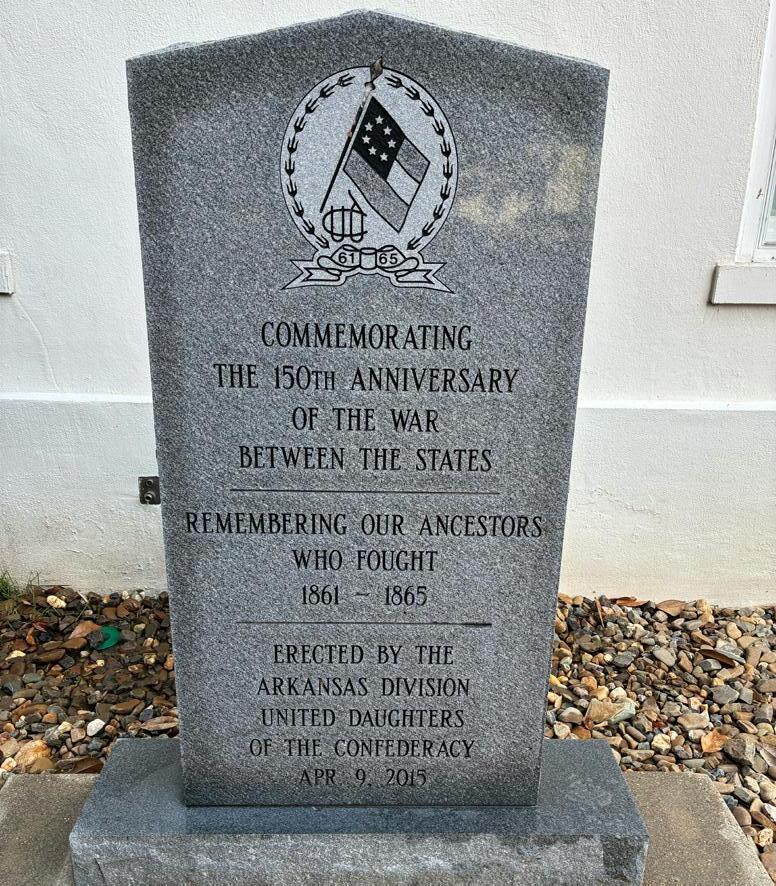
PROOF: Clockwise from top left: Tessa Wahlquist describes her research on slaves sold on what was once the state Capitol grounds; the area outside the east wing of the Old State House is dotted with memorials to the Civil War; a newspaper clipping discovered by Wahlquist that advertises the sale of slaves; the east wing of the Old State House was once the site of the Pulaski County Courthouse.
and
CONTINUING STUDIES
Wahlquist, who left the museum in late 2024, got her bachelor’s degree in public history from Arkansas Tech University and has a certificate in investigative genetic genealogy from Ramapo College in New Jersey.
One of her mentors at Tech, Kelly Houston Jones, an associate professor of history, is helping Wahlquist turn her research into a publishable paper. Jones said Wahlquist’s discovery is significant, but unsurprising.
“The reason is that slavery was legal in every county in the state, and every county courthouse was also a slave auction site. What makes her research very interesting is that this was happening at our state Capitol,”
Black legislators from before the Civil War,
I couldn’t trace the names of slaves after the war.”
Jones said. “So you’ve got all the symbolism and history from that angle. It shows us the layers of contradictions, especially if you consider that after Arkansas fell to the Union in 1863, you had the city of Little Rock occupied and Black Union soldiers were at post at the Capitol where these auctions took place.”
Both Sanders and President Donald Trump have worked to downplay the ugly truths of United States history when it comes to the Black experience. An exhibit at the Old State House Museum celebrating the country’s 250th birthday makes almost no mention of slavery, for instance. Jones, however, said only good comes from pursuing the history of a topic — even one as painful as slavery.
“I am aware of the distaste a lot of folks have in following the breadcrumbs of such research to see how deep that history goes,” said Jones, whose research focuses on American slavery, particularly the sale of enslaved people. “But I don’t think there should be any hesitation. We only benefit by learning more. Some might think that finding out about our dark past degrades us, but I have bet my career on the opposite premise.”
Wahlquist’s pursuit of history and the people who made it is deeply rooted. She became interested in genealogical research in her early teens. When not working on her paper, she helps people research their family trees.
“I volunteer as a search angel,” Wahlquist said. “It’s free genealogical work I do online for people because it’s so thrilling.”
Guy Lancaster, who has a doctorate in heritage studies and is editor of the Central Arkansas Library System’s Encyclopedia of Arkansas, echoed Jones’ sentiment that Wahlquist’s work is relevant.
“We have a lot on the landscape that con nects us to our past,” Lancaster said. “But we don’t have a lot of physical elements that connect us to slavery. There are a few places — the Lakeport Plantation in Chicot County comes to mind — but given how intertwined slavery was in society and the state’s econ omy, it’s important that we have some re minders in place. It’s not just to make history a downer. It’s actually to better understand the past. We can’t celebrate the end of the en slavement of people unless we understand slavery itself.”
Despite all the ways Wahlquist has learned over the years to suss out a person’s name, sometimes she falls short, especially when it comes to the names of slaves.
“A newspaper ad might just say the 20 slaves owned by so-and-so will be auctioned at the courthouse on such-and-such a date,” Wahlquist said. “Most of the time there are names, but it might just be first names, or if there’s a last name, it might be the last name of the slave owner. One man changed his last name to the one his brother was using.
“I WANT A PLAQUE THERE, SOMETHING TO THE EFFECT OF ‘AT THIS DOOR, OVER 400 PEOPLE WERE SEPARATED FROM THEIR FAMILIES AND AUCTIONED OFF AGAINST THEIR WILL, AND WHILE WE MAY NEVER KNOW WHAT HAPPENED TO THEM, WE ACKNOWLEDGE THE SUFFERING THAT WENT ON.’” —TESSA WAHLQUIST
And even if there are ages listed, I can’t 100% identify that person, mainly because ages can be off by 10 years or more. Age was a suggestion. It was not a solid thing. That happened all over the South.”
The newspaper ads — sometimes published in the Arkansas Gazette — were enlightening.
“One might say a certain person was suited for agricultural work, and another would say they were better suited for the house,” she said. “Surprisingly, with mothers and children, the ad often said the seller would not be splitting them up unless they had to. Slave men and women couldn’t marry, so it was not unusual for couples who had ‘jumped the broom,’ signifying their marriage, to be split up. One man used the courthouse door to sell his slaves, and said the sale had nothing to do with anything they had done, but just because he needed money.”
Wahlquist divided the auctions into five categories. Some slaveowners had taken out a loan against their slaves and then defaulted, leaving the bank to claim those individuals, considered property, as a way to recover
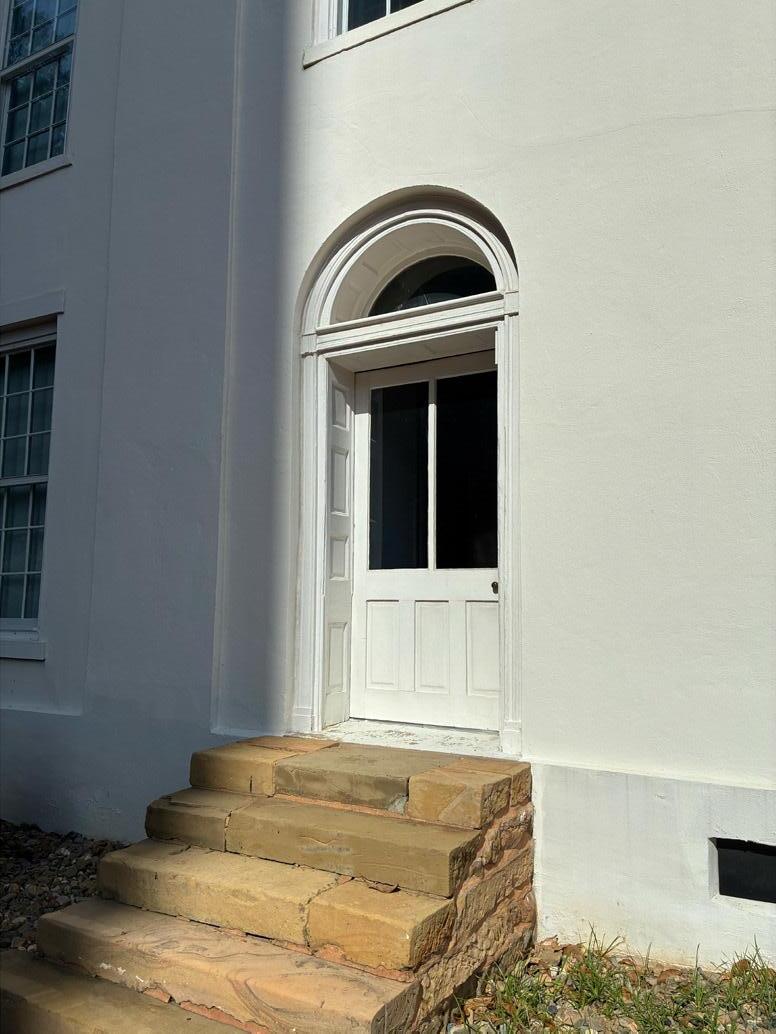
DARK PAST: Stark morning shadows move across the door on the east side of the Old State House, where slaves were once auctioned.
the unpaid debt. Then there were judgments, where someone had been sued and lost and had to sell their slaves to pay the amount due a plaintiff. When someone died, slaves were also sold to liquidate the estate to pay off outstanding debts or to pass along those assets to heirs. And then there were simply people, like the man needing money, who sold their slaves.
The most problematic, in terms of matching names to people, were runaway slaves, Wahlquist said.
“They were taken to the county jail located nearby and were forced to confess who their master was,” she said. “You were held there until your master came to claim you, but if no one came, you were sold at the courthouse door. The reason that becomes so complicated is because it takes you down the rabbit hole of the Pulaski County jail and trying to figure out when someone went in or came out.”
The whole jail narrative, she said, adds another layer to what was going on within just a few blocks of the Capitol.
“Before the county jail was built, that’s where all of the punishments were carried out,” she said. “I have a theory that they were carrying out at least some of it on the State House site. Lashings are forms of public humiliation. The jail didn’t have much room, so I think they came over to the State House site for maximum visibility.”
Wahlquist also attempted to tie the names of slaves to living relatives. The closest she came involved two families she connected to post-Civil War records.
“The two families had 10 kids each,” she said, “but none had any children — at least not in records that I was able to find. So I could not connect them to those people. That doesn’t mean it won’t happen. In Pulaski County alone, there were 7,000 ‘colored’ or ‘mulatto’ individuals, as they were called in the census. So there is likely a connection, but I just have not found the corroboration. There are so many Enochs and Harrys and Georges and Luisas and Peggys, there’s just no way for me to say, ‘Yes, you are this same person in the 1870 Census.’”
Wahlquist’s work gave her glimpses into how the enslaved lived and survived.
“They didn’t have access to Christian religion,” she said, “and if they did get Bibles, it had the story of Moses ripped out. You didn’t want to let them know about the ‘let my people go’ story.”
Even after the end of slavery, there was difficulty untangling family records after hundreds of years of white oppression.
“One man and woman were married, but then they were separated through slavery and
the man was sold and forced to take up with another woman,” Wahlquist said. “It was not unusual for a man to be treated like a bull because a slave owner wanted to increase the number of slaves he had. Then when slaves were freed, he went back to his real wife, with the family having to try to figure out later which child came first in the line of succession.”
The story of Vinny Campbell is another of many that Wahlquist tracked as far as she could. Campbell, around 17 at the time, had a white father who claimed her as his child and wanted to put into his will that she be freed at his death.
“But Arkansas was so stupid,” Wahlquist said. “You couldn’t free slaves. The state passed a law in 1859 outlawing free Blacks, meaning they all had to leave. So Vinny was placed into the custody of the deceased man’s sister, who promptly went to another state and sold her. Then the family went and found her and kidnapped her back. That was as far as I could trace what happened to her.”
Scott Moye, who worked alongside Wahlquist as a tour guide at the Old State House Museum, said the realization that enslaved people had been sold on the grounds sent a chill up his spine.
“She was telling me that slaves had been sold at the courthouse, and I said if there’s one thing I know, it’s about the whereabouts of the courthouse,” said Moye, a retired history teacher. “But I was wrong. I went down the street to a historical plaque that I thought referred to the courthouse, but it was actually city hall. And then I remembered African American students and adults telling me that slaves had been sold at the State House. So after all these years, that is still in the local memory in the African American community.”
Moye said he has the utmost respect for Wahlquist.
“I can take what she finds and put together a narrative,” he said. “But I’m not the person who can pull all that information together like she can. She’s a good researcher, very dogged.”
Brian Mitchell, formerly a professor of history at the University of Arkansas at Little Rock and now a research professor at the University of Illinois Springfield, called Wahlquist’s discovery fascinating.
“That they were sold on the Old State House grounds is pretty amazing,” he said. “It’s also not surprising in that slaves were treated as property and those transactions had to be carefully handled by attorneys and recorded by notaries. All of those people would be nearby, so it makes sense that that’s where all of this would have happened.”
Mitchell urged Wahlquist to make her work searchable by others.
“Most definitely more needs to be done on her work,” he said. “There are other groups around the country that would be able to put that information into a broader database in hopes that people can track the movement of slaves in the United States.”
A MISSING MARKER
The door where all of these sales took place is nondescript, with three panels at the bottom and two windows at the top. Almost nothing about the entryway suggests that so much sorrow took place just steps away, except for the five rough, uneven steps that bear witness to another time.
On a recent summer day, as the sun climbed above a neighboring building, stark shadows fell against the east-facing whiteness of the Old State House. Monuments and historic markers dot the manicured space onto which the door opens, paying tribute to soldiers who fell during various wars: the Mexican-American War, the War of 1812, World War I. But it is the reminders of the Civil War, the state’s secession, individuals plauded for their heroics, and honors to “Our Ancestors Who Fought” — all an embrace of slavery itself — that now seem incongruous with that small patch of ground as the images of hundreds of slaves looking down from those steps come to mind. Children torn from mothers, wives from husbands, brothers from sisters; the cries of anguish are easy to imagine in the morning’s quiet.
Wahlquist knows her work is incomplete. She is raising two young children and plans to finish her paper as she finds time. But she takes pride that her work acknowledges forgotten individuals.
“A name is so powerful,” she said. “There is that concept that a person dies twice, once physically and once when their name is no longer remembered or spoken. These names have not been spoken for 150 years, and even though I haven’t connected them all and completely identified them, that doesn’t mean a genealogist after me isn’t going to be able to connect them. I’m happy that I was able to give a little bit of light back to them.”
Wahlquist wants a physical testament of what went on at the Old State House to stand among its other memorials.
“I get mad about all the monuments,” she said. “We commemorate secession, and we shouldn’t be commemorating that. I want a plaque there, something to the effect of ‘At this door, over 400 people were separated from their families and auctioned off against their will, and while we may never know what happened to them, we acknowledge the suffering that went on.’”
SOLUTIONS FIRST. ROOFING SECOND.
Jason Roelke Roelke Roofing
BEST SIDING, WINDOWS AND ROOFING
Many wonderful non-profits are near and dear to our hearts. In this issue, we are highlighting two very important nonprofits that care for children: We Are Washington Community Development Center and The Centers
In a world where the well-being of our youngest individuals is paramount, two remarkable non-profits stand out for their unwavering commitment to supporting children and families. In this issue, we shine a spotlight on We Are Washington and The Centers — organizations dedicated to nurturing the potential of youth through comprehensive programs and essential mental health services.
We Are Washington, located in Texarkana, Arkansas, is on a mission to cultivate a safe and empowering space for youth and families. By offering after-school and summer programming, athletics, and wellness initiatives, they focus on academic enrichment, mentoring, and essential life skills.
In contrast, The Centers serves as a crucial resource for mental and behavioral health, providing comprehensive support to individuals across Arkansas. Their services include intensive inpatient treatment for children and adolescents facing crises, compassionate outpatient counseling for all ages, and specialized care for survivors of human trafficking.
Together, these organizations exemplify the spirit of community care, working tirelessly to improve the lives of those they serve.
To learn more about the many organizations that help our community, stay tuned for our GIVING BACK issue in December, where we will highlight several non-profits across the state just in time for year-end giving. For more information regarding that upcoming issue, please email brooke@arktimes.com.
Thank you to all of our non-profits who help make our community a better place.
We Are Washington
We Are Washington Community Development Center is a nonprofit organization in Texarkana, Arkansas, dedicated to providing a safe, engaging, and empowering environment for youth and families. Through after-school and summer programming, athletics, wellness initiatives, academic enrichment, arts, mentoring, and life skills, we serve children from across the community with a focus on opportunity, character, and personal growth.
Our mission is to inspire the next generation by creating experiences that build confidence, encourage healthy lifestyles, strengthen community connections, and prepare young people for lifelong success. We believe every child deserves a place to belong, learn, and thrive.
As we continue to grow, we’re expanding our programs through new community partnerships, financial literacy education, a youth library, sports programming, and facility improvements that will allow us to serve even more families throughout the Texarkana area.
At We Are Washington, we’re not just building programs; we’re building brighter futures.
A gift to The Centers Foundation is an investment in improving the lives of people across Arkansas who need transformative, comprehensive, integrated care. Your generosity helps children and adolescents receive intensive inpatient treatment during times of crisis, connects individuals of all ages with compassionate outpatient counseling, supports children in therapeutic foster care and provides specialized services for survivors of human trafficking.
Philanthropic support also strengthens our ability to employ the innovative Family Centered Treatment care model, which helps families thrive together while addressing challenges in their homes. Through our integrated medical clinic and pharmacy services, The Centers removes barriers to care by meeting physical and behavioral health needs all under one roof.
A gift to the Foundation will help The Centers expand its impact even further. As the state’s designated Community Mental Health Center now serving an 11-county footprint, The Centers is bringing its whole-person care to more communities than ever, including Northwest and North Central Arkansas.
Every act of generosity helps improve access to high-quality behavioral health services, ensuring more children, families and adults receive the support they need to build healthier futures.
PUNISHING: The owner of a Jonesboro private school punished students by making them scrub floors and walls and berating them while they worked.
This story, co-published by ProPublica and the Arkansas Times, contains descriptions of child maltreatment.
VOUCHERS
EDUCATORS AT A NEWLY LAUNCHED PRIVATE SCHOOL IN JONESBORO HAD STUDENTS SCRUB FLOORS AND ATTACK A FELLOW CLASSMATE. THE STATE STILL FUNDS THE SCHOOL.
BY JENNIFER SMITH RICHARDS AND JODI S. COHEN
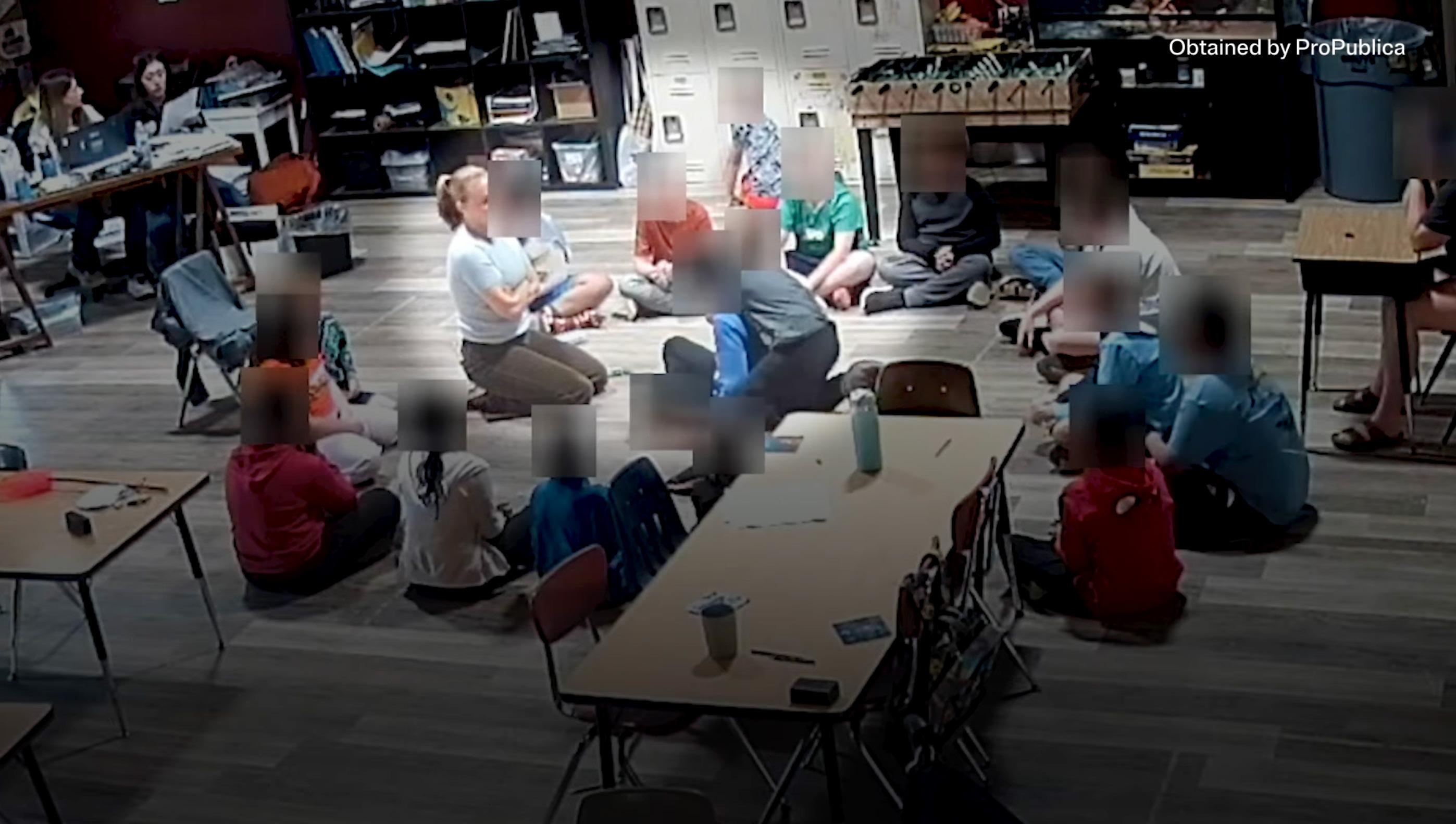
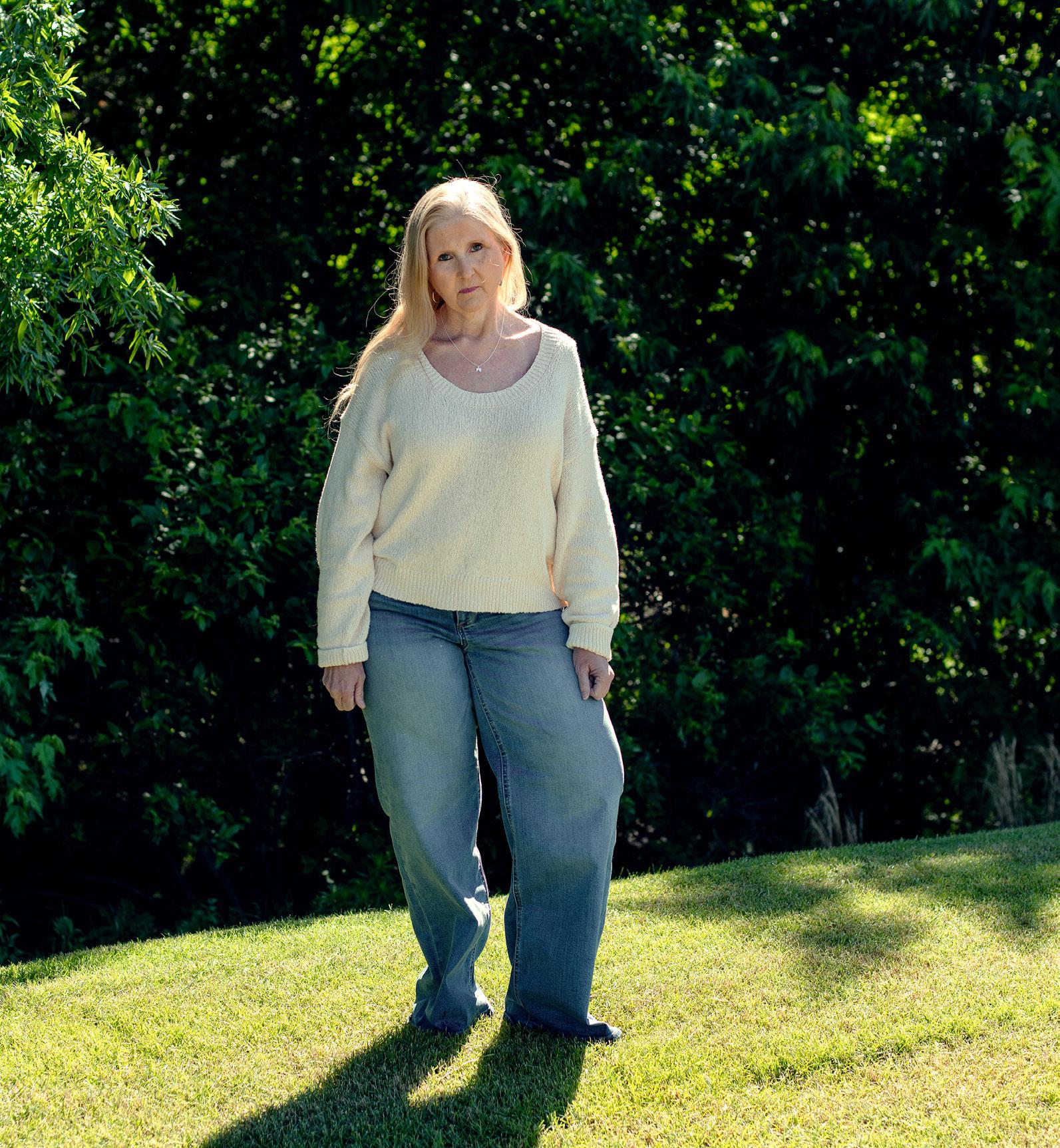
ATher private school just beyond the city limits of Jonesboro, Mary “Tracy” Morrison demanded the attention of the 19 students seated on the floor in a circle. She then directed a skinny 13-year-old boy wearing a cartoon Mario shirt to sit in the center.
“Raise your hand if he’s ever been mean to you — ever,” Morrison, the owner, prompted the other middle schoolers, and some hands shot up.
“Most people don’t think you’re a nice kid. You lie. You lie all the time,” she told the boy. She encouraged his classmates to name things they don’t like about him.
Morrison’s voice got louder. She knelt inside the circle just inches from the boy and swatted him. On the head. On the neck. At first he flinched and started to raise his hands to block her. But she snapped at him to keep his arms down: “You don’t have the right!”
“Come over here and put your hands on him, however you want,” Morrison told the students.
A boy volunteered. “I’ll do it,” he said, and the other students cheered and clapped.
That student entered the circle, looped his arm around the boy’s neck and choked him. Morrison gave him a high-five. The boy in the center cowered. Then other students took turns slapping, pinching and punching the
boy. Morrison picked up a footlong plastic cylinder — it resembled a pipe — and thwacked him over and over, calling him a liar.
The attack went on for nearly 40 minutes. At the end, Morrison made the boy apologize to his classmates for mistreating them. Three other school employees were in the room that day in April 2025 but didn’t intervene. The whole thing was captured on video.
Morrison had founded her school, The Delta Institute for the Developing Brain, the year before, soon after Arkansas legislators decided to allow families to use public money for private school tuition through its Education Freedom Account program.
Delta Institute joined a surge of new private schools in Arkansas, mirroring a national proliferation. New schools are opening at a fast clip as state legislatures set aside more public money for parents to spend at private schools, without meaningful oversight.
There were about 100 private schools in Arkansas in 2023, state records show. Now there are about 220. That doesn’t count the 100 or so microschools in the mix — a version of the one-room schoolhouse that wasn’t tracked or publicly funded previously.
But even with that boom, Arkansas largely has chosen not to regulate private or microschools or monitor what’s happening inside them. Arkansas is so hands-off that the state
RINGLEADER: Mary "Tracy" Morrison, former director of a Jonesboro private school, was charged with 11 felony counts of permitting child abuse and other related crimes.
only requires that private schools conduct regular fire drills, keep immunization records and have an American flag and a flagpole. It doesn’t review schools’ curriculum or the backgrounds and capabilities of their operators. Anyone is free to open one, including Morrison.
Known to parents and students as Dr. Tracy, she wasn’t a licensed educator and had never run a school before. Her resume says
she has a doctorate in occupational therapy and cognitive neuroscience from Washington University in St. Louis. The university said that degree is only in occupational therapy.
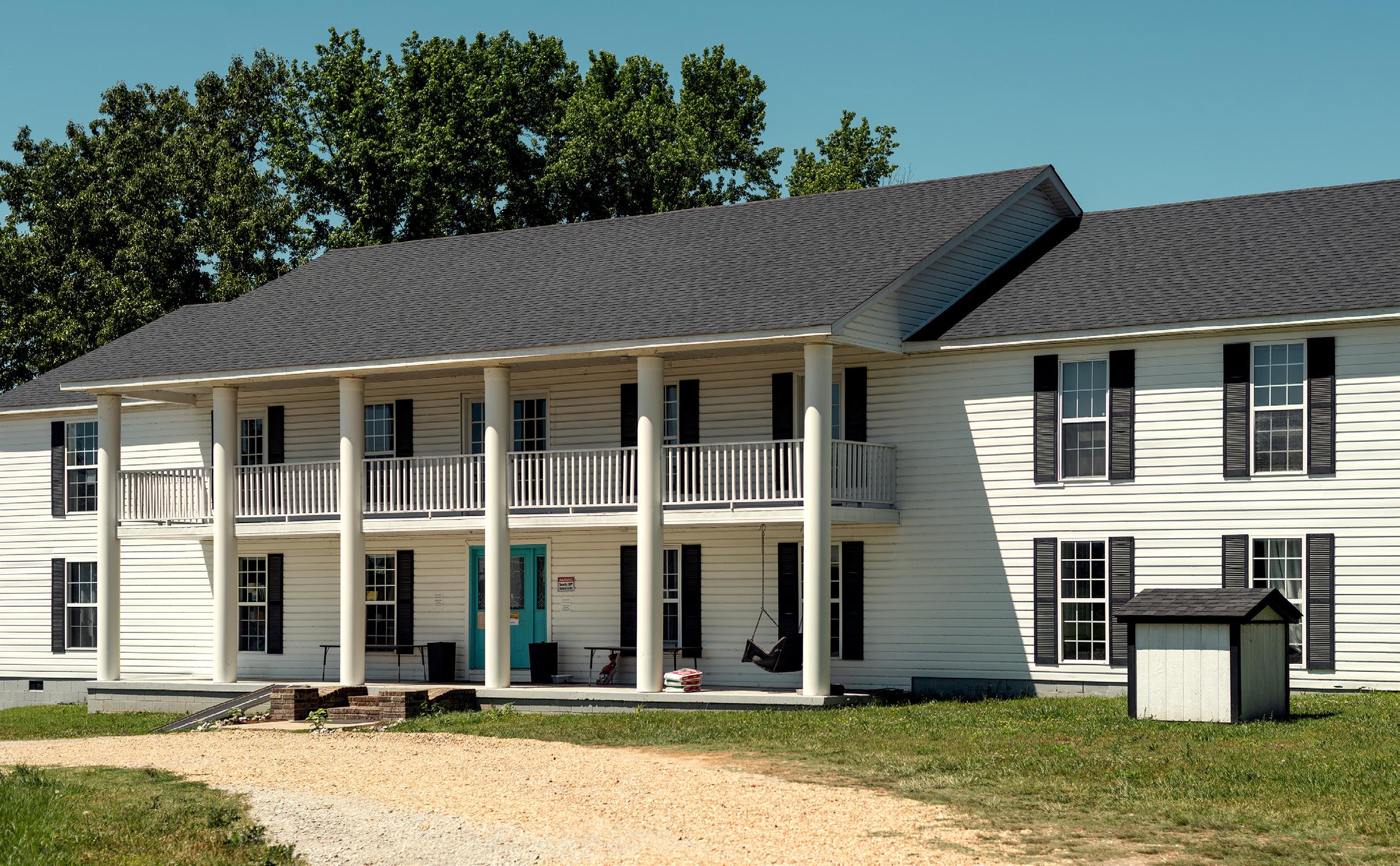
The Delta Institute didn’t look much like a school — it operated in a white colonial house set down a gravel driveway off a country road, its bedrooms transformed into classrooms. But it had seemed like the answer that parents of students with disabilities, including autism, were desperately seeking. Families said they put their faith in Morrison, who presented herself as an expert in autism and ADHD. “I am the best,” she texted one parent. Morrison did not respond to interview requests and questions from ProPublica.
Gov. Sarah Huckabee Sanders, who has said she wants to be known as the education governor, and state education officials didn’t respond to specific questions from ProPublica about the state’s oversight of private schools or how it responded to revelations about the Delta Institute. Her spokesperson said the governor championed the state’s Education Freedom Accounts because they give students more and different educational opportunities.
Both the governor’s office and the Arkansas Department of Education emphasized that the state intervenes to ensure students are safe and taxpayer dollars are spent responsibly. “Student safety is ADE’s number one priority,” Education Department spokesperson Kaelin Clay wrote in an email.
The day after Morrison and the children assaulted her son, the boy’s mother walked into the Craighead County Sheriff’s Office to write out a report in neat, looping cursive. It was not the first report about Morrison’s treatment of children at the Delta Institute that the sheriff’s office took.
Another mother had reported abuse about three weeks earlier.
MORE MONEY FUELS GROWTH
Before Arkansas’ LEARNS Act passed in 2023, creating its voucher-style program, state schools secretary Jacob Oliva promised that “there is going to be accountability for the schools that participate.”
But the oversight role his department gave itself was related primarily to finances. The department has the power to conduct random financial audits of private schools, mandate that the schools report their tuition and fees and require schools to measure student achievement with tests of their choosing, but little else.
Under pressure to tweak the rules this spring, the department again declined to monitor school quality and tinkered only with how parents can use the funds on items other than tuition, banning them from paying for travel sports teams, for instance. Even that
“ALL KINDS OF RED FLAGS I SENT TO THEM AND THEY NEVER GOT BACK TO ME. I DON’T EVEN KNOW IF ANYONE HAS LOOKED AT IT.”
was controversial; some lawmakers argued there should be less government interference. They argue the onus is on parents to decide whether their children are safe and learning, and if they’re not, the families can go somewhere else.
This upcoming school year, Arkansas expects that nearly 55,000 students will use their Education Freedom Accounts for tuition and other expenses.
With most students getting about $7,000 each, the program cost about $310 million in taxpayer funds this past school year. Most of the students who used EFA money in Arkansas the prior year were already attending private school or being homeschooled, or were just starting kindergarten. Only 12% of participants reported that they’d previously attended a public school.
When the program began, the department set up a hotline and an email address for people to report suspected fraud or misuse of the EFA funds. About a dozen emails raised concerns about student well-being.
But several complainants told ProPublica that they did not hear from state officials after sharing their concerns. One teacher said she got no response after she emailed in April that students who transferred to her school had been deprived of a “basic education” at the microschool they previously attended, according to state records. She said first and second graders reported that they had spent the majority of their time playing.
Contacted by a ProPublica reporter, she said: “I don’t mind that you are reaching out but it is very concerning and in a way aggravating that I have an investigative reporter reaching out instead of my own state.” She requested that her name not be made public because she works at a different microschool.
Jazzmin Little said she hasn’t heard back from state officials either, after telling them in February that the school where she sent her two children might be misusing state funds. The department told her it would review the information, according to emails, but she said she heard nothing more.
“All kinds of red flags I sent to them and they never got back to me,” Little said. “I don’t even know if anyone has looked at it.” The school’s founder confirmed that the Education Department did not reach out to her after receiving the parent’s complaint, which she described as a billing discrepancy. She said the issue would have been resolved sooner if the state had intervened.
In order to accept EFA money, private schools have to agree to meet some requirements, including that they have or are seeking accreditation, have operated for a year and promise to perform background checks and fingerprinting on all employees. (There’s no requirement that employees have no crim-
NO PLACE LIKE HOME: The Delta Institute in Jonesboro doesn’t look much like a school — it operates in a white colonial house set down a gravel driveway off a country road, its bedrooms transformed into classrooms.
inal history.) Schools affirm they’ll teach English, math, science and social studies and administer a standardized test of their choosing once a year. There’s no requirement to report students’ individual test scores to the state or to parents.
The bar is lower for microschools, some of which operate like smaller versions of private schools while others provide programs for homeschoolers. They don’t need to be accredited or wait until they’ve been open for a year to get funding.
The contrast with what is required for public schools is striking. Arkansas’ Education Department monitors public schools, and state law regulates nearly every aspect of them, from teacher qualifications to what’s on district websites. Every district is required to post a tranche of “state-required information” online that must include breakdowns of monthly expenses and even a list of every dyslexia intervention program used.
State Sen. Bryan King, a Republican, said he supports school choice but said he voted against the LEARNS Act because there wasn’t enough accountability given the amount of public spending. He proposed legislation this spring that would have required all schools receiving EFA funds to administer the same standardized test — and for funding to be tied
to student performance on that exam.
“We can’t afford this and my concerns were about financial responsibility, accountability, transparency, everything about it,” he said.
The proposal did not advance. King was attacked in the primary this year for being against “education freedom,” and Sanders backed his opponent. King still prevailed.
None of the legislators who were the lead sponsors of the LEARNS Act responded to questions from ProPublica about how the state is overseeing student achievement and safety.
Several Arkansas groups recently tried to get an amendment on the November ballot that would require all schools that accept EFA funds to follow the same rules and minimum academic requirements as public schools. The groups, however, failed to gather enough signatures.
“If you are going to take public money, then you should meet public standards and be publicly accountable for how that money is spent,” said Bill Kopsky, executive director of the Arkansas Public Policy Panel, a nonprofit that was formed in the 1960s and focuses on social justice.
He said the state’s recent voucher expansion has led to “this whole new industry of pop-up, subprime private schools that have
almost no regulation. They go into shopping malls or the basements of churches.”
In the three years of the EFA program, the state has only intervened at two schools, records show. And it’s never permanently blocked a school from taking public money, including at the Delta Institute — even after it became clear that terrible things had happened there.
‘YOU ARE IN THE BIGGEST TROUBLE’
Craighead County Sheriff’s Detective David Bailey, a Jonesboro native who patrolled the area often, didn’t even know there was a school set back off the country road.
He discovered the Delta Institute in the winter of 2025 after a student ran off and the school asked for help finding him. He didn’t know it at the time, but police and child-welfare records show the boy had allegedly fled after Morrison sprayed him in the face with water and held his legs down. He jumped out a window, barefoot, to get away.
The Craighead County Sheriff’s Office encountered the school again in March 2025 when Renee Johns, whose children Jacob and Addison went to the Delta Institute, reported abuse there.
Johns had moved her family to Jonesboro from about an hour away to attend the school.
HOUSTON
But things had unraveled. Jacob wasn’t getting the therapy he needed, and he and his sister were falling behind academically. But Johns said she was most troubled by a video Morrison had texted her one day to explain why Jacob was being kept after school.
It showed Jacob, a 10-year-old with autism, and two other boys scrubbing the floor and walls inside the school with rags. Morrison berated them: “This doesn’t get to be about fun. Go!”
“Both hands, cleaning!” she barked like a drill sergeant to one boy on his hands and knees. “You’re working like a slug! Get at it! Get at it! You are in the biggest trouble.”
The sheriff’s office alerted child-welfare authorities. Then, three weeks later, a second mother walked in to report her son’s assault within the circle at school. Bailey got a warrant for that video.
Teacher and counselor Ashley Williams was standing by while another employee
UNORTHODOX: At top, private school founder Mary “Tracy” Morrison speaks with a documentary filmmaker from jail. At bottom, Christian-based microschool Homestead Academy operates in a church with a shed that serves as a fireworks stand in the summer.
copied the footage of Morrison berating, hitting and directing other students to assault the 13-year-old boy. Horrified, she excused herself, hustled down the stairs of the house, out to the gravel parking area, and vomited.
Less than 12 hours earlier, Williams had filed a detailed report with welfare authorities based on what some students had told her about Morrison’s “circle time.” She had written, “This is not the first time abuse like this has happened.” Months earlier, she continued, Morrison had taped two children together by their arms.
More came out in Bailey’s interviews with parents and current and former employees and in interviews that child advocates conducted with the students, documents show: allegations of “waterboarding” a child and cutting another’s hair as punishment. Slapping a student. A wooden paddle named Fred.
Some parents, meanwhile, defended Morri-
bers, some whose children attended the school, to say she had made a mistake during the “group discussion” but blamed the violence on the students.
She warned that the floor-scrubbing video she had sent Johns would likely be made public and that she and the other employees would be arrested. “You can expect our mug shots on social media,” Morrison said, and apologized for letting everyone down. But she also called it a “witch hunt.”
“My mug shot will have me with a middle finger,” she wrote.
FLIMSY INVESTIGATIONS
Within days of the April 2025 incident that the prosecutor called a “makeshift ‘Fight Club,’” Morrison was charged with 11 felony counts of permitting child abuse and other related crimes. Three other employees were charged with permitting child abuse and failure to report child maltreatment.
The day news broke about Morrison’s arrest, the state Education Department stopped EFA payments to the Delta Institute. Nearly half the students there were using the EFA program to pay tuition, and the school had collected more than $300,000 so far.
There are no records of a visit to the school or an investigation by the state Department of Education. When asked if the department had gone to The Delta Institute for the Developing Brain, officials did not answer. Instead, a spokesperson said that complaints or suspicious activity triggers a review and “often results in a site visit,” though they declined to say how often that has happened.
Reporters again asked the department directly if it had visited the school. The spokesperson responded: “We have addressed the Developing Brain’s suspension from the EFA program multiple times, including in statements sent to your outlet.”
At Delta, public money flowed again two days after it was stopped. An assistant education commissioner who oversees the EFA program told a colleague he was convinced that the school had implemented “appropriate safeguards,” according to an email. He wrote that Morrison had resigned as the head of the school and a new school board had been formed.
In the three school years of the EFA pro -
Johns says she regrets sending her two children to Morrison’s school.
“WE HONESTLY
THOUGHT WE WERE DOING THE BEST FOR OUR CHILDREN.”
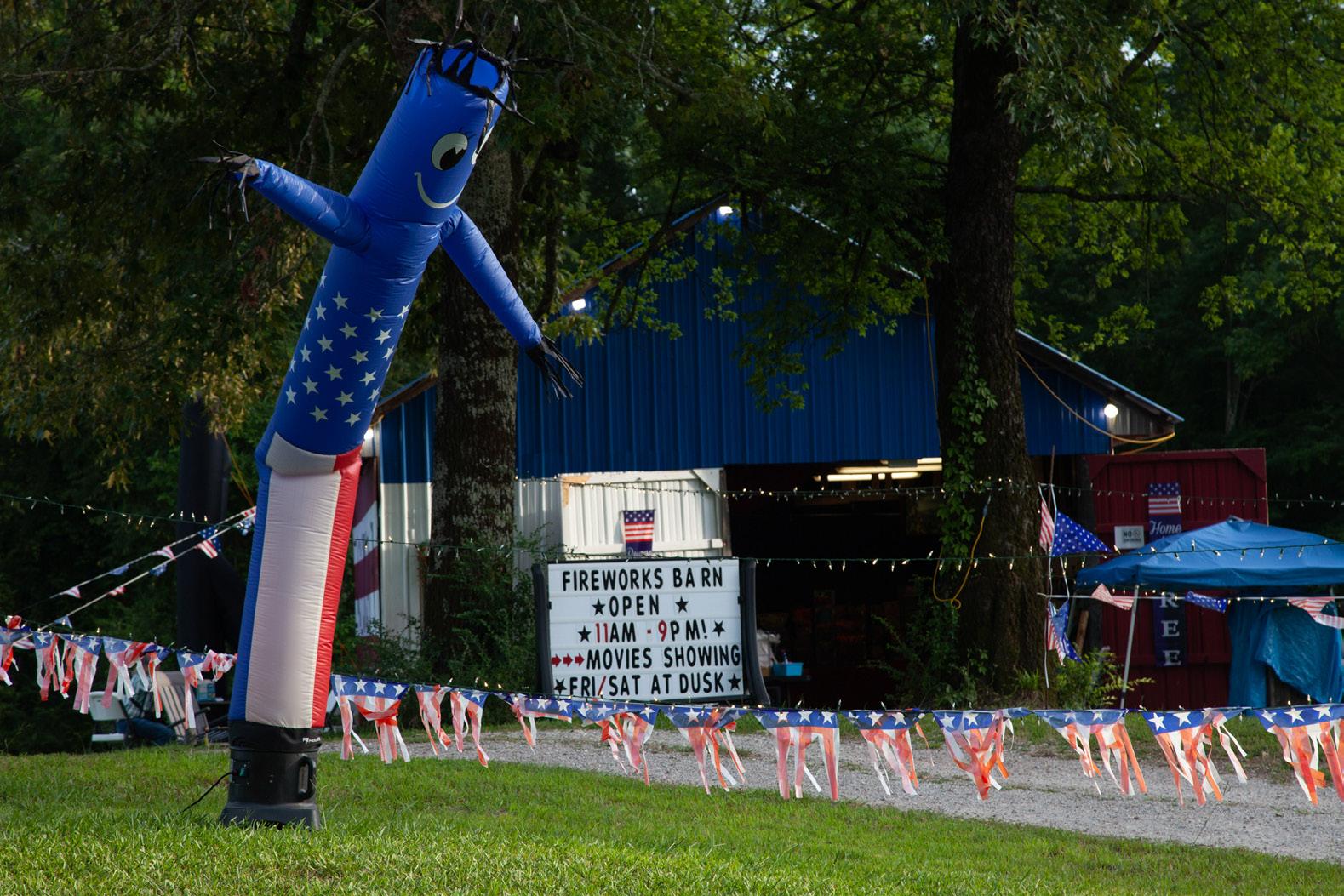
other school, a Christian-based microschool called Homestead Academy that focuses on outdoor and individualized education. It rents space from a church near Hot Springs. Outside, there’s a playground and hammocks, as well as a red-and-white striped shed painted with “In God we trust” where fireworks are sold in the summer.
Over a month last fall, the state got a series of concerning calls and emails from parents
Some shared safety concerns or described children playing unsupervised in a wooded area. Others shared concerns about insufficient academic instruction. One caller said Homestead felt more like a daycare than an organized school. In the first few months of the school year, 13 of the 46 students withdrew, state records show.
“Please stop” funding the school, one parent pleaded.
Education Secretary Oliva heard directly
from a Homestead parent who said the school did not follow a curriculum and had not adhered to the education plan for her daughter.
“Why are there not stronger regulations and accountability measures for EFA-funded programs?” she wrote in bold letters. (The parent asked that her name not be used because she works in education and fears retaliation.)
“This sounds like a serious and dire situation,” Oliva wrote back to her. “We will review immediately.”
A state education employee reached out to Homestead’s owner in late October and told her that the department would be stopping by the next day for a “brief visit.”
While there, Education Department employees watched students say the Pledge of Allegiance and then observed 10 to 15 minutes of instruction before meeting with owner Lindsey McCollum.
When asked for student work, progress reports and discipline policies, McCollum said she would send them later. “In hindsight, we should have said we were happy to wait while they made copies for us, but we did not,” according to an employee’s written report about the visit.
Afterward, the state suspended EFA funding to the school. Oliva told McCollum in a letter: “Your actions have jeopardized the welfare of students and the responsible use of public funds.”
It took 10 weeks for EFA funds to flow again. The state required that McCollum provide certain documentation and was satisfied by her response: a financial review of the school, policies on student supervision, curriculum plans and student worksheets. Several parents also sent letters in support of the school, describing it as a nurturing environment where their students enjoyed learning.
“We were compliant and transparent,” McCollum said in an interview. She noted that both she and the other teacher at the school are certified educators and stressed that “student safety is of utmost importance and our school has procedures in place.”
The school, she said, is almost entirely funded through the EFA program, with about 30 students from kindergarten to ninth grade. She said almost all students have returned year after year. “Families have the option to choose and still are choosing us,” she said.
“We have families who know that their kids who hated learning are now loving to read and write and loving to learn,” McCollum said. “That is our heartbeat.”
The state Education Department said it “wastes no time” in suspending private schools from receiving public money, and that both Homestead and Delta convinced the state that they were worthy of being reinstated. “In both instances, we worked vigorously to ensure operations were flipped in the right direction before families were allowed
to spend taxpayer dollars on either school,” according to the department’s statement to ProPublica.
The parent who emailed Oliva said that she had enrolled her 10-year-old daughter at Homestead hoping for something different than the public school. But she said her daughter fell behind academically. Last fall, she pulled her from the school and reenrolled her in public school.
She didn’t know that the state had restored funding to Homestead until told by a reporter.
“No way,” she said. “This has to be happening with other microschools. That upsets me for the children of Arkansas.”
STILL OPEN FOR BUSINESS
Enrollment at the Delta school dropped to about 60 students for last school year, about half the size it was the year before.
“There was a lot of loss because of the negative media,” Adrian Sportsman, who has worked closely with Morrison at the school, said when a ProPublica reporter visited this spring. “I feel like it was blown way out of proportion.”
Some students came back, she said: “They’d say, ‘There’s no school like this school.’”
In March, the mother of the boy who was assaulted in the circle at school sued Morrison, her school, her therapy business and her insurance companies seeking compensatory and punitive damages for what happened to her son. In court filings, Morrison’s attorney denied the allegations and said “the video speaks for itself.”
The criminal cases were set to go to trial in May and June. None did. Charges were dismissed for two employees who authorities felt were less culpable as they’d been in the classroom only briefly. The two employees did not respond to a reporter’s outreach.
A third staffer, Kathrine Lipscomb, who is an Arkansas-licensed teacher, interjected at times to direct the children to listen to Morrison and raise their hands to speak. In response to a reporter’s question about her role in the incident, she explained in an email: “For part of the time, I was off behind the teachers desk planning for another class and not paying attention to the circle.”
The prosecutor and Lipscomb agreed to a pre-trial diversion program in which Lipscomb would serve six months of probation. She must do 40 hours of community service with disabled children and complete anger management classes to avoid a conviction.
She is now director of education at the school.
Morrison pleaded guilty and was sentenced to 30 days in jail, 120 days on house arrest and five years of probation. She had to surrender her Arkansas occupational therapy license. And she agreed to not work with kids in any professional capacity during her
probation.
Nobody seemed happy with Morrison’s punishment. But the prosecutor said the state decided the plea deal was the best option to make sure Morrison was held accountable. Under Arkansas law, the state would have to prove substantial physical harm to the victim in order to convict on a charge of permitting abuse to a minor, and juries can judge that differently, said Sonia Hagood, who prosecuted the case for the state. For instance, she said, a recent jury decided not to convict a defendant because the victim did not suffer serious physical injury.
As part of her deal, Morrison got to pick where she served her time — the Greene County Detention Center, which is newer than Craighead County’s jail and gave her a private cell. And she’s serving house arrest on her boyfriend’s Missouri ranch, where she can ride horses.
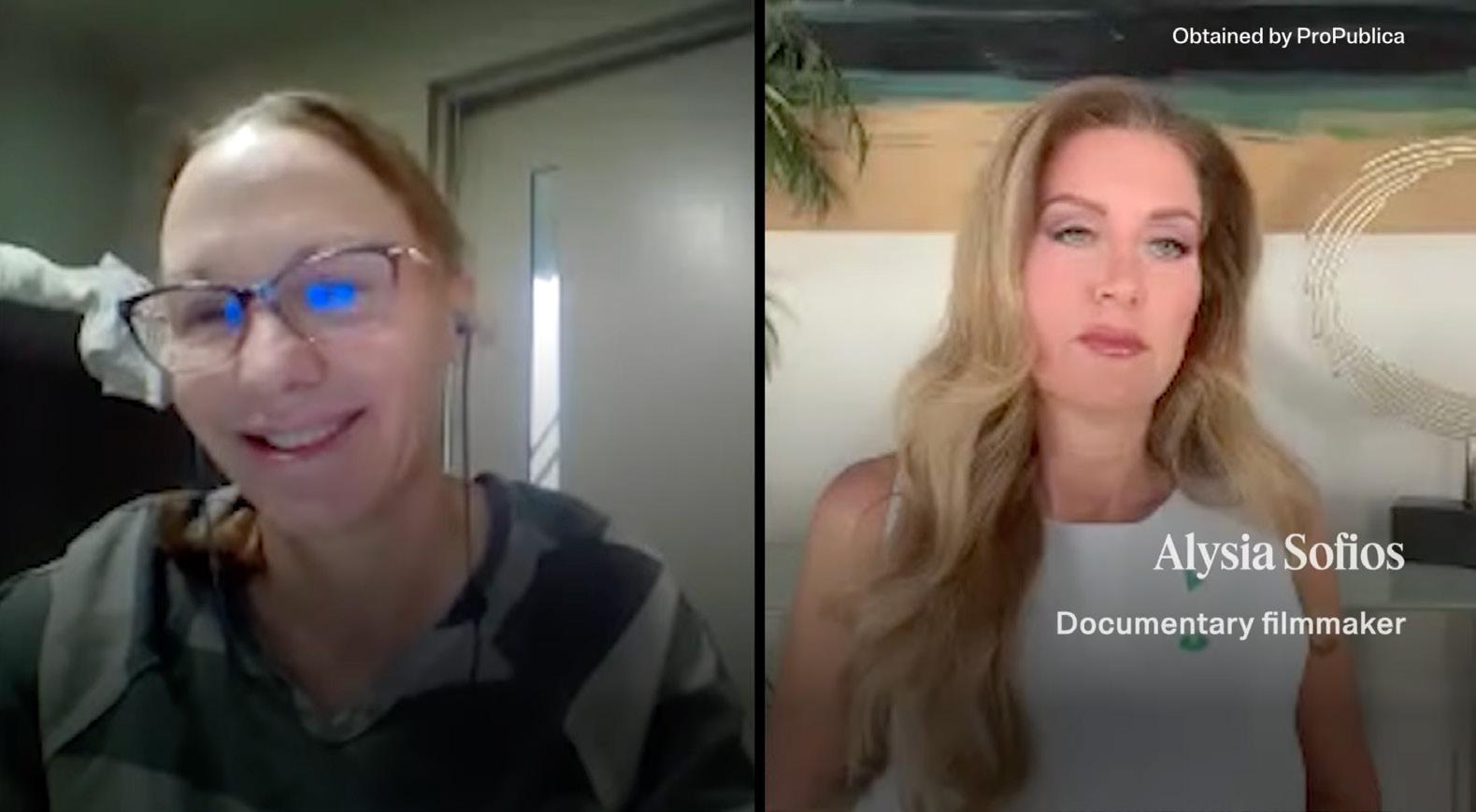
She passed the time while incarcerated on the phone and on video calls from a personal tablet. It’s standard for all communication from jail to be recorded, and ProPublica obtained more than 500 recordings. They show she was still involved with the administration of the school while jailed.
She spoke frequently to Sportsman about school finances, including telling her to make sure the EFA money still was coming in. Sportsman, who owns Delta Therapy Group, the occupational therapy practice that works with Delta Institute students, said that the jail conversations were “informal conversations between friends” and disputed the idea that Morrison was running the school while incarcerated.
Morrison chatted for hours with her new board members and school employees and gave them to-do lists. She asked how some kids were doing. In a call with the teacher who also entered a plea deal, she called the victim’s mother “evil” for going to the police.
She also spoke with a documentary filmmaker who is interested in the school’s story and plans to pitch a project to a big streamer, like Netflix or HBO. In one call with the documentarian, Morrison described the abuse she’d been jailed for as a “restorative” technique to try to help the children treat one another more respectfully.
“It was never about, like, ‘Go hit him,’ right?’’ she said. “And the concept is so sophisticated that it’s like, if the prosecuting attorney wanted to know my story, if the detective — they would’ve interviewed me. They would have couched it like, ‘Oh, this is an intervention of individuals who are high risk, who will end up in prison themselves if they behave this way.’ They didn’t do that.”
Both the prosecutor and detective tried to interview Morrison during the investigation but she refused to speak with them.
Morrison was released from jail June 1.
“I think she should be prevented from
teaching anywhere in the United States of America and having children around if she’s going to try to influence them the way she did,” Bailey, the detective on the case, said. “If we can’t protect our kids, who can we protect?”
THE LATEST COMPLAINT
There’s nothing in state law that prevents Morrison from still owning Delta or another private school and benefiting from public funding.
Records still list Morrison’s family business as the owner of the Delta Institute property. State business records also show that she still is the registered agent for a private school at the same address. The school recently took a new name: North Star Academy.
Lipscomb said the school’s board changed the name “as part of the process of healing for our community of families and students that are here and still trying to make sense of the world as we know it now.” Lipscomb said Morrison has “zero involvement” with the school right now.
She said she expects as many as 35 students to attend this upcoming school year.
Renee Johns said Jacob has never recovered from his traumatic time at the Delta school. He has grown increasingly aggressive. He’s used martial arts moves that the school taught children in lieu of P.E. to punch holes in the wall of her home and lash out at her.
Her daughter, Addison, returned to public school. She loves her new school, but was so far behind that she needed to repeat third grade. “School is for helping, not for hurting,” the 10-year-old recently told a ProPublica reporter.
Renee Johns says she regrets sending her two children to Morrison’s school.
Johns said parents who chose Morrison’s school and went along with her methods were sold lies. “We honestly thought we were doing the best for our children.”
The public keeps filing complaints about private and microschools with the Education Department. In late March it received a new request to investigate The Delta Institute for the Developing Brain. It came from a woman who had heard concerning reports from a family with a child at the school.
“Given the population served by this program, ensuring a safe, structured, and educationally appropriate environment is especially important. I would greatly appreciate your office’s attention to reviewing these concerns,” the woman wrote to the state’s hotline.
Lipscomb said she’s not aware of any active complaints. The state won’t comment on whether it’s investigating.
Milo Strain of the Arkansas Times contributed reporting. Mollie Simon of ProPublica contributed research.
CARD ILLUSTRATIONS BY
PHILLIP HUDDLESTON
WHAT’S LOVE GOT TO DO WITH IT?
A LOT, HE HOPES. VETERAN STATE LEGISLATOR FRED LOVE MAKES A RUN FOR ARKANSAS
emocrat Fred Love of Mabelvale is clocking out of his time in the Arkansas Legislature at the end of 2026, with the aim of clocking in at the governor’s office. Elected to the state House in 2010, he leveled up to the Senate in 2023. Now, he’s challenging Republican Gov. Sarah Huckabee Sanders and Libertarian Colt Shelby
Sounds really hard, right?
Arkansas Democrats have a nice platform and all, with designs on lower grocery and fuel prices, better public education and a healthcare system that serves the rich and the poor alike. But having nice things for everyone has not been a goal of the Arkansas electorate writ large in recent decades. We’ve become a prosperity gospel kind of state, with the already rich and powerful somehow convincing people who are not so that everyone has exactly what they deserve.
The system we’ve got does not correspond with the system Love and his fellow Arkansas Democrats would like to see. Love said he’s staying quite busy traveling the state to lay out an alternative plan.
The odds are long; the Love campaign had raised only $193,000 as of mid-July. That’s a
tiny fraction of Sanders’ virtually bottomless MAGA war chest.
You’re a known entity to politics watchers in Central Arkansas. But what are you doing to introduce yourself to the rest of the state?
First off, I don’t take it for granted that I’m a known entity in Pulaski County. I’m out meeting people locally all the time. I’m also traveling seven days a week, meeting a lot of people. I was just in Huntsville last night. I’d never been to Huntsville. It’s a nice, quaint community about three hours north of Little Rock. When we have the invitation, we go! And it’s been great.
It’s work, but it’s good. I get excited campaigning. You just get to meet people, and truly, that’s the thing. You get to travel to the Delta where you’re talking to farmers that are like, “Hey, we are suffering under these crushing tariffs.” I went down to Lafayette County, and this guy was just telling me a devastating story. They’re losing everything. And it’s like, “Man, this farm has been in my family for four or five generations.” They’re losing everything.
But then you could go up to Eureka Springs, and you could talk to a mom who says, “You know, we don’t have an OB/GYN up here.”
So every stop is a different story. And these stories, this is what we’re fighting for. I think people miss the overall picture when you’re campaigning, that you’re collecting information so you can fight for Arkansas. Last night a lady said to me, “I spent 30 years in childcare, and you know we got our money cut. We got people falling through the cracks. We have people that don’t qualify for [childcare] vouchers now.” These are real stories. This is real pain that Arkansans are living.
We could rattle off statistics, but at the end of the day, behind that statistic is a person, a real live person who is hurting. They’re hurting because they can’t buy groceries. They’re hurting because they can’t buy medication.
Arkansas has been a solidly red state for some time now. How might a Democrat like yourself break through?
Four years ago, it was a blank canvas. The canvas is not blank anymore. We know that Sarah Sanders has prioritized corporations over people, and the people see that. We see that she is taking $400 million out of the public education system and putting it in the private education system. These are the things that people actually see.
We’re first in food insecurity. What have we
done about that? Nothing.
We’re second in infant mortality.
We’re fourth in maternal mortality. I can go on and on. But the thing about it now, and not four years ago, is that people have seen that they were not her priority, and so now this campaign is about making the people the priority.
We have surplus funds we can use for the people. We can actually do an effective tax cut for people who are making $50,000 or less. Take that tax rate down from 3.7% to 2.9%. We don’t need to be cutting people off SNAP or Medicaid. Add a free school lunch program. We did breakfast, right? Now we have to finish the job. If we are number one in food insecurity, we know for a fact that kids are going home hungry. We can plug shortfalls for childcare vouchers.
We can fund senior programs, mental health, domestic violence. We can abolish the CES waiting list. [This waiting list to access services for people with intellectual or developmental disabilities has grown to be years long in Arkansas.]
Within the past four years, we’ve cut half a million people off of Medicaid. That has caused a devastating impact on our hospitals. These are the things that people are talking about, and we have to actually say, “Hey, we’re going to be addressing these issues.”
What does your campaign schedule look like?
It’s seven days a week. If somebody invites me, we’re gonna go, and we’re going to make the best of the time that we spend there. We’re going to learn the stories. We’re going to listen. People want to talk! And that’s because, and I’ll be honest, Sarah Sanders hasn’t shown up, and so people want to know that number one, there’s an alternative, but number two, they’ll have a governor who will listen.
The Sanders campaign has so much money to spend! How can you compete?
I always bet on the people of Arkansas showing up. I’m letting you know, they are awake out there and they are listening. They are talking about grocery prices, they’re talking about all these different affordability issues. They’re talking about their hospitals and about their schools. They know that Sarah Sanders is not showing up for them. Regardless of how much money she has, the record still remains, and so she can have all that money.
—Austin Gelder
‘FOOD WAS EVERYTHING’
WHAT CHRIS JONES’ FAMILY CAKE RECIPE HAS TO DO WITH HIS CAMPAIGN FOR CONGRESS.
CAKE AND RECIPE ILLUSTRATIONS BY SARAH
RICHARDSON
Before congressional candidate and actual rocket scientist Chris Jones started talking kitchen-table politics with Arkansas voters, he was sneaking into the kitchen with his siblings and cousins to steal a second slice of this caramel cake. The recipe, he said, “goes back to at least my great-grandmother, Audrey, who was born in 1903.” Jones’ grandmother, Lola Mae Torrence, “would make it completely from scratch. She was the oldest of 11, and her and my grandfather owned a restaurant in South Arkansas, so she really knew how to cook.”
Jones’ family history in Arkansas stretches back two centuries — his mother’s side from South Arkansas and his dad’s side from the eastern part of the state, where they fled from Mississippi after the local KKK chapter got wind of the fact that there was oil to be extracted under Jones’ great-grandfather’s land.
Food, as it is for many Arkansas families, was “everything” in Jones’ granny’s house. “It was very central to gatherings,” Jones said. “In large part because my granny was the oldest, she and my pawpaw would always take care of everyone, so the place was always packed. And we spent summers prepping food. My grandfather also ended up trucking watermelons and I’d sell them to neighbors. There were so many notable dishes: collard greens, fried chicken, chicken and dressing, smothered pork chops, purple hull peas, red velvet cake, coconut cake. My grandmother’s bologna sandwiches were even delicious.”
As for whether there are any lessons the caramel cake can teach us in what’s sure to be a brutal and contentious election cycle, Jones said, it’s all about the process. “If you rush it or leave something out, the dish is not as good as it could be. Same with politics. If we aren’t all at the table and taking time to understand each other, we can’t solve the most difficult challenges and create new, amazing things.”
The time-tested pound cake recipe draped with caramel icing is a mainstay during the holidays, Jones’ mother, Beverly, said. You can use the homemade icing to dress up a butter cake made with store-bought mix for a quicker fix yearround. But for special occasions, the vintage version, with all its softening and measuring and mixing, is worth the effort. Don’t rush, Beverly Jones advises.
“Normally what I’ll do with the cake flour is I’ll use a measuring cup and add one cup at a time,” she said. “You’re mixing the ingredients into the batter slowly, in little batches.”
—Stephanie Smittle and Austin Gelder
OLD-FASHIONED CARAMEL CAKE WITH A SCRATCH POUND CAKE BASE
INGREDIENTS
4 sticks of butter
6 eggs
3 cups Swans Down Cake Flour
3 cups sugar
2/3 cup milk (regular or condensed)
1/2 teaspoon each of vanilla, lemon and pineapple flavoring
DIRECTIONS
Make sure butter is at room temperature. Halfway through the mixing process, turn on the oven to heat to 350-400 degrees.
Add 4 sticks of butter and 1 cup of sugar and blend on medium speed. Add 1 egg and mix.
Add 1 cup sugar and mix.
Add 1 egg and mix.
Add 1 cup of sugar and mix.
Add 1 egg and mix.
Add 1 flavor and mix.
Add 1 cup of Swans Down flour and mix.
Add 1 flavor and mix.
Add a little milk and mix.
Add 1 egg and mix.
Add 1 cup Swans Down and mix.
Add 1 flavor and mix.
Add a little milk and mix.
Add 1 egg and mix.
Add 1 cup Swans Down and mix.
Add the last flavor and mix.
Add the last egg and mix.
Spray bundt cake pan with Baker’s Joy Original NoStick Baking Spray. Pour mixture into bundt pan and place in oven for 1 hour. Check cake with a long toothpick or silver butter knife. If cake sticks to the toothpick or knife, bake for another 10-15 minutes. Take out of the oven and place cake upside down on a plate.
You are DONE.
CARAMEL ICING
Note: This recipe makes enough for a two-layer cake. Double the recipe to make enough for a pound cake.
OLD BLUE BLOOD
Republican Banker French Hill has represented Arkansas’ Second District in Congress since 2015. Anti-abortion and pro-gun, Hill’s campaign website includes pitch-perfect praise from President Trump: “French Hill has my Complete and Total Endorsement for Re-Election. HE WILL NEVER LET YOU DOWN!”
1 cup granulated sugar
1 teaspoon vanilla extract
One stick of butter
Combine all ingredients in a nonstick pan on stove over medium heat, stirring constantly. “It takes a long time. You have to stand there and stir until it becomes smooth,” Beverly Jones said. “You can’t walk away from it because it will lump and burn.”
ARKANSAS MIGHT HAVE A SENATE RACE
ON THE ROAD WITH HALLIE SHOFFNER, THE LONG-SHOT DEMOCRAT BUILDING SUPPORT ACROSS RACE, CLASS AND EVEN PARTY LINES. WILL IT BE ENOUGH TO UNSEAT TOM COTTON?
BY ELIZABETH L. CLINE PHOTOGRAPHY BY BRIAN CHILSON
When Hallie Shoffner first launched her Senate campaign last July, it amounted to little more than amateur videos shot on an iPhone in a Delta rice field — her in a ball cap and denim shirt, talking straight into the camera about the farm crisis.
The first-time candidate came across as smart and confident but easy to ignore. Her opponent, Tom Cotton, is one of the most powerful Republicans in the country. Running as a Democrat in a state that hasn’t sent one to Congress in 16 years, Shoffner was facing down a hard row to hoe.
Over the next 12 months, something shifted. Shoffner’s campaign evolved into an eight-person operation with hundreds of volunteers and almost a million dollars in the coffers. She’s visited with voters in Lake Village, Clarksville and other quiet corners you might expect congressional candidates to skip. Cotton’s Facebook feed is flooded with ardent Shoffner supporters.
The odds are still long. Even among Democrats who like Shoffner, some whisper that
her opponent’s formidable war chest makes him unbeatable (Cotton has $9.9 million cash on hand, compared to Shoffner’s $893,000).
But, in late July, the Shoffner campaign announced they’d outraised Cotton in the most recent quarter. It’s getting harder to dismiss the 38-year-old newcomer as a lost-cause candidate.
We spent a summer day on Shoffner’s campaign trail to see just how she’s going about challenging a two-term incumbent in a state that has lurched decisively to the right.
Shoffner’s proven quite skilled at dodging any links to the national Democratic Party, relegated to the doghouse in The Natural State since Arkansans voted for their last Democratic Congress member, Mike Ross, in 2010. On her vote for Kamala Harris in the 2024 presidential election, she cleverly told a conservative podcaster it was a vote against Trump’s tariffs, which she says are destroying Arkansas’ soybean farmers.
It’s by being on the road with Shoffner that you can better imagine her potential path to
OUT THE DOOR: Democratic Senate candidate Hallie Shoffner starts her campaign days at home in Pettaway with her son, Max, (left and middle) before heading into campaign headquarters to go over the day’s schedule and outfit changes (right). The scrutiny of her appearance is her least favorite part of campaigning, she says.
victory. Her supporters include farmers, yes, but it’s also nurses facing rural hospital closures, public school teachers suffering under the LEARNS Act, retirees buckling under the high cost of living, and union workers battling the state’s right-to-work laws.
She’s angling to pick up votes from other Delta natives — a region still home to at least a half-a-million people, by some estimates — and that, Shoffner argues, languished under Republican rule. Then there’s her base, the superfans — the Little Rock liberals and Gen Z women — whose vote she never needed to earn but who are voracious about her.
To win, she’ll need to convert more than a few Republican voters to back her. Or, at least, plenty will need to stay home. It’s a scenario that’s not out of the question. At 49 years old to Shoffner’s 38, Cotton is the old man in the race. While Cotton is ranting from Facebook about illegal aliens and men playing in women’s sports — not to mention defending a war in Iran that’s driving up gas prices — Shoffner is out on the campaign
trail having face-to-face meetings with Cotton’s constituents. That’s valuable in a race against a robotic D.C. insider who doesn’t exactly pass the beer test.
She aims to convince at least some of them that voting for a Democrat might not be so bad.
8:15 A.M. — ‘WE DIDN’T SELL THE FARM,’ IN PETTAWAY, LITTLE ROCK
Shoffner begins the day at her family’s renovated fixer-upper in Little Rock’s Pettaway neighborhood, where she lives with her husband of 16 years, Michael Sullivan, and their 7-year-old son, Max.
She starts her days around 6 a.m., listening to the news, talking through what she’s hearing from voters and brainstorming how to incorporate it into her platform and stump speech. “I talk to myself a lot; I like to externalize the things in my head,” she says.
On the way to drop Max off at summer camp across town, I ask Shoffner about selling the family farm. “We didn’t sell the farm,”
Shoffner responds, with just a smidge of defensiveness in her voice. I apologize.
The sensitivity isn’t coming out of nowhere. Shoffner has been attacked as a “fake farmer.” When she launched, some online commenters said she ran her family business, a soybean and rice farm near Newport, in operation for nearly 150 years, into the ground.
Others have challenged her farmer bona fides because she’s not folksy. Shoffner went to Vanderbilt and has a master’s degree from the Clinton School of Public Service. She had a career planned in public service, but when her dad fell ill with dementia in 2016, she returned home to manage the 2,000-acre property, which includes driving the fields, spotting plant diseases and filing taxes, among other tasks, she said. “It’s more like directing traffic,” she says.
As the car pulls up to camp, Shoffner switches out of her Birkenstocks and puts on a pair of beige pumps. Max races ahead to greet his friends, but not before Shoffner pulls him back in for a hug.
“WE’RE CRYING OUT TO SOMEONE WHO BELIEVES THAT THE PURPOSE OF GOVERNMENT IS TO MAKE PROGRESS AND NOT JUST POSTURE AROUND FOR THE NEXT ELECTION.” — HALLIE SHOFFNER
DEFENSE TO OFFENSE: After getting interview-ready (top left and center), Shoffner defends her immigration positions on conservative-leaning KATV Channel 7 (top middle and right) before talking Delta revitalization with Pine Bluff Mayor Vivian Flowers (bottom middle and right).
THE PERFECT UNION: After a meeting with railway workers in Little Rock (left), Shoffner caps her day at a packed town hall in Stuttgart (middle), where 19-year-old Shayla Mitchell says Shoffner is a “fresh voice” who has her vote (right).
9:09 A.M. — ‘THIS IS THE PART I HATE,’ AT CAMPAIGN HEADQUARTERS IN LITTLE ROCK
Shoffner’s young, all-female team (there are men in the northwest office and consultants, they remind me) are buzzing about, clacking on laptops. Maps of Arkansas hang on the walls. Yard signs and campaign stickers are strewn about.
The chatter is all about Cotton’s quarterly fundraising report, which dropped the day before. The Shoffner campaign has out-earned their opponent, and most of Cotton’s campaign cash has come from outof-state donors and super PACs. The team takes it as a sign that Arkansas voters may not turn out for him.
Anna-Lee Pittman, 32, Shoffner’s campaign manager, runs through the day’s schedule. A veteran of Hillary Clinton’s 2016 presidential campaign, she’s become something like a sister to Shoffner over the past year, gingerly adjusting Shoffner’s hair before interviews and loaning her heels. They wear the same size shoe.
Shoffner will have to change three times throughout the day. This is the part of the job she likes least. “I hate people trolling me on the internet about how everything that I wear makes a statement,” Shoffner says.
Pittman looks Shoffner over and signs off on a black pinstripe blazer and a pair of dangly crucifix earrings from Maiden Mother Crone, a tarot shop in Pettaway. Is the jewelry a statement about Christian values? I ask.
“Not really,” Shoffner responds. “I just like these earrings.”
10 A.M. — ‘YOU’VE MADE SOME STATEMENTS ON ICE TO BE DEFUNDED,’ AT KATV, CHANNEL 7, LITTLE ROCK
At Channel 7, Shoffner paces the green room before an interview on a Sinclair Broadcast Company-owned news show, a conservative-leaning station.
Anchor Daniela Dehaghani jumps straight in. “Let’s get right into it. You’ve made some statements on ICE to be defunded,” she says, referencing a video circulating online that shows Shoffner at a campaign stop saying she supports defunding ICE, “as it exists right now.” Shoffner stumbles a bit over her words, but she doesn’t back off from her position. “I think we should definitely take a second look at ICE,” she says. She adds that law enforcement should focus on border security and deporting violent criminals before broader immigration reform.
Arkansas is more diverse than it was when Cotton was first voted in, with a growing Hispanic population. Shoffner’s campaign seems to be banking on small businesses and farms that hire immigrant labor quietly supporting her more moderate views.
Is she nervous about how her nuanced immigration stance will play out online? “That’s not what I’m hearing on the campaign trail,” she says.
12:20 P.M. — ‘MONEY,’ AT PINE BLUFF CITY HALL
Shoffner and Pittman drive to the faded Delta city of Pine Bluff to tour the port and take a lunchtime meeting with Mayor Vivian Flowers. The two first met at a Clinton School alumni event — Flowers is also a graduate — and found common ground. Shoffner has called Pine Bluff one of the biggest economic opportunities in the state, a potential epicenter of her localized food dreams. “You were the first white candidate I’ve ever heard say that,” Flowers says.
Shoffner brings up a map of the Delta on her phone and zooms in to show me how Pine Bluff, surrounded by prime farmland and situated right on the Arkansas River, would be ideal for shipping specialty rice and other Arkansas-grown food across the state. “Geographically, it’s absolutely perfect,” she says.
Flowers, working to bring the once-grand city back to life, wants to get the city’s port in better working order. The city is currently seeking $9 million in federal funding to upgrade its dilapidated infrastructure. When Shoffner asks the mayor what she’d need from her in Washington, Flowers answers, “Money. We have the infrastructure. We need money to repair it.”
1:35 P.M. — ‘I THINK RIGHT-TOWORK IS A VIOLATION OF THE FIRST AMENDMENT,’ AT A UNION HALL IN LITTLE ROCK
Shoffner hoofs it back to Little Rock to meet
with railway workers. Even though Arkansas is one of the most aggressively right-to-work states in the country, there are 45,000 unionized workers, and the state AFL-CIO has endorsed her.
The train workers are fretting that the rail companies are working them longer hours with fewer employees. They need Shoffner to help overhaul federal regulations to ensure better safety, they say. The union also wants her help passing the Protecting the Right to Organize Act (PRO Act). “I think right-towork is a violation of the First Amendment,” Shoffner assures them.
5:30 P.M. — ‘WE NEED FRESH FACES, NEW VOICES AND BETTER PEOPLE,’ AT THE MUSEUM OF THE GRAND PRAIRIE IN STUTTGART
After more than 200 miles on the road, Shoffner heads to her final event of the day, a town hall at the Museum of the Grand Prairie in Stuttgart, part of her “listening tour” around Arkansas. Her parents, Wendy and John Shoffner, are sitting in the front row, her mother in a Hallie Shoffner T-shirt, her dad in a Vanderbilt hat and suspenders. A giant yellow tractor serves as a backdrop. Here, Shoffner reunites with her husband and son. I ask Sullivan what his wife’s ascent has been like. “I personally always told her she’s too good for politics,” he says.
Introduced by former Democratic Sen. Blanche Lincoln, Shoffner talks for well over an hour, answering audience questions on affordable housing (she supports the bipar-
tisan housing bill that just passed Congress) and her stance on solar. She wants to incentivize solar arrays owned by farmers and individuals, not big corporations. On education, she would advocate for a federal bill that would ban the use of public dollars to enrich private schools and vote to fund the Department of Education at its previous level, before the Trump administration whittled it down.
One audience member fretted that it took a year and a half to get her 90-year-old mother onto Medicaid; another talked about those living in the Delta having to drive to Texarkana to find a hospital bed.
Shoffner’s ability to communicate across age, race and party lines is evident at her town halls, where she moves easily from talking policy to holding deeply personal conversations. “I’m tired of the rhetoric of left and right and liberal and conservative,” she said. “We are real people. We have real problems, and we’re crying out to someone who believes that the purpose of government is to make progress and not just posture around for the next election.”
She also uses these stops to draw a sharp contrast with Tom Cotton, whose campaign war chest may be the biggest threat to her grassroots effort. Shoffner hasn’t received a penny from the national Democratic Party. In Stuttgart, she lamented being written off by party leaders and said Arkansans stand to lose more farms, hospitals and public schools if voters don’t make a change. “Y’all don’t know what losing looks like,” she said.
After the town hall, first-time voter Shayla Mitchell, 19, home from college at Howard University in Washington, D.C., says she’s supporting Shoffner. “We need fresh faces, new voices and better people. I’m all around just excited to see someone that’s of a younger age chasing a bigger status.” She was 5 years old when Arkansas sent Tom Cotton to Congress.
HE DOESN’T EVEN GO HERE
U.S. Sen. Tom Cotton has represented Arkansas in D.C. since 2015. An advocate of bombing his enemies both at home and abroad, Cotton most recently put his robotic anti-charisma to use in defense of data centers.
COLT FOLLOWING
A RURAL LIBERTARIAN CANDIDATE FOR ARKANSAS GOVERNOR IS GETTING FAR MORE ATTENTION AND SUPPORT THAN YOU MIGHT EXPECT. WHAT’S GOING ON HERE?
BY MATT CAMPBELL
From a purely objective standpoint, it feels kind of silly to call Colt Shelby the most interesting candidate on the ballot in 2026. After all, a Libertarian has never won a statewide election in Arkansas, and no Libertarian gubernatorial candidate has ever come within even 53 points of winning.
Then again, if there was ever going to be a year to buck trends, maybe this is it. Republican Gov. Sarah Huckabee Sanders is a historically unpopular incumbent, even among her own party. Her first term was riddled with unforced errors — Lecterngate, attacks on the state’s Freedom of Information Act, efforts to build a prison no one wanted, profligate use of the state police’s airplane — and her sole signature piece of legislation from the last four years, the LEARNS Act, amounts to little more than giving hundreds of millions of public dollars to unaccountable private schools.
Adding to that “maybe … just maybe” vibe surrounding Shelby’s chances, the Democratic candidate for governor, state Sen. Fred Love of Mabelvale, is struggling to get traction. He raised only $16,000 in June and as of mid-July had barely $7,500 cash on hand. Love was pretty clearly the loser of a gubernatorial debate with Shelby in June. (Sanders was a no-show.) Love spent most of the debate talking in circles, saying little beyond a grand pronouncement that he would end
voucher payments under the LEARNS Act on Day One. One debate observer pegged Love as a “black hole of charisma.”
To be clear, Sanders definitely remains the frontrunner in the 2026 gubernatorial race, and it would take a monumental upset for Shelby or Love to overcome that. But due to a perfect storm of unusual circumstances, that upset isn’t entirely outside the realm of possibility.
AGAINST THE PRISON
The irony of Sanders having to battle Shelby in this election is that it is a fight entirely of Sanders’ own making. But for her ill-conceived prison plans, Shelby wouldn’t be in this race at all.
When Sanders took to the airwaves on Halloween 2024 to announce the state’s purchase of 815 acres in rural Franklin County on which she planned to build a 3,000-bed mega prison, she probably assumed that the county’s residents would welcome the massive correctional complex with open arms. After all, more than three in four voters in Franklin County had supported Sanders’ gubernatorial run just two years earlier, and the governor was now promising them the economic spoils of the prison-industrial complex.
Instead, the whole thing blew up in her face. The property purchased without any transparency or public input proved unsuit-
THIS GUY HUCKS: Colt Shelby (right) poses for a picture with a potential voter on the campaign trail.
able for a prison geologically, hydrologically and infrastructurally. Worse still for Sanders’ goals, the residents of Franklin County absolutely did not want the prison. A coordinated grassroots community effort to oppose it quickly took root, utilizing public records requests, media coverage and direct contact with lawmakers to push back. Whether someone supported the prison became a litmus test for candidates for the state Legislature.
Shelby quickly emerged as one of the vocal leaders of the prison opposition. His ties to the area lent a gravitas to his message, and his everyman good looks and boots-witha-suit persona made him an approachable and relatable messenger. Along the way, he said, he realized there were good ideas from both sides of the aisle, as long as they weren’t coming from Sanders-aligned people.
“I’ve made friends with all these guys, from [Republican state Sen.] Bryan King to [Democratic state Rep.] Ashley Hudson, from [Democratic state Rep.] Denise Ennett to [Republican state Sen.] Ron Caldwell,” he said. “I want to bring everybody together. I want to find common ground. My team is made up of Republicans and Democrats.”
As of August 2026, the Franklin County prison idea appears dead. The Arkansas Senate voted down necessary funding for the project five separate times during the 2025 regular legislative session, leaving Sanders with so much egg on her face that she didn’t even try to pass the funding during the 2026 fiscal session. Recent comments from the governor have all but conceded that no prison will be built on the site.
A SIMPLE LIFE
Shelby’s roots in Franklin County are deeper than the aquifer under Mill Creek Mountain, and he’s proud of that. Born in Cecil in 1984, Shelby is a sixth-generation Franklin Countian. He and his wife, Elizabeth, live in a house 3 miles down the road from Shelby’s parents. Shelby bought the house when he was just 18.
Shelby works in the oil-and-gas industry, and describes his life before 2024 as quiet and simple.
“I was not political at all,” he said, “because I lived a simple life. I worked, would go home, go to church — simplest life any man could ever want.”
Franklin County leans heavily Republican, but Shelby said he’s never cared much for politicians of any stripe.
“I’m not a fan of most politicians because they’re in it for self-motivated reasons,” he said. “You can split the legislators at the Capitol into thirds. The first third is there because they care about the state, they care about the
people, and they want better for the state. The second third is there for selfish motives, to try to do better for themselves and their families. The final third is just looking for the ice cream truck.”
Shelby’s straight-shooting style of answering questions is refreshing, but it’s not per-
“I WANT TO BRING EVERYBODY TOGETHER. I WANT TO FIND COMMON GROUND. MY TEAM IS MADE UP OF REPUBLICANS AND DEMOCRATS.” —COLT SHELBY
fect. More than once, he’s raised hackles with a comment on Facebook. At the same time, at least he engages in the comments. Being available to voters is something he prides himself on, and he bristles at current legislators’ unwillingness to be similarly available.
“I’m mad at them, but I’m mad at them because they had the opportunity to stop all the nonsense and they chose the easy route,” he said. “They choose the easy route instead of what’s best for their constituents. They don’t answer their phones, they don’t reply to their emails and they don’t reply to text messages.”
Shelby said he gets about a hundred emails a day from voters around the state and tries to respond to every one. If he can manage to do
this while running a statewide race, Shelby said, legislators who represent only a fraction of the state’s population should be able to do so as well.
GETTING CREATIVE
While Shelby may be a political neophyte, he has done his homework and staked out populist positions. Regarding the LEARNS Act, Shelby said he disagrees with Love’s plan to simply stop processing vouchers via executive order, favoring a scaling back of the voucher program instead.
“Everything that I’m looking at is, ‘How can we best spend your tax dollar?’” he said. “And I think we need to look at that. We’re going to have to be creative. There’s some things that we can pay for with no problem, and there’s some things that we’re going to have to be creative with.”
LEARNS vouchers are one of the areas where creativity is needed, Shelby said, and that means putting an income cap on who can receive voucher money.
“I think that we need to come to the people and let them understand that is the only way we’re going to be able to afford it,” he said. “That way, we help the kids that need the help to have that opportunity that didn’t have it before. Income caps would allow us to actually help those kids and not the ones that already had the opportunity.”
And private schools that get public funds should be more accountable, he said.
“Private schools are going to have to open up just like public schools with FOIA,” he said. “We need to be able to see what you’re doing with your money, and if the schools don’t want that transparency, they don’t have to take the vouchers.”
He calls for more creative problem-solving when it comes to prison beds following the defeat of Sanders’ mega-prison plan. Shelby supports expanding the existing prison facility at Calico Rock — a plan former Gov. Asa Hutchinson championed before Sanders scrapped it — and providing money to the counties for rehabilitation and reducing recidivism. Shelby touted Pulaski County Sheriff Eric Higgins’ successes in fighting recidivism and sees that as a model that could be applied by other counties.
His opposition to a new mega-prison doesn’t mean Shelby is anti-police. He said he supports increased state police presence in “high-crime areas,” and he doesn’t have much of a problem with how Arkansas law enforcement has worked with Immigration and Customs Enforcement agents so far.
“The way that we manage it in Arkansas is not the way they manage it across the U.S.,” he said. “They only target the ones that are drinking and driving, the ones that are deal-
ing drugs, the ones that are just basically doing illegal activities. They don’t mess with the hard-working immigrants that are trying to do good for Arkansas. That’s not a popular subject, but it is what it is.”
MONEY QUESTIONS
Arkansas law requires any party that didn’t get at least 3% of the vote in the prior gubernatorial election to go through the steps to qualify as a “new” political party, even if that party has been on the ballot in the past.
That 3% doesn’t seem like a ton of voters — in 2022, it would have been just over 27,000 votes — but it’s a hurdle the Libertarian Party of Arkansas has never been able to clear. In 2022, Ricky Dale Harrington Jr. managed 1.84% of the more than 900,000 votes cast. In 2018, Mark West got an agonizingly close 2.9%, while then-Gov. Asa Hutchinson took 65% en route to reelection. Four years before that, Frank Gilbert earned 1.93%.
Even if Shelby falls short of dethroning Sanders in November, there is a very real chance that he could wind up north of that 3% mark. That would not only make him Arkansas’ most successful Libertarian statewide candidate ever, but would also mean the Libertarian Party of Arkansas would automatically qualify for the ballot in 2028 and 2030. Libertarians would be able to hold primary elections to choose candidates, rather than being required as a new party to choose via convention.
Whether he will get there might ultimately come down to whether he can overcome Sanders’ absurd fundraising advantage. As of the end of June, Sanders reported raising $7.7 million so far and having more than $5 million available to spend.
By comparison, Shelby has raised just under $25,000 and has just over $30,000 cash on hand. He is aware that he’s never going to overcome Sanders’ edge in fundraising, but he’s not convinced it matters. Or, perhaps more accurately, he thinks the reasons people have for not supporting Sanders might make any fiscal edge she holds moot.
“Money does matter, but it doesn’t always matter,” he said. “I look at [state Sen.] Bryan King’s campaign that he did. He was outspent 10 to 1. Look at [state Sen.] Ron Caldwell’s race. Look at [state Rep.] Jeremy Wooldridge. All these guys were outspent and outgunned, and they all won because their opponents were endorsed by the governor.”
Sanders specifically sought candidates to run against King and Caldwell after they refused to vote for prison funding in 2025. She backed Sen. Blake Johnson, who had his eyes set on being Senate president pro tem in the upcoming session, in his primary battle against Wooldridge. She went zero for three in those contests, so maybe Shelby is onto something.
“The worst thing that could happen to my campaign at this point,” Shelby said, “would be if the governor endorsed me.”
‘COMMS BEFORE SUBSTANCE’
Gov. Sarah Sanders has been called out for lying about lectern expenses and nonexistent threats from communist China, but it hasn’t mattered much. With millions of MAGA bucks at her disposal and a blood-red electorate at her feet, Sanders is expecting another easy win.
MEET ‘EM WHERE THEY ARE: Shelby has crisscrossed the state, reaching out to voters that he says are largely unimpressed with both of the other candidates for governor.
COLT SHELBY FOR GOVERNOR
Time to Plan Your Future
CREATIVE
Mandy Keener COLLEGE
Stacey Bowers
MIKe Spain
THE ROADMAP TO COLLEGE
THREE EASY STEPS TOWARDS YOUR FUTURE.
1. TAKE THE ACT/SAT
Start preparing early. Standardized test scores are critical components of admissions criteria and can enhance your acceptance chances and scholarship eligibility. Consider using study guides, practice tests and prep courses.
2. FIGURE OUT THE FINANCIALS
Understand tuition costs, fees, and living expenses. Explore funding options such as scholarships, grants, work-study programs and student loans. Be sure to apply for financial aid through the FAFSA to determine your eligibility.
3. CHOOSE THE RIGHT COLLEGE
Consider factors like academic programs, campus culture, location, size and resources. Reflect on your goals, visit campuses, and talk to current students to find the institution that best aligns with your values.
STANDARDIZED STRATEGY
Q&A WITH TEST-TAKING COACH DR. SARPER TURKER.
An educator for nearly two decades, Dr. Sarper Turker has served in almost every role in education — from classroom teacher and Mathematics Coach to Instructional Facilitator, Director of Teaching and Learning, Assistant Superintendent, and ultimately, Superintendent.
“My journey into dedicated ACT and SAT prep actually started with a single moment,” he said. “One of my AP Physics students came to me with an ACT math question, and as I walked her through it, the explanation took about five minutes. That got me thinking — if a top-tier physics student takes five minutes on one question, how can anyone finish this exam within the official time limit?”
INCLUDED IN THIS YEAR'S COLLEGE GUIDE ARE SPECIAL TIPS AND TRICKS TO HELP YOU MAKE THE RIGHT DECISION, ALONG WITH FEATURES ON THE EXCELLENT UNIVERSITIES AND COLLEGES RIGHT HERE IN THE NATURAL STATE.
Dr. Turker started Little Rock ACT Prep to offer tutoring and test-prep coaching to students and has helped multiple pupils achieve perfect scores.
HOW IMPORTANT ARE TEST SCORES WHEN IT COMES TO COLLEGE ACCEPTANCE? Test scores remain extremely important, but it is important to remember they are never the sole factor in an admission decision. Colleges are looking for well-rounded, successful individuals. They want to see students who challenge themselves with a rigorous course load (like AP classes) and who are deeply involved in their communities through clubs, sports and community service. A great test score unlocks the door, but a student's unique personality and involvement bring their application to life.
WHAT ARE THE MAIN TESTS THAT COLLEGES REQUIRE UNDERGRADUATE APPLICANTS TO TAKE, AND WHAT SCORES ARE PRIORITIZED FOR ACCEPTANCE VERSUS SCHOLARSHIP AWARDS? The two primary exams are the ACT and the SAT. Target scores naturally vary depending on the institution. For competitive Ivy League schools, universities typically look for an ACT score of 34 or higher, or an SAT score of 1400 and above. Because every school has different benchmarks for both admission and merit-based scholarships, our best practice is to identify a student's dream schools early on. Once we know the target, I design a customized "backward-planning" roadmap for the family that clearly outlines the expectations, requirements and milestones needed to achieve that goal.
IN WHAT GRADE DO YOU RECOMMEND STUDENTS START STUDYING FOR THE ACT? I highly recommend that students take their baseline ACT or SAT in the 9th grade. Our ultimate goal is to help them hit their target score by the end of the 10th grade.
WHAT ARE THE TEST SUBJECTS THAT YOU SEE STUDENTS STRUGGLE WITH MOST? Many students find themselves struggling most with the Math and the Reading sections, often because of pacing
and the way the questions are framed: The Reading Challenge (The Clock vs. The Context): In school, students are taught to read deeply, appreciate literature and analyze themes. If you try to do that on the ACT or SAT, you will run out of time halfway through the section. Students struggle because they get bogged down trying to read and memorize every detail of long, dense passages. The answer is always explicitly stated right there on the page, and once students learn how to scan strategically, their pacing anxiety disappears.
The Math Challenge (Concept Shifting): The difficulty in the Math section comes from "cognitive shifting." In a typical high school math class, a student spends a whole week focusing on just one topic, like quadratic equations. On these exams, however, question 14 might be basic geometry, question 15 is advanced algebra and question 16 is a complex word problem. This rapid-fire transition confuses the brain.
WHEN DO YOU RECOMMEND A STUDENT SEEK STUDY HELP FROM A TEST-TAKING CONSULTANT? We work with students all the way from 8th grade through their senior year. However, if you are looking for the absolute sweet spot to begin targeted preparation, the middle of 9th grade or the very beginning of 10th grade is the perfect time to get started.
WHAT’S ONE NUGGET OF ADVICE YOU WOULD GIVE TEST-TAKERS THE WEEK OR DAY OF THEIR EXAM? By the week of the test, our goal is for students to feel completely comfortable, confident and genuinely excited to show what they know. We prepare them for this moment holistically — conceptually, physically and mentally. We have them visualize the testing environment, walk through the exam in their mind and picture themselves confidently pacing through the sections just like they’ve practiced with us. We also encourage families to prioritize high-quality sleep, balanced nutrition and stress reduction during the final days. The day before the exam, we advise sticking to familiar foods at home to prevent any unexpected stomach bugs, and gathering all test materials — pencils, calculators, IDs and tickets — the night before. Finally, we remind parents to map out the route to the testing center ahead of time so the morning drive is smooth, relaxed and entirely stress-free!
SCAN TO LEARN MORE ABOUT
LITTLE ROCK ACT PREP
Yes, it can be about who you cheer for on Saturdays. And it’s certainly about the degree you come away with. But it can be so much more. It can be where you discover your calling, meet lifelong friends, grow in your faith and gain the confidence to pursue your dreams. At Ouachita, you don’t have to do it alone. You’ll find your place and your people anywhere – in the classroom, on a hike, at a table in the cafeteria, in the stands at a game or in a pew during worship.
FINDING YOUR FIT
FOUR-YEAR
$10,200
COST TO ATTEND
(Includes tuition and fees, room and board, books and supplies, transportation and personal expenses)
GRADUATION RATE
(2025 state average, but graduation rates vary widely per school)
$27,000/year
(In-State Arkansas, Public Average, 2025-26 Academic Year)
Choosing between a two-year and a four-year college is all about finding what fits your desired career path, then weighing what matters to you when it comes to cost, campus experience and other important factors. When it comes to Arkansas colleges, we’ve broken it down to make your decision easier.
TWO-YEAR
$4,520 (Average In-State)
$18,500/year
(In-State Arkansas, Public Average, 2025-26 Academic Year)
38.5% 21%
DEGREES
CURRICULUM
PRIMARILY OFFER BACHELOR’S DEGREES. Many also offer master’s degrees and doctoral degrees (Ph.D., Ed.D., J.D., M.D., etc.). Some four-year institutions may also offer associate’s degrees. These degrees prepare students for a wide range of careers and often serve as prerequisites for graduate studies.
A substantial portion of the first two years is dedicated to foundational courses across various disciplines like humanities, social sciences, natural sciences and mathematics. This provides a broad educational base. The latter half of the program focuses deeply on a chosen field of study (the major), with advanced coursework and often opportunities for electives, internships or research. Students may also pursue a “minor” in a secondary field of study.
PRIMARILY OFFER ASSOCIATE DEGREES AND CERTIFICATES.
ASSOCIATE OF APPLIED SCIENCE (A.A.S.): These programs are typically career-focused, designed to prepare students directly for employment in specific technical or vocational fields (e.g., nursing, automotive technology, welding). They generally have fewer general education requirements than A.A. or A.S. degrees.
TECHNICAL CERTIFICATES AND CERTIFICATES OF PROFICIENCY: These are shorter programs designed to focus on specific skills for immediate workforce entry.
These programs typically take two years of full-time study (around 60-72 credit hours). The curriculum breakdown depends on the degree type, such as a transfer degree, making it easier to transfer credits, or a technical degree, the majority of coursework focused on hands-on, practical skills directly applicable to a specific industry or job role.
Southern Arkansas University offers more than 100 degree programs in a welcoming, family-like environment at one of the nation’s most affordable rates. At SAU, you’ll learn from supportive professors who know you by name, gain hands-on experience that prepares you for your career, and enjoy a vibrant campus life with more than 100 student organizations, NCAA Division II athletics, and traditions found nowhere else. Whether you’re ready to start college or preparing for your next step, you’ll discover why so many students choose to call SAU home.
www.SAUmag.edu
SEEKING A FAITH-FORWARD UNIVERSITY?
Arkansas is home to several colleges and universities with Christian roots, offering students an excellent education in a faith-based environment.
HARDING UNIVERSITY (CHURCHES OF CHRIST)
Known for its strong Christian mission, liberal arts and professional programs, and emphasis on service, leadership and global learning.
JOHN BROWN UNIVERSITY (EVANGELICAL CHRISTIAN)
An interdenominational university recognized for engineering, business and education, with a focus on integrating faith and academics.
HENDERSON STATE UNIVERSITY (METHODIST ROOTS)
Established as a Methodist college, Henderson is now a public university offering a broad range of academic programs and a welcoming campus community.
OUACHITA BAPTIST UNIVERSITY (BAPTIST)
Combines a liberal arts education with Christian values and is known for its close-knit campus and strong music, science and business programs.
LYON COLLEGE (PRESBYTERIAN)
Known for its liberal arts foundation, Lyon offers respected programs in biology, pre-health, business, psychology and data science, with small class sizes and individualized mentorship.
GET THAT MONEY, HONEY!
You received your acceptance letter, now comes the next big hurdle — funding your college education. Paying for college can be intimidating, but if you know where to look, you can get a financial leg up.
Your high school counselor and the financial aid office of your prospective university can offer guidance on scholarships available through their institutions and affiliates. Local scholarship opportunities may also be able to offer that extra boost to lighten your loans:
THEA FOUNDATION ARTS SCHOLARSHIPS
Thea Foundation scholarship competitions award $219,000 annually to Arkansas high school seniors in the categories of visual arts, performing arts, creative writing, fashion design and film. The scholarships have no GPA requirements or major requirements, and they’re matched by many state and national institutions. Learn more at theafoundation.org.
ARKANSAS TEACHER ACADEMY SCHOLARSHIPS
The Arkansas Teacher Academy Scholarship awards those pursuing a career in teaching with up to $6,000 per semester for tuition and program fees. This scholarship is an investment in Arkansas’ education workforce, and scholars are required to teach in an Arkansas public school for every year that they receive funding. Find more information at sams.adhe.edu/Scholarship.
ARKANSAS COMMUNITY FOUNDATION SCHOLARSHIPS
Arkansas Community Foundation connects dozens of established donors to students who meet various criteria. Some are designated for graduates of certain high schools, and others are awarded for extracurricular activities or intended majors. Visit the scholarship portal at www.arcf.org and take the eligibility quiz to see where you qualify.
BOLD.ORG SCHOLARSHIPS
Private citizens and fundraisers use the website bold.org to offer niche scholarships and grants — like memorial scholarships in honor of a loved one, or specific causes, like women pursuing accounting — to eligible students who meet their specific criteria. You can search for Arkansas-specific scholarships at bold.org.
ARKANSASACADEMICCHALLENGESCHOLARSHIP
Funded in large part by the Arkansas Scholarship Lottery, the Arkansas Academic Challenge Scholarship is available to students regardless of their academic status. Whether you are just graduating from high school, currently enrolled in college, enrolling in college for the first time or re-enrolling after a period of time out of college, you may be eligible if you’re enrolling at an approved Arkansas college or university, and award amounts vary based on college. Apply at sams.adhe.edu/Scholarship.
To find more scholarships available through the State of Arkansas to both graduating high school seniors and nontraditional students, scan the QR code
WHERE YOU HEADED?
TOP 6 DEGREEES IN DEMAND
HIGH-GROWTH CAREERS WITH STRONG EMPLOYMENT OUTLOOK.
1
ASSOCIATE'S DEGREE BUSINESS ADMINISTRATION MEDIAN PAY $101,190
BACHELOR'S DEGREE
JOB DESCRIPTION: Business administrators oversee the general operations of an organization or department. This includes supporting and overseeing teams, problem-solving, developing and implementing plans, meeting goals, managing budgets, establishing procedures and policies, analyzing market trends, hiring and training staff, negotiating contracts and ensuring the smooth and efficient operation of a business. Graduates are well-positioned for roles such as business operations specialists, general managers, operations managers and management analysts.
JOB DESCRIPTION: Computer science professionals design and optimize software, applications, networks and computing infrastructure. Their roles involve writing, testing and maintaining code; identifying and troubleshooting issues; ensuring functionality and security; and contributing to new technological innovations across various industries. Specific roles can include software developers, computer hardware engineers, database administrators, network architects, systems analysts, information security analysts and web developers.
2 COMPUTER SCIENCE MEDIAN PAY $133,080
JOB DESCRIPTION: Health care administrators, also known as medical and health services managers, plan, direct and coordinate medical and health services. Their duties involve developing goals and objectives related to efficiency and quality of health care services, ensuring compliance with laws and regulations, preparing and monitoring budgets, managing finances, recruiting and supervising staff, creating work schedules and maintaining records. They may manage an entire facility, a specific clinical area or a medical practice.
3 HEALTH CARE ADMINISTRATION MEDIAN PAY $117,960
4 LOGISTICS & SUPPLY CHAIN MANAGEMENT
JOB DESCRIPTION: Professionals in logistics and supply chain management streamline operations to ensure products are efficiently sourced, produced, stored and delivered. This involves managing inventory, optimizing transportation routes, negotiating with suppliers, overseeing distribution centers and analyzing data to improve overall supply chain efficiency and resilience. Career opportunities include supply chain analysts, logisticians, distribution managers, logistics analysts and purchasing agents.
MEDIAN PAY
$81,140
5 MANAGEMENT
JOB DESCRIPTION: Managers are responsible for overseeing day-to-day operations, leading and motivating teams, making strategic decisions, managing budgets and implementing plans to achieve organizational goals. They often specialize in negotiation and dispute resolution, crucial skills for corporate environments. Graduates often find career opportunities as project managers and managers in the personal services, entertainment and recreation sectors.
PAY $101,280
JOB DESCRIPTION: Economists analyze the production, distribution and consumption of goods and services, applying economic models and data to understand market behavior, predict trends and inform policy. They work in various sectors, including finance, government and research, often in roles such as data analysts, market research analysts, financial risk analysts and compensation and benefits managers.
$122,170
UAM’s Campus-Within-a-Campus Initiative Expands Across Arkansas, Delivering Affordable Degrees, Strengthening Rural Communities and Building the State’s Workforce
The University of Arkansas at Monticello (UAM) continues to transform higher education in Arkansas through an innovative campus-within-a-campus model that is redefining how rural students earn bachelor’s degrees while creating lasting economic benefits for communities across the state.
What began in 2023 as a single partnership has rapidly evolved into a statewide initiative spanning nine community college partners, creating one of Arkansas’ most significant higher education collaborations. The model provides students with the opportunity to earn a bachelor’s degree from UAM while remaining on their local community college campus, removing many of the financial, geographic and personal barriers that have historically prevented students from completing a four-year degree.
For rural Arkansas, the initiative represents a transformational investment, not only in students but also in the future workforce and economic vitality of communities throughout the state.
“The campus-within-a-campus model represents one of the most significant innovations in higher education access in Arkansas,” said Dr. Peggy Doss, chancellor of UAM. “For many students, relocating to pursue a bachelor’s degree is simply not an option. By bringing the university to students rather than requiring students to come to the university, we are creating opportunities that change lives, strengthen communities and support the state’s workforce needs.”
A Model Built Around Students
The campus-within-a-campus model allows students to complete associate degree requirements through their local community college before seamlessly transitioning into UAM bachelor’s degree program without leaving their community college campus. Students remain close to their families, continue working if needed and receive services from both institutions throughout their educational journey.
Current degree offerings include a Bachelor of Arts in elementary education K-6, a Bachelor of Business Administration in general business, a Bachelor of Interdisciplinary Studies, a Bachelor of Science in computer information systems and a Bachelor of Science in nursing.
By the spring 2027 semester, each partner campus plans to offer anywhere from one to four bachelor’s programs, and the variety of offerings is growing each year.
Rapid Growth Across Arkansas
The initiative was launched in fall 2023 through a partnership with National Park College in Hot Springs and has quickly demonstrated remarkable success and a demand for additional community colleges to participate.
The University of Arkansas East Arkansas Community College joined UAM’s campus-within-a-campus model in 2025, and 2026 saw an average of one institution join the partnership every month, including Cossatot Community College of the University of Arkansas, North Arkansas College of the University of Arkansas, Phillips Community College of the University of Arkansas, the University of Arkansas Community College at Batesville, the University of Arkansas Community College at Morrilton, the University of Arkansas Community College at Hope-Texarkana and the University of Arkansas Community College at Rich Mountain.
The strategic locations of these institutions extend
opportunities across every region of Arkansas.
Chris Thomason, vice president for Strategic and Community College Partnerships at the University of Arkansas System, highlighted the incredible impact of the program, stating, “The University of Arkansas at Monticello has changed the landscape of student access and educational opportunity through the creation of its campus-within-a-campus locations. This first-of-its-kind model is bringing high-demand degree programs home to students on their community college campuses at a cost, quality and design that allows students to receive an education with tremendous career opportunities in their region while helping Arkansas grow and retain our essential talent right here at home.”
An Outstanding Return on Investment
Beyond expanding access, the campus-within-a-campus model is producing an exceptional return on investment for students, families, employers and the state of Arkansas.
Students dramatically reduce the total cost of earning a bachelor’s degree by completing their first two years
at their local community college, remaining in their home communities and avoiding many of the expenses associated with relocating. Every eligible student participating in the program also receives a $3,000-per-semester scholarship from UAM, making the pathway among the most affordable bachelor’s degree options available in Arkansas.
For employers and communities, the return on investment is equally significant.
Instead of losing talented students to other areas of the state, communities retain future teachers, nurses, business professionals and technology specialists who are far more likely to build their careers where they pursued their education. This creates sustainable workforce pipelines that directly support local school districts, hospitals, businesses and industries while strengthening regional economies.
The initiative also offers cost savings by leveraging existing community college facilities, creating an efficient model that expands educational opportunities.
Building Arkansas’ Workforce
As the partnerships have expanded, so has the focus on workforce needs. The initiative aligns with Arkansas’ statewide goals of increasing educational attainment, strengthening workforce development and expanding economic opportunity through higher education.
While originally emphasizing business education, the
programs of study have grown to include teacher preparation, nursing and computer information systems, fields facing critical workforce shortages throughout Arkansas.
“Workforce development is economic development,” Dr. Doss explained. “When communities have access to a well-educated workforce, businesses can grow, industries can expand and families have greater opportunities to prosper. This initiative is helping to ensure that every region of Arkansas has access to the talent needed for long-term economic success.”
Early Success and Continued Growth
Since the first bachelor’s programs launched, more than 90 students have enrolled in the campus-within-a-campus model, with nearly 45 graduates already earning both an associate degree from their community college and a bachelor’s degree from UAM.
Those numbers are expected to increase substantially as newer partner campuses launch programs during the fall 2026 and spring 2027 semesters.
The success of the campus-within-a-campus model is built upon the close collaboration between UAM and each community college partner. Faculty and staff from both institutions work together to provide face-to-face instruction, high-flex course delivery, academic advising, tutoring, faculty mentoring, financial aid assistance, library resources, career counseling and student success services. This integrated support system creates a seamless educational experience and ensures students have access to the same quality resources and support available to students attending classes on UAM’s main campus.
A Model for Rural Higher Education
As enrollment continues to grow, the campus-within-a-campus model is gaining recognition as an initiative for rural higher education innovation, creating a true “start here, finish here” pathway to bachelor’s degree completion.
Students are able to build relationships with faculty and staff from both institutions while remaining connected to their families, employers and communities. By combining the strengths of Arkansas’ community colleges with the academic excellence and student support services of UAM, the partnership creates an educational experience that is affordable, accessible and designed for student success.
“At its core, this initiative is about opportunity,” Dr. Doss said. “It is about ensuring that where a student lives does not determine how far they can go. Together with our community college partners, we are building a stronger Arkansas by creating pathways to bachelor’s degrees and meaningful careers.”
She added, “The campus-within-a-campus model is among one of the most important economic development efforts UAM has undertaken. We are not simply awarding degrees. We are creating teachers for rural schools, nurses for rural hospitals, managers for local businesses and leaders for communities throughout Arkansas. The long-term return on investment will be measured in stronger communities, stronger employers and a stronger Arkansas.”
As the network of partnerships continues to expand, UAM and its community college partners are demonstrating that innovation in higher education can simultaneously improve educational attainment, strengthen the workforce, grow regional economies and ensure that students, regardless of where they live, have access to an affordable, high-quality bachelor’s degree close to home.
THE ART OF THE MATTER
ARKANSAS’S MOST SOUGHT-AFTER ARTS PROGRAMS.
THEATRE
The University of Arkansas at Fayetteville (U of A) offers a well-rounded theatre education, with concentrations in design and technology; performance; and theatre studies with undergrad and post-grad degrees available. Students of the Fulbright College of Arts and Sciences at U of A have the opportunity to study theatre in Britain during a four-week program abroad, and the university is committed to bringing in well-known guest artists to teach masterclasses and offer production experiences. Other programs offering a Bachelor of Arts (BA) in Theatre are: University of Arkansas at Little Rock (UALR), Henderson State University and Southern Arkansas University (SAU), while Arkansas State University (A-State) offers a Bachelor of Fine Arts (BFA) in Theatre and John Brown University offers a Bachelor of Science in Theatre.
You don’t have to jet away to Los Angeles or New York to chase your arts degree dreams. Many Arkansas colleges offer lauded arts programs that prepare their grads for competitive careers in creative industries. These are some of the hottest degrees from the most sought-after fine arts programs across the state.
MUSIC
The U of A has the largest music faculty in the state and offers bachelor’s, master’s and doctoral degrees in music with orchestral, band, choral and opera programs and extensive performance opportunities. University of Central Arkansas (UCA) in Conway offers even more specialized undergraduate degrees — including piano performance, composition, piano pedagogy, jazz and studio music, vocal performance, and more. JBU and University of Arkansas Monticello both offer a Bachelor of Music, which encompasses performance, music theory, and history, while UAM also offer a music minor. The University of Arkansas at Pine Bluff (UAPB) has a long history of musical excellence and is renowned for its marching band, Musical Machine of the Mid-South. As an HBCU, UAPB offers culturally diverse programs where students can engage with classical works, spirituals, contemporary choral music, jazz, gospel and more.
UAPB HAS A LONG HISTORY OF MUSICAL EXCELLENCE AND IS RENOWNED FOR ITS MARCHING BAND.
Reach higher and build a better world with us.
Last year, 98% of new freshmen from Arkansas who applied for scholarships received an award. As part of the Razorback family, you’ll have access to mentoring, academic coaching and many more resources to help you on your path to graduation — and your future career.
VISUAL ARTS
You don’t have to attend a prestigious national art school — or even leave the state — to get a top-tier visual arts education. The Fulbright College of Arts and Sciences at the U of A offers access to studio spaces and emphasis on portfolio building and exhibition to prepare students for a career in fine arts. Plus, the U of A campus is only about 30 miles from world-class art museum Crystal Bridges, so you can learn by directly studying the masters. Closer to the capital city, both the UCA and Hendrix College in Conway are well known for their fine arts undergraduate and post-graduate programs; the UALR has an expansive applied arts program, where students work in modern studios, digital labs, wood and metal shops, photography facilities, and gallery spaces; and Arkansas Tech University in Russellville is breaking the mold with its art program, including an artist-in-residence program that invites practicing artists to work and interact with students for five months at a time on campus.
FILM
UCA leads the state in film studies, offering the only Masters Degree in Film, and their undergrad program prepares students for life after student films. Studies go well beyond film theory, letting students get hands on and comfortable in filmmaking. Other Universities offer Bachelor's degrees like U of A: Bachelor of Arts in Film Studies, UALR: Bachelor of Arts in Mass Communication with a concentration in Film and Media Arts, Henderson State University: Bachelor of Arts in Theatre with a focus on Film Production, ASU with a Bachelor of Fine Arts in Digital Media (Film and Television Production) and SAU with a Bachelor of Fine Arts in Theatre with a focus on Film and Television.
MORE ARTS PROGRAMS!
CREATIVE WRITING
The most prestigious creative writing programs in Arkansas belong to the U of A and UCA. Both universities offer specialized BA and MFA degrees in creative writing, though the BA at U of A is in English with a Creative Writing Concentration, while the UCA degree is a BA in Creative Writing. The U of A has a reputation of being highly selective with their MFA creative writing program; according to their site they’re “consistently listed in the top forty MFA programs by Poets & Writers with particularly high rankings in post-graduate fellowships and job placement.”
MUSICAL THEATRE
A handful of Arkansas colleges offer straightforward musical theatre credentials: ASU, Ouachita Baptist University and SAU. While OBU and SAU offer straightforward BFAs in Musical Theatre, ASU’s program offers a musical theatre emphasis with your BA in Theatre.
GAME DESIGN
Art and technology go hand in hand with a degree in Game Design, and this popular career path is catching on in Arkansas. SAU offers a BFA in Game Animation and Simulation, and its students regularly launch completed commercial games on Steam. Arkansas Tech University offers a BFA in Game and Interactive Media Design, and it is the only program of its kind in Arkansas accredited by the National Association of Schools of Art and Design. UALR offers a Bachelor of Arts in Digital Media with a concentration in game design within its digital media program, covering various aspects of game development, including design, programming, and production. HSU offers a Bachelor of Science in Computer Science (Game Development Track) with specialization in game development, covering programming, game design principles, and software development methodologies.
THE JBU ARKANSAS AFFORDABILITY PROMISE
100% OF TUITION COVERED FOR QUALIFYING ARKANSAS STUDENTS.
Through the JBU Arkansas Affordability Promise, qualifying Arkansas undergraduate students who receive the maximum Federal Pell Grant will have 100% of tuition covered through gift aid. THAT MEANS ELIGIBLE STUDENTS WILL OWE $0 FOR TUITION.
Even if you don’t qualify for the maximum Pell Grant, JBU may still be more affordable than you expect. Many students receive significant financial aid, and the best way to know what JBU could cost for your family is to apply, submit the FAFSA and review your personalized financial aid offer. LEARN MORE at jbu.edu/affordabilitypromise
HONOR SOCIETY
HONORS COLLEGES AND PROGRAMS OF ARKANSAS.
The state’s brightest students shine at Arkansas universities, where high achievers find a home at honors colleges and in honors programs. If academic excellence is your aim, here are your in-state school targets.
UNIVERSITY OF ARKANSAS AT FAYETTEVILLE
U of A offers honors programs through six colleges: Education and Health Professions; Engineering; Dale Bumpers College of Agricultural, Food and Life Sciences; Fay Jones School of Architecture and Design; Fulbright College of Arts and Sciences; and Sam M. Walton College of Business. Students in the Honors College have ample opportunity to study abroad, with $850,000 in scholarships going to foreign studies each year. You can also travel the world over the summer with professors as part of the Honors Passport program.
ARKANSAS STATE UNIVERSITY
The Honors College at ASU in Jonesboro has the best of both worlds — a large-university campus with the close-knit and selective feel of a small honors community. The Honors Living-Learning Community is a dedicated residential and learning space with suite-style halls that meet in an innovative classroom building right where you live.
UNIVERSITY OF ARKANSAS AT LITTLE ROCK
The Donaghey Scholars Honors Program at University of Arkansas at Little Rock is open to all majors. With a generous financial package, interdisciplinary core curriculum, study abroad, and supportive community, this program offers a distinctive learning environment for undergraduate studies. The Donaghey Scholars Honors Program replaces the University’s core courses with an interdisciplinary curriculum that emphasizes critical thinking through the reading of primary texts, writing, and discussion
UNIVERSITY
OF CENTRAL ARKANSAS
The Norbert O. Schedler Honors College at UCA in Conway has the statistics to back up its prestige: the retention rate for freshmen entering their sophomore year is 97%, medical school acceptance rates of graduates are more than double the national average and 80% of graduates attend graduate or professional school upon graduating.
SOUTHERN ARKANSAS UNIVERSITY
The Honors College at SAU in Magnolia is open to all of the school’s colleges and majors, and its curriculum can be tailored to meet individual student needs. SAU boasts a strong scholarship program that funds international travel for studies and attendance at disciplinary meetings in which student work has been accepted.
HONORABLE MENTIONS
Even more Arkansas colleges offer challenging and rewarding honors programs embedded within the university structure:
OUACHITA BAPTIST UNIVERSITY
UNIVERSITY OF ARKANSAS AT FORT SMITH
UNIVERSITY OF ARKANSAS AT PINE BLUFF HENDERSON STATE UNIVERSITY HARDING UNIVERSITY
LYON COLLEGE
ARKANSAS TECH UNIVERSITY
ARKANSAS STATE UNIVERSITY THREE RIVERS
UA LITTLE ROCK DONAGHEY SCHOLARS
ARKANSAS COLLEGE & UNIVERSITY GUIDE
UNIVERSITY OF ARKANSAS AT MONTICELLO
Monticello | 870-460-1026 | uamont.edu
The University of Arkansas at Monticello has been the leader in higher education in southeast Arkansas for over a century. As an open access institution with rolling admissions and a free application process, UAM prides itself on offering affordable, high-quality education ranging from technical certificates to Ph.D.s.
SAFE CAMPUS, SUPPORTIVE COMMUNITY
At UAM, students live on a close-knit campus in a safe college town with substantial resources and support. The university is part of the state’s largest system of higher education, but UAM’s class sizes ensure that professors know their students by name. With three campuses, including a traditional four-year residential campus in Monticello and the UAM Colleges of Technology in Crossett and McGehee, UAM has programs of study for everyone.
Each of the three UAM campuses, located in Monticello, Crossett and McGehee, is closely linked with the communities of southeast Arkansas.
Programs at each location have been recognized for quality and affordability, with 90 percent of UAM students receiving financial aid.
Attracting students from the majority of Arkansas counties, 31 states and 14 countries outside the U.S., UAM is home to a true blend of students from diverse backgrounds. Nearly 50% of UAM students are the first generation in their families to attend college, and UAM is uniquely positioned to support them.
ACADEMICS
With a 12:1 student-to-faculty ratio, students are in the capable hands of professors who give them the attention they deserve in the classroom. UAM offers an array of higher education opportunities, from certificates of proficiency and technical certificates to associate, bachelor’s, master’s and, as of 2026, Ph.D. degrees.
With more than 100 distinct programs of study, including Arkansas’ only accredited forestry program, UAM offers something for students with almost any career interest.
Across its three campuses, the university offers degree and certificate programs
aligned with high-demand workforce sectors, including agriculture, forestry, business, education, healthcare, technology, criminal justice, social work, advanced manufacturing, skilled trades and numerous technical fields.
CAREER PREPAREDNESS
UAM faculty do an incredible job of preparing students for careers, professional programs and graduate schools. One example is the 100% acceptance rate for UAM math and science students who applied to graduate programs and professional programs (medical, dental, pharmacy, optometry or veterinary schools) in the 2024-2025 academic year. Consistently, more than 90% of UAM applicants are accepted into these competitive professional and graduate programs on their first attempt.
Starting in the fall 2026 semester, UAM will further enhance chemistry and biology majors’ career readiness by providing them with hands-on training using state-of-the-art equipment in labs at the newly constructed Arkansas Forest Health Research Center. This investment in experiential learning ensures graduates are equipped with practical skills and real-world experience that distinguish them in today’s competitive job market and in applications to advanced professional and graduate programs.
COLLEGES OF TECHNOLOGY
The UAM Colleges of Technology in McGehee and Crossett play a vital role in preparing Arkansas’ workforce. These campuses provide technical certificates, workforce credentials and associate degrees in high-demand fields that directly support regional and statewide economic development.
Beyond technical education, the UAM Colleges of Technology deliver non-credit workforce training, customized industry training and professional development opportunities designed to help individuals quickly gain the skills needed for employment, career advancement and lifelong learning.
The UAM College of Technology-Crossett offers programs in advanced manufacturing technology, business technology, early childhood education, electromechanical technology, electromechanical technology — instrumentation, general technology, HVAC/R technology, health information technology, health professions, industrial production technology, practical nursing, welding technology and more. Students in the welding program have earned top honors in the Arkansas SkillsUSA Conference competition for multiple years.
At the UAM College of Technology-McGehee, programs are offered in automotive service technology, business office technology, diesel technology, early childhood education, health information technology, health professions, heavy equipment, paramedic, practical nursing, welding technology and more. The college’s practical nursing program was ranked the top program in Arkansas from 2021-2025 by practicalnursing.org.
AFFORDABILITY
Offering an affordable education is part of UAM’s mission, as the university has one of the lowest tuition rates among public universities in Arkansas. UAM prioritizes connecting students with every available financial resource. During the 2024-2025 academic year, over $18 million in need-based aid was distributed, and 96% of first-year students received some form of financial aid. The university offers institutional scholarships up to $12,000 per year and annually awards an average of 1,600 private scholarships.
There are many resources to help students pay for college, including the Pell Grant, the Arkansas Academic Challenge Scholarship, the Governor’s Scholarship, institutional scholarships, foundation scholarships and grants.
For students interested in teacher education and nursing, UAM has robust institutional and foundation scholarships to greatly reduce the cost of tuition.
COVER THE GAP
The UAM Pledge aims to make higher education more accessible by covering the financial gap between the total cost of tuition, mandatory fees and course-specific fees and the sum of the Pell Grant, Arkansas Academic Challenge Scholarship and other UAM institutional awards an eligible student receives. Eligible students must be an Arkansas resident, a U.S. citizen and a first-time/full-time freshman entering their first fall semester. They must receive a Pell Grant, an Arkansas
Academic Challenge Scholarship and a UAM merit-based scholarship (excluding any privately funded scholarships or performance awards through UAM).
CAMPUS-WITHIN-A-CAMPUS
Perhaps no initiative better demonstrates UAM’s commitment to affordability and accessibility in higher education than its nationally distinctive campus-within-a-campus program.
Recognizing that many students face barriers related to geography, employment, transportation and family responsibilities, UAM has developed partnerships with community colleges across Arkansas that allow students to complete all four years of a bachelor’s degree without leaving their local communities. Generous scholarships also make these bachelor’s degrees among the most affordable in the state.
Students attending the following community colleges have access to the campus-within-a-campus model through UAM: Cossatot Community College of the University of Arkansas, National Park College, North Arkansas College of the University of Arkansas, Phillips Community College of the University of Arkansas, the University of Arkansas Community College at Batesville, the University of Arkansas Community College at Morrilton, the University of Arkansas East Arkansas Community College, the University of Arkansas Community College at Hope-Texarkana and the University of Arkansas Community College at Rich Mountain.
RESIDENCE LIFE
Students living on campus can choose one of four residence halls where they can grow in their connection to the university community. With student programs taking place every week during the fall and spring semesters, more than 50 registered student organizations and 10 NCAA Division II teams to cheer on, UAM students are never short on options for on-campus recreation.
With halls that feature double rooms, private rooms, apartment-style or suite-style and single-sex or co-ed living, students are sure to find a living arrangement that fits them.
Newly renovated rooms are currently available in Maxwell Hall, and new apartment buildings are opening on campus in 2027.
Students living on or off campus can choose a dining meal plan and eat at the dining hall. Each meal plan also includes a declining balance that can be spent at the Boll Weevil Bistro: We Proudly Serve Starbucks, Chick-fil-A, and the campus convenience store. UAM will also be opening a sports bar-style dining area this year.
CAMPUS LIFE
UAM is one of the most beautiful campuses in Arkansas, and students can take advantage of that between classes by exploring over three miles of hiking trails in the University Woods, checking out free bikes to ride around campus, walking or jogging the 0.4-mile loop around Weevil Pond or using the disc golf course, tennis courts, sand volleyball courts and intramural fields.
Impromptu concerts on the clock tower quad are a common sight, and the tailgating festivities that surround home games are great times for the entire campus community. Some of the university’s favorite annual traditions include the Homecoming Bed Races, the Mud Olympics and the UAM Crawfish Boil.
On UAM’s lively campus, students make friends for life and create memories that they’ll share for decades.
The region is also home to some of the nation’s best outdoor activities, such as hunting, fishing, camping, mountain biking and water sports.
GET INVOLVED ON CAMPUS
With more than 50 recognized student organizations (RSOs) to choose from, the opportunities to get connected to campus are plentiful. Network, learn, make friends and have fun. Students are also encouraged to start new RSOs to fit their interests.
includes officers and senators elected by their peers to advocate for the interests of UAM students.
Students can also volunteer for the Student Activities Board, which plans and hosts events across campus for students, like concerts, comedy acts, bowling nights, late-night breakfasts and homecoming competitions.
INTRAMURALS
Students can participate in more than 20 intramural leagues on campus. From basketball, sand volleyball and pickleball to kickball and fishing, and everything in between, students can form teams with friends and compete all year. Indoor recreation facilities include a game room, a fitness room, a workout room, two racquetball courts (which convert to wallyball, pickleball and badminton courts), a multipurpose gymnasium and locker rooms with showers.
ATHLETICS AND TEAM SPORTS
One of the best ways to experience excitement and pride among the student body is to sit in the stands at a sporting event and cheer on UAM student-athletes. UAM’s 10 NCAA Division II teams are competitive, often making Great American Conference championship tournaments. Most recently, UAM Baseball won the 2024 and 2026 GAC regular season championships and the 2024 GAC tournament championship. UAM also offers team sports in cheer, esports, rodeo and trap shooting, with UAM Trap Shooting finishing ninth in the nation at the 2026 SCTP International National Championship and UAM Esports capturing its second divisional championship in 2026.
CHANCELLOR’S MESSAGE
At UAM, 11 Greek organizations represent the Interfraternity (IFC), National Panhellenic (NPC) and National Pan-Hellenic (NPHC) Councils.
UAM also invites students to try out for jazz band, concert band, marching band and wind symphony or the chamber and concert choirs, which put on amazing concerts and performances year-round.
Students who want to take an active leadership role on campus can run for the Student Government Association, which
“At the University of Arkansas at Monticello, students will find a unique educational experience defined by opportunity and belonging. As the only university in Arkansas with two dedicated Colleges of Technology, UAM offers pathways ranging from technical certificates to Ph.D.s. Our commitment to affordability means students benefit from some of the lowest tuition rates in the state, along with a variety of financial aid options. UAM is the place where students can build their future while supported by dedicated faculty and staff who will know their names and care about their success. With a safe, welcoming environment and a strong tradition of first-generation student success, UAM encourages every student to pursue their ambitions, create lasting connections and make a meaningful impact in their community after graduation.”
Dr. Peggy Doss UAM Chancellor
ARKANSAS STATE UNIVERSITY
Arkansas State University, founded in 1909, is the second-largest university in the state. A Carnegie Research 2 university, A-State is large enough to prepare graduates to achieve at the highest levels, but small enough for students to know their instructors on a first-name basis.
UNMATCHED OPPORTUNITIES
A-State is home to the first osteopathic medical school in Arkansas, the NYIT College of Osteopathic Medicine (NYITCOM) at Arkansas State, and is the only institution in the state where a student can progress from freshman to physician on one campus. A-State’s Freshman to Physician Pathway provides students with the opportunity to secure early admission to NYITCOM and begin preparing for careers in healthcare from their first day of college.
A-State will open Arkansas’ first College of Veterinary Medicine this fall, welcoming an inaugural class of 120 students, including 45 Arkansans. Building on the university’s deep roots in agriculture and its longstanding commitment to serving the Mid South, the college was created to address the critical shortage of veterinarians in Arkansas and beyond.
Arkansas State is the only university in Arkansas to operate both a medical and veterinary school, a biosciences institute, an international campus, and the state’s largest graduate school.
ACADEMICS & RESEARCH
A-State has more than 160 major fields of study offered by 10 colleges at the doctoral, specialist, master’s, bachelor’s and associate degree levels.
The university continues to expand its research agenda through various venues and institutes. The Arkansas Biosciences Institute at Arkansas State conducts research projects on rice, the state’s most important crop. Developing rice varieties that thrive in warming climates and finding ways to use plants to create new medicines and medical materials are just two of the major research projects underway.
Red Wolves aren’t just a mascot; they are also the subject of research and preservation programs by Arkansas State University. The institution is a national repository for DNA and other essential materials
THE LEADER IN ONLINE EDUCATION
In addition to award-winning classroom and field instruction, Arkansas State University is a pioneer in online learning. Its online degree program, A-State Online, is the largest online provider in the state. While the majority are graduate students, more than 1,500 are pursuing bachelor’s degrees.
The school offers over 50 undergraduate degree and certificate options, conducted 100% online to allow maximum flexibility to meet students’ schedules.
A-State makes getting a college degree easier than ever with a streamlined admissions process and multiple start dates throughout the calendar year. Plus, with university-approved credit for prior learning, students can gain academic credit for work experience, employer training programs, military service, independent study, and community service.
FIND YOUR PLACE IN THE PACK
Students will find over 150 clubs and organizations at A-State, including fraternity and sorority life, leadership groups, interest clubs and more. With a diverse student body from across the nation and around the world, and more than 100,000 alumni, A-State is the home of the Red Wolves, a Bowl Championship Series Division I athletic program with numerous Sun Belt Conference titles across its 16 NCAA varsity sports. A-State also sponsors nationally competitive club sport teams like rugby, softball, competitive cheer and dance and Esports that have earned national titles or national runner-up titles in recent years.
KEEPING COLLEGE AFFORDABLE
Arkansas State is committed to easing the financial burden of higher education for Arkansas families and keeping the total cost of attendance as low as possible. More than 80% of students receive some sort of financial aid, enabling them to attend A-State.
The newly reconfigured A-State Promise Plus scholarship will bridge the tuition gap for Arkansas families with an adjusted household income of $70,000 or less,
covering all remaining tuition and fees after federal and state aid has been applied. In addition, the scholarship provides funds for first-year housing.
A-State also offers a variety of merit-based and out-of-state scholarships based on test scores and high school GPA.
FAST FACTS
In 2025, A-State announced a new record fall enrollment of 17,926. Total enrollment at A-State has increased by 28% since 2022, making A-State Arkansas’ fastest-growing four-year university.
A-State is a seven-time recipient of the Higher Education Excellence and Distinction Award, the only university in Arkansas to receive this recognition.
DID YOU KNOW?
Northeast Arkansas has become the country’s number one steel-producing region with more than 20 steel-related companies and another $3 billion in planned facility expansion. The A-State Center for Advanced Materials and Steel Manufacturing will play a critical role in providing the research, process improvement and workforce development to support this thriving industry.
CHANCELLOR’S MESSAGE
“At Arkansas State University, we educate leaders, advance research and serve the people of Arkansas. Through innovation, discovery and student success, we are building a stronger university that strengthens communities and transforms lives.”
Dr. Calvin White, Jr. Arkansas State University
related to the American Red Wolf, listed as the most endangered canine species.
HENDERSON STATE UNIVERSITY
Arkadelphia | 870-230-5000 | hsu.edu
Nestled in the heart of Arkadelphia, Henderson State University is a four-year public university known as “The School with a Heart.” With a welcoming campus community, affordable tuition, personalized learning and strong career-focused academic programs, Henderson provides students with the opportunity to earn a quality education while becoming part of the close-knit Reddie family. Whether your goal is to become a teacher, nurse, business leader, engineer, pilot or criminal justice professional, Henderson State combines hands-on learning with a supportive campus environment that helps students succeed from their first day through graduation.
TUITION AND FINANCIAL AID
Henderson State is one of the most affordable universities in Arkansas. In-state students pay $275 per credit hour plus an $86 fee per credit hour, bringing the cost of a recommended 15-credit-hour semester to approximately $5,415. Annual tuition for Arkansas residents totals about $10,830. Out-of-state students pay $377 per credit hour plus the same hourly fee, resulting in approximately $6,945 per semester or $13,890 annually.
Affordability goes beyond tuition. Nearly every Henderson student receives some type of financial assistance, with 87% of students benefiting from scholarships, grants, loans or other forms of aid. Henderson
a campus where it’s easy to get involved and quickly feel at home.
ACADEMICS AND CAREER PREPARATION
Henderson State focuses on preparing graduates for high-demand careers while providing individualized attention in the classroom. The university maintains an impressive 14:1 student-to-faculty ratio, giving students opportunities to build meaningful relationships with professors and receive personalized academic support.
Some of Henderson’s most popular academic programs include Education, Business, Nursing, Aviation, Engineering and Criminal Justice. These programs are designed to meet workforce needs while giving students practical experience that prepares them for successful careers after graduation.
One program that truly distinguishes Henderson is its Department of Aviation. It is Arkansas’ only public university offering a four-year Bachelor of Science degree specifically in aviation. Students may choose the Professional Pilot track, which provides the education and flight training needed for careers with commercial airlines and corporate aviation, or the Aviation Management track, for students interested in leadership positions within the aviation industry. Henderson also operates the Arkansas Aviation Academy, providing professional flight training opportunities for individuals pursuing commercial pilot credentials outside of traditional degree programs.
is also test optional, allowing incoming freshmen to qualify for academic scholarships based on high school GPA rather than standardized test scores. Students are automatically evaluated for scholarships after submitting their official high school transcript.
Additional scholarship opportunities are available for residential students, commuters and transfer students, along with awards through the Henderson Foundation, Arkansas Challenge Scholarship, Army ROTC, athletics and the nationally recognized Showband program.
HOUSING AND CAMPUS LIFE
Students looking to live on campus have seven residence options to choose from. Housing begins at approximately $1,950 per semester, with rates varying based on the residence hall and room style selected.
Life at Henderson extends well beyond the residence halls. The university is known for its welcoming atmosphere and strong sense of community. The “Reddie Spirit” is more than a slogan — it reflects the friendships, school pride and supportive environment students experience every day. Faculty, staff and fellow students create
RETENTION AND GRADUATION
Henderson State is committed to helping students complete their degrees. The university’s first-year retention rate is 62%, demonstrating that many students continue their education after their freshman year. The current graduation rate is 37%, reflecting the university’s continued efforts to support student achievement through academic advising, faculty mentorship and student success initiatives.
SOCIAL AND EXTRACURRICULARS
Student involvement is a major part of life at Henderson. Whether students are interested in academic organizations, Greek life, community service, religious organizations, esports, intramurals or hobby-based clubs like Dungeons & Dragons, there are opportunities for everyone. New organizations are regularly created as students develop new interests and campus traditions.
Greek life continues to play an important role on campus with six fraternities and seven sororities. Throughout the year, members participate in recruitment activities, Greek Olympics, step shows, philanthropy events and leadership opportunities that strengthen campus involvement.
Athletics are another source of Reddie pride. Henderson sponsors 17 NCAA Division II athletic programs, including football, basketball, baseball, softball, volleyball, swimming, golf, track and field, tennis, cross country, cheer, dance and women’s flag football. Students receive
free admission to home athletic events.
Those looking for recreational competition can participate in intramural sports through the Dunn Recreation Center, with leagues and tournaments in flag football, basketball, volleyball, soccer, softball, kickball, dodgeball, tennis, racquetball and many other activities throughout the year.
Community service is also woven into campus life. Henderson’s annual Reddie to Serve event brings students together for a campus-wide day of service benefiting the Arkadelphia community through projects such as painting, landscaping and neighborhood improvement. Students can also connect with volunteer organizations during the annual Community Engagement Fair held each Welcome Week.
At Henderson State University, students discover more than a college education — they become part of a caring community dedicated to academic excellence, personal growth and lifelong success. From affordable tuition and career-focused academics to vibrant campus life and the unmatched Reddie Spirit, Henderson offers an experience where students are encouraged to learn, lead and thrive.
CHANCELLOR’S MESSAGE
“Henderson State University is known as the School with a Heart, and that distinction is earned every day through the people who make our campus such a special place. Our dedicated faculty and staff are committed to helping students succeed, while our welcoming campus community encourages every student to discover their purpose, pursue their passions and prepare for a meaningful future. No matter where you’re from or where you hope to go, you’ll find a place to belong at Henderson.
I invite you to visit our campus, meet our Reddie family and experience firsthand what makes Henderson such an extraordinary place to learn and grow.”
Dr. Trey Berry
Chancellor of Henderson State University
JOHN BROWN UNIVERSITY
A CHRIST-CENTERED EDUCATION IN THE HEART OF ARKANSAS Siloam Springs | 479-524-9500 | jbu.edu
John Brown University is a private, interdenominational Christian university nestled in Siloam Springs. Founded in 1919, JBU offers a Christ-centered education that equips students for academic excellence, personal growth and lifelong service.
ACADEMICS
JBU boasts a diverse range of undergraduate programs, with popular majors including nursing, psychology, construction management, graphic design, family and human services, engineering, kinesiology, computer science and biology. Looking for something unique? JBU offers innovative programs in artificial intelligence, entrepreneurship & innovation, criminal justice, cybersecurity, intercultural studies and Bible & ministry.
The fastest-growing majors at JBU reflect the current job market trends — nursing and computer science. Students seeking extra support can access comprehensive tutoring services, while those with postgraduate aspirations are well-served by the university’s graduate school programs. JBU even offers study-abroad opportunities, allowing students to broaden their horizons and gain valuable international experience.
Students can stay active through intramural athletics and enjoy a variety of campus events. One of the most beloved JBU traditions is the October “World Famous Toilet Paper Game,” where fans unleash a flurry of toilet paper after the Golden Eagles score their first home basketball game basket.
JBU prioritizes the well-being of its students. The university offers a comprehensive health center with a variety of services, including wound care and doctor referrals. Mental health services are also available with the Student Counseling Center, providing free counseling sessions and low-cost options for continued support. Campus security offers 24/7 security patrols, safety rides, self-defense training and various other initiatives to ensure a safe and secure environment.
ATHLETICS
FINANCIAL AID AND AFFORDABILITY
JBU is committed to making Christ-centered education more accessible for students and families. Through the JBU Arkansas Affordability Promise, qualifying Arkansas undergraduate students who receive the maximum Federal Pell Grant will have 100% of tuition covered through gift aid. That means eligible students will owe $0 for tuition. And even if you don’t qualify for the maximum Pell Grant, JBU may still be more affordable than you expect. Many students receive significant financial aid, and the best way to know what JBU could cost for your family is to apply, submit the FAFSA and review your personalized financial aid offer.
VIBRANT CAMPUS LIFE
JBU fosters a thriving campus community where students can connect, grow and have fun. With over 23 student clubs and organizations, there’s something for everyone, from academic honor societies to religious groups and special interest clubs. On-campus housing provides a supportive living environment, while the absence of a Greek system promotes inclusivity and a strong sense of community.
WHAT OUR STUDENTS SAY
“I love the community at JBU. No other place I’ve visited has students that genuinely care for and support each other like they do here. There are also so many opportunities to meet new friends, serve others and worship God in the process.” -Beth Futrell ’27, senior, biology
JBU competes in the Sooner Athletic Conference (NAIA Division 1) with a strong showing across men’s and women’s sports. Recent athletic achievements include the women's soccer team's sixth conference championship title, a record five athletes competing at the NAIA Outdoor Track & Field Championships. The threeyear-old esports team continues to capture tournament titles.
OUTCOMES AND SUCCESS
JBU graduates are well-prepared for successful careers. The university offers career placement services and facilitates access to off-campus internship opportunities. Within just six months of graduation, 94% of JBU students are employed, enrolled in graduate school or serving in the military. JBU graduates command impressive starting salaries, with 57% of fulltime employed students making $51,000-$100,000 annually. Nursing, Engineering, Computer Science and Construction Management are among the top job fields in high demand for JBU graduates.
WHAT MAKES JOHN BROWN UNIVERSITY COOL?
• JBU is the only Christian university in Northwest Arkansas, offering a faith-based education that integrates academics and spiritual growth.
• JBU has been recognized as Arkansas’ No.1 private university by The Wall Street Journal 2024 College Rankings.
• Students benefit from close relationships with professors who are dedicated to their academic and personal development.
• JBU offers a variety of scholarships and financial aid packages, making a Christ-centered education attainable for all.
• JBU is the first college in Arkansas to offer a full bachelor’s degree in artificial intelligence.
“A big thing has been faith integration in all my classes! Being a science major, I feel like I am able to grow closer to God through exploring how intricate and beautiful His creation is.” –Ryane Owens, senior, biochemistry
“JBU really puts a lot of effort into making this place feel like home. I enjoy spending time with people I love and also creating memories around campus.” –Samara Cuesta, alumni class of 2026, international business & marketing
“JBU is constantly making me ask where I fit into the world with my specific gifts. Either way, I’m consistently reminded that God will use me no matter my skill set. I’ll always put my best into coursework, but I know His will and purpose for me are beyond just these 4 years.” –Hannah Smith, junior, film
“JBU is giving me the chance to grow as an artist in experience and skill. I love that I get to have opportunities to grow as an artist. I am definitely going to use what I’m learning in the future. And I will carry the friendships I’ve made with me.” –Sarah Paez, senior, art & illustration
PRESIDENT’S MESSAGE
“A Christian liberal arts education prepares students to serve God throughout their lives. They gain a deeper appreciation of the good things in life and a deeper concern to address the brokenness in life. They are trained to be excellent in their chosen profession, but they are also educated to speak more clearly, to write more effectively, to understand complex issues and to care more deeply.”
Chip Pollard John Brown University
SOUTHEAST ARKANSAS COLLEGE
SUCCESS STARTS WITH SEARK
At Southeast Arkansas College (SEARK), we believe college should be more than just accessible and affordable — it should be transformational. Located in the heart of Pine Bluff, SEARK offers a vibrant, two-year college experience built to move you forward — no matter where you’re starting from.
DISCOVER YOUR PATH
With more than 50 career-focused programs across health professions, skilled trades, applied science and technology, and general education, SEARK is a launchpad for every kind of student. Whether you’re planning to transfer to a four-year university through one of our seamless 2+2 partnerships or jump straight into a high-demand career, SEARK gives you the tools — and the confidence — to succeed.
DESIGNED FOR REAL LIFE
We get it — life is busy. That’s why SEARK offers flexible options with support tailored to your goals. From one-on-one tutoring to career coaching through TRIO,
Tutoring Central and Career Pathways, we’re here to help you thrive — inside and outside the Classroom. Prefer online learning? No problem. SEARK’s online and hybrid options make it easy to earn your degree on your schedule, so you can keep working, keep parenting and keep pushing forward.
FAST FACTS
• Choose from 50+ degrees and certificates to find the right fit
• Small class sizes with a 13:1 student-to-faculty ratio
• 84% of students receive financial aid
• NJCAA-sanctioned athletic teams for men and women
• Newly renovated student housing available
• More than 15 student clubs and organizations
DID YOU KNOW?
SEARK is one of the most affordable two-year colleges in the state of Arkansas. Yet, a wide range of financial aid options, scholarships and grants are available to help students reduce or eliminate college debt.
PRESIDENT’S MESSAGE
“SEARK College continues to innovate, expand opportunities for our students, strengthen partnerships throughout Southeast Arkansas, and fulfill our mission of transforming lives through affordable, high-quality education.”
Dr. Tyrone Jackson SEARK
SOUTHERN ARKANSAS UNIVERSITY
Magnolia, AR | 870-235-4040 | saumag.edu
Located in Magnolia, Southern Arkansas University is the perfect place to take your next step. On its beautiful 1,390-acre campus, students find more than 100 degree programs, hands-on learning opportunities and a welcoming community that prepares them for successful careers while providing a complete college experience.
TUITION AND FINANCIAL AID
Thinking about cost? For the 2026-27 academic year (15 credit hours per semester), in-state undergraduate tuition and fees are approximately $5,220 per semester, while out-of-state tuition and fees are approximately $8,235 per semester. SAU is committed to keeping a high-quality education accessible. Roughly 76% of students receive some form of financial aid. Academic scholarships are awarded based on GPA, class rank, and ACT or SAT scores, while performance scholarships are available in art, band, choir and theatre. Additional scholarship opportunities are offered through athletics, rodeo and the SAU Foundation. Students may also qualify for federal and state grants, work-study opportunities and student loans by completing the FAFSA. The early decision scholarship deadline for Fall 2027 is January 15, 2027, and the priority deadline is March 1, 2027.
HOUSING AND CAMPUS LIFE
SAU offers 15 on-campus housing options designed to meet a variety of student needs and lifestyles, including three residence halls reserved for first-year students.
personalized attention and mentorship from faculty who are invested in their success.
SAU also stands apart with the Mulerider Next Step Guarantee, a first-of-its-kind program in Arkansas designed to prepare students for success after graduation. Beginning in their first year, students connect with career-building opportunities including mentorship, skill-building workshops, networking events, internships and meaningful campus involvement. Students who complete the program’s requirements are guaranteed a full-time job or acceptance into graduate or professional school within six months of graduation.
These communities give freshmen a built-in opportunity to connect with classmates as they transition to college life. Living on campus places students just steps from classrooms, labs, athletic facilities, campus events and the library. Most residence halls are organized into Living Learning Communities, where students with shared interests, such as band, agriculture or gaming, are able to live together. Average room and board costs approximately $3,902 per semester.
ACADEMICS AND UNIQUE OPPORTUNITIES
SAU offers more than 100 academic programs across its four colleges. Among the university’s most popular majors are nursing, business, education, agriculture, engineering, computer science, criminal justice and biology. A 16:1 student-to-faculty ratio gives students
GET INVOLVED
College extends beyond the classroom. With more than 100 student organizations, including academic and professional groups, Greek life, cultural organizations, service groups and special-interest clubs, every student can find a place to belong. Through the Office of Student Activities, students can enjoy a full calendar of campus events, leadership opportunities and community service projects, or even start a new club of their own. Greek life is an active part of campus, with a diverse community of social fraternities and sororities representing both national and historically Black Greek-letter organizations. Throughout the year, Greek organizations host philanthropic events, social activities, leadership programs and campus-wide initiatives, with recruitment held at the beginning of each semester.
Bryan Borland (right) founded Sibling Rivalry Press, a nationally recognized publishing house for queer poetry, in Little Rock in 2010. His husband, SA Borland, joined the team soon after.
projects. SAU also partners with AmeriCorps VISTA to expand service opportunities on campus and throughout southwest Arkansas, helping students make a meaningful impact while strengthening the communities they serve.
WHAT STUDENTS SAY ABOUT SAU
“SAU has given me lifelong friendships and a home away from home because of the inclusive environment! I have been fortunate to have opportunities at SAU that I wouldn’t have had without the support of my mentors, professors and friends. SAU is home!”
Reese Fowler Senior, Elementary Education
“Southern Arkansas University isn’t just where I’m earning my degree. It’s where I found a community that believes in my future and has supported me every step of the way.”
Melanie Wiley Sophomore, Pre-Nursing
PRESIDENT’S MESSAGE
For sports fans, SAU sponsors 16 NCAA Division II athletic programs, including eight men’s and eight women’s teams, competing in the Great American Conference. Many home events are free for students to attend. Beyond varsity athletics, the Mulerider Activity Center offers club and intramural sports including trap shooting, archery, fishing, dance, esports, disc golf and soccer.
Community engagement is a cornerstone of the SAU experience. Through Mulerider volunteer initiatives, students mentor local youth, help combat food insecurity by planting and harvesting produce and participate in recycling, sustainability and community cleanup
“At Southern Arkansas University, student success is at the heart of everything we do. We are committed to providing an education that combines academic excellence with hands-on learning, meaningful mentorship and real-world experiences that prepare students for successful careers. Our goal is that every graduate leaves SAU with the knowledge, confidence and character to lead, serve and make a meaningful difference in their communities and beyond.”
Dr. Bruno Hicks President, Southern Arkansas University
UNIVERSITY OF ARKANSAS
UNIVERSITY OF ARKANSAS
Founded in 1871, the University of Arkansas is the state’s flagship university and oldest publicly funded institution. Located in Fayetteville, the U of A is one of the nation’s top public research universities, where nationally recognized academics, groundbreaking research and the traditions of an SEC campus come together to prepare students for successful careers and meaningful lives.
RAZORBACK READY
For more than 150 years, the U of A has helped students turn their ambitions into successful careers and their passions into purpose. Through nationally recognized academics, hands-on learning, undergraduate research, study abroad, internships and leadership experiences, students graduate ready to make an impact from day one. That legacy continues today as students conduct research alongside faculty, learn in state-of-the-art facilities, launch new ideas and become part of a community that encourages curiosity, collaboration and discovery.
YOUR PATH STARTS HERE
Whether students arrive knowing exactly what they want to study or are still exploring, the U of A offers more than 100 undergraduate degree programs that help students discover their passions and pursue their goals. The Honors College builds on a long tradition of academic rigor, offering ambitious students opportunities to participate in undergraduate research, service learning and international education. In the School of Art and the Fay Jones School of Architecture and Design, students are pushing the limits of their creativity in modern, immersive facilities. In our nationally recognized Sam M. Walton College of Business, students collaborate with industry leaders, immerse themselves in transformational experiential learning and tackle real-world business challenges across the curriculum, including in the McMillion Innovation Studio With support from dedicated faculty mentors, students are challenged to push their own limits and pursue ambitious academic and professional goals.
experiences in more than 50 countries. These transformative opportunities prepare graduates to live and thrive in a global society.
CALLING ALL HOGS
A college education should be within reach for all Arkansans. The U of A continues to remove financial barriers and open more doors for students with expanded scholarships opportunities.
One example is the Land of Opportunity Scholarship, the most ambitious scholarship initiative in the university’s history, designed for Arkansas undergraduate students who exhibit strong academic ability and high financial need. This $200 million initiative provides financial assistance, and recipients receive holistic support — including mentorship, academic coaching, financial planning and career readiness — aimed at improving retention and graduation outcomes. A statewide internship network will also connect scholarship recipients with real-world experience, strengthening Arkansas’ workforce and directly benefiting the state’s business community.
If students are looking to transfer to the U of A from a two-year college within the U of A System, the Arkansas Transfer Achievement Scholarship allows students to continue their education in Fayetteville, at the same tuition rate they paid at their previous institution.
The U of A is consistently recognized by U.S. News & World Report as a Best Value institution. Since 2019, scholarship funding for Arkansas students has increased by $7 million, and 98% of in-state freshmen who applied for scholarships received an award.
THE RAZORBACK EXPERIENCE
Study abroad opportunities are available for every major, giving students the chance to broaden their perspectives through research, coursework and immersive
Nestled in the scenic Ozark Mountains, Fayetteville is at the center of one of the country’s fastest-growing regions, offering the perfect college-town experience. Students can enjoy a vibrant arts and entertainment scene, miles of hiking and biking trails, nearby lakes and rivers and endless opportunities to explore, connect and create memories outside the classroom.
With hundreds of student organizations, campus traditions and events happening year-round, there are always ways to connect. The U of A boasts more than 380 registered student organizations, including cultural, religious and special-interest groups where students can easily find their community. The university also offers more than 30 intramural sports, such as flag football, basketball, indoor soccer, sand volleyball and track. Each freshman class is encouraged to participate in A-Week, held right after move-in, which features events designed to ease the transition from high school to college with programming focused on student success inside and outside of the classroom. New students can also learn all the U of A’s beloved traditions, including the Fight Song, school chants and most importantly, how to call the Hogs, at the New Student Pep Rally, which ends with the entire incoming class forming a giant “A” on the football field for a class photo.
READY TO LEAD
Whether graduates launch careers in Arkansas or around the world, they leave the U of A prepared to lead. Recognized by TIME as one of the Best Colleges for Future Leaders, the university equips students with the knowledge, experience and confidence to make an impact wherever their path leads.
DID YOU KNOW?
•Top public research university
•100+ undergraduate degree programs
•Study abroad in 50+ countries
•$200 million in Land of Opportunity Scholarships
•380+ student organizations
CHANCELLOR’S MESSAGE
“At the University of Arkansas, your success is our top priority. You will learn from and work alongside world-renowned professors and student-centered staff dedicated to helping you reach your full potential. You will also experience the full range of campus life at an SEC school, whether receiving free academic support services in our Student Success Center, making lifelong connections in one of nearly 400 student organizations or calling the Hogs with 76,000 of your closest friends in Razorback Stadium. Come see why the U of A is one of the best values in higher education, offering an unbeatable combination of academic excellence, co-curricular engagement, affordable tuition, record scholarship funding and outstanding post-graduation outcomes.”
Chancellor Charles Robinson University of Arkansas
UNIVERSITY OF ARKANSAS AT LITTLE ROCK
Little Rock | 501-916-3000 | ualr.edu
Right in the heart of Arkansas’ capital city, the University of Arkansas at Little Rock stands as a dynamic fouryear university, ready to launch your future. Whether you’re after top-tier academics, a vibrant campus life or incredible opportunities for hands-on learning, UA Little Rock is where your journey truly begins. Get ready to discover what makes a Trojan.
TUITION AND FINANCIAL AID
Thinking about college costs? UA Little Rock is committed to making higher education accessible. A real game-changer is the “Half-Off Scholarship,” covering up to 50% of in-state tuition and fees for for two years. It's automatically awarded! Then there’s the Trojan Guarantee, a scholarship ensuring most Arkansans can achieve a zero-cost bachelor’s degree by covering remaining tuition and mandatory fees after other aid. It’s automatically awarded to eligible full-time freshmen.
UA Little Rock also offers incredible financial aid opportunities, making a degree more affordable than you might think. Their academic scholarships are substantial: • The Chancellor’s Academic Distinction Scholarship offers $5,000 for tuition/fees plus $5,000 for on-campus housing (for students with a minimum 4.0 GPA and 20 ACT/1039 SAT).
• The Provost’s Academic Excellence Scholarship provides $4,000 for tuition/fees and $4,000 for housing (with a minimum 3.75 GPA and 20 ACT/1039 SAT).
• The Dean’s Academic Merit Scholarship gives $4,000 for tuition/fees and $4,000 for housing (with a minimum 3.5 GPA and 20 ACT/1039 SAT).
Plus, dozens of private and need-based scholarships are available, so be sure to explore all your options. For in-state students, tuition and fees are approximately $10,185.26 per academic year. Out-of-state students can expect around $22,869.70 for tuition and fees. Remember, these figures don’t include room, board or books, which are estimated at $1,800 per year for books and supplies.
HOUSING AND CAMPUS LIFE
UA Little Rock boasts phenomenal on-campus housing with options for every preference. With four distinct housing choices, you’ll find everything from private rooms and suites to apartments and pod-style living. Residents enjoy full kitchens, laundry facilities, included Wi-Fi, dedicated study rooms and even an outdoor pool.
HOUSING OPTIONS INCLUDE:
• East Hall: Double occupancy rooms for all students.
• West Hall: Double occupancy rooms specifically for freshmen.
• Commons Apartments (North and South Hall): Two- and four-bedroom apartments ideal for upperclassmen, scholars and athletes.
• University Village Apartments: Two- and four-bedroom apartments, perfect for upperclassmen, international students and athletes.
ACADEMICS AND YOUR FUTURE CAREER
At UA Little Rock, you’re set up for success. You’ll learn from dedicated faculty in small classes, ensuring you get personalized attention. UA Little Rock proudly maintains an impressive 15:1 student-to-faculty ratio across campus, meaning more direct interaction with your professors.
Popular programs span a wide range of in-demand fields, including nursing, psychology, biology, business (with majors like management, accounting and finance), social work, criminal justice, computer science, education, engineering and construction management.
UA Little Rock combines standout academics with high-impact opportunities to help you lead in your field from day one.
• Cybersecurity: This cutting-edge program is a state leader, with graduates already making a significant impact in defending the digital world.
• Artificial Intelligence: New this fall, students can earn their Bachelor of Science in AI, keeping them at the forefront of technology.
• Nursing: The nursing program, UA Little Rock’s largest, uses advanced simulation technology, preparing students for real-world medical challenges with hands-on experience.
• The Donaghey Scholars Program: Though not an academic program, it is ranked among the nation’s best honors programs. Donaghey Scholars receive incredibly generous financial aid, unparalleled internship opportunities (think NASA Stennis Space Center!), and study abroad experiences. These graduates are highly sought after by top organizations like Baptist Medical Center and Arvest.
RETENTION AND GRADUATION
UA Little Rock is deeply focused on student success, helping you reach that triumphant graduation day. The fall-to-fall retention rate for the latest cohort stands at a strong 76%, showing that students find their fit and thrive here. The overall graduation rate is 42%. Part of UA Little Rock’s success plan is making tutoring free, easy and accessible for all students. Another big win is a program that loans laptops to students — nearly 300, to be exact.
SOCIAL AND EXTRACURRICULARS
College isn’t just about classes; it’s about finding your community and making memories. With nearly 100 clubs and over 800 events annually, there’s always something happening. Last year alone, over 6,000 students participated in campus activities. You can easily find clubs at the Involvement Fair or through the campus app, or even start your own!
UA Little Rock boasts a vibrant Greek life scene with four governing councils, including various fraternities and sororities. Membership in Greek life doubled last school year.
UA Little Rock’s campus culture is welcoming, inclusive and driven by purpose. It’s a place where students balance academics with life commitments, fostering deep respect and support. You’ll find endless opportunities to connect, lead and collaborate — from student organizations to cheering on the Trojans. Many clubs engage in community service, and you can also volunteer on campus at the campus garden, learning commons or the Trojan food pantry.
UA Little Rock is more than just a university; it’s a launchpad for your future. With its diverse programs, dedicated faculty, vibrant campus life and unwavering commitment to student success, you’ll find everything you need to thrive in the heart of Arkansas.
CHANCELLOR’S MESSAGE
“As a metropolitan research university in Arkansas’ largest city, UA Little Rock capitalizes on its location to develop partnerships in every key economic sector and builds those connections into the student experience. Students will find a wide variety of internships, field work, clinical practice and client-based project opportunities that bring what they learn in the classroom to life. By offering a large number of merit- and need-based scholarships, we provide access to an affordable, quality education for a diverse student body.
UA Little Rock is a place where you can find your unique sense of belonging and realize your full potential.”
Dr. Christina S. Drale University of Arkansas at Little Rock
UNIVERSITY OF CENTRAL ARKANSAS
Where big dreams are achieved Conway | 501-450-5000 | uca.edu
The University of Central Arkansas is a vibrant four-year university deeply committed to your success. Located in Conway, just outside Little Rock, UCA offers a dynamic environment for top-tier academics, a thriving campus life and unparalleled opportunities for hands-on learning. Discover why your journey begins in Bear country.
INVESTING IN YOUR FUTURE
Worried about college costs? UCA makes higher education accessible. For a typical academic year (30 credit hours), in-state tuition and fees are approximately $11,384. Out-of-state students can expect around $19,394.
A game-changing initiative is the UCA Commitment. This program covers tuition and fees for incoming Arkansas freshmen who are either Pell-eligible or come from households with an annual income of $100,000 or less. The application for Fall 2027 opens Oct. 1, 2026 — a key date for prospective students.
UCA supports a variety of financial aid opportunities, including freshman academic scholarships, departmental scholarships, and Foundation scholarships. Students may also qualify for federal or state funds. Over 80% of undergraduate students receive scholarships and/ or grant aid to help cover their tuition costs.
REMEMBER THESE IMPORTANT SCHOLARSHIP DEADLINES:
• Entering Freshmen: Jan. 25, 2027, for Achievement Scholarship and Honors College application; May 3, 2027, for Future Leaders & University Scholarships.
• Incoming Transfers: Dec. 11, 2026, for Spring 2027 Transfer Scholarships; Aug. 1, 2027, for Fall 2028 Transfer Scholarships.
Erbach Apartments, New Hall, Oak Tree Apartments (female-only townhouses), Stadium Park Apartments, Torreyson Apartments (townhouse apartments) and 425 House (for female upperclassmen).
PROGRAMS & UNIQUE OPPORTUNITIES
At UCA, you’ll benefit from dedicated faculty and small classes, ensuring personalized attention. UCA proudly maintains an impressive 14:1 student-to-faculty ratio across campus, fostering more direct interaction with professors.
Popular programs include psychology (BS), Biology (BS), exercise and sport science (BS), general business (BBA) and computer science (BS).
UCA ALSO FEATURES UNIQUE AND STANDOUT PROGRAMS:
The UCA Aviation Academy is a highly certified pilot training program, ready to get you airborne.
The Integrated Health Sciences Building features state-of-the-art facilities, expanding the nursing program and housing the region’s first Interprofessional Teaching Center for collaborative health care education. A key benefit: About 90% of UCA’s health care graduates remain in Arkansas.
HOUSING
&
LIVING LEARNING COMMUNITIES
UCA boasts phenomenal on-campus housing with diverse options. Freshman Living Learning Communities (LLCs) are an excellent way to connect with peers sharing similar interests or degree paths. Options include Arkansas Hall (women only), Baridon Hall (suite-style co-ed), and several others, including Bernard, Carmichael, Conway, Hughes and State Hall.
While upperclassman housing isn’t guaranteed, UCA offers numerous choices: Bear hall, Bear Village Apartments and the unique Donaghey hall (a mixed-use building with ground-floor businesses). Other options include
The Insurance and Risk Management program is among the country’s fastest-growing and the only one of its kind in Arkansas.
STUDENT OUTCOMES
UCA is deeply focused on student success, helping you reach graduation day. You can find the latest retention and graduation rates on UCA’s official website, reflecting its commitment to student persistence and completion.
GET INVOLVED!
College extends beyond the classroom; it’s about finding your community. With over 150 Recognized Student Organizations and more than 1,900 RSO meetings, events and activities registered on CubConnect (UCA’s student involvement platform) in 2024-25, there’s always something happening! Easily find clubs or even start your own.
UCA boasts a vibrant Greek life with 19 fraternities and sororities. In Spring 2026, 1,171 Greek students were affiliated, making up 13.95% of the undergraduate student population.
For sports fans, cheer on the NCAA Division I Bears across numerous men’s and women’s sports like baseball, basketball, football, soccer, and track and
field. For active participation, intramural sports offer everything from flag football to dodgeball, with most teams playing weekly.
UCA’s campus culture encourages year-round connection, growth and engagement. It’s a lively place to show your spirit, find your people and help shape a welcoming community. UCA also promotes service-learning, combining education with community service; many students earn graduation cords for completing 100 or more hours.
WHERE YOUR WELL-BEING IS KEY
Your safety is a top priority at UCA. The UCA Police Department, comprising 23 full-time sworn officers and support staff, provides 24/7 law enforcement, public safety, emergency management and 9-1-1 services. Students also benefit from resources like the Thomas C. Courtway Student Recreation Center and the Student Health Center, providing essential care and assistance.
PRESIDENT’S MESSAGE
“The University of Central Arkansas is committed to the success of our students. Our faculty are some of the best in the nation and provide the academic rigor to set students up for success after graduation, allowing them to join the outstanding UCA alumni who are making a huge difference in Arkansas and beyond. Our dynamic and growing campus provides a sense of place for our students, and UCA Commitment is breaking down cost barriers. When you combine these qualities with our vibrant and diverse student body, UCA provides a complete collegiate experience that is second to none. Go Bears!”
Houston Davis University of Central Arkansas
ARKANSAS COLLEGES OF HEALTH EDUCATION
Educating future generations of healthcare professionals is the mission of Arkansas Colleges of Health Education. Situated on 542 acres in Fort Smith, the campus features two award-winning facilities that house state-of-the-art learning environments while creating spaces for graduate-level students and community members to engage in healthy living. In addition to its nationally recognized campus-based programs, ACHE also offers flexible online graduate degrees and certificates designed for working healthcare professionals seeking to advance their careers from wherever they live.
ACADEMIC PROGRAMS
Doctor of Osteopathic Medicine (DO)
A four-year, mission-driven doctoral program preparing compassionate osteopathic physicians through excellence in education, research, service and scholarly activity.
Doctor of Physical Therapy (DPT)
A three-year, entry-level doctoral program that combines hands-on clinical education, innovative technology and expert faculty to prepare practice-ready physical therapists.
Thinking about college but not sure where to start?
Arkansas State University-Beebe is the place to be. This isn’t just any two-year college; it’s a dynamic launchpad designed to get you wherever you want to go. Whether you’re looking for a career boost or you’re planning to transfer into a four-year degree, ASU-Beebe sets you up for success. Get ready to dive in and see what makes a Vanguard stand out.
SMART INVESTMENT: TUITION AND AID
College costs can be a big worry, but ASU-Beebe is making it easier to understand what you can expect to pay. Beginning in Fall 2026, tuition will follow a simplified three-tier model, with courses costing $145, $165 or $185 per credit hour based on the instructional resources required. ASU-Beebe’s new tuition calculator lets you select your anticipated courses and receive a personalized estimate, giving you a clearer picture of college costs before the semester begins.
Doctor of Occupational Therapy (OTD)
A three-year doctoral program emphasizing occupation-based practice through immersive learning experiences, simulation and hands-on clinical training.
Master of Science in Biomedicine (MSB)
A one-year graduate program that strengthens students’ biomedical science foundation and prepares them for medical and other health profession programs.
Online Graduate Programs
Flexible online master’s, doctoral and certificate programs
YOUR HOME AWAY FROM HOME
Want the full college experience? ASU-Beebe has convenient on-campus housing that makes life easy. A single room with board and laundry runs $3,875 per semester, while a double room with board and laundry is $3,425 per semester. There’s a nonrefundable $150 application fee to get started. And about that “board” part: it includes three meals a day during the week (Monday-Friday) and one meal a day on Saturdays and Sundays. You won’t go hungry here!
HANDS-ON LEARNING
At ASU-Beebe, you won’t be just a number. You’ll learn from dedicated instructors in small classes, so you get the personalized attention you need to truly grasp the material. Most classes max out at around 30 students, which means plenty of one-on-one time and hands-on support. The college offers a wide variety of associate degrees, technical certificates and proficiency certificates. You can explore popular fields like fine arts, health professions, business, education and agriculture. If you’re looking for something unique, check out the state’s only Veterinary Technology Program, which gives future vet techs a strong educational foundation. The John Deere Agriculture Equipment Technology Program is the only one like it in Arkansas, getting students ready for tech-driven farming careers. Plus, there’s a Marine Technology Program for boat maintenance and a Precision Agriculture Program where you’ll learn to use drones, GPS and data analytics to optimize farming.
designed for healthcare professionals seeking career advancement in leadership, education, administration and clinical practice.
PRESIDENT’S MESSAGE
“At Arkansas Colleges of Health Education, we believe education has the power to transform lives, strengthen communities and improve healthcare for generations to come. Whether you aspire to become a physician, physical therapist, occupational therapist, public health professional or advance your career through one of our online graduate programs, ACHE provides the education, mentorship and support to help you succeed. Together, our students, faculty and staff are preparing compassionate leaders who will make a meaningful difference in the communities they serve.”
Jo Alice Blondin, Ph.D. Interim President Arkansas Colleges of Health Education
CHANCELLOR’S MESSAGE
“In 2027, ASU-Beebe will celebrate 100 years of serving Arkansans. With multiple locations and a myriad of career-ready and transfer programs, ASU-Beebe remains focused on preparing students for the future. Under the direction of our talented faculty and staff, each student engages in hands-on learning and enrichment experiences. From our working farm and state-of-the-art learning labs to our student leadership experience and international travel opportunities, the ASU-Beebe experience holistically prepares students not only to make a better living, but also to live a better life. To foster our graduates’ next steps, whether employment or transfer, and to contribute to the economic growth of our region, we work tirelessly to forge strong partnerships with area employers and higher education partners. As chancellor, I am incredibly proud of our heritage, and I work each day to uphold our rich tradition of ‘transforming lives through quality learning experiences.’”
Dr. Jennifer Methvin Arkansas State University-Beebe
HARDING UNIVERSITY
Higher education is changing rapidly. Students and families are asking important questions about value, purpose and preparation for meaningful careers. At Harding University, we believe the answer is not choosing between academic excellence and personal formation. It is pursuing both. That conviction has shaped a season of remarkable momentum. Guided by Harding’s mission to transform learners for global impact by engaging minds and nurturing faith within a deeply connected community, the university has focused on strengthening every aspect of the student experience while preparing for its second century of service.
LEADING WITH PURPOSE
The results speak for themselves. Harding has experienced a 9% increase in total enrollment and a 22% increase in new student enrollment, reflecting growing confidence among students and families seeking an education grounded in both excellence and purpose.
LYON COLLEGE
Batesville | 800-423-2542 | lyon.edu
Founded in 1872, Lyon College is Arkansas’ oldest private college, combining more than 150 years of tradition with innovative academic programs, hands-on learning and a close-knit campus community. Small classes, close faculty mentorship, internships, undergraduate research and leadership opportunities prepare students for careers, graduate study and lifelong success.
SUCCESS STARTS HERE
From the moment students arrive on campus, they are welcomed into a community designed to help them succeed. Before their first semester begins, every student is paired with an academic advisor who provides personalized guidance on course selection, academic success, campus resources and career planning.
Just as significant, the university maintains an 87% retention rate — a testament to students finding not only academic success but also meaningful relationships and a supportive campus community.
Preparing graduates for today’s workforce requires universities to anticipate tomorrow’s opportunities. Harding has expanded its academic offerings with innovative programs that meet emerging industry needs, including a new bachelor’s degree in artificial intelligence, an accelerated nursing program and graduate degrees in occupational therapy, architecture, and cardiac function and interventional technology. These additions build on a strong foundation of more than 110 undergraduate majors and dozens of graduate and professional programs designed to equip students for lives of leadership and service.
VISION FOR THE FUTURE
Growth requires intentional planning, and Harding has invested accordingly. The university has developed a Second Century Strategic Plan; adopted refreshed mission, vision and values statements; and launched a comprehensive campus master plan to guide future development. These initiatives ensure that growth remains aligned with Harding’s enduring purpose while positioning the institution to meet the needs of future students.
Central to that vision is the university’s “Big Questions” initiative, which challenges students to wrestle with the questions that shape both career and character. Harding believes education should prepare graduates not only to succeed professionally but also to lead lives marked by wisdom, integrity and service.
A LASTING DIFFERENCE
As Arkansas’ largest private university, Harding continues to welcome students from across the nation and more than 50 countries. While campuses nationwide navigate uncertainty, Harding is moving forward with confidence — investing in academic innovation, strengthening its Christian identity and building a community where students are equipped to make a lasting difference wherever their calling leads.
PRESIDENT’S MESSAGE
“At Harding, we believe education is about more than preparing students for successful careers. It is about equipping them to lead lives of purpose, grounded in faith, excellence and service. As we look toward the future, we remain committed to providing an education that engages minds, nurtures faith and prepares graduates to make a meaningful impact in their communities and around the world.”
Dr. Mike Williams
orientation, the campus gathers at Bryan Lake for the annual Raft Race, where new students build cardboardand-duct-tape rafts and paddle across the lake — often ending up in the water. Each fall, ScotsFest combines the Arkansas Scottish Festival and Homecoming, bringing thousands of visitors to campus for Highland games, music, dancing, food and family activities.
The First-Year Advising Program helps new students make a confident transition to college and stay on track toward graduation.
Lyon also provides opportunities for students to begin their college journey early. Eligible high school juniors and seniors can earn up to 20 college credit hours through Lyon’s concurrent enrollment program at a reduced tuition rate before graduating from high school.
ADVENTURE AWAITS
Beyond the classroom, Lyon’s traditions create a campus experience where students build lifelong friendships and lasting memories. During SCOT Week, Lyon’s new student
Lyon’s commitment to distinctive experiences extends beyond campus. The Lyon Education and Adventure Program (LEAP) offers hiking, biking, paddling, camping, caving, rock climbing and fishing throughout Arkansas. Lyon is also Arkansas’ only pet-friendly college, allowing students to bring their pets to campus.
A LASTING LEGACY
Innovation has long been central to Lyon’s mission. The college’s first graduating class included the first women in Arkansas to earn bachelor’s degrees, and in 1994 Lyon established the state’s only student-run honor system, reflecting its commitment to trust, leadership and academic integrity. Today, Lyon continues expanding educational opportunities across Arkansas. The Lyon College School of Dental Medicine in Little Rock welcomed its inaugural class in 2025, and the school’s Patient Care Clinic opened in 2026. The Lyon College School of Veterinary Medicine in Cabot is expected to welcome its first class in 2027.
“For more than 150 years, Lyon College has prepared students to become leaders, innovators and changemakers who make a difference in their communities and around the world. Through a strong liberal arts education, expanded undergraduate offerings and new graduate programs, Lyon equips students with the knowledge, skills and experiences needed for success in a wide range of fields, including business, health care, education, science, technology and the arts. Lyon is also intentionally expanding opportunities for internships across a variety of industries throughout Arkansas and broadening entrepreneurship initiatives that empower students to turn ideas into action. These efforts support workforce development across the state and region while helping students gain the real-world experience, professional connections and innovative mindset needed to thrive in today’s economy. With Arkansas’ first dental school in Little Rock, a planned School of Veterinary Medicine in Cabot and continued growth across the Lyon College system, Lyon is creating new pathways for students while advancing its mission to build a better world, starting in Arkansas.” – Dr. Melissa Taverner, President
PRESIDENT’S MESSAGE
UNIVERSITY OF ARKANSAS AT PINE BLUFF
The University of Arkansas at Pine Bluff (UAPB) offers students a personalized college experience built on academic excellence, hands-on learning and a strong sense of community. As Arkansas’ only public historically Black college and university and an 1890 Land-Grant institution, UAPB combines rich tradition with innovative programs that prepare students for successful careers.
SMALL CLASSES, BIG OPPORTUNITIES
Students benefit from small class sizes, close relationships with faculty and individualized support. UAPB offers more than 50 degree programs and certificates through its Schools of Agriculture, Fisheries and Human Sciences; Arts and Sciences; Business; Education; Engineering and Technology; and Graduate Studies.
dress agriculture, nutrition, environmental sustainability and economic development across Arkansas.
LIFE ON CAMPUS
RESEARCH WITH REAL IMPACT
The university is recognized for distinctive academic opportunities that combine classroom instruction with research and real-world experience. Signature programs include the Center for Artificial Intelligence and Data Analytics (CAIDA), nationally recognized Aquaculture and Fisheries programs, Regulatory Science, Agricultural Engineering, Hospitality and Tourism Management, and interdisciplinary STEM and nanoscience research. Through its Land-Grant mission, students also participate in research and Cooperative Extension projects that ad-
Student life is vibrant, with more than 90 student organizations, leadership opportunities, honor societies, cultural groups, service organizations and performing arts ensembles, including the renowned Marching Musical Machine of the Mid-South, Vesper Choir and theatre productions. A strong Greek community, representing National Pan-Hellenic Council, Interfraternity and National Panhellenic organizations, provides additional opportunities for leadership and service.
Golden Lions compete in NCAA Division I athletics as members of the Southwestern Athletic Conference (SWAC), with sports including football, basketball, baseball, volleyball, soccer, softball, cross country and track and field.
AFFORDABLE EDUCATION
Affordability remains a priority. Undergraduate tuition is $219.93 per credit hour for Arkansas residents and $522.00 for non-residents. Students may qualify for financial assistance through federal and state grants, scholarships, work-study, student loans and veteran education benefits.
UNIVERSITY OF ARKANSAS-EAST ARKANSAS COMMUNITY COLLEGE
University of Arkansas-East Arkansas Community College (UA-EACC) offers an accessible pathway to career readiness or continued education. UA-EACC focuses on providing a supportive environment for its students, emphasizing both academic and personal growth.
TUITION THAT WORKS FOR YOU
UA-EACC stands out with some of the state’s most affordable tuition rates. In-state students pay between $100-$111 per credit hour, depending on their county of residence, while out-of-state tuition is a reasonable $138 per credit hour. Certain allied health and technical programs, such as commercial driver training, welding and nursing, may have additional fees due to specialized supplies and equipment needs.
FINANCIAL AID AND SUPPORT
UA-EACC provides various financial aid options, including waivers, scholarships and grants. Students with an ACT composite score of 23 or higher can receive a 100% Academic Achiever tuition waiver. Other waivers include the Make Your Summer Count for Early College participants and the Summer Finish Line for those nearing graduation. UA-EACC extends 50% tuition waivers to St. Francis County Public School employees and State of Arkansas agency employees. Full tuition waivers are available for active-duty law enforcement, correctional officers and firefighters in specific programs. A unique Multi-Generational waiver benefits families enrolling together. UA-EACC has no on-campus housing, eliminating associated costs and maximizing flexibility.
POPULAR PROGRAMS FOR TODAY’S CAREERS
UA-EACC offers a diverse range of programs. Popular choices in Allied Health include registered nursing (8:1 student-to-faculty ratio) and practical nursing (10:1 student-to-faculty ratio), along with the EMS Paramedic program. The Diesel Technology program is nationally recognized, ranking highly for courses completed through the Get Ahead program, a partnership with Daimler Trucks North America. The Commercial Driver Training program is also highly sought after. UA-EACC also offers short-term training options and transfer pathways to prepare students for the workforce. Through partnerships with other institutions, students now have the option to complete bachelor degrees in education and business without leaving eastern Arkansas.
A DEGREE AT YOUR PACE
UA-EACC is dedicated to student success. The college
CHANCELLOR’S MESSAGE
For more than 153 years, the University of Arkansas at Pine Bluff has fulfilled its land-grant mission by expanding educational opportunity, advancing research and preparing graduates to meet Arkansas’ workforce needs. As Arkansas’ only public 1890 Land-Grant HBCU, we are preparing students to lead in agriculture, aquaculture, education, engineering, business, and health sciences across Arkansas and beyond. Through our Center for Artificial Intelligence and Data Analytics, we are expanding opportunities for students and faculty to apply emerging technologies across teaching, research, and community engagement. Our Carnegie designation as a Research College and University reflects UAPB’s growing culture of innovation, while national recognition for affordability, social mobility, and return on investment underscores the lasting value of a UAPB education. As we build on our proud legacy, we remain committed to developing graduates who will lead with purpose, strengthen communities, and shape the future of Arkansas and communities around the world.
Chancellor Anthony Graham
prides itself on a campus culture where faculty and staff are committed to helping students achieve their career and academic goals, whether they aim for immediate employment or plan to transfer to continue their education.
CHANCELLOR’S MESSAGE
“I am excited to build on the college’s strong foundation and continue moving our mission forward as Chancellor of UA-EACC. We remain committed to providing students with high-quality, personalized and affordable education through our career-ready and transfer-ready programs. By preparing our students for the workforce and providing the support they need to succeed, we are transforming lives and strengthening our communities. Working alongside the UA System, as well as other educational, business and community partners, we will continue to expand opportunities that benefit our students and advance the future of our region and the state.”
Chancellor Adam O’Neal
OUACHITA BAPTIST UNIVERSITY
At Ouachita Baptist University, education is about more than earning a degree — it’s about discovering your purpose, growing in your faith and preparing to make a meaningful impact.
Located in Arkadelphia, Ouachita is a Christ-centered liberal arts university where students benefit from personal mentoring, academic excellence and a close-knit campus community.
LEARN, LEAD & SERVE
Ouachita offers a wide range of academic programs, with popular majors in biology, nursing and other health sciences, business, education, kinesiology and psychology. Students learn in small classes taught by professors — not teaching assistants — and build lasting relationships through a 14:1 student-to-faculty ratio.
Distinctive opportunities include the Pruet School of Christian Studies, a worship studies major, a strong honors program, study abroad experiences and hands-on learning through the Ouachita Sports Digital Network, which livestreams more than 100 athletic events each year.
A COMMUNITY THAT FEELS LIKE HOME
Life at Ouachita extends beyond the classroom. Students can choose from more than 60 clubs and organizations, participate in local social clubs, compete in NCAA Division II athletics or serve others through the Ben M. Elrod Center for Family & Community.
Campus traditions, including Tiger Tunes — an annual
student-produced variety show that raises scholarship funds — help create lifelong friendships and a strong sense of belonging. Faith, service and meaningful relationships are at the heart of the Ouachita experience.
DESIGNED FOR STUDENT SUCCESS
Nearly 100% of Ouachita students receive financial aid, and every incoming student earns a merit scholarship. Additional scholarships, grants, work-study opportunities and federal aid help make a private university education more affordable. Tuition is the same for all students, regardless of residency.
Ouachita’s commitment to student success is reflected in its approximately 83% first-year retention rate and 65% graduation rate, among the highest in Arkansas.
FAST FACTS
•13:1 student-to-faculty ratio with an average class size of 20
•Nearly 100% of students receive financial aid
•Merit scholarships for every incoming student
•Same tuition for in-state and out-of-state students
•More than 60 student clubs and organizations
•18 NCAA Division II athletic teams
•Residential campus with traditional and apartment-style housing
•Approximately 83% first-year retention rate
•65% graduation rate
UNIVERSITY OF ARKANSAS GRANTHAM
Online | 800-955-2527 | uagrantham.edu
Looking for a flexible, accessible route to a bachelor’s or master’s degree? The University of Arkansas Grantham, based right here in Little Rock, offers a unique, fully online experience. This isn’t your traditional brick-and-mortar university. UA Grantham provides a 100% online learning environment, letting you earn your degree from anywhere.
TUITION THAT WORKS FOR YOU
One standout feature of UA Grantham is its straightforward tuition. There’s no in-state or out-of-state difference in cost, making it simple to understand. Graduate courses cost $365 per credit, while undergraduate courses are $305 per credit. On top of that, there’s a $50 per credit hour resource fee that covers essentials like books and software. You won’t find any hidden program-specific fees here.
For active-duty military and qualifying veterans, UA Grantham shows its commitment with a reduced tuition rate of $250 per credit, and they even waive the resource fees. Plus, every degree-seeking student gets a new Lenovo laptop at no charge after classes start, a fantastic perk that truly enhances the online learning journey.
FINANCIAL AID AND SUPPORT
UA Grantham helps students navigate the world of financial aid. If you qualify, they’ll assist you in obtaining federal financial aid. Military members already benefit from significantly reduced tuition rates.
Since UA Grantham is entirely online, there’s no on-campus housing, so you don’t have to worry about
those associated costs. This focus on online delivery means maximum flexibility for your schedule.
POPULAR PROGRAMS FOR TODAY’S CAREERS
UA Grantham offers 20 associate, bachelor’s and master’s degree programs. While they don’t report specific student-to-faculty ratios at the program level, their offerings span in-demand fields. Some of their most popular programs include degrees in Business (from associate to an MBA), various health care pathways (like Medical Coding and Billing, and Health Care Administration), Criminal Justice, Electronics Engineering
DID YOU KNOW?
Ouachita professors invest in students both inside and outside the classroom, creating an environment where academic excellence, Christian faith and personal mentorship prepare graduates for lives of purpose and leadership.
PRESIDENT MESSAGE
"Choosing a college means choosing who will walk alongside you — the professors who'll know your name, the mentors who'll challenge you to grow and the community that will shape who you become. At Ouachita, that's exactly what you'll find. Our residential campus and close-knit classes create space for relationships, faith formation and preparation for what's next. Students discover their calling in a community grounded in Christian conviction. With 99% of graduates employed or in graduate school within six months, and an average class size of 20 students, a Ouachita education is preparing students to lead with purpose."
Dr. Ben Sells Ouachita Baptist University
Technology, IT, Computer Science, Cybersecurity and Human Resources.
YOUR DEGREE, YOUR PACE
As an online university, UA Grantham prides itself on flexibility. According to the U.S. Department of Education’s College Navigator, the four-year graduation rate is around 19%, with a six-year rate of 22% and an eight-year rate of 34%. These figures reflect the unique nature of online learning, where students often balance studies with work and family commitments. UA Grantham gives you the tools and support to earn a valuable degree on your terms.
STUDENT PROFILES
CANDIES LONG
Southeast Arkansas College Associate of Arts in Teaching
What originally led you to choose your current university or college?
I chose Southeast Arkansas College because it gave me the opportunity to return to school after taking several years away from college. As a single mom of five, I needed a college that was supportive, affordable and
GRACE TUSTISON
ASU-Beebe
Health Science / Nursing
What originally led you to choose your current university or college?
One of the biggest reasons I chose my current college was because of cost. My family wasn’t able to afford to send me to a four-year university, so throughout high school I worked really hard to earn as many private scholarships as I could. I also knew I wouldn’t qualify for many grants, so I wanted to make the smartest financial decision. Choosing ASU-Beebe lets me
close to home. I knew earning my degree would help me build a better future for my family while allowing me to pursue my dream of becoming an elementary school teacher.
Have you or are you currently benefiting from financial aid from your university (i.e., scholarships, grants, etc.)? What was the process of applying for financial aid like?
Yes, I currently receive financial aid, which has been a huge blessing. The application process was easier than I expected. Completing the FAFSA and working with the financial aid office helped me understand my options, and the staff was always willing to answer my questions and guide me through each step.
Beyond academics, what aspect of campus life has had the biggest impact on your experience while enrolled?
The encouragement and support from my instructors and the college community have had the biggest impact on me. They've made me feel like I belong and have motivated me to keep pushing toward my goals, even while balancing work, school and raising five children.
What's one thing you wish you had known before starting your first year?
I wish I had known not to doubt myself. Returning to college after being away for years was intimidating, but I learned that it's never too late to chase your dreams. Believing in yourself makes all the difference.
complete my nursing prerequisites without spending a fortune. It helps me towards my goal of becoming a nurse while keeping my education as affordable as possible.
Have you or are you currently benefiting from financial aid from your university (ie., scholarships, grants, etc.)? What was the process of applying for financial aid like?
Yes, I currently receive financial aid through ASU-Beebe. My housing and meals are covered because I’m an RA (resident assistant), and I also received a scholarship based on my ACT score that covers my tuition. I also received a foundation scholarship from the school. As a first- gen college student, I was nervous about applying, but the ASU-Beebe website made the process really easy because it had all the scholarship information and explained how to apply.
What’s one thing you wish you had known before starting your first year?
One thing I wish I had known before starting my first year is how important it is to get involved on campus. Being involved helps you meet people, make friends and build connections with other students. It also makes it easier to ask for help.
What’s your favorite tradition or unique experience at your university?
My favorite tradition at my university is probably the Renaissance Fair. I love how many students get involved and how it brings the whole campus and community together. There are tons of vendors, activities, and it feels like one big festival where everyone can have fun.
What's your favorite tradition or unique experience at your university?
One of my favorite experiences has been being recognized for my academic success. After working so hard to earn straight As, seeing my hard work pay off has been one of the most rewarding moments of my college journey.
Are there any specific clubs, organizations or campus jobs that have significantly enhanced your college experience?
Although I haven't been involved in clubs yet because of my responsibilities as a working mom, I've still felt connected through my classes and the relationships I've built with my instructors and classmates. Their encouragement has made my experience meaningful.
What resources or support systems on campus have been most valuable to you?
The financial aid office, academic advisors and my instructors have been my greatest support system. Whenever I've had questions or needed guidance, they were there to help me succeed.
What's the most valuable lesson you've learned outside of the classroom since coming to college?
I've learned that consistency is more important than perfection. Even on difficult days, showing up, staying committed and refusing to give up has helped me accomplish things I once thought were impossible.
I also really like that they bring the little goats because they make the event even more enjoyable.
Are there any specific clubs, organizations or campus jobs that have significantly enhanced your college experience?
The clubs and campus jobs that have had the biggest impact on my college experience are SGA and being a desk assistant in my residence hall. Both roles have allowed me to meet so many students and build connections across campus. They have given me the opportunity to reach out to students who may be struggling, encourage them to get involved and help them feel more connected to the campus community.
What’s the most valuable lesson you’ve learned outside of the classroom since coming to college?
The most valuable lesson I’ve learned outside of the classroom is the importance of stepping out of my comfort zone. Getting involved on campus has helped me grow as a leader, meet new people and discover things I never thought I was capable of doing. College has taught me that taking opportunities when they come can lead to some of the best experiences.
If you could give a prospective student one piece of advice or reason to choose your university, what would it be?
I would tell prospective students to choose ASU-Beebe because it is affordable and offers smaller class sizes. The smaller classrooms allow professors to get to know their students personally and provide more one-on-one help when needed. It creates a supportive environment where students feel seen and are able to succeed.
SUCCESS
UCA provides a debt-free pathway that supports our students and state. Elevating futures and strengthening the workforce by removing barriers. See if you qualify.
Family Income $100k or Less
Incoming Freshman Arkansas Resident
‘A BOLD ARKANSAN TRUTHTELLER’
DIGGING INTO ‘THE REMARKABLE RESIGNATION OF DR. JOYCELYN ELDERS’ WITH STEVE H. BROADNAX III, THE REP’S ARTISTIC DIRECTOR.
BY DANIEL GREAR
Last summer, Little Rock native Steve H. Broadnax III kicked off his tenure as the Arkansas Repertory Theatre’s new artistic director by introducing audiences to “Me and the Devil,” an uproarious and poignant show that riffs on the mischievous myth of famed blues musician Robert Johnson. Now, he’s back with the world premiere of another original play, “The Remarkable Resignation of Dr. Joycelyn Elders,” this time focused on a real-life Arkansas legend.
Born in Schaal (Howard County) in 1933, Elders parlayed a modest upbringing, which included her working in the cotton fields as a young child, into a monumental medical career. A graduate of Philander Smith College and the University of Arkansas for Medical Sciences, she was named director of the Arkansas Department of Health in 1987. The first Black woman to hold the position, she was known especially for her controversial efforts to lower teen pregnancy rates by increasing access to contraceptives and sex education. Six years later, Elders became the first Black person and second woman to serve as U.S. surgeon general.
A national post, however, didn’t stop her from speaking her mind. Ever committed to education and transparency, Elders’ frank advocacy for abortion, possible drug legalization and masturbation resulted in the ire of conservatives, leading President Bill Clinton to ask her to step down in December 1994, just 15 months after she was sworn into office.
The story of Elders’ resignation takes center stage in Broadnax’s new show. A tenured professor at Penn State University and a resident director at People’s Light theater company in addition to his work here in Arkansas, Broadnax took time out of his busy schedule to chat with us about “The Remarkable Resignation of Dr. Joycelyn Elders,” which runs at The Rep from August 11-23.
TRAILBLAZER: Dr. Joycelyn Elders, a native of Schaal and the subject of a new play by Steve H. Broadnax III, was the first Black person and second woman to serve as U.S. surgeon general. Before her appointment in 1993, she was director of the Arkansas Department of Health.
What was the first seed of the idea for “The Remarkable Resignation of Dr. Joycelyn Elders”?
So one day several years ago, Zach Berkman at People’s Light called me and said, “There’s a New York Times article about this lady, Dr. Joycelyn Elders from Little Rock. Do you know her? Because this is a great story.” I laughed and was like, “Oh my God, do I know her? I know her very well. She’s a family friend.” I grew up with Dr. Elders because Coach [Oliver Elders], her husband, and my grandmother, a vice principal, both worked at Hall High.
I thought it was an interesting idea, so I called Dr. Elders and said, “This is Steve. Mary Louise Williams’ grandson. Do you remember me?” She said, “Of course. How have you been? We’re proud of you and all of the things you’ve been doing.” I said, “Well, I got this call about writing something about you and your life. Would you be interested?” She said, “Absolutely.” At the time, I was directing “Marie and Rosetta” at The Rep, and she and Coach came and saw the show. I began to meet with her and decided, “Yeah, this is excellent.”
Tell me about the process of taking a real person’s life and adapting it for the stage.
I researched her at the [Arkansas] Children’s Hospital and through her own autobiography [“Joycelyn Elders, M.D.: From Sharecropper’s Daughter to Surgeon General of the United States of America”], but more importantly, it was just sitting at her kitchen table at her house. She and Coach
were willing to sit with me and just answer questions. It was so interesting that she’s a family friend that I’ve known all my life and grew up with — and then to get to talk more about her involvement in government.
Dr. Elders is a jewel and, first and foremost, she is an Arkansas legend to me. She has been a bold Arkansan truthteller who forced national conversations on public health and honesty and civic courage. I’ve always admired her willingness to speak plainly about uncomfortable things, and say it as is, to call a thing a thing. She was revolutionary at the time in politics, being the first Black woman to be a surgeon general, and being from Arkansas.
How bound did you feel by biography when writing the play? Did you take many liberties with the facts?
I believe the subject of the play is timeless. I didn’t want it just to be about 1990s politics, you know? I wanted it to be about what happens when ideology collides at the cost of public health issues. But I wanted to make it human and not a lecture. I wanted the audience to leave feeling like I feel sitting at her kitchen table, like they get to know her. As a writer, I like to hone in on specific moments, so it isn’t necessarily “The Life and Times of Dr. Joycelyn Elders.” You find out about her life and her history more in this play, but I wanted to pinpoint and narrow into the resignation.
What’s fictional is that I made up an interview. A lot of people were interviewing her after her resignation, but I wondered what
if there was one interview she took because all kinds of things were being said and she wanted to set the record straight with a young journalist that she trusted.
It sounds like you already knew Dr. Elders pretty well before embarking on the project. What about her life surprised you once you started digging deeper?
The vastness of what she accomplished just in Arkansas — when Clinton first appointed her as the director of the Arkansas Department of Health. What she did for education, and the examination of clinics and communities and schools. Dr. Elders was a person who focused on health care instead of sick care. She believed in comprehensive education, in teaching people to take care of themselves so they won’t have to go to the hospital.
I also admired her for going out to smaller towns. She was from Schaal and was committed to rural Arkansas, and young people and communities, women, women of color, teaching them about their bodies and their health. She believed education was the key for our survival and our livelihood and our quality of life, and that ignorance did not work. It really ruffled a lot of feathers, especially with sex education, but she believed that people should know about their bodies.
Your play “Me and the Devil,” which debuted at The Rep last year, has some real history to it, but it’s mostly based on the myths surrounding the blues musician Robert Johnson. Is “The Remarkable Resignation” the first time you’ve centered a true story in the writing of a show?
Oh, no. I’ve done another called “Bayard Rustin Inside Ashland.” I got commissioned by People’s Light. They’re connected with West Chester, Pennsylvania, where Bayard Rustin [the political activist who organized the March on Washington in 1963] is from, and I did a play with music based on his life. It’s about when he went to prison in Ashley, Kentucky, for being a conscientious objector. I was able to get my hands on a transcript from when he was on trial in prison, and I based my play off that moment, which was the foundation of what we know him to be.
Like “Me and the Devil,” “The Remarkable Resignation” is billed as a “play with music.” In the case of the former, it seems obvious, but with the Dr. Elders show, it strikes me as more of a left-field choice. How and why did you weave music into this narrative?
This is you getting the exclusive [laughs]. When I first started out, that was my hope. I just like music as a way of storytelling. But as I discovered her and wrote and had others read it, it kind of evolved into something a
ROLE MODEL: Dr. Joycelyn Elders chats with two students in Chicago in February 1994 while serving as U.S. surgeon general. She was in town to give a speech at the Griffin Museum of Science and Industry in honor of Black History Month.
COURTESY HISTORICAL RESEARCH CENTER, UAMS, LITTLE ROCK
little different, so that music component isn’t as foundational as I initially went in thinking. The play told me something different. There is a music component to it, but not in the same way as “Me and the Devil.”
“The Remarkable Resignation” is a world premiere. What are your hopes and dreams for the show in the future?
This is a co-commission from People’s Light and the Arkansas Rep, so eventually People’s Light is the next stage. But my dream is always a commercial version of this. We have a commercial producer already attached to it. Her name is Diana DiMenna and she was my producer on my first Broadway show, “Thoughts of a Colored Man.” We have great hopes for it to go to other theaters, to go to New York City. Of course, it’d be great to see Dr. Elders on Broadway. We’ve even talked about moving this story into TV and film. We want to go all the way and believe that she deserves to be cemented as an icon and civic leader.
Before “Me and the Devil” had its world premiere at The Rep, there was an early virtual iteration of the play with Lantern Theater Company in Philadelphia that was a one-man show. Now, the play is undergoing even more changes before it heads to a bigger theater with a celebrity name attached that we can’t reveal just yet. Is all of that evolution a typical part of the process?
It’s the best-case scenario as a writer. August Wilson took this model where he went from different regional theaters before he landed on Broadway. That allows me and the other artistic teammates I have — scenic, lighting, sound, costumes — to learn. It gives us an opportunity to get on stage in front of audiences, learn from these productions, and then make adjustments for the next one. It’s a writer’s dream.
All writers don’t get the privilege that I have. I’ve been blessed to be artistic director at Arkansas Rep, to actually have a theater that I can do production workshops and find how audiences respond, because that’s the last component.
Are you at all concerned about how the new play will be received outside of Arkansas, where audiences are less likely to know of Dr. Elders?
I think that’s why I had to really concentrate on the human truths of it. I think that anybody can come see this and see the courage of a civic leader. It becomes beyond a story about just the politics in her resignation. It becomes about how you take on the perils of life and still lead with dignity, still have yourself intact, still approach it with grace. You don’t have to know Dr. Elders to understand and witness that.
MARKETPLACE
Ofreciendo fácil viviendas para personas de la tercera edad en el 315 Hubbard Rd, Conway, AR 72034 Aceptando solicitudes para una recamara y estudios grandes. Para mayor información llama al (501) 327-9242
TRIVIA
AUGUST
THERE GOES THE NEIGHBORHOOD
“They just let anybody live right here?”
The Observer levied this question several years ago to a feller doing some yardwork in one of the most interesting neighborhoods in a city full of them: the Quapaw Quarter.
More specifically, the Governor’s Mansion Historic District, where sits, as one might expect, the Governor’s Mansion. While not the most spectacular or elegant or even nicest house in its namesake district — The Observer, a longtime walkabout looky-loo, ranks it far down the list in all those categories — the Governor’s Mansion is certainly the most imposing, sitting as it does in the midst of an 8-acre property replete with stately hardwoods, immaculate lawns, officious-looking outbuildings and a fleet of jet-black action-flick SUVs. This setup is all enclosed by some serious fencing, wrought iron and very tall, periodically reinforced by massive brick pillars.
The young-ish feller puttering about in his yard most certainly did not live in one of the grand homes The Observer ranks above the Governor’s Mansion. He did, however, live in one of the houses that goes a long way toward making this neighborhood so very interesting. The home of this sweaty and somewhat scruffy Arkansawyer, which shared a property line with the aggressively columned Governor’s manse, was … normal.
Very normal. Aggressively normal, even. Neither chateau nor shack, neither regal nor rundown, it was just a modest little one-story plain old house, white vinyl siding and all. Nothing wrong with that whatsoever — The Observatory itself is, we proudly note, simi-
larly sided — but the lion’s share of the neighborhood homes, and especially those literally sharing a fence with the Mansion itself, suggests a higher bar of entry than the truly average Arkansan is likely to clear.
“Wrong gate; they want you to use the other one,” he said, gesturing up the street. “Turn around and take the first right, then keep taking them till you find the front gate. Or do it the other way, doesn’t matter.”
He sipped a fresh-cracked beer, put it back on the tailgate and got back to work.
It was only then that I took notice of the gate, through which I could see dozens of well-dressed folks milling about the grounds. I guessed the industrious, decidedly average-looking feller had become accustomed to directing invitees of the governor — led astray by GPS, frazzled by tardiness, or both — away from his driveway and toward the one they were looking for.
I asked him if he had one of those cold beers for a thirsty stranger who was, alas, not invited to the governor’s soiree. I got one of those, along with a new acquaintance, and also a satellite Observatory.
More than a decade since that first meeting has passed, and I’ve lost count of how many stops I’ve made at the little white vinyl-sided house. A trained Observer can learn quite a bit about his state by visiting a house abutting the governor’s, and I’ve learned it’s particularly rewarding to time my strolls to coincide with particularly spicy events, as my fellow Everymen out to protest governmental mischief and malfeasance tend to have a sense of direction (or a GPS rig) every bit as faulty as the swells that get invited to parties.
I was there when citizens protested the Ar-
kansas Supreme Court’s risible ruling in the case of competing medical marijuana amendments years ago, when the protestors were so numerous they spilled into his driveway; they seemed either to distrust his direction as misdirection or wanted him to join them, but it was hard to tell as they’d duct-taped their mouths shut to illustrate what had been done to the people’s voice. He’s redirected Black Lives Matter activists and death penalty opponents, and he’s given directions to generally disgruntled leftists and generally jubilant (yet continuously aggrieved, for whatever reason) right wingers.
He tells me the politics of the protestors doesn’t matter to him, only that they get their say and they say it at the proper gate, and also not on his driveway or, especially, his beloved and flower-filled front yard. He also won’t tell me his politics, or — seeing as how he’s in the odd position of casting a vote for who his new neighbor will be — whether he’s ever gotten the neighbor of his choice.
The last time I was there, his stately neighbor had put up a black tarp on the fence, seemingly to block the view from one backyard to the other. Seems rude to me, but the man who lives in the house with white vinyl siding didn’t mind. It was their fence, he reckoned.
I reckoned differently. It’s his fence, too, and mine and yours, as far as The Observer is concerned. I heard the beginnings of a party across the big fence, but couldn’t see anything through that tarp, and I thought about following those oft-repeated directions, but didn’t.
They don’t invite just anybody to those things, ya know.