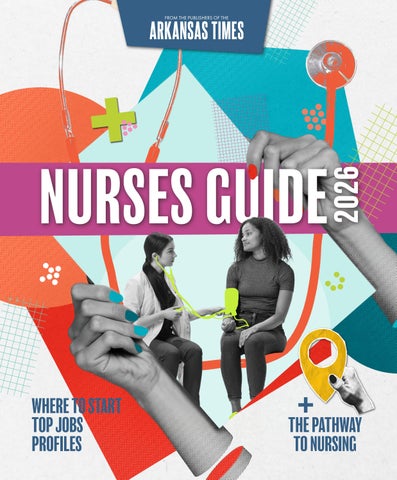
NURSES GUIDE WHERE TO START TOP JOBS PROFILES
2026
FROM THE PUBLISHERS OF THE
+ THE PATHWAY TO NURSING
Award winning care. Curated care. At Conway Regional, we foster a culture of teamwork where every employee has a voice and plays a role in delivering highly intentional, refreshingly personal care. Join a team that offers competitive pay, comprehensive benefits, and a workplace where you can grow, contribute, and make a difference.
2026
501-513-5310 2
ARKANSAS TIMES | NURSES GUIDE 2026
Special Publication of the Arkansas Times
2026
On the Cover ROMAN/LUSTRE ART GROUP/DEAGREEZ.STOCK.ADOBE.COM
NURSES GUIDE 4 YOUR PATHWAY 6TO NURSING
12 ON THE FRONT LINES 13
HIGHEST RANKING NURSING JOBS 2026
8 WHAT A CHARACTER 10
14 JUMPING 15IN TO ACTION
WHY NURSING A CAREER FILLED WITH PURPOSE
THE QUICK ROUTE FROM CLASS TO CLINIC.
NURSING SPECIALTIES IN DEMAND
TOP JOBS IN 2026.
NURSE PORTRAYALS IN MOVIES AND TELEVISION.
NURSES ADVOCATE FOR PATIENTS.
PAYING THE TOLL
UNEXPECTED PHYSICAL, MENTAL CHALLENGES.
PLUS!
5 IN THE NEWS 16 COLLEGE & HOSPITAL 18PROFILES 2026
NURSES, LIKE SUPERHEROES, ARE ALWAYS ON THE CLOCK.
LUSTRE ART GROUP.STOCK.ADOBE.COM
COMMON CHARACTERISTICS NURSES SHARE.
SUCCESSFUL SCREENINGS
PUBLISHER Brooke Wallace CREATIVE DIRECTOR Mandy Keener MANAGING EDITOR Ron Standridge ART DIRECTOR Katie Hassell
ACCOUNT EXECUTIVES Terrell Jacob Kaitlyn Looney Wendy Hickingbotham ADVERTISING TRAFFIC MANAGER Roland R. Gladden DIGITAL MARKETING DIRECTOR Jada Ellis DIRECTOR OF DEVELOPMENT Brock Hyland
ADVERTISING ART DIRECTOR Mike Spain IT DIRECTOR Robert Curfman CIRCULATION DIRECTOR Anitra Lovelace BILLING/COLLECTIONS Charlotte Key
201 E. MARKHAM ST., SUITE 150, LITTLE ROCK, AR 72201 • 501-375-2985 All Contents ©2026 Arkansas Times Limited Partnership
Special Publication of the Arkansas Times
NURSES GUIDE 2026 | ARKTIMES.COM
3
WHY NURSING?
REWARD YOURSELF IN A CAREER FILLED WITH PURPOSE.
N
ursing is more than just a job; it is a calling to one of the most trusted and valued professions in the world. Driven by compassion, expertise and a deep sense of duty to others, nursing stands at the very core of healthcare.
A CAREER THAT GIVES BACK
Nursing is more than administering medicine or checking vital signs. It is about fostering connections with patients and meeting their physical, emotional and mental needs. Whether comforting a child before surgery or guiding an elderly patient through the complexities of chronic illness, nurses serve as the human touchpoint of healthcare. Recent studies show that nurses often rank among the most trusted professionals in the U.S., with 75% of Americans reporting in a 2026 Gallup poll that nurses have “very high” or “high” ethical standards. This trust is built on nurses’ abilities to provide care and offer empathy and emotional support during life’s most challenging moments. Choosing a career in nursing means stepping into a role that gives back to the community every day. Nurses are often the linchpins of healthcare teams, coordinating between doctors, patients and families. This crucial role has lasting effects, with studies indicating that positive nursing interventions can reduce hospital stays and improve patient outcomes.
GROWING OPPORTUNITIES IN AN AGING POPULATION
The U.S. Bureau of Labor Statistics projects that employment in nursing will grow by 5% through 2034, faster than the average for all occupations. Much of this growth is driven by an aging population, with more baby boomers entering retirement age and requiring long-term care and chronic disease management. Specialized fields such as geriatric nursing, hospice care and home health services are expanding rapidly. The aging population presents a growing demand for nurses who can provide skilled, compassionate care to older adults. In fact, a new U.S. Census Bureau report released earlier this year projects the number of people aged 65 and older to grow by 19.6% by 2060, thus creating unprecedented opportunities for nurses to step into critical roles.
4
ARKANSAS TIMES | NURSES GUIDE 2026
Moreover, with the healthcare industry facing ongoing shortages of nurses due to retirements and the increasing demand for healthcare services, nursing professionals entering the field today are well-positioned to secure stable, fulfilling jobs with longterm growth potential.
FLEXIBILITY AND DIVERSE LIFESTYLES
One of the most appealing aspects of a nursing career is its flexibility. Nurses have the unique opportunity to tailor their careers to suit a variety of lifestyles. With diverse shifts — ranging from traditional 9-to-5 jobs to 12-hour shifts that allow for extended time off — nursing offers a work-life balance that can be difficult to find in other professions. This makes it an attractive option for those seeking to manage personal and professional commitments. Beyond the hospital, nursing careers offer various settings, from schools to corporate environments, from cruise ships to research labs. For those who prefer autonomy, travel nursing provides the chance to explore different cities or countries while earning a competitive salary. Nurses can work in specialty areas such as trauma, pediatrics, public health or administration, allowing them to pursue passions that align with their personal interests.
MORE THAN A CAREER
Nursing is more than a career; it allows individuals to make a profound difference in people’s lives while securing a stable, growing profession in an evolving healthcare landscape. Ready to dive into the world of nursing? This guide offers those first steps toward a bright future. Whether you are at the start of your nursing journey or looking to take your career to new heights, the following pages include an insider’s look into the profession that touches lives every day.
Special Publication of the Arkansas Times
75%
OF AMERICANS REPORTED IN A 2026 GALLUP POLL THAT NURSES HAVE “VERY HIGH” OR “HIGH” ETHICAL STANDARDS.
NURSING HERO
HIGHEST RANKING NURSING JOBS IN 2026 CERTIFIED REGISTERED NURSE ANESTHETIST (CRNA) $223,210
Administers anesthesia and manages patient care during surgical procedures.
PAIN MANAGEMENT NURSE $133,181
Helps patients manage acute and chronic pain through various treatment plans.
DOLLITUDE /ORLOVSKAYA /ROMAN/LUSTRE ART GROUP/YEVHENII.STOCK.ADOBE.COM
GENERAL NURSE PRACTITIONER $129,210
Administers patient care — including examining, diagnosing and prescribing treatment — without the supervision of a physician.
CERTIFIED NURSE MIDWIFE $128,790
Monitors, accesses and assists patients during labor with pain management and delivering newborns.
NEONATAL INTENSIVE CARE UNIT (NICU) NURSE $128,211
Provides care for premature and critically ill newborns in neonatal intensive care units.
PSYCHIATRIC NURSE PRACTITIONER $128,075
Specializes in mental health care, diagnosing and treating psychiatric disorders.
REGISTERED NURSE FIRST ASSISTANT (RNFA) $125,000
Assists surgeons during operations, performing critical roles in surgical procedures.
JULIE JONES, RN Case Manager Conway Regional Home Health
NURSING ADMINISTRATOR $117,960
Manages nursing departments, overseeing budgets, staff and operations.
HEALTH POLICY NURSE $117,469
Focuses on healthcare policy, advocacy and system improvements at a broader level.
What first attracted you to nursing as a career option, and what/who inspired your ultimate decision to become a nurse?
My mother was my greatest inspiration. Growing up, I watched her work long, hard hours caring for other people’s loved ones, only to come home and continue giving that same love and care to her own family. Watching her dedication and compassion was incredibly rewarding and inspiring. So, I knew I wanted to become a nurse from an early age.
FAMILY NURSE PRACTITIONER (FNP) $109,075
What was the hardest thing about nursing school, and why?
“
What has been the most rewarding moment of your nursing career, and why?
Responsibilities include patient consultations, assessments, prescribing medications and treatments and general primary care.
I wish I had saved more money over the years. Who knew life was going to become so expensive? I also wish I would have protected my back better. I was warned, but I was young and hard-headed.
”
– CINDY TULLOUS, RN WEEKEND/EVENING FLOOR NURSE CONWAY REGIONAL HEALTH SYSTEM
One of the hardest parts of nursing school was learning time management and how to “triage” my assignments, if you will — figuring out which task was the most pressing and needed my attention first. Of course, getting married six months before graduation probably wasn’t the smartest timing. Thankfully, my husband knew exactly how to encourage, support and push me through it all, and we made it.
Throughout my career, I have collected more rewarding stories and special moments than I could ever count, and I don’t take any one of them lightly. Whether it’s watching a wound finally heal, helping someone regain their independence, celebrating a small victory that feels huge to a patient, or simply being a familiar face during a difficult season … those moments remind me why I chose nursing. For me, the reward is found in the everyday moments.
What has been the most challenging moment of your nursing career, and why?
The most challenging moments have probably involved balancing my workload with my home life. I have two beautiful children, ages 15 and 12, who are in ALL the sports. Juggling my patient load while also trying to be present for practices, games, out-ofstate tournaments and everything in between can be challenging at times.
What advice would you give to anyone considering nursing as a career, and why? Do it! Nursing is challenging, but it is also incredibly rewarding. Jump in headfirst, and you will never regret the love, compassion and care you are able to give others during some of the most vulnerable moments of their lives.
Source: Nurses.org Special Publication of the Arkansas Times
NURSES GUIDE 2026 | ARKTIMES.COM
5
YOUR PATHWAY TO NURSING THE QUICK ROUTE FROM CLASS TO CLINIC. o become a nurse, you must complete a nursing program, pass the required licensing exam, and you're ready to work. The good news? Arkansas offers a wide range of nursing degrees and designations, providing students with multiple pathways to enter the nursing profession and advance their careers. Each level of education and certification is designed to meet specific needs within healthcare sectors, allowing aspiring nurses to choose a path that aligns with their professional goals.
2. LICENSED PRACTICAL NURSE (LPN)
Licensed practical nurses provide basic nursing care under the supervision of registered nurses (RNs) and doctors. LPNs work in long-term care facilities, hospitals and clinics. In Arkansas, aspiring LPNs must complete an accredited practical nursing program, which usually takes about a year. Some schools offer LPN programs that combine classroom instruction and clinical experience. Graduates must pass the NCLEX-PN (National Council Licensure Examination-Practical Nurse) to obtain licensure.
1. CERTIFIED NURSING ASSISTANT (CNA)
The CNA certification is often the first step for individuals interested in the nursing field. CNAs assist patients with such daily activities as bathing, dressing and eating, and they report changes in a patient's condition to nurses. This role requires a high school diploma or equivalent and completion of a CNA training program, typically lasting 4-12 weeks. Many programs provide the necessary training. After completing the program, students must pass a competency exam to become certified.
6
ARKANSAS TIMES | NURSES GUIDE 2026
3. ASSOCIATE DEGREE IN NURSING (ADN)
The ADN is a popular option for those looking to become registered nurses (RNs), and a two-year program is offered at many community colleges and universities. The curriculum combines coursework in nursing theory, anatomy and pharmacology with clinical experience in hospitals and healthcare settings. After completing the program, graduates must pass the NCLEX-RN (National Council Licensure Examination-Registered Nurse) to become licensed RNs. ADN programs are often shorter and more affordable than bachelor’s programs, making them an attractive entry point into the profession.
Special Publication of the Arkansas Times
4. BACHELOR OF SCIENCE IN NURSING (BSN)
A BSN is a four-year degree that provides a more comprehensive education than the ADN, preparing nurses for leadership roles and specialized positions in areas like public health, critical care and pediatrics. Institutions like UCA and UA Little Rock offer BSN programs that include both classroom instruction and clinical practice. A BSN is often required for advanced nursing roles and is recommended for nurses looking to further their education with a master’s or doctoral degree. Hospitals seeking Magnet status often prefer hiring nurses with BSNs because of their comprehensive training.
IGOR LINK/RUZANNA/RK GRAPHICS/LUSTRE ART GROUP/ROMAN/YEVHENII.ADOBE.COM
T
5. RN-TO-BSN PROGRAMS
For nurses who have already earned an ADN, Arkansas offers several RN-to-BSN programs. These are typically online or hybrid programs designed to accommodate working professionals wishing to advance their careers. UAMS and Baptist Health provide flexible RN-to-BSN pathways that allow RNs to complete their bachelor’s degree while continuing to work. Completing a BSN opens the door to higher-paying roles and leadership positions.
6. MASTER OF SCIENCE IN NURSING (MSN)
An MSN is designed for nurses seeking advanced practice roles or leadership positions within healthcare. Common specialties include nurse practitioner (NP), clinical nurse leader (CNL) and nurse educator. UAMS and UCA offer MSN programs with various specialties. MSN-prepared nurses take on higher-level responsibilities, including diagnosing and treating patients, prescribing medication and managing teams of nurses.
7. DOCTOR OF NURSING PRACTICE (DNP)
No matter how strong “your brew is, you can’t
share coffee from an empty cup. As a nurse and a mom, my default is to give to others while neglecting myself. Mindfulness and self-care were not taught to my generation. I wish I had learned to prioritize myself much sooner.
”
– Erin Garrett, RN, MSN, CPN, CHSE Simulation Quality Manager, Nabholz Center for Healthcare Simulation UCA School of Nursing
For those looking to take their education even further, a DNP degree is the highest level of nursing education available in Arkansas. UCA offers a comprehensive DNP program, preparing nurses for leadership roles in clinical practice, healthcare administration and policy-making. UAMS also offers a DNP program with tracks for both BSN- and MSN-prepared nurses. DNP graduates work as nurse practitioners, healthcare executives and educators, playing key roles in shaping healthcare practice and policy across the state.
NURSES & WORK ENVIRONMENTS What type of setting do you work in and how does it compare to others you've experienced? I had been an ICU nurse until I found Baptist Health Extended Care, which is a long-term acute care hospital. At BHEC, you get a wide variety of patients, ranging from those needing long-term antibiotics to those on ventilators and multiple critical life-saving drips.
Can you describe the dynamics of working in a team in different nursing environments? The team approach in a long-term acute care hospital (LTACH) is very similar to what I experienced in an ICU environment. It is very detail-oriented, and the entire multidisciplinary team focuses on providing quality care to our patient population. It's a family approach.
What has been your most memorable experience in your current work environment?
Since working in the LTACH setting, my most memorable experience is seeing patients who have spent days, weeks or months in an ICU setting come to us. We provide them that little extra time they need to fully heal, and when they go to rehab and return to visit, it truly is a miracle.
DANIEL COLLIER, IHA RN Travel Nurse Baptist Health Extended Care
Special Publication of the Arkansas Times
NURSES GUIDE 2026 | ARKTIMES.COM
7
TOP JOBS AND GROWING OPPORTUNITIES IN 2026.
F
or those entering the field or looking to advance, understanding which specialties are in demand can guide career decisions and provide pathways to higher earnings and job stability.
NURSE PRACTITIONERS
Nurse practitioners are advanced practice nurses who provide primary and specialized patient care. With the autonomy to diagnose, prescribe and treat, NPs are essential in various healthcare settings, including family practice, mental health and women’s health. According to the U.S. Bureau of Labor Statistics, the demand for practitioners through 2034 is expected to grow by 35%. This increase is largely due to the rising need for accessible healthcare services, particularly in rural or underserved areas where practitioners may serve as primary care providers. Nurse practitioners also enjoy some of the highest salaries, with the median pay hovering around $129,210 annually, depending on the area of specialization. Specialties like psychiatric-mental health and neonatal care are in demand, offering challenging work and strong compensation.
CERTIFIED REGISTERED NURSE ANESTHETISTS
CRNAs represent the highest-paid nursing role, with annual salaries often exceeding $223,210. CRNAs administer anesthesia during surgeries and other medical procedures, a critical task that requires extensive training and certification. CRNAs play a vital role in surgical and emergency care settings, working alongside surgeons and anesthesiologists to ensure patient safety. As healthcare facilities seek cost-effective solutions, the demand for CRNAs continues to grow. Additionally, the increasing complexity of surgeries and medical treatments boosts the need for this highly specialized nursing profession.
INFORMATICS NURSES
As healthcare technology advances, informatics nurses are increasingly in demand to manage and optimize the use of electronic health records and other digital systems. These nurses bridge the gap between clinical care and IT, ensuring health data is efficiently recorded, stored and accessed. With the rise of telehealth, mobile health applications and electronic record-keeping, informatics nurses help improve the quality and efficiency of patient care. Informatics nursing also offers strong salaries, with median earnings typically ranging $85,000$113,000. The role is ideal for those who have a passion for both healthcare and technology and want to shape the future of digital health.
GERIATRIC NURSES
As the U.S. population ages, the demand for geriatric nurses is rapidly growing. These nurses specialize in the care of elderly patients, often managing chronic illnesses and providing longterm care. Geriatric nurses work in hospitals, longterm care facilities and home healthcare settings, ensuring that older adults receive the specialized attention they need. According to U.S. Bureau of Labor Statistics projections, the need for senior care will continue to rise significantly in the coming years, making it one of the most stable and essential fields within nursing. Salaries for senior nurses average around $77,000 annually, but there is ample room for growth, particularly in leadership and management roles within elder care facilities.
Source: Nurses.org and the U.S. Bureau of Labor and Statistics 8
ARKANSAS TIMES | NURSES GUIDE 2026
Special Publication of the Arkansas Times
NURSING HERO ERIN GARRETT, RN, MSN, CPN, CHSE Simulation Quality Manager, Nabholz Center for Healthcare Simulation UCA School of Nursing
What first attracted you to nursing as a career option, and what/who inspired your ultimate decision to become a nurse? My parents wanted me to be a pharmacist … which naturally made me want to do anything else. But after volunteering in pool therapy at Arkansas Children’s Hospital while in college, I discovered my passion was for pediatric nursing.
What was the hardest thing about nursing school, and why? As a new nursing student, I failed my vital sign checkoff because I misread a mercury thermometer! My initial tearful reaction included thoughts that I would never become a nurse. Now, not a week goes by that I don’t coach my own nursing students on reframing their self-talk into positive, truthful statements.
What has been the most rewarding moment of your nursing career, and why?
The most rewarding part of my career is the lasting bond formed with patients and their families during their most vulnerable moments. You celebrate their wins and grieve their losses together. Years after caring for one patient, their family reached out asking me to visit during their final day. This is a powerful testament to the deep, enduring impact nurses leave behind.
What has been the most challenging moment of your nursing career, and why? As a pediatric trauma nurse, I often cared for children who were injured because an adult carelessly failed to keep them safe. Pediatric trauma is emotionally heavy work regardless of the child's age, but when a patient is the exact same age as your own child, it hits a lot harder.
What advice would you give to anyone considering nursing as a career, and why? You will never struggle to find a job as a Registered Nurse. The career options are endless. Nursing can work in schools, forensics, information technology, insurance, education and the military. You can even find nurses working on cruise ships, at Disney parks or at Atlantis in the Bahamas.
ROMAN/DEAGREEZ/YEVHENII.STOCK.ADOBE.COM
NURSING SPECIALTIES IN DEMAND
CAREER. CALLING. BOTH. Become a nurse. Baptist Health.
Benefits of earning a nursing degree at BHCLR: Only 3 semesters to become an RN with prerequisites Strong emphasis on hands-on instruction compared to classroom lectures. New RN Grads Hired at Any Baptist Health Hospital Residency/Fellowship automatically enrolled for all new grads Comprehensive Benefits, 401(K), and Tuition Reimbursement Baptist Health is proud to be Certified™ by Great Place To Work®
Career Advancement Opportunities: New Grad Experienced Nurse Educator/Faculty Management Masters (such as APRN, CRNA, etc.)
LEARN MORE about becoming a nurse for Baptist Health, visit: BHCLR.edu BaptistHealthCareers.com
2026 Ad for AR Times Nurses Guide 1:2 page is 8" x 4.875.indd 1
9/14/26 2:38 PM
Special Publication of the Arkansas Times
NURSES GUIDE 2026 | ARKTIMES.COM
9
WHAT A CHARACTER R
anking among the most trusted professionals in the United States, nurses have an earned reputation built on their keen ability to treat patients using a delicate blend of highly trained medical knowledge and treatment combined with emotional and empathetic support during some of life's most challenging moments. Findings released as part of a 2026 Gallup poll reveal 75% of Americans believe nurses hold "very high" or "high" ethical standards. The National Council of State Boards of Nursing reports more than 5 million nurses working in the United States. Yet, how does a profession filled with so many uniquely individual personalities coalesce into one such highly esteemed and idealized collective unit? The answer may be found in the common characteristics of those drawn to the career field. But what exactly are some of those shared traits? “Compassion, resilience and adaptability,” Lawson Hamilton, herself an RN and assistant emergency room nurse manager at Baptist Health Medical Center-North Little Rock, said. “Nurses genuinely care about their patients and want to make a difference, even when they may not always have the time or resources they wish they had,” Hamilton said. “Nurses see people on some of the worst days of their lives, and we still have to show up and give them our best. And nurses must be adaptable because no two shifts or patients are the same … especially in the ER. Things can change very quickly, and being able to adjust while still providing safe, quality care is important.” Accountability is another common thread Hamilton said she has noticed in a profession where ownership of their actions, their patients and their decisions can often be the hallmark of a good nurse. “Nursing is a profession where small things can make a big difference,” Hamilton said. “Being honest when something goes wrong, asking questions when you aren’t sure and being willing to learn from your
mistakes is extremely important. Accountability is also about being someone your co-workers can trust to do the right thing, even when no one is watching.” Hamilton may be on to something, as the American Nurses Association also identifies many similar qualities such as integrity, critical thinking and problem-solving, communication and attention to detail. The ANA also mentions advocacy, empathy and compassion as traits that can be found in most nurses. “Empathy, to me, is what makes someone a really good nurse and not just someone who is doing their job,” Hamilton said. “Patients may not remember every medication we gave them or every task we completed, but they will remember how we made them feel. Sometimes just sitting down, listening, explaining something one more time or treating someone with dignity can make a huge difference. What may be just another shift for us could be one of the hardest days in a patient’s life.” As compassionate and caring as nurses can be when working with patients, Hamilton admitted nurses can sometimes be hardest on themselves. “One of the biggest struggles for nurses can be with giving themselves grace and asking for help when they need it,” Hamilton said. “Nursing can create a mindset that you have to be able to handle everything on your own, but that isn’t realistic. “We work in a high-stress environment, and sometimes nurses become so focused on taking care of everyone else that they forget to take care of themselves or lean on their team. I think being able to recognize your limits, communicate when you need help and support each other is something that makes the entire team stronger.”
“Though nursing is not always unicorns and rainbows, I wish I had known then just how much the hard days would shape me into the nurse I am now. Some days will test you, humble you and completely wear you out. But then one patient, one smile or one simple “thank you” reminds you exactly why you chose this career … and somehow, you get up and do it all over again the next day. And I wouldn’t change a thing.” – JULIE JONES, RN, CASE MANAGER CONWAY REGIONAL HOME HEALTH
10
ARKANSAS TIMES | NURSES GUIDE 2026
Special Publication of the Arkansas Times
RK GRAPHICS/ROMAN/IGOR LINK/ DEAGREEZ/YEVHENII.STOCK.ADOBE.COM
COMMON CHARACTERISTICS NURSES SHARE.
BROOKE KEITH, APRN
Conway Regional Surgical Associates
NURSE ON EDUCATION How has your education prepared you for real-world nursing challenges? Nursing is ultimately a hands-on profession, and many of the most valuable skills are developed through real-world experience and exposure to diverse patient populations. While education equips nurses with the tools and knowledge to identify what to look for, clinical experience strengthens critical thinking, judgment and decision-making skills.
How important is continuing education or certifications?
RNs, LPNs & CNAs: Join our AWARD WINNING Nursing Team in Central AR! Taking great care of Arkansans since 2008
Apply today!
Arkansasmedicalstaffing.com
It is important to continue to learn new and improved information and strategies within healthcare. Throughout my career, I have been required to get and maintain a lot of certifications in different jobs, the biggest being my advanced practice licensure. I have also obtained my ACLS, PALS, NPP, TNCC, stroke certification and ATLS.
What advice would you give to someone choosing between an ADN and a BSN?
Ultimately, the best choice depends on an individual's financial situation, timeline, career goals and personal circumstances. Both pathways can provide a strong foundation for a successful nursing career. If you have intentions of advancing your nursing career beyond the registered nurse role and you have the financial resources and time available, I recommend pursuing a BSN from the beginning. However, an ADN is also an excellent pathway into nursing for those looking to enter the workforce sooner, and it provides a more affordable and accessible route to becoming a registered nurse with the option to pursue a BSN later.
What is something all prospective nursing students should know?
While it can be challenging, nursing is also incredibly rewarding and has never felt like just a job to me. Knowing that I can make a positive difference in a patient's experience and well-being is what motivates me every day and continues to make this career so meaningful.
COMING IN DECEMBER!
2026 TOP HOSPITALS IN ARKANSAS Special Publication of the Arkansas Times
NURSES GUIDE 2026 | ARKTIMES.COM
11
SUCCESSFUL SCREENINGS
NURSING HERO STEPHANIE SCHMITTOU, RN, MSN
AREA NURSES REFLECT ON PORTRAYALS IN MOVIES AND TELEVISION.
M
edical dramas, mysteries and comedies have long occupied an important place in the hearts and memories of generations of Americans fascinated, puzzled and entertained by a variety of onscreen healthcare workers they grew to know and love in films and on television. No matter where or when you grew up, chances are it doesn't take long for many to envision a favorite on-screen medical character who captured an audience’s imagination, tickled their funny bone or, for some, perhaps even inspired their own career within the healthcare community. Nurses have long been particularly well represented on the big and small screen with fictional characters raising significant awareness of the vital role they play not only in hospitals and medical clinics, but also in the lives of the patients whose lives they touch. "TV has this very particular rhythm, and what tends to make a really great television show is the specific combination of something that feels brand new every episode and something that feels very familiar and reliable," Kathryn VanArendonk, television critic at New York Magazine, said in a radio interview with NPR host Ayesha Rascoe. Discussing the popularity of doctors and nurses on TV, VanArendonk suggested that medical shows offer viewers the opportunity to invest in the lives of characters whose day-to-day work provides a somewhat realistic ebb and flow of dramatic highs and lows, both professionally and personally. "You can care about their lives," VanArendonk said. "You have the sort of intense rhythm of both very small cases and very large cases happening all the time. There is this immediate and sort of obvious, constant influx of novelty at the same time because you have new patients every day, and it's part of why TV just cannot escape medical dramas." Audiences have also witnessed the evolution of nurses on screen. As written and portrayed in older movies and television shows, nurses would often fall into the trope of being merely incidental clinic workers responsible only for the most trivial and mundane tasks deemed below the dignity of doctors, thus mirroring chauvinistic prejudices of a bygone era. While those films and programs hold nostalgic memories for fans who can now watch and enjoy them in context, modern medically themed shows present a much different — and decidedly stronger — image of the role nurses play both in and out of the clinical setting. Modern nurses now hold their own on screen, working side by side — and sometimes even going toe-to-toe — with doctors as a valuable and contributing member of the medical team. “‘The Pitt’ is one of my favorites,” Kelly Jackson, an RN and Med/Surg nursing supervisor at Baptist Health-El Dorado, said. “Having been a nurse for many years, I
12
ARKANSAS TIMES | NURSES GUIDE 2026
What first attracted you to nursing as a career option, and what/who inspired your ultimate decision to become a nurse?
appreciate a medical show that portrays nurses as an essential part of the healthcare team. I also enjoy the show's fast pace and how quickly situations change, as that is something nurses experience every day.” Jackson said she also believes “The Pitt” does one of the best jobs among current shows in accurately portraying nursing. “It shows nurses actively involved in patient care, communicating with physicians, advocating for their patients and recognizing changes in a patient's condition,” Jackson said. “It realistically portrays the constant interruptions, changing priorities and teamwork that are such a big part of a nurse's shift. Each episode represents only one hour of a shift, and it really shows just how much can happen in such a short amount of time. It also shows how truly busy nurses and other medical team members are.” While “The Pitt” receives high marks from Jackson, she says other shows — despite their popularity — can sometimes fall short of being a genuinely realistic depiction of what it is like being a nurse. “I feel ’Grey's Anatomy’ probably misses the mark the most when it comes to the nursing role,” Jackson said. “Nurses are at the bedside around the clock, coordinating care, administering medications, educating patients and families, noticing subtle changes in a patient's condition and advocating for their patients. That part of healthcare is often underrepresented on television.” While medical dramas and situation comedies are generally received and accepted as fiction, the introduction of reality television in clinical settings has ushered in a whole new mixed bag of reactions, with audiences — including healthcare workers — who must decide for themselves how real some realities are presented. “I think medical reality television can give the public a better appreciation for how demanding healthcare can be, especially when it shows real patient situations and the teamwork involved in caring for them,” Jackson said. “At the same time, television naturally focuses on the most dramatic moments. Nursing is certainly present during those moments, but so much of what we do as nurses happens quietly, behind the scenes. Nurses are building trust with patients, catching changes early, providing education, advocating for patients and supporting families during some of their most difficult days.” Special Publication of the Arkansas Times
At 13, I was diagnosed with Juvenile Type I diabetes and, within a matter of hours, my whole life changed. I was quickly transferred to a large hospital where many tests and education followed, and I gave myself my first insulin injection within 24 hours. Looking back, so many physicians and clinicians entered my room. I was overwhelmed, but without the care and guidance of the staff, I could easily have fallen short of maintaining good health, especially at that time in my life.
What was the hardest thing about nursing school, and why?
The hardest thing was learning to prioritize my study time. The tests were not just the study guide backwards like in high school. We weren’t just learning one body system at a time, but we also had to fit clinicals into the week.
What has been the most rewarding moment of your nursing career, and why? Being a nurse has allowed me to be a part of many people's journeys. I have cared for people at their best and worst — crying with them, praying with them and finding something to smile about with them.
What has been the most challenging moment of your nursing career, and why?
By far, the most challenging moment was leading and navigating the nursing staff through COVID. Each day presented a new challenge. Staff were expected to practice in ways we had never imagined. Staffing shortages and rapid burnout complicated this time.
What advice would you give to anyone considering nursing as a career, and why?
Nursing is not just a degree or a job … it's a passion and a commitment to yourself and others. Nursing will present you with difficult and amazing moments. In every challenge or crisis, there will be a blessing, and I believe God has blessed nurses with the compassion and skills to handle every journey or obstacle.
ATLAS/ DEAGREEZ/YEVHENII.STOCK.ADOBE.COM
Chief Nursing Officer, Magnolia & El Dorado Baptist Health Medical Center
ON THE FRONT LINES NURSES ADVOCATE FOR PATIENTS.
P
atients can often be overwhelmed by the sheer volume of complex information, options and opinions coming at them while they are still trying to process a diagnosis and adapting to the realities of an unanticipated medical predicament. At times like these, patients look more and more to trusted nurses to break down what is happening in layman’s terms and explain answers to the questions that need to be asked when it comes to taking charge of their own medical journeys. “Advocacy means speaking up when necessary, helping align expectations, involving the patient in decisions, and following through on concerns,” Katie Hunt, a registered nurse in Pre-Op/PACU at Conway Regional Medical Center, said. The role of patient advocate is well-suited to most nurses, especially those who bring personal history rooted in an empathetic desire to help patients fight and overcome illness and injuries. “Nurses advocate in many ways,” Lacy Woodruff, RN and nursing supervisor in the Coronary Care Unit and Critical Care Resource Team at Baptist Health in Little Rock, said. “Most importantly, nurses advocate by explaining care in understandable ways, supporting the patient's decisions, protecting their dignity and speaking up when something appears unsafe.” Hunt views advocacy as a natural expansion of traditional medical care and treatment of patients. “Patients often find themselves in some of the most vulnerable and difficult circumstances of their lives while in our care,” Hunt
said. “Fear, illness, pain and uncertainty can make it difficult for them to fully express their needs or concerns. As nurses, one of the most important ways we advocate is by creating meaningful connection, listening carefully, understanding what matters most to the patient and ensuring their voice is not lost within the complexity of their care.” “Ultimately, patient advocacy is about protecting dignity and partnering with the patient throughout their experience," Hunt said. "Even when we cannot change the circumstances or medical outcome, we can help ensure every patient feels seen, heard, acknowledged, respected and genuinely cared for.” Woodruff said she believes nurses can be better equipped to advocate on behalf of patients through education, mentorships and ample clinical staffing. “Education in assertive communication, conflict resolution and ethical decision-making can help nurses become confident in navigating difficult situations," Woodruff said. "As a nurse leader, I believe it is essential to create an environment in which nurses can feel safe to speak up and receive meaningful follow-up. Doing so would allow nurses to advocate effectively and place patient care as the highest priority.”
MASTER'S ENTRY INTO PROFESSIONAL NURSING 100% NCLEX PASS RATE APPLY NOW to enroll for Fall 2027 First program of its kind in Arkansas. Be prepared to become an advanced entry-level professional nurse. Earn a Master of Science in nursing and be eligible to take the NCLEX-RN exam. Complete in 22 months.
Special Publication of the Arkansas Times
NURSES GUIDE 2026 | ARKTIMES.COM
13
PAYING THE TOLL N
ursing school can prepare student nurses for the regulations, requirements and responsibilities that await before entering the profession. Years of study, intensive practical training and pre-graduation clinical work all provide a secure foundation upon which years of experience will eventually build a solid medical career. Even so, in a highly pressured field like medicine, there are some things that are not — or cannot be — taught in the classroom. Learning to prepare for the unexpected is one thing in theory but something else entirely in actuality, sometimes making it the hardest lesson of all. “It was apparent at the beginning of my career that I was not prepared for the mental and physical challenges I would face,” Karon Swann, a Conway Regional Home Health RN, said. “I knew the basics, but it was soon clear that I needed to know much more than that,” she added. “I had to learn how to take care of six or seven people at one time and how to prioritize their care. I am grateful that I had an excellent preceptor that taught me so much, including many pieces of advice that I have continued to use throughout my career.” Nancy Yang, RN and nurse manager in the emergency room at Baptist-Health Conway, recalls having a somewhat similar experience. “I think I was prepared physically,” Yang said. “I do not believe I was mentally prepared, but honestly, I don't think anyone is. I think it depends on the area where you work and what you are exposed to, but there is no way to prepare for much of what we see.” Like most nurses, Yang and Swann have seen a lot in their respective careers and specialty fields. “Home health requires us to adapt to the environment in front of us while still finding a way to provide patients with safe, compassionate care,” Swann said. “We have cared for patients without running water. We brought water in so they had what they needed for drinking and cooking while we also looked for resources to provide longer-term help. Poor lighting is also common, including situations where there is little or no light in the area where we need to provide care.” Swann says she and her colleagues have become increasingly skilled at addressing any number of unanticipated patient circumstances.
14
ARKANSAS TIMES | NURSES GUIDE 2026
“Rodent and insect infestations can be another significant challenge,” Swann said. “For patients who need wound care, we may have to bring large sealable bags to protect their supplies from bugs and carry only what we need into the home. We also educate patients about the health risks associated with such conditions and help to connect them with available resources.” Bearing the emotional weight of witnessing the home and life struggles of patients — up to, and including, death and dying, brings with it the sort of mental anguish that all nurses must eventually learn to balance for their own peace of mind. “I don't think this is surprising, but the biggest mental challenges I have faced have been pediatric cardiac arrests and losing a patient I felt very invested in,” Yang said. “Those times are difficult for the whole team.” “We all question ourselves," Swann confessed. "What did I miss? Should I have done something differently? Did I not do enough? "But at the end of it all, I would replay it all in my head and see that I did everything that I could. Even if it was just sitting with someone, holding their hand to calm their fears and give them comfort.” Learning to be confident in their own skills while also walking the fine line between empathetic care and self-protection is what ultimately allows nurses to prioritize the best interests and treatment of patients. “When I find myself in a stressful situation in the emergency department, I remind myself that it is not my emergency … it is the patient's,” Yang said. “To help the patient to the very best of my ability, I must think clearly and remain calm. That thought usually grounds me in the moment and helps me stay focused. “I just live every day with the mindset that I am going to do my very best to help care for people.”
Special Publication of the Arkansas Times
LUSTRE ART GROUP/ DEAGREEZ/YEVHENII.STOCK.ADOBE.COM
NURSES FACE UNEXPECTED PHYSICAL, MENTAL CHALLENGES.
NURSING HERO SAMUEL ALLENDER, RN
Emergency Department, Conway Regional Health System
What first attracted you to nursing as a career option, and what/who inspired your ultimate decision to become a nurse?
I was initially attracted to healthcare in general because I was looking for a rewarding career. I decided to get a job as a PCT (Patient Care Technician) before starting nursing school to make sure I was even cut out for the job. My son inspired me to go to nursing school, as I was looking for a way to best provide for him as a single father.
What was the hardest thing about nursing school, and why? The hardest thing was the lack of sleep. I worked full time through both LPN and RN school, so there was a bit of burning the candle at both ends.
JUMPING INTO ACTION NURSES, LIKE SUPERHEROES, ARE ALWAYS ON THE CLOCK.
N
ot all heroes wear capes, but many do come equipped with medical credentials and a willingness to step in and save the day, even when there is a medical crisis requiring their extraordinary skills. Away from the workplace, whether making the most of a little quiet relaxation or out and about enjoying quality time with friends and family, healthcare workers stand ready to answer a call to action whenever and wherever they are needed. And, as any superhero worth his or her salt can attest, genuine lifesavers are never off the clock. Asked if they had ever witnessed medical emergencies outside of the workplace, some Arkansas nurses offered inspirational examples of how they found themselves in the right place at the right time to assist those in need of a hero.
Samuel Allender, RN Emergency Department Conway Regional Health System “I was eating at a restaurant when I saw an elderly gentleman who seemed a little wobbly get up to leave out of the back door. As I stood up to make sure he would make it OK, he fell over and struck the concrete. He told me he blacked out and that he had a history of kidney issues, so I assisted him to a position of comfort, provided him with cold water and a wet towel and instructed a bystander to call 911. When EMS arrived, I was able to give them a very quick rundown of what happened and the brief medical history I had obtained while awaiting their arrival. They were able to get him loaded onto the cot and transported. He was a very nice gentleman and very grateful for the help.”
Cindy Tullous, RN Weekend/Evening Floor Nurse Conway Regional Health System “Once, I witnessed a motorcycle accident in front of our car. It was a college-aged girl who had never driven a motorcycle and apparently thought heavy traffic was the perfect time to learn. I stabilized her and helped EMT load her up in the ambulance, and I also called her father, who was — as any parent would be — hysterical.”
What has been the most rewarding moment of your nursing career, and why?
I think the most rewarding moment would probably be when I was an LPN. A man came to the front doors of the ER and said his wife was not breathing. I went out to the car to check, and she was completely unresponsive … not breathing, no pulse. I carried her in my arms to a room in the ER where she was able to be revived.
What has been the most challenging moment of your nursing career, and why? The most challenging moment would be a patient I lost. He was a prominent member of the community, a very nice man. Everything seemed to be completely fine, but about 30 minutes later, he unexpectedly coded in the presence of his family. We worked very hard to get him back, but he did not make it. I have been part of many codes, but I had never lost anyone that was awake and alert before. It really hit me hard.
Cynamon Johnson, RN, MSN, CEN, NREMT Associate Director of Nursing, Hot Spring County Baptist Health Medical Center “My daughter experienced a medical emergency involving a seizure and apnea, and I had to immediately shift into nurse mode and perform CPR while getting help. It was completely different from responding to an emergency at work. In the emergency department or during flight nursing, I am accustomed to critical situations, but nothing prepares you for having to use those same skills on your own child. Despite being terrified, my training took over, and I did what I knew needed to be done.”
What advice would you give to anyone considering nursing as a career, and why?
I would say to make sure this is what you really want, because this is so much more than just another job. It requires 100% every time you clock in to make sure that your patients receive the best care.
Special Publication of the Arkansas Times
NURSES GUIDE 2026 | ARKTIMES.COM
15
IN THE NEWS Baptist Health College Little Rock Launches New Online RN-to-BSN Baccalaureate Program
Baptist Health College Little Rock (BHCLR) recently announced the launch of the first baccalaureate degree program in its 105-year history: the online RN-to-BSN program. “This program represents a significant milestone for BHCLR and will pave the way for future educational opportunities,” Dr. Crystal Rose, dean of nursing, said. Designed for registered nurses seeking to advance their careers, the program offers a seamless pathway for BHCLR alumni and nursing professionals to earn a Bachelor of Science in Nursing degree and marks the college’s first fully online, distance-education program. Using immersive learning experiences to enhance clinical practice, the curriculum will also integrate pioneering healthcare innovations and emerging areas in healthcare such as artificial intelligence, predictive analytics, remote monitoring and risk stratification. The program will be offered twice annually with cohorts starting in January and August, and students can complete the degree in 12 months. The inaugural cohort will begin in January 2027. To be accepted into the RN-to-BSN program, students must have an unrestricted Arkansas RN license, a compact state license, or a right to practice in Arkansas (endorsement).
UA Little Rock School of Nursing Earns Accreditation Through 2030
The University of Arkansas at Little Rock School of Nursing has received continued full approval for its Associate Degree Program from the Arkansas State Board of Nursing (ASBN) through 2030, following a comprehensive review that identified no program deficiencies. Students complete approximately 30,000 hours of simulation training each year in the Pat Walker Center for Nursing. The Walker Center is home to a 22-bed on-campus simulation hospital, the Center for Simulation Innovation (CSI) and the Innovation Station Lab — the first virtual reality simulation lab in Arkansas dedicated to nursing education. “Healthcare is constantly evolving, and our students need opportunities to practice clinical judgment, teamwork, and decision-making in realistic environments before they enter patient care settings,” said Judy Staley, assistant professor and Walker director of simulation. Staley said immersive training experiences are essential to preparing today’s nurses. “Simulation allows us to bridge the gap between classroom learning and real-world practice, ensuring our graduates are confident, competent, and ready to serve across Arkansas.” 16
ARKANSAS TIMES | NURSES GUIDE 2026
Martina Steed Assumes Directorship of UAMS College of Nursing’s Nurse Anesthesia Program
Martina Steed, Ph.D., CRNA, has been named as director of the Nurse Anesthesia Program at the University of Arkansas for Medical Sciences (UAMS) College of Nursing. An assistant professor in the College of Nursing, Steed had served as interim director since January. Steed is a Little Rock native and UAMS alumnus who earned a Bachelor of Science in Nursing degree at the school in 1988. Obtaining a Master of Science in Nursing degree with a nurse anesthesia specialization from Southern Illinois University-Edwardsville in 1996, Steed earned her Doctor of Philosophy in Health Services degree from Walden University in Minneapolis in 2015. As a practicing nurse anesthetist, Steed worked for more than 25 years at hospitals and other healthcare providers in the St. Louis metropolitan area. Special Publication of the Arkansas Times
The University of Central Arkansas Nabholz Center for Healthcare Simulation — Integrated Health Sciences has earned full accreditation from the Society for Simulation in Healthcare (SSH), becoming the first collegiate simulation center in Arkansas to receive the distinction. SSH is the world’s largest international organization dedicated to healthcare simulation, patient safety and professional performance. Its accreditation process is peer-reviewed and recognized as one of the highest standards in simulation-based education. The five-year accreditation affirms UCA’s commitment to preparing future healthcare professionals through advanced, hands-on training that emphasizes patient safety, teamwork, communication, critical thinking and evidence-based practice. The Nabholz Center supports students across the College of Health and Behavioral Sciences through interprofessional education experiences designed to mirror the collaborative nature of healthcare delivery. The center’s mission is to prepare students for interprofessional practice through simulation experiences that apply knowledge, skills and abilities in providing safe, effective and holistic care for diverse populations. The center was named in recognition of support from the Nabholz family and serves as a hub for innovative teaching, workforce preparation and research in healthcare education.
Charles Nabholz (center) visits with UCA nursing students at the Nabholz Center for Healthcare Simulation accreditation celebration.
ACCOGLIENTE/ DEAGREEZ/.STOCK.ADOBE.COM
OBU Nursing faculty members Ashley Knight, Kayla Harrington and Leah Cruthis are among Arkansas Center for Nursing's 40 Nurse Leaders Under 40 for 2026.
Three Ouachita Baptist University Department of Nursing faculty members — Ashley Knight, Kayla Harrington and Leah Cruthis — have been named among Arkansas’ 40 Nurse Leaders Under 40 for 2026, an honor presented by the Arkansas Center for Nursing. Recognizing Arkansas nurses demonstrating exceptional commitment to service excellence, community outreach and leadership in the nursing profession, honorees are selected by a blind review panel from nominations submitted statewide. Knight, an assistant professor of nursing, holds a Master of Science in Nursing degree and is a certified emergency nurse who has taught at Ouachita since 2021. Harrington, also an assistant professor of nursing, is a board-certified adult-gerontology primary care nurse practitioner who holds a Master of Science in Nursing degree. Cruthis, an assistant professor of nursing who also joined the department in August 2025, holds a Master of Science in Nursing degree and is a board-certified adult-gerontology acute care nurse practitioner.
UCA Nabholz Center for Healthcare Simulation Earns Full Accreditation from Global Leader, a First for Arkansas
PHOTOS PROVIDED
OBU Department of Nursing Faculty Named to 40 Nurse Leaders Under 40
ANSWER YOUR CALLING. LEARN TO SEE THE WHOLE PERSON. Ouachita’s on-campus BSN program pairs rigorous science and clinical work with a Christian liberal arts education, taught by nurse educators invested in your growth academically and spiritually. So you can connect with people, not just treat symptoms. • 95% first-time NCLEX pass rate* • 100% job placement, 2024 and 2025 BSN cohorts • Clinical partnerships with over 20 facilities • A nursing faculty advisor for every student, from day one L E A R N M O R E AT O B U . E D U / N U R S I N G *three-year average (2023–2025) as reported by the ASBN
ARKANSAS HOSPITALS
Protecting Care, Honoring Nurses We advocate for laws and policies that strengthen our state’s hospitals and safeguard access to care for every Arkansan.
501.224.7878 | arkhospitals.org
Special Publication of the Arkansas Times
NURSES GUIDE 2026 | ARKTIMES.COM
17
From the bustling hospitals of Little Rock to the community clinics serving rural areas, Arkansas provides diverse opportunities for nurses to practice their craft. The state's growing healthcare sector, coupled with an aging population, creates a strong demand for skilled nursing professionals. The accredited nursing programs found within the Nurse’s Guide equip students with the knowledge and practical skills needed to excel in this rewarding field. Whether you are a recent high school graduate or a seasoned healthcare professional looking for a career change, Arkansas offers a welcoming environment for aspiring nurses. In this guide, you will find firsthand accounts from Arkansas nurses on how just impactful their roles have been, news within the nursing industry, and detailed descriptions of each program throughout the state. Join us in making a positive impact on the lives of Arkansans.
19 | CONWAY REGIONAL HEALTH SYSTEM 20 | UNIVERSITY OF CENTRAL ARKANSAS 21 | BAPTIST HEALTH COLLEGE LITTLE ROCK 21 | OUACHITA BAPTIST UNIVERSITY 22 | HARDING UNIVERSITY 22 | MEET THE NURSING RECRUITERS 18
ARKANSAS TIMES | NURSES GUIDE 2026
Special Publication of the Arkansas Times
PHOTOS PROVIDED
COLLEGE & HOSPITAL PROFILES 2026
CONWAY REGIONAL HEALTH SYSTEM
CONWAY | 501-513-5198 | CONWAYREGIONAL.ORG
Founded in 1921, Conway Regional Health System (Conway Regional) has been steadfast in its commitment to delivering exceptional healthcare services to the community. This dedication to excellence is reflected in its numerous accolades, including being named "Best Hospital" by AY Magazine for five consecutive years and by Best of Faulkner County for nine consecutive years. In September 2020, Conway Regional achieved the prestigious Magnet® designation from the American Nurses Credentialing Center, a testament to its nursing excellence. A PATIENT-CENTERED APPROACH Conway Regional's commitment to excellence is rooted in its patient-centered approach to care. The healthcare system believes every patient deserves the highest quality of care, delivered with compassion and respect. Its team of dedicated healthcare professionals is committed to providing personalized care that meets the unique needs of each patient. Their system strives to make it easy for patients to access the care they need, offering a variety of convenient options such as same-day appointments, online scheduling and after-hours care. This focus on accessibility ensures patients can receive the care they need when they need it. A CULTURE OF INNOVATION Conway Regional is a leader in healthcare innovation, constantly seeking new and improved ways to deliver care and committed to investing in the latest technologies and treatments. This focus on innovation ensures patients have access to the most advanced care available. INVEST IN YOUR FUTURE Conway Regional believes in investing in its nurses. It offers a variety of programs to support their professional growth and financial well-being, including: • Tuition Reimbursement: Nurses can take advantage of the generous tuition reimbursement program, which covers up to $5,200 per year for accredited programs. This allows them to further their education without breaking the bank. • RN to BSN: Conway Regional fully funds its RN-to-BSN program, providing nurses with
the opportunity to earn a Bachelor of Science in Nursing (BSN) degree. A BSN degree can lead to higher salaries and more career opportunities. • Clinical Advancement Program: This program recognizes and rewards experienced nurses for their clinical expertise and leadership skills. • Professional Practice Day: Nurses can engage in research and evidence-based practice. Through this event, which provides nurses with the opportunity to present their research findings and learn from other professionals. JOIN A SUPPORTIVE COMMUNITY Conway Regional offers a supportive and collaborative nursing community. Clinical educators provide ongoing support and mentorship, and functional councils foster professional development and research. Nurses can connect with other nurses, share their experiences and learn from each other. MAKE A DIFFERENCE Nurses at Conway Regional also can make a difference in the lives of patients and their families. They work in a variety of settings, including Medical-Surgical, Specialty Care, Nursery, ICU and Emergency Department. This allows them to care for patients from all walks of life and make a real impact on their lives. DISCOVER OUR SCHOLARSHIPS The Conway Regional Health Foundation offers several scholarships to support nursing students. These opportunities include: • Conway Regional Health Foundation Nursing Scholarship Fund; • Michael Wood, M.D., Endowed Scholarship Fund; and • PROMISE Program. The PROMISE Program is a unique opportunity for nursing students to gain invaluable hands-on experience while earning a competitive wage. This program allows students to work as hourly employees, clocking in about 36 hours per week at $20 per hour. Over an eight-week training period from Special Publication of the Arkansas Times
May to August, participants immerse themselves in diverse clinical settings, including Medical-Surgical, Emergency Department and Intensive Care, across the Conway Regional and Dardanelle Regional Campuses. In addition to gaining practical experience, students benefit from a $2,500 scholarship from the Conway Regional Health Foundation, awarded upon program completion, to support their continued academic journey. The program is also open to accelerated BSN students who can commit to full-time work during the summer. The PROMISE Program reflects Conway Regional’s commitment to supporting the next generation of nursing professionals through hands-on training and financial assistance. JOIN THE CONWAY REGIONAL FAMILY Conway Regional offers a fulfilling and rewarding nursing career. With its commitment to excellence, support for professional growth and opportunities for advancement, it is a great place to start or continue a nursing career. ADDITIONAL REASONS TO CHOOSE CONWAY REGIONAL: • Magnet Recognized Hospital: Conway Regional is a Magnet Recognized Hospital, a prestigious designation awarded by the American Nurses Credentialing Center. • State-of-the-Art Facilities: Their facilities are equipped with the latest technology and staffed by highly skilled professionals, as well as the resources you need to provide the best possible care for your patients. • Collaborative Culture: Their culture is one of collaboration and teamwork, allowing the opportunity to work with a diverse group of professionals who are committed to providing excellent patient care. • Work-Life Balance: Conway Regional understands the importance of work-life balance and offers a variety of benefits and programs to help nurses maintain a healthy work-life balance. Experience nursing at its best with Conway Regional. Ready to join the team? Reach out to a recruiter at 501-513-5198. NURSES GUIDE 2026 | ARKTIMES.COM
19
UNIVERSITY OF CENTRAL ARKANSAS
The University of Central Arkansas, a four-year institution of higher learning, boasts a rich 118-year tradition of educational excellence. Through innovative and collaborative teaching, UCA ensures each student is immersed in a challenging yet supportive culture. TRADITION OF EXCELLENCE Founded in 1967, the UCA School of Nursing is one of the state’s most recognized and distinguished educational institutions. Located within the College of Health and Behavioral Sciences, UCA welcomed nearly 400 nursing students in 2025, including 250 bachelor’s degree (BSN) candidates, 30 RN-to-BSN students and 100 combined graduate nursing students. Classes are a healthy mix of traditional and nontraditional students, providing quality instruction to nurses wherever they may be in their personal and professional journey. The School of Nursing also goes to great lengths to make education affordable, boasting 17 named scholarships to help students achieve their dream of earning a nursing degree and serving their communities. With a 94% graduation rate for BSN students, a 98% NCLEX-RN licensure pass rate and 100% employment rate with 12 to 18 months of graduation, UCA continues to set the bar for innovative and challenging nursing education in Arkansas. The average starting salary for UCA nursing alums ranges from $62,400 to $84,400, depending on medical specialty. Moreover, 90% of UCA nursing students remain in Arkansas following graduation, improving the lives of patients right here at home.
20
ARKANSAS TIMES | NURSES GUIDE 2026
EDUCATION WITH A PURPOSE Learning is a lifelong endeavor that fosters intellectual and personal growth through critical thinking, active inquiry and creativity. The School of Nursing is committed to educating students at the undergraduate and graduate levels as leaders in the delivery of quality healthcare and advancement of the nursing profession. UCA’s program begins with the quality of the faculty and its ongoing commitment to teaching/ learning, student success, scholarship and service to the community. The process of learning involves student-teacher partnerships and cooperation in meeting student and program goals. Nursing faculty members serve as role models who guide students in developing an understanding of the discipline and in developing leadership, accountability, cultural competence, safe and ethical practice and interdisciplinary collaboration. COMBINING ART AND SCIENCE Professional nursing is an art and a science, grounded in general education and derived from
Special Publication of the Arkansas Times
the synthesis of empirical knowledge, aesthetics, personal knowledge and ethics. Caring and empathy are also fundamental to nursing, with the characteristics of compassion, sensitivity and the ability to connect with patients through thoughtful attention to the patient’s needs, interests and values. UCA prepares students to meet the challenges of nursing as a professional discipline concerned with meeting the health needs of a diverse and changing society. Nurses are legally and ethically accountable to society for the integrity and outcomes of its practice, and the School of Nursing helps students meet this standard through scholarly inquiry and study, self-reflection and a variety of clinical and professional experiences. “Nursing is not a static profession,” Leslie Blackwell, a faculty member, said. “Patient situations are constantly changing. It is important that the student knows the standards of the profession, but then they must analyze a particular situation. At UCA, we help students develop the critical thinking and problem-solving skills necessary to make decisions regarding how to best meet the needs of the patient.”
PHOTOS PROVIDED
CONWAY |501-450-5000|UCA.EDU
BAPTIST HEALTH COLLEGE LITTLE ROCK
LITTLE ROCK | 501-202-6200 | BHCLR.EDU
Since 1921, Baptist Health College Little Rock has been one of the state’s leading institutions of higher learning in the healthcare space, proudly serving students and the community alike by offering high-quality instruction and producing graduates that serve the health needs of people statewide. Offering instruction in 10 critical areas of medicine, Baptist Health College Little Rock is a longstanding and well-respected institution, with thousands of graduates at work throughout Arkansas in a wide range of rewarding health careers. Baptist Health College Little Rock, a part of Baptist Health Medical Center-Little Rock, shapes the health of Arkansans by educating and mentoring healthcare professionals with excellence and Christian compassion.
EDUCATIONAL FOCUSES Baptist Health College Little Rock offers ten programs of study in a variety of medical fields. Each program offers excellent opportunities with real-world experience. These include: • Medical Laboratory Science • Nuclear Medicine Technology • Nursing Accelerated • Nursing Traditional • Occupational Therapy Assistant • Practical Nursing • Radiography • RN-to-BSN • Sleep Technology • Surgical Technology ACADEMICS Unique offerings at Baptist Health College Little Rock include an expansive simulation experience for nursing students which includes high-fidelity manakins and virtual reality training existing in areas such as trauma, critical care and obstetrics. Baptist Health College Little Rock also recently announced an online RN-to-BSN program launching the first baccalaureate degree in the school’s 105-year history. Designed for registered nurses seeking to advance their careers, the program offers a seamless pathway for alumni and nursing professionals to earn a Bachelor of Science in Nursing and marks the college’s first fully online, distance education program. Utilizing immersive learning experiences to enhance clinical practice, the curriculum will also integrate pioneering healthcare innovations and emerging areas in healthcare such as artificial
intelligence, predictive analytics, remote monitoring and risk stratification. Set to be offered twice annually, the inaugural cohort will commence in January 2027. PAYING FOR SCHOOL To bring higher education within reach of more students, Baptist Health College Little Rock assists students in understanding available financial aid programs. Financial aid programs available to students include: BHCLR Academic Scholarships – Students meeting eligibility requirements are automatically awarded a $500 scholarship during their first semester. There is no scholarship application fee for qualifying students with a minimum 24 ACT or 74 TEAS score. Arkansas Future Grants – In the 2025-2026 academic year, the ADHE awarded $3.4 million in ArFuture Grant funds to BHCLR students. Available to students enrolled in stem or regional high-demand areas of study, these grants help with tuition and fees for qualifying certificate and associate degree programs at participating institutions. Baptist Health Foundation Scholarships – Funded by generous donations and gifts to the Baptist Health Foundation, scholarships are awarded based on factors which include, but are not limited to, financial need, program of enrollment, GPA and ACT/TEAS scores. BHCLR students enrolled in the 2025-2026 academic year received scholarships valued at $405,474. The Baptist Health Foundation supports a myriad of scholarships for students. For specific financial aid information and application guidelines, contact the school at 501-202-6200.
OUACHITA BAPTIST UNIVERSITY
ARKADELPHIA | 870-245-5000 | OBU.EDU/BSN
An hour from Little Rock and 25 miles from Hot Springs, Ouachita Baptist University is home to 1,500 undergraduate students on a tree-lined campus next to the Ouachita River. For more than 140 years, Ouachita has fostered a love of God and a love of learning in its students, training them for lives of meaningful work. Ouachita’s Bachelor of Science in Nursing program is housed in the Patterson School of Natural Sciences, which has built a strong reputation in Arkansas and beyond for preparing students for healthcare professions and scientific research. We believe nursing is a profession built on knowledge, skill, compassion and the willingness to care for people during some of the most vulnerable moments of their lives. At Ouachita, nursing education is designed accordingly, preparing clinically excellent graduates who are personally invested in their patients and equipped to approach nursing as both a career and a calling. Ouachita’s nursing program combines a rigorous science foundation with clinical preparation and the advantages of a small, Christ-centered university. With a 13:1 faculty-to-student ratio, professors know students by name and personally invest in their success. More than 85% of students who begin the nursing program finish on time, and 100% of qualified applicants are accepted. The results speak for themselves. Ouachita nursing graduates achieved a 95% average firsttime NCLEX-RN pass rate from 2023-2025, and
the program reported 100% job placement for its 2024 and 2025 BSN cohorts. The program holds continuing accreditation through the Accreditation Commission for Education in Nursing and full approval from the Arkansas State Board of Nursing. Students prepare for their careers in Ouachita’s $5 million, 10,000-square-foot Whisenhunt Nursing Education Center. Two clinical skills laboratories, five simulated patient rooms, a pharmacy, high-fidelity patient simulators and telehealth technology allow students to practice clinical judgment and patient care before encountering similar situations in the real world. At Ouachita, preparation extends well beyond campus. Through more than 20 clinical partnerships, students gain experience in diverse healthcare settings, including UAMS, Arkansas Children's Hospital, Baptist Health and CHI St. Vincent. Students learn alongside nurses and healthcare professionals in many of the same environments where they will eventually practice. Becoming a nurse doesn’t mean giving up everything else about the college experience. Ouachita nursing students remain fully engaged in university life by participating in athletics, Special Publication of the Arkansas Times
Bible studies, Tiger Tunes, social clubs, mission opportunities and more. Some pursue additional study in areas such as Spanish or psychology, expanding their preparation for multicultural care and global health. Ouachita nursing students learn to see more than a diagnosis or a set of vital signs. A Christian liberal arts education challenges them to think critically, communicate effectively and recognize the whole person before them. We would love to show you what Ouachita has to offer in person. Schedule a visit today at obu. edu/visit or contact the director of nursing, Dr. Amy Morris, at 870-245-5384.
NURSES GUIDE 2026 | ARKTIMES.COM
21
MEET THE NURSING RECRUITERS BAPTIST HEALTH RECRUITMENT
Our belief at Baptist Health is that we are more than patient care; we are a healing ministry. That is why we are Arkansans’ choice for their healthcare needs. We have a variety of nursing opportunities for new grads and seasoned nurses. Baptist Health offers quality benefits for employees and assists with continuing education. Please apply online at baptisthealthcareers.com. Baptist Health is here — For You. For Life.
The Harding University Carr College of Nursing mission statement is: “Developing Nurses as Christian Servants.” HCCN fosters a supportive environment that challenges professional and advanced practice nursing students to reach their full potential. The programs' purposes are to provide an excellent transforming professional nursing education that leads to an understanding and philosophy of life inspired by Christian ideals. Undergraduate tracks are designed to meet the needs of all students. There is a four-year, traditional BSN track on our main campus. We offer the opportunity to earn your Bachelor of Science in Nursing through a 16-month accelerated track at our Northwest Arkansas campus. The Master’s Entry into Professional Nursing — the first program of its kind in Arkansas — prepares students to become advanced entry-level professional nurses ready to work in direct or indirect care and with patient populations across the lifespan. Graduates will earn a Master of Science in Nursing and be eligible to take the NCLEX-RN national licensing exam. The MEPN program has a 100% NCLEX pass rate for four consecutive years as recognized by the Arkansas State Board of Nursing. The Master of Science in Nursing Family Nurse Practitioner program prepares registered nurses who already hold a bachelor’s degree or Master of Science in nursing to become advanced practice nurses. Delivered in a hybrid format with fulltime and part-time options, the curriculum consists largely of online delivery and three on-campus intensives. Our curriculum prepares registered nurses to be future family nurse practitioners who can provide care to patients across their lifespan in outpatient care settings.
Debra Warner, Talent Acquisition Specialist II 501-202-1247 debra.warner@baptist-health.org baptisthealthcareers.com
UNIVERSITY OF CENTRAL ARKANSAS
The University of Central Arkansas School of Nursing is committed to educating students at the undergraduate and graduate levels in the delivery of quality healthcare and the advancement of the nursing profession. UCA offers on-campus and online programs, including BSN, RN-to-BSN, MSN Nurse Educator, Post-Master’s Doctor of Nursing Practice (DNP) and MSN-FNP (Master of Science in Nursing - Family Nurse Practitioner) degrees. Whatever your goals, UCA School of Nursing offers affordable and high-quality nursing education. uca.edu/nursing.
Taylor Nardi, MS Undergraduate Education Counselor
22
ARKANSAS TIMES | NURSES GUIDE 2026
Special Publication of the Arkansas Times
PHOTOS PROVIDED
HARDING UNIVERSITY
Searcy | 501-279-4000 | harding.edu/nursing
DOLLITUDE /ORLOVSKAYA /N-UNIVERSE/ DEAGREEZ/.STOCK.ADOBE.COM
VISIT A RECRUITER AND START PLANNING YOUR FUTURE.
Tara Goodrich, Professional Recruiter 501-513-5198 tgoodrich@conwayregional.org careers.conwayregional.org
CONWAY REGIONAL HEALTH SYSTEM
At Conway Regional, we're more than coworkers; we're family. Join our team and see firsthand why Arkansas Business named us a "Best Place to Work" for 10 years running. Conway Regional Medical Center is also Magnet® designated — a reflection of our nursing teamwork and superiority in patient care. In addition to our core benefits, we offer enhanced benefits such as employee and dependent tuition reimbursement, paid maternity and paternity leave, and paid volunteer time off.
Amy Morris, DNP, RN, APRN, CPNP, CNE Director, Department of Nursing 870-245-5384 morrisa@obu.edu obu.edu/bsn
OUACHITA BAPTIST UNIVERSITY
In Ouachita’s on-campus Bachelor of Science in Nursing program, you’ll study in a state-of-the-art facility with passionate faculty dedicated to your personal and professional growth. At Ouachita, you are so much more than a number! Our nursing faculty invests in each student as academic advisers and mentors. Our program also offers exciting opportunities for medical missions. Our graduates have averaged a 95% first-time pass rate on the NCLEX-RN exam over the last three years. In our highly relational program, however, students find more than preparation for an exam, a degree or a job. They find their people and their purpose in a Christ-centered learning community. Learn more at obu.edu/bsn or make an appointment to meet with us in person at obu.edu/visit.
Katie Towell, MBA, Graduate Admissions Counselor 501-279-5458 ltowell@harding.edu harding.edu
HARDING UNIVERSITY
Harding University Carr College of Nursing offers four nursing degree programs. The outstanding Bachelor of Science in Nursing program and direct Master’s Entry to Professional Nursing are both located in Searcy, while the Family Nurse Practitioner program is offered online with three required visits. In Northwest Arkansas, Harding offers a Hybrid Accelerated BSN tract. A seasoned faculty brings a multitude of experience to learning. Visit harding.edu/nursing to learn more, or call 501-279-4829 for MSN programs and 501-279-4682 for BSN programs.
“I wish I had known that being a great nurse doesn't mean knowing everything or never making mistakes. When I was a new nurse, I thought confidence came from having all the answers. After more than a decade in emergency nursing, flight nursing, education, and leadership, I know that some of the strongest nurses are the ones who are comfortable saying, ‘I don't know, but I will find out.’” – CYNAMON JOHNSON, RN, MSN, CEN, NREMT ASSOCIATE DIRECTOR OF NURSING, HOT SPRING COUNTY BAPTIST HEALTH MEDICAL CENTER
Special Publication of the Arkansas Times
NURSES GUIDE 2026 | ARKTIMES.COM
23
24
ARKANSAS TIMES | NURSES GUIDE 2026
Special Publication of the Arkansas Times