3 minute read
Survey: Arkansas Banks Fall Short of Gender Parity

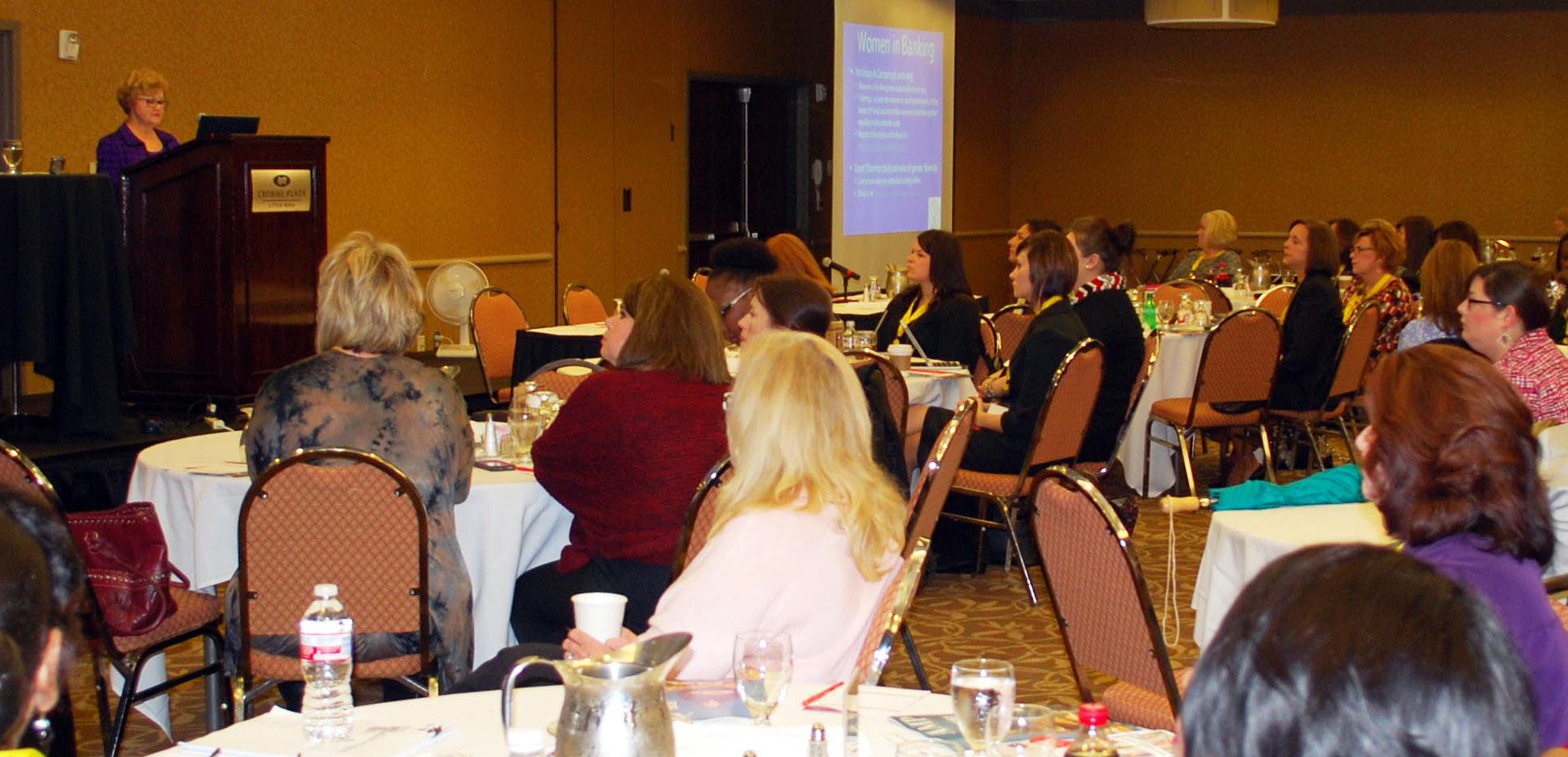
By Richard S. Plotkin Editor, The Banker’s Advocate Arkansas State Bank Department Three of every four employees at commercial banks with main offices in Arkansas are women, while one out of every eight directors of these banks is female, according to a survey conducted by the Bank Department. Less than half of all officer positions at the vice president level or above in these financial institutions are occupied by women, the survey also found. The findings of the survey were released in Bank Commissioner Candace A. Franks’ opening remarks at the 2015 Women in Banking Conference, presented by the Arkansas Bankers Association on November 17, 2015. “I believe the executive and senior officers attending this conference here today are the key to increasing the number of female employees in your banks,” Franks said. “You can do this by creating programs targeted toward the professional development and advancement of new and current female employees.” The survey is dated October 12, 2015, and was mailed to the 105 commercial banks whose main offices are located in Arkansas. The survey consists of six questions asked to determine the percentage of: All employees in these banks that are women. Officer positions at the vice president level or above that are occupied by women. Bank directors of these institutions who are women. A total of 88 banks responded to the survey, but two of the responses were omitted from tabulation due to inconsistent or incomplete information submitted. The resulting total of 86 completed surveys represents a response rate of 81.90 percent. The survey found that: 6,426 of the respondents’ 8,456 employees, or 75.99 percent, are women. 852 of the respondents’ 1,925 positions at the vice president level or above, or 44.26 percent, are held by women. Survey: Arkansas Banks Fall Short of Gender Parity 91 of the respondents’ 725 directors, or 12.55 percent, are women. “Women have made huge strides in earning executive- and senior-level positions in an industry that in the not-too-distant past was considered a man’s domain. Banking was one of many professions that when the word was mentioned – ‘banker’ – one automatically pictured a man,” Franks told conference attendees. “But women still have a long way to go to achieve professional parity in banking.” Nationally, according to an Equal Employment Opportunity Commission report, for private employers with 100 or more workers, women represented 57.59 percent of all employees in commercial banking in 2013. In contrast, women occupied only 30.89 percent of executiveand senior-level positions at these banks, the Commission found. During her remarks, Franks cited two studies about the degree and estimated cost of gender inequality in the corporate world. According to one study, conducted by McKinsey & Company and LeanIn.org, women are moving ahead so slowly in corporate America, it will take more than a century for them to reach parity with men in the very top positions. Actually, the authors calculated it would take 25 years for women to reach gender parity at the senior-VP level and more than 100 years to achieve gender equality in the corporate suite, based on the rate of progress in the past three years. This trend is costing companies hundreds of billions of dollars, according to another study. This second study, conducted by Grant Thornton, compared the return on assets for publicly traded companies in three countries with and without women on their executive boards. Companies with at least one woman on their board outperformed companies with all-male teams by: 1.9 percent in the United States 0.85 percent in India 0.53 percent in the United Kingdom The cost of lost return on assets to the nondiverse companies totaled $655 billion, according to the study. “If you do not have a management training program, establish one for all interested and qualified employees,” Franks urged the conference audience. “If you do not actively recruit prospective officers out of college or from other industries, increase your recruitment efforts, being on the lookout for qualified women, in particular. “Talk and listen to your female tellers and back-office employees. Tell them that if they are interested, professional advancement opportunities are available. You can empower your female employees just by letting them know of such opportunities and that officer positions are within their reach.” Commissioner Candace Franks speaks at the 2015 ABA Women in Banking Conference.