Arkansas Bar Association Legal Hall of Fame Nominees
As of April 2026

As of April 2026
To: The selection committee of the Arkansas Bar Association Legal Hall of Fame
For nearly 50 years, Frank H. Bailey has worked tirelessly for justice with professionalism and a quiet dignity.
Frank grew up in Marion County. When in high school, his prize bull won first place at the Arkansas State Fair. Frank went to college, and then law school, at the University of Arkansas. Frank’s law school studies would be interrupted by his service in the Vietnam conflict. After being honorably discharged from his service and finishing his legal studies, Frank stayed in Arkansas and began his career in Mountain Home and later practiced in Rogers. With a career as long and successful and Frank’s, his accomplishments are too numerous to extol, but I am compelled to share with you what I sincerely hope will give you a measure of my mentor.
Respected for his intellect and legal scholarship, Frank Bailey has twice been appointed as a Special Justice to the Arkansas Supreme Court. In 2009, after over 30 years in practice, he was named Arkansas Trial Lawyer Association’s Trial Lawyer of the Year. In 2017, He was awarded the Association’s Lifetime Achievement Award. These honors are proof positive of the esteem in which our legal colleagues hold Frank Bailey.
Frank Bailey’s decades of exemplary contribution to Arkansas’ legal community are exceptional and recognized. What may be less recognized are his contributions as a mentor in our profession and as a person. Frank Bailey has mentored me since before I passed the bar in 2008. I am not the only one. He has devoted significant time and effort to nurturing the generations behind him to be true legal professionals. His legacy of legal intellect is a true contribution to our community. But, most of all, Frank Bailey is known for being a zealous and successful advocate for his clients, without sacrificing his honor or integrity. Wherever I go, when I mention Frank, the response is always honest, smart, and humble.
Frank Bailey exemplifies the finest qualities of what we members of the Arkansas Bar strive to achieve. It is my privilege to nominate him for induction into the Arkansas Bar Association Legal Hall of Fame a fitting honor for a truly distinguished Arkansas lawyer.
Please feel free to contact me if you would like to know more about Frank Bailey and his qualifications for this prestigious honor.
Sincerely,
Ryan Scott, Esq. rscott@baileyoliverlawfirm.com 479-202-5200
To whom it may concern:
I write this letter to nominate Frank Bailey for the Arkansas Bar Association Legal Hall of Fame. The stated qualification for someone to be inducted into the Legal Hall of Fame is that they must have “made an extraordinary contribution to the law, society, [or] the administration of justice or legal education.” There is no doubt that Frank Bailey meets this requirement.
Frank has had a long and distinguished career working both in North Central and Northwest Arkansas. Now in his 70’s, 2024 will mark 50 years since Frank became anArkansas attorney. The simple act of having a career that touched six different decades is an accomplishment in its own way. Frank surpassed that with the respect that he earned along the journey. Frank has friends in every area of practice in Arkansas but was exceptionally distinguished in his work as a civil trial attorney. Frank was the Arkansas Trial Lawyers Association’s “Trial Lawyer of the Year” in 2009 and he won the Henry Woods LifetimeAchievementAward in 2017.
Frank is a published author, writing Rear End Collisions in Arkansas as a guide for civilians to followiftheyareeverin awreck.Hehasrepresentedanestimated3,000to4,000Arkansansduring his career that he started in Mountain Home. In an interview about his career, Barney Larry, the executivedirectorofthe BaxterRegionalHospital FoundationinMountain HomestatedthatFrank was “a driving force in economic development that moved to a new level. He’s a great philanthropist who supported… our education, arts, our hospital foundation and our brand new library.”1 Frank has made an impact everywhere that he has gone.
On a personal level, Frank has helped oversee the beginning of my legal career in a way that I will always appreciate. Frank worked with me from the time that I was a student clerk, through the first time I represented someone, and helped push me through my development as an attorney. He has always been there with the perfect probing question or sage piece of advice that I needed at a particular time.
Frank Bailey has been a greatArkansas attorney for 50 years. He is a veteran, a husband, a father, amentor, and astalwartofhis community.His inclusionin theArkansas Legal Hall ofFame would be an appropriate culmination of his dedication and hard work for the citizens of this state.
Geoff Hamby Attorney at Law
1 https://www.arkansasonline.com/news/2015/nov/15/every-man-s-advocate-20151115/
Nomination
With honor, I nominate Frank H. Bailey to the Arkansas Bar Association Legal Hall of Fame. He more than meets all criteria and is worthy of recognition.
Frank is over 50 years old, born in Arkansas, educated in Arkansas, and has practiced law in Arkansas since 1974, 50 years as of September 2024. Frank has made an extraordinary contribution to the law, society, and the administration of justice during his many years of service.
Frank graduated from the University of Arkansas Law School in 1973. The Arkansas Supreme Court admitted him to practice in 1974. The United States Supreme Court accepted Frank to practice before it in 1992. The Eighth Circuit Court of Appeals and the Eastern and Western Districts of Arkansas have also admitted Frank.
On three occasions, Governor Huckabee appointed Frank to serve as Special Justice to the Arkansas Supreme Court. Frank served as Special Justice in October 1996, July 2000, and October 2000.
Frank believes his integrity and hard work led the Arkansas Trial Lawyers Association to name him Trial Lawyer of the Year in 2009. The Association has recognized Frank’s contribution to the law and community and honored him with the Henry Woods Lifetime Achievement Award in 2017.
Frank is a Diplomate of both the National Board of Trial Advocacy and the National College of Advocacy. He is a sustaining member of the American Association for Justice, and the Arkansas Trial Lawyers Association. He is also a member of the Benton County Bar Association. Frank is listed in the Bar Register for Preeminent Lawyers, Best Lawyers in America, and Mid-South Super Lawyers. Frank has recently been named a Fellow of the Litigation Counsel of America.
In addition to his legal career, Frank served in Viet Nam with the 23rd Infantry and the 101st Airborne. He has served on the Board of Directors for the Bank of Yellville and on the Advisory Boards of Arvest Bank and Baxter Regional Hospital.
Frank has served as President of the Mountain Home Chamber of Commerce, President of the Mountain Home Rotary Club and as a member of the Board of Directors for the Rogers-Lowell Chamber of Commerce.
Please accept this application and consider Frank H. Bailey for this honor. Frank has served the profession of law, his country, his state, and every client he has represented with the highest morals, values, and integrity, Hall of Fame worthy.
Sincerely,
Sach D. Oliver
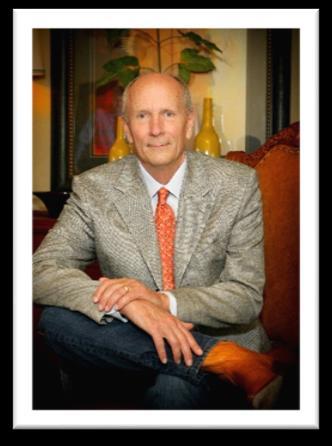
EDUCATION:
University of Arkansas School of Law, Fayetteville, AR Juris Doctorate: 1973
University of Arkansas, Fayetteville, AR
Bachelor of Science 1969
ADMISSION TO THE BAR:
United States Supreme Court, 1992 - present
Arkansas Supreme Court, 1974 – present
United States Court of Appeals, Eighth Circuit
United States District Court
Eastern & Western Districts of Arkansas
MEMBERSHIPS:
Diplomate, National Board of Trial Advocacy 1988 - present
Diplomate, National College of Advocacy 2005 - present
Sustaining Member American Association for Justice, 1997 - present (Professional Negligence Section)
Arkansas Trial Lawyers Association (Membership, Publication, and Program Committees)
Baxter-Marion County Bar Association 1974 - present
Arkansas Advocates for Nursing Home Residents 2002-2005
FRANK H. BAILEY
Founding Partner
Bailey & Oliver Law Firm
3606 W. Southern Hills Blvd., Ste. 200
Rogers, AR 72758
fbailey@baileyoliverlawfirm.com (479) 202-5200
2003 to 2005
Board of Directors, Arvest Bank Mountain Home, Arkansas
1988 to 2003
Board of Directors, Bank of Yellville Yellville, Arkansas
1993 to 1995
Adjunct Faculty, Arkansas State University Mountain Home, Arkansas
1974 to Present Attorney at Law Mountain Home, Arkansas
1969 to 1971
Counter-Intelligence Agent, United States Army Viet Nam (1971)
Arkansas Supreme Court Special Justice
October 23, 2000
July 17, 2000
October 21, 1996
Board of Examiners
National Board of Trial Advocacy
October 2005 Examination
July 2003 Examination
January 2001 Examination
July 1998 Examination
Medical Care Providers are Not Immune from Damages for Wrongful Death The ATLA Docket: Summer, 2000: 20-21
Book: Rear-End Collisions in Arkansas –Protecting Your Rights 2018
Book: T-Bone Collisions in Arkansas –Make Sure You Don’t Pay the Price for Someone Else’s Negligence 2020
“Deposition of Medical Experts” Kentucky Trial Lawyers Association Lexington, Kentucky 2016
“Case Selection” Arkansas Trial Lawyers Association Little Rock, Arkansas 2016
“Deposition of Medical Experts” Arkansas Trial Lawyers Annual Convention Eureka Springs, Arkansas 2015
“Case Selection” Arkansas Trial Lawyers Webinar Rogers, Arkansas 2014
“Reptile Seminar Workshop” Philadelphia, Pennsylvania 2011
“Reptile Seminar Workshop” Las Vegas, Nevada 2011
“Rules of the Road”
Arkansas Trial Lawyers Association Fayetteville, Arkansas 2008
“Rules of the Road”
Arkansas Trial Lawyers Association Springdale, Arkansas 2007
“Ideas for Ethical Depositions”
Arkansas Trial Lawyers Association
Fayetteville, Arkansas 2006
“The Paralegal’s Role in Medical Malpractice”
Super Paralegal Conference Eureka Springs, Arkansas 2005
“Voir Dire Tips”
Arkansas Trial Lawyers Association Little Rock, Arkansas June 2005
“Voir Dire Suggestions”
Student Trial Lawyers
Fayetteville, Arkansas February 2005
“Deposition Tips”
Arkansas Trial Lawyers Seminar Jonesboro, Arkansas February 2005
“Practical Tips: Underinsured & Uninsured Motorist Insurance”
Arkansas Trial Lawyers Encore Seminar
Fayetteville, Arkansas 2000
“Practical Tips: Underinsured & Uninsured Motorist Insurance”
Arkansas Trial Lawyers Insurance Seminar
Fayetteville, Arkansas 1999
“Smart Charting”
Arkansas Nurses Association District #7
Mountain Home, Arkansas 1996
“Video Settlement Brochure on a Shoestring”
Iowa Trial Lawyers Annual Meeting
Des Moines, Iowa 1996
“How to Survive in the ‘90’s”
Arkansas Bar Association, Annual Meeting Hot Springs, Arkansas 1995
Baxter Regional Hospital Professional Advisory Board 2007 - 2013
Mountain Home Rotary Club 1976 to 2013
President 1996
Board of Directors 1991 to 1997
Paul Harris Fellow 2002
Mountain Home Chamber of Commerce
Vice President 2007
Incoming President 2008
President 2009
Chamber of Commerce Chairman’s Award Mountain Home, Arkansas 2016
Rogers Rotary Rogers, Arkansas 2013 - present
Rogers – Lowell Chamber of Commerce 2013 - Present
Board of Directors 2014 – 2016
Henry Woods Lifetime Achievement Award 2017 Outstanding Trial Lawyer
Arkansas Trial Lawyers Association 2009
Rotarian of the Year Mountain Home Rotary Club 1997
Listed in “Bar Register for Preeminent Lawyers” 2000 - present
Listed in “Best Lawyers in American” 2007 - present
Listed in “Mid-South Super Lawyers” 2006 - present
Frank Baily is the author of four books on automobile collisions in Arkansas. He has authored, Rear End Collisions in Arkansas, Distracted Driving in Arkansas, Head on Collisions in Arkansas, and T-Bone Collisions in Arkansas. Copies of these books are available for download at www.baileyoliverlawfirm.com
Frank H. Bailey is the senior partner and founder of Bailey & Oliver Law Firm. For 45 years Frank has represented clients throughout Arkansas.
Frank graduated from the University of Arkansas School of Law in 1973. The Arkansas Supreme Court admitted him to practice in 1974. The Arkansas Supreme Court admitted him to practice in 1974. The United States Supreme Court accepted Frank to practice before it in 1992.
The Eighth Circuit Court of Appeals and the Eastern and Western District of Arkansas have also admitted Frank to practice before them.
On three occasions, Governor Huckabee appointed Frank to serve as Special Justice to the Arkansas Supreme Court. Frank Served as Special Justice in October 1996, July 2000, and October 2000.
Frank believes his integrity and hard work led the Arkansas Trial Lawyers Association to name him Trial Lawyer of the Year in 2009. The Association has recognized Frank’s contribution to the law and community and honored him with the Henry Woods Lifetime Achievement Award in 2017.
Frank is a Diplomate of both the National Board of Trial Advocacy and the National College of Advocacy. He is a sustaining member of the American Association for Justice, and the Arkansas Trial Lawyers Association. He is also a member of the Benton County Bar Association. Frank is listed in the Bar Register for Preeminent Lawyers, Best Lawyers in America, and Mid-South Super Lawyers. Frank has recently been named a Fellow of the Litigation Counsel of America.
During his career, Frank has handled hundreds of automobile wrecks. Injuries have ranged from death and catastrophic injury to minor neck and back injury. Frank has litigated medical malpractice cases, nursing home cases, and defective product cases resulting in substantial settlements and verdicts.
In addition to his legal career, Frank served in Viet Nam and the 23rd Infantry and the 101st Airborne. He has served on the Board of Directors for the Bank of Yellville and on the Advisory Boards of Arvest Bank and Baster Regional Hospital. Frank has served as President of the Mountain Home Chamber of Commerce, President of the Mountain Home rotary Club and as a member of the Board of Directors for the Rogers-Lowell Chamber of Commerce.
Frank likes to tell the stories of the families he has helped over the years. One of his favorite stories is about an elderly couple that had gone to a Savings and Loan to invest their life savings. The president of the Savings and Loan convinced them to give the money to him. He said he would pay them a higher rate of interest than they could get from the Savings and Loan Association. Of course, when they asked for their money back it wasn’t there. Frank sued the Savings and Loan along with the officer, utilizing the new RICO law which stand for Racketeering Influenced Corrupt Organization. The Federal Judge immediately wrote back saying, “You have ten days to show me why this case shouldn’t be dismissed.” Frank worked day and night. The case was not dismissed and the couple got all their money back.
• 18-Wheeler Accidents
• Nursing Home Abuse
• Personal Injury
• Wrongful Death
• Car Accidents

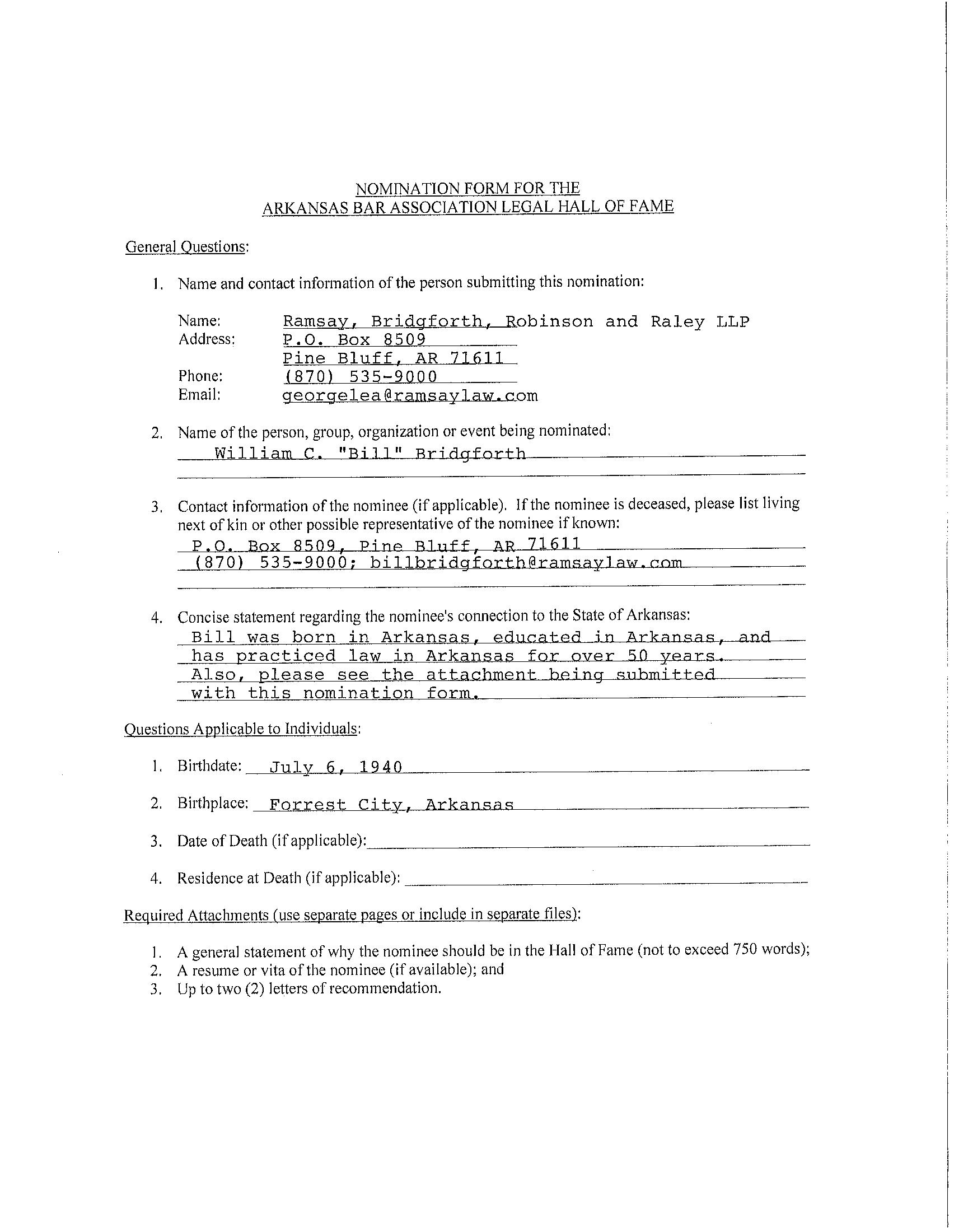
William (“Bill”) C. Bridgforth was born and raised in Forrest City, Arkansas. He attended Washington & Lee University, and graduated from the University of Arkansas in 1962, receiving a B.S.B.A. and a J.D. in 1964. Mr. Bridgforth is a senior partner in the law firm of Ramsay, Bridgforth, Robinson and Raley LLP of Pine Bluff, Arkansas.
Mr. Bridgforth has dedicated much of his life to the practice of law. Throughout his practice, he has been a dedicated servant to the agricultural industry, his State and local community, conservation efforts, and the Bar. For his dedicated years of service, as more fully set forth below, Mr. Bridgforth should be considered as a nominee for the Arkansas Legal Hall of Fame.
Throughout his over fifty years of practicing law, Mr. Bridgforth has been a dedicated advocate of farmers throughout Arkansas and across the United States. Mr. Bridgforth has represented farmers and farming entities before many courts and state and national administrative bodies during his career. He frequently speaks on agricultural and regulatory matters relating to agricultural law across the country and has worked with agricultural committees of the United States Senate and House of Representatives to ensure the country’s farm programs are beneficial to agricultural producers.
Mr. Bridgforth has been recognized for his dedication to farmers by many agricultural and agricultural related organizations during his career. He was elected to the Board of Directors of the American Agricultural Law Association in 1993 and served as president of that association in 2004. He was awarded the Harvey W. McGeorge Award by the Rotary Clubs of Pine Bluff in 2004 for his distinguished service to agriculture. In 2017, Mr. Bridgforth was inducted into the Arkansas Agriculture Hall of Fame.
Mr. Bridgforth has also been a dedicated servant to his community. He served as a member and secretary of the Board of Directors of the Arkansas Science and Technology Authority and was also a member and past president of Fifty for the Future of Pine Bluff. Mr. Bridgforth has also served as campaign chair and is a past president of the Board of Directors of the United Way for Southeast Arkansas. In addition, he has served on the Board of the Pine Bluff Area Community Foundation and is a member of the Greater Pine Bluff Chamber of Commerce, as well as a member and past president of the Jefferson County Industrial Foundation.
In addition to his dedicated service to the agricultural industry and his community, Mr. Bridgforth has been dedicated to conservation efforts throughout the State of Arkansas. He was appointed to the Arkansas Game & Fish Commission in 1995 for a seven year term, and served as chairman of the Commission in 2001. He spearheaded the efforts to establish the Cannon Brake Access on the George H. Dunklin, Jr. Bayou Meto Wildlife Management Area, and the Long Pond Access is named in Mr. Bridgforth’s honor. As a result of his dedication to conservation, Mr. Bridgforth was inducted into the Arkansas Outdoor Hall of Fame in 2012.
Mr. Bridgforth has also been a dedicated servant to the State Bar of Arkansas. He has served as a member and chairman of the State Board of Law Examiners and has served on the Federal Practice Committee of the Federal Courts for the Eastern District of Arkansas. He also chaired the Special Task Force on Lawyer Admission and Discipline for the Arkansas Bar Association. In addition, he is a Fellow of the Arkansas and American Bar Foundations. For his extraordinary service to the practice of law, Mr. Bridgforth was presented with the C.E. Ransick Award by the Arkansas Bar Association in 2005.
For his extensive service and dedication to the legal profession throughout his career, Mr. Bridgforth should be considered for nomination for the Arkansas Legal Hall of Fame.
University of Arkansas
Arkansas Bar Association Legal Hall of Fame c/o Karen Hutchins 2224 Cottondale Lane Little Rock, AR 72202
March 15, 2020
Dear Hall of Fame Committee:
Thank you for the opportunity to recommend Bill Bridgforth into the inaugural class of the Arkansas Bar Association Legal Hall of Fame. It is a great honor to provide this recommendation, and I hope my brief words below adequately convey the high regard in which I and so many others in Arkansas and throughout the country hold for Bill Bridgforth. For more than a half-century, Bill has been a tremendous asset to the legal profession and his clients both in Arkansas and throughout the U.S. He would be a terrific addition Arkansas Bar Association Legal Hall of Fame, helping set the standard for excellence in the Arkansas legal community for many years to come.
In 2018, as a member of the Arkansas Agriculture Hall of Fame Board of Directors, I was honored to support the induction of Bill Bridgforth in the Arkansas Agriculture Hall of Fame. This is the highest recognition in Arkansas for those who serve Arkansas agriculture. We consider dozens of applications each year, and only induct those who have gone “above and beyond” in service to agriculture. To the best of my knowledge, Bill was the first attorney ever selected for the Arkansas Agriculture Hall of Fame. I supported his induction at that time for the same reasons I now fully support his induction to the Arkansas Bar Association Legal Hall of Fame. Simply stated, Bill Bridgforth is among the most knowledgeable and respected agricultural lawyers in Arkansas and throughout the nation
In addition to his role as senior partner in the law firm of Ramsay, Bridgforth, Robinson and Raley, Bill has been a frequent speaker across the country on agricultural and regulatory matters. In particular, he has been a presenter for the National Agricultural Law Center’s annual Mid-South Agricultural & Environmental Law Conference. Importantly, Bill has worked with agriculture committees of the U.S. Senate and House of Representatives in an effort to ensure the nation’s farm programs are beneficial to production. Bill served on the Board of Directors for the American Agricultural Law Association and, in 2004-2005, as President of the organization.
Bill’s service to the state and the legal profession has been recognized in various ways over the years. For example, in 2005, Bill received the C.E. Ransick Award for extraordinary service from the Arkansas Bar Foundation. In 2012 he was inducted into the Arkansas Outdoor Hall of Fame by the Arkansas Game and Fish Foundation in 2012. In 1993, he received the Harvey W. McGeorge Award for Distinguished
Service to Agriculture in Arkansas. He is a Fellow at both the Arkansas Bar Foundation and the American Bar Association.
As Director of the National Agricultural Law Center, I can attest firsthand that Bill Bridgforth is respected by attorneys throughout Arkansas and the nation for his deep knowledge and service to the discipline of agricultural law. I can think of no one better to be part of the inaugural class of the Arkansas Bar Association Legal Hall of Fame. If I can provide any further information, please feel free to contact me anytime.
Respectfully,
Harrison M. Pittman Director, National Agricultural Law Center
University of Arkansas of System Division of Agriculture
Thomas M. Carpenter
GeneralQuestions:
1. Nameandcontactinformationofthepersonsubmittingthisnomination:
Name: _DeputyCityAttorneyLynettePerez______________________
Address: 500W.MarkhamStreet,Suite310________________________ _LittleRock,AR72201-1400____________________________
Phone: _501-371-6873____________________________
Email: _lperez@littlerock.gov____________________________
2. Nameoftheperson,group,organizationoreventbeingnominated:____CityAttorneyThomas M.Carpenter __________________________________________________________________________
3. Contactinformationofthenominee(ifapplicable). Ifthenomineeisdeceased,pleaselistliving nextofkinorotherpossiblerepresentativeofthenomineeifknown:_CityofLittleRock,Office oftheCityAttorney,500W.MarkhamStreet,LittleRock,AR72201, tcarpenter@littlerock.gov, _501-371-4771(DebbieWisdom,ExecutiveLawOfficeManager.
4. Concisestatementregardingthenominee'sconnectiontotheStateofArkansas:_TomCarpenter hasservedthecitizensofLittleRockfor40years. HejoinedtheCityofLittleRockasan AssistantCityAttorneyin1984andbecametheCityAttorneyin1991,apositionhehasheldfor 33years. HehasservedasthechieflegaladvisortoeightLittleRockMayors–fromJ.W. “Buddy”BenafieldtoFrankD.Scott,Jr.
QuestionsApplicabletoIndividuals:
1. Birthdate:_______February15,1952_______________________________________________
2. Birthplace:_____Lubbock,Texas__________________________________________________
3. DateofDeath(ifapplicable):_______________________________________________________
4. ResidenceatDeath(ifapplicable):__________________________________________________
RequiredAttachments(useseparatepagesorincludeinseparatefiles):
1. AgeneralstatementofwhythenomineeshouldbeintheHallofFame(nottoexceed750words);
2. Aresumeorvitaofthenominee(ifavailable);and
3. Uptotwo(2)lettersofrecommendation.
25 Montvale Drive
Little Rock, Arkansas 72212
FAMILY: Wife Kay Wilkins Carpenter (married March 26, 1983)
Son Matthew Thomas Carpenter (dob 15 February 1985)
◼ Doctor, Residency in Pathology
Son Mark Loren Carpenter (dob 02 April 1987)
◼ Juris Doctor, Arkansas Prosecutor Coordinator staff
◼ Specialist, Texas National Guard
EDUCATION:
High School 1970 North Little Rock High School
College 1974
Law School 1977
WORK EXPERIENCE:
B.A., History & Political Science
Hendrix College, Conway, Arkansas
J.D., University of Arkansas, Fayetteville
1977-78 Law Clerk Honorable Darrell Hickman Arkansas Supreme Court
1978-1984 Partner, Lessenberry & Carpenter
1984-present Attorney City of Little Rock, Arkansas
1984-1990, Assistant City Attorney
1991-present, City Attorney
AWARDS & HONORS
1970-74 Blue Key Hendrix College
Who’s Who in American Colleges, Hendrix College
Letterman, Swimming Team, Hendrix College
Co-editor, Hendrix College Profile (campus newspaper)
1974-77
Top Paper, Contracts
Top Paper, Professional Responsibility
Published Note, Arkansas Law Review
1977-present American Bar Association
o Committee on Cameras in the Courtroom
o Committee on Ethical Consideration in Criminal Cases
Arkansas Bar Association
o Board of Trustees (two terms)
o Board of Governors (two terms)
▪ Parliamentarian (three terms
o Executive Committee (two terms)
o House of Delegates (three terms)
▪ Tenured Delegate
o Jurisprudence & Law Review Committee
o Arkansas Lawyer Committee
▪ Maurice Cathey Award for Outstanding Article
o Committee on Cameras in the Courtroom
o Section on Criminal Law
o Committee on Law School
o Committee on Legal Education
National Board of Trial Advocacy
o Diplomate in Criminal Trial Practice
o President
o Vice-President
o Committee on Standards
o Examinations Committee
International Municipal Attorneys Association
o Regional Vice-President
o Fellow in Local Government Law (three five-year certifications)
o Outstanding Assistant City Attorney
o Outstanding City Attorney
o James E. Epps, Award
Arkansas City Attorneys Association
o President
o Zimmerman Award as Outstanding City Attorney
o Jack R. Rhodes Award for Municipal Service
OTHER
Boy Scouts of America
◼ Eagle Scout
◼ Vigil Honor, Order of the Arrow
◼ Outstanding Eagle Scout Award
◼ Silver Beaver Award
◼ Whitney M. Young Award
◼ UMC Adult Religious Award
TEACHING
◼ Numerous CLE course presentations
◼ FBI School for Legal Advisors to Law Enforcement
◼ Adjunct Professor, University of Arkansas at Little Rock
o Local Government Law
o Civil Rights & Civil Liability
o Land Use
◼ Little Rock Police Department
o Civil Liability
o Deadly Force
o Fourth Amendment Issues
◼ Numerous published articles


The CityAttorney is one of the most important jobs in anyAmerican municipality. They serve as the Chief Legal Officer to Mayors and Board of Directors as well as to all city departments. The CityAttorney’s name appears on every Board of Directors docket because even agendas and the notice of public meetings must be preapproved and posted in accordance with state law. The CityAttorney and the Deputy andAssistantAttorneys that work in the Office of the CityAttorney are tasked with negotiating millions of dollars in contractual matters, including real estate transactions, and both prosecute and defend the City in state and federal courts. Consequently, the CityAttorney’s signature can literally be found on thousands of legal documents and pleadings
The citizens of Little Rock have been blessed to have Tom Carpenter as its CityAttorney for the past 33 years. He has worked for the City of Little Rock for 40 years – a generation. Whether it is the Bill and Hillary Clinton Presidential Library, the Little Rock Zoo, or even planning contracts for a solar eclipse to take place inApril of this year, know that Tom Carpenter has played some role in some of the most significant and successful projects to take place in the Little Rock city limits for the past 40 years
My colleagues at the CityAttorney’s Office for the City of Little Rock and I can think of no one more deserving to be named to theArkansas BarAssociation Hall of Fame than Tom Carpenter. Thank you for your consideration of his nomination.
Kind regards,
Lynette M. Perez, JD, MPA Deputy CityAttorney
GeneralQuestions:
1. Nameandcontactinformationofthepersonsubmittingthisnomination:
Name: __RickieJ.Smith___________________________
Address: __200W.CapitolAvenue,Suite2300___________________________ __LittleRock,Arkansas72201___________________________
Phone: __501-212-1298___________________________
Email: __rsmith@wlj.com___________________________
2. Nameoftheperson,group,organizationoreventbeingnominated:CharlesT.Coleman
3. Contactinformationofthenominee(ifapplicable). Ifthenomineeisdeceased,pleaselistliving nextofkinorotherpossiblerepresentativeofthenomineeifknown: 200W.CapitolAvenue,Suite2300,LittleRock,Arkansas72201;501-212-1276; ccoleman@wlj.com______________________________________________________________
4. Concisestatementregardingthenominee'sconnectiontotheStateofArkansas:
AtruesonofArkansas,CharlieisthethirdoffoursonsintheColemanDairydynasty,thefamily thathadownedandoperatedColemanDairyonLittleRock'sAsherAvenuesince1862.The ColemannamehasbecomesynonymouswithArkansas,inlargepartduetoitsgeneroussupport ofyouthactivitiesandmissions.It’ssafetosaythat,inCharlie’scase,theappledidn’tfallfar fromthetree.Professionally,Charliehasbeenapracticingattorneyatoneofthestate’soldest andlargestfirms,WrightLindseyJennings,since1980.
QuestionsApplicabletoIndividuals:
1. Birthdate:July6,1955
2. Birthplace:LittleRock,Arkansas
3. DateofDeath(ifapplicable):_______________________________________________________
4. ResidenceatDeath(ifapplicable):__________________________________________________
Charles T. Coleman, Partner
Charles T. Coleman has been engaged in acve trial pracce for more than 39 years. His pracce is focused in the areas of bankruptcy, secured transacons, creditor's rights and remedies and other areas of commercial ligaon. His bankruptcy pracce includes the representaon of creditors and trustees in all types of bankruptcy proceedings and debtors in business cases.
Coleman's more recent experience includes:
Lead bankruptcy counsel for a successful buyer of 22 sawmills out of a Delaware chapter 11 proceeding over the inial objecons of the debtor and creditor’s commiee;
Bankruptcy counsel for approved stalking horse bidder in chapter 11 bankruptcy of low-income housing complex;
Bankruptcy counsel for approved stalking horse bidder in chapter 11 bankruptcy of naonal vegetable and canned food company and related secon 363 sale process;
Local bankruptcy counsel for approved stalking horse bidder in chapter 11 bankruptcy of bank holdings company and related secon 363 sale of stock in a subsidiary bank;
Lead debtor’s counsel in chapter 11 proceeding of a bakery with manufacturing facilies in four states, resulng in secon 363 asset sale;
Lead debtor’s counsel in chapter 11 proceeding of building supply company with seven Arkansas retail and wholesale locaons, resulng in a secon 363 asset sale and the payment of secured debt in full;
Lead counsel in defense of mulple bankruptcy preference acons and claims arising out of the liquidaon of a large grocery supply company;
Pracce Areas
Bankruptcy & Creditor's Rights
Commercial Ligaon & Contract Disputes
Admied to Pracce
Arkansas, 1980
U.S. District Court for the Eastern and Western Districts of Arkansas
Bankruptcy Court
Eighth Circuit Court of Appeals
U.S. Supreme Court
B.A., University of Arkansas (with honors)
J.D., University of Arkansas
Co-counsel for a bank in dispute between banks relang to obligaons under parcipaon and inter-creditor agreement;
Counsel for a bank in successfully prosecung a claim against the insurance company which had refused to pay on a $2 million life policy pledge as collateral;
Foreclosure of a mortgage on a local golf course complex and simultaneous successful acon to avoid fraudulent conveyances made by the mortgagor; and
Counsel for two automobile finance companies in separate acons to foreclose on automobile dealerships defaulng on floor plan financing agreements. One of the acons also involved the successful defense of lender liability claims and obtaining a non-dischargeable judgment against the dealer in bankruptcy.
He is a Fellow of the American College of Bankruptcy, the American Bar Foundaon and the Arkansas Bar Foundaon. Coleman is a member of the American Bar Associaon (Business Law Secon), Arkansas Bar Associaon, Pulaski County Bar Associaon (President, 2004-2005), Debtor-Creditor Bar Associaon of Central Arkansas (President, 2004), American Bankruptcy Instute and the Judge William R. Overton Inn of the American Inns of Court. He served on the Advisory Commiee for the United State Bankruptcy Court, Eastern District of Arkansas from 2003 to 2007.
He has been named to Best Lawyers in America since 1995; Chambers USA America’s Leading Lawyers for Business since 2009; and Mid-South Super Lawyers for business ligaon and bankruptcy and creditor/ debtor rights since 2006. Coleman regularly serves as a seminar speaker on various aspects of bankruptcy pracce within the state and regionally. He co-authored Coleman and Henry, “Bankruptcy 101 – Starng Over,” The Arkansas Lawyer, Vol. 40, No. 4, Fall 2005.
Coleman served as associate editor of the Arkansas Law Review from 1979-1980.
Since 1986, Coleman has been a member of the Downtown Kiwanis Club where he served as President from 2000 to 2001 and, since 2002, has been a board member of Kiwanis Acvies, which is a non-profit organizaon that owns and operates a camp for at-risk youth. He aends Pulaski Heights United Methodist Church where he coaches three junior high church basketball teams.
The Arkansas Bar Association Legal Hall of Fame is designed to recognize those who “have made an extraordinary contribution to the law, society, the administration of justice or legal education ” On behalf of the Wright Lindsey Jennings family, and without hesitation, we proudly nominate Charles T. Coleman who we believe exemplifies the values and characteristics this award was created to celebrate.
It is hard to imagine a nominee who approaches every part of his life, whether work, community service or family, with the same passion and dedication as Charlie. An active litigator for almost 40 years at one of the state’s oldest and largest law firms, today Charlie is one of the South’s leading litigators. His practice is focused in the areas of bankruptcy, secured transactions, creditor’s rights and remedies and other areas of commercial litigation. Throughout his career, Charlie has amassed a wealth of exceptionally satisfied clients – due in no small part to his approachable and never-met-a-stranger manner – helping to drive the success of not only Wright Lindsey Jennings, but also the businesses that he serves.
Charlie dedicates a great deal of time to his peers in the legal community. The numerous accolades he has received demonstrate that his involvement in the Bar is not just membership, but service. He served as President of the Pulaski County Bar Association and the Debtor-Creditor Bar of Central Arkansas. He was recognized as a Fellow of the American College of Bankruptcy Lawyers, American Bar Foundation and Arkansas Bar Foundation. He has been recognized since 1995 as one of The Best Lawyers in America, since 2006 as a Mid-South Super Lawyer, since 2009 in Chambers USA America’s Leading Lawyers, and served on the advisory committee for the United States Bankruptcy Court for the Eastern District of Arkansas from 2003 to 2007.
For many years, Charlie served as the Continuing Legal Education (CLE) Chair of the Pulaski County Bar Association. In that capacity, he organized numerous CLE programs to provide practical continuing education to local lawyers. For example, upon the death of his law partner and close friend, Ike Scott, Charlie organized two bankruptcy seminars in his honor, bringing nationwide experts and scholars in bankruptcy law to Little Rock to provide CLE. Charlie himself regularly serves as a seminar speaker on various aspects of bankruptcy practice within the state and regionally, sharing his experience and knowledge with attorney peers. He has also served a liaison for the Pulaski County Bar Association for Law Day.
A true son of Arkansas, Charlie is the third of four sons in the Coleman Dairy dynasty, the family that had owned and operated Coleman Dairy on Little Rock's Asher Avenue since 1862. The Coleman name has become synonymous with Arkansas, in large part due to its generous support of youth activities and missions. It’s safe to say that, in Charlie’s case, the apple didn’t fall far from the tree.
In the Central Arkansas community, Charlie has helped support nonprofit and faith-based missions in numerous ways, including serving on the Board of Directors of The Arkansas Repertory Theatre, literally helping to keep the lights on during a turbulent period. He coaches youth basketball teams at Pulaski Heights United Methodist Church and leads Bible study classes, and is also an active member of the Central High School Alumni Association, helping to preserve the legacy of one of the nation’s most
historically significant high schools. Charlie has been a member of the Downtown Little Rock Kiwanis Club since 1986. In that tenure, he has held numerous Club offices and now serves as Chairman of the Board of Directors of Kiwanis Activities, Inc., the nonprofit that owns and operates Joseph Pfeifer Kiwanis Camp. The Camp offers a traditional summer camp experience for children in the community and operates the remainder of the year as an Alternative Classroom Experience for at-risk youth. Through Charlie’s efforts and involvement, he also ensures that Wright Lindsey Jennings helps to support the philanthropic and nonprofit community through contributions of time and financial resources.
In summary, Charlie’s dedication to Wright Lindsey Jennings, firm clients, the legal profession and the community should be celebrated. That he successfully manages all the professional elements of his life, while also remaining devoted to his family and community, illustrates strength of character and conviction. In a profession that is often perceived as combative and aggressive, Charlie maintains inherent civility, humility and camaraderie, and perhaps no better case can be made for his inclusion in the Arkansas Legal Hall of Fame.
General Questions:
1. Name and contact information of the person submitting this nomination:
Name: Address:
Phone: Email:
Will Gruber and Regan Gruber Moffitt
2621 Calico Creek Dr. N. Little Rock, AR 72116
501-580-2824
willgruber@gmail.com
2. Name of the person, group, organization or event being nominated:
Chief Judge of the Arkansas Court of Appeals, Rita Gruber
3. Contact information of the nominee (if applicable). If the nominee is deceased, please list living next of kin or other possible representative of the nominee if known:
501-580-6247
4. Concise statement regarding the nominee's connection to the State of Arkansas:
Judge Gruber has been a practicing attorney, Circuit Judge and Appellate Judge in Arkansas for approximately 40 years.
Questions Applicable to Individuals:
1. Birthdate: ______________________________________________________________________
12/23/50 Jacksonville, AR
2. Birthplace: _____________________________________________________________________
3. Date of Death (if applicable):__________________________________________________
4. Residence at Death (if applicable): __________________________________________________
Required Attachments (use separate pages or include in separate files):
1. A general statement of why the nominee should be in the Hall of Fame (not to exceed 750 words);
2. A resume or vita of the nominee (if available); and 3. Up to two (2) letters of recommendation
Judge Rita W. Gruber was elected to the Court of Appeals on May 20, 2008 and took office January 1, 2009. Judge Gruber was born in North Little Rock and educated in the public schools in Pulaski County. She received a BA (1973 UALR) and JD (1979 University of Arkansas at Little Rock, now the Bowen School of Law). She completed eighteen years as a Circuit Judge for the Sixth Judicial District on December 31, 2008. While serving on the trial bench, she helped establish a Volunteer Probation Officer program to work with first time juvenile offenders. She also established a specialized teen parenting program, a truancy alternative school and helped plan the CSTP juvenile boot camp at Camp Robinson. Before her election as Circuit Judge she served as interim Pulaski County Judge and had a ten year law practice in North Little Rock, Arkansas. She is a member and has served on many committees with the Pulaski County and Arkansas Bar Associations as well as being a member of the American Bar Association. Judge Gruber is very active in her community serving on many boards and committees. She worked closely with the Bowen School of Law developing mediation programming, particularly for juvenile cases. She is currently serving a term on the UALR School of Law Leadership Advisory Board. She is married to Judge Wayne A. Gruber and has two adult children, Regan and Will. She is a long term member of Lakewood United Methodist Church.
Chief Judge Rita Gruber should be in the Legal Hall of Fame for one simple reason. She is a trailblazer, universally respected by her peers.
Chief Judge Gruber was one of the first, if not the first, female county judge in our state’s history. More importantly than the distinction of being first, she said yes to serving as Pulaski County Judge, with no formal political background and acted as Chief Executive Officer of the largest county in Arkansas. People told her not to stick her neck out and campaign for a sales tax to build a new jail for Pulaski County and that the political environment for new taxes was unwinnable. Chief Judge Gruber decided that she knew what she signed up for, improving the quality of life for those in Pulaski County With her leadership the tax passed
Though Chief Judge Gruber was not the first female circuit judge in Arkansas, she was one of the first, and set the stage for the closer parity between men and women we see now on the bench. Chief Judge Gruber honorably served as a circuit judge in juvenile court for Pulaski and Perry Counties for 18 years. Chief Judge Gruber was a good judge. She knew the law, efficiently ran a docket, had an appropriate temperament, and ensured that all who entered the court felt like justice had been served. She was also a transformational judge. She used her platform to improve society through providing tools so that those that have been in court can improve their circumstances. Chief Judge Gruber did that by establishing a Volunteer Probation Officer program to work with first time juvenile offenders She also established a specialized teen parenting program, a truancy alternative school, and helped plan the CSTP juvenile boot camp at Camp Robinson. Chief Judge Gruber wanted to attack the underlying cause of juvenile delinquency, not just treat the symptoms. She created a model that could be replicated in any court throughout Arkansas.
Chief Judge Gruber decided to run for the Arkansas Court of Appeals to apply the skills she developed over 18 years. Shortly after winning her second term on the Court, she was named Chief Judge, becoming the first
female Chief Judge of the Arkansas Court of Appeals More important than the title, Chief Judge Gruber is known for her reason and craft. You read a decision and know it has been well thought out and considered. There is no politics, no bluster, no distractions, no hedging or posturing Anonymously ask any practicing attorney whether they have the utmost confidence in a Judge Gruber opinion and there would be no hesitation that the answer is yes.
Chief Judge Gruber was a leader during the era where women established themselves as a force for good in the legal profession. Her commitment to the legal profession has ensured justice for more people in Arkansas.




Bar Admission(s): Arkansas (1974); U.S. District Court, Arkansas (1974); U.S. District Court, E.D.Texas (2004); 8th U.S. Circuit Court of Appeals (1974); U.S. Supreme Court (1978)
■ Twenty-three (23) years - Tried 80 jury trials, numerous non-jury trials and hearingshandled various appeals and oral arguments in state and federal appellate courts.
■ 1973 - 1974 - Legal Intern, Memphis and Shelby County Legal Services.
■ 1974 - 1975 - Law Clerk (Two trial judges): closely assisted in decisions in non-jury cases and on motions, observed many jury trials, helped decide and write opinions on administrative appeals.
■ 1975 - 1977 - Deputy Prosecuting Attorney: tried many jury and non-jury criminal cases.
■ 1977 - 1979 - Private Practice (Four attorney firm): General litigation practice (personal injury, products liability, commercial litigation, domestic relations.)
■ 1979 - 1994 - Private Practice (Fourteen attorney firm): commercial litigation; construction litigation; personal injury cases for Plaintiffs; insurance defense; insurance contract litigation; products liability; EEOC litigation; some asbestos, formaldehyde, and dioxin exposure litigation; wrongful termination cases; business fraud cases; and ones involving intentional infliction of emotional distress.
■ 1992 - 1994 - Part time mediator and arbitrator.
■ 1995 - 1997 - Solo Practitioner: 20% civil litigation practice; 80% mediator and arbitrator
■ 1998 – Present - Full time mediator and arbitrator
Hamlin Dispute Resolution, LLC
Olsson Building, 3537 N. Steele, Blvd., 110-114
Fayetteville, AR 72703 hamlindispute.com
■ Served as Special Master hearing and deciding small cases for two Circuit Judges in 1974-1975; served as Special Circuit Judge for several Circuit Court Judges in Little Rock, Arkansas on five or six occasions. This involved both jury and non- jury trials.
■ Served as mediator or arbitrator in over 4,000 cases in various states; mediations and arbitrations involving personal injury, wrongful death, products liability with some injuries involving brain damage and permanent and total disability, cases involving over-the-road truck accidents, numerous class actions, medical malpractice suits, nursing home cases (numerous as mediator and arbitrator, including three (3) member panels), construction cases, commercial litigation, securities litigation, employment litigation, wage and hour claims, insurance contract disputes, and disputes involving government entities; two different construction mediations lasted three days and two evenings, both were successfully resolved and each had 15 parties with each represented by counsel; conducted one mediation involving a ten (10) tractor trailer rig (and other vehicles) accident in the fog with many deaths, lasting two days and one night.
■ Served on the national Dalkon Shield Arbitration Panel, arbitrating many of those cases; cases were administered by the Private Adjudication Center of Duke University Law School with in-depth written opinions required on all arbitrations
■ Served as settlement administrator and arbitrator in a large dispute between the Insurance Commissioner of the State of Missouri and PFL Life Insurance Company (Aegon Insurance Group) ruling upon 174 cases as arbitrator.
■ Set up and administered a claims process for Georgia Pacific Corporation involving numerous property damage claims in Crossett, Arkansas due to hydrogen sulfide gas exposure.
■ Served as arbitrator on 120 medical malpractice cases against a former orthopedic surgeon, requiring a damages hearing on each case to divide a $10 million dollar settlement among the 120 plaintiffs.
■ Served as mediator on approximately 40 cases against American Airlines relating to the crash of Flight 1420 in Little Rock, Arkansas on June 1, 1999; this crash resulted in 11 deaths and injuries to all other passengers.
■ Served as mediator on several very large multi Plaintiff and multi Defendant environmental cases involving oil clean up in the oil fields of south Arkansas.
Olsson Building, 3537 N. Steele, Blvd., 110-114
Fayetteville, AR 72703
▪ Served as arbitrator and panel chairman of a three member arbitration panel on a nursing home injury/death case in Charlotte, NC with the arbitration lasting one week
▪ Mediated a 30 Plaintiff case involving injuries from a bus accident. This mediation was conducted in Spanish.
University of Arkansas (1971), Bachelor of Science in Business Administration (major: Finance and Banking); The University of Memphis (1974), Juris Doctor; Attorney/Mediator’s Institute, Houston, Texas, graduate (1993), advanced training (1995, 1996); Mediation and Conflict Management Services, advanced mediator training, St. Louis, Missouri (1995); United States Postal Service Mediator Training (1998, 2000); Equal Employment Opportunity Commission Mediator Training (1999); Duke University School of Law (Private Adjudication Center), arbitrator training (1995 and 1996); National Association of Securities Dealers (NASD), arbitrator training, (1999); advanced mediator training in Dallas, Texas conducted by Abrams Mediation and Negotiation, Inc. (2004); Attended numerous advanced mediator trainings through the American College of Civil Trial Mediators and the Association of Attorney-Mediators; Attended the 3 day Advanced Mediator Training Conference of the National Academy of Distinguished Neutrals (2015, 2017); attended other seminars on alternative dispute resolution.
Have delivered numerous speeches and participated on numerous panels on the subjects of arbitration and mediation at local and state bar meetings and law schools.
Professional Affiliations:
■ National Academy of Distinguished Neutrals, Member
■ Association of Attorney-Mediators, Member
■ American Bar Association, Section of Dispute Resolution
■ Arkansas Bar Association, ADR Committee, former chair and vice-chair
■ Arkansas Conflict Resolution Association, President 1999-2001
Hamlin Dispute Resolution, LLC
Olsson Building, 3537 N. Steele, Blvd., 110-114
Fayetteville, AR 72703 hamlindispute.com
A definition of, “Hall of Fame,” lists the following as criteria deserving of this honor: exceptional career performance; integrity; character; ethical behavior; sustained excellence over time; an enduring legacy that has influenced and strengthened others and the institution; sacrifice and perseverance.
These accomplishments can all be applied to Frank Hamlin and his work as an attorney, mediator, and arbitrator and deserving of this nomination as a member of the Hall of Fame of the Arkansas Bar Association.
A life of service, through the legal system, has defined his life from his earliest days as an attorney. Through his work at Legal Services while still in law school, in clerkship for two Judges, to work with the Prosecuting Attorney’s Office and then in private practice, he has always had an affinity for using the legal system to help people.
In 1988, he attended the first ADR section meeting of the American Bar Association in Chicago. He was on fire with the possibility of using mediation to settle disputes and conflict. That event was the catalyst for the emergence of his destiny. Frank, in his personal and professional life, is mediation.
One of the criteria of Hall of Fame performance is some kind of sacrifice and perseverance. His law firm supported his desire to try mediation and he eventually stepped out into an unknown landscape. There was no mediation in Arkansas at that point. There was one person, Mr. Jim Ammel, in the Yellow Pages under mediation, though it was rarely used due to lack of knowledge.
In his drive to establish mediation as an alternative to the court process, he sacrificed his legal partnership and some thought his good name, to give birth to an unknown form of dispute resolution. Many attorneys told him he was making a mistake and some were openly hostile and believed he would damage their legal practice. He persevered and did so without resentment or making enemies. He held short seminars in law firms in central Arkansas to introduce the process and instruct on how the method could work.
Books were being written, courses were taught by many people, while he quietly continued to build the entire field. He mentored people who wanted to mediate, brought trainers and practitioners from other states, and slowly
proved all the naysayers wrong. He proved them wrong because he approached the practice of mediation with integrity, ethical behavior, civility, and commitment to the viability and mutuality of the process.
Along the way, he mediated and arbitrated some significant issues and cases. He served on the national arbitration panel for the Dalkon Shield lawsuits, through Duke University Law School; spent several months in Mena, AR as the arbitrator on 120 damage cases against a surgeon; served as mediator on 40 cases from the crash of an American Airlines plane in Little Rock; mediated several large environmental disasters in Arkansas; and settled countless heartbreaking family conflicts and personal injuries.
At this point in his career, Frank has mediated over 4,000 cases and served as Arbitrator in 350 more. He has brought to his work personal integrity, a sense of fairness, moral character, and commitment to his growth and the growth of the whole field of ADR. One of the sayings that he lives by is, “A rising tide lifts all boats.” In that spirit, he has mentored and helped every mediator who has ever contacted him for advice and the opportunity to observe mediators, free from fear of competition.
One final description of Hall of Fame accomplishment is a significant impact on the field and an enduring legacy that influenced others and strengthened the institution. Mediation would have eventually happened in Arkansas and yet Frank Hamlin is the person who brought the practice into widespread use and by his name and character gave the work integrity, trustworthiness, and proved its inherent value to attorneys, judges, and parties. He helped expand the practice of law and forever changed the way conflict and lawsuits are handled. He aided the growth of the field from one mediator to now being taught in law schools and practiced at all levels of the law. While outstanding lawyers have made untold contributions to our society, very few have literally expanded and changed the way law is practiced to the extent that Frank has done in over 34 years of mediation and arbitration work. He still actively practices mediation and arbitration – because that is who he is –collaborative, cooperative, respectful, and persevering . Working for the good of all.

March 27, 2026
To Whom it May Concern:
It is a distinct privilege to be asked to write a letter of recommendation on behalf of Frank S. Hamlin for the Arkansas Bar Association Legal Hall of Fame.
Anyone who litigates in the state of Arkansas has likely crossed paths with Frank at some point in the past 30 years. That alone underscores the reach of his influence within our bar. No single practicing attorney, judge or other legal professional can claim that kind of omnipresence. If anyone has made a palpable, extraordinary contribution to the administration of justice in our state in the past 30 years, it has to be Frank. I cannot imagine another lawyer in Arkansas who can claim mediating or arbitrating over 4,000 cases.
He was a visionary. Despite building a solid private trial practice during the first 20 years of his legal career, Frank could see where litigation was headed. In 1992, he chose to begin part-time mediation and arbitration and then in 1998 made the courageous decision to devote full time to mediation/arbitration. To my knowledge, no one in Arkansas had done this before. It was not without risk. Yet Frank stayed committed to his vision, quickly built the largest and most respected ADR firm in our state and led the way for all of us to see a new path for resolving disputes in Arkansas.
He was uniquely suited to this path. Frank possesses a rare combination of judicial temperament, Job-like patience and approachability. He can quickly earn the trust of attorneys and litigants alike. He is a consummate professional and always structured his offices and business practices to look and feel like a polished law firm. For many folks in our state, Frank was their only exposure to the legal system beyond their own attorney. His personal and professional traits made him the perfect ambassador for our profession to the public at large. He brought a calm, steady presence to situations that were often tense and emotional.
He was willing to share his experience and his expertise. The best lawyers are often not the best teachers. But Frank has always humbly demonstrated the willingness to expand the work of alternate dispute resolution beyond his own sphere. He rose to leadership within the larger ADR community. He spoke regularly and publicly shared
his experiences with groups of lawyers and ADR professionals. Frank took on numerous partners in his business through the years. I can personally speak to Frank’s openness in sharing his knowledge because he took my own wife under his wing years ago when she elected to leave an in-house practice and enter mediation practice. His generosity and commitment of time to train a new mediator in the business and share his client base was truly remarkable. Few professionals at the top of their game are this transparent.
There are few areas of the law remaining in which one can say someone is a true pioneer. But Frank blazed a trail and carved out a path that few were willing to try in the early 90s. And he showed our bar and indeed the entire state of Arkansas that mediation and arbitration were not only here to stay, but a viable and necessary part of the law. And Frank did this with professionalism, integrity and grace.
He is most deserving of our Hall of Fame. I heartily recommend him.
Very truly yours,
KUTAK ROCK, LLP
www.cullenandcompany.com
TIM CULLEN, Attorney tim@cullenandcompany.com
P: 501.370.4800
F: 501.370.9198
March 30, 2026
Arkansas Bar Association
Legal Hall of Fame
RE: Asa Hutchinson
Dear Members of the Selection Committee:
Asa Hutchinson has had so many titles and jobs that it is hard to know which honorific to attach to his name. Governor, Congressman, U.S. Attorney, Chair of the National Governor's Association, DEA Director, Undersecretary of Homeland Security, and now Professor. Perhaps that's why his campaigns just used his memorable first name - ASA.
Asa's story began in Benton County, Arkansas as the youngest of six children. His early schooling was in Gravette and he graduated from Springdale High in 1968. Asa studied accounting at Bob Jones University and law at the University of Arkansas, earning his J.D. in 1975. Asa met Susan while an undergraduate at Bob Jones University, and theirs is a love story for the ages (best told by Susan). Foreshadowing his ability to tackle any challenge, Asa hung his shingle in Fort Smith where he practiced law at various times in his long career. He's proud of trying over 100 jury trials - a rare accomplishment for any trial lawyer, especially one whose practice was so often interrupted by government service.
President Reagan appointed Asa as the nation's youngest U.S. Attorney in 1982. At the time, the Fort Smith office was lightly staffed and far from the spotlight. That all changed when Asa successfully and personally disarmed, detained, and prosecuted a nasty cabal
of backwoods extremists called the Covenant, the Sword and the Arm of the Lord.
Like Abe Lincoln, Asa's first political race was unsuccessful. He was a lonely Republican when Arkansas was a one-party deep blue state, but he planted the seeds that flipped Arkansas to the present day red-party dominance.
In 1996, Asa was elected to Congress, where he served with distinction for three terms. Asa memorably displayed his lawyerly skill on the national stage as one of the house managers and prosecutors in the Clinton impeachment proceedings.
In 2001, Asa accepted the nomination from George W. Bush to be director of the Drug Enforcement Administration and then served as an undersecretary for the newly formed Department of Homeland Security.
Asa lost another election in 2006 to Mike Beebe. Undeterred, Asa ran again for governor in 2014 and won. He continued a long chain of moderate and effective Arkansas governors (of both colors) dating all the way back to Winthrop Rockefeller. Asa was re-elected by an overwhelming margin in 2018. Arkansans might best remember the COVID days when Asa was a daily presence at news conferences with state health officials where he exhibited his calm and steady leadership.
In April of 2023, Asa announced his bid for the presidency. In a crowded field he was distinguished by his calm wisdom, but unfortunately those qualities were not in demand. I often wonder how different our nation and world would be today if Asa was elected president in 2023. If you were looking at resumes to decide who to hire as president, Asa would have been the most qualified of the bunch. But the nation's (and Asa's) loss was again a gain to Arkansas when the University of Arkansas School of Law recruited Asa to a special spot on the law school faculty.
Wherever Asa goes, he shares his love of the law and public service. He taps his deep reservoir of fascinating stories about his career at will, like the seasoned trial lawyer that he is. Invariably, his favorite stories are about trials.
Asa's career began and is ending with the practice of law in his home state of Arkansas over more than five decades. It's hard to imagine the success Asa would have enjoyed as a lawyer if his practice was not so often interrupted by public service.
On a personal level, Asa is warm and generous. He continues to dabble in public service, recently accepting an invitation to debate at Oxford University on the topic of whether courts are undermining democracy. As you might have guessed, his position was "no."
Asa's place in Arkansas history is secure as a successful congressman, two-term governor, and high-level federal official. He deserves to be recognized in the Arkansas Legal Hall of Fame as a shining example of someone who blended a career as a trial lawyer and public service to benefit Arkansas and the country. It is telling that when he and Susan could enjoy a private retirement on the beach somewhere, instead he chooses to come back to the roots of his training and teach classes to young law students. For his more than 50 years of service to the public and the legal profession, I am honored to support Asa Hutchinson in one last campaign - for the Arkansas Legal Hall of Fame.
Sincerely,

Tim Cullen
EDUCATION
• Juris Doctor
121 W. Champions Blvd. | Rogers, Arkansas. 72758
• University of Arkansas School of Law, Fayetteville, Arkansas
• Bachelor of Science, Accounting
• Bob Jones University, Greenville, South Carolina
PUBLIC SERVICE
• Candidate for President of U.S.
• 46th Governor of Arkansas
• United States Attorney for the Western District of Arkansas
• Undersecretary of Homeland Security
• Administrator of DEA
• U.S. Congressman 3rd District Arkansas
• Republican Nominee for the US Senate
• Chair of National Governors Association
• Chair of Education Commission of the States
• Chair of Interstate Oil and Gas Commission
• Chair of Southern States Energy Board
PRIVATE SECTOR
• CEO of Hutchinson Group LLC. Current
• Founder of Asa Hutchinson Law Group LLC, Rogers, AR
• Previous partner of Venable Law Firm, Washington DC
• Karr and Hutchinson Law Firm –(1986 to 1996)
• Private practice of law in Bentonville, Arkansas (1975 to 1982)
• Past Member of the Board of Directors of Pinkerton Government Services
• Past Member of the Board of Directors of Hexagon Metrology, Inc.,
• Past Member of the Board of Directors of Fortress International Group, Inc.
• Current Chair of Board of Directors of First Coast Security Solutions, Jacksonville, Fl
* Date of Birth: December 3, 1950
* Residence: Rogers, Arkansas
• Family: Married to Susan; 4 children and 7 Grandchildren
• Harvard University, John F. Kennedy School, IOP, Resident Scholar
• University of Chicago, Visiting Fellow
• University of Arkansas Bowen School of Law, Adjunct Professor
• University of Arkansas School of Law, Executive in Residence, planned for Spring of 2025
• University of Arkansas Law School Lecture
• Washington & Lee University, MockCon
• Duke University, Political Science
• University of Arkansas Honors College
• American University
• University of Virginia, Jefferson Literary & Debating Society
• Yale University School of Law
• University of New Mexico Law School
• University of Chicago Law School
• University of Arkansas Law School
• Georgetown Law School
• Harvard Law School
• Harding University Distinguished Lecture Series
• “Holes in the Fence: Immigration Reform and Border Security in the United States” Administrative Law Review (ALR), Vol. 59, No. 3, Pgs. 533-546
• “The Terrorist Threat Will Strengthen U.S. EU Cooperation, European Affairs Vol. 6, Numbers 1 & 2, 2005
• “Drugs Are to Help, Not Harm” USA Today, November 14, 2002
• “Bush Stem Cell Decision: It was the Right Call”, Arkansas Democrat Gazette, September 1, 2001
• “Stand for Liberty and Justice for All”, Vital Speeches of the Day, July 1, 2001
• “Let’s establish a National Commission on Privacy”, Oncology Times, January 2001
• “Eyewitnesses Under Attack”, New York Times, June 22, 2000
• “Racial Profiling Endangers Justice” Roll Call, June 21, 1999
• “Did the Senate Trial Satisfy the Constitution and the Demands of Justice” Hofstra Law Review, Vol. 28, No. 2
• “Congress Can Reform Honest” (with Rep. Tom Allen), Washington Post, August 4, 1997
General Questions:
1. Name and contact information of the person submitting this nomination:
Name: University of Arkansas School of Law
Address: 1 University of Arkansas Fayetteville, AR 72701
Phone: 479-575-7417
Email: twtucker@uark.edu (Tammy Tucker, Director of Communications, University of Arkansas School of Law)
2. Name of the person, group, organization or event being nominated: W. Asa Hutchinson
3. Contact information of the nominee (if applicable). If the nominee is deceased, please list living next of kin or other possible representative of the nominee if known:
Email address: ah522@uark.edu
4. Concise statement regarding the nominee's connection to the State of Arkansas:
Asa Hutchinson’s connection to the State of Arkansas is profound, continuous, and foundational to his life and career. His public service as consistently returned to and centered on Arkansas as a U.S. Attorney, state representative and governor. Beyond his elected and appointed roles, he has maintained a strong connection to Arkansas’s legal community and future practitioners.
Questions Applicable to Individuals:
1. Birthdate: 12/03/1950
2. Birthplace: Bentonville, AR
3. Date of Death (if applicable):
4. Residence at Death (if applicable):
Required Attachments (use separate pages or include in separate files):
1. A general statement of why the nominee should be in the Hall of Fame (not to exceed 750 words);
2. A resume or vita of the nominee (if available); and
3. Up to two (2) letters of recommendation.
Nomination for Induction into the Arkansas Legal Hall of Fame
Arkansas Bar Association
Nominee: W. Asa Hutchinson
Nominated by: University of Arkansas School of Law
Asa Hutchinson’s connection to Arkansas is profound, continuous, and foundational to his life and career. Born in Bentonville, Arkansas, he is a graduate of the University of Arkansas School of Law, where he earned his Juris Doctor. His early legal career began in Arkansas, including private practice in Bentonville and service as city attorney.
Hutchinson’s public service has consistently returned to and centered on Arkansas. He served as United States Attorney for the Western District of Arkansas and later represented Arkansas’s Third Congressional District in the U.S. House of Representatives. Most notably, he served as the 46th Governor of Arkansas from 2015 to 2023, providing executive leadership to the state for two terms.
Beyond elected and appointed roles, Governor Hutchinson has maintained a strong connection to Arkansas’s legal community and future practitioners. He has contributed to legal education through service as an adjunct professor and, more recently, as Executive in Residence at the University of Arkansas School of Law, mentoring and preparing the next generation of Arkansas lawyers.
Governor Hutchinson’s distinguished career spans private practice, federal prosecution, national law enforcement leadership, legislative service, executive governance, and legal education. Across each role, he has demonstrated sustained commitment to the rule of law, institutional integrity, and public service.
As United States Attorney for the Western District of Arkansas (1982–1985), Hutchinson established a reputation for principled, effective prosecution and strong collaboration with law enforcement agencies. His leadership in complex and high-stakes cases contributed to public safety and reinforced the integrity of the justice system in Arkansas.
Governor Hutchinson’s impact on the administration of justice expanded nationally through his service as:
• Administrator of the Drug Enforcement Administration (DEA)
• Under Secretary for Border and Transportation Security at the U.S. Department of Homeland Security
In these roles, he oversaw large-scale federal operations central to public safety, drug enforcement, and national security. His work required sophisticated legal judgment, executive leadership, and coordination across multiple agencies, significantly influencing federal law enforcement policy and practice.
As a Member of Congress representing Arkansas’s Third District, Hutchinson contributed to federal lawmaking and policy development, bringing legal training and prosecutorial experience to his decision-making process and influence on national issues.
His tenure as Governor of Arkansas reflects a law-trained executive’s commitment to governance grounded in legality, accountability, and long-term institutional strength. During his administration, Arkansas achieved notable advancements in education policy, fiscal management, and statewide initiatives, many of which required careful legal and regulatory frameworks.
His leadership roles extended nationally as Chair of the National Governors Association and other interstate policy organizations, where he influenced policy development across multiple states.
Governor Hutchinson has demonstrated a sustained commitment to legal education and mentorship. His academic and instructional roles include:
• Executive in Residence, University of Arkansas School of Law
• Adjunct Professor, University of Arkansas at Little Rock Bowen School of Law
• Resident Scholar, Harvard Kennedy School
• Visiting Fellow, University of Chicago
He has delivered lectures at leading law schools across the country, including Yale, Georgetown, and Harvard, sharing practical insights from his career in law, government, and public service.
Through these efforts, he has significantly contributed to the development of future lawyers and leaders, particularly within Arkansas.
Governor Hutchinson has authored, and contributed to, numerous publications addressing issues such as constitutional law, criminal justice, national security, and public policy. His writings have appeared in respected outlets including the Administrative Law Review, The New York Times, and The Washington Post, reflecting thoughtful engagement with complex legal and societal issues.
Governor Asa Hutchinson exemplifies the qualities the Arkansas Legal Hall of Fame seeks to recognize:
• A lifelong and meaningful connection to Arkansas, through birth, education, legal practice, and public service
• Extraordinary contributions to the administration of justice, from federal prosecution to national law enforcement leadership
• Distinguished service in government, including as Governor of Arkansas and Member of Congress
• A lasting impact on legal education and the profession, through teaching, mentorship, and scholarship
His career reflects influence across all dimensions of the legal profession, including practice, policy, education, and public service, while maintaining a consistent commitment to Arkansas.
For these reasons, the University of Arkansas School of Law respectfully submits this nomination and strongly recommends W. Asa Hutchinson for induction into the Arkansas Legal Hall of Fame.















William J. Ogles
Phone: 501.455.9175
wogles@hallboothsmith.com
March 27, 2026
200 River Market Avenue Suite 500 Little Rock, AR 72201
Office: 501.214.3499
Fax: 501.604.5566
www.hallboothsmith.com
Legal Hall of Fame
Selection Committee Members | hof@arkbar.com 1401 W. Capitol Ave. Suite 170 Little Rock, AR 72201
RE: Arkansas Legal Hall of Fame Nomination–
William R. “Bill” Simpson, Jr.
Dear Selection Committee Members:
William R. “Bill” Simpson, Jr. exemplifies the very highest ideals of the Arkansas legal profession. For nearly five decades, he has dedicated his career to the defense of indigent Arkansans, the administration of justice, and the mentorship of generations of Arkansas’ lawyers. His extraordinary and sustained contributions to the law, legal education, and the people of this State make him uniquely deserving of induction into the Arkansas Bar Association Legal Hall of Fame.
A lifelong Arkansan, Bill Simpson is a Little Rock native and graduate of Little Rock Central High School. He earned two Bachelor of Arts degrees from the University of Arkansas at Little Rock and his Juris Doctor from the UA Little Rock School of Law (now the William H. Bowen School of Law) in 1975. Admitted to the Arkansas Bar in 1976, Simpson immediately embarked on what would become a 48-year career in public defense 42 of those years as Chief Public Defender for the Sixth Judicial District, serving Pulaski and Perry Counties.
Simpson’s influence on the legal community is deeply personal to those he mentored. I am one of the many who benefited from his guidance long before entering a courtroom; Bill coached me from the 6th through the 8th grades, instilling lessons that I carry to this day. Later, he gave me my first legal job in the Pulaski County Public Defender’s Office. His approach to training young lawyers was legendary: he taught us to "sink or swim" from day one, pushing us into the “deep end” of the courtroom to gain real world experience. Yet, we always knew that if we were truly in need of assistance, Bill would be there. He taught us the nuances of criminal law, the mechanics of the legal system, but more importantly, he taught us "people skills.” These skills are paramount when representing clients from all walks of life. And this simply cannot be taught in a law school classroom.
Under his leadership, the Public Defender's Office represented approximately 85% of all criminal defendants in its jurisdiction. Throughout his tenure, Simpson not only administered the office but also carried a full caseload himself demonstrating that he is a servant leader to those he supervised. His career reflects an unwavering commitment to the constitutional principle that justice must be available to all, regardless of wealth or status.
Colleagues, judges, and prosecutors have praised his professionalism and contributions to the criminal system. For example, Simpson was appointed by Governor Jim Guy Tucker as one of the original members of the Arkansas Sentencing Commission in 1993, he helped develop the state’s sentencing standards, promoting greater fairness and consistency in criminal sentencing.
His dedication to legal education is equally profound. For decades, he has employed and trained Bowen law students as law clerks, participated in mentorship and externship programs, and served as an adjunct instructor. In 2019, he was named Mentor of the Year by the Bowen School of Law.
Beyond his professional accomplishments, Simpson’s life reflects a deep devotion to community service. For more than 50 years, he has volunteered as a coach in the Little Rock Junior Deputy baseball program, mentoring young people with the same discipline, fairness, and encouragement that characterize his legal career.
Bill Simpson has made an extraordinary contribution to the law and to the State of Arkansas. His career embodies integrity, dedication, and service. For his lifelong defense of constitutional rights, his leadership in public defense, and his lasting impact on Arkansas lawyers and citizens alike, William R. “Bill” Simpson, Jr. is most deserving of induction into the Arkansas Bar Association Legal Hall of Fame.
Sincerely,
William J. Ogles
Please use this form to nominate a person, group, organization or event for the Arkansas Bar Association Legal Hall of Fame. Launching in 2020, the Legal Hall of Fame will honor Arkansas's greatest lawyers, most revered institutions, most treasured traditions and other legends of the Bar.
Please use this form to nominate one (1) person, group, organization or event. Please submit multiple nomination forms if you wish to nominate more than one (1) person, group, organization or event.
Any person is welcome to submit a nomination.
For an individual to be eligible for inclusion in the Hall of Fame, the nominee must:
1. Meet one of these two criteria:
a. Be a living person at least fifty (50) years old; or
b. Be deceased for at least three (3) years. This requirement may be waived by a supermajority of the Selection Committee.
2. Have an articulable connection to the State of Arkansas, including but not limited to: (i) born in Arkansas; (ii) reared in Arkansas; (iii) educated in Arkansas; or (iv) practiced law in Arkansas.
3. Have made an extraordinary contribution to the law, society, the administration of justice or legal education.
For a group, organization or event, the nominee must have a close and clearly articulable connection to Arkansas. National groups, organizations or events where Arkansas is just one of many affected areas are not eligible for consideration. For example, the American Bar Association would not be an eligible organization and the signing of the United States Constitution would not be an eligible event. The group, organization or event must have existed for at least twenty-five (25) years or occurred at least twenty-five (25) years ago. The group, organization or event must have made an extraordinary contribution to the law, the administration of justice or legal education. No person, group, organization or event may be selected for the Hall of Fame more than once, though a person who is also a member of a group, organization or event may be separately honored.
Please send the nomination form and attachments to: hof@arkbar.com
If you have any questions, please contact Karen Hutchins at (501) 801-5663
General Questions:
1. Name and contact information of the person submitting this nomination:
Name: Address:
Phone:
Email:
William J. Ogles
200 River Market Avenue, Ste 500
501-214-3499
Wogles@hallboothsmith.com
2. Name of the person, group, organization or event being nominated:
William R. "Bill" Simpson, Jr.
3. Contact information of the nominee (if applicable). If the nominee is deceased, please list living next of kin or other possible representative of the nominee if known:
501-350-7352; Wrsimpson37@gmail.com
4. Concise statement regarding the nominee's connection to the State of Arkansas:
Simpson started out as a public-defender law clerk, the office's first, before finishing law school and passing the bar to join the office in 1976 as a lawyer. He was appointed to the chief defender position in 1980. In his free time, he has coached at Little Rock Junior Deputy for more than 50 years.
Questions Applicable to Individuals:
March 5, 1949
1. Birthdate: ______________________________________________________________________
2. Birthplace: _____________________________________________________________________
3. Date of Death (if applicable):_______________________________________________________
4. Residence at Death (if applicable): __________________________________________________
Required Attachments (use separate pages or include in separate files):
1. A general statement of why the nominee should be in the Hall of Fame (not to exceed 750 words);
2. A resume or vita of the nominee (if available); and 3. Up to two (2) letters of recommendation


Doug Dowd
211 North Broadway, Suite 4050
St. Louis, MO 63102
314-621-2500
doug@dowdlaw.net
C. Tab Turner
C. Tab Turner, 4705 Somers Avenue, Suite 100, North Little Rock, AR 72116; 501-791-2277
Tab Turner has been a trial lawyer in Arkansas for 35 years. His father, Otis Turner was a Supreme Court Justice. If not the best and well-known trial attorney in the country, Tab is in the Top 2. His record in automotive safety is historic. He has achieved some of the largest verdicts in history, including a $135m verdict in a wrongful death case against Ford. His unyielding work for consumers has changed the course of automotive history.
8/16/59
Arkadelphia, AR

Attorneys at Law
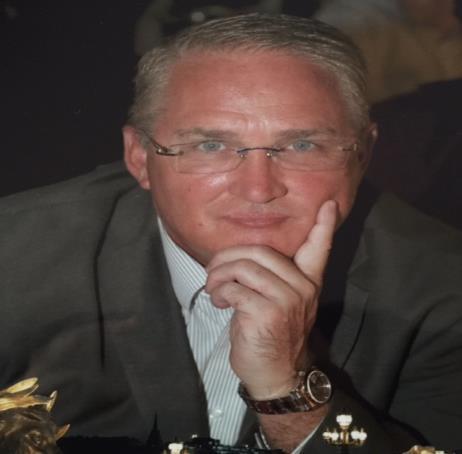
Tab Turner
Tab Turner is a trial lawyer with offices in Arkansas, Texas, San Diego, and New York. He graduated with high honors from the University of Arkansas School of Law in Fayetteville, Arkansas. He is the sole shareholder in Turner & Associates, P.A.
Tab is a trial attorney who specializes in representing consumers injured by defective automotive products, environmental litigation, anti-terrorism litigation, and commercial litigation. In the field of automotive safety, his primary focus is on vehicle handling and stability and catastrophic tire failures as well as representing families of children injured by defective safety systems. He has won verdicts for clients in multiple cases where the verdict was in excess of $20,000,000.00, including a $132,000,000.00 jury verdict against Ford Motor Company relating to the death of Brian Cole, a young outfielder with the New York Mets organization, which remains the largest single verdict in a wrongful death claim in the U.S., and was lead trial counsel in winning the first antiterrorism case against Arab Bank in a trial that took place in Brooklyn in 2015, wherein the jury found the Bank guilty of providing material support to the terrorist organization Hamas, which had carried out twenty-four (24) separate attacks of U.S. citizens during the Second Intifida.
Mr. Turner has devoted much time to auto safety issues over the years, including serving as co-counsel representing Consumers Union, publisher of Consumer Reports magazine, in defamation suits brought by Isuzu Motors and Suzuki Motors in Los Angeles, CA, that resulted in a defense verdict and dismissal. Both cases involved articles published by Consumer Reports relating to the handling and stability characteristics of the Suzuki Samurai and the Isuzu Trooper.
Over a decade ago, Tab was honored by Arkansas Business magazine as one of the leading litigation attorneys in Arkansas and was selected as one of the 40 most prominent Arkansans under the age of 50. He has served as guest speaker for a variety of different organizations including the Association of Trial Lawyers of America; the National College of Advocacy; the Attorneys Information Exchange Group; the American Bar Association Automotive Litigation Section; Western Trial Lawyers Association; Kentucky Trial Lawyers Association; Virginia Trial Lawyers Association; the Arkansas
Bar Association; the Arkansas Trial Lawyers Association; the Washington Trial Lawyers Association, the University of Florida, the Southern Trial Lawyers’ Association, and the Texas Trial Lawyers Association. He is an active supporter of “Public Citizen”, a consumer advocacy organization in Washington, D.C., and is a former member of the board and active supporter of the “Trial Lawyers for PublicJustice”.
Tab was named the “Outstanding Trial Lawyer of the Year” in the United States for the year 2001 by “Trial Lawyers for Public Justice” based on his work in the Ford/Firestone litigation., and also received the “Outstanding Trial Lawyer of the Year Award” from the Arkansas Trial Lawyers Association for 2001-2002. Tab’s involvement in pursuing Ford and Firestone has been featured on virtually every major news organization, including ABC, NBC, CBS, Dateline NBC, CNN, 60 Minutes II, Frontline, and Burden of Proof. He was featured in the December, 2000, issue of the New York Times Magazine for his work on behalf of consumers in litigation involving sport utility vehicle rollovers. He has authored papers relating to similar accident evidence in products cases; vehicle rollover; occupant restraints; vehicle crashworthiness; voir dire; punitive damages; trial persuasion and settlement strategies. He also serves, and has served, in virtually every capacity with the Attorneys Information Exchange Group in Birmingham, AL.
He is a member of the Pulaski County and Arkansas Bar Associations; the American Bar Association; the Arkansas and American Trial Lawyers Associations; a former Board Member of Trial Lawyers for Public Justice; Million Dollar Advocates Forum; the Southern Trial Lawyers Association; Orange County Trial Lawyers Association; and the Western Trial Lawyers Association. Tab is licensed to in a variety of courts across the country and has represented clients in cases throughout the country.
Tab is also the subject of a book “Tragic Indifference: One Man's Battle with the Auto Industry over the Dangers of SUVs”, authored by Adam L. Penenberg of New York wherein Penenberg chronicles Turner's client, Donna Bailey, a single mother of two in her early 40s, who was left a quadriplegic on March 10, 2000, in central Texas when the Ford Explorer driven by her friend flipped over after its right-rear Firestone Wilderness AT tire peeled apart. That case, a watershed in litigation, was settled in January 2001. Penenberg, an investigative reporter who exposed a fabricated New Republic story by journalist Stephen Glass in 1998, tells the story of one lawyer's battle and one woman's struggle for survival and justice. The two stories intertwine to lead readers through the blinding maze of suits and countersuits, whistle-blowers, politicians, consumer advocates, journalists, engineers and corporate executives, all surrounding the profit machine now known in the U.S. as the “sport utility vehicle”. Bailey's accident is the focal point, but the trail of trouble began years earlier, as far back as 1992 for Turner. As the Ford-Firestone story mushroomed, investigative reporters from USA TODAY, CBS, The New York Times, Chicago Sun-Times, The Wall Street Journal and CNN kept the story alive while Congress debated the growing death toll associated with the combination of bad tire and bad vehicle. As more information was forced out of companies, Ford's internal correspondence showed the existence of a well-documented trail of engineers' concern over the Explorer's stability dating from its initial design. The tires' performance would be the key, they divulged. The tiremaker reduced the weight of its tires and drained air pressure per Ford's insistence to keep the Explorer's wheels on the road and avoid rollovers. Firestone insists that it wanted the pressure higher so the tires wouldn't peel apart. The squeeze for profits was reflected in an erosion of quality control. In the end, Ford and Firestone didn't just lose, buy or 2
overlook crucial information, Penenberg wrote, they simply chose to ignore it. And presumably, if the media and Turner hadn't kept up the barrage, consumers would have shrugged. As one reviewer commented about Penenberg’s book: “Penenberg invites you to feel the sweat, the exhaustion, the fear, the frustration and the pain of all concerned. That's good storytelling, and Penenberg lands the details gracefully, if a bit staged at times. For example, there's Turner's solitary walk among the dead, his collection of 17 trampled and battered Explorers that he had shipped to an abandoned Ford dealership. "The Explorers came in a Seussian array of colors ‹ red, blue, tan, white." We learn in the epilogue that after her settlement, Bailey was able to move into a new home complete with ramps and an elevator and works with troubled teens. Turner continues to sue SUV makers. Ford's board fired CEO Jacques Nasser in October of 2001 and replaced him with Bill Ford Jr., but the company continues tostruggle.
The company introduced a completely redesigned four-door Explorer in 2001, although they continued to build the two-door models, the kind Bailey was riding in when she was paralyzed. And stunningly, Penenberg reports, Firestone now contends its tires were never defective.
Turner is also credited as the pioneer in SUV safety issues and, along with Joan Claybrook of Public Citizen, is credited for being the instrumental tool in Congress’ creation of the “TREAD Act”, which now stands as one of the world’s strongest laws pertaining to consumer protection against defective automotive products and components, including the obligation to inform the public of growing consumer complaints that result in the death or injury of consumers on the highways.
Turner is also actively involved in anti-terrorism litigation, including the 2014 and 2015 trial of Arab Bank, which was the first civil jury trial in the U.S. under the Anti-Terrorism Act. The verdict (Linde, et al v. Arab Bank) in the United States District Court for the Eastern District of New York, Brooklyn, in 2014, involved his representation of over 300 U.S. citizens who were wounded or lost relatives in twenty-four terror attacks in Israel attributed to Hamas. The victims sued Arab Bank alleging that the Bank illegally financed Hamas and Hamas-related front organizations through use of the U.S. banking system. A Brooklyn jury found in favor of the victims on all twenty-four attacks. The damage phase of the trial begins in August, 2015. Mr. Turner, along with his team, likewise received the Trial Lawyer of the Year honor in 2015 from Public Justice for their work in the Arab Bank case.
Mr. Turner is likewise presently representing approximately 200 families of members of the Armed Services who were killed by Iranian IED attacks in Iraq. The families contend that a group of eight Banks violated the U.S. Anti-Terrorism Act by providing financial services to Iranian terrorist organizations despite the existence of U.S. sanctions prohibiting such conduct. The case, Freeman, et al v. Barclays, et al, is currently pending the United States District Court for the Eastern District of NewYork.
Mr. Turner has been honored for his work by the American Trial Lawyers’ Association; the Arkansas Trial Lawyers Association; the Kentucky Trial Lawyers’ Association; the Southern Trial Lawyers Association; the Western Trial Lawyers’ Association; the California Trial Lawyers’ Association; the Virginia Trial Lawyers’ Association; Public Citizen; U.S. News & World Report; AY Magazine; New York Times Magazine; American Registry; Memphis Magazine and the Southeast Region TrialLawyers.
Tab is the father of three lovely daughters.

March 9, 2020
Arkansas Bar Association
Hall of Fame
Fish & Richardson P.C.
One Congress Plaza
Suite 810
111 Congress Avenue
Austin, TX 78701
512 472 5070 main
512 320 8935 fax
Tommy Jacks Of Counsel
Jacks@fr.com
512 226 8171 direct
I am writing to support the nomination of my friend Tab Turner to the Arkansas Bar Association’s Hall of Fame.
I have known Tab for over 25 years and have seen first-hand the caliber of his representation of his clients in pioneering litigation, particularly in cases that have resulted in long-needed advances in auto safety. Tab was one of a handful of lawyers who recognized that needless deaths were being caused every year by off-road vehicles and SUVs with a high center of gravity that made them prone to rollover, all too often resulting in catastrophic or fatal injuries to the occupants. To make matters worse, many of these vehicles lacked rollover protection and were subject to “roof crush” during a rollover. Tab was successful in bringing cases against the manufacturers of these vehicles, proving through solid engineering evidence that their design made them unreasonably dangerous for their foreseeable uses. Through hard fought victories at the courthouse, Tab helped to force the manufacturers of these vehicles to make design improvements that have helped to make them safer for American consumers.
Tab has also devoted his time and talent to the Center for Auto Safety in Washington, D.C., a public interest organization founded by Ralph Nader and Consumers Union to help lead the fight to improve the safety of the passenger vehicles offered for sale in the United States. Tab serves on the Center’s Board of Directors and has helped to advance the Center’s ongoing efforts to bring about needed improvements in the safety of the vehicles offered for sale to American consumers.
I’ve been fortunate to work as co-counsel alongside Tab in court, and can say without doubt that he is truly a lawyer of the first class in every way. In preparing for trial, Tab spares no effort – the grueling work of gearing up for trial is never “too much” for Tab, nor is any detail ever too small to merit his attention. He is the consummate professional – his dealings with opposing counsel are open and above board, and he is highly respected by the judges before whom he appears.
I’ve always regarded it as an honor to be able to work on cases with other truly outstanding lawyers, and it pleases me to see Tab honored by the Arkansas Bar Association. He deserves to be recognized for his years of faithful service to his clients, to the American civil justice system, and to the causes to which he has devoted himself over the years.
Respectfully,
Tommy Jacks


March 9, 2020
On behalf of the Center for Auto Safety, I would like to recommend Tab Turner for induction into the Arkansas Law Hall of Fame. The Center, founded in 1970, is a national, independent, non-profit, member-driven consumer advocacy organization dedicated to making all drivers, passengers, and pedestrians safer by improving vehicle safety and quality. Over the last five decades, the Center has focused on advancing safety technology for everyone on the road, combined with standing-up for consumer protections from lemon laws in every state to the right to have recalls repaired for free. The civil justice system has long stood as an important tool in the fight for safety and Tab Turner has been a key ally every step of the way.
As you know, Mr. Turner is a trial attorney who has specialized in helping consumers in a wide variety of areas in which only his stellar representation prevented injustice from occurring and continuing, resulting in fair compensation for victims who had their lives inalterably damaged.
In particular, Tab has been a champion for consumers injured or killed by defects in automobiles. Specifically, he has brought to bear his considerable talents on cases involving vehicle handling, stability and catastrophic tire failures, as well as representing families of children injured by defective safety systems. Tab’s representation of families, like that of the late Brian Cole, has been exemplary. Mr. Cole, a young man with a bright future as a baseball player with the New York Mets, was killed in a Ford rollover crash, which led to a verdict of $132 million, one of the largest single verdicts in a wrongful death claim in the United States.
Tab has stood up for organizations as well. He served as co-counsel representing Consumers Union, publisher of Consumer Reports magazine, in defamation suits brought by Isuzu Motors and Suzuki Motors in Los Angeles, CA. Mr. Turner’s work resulted in a defense verdict and dismissal. Both cases involved articles published by Consumer Reports relating to the handling and stability characteristics of the Suzuki Samurai and the Isuzu Trooper. Without Tab’s work, the type of objective data produced by Consumer Reports regarding these dangerous vehicles could have been suppressed in the future, leading to an even greater public safety hazard.
Another example of Tab’s value to the legal community was profiled in a book by Adam Penenberg: “Tragic Indifference: One Man's Battle with the Auto Industry over the Dangers of SUVs.” The book details Tab’s work on behalf of Donna Bailey, a single mother of two in her early 40s, who was left a quadriplegic when the Ford Explorer driven by her friend flipped over after its right-rear Firestone Wilderness AT tire peeled apart. That case, a watershed in litigation, was settled in January 2001. While Bailey's accident is the focus of the book, it is important to understand that Tab had been working since 1992 to help stop the growing death toll associated with the combination of bad tire and bad vehicle.
It was folks like Tab and the Center for Auto Safety, who ensured continued attention to the issue, ultimately leading to the discovery of disagreement between Ford and Firestone regarding tire pressure. The resulting squeeze for profits presented a perfect storm, culminating in a dangerous erosion of quality control. Turner personally collected 17 trampled and battered Explorers and shipped them to an abandoned Ford dealership to determine the nature of the defect, which ultimately helped to blow the situation wide open.
Tab’s was a pioneer in SUV safety issues, and along with Joan Claybrook of Public Citizen, is often credited for being instrumental in Congress’ creation of the “TREAD Act,” which, when passed, was one of the world’s strongest laws pertaining to consumer protection against defective automotive products and components, including the obligation for manufacturers to report consumer defect complaints that result in death or injury on America’s roads..
Even in 2020, there remain far too many dangerous vehicles on the road, and almost as many families who have become victims of the callous indifference of the car companies’ thirst for sales over safety. Yet, unknown thousands have likely avoided crashes, survived wrecks, and are alive today because of Tab’s work. I am thrilled he serves on our Board of Directors, and strongly recommend him for this honor.
Jason Levine Executive Director
March 9, 2020
Arkansas Bar Association Hall of Fame
2224 Cottondale Lane Little Rock, Arkansas 72202
Re: Support for Nomination of Tab Turner for Arkansas Law Hall of Fame
Ladies and Gentlemen:
I write this correspondence in support of Mr. Tab Turner’s nomination for membership in the Arkansas Law Hall of Fame.
I have known Mr. Turner for over thirty years and I have practiced law and tried cases with him during the majority of that time. Mr. Turner has devoted his career to protecting consumers across the United States. His legacy will include—but will certainly not be limited to—the “TREAD Act,” which remains one of the world’s strongest consumer protection laws pertaining to defective automobile products and components. Every lawyer should seek to ensure accountability through the pursuit of truth and justice in our nation’s court system. No one has done that better than Tab Turner.
The Bar is well aware of Mr. Turner’s many accolades, so I will not recite all of them in this letter. Some notable accomplishments include recognition as the “Outstanding Trial Lawyer of the Year” in the United States by Trial Lawyers for Public Justice, based on his work in the Ford/Firestone litigation. Mr. Turner secured the nation’s largest single verdict in a wrongful death claim in the United States, and won the nation’s first antiterrorism case against Arab Bank in 2015. Mr. Turner has few, if any, peers in the level of success that he has achieved over his legal career. But what is perhaps most important is the high moral and professional character that he has maintained while achieving those successes. I do not believe that he has any peers, in that regard.
For these and other reasons, I give Mr. Turner my highest recommendation for this award. Should it be required, I am willing to appear before the committee or members of the Bar on behalf of Mr. Turner.
If you have any further need for information from me, please feel free to contact me. In the interim, I remain
Yours very truly,
Darrell L. Barger

Email: cspoon@roselawfirm.com
Phone: (501) 375-9131
Fax: (501) 375-1309
120 East Fourth Street
Little Rock, AR 72201
Admitted to Practice
• Arkansas, 1978
• United States Supreme Court, 1981
Experience
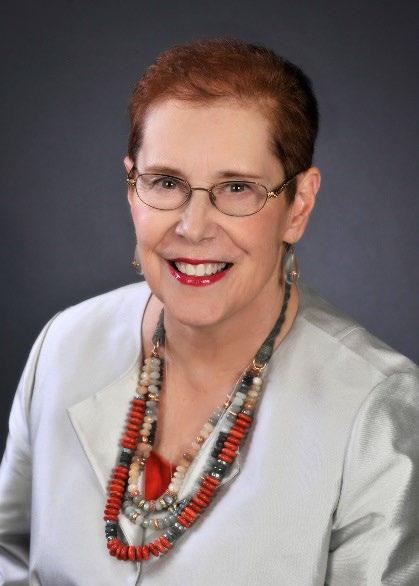
Carolyn primarily represents public and private employers in defending employment-related matters, including Title VII litigation, regularly serves as an arbitrator, and does extensive training in the employment area for employers. She is a frequent contributor to legal publications on topics involving employment and personnel issues, including Chapter Chair for various chapters of Employment Discrimination Law (5th Edition 2017 Cumulative Supplement).
Professional Activities
• Arkansas Bar Association (President, 1995-1996; Labor Law Section, Chair, 1991-1992)
• Pulaski County Bar Association (President, 1989-1990)
• American Bar Association (Member; House of Delegates, 1997-2021; House Select Committee, 2010; Steering Committee of the Nominating Committee; Labor and Employment Law Section and Ethics and Professional Responsibility Committee; ChairCommission on Interest on Lawyers’ Trust Accounts)
• Arkansas Association of Women Lawyers (President, 1982-1983)
• William R. Overton Inn of Court (President, 1992-1993)
• Arkansas Fellows, American Bar Foundation (Past Chair)
• Commission on Uniform State Laws, Governor’s Appointment 2013 - 2017
• Members Consultative Group for Restatement Third, Employment Law, American Law Institute
• Union Internationale des Avocats (UIA)
• Fellow, College of Labor and Employment Lawyers
• American Employment Law Council
• Arbitrator, Court of Arbitration for Sport
• Arbitrator, FINRA
• Arbitrator, UFC Arbitration Panel
• Member of the American Arbitration Association Roster of Employment Arbitrators and Mediators and the Large Complex Case Panel
• National Conference of Bar Presidents, Past Member, Executive Council
• Transportation Lawyers Association, Past Member, Executive Committee
• Little Rock Housing Authority Board of Commissioners, Past Chair
• Arkansas Real Estate Commission, Commissioner, 1978-1981
• Member of Women In Sports Law
• Arkansas Symphony Orchestra Board of Directors, current Personnel Committee
• Little Rock Sister Cities Commission, 2007 - 2017
• Arkansas Coalition Against Sexual Assault (Past Board Member)
• Arkansas Women’s Leadership Forum
• Arkansas Women Executives (Past President)
• Women’s Foundation of Arkansas (Past President)
• VOCALS – Volunteer Organization, Center for Arkansas Legal Services
• University of Arkansas at Little Rock, J.D., with honors, 1978; Associate Editor, University of Arkansas at Little Rock Law Journal, 1977-1978
• University of Arkansas at Little Rock, B.A., 1974
• Charles L. Carpenter Memorial Award, Arkansas Bar Association, 2005
• Fellow, College of Labor and Employment Lawyers
• Lawyer of the Year in Little Rock Employment Law - Management, 2017
• Best Lawyers in America in Labor and Employment, 1995-2019
• Chambers USA - America's Leading Business Lawyers
• Who’s Who Legal USA – Management Labour & Employment, 2005-2009
• The Marquis Who’s Who - Albert Nelson Marquis Lifetime Achievement Award, 2017
• Mid-South Super Lawyers in Labor and Employment Law, 2006-2022
• Top 50 Arkansas Mid-South Super Lawyers, 2010-2021
• Top 50 Women Mid-South Super Lawyers, 2011-2021
• Named one of the “Best Lawyers in Little Rock” by the readers of Soirée Magazine and Arkansas Business, 2012, 2013
• Featured in AY Magazine’s 2014 Powerful Women issue
• Named one of the “Arkansas 250” by Arkansas Business in 2018
• Named one of top 60 Attorneys by Arkansas Life in 2019
• Arkansas Women’s Hall of Fame, 2019
• Gayle Pettus Pontz Award (1995)
• Arkansas Business 250 Living Legends
• Arkansas Association of Women Lawyers – Bowen Student Chapter, Woman of the Year, 2022
• 2023 American Bar Foundation Distinguished Life Fellow Award
• 2025 Best Lawyers Lawyer of the Year in Labor Law-Management Award
General Questions:
1. Name and contact information of the person submitting this nomination:
Name: Annabelle Imber Tuck
Address: 300 East Third Street, Unit 1207, Little Rock, AR 72201
Phone: 1(501)831-6098
Email: annabelletuck@ymail.com
2. Name of the person, group, organization or event being nominated:
Carolyn B. Witherspoon
3. Contact information of the nominee (if applicable):
Address: 120 East Fourth Street, Little Rock, AR 72201 (o); 11 Riverbend, Little Rock, AR 72202 (h).
Phone: 1(501) 375-9131 (o); 1(501)940-5220 (mobile).
Email: cspoon@roselawfirm.com
4. Concise statement regarding the nominee's connection to the State of Arkansas:
Carolyn Witherspoon was born in Little Rock, AR, on March 20, 1950. She received her B.A. from UALR in 1974 and her J.D from UALR in 1978. She has practiced law in Arkansas for 48 years.
Questions Applicable to Individuals:
1. Birthdate: March 29, 1950
2. Birthplace: Little Rock, AR
From: Annabelle Tuck
To: Hall of. Fame
Subject: Submission of Nomination for Induction into the Arkansas Bar Association Legal Hall of Fame -- Carolyn B. Witherspoon
Date: Sunday, March 22, 2026 10:46:17 AM
Attachments: Nomination -- Arkansas Bar Association Hall of Fame -- Carolyn Witherspoon.docx Carolyn Witherspoon CV - Updated 8-15-24.docx
Recommendation letter by Justice Annabelle Imber Tuck for induction of Carolyn B. Witherspoon into the Arkansas Bar Association Legal Hall of Fame.pdf
You don't often get email from annabelletuck@ymail.com. Learn why this is important Dear Members of Selection Committee,
In accordance with the instructions for nominations to the Arkansas Bar Association Legal Hall of Fame, attached are the required documents:
1. Completed Nomination Form
2. Resume of Carolyn B. Witherspoon
3. Recommendation letter for induction of Carolyn B. Witherspoon into the Arkansas Bar Association Legal Hall of Fame.
It is an honor and privilege to submit my unequivocal recommendation that Carolyn B. Witherspoon be inducted into the Arkansas Bar Association Legal Hall of Fame.
Best Regards, Annabelle Imber Tuck
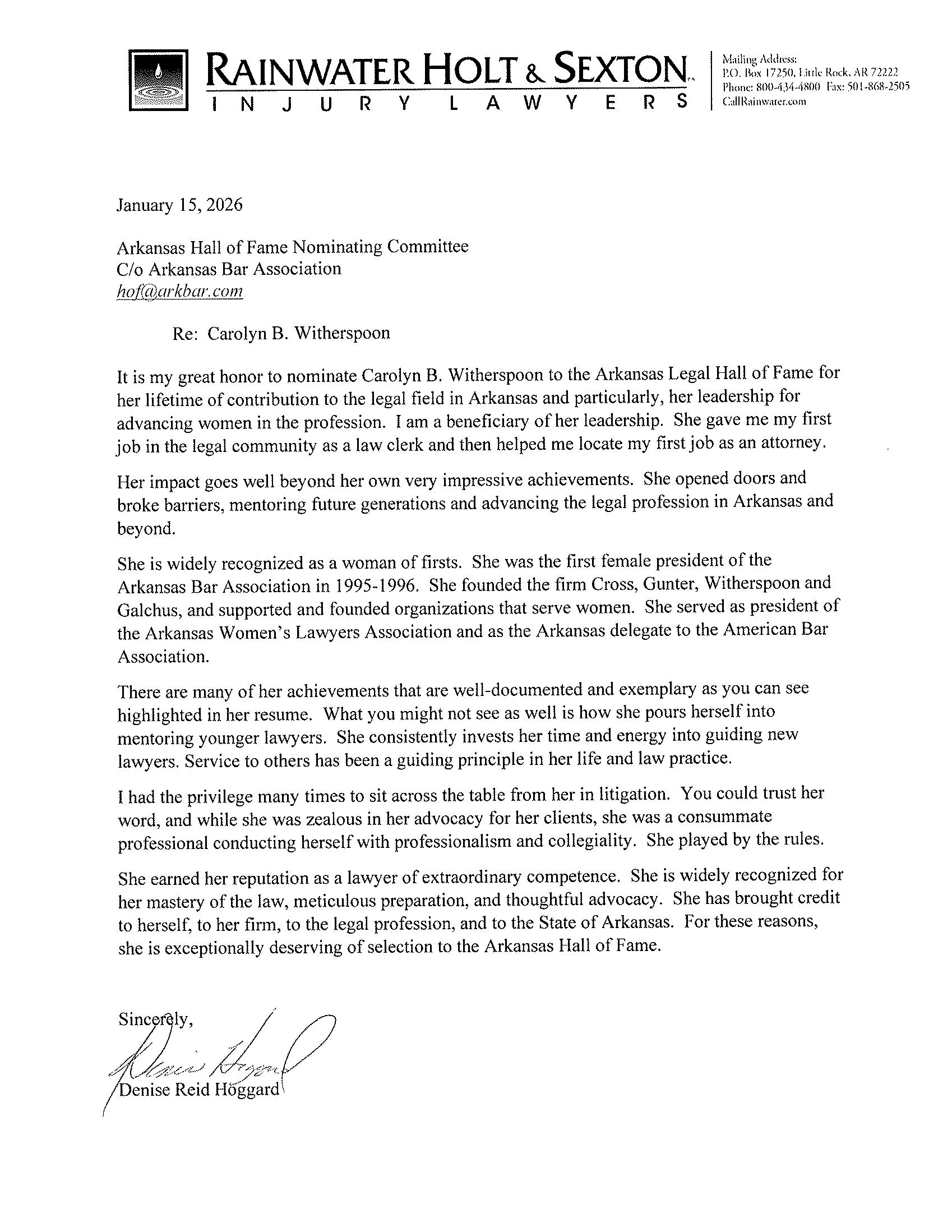
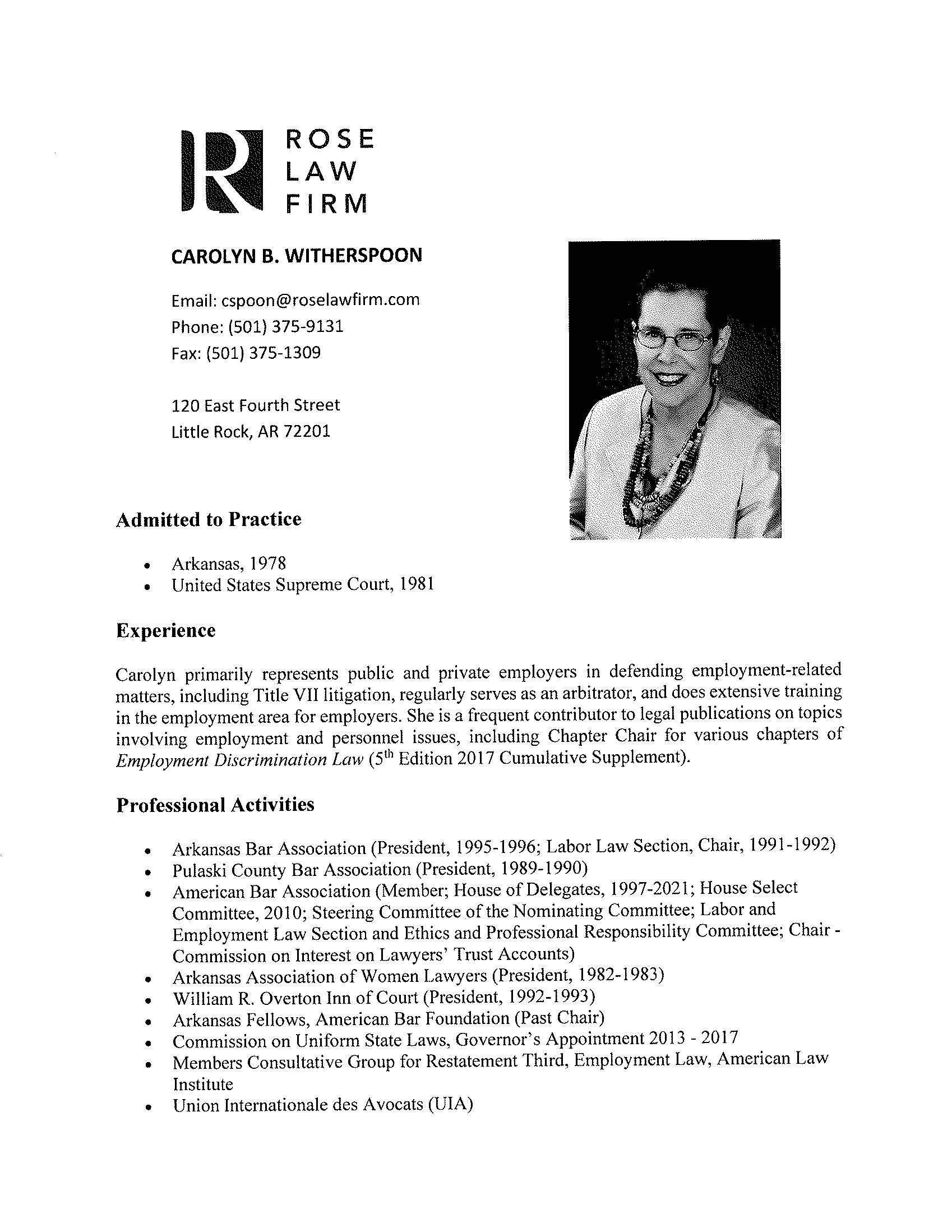
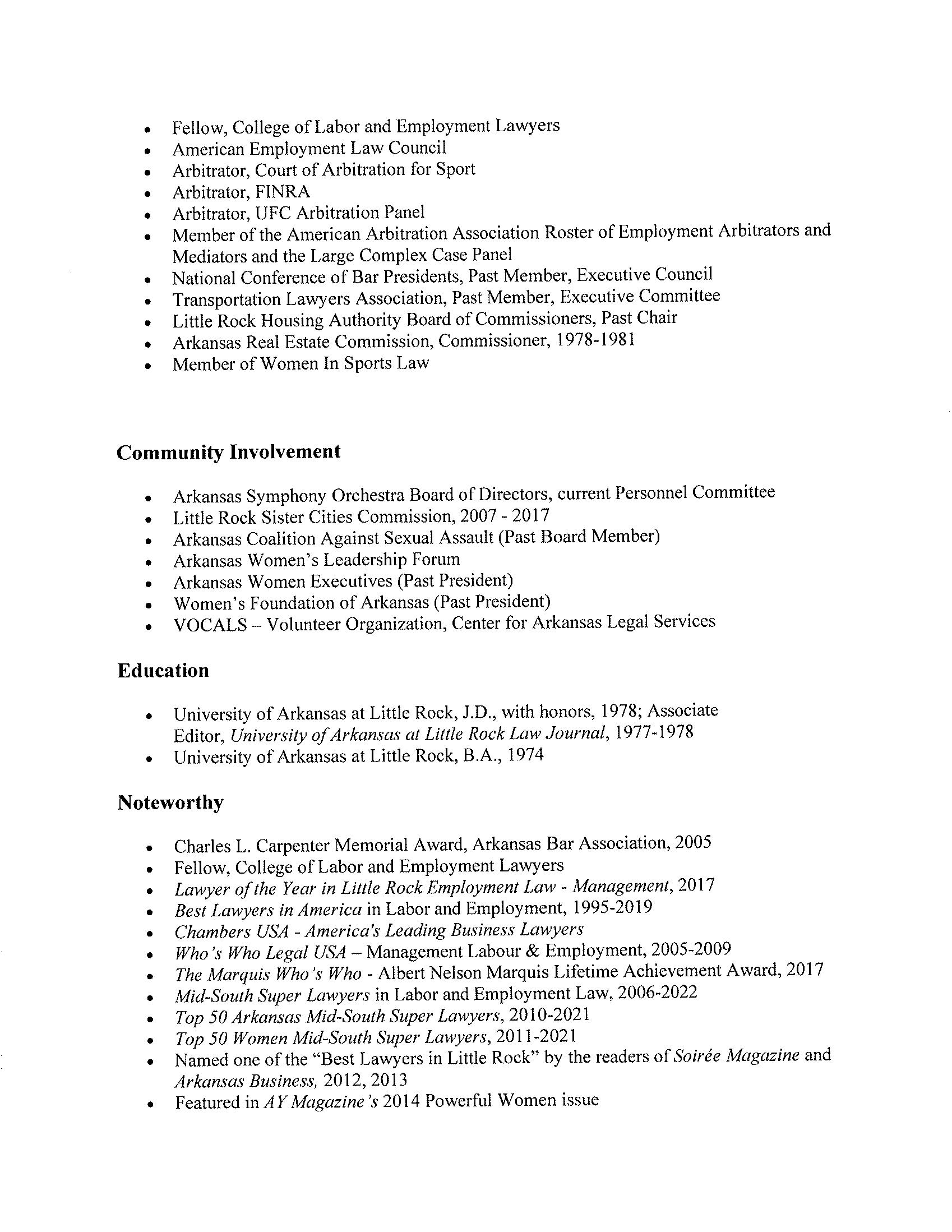
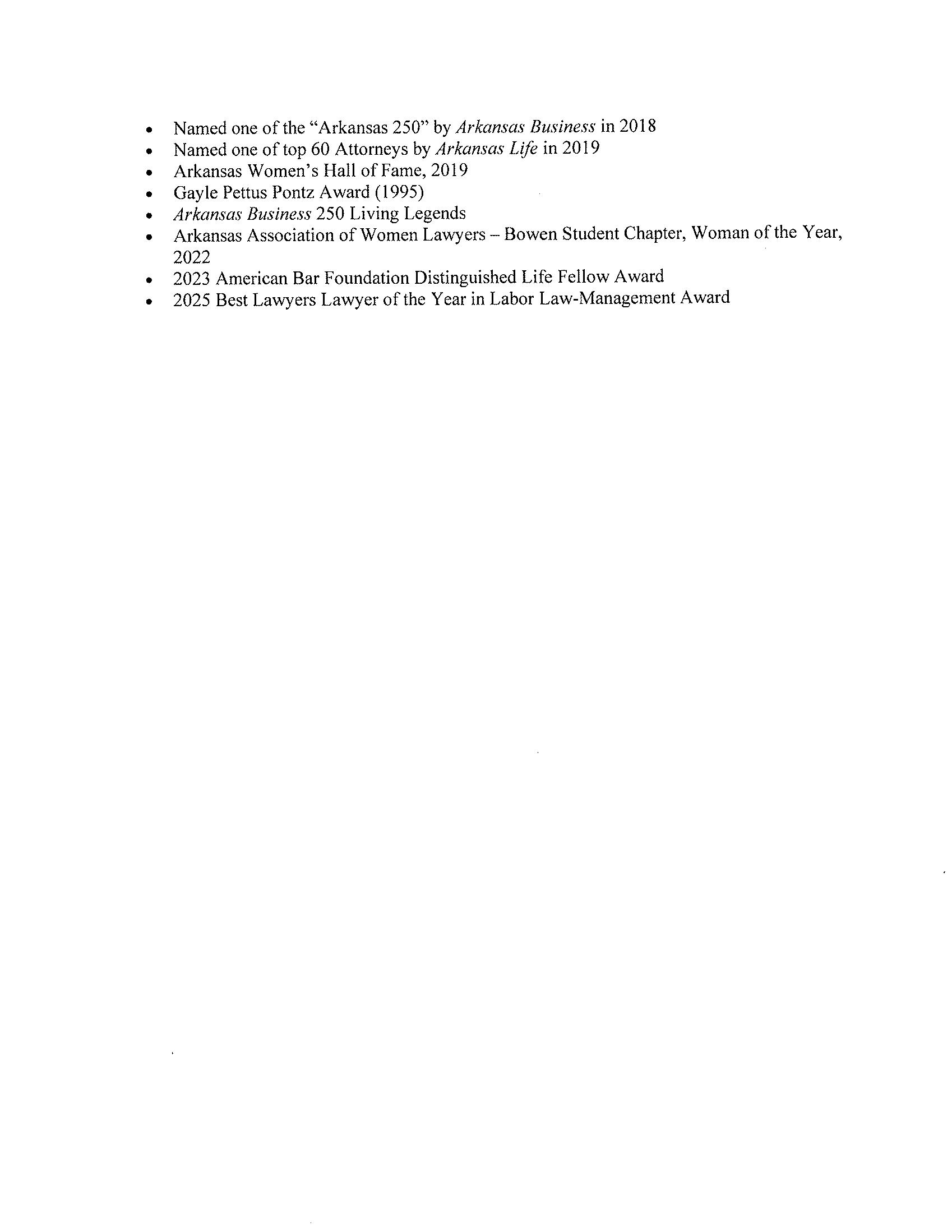
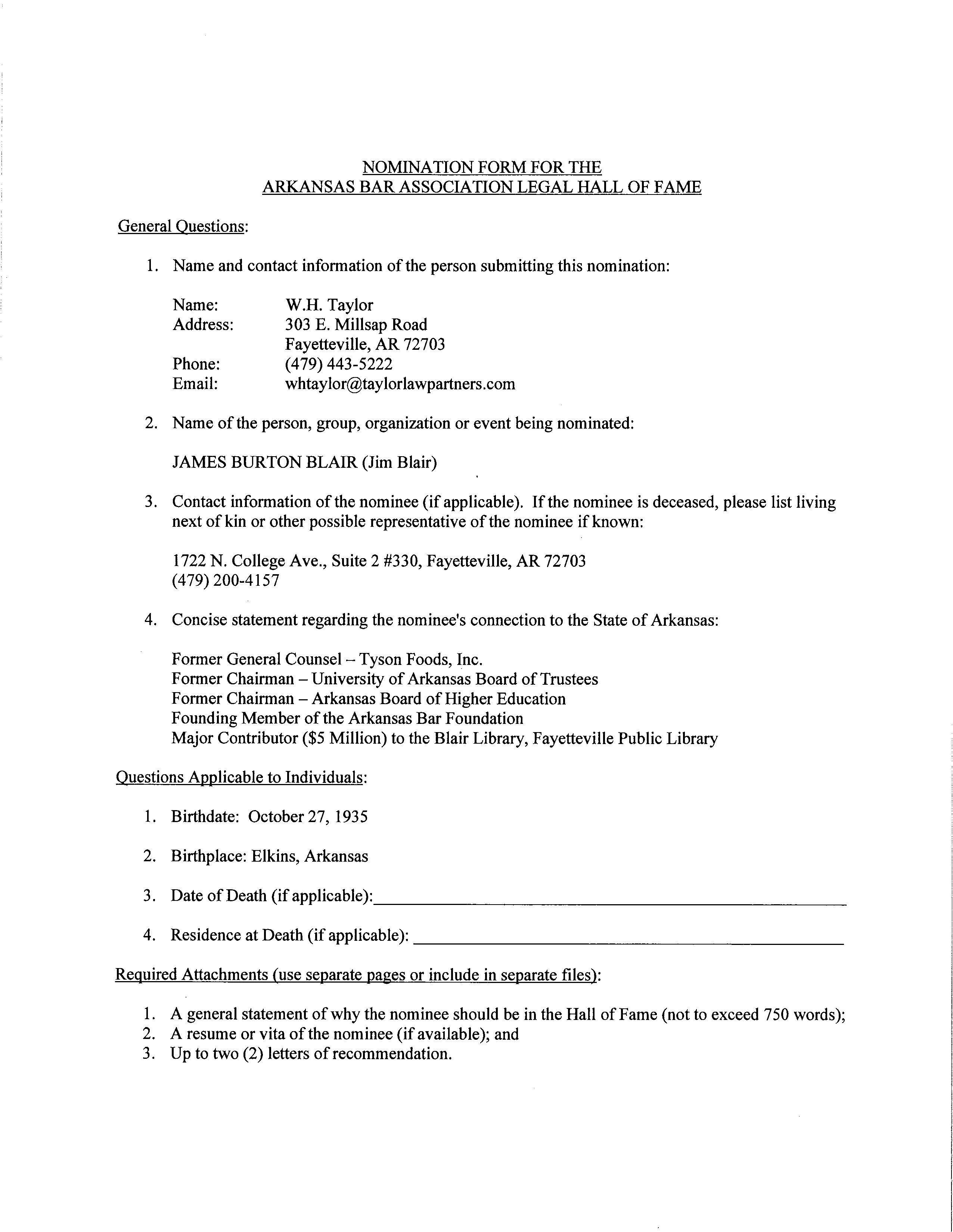
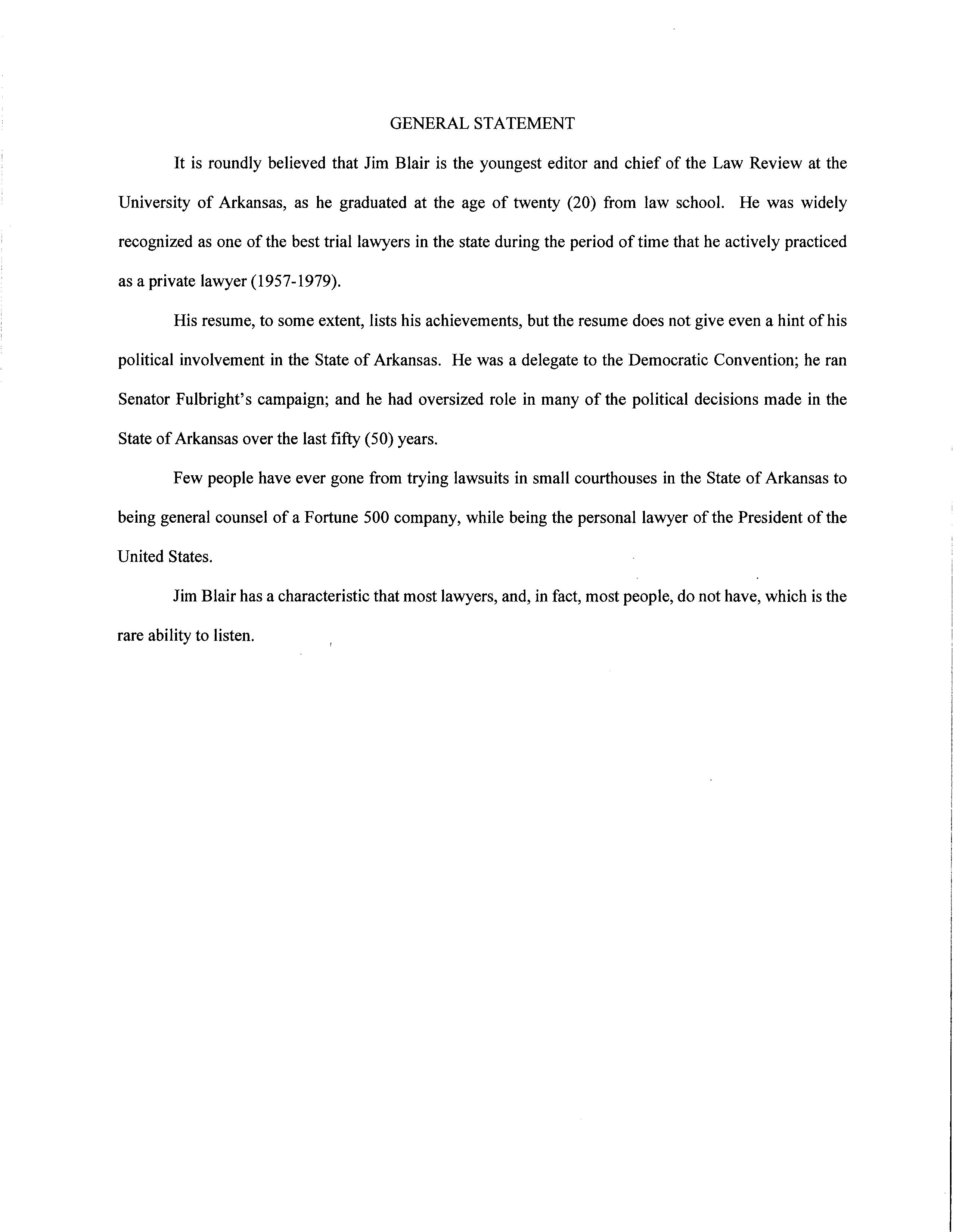
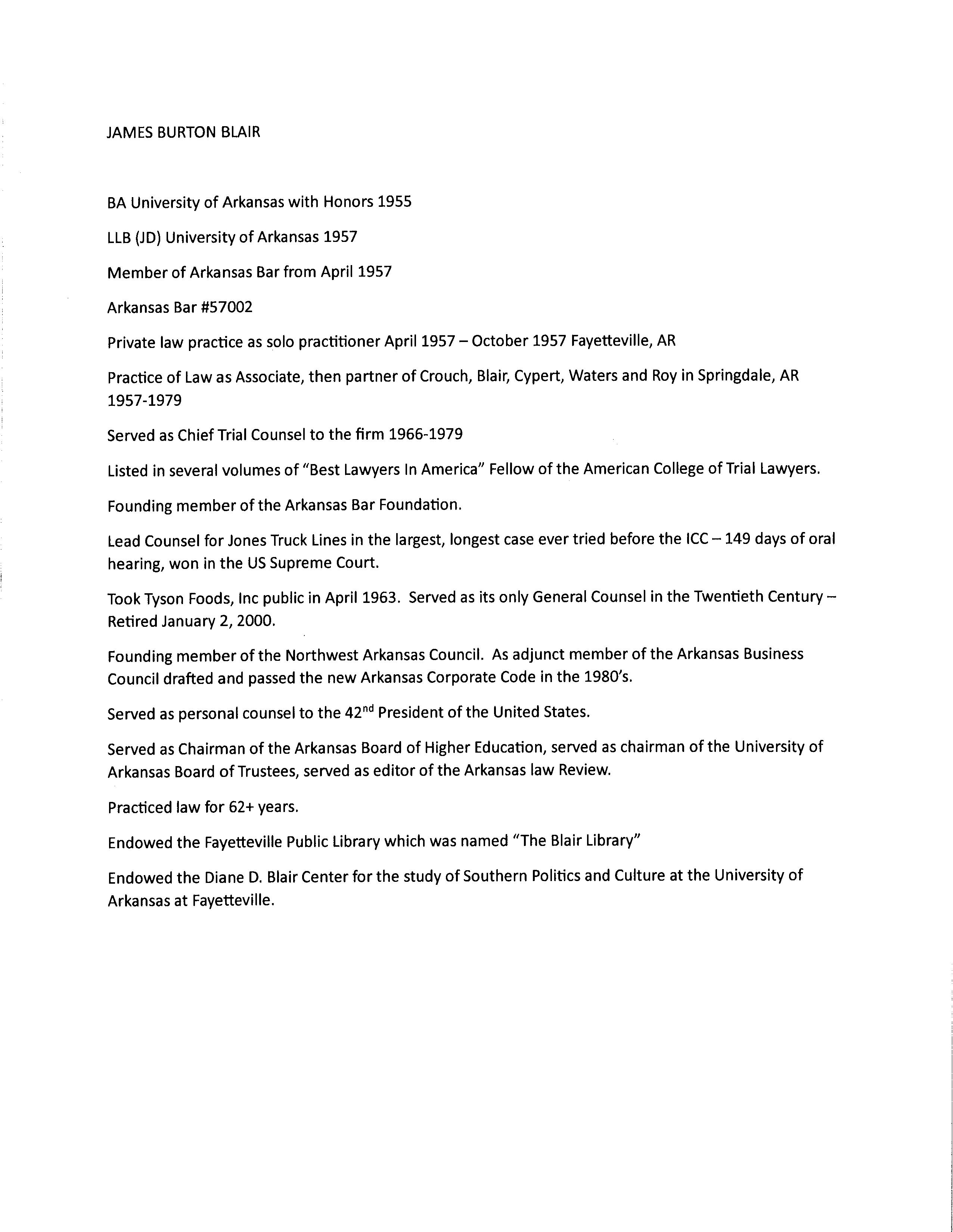
General Questions:
1. Name and contact information of the person submitting this nomination:
Name: Address: Phone: Email:
Jack Cherry
1 Riverbend Rd.
Little Rock, Arkansas 72201 (501) 258-7607 jcherry@barberlawfirm.com
2. Name of the person, group, organization or event being nominated:
Sandra Wilson Cherry
3. Contact information of the nominee (if applicable). If the nominee is deceased, please list living next of kin or other possible representative of the nominee if known:
Name of Representative: Jane Cherry Address: 3929 Buena Vista St. Unit F, Dallas, Texas 75204 Phone: (336) 407-8583
4. Concise statement regarding the nominee's connection to the State of Arkansas:
Sandra Wilson Cherry was Past President of the Arkansas Bar Association and Fellow of the Arkansas Bar Foundation. Born and raised in Arkansas, Ms. Cherry served the state and its citizens in many capacities, including as a prosecutor for the United States in the Eastern District of Arkansas for over 20 years, as a teacher in the Arkansas public school system, and as a mentor and friend to many.
Questions Applicable to Individuals:
1. Birthdate: ______________________________________________________________________
December 31, 1941
2. Birthplace: _____________________________________________________________________
Little Rock, Arkansas
3. Date of Death (if applicable):__________________________________________________
August 1, 2006
Little Rock, Arkansas
4. Residence at Death (if applicable): __________________________________________________
Required Attachments (use separate pages or include in separate files):
1. A general statement of why the nominee should be in the Hall of Fame (not to exceed 750 words);
2. A resume or vita of the nominee (if available); and 3. Up to two (2) letters of recommendation
Sandra Wilson Cherry was First Assistant United States Attorney for the Eastern District of Arkansas from 2003 until her retirement in 2006.
Ms. Cherry first joined the United States Attorney’s Office in 1975, where she practiced civil and criminal litigation until 1981, when she was appointed by Governor Frank White to the Arkansas Public Service Commission. In 1983, she returned to the United States Attorney’s Office, where she specialized in fraud prosecution for the rest of her career.
A graduate of the University of Arkansas School of Law, where she was a member of the Arkansas Law Review, Ms. Cherry served as a trial adjunct instructor at the University of Arkansas at Little Rock School of Law, and taught at the Attorney General’s Trial Advocacy Institute in Washington, D.C.
Ms. Cherry was Past President of the Arkansas Bar Association, one of two women who have been elected to that position. She was also Past President of the Pulaski County Bar Association. She was Fellow of the American Bar Foundation and Fellow of the Arkansas Bar Foundation.
In 1991, Ms. Cherry was awarded the Gayle Pettus Pontz Award by the Women Law Students Association at the University of Arkansas “for outstanding excellence and achievement in the legal profession.” In 1992, Ms. Cherry received the Arkansas Bar Association’s Golden Gavel Award for Exemplary Service to the Legal Profession.
In 1993, Ms. Cherry was appointed by Chief Judge Richard Arnold to the Eighth Circuit Court of Appeals Gender Fairness Task Force. She served on the program committees for the Eighth Circuit Judicial Conferences in 1995 and 1999. In 2000, Ms. Cherry was appointed by Chief Judge Susan Webber Wright to the United States District Court Magistrate Selection Panel.
Ms. Cherry was a recipient of the 1999 Department of Justice Director’s Award for Superior Performance as an Assistant United States Attorney. She also received the United States Department of Health and Human Services Inspector General’s Integrity Award in both 1995 and 2002, in recognition of her contribution to the mission of the Inspector General. In 2003, Ms. Cherry was recognized by Federal Bureau of Investigation Director Robert Mueller for her outstanding prosecutorial skills.
In 2004, Ms. Cherry delivered the commencement address to the graduating class at the William H. Bowen School of Law in Little Rock.
Ms. Cherry was Past Chair of the Arkansas Community Foundation Board of Directors and was a member of the Board of Directors of the Good Shepherd Ecumenical Retirement Center. She served on the boards of the Arkansas Governor’s Mansion Association, the Arkansas Hospice Foundation, Inc., the Gaines House, which she served as President, and the UALR School of Law Alumni Association, which she also served as President. She was a founder and past member of the Board of Directors of the Women’s Foundation of Arkansas, and a member of the Arkansas Women’s Forum. She was a sustaining member of the Junior League of Little Rock, having served on its board, and was a member of Pi Beta Phi Sorority.
Ms. Cherry was a lifetime member of Second Presbyterian Church. In the last year of her life, Ms. Cherry was passionately devoted to raising funds for living kidney donors as a tribute to the young woman who had given a kidney to her.
Ms. Cherry was married to John S. Cherry, Jr., also an attorney, for nearly 30 years, and together they had one daughter, Jane Wilson Cherry.
Sandra Wilson Cherry was passionately devoted to this Association, her community, and the legal profession.
As President of the Arkansas Bar Association, and as a member of the Association for over 30 years, Sandra was dedicated to the bar and its membership. She considered it one of the great joys of her life that she had the opportunity to serve the bar alongside the many distinguished lawyers with whom she worked. She enjoyed mentoring law students and young lawyers, believing that whatever success she achieved in her own career was in large part attributable to distinguished lawyers who had mentored her during her law school years.
Sandra Wilson Cherry was born on New Year’s Eve 1941. She was raised in Little Rock, Arkansas and attended Little Rock public schools until the closure of the Little Rock high schools in the fall of 1958. As a member of the “Lost Class of 1959,” Sandra attended Hendrix College during the 1958–1959 school year and later graduated from the University of Arkansas in 1962, where she earned a Bachelor of Arts in History.
Following college, Sandra taught junior high school civics and history in the Little Rock Public Schools and served as Chairman of the Social Studies Department at Horace Mann Junior High School.
In 1972, Sandra left the teaching profession to attend law school at the University of Arkansas in Fayetteville. During law school, she returned to Little Rock to be nearer to her terminally ill mother. A member of the University of Arkansas Law Review, she graduated from the University of Arkansas School of Law at Little Rock in 1975
In 1975, Sandra earned her license to practice law and was appointed as an Assistant United States Attorney for the Eastern District of Arkansas, becoming the first woman in Arkansas to receive that appointment.
Sandra served as Assistant United States Attorney for over 28 years, ultimately serving as First Assistant United States Attorney from 2003 until health issues forced her to retire in 2006. Sandra’s service to the United States was interrupted only once from 1981 to 1983, when she was appointed by Governor Frank White to serve the State of Arkansas as an Arkansas Public Service Commissioner. Again, she was the first woman to be appointed to that position.
Sandra was a member of the Arkansas Bar Association from the outset of her legal career. She served as secretary to the Association and served on numerous committees before becoming the second woman elected to be the Association’s president in 2001.
As Assistant United States Attorney, Sandra was the recipient of numerous Department of Justice awards for excellence.
Sandra worked with other members of the Arkansas Bar Association to promote a constitutional amendment that eliminated the separation of law and equity in Arkansas circuit courts and that provided for non-partisan judicial elections.
Sandra was also active on the boards of several entities that provided valuable support and service to her community, including: the Arkansas Community Foundation, which she served as Chair; the Good Shepherd Ecumenical Retirement Center; the Gaines House, which she served as President; the Arkansas Governor’s Mansion Association; the Arkansas Hospice Foundation, Inc.; and the UALR School of Law Alumni Association, which she also served as President. Sandra was also a founder and past member of the Board of Directors of the Women’s Foundation of Arkansas and a member of the Arkansas Women’s Forum.
From the information provided in the materials submitted with this application, including this nomination statement, Sandra’s biography, and the enclosed letters of recommendation, it is clear that Sandra Wilson Cherry made extraordinary contributions to the law, society, the administration of justice, legal education, the bar, and the community overall.
J.BruceCross
CarolynB.Witherspoon
M.StephenBingham
MistyWilsonBorkowski
MissyMcJunkinsDuke
CynthiaW.Kolb
AmberWilsonBagley
BonnieJohnson
LauraD.Johnson
GregoryJ.Northen
GeorgeR.Ernst (1)
AbtinMehdizadegan
MaryE.Buckley (2)
AlexD.Clark
JosephM.Kraska
NicholasC.R.Williams
CaitlinA.Campbell
Of Counsel
PhilipE.Kaplan
RichardA.Roderick
RobinShivelyBrown
JenniferS.P.Chang (3)
MayaS.Goree
RussellGunter(1950-2013) DonnaSmithGalchus(1946-2016)
500PresidentClintonAvenue,Suite200 LittleRock,AR72201
Telephone(501)371-9999 Fax(501)371-0035
Mailing Address P.O.Box3178 LittleRock,AR72203
www.cgwg.com
(1) MemberofArkansasandPennsylvaniaBars (2) MemberofArkansasandTexasBars (3) MemberofArkansasandOklahomaBars
AllothersArkansasBar
March13,2020
Ms.KarenHutchins
ArkansasBarAssociation 224CottondaleLane LittleRock,AR 72202
RE: SupportofthenominationofSandraCherry totheArkansasLegalHallofFame
DearKaren:
I write in support of the nomination of Sandra Cherry to the Arkansas Legal Hall of Fame. Sandra was my Chair of the Executive Committee (that’s what it was called way back then) the year that I served as President of the Arkansas Bar Association. She was courageous in the face of adversity. She was efficient and extremely responsible. Sandra’s firm hand and comforting guidance was a great comfort to me personally and to all in leadership positions. She was always there when I needed her and I felt so proud of her when she took over as President of the Bar Association for 2001-2002. She earned the respect and admiration ofthousandsoflawyersbothinArkansasandoutofstate.
Sandra was not only a wonderful bar leader, she was also respected as a great lawyer. SheearnedmanyaccoladesforherservicewiththeUnitedStatesAttorney’sOffice.
Sandra served as my informal advisor when I was President of the Pulaski County Bar Association. Quite frankly, as the first female bar president for Pulaski County, I felt that I needed a great deal of moral support. Sandra later served as president of the Pulaski County Baranddidagreatjobtheretoo.
March 13, 2020
I am proud to say that she was a great friend, I say all of this in support of her nomination because she needs to be in the Legal Hall of Fame. Thank you for your consideration.
Sincerely
CarolynB.Witherspoon
CBW:bfm
cc: Mr.JackCherry (viae-mail: jcherry@barberlawfirm.com)
ATTORNEYS Ai U•,W
LITTLE ROCK• BENTONVILLE
Suite 3400
425 West C,~pitol /\venue Little Rock, 1'.\rka1isas 72201
P 501.372.6175
F 501.375.2802
www.barberlawfirm com
JIM L JULIAN
DIRECT 501.687 14<13 jjulian@barberlawfirm.com
March 13, 2020
Arkansas Bar Association
Arkansas Legal Hall of Fame
Re: Sandra Wilson Cherry
To the Arkansas Legal Hall of Fame Committee:
The first class of the Arkansas Legal Hall of Fame will be inducted in 2020. This Hall of Fame will recognize the men and women who have made an extraordinary contribution to the law, society, the administration of justice and legal education. It is my understanding that you are seeking those who have helped shaped justice and positively impacted the profession and state. I can think of no better example of someone meeting these criteria than Sandra Wilson Cherry.
Sandra began her working career as a Jr. High History Teacher. She later attended law school at the University of Arkansas at Little Rock and became an Assistant U.S. Attorney. Sandra distinguished herself as an outstanding lawyer as an Assistant U.S. Attorney and developed a theory of federal prosecution of nursing home neglect and abuse cases. She built on that to serve as the coordinator of the federal health care fraud task force for the Eastern and Western Districts of Arkansas. Through her efforts, she was recognized by the United States Department of Justice by the receipt of the 1999 Directors Award for superior performance by an Assistant US Attorney. Sandra's importance to the Arkansas Bar was borne out by her election as President of the Arkansas Bar Association in 2001. She became the second woman to lead the Arkansas Bar Association. Largely through her efforts, the Arkansas Bar Association began a government practice section which led to the development of a new group of bar association members. Prior to service as the State Bar Association President, Sandra served as the President of the Pulaski County Bar Association and also served as the President of the UALR School of Law Alumni Association.
Sandra's impact on her community and state did not end with legal related organizations. She served as a board member of the Arkansas Community Foundation for many years. She also served on the board of Good Shepherd Ecumenical Retirement Center. Sandra was very proud of her work with the Gaines House, where she served as board
Arkansas Legal Hall of Fame Committee
March 13, 2020
Page 2
president for many years. The Gaines House Organization provides transitional living residences for homeless women.
Based upon the set of criteria for induction into the Arkansas Legal Hall of Fame, I can think of no person who better exemplifies the ideals of the Legal Hall of Fame than Sandra Wilson Cherry. Her contributions to the law, society and the administration of justice cannot be over stated. I highly recommend Sandra Wilson Cherry as an inductee in the initial class for the Arkansas Legal Hall of Fame.
Sincerely,
BARBER LAW FIRM PLLC
JLJ/hrn
1. Nameandcontactinformationofthepersonsubmittingthisnomination:
Name: _Dr.MichaelB.Dougan__________________________
Address: _303WestCherryAve.,Jonesboro,AR72401____________________________
Phone: __8702430351___________________________
Email: __mdougan@astate.edu___________________________
2. Nameoftheperson,group,organizationoreventbeingnominated:_____SterlingRobertson Cockrill_______________________________________________________________________
3. Contactinformationofthenominee(ifapplicable). Ifthenomineeisdeceased,pleaselistliving nextofkinorotherpossiblerepresentativeofthenomineeifknown:____________Thecurrent SterlingCockrillIbelievestilllivesinLittleRockandispicturedintheFall2011 Arkansas Lawyer
4. Concisestatementregardingthenominee'sconnectiontotheStateofArkansas:Confederate veteran SterlingCockrill,thechiefjusticeoftheArkansasSupremeCourt,servedonthecourt from1884to1893,andatthirty-sevenyearsofagewastheyoungestchiefjusticeinthestate’s history.Hewasalsoaproductofalawschooleducationratherthantheoldapprenticeship system.CockrillwasmarriedagranddaughterofnotedlawyerandU.S.SenatorChesterAshley andenteredintopartnershipwithAugustusH.Garland.Hewaselectedchiefjusticefollowingthe deathonElbertH.English,completingEnglish’stermandin1888beingelectedtothefullterm. Cockrillbelievedlegislativecodessupersededthecommonlaw,alegacythatenduredafterhe resignedhisofficein1893duetoextremelylowsalaryandtheneedsofagrowingfamily.Oneof hisfirstjobswassortingthoughthetangledofaffairsofdeceasedArkansasbankerLoganRoots. TheprosecutionssoughtbyAttorneyGeneralJeffDavisagainstinsurancecompanyledtomore work.HediedonJanuary12,1901ofwhatwasdescribedas“lagrippe(influenza)andwas presidentoftheArkansasBarAssociationatthetimeofhisdeath.Hisdescendantsremained activeArkansas
QuestionsApplicabletoIndividuals:
1. Birthdate:September26,1847
2. Birthplace:Nashville,Tennessee
3. DateofDeath(ifapplicable):____January12, 1901___________________________________________________
4. ResidenceatDeath(ifapplicable):___Little Rock_______________________________________________
RequiredAttachments(useseparatepagesorincludeinseparatefiles):
1. AgeneralstatementofwhythenomineeshouldbeintheHallofFame(nottoexceed750words): CockrillfoughtintheConfederateArmyandwaswoundedintheBattleofAtlanta.Hehadstarted collegebeforethewarandreturned,havingaBAinLawdegreefromCumberlandUniversitywhen he settledin Arkansasin 1870. Cockrill played a major role inthemodernizationoftheSupreme Court in Arkansas, and during his term the number of justices was increased to five. He fought consistently against Judge Jno. R. Eakin and Equity in general while at the same time upholding theFellowServantRuleandotherpro-businessinterests,ofteninrailroadcases.However,heruled that a Crawford County school district had to have both white and black schools, and he upheld judicial protections for the right to vote. Highly unpopular was his upholding the state’s Sunday ClosingLaw that resultedin the jailingof numerous Seventh-DayAdventists. Anotable example ofhisjudicialrestraintwashisconclusionthat“apintofwhiskeywasnotaquantitywithinreason forayouthtohave.”
2. Vita: Two articles in the Arkansas Lawyer, Summer and Fall, 2011, provide a scholarlyand legal oversight of his importance. Additionally, John Hallum’s Biographical and Pictorial History of Arkansas (1887)includesCockrill.“InMemoriam: SterlingRobertsonCockrill,”writtenbyU.M. Rose,canbefoundin Arkansas Reports,68,(1901),613-620
3. Uptotwo(2)lettersofrecommendation. TomDillard’sletterisattached.
Letter of Endorsement
Judge Sterling Cockrill Nomination
I have read Professor Michael B. Dougan’s nomination of Judge Cockrill’s nomination to the Legal Hall of Fame. Judge Cockrill can be described as among the original “modern” members of the Arkansas Supreme Court. Though he was generally probusiness, Cockrill sometimes broke out of the mold to support unheralded causes such as schools for black children. Judge Cockrill had a long and distinguished career beyond serving on the Arkansas Supreme Court.
I recommend acceptance of Professor Dougan’s nomination of Judge Sterling Cockrill for the Hall of Fame.
Tom Dillard
Historian and Newspaper Columnist














GeneralQuestions:
1. Nameandcontactinformationofthepersonsubmittingthisnomination:
Name: _Dr.MichaelB.Dougan__________________________
Address: _303WestCherryAve.,Jonesboro,AR72401____________________________ _____________________________
Phone: __8702430351___________________________
Email: __mdougan@astate.edu___________________________
2. Nameoftheperson,group,organizationoreventbeingnominated:_____Jno.R. Eakin_________________________________________________________________________
3. Contactinformationofthenominee(ifapplicable). Ifthenomineeisdeceased,pleaselistliving nextofkinorotherpossiblerepresentativeofthenomineeifknown:
4. Concisestatementregardingthenominee'sconnectiontotheStateofArkansas:Eakin,inaddition tohisfameasthenewspapereditorofthe Washington Telegraph duringtheCivilWaranda notedtreatiseonwinegrowing,becamethestate’ssolechanceryjudgein1874andmovedthe supremecourtin1878.Achampionofwomen’rightsandanexponentofchanceryovertherigid commonlaw,hecalledtheSovereignImmunityclauseofthe1874constitutionashabbyattempt bythestatetoavoidpayingitsdebts.
1. Birthdate:February14,1822
2. Birthplace:BedfordCounty,Tennessee
3. DateofDeath(ifapplicable):____September3, 1885___________________________________________________
4. ResidenceatDeath(ifapplicable):__________________________________________________
RequiredAttachments(useseparatepagesorincludeinseparatefiles):
1. AgeneralstatementofwhythenomineeshouldbeintheHallofFame(nottoexceed750words): Eakin’s farsighted rulings reflect an attempt to bring modernization and humanity to the law. He workedtothisendbothinhischancerycareerandontheSupremeCourt.Althoughoftenoutvoted, hepavedthewayforsubsequentjudicialmodernization.
2. A resume or vita of the nominee (if available); Information on Eakin is extensive and includes scholarly articles on his work at the only Arkansas newspaper to continue to be published during the Civil War; C. Allan Brown discussed him at length in an article on “Horticulture in Early Arkansas.” Another scholarly article covers his long support for women’s rights. These citations andotherscanbefoundintheEncyclopediaof Arkansas articleonEakin.
3. Uptotwo(2)lettersofrecommendation. TomDillard’sletterisattached.
Letter of Endorsement
John R. Eakin Nomination
I have read Professor Michael B. Dougan’s nomination of Judge John R. Eakin to the Hall of Fame. Judge Eakin contributed so much to 19th century Arkansas law as a lawyer and judge that we forget the extent of his brilliance in other fields such as horticulture. And, he was one of the most important newspaper editors in antebellum Arkansas. Eakin’s enlightened opinions on legal protections for women were all too rare for that age in a small southern state. Professor Dougan’s knowledge of and writings have done much to keep Judge Eakin in the minds of historians but he deserves to be known by a wider public.
I recommend acceptance of Professor Dougan’s nomination of John R. Eakin for the Hall of Fame.
Tom Dillard Historian and Newspaper Columnist
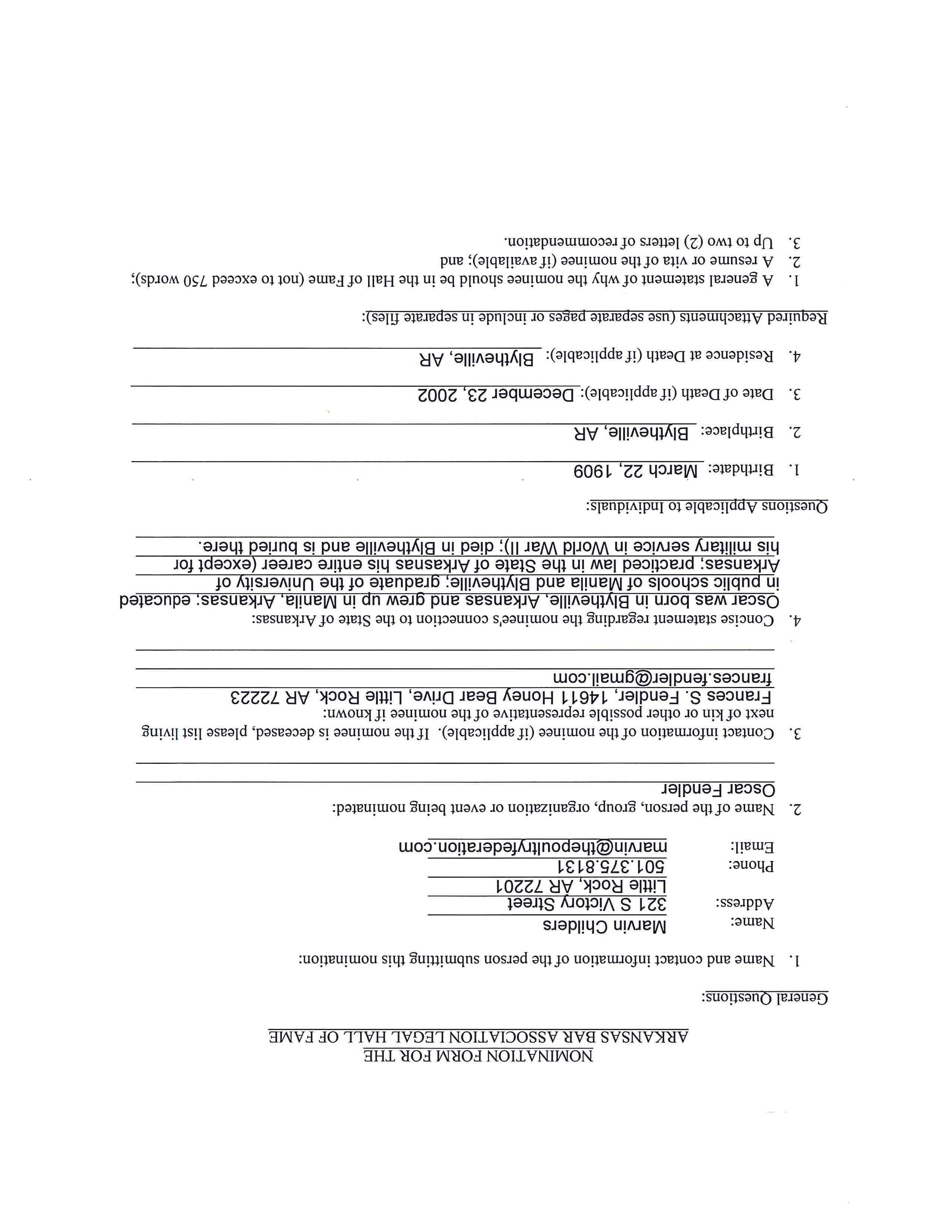
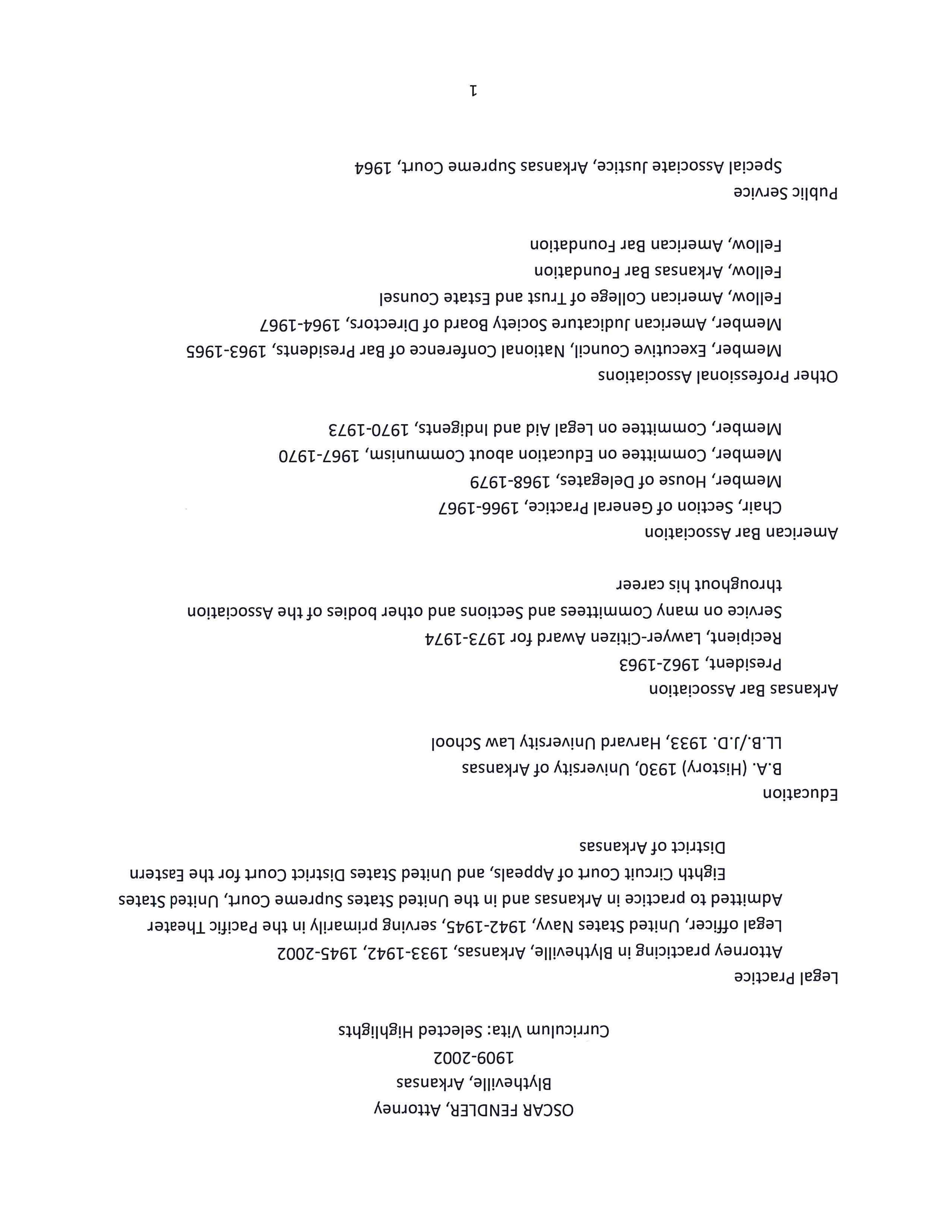
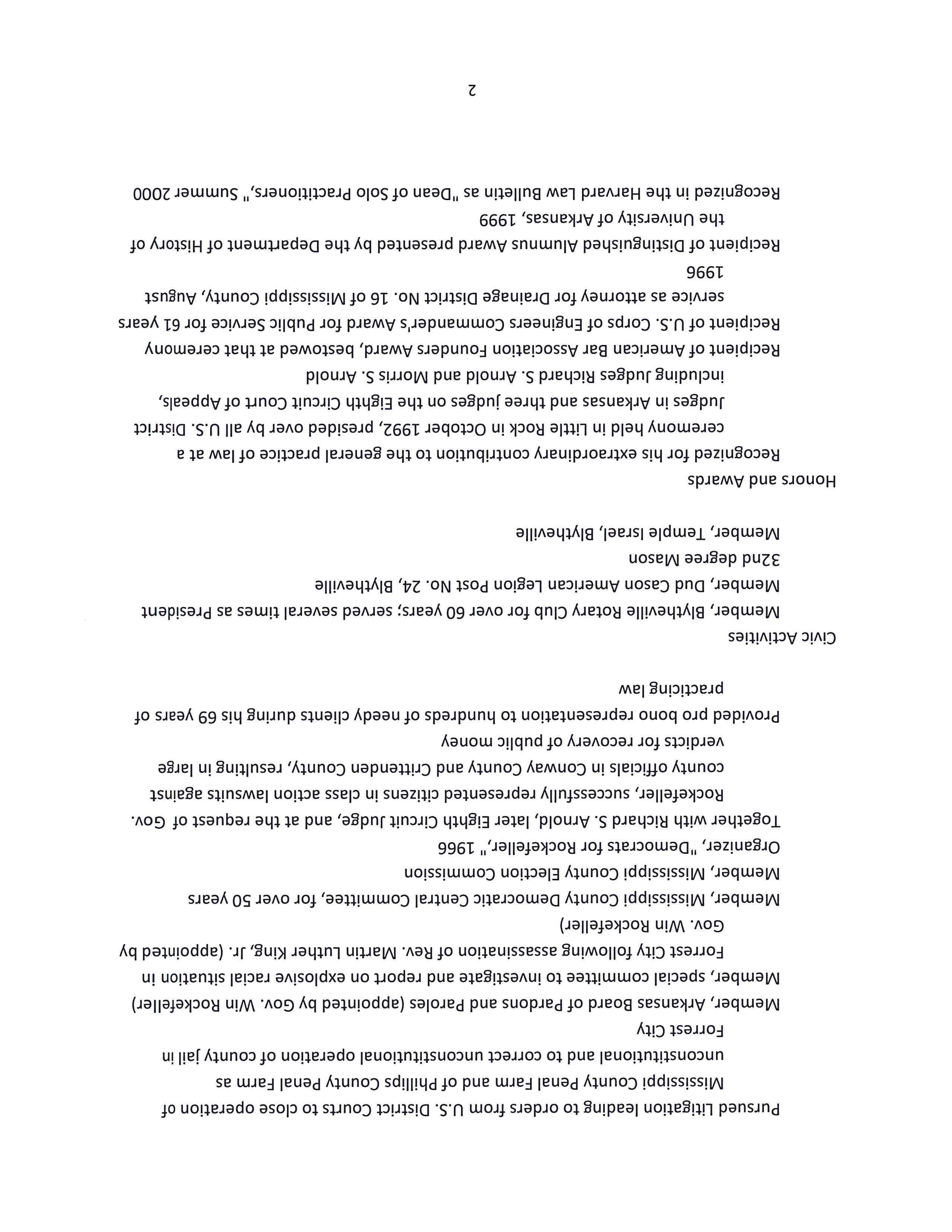

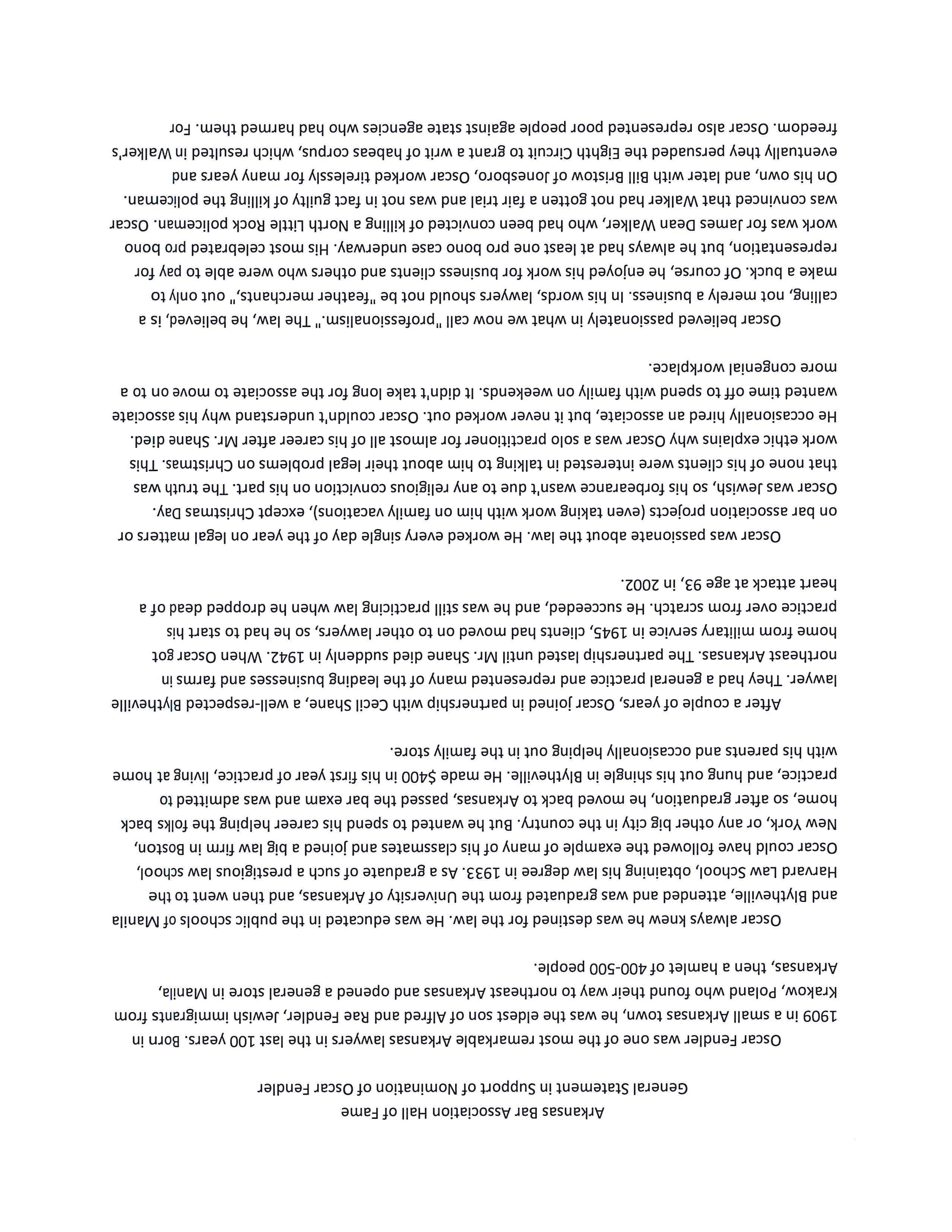

General Questions:
1.
Name and contact information of the person submitting this nomination:
Name: Address: 120 E. 4th St. Little Rock. AR 72201
David M. Powell/Rose Law Firm
Phone: Email: 501-375-9131 dpowell@roselawfimn.com
Name of the person, group, organization or event being nominated: Philip E. Kaplan
2. Contact information of the nominee (if applicable). If the nominee is deceased, please list living next of kin or other possible representative of the nominee if known: Phil is deceased. His widow is Ruthe Kaplan. 21 Montagna CL, Little Rock, AR 72223,
3. kaplanruthe@gmail.com, 501 -944-0445
4.
Concise statement regarding the nominee's connection to the State of Arkansas:
Questions Applicable to Individuals: January 4,1938
1. Birthdate: Lynn Massachusetts
2. Birthplace:
3. Date of Death (if applicablel: June 23, 2023
4. Residence at Death (if applicable): Little Rock, AR
Required Attachments fuse separate pages or include in separate files):
1. A general statement of why the nominee should be in the Hall of Fame (not to exceed 750 words);
2. A resume or vita of the nominee (if available); and
3. Up to two (2) letters of recommendation. See attached.
From: Peter G. Kumpe <pgkumpe@swbell.net>
Sent: Tuesday, March 31, 2026 9:49 AM
To: David Powell <DPOWELL@roselawfirm.com>
Subject: Re: KAPLAN RECOMMENDATION FOR LAWYER HALL OF FAME
External Email
My name is Peter G. Kumpe. I write to support the nomination of Philip Kaplan to the Arkansas Lawyer Hall of Fame. I can think of no better candidate. Through my professional career spanning over more than fifty years, I practiced with Phil as an opponent, an ally, and an “of counsel” associate. Phil consistently exhibited the highest integrity and skill. He not only advocated with zeal for his clients, but also devoted a full measure to his family and community. His professional career provides a model of standards few can meet, but all should strive for.
Sincerely,
Peter G. Kumpe
Sent from my iPhone
A native of Massachusetts, Phil Kaplan graduated from Harvard. Then, after graduating from Michigan law school and a stint as a field attorney for the National Labor Relations Board, Kaplan moved to Little Rock in 1968 to practice law with McMath, Leatherman, Woods & Youngdahl. He left after a year to start Walker, Kaplan & Mays as a principal, staying until the end of 1977.
Kaplan began his career in class-action cases in 1970 with Holt v. Sarver for which he was appointed attorney representing the inmates of the Arkansas prison system. Alleging its unconstitutionality, Kaplan prevailed. The case came full circle in 1978, when Kaplan represented the inmates and argues his case before the U. S. Supreme Court in the Hutto v. Finney class-action lawsuit. The Court upheld the findings of the district court – a victory for Kaplan and the inmates he represented.
Kaplan became a principal at Kaplan, Brewer Maxey & Haralson in 1978. During his tenure there, he was involved in several employment discrimination cases, such as Cooper v. Henslee (1974-1980). Grant Cooper III, assistant professor of history at the University of Arkansas at Little Rock (UALR), was not rehired after he admitted to being a communist, although not a formal member of the party. When his reappointment was considered, it was denied on the basis of alleged poor classroom performance. Kaplan represented Cooper when the American Civil Liberties Union (ACLU), came to his defense. The ALCU and Cooper prevailed in the suit.
Kaplan represented the ACLU again in McLean v. Arkansas Board of Education. The case challenged the state’s Act 590 of 1981, which required equal treatment for creationism any time evolution was taught in the classroom. Kaplan argued that creationism was in fact a religious doctrine rather than a scientific theory. In early 1982, the court ruled in the ACLU’s favor.
He was also lead counsel for the University of Arkansas (UA) and its board of trustees in Richardson v. Sugg in 2006. UA head basketball coach Nolan Richardson had been terminated after the university decided that a comment he had made during a fame was inappropriate. The decision was in favor of UA, another victory for Kaplan.
In 2007, Kaplan moved on to the law firm of Williams & Anderson PLC. Later in his career, Kaplan was “Of Counsel” to the law firm of Cross, Gunter, Witherspoon & Galchus, P. C. As always at the firms with which he was involved, he was a valued mentor to the lawyers, young and old.
Kaplan was a member of the American Board of Trial Advocates, the American College of Trial Lawyers, and the American Academy of Appellate Lawyers and was a longtime adjunct faculty member at the UALR William H. Bowen School of Law. He was also a fellow of the American Bar Association foundation.







H. Maurice Mitchell, deceased
Submitted by:
DerrickSmith,ManagingDirector
Mitchell,Williams,Selig,Gates&Woodyard,P.L.L.C.
425WestCapitalAvenue,Suite1800 LittleRock,AR72201
501-688-8800 dsmith@mwlaw.com
Name of Nominee: H.MauriceMitchell,deceased
Nominee’s living next of kin: Son–DavidMitchell,LittleRock Son–MauryMitchell,LittleRock
Concise statement regarding nominee’s connection to the State of Arkansas:
H.MauriceMitchellwasbornonOctober23,1925,inClarendon,Arkansas.Aftercompleting hiseducationinLittleRock’spublicschools,hegraduatedfromLittleRockSeniorHighSchool in1942andwentontoearnhisundergraduatedegreefromtheUniversityofArkansasat Fayettevillein1946.By1949,hehadjoinedtheArkansasBarandstartedpracticinglaw privatelyinLittleRockin1951.MauricebecameafoundingpartnerofwhatisnowMitchell, Williams,Selig,Gates&WoodyardP.L.L.C.onJanuary1,1954.Overthecourseoffivedecades, hededicatedhimselftolegalpracticeacrossthestateandactivelyparticipatedasaleaderin numerouscivicandcharitableorganizations.HepassedawayinLittleRockonApril2,2011.
Maurice Mitchell date of birth: October23,1925
Place of birth: Clarendon,Arkansas
Maurice Mitchell date of death: April2,2011
Residence at death: LittleRock,Arkansas
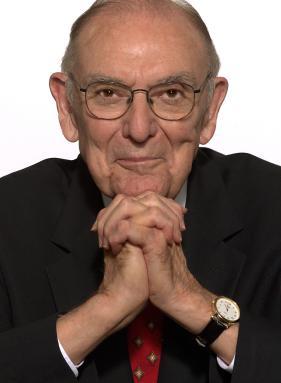
Founder,Mitchell,Williams,Selig,Gates&Woodyard,P.L.L.C.
October23,1925-April2,2011
B.A.,UniversityofArkansas,1946
J.D.,WashingtonandLeeSchoolofLaw,1948
AdmittedtopracticeinArkansas,1949
AdmittedtopracticeinWashington,D.C.,1991
Forhisextraordinarycontributionstothelegalprofession,hispioneeringworkinbankingandfinance lawandhisexemplarycivicleadership,especiallyduringtheLittleRockCentralHighcrisis,Maurice MitchellisatrulydeservingnomineefortheArkansasLegalHallofFame.Hislife’sworkhasmade Arkansasabetterplaceforgenerationstofollow,embodyingthehighestidealsofservice, professionalismandintegrity.
Mr.Mitchell’sdistinguishedlegalcareerisespeciallynotableforitsprofoundimpactonthefieldsof bankingandfinanceinArkansas.HewasinstrumentalinestablishingMitchellWilliams’reputation throughoutArkansasandtheregionforexcellenceinthesepractices.Oneofhismostsignificantlegal achievementswashandlingthefirstconversionofanArkansasfederally-charteredsavingsandloan associationintoanationalbankwhichwasagroundbreakingaccomplishmentthatsetanewstandard inthebankingindustry.
Hismasteryofbankingandfinancelawandhisabilitytodeviseinnovativelegalstrategieswere hallmarksofhislegalpracticeandleadership.Throughouthiscareer,Mr.Mitchellconcentratedhis practiceontheorganizationofbanks,savingsandloaninstitutions,lifeinsurancecompaniesanda rangeofotherbusinessentities.Heprovidedinvaluablelegalguidanceandstrategiccounselto countlessstatebanksandbankers,helpingthemnavigatecomplexregulatorylandscapesandbusiness challenges.Hisexperienceextendedtoreorganizingexistingbusinesses,structuringsophisticated financingsolutionsforrealestateprojectsandrepresentingbothdebtorsandcreditorsinmatters involvingfinanciallydistressedorganizationsandproperties.
MauriceMitchelldemonstratedleadershipthattranscendedtheboundariesoflegalpractice.A graduateoftheLittleRockschoolsystem,Mr.Mitchellfeltadeeppersonalresponsibilityduringthe tumultuouseventssurroundingthe1957desegregationcrisisatLittleRockCentralHighSchool. Workingbehindthescenes,Mr.Mitchellsoughttopreventtheclosureofthecity'spublicschoolsin 1958,demonstratingbothcourageandcompassioninthefaceofaprofoundlychallengingperiodin Arkansas’shistory.
Althoughtheefforttokeeptheschoolsopenwasultimatelyunsuccessful,hiscommitmentdidnot waver.Mr.MitchellplayedakeyroleinthesubsequentS.T.O.P.campaign,contributingtothesuccessful recallofsegregationistschoolboardmembersin1959.Histirelessadvocacyforpubliceducationwas furtherreflectedinhisleadershipaschairmanofnumerouscampaignsaimedatsecuringadditional fundingforLittleRock’spublicschools.
Mr.Mitchell’slegalexpertise,combinedwithhisstrongcommitmenttocivicresponsibility,established himasaleadingattorneyandrespectedmentor,adviser,andcommunityleader.Hisimpactextended acrossnumerousprofessionalandcivicorganizationsduringhisleadershiptenure,includingtheLittle RockJuniorChamberofCommerce,ArkansasStateJuniorChamberofCommerce,FiftyfortheFuture, BaptistHealthFoundation,PulaskiHeightsUnitedMethodistChurchFoundation,ArkansasArtsCenter Foundation(nowtheArkansasMuseumofFineArtsFoundation)andtheUniversityofArkansasat LittleRockFoundationFundBoard.Mr.Mitchell’svisionandintegritywerepivotalinadvancingthe missionsoftheseorganizationsfordecades.
Mr.Mitchellwasknownforhissharppoliticalinsight,dedicatingmanyyearstorepresentingArkansas onanationallevel.In1992,hechairedU.S.SenatorDaleBumpers’re-electioncampaignfinance committee,participatedintheWilliamJ.Clintonpresidentialcampaign’snationalfinancecommittee, andactedasadelegateattheDemocraticNationalConvention.Between1993and1998,Mr.Mitchell servedaslegalcounseltotheDemocraticPartyofArkansasandjoinedtheClinton-Gorenational financecommitteein1996.
ThededicationandnamingoftheH.MauriceMitchellCourtroomattheUniversityofArkansasatLittle RockBowenSchoolofLawin1992serveasasignificantacknowledgmentofhisenduring contributionstoboththelegalprofessionandlegaleducation.Inaddition,theH.MauriceMitchell LeadersinLawScholarships,establishedbyhisfirmin2000,continuetohonorandsupport prospectiveleaderswithinArkansas'slegalcommunity.
MauriceMitchellremainsadistinguishedfigureinArkansas’slegalcommunity Rememberedforhis extensiveexpertiseinbankingandfinancelaw,aswellashisenduringdedicationtopublicservice,he hasmadealastingimpactbothwithinthestateandbeyond.Despitenumerousopportunitiestopursue hiscareerelsewhere,Mr.MitchellelectedtoserveArkansasthroughouthisprofessionallife.His influenceisseeninhisgroundbreakingcontributionstobankingandfinancelaw,hiscourageous leadershipduringpivotalmomentsinstatehistoryandhissteadfastdedicationtoservingthepublic. TheseaccomplishmentsunderscorethatMr.Mitchellisanexemplarycandidateforinductionintothe 2026ArkansasLegalHallofFame.
This nomination includes Maurice Mitchell’s resume– see following pages.
Education:
• JurisDoctor,WashingtonandLeeSchoolofLaw,Lexington,Virginia,1948
• BachelorofArts,UniversityofArkansas,Fayetteville,Arkansas,1946
• TheCitadel,TheMilitaryCollegeofSouthCarolina,1942-43
• LittleRockPublicSchools,graduatedfromLittleRockSeniorHighSchoolin1942
Occupational History:
• FoundingMember,Mitchell,Williams,Selig,Gates&Woodyard,P.L.L.C.,ofLittleRock,Arkansas, 1-1-1954through12-31-1999servingasManagingPartnerfrom1972-1992;OfCounsel,1-12000to4-2-2011
• PrivatepracticeoflawinLittleRock,Arkansas,1951-1954
• AssistantAttorney,ArkansasStateRevenueDepartment,1949-51
• Agent,InternalRevenueService,U.S.TreasuryDepartment,1948-49
Legal Practice Area
• Finance,banking,corporateandrealestate
Professional Experience:
• Organizingbanks,savingsandloans,lifeinsurancecompaniesandotherbusinessentities,and reorganizingexistingbusinesses,includingtheconversionofasavingsandloanintoa commercialbank.
• Structuringfinancingforrealestateprojects,suchasofficecondominiums,retirementcenters, nursinghomes,hospitals,apartmentcomplexesandshoppingcenters.
• Representingdebtorsandcreditorsinmattersinvolvingfinanciallytroubledbusiness organizationsandrealestateprojects.
• Servingascounseltofinancialinstitutions,familyholdingcompaniesandrealestate developers.
Business Organizations
• BaileyTimberlands,LLC,LittleRock,AR,GeneralCounsel,2000-2005
• BaileyProperties,LLC,LittleRock,AR,GeneralCounsel,1996-2005
• ProvidentialLifeInsuranceCompany,LittleRock,AR,Director,1981-1996
• EagleMortgageCompany,Inc.,LittleRock,AR,Director,1976-1996
• RebsamenInsurance,Inc.anditspredecessor,RebsamenCompanies,Inc.,LittleRock,AR,Director,1970-2001
• FirstAmericanNationalBank,NorthLittleRock,AR,OrganizerandDirector,1957-1991
• BaileyCorporation,LittleRock,AR,Director,1956-1992
• AmericanFoundationLifeInsuranceCompany,LittleRock,AR,Organizerand Director,19551976
• EagleProperties,Inc.,LittleRock,AR,OrganizerandDirector,1955-1975
Professional Organizations
• PulaskiCountyBarAssociation,Member
o President,1990-91
• ArkansasBarAssociation,Member
o ChairmanofTaskForceCommitteetohelpprovidelegalservicestothepoor,1996-99; CommitteeMemberthrough2003
o Secretary-TreasurerandExecutiveCommittee,1952-59
• ArkansasBarFoundation,FellowandPatron
• AmericanBarAssociation,Member
• AmericanBarFoundation,Fellow
• AmericanJudicatureSociety,MemberandBoardofDirectors
Charitable Organizations
• RebsamenFund,BoardofDirectors1969-2002
• ArkansasRepertoryTheatre,BoardofDirectors,1991-94
o ChairmanoftheBoard,1992-94
• BaptistHealthFoundation,BoardofTrustees,1984-89
o PresidentandChairman
o AdvisoryTrustee,1989-98
• TheArkansasArtsCenterFoundation(nowArkansasMuseumofFineArtsFoundation), FoundingBoardofDirectors,1972-1994
o PresidentoftheBoard,
• ArkansasAssociationfortheCrippled,Inc.,BoardofDirectors
o Vice-PresidentandExecutiveCommittee,1957-65
Religious Organizations:
• PulaskiHeightsUnitedMethodistChurchTrusteesandAdministrativeBoard
o Chairperson
• PulaskiHeightsUMCFoundation,BoardofDirectors
o PresidentoftheBoard
• UnitedMethodistFoundationofArkansas,BoardofDirectors
Civic and Political Organizations
• DemocraticPartyofArkansas,LegalCounsel,1993-98
• Clinton-GoreNationalFinanceBoard,Member,1996
• SenatorDaleBumpers’Re-ElectionCampaignFinanceCommittee,Chairman,1992
• ClintonCampaignNationalFinanceCommittee,Member,1992
• DemocraticNationalConvention,Delegate,1992
• FiftyfortheFuture,Member
o BoardofDirectors
o Chairman,FundingCommittee
• LittleRockJuniorChamberofCommerce,BoardofDirectors
o Vice-President
• ArkansasStateJuniorChamberofCommerce,BoardofDirectors
o Secretary
• SupportedLittleRockpublicschools,workedtoavoidthe1957crisis,workedtoprevent closingofpublicschoolsin1958,workedforsuccessfulrecallofsegregationistsonschool boardin1959andservedaschairmanofseveralcampaignstoprovideadditionalfundsto publicschoolsthroughincreasedmillage.
Educational Organization
• UniversityofArkansasatLittleRockFoundationFund,BoardofDirectors(1988-93).
Fraternal Organizations
• SigmaAlphaEpsilon,Member(collegefraternity)
• PhiDeltaPhi,Member(honorarylawfraternity)
Awards/Honors
• ArkansasArtsCenter,2007WinthropRockefellerMemorialAward,8-20-2007
• ArkansasChapterofMarchofDimes,1999CitizenoftheYearAward
• ArkansasBarAssociation,GoldenGavelAward,1997
• FiftyfortheFuture,TheWilliamF.RectorMemorialAwardforDistinguishedCivic Achievement,1996
• NationalConferenceofChristiansandJewsinArkansas,NationalHumanitarianAward,1996
• PulaskiCountyBarAssociation,VincentFoster,Jr.OutstandingLawyerAward,1995
• Dedicationof“TheH.MauriceMitchellCourtroom”intheLawSchoolattheUniversityof ArkansasatLittleRock,1992
• ArkansasBarAssociationandArkansasBarFoundation,Lawyer-CitizenAward,1991
• ArtsandHumanitiesAssociation,EdwinHanlonMemorialAwardforOutstandingIndividual ContributionstotheArts,1990
• ArkansasBarFoundation,OutstandingServiceAward,1973
From: Heather Haywood
To: Hall of. Fame
Subject: AR Legal Hall of Fame Nomination - H. Maurice Mitchell
Date: Monday, March 23, 2026 4:05:11 PM
Attachments: 2026 AR Legal Hall of Fame Nomination Maurice Mitchell.pdf
LHOF Letter for H. Maurice Mitchell.pdf
LHOF Letter H Maurice Mitchell Nomination.pdf
You don't often get email from hhaywood@mwlaw.com. Learn why this is important
Dear Arkansas Bar Association,
Mitchell Williams is delighted to nominate H. Maurice Mitchell for the 2026 Arkansas Bar Association’s Legal Hall of Fame. Included with this submission, you will find the nomination document detailing the reasons for Mr. Mitchell’s consideration, along with his resume and background information highlighting his ties to the State of Arkansas. Additionally, two letters of recommendation are attached in support of his nomination.
If you require any further information, please don't hesitate to contact me. I'm happy to help.
Best, Heather Haywood
Logo
Heather Haywood, APR | Director of Marketing and Public Relations
T 501.688.8848 | F 501.918.7848
hhaywood@mwlaw.com | MitchellWilliamsLaw.com
425 W. Capitol Ave. | Ste. 1800 | Little Rock, AR 72201 Mitchell, Williams, Selig, Gates & Woodyard, P.L.L.C.
Confidentiality Notice: This electronic mail transmission and any attachment may constitute an attorney-client communication that is privileged at law. It is not intended for transmission to, or receipt by, any unauthorized persons. If you have received this electronic mail transmission in error, please delete it from your system without copying it, and notify the sender by reply e-mail or by calling (501) 6888800 Little Rock, AR (479) 464-5650 Rogers, AR (512) 480-5100 Austin, TX or (870) 938-6262 Jonesboro, AR so that our address record can be corrected.
John S. Selig
924 N. Monroe Street
Little Rock Arkansas 72205
March 20, 2026
TO: Selection Committee, Arkansas Bar Association Legal Hall of Fame
Re: H. Maurice Mitchell Nomination
I am extremely pleased to have this opportunity to write about my late friend and former partner, H. Maruice Mitchell, who was greatly respected and admired, not only for his legal skills but as a community leader and gentleman.
When I left active duty in the A rmy in 1967 and began practicing law in Little Rock, I didn’t know him except by reputation as a prominent Little Rock lawyer. In late 1979, Dick Williams and I were thinking about how we could improve our practices by affiliating with another firm. It became quickly clear to us that Maurice and his firm were the obvious choice, not only because our practices meshed well, but most importantly because of Maurice’s reputation for integrity, professionalism and community involvement. After our firms merged on January 1, 1980, I became aware of and benefited from his personal character, legal skills, commitment to his clients and charitable endeavors, and his outstanding leadership from then until his death in 2011. He was a perfect role model for all of us in how to be a good person and lawyer. He set the standard for all of us at the firm.
When I started practicing with Maurice in 1980, I was very fortunate to get to know him as a person and lawyer by working with him on a number of matters. I’ve always felt the best way to really know a person is to travel with them, and we did travel together on a number of occasions that took us across the country. I learned many things about Maurice, including his love for ice cream, which I share. He could always find a good ice cream shop, whether it was in a place as big as New York City or as small as Corpus Christi, Texas.
I really didn’t have a total appreciation of what all Maurice meant to the practice of law and to our firm until I became the firm’s managing partner in 1993. His leadership skills and his commitment to community causes, as well as his absolute integrity, were guideposts for me and all who succeeded me in managing our firm. He knew when to speak and when to remain silent. He was able to end lengthy and unproductive discussions, not by saying directly, “it’s time to move on,” but by using colloquialisms that shared the same message but had enough humor in them to diffuse tensions. And his espousal of community causes set a shining example that made it easier for the firm to be a leader in community involvement by Little Rock law firms.
The firm decided in 2004 to create its Take Time To Give program to commemorate its 50th anniversary by asking all of the firm, lawyers and staff alike, to volunteer to each spend 50 hours on community causes. Although Maurice was not involved in that decision directly, his own involvement in community causes and his stressing that it is part of a lawyer’s responsibility, made the Take Time To Give program a logical choice for the firm.
Maurice was so universally liked and admired by the partners in our firm that when the Board decided to honor him by naming a classroom at UA Little Rock William H. Bowen School of Law, I was tasked to solicit contributions from the partners rather than have the firm itself make contribution. It was a very easy task. No pressure, no cajoling; all I had to do was go and ask each of them and they were glad to contribute toward this wonderful way of honoring him. Fundraising was never easier for me, and it was all due to the great respect we all had for Maurice.
It is with great pleasure that I write to recommend H. Maurice Mitchell for induction into the 2026 Arkansas Bar A ssociation’s Legal Hall of Fame.
Sincerely,
John S. Selig
Harold W. Hamlin
Direct Dial: 501-688-8868
Fax: 501-918-7868
E-mail: HHamlin@mwlaw.com

March 24, 2026
Arkansas Bar Association
Legal Hall of Fame
2224 Cottondale Lane Little Rock, Arkansas 72202
Re: H. Maurice Mitchell Nomination to Arkansas Bar Association Legal Hall of Fame
Dear Committee:
I am deeply honored to nominate Mr. H. Maurice Mitchell to the Arkansas Bar Association Legal Hall of Fame. I had the good fortune to work closely with Mr. Mitchell on a daily basis for almost fourteen years and I am confident that there is no one more deserving of this recognition.
Mr. Mitchell was the consummate gentleman, and he embodied the highest standards of personal and professional conduct. I regularly witnessed this as he interacted with others. He treated everyone – clients, colleagues, opposing counsel, and court staff – with unwavering fairness, honesty and integrity.
Most importantly, Mr. Mitchell dedicated his time to teaching young attorneys both the technical aspects and the art of legal practice. I had just two years of experience practicing law when I began working with Mr. Mitchell. He led by example demonstrating excellence, diligence, and ethical behavior through his daily actions. I and many others have carried those lessons throughout our careers, and I know that the Arkansas Bar is better for it.
Mr. Mitchell made a lasting impact on the Arkansas legal community, and his presence is felt to this day. He is most worthy of being admitted to the Arkansas Bar Association Legal Hall of Fame.
Sincerely yours,

Harry Hamlin
HWH:jg
General Questions:
1. Name and contact information of the person submitting this nomination:
Name: Richard L. Ramsay
Address: 124 West Capitol Avenue, Suite 1950 Little Rock, AR 72201
Phone: 501-978-4490
Email: rick.ramsay@elhlaw.com; cramsay@elhlaw.com
2. Name of the person, group, organization or event being nominated: Louis L. Ramsay
3. Contact information of the nominee (if applicable). If the nominee is deceased, please list living next of kin or other possible representative of the nominee if known:
Richard L. Ramsay and Joy Blankenship
4. Concise statement regarding the nominee's connection to the State of Arkansas:
See response to Paragraph 1. And 2., attached.
Questions Applicable to Individuals:
1. Birthdate: October 11, 1918
2. Birthplace: Fordyce, AR
3. Date of Death (if applicable): January 4, 2004
4. Residence at Death (if applicable): Pine Bluff, AR
Required Attachments (use separate pages or include in separate files):
1. A general statement of why the nominee should be in the Hall of Fame (not to exceed 750 words); 2. A resume or vita of the nominee (if available); and
3. Up to two (2) letters of recommendation.
Louis L. Ramsay was born and raised in Fordyce, AR. He attended the University of Arkansas, Fayetteville, on a football scholarship and subsequently graduated from the University of Arkansas School of Law. After graduation, he moved to Pine Bluff in 1947, joining the law firm of Coleman and Gantt, the firm that still bears his name.
Mr. Ramsay was a Fellow in the American College of Trial Lawyers, Fellow in the American College of Trust and Estate Counsel, Life Fellow of the American Bar Foundation, and a former member of the American Bar Association House of Delegates. Mr. Ramsay was elected to the board of directors of Simmons First National Bank in 1952. He was elected president of Simmons in 1970 and served as Chairman and CEO of Simmons First National Bank and Simmons First National Corporation from 1973 to 1983. He was a past member of the Board of Directors of Arkansas Blue Cross and Blue Shield and Chairman of their Executive Committee, and a past member of Board of Directors of USAble Life Insurance Company.
Mr. Ramsay served 10 years on Board of Trustees of the University of Arkansas System from 1970 to 1980, serving as Chairman from 1978 to 1981. He was a member of the Board of the Razorback Foundation, Inc.
Mr. Ramsay was past president of the Arkansas Bar Association (1964), Jefferson County Bar Association (1958), Arkansas Bankers' Association, University of Arkansas Alumni Association, University of Arkansas Endowment and Trust Fund, Fifty for the Future of Pine Bluff, Inc., and the University of Arkansas Foundation (1981-1988). He also served on the Board of Visitors of the University of Arkansas at Little Rock, the Board of Trustees of Arkansas AM&N College (now the University of Arkansas at Pine Bluff), as a member of the Board of Directors of the Economic Development Alliance of Jefferson County, Arkansas. He was past President of Pine Bluff Chamber of Commerce and past President of the Pine Bluff Rotary Club.
Mr. Ramsay was recognized in several publications listing the Best Lawyers in America; Who's Who in America; and Who's Who in the World. From 1960 to 1966 he served as a member of the Arkansas State Bar Examiners. From 1961 to 1969 he served as a Commissioner in the Conference of Commissioners on Uniform State Laws. In 1966, he was the recipient of the Arkansas Bar Association and Arkansas Bar Foundation Outstanding Lawyer Award. He was the only person in Arkansas history to have been elected and served as president of both the Arkansas Bar Association (1963-64) and the Arkansas Bankers' Association (1980-81).
In 1977, Mr. Ramsay was an Arkansas representative at the White House briefing on the Panama Canal Treaty. In 1982, he was the recipient of the Distinguished Alumnus Award from the University of Arkansas. In 1982, he was selected to participate in the Joint Civilian Orientation Conference and Tour (JOCC) by the US Department of Defense. In 1985, he was appointed by Governor Bill Clinton to Chair Arkansas' Sesquicentennial Commission, serving until 1986. In 1986, he was appointed by Clinton to the original Arkansas Science and Technology Authority, serving 6 years, two as Chairman.
In 1987, he received the "Distinguished American" Award from the Arkansas Chapter of the National Football Hall of Fame. In 1989, he received the Arkansas Diamond Award from the Arkansas Chapter of the Public Relations Society of America. In 1986, in a poll conducted by the Pine Bluff Commercial, he was selected as Pine Bluff's most influential citizen. In 1989, the Louis L. Ramsay Educational Fund was established at the Arts and Science Center for Southeast Arkansas and proceeds of that endowment sponsor educational projects for youth. In 1989, he was the recipient of the National Conference of Christians and Jews Humanitarian Award. In 1994 he received the Distinguished Service Award from the Razorback Foundation, Inc.
Mr. Ramsay served on the American Bar Association's Special Committee on Presidential Inability and VicePresidential Vacancy. He received an honorary Doctor of Laws Degree at commencement from the University of Arkansas in 1988 and from the University of Arkansas at Pine Bluff in 1992. He was Chairman of the Governor's Task Force for the Revision of the Arkansas State Banking Code (Code Adopted as "Act of 89 of 1997").
In 2003, Louis Ramsay was inducted into the Sam M. Walton School of Business Arkansas Business Hall of Fame. On April 23, 2002, the Simmons First National Bank Board Room in Pine Bluff was named the Louis L. Ramsay Board Room in his honor. On October 13, 2003, Simmons First National Corporation and Arkansas Blue Cross Blue Shield combined to establish a $250,000 faculty fund at the University of Arkansas Sam M. Walton College of Business in honor of Mr. Ramsay and his wife, Joy.
After his death in 2004, Mr. Ramsay was inducted into the ‘A’ Club for select former letterman at the University of Arkansas. In 2014, he was inducted into the University of Arkansas Sports Hall of Honor.
The president’s office at the Arkansas Bar Center is now named in his honor.
Writer's direct e-mail address: billbridgforth@ramsaylaw.com
March 13, 2020
Committee for Selection Of Arkansas Bar Association Hall of Fame
Re: Louis L. Ramsay, Jr.
Members of the Committee:
It was my distinct honor to practice law with Louis L. Ramsay, Jr. from my graduation from Law School in 1964 until his death in 2004. Prior to becoming President of Simmons First National Bank in Pine Bluff in 1970, Louis distinguished himself as a most able trial lawyer, and received the Outstanding Lawyer Award from the Arkansas Bar Association in 1966. He served the Arkansas Bar as its President for the 1963-64 year. He was a Fellow in the American College of Trial Lawyers, a Fellow in the American College of Trust and Estate Counsel, a Life Fellow of the American Bar Foundation and a former member of the Arkansas Bar Association House of Delegates. He served as a Commissioner in the Conference of Commissioners on Uniform State Laws. During the time he served as President of Simmons First National Bank he remained active in the practice of law and maintained an office with us that entire time. He was a great lawyer, mentor and example for all who knew him.
His name is synonymous with leadership in Arkansas, and Louis is the only person in Arkansas history to serve as president of the Arkansas Bar Association and the Arkansas State Bankers Association. He also served Arkansas in the field of education, serving for ten years on the Board of Trustees of the University of Arkansas System and a member of the Board of the Razorback Foundation. He also served on the Board of Visitors of the University of Arkansas at Little Rock and the Board of Trustees of Arkansas AM&N College, now the University of Arkansas at Pine Bluff.
In 1985 he was appointed by Governor Bill Clinton to Chair the Arkansas’ Sesquicentennial Commission. At his introduction, Governor Clinton commented: “Louis Ramsay represents everything good about the State of Arkansas.” Mr. Ramsay’s service to the Arkansas Bar, the State of Arkansas and the United States was so extensive that it would take pages and pages to list it all. Suffice it to say that he was one of the most outstanding men that I
March 16, 2020
Page No. 2
have ever known, and my practice has been blessed by the time we worked together. He represented everything good about the practice of law. I can think of no person more entitled to be recognized in the Arkansas Bar Association Hall of Fame than Louis L. Ramsay, Jr.
Very truly yours,
By_____________________________________
William C. Bridgforth
Clair Ramsay
From: Rick Ramsay
Sent: Friday, March 13, 2020 2:59 PM
To: Clair Ramsay
Subject: Fwd: Louis L. Ramsay
Rick Ramsay
Sent from my iPhone
Begin forwarded message:
From: Mike Mitchell <mmitchell@mitchellblackstock.com>
Date: March 13, 2020 at 2:52:31 PM CDT
To: Rick Ramsay <Rick.ramsay@ELHLAW.COM>
Subject: Louis L. Ramsay
I am honored to write the strongest recommendation possible to name Louis L Ramsay to the Arkansas Bar Association Hall of Fame. After graduating from University of Texas (1966) and University of Arkansas Law School (1969), I had the good fortune to be accepted as an associate attorney in the law firm of Coleman, Gantt, Ramsay and Cox in Pine Bluff, Arkansas. Although I knew nothing about the practice of law, I was immediately treated with the upmost dignity and respect by every firm lawyer, especially Mr. Ramsay, who clearly set the moral standard for the law firm. At the outset Mr. Ramsay assigned to me the most difficult task ‐ to call him Louis, not Mr. Ramsay. Over and over again I would fail at the assignment. Each time I failed, Mr. Ramsay would say “Mike you and I have the same law license, so you call me Louis”. To which I would usually respond, “yes sir Mr. Ramsay, I mean Louis”. Besides being an incredible trial lawyer (I never knew of him losing a jury trial), Mr. Ramsay exhibited the highest qualities of our profession. He exuded honesty, integrity and was always well prepared for the legal task at hand. Juries loved him, clients loved him and he even had the highest respect from his opponents. He never told me to do anything, but always asked, provided I was not too busy. His style of leadership provided the highest motivation. No young lawyer has EVER had a better mentor than Louis L. Ramsay. I continue to try and pattern myself after him to this day. So, please accept this short testament as my strongest plea to name Louis L. Ramsay to the Arkansas Bar Association Hall of Fame. I love you Mr. Ramsay, I mean Louis.
Michael W. Mitchell
Mitchell, Blackstock, Ivers & Sneddon, PLLC
1010 West 3rd Street
P.O. Box 1510
Little Rock, Arkansas 72203‐1510
501‐378‐7870 ‐ Office
501‐375‐1940 ‐ Facsimile
mmitchell@mitchellblackstock.com www.mitchellblackstock.com
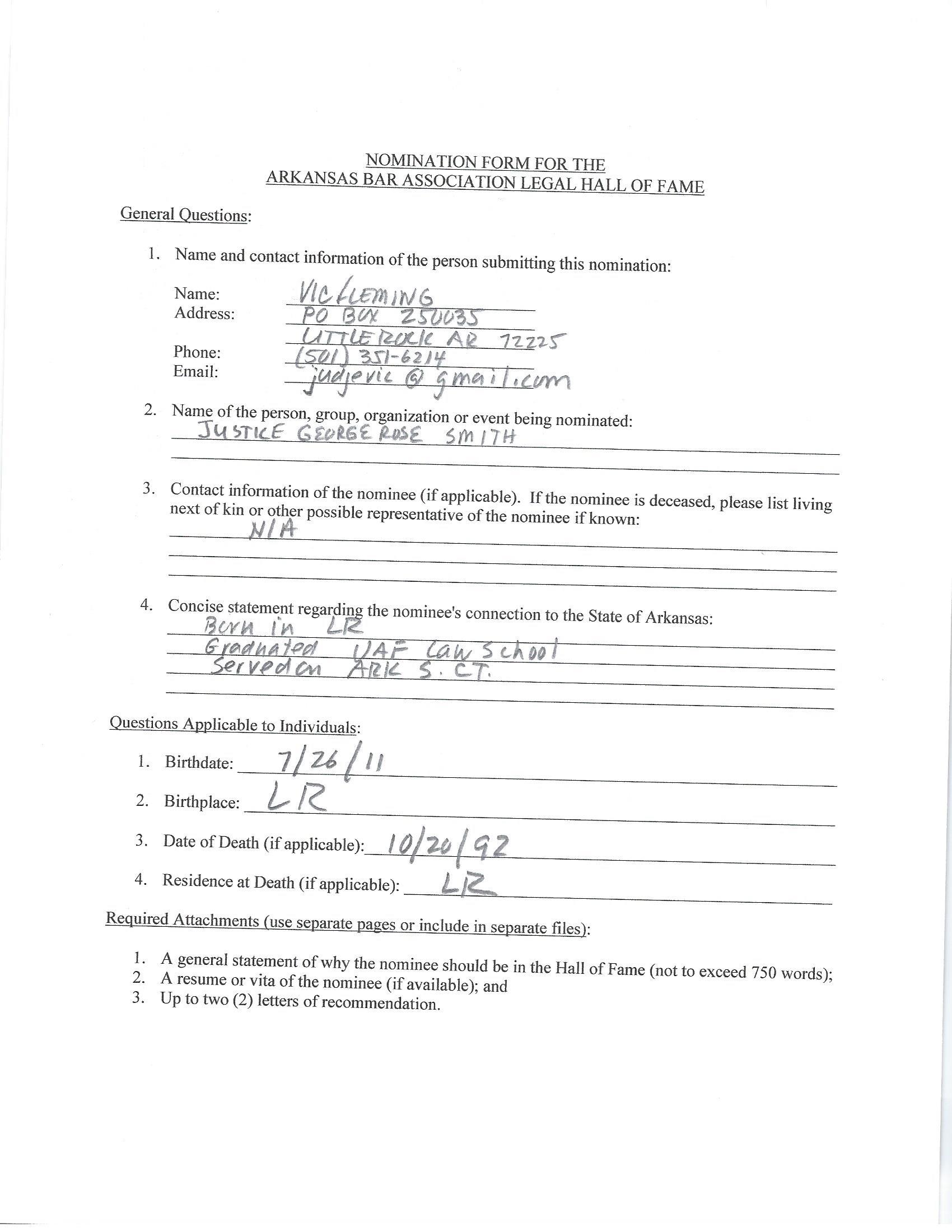
General Questions:
1. Name and contact information of the person submitting this nomination:
Name: Rayman L. Solomon
Address: 237 South 18th Street, Apt. 5A Philadelphia, PA 19108
Phone: 856-986-1364
Email: raysol47@gmail.com
2. Name of the person, group, organization or event being nominated: DAVID SOLOMON
3. Contact information of the nominee (if applicable). If the nominee is deceased, please list living next of kin or other possible representative of the nominee if known: David P. Solomon, solomon.david151@gmail.com Rayman L. Solomon, raysol47@gmail.com Lafe E, Solomon, lafesolo@aol.com______________________________________________
4. Concise statement regarding the nominee's connection to the State of Arkansas: David Solomon was born in Helena Arkansas, raised in Helena Arkansas, Practiced Law in Helena, Arkansas for 76 years and died in Helena, Arkansas.
Questions Applicable to Individuals:
1. Birthdate: ______July 19, 1916
2. Birthplace: Helena, Arkansas
3. Date of Death (if applicable): March 23, 2017___________________________
4. Residence at Death (if applicable): Helena, Arkansas
Required Attachments (use separate pages or include in separate files):
1. A general statement of why the nominee should be in the Hall of Fame (not to exceed 750 words); 2. A resume or vita of the nominee (if available); and 3. Up to two (2) letters of recommendation.
Please use this form to nominate a person, group, organization or event for the Arkansas Bar Association Legal Hall of Fame. Launching in 2020, the Legal Hall of Fame honors Arkansas's greatest lawyers, most revered institutions, most treasured traditions and other legends of the Bar.
Please use this form to nominate one (1) person, group, organization or event. Please submit multiple nomination forms if you wish to nominate more than one (1) person, group, organization or event.
Any person is welcome to submit a nomination.
For an individual to be eligible for inclusion in the Hall of Fame, the nominee must:
1. Meet one of these two criteria:
a. Be a living person at least fifty (50) years old; or
b. Be deceased for at least three (3) years. This requirement may be waived by a supermajority of the Selection Committee.
2. Have an articulable connection to the State of Arkansas, including but not limited to: (i) born in Arkansas; (ii) reared in Arkansas; (iii) educated in Arkansas; or (iv) practiced law in Arkansas.
3. Have made an extraordinary contribution to the law, society, the administration of justice or legal education.
For a group, organization or event, the nominee must have a close and clearly articulable connection to Arkansas. National groups, organizations or events where Arkansas is just one of many affected areas are not eligible for consideration. For example, the American Bar Association would not be an eligible organization and the signing of the United States Constitution would not be an eligible event. The group, organization or event must have existed for at least twenty-five (25) years or occurred at least twenty-five (25) years ago. The group, organization or event must have made an extraordinary contribution to the law, the administration of justice or legal education. No person, group, organization or event may be selected for the Hall of Fame more than once, though a person who is also a member of a group, organization or event may be separately honored.
You may find the complete guidelines for selection at www.arkbar.com/events/hof
This nomination form, along with the required attachments, is due on or before January 26, 2024.
Please send the nomination form and attachments to: hof@arkbar.com
If you have any questions, please contact Karen Hutchins at (501) 801-5663.
David Solomon – CV
• Born July 19, 1916 in Helena,Arkansas to a family long-established in the community. Died March 23, 2017 in Helena,
• Valedictorian Graduate of Helena High School (1932); Washington University in St. Louis (BA, 1936); Harvard Law School (LLB, 1939).
• Member of ZBT college fraternity
• Eagle Scout
• U. S.Army, 1942-1945, rising to rank of Master Sergeant.
Highlights of Solomon's Legal Career
• Admitted toArkansas Bar, 1939.
• Attorney-at-Law (single practitioner), 1939 to August 2015.
• At present, Solomon is likely the oldest practicing attorney inArkansas and possibly holds the record for the longest service at theArkansas Bar. In July 2014, he was honored by the Arkansas Bar Foundation for 75 years of service at the Bar.
• Solomon has held every office in theArkansas BarAssociation except president, which he declined, and has been honored for his services to theAssociation numerous times.
• Admitted to practice at the U.S. Supreme Court.
• SpecialAssociate Justice of theArkansas Supreme Court twice: in 1972 and again in 1989.
• Fellow of theAmerican Bar Foundation andArkansas State Chair.
• Helena CityAttorney in the late 1940's and early 1950's.
• In 2011 Legal Aid ofArkansas recognized Solomon as the VolunteerAttorney of the Year for Phillips County.
• The courtroom in the Phillips County Courthouse is named in his honor.
Other Notable Service
• Distinguished EagleAward, Boy Scouts ofAmerica
• Delegate to Arkansas State Constitutional Convention, 1969-1970.
• Appointed by Gov. Pryor a member of theArkansas State Highway Commission, served 19751985; Chairman, 1984-1985.
• Fifty years of service as President of the White River Drainage District and on the Executive Committee of the Mississippi Valley Flood ControlAssociation.
• At various times, a director of Worthen Bank, of the First National Bank of Phillips County, and of Southern Bancorp.
• Served on the Helena School Board in the late 1950's and early 1960's.
• Many years of pro bono service on committees devoted to the economic development of Phillips County.
• Pro bono attorney for the Helena Hospital.
• Pro bono attorney for and organizer of the Helena Health Foundation.
• President of the Helena Cotton Seed Oil Company
• President of the Helena Country Club
• President of Temple Beth El and Warden of Temple Beth-El Cemetery
• Chair of theArkansas-Mississippi-Louisiana region of theAnti-Defamation League
• Member of Richard L. Kitchens Post of theAmerican Legion
• Owner and manager of Solomon Farms, LLC and its prior incarnations.
• Sole Trustee of the Jim Walden Trust, 1997 – 2015.
• Son of David Solomon, Sr (1875 – 1952) & Pauline Hannah Elkas Solomon (1885 – 1954)
• Sister: Hannah Pauline Solomon Rothschild (1911 – 1981)
• Married Miriam Rayman (1919 – 2011) in 1942
• Three children: David P. (1945); Rayman L. (1947); Lafe E. (1949)
• Five grandchildren; three great-grandchildren at his death.
William A. Waddell, Jr. I Attorney
Direct: (501) 370-1510
Fax: (501) 244-5342
E-mail: waddell@fridayfirm.com
www. FridayFirm.com
Herschel H. Frlday (1922-19941
Wllllam A. Eldredge, Jr. (1925-1995) Billy S. Clark (1922-20041
January 26,2024
Arkansas Legal Hall of Fame Selection Committee
Arkansas Bar Center 2224 Cottondale Lane
Little Rock, Arkansas 72034
Re: Nomination of David Solomon to Arkansas Legal Hall of Fame
Dear Members of the Selection Committee:
I am pleased to write this letter in support of David Solomon's nomination to the Arkansas Legal Hall of Fame.
I became a lawyer because of Mr. Solomon. Growing up in Helena-West Helena, he was my ideal of what a lawyer is: authentic, leamed and wise in the law and life, professional, collegial, ethical in all dealings, and invested in his community. I wanted to be like him before I knew what the life of a lawyer actually involved. What I saw was a person who was a trusted advisor to many individuals and businesses over a long period of time and who was deeply committed to the place where he lived and worked. He was a lawyer's lawyer and the ultimate lawyer citizen. His high standards of professionalism and quiet commitment to his personal faith also made a lasting impression on me.
In one sense, he was a respecter of persons, because he had a lawyer's sense of what is substantive and pretextual and an unparalleled ability to convey right and wrong in the context of advocating for clients and resolving legal problems. On the other hand, in accordance with the lawyer's oath, he was not a respecter of persons because he would never "reject, from any consideration personal to myself, the cause of the impoverished, the defenseless, or the oppressed." My aunt worked as his secretary for a time, and she described how persons of means and influence as well as an individual carrying papers in a stained paper stack were equally welcomed into his office. That was my personal experience with him as well.
When I was sixteen, I was involved in an accident and was seriously injured. He took on my case and tried it successfully to a jury. Watching him in front of the judge and jury quickened my desire to become a lawyer and emulate him. Mr. Solomon gave my father and me his file a few years later, and inside was only the complaint and answer, a police report and some pictures of the accident scene. As I look at the thick case files - paper and electronic - that we amass
David Solomon Nomination
To Arkansas Bar Hall of Fame
January 26,2024
Page Two
today, it makes me think he principally relied on his credibility and his lawyering skills. That is my image of an accomplished lawyer.
I also witnessed him as a corporate lawyer for my father in acquiring stock of a predecessor corporation and setting up the legal aspects of the business. He charged for none of this even though my father kept asking him for an invoice time and again. All of this made me rcalize that lawyering to Mr. Solomon was not motivated by money but rather helping clients and his community to solve problems.
As I began the practice of law, I came to realize that Mr. Solomon was legendary in the Arkansas bar. His legacy was not based on his Harvard Law education or any of his other civic accomplishments but rather his many relationships, his service to the profession and community, and his superb lawyering on the highest of planes in small and large matters. I ultimately had the opportunity to help him in a case and also to try another case to a jury with him on the other side. In both situations, my earliest impressions of him remained intact.
I believe any person who knew David Solomon would give a resounding yes to his nomination, and I hope he will be given strong consideration for inclusion in the Arkansas Legal Hall of Fame.
Sincerely yours, 63,;^*oe^'^
William A. Waddell, Jr
We are proud to nominate our father, David Solomon, for induction into the Arkansas Bar Association Legal Hall of Fame. Devoted children may not be the most objective judges of whether their father should be nominated for such a prestigious honor, but two years ago when I attended the inaugural dinner celebrating the first class of inductees to the Hall of Fame, several attendees told me that my father deserved to be nominated.
David Solomon was an Arkansan. He was born in Helena on July 19, 1916. He and his sister were the second generation born in Helena. His grandfather came to Helena in the 1850s and his father and uncles were all merchants and farmers. He was a brilliant student; at 16 graduating from Helena High School as the valedictorian. He attended one year at Davidson and then transferred to Washington University in St. Louis, graduating with a B.A. in 1936. He then attended Harvard Law School, earning an LLB in 1939. Following graduation, he returned to Helena where he was admitted to the bar in the same year. He worked in various capacities until he joined the Army in 1942 and was honorably discharged in 1945. He returned to Helena where he opened a solo practice which he continued to operate until health forced him to retire in 2015.
As a solo practitioner in a small town, David Solomon’s practice included the entire range of legal issues. He was an outstanding litigator in both state and federal courts, an accomplished estates and trusts lawyer, he handled corporate matters, and represented criminal defendants. His excellence as a lawyer was recognized in many ways. He was a member of the American College of Trusts and Estates Counsel, a member of the American College of Trial Counsel, and he was recognized by an Arkansas magazine as one of the best corporate attorneys in Arkansas. The Courtroom in the Phillips County Courthouse was named for him.
David Solomon’s conception of his professional role extended far beyond earning a living. He saw that his considerable talents and the privilege he had as a member of the bar enabled him to play a leading part in building his civic community. For over sixty years he served as either a lawyer for or member of numerous city or county boards that sought to bring economic development to Helena and Phillips County. He also provided pro bono representation for many years to the Helena Hospital and oversaw its sale and then conversion to a health foundation. For these many efforts he was twice honored at community-wide dinners to thank him for his service.
Despite never seeking elected office, David Solomon was involved in the political and policy world of Arkansas. As a young lawyer he served as the Helena City Attorney. He represented the Helena-West Helena School Board, including several cases that went to the Eighth Circuit. Twice he was appointed as a Special Justice of the Arkansas Supreme Court, when the justices were all forced to recuse themselves. He was a delegate to the Arkansas Constitutional Convention in 1969. Perhaps his most significant involvement in public policy came about when Governor David Pryor appointed him to a 10-year term on the Arkansas Highway Commission in 1975. He chaired the Commission for his final two years on it.
David Solomon actively participated in his professional organizations. He was a member of the American and Arkansas Bar Association his entire career. He served in many positions in the
Nomination Statement for David Solomon
Page 2
February 1, 2024
Arkansas Bar Association, including the Professional Ethics Committee. His extensive commitments forced him to refuse the offer to be nominated for President of the Association. He was honored by the Arkansas Bar Foundation on his 75th year in practice, which many believed was a record for longevity in Arkansas. He was a Life Fellow of the American Bar Foundation and led the Arkansas chapter for several years. He was active in the Phillips County Bar Association. One of his greatest pleasures was paying it forward. He was grateful for the mentoring he received as a young lawyer, and actively helped many of the young lawyers who practiced in Helena.
In addition to his professional accomplishments David Solomon was involved in business and farming operations in Helena. He was a long-time member of the board of directors of 1st National Bank of Phillips County and served for many years as its trust officer. He oversaw extensive family farming operations and oversaw a family cotton brokerage firm. When Worthen Bank needed to appoint three independent directors, he was one of those selected.
David Solomon and Miriam Rayman were married from 1942 until her death in 2011. They had three sons, five grandchildren, and six great-grandchildren. Both David and Miriam were leaders of the Jewish community in Helena and in Arkansas. They preserved Temple Beth El until there were too few congregants to maintain the building and then opened their home for services. David Solomon was the regional chair of the Anti-Defamation League. President Clinton invited him both to the Rose Garden signing of the Israel-PLO treaty, and to the dedication of the Holocaust Museum in Washington.
Of the many tributes that David Solomon received during his life and at his death, perhaps the most profound was told by a member of an African American church. On the Sunday after his death, during the announcements, she stood and said Mr. Solomon had died and she wanted to offer a prayer because he had helped her at a difficult time. One by one about a dozen others stood and offered the same testimony.
Rayman L. Solomon
Joined by David P. Solomon and Lafe E. Solomon
General Questions:
1. Name and contact information of the person submitting this nomination:
Name: _Dr. Michael B. Dougan__________________________ Address: _303 West Cherry Ave., Jonesboro, AR 72401____________________________
Phone: __870 243 0351___________________________
Email: __mdougan@astate.edu___________________________
2. Name of the person, group, organization or event being nominated: __David Walker. Eakin_________________________________________________________________________
3. Contact information of the nominee (if applicable). If the nominee is deceased, please list living next of kin or other possible representative of the nominee if known:
4. Concise statement regarding the nominee's connection to the State of Arkansas: David Walker, a Whig resident of the “Great Northwest,” settled in Fayetteville when he ran out of money. Following success in a log cabin courtroom in Crawford County, where he astounded all present by quoting verbatim from a treatise, he built up a large fortune based on land and enslaved persons. He was elected circuit attorney in 1832, was re-elected in 1834, and then in 1835 was elected to the territorial legislature. Then he was a member of the convention that wrote the first state constitution. He served in the state senate in 1840. Most famous was his failed campaign against his fellow speculator, Archibald Yell, in the 1840 Congressional race. In 1848 the legislature sent him to the Arkansas Supreme Court, where he remained until 1855. In 1861 although he opposed the calling of a secession convention, he was chosen as its president. After the firing on Fort Sumter he recalled the convention when then voted to take Arkansas out of the Union. During the War he served on a Confederate military court. In 1866 he was elected chief justice of state Supreme Court. With the adoption of the Constitution of 1868 he lost his seat but returned to court as an associate justice after the adoption of the Constitution of 1874, resigning in 1878. Walker was noted for his adherence to the common law and his unrelenting opposition to women’s rights.
Questions Applicable to Individuals:
1. Birthdate: February 19, 1806
2. Birthplace: near Elkton, Kentucky
3. Date of Death (if applicable):____September 30, 1879
4. Residence at Death (if applicable): Fayetteville
Required Attachments (use separate pages or include in separate files):
1. A general statement of why the nominee should be in the Hall of Fame (not to exceed 750 words): Walker exemplified “persistent Whiggery,” the commitment to economic development supported by the federal government. In his personal life, he reacted against the aristocratic excesses characteristic of his family members in Kentucky, avoiding dances and, since he lost his childhood pony in one of his father’s poker games, he never allowed a deck of cards in his house. He literally grew up with the region, there being less than a dozen families living at Fayetteville when he stopped there. His 1861 support for the Confederacy did not sit well, though, and he lost a chance to be a member of the Constitutional Convention of 1874 when he was defeated by an unknown Granger. It should be noted that Walker was one of a very few Arkansans to included in the Dictionary of American Biography (1930).
2. A resume or vita of the nominee (if available); Information on Walker is very extensive. Many of his manuscript letters survived and have been published. They and other works are listed in the Encyclopedia of Arkansas article on Walker.
3. Up to two (2) letters of recommendation. Tom Dillard’s letter is attached.
Letter of Endorsement
David Walker Nomination
I have read Professor Michael B. Dougan’s nomination of Judge David Walker to the Hall of Fame. Walker was a man of legal renown, for not only did he serve on the Arkansas Supreme Court, he was a guiding member of the convention which produced the state Constitution of 1874. Dr. Dougan was unable to include many aspects of Walker’s legal career due to limited space, but he does a good job of summarizing the career of once of the greats of 19th century Arkansas legal history.
I recommend acceptance of David Walker in the Hall of Fame.
Tom Dillard
Historian
and Newspaper Columnist
From: Donald Campbell
To: Karen Hutchins
Subject: Legal Hall of Fame Nomination/Discussion
Date: Friday, May 3, 2024 8:48:57 AM
Attachments: 1943 War Department HQ Staff Photo Best Photo of Army Air Forces Chart One Page View.pdf 1982 NY Times Obituary Notice.pdf
You don't often get email from don@cgsfirm.com. Learn why this is important Ms. Hutchins:
I would like to visit with whomever oversees the Legal Hall of Fame nomination/vetting process. I believe my grandfather, Adrian Williamson, Sr., should be considered and included in this Hall of Fame (posthumously).
My grandfather, Adrian Williamson, Sr., [brother of past Ark Bar President Lamar Williamson and uncle to Gaston Williamson, Jr. (Rose Firm)] was a lawyer from 1915 to 1972. I am pasting a list of some of his accomplishments. I have (I think it is still in good shape in the storage building) the original onion skin draft with mark ups of the 1948 Probate Code that is still in use today) which my Grandfather was Chairman of the Committee [See Sims vs Schavey, 351 S.W.2d 145, 145 Ark. 166 (1961) and Huff vs Bruce, 549 S.W.2d 282, 261 Ark.498 (1977) where he testified as one of the former draftsmen of the Code] and he was the first (I believe) recipient of the ABA Lawyer-Citizen Award in 1960. On top of that you can see in this summary of his history in the law and military below. He had at least 28 reported appeals before the appellate courts of Arkansas.
ADRIAN WILLIAMSON, SR.
Education College
& Lee
Army Air Corps (later US Air Force)
2nd Lt. 08/15/1917
to
Pilot 05/01/1918
Post WWI 1918 to 1941
Army Air Corp Reserve 1918 to 1940
1st Lt. (Ark Air Guard) 10/15/1925
Commander 154th Observation Squadron 07/01/1933 to 09/01/1941
(North Little Rock at Camp Pike now Camp Robinson)
Captain (Ark Air Guard) 07/01/1933
Major (Ark Air Guard) 09/16/1940
WWII
US Army Air Corps (later US Air Force)
12/26/1941
02/01/1942
to 1945
to 1945?
HQ (pre-Pentagon) Washington DC War Department 1941 to 1943
Chief of Combined and Joint Staff Division 1941 to 1943
Major
Lt. Col.
Col.
07/14/1942 to retirement
Quadrant Conference (Quebec Conference) 08/01/1943
Planing of D-Day done here
Sextant Conference (Cairo Conference) 11/01/1943
Planning of Defeat of Japan Post VE day
Potsdam Attendee
Yalta Attendee
Strategic Planner of China-Burma-India Theater 1941-1944
Stationed in India and China 1944 to 1945 Legion of Merit 01/06/1944
Oak Leaf Cluster 01/26/1945
Bronze Star 02/08/1945
US Military’s Sole Representative Japan’s Surrender of Hong Kong 09/16/1945 (See attached photo) All documents of other orders were lost due to fire in St. Louis at Military Documents Depository 1980s so this is all that is known and can be proven, many of his orders were classified per family and thus have been lost to history due to the fire in St. Louis. Law
Licensed as Arkansas Lawyer 1915 to 1972
Williamson, Williamson, Williamson
Williamson & Williamson
Williamson, Williamson & Ball
Williamson & Ball
Williamson, Ball & Baird
Chairman of Arkansas Probate Code Commission 1948
Wrote the current Arkansas Probate Code still used today
Arkansas Bar Association 1915 to 1972
Arkansas Lawyer Citizen Award from Arkansas Bar Association 1960
American Bar Association 1915 to 1972
Banking
Board Union Bank Bank and Trust Co. of Monticello, AR 1936 to 1972
Chairman of Board Union Bank Bank and Trust Co. of Monticello, AR 1957 to 1972
Hobbies & Community Activities
Elder First Presbyterian Church, Monticello, AR Decades long Astronomy 1927 to 1972
Built Personal Observatory with 5 1/2” telescope 1934 Largest privately owned in Arkansas and one of the largest in USA at the time
Photographer/Dark Room 1930s to 1972
Amateur Archeologist 1930s to 1972
Rotary Club of Monticello, AR
Thank you in advance for your assistance.
Don
Donald K. Campbell, III

Campbell, Grooms & Spaulding, PLLC 8114 Cantrell Road, Suite 100 Little Rock, AR 72227
(501) 313-4967
don@cgsfirm.com
PLEASE NOTE AS OF FEBRUARY 5, 2024 WE HAVE MOVED BACK TO OUR RESTORED OFFICE (WHICH WAS ORIGINALLY DAMAGED BY A TORNADO ON 3/31/2023)
THIS EMAIL IS COVERED BY THE ELECTRONIC COMMUNICATIONS PRIVACY ACT, 16 U.S.C. §§ 25102521, AND IS LEGALLY PRIVILEGED. THE DOCUMENTATION TRANSMITTED HEREWITH AND THE INFORMATION HEREIN CONTAINED IS INTENDED ONLY FOR THE USE OF THE ADDRESSEE AND ARE CONFIDENTIAL UNDER THE ATTORNEY-CLIENT PRIVILEGE OR OTHERWISE NOT
SUBJECT TO DISCLOSURE. IF YOU ARE NOT THE INTENDED RECIPIENT OR THE EMPLOYEE OR AGENT RESPONSIBLE FOR DELIVERING THIS TRANSMITTAL TO THE INTENDED RECIPIENT, ANY USE OF SAID DOCUMENTATION AND/OR INFORMATION OR DISSEMINATION, DISTRIBUTION OR COPYING OF THIS COMMUNICATION, IS STRICTLY PROHIBITED. IF YOU HAVE RECEIVED THIS COMMUNICATION IN ERROR, PLEASE NOTIFY US IMMEDIATELY BY REPLY E-MAIL OR CALLING (501) 313-4967 FOR MORE INFORMATION. PROMPTLY DELETE AND DESTROY THIS DOCUMENT AND ANY ATTACHMENTS THERETO. THANK YOU.
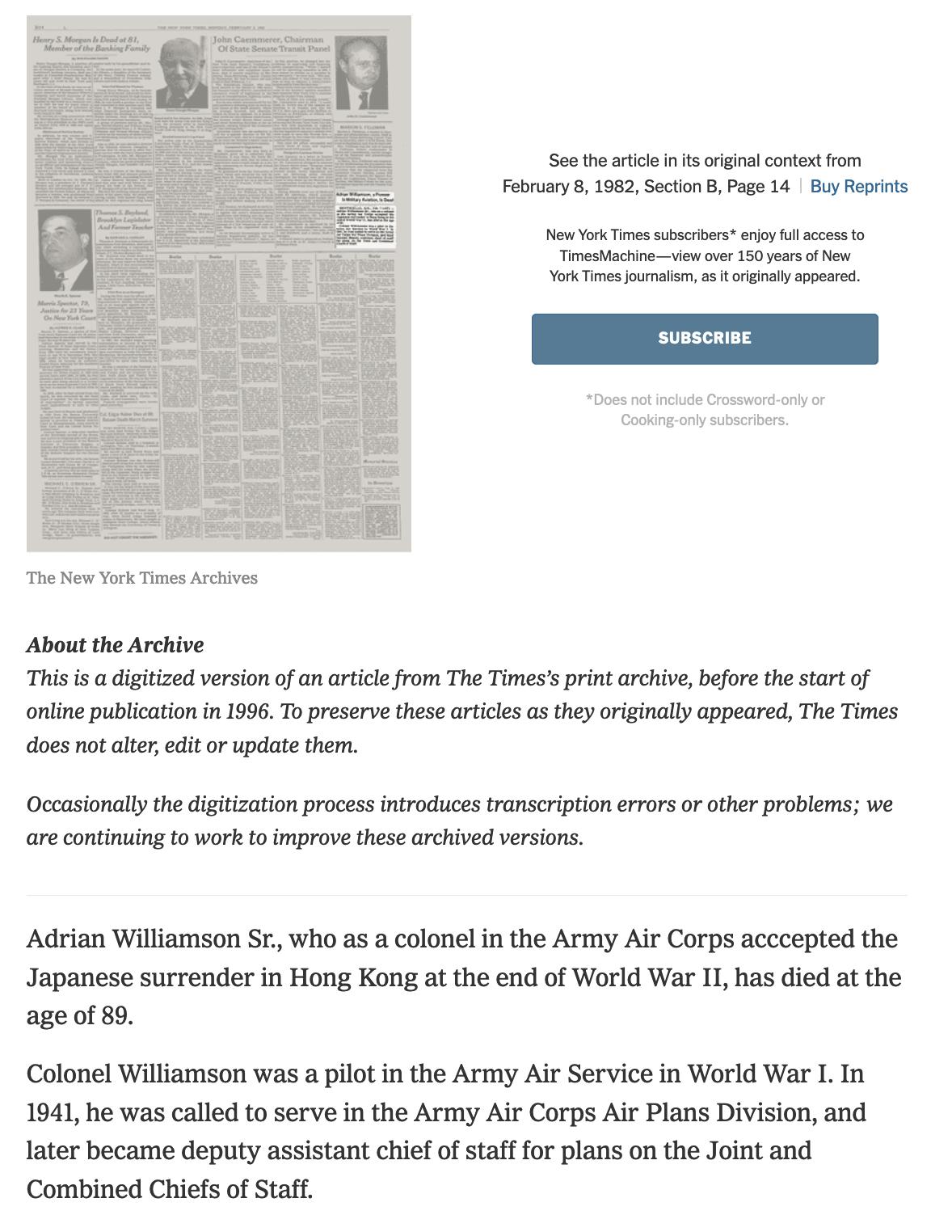
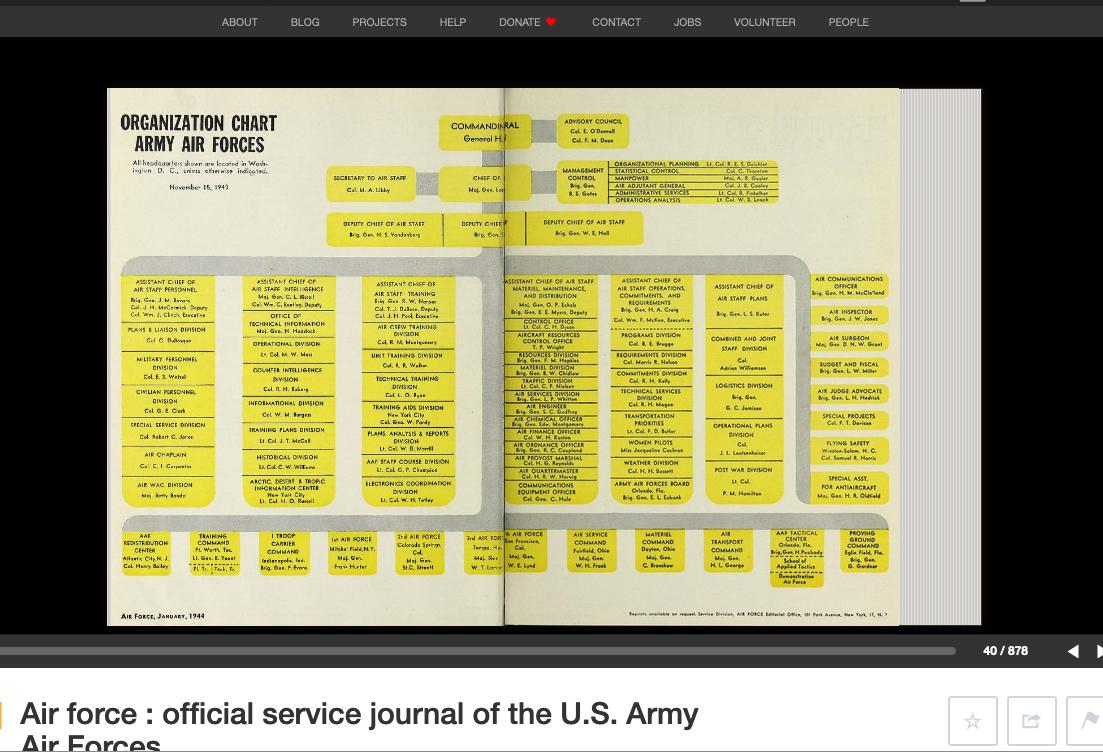
GeneralQuestions:
1.Name andcontactinformationofthe personsubmittingthisnomination:
Name:_____________________________
Address:_____________________________
Phone:_____________________________
Email:_____________________________
2.Name ofthe person,group,organizationoreventbeingnominated:
3.Contactinformationofthe nominee(if applicable). Ifthe nomineeisdeceased,pleaselistliving nextofkinorotherpossible representativeofthenomineeifknown:
4.Concise statementregardingthe nominee'sconnectiontotheStateofArkansas:
QuestionsApplicabletoIndividuals:
1.Birthdate:_____________________________________________________________________
2.Birthplace:_____________________________________________________________________
3.Date ofDeath(ifapplicable):_______________________________________________________
4.ResidenceatDeath(ifapplicable):__________________________________________________
RequiredAttachments(useseparate pagesorincludeinseparatefiles):
1.Ageneralstatementof whythenominee shouldbe intheHallofFame(nottoexceed750words);
2.Aresume orvitaofthenominee(ifavailable);and
3.Uptotwo(2)lettersofrecommendation.
From:
Sam Ledbetter
To: Hall of. Fame
Subject: Nomination of Hon. Billy Roy Wilson to Ark. Legal HOF
Date: Wednesday, March 25, 2026 11:20:16 AM
Attachments: FSU letter re Billy Roy Wilson Signed.pdf
Senior status resolution.pdf
BRW ABHOF Reccomendation Letter - Coleson Bruce.pdf HOF Application.pdf
You don't often get email from sam@mcmathlaw.com. Learn why this is important
Karen- It is my honor to submit the nomination of the late Judge Billy Roy Wilson for induction into the Arkansas Legal HOF. Attached to this email are:
Application form; Senior Status Resolution; Letter of recommendation from Fred Usery; and Letter of Recommendation from Coleson Bruce.
I drafted a general statement of why Judge Wilson should be in the Legal Hall of Fame. However, when I came across the Senior Status Resolution written by Judges Holmes and Ray, I realized it establishes his credentials far better than I am capable of. While it exceeds the suggested 750 word limit (something Judge Wilson would no doubt chastise me for) I believe the Selection Committee will find it a worthwhile testament to Judge Wilson’s impact on our legal community as both a lawyer and judge.
Finally, I respectfully request the requirement that the nominee be deceased for at least 3 years be waived by the Selection Committee.
Should you have any questions or wish to discuss this nomination, please feel free to call. Thank you.
Samuel E. Ledbetter
MCMATH WOOdS P.A.
711 West Third St. Little Rock, AR 72201
Office: (501) 396-5400
direct: (501) 396-5405
Cell: (501) 517-5405
Fax: (501) 374-5118
Website: www.mcmathlaw.com
Email: sam@mcmathlaw.com
Facebook: www.facebook.com/McMathWoods
Twitter: www.twitter.com/McMathWoods
Linkedin: www.linkedin.com/company/mcmath-woods-p-a-
Please be advised that this e-mail and any files transmitted with it are confidential attorney-client communication or may otherwise be privileged or confidential and are intended solely for the individual or entity to whom they are addressed. If you are not the intended recipient, please do not read, copy or retransmit this communication but destroy it immediately. Any unauthorized dissemination, distribution or copying of this communication is strictly prohibited.
Billy Roy Wilson
600 West Capitol, Suite A403
Little Rock, Arkansas 72201
1954 Waldron High School (Scott County, Arkansas) Chess Champion (as a mere sophomore, mind you)
1965-October 1, 1993 Street lawyer, save and except three years, five months, twentytwo days and five hours in the United States Navy (‘66-’69), Vietnam Veteran (I was actually there).
1986 - Present Swamper at the Wye Mountain branch of the internationally famous Rasputin Mule Farm, headquartered in Waldron, Scott County, Arkansas
October 1, 1993-Present United States District Judge for Eastern District of Arkansas
December 1999 Joined the late Duross Fitzpatrick (Middle District of Georgia) in successfully requesting that the White House direct that the American flag be flown at half-mast on December 14, 1999 in honor of the 200th anniversary of the death of George Washington.
Awaiting other distinctions and will update as it (they) occur.
March18,2026
To:ArkansasBarAssociationLegalHallofFameSelectionCommittee
Re:TheNominationofJudgeBillyRoyWilsontotheArkansasLegalHallofFame
DearSelectionCommittee,
IclerkedforJudgeWilsonseventeenyearsago.AfterreviewingthefirstdraftIgavehim,he cametomyoffice,satdown,andasked:
“Whatdoes‘thus’mean?”
“Itmeans‘so.’”
“Thenwrite‘ so.’”
Thenhestoodupandleft.
Thatbriefexchangebeganalongmentorship.
Helatersworemeintothebarwhilewewerebothastridemules.Helaterpresidedovermy wedding,whichisstillholding.Wespenthundredsofhoursdrivingacrossthecountry,withhim, asheputit,“stampingout[my]ignorance”alongtheway Andinhisfinaldays,Isatwithhis familyandfriendswhilehedictatedhisobituarytomeinplainterms—onelastclerkshipduty.
Fromthatvantagepointasamentee,IoffertwoobservationsinsupportofJudgeBillyRoy Wilson’snominationtotheArkansasLegalHallofFame.
First,thatinitiallesson—justwrite“so”—capturessomethingessentialabouthowJudge Wilsonunderstoodthelawandtaughtit.
Yes,itwasapointaboutstyle.Butitwasalsoapointaboutlawyering.Inwordchoice andinaction,hebelievedthelawshouldnotshutordinarypeopleout.ToJudgeWilson, claritywasaformofrespect,andoneofalawyer’shighestduties.
Thatconvictiondictatedhowhecarriedhisoffice.Ithelpsexplainwhyhespent ChristmasDayvisitinginmateshehadsentenceddecadesearlier,hundredsofmiles away.Itiswhyheoftenhiredlawclerkswhohadlivedworkinglivesbeforelawschool. Anditiswhyhereveredjuriesandjurytrials.
Overtheseventeenyearsasmymentorandfriend,Isawthatsameinitiallessonin everythinghedid:respectfortheordinarypersonisthepointofthepracticeoflaw,anda lawyershouldactaccordingly.
Second,hespreadthatlessonwithaforceofpersonalitythatexemplifiedthebestofthe Arkansasbar.
WhileIwitnessedonlythelastfewchaptersofhisinfluence,noonewhoknewJudge Wilsonwoulddisagree:therewillnotbeanotherlikehim.
EvenabriefencounterwithJudgeWilsoncouldchangethewayapersonthoughtabout thelaw.HewasalmostlikeacharacterfromMarkTwain,andpeoplelistened.
Oversixdecades,innumerableArkansaslawyers,courtstaff,jurors,andclerkswitnessed hisexample.Whethertheypracticedwithhim,againsthim,appearedbeforehim,readhis opinions,orreceivedoneofhislettersinaprisoncell,peoplefelthisinfluence.And whentheyfollowedhisexample,theArkansasbarwasbetterforit.
Hisinfluencespreadatascalethatishardtomeasure,buteasytorecognize.Adistinctly Wilsonianregister—plainspeech,accessibility,irreverencetowardpretension,respectfor allArkansans,ahumaneadministrationofjustice—isaudibleacrosssixdecadesof Arkansasbarhistory.
So, IrespectfullyurgeJudgeBillyRoyWilson’sinductionintotheArkansasLegalHallofFame.

R.ColesonBruce Austin,Texas

Direct:
March 17, 2026
Arkansas Legal Hall of Fame 1401 W. Capitol Ave. Little Rock, AR 72201
Re: Judge Billy Roy Wilson
Dear Committee Members:
I knew Billy Roy Wilson for over 50 years. We tried jury trials against each other, I appeared in his court on numerous occasions, and we were personal friends.
He had a reputation as a premier trial lawyer. He was so recognized by his peers. He was selected for membership in the American College of Trial Lawyers and many other selective groups.
He was also recognized as a distinguished Federal District Judge. He was asked to preside over many cases in various districts of the United States.
He was an active participant in the Arkansas Bar Association. He served as president of the Association.
Judge Wilson was widely recognized by members of the Arkansas Bar as an historic member of our Association. I can think of no person more qualified to be a member of the Arkansas Legal Hall of Fame.
Very truly yours,
Frederick S. Ursery
FSU:sdm
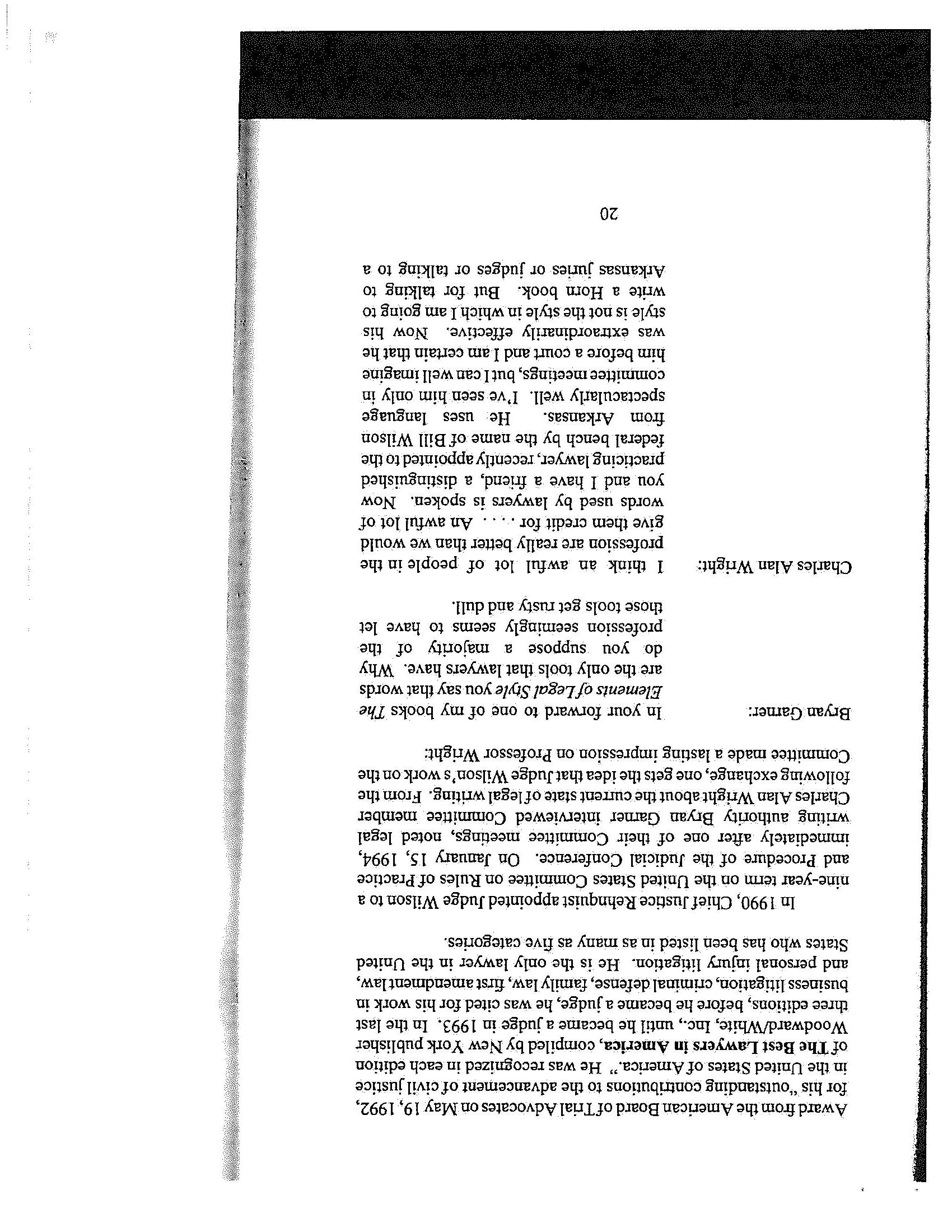
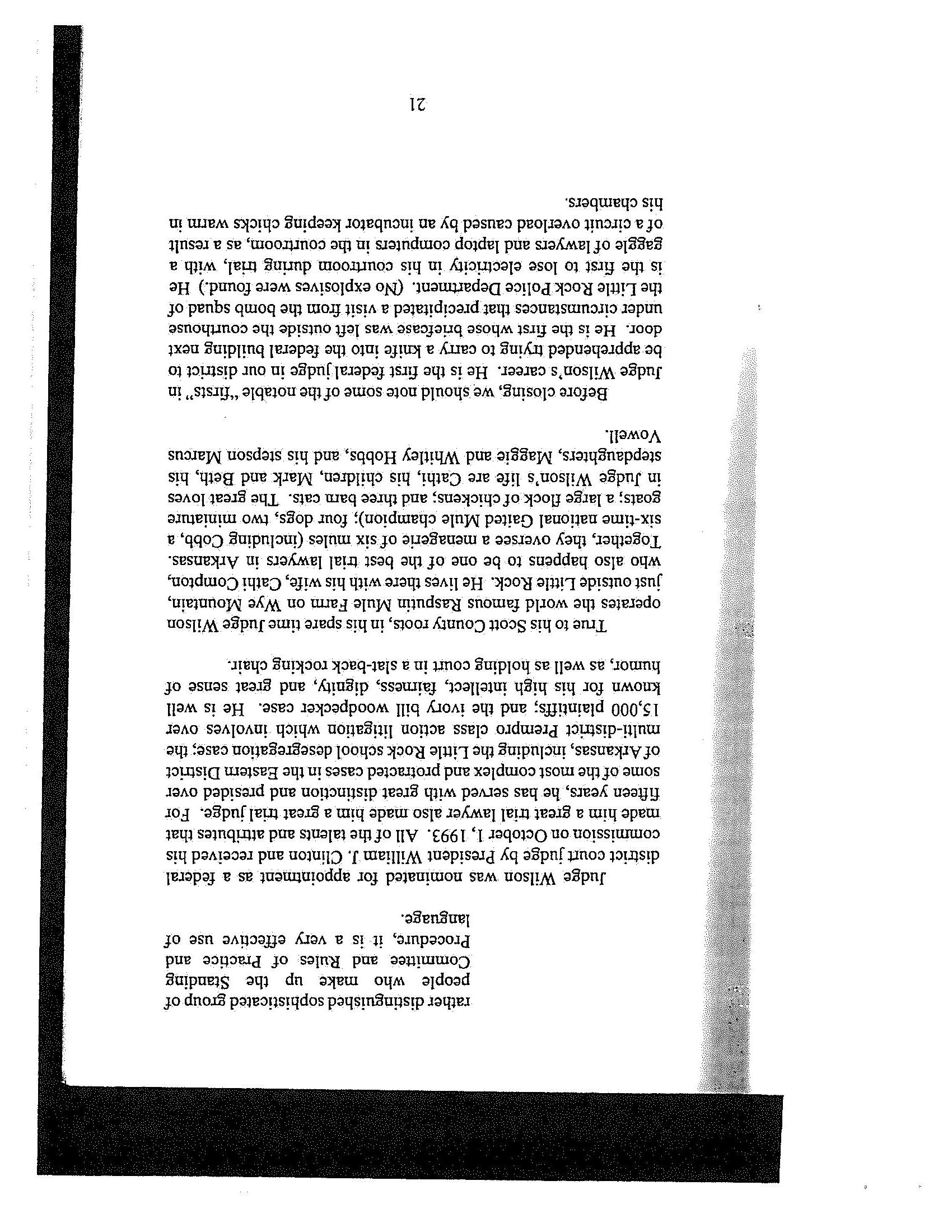
Robert M. Wilson, Jr.
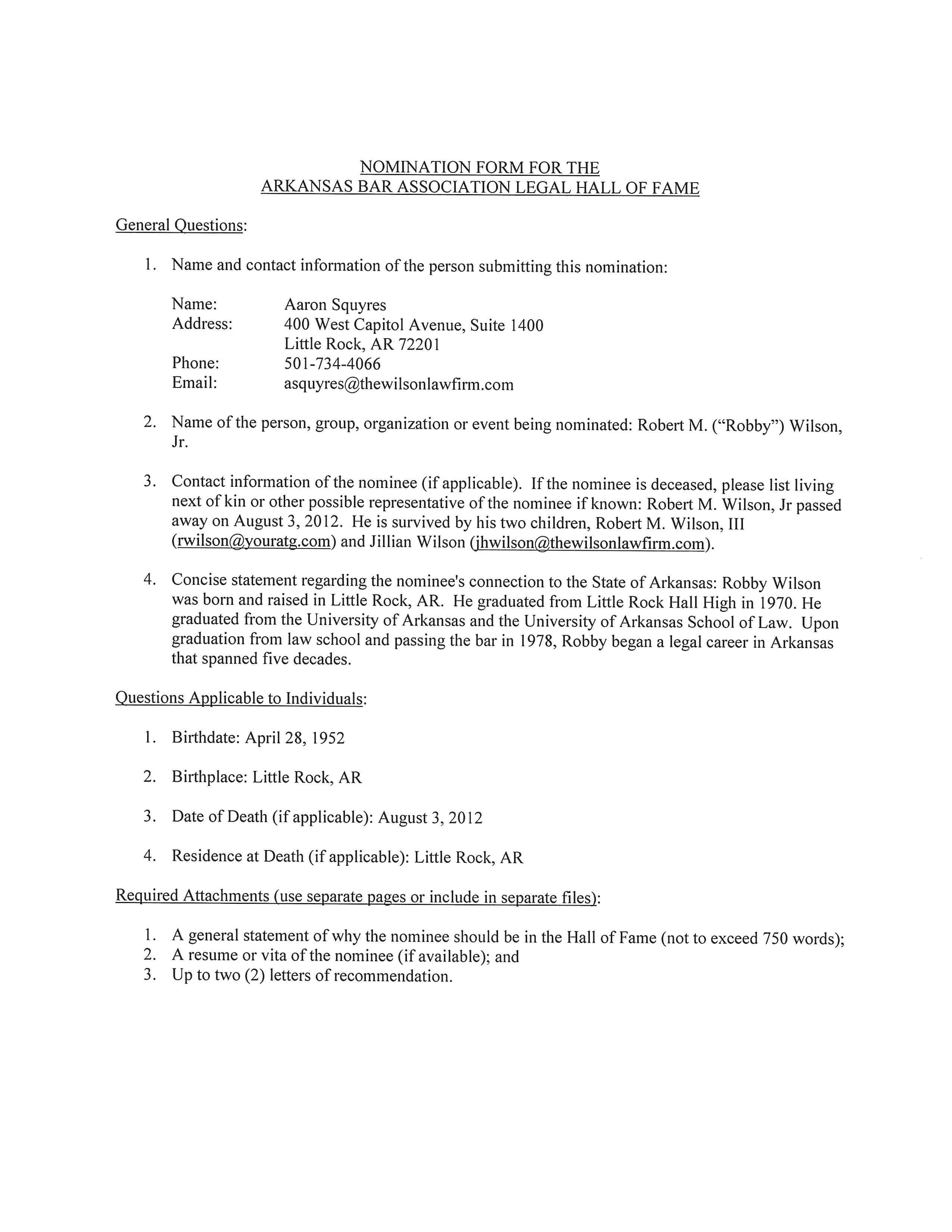
NOMTNATTON FORM FOR THE ARKANSAS BAR ASSOCIATION LEGAL HALL OF FAME
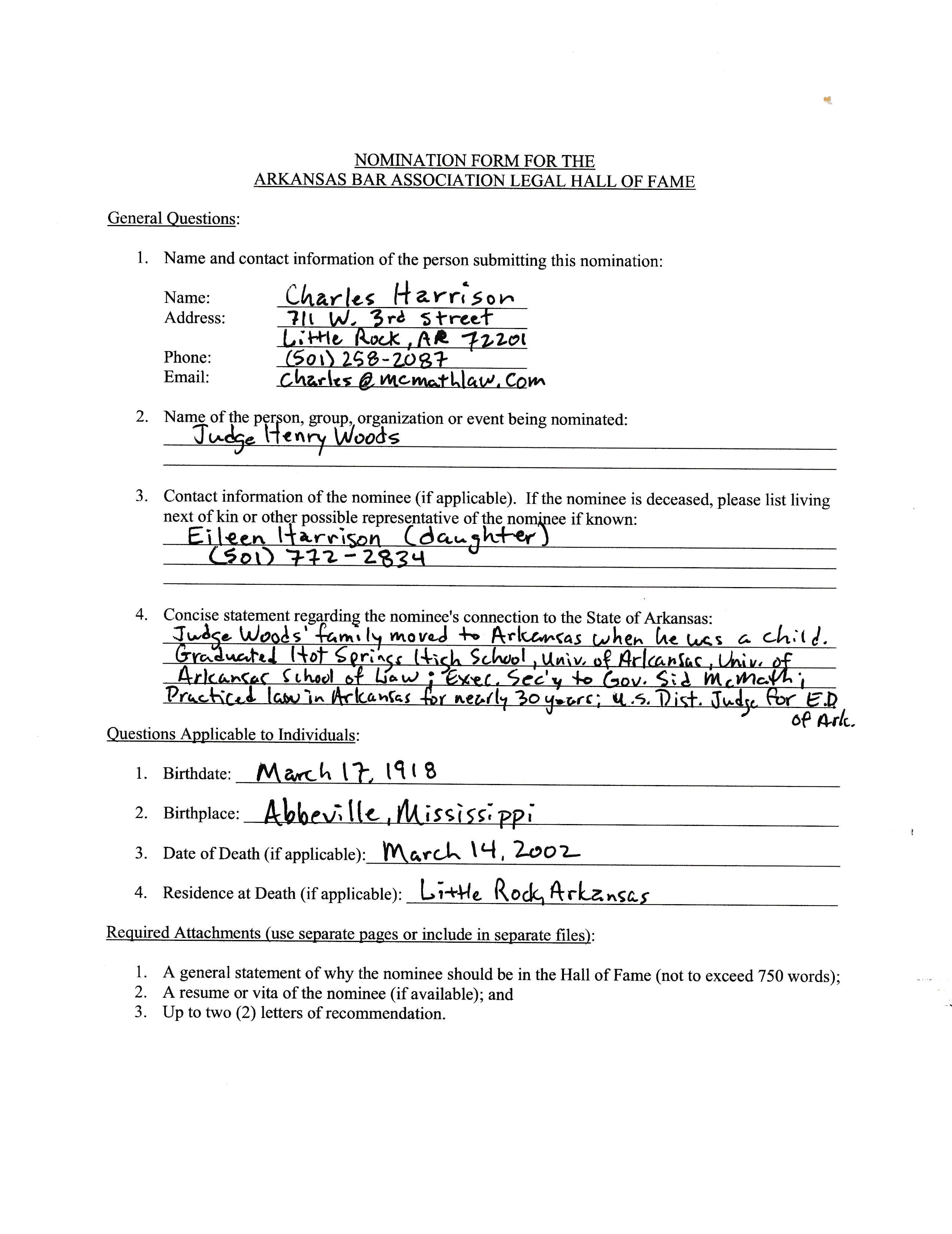
General Ouestions:
1. Name and contact information of the person submitting this nomination: s Fl arri sr^
Name: Address:
Phone: Email: t
2,N
or event being nominated: €n
3. Contact information of the nominee (if applicable). If the next of kin or possible of znominee is decease{ please list living ,if known:
4. Concise statement
Ouestions Applicable to Individuals: the nominee's connection to the State of Arkansas rnno yoJ S. r
1. Bffidate: Ma"ch tt tttE
2. Birthplace
3. Date of Death (if applicable): h\arc-L. \4 ,7-oou
4. ResidenceatDeath(if applicable): L;+{4 Rodq ftrlahsat
Required Attachmenls (.use separate pages or include. in separate f,les):
1. A general statement of why the nominee should be in the Hall of Fame (not to exceed 750 words); 2. A resume or vita of the nominee (if available); and 3. Up to two (2) letters of recommendation.
From: Andrew Waldron
To: Hall of. Fame
Cc: Charles Harrison
Subject: Nomination of Judge Henry Woods for Arkansas Bar Association Legal Hall of Fame
Date: Wednesday, March 18, 2026 4:49:15 PM
Attachments: attachment-1.png
Nomination form for Judge Woods.pdf
Judge Henry Woods_ A Reminiscence.pdf
Brief CV of Judge Henry Woods.pdf
Letter in Support of Judge Woods for Legal Hall of Fame.pdf HW Hall of Fame - signed.pdf
You don't often get email from andrew@mcmathlaw.com. Learn why this is important Dear Hall of Fame,
Please see the attached nomination form for Judge Henry Woods, "Judge Henry Woods: A Reminiscence" from Volume 25, Issue 2 of the University of Arkansas at Little Rock Law Review, brief CV of Judge Henry Woods, and two recommendation letters.
Sincerely,
Andrew W. Waldron Paralegal

McMath Woods P.A.
711 W. 3rd Street Little Rock, AR 72201
Telephone: (501) 396-5400
Facsimile: (501) 374-5118
Direct: (501) 396-5444
Please be advised that this e-mail and any files transmitted with it are confidential attorney-client communication or may otherwise be privileged or confidential and are intended solely for the individual or entity to whom they are addressed. If you are not the intended recipient, please do not read, copy or retransmit this communication but destroy it immediately. Any unauthorized dissemination, distribution or copying of this communication is strictly prohibited
BETH DEERE
814 NORTH MONROE STREET
LITTLE ROCK, AR 72205
March 17, 2025
Arkansas Legal Hall of Fame, Selection Committee
Arkansas Bar Association 1401 W. Capitol Ave.
Suite 170
Little Rock, AR 72201
Dear Committee Members:
I am honored to support the nomination of Judge Henry Woods for inclusion into the Arkansas Legal Hall of Fame. As an initial matter, I note a few of his notable accomplishments and accolades: Executive Secretary to Governor Sid McMath; President of the Arkansas Bar Association; Chair, Supreme Court Committee on Model Jury Instructions; Chair, Trust Committee of the Arkansas Bar Foundation; Member, International Society of Barristers; Chair, 8th Circuit Committee on Model Jury Instructions; and, of course, United States District Judge.
These accomplishments are impressive, to be sure. In the case of Henry Woods, however, they don’t begin to reflect the profound contributions he made to Arkansas law; to legal education; and, perhaps most importantly, to civil rights in Arkansas.
Legal Education. Robert Walsh, the first Dean of what is now the UALR Bowen School of Law described Henry Woods as the law school’s “founding father.” He explained how Judge Woods, then a practicing lawyer, lobbied members of the General Assembly to fund a law school in Little Rock on a parity with the law school Fayetteville. Once it passed, Henry Woods hand-delivered the bill to then-Governor Dale Bumpers for signature.
Henry Woods’s support for legal education extended beyond Arkansas. He served for many years on the Board of Trustees at Hastings College of Law, University of California. Along with his friend Irving Younger, Judge Woods presented fascinating demonstrations of model closing arguments to lawyers and law students across the country.
Legal Scholarship Henry Woods was a brilliant scholar as evidenced by his graduation from Hot Springs High School (as valedictorian) at age 16; his graduation from college at age 20; and his graduation from law school at age 22. He authored three editions of Comparative Fault, the definitive treatise on the subject, along with yearly updates. He graciously answered questions and advised judges throughout the country on comparative fault as issues arose and developed.
Civil Rights. Henry Woods was a fearless advocate for the advancement of civil rights in Arkansas. In his first years as a young practitioner, he worked in Texarkana with the local chapter of the NAACP and Janet Sheppard Arnold (mother of Judges Richard and Morris Arnold) to secure voting rights for African Americans. A few years later, in 1948, he and Sid McMath led a successful effort to strike a provision that excluded Black Arkansans from participating in the state’s Democratic Party. They also convinced the state Democratic Party to reject joining the Strom Thurmond “Dixiecrats” in the 1948 Presidential election and to support Harry Truman instead. (Truman had raised the ire of southern racists by integrating the United States Armed Forces after World War II.)
In 1957-58, Henry Woods was instrumental in the successful campaign to recall racist members of the Little Rock School Board, thus ending the Orville Faubus debacle that had shut down Little Rock’s public schools. During that fraught era, Arkansans added Amendment 44 to the state constitution. That amendment purported to reinstate separate schools for Blacks and Whites in Arkansas, despite the Supreme Court’s decision in Brown v. Board of Education. After his appointment to the federal bench, Judge Woods summarily declared Amendment 44 unconstitutional.
Henry Woods belongs in the Arkansas Legal Hall of Fame. He devoted his life to promoting the rule of law and working for the rights of the less powerful. As a lawyer, he helped develop both maritime and Arkansas tort law; and, as a judge, he dispensed justice without favor. Along with other lucky lawyers and judges, I was privileged to count Henry Woods as my mentor and my pole star. I urge you to include Henry Woods in this year ’s Hall of Fame class.
Very truly yours,
Beth Deere
Brief CV of Judge Henry Woods
- Born March 17, 1918 in Abbeville, Mississippi
- Moved with family to Arkansas as a child
- Graduated from Hot Springs High School in 1934
- Graduated with B.A. from University of Arkansas in 1938
- Graduated from University of Arkansas School of Law in 1940
- Special agent with FBI from 1941 to 1946
- Practiced law in Texarkana, Arkansas from 1946 to 1948
- Executive Secretary to Governor Sid McMath 1949 to 1953
- Formed law firm with Governor McMath and Leland Leatherman in 1953
- Practiced law at McMath, Leatherman and Woods from 1953 to 1980
- Appointed United States District Judge for Eastern District of Arkansas in 1980
- Assumed senior status on March 1, 1995 and served in that role until 2002
- Died March 14, 2002 in Little Rock, Arkansas
Discussion of Judge Woods’ many accomplishments and acts of important public service can be found in letters of recommendation and Judge Richard Arnold’s article, Judge Henry Woods: A Reminiscence, published in Volume 25, Issue 2 of the University of Arkansas at Little Rock Law Review, all of which are submitted with the nomination form.


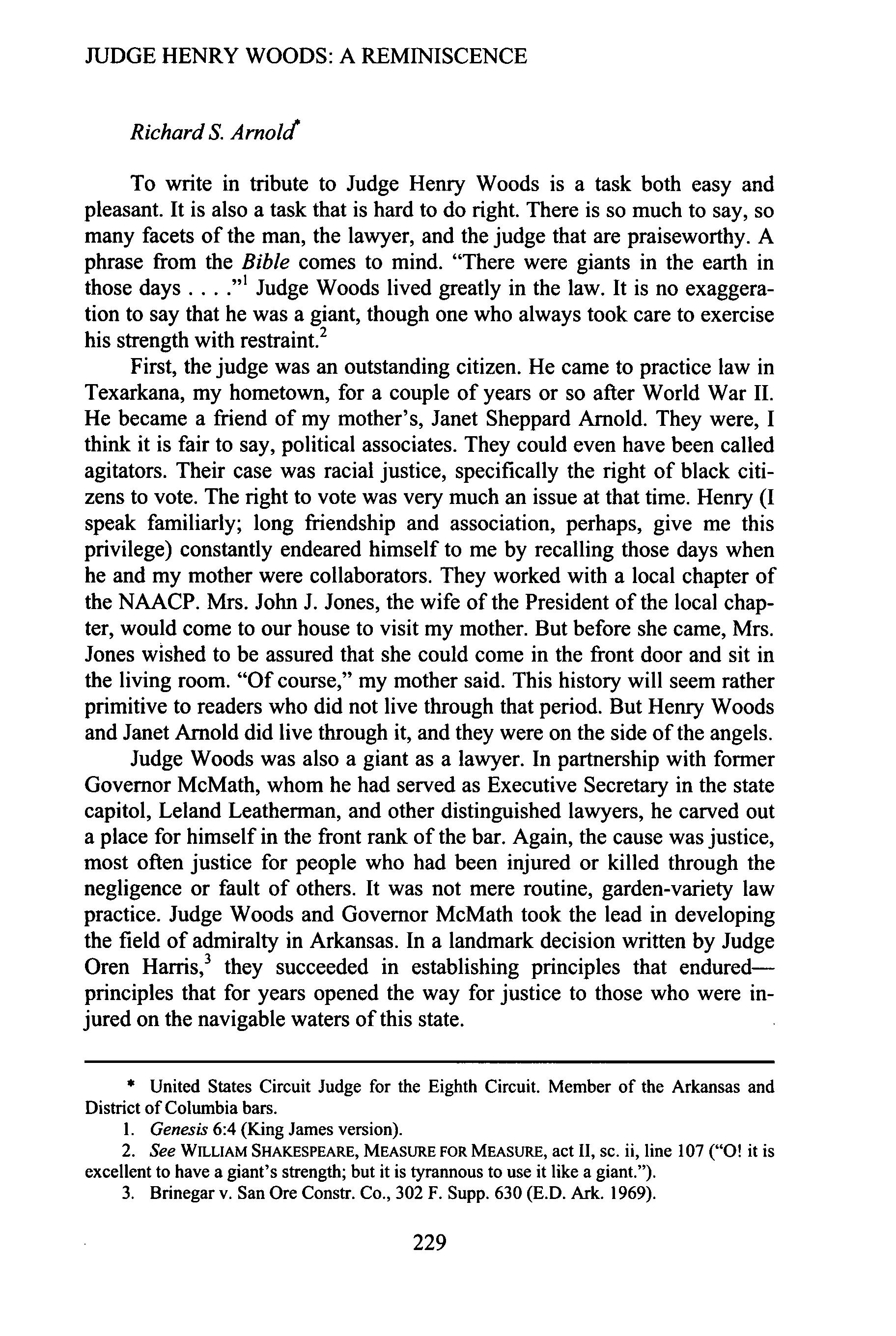
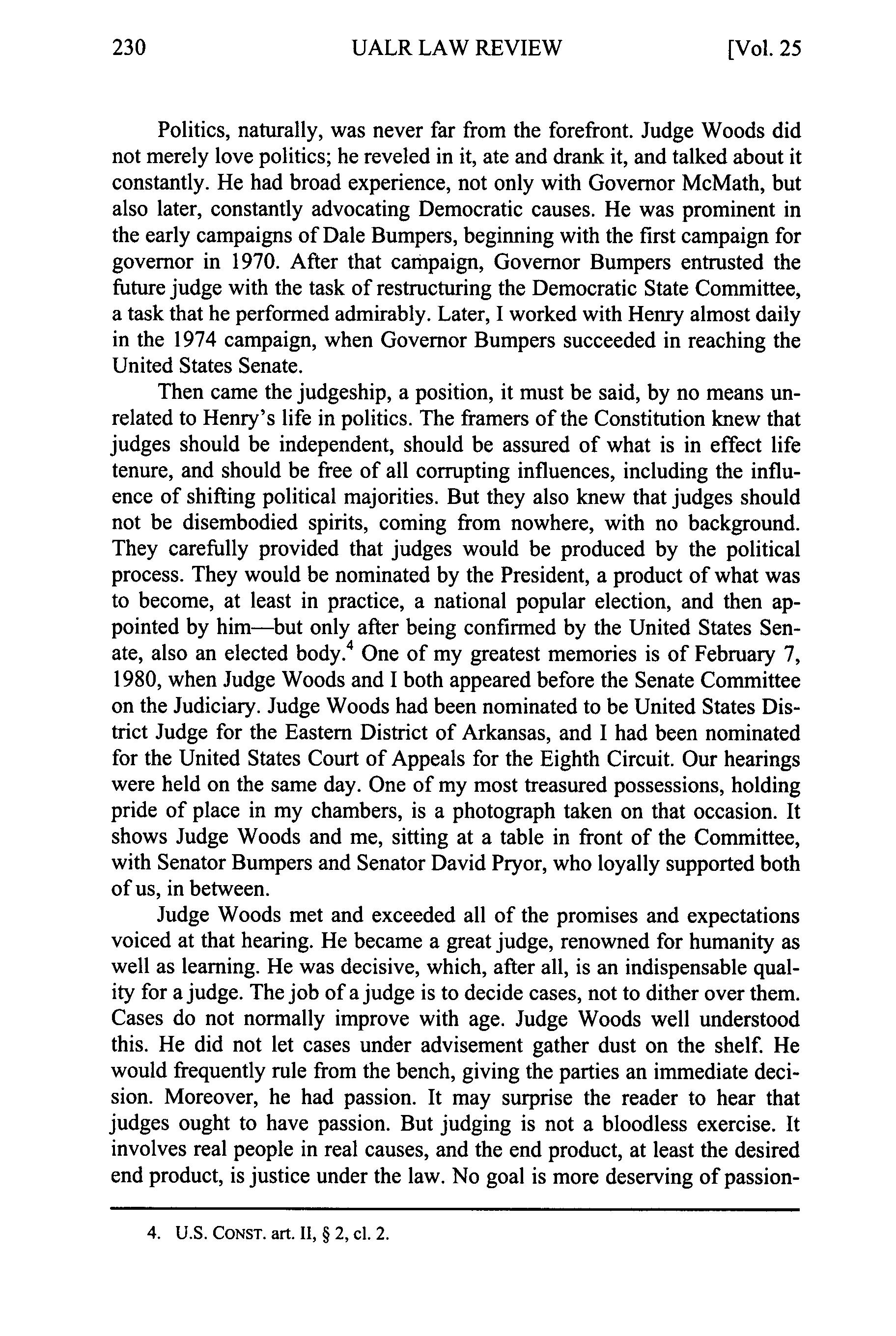




Please use this form to nominate a person, group, organization or event for the Arkansas Bar Association Legal Hall of Fame. Launching in 2020, the Legal Hall of Fame honors Arkansas's greatest lawyers, most revered institutions, most treasured traditions and other legends of the Bar.
Please use this form to nominate one (1) person, group, organization or event. Please submit multiple nomination forms if you wish to nominate more than one (1) person, group, organization or event.
Any person is welcome to submit a nomination.
For an individual to be eligible for inclusion in the Hall of Fame, the nominee must:
1. Meet one of these two criteria:
a. Be a living person at least fifty (50) years old; or
b. Be deceased for at least three (3) years. This requirement may be waived by a supermajority of the Selection Committee.
2. Have an articulable connection to the State of Arkansas, including but not limited to: (i) born in Arkansas; (ii) reared in Arkansas; (iii) educated in Arkansas; or (iv) practiced law in Arkansas.
3. Have made an extraordinary contribution to the law, society, the administration of justice or legal education.
For a group, organization or event, the nominee must have a close and clearly articulable connection to Arkansas. National groups, organizations or events where Arkansas is just one of many affected areas are not eligible for consideration. For example, the American Bar Association would not be an eligible organization and the signing of the United States Constitution would not be an eligible event. The group, organization or event must have existed for at least twenty-five (25) years or occurred at least twenty-five (25) years ago. The group, organization or event must have made an extraordinary contribution to the law, the administration of justice or legal education. No person, group, organization or event may be selected for the Hall of Fame more than once, though a person who is also a member of a group, organization or event may be separately honored.
You may find the complete guidelines for selection at www.arkbar.com/events/hof
This nomination form, along with the required attachments, is due on or before January 26, 2024.
Please send the nomination form and attachments to: hof@arkbar.com
If you have any questions, please contact Karen Hutchins at (501) 801-5663.
General Questions:
1. Name and contact information of the person submitting this nomination:
Name: Rickie Smith
Address: 200 West Capitol Avenue, Suite 2300, Little Rock, AR 72201
Phone: 501-212-1298
Email: rsmith@wlj.com
2. Name of the person, group, organization or event being nominated: Edward L. Wright
3. Contact information of the nominee (if applicable). If the nominee is deceased, please list living next of kin or other possible representative of the nominee if known:
Wright Lindsey Jennings is submitting this nomination unbeknownst to Mr. Wright’s surviving family. In the event that he is awarded this honor, we will happily contact them to share in the festivities. Please contact Rickie Smith, as representative of the nominee.
4. Concise statement regarding the nominee's connection to the State of Arkansas:
A Little Rock native, Mr. Wright joined Wright Lindsey Jennings in 1928 and practiced with WLJ until his sudden death in 1977 at the age of 73. Considered one of the firm’s founding members, the firm’s name was officially changed to Wright Lindsey Jennings in 1965. Mr. Wright quickly became one of the state’s most revered and prominent attorneys. During a career that spanned 50 years, he held almost every leadership position available to a practicing attorney. His legacy is one of the state’s largest, oldest and most respected law firms, commemorating 125 years of service in 2025 with an enduring focus on civility, ethical practice and acumen, and community involvement.
Questions Applicable to Individuals:
1. Birthdate: ___July 16, 1903
2. Birthplace: __________Little Rock
3. Date of Death (if applicable):___February 1, 1977
4. Residence at Death (if applicable): ___Little Rock
Required Attachments (use separate pages or include in separate files):
1. A general statement of why the nominee should be in the Hall of Fame (not to exceed 750 words);
2. A resume or vita of the nominee (if available); and 3. Up to two (2) letters of recommendation.
James M. Moody
5414 Stonewall
Little Rock, Arkansas 72207
January 31, 2024
Arkansas Bar Association Legal Hall of Fame
RE: Nomination of Edward L. Wright for membership in the 2024 Arkansas Bar Association Legal Hall of Fame
Ladies and Gentlemen:
It is with great pleasure that I write to you in support of the nomination of Edward L. Wright for inclusion in the membership of the Arkansas Bar Association Legal Hall of Fame.
I had the good fortune of working with and for Ed Wright at Wright, Lindsey & Jennings from 1966 until 1977, and was in complete awe of the man.
He was the consummate lawyer and gentleman who inspired all of the lawyers in the firm and who had the complete respect of the Bar
Ed Wright had a national reputation as reflected by his election as President of the American Bar Association and also the American College of Trial Lawyers, among many other awards too numerous to mention.
His stature in the Bar and his value to the firm never interfered with his willingness to mentor young lawyers, like myself, and to unselfishly allow all of his partners and associates to share in the business of the firm and to a disproportionate share of the profits.
Ed Wright was blessed with a wonderful personality and sense of humor and was always gracious in his dealings with others.
Ed Wright has all the attributes of what an exemplary lawyer should be and will be an excellent selection for inclusion in the Arkansas Bar Association Legal Hall of Fame.
Respectfully submitted,
James M. Moody

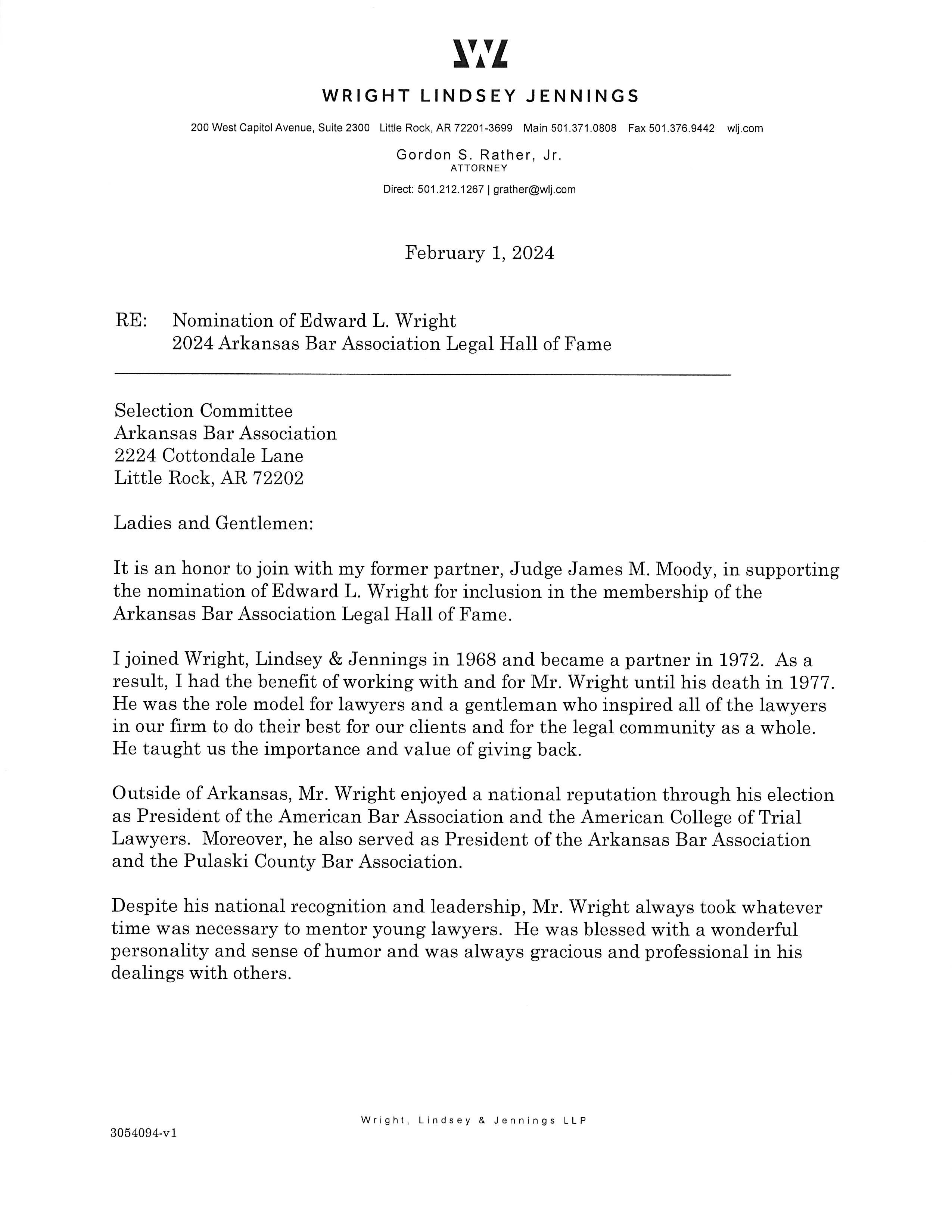
Wright Lindsey Jennings is honored to submit this nomination for Edward L. Wright posthumously for the 2024 Class of the Arkansas Bar Association Legal Hall of Fame.
Mr. Wright joined the firm in 1928 and practiced with WLJ until his sudden death in 1977 at the age of 73. Considered one of the firm’s founding members, the firm’s name was officially changed to Wright Lindsey Jennings in 1965.
A Little Rock native, Mr. Wright was a graduate of Little Rock College (now the University of Arkansas at Little Rock) and was the top graduate in his class at Georgetown Law School. Despite a host of opportunities, he chose to return to Little Rock to practice law and be with “his people.”
Mr. Wright quickly became one of the state’s most revered and prominent attorneys. During a career that spanned 50 years, he held almost every leadership position available to a practicing attorney. He served as president of the Pulaski County and Arkansas Bar Associations, and the American College of Trial Lawyers. He was chair of the House of Delegates of the American Bar Association (ABA) – the first Arkansan to hold that position – and chair of the Special Committee for Evaluation of Ethical Standards that produced the Code of Professional Responsibility – the code of ethics for lawyers.
In 1970, Mr. Wright reached the pinnacle of professional leadership, becoming –without opposition – president of the American Bar Association. He joined U.M. Rose as only the second Arkansan to hold the position, later followed by his son-inlaw, Phillip S. Anderson, both of whom have been honored by the Legal Hall of Fame.
Mr. Wright was awarded six honorary doctoral degrees and was only the ninth person in 150 years to be made an honorary life member of the Law Society of Britain. In 1971, he was considered a possible appointee to the U.S. Supreme Court under the Nixon presidency, and his counsel was sought by at least two other presidents. A lifetime member of Our Lady of Holy Souls Catholic Church, Mr. Wright was made a Knight of Malta by Pope Paul VI in 1965, one of the highest honors for a Catholic lay leader.
He had a dry wit and a keen sense of humor that endeared him to colleagues, clients and peers. Mr. Wright’s legacy is one of the state’s largest, oldest and most respected law firms, commemorating 125 years of service in 2025 with an enduring focus on civility, ethical practice and acumen, and community involvement. With foresight rare for the time, he established the roots of a diverse firm family – one that elected the first African American and female partners among law firms of similar size in the region, as well as the first woman chair of the management committee. In fact, one of his last acts in firm management was to hire future
Arkansas Supreme Court Justice Annabelle Tuck, who was a paralegal attending law school at the time and was honored by the Legal Hall of Fame in its inaugural class. Wright Lindsey Jennings was the only firm willing to hire Justice Tuck as a paralegal rather than a secretary.
Upon his death, Mr. Wright was revered by the legal community and the national media. The New York Times published an article the next day, highlighting his efforts to bring “public awareness of the problems in the American court system.” The president of the ABA at the time, Justin Stanley of Chicago, said of Mr. Wright’s legacy of leadership, “And in every position, he provided quiet, effective leadership…He will be missed by all who are familiar with his work and his character.” Other public condolences were issued by Herschel H. Friday, Arkansas Governor David Pryor and then-State Attorney General Bill Clinton, who later practiced at Wright Lindsey Jennings between terms as governor.
But perhaps Mr. Wright’s legacy and character were best captured by a young partner at Wright Lindsey Jennings in the January 1971 issue of The Arkansas Lawyer, which was dedicated to Mr. Wright’s ABA presidency: “No author of a biographical sketch can really know his subject. And I am not even certain that any one Arkansas lawyer truly knows the totality of Ed Wright as a person. To some he is a legend. To others he is an acquaintance. To many he is a warm, personal friend. And to those of us so privileged to be associated with him in the practice, Ed is a partner, father confessor, member of the family, and the life of the party.”
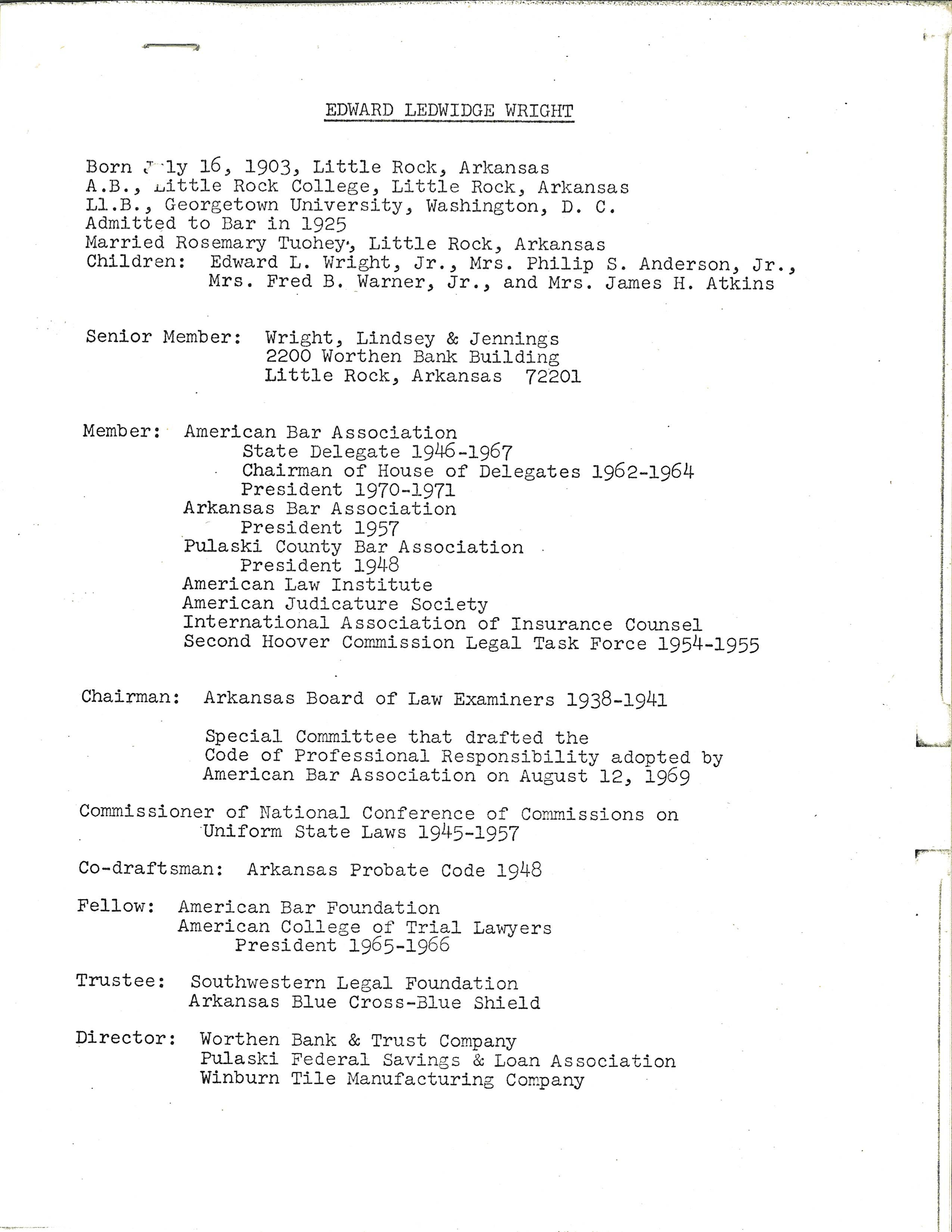
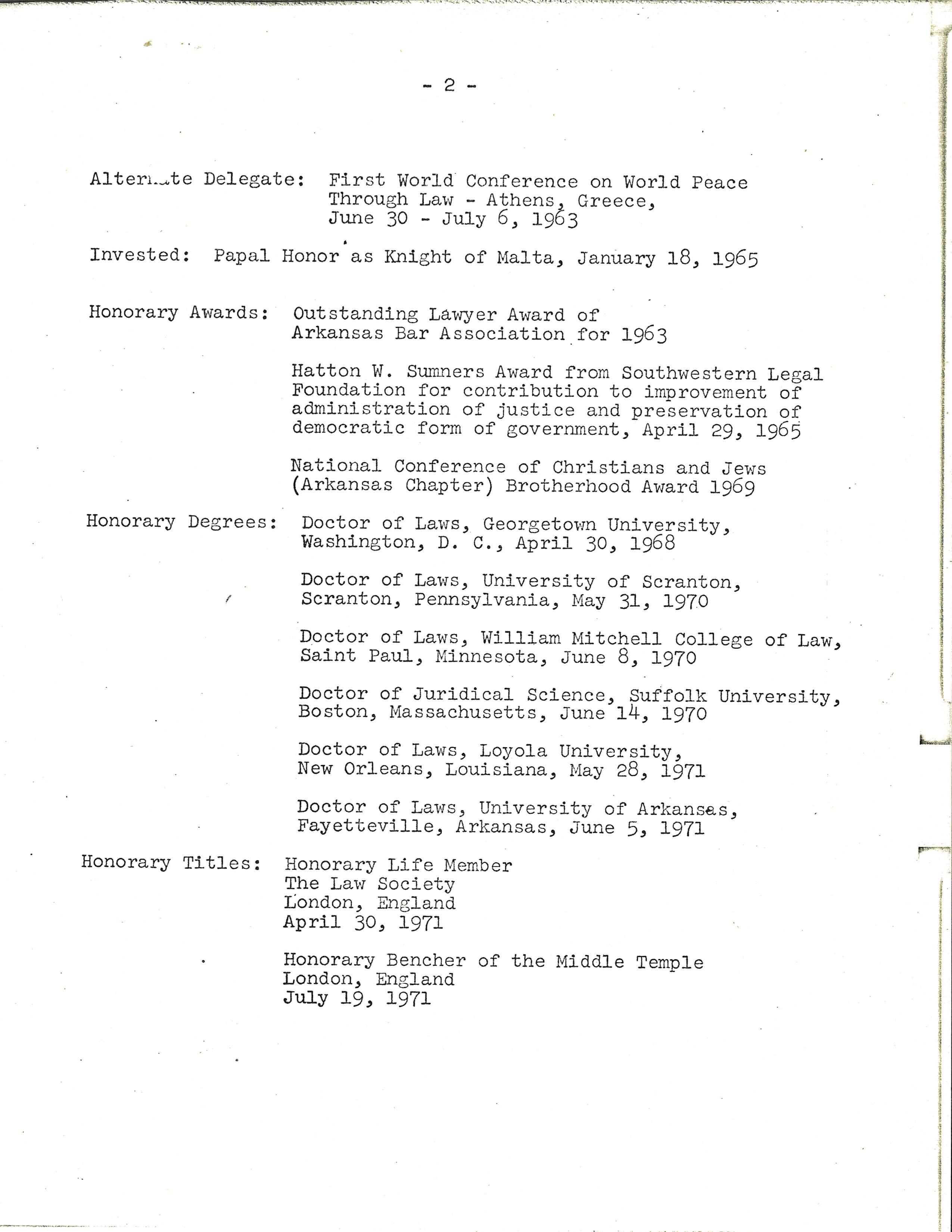
General Questions:
1. Name and contact information of the person submitting this nomination:
Name: Brian Rosenthal
Address: 120 East Fourth St Little Rock, AR 72201-2893
Phone: (501)377-0340
Email: BROSENTHAL@roselawfirm.com
2. Name of the person, group, organization or event being nominated:
The Women’s Emergency Committee
3. Contact information of the nominee (if applicable). If the nominee is deceased, please list living next of kin or other possible representative of the nominee if known:
The Little Rock Nine Foundation’s President, Carlotta LaNier: (303)770-8111 or carlottalanier@comcast.net, former member Diane Caroll: (501)663-6025, address- 2424 N. Fillmore St. Little Rock, AR 72207
4. Concise statement regarding the nominee's connection to the State of Arkansas:
The Women’s Emergency Committee was a political activist organization in Little Rock that assisted in reopening public schools after Governor Faubus closed them in 1958. The organization also aimed at ensuring equal access to education in the State of Arkansas.
Questions Applicable to Individuals:
1. Birthdate: ______________________________________________________________________
2. Birthplace: ______________________
3. Date of Death (if applicable):_______________________________________________________
4. Residence at Death (if applicable): __________________________________________________
Required Attachments (use separate pages or include in separate files):
1. A general statement of why the nominee should be in the Hall of Fame (not to exceed 750 words);
2. A resume or vita of the nominee (if available); and
3. Up to two (2) letters of recommendation.
In 1957, nine children would soon become symbols of hope as they made history by becoming the first African-Americans to attend an all-white public school in the South. Three years after the Supreme Court ruled racial segregation in public schools to be unconstitutional, the Little Rock Nine withstood mobs, discrimination, and death threats to became students at Little Rock Central High School.
Despite this historical feat, Faubus called an extraordinary session of the Arkansas General Assembly where he was able to pass a series of laws forestalling integration. Among them, Article 4 provided Faubus with the ability to close public schools as an emergency measure with voter approval. Using this power, he did just that after the Supreme Court ordered public schools to proceed with integration in September of 1958 in Aaron v. Cooper. However, those nine children were not the only ones fighting to change the path of the nation.
As the Governor signed off to close all public schools, Adolphine Terry, Vivion Brewer, and Velma Powell held their first meeting in Terry’s home to discuss ways to stop Faubus’s plan to close schools and maintain segregation. Shortly thereafter, the Women’s Emergency Committee was created. With just over fifty women in attendance at the first meeting, their membership would climb to nearly fourteen-hundred by May of the following year.
With nine days until the special local election that would decide the fate of the State’s education, they mobilized a campaign to encourage voters not to close public schools. They rented office space downtown, distributed leaflets door-to-door, planned informational parties, and took out newspaper ads. They even attempted to contact nearly every registered voter and coordinated carpools. Despite all this, the citizens upheld Faubus’s decision under Article 4, effectively closing all public schools
Determined, they refocused their strategy. They began a letter-writing campaign, lobbying the Arkansas General Assembly daily, and published the Little Rock Report highlighting the economic consequences of closing the public schools determined in their pursuit. After they called for a special election to remove segregationists from the school board and after the resignation of five school board members, the committee found like-minded citizens to run for school board, resulting in an evenly divided school board. Less than a week after the school board moved to fire forty-four teachers found to have supported integration, they solicited over nine-thousand signatures, successfully recalling segregationist board members and reinstating every teacher. This victory led to the instatement of three more moderate school board members and the reopening of public schools in 1959.
The Women’s Emergency Committee continued to protect equal access to public education for another four years. During this time, they formed the Peaceful Operation of Public Schools Committee that researched police officers to ensure no segregationists would be placed on duty outside of public schools among other things. They were also responsible for helping defeat amendment 52 which would have abolished the constitutional guarantee for free public schools in November of 1960 and for helping establish similar organizations in other states like Louisiana and Georgia.
Over the course of the committee’s existence, they immersed themselves in electoral politics and in less than a year were able to organize campaigns and voters in three elections. While the committee began as an interracial group committed to equal access to education, they later changed their platform to “not for segregation, not for integration, but for education” as a way to maintain social and political viability in the face of public pressure. They still endured harassment and threats, public alienation, economic repercussions, and resistance. Despite being limited by contemporary gender
constraints and denied access to traditional means of political action, nearly fourteen-hundred women used their race, class, education, and status to initiate social action and change their community. The Women’s Emergency Committee worked tirelessly to reopen public schools and in the process, expanded and empowered women and the scope of female roles in every area of society.
Sources
David Goldfield. “Breaking the Silence: Little Rock’s Women’s Emergency Committee to Open Our Schools, 1958-1963. Sara Alderman Murphy Patrick C. Murphy II.” The Journal of American History, vol. 85, no. 1, 1998, p. 317. EBSCOhost, doi:10.2307/2568582.
https://encyclopediaofarkansas.net/entries/womens-emergency-committee-to-open-our-schools-716/
Johanna Miller Lewis. “Women’s Emergency Committee to Open Our Schools, 1958-1959. Sandra Hubbard.” The Journal of American History, vol. 86, no. 3, 1999, p. 1437. EBSCOhost, doi:10.2307/2568744.
Lorraine Gates. “Power from the Pedestal: The Women’s Emergency Committee and the Little Rock School Crisis.” The Arkansas Historical Quarterly, vol. 66, no. 2, 2007, p. 194. EBSCOhost, search.ebscohost.com/login.aspx?direct=true&db=edsjsr&AN=edsjsr.40018699&site=edslive&scope=site.
Women’s Emergency Committee general statement of why the nominee should be in the Hall of Fame
In 1958, after the Little Rock Nine had made history as the first African Americans to integrate a public high school in the state of Arkansas, many in the state fought to maintain that racial divide. When Governor Faubus acted to close public schools, effectively halting integration, the citizens voted to uphold the governor’s decision. For an entire year, public schools were closed to all students. However, that dark year, the lost year, signifies a defining turn in the communities of Arkansas and of Little Rock as citizens and organizations pulled together to prove that this lost year would not be defined by what was lost, but by what could be changed.
The Women’s Emergency Committee was one organization that more than proved their willingness to push the community and its standards to higher levels, forcing neighbors, friends, and family alike to take responsibility for their actions or lack thereof. Three middle-class white women, Adolphine Terry, Vivion Brewer, and Velma Powell held their first meeting to discuss ways to stop the closing of all public schools the same night the governor signed off to close public schools. These three women formed the Women’s Emergency Committee just days later. They were the first organization to publicly denounce the governor’s actions.
Yet it is not their words that make them deserving of a place in the Arkansas Bar Hall of Fame, but the boundaries they pushed and the precedent their actions set that make them deserving. In under a year, this group of seemingly ordinary women pooled their race, resources, and status in the community and organized campaigns for over three elections, immersing themselves in electoral politics. Limited by contemporary gender constraints and restricted access to traditional means of political action, three women were able to take a small meeting in Terry’s house and turn it into an organization of nearly fourteen-hundred dedicated females that tirelessly fought for their state and their community. In the end, their efforts proved themselves and public schools were reopened.
Yet these women and this committee never received the recognition they had earned. They were overshadowed by other groups and by social campaigns that would not allow them to be the face of a change they helped pioneer and lead. This organization pushed the boundaries of traditional gender roles, setting examples and empowering women in the community. This organization pushed the boundaries of what it meant to have integrity and advance law and order. Yet their history is seldom shared with the state’s, stored away in archives and encyclopedias. It is important that future generations know their story, their influence, and the sacrifices they made for Arkansas and its communities. The Women’s Emergency Committee should be in the Arkansas Bar Association Hall of Fame.
Please use this form to nominate a person, group, organization or event for the Arkansas Bar Association Legal Hall of Fame. Launching in 2020, the Legal Hall of Fame will honor Arkansas's greatest lawyers, most revered institutions, most treasured traditions and other legends of the Bar.
Please use this form to nominate one (1) person, group, organization or event. Please submit multiple nomination forms if you wish to nominate more than one (1) person, group, organization or event.
Any person is welcome to submit a nomination.
For an individual to be eligible for inclusion in the Hall of Fame, the nominee must:
1. Meet one of these two criteria:
a. Be a living person at least fifty (50) years old; or
b. Be deceased for at least three (3) years. This requirement may be waived by a supermajority of the Selection Committee.
2. Have an articulable connection to the State of Arkansas, including but not limited to: (i) born in Arkansas; (ii) reared in Arkansas; (iii) educated in Arkansas; or (iv) practiced law in Arkansas.
3. Have made an extraordinary contribution to the law, society, the administration of justice or legal education.
For a group, organization or event, the nominee must have a close and clearly articulable connection to Arkansas. National groups, organizations or events where Arkansas is just one of many affected areas are not eligible for consideration. For example, the American Bar Association would not be an eligible organization and the signing of the United States Constitution would not be an eligible event. The group, organization or event must have existed for at least twenty-five (25) years or occurred at least twenty-five (25) years ago. The group, organization or event must have made an extraordinary contribution to the law, the administration of justice or legal education. No person, group, organization or event may be selected for the Hall of Fame more than once, though a person who is also a member of a group, organization or event may be separately honored.
You may find the complete guidelines for selection at www.arkbar.com/events/hof
This nomination form, along with the required attachments, is due on or before March 16, 2020.
Please send the nomination form and attachments to: hof@arkbar.com
If you have any questions, please contact Karen Hutchins at (501) 801-5663.
General Questions:
1. Name and contact information of the person submitting this nomination:
Name: Paul Parnell
Address: Rose Law Firm
120 E. 4th St.
Phone: 501-377-0436
Email: pparnell@roselawfirm.com
2. Name of the person, group, organization or event being nominated: University of Arkansas Bowen School of Law in honor of its 50th anniversary
3. Contact information of the nominee (if applicable). If the nominee is deceased, please list living next of kin or other possible representative of the nominee if known:
Dean Colin Crawford 501-916-5401
Concise statement regarding the nominee's connection to the State of Arkansas:
• The Bowen School of Law is recognized for its commitment to public service, access to justice, and commitment to advancing legal education and scholarship. The school operates legal clinics that provide pro bono legal services to underserved communities in central Arkansas, giving students hands-on experience while addressing critical legal needs. Its clinics have included Family Law, Delta focused needs, Tax, Mediation, Business Innovations and Veterans Legal Services. The law school has also been noted for its diversity initiatives. Its location in the state capital provides students with unique opportunities for externships and clerkships with state government agencies, the Arkansas Supreme Court, federal courts in the Eastern District of Arkansas and private law firms. The law school has been a leader in advancing legal education in Arkansas, with the creation of the Pathway Program that guarantees admission to highly qualified students from select colleges and universities. In addition, the law school currently offers six concurrent degrees programs, including a dual JD/Master of Business Administration through the UA Little Rock School of Business and a JD/Master of Public Service through the Clinton School of Public Services. Its commitment to legal scholarship is made evident through the legal scholarship of its faculty, with the works of two faculty members cited in opinions of the United States Supreme Court. The Bowen School of Law's alumni network remains one of the most influential in the state, with graduates occupying leadership positions across law firms, corporate legal departments, government agencies, and nonprofit organizations throughout Arkansas and beyond. The school is named for William H. Bowen, a prominent Arkansas attorney, banker, civic leader and visionary. Notable faculty have included Judge Morris S. Arnold and Former U.S. Attorney Paula Casey. Notable alumni include Annabelle Clinton Imber Tuck, first female elected Arkansas Supreme Court Justice, Rhonda K. Wood, Associate Justice on the Arkansas Supreme Court, Leslie Rutledge, Arkansas Attorney General, Davy Carter, Former Speaker of the Arkansas House of Representatives, Osro Cobb, former U.S. attorney for the United States District Court for the Eastern District of Arkansas, Lynn A. Davis, (former U.S. marshal for the Eastern District of Arkansas; crime author); Vic Fleming, former district judge for the City of Little Rock; Dan
Greenberg, former member of the Arkansas House of Representatives; Douglas House, member of the Arkansas House of Representatives from Pulaski and Faulkner counties; Dustin McDaniel, Former Attorney General of Arkansas; Sheffield Nelson, gubernatorial candidate in 1990 and 1994, chairman of Arkansas Louisiana Gas Company; Andree Layton Roaf (1941–2009), first African-American woman to serve on the Arkansas Supreme Court; Vic Snyder (born 1947), former U.S. Representative for Arkansas's 2nd congressional district; Wallace Townsend, Republican national committeeman from Arkansas (1928–1961), Republican gubernatorial nominee in 1916 and 1920, Little Rock lawyer until he was ninety-two; Mary Wiseman (born 1961), Judge of the Montgomery County (Ohio) Court of Common Pleas; J. Cody Hiland, Former US Attorney for the Eastern District of Arkansas and Current Associate Justice of the Arkansas Supreme Court; Kevin Crass, prominent local lawyer, head of War Memorial Stadium Commission and University of Arkansas member of Board of Trustees, Judge Margaret Dobson (former past Arkansas Bar Association President), Robyn Allmendinger, first and only female managing member of Rose Law Firm in 205 year history.
Questions Applicable to Individuals:
1. Birthdate:
2. Birthplace: _____________________________________________________________________
3. Date of Death (if applicable):_______________________________________________________
4. Residence at Death (if applicable): __________________________________________________
Required Attachments (use separate pages or include in separate files):
1. A general statement of why the nominee should be in the Hall of Fame (not to exceed 750 words);
2. A resume or vita of the nominee (if available); and 3. Up to two (2) letters of recommendation.
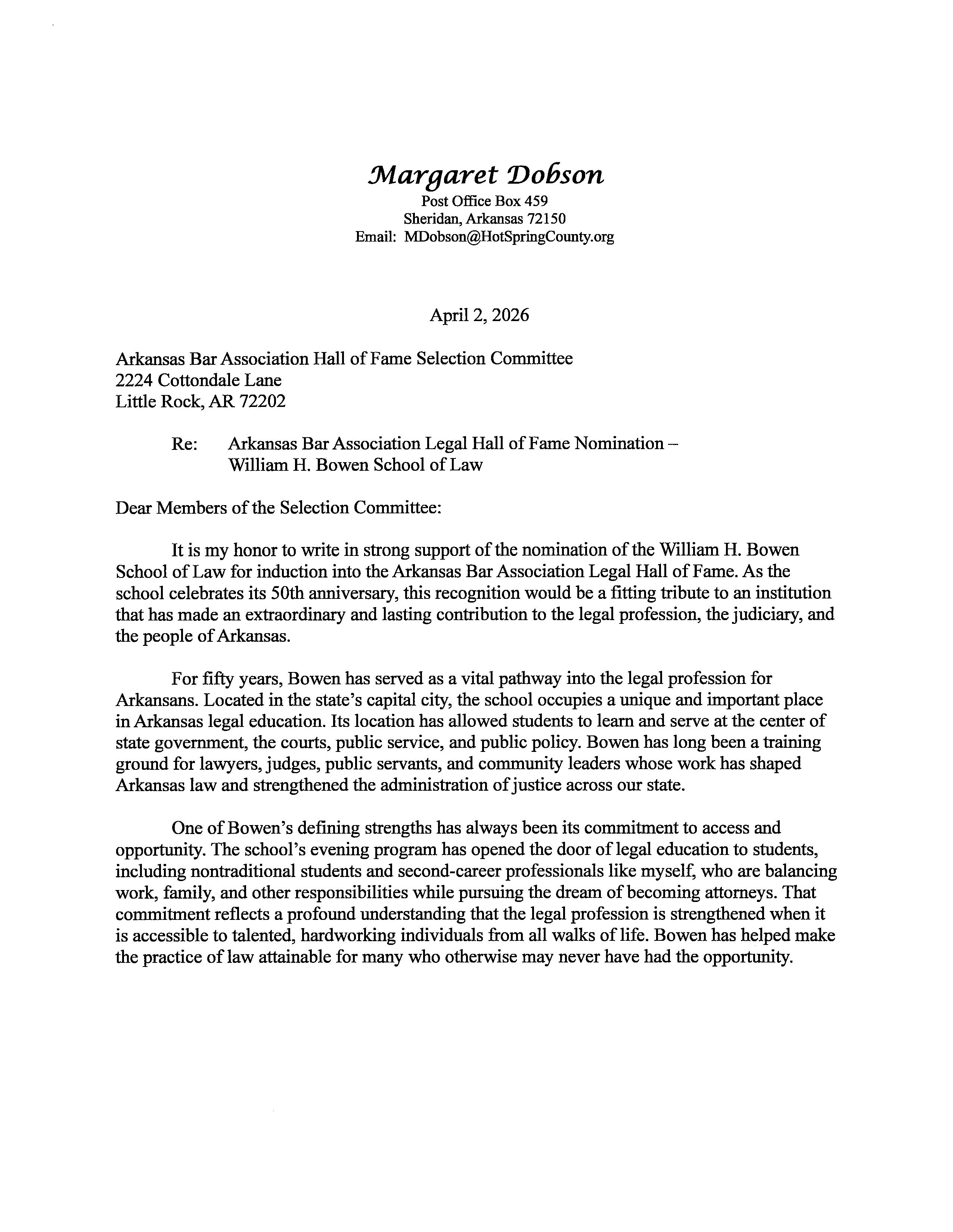
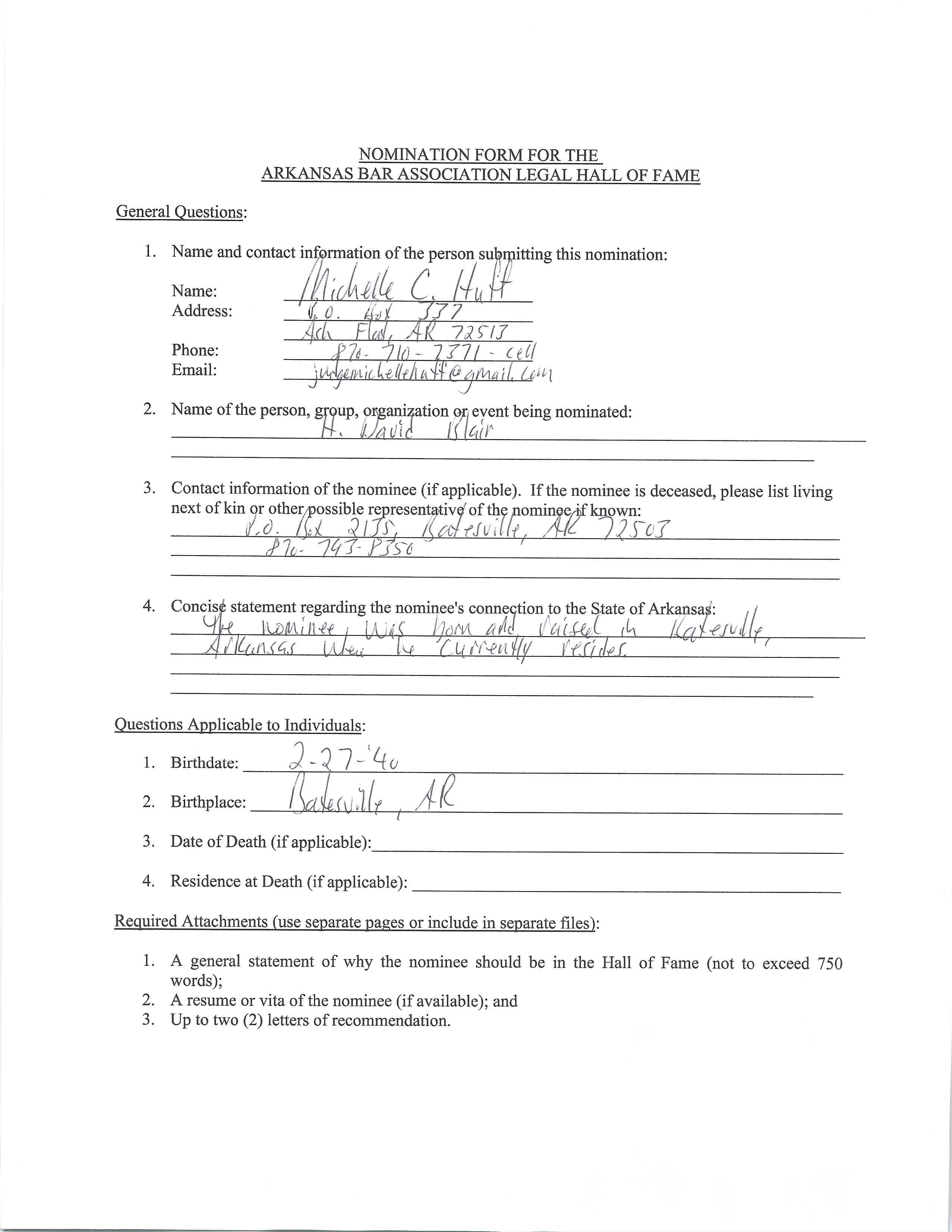
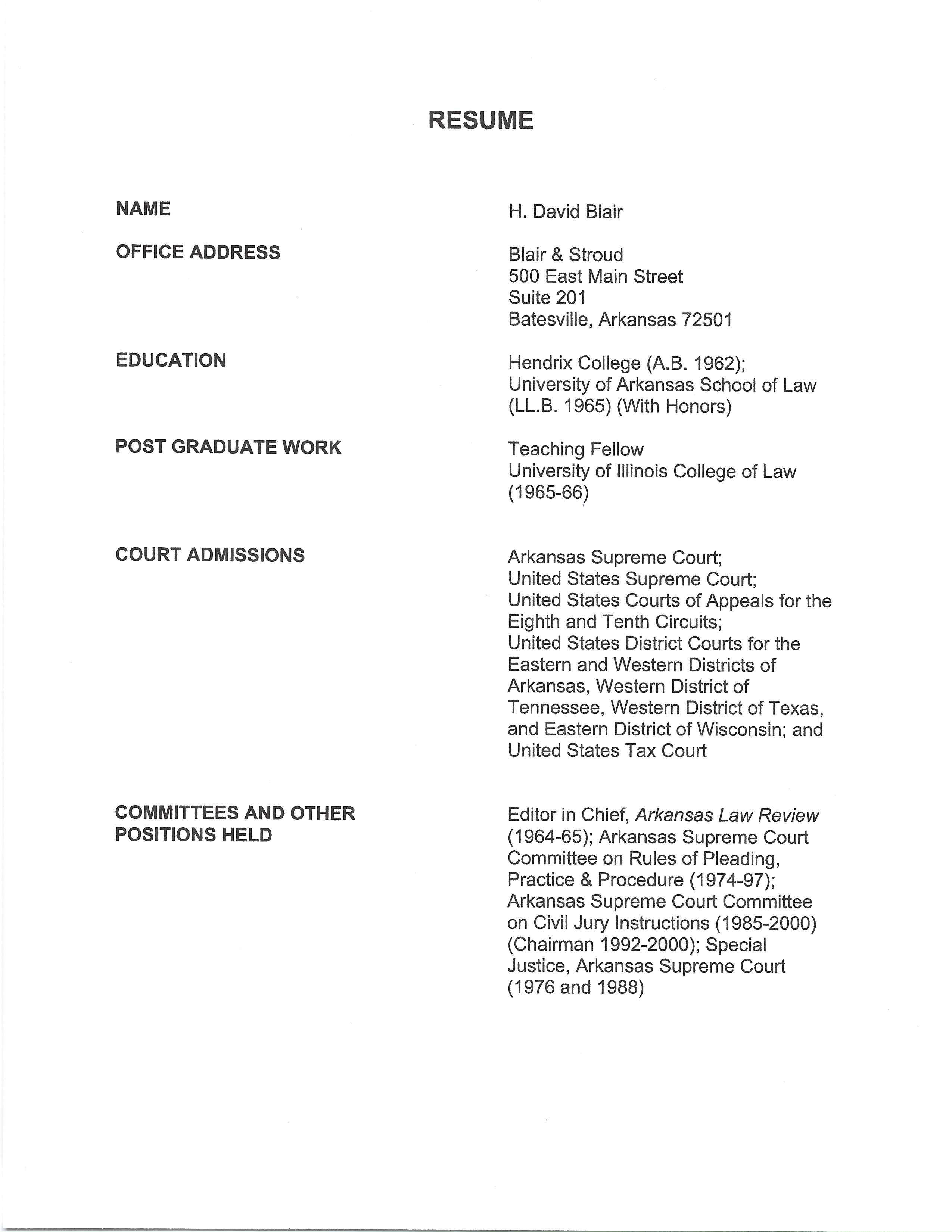
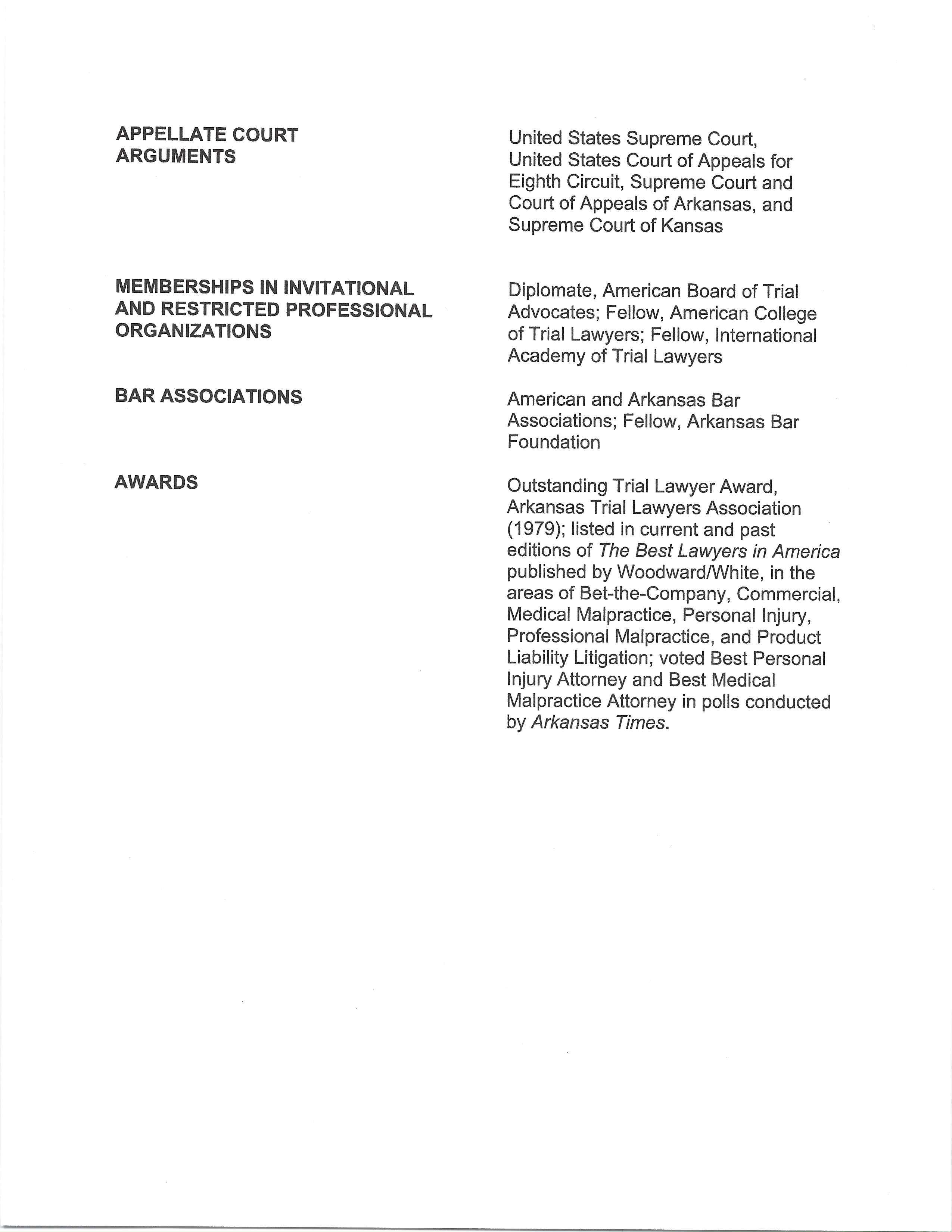
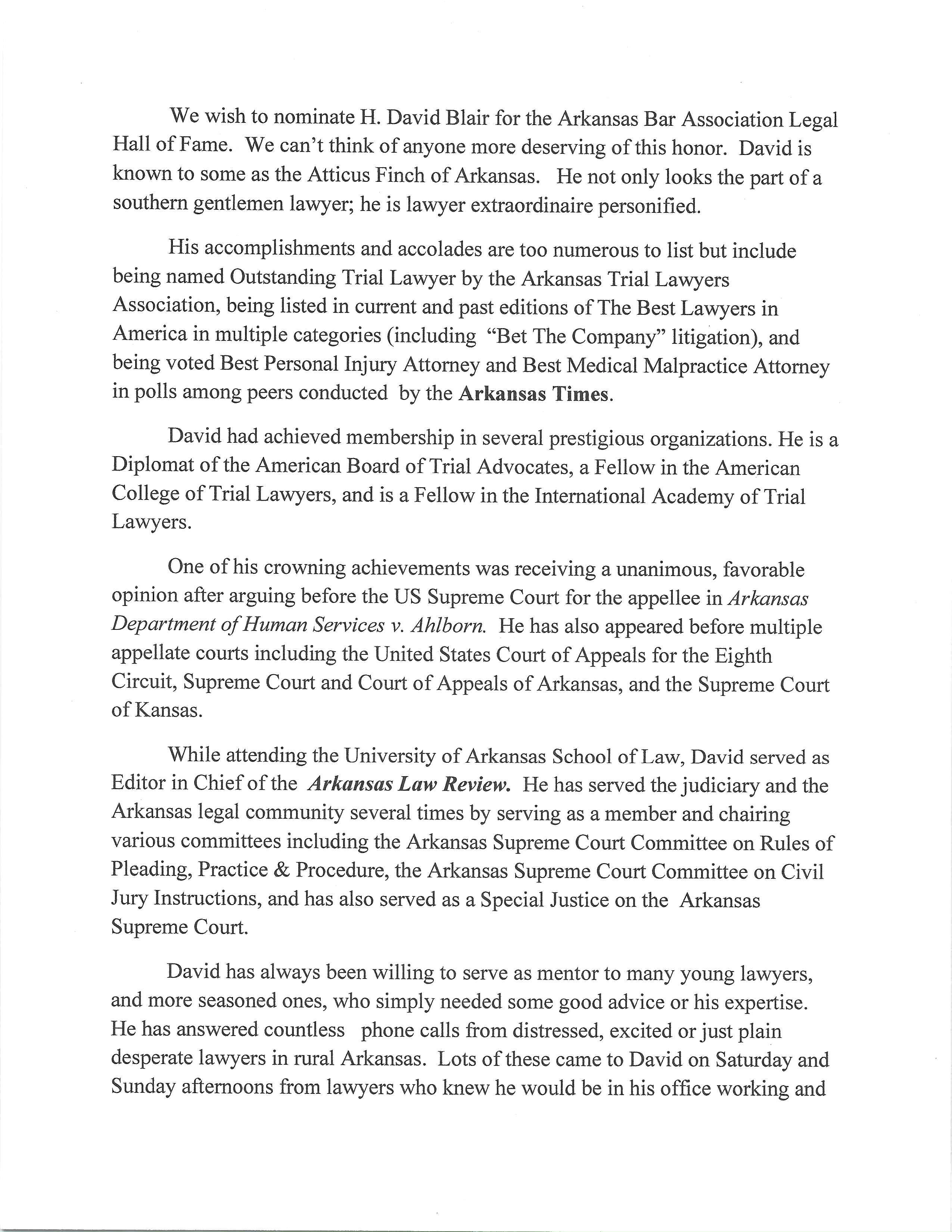
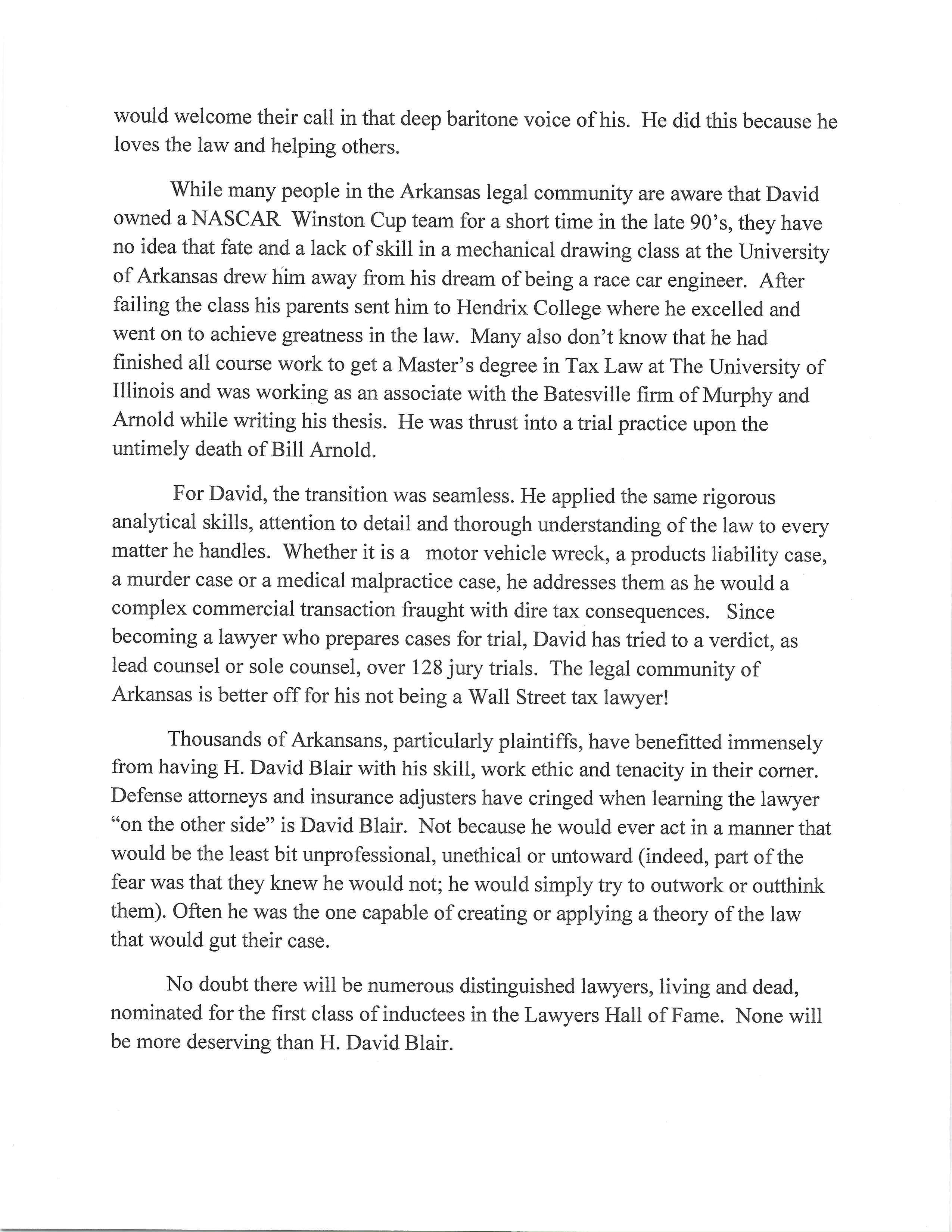
1. Name and contact information of the person submitting this nomination:
Name: Margaret Sova McCabe
Address: University of Arkansas School of Law
Phone: (479) 575-5601
Email: mccabe@uark.edu
2. Name of the person, group, organization or event being nominated: Philip S. Anderson
3. Contact information of the nominee (if applicable). If the nominee is deceased, please list living next of kin or other possible representative of the nominee if known: (501) 663-0328 – home, (501) 372-0800 - business
4. Concise statement regarding the nominee's connection to the State of Arkansas: Philip Anderson graduated from the University of Arkansas School of Law in 1959 and has served as a leader in the legal community of Arkansas for 60 years. He has been at the heart of several landmark cases, which have defined Arkansas history. His involvement with the Arkansas Bar Association and representation of Arkansas with the American Bar Association put him in a category of dedicated servant leaders.
1. Birthdate: May 9, 1935
2. Birthplace: Little Rock, Arkansas
3. Date of Death (ifapplicable):
4. Residence at Death (ifapplicable):
Required Attachments (use separate pages or include in separate files):
1. A general statement of why the nominee should be in the Hall of Fame (not to exceed 750words);
2. A resume or vita of the nominee (if available); and 3. Up to two (2) letters of recommendation.
Philip S. Anderson led an esteemed legal career culminating in over 60 years of legal expertise. Anderson, after founding the law firm Williams and Anderson in 1988 and after 30 years of dedication, retired from the practice last November. Hisdeparture marks aturn in the legal field of Arkansas,noting his dedication and commitment to organizations and institutions such asthe University of Arkansas,the Council of American Law,the American Bar Association, the Donaghey Board Foundation, and the state of Arkansasasa whole, among many others. His legal expertise is remembered for his trial and appellate practice, medial law and corporate matters, and mergers and acquisitions. In retirement,Anderson has left behind a legacy of legal excellence that has and will continue to benefit the state and its citizens.
Anderson was born the son of an officer in the United States Army Corps of Engineers in May of 1935. After spending the majority of his childhood in Oak Ridge,his family moved to Little Rock during his senior year of high school. He went on to attend the University of Arkansas,graduating with a B.A. and later attending the University of ArkansasSchoolof Law. Here, he became the editor-in-chief of the Arkansas Law review before graduating in 1959.
In 1978, Anderson became a member of the Federal Advisory Committee to the United States Court of Appeals for the Eighth Circuit. Hiscommitment to the Eighth Circuit is best shown through his tenure that lasted over ten years. During this time, he earned a presidential appointment to the United States Judge Nominating Commission Panel for the Eighth Circuit in 1978 in addition to serving on the panel in 1979 as well asan appointment asa member of the Federal Advisory Committee for the Eighth Circuit where he served between 1983 and 1988.
In his final year as a member of the Federal Advisory Committee,Anderson partnered with W. Jackson Williams, David F. Menz and Peter G. Kumpe and became one of the founders of Williams and Anderson PLC. Over the course of his 31-year career at the firm, he represented suchclients as the Arkansas Democrat-Gazette. He was able to successfully defend the then-Arkansas Democrat against a litigation suit filed by the Arkansas-Gazette. He later aided in the acquisition of all of the latter newspaper's assetsand established the newspaper today known asthe Arkansas DemocratGazette in 1991, where he currently serves on the Board of Directors.
Anderson is also noted for his tremendous amount of dedication to the American Bar Association. He served over 30 years in the House of Delegates beginning in 1979, three terms aschair in the House of Delegates,aschair of the Section of Legal Education and Admissions to the Bar,two terms on the Association's Board of Governors between 1990 to 1994 and again from 1998 to 2001, and finally asthe Association's 122nd president between 1998 and 1999. He focused much of his attention towards immigration reform and providing legal assistance to immigrants coming into the country during his presidential term. His term is partly marked by offering grants to support state and local bar associations participating in similar immigration reform projects. Hiscontributions and commitment to public service and the Association were rewarded when the Fellows of the American Bar Association awarded Anderson the Outstanding Service Award in 2013.
Among his other accomplishments, Anderson was elected a member of the Council of the American Law Institute where he was on their governing council for several years. He continued to establish a standard of professionalism asan advisor for various projects such as the Advisory Committee for the Restatement of the Law Governing Lawyers. Anderson was also inducted into the American Academy of Arts and Sciences asa trustee in 2010, later becoming a Fellow. Despite the many accomplishments Anderson will be remembered for, his character and legal expertise are best described by a quote from a speech he gave in 1998 to the National Conference of Law Reviews. He believed that the role of the American Bar Association and the role of lawyers was to debate the great issuesof our time and the "greatest issues of our time are the dignity of humanity and the search for justice, and how a civilized society in the last years of the twentieth century defines the former and pursues that latter." Philip S. Anderson embodied that quote for over 60 years.
Philip S. Anderson has had a long and successful career of more than sixty years and has established himself as a respected attorney in Little Rock, Arkansas He cultivated legal experience in trial and appellate practice, mergers and acquisitions, and general corporate matters. Mr. Anderson co-founded Williams & Anderson in 1988 where he practiced until his retirement in November 2019.
He represented the Arkansas Democrat in a “newspaper war” with the Arkansas Gazette, which resulted in litigation and a successful defense led by Mr. Anderson. He later assisted in the acquisition of the Arkansas Gazette by the Arkansas Democrat to create what is now the current Arkansas Democrat-Gazette. Mr. Anderson also served on the board of directors of the newspaper and its parent company.
Throughout his career, Mr. Anderson has represented varied media clients on First Amendment issues. He served as lead counsel for ABC, CBS, CNN and NBC in litigation arising from the Arkansas Whitewater trials in 1996. He represented the New York Times, the Associated Press, and HBO on various media issues and served as lead counsel in trying landmark newspaper antitrust cases successfully: Community Publishers, Inc. v. Donrey Corp. and Arkansas Gazette Company v. Camden News Publishing Company. For several years, Mr. Anderson served as outside general counsel for the largest bank holding company in Arkansas, and he represented the client in the acquisition of banks throughout the state.
Other notable cases during Mr. Anderson’s career include: Cooper Tire & Rubber Company v. Phillips County Circuit Court, where the Arkansas Supreme Court reversed an order of the lower court resulting in the protection from disclosure of the manufacturer’s formulas and other trade secrets; he was lead appellate counsel in the appeal of the largest personal-injury verdict in the history of the state at that time; and the appeal of a judgment in the amount of $8.2 million against a bank on a lender-liability claim.
Mr. Anderson was very involved in the community and practiced servant leadership throughout his career. He served for 44 years as a trustee and secretary of the George W. Donaghey Foundation Board whose mission was to aid and provide support for UA Little Rock. He is also a Fellow of the American Academy of Arts & Sciences and a supporter of the arts.
He was active in the American Bar Association for many years, holding positions including: Chair of the House of Delegates; Arkansas representative for more than 30 years in the House of Delegates; two terms on the Association’s Board of Governors; and President of the American Bar Association from 1998-1999, being one of only three Arkansans to hold the position. Mr. Anderson
has been a member of the American Law Institute and is an emeritus member of its governing council. He was chosen by the Fellows of the American Bar Foundation to receive the Outstanding Service Award in 2013.
Mr. Anderson’s career began at the University of Arkansas where he received his B.A. and L.L.B in 1959. During his time at the School of Law, Mr. Anderson served in multiple positions with the Arkansas Law Review, including Editor-in-Chief. Later in his career (2011), he was named the School of Law’s first Wylie H. Davis practitioner in residence, allowing him to share his wealth of legal knowledge with students preparing to enter the legal community.
General Questions:
1. Name and contact information of the person submitting this nomination:
Name: Mark Pryor___________________
Address: 7300 Pinnacle Valley Rd.________ Little Rock, AR 72223__________
Phone: 501-777-3040 _________________
Email: mlpryor@venable.com__________
2. Name of the person, group, organization or event being nominated: _________________ Senator David Hampton Pryor
3. Contact information of the nominee (if applicable). If the nominee is deceased, please list living next of kin or other possible representative of the nominee if known: mlpryor@venable.com
4. Concise statement regarding the nominee's connection to the State of Arkansas: __David Hampton Pryor served as a member in the United States Senate for the State of Arkansas from 1979 – 1997, served as the 39th Governor of Arkansas from 1975 – 1979, served as a member in the United States House of Representatives for the 4th District of Arkansas from 1966 – 1973, and served as a member in the Arkansas House of Representatives from 1961 –1966.
Questions Applicable to Individuals:
1. Birthdate: August 29, 1934
2. Birthplace: Camden, AR
3. Date of Death (if applicable):_______________________________________________________
4. Residence at Death (if applicable): __________________________________________________
Required Attachments (use separate pages or include in separate files):
1. A general statement of why the nominee should be in the Hall of Fame (not to exceed 750 words); 2. A resume or vita of the nominee (if available); and 3. Up to two (2) letters of recommendation.
Arkansas Bar Association Legal Hall of Fame Nomination
Senator David Hampton Pryor
David Hampton Pryor has been one of the most influential Arkansans from 1960 to the present day. He was already serving in the state legislature when he graduated from law school in 1964. Pryor returned to his hometown of Camden to practice law with Harry Barnes, who later became a state and federal judge. Pryor & Barnes never took a case to the U.S. Supreme Court, but they handled hundreds of matters large and small for the citizens of Ouachita County – just like small town lawyers in Arkansas do every day.
During his time in the legislature, David Pryor made a name for himself as one of the “Young Turks,” a group of legislators who fought Governor Faubus on race policies and generally tried to push Arkansas to become more progressive. While serving as a Congressman from south Arkansas, Pryor gained national renown for advocating nursing home reform. He lost a hotly contested Senate race to John McClellan in 1972. During his four years as Governor, Pryor worked to promote Arkansas tourism, progress on civil rights, provide more services for the elderly, push county government reform and a new state constitution. His appointments included numerous first-ever female and African-Americans to state boards and commissions.
David Pryor then served in the United States Senate for 18 years where he was a tireless advocate for “the little guy”. Whether it was the high cost of prescription drugs or giving taxpayers rights against the Internal Revenue Service, Pryor fought and won many of those battles. Understanding the importance of agriculture to our economy and our culture, Pryor served on the Agriculture Committee during his tenure in the Senate. He also served on the Finance Committee where he successfully pushed for tax reform. His reformer instincts were also put to great use while serving on the Governmental Affairs Committee, as well as Chair of the Aging Committee. Pryor served with distinction for 11 years on the Senate Ethics Committee, a position of trust given by his peers since it must sometimes judge the actions of Senators. His time in the Senate also allowed him to help shape the federal judiciary in Arkansas by recommending federal judges and U.S. Attorneys to four Presidents. Pryor served in office during a time when compromise was considered art and not treachery.
But, David Pryor’s life of public service did not end when he left the Senate in January of 1997. After leaving elected office, he became a Fulbright Distinguished Fellow of Law and Public Affairs at the University of Arkansas. He and his wife Barbara founded the David and Barbara Pryor Center for Oral and Visual History. He served as a Fellow, and then as Director, of the Kennedy School’s Institute of Politics at Harvard University. He was the inaugural Dean of the Clinton School of Public Service. Pryor then served on the Board of the Corporation for Public Broadcasting, Chair of the Democratic Party of Arkansas and was appointed to the University of Arkansas Board of Trustees. Somehow, during all of this, he found time to volunteer in a refugee camp in Albania in 1997.
Robert A. Leflar’s autobiography is titled, One Life in the Law and David Pryor’s book is, A Pryor Commitment. Maybe when someone writes the definitive biography of David Pryor, they will entitle it One Committed Life that Made Law and Politics Forces for Positive Change
Arkansas Bar Association Legal Hall of Fame Nomination
Senator David Hampton Pryor
University of Arkansas School of Law – Fayetteville, AR Completed 1964
LL.B and Admitted into the Arkansas Bar
University of Arkansas – Fayetteville, AR Completed 1957
Bachelor of Arts, Government
CAREER
United States Senator, Arkansas
39th Governor of Arkansas
United States Representative, 4th District of Arkansas
Arkansas
–

Robert T Dawson
United States District Court
Western District of Arkansas
Judge Isaac C. Parker Federal Building
30 South 6th Street, Room 234
U. S. District Judge Fort Smith, Arkansas 72901
Phone: (479) 709-5437
March 3, 2020
Arkansas Bar Association 2224 Cottondale Lane
Little Rock, Arkansas 72202
Arkansas Bar Association Legal Hall of Fame
Dear Members:
I understand that David is being considered by you for induction into the Arkansas Bar Association Legal Hall of Fame. I can think of no one more deserving of this high honor than Dave.
He is proud to be an attorney, and attorneys are so very proud that he is an attorney!! David has set the example for all of us to follow for many years. He has always chosen the high and ethical road in his dealings with everyone. He seems to bring about the best in all of us.
We appreciate the good work that you do and any consideration of David for this honor will be greatly appreciated.
Sincerely yours,
Robert T. Dawson
Robert T. Dawson Senior U.S. District Judge
UNITED STATES DISTRICT COURT
EASTERN DISTRICT OF ARKANSAS
RICHARD SHEPPARD ARNOLD.UNITED STATES COURTHOUSE
600 W. CAPITOL AVENUE, SUITE A403
LITTLE ROCK, AR 72201
BILL WILSON
UNITED STATES DISTRICT JUDGE
February 28, 2020
RE: Senator David Pryor
I have known Senator David Pryor for approximately half a century. He is an outstanding person in every aspect of life, personally, politically and professionally.
In my judgment he is fully qualified for the Arkansas Bar Association's Legal Hall of Fame. In fact, I can think of no other lawyer more deserving.
Absolutely without reservation I give him the highest possible recommendation.
i Billy R. Wilson U. S. District Judge
General Questions:
NOMINATION FORM FOR THE ARKANSAS BAR ASSOCIATION LEGAL HALL OF FAME
1. Name and contact information of the person submitting this nomination:
Name: Grant M. Cox
Address: 111 Center Street, Suite 1900 Little Rock, Arkansas 72201
Phone: (501) 379 -1756
Email: gcox@qgtlaw.com
2. Name of the person, group, organization or event being nominated:
Rodney E. Slater
3. Contact information of the nominee (if applicable). If the nominee is deceased, please list living next of kin or other possible representative of the nominee if known:
Rodney E. Slater
Squire Patton Boggs
2550 M. Street, NW Washington, D.C. 20037 rodney .slater@squirepb.com (202) 457 -5265
4. C oncise statement regarding the nominee's connection to the State of Arkansas:
Rodney E. Slater was raised in Marianna, Arkansas, graduated from Lee High S chool, and grad uate d from the law school at the University of Arkansas. Prior to becoming the second A frican -American to serve as Secretary of Transportation (under Pre sident Bill Clinton) and the first Africa n -American Director of the Federal Highway Administration, Rod ney Slater served as an assistant attorney general in Arkansas, special assistant to then Governor Clinton for community and min ority affairs, and s erved a s the first African -American on the Arkansas Highway Commission.
Questions Applicable to Individuals:
1. Birthdate: February 23, 1955
2. Birthplace: Tallahatchie County, Mississippi
3. Date of Death (if applicable):
4. Residence at Death (if applicable):
Required Attachments (use separate pages or include in separate files):
1. A general statement of why the nominee should be in the Hall of Fame (not to exceed 750 words);
2. A resume or vita of the nominee (if available); and
3. Up to two (2) letters of recommendation.
Rodney E. Slater
Rodney E. Slater is currently a partner with the law firm of Squire ~atton _Boggs LLP where m addition to being on their Board of Directors, he promotes the role of pubhc service and pro_ bon~ work in the legal field and in developing public policy. Here, he aids state and loca! govern~_ent clients 1_n focusing their interests in the transportation system and integrating them with the ~1s1on ~f sustainable worldwide transportation infrastructure. Notably, he also serves as a leader for their best-m-class practice in Corporate Compliance Advice. . . secretary Slater's commitment to public service and focus on equal access and opportunity m the nation's transportation system can partly be attributed to his modest beginnings. Born a Mississippian in February of 1995, Slater and his family moved to Arkansas during his early childhood. After leaving Arkansas to attend Eastern Michigan University and graduating in 1977, he then returned to attend the University of Arkansas's School of Law, graduating only three years later.
After earning his J.D., Slater was appointed as the Assistant Attorney General. During his two year position between 1980 and 1982, the Slater became acquainted with the then-Governor Bill Clinton. Making a lasting impression, Slater worked on economic and community affairs areas after Clinton named him as his assistant. Clinton went on to name Slater as a special executive assistant focusing on community and minority affairs between 1983 and 1987. It was during this time on the commission that Slater was appointed to and served as the Director of Governmental Relations for Arkansas State University for six years. Four years later, he earned the title of first African American to serve on the Arkansas State Highway Commission. He set policies and oversaw activities of the state's Highway and Transportation Department. After five years on the commission, in 1992, he became the first African American to serve as the Commission's chairman.
Slater's first federal position was secured when he became the first African American Director of the Federal Highway Administration. During his five year tenure, Slater focused his work on initiatives such as the development of a financial program that resulted in the completion of hundreds of transportation projects years ahead of schedule. He was also a key figure in securing congressional passage of the National Highway Designation Act of 1995 which designated over 160,000 miles of roads as part of the National Highway system and restored over $5 billion in funding to state highway departments among other reforms. However, his dedication to public service is best conveyed by his leading of the most extensive outreach initiative in the Administration's history that spanned the course of four years. His goal was to listen to the people who build, maintain, and use our transportation system, transforming it into much more than just concrete, asphalt, and steel.
After making his mark and establishing a legacy for future Directors of the Federal Highway Administration, the then-President Clinton named Slater as the United States Secretary of Transportation making him the second African American. Slater is best remembered for his four years as Secretary by his passage of historic legislation, including the Transportation Equity Act for the 21st Century which guaranteed a record $200 billion in funding for surface transportation investments, and the Wenqell H. Ford Aviation Investment Reform Act that provided $46 billion in funding to improve safety and security of the nation's aviation systems. He is also credited with the unprecedented 104% increase in the transportation budget in addition to his expansion of the scope of transportation to include safety, the environment and national security, and access and mobility among others.
Apart from his governmental accomplishments, Slater was and is dedicated to civic organ_izations such as the Arkansas Children's Hospital Community for the Future, the Boy Scouts of America, and the Sickle Cell Anemia Foundation. In addition, he established the Garrett A Morgan Technology and Transportation program encouraging students to pursue careers in transportation. He was recognized for his achievements and influential public services after receiving Albert Schweitzer Leadership Award, being named one of Ebony's "Top 100 Most Influential Black Americans," and earning an honorary Doctorate from Howard University .
Sources
https://web .archive .org/web/20101008180438/http:f/www.fhwa.dot.gov/ adm inistrators/rslater. htm
https://www.fhwa.dot.gov/highwayhistory/road/road.pdf?CFID=113215890&CFT0KEN=b44c55ac581fe 46a-4907332A-C9F9-AE4C-A8669F6DFEAED4FC
https://www.fhwa.dot.gov/ publications/publicroads/98janfeb/ga m .cfm
https://www .squire patto n boggs .com/en/ professio na Is/s/ slater-rod ney-e
Garrett, Mark Evan. Encyclopedia of Transportation: Social Science and Policy. SAGE Publications, Inc, 2014. EBSCOhost, search.ebscohost.com/login aspx?direct=true&db=nlebk&AN=845930&site=ehostlive&scope=site. Slater, Rodney E. "The National Highway System: A Commitment to America's Future ." Public Roads, vol. 59, no 4, Spring 1996, p. 2. EBSCOhost, search ebscohost.com/login aspx?direct=true&db=f5h&AN=9605074150&site=edslive&scope=site.

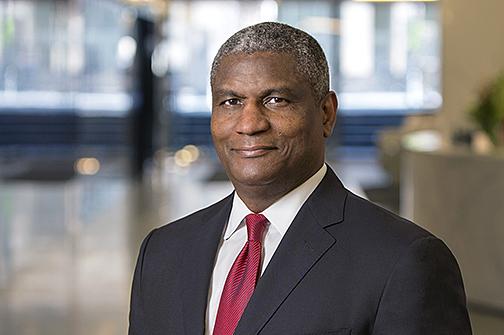
E.Slater Partner
WASHINGTONDC
T +1 202 457 5265
Former US Secretary of Transportation Rodney Slater helps clients integrate their interests in the overall vision for the transportation system of the 21st century – a vision he set as Transportation Secretary to promote a safer, more efficient, environmentally sound and sustainable worldwide transportation infrastructure.
PublicPolicy | Transportation,Shipping&Logistics | Transportation, Infrastructure&LocalGovernment | Aviation | StateAttorneysGeneral | Automotive | AutonomousDriving
Secretary Slater also helps state and local government clients address the vexing challenge of closing the gap between transportation demand and capacity by employing public-private strategies and innovative financing solutions. Secretary Slater’s practice focuses on many of the policy and transportation objectives that were set under his leadership, including automobile use and development, aviation competition and congestion mitigation, maritime initiatives, high-speed rail corridor development, and overall transportation safety and funding. He continues to embrace the framework he established as secretary for making transportation decisions that called for more open, collaborative and flexible decision making across the transportation enterprise here and abroad.
Secretary Slater’s bipartisan and inclusive approach to problem solving has earned him tremendous respect and admiration on both sides of the aisle, enabling him to have one of the best relationships with the White House, Congress and business, labor and political leaders worldwide in the history of the US Department of Transportation (DOT). His work at DOT forever altered America’s and the world’s appreciation of transportation as more than just
concrete, asphalt and steel. Secretary Slater brings the same strategic, resultsoriented and collaborative approach to the practice of law to his public policy practice.
As US Secretary of Transportation under President Bill Clinton, Secretary Slater passed several historic legislative initiatives over his tenure, including the Transportation Equity Act for the 21st Century (TEA-21), which guaranteed a record US$200 billion in surface transportation investment though 2003, and the Wendell H. Ford Aviation Investment Reform Act for the 21st Century (AIR-21), which provides a record US$46 billion to improve the safety and security of the nation’s aviation system. Under his leadership, the federal transportation budget doubled and in the department’s "best in government" strategic and performance plans, the scope and definition of transportation was expanded to include a focus on safety, mobility and access, economic development and trade, the environment and national security.
Prior to his tenure as Transportation Secretary, Secretary Slater served as Administrator of the Federal Highway Administration, where – as the agency’s first African-American Administrator in its century-long history – he oversaw the development of an innovative financing program that resulted in hundreds of transportation projects being completed two to three years ahead of schedule with greater cost efficiencies. Over that time, the federal transportation budget increased an unprecedented 104%.
Secretary Slater is one of the leaders of the firm’s best-in-class practice in Corporate Compliance Advice, ensuring best-business practices for various companies. Secretary Slater led Toyota’s Safety Advisory Panel, serves an Independent Monitor for Fiat Chrysler Automobiles, and was recently selected by NHTSA to serve as the Independent Monitor of FCA.
He is a member of the Board of Directors of the Squire Patton Boggs Foundation, which promotes the role of public service and pro bono work in the practice of law and the development of public policy. Additionally, Secretary Slater is a founding partner of the Washington DC Nationals Baseball team and Chair Emeritus of the Washington DC Nationals Youth Baseball Academy. He is also an NCAA Silver Anniversary Recipient (2002) for football.
Former US Secretary of Transportation
Former Administrator of the US Federal Highway Administration
Former Director of Government Relations, Arkansas State University
Former Special Assistant for Economic and Community Programs to then-Governor Bill Clinton
Former Executive Assistant for Community and Minority Affairs to
then-Governor Bill Clinton
Former Assistant Attorney General, Litigation Division of the Arkansas State Attorney General’s Office
Former Secretary-Treasurer, Arkansas Bar Association
Special Liaison, Martin Luther King Jr. Federal Holiday Commission
Arkansas State Highway Commission, (1987-1992)
Vice Chairman and Senior Advisor, James Lee Witt Associates
Non-executive Director, Atkins
Credentials
Education
University of Arkansas, J.D., 1980
Eastern Michigan University, B.S., 1977
Admissions
District of Columbia, 2006
Secretary Slater has contributed to numerous publications, including two major DOT reports on transportation challenges and accomplishments that were issued under Secretary Slater’s leadership: The Changing Face of Transportation and Transportation Decision Making: A Policy Architecture for the 21st Century.
Oneoftheworld’sstrongestintegratedlawfirms,providinginsightatthepointwhere law,businessandgovernmentmeet.Wedelivercommerciallyfocusedbusiness solutionsbycombiningourlegal,lobbyingandpoliticalcapabilitiesandinvaluable connectionsonthegroundtoadiversemixofclients,fromlong-establishedleading corporationstoemergingbusinesses,start-upvisionariesandsovereignnations.More than1,500lawyersin44officesacross19countriesonfivecontinentsprovide unrivalledaccesstoexpertise.














March 16, 2020
It is my distinct honor and privilege to recommend Justice Annabelle Imber Tuck for admission into the Arkansas Bar Association Hall of Fame. I have known Justice Tuck for over 15 years and have experienced firsthand her incredible intellect and passion for the law. Where Justice Tuck particularly shines is in imparting her knowledgeand experienceto younglawyers,to helpmoldandshapethemintoconscientious,effectiveadvocates. During her time on the Arkansas Supreme Court, she hired two clerks on a rotating basis to work in her chambers, and I was lucky enough to be hired for the period of 2004-2006. Looking back on mytime there, I now recognize that Justice Tuck made an intentional choice to utilize her clerks so as to provide the greatest benefit to the young lawyers and the Arkansas Bar Association as a whole, rather than for the benefit of herself. You see, the job of a law clerk has a very steep learning curve, especially for those fresh out of law school, which were the main clerks Justice Tuck hired. She chose to hire young, inexperienced clerks who, quite frankly, were mostly useless to her during their first year and only marginally useful their second year, because she wanted to give that invaluable exposure to the law and the inner workings of the judicial system to as many young lawyers as possible. Once a clerk became proficient, and thus more useful specifically to Justice Tuck, was about the time the clerk would move into the world as an independent lawyer and she would start the process anew. In short, Justice Tuck intentionally used her clerkship positions to benefit young Arkansas lawyers and the Arkansas bar as a whole, to her own distinct disadvantage. It meant that she had to work harder on her cases than she otherwise might have had to with more experienced clerks, but it also meant that she was able to send a steady stream of well-prepared lawyers from her chambers to new legal positions all across the state.
Justice Tuck’s passion for educating young lawyers and improving the Arkansas Bar has continued with hermovetoJuris In Residenceat theUniversityof Arkansas – LittleRockBowen School of Law. In thatposition, Justice Tuck has again taken it upon herself to train and teach the newest lawyers in Arkansas, and to impart upon them her high standards of excellence in intellect, professionalism, and ethics. The lives and careers of Arkansas lawyers that Justice Tuck has enriched are immeasurable, and her impact can be seen in lawyers all across the state. She is truly a living legend, and I can think of no one more deserving for the Arkansas Bar Association Hall of Fame. Thank you for allowing me to recommend her.
Sincerely,
Heather G. Zachary
General Questions:
1. Name and contact information of the person submitting this nomination:
Name: Misty Wilson Borkowski
Address: 200 River Market Ave., Suite 500 Little Rock, AR 72201
Phone: 501-503-4479
Email: mborkowski@hallboothsmith.com
2. Name of the person, group, organization or event being nominated:
Jean Turner Carter
3. Contact information of the nominee (if applicable). If the nominee is deceased, please list living next of kin or other possible representative of the nominee if known:
Name: Jean Turner Carter
Address: 90 Pebble Beach Dr. Little Rock, AR 72212
Phone: 501-607-4093
Email: jean.carterlr@gmail.com
4. Concise statement regarding the nominee's connection to the State of Arkansas:
Jean Turner Carter has a legal career spanning 42 years in the State of Arkansas. She served as Executive Director of Center for Arkansas Legal Services (CALS) for 25 years She was admitted to the Arkansas Bar in 1980. Mrs. Carter graduate from the University of Arkansas at Fayetteville in 1980, with the distinction of serving on the Arkansas Law Review as the Research and Associate Editor.
1. Birthdate: November 19, 1954
2. Birthplace: Magnolia, AR
3. Date of Death (if applicable):____n/a
4. Residence at Death (if applicable): ___ n/a
Required Attachments (use separate pages or include in separate files):
1. A general statement of why the nominee should be in the Hall of Fame (not to exceed 750 words);
2. A resume or vita of the nominee (if available); and
3. Up to two (2) letters of recommendation.

February 2, 2024
Members of the Selection Committee for the Arkansas Bar Association’s Arkansas Legal Hall of Fame c/o Ms. Misty Wilson Borkowski (mborkowski@hallboothsmith.com)
Re: Recommendation of Jean Turner Carter for the Arkansas Legal Hall of Fame
Dear Committee Members:
200 West Capitol Avenue, Suite 1600
Little Rock, AR 72201-3621
Phone: (501) 375-2301
Fax: (501) 375-6861
www.shultslaw.com
I write to recommend Jean Turner Carter for induction into the Arkansas Legal Hall of Fame. I have known Ms. Carter since 1980. I have great admiration for her, which has grown steadily over the years.
As evidenced by her sterling performance in college and law school, Ms. Carter has made the most of every opportunity to contribute to the system of justice in Arkansas and the United States and to our core principle of equal justice for all. She has dedicated her entire 42-year career to providing legal services to the most vulnerable of our fellow Arkansans, who could not afford to pay for them. She has ignored more lucrative opportunities in order to serve where the need is greatest. Jean Carter is an exemplary attorney in every way. The respect of her peers is reflected in her being honored two times with the Pulaski County Bar Association’s Lawyer Citizen Award and being honored with the Arkansas Bar Foundation/Arkansas Bar Association Equal Justice Distinguished Service Award.
I have served on the board of VOCALS (the Volunteer Organization for the Center for Arkansas Legal Services) – a joint venture of the Pulaski County Bar Association and the Center – for more than 20 years. In that capacity, I have witnessed Ms. Carter’s leadership of the Center, work with her attorneys and staff, impeccable ethical standards, tireless pursuit of making legal services available to as many Arkansans as possible, intellect and judgment, grace and diplomacy, resourcefulness, and innumerable other traits of a model lawyer. I also have observed these traits in her many roles with the Arkansas Bar Association, the Pulaski County Bar Association, other legal services providers, and other professional organizations. It is fair to say that she is universally admired and appreciated by Arkansas lawyers and by those with whom she works and interacts.
Ms. Carter is bright, confident, unfailingly honest, and highly principled. She communicates clearly and firmly but never tries to intimidate. Her leadership style is one of genuine modesty, and she has the willingness and ability to listen to others. I have never heard her denigrate another attorney. She brings out the best in employees, volunteers, other attorneys, and people from all walks of life with whom she engages.
Steven Shults, Partner
sshults@shultslaw.com
One of the things which makes Ms. Carter so effective with all of her “constituents” is her sincerity. Her sincere compassion for her clients and others is readily apparent and contagious. Her unselfish, generous nature informs all she does.
Finally, despite sounding so idealistic, Ms. Carter is pragmatic. She is steady and persistent. She gets things done. Notwithstanding the ups and downs, the funding uncertainties, changes in policy, and legislative inconsistencies, the Center for Arkansas Legal Services has thrived and grown under her leadership. Jean Carter has made it possible for tens of thousands of Arkansans to get a fair shake.
While modeling professionalism in a two-lawyer (now three-lawyer) family, Ms. Carter has also modeled marriage and motherhood, raising two wonderful daughters (one a lawyer) with her husband, Dan.
For all of these reasons, based on my observations of Ms. Carter’s professional and personal life for over 43 years, I recommend her most highly for induction into the Arkansas Legal Hall of Fame.
Sincerely,

Steven Shults
Misty Wilson Borkowski
Phone: 501.503.4479
mborkowski@hallboothsmith.com
200 River Market Avenue Suite 500 Little Rock, AR 72201
Office: 501.214.3499
Fax: 501.604.5566
www.hallboothsmith.com
February2,2024
SelectionCommittee
ArkansasBarAssociation
ArkansasLegalHallofFame
DearSelectionCommittee:
ItismyprivilegeandhonortonominateJeanTurnerCartertobeselectedasamember oftheArkansasBarAssociation’sArkansasLegalHallofFame. IfirstmetandgottoknowMrs. CarterwhenIjoinedJames&Carter,PLC.Workingwithherhusband,DanCarter,gavemethe opportunitytovisitwithMrs.Carterinsocialandprofessionalsettings.Thereisnodoubtthat sheisveryhighlyregardedandrespectedassomeonewhobelievesstronglyinthemissionand professionalobligationsthatattorneysshouldserveandassistthosewhoarelessfortunateand whodonothavethefinancialresourcesavailabletoaffordthemlegalrepresentation.
Mrs.Carter’sentirecareerhasbeenservingthoselessfortunate.Shedevotedherentire legalcareer,spanning42years,tothecauseofequalaccesstojustice.SheservedasExecutive DirectorofCALSfor25years,ensuringthatthescopeofrepresentationreachedthecommunities of44ofArkansas’s75counties.Shehasmadeasignificantimpactonthelivesofthoseserved andontheentireStateofArkansas.Shereflectseverythingthatisgoodaboutthelegalprofession andisaninspiration
Throughouther extensive career spanningfromAugust 1980toSeptember 2022, Mrs. Carterheldvariouskeypositionsinthelegalservicessector,demonstratingadeepcommitment toprovidinglegalassistancetounderservedcommunities.FromAugust1980toDecember1985, she served as a Staff Attorney at Legal Services of Arkansas, Inc., advocating for low-income clientsin civilcasesacrossstate, federal, andappellate courts.Followingthis,from December 1985 to December 1995, Mrs. Carter took on the role of Executive Director at the same organization,overseeingthemanagementofanon-profitcorporationdedicatedtoofferingfree legalaidtolow-incomeindividualsandmigrantfarmworkers.Subsequently,fromJanuary1996 to December 1996, she served as Deputy Director at the Center for Arkansas Legal Services, contributing to regulatory compliance, case management, and long-range planning. The culmination of Mrs. Carter's career was her role as the Executive Director at the Center for ArkansasLegalServicesfromDecember1996toSeptember2022.Inthiscapacity,shemanaged the non-profit corporation, extending free legal assistance to low-income individuals and familiesacross44Arkansascounties.Herresponsibilitiesincludedoverseeingdailyoperations, supervisinglegalworkinvariouscourts,managingpersonnel,implementingprobonoprograms, and maintaining crucialrelationships with the legal community, funding sources, government
February 2, 2024
Page 2
agencies,andclients.ThiscomprehensivecareerreflectsMrs.Carter'sdedicatedandimpactful commitmenttotheprovisionoflegalaidandadvocacyformarginalizedcommunities.
Asevidenceofhervaluetothelegalcommunity,Mrs.Carterisatwo-timerecipientofthe Pulaski County Bar Association Lawyer Citizen of the Year Award. She has also been honored withtheArkansasBarFoundation/ArkansasBarAssociationEqualJusticeDistinguishedService Award. And, she has served as chairman of the Legal Services Southeast Project Directors Associationforsixyears.ShehasservedonnumerousArkansasBarAssociationcommittees.
Mrs.Carterhasbeeninstrumentalinextendinglegalservicestoindividualswhomight otherwisebeunabletoaccessthem,makinganotableimpactonboththerecipients'livesand thebroadercommunityofArkansas.Hercontributionsexemplifythepositiveaspectsofthelegal profession,andshestandsoutasahighlydeservingcandidateforinductionintotheArkansas LegalHallofFame
Kindestregards,
HALLBOOTHSMITH,P.C.
MistyWilsonBorkowski
Jean Turner Carter
90 Pebble Beach Dr. Little Rock, AR 72212
501-607-4093
jean.carterlr@gmail.com
Admitted to Arkansas Bar: September, 1980
Admitted to Federal Bar: September, 1980 - Eastern and Western Districts of Arkansas; August 1988 - U.S. Court of Appeals, Eighth Circuit
December 1996 to September 2022:
Executive Director, Center for Arkansas Legal Services
Responsible for managing non-profit corporation which provides free legal assistance to low-income individuals and families in 44 Arkansas counties. Responsible for the overall management of the Center including: overseeing the daily program and fiscal operations; supervising legal work and cases in state, federal and appellate courts; managing personnel; implementing the VOCALS pro bono program; and maintaining relationships with the legal community, funding sources, government agencies and the client community.
January 1996 to December 1996: Deputy Director, Center for Arkansas Legal Services
Responsible for assisting the Executive Director with the management of non-profit corporation which provides free legal assistance to low-income persons, the elderly and migrant farm workers: including regulatory compliance, case management supervision, new service delivery initiatives and long range planning.
December 1985 to December 1995: Executive Director, Legal Services of Arkansas, Inc.
Managed non-profit corporation which provided free legal assistance to low income persons and migrant farm workers in civil case. Responsible for overall management including: financial oversight and daily program operations; personnel management; supervision of legal work in state, federal and appellate courts; and implementation of private attorney volunteer program.
August 1980 to December 1985
Staff Attorney, Legal Services of Arkansas, Inc.
Responsible for representing low-income clients in civil cases. Responsible for case preparation, pleadings, settlement negotiations, and litigation of cases. Private Bar Involvement manager. Practiced in state, federal and appellate courts.
EDUCATION
Law School:
Undergraduate:
University of Arkansas at Fayetteville Degree: Juris Doctorate - May, 1980
Arkansas Law Review - Research and Associate Editors; Dean's List; Student Bar Association; Phi Delta Phi, legal fraternity.
University of Arkansas at Fayetteville Degree: B.A. History - May, 1977 Phi Beta Kappa; Associated Student Government Senator; Who's Who Among Students in American Colleges and Universities.
Arkansas Bar Association
Arkansas Bar Foundation
American Bar Association
Association of Trial Lawyers of America
Pulaski County Bar Association
PCBA Board of Directors 2017-2022
Recipient of PCBA 2006 and 2013 Lawyer Citizen Award
Southeast Project Directors Association; chairman 1987-1993
National Legal Aid & Defenders Association; Civil Council 1989-1992
Arkansas Volunteer Lawyers for the Elderly; secretary/treasurer 1986 - 2008
ARKANSAS SUPREME COURT COMMITTEES
Access to Justice Commission - 2004 to 2022
Committee on Child Support - 1997-2004
ARKANSAS BAR ASSOCIATION COMMITTEES
Juvenile Justice Committee
Legal Services Committee
Unauthorized Practice of Law Committee
Task Force on Professionalism
Access to Justice Work Group - 2002-2004
HONORS & AWARDS
Pulaski County Bar Association 2006 and 2013 Lawyer Citizen Award Arkansas Bar Foundation 2022 Equal Justice Distinguished Services Award
APPELLATE CASES
Temple v. Tucker, 277 Ark. 81; 639 S.W. 2d 357; 1982 Ark. LEXIS 1500, September 27, 1982.
Ellis v. Patterson, 859 F.2d 52; 1988 U.S. App. LEXIS 13051, August 18, 1988, Submitted, September 26, 1988, Filed, As Amended November 9, 1988. Hogan v. Scales, No. CA86-47; Court of Appeals of Arkansas, 1986 Ark. App. LEXIS 2250, July 2, 1986. (NOT DESIGNATED FOR PUBLICATION. SEE REVISED SUPREME COURT RULE 21).
Please use this form to nominate a person, group, organization or event for the Arkansas Bar Association Legal Hall of Fame. Launching in 2020, the Legal Hall of Fame honorsArkansas's greatestlawyers,mostreveredinstitutions,mosttreasuredtraditionsandotherlegendsoftheBar.
Please use this form to nominate one (1) person, group, organization or event. Please submit multiplenomination formsifyou wish to nominatemorethan one(1)person,group,organization orevent.
Anypersoniswelcometosubmitanomination.
ForanindividualtobeeligibleforinclusionintheHallofFame,thenomineemust:
Meetoneofthesetwocriteria: 1.
Bealivingpersonatleastfifty(50)yearsold;or a.
Bedeceasedforatleastthree(3)years. b.
ThisrequirementmaybewaivedbyasupermajorityoftheSelectionCommittee.
3.
2. Havemadeanextraordinarycontributiontothelaw,society,theadministrationofjusticeor legaleducation.
Have an articulable connection to the State ofArkansas, including but not limited to: (i) borninArkansas;(ii)rearedinArkansas;(iii)educatedinArkansas;or(iv)practicedlawin Arkansas.
For a group, organization or event, the nominee must have a close and clearly articulable connection toArkansas. National groups, organizations or events whereArkansas is just one of manyaffectedareasarenoteligibleforconsideration. Forexample,theAmericanBarAssociation would notbe an eligible organization and the signing ofthe United StatesConstitution would not be an eligible event. The group, organization or event musthave existed for atleasttwenty-five (25)yearsoroccurred atleasttwenty-five (25)yearsago. The group,organization oreventmust havemadeanextraordinarycontributiontothelaw,theadministrationofjusticeorlegaleducation. No person, group, organization or event may be selected for the Hall of Fame more than once, though a person who is also a member of a group, organization or event may be separately honored.
Youmayfindthecompleteguidelinesforselectionatwww.arkbar.com/events/hof
Thisnominationform,alongwiththerequiredattachments,isdueonorbeforeJanuary26,2024.
Pleasesendthenominationformandattachmentsto:hof@arkbar.com
Ifyouhaveanyquestions,pleasecontactKarenHutchinsat(501)801-5663.
GeneralQuestions:
1.
Nameandcontactinformationoftheperson(s)submittingthisnomination:
Name: JonathanQ.Warren
Address: 917CobblestoneCircle;NorthLittleRock,AR 72116
Phone: 501-786-0633
Email: jonathanqwarren@gmail.com
Name: JamesM.Warren
Address: 33DuranceDrive;LittleRock,AR 72223
Phone: 501-247-7448
Email: james33warren@gmail.com
Name: BrianRosenthal
Address: 120EastFourthStreet;LittleRock,AR 72201
Phone: 501-375-9131
Email: brosenthal@roselawfirm.com
2.
3.
4.
Nameoftheperson,group,organizationoreventbeingnominated: TheHonorableJoyceWilliamsWarren(Retired)
Contactinformationofthenominee: TheHonorableJoyceWilliamsWarren(Retired) 33DuranceDrive,LittleRock,AR 72223 501-454-0914
Concisestatementregardingthenominee'sconnectiontotheStateofArkansas: JudgeWarrenwasborninArkansas,rearedinArkansas,attendedschoolsinArkansas, graduatedfromcollegeinArkansas,attendedlawschoolinArkansas,andspentherentire trailblazinglegalcareerinArkansas.
QuestionsApplicabletoIndividuals:
Birthdate: October25,1949 1. Birthplace:PineBluff,AR 2. DateofDeath(ifapplicable): NA 3. ResidenceatDeath(ifapplicable): NA 4.
RequiredAttachments(useseparatepagesorincludeinseparatefiles):
1. Aresumeorvitaofthenominee(PLEASESEEATTACHED) 2. Uptotwo(2)lettersofrecommendation(PLEASESEEATTACHED) 3
AgeneralstatementofwhythenomineeshouldbeintheHallofFame(nottoexceed750 words)(PLEASESEEATTACHED)
January 30, 2024
Selection Committee Members
Arkansas Bar Association Legal Hall of Fame
Arkansas Bar Association
2224 Cottondale Lane
Little Rock, AR 72202
Dear Members of the Selection Committee:
Please accept this as the general statement of why The Honorable Joyce Williams Warren (Retired) should be in the Arkansas Bar Association Legal Hall of Fame
When I mentioned to my wife, Courtney, that I was going to write something in support of my mother’s nomination, she mentioned something to the effect of “You should just say, she is ‘first’ in almost everything. The end.’” (SMILE)
Seriously, Judge Warren is a living trailblazer who has touched countless lives through her service. Even in retirement, she continues to be active in the community and is more than willing to share her knowledge with judges, attorneys, students, and others in Arkansas.
She has recently been inducted into the Arkansas Women’s Hall of Fame and the Arkansas Black Hall of Fame. These two stellar organizations honored Judge Warren for her many accomplishments and accolades - truthfully, too many to list.
Not to restate what is contained in the recommendation letters, but if there is any question beyond those, please read James M. Warren’s stellar entry on the CALS online Encyclopedia of Arkansas (Google ‘Joyce Warren Encyclopedia of Arkansas’).
On a personal note, I have worked with attorneys who have been inspired by, educated by, and influenced by Judge Warren. Some, indeed, are current judges. There is no limit to the ‘type’ of person Judge Warren has influenced. Her reach is astronomical.
I have been able to witness her impact on the public. For example, we have been in a restaurant and people who have been in her Court have come up to her - mind you, some have been people whose children were taken away - and have THANKED HER for changing their lives and getting them on the ‘right’ track. I have seen parents who have children because Judge Warren conducted their adoptions. I have gotten to know an influential mental-health specialist, Lorenzo Lewis (founder of the Confess Project), who credits Judge Warren for giving him a second chance and allowing him to become the person he has become His reach is astronomical because of her The examples could go on and on.
Similarly, a few months ago, Judge Shanice Johnson, who followed my mother in 10th Division, organized Judge Warren’s official portrait hanging and invited a few individuals who were in Judge Warren’s court during her tenure (it was a surprise). They told of how they were impacted by Judge Warren. There were very few dry eyes in the courtroom. It goes without saying that there are hundreds - possibly thousands - of these important and impactful stories that no one will ever hear. But the impact will last for their lives, especially the lives of the children who can grow into productive members of society. Their potential is astronomical.
She is a true ‘rock star’ wherever she goes, and it is a rare occasion when we go somewhere and she is not recognized as “The Judge.” My wife jokes that when we all go somewhere, it’s going to take us forever to leave because so many people know and recognize her (not to mention my father)!
Even more impressive than her legal career is the fact that she is a better mother and family role-model who continues to inspire and influence me, my father, their grandchildren, my two brothers, and daughters-in-law on an almost-daily basis. There are times, like now, when I view my mother through the lens of “Judge only,” and am BLOWN AWAY by all of what she has accomplished by hard work, people skills, intellect, unquestioned fairness, dignity, impeccable ethics, and faith in God. And to think she went to law school at night with two small children at home - no easy task.
For the reasons here, and the accompanying nomination materials, I trust you will find her more than deserving of this honor.
Along with Brian Rosenthal of The Rose Law Firm and James M. Warren, we humbly ask you to place her in the Arkansas Bar Association’s Legal Hall of Fame.
Please feel free to contact me if I may provide more information, or answer any questions you may have.
Sincerely,
Jonathan Q. Warren
3001W.RooseveltRoad
LittleRock,Arkansas72204
(501)340-6666
January12,2024
DearSelectionCommittee:
ItiswithgreathonorthatIwritethisletterinsupportofthenominationofJoyceWilliamsWarren forthe2024ArkansasBarAssociationLegalHallofFame. Thetrajectoryofmycareerleadingto myserviceasacurrentPulaskiCountyCircuitJuvenileCourtJudgewasdirectlyinfluencedbyher pioneeringexample.
JudgeWarrenwasthefirstBlackfemalejudgeinthestateofArkansas,appointedin1983by countyjudgeDonVenhaus. Priortoherascensiontothebench,shewasafirstofmanyother things. In1977,shewasthefirstBlacklawclerkfortheArkansasSupremeCourt. Shewasthe firstBlackChairpersonoftheArkansasStateBoardofLawExaminersin1986. Thoughfirst appointedtothebench,in1990,shewasthefirstBlackeverelectedtoastate-leveltrialcourt judgeshipinArkansas.InOctober2010,WarrenbecamethefirstBlackpresidentoftheArkansas JudicialCouncil,whichconsistsofallthejudgesofthecircuitcourtandCourtofAppeals,justices oftheArkansasSupremeCourt,retiredjudgesandjustices,andthedirectoroftheAdministrative OfficeoftheCourts
Shehasservedonlocal,stateandnationalcouncilsandboardsdedicatedtoimprovingsystemsand outcomesforchildrenincourts. Shehasassistedinthedevelopmentofanumberofguidesand manualstoimprovecourtpracticeandthestandardsofpracticeforattorneysinchildwelfarecases OnJanuary23,1995,theArkansasSupremeCourtappointedWarrenasamemberoftheArkansas SupremeCourtadhocCommitteeonFosterCareandAdoption.OnJune15,2006,theArkansas SupremeCourtappointedWarrenasamemberasanalternatememberoftheArkansasJudicial DisciplineandDisabilityCommission;shewasappointedtoasix-yeartermasaregular commissionmemberonJune16,2011. SheisthefirstBlackfemalejudgetoserveonthe commission. InNovember2008,shebecameamemberoftheArkansasHomeTeamforthe NationalGovernorsAssociationPolicyAcademyonSafelyReducingtheNumberofChildrenin FosterCare.
Therecipientofcountlessrecognitionsandawards,herhonorsincludebeingnamedthe2000 ArkansasCoalitionforJuvenileJustice“JuvenileJudgeoftheYear.” In1995,1996,1997and 1998,ArkansasBusinessselectedWarrenasoneoftheTop100WomeninArkansas. Sheislisted in3editionsofOutstandingYoungWomeninAmericaandhasreceivednumerousotherspecial honors,citations,keystocities(includingPineBluff),andplaques. OnFebruary17,2011, PhilanderSmithCollegepresentedtheLivingLegendsAwardtoJudgeWarren.
InFebruary2012,shewasselectedasoneofthetenmostinfluentialBlackArkansansbythe
ArkansasDemocrat-Gazettewebsite. InJune2012,WarrenwasgiventheNationalCourt AppointedSpecialAdvocates(CASA)JudgeoftheYearaward.In2018,theW.HaroldFlowers LawSocietychoseJudgeWarrenasoneoftheirtwelve“ArkansasLegalPioneersandLiving Legends,”andthePulaskiCountyBarAssociationhaschosenherasoneoftheirtwelve“Legends oftheBar.”SheservedasthechairpersonoftheJuvenileDetentionAlternativesInitiative(JDAI) inPulaskiCounty. FollowingJudgeWarrens’retirement,shebecamethefirstBlackpersonto receivetheOutstandingJuristAwardfromtheArkansasBarAssociationandArkansasBar Foundation. In2023,WarrenwasinductedintoboththeArkansasWomen’sHallofFameandthe ArkansasBlackHallofFame.
Thesearebutafewofthepubliclyknownaccomplishmentsofthisdynamicwoman. Whathas impressedmemost,isthatdespitethechallenges—andtherewerechallenges—shewassteadfast inherservicetothecommunityandtothechildrenandfamiliesofPulaskiCountandthestateof Arkansas. Shemanagedhercourtwithcareandcompassion. Itwasheraimtobefairand impartialwhilefirm. Manylawyerswhopracticedbeforehersharestoriesofallthatwelearned havingservedinhercourt,andheramazinglegacywillbelong-lastingandherexampleof courteousprofessionalismemulated. Sheistheepitomeofawomanwhodeservestobehonored andforevertreasuredasaninducteeintotheArkansasBarAssociation’sLegalHallofFame,andI proudlysupporthernomination.
Sincerely,
TjuanaByrdManning
33DuranceDrive
TheHonorableJoyceWilliamsWarren(Retired)
LittleRock,Arkansas 72223 (501)454-0914
joywars@gmail.com
Dateofbirth:October25,1949
Placeofbirth:PineBluff,Arkansas
Spouse:JamesM.“Butch”Warren
Wehavethreeadultsonsandelevengrandchildren
● JurisDoctor,May1976
UniversityofArkansasatLittleRock(UALR)SchoolofLaw (nowUALittleRockWilliamH.BowenSchoolofLaw)
● BachelorofArtsinSociologyandAnthropology,May1971 UniversityofArkansasatLittleRock(nowUALittleRock)
● RockfordCollege(nowRockfordUniversity),September1967-December1968
● DiplomaofJudicialSkills,2001
AmericanAcademyofJudicialEducation
● ContinuinglegaleducationthroughtheAmericanAcademyofJudicialEducation andtheNationalJudicialCollegeattheUniversityofNevadaatReno
•HarvardUniversityinCambridge,MA
•NationalJudicialCollegeatUniversityofNevadaatReno
•otherlocationsintheUnitedStates
● JudicialConsultantforZEROTOTHREE:NationalCenterforInfants,Toddlers, andFamilies,anationalnonprofitorganizationthatinforms,trains,andsupports professionals,policymakers,andparentsintheireffortstoimprovethelivesofinfants andtoddlers. November2020–Present.
● Responsibilities:ServeasanexpertadvisortotheNationalInfant-ToddlerCourt Program(ITCP)NationalResourceCentertosupportimplementationoftheSafeBabies (formerlySafeBabiesCourtTeam)approachinnewandexistingstates/sites.
● CircuitJudgeandCircuit/*ChanceryJudge,JuvenileDivision,SixthJudicial District(PulaskiandPerryCounties)StateofArkansas. August1,1989–December31,2020(thedateIretired).
*Because of Amendment 80 of the Arkansas Constitution, which took effect on July 1, 2001, all state judges became circuit judges.
Note: Circuit/Chancery Judge, Juvenile Division, from August 1, 1989 until December 31, 1990. Presided over the 7th Division. Appointedbythe HonorableBillClinton,GovernorofArkansas.
Since I had been appointed to a state-level judgeship for juvenile matters, Arkansas law prevented me from running for election to that same position. The Arkansas Legislature created another Sixth Judicial District juvenile judgeship (8th Division) on November 3, 1989, and Governor Clinton signed the legislation on November 7, 1989. I was elected unopposed to that position, 8th Division Circuit/Chancery Court, Juvenile Division, in November 1990, *becomingthefirstblackpersoneverelectedtoastate-leveltrialcourt judgeshipinArkansas.
I was also elected unopposed as 10th Division Judge in November 1994, November 1998, May 2002, May 2008, and May 2014.
Responsibilities: Conductedhearingsinjuvenilematters,whichincludedthefollowing: Juvenileschargedwithdelinquentoffenses;juvenilesallegedtobedependent-neglected; familiesinneedofservices(statusoffenses);terminationofparentalrights;adoptions, guardianships;paternity,custody,andvisitationissues,andcivilcommitments. Supervisedastaffofintakeofficers,anintakesecretary,probationofficers,FINS (FamiliesinNeedofServices)casemanagers,alawclerk,abailiff,acasecoordinator (trialcourtadministrator),acourtreporter,andasecretary/administrative assistant/paralegal. ManagedaFINSgrantandCourtImprovementProgram(CIP) grants. OversawtheCourt’sannualbudgets. ParticipatedinContinuingLegalEducation (CLE).
● PaternityJudgeofPulaskiCounty,Arkansas. AppointedbytheHonorableDon Venhaus,PulaskiCountyJudge. July1987–April26,1989.
Responsibilities: Conductedhearingstodeterminepaternity,custody,andsupportof childrenbornoutofwedlock.
● SpecialMasterforSixthJudicialDistrictCircuitandProbate(Chancery)Judges. Appointedbythejudges. January1987–March1987.
Responsibilities: Conductedhearingsforjudges,madewrittenfindingsoffactand conclusionsoflaw,whichweresubmittedtothejudgesfortheirfinaldecisionaboutthe hearings.
Note: On January 20, 1987, the Arkansas Supreme Court, in Walker v. Arkansas Department of Human Services, 391 Ark. 43, 722 S.W. 2nd 558 (1987), declared the county juvenile court system unconstitutional, determining that placing juvenile court jurisdiction in county courts was impermissible under the Arkansas Constitution. As a result of that decision, the Arkansas Legislature, in session when the Walker opinion was handed down, passed legislation establishing an interim court system which divided jurisdiction of juvenile matters between two existing courts: circuit courts had jurisdiction over delinquency cases, and probate courts had jurisdiction of dependency -neglect and juveniles in need of supervision (status offenses) cases. The Legislature also referred to voters a proposed constitutional amendment, which was passed overwhelmingly, authorizing it to define and establish jurisdiction for juvenile and paternity cases.
At the same time, Governor Clinton appointed a Juvenile Justice Commission to conduct a study and recommend a new court structure. The Commission's proposed legislation, enacted in 1989, created juvenile divisions of chancery courts, trial courts of record with full-fledged, elected judges, which began operation August 1, 1989, with appointed interim judges. The first elected judges took the bench on January 1, 1991.
Note: I was the juvenile judge (at the county court level) who presided over the Walker case, a dependency-neglect case in which a mother challenged the removal of her children for placement in foster care. The mother appealed my decision to the circuit court, which upheld my ruling. She then appealed the circuit court’s decision, and the Arkansas Supreme Court reversed the circuit court’s ruling. I was happy about the appeals and the final ruling.
● JuvenileJudgeofPulaskiCounty,Arkansas. January1,1983–January20,1987. AppointedbytheHonorableDonVenhaus,PulaskiCountyJudge. Responsibilities: Conductedhearingsinjuvenilematters,whichincludedthefollowing: juvenileschangedwithdelinquentoffenses;juvenilesallegedtobedependent-neglected; juvenilesinneedofsupervision(statusoffenses);paternity,custodyandsupport. *FirstblackfemalejudgeintheStateofArkansas
● StaffAttorney,CentralArkansasLegalServices. January1982–December1982. Responsibilities: Providedfreelegaladviceandrepresentationtolowincome individualsincivilmattersinthefollowingareas:familylaw,juvenilelaw,consumer law,housing,andpublicbenefits.
● Engagedintheprivatepracticeoflaw. March1981–December1981. Responsibilities: Providedlegaladviceandrepresentationtopersonswhohiredmeas theirattorneyintheareaoffamilylaw;servedasguardian ad litem indivorceand custodycases.
● LegalCounselfortheArkansasDepartmentofHealth. November1979–February 1981.
Responsibilities: Providedlegaladviceandrepresentationforthevariousdivisionsof theArkansasDepartmentofHealthandtheStateBoardofHealth.
● AdministrativeAssistanttotheHonorableBillClinton,GovernorofArkansas. January1979–November1979.
Responsibilities: LiaisontotheArkansasDepartmentofHealth,StateHealthPlanning andDevelopmentAgency,ArkansasClaimsCommission,Workers’Compensation Commission,ArkansasStateBoardofNursing,andArkansasMedicalSociety.
● AssistantAttorneyGeneraltotheHonorableBillClinton,AttorneyGeneralof Arkansas. October1977–December1978.
Responsibilities: AssignedtotheCriminalDivision.Providedlegaladvicetoand representationfortheStateofArkansas;researchedandpreparedStateappellatebriefs; representedtheStateinhabeascorpusandSection1983casesinfederalcourt;presented oralargumentsbeforetheArkansasSupremeCourt;preparedofficialandunofficial opinions;servedaslegalcounselfortheCriminalJusticeandHighwaySafety InformationSystem.
● LawClerktotheHonorableDarrellHickman,AssociateJusticeoftheArkansas SupremeCourt. January1977–July1977.
Responsibilities: Researchedissuesregardingcasesappealedfromlowercourtsto theArkansasSupremeCourt;wroteopinionsonissuesandsubmittedthemtoJustice Hickman;andactedasasoundingboardforJusticeHickman.
*FirstblacklawclerkfortheArkansasSupremeCourt
● MemberoftheAdjunctFaculty,ExtendedStudiesProgramofColumbiaCollege, Columbia,Missouri. 1977–1982.
Responsibilities: TaughtthesecoursestoU.S.MilitaryServicepersonnelstationedin Arkansas:BusinessLaw,JudicialProcess,CommercialTransactions,Historyofthe AmericanConstitution,andRealEstateLaw.
● MemberoftheCommissionforParentCounsel(appointedbyArkansasSupremeCourt ChiefJusticeJohnDanKemp). January2021–Present.
● ChairpersonofthePulaskiCountyJuvenileDetentionAlternativesInitiative(JDAI). January2018–October2019(whenitceasedtobeanactive,collaborativeeffort). JDAIisbasedonAnnieE.CaseyFoundationprinciplesfocusedonreducingthenumber ofjuvenilesplacedinpre-adjudicationsecuredetentionconsistentwithpublicsafety.
ThiscollaborativeeffortincludedallthreePulaskiCountyJuvenileDivisionCourts,the PulaskiCountyDetentionFacility,schoolsuperintendents,lawenforcement,andother community-serviceproviders. ThethreeCourts,whichhadalreadybegunreducingthe numberofjuvenilesindetention,developedanobjectivedetentionscreeningassessment, whichfurtherreducedthejuveniledetentionpopulation. TheInitiativealsoledthe PulaskiCountyJuvenileDetentionFacilitytochangetheattireofthedetainedjuveniles fromorangejumpsuitstokhakipantsandshort-sleevedpoloshirts.
● MemberoftheYouthJusticeReformBoard(appointedbyGovernorAsaHutchinson). 2015–2019.
TheBoardhelpedcraftlegislationtoimprovetheArkansasjuvenilejusticesystem. In2019,theArkansasLegislaturepassedlegislationwhichrequiredjuveniledivision courtstouseauniformvalidatedriskassessmenttooltohelpdeterminewhethera delinquentjuvenilewouldbecommittedtotheDivisionofYouthServices(DYS), prohibitedlow-levelmisdemeanordelinquentjuvenilesfrombeingcommittedtoDYS, andrequiredtheStatetodevelopaplantograduallyreallocatefundstowards community-basedprograms.
● MemberoftheAccesstoJusticeTaskForceonLitigants. 2014–2017.
● 10thDivisionCircuitCourt,undermyleadership,wasdesignatedasanImplementation SitebytheNationalCouncilofJuvenileandFamilyCourtJudges(NCJFCJ). July2014–December31,2020.
TheCourtwasselectedasoneofeight(8)courtsacrosstheNationtobeapartanew ImplementationSitesProject,whichinvolvesNCJFCJprovidingdependencycourtswith individualizedassessments,training,andtechnicalassistanceasthosecourtsseekto implementprinciplesandpracticestoimproveoutcomesforabusedandneglected childrenandtheirfamilies. AsaLeadJudgeinthatProject,Iwascommittedtothe Project’sexpectationthatthe10thDivisionwasa“laboratoryforchange.” Iparticipated inanongoingassessmentoftheCourt’sperformanceandsharedmyresultswithNCJFCJ andothersitesinordertoinformandsustainalargersystemimprovementeffort.
NCJFCJgrantedmyrequestforatraumaauditfor10thDivision. Atraumaaudit consistedofateamofNCJFCJresearchersvisitingtheCourtforatwo-dayperiodto collectquantitativeandqualitativedataontheenvironment,aswellasthecurrentCourt practicesandpoliciesthataffectedthechildrenandfamiliestheCourtserved. Asaresult ofthatSeptember2017audit,10thDivisionbecameamoretrauma-informedand trauma-responsivecourt. OneofthetraumaauditrecommendationswasthattheCourt consideracourt-widesignagerenovationinitiative,since,overall,thesignageinthe JuvenileJusticeComplexwasinadequatefortheneedsoftheconsumers. IntheFallof 2018,myadministrativeassistant/paralegalandIimplementedthatrecommendation. Withadviceandsuggestionsfrommanyofthepeoplewhoworkedinand/orcameinto theJuvenileJusticeComplex,Idesignedalmostallofthesigns,determinedwherethey
shouldbeplaced,andenlistedthehelpoftheCourtInterpreterDivisionofthe AdministrativeOfficeoftheCourtstoensureallthesignswereinSpanishaswellas English. Ialsoimplementedanothertraumaauditrecommendation,byensuring thatPulaskiCountypurchasednewchairsforthesecondfloorlobby,wherethethree juveniledivisioncourtswerelocated.
● ConsultantfortheSubstanceAbuseandMentalhealthServicesAssociation(SAMHSA) FASDinitiativetorevisethetrainingcurriculum, Tools for Success: Working with Youth and Families with Fetal Alcohol Disorders (FASD) in the Juvenile Justice System. August2013.
● MemberoftheTaskForceonJudicialElectionCampaignReform(createdasajoint effortoftheArkansasBarAssociationandtheArkansasJudicialCouncil).
January21,2011–December2012.
TheTaskForcerecommendedreformsforthe2014judicialelections,oneofwhichwas toformTheArkansasJudicialCampaignandElectionCommittee,Inc.,anonprofit corporationtofostereducationforthevotingpublicinjudicialraces. That recommendationwasimplemented.
● ExOfficioMemberoftheArkansasBarAssociationBoardofGovernors. 2010–2011.
● MemberoftheArkansasBarFoundationBoardofDirectors. 2010–2011.
● PresidentoftheArkansasJudicialCouncil. October14,2010–October20,2011.
*FirstblackPresidentoftheArkansasJudicialCouncil
TheArkansasJudicialCouncil,organizedin1940,iscomposedofmembersofactiveand retiredstatetrialandappellatejudgesandthedirectoroftheAdministrativeOfficeofthe Courts. TheCouncilactsastheofficialbodyrepresentingtheArkansasjudiciary.
Note: I was elected President-Elect on October 15, 2009, which started my term on the Arkansas Judicial Council Board of Directors. After my term as President ended, I continued on the Arkansas Judicial Council Board of Directors until October 19, 2012.
● ExOfficioMemberofthePulaskiCountyBarAssociationBoardofDirectors. 2009–2010.
● HelpedcreatetheArkansasPilotCourtTeamforSafeBabies(formerlynamedthe ArkansasPilotCourtTeamforMaltreatedInfantsandToddlers);presidedoverthose specializedcasesinSafeBabiesCourtasthePilotCourt—andlaterasthePulaskiCounty SafeBabiesCourtafterothersitesintheStatewereestablished. July2009–December 31,2020.
SinceIwasknownfortakingonpilotprojectsandprogramsinArkansastofurthercourt improvementsintheareasofjuvenilejusticeandchildwelfare,theDepartmentof HumanServicesaskedmetohelpitimplementtheArkansasPilotCourtteamforSafe Babies. SafeBabiesCourtTeam(SBCT)(nowreferredtoastheSafeBabiesApproach), isasystems-changeinitiativefocusedonimprovinghowcourts,childwelfareagencies, andrelatedchild-serviceorganizationsworktogether,shareinformation,andexpedite servicesforyoungchildren. TheSafeBabiesinitiativeisspearheadedbyZEROTO THREE(ZTT),whichprovidessupportssuchastrainingandongoingtechnical assistance.
EachSBCThasajudge,acommunitycoordinator,andtwolocalteams,referredtoasthe “familyteam”andthe“stakeholderteam”(nowthe“activeteam”). Iledthestakeholder team,whichbroughttogethercommunitystakeholderstosolvestructuralproblemsinthe childwelfaresystemandtoprovideeducationandoutreachtoavarietyofprofessionals. TheSBCTprotocolincludesfrequentcourthearings—everysixoreightweeks;monthly familyteammeetings,frequentvisitation(familytime)forchildrenandtheirfamilies (sixhourseachweekandsometimesdailycontact);developmentalscreenings,infant mentalhealthservices;evidence-basedprogramsandservices;aCourtAssignedSpecial Advocate(CASA)assignedtoeverycase;visitcoaches;traumascreening;andadditional services,asappropriate.
FromJanuary2018thoughJanuary2020,theAmericanInstitutesforResearch(AIR) conductedaresearchprojectonactiveandcloseddependency-neglectcasesinthree cities:LittleRock,AR(10thDivision);Tulsa,OK;andDesMoines,IA. Itwasthefirst evaluationofSBCTcasesthatleveragedrandomassignmentoffamiliestojudges The studyevaluatedwhetherchildrenandfamiliesassignedtojudgesusingtheSBCThad improvedoutcomescomparedtosimilarchildrenandfamiliesassignedtojudgeswhodid notusetheSBCT. TheresultsofthestudyshowedthatchildreninvolvedinSBCTcases reachedpermanency(whichmeanstheyleftfostercare)faster,andhadlowratesof recurrenceofabuseandneglectaftertheyleftfostercare.
● MemberoftheArkansasHomeTeamfortheNationalGovernorsAssociationPolicy Academyon Safely Reducing the Number of Children in Foster Care. September2008.
● MemberofthePulaskiCountyFetalAlcoholSpectrumDisorders(FASD)TaskForce, whichwasapartoftheArkansasFASDProject. 2008–2013.
IpartneredwiththeArkansasDepartmentofHumanServicesandtheUniversityof ArkansasforMedicalSciencesforcourtinvolvementtoworktowardsthegoalof improvingshortandlong-termfunctioningofchildrenfrombirthtofiveyearsoldwith FASDwhowereplacedinfostercareafterbeingfounddependent-neglectedbythecourt. IintegratedFASDservicesintothecourtprocessesforchildrenofallagesinthechild welfaresystemwhocamebefore10thDivision.
● MemberoftheNaturalWondersPartnershipCouncil,agroupoforganizationsconvened toidentifythehealthneedsofArkansas’childrenandconstructastrategicplanfor improvingtheirhealthandqualityoflife. 2007–December31,2020.
● HelpedestablishtheannualcelebrationofNationalAdoptionDayinPulaskiCounty. November2007.
AftertalkingwithaDepartmentofHumanServicesadoptionworkeroneday,I decidedtostartcelebratingNationalAdoptionDayinPulaskiCounty. Ienlisted DepartmentofHumanServices,CASA,ProjectZERO,andotherstojoinforcesforthis celebrationtoraiseawarenessoftheneedforadoptiveparentsandtorecognizethe adoptionsoffosterchildrenwhohadbeenadoptedinPulaskiCountythatyearandwhose adoptionswouldbefinalizedthedayofthecelebration. AcelebrationatthePulaski CountyJuvenileJusticeComplex,withnewsmedia,food,families,andthe previously-namedpartners,washeldannuallyfromNovember2007untilNovember 2019. OnewasnotheldinNovember2020becauseoftheCOVID-19Pandemic.
● ChairpersonoftheArkansasBehavioralHealthCareCommission(appointedandnamed ChairbyGovernorMikeBeebe). July26,2007–August15,2016.
TheCommissionwascreatedtoprovideadviceandguidancetotheDepartmentof HumanServicesandotherstateagenciesprovidingbehavioralhealthcareservicesto children,youthandtheirfamiliesonthemosteffectivemethodsforestablishingasystem ofcare(SOC)approach.
● MemberoftheArkansasJudicialDisciplineandDisabilityCommission(appointedby theArkansasSupremeCourt). June15,2006–June30,2017.
*FirstblackfemaletoserveontheCommission. Chairperson,May17,2013–June11,2017.
*FirstfemaletoserveasBoardChairperson
Note: On June 15, 2006, I was appointed to a six-year term as an alternate member of the Commission. On June 16, 2011, before my term as an alternate member expired, I was appointed to a six-year term as a regular member of the Commission.
● ConvenedateamfromtheSixthJudicialDistrict(PulaskiandPerryCounties)toattenda StateJudicialLeadershipSummitforjudicialdistrictstodevelopplansforcourtand agencyimprovementsbasedonbestpracticerecommendations,asrequestedbythenArkansasSupremeCourtChiefJusticeJimHannah. Afterthatsummit,Iformedthe 10thDivisionJudicialLeadershipTeam,whichmetregularly,fortheremainderofthe timeIservedonthebench,forthepurposeofcontinuingtheimportantworkofcourt improvementintheareaofdependency-neglect. April21,2006–December31,2020.
● MemberoftheAmericanBarAssociation’sAdvisoryCommitteethatupdatedthe standardsofpracticeforattorneysrepresentingparentsinabuseandneglectcases. 2005.
● MemberoftheAdvisoryBoardfortheAmericanBarAssociation’sCenteronChildren andtheLaw,which playedanintegralroleincreatingtheAdolescentPermanencyBook. 2003.
● MemberoftheJusticeBuildingDedicationCommittee,whichplannedandexecutedthe dedicationceremonyfortheJusticeBuildingWestWingonApril27,2001. Appointed bytheArkansasSupremeCourtin2001.
● Ihavesharedmyknowledgeandexperiencebytrainingjudges,attorneys,Departmentof HumanServicespersonnel,fosterparents,CASAs,juvenileofficers,andmembersof otherprofessionsinArkansasandotherstates. In2000,Iwrote A Booklet for Parents, Guardians, and Custodians in Child Abuse and Neglect Cases,whichhasbeenprintedin EnglishandSpanishanddistributedthroughoutArkansasandotherstates. Ihave appearedinseveralvideosconcerningjuvenilejustice,childwelfare,anddomestic relationslawthathavebeenusedfortraininginArkansasandnationally. "TheClockis Ticking”isonevideothathasbeenseenbymany.
● MemberoftheChildSupportCommission(appointedbyGovernorMikeHuckabee). April21,1999–February2002.
● MemberoftheBoardofDirectorsofthePulaskiCountyBarAssociation(servedasa representativeofthePulaskiCountystate-leveljudges). 1999–2001.
● MemberoftheSupremeCourtTaskForceonRaceandGenderFairness(appointedby theArkansasSupremeCourt). October7,1998–March15,1999.
● FacultymemberoftheNationalCollegeofJuvenileandFamilyCourtJustice,which,at thattime,wastheTrainingDivisionoftheNationalCouncilofJuvenileandFamily CourtJudges(NCJFCJ). Iwasoneofthreefacultywhotaught“FacultyDevelopment: APersonalandProfessionalDevelopmentCourse.” August9–14,1998;andAugust 8–13,1999.
● MemberofthePermanencyPlanningforChildrenDepartmentAdvisoryCommitteeof theNationalCouncilofJuvenileandFamilyCourtJudges(NCJFCJ)formanyyears, fromJuly1998throughJuly2004,andwasonthePublicationDevelopmentCommittee whenthe Adoptions and Permanency Guidelines: Improving Court Practice in Child Abuse and Neglect Cases waspublishedintheFallof2000.
● MemberoftheGovernor’sWorkingGrouponJuvenileJustice(appointedbyGovernor MikeHuckabee). March25,1998–November1998.
InresponsetothetragicschoolshootinginJonesboro,Arkansas,GovernorMike HuckabeeappointedtheWorkingGrouptoreviewandassessthestateofjuvenilejustice inArkansasandmakeclearrecommendationstohimabouthowtheStateneededto respondtooverallissuesofjuvenileviolenceandcrime. Iservedonthelegalsubgroup committee,whichhadtheresponsibilityofassessingtheneedforrevisingthejuvenile code. Thesubgrouprecognizedagapbetweenthejuvenilejusticesystemandtheadult criminaljusticesystemthatenabledagroupofseriousandviolentoffenderstobe releasedattheageof21withtheminimumofconsequences. Toaddressthatgap,the subgrouprecommendedblendedsentencing,whichistheabilityofajuveniledivision judgetoimposejuvenileand/oradultsanctionsoncertainseriousorviolentjuvenile offenders;thesubgroupalsooutlineditemsitwouldrecommendtobeincludedinany blended-sentencingproposalssubmittedtotheArkansasLegislature,aswellasissues thatwouldhavetobeaddressedpriortoimplementation. Theserecommendationswerea crucialpartoftheExtendedJuvenileJurisdictionlegislationpassedbytheLegislature.
● Helpedestablish10thDivisionCircuitCourtasaPilotCourtforaDependency-Neglect MediationProjectinArkansas. March1998.
PartneredwiththeUALittleRockWilliamH.BowenSchoolofLaw,theAdministrative OfficeoftheCourts,theAlternativeDisputeResolutionCommission,andtheArkansas DepartmentofHumanServicestostarttheproject,whichwasthefirsttousemediation forcasesinvolvingchildrenwhowereallegedorfoundtobeabusedorneglectedand removedfromtheirhomes. Mediationindependency-neglectcaseshasspreadacrossthe Stateandallowspartiestoparticipateinthemediationprocesstohelpchildrenachieve permanencysafelyandappropriately.
● MemberoftheBoardofDirectorsfortheNationalCASAAssociation. May5,1997–September1999.
Note: CASA(CourtAppointedSpecialAdvocate)isatrainedvolunteerappointedbya judgetoadvocateforthebestinterestsofanabusedorneglectedchild.
● MemberofNationalCenterforStateTrialJudges(NCSTJ)JuvenileandFamilyLaw Committee. 1996–1997.
● MemberoftheEthicsandProfessionalResponsibilityCommitteeoftheAmericanBar Association(ABA)-JADoftheNationalConferenceofStateTrialJudges(NCSTJ). 1996–1997.
● MemberoftheNationalCouncilofStateTrialJudgesJuvenileLawCommittee. 1996–1997.
● MemberoftheGovernor’sSexual/ViolentOffenderCommittee(appointedbyGovernor JimGuyTucker). May1995–August1995.
TheCommitteedevelopedregulationsforprocedurestoensurepublicnoticeandsafety intheDepartmentofHumanServices’processofcontractingresidentialservicesfor sexualand/orviolentoffenders.
● MemberoftheArkansasSupremeCourtAdHocCommitteeonFosterCareand Adoption(appointedbytheArkansasSupremeCourt). FromJanuary23,1995until approximatelyDecember15,2011,(whentheCommitteewasreplacedbythecreationof theArkansasSupremeCourtCommissiononChildren,YouthandFamilies).
Chairpersonforseveralyears,startingonDecember8,2006.
AfterArkansasappliedforandreceiveditsfirstfederalgranttoconductanassessmentof howcourtswerehandlingdependency-neglectcasesin1994,theArkansasSupreme Court,by per curiam opiniondatedJanuary23,1995,establishedtheAdHocCommittee tooverseetheCourtImprovementProgram(CIP). TheCommitteeassessed dependency-neglectproceedings,madefindingsandrecommendations,andimplemented plansforimprovementincourtpracticetoenablechildrenwhowereabusedand neglectedtobeplacedinsafeandpermanenthomesinatimelyfashion.
AsaresultoftheCommittee’swork,thesearesomeofthemanynotableimprovements andaccomplishments: TheArkansasSupremeCourtdevelopedqualificationsand standardsforattorneyswhorepresentchildrenandparentsindependency-neglectcases; TheArkansasSupremeCourtcreatedanewSupremeCourtRuleforappealsin dependency-neglectcases,whichincludedanexpeditedprocessforappealsofthose cases;legislationwaspassedtorequiretrainingstandardsforCASAvolunteersbefore beingassignedtoacase;ongoingtrainingforeveryoneinvolvedinthedependencyneglectsystemregardingeveryaspectofthesystem;providingcircuitjudgeswhohear juvenilecaseswithtwoandahalfdaysofspecializedtrainingeachyear;creationofthe ChildrenandtheLawConference(nowChildrenintheCourtsConference),anannual three-dayconferenceprimarilyforjudgesandattorneys;andcreationofanannualCASA Conference.
● ArkansasMembershipCoordinatorforNationalCouncilofJuvenileandFamilyCourt Judges(NCJFCJ),servingasaliaisontohelpincreasemembershipfromArkansas judges. July1994–1996;1997–1998.
● MemberoftheBoardofTrusteesofArkansasWildernessInstitutes,Inc. 1994–1999. VicePresidentoftheBoard,1994–April1998.
PresidentoftheBoard,April1998–1999.
ArkansasWildernessInstitutes,Inc.wasanonprofitorganizationestablishedin1994by theArkansasDepartmentofHumanServices,DivisionofChildrenandFamilyServices. ItoperatedundertheoverallmanagementandtrainingoftheAssociatedMarineInstitutes (AMI). ThepurposesoftheArkansasWildernessInstituteswere:(1)toconduct
marine-relatededucationandrehabilitationprogramsfordependent,delinquent,and otherproblemyouth;(2)environmentalandotherworkprojectsthatbenefitthe communityandproviderestitutionorotheremploymentopportunitytoyouth;and (3)conductresearchprojectsoneducation,rehabilitation,andemploymentofyouth.
● MemberoftheBoardofTrusteesofAssociatedMarineInstitutes,Inc.(AMI).
AMIisanonprofitorganizationdedicatedtohelpingtroubledyouthdevelopinto responsibleandproductivecitizens. Itoperatesmarineinstitutesindifferentstatesand provideseducationalandvocationalservicesforjuvenileoffendersbetweentheagesof 15and18. 1994–1998.
● MemberoftheBoardofDirectorsoftheArkansasJudicialCouncil. 1993–1996. BoardSecretary,October1995–October1996.
*FirstblackpersontoserveontheArkansasJudicialCouncilBoardofDirectorsin itsthen-52-yearhistory.
● WorkedwiththeArkansasNationalGuardtoestablishtheCivilianStudentTraining Program(CSTP). 1993.
Note:CSTPisaresidentialprogramforcourt-ordereddelinquentmalesfrom13–17years oldthatteachesbehaviormanagement,deterrencefromdelinquentandcriminalbehavior, physicalfitness,academicskills,lifeskills,andcommunityservice.
● MemberoftheJudicialAdvisoryGroup(appointedbyGovernorJimGuyTucker). 1993.
● MemberoftheYouthSuicidePreventionCommisstion(appointedbyAttorneyGeneral WinstonBryant). 1992–1999.
● ChairpersonoftheArkansasGovernor’sChildren’sCouncil(appointedandnamedchair byGovernorBillClinton). November1991–July1,1993.
Establishedtooverseereformsbeingmadewithinthechildwelfaresystem,theCouncil wasoneoftherecommendationsoftheChildWelfareExpertAdvisoryPanel,involved aftertheCenterforYouthandLawinSanFranciscofiledalawsuitinJuly1991overthe conditionoftheState'schildwelfaresystem. TheChildren’sCouncilendorsedthe ArkansasChildren’sPlanthatwasdevelopedbytheDepartmentofHumanServices. InFebruary1992,inaSpecialSessionconvenedbyGovernorClinton,theLegislature approvedthesettlementthatwasreachedinthelawsuit,whichincludedfundsforthe implementationofthereformplan.
● MemberoftheArkansasCommissiononChildAbuse,Rape,andDomesticViolence (appointedbyGovernorBillClintonandre-appointedtwicebyGovernorJimGuy Tucker). July10,1991–September1997.
● MemberoftheArkansasDepartmentofCommunityPunishmentJuvenileAdvisory Group. 1991.
● MemberoftheArkansasSupremeCourtCommitteeonJudicialDiscipline(appointedby theArkansasSupremeCourtonFebruary25,1990).
● MemberoftheYouthServicesCenterCommitmentCriteriaCommittee(appointedby GovernorBillClinton). June21,1989–September30,1989.
TheCommitteedevelopedobjectiveguidelinesforjuveniledivisionjudgesregarding commitmentofjuvenilestotheState-operatedYouthServicesCenter.
● MemberoftheJuvenileJusticeCommission(appointedbyGovernorBillClinton). January22,1987–March1989.
TheCommission,whichwasappointedtwodaysaftertheArkansasSupremeCourt declaredthecountyjuvenilejusticesystemunconstitutional,wasresponsiblefor developingauniformjuvenilejusticesystemandprovidingthoserecommendationsto theArkansasLegislature. TheCommissionfulfilleditsduties,and,in1989,the Legislaturepassedthefourpiecesoflegislationwhichformedthestructureofanew state-leveljuvenilecourtsystem. Thejuvenilecourtstructureplacedjurisdictionfor juvenilemattersinajuveniledivisionofchancerycourt,andjudgesofthejuvenile divisionweretobeelectedforfour-yeartermsandhavethesamequalifications,salaries, expenses,andotherallowancesasothercircuit/chanceryjudges.
● MemberoftheArkansasStateBoardofLawExaminers(appointedbytheArkansas SupremeCourt). 1986–1993.
ChairpersonoftheBoard,1989–1990.
(Afterservingtwo3-yearterms,IwasappointedagainonApril26,1993toone additionalyearontheBoardforthepurposeoftheJuly1993BarExam).
*FirstblackfemaleappointeeandfirstblackChairpersonoftheBoard.
● MemberoftheadhocArkansasSupremeCourtCommitteeonJudicialDiscipline (appointedbytheArkansasSupremeCourt)onDecember9,1985. TheArkansasSupremeCourthadadoptedtheCodeofJudicialConductonNovember5, 1973,buthadnotadoptedameansofenforcementofthecode. TheCommitteewas chargedtostudytheentirematterofjudicialconductandrecommendtotheCourta meansofprovidingaforuminwhichboththerightsofmembersofthejudiciaryandthe publicmaybeprotectedthroughenforcementoftheCodeofJudicialConduct.
● MemberoftheStateAdvisoryCouncilonCrime(appointedbyGovernorBillClinton). October31,1985–termexpired(servedatthewilloftheGovernor).
● MemberoftheMarieAwardBoardofDirectors. 2015–2019. Thisaward,namedforMarieSpitzberg,adedicatedcommunityservant,recognizedthose whomobilizepeopleofdifferentfaithsanddifferentsegmentsofthecommunityto addressimportantissuesandchallengesfacingArkansans.
● MemberofthePublicEducationFoundation,anonprofitcommunity-basedorganization thatworkedtoincreaseprivatesupportforeducationalactivitiesintheLittleRock schoolsandencourageinnovationintheclassroom. 2002.
● MemberofArkansasChildren’sHospitalParentsMatter!CommunityAdvisoryBoard. 2001–2004.
● MemberoftheLittleRockSchoolDistrictSafeSchools/HealthyStudentsPartnership SteeringCommittee. May2000.
● MemberofthePulaskiCountyJuvenileServicesAdvisoryBoard(laterrenamedPulaski CountyCouncilforChildrenandYouthServices). 1998–2002.
● MemberoftheAdvisoryBoardfortheMuseumofDiscovery,Arkansas’Museumof ScienceandHistory. May1998–December2000.
● MemberoftheBoardofDirectorsoftheNationalCASAAssociation. 1997–1999.
● MemberoftheBoardofTrusteesoftheCathedralSchool. May21,1997–December 1998.
● MemberoftheGirlScoutAdvisoryBoard. 1997.
● MemberoftheBoardofDirectorsofArkansansforDrugFreeYouth(ADFY). March1997–January1999.
● MemberoftheWomen’sCityClub. 1992–1996.
● MemberofDoctor’sHospitalWomen’sHealthServicesAdvisoryBoard. 1991–December1992.
● MemberofLittleRockChapterofLinks,Inc.AdvisoryBoardforProjectLead:High ExpectationsProgram. October1991–May1992.
● FoundingMemberoftheBoardofDirectorsofNewFuturesforLittleRockYouth (“NewFutures”). 1988–2016.
ChairpersonoftheBoard,1997;1992–2000.
VicePresidentoftheBoardforseveralyears,startingin2000.
NewFutureswasanonprofitcharitableorganizationformedtoserveasleadagencyto providecollaborativeoversightforimplementationofa$7.5millionmulti-yeargrant fromAnnieE.CaseyFoundationdesignedtoimplementsystemsreformand interventionstargetedatspecific problemsconfrontingat-riskyouth. Iservedonthe SteeringCommitteewhichworkedforfourmonthstodevelopthegrantproposal. After thegrantwassuccessfullyimplemented,“NewFutures”continuedinexistenceformany years,untiltheorganizationwasdissolvedin2016.
● MemberoftheBoardofDirectorsofLungAssociationofArkansas. 1985–1991.
● MemberoftheBoardofDirectorsofArkansasAdvocatesforChildrenandFamilies. 1985–1988.
● MemberoftheBoardofDirectorsofPulaskiCountyVOCALS(Volunteers’ OrganizationforCentralArkansasLegalServices). 1985-1986.
● MemberofAltrusaClubofLittleRock. 1983–2013. BoardofDirectors,1986–1988;1997–1999.
● MemberoftheArkansasRegionBoardofDirectorsoftheNationalConferencefor CommunityandJustice(NCCJ)[formerlytheNationalConferenceofChristiansand Jews(NCCJ);nowJustCommunitiesofArkansas(JCA)].1983-2003. Co-Chair,1988.
● MemberoftheUniversityofArkansasatLittleRock(nowUALittleRock)Alumni BoardofDirectors. 1981–1982.
● LegalAdvisorandmemberoftheNationalBoardofDirectorsofSigmaGammaRho Sorority,Inc. 1979–1990.
● MemberoftheLittleRockP.T.A.CouncilandmemberoftheP.T.ABoard. 1977–1980.
● MemberofLittleRockVolunteersinPublicSchools(VIPS)BoardofDirectors. August1977–1980.
● JusticeofthePeace(BigRockTownship)andmemberofPulaskiCountyQuorumCourt. Electedtoa2-yeartermonNovember 4,1974. ServedfromJanuary1,1975–December31,1976.
● MemberofSigmaGammaRhoSorority,Inc. 1968–Present.
● MemberofL’Elite,Inc.
● LifeMemberoftheUALittleRockAlumniAssociation.
● MemberoftheHistoricArkansasMuseum(HAM).
● MemberoftheArkansasSupremeCourtHistoricalSociety 2010–Present. BoardofDirectors,September18,2015–Present. VicePresidentoftheBoard,September29,2023–Present.
● MemberoftheAmerican,Arkansas,andPulaskiCountyBarAssociations. 1976–Present.
● ArkansasBarFoundationSustainingFellow. 2012–Present.
● MemberoftheArkansasAssociationofWomenLawyers. 1976–Present. CorrespondingSecretary,1977–1978.
● MemberoftheW HaroldFlowersLawSociety 1977–Present.
● MemberoftheNationalCouncilofJuvenileandFamilyCourtJudges. 1983–Present.
● MemberoftheArkansasJudicialCouncil. 1989–Present. LifemembersinceNovember2020.
● FoundingMemberoftheBlackWomenLawyersAssociationofArkansas. October2,1985.
● MemberoftheNationalAssociationofWomenJudges. 1992–1998.
● MemberoftheAmericanJudgesAssociation. June1992–June1995.
● MemberoftheNationalBarAssociation. 1996–2011.
● Listedin CALS (Central Arkansas Library System) Online Encyclopedia of Arkansas.
● ChosenbytheMosaicTemplarsCulturalCentertobeintheInauguralClassof “Top15Trailblazers.” December1,2023.
● InductedintotheArkansasWomen’sHallofFame. August24,2023.
● InductedintotheArkansasBlackHallofFame. October14,2023.
● UniversityofArkansasatLittleRock(nowUALittleRock)WilliamH.BowenSchool ofLaw“DistinguishedAlumnaAward.” October22,2021.
● ChosenbytheArkansasBarAssociationandtheArkansasBarFoundationtoreceivethe 2021“OutstandingJuristAward.” Giventohonorajudgewhoexhibitsexceptional competency,efficiency,andintegrityontheBench,andwhetheronand/orofftheBench, hasperformedexemplaryservicetotheadministrationofjustice. Therecipientmust haveservedontheBenchforaminimumoftenyears. June17,2021.
● ChosenbyArkansasAdvocatesforChildrenandFamiliesasoneofthe“2020Friendsof ChildrenHonorees.” October20,2020.
● GivenbyARBEST(ArkansasBuildingEffectiveServicesforTrauma)tothePulaski CountySafeBabiesCourtTeam. “2020TeresaL.KramerBESTAward.” Thehonorrecognizesoutstandingleaderswhoimplementandimprovetrauma-informed careinArkansas. March11,2020.
● ChosenbytheArkansasAdverseChildhoodExperiences(ACEs)Coalitiontoreceivethe “2019PhoenixAward.” Giveninrecognitionofmyadvocacyforpreventingand addressingadversechildhoodexperiencesinArkansasandnationally September27,2019.
● “A.LeonHigginbothamJudicialLegacyAward.” GivenbytheNationalBlackLaw StudentsAssociationinrecognitionofoutstandingcommitmenttoadvancingthelegal professionasaninfluentialandimpactfulmemberofthejudiciary. March14,2019.
● Chosen bythePulaskiCountyBarAssociationasoneoftheAssociation'stwelve “LegendsoftheBar”inArkansas. June2018.
● ChosenbytheW.HaroldFlowersLawSocietyasoneoftheSociety’stwelve“Arkansas LegalPioneersandLivingLegends.” June22,2018.
● ThePearlsFoundationandtheAlphaKappaAlphaSorority,Inc.,ChiEtaOmega Chapter.“2017BrownGirlsRock-TheNellieAward-Law.”June9,2017.
● CASA“LightofHopeAward,”inrecognitionofmydedicationandworkonbehalfof abusedandneglectedchildreninPulaskiandPerrycounties.2016.
● SigmaGammaRhoSorority,Inc.“ShimmeringPearlsAward”,inrecognitionofmy dedication,leadership,andservicetothecommunity.2015.
● TheNationalForumforBlackPublicAdministrators.“MarkofExcellenceAward.” April4,2015.
● DeltaSigmaThetaSorority,Inc.“GreekLegendAward.”February15,2015.
● RockfordUniversity“AlumniAwardofDistinction.”2012.
● NationalCASA“JudgeoftheYear.”April2012.
● Namedbythe ArkansasDemocratGazette onlineeditionasoneofthe“10Most InfluentialBlacksinArkansas.”February20,2012.
● PhilanderSmithCollege“LivingLegendAward.”February17,2011.
● TheEastArkansasWildernessInstitute(EAWI)andstudents,theOuachitaWilderness Institute(OWI)andstudents,theArkansasWildernessInstitutesBoardofTrustees,and theAssociatedMarineInstitutes(AMI).Plaqueinrecognitionofmydedicationtothe youthofArkansas.1998.
● ArkansasCoalitionforJuvenileJustice.“JuvenileJudgeoftheYear.”October2000.
● ArkansasActionforFosterChildren.“TheJimMilesAdvocacyAward.”1995.
● Selectedby ArkansasBusiness asoneofthe“Top100WomeninArkansas.” March1995,March1996,March1997,andMarch1998.
● BoyScoutsofAmerica,QuapawAreaCouncil,CommunityServicesDistrict. Plaquefor“OutstandingServicetotheCitizensofArkansas.”December1992.
● W.HaroldFlowersLawSociety.Plaqueinrecognitionof“qualityservicetotheequal administrationofjusticeasamemberofthejudiciary.”1991.
● OmegaPsiPhiFraternity,Inc.,PiOmicronChapter,LittleRock,Arkansas.“Outstanding CitizenAward.”1991.
● TheUniversityofArkansasatLittleRock(nowUALittleRock)AlumniAssociation’s “President’sAwardandKeytotheCampus.”1991.
● Onthefrontpageofthe Arkansas Democrat’s “HighProfile.” April7,1991.
● PulaskiCountyBarAssociation. “Lawyer-CitizenAward.” 1990.
● TheBlackWomen’sPoliticalActionForum,Washington,D.C. AnAward(oneoffour awardsgivenannually)inrecognitionformycontributionsinthefieldofthejudicial system. 1989.
● SigmaGammaRhoSorority,Inc. Thefirst“GwenCherryGoldMedal”forExcellence injuvenileandfamilylaw 1989.
● Onthecoverandfeaturedinthe“ArkansasWoman”magazine. October1989.
● ChosenbytheProfessionalWomen'sAdvisoryBoardofWorthenBankandTrust Companyasoneofthethree“WorthenArkansasProfessionalWomenofDistinction.” 1988.
● BoyScoutsofAmerica,QuapawAreaCouncil. “CommunityServicesDistrictAwardfor OutstandingService.” 1986.
● Citedasoneof twelve“VerySpecialArkansasWomen”duringthe1986Arkansas Sesquicentennial. Asapartofthatofficialevent,mycareerwasspotlightedinatraveling portraitexhibitdisplayedaroundtheState.
● L’Elite,Inc. Plaquefor“communityserviceandprovenleadershipanddirectioninthe areaofjuvenilejustice.”1984.
July 16, 2024
Mr. Richard A. Williams sent via email
Dear Mr. Williams,
On behalf of the Arkansas Bar Association Legal Hall of Fame, it is our great pleasure to honor you on your selection for induction into the Arkansas Bar Association Legal Hall of Fame. The celebration is scheduled for Thursday, September 12, 2024, at 6:00 p.m. at the Robinson Center in Little Rock. The event will begin with a reception from 6:00 p.m. - 7:00 p.m., with the ceremony and program following at 7:00 p.m.
We hope to make this a special evening for you and your guests. You will receive two complimentary tickets. You can purchase additional ticket reservations by contacting Lindsey Castrellon at Arkansas Business at LCastrellon@abpg.com or you can do so online at https://flex360dev.wufoo.com/forms/zhmj4qq0xb31ou/. Please also let Lindsey know if you would like for us to send an invitation to somoene in particular.
The following page has some important event information and list of contacts. Someone with Arkansas Business will be following up with you with more information.
Sincerely,

Kristin Pawlik President, Arkansas Bar Association
Induction Ceremony Date and Location
Thursday, September 12, 2024
The Robinson Center
426 W Markham St, Little Rock, AR 72201
Times to Note:
Reception 6:00 p.m. (Photos will be taken during the reception) Induction Ceremony: 7:00-8:30 p.m.
Introduction/Acceptance Remarks:
There will be an opportunity for you to address the audience during the induction program. The remarks should be limited to one-two minutes. Your presenter’s remarks should also be limited to one-two minutes.
Video for the Ceremony
Nate Dissaro with Content Titan will create a three-minute video that will be played during the ceremony and will be housed in the permanent Legal Hall of Fame kiosk. Nate will reach out to you around May/June regarding the information they will need to create the video. In addition to sending photos and information, you will be asked to schedule a time to sit for the video.
Contacts:
General event and ticket questions contact Lindsey Castrellon at LCastrellon@abpg.com or (870) 680-2473.
For sponsorship information contact Bonnie Jacoby at BJacoby@abpg.com or 501-455-9308
Arkansas Bar Association: Anna Hubbard, ahubbard@arkbar.com or 501-801-5680
GeneralQuestions:
1. Nameandcontactinformationofthepersonsubmittingthisnomination:
Name: BrianRosenthal
Address: 120EastFourthSt. LittleRock,AR72201-2893
Phone: (501)377-0340
Email: BROSENTHAL@roselawfirm.com
2. Nameoftheperson,group,organizationoreventbeingnominated: RichardSheppardArnold
3. Contactinformationofthenominee(ifapplicable). Ifthenomineeisdeceased,pleaselistliving nextofkinorotherpossiblerepresentativeofthenomineeifknown:
Daughter,JanetArnoldHart:Email-janet.a.hart@comcast.net,Phone-(650)592-6331
Daughter,LydiaPalmerArnold:Email-lydia.arnold@me.com
4. Concisestatementregardingthenominee'sconnectiontotheStateofArkansas: ArnoldwasraisedinArkansas,partneredathisfamilyfirmArnoldandArnoldinSouthern Arkansasfortenyears,servedontheFederalDistrictCourtforthestateinadditiontoserving twenty-fouryearsontheUnitedStatesCourtofAppealsfortheEighthCircuit,amemberofthe ArkansasandPulaskiBarAssociations,andsupervisedlitigationovertheintegrationofLittle RockPublicSchools.
QuestionsApplicabletoIndividuals:
1. Birthdate: March26th,1936
2. Birthplace: Texarkana,Texas
3. DateofDeath(ifapplicable): September24th,2004
4. ResidenceatDeath(ifapplicable):Rochester,Minnesota
RequiredAttachments(useseparatepagesorincludeinseparatefiles):
1. AgeneralstatementofwhythenomineeshouldbeintheHallofFame(nottoexceed750words);
2. Aresumeorvitaofthenominee(ifavailable);and
3. Uptotwo(2)lettersofrecommendation.
The Richard S. Arnold United States Courthouse can be found at the center of downtown Little Rock, named in honor of Judge Richard Sheppard Arnold, an esteemed attorney and judge. After passing in September of 2004, he is survived by his wife, his two daughters. The Courthouse is a monument to his years of dedicated public service. Arnold’s character, drive for equality, and diverse accomplishments have created a standard practice of legal excellence, setting a high bar for current and future lawyers and judges to come.
Coming from a family of attorneys, Arnold was introduced to the law at an early age, writing his first paper on Civil Rights by the age of around thirteen. After graduating from Phillips Exeter Academy, he went on to Yale, graduating first of his class with degrees in Latin and Greek in 1957. During the summers, a position at a local newspaper allowed him the chance to compose a scathing editorial condemning a segregationist judge. Following suit, Arnold attended Harvard Law School, where he served as the case editor of the Harvard Law Review and again, graduated top of his class in 1960.
His first step into law was when Justice William Brennan offered him a clerkship position. There, he wrote memoranda, discussed cases, and composed early opinion drafts. The following year, he moved to private practice at the Washington Law Firm of Covington and Burling, focusing on antitrust cases and on pro-bono work for the American Civil Liberties Union. He then returned to Texarkana to work at his family-owned firm. For ten years, he intermingled corporate defense with public interest work, handling cases such as a challenge to the Tennessee-Tombigbee Waterway.
In 1973 he began work as Arkansas Governor Dale Bumpers’ legislative secretary, later being elevated to legislative assistant in 1975 when Bumpers became a senator in Washington. After this, Arnold was appointed to a federal judgeship for the United States District Court for the Eastern and Western Districts of Arkansas by President Carter. Two years later, Arnold earned a judgeship for the United States Court of Appeals for the Eighth Circuit, a position he would hold for almost twenty-five years. He served as Chief Judge between 1990 and 1998 and in 2001, assumed senior status until his passing in 2004.
In addition, Arnold served on committees such as the Lawyers Committee for Civil Rights under the Law, the Budget Committee of the Judicial Conference of the United States, and the Judicial Conference Executive Committee. He was also a Humphrey Delegate at the 1968 Democratic National Convention and an active member of the American, Arkansas, and Pulaski Bar Associations.
However, Arnold’s legacy is defined not by the titles he wore or the positions he earned, but by the ways he used these for the benefit of others, shaped by his unwavering commitment to improving equality and civil rights. While he worked on dozens of racial discrimination cases and notably found governmental use of peremptory challenges to exclude black jurors violated the Equal Protection clause, his most important mark was the role he played in the desegregation of public schools in Little Rock. Even outside the courtroom, Arnold led by example as he quit multiple social clubs that forbid female and black membership. Arnold was also invested in women’s rights, tackling issues of workplace sexual harassment and gender discrimination and abortion rights regarding the 1st Amendment, among others. His focus on civil rights included hundreds of appeals concerning the death penalty and a case against the University of Arkansas that protected the rights and funding of a Gay and Lesbian club.
In addition to his family, Arnold is survived by the legal standards he set and the legacy he left. His policies, opinions, and defense for those less protected by the law have proved to extend past the scope of merely being his accomplishments, spanning across the state and the nation to be shared with people everywhere. Arnold helped redefine what it means to be a leader, a judge, and an attorney.
Whether through the improvements he has made or the many honors he received, Arnold’s legacy has been boldly etched into Arkansas history.
Sources
Frank, John P., and A.Leon Higginbotham Jr. “A Tribute to Chief Judge Richard S. Arnold A Brief Biography of Judge Richard S. Arnold.” Minnesota Law Review, vol. 78, no. 1, 1993, pp. 5–24. EBSCOhost, search.ebscohost.com/login.aspx?direct=true&db=edshol&AN=edshol.hein.journals.mnlr78.12& site=eds-live&scope=site.
Harrison, Jill, and Elisabeth C. Yap. “Tribute A Tribute to the Honorable Richard S. Arnold.” Judicature, vol. 88, no. 3, 2004, pp. 112–113. EBSCOhost, search.ebscohost.com/login.aspx?direct=true&db=edshol&AN=edshol.hein.journals.judica88.36 &site=eds-live&scope=site.
https://encyclopediaofarkansas.net/entries/richard-sheppard-arnold-6479/ https://lawrepository.ualr.edu/cgi/viewcontent.cgi?article=1241&context=lawreview https://www.lb8.uscourts.gov:444/pubsandservices/histsociety/arnold,richard-memorial-displayhandout-updated.pdf
Jeffrey Brandon Morris, and Barbara Burke. “Judge Richard S. Arnold: A Legacy of Justice on the Federal Bench Polly J. Price.” The Arkansas Historical Quarterly, vol. 68, no. 4, 2009, p. 461. EBSCOhost, search.ebscohost.com/login.aspx?direct=true&db=edsjsr&AN=edsjsr.40543610&site=edslive&scope=site.
Tony A. Freyer. “Judge Richard S. Arnold: A Legacy of Justice on the Federal Bench Polly J. Price.” Law and History Review, vol. 28, no. 3, 2010, p. 878. EBSCOhost, search.ebscohost.com/login.aspx?direct=true&db=edsjsr&AN=edsjsr.25701168&site=edslive&scope=site.
Richard S. Arnold was an active member of the Arkansas and Pulaski Bar Associations. He was a United States District Judge for the Eastern and Western Districts of Arkansas, a Chief Judge of the United States Court of Appeals for the Eighth Circuit, and a practicing attorney for over ten years at two different law firms. Yet, he is distinguished by his actions, actions that heavily influenced the integration of Little Rock Public schools, improved equality on gender and racial fronts, and defended those less protected by the law. His actions speak more to his character than do the titles he has worn, a character that helped guide Arkansas history down a more progressive path. Richard Sheppard Arnold is deserving of a place in the Arkansas Bar Association’s Hall of Fame not because of who he was but because of how he was.
Arnold, from start to finish, maintained the same values of equality and integrity. He personally helped and improved the lives of countless individuals through his guidance outside of the courtroom and through his judicial opinions inside the courtroom. This dedication to improvement and equality extended into the law and to society as a whole, where many of his opinions were upheld or in some cases, adopted by the Arkansas Supreme Court.
As well, outside of the courtroom, Arnold’s unique way of practicing law enabled him to pass on many of these qualities and characteristics, instilling ideas of integrity, modesty, and professionalism in those who would come after him. Through a Socratic style of discussion, he held those who worked personally with and for him to a higher legal standard, pushing them to be direct, concise, and respectful.
Arnold dedicated his career to serving the public and in the process, helped redefine legal standards and what it means to be a leader, an attorney, and a judge. He leaves behind him a legacy of equality, professionalism, and compassion. He greatly contributed to women’s rights, African American rights, and civil rights and thought such work integral to the legal field. Arnold’s legacy embodies the mission of the Arkansas Bar Association and gracefully fulfills everything the Association is looking for in a Nominee. Richard S. Arnold is a legend in Arkansas and deserves to have his legacy carefully shared and preserved.
58 Ark. L. Rev. 481
Arkansas Law Review 2005
Tribute to Judge Richard Sheppard Arnold
Tribute Morris Sheppard Arnolda1
Copyright (c) 2005 Arkansas Law Review, Inc.; Morris Sheppard Arnold
I appreciate very much the chance to offer a few words in these pages about my brother. Since Richard passed away, my family and I have received more than a thousand letters of condolence, notes, cards, and notices of memorial gifts, a measure of a life extraordinarily well lived, and we are thankful for every single one. Richard had a remarkable capacity for making and keepingfriends.Therangeofhisadmirerswasenviable.JusticeRuthBaderGinsburgwrotethatRichard“copedwithhisillness with unrelenting courage. Others, including me, gained strength from his example.” Mr. Justice Clarence Thomas remembered Richard as a “brilliant, brilliant man who was a model of humility and self-deprecation.”
Richard was what the old biographers used to call a man of wide influence. I'm not talking about political or personal influence. I mean that lawyers and judges, a highly independent lot, wanted to know what Richard thought and they gave his opinion great weight, because Richard was both learned and uncommonly sensible. He knew the difference between logic and reason. A measure of the respect that the judiciary had for him is that more than one hundred federal judges signed a letter to President Clinton in 1994, urging him to appoint Richard to the Supreme Court of the United States. This was surely unprecedented.
We all know how gifted Richard was. He was a master of parliamentary procedure and used to read the Congressional Record for fun. The Chief Justice and the Judicial Conference of the United States regularly sought Richard out to carry the judiciary's messages to Washington, for the simple reason that he knew where to go, whom to see, and what to say when he got there. His accomplishments were broad and revealed a wide-ranging mind. He learned Hebrew late in life, from the wife of one of Little Rock's rabbis. (When I asked him why he was *482 doing that, he replied that he wanted to be able to understand what they were talking about when he went to heaven!) He taught himself Italian by reading Dante's Divine Comedy in the original. (“Just a dialect of Latin,” he told me matter-of-factly.) His Italian, French, and German accents were so good that they often drew praise from native speakers, a fact impossible to square with the only known disability from which he suffered: He simply could not carry a tune! So I'm afraid that the part of Ecclesiasticus that lauds the memory of “such as found out musical tunes” will not provide an appropriate text for a memorial to Richard. But the rest of those famous passages will, especially the part that praises “Leaders of the people by their counsels, and by their knowledge of learning for the people; wise and eloquent are their instructions.”
Richard nevertheless wore his learning lightly. As my wife, Gail, recently put it, he made you feel smart when you were around him. He listened quietly and respectfully, taking in every word. You found it easy to learn from him, without entirely realizing it. Like all good teachers, he would often take what you said and give back an improved version that you could take away and make your own. Speaking with him was a little bit like playing in a large orchestra: One could just saw idly along and feel like an important contributor to the total effect, most of which actually was the product of Richard's virtuosity.
Richard's jurisprudence and judicial method were difficult to classify. He was, as they say, the liberal's favorite conservative and the conservative's favorite liberal. A newspaper editor in South Arkansas noticed this quality many years ago after hearing
Richard make a campaign speech and respond to questions. The editor said that Richard was not the prisoner of any obvious or crudely fashioned ideology. One got the impression, he wrote, that Richard approached questions one at a time and gave them properly individual consideration. He kept no one-size-fits-all template handy for deciding cases. He was at once unpredictable and consistent.
I suppose that the quality that people most admired in Richard, and the one most central to his personality, was his equanimity. Though he cared deeply about all that he did (and especially about the work of our court), he was not in the least bit excitable. Norwasheeverdiscouragedbytechnicality.He *483 usedtosaythattherewasnosuchthingasacomplicatedcase;therewere only cases with lots of simple issues. Facts were what mattered, he often said; he knew what the law was. It was a pleasure to see him calmly pick through a jumble of facts and reorder them into a recognizable juridical shape. The answer was always obvious afteryousawit.OurfatherwouldmarvelatthisqualitywhenallofusArnoldspracticedlawtogetherthirty-fiveyearsago:“Itis so easy for him,” he would say. Richard did frequently seem like an oracle of the law. He just opened his mouth, and out it came.
This same kind of simplicity manifested itself in Richard's political life as well. I remember when he ran for Congress forty years ago, he had some small cards printed with his name and picture on the front; the back contained four stately, one-word lines that read, “Lawyer, Father, Churchman, Democrat.” We had lots of laughs about this over the years, and it became a kind of chant with us. But it was revealing. Richard believed in the basic, simple rights and duties of citizenship, which helps explain his devotion to our Bill of Rights.
A little story may help illuminate what I am talking about. Not long ago, when I was performing the sad duty of going through Richard's effects, I opened a small drawer like the one we all use when we need a place to put things that we can't quite bring ourselves to throw away. It might be a note from a friend, or a birthday card--you know what I mean. In the drawer there was a badly rumpled picture of some family members, and beneath that there was a photograph of me when I was fourteen, and under that, on the bottom, sat three application cards that Richard had filled out in 1947 for merit badges from the Boy Scouts. Already atageeleven,hewasdevelopingbasiccivicvirtuesandlearningthewaysoftheRepublic.Andhealreadyhadthatcharacteristic handwriting, rather resembling a Carolingian minuscule, that had a clarity, and a simplicity, that perfectly matched his thought.
I don't want to leave the impression that Richard was some kind of guileless ingenue. Of course, we all know that he wasn't. Another story will help here. Many years ago, he was asked to write a letter of recommendation to Harvard Law School for the sonofanArkansasgrandee.SoRichardwrotetoDeanErwinGriswold(who,incidentally,hadofferedRicharda *484 teaching job in 1962) and told the dean that the young man in question had “considerable intellect.” Now this was an exaggeration of gargantuan proportions: The applicant in fact had scored a 260 on the LSAT; in those days you got 200 points just for putting your name on the paper! So I said to Richard, “How can you possibly say that this fellow has considerable intellect?” “Well,” he said, “he has an intellect, and you can consider it.” On one reading, this is a very simple construction of the words, on another it is surprising and complex. The truth is that Richard could hardly bring himself to say anything bad about anyone. That is why he declined to write a memoir of his life, though I constantly urged him to. He was careful about what he said. He frequently exercised his right not to speak. Words were not toys. It was as simple as that.
Another way in which the equanimity that I am trying to describe showed itself was in Richard's total lack of affectation. I remember once talking to him about William Faulkner. He said, “I don't like Faulkner. I don't understand it.” Of course, he was right: I didn't understand it either, it was unintelligible; but it was a relief to hear Richard say so. He was not given to abstraction, never mistook the obscure for the profound.
MymothergavemeaBiblefiftyyearsago,andontheinsidecoversherecordedthescripturaladmonitionthatmuchisexpected from those to whom much is given. Richard understood this and cheerfully shouldered the burden. He soldiered on in his state out of the limelight when he could have taught at Harvard or Columbia, or become a partner in a big city law firm. But he said that people should stay at home when they were needed there. I was amused one night just a few days before he died when he was muttering good-naturedly about how little money he had made practicing law in Texarkana, because I knew that he could have gotten rich elsewhere if he had really wanted to. During that same conversation, we talked about Southern writers. He
looked a little impatient, befuddled, perplexed. “They go on all the time about a ‘sense of place,”’ he said. “What do you think they mean by that?” “I don't know,” I lied, and let it go. He knew the answer. All he had to do was look inside himself.
a1
United States Circuit Judge for the Eighth Circuit.
58 ARLR 481
End of Document © 2020 Thomson Reuters. No claim to original U.S. Government Works.
Dear Mr. Rosenthal,
Thanks so much for nominating my brother for membership in the Arkansas Legal Hall of Fame. I hope the committee will not think it immodest of me if I add my voice to your effort. My family connection to Richard might in some minds raise a question of whether I should, as it were, recuse from the matter. I understand that but will try to overcome whatever doubts might arise about my impartiality by quoting other people’s evaluation of Richard’s life and career.
On Richard’s death, every single member of the United States Supreme Court issued a statement lamenting his passing and lauding his astonishing legal ability and character. This kind of triute, I believe, was unprecedented and it has not, to my knowledge, been repeated since. Praise came from every quarter, from every part of the judicial spectrum. I won’t quote all the accolades. What follows is a sample.
Justice Ginsberg wrote of Richard: “My generation knew no finer federal judge. He was as kind and courteous as he was wise, the very model of what a judge should be …. His opinions, speeches, and law journal commentary will continue to inspire legions of jurists to follow in his way.” Sandra Day O’Connor spoke of Richard’s “efforts to help other judges around the world improve their own systems.” And Justice Antonin Scalia, Richard’s law school classmate, acknowledging that Richard had finished ahead of him (Richard was first in the class, Scalia second), said that Richard’s “carefully reasoned and beautifully written opinions were models of the art of judging.”
These tributes are not the only examples of the esteem and high regard in which the judging profession held my brother. When President Bill Clinton was considering him for a position on the Supreme Court of the United States, more than one hundred federal judges, from every region of the country, from both parties, and representing every judicial philosophy, signed a letter to the president urging Richard’s appointment. I need hardly say that no judge could be paid a higher complement.
Polly Price, currently a law professor at Emory and a former clerk of Richard’s, wrote an extraordinary book on Richard’s life and career titled Judge Richard S. Arnold: A Legacy of Justice on the Federal Bench. It was published in 2009 by Prometheus books. It is a superb job and I recommend it to the consideration of anyone wanting a deeper understanding of Richard’s remarkable life in the law.
All best,
Morris S. Arnold
Journal of Appellate Practice and Process Winter, 1999
Morris S. Arnolda1
Copyright (c) 1999 University of Arkansas - Little Rock School of Law; Morris S. Arnold
*187 The Honorable Richard S. Arnold was appointed by President Carter in October 1978 to the District Bench for the Eastern and Western Districts of Arkansas and elevated to the United States Court of Appeals for the Eighth Circuit in 1980, where he serves with his brother, the Honorable Morris S. Arnold. Judge Richard Arnold served as Chief Judge of the Eighth Circuit from January 8, 1992 to April 17, 1998. A graduate of Yale College and Harvard Law School, Judge Arnold clerked for Justice William Brennan of the United States Supreme Court from 1960-1961. He was an associate at Covington & Burling in Washington D.C. from 1961-1964, when he returned to Texarkana, Arkansas to practice law with the firm of Arnold & Arnold. In commemoration of his distinguished service as Chief Judge of the Eighth Circuit, colleagues and friends have authored the following short tributes.
*194 My brother Arnold's distinguished career is too well known to most readers of this journal to make a rehearsal of it here worthwhile. Those who require or desire a primer on it, and a survey of some of my brother's more notable opinions, may consult the contributions noted in the margin. 1 What I want to write briefly about for present purposes has to do with some early influences on his life and thinking that have, I believe, left discernible traces in his jurisprudence, if only one looks at it with a trained and educated eye.
My brother, as everyone knows, possesses a legendary intelligence; indeed, his colleagues sometimes admiringly remark to me on how easy the analysis and solution of legal puzzles is for him. More importantly, my brother is an intellectual. There are lots of differences between being intelligent and being intellectual (there are many brilliant *195 people, for instance, who don't give a fig for ideas), but in this context I use the word “intellectual” to mean someone who believes in the practical consequence of political, philosophical, and legal principles, and in their capacity to produce morally reliable and systematic results. Such people, of course, are very interested in learning, and are consumed with a desire to acquire it. A relevant anecdote will serve to illustrate early signs of my brother's intellectualism rather nicely. When he was a first-year law student at Harvard, I remember telling him that the University of Arkansas had been ranked number 7 in the most recent polls. “Oh?” he replied, with considerable interest. “Which department? Latin? History?” I am not kidding--and neither was he.
The notion that legal problems can be puzzled out, that the mind can solve them by the application of principle, has a distinctly Whiggish cast to it, and it is here that early influences on my brother's modes of thinking may be showing themselves. Ideas and learning were extremely important around our house when we were growing up. One of my early memories is sitting around in our library listening to my sixteen-year-old brother teach our mother ancient Greek. (I wonder if there was anyone else in Miller County, Arkansas, doing that that day?) Our mother wanted to know just about all there was to know, and had an opinion on every subject, which she did not scruple to share with her sons. Her father had been a United States Senator, but despite (becauseof?)thefactthathehadbeenabigNewDealer,Progressive,andProhibitionist,shewashighlyskepticalofgovernment (especially the federal government), and believed that it ought to be very jealously restrained.
Our father once told a newspaper that my mother was the most conservative person whom he had ever known (high praise, indeed, considering the source), but that is a highly partial appreciation of her. What our father was referring to was my mother's deep suspicion of government and her respect for a spontaneous order that gave wide range to individual effort. But Judge Henry Woods of Little Rock (not a political conservative) once described my mother to me as someone who was “involved in every righteous cause.” I remember some of those causes: she supported the NAACP in the ‘forties, wrote poems damning the KKK that were published in the local newspaper, *196 and threatened KKK members to their face that she would alert the FBI to any illegal activities that they might undertake. When she died, the Texarkana Gazette's editor opined that she was the most democratic person whom he had ever met. In other words, she was a person of liberality and tolerance, and tried to teach her sons to be the same.
The characteristics of my mother that I have described are not disparate, antagonistic aspects of a single personality, as some wouldthink,butrathermanifestationsofasingle,simpleprinciplewhichshetenaciouslyadheredto.Thatprinciplewasfreedom and responsibility for all, without respect to race, color, or creed. Such a political philosophy used to be called liberalism, but that word has a decidedly different odor about it today because it comes freighted with a large dose of statism. Nowadays, we call that philosophy libertarianism.
When one adds to all this the fact that our father was general counsel for a large public utility, and thus spent a great part of his life battling the rural electrical cooperatives in court, it is not hard to see that my brother grew up in a distinctly Whiggish environment. I want to suggest that this was one influence that produced the profound respect, even reverence, for the bill of rights that his opinions frequently exhibit.
Two quick examples from my brother's opinions will suffice to demonstrate what I am talking about. The twin ordering principles of libertarian philosophical thought are property and contract (indeed, if there were space enough, it would be easy to demonstrate that these principles are, at bottom, but one). In a case that affirmed the denial of a motion to suppress evidence,2 my brother observed in dissent that the “liberty of the citizen [was] seriously threatened” by certain police practices, and that “[t] he sanctity of private property, a precious human right [was] endangered” by them.3 (In one or two sentences, this opinion exposes to view the sophomoric character of jurisprudential attempts to differentiate privacy rights from property rights: The essence of both is the right to exclude.) Five years later, my brother, again in dissent, was moved to remark that the Contracts Clause of the constitution *197 “is designed to safeguard a basic human right, the right to make private contracts.” 4 If these two cases, which recognize property and contract as precious and basic human rights, do not expose to view a fundamental libertarianism at work, then I do not know how properly to characterize them.
Is not this high regard for individual rights and private ordering the best way to comprehend my brother's controversial ruling in United States Jaycees v. McClure? 5 In that case, he held that the Minnesota legislature's attempt to force the Jaycees to take women as members violated the Jaycees' rights to association and was thus unconstitutional. In the course of his opinion, my brother hinted, and hinted strongly, that he had no sympathy for the Jaycees' position, but concluded that the Minnesota statute violated the constitution because “the right to choose with whom one will be associated necessarily implies, within some limits, the right also to choose with whom one will not associate.”6
Judge Patricia M. Wald of the District of Columbia Circuit has affected (as a rhetorical device, I suspect) to find this opinion “most enigmatic,” especially in the context of my brother's intense insistence on protecting women's rights in other cases. 7 He had, for instance, as a district judge, in what Judge Wald quite correctly describes as “an exotic gender discrimination case about girls' basketball rules,”8 struck down a state regulation that forced girls to play “half-court” basketball.9 But if one sees both the Jaycees' case and the basketball case as manifestations of a healthy regard for individual liberty, their results are easily reconciled: They argue for constitutional protection of individual rights, whether the government is telling girls how to play basketball or telling men whom they must admit to their clubs. The Jaycees' case, in other words, is nothing more than a reprise onthosecasesinwhich *198 mybrotherexpressedhisadmirationfortheprinciplesofcontractandproperty.WhattheJaycees
had agreed (contracted) to do was to exclude someone (the essence of property/privacy). Viewed in this light, there is nothing whatever “enigmatic” about the holding in this case.
No one, certainly no judge worth his or her salt, is so simple-minded that the essence of his or her jurisprudence can be captured byasingleword.Inadditiontobeingdeeplyinformedbyclassicalliberalprinciples,mybrother'sopinionsareshapedby,among other things, a highly practical sense of how the world works and the proper role of appellate judges. What I mean to suggest in this tentative look at a very select few of my brother's numerous, varied opinions, is simply that a way of understanding some of them is that he believes that the constitution, in its bill of rights and elsewhere, contains robust guarantees of individualism, not puny ones, and that this attitude may well have been forged rather early on in his life. Other examples of this mindset at work might no doubt be usefully multiplied and dissected, but I shall leave that to others and to another day.
a1
Judge Morris Shepard Arnold has served with his brother, Richard S. Arnold, on the United States Court of Appeals for the Eighth Circuit since 1992. Prior to his appointment to the Eighth Circuit, Judge Arnold served on the U.S. District Court for the Western District of Arkansas for six years.
1 Especially useful for this enterprise are the following: William J. Brennan, Jr., A Tribute to Chief Judge Richard S. Arnold, 78 MINN. L. REV. 1 (1993); John P. Frank and A. Leon Higginbotham, Jr., A Brief Biography of Judge Richard S. Arnold, 78 MINN. L. REV. 5 (1993); Donald P. Lay, My Colleague--Richard S. Arnold, 78 MINN. L. REV. 25 (1993); and Patricia M. Wald, Judge Arnold and Individual Rights, 78 MINN. L. REV. 35 (1993).
2 United States v. Weaver, 966 F.2d 391 (8th Cir. 1992)
3 Id. at 397.
4 Honeywell, Inc. v. Minn. Life & Health Ins. Guar. Ass'n, 110 F.3d 547, 562 (8th Cir. 1997) (en banc), cert. denied, __ U.S. __, 118 S. Ct. 156 (1997)
5 United States Jaycees v. McClure, 709 F.2d 1560 (8th Cir. 1983), rev'd sub nom. Roberts v. United States, 468 U.S. 609 (1984).
6 Id. at 1576 (emphasis in original).
7 See Wald, supra note 1, at 53.
8 Id. at 49.
9 See Dodson v. Arkansas Activities Assoc., 468 F. Supp. 394 (E.D. Ark. 1979)
1 JAPPPR 194
End of Document © 2020 Thomson Reuters. No claim to original U.S. Government Works.
General Questions:
1. Name and contact information ofthe person submitting this nomination:
Name: Price C. Gardner
Address: 400 West Capitol, Suite 2000 Little Rock, AR 72201-3522
Phone: 501-370-1543
Email: gardner@fridayfirm.com
2. Name ofthe person, group, organization or event being nominated: Herschel H. Friday
3. Contact information ofthe nominee(ifapplicable). Ifthe nominee is deceased, please list living next of kin or other possible representative ofthe nominee if known: Price C. Gardner, Managing Partner, Friday, Eldredge & Clark, LLP,400 West Capitol Avenue, Suite 2000, Little Rock, Arkansas 72201;(501)370-1543.
4. Concise statement regarding the nominee's connection to the State ofArkansas:
Herschel Hugar Friday was a leading attorney in Arkansas and atthe time ofhis death wasthe managing partner ofthe state's largest law firm,Friday, Eldredge & Clark.
Questions Applicable to Individuals:
1. Birthdate: February 10, 1922
2. Birthplace: Lockesburg, Arkansas
3. Date ofDeath(ifapplicable): March 1,1994
4. Residence at Death(ifapplicable): Mayflower, Arkansas
Required Attachments("use separate pages or include in separate files):
1. A general statement ofwhy the nominee should be in the Hall ofFame(not to exceed 750 words);
2. A resume or vita ofthe nominee(if available); and 3. Up to two(2)letters ofrecommendation.
HERSCHEL HUGAR FRIDAY
Herschel Friday was a leader of the Arkansas Bar whose stature was nationwide. He was instrumental in building the largest law firm in Arkansas and served as its managing partner at the time of his death in 1994. He was a confidante and advisor to governors,senators and representatives,and his wise counsel was sought by clients, government officials, and, particularly, his many friends.
Friday's practice oflaw was wide and varied, but he was particularly known for four areas ofthe law, which are illustrated by these published decisions:
Municipal Finance, Taxation, City & County Ordinances Related Constitutional Law Issues: Rowe V. Housing Author. OfLittle Rock, 220 Ark. 698, 249 S.W.2d 551 (1952); Lawrence v. Jones, 228 Ark. 1136, 313 S.W.2d 228 (1958); Hollis v. Erwin, 237 Ark. 605, 374 S.W.2d 828 (1964); Raney v. Raultson, 238 Ark. 875, 385 S.W.2d 651 (1965); Knox v. Williamson, 241 Ark. 455, 408 S.W.2d 501 (1966); Clem v. Cooper Communities,Inc., 344 F. Supp.579(E.D. Ark. 1972);Swanbergv. Tart,300 Ark. 304,778 S.W.2d 931 (1989).
Constitutional Amendments & Ballot Titles: Dust v. Riviere, 277 Ark. 1,638 S.W.2d 663(1982).
Usury & Choice ofLaw: Quinn-Moore v. Lambert,272 Ark.324,614 S.W.2d 230(1981); Cooper V. Cherokee Village Develop. Co.,236 Ark. 37,364 S.W.2d 158(1963).
MissouriPacific/Union Pacific Litigation: Mo.Pac.RR Co. v. Vaughan,225 Ark.848,286 S.W.2d 6(1956); Tinnon v. Mo.Pac. RR Co., 167 F. Supp.675(W.D.Ark. 1958);Richardson v. Mo.Pac. RR Co., 677 F.2d 663(8* Cir. 1982); Mo.Pac. RR Co. v. Riddle, 293 Ark. 142,737 S.W.2d 625(1987); Mo.Pac. RR Co. V. Mackey,291 Ark. 137,760 S.W.2d 59(1988).
His development ofthese and other areas ofthe law made Friday, Eldredge & Clark both a statewide and regional law firm,which sparked the growth ofthe firm and has led to the further development ofstatewide and national practices by those he mentored.
In the days following Friday's death,the ARKANSAS DEMOCRAT GAZETTE contained a number of tributes to him. The tribute by Entergy Corporation captured the essence ofFriday:
Herschel H. Friday was a legend, not only for his immense legal and professional talents, but for his warmth and genuine humanity. ... He was blessed with profound wisdom and insight, and his gentle nature made him accessible to people from every station in life.
Judge Richard S. Arnold faxed his own spontaneous and heartfelt statement to Paul Greenberg of the Democrat Gazette the day after Friday died and described him in this way:
Herschel Friday "lived greatly in the law," to use Justice Holmes's phrase. He was a lawyer,and a good one, but he was much more than that. He was,to use an old-fashioned term too little heard of late, an officer ofthe Court. He knew that lawyers should do more than try to win cases,that they had special responsibilities to the law and to the public the law is supposed to serve. He carried outthese responsibilities to the letter. More than that, he did sojoyfully. ... It was not merely his duty,it was his habit,to be his utmost. He gave full measure, pressed down and running over.
Friday's clients valued also valued his business acumen. At various times, he served on the boards ofdirectors ofDillard Department Stores, First Commercial Corporation,Oaklawn Jockey Club,Inc., Great Lakes Chemical Corporation, Missouri Pacific Railroad, Southwestern Bell Corporation and Allied Telephone Company.
We,the current members ofthe firm he created as well as the entire Arkansas Bar, benefit greatly from the foundation he laid for excellence and integrity in the practice of law. His service to, and philanthropic support for, many civic and non-profit organizations is legendary as evidenced by his resume. For these reasons and more, we nominate Friday to the inaugural class ofthe Arkansas Bar Association's Legal Hall ofFame.
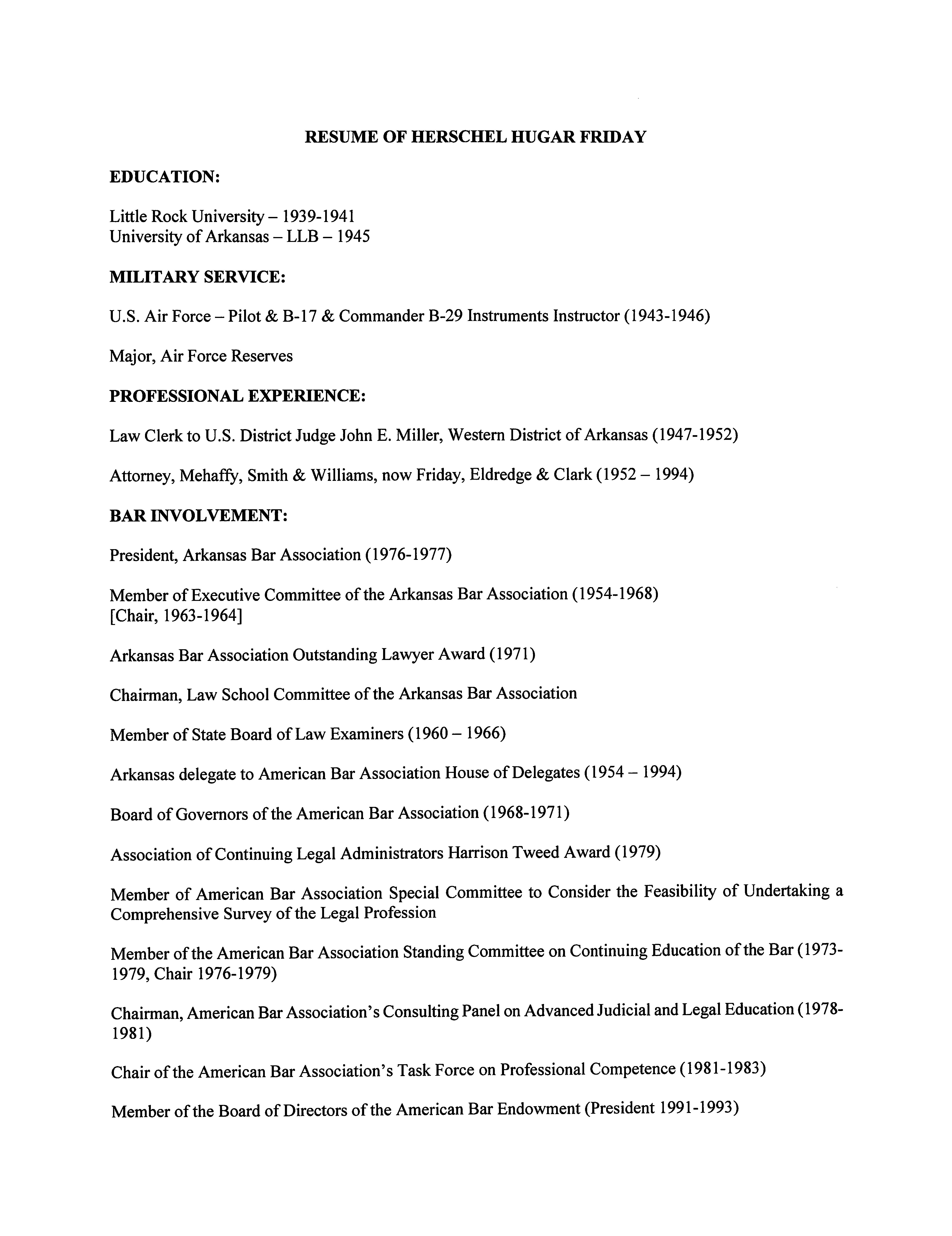
EDUCATION:
Little Rock University- 1939-1941
University of Arkansas-LLB- 1945
MILITARY SERVICE:
U.S. Air Force-Pilot & B-17 & Commander B-29 Instruments Instructor(1943-1946)
Major, Air Force Reserves
PROFESSIONAL EXPERIENCE:
Law Clerk to U.S. District Judge John E. Miller, Western District of Arkansas(1947-1952)
Attorney, Mehaffy, Smith & Williams, now Friday, Eldredge & Clark(1952- 1994)
BAR INVOLVEMENT:
President, Arkansas Bar Association(1976-1977)
Member ofExecutive Committee ofthe Arkansas Bar Association(1954-1968) [Chair, 1963-1964]
Arkansas Bar Association Outstanding Lawyer Award(1971)
Chairman,Law School Committee ofthe Arkansas Bar Association
Member ofState Board ofLaw Examiners(1960- 1966)
Arkansas delegate to American Bar Association House ofDelegates(1954- 1994)
Board ofGovernors ofthe American Bar Association(1968-1971)
Association ofContinuing Legal Administrators Harrison Tweed Award(1979)
Member of American Bar Association Special Committee to Consider the Feasibility of Undertaking a Comprehensive Survey ofthe Legal Profession
Member ofthe American Bar Association Standing Committee on Continuing Education ofthe Bar(19731979,Chair 1976-1979)
Chairman,American Bar Association's Consulting Panel on Advanced Judicial and Legal Education(19781981)
Chair ofthe American Bar Association's Task Force on Professional Competence(1981-1983)
Member ofthe Board of Directors ofthe American Bar Endowment(President 1991-1993)
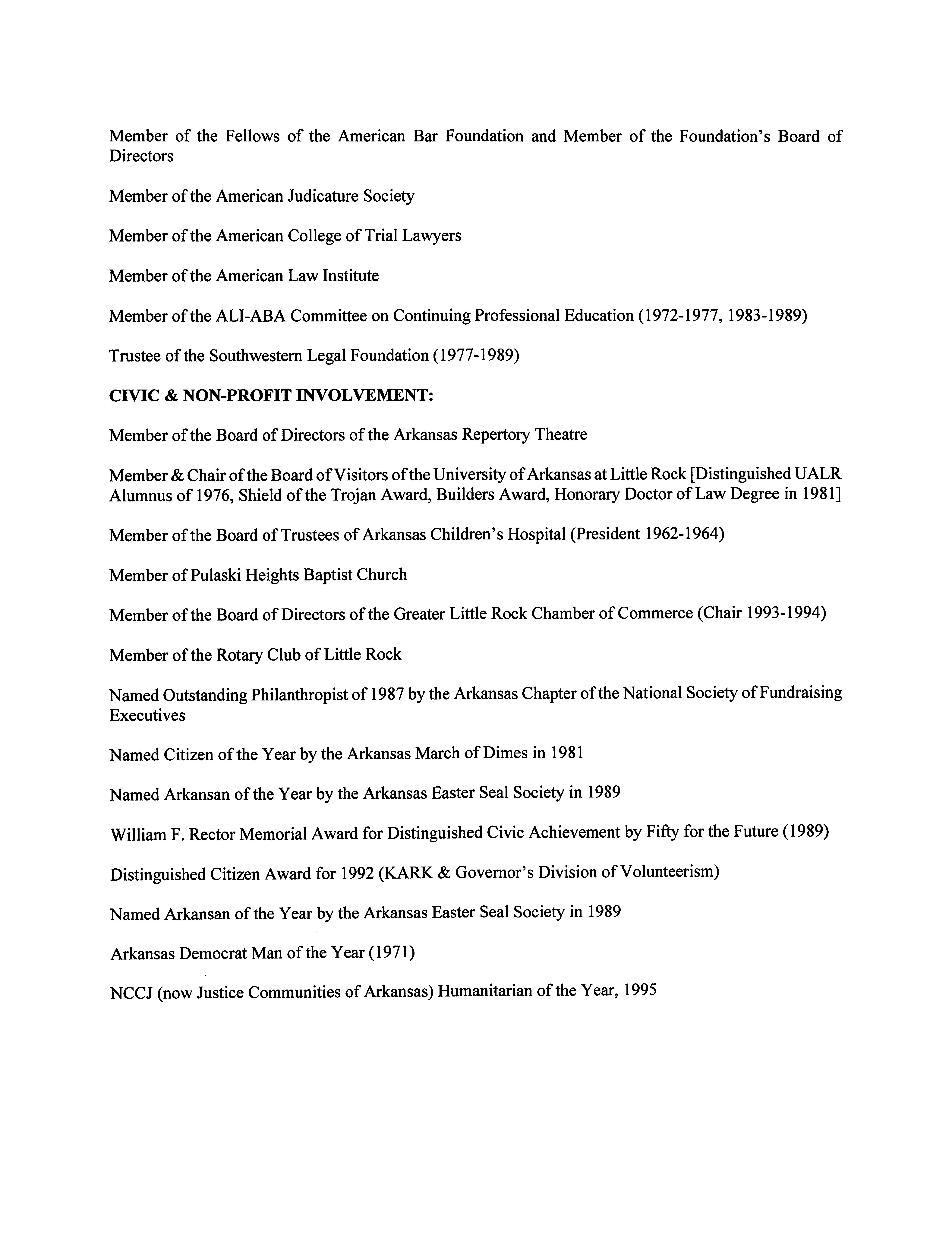
Member of the Fellows of the American Bar Foundation and Member of the Foundation's Board of Directors
Member ofthe American Judicature Society
Member ofthe American College ofTrial Lawyers
Member ofthe American Law Institute
Member ofthe ALI-ABA Committee on Continuing Professional Education(1972-1977, 1983-1989)
Trustee ofthe Southwestern Legal Foundation(1977-1989)
CIVIC & NON-PROFIT INVOLVEMENT:
Member ofthe Board ofDirectors ofthe Arkansas Repertoiy Theatre
Member&Chair ofthe Board ofVisitors ofthe University ofArkansas at Little Rock[Distinguished UALR Alumnus of 1976, Shield ofthe Trojan Award, Builders Award, Honorary Doctor ofLaw Degree in 1981]
Member ofthe Board ofTrustees of Arkansas Children's Hospital(President 1962-1964)
Member ofPulaski Heights Baptist Church
Member ofthe Board ofDirectors ofthe Greater Little Rock Chamber ofCommerce(Chair 1993-1994)
Member ofthe Rotary Club of Little Rock
Named Outstanding Philanthropist of1987 by the Arkansas Chapter ofthe National Society ofFundraising Executives
Named Citizen ofthe Year by the Arkansas March ofDimes in 1981
Named Arkansan ofthe Year by the Arkansas Easter Seal Society in 1989
William F. Rector Memorial Award for Distinguished Civic Achievement by Fifty for the Future(1989)
Distinguished Citizen Award for 1992(KARK & Governor's Division ofVolunteerism)
Named Arkansan ofthe Year by the Arkansas Easter Seal Society in 1989
Arkansas Democrat Man ofthe Year(1971)
NCCJ(now Justice Communities ofArkansas)Humanitarian ofthe Year, 1995
March 16, 2020
VIA Email hof@arkbar.com
Attn: Karen Hutchins
Arkansas Bar Association
Legal Hail of Fame Committee
2224 Cottondale Lane Little Rock, AR 72202
RE: Nomination of Herschel H. Friday for Arkansas Legal Hall ofFame
Dear Karen:
On behalf of the current and past partners of Friday, Eldredge & Clark, I am honored to submit the nomination form for Herschel H. Friday's admission to the Arkansas Bar Association Legal Hall ofFame's initial class. Enclosed you will find the completed nomination form, letters of recommendation, and supplemental information concerning Mr. Friday's contributions to the Bar and the community. We believe that Mr. Friday exemplifies the stated objective ofthe Legal Hall ofFame by honoring Arkansas' greatest lawyers and legends.
Should you or the Committee have any questions or need any additional information, please do not hesitate to contact me.
Cordially yours.
Price C. Gardner
PCG/jry Enclosures
William A. Waddell, Jr.|Attorney
Direct:(501) 370-1510
Fax:(501) 244-5342
E-mail: waddell@fridayfirm.com
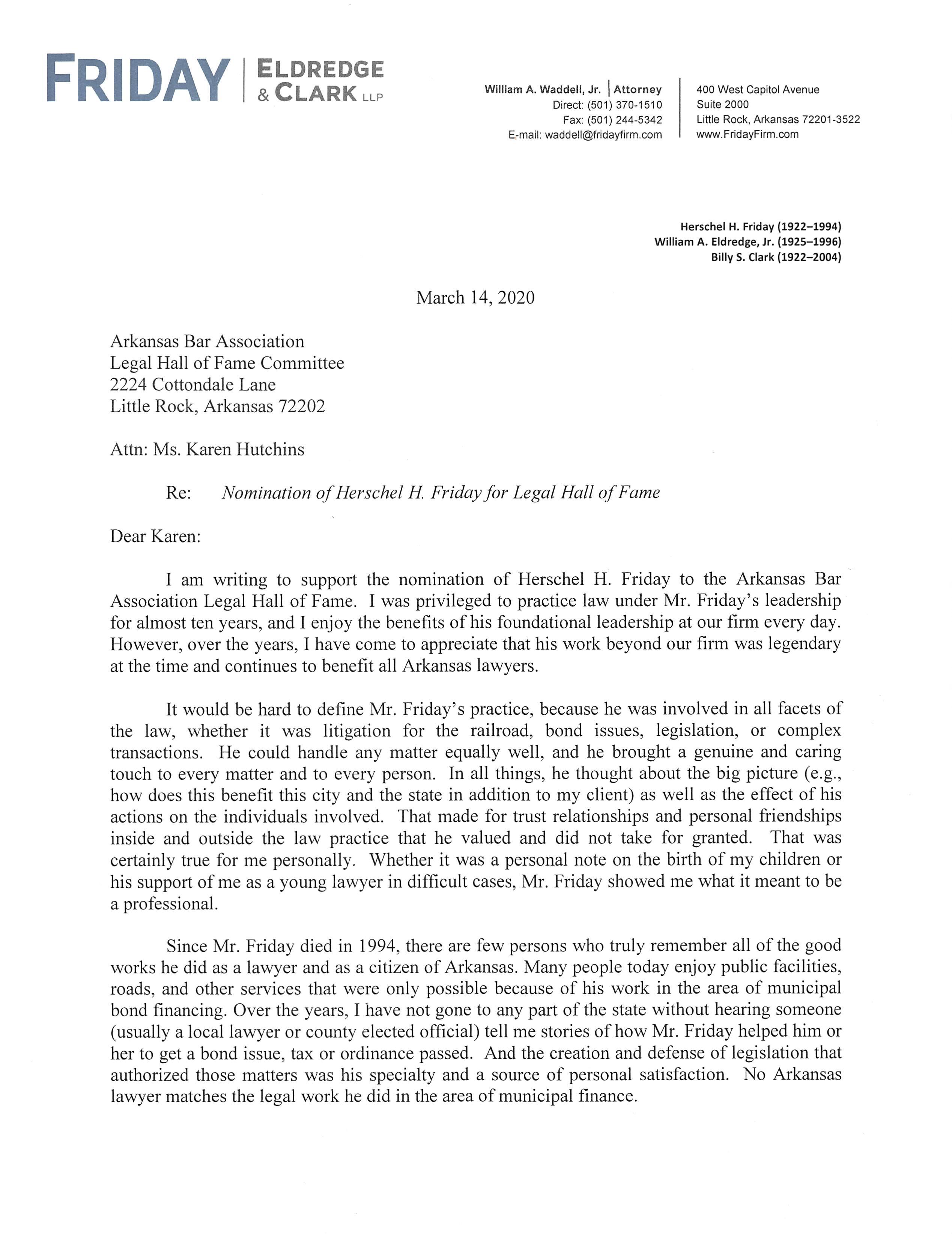
400 West Capitol Avenue Suite 2000 Little Rock, Arkansas 72201-3522
www.FridayFirm.com
Herschel H. Friday(1922-1994) William A. Eldredge, Jr.(1925-1996) Billy S. Clark(1922-2004)
March 14, 2020
Arkansas Bar Association
Legal Hall of Fame Committee
2224 Cottondale Lane
Little Rock, Arkansas 72202
Attn: Ms. Karen Hutchins
Re: Nomination ofHerschel H. Fridayfor Legal Hall ofFame
Dear Karen:
I am writing to support the nomination of Herschel H. Friday to the Arkansas Bar Association Legal Hall of Fame. I was privileged to practice law under Mr. Friday's leadership for almost ten years, and 1 enjoy the benefits of his foundational leadership at our firm every day. However,over the years, I have come to appreciate that his work beyond our firm was legendary at the time and continues to benefit all Arkansas lawyers.
It would be hard to define Mr. Friday's practice, because he was involved in all facets of the law, whether it was litigation for the railroad, bond issues, legislation, or complex transactions. He could handle any matter equally well, and he brought a genuine and caring touch to every matter and to every person. In all things, he thought about the big picture (e.g., how does this benefit this city and the state in addition to my client) as well as the effect of his actions on the individuals involved. That made for trust relationships and personal friendships inside and outside the law practice that he valued and did not take for granted. That was certainly true for me personally. Whether it was a personal note on the birth of my children or his support of me as a young lawyer in difficult cases, Mr. Friday showed me what it meant to be a professional.
Since Mr. Friday died in 1994, there are few persons who truly remember all of the good works he did as a lawyer and as a citizen of Arkansas. Many people today enjoy public facilities, roads, and other services that were only possible because of his work in the area of municipal bond financing. Over the years, I have not gone to any part of the state without hearing someone (usually a local lawyer or county elected official) tell me stories of how Mr. Friday helped him or her to get a bond issue, tax or ordinance passed. And the creation and defense of legislation that authorized those matters was his specialty and a source of personal satisfaction. No Arkansas lawyer matches the legal work he did in the area of municipal finance.
Arkansas Bar Association
Legal Hall of Fame Committee
March 14, 2020
Similarly, his civic and non-profit work was legendary. If he was a part of an organization or a capital campaign, everyone knew it would be successful. Because of his own family, he had a special heart for children with developmental disabilities, but his energy was directed wherever it was most needed, and Arkansas Children's Hospital and the University of Arkansas at Little Rock were greatly benefitted by his efforts.
When I joined the firm, Mr. Friday made it clear that involvement in the bar association was mandatory. The firm's support for the Arkansas Bar Association is still strong because of his influence on many of us. His involvement in the American Bar Association, which is detailed in the resume submitted with his nomination, was inspirational to me and has led to me maintain my American Bar membership for my entire career. It also led to me seeking appointment to the ABA's Standing Committee on Pro Bono & Public Service, and I hear a compliment about Mr. Friday and our firm at nearly every meeting I attend. I and many others continue to enjoy the legacy that he lived.
Near the thirtieth anniversary of Mr. Friday's "almost" nomination to the United States Supreme Court by President Richard Nixon in 1971,1 wrote a three-part series for the firm about his vetting and the events leading up to the decision to appoint someone else. I gathered all of the material I could find from the Nixon archives, including notes of a seven-hour interview of Mr. Friday by John Dean. Those notes and a subsequent telephone conversation with Mr. Dean confirmed what I had always believed. Mr. Friday was an exceptional lawyer and a man of integrity, but he had no ambition for national fame or position. He did not seek the Supreme Court nomination and although disappointed at how he was portrayed as unqualified by some, he was content to continue his work in Arkansas.
Mr. Friday was fulfilled by serving as an exemplary member of the Arkansas bar and by working for the benefit of his firm, his clients and the State of Arkansas. He did so admirably and perhaps without peer. I am therefore pleased to recommend him for the inaugural class of the Legal Hall of Fame.
Sincerely yours. •XJ.V/WAVXJ'
William A. Waddell, Jr.
March 16,2020
Arkansas Bar Association
Legal Hall of Fame Committee
2224 Cottondale Lane Little Rock, Arkansas 72202
Attn: Karen Hutchins
Re: Nomination ofHerschel H Fridayfor Legal Hall ofFame
Dear Karen:
It is with pleasure that I am writing to you in support of the nomination of Herschel H. Friday to the initial elass ofthe Arkansas Bar Association Legal Hall of Fame.
September 10, 1964, was one of the most significant days in my life. It was the day that I joined the law firm of Smith, Williams Friday and Bowen later to become Friday, Eldredge & Clark. It was also the day I met Herschel Friday, who would become a mentor to me for thirty years as well as a role model on how to lead and serve.
Volumes could be written about all that Herschel did, and did splendidly as a lawyer, counselor, friend, supporter and citizen. After fifty years as a member of the firm, and as a practicing lawyer, I knew of no Arkansas lawyer who has contributed more to the practice oflaw and to the welfare ofthe state and community.
Herschel's honors and aeeolades were numerous, yet he aecepted them with his million dollar smile and exceptional humility. Never did I hear him extol his many aeeomplishments.
His countenance and presence were something to behold. I recall several oeeasions when a meeting was being held to resolve differences on legal issues that sometimes became a bit heated prior to Herschel joining the meeting. When Herschel made his entry, the tenor of the meeting was like the world stood still as he calmly took control and quickly helped resolve the differences.
Herschel was a lawyer's lawyer and, while he was known as a bond lawyer, he was capable of taking on most any type of legal challenge including being a very capable litigator. His expertise in the field of bond law resulted in him drafting most of the Arkansas statutes relating to tax-exempt seeurities. Wilbur Mills, who served Arkansas in the United States House of Representatives for thirty-eight years, chaired the powerful House Ways and Means Committee. When Federal legislation was considered from time to time relating to the tax-
March 16,2020 Page 2
exempt bonds, Herschel was called upon to testify before the Committee and was able to influence a great deal of legislation relating to tax-exempt bonds including industrial revenue bonds.
Although he never had any desire to run for public office, Herschel had extensive relationships with politicians and meaningful influence on some oftheir decision making. He had relationships with Presidents Nixon, Carter, Clinton and George W. Bush. He was close to Arkansas senators and congressmen as well as governors from Cherry to Clinton.
The Firm benefitted greatly by Herschel's ability to develop relationships with important clients such as Oaklawn Jockey Club, Dillard's, Union Pacific Railroad, Allied Telephone Company, First Commercial Bank and Southwestem Bell Telephone Company. In addition to being their legal counsel, he served on the Boards of Directors of Oaklawn, Dillard's, Southwestem Bell, First Commercial and Great Lakes Chemical.
Herschel served both American and Arkansas Bar Associations with dignity. He was a member of the American Bar's House of Delegates, Board of Govemors and Executive Committee, the leading arms of that association and served as President of the Arkansas Bar Association. He was known and respected by the leaders ofboth associations and when attending American Bar meetings, it was not imusual to run into an attendee who noticed the name of "Friday, Eldredge & Clark" on my name tag and received the question "How is my friend Herschel?"
Our firm had a very important tax case in the United States Tax Court some years ago before the Honorable Leo Irwin. After the non-jury trial had ended. Judge Irwin inquired of me "How is my fiiend Herschel?" That made for a warm feeling about the possible outcome ofthe case and reflected on Herschel's outreach which in this case was the Judge being on the legal staffofthe House Ways and Means Committee before his appointment to the Court.
Herschel could do just about anything and do it well. He was an avid golfer and tennis player, flew his own airplane, was an excellent hunter and fisherman, was a Sunday school teacher, and had the capacity to comprehend and resolve the most complex ofcrises.
Upon graduation from the University of Arkansas School of Law, Herschel served as a law clerk for Judge John E. Miller, United States District Judge for the Westem District of Arkansas before joining the firm known as Mehaffy, Smith and Williams in 1951. Herschel's forty-three year tenure with the firm was a period of excellence both in leadership and practice and was capped when he became the managing partner in 1977 and led the Friday firm very capably for seventeen years.
His civic activities are too munerous to mention, but one that really stands out was his contribution of time and guidance that enabled the Arkansas Children's Hospital and the Arkansas Children's Colony to become major institutions for the care of sick and handicapped children,such as his son, Steven, who was developmentally disabled.
March 16,2020 Page 3
Herschel Friday was one of a kind, and I believe he is most deserving of the recognition that goes with admission to the Arkansas Bar Association Legal Hall of Fame.
RespectMly submitted.
Byron M. Eiseman
7556465.1
THS: WHITE HOUSE WAS Hf NO TOM October 16* 19T]
MEMORANDUM FORi ATTOimEY GENERAL JOHN N. MITCHELL
FROMi
SUBJECT: /
JOHN D. EHRLICHMAN
JOHN W. DEAN
DAVID R. YOUNG
INTERVIEW WITH HERSCHEL H. FRIDAY
OCTOBER 13, 1971 12:00 7:15 P.M,^ OCTOBER 14, 1971"- 9:45 » )1;30 A. m/
I. Introduction and Summary
We met with Mr, Friday for approximately 7 hours on Wednesday, October I3th, and approximately Z hours on October 14th, The high lights of our conversations arc sot out below. In summary, we found Mr, Friday to be an able lawyer, a fine person of the highest integrity, and a person with a professional background that -- while not without controversy --is fully supportable. In short, he is not a "red neck" but simply a "lawyer" who has represented civil l*ights defendants. The only matter which has given any pause is an inability to articulate his personal beliefs on many of the fundamental social issues of the times,
II. Background
Friday's callcgc-level studies commenced at Little Rock Jr. College 11939-1941) before enlisting in the U.S. Army Air Force in 1943, He became a pilot in 1944 and subsequently a B-17 instructor. He returned to the University of Arkansas in 1945 and completed his law degree in a Z-ycar intensive program. He has completed all but a few hours of his business degree but has no undergraduate degree.
After law school, Friday clerked for five years (1947- 1952) for U. S, Judge Miller in the W,D. of Arkansas, This was perhaps the single most useful experience in his professional life, Friday feels that Judge Miller, Having been a U, S, Congressman and Senator and a task master
by nature, was an cxcolleiit tutor and in many I'espects like a father to him when his own father died in 1947. Friday <fc6CTibed his training under Miller as compi'chenslve and in support furnished a list of the reported cases which ho participated in as Miller's clerk. He said that Miller taught him to think orderly, to be thorough and.to work hard. [MUlcr at 82 still sits occasionally and is well regarded in the legal comrpunity,] }
Friday, during his last year with Miller, taught Federal Jurisdiition and Procedure at the University of Arkansas l^aw School one day a week. In 1952, after turning down three previous offers to join law firms, Friday formed with four other men a firm which has grown to be the largest in Arkansas 15 partners and 11 associates.
Ifl. Finanoial
From the $300 a month which Judge Miller paid him and some 20 acres of land which his father purchased at $100 an acre and left hSm, Friday has accumulated a net worth of over $600,000. (He has furnished his last 12 years of income tax returns to Kohnquist along with a complete net worth statement.) He has never been cited for any tax violations and knows of none. The firm is.likewise clean and has a regular CPA audit.
Friday read through the White House Personal Data Statement and questionnaire on his finances and possible conflicts of interest. He was.confident that he had disclosed everything eitlier in his net worth statement or in the course of our conversation. In this connection he is (a) an employee (Assistant General Attorney) of the Missouri Pacifie Railroad (a client), (b) a director of the Dittle Rock Metropolitan National Bank> which he helped form, and (c) a director of the Allied Telephone OOi
On the question of continuing financial interests, Friday pointed out that the firm had the option of paying him out his $100,000 capital in yearly increments of $10,000 -- but would pay it in a lump sum if nec essary. Me is also entitled to a retirement benefit as a former Assistant General Attorney for the railroad and also from the Air Force Reserve.
mQGmmnEi norsehal Hogar Priday
STYLE m WiirDH PIIII^CIPAL VOCATIOJ^ LISTED: Attorney
PLAdC or ElOTIi: Lookeoburg, Aa^kansas DATE OF UIKTH; February 10, 1822
FATHEIPS NAME: Jierschel Hugar Friday, Sr. (deeoaOcd).
MOTIIEIFS MAIDEN NAME: Rosa Lee Scarborough
EDUr;ATION: J4tlJo Rock University - 1939 - 1941; University oi Arkansas - LL& - 1947 OD subsequently awarded); University of Minnesota - 1943 (Air Force Program)
MAI^RiED: Infancy Elizabeth Hahnnett DATE OF MARRmGE; February 26, 1943
CHILDREN; Gregoiy David, February 21, 1946; Steven Herschel, March 21, 1948; Pamola, February 27, 1953,
low Clerk to U. Jiidgo John E. Miller, Western District,Arkansas, July, 1947 - Juno, 1952, Fort Smith, Arkansas.
lecturer in law - Uhtversity of Arkansas, '^Federal Procedure" 1951-1952, 'FaycttcvlJle, Arkansas
In private practice with Smith, Williams, Friday, Eldredge 5s Clark and pro-^ decessor firms from 1952 to date. Little Rock, Arkansas.
PRINCIPAL PROFESSIONAL OR BUSmESS ACTIVITIES
Arkansas Dolegatc to House of Delegates of the American Bar Association 1954 10 1968.
Board of Governors of the American Bar AssociaiiDn, 1968 to 1971.
Member of the Executive Committee of the Arkansas Bar Association1954-1968.
Chairman of the j^ecutive Goraralttee of the Arkansas Bar Association* for the year 1963-1964
Member of the State Boaid of Law Examiners - January, 1960 through January, 1966,
Principal Profosfiional or Businp.'^r* ActivJtte.q, conHnu^d
Porjner member of Committee on Bill of Aiglus of the American Bar-Association Member of Special Committee to Consider the Foftsibilily of Undertaking a Comprehensive Survey of Iho Legal Profession (American Bar AssGciation) Member of Fellows of the American Bar roundation
Member of Anverlcan ludicature Society
American CoUogo of Trial Lawyers > ''AFFILIATXONS
Member Pulaski Heights Baptist Church
Member of Board of Trustees of Arkansas Children's Hospital, 1955 to date
President, Board of Trustees, Arkansas Cliildrcn's Hospital, 1962 - 1964
President, Arkansas Association for Retarded Children, 1967
President, Exchanc/e Club of Little Rock, 1955 - 1956
Member, Boeurd of Directors, Metropolitan National Bank, 1970 to date Member, Board of Directors, Allied telephone Company, 1971 to date .President, Pleasant Valloy Country Club (formerly Riverdale Country Club) Little Rock, Arkansas, 1964-1965
World War II 1943-1946 - served in Training Command, Pilot Instruments Instructor D-17 and Commander B-29
Major, Air Force Reserves, having completed in excess of 20 years''service (of which approximately 3 years were active duty and the balance reserve duty)
An article entitled "Nonage'Marriages in Arkansas" appearing in Volume I, Arkansas Law Review, 1946-47
An article co-authored with Ed Bethel! entitled "The Federal Judicial Code of 1948" appearing in Volume 3, Arkansas law Review, 1948-49
An article entitled "Trials in the Federal Court" appearing In Volume 4, Arkansas Law Review, 1943-50
Treatise publishod in 1953 by Arkansas Bar Association - "Now Discovery and Appeal Procedure in Circuit, Chancery and Probate Courts of the State .of Ai'kansas."
STOUFfCR MAVaOWgR HOTEL
]127 coNNgcncur avenue, n.w.
WASHINGTON.DC 20036. USA
TEIEPHCNE 1 (202) 347.3000 PAX 1 1202} 466-9083
DATE: 31 a / '\Jir
TELEPHONE NUMBER/EXTENSION: ( - 3ooo , NUMBER OFPAGESINCLUDING COVER: If all pages are not accounted for, please contact the Concierge's Desk at the Stouffer Mayflower Hotel;(202)347-3000.
COMMENTS:
"MtrfirktV ^'^ve-JL iV U«J , +• v/c 3-.K..» »I.U..'. •Jr,nr+^,U,„, ->1. ^ ,..* .... +.. , h X,, «-.-, 'a •/!- fiik,-,Mi. +«- I , , - h. ).4U /V Un, ^ <«^«. C„^+. -Ht kfSM^ 4t,Jt .1 ,. J W 4v%, Vc w-io O/t/ , V« V . W rcx,,«f;i.);4,ey +. (rtvt l».v» >«,<|L +, .„ilv >t \ r-H.e dkc )w ;x +. C-»rrJe.i. r« r«r.f iki Ilivtx '"t^f W t-. «.^t .W,>^r, kt iuji s^ r tkti-t H/>r Aiv«^ ft J--.n.«,. uv^ ,.i„, ^ W»/ ,«V kii d«,V« J. I , ■>(, ^ ^ 4.,^ over. i r«.cill i.t»«c;»HM !_• u . ' "»".5 Ot.t -hi^e HvJC u/>r vi..X. X w,. .v..
> M <• ^ >rf«»<^njL tilt o»V Vkt i®V S"*fct * I • ^ ' 'tJsiS IaAX fv am# t <fw e,u.rft ; IvV Mvt. •,„,..H.V ,,.vc „ ,.^ I'WI., ^
H\»fL Vtlv^blt. '^XS 2/NV4 P>/\l.*r C 1 41 fttt Xt A«vtrie>.s 8,^ ^ w /.vt^
a/V^ JlH^ ^♦^"'^VlUcJL ^9 fti'^t, 'Ht Ul«u)^ rvg-t*
Voict V u»w-4. JV ii -t+eriNci/w 'Ht JusV W^+ OK
^t^ickc\ a Ci-K

I- IM„„ , ti,* , 'aA. l.*/^
University of Arkansas at Little Rock Law Review
Volume 17 I Issue 1 Article 1 1994
Dedication: Herschel Hugar Friday
Howard B. Eisenberg
Follow this and additional works at: https://lawrepository.ualr.edu/lawreview &Part ofthe Law Commons
Recommended Citation Howard B. Eisenberg, Dedication:Herschei Hugar Friday,17 U. Ark. Little Rock L. Rev. xi(1994). Available at: https://lawrepository.ualr.edU/lawreview/vol17/iss1/1
This Dedication is brought to you for free and open access by Bowen Law Repository;Scholarship & Archives. It has been accepted for inclusion in University of Arkansas at Little Rock Law Review by an authorized editor of Bowen Law Repository:Scholarship & Archives. For more information, please contact mmserfass@ualr.edu.
Herschel H. Friday died on March 1, 1994 when the plane he was piloting crashed upon landing at his Faulkner County home. At the time of his death, Mr. Friday was the senior and managing partner of the largest law firm in the State, Friday, Eldredge & Clark. Mr. Friday graduated from Little Rock Junior College, a predecessor of UALR, and the University of Arkansas School of Law. He was 72 years old.
These are the basic facts, but they fail to explain why the death of Herschel Friday was such a profound loss to the profession and, indeed, to the entire State of Arkansas. Some people who did not know Herschel Friday may assume that the outpouring of sympathy and tributes following his death simply reflects the fact that Mr. Friday represented powerful interests in this State. These are the people who did not know Herschel Friday. To be sure, Mr. Friday represented powerful and important clients—the Little Rock School District, the Union Pacific Company, and the Oaklawn Jockey Club, to name just three. But that is not why the local newspaper was filled with tributes following his death or why a column about Mr. Friday was written in the New York Times following his death.
Herschel Friday was quite simply a person of extraordinary decency, compassion, and kindness. I never saw him ruffled, angry, or discourteous. Even those people who opposed his clients' interest could find nothing uncomplimentary to say about Mr. Friday, other than that he aggressively represented his clients, hardly an insult for an attorney.
The dedication of the Herschel H. Friday Courtroom in our law school fewer than six months before his death was just the latest in a legion of honors Herschel Friday received. He received awards from Children's Hospital, the March of Dimes, and Easter Seals. He received an honorary degree from our law school and virtually every humanitarian and philanthropic award given in Ar kansas. After his death, a railroad spur in eastern Arkansas was named in his memory by the Union Paciric Railroad.
Herschel Friday represented the Little Rock School District in the original desegregation law suits. It is likely that his representation of the School District cost him an appointment to the United States Supreme Court. However, when I talked to people who opposed Mr. Friday's possible Supreme Court appointment because of his representation of the School District, not one person could find
anything negative to say about what Herschel had done, other than that he aggressively represented his client. There was no suggestion of improper conduct, racism, or other impropriety on his part. I reflected on some people's perception of Herschel's attitudes when he would call me, privately, but regularly, to ask how the African American students were doing in our law school. We shared a commitment to making legal education available to black Arkansans, and he quietly helped us to achieve that goal. He asked me about enrollment, attrition, and, yes, he wanted to make certain that we referred the best students to his Hrm for clerkships and possible employment. At the time of the Courtroom dedication I asked Mr. Friday about his possible appointment to the Supreme Court and if he was disappointed that he was not nominated to the Court. He smiled and said, "It all worked out for the best." There was no bitterness or anger, just his gentle humor and kindness.
Mr. Friday served on the boards of various corporations in cluding the First Commercial Bank, Dillards Department Stores, Southwestern Bell, and the Great Lakes Chemical Corporation. In deed, he was flying home from a meeting of the Great Lakes board when he was killed. He also served on the board of Children's Hospital for more than 40 years. He was a former president of the Arkansas Association for Retarded Children. He was the chairman of the Chamber of Commerce and chair of the UALR Board of Visitors.
There are few attorneys nationally who devoted themselves to the profession as did Herschel Friday. He was a former president and chair of the Executive Committee of the Arkansas Bar. He was a member of the House of Delegates of the American Bar Association at the time of his death and had previously served on the A.B.A. Board of Governors, and many A.B.A. committees, most dealing with professional ethics, competence, and continuing education. He was chairman of the Board of Directors of the American Bar Endowment, and was a fellow of the American Law Institute, the American Bar Foundation, the American Judicature Society, and the American College of Trial Lawyers. He received many profes sional awards, including the State Bar's Humanitarian of the Year Award which was accepted by Beth Friday at the Annual Meeting of the Arkansas Bar in June 1994.
Legal education was a special interest for Herschel Friday. He was truly one of the "godfathers" of our law school. It was through his efforts, along with others, that the state legislature was persuaded to establish a separate law school in Little Rock.
He chaired our fund raising campaign in 1992 and 1993, and was personally generous with his time and resources for the law
school. This law school had no greater friend than Herschel Friday. However, his dedication to legal education did not stop at UALR. He taught at the University of Arkansas Law School in Fayetteville in the early 1950*s, he chaired the State Bar*s Law School Committee, and he was committed to Arkansas having two strong and wellfunded schools of law.
Herschel Friday was at a stage in his life and career when he could have walked away from the children, the disadvantaged, the disabled, and the minorities within our community—but he never did. He was generous with his money, his time, and his energy. In addition, he was self deprecating and uncomfortable with tributes. Although we moved into our new building in August 1992, it was not until October of 1993 that we dedicated the Friday Courtroom because Herschel was uncomfortable with the honor. Although he and his clients had been exceedingly generous to the law school and UALR, he told me repeatedly that honoring him was not necessary. It was only when his firm and clients requested such an honor that Herschel acquiesced. The one solace we had following his death was that he fins^y did allow us to dedicate the Friday Courtroom in October 1993.
Herschel Friday did not make it to the United States Supreme Court, but Arkansas is the better for it. The true measure of a person is what remains after his passing, and there are many tes taments to the life and work of Herschel Friday. Children's Hospital, the North Little Rock yards of the Union Pacific, our law school, his law Hrm, the Oaklawn race track in Hot Springs, the legislation he drafted and shepherded through the state legislature, and the many Arkansans he touched directly and indirectly are just a few of Mr. Friday's legacies to the profession and State of Arkansas.
Mr. Friday is survived by his wife, Beth, two sons, and four grandchildren to whom we extend our sincere sympathy and love. We are proud to dedicate this issue of the UALR Law Journal to the memory of Herschel H. Friday, an honorary alumnus, a great lawyer, a distinguished Arkansan, and an outstanding individual.
Howard B. Bisenbero Dean and Professor of Law
SUNDAY, APRILS, 1994
BY DAVID MARGOLICK N6w Yolk Times News Service
MAYFLOWER — In 1971, when President Richard Nixon seemed poised to place Herschel Friday on the Supreme Court,a local civil rights lawyer, Philip Kaplan, called Friday fthe wrong man for the wrong job at the wrong time."
' As a prominent Arkansas lawyer,Friday in the late 1950s had represented the long-seg regated school districts of Lit tle Rock and several other ■towns in the state during efforts to get them to accept black stu dents, and Kaplan had not for gotten.
Last month, after Friday was killed in the crash ofhis private biane near his home here, Ka plan was among the 1,400 mourners at his funeral. The ceremony was but one part of a community's extraordinary farewell to a much-loved, in variably smiling man who prac ticed law in Little Rock for al most 50 years.
Over the last 23 of them during which Friday saw Ka plan regularly around town but never mentioned his criticism — Kaplan came to reassess Fri day.
"I grew to know him better," Kaplan said. "I learned he was a very gracious, wonderful man, a person who was very giving of his time and his resources, a leader of a profession I love, a man who set an example for kindness and gentility in an age where they're not always at a
premium."
Friday's death, at 72, brought condolences from President Clinton and was front-page news in the Arkansas DemocratGazette. The newspaper was filled for days afterward with large — in some cases, full-page — paid tributes that noted not only that he had built Arkansas' largest law firm and headed the state bar association but also that he was perhaps the state's leading citizen.
Friday had devoted himself to every charity from the Arkansas Repertory Theater to the Arkansas Association for Retarded Children, ofwhich he was president. To tlie Arkansas Easter Seal Society, he was Arkansan of the Year in 1989.
But outside Arkansas, Friday will always be just an "almost" in American judicial history. Like Webb Hubbell and Vincent Foster a generation later, he thrived in a little pond called Little Rock, only to drown out of town.
In October 1971, with Hugo Black dead and John Marshall Harlan dying, the Nixon ad ministration went looking for two conservative and uncontroversi'aJ Supreme Court nomi nees, one from the South.
Attorney General John Mitchell suggested Friday, a De mocrat. Years earlier the two had bonded over their bond practices, and they had resumed their friendship that summer during a long cab ride at the American Bar Association con vention in London.
Friday had an additional ally in Martha Mitchell, the attorney general's famously outspoken
wife, a proud native of Pine Bluff.
Forty-nine years old, rearing three children, busy building Friday, Eldredge & Clark —a firm even now far more politi cally connected than the Rose Law Finn — Friday was flab bergasted by Mitchell's interest.
But when history and coun try call, who can say no, or will want to ask many questions? Into the valley ofdeath marched Friday.
The FBI came to Little Rock to check him out. So did the White House counsel, John Dean. And Friday — who along with Mildred Lillie, a Califor nia appeals judge, topped the list ofsix candidates for the two seats — went to Washington, where he was interviewed by an assistant attorney general named Wiliiara Rehnquist.
Nixon's list came in for plen ty ofridicule — the Chicago SimTimes called the candidates "Lilliputians" — and Friday took more than his share.
James Youngdahl of the Arkansas AFL-CIO called, him "the smiling face of the old Faubus crowd," a reference to Gov. Orva! Faubus, who 14 years earlier had called out the Na tional Guard in an effort to keep black students out of Central High School in Little Hock.
Then as now, Friday's friends decried that characterization as an injustice, saying that as coun sel for the school district he had done all he could in his quietly persuasive way to foster deseg regation, not thwart it.
Mitchell assured Friday that his way was clear. The attorney general was apparently un aware that his White House ri val, the presidential adviser John D. Ehrlichinan, was push ing his own candidate, Lewis Powell Jr.
Ehrlichman's case was ad vanced by Dean's review ofFri day; a fine man and lawyer, but so unlettered in constitutional law that "we would take a beat ing trying to get him confirmed."
Then the ABA screening com mittee split badly over Friday's qualifications. Some ofthose in volved still feel he was not up to the job; others, like J-ames Menire ofMemphis, blame East ern establishment bias.
"They couldn't believe, that someone like Herschel Friday — a name right out of Dickens —from Little Rock, Ark., would be nominated for the Supreme Court oftlie United States;" said See FRIDAY, Page.14A
# Continued from Page 13A
Menire."They were trying to get a more uptown lawyer."
Nixon was to announce his nominations on the evening of Oct 21, and Friday was told to expect a phone call from the White House shortly before hand. Friends gathered in the Friday home for what everyone thought would be a celebration. Reporters milled on the front lawn.
The phone rang, and it was Mitchell
"This is the hardest tele phone call I will ever have to make, I guess," he told Friday. When Friday hung up,his guests shouted: "What happened? What happened?"
"And he said, Tt didn't turn out the way we thought,' " his widow,Beth Friday,recalled in an interview."He had on his face his little smile that I knew meant that he was very hurt."
Moments later, Nixon named
Powell and Hehnquist to the two seats.
According to Beth Friday, her husband ultimately had few regrets. Most people forgot aboutthe episode,and that was fine with him.
But last fall, when the law school at the University of Arkansas at Little Rock pro posed to name its moot court room for him,some of the old questions about his civil rights record resurfaced. The school went ahead with the honor af ter some digging by the dean, Howard Eisenberg.
'
"The more I investigated Herschel's background,the more I was certain that naming the courtroom in his honor was ab solutely the appropriate thing to do," he wrote Beth Friday af ter the funeral.
"I honestly do not know if I would have agreed with the opinions Justice Herschel Fri day would have written,butI do know that there is no person who would have had greater in tegrity, honest^'and kindness on that Court."
When Herschei Friday died,fewrpeople outside Arkansas noticed.It might have been different.
Mayflower,Ark.
In 1971,when President Richard M. Nixon seemed poised to place Her schei Friday on the Supreme Court,a local civil rights lawyer,Philip Kap lan.called Mr,Friday "the wrong man for the wrong Job at the wrong time." Asa prominent Arkansas law yer,Mr,Friday,in the late 1950's,had represented this school districts of Little Rock and several other towns that resisted the pace of desegrega tion,and Mr.Kaplan had not forgot ten.
Last month,after Mr,Friday was killed in the crash of his private plane near his home here, Mr.Kaplan was among the 1,400 mourners at his fu neral.The ceremony was but one part of a community's extraordin.iry fare well to a man who practiced law in Little Rock for almost 50 years.Over the last 23 of them — a period when Mr,Friday saw Mr.Kaplan regularly around town but never mentioned his criticism — Mr,Kaplan came to re assess Herschei Friday.
"1 grew to know him better," Mr. Kaplan said.''I learned he wasa very gracious,wonderful man,a person who was very giving of his time and his resources,a leader of a profession I love,a man who set an example tor kindness and gentility in an age where they're not always at a pre mium."
Mr.Friday's death,at 72,brought condolences from President Clinton and wasfront-page news in The Arkansas Democrat-Gazette,The news• paper wasfilled for days afterward With large — in some cases,full-page — paid tributes that noted not only that he had built Arkansas's largest law firm and headed the state bar as sociation but also that he was per haps the state's leading citizen. Mr. Friday had devoted himself toevery charity from the Arkansas Repertory Theater to the Arkansas Association for Retarded Children,of which he was president.To the Arkansas Eas ter Sea!Society,he was Arkansan of the Year in 1989, But outside Arkansas. Mr. Friday will always be Just an "almost" in American Judicial history. Like Web ster L. Hubbell and Vincent W.Foster J r.a generation later,he thrived in a little pond called Little Rock,only to drown out of town.
In October 1971,with Hugo L.Black dead and John Marshall Harlan dy ing,the Nixon Administration went looking for two conservative and uncontroversial Supreme Court nomi nees,onefrom the South. Attorney Genera!John N.Mitchell suggested Mr.Friday,a Democrat Years earli er ttw two had become friends through their bond practices,and they had resumed their friendship thatsummer during a long cab ride at the American Bar Association con vention in London,Mr. Friday had another ally In Martha Mitchell,the Attorney General'sfamously outspo ken wife,a proud native of Pine Bluff, Ark. Forty-nine,years old,rearing three children,busy building Friday,Eldredge & Clark --a firm even now far more politically connected than the Rose Law Firm — Mr.Friday was flabbergasted by Mr. Mitchell's Inter est. But when history and country call, who can say no,or will want to ask many questions? Into the valley of death rode Mr.Friday.
The F.B.l.came to Little Rock to check him out.So did the White House counsel,John Dean.And Mr.Friday — who along with Mildred Litlie.a California appeals judge,topped the list of six candidatesfor the two seats —wentto Washington,where he was interviewed by an Assistant Attorney General named William H.Rchnqulsi.
Mr.Nixon's list came in lor piemy of ridicule — The Chicago Sun-Times called the candidates"Lilliputians" — and Mr. Friday took more than his share. James Youngdahl of the Ar kansas A.F.L.-C1.0.called him "the smiling face of the old Faubus crowd." a reference to Gov.Orval Faubus,who 14 years earlier had called out the National Guard in an effort to keep black students out of Central High School In Uttle Rock. Then as now, Mr.Friday's friends de cried that characterizatkm as an in justice.saying that as counsel for the school district he had done all he could in his quietly persuasive way to foster desegregation,not thwart IL
Mr.Mitchell assured Mr.Friday that his way was clear.The Attorney General was apparently unaware that his White House rival,the Presi dential adviser John D.Ehrlichman, was pushing his own candidate,Lewis F.Powell Jr. Mr.Ehrlichman's case was advanced by Mr,Dean's review of Mr.Friday; a fine man and lawyer, butso unlettered in constitutional lew (hat"we would take a beating trying to get him confirmed."
Then the A.B.A.screening commit tee split badly over Mr.Friday's qualifications.Some of those involved still feel he was not up to the job; oth ers,like James Mcnire of Memjgtis. blame Eastern Establishment bias. "They couldn't believe that some one tike Herschei Friday — a name right out of Dickens — Irom Litlie Rock.Ark.,would be nominaied for the Supreme Court of the United States," said Mr.Menire."They were trying to geta more uptown lawyer."
Mr.Nixon was to announce his nominationson the evening of OcL 21, and Mr.Friday was told to expecta phone call from the White House shortly beforehand.Friends gathered in the Friday homefor what everyone thought would be a celebration. Re porters milled on the front lawn. The phone rang,and it was Mr. Mitchell."This is ihehardest tele phone call I will ever have to make,1 guess," he told Mr. Friday. When Mr. Friday hung up.his guests shouted; "What happened? What happened?"
"And he said,'11 didn't turn out the way we thought,'"his widow,Beth Friday,recalled in an interview."He had on his face his little smile that I knew meant that he was very hurt." Moments later, Mr.Nixon named Mr.Powell and Mr.Rehnquist to the twoseats.
According to Mrs.Friday,her hus band ultimately had few regreu. Most people forgot about the episode, and that was fine with him. But last fall, when the law school at the Uni versity of Arkansas at Little Rock proposed to name Its mootcourtroom for him,some of the old questions about his school-district representa tion surfaced again.The taw school went ahead with the honor after some digging by the dean,Howard Etsenberg.
"The more I Investigated HerBchel's background,the more I was certain that naming the courtroom In his honor was absolutely the appro priate thing to do," he wrote Mrs.Fri day after the funeral."1 honestly do not know if I would have agreed with the opinions Justice Herschei Friday would have written,but I do know that there is no person who would have had greater integrity,honesty and kindness on that ^urt."
General Questions:
1. Name and contact information of the person submitting this nomination:
Name: William A. Waddell, Jr.
Address: 400 West Capitol Avenue, Suite 2000 Little Rock, Arkansas 72201
Phone: (501) 370-1510
Email: waddell@fridayfirm.com
2. Name of the person, group, organization or event being nominated: Scipio Africanus Jones
3. Contact information of the nominee (if applicable). If the nominee is deceased, please list living next of kin or other possible representative of the nominee if known: Nominee is deceased. I am not aware who may be his next of kin.
4. Concise statement regarding the nominee's connection to the State of Arkansas: Scipio Africanus Jones was a lawyer licensed to practice in the State of Arkansas. See the additional information at https://encyclopediaofarkansas.net/entries/scipio-africanus-jones-2427/, http://arkansasblacklawyers.uark.edu/lawyers/sajones.html, and https://aaregistry.org/story/lawyer-and-activist-scipio-jones/.
Questions Applicable to Individuals:
1. Birthdate: https: August 28, 1863
2. Birthplace: Tulip, Arkansas
3. Date of Death (if applicable): March 28, 1943
4. Residence at Death (if applicable): Little Rock, Arkansas
Required Attachments (use separate pages or include in separate files):
1. A general statement of why the nominee should be in the Hall of Fame (not to exceed 750 words); Scipio Africanus Jones was an exemplary Arkansas lawyer by the standards of any day but particularly for the Jim Crow era. I have attached the article I wrote for the Fall 1919 edition of the Arkansas Lawyer that details his extraordinary legal work across a wide spectrum of cases. As I indicate in the article, the number and quality of work illustrated by the reported decisions in Mr. Jones’ cases would be noteworthy today. In his day, the substantive issues of law he addressed and his success as a lawyer placed him in the upper echelon of all lawyers. His work on behalf of the nine African Americans condemned to death after the Elaine Massacre of 1919 makes him worthy of inclusion in the Arkansas Bar Association Hall of Fame, but I nominate him primarily for his professionalism and dedication to making the rule of law a reality for all people.
General Questions:
1. Name and contact information of the person submitting this nomination:
Name: Address:
Phone:
Email: Carter C. Stein McMath Woods P.A. 711 W. 3rd St. Little Rock, AR 72201 501-396-5409 carter@mcmathlaw.com
2. Name of the person, group, organization or event being nominated: Governor Sidney Sanders McMath
3. Contact information of the nominee (if applicable). If the nominee is deceased, please list living next of kin or other possible representative of the nominee if known: Phillip McMath, phillip@mcmathlaw.com, 501-580-8990; Bruce McMath, bruce@mcmathlaw.com, 501-681-5403; Sandy McMath, sandymcmath@aol.com
4. Concise statement regarding the nominee's connection to the State of Arkansas: Sid McMath served as Governor of Arkansas for four years beginning in 1949. After leaving the Governor's mansion in January 1953, McMath, along with Henry Woods and Leland Leatherman, founded the Little Rock law firm which is currently McMath Woods.
Questions Applicable to Individuals:
1. Birthdate: June 14, 1912
2. Birthplace: Columbia County, Arkansas near Magnolia
3. Date of Death (if applicable): October 4, 2003
4. Residence at Death (if applicable): Little Rock, Arkansas
Required Attachments (use separate pages or include in separate files):
1. A general statement of why the nominee should be in the Hall of Fame (not to exceed 750 words);
2. A resume or vita of the nominee (if available); and
3. Up to two (2) letters of recommendation
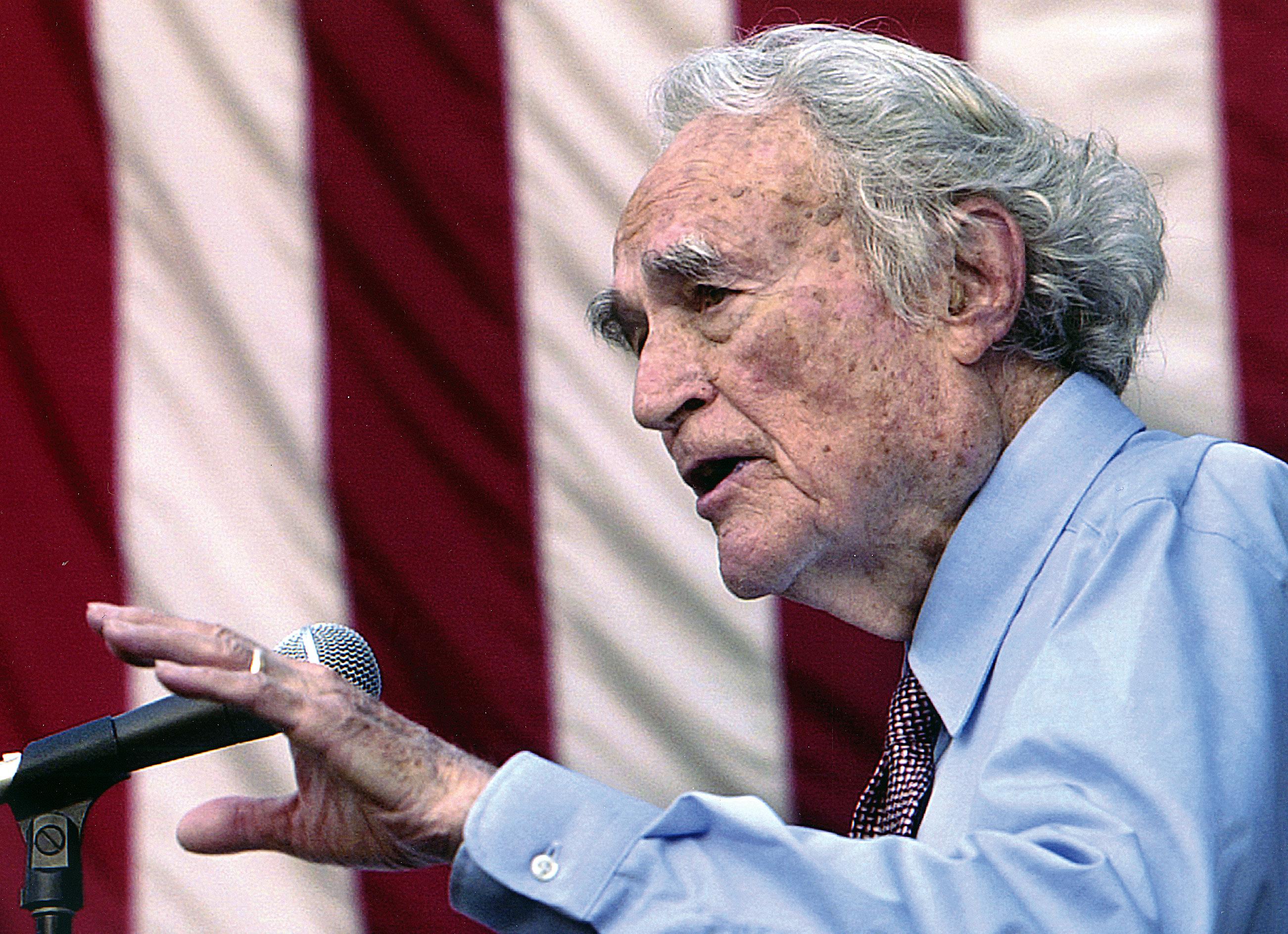
One hundred years ago, June 14, 1912, Sidney Sanders McMath was born in a dogtrot log cabin—yes, really!, a log cabin—on a hardscrabble farm in Columbia County, near the Louisiana border. He picked cotton as a boy and moved by muddy roads from one destitute community to another with his alcoholic father “Pap” and his mother and sister, until his father took up barbering and settled at Hot Springs. The hardship and dislocation he experienced everywhere as a youngster, along with all the family sorrows, infused in him a zeal to improve the lives of people, especially in the blighted Arkansas countryside. As a student and a Marine, he saw that things were better nearly everywhere else than in rural Arkansas. The passion to serve people would guide him in heroic pursuits on the battlefields of the Pacific, in the “GI Revolt” against the political machines after the war, in four momentous years as governor, and as the founder and patriarch of what he called a “people’s law firm,” which for the next 60 years represented nothing and no one but ordinary people in their quest for safety and justice in the workplace, equal services in the public realm, and protection of the land, air, water and natural resources that are the gifts to all people.

Text by Ernest Dumas
When he returns to his own community from the war and finds his own people deprived of their right to vote, when he discovers that their lives and liberties are not secure, when it is threatened that if he exercises the right of citizenship and runs for public office without the consent of the political boss . . . what is his reaction?
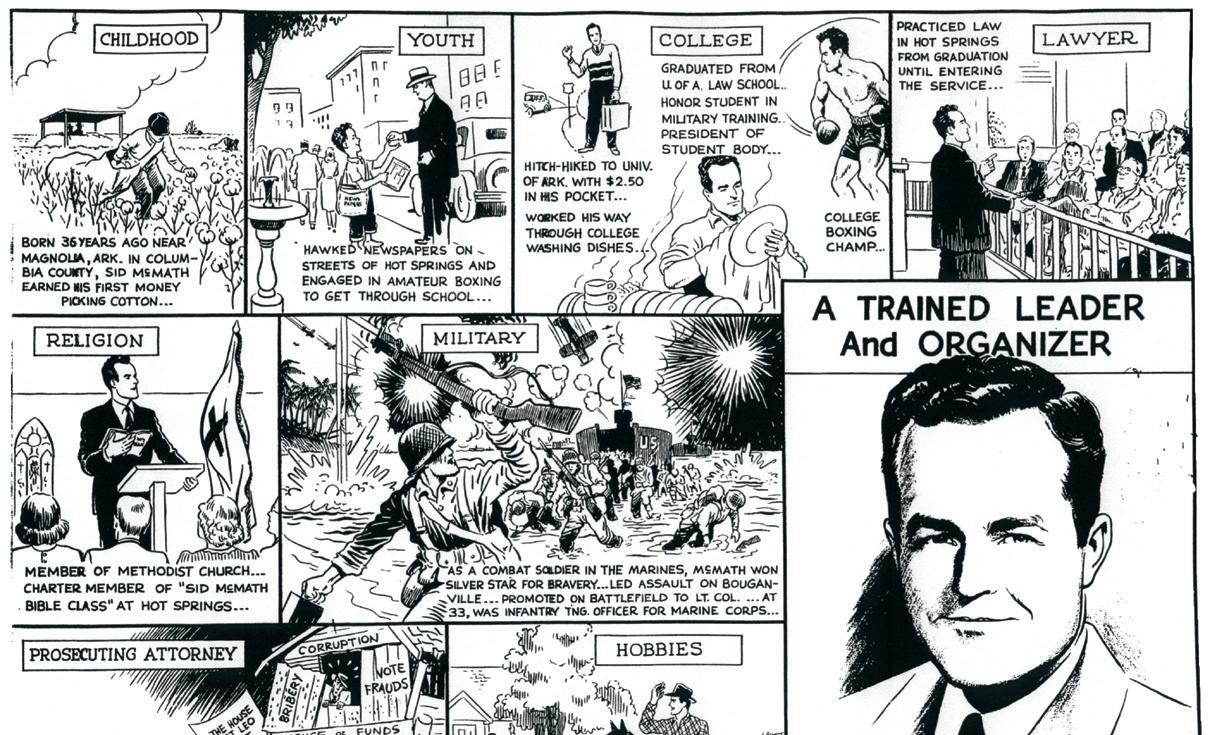

For Sidney Sanders McMath, like millions who fought in World War II and came home, the war altered his destiny and defined him for the rest of his life. McMath always thought of himself first not as Governor Sid McMath but as Marine Lt. Col. McMath or, later, Maj. Gen. McMath of the Marine Reserves.
He was proud of his decorations for heroism in the crucial battles in the Pacific at Bougainville and Guadalcanal, where he engaged in some of the bloodiest fighting of the war, though he seldom mentioned the medals. The war remained always the high point of what he thought was a life of service even if it included only six years in public offices.
More than that, the experiences of war—both the horrors and the thrill of it—planted the seeds of ambition, to be a hero back home as well as in war by raising up people in his still depressed state. It invested him after the war with the boldness to take on the riskiest tasks in politics, including those that in fairly short order ended his political career.
The war brought the want of his childhood and the hardships of nearly everyone he knew into sharp relief and sent him home with determination to fix things that the state’s leaders for a century had left unattended. Even in peace and comfort, they had not led.
McMath began life in a tiny log cabin on the edge of a cotton field in southern Columbia County farmed by his grandmother, “Mother Mae” McMath. His grandfather Sid, the sheriff, had been gunned down the year before when he tried to arrest some outlaws. Young Sid’s father, Hal, his mother, Nettie Belle, and his sister, Edyth Mae, worked on Mother Mae’s little farm and Hal found odd jobs in nearby communities. When Sid was five the family left the dogtrot house and wandered around the county, to Walker, Bussey, Taylor, or wherever Hal could find makeshift labor. For a while after the big Shuler and Smackover field booms, they drifted into neighboring Union County where Hal and his team of horses dug oil pits. But always they
moved on, to something else equally unpromising.
In his memoir, Promises Kept, which he wrote and dictated in the two years before his death in 2003, McMath recalled details of the deprivation and backwardness of rural South Arkansas. When he and his sister at the ages of 10 and 12 were brought to Hot Springs to join his parents, who had gotten jobs in a barbershop cutting hair and nails, Sid encountered pavement for the first time on Whittington Avenue and electricity in homes. When he was elected governor 26 years later, vast stretches of rural Arkansas still had neither. By then, he would have discovered that this wasn’t true much of anywhere but Arkansas.
A few memories were worse than others.
“Seared into my childhood memory,” he wrote in 2002, “is witnessing the return of a young black man to the cotton fields where he had been put to work.” The man had been convicted of some petty crime and kept in jail to supply hands for field work, a common practice in Arkansas in those days.
“The young man had been ‘leased’ to the farmer, but at the first opportunity he had run away. Upon being returned he was hobbled with leg chains. Before putting him back to work, his arms were placed around a tree, his wrists handcuffed, his back bared, and he was horsewhipped. The young man did not cry; he moaned. This I could never forget; I can still hear the crack of the whip followed by the deep, mournful sounds coming from the depths of his being. From what I saw, from what I knew, came a deep resolve, a promise—someday, some way, I would help these people.”
In Hot Springs, McMath sold cabbage door to door and hot dogs at Whittington Park, for professional and semiprofessional baseball teams, delivered newspapers and milked and grazed the cow his father had acquired and kept in town next to the lush grass of the national park. McMath attended Henderson State Teachers College at nearby Arkadelphia for two years and
transferred to the University of Arkansas, where he got a law degree and an ROTC commission in the Marines in 1936 by trading weeks of training at Fort Leavenworth, Kan., and law classes at Fayetteville. He said no one missed him at either place.
He joined the Marines at Quantico, Va., in 1936 but went home to practice law the next year after promising Lewis “Chesty” Puller, who would become the most decorated Marine in history, that he would rejoin if the United States went to war, which Puller said was imminent. With war on the horizon, he left his law practice and young bride and rejoined the Marines in the summer of 1940, 16 months before Pearl Harbor.
His unit shipped out to the Pacific islands two years later. McMath ran the jungle warfare school for Marines on American Samoa and after repeated pleas to be sent to the front in September 1943 he led the Third Marine Regiment to battle the Japanese in the Solomon Islands.
They drove the Japanese off Guadalcanal and then in October conquered the island of Bougainville, which enabled American air and naval forces to command the skies and sea lanes in the southwest Pacific. McMath was the regimental operations officer.
The ferocious hand-to-hand fighting in the swamps of Bougainville established the McMath legend. Promoted to battlefield command, McMath masterminded and led the Battle of Piva Forks, which won him the Silver Star and Legion of Merit. His men were pinned down by mortar and machinegun fire. They would later describe the commander, oblivious to the explosions and bullets whizzing around him, racing among them shouting that they were Marines and exhorting them to get up and charge. The Marines took a pivotal knoll and ended Japanese opposition to the U.S. beachhead on the island. The Marines lost 115 men; they counted 1,107 Japanese dead at the end of the struggle.
The Silver Star citation signed by Adm. William “Bull” Halsey said McMath’s heroism and disregard for his own safety was an inspiration to the officers and men of the unit.
McMath contracted malaria and a tropical disease called philariasis in the mosquito-infested Bougainville swamps and was hospitalized for months in New Zealand before being
sent back to the United States. He was in the Marine headquarters in the Pentagon planning the amphibious invasion of the Japanese islands when the atomic bombs at Hiroshima and Nagasaki ended the war.
The war had taken a terrible personal toll. His wife had died at the U.S. Naval Hospital at Quantico on their fifth wedding anniversary in 1942. Mc-
Math came home to a four-year-old son. But in Washington he met Anne Phillips, who worked for a Missouri congressman, and they were subsequently married. It was with Anne Phillips that he first confided an ambition to go back to Hot Springs, run for prosecuting attorney and clean up the corruption in his county.
“Hot Springs,” McMath wrote of his city, “was a notorious, wide-open town. A multimillion-dollar gambling operation was its life, entertainment was its lure, civic corruption was its distinction.”
Mobsters like Al Capone and Lucky Luciano dawdled in the hotels and bathhouses, the guests likely of Hot Springs’ own transplanted mob boss, Oney Madden, and the machinery of government and civic life was fueled by the secret payoff and regularly arranged “fines” for violating the gambling laws. Since gambling was illegal, the whole system depended upon unified control of everything—law enforcement, the courts, election levers and nearly every county and municipal office. Mayor Leo McLaughlin was in charge of it.
The dapper McLaughlin often paraded down Hot Springs’s Central Avenue in an elegant sulky pulled by his galloping show horses Scotch and Soda. Over time, the mayor had perfected a voting system that guaranteed the election of men on his team for each and every office. The poll tax made that possible in almost any county that cared to exploit it, but in Garland County the technique achieved its acme.
In January 1946, McMath was discharged from the Marines, moved to Hot Springs and immediately began running for prosecuting attorney in the summer primaries. He recruited other returning soldiers to run for other offices. By the filing deadline, he had veterans running for every public office in the county, from circuit judge to tax assessor. They formed an organization called the Government Improvement League, which was shortened to GI—thus the GI Revolt. The movement spread to other counties.
McMath’s appeal struck a chord with the veterans. Chagrined by the ridicule of Arkansas that he had heard as an Air Corps procurement officer, Max Howell came home to Little Rock
that winter and ran for the legislature to see if he could help change the state and its image. Howell would form an alliance with the new GI governor two years later and then serve 46 years, longer than any legislator in Arkansas history. A sizable GI contingent greeted McMath at his inauguration at the Capitol in 1949.
Beating the McLaughlin machine turned out to need more than the GIs’ bravado, organization and wide public support. McLaughlin’s men obtained large blocks of poll tax receipts every year and they were voted as needed, by cemetery residents, long-departed citizens, barroom drunks or just fictitious people. All of McMath’s men barely lost their races for city, county and district offices.
McMath was elected prosecuting attorney (there was no Republican candidate in the fall) by an oversight by McLaughlin. Little Montgomery County (Mount Ida) was part of the prosecutor district. Telephone lines between Hot Springs and Mount Ida were down election day and McLaughlin miscalculated how many votes would be needed in Garland County to overcome a possible McMath vote in Montgomery County. The machine found out the next day, too late, that they had needed a few more votes to offset Mount Ida’s.
The GIs and McMath’s canny wife, Anne, had detected widespread fraud in the count but since McLaughlin owned the law enforcement, prosecutor and the circuit court there was no remedy. McMath’s shrewd GI buddy, Nate Schoenfeld (a lawyer and later state representative), had an idea. If they could get the matter into federal court it would be out of the local machine’s control. The district federal judge, John E. Miller of Fort Smith, had been elected to the U. S. Senate in 1937 as an independent upstart against the Democrat candidate and might be sympathetic to the GIs’ plight.
So all the GIs filed for the same offices again, as independents, in the general election. Another McMath pal filed as a write-in candidate for Congress, which made the election a federal matter. Anne McMath had discovered blocks of poll tax receipts filled out with the names in alphabetical order, obviously from the phone book. They got a couple of participants to testify reluctantly about how the system worked.
Judge Miller canceled 1,607 bogus poll-tax receipts, nearly a fourth of the votes, and the whole GI slate was swept into office in November.
Two months after their swearing in, the new prosecutor and circuit judge assembled a grand jury to investigate the mayor’s administration. McLaughlin announced that he would not seek re-election. Only one person had run against him the previous 20 years. The grand jury eventually indicted McLaughlin on many charges, including bribery, misusing public funds and being an accessory to voting fraud. Less than two years later, McMath was in the governor’s office. McLaughlin was never convicted but his reign and the machine’s were over.
Illegal gambling continued in Hot Springs off and on, often openly, for another 20 years, until Governor Winthrop Rockefeller sent the State Police to shut it down.
In his second year in office he began to explore a race for governor. Gov. Ben Laney decided not to buck the state’s two-term tradition and to retire at the end of his term. Tragedy struck the McMaths again. While he was in south Arkansas testing the waters, his father took Sid’s favorite horse, which was crippled, and rode into Hot Springs, where he tanked up on liquor. An argument with Anne followed when he returned. The drunken Pap chased her into the house and up the stairs, where she shot and killed him. The inquest concluded that it was self-defense.
From the Prologue of Promises Kept, a memoir dictated by Sid McMath when he was 90 and blind, and published by the University of Arkansas Press in October 2003, the week of his death.
In 1948, I was honored by the good people of Arkansas by being chosen as their governor. I had specific goals and objectives fairly fixed in my mind. I needed no public opinion poll to unveil our public needs or to reveal to me our state’s problems.
It was obvious that we had to get out of the mud and the dust, build and improve our primary highway system, and provide secondary roads to get children in the rural areas to school and to transport farm products to market.
I had experienced them, survived them.
Later, campaigning for governor, I had to ride a horse in order to travel over the road from Magnolia to Bussey and Taylor, Arkansas.
The economic blight and dislocation lingered like a black cloud that almost shut out the light to a better life and happier days.
I appreciated how the burden of labor, especially that of the women, could be alleviated with the boon of electrical service.
I picked cotton from prickly cotton bolls for one penny a pound, one dollar for the one hundred pounds, which is what I could pick when I was eight.
During cotton-picking season many schools were closed. One-room schoolhouses offering instruction in eight grades with one teacher would be closed so the children could join with the rest of their families in picking cotton.
Closing of schools for blacks presented no major problem—there were few, if any, black schools.
Even with all members of the family working, many Arkansans were hard put to earn enough to sustain them during the cotton-picking season and to save enough to provide food, shelter, and clothing during the winter months.
I saw farmers who received less for a bale of cotton than it cost them to plant, weed, pick, and have it ginned.
I remember hearing the refrain, “Tencent cotton, forty-cent meat, how in the world can a poor man eat?”
I saw how the prisoner-leasing system worked. Come cotton-picking time, the local law-enforcement officials would be zealous about picking up black men in good physical condition, who might be involved in some petty crime or misde-
Top: Marching with supporters at Pine Bluff in the 1948 campaign.
Bottom: Celebrating with supporters on primary night 1950 (aide and future U. S. District Judge Henry Woods is on the right).
As Sid McMath was entering the governor’s office in 1949, V. O. Key wrote in the great political treatise Southern Politics that in Arkansas more than any other state the unmet needs of the people had lain ignored for a century in the endless moil of factional strife and leaderless government.
Since statehood, with only four or five exceptions, men too often viewed the governor’s office as a conquest— a prize—rather than as a great duty. They seldom felt obliged to use their power to try to relieve the hardship of people or to lay the groundwork for a better life. George Donaghey, Charles Brough, Thomas McRae and Carl Bailey had more altruistic motives and limited success, but that was about it. Donaghey and Bailey were defeated for their troubles, as McMath would be.
McMath took office in January 1949 expecting to use the office to change the state dramatically and drag it into the national mainstream. He had advantages over his predecessors—good looks, youth, a fetching personal war story, unusual political and oratorical gifts, and what in the war’s wake seemed to be an awakened yearning by people for real progress and reform. All of that would take him only so far.
Though close, his election in 1948 turned out to be relatively easy. Despite the overhang of the family tragedy the previous year—the death of his drunken father in a family argument at the McMath home—McMath began as the favorite in the 10-man Democratic primary. The major opponents were former Attorney General Jack Holt, the folksy radio host James “Uncle Mac” McKrell, who unloaded sacks of Martha White flour at his rallies, and Horace E. Thompson, an east Arkansas politician, college administrator and federal tax collector.
Holt stirred the race issue in the first primary, continually hammering President Truman’s civil rights bill as a threat to the Bill of Rights, and in the runoff with McMath, who led the ticket, Holt ratcheted up the racial rhetoric. Ads in the newspapers and on radio demanded that McMath say where he stood “on the race issue” and specifically whether he had secretly promised to hire blacks on the State Police force and in the state Education Department. McMath
never responded, even when Holt said on the stump that McMath’s silence indicated his “true purpose” in running.
Blacks had begun voting in some numbers in Democratic primaries in 1946 after the U.S. Supreme Court ruled in Smith v. Allwright (1944) that party primaries were not private concerns but state actions and thus people could not be barred from voting in them on account of their race. The Arkansas Republican Party had expelled blacks in the 1920s and the Democratic Party declared itself officially a white-man’s party, which Gov. Homer Adkins reaffirmed even after the Allwright decision.
Somehow McMath managed to corral the simultaneous support of the former governors and implacable enemies, Bailey and Adkins, the latter in spite of McMath’s obvious moderation on race. Adkins had defeated Gov. Bailey in 1940 by circulating a photograph of the dastardly Bailey actually talking to a black woman. McMath defeated Holt by a narrow 10,000 votes.
After winning the nomination and before taking office, McMath had to steer Arkansas away from its natural destiny, the Dixiecrat rebellion. It required considerable political dexterity and bravado. Truman’s integration of the Army and his civil rights bill, which would have ended the poll tax and employment discrimination, produced a revolt against the president and the “northern wing” of the Democratic Party, led by Governors Ben Laney of Arkansas, Strom Thurmond of South Carolina and Fielding Wright of Mississippi.
Southern states went to the Democratic National Convention to block Truman’s nomination and a platform that included a civil rights plank. McMath’s nomination in the primary gave him control of the party apparatus in Arkansas, including the delegation to the convention. Arkansas supported Truman at the convention, and in the fall the governorelect, without a serious Republican opponent, campaigned for the president and against the Dixiecrat ticket of Thurmond and Wright. Laney was the permanent chairman of the Dixiecrat convention at Jackson. Laney begged off going on the ticket, but he
called on the South to carry on the fight against Truman and integration until total exhaustion.
Thurmond carried four Southern states. In Arkansas, Truman received 62 percent of the votes against Republican Tom Dewey, Thurmond and several minor parties. It cemented a lifelong friendship between Truman and McMath.
(The embittered Laney would run against McMath in 1950 but be defeated badly. Laney boasted of his superior record as governor and ridiculed McMath’s road building. McMath put out a small pamphlet entitled The Complete Record of Ben Laney’s Four Years as Governor of Arkansas, 1944–1948, which consisted of four blank pages.)
Better highways and schools had been the issues in the 1948 campaign. McMath promised a massive bond issue to build paved roads in every part of the state. The other candidates came out foursquare for highways but opposed a bond issue and taxes, leaving unanswered the matter of how the roads would be paid for. Thompson promised to appoint a study committee.
By reputation and historical fact, Arkansas had the worst highways in the country. Chrysler Corp. ads boasted that its vehicles were so durable they had passed “the Arkansas mud test.”
Arkansas had defaulted on road bonds issued in the 1920s (the state is the only state that defaulted on its debt not once but twice) and all highway improvement halted at the beginning of the Great Depression. Owing to the absence of materials in the war, roadwork did not start again in the booming 1940s in spite of Adkins’ refunding of the old road bonds. By 1949, nothing had been done on Arkansas roads and bridges for 20 years and the sparse little highway system was deteriorating at the rate of $6 million a year.
McMath and the legislature quickly put the bond issue before the voters and they approved it by a margin of 4 to 1. In the next four years, the state spent $72 million, divided equally between primary and secondary roads. The state built and improved 2,995 miles of roads. Newton County saw its first stretch of blacktop, and seven county seats
got their first paved connections to the highway system. Roadside parks were built. Laws were passed keeping cows and other animals off the roadways and requiring driver testing and licensing.
And, as always, politics crept into the big program. Highways were promised everywhere and it was hard to deliver all of them. Contractors sought favoritism in the bidding and contracting. That and the accumulation of powerful enemies would end McMath’s career in four years.
But the paved roads set off the biggest industrial expansion in the state’s history. A total of 509 industries located or expanded in Arkansas during the four years, many in small towns, and the growth would continue for another 20 years until industries began to move apparel and other low-skill jobs across the national borders.
Poor education was a worse if less tangible problem than antiquated roads. Arkansas had the reputation of being the least educated state in the country and there was sufficient statistical evidence of it in the percentages of people with college and high school education, enrollment, teacher salaries, and the numbers of one-room schools. A secondary education was not available to black students in much of the state, and in many rural communities primary
schooling was only an occasional opportunity.
Money was an obstacle. McMath proposed a bundle of tax increases to pay for school improvements— college as well as elementary and secondary education, and a vastly expanded medical-education program. He proposed a personal income tax that would escalate to 12 percent on high incomes and also taxes on soft drinks, cigarettes and liquor, all of which the legislature rejected. (Republican Winthrop Rockefeller would offer essentially the same income tax bill 20 years later, with even worse results.) There was a movement to raise the 2 percent sales tax instead, but McMath would not sign a tax that landed so heavily on poor people. The stalemate resulted in early school closings in 1951 because schools ran out of money.
In his first inaugural address, McMath called for a long-term medical education program, beginning with the construction of a new state medical center on West Markham Street, including a teaching hospital for medical and psychiatric cases. The legislature approved it but did not appropriate enough money to finish the medical center. In 1951, his second term, McMath asked for a two-cents-a-pack cigarette tax to finish the hospital, and the legislature obliged.
McMath supported an initiated act by the Arkansas Education Asso -
ciation in 1948 that abolished school districts with fewer than 350 students. It had failed two years earlier but voters approved it this time. That reduced the number of independent school districts from 1,598 to 424 and spelled the end of the one-room school. Although the voters narrowly approved the consolidation act, it was unpopular in some quarters. When the county board of education in one northern county consolidated the 74 school districts into three after the act became law, one vexed patron planted two sticks of dynamite in the car of a board member.
Four months into his first term, McMath’s education commissioner revealed that state funds that were supposed to go to black public schools had been diverted consistently at the local level to the white schools. The previous year, almost $4.3 million had been diverted to white schools. McMath alerted school districts that the state would sue them if the diversion continued. The state provided free textbooks for elementary grades for the first time. (Free high school textbooks would not be added until 1971.)
McMath supported greater funding for Arkansas AM and N College at Pine Bluff, the state institution for black students, and the appropriation more than doubled in the 1949-50 school year. The school received full accreditation from the North Central Association before he left office.
meanor. They would be jailed, then often farmed out to a cotton grower for the season. If, for any reason, this indentured servant ran away he would be brought back and punished.
There was much illness, particularly during the summertime, from malaria, typhoid fever, and the usual childhood diseases. Our country doctor was a saint. He made house calls at any time, day or night, often getting out of bed regardless of the weather, rain sleet, or cold, hitch his horse and buggy, and respond to a call for help.
The country doctor was frequently called to make delivery of a baby. Often, the baby would arrive ahead of the doctor, as I did. My mother had an excellent midwife, Mother Mae, my grandmother.
So, another of my projects or goals, when I became governor, was to build an excellent medical school with a treating hospital, available for training and instruction, and hopefully, many of these graduating medical students would be encouraged to practice in rural areas.
I was aware of the brutish horrors of the lynch mob. A popular sheriff in one county was killed and the man who killed the sheriff, or who was suspected of killing him, was seized and burned at the stake, a hitching post, on the west side of the courthouse square.
As governor, I proposed an antilynching bill, but heated from the smoldering fire of the Dixiecrat rebellion in 1948, it failed to pass.
As a youth in Hot Springs, I observed the evils of the poll tax and how it could be a corrupting influence on the election process. It could be used as an instrument to perpetuate an illegal political empire based upon election frauds, intimidation, and the corruption of public officials.
As governor, I proposed a repeal of the poll tax. It, too, failed to pass. The custom of disfranchising the black man and poor whites was too entrenched.
During my two terms as governor we built more roads than any prior administration.
When I became governor in 1948, 50 percent of the farms in Arkansas had no electricity. Today there are seventeen electric cooperatives supplying electricity at a reasonable cost to approximately 350,000 families in our rural areas— representing over one million people. In 1953, my lease on the Governor’s Mansion was not renewed. My lifetime friends and partners, Henry Woods and Leland Leatherman, and I formed a law firm, a people’s law firm. That is, we were advocates for people in the courtroom.
Our policy was, after investigating a case thoroughly, to answer two questions:
1. Has this person been wronged?
2. Can we help him?
Top:
Middle:
Besides roads and a new medical center, the big initiative of his first term was an election-reform bill, which ended the poll tax, set up a system of permanent voter registration and tightened the voting and counting procedures to protect against ballot-box stuffing and voter intimidation and insure a secret ballot. The legislature defeated it.
He also proposed a bill, which Truman had called for in 1948, to outlaw lynching and to impose harsh penalties on the vigilantes. Arkansas mobs had lynched 284 men, all but 58 of them black, since 1882. Arkansas members of Congress had consistently voted against national antilynching bills. McMath’s bill was defeated, too.
Lewis Webster Jones, the president of the University of Arkansas, approached McMath, who was running for governor, in late summer of 1948 with a problem. A Hot Springs woman, Edith Irby Jones, had applied for admission to the university’s medical school. She had scored extremely high on the entrance exam. What should he do? McMath counseled him to wait until he had won the nomination in August, and then quietly admit her without publicizing it. People in Hot Springs raised money to help defray her expenses at the university. Dr. Jones became the first black graduate of the university.
In 1951, McMath hosted the Southern Governors Association at Little Rock, where he made a spirited defense of President Truman. He invited his friend Harry S. Ashmore, executive editor of the Arkansas Gazette, to address the governors. Ashmore chided the governors and other Southern leaders for failing to provide leadership. He said segregation was holding back the development of a sound education system in the South. Several governors were openly resentful of McMath’s meddling.
One quixotic crusade, for the electrification of the Arkansas countryside, would lead to his defeat in 1952 and the end of his political career. It would earn him the enmity of the most powerful businessman in the state, C. Hamilton Moses, president of Arkansas Power and Light Co., a subsidiary of Middle South Utilities, the largest investor-owned utility system in the country.
McMath was a champion of the Rural Electrification Administration (REA), the New Deal agency that was created to provide mortgage financ-
ing for rural cooperatives to build their own generating and transmission systems. Running power lines to rural homes and farms was not as profitable as city grids so the big investor-owned utilities were slow in extending power to the Arkansas countryside. But they bitterly fought government support for cooperatives and municipally owned utilities to build their own systems. Big ads in Arkansas newspapers and in magazines condemned it all as socialism. It would lead to the destruction of American freedom. The utility publicity sometimes linked the coops, usually farmers, to communism.
The Arkansas Electric Cooperatives Corp. applied to the REA for a $10.6 million loan to build a hydroelectric generating plant on the Arkansas River at Ozark to provide power for Arkansas cooperatives and to build some 550 miles of transmission lines. McMath said electricity would improve the lives of rural families, especially women. He attended cooperative meetings around the state and lobbied President Truman to have the REA make the grant.
The loan came through but the project needed the approval of the state Public Service Commission, which had been hostile to cooperatives since the REA program’s inception. But McMath appointed all three commissioners, who approved the project. Arkansas Power and Light Co. instituted a lawsuit to block the project, and the chancellor and the Arkansas Supreme Court sided with the utility. McMath sought to get the law changed in the legislature to make it perfectly clear the project was suitable, but Moses’ men in the legislature blocked it, too.
Three years after McMath left office, the coops maneuvered the legislature and Governor Faubus to remove the obstacles and the big plant and the transmission grid were built.
Stopping the REA project in 195152 was not enough. AP and L settled scores with McMath for good. Moses’ friends in the legislature set up an audit commission to look into rumors of favoritism and backscratching in the big highway program. Audit commissioners tended to be friends of Moses. A grand jury was convened and indicted several people. No one went to prison, but “the highway scandal,” as it came to be called, blemished McMath’s shiny image as a reformer.
McMath ran for a third term in 1952. Only one governor had ever won a third term. His opponents
were a silver-haired chancellor from northeast Arkansas, the attorney general, his old foe Jack Holt and a noisy congressman from southwest Arkansas. Cherry reached a runoff and defeated McMath handily in the runoff. U.S. Senator John L. McClellan, who shared a law office with Moses in Little Rock, came down from Washington and campaigned for Cherry and boasted about the triumph on election night.
The power company had enjoyed a special relationship with the senior senator from Arkansas since before the Great Depression, at considerable cost to the people. President Franklin D. Roosevelt approached Sen. Joe T. Robinson, the majority leader of the Senate, in 1933 about building dams on the Arkansas River for a giant hydroelectric and industrial development project. Robinson went back to Arkansas and asked Harvey C. Couch, who headed AP and L before Ham Moses. Couch said no, that he didn’t want to compete with the cheap hydro power the government would produce. Sen. Cordell Hull of Tennessee said he would love to have it on the Tennessee rivers. It became the Tennessee Valley Authority. For 75 years, power has been far cheaper in the TVA region to Arkansas’s east than in Arkansas.
Two years after his defeat, McMath, running this time with no financial support, opposed McClellan when he ran for a third six-year term. McClellan, with heavy help from Moses’ utility, won by 37,000 votes.
McMath’s one-time acolyte, Orval Faubus, defeated Gov. Cherry and AP and L in the same election. Three years later, when Faubus grabbed hold of the race issue to bolster his sagging political fortunes by using National Guard troops to prevent the integration of Central High School, McMath rose as a critic.
When word circulated that President Eisenhower would send federal troops, reportedly the 101st Airborne, to Little Rock to stop the defiance, McMath called Vice President Nixon and asked him to urge the president to use a sizable force of federal marshals instead of soldiers to enforce the law to avoid stirring Southern memories of federal occupation.
In 1962, McMath made his last race, this time against Faubus. He said Faubus’s fruitless stand against integration had halted the state’s progress. He and four other candidates fell 12,000 votes short of forcing the governor into a runoff.
“LET
-
Having been harshly chastised by the voters and broke, McMath left the Capitol in January 1953 to begin a third career, opening a law firm at Little Rock with his old friends and confederates in the governing business, Henry Woods and Leland F. Leatherman.
Woods had run McMath’s campaigns and been his chief of staff. He would become a legendary personalinjury lawyer and a mainstay in the firm until President Jimmy Carter appointed him to the federal bench for the Eastern District of Arkansas in 1980, at the request of Sen. Dale Bumpers.
Leatherman, a GI buddy in the postwar political revolt in Hot Springs, had served as McMath’s chairman of the state Public Service Commission in a way that had dismayed Arkansas Power and Light Co., which was accustomed to the tender embrace of state regulators. Gov. Francis Cherry promptly replaced Leatherman and he joined McMath’s practice.
Though it didn’t seem financially promising in the seat of Arkansas commerce, they decided they would only represent working people, consumers and sometimes small businesses— people who were injured or wronged somehow. The exception was the Arkansas Electric Cooperatives Corp., for which Leatherman was general counsel for 35 years.
McMath and Woods made a formidable team, Woods as a digger of evidence and scholar on negligence (his book Comparative Fault became a universal textbook on that area of tort law) and McMath for his powerful eloquence in front of a jury. McMath’s extemporaneous oration at Woods’s funeral in 2002, when McMath was 90 and blind, was an unforgettable moment for those who were there. U.S. District Judge Billy Roy Wilson muttered at the end of it that he would be satisfied to go ahead and
perish if he knew that McMath would deliver his eulogy.
McMath and Woods became early members of the Inner Circle of Advocates, a prestigious organization of plaintiff’s lawyers that admits only two lawyers in active practice from each state. Toward the end of his career McMath was elected president of the International Trial Lawyers Academy.
The McMath Woods legal legacy lives on in a firm that bears their names, where two of McMath’s sons practice, as well as in the practice of his oldest son, Sandy, who now has his own firm. While the firm has branched into consumer and environmental law, in addition to personal injury, the ethos of the practice remains the same. This is reflected not only in the practice but in the members’ participation in public and civic affairs as illustrated by partners Sam Ledbetter and Will Bond, both former state representatives. Bond is chairman of the state Democratic Party while Ledbetter serves on the state Board of Education.
McMath’s autobiography began as a book about the achievements of the practice that he and Woods founded, illustrated by cases “that made a difference.” While these became an appendix to Promises Kept, the original intent indicated the import McMath placed on his legal legacy.
Though it didn’t seem financially promising in the seat of Arkansas commerce, they decided they would only represent working people, consumers and sometimes small businesses— people who were injured or wronged somehow.
In the 60 years after the founding of their firm, McMath, Woods and their successors played a material role in the expansion of personal-injury and consumer law, establishing precedents that have shaped tort law in Arkansas and the United States.
If Republicans and the United States Chamber of Commerce want one scapegoat in their campaign to roll back or halt personal-injury and malpractice judgments and settlements, the McMath Woods firm would be a good one, as a few examples illustrate:
· In 1958, McMath and Woods won a suit that for the first time gave women the right to receive damages for the loss of relationship with their spouses in injury and wrongful death case. Until then, only men could recover damages for the loss of companionship. The Arkansas Supreme Court upheld the decision, and the common law spread to all the other states.
· In 1969, McMath and Woods sued a construction firm building a dam on the Arkansas River at Pine Bluff for a 23-year-old worker whose spine was severed when a small motorboat he was on was ordered to go through a rapidly closing flood gate, capsizing the boat. The company insisted that it was a mere workers compensation case and that the paralyzed man was not a crewman of a navigable vessel under U.S. maritime law. Prevailing on both issues, McMath implored the jury in closing to “let justice flow like a mighty river.” It did, awarding $1 million in damages, at that time the largest admiralty personal injury verdict in federal court.
· In 1971, the firm successfully prosecuted a lawsuit against Western Auto Stores for negligently selling a gun to an escaped killer, who promptly used it to injure one man and kill two others, whom he kidnapped and executed in the woods outside Rogers, establishing that a violation of a federal statute (the Gun Control Act of 1968) was evidence of negligence in a tort case for which a seller might be liable.
· The case of Johnson v. AP&L involved the mysterious death of a house painter. McMath, with son Phillip and partner Mart Vehik, through expert medical and engineering testimony relying upon a subsequent similar accident at the same location, proved that the death was caused by electrocution from a negligently maintained power line. It became a leading case on the admissibility of subsequent accidents to prove proximate cause.
· In 1979, the firm, with Sandy McMath as the lead counsel, established that under Arkansas law a jury could decide whether General Motors was at fault for the permanent disability of a young woman left quadriplegic when a racing Pontiac Firebird Trans Am spun out of control and crashed. The young woman’s suit established a precedent for “negligent inducement”
The concept of freedom, equality of opportunity and dignity for all citizens is the basis and bulwark of our national pride and our nation’s strength. America’s passion for equal justice is the unifying force that binds us together.
However, experience teaches us that these human rights are not secure if they cannot be made good by a lawyer in a court of law.
A judge cannot hand down a decision righting a wrong or doing justice until that case is prepared and presented to the court by a lawyer. A jury cannot return a verdict redressing a grievance or resolving a dispute until that case is prepared and presented to the jury by a lawyer.
It is true that lawyers and our judicial system are low in public confidence and esteem in our country. This ill repute has been brought on in large measure by bad lawyers and incompetent judges.
While we wait for the legal profession to discipline its own and put its own house in order, let us be aware of the great majority of lawyers and judges who faithfully serve.
Those who would “kill the lawyers: need find replacements. Who will protect the poor, the injured, the victims of negligence and discrimination? Who will be the champions of those victims of corporate abuse or bureaucratic tyranny.
Our judicial system makes it possible for our diverse, complex democratic society to function. As long as we have an independent judiciary who, hopefully, won their spurs in the courtroom before ascending the bench, so long as we have the “12 good men and true” and so long as we have trial lawyers, throughout the width and breadth of our land, in small communities and great cities, who stand ready to do combat and to spill their blood on the courtroom floor for their clients – rich or poor, black or white, whatever their persuasion – our rights as American citizens will be secure.
I am proud to be a lawyer. I am proud to be a trial lawyer. My dues are paid. I am looking forward with optimism and high expectations to the trials, challenges and adventures of the future “wherever the road may trend.”
—
by a corporation, the basis of tobacco lawsuits 20 year later. The Firebird Trans Am was the car in which Burt Reynolds performed spectacular feats at tremendous speeds in the cult mov-
McMath Woods P.A. honors past partners and associates whose dedication helped create the firm we know today.
Blind, but still seeing.
Sidney S. McMath
To view an online version of this supplement, plus additional content, go to:
ing plant—ultimately contaminating a large area of groundwater. The state Pollution Control and Ecology Commission and the federal Environmental Protection Agency issued warnings
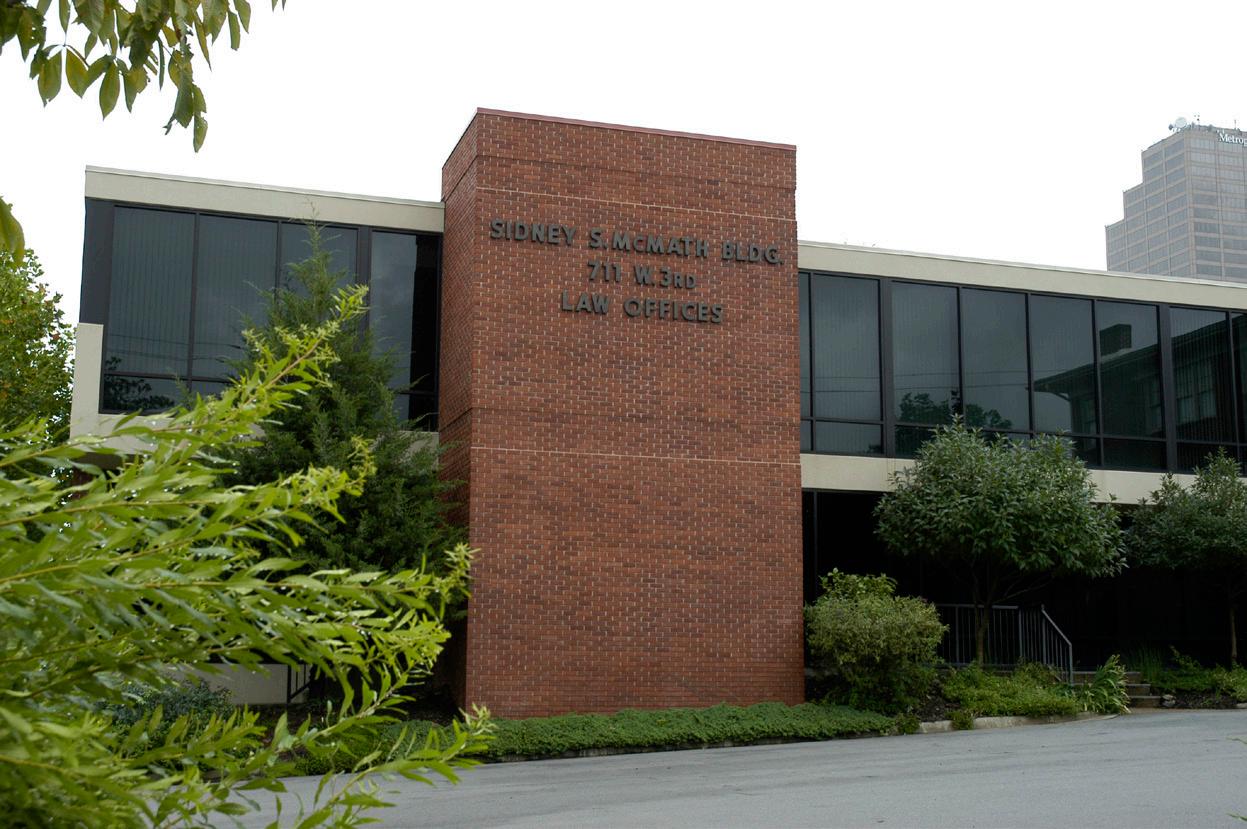
ie “Smokey and the Bandit.” Evidence was presented that GM had approved the script of the movie and encouraged dealers to show movie clips of the car doing daring maneuvers at high speeds, and that the clips had been shown to the 18-year-old boy at the time of the vehicles purchase a few weeks before the accident.
· In 1982, Bruce and Phillip McMath on behalf of the estate of young Mark Brown, killed when a Missouri Pacific freight train struck his vehicle at a crossing at Prescott, obtained the first punitive-damage award against a railroad for failing to install active warning devices. The railroad had a conscious policy not to spend corporate money to install such devices, so the Eighth Circuit Court of Appeals refused to set the verdict aside. The case established that punitive damages were recoverable in Arkansas in a wrongful death case.
· Victories in suits against nursing homes in the 1970s and 1980s—notably for the family of an elderly man who was parboiled when he was left unattended in a hot whirlpool bath and for a young woman who was semi-comatose when she was raped in her bed by a nursing home worker—pioneered nursing home liability based upon inadequate staffing and employment standards. This led Sandy McMath to found and then Chair the American Trial Lawyers Association’s Nursing Home Victims’ Litigation Group teaching other lawyers how to win such cases.
· The firm sued Tyson Foods, Inc., in 1987 for overloading the Green Forest, Arkansas, sewage treatment plant with wastes from its chicken-process-
were damaged by a defective fungicide. Tried by Bruce McMath and Little Rock lawyer Evans Benton, the verdict was the first against DuPont on the product and paved the way for hundreds of suits against the company from Florida to Hawaii.
· The firm pioneered the concept of tobacco litigation on behalf of public entities with the University of Arkansas for Medical Sciences in 1991, two years before Mississippi and Florida filed the first claims. But, Arkansas officials declined to initiate suits until years later.
for years but did little until Bruce and Phillip McMath, partner Sam Ledbetter and a Rogers lawyer, Jim Lingle, sued. The trial resulted in an award of damages and a finding that Tyson had repeatedly violated the Clean Water Act. Earlier, in a case spearheaded by partner Winslow Drummond, the law firm had prosecuted Hercules for pollution around the Vertac Chemical Plant in Jacksonville. The firm has since sought remedies and compensation for neighborhoods against polluting industries in El Dorado, Little Rock, North Little Rock, Saline County and Coffeeville, Kan. Most recently, Will Bond, Sam Ledbetter, and Neil Chamberlin obtained a jury award in excess of $1.4 million on behalf of eight families after an industrial explosion forced them to temporarily evacuate their homes in Saline County.
· Sandy and Phillip McMath and Mountain Home lawyer Roy Danuser, brought a libel action against The Sun, a Canadian tabloid newspaper, for a 1990 article that carried a picture of 95-year-old Nellie Mitchell of Mountain Home over a headline that said, “World’s Oldest Newspaper Carrier, 101, Quits Because She Is Pregnant.”
Having seen an earlier article about the elderly newspaper carrier, the newspaper, assuming she was dead, concocted the story about her quitting because she was pregnant. The jury awarded her $1.5 million, part of which Nellie used to create a scholarship fund for youngsters who had worked delivering newspapers.
· In 1993, a federal jury awarded $10.65 million, including $3 million in punitive damages, to 23 South Arkansas tomato farmers whose crops
· In 2006, Will Bond, Sam Ledbetter and Bruce McMath obtained a $6.5 million verdict for the estate of an Army private who, sitting down to rest against an unused latrine after a long training march at Fort Benning Ga., was electrocuted. The jury found the maintenance contractor, Shaw Industries, shared the fault for the incident with the Army.
· Most recently, Bruce McMath and Neil Chamberlin succeeded in arguing that elements of the Civil Justice Reform Act of 2003, intended to reduce plaintiff recoveries in personal injury cases by assigning fault to persons and entities not party to the suit, was unconstitutional.
McMath concluded his legal career in his eighties, representing Arkansas families whose children were believed to have suffered brain damage from the diphtheria element of the childhood DTP vaccine. Although Japanese vaccine manufacturers had developed a less reactive vaccine, American children continued to get a cheaper whole-cell version. McMath, working with a few other lawyers around the country, son Bruce and associate Sandra Sanders, sought to hold the producers liable. Under pressure from the suits, the vaccine manufacturers sought legislation to avoid liability. While they received limited immunity, it came with the Vaccine Compensation Act, which established a way to compensate injured children and the adoption of a safer vaccine.
In his memoir, Promises Kept, McMath concludes with a warning about the forces that are inundating the media with stories about massive and unjustified punitive-damage awards. Punitive awards by juries are fairly rare, he said, but are justified when businesses flagrantly and willfully endanger people. In a free market economy, accountability for one’s commercial conduct is essential, he said.
In all three of his careers, the central theme in McMath’s life was service to the common good.
NEIL CHAMBERLIN

CHARLES D. HARRISON FAX:
JOHN D. COULTER www.mcmathlaw.com
CARTER C. STEIN
SARAH C. JEWELL CARTER C. STEIN Direct No. 501-396-5409
JAMES BRUCE McMATH, OF COUNSEL carter@mcmathlaw.com
PHILLIP H. McMATH, OF COUNSEL
SIDNEY S. McMATH (1912-2003)
HENRY WOODS (1928-2002)
WINSLOW DRUMMOND (1933-2005)
LELAND F. LEATHERMAN (1915-2006)
March 16, 2020
Via Email hof@arkbar.com Only
Arkansas Bar Association Legal Hall of Fame
Re: Nomination of Governor Sid McMath for the Arkansas Bar Association Legal Hall of Fame
Dear Legal Hall of Fame Selection Committee:
I am submitting an Arkansas Bar Association Legal Hall of Fame application on behalf of the late Governor Sidney Sanders McMath. I ask that this letter serve as the required general statement. I am enclosing the required nomination form. In lieu of a resume, I am submitting Sid McMath – An Arkansan for All Seasons by Ernest Dumas, which appeared as an eight-page supplement to the June 13, 2012 issue of the Arkansas Times. Letters of recommendation or additional information can be supplemented, if necessary
Sid McMath’s public service as a Marine, prosecuting attorney, and Governor exemplify his contributions for the greater good. His contributions to the plaintiff’s practice of law are legendary inside and outside the state of Arkansas. Ernie Dumas’ attached article lay out his life, public service, and legacy in the law better than I ever could.
Although I am clearly biased as the managing partner of the firm, I cannot imagine an Arkansas Legal Hall of Fame without Governor McMath. Thank you for considering the nomination of Governor McMath.
Sincerely,
Carter C. Stein
CCS/ Enc.

cc (w/enc.): Bruce McMath (via email only)
Phillip McMath (via email only)
Sandy McMath (via email only)
Will Bond (via email only)
Sam Ledbetter (via email only)
Sarah Jewell (via email only)
GeneralQuestions:
1. Nameandcontactinformationofthepersonsubmittingthisnomination:
Name: PaulParnell
Address: 120E.4th St.,LittleRock,AR72201 _____________________________
Phone: 501-377-0436
Email: pparnell@roselawfirm.com
2. Nameoftheperson,group,organizationoreventbeingnominated:UriahMilton(U.M.)Rose
3. Contactinformationofthenominee(ifapplicable). Ifthenomineeisdeceased,pleaselistliving nextofkinorotherpossiblerepresentativeofthenomineeifknown:Deceased;Nextofkin informationnotavailable
4. Concisestatementregardingthenominee'sconnectiontotheStateofArkansas:
UriahMilton(U.M.)RosewasanationallyprominentattorneywhopracticedinLittleRockfor morethan40yearsatwhatisnowknownastheRoseLawFirm.Hewasafounderandpresident ofboththeArkansasBarAssociationandtheAmericanBarAssociation.Today,astatueofRose isinStatutoryHallintheU.S.Capitol,chosenbytheArkansaslegislaturein1915tohonorhim andrepresentthestateofArkansas.
QuestionsApplicabletoIndividuals:
1. Birthdate:March5,1834
2. Birthplace:Bradfordsville,Kentucky
3. DateofDeath(ifapplicable):August12,1913
4. ResidenceatDeath(ifapplicable):LittleRock,Arkansas
RequiredAttachments(useseparatepagesorincludeinseparatefiles):
1. AgeneralstatementofwhythenomineeshouldbeintheHallofFame(nottoexceed750words);
2. Aresumeorvitaofthenominee(ifavailable);and
3. Uptotwo(2)lettersofrecommendation.

Thefollowingstatementidentifiesthesignificantnumberofcontributionsmadebyone ofArkansasgreatestattorneys,UriahMilton(U.M.)Rose.TheArkansasBarAssociation’s LegalHallofFameCommitteeshouldstronglyconsiderinductingRoseaspartoftheinaugural groupgivenhisenormousimpactonthelegalindustrybothinthestateandthroughoutthe nation.
Practicinglawforwellover45 years,U.M.Rose’sfirstpartnershipwasformedin1853 withWilliamGibbsinBatesville,Arkansas.Afterwaitingtwo yearstoensurehiscursory knowledgeofArkansaslawwell-exceededproficiency,hepracticedforfiveyearsuntilhis appointmentastheChancelloroftheCourtofChanceryofPulaskiCounty,theonlyChancery districtinthestatein1860.Thisprovidedhimwithstatewidejurisdictionwhereafewofhis judgmentswereadoptedonappealbytheSupremeCourt.Onenotableinstanceofthisishis justificationsinthestatuteoflimitationsin Cunningham vs. Brumback.
RoseandhisfamilymovedtoLittleRockwhereheformedapartnershipwithGeorge WatkinsaftertheCivilWar,andhistieswiththeConfederacyhadended.Thispartnershiplasted untilWatkinsdeathin1872.Eagertocontinuehis practice,Roseformedanotherpartnership withJohnGreenthreeyearslater.Unfortunately,Green’ssuddendeathendedthispartnership butwasproceededbyRosepartneringwithhisson,George,in1881.Overthecourseofthenext 25years,RosepartneredwiththeformerAssociateJusticeoftheArkansasSupremeCourtJudge WilsonHemmingwayandmergedfirmswithbothCantrellandLoughborough.Evenafterhis andhissonspassing,thefirmkeptRose’snamefirst,evenbeinginformallycalledtheRose Firm.In1980,thefirmdecidedtomakeitofficialandtheirnamewasofficiallychangedtoRose LawFirminhonorofhismemory.Overacenturylater,hisnamecontinuestoremainatthetop ofthefirm’sletterhead.
RoseappearedbeforetheSupremeCourtsofbothArkansasandtheUnitedStateson severaloccasions.HearguedcasessuchasthoserelatedtotheownershipofdowntownHot SpringsandLittleRockinadditiontotherightsofbondholdersofrailroadsbuiltinthestate.
Roseisalsorememberedforhismanycontributionstothelegalfieldandhiscommunity. HewasappointedasArkansas’sStateHistorianin 1864andassistedwithinstructionforthen principalprofessorofArkansas’sfirstlawschool,U.S.DistrictCourtJudgeHenryC.Caldwell, in1873.NotonlydidRosehelpfoundtheAmericanBarAssociationin1878astheonly attorneytorepresentArkansasatthetime,healsobecametheassociation’spresidentbetween 1901and1902.DuringhistimeattheAmericanBarAssociation,hetookonmany responsibilitiesincludingbeingappointedtothepermanentOrganizationandCredentials Committee,theLegalEducationandAdmissionstothebarcommittee,theJurisprudenceand LawReformcommittee,andfinallytheExecutivecommittee.Roseisalsocreditedwithbeing
thefounderandfirstpresidentoftheformationoftheBarAssociationofArkansas,an associationstillrunningtoday.
U.M.Roseisknownformorethanhisworkinlaw.Whileneverservingassuch,hewas nominatedforthepositionofstatesenatoronmorethanoneoccasion.InOctober1905, PresidentTheodoreRoosevelttookanextensivetripacrosstheSouth,includingLittleRock, whereheattendedaluncheon.Atthatluncheon,Rosetoastedthepresident,whorespondedby saying,“JudgeRosestandstodayasoneofthatgroupofeminentAmericanCitizens,eminentfor theirservicestothewholecountry,whomweknowastheleadersoftheAmericanbar.”A year later,hewasnominatedbyPresidentRooseveltandservedasadelegateintheSecondHague PeaceConferenceintheNetherlandsaround1907.Itwasherethatheearnedthetitle AmbassadorRose.
Apartfromhispolitical work,Rose’scharacterhelpsdistinguishhim.Beingwellversed inmorethanjustthelaw,heleftalibraryofover7,500bookscataloginghisinterestsin literature,math,scienceandmuchmore.ThislibrarycanstillbefoundattheUniversityof ArkansasatFayetteville.Aswell,heauthoredand publishedahandfulofbooks,including “DigestofAmericanReport”and“TheConstitutionoftheStateofArkansas.”Ofallofthese positions,titles,andcases,firstandforemost,Rosewillberememberedfor“hishighcharacter, hislegalability,hisaccomplishmentsineveryrespect,[and]hislongandunrequitedservicesto thestate.”

(501) 377-0436
pparnell@roselawfirm.com
March 13, 2020
To the Committee:
This letter of recommendation is in support of the nomination of Judge Uriah Milton Rose as a member of the inaugural class of the Arkansas Legal Hall of Fame.
Judge Uriah Milton Rose was the consummate lawyer-statesman, establishing a level of excellence in the practice of law to which all lawyers should aspire. Judge Rose approached the practice of law with a practical wisdom that not only allowed him to advance the interest of his clients, but also to advance the legal profession and the public good. As United States Supreme Court Justice Felix Frankfurter wrote in 1958, “Mr. Rose was one of the luminaries of our profession – not merely a very distinguished practitioner, but a highly cultivated, philosophic student of civilization and of the role of law and the lawyers in the progress of civilization.”
Judge Rose entered the private practice of law with Justice George C. Watkins, the former Chief Justice of the Arkansas Supreme Court, in 1872, practicing in what is today known as Rose Law Firm, a Professional Association. Prior to joining Justice Watkins, Judge Rose served as chancellor of Arkansas’ only chancery court. Judge Rose had an accomplished law practice, arguing dozens of cases before the United States Supreme Court, with United States Supreme Court Justice Stanley Matthews observing that U.M. Rose of Arkansas was the ablest lawyer appearing before the court.
As a statesman, it is perhaps Judge Rose’s work outside of the courtroom that causes his legacy to endure. At the turn of the 20th century, the legal profession remained a loose collection of solo practitioners, learning under an apprenticeship style of training. Judge Rose and other leaders throughout the country recognized that the profession, and by extension the public it serves, would be better served by an association of lawyers working together to establish a uniform system of training and standards. To that end, Judge Rose and other leaders formed the American Bar Association and thereafter the Arkansas Bar Association, with Judge Rose serving as President of both organizations.
Through Judge Rose’s service to the bar and his practice, he developed a reputation as a scholar and a man of principle, as well as a distinguished communicator and orator. In
Legal Hall of Fame
March 13, 2020
Page 2
recognition of this reputation, President Theodore Roosevelt appointed Judge Rose as one of three United States Ambassador to the Second Hague Peace Convention in 1907. Prior to that appointment, Judge Rose appeared before President Ulysses S. Grant to negotiate the peaceful resolution of what has become known in Arkansas history as the Brooks-Baxter War, which brought a peaceful conclusion the contested gubernatorial election of 1874.
As a scholar, Judge Rose was a voracious reader, with his collection of over 8,000 titles donated to what was then the Little Rock Public Library. In 1867, Judge Rose compiled the first digest of Arkansas Supreme Court cases, and he later produced a thoroughly annotated version of the Arkansas Code. Both of these works were the first in their time in Arkansas, and were widely relied upon by the Arkansas Bar.
Although much has happened in the development of the legal profession since Judge Rose’s death in 1913, his leadership laid the strong foundation upon which the profession is now built. From his skills as a practitioner for his clients, to his local, national, and international leadership in the furtherance of peace and the rule of law, Judge Rose had an indelible effect on the Arkansas Bar. The State of Arkansas recognized this by placing his statue in the United States Capital, where it has stood for over a century. Now, at this time, I can think of no lawyer more deserving of being inducted into the inaugural class of the Arkansas Legal Hall of Fame than Judge Uriah Milton Rose, the consummate lawyer-statesman.
Sincerely yours,
Paul Parnell
PP/llr
Jamie Huffman Jones | Attorney
Direct: (501) 370-1430
Fax:(501)244-5340
E-mail: jjones@fridayfirm.com
March 13, 2020
Via email hof(a)arkbar.com
The Arkansas Bar Association Legal Hall of Fame
Dear Hall of Fame Committee:
I am honored to second the nomination of the former Honorable Elsijane Trimble Roy for the first Arkansas Bar Association Hall of Fame. Carolyn Witherspoon has more than aptly summed up Judge Roy's immense qualifications in her nomination letter. Thus, what I would like to focus on for my nomination is the importance of her inclusion to the future of the bar association.
When young girls and women view the Arkansas Bar Association Hall of Fame, they simply must see themselves. Or, more importantly, they must see what they can become. Judge Roy did not see a single female judge on her way to the bench; she got there by imagining what could be. Thankfully, our bar is becoming one where a young girl can see someone who looks like her, see another female doing already what she wishes to do. The Hall of Fame should inspire us all, and inspire those to come to imagine what can be in the legal community. If only one girl is inspired by Judge Roy's inclusion, then the Hall of Fame will be a success. I wholeheartedly second this nomination, and hope that she will be included, so I can take my daughter to see what she can become.
Yours truly, e riuffman Jone
cc: Carolyn Witherspoon (via email)
Brian Rosenthal (via email)
GeneralQuestions:
1. Nameandcontactinformationofthepersonsubmittingthisnomination:
Name: BrianRosenthal
Address: 120EastFourthSt. LittleRock,AR72201-2893
Phone: (501)377-0340
Email: BROSENTHAL@roselawfirm.com
2. Nameoftheperson,group,organizationoreventbeingnominated: TheLittleRockNine
3. Contactinformationofthenominee(ifapplicable). Ifthenomineeisdeceased,pleaselistliving nextofkinorotherpossiblerepresentativeofthenomineeifknown: ElizabethEckfordwithAllAmericanSpeakersBureau:1(800)698-2536,Dr.TerranceRoberts: (626)644-4956ortroberts99@scbglobal.net,orCarlottaLaNier,PresidentoftheLittleRock NineFoundation:(303)770-2730orcarlottalanier@comcast.net
4. Concisestatementregardingthenominee'sconnectiontotheStateofArkansas: FirstnineAfricanAmericanstoattendanall-whitepublicschoolinthestateofArkansas.This grouphelpedinstigatethebeginningoftheendofracialsegregationbyattendingLittleRock CentralHighSchoolin1957.
QuestionsApplicabletoIndividuals:
1. Birthdate:______________________________________________________________________
2. Birthplace:_____________________________________________________________________
3. DateofDeath(ifapplicable):_______________________________________________________
4. ResidenceatDeath(ifapplicable):__________________________________________________
RequiredAttachments(useseparatepagesorincludeinseparatefiles):
1. AgeneralstatementofwhythenomineeshouldbeintheHallofFame(nottoexceed750words);
2. Aresumeorvitaofthenominee(ifavailable);and
3. Uptotwo(2)lettersofrecommendation.
In memory of Jefferson Thomas, September 19, 1942 – September 5, 2010
Nearly 75 years separate the beginning of racial segregation in the South and the Brown v. Board of Education of Topeka decision that ruled racial segregation in public schools was unconstitutional. Over 60 years later, nine individuals remain as symbols of sacrifice and bravery. The Little Rock Nine, Elizabeth Eckford, Ernest Green, Thelma Mothershed, Melba Patillo, Gloria Ray, Terrence Roberts, Jefferson Thomas, and Carlotta Walls, were just kids when the volunteered to be the first Black students to attend the then-all white Little Rock Central High School.
Prior to the Brown v. Board of Education ruling, Jim Crow laws segregated much of the nation by racial lines. These lines were drawn in public schools, pools, buses, restaurants, and water fountains among many others. They were codified into law in 1895 when the Supreme Court upheld the constitutionality of racial segregation in Plessy v. Ferguson, justifying their ruling with a separate but equal doctrine, a doctrine that would be dismantled with the help of nine courageous children.
Weeks leading up to the first day of the 1957 school year, Daisy Bates began counseling nine black children in preparation for the reality they would soon face. Withstanding harassment, insults, violence, and death threats, nine students faced centuries of hate and discrimination and dared to attend Little Rock Central High School on September 4, 1957. Despite their bravery, large mobs of white civilians coupled with some 270 soldiers from the Arkansas National Guard surrounded the school, taunting, threatening, and throwing things, preventing their entry. Determined, the students returned later that month with the support of President Eisenhower and the 101st Airborne Division.
Although those nine children endured evils no documentary or article can truly capture, they finished out the school year and although Ernest Green was the only one to graduate that year, he became the first African-American to graduate from Little Rock Central High School. Regardless of Faubus’s best attempts to stop desegregation in the state, even going so far as to close the doors of all public schools in the state the following year, those children helped paved a path for desegregation in the South.
All nine children went on to earn their G.E.D., college degrees, or graduate degrees, spreading throughout the country to California, Michigan, Illinois, Colorado, and Ohio among others and continuing to push boundaries and set examples for people of color across the nation. They became teachers and professors, veterans and activists, researchers and reporters, and leaders and role models in their communities. Earnest Green served under President Carter as the Assistant Secretary of the Federal Department of Labor and then as the Assistant Secretary of Housing and Urban Affairs. Minnijean Brown served under President Clinton as the Deputy Assistant Secretary for Workforce Diversity in the Department of Interior while Melba Patillo worked as an NBC reporter in addition to a published author. Gloria Ray conducted laboratory Research for the Chicago Medical Center and Thelma Mothershed taught public school for over 25 years. Elizabeth Eckford and Jefferson Thomas both became veterans, Thomas going on to work for the Department of Defense. They are presidents of foundations, department chairs, board members, and Congressional Gold Medal recipients.
Even after the unfortunate passing of Jefferson Thomas in September of 2010, their legacies have been etched into the nation’s history. Their mark on history has been immortalized with statues in front of the Arkansas State Capitol for future generations to remind others of the sacrifices those nine children made. While the reasons for these sacrifices serve as a dark reminder of the nation’s past, the Little Rock Nine profoundly stand as symbols of hope and inspiration for the people of this nation.
Beals, Melba. Warriors Don’t Cry : A Searing Memoir of the Battle to Integrate Little Rock’s Central High. Tantor Media, Inc, 2011. EBSCOhost, search.ebscohost.com/login.aspx?direct=true&db=nlebk&AN=452642&site=edslive&scope=site.
Benjamin Houston. “Resistance to Public School Desegregation: Little Rock, Arkansas, and Beyond. Law and Society: Recent Scholarship Frances Lisa Baer.” The Journal of Southern History, vol. 76, no. 1, 2010, p. 208. EBSCOhost, search.ebscohost.com/login.aspx?direct=true&db=edsjsr&AN=edsjsr.27779273&site=edslive&scope=site.
Catherine Lewis. “Little Rock: Race and Resistance at Central High School Karen Anderson.” The American Historical Review, vol. 116, no. 5, 2011, p. 1528. EBSCOhost, search.ebscohost.com/login.aspx?direct=true&db=edsjsr&AN=edsjsr.23309746&site=edslive&scope=site.
https://www.britannica.com/topic/Little-Rock-Nine
https://en.wikipedia.org/wiki/Little_Rock_Nine
https://www.womenshistory.org/resources/general/little-rock-nine
https://nmaahc.si.edu/blog-post/little-rock-nine
https://mhunt.weebly.com/biographies-of-the-little-rock-nine-students.html
Kowalski, Kathiann M. “Little Rock NINE.” Cobblestone, vol. 35, no. 2, Feb. 2014, p. 18. EBSCOhost, search.ebscohost.com/login.aspx?direct=true&db=elr&AN=93989758&site=edslive&scope=site.
Sondra Gordy. “A Mighty Long Way: My Journey to Justice at Little Rock Central High School Carlotta Walls LaNier Lisa Frazier Page Bill Clinton.” The Arkansas Historical Quarterly, vol. 69, no. 4, 2010, p. 397. EBSCOhost, search.ebscohost.com/login.aspx?direct=true&db=edsjsr&AN=edsjsr.23046609&site=edslive&scope=site.
Little Rock Nine – General statement of why the nominee should be in the Hall of Fame
The Arkansas Bar Association’s mission exemplifies a standard of excellence. The Association fosters and maintains ideals of integrity, public service, and high standards of conduct. They encourage practices to improve the community’s honor and dignity in addition to the judicial legal system as a whole. Among many others, they also aim to advance law and order. While this group may not be members of the Arkansas Bar, they truly embody the Association’s values and mission. This group has earned a place in the Arkansas Bar Hall of Fame because like the Association, they have pushed the bounds of what it means to have integrity, serve the public, and set social and legal standards of excellence that have profoundly changed the history of the state for the better.
Jim Crow Laws were a set of legal doctrines that established and maintained racial segregation in all areas of social life, from public pools and parks to water fountains and even separate textbooks. These were laws that the state of Arkansas upheld and at one time, vigorously attempted to maintain. While the Supreme Court may have put a judiciary halt to these laws in the Brown v. Board of Education ruling that found racial segregation in public schools unconstitutional, it was nine African American children, the Little Rock Nine, whose story our state tells. It was those nine children who dared to test that ruling, sacrificing their innocence and youth, risking their lives and autonomy to bring about a new chapter in Arkansas social and legal history. It was these nine children that helped start the beginning of the end of racial segregation.
Their story is immortalized in textbooks, museums, and a statue depicting those nine children at the Arkansas State Capitol. Their legacy continues to inspire people of color through the nation and their influence is seen every day in every public school across the state. No other group better represents the fight for diversity, integrity, and the advancement of law and order than the group that challenged previous traditions and legal standing head-on, as children. Their impact, not only on history but on the lives of millions past and present are the reason they have earned a nomination and why they are deserving of a place on the Arkansas Bar Association’s first-ever round of the Hall of Fame.
In 2007, Justice Stephen Breyer stated that the Supreme Court case involving this matter Cooper v. Aaron is one of the three most significant in American history. It established the rule of law is supreme, and the Court has and should have the right to interpret the rule of law.
Please use this form to nominate a person, group, organization or event for the Arkansas Bar Association Legal Hall of Fame. Launching in 2020, the Legal Hall of Fame honors Arkansas's greatest lawyers, most revered institutions, most treasured traditions and other legends of the Bar.
Please use this form to nominate one (1) person, group, organization or event. Please submit multiple nomination forms if you wish to nominate more than one (1) person, group, organization or event.
Any person is welcome to submit a nomination.
For an individual to be eligible for inclusion in the Hall of Fame, the nominee must:
1. Meet one of these two criteria:
a. Be a living person at least fifty (50) years old; or
b. Be deceased for at least three (3) years. This requirement may be waived by a supermajority of the Selection Committee.
2. Have an articulable connection to the State of Arkansas, including but not limited to: (i) born in Arkansas; (ii) reared in Arkansas; (iii) educated in Arkansas; or (iv) practiced law in Arkansas.
3. Have made an extraordinary contribution to the law, society, the administration of justice or legal education.
For a group, organization or event, the nominee must have a close and clearly articulable connection to Arkansas. National groups, organizations or events where Arkansas is just one of many affected areas are not eligible for consideration. For example, the American Bar Association would not be an eligible organization and the signing of the United States Constitution would not be an eligible event. The group, organization or event must have existed for at least twenty-five (25) years or occurred at least twenty-five (25)years ago. The group, organization or event must have made an extraordinary contribution to the law, the administration of justice or legal education. No person, group, organization or event may be selected for the Hall of Fame more than once, though a person who is also a member of a group, organization or event may be separately honored.
You may find the complete guidelines for selection at www.arkbar.com/events/hof
This nomination form, along with the required attachments, is due on or before January 26, 2024.
Please send the nomination form and attachments to: hof@arkbar.com
If you have any questions, please contact Karen Hutchins at (501) 801-5663.
General Questions:
1. Name and contact information of the person submitting this nomination:
Name: Denise Reid Hoggard
Address: 801 Technology Drive Little Rock, AR 72223
Phone: (501)868-2929
Email: hoggard@rainfirm.com
2. Name of the person, group, organization or event being nominated:
University of Arkansas Fayetteville School of Law
3. Contact information of the nominee (if applicable). If the nominee is deceased, please list living next of kin or other possible representative of the nominee if known:
Dean Cynthia Nance 1045 W. Maple St. University of Arkansas Fayetteville, Arkansas 72701
(479)575-5601
4. Concise statement regarding the nominee's connection to the State of Arkansas:
University of Arkansas Fayetteville School of Law is part of the flagship campus of the University of Arkansas.
5. Questions Applicable to Individuals:
1. Birthdate: ______________________________________________________________________
2. Birthplace: _____________________________________________________________________
3. Date of Death (if applicable):_______________________________________________________
4. Residence at Death (if applicable): __________________________________________________
Required Attachments (use separate pages or include in separate files):
1. A general statement of why the nominee should be in the Hall of Fame (not to exceed 750 words);
2. A resume or vita of the nominee (if available); and
3. Up to two (2) letters of recommendation.
Please use this form to nominate a person, group, organization or event for the Arkansas Bar Association Legal Hall of Fame. Launching in 2020, the Legal Hall of Fame will honor Arkansas's greatest lawyers, most revered institutions, most treasured traditions and other legends of the Bar.
Please use this form to nominate one (1) person, group, organization or event. Please submit multiple nomination forms if you wish to nominate more than one (1) person, group, organization or event.
Any person is welcome to submit a nomination.
For an individual to be eligible for inclusion in the Hall of Fame, the nominee must:
1. Meet one of these two criteria:
a. Be a living person at least fifty (50) years old; or
b. Be deceased for at least three (3) years. This requirement may be waived by a supermajority of the Selection Committee.
2. Have an articulable connection to the State of Arkansas, including but not limited to: (i) born in Arkansas; (ii) reared in Arkansas; (iii) educated in Arkansas; or (iv) practiced law in Arkansas.
3. Have made an extraordinary contribution to the law, society, the administration of justice or legal education.
For a group, organization or event, the nominee must have a close and clearly articulable connection to Arkansas. National groups, organizations or events where Arkansas is just one of many affected areas are not eligible for consideration. For example, the American Bar Association would not be an eligible organization and the signing of the United States Constitution would not be an eligible event. The group, organization or event must have existed for at least twenty-five (25) years or occurred at least twenty-five (25) years ago. The group, organization or event must have made an extraordinary contribution to the law, the administration of justice or legal education. No person, group, organization or event may be selected for the Hall of Fame more than once, though a person who is also a member of a group, organization or event may be separately honored.
You may find the complete guidelines for selection at www.arkbar.com/events/hof
This nomination form, along with the required attachments, is due on or before March 16, 2020.
Please send the nomination form and attachments to: hof@arkbar.com
If you have any questions, please contact Karen Hutchins at (501) 801-5663
General Questions:
1. Name and contact information of the person submitting this nomination:
Name: Address:
Phone:
Email:
Erin Feller 1045 W. Maple St Fayetteville, AR 72701 (479) 575-3468 Feller@uark.edu
2. Name of the person, group, organization or event being nominated:
University of Arkansas School of Law
3. Contact information of the nominee (if applicable). If the nominee is deceased, please list living next of kin or other possible representative of the nominee if known:
Address - Same as above
Cynthia Nance, Dean cnance@uark.edu
4. Concise statement regarding the nominee's connection to the State of Arkansas:
The University of Arkansas School of Law is one of two law schools in the State of Arkansas. Founded in 1924, the law school has been education members of Arkansas legal community for 100 years.
Questions Applicable to Individuals:
1. Birthdate: ______________________________________________________________________
2. Birthplace: _____________________________________________________________________
3. Date of Death (if applicable):__________________________________________________
4. Residence at Death (if applicable): __________________________________________________
Required Attachments (use separate pages or include in separate files):
1. A general statement of why the nominee should be in the Hall of Fame (not to exceed 750 words);
2. A resume or vita of the nominee (if available); and
3. Up to two (2) letters of recommendation
This year, the law school will celebrate its 100th year and will be celebrating its Founders Day on Saturday, April 13. There is no better time than now to recognize the contributions the University of Arkansas School of Law than right now.
“From admitting the Six Pioneers who were the first African American students to attend law school in the South without a court order to graduating governors, judges, prosecutors, and faculty who went on to become President of the United States and Secretary of State,” the law school boasts an unmatched history and culture. http://law.uark.edu
It is part of the flagship campus at the University of Arkansas. The school is ranked one of the most diverse in the nation, offers the nation’s only Master of Law degree in agricultural law, and is home to the largest collection of legal texts in Arkansas. It ranks No. 105 in the nation in Best Law Schools by US. News and World Report.
From its inception, the law school has produced leaders here in Arkansas and well as beyond her borders. It is well-deserved for the legal profession to bestow this honor on the University of Arkansas Law School.
Located in Fayetteville, the School of Law sits on the flagship campus of the University of Arkansas. The law school, with its 25.9 percent minority enrollment, was recently ranked as one of the most diverse in the nation by U.S News and World Report. It is home to the Indigenous Food and Agriculture Initiative, National Agricultural Law Center, and is the first law school in the nation to offer a Master of Law degree in agricultural and food law. The school publishes the Arkansas Law Review and Journal of Food Law and Policy, and is home to the largest collection of legal texts in Arkansas.
In 1924, economics professor Julian Waterman proposed a trial law department. Waterman, who had recently completed his Juris Doctor at the University of Chicago, served as head of the new department. Future congressman Claude D. Pepper joined him as the only other faculty member. The new program required three years and eighty semester hours of credit for graduation, with a set tuition of $60 per year. In 1924, the first official year of the School of Law, fourteen full-time and twenty part-time students enrolled. In 1965, the School of Law established a part-time evening law school in Little Rock. The satellite campus operated under the UA School of Law until 1975 when the legislature created a full-time program, UALR Law, and moved oversight to the University of Arkansas Little Rock.
In 1948, Arkansas Law admitted Mr. Silas Hunt, becoming the first law school west of the Mississippi to admit black students. Hunt became the first of the “Six Pioneers”, the first six black students to attend the School of Law. In 1951, Jackie Shropshire became the first black student to graduate from the School of Law. In 2006, Cynthia Nance was appointed to serve as dean, making her the first woman and person of color to serve in this role at either of the states’ law schools. The School of Law again made history when, in 2011, Stacy Leeds was named dean and became the first American Indian woman in history to serve as dean of an American law school. Since Dean Nance, 5 consecutive women have led the school.
The School of Law has been listed as a “Best Value in Legal Education” by National Jurist and Prelaw magazines and maintained ranking in the Top 20 list of “Best Value” for 10 years A top priority of UA Law is access to the profession and low student debt at graduation. The School of Law previously ranked, for six consecutive years, among the “Top Tier” of all U.S. law schools, public or private, in the U.S. News and World Report rankings.
UA Law faculty members’ research and service has positively impacted the nation and the state. Faculty members serve on Arkansas Supreme Court Committees, advise members of Congress and state officials on pending legislation, serve on community boards, have played a role in federal judicial nominations, received national recognition for scholarship and service and are active members of the American Law Institute as well as the Arkansas and American Bar Associations. Its alums are leaders of the judiciary, industry and public service.
The School has been home to many notable faculty members including former U.S. President William J. Clinton and Senator Hillary R. Clinton, Robert A. Leflar and Arkansas Supreme Court Justice Howard Brill. Its alumni include many high profile leaders such as U.S. Ambassador to Gambia George Haley; Senator Mark Pryor; five former governors of the State of Arkansas, Sid McMath, Francis Cherry, David Pryor, Mike Beebe, and Asa Hutchinson; Karen Roberts; Amy Tu; and former U.S. Secretary of Transportation Rodney Slater
The law school’s clinics have served the community and state for more than thirty years, offering free legal services to non-profits, organizations, and individuals unable to afford legal representation. Mindful of its land-grant mission, in 2019, the School of Law added the Summer Public Service Fellow Program enabling students to serve legal non-profit, non-governmental, and governmental entities that could not otherwise afford summer interns.
More than 70% of the school’s graduates practice in the State of Arkansas, however the reach of UA law is international, having generated leaders in law, business and public service. As the state’s flagship university celebrates its storied past and promising future, it is fitting that it be
inducted into the Arkansas Legal Hall of Fame in recognition of its significant contributions to the state, the nation and beyond.

January 24, 2024
Mr. Jerald Clifford McKinney, II
Chairman
Arkansas Bar Association Hall of Fame Selection Committee
2224 Cottondale Lane
Little Rock, AR 72202
Dear Mr. McKinney and Members of the Selection Committee:
Office of the Chancellor
It is with great pleasure that I write to endorse the nomination of the University of Arkansas School of Law for induction into the Arkansas Legal Hall of Fame. I believe this honor is deserved based on our Arkansas flagship law school’s significant impact on the nation’s legal profession and leaders. This is a particularly apt time for this recognition as the school celebrates its centennial year.
Over its storied history, the School of Law has established itself as a leader among its peers. For example, after World War II, the School of Law began the integration of colleges and universities across the South when it voluntarily admitted Silas Hunt and the other Six Pioneers. It has also repeatedly been recognized as a “best value” demonstrating its commitment to access while providing an excellent legal education in a learning environment that combines academic rigor with a commitment to ethical practice and public service. The School of Law’s commitment to producing well-rounded legal professionals who reflect its land-grant mission is evident in its clinical legal education, externship, and public service fellowship programs.
The School of Law faculty distinguished legal scholars and practitioners has consistently played a pivotal role in shaping the intellectual landscape of the law. Their legal scholarship, research, and advocacy have enriched the academy while influencing the legal community and shaping public policy.
As we anticipate the Centennial Celebration for the University of Arkansas School of Law, I believe that induction into the Arkansas Legal Hall of Fame would serve as fitting testament to the school’s rich legacy and its enduring commitment to legal education, the legal profession, and public service.
Sincerely,
Charles F. Robinson, Ph.D. Chancellor Professor of History
1. Name and contact information of the person submitting this nomination:
Name: Grant M. Cox
Address: 111 Center Street, Suite 1900 Little Rock, Arkansas 72201
Phone: (501) 379 -1756
Email: gcox@qgtlaw.com
2. Name of the person, group, organization or event being nominated:
C hief Judge Lavenksi Roy Smith, United States C o urt of Appeals for the Eig hth Circuit
3. Contact information of the nominee (if applicable). If the nominee is deceased, please list living next of kin or other possible representative of the nominee if known:
Ch ief Judge Lavenski R. Smith
United States Court of Appeals for the Eighth Circuit
Thomas F. Eagleton Courthouse
111 South 10 th Street, Room 24.329
St. Louis, MO 63102
501 -324 -7310
4. C oncise statement regarding the nominee's connection to the State of Arkansas:
C hief Judge Lavenski R. Smith was born in Hope, Arkansas, graduated from Hope High School and the University of Arkansas. After serv in g as a governmental regulatory agency lia son for Governor Mike Huckabee , serving as Chairman of the Arkansas Public Service Commission, and serving as a Justice of the Arkansas Supreme Court, C hief Judge Smith was appointed to the Court of Appeals for the Eighth C ircuit in 2002 becoming C hief Judge in 20 17 and the first African -Americ an C hief Judge of the C ourt of Ap peals for the Eighth Circuit.
1. Birthdate: October 31, 1958
2. Birthplace: Hope, Arkansas
3. Date of Death (if applicable):
4. Residence at Death (if applicable):
Required Attachments (use separate pages or include in separate files):
1. A general statement of why the nominee should be in the Hall of Fame (not to exceed 750 words);
2. A resume or vita of the nominee (if available); and
3. Up to two (2) letters of recommendation.

Home [/]
History of the Federal Judiciary [/history] Judges [/history/judges]
Born 1958 in Hope, AR
Federal Judicial Service:
Judge, U.S. Court of Appeals for the Eighth Circuit
Nominated by George W. Bush on September 4, 2001, to a seat vacated by Richard S. Arnold. ConNrmed by the Senate on July 15, 2002, and received commission on July 19, 2002. Served as chief judge, 2017-present.
Education:
University of Arkansas, B.A., 1981
University of Arkansas School of Law, J.D., 1987
Professional Career:
Law clerk in private practice, Arkansas, 1985-1987
Staff attorney, Ozark Legal Services, 1987-1991
Private practice, Springdale, Arkansas, 1991-1994
Assistant professor, John Brown University, 1994-1996
Regulatory liaison, Gov. Mike Huckabee, Arkansas, 1996-1997
https://www.fjc.gov/history/judges/smith-lavenski-r
Arkansas Public Service Commission, 1997-1999, 2001-2002; chairman, 1997-1999; commissioner, 2001-2002
Associate justice, Arkansas Supreme Court, 1999-2000 Member, Judicial Conference of the United States, 2017-present
Other Nominations/Recess Appointments:
Nominated to U.S. Court of Appeals for the Eighth Circuit, May 22, 2001; no Senate vote
https://www.fjc.gov/history/judges/smith-lavenski-r
Joshua C. Ashley
400 W. Capitol Ave., Ste. 2000, Little Rock, Ark. 72201
501.370.3395 ~ joshcashley@gmail.com
Arkansas Bar Association
Legal Hall of Fame Committee
2224 Cottondale Lane
Little Rock, Ark. 72202
Dear Hall of Fame Committee:
I recommend Chief Judge Lavenski R. Smith for inclusion in the Arkansas Bar Association’s Legal Hall of Fame. Based on the criteria for inclusion—legal greatness and a solid connection to Arkansas—this is not a difficult recommendation.
It’s hard to know where to start in terms of the Judge’s legal accomplishments. From Public Service Commissioner to Arkansas Supreme Court justice to chief judge of the United States Court of Appeals for the Eighth Circuit (the first African American to hold that position), Judge Smith has run the gamut of Arkansas public service in the field of law. That’s not to mention his early work for Ozark Legal Services out of law school. Judge Smith probably wouldn’t call these things “accomplishments”—at least not if that meant taking credit for them. He would instead call them gifts. I agree, but would add that he’s stewarded them well.
That good stewardship is owing chiefly to the Judge’s unquestioned integrity. I saw it on display in his deliberations in case after case during the year I clerked for him. He of course had the intellectual capacity to tackle the issues facing the court in any given case, but what most impressed me was his attention—critical attention—to resolving each case without regard to the identity of the parties, but only with regard to the correctness of their cause.
Judge Smith’s legal accomplishments are remarkable on their own terms. Yet what’s more remarkable is that he has managed them without forfeiting his soul. His commitment to his family, his church, and our state more broadly are every bit as consequential as his legal role.
I therefore hope you will strongly consider Chief Judge Smith for inclusion in the Arkansas Bar’s Legal Hall of Fame.
Sincerely,

Joseph R. Falasco
jfalasco@qgtlaw.com
March 16, 2020
Brian Rosenthal, President
Arkansas Bar Association 2224 Cottondale Ln Little Rock AR 72202
Re: Nomination of Chief Judge Lavenski R. Smith to the Arkansas Bar Association 2020 Legal Hall Of Fame
Dear Mr. Rosenthal:
It is both an honor and a pleasure to recommend Chief Judge Lavenski R. Smith to the 2020 Arkansas Bar Association Legal Hall of Fame. Chief Judge Smith’s credentials are so remarkable that they are beyond recommendation, but some of the Arkansas ties worth repeating.
Chief Judge Smith was born on October 31, 1958, in Hope, Arkansas. He is a lifelong Arkansan, having grown up in Hope and having attended university and law school in Fayetteville, Arkansas. Chief Judge Smith has left a favorable impression throughout Arkansas with his legal work. He has worked in private practice and served the public in multiple roles. He has been a professor at John Brown University in Arkansas, served for Arkansas Governor Mike Huckabee, was appointed to the Arkansas Public Service Commission where he served as a chairman and commissioner,servedon theArkansasSupremeCourt,andhasrepresentedArkansasontheEighth Circuit Court of Appeals for more than a decade. In each position, Chief Judge Smith has risen to thetop, mostrecentlyhaving beenappointedbyChiefJusticeJohn G.Roberts,Jr.,to the Executive Committee of the Judicial Conference
Beyond his accomplishments and measured success, Chief Judge Smith is even more remarkable as a person. He is dedicated to his family and faith. He is resilient in his promotion of the State of Arkansas. He is humble and gracious. Even a short conversation with Chief Judge Smithwillleaveyouwith asenseoffulfillmentbecauseofhisthoughtfulwords,charismaticsmile, and earnest desire to listen.
Quattlebaum, Grooms & Tull PLLC
Brian Rosenthal, President Arkansas Bar Association
March 16, 2020
Page 2
Chief Judge Smith is a trailblazer of legal achievement in Arkansas. His historic path will be one that lights favorably Arkansas for years to come. It is without hesitation that I recommend Chief Judge Smith to the 2020 Legal Hall of Fame.
Sincerely,
QUATTLEBAUM, GROOMS & TULL PLLC
Joseph R. Falasco
JRF/vvb