On April 30, 2026, the U.S. House of Representatives passed the Farm, Food and National Security Act of 2026 with a bipartisan vote of 224–200. The 802page bill would reauthorize and update farm bill programs through calendar year 2031. This bill would complete the reauthorization of all farm programs and build on improvements passed in the One Big Beautiful Bill Act, which included higher reference prices, additional base acres, expanded payment limits and flexibility for farm business structures.
The House’s passage of the bill marks the most significant progress on a farm bill since 2018, and comes at a critical time, as Arkansas farmers and ranchers face rising input costs, tight margins and continued economic pressure.
The U.S. is still operating under the 2018 farm bill, which expired in 2023 and has been extended for the past three years. While major portions of farm policy were addressed in the 2025 budget reconciliation bill, and are applicable to the 2026 crop, key programs were left unfinished.
To read a detailed overview of the Farm, Food and National Security Act of 2026, see the House agriculture committee’s title-by-title breakdown of the bill.
The bill now moves to the Senate, where significant revisions are expected. John Boozman, chairman of the Senate Committee on Agriculture, Nutrition and Forestry, has indicated the Senate will work to remove more controversial provisions to secure enough support for passage.
Final passage will require both chambers to reconcile differences, particularly on nutrition funding, conservation priorities and regulatory provisions. While the House vote is a major step forward, negotiations in the coming weeks will determine the final shape of the next farm bill.
2026 ArFB Foundation Trap Shoot, Page 2
Mental Health Resources, Weathering the Storm, Page 3
ARKANSAS FARM BUREAU ANNUAL TRAP SHOOT
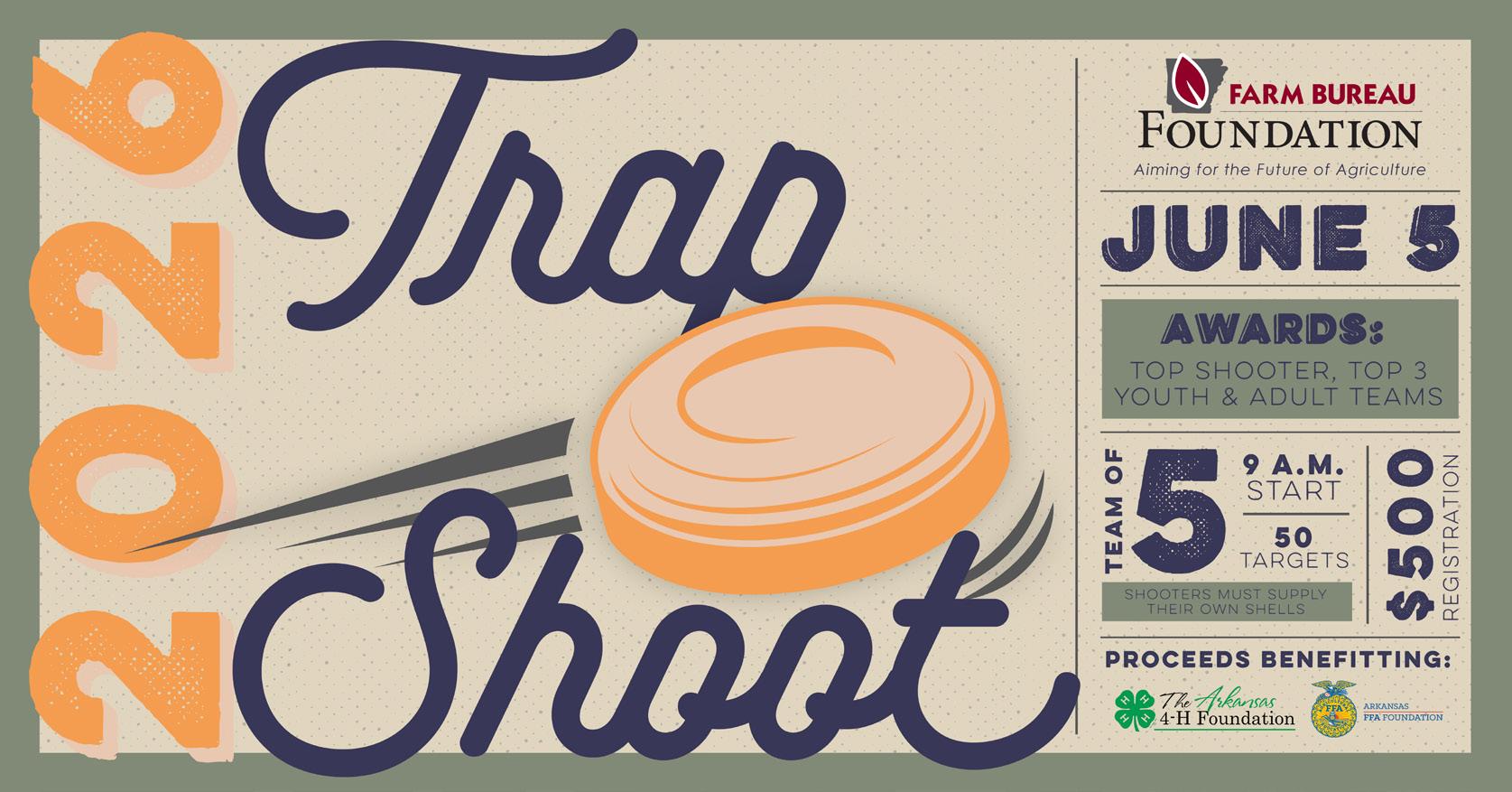
The Arkansas Farm Bureau Foundation will be hosting its 8th annual trap shoot on Friday, June 5 at the Arkansas Game & Fish Foundation Shooting Sports Complex in Jacksonville, Arkansas. Join us for the annual Aiming for the Future of Agriculture Trap Shoot in support of both the Arkansas 4-H Foundation and the Arkansas FFA Foundation. Supporting youth in agriculture is at the heart of the ArFB Foundation’s mission. Investing in the future of Arkansas agriculture is a shared vision among our organizations. Half of the net proceeds from this year’s shoot will directly benefit the Arkansas 4-H and Arkansas FFA Foundations, while continuing to support the goals of the ArFB Foundation.
DECLINING EGG PRICES SQUEEZE FARMERS
Find more information about the 8th Annual Trap Shoot online.
Egg markets have encountered massive volatility since outbreaks of HPAI began in 2022. Retail shell egg prices hit a record level in 2025 but are now nearly 60% lower than a year ago as supplies have strengthened and HPAI cases declined. This demonstrates growing resilience in the poultry industry, but as egg supplies rebound, prices are now falling while expenses remain elevated, threatening farm profitability.
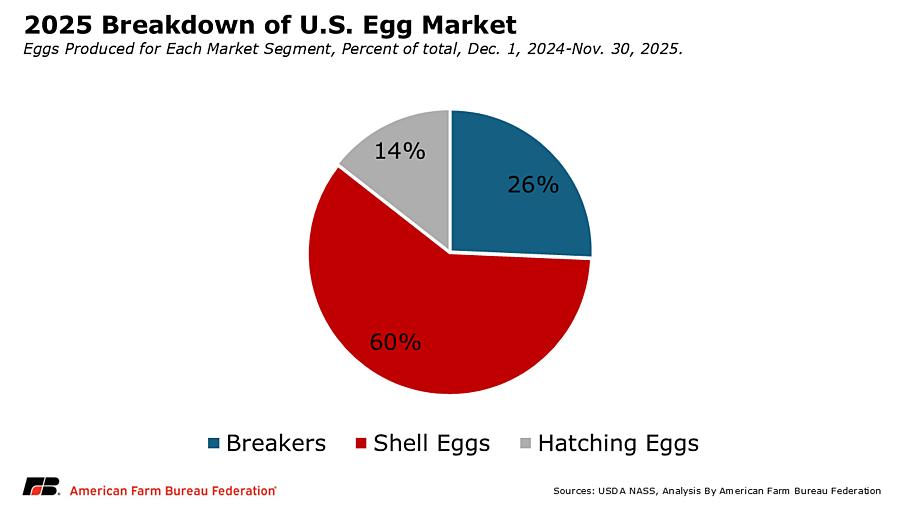
According to USDA’s 2025 Chickens and Eggs Summary, a total of 105.25 billion eggs were produced in the United States in 2025, down about 4 billion eggs or 4% from 2024 — reflecting impacts from HPAI. All eggs produced for human consumption are called table eggs. About 90 billion eggs, or 86% of all eggs produced in 2025, were table eggs, while 15.2 billion, or about 14%, were hatching eggs used for producing chickens. Out of the table eggs produced for human consumption, about 30%, commonly called breaker eggs, went to specialized breaking facilities for the liquid egg market. The liquid eggs are then converted into ingredients for industrial bakers, the food service industry or other food manufacturers. The remaining unbroken table eggs, sold in cartons at the grocery store, are called shell eggs. About 60% of all eggs produced in the U.S. in 2025, or about 63 billion eggs, were shell eggs.
Read the full report here.
MENTAL HEALTH MONTH WEATHERING THE STORM
This Mental Health Awareness Month, remember that a healthy farm or ranch starts with a healthy you. Farmers are experts at checking in on their crops, livestock and equipment, but checking in on your own personal wellbeing is just as important. Farmers and ranchers don’t have to weather the storm alone. For nearly a decade since its inception, the Farm State of Mind initiative has focused on reducing the stigma around mental health and providing tools to help farmers, ranchers and their families. American Farm Bureau is unveiling a new resource dedicated to helping farmers and ranchers consider how to respond when stress becomes overwhelming and they don’t know what to do. It’s called the Farm State of Mind Checklist: Weathering the Storm.
• Nourish: Give your body the nutrition, hydration and rest it needs.
• Move: Incorporate exercise into your daily routine on the farm.
• Unplug: Step outside your fence rows for time away from the farm or ranch.
• Pause: Take time for meditation, prayer or a breathing exercise.
• Connect: Help a friend, invite someone over, or hold a farm meeting.
• Share: Access no-cost resources, consult professionals and tell your story.
Find more mental health resources online.
GOVERNOR SANDERS CELEBRATES AGRICULTURE
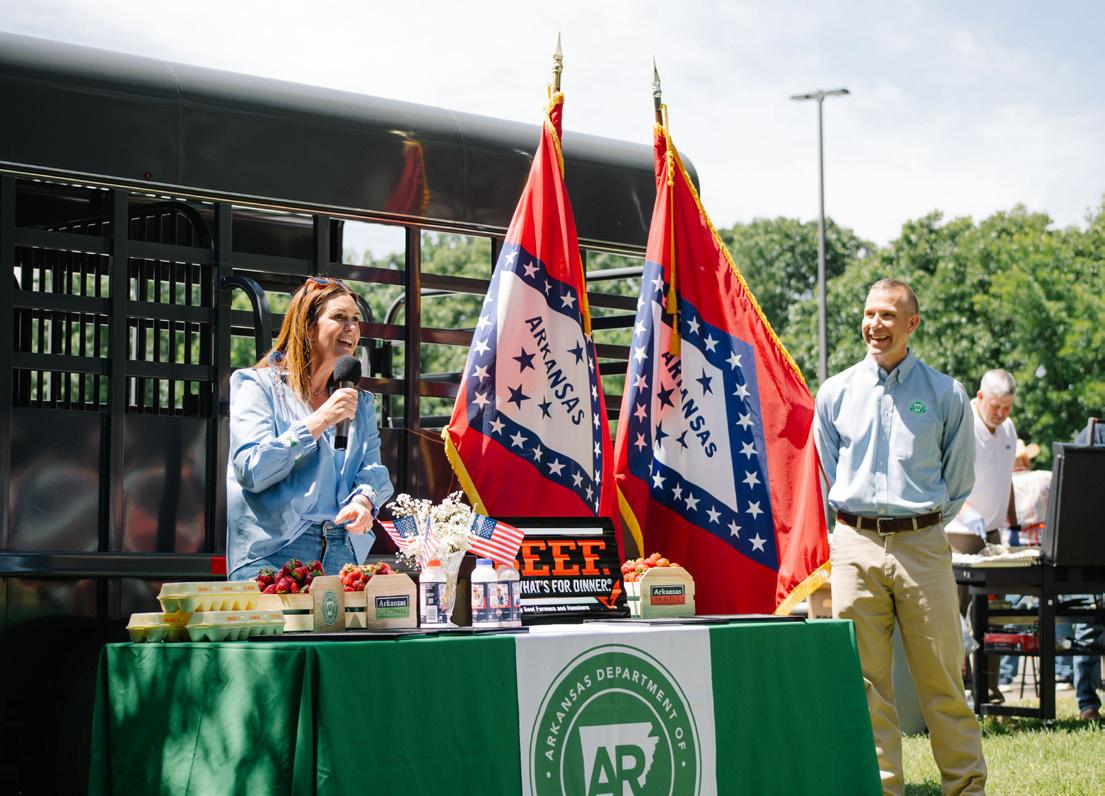
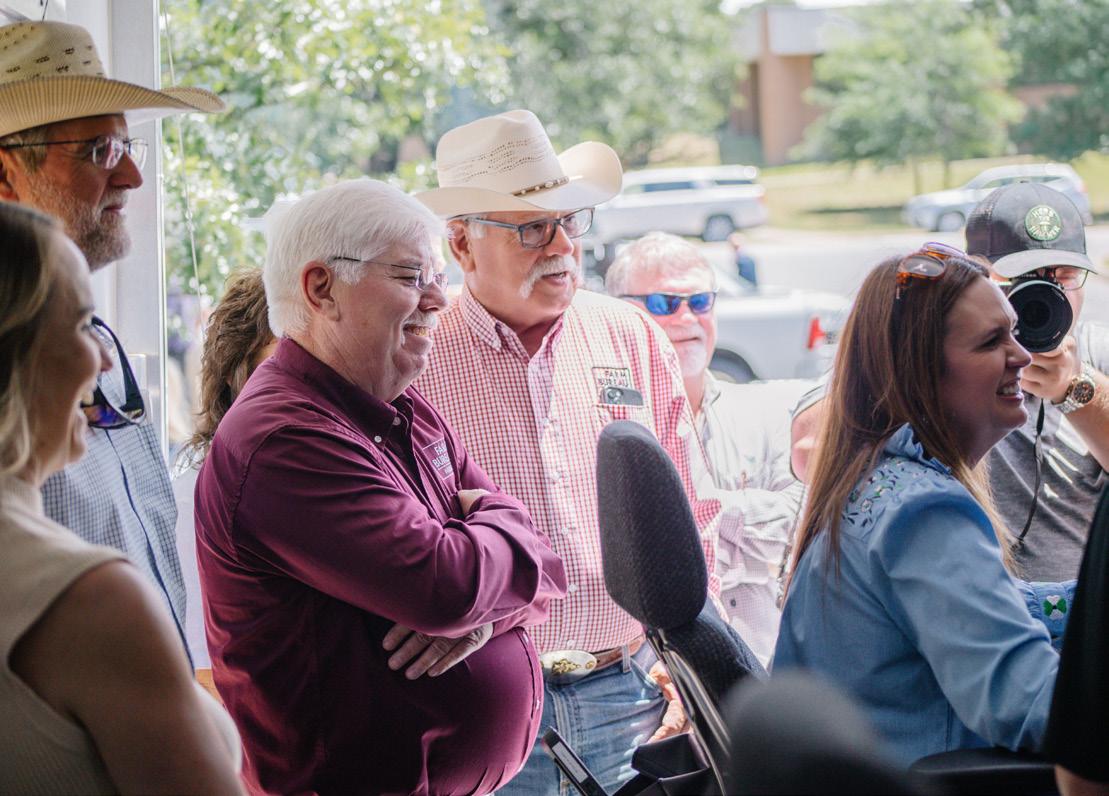
Arkansas Farm Bureau leaders joined Gov. Sarah Huckabee Sanders alongside various agriculture organizations to celebrate different Arkansas commodities at the Arkansas Department of Agriculture. Gov. Sanders presented proclamations to celebrate beef, egg, strawberry and dairy month.
Attendees enjoyed sampling some of Arkansas’s most popular commodities during the event, and Arkansas Farm Bureau provided its educational trailer for use. Those who visited the trailer were able to step inside, try out the equipment simulators and learn about some of the machinery that supports the state’s number one industry — agriculture!
See more photos here.
MARKET NEWS
as of May 13, 2026
Contact Brandy Carroll brandy.carroll@arfb.com
Tyler Oxner tyler.oxner@arfb.com
Rice
Rice futures have rallied sharply in May, with most-active July setting new 6-month highs and testing resistance at $12.50. The market is reacting to prospects for a significantly smaller crop this year given the high cost of production for rice and drought conditions across key growing regions in Arkansas. USDA reports that as of May 10, Arkansas farmers had seeded 93% of intended acres, compared with a 5-year average of 80% for the same time. May marks the first supply and demand estimates for the 26/27 marketing year in the monthly WASDE report. Rice supplies are projected to decline by 29 million hundredweight to 275.3 million, with lower production partially offset by higher carryover stocks and imports. Exports are projected to be 79 million cwt, down only 2 million from the previous marketing year, resulting in a 12 million cwt decline in ending stocks year over year. The projected average on-farm price for all rice is $13.50/cwt and $12/cwt for long grain.
Soybeans
Futures continue to trend higher despite a recent downturn, trading at their highest level in 2 ½ years. The soy complex is largely being driven higher by soy oil prices. Sharp increases in crude oil values have carried over into soy oil, but as crude prices declined, we’ve seen some weakness in soy oil as well. Old Crop May is in position to challenge resistance at $12.40, Soybean planting is moving along well ahead of schedule across the country. As
of May 10, 49% of U.S. acres were planted, compared with a 5-year average of 36%. In Arkansas, 81% of intended acres are seeded, compared with a 5-year average of 59%. In the May WASDE, USDA is projecting total supply at 4.8 billion bushels for 26/27, up 188 million bushels from the previous marketing year. However, increases in the domestic use and export estimates resulted in a decrease in ending stocks of 30 million bushels to 310 million bushels. The projected on-farm average price for 26/27 is $11.40.
Corn
The May WASDE points to tighter supplies, lower exports, and smaller ending stocks. U.S. production is projected at 16.0 billion bushels, down 6 percent from last year due to fewer planted acres and lower yields. Exports are forecast at 3.2 billion bushels, while ending stocks are expected to tighten enough to support a season-average farm price of $4.40 per bushel. Globally, corn production is projected below last year’s record as smaller crops in the United States, Argentina, and Ukraine outweigh gains in China and Brazil. World demand is expected to reach a record level, pushing global ending stocks to their lowest level since 2013/14. The corn market traded higher to start the week, building momentum off last week’s successful hold above the 50-day moving average ($4.70). Bullish traders will be targeting early May highs in the upper $4.80s as a signal of a continuing upward trend.
Cotton
Cotton futures also started the week higher, posting a new life-of-contract high before retreating as traders shifted attention toward the May WASDE report and ongoing U.S./ China trade talks. The friendly report could not keep prices from turning lower after its release. USDA’s outlook projects lower U.S. cotton production and ending stocks, with stronger exports and firmer prices. Production is forecast at 13.3 million bales, down 600,000 bales from last year, while exports are expected to rise to 12.3
million bales on stronger global demand. Ending stocks are projected at 3.9 million bales, supporting a season-average price of 73 cents per pound. Globally, cotton production is expected to decline while demand improves modestly, led by China, India, Pakistan, and Vietnam.
Wheat
Wheat markets also reacted to USDA’s first survey-based winter wheat production estimate, which came in sharply below projections made earlier this year. U.S. wheat production is forecast at 1.56 billion bushels, down 424 million bushels from last year due to lower acreage and weaker yields, particularly in Hard Red Winter wheat. Ending stocks are projected to fall 18 percent, supporting a seasonaverage farm price of $6.50 per bushel. Globally, wheat production is also expected to decline, with major reductions in the United States, EU, Argentina, and Australia. From a technical standpoint the uptrend remains alive and well, with July KC futures testing and holding above the 20-day moving average ($6.72 1/2) last week. The 50-day moving average ($6.43 1/4) would be the next bearish target on a resumption of profit-taking. Meanwhile, $7.04 3/4 was the high close on April 29 and is the bullish target.
Livestock and Poultry
In the May WASDE, USDA forecast total U.S. red meat and poultry production for 2027 above the forecast for 2026 as higher pork and poultry production more than offset lower projected beef production. Beef production is projected to be lower as ranchers attempt to rebuild herds and increase heifer retention. Poultry production is expected to increase on strong demand and favorable production margins.