ArFB leaders and staff were in Washington, D.C. this week for the American Farm Bureau Federation Council of Presidents meeting, joining fellow state Farm Bureau leaders from across the country for discussions on issues shaping agriculture.
The Council of Presidents meeting agenda included updates on national policy, the farm economy, women in agriculture and the potential impacts of the 2026 midterm elections on U.S. agriculture. Attendees heard policy updates and participated in discussions at the White House executive office building. Policy discussions featured updates from Kevin Hassett, director Continued on page 2
AFBF’s Women in Ag Survey Results, Page 2
Elementary Ag Education Pilot Program’s Annual Workshop, Page 3
ARKANSAS
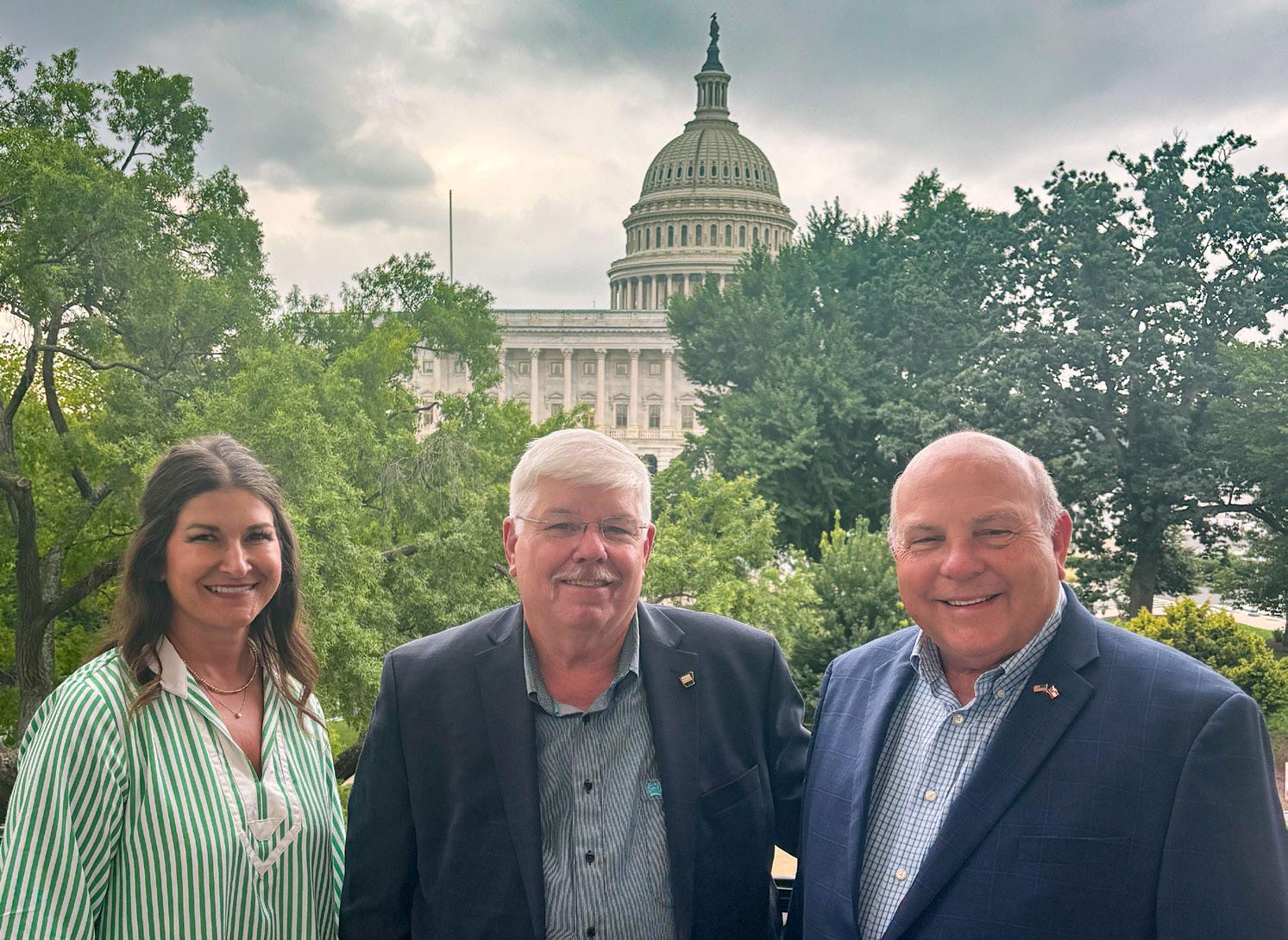
Council of Presidents | Pictured from left: ArFB Vice President Magen Allen, ArFB President Dan Wright and American Farm Bureau Federation President Zippy Duvall.
COUNCIL OF PRESIDENTS MEETING IN D.C.
Continued from page 1
of the National Economic Council; Ambassador Dr. Julie Callahan, chief agricultural negotiator for the Office of the U.S. Trade Representative; Lee Zeldin, administrator for the U.S. Environmental Protection Agency; and Justin Schwab, general counsel for the Council on Environmental Quality.
Topics included Section 301 investigations, the U.S.Mexico-Canada Agreement (USMCA), efforts to restore an agricultural trade surplus, key environmental and regulatory issues impacting farmers and ranchers, and more.
The Council of Presidents Meeting provides an opportunity for state Farm Bureau leaders to hear directly from federal officials and engage in conversations on the policies affecting agriculture across the country.
AFBF’S WOMEN IN AG SURVEY RESULTS
The American Farm Bureau Federation’s Women’s Leadership Committee, with support from JBS and CoBank, shared the results of a national study intended to guide programming dedicated to women in agriculture for the next five years.
Conducted via online survey and focus groups, the study provides a comprehensive look at women in agriculture across the United States. It also identifies essential roles women currently play in building a sustainable future for agriculture as well as opportunities for growth, improvement and additional support.
A key finding from the study is that women in agriculture have strong confidence in their ability to balance farm work and family responsibilities. Most respondents also have a high level of confidence in their ability to represent agriculture in public and professional settings. In fact, nine out of 10 women report feeling confident speaking at community meetings about agriculture, and an impressive number — nearly 90% — of women surveyed are interested in taking on leadership roles now or in the future.
Conversely, the study also identifies five key areas where the agriculture sector could increase support: time and caregiving; skill development; leadership involvement; financial future; and overall well-being.
Almost half (44%) of women surveyed reported interest in gaining equipment or technical skills training, while nearly six in 10 respondents (56%) expressed interest in business and financial management training.
Several data points reinforce existing Farm Bureau programming. For example, 45% of respondents expressed interest in policy or civic engagement training, and 42% expressed interest in community involvement or advocacy training. This aligns with the focus of Farm Bureau’s Women’s Communications Boot Camp, which has trained more than 350 women in agriculture in communications and advocacy.
Read more here.
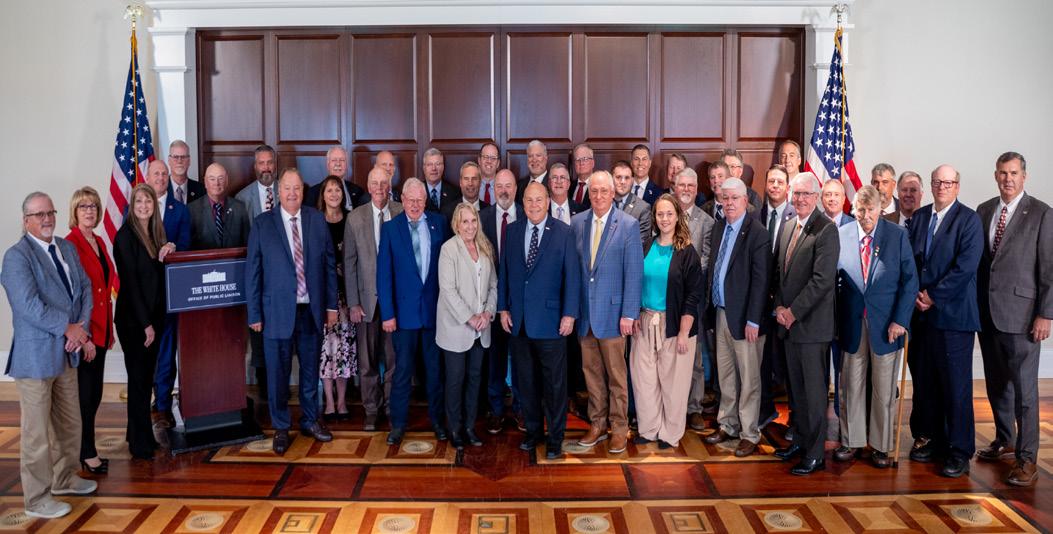
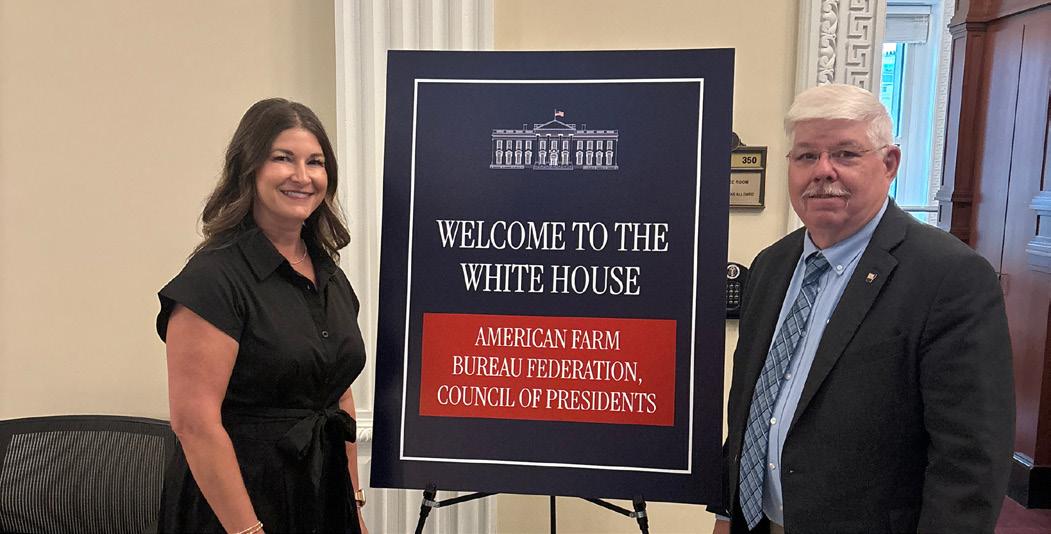
Farm Bureau Leaders from across the country attended the Council of President’s Meeting .
Pictured: ArFB Vice President Magen Allen and ArFB President Dan Wright.
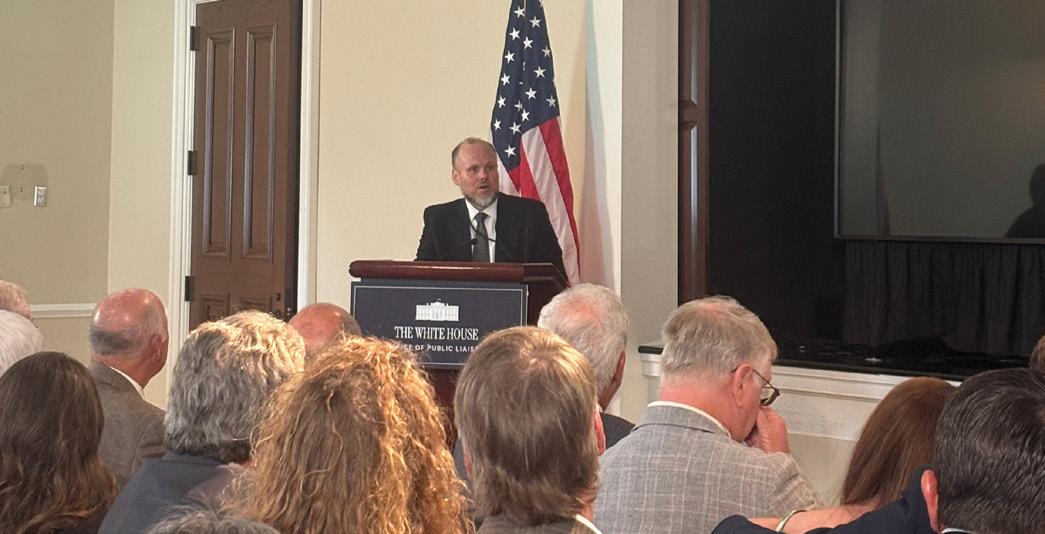
Attendees heard from several speakers during discussions at the White House. Pictured: Justin Schwab, general counsel for the Council on Environmental Quality.
ELEMENTARY AGRICULTURE EDUCATION PILOT PROGRAM ANNUAL WORKSHOP
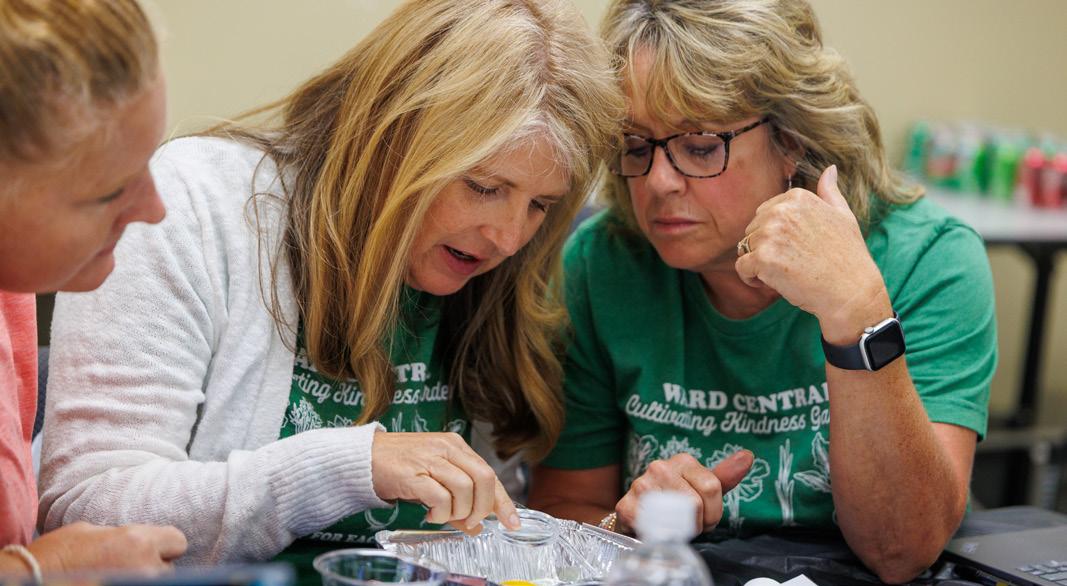
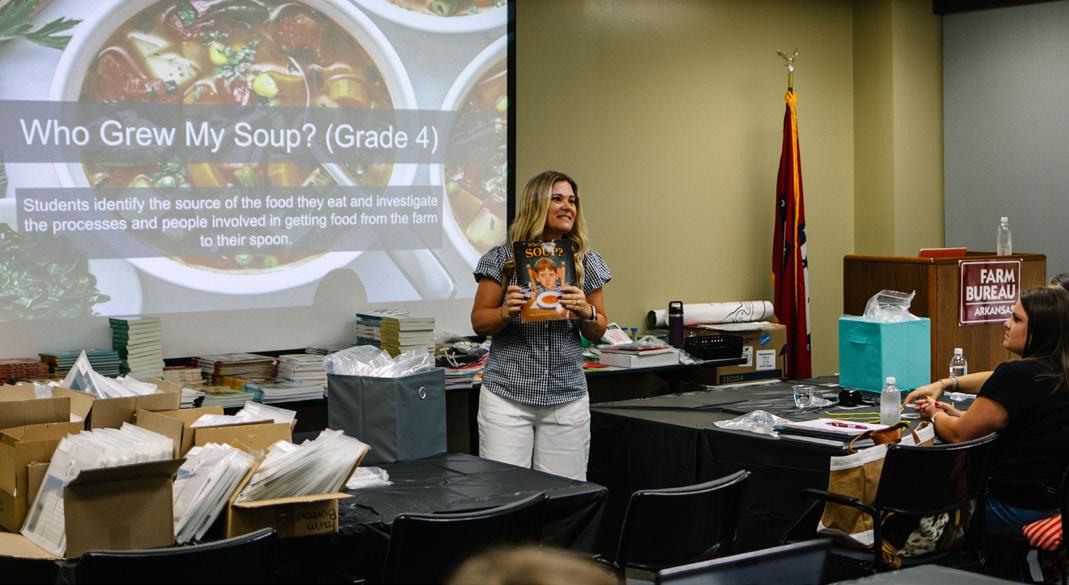
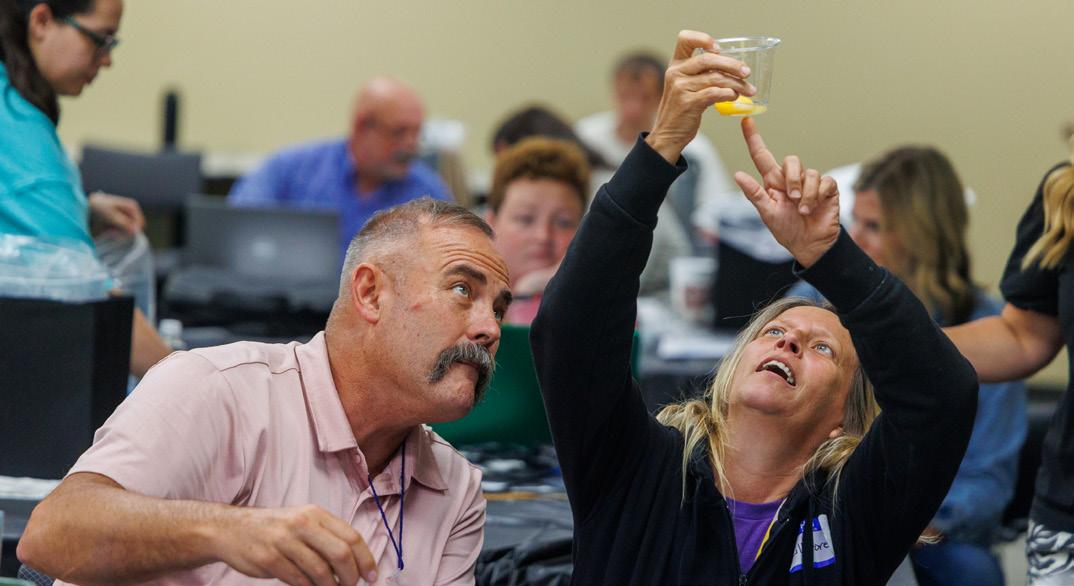
On July 7 and 8, the annual professional development workshop for ArFB’s Elementary Ag Education Pilot Program took place in Little Rock, featuring two days of interactive learning and collaboration for educators from across Arkansas. Nearly 50 teachers representing 27 schools participated in the workshop, gaining experience with standards-based K-6 agricultural literacy curriculum designed to increase students’ understanding of agriculture and its impact on everyday life.
Throughout the workshop, participants explored the foundations of agricultural literacy, the 5E instructional model, National Agricultural Literacy Outcomes and classroom resources available through Arkansas Ag in the Classroom. Teachers also participated in lessons featuring activities such as My Farm Web, Who Grew My Soup, Farming in a Glove, Honey Bees: A Pollination Simulation, Corn: Food, Fuel and Plastic, Engineering Ice Cream, Farming for Energy, Desktop Greenhouses, Vermicomposting, DNA: Expressions in Agriculture, From Wool to Wheel, and Eggology. The workshop also included a presentation from the Arkansas Department of Education on program endorsement opportunities.
By equipping educators with meaningful, hands-on lessons and resources, the Elementary Ag Education Pilot Program continues to strengthen agricultural literacy and help students develop a deeper appreciation for the role of agriculture.
MARKET NEWS
as of July 8, 2026
Contact
Brandy Carroll brandy.carroll@arfb.com
Tyler Oxner tyler.oxner@arfb.com
Rice
The June 30 USDA Acreage Report confirmed that planted rice acres in Arkansas and across the U.S. are the lowest since allotments were eliminated by the federal government in the mid-1970s. This report is based on surveys conducted in early June, certified acreage will be reported later in the summer. Arkansas farmers reported planting a total of 851,000 acres of rice (730,000 of long grain and 120,000 of medium grain). U.S. planted acres were reported at 2.017 million, down from over 2.8 million one year ago, reflecting the high cost of production and extremely low likelihood of profitability. In a clear case of “buy the rumor, sell the fact” September futures set a new contract high and immediately charted a huge bearish key reversal. Follow through selling has been limited, however, and bulls are attempting to take out that high of $13.91½ in order to negate the negative chart signal.
Soybeans
Soybean acres are reportedly up sharply, according to the USDA June 30 acreage report, due in no small part to the high cost and low availability of fertilizer that is needed to grow corn and rice. Farmers have reported planting 85.365 million acres of soybeans in 2026, up from 81.215 million in 2025. In Arkansas, farmers have seeded 3.2 million acres of soybeans, up from 2.59 million last year. Despite this, soybean futures have surged higher this week on
higher crude oil prices and talk of Chinese buying returning to the market. Bulls are attempting to make a run at resistance at the May high of $12.14.
Corn
September and December corn futures continue to ride a wave of momentum, sparked by the recent USDA report estimating planted acreage down 3% compared to the 2025 season. From a technical standpoint, the 50-day and 100-day moving averages ($4.69 to $4.73) serve as the short-term target for bulls. On the downside, support rests at the 20-day moving average ($4.42), which may be tested in the coming days following Monday’s breakout. Domestically, the USDA’s Crop Progress report showed 16% of U.S. corn is silking, slightly ahead of the early-July average. Meanwhile, crop ratings held steady at 67% good to excellent, notably 7 points lower than this time last year. Globally, the Brazilian corn harvest is progressing, though at a slightly slower-than-normal pace for early July.
Cotton
The December cotton contract recently posted dramatic gains, hitting nearly a full limit-up. The surge was driven by speculative short-covering and mounting anxieties over northern hemisphere growing conditions. Many traders suspect the U.S. crop is deteriorating faster than indicated by the USDA’s latest rating of 46% good to excellent. This rally comes despite the June acreage report showing total cotton acres up 6% from previous estimates. Outside markets also lent support, as reports of China purchasing five cargoes of U.S. soybeans created positive demand spillover for cotton. Chart support now sits at the 20-day moving average of 77.53 cents, while psychological resistance looms at 82 cents.
Wheat
With the July wheat contract expiring next week, market focus is shifting entirely to September. The outgoing July contract received a final boost from the June acreage report, which estimated total wheat acres down 6%. September contracts across all three major wheat markets have trended higher, fueled by last week’s surprise cut to 2026 U.S. wheat acreage. As a result, U.S. wheat stocks for the 2026/27 marketing year are expected to fall in upcoming USDA forecasts. Technically, September KC futures rallied back above the 100-day moving average ($6.50), a key level that provided solid support through most of 2026 before a brief break lower.
Livestock
Live cattle futures are trading in a choppy sideways pattern, with August futures struggling to overcome resistance at $250. The market is looking for evidence of good clearance during the long holiday weekend. Futures are finding support from their current discount to cash. Feeder prices are being limited by losses in live cattle futures and gains in corn futures. Despite stronger fundamentals, hog futures are under some pressure from their discount to cash prices. The composite pork cutout is strong thanks to holiday demand and the summer grilling season in general.