
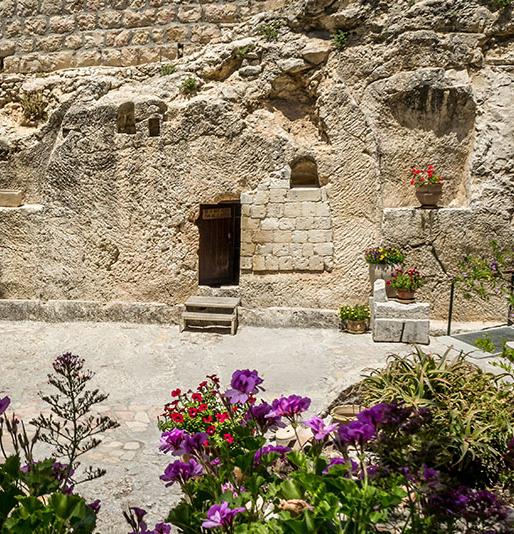



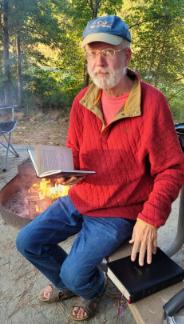




April always feels like a month of movement. The days stretch longer. The light lingers. Seeds that wereburiedbegintorise.ThiseditionofGraceNotescaptures thatsamerhythm—rising,resting,reaching,andreflecting.As I looked over the lineup for this month, I was struck by how beautifully it tells one cohesive story about who we are as a church and who God is shaping us to be.
On page three, you’ll read about missions and the question, “Is It Worth It?” It’s a fair question. Missions require sacrifice—time, money, comfort, and sometimes even safety. Butthedeeperquestionunderneathitisthis:Whatisthevalue of a soul? When Jesus left heaven for earth, He answered that questionwithHislife.Thecrossdeclaresthatpeopleareworth everything.
As a congregation, we are not spectators in God’s mission; we are participants. Whether we go across the ocean or across the street, we carry the same calling. Every act of kindness, every Bible study, every meal delivered, every prayer offered in faith—it all matters. It is always worth it because eternity is at stake.
Then, on pages four and five, Gloria Allen draws a beautiful connection between bread-making and the gospel. Bread must rise before it can nourish. There is a quiet, unseen process that happens before something becomes life-giving.
Then, in a beautiful complement, page eight calls us to rest. Isn’tthatjustlikeGod?Hecallsustomissionandthencallsus to Sabbath. He invites us to rise in purpose and then to rest in His presence. Rest is not laziness; it is trust.
In a restless culture driven by anxiety and performance, Sabbath rest becomes a declaration of faith. It says, “God is God—andIamnot.”Itre-centersus.Itrecalibratesourhearts. It restores our souls. Without rest, mission becomes burnout. Without mission, rest becomes stagnation. But together, they form a rhythm of grace.
Pages ten and beyond invite reflection and family focus. Nancy McMillan’s piece, “All Rise!” turns our attention to judgment. For many, judgment sounds intimidating. But in Scripture, judgment is good news for those who trust Christ: Wrongs will be made right. Evil does not get the last word. Justice and mercy will meet in perfect harmony.
The same Savior who died for us now represents us. Judgment is not about fear—it is about hope. It is the assurance that history is not spiraling out of control but moving toward restoration.
I also love that this edition highlights family worship and family focus. Faith is not meant to live only in church buildings. It is meant to live around dinner tables, in bedtime prayers, in car rides, in the ordinary rhythms of life. The strongest churches are built on strong homes—not perfect homes, but homes where Christ is invited in daily.

That’s how grace works too, the kingdom of God rising slowly in the human heart. Jesus compared it to yeast working through dough. Transformation doesn’t always announce itself loudly; sometimes it happens in the hidden places— through daily surrender, Scripture, prayer, repentance, and obedience. Yet when the process is complete, what emerges is sustaining, nourishing, and able to bless others. We are living in a world obsessed with instant results. But the gospel still honors the slow, faithful rise of character shaped by the Spirit.
On page six, Max Hammonds invites us to take “The Long View” through the lens of the sanctuary. The sanctuary message reminds us that God is intentional; He is not improvising. From the courtyard to the Most Holy Place, ScripturerevealsaGodwhomoveswithpurpose—whosaves, intercedes, judges, and restores. When life feels chaotic, the sanctuary reminds us that heaven is not confused. Christ is ministering. The story is moving forward. History is not random—it is redemptive.
This month to lean into the full rhythm of what God offers: Rise in faith.
Serve in mission.
Rest in Christ.
Reflect on eternity.
Strengthen your family.
Live with purpose.
Spring reminds us that what appears dormant is not dead. Some of you may feel spiritually weary, likegrowthhasbeensloworunseen.Takeheart.Godisalways at work beneath the surface. The seed does not see the sun immediately—but it rises nonetheless.
We live in serious times. The world is restless. Culture shifts rapidly. Headlines stir anxiety. But the church of Jesus Christ remains anchored. We know where history is headed. We know Who sits on the throne. And we know that our labor in the Lord is not in vain.
This month’s newsletter is more than a collection of articles. It is a reminder of who we are: a people shaped by mission, nourished by grace, grounded in truth, strengthened by rest, and focused on eternity.
Let April be a month where we rise—not in pride, but in purpose. We rest—not in complacency, but in Christ. We serve—not for recognition, but for souls. We live every day in the confident hope that the One who began a good work in us will be faithful to complete it.
With gratitude to serve you, Pastor Eric

ByTomArany
Short-term missions: they cost . . . a LOT! Does God approve of such expenditures? Look at the following indications of God’s special interest and support for such efforts:
Making strangers into friends – within the mission group itself and/or with the local residents in the mission field visited.
Just enough food to serve the visiting mission team, but nothing left over.
Passports and visas that come just the day before leaving. Unexpected customs clearances for building materials or medical supplies for the group.
Connecting flights are delayed just long enough for the delayedpreviousflighttoconnect with.
Rain water in the cisterns comes the day before the visiting team arrives.
And likely many other “coincidences” that are more than happenstance. God is at work blessing the projects that expand and support His presence wherever they occur. “The angels of heaven look upon the distress of God's family upon the earth, and they are prepared to cooperatewithmeninrelievingoppressionandsuffering.”(Ellen G. White, Desire of Ages, p. 500).
others of another culture takes precedence over personal priorities. A young adult of academy or college age in these experiences are very likely to change their outlook for the remainder of their life.
●A mission project is hard work. Often students (and adults) look at physical work as something to be avoided, but the demands of a building project, the work, and the results become a source of satisfaction and achievement.
●The results as a mission team show that what can be accomplished by a group of individuals working together, and are often more than that same number of persons working separately. As the energy required is attributed to the extra strength God gives, the “team” encourages one another to excel in what is being done.
●As stated above, friendships forged through the experience, often in trying situations, remain long after the trip is completed. These friendships further lead participants to accept an active relationship with God.
●Finally,evidenttobothseniorandyoungerpersonsalike, the contrast between the blessings of an affluent country and the struggle of those in the host area create an appreciation of what we have and the needs of others. This realization makes us more willing to give to support those working in mission environments.
Finally, what is the value of a mission trip to those who receive the efforts of the mission team? A building, long awaited, perhaps given up on, appearing in a time span unthinkable previously. Or finding health that previously was unavailable. Or schools that have their facilities upgraded and their classroom enthusiasm revived. Or a VBS program that points the children to the God they have never heard about before.

A mission team brings more than just manpower. It shows the host constituency that they are part of a worldwide network of members who exemplify Jesus' love for those who are His children, regardless where they reside.
Butwhatisthevalueofthetripforthosewhoputtheirefforts and money into a short-term mission trip? Look at some verifiable benefits often acknowledged by participants:
●Mission trips provide an activity with everlasting consequences.
●The participant learns fiscal responsibility, and that when we have done all we can, God will provide, in often unanticipated ways, solutions for what seem to be impossible roadblocks. This pertains, more than the cost, to the circumstances surrounding the project.
●Participants often realize more personally how trust in God's overarching control is necessary, especially during disappointments, setbacks, or adversity. Prayer and Faith become very important during such experiences.
●We teach the life-style philosophy that God comes first, then others, and self is last. A God-centered project to help
What is the value of a short term mission project? Can you putapricetagonit?Isthereavalueindollarsandcentsforthe enthusiasm of the mission team, together or for each individual, for what they have experienced? If asked, “Would you go again?” there are very few who wouldn't say, “how soon?!”. It can become addicting.
TheArdenSeventh-dayAdventistChurchhasgoneonshortterm mission trips almost every year since the 1990’s trip to Russia.Thislastmonthanothergroupwentagain,thistimeto Bolivia. For the mission experiences that have happened recently or years ago which resulted in the compounded results taking place currently in our home church and those thatwemaynotrealizeuntilwemeetineternity,thevaluation is incalculable. Thus we encourage everyone who receives a request to sponsor/support a participant or a team, whether older or younger adults, from a school or your own church to givethemallyoucan.Theirexperienceandyourblessingswill overflow.

byGloriaAllen

"Amultitudeofkneadypeople...allwoundupinthedough," so punned the reporter who covered the 800+ bread makers assembled in Moody Coliseum, Dallas, TX, for the opening community campmeeting event in 1979. At punch down time, you'd have thought a thousand stampeding cattle had thundered through the auditorium as clouds of flour filled the air.
Our Bible records God as a multiplier of loaves. I've seen Him in action, too. For some four decades, rising dough and the delight of sharing freshly made bread have been a focal point of my health ministry. Exuberant children, kneading dough, throwing it into the air, shaping loaves, are positive they've discovered the original playdough.Morethan940,000breadmakershavecraftedtheirvery own loaves of whole wheat bread, mastering simple methods, and discovering the principles of whole grain nutrition using “Breadmake” techniques and materials.
Midway through an eight-week “Health Yourself” seminar at a Catholic parish in suburban Maryland in 1975, participants asked
my late husband Elman Folkenberg (co-founder of the Five-day PlantoStopSmoking)toteachthemhowtomakehighfiberbread. Back then it was nearly impossible to find whole grain bread other than Pepperidge Farm in local supermarkets. Realizing that successful bread making depends on correctly identifying proper bread texture, we determined that every participant should get into the dough "hands-on" so each learner would identify correct dough consistency. Each could master kneading and learn to manipulate yeast dough without ending up with "Donald Duck hands." Purchasing carry-out boxes, we prepackaged 150 individual kits with essential ingredients and required utensils including bowls, spoons,pans,takehomebags,andevenaprons.Eachpersonwould open his kit, sanitize his hands, and proceed to mix and knead dough. After a 20-minute rise, the dough was ready forshaping.Breadmakersrushedhome,doughrising,ready for baking.
All this was possible because of answered prayer. God revealed a quick method, which we nicknamed Breadmake, thatallowedustoteachbreadmakingfromstart-to-finishin just 90 minutes, nixing the 4-8 hour traditional, all-day approach.
For several hours after that first bread making session, participants called us to share their delight. Those who had never made bread were astounded with their tasty, praiseworthy results. Experienced bread makers said they'd never made bread so quickly nor so easily.
Next morning a county supervisor of education called to reporthisownamazingsuccess,withaquestion: Wouldwe consider teaching breadmaking to 30,000 school children? This required contemplation. We put his request on hold. However, within a few days, the coordinator for adult education also requested we conduct “Breadmakes” for the night school program.
Such generous invitations challenged us. Evidently God was thinking big. We decided we'd better "Think Big" with Him.Anticipating1976,wecontactedCongressionalleaders who successfully arranged for “Breadmake” classes to be designated as official celebratory events marking America's 200th birthday. After all, how appropriate to mark the event by making and eating homemade bread the way our forefathers (and foremothers) did.
Butamassingingredientsforcommunitybreadmakingclassesalso challenged us. We decided to invite corporate involvement. ExcitedlythesalesmanagersofPillsburyflour,Fleischmann'sYeast, Quaker Oats, Duffy Mott (supplying molasses) and Proctor & Gamble (supplying Crisco Oil) responded generously. Sitting in the Madison Avenue board room of Fleischmann’s Yeast, they collectively agreed to fund a $30,000 media campaign featuring a 30-second TV spot and printed ads to launch “Breadmakes” in the D.C. market. Within weeks, 19 tons of Pillsbury flour in 10-ounce packages arrived by air along with other supplies and filled our rented warehouse. The local Workshop for the Handicapped happily took on the task of assembling the bread boxes.
Training sessions for local Home Ec teachers oriented them to the new whole grain breadmaking techniques developed for teaching “Breadmake.”StudentsattendingColumbiaUnionCollege,Takoma
Park, MD; (now known as Washington Adventist University) eagerly joined in the health ministry outreach. Neighborhood groups of 200-300 participants at a time in local high schools experienced the joy of making and tasting their very own loaves of bread. One man boasted that he enrolled at the insistence of his physical therapist who said he could squeeze rubber balls endlessly or he could learn to make bread.
ThenCametheChildren
But the Lord would not let us forget the children. Teachers requested that we bring “Breadmake” to their classrooms. Tests in elementary schools garnered enthusiastic support from students,teachers,principalsand parents. Working with 120-150 elementary students in school lunchrooms proved a challenge, onewhichtheLordenabledusto meet with humor and fun. Teachers lined up their scrubbed and aproned students after lunch. Dividing them into red and blue partners, we seated them across from each other. Each pair measured and mixed their own ingredients, then divided the dough in half for kneading and shaping. Each child left with his/her own recipe-imprinted tote bag with rising bread in the pan, ready to bake and eat at home.
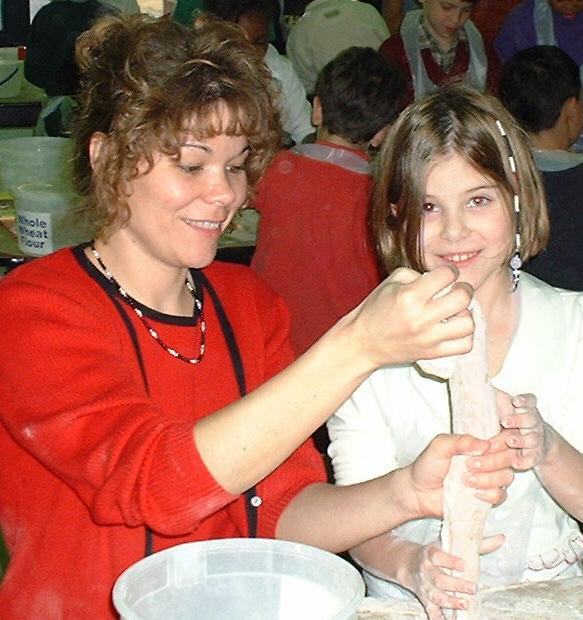
A Title I summer program funded by the United States Department of Agriculture in 1976 enabled some 2,100 children and their parents to make bread in Washington's inner city. The following school year more than 13,000 children had their hands in the dough.
Following the Texas SDA campmeeting “Breadmake” exposure, Adventist pastors and their wives enrolled for “Breadmake” instructor training and ordered “Breadmake” boxes for outreach ministries nationwide. NAD Vacation Bible School "Kids in the Kitchen" curriculum featured bread making and summer camps exposed more young bread makers to dough delights. But eventually orders dwindled. Food fads come and go. Eventually bread making machines took over the home market. My husband's illness came to require my full-time care. He eventually passed in 1986 and I sought permanent employment. But unknown to me was the future God was mapping out for “Breadmake.”
“I'llFilltheOrders,Lord"
I was now a full-time nursing home administrator, with little time to teach classes or assemble bread boxes. I hated the thought that “Breadmake” was in the back seat of my life. When the Sabbath School Investment coordinator challenged the congregation to raise mission funds, I reached out in faith and committed “Breadmake” to God's custody. I'd find a way to fill orders if God sent some my way. A dollar from each box would be designated for Sabbath School investment. WhatasalesmanGodturnedouttobe!Lessthansixmonths later the sales manager of Fleischmann’s Yeast inquired about the possibility of sharing our techniques with 4-H club leaders. Instead of sharing printed directions, I countered, why not send each leader a “Breadmake” box with ingredients, utensils and full
directions? Each box would suffice for 30 participants, the perfect resource tool for club leaders.
Certainly, God must have prepared them to receive my proposal. They loved it! But how many boxes did they want to distribute, I wondered.Andhowsoon?"Let'sbeginwith4,000,”theyresponded. "Can you ship by September?"
Way beyond my expectations! During the years “Breadmake” boxeshadbeenavailable,we'donlyshippedsome300peryear.Now to put together 4000 in 4 months? No way, or so I thought. If He expected me to fill this order, He'd also have to take charge of personnel.
It wasn’t long before friends, church school students, and Pathfinders eager to earn trip money (think Oshkosh) rallied to the job of counting 120,000 each of aprons, pans, stir-stiks, moist towelettes, recipe flyers, and tote bags into packs of 30 each. Plus there were plastic bowls, spoons, knives, measuring cups, yeast, honey and salt packets - all to be divided and packed into 4000 boxes. Pathfinders even rallied to haul away the mountains of trash that accumulated each week.
Sabbath School investment grew by $4,000. Just as the project begantowinddown,Fleischmann’sdecidedonanother4,000boxes to meet 4-H leader demands. In fact, Fleischman’s renewed the original 4,000 order twice more. Later I learned that Fleischmann’s sent 4-H orders our way even when competitive project bids were entertained. God put a hedge around the “Breadmake” project.
On a personal note God provided a permanent “Breadmake” production manager when I married David McAdams in 1989. He took over warehousing, assembly and shipping while I handled order processing, purchasing/inventory, and marketing. By 1993 my nursing home job came to an end and we teamed up to present hands-on Magic Dough Shows to area schools. Throughout the 90s and early 2000s, the “Bakery Field Trip that Comes to School,” earned me the reputation as "Breadmake Lady" as we examined healthy ways to live, comparing the children to the live yeast that workedwithinthebreaddough–bothneedlotsofwater,goodfood (but not too much), exercise, and lots of sleep. With these good habits, children grow strong and healthy.
In addition to boxes shipped for 4-H clubs, boxes also were available for church outreach programs, summer camps, and other organizations. One of the most unique “Breadmake” locations has to have been the floating logging camp on Prince of Wales Isle in Alaska, 600 miles north of Seattle, WA. At the camp run by retired Pastor Bob East and his wife Marie, theyrolleduptheirsleevestosharetheartof bread making with logging families prior to evangelisticendeavorsbasedonthecounsel: "Formclasses,whereyoucanteachpeopleto make good bread." Welfare Ministry, E. G. White, 128.

“Breadmake” changed hands with our retirement in 2016, and eventually the COVID-19 disaster terminated the “Breadmake” program. But for 44 years, rising dough witnessed to God's blessing and provision for His children – with warm memories for many families gathering around fresh-from-the-oven whole grain loaves.

At 5:30 am, the house was quiet. Pawpaw (aka Albert Groot)satathisdesk,hislampcastingtheshadowofhis handdrumminghispenontheyellowlegalpad.Since4:30,he had been scribbling ideas, aligning his thoughts, the elusive concept just beyond his grasp.
Hisnotessaid:“Theearthlysanctuary–alightweight,mobile modeloftheheavenly,buttheroomsandthefurnitureserving the same functions.” “We anxiously concentrate on Jesus’ death and resurrection – and ascension to serve as high priest in the heavenly sanctuary – to assure our forgiveness and acceptance.” “We are very worried about our righteousness and going to heaven as if the latter depends on the former.” “The heavenly sanctuary has more to teach than sacrifice for forgiveness.”
Pawpaw flipped his pen over in his hand and began writing: “The three parts of the sanctuary –courtyard/sacrifice, holy place/ mediation, most holy place/final cleansing,” listing them in a column headed “Sanctuary”. He placed an equals sign after each one and wrote a new column heading:“Thesethreeaccomplish. . .” and wrote these three, one after each equals sign: “justification, sanctification, glorification.”
Below these Pawpaw sought clarification by writing: “The courtyard/justification. 1 John 1:9 – ‘If we confess our sins, He is faithful and just to forgive us our sins and to cleanse us from all unrighteousness.’2 Corinthians 5:21– ‘He made Him who knew no sin to be sin on our behalf, so that we might become the righteousness of God in Him.’
forehead with his left hand, then wrote: “Because we think sanctification is about building up our righteousness to be preparedforheaven.It’snot...it’saboutrevealingourgenuine faith.”
Pawpaw began scribbling rapidly, almost illegibly, to capture his thoughts. “By faith, we allow the Holy Spirit to focus us on Jesus (2 Cor. 3:18) and promise us a new heart (Ezek. 36:26, 27). By faith, He gifts us (1 Cor. 12:7, 11) and empowers us (Eph. 3:16) to . . . grow in love (Eph. 4:11-16), to be like Jesus.” Pawpaw slowed his thinking and writing. “Sanctification by faith is growing our character to be like Jesus, not creating our own righteousness.”
Pawpaw lay down his pen. “Where is this reflected in the heavenly sanctuary?” Then a thought quietly materialized in his mind. “Is Jesus working alone in the heavenly sanctuary? Did the high priest work alone in the earthly sanctuary? Where are the assistant priests?”
Pawpaw opened his Bible to 1 Peter 2:5, 9: “You . . . are being built up as a spiritual house for a holy priesthood . . . through Jesus Christ . . . a chosen race, a royal priesthood, a holy nation, a people for God's own possession.”
Pawpaw began writing again, more slowly: “The furniture of the holy place describes the training and work of the assistant priests.ThelampstandwherepriestsstudytheWord(John1:4, 9;Ps.119:105)andlearntoteach(Mal.2:7).Thetableofbread and wine where priests commit to the servanthood of Christ (John 13:13-16, 20; 1 Cor. 11:23-25) and dedicate themselves to perform His ministry in their giftedness (John 14:12). The altar of incense where priests learn intercessory prayer (Rev. 8:3, 4).

“We forget that the heavenly sanctuary is not only about activities in heaven. The ministry of Jesus continues on earth through His assistant priests – us. Through this practical training and work (Eph. 4:11-16) we grow, developing the external fruit of service (Matt. 25:34-40) and the internal fruit of character (Gal. 5:22, 23), becoming more like Jesus.”
Then Pawpaw thought: “If it doesn’t guarantee salvation, why do it?” Again he wrote: “Because (John 15:8-10) character growth 1) demonstrates the fruit which glorifies God 2) proves we follow Jesus, 3) evidences our love for Him. We live to please the One we love (Col. 1:10).
“The sacrificial symbolism in the courtyard says that when we confess and seek His forgiveness and cleansing, He exchanges our sin for His righteousness. Like Abraham, we arejustified/declaredrighteousbecausewehavefaiththatGod will keep His promises (Pawpaw wrote: Romans 4:21). We receive His righteous as our own, guaranteeing our entry into heaven – glorification, by His righteousness (He wrote: Philippians 3:9-11).
He thought: “Then why do we pursue our righteousness as if justification and going to heaven/glorification depend on our righteousness?” For several minutes Pawpaw rubbed his
Contributing as priests of the heavenly sanctuary, we reconfirm God’s right and choice to justify us.”
Pawpaw knocked once on his grandson’s door. At this hour Mark knew who was astir. “Coming, Pawpaw.”
When Mark appeared, Pawpaw motioned him forward. “Come see what I discovered.”
Mark deciphered the scribblings, then looked up. “Is this in the heavenly sanctuary?”
Pawpaw smiled wryly and nodded: “Best part. It explains Revelation 4:4, 10, and 11.”

In the morning, Lord, you hear my voice; in the morning I lay my requests before you and wait expectantly. Psalm 5:3 NIV
WhyPray?
We should start each day with prayer. Thank God for another day of life, make a personal commitment to live with God in our hearts, be open to hearing His voice throughout the day, and ask for His protection for us and others. Prayer puts our minds in the proper place to move forward with our day.

Where is your special place to talk with God alone? What makes this place special?
Starting the day in prayer will help the anxiety we may be experiencing. Philippians 4:6 says, “Do not be anxious about anything, but in every situation, by prayer and petition, with thanksgiving, present your requests to God.” Prayer helps us to exchange our worries for peace. It’s a reminder that we are to lay our burdens down and let God sustain us.
Morning prayer will keep us in tune with the Holy Spirit’s voice throughout the day. We will be reminded of our morning prayer as we call on the strength we prayed for that morning. We will find ourselves being still, listening for God to give us directions, and finding peace in His presence.
Share a time when your morning prayer prepared you to handle a specific, difficult situation.
What would you pray for if you were about to start this day over?
What difference have you noticed in how your day goes when you start the day in prayer and spending time with God and when you don’t?
Name specific elements you want to include in your morning prayer.
The quiet time we have in the morning with God, even if it is just during prayer, helps prepare our souls for the day. It’s a time when we can think of the possible challenges that we know await us and ask for strength and wisdom to get through them.
Praying at the start of the day reminds us of our purpose. We are to show His character to others by how we live. We were created to have a relationship with God and spending time with Him creates a conversational bond toward a deeper relationship with Him. A relationship that He desires very much.
If prayer is a conversation with God, what percent of the time do you think we should spend talking and what percent listening? And why?
When you wake up tomorrow, make it a point to pray before beginning the tasks of your day. It will help focus your mind and heart and strengthen your relationship with God.
Let’s pray. Father God, we love You so much and we thank You that we can come directly to You in prayer. What an honor it is to know You want to hear from us and care about us. We pray we are diligent in praying every morning and surrendering our worries and anxieties to You as we also surrender our will. In Jesus’ name, Amen.


The excitement over the Winter Olympics reminds us of the championship sports events that occur in the early part of every year. We marvel at the human capacity for such intense action, and we discuss the necessary preparation for these feats of physical exertion.
These efforts reflect life in the fast lane lived by so many people in our modern world. We train executives and professional workers in time management skills and how to prioritize projects for maximum efficiency. Do more. Do better. Stress for success. Even desiring a healthy lifestyle emphasizes doing sufficient cardio-pulmonary exercise, planning and consuming a good diet, and making meaningful social contacts every day.
Yet it all begins with rest.
Without proper rest, brain functions decrease. All frontal lobe processes decrease: creativity, planning, processing, choosing. And the risk of depression and anxiety increase. Without proper rest, bodily functions decrease. The risk for all lifestyle diseases increase: heart and cardiovascular diseases, diabetes, hypertension, cancer, obesity, autoimmune diseases, and infections. We become more susceptible to the dangers of the environment because the body and mind have not had time to be restored and rejuvenated. For example, missing three hours of sleep in a night cuts the immune system’s effectiveness in half. If we are sleepdeprived, we do not get the maximum benefit from our exercise and good diet. In school children, sleep restriction causes decreased ability to pay attention and decreased academic achievement.
andsleepinthedark,whenweareconsistentwiththetimewe go to bed and when we awaken. When we follow this schedule we show less sickness, missed work, and making errors.Wearelesstiredandsleepyinthedaytime.Asaresult, we can more easily maintain healthier eating choices and exercise patterns, boosting the immune system to fight off infections, improving mental performance with decreased stress.
Another way to “rest” is to plan daily relaxation stops. Taking deep breaths – preferably of fresh outdoor air – for a few minutes can rejuvenate and re-vitalize our mind and body. Indoor air is polluted by chemicals off-gassing from indoorwalls,hangings,furniture,carpets,andartificiallights. Outdoor oxygen is electrified, that is, negatively charged, resulting in improving function of the lungs, decreasing anxiety, lowering body temperature, lowering resting heart rate,anddecreasingsurvivalofvirusesandbacteriaintheair. Some people take a short break to do progressive muscle relaxation, helping them “rest” during a stressful day. Start with the hands, then the arms, then the shoulders, and progress through the neck, jaw, eyes, abdomen, back, legs, and feet muscle groups. While keeping the other muscle groups relaxed, tense the focused muscle group while breathing in and relax the muscle group while breathing out. Move from one muscle group to the next with a pause between groups. This method of rest can be a great stress reliever.

Unfortunately, we do not realize how impaired we are when we have been sleep-deprived. People who were sleepdeprived for 14 days reported feeling only slightly sleepy. However, their ability to pay attention and respond to stimuli was definitely decreased as was their ability to think quickly and avoid mistakes.
How much sleep should we be getting? Those who sleep less than seven hours a night or sleep more than nine hours shortentheirlivesbynineyearscomparedtothosewhosleep seven to eight hours.
Divine wisdom has hard-wired our bodies with a circadian rhythmthatfunctionsbestwhenweareawakeinthedaytime
Others use meditation to “rest.” Setting all other thoughts aside, we can focus our thoughts on a favorite Bible promise and its impact on our lives. Or we can focus on, re-imagine, and re-live an intervention we know came from God. This method is relaxing and reestablishes a sense of peace.
Besides these short “rest” stops during the day, commit to a “daily vacation.” We give ourselves permission to consistently set aside time every day to disconnect from “work” and relax while remembering a favorite vacation spot, a cabin in the woods, a motel at the ocean, remembering the sounds, smells, and touch of the place. OR we can physically engage in an activity that relaxes us, reading, ping-pong, walking outdoors, shooting a basketball – for fun.
In addition, to the night time and daytime “rest,” God designedusforasixdaycycleofwork,thenonedayfor“rest.” Thissevendaycycleisatworkinplants,animalsandhumans. Various bodily functions, hormones, and activities seem to work on this seven day rhythm. This pattern has no astronomical cause like days, months, or years. The Creator hard-wired it into our DNA to remind us that “rest” is as important as work in maintaining our health.


Eyelids flutter, and we sense more than we see how differently light looks than when we fell exhausted into bed. Awareness jabs at everything the too-hard pillow; the blanket thin against the chill; the shoulder sore from hours of unmoving. Awake too soon; too late; too urgently. The undone stuff of yesterday grabs our first thoughts. Oh no! Not that! How much? How soon?
And in those fitful moments, the impulse to be grateful for our lives so easily departs chased out by hot adrenaline. Should we could we offer thanks for grumpy children shepherded to school; for spouses facing drama at the office; for traffic ribbons of red taillights?
Yet waking up is still a grace, and drawing breath is still a gift. Everything we count as sameness and routine is proof that life still offers possibilities; that things don’t stay just as they were; that hope and hopeful people still endure.
Grace saves more than souls and minds the planned, deliberate parts of us. Grace floods our zone with oxygen; with joys too small to write them down; with love as wordless as an infant’s fingers curled about our own. And gratitude perhaps a prayer we’ve memorized; an easy sigh of heavenward contentment gratitude equips us for the journey of these hours, this life, and on to life eternal.
“I have come that they may have life, and that they may have it more abundantly” (John 10:10), Jesus says to all who put their mornings in His care.
Awake to life and love and grace.
And stay in it. -Bill Knott


byNancyMcMillan
lack the entire insightful knowledge and understanding of a fullsituation/circumstanceforarightfuljudgment.Keywords are “rightful judgment”.
Let’s see what Jesus said about judging:
Matthew 7:1-4: “Don’t judge other people, or you will be judged. You will be judged in the same way that you judge others,andtheamountyougivetootherswillbegiventoyou. Why do you notice the little piece of dust in your friend’s eye, but you don’t notice the big piece of wood in your eye?”

Here comes the judge! Judge Judy, Superior Court judge, peer judgements, Biblical judges, historical judges,jurists,you’renotthejudgeofme!Andthen,there’s you and me.
Judgments have been around since the Garden of Eden and throughout history to this very day and will continue untilJesus’return.Biblically,thebetter-knownjudgeswere Deborah(prophetessandonlyfemalejudge,knownforher leadership and faith); Gideon (famous for his victory with 300 men over the Midianites and known for his faith and acceptance of divine intervention); and how could we rule out Solomon? His amazing, wise judgments (my favorite about the two women claiming a baby was theirs [1 Kings 3:16-18]) and he was known for his request for wisdom. WhatIwanttoaddress,isourdailyjudgmentofothers.Is her outfit not appealing, is he too gruff, is that child a whiner,isthepastor’ssermonboring(ofcourse,oursnever is!), is the waiter not up to the job, what’s with that crazy driver, I am not good enough, etc. The point being, we make several judgments throughout the day without conscious knowledge. Are we making moral judgments, especially based on only part of the story? Making decisionswhenallthefactsarenotin?Assumingbehaviors that seem unethical…again, not knowing all the facts. Humans usually judge by moral and ethical beliefs, but
Matthew 12: 36: “And I tell you that on Judgment Day people will be responsible for every careless thing they have said.”
Luke 6:37: “Don’t judge other people, and you will not be judged. Don’t accuse others of being guilty, and you will not be accused of being guilty. Forgive, and you will be forgiven.”
John 7:24: “Stop judging by the way things look, but judge by what is really right.”
1 Samuel 16:7: [Lord speaking to Samuel] “…God does not see the same way people see. People look at the outside of a person but the Lord looks at the heart.”
Paul reiterated Jesus’ words regarding judging: Romans 2:1-3: (1) If you think you can judge others, you are wrong. When you judge them, you are really judging yourself guilty, because you do the same things they do. (2) God judges those who do wrong things, and we know that His judging is right. (3) You judge those who do wrong, but you do wrong yourselves. Do you think you will be able to escape the judgment of God?
1 Cor 4:5: So, do not judge before the right time; wait until the Lord comes. He will bring to light things that are now hidden in darkness, and will make known the secret purposes of people’s hearts. Then God will praise each one of them.
Galatians 6:4, 5: Each person should judge his own action and not compare himself with others. Then he can be proud forwhathehimselfhasdone.Eachpersonmustberesponsible for himself (of course, this isn’t just for men, but all people).
What about “rightful judging”? In 2 Corinthians 5:10: …because we must all stand before Christ to be judged. Each of us will receive what we should get—good or bad—for the things we did in the earthly body. Now, does that leave any doubt Who is the rightful judge?
Have you ever had to appear in court or sit on a jury? I’ve done both. One was scary because I was the guilty party. The other was that I had to cast judgment (he was also guilty). Either side is not easy or comfortable. This week I just received a court summons to serve on a jury! Lord, enlighten me to do Your will!
I like what Murray Newlords said: “Judge no one, just improve yourself.”
(All verses from the New Century Version, The Everyday Bible.)

Our Family Focus this month features Randy Calloway. Randy joined the Arden Seventh-day Adventist Church after he was baptized on November 8, 2025.
Randy was born in Tacoma Park, Maryland. His father was a pastor; therefore, the family moved around a lot. He lived in Georgia, Tennessee, and Kentucky during his youngerdays.HehasonebrotherwhoismarriedandlivesinRandy’s neighborhood. Randy also has a three-year-old dog named Lexie.
Randy’s father was the pastor of the Hendersonville SDA Church for eleven years. Randy is a third generation Adventist. His grandparents were missionaries in India where Randy’s mother grew up.
Randy attended school at Little Creek Academy in Knoxville, Tennessee. He attendedSouthernAdventistUniversityandtookclassesintheology.Laterhedecided toattendLomaLindaUniversityandgraduatedwithadegreeinRespiratoryTherapy in 1982.
HehasworkedasaRespiratoryTherapistforemergencyrooms,intensivecareunits, and other areas in different hospitals over the years. He also began the hyperbaric program for wound care for St. Joseph/Mission Hospitals. He volunteered for the United Way years ago and was also a fund raiser for the local YMCA. Randy had to retire early due to health issues.
Randy was introduced to the Asheville area when his parents retired and moved here. He enjoyed visiting his grandparents during the 1960’s and 1970’s when they lived in Tryon, North Carolina. He moved to Asheville in1982.Randyisnotmarried,buthesaidhewouldlove to be married one day if he meets the right person.
Randy’s hobbies include art collecting, traveling to warm climates, and enjoying time at the beach. He has visited Charleston, South Carolina, has cruised from Key West, Florida, to St. Thomas/St. Martin, and to Puerto Rico. He has visited Central America: Costa Rica, Nicaragua, and Guatemala. He would love to return to Costa Rica someday. He would particularly like to visit Hawaii. Among other hobbies, Randy has appreciateddoinghomeprojectsinhishomeoftwentyone years. He loves to camp and has been on several camping trips with Bruce and Kathy Herbert.
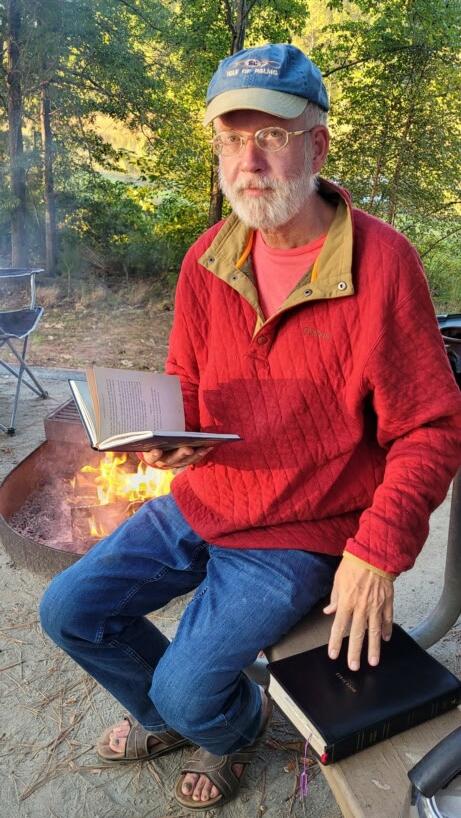
Randy began attending the Arden church and was so warmly welcomed. The first time he came to potluck after church, he was having a conversation with Max Hammonds and shared that he wanted to volunteer with a program. Max introduced him right away to Pen Braister-Sturgis. Randy has been volunteering ever since with the Arden Street Ministry and really enjoys it.
He attended the diabetic reversal program which was a blessing to him. He also attended the Revelation seminar by Patti Butcher which he really appreciated. She invited him to the Sabbath School class which he now attends regularly. DeWayne Butcher gave Randy Bible studies.
Randy was baptized into the Arden church on November 8, 2025. He said it was the most important day of his life. He is looking forward to the big reunion he will have one day with his family.
We are so happy to welcome Randy Calloway to the Arden Church family!
ArdenSeventh-dayAdventistChurch IsaSafePlacetoGrow.
Our Purpose is, by God’s Grace, to reflect His character in our community, to demonstrate a quality of life that will attract all to be reconciled to Jesus Christ, and to encourage people to become His loving, maturing disciples.
GraceNotesEditorialStaff:
Max Hammonds...............................................Editor
Chris Small.................................................Columnist
Jean Davey..................................................Columnist
Max Hammonds..................Reporter & Columnist
Pen Braister-Sturgis.....................................Reporter
Sara McCord.................................................Reporter
Dan Reynolds...............................................Reporter
Arizona McCord...............Reporter & Proofreader
Chris Small .....................................Special Graphics
Jim & Carolyn Sullenberger................Proofreaders
Nolan Darnell........................Mailing Management
Shirley Wallstrom...................Circulation Manager
Whitney Barron.................................Layout Design
Comments, suggestions and praises are always welcome. Please email or contact the church office.
Services each Saturday morning: Sabbath School Bible Study, 9:30 a.m. Worship Service, 10:45 a.m.
Location: 35 Airport Road, Arden, NC 28704
Located on Highway 280, (Airport Road), 1.5 miles east of I-26 exit 40, and a quarter mile west of Highway 25.
Church Office:
Office Manager: Cindy Cottrell
Office Secretary: Summer Cronin Telephone: (828) 684-6700
Email: office@ardenadventist.org
Website: www.ardenadventist.com
Office Hours: Mon., Wed., Thurs.,9 a.m. to 3 p.m.
Arden Adventist Pastoral Staff: Senior Pastor: Eric Bates, D. Min. Email: ebates@carolinasda.org
Associate/Youth Pastor: Rich Maskelony, M .Div. Email: rmaskelony@carolinasda.org
GraceNotesis published monthly by the Arden Seventh-day Adventist Church. Subscription is free by calling or emailing the office.†Doyou have questions about what Adventists believe? Would you like to become a member of the Seventh-day Adventist Church? Would you like to study the Bible? You are invited to attend a Pastor’s Bible Study Class. Please call for location and time. All are always welcome.
† Disclaimer—The contents of Grace Notes, such as text, graphics, images, and other material contained in this magazine of the Arden Seventh-day Adventist Church are for informational purposes only. It is not intended to be a substitute for professional medical advice, diagnosis, or treatment. Always seek the advice of a qualified healthcare provider, who is knowledgeable and experienced in the use of specific medical or Lifestyle Medicine interventions, or about questions you may haveregardingamedicalcondition.Neverdisregardprofessional medical advice, or delay in seeking it, because of information published in this magazine. Neither Grace Notes nor the Arden Seventh-day Adventist Church recommend or endorse any specific tests, products, procedures, opinions, or other information that may be mentioned in published articles. Relianceonanyinformationprovidedissolelyatyourownrisk. If you have a medical emergency, call your healthcare provider or911immediately.





Ages 5-12Ages 5-12 June 15 - July 31, 2026 June 15 - July 31, 2026
Open House: Thursday, June 11, 5-7pm Open House: Thursday, June 11, 5-7pm RegisterOnlineToday! RegisterOnlineToday! Ages 5-12 June 15 - July 31, 2026 Open House: Thursday, June 11, 5-7pm


Ingredients
1/3 Cup walnuts, raw
¼ Cup halved walnuts, roasted
½ Pound broccoli
1 Garlic clove, peeled
Juice of half a lemon
Pinch of kosher salt
¼ Cup extra virgin oil
Directions
Serving size: 360g
Servings per recipe: 4
¼ Cup grated Parmesan cheese
1 pound linguine
Roasted Garlic Cherry Tomatoes
2 10-ounce containers cherry tomatoes, halved
5-6 Garlic cloves, minced
1-2 Tbsp. olive oil
¼ Tsp. kosher salt
Pasta – Bring a large pot of generously salted water to a boil.Add broccoli to boiling water and boil for 2-3 minutes. Drain broccoli. Pour into an ice bath and drain again; this will slightly cook the vegetable while keeping its color (process called: “shocking”).Add clove of garlic to food processor and mince. Add the ⅓ cup raw walnuts and pulse until fine, scraping the walnuts from the edges of the bowl. Add the broccoli, lemon juice, and salt, processing until fine. While processing, slowly add the olive oil. Scrape down the bowl and add Parmesan cheese and process until combined. Cook linguini according to package instructions. Combine pesto and linguini in a large bowl and serve. Garnish with additional toasted walnuts, roasted tomatoes, and (shocked) broccoli flowerets
Roasted Garlic Cherry Tomatoes – In a medium bowl, toss halved tomatoes with olive oil, minced garlic cloves, and salt. Transfer to a baking sheet and spread out on to an even layer. Bake for 20 to 25 minutes at 375 degrees until soft and fragrant.
Nutrition Facts: Calories 760, Total Fat 34g, Sat. Fat 5g, Trans Fat 0g, Cholesterol 5mg, Sodium 360mg, Total Carb. 98g, Dietary Fiber 8g, Total Sugar 8g, Protein 22g
“Live It in the Kitchen” – from Loma Linda University Health