Reflections from a non-designer inside a K–12 design practice
Cassandra Fenyk, Marketing Manager, Architecture for Education, Inc.
I’m not a designer.
I don’t sketch floor plans or calculate structural loads. I don’t choose materials or detail sections. But I sit in the rooms where those decisions take shape. I listen to educators describe what’s not working. I watch designers translate those needs into space. And over time, I’ve come to understand something that isn’t always obvious from the outside.
What I bring to these conversations isn’t design expertise. It’s perspective.
I’m often listening for something different: patterns across projects, what resonates with districts, where decisions get stuck, and what ultimately helps move projects forward with confidence. I’m thinking about how ideas are communicated, how stakeholders respond to them, and how districts build alignment around long-term investments. And over time, that vantage point has made one thing clear:
The most successful projects aren’t just well designed. They’re well understood early.
Some of the most impactful school design doesn’t begin with a blank page. It begins with a starting point that’s already been tested, refined, and proven to work.
In K–12 design, we often refer to these as pilot programs, prototypes, or what I’ve come to think of as protocustomized solutions
They live somewhere between repetition and reinvention. And for school districts navigating growth, funding constraints, aging campuses, and evolving educational models, that middle ground can be incredibly powerful.
There’s a common assumption that every school, every classroom, and every facility should be entirely unique. And in many ways, that instinct makes sense. Schools serve different communities, different students, and different priorities.
But fully bespoke design comes with tradeoffs.
It takes time. It introduces uncertainty. It makes cost forecasting more difficult.
And in environments where districts are balancing bond timelines, operational realities, enrollment shifts, and community expectations, those variables matter.
What I’ve seen instead is a shift toward something more strategic.
Not standardization for the sake of efficiency.
But intentional repetition with room for adaptation.
Because when every project starts entirely from scratch, teams often spend valuable time solving problems that have already been solved—only to revisit those same decisions again later in the process.
Proto-customization creates a different path. It allows districts to build upon proven planning strategies, operational lessons, and stakeholder engagement efforts while still creating campuses that feel authentic, meaningful, and rooted in place.
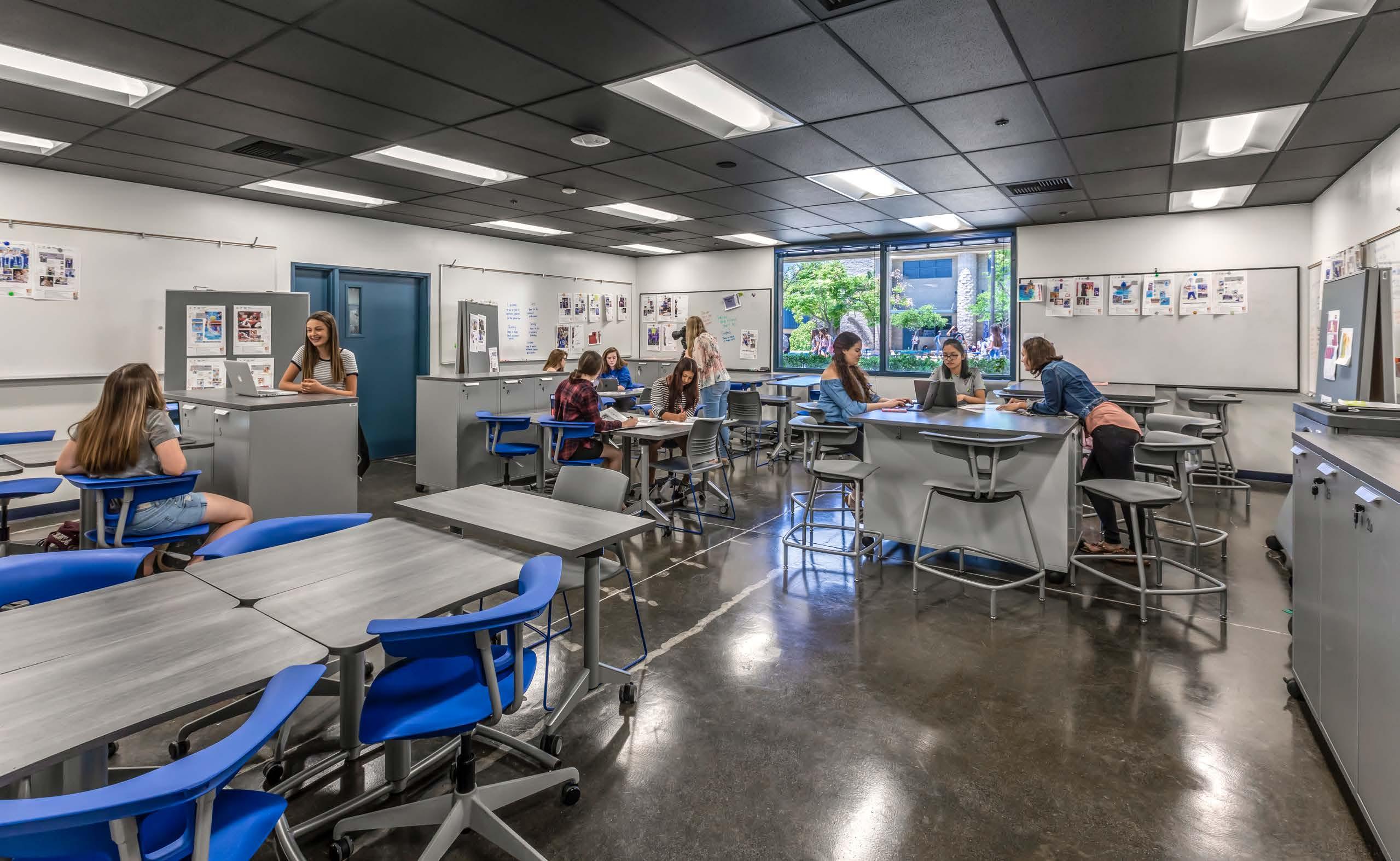
Before a design becomes a prototype, it often begins as a pilot—an opportunity to test ideas in real environments and learn what works.
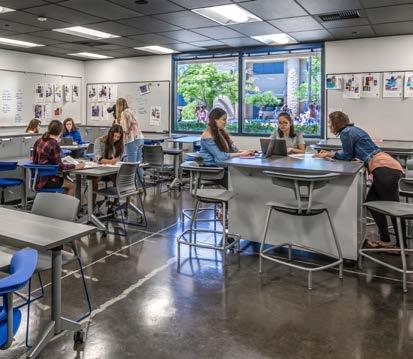
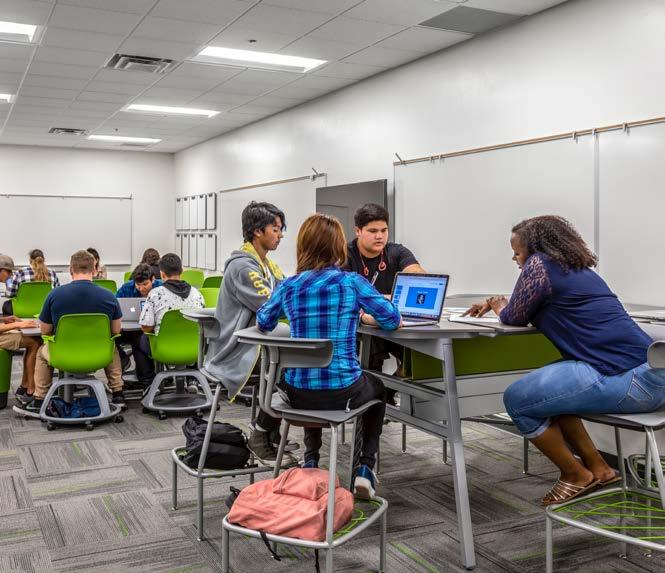
In Lake Elsinore Unified School District (LEUSD), a series of future-ready journalism and yearbook classroom pilot projects were implemented across three high school campuses. These classrooms introduced agile furniture solutions, integrated technology, collaborative presentation areas, updated lighting systems, and flexible layouts capable of adapting throughout the school day.
While the planning framework remained consistent, each campus implementation responded to the existing architecture, culture, and operational needs of the individual school.
What made these pilots particularly valuable was not just the design itself, but what they revealed.
Each classroom allowed the district and design team to observe how students and teachers interacted with the space, what supported learning most effectively, and how relatively modest interventions could significantly transform both the educational environment and student experience.
The impact was immediate. Students recognized that their programs were valued investments within the district, creating a visible sense of pride, ownership, and engagement.
Those insights didn’t stay isolated.
They became the foundation for future designs—transforming individual pilot classrooms into a broader, more refined approach that could be applied across campuses with greater confidence.
Just as importantly, pilots give districts something tangible to point to.
Instead of asking stakeholders to imagine what a future-ready classroom could be, they can experience what it already is. That shift—from abstract to real—can be critical in building alignment, support, and momentum.
The most effective prototypes aren’t created in isolation.
They’re shaped through real-world use, refined through feedback, and strengthened over time.
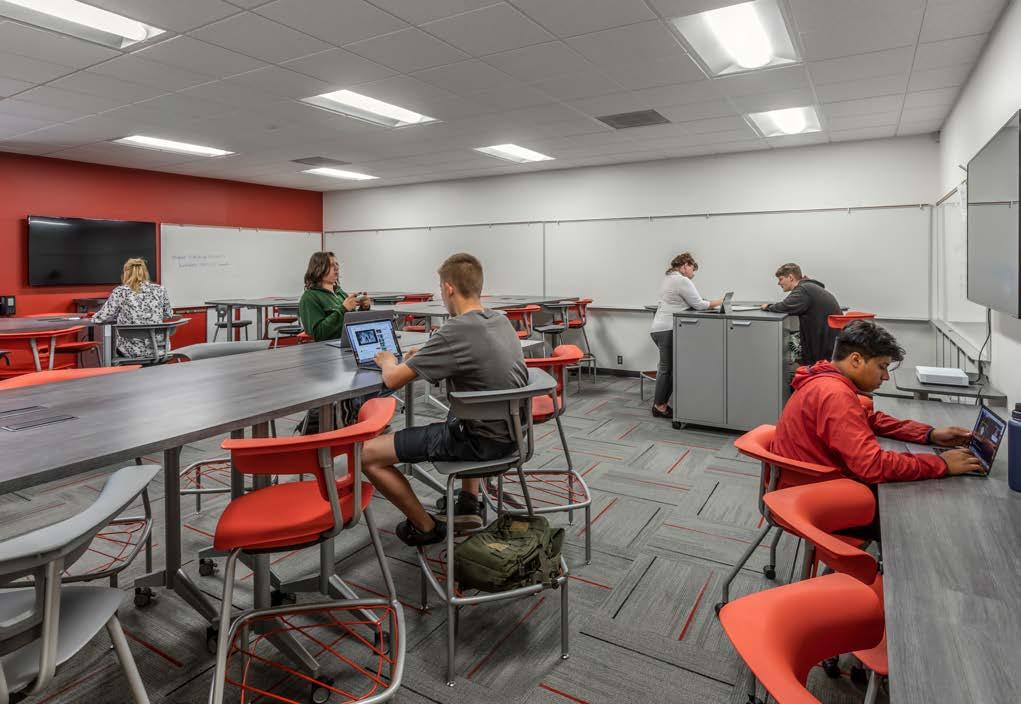
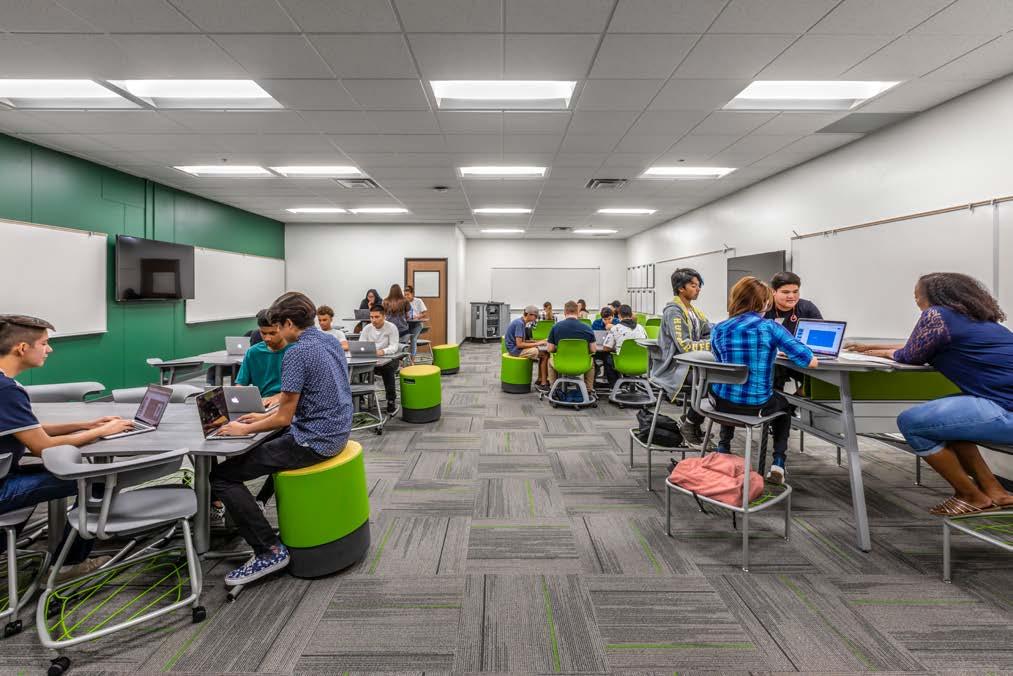
Proto-customized design isn’t about copying and pasting buildings.
It’s about starting with a proven framework— one that has already been vetted through real use, stakeholder feedback, and operational experience—and shaping it to fit a district’s specific needs.
Think of it as a living template.
It reduces the need to constantly reinvent, while still leaving room to respond meaningfully to what makes each school unique.
Real-world examples include:
A classroom that has already supported collaborative learning.
A multipurpose building that has already flexed between athletics, performances, and community use.
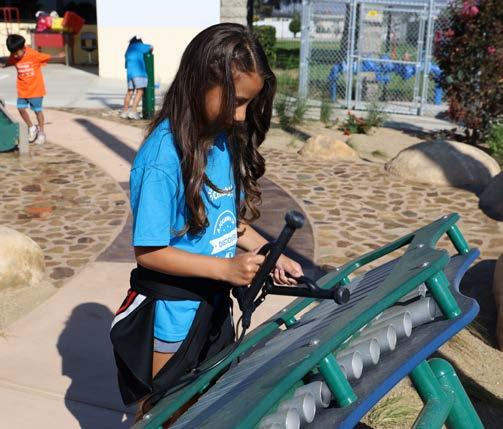
An outdoor learning environment that has already demonstrated how students engage differently beyond the walls of a classroom.
From there, the design evolves. It responds to site conditions, educational priorities, budget realities, maintenance considerations, and long-term operational goals. But it also responds to something less tangible—and just as important: identity.
At Rio School District, this idea becomes something you can feel.
A4E is currently transforming two of the district’s oldest and most underserved K–8 campuses through comprehensive modernization efforts centered on equity, identity, and long-term community investment.
Historically, both campuses relied heavily on aging portable classrooms and lacked many of the core facilities available at newer schools. Through extensive workshops and visioning sessions with students, educators, families, administrators, and community stakeholders, the modernization projects have evolved around a shared goal: creating equitable access to opportunities while still allowing each campus to tell its own story.
The projects share many planning principles and programmatic elements, including new classroom buildings, multipurpose facilities, STEM makerspaces, music classrooms, student support spaces, dining facilities, and learning commons. Yet despite those shared frameworks, the campuses feel entirely distinct from one another.
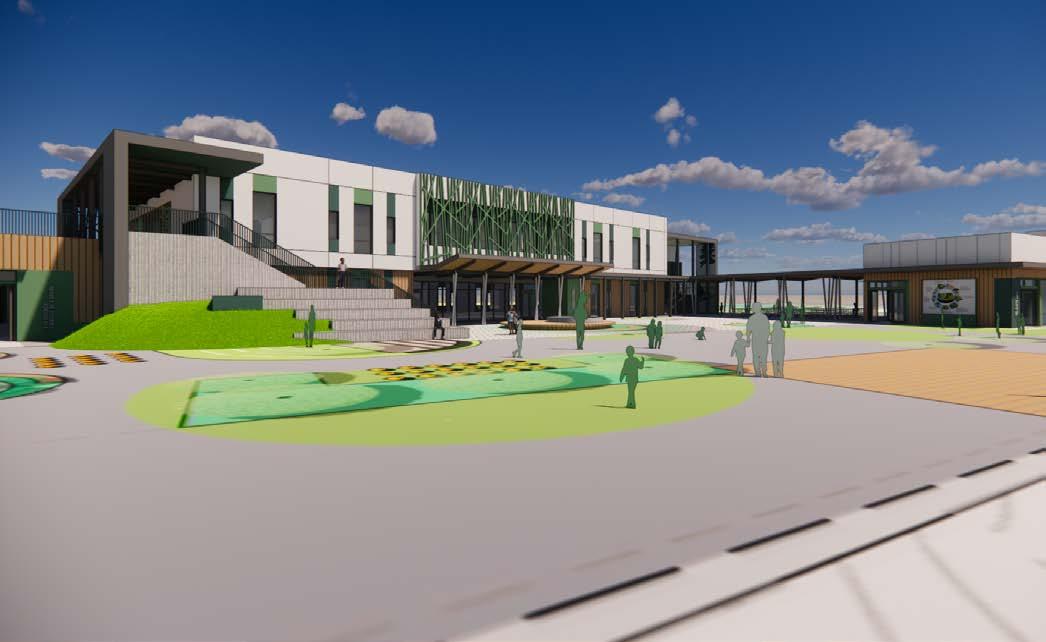
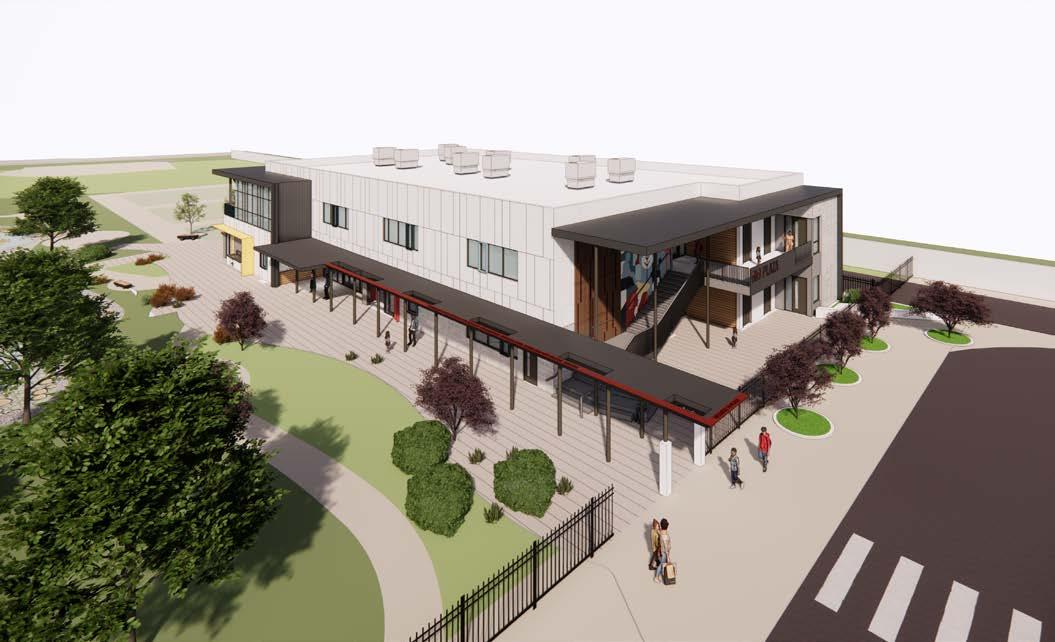
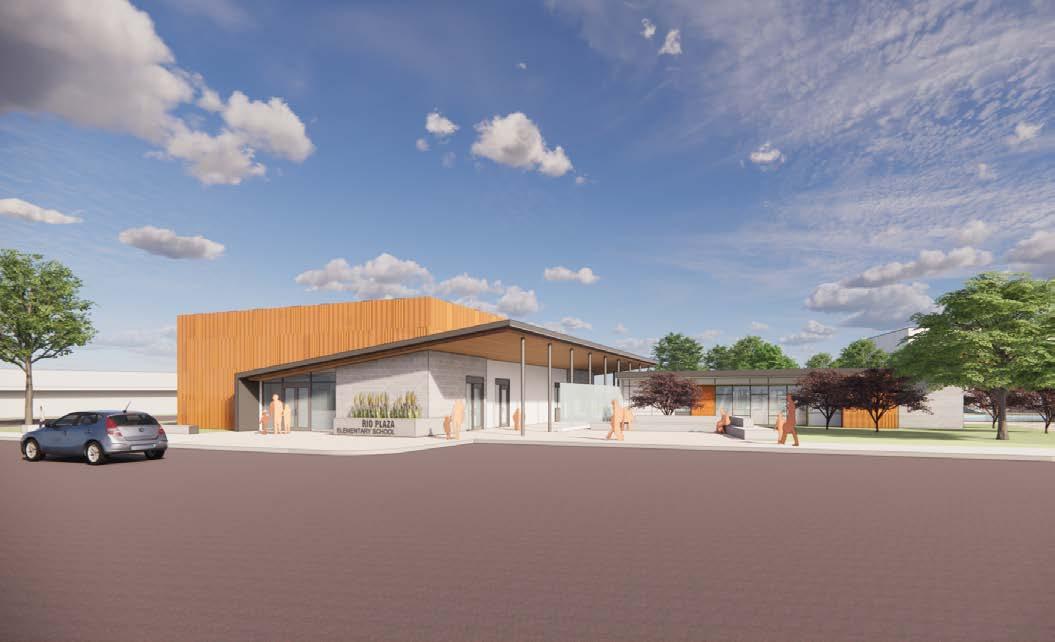
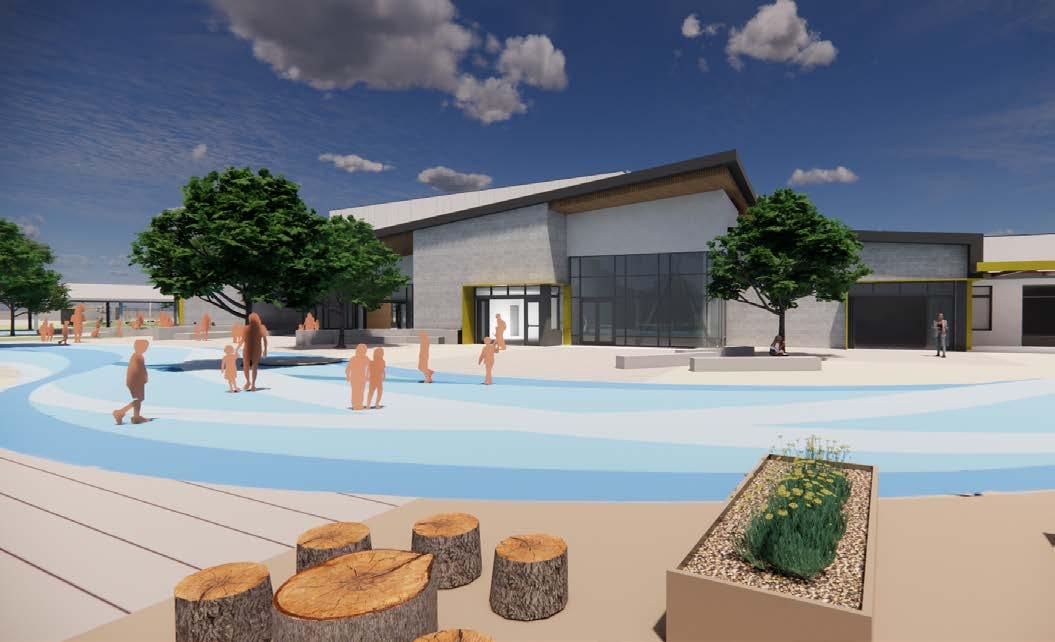
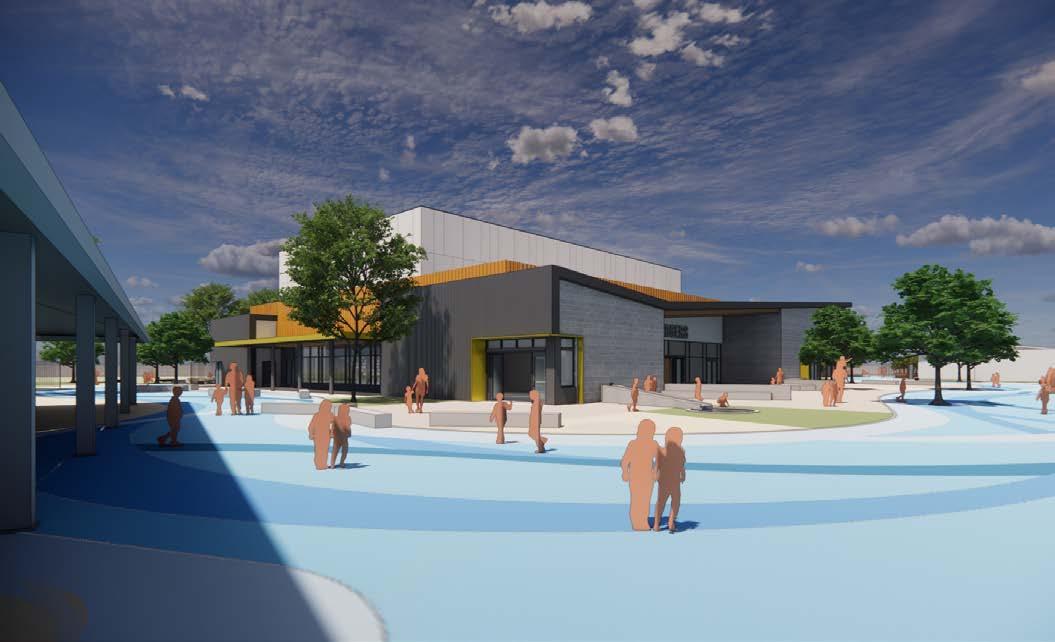
At Rio Plaza, the design concept explores the layered activity and movement of a city— creating interconnected spaces centered around gathering, exploration, and social interaction.
At Rio Real, the concept asks a different question:
What would it feel like if students could take a hike through a forest on their way to class?
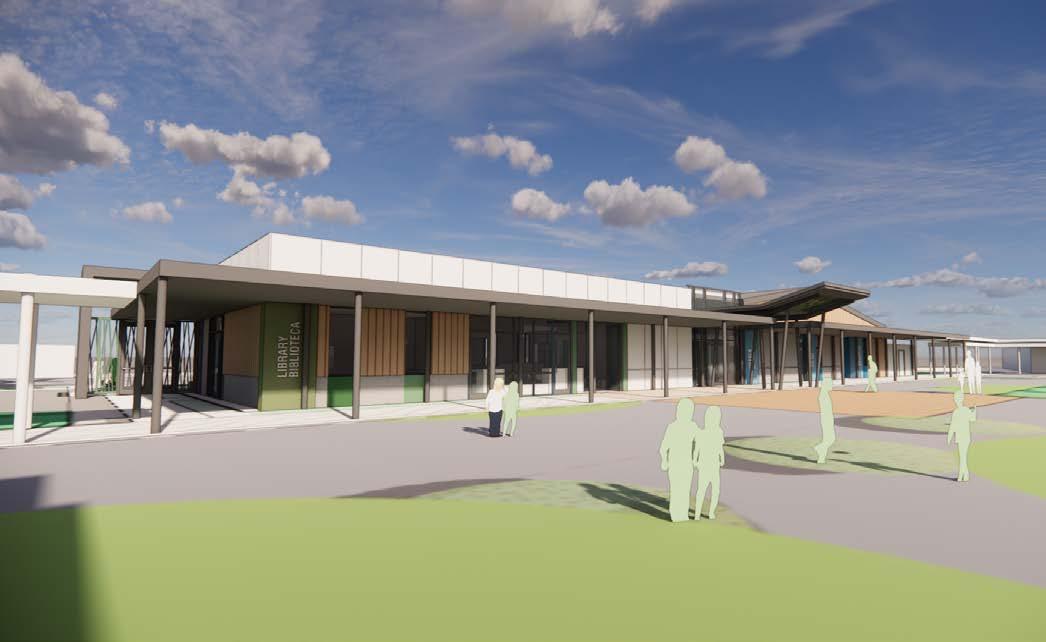
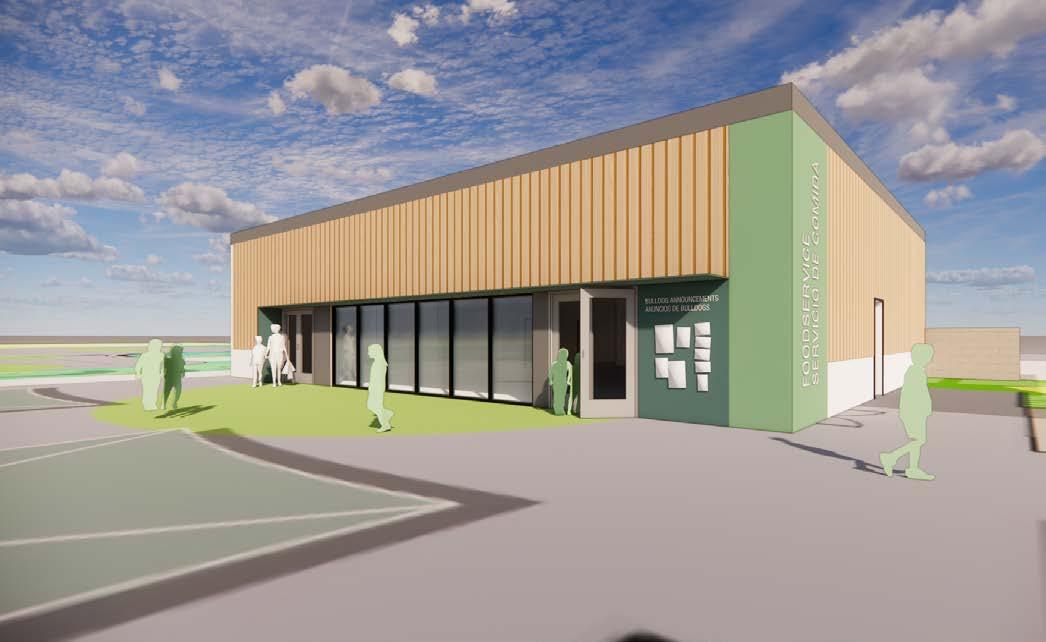
The campus becomes a journey through nature, with outdoor “waypoints” introducing California native plants, animals, and habitats along the path of learning.
Learning doesn’t happen in one place. It flows.
And that flow reflects something deeper than layout. It reflects how students move, gather, explore, and connect with their environment.
Most visitors would never realize the campuses share portions of the same underlying planning framework.
That’s what makes proto-customization so powerful.
Shared language. Different expression.
RIO PLAZA VS RIO REAL Shared planning principles adapted into two completely distinct campus identities.
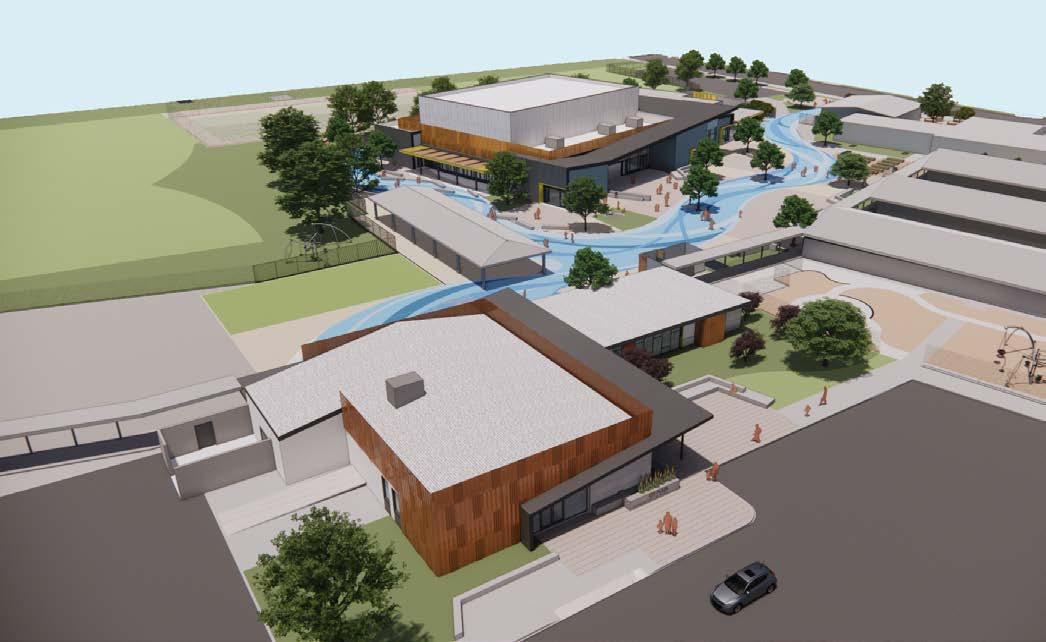
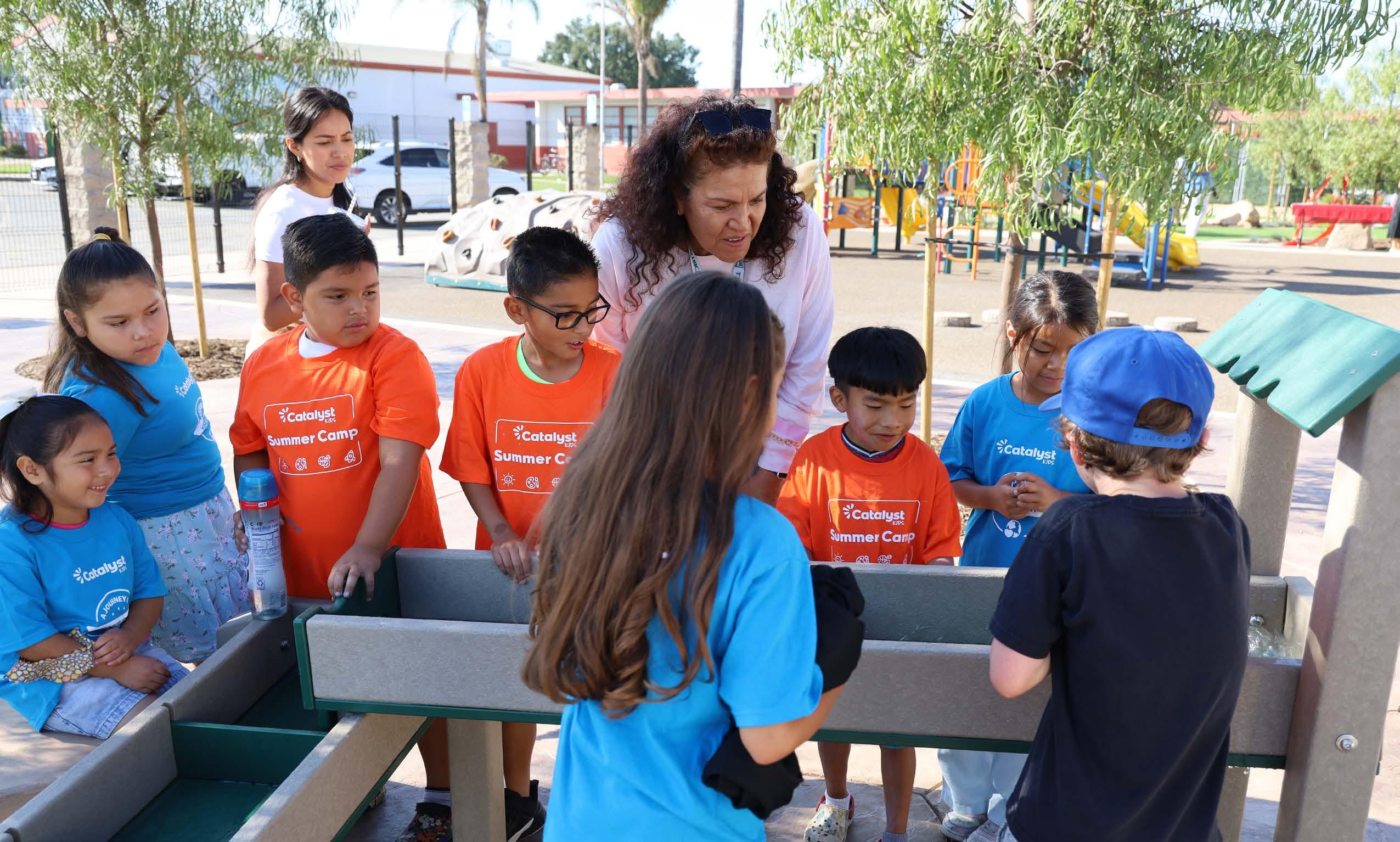
Rio School District also partnered with A4E to develop a districtwide outdoor classroom initiative centered on flexibility, student choice, and varied learning styles.
Rather than repeating a single solution, the design solution utilized a modular “kit of parts” approach that could be adapted across multiple campuses while responding to different site conditions and educational priorities.
Implementation of varied seating types, shaded areas, tactile materials, and landscape-integrated learning opportunities allowed students and teachers to select spaces that would best support different modes of learning throughout the day.
The modular system provided consistency and long-term flexibility while still allowing each campus to adapt the environments to its own culture and identity.
These outdoor environments support:
• Individual and small-group learning
• Collaborative gathering
• Nature-based and sensory learning
• Informal exploration
• Wellness-focused environments
• Flexible outdoor instruction
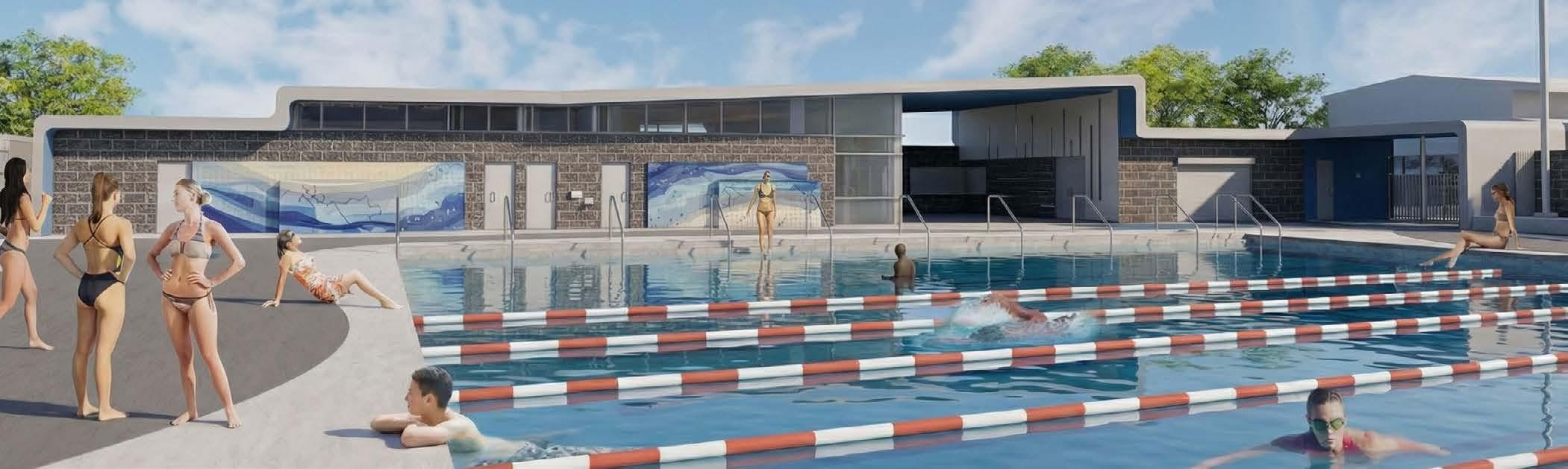
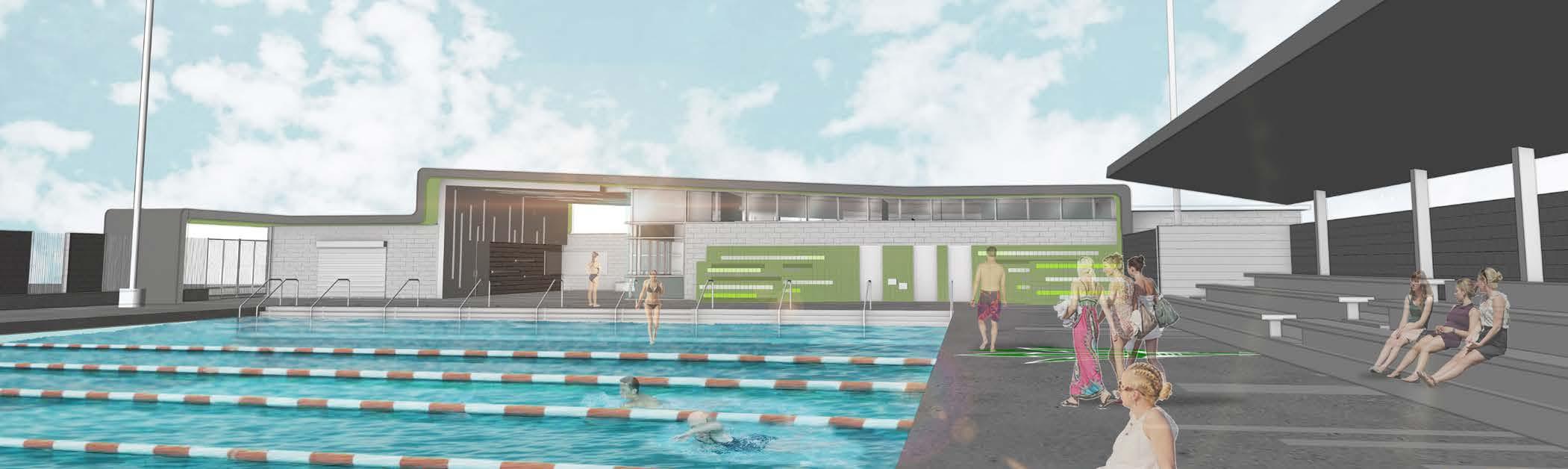
OXNARD AQUATIC CENTERS A shared aquatic planning framework customized to reflect the identity and culture of each school community.
One of the biggest misconceptions about prototype planning is that it creates sameness. What I’ve seen is the opposite.
At Oxnard Union High School District, A4E designed two aquatic centers using a shared planning framework tailored to each campus’s unique identity and culture.
Through extensive collaboration with district leadership, principals, coaches, students, and community stakeholders, the projects established common operational goals supporting athletics, physical education, after-school programming, and community use.
The facilities share core organizational principles, circulation strategies, locker room visibility concepts, and operational adjacencies. But architecturally, they tell very different stories.
At Channel Islands High School, the architecture draws inspiration from water movement, ocean currents, and the surrounding coastal landscape.
At Pacifica High School, whose mascot is the Triton, the design explores sound, resonance, and wave patterns inspired by the Triton’s conch shell.
Operationally similar. Experientially distinct.
Each campus becomes recognizable as part of a larger district system while still feeling deeply connected to its own community and traditions.
This is where the balance becomes most powerful—creating a sense of unity across a district while allowing each campus to remain unmistakably its own.
From where I sit, the advantages show up quickly—and they compound over time.
Proto-customization allows districts to:
• Maximize the value of prior visioning and programming efforts
• Create greater equity between campuses and student populations
• Improve operational and maintenance consistency districtwide
• Support evolving educational models and pedagogy
• Preserve and celebrate each school’s traditions, identity, and culture
• Reduce unnecessary design redundancy and cost
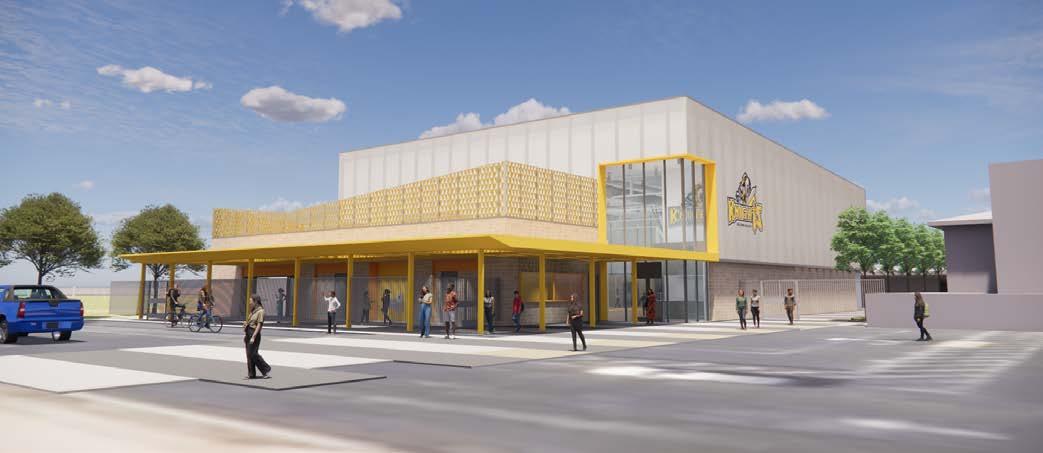
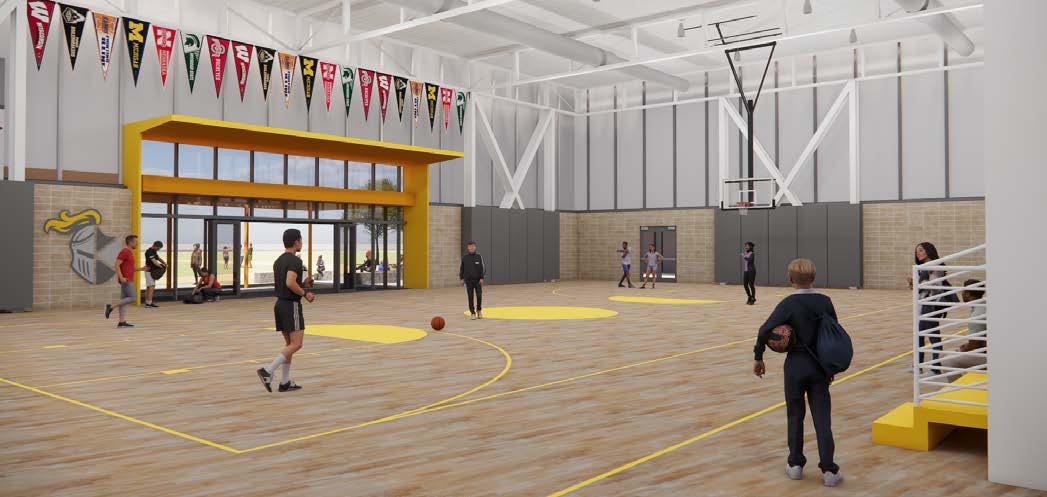
For one California school district, A4E explored how a proto-customized approach could be applied to a series of middle school gymnasium facilities under significant budget constraints. By developing shared planning and operational strategies, the concept demonstrated how districts can achieve efficiencies in programming, circulation, event operations, and spectator experiences while still allowing each campus to express its own identity through materials, graphics, color palettes, and architectural character.
Even within a highly constrained budget, the exercise reinforced a central principle of proto-customization: efficiency and identity do not have to be competing priorities. Design decisions made once became investments that benefit multiple campuses.
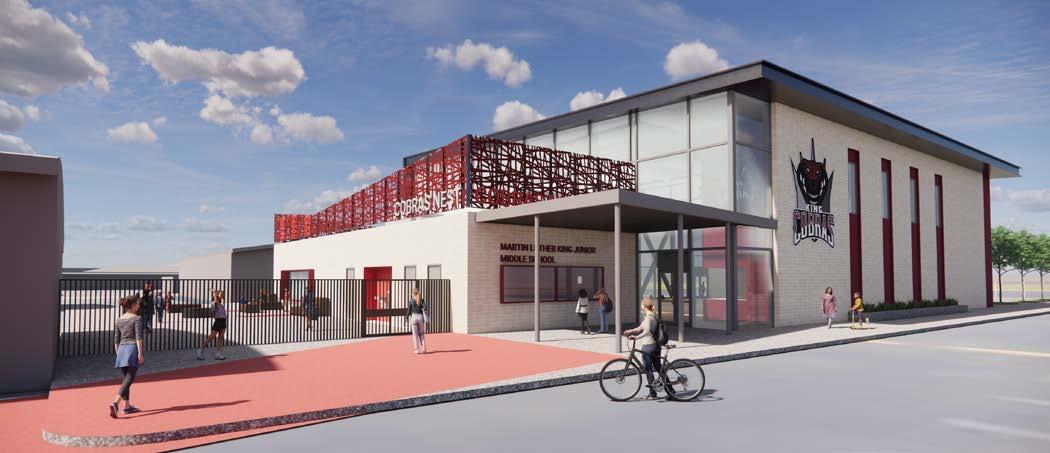
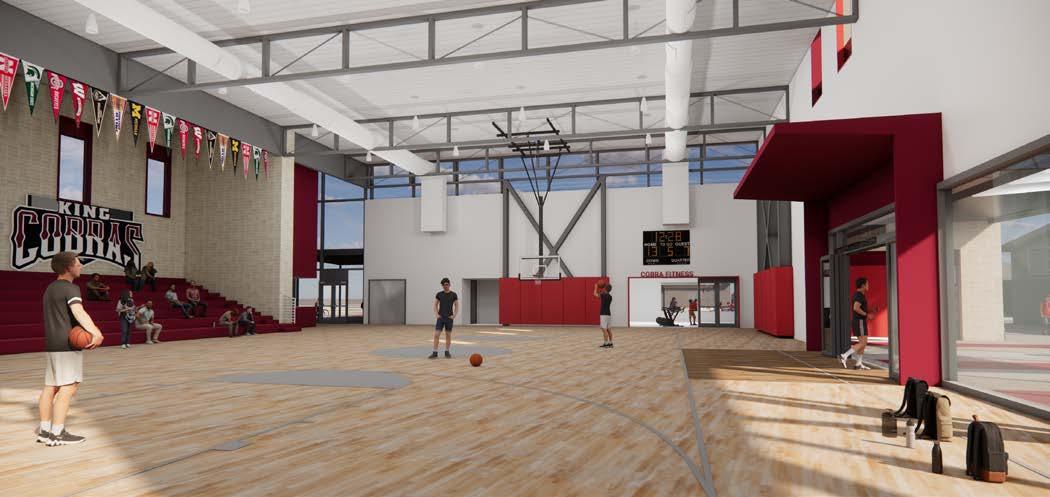
into budgetfriendly campus-specific athletic environments.
What’s important—and what I’ve come to appreciate more over time—is that this approach doesn’t limit creativity. It refocuses it.
Instead of repeatedly solving the same operational problems, designers can spend more time refining what matters most: how students experience a space, how learning adapts over time, and how architecture reflects the communities it serves. The foundation may be familiar. But the experience is anything but generic.
Working alongside K–12 designers has changed how I think about innovation.
It’s not always about starting from scratch. Sometimes, it’s about starting with clarity.
Clarity about what works. Clarity about what matters.
And clarity about how to carry those ideas forward in a way that creates both consistency and meaning. Protocustomization isn’t about replicating buildings.
It’s about leveraging the most valuable aspects of prototyping—shared knowledge, stakeholder engagement, operational efficiencies, and proven educational planning strategies—while customizing architecture to reflect the unique story of each campus.
At every scale, from classrooms to campuses, the goal is the same: To create environments connected by shared values, educational equity, and thoughtful design—while ensuring every campus still feels unmistakably its own.

Author Bio
Cassandra Fenyk is the Marketing Manager at Architecture for Education, Inc., where she works alongside educational planners, architects, and designers to communicate the ideas, strategies, and outcomes that shape learning environments. Drawing on more than 30 years of experience in the A/E/C industry, she offers a broad perspective on the intersection of design, communication, and client engagement. Although not a designer herself, her career has been spent helping translate complex planning and design concepts into meaningful stories that resonate with school districts, educators, and communities. Her work centers on connecting vision to value and helping others understand the lasting impact of thoughtful educational design.
Contact A4E LinkedIn Facebook
architecture4e.com