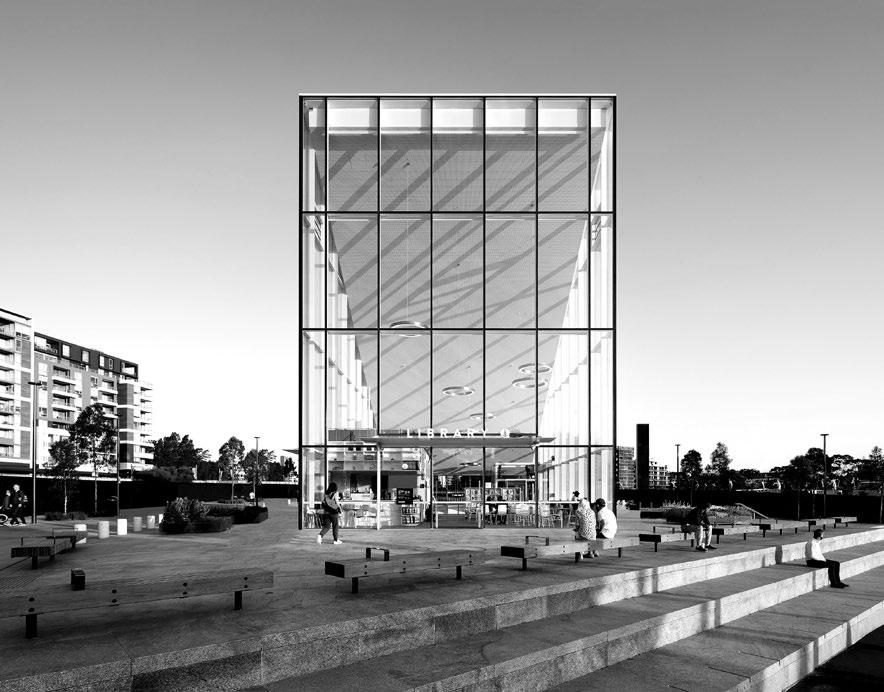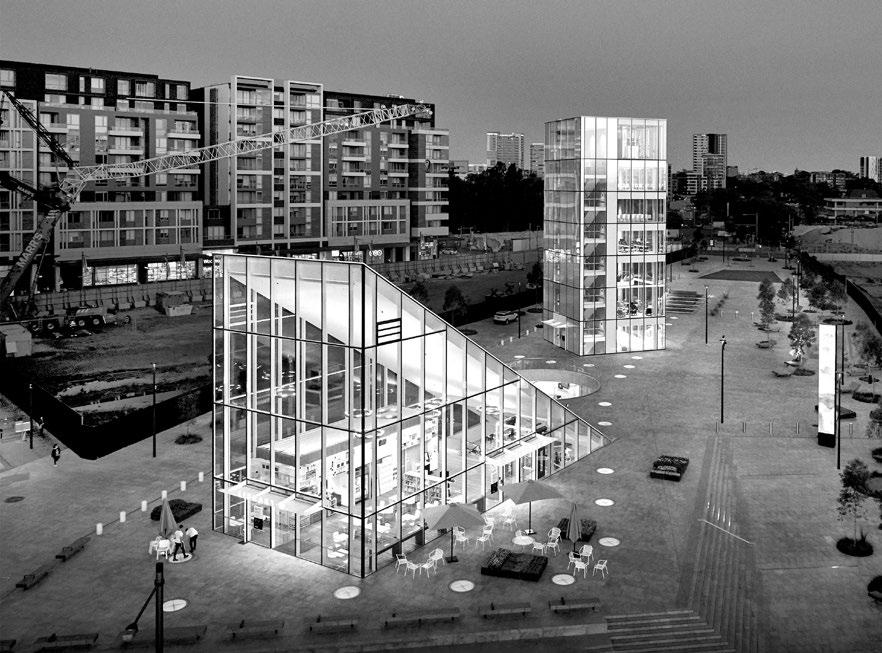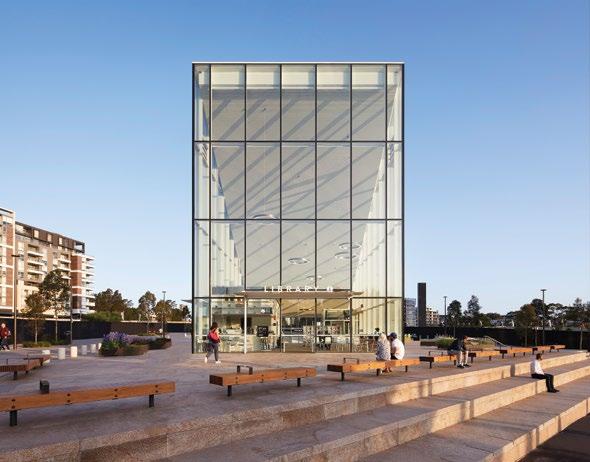

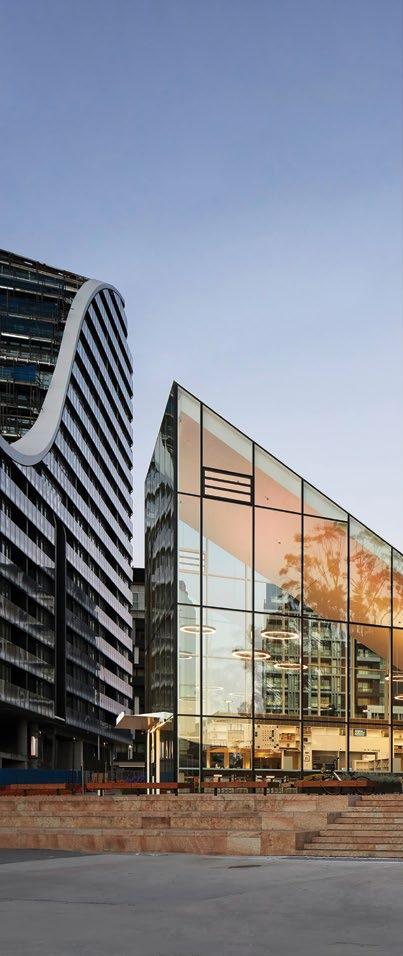
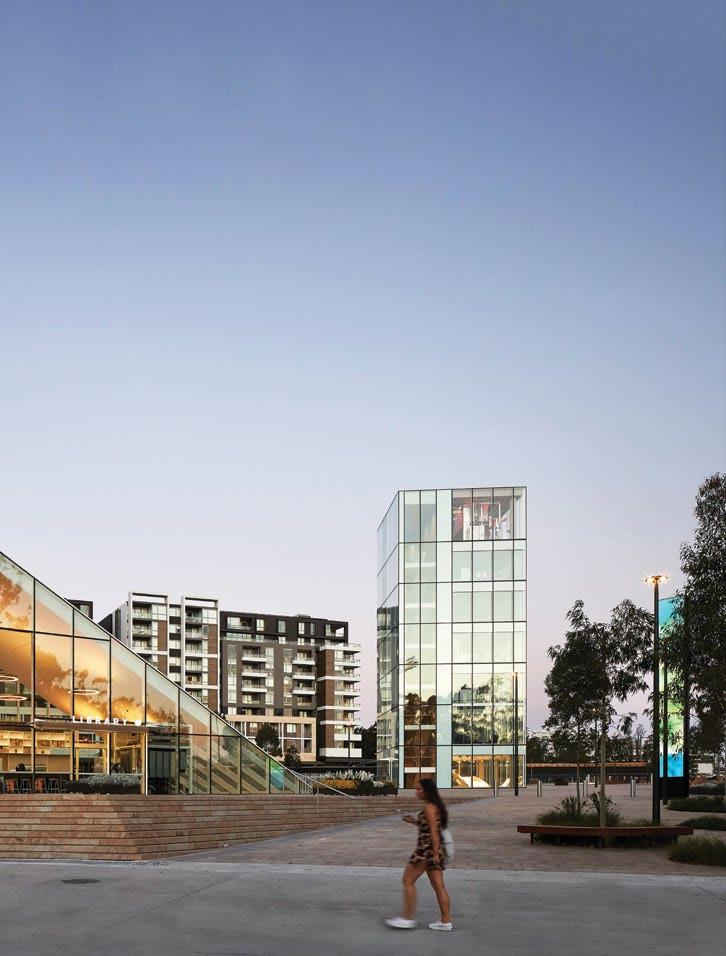
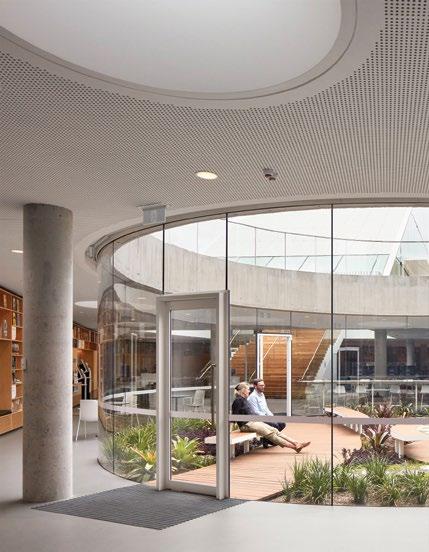
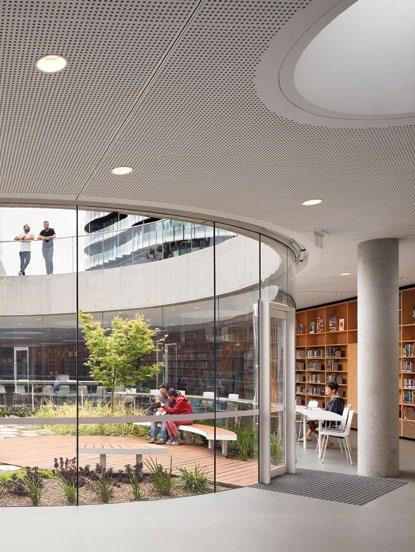
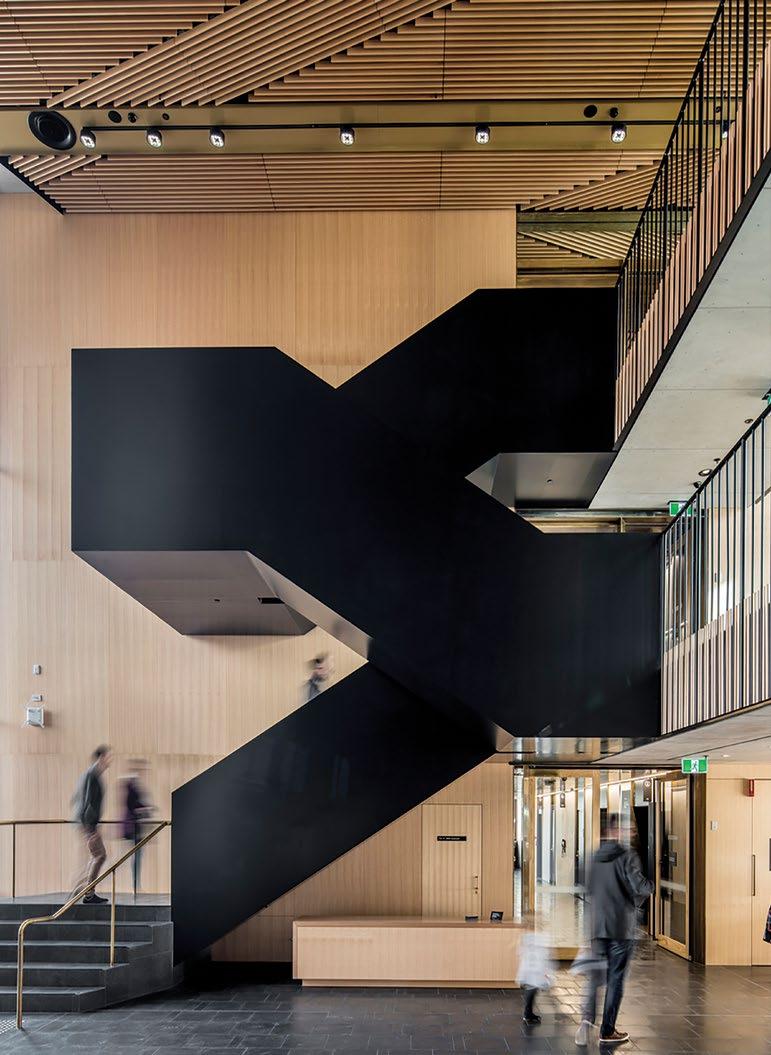
Green Square Library and Plaza ambitiously responds to its context of the ever-increasing residential density of the Green Square town centre, which will become home to 61,000 people by 2030, according to the City of Sydney. Inherent to the project’s design strategy is the protection and preservation of an 8,000-square-metre public plaza; this is achieved by submerging much of the building program beneath it. The design privileges the plaza as an urban breathing space, which it recognises as a diminishing commodity that will become increasingly valuable as the area continues to densify.
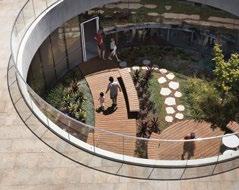
Across the plaza, the elemental geometries of a triangle, circle, square and trapezium are strategically placed, hinting at building access and use. Their relative transparency creates beacons of light and activity, and allows views to and from the library and associated community spaces. In essence, this project is a kind of public living room with generous and vital areas that can be shared between adults, adolescents and children. It is a living heart and a place to exhale.
The stacking of community-programmed spaces within the mini-tower allows the building to be used day and night for a range of activities, from group meetings to quiet reading or music practice.
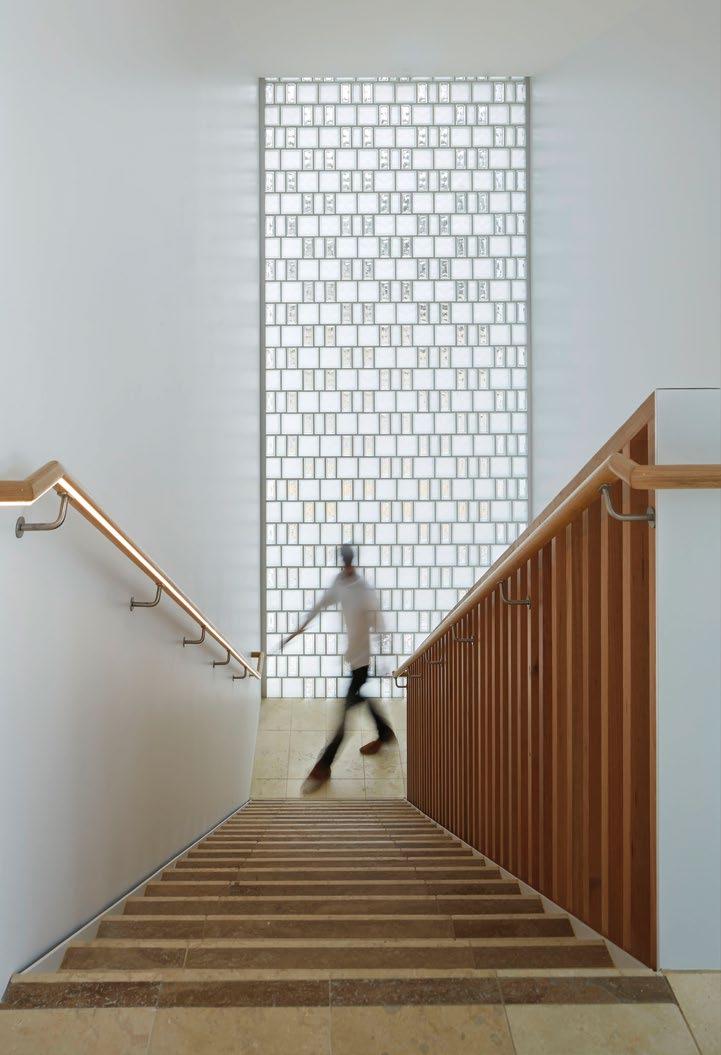
The design builds upon a clear understanding of the changing nature of public libraries. The library spaces are inherently flexible, being able to expand, contract, adapt and evolve as required. In contrast to the silence and reverence of a traditional library, the Green Square Library’s large rooms can accommodate a wide variety of dynamic pursuits. Large glazing cut-outs and skylights create a porous interface between the library and the plaza, ensuring constant connection with the outdoor environment and a crossover of activities.
Awarded through an international design competition, this project demonstrates what is possible when architects are encouraged and supported to tackle the challenges of our growing cities. By thinking creatively, Studio Hollenstein in association with Stewart Architecture has created a truly wonderful third place, an inviting and optimistic space for community engagement and civic life.


To make the world a better place through architecture
A strong architectural profession that inspires clients and promotes community and the public interest through exceptional design and an ethical approach to the built environment
To develop and promote a strong architectural profession and be the public voice for architecture
The Australian Institute of Architects is the peak body for the architectural profession in Australia, representing more than 12,000 individual members and almost 2000 practice members around the country and abroad.
Established as a national member-based association in 1930, we support members at all stages of their careers, from students and graduates to registered practitioners, from those working in affiliate industries and academia to those who have retired from practice and remain committed to the profession.
Through the delivery of dedicated and tailored continuing professional development, awards and recognition programs to promote best practice outcomes and targeted advocacy to all levels of government on behalf of the profession and consumers, we strive for better, safer and more sustainable communities for all Australians.

12,000+
INDIVIDUAL MEMBERS
ARCHITECTS, GRADUATES, STUDENTS, ACADEMICS, AFFILIATES, RETIRED PRACTITIONERS ~2000
PRACTICE MEMBERS
SOLE PRACTITIONERS, SMALL, MEDIUM AND LARGE PRACTICES
9 CHAPTERS

1 VISION
1 UNITED VOICE FOR THE PROFESSION

WE HAVE FORMED DEEPER ASSOCIATIONS TO STRENGTHEN OUR COORDINATED
AND
As we navigate one of the most challenging periods in recent times, members of our profession have stepped up and shown terrific leadership and support for communities in every part of Australia.
Whether taking action on climate change, supporting communities impacted by bushfires, advocating for building reforms that prioritise quality and safety or proposing initiatives that not only stimulate the economic recovery from COVID-19 but also have long-term benefits for all Australians, architects have been out in front driving change. The Institute has also responded quickly to support members in this disruptive and unsettling period in a myriad of ways.
In 2019, in the face of some of the worst bushfires this nation has ever witnessed, architects around the country were among the first to step up by providing their skills to help communities build back better. The Architects Assist platform channelled the talent and expertise of members into practical, pro bono assistance where it was needed most. We made our online resources freely available to assist all those in need. In addition, Architects Donate successfully raised more than over $12,000 that will directly support rebuild projects across the country.
This hands-on support has been matched by strong advocacy in response to the climate crisis, which began well before its effects were so brutally demonstrated in the summer bushfires. Making the Architects Declare pledge in 2019 was a significant milestone. The pledge now has signatures from more than 900 Australian practices who have committed to taking action on the twin crises of climate breakdown and biodiversity loss.
We have taken this commitment forward by establishing a Climate Action and Sustainability Taskforce and instigating collective action with industry peers by bringing together other peak professional bodies to form a National Climate Roundtable. We have formed a deeper association with Engineers Australia (EA), the Planning Institute of Australia (PIA) and the Australian Institute of Landscape Architects (AILA) to strengthen our coordinated advocacy and deliver more resilient, liveable cities. Cementing a long-running alliance, we continue to work together on this critical agenda to safeguard our future.
This joining of forces has enabled us to provide a united front in conversations with government as well as partnering on research to provide the evidence base needed to make a compelling case for support.
Our nationwide campaign to improve building regulation in response to the Building Confidence (Shergold-Weir) report continues to gain traction, with the Institute firmly established as a respected and authoritative source of advice and expertise for governments and regulators. This tireless advocacy is paying dividends as we inch closer to the implementation of widespread and meaningful reform.
Building procurement and contracting models form a critical plank of this reform process remain a priority for our members. As such, the Institute last year invested in a comprehensive research project which enabled the development of a set of EOI and RFT Guidelines for architectural services, endorsed by the Office of the Victorian Government Architect. The objective of the guidelines is for potential clients to review their own EOI and RFT methods and documents and align them with best practice, ensuring an effective and efficient process that maximises the potential for high quality built outcomes while reducing tendering and assessment costs for all involved.
To further support members, the Institute undertook a review of the National Standard of Competency and worked towards the 2020 introduction of new online CPD and mentoring programs.
Running in parallel with these programs, a significant body of work has been underway since February 2019 on reform of the Institute’s Governance and Constitution. This project will help ensure the Institute functions as a high performing, outcomes-focussed organisation for members. Led by a Constitution Working Group with close involvement of the Board and National Council, this reform work has progressed through extensive consultation and drafting stages to final refinements ahead of expected endorsement in mid-2020.
One very exciting element of the constitutional reform process has been the advancement of the Institute’s First Nations Engagement, including the establishment of the First Nations Advisory Working Group and progress towards establishing our own Reconciliation Action Plan.
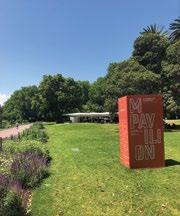
The bridging of cultures and exploring the power of architecture to build connections and understanding between First Nations cultures in Australia and the Pacific region, among others, will also be the centrepiece of the Australian Pavilion at the 2021 Venice Architecture Biennale.
While the coronavirus pandemic delayed the 2020 timeline, the exhibition concept, how will we live together? is now even more relevant, and the Australian contribution will be a timely addition we can look forward to sharing with the world as we emerge from the current crisis.
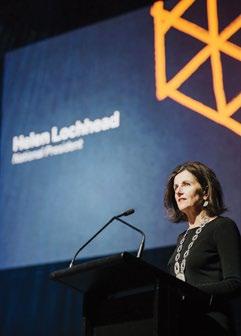
Professor Helen Lochhead LFRAIA National President


Since 1930, we have recognised, supported the celebrated the expertise of Australian architects here and around the World. This year, we celebrate our 90th year anniversary. Years of planning have gone into the development of a strategic vision for your membership organisation, and throughout 2019, we delivered on it with visible, high profile action.
It was a year of significant unrest which has affected so many Australians. The catastrophic bushfires have devastated lives, homes, wildlife, livestock, land and livelihoods across our nation.
In rapid response, we launched Architects Assist, focusing on our ongoing response to the bushfire crisis. This site showcases the support we're providing to help rebuild communities and manage the deployment of architectural, design and building resources in collaboration with other professional and regulatory bodies. This is not a shortterm problem, and we need the support of the architectural profession as we face this crisis together. We will need to not only replace what has been lost, but build back better, and architects are uniquely placed to help with this challenge.
While we adapt and respond to unexpected issues and uncertainties, we continue to focus on our strategic priorities. As your Institute, we continue to advocate for best practice and drive the agenda for the future of the profession. Advocacy is a key focus for the Institute, as it ensures that the collective voice of our members is heard.
AS YOUR INSTITUTE, WE CONTINUE TO ADVOCATE FOR BEST PRACTICE AND DRIVE THE AGENDA FOR THE FUTURE OF THE PROFESSION.
We are dedicated to assisting and advancing our members; architects and those dedicated to the profession including students, graduates, affiliates and academics. Our focus is on maintaining and enhancing our value to you through a professional, diverse range of tools and services.
Over the course of the year we overhauled and enhanced our Acumen Practice Notes. We now provide over 800 up-to-date documents to facilitate best practice design, business skills and project management. These have been developed by industry experts, with new notes covering in-depth content on NCC -Section J, bushfire response design, timber selection, biodiversity and novation. For members setting up their own business, we’ve also introduced a practice note pack containing essential guides to establishing a successful architecture practice focused on sustained growth.
We’ve also introduced a more streamlined Australian Standards portal. Now hosted on a new digital platform, this provides you with access to over 6000 Australian, New Zealand and adopted International Standards on all device types, offering you greatly enhanced functionality and facilitating improved compliance performance. This now includes services that identify where Standards are referenced in Australian Commonwealth, state and territory legislations, along with full access to the NCC and BCA within the same platform.
Throughout the year we worked on updates to the HR Hub so that it would be available to all Institute members at the beginning of 2020. We understand the importance of workplace support, and this expanded service provides you with optimum tools to work under the best conditions. The hub offers independent HR advice and guidance on issues that include recruitment and retention strategies, HR policies, Fair Work Australia compliance checklists and other key documents designed to improve leadership and management skills.
Although we’ve been an important element of the national built environment professional landscape since 1930, we’re critically aware that we need to remain relevant to the needs of our members and the wider community. Our commitment to agility and innovation continues to provide you with solutions to ensure your success.

OUR FOCUS IS ON MAINTAINING AND ENHANCING OUR VALUE TO YOU THROUGH A PROFESSIONAL, DIVERSE RANGE OF TOOLS AND SERVICES.
I want to thank our Institute staff and the volunteer efforts of over 300 members across our many councils, committees and taskforces for their efforts and dedication we have witnessed this past year. We are a membership body supported by a people-focused organisation and we continue to invest in the development of our people, both from a professional and personal perspective.
We do not exist without our loyal members, so my deepest gratitude goes to you all. It is my pledge to ensure we provide the best service possible to you, helping you to succeed and celebrate your success, as the public voice for high-quality architecture that improves the life of individuals, communities and the nation.
Julia Cambage Chief Executive Officer








Ms

Mr

Mr Michael Lavery FRAIA Qld President

Ms Samantha Cotterell FRAIA – International Chapter Chair

Mr Tony Giannone FRAIA SA President

Ms Erin Crowden RAIA EmAGN President


Ms Shannon Battisson RAIA ACT President

Mr Shamus Mulcahy RAIA Tas President

Mr Jacques ChevrantBreton SONA President




Ms Amy Muir RAIA Vic President

Mr Angelo Candalepas LFRAIA Nationally Elected Councillor

BOARD MEMBERS ALSO ON COUNCIL
Prof Helen Lochhead LFRAIA National President
Ms Clare Cousins LFRAIA Immediate Past President
Ms Alice Hampson FRAIA President Elect
Mr Peter Hobbs FRAIA National Council Elected Director
Mr Andrew Broffman FRAIA Interim Independent Director

Ms Julia Cambage Chief Executive Officer

Mr Michael Linke General Manager Membership Services

Mr Barry Whitmore Chief Financial Officer and Company Secretary


Leanne Hardwicke General Manager - Policy, Advocacy and Education
12,498 INDIVIDUAL MEMBERS
1,961 A+ PRACTICES
873 NEW STUDENT MEMBERS
55 NEW FELLOWS
12% INCREASE IN AFFILIATE MEMBERS
6% INCREASE IN GRADUATE MEMBERS
Membership in 2019 experienced growth in all categories with the greatest increase reported in the student and affiliate groups. Strong growth in the student category was anticipated owing to National Council’s decision to substantially reduce the 2019 student fee to a more affordable rate of $30. This strategy to engage more strongly with early career professionals was accompanied by a widening of the eligibility criteria for student membership to now include all students of the built environment.
A+ practice membership continues to attract larger practices with over 50 per cent of individual members now enrolled as A+ members. The introduction of an enhanced platform for access to the full library of Australian Standards was introduced in July. Increased functionality now gives users even greater flexibility and access to what has become a highly valued member benefit.
The Institute’s Client Architect Agreement was updated and relaunched as the 2019 Client Architect Agreement along with the popular short-form version, the 2019 Client Architect Agreement for Limited Services. Both agreements were made available to all members for the first time as a download through Acumen Practice Notes.
The Emerging Architects and Graduates Network launched a successful and popular initiative, the Hearing Architecture podcast. Twelve episodes were recorded on wide ranging subjects with interviews from architects around the country. The podcast enjoyed 5-star ratings and over 12,000 downloads reaching Top 5 ranking in Australia and overseas.
17 NEW LIFE FELLOWS
11% INCREASE IN TOTAL MEMBERS
2% INCREASE IN ARCHITECT MEMBERS

2.4M IMPRESSIONS 898,353 UNIQUE VIEWS ↑15% INCREASE IN FOLLOWERS 41,054 TOTAL INSTAGRAM FOLLOWERS
Throughout 2019 we ensured members, stakeholders and the public were kept informed of industry and Institute news. Through regular newsletters, social media posts and our website, we amplified the Institute’s achievements throughout the year and shared broader updates from within the built environment community. Regular surveys also helped us to gauge members’ responses and streamline membership and advocacy activities.
We continued to promote the profession in the public realm, with increased media coverage for policy reports and submissions, awards and thought leadership pieces.
Building on 2018’s brand refresh, 2019 also saw the implementation of our new and improved website. Featuring a more user friendly and accessible format that completely overhauled the user experience, the updated website has a modern, clean look to reflect the Institute’s new brand.
Instagram @institute_architects_aus
With 2.4 million impressions and 898,353 unique views (57% and 41% increase respectively from 2018) 2019 saw significant growth for our main social media platform.
The difference in impressions and unique views suggests followers continued to return to our channel for more content.
After slow follower growth in the first half of the year, we increased our followers by 15% to 41,054 in 2019.
There was a 24% increase on media posted compared to 2018 which may have contributed to the significant increase in likes and comments received, 20% and 56% respectively.
Community engagement spiked in November which coincided with the 2019 Architecture Awards and continued into December as we posted all the winning entries.
Email communications continue to be the most important and effective form of member communication. The average open rate over 2019 was 44%, nearly double the industry average (27%). The average click through rate was 10% which is consistent with the industry average.
In August, the new architecture.com.au website was launched. This was a crucial stage in the brand refresh project.
44% OPEN RATE EMAIL COMMUNICATIONS ALMOST DOUBLE INDUSTRY AVERAGE OF 27%
10% EMAIL CLICK THROUGH RATE CONSISTENT WITH INDUSTRY AVERAGE
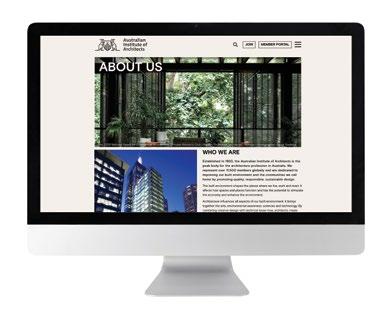

Along with brand alignment and an enhanced design and architecture, immediate improvements observed were a decreased bounce rate (5%) and a steady page and unique page view count (down 4% and 7% respectively). This was a positive result as the number of pages on the new website was reduced by approximately 60%.
Pages per session and average session duration also increased (17% and 11% respectively) compared to the same period in 2018. This suggests that visitors were engaging and consuming the content on the website.
The majority of website traffic came from organic search (60%) and direct sources (36%). Traffic from referrals (8%), email campaigns (3%) and social media (2.5%) rounded out the top five sources.
As expected, the majority of website traffic came from Australia (74%). There was a noteworthy amount of traffic from USA (12%) followed by India (1.5%), UK (1.3%) and Philippines (1.2%).
40,000+ FOLLOWER GROWTH
2.8% HIGHEST ENGAGEMENT RATE
85+ MOST AMOUNT OF COMMENTS ON MEDIA POST MOST AMOUNT OF LIKES
4K IN ONE DAY
SHORTLISTED
12 NAMED AWARDS
23 NATIONAL AWARDS
12 NATIONAL COMMENDATIONS
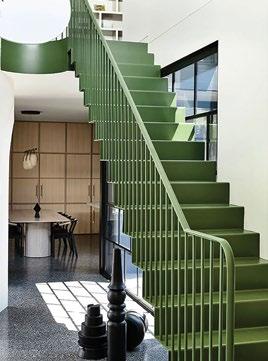
Delivering exceptional programs that recognise and promote members achievements is central to the Institute’s role as the profession’s peak body.
The Institute’s peer-reviewed awards program exemplifies best-practice architecture, providing qualitative examples of how architecture can deliver outstanding outcomes. These innovations are shared at national, chapter and regional awards programs.
Projects spanning residential, commercial, public architecture and more, provide an annual showcase of the best in the field. The subsequent media coverage highlights these achievement to a broad audience.
National Jury Chair Clare Cousins said, ‘a number of themes emerged across all categories this year: projects that delivered worthy outcomes with little means; projects that challenged the expectation of a typology; projects that demonstrated the value of architecture through public benefit; and projects with clear commitments to social and environmental sustainability,’
‘All these qualities make significant contributions to our cities and regional centres.’
Almost one in four projects shortlisted were located outside a capital city. All states and territories were represented in the awards, highlighting the breadth of great architecture across Australia.
The Institute thanks the national jury for its consideration and efforts. The 2019 national jury members were Clare Cousins, Emma Williamson, Rachel Neeson, Donald Bates and Mat Hinds.


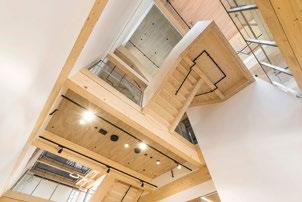
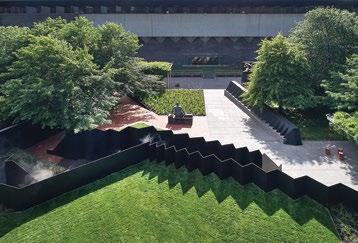
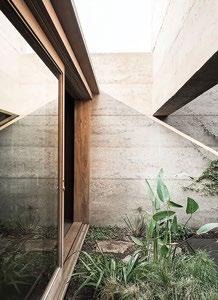
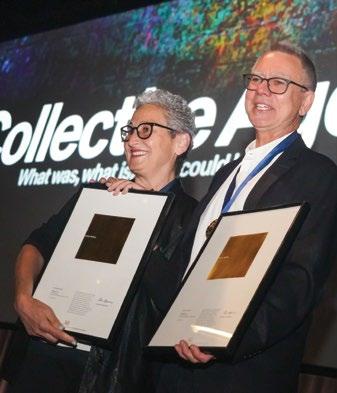
In 2019, the Institute’s highest individual honour – the Australian Institute of Architects Gold Medal – was awarded to Hank Koning and Julie Eizenberg of Koning Eizenberg Architecture. Since the inception of their practice, Hank and Julie have produced work of dignity underpinned by an egalitarian generosity of light, scale and air, all imbued with Australian congeniality and wit.
A range of national prizes were bestowed to leaders within the profession from students to esteemed practitioners, recognising the outstanding contributions of members across all areas of architecture and practice.
Hank Koning FRAIA and Julie Eizenberg RAIA – Koning Eizenberg Architecture
NATIONAL PRESIDENT’S PRIZE
Tim Ross – Broadcaster and entertainer
PAULA WHITMAN LEADERSHIP IN GENDER EQUITY PRIZE
Professor Helen Lochhead – FRAIA AILA MPIA FAICD
Professor Vivian Mitsogianni RAIA – RMIT University
NATIONAL EMERGING ARCHITECT PRIZE
Rodney Eggleston RAIA – March Studio
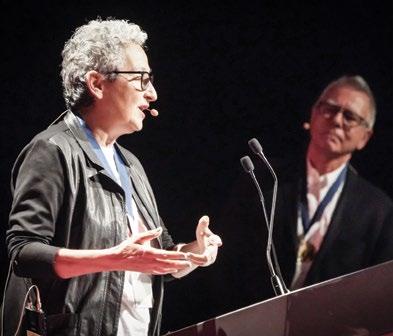
1_ Immediate Past President Clare Cousins LFRAIA announcing Gold Medal winners, Hank Koning and Julie Eizenberg
2_ Gold Medal winners, Hank Koning FRAIA and Julie Eizenberg RAIA
3_ National President's Prize winner, Tim Ross
4_ National President's Prize winner, Tim Ross with Clare Cousins



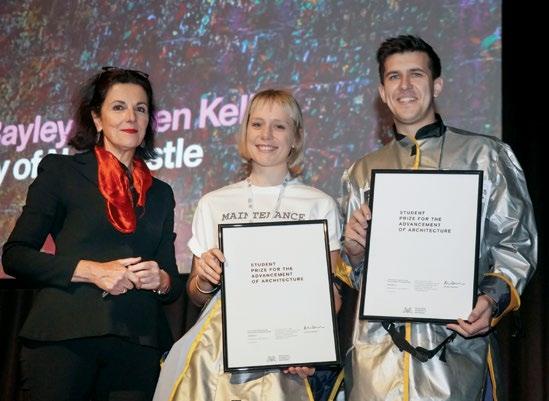
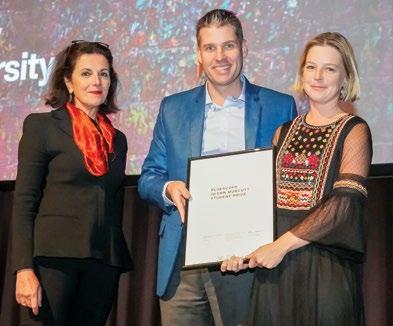
STUDENT PRIZE FOR THE ADVANCEMENT OF ARCHITECTURE
Bobbie Bayley and Owen Kelly – University of Newcastle
STUDENT PRIZE FOR THE ADVANCEMENT OF ARCHITECTURE COMMENDATION
Julius Egan – RMIT University
LEADERSHIP IN SUSTAINABILITY PRIZE
Cooperative Research Centre for Low Carbon Living
GLENN MURCUTT STUDENT PRIZE
Sobi Slingsby – Griffith University
AUSTRALIAN INSTITUTE OF ARCHITECTS DULUX STUDY TOUR
Alix Smith RAIA – HASSELL (Vic)
Ben Peake – Carter Williamson Architects (NSW)
Carly McMahon – Liminal Studio (Tas)
Jennifer McMaster RAIA – TRIAS (NSW)
Phillip Nielsen – Regional Design Service (NSW)
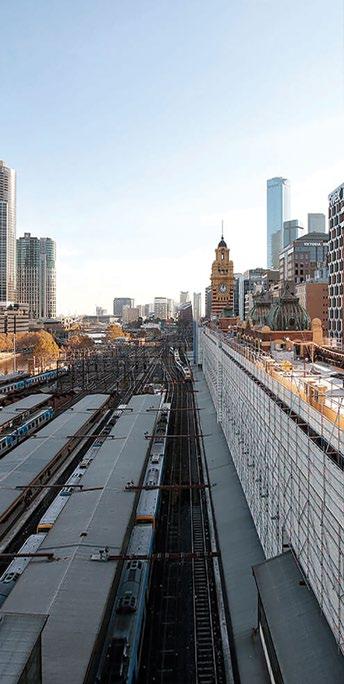
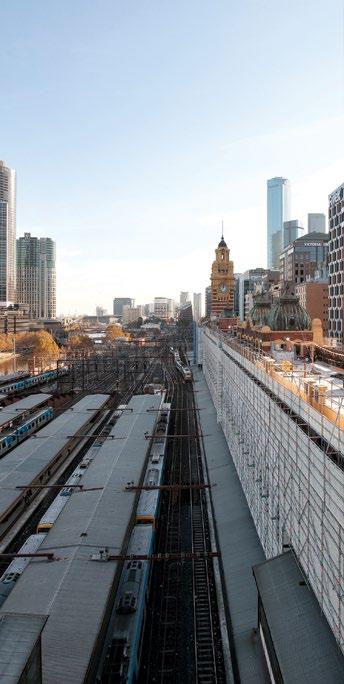
The Institute and its members are dedicated to raising the quality of the built environment for people and the advancement of architecture. We seek to improve the enduring health and wellbeing of all Australians and our diverse communities. The design of the built environment shapes the places where we live, work and meet. The quality of the design affects how spaces and places function and has the potential to stimulate the economy and enhance the environment.
Australian architects have a worldwide reputation for innovative design leadership and our profession is well placed to support government with advice on ways to address the key challenges facing our regions, towns and cities.
We are continually strengthening our advocacy efforts to ensure we effectively communicate the value of architecture to the community and government. We are promoting policies and strategies to raise design standards in our cities and towns, to position Australia as an international design leader and to make Australia a better place for us all.
To be truly effective, we first need to be heard. Only then can we play the role we need to play to shape Australia’s future in a positive way. Along with formal submissions and feedback opportunities, we have focused on relationship building to maximise the impact of our advocacy endeavours, and we are working constructively with all levels of government, authorities and other industry groups. To this end, at a national, state and territory level, we have engaged on a wide range of issues, outlined in the following.
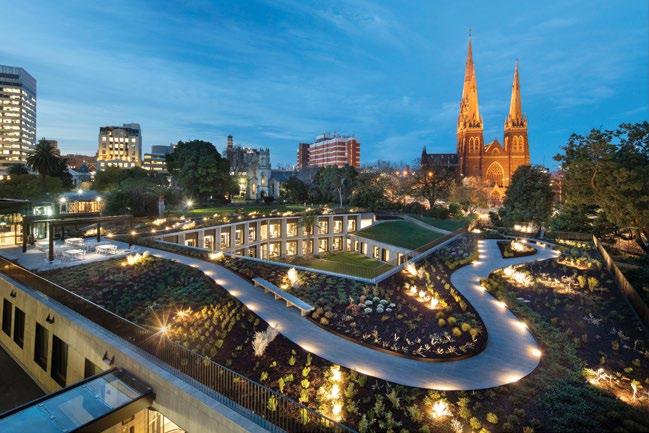
The Institute has been calling for all state and territory governments to act and urgently improve how the building and construction industry is regulated, highlighting that if time and cost continue to be the prime drivers in the construction industry, quality outcomes will not occur, and the consumer will not be protected. Our focus on building regulation reform remains on four key aspects within the profession’s areas of expertise: quality, safety, regulatory reform and compliance.
The Institute has been advocating for increased accountability including a nationwide requirement for the registration of all building practitioners, in the same way architects are. There is also a need to ensure all projects are supported by more complete documentation and procurement models which deliver better outcomes for consumers in terms of their physical and financial security.
Finally, we have been calling strongly for reform that delivers fully on the recommendations of the Building Confidence (Shergold-Weir) report (2018).
Throughout 2019 we have made public statements and submissions, held meetings with government, developed guidelines, run CPD and collaborated with other industry stakeholders to build our collective voice.
As we continue to fight for reform through a multifaceted approach, targeting key decision makers, we stand ready to support state, territory and federal governments as they begin the reform process.
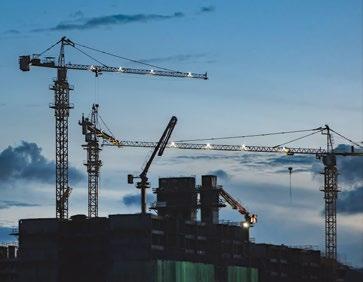
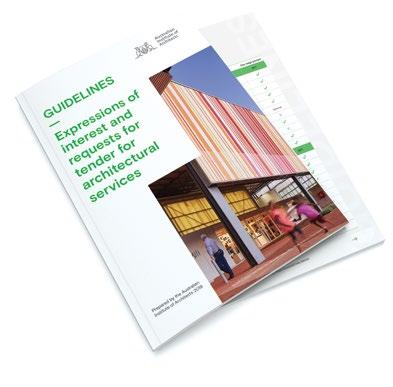
The procurement of architectural services has been identified by members as a key policy priority and research was undertaken to investigate best practice Expression of Interest (EOI) and Request for Tender (RFT) methods in public sector and educational institutions that commission architectural services.
The research looked into the current experiences and perceptions of architects and clients and includes analysis of industry and government policy documents, interviews with government and institutional clients, and an online survey of Institute members.
The research enabled the Institute to develop a set of Guidelines for EOI and RFT for architectural services endorsed by the Office of the Victorian Government Architect. The objective of the guidelines is for potential clients to review their own EOI and RFT methods and documents and align them with best practice to enable an effective and efficient process that maximises the potential for high-quality built outcomes and reduces bidding and assessment costs for all.
WE SEEK TO IMPROVE THE ENDURING HEALTH AND WELLBEING OF ALL AUSTRALIANS AND OUR DIVERSE COMMUNITIES. THE DESIGN OF THE BUILT ENVIRONMENT
The Institute has undertaken a national survey of its members on novation as a procurement method. While novation can create positive outcomes and is supported by the architectural profession, the results of the survey identify some issues.
In 2019, only Victorian state-based results have been released, ahead of the national results. For Victoria, the survey covered 71 architectural practices and 158 projects delivered between 2009 and 2019.
The Victorian Survey identified 11 key outcomes, both positive and negative on the use of novation as a procurement method. The final outcome confirmed support for an industry-wide code of novation. This was favoured by 83 per cent of respondents, who believed that a code would be beneficial in improving the quality of projects delivered through novation. Work is continuing on both finalising the remaining state and territory results as well as developing a code of novation.
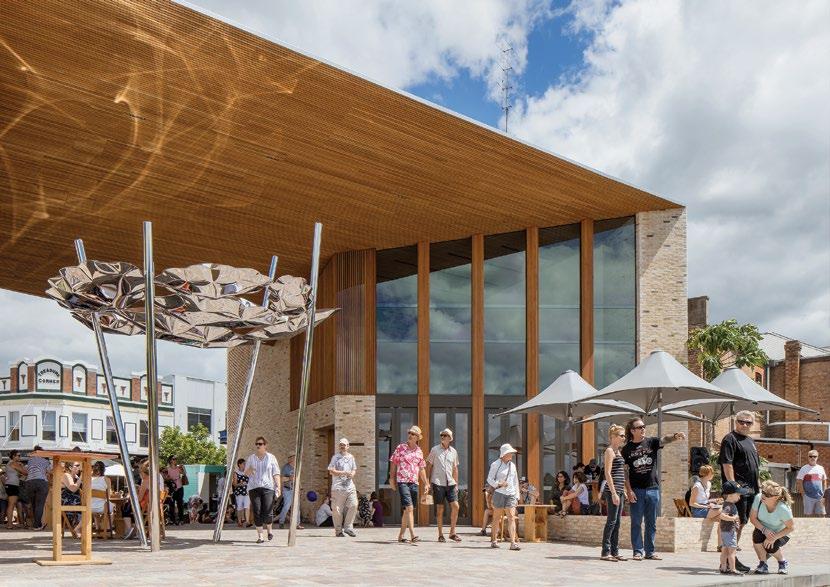

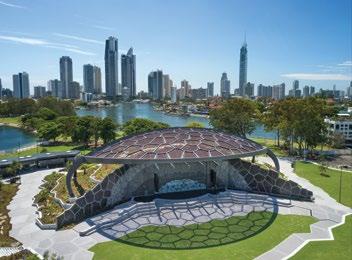
Ahead of the election of the 46th Parliament of Australia in May 2019, the Institute engaged with candidates on issues identified by the membership as key election priorities. These included the continued reform of building regulations and embedding good design in government policies for managing the growth of Australia’s cities and towns.
Australia faces complex growth, economic and environmental challenges. As a result, the Institute has promoted key conversations with Australian politicians and policy makers focused on solutions that enable the built environment to deliver the best outcomes for the Australian people.
As professionals in the built environment, architects have great capacity to assist in transforming challenges into opportunities. Embedding good design in critical Australian government policies and investments will maximise the benefits returned to Australian communities, whether in our cities or regions, through the quality and performance of buildings and urban environments.
The Institute urged for more action on urban planning with transport and design; inclusive and accessible housing; addressing climate change including a national plan for net zero carbon buildings by 2040; the appointment of an Australian Government Architect and a National Architecture Policy; and fair and open government procurement that recognises the strong expertise and skill of Australian architects.
Finally, we called strongly for reform of building regulation to continue in a timely way, prioritising safety and sustainability. The Institute has been a strong voice calling for increased national building safety measures to protect people in their workplaces and homes. Progressing implementation of the Building Confidence (Shergold-Weir) report recommendations was consistently highlighted as an urgent priority.
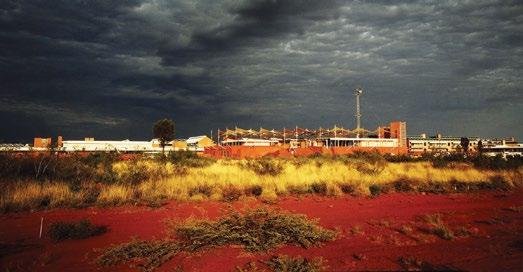
In 2019, we continued to strengthen our commitment to the ongoing professional education and training of architects. In April, the Institute’s Client Architect Agreement (CAA2019) and the Client Architect Agreement for Limited Services (CAALS2019) were made digitally available as a member benefit via Acumen with supporting guide letters, user guides and schedule pages.
Throughout the year, material has been added and existing material reviewed, consolidated or archived. New and updated content covered a wide range of issues relevant to the profession including updates to the National Construction Code, communications, novation, accessible and inclusive design, mental health, development in bushfire-prone areas and design for heat stress resistance.
Content on the portal is reviewed regularly by the Institute’s dedicated Knowledge Services editorial team. Member representatives on the Acumen Content Review Panel, the Environment Advisory Group and the Institute’s various technical advisory groups, including the National Practice Committee, Chapter practice committees and the National Access Working Group, also continue to advise on the material.
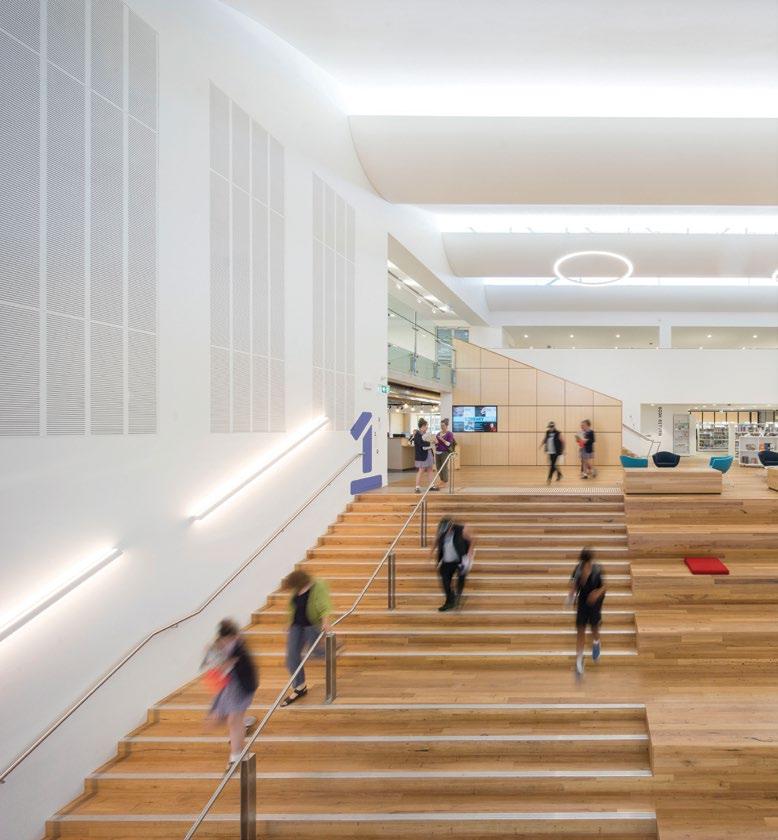
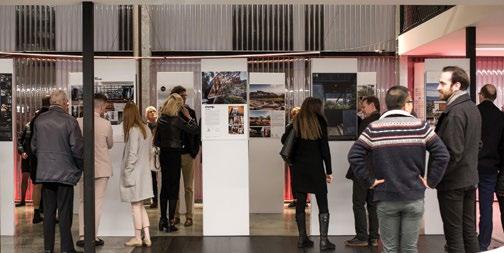
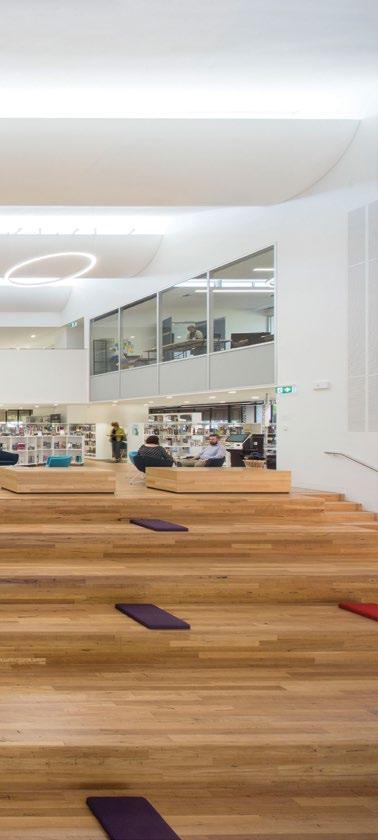

The Institute values ongoing professional development and education and encourages architects to engage with their colleagues through learning. In order to fulfil our members’ professional development requirements, we design and deliver a comprehensive suite of online and face-to-face CPD and education opportunities. We offer a selection of high-quality practical CPD sessions across Australia, covering the competency standards of design, documentation, project delivery and practice management. The Institute’s online learning platform offers 24/7 access to more than 70 premium on-demand courses, accessed by thousands of architecture professionals at their convenience. Institute members can also access an extensive range of curated third party CPD via our External CPD Provider network. Our comprehensive Practice of Architecture Learning Series supported 360 graduates nationally preparing for the registration exams as well as architects re-entering the workforce after a break.
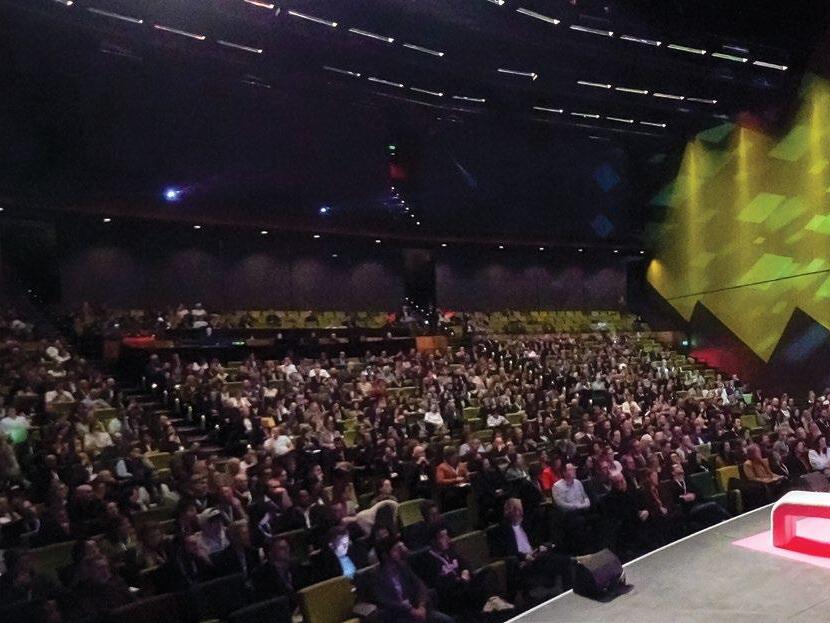
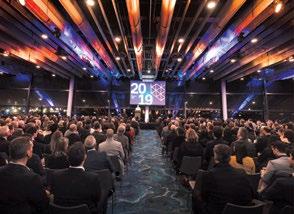
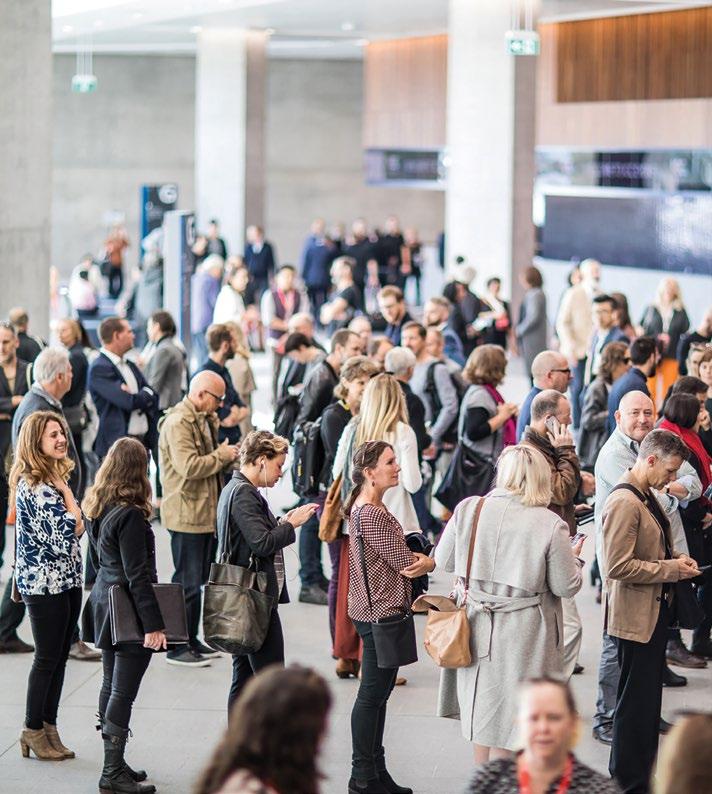
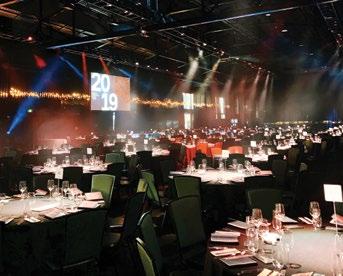
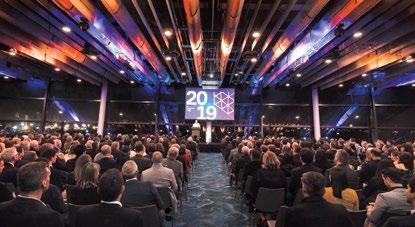
In 2019, we presented our annual flagship event, the National Architecture Conference. Held in Melbourne and attended by more than 1,000 delegates from across Australia, the two-day program was an engaging forum for discussion, learning and networking.
Collective Agency was the theme of the conference in 2019, reminding us that the whole is greater than the sum of its parts, and with unity comes an ability to affect an outcome. The event encouraged reflection on today’s challenges, the articulation of more meaningful protocols, and most importantly, the willingness to act.
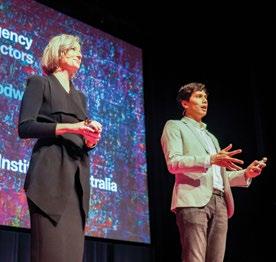
Curated by Monique Woodward, co-founder of the award-winning practice, WOWOWA Architecture, and Stephen Choi, Executive Director of the not-for-profit Living Future Institute of Australia, the conference celebrated projects from small, medium, and large practices inside and outside of architecture.
Demonstrating the power of empathy, enabling contribution, and in doing so, re-examining professional aspirations, delegates were encouraged to discuss what WAS (our shared understanding), what IS (our shared reality), and what COULD BE (our shared advocacy).
Every speaker was tasked with giving away something precious and empowering. Every attendee was tasked with making a pledge to act on this new power. The event was a demonstration of collective agency.
Formal and informal CPD points were available at the conference.
Collective Agency featured engaging and expert architects from Australia and abroad.
• Elisapeta Heta - Senior Associate and Māori Design Leader, Jasmax, New Zealand
• Farzin Lotfi-Jam - Director of Farzin Farzin, USA
Jen Wood & Emanuel Admassu – Founding Partners of AD-WO, USA
• Lesley Lokko - Director of School at the Graduate School of Architecture, University of Johannesburg, South Africa
• Marcos Rosello – Director of aLL Design, UK
• Marina Otero Verzier - Director of Research, Het Nieuwe Instituut, Netherlands
• Momoyo Kaijima – Director, Atelier Bow-Wow, Japan
• Sol Camacho – Cultural Director, Instituto Bardi/Casa de Vidro, Brazil
• Jeremy McLeod – Director, Breathe Architecture, Australia
• Olivia Hyde - Director of Design Excellence, NSW Government Architects Office, Australia
• Sarah Lynn Rees - Architectural Graduate, JCBA, Australia
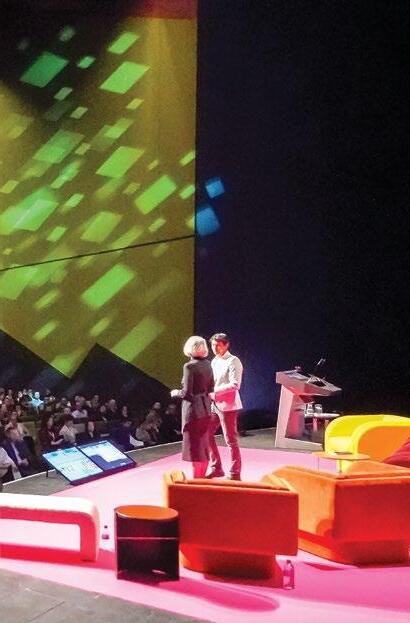
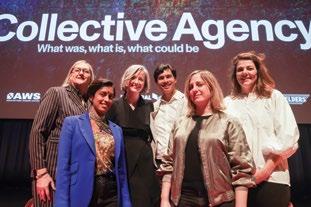
Captains helped to facilitate the sessions and spark conversations.
• Shelley Penn – Principal, Shelley Penn Architect
• Nic Brunsdon – Director, POST – architecture
• Tania Davidge – President, Citizens for Melbourne
• Kerstin Thompson – Principal, Kerstin Thompson Architects
• Timothy Moore – Director, Sibling Architecture
• Andy Fergus - Urban Designer, City of Melbourne
• Kieran Wong – Principal, TheFulcrum.Agency
• Julia Cambage - Chief Executive Officer, Australian Institute of Architects
• Dhakshayini Sooriyakumaran – Human Rights Director, Australasian Centre for Corporate Responsibility, Australia
• Laura Harding - Designer/ Writer, Hill Thalis Architecture + Urban Projects, Australia
• Mauro Baracco & Louise Wright- Directors, Baracco+Wright Architects, Australia
• Genevieve Murray – Practitioner, Future Method, Australia
• Joel Sherwood-Spring - Practitioner, Future Method, Australia
• Libby Porter – Professor, Centre for Urban Research, RMIT University, Australia
• Cecille Weldon - Real Estate Program Director, Centre for Liveability Real Estate, Australia
• Poppy Taylor and Mat Hinds - Co-founders, Taylor and Hinds Architects, Australia
• Gregory Burgess – Director, Gregory Burgess Architects, Australia

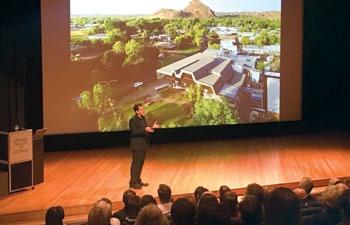
With incredible collaboration between members and staff, the ACT Chapter had an outstanding year delivering initiatives that advanced the importance of good design and architecture within the community.
With the support of the Alastair Swayn Foundation, the ACT Chapter hosted a recording of ABC Radio’s Big Ideas program with moderator Paul Barclay. The topic was ‘Stories behind the design and construction of the Opera House and New Parliament House’ with presenters Ric Thorp AM, the Australian architect who worked on New Parliament House, and journalist Helen Pitt, winner of the Walkley Award for her book on the Opera House.
Our ACT Architecture Awards were a resounding success with strong member support for a gala sit-down event held at the National Museum of Australia. The prestigious Canberra Medallion was awarded to Austin Maynard Architects for the Empire House.
Throughout September, the Chapter delivered the highly successful Contemporary Australian Architects Speaker Series now in its 24th year at the National Gallery of Australia supported by BCA Certifiers. The event attracted sold-out audiences on most nights with more than 1,000 people attending.
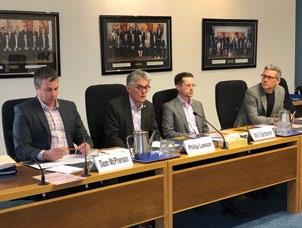
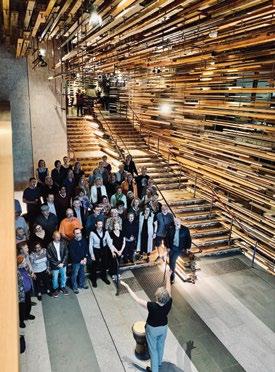
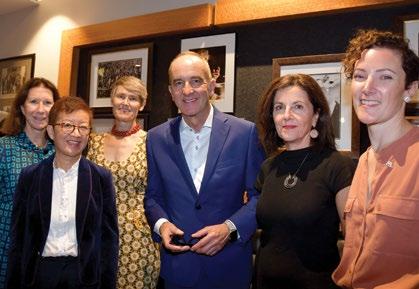
The Chapter participated in Design Canberra, which celebrates design and architecture throughout November. Our advocacy continued to be strong including regular engagement with government ministers and departmental officials throughout the year and policy submissions on the City and Gateway Urban Design Framework, Minimum Documentation Guidelines for Class 2-9 Building Approval Applications, and a presentation to the ACT Legislative Assembly Inquiry on Building Quality led by our President Philip Leeson.
We continued our support of the Institute’s campaign to stop the demolition of award-winning Anzac Hall as part of the Australian War Memorial’s $500M redevelopment plans. Our submission to the Department of Energy and Environment incorporated an independent heritage review under the EPBC Act.
As a Chapter and community, we also paid our respects to Dr Enrico Taglietti who passed. According to ACT Chapter President Philip Leeson, ‘Dr Taglietti's beautiful idiosyncratic buildings have forever changed Canberra's built environment and leave a lasting legacy for generations to enjoy’.
If 2018 was a year of milestones, then 2019 was one of steady resolve and determination. The courage and vision of the cohort saw the International Chapter continue to grow and develop under the strong leadership of the inaugural International Chapter Chair Samantha Cotterell and the experienced and passionate team of Chapter Councillors.
The Chapter continued to advocate to connect members and keep them informed on the work of the International Chapter, as well as issues that affect the quality and sustainability of our built environment globally.
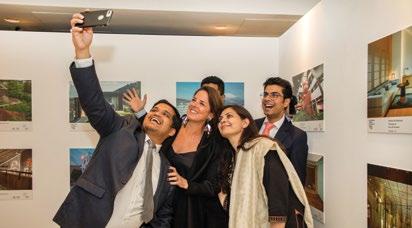

We have established the operational framework for the Chapter and built member awareness through a program of member engagement activities, including enhanced communication and social media activities that drive membership value and support growth.
The work of Australian architects around the world was honoured at the inaugural Australian Institute of Architects 2019 International Chapter Awards. The International Chapter celebrated the awards in Dubai, hosting several events including a night at the Australia Pavilion Commissioner General’s house, a site visit to the 2020 Expo Dubai and an awards presentation cocktail party with the Dubai architecture and design community to celebrate and present the 2019 International Chapter Architecture Awards.
Nine awards and two commendations were presented at an announcement attended by the Institute’s National President Helen Lochhead, International Chapter Chair Samantha Cotterell, Awards Chair Annelise Tiller and Commissioner General of Expo 2020, Justin McGowan. Samantha Cotterell said of the work that ‘they demonstrate the vision and the talent of our members of the Australian architecture profession, who courageously and ambitiously set out to lend their voice to a global architectural conversation. These projects are a proud representation of the growing international presence of our design professionals.’
While the International Chapter works to establish its presence and broaden its reach and influence internationally, it has undergone some rapid change and agilely adapted to a variety of challenges with wisdom and enthusiasm. International Chapter Council and members have committed their expertise and experience to support the establishment of the Institute’s newest chapter and we sincerely thank them.
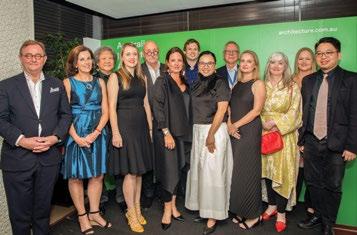
We kicked off the year with a state election and our platform called upon contending parties to: ensure design quality in densification; deliver well designed and diverse affordable housing; ensure adequate construction standards and their enforcement; lead by example in making government a good client; empower the Government Architect NSW; establish automatic mutual recognition of architects; and respect our cultural heritage.

Major construction failures in multiresidential buildings saw design and building quality issues come to a head in NSW, and much of the year’s subsequent advocacy work focused on addressing the root causes. We campaigned for various reforms including registration for other built environment professionals, better procurement practices, and mechanisms for ensuring design and construction quality from start to finish of a project.
Chapter President Kathlyn Loseby spearheaded a highly engaged industry group to form a cohesive, coordinated and reinforced advocacy approach and our efforts saw government bring the Institute deep into its continuing work developing legislative and policy reform. By reintroducing a President’s Luncheon series, we further consolidated our engagement with government, industry and universities. Through these channels we were able to interact directly with the minister for planning and public spaces and engage with key leaders to explore issues including education, sustainability and Indigenous cultural literacy.
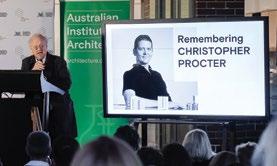
Meanwhile, we introduced three new prizes into the NSW honours stables, with winners announced at our end of year night at the inaugural NSW Medallion-winning Joynton Avenue Creative Centre by Peter Stutchbury Architects. The Christopher Procter Prize awards funding to an emerging architect for research or study related to the design of cities; the Best In Practice Prize recognises excellence in workplace culture; and the Reconciliation Prize acknowledges architecture projects and practices in NSW that advance the rights of Aboriginal and Torres Strait Islander people.
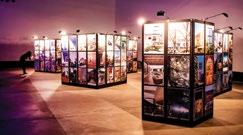
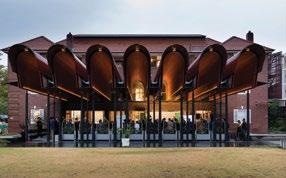

Reconciliation was a strong theme across the year in the NSW Chapter. In addition to the new prize, we held a sold-out forum: Reconciliation Conversations, a day of provocations, policy and project conversations focused on progressing reconciliation within the architectural profession. It also formed the basis of the 2019 regional conference – Always was, always will be – which looked to develop a deep understanding of Country.
2019 marked the 75th year of Architecture Bulletin, Australia’s longest running architectural journal. The Chapter’s extensive collection of journals and books was also properly catalogued and systematised with funding through the Heritage Council of NSW.
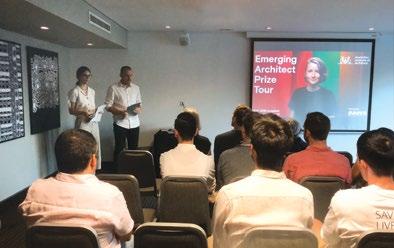
2019 was a busy year for the NT Chapter engaging with regional centres and hosting our first NT Awards in Alice Springs. With over 100 people in attendance, there was a full program of events including a welcome from the Mayor of Alice Springs Damien Ryan and previous winners site tour. The NT Jury Chair was Elizabeth Watson Brown from Architectus. Mark Snowden from Thinc projects and Cola Maurirere NT President of the National Association for Women in Construction were jury members.

We continued our advocacy work with local government on the development of area plans for Palmerston and Darwin and stage three of reforming the Planning Act, Designing Better guidelines, workshops and implementation of the Remote Housing program, including Room to Breathe. Another key issue was energy efficiency in commercial and residential buildings. The NT Chapter also encouraged the removal of the ‘Outside the Building Control Areas’ clause from the Planning Act, so that the act applies to the whole Territory and not just urban areas or some remote town centres.
We are still working with the NT Government on the introduction of compulsory CPD, implementation of a Code of Conduct and compulsory insurance. Some of these will be covered through full implementation of the Building Confidence (Shergold-Weir) report recommendations. We have also been advocating for the vacant Government Architect position to be filled. The NT Chapter addressed shortfalls in the procurement process, which is ongoing, and included management of ‘buy local’ criteria in adherence of tender guidelines.
We also worked with Charles Darwin University to enhance and change the degree program, with a Bachelor of Arts Architectural Design to commence in 2020 and advanced programs introduced the following year.
The Chapter had a packed year for professional development and networking with over 40 events, including SONA and EmAGN networking. In 2019 we made a deliberate effort to partner with like-minded organisations, including Engineers Australia, the Planning Institute of Australia and the National Association for Women in Construction, maximising networking opportunities across complimentary areas and events.
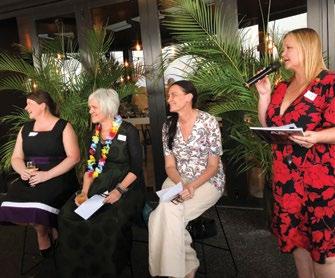
2019 was a year of operational changes, activities and events for the Queensland Chapter, which occurred at an energetic pace. Continuing professional development activities were offered face to face and via webinars with over 3,000 participants taking advantage of the Chapter’s scheduled programs.
An ambitious regional conference scheduled to take place in Cairns in October was re-imagined as a shortform event called Connecting Narratives. This was a resounding success for both attendees and presenters. This multidisciplinary forum held at the Cairns Art Gallery, explored myriad approaches to design and collaboration in a sub-tropical environment. The information sharing at this one-day event focused on environmental science and climate change, First Nations’ understanding of land and connectivity, and architectural approaches to working with community.
The 2019 Queensland Architecture Awards attracted 127 entries. Following the awards ceremony, held at the newly opened Howard Smith Wharves, with winning entries progressing to the National Architecture Awards (also held at the Howard Smith Wharves). Queensland architects took home major awards in this prestigious annual competition including Terrarium House by John Ellway and Mermaid Multihouse by Partners Hill with Hogg & Lamb.
In the advocacy space, Chapter President Paul Trotter successfully convinced the Queensland Ministerial Construction Council and the Minister for Housing and Public Works to establish a sub-committee to review oversight of construction projects. The licencing of project managers as superintendents of projects is an issue of ongoing concern and interest for our members.
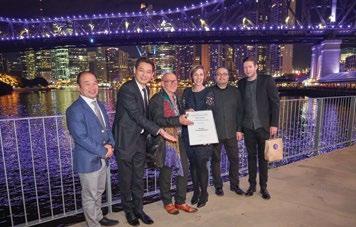
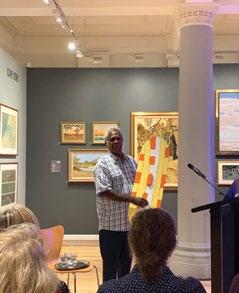
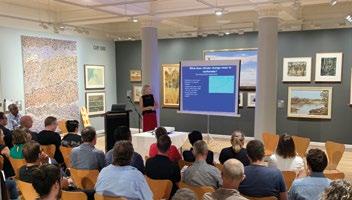

The Queensland Chapter benefits from long-standing relationships with a number of generous state partners. Working with the state-based representatives of our national partners was also a highlight for the team.
As always, the Chapter benefitted from the outstanding support and energy of our Chapter Councillors and committee members throughout Queensland, as well as our awards jurists, CPD and PALS presenters, Senior Counsellors and many more committed practitioners.

2019 was a busy and productive year for the SA Chapter. Activities included involvement in the development of the new SA Planning and Design Code and a local design review process, engagement with the government’s Growth State initiative and participation in the inquiry into housing and homelessness.
The SA Chapter continued to explore equity and work culture through the Designers for Diversity Task Group. This important initiative shines a light on issues that impact all architects, including fee pressure, graduate support, innovation and wellbeing.
Advocacy to government around procurement processes and delivery of the stimulus package were also key projects. Government is no longer a best-practice client with practices requiring the collective voice provided by the Institute to enable them to negotiate the risks inherent in public sector projects. Providing a forum that brings members together to discuss shared experience is greatly valued.
The SA Architecture Awards once again provided an opportunity to demonstrate the benefits of good design and architectural involvement. The capacity of this program far exceeds the core remit to celebrate excellence.
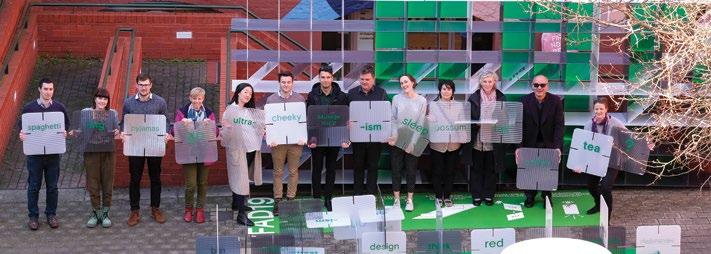
The second major project for the year was the Festival of Architecture and Design (FAD19), which brought architects and the public together to discuss Ideas of Home. Held over four days, the event was well attended and a catalyst for important discussions around future housing, Indigenous concepts of home and place, affordable housing and housing choice.
The Tasmanian Chapter continues to advocate on behalf of the profession in relation to issues that affect the quality and sustainability of our built environment. In 2019, the Chapter contributed to discussions around procurement, local government, planning issues and strengthening advocacy efforts to achieve positive outcomes.
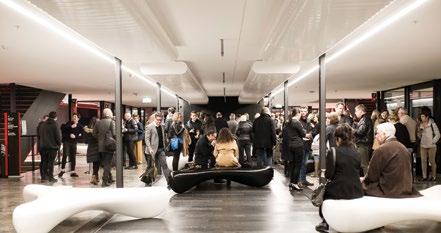

The Chapter hosted a number of practice forums throughout the year, along with a dedicated forum in collaboration with the University of Tasmania to enable an open discussion between members and the team spearheading the move into the city.
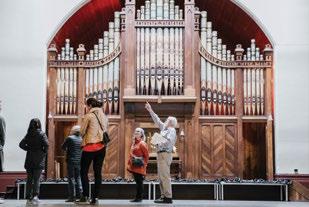
Open House Hobart saw its seventh annual event take place in November with 75 buildings (including over 250 individual tours and nine customised walking tours) recording 20,540 visits over the weekend. An additional ten satellite events saw the total program reach 21,329 visits –the biggest year yet. The second Open House Launceston was delivered in September, with 34 buildings open, along with a suite of walking tours and design forums. A total of 3,641 visits were recorded throughout the program, with strong engagement from SONA, EmAGN, and the architecture and design community.
The program, at its core, is education - an opportunity for everyone to learn about architecture and our built environment by experiencing it. It is also advocacy at its finest. Open House is attracting the attention of councils and governments and opening a number of doors.
Our CPD program continues to be enhanced by the addition of livestreaming services, enabling members from across the state to access this vital resource. This has seen an increase in uptake from members and non-members alike.
The 2019 Tasmanian Architecture Awards saw another strong year with 35 entries across nine categories.
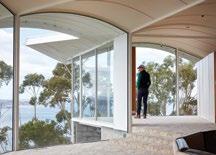
Exhibitions showcasing the entries were held in Hobart and Launceston with record attendance numbers from both members of the public and the profession. These exhibitions were officially opened by the mayors of their respective cities. The Awards presentation dinner saw, for the first time, a public gallery which attracted 130 people in addition to the 220 guests who attended the presentation dinner.
2019 was an incredibly rewarding year for the Victorian Chapter. We saw significant achievements in our awards program, CPD initiatives and, of course, our advocacy efforts.
In June we celebrated the exceptional work and contributions of our members to the Victorian built landscape. The awards are also a time of reflection on the strong working relationships between client, architect, contractors and consultants. They highlight the importance of unity across the industry and the need to support and lean on each other. Further, we acknowledge and thank our supporters, our partners who make the awards program possible.
The 2019 Victorian Architecture Awards also saw the introduction of a wonderful Welcome to Country, which was delivered by Gheran Steel, CEO Boon Wurrung Foundation. It was a very generous and considered welcome. It was requested that all shortlisted projects be acknowledged based on their Registered Aboriginal Party. We will introduce this as a submission requirement going forward.
Our 2019 CPD program saw a record high of attendees, with a total of 652 attendees for the face-to-face seminar, a 90.4 per cent attendance rate with 50 formal CPD points on offer. We also successfully maintained a gender equity ratio of 46.3 per cent female speakers/ chairs. SONA and EmAGN had a rich variety of CPD events on offer. Events included SONA Portfolio night, EmAGN Forum Overseas Experience, Mentor Me and EmAGN: What I wish I knew before I became my own boss. Many of these were kindly hosted by Brickworks, their wonderful new Design Studio proving to be an immensely popular venue.
Collaboration has proved to be key for our advocacy efforts. We continued to work closely with the Office of the Victorian Government Architect (OVGA), Architects Registration Board of Victoria, Australian Institute of Landscape Architects, Planning Institute of Australia, Association of Consulting Architects, Department of Environment Land Water and Planning, City of Melbourne, Creative Victoria and various other government agencies to find ways to instigate reform and advocate for safe and quality-built outcomes. We are actively advocating to government for fair and equitable contractual arrangements to provide a level playing field for all involved. In November, our draft working document for a proposed national code of novation instigated by the Large Practice Ambassador firms, OVGA and Planned Cover, was presented to Minister Wynne. It was then tabled at the Building Ministers Forum held in Canberra on the 13 December.

In 2019, the Gender Equity Policy was also reviewed and updated by the Gender Equity Committee. Confirming the Institute’s stance in relation to gender balance being a composition of 40 per cent female, 40 per cent male and 20 per cent either or non-binary for representation and participation on any panel, jury, conference or committee. This is only the tip of the iceberg in terms of the work and advocacy that has been undertaken in 2019 by the Institute and its members. Our achievements would not be possible without the valuable contributions of our members, forums and committees.
2019 has been a year of refocus for the Western Australian Chapter with an increase of high-quality events and advocacy.
Western Australia has been well represented on the National Procurement Taskforce, leading the way in drafting the Procurement Proforma, which is due to be completed mid-2020. At a state level, we have been in contact with local authorities sharing the Procurement Guidelines to ensure all jurisdictions are educated in best practice. The Chapter has also been working to support the Department of Finance with the project Ethical Procurement Framework.

Along with the National President Professor Helen Lochhead, the WA Chapter has been actively raising the issue of amendments to the Copyright Act 1968, in particular provisions that compel architects to cede ownership of their Intellectual property to the Crown and provide a ‘license’ to use the design developed specifically for a client, as per typical commercial practice and ensure that Australia fulfils its obligations in regard to intellectual property as stated in Article 27(2) of the Universal Declaration of Human Rights.
We have been working hard to support the Department of Planning, Lands and Heritage with the transformational Planning Reform: Design WA Planning Guidelines aimed at the delivery of performance-based planning guidelines and Action Plan for Planning Reform aimed towards removing red-tape planning processes. In addition to formal submissions, the Chapter has assigned delegates to sit on multiple working groups.
We continue to work with the Building Commission and our built environment partners in the proposed implementation of the recommendation in the Building Confidence (Shergold-Weir) report (2018). This will continue well into 2020 with a series of workshops.
Along with all our extensive advocacy work, we have continued to deliver high quality CPD, networking and awards. Some key highlights from the year were the William Smart CPD presentation, Danish Super Hospitals CPD Presentation, the annual Gold Medal talk, Design WA, and most notably, the WA Architecture Awards at Optus Stadium.
Our committees have commenced a governance transformation with the formation of a specific WA Advocacy Group chaired by Chapter Councillor Mandy Leung from Hillam. All committees have been restructured to provide focused strategic objectives within the four key streams of: WA Advocacy, Diversity and Gender, Sustainability and Innovation and Education. We continue to work collegiately with the three key universities: Curtin, University of Western Australia and Notre Dame as well as our student and emerging communities: SONA and EmAGN supporting their committees and events throughout the year.
We continued to raise our media exposure through print and digital media platforms such as Instagram, Facebook and LinkedIn to enable us to communicate the great work achieved by the profession, industry and members.
The financial statements cover The Royal Australian Institute of Architects Limited as a consolidated entity consisting of The Royal Australian Institute of Architects Limited and the entities it controlled at the end of, or during, the year. The financial statements are presented in Australian dollars, which is The Royal Australian Institute of Architects Limited’s functional and presentation currency.
The Royal Australian Institute of Architects Limited is a not-for-profit unlisted public company limited by guarantee.
The financial statements were authorised for issue, in accordance with a resolution of directors, on 11 April 2019. The directors have the power to amend and reissue the financial statements.

For the year ended THE ROYAL AUSTRALIAN INSTITUTE OF ARCHITECTS LIMITED and CONTROLLED ENTITIES
(ACN: 000 023 012)
ABN: 72 000 023 012
For the Year Ended 31 December 2019
Report
The Directors of The Royal Australian Institute of Architects Limited present their report, together with the financial statements, of the consolidated entity, being The Royal Australian Institute of Architects Limited (“the Company”) and its controlled entities (“the Group” or “consolidated entity”) for the year ended 31 December 2019.
D Directors
The following persons were Directors of The Royal Australian Institute of Architects Limited during the whole of the financial year and up to the date of this report, unless otherwise stated:
N Names Qualifications & other appointments
Professor H M
Lochhead
LFRAIA MPIA AILA
FAICD Hon AIA
A L T M Hampson
FRAIA – appointed as a Director 14 May 2019
B Sc (Arch) (Hons) B Arch (Hons) (Sydney)
MSAUD Columbia University
Company Directors Course Diploma AICD
Loeb Fellow, Harvard GSD
Dean, Faculty of the Built Environment UNSW
Director, Australian Institute of Architects Foundation Limited
Director, The Anganwandi Project
BDES, B. Arch (Hons) (UQ)
Board Member Director, Board of Architects
Queensland Councillor, Queensland Heritage Council
Official Residences Advisory Committee’
Independent Expert Panel for Arts Queensland and the Queensland Cultural Centre
Stuartholme Girls School Design Advisory Panel
Special responsibilities
President from 14 May 2019
President Elect from 15 May 2018 to 14 May 2019
National Council Elected Director from 21 March 2013 to 15 May 2018
Member – Finance, Audit, Investment and Risk; and People & Culture Committees from 14 May 2019
President Elect from 14 May 2019
C Cousins LFRAIA
GAICD Hon AIA
B Arch (RMIT)
Director, Clare Cousins Architects Director, Nightingale 4.0
Director, Duckett Acquisition Collective Pty Ltd
Company Directors Course Diploma AICD
Immediate Past President from 14 May 2019
President from 15 May 2018 to 14 May 2019
Acting Chief Executive Officer 7 August 2018
resigned 17 September 2018
President Elect from 16 May 2017 to 15 May 2018
Chair- People and Culture Committee to 15 May 2018
Member – Finance, Audit and Risk Committee until 14 May 2019
Member – Investment Committee until 14 May 2019
Member – Finance, Audit, Investment and Risk Committee from 14 May 2019
Member - People & Culture Committee
Member – Digital Transformation Steering Group
For the year ended THE ROYAL AUSTRALIAN INSTITUTE OF ARCHITECTS LIMITED and CONTROLLED ENTITIES
(ACN: 000 023 012) 31
ACN: 000 023 012
For the Year Ended 31 December 2019
Directors’ Report (continued)
Directors (continued)
Names Qualifications & other appointments
V L Bird FRAIA
P A C Hobbs FRAIA –appointed as a Director 14 May 2019
B.Arch (Hons) (RMIT) Director, Architecture Media Pty Ltd
B.Arch (UWA) Director, Petal Nominees (WA) Pty Ltd
A V Broffman FRAIA M Arch (Illinois)
BA Soc (George Mason)
MA Soc (Brandeis)
Principal-Sydney, TheFulcrum.Agency
G M Overell FAICD FIPAA
BA LLB (Monash)
Grad Dip Fin Mgt (New England)
Company Directors Course Diploma AICD
Associate ASCPA
Independent Chair, Audit Committee of the Victorian State Revenue Office
Chairman, Victorian Opera
Non-Executive Director, Melbourne Primary Care Network
Co-Chair, Australian British Chamber of Commerce Victoria Council
J R Crawford FCAANZ
MAICD – appointed as a Director 24 October 2019
R L Kirk LFRAIA Hon AIA
–retired as a Director 14 May 2019
MA (Oxon)
Director, Blue Mountains World Heritage Institute, Australia
Director, EcoSTEPS Pty Ltd, Australia
Director, Julian Crawford Pty Ltd, Australia Director, Gummarus Pty Ltd, Australia
Director, Carole Young & Associates Pty Ltd, Australia
B Des Studies (QLD)
B Arch (Hons1) (QLD)
Director, Richard Kirk Architect Director, South Bank Corporation
J Hill FRAIA MSIA –retired as a Director 14 May 2019
B.Arch (Hons)
Director, Kerry Hill Architects Pty Ltd
Director, Kerry Hill Architects Pte. Ltd.
Director, Asialink Investments Pte. Ltd.
Director, Theatreworks [Singapore] Ltd.
Special responsibilities
National Council Elected Director from 15 May 2018
Chair, Digital Transformation Steering Group
National Council Elected Director from 14 May 2019
WA Chapter President from 5 February 2019
Independent Director from 15 May 2018
Chair – People and Culture Committee
Independent Director from 26 August 2016
Chair – Finance, Audit, Investment and Risk Committee from 14 May 2019
Chair – Investment Committee until 14 May 2019
Member – Finance, Audit and Risk Committee until 14 May 2019
Independent Director from 24 October 2019
Member – Finance, Audit, Investment and Risk Committee from 24 October 2019
Immediate Past President from 15 May 2018 to 14 May 2019
Acting National President 7 August 2018 to 17 September 2018
President from 16 May 2017 to 15 May 2018
President Elect from 13 May 2016 until 16 May 2017
Member – Finance, Audit and Risk; and Investment Committees
National Council Elected Director from 15 May 2018 to 14 May 2019
For the year ended THE ROYAL AUSTRALIAN INSTITUTE OF ARCHITECTS LIMITED and CONTROLLED ENTITIES
(ACN: 000 023 012)
ACN: 000 023 012
For the Year Ended 31 December 2019
Directors’ Report (continued)
Directors (continued)
N Names Qualifications & other appointments
G M Collins CA
GAICD – retired as a Director 14 May 2019
A Gillon - director from 28 May 2019 to 24 October 2019
B Econ (Sydney)
Chartered Accountant
Company Directors Course Diploma AICD
Chair, Larrakia Darwin Hotel Pty Ltd
Non-Executive Director, Hotel Property Investments Ltd
Director, IBL Limited
Non-Executive Director, Generation Life (subsidiary of ASX: GDG)
BA BCom (Deakin)
Certified Financial Planner (Financial Planning Association)
Graduate Diploma of Applied Finance and Investment (Securities Institute of Australia)
Special responsibilities
Independent Director from 26 October 2016 to 14 May 2019
Chair – Finance, Audit and Risk Committee until 14 May 2019
Member- Investment Committee until 14 May 2019
Member – Digital Transformation Steering Group until 14 May 2019
Interim Independent Director from 28 May 2019 until 24 October 2019
Member – Investment Committee until 14 May 2019
Member – Finance, Audit, Investment and Risk committee from 14 May 2019
Company Secretary
Matt McDonald held the role of Company Secretary from September 2017 to 18 January 2019.
Barry Whitmore has held the role of Company Secretary since 19 January 2019. He has been a member of both Chartered Accountants Australia and New Zealand and CPA Australia for more than 30 years and a Graduate member of the Australian Institute of Company Directors since 2009. He previously held the role of Company Secretary of The Australian Psychological Society Limited for more than 20 years.
P Principal Activities
During the year the principal activities of the Group were to operate as the peak provider of membership, professional development and policy advocacy services for the Australian architecture profession and through IBL Limited, to act as an insurance broker, risk advisor, underwriting agent, claims manager and portfolio manager for Australian architects and other professionals.
The Group also owns 50% of Architecture Media Australia Pty Ltd whose principal activities are publishing and events management with a focus on the built environment.
C Core activities
The Group’s core activities are grouped into six areas that collectively support the Institute’s mission to develop and promote a strong architectural profession and be the voice for architecture.
Professional Leadership
Education, coordination of specialist groups, gender and diversity, students, mentoring and social justice initiatives.
Advocacy
National and Chapter policy solutions, government engagement, research, campaigns and influence.
For the year ended THE ROYAL AUSTRALIAN INSTITUTE OF ARCHITECTS LIMITED and CONTROLLED ENTITIES
(ACN: 000 023 012) 31 DECEMBER 2019
ACN: 000 023 012
For the Year Ended 31 December 2019
Directors’ Report (continued)
Core activities (continued)
Practice Resources
Practice Notes relevant to the profession, Environment Design Guide, access to professional business resources including HR, legal advisors, standards, contracts, benchmarking and calculators.
Continuous Learning
National online and Chapter delivered formal continuing professional development opportunities and the National Architecture Conference.
Networking and Community
Emerging architects, informal continuing professional development, networks and timely, relevant information delivered to members.
Awards, Recognition and Promotion
Awards, prizes, individual recognition and promoting the contribution the profession makes to our built environment and the community.
S Strategic goals
The Group’s three-year goals for 2018 to 2020 are:
For architecture to be a well-regarded and highly relevant profession;
To provide strong governance guiding the profession;
To be a respected advocate with a clear policy agenda;
To have strong member engagement and loyalty;
To provide indispensable member services; and
To be a vibrant, high capacity Institute
P Pathways for achieving our three-year goals
To achieve these three-year goals, the Group has adopted the following four key outcome areas:
1.0 Respected leadership
1.1 Promote the value of our profession
1.2 Support and uphold education standards
1.3 Lead the profession – facilitate and assist specialised bodies within the profession
1.4 Champion social and environmental justice in the built environment
2.0 Advocacy with impact
2.1 Clear agenda and priorities
2.2 Research capacity that underpins policy and perception campaigns
2.3 Advocacy and campaign capacity
2.4 Strategic political interaction across all three levels of government
3.0 Direct member value
3.1 Revitalise practice toolsets to provide relevant and up-to-date resources
3.2 Revitalise CPD to deliver a relevant best practice curriculum
3.3 Realign membership structure
4.0 Strong and viable Institute
4.1 Positive values-led internal culture
4.2 Strong brand aligned to our mission
4.3 Effective communication capacity
4.4 Modern business performance and measurement
4.5 Strong governance and alignment with the profession
For the year ended THE ROYAL AUSTRALIAN
(ACN: 000 023 012)
ACN: 000 023 012
For the Year Ended 31 December 2019
Directors’ Report (continued)
Pathways for achieving our three-year goals (continued)
Additional information regarding the Institute’s 2018-2020 Strategy can be found at www.architecture.com.au/aboutus/institute-strategy
Meetings of Directors
The number of meetings of the company’s Board of Directors (‘the Board’) and of each Board committee held during the year ended 31 December 2019, and the number of meetings attended by each director were:
Eligible to attend: represents the number of Board meetings or meetings of relevant Board committees held during the time the director held office or was a member of the relevant committee.
On 14 May 2019 the Board decided to combine the functions of the Investment Committee and the Finance, Audit and Risk Committee into one Committee by establishing the Finance, Audit, Investment and Risk Committee. In the table above, meetings of the Investment Committee shown are those held from 1 January 2019 up until the Committee was discontinued. Meetings shown for the Finance, Audit, Investment and Risk (FAIR) Committee are the combination of meetings of that Committee from the date it was formed, to 31 December 2019, as well as meetings of the former Finance, Audit and Risk Committee from 1 January 2019 until the date at which it was discontinued.
Other members of the Board Committees are:
Throughout the year Andrew Gillon was a member of Investment Committee until that committee was discontinued, as set out above, and from that point he was a member of the FAIR Committee. The number of meetings of the Committees he was eligible to attend and those that he attended, as shown in the table above, are only those that were held whilst he was an Interim Independent Director in the period from 28 May 2019 to 24 October 2019 inclusive;
Elisa Clements is an external member of the People and Culture Committee; Sarah Richardson is an external member of the People and Culture Committee.
CEO Julia Cambage commenced, and continues, as a member of all Board Committees from 4 February 2019, the date of her appointment as CEO.
R Review of operations
The profit attributable to members of the consolidated entity for the year, after income tax expense, was $5,849,579 (2018: $2,167,813).
For the year ended THE ROYAL AUSTRALIAN INSTITUTE OF
LIMITED and CONTROLLED ENTITIES
ACN: 000 023 012
(ACN: 000 023 012)
For the Year Ended 31 December 2019
Directors’ Report (continued)
Matters subsequent to the end of the financial year which will significantly affect future operations
Coronavirus
On 20 January 2020, the Chinese Government announced an outbreak of novel coronavirus (COVID-19) in the city of Wuhan in Hubei Province. The outbreak was declared a pandemic by the World Health Organization on 11 March 2020 and all states and territories in Australia declared states of emergency soon after.
The travel restrictions and restriction on large public non-essential gathering put in place by the Australian Government immediately after the declaration of an outbreak impacted the ability of the Company to run events already organised for its Members and the planning of future events.
Financial markets are currently experiencing dramatic negative movements. Financial assets held by the Group may suffer a material negative impact depending on the duration of current market conditions.
Internally the Group is focused on mitigating the potential reduction in income by minimising spend on activities not directly aligned with our principal activities. Due to the uncertainty surrounding the extent and duration of the economic impact on the broader economy and our key stakeholders including the Company’s Members, how long travel and other restrictions will remain in place, the on-going impact on financial markets and the effectiveness of mitigation plans, as at the date of this report an accurate estimate of the impact on the 2020 financial results cannot be made.
Given the level of financial resources that the Company and the Group have, together with continued careful management of business risks, the directors have a reasonable expectation that the Company and the Group have adequate resources to continue in operational existence for the foreseeable future, despite the current uncertain economic outlook.
There are no other matters that have arisen subsequent to the end of the financial year which will significantly affect the future operations of the Company and the Group.
C Contribution in Winding Up
The Company is incorporated under the Corporations Act 2001 and is a Company limited by guarantee. If the Company is wound up, the constitution states that each member is required to contribute a maximum of $15 each towards meeting any outstanding obligations of the entity. At 31 December 2019, the total amount that members of the company are liable to contribute if the Company is wound up is $187,200 (2018: $170,190), based on 12,480 members (2018: 11,346).
L Lead Auditor’s Independence Declaration
A copy of the lead auditor’s Independence Declaration as required under section 307C of the Corporations Act 2001 is set out immediately after this Report.
This Report is made in accordance with a resolution of directors, pursuant to section 298(2) (a) of the Corporations Act 2001
On behalf of the Board of Directors:

Professor H M Lochhead
J R Crawford President & Director Director
Dated: 22 May 2020
Melbourne
For the year ended
(ACN: 000 023 012) 31 DECEMBER 2019
For the year ended THE ROYAL
(ACN: 000 023 012)
ACN: 000 023 012
For the Year Ended 31 December 2019
Directors’ Declaration
In the opinion of the Directors of The Royal Australian Institute of Architects Limited (the Company):
(a)the financial statements and notes of the Group, comprising the Company and its controlled entities for the year ended 31 December 2019, set out on pages 9 to 44, are in accordance with the Corporations Act2001, including:
(i)giving a true and fair view of the Company’s and the Group’s financial position as at 31 December 2019 and of their performance for the financial year ended on that date; and
(ii)complying with Australian Accounting Standards (including the Australian Accounting Interpretations) Reduced Disclosure Requirements and the Corporations Regulations 2001;
(b)there are reasonable grounds to believe that the Company and Group will be able to pay their debts as and when they become due and payable.
Signed in accordance with a resolution of the Board of Directors, made pursuant to section 295(5)(a) of the Corporations Act 2001.
On behalf of the Board of Directors:

Professor H M Lochhead President & Director
J R Crawford Director
Dated: 22 May 2020 Melbourne VIC
000 023 012)
ACN: 000 023 012
C o n s o l i d a t e d P a r e n t
t h e y e a r a
O t h e r c o m p r e h e n s i v e i n c o m e
t e
t o p r o f i t o r l o s s :
I t e m s t h a t w i l l n o t b e r e c l a s s i f i e d
s u b s e q u e n t l y t o p r o f i t o r l o s s :
Revaluation of land and buildings (net of tax) 4 , 5 3 8 , 3 7 4
Revaluation of land and buildings (effect of changes in tax rate)
Movements in fair value of financial assets 1 , 5 4 2 - 1 , 5 4 2
O t h e r c o m p r e h e n s i v e i n c o m e f o r t h e y e a r , n e t o f i n c o m e t a x
T o t a l c o m p r e h e n s i v e i n c o m e f o r t h e y e a r
a t t r i b u t a b l e t o t h e m e m b e r s o f T h e R o y a l
A u s t r a l i a n I n s t i t u t e o f A r c h i t e c t s L i m i t e d
The accompanying notes form part of these financial statements
,
the year ended
and CONTROLLED ENTITIES (ACN: 000 023 012) 31 DECEMBER 2019 For the year ended
Profit after income tax expense for the year
Other comprehensive income for the year, net of taxRevaluation of land and buildings (effect of changes in tax rate)
Impact of adoption of AASB 15 and AASB 1058 2 (232,389)
Impact of adoption of AASB 16
Profit after income tax expense for the year 5,849,579 -
Other comprehensive income for the year, net of taxRevaluation of land and buildings, net of tax
Movements in fair value of financial assets
and CONTROLLED ENTITIES (ACN: 000 023 012) 31 DECEMBER
Profit
comprehensive income for the year, net of tax
of adoption of AASB 16
Profit after income tax expense for the year
Other comprehensive income for the year, net of tax
Revaluation of land and buildings, net of tax
Movements in fair value of financial assets
and CONTROLLED ENTITIES
(ACN: 000 023 012) 31 DECEMBER 2019 For the year ended THE ROYAL AUSTRALIAN INSTITUTE OF ARCHITECTS LIMITED and CONTROLLED ENTITIES
ACN: 000 023 012
Statement of Cash Flows for the Year Ended 31 December 2019
Cash received from subsidiary for income tax contribution
Proceeds from sale of investments
(
The accompanying notes form part of these financial statements.
For the year ended THE ROYAL AUSTRALIAN INSTITUTE OF ARCHITECTS LIMITED and CONTROLLED ENTITIES
(ACN: 000 023 012)
ACN: 000 023 012
Notes to the Financial Statements for the Year Ended 31 December 2019
The Royal Australian Institute of Architects Limited (“the Company”) is a not-for-profit public (“NFP”) company limited by guarantee and is domiciled in Australia. The registered office of the Company is 41 Exhibition Street Melbourne Victoria 3000. The consolidated financial statements of the Company as at and for the year ended 31 December 2019 comprise the Company and its subsidiaries (together referred to as “the Group” and individually as “Group Entities”) and the Group's interest in associates. During the year the principal activities of the Company were to operate as the peak provider of membership, professional development and policy advocacy services for the Australian architecture profession and for IBL Limited (100% owned subsidiary), to act as an insurance broker, risk advisor, underwriting agent, claims manager and portfolio manager for Australian architects and other professionals.
The financial statements include separate financial statements of The Royal Australian Institute of Architects Limited and consolidated financial statements of the Group. For the purposes of preparing the financial statements, the Company is a not-for-profit entity.
The financial statements were authorised for issue by the directors on 22 May 2020. The directors have the power to amend and reissue the financial statements.
The Group has adopted all of the new or amended Accounting Standards and Interpretations issued by the Australian Accounting Standards Board ('AASB') that are mandatory for the current reporting period.
Any new or amended Accounting Standards or Interpretations that are not yet mandatory have not been early adopted.
The adoption of these Accounting Standards and Interpretations did not have any significant impact on the financial performance or position of the Group.
The following Accounting Standards and Interpretations are most relevant to the consolidated entity:
The Group has adopted AASB 15 from 1 January 2019. The standard provides a single comprehensive model for revenue recognition. The core principle of the standard is that an entity shall recognise revenue to depict the transfer of promised goods or services to customers at an amount that reflects the consideration to which the entity expects to be entitled in exchange for those goods or services. The standard introduced a new contract-based revenue recognition model with a measurement approach that is based on an allocation of the transaction price. This is described further in the accounting policies below. Contracts with customers are presented in an entity's statement of financial position as a contract liability, a contract asset, or a receivable, depending on the relationship between the entity's performance and the customer's payment.
The Group has adopted AASB 1058 from 1 January 2019. The standard replaces all the income recognition requirements relating to private sector NFP entities, and majority of income recognition requirements relating to public sector NFP entities, previously in AASB 1004 Contributions. The timing of income recognition depends on whether such a transaction gives rise to a liability or other performance obligation (a promise to transfer a good or service), or a contribution by owners, related to an asset (such as cash or another asset) received by an entity.
AASB 1058 applies when a NFP entity entered into other transactions where the consideration to acquire an asset is significantly less than the fair value of the asset principally to enable the entity to further its objectives. In the latter case, the entity recognises and measures the asset at fair value in accordance with the application Australian Accounting Standard.
For the year ended
(ACN: 000 023 012) 31 DECEMBER 2019
ACN: 000 023 012
Notes to the Financial Statements for the Year Ended 31 December 2019
2 Adoption of New and Revised Accounting Standards and Interpretations (continued)
Upon initial recognition of the asset, this Standard requires the entity to consider whether any other financial statement elements (called ‘related amounts’) should be recognised in accordance with the applicable Accounting Standard, such as:
a)Contributions from owners;
b)Revenue, or a contract liability arising from a contract with a customer;
c)A lease liability;
d)A financial instrument; or
e)A provision.
If the transaction is a transfer of a financial asset to enable an entity to acquire or construct a recognisable non-financial asset to be controlled by the entity (i.e. an in-substance acquisition of a non-financial asset), the entity recognises a liability for the excess of the fair value of the transfer over any related amounts recognised. The entity recognises income as it satisfies its obligation under the transfer similarly to income recognition in relation to performance obligations under AASB 15. If the transaction does not enable an entity to acquire or construct a recognisable non-financial asset to be controlled by the entity, then any excess of the initial carrying amount of the recognised asset over the related amounts is recognised as income.
The Group has adopted AASB 16 from 1 January 2019. The standard replaces AASB 117 ‘Leases’ and for lessees eliminates the classification of operating leases and finance leases. Except for short-term leases and leases of low-value assets, right-ofuse assets and corresponding lease liabilities are recognised in the statement of financial position. Straight-line operating lease expense recognition is replaced with a depreciation charge for the right-of-use assets (included in operating costs) and an interest expense on the recognised lease liabilities (included in finance costs). In the earlier periods of the lease, the expenses associated with the lease under AASB 16 will be higher when compared to lease expenses under AASB 117. However, EBITDA (Earnings Before Interest, Tax, Depreciation and Amortisation) results improve as the operating expense is now replaced by interest expense and depreciation in profit or loss. For classification within the statement of cash flows, the interest portion is disclosed in operating activities and the principal portion of the lease payments are separately disclosed in financing activities.
AASB 15, AASB 1058 and AASB 16 were adopted using the modified retrospective approach and as such the comparatives have not been restated.
The impact of adoption of AASB 15 and AASB 1058 on Group opening retained earnings as at 1 January 2019 was as follows: 3 31 December 2018 reported Difference 1 January 2019 restated $ $ $ Trade and
For the year ended THE ROYAL AUSTRALIAN INSTITUTE OF ARCHITECTS LIMITED and CONTROLLED ENTITIES
and CONTROLLED ENTITIES
(ACN: 000 023 012) 31 DECEMBER 2019
ACN: 000 023 012
Notes to the Financial Statements for the Year Ended 31 December 2019
2 Adoption of New and Revised Accounting Standards and Interpretations (continued)
Impact of adoption (continued)
The impact of adoption of AASB 16 on Group opening retained earnings as at 1 January 2019 was as follows: 1 January 2019 $
Operating lease commitments as at 1 January 2019 (AASB 117) 1,472,593
Operating lease commitments discounted based on the weighted average incremental borrowing rate of 4%-4.5% (AASB 16) 2,198,464
Short-term leases not recognised as a right-of-use asset (AASB 16) (1,100,383)
Low-value assets leases not recognised as a right-of-use asset (AASB 16) (93,098)
Accumulated depreciation as at 1 January 2019 (AASB 16) (407,921)
Right-of-use asset (AASB 16) 2,069,655
Lease liabilities – current (AASB 16)
Lease liabilities – non-current (AASB 16)
Make good provision
Trade and other payables
Tax effect on the above adjustments (180,631) (2,104,453) (24,722)
The principal accounting policies adopted in the preparation of the financial statements are set out below. These policies have been consistently applied to all the years presented, unless otherwise stated.
These financial statements are general purpose financial statements that have been prepared in accordance with Australian Accounting Standards Reduced Disclosure Requirements and Interpretations issued by the Australian Accounting Standards Board (“AASB”) and the Corporations Act 2001
Historical cost convention
The consolidated financial statements have been prepared on the historical cost basis except for the following which are measured at fair value:
Investment properties have been measured at fair value
Land and buildings used by the Group have been measured at fair value
Financial instruments where movements in fair value are accounted for as profits or losses are measured at fair value
The methods used to measure fair value are discussed further at Note 3(o).
The preparation of financial statements requires the use of certain critical accounting estimates. It also requires management to exercise its judgement in the process of applying the company’s accounting policies. The areas involving a higher degree of judgement or complexity, or areas where assumptions and estimates are significant to the financial statements, are as detailed below.
Estimates and underlying assumptions are reviewed on an ongoing basis. Revisions to accounting estimates are recognised in the period in which the estimates are revised and in any future periods affected.
For the year ended THE ROYAL AUSTRALIAN INSTITUTE OF ARCHITECTS LIMITED and CONTROLLED ENTITIES
(ACN: 000 023 012) 31 DECEMBER 2019
ACN: 000 023 012 Notes to the Financial Statements for the Year Ended 31 December 2019
3 Significant Accounting Policies (continued)
Use of Estimates and Judgements (continued)
Key estimates - Profit share on insurance policies and contingent assets
Under agreements with its underwriters, IBL Limited is entitled to receive commission based on the ultimate profitability of the portfolio of insurance policies which it manages. The profitability is contingent upon the value of future claims under those policies. IBL Limited may receive an interim profit commission two years after the close of an underwriting year. Based on external actuarial assessment, the Directors of IBL Limited have determined that profit commission revenue should only be recognised after an acceptable probability of sufficiency has been satisfied, and that the final profit commission calculations will be performed five years after the close of an underwriting year.
In the current year, $1,987,554 has been recognised by IBL Limited as deferred profit commission, representing $1,088,208 received in respect of the 2012/2013 year of account, $651,343 for 2013/2014, $55,281 for 2014/2015, $58,020 for 2015/2016 and finally $134,702 received in respect of the 2016/2017 year of account. The deferral of this commission reflects IBL Limited’s assessment that the probability of sufficiency threshold has not been met. Contingent assets are also recognised per Note 28 in relation to these matters where IBL Limited has not yet satisfied itself that an asset can be recognised as at the date of these consolidated financial statements.
The Directors of the Company have also given consideration to this policy and the basis of estimation and identification of contingent assets in connection with the preparation of these consolidated financial statements and have noted that, while this approach is arguably conservative, it appears to be compatible with the “constraint” provisions of AASB 15 “Revenue from Contracts with Customers.”
The lease term is a significant component in the measurement of both the right-of-use asset and lease liability. Judgement is exercised in determining whether there is reasonable certainty that an option to extend the lease or purchase the underlying asset will be exercised, or an option to terminate the lease will not be exercised, when ascertaining the periods to be included in the lease term. In determining the lease term, all facts and circumstances that create an economical incentive to exercise an extension option, or not to exercise a termination option, are considered at the lease commencement date. Factors considered may include the importance of the asset to the company's operations; comparison of terms and conditions to prevailing market rates; incurrence of significant penalties; existence of significant leasehold improvements; and the costs and disruption to replace the asset. The company reassesses whether it is reasonably certain to exercise an extension option, or not exercise a termination option, if there is a significant event or significant change in circumstances.
Where the interest rate implicit in a lease cannot be readily determined, an incremental borrowing rate is estimated to discount future lease payments to measure the present value of the lease liability at the lease commencement date. Such a rate is based on what the company estimates it would have to pay a third party to borrow the funds necessary to obtain an asset of a similar value to the right-of-use asset, with similar terms, security and economic environment.
A provision has been made for the present value of anticipated costs for future restoration of leased premises. The provision includes future cost estimates associated with closure of the premises. The calculation of this provision requires assumptions such as application of closure dates and cost estimates. The provision recognised for each site is periodically reviewed and updated based on the facts and circumstances available at the time. Changes to the estimated future costs for sites are recognised in the statement of financial position by adjusting the asset and the provision. Reductions in the provision that exceed the carrying amount of the asset will be recognised in profit or loss.
For the year ended THE ROYAL AUSTRALIAN INSTITUTE OF ARCHITECTS LIMITED and CONTROLLED ENTITIES
(ACN: 000 023 012) 31 DECEMBER 2019
ACN: 000 023 012
The consolidated financial statements incorporate the financial statements of the Company and Group. Control is achieved when the Company:
has power over the investee
is exposed, or has rights, to variable returns from its involvement with the investee, and
has the ability to use its power to affect its returns.
The Company reassesses whether it controls an investee if facts and circumstances indicate that there are changes to one or more of the three elements of control listed above. When the Company has less than a majority of the voting rights of an investee, it has power over the investee when the voting rights are sufficient to give it the practical ability to direct the relevant activities of the investee unilaterally. The Company considers all relevant facts and circumstances in assessing whether the Company's voting rights in an investee are sufficient to give it power, including:
the size of the Company's holding of voting rights relative to the size and dispersion of holdings of the other vote holders
potential voting rights held by the Company, other vote holders or other parties
rights arising from other contractual arrangements, and
any additional facts and circumstances that indicate that the Company has, or does not have, the current ability to direct the relevant activities at the time that decisions need to be made, including voting patterns at previous shareholders' meetings.
Consolidation of a subsidiary begins when the Company obtains control over the subsidiary and ceases when the Company loses control of the subsidiary. Specifically, income and expenses of a subsidiary acquired or disposed of during the year are included in the Consolidated Statement of Profit or Loss and Other Comprehensive Income from the date the Company gains control until the date when the Company ceases to control the subsidiary.
When necessary, adjustments are made to the financial statements of subsidiaries to bring their accounting policies into line with the Group's accounting policies. All intragroup assets and liabilities, equity, income, expenses and cash flows relating to transactions between members of the Group are eliminated in full on consolidation.
Changes in the Group's ownership interests in subsidiaries that do not result in the Group losing control over the subsidiaries are accounted for as equity transactions. The carrying amounts of the Group's interests and the non-controlling interests are adjusted to reflect the changes in their relative interests in the subsidiaries. Any difference between the amount by which the non-controlling interests are adjusted and the fair value of the consideration paid or received is recognised directly in equity and attributed to members of the Company.
When the Group loses control of a subsidiary, a gain or loss is recognised in profit or loss and is calculated as the difference between (i) the aggregate of the fair value of the consideration received and the fair value of any retained interest and (ii) the previous carrying amount of the assets (including goodwill), and liabilities of the subsidiary and any non-controlling interests. All amounts previously recognised in other comprehensive income in relation to that subsidiary are accounted for as if the Group had directly disposed of the related assets or liabilities of the subsidiary (i.e. reclassified to profit or loss or transferred to another category of equity as specified/permitted by applicable AASBs). The fair value of any investment retained in the former subsidiary at the date when control is lost is regarded as the fair value on initial recognition for subsequent accounting under AASB 139 and, when applicable, the cost on initial recognition of an investment in an associate.
For the year ended THE ROYAL AUSTRALIAN
(ACN: 000 023 012) 31 DECEMBER 2019
ACN: 000 023 012
Notes to the Financial Stateements s for thhe Year Ended 31 December 2019
3 Significant Accounting Policies (continued)
Basis of Consolidation (continued)
Associates
An associate is an entity over which the Company has significant influence and that is neither a subsidiary nor an interest in a joint venture. Significant influence is the power to participate in the financial and operating policy decisions of the investee but is not control or joint control over those policies. The results of associates are incorporated in these financial statements using the equity method of accounting. Under the equity method, an investment in an associate is initially recognised in the Statement of Financial Position at cost and adjusted thereafter to recognise the Company’s share of the profit or loss and other comprehensive income of the associate. When the Company’s share of losses of an associate exceeds the Company’s interest in that associate (which includes any long-term interests that, in substance, form part of the Company’s net investment in the associate), the Company discontinues recognising its share of further losses. Additional losses are recognised only to the extent that the Company has incurred legal or constructive obligations or made payments on behalf of the associate.
( (a) Comparatives
When required by Australian Accounting Standards, comparative figures have been adjusted to conform to changes in presentation for the current financial year.
Where the Group has retrospectively applied an accounting policy, made a retrospective restatement or reclassified items in its financial statements, an additional Statement of Financial Position as at the beginning of the earliest comparative period will be disclosed.
As part of a project undertaken by IBL in relation to the re-assessment of the adoption of AASB 15 and AASB 9, including a comparison to global practices, the Group has determined that it should no longer recognise a receivable in relation to the insurance premiums owed by policy holders upon entering into a policy. This is in recognition of the role of the Group’s insurance intermediaries and the fact that they are not liable as principals for the insurance premiums. Similarly, the Group will not recognise a liability for insurance premiums payable to the insurer until cash is received from the policy holder. Amounts have been restated to ensure comparability between reporting periods.
The following table summarises the impact of the change to the Group consolidated position as at 31 December 2019:
There was no impact of the Group’s Consolidated Statement of Profit or Loss and Other Comprehensive Income.
( (b) Cash and Cash Equivalents
Cash and cash equivalents includes cash on hand, deposits held at call with financial institutions, other short-term, highly liquid investments that are readily convertible to known amounts of cash (such as term deposits with original maturities under 3 months) and which are subject to an insignificant risk of changes in value and bank overdrafts.
For the year ended THE ROYAL AUSTRALIAN INSTITUTE OF ARCHITECTS LIMITED and CONTROLLED ENTITIES
(ACN: 000 023 012) 31 DECEMBER 2019
ACN: 000 023 012
Notes to the Financial Stateements s for thhe Year Ended 31 December 2019
3 Significant Accounting Policies (continued)
(c) Trade and other receivables
Trade receivables are initially recognised at fair value and subsequently measured at amortised cost using the effective interest method, less any allowance for expected credit losses. Trade receivables are generally due for settlement within 30 days.
The Group has applied the simplified approach to measuring expected credit losses, which uses a lifetime expected loss allowance. To measure the expected credit losses, trade receivables have been grouped based on days overdue.
Other receivables are recognised at amortised costs, less any allowance for expected credit losses.
( (d) Property, Plant and Equipment
(i) Recognition and measurement
Land and buildings are shown at fair value, based on periodic, but at least triennial, valuations by external independent valuers, less subsequent depreciation for buildings. Any accumulated depreciation at the date of revaluation is eliminated against the gross carrying amount of the asset and the net amount is restated to the revalued amount of the asset. All other property, plant and equipment assets are stated at historical cost less accumulated depreciation and accumulated impairment losses. Historical cost includes expenditure that is directly attributable to the acquisition of the assets.
(ii) Subsequent costs
Subsequent costs are included in the asset’s carrying amount or recognised as a separate asset, as appropriate, only when it is probable that future economic benefits associated with the item will flow to the Group and the cost of the item can be measured reliably. All other repairs and maintenance are charged to the Consolidated Statement of Profit or Loss and Other Comprehensive Income during the financial period in which they are incurred.
(iii) Revaluation
Increases in the carrying amounts arising on revaluation of land and buildings are credited to revaluation reserves in shareholders' equity. To the extent that the increase reverses a decrease previously recognised in the Consolidated Statement of Profit or Loss and Other Comprehensive Income, the increase is first recognised in profit and loss. Decreases that reverse previous increases of the same asset class are first charged against revaluation reserves directly in equity to the extent of the remaining reserve attributable to the asset class; all other decreases are charged to the Consolidated Statement of Profit or Loss and Other Comprehensive Income.
Land, including leasehold land, is not depreciated. Depreciation on other assets is calculated using the straight-line method to write off the net cost of each item of property, plant and equipment over their expected useful lives as follows:
Freehold buildings
Leasehold buildings
40 - 50 years
50 years
Plant, equipment, furniture and fittings 3 - 15 years
The residual values, useful lives, and depreciation methods are reviewed, and adjusted if appropriate, at each reporting date.
An item of property, plant and equipment is derecognised upon disposal or when there is no future economic benefit to the company. An asset’s carrying amount is written down immediately to its recoverable amount if the asset’s carrying amount is greater than its estimated recoverable amount (note 3(i)).
For the year ended
(ACN: 000 023 012) 31 DECEMBER 2019
ACN: 000 023 012
Notes to the Financial Statements for the Year Ended 31 December 2019
3 Significant Accounting Policies (continued)
(d) Property, Plant and Equipment (continued)
Gains and losses on disposals are determined by comparing proceeds with the carrying amount. These are included in the Consolidated Statement of Profit or Loss and Other Comprehensive Income. When revalued assets are sold, it is the Group’s policy to transfer the amounts included in the asset revaluation reserve in respect of those assets to retained earnings.
(
A right-of-use asset is recognised at the commencement date of a lease. The right-of-use asset is measured at cost, which comprises the initial amount of the lease liability, adjusted for, as applicable, any lease payments made at or before the commencement date net of any lease incentives received, any initial direct costs incurred, and, except where included in the cost of inventories, an estimate of costs expected to be incurred for dismantling and removing the underlying asset, and restoring the site or asset.
Right-of-use assets are depreciated on a straight-line basis over the unexpired period of the lease or the estimated useful life of the asset, whichever is the shorter. Where the Group expects to obtain ownership of the leased asset at the end of the lease term, the depreciation is over its estimated useful life. Right-of-use assets are subject to impairment or adjusted for any remeasurement of lease liabilities.
The Group has elected not to recognise a right-of-use asset and corresponding lease liability for short-term leases with terms of 12 months or less and leases of low-value assets. Lease payments on these assets are expensed to profit or loss as incurred.
( (f)
Intangible assets are initially carried at cost. Following the initial recognition, intangible assets are carried at cost less any accumulated amortisation and any accumulated impairment losses.
Intangible assets are amortised over the useful life and assessed for impairment when there is an indication that the intangible asset may be impaired. The amortisation period and the amortisation method for an intangible asset with a finite life are reviewed at least each financial year-end, and the amortisation expense is recognised in the profit and loss.
Software 5 years
( (g) Investment Property
An investment property, comprising a strata office floor is held by IBL Ltd to generate long term rental yields. The Group also has commercial tenants occupying parts of several properties that are otherwise used by the Company for its own activities. All tenant leases are negotiated and contracted on an arm’s length basis. The investment property is carried at fair value. Fair value approximates market value and is assessed annually by the directors and determined at least triennially by independent property valuers. Changes to fair value are recorded in the Consolidated Statement of Profit or Loss and Other Comprehensive Income.
( (h) Financial Instruments
(i)Recognition
Financial instruments are initially measured at cost or fair value on trade date, which includes transaction costs when the related contractual rights or obligations exist. Subsequent to initial recognition these instruments are measured as set out below.
(ii)Amortised cost and effective interest method
The effective interest method is a method of calculating the amortised cost of a debt instrument and of allocating interest income over the relevant period.
For the year ended
(ACN: 000 023 012) 31 DECEMBER 2019
ACN: 000 023 012
Notes to the Financial Statements for the Year Ended 31 December 2019
3 Significant Accounting Policies (continued)
(h) Financial Instruments (continued)
(iii)Debt instruments at fair value through other comprehensive income (Debt FVTOCI)
Financial assets at fair value through other comprehensive income (FVTOCI) include equity investments which the consolidated entity intends to hold for the foreseeable future and has irrevocably elected to classify them as such upon initial recognition.
(iv)Financial assets at fair value through profit and loss (“FVTPL”)
Financial assets at FVTPL are measured at fair value at the end of each reporting period, with any fair value gains or losses recognised in profit or loss to the extent they are not part of a designated hedging relationship. The net gain or loss recognised in profit or loss includes any dividend or interest earned on the financial asset and is included in the “Net gain/(loss) arising on financial assets measured at FVTPL” line.
(v)Financial liabilities
Non-derivative financial liabilities are recognised at amortised cost, comprising original debt less principal payments and amortisation.
(vi)Impairment of financial assets
The Group recognises a provision for expected credit losses on financial assets which are measured at amortised cost. The measurement of the loss allowance depends upon the Group's assessment at the end of each reporting period as to whether the financial instrument's credit risk has increased significantly since initial recognition, based on reasonable and supportable information that is available, without undue cost or effort to obtain.
Where there has not been a significant increase in exposure to credit risk since initial recognition, a 12-month expected credit loss allowance is estimated. This represents a portion of the asset's lifetime expected credit losses that is attributable to a default event that is possible within the next 12 months. Where a financial asset has become credit impaired or where it is determined that credit risk has increased significantly, the loss allowance is based on the asset's lifetime expected credit losses. The amount of expected credit loss recognised is measured on the basis of the probability weighted present value of anticipated cash shortfalls over the life of the instrument discounted at the original effective interest rate.
In all other cases, the loss allowance is recognised in profit or loss. A financial asset is assessed at each reporting date to determine whether there is any objective evidence that it is impaired. A financial asset is considered to be impaired if objective evidence Indicates that one or more events have had a negative effect on the estimated future cash flows of that asset.
An impairment loss in respect of a financial asset measured at amortised cost is calculated as the difference between its carrying amount, and the present value of the estimated future cash flow discounted at the original effective interest rate. An impairment loss in respect of an available-for-sale financial asset is calculated by reference to its fair value.
( (i) Non-current assets or disposal groups classified as held for sale
Non-current assets and assets of disposal groups are classified as held for sale if their carrying amount will be recovered principally through a sale transaction rather than through continued use. They are measured at the lower of their carrying amount and fair value less costs of disposal. For non-current assets or assets of disposal groups to be classified as held for sale, they must be available for immediate sale in their present condition and their sale must be highly probable.
An impairment loss is recognised for any initial or subsequent write down of the non-current assets and assets of disposal groups to fair value less costs of disposal. A gain is recognised for any subsequent increases in fair value less costs of disposal of a non-current assets and assets of disposal groups, but not in excess of any cumulative impairment loss previously recognised.
For the year ended THE ROYAL AUSTRALIAN INSTITUTE OF ARCHITECTS LIMITED and CONTROLLED ENTITIES
(ACN: 000 023 012) 31 DECEMBER 2019
ACN: 000 023 012
Notes to the Financial Statements for the Year Ended 31 December 2019
3 Significant Accounting Policies (continued)
(i) Non-current assets or disposal groups classified as held for sale (continued)
Non-current assets are not depreciated or amortised while they are classified as held for sale. Interest and other expenses attributable to the liabilities of assets held for sale continue to be recognised.
Non-current assets classified as held for sale and the assets of disposal groups classified as held for sale are presented separately on the face of the statement of financial position, in current assets. The liabilities of disposal groups classified as held for sale are presented separately on the face of the statement of financial position, in current liabilities.
(
All non-financial assets are reviewed for impairment whenever events or changes in circumstances indicate that the carrying amount may not be recoverable.
An impairment loss is recognised for the amount by which the asset's carrying amount exceeds its recoverable amount.
Recoverable amount is the higher of an asset's fair value less costs of disposal and value-in-use. The value-in-use is the present value of the estimated future cash flows relating to the asset using a pre-tax discount rate specific to the asset or cashgenerating unit to which the asset belongs. Assets that do not have independent cash flows are grouped together to form a cash-generating unit.
R Recoverable amount not possible to estimate
Where it is not possible to estimate the recoverable amount of an individual asset, the Group estimates the recoverable amount of the cash-generating unit to which the asset belongs.
(
(j)
These amounts represent liabilities for goods and services provided to the Group prior to the end of the financial year and which are unpaid. Due to their short-term nature they are measured at amortised cost and are not discounted. The amounts are unsecured and are usually paid within 30 days of recognition.
Trade payables include broking creditors which are recorded as a liability at the date of inception of a policy. In the event that the premium charged to clients is not paid, the liability to the corresponding broking creditor is extinguished under the provisions of the Financial Services Reform Act 2002. Broking creditors are settled either within 90 days following the month in which the premium is received or within 90 days of the inception of the policy depending on the terms of the underwriting agreement under which the policy is issued.
( (k)
Contract liabilities represent the Group’s obligation to transfer goods or services to a customer and are recognised when a customer pays consideration, or when the Group recognises a receivable to reflect its unconditional right to consideration (whichever is earlier) before the company has transferred the goods or services to the customer.
(
(l) Lease liabilities
A lease liability is recognised at the commencement date of a lease. The lease liability is initially recognised at the present value of the lease payments to be made over the term of the lease, discounted using the interest rate implicit in the lease or, if that rate cannot be readily determined, the Group’s incremental borrowing rate. Lease payments comprise of fixed payments less any lease incentives receivable, variable lease payments that depend on an index or a rate, amounts expected to be paid under residual value guarantees, exercise price of a purchase option when the exercise of the option is reasonably
the year ended
(ACN: 000 023 012) 31 DECEMBER 2019
ACN: 000 023 012
(l) Lease
certain to occur, and any anticipated termination penalties. The variable lease payments that do not depend on an index or a rate are expensed in the period in which they are incurred.
Lease liabilities are measured at amortised cost using the effective interest method. The carrying amounts are remeasured if there is a change in the following: future lease payments arising from a change in an index or a rate used; residual guarantee; lease term; certainty of a purchase option and termination penalties. When a lease liability is remeasured, an adjustment is made to the corresponding right-of use asset, or to profit or loss if the carrying amount of the right-of-use asset is fully written down.
Short-term benefits
Short term employee benefits are defined as employee benefits that are expected to be settled wholly before twelve months after the end of the annual reporting period.
Liabilities for employee benefits for wages, salaries, annual leave, long service leave, and any contracted bonuses represent present obligations resulting from employees’ services provided or achievements accomplished to reporting date and are calculated at discounted amounts (where relevant) based on remuneration wage and salary rates that the Group expects to pay as at reporting date including related on-costs, such as workers compensation insurance and payroll tax.
The Group’s net obligation in respect of long-term employee benefits is the amount of future benefit that employees have earned in return for their service in the current and prior periods plus related on-costs; that benefit is discounted to determine its present value, and the fair value of any related assets is deducted. The discount rate is the yield at the reporting date on Commonwealth Government bonds that have maturity dates approximating the terms of the Group’s obligations.
Where contracted long-term employee benefits exist, a provision equal to the proportional value pertaining to the current year is made in anticipation of the long-term achievement. The value of the benefit is undiscounted in terms of present value since there is no significant difference over the time frame involved.
Income tax expense / income comprises current and deferred tax. Income tax expense / income is recognised in profit or loss except to the extent that it relates to items recognised directly in equity, in which case it is recognised in equity.
Current tax is the expected tax payable or receivable on the taxable income or loss for the year, using tax rates enacted or substantively enacted at the reporting date, and any adjustment to tax payable in respect of previous years.
Deferred tax assets and liabilities are recognised for temporary differences at the tax rates expected to be applied when the assets are recovered or liabilities are settled, based on those tax rates that are enacted or substantively enacted, except for:
When the deferred income tax asset or liability arises from the initial recognition of goodwill or an asset or liability in a transaction that is not a business combination and that, at the time of the transaction, affects neither the accounting nor taxable profits; or
When the taxable temporary difference is associated with interests in subsidiaries, associates or joint ventures, and the timing of the reversal can be controlled and it is probable that the temporary difference will not reverse in the foreseeable future.
For the year ended THE ROYAL AUSTRALIAN INSTITUTE OF ARCHITECTS LIMITED and CONTROLLED ENTITIES
(ACN: 000 023 012) 31 DECEMBER 2019
ACN: 000 023 012
Notes to the Financial Statements for the Year Ended 31 December 2019
3. Significant Accounting Policies (continued)
(n) Income Taxes (continued)
A deferred tax asset is recognised to the extent that it is probable that future taxable profits will be available against which the temporary difference can be utilised. Deferred tax assets are reviewed at each reporting date and are reduced to the extent that it is no longer probable that the related tax benefit will be realised. Deferred tax assets relating to the future value of tax losses available to the Group have been booked in the current year because their realisation in future years is now virtually certain due to the expected financial performance of the Group.
The income tax liability of the Group is determined by applying the mutuality concept, whereby the Group is not liable to pay tax on otherwise assessable income it has derived from membership fees and other transactions with its own members pursuant to its not for profit objectives in relation to those persons and their interests.
The company and its wholly-owned Australian resident entities have formed a tax-consolidated group with effect from 1 January 2004 and are therefore taxed as a single entity from that date. The head entity within the tax-consolidated group is The Royal Australian Institute of Architects Limited. Tax expense/income, deferred tax liabilities and deferred tax assets arising from temporary differences of the members of the tax-consolidated group are recognised in the separate financial statements of the members of the tax-consolidated group using the separate taxpayer within group approach by reference to the carrying amounts in the separate financial statements of each entity and the tax values applying under tax consolidation. Current tax liabilities and assets and deferred tax assets arising from unused tax losses and relevant tax credits of the members of the tax-consolidated group are recognised by the Company (as head entity in the tax-consolidated group).
Due to the existence of a tax funding arrangement between the entities in the tax-consolidated group, amounts are recognised as payable to or receivable by the Company and each member of the group in relation to the tax contribution amounts paid or payable between the parent entity and the other members of the tax-consolidated group in accordance with the arrangement.
When an asset or liability, financial or non-financial, is measured at fair value for recognition or disclosure purposes, the fair value is based on the price that would be received to sell an asset or paid to transfer a liability in an orderly transaction between market participants at the measurement date; and assumes that the transaction will take place either: in the principal market; or in the absence of a principal market, in the most advantageous market.
Fair value is measured using the assumptions that market participants would use when pricing the asset or liability, assuming they act in their economic best interests. For non-financial assets, the fair value measurement is based on its highest and best use. Valuation techniques that are appropriate in the circumstances and for which sufficient data are available to measure fair value, are used, maximising the use of relevant observable inputs and minimising the use of unobservable inputs.
Assets and liabilities measured at fair value are classified into three levels, using a fair value hierarchy that reflects the significance of the inputs used in making the measurements. Classifications are reviewed at each reporting date and transfers between levels are determined based on a reassessment of the lowest level of input that is significant to the fair value measurement.
For recurring and non-recurring fair value measurements, external valuers may be used when internal expertise is either not available or when the valuation is deemed to be significant. External valuers are selected based on market knowledge and reputation. Where there is a significant change in fair value of an asset or liability from one period to another, an analysis is undertaken, which includes a verification of the major inputs applied in the latest valuation and a comparison where applicable, with external sources of data. During December 2019, all of the Company’s properties were valued by independent valuer Charter Keck Cramer (CKC), to assist the Directors in determining the fair value of these assets for financial reporting purposes.
For the year ended THE ROYAL AUSTRALIAN INSTITUTE OF ARCHITECTS LIMITED and CONTROLLED ENTITIES
(ACN: 000 023 012) 31 DECEMBER 2019
ACN: 000 023 012
(continued)
(p) Revenue and other income
Revenue is recognised for the major business activities as follows:
(i)Revenue from contracts with customers
Revenue is recognised at an amount that reflects the consideration to which the Group is expected to be entitled in exchange for transferring goods or services to a customer. For each contract with a customer, the Group: identifies the contract with a customer; identifies the performance obligations in the contract; determines the transaction price which takes into account estimates of variable consideration and the time value of money; allocates the transaction price to the separate performance obligations on the basis of the relative stand-alone selling price of each distinct good or service to be delivered; and recognises revenue when or as each performance obligation is satisfied in a manner that depicts the transfer to the customer of the goods or services promised.
Variable consideration within the transaction price, if any, reflects concessions provided to the customer such as discounts, rebates and refunds, any potential bonuses receivable from the customer and any other contingent events. Such estimates are determined using either the 'expected value' or 'most likely amount' method. The measurement of variable consideration is subject to a constraining principle whereby revenue will only be recognised to the extent that it is highly probable that a significant reversal in the amount of cumulative revenue recognised will not occur. The measurement constraint continues until the uncertainty associated with the variable consideration is subsequently resolved. Amounts received that are subject to the constraining principle are recognised as a refund liability.
(ii)Provision of insurance & risk management services (IBL Limited)
Commission is recognised in the month of receipt of the premium from the customer. Profit commissions on underwriting agreements are recognised when the right to receive the profit commission is established and when the amounts can be reliably measured. Provisional profit commissions on underwriting agreements are recognised at amounts estimated by independent actuarial assessment.
(iii)Membership subscriptions
Revenue from the membership subscriptions is recognised in profit or loss in proportion to the membership year or period at the reporting date. Subscription fees received prior to the commencement of the period to which they relate are carried forward in Statement of Financial Position as contract liabilities.
(iv) Dividend Income
Dividend revenue is recognised on the date that the Group’s right to receive payment is established.
(v)Rental income
Rental income from the investment property and surplus office space is recognised as income on a straight-line basis over the term of the lease.
(vi)Interest income
Interest income is recognised when it is probable that the economic benefits will flow to the Group and the amount of revenue can be measured reliably. Interest income is accrued on a time basis, by reference to the principal outstanding and at the effective interest rate applicable, which is the rate that exactly discounts estimated future cash receipts through the expected life of the financial asset to that asset’s net carrying amount on initial recognition.
(vii)Other revenue
Other revenue is recognised when the right to receive the revenue has been established.
For the year ended THE ROYAL AUSTRALIAN INSTITUTE OF ARCHITECTS LIMITED and CONTROLLED ENTITIES
(ACN: 000 023 012) 31 DECEMBER 2019
ACN: 000 023 012
Notes to the Financial Stateements s for thhe Year Ended 31 December 2019
3 Significant Accounting Policies (continued)
(p) Goods and Services Tax (GST)
Revenues and expenses are recognised net of the amount of goods and services tax (GST), except where the amount of GST incurred is not recoverable from the taxation authority. In these circumstances, the GST is recognised as part of the costs of acquisition of the asset or as part of the expense.
Receivables and payables are stated with the amount of GST included. The net amount of GST recoverable from, or payable to, the taxation authority is included as a current asset or liability in the Consolidated Statement of Financial Position.
Cash flows are included in the Consolidated Statement of Cash Flows on a gross basis. The GST components of cash flows arising from investing and financing activities which are recoverable from, or payable to, the taxation authority are classified as operating cash flows.
Commitments and contingencies are disclosed net of the amount of GST recoverable from, or payable to, the tax authority.
( (q) Current and Non-Current Classification
Assets and liabilities are presented in the Consolidated Statement of Financial Position based on current and non-current classification.
An asset is classified as current when: it is either expected to be realised or intended to be sold or consumed in the Group's normal operating cycle; it is held primarily for the purpose of trading; it is expected to be realised within 12 months after the reporting period; or the asset is cash or cash equivalent unless restricted from being exchanged or used to settle a liability for at least 12 months after the reporting period. All other assets are classified as non-current.
A liability is classified as current when: it is either expected to be settled in the Group's normal operating cycle; it is held primarily for the purpose of trading; it is due to be settled within 12 months after the reporting period; or there is no unconditional right to defer the settlement of the liability for at least 12 months after the reporting period. All other liabilities are classified as non-current.
Deferred tax assets and liabilities are always classified as non-current.
( (r) Bequest Funds Held in Trust
The Company holds Bequest Funds in trust for beneficiaries for whom the Company acts as a trustee. These funds are not to be used for the payment of any other debt or for any purpose other than a purpose for which the specific bequest allows.
As at 31 December 2019 the total of such amounts held by the Company was $2,295,841 (2018: $2,293,809); which is not recognised in the Consolidated Statement of Financial Position as the funds are held in trust.
( (s) Going Concern
The financial statements have been prepared on the going concern basis, which contemplates the continuity of normal operations and the realisation of assets and discharge of liabilities in the ordinary course of business.
As disclosed in the financial statements as at 31 December 2019, the Company incurred a loss before income tax of $559,360 for the year ended 31 December 2019 (2018 recorded a loss before income tax of $58,628).
Despite this financial result, the directors believe that it is reasonably foreseeable the Company will continue as a going concern and that is it appropriate to adopt the going concern basis in the preparation of the financial report after considering the following factors:
For the year ended THE ROYAL AUSTRALIAN INSTITUTE OF ARCHITECTS LIMITED and CONTROLLED ENTITIES
(ACN: 000 023 012) 31 DECEMBER 2019
ACN: 000 023 012
Notes to the Financial Statements for the Year Ended 31 December 2019
(s) Going
(continued)
As at year-end, the Company's current liabilities exceed current assets by $490,053. However, the Group's current assets exceed current liabilities by $10,795,593;
Included in the year-end balance of the Company's current assets is an amount of $3,150,000 for an asset held for sale. This is based on the assumption that the sale for the Merivale St, Brisbane property of $5,050,000 will settle successfully in September 2020;
Included in the year-end balance of the Company's current liabilities is an amount of $5,400,000 for a Loan Facility and $3,000,000 in Other Interest Bearing borrowings owed to a controlled entity which both have repayment dates during the 12 months subsequent to 31 December 2019. Management have renegotiated the repayment terms to March 2021 and May 2021 respectively; and
The Company has prepared budgets and cashflow forecasts for the next 12 months from the date of this report which indicate the Company will be cashflow positive during this period and the directors are confident that these forecasts can be achieved.
(ACN: 000 023 012) 31 DECEMBER 2019 For the year ended THE ROYAL AUSTRALIAN INSTITUTE OF ARCHITECTS LIMITED and CONTROLLED ENTITIES
ACN: 000 023 012
effect of amounts which are not deductible (taxable) in calculating taxable income
Ended 31 December 2019
(ACN: 000 023 012) 31 DECEMBER 2019 For the year ended THE ROYAL AUSTRALIAN INSTITUTE OF ARCHITECTS LIMITED and CONTROLLED ENTITIES
ACN: 000 023 012 Notes to the Financial Statements for the Year Ended 31 December 2019
The above figures are reconciled to cash at the end of the financial year as shown in the statement of cash flows as follows:
the insurance broking accounts
(a) The effective interest rate on short-term bank deposits for the Parent was 2.06% (2018: 2.43%) and for the Subsidiary was 1.63% (2018: 2.40%). These deposits have an average maturity of 180 days (2018: 90 days).
(b) Insurance broking accounts are restricted funds which are passed to the underwriters.
Provision for expected credit loss
O t h e r a s s e t s Trade receivables are non-interest bearing and are generally on 30 day terms. Carrying value approximates fair value due to the short-term nature of the receivables. A provision for impairment of receivables is made when there is objective evidence that a trade receivable is impaired. No expense has been recognised for the current year for specific debtors for which such evidence exists.
(ACN: 000 023 012) 31 DECEMBER 2019 For the year ended THE ROYAL AUSTRALIAN INSTITUTE OF ARCHITECTS LIMITED and CONTROLLED ENTITIES
ACN: 000 023 012 Notes to the Financial Statements for the Year Ended 31 December 2019
(a) Based on AASB 9, the investment in Huatai is measured at fair value. Huatai Insurance Agency and Consultant Service Ltd is an unlisted Company based in China. Principal activities are insurance broking, loss adjusting and Lloyds marine agent. The Chinese business and regulatory environment differs significantly from the operations of the Australian market making direct comparison difficult.
In December 2019 an offer was received from potential buyer and subsequent to year end an agreement for the transfer of equity was entered into. The transaction is expected to be settled in the first half of 2020. We have used the sale price as an observable market input in determining the fair value of the investment.
(b) Non-current other investments are in the ordinary issued capital of various entities. There are no fixed returns or fixed maturity date attached to these investments. Investments in equity instruments that do not have a quoted market price in an active market and whose fair value cannot be reliably measured are measured at cost (and assessed annually for impairment) in the absence of reliable fair value information.
(c) The effective interest rate on term deposits with financial institutions for the Parent was 2.06% (2018: 2.43%). These deposits have an average maturity of greater than 180 days.
000 023 012)
ACN: 000 023 012
In 2019, the Company’s Directors made a decision to sell the Company’s freehold property located at 70 Merivale Street, South Brisbane, Queensland, as the premises were no longer fit for purpose. Following a rigorous sales process, a contract of sale was signed on 28 February 2020, with a sale price of $5,050,000 (excluding GST) and a settlement date 6 months after the contract date.
During December 2019, all of the Company’s properties were valued by independent valuer Charter Keck Cramer (CKC), to assist the Directors in determining the fair value of these assets for financial reporting purposes. The CKC valuation valued the 70 Merivale St property at $3,150,000 after applying the direct sales comparison and income capitalisation valuation approaches. Accordingly, within the Company’s Statement of Financial Position as at 31 December 2019, the 70 Merivale Street property has been classified under AASB 5 as an ‘asset held for sale’ valued at $3,150,000. As the sales proceeds exceeded the carrying value of the property, a gain on the sale of this property will be recorded in 2020 financial statements.
Interests are held in the following associated companies:
Unlisted:
(ACN: 000 023 012) 31 DECEMBER 2019 For the year ended THE ROYAL AUSTRALIAN INSTITUTE OF ARCHITECTS LIMITED and CONTROLLED ENTITIES
ACN: 000 023 012
(a) Control of Architecture Media Pty Ltd (AM) was not achieved in the 31 December 2019 year. In the current year, the Company equity accounted for their investment in Architecture Media Pty Ltd based on audited results for the 6 month period to 30 June 2019 and unaudited results for the 6 month period to 31 December 2019. The company does not believe that the use of unaudited information has led to a material misstatement in the financial report for either year.
Capital Works in Progress
Total Property, Plant and Equipment
(ACN: 000 023 012) 31 DECEMBER 2019 For the year ended
(a)During December 2019, all of the Company’s properties were valued by independent valuer Charter Keck Cramer (CKC), to assist the Directors in determining the fair value of these assets for financial reporting purposes.
(ACN: 000 023 012) 31 DECEMBER 2019 For the year ended THE ROYAL AUSTRALIAN INSTITUTE OF ARCHITECTS LIMITED and CONTROLLED ENTITIES
ACN: 000 023 012
to the Financial Statements for the Year Ended 31 December 2019
Reconciliation of the carrying amounts of intangible assets at the beginning and end of the current and previous financial year.
and CONTROLLED
(ACN: 000 023 012) 31 DECEMBER 2019 For the year ended THE ROYAL AUSTRALIAN INSTITUTE OF ARCHITECTS LIMITED and CONTROLLED ENTITIES
ACN: 000 023 012
s Net deferred tax asset and liability The overall movement in the deferred tax account is as follows:
Fair value gain adjustments
Investment Property
Right-of-use asset Opening balance at 1 January
Impact of adoption of AASB 16
and CONTROLLED
(ACN: 000 023 012) 31 DECEMBER 2019 For the year ended THE ROYAL AUSTRALIAN INSTITUTE OF ARCHITECTS LIMITED and CONTROLLED ENTITIES
ACN: 000 023 012
Fair value gain adjustment
Opening
Provisions and Accruals
Change in value of investments
Lease liability
(ACN: 000 023 012) 31 DECEMBER 2019 For the year ended THE ROYAL AUSTRALIAN INSTITUTE OF ARCHITECTS LIMITED and CONTROLLED ENTITIES
ACN: 000 023 012
The average credit period on purchases of goods and services is between 30 and 90 days. No interest is charged on trade payables outstanding. The Group has financial risk management policies in place to ensure that payables are paid within the credit timeframe.
The provision for employee benefits classified as 'current' includes accrued annual leave and long service leave. For long service leave it covers all unconditional entitlements where employees have completed the required period of service and also those where employees are entitled to pro-rata payments in certain circumstances, including termination of employment. However, based on past experience, the Group does not expect all employees to take the full amount of accrued long service leave or require payment within the next 12 months.
31 DECEMBER 2019 For the year ended
and CONTROLLED ENTITIES (ACN: 000 023 012)
(a) The Loan Facility, Overdraft Facility, Electronic Payaway Facility and Commercial Card Facility are secured by mortgages over the 41 Exhibition Street, Melbourne, Hughes Street, Potts Point, and Manning Street, Potts Point properties.
(b) Land and buildings includes freehold and leasehold properties.
For the year ended THE ROYAL AUSTRALIAN INSTITUTE OF ARCHITECTS LIMITED and CONTROLLED ENTITIES
(ACN: 000 023 012) 31 DECEMBER 2019
ACN: 000 023 012
Notes to the Financial Statement for the Year Ended 31 December 2019
The amounts and movements in reserves are included in the Consolidated Statement of Changes in Equity.
The general reserve funds are set aside for the future expansion of the IBL Limited business.
The financial assets reserve recorded revaluations of financial assets. Where a revalued financial asset was sold, that portion of the reserve which related to that financial asset and was effectively realised, was recognised in profit or loss. Where a revalued financial asset was impaired, that portion of the reserve which related to that financial asset was recognised in profit or loss.
The Asset Revaluation Reserve is used to record increments and decrements on the revaluation of non-current assets, as described in note 3(d). Deferred tax has been provided for on the net increment resulting from the revaluation and takes into the consideration the individual tax position of each non-current asset.
The group leases out its investment properties and surplus office space. Lease rentals are receivable as follows:
As at 31 December 2018, the Company was involved in a legal dispute in which damages against the Company have been claimed. The information usually required by AASB 137 Provisions, Contingent Liabilities and Contingent Assets was not disclosed in the 2018 financial statements on the grounds that it was expected to prejudice the outcome of the matter. This claim was settled in July 2019. The Company’s Directors and Officers Liability insurance policy responded to this claim.
The company had no contingent liabilities as at 31 December 2019
Under agreements with its underwriters, IBL is entitled to receive a profit commission based on the ultimate profitability of the portfolio of insurance policies which it manages. As such, the amount of profit commission receivable as a result of policies already written under agreement is contingent upon the amount of future claims under those policies up until the time that the final profit commission calculation is made and becomes ultimately due and payable by the underwriter. However IBL Limited will recognise interim profit commissions based on achieving an acceptable probability of sufficiency as calculated with the assistance of a professional actuarial consultant.
(ACN: 000 023 012) 31 DECEMBER 2019 For the year ended THE ROYAL AUSTRALIAN INSTITUTE OF ARCHITECTS LIMITED and CONTROLLED ENTITIES
ACN: 000 023 012 Notes to the Financial Statement for the Year Ended 31 December 2019
(i) Wholly owned group Information relating to controlled entities is set out in Note 30.
(
The consolidated entity has a related party relationship with its subsidiaries (see note 30), associates (see note 13), remuneration to key management personnel (refer note 29), and the Australian Institute of Architects Foundation.
During the financial year, the Company paid a premium in respect of a contract insuring current councillors and directors and officers of the Company against certain liabilities. The Company has not included details of the nature of the liabilities covered or the amount of the premium paid in respect of the Directors and Officers Liability Insurance contract as such disclosures are prohibited under the terms of the contract. The insurance policies outlined above do not contain details of the premiums paid in respect of individual councillors, directors and officers of the Company.
(ii) Directors and Management personnel (
The following transactions between related parties are on normal commercial terms and conditions no more favourable than those available to other parties unless otherwise stated.
Payment for consulting fees to Terry Ibbotson
Payment for consulting fees to Grant Thornton (Eric W Passaris)
Legal consultation fees to Thynne & Macartney Solicitors & Notaries (John R Moore)
from IBL Limited for transactions below:
Payment to Architecture Media Pty Ltd for transactions below:
Receipt from Architecture Media Pty Ltd for transactions below:
Payment to Australian Institute of Architects Foundation for transactions below:
(ACN: 000 023 012) 31 DECEMBER 2019 For the year ended THE ROYAL AUSTRALIAN INSTITUTE
ACN: 000 023 012
The following were key management personnel of the Group at any time during the reporting period, and unless otherwise indicated were key management personnel for the entire period.
H M Lochhead - appointed as President 14 May 2019
V Bird
A V Broffman (Independent Director)
G M Collins (Independent Director) - resigned 14 May 2019
C Cousins
J R Crawford (Independent Director) - appointed 24 October 2019
A Gillon (Independent Director) - from 28 May 2019 to 23 October 2019
A L T M Hampson - appointed 14 May 2019
J J Hill - resigned 14 May 2019
P A C Hobbs – appointed 14 May 2019
R L Kirk - resigned 14 May 2019
G M Overell (Independent Director)
J R Moore
S G Purser (Managing Director)
E W Passaris
P J R Nash
T W Ibbotson
K J Maher
B J Whitmore - appointed 21 June 2019
G M Collins - resigned 14 May 2019
J Cambage (Chief Executive Officer) - appointed 4 February 2019
J Slocombe (Interim Chief Executive Officer) - resigned 8 February 2019
B J Whitmore (Chief Financial Officer & Company Secretary) - appointed 19 January 2019
M McDonald (Chief Financial Officer & Company Secretary) - resigned 19 January 2019
In accordance with the Constitution of The Royal Australian Institute of Architects Limited, National Council has resolved to pay Directors’ fees to Independent Directors only.
The aggregate compensation made to Independent Directors and other members of key management personnel of the company is set out below:
000 023 012) 31 DECEMBER 2019 For the year ended THE ROYAL AUSTRALIAN INSTITUTE OF
ACN: 000 023 012
On 17 January 2020 IBL entered into an equity transfer agreement to sell the Company's 12.5% shareholding in Huatai Insurance Agency and Consultant Service Ltd. The fair value of the investment as disclosed in the financial statements reflects the agreed price for the share sale.
Each year the Company receives dividend payments from its 100% owned subsidiary IBL Limited (IBL) as a share of profits earned by IBL. Thus far IBL has declared, in accordance with the current dividend agreement between the two entities, a total of $2,300,000 of dividends payable to the Institute related to IBL’s 2019 profit after tax.
An initial interim dividend of $1,000,000 was declared in December 2019, and this amount has been included in the 2019 financial results of the Company. An additional $1,300,000 interim dividend was declared by IBL on 28 February 2020. Whilst this amount related to IBL’s 2019 profit after tax, AASB 9 ‘Financial Instruments’ requires that this $1,300,000 dividend is reported as revenue in the Company’s 2020 financial year, as it was declared in 2020. For the purposes of the Company’s internal financial management, this amount of $1,300,000, as well as the above mentioned $1,000,000, have been recognised as 2019 revenue as the amounts emanate from IBL’s 2019 financial result.
In 2019, the Company’s Directors made a decision to sell the Company’s freehold property located at 70 Merivale Street, South Brisbane, Queensland, as the premises were no longer fit for purpose. Following a rigorous sales process, a contract of sale was signed on 28 February 2020, with a sale price of $5,050,000 (excluding GST) and a settlement date 6 months after the contract date.
During December 2019, all of the Company’s properties were valued by independent valuer Charter Keck Cramer (CKC), to assist the Directors in determining the fair value of these assets for financial reporting purposes. The CKC valuation valued the 70 Merivale St property at $3,150,000 after applying the direct sales comparison and income capitalisation valuation approaches. Accordingly, within the Company’s Statement of Financial Position as at 31 December 2019, the 70 Merivale Street property has been classified under AASB 5 Non-Current Assets Held for Sale and Discontinued Operations as an ‘asset held for sale’ valued at $3,150,000. As the sales proceeds exceeded the carrying value of the property, a gain on the sale of this property will be recorded in 2020 financial statements.
Coronavirus
On 20 January 2020, the Chinese Government announced an outbreak of novel coronavirus (COVID-19) in the city of Wuhan in Hubei Province. The outbreak was declared a pandemic by the World Health Organization on 11 March 2020 and all states and territories in Australia declared states of emergency soon after.
The travel restrictions and restriction on large public non-essential gathering put in place by the Australian Government immediately after the declaration of an outbreak impacted the ability of the Company to run events already organised for its Members and the planning of future events.
Financial markets are currently experiencing dramatic negative movements. Financial assets held by the Group may suffer a material negative impact depending on the duration of current market conditions.
3
3
Internally the Group is focused on mitigating the potential reduction in income by minimising spend on activities not directly aligned with our principal activities. Due to the uncertainty surrounding the extent and duration of the economic impact on the broader economy and our key stakeholders including the Company’s Members, how long travel and other restrictions will remain in place, the on-going impact on financial markets and the effectiveness of mitigation plans, as at the date of this report an accurate estimate of the impact on the 2020 financial results cannot be made.
Despite the negative impacts of the COVID-19 crisis, the directors have a reasonable expectation that the Company and the Group have adequate resources to continue in operational existence for the foreseeable future. Accordingly they continue to adopt the going concern basis in preparing the financial report.
No other matter or circumstance has arisen since 31 December 2019 that has significantly affected, or may significantly affect the company’s operations, the result of those operations, or the company’s state of affairs in future financial years.
(
The registered office of the Company is: Level 1
41 Exhibition St Melbourne VIC 3000
( b ) P
The principal places of business are: Level 1
41 Exhibition St Melbourne VIC 3000
For the year ended
(ACN: 000 023 012) 31 DECEMBER

To the Members of The Royal Australian Institute of Architects Limited
To the Members of The Royal Australian Institute of Architects Limited
Opinion
Opinion
To the Members of The Royal Australian Institute of Architects Limited Opinion
We have audited the financial report of The Royal Australian Institute of Architects Ltd (the Company) and its subsidiaries (the Group), which comprises the consolidated statement of financial position as at 31 December 2019, the consolidated statement of profit or loss and other comprehensive income, the consolidated statement of changes in equity and the consolidated statement of cash flows for the year then ended, and notes to the financial statements, including a summary of significant accounting polici es, and the directors' declaration.
We have audited the financial report of The Royal Australian Institute of Architects Ltd (the Company) and its subsidiaries (the Group), which comprises the consolidated statement of financial position as at 31 December 2019, the consolidated statement of profit or loss and other comprehensive income, the consolidated statement of changes in equity and the consolidated statement of cash flows for the year then ended, and notes to the financial statements, including a summary of significant accounting polici es, and the directors' declaration.
We have audited the financial report of The Royal Australian Institute of Architects Ltd (the Company) and its subsidiaries (the Group), which comprises the consolidated statement of financial position as at 31 December 2019, the consolidated statement of profit or loss and other comprehensive income, the consolidated statement of changes in equity and the consolidated statement of cash flows for the year then ended, and notes to the financial statements, including a summary of significant accounting polici es, and the directors' declaration.
We have audited the financial report of The Royal Australian Institute of Architects Ltd (the Company) and its subsidiaries (the Group), which comprises the consolidated statement of financial position as at 31 December 2019, the consolidated statement of profit or loss and other comprehensive income, the consolidated statement of changes in equity and the consolidated statement of cash flows for the year then ended, and notes to the financial statements, including a summary of significant accounting polici es, and the directors' declaration.
In our opinion, the accompanying financial report of the Group is in accordance with the Corporations Act 2001, including:
In our opinion, the accompanying financial report of the Group is in accordance with the Corporations Act 2001, including:
In our opinion, the accompanying financial report of the Group is in accordance with the Corporations Act 2001, including:
In our opinion, the accompanying financial report of the Group is in accordance with the Corporations Act 2001, including:
(i) giving a true and fair view of the Group's financial position as at 31 December 2019 and of its financial performance for the year then ended; and
(i) giving a true and fair view of the Group's financial position as at 31 December 2019 and of its financial performance for the year then ended; and
(i) giving a true and fair view of the Group's financial position as at 31 December 2019 and of its financial performance for the year then ended; and
(i) giving a true and fair view of the Group's financial position as at 31 December 2019 and of its financial performance for the year then ended; and
(ii) complying with Australian Accounting Standards – Reduced Disclosure Requirements and the Corporations Regulations 2001.
(ii) complying with Australian Accounting Standards – Reduced Disclosure Requirements and the Corporations Regulations 2001.
(ii) complying with Australian Accounting Standards – Reduced Disclosure Requirements and the Corporations Regulations 2001.
Basis for Opinion
(ii) complying with Australian Accounting Standards – Reduced Disclosure Requirements and the Corporations Regulations 2001.
Basis for Opinion
We conducted our audit in accordance with Australian Auditing Standards. Our responsibilities under those standards are further described in the Auditor's Responsibilities for the Audit of the Financial Report section of our report. We are independent of the Group in accordance with the auditor independence requirements of the Corporations Act 2001 and the ethical requirements of the Accounting Professional and Ethical Standards Board's APES 110 Code of Ethics for Prof essional Accountants (the Code) that are relevant to our audit of the financial report in Australia. We have also fulfilled our other ethical responsibilities in accordance with the Code.
We conducted our audit in accordance with Australian Auditing Standards. Our responsibilities under those standards are further described in the Auditor's Responsibilities for the Audit of the Financial Report section of our report. We are independent of the Group in accordance with the auditor independence requirements of the Corporations Act 2001 and the ethical requirements of the Accounting Professional and Ethical Standards Board's APES 110 Code of Ethics for Prof essional Accountants (the Code) that are relevant to our audit of the financial report in Australia. We have also fulfilled our other ethical responsibilities in accordance with the Code.
We conducted our audit in accordance with Australian Auditing Standards. Our responsibilities under those standards are further described in the Auditor's Responsibilities for the Audit of the Financial Report section of our report. We are independent of the Group in accordance with the auditor independence requirements of the Corporations Act 2001 and the ethical requirements of the Accounting Professional and Ethical Standards Board's APES 110 Code of Ethics for Prof essional Accountants (the Code) that are relevant to our audit of the financial report in Australia. We have also fulfilled our other ethical responsibilities in accordance with the Code.
We conducted our audit in accordance with Australian Auditing Standards. Our responsibilities under those standards are further described in the Auditor's Responsibilities for the Audit of the Financial Report section of our report. We are independent of the Group in accordance with the auditor independence requirements of the Corporations Act 2001 and the ethical requirements of the Accounting Professional and Ethical Standards Board's APES 110 Code of Ethics for Prof essional Accountants (the Code) that are relevant to our audit of the financial report in Australia. We have also fulfilled our other ethical responsibilities in accordance with the Code.
We confirm that the independence declaration required by the Corporations Act 2001, which has been given to the directors of the Company, would be in the same terms if given to the directors as at the time of this auditor's report.
We confirm that the independence declaration required by the Corporations Act 2001, which has been given to the directors of the Company, would be in the same terms if given to the directors as at the time of this auditor's report.
We confirm that the independence declaration required by the Corporations Act 2001, which has been given to the directors of the Company, would be in the same terms if given to the directors as at the time of this auditor's report.
We believe that the audit evidence we have obtained is sufficient and appropriate to prov ide a basis for our opinion.
We confirm that the independence declaration required by the Corporations Act 2001, which has been given to the directors of the Company, would be in the same terms if given to the directors as at the time of this auditor's report.
We believe that the audit evidence we have obtained is sufficient and appropriate to prov ide a basis for our opinion.
Emphasis of Matter
We believe that the audit evidence we have obtained is sufficient and appropriate to prov ide a basis for our opinion.
We draw attention to Note 31 to the financial statements which describes the effects on the operations of the Company of the COVID-19 virus and the actions taken by governments and others to contain its spread. Our opinion is not modified in respect of this matter.
We believe that the audit evidence we have obtained is sufficient and appropriate to prov ide a basis for our opinion.
We draw attention to Note 31 to the financial statements which describes the effects on the operations of the Company of the COVID-19 virus and the actions taken by governments and others to contain its spread. Our opinion is not modified in respect of this matter.
We draw attention to Note 31 to the financial statements which describes the effects on the operations of the Company of the COVID-19 virus and the actions taken by governments and others to contain its spread. Our opinion is not modified in respect of this matter.
The directors are responsible for the other information. The other information comprises the information included in the Group's annual report for the year ended 31 December 2019, but does not include the financial report and the auditor's report thereon.
We draw attention to Note 31 to the financial statements which describes the effects on the operations of the Company of the COVID-19 virus and the actions taken by governments and others to contain its spread. Our opinion is not modified in respect of this matter.
Other Information
The directors are responsible for the other information. The other information comprises the information included in the Group's annual report for the year ended 31 December 2019, but does not include the financial report and the auditor's report thereon.
The directors are responsible for the other information. The other information comprises the information included in the Group's annual report for the year ended 31 December 2019, but does not include the financial report and the auditor's report thereon.
The directors are responsible for the other information. The other information comprises the information included in the Group's annual report for the year ended 31 December 2019, but does not include the financial report and the auditor's report thereon.

For the year ended
(ACN: 000 023 012) 31 DECEMBER 2019

Our opinion on the financial report does not cover the other information and accordingly we do not express any form of assurance conclusion thereon.
In connection with our audit of the financial report, our responsibilit y is to read the other information and, in doing so, consider whether the other information is materially inconsistent with the financial report or our knowledge obtained in the audit or otherwise appears to be materially misstated.
To the Members of The Royal Australian Institute of Architects Limited Opinion
If, based on the work we have performed, we conclude that there is a material misstatement of this other information, we are required to report that fact. We have nothing to report in this regard.
We have audited the financial report of The Royal Australian Institute of Architects Ltd (the Company) and its subsidiaries (the Group), which comprises the consolidated statement of financial position as at 31 December 2019, the consolidated statement of profit or loss and other comprehensive income, the consolidated statement of changes in equity and the consolidated statement of cash flows for the year then ended, and notes to the financial statements, including a summary of significant accounting polici es, and the directors' declaration.
The directors of the Company are responsible for the preparation of the financial report that gives a true and fair view in accordance with Australian Accounting Standards – Reduced Disclosure Requirements and the Corporations Act 2001 and for such internal control as the directors determine is necessary to enable the preparation of the financial report that gives a true and fair view and is free from material misstatement, whether due to fraud or error.
In our opinion, the accompanying financial report of the Group is in accordance with the Corporations Act 2001, including:
(i) giving a true and fair view of the Group's financial position as at 31 December 2019 and of its financial performance for the year then ended; and
(ii) complying with Australian Accounting Standards – Reduced Disclosure Requirements and the Corporations Regulations 2001.
Basis for Opinion
In preparing the financial report, the directors are responsible for a ssessing the ability of the Group to continue as a going concern, disclosing, as applicable, matters related to going concern and using the going concern basis of accounting unless the directors either intend to liquidate the Group or to cease operations, or have no realistic alternative but to do so.
We conducted our audit in accordance with Australian Auditing Standards. Our responsibilities under those standards are further described in the Auditor's Responsibilities for the Audit of the Financial Report section of our report. We are independent of the Group in accordance with the auditor independence requirements of the Corporations Act 2001 and the ethical requirements of the Accounting Professional and Ethical Standards Board's APES 110 Code of Ethics for Prof essional Accountants (the Code) that are relevant to our audit of the financial report in Australia. We have also fulfilled our other ethical responsibilities in accordance with the Code.
Our objectives are to obtain reasonable assurance about whether the financial report as a whole is free from material misstatement, whether due to fraud or error, and to issue an auditor's report that includes our opinion. Reasonable assurance is a high level of assurance, but is not a guarantee that an audit conducted in accordance with the Australian Auditing Standards will always detect a mat erial misstatement when it exists. Misstatements can arise from fraud or error and are considered material if, individually or in the aggregate, they could reasonably be expected to influence the economic decisions of users taken on the basis of this finan cial report.
We confirm that the independence declaration required by the Corporations Act 2001, which has been given to the directors of the Company, would be in the same terms if given to the directors as at the time of this auditor's report.
We believe that the audit evidence we have obtained is sufficient and appropriate to prov ide a basis for our opinion.
A further description of our responsibilities for the audit of the financial report is located at the Auditing and Assurance Standards Board website at: http://www.auasb.gov.au/auditors_responsibilities/ar3.pdf . This description forms part of our auditor's report.

We draw attention to Note 31 to the financial statements which describes the effects on the operations of the Company of the COVID-19 virus and the actions taken by governments and others to contain its spread. Our opinion is not modified in respect of this matter.
The directors are responsible for the other information. The other information comprises the information included in the Group's annual report for the year ended 31 December 2019, but does not include the financial report and the auditor's report thereon.

R B MIANO Partner
Dated: 28 May 2020
Melbourne, Victoria