The issue may contain images of deceased members of the Aboriginal and Torres Strait Islander community. Images are used with respect and appreciation. ISSUE 48
Address 21 Victoria Square, Perth WA Postal Address PO Box 3075, East Perth, WA 6892
SITES & SOCIAL MEDIA www.therecord.com.au facebook.com /TheRecordPerth instagram.com /TheRecordPerth issuu.com/archdioceseofperth_therecord
OUR MISSION STATEMENT
Our mission is to provide news, features and perspectives for the Catholic community of the Archdiocese of Perth and Western Australia. We work to support Catholics to engage in the message of the Gospel and our coverage seeks to reflect the needs and interests of the Church – local, national and international – in a complete and authentic manner, reflecting always the voice of Christ in His universal Church.
DISCLAIMER
The Record Magazine is published quarterly. Views expressed in published articles are not necessarily those of the publisher or Editor. The Editor may refuse copy or material, including advertisements, for publication. Inclusion of an advertisement in The Record Magazine does not reflect endorsement or responsibility from the publisher or Editor.
ARTICLE SUBMISSIONS
We welcome unsolicited articles and photos; however, we do not guarantee replies to unsuccessful submissions. Please send all information to: editor@therecord.com.au.
MEMBERSHIPS
TheRecordMagazine is a member of the Australasian Catholic Press Association.
NOTICE
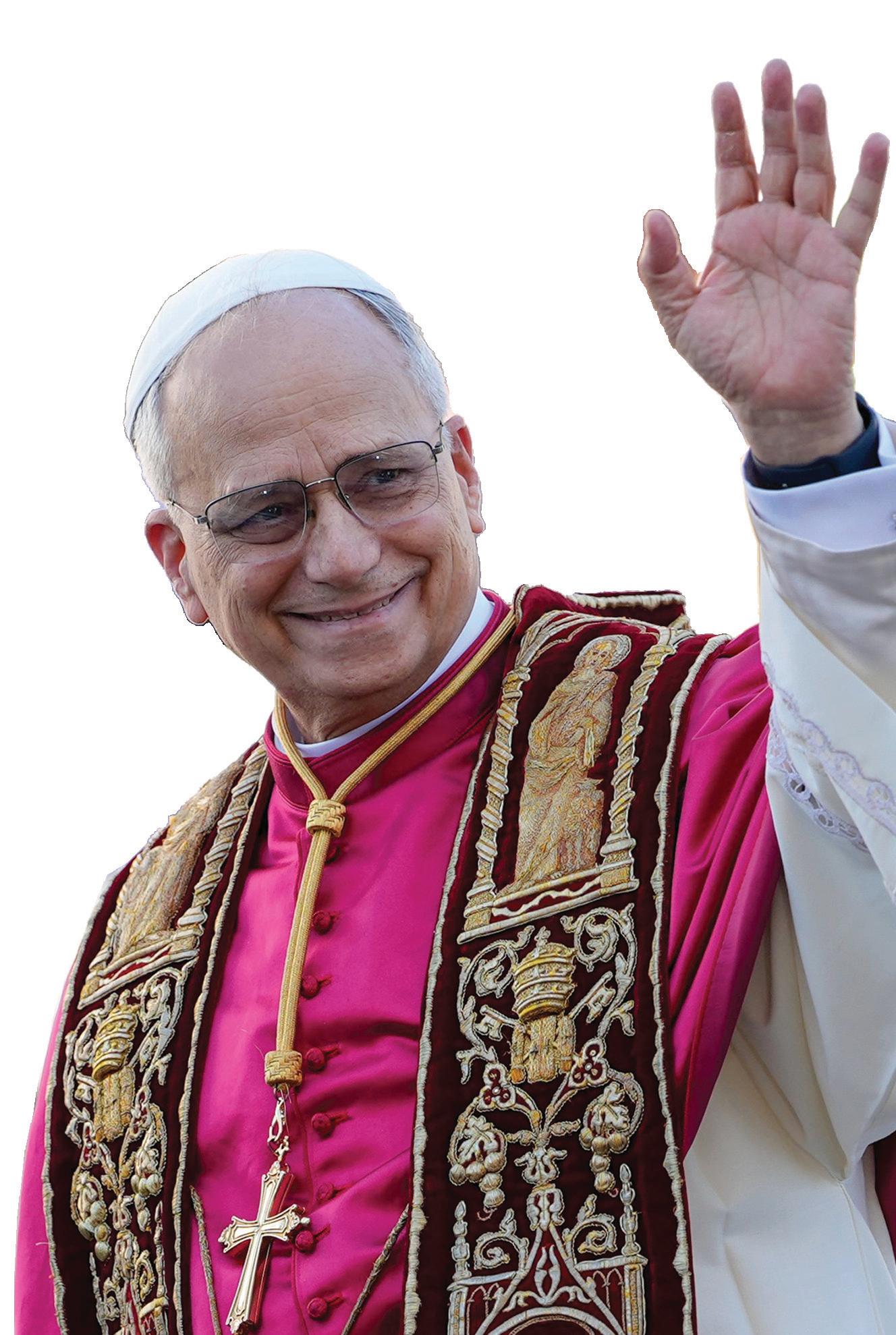
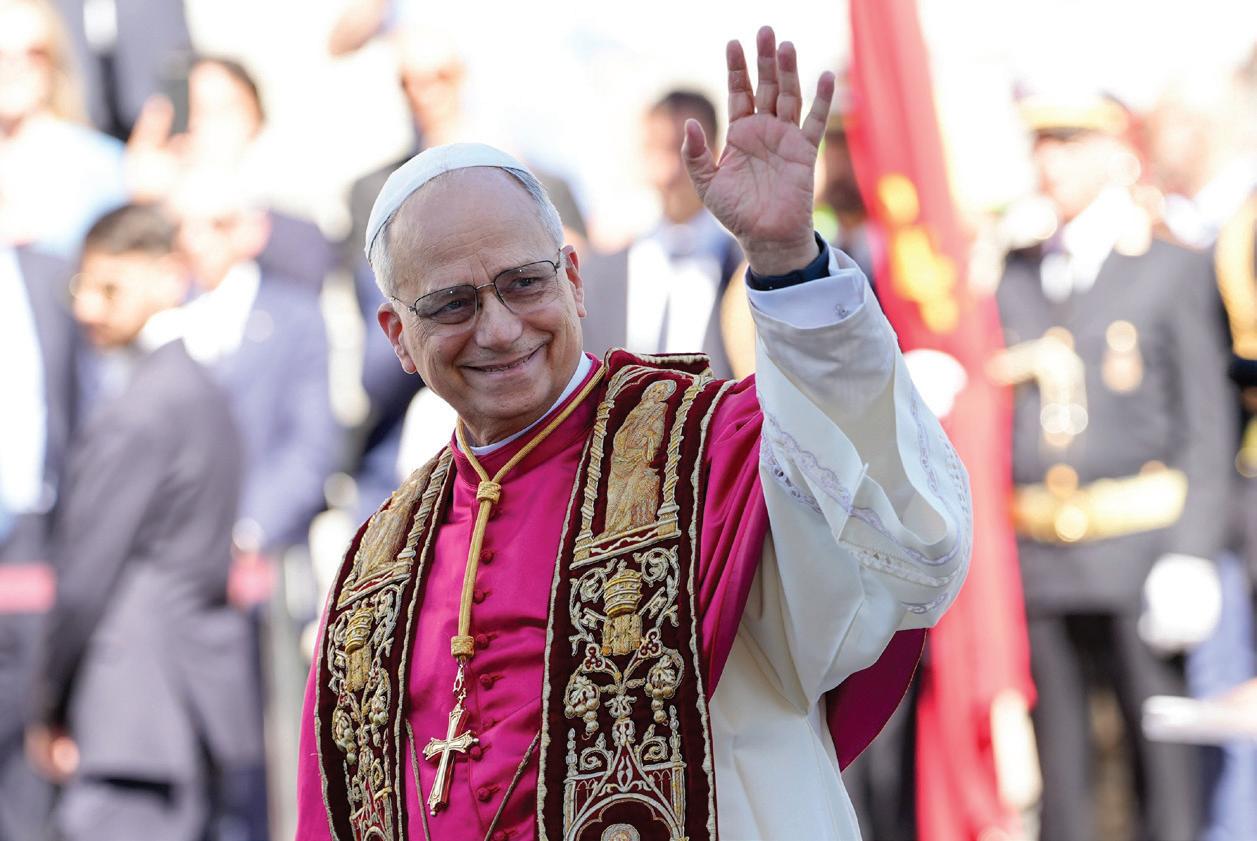
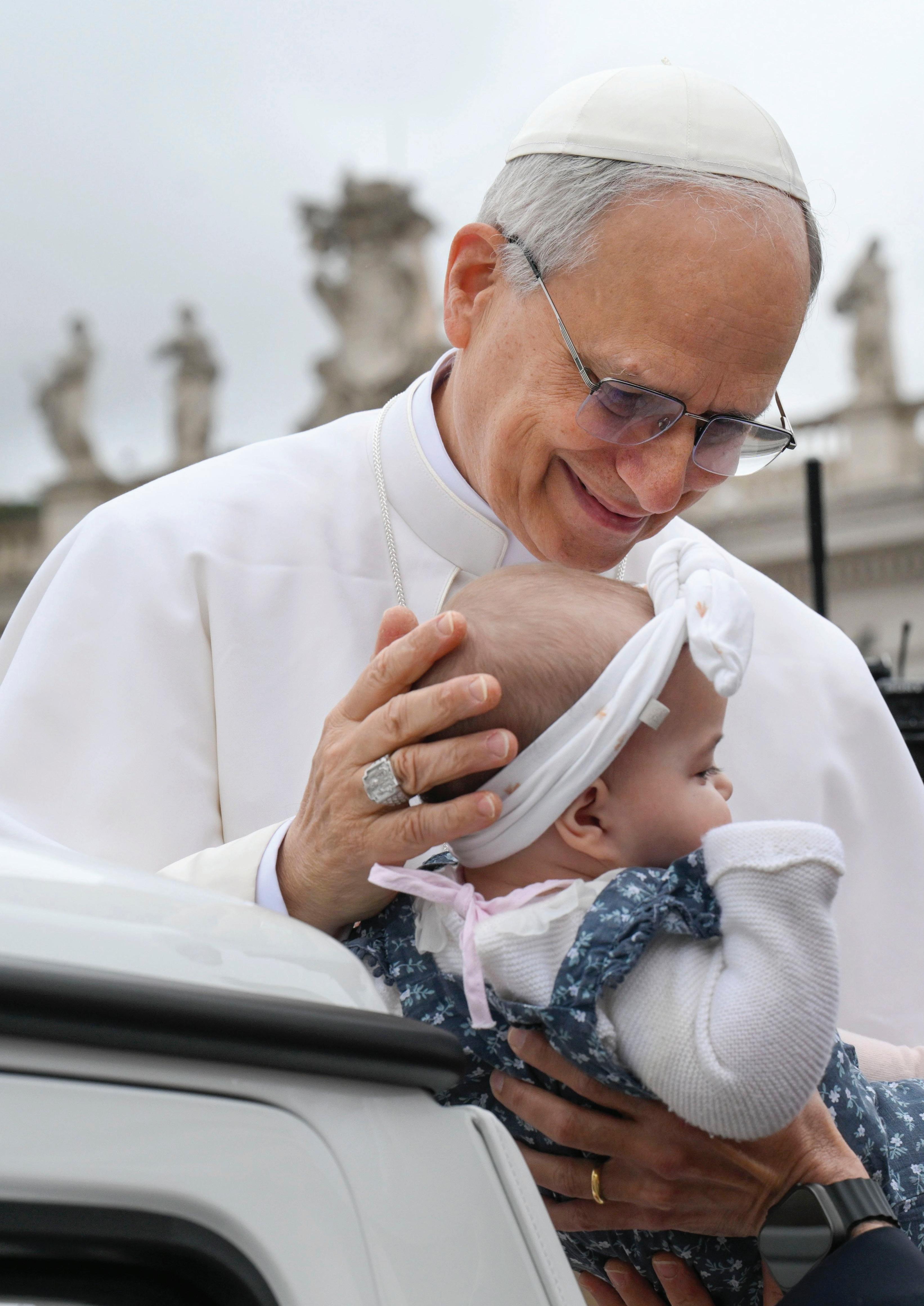
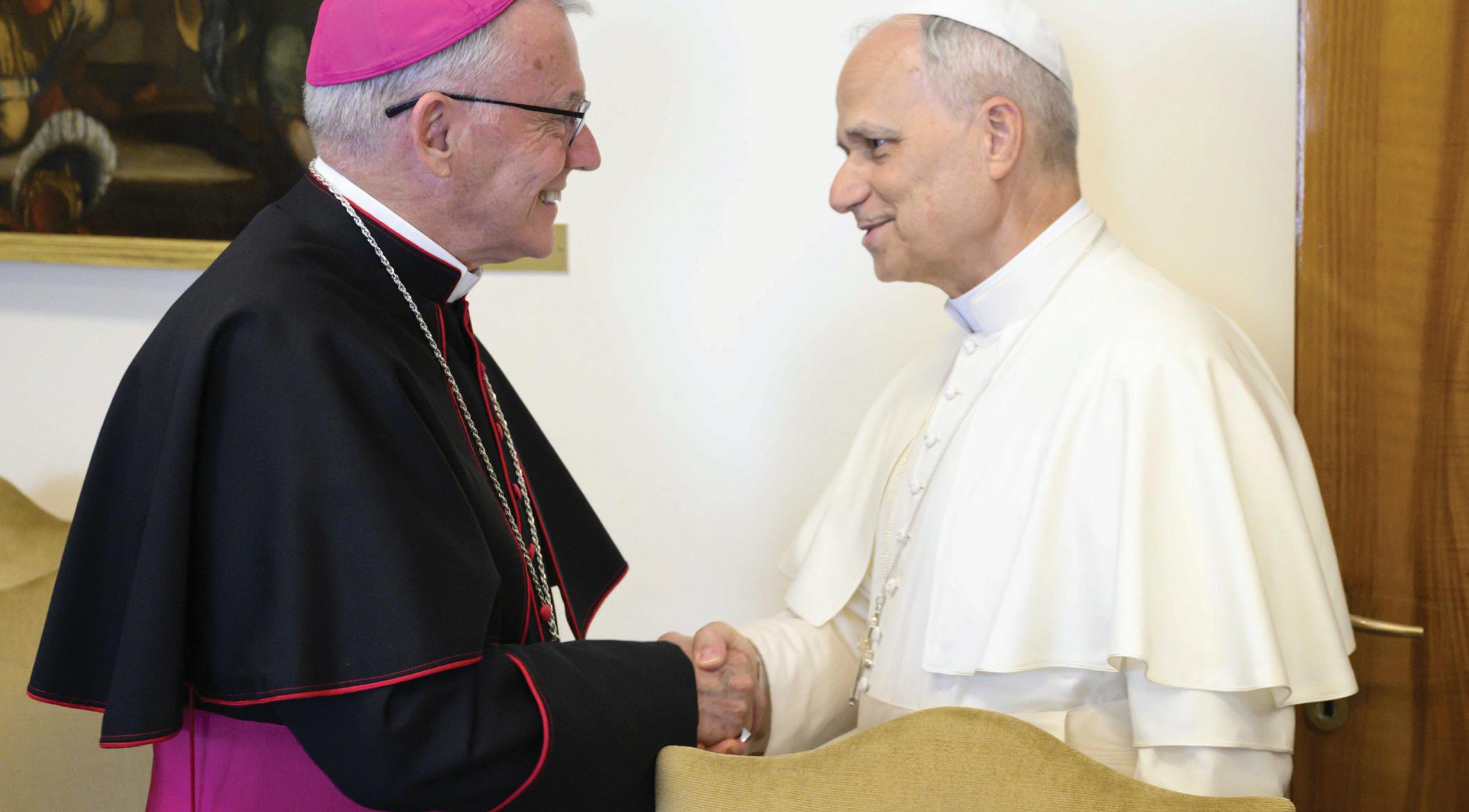
Pope Leo XIV greets people in Aracoeli Square during a visit with Roberto Gualtieri, mayor of Rome, 25 May 2025. PHOTO: CNS PHOTO / LOLA GOMEZ.
A NOTE FROM THE EDITOR
elcome to Issue 48 of The Record Magazine. In this special edition, we pay tribute to our new Holy Father Pope Leo XIV following his election on 8 May. We share the message of Archbishop Timothy Costelloe SDB at the recent Mary MacKillop Oration on Thursday 12 June and Bishop Sproxton’s homily from the Ordination to the Priesthood of Gionata Pagani, Jupiter Bin
Justin and Marco Ferraioli on Friday 23 May. We welcome new CEWA Executive Director Annette Morey and congratulate outgoing Executive Director Wayne Bull on being awarded a Member of the Order of Australia. We also celebrate the 50th anniversary of Holy Trinity Church Rottnest Island. Don’t forget that these and many more stories are available at www.therecord.com.au
Archbishop’s Word
Mary Mackillop Oration
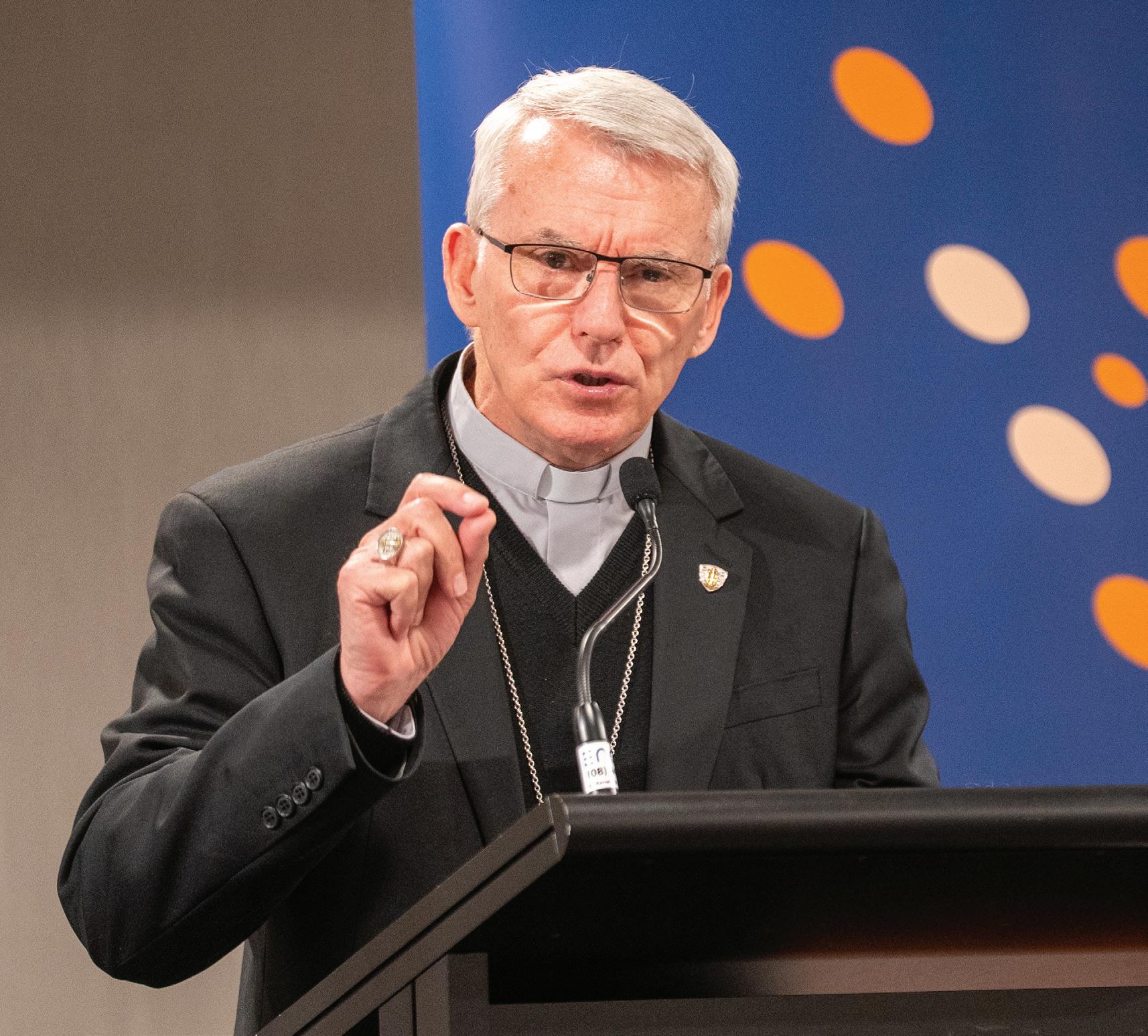
Speaking to an audience of Catholic leaders, religious, and social service professionals at the Duxton Hotel on Thursday 12 June for the 2025 St Mary of the Cross MacKillop Oration, Archbishop Costelloe emphasised that Catholic social outreach must never lose sight of Christ as its source and goal. Below is an excerpt of that speech.
AMONG the many initiatives of Pope Francis, aimed at helping us to be a truly welcoming community of disciples, the Jubilee Year of Mercy which Pope Francis inaugurated on 8 December 2015 is, at least to my mind, one of the most significant contributions he has made to the renewal of the Church. In reminding us that Jesus is the face of the Father’s mercy, Pope Francis shows the continuity between himself and Pope Benedict, and points us to what must be at the heart of our social outreach efforts. In this beautiful phrase, the what and who of our faith are united inseparably with the how of our faith. Another way of saying this is that two of the three aspects of Jesus’ description of Himself in John’s Gospel - I am the Way, the Truth and the Life - are now revealed in all their depth and beauty. Benedict has helped us to understand what it means to say that Jesus is the Truth. And Francis has helped us to understand what it means to say that Jesus is the Way With these two pillars of our Christian faith more firmly established because of the ministry of these two popes, now, perhaps, it will be the mission of Pope Leo XIV to help us understand more clearly the importance of building the future of the
Church’s life and mission on the solid rock of these two foundations. If we only focus on the what we run the risk of repeating the mistake of Saint Peter who after all got the what right - you are the Christ, the Son of the living God - but who got the how completely wrong. “This must not happen to you,” Peter said when Jesus explained to him in graphic terms how He would fulfil his task as the Christ in obedience to His Father‘s will – by being prepared to suffer and to die. Peter got the what right but wanted to be the one who determined the how; he wanted to tell Jesus how to fulfil His mission rather than have Jesus tell him how that mission must play itself out. Though Peter’s reaction to Jesus’ announcement of His forthcoming suffering was born of love - this must not happen to youit was also born of a profound misunderstanding at best and, at worst, a terrible arrogance. There is a danger, of course, in going in the other direction: only focusing on the how to the extent that we forget the reasons for the how. When this happens, we run the risk of becoming just another NGO. This is something to which Pope Francis alerted us on a number of occasions. In the Mass with the Cardinals in the Sistine Chapel on the morning after his election, Pope Francis said
this: “If we do not confess to Christ, what would we be? We would end up a compassionate NGO. We would be like children who build sandcastles only to watch them collapse”. A year later, in an address to the Bishops of Switzerland, he said this: “Without a living faith in the risen Christ, your beautiful churches and monasteries will gradually become museums; all the commendable works and institutions will lose their soul, leaving behind only empty spaces and abandoned people”. The Church, he went on to say is “the Body of Christ and the People of God, and not only a beautiful organisation, another NGO.”
He repeated this thought in the 2018 Apostolic Exhortation, Gaudete et Exsultate, where he warned against a Christianity that “becomes a sort of NGO, stripped of the luminous mysticism so evident in the lives of Saint Francis of Assisi, Saint Vincent de Paul, Saint Teresa of Calcutta, and many others.”
Another great Saint, Mary of the Cross MacKillop, was very aware of this. We are all very familiar with her famous advice to her sisters: Never see
a need without doing something about it. This is simply the logic of the gospels and of our Christian discipleship. But Mary also offered another piece of important advice to her sisters: Never forget who it is you are following. It is only when these two aspects of our life come together that we can truly claim the name “Christian” - or at least only when we are really tyring to bring these two things together. What this means is that when we see a need and try to respond to it, we must ask ourselves what responding according to the mind and heart of Jesus looks like. And as the Gospel shows us so clearly, it will look different for every person because every person’s situation and needs will be particular to them. We have to respond to them in ways that touch their concrete reality, their needs and their hearts, and in such a way that their dignity as beloved children of God, made in God’s image, is respected. In other words, we must respond in a way that manifests the mind and heart of Christ, as Saint Paul reminds us in his letter to the Philippians.
+ Archbishop Timothy Costelloe SDB ARCHBISHOP OF PERTH
Bishop’s Word
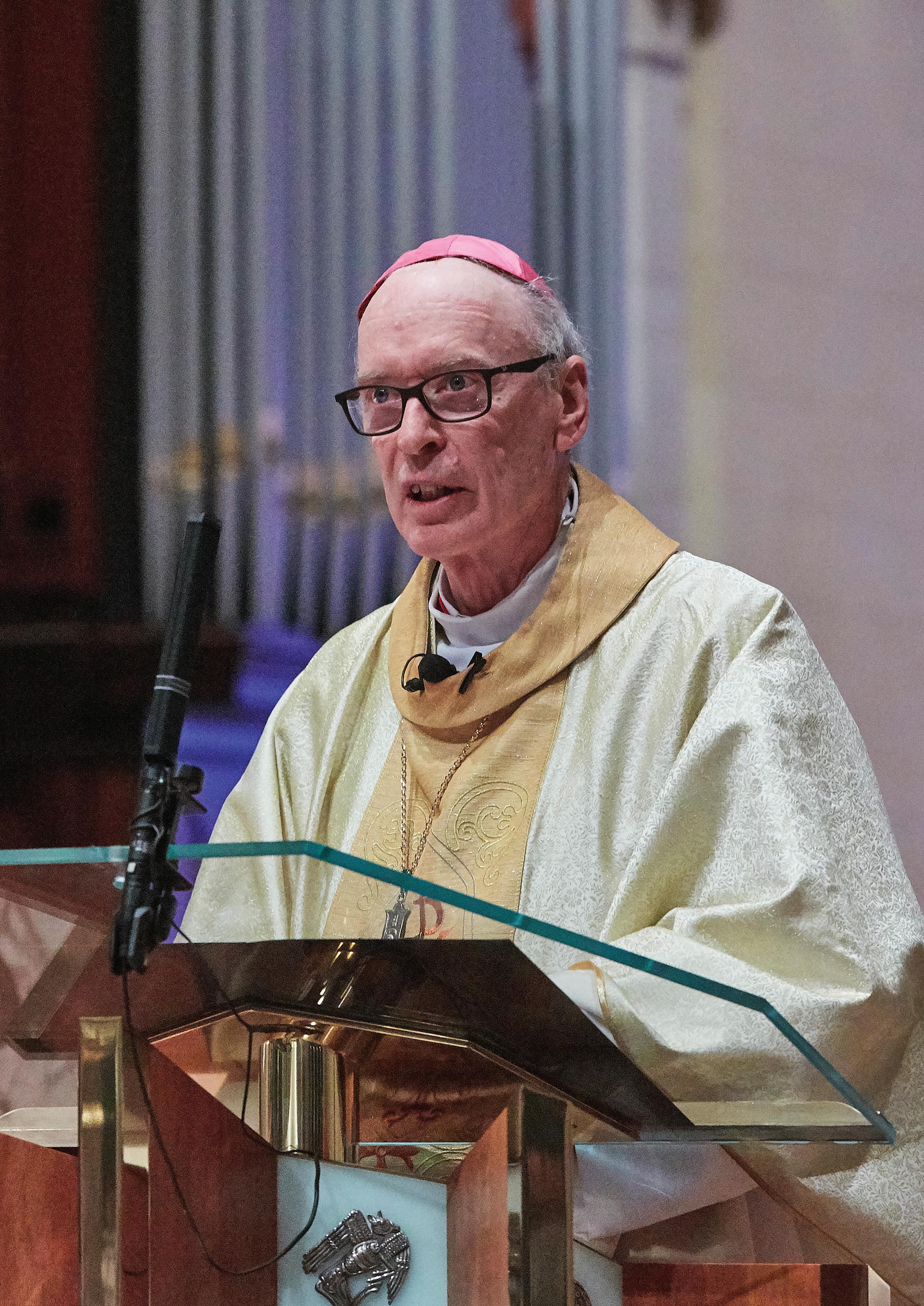
In his homily at St Mary’s Cathedral on 23 May 2025, Auxiliary Bishop Sproxton addressed Gionata Pagani, Jupiter Bin Justin and Marco Ferraioli to not be afraid to spread the Gospel.
Catholics around the world are celebrating the election of the new successor to St Peter, Leo XIV. They are impressed by the first words he chose as he greeted us after his election: Peace be with you. These were the words that the Risen Christ addressed to the disciples on Easter Day. They will highlight his priority to work for peace. Peace be with you. Do not be afraid!
What has impressed us as well is Leo’s humility - his desire to be one who serves. This virtue of humility was revealed in his words as he began his ministry as pontiff.
“I was chosen, without any merit of my own, and now, with fear and trembling, I come to you as a brother, who desires to be the servant of your faith and your joy, walking with you on the path of God’s love, for He wants us all to be united in one family.”
Who has not felt the enormity of a call from God, to go with Him in a new direction and to allow our life to be turned and changed? Anyone who has stood before the Lord and discerned, with the help of His Spirit, the vocation of service He calls us tomarriage or priesthood or religious life- has had to begin by responding with faith and humility.
I’m reminded of the encounter of the young man and Jesus in the Gospel. He came and asked what he could do to have eternal ife. We know that Jesus looked deeply within him and loved him. Jesus asked: are you ready to give up all, leave all and follow me into all this vocation will ask of you?
We all give our answer. Pope Leo answers that he follows Christ into places where he would rather not go, knowing that the Spirit of Jesus will be enough for him. In the ordination rite that follows,
Marco, Jupiter and Gionata will put their trust in the Lord who provides for their needs in faith and in ministry. They will be counted among the brothers and sisters of Jesus Christ. And He will look on them with love.
The Gospel this evening makes clear who Jesus considers His brothers and sisters. They are the ones who are the constant and active hearers of His Word, despite the worries, pleasures and discomforts that come to strangle the growth of our faith in the Word. They are the ones who persevere with open and responsive hearts, who accept God as Father and trustingly enter into His plan.
Marco, Jupiter and Gionata, - Do Not Be Afraid! Do not be afraid to go to the people of God, His flock, to serve and care for them as fellow workers with the bishops. Do not be afraid to preach the Gospel and teach the Catholic faith, after solid preparation. Do not be afraid to spend yourselves in nourishing and helping the people of God to grow in holiness through celebrating the Sacraments with them. Do not be afraid to come close to the Lord in prayer, especially, to bring the needs and cares of the people to the Lord, and to reflect each day on His presence, power and guidance in your own life.
Very shortly, we are going to ask for your response to the Promises you make before your ordination, and we will support you with our prayers and intercession, together with the Saints.
May the Lord complete the good work that He has commenced in you so that increasingly you will be witnesses to the joy and hope our faith provides. And may Mary, Our Lady Help of Christians, accompany you with her prayers and motherly care.
+ Bishop Donald Sproxton
AUXILIARY BISHOP OF PERTH
LEO XIV MISSON
Newly elected Pope Leo XIV brings missionary zeal, bold humility, and a global vision to lead the
LEO XIV
POPE
Continuity and Renewal
In his first public blessing Urbi et Orbi after his election on 8 May, Pope Leo XIV immediately made clear his pastoral tone.
“Peace be with you!” he said.
“This is the peace of the Risen Christ, a disarmed peace and a disarming peace, humble and persevering. It comes from God, God who loves us all unconditionally.”
His emphasis on peace, unity, and outreach to the marginalised reflects continuity with Pope Francis’ pastoral priorities, particularly the commitment to a “synodal Church” that is deeply missionary and inclusive.
Pope Leo’s adoption of his papal name signals a deliberate continuation of a significant legacy. Pope Leo XIII, famous for the encyclical Rerum Novarum, was a champion of social justice, workers’ rights, and dialogue with modernity. Pope Leo XIV has underscored his commitment to this tradition, expressing clear intentions to further integrate Catholic social teaching into contemporary issues, including the ethical implications of new technologies like artificial intelligence.
Vision of a Synodal and United Church
The new Pope’s vision for the Church was clearly articulated in his first general audience and inaugural homilies, which emphasised unity, charity, and humility as essential attributes of leadership.
Pope Leo XIV described his role as being “a brother who desires to be the servant of your faith and joy,” underscoring the necessity for leaders to be companions rather than autocrats, living among their flock and sharing in their struggles.
During the Mass inaugurating his Petrine ministry on Sunday 18 May, Pope Leo XIV spoke passionately about the role of the Church in healing a fractured world plagued by violence, economic exploitation,
and cultural divisions.
“Brothers and sisters, I would like that our first great desire be for a united Church, a sign of unity and communion, which becomes a leaven for a reconciled world. In this our time, we still see too much discord, too many wounds caused by hatred, violence, prejudice, the fear of difference, and an economic paradigm that exploits the Earth’s resources and marginalises the poorest,” he exclaimed.
“For our part,” he continued, “we want to be a small leaven of unity, communion and fraternity within the world. We want to say to the world, with humility and joy: Look to Christ!”
He went on to call on Catholics globally to offer God’s love to everyone, “in order to achieve that unity which does not cancel out differences but values the personal history of each person and the
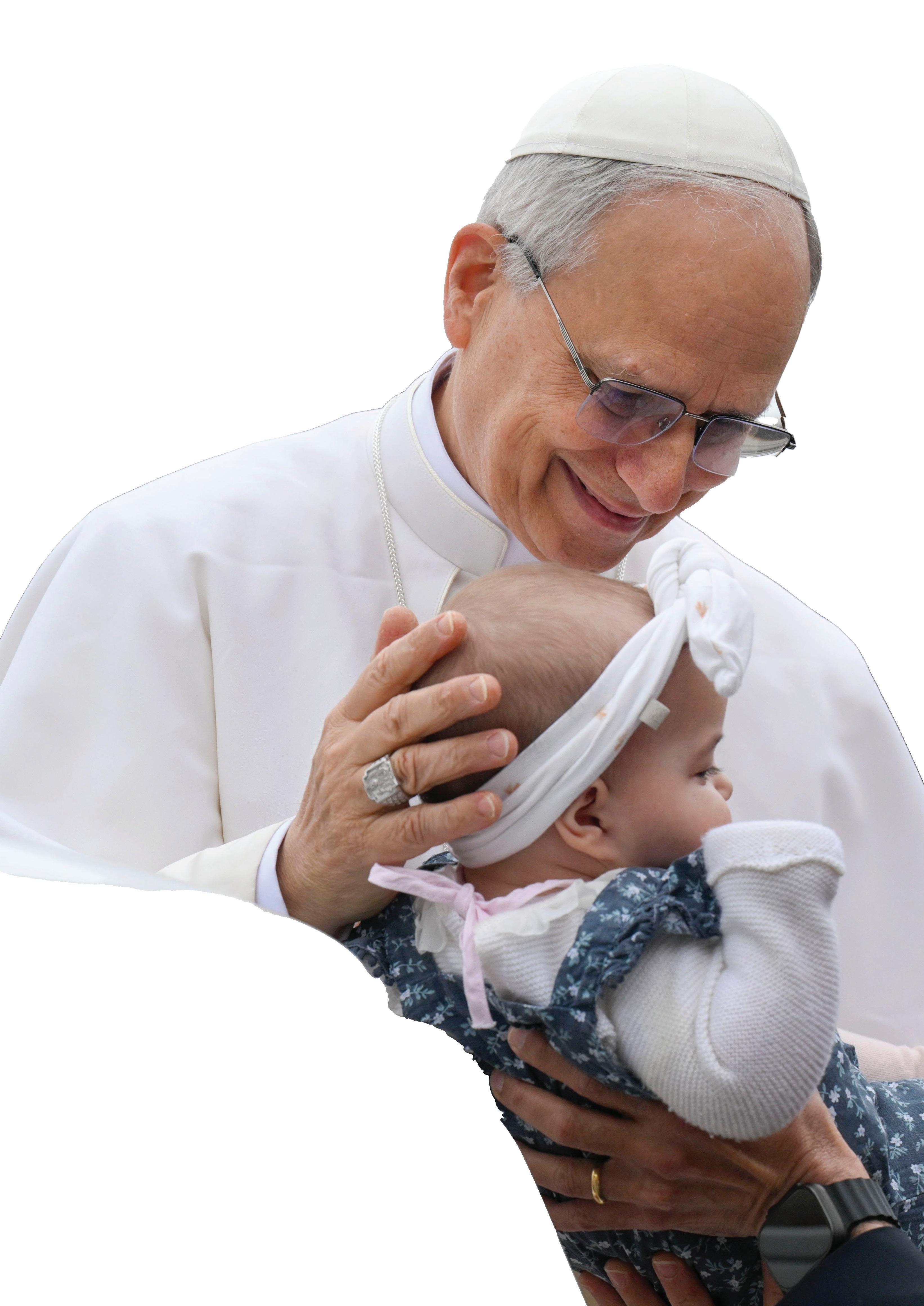
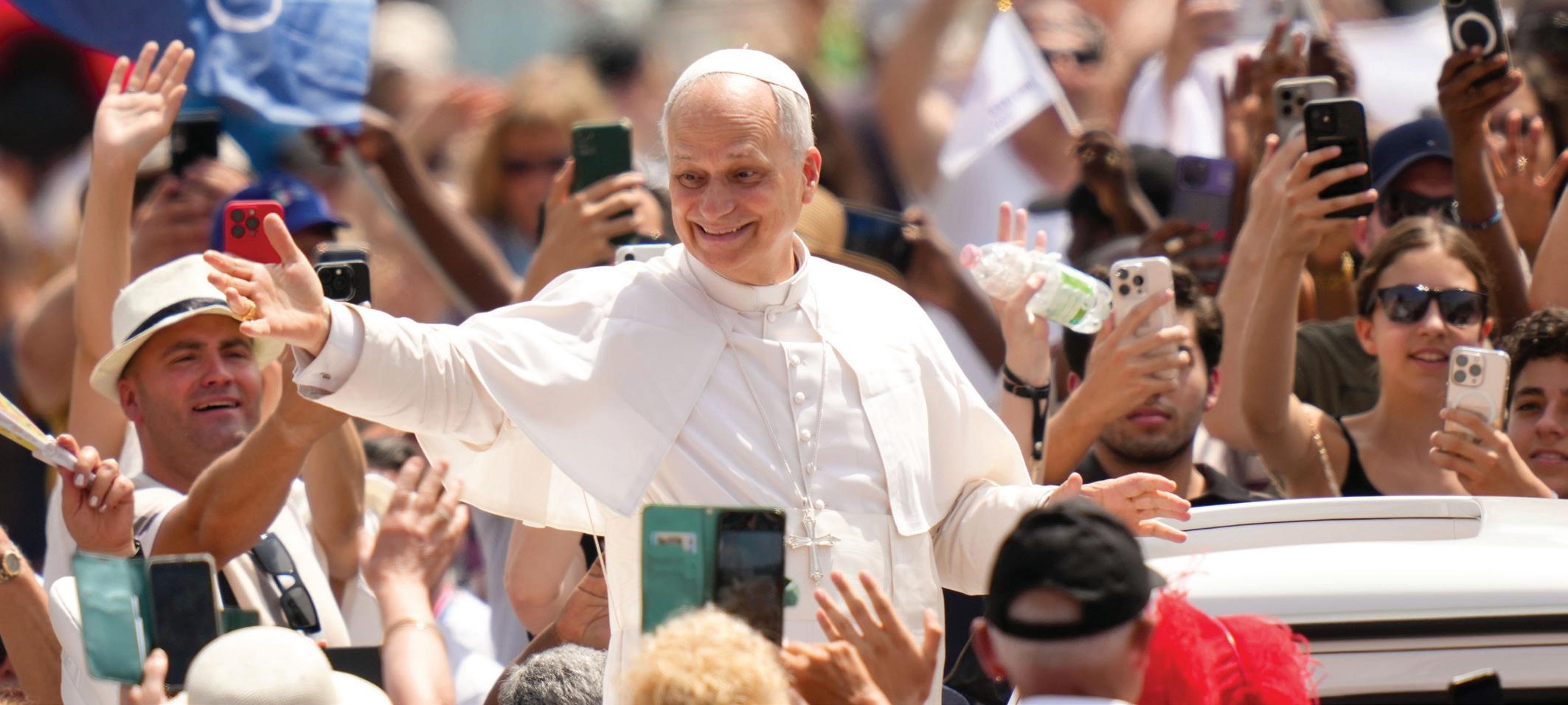
Pope Leo XIV greets people as he rides in the popemobile in St. Peter’s Square after celebrating Mass. PHOTO: CNS/LOLA GOMEZ
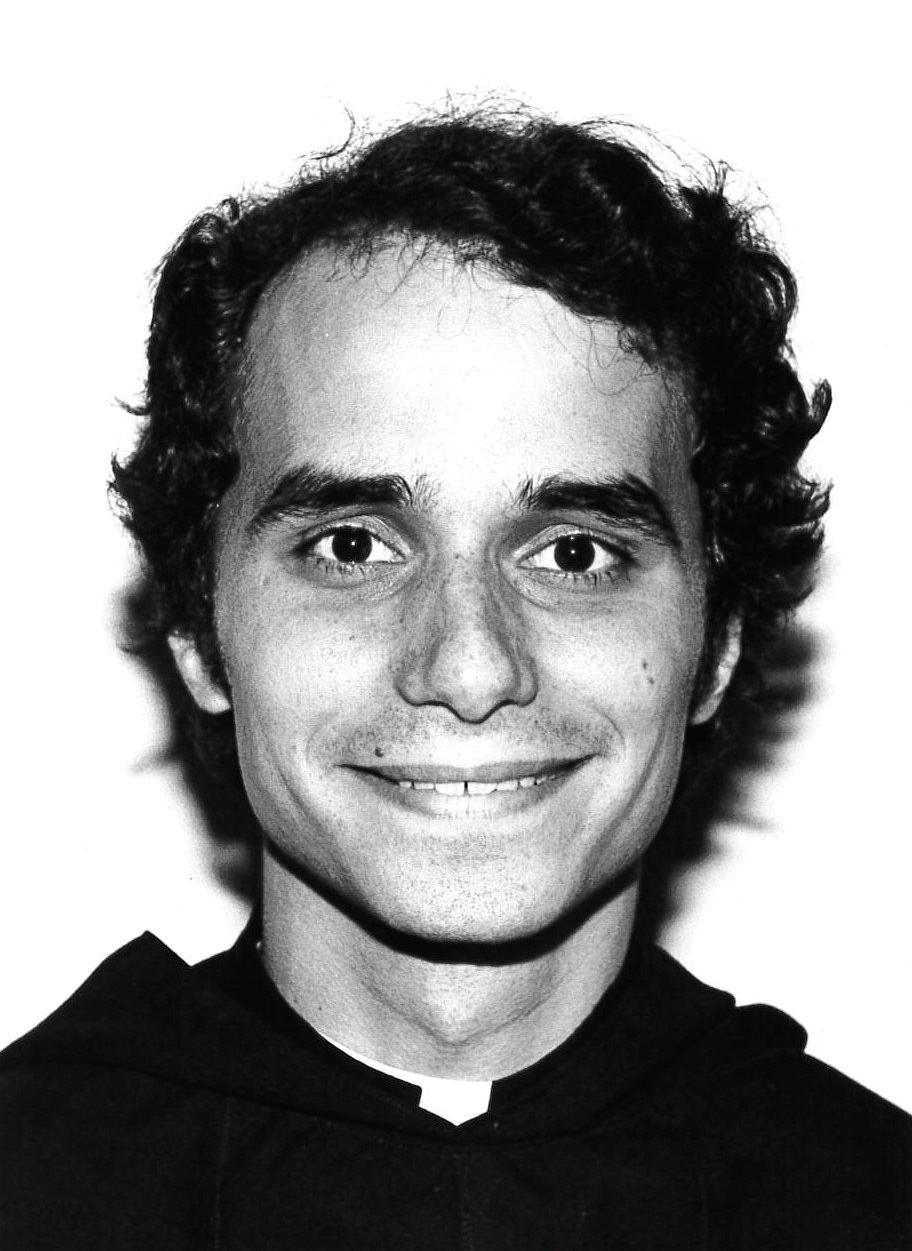
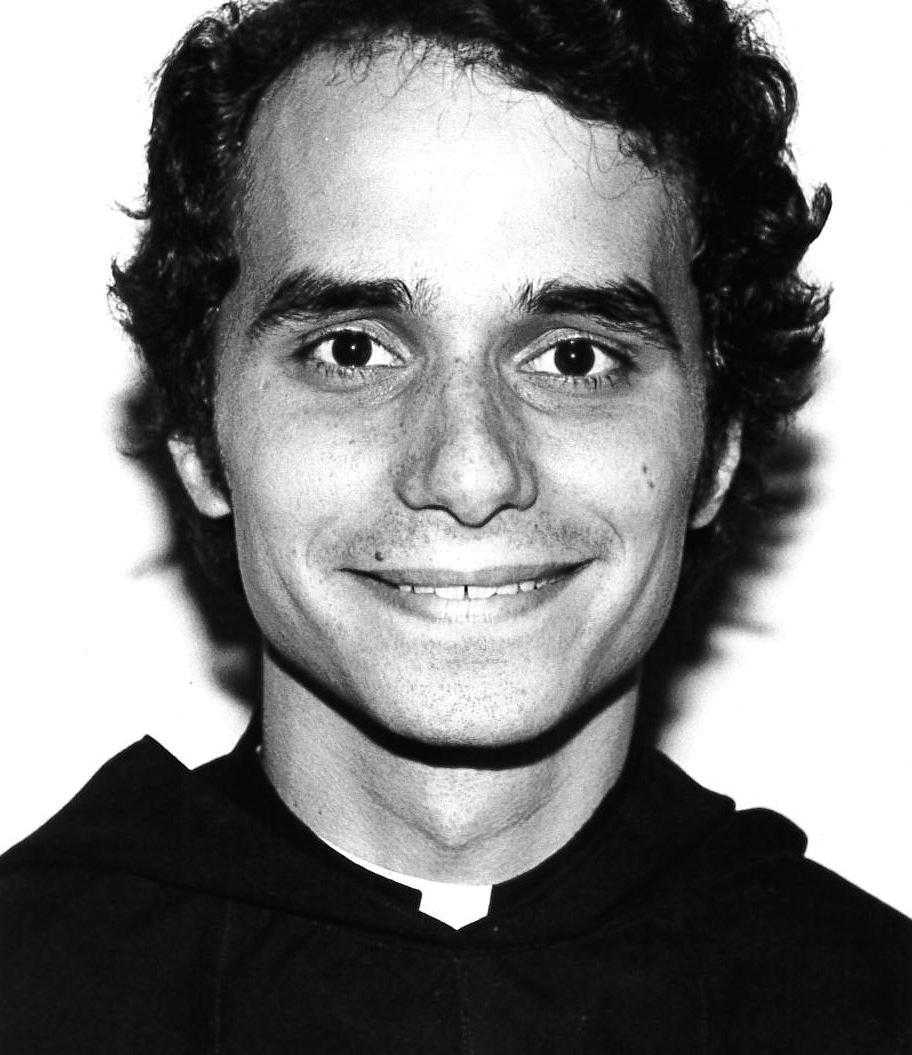
A young Robert Francis Prevost is pictured in an undated photo.
PHOTO: OSV NEWS/AUGUSTINIAN PROVINCE OF OUR MOTHER OF GOOD COUNSEL.
social and religious culture of every people.” This profoundly pastoral approach sets an early marker of the tone his papacy will likely embody.
Critical Priorities and Challenges
However, the papacy of Pope Leo XIV will not be without its significant challenges.
He inherits a Church grappling with internal tensions, including clericalism, debates over doctrine, and lingering divisions on social issues.
He has already highlighted clericalism as a critical issue, aligning himself with Pope Francis’ efforts to cultivate humility and service among clergy.
His past roles in leadership positions within the Augustinian Order, diocesan governance in Peru, and as Prefect of the Dicastery for Bishops demonstrate a record of confronting and managing such complexities effectively.
His election comes at a critical juncture, with ongoing global conflicts, including those in Gaza, Myanmar, and Ukraine, demanding robust diplomatic engagement from the Vatican.
Pope Leo XIV has immediately shown awareness of these international dynamics, using his platform to advocate for
“This is the peace of the Risen Christ, a disarmed peace and a disarming peace, humble and persevering. It comes from God, God who loves us all unconditionally.”
peace and humanitarian assistance, notably appealing for aid and an end to hostilities in the Gaza Strip during his first audience.
“The situation in the Gaza Strip is increasingly worrying and painful,” he emphasised. “I renew my heartfelt appeal to allow the entry of dignified humanitarian aid and to put an end to the hostilities, the heart-rending price of which is being paid by children, the elderly and the sick.”
Emphasis on Dialogue and Inclusivity
Pope Leo XIV has clearly signalled that his pontificate will emphasise inclusivity and dialogue.
At his inaugural Mass, he notably involved representatives from various Christian denominations and world religions, sending a powerful message about the importance of ecumenical and interfaith dialogue.
His appeal for unity extends beyond the Catholic community to a global scale, calling for collaboration and reconciliation among diverse groups.
“I was chosen,” he exclaimed, “without any merit of my own, and now, with fear and trembling, I come to you as a brother,
who desires to be the servant of your faith and your joy, walking with you on the path of God’s love, for He wants us all to be united in one family. Love and unity: these are the two dimensions of the mission entrusted to Peter by Jesus.”
Looking Ahead
As Pope Leo XIV begins his journey, Catholics around the world can expect a papacy characterised by missionary zeal, grounded in social justice, and profoundly committed to unity and synodality.
His international experiences and deep spiritual convictions offer a promising blueprint for addressing contemporary challenges.
His first homily set forth a clear vision: a Church not known primarily for the grandeur of its buildings or institutions but recognised instead by the holiness and authenticity of its members — a Church dedicated to the Gospel in word and deed.
The pontificate of Pope Leo XIV represents not merely a continuation but an evolution of recent papacies, poised to confront modern issues with ancient wisdom and profound humility.
The Catholic world, and indeed all those of goodwill, await with anticipation how Pope Leo XIV will lead the Church into this new era, embracing the challenges ahead with faith, hope, and charity.
Pope Leo XIV greets visitors at the conclusion of Pentecost Mass in St Peter’s Square at the Vatican June 8, 2025, marking the end of the Jubilee of Ecclesial Movements, Associations and New Communities. PHOTO: CNS/LOLA GOMEZ.
Breaking Down The Synod Secretariat’s ‘Pathways’ Document:
What You Need to Know
The “Pathways” document, structured into four chapters, aims to provide an interpretive guide for the implementation phase of the synodal process.
ON Monday 7
July, the General Secretariat of the Synod released the Pathways for the Implementation Phase of the Synod, a comprehensive document designed to assist local Churches worldwide in bringing to life the principles and decisions arising from the Synod on Synodality.
Approval of the “Pathways” document follows the first in-person meeting of the XVI Ordinary Council of the General Secretariat of the Synod, held between 26 and 27 June 2025 at the Vatican.
Perth Archbishop Timothy Costelloe SDB, as a member
of the General Council of the Synod, was present in Rome for the meetings.
The document, explained the General Secretariat, serves as a means of fostering dialogue between local Churches and the General Secretariat of the Synod through promoting the exchange of experiences among the Churches.
Structured into four chapters, the “Pathways” document aims to provide an interpretive guide for the implementation phase of the synodal process.
Focussing on the intended recipients, notably the diocesan bishop and the
synodal teams, the document offers a set of fundamental criteria to help ensure that local implementation remains in harmony with that of the universal Church.
Originating from the Final Document of the XVI Ordinary General Assembly of the Synod of Bishops, the implementation phase is the result of listening and discernment carried out since the beginning of the synodal process.
In a statement from General Secretariat, the implementation phase was emphasised as belonging above all to the local Churches, who are called
to “implement, in their different contexts, the authoritative proposals contained in the Document through the processes of discernment and decisionmaking provided for by law and by the Document itself”
However, in order to safeguard the underlying ecclesiological vision and foundational criteria of the Final Document, the document approved by the Ordinary Council is to be understood as a set of guidelines developed in response to questions received in recent months by the General Secretariat of the Synod.
Pope Leo XIV, serving as President of the General Secretariat, participated in the afternoon session on 26 June, engaging in dialogue with Council members about the synodal journey’s progress across different continents.
The meeting, opened by Cardinal Mario Grech, Secretary General of the Synod, also included updates on the Jubilee of Synodal Teams and Participatory Bodies, the work of Study Groups established by Pope Francis, and various ongoing activities within local Churches.
Jubilee of Synodal Teams and Participatory Bodies
Regarding the Jubilee of Synodal Teams and Participatory Bodies, it has been decided to extend the registration deadline to 31 July 2025.
With satisfaction, it was noted that registrations received so far come from all five continents.
The official program is currently being developed and will include formation sessions and opportunities for exchange among various synodal realities.
Ongoing Activities in Local Churches
As for activities within local Churches, a strong sense of dynamism has been observed in many dioceses across the globe.
Many have already enthusiastically and creatively begun the implementation journey. Formation in synodality –especially for the lay faithful and pastoral workers – has become one of the defining aspects of recent months.
Numerous schools of synodality have been established, serving as platforms through which local Churches are educating the faithful in listening, communal and ecclesial discernment, and co-responsibility.
Study Groups
Finally, the Council members were updated on the work of the Study Groups established by Pope Francis following the First Session of the XVI General Assembly. These Groups had originally been tasked with submitting the results of their reflections to the Holy Father by the end of June 2025.
However, due to the death of Pope Francis and the election of Pope Leo XIV, there have been delays.
Some Groups have requested additional time.
In agreement with the Holy Father, it has been decided to extend the deadline for submitting the final reports to 31 December 2025.
Nonetheless, in keeping with a synodal approach marked by transparency and a desire for accountability, the Study Groups have been asked to submit a brief interim report to the General Secretariat by the end of June 2025.
These reports will be published on the General Secretariat’s website as they are received.
The meeting, which took place in a spirit of deep fraternity, concluded in the late afternoon of Friday, 27 June.
The next meeting of the Ordinary Council is scheduled for the afternoon of Sunday, 26 October, and the entire day on Monday, 28 October 2025.
The Pathways for the Implementation Phase of the Synod is available on the website of the General Secretariat (www.synod.va) on Monday, 7 July 2025.
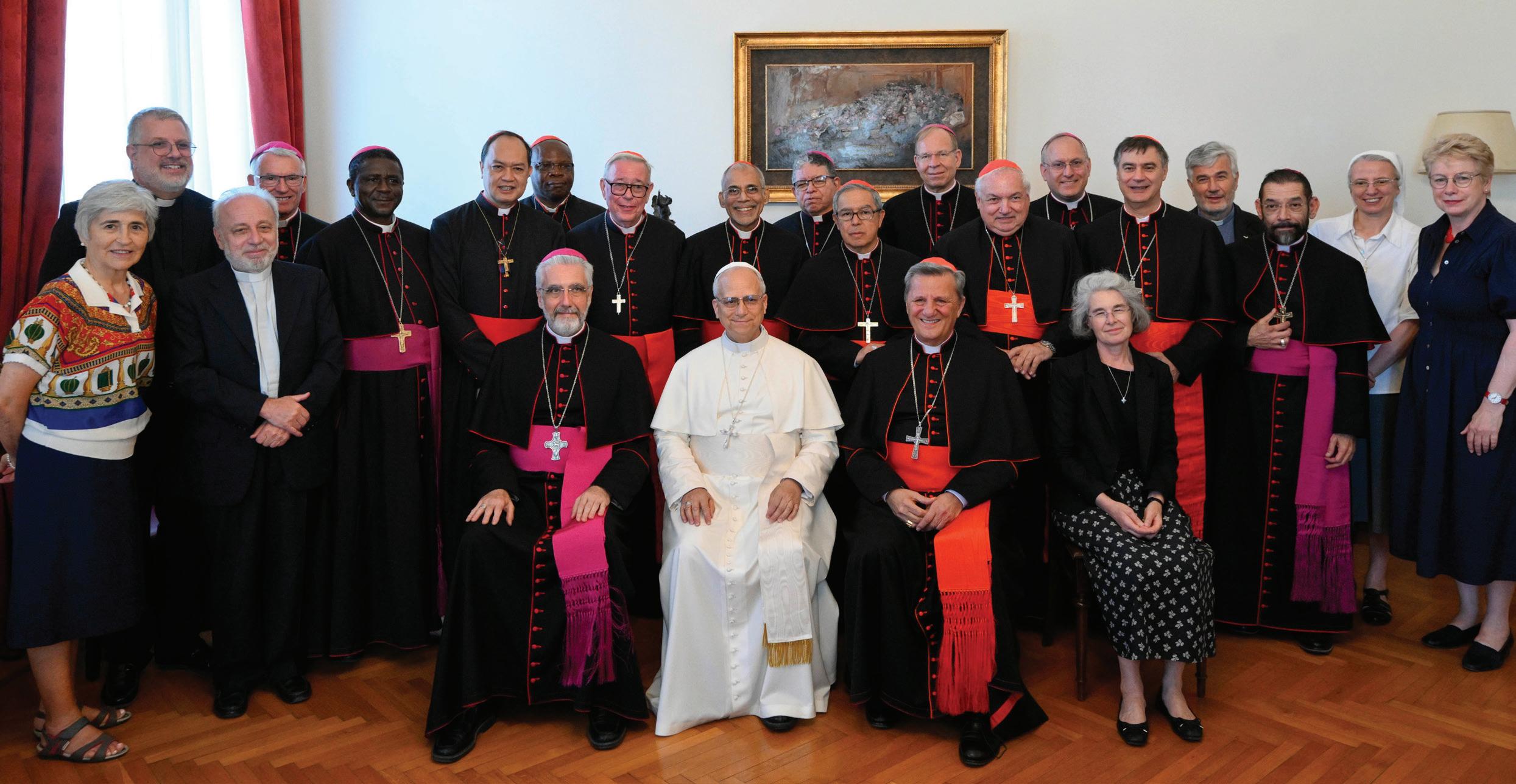
Members of the XVI Ordinary Council of the General Secretariat of the Synod, including Perth Archbishop Timothy Costelloe SDB, (back row, second from left) met with Pope Leo XIV Thursday 26 June. PHOTO: CNS/VATICAN MEDIA.
SPECIAL REPORT
“Do not be afraid to preach the Gospel and teach the Catholic faith,” Bishop Sproxton tells new priests
Words by Jamie O’Brien
PERTH Auxiliary Bishop Don Sproxton has encouraged three newly ordained priests to embrace their calling with humility and courage, echoing the powerful words of Pope Leo XIV, “Peace be with you. Do not be afraid.”
Speaking at the ordination to the priesthood Mass of Deacons
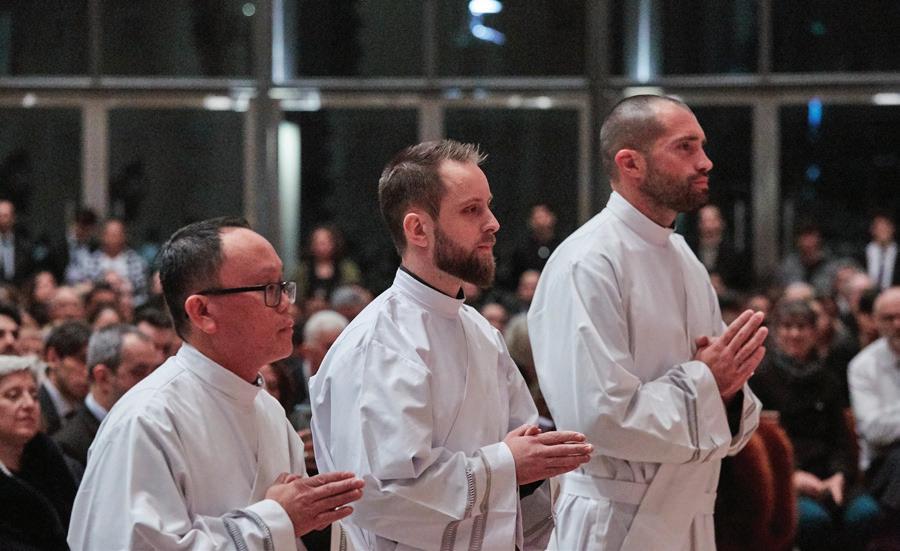
Marco Ferraioli, Jupiter Bin Justin, and Gionata Pagani at St Mary’s Cathedral on Friday 23 May 2025, Bishop Sproxton highlighted the profound nature of responding to God’s call.
Joining Bishop Sproxton to concelebrate the occasion was Redemptoris Mater Seminary Rector, Fr Michael Moore SM, Frs Nicholas Diedler and Jason Yeap as MC, with Deacon Mark Powell assisting, and some 100 clergy from across the Archdiocese.
Also present for the occasion was Fr Tony Trafford from the National Responsible Team of the Neocatechumenal Way and Redemptoris Mater Seminary Sydney Rector, Fr Eric Skruzny, both of whom have had an active involvement in the formation of the new priests.
Reflecting on Pope Leo XIV’s recent election, Bishop Sproxton praised the Holy Father’s immediate emphasis on peace and humility.
“And his desire to be one who serves. This virtue of humility was revealed in his words as he began his ministry as pontiff,” he said.
Bishop Sproxton underscored the Pope’s declaration, “I come to you as a brother, desiring to be the servant of your faith and your joy.”
Drawing from the Gospel account of the young man who asked Jesus how to inherit eternal life, Bishop Sproxton pointed out the challenge inherent in answering God’s call.
“Anyone who has stood before the Lord and discerned, with the help of His Spirit, the vocation of service He calls us tomarriage or priesthood or religious life - has had to begin by responding with faith and humility.”
The three new priests, who have trained at Redemptoris Mater Seminary, Perth, have all come from overseas, including
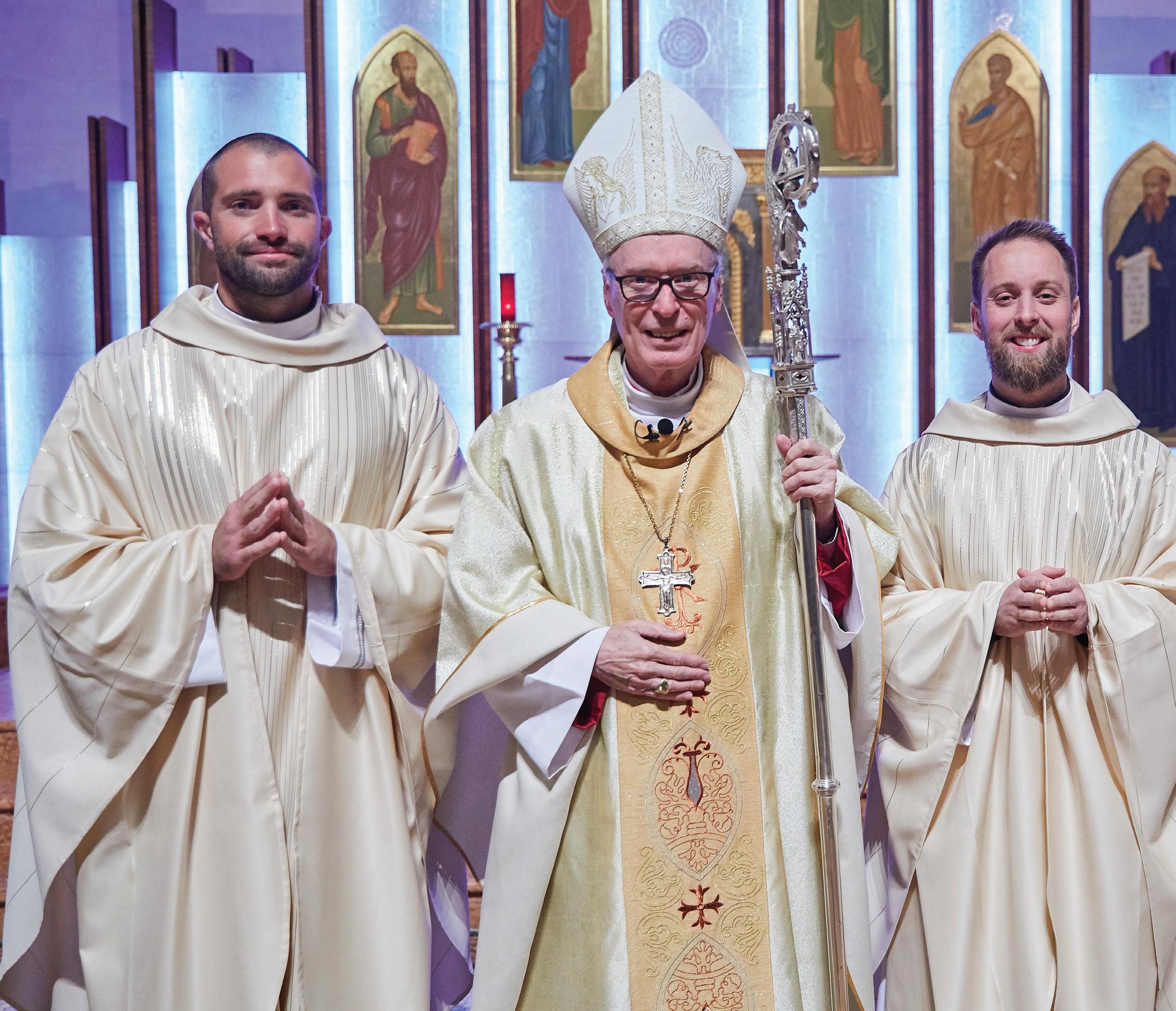
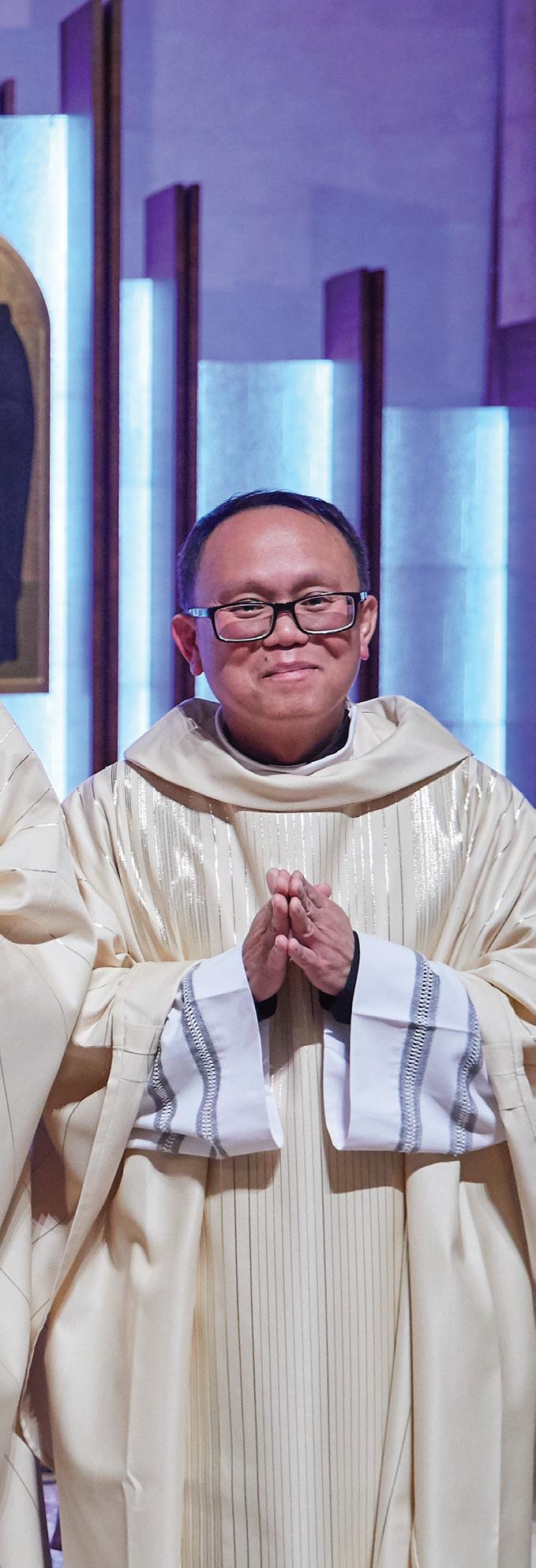
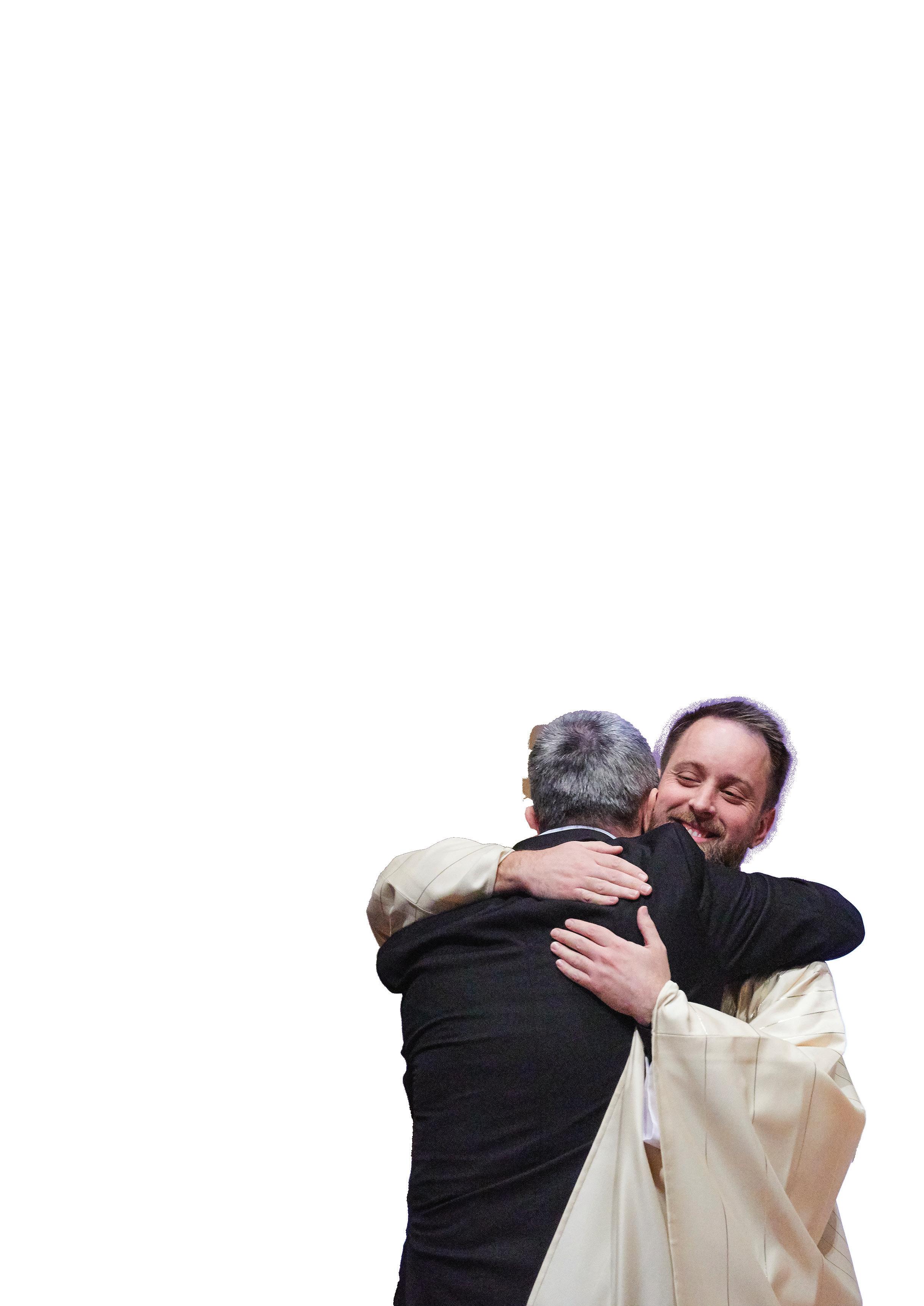
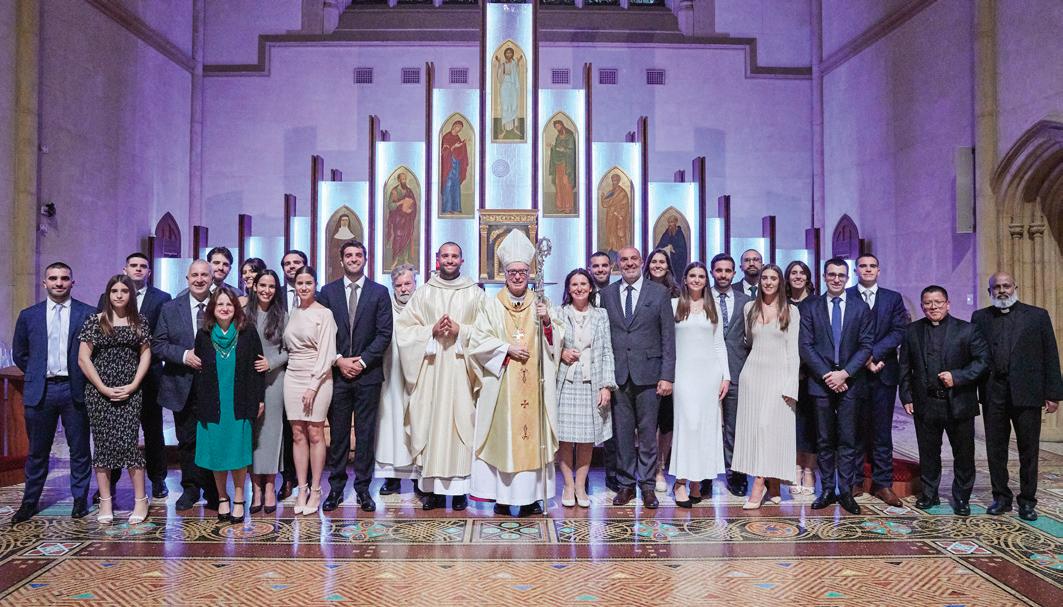
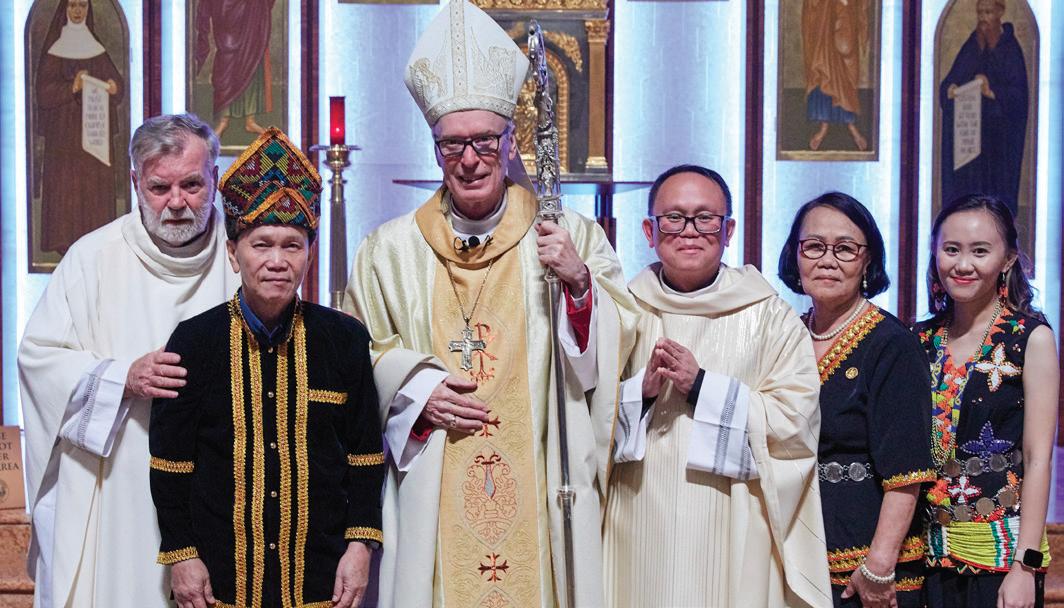
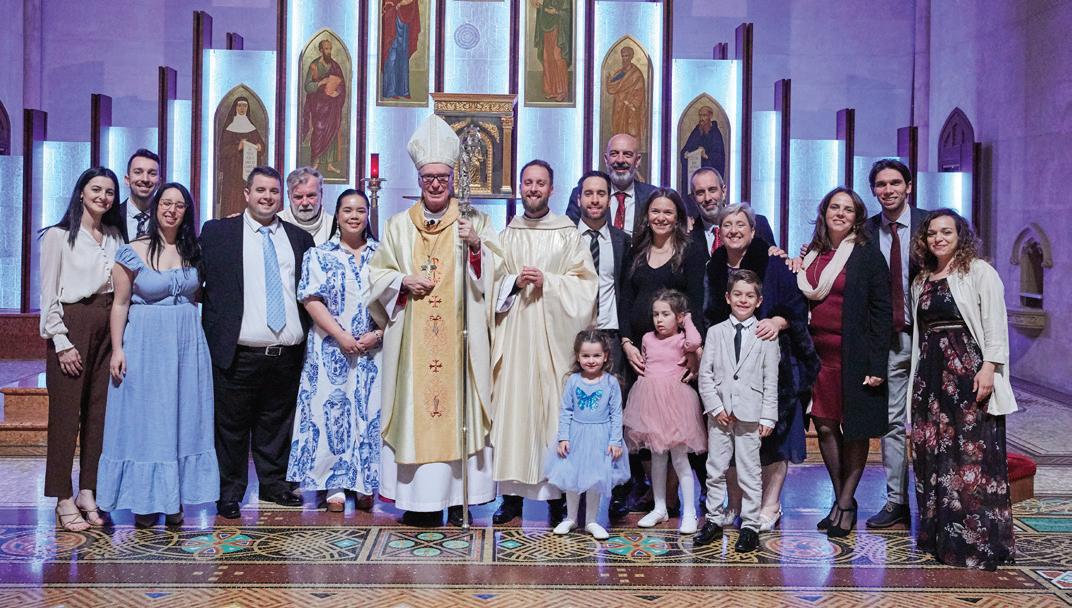
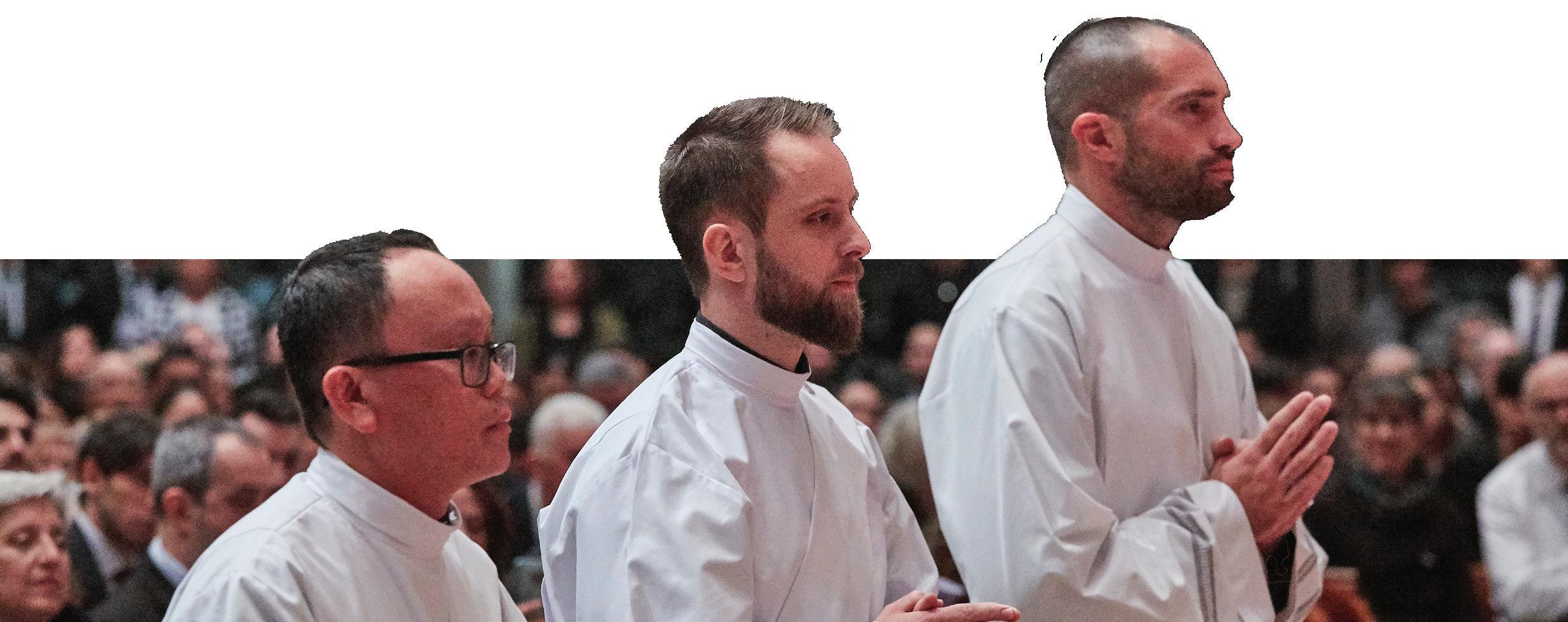
New priests Frs Gionata Pagani, first from left, Marco Ferraioli second from right and Jupiter Bin Justin, first from right, with Auxiliary Bishop Don Sproxton, third from right. PHOTO: RON TAN/ ARCHDIOCESE OF PERTH.
“
Italy and Malaysia. Thirty-three-year-old Gionata Pagani, who originally hails from Piacenza, Italy, first came to Perth with his parents Gian-Pietro and Caterina in 2001 as a nine-year old, having been sent by now Pope St John Paul II as a mission family for the Neocatechumenal Way.
The family of 14 children moved to Sydney in 2004 where they continue their ministry as a mission family, belonging to the parish of Redfern.
After finishing his schooling at Christian Brothers Lewisham in Sydney, Gionata studied Civil Engineering at the University of Sydney, finishing in 2013 before entering Redemptoris Mater Seminary in 2015.
Fr Gionata has been serving at the parishes of Osborne Park and Port Kennedy during his time as a Deacon.
Italian born 30-year-old Marco Ferraioli, first came to Australia in October 2001, as a mission family in Melbourne, having been sent with his parents Alfonso and Laura, and four siblings by now Pope St John Paul II.
The family later moved to Brisbane in 2005, where they continue their ministry as a mission family.
After finishing his schooling in 2012 at Mount Maria College, Brisbane, Fr Marco studied a Bachelor of Business for two years at Queensland University of Technology, entering Redemptoris Mater Seminary in 2015.
Fr Marco has been serving at the parish of Bayswater over the past 12 months.
Forty-five-year-old Jupiter from Sabah, Malaysia, entered the Redemptoris Mater Seminary in 2015. The fifth child of seven siblings, his family is a part of the Neocatechumenal Way in the city of Kota Kinabalu.
Anyone who has stood before the Lord and discerned, with the help of His Spirit, the vocation of service He calls us to - marriage or priesthood or religious life - has had to begin by responding with faith and humility.
“
Prior to entering the Seminary, Jupiter owned his own business as a mobile phone and computer technician. In 2015, he attended a vocational encounter in Manila, Philippines alongside other young men from different communities. Unsure of his vocation, he asked God at this meeting to show him a sign.
During this time, his business was burglarised, and he lost everything. While initially frustrated, he later realised that God wanted him to leave everything behind and follow His call to enter the seminary.
Prior to his ordination, Fr Jupiter has been serving in the parish of Baldivis.
Continuing his homily, Bishop Sproxton reassured Marco, Jupiter, and Gionata, urging them not to fear the tasks ahead.
“Do not be afraid to go to the people of God, His flock, to serve and care for them as fellow workers with the bishops. Do not be afraid to preach the Gospel and teach the Catholic faith, after solid preparation.
“Do not be afraid to spend yourselves in nourishing and helping the people of God to grow in holiness through celebrating the Sacraments with them. Do not be afraid to come close to the Lord in prayer, especially, to bring the needs and cares of the people to the Lord, and to reflect each day on His presence, power and guidance in your own life.
He concluded with a prayerful wish for the new priests.
“May the Lord complete the good work that He has commenced in you so that increasingly you will be witnesses to the joy and hope our faith provides.
“And may Mary, Our Lady Help of Christians, accompany you with her prayers and motherly care.
New Executive Director for Catholic Education Announced
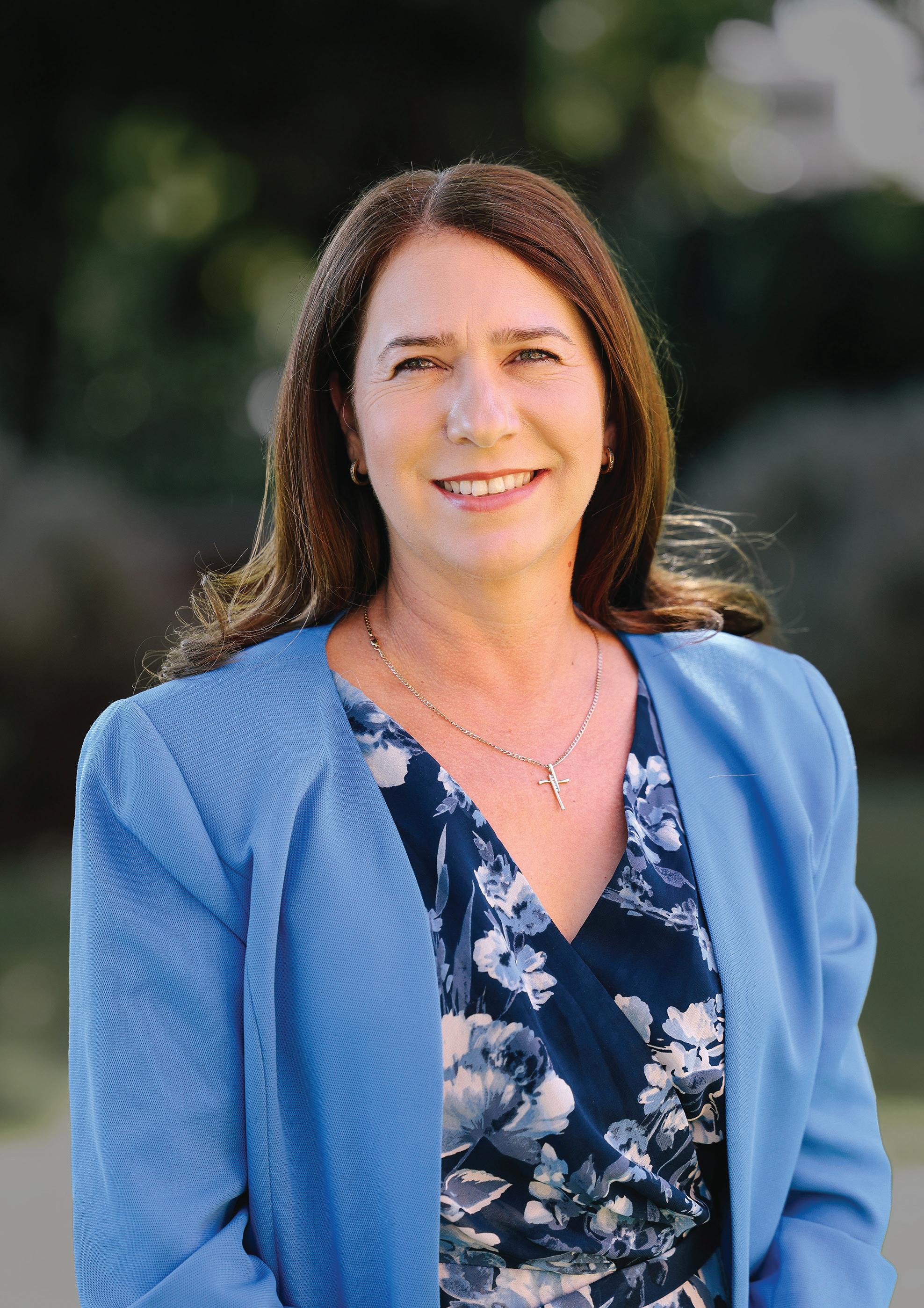
Annette Morey began her career serving as a leader at St Norbert College, before moving to Prendiville Catholic College and then Mater Dei College, where she was widely praised for her commitment to faith formation and academic excellence.
Words by Jamie O’Brien
CATHOLIC Education Western Australia’s Deputy Executive Director Annette Morey has recently been appointed as the new Executive Director, effective at the start of Semester Two, 2025.
In a letter dated 24 April 2025, the Bishops of Western Australia announced the conclusion of their search, with candidates from across the nation assessed on their capacity to guide CEWA through its next strategic phase before Morey was selected.
A
Career of Service
Morey brings over 32 years of dedicated leadership within Catholic school communities in WA.
She began her career serving as a leader at St Norbert College, before moving to Prendiville Catholic College and then Mater Dei College, where she was widely praised for her commitment to faith formation and academic excellence.
Beyond her school roles, Morey has contributed to system governance through service on key Catholic Education Commission of WA committees and working parties, including the School Improvement Committee, the Aboriginal Community Committee and the Audit and Risk Committee.
Nationally, she has represented WA as WA Director of Catholic Secondary Principals Australia and President of the Associated and Catholic Colleges of Western Australia. In 2023, she was appointed by the Minister for Education to the Post-School Success Review Expert Panel, and between 2020 and 2023 served on the School Curriculum and Standards Authority Principals Advisory Committee. Her academic qualifications include a Bachelor of Applied Science (Human Biology) and a Master of Education (Leadership) from Edith Cowan University, as well as a Master of Religious Education from the University of Notre Dame
Australia—an educational foundation she says underpins her evidence-based approach infused with theological insight.
Vision and Mandate
As Deputy Executive Director, Morey was instrumental in shaping and implementing CEWA’s Strategic Initiatives 2030, which focus on Christ-centred learning, teaching excellence, student wellbeing and sustainable communities.
She forged strong relationships with the Minister for Education, the Department of Education and the Association of Independent Schools of Western Australia (AISWA), strengthening CEWA’s advocacy and innovation credentials.
Morey has articulated a vision of “Christ-centred, childfocused education,” aiming to nurture young people who are both academically prepared and spiritually grounded.
Community and Stakeholder Response Reaction across the Catholic education community has been enthusiastic.
Eva Skira AM, Chair of the Catholic Education Commission of Western Australia, expressed gratitude to the Bishops for selecting “a distinguished leader of faith and learning”.
Looking Ahead
Morey will undertake a progressive handover with outgoing Executive Director Wayne Bull during Term Two, ahead of her formal start at the beginning of Semester Two. Bull, retiring at the end of Semester One after nearly five decades in Catholic education, will ensure a smooth transition.
Coinciding with CEWA’s Jubilee Year celebrations, Morey’s appointment comes at a moment of reflection and renewal across Catholic parishes and schools.
Under her leadership, CEWA is expected to deepen community engagement, champion equity of access — especially in regional and remote areas—and advance the Strategic Initiatives 2030 vision for faith-filled, future-ready learning environments.
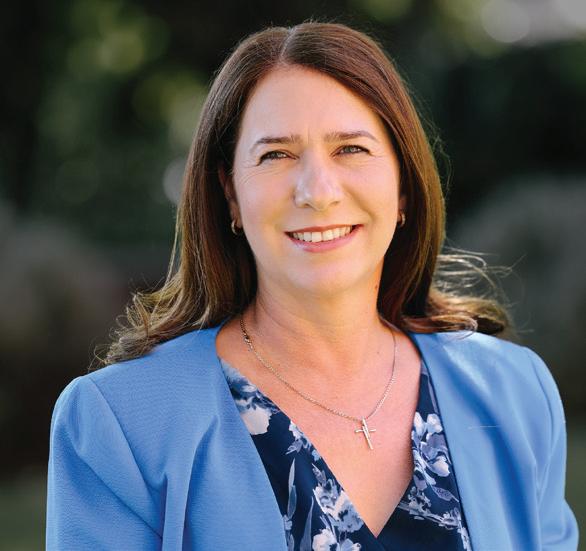
Annette Morey, currently Deputy Executive Director of Catholic Education Western Australia (CEWA), has been appointed as CEWA’s new Executive Director, effective at the start of Semester Two, 2025. Photo: Supplied.
CIWA marks 50 Years of faith-filled Formation And Education Leadership
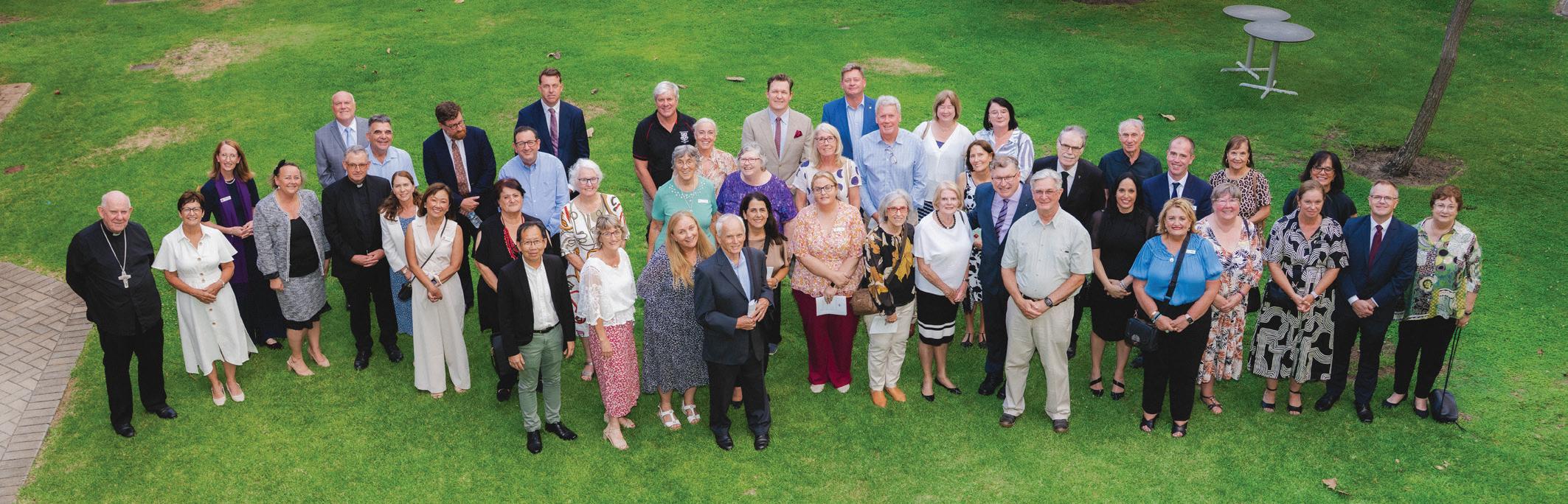
Avibrant community of alumni, educators past and present, clergy, and friends gathered on Friday 7 March to mark the golden jubilee of the Catholic Institute of Western Australia (CIWA), celebrating 50 years of service to Catholic education and formation across the state.
Celebrating the occasion with Mass on Friday 7 March at the Chapel of St Michael the Archangel, Leederville, was Bunbury Emeritus Bishop Gerard Holohan, Perth Auxiliary Bishop Don Sproxton, Geraldton Emeritus Bishop Justin Bianchini, St Charles Seminary Rector, Fr Francis Nguyen, Willetton Assistant Priest Fr CJ Millen and New Norcia Benedictine Fr Robert Nixon OSB.
Not only was the anniversary a time of reflection on five decades of dedicated service but it was also a launchpad for the next generation of educators inspired by the Catholic vision of human flourishing.
A Historic Vision, A Contemporary Mission
The Institute was born out of the vision of WA’s bishops, who saw the urgent need for a centre of theological and pastoral excellence that could support the burgeoning Catholic education sector.
Following its commencement in 1975 with inaugural Director, Jesuit Fr John Prendiville SJ, 45 students enrolled in Religious Education units designed and presented by staff of (what was then called) the Catholic Pastoral Institute (CPI)
and taught at the Teacher Training Colleges at Churchlands, Mount Lawley and Nedlands, in its Diploma of Teaching program.
This innovative collaboration between church and state education marked a national first.
Speaking at the 50th anniversary celebration, Catholic Institute Managing Director, Dr John Topliss spoke to the younger audience about what was occurring at the time when the Institute was formed in 1975.
“What began with just 45 students and the pioneering work of Fr John Prendiville SJ has now grown into a centre that continues to shape the theological literacy and spiritual depth of those serving in Catholic schools,” Dr Topliss said.
“Fifty years ago, there were no tuition fees thanks to Prime Minister Gough Whitlam’s reforms,” he said.
Today, we face different challenges, but our mission remains the same — helping educators form young hearts and minds in the light of the Gospel,” Dr Topliss added.
Dr Topliss continued by highlighting that at the time, median house price in Perth was around $18,850 off average earnings of around $7600.
A meat pie cost around 20 cents and a six-pack of beer cost $2.50. Qantas also just announced it has doubled the size of no smoking areas to 1/3 of its aircraft.
The population of Western Australia had just hit 1.1 million people and Perth voters had voted against making Daylight Savings being a regular occurrence after a three-month trial.
Equipping Educators for a Catholic Future
Over the decades, CIWA has evolved in its offerings while staying true to its core mission: integrating faith, life, and learning.
With partnerships at Edith Cowan University, Curtin University, and most recently with the University of Notre Dame Australia (UNDA), the Institute provides undergraduate and postgraduate units in theology, religious education, and pastoral leadership.
For prospective teachers, the Institute offers CIWAaccredited units that provide a pathway into the Catholic education system.
These units are complemented by non-university-based short courses, spiritual formation programs, and professional certificates for school leaders.
“Our students are not just learning academic content— they are engaging with a Catholic vision of the human person, the dignity of life, and their own spiritual growth,” said Dr Topliss.
“It is this formation that sets Catholic education apart and prepares graduates to lead with purpose.”
Graduate Diplomas or Master degrees with advanced standing at UNDA, making Catholic theological formation more accessible and integrated than ever before.
With the rise of new cultural and educational challenges, CIWA’s programs are also designed to be responsive to contemporary questions of faith and identity.
“In a pluralistic society, Catholic educators must be grounded in their own faith tradition while being able to navigate complexity with compassion and confidence,” Dr Topliss said.
“That’s what we prepare them for — both in their spiritual journey and their professional vocation.”
“Today, we face different challenges, but our mission remains the same — helping educators form young hearts.”
The Institute’s 2025 Prospectus features cutting-edge courses such as Catholic Pastoral Leaders and Spiritual Wellness, Science and Faith in Catholic Schools, and Leading Catholic Identity and Mission, reflecting its ongoing commitment to forming holistic, faith-filled leaders.
A New Era of Growth
In 2024, CIWA took a major step forward by signing a Strategic Alliance with UNDA, formalising its role in providing advanced formation programs for Catholic teachers across the state.
Why Choose CIWA?
As CIWA celebrates its golden jubilee, the Institute continues to welcome students seeking to make a difference in Catholic education.
With flexible course delivery, deeply experienced lecturers, and a warm, faith-filled environment, CIWA is more than a place of study — it is a community of formation.
Whether you are an aspiring teacher, a current educator, or someone exploring a deeper calling in Catholic leadership, CIWA offers a pathway to not only develop professionally but grow personally and spiritually.
“Our door is always open,” said Dr Topliss. “If you want to teach with purpose, lead with faith, and be part of a mission that changes lives, then CIWA is the place for you.”
For more information or to explore 2025 study options, visit www.ciwa.wa.edu.au or contact the Institute directly at admin@ci.wa.edu.au
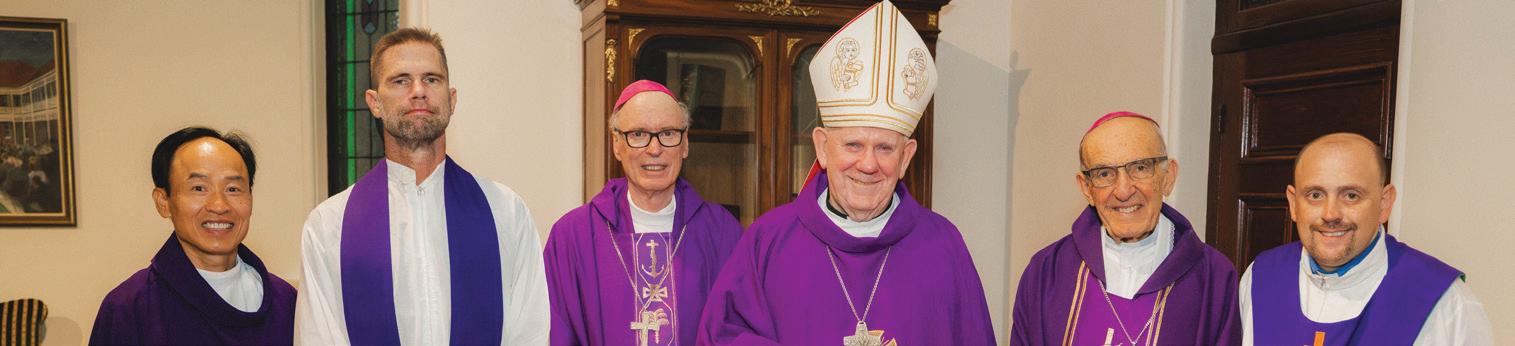
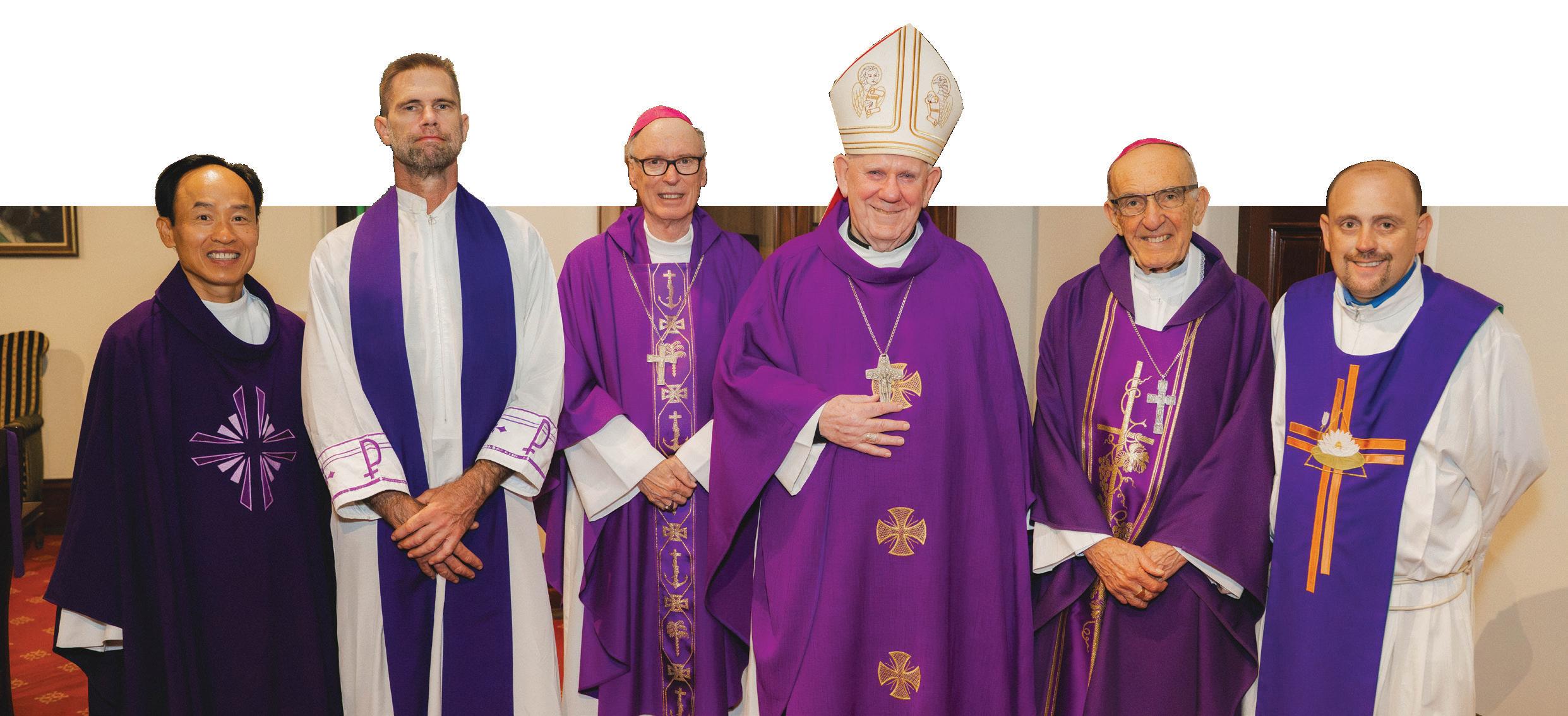
Pictured from right to left: Fr CJ Millen, Bishop Justin Bianchini, Bishop Gerard Holohan, Bishop Don Sproxton, Fr Robert Nixon OSB and Fr Francis Nguyen, at the 50th anniversary Mass on Friday 7 March at the Chapel of St Michael the Archangel, Leederville.
PERTH.
KNIGHTS SUPPORT OF THE CHRISTIAN PRESENCE AND FAITHFUL IN THE HOLY LAND
Words by Josh Low
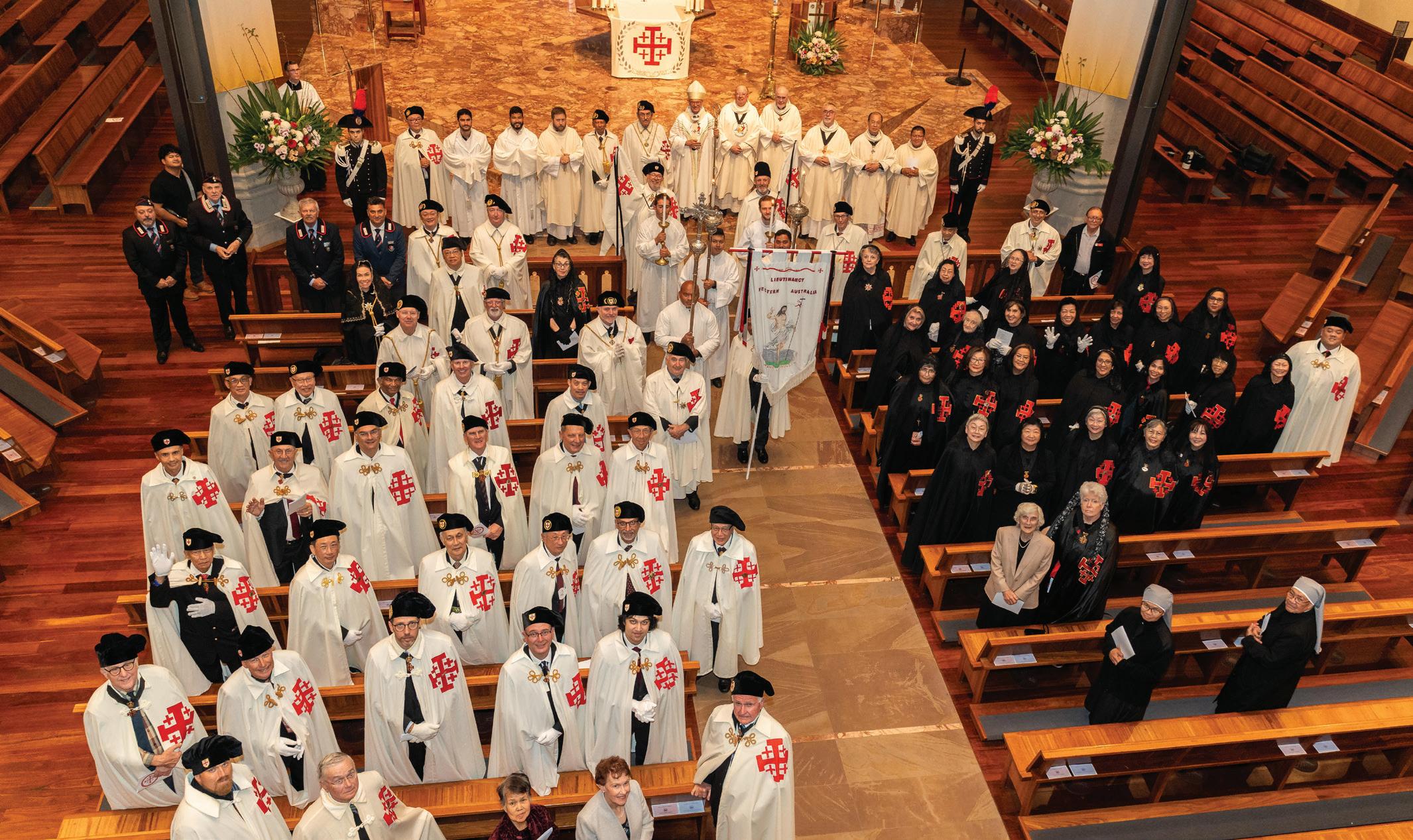
CONTINUING the ongoing support of the Christian presence and faithful in the Holy Land was in focus this month as the Equestrian Order of the Holy Sepulchre of Jerusalem held their bi-annual national conference in Perth.
The Order this year also celebrated 40 years since its establishment in Australia, which occurred in Perth in 1985.
Members of the Order from across the Asia-Pacific gathered for the weekend long conference from 30 May to 1 June, with many coming from interstate, as well as from Malaysia, New Zealand and Taiwan.
The Order’s Governor General, Count Ambassador Leonardo Visconti di Modrone KGCHS, was present for the occasion, having travelled from Rome in what was his first visit to the Asia-Pacific region.
During his visit, he had the opportunity to sit down with leaders of the various Lieutenancies to discuss the work
of the Order in their respective cities and regions.
The opening Mass for the conference was celebrated on Friday 30 May by Archbishop of Perth and Grand Prior of the Order in Western Australia, Timothy Costelloe SDB.
In his homily for the occasion, Archbishop Costelloe reminded members of the Order of their duty to support the ‘living stones’ of the Holy Land – the Christian people.
He added that the task and privilege of Christians to be a sign and instrument of God’s will is for all to be united and in communion with Him.
“While this is the vocation of every Christian and should be real and visible in every part of the world, it matters deeply that it should be real and visible in that place where God first chose to reveal this truth in all its fullness,” he said.
“This, in one sense, captures the essence of the vocation of the Equestrian Order of the Holy Sepulchre of Jerusalem; to be the sign and the instrument of God’s will, so that the beauty and liberating power of His love made known in Christ, should continue to be witnessed to in the place where it was first seen.”
Archbishop Costelloe concluded by reflecting on the Angelus prayer and Mary’s ‘yes’ at the Annunciation.
“For all who belong to the Equestrian Order of the Holy Sepulchre, our ‘yes’ to all that God asks of us, will also help to ensure that the Word continues to take flesh in the lives of all who live in the Holy Land,” he said.
A day-long retreat was held the following day, Saturday 31 May, where members of the Order heard talks from Archbishop
Costelloe, Count Ambassador Visconti di Modrone, and Vice-Governor General for the Asia-Pacific region, John Secker KGCHS, which were followed by question-andanswer sessions.
University of Notre Dame Lecturer in Theology, Dr Peter Christofides, also provided reflection, before Director of the Archdiocesan Centre for Christian Initiation and Liturgy, Dr Carmel Suart, led participants in a discernment and discussion session for the Order.
Following the conclusion of the retreat, members gathered with family and friends for a Gala Dinner held at Burswood on Swan, where it was announced that the next conference will be held in Sydney in 2027.
Count Ambassador Leonardo Visconti di Modrone expressed his gratitude to the lieutenants and all members of the Order for his reception, as well as for all involved in the conference.
“I depart for Rome with memories of marvelous days spent in your beautiful country, which I had never visited before, but which will remain in my heart,” he said.
“I return enriched by the experience of so many meetings and conversations which will assist me in the continuation of my work.
“The Order of the Holy Sepulchre of Jerusalem has immediately offered the new pope, Leo XIV, the homage of its filial devotion.
“Under his guidance, it will continue its work of charity towards the Holy Land with renewed zeal and devotion.
“To all of you, I renew the expression of my gratitude for the welcome I received, with the hope of also seeing many of you in Rome for the Jubilee Year pilgrimage.
“I hope to be able to return soon to visit your country and share with you moments of heartfelt prayer for the Holy Land,” he said.
“His love made known to Christ, should continue to be witnessed to in the place where it was seen first .”
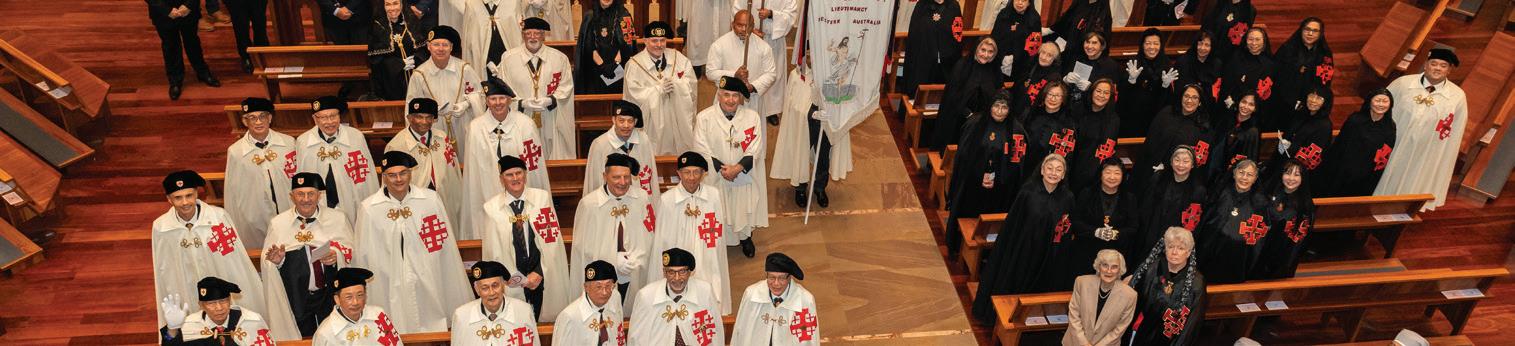
Members of the Order of the Holy Sepulchre of Jerusalem following Mass on Friday 30 May. PHOTO: MATT LIM
CATHOLIC EDUCATION WA EXECUTIVE DIRECTOR APPOINTED AS MEMBER OF THE ORDER OF AUSTRALIA
Mr Bull’s remarkable career in education spans over four decades, beginning at Mercedes College in 1979.
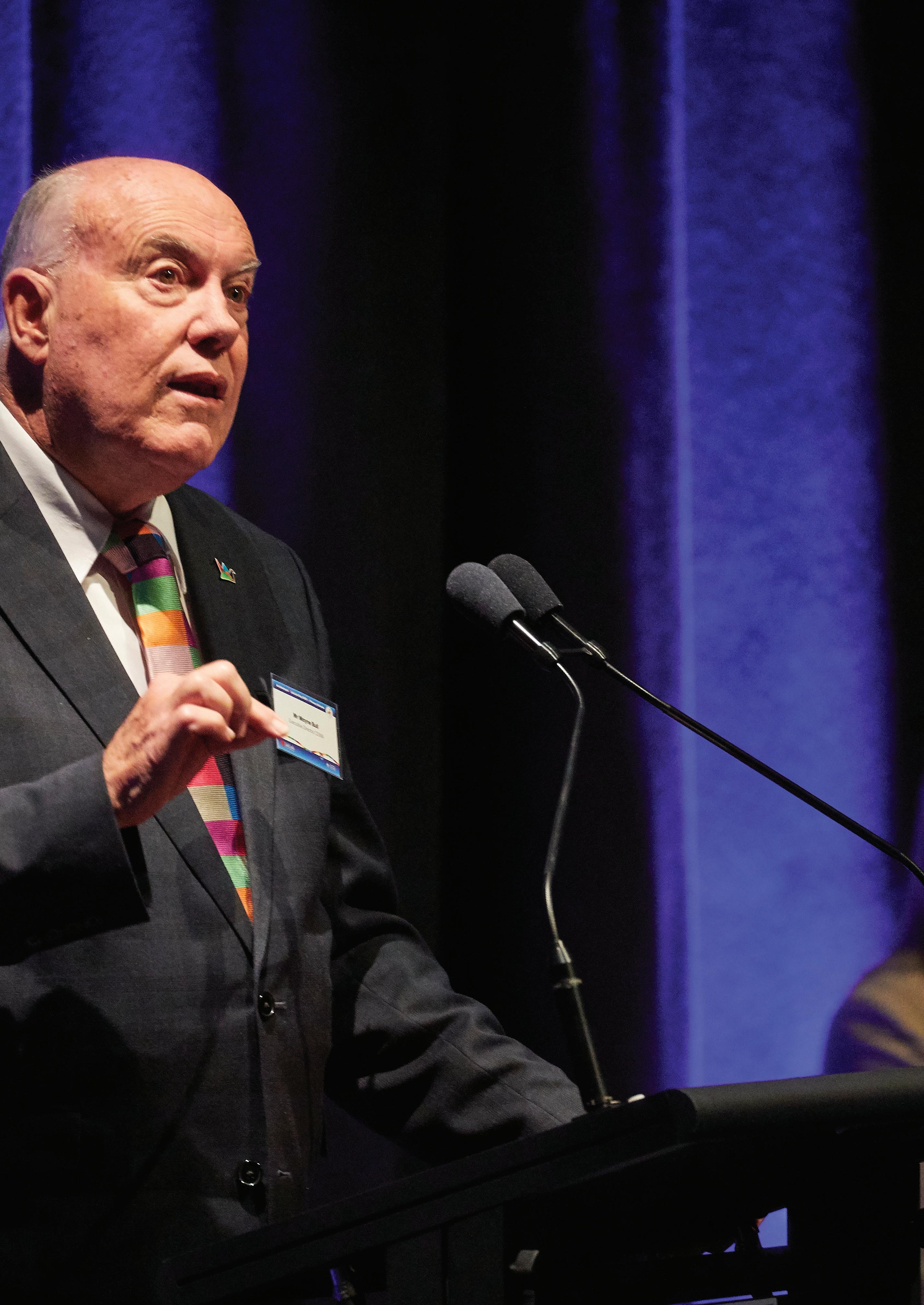
CATHOLIC Education Western Australia Executive Director
Wayne Bull has in June been appointed a Member of the Order of Australia in recognition of his outstanding service to Catholic education and dedicated support for Indigenous education.
The honour, announced as part of the King’s Birthday 2025 Honours List, acknowledges Mr Bull’s significant contributions to education across Western Australia.
Mr Bull’s remarkable career in education spans over four decades, beginning at Mercedes College in 1979.
His early dedication to teaching paved the way for leadership roles at several esteemed institutions, including Mercedes College, St Brigid’s College in Lesmurdie, Lumen Christi College, and La Salle College.
For the past six years, Mr Bull has effectively guided Catholic Education WA through both Deputy Executive Director and Executive Director roles.
Under his stewardship, the Catholic education system in Western Australia expanded and flourished, now encompassing 160 schools that collectively serve more than 83,000 students across the state.
In announcing the award, Eva Skira AM, Chair of the Catholic Education Commission WA,
praised Mr Bull’s enduring legacy.
“It is a reflection of the high esteem in which Wayne is held by his colleagues, education leaders, and the community” Mrs Skira said
“And is recognition of a decades-long career characterised by compassion, faithfulness, and dedication to enriching the lives of generations of young people,” she said.
The recognition comes at a poignant moment as Mr Bull prepares for his retirement,
“Recognition of a decades-long career characterised by compassion, faithfulness, and dedication to enriching the lives of generations of young people.”
scheduled for 4 July this year.
Reflecting on his career and the prestigious honour, Mr Bull expressed humility and gratitude.
“I am extremely humbled and honoured to receive this award,” Mr Bull said.
“I have been so fortunate to have worked with so many extraordinary teachers, support staff, and leaders during my career, and this honour really reflects the wonderful position that Catholic Education holds within the community of Western Australia,” he continued.
Throughout his career, Mr Bull has been particularly passionate about enhancing educational opportunities
for Indigenous students, fostering environments where all students can thrive academically, culturally, and spiritually. His commitment has significantly contributed to bridging educational gaps and promoting equity in education.
In addition to his leadership roles, Mr Bull’s influence extends through mentorship,
professional development programs, and policy advocacy aimed at enhancing educational standards and outcomes across Catholic schools.
The Catholic Education community widely celebrates this honour, viewing it as an affirmation of the critical role that quality, faithbased education plays in the
broader Western Australian community.
As Mr Bull approaches his retirement, his lasting legacy in education remains clear: a strengthened Catholic education system, an inspired generation of educators, and thousands of students whose lives have been positively shaped by his tireless efforts and unwavering dedication.
CEWA Executive Director Waybe Bull, who retires at the end of Term Two, been appointed a Member of the Order of Australia. PHOTO: CEWA/SUPPLIED.
In a particularly special Mass on the Feast of the Holy Trinity Sunday 15 June, Rottnest Island Church of the Holy Trinity marked 50 years of faithful service, fellowship, and spiritual refuge for generations of worshippers.
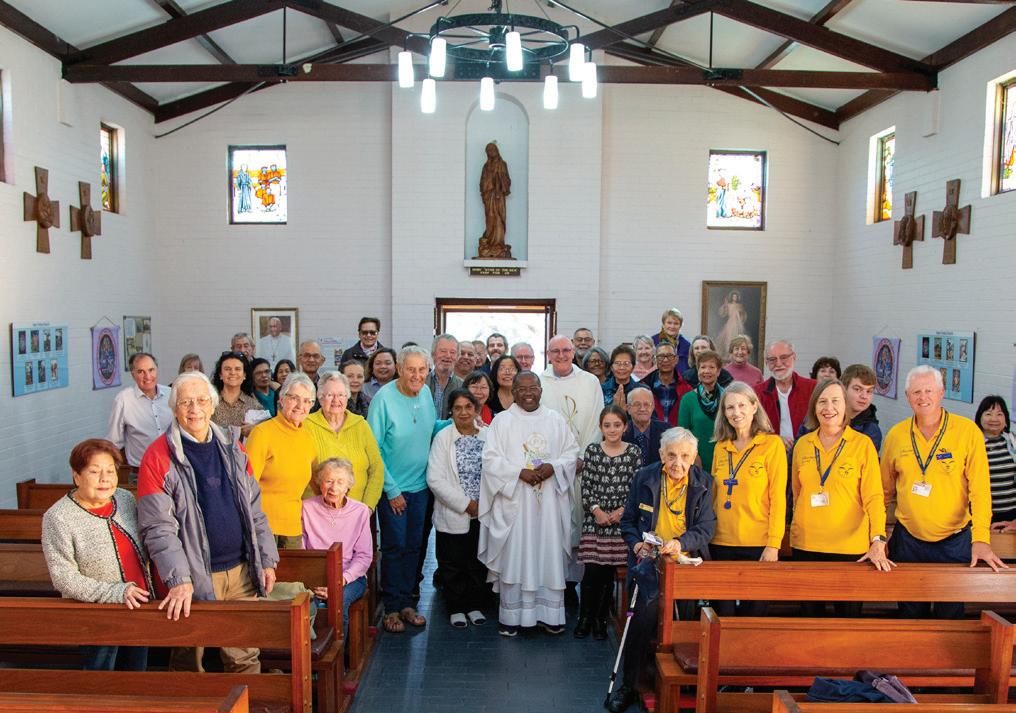
THE picturesque Holy Trinity Church on Rottnest Island has last month celebrated its Golden Jubilee on Sunday 15 June, marking 50 years of faithful service, fellowship, and spiritual refuge for generations of worshippers – particularly those on holidays.
Some 60 people – including locals and visitors from Perth who travelled via the morning ferry - gathered for the special occasion, with the Mass celebrated by Vicar General, the Very Rev Fr Vincent Glynn, who was joined by concelebrants, Rottnest Island Chaplain Fr Joseph Rathnaraj, former Chaplain Fr Leon Russell and former Ballajura Parish Priest Fr John Jegorow.
In his homily for the occasion, Fr Glynn highlighted the significance of celebrating the anniversary on the Feast of the Holy Trinity—a cornerstone of the Catholic faith.
“The solemnity of the Holy Trinity proclaims to the world, to all Christians and indeed to us present in this Church dedicated to the Holy Trinity this morning our Christian belief in the one God,” he said, acknowledging the challenge this mystery poses.
“And that within the Godhead there are three persons: the Father, the Son and the Holy Spirit. These three persons being truly distinct from each other,” he said.
became renowned not just for worship, but also for hospitality.
Monsignor O’Shea, affectionately called “Mons,” was known for offering visitors his famous homemade fig jam and pikelets.
A particularly memorable event in the Church’s history was the installation of the iconic carillon of bells for its tenth anniversary in 1985.
In a testament to Monsignor O’Shea’s resourcefulness, these bells were airlifted to the island by a helicopter courtesy of the US Navy’s Pacific Fleet—a spectacular moment vividly remembered by locals.
“The bells that are rung break into all the activities on this island and call us to the sacred.”
Fr Glynn emphasised the sacredness of the Holy Trinity Church, describing it as a spiritual beacon.
“The sacraments have been celebrated here for 50 years. I think of those who have been baptised, received the Eucharist, been married and at the end of their life their mortal remains are placed here,” he reflected, also noting, “The bells that are rung break into all the activities on this island and call us to the sacred, call us to contemplation and God.”
Established in 1975 by Monsignor Sean O’Shea, Holy Trinity Church became a symbol of resilience and vision for the Catholic community on Rottnest Island.
Originally arriving on the island in 1961 by mistake, Monsignor O’Shea quickly turned accidental visits into a lifelong dedication to pastoral ministry, often celebrating Mass in unconventional venues such as the island’s old picture theatre and World War II-era huts.
Monsignor O’Shea’s determination culminated in the construction of Holy Trinity Church, officially opened on 25 May 1975.
Designed by architect C.J. Gabriels, the Church, complete with movable side doors and integrated priest’s quarters, quickly
Msgr O’Shea retired in 2012, passing away months later and is now buried within the grounds of Holy Trinity Church at Rottnest.
The Golden Jubilee celebrations also saw the unveiling and blessing by Fr Glynn of a specially commissioned Golden Memorial Plaque, followed by a social gathering and high tea, fostering a sense of community and shared history.
Some 20 parishioners from Maida Vale, where current Chaplain Fr Joseph’s Rathnaraj was Parish Priest – were also present for the occasion.
Reflecting on half a century of spiritual service, current Chaplain Fr Joseph Rathnaraj said the milestone is an opportunity to honour Monsignor O’Shea’s enduring legacy.
“We celebrate the past and pray for continued blessings upon all who visit this sacred place.”
“This is a moment to give thanks for the blessings of the past 50 years, and to pray that the Church may continue to serve all who live on or visit this beautiful Island,” Fr Rathnaraj said.
Fr Glynn concluded his homily by reinforcing to those present that they gathered firstly to give thanks to God.
“This Church is on a hilltop, it is a reminder and sign that God is always present, we might be on a holiday, but God is never on a holiday,” Fr Glynn emphasised.
“In this Jubilee year of Hope, may this Church on the hilltop continue to be a sign of the presence of God, a sign to all of Christian hope, that our true homeland, our true island of refuge and refreshment is Jesus Christ,” he concluded.
Above: Some 60 people – including locals and visitors from Perth, gathered for the special occasion, with the Mass celebrated by Vicar General, the Very Rev Fr Vincent Glynn. PHOTO JAMIE O’BRIEN.
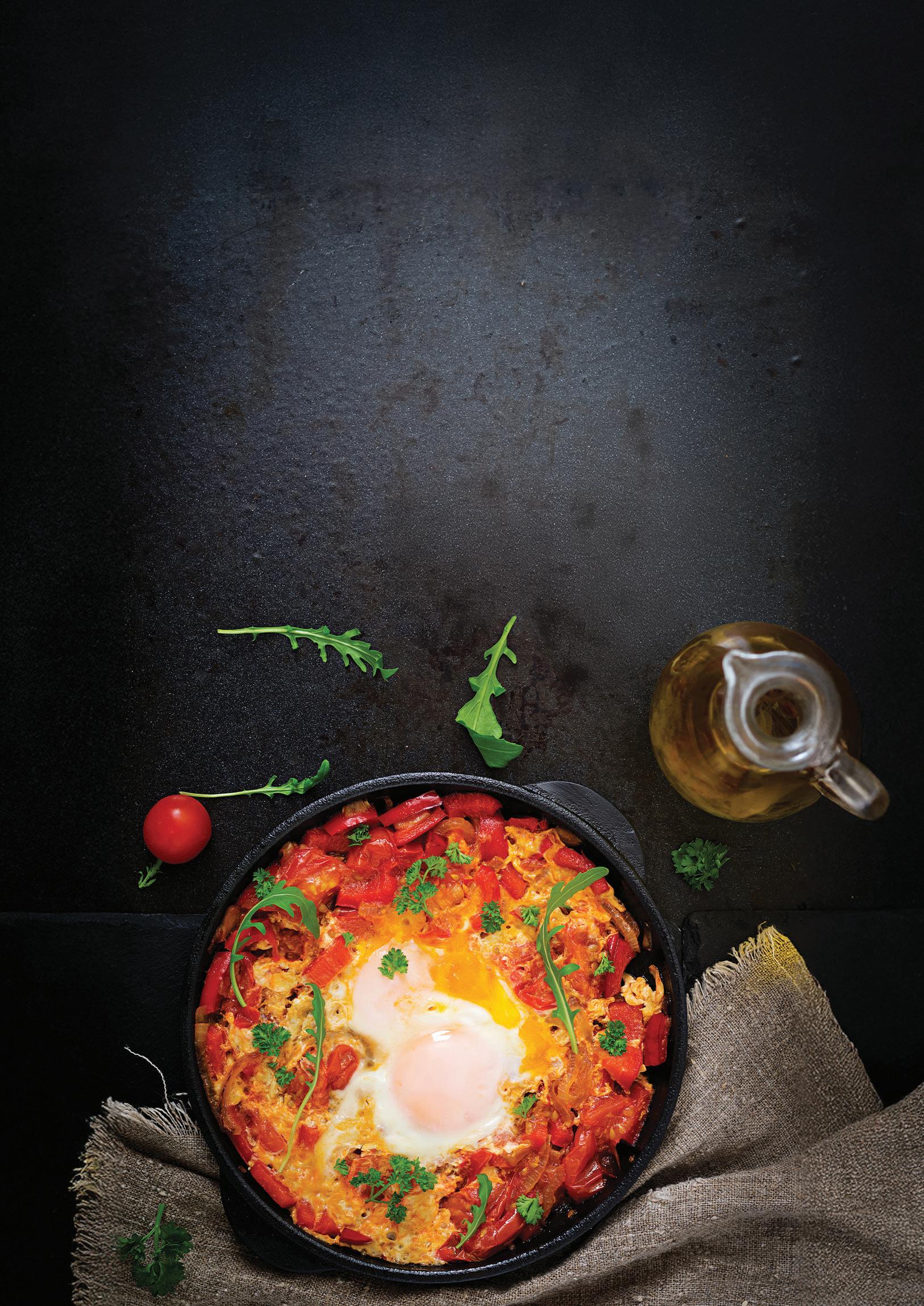
Shakshuka
Recipe by Justice Goodrick
Shakshuka is a rich and flavourful dish that originated in Ottoman North Africa, soon became a beloved staple across the Middle East. Bursting with spiced tomatoes, peppers, and perfectly poached eggs, it’s a hearty and satisfying meal enjoyed for both breakfast and lunch.
INGREDIENTS
2 Tbsp olive oil
2 Tbsp harissa paste
2 Tsp tomato purée
2 large red peppers, cut into 0.5cm
4 garlic cloves
1 onion, diced
1 Tsp cumin ground
2 cans diced tomatoes
800g total or fresh tomatoes
diced
4 eggs
Greek yogurt
Ciabatta bread
3/4 tsp Salt
Heat olive oil in a large frying pan over medium heat. Add the harissa paste, tomato purée, peppers, garlic, onion, cumin ground and 3/4 tsp of salt. Stir and cook for 8 minutes.
Add the tomatoes, bringing to a gentle simmer and cook for 10 minutes.
Make 4 dips into the sauce. Gently break the eggs and pour each one into the dips. Simmer gently for 10 minutes, until the egg whites are set but the yolk is still runny.
Remove from heat, let dish cool, then spoon the shakshuka onto sliced bread. Spoon a little bit of yogurt on top and serve.
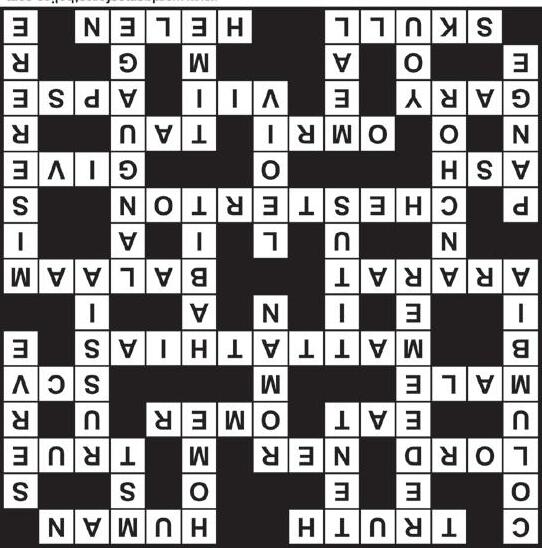
ACROSS
2 “I am the way and the ___ and the life.” (Jn 14:6)
5 One of the two natures of Jesus
8 “___ have mercy”
9 Abner’s father (2 Sam 2:8)
11 “Light from light, ___ God from…”
13 “When we ___ this bread…”
14 Biblical measure
15 “…___ and female he created them” (Gen 1:27)
16 ___1, papal license plate
17 Leader of the Maccabees
20 Ark landing
22 Gentile prophet of the Old Testament
27 Catholic author
of The Father Brown Mysteries
28 Palm product
29 “___ us this day our daily bread…”
30 Commander of the army who was made king over Israel (1 Kings 16:16)