Official magazine for the Catholic Archdiocese of Perth
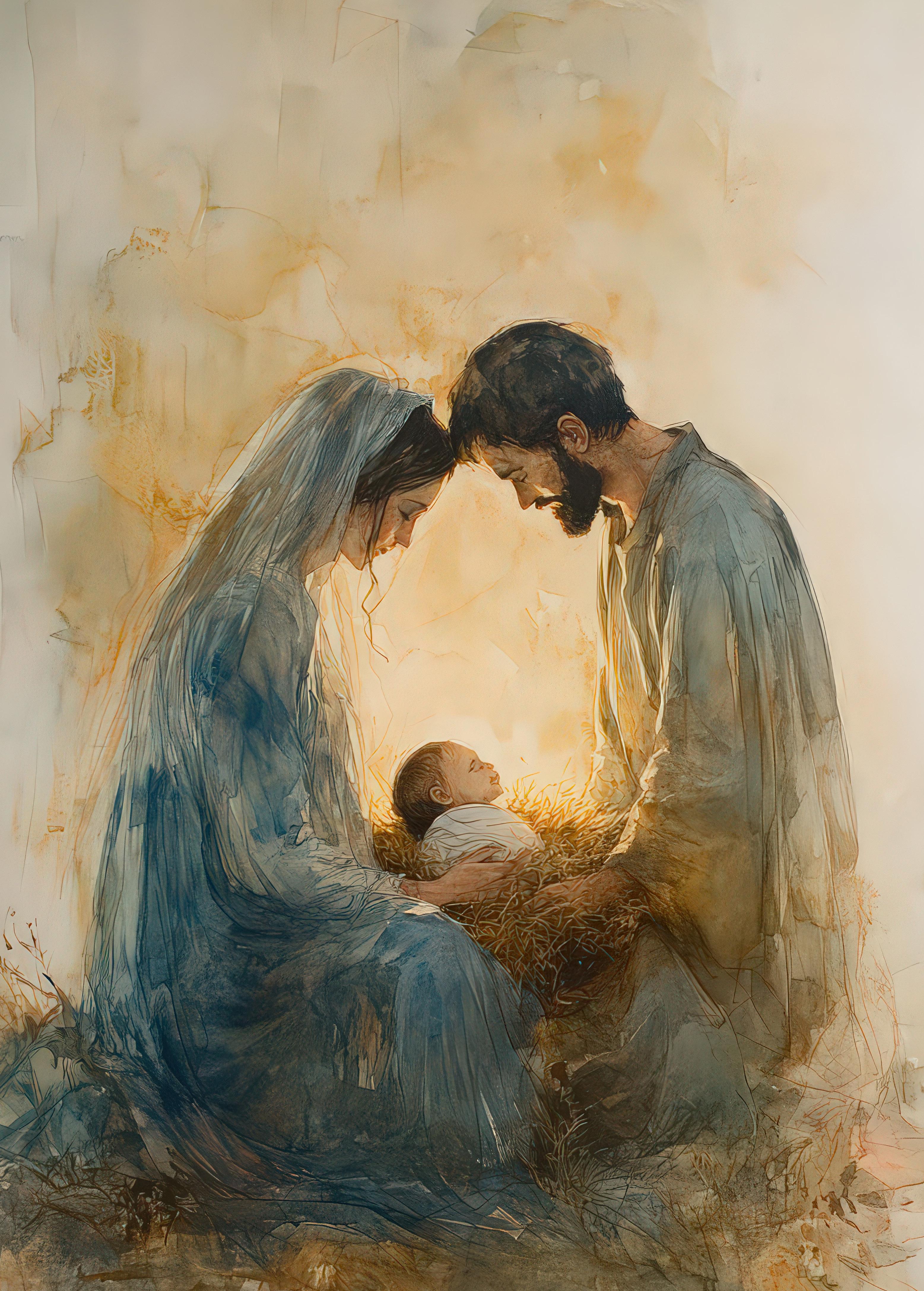
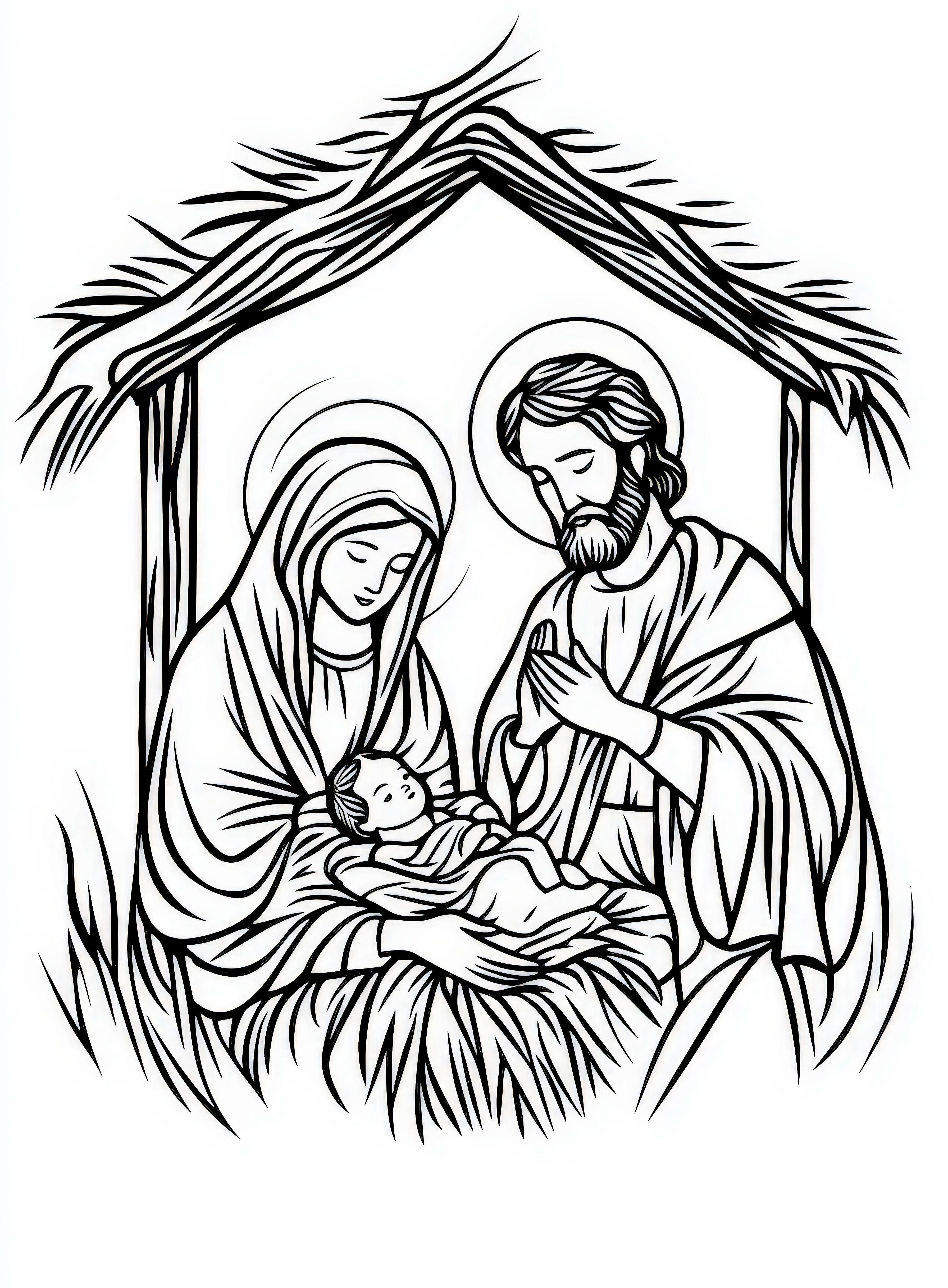
Soft water colour painting of Mary, Joseph, and baby Jesus, representing the holy family and the nativity scene, symbolising love, faith, and devotion. Artist: Lamina
Address 21 Victoria Square, Perth WA Postal Address PO Box 3075, East Perth, WA 6892
SITES + SOCIAL MEDIA www.therecord.com.au facebook.com /TheRecordPerth instagram.com /TheRecordPerth issuu.com/archdioceseofperth_therecord
DECEMBER
2024
OUR MISSION STATEMENT
Our mission is to provide news, features and perspectives for the Catholic community of the Archdiocese of Perth and Western Australia. We work to support Catholics to engage in the message of the Gospel and our coverage seeks to reflect the needs and interests of the Church – local, national and international – in a complete and authentic manner, reflecting always the voice of Christ in His universal Church.
DISCLAIMER
The Record Magazine is published quarterly. Views expressed in published articles are not necessarily those of the publisher or Editor. The Editor may refuse copy or material, including advertisements, for publication. Inclusion of an advertisement in The Record Magazine does not reflect endorsement or responsibility from the publisher or Editor.
ARTICLE SUBMISSIONS
We welcome unsolicited articles and photos; however, we do not guarantee replies to unsuccessful submissions. Please send all information to: editor@therecord.com.au.
MEMBERSHIPS
TheRecordMagazine is a member of the Australasian Catholic Press Association and Australasian Religious Press Association.
NOTICE
The issue may contain images of deceased members of the Aboriginal and Torres Strait Islander community. Images are used with respect and appreciation.
2024. No part of The Record Magazine may be reproduced in any form without prior written consent from the publisher.
“If I were to seek my own glory, my glory would be worth nothing; in fact my glory is conferred by the Father.”
— John 8: 54
Welcome to Issue 46 of The Record Magazine. In his 2024 Christmas Message, Archbishop Timothy Costelloe explains that the central message of Advent and Christmas is one of love. We are invited, he explains, to make room for Christ’s love in our hearts, so that we may share that love with the world, filling our homes and communities with peace and compassion. We welcome and congratulate new Broome Bishop Tim Norton, formerly Auxiliary Bishop of Brisbane, as well as sharing the story of Bishop Don Sproxton’s new Crozier, crafted by the Chisholm Catholic College community. We also welcome and congratulate Cardinal-designate, Bishop Mykola Bychok. Our thanks to our sponsor, Catholic Education Western Australia Ltd for their generous support. Don’t forget that these and many more stories are available at www.therecord.com.au
Synod 2024: Like Jesus be patient with others
Costelloe: The birth of Jesus reveals the truth of God’s endless mercy...
Sproxton: Christmas story teaches us that everyone deserves our respect
2024: Mutual learning has guided the synodal journey from the beginning
2024: Synod calls for quick steps to involve more people in Church life
Tim Norton SVD appointed new Bishop of Broome
Cardinal-designate Mykola Bychok
guidelines renew path for initiating adults into the Catholic faith
Chisholm College presents Bishop Sproxton with a new Crozier
Catechists are one of the great jewels of the Archdiocese
Relics of Italian teenager take centre stage at St Mary’s Cathedral
Green Chicken Curry
Colouring Page: The Nativity
“The birth of Jesus reveals the truth of God’s endless mercy and forgiveness...”
Dear Brothers and Sisters in Christ,
As we enter the beautiful season of Advent, the Lord invites us to open our hearts in hope and eager expectation.
We await the coming of our saviour, Jesus Christ, whose birth brings the promise of light into the darkness, joy to the sorrowful, and peace to the troubled.
This light, joy and peace are gifts which the Lord offers to us through each other, as we allow His Spirit to inspire us and empower us, opening not only our homes but also our hearts to receive the Lord Jesus among us.
The words of St Paul - “Rejoice in hope, be patient in tribulation, be constant in prayer,” (Romans 12:12) –call us to embrace this Christmas joy, even in the face of the many challenges which confront our troubled world: the ongoing war and violence in Israel, Palestine and Lebanon, in Ukraine and in Sudan, in Myanmar and in so many other places; the devastating floods in Spain; the earthquake in Japan; and the many social and economic challenges which we face here in our own country.
The Christian response to this reality of our suffering world is not to give up in despair but rather
to renew our commitment to charity—love in action. As Pope Francis reminds us in Fratelli Tutti, charity is more than mere kindness; it is a call to love each person, especially those in greatest need. The Holy Father writes, “Love means to be near to others at the least favourable moments, the moments of change and crisis” (Fratelli Tutti, 94)
Christmas, which celebrates the “coming near” of Jesus to us, reminds us of our call to “come near” to those who are lost, lonely or suffering, extending our love to them in any way we can.
Jesus calls us to serve Him in each of them, for “whatever you did for one of the least of these brothers and sisters of mine, you did for me” (Matthew 25:40).
This season of Advent is also a time for forgiveness. The birth of Jesus reveals the truth of God’s endless mercy and forgiveness. It is a mercy and forgiveness
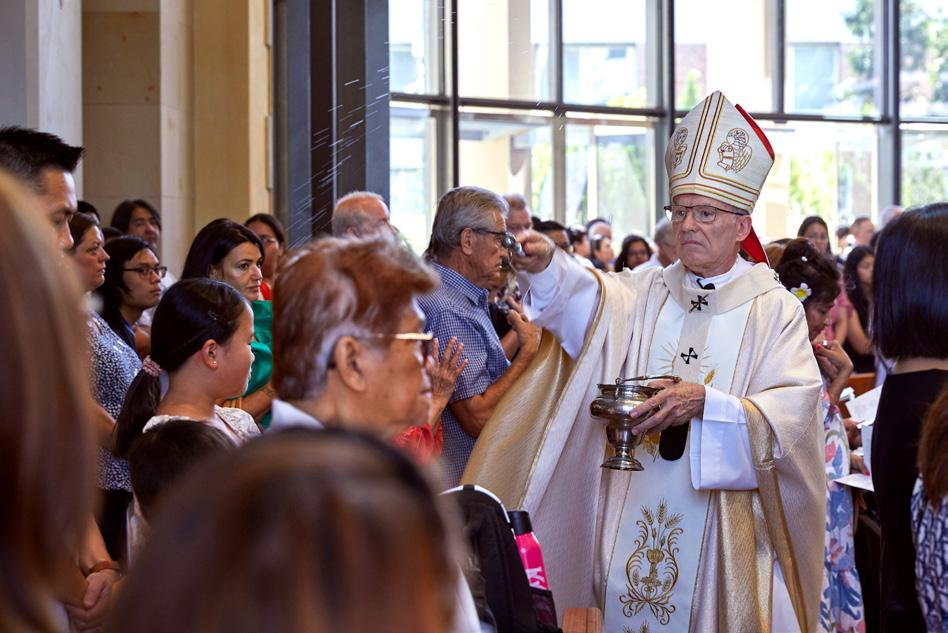
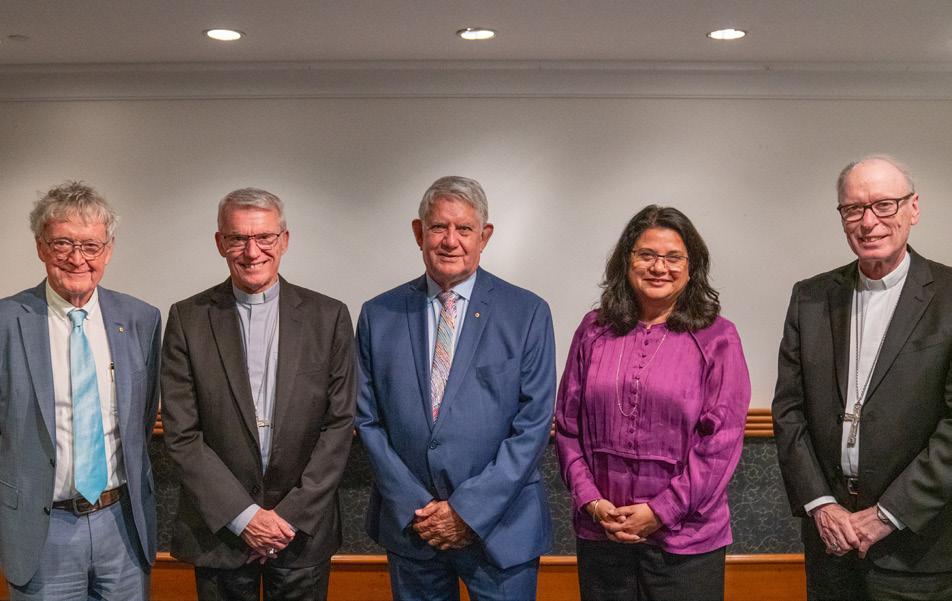
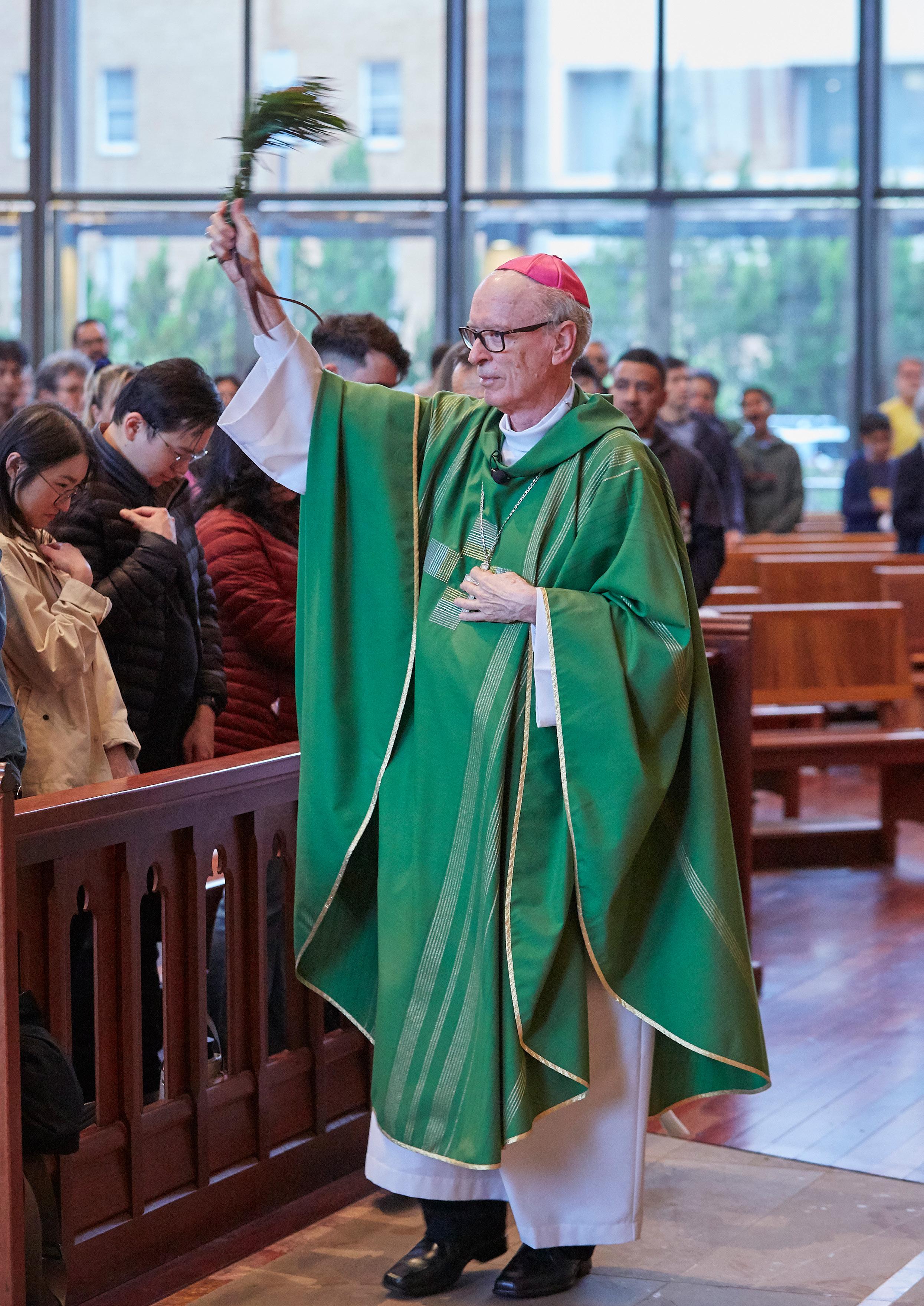
Left: Archbishop Costelloe blesses the congregation with holy water during the Easter Sunday Mass. PHOTO: RON TAN. Above: Archbishop Timothy Costelloe SDB, second from left, with Dr Pat Colgan, former Liberal MP Ken Wyatt, Head of Mission Enhancement and Outreach, Dr Debra Sayce and Auxiliary Bishop Don Sproxton at the inaugural St Mary of the Cross MacKillop Oration on Thursday 16 May PHOTO: RON TAN.
which God calls us, as His children, to offer freely to others. Pope Francis urges us in Amoris Laetitia, “rediscover the value of forgiveness” so that it may bring healing to families and communities alike. It is through our large-hearted forgiveness of others that we can be the bearers of that light, joy and peace which are the Lord’s Christmas gift to us.
In the end, of course, the central message of Advent and Christmas is one of love. We are invited to make room for Christ’s love in our hearts, so that we may share that love with the world, filling our homes and communities with peace and compassion. The Scriptures assure us that the Lord is “kind and forgiving, full of love to all who call”. Made in God’s image as we are, we are called to be the same: kind, forgiving,
and open to all. If we allow ourselves as Christians to see in Christ the one who shows us the way to live our lives to the full, and if we allow ourselves to be open to the transforming power of the Spirit’s grace, then the promise of hope contained in the story of Christmas can become a reality in our lives. The world in which we live is often marked by division, hardship, and despair: if we as Christians welcome the Lord Jesus into our hearts and into our lives we can become healers of division, relievers of hardship, and dispellers of despair. This is our challenge and this is our privilege: to allow the Lord Jesus to transform our lives through His coming, so that He, through us, can begin to transform the lives of others. Then the hope of Christmas expressed in the words of the prophet Isaiah, that “the people who walked in darkness have seen a great light” (Isaiah 9:2), will be fulfilled.
May the great light of Christmas, of which Isaiah speaks, shine in your lives, in the lives of your families, and in the lives of all who are dear to you. And may that light, through you, begin to shine in the lives of everyone you meet.
I wish you all a very happy, holy and peace-filled Christmas.
+ Archbishop Timothy Costelloe SDB ARCHBISHOP OF PERTH
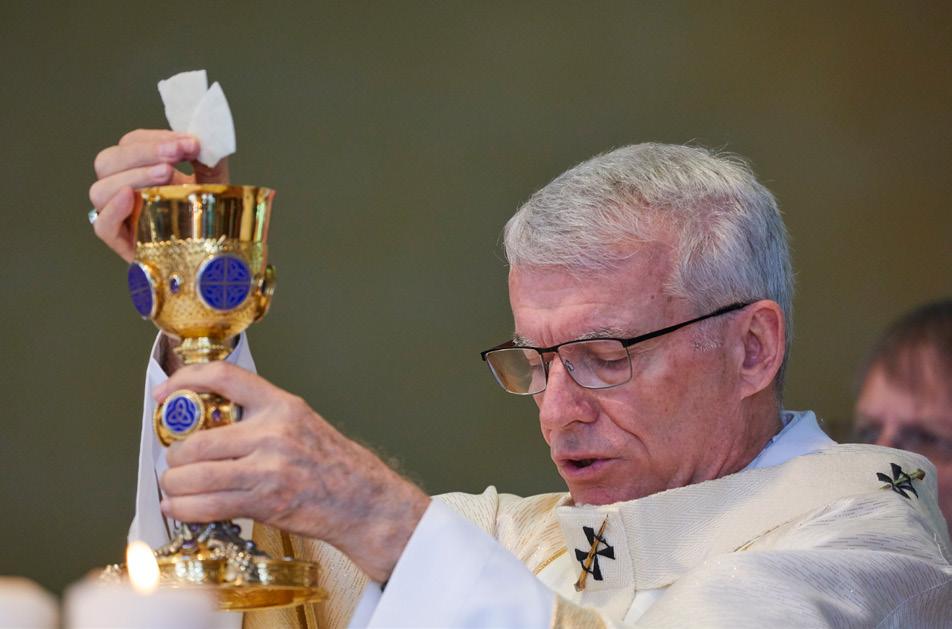
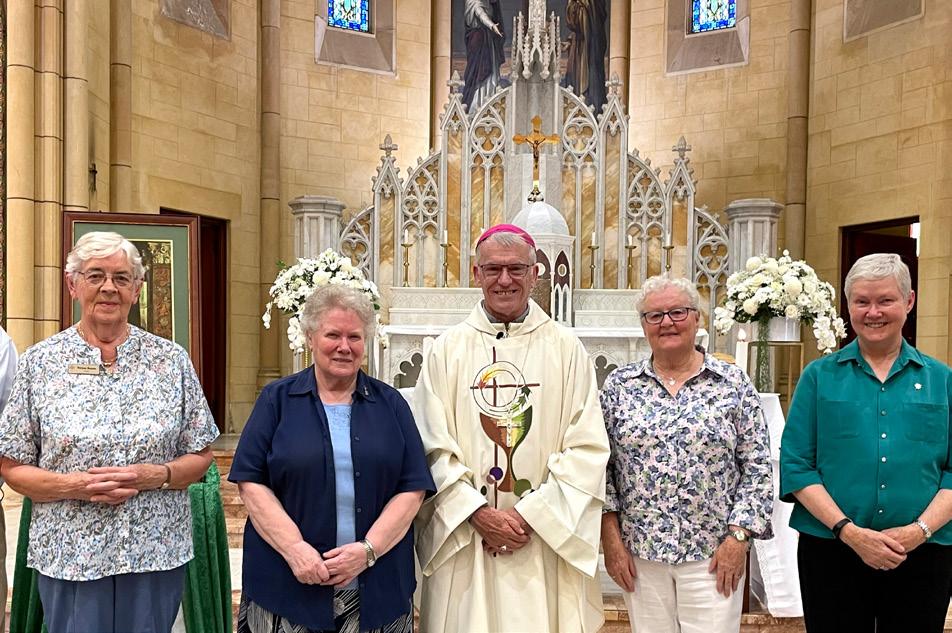
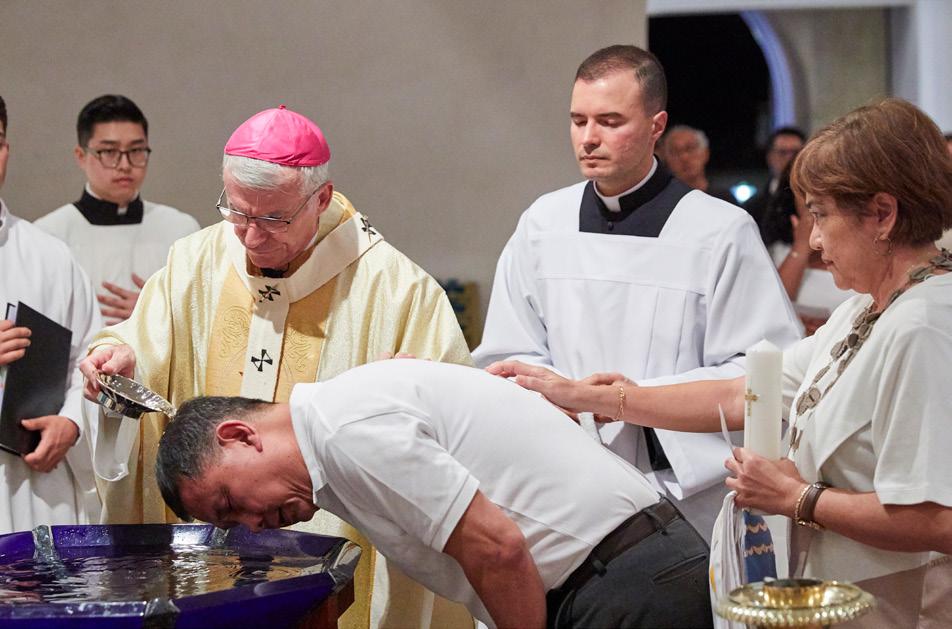
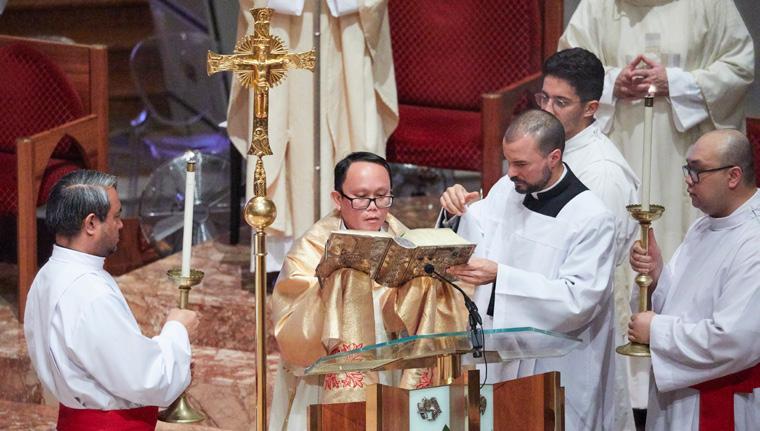
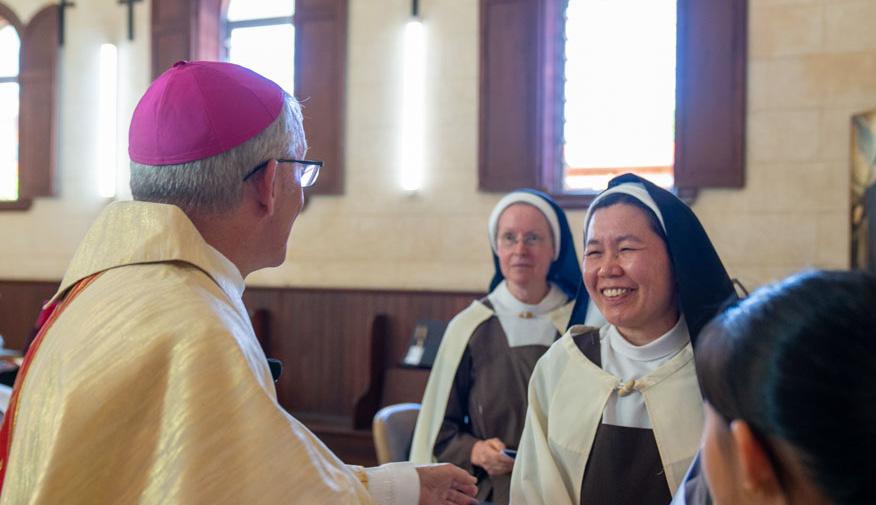
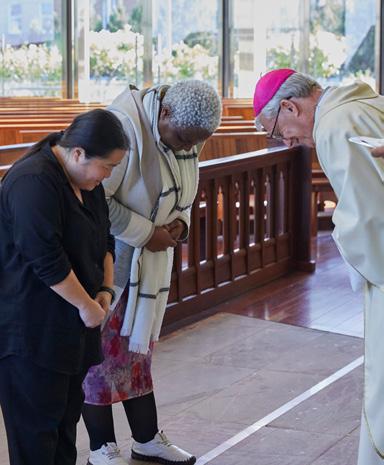
Top left: Archbishop Costelloe elevates the Body of Christ and above, baptising a candidate at the Easter Vigil in March. PHOTO: RON TAN. Top Right: With religious sisters following the Mass for the Day of Consecrated Persons in February. PHOTO: SUPPLIED.
Bishop Sproxton sprinkles holy water on the congregation during the Perth Aboriginal Sunday Mass on 20 October at St Mary’s Cathedral.
PHOTO: RON TAN
BISHOP DONALD SPROXTON
Christmas story teaches us that every person deserves our respect
Dear Brothers and Sisters in Christ,
As we gather this Christmas season, we are reminded that Christ, born humbly in a manger, is God’s ultimate gift of mercy and love to the world. Amid the many challenges and uncertainties of recent times, the war in Ukraine, the war in Israel and Palestine, and as we witness global unrest, economic hardship, and the effects of climate change, this season invites us to rekindle our hope and deepen our commitment to love and compassion.
In recent months, we have seen turmoil, conflict, and suffering across the world.
From regions afflicted by violence to communities devastated by natural disasters, we have witnessed the struggles that many face.
But, amid these trials, we also see extraordinary acts of kindness and courage.
Christmas calls us to be bearers of this same hope and mercy, for “God so loved the world that He gave His only Son” (John 3:16). In Christ, we have a model of love that is unconditional, a call to serve others, and a reminder that even in the darkest times, God’s light shines brightly.
One of the most profound themes of Christmas is the mercy of God.
In this mystery of the Incarnation, we encounter a God who “became flesh and dwelt among us” (John 1:14). This merciful act of becoming one with humanity speaks to us of God’s closeness to our joys and sorrows, our hopes and fears.
Christ came not to condemn but to save, and He invites us to extend this same mercy to others.
Pope St John Paul II often emphasised the necessity of mercy in our world. In his second encyclical Dives in Misericordia (Rich in Mercy), he reminds us that “mercy is love’s second name” and that it is the antidote to so much division and pain.
During this season, may we strive to bring mercy to those around us – to forgive those who have wronged us, to reach out to those in need, and to show compassion to the vulnerable.
Psalm 145:8-9 reminds us, “The Lord is gracious and compassionate, slow to anger and rich in love. The Lord is good to all;He has compassion on all He has made.”
This is the essence of God’s heart, and it is the calling
for each of us as disciples of Jesus. Let us be channels of this compassion, embracing those who feel isolated, comforting those who mourn, and giving generously to those in need.
The Christmas story, with its humble beginnings in a stable, teaches us that every person, no matter their status or wealth, deserves our respect and care.
We are called to treat each other with dignity, knowing that Christ is present in every human face.
As we reflect on our world, we cannot ignore the need for peace and reconciliation.
Pope St John Paul II once said, “Peace is not only the absence of war. Peace is something that must be built up day after day, in the pursuit of an order intended by God.”
This peace begins in our own hearts. It begins in families and communities and extends outwards. May this Christmas renew in each of us a commitment to build peace, to forgive those who have hurt us, and to foster understanding in place of conflict.
The birth of Jesus also brings us hope. It is a hope that does not deny the struggles we face but transforms them with the assurance of God’s presence.
As the prophet Isaiah foretold, “The people walking in darkness have seen a great light; on those living in the land of deep darkness, a light has dawned” (Isaiah 9:2).
This is the light of Christ that no darkness can overcome, and it is the light that leads us forward even when the path seems uncertain.
May we welcome Jesus into our hearts this Christmas with a renewed spirit of love, kindness, and forgiveness. Let us go forth with courage, knowing that we are not alone, and that God’s mercy accompanies us.
May we be instruments of peace and bearers of hope in our world.
With the words of St Paul, I bless you all: “May the God of hope fill you with all joy and peace as you trust in Him” (Romans 15:13).
May your hearts be filled with the peace of Christ, and may this season bring blessings to you and your loved ones.
Have a blessed Christmas and may God’s love and mercy remain with you always.
Bishop Sproxton is now Acting Episcopal Vicar, Effective Communication.
+ Bishop Donald Sproxton AUXILIARY BISHOP OF PERTH
SYNOD OF BISHOPS 2024
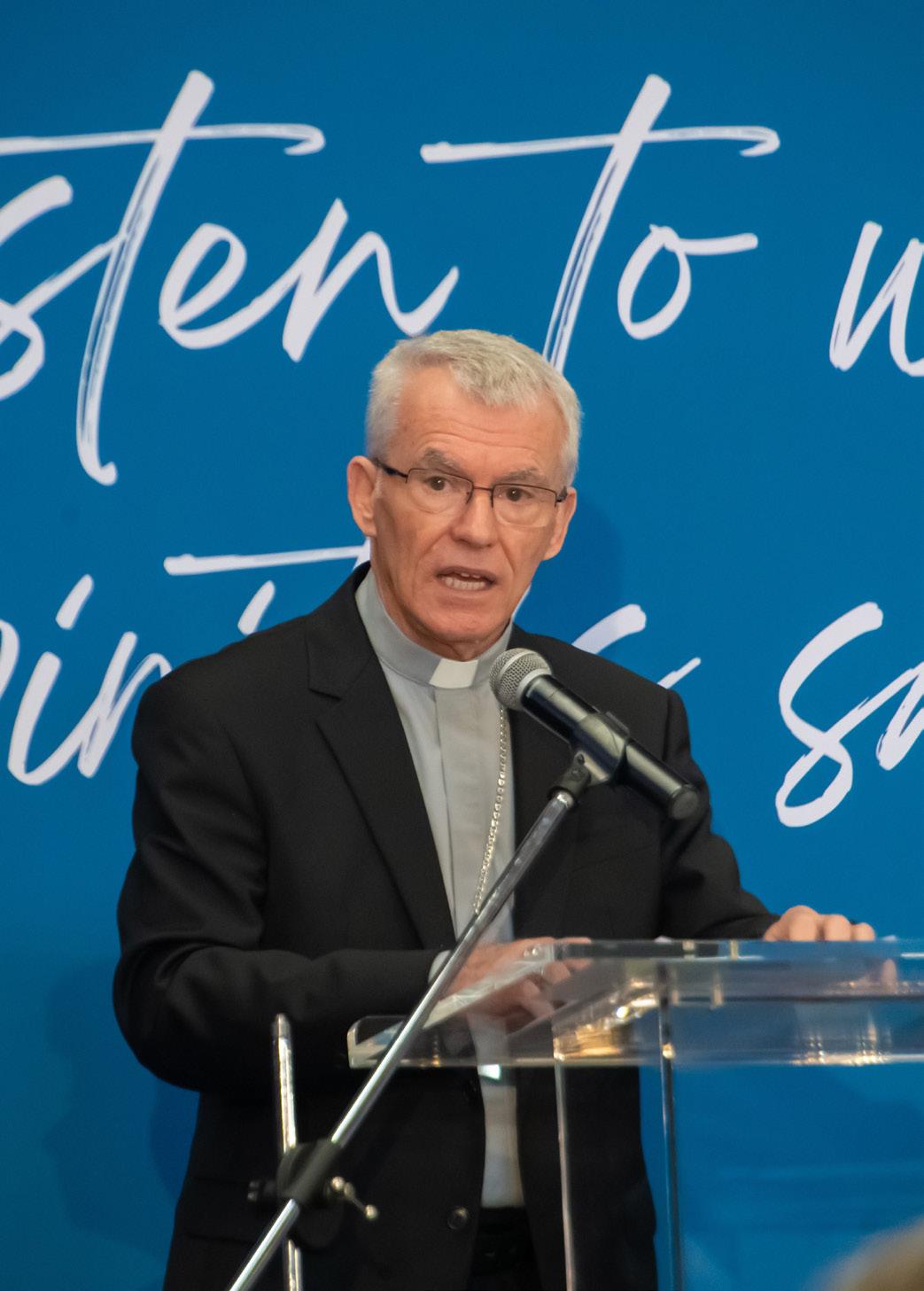
Like Jesus, be patient with others, Archbishop Costelloe tells Synod members
WORDS Justin McLellan and Jamie O’Brien
SYNOD members must imitate Jesus’ patience and acceptance toward others as they prepare to exchange contrasting visions for the future of the Catholic Church, an archbishop and Synod member has said.
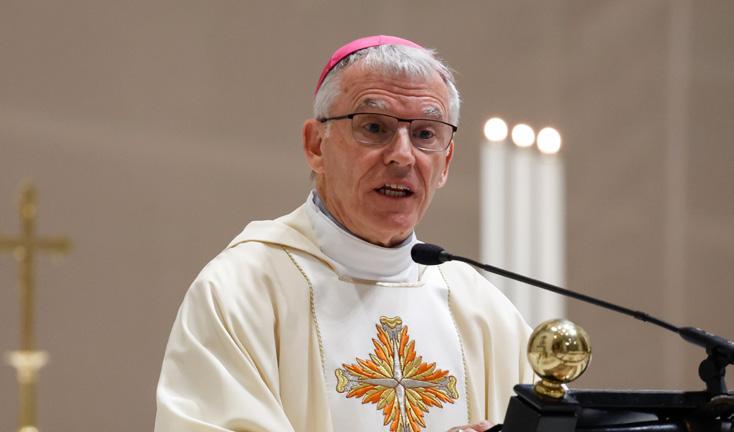
“We cannot afford to be ignorant of Christ, or forgetful of Him, as we seek to discern together just what it is that God is asking of the Church at this time,” said Australian Catholic Bishops Conference President and Perth Archbishop Timothy Costelloe SDB.
In his homily during Mass with Synod members on 30 September, Archbishop Costelloe urged Synod participants to look to Jesus’ many relationships and interactions recounted in the Gospels “to get glimpses of what truly and deeply human encounters look like.”
“We can think of the endless patience which Jesus demonstrates toward those, especially toward His closest disciples, who continually fail
to understand Him and who so often disappoint Him,” he said. “His patience prevents them from giving up.”
We can think of the extraordinary sensitivity Jesus shows towards those, continued Archbishop Costelloe, who seem to be weighed down by the burdens of their own sinfulness, and of how that sensitivity sets them free.
“We can think of Jesus’ compassion for those who are lost or confused or pushed to the margins, and of how that compassion restores their hope,” he said.
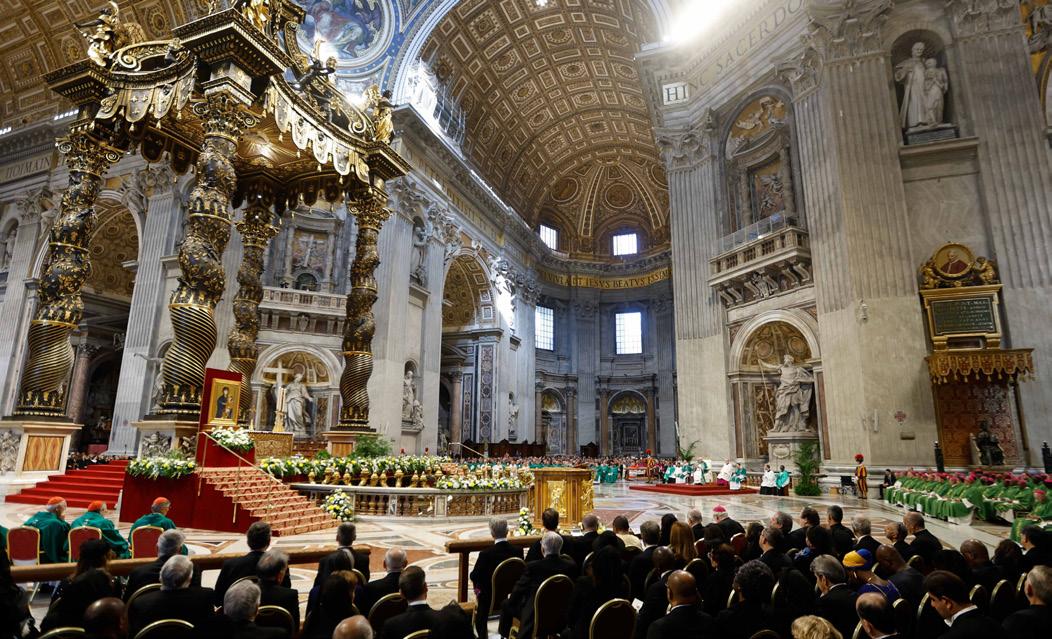
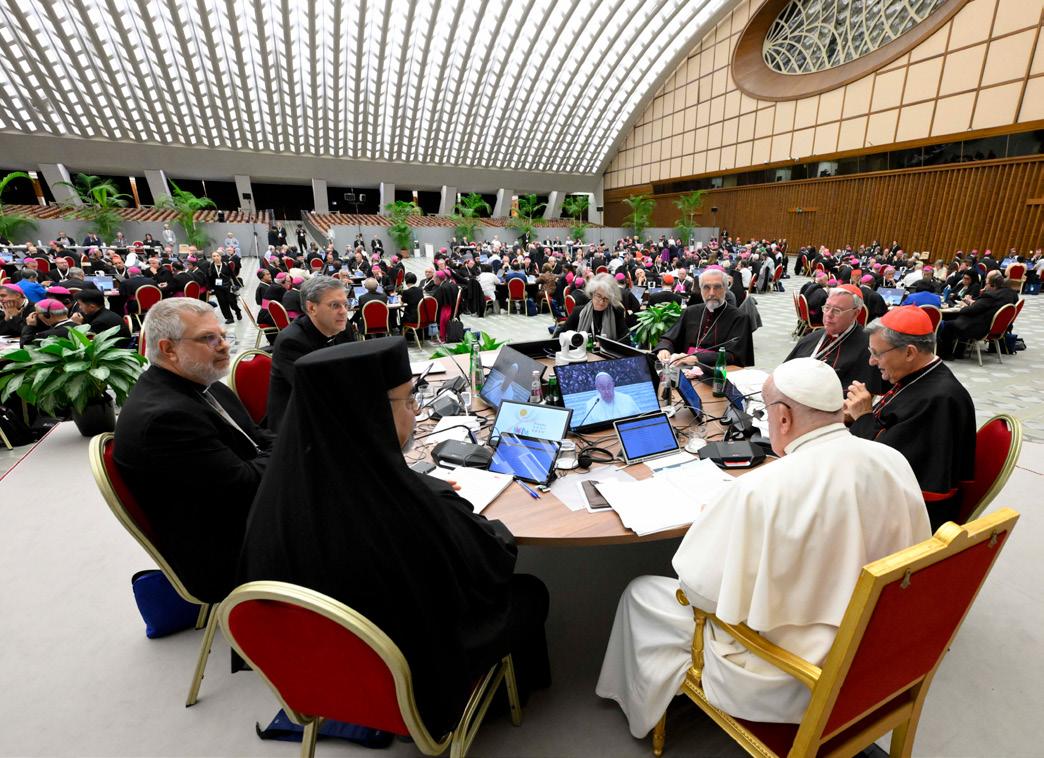
The 368 members of the Synod of Bishops were gathered at the Vatican for a two-day retreat ahead of the opening of the Second Session of the Synod on 2 October and celebrated Mass together at the Altar of the Chair in St Peter’s Basilica. Earlier in the day, participants listened to spiritual reflections from Dominican Father Timothy Radcliffe and
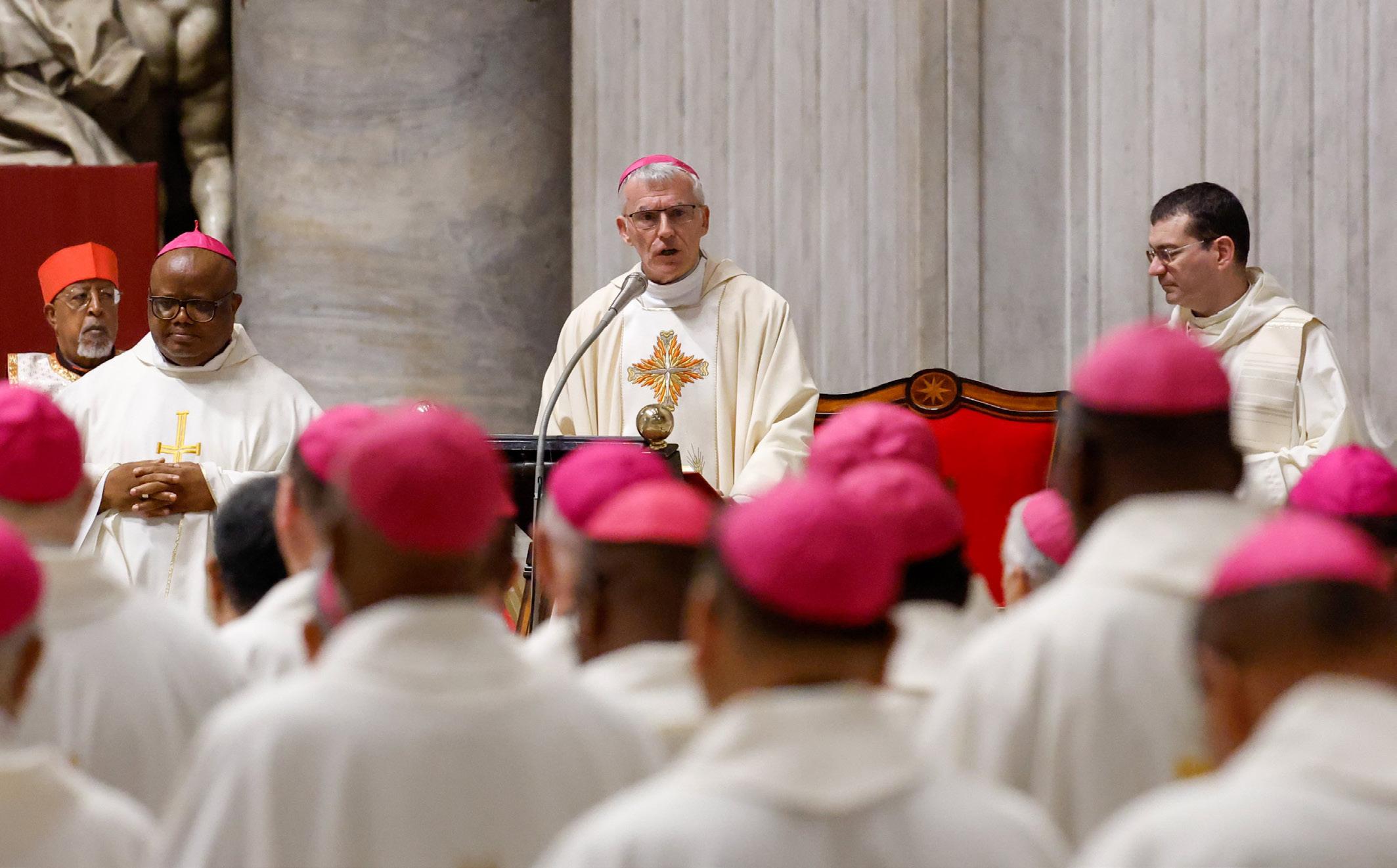
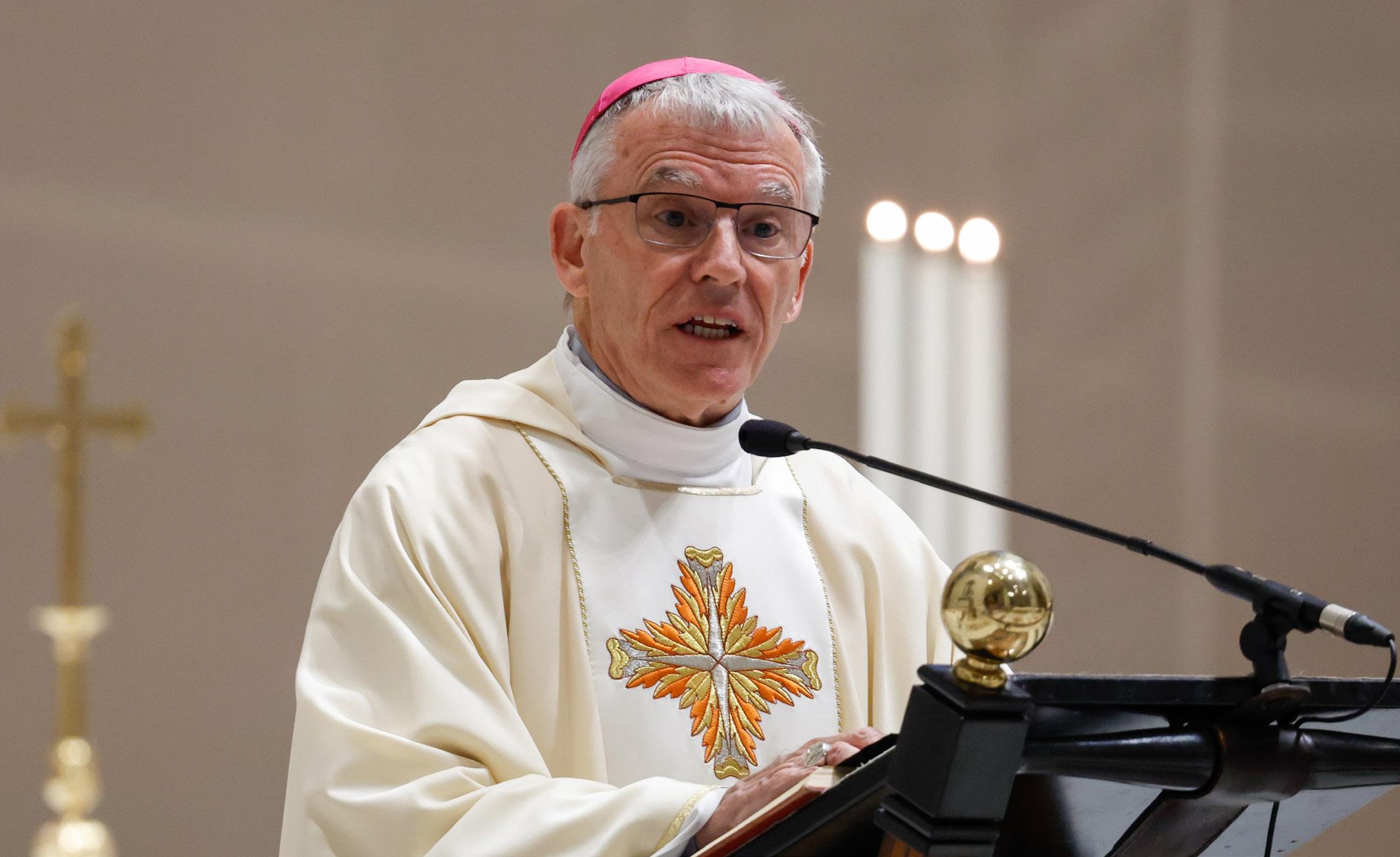
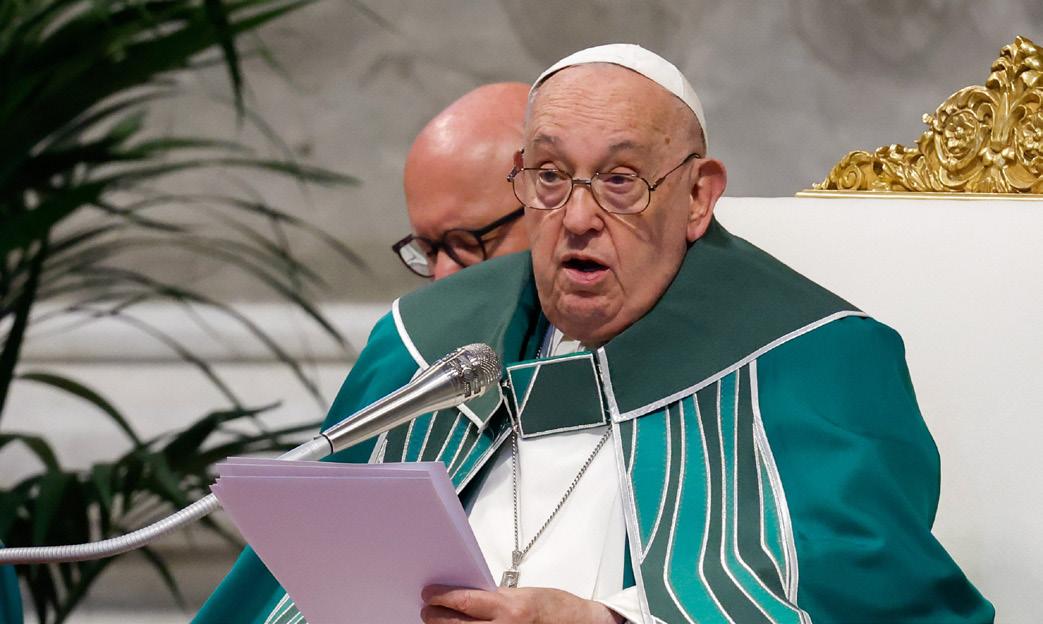
ACBC President and Perth Archbishop Timothy Costelloe SDB, centre, speaks during a Mass with members of the Synod of Bishops in St Peter’s Basilica on 30 September 2024. PHOTO: CNS/LOLA GOMEZ.
Benedictine Mother Maria Ignazia Angelini OSB. The Synod process, which began in 2021 and included the first session of the Synod of Bishops a year ago, has led the Church to “a deeper understanding of the meaning of synodality,” Archbishop Costelloe said in his homily. “Now, at this stage of the journey, we are being asked to reflect not so much on what synodality is but rather on how we are to live it at every level of the life of the Church,” as individuals and in communities.
Archbishop Costelloe said the Synodal journey thus far “has confirmed for us this profound truth: that in the creative design of God we are made for each other, that we are meant to depend on each other, and that it is in and through our relationships that we come to be the people God has created us to be.”
Moving forward, to become a “welcoming and hospitable Church,” a “poor and humble Church,” a Church “in mission” and a “listening Church,” synod members must look to Christ as their model, he said.
Following Christ along the synodal journey “will console us, at times it will confuse us, and at times it may even confront or frighten us,” but “the Church is Christ’s, not ours,” he said, citing St John XXIII, the Pope who convened the Second Vatican Council.
Archbishop Costelloe began his homily by recalling the feast of St Jerome, a doctor of the Church credited with translating biblical texts into Latin from Hebrew, Aramaic and Greek.
St Jerome, Archbishop Costelloe said, is remembered as “a passionate and difficult man, someone who did not find it easy to tolerate what he saw as the shortcomings of others,” while also recognising his own faults in his approach to people. “He would, perhaps, have been a difficult character to manage if he were a member of a Synod which calls us to deep and respectful listening to each other,”
Archbishop Costelloe explained.
The Archbishop cited a famous saying attributed to the Saint, a “precious gift he offers us as we enter into all that lies ahead” in the month-long Synod: “Ignorance of the Scriptures is ignorance of Christ.”
In concluding, Archbishop Costelloe invited those present to reflect on the patterns of Jesus’ engagement with so many different people in so many different ways.
“It would be important for us to remember that the words He said to His disciples at the Last Supper are words He also says to us: I am the Way; I am the Truth; I am the Life.”
“If you want to know how to be a welcoming and hospitable Church, learn from me, for I am the way. If you want to know how to be a poor and humble Church learn from me, for I am the way.”
“If you want to know how to be a Church in mission, learn from me, for I am the way. If you want to know how to be a listening Church, learn from me, for I am the way,” he said.
Members of the Synod of Bishops attend Mass at the Altar of the Chair in St Peter’s Basilica on 30 September 2024, during a two-day retreat at the Vatican before the open of the Second Synod Session. PHOTO: CNS/LOLA GOMEZ.
SYNOD OF BISHOPS 2024 Mutual listening has guided the synodal journey from the beginning, says Archbishop Costelloe
WORDS Jamie O’Brien
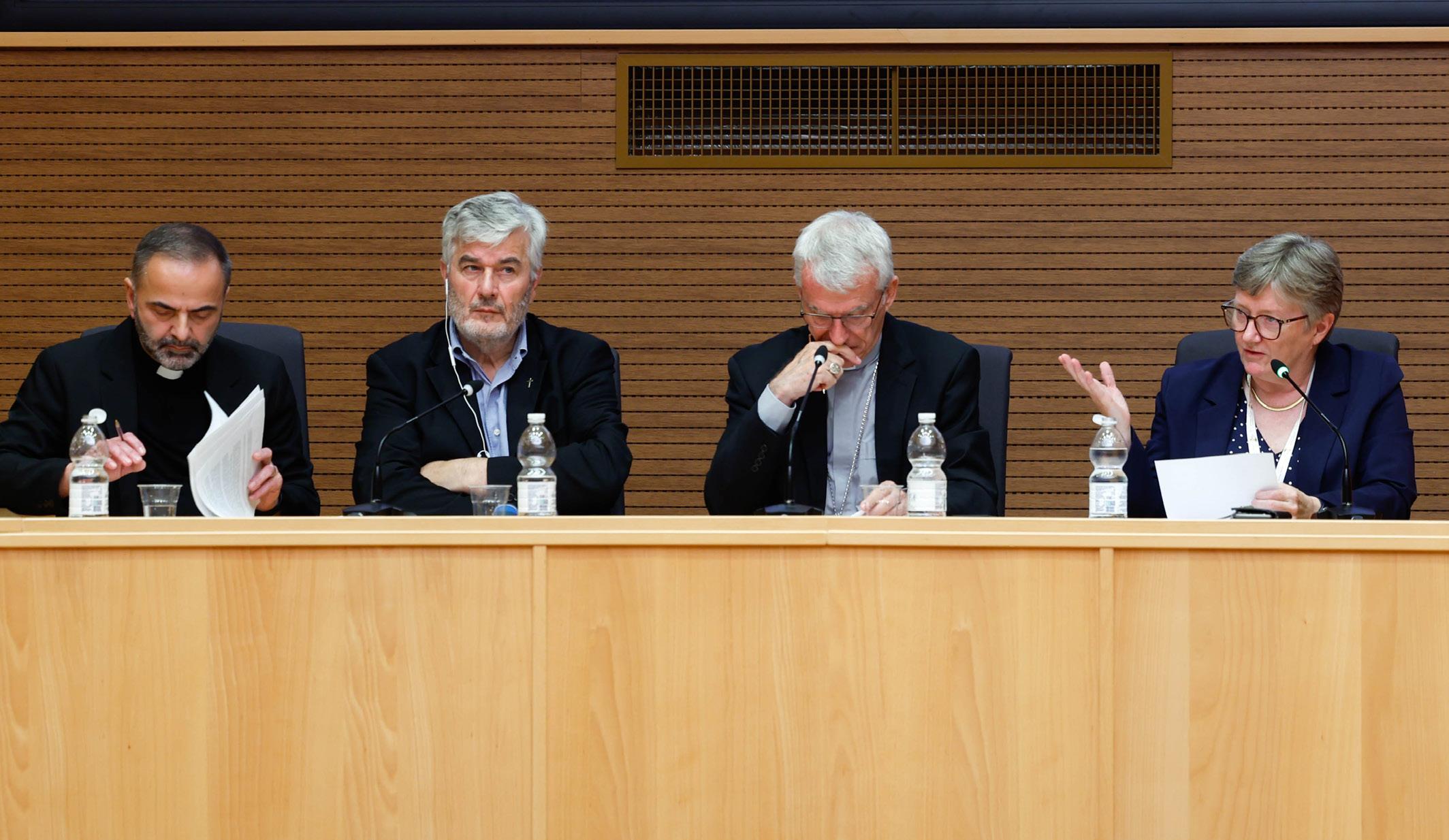
In commencing his speech at the Theological and Pastoral
process of circularity between all the
WHAT genuine Christian disciple could possibly be opposed to being open to the voice of the Spirit?
This was the question posed by Perth Archbishop Timothy Costelloe SDB, President of the Australian Catholic Bishop’s Conference, in delivering an address at the Theological Pastoral Forum for the Synod in Rome on 16 October 2024.
Held in the auditorium of the Jesuit Generalate, the forum explored the topic ‘Synodality and the Primacy of the Bishop of Rome’.
Commencing his speech, Archbishop Costelloe asked how can the process of circularity between all the people of God, the bishops, and the Bishop of Rome, be further developed?
Archbishop Costelloe proceeded by highlighting his own experience in the current synodal process and in the preparation and conduct of the recent Plenary Council of the Church in Australia.
“That Council was a local experience which, particularly in terms of its structure and procedures,
anticipated the present Synod. Both experiences, overwhelmingly positive, have alerted me to the very real danger that what should be a circular process can easily become a linear process.”
Continuing by speaking about the importance of a circular process as opposed to a linear process, Archbishop Costelloe explained that the concept of mutual listening has guided the Synodal journey from the beginning, in two very significant ways.
“The first is the extent of the consultation of the People of God, which did not simply constitute the first moment in the process but has continued to be an element of the process as it unfolds,” Archbishop Costelloe explained.
“We are familiar with the ways in which at each stage of the synodal journey the results of the ongoing reflection and discernment on the initial world-wide consultation were returned to the local Churches for further reflection: there was the Frascati document, the contributions from the
Forum, Perth Archbishop Timothy Costelloe SDB, third from left, asked how can the
people of God, the bishops, and the Bishop of Rome, be further developed. PHOTO: CNS/LOLA GOMEZ.
Continental Assemblies, the reflections on the Instrumentum Laboris for the First Assembly and the further reflections on the final document of the First Assembly,” he said.
“Finally, there is the Instrumentum Laboris for the Second Assembly which represents the fruits of this long process, and the point of departure for our further reflections presently underway.
Archbishop Costelloe added that the second “novelty”, if I can use that word, is the decision of the Holy Father to open membership of the Synod not only to bishops but also to lay women and men, to religious, and to deacons and priests.
“This all speaks powerfully of the unity and equality which, because of baptism, constitutes the Church as a community of missionary disciples,” Archbishop Costelloe emphasised, in reiterating that in previous Synods such people were there as observers, whereas now they are fully voting members.
“At the same time, the presence of “non-bishops” at the Synod of Bishops reminds everyone present that within this community, and not apart from it, the bishops have a particular role to play.
“As Vatican II teaches, each bishop in his diocese is ordained to be the visible principle of unity for
his local Church; the bishops together have a responsibility to maintain the communion of their own local Church with other local Churches; and the Bishop of Rome, who presides over the Universal Church in charity, is commissioned to be the visible principle of unity for the whole Church,” Archbishop Costelloe said.
What the present Synod represents is a renewed focus on this essential dimension of the Church’s identity. This focus invites us all to reconsider both what unity means and what it calls each of us, as individual Christians and as members of the Church, to do and be, Archbishop Costelloe highlighted.
“We are speaking of a unity, which is really a communion of mind and heart, of spirit and action, and of belief, which is at the service of the Church’s evangelising mission,” Archbishop Costelloe said. This is very different from an understanding of unity which equates it with uniformity, or solely with unity in belief, vitally important though this is,” he said.
“Participating in the Synodal Assemblies has been itself an experience of great diversity, of concrete catholicity, and of the extraordinary variety of social and cultural realities which constitute the lived experience of the Church.”
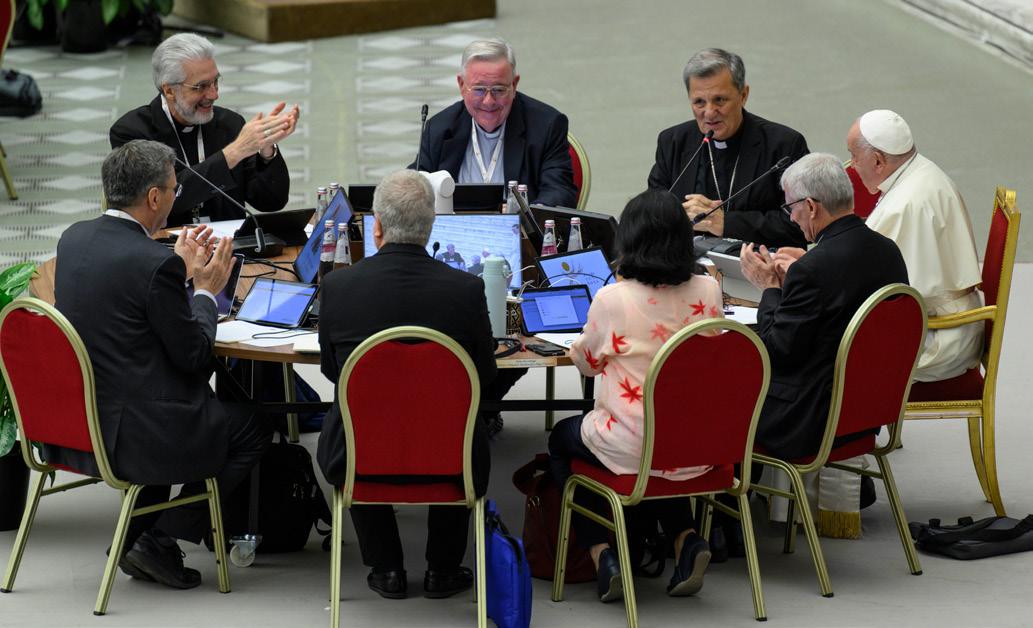
Officers of the Synod of Bishops applaud Pope Francis and all members of the Synod of Bishops named after St Francis of Assisi, on the Italian saint’s feast day, on 4 October 2024. PHOTO: CNS/VATICAN MEDIA.
Archbishop Timothy Costelloe, President of the Fifth Plenary Council of Australia, addresses members at the Second Assembly in July 2022. PHOTO: CNS/GIOVANNI PORTELLI, THE CATHOLIC WEEKLY.
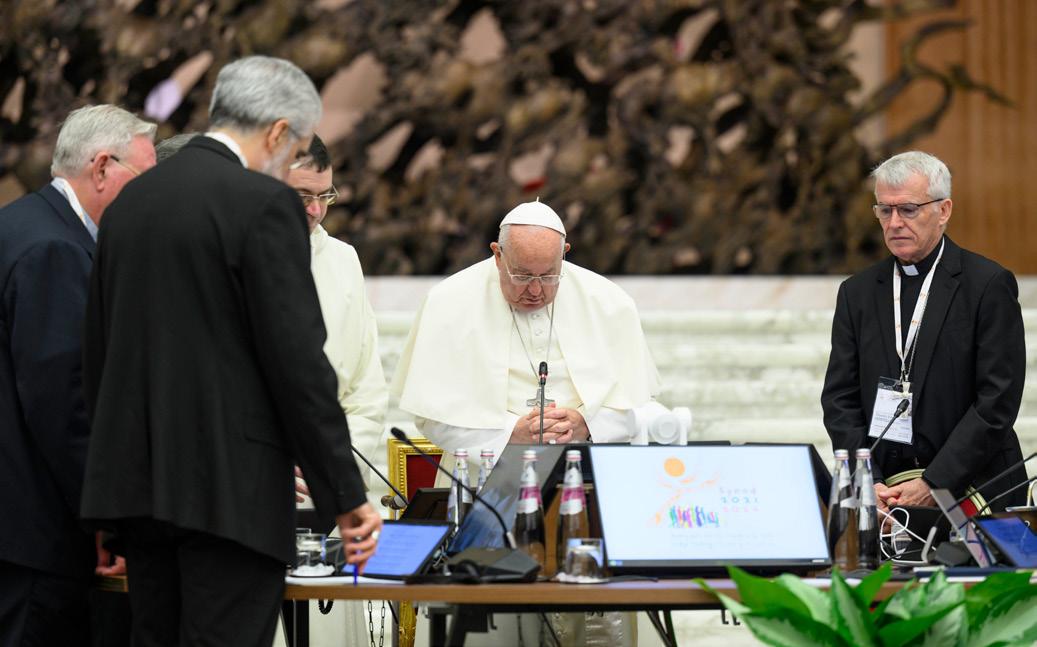
Pope Francis and members of the Synod of Bishops pray at the start of a working session on 4 October 2024. To the left of the Holy Father is Archbishop Timothy Costelloe, who was a president delegate at the synod. PHOTO: CNS/VATICAN MEDIA.
SYNOD OF BISHOPS 2024
Synod calls for quick steps to involve more people in church life
WORDS Cindy Wooden
PARISHES and dioceses must move quickly to give life to the consultative bodies and broad participation in mission and ministry already foreseen by Church law if the Catholic Church is to have any hope of becoming a more “synodal” church, members of the Synod of Bishops said.
“Without concrete changes in the short term, the vision of a synodal Church will not be credible and this will alienate those members of the People of God who have drawn strength and hope from the synodal journey,” the members said in the final document they approved on Saturday 26 October.
Pope Francis convoked the Synod in 2021 and called on parishes, dioceses and bishops’ conferences to hold listening sessions before the first Synod Assembly in Rome in 2023. The Second Assembly, including most of the same members, began with a Mass at the Vatican on Wednesday 2 October.
Members voted on each of the 155 paragraphs of the document, which made suggestions and requests to Pope Francis that included long-term projects, the need to reform seminary training and the hope that more lay people would be involved in the selection of bishops. But they also included actions that could and should be implemented immediately, including hiring more
women and laymen to teach in seminaries or having bishops make pastoral councils mandatory for every parish and pastors ensuring those bodies are truly representative of the parish members and that he listens to their advice.
Synod officials said all the paragraphs were approved by the necessary two-thirds of Synod members present and voting; 355 members were present and voting, so passage required 237 votes.
A paragraph devoted to increasing women’s profile in the church received, by far, the most negative votes of any paragraph with 97 members voting no and 258 voting yes. The paragraph, which required 66 per cent of the votes, passed with 72 per cent.
“In simple and concise terms,” members said, “synodality is a path of spiritual renewal and structural reform that enables the Church to be more participatory and missionary, so that it can walk with every man and woman, radiating the light of Christ.”
In a synodal church, the document said, members have different roles, but they work together for the good of all members and for the mission of the Church.
The document repeatedly referred to the “equal dignity” of men and women by virtue of their baptism.
Pope Francis and members of the Synod of Bishops on synodality attend the synod’s final working session on 26 October, 2024, in the Paul VI Audience Hall at the Vatican. PHOTO: CNS/VATICAN MEDIA.
The synod process, members said, was a “call to joy and renewal of the Church in following the Lord, in committing to service of His mission and in searching for ways to be faithful.”
But the document repeatedly acknowledged the crime and sin of clerical sexual abuse and abuse of power, and insisted that a commitment to synodality, particularly to learning to listen and to necessary forms of transparency and accountability, were essential to preventing abuse.
Synodality, members said, “will also help to overcome clericalism, understood as use of power to one’s own advantage and the distortion of the authority of the Church which is at the service of the People of God. This expresses itself above all in forms of abuse, be they sexual or economic, the abuse of conscience and of power, by ministers of the Church.”
Lay men and women have many talents that can and should assist bishops and parish priests in the smooth functioning of their dioceses or parishes, synod members said. Tapping into those talents can help bishops and priests, who often feel overworked.
Where church law requires the bishops to consult their priests’ or pastoral council or pastors to consult the parish council, the document said, they “may not act as if the consultation had not taken place.”
Synod members also said listening, consulting, praying and discerning before making a decision is not the end of the process. “It must be accompanied and followed by practices of accountability and evaluation in a spirit of transparency inspired by evangelical criteria.”
Ensuring accountability and regularly evaluating all those who minister in the Church’s name “is not a bureaucratic task for its own sake. It is rather a communication effort that proves to be a powerful educational tool for bringing about a change in culture,” Synod members said.
One issue that prompted debate during the Synod involved the authority of national bishops’ conference, particularly when it came to doctrinal matters.
The synod members, in the final document, called for a study of the theological and juridical status of bishops’ conferences and for a clear definition of “precisely the domain of the doctrinal and disciplinary competence” of the conferences. A working translation of the Final Document of the Synod on Synodality is now available in English translation.
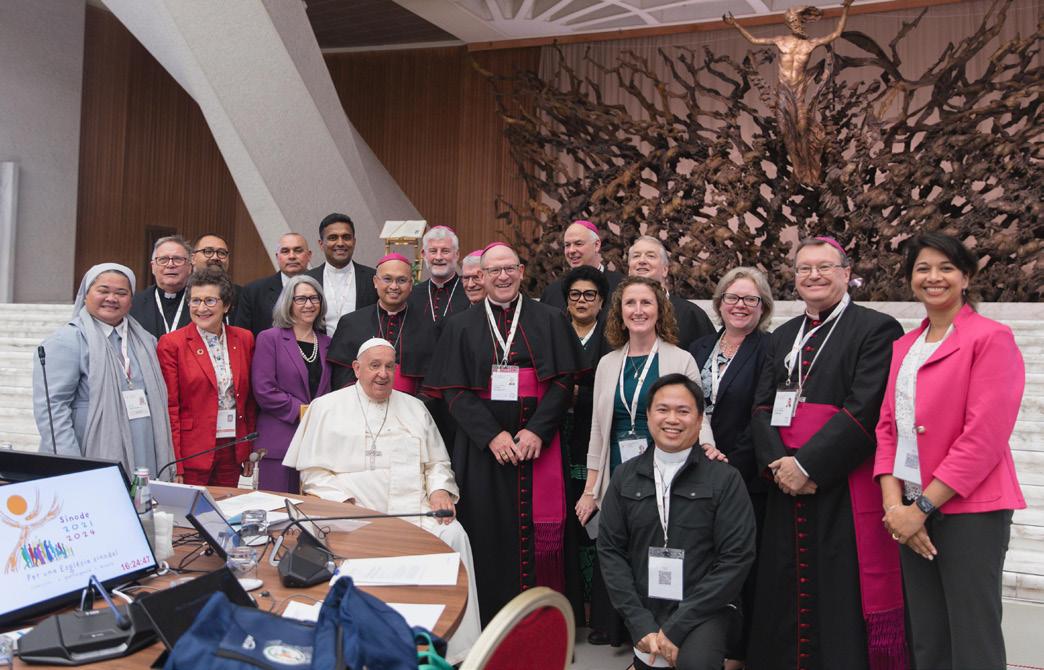
Members of the Oceania Synod group, with Pope Francis at the conclusion of the Synod. PHOTO: SYNOD.VA/LANGARICA.
Pope Francis celebrates the closing Mass for the Synod of Bishops on synodality in St Peter’s Basilica at the Vatican on 27 October, 2024.
PHOTO: CNS/LOLA GOMEZ
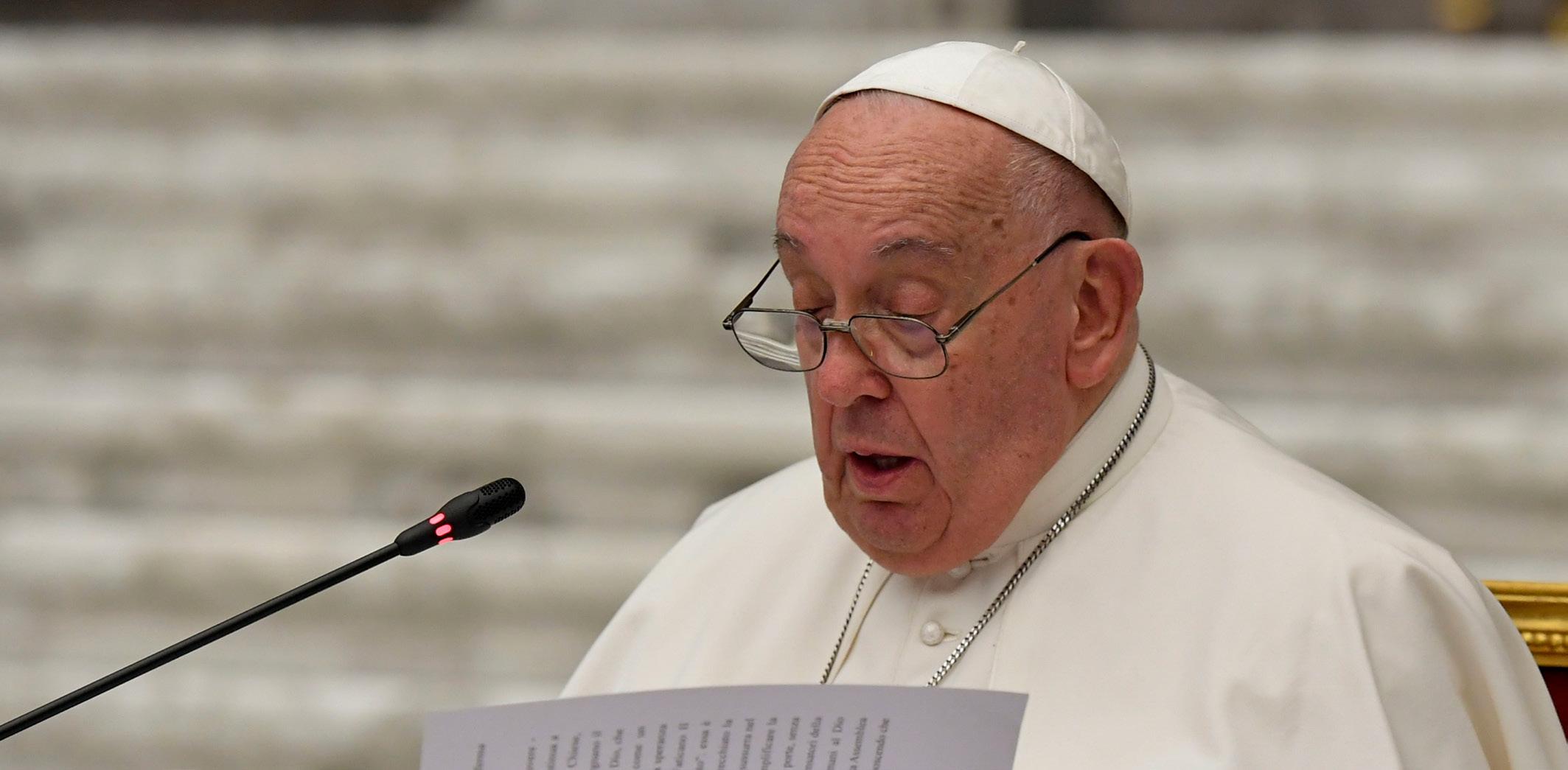
Pope Francis speaks to members of the Synod of Bishops on synodality after they approved their final document on 26 October, 2024. PHOTO: CNS/VATICAN MEDIA. Below: Pope Francis delivers his homily during the closing Mass of the Synod of Bishops on 27 October, 2024. PHOTO: CNS/ LOLA GOMEZ.
Bishop Timothy Norton SVD appointed to Diocese of Broome
POPE Francis has appointed Brisbane Auxiliary Bishop Timothy Norton SVD to be the third Bishop of Broome.
Born in Sydney in 1958, Bishop Norton graduated from Marist Brothers Eastwood and was inspired early by the missionary work of the Society of the Divine Word. He initially trained as a physiotherapist, working in inner-city Darlinghurst with young people who were experiencing homelessness, addiction and mental health issues.
A university holiday visit to India led by an Australian Divine Word Missionaries priest, Fr Liam Horsfall, proved to be a life-shaping
experience when he was introduced to Mother Teresa, later to be honoured as St Teresa of Kolkata.
He recalled being “struck dumb” by the experience. “… It was like meeting a rock star –seeing this woman, this legend,” Bishop Norton recalled.
Mother Teresa asked: “Would you do anything for Jesus?”
“Right then I would have done anything for her I think, as well as Jesus,” Bishop Norton said. “It was a wonderful meeting.”
Bishop Norton entered the Society of the Divine Word in 1984 and took his first vows in 1986. In 1991, he was ordained a priest, ministering in parishes in Mexico until 1996. Having undertaken post-graduate study in spiritual direction in Melbourne in 1997, he served as the Society’s prefect for theology students and novice and postulant director, based in Melbourne and Sydney, from 1998 to 2004.
His nine years as leader of the Society’s Australian province (which takes in New Zealand and Thailand) was followed by ministry in Italy from 2014 to 2021.
In February 2022 he was ordained Auxiliary Bishop of Brisbane and is the first member of the Society of the Divine Word religious order to become a bishop in Australia.
“One of the many expressions of the Church in the world is through mission,” then newlyordained Bishop Norton told a packed St Stephen’s Cathedral in Brisbane following his ordination as a Bishop, during a Mass that included many indigenous and multicultural elements.
“And mission has context – from the people sleeping rough each night in the precinct around this cathedral, to people with addictions, to rights of women, minorities, and indigenous people.
“To those who are sick, the issues of farmers in Australia, and in India and Botswana, tensions in Syria, Ethiopia and Ukraine – tensions and terror.
Australian Catholic Bishops Conference President and Perth Archbishop Timothy Costelloe SDB said Bishop Norton would bring “energy, enthusiasm and vision” to the Diocese
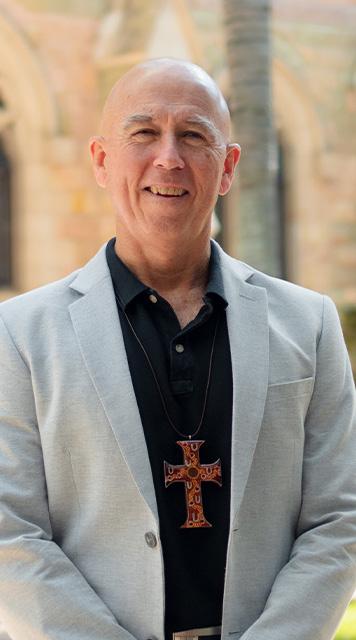
Brisbane Auxiliary Bishop Norton is the first member of the Society of the Divine Word religious order to become a bishop in Australia. The new Bishop of Broome will be installed on 4 December 2024. PHOTO: ARCHDIOCESE OF BRISBANE/THE CATHOLIC LEADER.
of Broome. “As a member of the Society of the Divine Word, Bishop Norton has a deep appreciation of the importance of cultural traditions in the living of the Christian faith,”
Archbishop Costelloe said.
“Having lived and worked in rural and remote areas of Australia, as well as overseas, he brings with him a love for the Indigenous people of our nation, a heart for the poor and marginalised, and a ‘down-to-earth’ approach to the needs and realities of our time.
“He will be a blessing not only to the Catholic community in the vast Diocese of Broome, but to all who live in the north-west.”
Apostolic Administrator of the Broome Diocese, Bishop Michael Morrissey, noted Bishop Norton currently serves as a member of the Bishops Commission for Relations with Aboriginal and Torres Strait Islander Peoples.
“In the Diocese of Broome, where 61 percent of Catholics identify as being Aboriginal or Torres Strait Islander, his commitment to strengthening relationships with Aboriginal community members will be greatly valued,” Bishop Morrissey said.
Speaking in The Catholic Leader, Brisbane Archbishop Mark Coleridge said the “only surprise of Pope Francis’ appointment of Bishop Tim Norton SVD as the new Bishop of Broome was its timing”.
“It came earlier than many, myself included, expected,” he said.
“Bishop Tim is a missionary by vocation, and he will be able to draw upon the resources of the Divine Word Missionaries who are already a presence in the diocese.
“I am deeply grateful for all that Bishop Tim has brought to the Archdiocese of Brisbane in his time among us; and I join many others in praying for him as he prepares for this new and challenging mission.”
THE DIOCESE OF BROOME
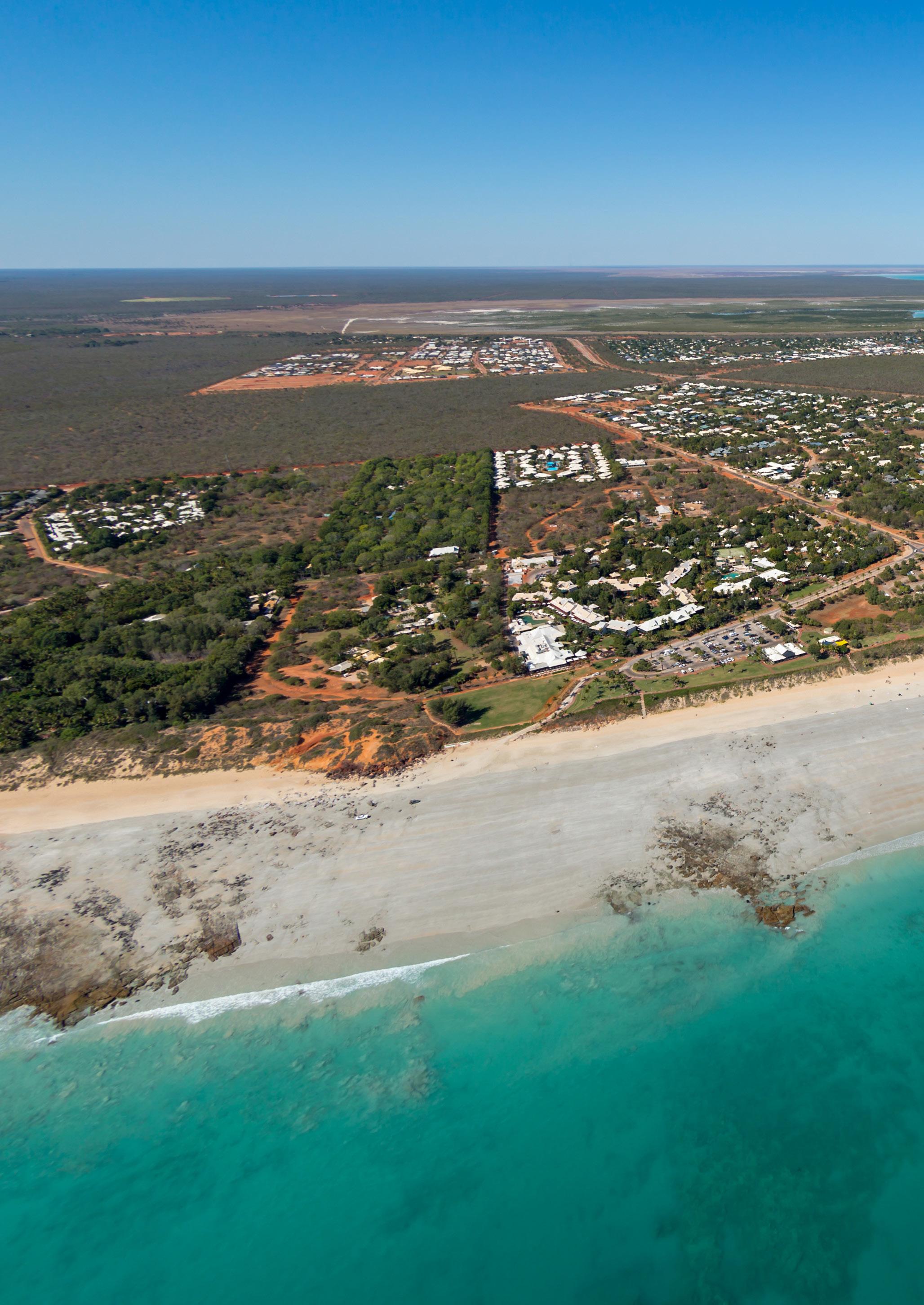
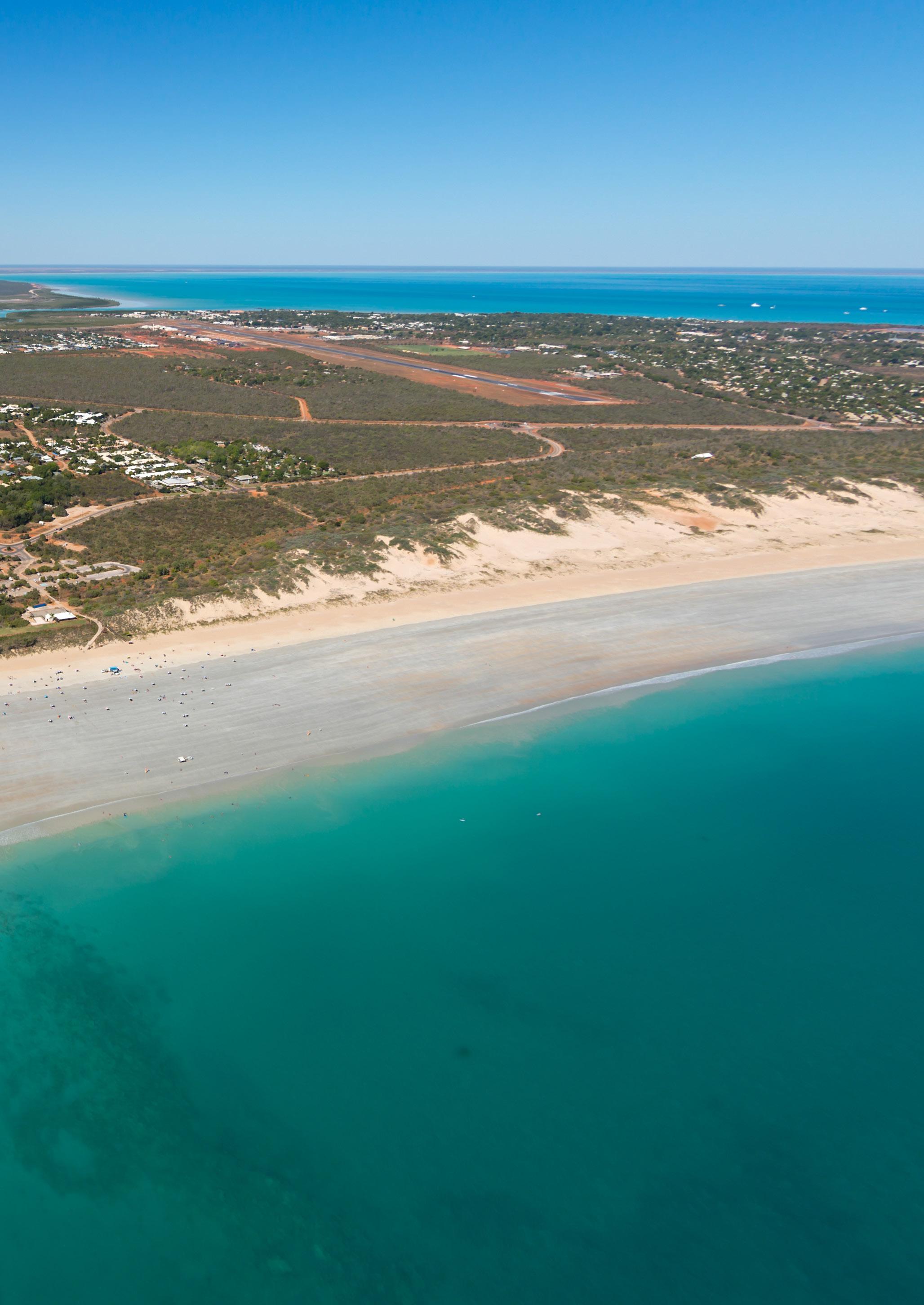
The Diocese of Broome is in the Kimberley region in the far north of the state of Western Australia.
It spans 773,000 square kilometres (an area bigger than France) and has a population of about 36,000 people spread across remote towns and isolated Indigenous communities.
It was established as an Apostolic Vicariate in 1887 and became a Diocese in 1966.
Half of the population of the Kimberley region are Indigenous.
Indigenous people make up the majority (61 per cent) of Catholics connected with the Kimberley Church.
New Broome Bishop Tim Norton during a pastoral parish visit in Brisbane. Ordained in 1991, he served in Mexico until 1996. PHOTO: ARCHDIOCESE OF BRISBANE/THE CATHOLIC LEADER.
Bishop Norton receives the gifts of bread and wine during a pastoral visit to a Brisbane parish. PHOTO: ARCHDIOCESE OF BRISBANE/THE CATHOLIC LEADER
Bishop Tim Norton, second from right, with Bishop Ken Howell, Brisbane Archbishop Mark Coleridge and Mt Hagen PNG Archbishop Douglas Young SVD. PHOTO: ARCHDIOCESE OF BRISBANE/THE CATHOLIC LEADER.
A fairer funding deal for WA’s Catholic school students
WORDS Wayne Bull Executive Director, Catholic Education Western Australia Ltd
Catholic schools have a strong history of serving communities where there is the greatest need.
OVER the next 12 months, both the country and the state will face elections. That will see the political class and media turn to the question of who’s in and who’s out, what’s on offer, and to whom.
Candidates new and old will want to show they have their constituents’ interests at heart. And while there will always be parties that are philosophically
opposed to the idea of Catholic schools, there will be many that are very much in favour. Our Catholic community accounts for 19 per cent of the total population in Western Australia and Catholic schools enrol around 83,000 students. That’s one in five students and their families - a significant group of constituents - who benefit from the choice of an affordable, faith-based education. I’m sure many of you will have witnessed for yourselves the quality education, sense of community, wellbeing and other non-educational student outcomes, and responsive learning environments our schools provide. That’s why we continue to see growth in Catholic school enrolments, and demand for existing and new schools grow.
I am proud of our commitment to providing a faith-based education to families regardless of their individual financial circumstances - no child will be denied a Catholic education due to financial difficulty. Many of our schools offer sibling discounts and provide education to the most disadvantaged students and families at no or low cost, and most children attending Catholic schools in the Kimberley region do so free of charge.
Catholic schools have a strong history of serving communities where there is the greatest need. In many parts of the Kimberley, we are the sole
education provider, and our students come from a variety of socio-economic and cultural backgrounds. At all times, but particularly during times where a focus on politics is heightened, it is important that we advocate for the place of Catholic education in our society.
This time of year, when families and friends gather together to celebrate the joy of Christmas, I know many of them will do so having faced a challenging few years as cost of living rises eat into family budgets. The sacrifices families make to ensure their children receive a great education are not unique to Western Australia.
Unfortunately, under the current funding model for Australian schools, Government schools receive public funding based on what is required to support their students’ educational outcomes. Unlike these schools, Catholic schools’ funding is adjusted by the capacity of parents to contribute. This means many Catholic School parents pay fees to top-up the funding, contributing up to 52 per cent of their school’s total funding in 2023 without which this service could not be delivered.
Over the last few months, I, along with many of our school leaders have taken the opportunity to raise this issue with politicians when we meet with them. And in July we launched a campaign calling
on political parties to commit to addressing the following priorities in Government:
1. Providing an annual grant of $25m in ongoing Capital Funding to ensure Catholic school students have parity with other students across Australia.
2. Investing an additional one-off $100m over five years to address the legacy of capital underfunding for Catholic schools in the Kimberley, where in many places CEWA is the sole provider.
3. Meeting the cost of insurance and risk management in the Kimberley of $2m annually and works with CEWA to ensure ongoing access to additional funding in the event of an uninsured loss.
I would encourage you all to support our efforts by speaking with your local candidates about their plans for school funding and urging them to prioritise fair funding for Catholic school students. If we collectively use our voices to advocate for our Catholic school communities, I have no doubt we will see a positive change.
You can find out more information by visiting www.fairfunding.cewa.edu.au.
New guidelines renew path for initiating adults into the Catholic faith
WORDS Joseph Younes
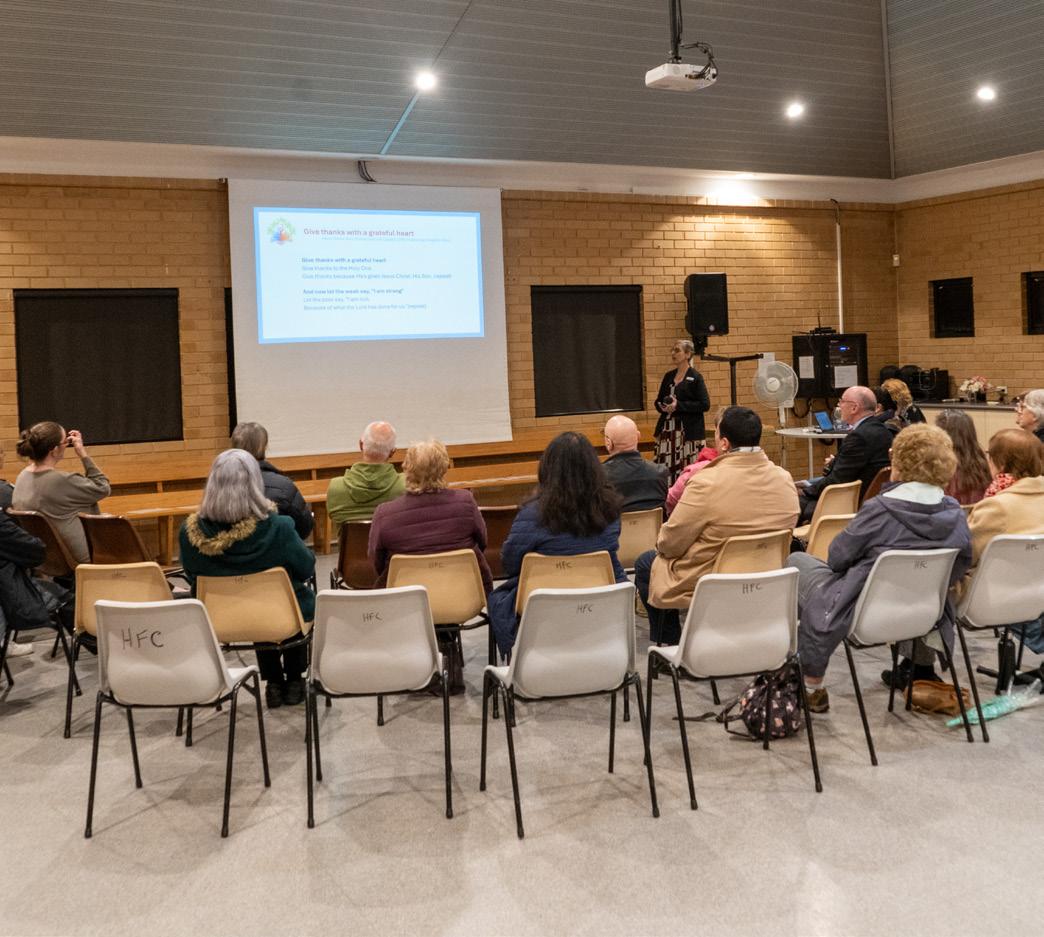
THE Archdiocese has recently celebrated the launch of new guidelines for the Rite of Christian Initiation for Adults (RCIA) at Holy Family Church Hall in Como.
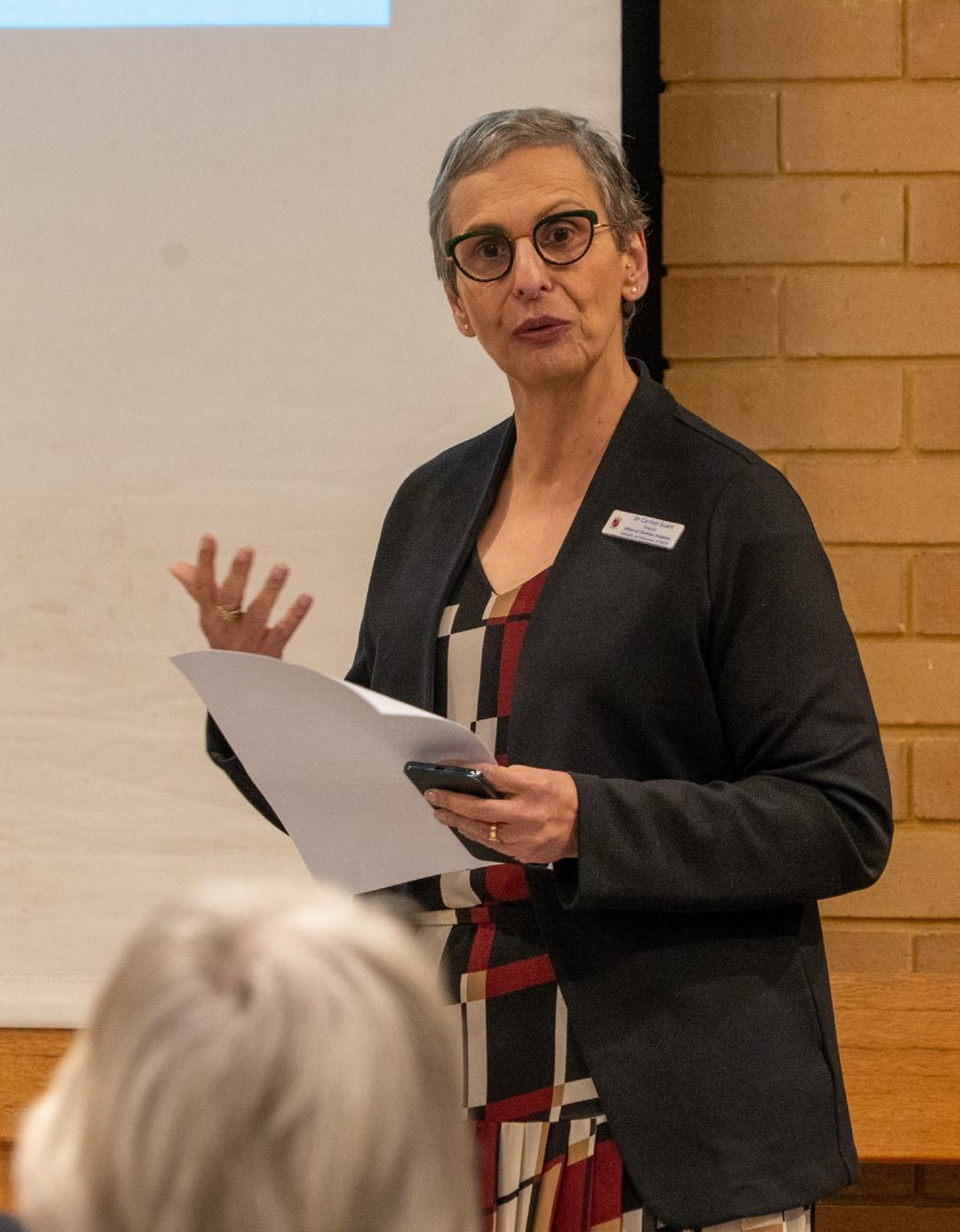
The event, on Thursday 5 September, was led by the Vicar General, the Very Rev Fr Vincent Glynn, and supported by the now Director of Christian Initiation and Liturgy, Dr Carmel Suart.
The updated guidelines are a first for the Archdiocese and mark an important milestone for parishes seeking to revitalise the RCIA process.
The RCIA is an essential process for welcoming adults and children of catechetical age into the Catholic Church.
The Archdiocese typically receives more than 100 new Catholics each year across its 105 parishes. According to Dr Suart, the responsibility for the Christian initiation of adults belongs to all baptised members of the Church.
However, parish priests and RCIA parish teams hold a special role in ensuring that the liturgical, catechetical, and pastoral norms of the process are carried out faithfully.
Overview of the new RCIA guidelines
Developed over an 18-month period, the new guidelines address common concerns and issues that have arisen in parishes. Dr Suart explained
Archbishop Costelloe listens to a candidate and their sponsor during the Rite of Election in 2017 at St Mary’s Cathedral. The celebration is a key step in the process to full communion with the Catholic Church. PHOTO: RON TAN.
Director of the Centre for Christian Initiation and Liturgy, Dr Carmel Suart said the responsibility for the Christian initiation of adults belongs to all baptised members of the Church. PHOTO: JUSTICE GOODRICK.
that the guidelines aim to “unpack the liturgical, catechetical, and pastoral requirements of the RCIA process according to the directives outlined in Church documents, particularly the Rite of Christian Initiation of Adults (1972).”
The resource is designed to assist parish priests, RCIA coordinators, and teams in implementing the RCIA process effectively.
It provides practical guidance for making informed decisions when challenges arise and ensures that the RCIA is conducted in accordance with the spirit of the Rite.
Practical support for parish teams
The new guidelines are intended to be a helpful companion to parishes, providing detailed advice on how to adapt the RCIA process to meet the unique needs of each community.
Dr Suart noted, “The guidelines recognise that each parish community is different and will need to adapt the process and resources to their circumstances. They also emphasise that the Holy Spirit works in each person’s life in a way best suited to them.”
The guidelines will be available online, allowing for updates and adjustments as needed. This flexible format ensures that parishes can always access the most current information.
Benefits for parishes
The new RCIA guidelines are expected to be especially beneficial for parish priests, RCIA coordinators, and PREP (Parish Religious Education Program) coordinators working with children of catechetical age. Dr Suart stressed that this resource is not aimed at catechumens or candidates themselves, but rather at those responsible for leading the RCIA process in parishes.
The guidelines are designed to promote consistency across the Archdiocese while allowing for the pastoral
sensitivity needed in different communities.
As Dr Suart highlighted, “It is hoped that, while pastoral adaptations may be necessary, these guidelines will promote a firm foundation and standard of practice for the RCIA process across the Archdiocese.”
A renewed approach to initiation
The development of these new guidelines comes at a time when the Archdiocese of Perth is seeing a gradual increase in the number of people enquiring about joining the Catholic Church, particularly among young people.
The hope is that these new guidelines will help parishes respond more effectively to this growing interest, ensuring that the RCIA process remains vibrant and in line with Church teachings. Looking ahead, the Archdiocese plans to launch a formation program for RCIA coordinators and catechists.
This initiative is in response to Pope Francis’s call for catechists to deepen their own faith before taking on the task of sharing the Church’s traditions with others.
Dr Suart noted, “RCIA coordinators and priests must have a deep understanding of the spirit of the Rite, be familiar with the particular directives of the process, and be alert to the specific needs of those seeking initiation.”
Moving forward
As parishes across the Archdiocese of Perth begin to implement these new RCIA guidelines, there is optimism that they will provide the clarity and direction needed to navigate the complexities of the Christian initiation process.
For more information or to access the new guidelines, visit the Archdiocese of Perth’s Office of Christian Initiation website at www.initiation.perthcatholic.org.au
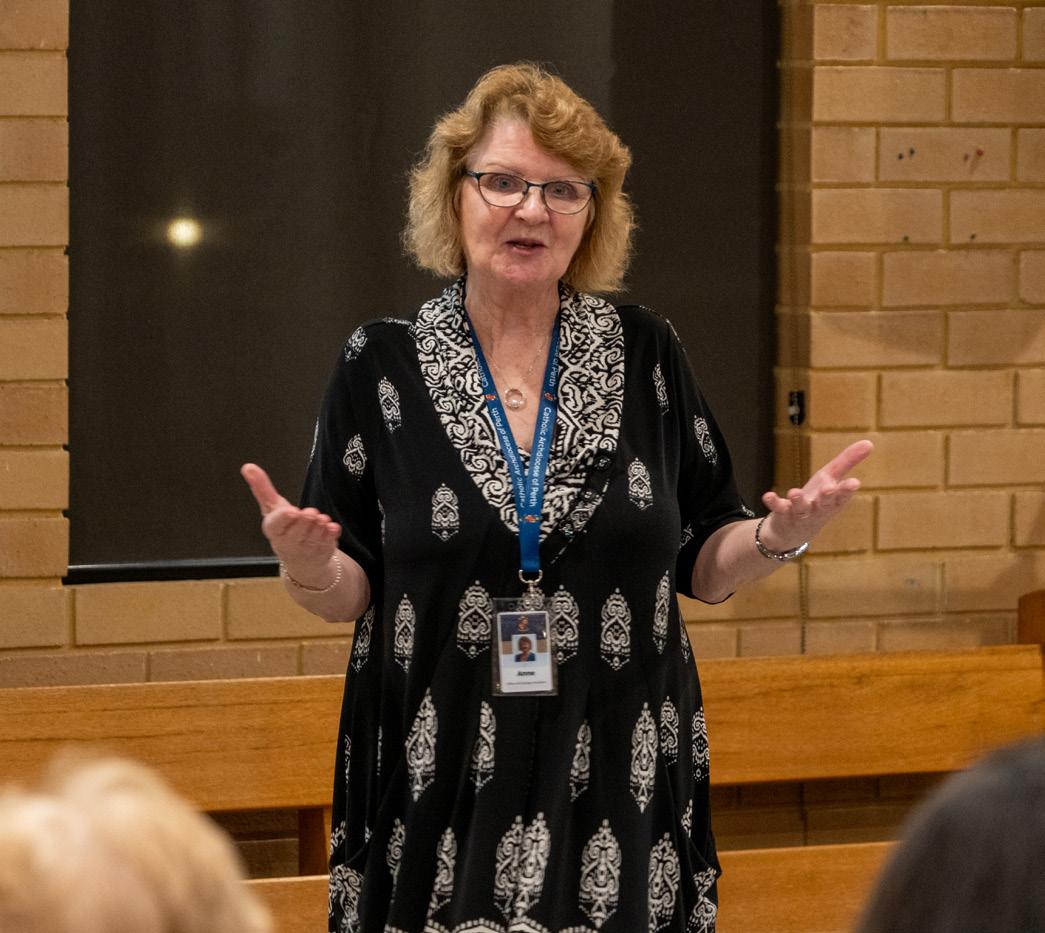
CCIL Field Officer Anne Kennedy speaks at the launch of the new guidelines. PHOTO: JUSTICE GOODRICK.
Dr Suart speaks to guests at the launch of the new guidelines, Thursday 5 September. PHOTO: JUSTICE GOODRICK.
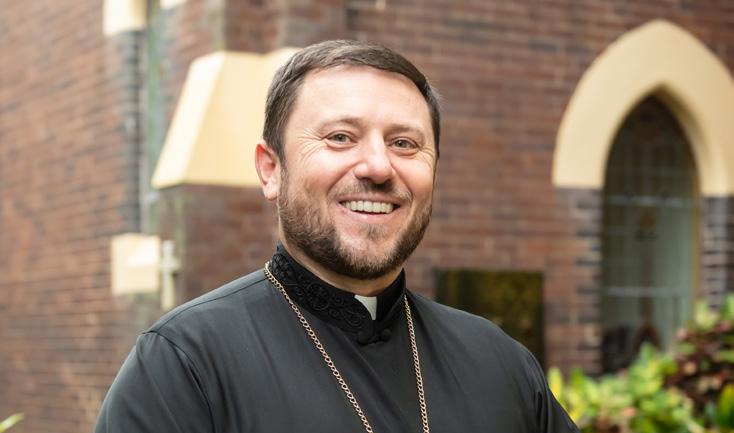
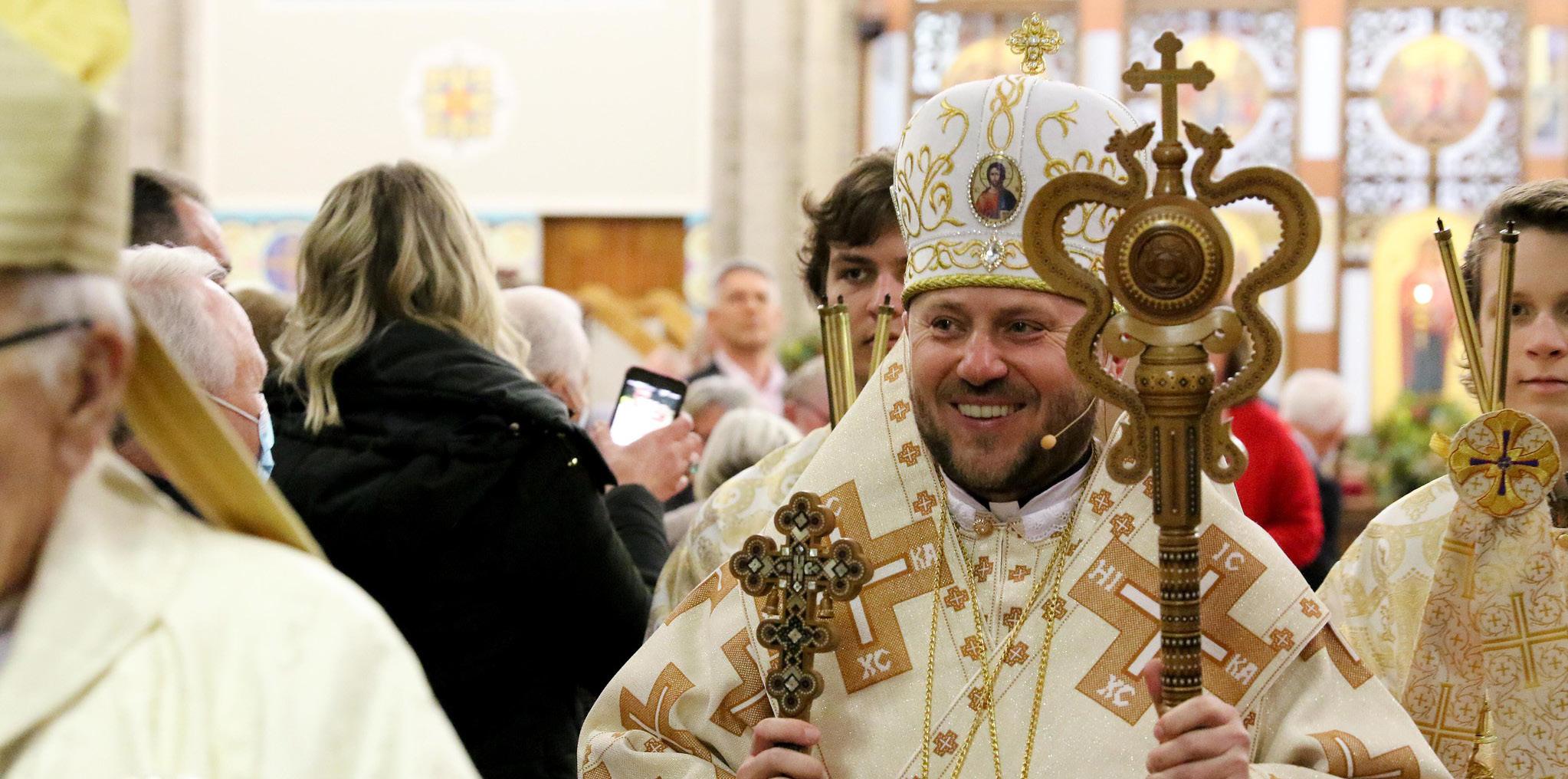
Ukrainian Bishop Mykola Bychok appointed Cardinal at just 44
WORDS Adam Wesslinoff
GOD works in mysterious ways, but the Holy Father is even more mysterious, Cardinal-designate Mykola Bychok, Eparch of the Ukrainian Greek Catholic Church in Australia and Oceania, has said.
“For me, it’s a great mystery. God works in mysterious ways, and the Pope works in mysterious ways, under God! To fulfill this will of God will be a huge challenge for me, and a really difficult cross,” he said.
Cardinal-designate Bychok, a Redemptorist, will be the youngest cardinal in the Catholic Church, and only the eighth cardinal in both the history of the Ukrainian Greek Catholic Church and of Australia.
Appointed to the Eparchy of Sts Peter and Paul in 2020 at age 41, Cardinal-designate Bychok was prevented from taking his episcopal seat for almost a year by COVID-19. His first experience of Australia was a month of hotel quarantine during the pandemic. Ordained to the priesthood in only 2005, his early ministry was typified by the missionary activity beloved by Pope Francis, which may offer a clue as to why he was appointed.
His first appointment was to the coal-mining city of Prokopyevsk in Siberia, where he ministered to Ukrainian Greek Catholics descended from those exiled or forcibly resettled by the Soviets in the
1950s and ‘60s. He celebrated the Divine Liturgy in apartments or private homes and would travel through thick snow hundreds of miles to see a handful of parishioners - which had his fellow Redemptorists joking that the 25-year-old priest must have received the assignment as a penance.
When he arrived in Australia in 2021, he brought that same dynamism with him, driving across the continent to visit his people in Perth and Darwin, on Australia’s western and northern peripheries.
Australian Catholic Bishops Conference President and Archbishop of Perth, Timothy Costelloe SDB, congratulated Bishop Mykola on behalf of the Conference.
“It is with great joy that the bishops of Australia congratulate Bishop Mykola Bychok CSsR, on his nomination as one of the new cardinals to be created at the next consistory in Rome on December 8,” Archbishop Costelloe said.
“Since being appointed as the Eparch (bishop) of the Ukrainian Catholic Church in Australia, Bishop Mykola has won the affection and admiration not only of his own people but also of the bishops of Australia.
“He is a valued member of the Australian Catholic Bishops Conference.
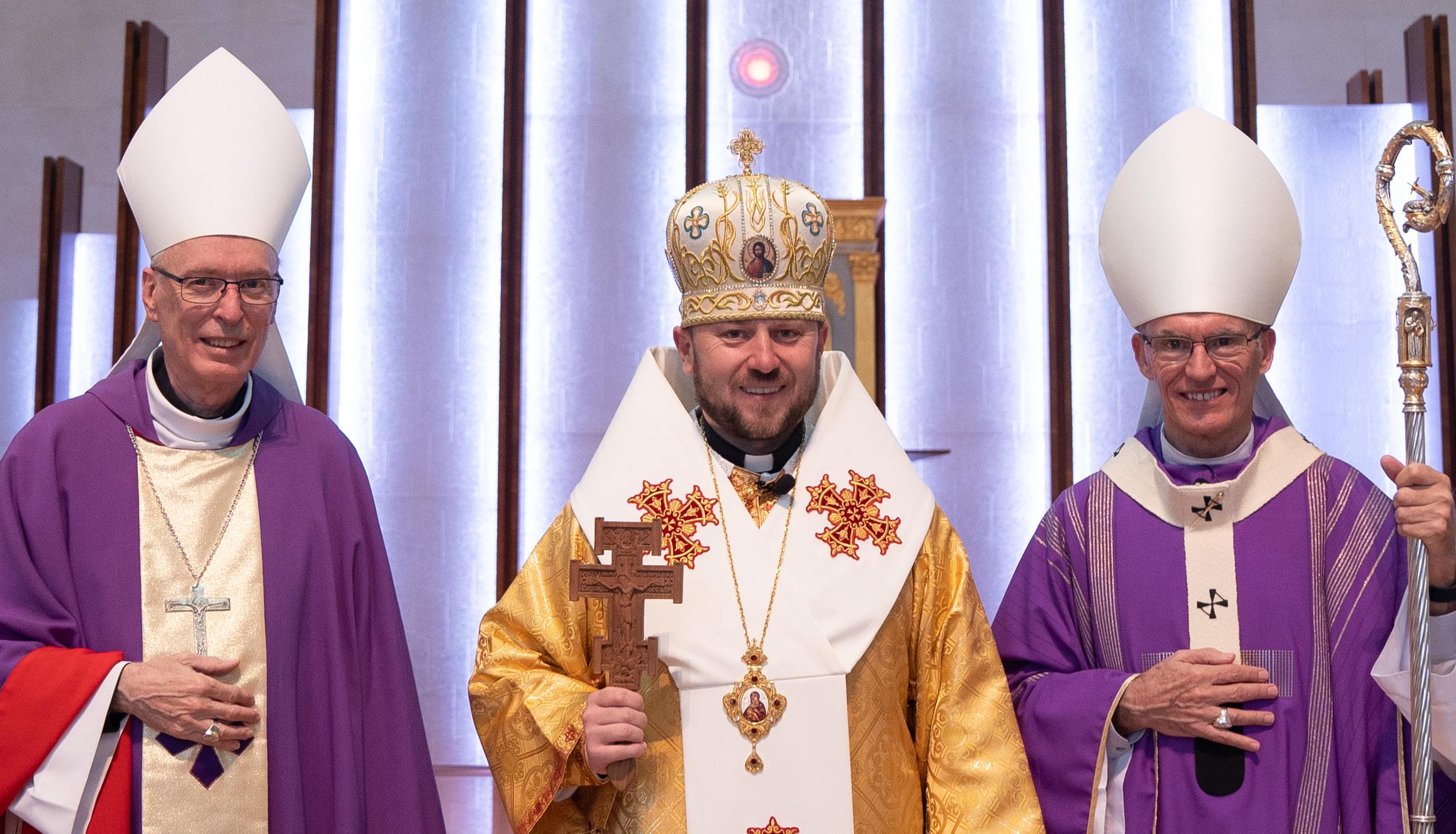
Cardinal-designate Bishop Mykola Bychok CSsR with Perth Archbishop Timothy Costelloe SDB and Auxiliary Bishop Don Sproxton.
PHOTO: MICHELLE TAN.
“As we congratulate him on this new appointment we are reminded again of the terrible suffering of the people of Ukraine.
“This appointment will bring great joy to Ukrainian Catholics here in Australia and indeed throughout the world.
In a statement shortly after his appointment, Bishop Mykola honoured his predecessor cardinals of the Ukrainian Greek Catholic Church.
“I will endeavour to follow the worthy example of my predecessor cardinals,” the cardinal-designate said, singling out 20th-century Cardinals Myroslav Lubachivsky, Lubomyr Husar and Josyf Slipyj.
The cardinal-designate - who will be Australia’s sole cardinal after the consistory on 8 December when Pope Francis will create 21 new cardinals - said it
was a “special sign” for the small but proud Ukrainian church in Australia and would be a “breath of fresh air” for a country whose migrant population is among its most faithful.
“It’s a special sign, especially for our small eparchy. We are huge by territory, but small by numbers, which is good for us - huge support, a huge privilege,” he said.
“Here, for our eparchy, for all Oceania, as well as Ukraine and the Ukrainian Church. Ukraine is experiencing immense upheaval, because of the war of the last two and a half years.”
“How will the war end? Only God knows - people begin wars, but God ends them,” he said.
He said that for Australia, “it’s a breath of fresh air” and that he had “never thought about this,” that he’d become a cardinal at such a young age.
Cardinal-designate Bishop Mykola Bychok CSsR following his enthronement on 11 July 2021. Photo: Supplied/Ukrainian Catholic Church. PHOTO: SUPPLIED.
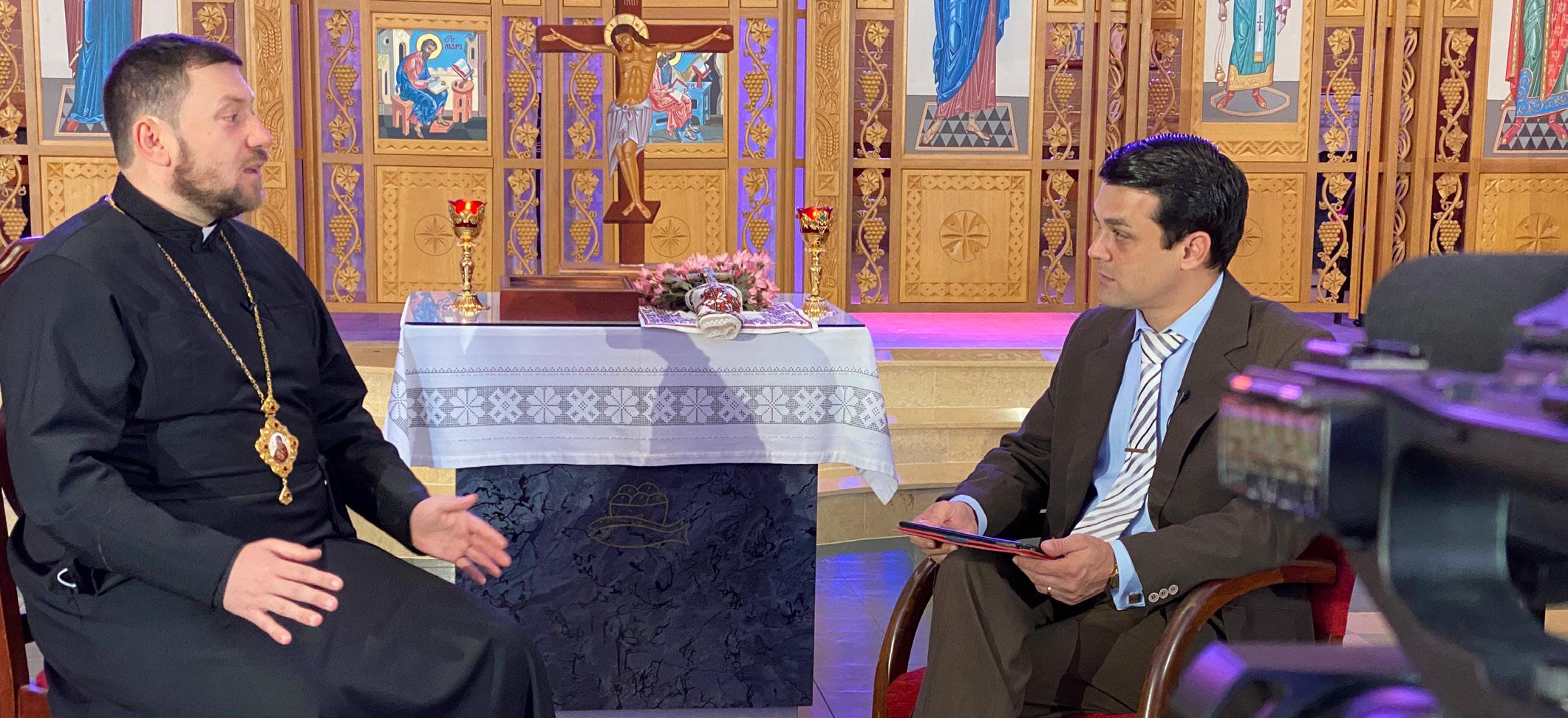
Cardinal-designate Mykola Bychok CSsR speaks with Manager, Communications and The Record Editor Jamie O’Brien during an exclusive interview in 2022. PHOTO: MICHELLE TAN.
Chisholm College marks anniversary with new Crozier for Bishop Sproxton
WORDS Sr Chau Ho OP
CHISHOLM Catholic College staff and students have last Friday 6 September gathered to celebrate the feast day of College Patron Caroline Chisholm.
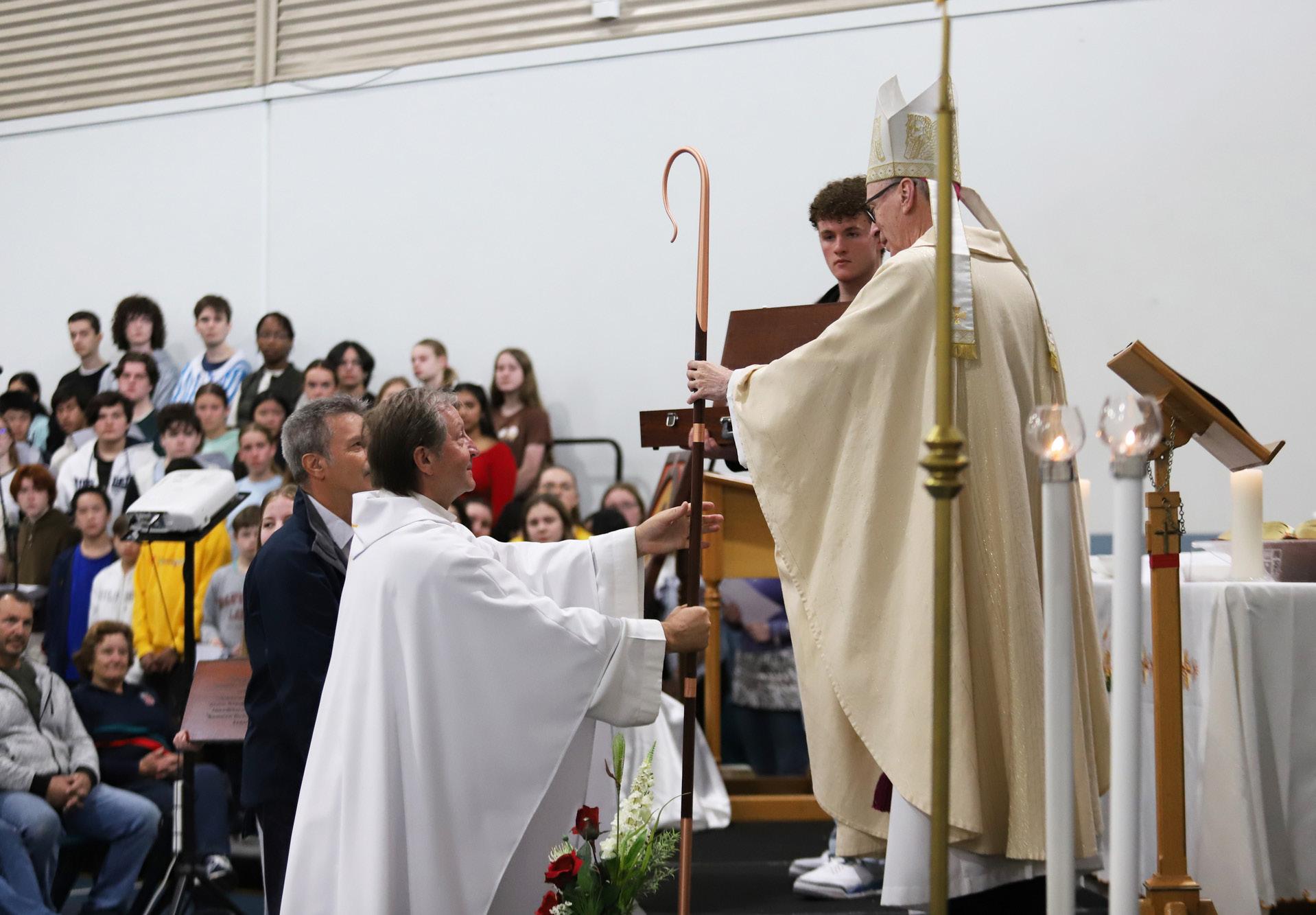
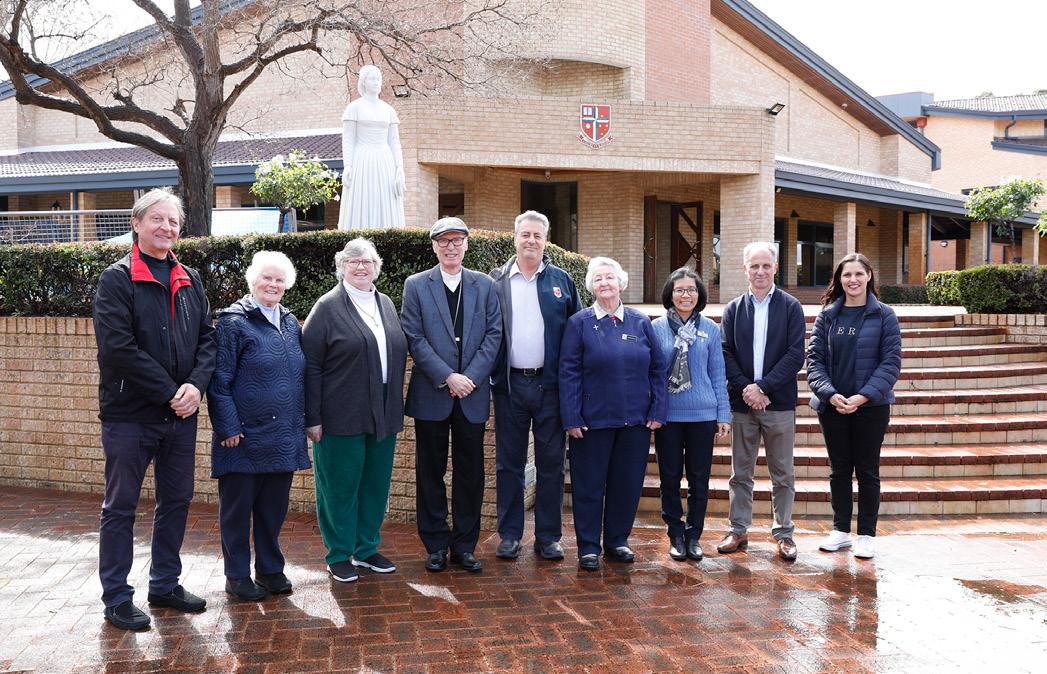
The College was also celebrating 35 years as a Catholic College, highlighting aspects of its values and heritage. The occasion began by welcoming Auxiliary Bishop Donald Sproxton, in addition to Dominican Sisters: Sr Margaret Scharf OP, Sr Edith Murphy OP and Sr Myrtle Anstey OP, to the whole-school Chisholm Day Eucharistic Celebration, where Bishop Don was presented with a special gift.
It had been two years since then CEWA Executive Director Debra Sayce approached the College Principal and asked whether the Chisholm community had the capacity and skills to take on the challenge of designing and producing a new Bishop’s Staff - or Crozier - for Bishop Sproxton.
Not only was Bishop Sproxton celebrating his 70th Birthday that year, but his original Bishop’s Crozier,
which he received as a gift when he first became a bishop, was in disrepair. As a former student of the former St Mark’s College, Bishop Sproxton has close ties to Chisholm, and before long, the College had assembled a working party.
The team initially consisted of Mr Jason Auld and Mr John Swindells, who interviewed Bishop Sproxton to gather ideas about what sort of Crozier he would like and what symbolism the College might be able to incorporate.
A Bishop’s Crozier stems from the biblical symbolism of Christ as ‘the Good Shepherd’ and the model of leadership and stewardship with which Christ charged His disciples when He sent them out to share the Gospel.
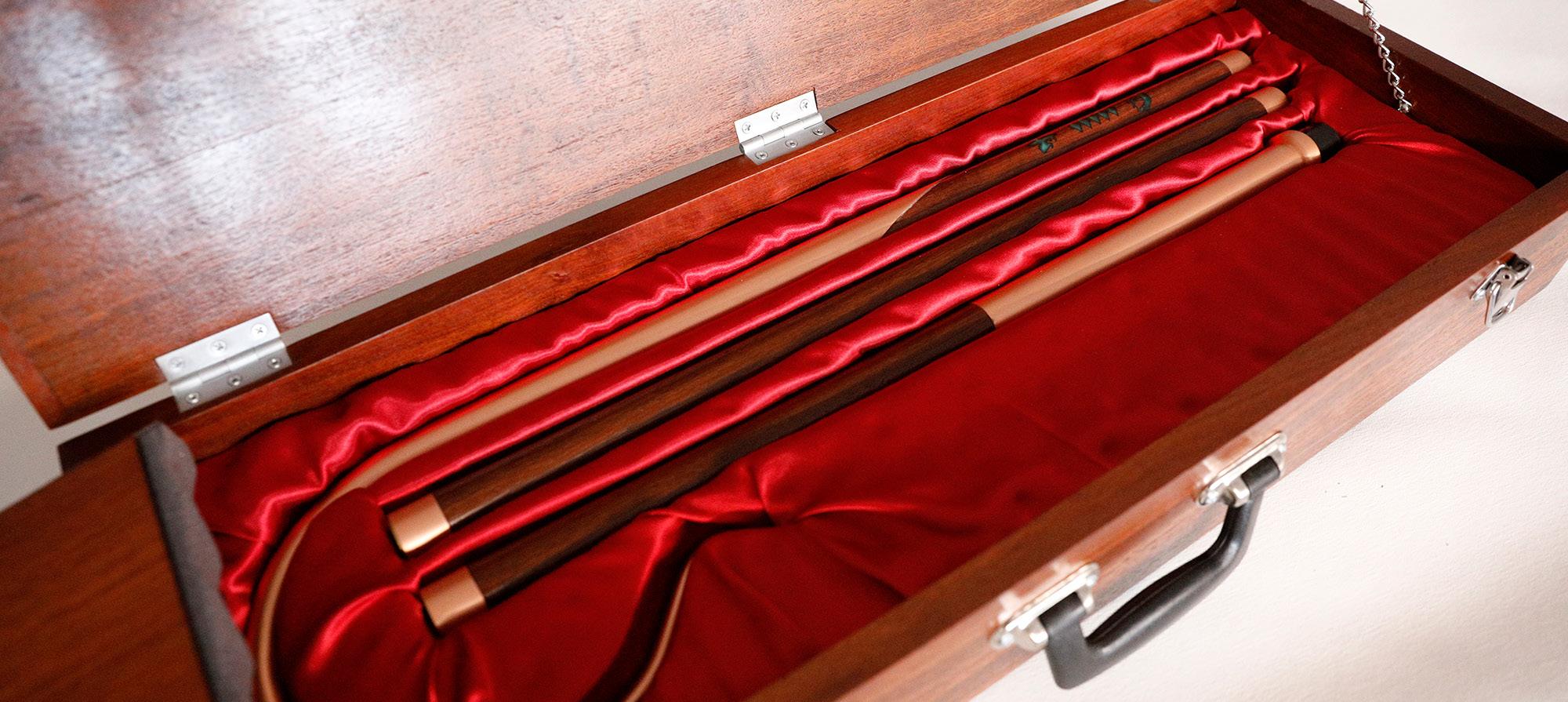
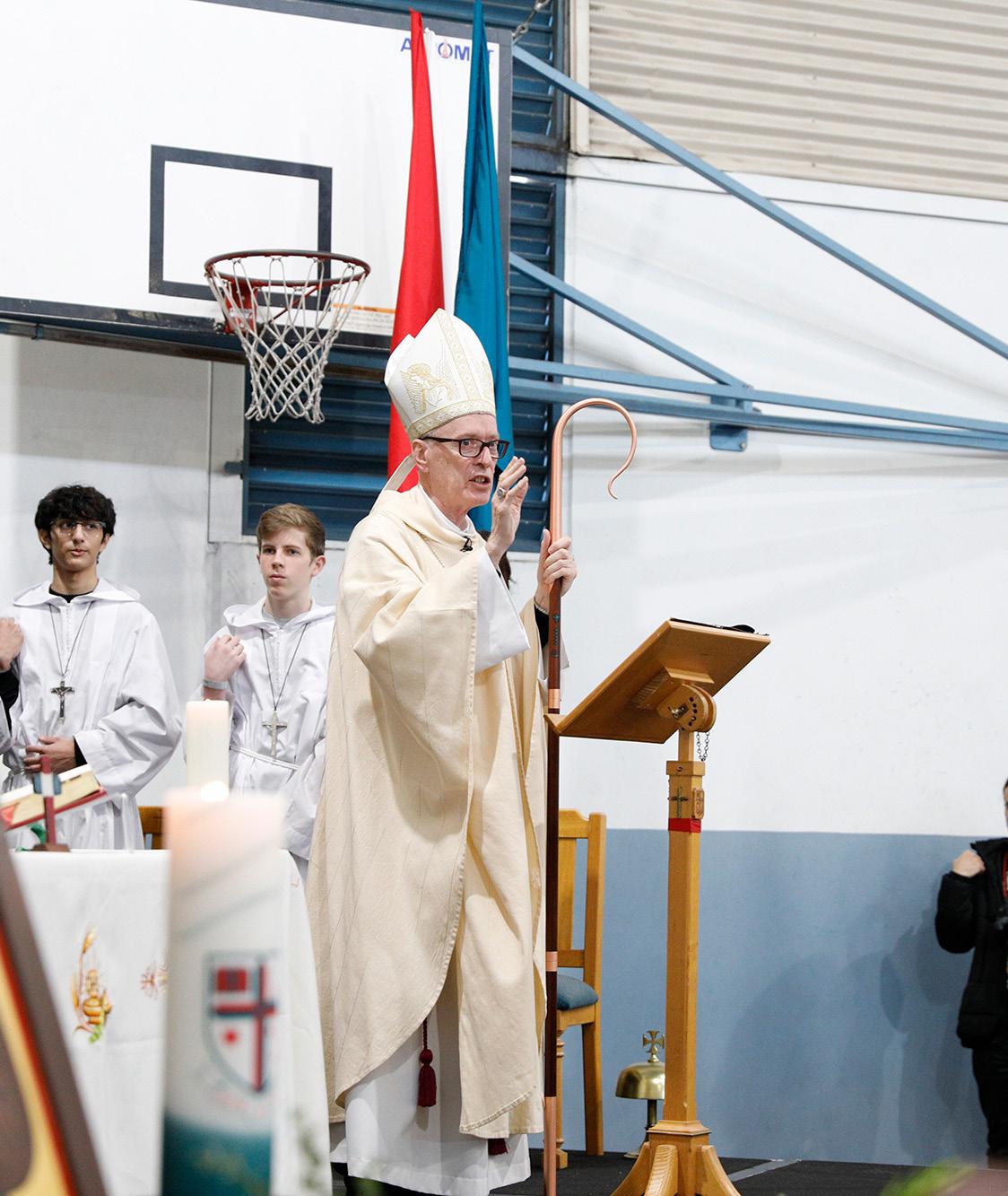
The new Crozier and ornate case consist of timber sourced from Bishop Sproxton’s original Crozier, as well as timber salvaged from the original wood used at St Mary’s Cathedral. The choice of copper in the Crozier
Upon receiving the gift, Bishop Sproxton led the Official Blessing of the Pontifical Insignia and publicly acknowledged and blessed the staff responsible for its production. PHOTO: CHAU HO/SUPPLIED.
reflects both Bishop Don’s humility and strength of faith.
Blue resin highlights stylised aspects of Bishop Don’s own crest and his family crest, including the five fusils taken from his family crest; a Scots Lymphad, representing his family’s migration by boat to Australia, and the Fleur de Lis, representing both Our Lady’s role as Patroness of the Perth Archdiocese and Bishop Don’s devotion to Our Lady of Perpetual Help, which was pivotal in his calling to the priesthood.
The College expressed their pride in the gift, the result of considerable planning, problem-solving, craftsmanship, fine joinery, attention to detail and good old-fashioned elbow grease.
Upon receiving the gift, Bishop Sproxton led the Official Blessing of the Pontifical Insignia and publicly acknowledged and blessed the staff responsible for its production.
The gift was well received by Bishop Don, who expressed considerable emotion and humble gratitude in accepting his new carry case, stand and Crozier.
During his homily, after reflecting on the readings of the Mass and sharing his insight into the life of Caroline Chisholm, Bishop Don remarked on the gift, saying: “This is a moment of joy and a moment to reflect on what I have received in my own life through this school and then, of course, through this College.”
The College expressed their gratefulness for the presence of Bishop Don and the Dominican Sisters, who also celebrated their 125th anniversary of foundation in Australia this year.
“They have laid a foundation for who we are today – a College that provides quality education for young people so that, when their turn comes, they will contribute to society and be good people,” the College spokesperson said.
Bishop Sproxton with staff and guests of Chisholm College, Friday 6 September. PHOTO: CHAU HO/SUPPLIED.
The gift was well received by Bishop Don, who expressed considerable emotion and humble gratitude in accepting his new carry case, stand and Crozier. PHOTO: CHAU HO/SUPPLIED.
The new carry case for the Crozier, created by Chisholm College. PHOTO: CHAU HO/SUPPLIED.
Catechists are one of the great jewels of the Archdiocese, says Bishop Sproxton
WORDS Dr Pina Ford and Jamie O’Brien
PERTH Auxiliary Bishop Don Sproxton has called the ministry of catechists one of the great jewels of the Archdiocese.
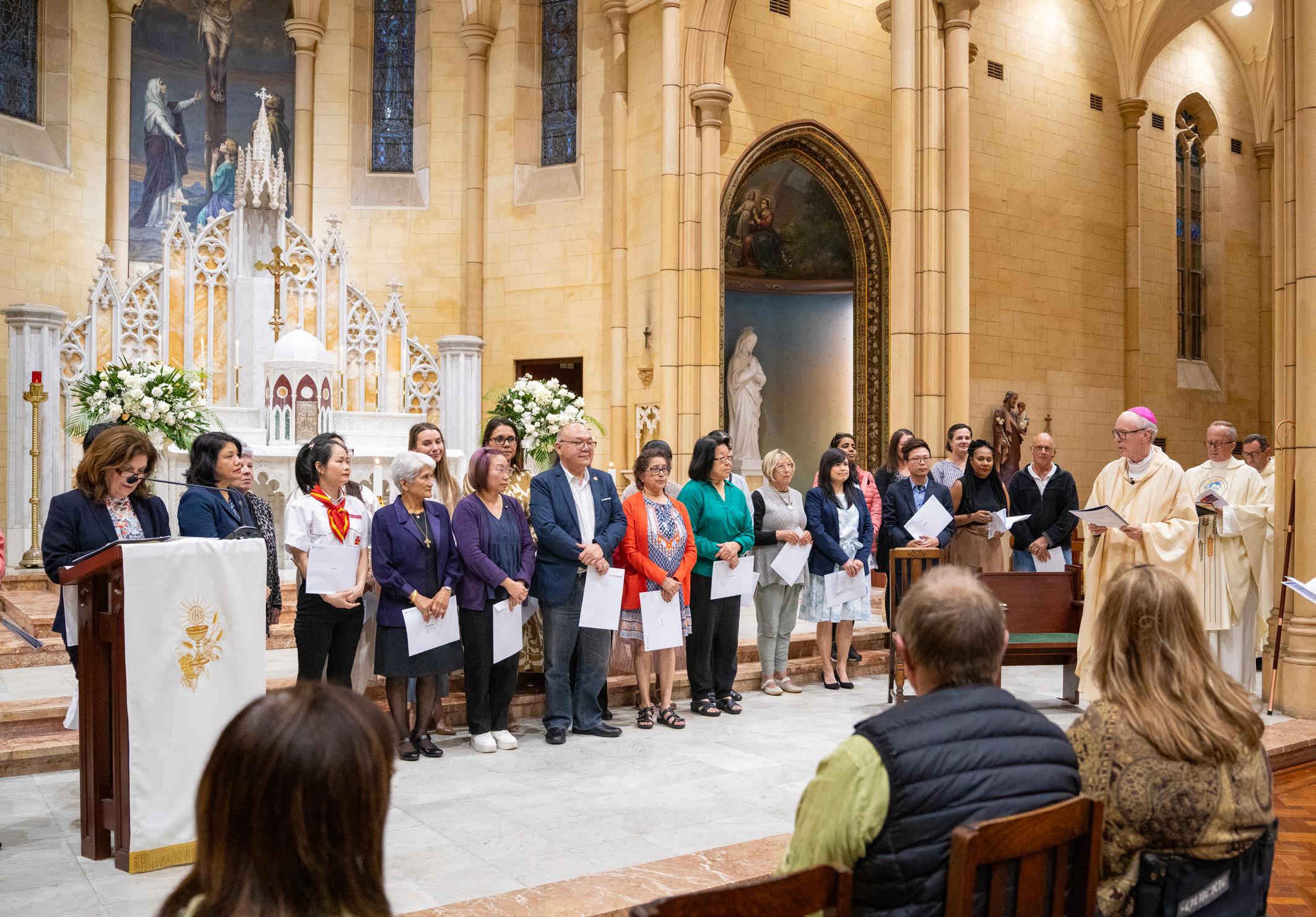
Speaking Tuesday 22 October at the Catechist Services Commissioning Mass at the Chapel of St Michael the Archangel, Leederville, Bishop Sproxton continued by saying that he has a great admiration for the catechists.
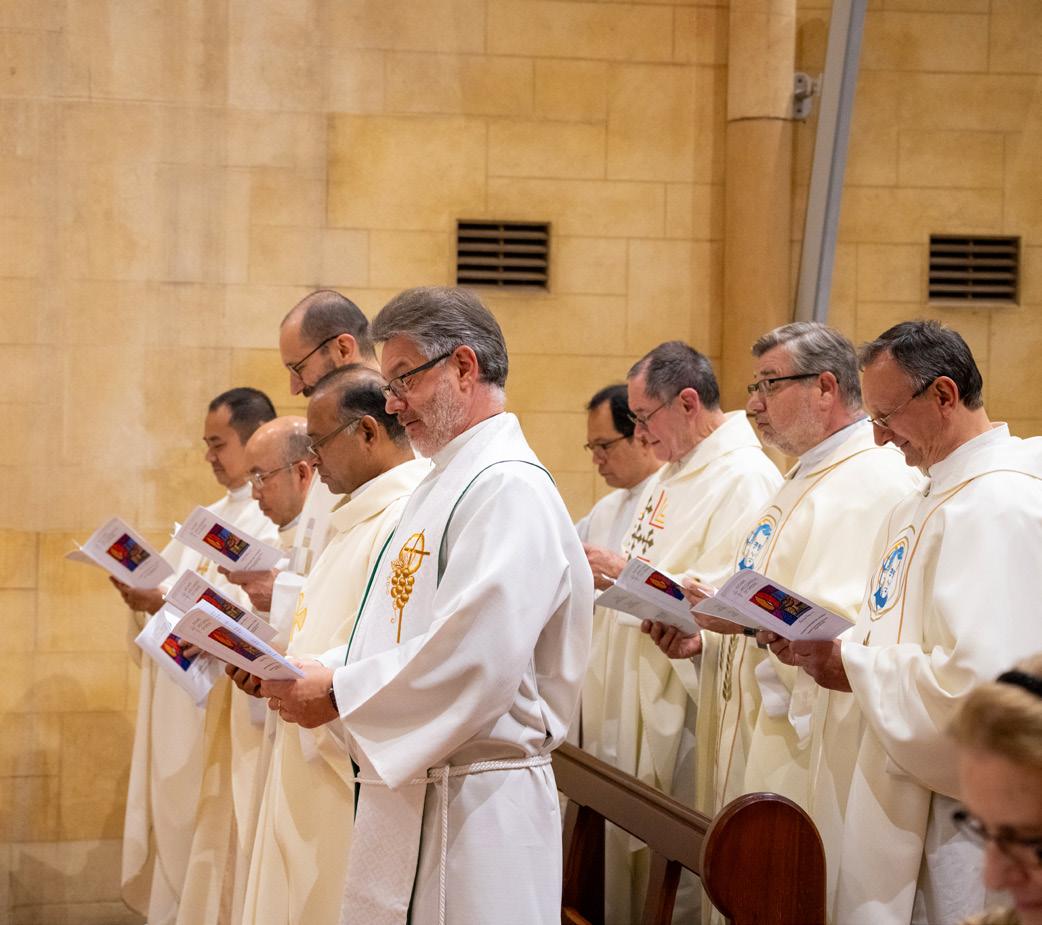
The occassion was attended by some 150 guests, including catechists and their families and special guests from Catholic Education WA and the Archdiocese of Perth.
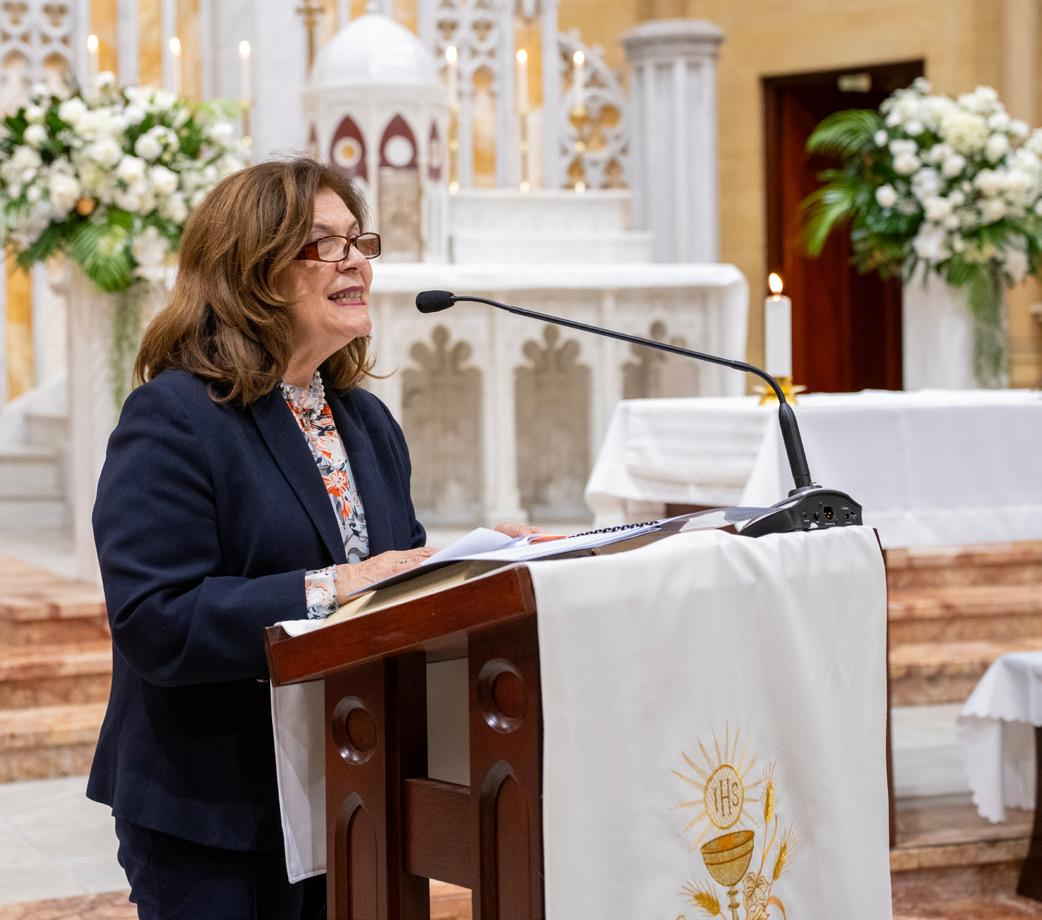
Bishop Sproxton was also joined for the Mass by concelebrants, Vicar for Clergy, the Very Rev Fr Minh Thuy Nguen, Catholic Education Chaplain and Salvatorian Congregational Leader, Fr George Kolodziej SDS, several parish and assistant priests and assisted by Director of Religious Education, Deacon Mark Powell. Catechist Services Team Leader, Dr Pina Ford, explained to The Record that the ministry of Catechist serves the needs of Catholic children not attending Catholic schools; and also adults with special needs through the support of the Personal Advocacy Service. “The Commissioning Mass is a joyous occasion that celebrates the vital work of those involved in diverse catechetical ministries,” Dr Ford said.
Expressing his great admiration for catechists, Bishop Sproxton spoke about the impact of catechists reflecting on his own experience as a parish priest.
“Looking back to the days when I was a parish priest, I think of those families who were moved by the work of those catechists,” Bishop Sproxton said.
“I think of the children - some of whom I’m celebrating marriages for at the moment - and I’m always amazed at what they received in the program, and those who, in some way, were moved by the catechesis - how it planted a seed, and that this seed is something that is bearing fruit in their lives at the moment,” he said.
Reflecting on the Gospel of the day and the mission of catechists, Bishop Sproxton said that ‘to be ready’ is not to have everything together, but to be open to receive from the God who fills all our gaps.
Expressing his great admiration for catechists, Bishop Sproxton said: “Their ministry is one of the great jewels of the Archdiocese.” PHOTO: SAMUEL CHAN.
“To be ready is to be able to be moved by God, to be open to that indication that God gives at certain times in our lives, and that’s when that little seed starts to grow,” Bishop Sproxton explained.
Bishop Sproxton explained that in Luke’s gospel we hear how Jesus was gentle. “How Jesus was able to reach people who perhaps were living on the edges, how Jesus was making Himself available to them and in that sense, being a servant to them and journeying with them. Some of them responded well, some of them were unable to respond at that moment,” Bishop Sproxton said.
Nevertheless, Bishop Sproxton emphasised, Jesus journeyed continuously with them.
“And that, I think, should be the approach that we have in this work; to be gentle; understanding of where people are, and not at all intent on imposing something that they’re not ready to receive, but proposing, as Pope Francis says, proposing the truth, proposing Jesus and the way that He has provided for us in the gospel.” Bishop Sproxton encouraged the catechists, particularly in their discouragement when they don’t see 100 per cent of those young ones going to Mass, “...not just yet anyway,” he said.
“And that should be how we approach it – with a mindset of ‘Not just yet.’ Let us wait. Let us see what the seed can produce, because we all have our memories, and there will be a memory of that experience that those young ones and those families have of you,” Bishop Sproxton concluded.
In her speech for the occassion, Dr Ford highlighted that the annual Catechist Services Commissioning Mass has now been celebrated for close to 35 years.
For more information about Catechists Services, please contact Rae Webb: catechist@cewa.edu.au; or phone 0429 804 846.
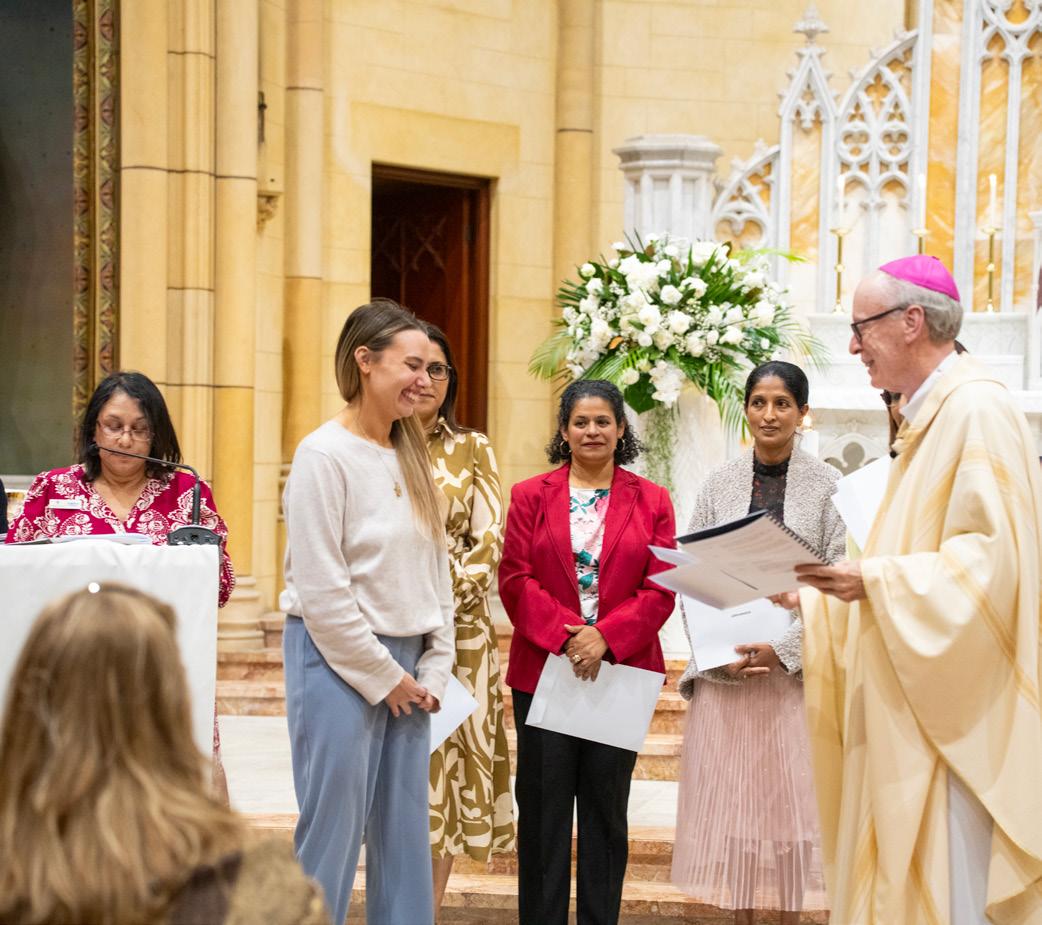
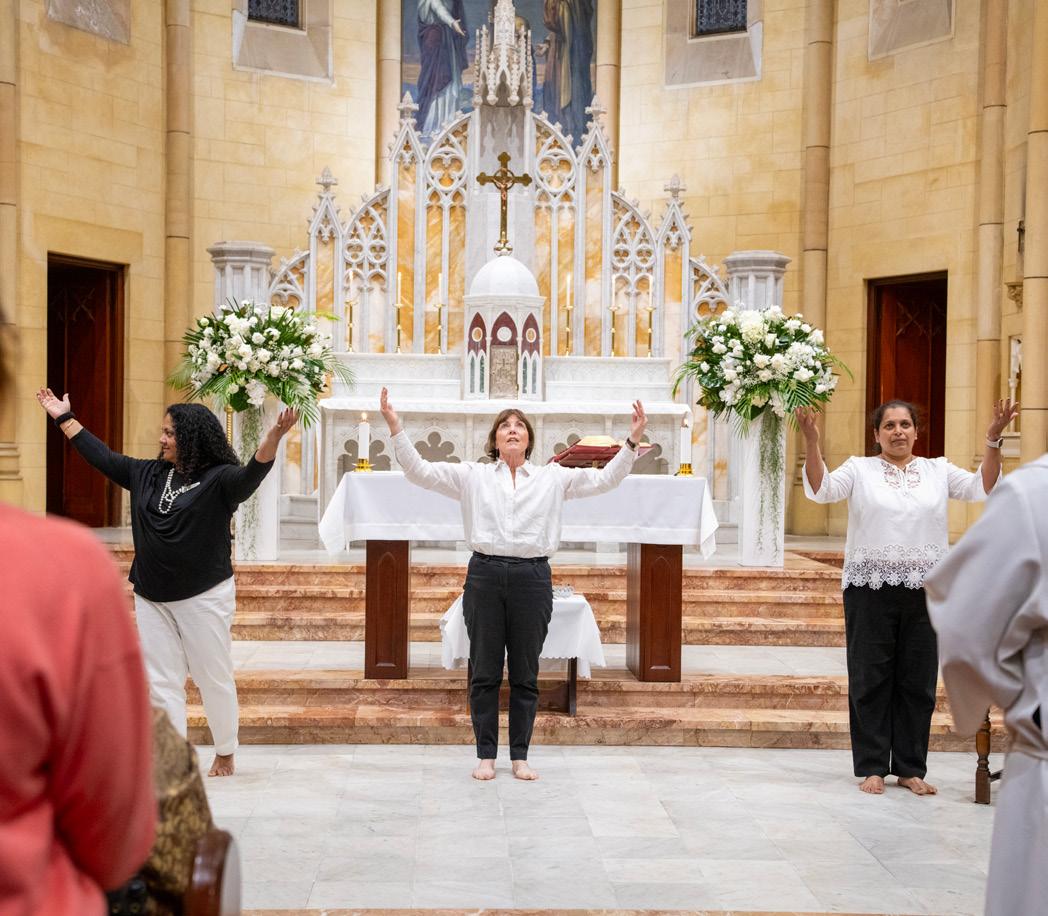
Above, from left: Bishop Sproxton presents a certificate to a new catechist, and second photo from left, staff from Personal Advocacy Services make actions to explain the Gospel. PHOTOS: SAMUEL CHAN.
From left: Catechist Services Team Leader Dr Pina Ford has been a key figure of the program for more than 20 years. Dr Ford explained to The Record that the Ministry of Catechist serves the needs of Catholic children not attending Catholic schools; and second photo from left: priests from across the Archdiocese participate in the Mass, in support of the Catechists. PHOTOS: SAMUEL CHAN.
Relics of Italian teenager take centre stage at St Mary’s Cathedral
WORDS Jamie O’Brien
PERTH Catholics have flocked to St Mary’s Cathedral and numerous other parishes to venerate the relics of teenage up and coming saint, Blessed Carlo Acutis.
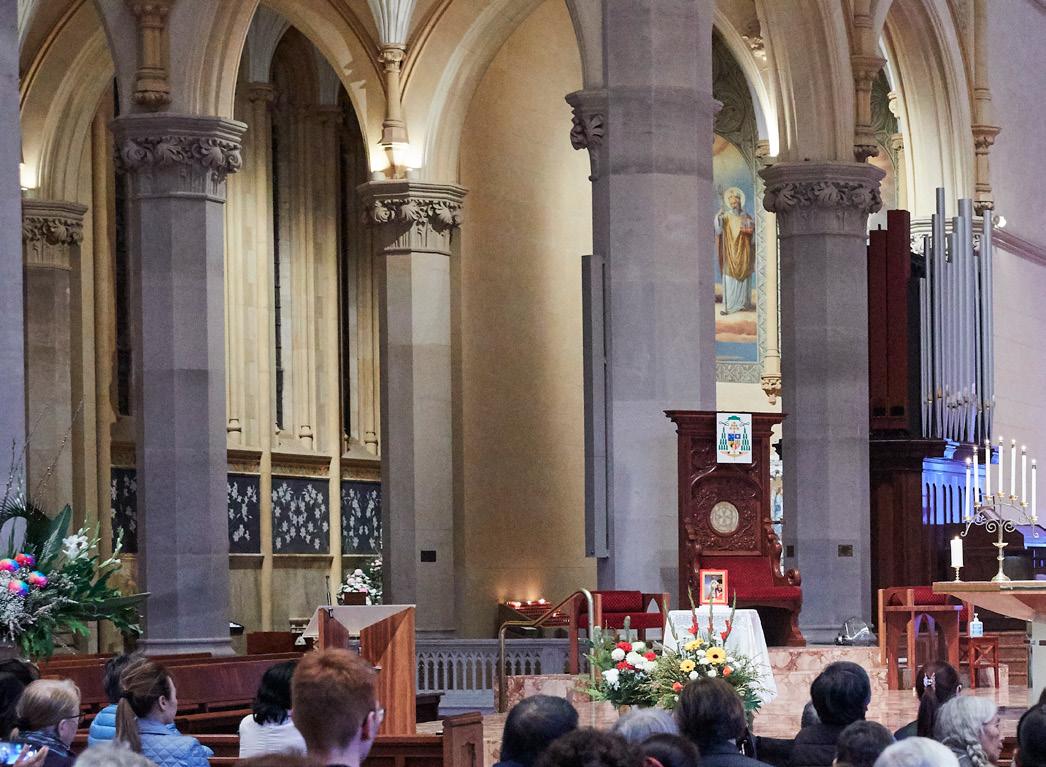
The relic of the Italian teenager, who died in 2006, arrived at St Mary’s Cathedral Saturday 19 October, and were on display until Thursday 24 October.
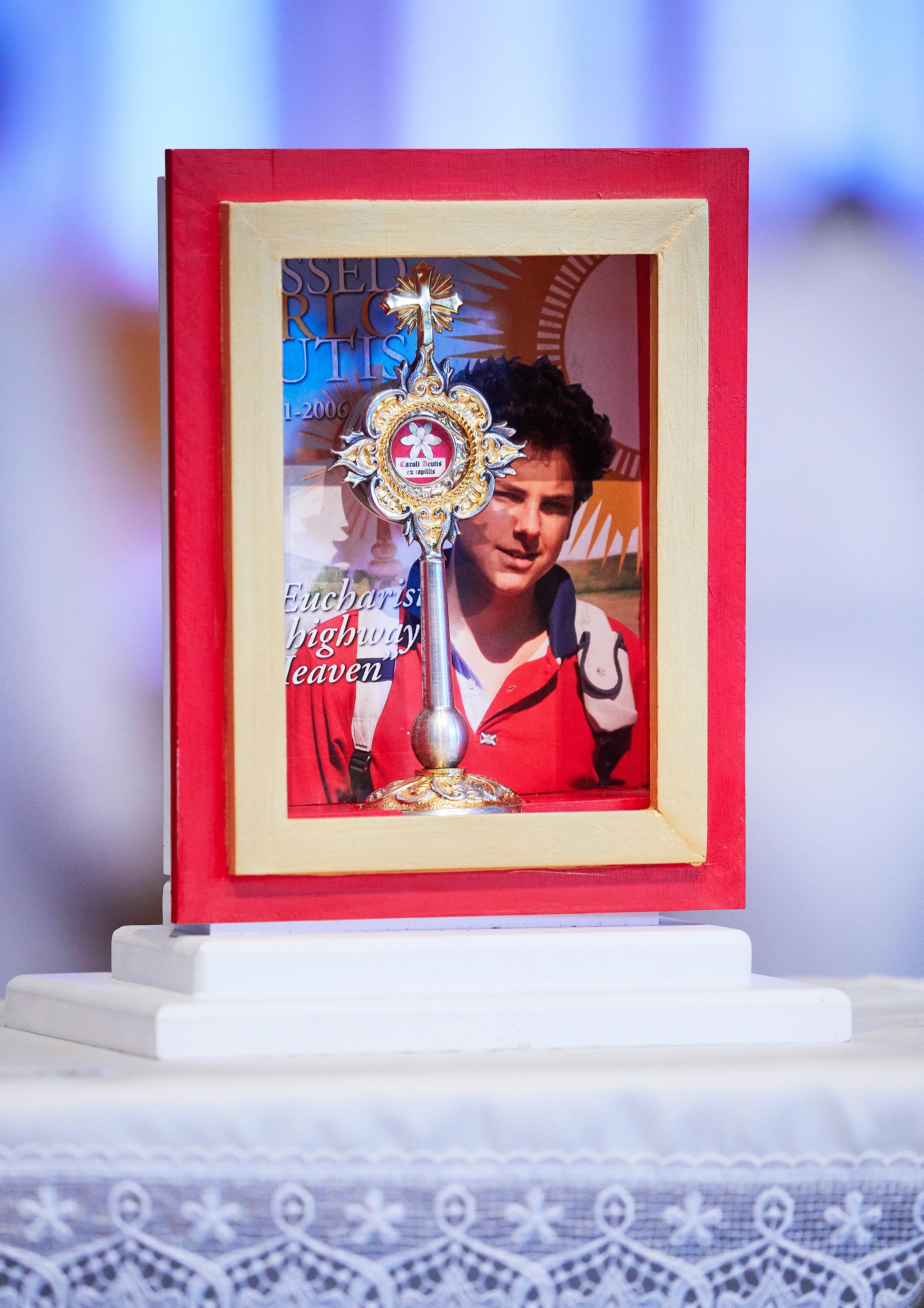
The first-class relics – strands of hair – were housed in a gold reliquary and placed on the sanctuary in front of the altar for each of the liturgies.
Born in London, England, on 3 May 1991, to Andrea Acutis and Antonia Salzano, Carlo Acutis was an average teenager with an above-average
knack for computers. Before his death from leukemia in 2006, he put that knowledge to use by creating an online database of Eucharistic miracles around the world.
In May this year, Pope Francis formally recognised a miracle attributed to the 15-year-old Italian teenager whose birth in 1991 will make him the first “millennial” to become a saint. No date has been set for his canonisation.
In addition to the welcome vigil on Saturday 19 October at St Mary’s Cathedral, two services were held that included Holy Hour and a talk by Canon lawyer Fr Conor Steadman – who recently returned from Rome after several years of studyon Monday 21 October, and Holy Hour and a talk
by Cathedral Assistant Priest, Fr Kenneth Acosta on Tuesday 22 October.
In his talk, Fr Conor explained the three key elements the Church considers when discerning and authenticating a miracle. Given Blessed Carlo’s deep devotion to the Eucharist, Fr Kenneth spoke about the Eucharist in the life of the teenage soonto-be saint.
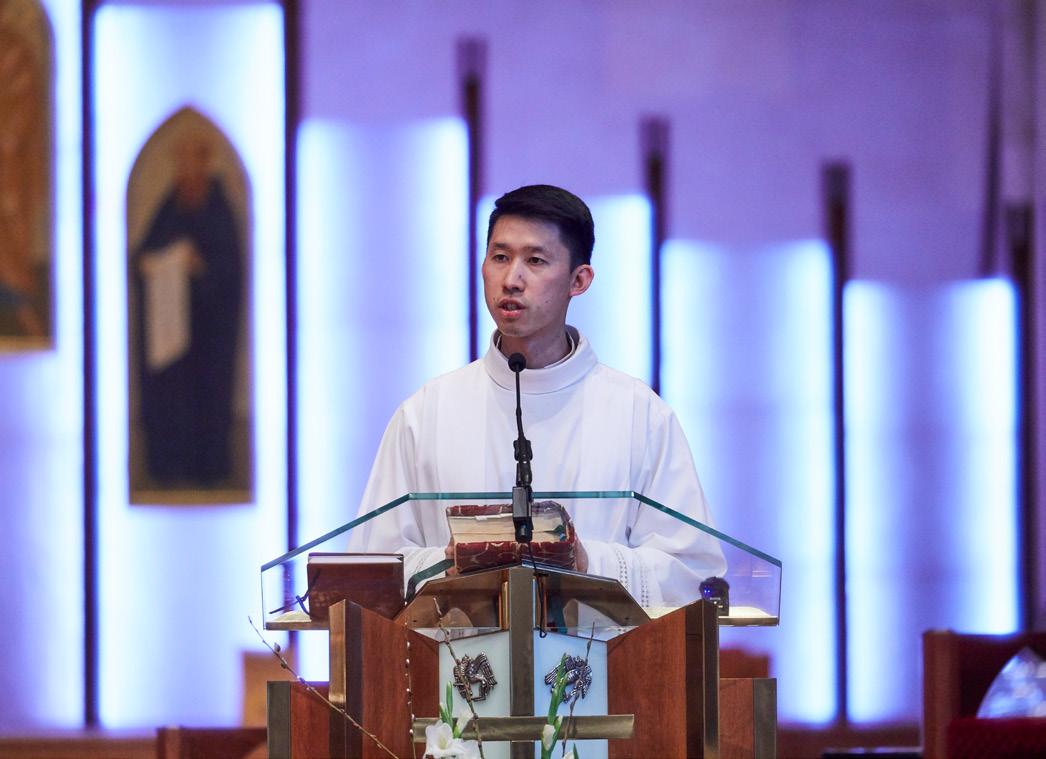
Cathedral Assistant Parish Priest Fr Jason Yeap, who assisted with organising the program of the relics, said although Blessed Carlo was a very young boy, in his heart he was very much awakened by the zeal and his passion for the love of God.
“It’s what led him to seek the Lord in prayer, to give his life over to wanting to promote these amazing Eucharistic miracles that happened around the world, to show other people that God was real,” Fr Jason said.
Fr Jason continued by saying that with the hosting of the relics and exhibition of Blessed Carlo, we can awaken to the fact that God does work our lives in a very real way, and sometimes in extraordinary ways through phenomena like Eucharistic miracles.
“We pray that the call to holiness is awakened in us, that the love of the Lord awakens us, and will help us grow closer to Him.” The first miracle
attributed to Carlo’s intercession was approved by Pope Francis in February 2020. It involved a young Brazilian boy who was completely healed from a rare congenital disease of the pancreas.
In October of that year, the teen was beatified during a Mass at the Basilica of St Francis in Assisi. As part of his sainthood cause, the young teen’s body was exhumed and transferred to a place suitable for public veneration, the Shrine of the Renunciation at the Church of St Mary Major in Assisi in 2019.
The second miracle, which now paves the way for Carlo’s canonisation, was approved by the Holy Father Pope Francis on 23 May 2024, after a meeting with Cardinal Marcello Semeraro, Prefect of the Dicastery for the Causes of Saints. According to the website of the Dicastery, Pope Francis recognised the miraculous healing of Valeria Valverde, a young Costa Rican woman living in Florence who suffered a severe head injury. The same day her mother visited Carlo’s tomb, Valverde “regained the ability to breathe on her own, and the following day, doctors recorded the recovery of upper limb motility and partial speech,” the Dicastery said.
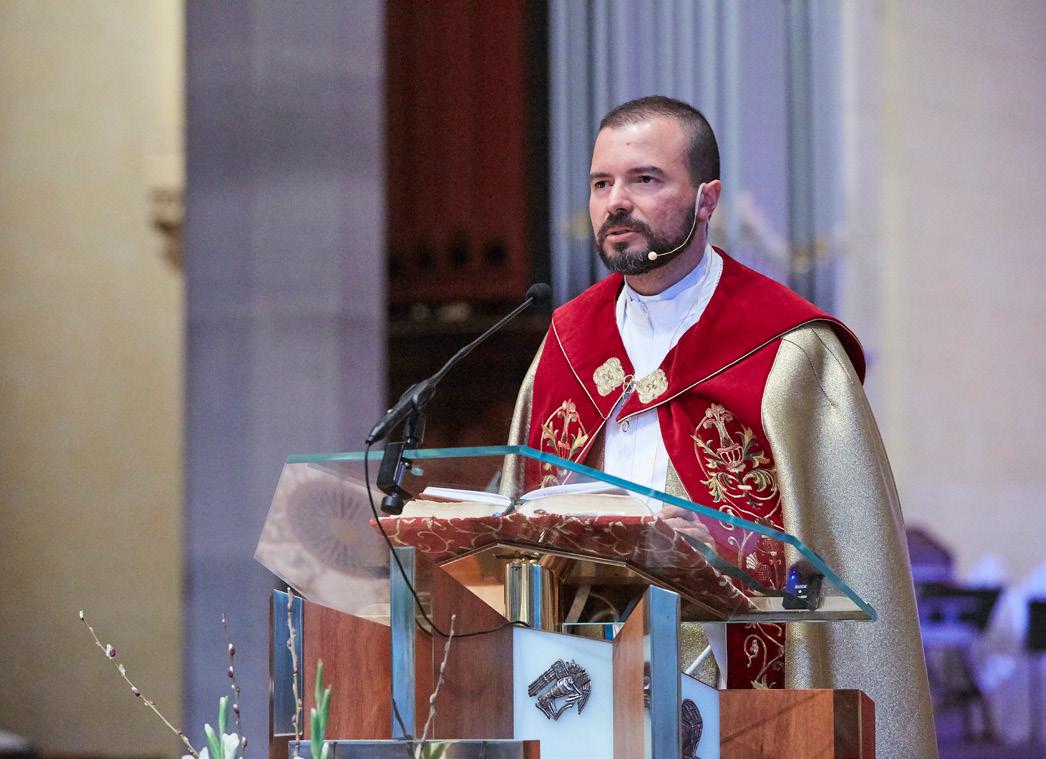
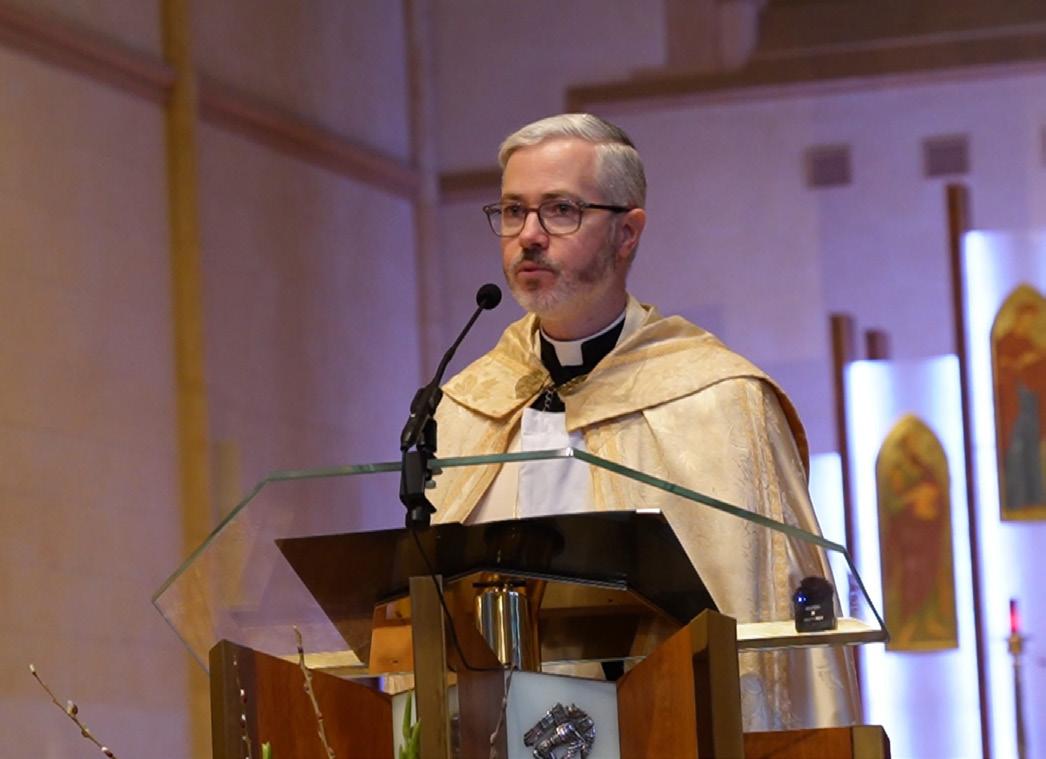
Top Left: Cathedral Assistant Priest Fr Jason Yeap speaks at the commencement of the Holy Hour to venerate the relics of Blessed Carlo Acutis. People from across Perth came together Tuesday 22 October to venerate the relics of soon to be teen-saint Blessed Carlo Acutis. Cathedral Assistant Parish Priest Fr Kenneth Acosta speaks during the special liturgy of Holy Hour for the relics of Blessed Carlo Acutis, Tuesday 22 October at St Mary’s Cathedral. Canon Lawyer Fr Conor Steadman explained the three key elements the Church considers when discerning and authenticating a miracle. PHOTOS: RON TAN/SOURCED.
• 1/2 cup thick yoghurt (whisked till smooth and creamy)
• 2-3 teaspoons fresh cream
For the Masala
• 1 cup Coriander leaves & tender stalk
• 1/4 cup fresh mint (leaves only)
• 4 green chillies (medium spicy)
• 10 peppercorns
• 1/2 teaspoon garam masala
• 6 fat cloves of garlic
• 1/2 inch ginger
• 6-8 whole cashew nuts
• 1/2 cup fried onions
• 1/2 medium sized onion
To be Blanched
• 1 cup Palak (Spinach leaves)
RECIPE Sourced
SERVES 4 METHOD
1. Cut the chicken into medium size pieces, wash and drain.
2. Bring all the Masala ingredients together using a little water. To blanch the palak, place it in a bowl and pour boiling water over it, enough to cover the leaves. Cover and keep aside for 2-3 minutes, then drain the water, refresh under cold water and transfer the leaves to a bowl of ice cold water for 5 minutes. Then grind it to a paste and keep aside.
3. Boil the chicken with salt till almost done. Keep aside. Or Marinate with salt and shallow fry.
4. Heat ghee and add the finely chopped garlic and fry for 4-5 seconds, then add the onions and fry until golden brown.
5. Add the kasuri methi and chopped tomatoes and fry for a minute.
6. Then add the ground masala and fry on a low heat very well till the oil begins to seperate.
7. Add the whisked yoghurt and continue to fry till the oild begins to separate.
8. Add the pureed spinach and cook for a minute or two and then add the boiled or fried chicken pieces only. Re4tain the stock and add it little by little and continue to cook on a low head. Don’t add all the stock in one go. Adjust the thickness of the gravyu by adding it in parts and cooking till it gets nicely incorporated into the gravy.
9. If you are frying the chicken then you can add water instead as there won’t be stock released during the frying process.
10. Adjust the salt and add the fresh cream(optional)
11. Serve hot with rice or chapathis
2 Book in which the first Passover occurred
Evil deed
Split in the Church 5 St. Thomas’ surname
Saint of Orleans
The Chosen People
Holy day cusp 12 Gold, frankincense or myrrh 13 The woman wiped Jesus’ feet with hers (Lk 7:38) 15 ___ to Emmaus
16 “We are ___ on Christ’s account” (1 Cor 4:10)
19 Island converted in the 5th century
20 “…for a person will reap only what he ___” (Gal 6:7) 21 Letters some people sport on jewelry 22 Son of Seth
Church sounders
___ of Genesis
27 It becomes the Blood of Christ
28 “Thy ___ be done…” 30 Homeland of John Paul II
31 Simon, the apostle, was one of these 32 Theology on ___ program
33 First man
34 “…and do not share in another’s ___” (1 Tim 5:22)
35 ___ and abstinence
37 OT prophetic book
1 Church seats 4 One of the judges 8 Symbol of the Holy Spirit
9 Jesus asked for this when he spoke of paying taxes
10 Evil king of the New Testament
12 “___ us this day our daily bread…”
13 Pilate washed his in front of the crowd
14 Time for some Easter services
17 Franciscan letters
18 Title for the pope
22 “When we ___ this bread…”
24 Jesus rebuked this
25 Catholic actor, Gene ___
26 “By the sweat of your ___…” (Gen 3:19)
28 “___ to you, scribes and Pharisees…” (Mt 23:13)