ACADEMIC YEAR ACADEMIC YEAR
2025/2026 2025/2026


ACADEMIC YEAR ACADEMIC YEAR
2025/2026 2025/2026
Enough for all, forever.
We are guided by an ethic of material sufficiency - enough for all, forever.
We are guided by an ethic of responsibility to future generations – enough for all, forever.
We are guided by an ethic of equity – enough for all, forever.
Arbor School’s mission is to provide an education that connects our community with the natural world and inspires us to imagine and build a future in which all may flourish We endeavour to achieve this through approaches to teaching and learning that:
Integrate the principles and concepts of sustainability, ecoliteracy and environmental justice to develop practical understandings of and solutions to Authentic issues;
Recognise students’ prior knowledge and interests as catalysts, and use inquiry to investigate complex questions about our world and the human experience;
Provide regular opportunities for direct experiences in natural and built environments that build the sense of agency and self-efficacy needed to take effective action;
Frame learning in the exploration of what it means to live well in a place, as a pathway to exploring global roles and responsibilities;
Promote academic excellence, character strengths and sustainability competencies as interrelated learner outcomes;
Value both established and newly gained knowledge and understanding as a basis to challenge assumptions and beliefs about social, economic and environmental systems;
Advance critical thinking, systems thinking and futures thinking; and recognise perspectives and challenge injustice and inequity;
Arbor School is a diverse and welcoming community that nurtures curiosity and celebrates the connectedness of humans with the natural world Arbor recognises and addresses the unique academic, social, emotional, and physical needs of each individual and strives to build a culture of human flourishing, social harmony and ecological abundance.
Dear Parents,
Welcome to a brand-new academic year at our exceptional School, where students embark on an exciting journey of growth and discovery. As the proud Headteacher, I extend my warmest greetings to you and your family, and I am thrilled to introduce you to our school's ethos, values, and vision for this important stage of your child's education.
As children progress and transition throughout our school we recognise the importance of supporting them through this exciting new stage of their learning journey. Our aim is to nurture growing independence, resilience, and a deepening love of learning. With a supportive and encouraging environment, our dedicated staff ensure that every child feels confident, valued, and ready to embrace new challenges, both academically and personally. Nurture remains at the heart of our approach as we believe that every child thrives when they are supported emotionally, socially, and academically. We strive to create a nurturing community where each child feels a sense of belonging, forming strong connections with their peers, teachers, and place. Our staff members are committed to providing a caring and inclusive atmosphere that promotes positive relationships and supports the wellbeing of every student. Through our pastoral care initiatives and personal development programs, we aim to empower your child to become a confident, resilient, and compassionate individual.
Curiosity is a powerful driver of learning, and we celebrate and cultivate this innate quality in our students. Our curriculum is designed to ignite their inquisitive minds and stimulate their natural thirst for knowledge. Through engaging and interactive lessons, we encourage students to ask questions, explore new ideas, and make connections across different subjects. We believe that by fostering curiosity, we inspire a lifelong love for learning and provide the foundation for future academic success.
In addition to our focus on nurturing and curiosity, our school takes great pride in our commitment to ecoliteracy, sustainability, and environmental social justice. We recognise the urgent need to protect our planet and instil in our students a sense of responsibility as global guardians. Through our curriculum and various initiatives, we teach children about environmental issues, sustainable practices, and the importance of social justice.
We empower them to act, make informed decisions, and become advocates for a more sustainable and equitable world. Our school is proud to be at the forefront of this movement, providing students with the tools and knowledge to become environmentally conscious and socially responsible citizens.
While we maintain a strong focus on ecoliteracy, we also uphold academic excellence as a cornerstone of our school. Our teachers are committed to delivering a rich and rigorous curriculum that aligns with the National Curriculum for England and the statutory requirements of the UAE. We provide a well-rounded education that covers all areas of learning, including reading, writing, mathematics, science, and the humanities. Our dedicated staff members are passionate about ensuring that every child receives the highest quality education, tailoring their teaching approaches to meet the individual needs and interests of each student.
Communication and partnership between home and school are crucial for your child's success and that begins with this Arbor Parent Handbook. We believe in open and transparent communication, and we actively encourage your involvement in your child's education. We have regular parent-teacher meetings, workshops, and events that provide opportunities for you to stay informed and participate in your child's school life here in the Arbor Primary School.
In conclusion, I am immensely proud of our school and the opportunities we provide for our students. We are dedicated to nurturing their curiosity, fostering their independence, and promoting academic excellence, while instilling in them a deep sense of environmental and social responsibility. Together, we will prepare your child for a future filled with limitless possibilities, where they are equipped with the skills, knowledge, and compassion to make a positive impact on the world.
Thank you for entrusting us with the privilege of nurturing your child's growth and development as part of an Arbor education. We are honoured to be a part of their journey.
Warmest regards,
Ms. Kathryn Keeshan Primary School Headteacher
Following the recent ministry notification, the approved calendar is below.
New Student Induction Day
Term 1 Starts – First Day of Academic Year
Prophet’s Birthday
Half Term
National Day
End of Term
Term 2 Starts
Ramadan starts*
End of Term
Term 3 Starts
Eid Al Adha*
Hijiri - Islamic New Year
Tuesday 26 August th
Wednesday 27 August th
Thursday 4 September* th
Monday 13 October - Friday 17 October th th
Tuesday 2 - Wednesday 3 December nd rd
Friday 5 December th
Monday 5th January 2026
Tuesday 17 February* th
Friday 13 March th
Monday 30 March th
Tuesday 26 May - Friday 29 May* th th
Tuesday 16th June*
4. Term dates
End of Term – Last Day of Academic Year
Friday 3 July rd
* Actual dates are subject to change - do not book any holidays until confirmed by the school
The curriculum in Primary at the Arbor School allows for each year group to study projects based on six key concepts:
Our curriculum is designed to be a progressive and spiralling curriculum, all whilst ensuring great breadth and depth for every child
We integrate the very best components of the English National Curriculum and International Primary Curriculum, enabling our students to become ambitious, confident and inspired learners, and to approach learning with a clear focus on the progression of skills The curriculum covers a wide range of subjects, outlined on the following pages, helping students learn to make meaningful connections among them Students study English, maths and science; Eco-literacy, art, computing, music, physical education, Arabic and Islamic. Delivering the curriculum, we have a team of dedicated and skilled teachers, including specialists in STEM, sports, music and languages.
The English National Curriculum provides a framework for learning, outlining knowledge around which teachers develop stimulating lessons that promote the development of students’ knowledge, understanding and skills Teachers follow a ‘challenge for all’ approach where students are adequately challenged according to their individual needs. Teachers use a wide range of appropriate assessments to set targets, which are deliberately ambitious to help students reach their highest potential.
Our Primary School is committed to designing projects that both inspire and grow our students in equal measure. Each project begins with an inquiry question that the students work towards answering by the end of the project. Each day, the students add another layer of understanding in their quest to form a rich, deep understanding of their inquiry The main driver of the objectives that we cover within project are taken from the science, history and geography National Curriculum objectives, as well as the moral, social and cultural objectives from the UAE National Agenda. Beginning with the science objectives, we interweave the humanities and links with the key texts that are being studied to form unique projects for our students
The overarching aim of our English curriculum is to promote high standards of language and literacy by equipping students with a strong command of the spoken and written word, and to develop their love of literature through widespread reading for enjoyment. The curriculum teaches students to fluently speak and write as well as read and listen so they can communicate and understand different ideas and emotions Reading gives them the chance to acquire and build knowledge, and develop cultural, emotional, intellectual, social and spiritual understanding. We believe so strongly in the power of reading that we have built our English curriculum around carefully selected texts which form the core building blocks of our students’ literacy journey with us
The methodology that we follow is based on a ‘book based’ curriculum A key text list will be issued at the start of the year, students are encouraged to purchase these to make the most of their learning experience. We use resources and schemes of work from The Literary Curriculum and Literacy Shed to plan all our English units on inspiring fiction and non-fiction books, that both cover our English objectives and link to our project themes
1.
As stated above, at The Arbor School, we believe that there are no shortcuts to improving reading comprehension It is made up of a student's ability to decode, read fluently and understand the world around them Once students have mastered the ability to decode and read fluently, then we foster reading comprehension by asking a range of questions about the texts based on the VIPERS model.

ii.
In Years 3 to 6, children also visit the library once a week where there is a collection of books of various genres in both English and Arabic languages There are increased opportunities to use the school library to promote reading for pleasure and develop research skills Within English lessons, class teachers use a range of strategies to teach reading skills and develop children’s enthusiasm for reading across a variety of genres.
VIPERS
VIPERS is an acronym to aid the recall of the six reading domains as part of the UK’s reading curriculum They are the key areas which we feel children need to know and understand in order to improve their comprehension of texts VIPERS stands for:
Vocabulary
Inference
Prediction
Explanation
Retrieval
Sequence or Summarise
The 6 domains focus on the comprehension aspect of reading and not the mechanics: decoding, fluency, prosody etc. As such, VIPERS is not a reading scheme but rather a method of ensuring that teachers ask, and students are familiar with, a range of questions They allow the teacher to track the type of questions asked and the children’s responses to these, which allows for targeted questioning afterwards
Our long-term mathematics overview at the Arbor School is based on the ‘White Rose Maths’ scheme This provides a detailed breakdown of the ‘Age Related Expectations’ and groups objectives into units As we are a project-based learning school, we do often find opportunities for cross-curricular learning linked to our project. However, we would tend to begin the year with a place value and calculation focus. An example of a maths overview from Year 3 can be found below:
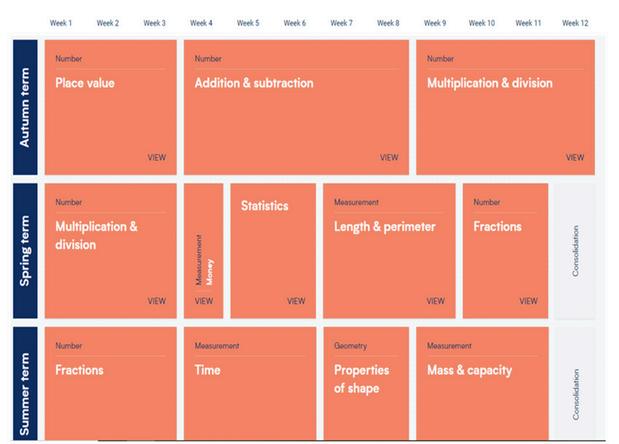
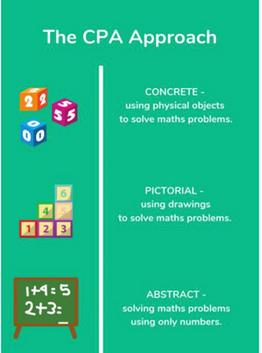
Key Stage 2 teachers will ensure that the KS1 targets are addressed and secure before we move on to the Year 3 curriculum For children who have not reached these goals, they will have planned interventions where they can work on them KS2 Teachers will then move onto their year group’s ‘Age-Related Expectations’ Teaching and learning mathematics at the Arbor School is taught using the ‘Concrete, Pictorial, Abstract’ philosophy. This is an excellent way of adding context to a number of problems and slowly taking it away. All children will begin at the ‘Concrete’ stage At this stage the students will use manipulatives to physically solve mathematical problems This can range from counters and numicon, to 3D shapes and place value cards. Once a child has grasped the calculation involved at this stage, they will progress onto the ‘Pictorial’ stage. Here, they will draw or be given pictures of counters or objects to represent the physical manipulative. Again, once understanding is cemented, they will move on to the ‘Abstract’ stage Once at this stage, the learner will use numbers to represent their object and recognise that the calculation remains the same It is worth noting that these stages should be demonstrated alongside each other, to show that they are the same calculation. The ‘Concrete, Pictorial, Abstract’ approach is also very valuable when differentiating. During a lesson, a teacher may have all three steps taking place in one room
At The Arbor School, mathematics is taught using the Concrete, Pictorial, Abstract (CPA) method, ensuring a thorough understanding for every child Starting with hands-on manipulation of physical objects, students progress to visual representation and finally to abstract symbols, with overlapping stages to emphasise continuity This personalised approach allows for tailored interventions to ensure mastery of foundational skills before advancing to the next level. By integrating these principles, we provide a solid foundation for mathematical learning, empowering students to confidently tackle new challenges and excel in their mathematical journey
Science in Key Stage 2 at the Arbor School is taught according to the National Curriculum expectations through the specific disciplines of biology, chemistry and physics. It is integrated into all projects through an experiential and practical approach, which involves providing hands-on interactive learning experiences which encourage students to actively engage with scientific concepts Teaching science in Key Stage 2 involves building upon the foundational concepts introduced in Key Stage 1 and delving deeper into more complex scientific principles. This stage is a critical period for nurturing children's curiosity, encouraging critical thinking, and promoting a deeper understanding of the natural world.
We have access to a range of online platforms at the Arbor School These are used alongside the daily teaching routines and also as a learning aid for children at home There are a variety of uses for each of these platforms and they are effective learning tools to develop understanding and skills.
Assessment in Key Stage 2 is performed through daily activities in class, regular end of unit assessments and statutory tests.
GL CAT 4 (Cognitive Abilities Test) is an internationally recognised test that assesses a student's cognitive abilities, including verbal, quantitative, and non-verbal reasoning: this is typically used to identify students' strengths and weaknesses in different areas and to track their progress over time. We administer these in years 4, 5 and 6 and on entry, as per KHDA regulations.
GL Progress Tests and NGRT (National Group Reading Test) are assessments used to monitor student progress versus how they performed on the CAT4 and the previous year’s progress test. These tests are typically administered in May, and they measure student achievement in different subjects such as English, maths, and science Progress tests provide teachers with valuable information about each student's academic strengths and weaknesses, enabling them to tailor their instruction to meet individual needs. Years 3 to 6 take these tests.
PASS (Pupils’ Attitudes to Self and School) assessments sensitively explore each child’s social and emotional wellbeing PASS helps identify underlying issues that might be holding students back. The results also include targeted interventions and practical guidance, enabling staff to respond quickly and effectively. At our school, pupils in Years 3 to 6 complete these assessments.
Teachers use all data information to track students’ progress throughout the year and to make a summative judgement at the end of each term. Reports are shared with parents at the end of each Term and throughout the year there are Parent Teacher Conferences to discuss the holistic development of your child
Internal summative assessments a.
Internal summative assessments are carried out periodically within lessons and used to measure progress and attainment of students in all curriculum areas.
English
Writing assessed pieces - Termly using the Arbor writing expectations to moderate.
Spelling, Punctuation and Grammar (SPaG) - End of term assessments
Reading - Three times a year as per the assessment schedule
Maths
White Rose Assessments – Pre and post assessments (tracked throughout the year) End-of-term assessments will also be used for a summative view of a student’s progress and attainment
Weekly Arithmetic Tests - This will then inform in class support and interventions.
Science
Knowledge assessments – These are done at the beginning and end of each Project to show progress and attainment.
Moderated practical science – These are completed three times a year using rubrics.
Morale, Social and Cultural Studies (MSC)
Unit assessments - Three times per year
Arabic and Islamic
Arabic Benchmark Test (ABT) - Twice a year.
The Thrive Department is a collaboration of student support services which identifies and personalises learning pathways for Arbor students; helping students to discover their purpose and passion The departments comprises of an in-house SENDCo (Special Educational Needs and Disabilities Coordinator), Educational Psychologist, specialist SEND teachers, a Counsellor as well as a team of Learning Support Assistants. Our aims are to foster:
Intellectual curiosity
Active citizenship – Ability to connect, engage with and lead people, through the development of their skills and knowledge to build fairer, sustainable and resilient societies
Growth mindset – Ability to set goals and persevere with the journey towards achievement
Learning for life
Employability and Career – ‘Ikigai’ – a reason for being. (What you are good at, what you love, what the world needs and what you could be paid for )
Individual development – Purpose and passion towards independence and sustainable life skills.
Alternative pathways – Learner directed programs and projects based on interests.
Social inclusion – Purposeful and successful interactions and relationships whilst belonging to community. Ability to demonstrate empathy and compassion.
Health and vitality – Ability to engage in positive life choices and wellbeing practices
Therapeutic input – Supported interventions from internal and external specialists that focus on balancing challenges.
If you and/or your child’s class teachers have any concerns about your child's wellbeing or learning, referrals can be made to our school SENDCo (Mr Alexander Harris - aharris@thearborschool ae) for SEND and learning needs or school Counsellor (Ms Alexandra Brooks - abrooks@thearborschool ae) for social and emotional needs, who will carry out further observation and assessments. The table below illustrates the process for referrals and time scale.

Teacher concern raised
Parents informed of concern
Concern form completed by teacher
Information request form sent to parents
Observation and Assessment Phase
In class observation completed by Primary Leadership Team, Thrive teachers and EP.
Strategies shared with class teacher. Onsite therapists and EP to complete observations and screeners. Class teacher to implement interim plan.
Information request form sent to parents.

Case review
Information presented to panel
EP to meet parents
IEP written if required
Arbor School offers a range of additional programs designed to enrich the learning experience for different cohorts of students. b.
For our most gifted students we offer opportunities to further develop critical thinking skills and leadership characteristics through curriculum extention and additional lessons during and after school. We also engage in interschool competitions and partnerships with external programs
Our students of determination can access a range of individual pathways including life skills, social communication groups and sensory integration Teachers give our pupils opportunities to access learning at their own level through adapted work and modified curriculum. 1:1 support is provided by the Thrive team for an additional fee.
Students who are new to English can access additional language sessions and in class support We use an immersive language approach at Arbor which engages students through practical experiences and language rich classrooms
An IEP (Individual Educational Plan) is a plan designed around a student’s specific needs. It identifies what the focus is, what strategies will be put in place, how the curriculum will be differentiated and how we know that the goals have been achieved Parents are expected to be involved in IEP meetings which are organised by class teachers in the Key Stage 2 c.
Students of determination have an IEP, whereas very able students will access an IEP called an ASP (Accomplished Student Plan) and students new to English will access an ILP (Individual Language Plan) These again are set with the class teacher and Thrive department in collaboration; plans that are in place are updated regularly and parents are informed termly.
Arbor is happy to collaborate with external providers of specialist care such as occupational, speech and physical therapists who are registered with the CDA (Community Development Authority) or DHA (Dubai Health Authority) We also collaborate with, and signpost parents to, reputable assessment centers and hospitals if requested
Underpinned by our commitment to Positive Education and restorative practices, we put into effect our approach for promoting positive behaviour through our Arborhaviour guidance The Arborhaviour approach sets out the whole school direction to behaviour management in order to achieve a positive whole schoollearning ethos, with the aim of ensuring all students come to school and feel happy and safe, so that they can reach their potential. This is underpinned by our three whole school agreements:
Ready - children are ready to learn by arriving on time, with the correct uniform, the necessary resources and a great attitude.
Respectful - children are respectful of themselves, others, and our learning environment
Safe - children play their part in keeping everyone safe
Each class, at the start of the year, will create their own set of whole class agreements to support positive behaviour for learning
We hold the belief that emphasising positivity, acknowledging both the process and the outcome with praise, and actively noticing students will bring optimal results The Arbor School uses a combination of extrinsic rewards such as ‘Above and Beyond’ postcards to encourage good behaviour and intrinsic rewards, targeted praise and encouraging students to value good behaviour and learning for itself, not because of some other outcome.
These rewards are scaffolded by ensuring consistent class norms, focussing on explicitly positive learning and social behaviours
Rewards include:
Whole class initiatives
Arborhaviour cards
Above and Beyond Postcards
House Points
Whilst exciting, engaging lessons and positive praise and reward may be enough for most children, unwanted behaviour may still present itself. The Arborhaviour steps are used to address unwanted behaviour, such as not listening to instructions, low-level disruption, rudeness, biting or swearing It is not possible to leap or accelerate steps for repeated low-level disruption, as all students are given ‘take up time’ in between steps We ensure that steps are gone through with dignity, care and consideration, taking individual needs into account where necessary.
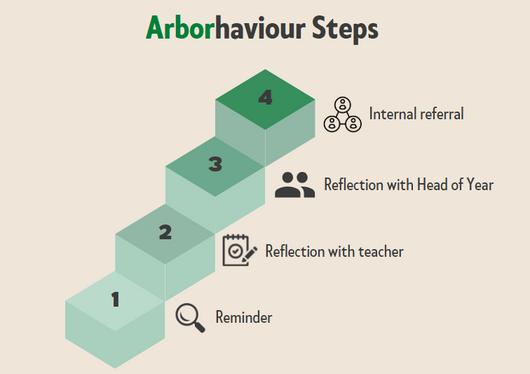
In cases of extreme behaviour (racism, biting, swearing, hitting etc) teachers may escalate to 'internal referral’ Parents may be contacted at any stage of the Arborhaviour steps regarding their child's behaviour choices, depending on the severity or frequency. This may be via a phone call, email or conversation at pickup.
Reminder A reminder of the class or school agreement delivered privately wherever possible. The teacher will explain the next steps if their behaviour does not improve.
Reflection with teacher
The teacher will give the learner a chance to reflect away from others, to help them calm down and reflect on their actions, considering who or what was harmed, the feelings of those involved and a course of actions to restore what is broken.
Reflection with Head of Year At this point, the learner will be referred internally to the Head of Year or an Assistant Headteacher if they are unavailable, they will have some time to reflect on their actions, as above.
Internal referral At this stage, the learner will be referred to the Deputy Headteacher who will decide the appropriate course of action and parents will be informed.

All students and staff belong to one of four houses and develop strong ties to their House. The choice of which house a student joins is made through consideration of overall numbers and gender split During the year there are a variety of inter-house competitions or events Students and staff will all wear their House shirts every Friday to further develop a sense of belonging to their House
The names of the Houses have been chosen to eflect the en i onmental ethos and


Each child collects House Points, and ten House Points equate to one House token. These are placed in the House tubes each week. House Points are awarded based on an individual’s efforts and achievements rather than on a comparison to other children. A House Point can be awarded for a range of reasons, such as:
Good effort or achievement for a particular piece of work
Meeting Arborhaviour expectations
Displaying good character strengths
Caring for others and the environment
Student leadership is an integral part of a child’s education and development here at Arbor. Each child who is passionate, ready and able should have the opportunity to experience additional responsibilities, to lead projects and have a positive impact on not only their own development but that of others, the school and wider local and global community
Opportunities gradually begin in Year 3, with most opportunities being available to our Year 6s; this is due to the age and stage of development of our students. Below is an example of the Ambassador roles here at Arbor.
Ambassador Roles
Student Feedback Council
Eco Council
Inclusion Ambassadors
Well-being Ambassadors
Digital Leaders
Reading Ambassadors
Global Ambassadors
House Captain
Sports Ambassadors
Art Ambassadors
Further details are shared with students and parents at the start of each academic year!
The intention of the dress code is to ensure our students are consistently well presented, whilst being comfortable and in style consistent with the ethos and approach of the Arbor School All students are expected to come to school neatly groomed and in the correct school uniform We ask for parental support in meeting these expectations Uniforms must be purchased from Zaks
Uniform can be ordered via the Zaks website, app or collected from the Al Barsha store
Please note that:
Students are required to bring a backpack to school to hold their books and other belongings.Trolley bags, for safety and practical reasons are not permitted.
Children may bring a pencil case, but this is not required, and the school accepts no responsibility for lost or damaged items.
Plain white socks and plain black school shoes must be worn on all school days except for PE days. For PE days, children must wear their PE top and shorts with white socks and white or black trainers
House T-shirts are to be worn on Friday by the entire community, with regular uniform (skort, shorts, trousers with white socks and black shoes) unless partaking in a PE lesson in which case the House T-shirt should be worn with PE shorts, white socks and white or black trainers.
Students will be asked to tie their hair back if it is longer than shoulder length for health and safety reasons. Hair should be of a natural colour with school coloured accessories.
For safety and hygiene, nails for all students should be short.
FFootwear worn with the uniform should be all black to maintain a smart and consistent look While traditional school shoes are fine, all-black Skecher-style trainers are also perfectly acceptable, as long as they are comfortable and practical for active school days. The key priority is that shoes must be entirely black and provide the support needed for busy, on-the-go learners.
Students are permitted to wear the following jewellery: one pair of small stud earrings through the earlobe Religious jewellery is permitted; however, this jewellery should be concealed if possible and must be removed during PE lessons, and students are individually responsible for its safe keeping. Smart watches or electronic devices are not permitted.
As children move into a new key stage, classes are often re-mixed to ensure balanced cohorts, broaden friendships, and build adaptability and resilience. These decisions are made at the school’s discretion, taking into account individual needs and the specific dynamics of each year group
We understand that class placements feel significant for both children and families Please be assured that each year a great deal of thought, care, and collaboration goes into this process. Our aim is always to create the best possible environment for every child to thrive
When designing class groupings, staff carefully consider: friendships and peer connections, individual learning needs and styles, wellbeing and social development, behaviour and group dynamics and overall class balance
These decisions are guided by the professional insight of the teachers who know your child best. Our staff are committed to ensuring every child feels confident, cared for, and ready for the year ahead. This approach is supported by both research and our own experience of seeing children flourish in well-balanced, dynamic groups
We recognise that change can feel uncertain, but transitions also bring exciting opportunities for growth, learning, and friendship. With an open mind and positive spirit, children quickly settle, form new connections, and succeed in their new environment For the wellbeing of the whole school community, class lists are final once published This consistency allows us to focus fully on preparing for a joyful and successful year ahead
Below is an example of how a typical day in KS2 might look:
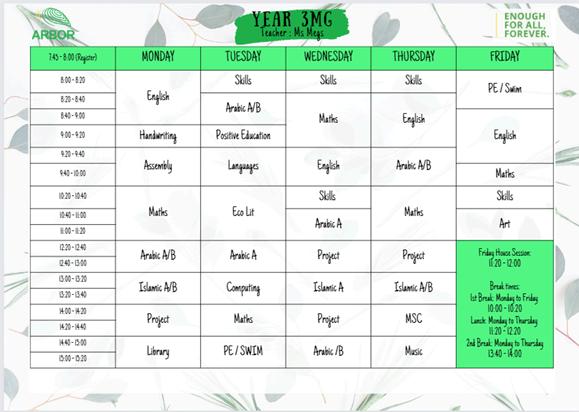
The main gates open at 7:30am with limited parking available. There is limited roadside parking around the school, but we request that you are mindful of our neighbours
A Stop, Drop, and Go option is available by turning right after the main gate. Children must be ready to exit the car quickly onto the pavement, with their bags, and walk in independently so traffic flows smoothly. There are staff on hand to ensure children get into school and offer support those children who require it We recommend this for children in Year 3 and above
The car park is a pedestrian zone: you must give way to pedestrians, follow Security Team instructions, and obey local traffic laws.
i.
Families that arrive early are invited to wait in our Farmhouse Café (where children must be accompanied by an adult at all times) or children may be dropped off to come up the outside staircase to the First Floor Canteen for early drop off Both are open from 7 30am until our classroom doors open at 7 45am, when children should make their way to their class. Children who arrive by bus will remain with their bus monitor until they go to their class at 7.45am.
We open our classroom doors for drop off at 7.45am. Registration and learning starts at 8am.
If your child is finding it difficult to settle, we will work with you to put together a plan and a timetable together to meet your child’s needs.
ii.
Except for the main school gates, all other entry points to the school close at 8am. Punctuality is essential in ensuring a positive start to the school day for your child. On the rare occasion that students arrive late, please report to the main reception desk where the Parent Relations team will be on hand to register your child and ensure they get to their class Please note that it can be a busy time of the day and you will need to remain with your child until your child can be registered and taken to their class.
iii.
Children should be collected from their classroom by their parents or guardians at the end of the school day The site gates will open at 3.15pm for a 3.20pm collection Monday to Thursday at 12pm on a Friday. Families should vacate the school corridors as quickly as possible Children who depart by bus will be escorted to their bus at the end of the day.
Changes to pick up arrangements should be communicated in a timely fashion. Please let us know via email (if before 2pm) to Parent Relations (reception@thearborschool ae) and your child’s teacher or alternatively call us (if after 2pm) on +971 (0)4 581 4100 Please see section e Parent lanyards to ensure whoever is picking up is wearing the correct lanyard
After the first two weeks of school, children in Year 5 and 6 can be dismissed at the end of the day without a parent or guardian collecting them For this to happen, a Home Pass consent form must be completed, this will be sent out at the start of term by the Year 5 and 6 team.
On Friday’s pick up begins at 12pm for primary students. If your child has a sibling in the FS section and you have collected before 12, we kindly ask you to wait in the ground floor canteen until primary students are dismissed from 12pm Children who depart by bus will be escorted to their bus at the end of the day
Students in Key Stage 2 can take part in our ECAs that are mission-driven and encompass a diverse range of offerings led by teachers, LSAs, and external providers. These activities will be available Monday to Friday, after school While some ECAs are complimentary, others may incur a fee Please note that participation in ECAs is optional and not guaranteed as an entitlement
In addition to offering the provision of music in the curriculum, the Arbor School is proud to continue working with The Centre for Musical Arts to bring instrumental music lessons to students at the school during the school day. Please contact arbor@cmadubai.com for more details.
i.
We understand the vital role that regular attendance plays in your child's educational journey. High levels of attendance not only foster academic success but also encourages social and emotional development We align with the expectations set forth by the KHDA and If attendance rates become a concern, school will act as per the KHDA (Knowledge and Human Development Authority) parent contract.
While we value the importance of every school day, we also understand that occasional absences may be unavoidable due to illness or other unforeseen circumstances. We encourage open communication between parents and the school to support your child's attendance and academic growth effectively.
ii.
If, for whatever reason (a bereavement, family emergency, travel, etc.) you need to request planned absence for your child you must make this request in writing to Mr Richard Swinger, the Deputy Head of Primary (rswingler@thearborschool ae) Please note, holidays in term time will not be approved
iii.
In the event your child is absent from school, please email the Parent Relations Team (reception@thearborschool.ae) and the class teacher, no later than 8am on each morning of absence. For safeguarding purposes, if we are not informed of the absence, our Parent Relations Team will contact you
iv
Parent absence
We understand that there may be times when you need to leave the UAE and need to appoint a local guardian to assume loco parentis. If this is the case, it is essential that you complete the Local Guardianship Form.
We know that there may rare occasions when you are running late to collect your child from school. In these instances please contact Parent Relations (reception@thearborschool ae) and your child’s teacher or alternatively call us on +971 (0)4 581 4100 Children will remain in their class until 3 30pm or remain in their ECA location until 4.30pm (if they are in an ECA), after this point they will be considered late to be collected and marked accordingly. For late collections parents should head to the Ground Floor Cafeteria as soon as possible. Your child will be cared for by a Senior member of staff and the Parent Relations team until you arrive Persistent late collections may result in your child being enrolled into paid childcare and/ or referred to our safeguarding team.
Early pick up is discouraged but we acknowledge that there may be extenuating circumstances that mean you need to collect your child early from School If this is the case, please let us know in advance via email to Parent Relations (reception@thearborschool ae) Medical and dental appointments are expected to be made outside of school hours, however where this is not possible evidence of the appointment will need to be shown. Early collection should be from the Main Reception to sign students out but please account for the fact that children will not be collected from their classes until parents arrive
Students requesting to attend high performance external ECAs will be considered on a case by case basis.
School transportation e.
Arbor School partners with STS, Dubai’s leading school transport service provider, to offer parents a safe, convenient, and cost-effective alternative for transporting students to and from school, adhering fully to all applicable KHDA and RTA safety regulations governing school transport
Full details regarding school transport, terms and conditions, routes and fees can be found using the link here.
If parents have any queries relating to bus services in general, including fees, they should direct all such matters to the School’s Transportation Team on transportation@thearborschool.ae.
Access to the school site is limited to authorised individuals only; parents, carers or guardians are required to visibly wear their orange lanyard, with their school issued photo ID attached in order to access the site, whether they are accompanied by their children or not. Whilst it is essential to the safety of our community that we know who is on site, our students are also taught about the different lanyards and what each colour represents; this allows them to feel safe and secure at school so that they can identify who is a trusted adult
At drop off and pick up times, security teams are stationed at the gates and can issue temporary visitor passes to parents, carers or guardians who have forgotten their lanyard; they will be required to submit basic personal information and one form of ID Lanyards are issued through Parent Relations at the time of registration; replacements can be sought through the Parent Relations team by emailing reception@thearborschool.ae.
Overall hygiene at Arbor is vital for the health, well-being, and development of young children. By establishing and reinforcing good hygiene practices, educators and caregivers create a safe and nurturing environment that supports optimal growth and learning during these critical years Children are encouraged and reminded when using the bathrooms to wash their hands thoroughly with warm water and soap Our designated cleaners ensure that the bathrooms and all learning spaces are regularly checked, cleaned and sanitised.
Children will have the opportunity for a morning snack, lunch and an afternoon break at school. Parents can provide food from home or arrange meals through The Farmhouse at Arbor or combine the two options.
The Farmhouse at Arbor, a ‘farm-to-fork' canteen concept that makes full use of our school-grown produce, offers fresh, healthy and delicious meal plans The online form will enable you to sign up for meals, and view prices, terms and conditions More information can be found on our website here Afternoon snacks are not provided by Farmhouse and if your children is likely to get hungry, this should be provided by home.
For children that bring a snack and a packed lunch, the school promotes healthy eating and encourages children to eat a balanced, nutritious diet, which is essential for growth and development No sweets, fast or junk food should be packed, and no canned or sugary drinks are allowed Only water is permitted Lunch and snack boxes must not be glass and should be clearly marked. Products, such as grapes, should be sliced to ensure they are not choking hazards and provided meals must not contain sesame, nut or pork products (this includes Nutella).
There are restrictions on allowing cakes and other treats to be brought into school as per municipality guidelines and other health and safety reasons We ask all parents to refrain from bringing treats (food or otherwise) into school to hand out to the class for any reason other than when requested.
We understand and appreciate your desire to celebrate with the class, but as well as being in accordance with guidelines, we are also striving to maintain a safe and inclusive environment for all students, including those with allergies, dietary restrictions and cultural preferences. Additionally, we want to be mindful of sustainability many treats and celebration items often come with throw away packaging or plastic components, which contribute to unnecessary waste We would also like to kindly ask parents to refrain from placing these items on the children's coat hooks or in their bags, as it can lead to confusion and disrupt the flow of the school day.
For birthdays we welcome you to send a wrapped storybook to school on the day which your child can open and share with their class This will then be placed in the school library with a certificate on the inside cover to acknowledge your childs birthday.
Throughout Primary, we ensure that we build into our curriculum trips and experiences for our year groups to go into the community and engage in real world learning. Our students will be transported by school buses and a full risk assessment is completed prior to any school trips to ensure the safety of your child
Our residential programme, devised for our Key Stage 2 learners, is a progressive programme for every child. Our trusted Arbor Key Stage 2 residential provider is: Ecoventure.
Prior to each trip, a letter is sent to parents containing all the information required and will include a consent form and payment details Written/ digital consent must be given for each trip in order for your child to be able to attend.
At the Arbor School we believe that home learning is an integral part of a student’s education, making connections between school, home, and the wider community. As per the school’s home learning policy, students will be provided with home learning opportunities set by their class teacher Parents should support their child with these activities
In Year 3 to 6 these activities could include:
Reading frequently (at least 4 times a week) with your child.
Practise spelling and key spelling words (weekly).
Practise times tables and other keys mathematical skills (weekly).
Special work linked to each project set by the teacher (occasionally).
Children will also have access to online learning platforms for those who want to access extra work (optional)
Islamic homework for our Muslim students
Arabic homework
a.
Here at the Arbor School, we are committed to providing an extremely safe and secure environment for not only our students but also for our families, staff and visitors through our own diligent practice and care for our campaign of #safewithme.
All our staff have read and committed to our Safeguarding and Child Protection Policy/Procedure (available on our website) and fully recognise that safeguarding children is the responsibility of all #Safewithme

At Arbor, we aim to safeguard and promote the welfare of all children through early intervention, vigilant and rigorous safeguarding procedures and through effective and efficient record keeping
b.
Keeping children safe is the responsibility of the whole school community, this means even those visiting the school have a responsibility to report instances of actual or suspected abuse or neglect to the Designated Safeguarding Lead (DSL) and Designated Safeguarding Team The Designated Safeguarding Lead at the Arbor School is Ms Frances Powell
The DSL takes lead responsibility for safeguarding and child protection (this includes online safety) and is available to provide advice and support to other staff on child welfare and child protection matters.
To contact the DSL, please email: headofsecondary@thearborschool.ae
For Primary specific support, please reach out to our Key Stage 2 Child Protection Team:
Mr. Richard Swingler: rswingler@thearborschool.ae (Deputy Head of Primary)
Ms. Ellen Sawyer: esawyer@thearborschool.ae (Head of Year 3 )
Ms. Teri Doyle: tdoyle@thearborschool ae (Head of Year 6)
If you do have any further questions, please do feel free to contact us.
When on site, we expect all adults to:
c. Wear the school lanyard assigned to you at all times (orange for registered parent/guardian and black for visitors signing in). You MUST sign in and report if you forget your assigned purple lanyard
Report inappropriate or unacceptable behaviour immediately (child or adult).
Be aware that verbal interactions with a child, other than your own, could be misconstrued as inappropriate or intimidating
Be aware that contact with a child from the Arbor School outside the campus and without parental knowledge may be deemed inappropriate
Alongside this, we state all adults must not:
Use the marked ‘students-only’ or ‘disabled’ toilets
Take photos or film inside the school unless you have received the school's permission.
Initiate or respond to physical contact with children (report this immediately)
Be alone with a child of whom you are not the guardian
Exchange personal information with children
Physically or verbally abuse any child, adult or staff member
a.
a.
Arbor prides itself on being a responsive environment where the mental health and wellbeing of its whole community is prioritised through establishing a sense of belonging, a safe place to thrive and opportunities to practice living with vitality Positive psychology and Positive education practices (including the PERMA-V model) are the platforms which guide the whole school towards self-awareness, positive mindset and lifelong learning.
The school counsellors and Thrive team work alongside the pastoral leaders to offer therapeutic input, mindfulness sessions and relationship building programs The school counsellor is available to respond to children’s personal, social, emotional or educational concerns, always promoting a caring and supportive environment
Supporting your child's wellbeing is a multifaceted task that benefits from a variety of resources and perspectives Here are some excellent guides and resources that can help you in this journey:
American Academy of Paediatrics (AAP) - HealthyChildren org: This website offers comprehensive advice on physical, emotional, and mental health for children of all ages It covers topics from nutrition and fitness to emotional development and coping with stress.
Website: HealthyChildren.org
The Child Mind Institute: A leading independent nonprofit organisation dedicated to transforming the lives of children and families struggling with mental health and learning disorders. They provide resources on a wide range of topics, including anxiety, ADHD, and coping with stress.
Website: Child Mind Institute
Positive Psychology Center - University of Pennsylvania: The birthplace of the PERMA model, this center offers a wealth of information and resources on positive psychology, including PERMA and its application in education and family life.
Website: Positive Psychology Center
VIA Institute on Character: Provides resources and tools to help individuals, including children and families, apply positive psychology principles like PERMA in their lives The VIA Survey for youth can be particularly useful
Website: VIA Institute on Character Centers for Disease Control and Prevention (CDC) - Child Development: The CDC provides resources that help track developmental milestones and offer guidance on nurturing a child's development and well-being.
Website: CDC Child Development
MindEd for Families: An online resource offering free advice and information on a wide range of mental health issues that can affect children and young people
Website: MindEd for Families
Parenting for Lifelong Health (PLH): A set of open-access, evidence-based parenting resources designed to promote child well-being and prevent violence
Website: PLH Parenting
Medical b.
The school manages the provision of basic medical care to children through the deployment of a Dubai Health Authority licensed Medical Care Team consisting of a full-time School Doctor and three full-time School Nurses operating out of two fully equipped school clinics
The Medical Care Team is available and on call at all times during school operating hours as well as during morning and afternoon extra-curricular activities and schoolsponsored events on campus. Dr. Quratulain Faisal, the school Doctor, can be contacted via email on qfaisal@thearborschool.ae. Please do not visit the school clinic with your child before school, if you need medical support please contact your family doctor
Parents are required to update the school of any change in their child’s medical or surgical history, the discovery (or suspicion) of any allergies, and any vaccinations taken, as well as any change in contact details The Medical Care Team will ensure that your child’s medical records are maintained.
Individual Healthcare Plans
The School’s Medical Care Team will develop, along with parents and outside health care providers, an individual health care plan (IHCP) for every child with chronic illnesses and / or conditions that may occasion the need for emergency treatment or may require the Medical Care Team to routinely administer prescribed medication.
IHCPs will be prepared for any child suffering from asthma requiring the regular or occasional use of an inhaler; anaphylaxis requiring access to a prescribed epinephrine auto-injector (i.e. EpiPen); diabetes requiring regular monitoring of blood sugar levels and access to glucose tablets, carbohydrate snacks and / or sugary beverages; and other chronic illnesses and conditions
If your child has sustained an injury or has undergone a recent operation and will need additional medical support or intimate care at school (I.e. if they are in a wheelchair or using crutches etc.) please inform the School Doctor (qfaisal@thearborschool ae) to set up a meeting before returning to school as in this instance a personal evacuation plan must be put in place
As detailed in the school’s Health and Safety Policy, the school will make every reasonable effort to prevent students, staff and others from suffering an injury or illness whilst in the school’s care but is prepared to deal with medical events and incidents as and when they do occur
The school categorises and will respond to medical events and medical incidents as follows:
Classification
Medical Event Minor Injury or Illness
Medical Incident Injury or Illness of a more Serious Nature
Medical Emergencies
iii.
Medication management
First-Aid / Treatment by Medical Care Team
Referral to Outside Health Care Provider
Emergency Hospitalisation
Email to Parents
Phone Call to Parents
Phone Call to Parents
Ingestible medication may only be handled and administered to students by (or under the authority of) the school’s Medical Care Team after obtaining approval from parents or guardians.
The school’s clinics are well-stocked with necessary medicines which will be dispensed to those in need after parents have been contacted. If the parents in question are not reachable, our Medical Care Team will administer appropriate treatment when it is seriously indicated.
Unless otherwise specified in a signed IHCP, children are not allowed to carry medicines in their bag and should only take medicine in supervision of the Medical Care Team
It is the responsibility of the parent to provide the school with up-to-date medication and equipment clearly labelled in a suitable container, if appropriate. Parents must ensure that medications are replaced after use or after expiry and must ensure that medications are collected from the school at the end of each term and replaced at the beginning of each new term
iv.
Limiting the transmission of communicable illnesses begins at home Parents are therefore strongly encouraged to monitor their children’s health closely, and to remain alert for any symptoms that may indicate an infection with a communicable illness. Such symptoms include, but are not limited to:
Abdominal pain
Body ache
Cough
Diarrhoea
Fever (i.e. temperature of 37.5°C or higher)
Headache
Loss of smell / taste
Nausea
Runny nose
Shortness of breath
Sore throat
If any of these symptoms are detected before departing for school in the morning, your child must stay at home. If symptoms are mild but persist for more than 24 hours, parents are requested to take the student to visit their doctor. If their symptoms are severe, parents should visit their doctor immediately
If any of these symptoms are detected at school, the child’s parents may be contacted and asked to collect the child (or seek outside medical care) if the Medical Care Team deems advisable. We appreciate that the collection of a student during the school day can be inconvenient and stressful for both parents and children. The Medical Care Team will therefore take the following action in such cases:
Monitor and re-evaluate patients for up to 30 minutes, unless it is evident that their condition will not improve;
Review and understand the student’s medical history as well as any circumstances that may have contributed to their illness (e.g. heat, diet and / or physical exercise);
Offer parents the option to delay the child’s pick-up, during which time the patient may be placed in the school’s Isolation Room (adjacent to the clinic);
The Medical Care Team will be ultimate judge of whether or not child is fit to stay in school or if it advisable for child to go home or seek outside medical attention.
Hot weather in Dubai impacts the time students can safely learn and play outside, we treat hot weather conditions and air quality with the utmost importance The procedure below refers to the various flags you may see throughout the year on flagpoles installed in the Learning Garden, the Playground and next to Biodome 3
Children are encouraged to drink lots of water, to have a hat (we operate a no hat no play approach) and sunscreen in school.
We operate a ‘no hat, no play’ rule , children must wear a hat when playing outside uside if they do not have a hat they must sit in the shade and will be guided by staff to do so
Clinic staff will enter the daily temperature and humidity into the calculator. The resulting Heat Index will determine the flag colour, which will be updated twice daily (9:00 am & 11:00 am) to guide outdoor activity decisions.
Based on the calculated Heat Index, the following flag colour system will be used:
Green Flag: HI below 27°C – Safe for all outdoor activities.
Yellow Flag: HI between 27°C and 32°C – Caution; limit strenuous activities.
Orange Flag: HI between 32°C and 41°C – Extreme caution; reduce outdoor activities
Red Flag: HI above 41°C – Danger; avoid outdoor activities.
Arbor values proactive and timely communication between all stakeholders, and there are a number of platforms we use to communicate with you. Please see below for each platform and what is communicated through them:
Seesaw – this is the primary, one-way, channel for your child’s learning, through this we will communicate:
Learning journal
Class teacher updates
Weekly Head of Year updates
Home Learning
Zenda – this is the platform used to collect payments for the following:
School Fees
Residential and Day Trips
Shows (paid)
Farmhouse
SIMS – this is the School Information Management Systmem. This will be used for:
Communication with staff members
Reports
Absence
Newsletters
Other platforms may be used throughout the year, such as SOCS for ECAs and sports fixtures and School Cloud, which is used for Parent Teacher Conferences
Details of these will be communicated where and when appropriate. Outward facing, one-way, social media accounts also share celebrations and provide an additional window into the school
Primary
Kathryn Keeshan Head of Primary
Richard Swingler Deputy Headteacher
Ayesha O’Dea
Nicola Commons
Stuart Arpino
Assistant Head of Primary EYFS
Assistant Head of Primary: Teaching, Learning and Curriculum
Assistant Head of Primary: Attainment and Progress
Joanna McKeveer Mathematics (Early Years / Key Stage 1)
Lauren Watkins Mathematics (Key Stage 2)
Sarah Qadir
English (Early Years / Key Stage 1)
Georgia Duncan English (Key Stage 2)
Carrie Hoza Science
Amy Brown MSC, Positive Education and World Cultures
Emmanuelle Vallet
Modern Foreign Languages
Ros Hendron Performing Arts
Janice Engelbrecht
Agi Watts
Ayesha O’Dea
Sabrina Michael
Mohamed Khairy
Sam Brown
James Wakefield
House System
ECT and ITT Lead Learning Support Assistants
Computing and Digital Safety
Arabic and Islamic
Visual Arts
P.E & Sports
Thrive
Anita Loosley
Rachel Smith Green
Alexander Harris (SENDCo)
Sarah Nichol (ELL)
Natasha Raeber
Sophie Kaberry
Lauren Watkins
Craig Paterson
Charlotte Mccrosson
Emily Mangat
Jamilia Burke
Firdaus Hussain
Evelyn Henderson
Chloe Blake
Karlea Baker
Billy Miah
Daniella Velasquez
Georgia Duncan
Suzanne Fischer
Sabrina Michael
Agi Watts
Susana Monetiro
Teri Doyle
Niall Jackson
Lucy Wolford
Carla Douglas
6TD - Head of Year
6NJ
6LW
6CD
Primary THRIVE Team
Rachel Smith Green Head of Thrive
Alex Harris Special Educational Needs and Disabilities Coordinator
Alexandra Brooks Primary Counsellor
Sarah Nichol Head of English Language Learners
Lisa Trafford Lead Learning Support Assistant
Maliha Dar KS1 and KS2 Thrive Lead Teacher
Jade Iggulden EYFS Thrive Lead Teacher
Primary Admin Team
Primary Admin team primaryadmin@thearborschool.ae
Silvana Guglietti (Head of Operations) sguglietti@thearborschool.ae
Saeed Khan (Bus Coordinator) skhan@thearborschool.ae
Arbor Accounts finance@thearborschool.ae
Arbor Parent Relations/ Family Experience reception@thearborschool.ae
We are excited about the year ahead and we are pleased that you are here with us as part of our community; we cannot wait to see your child flourish and thrive in this next chapter of their own journey!