RESTORING BALANCE IN THE BIG SCRUB
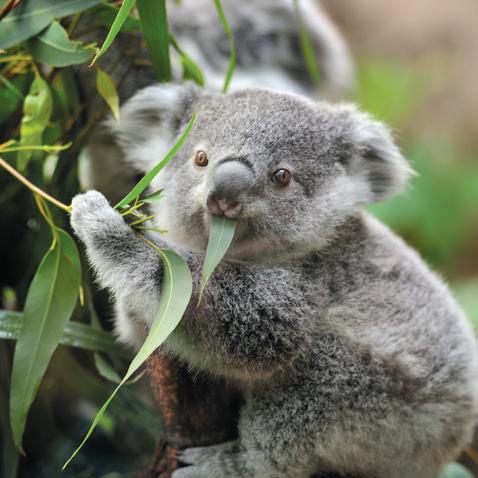
Koalas are a national symbol of Australia’s unique wildlife, beloved for their sleepy charm and close connection to eucalyptus forests. But across Queensland and Victoria, these iconic marsupials are losing their homes. Once abundant regions like the Big Scrub rainforest in northern New South Wales now survive in tiny fragments, making it harder for koalas to find food and safety. In just the past two years, deforestation and wildfires in New South Wales have tripled, uprooting the habitats koalas rely on. Between 2017 and 2022, more than 2.2 million hectares of bushland were cleared, and the 2019–2020 bushfires destroyed another 12.6 million hectares.
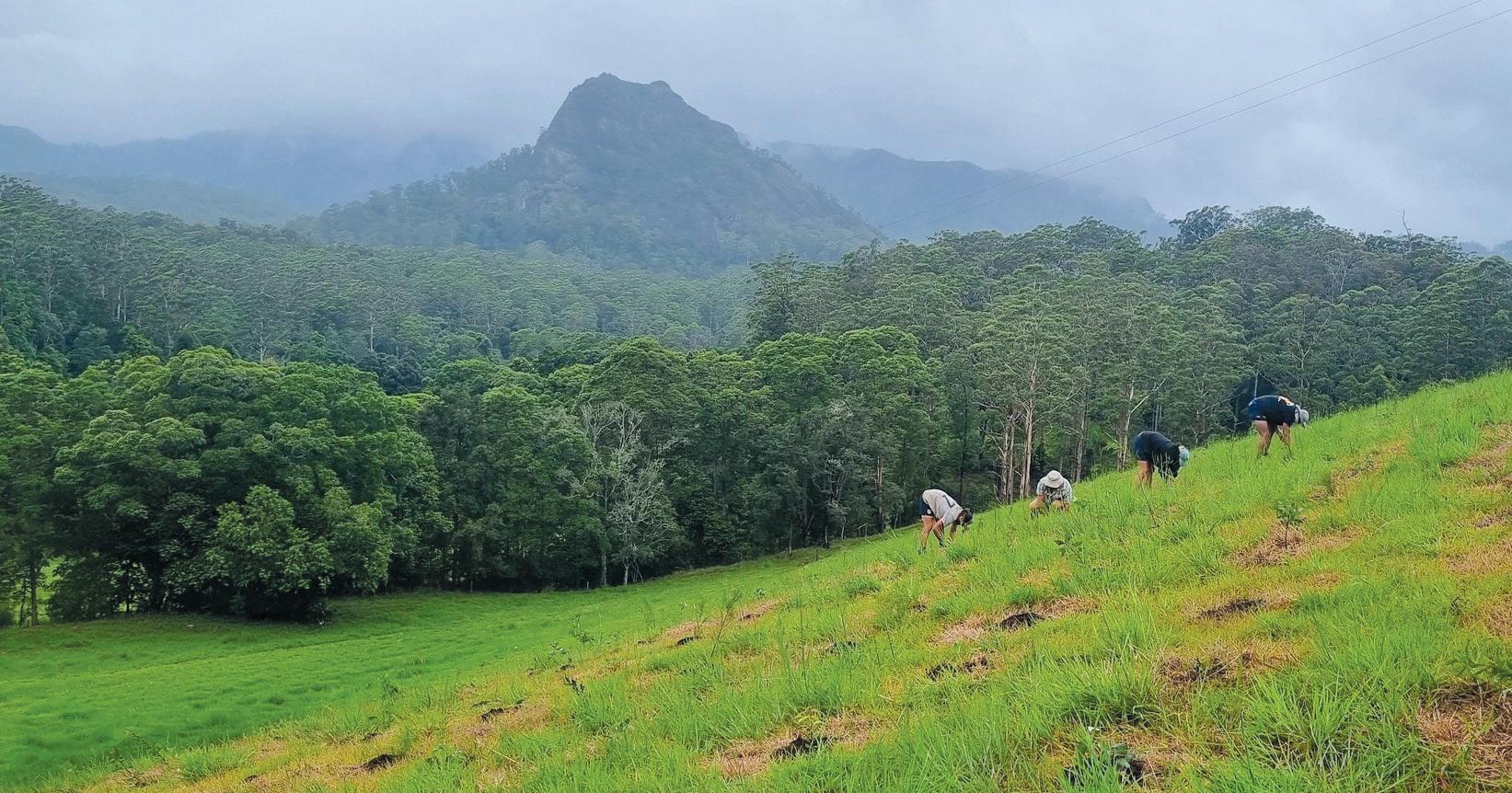
The Arbor Day Foundation partnered with ReForest Now to restore the Big Scrub through the Australian Critically Endangered Rainforest Restoration Project. Planting native trees along waterways and across the landscape reconnects habitats, supports wildlife movement, reduces erosion, improves stormwater absorption, and strengthens community resilience.
Forced to the ground, koalas are vulnerable to threats like cars, dogs, disease, and stress. Today, they are officially endangered in New South Wales, Queensland, and the Australian Capital Territory under Australia’s national environmental law (the EPBC Act). Without urgent action, this beloved species could disappear within our lifetime.
The solution is simple, yet vital: trees. Once covering 75,000 hectares, the Big Scrub rainforest — Australia’s largest continuous subtropical rainforest — now survives as just 1% of its original size. Despite fragmentation, it still shelters koalas, platypus, spotted-tailed quolls, Richmond birdwing butterflies, and rare birds like the regent bowerbird. Every tree planted helps reconnect habitats and restore balance to stressed ecosystems.
Rebuilding forests is about more than planting trees — it’s about restoring ecosystems, protecting endangered wildlife, and fostering long-term stewardship. With collaboration, strategy, and care, the Big Scrub can once again thrive.
Read the full story at arborday.org/big-scrub
Your leadership and support make this work possible. To discuss how to expand your impact, please reach out to development@arborday.org.
“I can sense their energy and their motivation to be the generation that addresses this problem.”
Jack Igelman, professor at Warren Wilson College
HANDS-ON LEARNING FUELS CLIMATE RESILIENCE
Learning doesn’t always happen in a classroom. Sometimes it happens with boots in the dirt and shovels in hand.
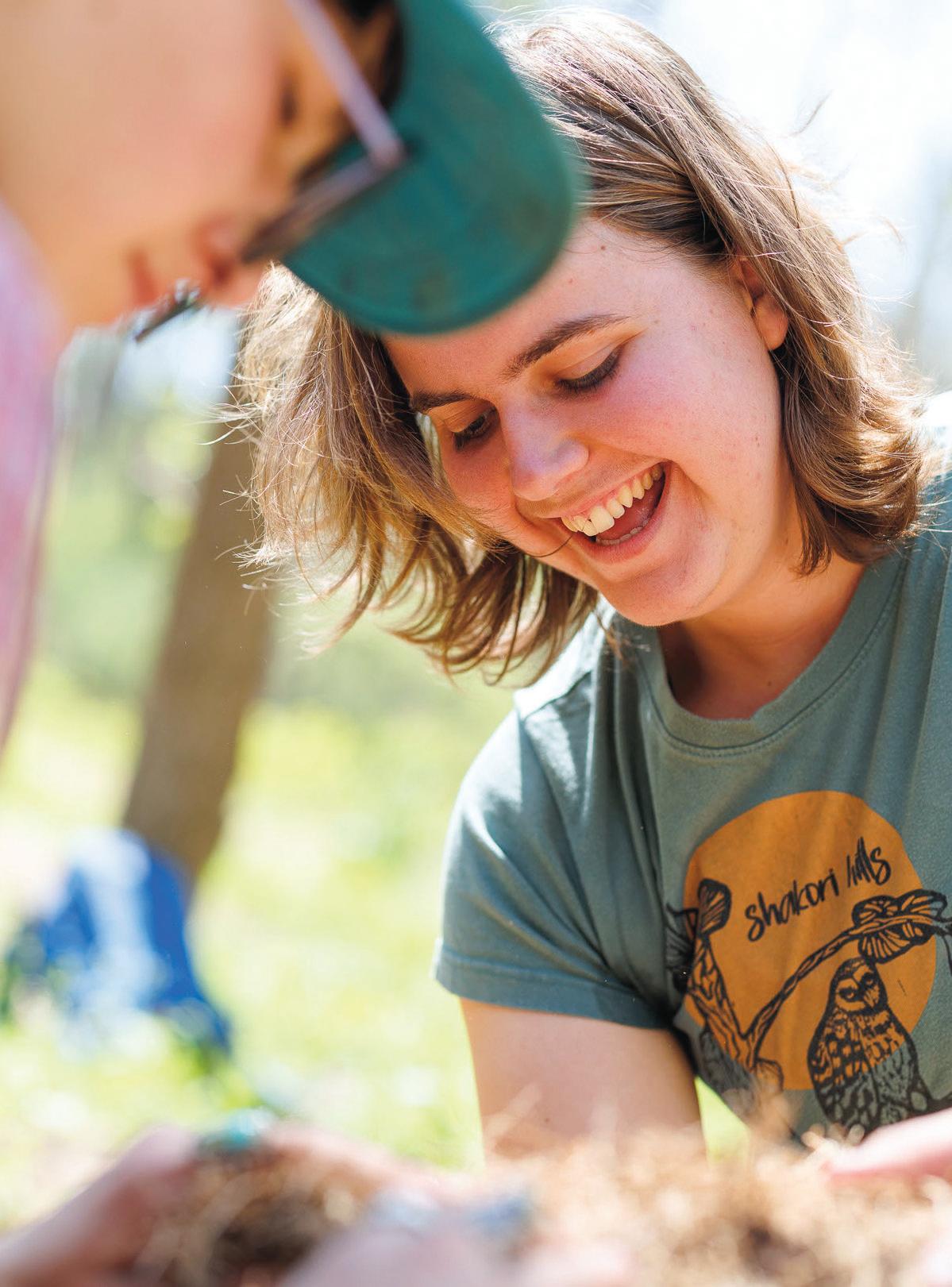
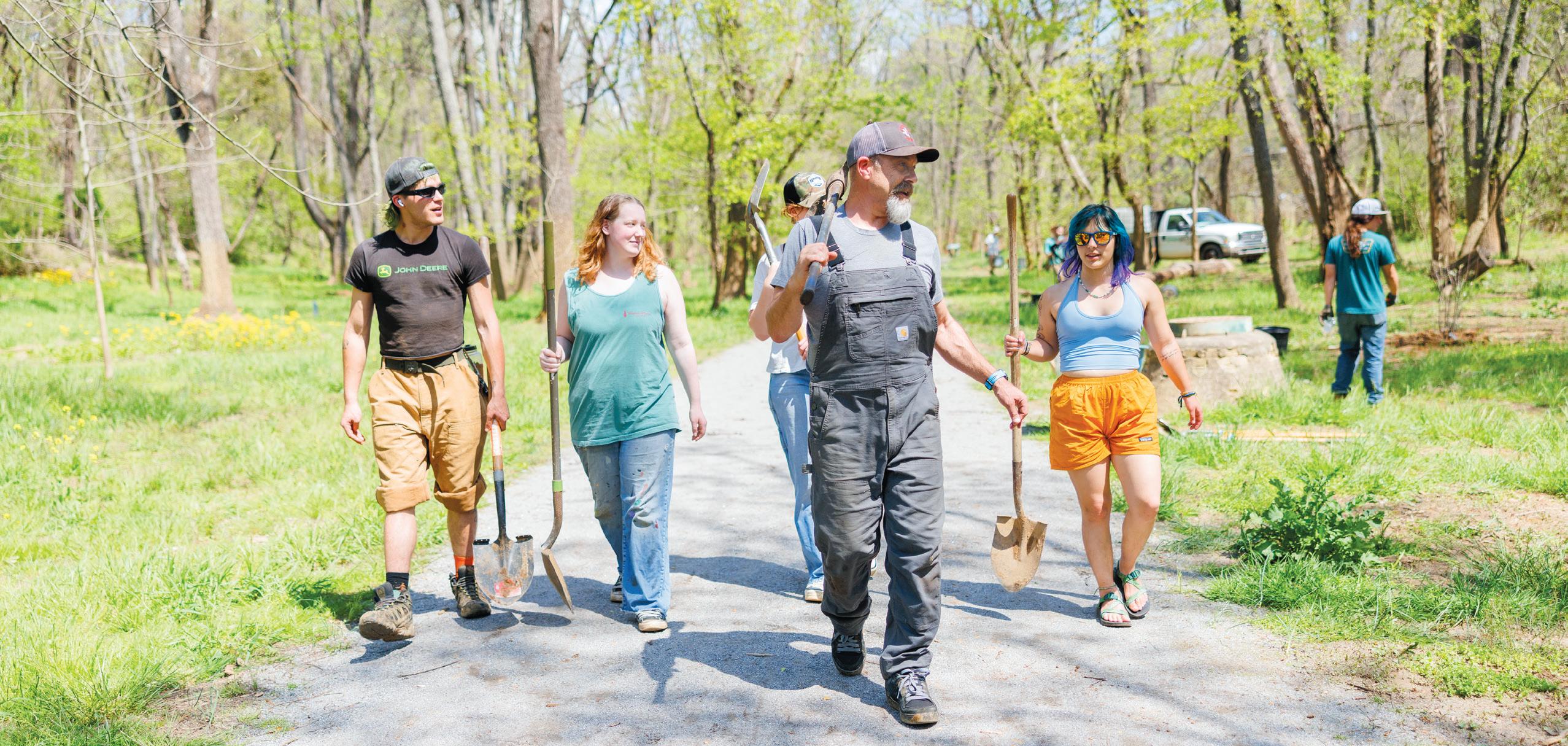
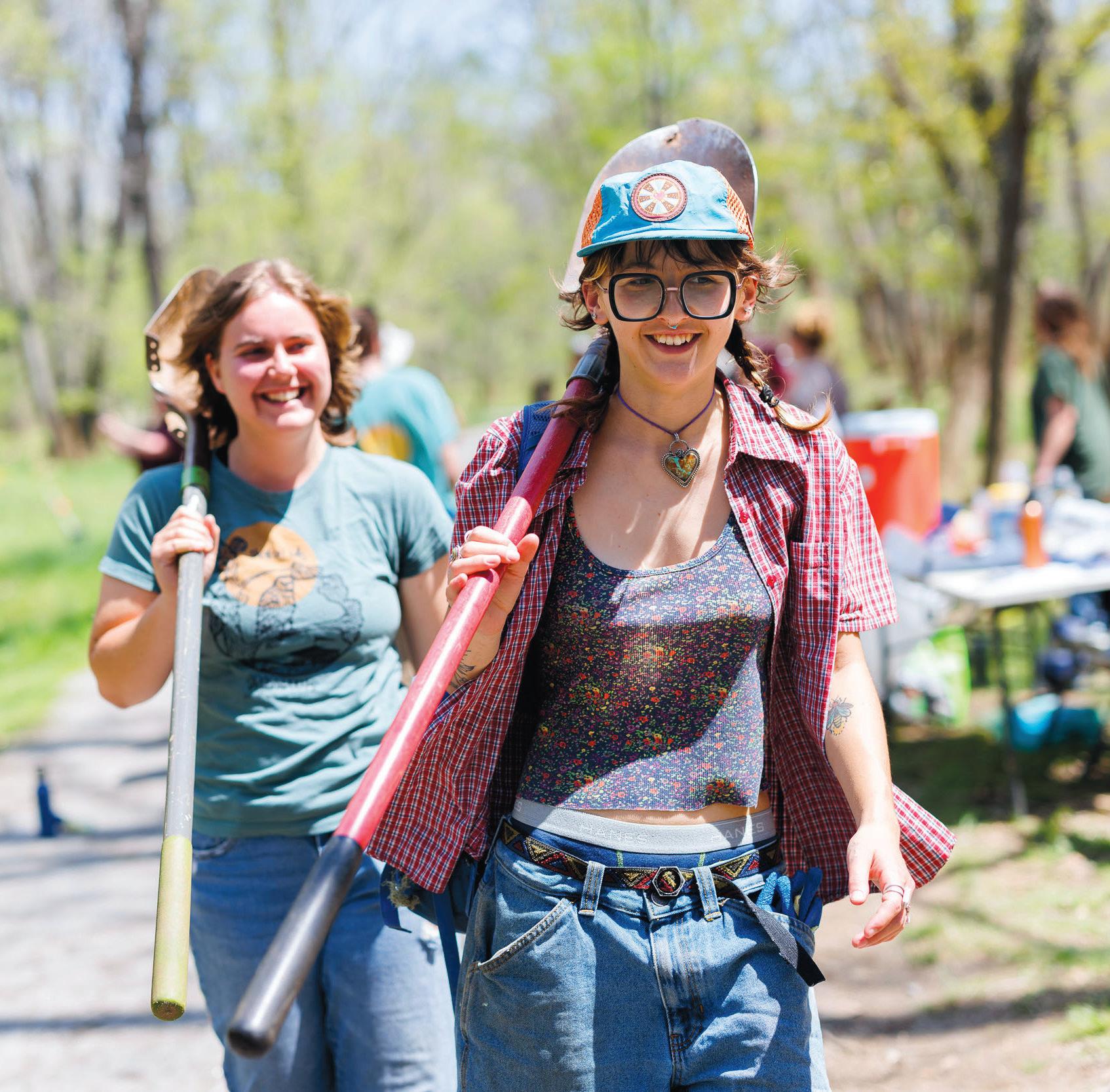
Students from Warren Wilson College in Swannanoa, North Carolina, joined a community tree planting and distribution event led by Asheville GreenWorks in partnership with the Arbor Day Foundation — part of ongoing recovery efforts across the six states impacted by Hurricanes Helene and Milton. For the students, the experience was more than volunteer hours. It was a hands-on lesson in climate resilience, community recovery, and what it means to be part of the solution.
Jack Igelman, an instructor of economics and environmental studies at Warren Wilson College, brought his class as part of a course called Everybody’s Environment — an
introduction to environmental studies designed for early college students exploring environmental careers and pathways.
“It’s everybody’s environment,” Igelman said. “We have a component where we meet with different faculty on campus so students can learn about the kind of work they’re doing. And every Monday we have a three-hour community engagement program.”
Those Mondays have taken students into community gardens, forest management sites, and now, the Hominy Creek Greenway, one of Asheville’s cherished public parks and trail systems in need of tree recovery from the hurricane.
“Hominy Creek Greenway is so beloved because we are in a fast-growing city and county and region of the country,” Igelman said. “Being connected to the outdoors and green spaces is really important for human health, and for mental health. It builds community. It’s just a lovely spot that’s accessible to so many portions of our population.”
That accessibility made the damage from Hurricane Helene especially painful. Nearly the entire greenway — 99% of its 14-acre footprint — was underwater.
“The biggest impact was the amount of water that flowed through this watershed,” Igelman said.
Fast-moving floodwaters eroded streambanks, uprooted trees, damaged trails, and deposited silt and debris across the landscape. Planting trees here is not just about replacing what was lost; it’s about building a more resilient future.
“Trees are a critical component to climate change resiliency on many different levels,” Igelman said.
Native trees help cool communities as summers heat up, provide habitat for wildlife, absorb rainfall, and reduce downstream flooding.
For students, the work connects theory to reality. Our changing climate, Igelman said, is “a collective-action problem we all have to work on.”
That lesson becomes more tangible with every tree planted.
“These trees…are really part of the transformation of this landscape,” he said. “Each one that we put into the ground is part of that equation.”
The greenway has been undergoing a long-term restoration, removing invasive species and replacing them with native trees and shrubs that can sustain themselves over time.
The work also carries emotional weight, as Hurricane Helene deeply affected the Warren Wilson community.
“I think we’re still recovering,” Igelman said. “Lives were lost, homes were destroyed, people were displaced…there’s still a sense of astonishment and shock.”
But alongside that grief, he sees momentum and powerful action taking place.
“I can sense their energy and their motivation to be the generation that addresses this problem.”
FROM OUR MEMBERS with Love and Trees
For more than 50 years, our members have shared a deep love for trees and the impact they’ve had on their lives, families, and communities. Supporters have mailed in stories and photographs capturing those connections in powerful, personal ways. Drawn from our archives, these stories continue to remind us why this work matters.
WAYNESBORO, PA
HEBRON, KY
POSTMARKED 2016
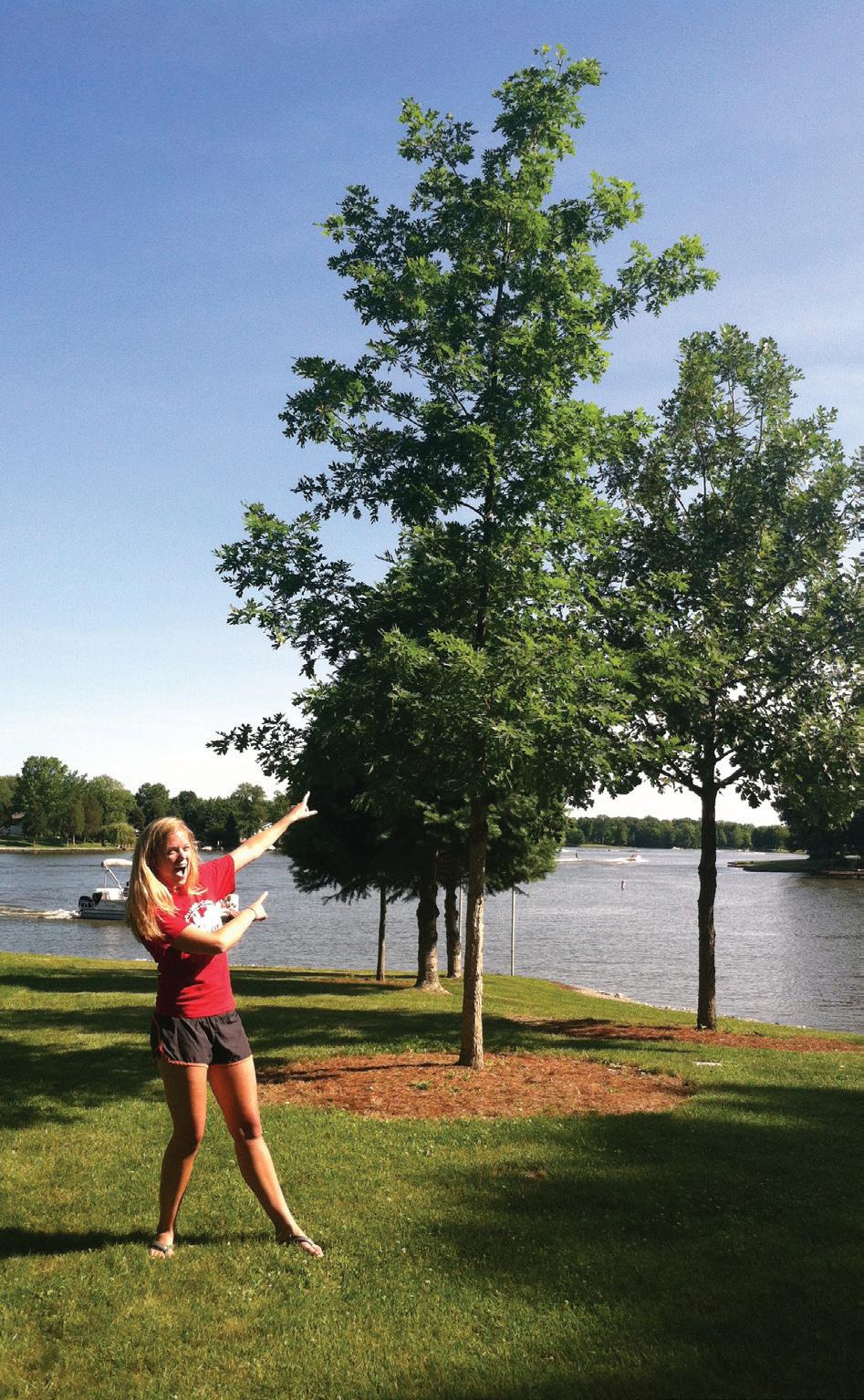
“This is our daughter, Heather, who planted this Arbor Day White Oak (Quercus Alba) when she was in the second grade. We love to see them both grow big and strong! This picture was taken in 2014, when she was a rising senior at the Ohio State University.”
POSTMARKED 2004
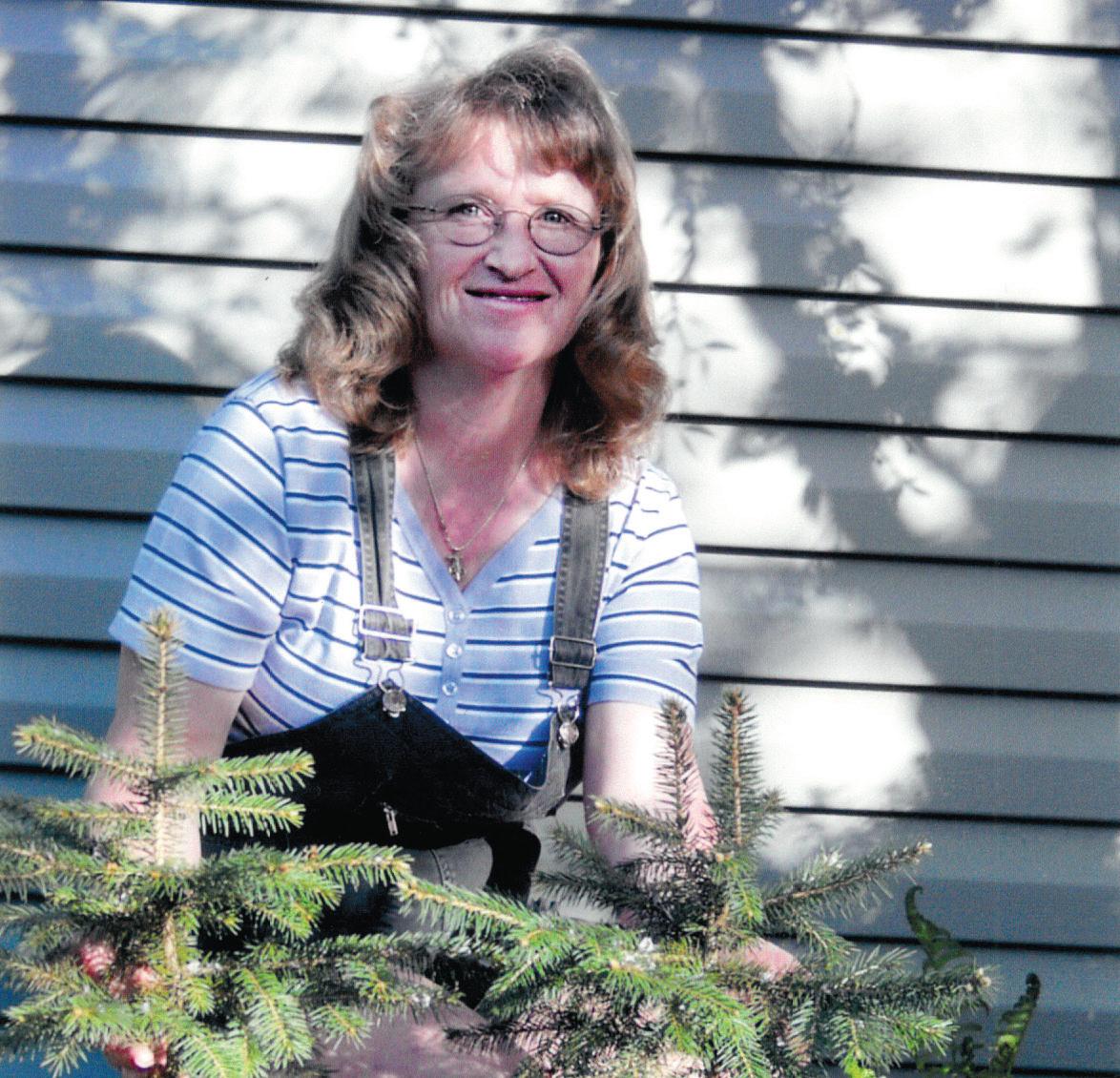
“Every year, I look forward to receiving my trees in the mail. My husband plants them in my flower beds, and each year we anxiously check for buds to appear. Presently, our yard is filled with trees from the Arbor Day Foundation. Now, I raise the trees and find good homes for them by giving them to friends and neighbors. My husband and I really get attached to the little trees after nurturing them for 3 years and almost hate to give them away.
Of the trees we raised and planted in our yard, my husband’s favorite is the redbud, and mine is the arrowwood. Raising the trees has become a hobby for me. Besides learning more about different kinds of trees, I’ve gained a lot of personal fulfillment from raising them and watching them grow the past 5 years that I have been a member.”
LEE D.
SHAE M.