BIOSECURE SALMON EGGS

How to design a genetic breeding program
Bacteriophages in shrimp hatcheries
Tool for live feed quantification

Vol 9 Issue 1 2021 Published by Aquafeed Media S.L.U. www.hatcheryFM.com info@hatcheryFM.com
Vol 11
CONTACT US
Editorial: editor@hatcheryFM.com
Editor/Publisher: Lucía Barreiro
Consulting Editor: Suzi Dominy
Assistant Editor: Marissa Yanaga
Conferences and webinars: info@hatcheryFM.com

Advertising enquiries/request media pack: sales@hatcheryFM.com
Accounts & all other enquiries: info@hatcheryfm.com
SUBSCRIBE
Digital editions are free to industry subscribers. You may also purchase print copies. Subscribe at HatcheryFM.com to receive your own digital copy of our publications.

https://bit.ly/HATCHERYSUBSCRIBE
FOLLOW US


We are grateful to the following companies for sponsoring this issue of the magazine. Their support allows us to make our publications available without charge.
FEED & MANAGEMENT
Aquafeed Media, S.L.U., Ames, 15220 A Coruña, Spain. Copyright© Aquafeed Media, S.L.U., 1998-2023 All rights reserved. Privacy Policy & Terms of use
Hatchery Feed & Management Vol 11 Issue 3 2023 EQUIPMENT HATCHERY FEED & MANAGEMENT VOL 11 ISSUE 3 2023 Contents 4 Interview with Finn Chr. Skjennum 7 News Review 10 AquaGen opens land-based full-cycle egg production facility in Norway *Cover photo 13 Selective breeding for a better catch 17 Expanding possibilities for aquaculture 20 Advanced simulations shed new light on how to design genetic breeding programs 25 French selection and reproduction centers delivering trout eggs worldwide 28 Don’t fall behind: Stay up to date with how technology is redefining live food management in the hatchery 32 Cultivating success through personal relationships and premium feeds: Tailored solutions through new production methods 35 The future of microalgae in aquaculture 38 Enhancing growth performance, survival rates and stress resistance in larval and early post larval rearing of Litopenaeus vannamei 43 Advancing sustainability in aquaculture with ozone and UV 46 Advancements in recirculating aquaculture systems: Enhancing fish density through innovative technologies 49 AI-powered cameras: Revolutionizing fish health monitoring in aquaculture 51 Smart technology for water purification in recirculating aquaculture systems
Bacteriophages in shrimp hatchery: An Indian experience
What’s new in the hatchery? Humic acid as a microbial control agent
New Zealand aquaculture: Poised for growth
Calendar of events To read previous issues in digital format or to order print copies, visit www.hatcheryfm.com
55
60
63
67
HATCHERY
The Centre for Aquaculture Technologies 15 Hatchery Feed & Management 19 FishFarmFeeder ......................................................19 Zeigler .......................................................................23 Reed Mariculture 27 Fresh-flo ....................................................................48 Socorex ....................................................................54 World Aquaculture Society 68
HATCHERY FEED & MANAGEMENT
ADVANCED SIMULATIONS TO BETTER DESIGN GENETIC BREEDING PROGRAMS 20
The expected improvement for a range of traits can be modeled and explore the economic impacts of different genetic programs.
TOOL FOR PRECISE LIVE FEED QUANTIFICATION 28
An automated rotifer and Artemia counting tool that requires far less time and effort while offering unparalleled precision.


ADVANCES IN RAS 46
Pivotal roles of RAS components in maintaining optimal water conditions while enlarging productivity.
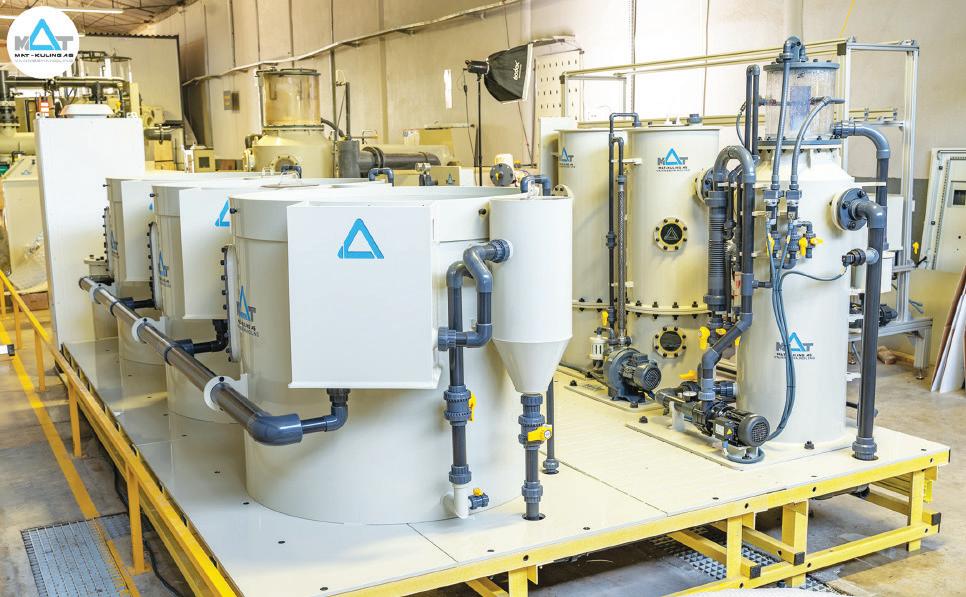
HUMIC ACID AS MICROBIAL CONTROL AGENT 60
The development of non-toxic and environmentally friendly products to disinfect salmon eggs

VOL 11 ISSUE 3 2023
Contents
INTERVIEW with Finn Chr. Skjennum

HFM: In the early 2000s, cod farming was attempted but failed. How important has the Norwegian National Cod Breeding Program been for the resumption of the activity?
FS: The earlier failure of cod farming was caused by several factors occurring simultaneously. The market failed and the financial crisis came at the same time that cod farming was on the rise and still had several biological problems.
The National Cod Breeding Program has continued with genetic improvements despite the lack of commercial cod farming companies for more than ten years. New generations of cod and the current broodstock selection program have been an asset for a new start of the industry. Learning from previous cod farming activities as well as using progress from other farmed species has allowed this new start.
HFM: Cod farming is still a young industry with only a handful of companies currently in operation. Why did you decide to produce cod?
FS: We anticipated that Atlantic cod will be the next species that can be commercially produced in Norway and in the Norwegian fjords. The demand for protein in general and fish products is growing, and cod is a wellknown white fish species in several global markets.
HFM: Ode is a fully integrated Norwegian seafood company. Tell us where the company is today in terms of size, markets and production capacity.
FS: Ode AS is among Norway’s largest cod farming producers today and the company is anticipating growth in the years to come. Ode is in the process of building biomass and delivering several products to the market. The target is to reach more than 30,000 tons of
Hatchery Feed & Management Vol 11 Issue 3 2023 4
Finn Chr. Skjennum is Head of Juveniles in Ode AS
products within three years time. Farmed cod has been well received so far and will be delivered to the global fish markets.
HFM: Focusing on the hatchery, how were the current stocks built and what is the current breeding strategy? In terms of management, what have been the main improvements?
FS: Breeding of cod is still in the early process compared to more high-scaled farmed species such as salmon, and quality work will be among the most important tasks during the next few years. In general, the main target for the breeding program has been the domestication of cod that are better adapted to the current farming conditions, where “Best practice” in cod farming has been a target driven by technology, learning and economy of scale shown by the salmon farming industry.
We have a lot of competence and industry experience in Norway. Both fish growth and the quality aspects have, for instance, been improved in the cod hatchery at Ode Stadsbygd, and both the owners and the employees have strongly contributed to a hatchery process that is based on available broodstock and the best working skills. It is still important to focus strongly on both broodstock and hatchery management procedures and improve and develop the best commercial operating procedures. There is a challenge in the fact that we are presently taking small-scale procedures into largescale systems.

HFM: In terms of larval production, what are the current main challenges for the hatchery stages?
FS: First feeding (weaning onto dry feed) and creating strong fish as early as possible (without deformities) are the main challenges in today’s hatchery production. We still have seasonal variability in hatchery survival. In general, more than 30% survival can be achieved, but batch-to-batch stability is something that requires more focus on improvement in both broodstock management and operational procedures. These procedures as well as a need for more trials are in the process right now and should be achieved at a level that we presently also see in marine fish hatcheries globally.
HFM: In terms of feed, how do you manage first feeding? Have weaning diets been improved for optimal juvenile production?
FS: First feeding with dry feed is a challenge today, but it also requires the right live feed and broodstock management. Several steps with follow-up in the later stages are required – nothing gets better than the weakest stage. Feed to marine species has been developed but can still be better adapted to the cod.
HFM: Deformities and cannibalism have also been some of the hatchery issues in the 2000s. How did you manage to solve them?
FS: Good feed management and start feed quality are the most important issues. Deformities and cannibalism will be present despite the domestication through the
5
breeding programs, but managing cod properly through all the hatchery stages is still the most important factor in achieving high and stable survival.

HFM: How about biosecurity? Are diseases an issue in the early stages? Do you run RAS or a flow-through system?
FS: The hatchery process in Ode is presently done in flow-through technology. RAS development will require other technology and more trials. Biosecurity is a process going on from broodstock through the whole value chain of production. In Ode, we control what we are able to control internally, in logistics and in various production departments, and we have not seen any factors that should seriously affect biosecurity today.
HFM: Ode recently reached an important breakthrough in tackling cod’s early maturity in the grow-out stages. Is there room for more improvements at these stages?
FS: There will be room for more improvements over time. This is valid in the various departments and in all parts of the value chain in Ode. Achieving improvements will be important to be able to develop cod farming, improve fish quality and finally decrease production costs. Broodstock, light manipulation, deformity and vaccine control, as well
as feed, are all very important input factors in the value chain. More knowledge will contribute to improvements in production and the production cost of cod.
HFM: How do you see the future of cod farming in terms of markets and farming technology?
FS: The future of cod farming is promising, but it is dependent on capital and long-term commitment to developing the whole-year market. This will be a stepby-step process that requires a steady increase in the number of high-quality juveniles and it will depend on available sites for placing fish farms – both on land and in the sea.
We know that the market for cod is well developed with good yearly prices, but the essential is to produce and deliver cod at sustainable levels, which requires both scale and strong commitments. Diseases in cod have been under control so far. The industry will need to control diseases over time and also balance the value chain. This will require R&D programs, technology development as well as the ability to define the main bottlenecks in today’s value chain. Norway has a lot of good sites with farming activities that can be well adapted to the sustainable development of cod farming.
Hatchery Feed & Management Vol 11 Issue 3 2023 6
NEWS REVIEW
Highlights of recent news from Hatcheryfm.com
CPF introduces new products in India, plans $72 million investment
CAT unveils shrimp genetics innovation center
This state-of-the-art facility features a cutting-edge genome editing lab and tank space, quadrupling CAT’s shrimp research capacity. The facility’s opening sets the stage for revolutionizing shrimp genetic performance and accelerating next-generation breeding through the application of innovative genome editing techniques.
Charoen Pokphand Foods (CPF) India introduced new products in the Indian market in Vijayawada, Andhra Pradesh. The firm launched new shrimp feeds (Blanca Extra, CP Monodon Advance and Super Marine Extra) and seed products (Turbo Rocket and Turbo Kong). The new products available in the Indian market have been developed by CPF’s Thailand team especially for Indian farmers. Furthermore, the company plans to invest ₹600 (USD 73 million) in its aqua and agro-businesses in India soon.
Benchmark expands R&D team in reproductive technologies
Bangladeshi company unveils SPF monodon fry
ACI Agrolink, a subsidiary of the Bangladeshi ACI Group, plans to introduce SPF post larvae of black tiger shrimp into the Bangladeshi market. The initiative opens a new business line for the group that aims to enhance shrimp farming in the country and increase exports.


Benchmark has bolstered its research and development team with several new recruits in recent months. The new Reproductive Technologies R&D team has been established to ensure the company remains at the forefront of innovation, in particular, bringing breakthroughs in sterility and gene editing to the market in the coming years. Milestones in these technologies are expected to highly impact the salmon industry’s productivity, animal welfare, and sustainability.

7 NEWS REVIEW
BioMar expands hatchery trial facilities

RASLab, KYTOS join forces on microbiome management services in RAS
The expansion of the marine hatchery trial facilities at its Aquaculture Technology Centre (ATC) Hirtshals in Denmark will increase the capability of performing trials in semi-industrial conditions. They will serve as a hub for research and development activities, with the addition of six multinational R&D staff to the team of experts in marine hatchery operations. It will include units dedicated to larval rearing as well as live feed production, allowing for extensive research and testing of hatchery feeds for several marine species.
FAI Farms unveils shrimp welfare website and online training course
FAI Farms launched its Shrimp Welfare project’s new website, myshrimp. farm, a user-friendly platform that serves as a comprehensive resource hub, offering insights, guidelines, and practical solutions for optimizing welfare in shrimp aquaculture. The site features FAI’s welfare assessment protocol and its first online training course on shrimp welfare, available in English, Spanish and Portuguese, and soon Thai and Chinese.

The companies are collaborating to offer commercial services to manage and optimize the microbial health and performance of RAS systems. KYTOS offers a quantitative overview of the microbiome in the water and biofilter that complements RASLab’s RASseq services where next-generation sequencing identifies all of the bacteria in the biofilter. By undertaking these combined analyses, it becomes possible to understand how management decisions affect the biofilter in terms of performance and resilience as well as the total microbial environment of the RAS system. Using this information, bespoke services can be offered for optimizing system and fish performance.
Waterbase expands into Sri Lankan shrimp feed market

Indian shrimp feed producer, The Waterbase Limited (TWL), has entered the Sri Lankan shrimp feed market appointing Lucky Seven Aqua as its distributor for shrimp feed in Puttalam District, Sri Lanka. With the increasing popularity of vannamei shrimp farming in Sri Lanka, Waterbase sees immense potential for its high-quality shrimp feed products in the region.
“Farmed shrimp production in Sri Lanka has witnessed significant growth, particularly with the introduction of vannamei shrimp. Waterbase’s entry into the market is a positive development for the local aquaculture industry. Our high-quality shrimp feed products will play a crucial role in supporting sustainable shrimp farming practices and improving overall productivity,” said Dr. Mohandas, presidentsales at TWL.
Hatchery Feed & Management Vol 11 Issue 3 2023 8 NEWS REVIEW
Ace Aquatec unveils state-of-the-art biomass camera

Ace Aquatec added another innovative product to its suite with A-BIOMASS™, an automated AI camera system. The fully-automated camera is far smaller and easier to deploy than many on the market, weighing in at just 8.5kg, and has been proven to withstand the harshest environmental conditions.
World’s first breeding of bluefin tuna in a land-based facility achieved
First steps agreed in the creation of a Global Shrimp Council to boost worldwide consumption
More than 20 shrimp producers have held talks aimed at creating a Global Shrimp Council, to generally promote and grow shrimp consumption around the world by providing meaningful information about the industry. The meeting took place on the fringes of the Global Shrimp Forum in Utrecht. Producers from several countries including Ecuador, Mexico, India, Vietnam and Indonesia took part in the meeting, which was the initiative of industry leaders, Gabriel Luna, owner of Glunashrimp and David Castro, CEO of Manta Bay. The organization aims to be producer-driven and could be established within the National Fisheries Institute (NFI) in the US.
eFishery, ASC join forces to scale certification of smallholder farmers in Indonesia
eFishery signed a partnership with the Aquaculture Stewardship Council (ASC) to advance sustainable aquaculture in Indonesia and empower small-scale shrimp farmers across the region. By extending assistance towards obtaining ASC certification, the partnership aims to foster not only more sustainable farming practices but also wider access to premium international markets for these farmers.

Researchers from the Murcia Oceanographic Center of the Spanish Institute of Oceanography (IEO, CSIC) have achieved, for the first time, worldwide, the reproduction of Atlantic bluefin tuna (Thunnus thynnus) kept in captivity in a land-based facility. The IEO previously closed the cycle of this species in 2016 but in floating cages in the sea.

9 NEWS REVIEW
AquaGen opens land-based full-cycle egg production facility in Norway
Lucía Barreiro
Credits: Berre/AquaGen
AquaGen recently opened its new full-cycle facility, Profunda, in Barstadvik in Ørsta municipality, Norway, in an international event that gathered industry professionals from different countries. As Norway’s only land-based full-cycle broodstock and egg production facility, Profunda will deliver biosecure salmon eggs all year round and aims to supply customers across the globe.
AquaGen is a research-oriented breeding company that develops manufactures and delivers genetics start material and fertilized eggs to the global aquaculture industry. The company purchased Profunda in 2017 at a stage when the facility produced broodstock salmon for other customers. In 2018, the facility expanded its broodstock production capacity and in 2020, the company started to work on turning Profunda into a full-cycle land-based facility for egg production. The

plan was completed in 2023 and has already delivered salmoneggstocustomersinNorwayandtheU.S.
The location
Profunda is located in a scenic area with mountains and a deep fjord. Why did the company select this location? AquaGen wanted to bring pathogen-free farming that has been implemented in other livestock species for years to salmon. The main focus was finding a location with the best water inlet quality After discarding the ozonation option, the company looked at the results obtained by the Mediterranean aquaculture farms using sandstone filtration for seabream and seabass. AquaGen found that the nature around Barstadvik has very special geological features with deposits of sand and gravel that have built up since the lasticeage.
Hatchery Feed & Management Vol 11 Issue 3 2023 10 SPOTLIGHT
last deglaciation when the ice melted and carried down the rivers with sand, clay and stones to the sea. The water movement of the fjord removed all small particles accumulating and settling down sand and gravel in this area. This is quite unique with very few locations like this in the world.
The facility has access to both marine and fresh groundwater which is taken from deep wells, and Profunda, which means “deep”, is named after them. Both are filtered through the sand deposits which offers several advantages. It minimizes water temperature variations and in the case of seawater, it brings oxygenrich seawater from the fjord bottom and aerobic bacteria that settle down on the sand acting as a biofilter. Therefore, the water that comes in is very clean and unique.

Both waters are also disinfected through UV systems. Artec Aqua has been the turnkey contractor for the project. The facility features a flow-through system and a hybrid system for the quarantine and egg departments. The facility also features a system to recover part of the heat before the water is released into the sea again.

Genetics
Aquagen has more than 50 years of balanced breeding experience with a breeding program consisting of more than 1,000 families. Starting its activity in the 1970s,
more than 14 generations have been bred selecting different traits, the most important being growth and disease resistance, but adding others, such as growth in seawater, sexual maturation, and quality traits (color and fillet texture). Genomic selection is made by over 70,000 different markers to find the fish with the best traits.
Back in the day, the initial generation time was four years, and over 12 generations, and through long-time genetic progress, it has now been reduced to three years nowadays. Thanks to its milt cryobank, AquaGen recently performed a study to quantify the effect of genetic selection for increased growth throughout these years and model future growth. Results showed that to reach a 4-kilo salmon, it takes 22 months in generation 0 (in the 1970s), 16 months in generation 6 (in the 1990s)
11 SPOTLIGHT
and 9 months in generation 11 (2010s). By improving the inherent growth potential of Atlantic salmon through genetic selection, the model predicted a 50% reduction in production time (7 months in seawater) and lower mortality in 2050.
Egg production
With 10,000 broodstock and a production capacity of 100 million eggs per year, Profunda acts as a breeding nucleus. Broodstock live their entire life cycle, from egg to egg, in a high-tech facility with the highest level of biosecurity that does not need to take eggs or milt from other facilities.
Broodstock production takes about three years. A comprehensive screening program ensures fish health throughout its life cycle. Each broodstock is individually monitored and screened after egg release including an autopsy and a PCR test.
Each egg batch is maintained separately in a quarantine room until the screening test results are negative. Eggs follow quality tests and sorting to remove unfertilized or dead eggs and eggs with anomalies and are disinfected. They are then packed in storage boxes and delivered to the final customers. The whole process ensures complete traceability.
Biosecurity
At Profunda closed plant, all aspects are under control and the risk of contamination from outside has been
eliminated, which, in turn, takes minimal risk of disease. The company has designed a scientificallybased surveillance program for its disease-free status. The facility has periodic inspections by external services. Disease-free tests are made for eggs and customers can request those that have been carried for their egg batch.
Water is continuously monitored. The facility has installed specially designed louvers where seawater aerosols and humidity are trapped. The different rearing areas are independent with special areas to disinfect equipment and staff. Profunda is a closed system meaning new biological material is not introduced in the facility.
Since Profunda aims to supply salmon eggs to international customers, it needs to have the status as a specific pathogen-free segment from the World Organization for Animal Health (WOAH). The company is currently working on a two-year surveillance program to document freedom for relevant diseases and independence from the surroundings that will end in March 2025.
Profunda also aims to be approved by the European Union as a close compartment and also comply with the specific requirements of the countries that plan to supply eggs. Currently, the company has market access to the U.S. and other third countries.

Hatchery Feed & Management Vol 11 Issue 3 2023 12 SPOTLIGHT
AquaGen Profunda facility
Selective breeding for a better catch
John Buchanan, Anastasia Karelova, The Center for Aquaculture Technologies
In the rapidly evolving world of aquaculture, where the demand for seafood continues to rise, improved efficiency and sustainability are crucial. To meet this growing demand, the industry has turned to a timetested strategy: selective breeding. In this article, we will explore the significance of selective breeding in aquaculture, review various types of breeding programs and offer insights to make informed decisions.
Why selective breeding matters
Technically speaking, selective breeding is the process of improving one or more desirable traits of a cultured species through the selection of superior parents. A breeding program is how this idea is put into action, using specific tools and methods. It should be designed to maximize the economic return for a commercial aquaculture producer. Therefore, selective breeding
isn’t just a buzzword; it’s a practical strategy that helps aquaculture achieve critical goals:
Improved quality: One of the primary motivations behind selective breeding is to enhance the quality of farmed aquatic species. By selectively breeding for desirable traits like rapid growth, disease resistance, and survival, we can produce fish and other aquatic organisms that meet consumer preferences and market demands.

Enhanced productivity: Productivity is the lifeblood of aquaculture. Selective breeding allows us to create strains of fish, crustaceans, or shellfish that grow faster and more efficiently, leading to increased yields and reduced production costs.
Sustainability: Sustainable aquaculture practices are essential for safeguarding our aquatic ecosystems. By selectively breeding for traits that minimize
13 GENETICS
GENETICS
environmental impact, such as reduced waste production and efficient feed utilization, we can create a more sustainable future for the industry.
Exploring options
There are numerous ways to organize a breeding program. Here are three common options to consider.
Mass selection assisted with molecular markers
Mass selection is a process where you pick the best individuals based on visible traits (phenotypes) and cross them to create the next generation. However, it comes with a caveat – this strategy works effectively for straightforward and direct traits like size, shape, or color.
There’s another crucial aspect to consider. In mass selection, you might end up selecting closely related individuals (leading to inbreeding). This can cause issues in the long run, as after several generations, genetic gains can diminish, potentially causing the program to collapse. To prevent this, molecular markers and genomic information are often employed to track diversity and levels of inbreeding within the population, ensuring that the breeding program remains robust and sustainable.
Consider the case of Ecuador’s thriving shrimp farming industry, where the adoption of mass selection programs has brought about a transformative impact. These programs have been primarily geared towards enhancing growth. By selecting the biggest shrimp, farmers have achieved a two-fold benefit. Not only have they raised the bar on the quality and quantity of their shrimp, but they’ve also significantly bolstered the economic feasibility of their operations. This means they can produce larger shrimp in a shorter span, resulting in increased profitability.
Family-based breeding
This approach involves selectively crossing the most promising families within a population to produce the next generation. It relies on the careful consideration of both observable traits (phenotypic) and ancestry records (pedigree). By combining individuals from families with superior characteristics for any type of trait, this method estimates the genetic effects of specific traits in various environments, ultimately enhancing the desired traits in the succeeding
generations. Importantly, several traits can be selected at the same time using this approach and a selection index.
One notable example is the family-based selective breeding program for Nile tilapia (Oreochromis niloticus) in Egypt. In this program, researchers and aquaculture practitioners identified families of Nile tilapia with superior growth rates, disease resistance, and other desirable traits. These selected families were then bred together to create the next generation of tilapia. Over time, this approach has resulted in significant improvements in the growth performance and disease resistance of Nile tilapia stocks in Egyptian aquaculture. By focusing on family lines with consistently favorable characteristics, this family-based breeding program has contributed to higher production yields and economic gains for aquaculture farmers in Egypt, highlighting the effectiveness of such programs in achieving specific breeding objectives.
Genomic selection
Genomic selection is an advanced breeding strategy that identifies and mates the most promising individuals based on their Genomic Estimated Breeding Values (GEBV) to create the next generation. This highly effective method integrates phenotypic data, pedigree, and genomic information to significantly enhance precision and responsiveness in selecting specific traits and adapting to various environmental conditions. This method generates the most rapid genetic gain per generation, maintains genetic diversity extremely well, and can address improvement in multiple traits.
Norwegian aquaculture companies have harnessed the power of genomic selection to elevate the growth rate, improve flesh color, and increase yield and disease resistance of their Atlantic salmon populations. In this initiative, researchers conduct extensive genomic analyses to determine genomic relatedness and identify regions of the genome associated with trait improvement. By selectively breeding salmon with favorable genomes, they achieved rapid and substantial improvements. This strategic move not only boosted the productivity of salmon farms but also curtailed the need for antibiotics and other treatments, promoting sustainability and environmentally friendly practices in Atlantic salmon aquaculture.
Hatchery Feed & Management Vol 11 Issue 3 2023 14

Shrimp's DNA Unleashed: Making waves with AQUAarray HD vannamei 50K Empowering breeders to drive transformative advancements through genetic improvement. www.aquatechcenter.com T E C H NO LO G I E S AQ UACU LTUR E T H E C E N TE R FO R ALL vannamei populations Fast turnaround Quality control Expert advice Genomic Selection and more Harness the power of a single tool for all your shrimp breeding needs! More tools and more species in our AQUAarray catalogue
Building the foundation
To effectively implement selective breeding programs, aquaculture companies must possess a range of critical capabilities. This begins with having the necessary technical expertise in genetics and breeding principles to make informed selections of breeding candidates. Efficient data collection and analysis tools are vital for evaluating traits and tracking pedigree information accurately. For genomic selection programs, access to cutting-edge genomic technologies is essential for precision.

It’s important to note that there’s no competition between the types of breeding programs you can implement. Instead, the choice depends on your specific situation. Each breeding program has its strengths and is suited to different contexts. Mass selection, familybased breeding, and genomic selection are all valuable tools in the aquaculture industry’s toolbox, and the right choice depends on the unique goals and resources of each company. The key is to make an informed decision that aligns with their aquaculture operation’s objectives and long-term vision.
“Many clients approach us with a strong inclination toward genomic selection, considering it the industry’s go-to solution. However, we believe in a tailored approach. By thoroughly evaluating their business
structure, production methods, goals and available resources, we often recommend a different path that aligns better with their unique circumstances,” says Alejandro Gutierrez, director of breeding at the Center for Aquaculture Technologies

From this perspective, having access to specialized expertise can be a gamechanger. Producers often find it beneficial to collaborate with partners who have expertise in genetic analysis, breeding program development, and genomic technologies. Companies like CAT offer consultancy and breeding services tailored to the unique needs of aquaculture operations and can provide valuable guidance and technical assistance. By leveraging these services, producers can enhance their capabilities, make informed breeding decisions, and optimize their breeding programs for improved outcomes.
Selective breeding programs serve as the foundational step in shaping the genetic characteristics of aquaculture species. Once these programs have laid a solid genetic groundwork, genome editing techniques can then be employed to precisely fine-tune specific traits, offering even greater control over the genetic makeup of aquatic organisms. This combined approach provides a robust foundation for the sustainable growth of the aquaculture industry.
More information here.
Hatchery Feed & Management Vol 11 Issue 3 2023 16 GENETICS
Expanding possibilities for aquaculture
Dave Conley, AquaBounty Technologies
AquaBounty’s expertise in R&D and vertical integration drive future growth.

Fish farming is the fastest growing form of food production in the world, and with good reason. World population growth will continue to drive increased demand for protein in the coming decades. Blue foods such as salmon are not only an excellent source of protein, but a healthy, lean source with many other proven health benefits.
But even as demand for seafood continues to grow, supply is constrained. Ninety percent of the world’s fisheries are fully fished or overfished, and rising ocean temperatures negatively impact wild salmon populations and even net-pen farmed fish
“Our oceans are being pressured like never before, and we must protect and preserve delicate and
stressed ecosystems and fisheries,” said Sylvia Wulf, AquaBounty CEO.
Amid these demand and supply pressures, AquaBounty is using its research and development (R&D) expertise and vertical integration to continuously improve production at its land-based farms and ensure a sustainable source of healthy seafood.
AquaBounty: Preparing for future demand
Among land-based aquaculture companies, AquaBounty has made R&D a key focus since the development of its GE salmon over 30 years ago. AquaBounty has continued to invest in its R&D capability, and today, it is expanding its research efforts at its Fortune Bay facility
17 GENETICS
on Prince Edward Island (PEI), Canada, where scientists are using the latest biotechnologies to improve fish breeding, health and nutrition, and genetics.
As a vertically integrated company, AquaBounty seeks to continuously improve salmon health and production across the salmon lifecycle, from broodstock to hatch to harvest. Vertical integration allows AquaBounty to leverage decades of expertise in fish breeding, genetics, and health and nutrition to deliver disruptive solutions that address food insecurity and climate change issues by shifting salmon production out of the ocean to land-based recirculating aquaculture system (RAS) farms. The company uses the latest RAS technology in its freshwater tanks to nurture the fish in a safe, sustainable way, leveraging its extensive RAS operational experience. Vertical integration is a competitive advantage that allows AquaBounty to raise its GE salmon with even greater efficiency and sustainability.
“AquaBounty’s vertical integration through each phase of our salmon lifecycle, from control of egg and broodstock production through grow-out and harvest, allows us a unique degree of insight and control over every aspect of our operations,” said Wulf.

Expanding production now
AquaBounty’s farm in Rollo Bay, PEI, specializes in broodstock husbandry, egg production and hatchery efficiency and is currently undergoing expansion to increase salmon egg production of both GE and nonGE salmon eggs. The expansion will allow AquaBounty to increase production of its FDA-approved GE Atlantic salmon and sell non-GE salmon eggs to other ocean-pen and land-based salmon producers. By capitalizing on its R&D expertise and integrated production capacity, AquaBounty is ensuring land-based aquaculture is
Hatchery Feed & Management Vol 11 Issue 3 2023 18 GENETICS
“AquaBounty’s vertical integration through each phase of our salmon lifecycle, from control of egg and broodstock production through growout and harvest, allows us a unique degree of insight and control over every aspect of our operations,”
Sylvia Wulf, AquaBounty CEO.
positioned to meet the growing demand for salmon with sustainable practices.


Fulfilling the promise of land-based aquaculture
AquaBounty has strategically aligned its proficiency in RAS technology with the added advantages of vertical integration and a deep commitment to R&D to continuously improve operational efficiency, employing the most advanced research to enhance fish health and nutrition. Land-based aquaculture has the potential to provide a sustainable source of lean, healthy protein to meet an ever-growing demand, even as population growth and climate change challenge traditional fisheries and ocean farming. AquaBounty is fulfilling

the promise of land-based aquaculture so the world can expect to enjoy sustainable, healthy seafood for generations to come.
More information:
Dave Conley, MSc Director, Corporate Communications

AquaBounty Technologies, Inc.





E: dconley@aquabounty.com

19 GENETICS
LAND • SEA • RAS
Systems
Vaccinator
Aquaculture Feeding
Feed
The only manufacturer worldwide that covers all feeding stages of fin fish and shrimp for land or sea based systems
Live
Dry Feed Aquaculture Europe 2023 - Booths 16-17 18 - 21 Sept 2023 • Vienna
(AUSTRIA)
For Medium and Big-Scale Hatcheries
For Medium and Big-Scale Hatcheries
For Labs and Small-Scale Hatcheries
For Labs and Small-Scale Hatcheries
Automatic Feeding System of Artemia, Rofiter and Microalgae.
Dosing of Micro Diets from 200 up to 800 microns
Advanced simulations shed new light on how to design genetic breeding programs
 Dr. Mark Looseley, Dr. Marie Smedley, Xelect
While selective breeding in aquaculture still lags behind the main livestock and agricultural species, the last decade has seen genetics move from the margins to the mainstream. We’ve made significant progress, but many producers are only just beginning to explore how a genetics program can affect the profitability of their production.
When designed correctly, a selective breeding program should deliver a return on investment many times over, but knowing how to implement it can be a daunting task. Firstly, there’s a bewildering array of genetic technologies and approaches available. How do you know which one is right for you? Secondly, every single farming operation is unique – both in
terms of the actual production environment and their commercial situation.
At Xelect, we know that no two breeding programs are the same, even with the same species. To help farmers make informed choices about how to structure their breeding programs, we’ve built sophisticated bioeconomic models that combine advanced genetic simulations with real-time commercial data, allowing us to explore how the choices you make about your breeding program directly affect your profitability. We effectively create a virtual version of your farm and can simulate how small changes made now can make big changes in the future.
Hatchery Feed & Management Vol 11 Issue 3 2023 20 GENETICS
In this article, we’ll cover some of the common choices that need to be made, and use data from our simulations to explore some of the big questions in aquaculture breeding.
Genomic selection:
Is the gold standard right for everyone?
The question of which selective breeding tools make the most economic sense will be different for every producer based on the species, environment, commercial values and scale of operation. For many of our customers, we recommend pedigree-based selection programs, which estimate the genetic value of each selection candidate by combining measures of its own performance with those of its close relatives. This allows us to separate genetic effects (that get passed on to its offspring) from environmental effects (that do not). Under this type of selection, the relationships between individuals are taken directly from pedigree records.
Genomic selection takes this to another level, using high-density genetic data to make more accurate estimates of the genetic relationships between individuals, which, in turn, allows the genetic value of each individual to be estimated more accurately. This can result in faster rates of genetic gain. Genomic selection is particularly valuable in traits that cannot be measured in the broodstock candidates, such as disease resistance or fillet yield.
The price of operating a genomic selection program has fallen significantly in recent years, so it’s tempting to assume that it is now the “go to” for any modern breeding program. In reality, genomic selection is best suited to larger-scale production, but even then, it is important to base financial decisions on sound forecasting.
We can use our simulations to look at how a genomic selection program is likely to perform in two different scenarios.
For this first example (Fig. 1), we consider two different businesses farming a high-value salmonid species in different parts of the world, with distinct environmental conditions and associated pathologies. Both farms are identical, with the same running costs, feed costs and production levels. However, Farm 1 has a higher level of mortality during the on-growing stages than Farm 2, which has better survival values at the end of the cycle.
The question is simple: Is genomic selection worthwhile for both producers?
The findings are remarkably clear. Genomic selection provides significant profitability savings compared to pedigree-based selection where the mortality levels are high, but pedigree selection methods remain more appropriate where mortality levels are low. The scale of these savings is modest for a smaller scale of production and therefore may not merit investment in GS technology given the higher upfront costs with this technology. Once pedigree and genomic selection technology are implemented appropriately, the genetic program makes up just a tiny percentage of the costs of the operation and the resulting commercial improvement is significant.
Of course, this comparison tests two particular scenarios for two scales of operation, but every farm is different. We work with our customers to carefully

21 GENETICS
Figure 1. Simulations comparing the projected gains in weight and survival when using genomic selection and pedigree selection. Farm 1 had a highe level of initial mortality compared to Farm 2.
design the program that best meets their needs – but the costliest solution does not always produce the best return on investment. The important thing is to take the time to understand what kind of strategy will give you the biggest return on your investment.
The trade-off of traits: How many is too many?
There’s a large list of traits that could be improved by genetic selection – such as growth rate, size at harvest, sexual maturation, survival, resistance to pathogens and parasites, FCR, body shape, flesh color and stress tolerance. If you can measure for it (and it is heritable) you can – in theory – select for it.
But if you overload your breeding program with too many traits of interest you will simply see diminishing results on the ones that really matter. Firstly, measuring and managing multiple traits can have a cost, through additional work and measuring equipment. More importantly, the economic value of genetic improvements is not identical across traits and selection pressure is limited. The more traits you select, the lower the response will be in each. Finding the right balance of traits requires a careful consideration of how much each of them is really worth to you. In this second example, we looked at two different scenarios, one where only 4 traits were selected, and carefully balanced based on their
commercial impact. In the second, we simulate a program that was designed to give improvements in 8 traits at once without any consideration of their value. Our simulations show that both programs give improvements to every generation, but the more focused program, designed to improve only the most valuable traits, rapidly outperforms a program that attempts to improve too many traits at once (Fig. 2). Once the program is established, and generational improvements are realized, the relative economic gain is significant. Our advice is usually to identify the traits that will really change the dial when it comes to commercial returns and focus on those to generate maximum return on your breeding program costs.
Prioritizing your spend: How do you maximize the return on your investment?
When designing a selective breeding program, there are many areas of investment to consider and choices to make on where to spend money. Again, simulations can help. For this last case, we will continue with the same Farm 1 as the first simulation in the article – a high-value species producer with an unfortunate high mortality scenario (Fig. 3).
The farmer has decided to invest in their breeding program, but they are faced with two choices. They could start a genomic selection program (using

Hatchery Feed & Management Vol 11 Issue 3 2023 22 GENETICS
Figure 2. Simulations showing the projected economic return from focusing on 4 commercially valuable traits vs 8 traits.
high-density genotyping, which typically costs more per sample) or they could allocate the same budget to have a larger broodstock and sample more of their fish using a smaller SNP panel (so there is a lower genotyping cost, but higher running costs as more individuals need to be maintained). In this case, we can see that for harvest size there may be a small advantage to using additional broodstock. However, for disease resistance, we can see that genomic selection comes with substantial gains while spending the same money on additional broodstock makes almost no difference to rates of genetic gain.

Take your time with your program design
The sophistication of selective breeding programs is evolving rapidly, and as new technologies are developed the answer to the question “What’s the right genetics program for me?” will change over time. Based on the biological performance of your farm we can model the expected improvement for a range of traits and explore the economic impacts of different genetic programs. Our bio-economic modeling simply

23
GENETICS
Figure 3. Simulations showing a comparison of projected gains in harvest size and survival when using a more expensive genomic selection approach vs spending the same budget on analysing additional broodstock.
GENETICS
shows that there is no one-size-fits-all when it comes to aquaculture. The first stage of your program design should be to accurately model the likely returns from a range of program designs and select the perfect blend of technologies and traits based on real-world calculations.
More information:
Marie Smedley Senior Breeding Programme Manager Xelect
 E: info@xelect.co.uk
SNP PANELS – IS BIGGER ALWAYS BETTER?
Single nucleotide polymorphism (SNP) panels– the tools that we use to analyze the genetic code of each individual – come in all shapes and sizes. For many classical, pedigree-based, selection programs, a SNP panel with about 150 SNPs is the usual tool of choice for assigning offspring to parents. This means that your genetic services company is looking at 150 variable regions on the genome of an individual to understand their pedigree.
For genomic selection techniques, many more SNP markers are required compared to pedigree-based approaches. High-density SNP chips, which are usually around 50,000 SNPs, allow you to analyze an individual in much greater resolution and run genomic selections. It’s more expensive to build and design the chips, and usually, routine genotyping costs are significantly higher unless you process
an extremely high number of samples to bring economies of scale.
While the number of SNPs can make a big difference to the efficiency of genomic selection it’s worth taking the time to evaluate what size of panel is right for you. In many circumstances our simulations show that you don’t need tens of thousands of SNPs – and this can make a big difference to your genotyping costs.

For many purposes, the primary use of the SNP chip is simply to make a highly accurate estimate of the true genetic relationships between individuals. In typical aquaculture breeding program designs, you can often make that prediction accurately based on just a few thousand SNPs, after which point a higher number of SNPs is unlikely to change your conclusion, are you simply wasting your money?
In a typical aquaculture breeding program, a sentinel group comprising full siblings of the selection candidates is used to measure destructive traits. Under this scenario, our simulations show that there
is generally no additional improvement in prediction accuracy from increasing the number of SNPs above around 5,000 SNPs. This can result in significant cost savings for a producer.
Hatchery Feed & Management Vol 11 Issue 3 2023 24
Figure 4. Chart comparing selection accuracy for broodstock vs sentinels based on the number of SNPs.
French selection and reproduction centers delivering trout eggs worldwide
Frederic Cachelou, Viviers Aqua
Viviers Aqua is a French group of selection and reproduction centers dedicated to trout that produces fertilized trout eggs for fish farmers around the world. In 2022, the group produced and sold 150 million fertilized eggs.

The company
In 1975, a small fish farm located in the Sarrance village in the Pyrenees, in the southwest of France, was bought by the Salmona group to become its trout egg production center. This farm has been selected for the
quality of its spring water: pure, fresh, and abundant all year round, with perfect conditions for trout breeding. In the early eighties, the first rainbow trout eggs were imported from the North American West Coast and other European farms. Fish were then raised for two years until first reproduction to obtain the original Viviers strain.
Since 1985, no live fish have been introduced to the Sarrance farm, and the Viviers strain has been improved year after year by breeding the best individuals of each generation, taking care to maintain maximum genetic
25 SPOTLIGHT
variability. Viviers will shortly start its 20th generation. In January 2009, the company Viviers de Sarrance was created, when Frederic Cachelou took the lead of the Sarrance reproduction center. The production rose in five years from ten million eggs exclusively dedicated to the group to 50 million exported all over the world. In 2014, Cachelou became the unique owner of Viviers de Sarrance, when the Norwegian owners of Salmona group (currently Norway Seafood) decided to sell all their fish farming activities in Southern Europe.
Cachelou decided to expand the company by buying another fish farm in Rébénacq village, near Sarrance.
Viviers Aqua group currently owns three fish farms, all located in the Pyrenees: Sarrance dedicated to the production of rainbow trout eggs; Escot, a small farm that raises the broodstock; and Rébénacq has ideal conditions for producing large amounts of trout eggs. The production now reaches 150 million eggs per year, which places the group in the world’s top 5 trout egg producers. Further developments are planned.
The production of fertilized eggs
Female trout are reared until their first spawning at the age of two years. The first eggs collected are not fertilized because they are too small and too fragile to be used safely as farm eggs. They are sold as “caviar eggs” for human consumption. Females are then kept for 2-3 additional years in order to harvest the second, third and possibly fourth laying. These eggs are collected and fertilized.

Thanks to the R&D work carried out 30 years ago, all the males used by Viviers Aqua are XX males which allows the company to produce exclusively allfemale eggs, allowing farmers to avoid sorting between males and females.
All-female eggs can also be sterilized immediately after fertilization to obtain triploids sterile eggs. Sterile eggs are ideal for trout farmers producing large trout up to 2-3 or even 4 kg. The sterilization process is a non-GMO process using a pressure shock on eggs, without any use of chemicals.
After fertilization, eggs are incubated for a full month, up to the eyed stage, before being ready for delivery. At the end of this incubation period, the eggs are counted, graded and sorted to eliminate all non-fertilized or noneyed eggs. This process is carried out using the latest IMV Quicksorter and Prosorter machines. A final sorting is done by hand just before shipping, to ensure 100% perfect eggs on delivery.
The genetic selection program
The Viviers strain has been developed through a mass selection program. The initial selection criteria were growth, morphology (long and thin fish) and external shape (nice and colored fish). In 1990, the Prosper selection method was implemented in Sarrance farm. This selection method has been developed by Chevassus from the French research center INRAE. Prosper is a mass selection method improved by the control of genetic variation of the initial population, the
Hatchery Feed & Management Vol 11 Issue 3 2023 26 SPOTLIGHT
crossing plan, and all non-genetic parameters. It gives the fastest improvements and makes Viviers strain one of the most successful strains in the world. More recently, new selection methods were applied such as BLUP method and later genomic method.
The Viviers strain has been separated into two genetic lines, the female line and the male line, with newly implemented selection criteria: filet yield; spawning performance to improve the production of eggs for clients producing caviar eggs as well as large trout; robustness to improve performance of fish under rough conditions; and disease resistance, such as Flavobacterium, IPN, etc. All these developments are supported by SYSAAF, the French Technical Center for Fish Breeders, and carried out according to the most modern methods of genetic selection. Thanks to these R&D efforts, Viviers strain is internationally recognized as one of the most efficient, which allows the group to export 70% of its fertilized eggs worldwide.

Commercial distribution
Viviers sells 30% of its eggs in its domestic market, France, but also 40% to neighboring countries, such as Spain, Germany or Poland. Other markets are Russia (until 2022) and the former Soviet countries, Turkey, Iran, the Middle East and the Far East (Vietnam, Taiwan, etc.)
The only important markets in which the group is not present are Peru and Colombia. Despite requests made several years ago, and despite the excellence of the health record presented by the company, Viviers has still not obtained health approval to export to these countries. The complexity and slowness of the administrative procedures in these countries are probably responsible for this situation. New markets such as India or China will soon be explored to replace the Peruvian and Colombian markets if they continue to be closed for unfair reasons. All the eggs are sold under the VIVIERS DE SARRANCE brand name.
More information:
Frederic Cachelou CEO Viviers Aqua E: office@sarrance.com

27 SPOTLIGHT
Don’t fall behind: Stay up to date with how technology is redefining live food management in the hatchery
Geert Rombaut, INVE Aquaculture
The cost-efficient production of live food, such as Artemia and rotifers, remains one of the crucial success factors for fish and shrimp hatcheries worldwide. This is why a growing number of hatcheries rely on the latest technologies to streamline their live food management. By moving away from traditional harvesting methods (e.g. double sieving or chemical decapsulation of Artemia cysts), more and more hatcheries are embracing safer, more efficient, and more sustainable ways to get the most Artemia out of every Euro/dollar spent.
New and better ways to harvest Artemia
The key to harvesting Artemia is getting a maximum number of viable nauplii and efficiently separating the nauplii from the empty cyst shells. One of the most significant developments in this regard has been the
introduction of SEP-Art technology by industry-leading Artemia supplier INVE Aquaculture. Thanks to the application of a unique magnetic coating to Artemia cysts, hatcheries can benefit from a simplified and efficient way to harvest their live food.
How does SEP-Art Technology work?
The patented SEP-Art technology allows INVE to treat Artemia cysts with a non-toxic magnetic coating. This makes it possible to collect the nauplii and separate them from their cyst shells far more easily using specially designed magnetic tools. The process is faster, more efficient, and significantly reduces the labor involved in food recovery.
INVE’s patented SEP-Art technology offers several benefits
Improved cost-efficiency and sustainability
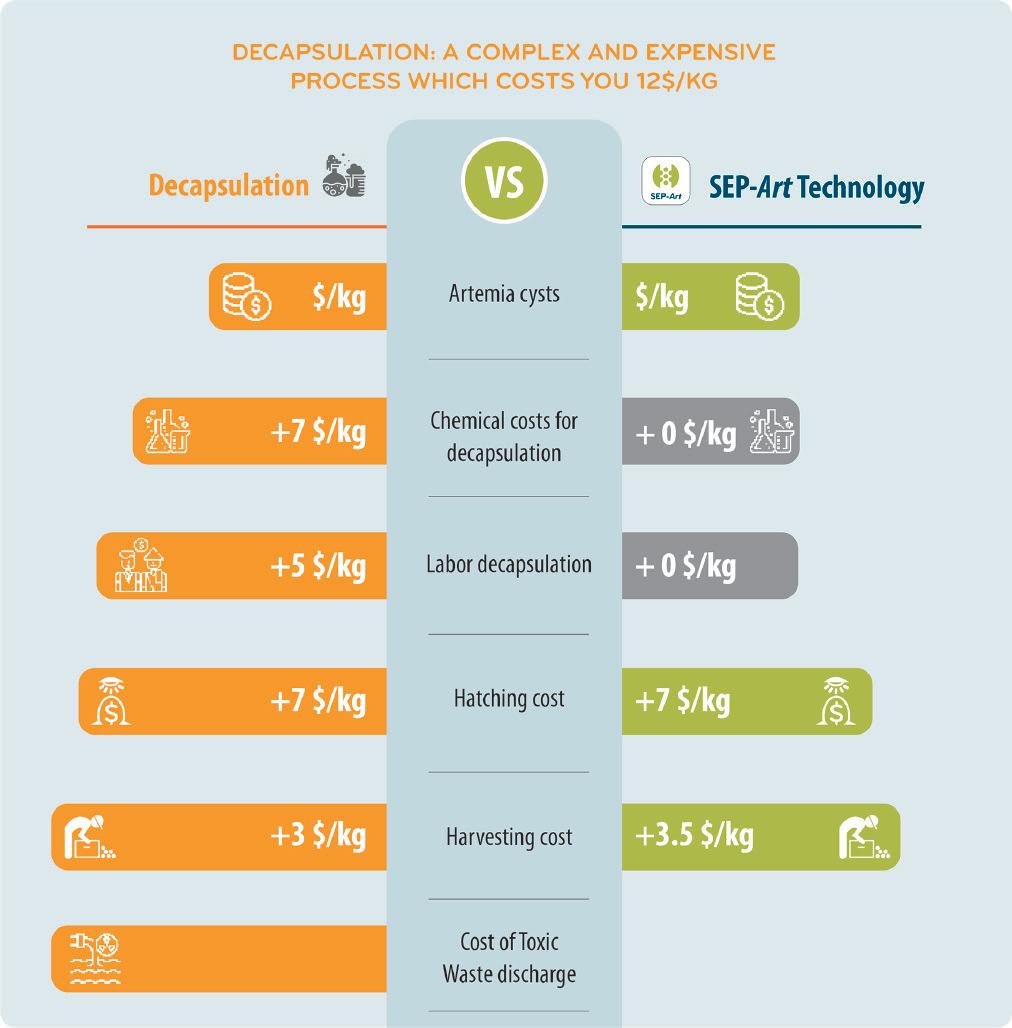
• SEP-Art decreases the operational costs linked to producing Artemia nauplii significantly. Compared to the decapsulation method, up to USD 10/kg of product can be saved (no need for chemicals and reduced labor).
• It reduces the amount of remaining empty shell
Hatchery Feed & Management Vol 11 Issue 3 2023 28
FEEDS
material, and thus improves the biosecurity in the larval tanks (less risk of bacterial load, e.g. Vibrio).
• It reduces the risk of gut obstruction or failed ingestion caused by empty shell material.
• It is better for the environment because it eliminates the use of hazardous chemicals, the discharge of waste or by-products, and the accumulation in the food chain.
Safer, simpler, and more comfortable work
• SEP-Art eliminates the use of hazardous chemicals and the release of toxic fumes or gasses during the Artemia harvesting process.
• The SEP-Art method maximizes the recovery of the hatching output and speeds up the harvest and collection of the nauplii thanks to specially developed and easy-to-use magnetic tools.
INVE SEP-Art AutoMag is a fully automatic tool that was specially designed to harvest medium to large hatching volumes (up to 15 kg of SEP-Art cysts) with minimal labor input and maximum biomass outcome. The system can be connected to the Artemia hatching tank and has integrated piping for clean sea water, air,

and oxygen. As the hatching tank is emptied into the AutoMag, the built-in magnets capture the magnetized cysts and empty shells while the nauplii are instantly concentrated and rinsed. The result: a dense and clean suspension of pure nauplii only. The self-cleaning system of the AutoMag evacuates the collected cysts, leaving clean magnets for the next batch of Artemia.
The AutoMag’s fully automated process allows fast harvesting: typically, a 5-ton hatching tank (10 kg of EG SEP-Art 240 cysts hatched at a density of 2 g/l), is handled in less than an hour. Similar SEP-Art tools are also available in manual (SEP-Art HandyMag) and semimanual (SEP-Art CysTM 2.0) versions, tailored to the needs of different hatchery sizes.
The SEP-Art technology drastically improves the quality of live food. By simplifying the harvesting process, maximizing the output of high-quality live food, and reducing risks by preventing unwanted material from being transferred to the larval tank, it plays a crucial role in facilitating a more predictable and standardized post-larvae (PL) and fry production. In addition, the Artemia SEP-Art tools are a sustainable solution designed to maintain quality nauplii, reduce losses and ensure safety for workers and the environment. These
29 FEEDS
benefits establish SEP-Art cysts as an indispensable tool in modern hatchery practices.
Embracing the future of feed management with automated, AI-powered live food quantification
During Aquaculture Europe in Vienna, INVE Aquaculture introduced yet another leap forward in aquaculture technology. Together with Aris, INVE has developed SnappArt: a revolutionary AI-powered live food counting device that automates the quantification of rotifers and Artemia. The project was supported by Eurostars, a European funding instrument for collaborative R&D and innovation projects.
The end of manual inspections
Until now, the adequate production and quality control of Artemia and rotifers demanded meticulous manual inspections. These labor-intensive and errorprone procedures conducted on limited sample sizes often lead to inconsistent feed administration.

Moreover, skilled staff is hard to find, and sampling methods are not globally standardized. All the above too often jeopardize the predictability of highquality shrimp and fish production. Representing a monumental shift in live food quantification, SnappArt replaces conventional manual counting with a method that requires far less time and effort while offering unparalleled precision. This groundbreaking technological innovation propels hatcheries towards more time- and cost-efficient, sustainable, and consistentlivefoodproduction.
Easy-to-use device with advanced AI-driven software
Designed with advanced computer technology, the SnappArt device looks deceivingly modest. The real innovation, however, lies in the AI-driven image analysis softwarethatensuresrapid,preciseanalysisofsamples. And a highly intuitive user interface makes the device remarkably easy to operate.
Hatchery Feed & Management Vol 11 Issue 3 2023 30 FEEDS
results. With reduced inspection time and data-driven decision-making, hatcheries can boost their profitability, optimize growth ratios, and improve their overall production efficiency.
This innovative tool is set to rapidly become a musthave for any hatchery wishing to ensure the consistency and reliability of their production practices thanks to: Speed and efficiency: The automated tool swiftly processes large volumes of samples, significantly reducing counting time and freeing up valuable human resources.
Accuracy and consistency: By eliminating the inherent subjectivity and variability associated with manual counting, the AI-based tool provides highly accurate and consistent results, ensuring precise feed management. Data tracking and analysis: The tool generates comprehensive data reports, enabling hatcheries to
monitor live food, and optimize live food utilization strategies.

24/7 access to expertise: Automation of the counting process reduces tedious but very important labor, saving both time and costs for hatcheries. At the same time, the device relies on expert knowledge that is accessible to the hatcheries 24/7, securing and standardizing knowledge year-round.
Conclusion
With the introduction of SEP-Art technology and the SnappArt counting tool, the aquaculture industry is on a new path toward more streamlined, efficient, and sustainable hatchery practices. By simplifying the recovery process, improving the quality of live food, and introducing a reliable counting method, these innovations are pushing the boundaries of what is possible.
These technologies represent the industry’s commitment to continuous improvement, innovation, and sustainable practices. With the rapidly increasing adoption of innovations such as these, the aquaculture industry continues to grow profitably and sustainably while meeting the world’s increasing demand for seafood.
More information about SEP-Art and Snapp-Art can be found on artemia.inveaquaculture.com
More information:
Geert Rombaut

Product Manager Artemia
& Live Food, INVE Aquaculture
E: g.rombaut@inveaquaculture.com
31 FEEDS
Cultivating success through personal relationships and premium feeds: Tailored solutions through new production methods
Björn Ronge, PTAQUA
In recent years, marine aquaculture has experienced a significant surge in growth and productivity. Both Mediterranean and cold-water species are cultivated in an innovative approach to increase sustainability and address the challenges in the industry. However, successful marine larviculture requires careful attention to various factors, one of which is the nutrition of the cultured fish. To pave the way for enhanced fish health,
reduced environmental impact and increased efficiency, specialized premium fish feeds have emerged as a game-changer.
Meeting high quality standards
One example in the European aquaculture landscape is seabream production which has always been a pressured and economically significant sector. To

Hatchery Feed & Management Vol 11 Issue 3 2023 32 FEEDS
New WinWrasse diets from SPAROS have helped improve health and survivability in ballan wrasse.
From left to right: João Henriques from SPAROS and Charlie Cross from MOWI
maintain the high standards of quality and sustainability required by this industry, European seabream producers have turned to innovative solutions. Among these solutions, Otohime, the premium fish feed supplied by PTAQUA, has emerged as a significant improvement.
Otohime is a Japanese feed and is considered the gold-standard larval diet in Japan. It contains only the freshest and highest quality krill and fishmeal which makes it highly attractive and nutritionally suitable for marine larvae. Today, many of Europe’s biggest seabream producers are choosing Otohime for their aquaculture operations after achieving outstanding results.
Otohime is fast becoming the number one choice for seabream and seabass producers and is also growing in popularity amongst sole and turbot producers. Also, Otohime has played a pivotal role in the successful production of ballan wrasse (cleaner fish for salmon) production in Norway over the past few years.
One of the standout achievements of Otohime in European larval production is its ability to deliver exceptional growth rates and survivability. Seabream raised on Otohime exhibits robust growth patterns, allowing producers to bring their fish to market size efficiently.
Otohime’s commitment to using the highest-quality ingredients and its focus on digestibility through the production method of agglomeration play a crucial role in promoting the health of seabream. Healthier fish are more resilient to diseases and stressors, resulting in lower mortality rates and more consistent production.
This not only increases productivity but also enhances the economic viability of seabream farming operations.
Customized feed solutions
The success of Otohime in European seabream production can be attributed not only to its superior quality but also to the personalized support and customer relationships fostered by PTAQUA. The company’s commitment to understanding the specific needs of each producer has built trust and loyalty within the industry as success often hinges on more than just the quality of the product itself. It’s also about the relationships built and the personalized solutions offered. PTAQUA has made personalized customer relationships a cornerstone of its business strategy. With new recruitments in 2023, PTAQUA now has an even stronger coverage of each individual market and customer in Europe. They recognize that no two aquaculture operations are identical. Fish species, production systems, water conditions and goals can vary significantly from one customer to another.
One of the key benefits of PTAQUA’s approach is the ability to offer premium and customized feed formulations. By partnering with specialized feed producers such as SPAROS and understanding the nuances of a customer’s operation, PTAQUA can tailor its feeds to meet the exact nutritional needs of the fish being raised.
SPAROS produces species-specific bespoke diets that eliminate bottlenecks in larval production. One example is WinWrasse, a special diet for ballan wrasse larvae to eliminate the high mortalities post-weaning. Another product is WinFast, a diet designed for the special nutritional needs of fast-growing species, such as meagre and seriola. SPAROS also produces specialized diets for flatfish such as turbot, sole and halibut. This level of customization ensures that fish receive the optimal diet for growth and health.

High quality feeds
Both Otohime and SPAROS diets share the philosophy of producing the highest quality feeds through innovative production methods and the highest
33 FEEDS
Lumpfish, one of the many species Otohime is an essential diet for.
quality raw materials. In the quest to create premium fish feeds, one key production technique that stands out is agglomeration. This often-overlooked process plays a pivotal role in improving the digestibility of feeds, ensuring that fish can efficiently utilize the nutrients provided.
digestion. The compacted structure of agglomerated feeds ensures that the nutrients are more evenly distributed throughout each pellet. As fish consume the feed, their digestive enzymes can access and break down the nutrients more efficiently. This results in increased nutrient absorption and utilization, contributing to better growth and health. Also, agglomerated feeds are less prone to disintegration in water compared to loose powders. This characteristic reduces the risk of feed wastage and minimizes the pollution of aquatic environments and helps maintain water quality.
transforming marine aquaculture by delivering products

that epitomize precision, quality, and sustainability. With tailored nutrition, enhanced digestibility, immune-boosting properties, and a commitment to personal relations with customers, PTAQUA are helping aquaculture operators achieve higher growth rates, improved fish health and long-term partnerships. As marine aquaculture continues to play a vital role in meeting global seafood demand, PTAQUA are poised to be a cornerstone of success in the industry, ensuring
More information:
Björn Ronge
Global Marketing Director
PTAQUA
E: b.ronge@ptaqua.eu
Hatchery Feed & Management Vol 11 Issue 3 2023 34 FEEDS
Tunisian seabream fed with PTAQUA diets
The future of microalgae in aquaculture
 Doron Eisenstadt, BarAlgae
Microalgae are a unique group of photosynthetic, primary producers that have a profound impact on the oceanic and global food webs. As a fundamental feed source in aquaculture practices, microalgae species are used throughout hatcheries, including fish, shrimp, and bivalves. Microalgae, packed with essential fatty acids, amino acids, vitamins, and unique bio-active ingredients, serve as a stable, balanced diet for the initial larval stages resulting in better health and increased survival rates. Selected species of microalgae also serve as a stabilizing agent for water quality. Traditional practices in hatcheries consist of openpond cultivation of a limited number of species under sub-optimal conditions resulting in unreliable supply and low quality of algal biomass. Additionally, growing
algae on local seawater is a hazard of transmitting marine pathogens and contaminants into the hatchery tanks. The solution lies in combining shelf products of top-quality microalgae blends, cultivated at closed systems on purified media. Such cultures of microalgae are grown using optimized nutritional profiles and therefore present a sustainable and affordable feed for enhanced production.
Introduction to microalgae
About 3,500 million years ago, the ocean and the atmosphere started to be oxygenated by a group of photosynthetic bacteria. Two thousand million years later, eukaryotic phytoplankton acquired this ability and microalgae began to dominate the aquatic environment forming the basis for all plant life as we know it.

35 FEEDS
Current estimations regarding the biodiversity of microalgae range from 200,000 to a staggering 1 million species in nature, whereas only a fraction of them are scientifically described, and even fewer are commercially cultivated.
Microalgae’s ability to photosynthesize makes them primary producers – they convert sunlight, carbon dioxide and nutrients not only into biomass such as carbohydrates, proteins, and lipids but also solely produce unique and essential bioactive molecules not available from other natural feed sources. These bioactive molecules include essential DHA and EPA, vitamins, pigments, phycobiliproteins, enzymes, etc. Biologically active substances from microalgae are capable of exhibiting antioxidant, antibacterial, antiviral, and many other beneficial effects. These compounds are in demand in pharmacology, nutraceuticals, cosmetics, and the chemical industry but naturally, the first industry to appreciate their potential and to exploit in huge quantities was aquaculture.
Current usages
Microalgae are an essential food source in the rearing of marine aquaculture species. Most commonly used at hatcheries for the larval stages of fish, shrimp and zooplankton live feeds, such as rotifers and Artemia. Microalgae are also used for filter feeders, such as bivalve mollusks (clams, oysters and scallops), the larval stages of some marine gastropods (abalone and conch), and even more exotic animals like sea cucumbers. Between 20 and 30 species are used around the world as direct and primary feed, as complimentary feed, as well as a water conditioning agent (green water technique or for oxygen generation). Additional applications can be found in aquaculture water treatment facilities.
Traditional cultivation methodologies
Most hatcheries are producing their own microalgae biomass by cultivation using rather simple methodologies. They usually keep a simple culture collection and an inoculum at indoor or lab-scale facilities using household illumination and supplying basic nutrition for the upkeep of the cultures. They later transfer the cultures into plastic containers to allow algae growth, and finally, they inoculate ponds or tanks of various shapes and sizes to allow the final
stages of growth. The cultivation media in these production processes are usually local waters (with or without filtration like sand filters or mechanical filters, sometimes applying some levels of ozone) and are fertilized by basic nutrients. To apply the algae cells as feed, water containing the algae is pumped or otherwise transferred into the production tanks.
Problems associated with low-quality algal feeds
While the understanding that the best possible application of microalgae cells is when they are intact and viable, several problems associated with utilizing locally grown algae arise.
First, the traditional cultivation methodologies described above lead to inconsistent supply. Due to ever-changing weather conditions, water qualities, etc., different cycles of cultivation will result in significant differences in cell count, and cell quality. Often suffering from complete crushes of cultures, the hatcheries cannot always rely on the expected outcome of biomass so they must grow extra amounts of algae and operate many more tanks at a considerable cost, as backup.
Second, the variations in cell composition due to differences in cultivation conditions, nutrient bioavailability and even changes in light intensities result in inconsistent feed composition for the first, critical stages of larval development.
Third, some preferred algae species (nutritionally) are hard to grow since they require unique conditions, continuous and delicate care, and a high level of
Hatchery Feed & Management Vol 11 Issue 3 2023 36
FEEDS
Figure 1. Trials conducted at a commercial vannamei hatchery. Trial conditions: From Naupli5 to PL12, 6 tanks (3 treated tanks, 3 controls); larvae density: 250/L; algae cell density: 30K; tank volume: 8MT; stocking: 2,000,000 per tank.
proficiency for consistent algae production. To make things even more complicated, growing multiple species in parallel makes it almost impossible to self-supply a balanced diet.
Lastly, the general cultivation conditions of open algae tanks filled with local waters will necessarily introduce contaminations and marine pathogens into the larvae tanks, risking their health during the very sensitive first days of their development.
Modern technologies for microalgae cultivation

Producers of algae-based products that are utilizing similar open-pond methodologies will inherently suffer from the same problems and, therefore, achieve similar results. New advanced ways of growing microalgae have developed over the past 20 years and have dramatically improved in recent years. Ranging from autotrophic (using light as a sole energy source) to mixotrophic (combining light and carbohydrates) and heterotrophic (using carbohydrate source only) processes, the microalgae industry is nowadays able to select the optimal ways to grow different species for selected products. Utilizing sensors and computer control for the upkeep of cultures, image analysis for quality assurance during the production process and for final products, automated fertilization for enrichment and increased bio-actives in microalgal biomass, and even machine learning for the prediction of cultivation outcomes is an industry standard for top algae-producers.
Shelf products of high-quality microalgae
Growing top-quality cultures of selected species of microalgae with optimized nutrient composition allows for specialized products for various aquaculture species. A green algae-based product for green water technique, for example, will be inherently different from a diatom-
based, calcium and magnesium-enriched product for shrimp larvae. The ability to cultivate multiple species simultaneously under species-specific conditions and to blend several species as a final product enables the end user, a hatchery technician, to supply a more balanced, nutritionally diversified diet resulting in better growth performance and ultimately survival rates.
Future developments of microalgae-based products for aquaculture
Novel applications for microalgae are continuously being invented. The vast selection of species and their flexible metabolism is an untapped resource for an endless number of bioactive molecules and potential functions. New products are emerging not only for direct usage in hatcheries but also for feed mills incorporating microalgae for their unique traits. Two of such examples are antifungal activity preventing mycotoxins in feed pellets, and algae as phytoattractants for improved feeding behaviors. Novel applications are under development like using algae as a bio factory for vaccines and other treatments and as an oral delivery mechanism for flock-type animals.
Summary
In recent years, and to supply the increasingly growing global demand for sustainable and affordable aquaculture products, the industry is moving from traditional, locally based, small-scale independent farms to a more industrialized approach. It is adjusting to enforced quality guidelines and global distribution requirements and is expected to perform accordingly. Being able to produce at competitive prices requires the adoption of new, reliable methodologies. The ability to supply affordable, top-quality feeds for enhanced performance will allow the top larvae producer to increase larval qualities and yields and to better predict the expected outcome of his efforts and therefore better adjust with the evolving industry.
More information:
Dr. Doron Eisenstadt
 COO & Scientific Co-founder
BarAlgae
E: doron@baralgae.com
37 FEEDS
Enhancing growth performance, survival rates and stress resistance in larval and early post larval rearing of Litopenaeus vannamei
Yathish Ramena, Thomas Bosteels, Frank Martorana, Great Salt Lake Brine Shrimp Cooperative, Ravinder S. Sangha, Acua Biomar de Mexico
Unraveling the beneficial impact of Artemia franciscana feeding regimes in a field trial.
Summary
In a field trial, L. vannamei larval and early post-larval stages (Zoea I through PL5) were fed different levels of Artemia to replace all or a portion of an artificial feed regime (the “Non-Artemia Diet”). Results showed improved survival, growth, and stress resistance of shrimp fed increasingly higher levels of Artemia.

Introduction
Previous research consistently demonstrated that increased stocking densities generally result in higher mortality and reduced feeding efficiency among Penaeid shrimp (Guillermo et al., 2021). Therefore, the primary aim of the hatchery industry is to optimize production capabilities by implementing feeding regimes that promote larval metamorphosis and enhance survival, growth, and stress resistance of the post larvae (PL). This approach allows hatchery operators to improve economic margins, even when dealing with higher stocking densities, without
subjecting the larvae to excessive mortalities and stress. Traditionally, Artemia has been widely used as a co-feed for Mysis (M3) to post-larval stages in the aquaculture industry (Bengtson, 1991; Sorgeloos, 2001; Dirk Halet, 2007; Azra, 2022; Sahandi, 2022).
L. vannamei larvae have shown a strong feeding response to live Artemia nauplii, resulting in increased consumption and improved feeding efficiency (Sheen et al., 1994). During the last two decades, attempts to eliminate Artemia from a traditional co-feeding regime and replace Artemia entirely with artificial feeds in L. vannamei have yielded mostly inferior results.
Hatchery Feed & Management Vol 11 Issue 3 2023 38 FEEDS
In general, live feeds have always provided consistent positive results in terms of growth and survival in L. vannamei larvae (Puello-Cruz et al., 2002) and recent studies continue to demonstrate this improvement with increased feeding levels of live Artemia throughout the late larval and post-larval stages (Gamboa-Delgado & Le Vay, 2009; Sommer, 2019; Yathish et al., 2022). More recent field and research studies have also demonstrated that incorporating live or attenuated forms of Artemia during the early larval stages of L. vannamei promotes better health, particularly in terms of stress resistance, enabling them to better cope with environmental challenges and leading to improved survival rates (Liqing, 2022).

Artemia continues to play a vital role in supporting the larval and post-larval diets of L. vannamei, providing high levels of protein (62.7%) and lipids (21.7%) on a dry weight basis. Artemia also contains high levels of the most limiting amino acids such as methionine, threonine, and lysine, essential for early larval stages (Niu et al., 2012) which contribute significantly to protein synthesis, enzyme production, energy metabolism, osmoregulation, and immune function. Additionally, Artemia provides essential fatty acids and cholesterol necessary to maintain cell membranes, hormone production, absorption and utilization of lipids, energy metabolism, and antioxidant protection (Hernández, 2004).
In general, the high digestibility and essential nutrients provided by Artemia nauplii enable efficient nutrient absorption and utilization, supporting the growth and survival of L. vannamei larvae (Jones et al., 1997a, 1997b). This field trial aimed to assess the potential effects of increased feeding levels of Artemia instar 1 nauplii during the early rearing of L. vannamei larvae (Mysis I to PL5) compared to a non-Artemia feed regime.
The field trial, performed in a commercial production environment, showed that the replacement of artificial feeds with increased levels of Artemia in larval and early post-larval (Zoea I to PL5) rearing significantly improved survival, growth, and stress resistance of L. vannamei post larvae.
Methods
The trial implemented four different dietary treatments replacing a fixed percentage of the microparticulate feed with Artemia instar 1 nauplii ranging from 25%, 50%, 75% to 100%. Eight randomized replicated tanks for each treatment were employed with 5,800,000 Zoea 1 in 30,000 L-1 U-shaped rectangular concrete tanks, equivalent to a density of 200 Zoea/L-1. The water salinity was consistently maintained at 26ppt, while the temperature was 28°C.
The Artemia hatching quality used in the study was 200,000 nauplii per gram (GSL Artemia cysts, GSLA brand, USA). All cysts were hatched using 2g/L-1
39 FEEDS
Picture 1. Density patterns of higher/sharper chromatophores observed in Artemia-fed PL5 L. vannamei larvae across the dorsal body are indicated with orange arrows. Non-Artemia-fed post-larvae lack high development.
stocking density, 28°C, strong aeration, 2,000 lux, in cylindro-conical 60L clear plastic tanks. All Artemia instar 1 nauplii were harvested, rinsed, and re-suspended for hatch calculations and then frozen in plastic feeding bags ready for the shrimp larvae from Zoea 3 onwards.
In those tanks fed Artemia, initially 250 grams of cysts were hatched and used to feed each dietary treatment tank from Zoea 3 to the Mysis I stage. The amount of dry cysts was subsequently increased to 400 grams, 545 grams, 750 grams, 800 grams, and 875 grams for each dietary treatment tank during the rearing period until reaching PL5. A total of 7,250g of dry cysts were used for 5.8 million Zoea stocking density, or 1,250g for one million PL5.
A proprietary feeding regime of live algae and commercial shrimp microparticulate feeds made up the non- Artemia diet. The Artemia 75%, 50%, and 25% feeding regimes (the Artemia diets) included a proportionate decrease in Artemia as compared to the 100% Artemia feeding and thus a proportionate increase in the artificial diets.


For all treatments, trials were terminated at PL5. All larvae were harvested into fine nylon meshes from each tank (as they will be re-stocked in raceways thereafter) and gently compressed to remove excess water. The whole biomass was then weighed (Ohaus) and the subsequent 3 sub-samples were removed, each weighing 1g. From these sub-samples, all 3 parameters were calculated. Survival (%) was determined by counting surviving larvae. The total length (mm) of 10 randomly selected larvae from all the replicates of each treatment was measured from the tip of the rostrum to the tip of the telson for PL5, viewed under a binocular microscope with a graticule calibrated against a stage micrometer. Finally, wet weight (mg larvae-1) from every replicate and treatment was

Hatchery Feed & Management Vol 11 Issue 3 2023 40 FEEDS
Figure 1. Survival rates of L. vannamei post-larvae (PL5) fed with different dietary levels of Artemia franciscana nauplii during the larval and post-larval rearing periods.
Figure 2. Length (mm) of L. vannamei post-larvae (PL5) fed with different dietary levels of Artemia franciscana nauplii during the larval and post-larval rearing periods.
Figure 3. Whole-body wet weight (mg) of L. vannamei post-larvae (PL5) fed with different dietary levels of Artemia franciscana nauplii during the larval and postlarval rearing periods.
assessed by removing 20 animals and subsequently weighed on an electronic balance (Ohaus).
Stress test
A controlled experimental setup was used to induce salinity stress through a sudden decline in salinity from 26 to 0 ppt using fresh water at 33.6°C (shrimp hatchery condition). In triplicate 4L buckets per treatment, 100 PL5 animals were directly immersed in 2L of freshwater without undergoing any gradual acclimatization procedure. Time was noted as T0 and subsequently, total mortalities in each bucket were carefully recorded at regular five-minute intervals up to 60 minutes.
Results
During the culture period, a postlarval health analysis was conducted, which revealed high chromatophore development throughout the bodies of the shrimps (as shown in Picture 1) that were fed 75% to 100% Artemia, in comparison to the other dietary treatments. Generally, survival, growth, and stress resistance improved with increasing dietary inclusion of Artemia (Fig. 1-5), verifying earlier research that demonstrated the importance of feeding adequate levels of Artemia in the larval and early post-larval rearing of L. vannamei. Statistical analysis indicates a strong effect of the dietary treatments on survival rates (p=0.0001) between the Artemia diets (Fig. 1). Tanks that received 75% and 100% Artemia inclusion levels showed notably higher survival rates of 75% to 70%, respectively, which were significantly higher than the survival rates of 56% to 60% observed in tanks fed lower levels of Artemia or the non-Artemia diet.

A similar trend was observed in terms of the length. PLs in tanks that received 75% (9.5mm) and 100%

41 FEEDS
Figure 4. Freshwater stress test: Mortality rates of L. vannamei post-larvae fed with different dietary levels of Artemia franciscana nauplii during the larval and post-larval rearing periods.
Figure 5. Mortality (%) at 60 minutes of L. vannamei post-larvae fed with different dietary levels of Artemia franciscana nauplii during the larval and post-larval rearing periods.
(9.00mm) Artemia showed significantly (p>0.0001) greater lengths (Fig. 2) compared to those in the remaining dietary treatments.
Weight gain data also revealed statistically significant differences (p<0.0001) among the different dietary treatments. PL5 that were fed a diet consisting of 100% Artemia exhibited the highest weight gain, with a mean increase of 0.92 mg (Fig. 3). In comparison, those fed a diet containing 75% Artemia had a slightly lower mean weight gain of 0.86 mg, but still significantly higher than the tanks fed 0% (0.83mg), 25% (0.82mg), and 50% (0.82mg) Artemia.
In the stress resistance experiment, different dietary treatments of Artemia resulted in varying mortality rates, demonstrating higher stress resistance of the PLs fed higher levels of Artemia. Within the first 20 minutes of exposure to freshwater, there were no mortalities in any of the treatments. However, as time progressed, the mortality rate gradually increased. The mortality increased more rapidly in the 0%, 25% and 50% Artemia treatments, reaching a mortality rate at or above 68% after 60 minutes. In the 75% and 100% Artemia treatments, the PL mortality remained lower (<5%) during the first 40 to 45 minutes after which it gradually increased reaching final mortality of 43% and 28%, respectively, after 60 minutes of salinity stress. The total mortality rates after 60 minutes of exposure to freshwater were significantly lower for the tanks that received higher inclusion rates of Artemia at or above 75% (Fig. 5).
Overall, feeding higher levels of Artemia (75% and 100% Artemia diets) significantly improved survival, growth, and stress resistance during the early hatchery cycle (up to PL5) when compared to the non-Artemia diet and the 25% and 50% Artemia diets. These results demonstrate the positive impact of feeding higher levels of Artemia during the larval and early post-larval development stages. The results of the field study support the view that higher feeding levels of Artemia during larval and early post-larval development (up to PL5) optimize hatchery performance by substantially improving the survival, growth, and stress resistance of the L. vannamei PLs.
Conclusion
This one-of-a-kind field study presented a comprehensive assessment of the nutritional suitability
of Artemia as a crucial dietary source for larvae and early post-larvae stages of L. vannamei and demonstrated the value of Artemia inclusion for these developmental stages. These results again emphasize the significance of the highly digestible Artemia as a feed to improve overall hatchery production during the larval and early post-larval stages of L. vannamei and establish a solid foundation for the subsequent rearing of advanced PL stages.
Further refinement of optimal Artemia feeding levels and investigations into the underlying mechanisms and physiological responses associated with these results would provide valuable insights for optimizing larval-rearing practices and promoting the successful cultivation of L. vannamei.
More information:
Dr. Yathish Ramena, Ph.D.


Senior Principal Scientist
Great Salt Lake Brine Shrimp Cooperative, Inc.
E: yramena@gsla.us
Ravi Sangha M.S.c
Chief Executive Officer
Acua Biomar de Mexico, S. de R.L. de C.V.
E: acuabiomar@gmail.com
Thomas Bosteels
Chief Executive Officer
Great Salt Lake Brine Shrimp Cooperative, Inc.
E: thomas@gsla.us
Frank Martorana, M.S.

Global Business Development & Technical Support Manager
Great Salt Lake Brine Shrimp Cooperative, Inc.
E: fmartorana@gsla.us
Hatchery Feed & Management Vol 11 Issue 3 2023 42
FEEDS
Advancing sustainability in aquaculture with ozone and UV
Michael Massaros, BIO-UV Group
The continued growth of the global population is creating an ever-increasing demand for animal protein which, in turn, creates a tremendous opportunity for farmers of sustainable and ethical sources of protein. The aquaculture industry is a primary source of animal protein, with almost infinite opportunities for expansion to meet the needs of the market.
As such, there is considerable investment being channeled into the industry, both public and private. However, at the same time, the industry is also being tasked with improving and maintaining the very highest
standards of sustainability, animal welfare, and the quality of the end product.
Over time, the continued success of the aquaculture industry, and the returns for its investors, will depend on the depth and breadth of these improvements, particularly so in the context of comparison with traditional open-water fishing.
BIO-UV Group was founded in 2000 in France on the core principles of improving water quality using chemical-free technologies, initially with UV solutions and more recently through the acquisition

43 EQUIPMENT
EQUIPMENT
of triogen®, the addition of ozone, and Advanced Oxidation Processes (AOP). triogen® is a UK-based 35+ year veteran in the water and wastewater treatment industry using ozone, UV, and AOP technologies.
A specialist in environmental and ethical water treatment and disinfection without commodity chemicals, BIO-UV Group has now developed a complete range of UV-C and ozone systems for the aquaculture industry, including its latest range of highefficiency ozone systems, PPO3.
BIO-UV Group, through its “Customer First” program prides itself on working in close collaboration with its global network of aquaculture clients and offering a whole-life service and support program, to guarantee performance throughout the life of the products.
BIO-UV Group’s Ozone Manager, Michael Massaros, said, “our primary objective at BIO-UV is to ensure food security and a sustainable ocean economy for our clients, whilst maintaining the health and welfare of fish stocks and critically, eliminating detrimental impact on the environment.”
Ultraviolet light (UV-C)
Ultraviolet light (UV-C) is commonly used in the aquaculture industry for water disinfection and biosecurity. The natural phenomenon of sunlight disinfecting is replicated within BIO-UV Group reactors using powerful UV-C lamps. These lamps emit germicidal rays that are much stronger than the sun’s, offering a dependable, cost-effective, environmentally friendly, and chemical-free disinfection solution. At its peak wavelength of 254 nanometres, UV-C penetrates the core of the DNA of microorganisms, disrupting their cellular metabolism. This process ensures even chlorineresistant organisms like Legionella and Cryptosporidium are eliminated, preventing their reproduction. One of UV-C’s notable features is that it retains the physiochemical characteristics of the water, with no alterations in taste, smell, or pH. Moreover, UV treatment creates no disinfection byproducts and caters to a wide range of water types, from fresh to brackish to seawater. BIO-UV Group customizes its solutions based on water quality, temperature, and bacteriological loads.
Ozone
Ozone (O3) is extensively used in the aquaculture industry for water clarification, pathogen control, and
oxygenation. Ozone is one of nature’s most powerful oxidants and a more reactive form of the oxygen we breathe. Ozone is not only a potent disinfectant but is also capable of improving water quality even further, by removing a multitude of harmful organic and inorganic compounds. As such, ozone is able to improve the overall performance of the water treatment system, including biofilters, UV, and filtration – maximizing system-wide efficiency and reducing the overall water consumption of the operation.
Any unreacted ozone rapidly turns into oxygen, increasing dissolved oxygen levels and simulating healthy natural waters. Serving as a flocculant and general water conditioner, ozone is able to produce crystal clear water with no taste or odor, enhancing fish health, and both the quality and yield of the end product. As a result, ozone is now seen as an essential tool for various applications through the aquaculture value chain.
Fostering sustainability with technology
UV-C or ozone will not ensure sustainability in aquaculture alone. However, both technologies can be used to improve the overall sustainability profile of the operation, the quality of the end product, and the longterm viability and growth of the industry.
For any technology used in animal husbandry, it is essential to assess the quality of both the systems and their implementation. The systems should be sourced from reputable suppliers, designed and specified by experts, with due attention paid to safety, reliability, operability, and the nuances of the application, and carefully implemented from a whole-life-cost of ownership perspective.
It is also critical to ensure that the correct mechanisms are put in place to protect fish health and process reliability, such as accurate and reliable OxidativeReductive Potential (ORP or REDOX) monitoring, mitigation of byproduct formation, and building appropriate levels of redundancy.
Michael Massaros added, “in short, there is no point implementing technology to achieve one aspect of sustainability while neglecting another – effective water treatment requires a balanced approach. Sustainability is a complex and multifaceted topic, and it is only possible to achieve when working with experienced suppliers.”
Hatchery Feed & Management Vol 11 Issue 3 2023 44
Ozone made simple and sustainable with PPO3 Massaros explained, “we started with the key design principle of ‘Ozone Made Simple’, because customers told us they wanted all the benefits of ozone:
1. easy to operate.
2. efficient without high OPEX costs and disposal costs at end-of-life.
3. reliable and easy to own.
So, the group’s team of ozone specialists worked diligently for over 30 months to bring a new product range to market that addresses all the customer needs and requirements.”
PPO3 is efficient, reliable, easy to own and operate, and supported by world-class technical support, from design through to aftermarket service and plant optimization.
Designed from the ground up at the Group’s triogen® subsidiary – their “Ozone Centre of Excellence” based in Glasgow, Scotland – the design of the PPO3 range focuses on performance, sustainability, and ease of use, and features leading-edge communications, advanced safety and operational features, recyclable ozone modules, and a full-service package – including a new, circular approach to service and maintenance.
The systems are available in two control configurations, both with intuitive controls and capable of fully automatic operation, and with the option to include digital communications to enable full remote control and monitoring. The systems can be supplied with all required ancillaries, or as a full skid-mounted plug-and-play solution including feed gas and ozone injection.
A simple-to-use touchscreen interface includes an innovative ozone yield and concentration matrix, which enables the operator to input two simple output parameters; O3g/h, and wt% concentration, after which the systems can run fully automated. An OPEX calculator has also been built-in, allowing the power consumption, cooling water, oxygen consumption, and ancillary power use to be fine-tuned for the customer and the application.
All major components are fully recyclable, and with a new cell replacement program, the group offers a low-cost service enabling operators to switch modules out when they reach the end of life and have them fully refurbished and returned. Thereby, avoiding the high economic and environmental cost of disposing of used
cells and re-purchasing brand-new replacement cells. For ease of ownership and reliability, the launch of PPO3 has been combined with a new full-service and maintenance package which provides operator training with a global aftermarket service and support package, with all spare parts, planned and reactive maintenance included – giving clients full visibility of their lifecycle costs, and the option of a warranty for life.
The road ahead
By leveraging the benefits of ozone and UV-C in user-friendly and environmentally conscious designs, - BIO-UV Group is paving the way for our vision for the future in aquaculture, where high performance and reliability go hand-in-hand with simplicity, efficiency, and sustainability.
Recognizing that aquaculture operations look a lot different today than they did even just a few years ago, BIO-UV Group is working and evolving with its clients to ensure that aquaculture reaches its full potential as a complete alternative to traditional open-water fishing. With the ever-increasing demand for ethically farmed aquaculture, it is essential that the considerable growth of the industry is accompanied by proper stewardship of the environment, animal welfare, resource management (in particular, water and energy consumption), and due attention to the overall efficiency of the operational lifecycle. In this mission, it is paramount not only to fully utilize the advanced technologies already available to the industry but to ensure that they are applied in the most responsible and cost-effective way.
More information:
Michael Massaros Ozone Manager at triogen Tech Leader in Ozone for BIO-UV Group
E: export@bio-uv.com

45 EQUIPMENT
Advancements in recirculating aquaculture systems: Enhancing fish density through innovative technologies
In the realm of sustainable aquaculture, the search for more efficient and environmentally friendly methods of raising fish has led to the evolution of Recirculating Aquaculture Systems (RAS). These systems, focused on all kinds of fish, from larvae stage to market size of fish, have undergone remarkable advancements in the last decade. This progress has brought forth a deeper understanding of the crucial elements that enhance fish density, leading to increased productivity, while simultaneously improving water quality. In this article, we delve into the
importance of various components within RAS, including drum filters, protein skimmers, biological filters, degassing towers, ozone generators and UV disinfection, shedding light on their pivotal roles in maintaining optimal water conditions while enlarging productivity.

The rise of RAS and its benefits
Recirculating Aquaculture Systems (RAS) are a sophisticated and closed-loop approach to fish farming that emphasizes water reusability and resource
Hatchery Feed & Management Vol 11 Issue 3 2023 46 EQUIPMENT
Björn Dörum, MAT-KULING
Complete water treatment RAS Skid set used in Austevoll School of Fisheries, provided by MAT-KULING AS. The system consists of in addition to the fish tanks and pumps, a protein skimmer (foam extractor), ozone generator, drum filter, MBBR, oxygen cones, degas tower-trickle filter, UV, water quality sensors and control cabinet.
efficiency. This technology involves the continual filtration and treatment of water within a controlled environment, reducing the need for vast amounts of water and minimizing the risk of polluting natural ecosystems. At the same time, indoor RAS facilities can keep the fish free of all kinds of pathogens such as parasites, viruses and harmful bacteria.
Elements of importance to increase fish density
Solid waste removal: Accumulation of solid waste can lead to poor water quality. Mechanical filtration systems are integrated into RAS to remove particulate matter, preventing its decomposition and the subsequent release of harmful substances.

Biofiltration systems: One of the key components in a successful RAS is the biofiltration system. Beneficial bacteria are cultivated to break down ammonia and nitrite, converting them into less harmful nitrate. This prevents the build-up of toxic compounds that could otherwise inhibit fish growth and survival.
Water oxygenation: Oxygen levels in the water are paramount for fish respiration. Increased fish density can deplete oxygen levels quickly, posing a risk to the
health of the fish. Advanced RAS incorporate efficient oxygenation systems that maintain the optimal dissolved oxygen content. Salinity control: For saltwater and brackish water species, maintaining the appropriate salinity is essential. RAS employs sensors and automated systems to ensure a stable salinity level, reducing stress on the fish and promoting their well-being.
Development of RAS in the last decade
Over the past ten years, the RAS industry has undergone a remarkable transformation. Technological advancements have led to the creation of more efficient and cost-effective systems. Improved monitoring and control systems allow for real-time adjustments, optimizing conditions for fish growth. Moreover, research has led to a greater understanding of fish behavior and requirements, enabling the design of systems that mimic their natural habitats more accurately. These developments have contributed to a significant increase in fish density achievable within RAS, resulting in higher yields and reduced environmental impact.
47 EQUIPMENT
EQUIPMENT
Protein skimmers: Clearing the way for pristine water
Protein skimmers, also known as foam fractionators, play a crucial role in maintaining water quality in RAS. These devices remove organic compounds, such as proteins and dissolved organics, by creating a froth of bubbles that captures and removes them from the water column. This prevents the accumulation of substances that can contribute to poor water quality and disease outbreaks. By employing protein skimmers, RAS can sustain higher fish densities without compromising water quality.
Ozone generators:
Purifying water through oxidation
Ozone generators are another indispensable tool in RAS technology. Ozone is a powerful oxidizing agent that effectively eliminates pathogens, parasites, and harmful microorganisms from the water. It breaks down organic compounds and reduces the need for chemical additives, promoting a more natural and sustainable approach to water treatment. By incorporating ozone generators, RAS not only ensures the health of the

fish but also minimizes the environmental impact of aquaculture operations. Nowadays, a very common strategy is to combine ozone along with protein skimmers, which improves the removal efficiency and has an additional microflocculation effect.


Degassing towers:

Balancing gases for optimal conditions
Degassing towers play a critical role in regulating the levels of dissolved gases, such as carbon dioxide and nitrogen within RAS. Accumulation of these gases can lead to pH fluctuations and stress among fish. Degassing towers facilitate the removal of excess gases, maintaining stable and optimal water conditions. This is particularly vital in high-density systems where gas exchange is more challenging due to the increased biomass.
Conclusion
Recirculating Aquaculture Systems have ushered in a new era of sustainable fish farming, with advancements in technology revolutionizing the industry. The last decade has seen remarkable progress in optimizing these systems for all kinds of fish, or seafood in different life stages. By focusing on crucial elements, which have been mentioned above, RAS has enabled fish farmers to achieve unprecedented fish densities without compromising water quality, while maintaining the welfare of farmed fish. The integration of protein skimmers, ozone generators, and degassing towers has further elevated the efficiency and effectiveness of RAS, ensuring a healthier environment for fish and a more sustainable approach to aquaculture overall. As the world continues to address the growing demand for seafood, Recirculating Aquaculture Systems stands as a beacon of innovation and hope for responsible and productive fish farming.
More information:
Björn Dörum Managing Director & Owner MAT-KULING Vannbehandling AS www.matkuling.com

Hatchery Feed & Management Vol 11 Issue 3 2023 48
800-493-3040 barb@freshflo.com www.freshflo.com Install our patented aerators in transport tanks, ponds, lakes, raceways, and rearing habitats. Reduce fish loss and improve growth for increased production. Get one, or more, now. Aerators ensure your fish stock gets valuable oxygen. Check out our fish grader and feeder too! ON THE GO OR WHERE YOU GROW
AI-powered cameras: Revolutionizing fish health monitoring in aquaculture
Caitlyn Parsons, ReelData AI
In an era of rapid technological advancements, the aquaculture industry is embracing artificial intelligence (AI) to boost efficiency, productivity, and sustainability. This innovative approach is transformative for landbased aquaculture, where the challenges of monitoring fish health have long hindered progress. In this article, we delve into the world of AI-powered cameras and their groundbreaking impact on aquaculture, shedding light on the remarkable journey of developing the first biomass estimation camera for land-based aquaculture.
The vital role of fish health monitoring
The global demand for seafood is on the rise, prompting the aquaculture industry to find sustainable solutions to meet this demand. Monitoring the health and stress levels of fish is not merely a matter of welfare; it’s a fundamental aspect of maximizing production while minimizing environmental impact.
Traditionally, fish health monitoring in land-based aquaculture has been labor-intensive, imprecise, and stressful for both fish and farmers. Manual sampling involves periodically removing fish from tanks for measurements, disrupting natural behavior and introducing stress. This approach can be logistically challenging and time-consuming, especially in largescale aquaculture operations.
AI-powered cameras are poised to revolutionize fish health monitoring and introduce significant improvements in the industry.
AI-powered cameras:
Transforming fish health monitoring
AI-powered cameras represent a paradigm shift in monitoring fish health in land-based tanks. Equipped with sophisticated algorithms, these cameras analyze various visual data, from fish behavior to physical attributes, delivering a range of benefits:
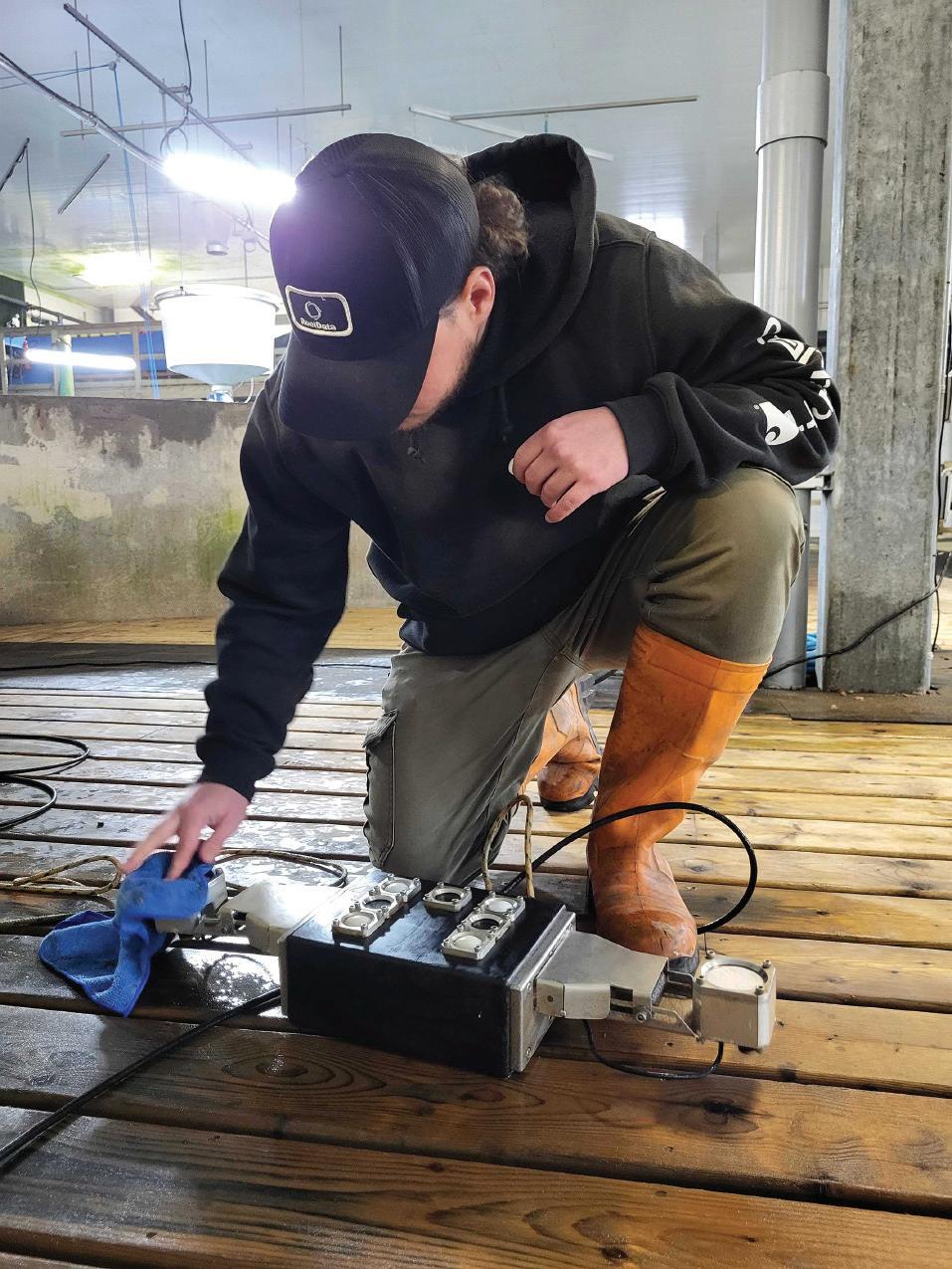
Unlike manual sampling, AI-powered cameras enable non-intrusive, continuous monitoring which reduces stress levels and promotes natural fish behavior. This approach provides aquaculture farmers with more accurate and less disruptive data collection.
Health insights: AI algorithms analyze fish behavior, coloration, swimming patterns, and posture, offering insights into their overall health. Any deviations from normal behavior can be promptly detected, enabling early intervention and disease prevention.
Stress assessment: Stress is a significant concern in aquaculture, affecting growth rates, disease susceptibility, and mortality. AI-powered cameras quantify stress levels by analyzing behaviors like erratic swimming and reduced feeding activity, facilitating proactive measures to mitigate stressors.
49 EQUIPMENT
ReelData engineer cleaning the ReelBiomass camera lenses
Biomass estimation: Accurate biomass estimation is crucial for efficient feeding and production planning. AI-driven cameras, such as ReelData’s ReelBiomass, employ underwater stereoscopic technology and advanced algorithms to determine individual fish weight with precision. This eliminates the need for manual sampling and aids in operational decision-making.
Data-driven insights: AI-powered cameras generate a wealth of data that can be harnessed to optimize feeding regimes, stocking densities, and environmental conditions. This data-driven approach enhances fish health, farm profitability, and sustainability.

ReelBiomass: A game-changer for land-based aquaculture
Among the innovative AI-powered cameras currently on the market, ReelBiomass stands out as the first of its kind created specifically for the complexities of land-based aquaculture. It addresses challenges such as high stocking densities, turbidity, and poor lighting conditions.
ReelBiomass utilizes underwater stereoscopic cameras and advanced AI algorithms to determine individual fish weights with unparalleled precision. This technology eliminates intrusive manual sampling and provides comprehensive data on fish weight distribution, facilitating better farm management.
Moreover, ReelBiomass seamlessly integrates with ReelData’s ReelAppetite, an AI-driven feeding system. Together, these technologies offer real-time monitoring of fish health, precise control over feeding practices, and unprecedented insights for aquaculture farmers.
The future of aquaculture: Sustainable, efficient and data-driven
As the aquaculture industry evolves to meet growing global seafood demand, the integration of AI-powered cameras like ReelBiomass will play a pivotal role in achieving sustainability and efficiency while improving profitability. These technologies enhance fish health monitoring and contribute to creating a more sustainable seafood industry. With continuous monitoring, precise health assessments, stress reduction, and data-driven insights, AI-powered cameras are poised to transform the way aquaculture farms operate. ReelBiomass, in particular, revolutionizes biomass estimation, enhancing the accuracy and efficiency of land-based aquaculture.
As we embrace this technological revolution, the future of aquaculture looks brighter than ever. Healthier fish, reduced environmental impact, and a more sustainable seafood supply will soon be the reality for a growing global population. In the journey towards an efficient and sustainable aquaculture industry, AI-powered cameras can uncover the secrets of fish health and well-being.
By embracing AI-powered cameras, aquaculture farmers can embark on a path toward a future where sustainability, efficiency, and data-driven practices define the industry’s success. The integration of these technologies promises to make a significant difference in the way we farm fish, benefiting both the environment and the aquaculture industry as a whole.
References available on request
More information:
Caitlyn Parsons Marketing and Public Relations Associate, ReelData AI
E: caitlyn.parsons@reeldata.ai

Hatchery Feed & Management Vol 11 Issue 3 2023 50 EQUIPMENT
Smart technology for water purification in recirculating aquaculture systems
Eleonora Buoio, University of Milan, Giulia Moretti, Aquatrade, Daniela Bertotto, Giuseppe Radaelli, University of Padua, Alessia di Giancamillo, Elena Selli, Gian Luca Chiarello, University of Milan, Nadia Cherif, National Institute of Marine Sciences and Technologie, Tarek Temraz, Canal Suez University, Annamaria Costa, University of Milan
Global fish production reached 82.1 million tonnes in 2018 and, supported by the rising global population and food demand, is expected to rise to 261 million tonnes by 2030, with 62% of the overall quantity coming from aquaculture production (FAO, 2020). The effects of this economic sector on the environment could be significant: the main problems concern water pollution and waste generation, and possible health risks for biodiversity and humans if its expansion is not based on sustainable farming systems.
Recirculating aquaculture systems (RAS) are a good solution to increase food production while lowering negative environmental impacts (Thomas et al., 2018). In RAS, fish are reared in tanks in a controlled indoor environment and the water is purified by filtration, to remove uneaten feed, fish excretion and other wastes generated by farming activities, before being returned to the system. The water is mechanically and/or biologically filtered, sterilized, and oxygenated to guarantee a high quality of water to maximize operational efficiency and productivity. The characteristics of the biofilters determine the main maintenance requirements and management techniques needed for production.
Different levels of sophistication and efficiency can be achieved, but in general, all RAS show high levels (>90%) of water reuse (Badiola et al., 2012). Water and energy are the most employed resources in aquaculture and the increasing production requires more sustainable
management, i.e., using green energy, and minimizing water discharges, maintaining water quality parameters suitable for the cultivated species.
A high concentration of nitrogen compounds in RAS represents the most important challenge to face. Organic nitrogen derived from fish catabolism is potentially toxic for aquatic organisms, especially in the ammonia form. Its accumulation could be potentially lethal for fish and can cause different problems in the ecosystem. A desirable goal of the fish culture industry would be to discover a method that converts total ammonium nitrogen (TAN) into nontoxic molecular nitrogen (i.e., gaseous N2).
An innovative purification system
Photocatalytic reactions are initiated on semiconductor materials by the absorption of light. This provokes the formation of reactive electron–hole pairs in the photocatalyst that can promote redox reactions: electrons photo promoted in the conduction band can reduce electron acceptor species while the holes in the valence band can oxidize electron donor species. Photocatalysis has been successfully employed in the removal of several pollutants of water or air by their full mineralization or for solar energy conversion and storage through the production of solar fuels. The photocatalytic treatment of ammonia-containing water was demonstrated to be able to lower ammonia and nitrite in laboratory conditions (Livolsi et al.,
51 EQUIPMENT
EQUIPMENT
2023) and in vivo conditions (Buoio et al., 2022). The photocatalytic system works by coupling light-absorbing semiconductors, such as titanium dioxide (TiO2), with the UV systems already present in fish RAS.
The photocatalytic mechanism of degradation is characterized by the production of very reactive hydroxyl radicals, leading to largely satisfactory results in the mineralization of organic pollutants up to CO2, water, and inorganic compounds (e.g., nitrates, sulphates, and phosphates).
In other words, the photocatalytic system accelerates the velocity of ammonia conversion into oxidized nitrogen-containing compounds preferably with a high selectivity to harmless molecular nitrogen.
A further modification of photocatalysis is the photoelectrocatalysis. The application of an external electrical bias between the photocatalyst deposited as a thin film on conductive support (acting as photoanode) and a suitable counter electrode (cathode), such as in photoelectrocatalytic (PEC) cells, can boost the conversion of ammonia into molecular nitrogen. Indeed, both freshand seawater contain a significant amount of dissolved chloride; thus, the PEC system can further exploit the UV/electro-chlorine advanced oxidation process to convert ammonia (Wang et al., 2021) as depicted in Figure 1. This PEC system was shown to be highly efficient in avoiding the accumulation of ammonia and its oxidation products.
The pilot study
Figure 2 shows the set-up of the experimental study to remediate water in a recirculating system for rainbow trout (Oncorhynchus mykiss) culture while increasing fish welfare and health (Buoio et al., 2022). The results of this study have demonstrated that the PEC process has a positive effect on water quality, enhancing the degradation rate of refractory organic pollutants and producing strong oxidation of nitrogen compounds compared to the conventional biological filter. Moreover, lower levels of oxidative stress markers and inflammation parameters of rainbow trout were registered.

The Fishphoto-CAT project
The experiment shown in the previous section worked as a pilot study before proceeding to carry out the Fishphoto-CAT project, founded by PRIMA (Partnership for Research and Innovation in the Mediterranean Area Programme- Horizon 2020) in 2019.
This project involves the University of Milan as principal investigator (Prof.s Elena Selli as coordinator, Annamaria Costa as co-coordinator, Gian Luca Chiarello and Alessia Di Giancamillo) and the University of Padua (Prof.s Giuseppe Radaelli and Daniela Bertotto), Suez Canal University (prof. Tarek Temraz) and INSTM (Dr. Nadia Sherif) as partners. The project aims to apply the photo-electrocatalytic system
Hatchery Feed & Management Vol 11 Issue 3 2023 52
Figure 1. Graphical representation of the experimental setup of the laboratory study and the PEC oxidation scheme of indirect ammonia oxidation involving chlorine ions is reported on the right.
at the industrial level for fish production in RAS and to verify its efficiency in freshwater and seawater systems. In the project, the PEC technology will be tested not only for ammonia abatement but also to enhance fish health and welfare, reduce antibiotic

residuals, and limit ammonia and greenhouse gas emissions into the atmosphere. The experimental tanks were set up at the Spallanzani Institute of Rivolta d’Adda, and the purification system was realized by Aquatrade S.r.l.

53
EQUIPMENT
Figure 2. Graphical representation of the experimental setup for the pilot study.
Figure 3. Fishphoto-CAT Project facility at the Spallanzani Institute.
EQUIPMENT
The experimental set-up
The Aquatrade team has engineered six RAS systems to test this technology (Fig. 4). These systems, designed to closely resemble industrial RAS systems while controlling dimensions and costs, are plug-and-play systems built on SKID. They include a pump, mechanical and biological filtration (1 e 2), a temperature control system (3), and a degasser. Many custom-made parts were utilized to meet the required specifications, as they are smaller than industry standards. Additionally, every system is equipped with a UV lamp for testing purposes. Three systems feature a standard highperforming industrial-grade UV lamp (4), while the


Socorex® ultra 1810 FISH SYRINGES

• Extra light
• Volumes down to 0.02 mL
• High performance
• Long durability
www.socorex.com

Product information:
Annamaria Costa Co-coordinator of the Fish-photoCAT project Associate Professor of Agricultural Bioengineering at the University of Milan
E: annamaria.costa@unimi.it

Bacteriophages in shrimp hatchery: An Indian experience
Ramesh Kumar.D, Vijay Anand.D, Mathan Kumar.M, Bhaskaran.V, Salem Microbes
Sustainability in aquaculture demands a thorough and sophisticated disease management plan in which the issue of pathogenic Vibrios should be an integral part. The term Vibriosis describes both local and more general septicaemic infections caused by the members of the bacterial genus Vibrio. Infection caused by pathogenic or opportunistic Vibrio bacteria can be devasting during shrimp larval production and grow-out.
Various studies have been attempted over the past four decades to find a remedy for Vibriosis. Among them, antibiotics and probiotic bacteria have proved their efficacy in reducing the incidence of Vibriosis but with limitations. There is a need for a broad, specific and quick-acting remedy to circumvent these pathogens and prevent the disease.
Why bacteriophages?
Bacteriophages are viruses that are natural predators of bacteria, self-limiting and self-replicating in their host cell, and can evolve with resistant bacteria to combat them. They are commonly found in large numbers wherever their hosts live, in natural bodies of water and aquaculture operational areas. The use of phages as biological control of pathogens of cultured shrimp has developed an interest in recent years since no drug residues or drug toxicity is associated with them.
Articulated from the probiotic research and shrimp disease diagnostic experience, Salem Microbe’s Research and Development team has developed a bacteriophage-based product, V Phages Hatchery, for shrimp hatcheries. This phage formulation aims to reduce pathogenic Vibrio species load in the rearing environment without affecting the beneficial microflora, leading to an improved survival and growth rate of PLs.
The product can be broadly described as a cocktail of lytic bacteriophages against pathogenic Vibrio species
present in the aquaculture environment, such as Vibrio parahaemolyticus, Vibrio alginolyticus, Vibrio harveyi, Vibrio campbellii and other pathogenic Vibrio spp. The members of this cocktail belong to the viral families Siphoviridae, Myoviridae and Podoviridae.
A variety of delivery routes has been attempted and finally, the product has been designed as a liquid formulation for ease of application with minimum loss of activity retaining biological efficacy.
The V Phages Hatchery formulation was tested in different stages of commercial L. vannamei shrimp hatcheries in India to verify its efficacy, and some of the results are presented in this article.
Application in broodstock tank
Fecal strand samples from broodstock tanks were taken for microbiological analysis that confirmed the presence of pathogens V. harveyi, V. campbellii, V. parahaemolyticus, V. alginolyticus and V. neocaledonicus
Broodstock tanks were then treated with bacteriophages to reduce the Vibrio load.
To check the effectiveness of bacteriophages, these tanks were dosed as per the standard recommendation of commercial bacteriophage product. Fecal strands were sampled 24 and 48 hours after the treatment, and analysis showed a reduction in Vibrio load by 2 to 4-log, in certain cases up to 5-log reduction (Fig. 1,2). Simultaneously, an increase in grampositive bacteria was also observed. This increase in the number of potential probiotic strains that have been routinely applied in these tanks is a positive effect of the suppression of the Vibrio population leading to increased substrate availability for the probiotics to thrive.
Application in Artemia tank
The plate count analysis of two Artemia water tanks
55
&
HEALTH
DISEASE MANAGEMENT
before application of V Phages Hatchery showed 4 and 5 morphotypes comprising gram-negative rods with bacterial load ranging from 9.3 x 10⁷ to 2.4 x 10⁸ CFU/mL in TSA and 2.5 x 10⁷ CFU/mL in TCBS of the two samples (Table 1).
Eighteen hours post application of V Phages Hatchery, three different morphotypes were observed in two samples plated on TSA with microbial load ranging from 9.8 x 10⁷ to 1.09 x 10⁸ CFU/mL. The TSA plates were dominated by gram-positive bacteria. A reduction of


Hatchery Feed & Management Vol 11 Issue 3 2023 56 HEALTH & DISEASE MANAGEMENT
Figure 1. TCBS plating for Vibrio load enumeration of fecal strands in broodstock tanks
Figure 2. TCBS plating for Vibrio load enumeration of fecal strands in broodstock tanks
morphotypes from 4 to 1 type of gram-negative strains in TCBS plates was also observed in both the samples with load ranging from 1.15 to 2.9 x 10⁷ CFU/mL with the dominant group being a single morphotype comprising gram-negative rods (Table 1).
The absence of known pathogenic V. alginolyticus, V. parahaemolyticus and V. campbellii in the treated tanks showed the broad spectrum lytic activity by V Phages

Hatchery application. The load reduction can be termed as “smart disinfection” (Fig.
Application in larval rearing tanks (LRT)
A total of 24 tanks were treated in two different hatchery systems with duplicates and control to measure the impact of bacteriophages as a prophylactic aid. The product was administered as per the standard recommended dose of the commercial product during Nauplii stocking. Water and animal samples were drawn at each conversion stage and analyzed for bacterial load until the PL packing stage. No bacterial load was detected in the Nauplii stage tank water before stocking in both the control and treated systems. Samples of Zoea stage tank showed a water microbial load of 2.8 x 10⁵ CFU/mL in the control tank, while the treated tank water showed 2-log reduction in microbial load of 5.1 x 10³ CFU/mL. A similar pattern was observed in Mysis, PL1, PL4, and PL8 with an average of 2-log reduction in microbial load of bacteriophage-treated tank water (Fig. 4).
While analyzing Nauplii stage crushed animal samples immediately after stocking and before the application of bacteriophages, it showed a bacterial load of 1x10⁶ CFU/mL. Twenty-four hours post-application, samples showed no reduction in CFU/mL but the bacterial flora composition changed from greendominating colonies to yellow-dominating colonies of gram-positive species (Fig.
In another tank study, the microbial load of the animals was tested at various stages from Nauplii to PL8. The whole Nauplii crushed sample showed 1.3 x 10² CFU/

57
HEALTH & DISEASE MANAGEMENT
5).
Condition Tank No. TSA (CFU/mL) TCBS (CFU/mL) Morphotypes in TCBS Before application 1 2.4 x 10⁸ (5 types) 2.5 x 10⁷ (4 types) 4 types (G-ve rods) 2 9.3 x 10⁷ (4 types) 2.8 x 10⁷ (4 types) 4 types (G-ve rods) After application 1 9.8 x 10⁷ (3 types) 2.9 x 10⁷ (1 type) 1 type (G-ve rods) 2 1.0 x 10⁸ (3 types) 1.15 x 10⁷ (1 type) 1 type (G-ve rods)
Table 1. Comparison of microbial load of two Artemia tanks before and after application
Figure 3. TCBS plate showing morphotype reduction of Artemia tank samples in TCBS plates
Figure 4. Water bacterial load of the larval tanks treated and untreated with bacteriophage
mL of microbial load in TCBS plates in both treated and control tanks before bacteriophage application. As the stage progressed, there was an increase in bacterial load in the control tank and a reduction of 2 to 3-log was observed in treated animal samples. The control tanks had 105-107 CFU/mL, while the treated tanks had significantly less microbial load, 103-105 CFU/mL (Fig. 6).
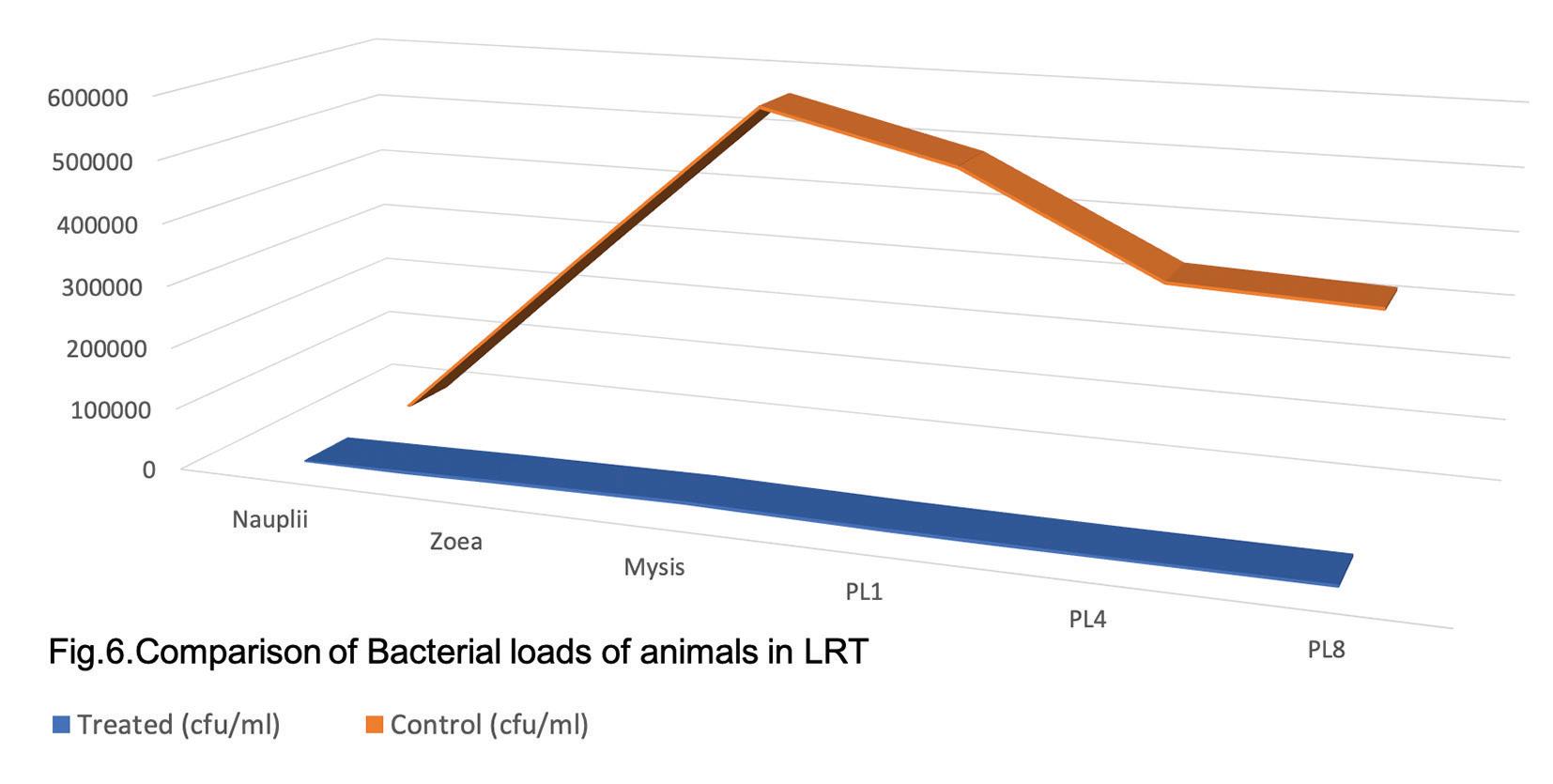
When the crushed animal microbial load was analyzed at PL4 stage, the control tank showed 6.1 x 10⁵ CFU/
mL with a mixture of yellow and green colonies. While the treated tanks had 1.3 x 10⁵ CFU/mL with a considerable reduction in green colonies (Fig. 7).
The survival rate of animals in larval rearing tanks was higher than in the control tank. No significant differences in survival rate were found in Nauplii and Zoea stages, but as the stages progressed, a nearly 20% increase in larval survival rate was observed at Mysis, PL1, PL4, and PL 8 stages (Fig. 8).

Hatchery Feed & Management Vol 11 Issue 3 2023 58 HEALTH & DISEASE MANAGEMENT
Figure 5. Bacterial load of the Nauplii tanks treated and untreated with bacteriophage
Figure 6. Animal bacterial load of the larval tanks treated and untreated with bacteriophage
HEALTH & DISEASE MANAGEMENT
Conclusions
Phages lead to a reduction in the Vibrio load and in slime and biofilm formation in larval tanks, reducing the reservoirs of pathogens. The phage therapy proves to be a promising additional amendment in controlling Vibrios in aquaculture, having the important advantage of not affecting the beneficial microbiome of the shrimp and its rearing system.


References available on request
More information:
Dr. RAMESH KUMAR DHANAKOTI Chief
 Executive
Officer/Head R&D Salem Microbes Pvt. Ltd.
E: ramesh@salemmicrobes.com
59
Figure 7. Animal bacterial load of the PL4 tanks treated and untreated with bacteriophage
Figure 8. Comparison of the survivals during various stages of LRT
What’s new in the hatchery?
Humic acid as a microbial control agent
Marcia Chiasson, University of Guelph
Cultured fish species are increasingly exposed to fungi and bacteria in the rearing environment which often causes disease and mortality. Aquaculture producers rely on the use of chemical therapeutics to combat the effects of fungi and bacteria which may have negative consequences for fish, human and environmental health. In the hatchery environment, managers seek solutions which are both cost-effective and sustainable.
Egg treatment in hatcheries
Several antifungal agents are commonly used during the incubation of salmonid eggs. These agents may vary depending on preferences, regional regulations, and specific hatchery practices. Antifungal treatments play a significant role in promoting sustainable hatchery production in several ways. Primarily, fungal infections can pose a significant threat to fish eggs and larvae in hatcheries and may contribute to disease. By using antifungal treatments, the risk of fungal infestations can be reduced. This prevention helps maintain healthier fish populations and minimizes the need for disease treatment, which can be costly and time-consuming.
The use of antifungal treatments can also increase hatch rates. Fungal infections can negatively impact egg viability and hatch rates. Treating the eggs with antifungal substances helps protect them from fungal pathogens, ensuring a higher percentage of eggs successfully hatch. Improved hatch rates contribute to higher production yields and more efficient use of resources in the hatchery.
Fungal infections may also weaken fish embryos and fry, making them more susceptible to other diseases and stressors. By implementing antifungal treatments, the overall health of the fish is improved. Healthy
fish have a better chance of surviving, growing, and reaching market size, which contributes to sustainable aquaculture production.
In Ontario, Canada, the most common treatment during the incubation of rainbow trout eggs is formalin (formaldehyde). Formalin is a widely used antifungal agent in aquaculture. It is effective against various fungi and has been used for many years in egg disinfection. Formalin treatments are typically performed as shortterm baths or continuous low-level exposure to control fungal infections on eggs. It is important to handle formalin with care as it is a hazardous substance and requires appropriate safety measures.
Historically, malachite green, a synthetic dye with antifungal properties, has also been used for the treatment of fungal infections in fish eggs. Malachite green can be applied as a bath or used in egg suspension during incubation. However, its use is regulated or banned in some countries due to potential environmental and health concerns. Hydrogen peroxide is a mild antifungal and disinfecting agent which may also be used to control fungal growth on rainbow trout eggs. Hydrogen peroxide is typically applied as a bath or in low concentrations as an egg disinfectant. This product must be used with care because excessive concentrations will harm the developing embryos. Finally, copper sulfate is also an effective antifungal and bactericidal agent used in aquaculture and may be used as a treatment for fungal infections on trout eggs. However, its use requires caution as excessive copper concentrations can be toxic to fish and other aquatic organisms. All these products have varying consequences for fish, human and environmental health.
Hatchery Feed & Management Vol 11 Issue 3 2023 60 HEALTH & DISEASE
MANAGEMENT
HEALTH & DISEASE MANAGEMENT
Solutions from nature
The balancing act of managing the health of incubating eggs while also limiting the exposure of fish, humans, and the environment to potential chemical irritants, has many hatchery managers seeking solutions from natural sources. The development of nontoxic and environmentally friendly products to safely disinfect salmonid eggs during incubation would reduce risks to human and environmental health.
One potential solution is humic acid, a natural organic compound that is derived from the decomposition of plant and animal matter over a long period of time.
Humic acid is commonly found in soils, peatlands, and freshwater environments. Humic acid forms because of the breakdown and transformation of organic materials, such as leaves, wood, roots, and other organic debris, by microorganisms and geological processes.
Humic acid is primarily known for its applications in agriculture and soil management due to its ability to improve soil fertility, nutrient uptake, and water retention. However, it is also used in several other industries for disinfection purposes and other applications. Humic acid can be used in water treatment processes, particularly in the removal of heavy metals and other contaminants. Its chelating properties enable it to bind with metal ions and facilitate their removal from water, helping to purify and detoxify water sources. Humic acid has been employed in the remediation of contaminated soils and water bodies because it can aid in the removal or immobilization of various pollutants, including heavy metals, pesticides, and organic compounds, thereby
assisting in the cleanup and restoration of polluted environments. Humic acid may also be added to livestock and poultry feed as a supplement. It has been associated with improved nutrient absorption, gut health, and immune function in animals. Humic acid is generally considered safe when used as directed and in appropriate concentrations.
In the context of aquaculture, humic acid has been utilized for various purposes, including water quality management, disease prevention, and stress reduction in fish. It can help maintain favorable water conditions, promote the growth of beneficial microorganisms, and enhance the immune response of fish, contributing to healthier and more resilient aquaculture systems.
Humic acid in practice
We aimed to test the effect of humic acid as a treatment to reduce fungal and bacterial infections to increase survival during the incubation of rainbow trout (Oncorhynchus mykiss) eggs. To do this, we used a peristaltic pump to continuously expose rainbow trout eggs in stacked incubating trays to a low-level (5 mg/L) of humic acid (trade name: AC Aqua, MTS Environmental Inc., Exeter, ON, Canada) from fertilization until hatch. To assess the impact of humic acid, we counted the number of eggs going into the incubator and counted them again at the eyed stage and at hatching. Additionally, we collected water samples from the incubators and used 16S ribosomal RNA (rRNA) sequencing to identify and compare bacterial diversity between the eggs treated with humic acid and the eggs incubated in regular groundwater (control).
In the absence of chemical or manual manipulation to reduce fungus growth, we expected the egg mortality in the control groups would be high. We predicted that exposure to humic acid in the water would reduce the growth of the fungal mycelium. The results were better than we expected, exposure to humic acid in the water eliminated
61
Figure 1. Incubating rainbow trout eggs at 35 days post fertilization incubated at 9°C in stacked incubator trays exposed to groundwater (control) and humic acid at 5 mg/L (treatment). Image A (left) has no visible evidence of fungus whereas image B (right) shows clusters of white fungal mycelium.
observable fungus and resulted in significantly improved survival compared to the control groups in the incubator trays (Fig. 1).
Specifically, the survival in the eggs treated with humic acid (mean 95.5 ± 3.6 %) was significantly greater than the controls (mean 88.9 ± 4.6 %) at eye-up which occurred at 24 days post fertilization (dpf). We saw an even more pronounced effect at hatch (42 dpf), the survival in the eggs treated with humic acid (mean 77.2 ± 10.4 %) was significantly greater than the control group (mean 55.5 ± 16.1 %; Table 1).
Additionally, the humic acid treatment was found to reduce the bacterial diversity compared to eggs incubated in groundwater and altered the bacterial composition after 20 days of continuous exposure. Finally, the humic acid treatment increased the abundance of bacteria associated with healthy fish eggs and decreased the abundance of known bacterial pathogens, such as Flavobacterium and Aeromonas
A sustainable future
As water temperatures continue to rise, hatchery producers are likely to experience more pressure due to fungal and bacterial pathogens in their culture

facilities. Overall, antifungal treatments contribute to sustainable hatchery production by improving fish health, increasing hatch rates, reducing disease risks, and promoting responsible resource management. By implementing these treatments, hatcheries can operate more efficiently, minimize environmental impacts, and support long-term viability in the aquaculture industry. We found that humic acid is a viable alternative for hatchery producers to use as a water treatment to reduce bacterial and fungal pathogens to improve the survival of rainbow trout eggs in incubator trays. Not only was this product effective in eliminating fungal growth, but additional benefits were also observed in the microbial community in the incubator trays. By moving away from chemical products, such as formalin, and implementing natural antifungal substances like humic acid, hatcheries can minimize their chemical footprint and adopt more sustainable practices.
Reference:
Chiasson M, Kirk M and Huyben D (2023). Microbial control during the incubation of rainbow trout (Oncorhynchus mykiss) eggs exposed to humic acid. Front. Aquac. 2:1088072. doi: 10.3389/ faquc.2023.1088072
More information:
Dr. Marcia Chiasson Manager, Ontario Aquaculture Research Centre Office of Research, University of Guelph E: marciach@uoguelph.ca

Hatchery Feed & Management Vol 11 Issue 3 2023 62 HEALTH & DISEASE MANAGEMENT
Egg collection Group Mean survival to eyed stage (%) Mean survival to hatch (%) Week 1 Control 84.0 ± 5.3 68.8 ± 11.8 0.7 ± 1.1 80.9 ± 1.7 2.8 ± 2.5 59.4 ± 5.6 7.7 ± 0.5 74.7 ± 16.5 8.5 ± 4.6 38.5 ± 11.8 8.0 ± 0.5 75.9 ± 9.7 8.9 ± 4.6a 55.5 ± 16.1a 5.5 ± 3.6b 77.2 ± 10.4b
Table 1. Percent survival (± standard deviation) of rainbow trout eggs collected weekly for three weeks at the eyed stage (24 days post fertilization) and hatch (42 days post fertilization) incubated at 9°C in stacked incubator trays exposed to groundwater (control) and humic acid at 5 mg/L (treatment). Different letters in the same column indicate significant differences within groups p ≤ 0.05.
New Zealand aquaculture: Poised for growth
Suzi Dominy, Blue Wave Media
Credits: NIWA
Aquaculture in New Zealand is on the cusp of expansion. Based on king salmon (Oncorhynchus tschawytscha), green mussels (Perna canaliculus), Pacific oysters (Crassostrea gigas) and seaweed, the country has a reputation for sustainable, green production, recognized by Monterey Bay Aquarium Seafood Watch as best choice sustainable seafood. Current annual sales amount to NZD 600 million (USD 3.74 million). In a commendable example of cooperation between government, researchers, producers and indigenous communities, the sector is working together to reach its goal of NZD 3 billion (USD 1.87 billion) by 2035.
Underpinning aquaculture growth is the Cawthron Institute, the country’s largest independent science organization, which is home to some 300 scientists, technicians, researchers, and specialist support
taff from all over the world. The century-old institute is home to the Cawthron Aquaculture Park. Situated just outside Nelson, in the Northwest region of the South Island, the 20-ha park is a purpose-built aquaculture hub for research, education and commercial development. It houses research laboratories and culture systems including micro- and macro-algae culture facilities, shellfish nurseries serviced by managed algae ponds, commercial shellfish hatcheries and several high-tech recirculating aquaculture systems (RAS), designed specifically for finfish research.
Salmon is king
Cawthron scientists have been working with farmers for 20 years, to understand and advance the little-studied king salmon – also known as Chinook – of which New

63 SPOTLIGHT
Hatchery Feed & Management Vol 11 Issue 3 2023
Zealand is the world’s largest producer. The initial focus was on feed and nutrition, with trials conducted in nine 5,000-liter tanks. With the construction of the Finfish Research Centre (FRC) in 2018 and the Te Wero Aro-anamata biocontainment facility in 2022, research was extended to cover selective breeding, physiology, behavior, feed efficiency, climate change resilience, health, and disease (including pathogen challenges).
The FRC has six RAS systems: 18 x 8,000-liter tanks that can be isolated as 4 x separate systems, or combined as a single research system, and a further 9 x 3,000-liter tanks that can be combined or separated into two RAS. Programmable Logic Control (PLC) systems automate water quality monitoring processes across the whole aquaculture park, as well as in the FRC. Cawthron is especially proud of its supervisory control and data acquisition system (SCADA), which, explained finfish aquaculture supervisor, Gareth Nicholson, was designed in-house. SCADA gives access to real-time as well as historic data, which can be adjusted remotely, and sends alarms for changes in water quality parameters or equipment failure.
The institute has racked up impressive results, establishing nutrient requirements and best feeding practices for king salmon that have enabled feed

manufacturers to develop tailored diets. To further help farmers optimize production, Cawthron has established comprehensive databases providing indicators and rearing parameters and developed diagnostic health tools that determine when and how sea temperature changes impact fish health. Advances have also been made in breeding technologies: a database of over 10,500 genotyped Chinook salmon has been established and underpins ongoing research, such as the discovery that thermal tolerance in farmed king salmon is heritable.
Salmon research has, for many years, also been supported by the New Zealand government. In addition to providing R&D funding, its Crown Research Institutes, the National Institute of Water and Atmospheric Research (NIWA) and Plant and Food Research (PFR) conduct salmon research, including nutrition, physiology, RAS and production efficiency at the Northland Aquaculture Centre at Bream Bay (NIWA) and in the Nelson Research Centre for Plant & Food Research (PFR).
Mollusk hatchery technology
Mussels, Bluff (flat) oysters, Tuatua and Pāua (blackfoot abalone) are favorite eating in the country, and farmed
Hatchery Feed & Management Vol 11 Issue 3 2023 64 SPOTLIGHT
Oyster juvenile. Credits: Cawthron Institute
Greenshell™ mussels and Pacific oysters account for more than half the country’s aquaculture production by revenue.
Shellfish aquaculture is preparing for significant growth through the development of more land-based hatcheries, which will provide a greater volume and consistency of supply of shellfish seed, as well as take up the advantages of selective breeding, thus reducing dependency on a wild seed supply that is naturally variable in both quantity and quality.
The interaction between researchers and industry stakeholders within the Cawthron Aquaculture Park has enabled multiple collaborative research projects resulting in a fast and direct transfer of knowledge and the development of hatchery protocols and technologies. This environment has given several industry players the confidence to invest in the

development of commercial hatcheries, with the largest mussel hatchery in the southern hemisphere and the main Pacific oyster hatchery in the country being present on site, with another Pacific oyster nursery being built at the time of the visit, and another Māori owned mussel hatchery project being supported as well via staff training and assistance with R&D.
Cawthron has developed research and commercial hatchery capability and expertise through the years, increasing the understanding of the biology of commercially valuable species and applying it all along the production chain from hatchery to consumers. Of particular relevance to hatcheries is the development of selective breeding programs for both Greenshell™ mussels and Pacific oysters, enabled not only by quantitative genetics and the application of cryopreservation techniques (i.e., for eggs, sperm and larvae) but also through the development of small volumeflowthrough larval rearing units (CUDLs= Cawthron Ultra Dense Larval rearing system). The CUDLs allow the simultaneous production of hundreds of families in a small space –key for comparing performance attributes such as growth, environmental tolerance, and disease resilience.
Most this research has been enabled by the NZ government-funded Shellfish Aquaculture Platform that is hosted by Cawthron. This research platform’s mandate is to enable the growth and diversification of the industry, as well as secure current and emerging shellfish aquaculture industries through good husbandry, genetic management, and biosecurity and disease management. The existing protocols and technologies developed and applied in mussels, and Pacific oysters are also being evaluated in other species such as the NZ geoduck (Panopea zelandica), flat oysters (Ostrea chilensis), Pāua (Haliotis iris), and NZ scallops (Pecten novaezelandiae).
Species diversification
NIWA’s core purpose is to enhance the economic value and sustainable management of New Zealand’s
65 SPOTLIGHT
Leo Zamora with Cawthron Ultra Density Larval System (CUDLS)
aquatic resources and environments, to provide an understanding of climate and the atmosphere and increase resilience to weather and climate hazards to improve the safety and well-being of New Zealanders, Andrew Forsythe, NIWA Chief Scientist, Aquaculture & Biotechnology said.
The priorities that drive its aquaculture research are the development of high-value products with consumer appeal, grown under high welfare standards with a low carbon footprint, minimal discharge and nutrient recovery. To achieve the industry’s growth targets, NIWA recognizes the need for species diversification to complement ongoing work to expand Chinook salmon and Greenshell mussel production. NIWA has chosen to focus commercialization efforts on two highvalue fish species that have strong market potential: yellowtail kingfish (Seriola lalandi lalandi) and hāpuku (Polyprion oxygeneios), an indigenous species of wreckfish, and one shellfish: the New Zealand rock oyster, Saccostrea glomerata
NIWA has been studying hāpuku for more than a decade and has succeeded in closing the lifecycle; it now has reliable production of second-generation fish and some 45 hāpuku families. Reproductive performance for their captive-bred broodstock is suitable for commercial production, but NIWA says more investment will be needed to realize impactful commercial development, and that investment must come from industry partners.
The development of yellowtail kingfish is much further along. Known and branded by its Māori name, Haku, yellowtail kingfish was identified as an ideal candidate for commercialization back in 2002, thanks to its marketplace acceptance, high value, rapid growth and low FCR. The species is successfully farmed around the world, and New Zealand enjoys the advantage of having an advanced broodstock program founded on plentiful and genetically diverse wild stocks. NIWA’s established and scalable hatchery can consistently produce 500,000 kingfish fingerlings per year.
NIWA has progressed to commercial-scale production with the completion of a RAS unit at its 8.2-hectare Northland Aquaculture Centre. Haku does well in RAS and can reach market size within 12 months of spawning. The system is designed to produce up to 600 tonnes of haku per year in eight 350,000-liter tanks. This almost NZ$20mn (approx. US$12,44mn) investment is a prototype NIWA expects to be replicated at NAC, and
throughout New Zealand, for haku and other high-value species by the private sector, as Forsythe says testing new species and systems at scale is a critical part of proving the commercial case.

In addition to enhancing efficiency, ramping up production of established aquaculture and implementing species diversification, New Zealand also has eyes on expansion through Open Ocean Aquaculture (OOA), particularly integrated multi-trophic aquaculture (IMTA) of low trophic level, high-value species such as sea cucumbers, along with seaweeds and mussels. The country has an exclusive economic zone 15 times larger than its land area, at 400Mha of marine estate, the ninth largest in the world. According to the recently appointed Minister for Food Safety, Oceans and Fisheries, Hon Rachel Brooking, more than 11,000ha of that area is already consented to OOA, but less than 900ha is currently farmed. Under the government-funded Ngā Punga o te Moana (‘Anchors of the Sea’) program, Cawthron Institute scientists, industry, the Māori community and international collaborators aim to work together to revolutionize New Zealand’s approach to the design and testing of OOA structures.
New Zealand aquaculture faces many of the same challenges as the industry everywhere: a need for more investment, regulatory constraints, and high operational costs, exacerbated by the need to import feed. So far, the industry lacks the scale to make the production of domestic feeds financially viable, but sourcing sufficient, sustainable, affordable raw materials to formulate the feed when the time comes is another priority. Set as it is in the Pacific Ocean, surrounded by pristine waters, and imbued with the Māori values of Kaitiakitanga, (care for the environment) and Manaakitanga (mutual caring and support), Aotearoa, The Land of the Long White Cloud, has every chance of realizing its growth ambitions.
More information:
Suzi Dominy Principal
Blue Wave Media
E: suzi.dominy@gmail.com
Hatchery Feed & Management Vol 11 Issue 3 2023 66 SPOTLIGHT
Industry Events
2023
OCTOBER
2 - 5: The Responsible Seafood Summit, Canada events.globalseafood.org
23 - 26: Aqua Expo Guayaquil aquaexpo.com.ec
NOVEMBER
2 - 4: Aquaex India 2023, India aquaexindia.com
13 - 16: Aquaculture Africa 2023, Zambia was.org
14 - 18: XIX FENACAM, Brazil www.fenacam.com
22 - 24: 11th International Fisheries Symposium www.aitaquaculture.org
DECEMBER
12 - 15: AlgaEurope 2024, Czech Republic www.algaeurope.org
2024
FEBRUARY
18 - 21: Aquaculture America 2024, USA was.org
MARCH
19 - 21: Aquasur 2024, Chile www.aqua-sur.cl
MAY
14 - 15: Aquaculture UK aquacultureuk.com
29 - 31: Ildex Vietnam 2024 ildexvietnam.com
JUNE
11 - 14: Asian Pacific Aquaculture 2024, Indonesia www.was.org
AUGUST 25 - 29: AQUA 2024, Denmark was.org
SEPTEMBER 24 - 27: LAQUA 2024, Colombia www.was.org
67





EQUIPMENT
