
AQUAFEED Advances in processing & formulation Vol 16 Issue 2 April 2024 Published by: Aquafeed Media, S.L.U. www.aquafeed.com info@aquafeed.com
EXTRACTS
PLANT-BASED
Micro aquafeed production
An Aquafeed.com publication
Functional properties of insect meal


Aquafeed: Advances in Processing & Formulation Vol 16 Issue 2 2024 2 AQUAFEED VOL 16 ISSUE 2 2024 Contents 4 Interview with Marcelo Costero 6 News Review 14 How to avoid oil leakage in aquafeed 17 Producing micro aquafeed via extrusion cooking technology 21 Oregano essential oil and Quillaja saponaria extract as dietary supplements to improve the health and growth performance of aquaculture species 26 Making all shrimp eat: The impact of a neurosensory additive on feed intake and size homogeneity 30 Use of selected polyphenols to improve fish reproductive performance 34 From field to fin: The soy-powered future of aquaculture 37 Where are we in the search for new protein in aquafeeds? 41 Understanding BSFL meal as a functional feed ingredient for aquaculture 44 Silkworm pupae meal vs. conventional protein meals: A comparative study for aquafeed formulation 50 Calendar of events To read previous issues in digital format or to order print copies, visit www.aquafeed.com We are grateful to the following companies for sponsoring this issue of the magazine. Their support allows us to make our publications available without charge. Extru-Tech 13 Process Integration 16 Biochem 20 Anpario 25 Phodé........................................................................................ 27 Nouvelles Vagues 29 ISFNF 33 Berg + Schmidt 36 Phytosynthese 40 FeedTechExpo 2024 ............................................................... 49 Aquaculture Philippines 51 WAS 52 CONTACT US Editorial: editor@aquafeed.com Editor/Publisher: Lucía Barreiro Consulting Editor: Suzi Dominy Technical Editors: Peter Hutchinson, Albert Tacon, Ph.D Assistant Editor: Marissa Yanaga Conferences and webinars: info@aquafeed.com Advertising enquiries/request media pack: sales@aquafeed.com Accounts & all other enquiries: info@aquafeed.com SUBSCRIBE Digital editions are free to industry subscribers. You may also purchase print copies. Subscribe at Aquafeed.com to receive your own digital copy of our publications. https://bit.ly/AQUASUBSCRIBE FOLLOW US Aquafeed Media, S.L.U., Ames, 15220 A Coruña, Spain. Copyright© Aquafeed Media, S.L.U., 1998-2024 All rights reserved. Privacy Policy & Terms of use.
Contents

PRODUCING MICRO AQUAFEED VIA EXTRUSION COOKING TECHNOLOGY
Modern, continuous cooking extrusion technology has developed i high-quality and high-capacity micro aquafeeds.

OREGANO ESSENTIAL OIL AND QUILLAJA SAPONARIA EXTRACT AS DIETARY SUPPLEMENTS 21
Their properties make them an effective solution in aquafeeds.

A SWOT ANALYSIS OF PROTEIN INGREDIENTS 37
Where are we in the search for new protein sources in aquafeeds?

FUNCTIONAL PROPERTIES OF BLACK SOLDIER FLY MEAL 41
There is evidence that functional antimicrobial peptides are present in a commercially available insect meal product.
Aquafeed: Advances in Processing & Formulation Vol 16 Issue 2 2024 3
VOL 16 ISSUE 2 2024
AQUAFEED
INTERVIEW with Marcelo Costero

AQ: Where is Vimifos today in terms of markets served?
We are the main supplier of aquaculture feed –shrimp and tilapia – in Mexico, with production plants in the Northwest, West and Southeast of Mexico, practically covering the country regionally. We contribute to a lesser extent in feeding trout and marine fish. We are also leaders in the production of feed for pigs, poultry and cattle.
AQ: How is the volatility of the feed ingredients market affecting Vimifos? Are you prioritizing local ingredients?
Mexico has a certified sustainable fishmeal and fish oil industry that covers the demand for aquaculture. This puts us in a good position to provide highly competitive feed to our customers. Furthermore, in the northwest of the country, where farmed shrimp is produced, we have very important wheat and corn production areas in the west and southeast of the country.
AQ: What is the status of the shrimp farming industry in Mexico? What are the main challenges in the country?
Farmed shrimp production has remained stable over the past 10-12 years. The supply of larvae of consistent quality – in growth and survival – is the most critical step. On the other hand, we have a local market that demands fresh shrimp all year round at very attractive prices, which makes the industry profitable. Mexico is a net importer of processed shrimp for selfservice.
AQ: Vimifos has more than 45 years of experience in animal nutrition. Why did you decide to enter the aquaculture industry?
MC: The company decided to venture into aquaculture at the beginning of 2000, almost 25 years ago, due to the emergence of the shrimp farming industry in the Northwest of Mexico. Aquaculture farmers required specialized feed that generates results and covers all the quality requirements for the good growth of their animals.
AQ: Tilapia is another important aquaculture species in Mexico. What is the status of tilapia farming in the country? What are the main challenges? How does Vimifos support the tilapia sector?
MC: The tilapia farming industry has suffered a very sharp decline in the past three years. This was mainly due to farming practices that have brought in health problems, viral and bacterial, which have caused the industry to fall to 25% of what was produced three years ago. The lack of disease-free offspring is, like in the case of shrimp, the most delicate step. Our company decided to venture into the production of tilapia fingerlings by partnering with a local producer.
Aquafeed: Advances in Processing & Formulation Vol 16 Issue 2 2024 4
Marcelo Costero is Sales Manager Aquaculture at Vimifos
We provide them with resources and cutting-edge technology from a leading company to have tilapia fry available for our customers and feed.
As in the shrimp industry, we are the number 1 supplier of feed for the industry in Mexico. Currently, Mexico is a major importer of tilapia, with more than 100,000 MT of whole-weight equivalent tilapia imported per year, primarily for self-service.
AQ: Vimifos has an Aquaculture Research Center. What is the objective of this center and what have been the main projects developed?
MC: It is a center for verifying the performance of our shrimp and tilapia diets before they are launched on the market. We also verify the growth of different genetic lines from different suppliers and evaluate the effect of functional additives on survival and growth, before promoting them to our clients.
AQ: Vimifos has been one of the first aquafeed manufacturers to obtain the ASC Feed certification. What does this certification mean for the company?
MC: We are the only company certified in Latin America by ASC Feed Standard for shrimp and tilapia. This is the result of our commitment to the quality of our products, processes and services, in the quest to provide the best technologies in aquaculture nutrition to our clients.
AQ: What are the company's main sustainability objectives?
MC: Vimifos' sustainability goal is to satisfy the needs of the present without compromising the capacity of future generations, caring for the environment and social well-being. We use local byproducts to reduce the carbon footprint and our diets are also designed using byproducts from the animal production industry and thus reduce dependence on wild-caught fish stocks. Moreover, we maintain precise control of some ingredients such as phosphorus and we use enzymes to optimize nutrient utilization.
AQ: Vimifos provides support services to farmers. What are the main ones?
MC: Importantly, we promote value to our clients, helping them in the application of the best farming practices, as well as with the supply of the highest quality offspring, as is the case of tilapia. We also support farmers with agile
Responsible seafood farming needs responsibly produced feed. ASC’s Feed Standard is the first standard to take into consideration the impacts created across all key ingredient groups and across the entire ingredient supply chain. Feed mills have to meet strict requirements for the sourcing of all major feed ingredients, addressing environmental and social risks down to the raw material level.
Vimifos is in the leading pack of feed companies that is paving the way for the rest of the industry. By achieving ASC certification, they are playing a crucial role in moving aquafeed production – and the aquaculture industry as a whole – towards sustainability through greater transparency and traceability. There is an incentive for other feed companies to follow in Vimifos' footsteps: all feed mills that get certified in 2024 will not have to pay license fees on the volume of compliant feed they produce this calendar year.”
Alexandra Warrington, Senior Coordinator, Feed Standard at ASC
and sufficient credit for their operations with our financial subsidiary Vimifos Capital.
AQ: What are Vimifos' growth projections in the short and medium term?
MC: Vimifos aims to maintain the constant growth we have had in the aquaculture industry, focusing on our efforts to consolidate sales in Mexico, and Central and South America.
Aquafeed: Advances in Processing & Formulation Vol 16 Issue 2 2024 5 INTERVIEW
NEWS REVIEW
Highlights of recent news from Aquafeed.com
De Heus opens shrimp feed mill in Vietnam
The company opened a new shrimp feed mill in Co Chien Industrial Zone, Vinh Long province in Vietnam. Spanning an area of 29,300 square meters, De Heus' new shrimp feed mill has an annual capacity of 50,000 metric tons, featuring five production lines exclusively dedicated to shrimp feed products.

BioMar’s new product helps manage salmon stress and improve performance

Calm is the latest BioMar’s offering to complement the SmartCare range of products in salmon feeds. Made from natural ingredients, Calm can be added to grower diets and used in addition to other already wellestablished SmartCare products. Recommended to be used strategically before and immediately after any planned stress event, SmartCare Calm can be a useful addition to the feed for the farmer to help mitigate these risks to welfare which will help them maintain the expected level of performance.
Green Plains unveils new specialty feed ingredient brand

The company unveiled a new brand for its specialty feed ingredient, reflecting its quality performance, versatile formulation opportunities, proven nutritional benefits, digestibility and low carbon footprint. Sequence™, a foundational feed ingredient produced at scale using proprietary mechanical separation technology, delivers a combination of corn and yeast protein, concentrated at a minimum of 60%.
Aquasoja unveils new feed for tilapia and carp
The company has recently formulated a new product to fulfill the nutritional requirements of both species, maintaining the focus on high-quality protein ingredients and fish health conditions. POND PLUS is an extruded, floating feed, designed for semiintensive to intensive production of both species. This highly digestible and low-fat feed includes more than 25% high-quality poultry ingredients, and around 15% marine ingredients, namely fishmeal from trimmings, shrimp hydrolysates and fish oil, being well-balanced in terms of carbohydrates content and sources, as well as vitamins and minerals. The combination of selected macro ingredients with health-promoting materials will maximize growth performance, health and survival throughout Nile tilapia and European carp’s on-growing period.
Aquafeed: Advances in Processing & Formulation Vol 16 Issue 2 2024 6
NEWS
Calysta protein receives MARA approval for use in aquafeeds
Calysta’s FeedKind® protein has received formal approval for use in aquafeeds in China as the company’s joint venture with Adisseo, Calysseo, prepares to deliver the first product to customers through the Adisseo sales network in China. The country’s Ministry of Agriculture and Rural Affairs (MARA) has formally given Calysta’s single-cell protein full approval for use in fish and shrimp feeds after an extensive evaluation process.

Omega-3 camelina varieties achieve regulatory milestone
The USDA-APHIS’s Biotechnology Regulatory Services (BRS) has determined that Yield10’s Camelina sativa varieties developed using genetic engineering (modified Camelina) to produce omega-3 fatty acids are not subject to the regulations under 7 CFR part 340, and may be grown and bred in the United States. “This regulatory milestone represents a critical step for enabling the ramp-up of camelina planting to commercial scale in the U.S for producing omega-3 oil for key markets including aquafeed and human nutrition,” the company said.

Skretting unveils
barramundi grower feed line

Utilizing Skretting’s extensive knowledge of the species' specific nutritional requirements and digestive capabilities, Cosmos has been carefully developed over the past three years. It aims to enable producers of premium-quality barramundi to achieve optimal levels of fish performance and farm efficiency, including higher growth rates at lower feed conversion levels. The diet’s formulation offers precisely balanced digestible protein, energy, and phosphorous levels. Cosmos will first be available in Australia, with more countries to follow.
Veramaris secures Canadian authorization for algal oil in aquafeed

The company has completed the necessary threeyear registration process for its use in Canadian salmonid farming. The authorization allows Veramaris to provide Canadian aquaculture with a secure source of ASC- and MSC-certified EPA and DHA. The algal oil, produced in Blair, Nebraska, USA, is a regional solution that supports the industry's move towards adopting alternative omega-3 sources and reducing dependency on fish oil as a primary source of essential fatty acids for salmon feed.
Aquafeed: Advances in Processing & Formulation Vol 16 Issue 2 2024 7 NEWS
Entobel, Vinh Hoan partner to accelerate the transition towards more sustainable pangasius production

The companies expanded their strategic partnership which includes an offtake agreement by Feed One, a subsidiary of Vinh Hoan, to purchase a substantial volume of insect protein produced at Entobel’s Vung Tau factory in 2024. In addition to the offtake for 2024, through this agreement, Vinh Hoan will purchase a minimum of 15,000 metric tons of insect protein from Entobel over the next three years, from 2025 to 2027.
ESG risk assessment tool for feed ingredients unveiled

Innovafeed expands product portfolio, unveils new brand
To support the acceleration of its production and sales growth, which more than doubled in 2023, Innovafeed unveiled its new brand, Hilucia™, redesigning its offer around a complete range of high-quality ingredients for animal and plant nutrition with minimal environmental impact. The company’s product range has been extended with the launch of two new solutions, an insect oil for aquaculture and an insect protein for monogastrics.

The Global Salmon Initiative (GSI), in partnership with the World Wildlife Fund (WWF), launched a first-of-its-kind environmental, social, and governance (ESG) risk assessment tool for feed ingredients. The tool will improve visibility into supply chains, allowing stakeholders to better identify and address possible ESG risks. GSI and WWF designed the tool to support the salmon farming sector, but the wider animal protein production sectors, including livestock, may also benefit from its use. The tool provides a consistent and aligned framework for farming companies to engage with their respective feed suppliers in order to get a holistic overview of possible risks in the feed supply chain. It can also help companies assess the scalability of future novel ingredients.
dsm-firmenich to separate its animal nutrition business from the group
The company started a process to carve out and separate the Animal Nutrition & Health (ANH) business from the rest of the group. ANH is driven by different dynamics from the rest of the group, which has become even more apparent with the unprecedented challenges in the vitamins market. The company believes that the full potential of the ANH business could be best realized through a different ownership structure for which all potential separation options will be considered. The company would expect to be in a position to separate the business in 2025. Given Veramaris’ significant potential in dietary supplements, it is expected that it would remain part of the group.
Aquafeed: Advances in Processing & Formulation Vol 16 Issue 2 2024 8 NEWS
BioMar inaugurates new hatchery R&D facility
BioMar’s Aquaculture Technology Centre at Hirtshals Denmark opened a new wing dedicated to research and development in the hatchery segment. “The facility enables us to do trials with a very high degree of control over all production parameters. We can simulate conditions that our customers experience in different hatcheries around the world and do trials with both marine and freshwater larvae,” the company said.

Bühler develops fully automatic bagging station with Premier Tech
Bühler, in partnership with leading Canadian packaging equipment manufacturer Premier Tech, launched CHRONOS OMP-2090 B, a fully automatic bagging station. The new bagging station was developed for a wide range of powdery and other non-freeflowing products. It delivers maximum productivity through reliable, fully automatic operation, outstanding bagging accuracy and high product and operational safety.

Unlocking the power of alpha-gal immunity to help mitigate parasitic infestation in fish

The collaboration between startup microXpace and Lallemand Animal Nutrition has reached a significant milestone as both partners prepare to enter the product development phase for AlphaGal-based technology. The production of Alpha-Gal antibodies, triggered in response to microbiota expressing the Alpha-Gal glycan, plays a vital role in recognizing and binding pathogens' surfaces. This powerful technology offers new possibilities to help maintain animal health by supporting resilience to infectious diseases affecting aquaculture and poultry production worldwide. The successful proof-of-concept stage of the microXpace-Lallemand partnership has led to the identification of a broad range of parasite targets, paving the way for the development of an AlphaGal-based product aimed at enhancing resilience against major parasitic diseases prevalent in the aquaculture and poultry farming industries.
A-Systems signs partnership to expand to South Asia
Animal feed formulation software supplier, A-Systems, signed an agreement with Dr. Amit Das to distribute A-Systems products to animal feed producers in South Asia. With this partnership, A-Systems aims to strengthen its position in South Asia – India, Bangladesh, Nepal and Sri Lanka.
Aquafeed: Advances in Processing & Formulation Vol 16 Issue 2 2024 9 NEWS
IDAH unveils TwinTech extruder for the aquafeed market
Since 1974, Taiwan-based IDAH has been developing innovative products for the aquafeed, food, pet food and biomass markets. When IDAH joined CPM in 2023, they gained access to a range of collaborative opportunities, expertise and tools that they could use in developing their own products. At Victam Asia 2024, IDAH launched the clearest evidence of that collaboration: the all-new TwinTech Twin Screw Co-Rotating Extruder.
The innovative extruder updates IDAH’s industryleading twin-screw extruder with innovations and design techniques from Ruiya Extrusion, along with a long-lasting gearbox and energy-efficient motor from CPM Industrial Solutions.
“This extruder is a collaboration between IDAH and Ruiya,” said Albert Wang, assistant sales manager at IDAH. “We combined their insights on design and cost efficiency with our knowledge in feed production to introduce a new technology.”
CPM Industrial Solutions’ gearbox and motor also offer real-world benefits in TwinTech. “The gearbox allows rotational speeds up to 600 RPM, facilitating heavy-duty processing and increased output, along with a proven long-life track record,” said Wang.
The TwinTech’s motor from CPM Industrial Solutions is a permanent magnet synchronous motor (PMSM) that offers significant advantages. “The CPM motor has lower energy requirements,” said Wang. “It also has a reduced size, and reduces noise output by about 30%.”
Combined, these innovations create a marketleading twin-screw extruder that delivers capability, value and reliability.
TwinTech features
The TwinTech extruder offers a range of new features developed by both IDAH and partner brands within CPM.
Enhanced Gearbox Technology:
Powered by CPM’s field-tested gearbox technology, the TwinTech extruder features a high-speed, heavyduty gearbox capable of achieving
rotational speeds of up to 600 RPM. This allows for increased processing capacity and efficiency. Energy-efficient design: The TwinTech extruder is powered by a permanent magnet synchronous motor (PMSM), which is highly efficient and about 50% smaller than traditional air-cooled motors. This motor design contributes to energy savings, reduced noise pollution (up to 30% lower) and the option for water cooling to maintain motor efficiency and stability.
Density control unit: An optional feature, the density control unit, allows TwinTech to produce different types of fish feed, including sinking and slow-sinking feeds, by using positive pressure inside the cutter chamber. This versatility allows manufacturers to produce a wide range of fish feed with a single machine.
Advanced preconditioning and cooking systems:
The TwinTech extruder introduces a new thermal hydrator and updates the differential diameter conditioner to improve the hydration and retention time of materials. These systems are designed to enhance the cooking process by ensuring efficient steam integration and retention, leading to better processing efficiency and product quality.

Aquafeed: Advances in Processing & Formulation Vol 16 Issue 2 2024 10 NEWS
ANDRITZ introduces automation and digitalization solutions for the feed industry
The company is introducing a comprehensive portfolio of automation and digitalization solutions for the feed industry under its Metris digital platform. This continuously evolving, universally compatible platform supports operational efficiency, resilience, readiness and sustainability, and aims to allow for fully autonomous feed plant operations by 2027. “The journey to autonomous operations is paved with bold steps of those who embrace every facet of automation and digitalization, turning challenges into opportunities for growth,” said Sohail Nazari, head of Automation & Digitalization, ANDRITZ Feed & Biofuel. “Combining expertise and state-of-theart digital technologies, we never stand still and enable businesses to thrive. ANDRITZ will be with you every step of the way in your journey, ensuring your plant and your business never stand still.”
Operational efficiency

Operational readiness
Simulation-based engineering has shortened ramp-up times in greenfield projects across various industries by up to 20% and significantly increased revenues through saved production losses. For the first time in the feed industry, ANDRITZ is offering full-scale digital twin technology to enable virtual commissioning, allowing up to 90% of potential issues to be resolved before on-site commissioning.
With digital technologies for process optimization, asset management, operator training and knowledge management, ANDRITZ ensures a holistic, turnkey approach to feed processing. This enables feed producers to unlock their plants’ full potential over the full lifecycle, enhancing profitability and reducing the total cost of ownership. The use of ANDRITZ’s Metris digital platform has led to throughput increases in the range of 7% to 16% in various industries.
Operational resilience
Protecting feed operations from cyber risks is crucial. With its in-house provider of cyber security solutions OTORIO, we ensure full visibility across all assets and operations on demand, effectively enabling IT-OT convergence and proactively mitigating digital risks to IEC 62443 standards.
Advancing sustainability
ANDRITZ automation and digitalization solutions have been instrumental in achieving reductions in specific energy consumption ranging from 3% to 17% across various industries. By proactively identifying malfunctions and maintaining asset integrity, they effectively minimize production disruptions and enhance sustainable operations.
Improving decision-making
In today’s dynamic business environment, plant managers are always looking to transform complex operational data into actionable insights, while company management seeks robust data for planning and strategic decisions. ANDRITZ automation and digitalization solutions deliver tangible, measurable and replicable value as a basis for data-driven decisions.
Aquafeed: Advances in Processing & Formulation Vol 16 Issue 2 2024 11 NEWS
Vimifos, Skretting first feed mills to attain ASC Feed Certification
Mexican-based feed producer Vimifos, the Chilean branch of Skretting, and Thai Union’s Mahachai Plant in Thailand are the first feed mills to achieve certification against the requirements outlined in the Aquaculture Stewardship Council (ASC) Feed Standard.
Vimifos was the first to achieve multi-site certification for three of its feed mills in Mexico that produce feed for shrimp, tilapia, trout and marine fish.
Skretting has also achieved multi-site certification for two feed mills in Chile that produce feed for salmon.
Thain Union’s single-site certification for their Mahachai Plant, located in Thailand’s Samut Sakhon province just west of Bangkok, is the first ASC Feed Standard certification in Asia. The feed mill produces feed for seabass, seabream, meagre, tilapia and shrimp.
“There is no responsible seafood farming without responsible feed. Companies involved in its production face increased reporting demands to assess the ‘upstream’ environmental and social impacts of feedingredient supply chains. By setting strict requirements for the sourcing of all major feed ingredients, ASC addresses environmental and social risks down to the raw material level. Ensuring responsibly sourced feed supports responsible seafood farming and thereby responsible sourcing of seafood products on shelves. With these first certifications, the journey towards more responsibility coming from greater transparency
and traceability in feed production has gathered significant momentum,” said Chris Ninnes, ASC CEO.
Skretting CEO, Therese Log Bergjord, commented, “We are extremely proud to be the first salmon feed company in the world to achieve ASC Feed Standard certification. This is a highly demanding standard that moves in the right direction towards ensuring a positive impact across our supply chain, but we know that the journey doesn’t end here. We’re already implementing the learnings from Chile to accelerate the certification process across the rest of our operations and, with that, ensure that our customers can keep relying on Skretting to maintain their own certifications for fish and shrimp.”
Peerasak Boonmechote, CEO of Thai Union Feedmill, added that “securing the first ASC Feed certificate in Asia underscores our deep commitment to sustainability at the heart of our operations. This is a key step in increasing the availability of responsible feed as part of Thai Union Group’s commitments under its global sustainability strategy, SeaChange® 2030. This certification also reinforces our dedication to leading the industry towards a more sustainable and responsible future.”
ASC certified farms have until October 2025 to switch

NEWS
Shutterstock
PEOPLE IN THE NEWS

Therese Log Bergjord, CEO of Skretting, has announced her decision to leave the company after seven years on June 1, 2024. Therese will be succeeded by Bastiaan van Tilburg, currently managing director for Trouw Nutrition Europe and
Duong Anh Tu

Fabricio Vargas
BioMar-Viet Uc joint venture in Vietnam is now headed by Duong Anh Tu as managing director, who has extensive commercial experience from the feed and food sector in Asia. Duong Anh Tu replaced Franck Bodin, who was appointed to launch the business in Vietnam.

Latin American feed group Vitapro, owner of Nicovita and Salmofood, named Fabricio


Fulco van Lede

Fulco van Lede has also announced that he will be stepping down from his role this summer after leading the company for the past three years. David Blakemore will succeed Fulco as CEO.
Cedric van den Bossche

To lead the growth strategy for the Asian markets, BioMar appointed seasoned animal nutrition and aquaculture expert Cedric van den Bossche as vice president for the Asia division, which today comprises the business units in Vietnam and China.
Manuel Maire

Lesaffre appointed Manuel Maire as general manager of Phileo by Lesaffre, its animal


Aquafeed: Advances in Processing & Formulation Vol 16 Issue 2 2024 13 NEWS
EXTRU-TECH AQUAFEED UNIVERSE P.O. Box 8 100 Airport Road Sabetha, KS 66534, USA Phone: 785-284-2153 Fax: 785-284-3143 extru-techinc@extru-techinc.com www.extru-techinc.com Master Your Aquafeed Universe Sinking to floating. Sub-millimeter to pellet. When you select an Extrusion Processing System from Extru-Tech, you have a complete Universe with the ability to maintain size yields over 95%. As your business evolves, you have the flexibility to change your finished product without the need for significant capital expenditures. Contact Extru-Tech and optimize your flexibility and profitability. Sub 1 Millimeter Pellet ET-338B.indd 1 1/28/21 8:48 AM
How to avoid oil leakage in aquafeed
Peter Sønderskov, Process Integration

Extruded aquafeed is a well-known and essential process in the value chain of the global aquaculture industry. Aquafeed accounts for a large portion of the costs to farm fish, making it imperative that the pellets end up where they are intended, in the fish's stomach. However, various factors introduce new challenges, potentially leading to significant economic consequences for aquafeed manufacturers and environmental challenges in the sea.
Sufficient pellet cooling is crucial
The oil content in fish feed pellets significantly influences fish development, and inadequate cooling can lead to substantial problems. Peter Sønderskov, sales manager for Process Integration (PI), who has decades of experience in aquaculture technology, has witnessed some dire examples of what can happen when things
go wrong. "If, for example, moisture or temperature is too high during coating and where the pellets are packed, the oil may leak out, potentially requiring either reprocessing the entire batch or disposal. Right-first-time is, of course, preferable, making it essential to address this issue promptly. While fat sealers can apply an external layer, they may not always be sufficient."
Design changes or new technology
Extruded pellets aren't a new technology, so why are problems arising now? Peter Sønderskov explains, "Several reasons contribute to the problem. It could be due to improper plant design or incorrect calibration. In such cases, process knowledge is crucial for making the necessary adjustments to minimize the problem. Additionally, some feed plants lack dedicated cooling systems, relying instead on facilities like
Aquafeed: Advances in Processing & Formulation Vol 16 Issue 2 2024 14 FEED
PROCESSING
The right-dimensioned plant design can avoid oil leakage in the aquafeed factory. Credits: Process Integration

warehouses for cooling. However, with temperatures generally rising, adequately cooling the pellets can be challenging or impossible, necessitating installing a chiller system. Here, it's crucial to assess the entire factory before installation and to explore whether there's excess energy elsewhere in the process that can be utilized."
The picky salmon
It's a well-known fact that salmon are picky eaters. If pellets are broken or sinking properties are incorrect, they may end up on the bottom of the sea, creating
further challenges. "Even if the pellets, despite oil loss, still make it to the feed barges, they'll be more porous and prone to breaking. In such cases, salmon may refuse to consume them, leading to expensive feed becoming pollution in the sea instead of growth of the fish. Whole pellets will have a lower oil content, adversely affecting salmon growth. So, overall, the repercussions are significant," notes Peter Sønderskov.
Noted the above will also apply for other species, where the challenges are similar, even if the oil content of the pellet is much lower, but during processing and forming of the pellets, issues may occur.
Solution and costs
What does it cost to reprocess products not having a well-functioning cooling system? It depends on factors like the plant location, production capacity, and final oil content requirements. The overall performance of the plant is determined by the uptime, right-firsttime percentage, and the number of pellets requiring reprocessing. Other factors like capacity utilization and product changeovers are not taken into account here.

Aquafeed: Advances in Processing & Formulation Vol 16 Issue 2 2024 15
FEED PROCESSING
Figure 1. Flow diagram for chiller and cooling tower
Figure 2. Pellet diameter, fat content and cooling time. Temperature difference: 40°C (product in 55°C, product out 15°C)
FEED PROCESSING
Imagine this: daily production is 200 tonnes of feed and due to poor plant design and insufficient cooling of the pellets, the creation of dust and breakage, can typically mean up to a high 5% rework of the feed. As earlier stated, and as shown from studies, the fish does not eat broken pellets and in addition, salmon does not eat floating feed. With a production cost of e.g. €1 per kilo, this means that you will lose €10,000 every day, plus it reduces the throughput of the plant. A fact that can cause sleepless nights.
Pellet breakage depends on many things and with an acceptable feed quality, a correctly designed plant, and a fully functioning cooling system it is possible to achieve rework figures below 1%. This makes optimized cooling one of the priorities to minimize rework for the best production results and improve the profitability of your plant.
By reviewing your plant, PI can optimize your plant to reduce rework and optimize throughput thereby lowering your production cost and making production more profitable.
40 years of process experience
Many employees at Process Integration have been with the aquafeed industry since its beginning and are familiar with aquafeed production globally. Today, the company primarily focuses on designing, engineering, and installing process plants for a wide range of industries, specializing in plant optimization, replacement and upgrading of equipment, expansions, and servicing, whether it's for fish feed, pet food, human food, or powders and liquids. Headquartered in Denmark, Process Integration has sister companies in Chile, Norway, and the USA. For more information, visit processintegration.dk
More information:
Peter Sønderskov
Sales manager
Process Integration Aps
E: pes@processintegration.dk


Aquafeed: Advances in Processing & Formulation Vol 16 Issue 2 2024 16
We integrate your process visions Denmark • Norway • Chile • USA www.processintegration.dk • Engineering • Project management • Equipment supply • Installations • Turnkey solutions Aquafeed Petfood Sustainable Proteins Liquid Food & Beverage Service
Producing micro aquafeed via extrusion cooking technology
Brian Streit, Wenger Manufacturing
Micro aquafeed production has been a historical challenge in terms of consistent product quality, low throughput, and energy sustainability. However, recent advancements in continuous extrusion cooking technology and recipe development are now enabling feed producers to accomplish these aspects.
Micro aquafeeds are products in which the final product is 1,000 microns and smaller in size. Continuous extrusion cooking, which includes single and twin screw technologies, along with appropriate preconditioning and precise feed control to the process, has become a proven method for consistently producing high-quality and high-capacity micro feeds. The difference in the extrusion technologies involves processing and recipe flexibility. Both single screw and twin screw systems utilize mechanical and thermal energy inputs, through direct and indirect steam and water, under pressure, to gelatinize (“cook”), shape, and size the product to a specific density for the targeted aquatic species. By design, a continuous extrusion cooking system, versus traditional pellet milling, provides control of the specific recipe phase transition through compression, kneading, melting, and texturization prior to the final shaping –allowing for optimized starch gelatinization to yield a uniform product with long water stability. The flexibility in today’s extrusion technology provides many tools to manage this phase transition control including:
• accurate metering of the recipe and preconditioning control
• adjusting extruder barrel fill through modern variable speed controls
• unique extruder screw and barrel configurations
• sophisticated screw element design
These innovations provide more process control across a broad range of ingredients and recipes than alternate methods of aquafeed production. Extrusion process controls provide the ability to impart differing levels
of specific mechanical energy (SME or “shear”) and specific thermal energy (STE or “heat”) into the recipe to effectively manage the process whether producing floating, fast sinking, or slow sinking micro products. Equally important is the control of the upstream systems to deliver accurate recipe metering control and preconditioning prior to the extrusion process. With today’s technology, the metering control of the dry feed recipe – through sophisticated loss-in-weight systems – can consistently deliver accuracies down to 1.0%. Additionally, new preconditioning technology is available to effectively blend, with even distributive and dispersive continuous mixing, the dry recipe with water, steam, and fats or oils. Using automated controls, the preconditioning process can be adjusted for retention time, differential shaft speed, and mixing impacts to dial in the process parameters specific to the requirements of the recipe or product. This can be done while in production without the need to shut down and make mechanical adjustments. Given this level of control, current preconditioning technology can deliver a reduced coefficient of variation down to 2.0%.
Reducing variability in the metering and delivery systems of the dry feed recipe and preconditioning to the extrusion process will result in a more stable process, with reduced external factors influencing performance, and enhancing product quality attributes such as uniformity, density, moisture content, and starch gelatinization which directly impacts the associated water stability. The improved level of control and variability reduction is important for all aquatic feed production, however, it is critical when the target product is micro aquafeed, given the inherent challenges of producing small diameter products at high capacities.
So, what is the correct extrusion system to produce micro aquafeed? This question is best answered
Aquafeed: Advances in Processing & Formulation Vol 16 Issue 2 2024 17
FEED PROCESSING
FEED PROCESSING


by considering the range of ingredients, recipes, throughputs, and final products desired. In short, how much flexibility is needed in the process?
Single screw extruders
Single screw extruders – as indicated in the name –have a single shaft, typically with a set of configurable screw elements to produce a classified range of products, either floating or sinking, with output ranging from 1,000 to 30,000 kg/hr. With modern additional components, such as variable screw speed control and in-line restriction devices, the flexibility of a single screw extrusion system has increased in recent years. However, changing from a floating to sinking product will typically require modification to the screw element configuration to optimize production. Additionally, some recipe or ingredient modifications may be required, such as the carbohydrate, protein, and inherent fats or oil sources and inclusion ratios, to provide the capability to produce the range of products desired. Generally, the operating and recipe window for single screw extruders is narrower than that of its twin screw counterpart.
Twin-screw extruders
Twin-screw extrusion provides the ultimate flexibility in process and recipe control to produce the broadest range of micro aquafeed products without the need for changes in mechanical components or configuration – resulting in increased uptime. Simply changing the final die for the specific product diameter is usually all that needs to be done. Flexibility comes from utilizing unique screw element designs with longer specifically
designed processing zones to enhance the kneading, mixing, and cooking while allowing for higher levels of specific thermal energy inputs to provide instantaneous adjustments to the SME to STE ratios specific to the recipe or product being produced.
The ability to utilize higher thermal energy inputs and reduced mechanical energy inputs, or “shear”, not only reduces wear costs but also improves the final product texture – yielding a finer cellular structure that enhances water stability and nutrient retention. This is especially important in the production of micro feeds used in Recirculating Aquatic Systems (RAS) using complex filtration systems. The improved water stability and nutrient retention reduce the particulate and suspended oils that tend to be released from the product yielding cleaner water with less stress on the RAS filtration systems as well as delivering the intended nutrition to the fish (improving feed conversion ratios). The twin screw extrusion process is further enhanced by the ability to adjust the screw speed to optimize barrel fill within the target cooking zone, providing a balanced process to increase uniform gelatinization. This is an important requirement to achieve consistent final product quality, especially in terms of size, water stability, nutrient retention, reduced leaching of oils and fine particulate, and density control reducing the prevalence of random off-specification floating or sinking product.
The basic characteristic of a twin screw extruder, utilizing two rotating shafts and screw elements, provides increased positive displacement and uniform pumping capability across a broader range of viscosities into the shaping, die, and cutting zone of the extruder.
Aquafeed: Advances in Processing & Formulation Vol 16 Issue 2 2024 18
Floating micro feed (left) and sinking micro feed (right)
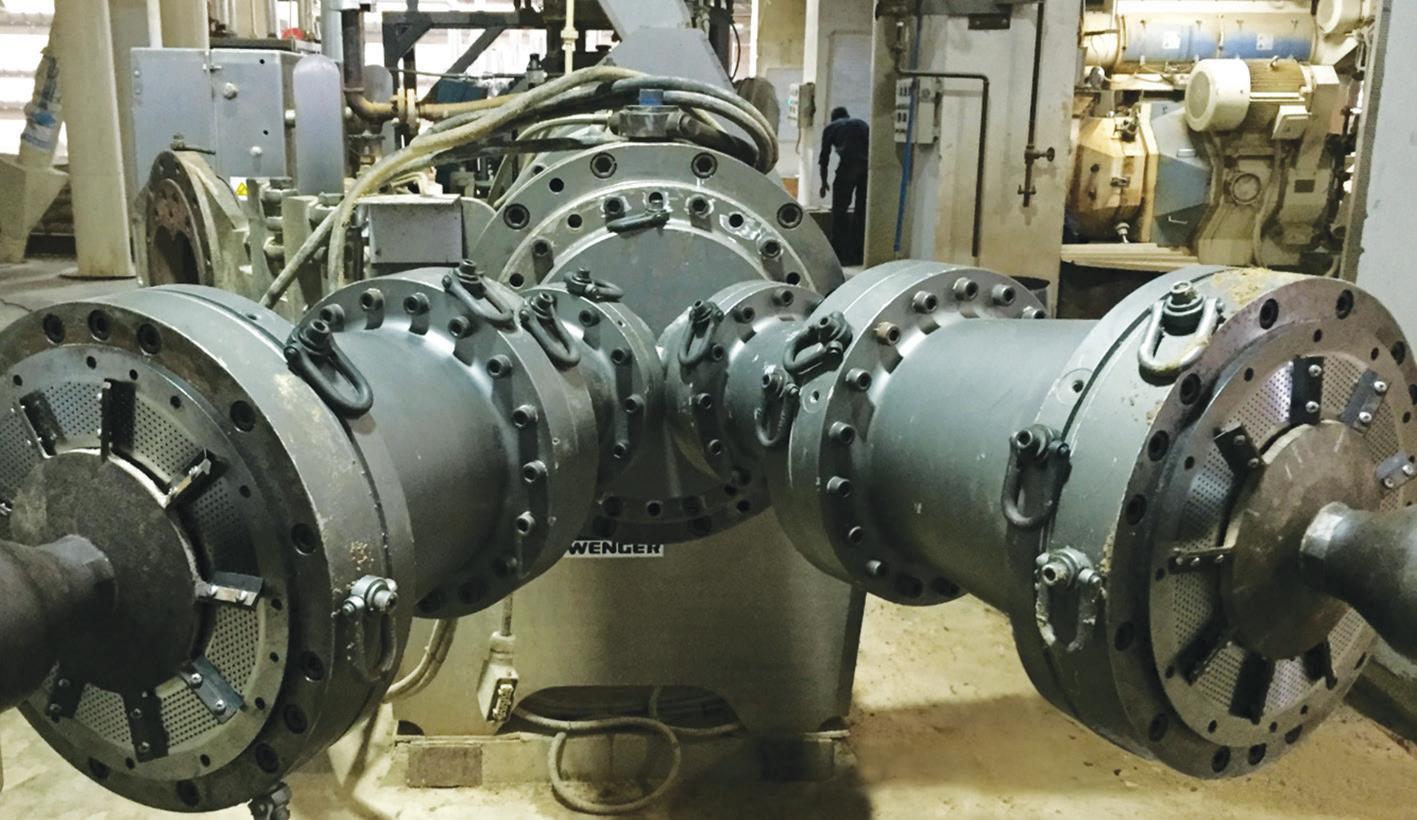
For micro feed extrusion, where it is typical for the final die to include a high quantity of die holes (upwards of 5,000) to increase total open area, controlling uniform flow and displacement into each die opening over the entire cross section of the die is even more important. Precisely controlling the flow provides the best opportunity to appropriately shape the final product at high throughputs while maintaining the required uniformity.
Given the industry's desire for increased throughputs, there is increased focus on the final die configuration, and associated total open area limitations. Especially true in producing micro aquafeeds, the limitation to throughput is not the volumetric capacity of the extrusion process but rather the available final die surface area to provide the necessary total open area. To address this challenge, newer die technologies have been developed to utilize multiple dies connected to the same twin screw extruder to significantly increase the production capacity of 300-1,000 micron-sized final products. This approach can yield production upwards of 8,000 kg/hr without the need for external density management chambers. The utilization of multiple dies at the extruder discharge further emphasizes the need for the referenced positive displacement that a

twin screw extrusion process can provide for uniform consistent extrudate flow to each set of dies and specific die openings.
The flexibility of twin screw extrusion for producing micro feeds goes beyond just the processing and production side. It also provides the opportunity to broaden ingredient and recipe options, opening the opportunity for utilization of sustainable ingredient sourcing and lower-cost ingredients while yielding highquality products. A flexible process, with advanced controls in recipe delivery, preconditioning, and a broader cooking zone that the twin screw extrusion process provides, allows for the utilization of higher
Aquafeed: Advances in Processing & Formulation Vol 16 Issue 2 2024 19
FEED PROCESSING
Wenger dual die head assembly for the AFX-3000 enables high volume output of extruded micro feed
FEED PROCESSING

inclusion of vegetable carbohydrates and proteins, fibrous ingredients, and increased utilization of internal fats and oils and without the need for special binders to control water stability, which can lower costs. Additionally, this flexibility provides the opportunity to adjust the recipes and substitute ingredients without significant research and development time when individual ingredient cost fluctuation is a challenge. Thus, extruder flexibility enables least cost formulation
and reduced operating expenses, while still producing the same high-quality product.
Conclusion
Modern, continuous cooking extrusion technology has developed into an effective and efficient process for producing high-quality and high-capacity micro aquafeeds. When the correct extrusion technology is used (either single screw or twin screw), producers can meet market expectations for nutrition and performance, as well as their own throughput and product cost goals.
More information:
Brian Streit
Sr. Vice President –
Innovation and Process
Wenger Manufacturing
E: bstreit@wenger.com


Aquafeed: Advances in Processing & Formulation Vol 16 Issue 2 2024 20
biochem.net Contact us: info@biochem.net The high levels of mannan-oligosaccharides (MOS) in TechnoMos® bind and remove pathogens before they become a problem. In addition, it’s highly effective ß-1,3-1,6-glucans boost the immunity of your animals to ensure the best disease resistance and performance. The secret behind TechnoMos®? - it’s made from selected primary grown yeast!
For Best ProtectionIn All Conditions!
A typical Wenger dryer for aquatic feed uses multiple horizontal passes to ensure proper air flow through the product bed.
Oregano essential oil and Quillaja saponaria extract as dietary supplements to improve the health and growth performance of aquaculture species
Aquaculture is continuously expanding as a consequence of the demand for healthy and nutritious food, which, along with the global saturation of wild fishery production, has encouraged considerable growth in the sector. It is currently the fastest-growing food-producing sector in the world, growing at a rate between 5.6 to 7.8% per year. Recently, interests have shifted towards
using innovative feed additives, such as phytogenics, to enhance the nutritional value of aquafeeds and improve the health status and growth performance of aquaculture species.
Phytogenic feed additives can provide an unwavering number of benefits, with a well-documented efficacy in improving the health status and growth performance
Aquafeed: Advances in Processing & Formulation Vol 16 Issue 2 2024 21
EXTRACTS
PLANT
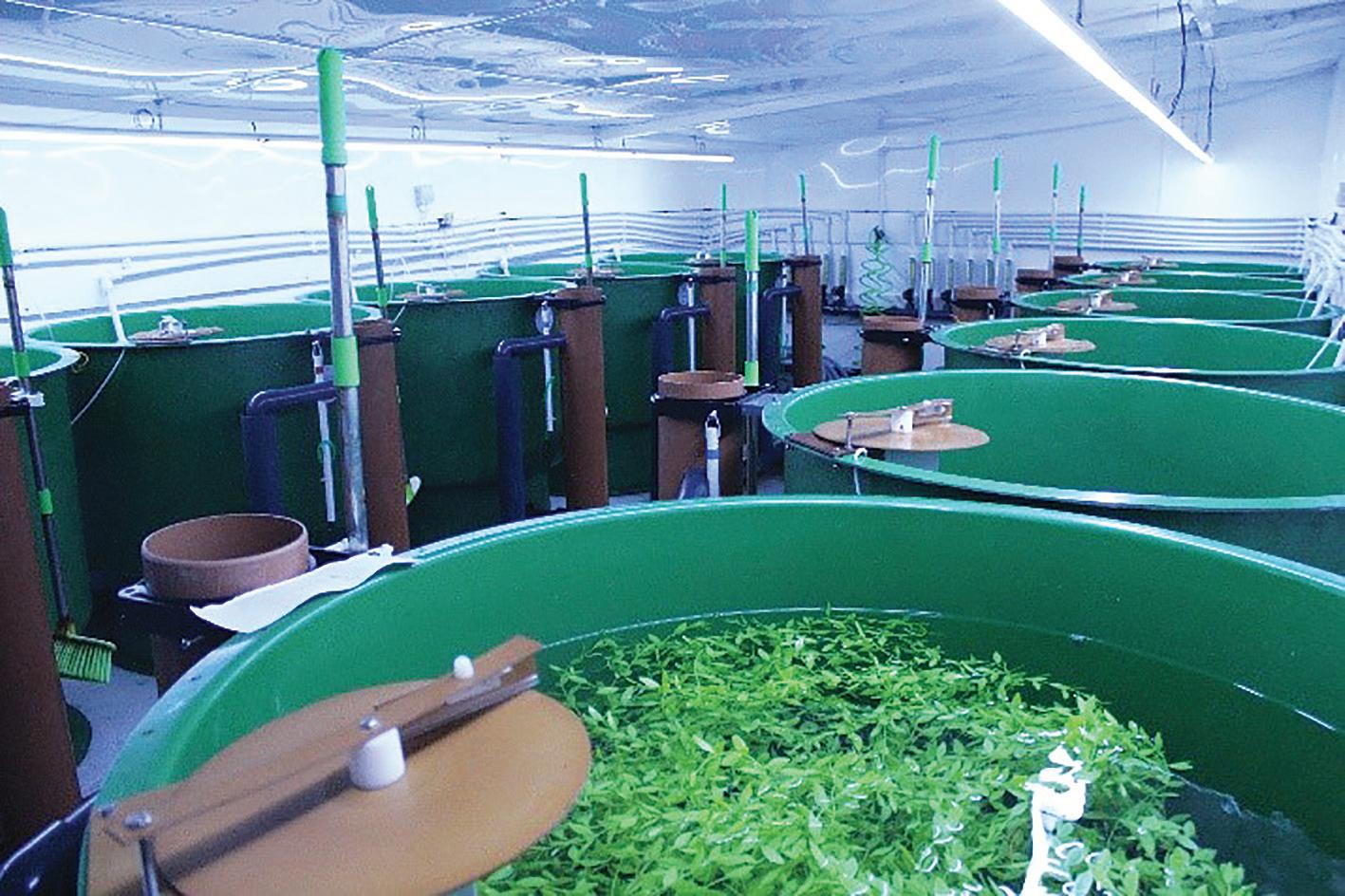
Otter Ferry Trial Facility
PLANT EXTRACTS
across numerous aquaculture species including, but not limited to, Nile tilapia (Oreochromis niloticus), Pacific whiteleg shrimp (Litopeneaus vannamei ), Atlantic salmon (Salmo salar), common carp (Cyprinus carpio), and rainbow trout (Oncorhynchus mykiss). Anpario’s Orego-Stim Forte (OSF) is specifically designed for use within aquaculture, comprising a unique source of 100% natural oregano essential oil (OEO) and Quillaja saponaria (QS) extract, which contain multiple highly functional compounds that work in synergy to provide a complex mode of action.
Effects of oregano essential oil and Quillaja saponaria as an aquafeed additive
Antioxidant
Oxidative stress occurs when there is an imbalance between the production and accumulation of reactive oxygen species and the ability of a biological system to neutralize these reactive molecules. Negative effects associated with oxidative stress include damage to cellular components such as membranes, proteins, deoxyribonucleic acid, and lipids. Phenolic compounds of OEO and QS can stop oxidation by donating an electron to the reactive free radical without becoming unstable themselves. This neutralizes the free radical and becomes less reactive. Additionally, OEO and QS function as an antioxidant activity enhancer in fish which promotes the activities of antioxidant enzymes; serum and hepatic catalase, superoxide dismutase, and glutathione peroxidase enzymes together with reduced levels of malonaldehyde.
Anti-inflammatory
Inflammation is an essential biological response of a host’s innate immune defense strategy against harmful stimuli; infectious and non-infectious tissue injuries. However, chronic inflammation causes immunological and tissue damage to the host, which is currently a major limiting factor for the production efficiency of aquaculture. The combined administration of OEO and QS downregulates the expression of genes for pro-inflammatory mediators in the gut, including cyclooxygenase-2 and cytokines, mainly tumor necrosis factor alpha, interleukin (IL) -1 beta (β), and IL-6. Additionally, OEO and QS limit the deleterious effects of prolonged inflammation by upregulating antiinflammatory cytokines such as IL-4, IL-10, IL-13, and transforming growth factor-β, which controls the production and action of pro-inflammatory cytokines. Consequently, supplementation of OEO and QS prevents collateral tissue damage in fish by restoring physiological homeostasis through tissue repair.
Immunomodulatory
In the last two decades, the aquaculture sector has suffered major economic tragedies due to infectious diseases, estimated at more than $6 billion per year. However, phytogenics are one of the most significant approaches for improving the immunity of aquaculture species. Numerous studies show the beneficial effects of OEO and QS supplementation on the health status of aquatic species, including an improved hematological profile by increased counts of red blood cells, white blood

Aquafeed: Advances in Processing & Formulation Vol 16 Issue 2 2024 22
Figure 1. Average specific growth rate (left) and feed conversion ratio (right) of ballan wrasse fed one of three dietary groups; control, T1 (OSF at 0.10%), and T2 (OSF at 0.35%).

cells, hemoglobin, and differential immunoglobulins. OEO and QS have also shown promising results in improving innate and adaptive immune responses in fish, mainly via; improving lysozyme, protease, and complement system activities, and increasing the production of phagocytes, cytokines, B cells as plasma cells, and T cells including T helper cells and cytotoxic T cells.
Antimicrobial
Aquaculture is plagued by a plethora of bacterial pathogens, and the rearing of fish/shrimp at high population densities in aquaculture facilities makes them particularly susceptible to disease outbreaks, causing massive mortalities. The use of antibiotics is the main solution to manage bacterial diseases; however, antimicrobial resistance (AMR) has become a major challenge in aquaculture. Supplementation of OEO and QS in fish and shrimp diets has demonstrated a high level of efficacy in preventing and controlling bacterial diseases caused by strains of Flavobacterium, Aeromonas, Vibrio, Francisella, Salmonella, Pseudomonas, and Streptococcus
The detergent properties of QS destroy bacterial membrane lipids, making the cell membrane permeable which facilitates the influx of molecules through the
bacterial wall and disrupts cell homeostasis. OEO exhibits a broader antimicrobial action which is attributable to the lipophilic nature of its phenolic compounds. These compounds induce the death of bacterial cells by inhibiting adenosine triphosphatase activity and disrupting cell homeostasis – increasing the fluidity and permeability of the cell membrane. Consequently, this causes an intracellular pH reduction in the cell, leakage of vital intercellular constituents, and a metabolic imbalance.
Growth promoter
In fish, several studies have examined the beneficial effects of supplementing OEO and QS to improve growth rate, mainly via improving intestinal histomorphometry and increasing activities of digestive enzymes. Across a multitude of fish and shrimp species, inclusion rates of OEO and QS between 0.25-3.50g/kg and 150-300mg/kg, respectively, have demonstrated efficacy in increasing villus size and quantity, thus improving the intestinal absorption capacity and nutrient utilization. The improved intestinal histomorphometry may be attributable to the antimicrobial activity of OEO and QS, causing a reduction of harmful bacteria and consequently, reducing mucosal damage. The activities
Aquafeed: Advances in Processing & Formulation Vol 16 Issue 2 2024 23
PLANT EXTRACTS
Otter Ferry Trial Facility
PLANT EXTRACTS

of endogenous digestive enzymes are often used as a benchmark for determining the digestive capacity and nutritional status of fish. Supplementing OEO and QS in O. niloticus and C. carpio diets demonstrated a significant improvement in the stimulation of amylase, lipase, and protease activity, which resulted in improved growth indices for both species.
Orego-Stim Forte (Anpario plc) improves the growth performance of juvenile ballan wrasse Ballan wrasse (Labrus bergylta), as cleaner fish, is viewed as a sustainable and effective management tool for the biological control of sea lice in salmon farming. A study using 1,350 L. bergylta was conducted over 83 days by an independent research provider,
Otter Ferry Seafish, located in Scotland, UK. This trial concludes that OSF (OEO+QS) supplementation, at both concentrations, improves the specific growth rate (SGR) and feed conversion ratio (FCR) of L. bergylta (Fig. 1). The greatest SGR and FCR improvements are seen in the diet containing 0.35% OSF, which is 13.2% and 10.7%, respectively, more advantageous compared to the control.
Antagonism of Orego-Stim Forte against fish pathogens – in vitro
The University of Plymouth conducted a trial to determine the in vitro efficacy of OSF against multiple pathogenic bacteria. The results in Figure 2 demonstrate the inhibitory efficacy of OSF against all five pathogens

Aquafeed: Advances in Processing & Formulation Vol 16 Issue 2 2024 24
Figure 3. Post-challenge cumulative mortality of shrimp fed one of three dietary groups; D1 (control), D2 (OSF at 0.10%), and D3 (OSF at 0.35%).
Figure 2. Mean clearance zones (mm) of Orego-Stim Forte against significant bacterial pathogens.
PLANT EXTRACTS
when included at 2500ppm (2.5kg/t feed). Such findings highlight the potential for natural solutions, such as OSF, to support fish/shrimp health, safeguard antibiotics, and protect against AMR.
The effect of Orego-Stim Forte on the survivability of shrimp challenged with Vibrio parahaemolyticus Vibrio parahaemolyticus is ubiquitous to many aquaculture environments and can cause diseases such as acute hepatopancreatic necrotic disease (AHPND) in L. vannamei, resulting in significant losses for the shrimp farming industry. This trial used 20 tanks, containing 80 shrimp per tank, with four replicates and was conducted by Nong Lam University in Vietnam.
In Figure 3, the mortality of L. vannamei challenged with V. parahaemolyticus shows a decreasing tendency with increasing administration doses of OSF, thus supporting the antimicrobial activity of OEO and QS. A significant difference was observed between the control and OSF diet at 0.35% (D3), which highlights the efficacy of OEO + QS for in vivo scenarios.
Concluding remarks
With the significant growth trajectory of the aquaculture sector coupled with the booming human population, it is essential, now more than ever, to provide aquaculture producers with highly effective and sustainable solutions that improve the health and growth performance of aquaculture species. The antioxidant, anti-inflammatory, immunomodulatory, antimicrobial, and growthpromoting natural properties of OEO and QS extract, make them highly effective, yet sustainable solutions.
References available on request.
More information:
Gerred Fuchs
Aqua Technical Sales Manager
Anpario plc
E: gerred.fuchs@anpario.com




Aquafeed: Advances in Processing & Formulation Vol 16 Issue 2 2024 25
Visit www.anpario.com or email orego-stim@anpario.com Interested? High quality eubiotic composed of 100% natural oregano essential oil & saponins. Cost Effective, Natural Solution to Support Health & Performance in the Absence of Antiobiotics.
Making all shrimp eat: The impact of a neurosensory additive on feed intake and size homogeneity
Amine Chaabane, Phodé Laboratories

The large growth of shrimp farming in the past few years has been followed by a larger demand for shrimp feed, with a high diversity of challenges to be addressed. As growth usually is matched with progress, this situation led to a significant improvement in the quality of shrimp feed, gradually catching up with historical species feed such as salmon or trout in terms of technology and nutrition. But there are still many aspects to be improved to meet the expectations of producers across the globe.
Technology-wise, the manufacturing of extruded shrimp feeds is becoming more widespread in South America but remains minor in Asia. The different environmental conditions in each zone, the different production methods, stocking densities, and varying
market typology are at the origin of a major variability between shrimp-producing countries, which is reflected in production costs.
This diversity in shrimp farming led notably to Ecuador's position as a regulator of the export market, given its extremely low production costs compared to other top-producing countries, making Ecuadorian shrimp the most competitive on the market, pricewise. These low prices are unfortunately passed on to the farmers themselves, as 2023 production exceeded demand.
The consequences of the cost issues in 2023, due to shrimp's low selling price but also to global inflation, have led producers from around the globe to minimize costs, starting with feed costs.
Aquafeed: Advances in Processing & Formulation Vol 16 Issue 2 2024 26 PLANT EXTRACTS
Feed represents up to 65% of total production costs; especially in shrimp, as carnivorous animals require protein-rich feeds which are significantly more expensive than omnivorous species, depending on the sourcing of proteins.
The reduction of feed costs is usually started at the raw material level, fishmeal and fish oil being the more expensive, and keener to be substituted. They are often replaced with plant-based ingredients (soy, corn, canola), animal byproducts (Processed Animal Proteins –PAPs, poultry, or blood meal), other marine ingredients (krill meal, squid meal, finfish, or shellfish hydrolysates), or more recently, alternative proteins (insect meal, single-cell protein from yeasts or microalgae). Most feed formulators will also rely on local ingredients, being more accessible and usually at a better cost, to replace their usual raw materials.
Current formulation knowledge and technology, and state-of-the-art shrimp nutritional requirements, are quite advanced and allow for the formulation of low-cost feeds that are theoretically iso-nutrients to standard formulas. A key aspect of the feed is often
PLANT EXTRACTS
neglected: attractivity and palatability. Indeed: what’s the purpose of producing a good feed, nutritionally speaking, if it is not eaten?
The Phodé Laboratories, experts in olfaction in living beings and its effect on the brain on well-being, have been studying the link between olfaction and behavior to design products that act in this sense. Phodé technology has been put into practice in many shrimp farms and hatcheries around the world.
Phodé has drawn on this experience to design a new product for feed manufacturers, Olpheel Eat, based on their knowledge of shrimp feed intake behavior and chemoreception. Olpheel Eat is a blend of attractive and aromatic compounds (non-marine and non-animal based) for feed attractivity and palatability, with the addition of plant extracts stimulating feed intake at a cerebral level.
To evaluate the effects of Olpheel Eat Shrimp on shrimp feed intake in several conditions, Phodé Laboratories have conducted a study in Vietnam in partnership with the ShrimpVet (MinhPhu AquaMekong) research facility.


Aquafeed: Advances in Processing & Formulation Vol 16 Issue 2 2024 27
PLANT EXTRACTS

Palatability testing
To evaluate the benefits of Olpheel Eat on the feeding shrimp behavior, a feeding tray test was conducted. A total of 100L whiteleg shrimp (Litopenaeus vannamei, 3.0-3.5 g average weight) were separated in four 75liter tanks filled with brackish water (20 ppt). Two groups were tested: a group fed a control shrimp feed, and a group fed a feed including Olpheel Eat Shrimp at 1 kg/t, each in duplicate. After being starved for 12 hours before the test, shrimp were given 15 g of feed on one small feeding tray that was placed in the tank for 90 minutes. After 90 minutes, the feeding tray was taken out and the remaining feed was dried and weighted to evaluate feed intake. Results are presented in Figure 1. The test was repeated two months later with the same diets stored in wet and hot conditions (Vietnam summer-autumn conditions), to see the effect of storage on feed intake.
Results displayed a significant improvement in feed intake in the Olpheel Eat groups compared to the control groups, with a 16.3% increase in shrimp feed intake fed with fresh Olpheel Eat-containing diets. After two months, the palatability of both feeds was decreased, as feed intake dropped from 50.29 mg feed /g shrimp biomass in the fresh diet to 40.22 mg in the control group. In the Olpheel Eat group, feed intake was better, with a stronger difference compared to the control group at two months, with a difference of +31.2% of feed consumed vs. the control group.
These results globally indicate that the inclusion of Olpheel Eat improves the palatability of shrimp feeds and maintains it over storage time.
Feeding test
To validate these results on long-term conditions, a feeding test was performed in the same facility.
For this test, a total of 500 shrimp with an initial weight of 1.56 ± 0,19g were placed into ten 400-liter tanks filled with brackish water (20 ppt). Shrimp were divided into two groups (control feed and Olpheel Eat supplemented feed) with five replicates each. Shrimp were kept in these tanks and fed ad libitum 5 times a day for 58 days where several parameters such as feed intake, Feed Conversion Ratio, and survival rate were measured. As no significant difference in survival rate was observed during the trial with high survival rates (above 90% on average), the results of the final biomass are displayed in Figure 2.

Results show a higher average biomass in the Olpheel Eat group compared to the control group, which was not significant as a high variability was observed in the control group. However, this difference in variability was statistically different, as homogeneity inside the 5 replicates was higher in the Olpheel Eat group compared to the control group.

Aquafeed: Advances in Processing & Formulation Vol 16 Issue 2 2024 28
Figure 1. Palatability of the feeds as total feed intake for 90 minutes; *p<0.05.
Figure 2. Final biomass at the end of the 58 days feeding trial; *p<0.05.
Figure 3. Feed Conversion Ratio (FCR) at the end of the 58-day feeding trial; *p<0.05.

Following the pattern observed for biomass, a nonsignificant decrease in FCR was observed (Fig. 3), from 1.4 in the control group to 1.34 in the Olpheel Eat group. This difference was nevertheless significant too in terms of homogeneity between the five replicates. These combined results suggest that Olpheel Eat could lead to higher homogeneity in shrimp feed intake, stimulating individual shrimp feeding behavior, and leading to more consistent productivity for shrimp farmers, as observed in Phodé Laboratories farm experience.
Conclusion
The results of this study indicate that a neurosensory additive, Olpheel Eat Shrimp, could effectively enhance feed attractivity and palatability by maintaining a homogenous feed intake even after storage time. Further studies should be carried out to evaluate this effect in more challenging conditions.

More information:
Amine Chaabane
Species & Product Manager –Aquaculture
Phodé Laboratories
E: achaabane@phode.fr


Aquafeed: Advances in Processing & Formulation Vol 16 Issue 2 2024 29
PLANT EXTRACTS
Use of selected polyphenols to improve fish reproductive performance
Joseph Bernot, Paul Engler, Nor-Feed

Current farming conditions:
Why do they generate stress?
Compared to livestock species, the domestication of most fish species for aquaculture is recent. The rapid progress in nutrition and genetic selection lead to great improvement in growth rates in aquatic species. The trade-off of these increased metabolic rates is a proportional increase in harmful radical species production. This results in heightened pressure on the organism. This can lead to an imbalance between radical species and antioxidant defenses, known as oxidative stress.
Free radicals and oxidative stress
Free radicals are molecules or atoms with unstable electron pairings. Most are produced at
the mitochondrial level via the respiration chain. Free radicals play an important role in the body in gene regulation, cellular signaling, and apoptosis. However, when present in excessive amounts, they attack surrounding molecules to scavenge their electrons, causing damage to macromolecules such as lipids, proteins, and nucleic acids. When mismanaged, it results in visible impacts on performance, immunity, and meat quality. This is why the antioxidant system exists.
The role of an antioxidant
Antioxidants are molecules stable enough to donate an electron to a free radical, thereby neutralizing it. They can thus terminate chain reactions caused by free radicals. In other words, they act as “bodyguards”
Aquafeed: Advances in Processing & Formulation Vol 16 Issue 2 2024 30 PLANT EXTRACTS
PLANT EXTRACTS

of the cellular constituents. The antioxidant system is a complex organization of several types of defenses and a distinction is made between endogenous antioxidants, produced by the body, and exogenous antioxidants, obtained through diet. Endogenous antioxidants include enzymes, such as superoxide dismutase (SOD), glutathione peroxidase (GPX), or catalase (CAT), which need trace element co-factors to be functional (the most well-known one being selenium for the GPx). Exogenous antioxidants mainly include vitamin E, vitamin C, polyphenols and carotenoids. Contrary to most endogenous defenses, these do not require co-factors to be functional. Each antioxidant acts in a specific way, positioned at different locations within the cell, blocking oxidative chains at different points. They interact with each other, and some can regenerate others, acting like a team. Because of this intertwining of actions and synergies, diversification of antioxidant sources leads to better protection than the use of a single type of antioxidant.
Bringing back vitamin P
Amongst the huge variety of potential antioxidant defenses, polyphenols stand out for being particularly rich in powerful candidates. This large family of bioactive molecules has been extensively studied for nearly 50 years. Their most active subfamily, flavonoids, was however discovered nearly 100 years ago, when realizing they could potentiate the activity of vitamin C against scurvy and earned them the name of "Vitamin P" for close to half a century.
Polyphenols are a huge chemical family with a wide chemical structure range. This means that despite sharing some common ground, their activity also varies widely. Among the most powerful sources of active antioxidant polyphenols, polyphenols found in grape extracts are of particular interest due to their high concentration and their ability to regenerate vitamins E and C, increase endogenous antioxidant production, and directly neutralize free radicals.
While natural composition and yield can vary a lot, using a characterized and standardized grape extract such as Nor-Grape 80®, developed by Nor-feed, guarantees consistency of composition at the same time as an optimized profile of flavonoids for optimal bioavailability and activity.
Reproduction is oxidative
Oxidative stress is more pronounced during periods of high metabolic activity, such as smoltification, shrimp molting periods, etc. High temperatures promote faster metabolism and increased production of free radicals. In general, any situation that does not allow an organism to be in its optimum comfort will result in increased oxidative stress.
Reproduction also entails intense metabolic activity in fish. The evolutionary strategy of producing numerous gametes to ensure the survival of a few descendants capable of reproducing themselves requires significant mobilization of nutrients and energy. The result is increased production of free radicals during gamete production. Recent research has highlighted the complex relationship between oxidative stress and the processes of egg and sperm production. High levels of oxidative stress can lead to a decrease in the number of viable fertilized eggs and developmental abnormalities in offspring.
Nor-Grape 80 in trout broodstock to improve the next generation’s performance
To enhance antioxidant defenses, several trials have been conducted on different species at different times using Nor-Grape. A study was notably conducted on rainbow trout breeders to determine the effect on reproduction and the potential effect on the N + 1 generation. The trial was conducted at the PEIMA station (Inra, France) and compared 260 rainbow trout separated into 2 groups of 80 females and 50 males each receiving either a control diet (“CTL”: classic feed, 200ppm vitamin E) or a supplemented feed (“NG”: CTL + 80ppm Nor-Grape 80) during the whole gametogenesis. Eggs were then collected and fertilized with the semen of males from the same group. Fertilized eggs were then incubated and the resulting fry from both groups were raised for 8 weeks. Fry from both groups were fed the same diet, without Nor-Grape.
Aquafeed: Advances in Processing & Formulation Vol 16 Issue 2 2024 31
PLANT EXTRACTS


Growth performances (weight gain, FCR, mortality) of fry were recorded, as well as several reproduction parameters (egg weight, percentage of ovulating female, embryonic survival, post-resorption survival). While no significant differences were observed between the two groups of breeders in terms of ovulation rate, eggs tended to be bigger in the NorGrape group. Moreover, the relative embryonic and global survival rates tended to be improved in batches obtained from supplemented fish. Finally, fry obtained from supplemented breeders had a faster growth as evidenced by a significantly higher average weight at 6 weeks (+4.7%, p<0,01, t-test) and 8 weeks (+5.2%, p<0,01, t-test).
Enriched eggs
To delve deeper and understand the reason for this performance improvement, analyses on the eggs of the supplemented groups were conducted. Analysis of the quantity of dry matter showed a significant increase of 3.1% in the dry matter content for the supplemented group, thus evidencing that the larger egg size was not due to higher water content, but rather to a higher deposition of nutrients for the embryo development. This in turn provides a good explanation for the higher survival rates and faster growth rates post-hatch and resorption in the fry from the supplemented group.
Conclusion
Further studies have been conducted with Nor-Grape in various species. This is also the case in whiteleg shrimp
where the supplementation of broodstock was shown to increase the number of eggs and consequently of nauplii produced per spawn (+5.2%), thus improving the profitability of the hatchery.
Overall, mismanagement of oxidative stress around reproduction may lead to altered reproductive performances. The supplementation of Nor-Grape in broodstock has shown a beneficial effect on the prolificacy of breeders and on the next generation’s performance, resulting in faster growth, despite not being supplemented themselves. This example thus shows how targeted and specific nutritional intervention in broodstock can help reduce the bottleneck of reproduction for higher fry quality and better prolificacy in aquatic species.
References available on request
More information:
Joseph Bernot
Aquaculture Technical Manager
Nor-Feed
E: joseph.bernot@norfeed.net

Paul Engler
PhD; Aquaculture R&D Manager Nor-Feed
E: paul.engler@norfeed.net

Aquafeed: Advances in Processing & Formulation Vol 16 Issue 2 2024 32
Figure 1. Progeny performance

From field to fin: The soypowered future of aquaculture
Tom D’Alfonso, Morgan Cheatham, USSEC

Aquaculture accounts for more than 50% of total global seafood production volumes, and aquaculture production volumes are increasing at a rate of 3.3% globally (FAO, 2024). Meanwhile, capture fisheries volumes have remained relatively constant for decades, and have declined slightly in recent years. Demand for seafood products will continue to increase with the increasing global population (FAO, 2023; IFFD, 2024). By 2050, global demand for protein will increase by 20%,
leading to a corresponding rise in demand for seafood. The FAO predicts that aquaculture production volumes will reach 140 million metric tons (MMT) by 2050, which means that aquafeed production volumes will also minimally double during this time (FAO, 2024). The aquaculture industry will have to find alternative protein sources for feed production to achieve this growth sustainably. Soy products are well positioned to play a key role in this effort.
Aquafeed: Advances in Processing & Formulation Vol 16 Issue 2 2024 34
PLANT-BASED INGREDIENTS
PLANT-BASED INGREDIENTS

Transitioning to sustainable feed sources
Moving away from a reliance on marine-derived ingredients has been a priority for the aquaculture industry for decades. Plant proteins are already the most used ingredients in aquafeed production globally. Soy has been a key ingredient used to replace marine ingredients in aquaculture, and its use has played a critical role in the aquaculture industry’s rapid expansion over the past two decades. Soy is a highly digestible protein source for aquatic species and presents advantages throughout the supply chain to ingredient purchasers, feed millers, and fish producers.
Advantages of soy in aquafeed
Using quality protein sources in aquafeed formulation is essential for the performance and, ultimately, cost efficiency of feeds. Access to a consistent, non-seasonal supply of one protein source benefits a feed miller who will not have to modify formulations regularly to account for variability in ingredient availability. Using soybean meal with consistent protein, amino acid content, and digestibility reduces, or sometimes eliminates, the need for safety margin used in feed formulation. Undamaged soybeans of consistent quality before crushing provide this advantage. This consistency reduces the cost of feed production, which is a saving that can then be passed down to the end user. Soybean meal is also easily stored in
bulk at the feed mill, eliminating the need for multiple ingredient storage containers and increasing feed mill organization and efficiency. It is also a commonly and easily shipped cargo.
Nutritional and operational benefits
Soy is a protein-rich, low-cost feed ingredient suitable for inclusion in the diets of many aquatic species. The amino acid profile of soy protein products matches that of many finfish and crustacean species, and these amino acids are generally highly digestible and available to the fish. The benefits of soy extend beyond protein and amino digestibility to energy content. An example is the sucrose levels of U.S. soy, which are significantly higher than soy of other origins. The increased energy content can greatly benefit fish with high metabolic demands.
Enhancing sustainability with soy
Improved environmental sustainability is yet another benefit of soy utilization in aquaculture. U.S. soybean yields have increased by over 100% per hectare since 1980. This yield increase has improved land use efficiency by 48%, while U.S. forestland has increased by 742 thousand hectares and cropland has decreased by 3.6 million hectares over the last twenty years. This differentiates U.S. soy from soy of other origins and is an increasingly important consideration for those purchasing soy products. Soybean farmers in
Aquafeed: Advances in Processing & Formulation Vol 16 Issue 2 2024 35
PLANT-BASED INGREDIENTS
the U.S. are committed to reducing land use impact, soil erosion, and greenhouse gas emissions to reduce the environmental impact of soy production even further. It is crucial to note that soybean meal produced from undamaged beans of consistent quality may eliminate the need to use safety margins in feed formulations. This allows for higher volumes of animal and aquafeeds to be produced (and, in turn, animal protein) with the same gross quantity of soybeans, perhaps the most significant sustainability benefit of U.S. soy to businesses.
The future of soy in aquafeed
In addition to the inclusion of soybean meal in aquafeed formulations, the inclusion of value-added soy products also shows promise in the aquaculture space. Fermented soy and soy protein concentrate are exciting ingredients with the potential for broad application in aquaculture. The microbial fermentation process reduces soy’s antinutritional factors and increases nitrogen and phosphorous availability, thus producing a feed ingredient of highly digestible protein content. This digestibility helps overcome some of the challenges faced when feeding carnivorous species plant-based

ingredients and may allow for the replacement of higher-cost ingredients. White soy flakes undergo aqueous alcohol extraction to produce soy protein concentrate (SPC) and then may undergo thermal processing to produce low-antigen SPC. SPC has a protein content similar to many fishmeals (65-67%) used in aquafeed production and has a comparable amino acid profile. These characteristics make SPC a suitable ingredient, and a lower-cost alternative to fishmeal, in marine fish or fingerling feeds (USSEC, 2015).
Reducing dependence on marine-derived ingredients using scalable solutions is critical for the expansion and improved sustainability of aquaculture globally. The inclusion of soy products in aquafeeds has already played a crucial role in the exponential growth of the aquaculture industry over the previous two decades. Soy will continue to play an essential role in the industry’s efforts to sustainably meet growing protein demand due to economic, biological, and sustainability benefits. The future of soy in aquaculture lies in the continued inclusion of soybean meal in feed formulations and the development and application of value-added soy products such as fermented soybean meal, soy protein concentrate, and others.
References
The State of World Fisheries and Aquaculture (2022). Sustainability in Action. Food and Agriculture
Organization of the United Nations. (2024) FAO.
Overview of Aquaculture. (2024) IAFFD
Soy Protein Concentrate for Aquaculture Feeds Technical Bulletin. (2015) USSEC
More information:
Thomas D'Alfonso Director of Animal and Aquaculture USSEC
Morgan Cheatham Manager of Animal and Aquaculture USSEC


Aquafeed: Advances in Processing & Formulation Vol 16 Issue 2 2024 36
Where are we in the search for new protein sources in aquafeeds?
Brett Glencross, Xiaowen Ling, Delbert Gatlin, Sachi Kaushik, Margareth Øverland, Richard Newton & Luisa M. P. Valente
Over the past 20 years, there has been unprecedented growth in the aquaculture sector and predictions are for this to continue (FAO, 2022), meaning that feed production would also need to increase. One of the fundamental questions underpinning that projection is how to obtain the feed ingredients to sustain that growth and how the sustainability of that growth can be ensured (Pelletier et al., 2018; Malcorps et al., 2019).
A recent review considered a variety of protein sources used in aquafeeds: marine ingredients produced either from forage fishery or byproducts; processed animal proteins (PAPs) made from terrestrial animals produced for human consumption from which byproducts are generated, including insect and worm meals; grain protein sources; and single-cell proteins (SCPs). Each of the various ingredients was further examined through
a Strength-Weakness-Opportunity-and-Threats (SWOT) analysis to enable some consideration of their future potential and what risks and opportunities they may bring (Glencross et al., 2020).
Strengths
Marine proteins
Marine proteins are still widely regarded for their nutritional qualities and, in many contexts, remain the benchmark in terms of feed ingredient qualities. Marine proteins from capture fisheries have been the subject of much debate over their sustainability. Recent data from Hilborn et al. (2022) has demonstrated that small pelagic fisheries, such as those for anchoveta, are among the most sustainable of all global fisheries. As such, their sustainability should be regarded as a strength of
Aquafeed: Advances in Processing & Formulation Vol 16 Issue 2 2024 37 PROTEINS
PROTEINS
marine proteins when those resources are effectively managed and monitored.
While the high cost and volatility of fishmeal prices were traditionally perceived as a weakness of marine proteins, their price stability in recent years has actually surpassed that of many other raw materials.
PAPs
Processed animal proteins have a range of positive attributes that can be seen as strengths, such as their widespread availability, with more than 15 million metric tonnes reportedly available globally in 2015 (WRO, 2023); not dissimilar to marine proteins in that they are often rich protein sources with well-balanced essential amino acid profile; and the prebiotic effect when porcine blood hydrolysates are used (Resende et al., 2022).
Grain proteins
The use of grain proteins as feed ingredients has many strengths, such as the large-scale production of many varieties of grain products, and their affordability and acceptance throughout the world from both regulatory and social perspectives.
SCPs
Single-cell proteins allow the industry to skip trophic levels in terms of nutrient supply. By allowing input from further down the trophic chain, there can be significant efficiencies in the ultimate transfer of nutrients into the food chain. SCPs do not compete with human food sources freeing up many of the planet’s limited resources through their production. Moreover, the protein levels can achieve levels as high as 80%.
Weaknesses
Marine proteins
As ingredients for aquafeeds, marine ingredients are publicly perceived as unsustainable. Moreover, the sector has a limited capacity to increase its volume of production, which has remained stable over the past 20 years.
PAPs
Terrestrial animal byproducts need processing to be turned into PAP before they can be used, which may be seen as a weakness from a cost perspective. In terms
of compositional features, PAPs are quite variable and their nutritional value depends on a range of things, including the species from which the raw material is produced. Moreover, in some countries, there is a low social acceptance of the use of terrestrial animal meals in the feed chain.
Grain proteins
The nutritional characteristics of many grain proteins are a significant weakness in their application in aquafeeds, such as poor palatability, a diverse composition and a wide range of antinutritional factors. Another weakness of grain protein sources is their high environmental footprint with some LCA studies and other resource use assessments showing that these resources have a high environmental footprint due to the extensive need for water, pesticide, herbicide, and energy use in their production (Malcorps et al., 2019).
SCPs
Despite its protein content being a strength, some SCPs contain high levels of certain nutrients, like in alginates in the case of microalgae, that require considerable processing to make them more digestible.
Opportunities
Marine proteins
The processing of marine ingredients follows a wellestablished and understood process. Production of fishmeal and oil from trimmings and byproducts is already at a significant scale and far from what would be called “novel”. Almost 30% of all fishmeals (~1.4 million metric tonnes) are now coming from various byproduct raw material streams. Combined with ~ 600,000 tonnes of fish oil produced from byproducts, that is close to one-third of all marine ingredients currently produced being from "circular” raw material origins.
Life cycle assessment footprinting characteristics of marine ingredients are among the best of all feed ingredients across many of the 18 different environmental impact categories that LCA encompasses (Newton et al., 2023). This study showed that all ingredients have strengths and weaknesses, but arguably on balance, it shows that the marine ingredients have a lower environmental impact than many of the other presented ingredients.
Aquafeed: Advances in Processing & Formulation Vol 16 Issue 2 2024 38
PROTEINS
PAPs
Various opportunities are available with the use of PAP as an ingredient for aquafeeds. Most prominent is the fact that meat consumption globally is growing (Meeker, 2006), and so too is the availability of PAP. LCA footprinting characteristics of many PAPs are also quite strong.
Further value-addition of various protein sources is also seen as another opportunity during ingredient production as well as further processing opportunities to improve nutritional qualities, for example, enzymatically hydrolyzed feather meals.
Grain proteins
The scale of the grain proteins sector provides many opportunities. Processing methods, such as fermentation and air classification, provide a mechanism to improve the nutritional value of some products, though these are far from the only processing opportunities that have been considered for the valueadding of grain proteins.
Conventional genetic improvement of plants as well as targeted transgenic approaches are also another opportunity to enable the development and production of several crop varieties with improved nutritional profiles and biological value.
SCPs
The potential application of GM technologies to single-cell organisms is a massive opportunity for the SCP sector. Manipulating the production of the various protein classes to improve overall protein yields, improve the balance of essential amino acids, or even include additional nutrients like n-3 fatty acids, carotenoids, or other bioactive molecules, are all within the scope of what could be done using such technologies (Hatlen et al., 2012).
There are numerous reports of bioactive co-factors being present in SCP products. Whether these constituents are bioactive growth promoters or immunostimulants, or both, it is a feature that provides clear opportunities for these resources (Romarheim et al., 2013; Sellars et al., 2015).
Threats
Marine proteins
With the main source of raw material for marine
ingredients being from fisheries around the world, the growing specter of climate change has been identified as one of the greatest threats. The occurrence of illegal, unreported, and unregulated (IUU) fishing is another significant threat to the sustainable supply of fishery resources, as well as poor fisheries management. Other issues are regulatory constraints, mostly linked to the use of antioxidants.
PAPs
The existence of strong legislation in some regions to limit the capacity of the feed sector to use certain PAPs has been a significant threat (European Commission (EC), 2013). The introduction of legislation over 20 years ago in Europe to prevent, control and eradicate the potential transfer of transmissible spongiform encephalopathies remains some of the strictest biosecurity-based regulations impacting the feed sector (European Commission (EC), 2013).
Another threat that has been reported is the adulteration of PAPs (and marine proteins) with lowerquality products (Murray et al., 2001; Kong et al., 2022; Zhang et al., 2020). A final potential threat to the production of PAPs is energy costs associated with rendering and drying the products.
Grain proteins
The greatest threat facing grain protein production is climate change. Another threat is the competition with the food sector as the demand for food grows with a growing world population. The introduction of additional competition in the form of fuel demands, the occurrence of geopolitical conflicts, and the advent of major disruptions to global supply chains can easily compound to cause major imbalances in feed/food production chains.
A final threat, specific to fermented grain production, as with the processing of all wet products, is the energy costs associated with drying the products (Hnin et al., 2018). With plant-derived products, inadequate drying not only has energy cost issues associated with it, but also the risk of introducing fungal contamination and the introduction of mycotoxins (Gonçalves et al., 2020).
SCPs
Major threats to the viable establishment of SCP production are its cost and scalability (Jones et al.,
Aquafeed: Advances in Processing & Formulation Vol 16 Issue 2 2024 39
PROTEINS
2020). As such, the main industrial constraints to the development of SCP are more economic, and less so technical ones.
What is on the horizon?
Based on the current growth trajectory of the aquaculture feed sector, there is an urgent need to increase production of feed-grade sources of protein. A crucial point is that they should not compete with the potential to directly feed humans. Existing resources need to be used more efficiently, and above all, the industry needs new resources. This brings a few options. One option can be improving the management of the existing resources to increase their productivity, especially in fisheries and soil fertility. Another option is to ensure no resource is wasted, and further develop non-competing resource production.
By better appreciating the positives and negatives of each ingredient, it becomes possible to increase the industry’s adaptability in responding to the various
opportunities for their use in feeds and improve the sustainability of the sector moving forward.
Overall, while technical progress in working with an increasing range of ingredients is making clear headway, the scale-up of new resources to deliver meaningful volumes still needs work. There is a critical need to identify opportunities for complementarity among ingredients to harness strengths and mask weaknesses across the feed ingredient range. It is clear that the future path forward is one of considering all options and excluding none.
Reference
Glencross, B., Ling, X., Gatlin, D., Kaushik, S., Øverland, M., Newton, R., & Valente, L. M. (2024). A SWOT Analysis of the Use of Marine, Grain, Terrestrial-Animal and Novel Protein Ingredients in Aquaculture Feeds. Reviews in Fisheries Science & Aquaculture, 1-39. https:// doi.org/10.1080/23308249.2024.2315049


Aquafeed: Advances in Processing & Formulation Vol 16 Issue 2 2024 40
WWW.PHYTOSYNTHESE.COM ROBUSTNESS OF YOUR FISH AND SHRIMPS PHYTO AQUANITY Performance Productivity Survivability Defense Interested by our solutions? Contact us! → email@phytosynthese.com Available in powder 2024_AquaFeed_Phyto AquaNity Fish&Shrimp_1.2page_V2.indd 1 15/03/2024 09:55:56
Understanding BSFL meal as a functional feed ingredient for aquaculture
Nick Piggott, Nutrition Technologies
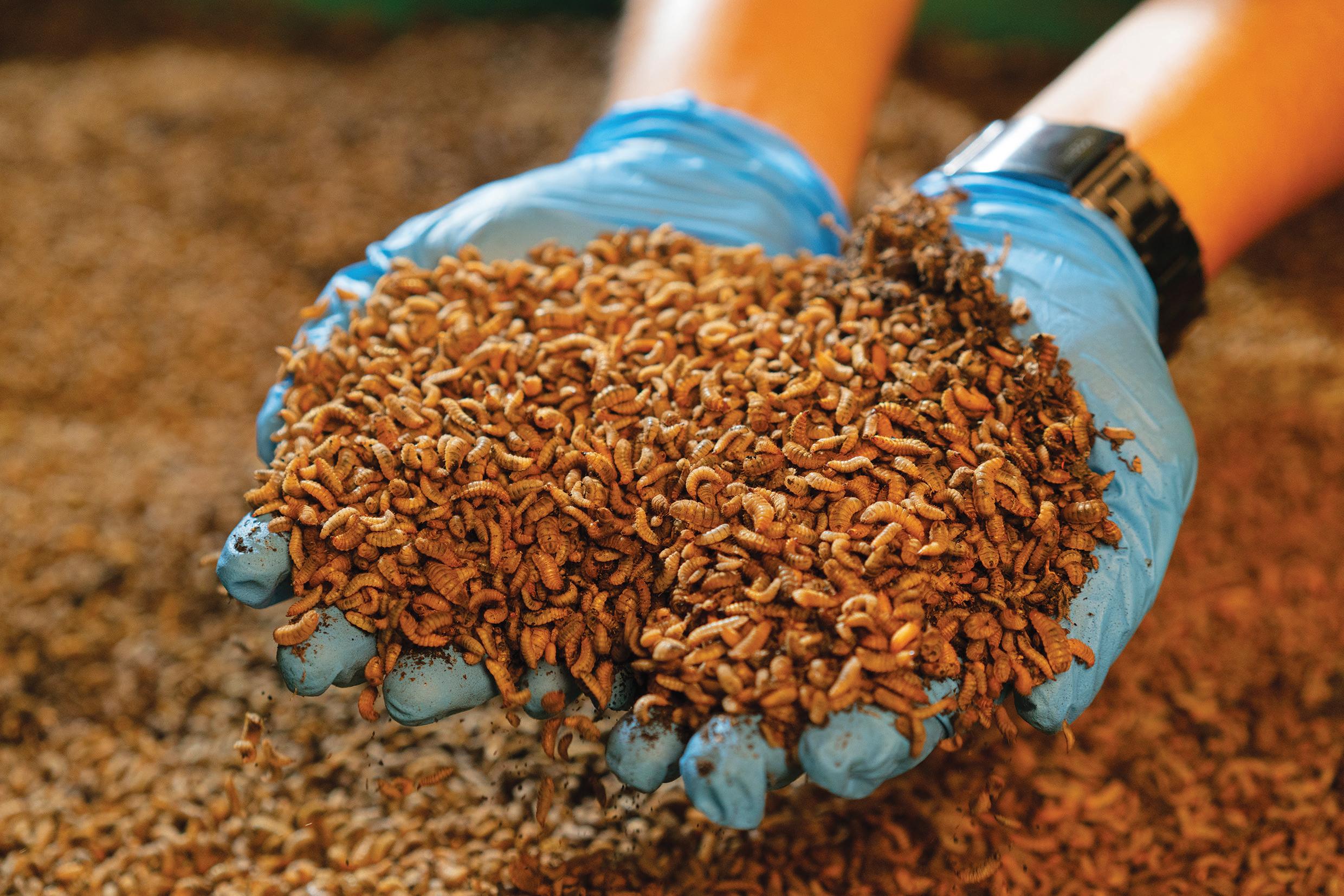
Black Soldier Fly Larvae (BSFL) meal stands out as a highly nutritious and sustainable protein source for animal feed, offering more than just protein alone. It provides a comprehensive nutritional profile, encompassing a well-balanced mix of fats, carbohydrates, fibers, and essential minerals. Its composition includes crucial components vital for various aspects of animal health and performance - its rich mineral content and amino acid profile are particularly beneficial for driving development in aquaculture. While it has gained recent attention as a novel alternative feed ingredient, BSFL has long been
recognized as a traditional component in the diets of many animals. Considering the evolutionary diet of large fish in aquaculture, which includes arthropods like crustaceans and insects, integrating BSFL meal aligns with their natural feeding habits.
Functional properties
While BSFL may be an age-old component of wild fish and crustacean diets, it has recently garnered attention for its multifunctional benefits that extend beyond just nutrition. Industrial production of commercial dried insect meal products has revealed several advantages,
Aquafeed: Advances in Processing & Formulation Vol 16 Issue 2 2024 41
INSECT-BASED INGREDIENTS
INSECT-BASED INGREDIENTS
particularly in enhancing disease resistance and promoting gut microbiome diversity. In aquaculture, optimal inclusion rates range between 10-20%, depending on the species, life stage and target outcome of the formulation. The BSFL exhibits an exceptionally advanced immune system, both intrinsic and extrinsic, which imparts its beneficial effects to the final insect meal product. Key components of BSFL, such as lauric acid (a medium chain fatty acid) and antimicrobial peptides (AMPs), contribute to its powerful immune system, and the immunity-enhancing properties of the meal. The BSFL boasts the most extensive collection of AMPs among all insects, eclipsing traditional protein sources like poultry meal, fishmeal, and soybean meal. As a dipteran fly species, the comprehensive immune system of BSFL can be attributed to its evolutionary history and microbial ecology. Its unique dietary habits, which include consuming diverse decomposing organic matter packed with bacteria, fungi, nematodes, and viruses, necessitate robust defense mechanisms to thrive in its ecological niche, where other animals would quickly become sick.
Antimicrobial peptides
While genetic studies and laboratory assays demonstrated the presence of AMPs in living BSFL, it
was not clear that these peptides survived industrial processing conditions and were present in the finished meal. Through a series of investigations, Nutrition Technologies has provided evidence that functional AMPs are present in a commercially available insect meal product.
AMPs are small proteins naturally produced in living organisms as a defense mechanism against bacterial pathogens. Due to the rise in antibiotic resistance in the livestock industry, AMPs have gained a lot of attention as a natural solution.
BSF-specific AMPs are classified into families depending on their amino acid sequence and tertiary structure. Some examples of AMPs include: Attacins, Cecropins, and Defensins. While their exact mechanism of action is not fully understood, most peptides work in three main ways: (a) cytokine signaling, in which the peptides trigger downstream immune responses such as cytokines and macrophages to eliminate invading cells, (b) direct pore formation, whereby the peptide punctures a hole in the bacteria cell wall directly, (c) intracellular function inhibition, where the peptide blocks essential ion transporters and cell surface proteins causing the bacteria to lyse.
Nutrition Technologies has recently identified and characterized the diversity of AMPs present in their

Aquafeed: Advances in Processing & Formulation Vol 16 Issue 2 2024 42
Figure 1. Antimicrobial Peptides identified in BSFL samples
BSFL, BSFL dried meal, and a purified liquid extracted form of AMPs. Using chemical analytical techniques such as Mass Spectrometry, over 50 unique AMPs were identified with 10 of them newly discovered. The group characterized 29 unique peptides in the BSFL, 14 in the meal, and 23 in the AMP extract (Fig. 1). It should be noted that these numbers represent the diversity of unique peptides, not the concentration. The 14 peptides present in the meal product are likely heat-stable and moisture-stable molecules which continue to have active function against bacteria.
The peptides extracted from fresh BSFL and BSFL meal were tested against several pathogenic bacteria commonly found in veterinary diseases (Table 1).
Despite BSFL meal extract having fewer numbers of unique peptides, it has a higher antibacterial activity against Salmonella, E.coli, and Vibrio strains. This goes to show that its diversity of peptides is still potent enough to efficiently kill the bacteria even at very low concentrations.
Conclusion
The research conducted by Nutrition Technologies Group sheds light on the diversity and potency of antimicrobial peptides present in Black Soldier Fly Larvae and its derived products. The low concentration required to have a strong effect indicates that low inclusions in feed could make a significant impact on an animal’s direct resistance to these diseases. This research directly reflects results that we have seen in shrimp and barramundi challenge trials against Vibrio
INSECT-BASED INGREDIENTS

infections, which have been repeated multiple times in literature and by other insect producers. BSFL meal offers cost savings, the reduction of antibiotic use, improved yield by reducing disease and harvest loss, reduced post-antibiotic harvest delays, and reduced chance of developing antibiotic-resistant pathogens. It is particularly suitable as a prophylactic approach, in farming environments such as open ponds, where external contamination and in-flow of diseases from less controlled ponds pose a significant risk.

Aquafeed: Advances in Processing & Formulation Vol 16 Issue 2 2024 43
Isolate Phenotype MIC (mg/mL) BSFL Meal AMP Extract BSFL AMP Extract Salmonella enteritidis ATTC 13076 - 6.25 12.5 Escherichia coli BL21 (DE3) - 6.25 12.5 Staphylococcus aureus ATCC 31290 - 6.25 12.5 Escherichia coli BW25113 K12 25 25 Escherichia coli ATCC 25922 - 25 25 Pseudomonas aeruginosa ATCC 27853 - 12.5 25 Klebsiella pneumoniae ATCC 700603 ESBL 25 25 Staphylococcus aureus ATCC 33591 MRSA 25 25 Enterococcus faecalis ATCC 29212 VSE 50 25 Vibrio parahaemolyticus ATCC 17802 - 12.5 12.5 Bacillus cereus ATCC 14579 - 25 25
Table 1. Minimum Inhibitory Concentration (MIC) of different BSF samples against aerobic bacteria
More information: Nick Piggott Co-Chief Executive Officer Nutrition Technologies E: nick@nutrition-technologies.com
Silkworm pupae meal vs. conventional protein meals: A comparative study for aquafeed formulation
Ankit Alok Bagaria, Loopworm Private Limited

Conventional protein sources used in aquafeed formulations typically include fishmeal, soybean meal, and other plant-based protein sources. Fishmeal has been a traditional staple due to its high protein content and amino acid profile, which are essential for fish growth. Soybean meal is another common protein source, rich in protein and relatively cost-effective compared to fishmeal.
However, there are several concerns associated with these conventional protein meals in terms of environmental impacts, sustainability, costs and availability.
To address these concerns, researchers and aquafeed manufacturers are exploring various sustainable alternatives such as insect meal, algae meal and single-
cell proteins. Several insect species are being explored for their potential to produce insect protein meals for aquafeed formulations. Some of the popular insects ), mealworm
The potential of silkworm pupae
Silkworms are monophagous insect species and are commercially grown by feeding fresh and pesticidefree Mulberry leaves. With ~80% cultivation in China and ~16% cultivation in India, primarily to extract silk from the cocoons, it is one of the oldest and the most commercially farmed insect species. The pupae are primarily used as a food source by multiple Asian communities but are also
Aquafeed: Advances in Processing & Formulation Vol 16 Issue 2 2024 44 INSECT-BASED
INGREDIENTS
a sidestream of the silk reeling industry. Silkworm pupae meal (SWP) is gaining attention as a potential replacement for conventional ingredients in aquafeed formulations due to several important factors. Silkworm pupae are rich in protein, with levels comparable to or even higher than those found in traditional aquafeed ingredients such as fishmeal. They also contain essential amino acids, vitamins, and minerals necessary for fish growth and health. The balanced nutritional profile of SWP makes it a suitable replacement for conventional protein sources in aquafeed.
Silkworm pupae production generates minimal environmental impact compared to traditional protein sources like fishmeal, which often relies on wild-caught fish stocks. Bombyx Mori are reared primarily on Mulberry tree leaves, but can also be reared on an artificial diet comprising of organic byproducts. There are other silkworms species like Eri, Tasar, Muga, etc. which can feed on the leaves of cassava, castor and 40 other plant species.. Utilizing SWP in aquafeed formulations helps reduce the pressure on marine resources and promotes a more sustainable aquaculture industry.
Aquafeed: Advances in Processing & Formulation Vol 16 Issue 2 2024 45
INSECT-BASED INGREDIENTS
Silkworm pupae Silkworm pupae Fishmeal Fishmeal Squid liver Soybean Shrimp head Test parameter meal 50% meal 65% 60% 65% powder meal meal (Loopworm Pvt Ltd) (Loopworm Pvt Ltd) (Indian fishmeal) (Indian fishmeal) (Indian squidmeal) (Indian soymeal) (Indian jawlameal) Moisture (g/100g) 5.61 5.31 7.71 7.86 5.64 9.9 6.93 Fat (g/100g) 33.58 13.16 9.23 5.03 7.66 0.85 3.54 Protein (g/100g) 50.12 70.25 62.01 66.7 49.86 54.47 55.57 Ash (g/100g) 4.92 5.7 20.2 19.97 6.94 7.23 28.65 Fibre (g/100g) 4.07 4.29 1.27 0.45 4.59 6.29 2.95 Carbohydrate (g/100g) 1.7 1.3 0 0 25.29 21.23 2.34 Energy (kcal/100g) 525.8 419.3 331.5 311.98 369.59 310.54 263.55
Table 1. Proximate composition of silkworm pupae meal compared to other conventional protein sources.
Amino Loopmeal Loopmeal Fishmeal Fishmeal Squid liver Soybean Shrimp head acids Omega Pro 60% 65% powder meal meal (g/100g) (Loopworm Pvt Ltd) (Loopworm Pvt Ltd) (Indian fishmeal) (Indian fishmeal) (Indian squidmeal) (Indian soymeal) (Indian jawlameal) Asp 6.79 7.09 5.56 6.80 5.38 6.738 5.946 Glu 7.39 7.2 8.14 10.72 8.95 10.952 8.524 Ser 2.4 3.72 2.29 3.01 2.83 3.284 2.254 His 1.88 2.05 0.34 0.50 0.78 0.904 0 Gly 1.79 3.58 5.03 5.41 2.52 2.52 3.512 Thr 1.63 4.73 2.01 2.57 2.12 2.275 2.068 Arg 2.08 2.67 3.59 4.17 3.21 4.056 2.278 Ala 3.14 1.8 4.25 4.97 2.65 2.651 3.94 Tyr 2.23 4.5 1.80 2.55 2.19 2.207 2.177 Cys 0 0 0.00 0.00 0.00 0.144 0 Val 3.11 4.11 2.85 3.43 2.46 2.688 3.428 Met 0.52 1.71 1.62 1.62 0.57 0.596 1.362 Phe 2.09 3.5 2.19 2.89 2.40 2.793 3.122 Ile 2.27 2.94 2.38 2.67 2.05 2.502 2.941 Leu 3.64 4.32 5.59 5.87 3.70 4.247 4.464 Lys 3.67 4.7 4.23 4.41 2.41 3.556 4.027 Pro 1.97 3.7 4.84 4.58 2.55 2.962 2.129 Trp 0.08 0.21 0.11 0.42 0.13 0 0.361 Total 46.68 62.53 56.83 66.60 46.89 55.08 52.53
Table 2. Amino acid profile of silkworm pupae meal compared to other conventional protein sources.
INSECT-BASED INGREDIENTS
Silkworm pupae are readily available in regions where silk production is practiced. The abundance of silkworm pupae makes them a cost-effective alternative to conventional protein sources. Using SWP in aquafeed formulations can help stabilize feed costs and improve the economic feasibility of aquaculture operations. Furthermore, SWP is known to be highly palatable to many aquatic species, which can help improve feed intake and promote efficient growth. The appealing taste and aroma of SWP make it an attractive option for formulating aquafeeds that encourage optimal feed consumption and nutrient utilization by fish and other aquatic organisms.
Finally, incorporating SWP into aquafeed formulations may positively influence the quality of aquaculture products. The diets supplemented with SWPs can enhance the flavor, texture, and nutritional content of fish and shrimp, resulting in higher-quality seafood products for consumers.
Silkworm pupae meal in aquafeeds Shrimp
In a trial on Pacific white shrimp (Litopennaeus vannamei; Rahimnehad et al., 2019), the survival rate increased when 75% of fishmeal was replaced with SWP. There was no significant difference in the growth of shrimp vs. the control.
Giant river prawn
In a trial in Macrobranchium rosenbergii juveniles comparing fishmeal, soybean meal, shrimp meal and different insect meals as protein sources (McCallum et al., 2021), the survival rate and percentage increase in body mass of the prawns were higher using SWP (45% protein) in comparison to fishmeal, shrimp meal and other insect meals.
Trout
In a trial in rainbow trout (Oncorhynchus mykiss; Shakoori et al., 2016), results showed that 10% of
1, 2 and 3.
Aquafeed: Advances in Processing & Formulation Vol 16 Issue 2 2024 46
Parameter Loopworm Loopworm Fishmeal Fishmeal Krill Jawla Squid liver (g/100g) Omega Pro 60% 65% meal meal powder (Loopworm Pvt Ltd) (Loopworm Pvt Ltd) (Indian fishmeal) (Indian fishmeal) (Indian squidmeal) (Indian soymeal) (Indian jawlameal) Saturated fatty acids 9.04 6.46 3.48 4.14 12.37 4.19 2.7 Mono-unsaturated fatty acids 9.61 5.3 1.51 1.37 8.19 1.53 3.45 Poly-unsaturated fatty acids 14.92 1.37 1.7 2.05 3.29 0.79 2.18 Trans fatty acids 0 0 0 0 0 0 0
Table 3. Total fatty acids profile of silkworm pupae meal compared to other conventional protein sources.
Parameter Silkworm pupae (mg/kg) meal 65% Fishmeal Krill meal Jawla meal Squid Lead (as Pb) 0.48 4.04 1.28 0.03 8.66 Cadmium (as Cd) 0.02 1.2 2.55 0.14 9.45 Arsenic (as As) 0.21 5.3 11.56 3.51 7.39 Mercury (as Hg) BLQ (LOQ:0.01) BLQ (LOQ:0.01) BLQ (LOQ:0.01) BLQ (LOQ:0.01) BLQ (LOQ:0.01) Tin (as Sn) BLQ( LOQ:0.5) BLQ( LOQ:0.5) BLQ( LOQ:0.5) BLQ( LOQ:0.5) BLQ( LOQ:0.5) Cobalt (as Co) BLQ (LOQ:0.5) 0.77 2.05 BLQ (LOQ:0.5) 0.67 Manganese (as Mn) 30.16 36.26 96.52 3.76 26.04 Copper (as Cu) 16.94 22.32 28.38 38.97 47.44 Chromium (as Cr) 1.24 20.19 7.66 0.34 4.19 Selenium (as Se) 0.45 2.28 2.03 3.47 2.01
Table 4. Heavy metals profile of silkworm pupae meal compared to other conventional protein sources procured from other anonymous sources different from the samples in Tables
INSECT-BASED INGREDIENTS

fishmeal can be replaced with SWP without any adverse effects on the values of the feed conversion ratio (FCR), specific growth rate (SGR), weight gain percent (WG), condition factor (CF), survival rate, protein content, lipid content, or nutrition protein utilization.
In another trout study that compared different protein sources (Roy et al., 2013), control (shrimp powder) and feed containing silkworm pupae (crude protein: 57.12%, fat: 31.29%; 100% inclusion) exhibited the lowest feed conversion ratio (FCR: 1.32-1.33). Feed containing synthetic amino acids such as lysine and methionine showed higher FCR values (10.14).
African catfish
A study ( Kurbanov et al ., 2015) tested the replacement of fishmeal with SWP in African catfish (Clarias gariepinus). Fish relative growth rate (1.64%) and specific growth rate (4%) were higher and feed conversion ratio (1.2) was lower in fingerlings
fed diets with fishmeal replaced with 50% silkworm pupae in comparison to control which had 0.91%, 2.5%, 1.8 respectively.
In another trial in African catfish juveniles testing a partial replacement of fishmeal (Oso et al., 2014), although a 25% SWP inclusion showed the best result (SWP FCR: 3.12, SGR: 2%; Control FCR: 3.55, SGR: 1.47%), 100%, 75% and 50% levels of replacement of fishmeal protein with silkworm pupae (69.52% protein, 11.12% fat) were acceptable to fish without affecting the growth and feed utilization.
Nile Tilapia
A study in Nile tilapia (Salem et al., 2008) showed no significant differences in final body weight, weight gain, daily gain, specific growth rate, feed conversion ratio, protein efficiency ratio and protein productive value between fish fed diets containing 66.66% replacement of fishmeal with SWP (62.7% protein,
Aquafeed: Advances in Processing & Formulation Vol 16 Issue 2 2024 47
INSECT-BASED INGREDIENTS
18.17% fat) and control diet. Researchers concluded that a diet containing 66.66% SWP (from fishmeal) was economically superior to the other tested diets.
In another study on GIFT tilapia (Sathishkumar et al., 2021), the dietary inclusion of SWP and bioprocessed SWP did not (p>0.05) affect the whole-body chemical and amino acid composition and haemato-biochemical responses in GIFT tilapia. Researchers concluded that SWP can completely replace dietary fishmeal protein in GIFT tilapia diets.
Carps
In a trial in Jian carp (Cyprinus carpio var. Jian) juvenile (Ji et al., 2013), researchers found that silkworm pupae (52.3% protein) can replace up to 50% of fishmeal protein in the juvenile diet (inclusion level 5% silkworm pupae of total food) without a significant adverse impact on the health status.
Another study (Nadeessha et al., 1990) found that a 20% inclusion with SWP in carp (Cyprinus carpio) diet showed better protein digestibility (84.8%) and FCR (3.19) compared to control (81.9% and 3.31, respectively).
Pompano
The dietary inclusion of defatted SWP significantly (p<0.05) improved the overall blood profile until 50% fishmeal replacement in silver pompano (Trachinotus blochii) in a recent study (MithunKumar et al., 2023). Higher replacement rates affected the intestinal structure due to necrotic lesions in the microvilli and detachment of surface epithelial cells from lamina propria. The results of this study suggested that defatted SWP can be used to replace 30.5% of fishmeal protein which accounts for 9.5% of SWP in the diet of silver pompano without any adverse effect on fish.
Ornamental fish
A study in rainbow shark (Epalzeorhynchos frenatum; Rajan et al., 2020), a 30% replacement of fishmeal with silkworm pupae (protein: 55.63%, Fat: 27.41%) showed significantly higher weight gain (5.18±0.28 g), specific growth rate, SGR (2.54±0.07% day-1), protein efficiency ratio, PER (1.50±0.04) and feed conversion ratio, FCR (1.91±0.06) compared to the control with fishmeal (weight gain: 2.76±0.02, SGR: 1.79, PER: 0.96, FCR: 2.85±0.02).

Full-fat SWP gives rich color and increases the growth rate in Koi when fed them as power food at a maximum of 30% of the total food volume when the water temperature is above 15°C. It is used as a daily Koi diet or use as a treat anytime during the growing season to add weight or improve sheen and luster for beautiful, show-stopping Koi.
In snakeskin gourami (Trichogaster pectoralis), the replacement of 50% fishmeal (14.57% by weight) with silkworm pupae larvae in broodstock diets (Jintasataporn et al., 2011) had no adverse effect on egg quality in terms of fingerling number and survival rate at one-month nursing on first spawned.
Conclusion
Overall, SWP offers a promising alternative to conventional ingredients in aquafeed formulations, providing a sustainable, nutritious, and cost-effective protein source for the aquaculture industry. As research and development efforts continue to explore its potential, SWP is expected to play an increasingly important role in meeting the protein requirements of farmed fish and contributing to the growth and sustainability of aquaculture worldwide.
More information:
Ankit Alok Bagaria
Co-Founder
Loopworm Private Limited, India
E: ankitbagaria@loopworm.in

Aquafeed: Advances in Processing & Formulation Vol 16 Issue 2 2024 48

Industry Events
OCTOBER
9 – 11: Aquaculture Vietnam 2024 aquafisheriesexpo.com
21 – 24: AQUA EXPO Guayaquil, Ecuador aquaexpo.com.ec
24 – 26: FeedTech Expo 2024, India feedtechexpo.com
NOVEMBER
12 – 15: EuroTier, Germany
www.eurotier.com
Aquafeed: Advances in Processing & Formulation Vol 16 Issue 2 2024 50 2024
14 – 15: Aquaculture UK aquacultureuk.com 22 – 24: Aquaculture Philippines 2024 www.livestockphilippines.com 27 – 31: XXI International Symposium on Fish Nutrition and Feeding, www.isfnf2024.com Mexico 29 – 31: Ildex Vietnam 2024 ildexvietnam.com
19 – 22: Insects to Feed the World, Singapore www.ifw2024.com 27 – 29: Shimp Summit, India responsibleseafood.org
2 – 5: Asian-Pacific Aquaculture 2024, Indonesia www.was.org 8 – 18: Practical short course on extruded pet foods and treats, USA web.cvent.com
25 – 29: AQUA 2024, Denmark was.org 28 – 30: ILDEX Philippines ildex-philippines.com
MAY
JUNE
JULY
AUGUST
SEPTEMBER 3 – 5: Global Shrimp Forum, The Netherlands shrimp-forum.com 9 – 12: larvi 2024, Belgium aquaculture.ugent.be 11– 13: 10th International Aquaculture & Fisheries Expo Taiwan taiwanagriweek.com 24 – 27: Latin American & Caribbean Aquaculture 2024, Colombia was.org


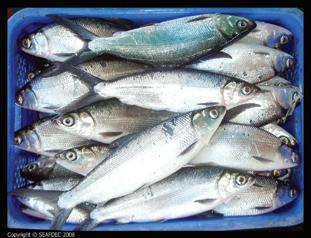


Asian-Paci c Aquaculture 2024
Aquaculture - Driving the Blue Economy
2-5 July, 2024
Grand City Surabaya, Indonesia
The Annual International Conference & Exposition of World Aquaculture Society and Asian Pacific Aquaculture 2024
Annual meeting of Asian Pacific Chapter, WAS

Hosted by:
Ministry of Marine Affairs & Fisheries (MMAF)
Premier Sponsors




Co-Organizer:
PT Tirta Anugrah Abadi


Joint Event With:


August 26-30, 2024
Bella Centre, Copenhagen, Denmark

www.was.org
www.aquaeas.org



September 24-27
2024
Medellín, Colombia
Get our meeting mobile app


Organized


N RETPAHC
The annual meeting of LATINAMER CAN&CARIBBEA





Premier sponsors


PT TIRTA ANUGRAH ABADI For


PLAZA MAYOR
by BLUE FOOD GREEN SOLUTIONS
was premier sponsors
partners CO-ORGANIZED BY
More Information:
Information: www.was.org
& Registration: worldaqua@was.org
mario@marevent.com
Tunsia, Nov 19-22 WA 4 show AD2 A4.indd 1 2/13/24 11:17
Event
Conference
Tradeshow:
AQUACULTURE AFRICA 2024 Hammamet
