Fixing the Apparel
Factory Floor
Industry experts share the equipment, data, and process problems they see every day—and how to solve them

Old Setup, New Demands
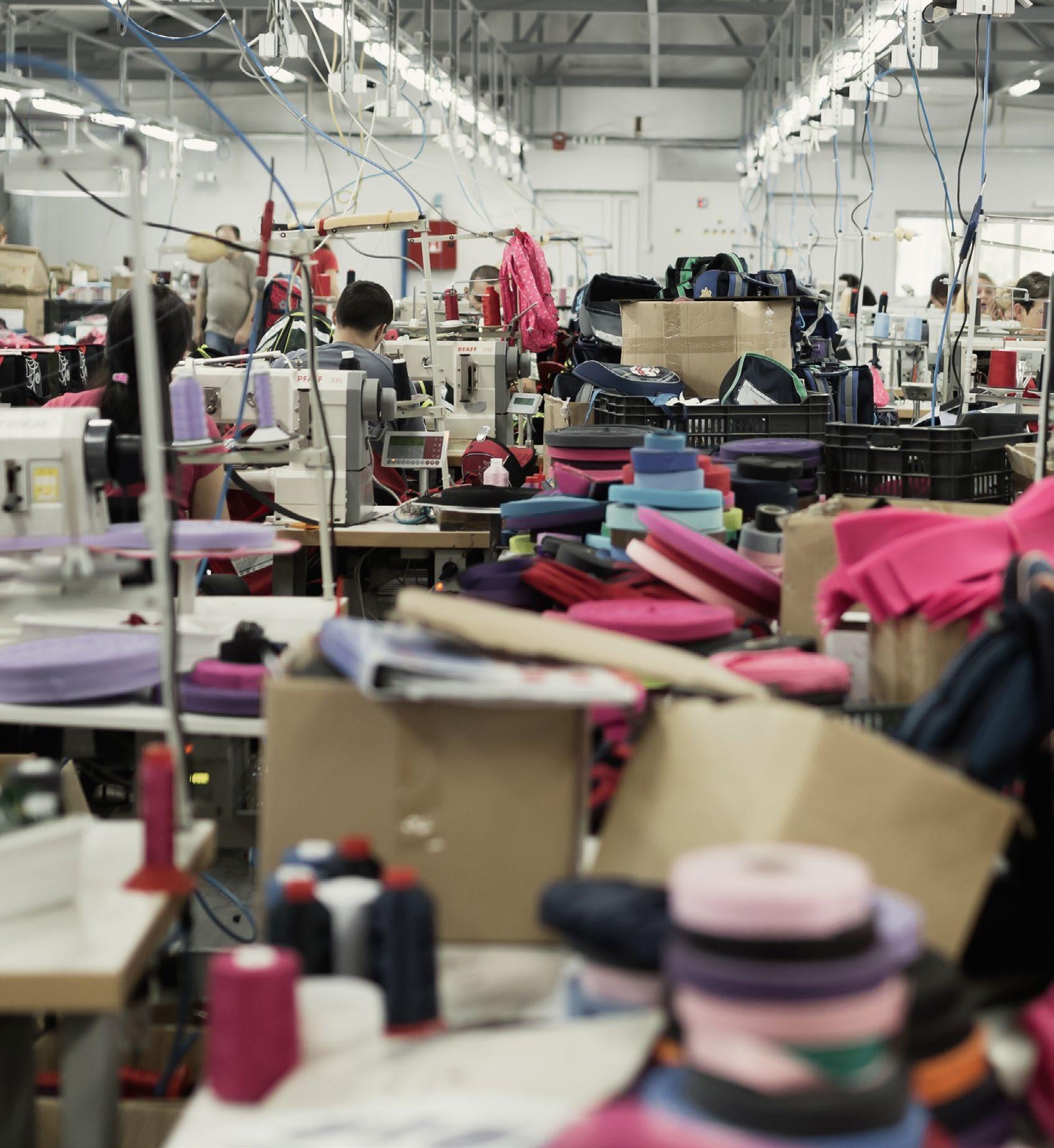
The apparel shop floor has always been a demanding environment, but the pressures on it have intensified. Long-run, single-style contracts are giving way to smaller batches, more styles, and faster turnarounds. Materials are changing constantly. Customer expectations keep rising. And most factories are trying to meet these new pressures with the same equipment, processes, and management approach they’ve always relied on.
The result is a growing disconnect between what the factory floor is being asked to deliver and what it’s set up to handle. Equipment designed for one type of job is being used across dozens. Floor managers are making decisions without accurate insights, and operators are being held to fluctuating standards.
I was fortunate to sit down with three experts who work with these challenges up close every day. All three are Aptean Shop Floor Control software users, and in this ebook, they share what they’ve learned about making apparel manufacturing work better.
Each of them brings a different perspective on the obstacles facing the factory floor, and more importantly, what can be done about them. I hope their insights are as valuable to you as they have been to me.
Justin Hershoran
Senior Solutions Architect, Aptean Apparel
Meet Our Experts


Joseph Park
President, ABC Sewing Machine
Jump to page 4 to read Joseph’s article on why the equipment gap is costing apparel manufacturers more than they realize.
Blake Ulves
Partner & CEO, StartYourLine
Jump to page 6 to read Blake’s article on how tracking every working minute keeps his factory running at near-100% efficiency.

Lionel Vargas Cruz
Vice President, ISAIC
Jump to page 9 to read Lionel’s article on why 60% of production floor inefficiencies come down to unclear standards.
Want to hear from all our experts together? Jump to page 12 for our Q&A.
“It’s not about getting new machines. It’s about giving your team the tools to handle a larger array of jobs.”

Joseph Park, President, ABC Sewing Machine, explains how the move from dedicated contracts to multi-style production has exposed a critical equipment gap on the apparel shop floor.
Apparel manufacturing has changed. The days of long-run, single-style contracts are fading, and factories of every size are being asked to do more with less. Our clients range from large-scale manufacturers to small contractor sewing shops, and there’s a similar issue that we see no matter what level they come from: a disconnect on the shop floor.
The Problem With One Set of Machines for Every Job
The first problem is really on the equipment side. Back in the day, you would need a specific machine dedicated for a certain type of job. But nowadays those big contract jobs are dwindling. A lot of factories are taking on multiple different styles all at one time, and they’re using the same type of equipment, expecting it to work on every line that they run.
“Factories are taking on multiple different styles all at one time, and they’re using the same type of equipment, expecting it to work on every line that they run.”
I see it with our clients all the time. They only have one or two select sets of machines they can use for leather and denim or lightweight, stretchy materials like spandex. But they’re throwing everything that they can onto one set of machines.
A lot of damage can happen when switching from, say, a t-shirt to a sweater if the machine is not calibrated properly. And often, you don’t find out until it’s too late—the garment has already gone through the full production cycle, including dyeing, before the issues show up. By that point, you’ve lost all the time and cost that went into making it. Those are the scenarios we’re trying to lessen.
Too Many Styles, Not Enough Visibility
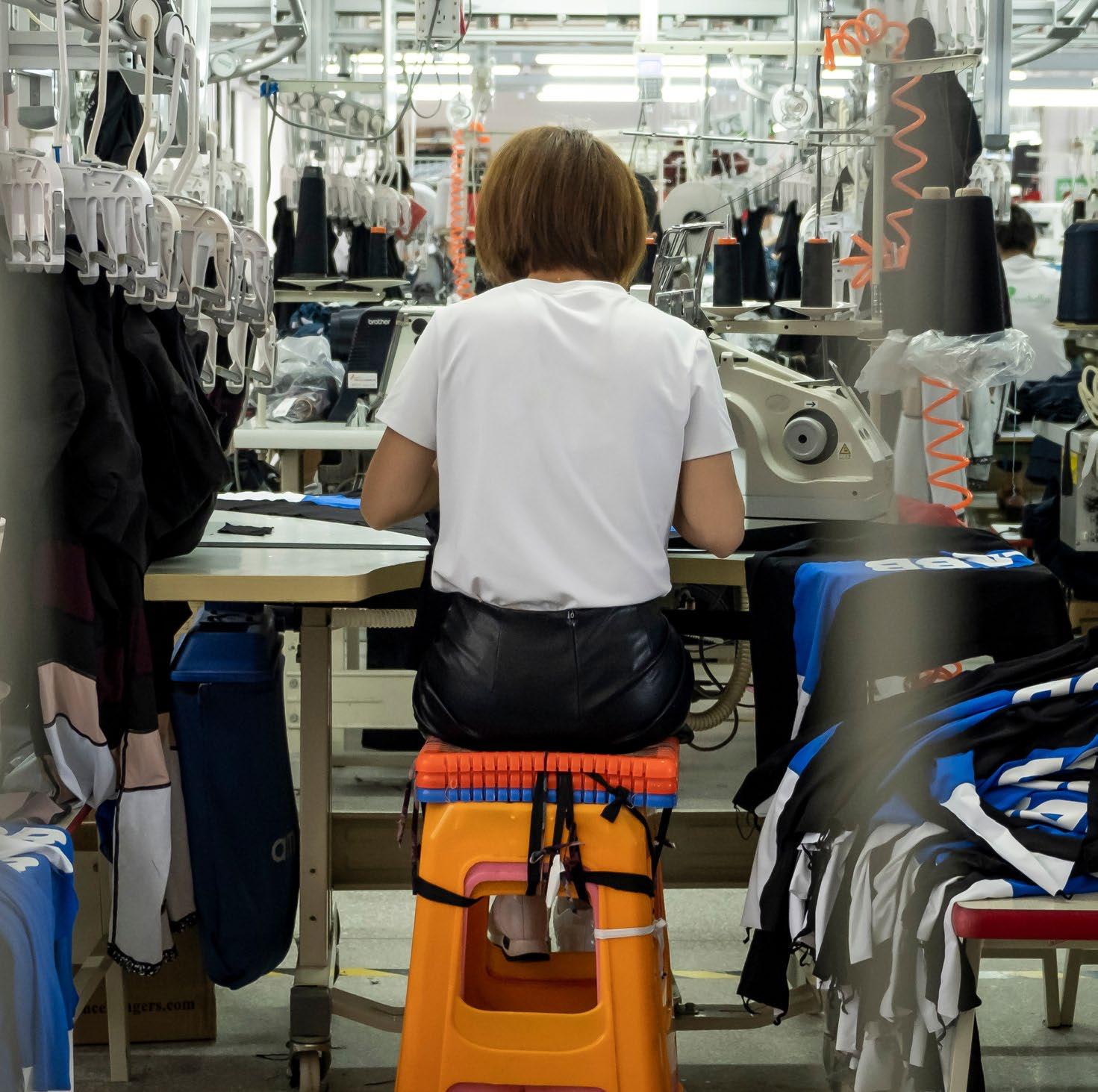
On top of the equipment challenge, there are people issues to address. One floor manager is handling many different things at the same time. Getting the correct information when they need it becomes a little chaotic, especially in the middle of production. It’s a scenario see all the time.
Operator experience level is also a huge aspect, because an operator with 30 years of experience has greater expertise than an operator with two years of experience. The disconnect between these factors causes bottlenecks, issues, and damaged goods.
“Success comes down to smarter machines and the right tools for the staff you already have.”
New Equipment Cuts Changeover From Hours to Minutes
Thankfully, the technology available to the apparel industry has made huge upgrades. There’s shop floor control software out there now that takes the experience differentiator out of the equation.
If you were to change everything to properly adjust your equipment the traditional way, it would take hours. Each changeover depends on the technician’s availability, plus the expense to calibrate machinery to offer a quality product to your clients. It could take a few hours up to possibly a day to change the whole lineup of a factory that has 20-plus machines.
The machine now has certain adjustments and preset programs to handle a different array of fabrics. Manufacturers can dial it in on one asset and then copy and paste it to all 30 or 40 of their machines instantly. It’s a more balanced, flexible approach than buying new equipment, or hiring more people and throwing them on the line.
Success comes down to smarter machines and the right tools for the staff you already have. That’s what’s going to keep factories competitive as this industry continues to evolve.
ABC Sewing Machine is the largest carrier of spare parts in Los Angeles, along with the largest service team in the industry.
“We try to make our goals as achievable as possible. If the target is honest, your team can maintain
–100% efficiency against it.”

Blake Ulves, Partner & CEO, StartYourLine, shares how he keeps his factory running at near-100% efficiency by tracking every working minute and making sure his whole team knows when they’re doing well.
I think every factory owner or person in management knows with their eyes closed when their factory is moving and when it’s not. But feeling it and measuring it are two different things.
We use Aptean Shop Floor Control to track all of our day-to-day operations. I try to visualize everything within working minutes and cycle times; how many minutes it takes to complete an operation. You get around 400 working minutes a day per operator on average. We try to focus on making sure those 400 minutes are the most optimized and best minutes of our day.
Making the Most of 400 Working Minutes a Day
Machine uptime is definitely one of our biggest priorities, and knowing how to respond to challenges when they arise is what separates us from different manufacturers. We have a mixture of legacy machinery and newer automatic equipment, and one of our big challenges is style changeover.
In the sewing world previously, a lot of things were manually adjusted, and that relied on the skill and experience of the operator. With 20 or 30 different operators, you’re not going to get consistent results.
Now with some of the newer equipment, style changeovers that used to take a day can happen in minutes. And we can save the profile of that particular material for a reorder. It’s a significant reduction in downtime.
“Having access to data points through our shop floor control software helps us pinpoint which machines are giving us the most problems so that we can start implementing a protocol to mitigate them.”
A lot of the technology now is also very good at self-diagnosing issues and reporting errors. If a machine goes down for half the day, we really only get 200 working minutes out of the operator. Having access to data points through our shop floor control software helps us pinpoint which machines are giving us the most problems so that we can start implementing a protocol to mitigate them. But it also allows us to quickly move people into other areas if machines do go down, so we don’t lose productive time.
Two Hours in, We Can Tell if We’re on Target
We’re constantly looking at our performance goals, and we try to do it in real time. Generally within the first couple of hours, we know if we’re on target for the day.
One thing I always instill in my employees is to give honest feedback. If they can’t tell me whether today was a good or a bad day, then we have some major issues. I’d rather them say today was a bad day, because we can identify what the challenges were and what we need to change to make tomorrow a good day.
Most factories aren’t analyzing their business like that. They’re looking at data after the order shipped and they’ve been paid on it, realizing they lost money. By then, it’s too late to fix those problems.

“With reliable data, I can quote my customers accurately, so I’m not underwater on a production order.”
Give People a Reason to Hit Their Goals Every Day
Once you’re able to crack that cultural code of everybody striving to reach their goals, you’ll have a much easier time moving the entire factory in the direction you want it to go. That movement needs to be distributed among your entire team.
Know Your Numbers Before You Quote the Job
I think it’s important for factory owners to do their due diligence before they quote production jobs. Be realistic with the timelines, because many manufacturers start imagining results before looking into production requirements.
We try to make our goals as achievable as possible. If the target is honest, your team can maintain 98–100% efficiency against it. Set an unrealistic target and you’ll be sitting at 75%, and you won’t know whether that’s a people problem, a process problem, or a bad goal. With reliable data, I can quote my customers accurately, so I’m not underwater on a production order.
One critical component of a good culture is rewarding your team for hitting their goals. Instilling some sort of company bonus structure is definitely a positive, but you can also have fun with it. We do stretch milestones, especially when we get hit with big work orders and we have to work a lot of overtime. I tell my team that if we get shipments out on time, I’m going to cater lunch for everybody. One day it’ll be Chinese food, the next day we’ll have somebody come down and cook outside the factory, making tacos for us.
You can have fun and get the results that you need and build a culture, but you have to have the foundation and the processes. Once you start holding people accountable and recognizing them for it, everybody wants to do a good job every day.
StartYourLine is a Los Angeles-based full package apparel manufacturer and sewing factory.

“When the method isn’t clear, people start making their own version of the process.”
Vargas Cruz, Vice President, ISAIC, on what 15 years on production floors has taught him about the real root cause of underperformance—and why it’s usually not the operator.
Something as basic as creating step-by-step routing of what happens on the production floor can become very complicated if you’re not a systems person or an engineer. And some organizations are too small to have an industrial engineer on site full time or dedicated IT support.
If you ask me where most inefficiencies come from on an apparel production floor, I can tell you. Most of the time, it’s from failing to create a consistent standard. People are quick to point at the operator, but the reality is that for a long time this industry has disregarded the people that work in its factories. And they are our most valuable resource.
Good Systems Only Work if People Get Value From Them
As a person that likes to be on the production floor, one of the things value most is having access to live data through dashboards. But for a lot of our partners, that data exists and they can’t get to it, as their systems are too complicated.
It’s a similar story with supply chain visibility. We talk about a digital thread: everything that happens from picking up the cotton all the way to a finished t-shirt. And the technology is there to have that information in the palm of your hands. But the infrastructure makes it complicated because one system has its own way of doing things and the other system doesn’t communicate with it.
Now, with the integration of APIs and AI support, we can streamline more of that information. We’re working on creating repositories so that whenever there’s a change in our production or materials, we can react faster.
Lionel
Set the Standard, Then Measure
Everything Against it
I believe processes are the way to understand what is happening in your business—they give you a baseline to measure against.
One of the issues I’ve seen over my career is that this industry tends to hide problems under bundles of production. When something goes wrong, factories keep pushing volume rather than stopping to identify the root cause. Being lean means having the visibility to see when something is going wrong, and if you’ve set a goal for the day, you need to know immediately when you’re not hitting it.
We set up baselines and standards from where we can measure, improve, and teach people, and we’re very clear about the expectations we’re setting. We make the information available for them to see and hold themselves accountable.
“One of the things I value most is having access to live data through dashboards.”

“Being lean means having the visibility to see when something is going wrong.”
Work Through Problems Systematically with the ‘Four M’ Methodology
Because I like to be on the floor, I see when people are not following the standard that’s been set. But also give people a framework to get to the root cause.
I follow something called the four M’s of manufacturing. We start by looking at the material: has anything changed that is impacting the performance of the operator?
If we decide the material is not the issue, we move onto machinery. Is this the wrong setup? Do we have the right tension on the machine? Have we threaded the machine correctly? Are we using the right thread?
The third M is method. Have we been clear about what we want to deliver? Does everyone understand the standard? I can tell you, about 60% of our inefficiencies come from right here, as when the method isn’t clear, people start making their own versions of the process.
If we go through those three areas and everything is in the right place, then we look at the fourth M: manpower. The person may not be following the standard, and that’s something we need to address through retraining or a conversation. But you can only get to that point fairly if you’ve worked through the other three Ms first.
When people understand the value that they bring to an organization, they’re going to work hard for you. But that will only happen if you’ve done your job first: set the standard, make it visible, and give your team the tools to meet it.
ISAIC is a Detroit-based national nonprofit institute for innovation and skilling in the advanced manufacturing of apparel and textiles.
Is Apparel the Fastest-Changing Industry That Isn’t Changing Fast Enough?

Apparel manufacturing faces a wave of new materials, smaller batch sizes, and rising customer expectations. But too many factories are still operating without the data and processes to keep up. Justin Hershoran (JH), Senior Solutions Architect at Aptean Apparel, talks to Joseph Park (JP), Blake Ulves (BU) and Lionel Vargas Cruz (LVC) about what needs to change.
JH: How important is data in tackling the day-to-day challenges on the production floor?
JP: So important, especially on the equipment side. If you have a down machine, what is the cause of it? Having the correct data tells you whether that’s the reason you’re seeing bottlenecks or inefficiencies on the output for the day. If more factories implemented that kind of system instead of a “he-said, she-said” battle, they’d be in a much better position.
LVC: You cannot imagine how frustrated get when don’t have access to data. We try to document everything so that next time we can spot problems before they happen, rather than reacting afterwards.
“Data is everything. You aren’t running a successful business without it.”
Blake Ulves, Partner & CEO, StartYourLine
BU: Data is everything. You aren’t running a successful business without it. But what’s also interesting is what the data isn’t telling you. If your operator’s uptime is only 50%, go out and talk to them. You might find they haven’t been feeling well, or they’re having personal issues. Or maybe it’s just that the tension on their machine wasn’t set up correctly and they’re having needle breaks. Either way, you’re discovering the root cause in real time, so you can find a solution.
“That herd mentality of adding more people, it spreads like a poison. I’ve seen it cripple factories.”
Joseph Park, President, ABC Sewing Machine
JH: What happens when factories don’t measure properly?
BU: Not enough people are measuring, and I see so many factories fail to scale correctly as a result. They’ll eyeball a project and decide to throw fifty more people at it. But had they collected the data, they would have had a more accurate equation. I can tell you that with my 24 operators and the average 400 working minutes they give me per day, with a style taking 35 minutes, we’re averaging about 220 shirts per day. If I need to increase to 400, 500, or 600 shirts, can mathematically calculate how many operators it’s going to take. There’s no misquoting.
JP: I have many clients that take on more than they can handle. They bid on a job, see this big number, and have the vision in their mind. Once they’re one or two years into the contract, they realize it’s a lot more difficult than anticipated. And they just keep throwing more people at it. That herd mentality of adding more people, it spreads like a poison. I’ve seen it cripple factories.
LVC: I had a fabric manufacturer whose scorecard on my end showed 68% on-time delivery. His own scorecard said 100%. What was happening was that every time a shipment slipped, instead of recording it as late against the original promised date, they were updating the promised date to match when they actually shipped. So every delivery looked on time at their end. I went to him and said, you quoted me 12 weeks, you’re delivering in 16. But because they were measuring against the wrong date, his company believed there was no problem at all.
JH: Where do you see the biggest opportunities for improvement over the next few years?
LVC: The future of U.S. manufacturing is about what value we can bring—responsive direct-to-consumer models, low-batch production— and doing more with less. That means tackling inefficiencies in the office. If we can release more orders and purchase more fabric in the same time frame with better tools, that hits the bottom line hard.
BU: AI is going to play a big role. Instead of mid-level employees constantly analyzing bottlenecks, AI agents will monitor manufacturing data and help people make decisions, like recommending where to move operators to maintain a delivery date. AI will upskill the floor manager and deliver them not only the data, but the decisions they need to make.
JP: In the US, people hear AI and automation and think a robot’s going to take their job. But it’s consolidating troubleshooting information into a simple system. Apparel is one of the fastest changing industries, but we’re not changing fast enough in how we approach it. There’s software out there that’s readily available and will give manufacturers the flexibility to handle whatever comes their way.
“The future of U.S. manufacturing is about what value we can bring responsive
direct-to-consumer
models,
low-batch production,
and doing more with less.”
Lionel Vargas Cruz, Vice President, ISAIC
Aptean Fashion and Apparel: Real-Time Visibility Across
Your
Production Floor
Aptean provides purpose-built software for the fashion, apparel, footwear, and accessories industry, covering everything from product lifecycle management and ERP to EDI, supply chain, and shipping.
Aptean Apparel Shop Floor Control sits at the heart of the manufacturing operation, giving factories the real-time visibility and data that every expert in this ebook has been talking about.
The software is browser-based and runs on tablets at each workstation. Operators scan and work. Managers get customizable dashboards showing KPIs for individuals, teams, and production lines in real time. When something goes wrong—a machine goes down, a quality issue appears, or a line falls behind target—you find out immediately, not days later.
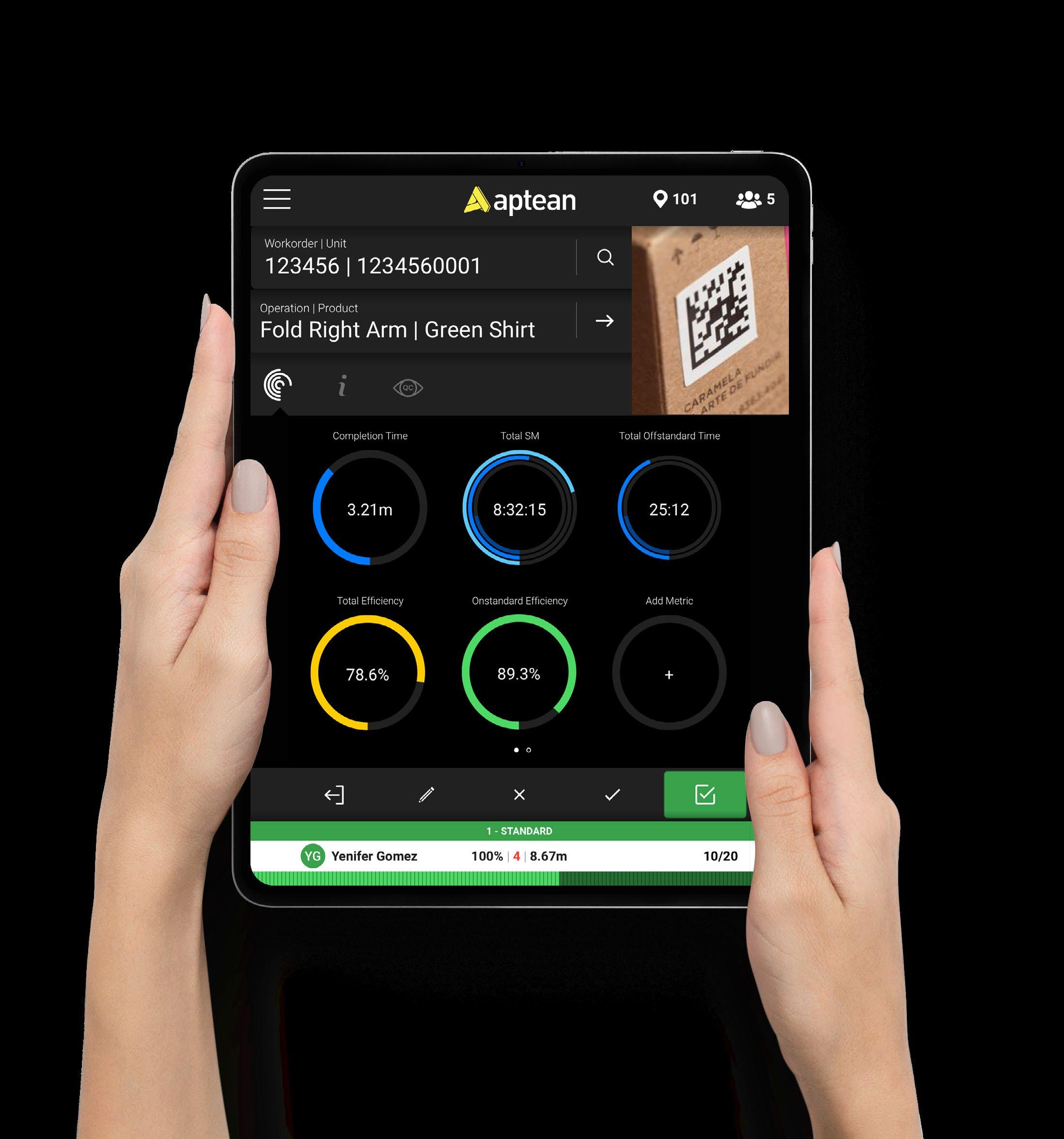
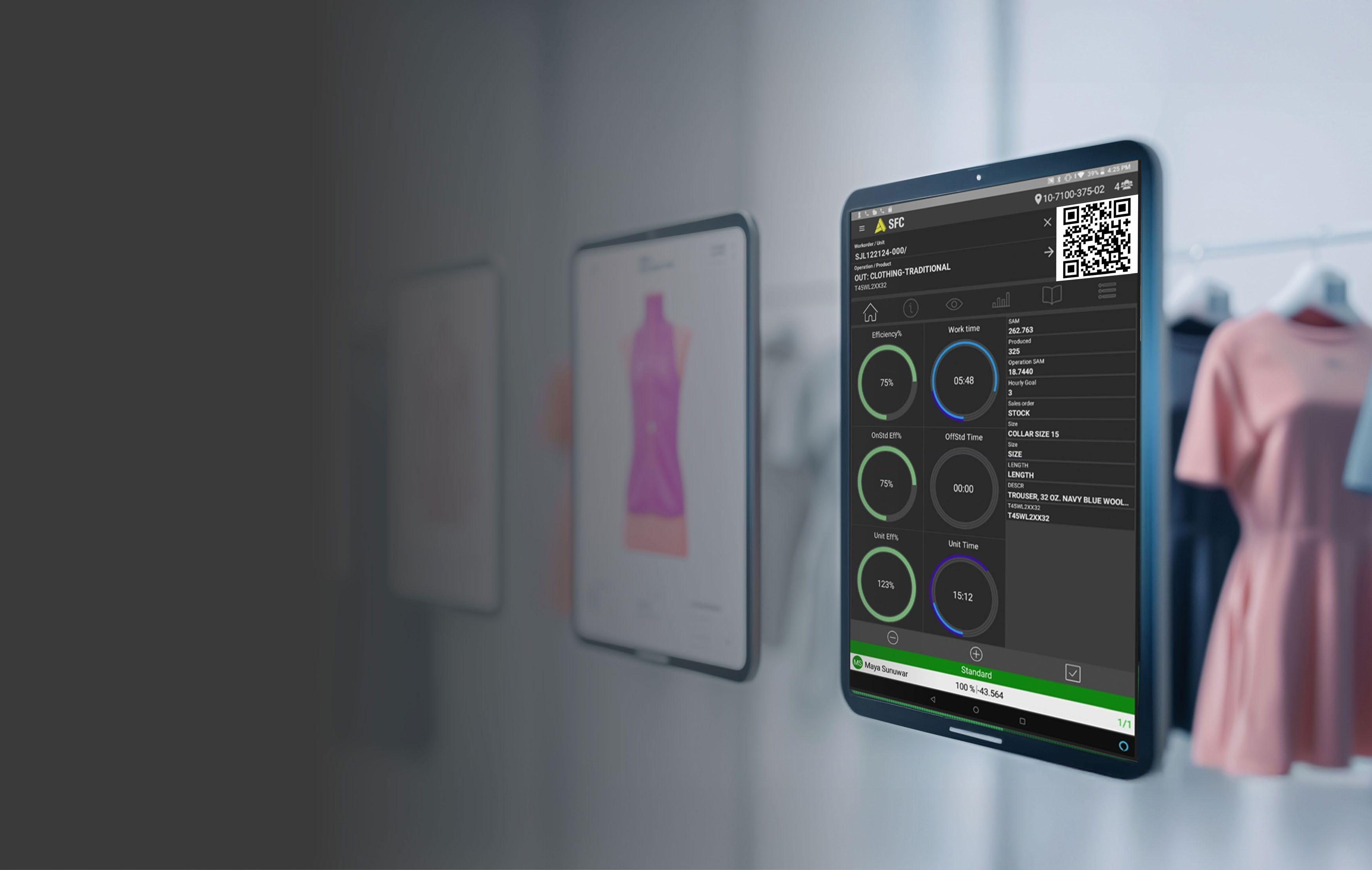
Key capabilities include:
» Real-time production tracking and reporting
» Defect tracking and quality management
» Automated incentive payroll calculation
» Customizable dashboards and KPIs
» Integration with ERP, payroll, and quality management systems
» Mobile access on Android devices
» Document delivery with pictures and videos to support operator training
95% of customers see ROI in less than four months, with typical savings of 10–35%.
Because Shop Floor Control integrates with Aptean’s wider apparel solutions, the data from your production floor connects directly to your ERP, PLM, and supply chain systems, creating a single source of truth across your business.