
APTEAN RESPOND

APTEAN RESPOND

Complaint teams are under pressure from multiple directions. Volumes are rising, regulatory expectations are tightening, and teams are being asked to meet increasingly aggressive targets with the same resources.
AI will not resolve all of that. But applied in the right places, it can significantly reduce the weight of it.
Most organisations are already having the AI conversation. Leaders are aware of its potential, and some may have already run internal experiments. However, awareness and operational change are different things, and most teams are still somewhere between the two.
This guide walks through five points where AI could have the biggest impact on your complaints process.
We’ll look at the places where work currently bottlenecks, where responses are inconsistent and where your compliance position is most at risk. And we’ll look at how AI can ease these pressures without sacrificing the accountability and insight of skilled teams.

A missed complaint is not just an efficiency problem; in a regulated environment, it is a potential compliance breach. Intake sets the standard for everything that follows, so errors here—such as incomplete case records or miscategorised issues—create rework and delays downstream.
Complaints arrive across multiple channels: email, web forms, telephone notes, letters and contact centre interactions. In most organisations, processing them means someone reading each communication, assessing it and logging relevant information. Most of the work is done manually.
At low volumes, this task is manageable. But as complaints increase or staff are stretched, problems creep in. For example:
» A complaint written in indirect language gets treated as a general enquiry
» Vulnerability indicators—such as financial difficulty, personal distress, or limited capacity to engage with a formal process—are present in the text but go unrecorded
» Case records are light on detail, so handlers must spend time reconstructing what happened before they can work on the case
An AI agent continuously monitors your intake channels and reads incoming communications. It identifies whether something constitutes a complaint, extracts relevant details and creates a formatted case record.
AI handles data differently to standard complaints management software. A basic integration will pull from fixed fields and can only capture what it has been explicitly instructed to look for. AI reads the text itself (unstructured data), interpreting context and condensing a long email into a clear case summary.
1. Fewer complaints get missed
Continuous, automated monitoring means a complaint is not dependent on someone spotting it in an inbox. It is identified based on content, regardless of which channel it came in through or how the customer framed it.
2. More consistent records
When intake follows a defined logic rather than varying by handler, cases are created with a uniform structure, which is helpful for quality assurance (QA) and regulatory scrutiny.
3. People and technology work together
Your team defines the criteria the AI uses to identify complaints, extract information and trigger next steps. Handlers can review and override AI-generated decisions at any point.

A
A customer emails your team. The message is three paragraphs long, with no mention of the word “complaint”. But their tone shows clear frustration, and there’s a reference to a previous contact attempt, plus a brief mention of the financial challenges they are experiencing.
Your AI agent identifies it as a formal complaint, extracts the core issue, notes the prior contact, flags the financial vulnerability indicator and creates the case record.
When a handler opens the case, the summary is ready and the vulnerable customer flag is visible. Rather than reading back through the email trying to work out what they are dealing with, they can start working the case straight away.

Investigating a complaint should be the focus of case handlers’ expertise, and the correspondence that follows the straightforward part. But for most teams, it isn’t.
Drafting and checking communications consumes a disproportionate share of casework time. And with 83% of customers more loyal to brands that handle complaints well, it’s critical to get quality correspondence out quickly.
Writing every case letter from scratch is not only time-consuming; under time pressure, it produces inconsistent results.
Most teams try to mitigate this risk with a combination of templates and manual drafting. Templates provide some structure but rarely fit the specifics of individual cases. Manually working around those limitations leads to inconsistent responses.
AI rebalances where case handlers spend their time. An AI agent draws on the full case record to automatically generate a structured draft response summarising the complaint, investigation findings, decision, any remedial action and next steps. The handler receives that draft, ready to review and send to the customer.
Acknowledgement letters work the same way. At case creation, AI can generate a personalised initial response that references the complaint, rather than sending a message that could apply to any customer or issue.
The AI agent can be configured to reflect your organisation’s preferred tone and brand guidelines. Plus, because drafts are generated from the same prompts, consistent responses become a natural byproduct of the process.
1. Fewer complaints get missed
Continuous, automated monitoring means a complaint is not dependent on someone spotting it in an inbox. It is identified based on content, regardless of which channel it came in through or how the customer framed it.
2. More consistent records
When intake follows a defined logic rather than varying by handler, cases are created with a uniform structure, which is helpful for quality assurance (QA) and regulatory scrutiny.
3. People and technology work together
Your team defines the criteria the AI uses to identify complaints, extract information and trigger next steps. Handlers can review and override AI-generated decisions at any point.
A
A handler reaches the end of a complex case. They have assessed the evidence and reached a decision. They open the case record and find a draft response already generated, covering the key points that must be communicated for legal reasons, in your organisation’s approved tone.
They review it, make a couple of adjustments to reflect a nuance in the investigation, and send it. The whole process only takes a few minutes.

Complaint volumes are rarely stable. A product issue, a regulatory event, a seasonal spike; any of these factors can push incoming volumes far above what a team was resourced to handle.
When that happens, cases aren’t always allocated to the most appropriate agent, and if they change hands, customers find themselves re-explaining their situation.
Manual case allocation often distributes work based on availability rather than suitability. Cases go to whoever has capacity at the time, regardless of whether they are the right person. As a result, specialist cases can end up with generalists while straightforward cases sit in queues.
And when staff go on leave or move between teams, their case knowledge leaves with them, leading to delays and frustration. For example:
» A customer calls in about an open complaint and reaches someone new, who has to read back through weeks of case notes to give any kind of update
» A handler picks up a case mid-investigation with no clear record of where things stand or what has already been tried
» A case involving a vulnerable customer is allocated to a handler without the experience or training to manage it appropriately
AI case routing assesses each incoming case against handler availability, current workload, skillset and case type, automatically allocating work to the most suitable agent. Cases involving vulnerable customers, complex regulatory issues or high-value disputes go to the most senior handlers. More straightforward cases are distributed across less experienced staff. The team leader retains full visibility and can reassign or override the AI agent’s decision at any point.
Alongside intelligent routing, an AI case summariser generates a concise, up-to-date summary at any point in the case lifecycle: the issue, the actions taken, the current status and the outstanding steps. This summary updates as the case progresses, so anyone picking it up has an accurate snapshot without reading back through the full history.
1. Best-fit case allocation
Cases go to the right person rather than the next available person. Poor allocation is not just an efficiency problem; in a regulated environment it can affect outcomes.
2. Comprehensive handovers
With an up-to-date summary always available, handlers come up to speed quickly and customers are not asked to repeat information they have already provided.
3. Scalable responses
When routing is handled automatically, teams can absorb volume increases without the quality of handling degrading. Cases are managed consistently whether the team is at normal capacity or under significant pressure.
A Day in Your Life With AI-Enabled Workload Management
Your complaints team is managing a volume spike following a product issue. Incoming cases are running at three times the normal rate.
The AI routing agent assesses each case as it arrives. Those flagged for vulnerability go to handlers with experience in that area. A batch of lower-complexity cases is distributed across three less experienced handlers. Team leader monitors allocation in real time, makes one adjustment, then gets back to people management.
At the end of the shift, the next group of agents pick up active cases with accurate summaries waiting for them. There is no need for a long handover meeting or reading through case histories; within ten minutes of sitting down, they are contacting customers.
Maintaining consistent standards across a high-volume complaints operation is difficult in itself. But demonstrating those standards to a regulator is harder still; particularly when your QA process can only review a fraction of the cases your team handles.
Quality assurance in complaint handling typically involves structured reviews: a set of questions applied to a sample of cases, assessing whether the right steps were followed, the right decisions reached, and the right records retained. When it works well, it gives leaders visibility into where internal and regulatory standards are being upheld and where they are not.
The problem is coverage. Reviewing cases in the necessary detail takes time, which means most QA processes can only ever examine a fraction of the total caseload. And the cases that get reviewed are not always the ones that require the most attention.
Even when cases are reviewed, their assessment depends on one person’s reading of the case record, which introduces its own variations. For example:
» Two reviewers apply the same QA criteria differently, producing inconsistent assessments
» A reviewer working through a high volume of cases in limited time gives cursory answers to questions that warrant more careful consideration
» A case is reviewed and passed, but the reviewer has no visibility of a pattern emerging across similar cases that could change their assessment
Rather than waiting for a reviewer to select and work through cases manually, AI can monitor your full caseload and flag those that require attention. These may include cases approaching deadlines, cases deviating from expected handling patterns, or cases presenting characteristics associated with higher risk or regulatory sensitivity.
For the cases that go to formal review, AI pre-populates answers to predefined QA questions based on the case record. For example:
» Has the complaint been acknowledged within the required timeframe?
» Has the investigation been documented at each stage?
» Has the decision been communicated clearly?
The reviewer reads the pre-populated responses, adjusts any sections where their judgement differs, and signs off the assessment.
And because AI actions are logged and AI-generated content is clearly marked within the case record, there is also a complete, auditable trail of what happened, when and who made what decision.
1. High stakes cases always get reviewed
Random sampling means the complaints carrying the highest regulatory or reputational risk are no more likely to be reviewed than a routine case. AI automatically reviews all cases and flags the ones needing attention.
2. More of your caseload is assessed
When AI pre-populates QA responses, each review takes less time. A greater proportion of cases can be reviewed without additional resource, moving QA from a sample exercise towards genuine representation.
3. Audit-ready evidence
When a regulator asks how a case was handled, the information is clearly laid out in the case record. There’s no need to reconstruct evidence trails.
A team leader sits down to complete their weekly case reviews. Rather than working through a random sample, they open a priority list: eight cases identified by their AI agent as requiring attention. Two are approaching their final response deadline. Three show gaps in investigation documentation. One involves a vulnerable customer, and the handling record is incomplete.
For each case, the QA questions are already partially answered based on the case record. The team leader reads those records, adjusts two responses where her judgement differs from the AI assessment, completes the assessment and signs them off. The whole review takes an hour and a half.

Most complaint teams are good at resolving individual cases. Fewer have the time and tools to step back, cross-reference those cases and understand what is driving complaints at a systemic level.
Unresolved complaint drivers come at a high cost, affecting operational efficiency, customer retention and regulatory standing.
Ironically, complaint teams sit on some of the richest customer insight in the business, but they can rarely use it. Information sits in free-text fields, reaching leaders in periodic reports that are static and often out of date.
The underlying issue is that complaint data is not structured in a way that makes patterns easy to see. By the time a trend is visible, the next wave of complaints is already coming in.
AI enables complaint leaders to move from retrospective reporting to live interrogation. Rather than waiting for a report to be produced, teams can query complaint data directly, in plain language, and get answers in seconds. For example:
» Which complaint types are escalating this quarter compared to last?
» Which issues are taking the longest to resolve?
» Where are decisions being reached inconsistently across similar cases?
When patterns are visible early, they can be addressed before problems escalate. For instance, a product team can be informed of a recurring issue and tackle the problem at the source, or a process gap can be closed before it becomes a regulatory concern.
Where complaints cluster around a particular issue, the data may also reveal that front-line staff need better support, turning customer insight into a training conversation.
1. Rapid insights
Complaint patterns that previously took weeks to surface can be identified as they emerge, preventing fundamental issues from snowballing.
2. Easy to access
Natural language querying means handlers do not need an analyst or a scheduled report to interrogate their caseload. They can ask the question directly and get an answer in seconds.
3. Stronger position with regulators
Some authorities expect organisations to demonstrate that they are learning from customer complaints. AI agents can document findings and demonstrate actions to improve compliance positioning as well as resolving the complaint.
A
A complaints leader starts their Monday morning by querying their caseload. In the time it takes to boil the kettle, they can see that complaints about a specific product feature are up 40% on the previous month, and that these complaints are taking longer to resolve than any other category.
An AI agent also highlights that customer service agents are recording the root cause of this problem differently, suggesting inconsistency with how the issue is being understood and dealt with across the team.
By lunchtime, the leader has met with the product team to share the problem and push for a fix. By the end of the day, a training note has been sent to the front line.

Introducing AI into complaint handling is not a single decision. It is a series of smaller ones: where to start, what to prioritise, and which capabilities will change how your team operates versus which will add complexity without increasing value.
The five steps in this guide are a framework for thinking through those decisions. However, the quality of the outcome will depend as much on the solution you choose as on your commitment to explore AI.
Generic AI tools are not designed around regulatory deadlines or vulnerability indicators. While they can handle the straightforward parts of complaint management, they struggle with nuance, such as the difference between a customer query and a formal complaint, identifying vulnerability, or analysing root cause patterns across a regulated caseload.
Before committing to any AI-enabled solution, it is worth asking:
» Is it built specifically for complaint handling, or has it been adapted from a broader CRM or customer service tool?
» Can it handle everything your complaints operation needs to do, or will you be asking handlers to move between systems to get their job done?
» Can it be configured to your processes, or does it require your processes to change?
» Does the vendor offer standard AI agents only, or can they help you develop agents around your specific workflows and business requirements?
» Is it clear what the AI did and what a person decided, and can that be evidenced when needed?
» What happens to your data: where is it stored, who has access to it, and is it being used for anything beyond your own operation?
» What is the vendor’s track record in regulated complaint handling?
» As your operation evolves, how will the solution evolve and scale with it?
» What is the vendor’s AI roadmap?
Complaint management carries specific legal and regulatory obligations that most general customer service software does not account for. AI agents not built with those obligations in mind may fall short in the areas most under scrutiny.
Many organisations like yours are weighing up how to bring AI into your complaints operation; where to start and which tools to use.
Aptean Respond is building AI directly into the complaints management workflow, at every stage of the lifecycle, so that it works within the processes your teams already use rather than adding to them.
Aptean Respond has been used by complaint handling teams in regulated industries for over 30 years. That depth of experience shapes every decision about our product development. It is a better starting point than vendors repurposing general-purpose AI agents for complaint handling.

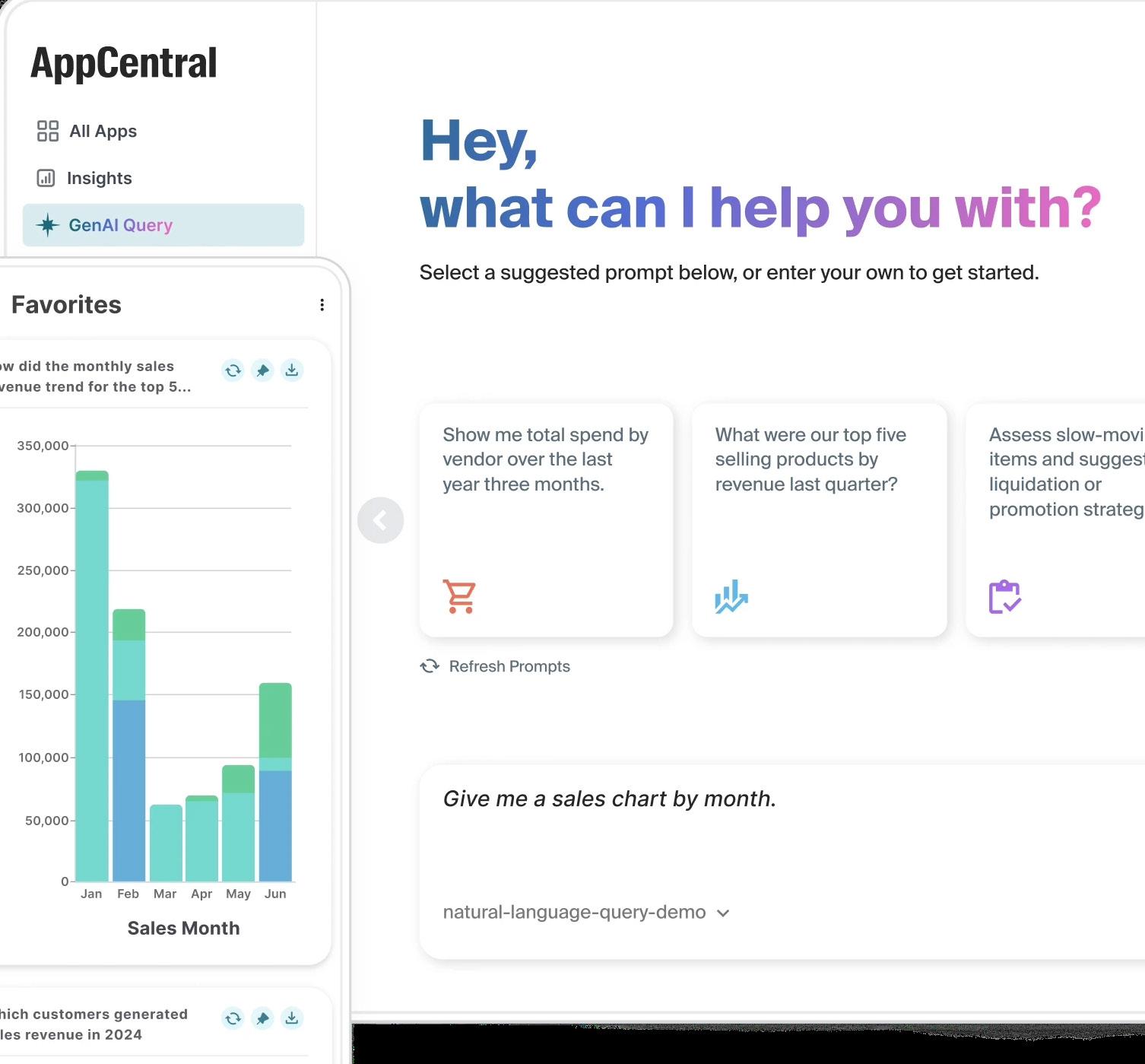
Aptean Respond is part of AppCentral, Aptean’s AI-powered connected workspace, with Aptean Intelligence at its core. This is what allows our AI agents to be developed, deployed and maintained as a native part of Aptean Respond rather than a separate integration.

The AI agents we are developing in Aptean Respond cover the full complaint lifecycle.
Our Auto Case Creation agent is already available, identifying complaints in incoming communications, extracting relevant information and creating a structured case record.
We’re building on this in our product roadmap, and future AI tools will include:
» Final Response Letter Drafting: generates a structured draft response from the case record, ready for a handler to review and send
» Case Summariser: produces a concise, up-to-date summary of any case at any stage, refreshing automatically as the case progresses
» Case Routing: allocates incoming cases based on handler availability, workload, skillset and case type
» Assisted QA Reviews: monitors your full caseload, flags cases requiring attention and pre-populates answers to predefined QA questions
Alongside these workflow agents, Aptean Respond users have access to Aptean Intelligence, a natural language querying tool that allows complaint handlers to interrogate their caseload directly.

Every complaint handling operation is different. Where standard AI agents do not cover teams’ needs, we work directly with customers to develop agents built around their specific workflows and business requirements within the Aptean Respond platform.
All customer data stays within Aptean’s infrastructure. It is never used for AI model training, never shared beyond your own operation and, for UK customers, all AI applications are deployed within Europe. Full details are available at the Aptean Trust Centre.