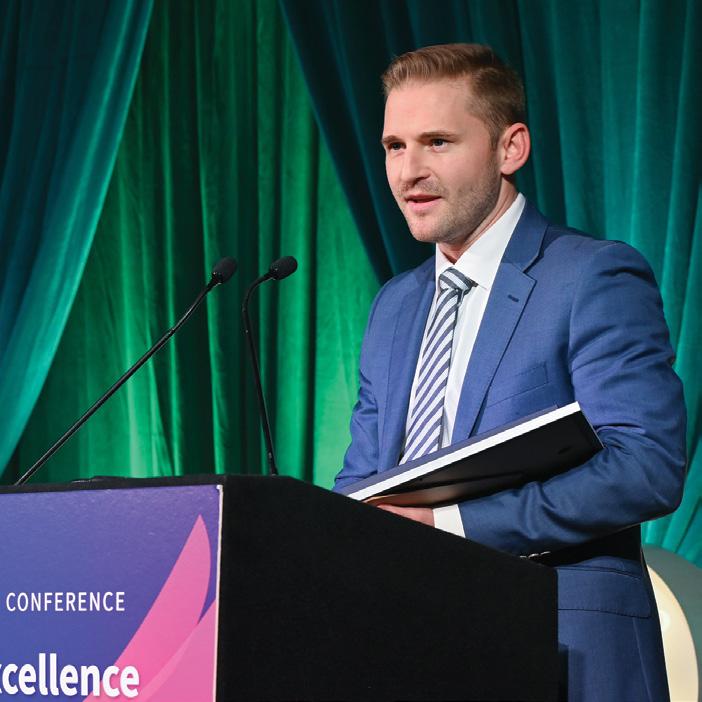
Celebrating 35 years of APSAA: Driving Excellence in Every Encounter
Accredited
Support
Actionable
DISCLAIMER
This journal is copyright and all rights are reserved. Apart from any use as permitted under the copyright Act 1968, no part may be reproduced without prior written permission. All reasonable efforts have been made to obtain permission to use copyright material reproduced. Every effort has been made to obtain accurate information for this publication. The views expressed in this journal are those of the authors and do not necessarily reflect those of APSAA.
ACKNOWLEDGEMENT OF COUNTRY
Australia: APSAA acknowledges Aboriginal and Torres Strait Islander people as the Traditional Owners of Country throughout Australia. We recognise Aboriginal and Torres Strait Islander people’s continuing connection to lands, waters and communities; and we pay our respect to them and their cultures and to Elders past, present and emerging.
Aotearoa | New Zealand: APSAA honours Te Tiriti o Waitangi | The Treaty of Waitangi as Aotearoa | New Zealand’s founding document and recognises the special place of Māori in Aotearoa as mana whenua.
DESIGNER
& Webb
President’s Introduction
Tēnā koutou katoa | Dear members,
It is both a privilege and an exciting responsibility to step into the role of President of APSAA at this point in our journey. After leaving the incredible conference in Adelaide celebrating 35 years of APSAA, I was filled with a deep sense of pride in our sector and everything we have achieved together. The conference theme, Driving Excellence in Every Encounter, speaks directly to how we endeavour to show up for our students, for our teams, and for each other, every day.
Having spent more than 18 years working in student accommodation, I continue to be incredibly proud of the impact we have on our students and communities. Supporting students to live well, succeed, and feel a sense of belonging is at the heart of what we do – and it is work that carries real meaning and responsibility.
APSAA plays a critical role in bringing that community together – sharing knowledge, strengthening practice and research, and elevating standards across the sector.
Over the past few years, APSAA has undergone a period of deliberate growth and transformation. Through significant investment in activity for our members, professional development, and sector leadership, we have expanded both our reach and our relevance. This has created a stronger, more connected community and reinforced APSAA’s position as the peak body for student accommodation across our region.
At the same time, there has been a renewed focus on APSAA’s financial discipline and sustainability. The work undertaken by the Board to strengthen oversight, rebuild reserves, and stabilise our position has been significant – and is now starting to show tangible results.
As we look ahead, my focus is clear: to build on this progress and ensure APSAA is both strong and sustainable. For me, this is as much about our people as it is about the Association itself – our members, our volunteers, and the connections that make this community what it is.
community in meaningful ways, while maintaining the discipline needed to safeguard APSAA for the future.
We are now entering a phase of consolidation and confidence – where the opportunity is not simply to grow, but to ensure what we have built is resilient and enduring.
Ehara taku toa i te toa takitahi, engari he toa takitini – my success is not mine alone, but the success of many.
Question 1: Which company was operating commercial student accommodation in Australia before the emergence of the modern PBSA sector?
A. Campus Living Villages
B. UniLodge
C. Urbanest
D. Scape
Answers on page 55
APSAA exists because of you, and it is through your contribution, collaboration, and commitment that we continue to grow. My priority is to ensure we continue to support and connect this
I would like to acknowledge the leadership of Jacob Waitere, our current Board, and the many Presidents, Board Directors, committee volunteers, and members who have contributed to shaping APSAA and the sector over the past 35 years. APSAA is a community I am incredibly proud to be part of, and I look forward to seeing more of you our upcoming summits and events.
Ngā mihi, Tara Baker
"Driving Excellence in Every Encounter speaks directly to how we endeavour to show up for our students, for our teams, and for each other, every day."
TARA BAKER Head of Operations, Accommodation, University of Auckland; APSAA President; Aotearoa Regional Branch Vice Chair
APSAA QUICK QUIZ
Editor’s Note
35th Anniversary Edition
Thirty-five years is a meaningful milestone, long enough to reflect with pride, and just as importantly, to look ahead with purpose.
Like the notes shared from many of our past leaders in this edition, members consistently speak to the connections that have shaped their careers. Relationships that extend across institutions, borders, and decades. In a sector that can at times feel complex and isolating, APSAA has provided a space where our work is understood, valued, and advanced.
Over 35 years, the evolution of student accommodation has been significant. What was once often viewed as an operational function is now recognised as central to student success, wellbeing, and belonging. APSAA has both reflected and driven that shift, supporting professionals to elevate practice, influence institutional thinking, and contribute meaningfully to the broader higher education landscape.
This edition also arrives at a moment of continued change. New challenges such as housing affordability, student diversity, regulatory environments, and rising expectations are shaping the way we think about accommodation and community. Yet, if the past 35 years tell us anything, it is that this association is at its strongest when it leans into connection, shares knowledge openly, and invests in the next generation of leaders.
As APSAA continues to grow through initiatives such as regional branch committees, expanded professional development, and deeper global partnerships, its purpose remains clear: to support those who create places where students can live, learn, and belong.
To everyone who has contributed to APSAA’s journey so far, thank you. And to
Industry Movements
QLD
Peter Munster has left UniSQ (after 16 years as the Director) and is succeeded by Michelle Pearce as the new Head of Residential Colleges
VIC
Nick Wright – Appointed Coordinator, Contracts & Compliance, Deakin Residential Services.
Bronagh Ritchie – Appointed Senior Coordinator, Engagement and Projects, Deakin Residential Services.
SIMONE GALLO
National Manager
Student Accommodation,
Australian Catholic University; APSAA Board Member; APSAA Communications and Engagement Committee Chair
those who will shape its future, this edition is both a celebration and an invitation.
Here’s to the next chapter.
Simone Gallo
National Manager, Student Accommodation – Australian Catholic University; Communications & Engagement Committee Chair
Stay connected with the latest people and career updates across the student accommodation sector.
APSAA’s Industry Movements captures staffing changes from across our member community, including new appointments, promotions, and role transitions. These updates help keep the sector informed, recognise professional achievements, and strengthen connections across our network.
If you or your organisation have a staffing update to share, please submit the details via the QR code or by clicking HERE.
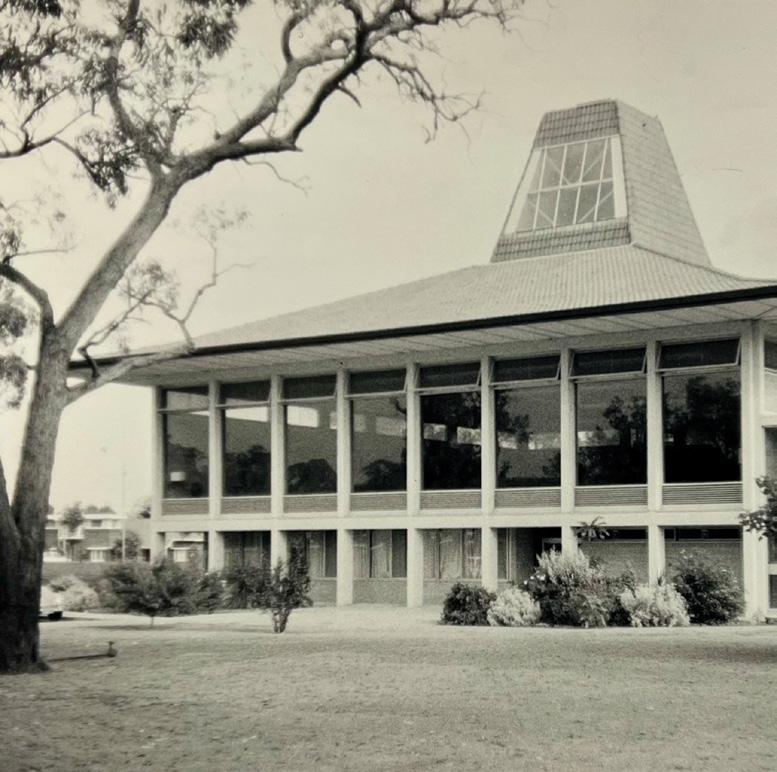
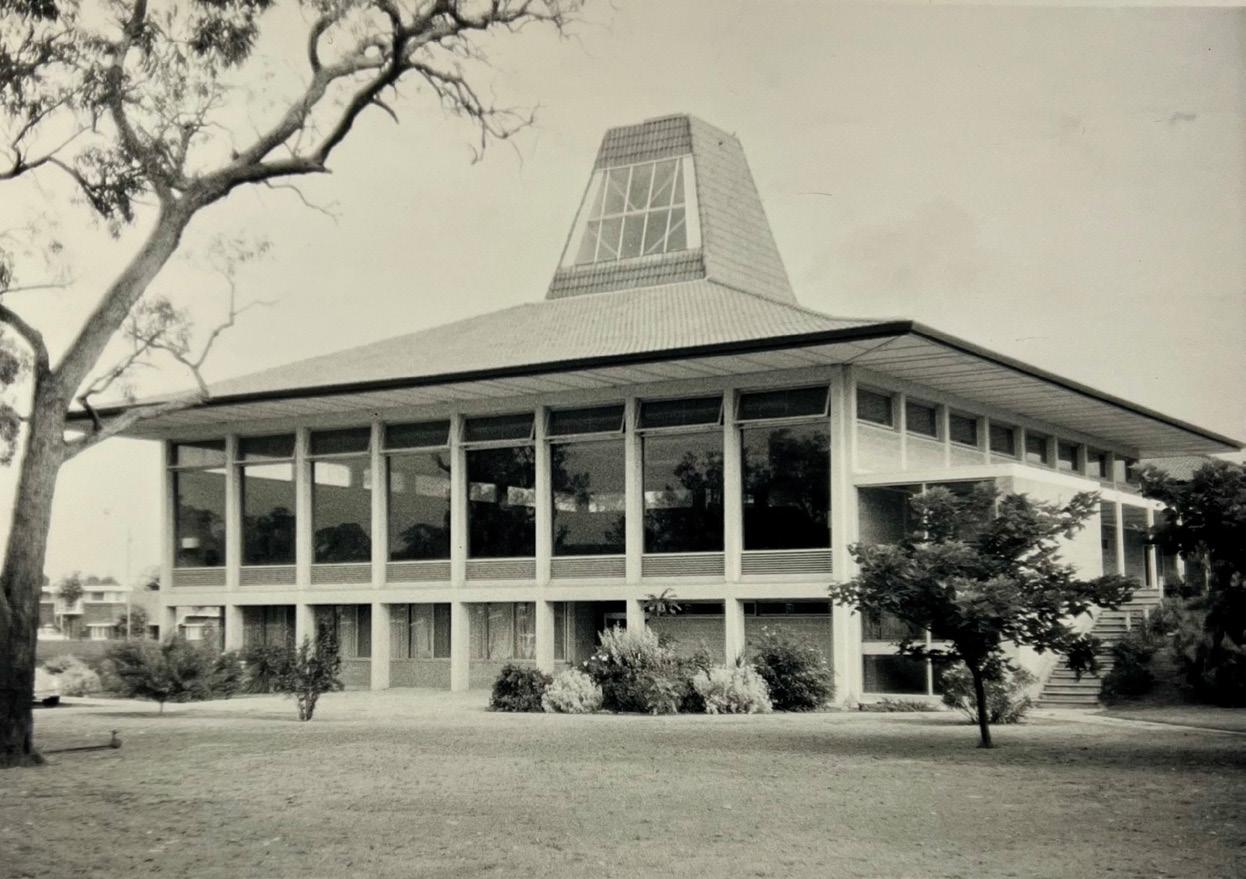
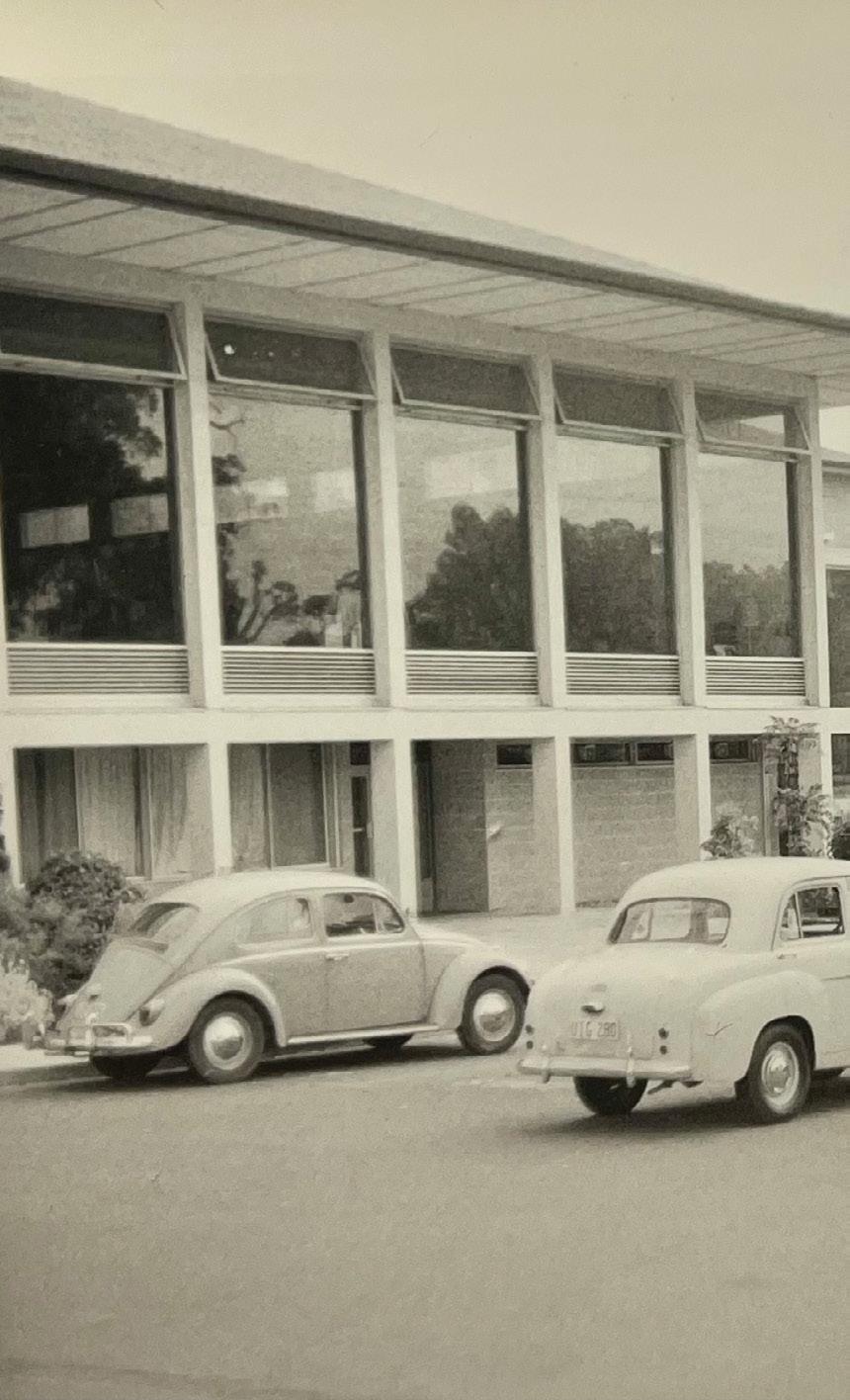
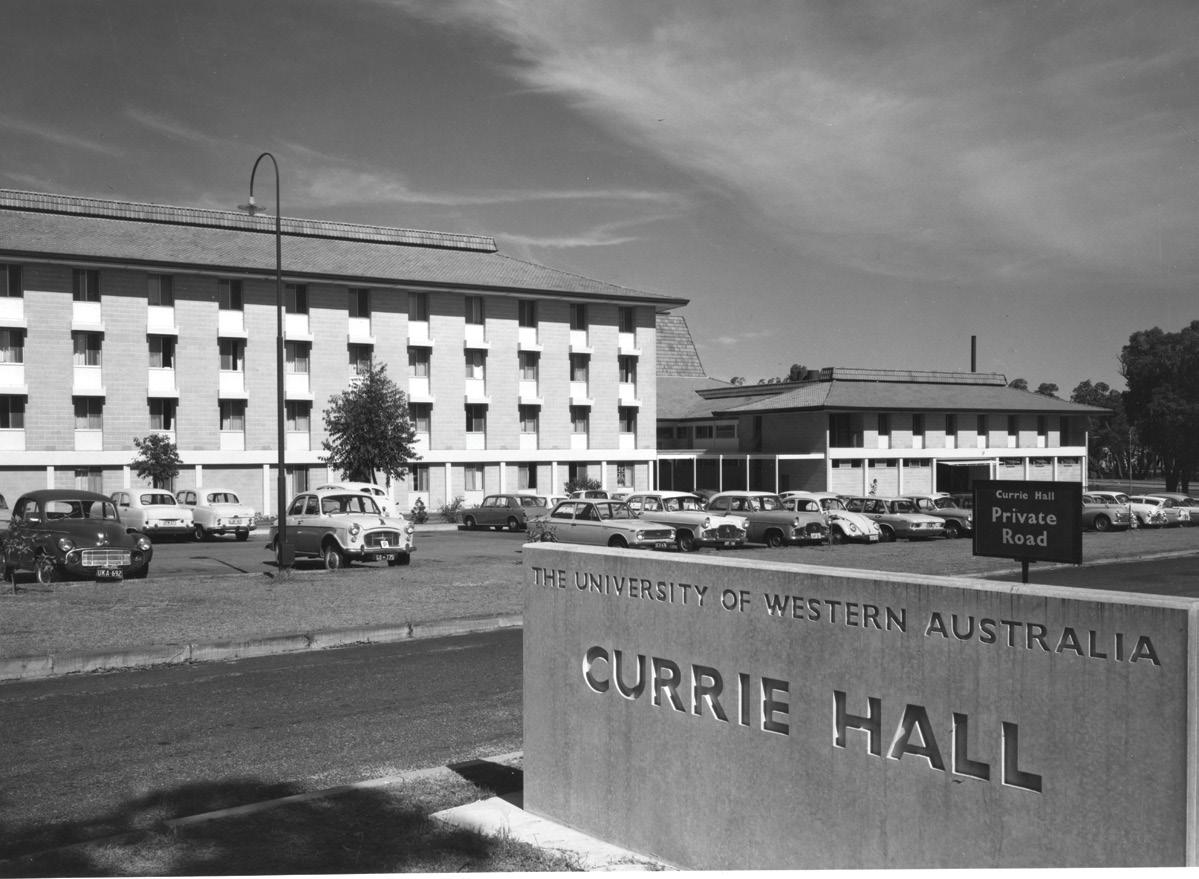
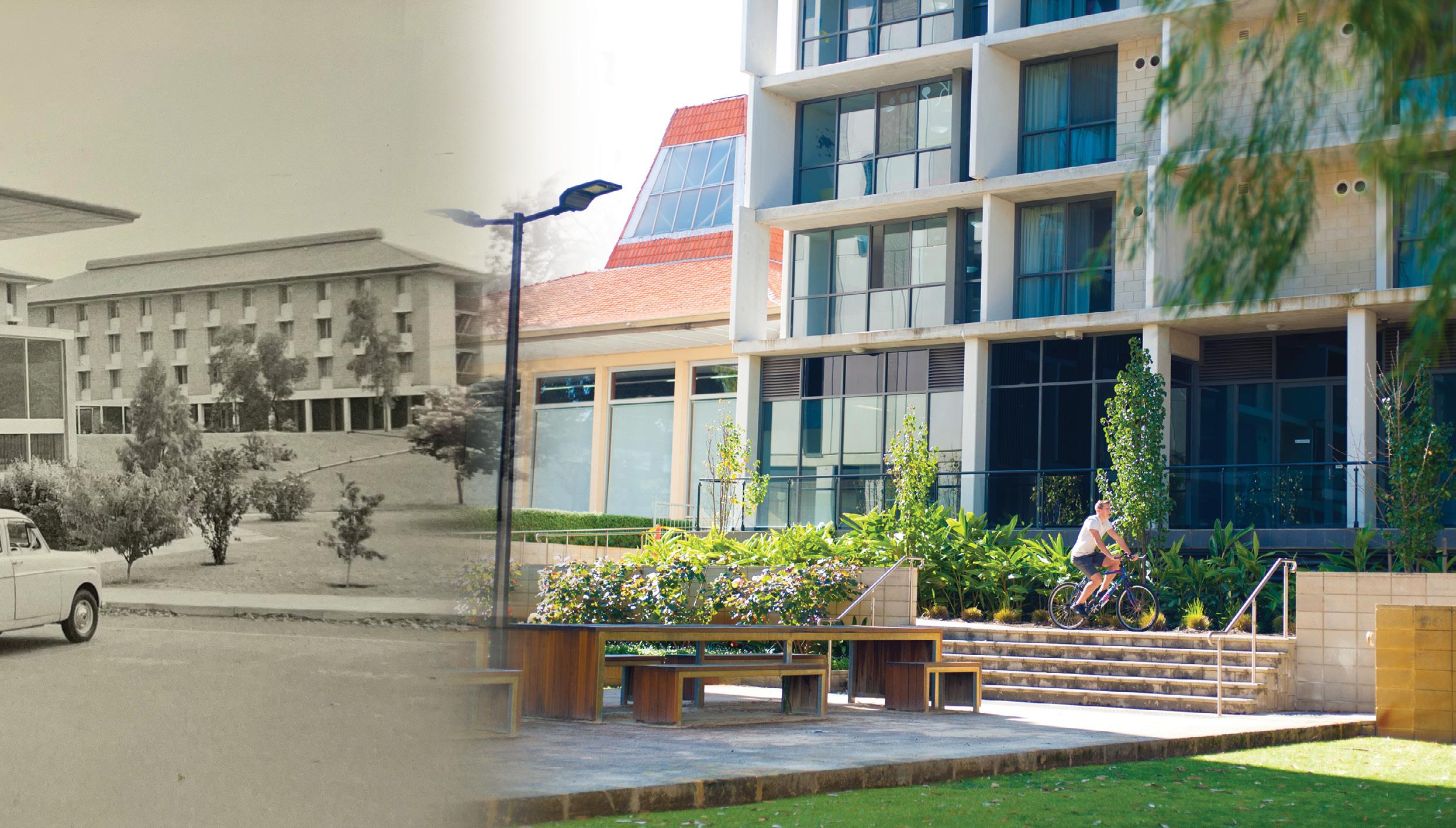
In 2026, University Hall proudly celebrates its 80th anniversary, a milestone that marks eight decades of vibrant student life, transformative growth, and enduring community spirit. This year-long celebration will honour the Hall’s remarkable journey from its humble beginnings to the thriving residential community it is today.
For more than 80 years, students of The University of Western Australia have called this site home. Within these walls, generations have found not only accommodation, but support during formative years, opportunities that stretched them beyond the classroom, and a community that shaped who they would become. Friendships formed over shared meals, late-night study sessions, leadership experiences, and spirited Residents’ Club debates have become lifelong memories— stories retold decades later at reunions, weddings, and professional milestones.
A Walk Through Time
University Hall, originally known as Currie Hall, began its story in 1946 as the University Hostel. Its foundations were laid in buildings once used as the Bachelor Officers’ Quarters by the American Navy during World War II. Named after Sir George Currie, the second Vice-Chancellor of UWA and patron of the Men’s Club that administered the Hostel, the Hall quickly became a symbol of inclusivity and resilience.
The early residents, many of whom were ex-servicemen and women, shaped a culture that rejected elitism and embraced equality. Their mature attitudes fostered a spirit of individualism and active participation, values that continue to define University Hall today through its student-elected Residents’ Club Committee and open dialogue between residents and leadership.
Milestones That Shaped Us
The Hall has seen several transformative chapters:
1966–1974: The construction of C, D, and E Houses and a new amenities block introduced 231 new rooms and, for the first time, coresidential living.
2011–2012: A major redevelopment added 500 new rooms, including self-contained apartments and studios, along with shared
SASCHA STONE Community Engagement Manager University Hall , UWA
spaces such as music rooms, an art room, computer labs, and a library. This expansion marked the transition from Currie Hall to University Hall.
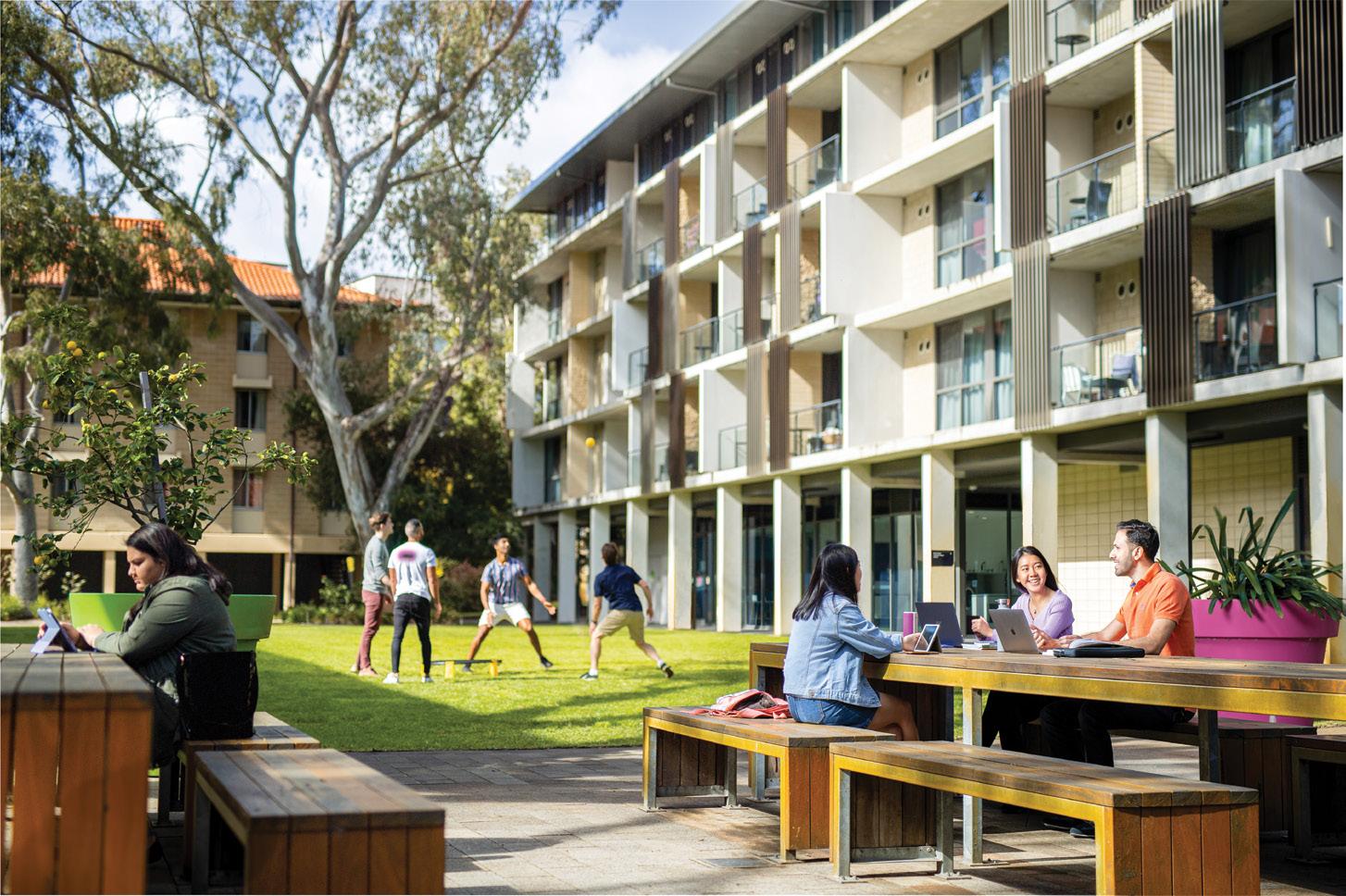
Today, University Hall is home to 770 students from 55 different nationalities. It is more than a place to live, it is a place to belong, to grow, and to experience a truly global community within the grounds of UWA.
University Hall has evolved alongside the world around it. Shifts in the economy, property markets, and the growing global interest in Perth as a study destination have transformed the higher education landscape. Through each change, the Hall has remained a constant, adapting to meet new expectations while preserving the values that have defined it since 1946. As international travel expanded and student mobility increased, University Hall became a gateway to Western Australia for young people from across the globe, offering not just a room, but a ready-made community in a new city.
In an increasingly complex housing environment, purpose-built student accommodation has never been more important. University Hall continues to provide stability, pastoral care, leadership
"Within these walls, generations have found not only accommodation, but support during formative years, opportunities that stretched them beyond the classroom, and a community that shaped who they would become."
Celebrating 80 Years of University Hall
"Just as it has for generations before them, it will continue to provide UWA students with a place to belong, to thrive, and to carry a piece of the Hall with them long after they leave."
pathways, and a vibrant co-curricular experience that complements academic life at UWA. It is a place where students build confidence, discover independence, and learn what it means to live respectfully in a diverse, global community.
As we celebrate 80 years, we do so with gratitude, for the visionaries who established the Hostel, for the staff and student leaders who have sustained its culture, and for the thousands of residents whose energy and spirit have filled its corridors. The buildings have changed, the skyline of Perth has grown, and the student cohort has become truly global, but the essence of University Hall endures.
Eighty years on, University Hall is not simply reflecting on its history; it is actively shaping the future. Just as it has for generations before them, it will continue to provide UWA students with a place to belong, to thrive, and to carry a piece of the Hall with them long after they leave.
Question 3: What was the first university residential college established in Australia?
A. Ormond College, VIC
B. St John’s College, NSW
C. St Paul’s College, NSW
D. Trinity College, VIC
Answers on page 55
APSAA QUICK QUIZ
20 Years of UC Accommodation From Photocopiers to Pastoral Care
The Digital Evolution
We have come an incredibly long way in processing student accommodation applications over the past two decades. Looking back to 2005 when I arrived, the process involved labouring over a photocopier religiously scanning page after page of applications and references into the evening. Hall staff had to make sense of a chaotic mix of documents – some with university logos, some with school logos, arriving in completely different layouts and fonts. During peak season, actual mail would arrive by the dozen to be opened and date stamped – all containing Common Confidential Reference Forms of varying formats that required manual matching with the relevant application and left in physical piles for the halls to collect each day. I still have a hard copy application form from 2011 sitting on my desk before it went digital, followed by standardising the reference form which finally went digital in 2014.
The Structural Evolution
When I first joined the Accommodation team of one, we were part of the Student Recruitment and Development Unit “SRDU”, physically located with Liaison, Publications, Marketing, Web and Design. In 2010 “Project STAR (Supporting Teaching and Research)” was implemented which reshaped the service provision for the entire University from the top down. A new role was created, ProVice-Chancellor (International and Student Services), under which Accommodation was placed with Liaison as part of the Student Success Team, which also included the Disability Resource Service, Student Support, Learning Preparation and Support, and International.
Following several subsequent leadership and structural changes, as well as location changes, our team has grown into a
specialised team of six. We are now located within People, Culture and Campus Life along with Early Years Care and Education, Facilities Management, Faculty Operations, Health and Safety, People and Culture, and Equity and Student Wellbeing, however, we are located independently of these teams. Because we support students from their very first enquiry through to graduation, our position shifts across the University but our focus is clearly on wellbeing and pastoral care, as well as future building development to meet changing student needs while supporting UC’s strategic direction.
The Management Evolution
UC has three long-standing affiliated halls owned and operated by Boards of Governors. While UC once operated its own halls directly, a shift in 2005 led to leasing these buildings, which are now managed by UniLodge.
The Accommodation Services Team sits independently of our four providers and is a centralised support hub and impartial advisory service for students. We run the application process, produce the UC Accommodation Guide, videos and 360s on our website, and work closely with our providers to ensure that students are supported throughout the application process through to when they leave the hall. While our halls manage the selection and offer process, our team manages the complex waitlist and handles communications with anxious students and whānau waiting for an offer.
The Demand Evolution
In recent years, demand has increased significantly. Securing a place in a hall has, in some cases, outweighed the importance of undertaking a degree of choice, and
ANDREA SCHOORL Senior Accommodation Advisor, University of Canterbury
there is a general reluctance to forgo the halls of residence experience for flatting or private boarding.
Students who live outside of greater Christchurch who view a hall as a nonnegotiable logistical necessity for relocating to Christchurch, to the local student who is equally defensive of their right to the hall experience as a vital social transition – living on campus has become a rite of passage for future UC students.
Homestead Lane, which once housed two halls down one end and one down the other, with the University grounds staff in the middle, is now a thriving residential community with halls lining the full length of both sides. Two new builds – Tupuānuku in 2021 and Tupuārangi in 2026 – have increased student population on one side just short of 800 rooms. And Ilam Student Accommodation, which started with 144 rooms in the 1970s, now extends from Ilam Road to Waimairi Road with an additional 700+ rooms.
A Revitalised Christchurch
Our City of Christchurch struggled following the earthquakes in 2010 and 2011, but now has a revitalized hub featuring modern architecture, a cool café and craft beer culture, and amazing street art attracting a fast-growing student population nationally and internationally.
Therein lies our challenge, keeping up with an increasing youth population choosing to study at UC not only for the quality of education, but for the affordable cost of living, a great revitalised City and plenty of outdoor adventure such as hiking, skiing and surfing.
The future looks bright!
How can buildings help to support Neurodivergent students to be successful?
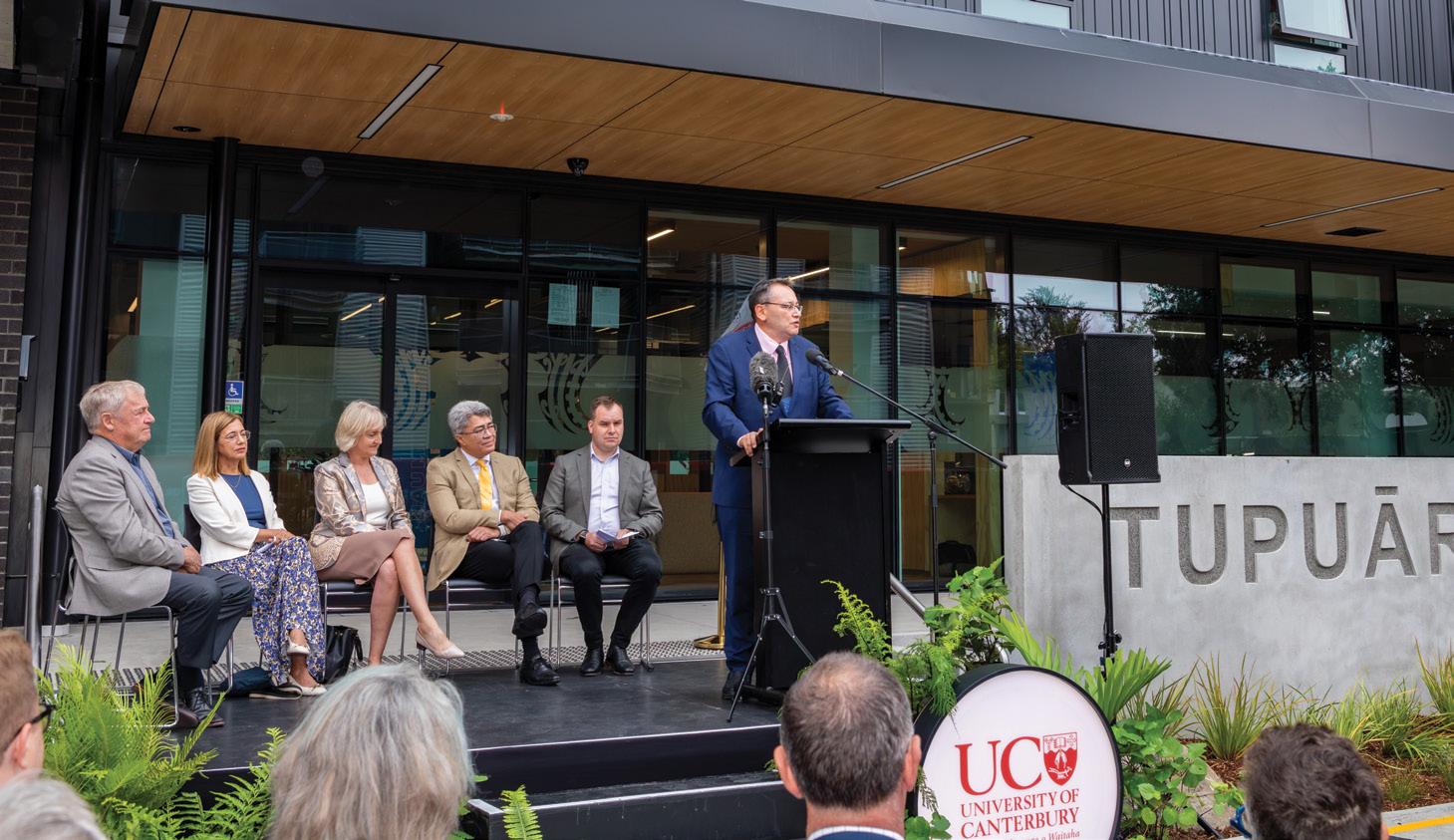
On the 12th of February our newest student accommodation building Tupuārangi was opened by the Minister for Universities Hon Dr Shane Reti and other special guests.
Whilst celebrating success in this way is fantastic it is always the end of a long process involving a multitude of stakeholders. Tupuārangi and Tupuānuku delivered in 2021 are the culmination of nearly a decade of architectural decisions, cultural design, construction and future proofing the design.
This is the information on our website describing the new building “Tupuārangi, provides catered accommodation to 283 students, featuring single ensuite rooms, study spaces, and shared lounges, all designed to enable the transition to independence while promoting socialisation, friendship, safety and well-being”
The building has delivered all the features detailed above but this has not happened by accident. A great deal of thought has gone into design choices and innovations. Some stakeholders approached the process from a time and cost perspectives. Whilst others from
the standpoint of the needs of the students at the centre of the decision. The design team had the unenviable task of taking the specification, functionality, programme and cost envelope to design a building which delivers a safe and welcoming environment in
which the student can thrive. At times groups there were competing priorities which had to be navigated, but the result is something we can all be proud of.
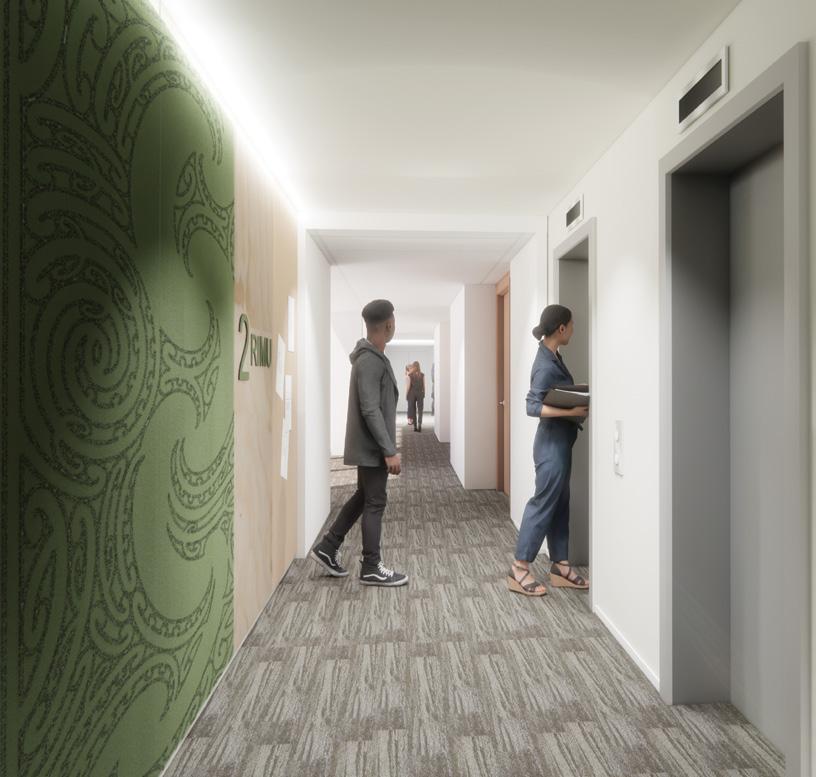
For both Tupuānuku and Tupuārangi an integral to the process was embedding the cultural narrative. Tupuārangi has been gifted its name by the local iwi (tribe) Ngāi Tūāhuriri. The building is located next to Tupuānuku on the border of the Ilam heritage garden. The cultural narrative has been embedded into the design features of the building, creating design that celebrates the weaving together of the Ngāi Tūāhuriri aesthetic and local stories.
Tupuārangi is one of the nine stars associated with Matariki. Tupuārangi (Atlas) has a connection to food and growth. ‘Tupu’ or ‘tipu’ means ‘to grow’ and rangi is taken from Rangi– the Sky. Representing sustenance received from the upper canopies of Aotearoa New Zealand’s native forests providing both nourishment and resources for growth. This provides a metaphor for the building as it allows the seeds (the students) to grow and transform in their own autonomy and independence.
ABIGAIL FREDERIKSE Accommodation and Campus Life Manager, University of Canterbury NZ; APSAA Aotearoa Regional Branch Chair
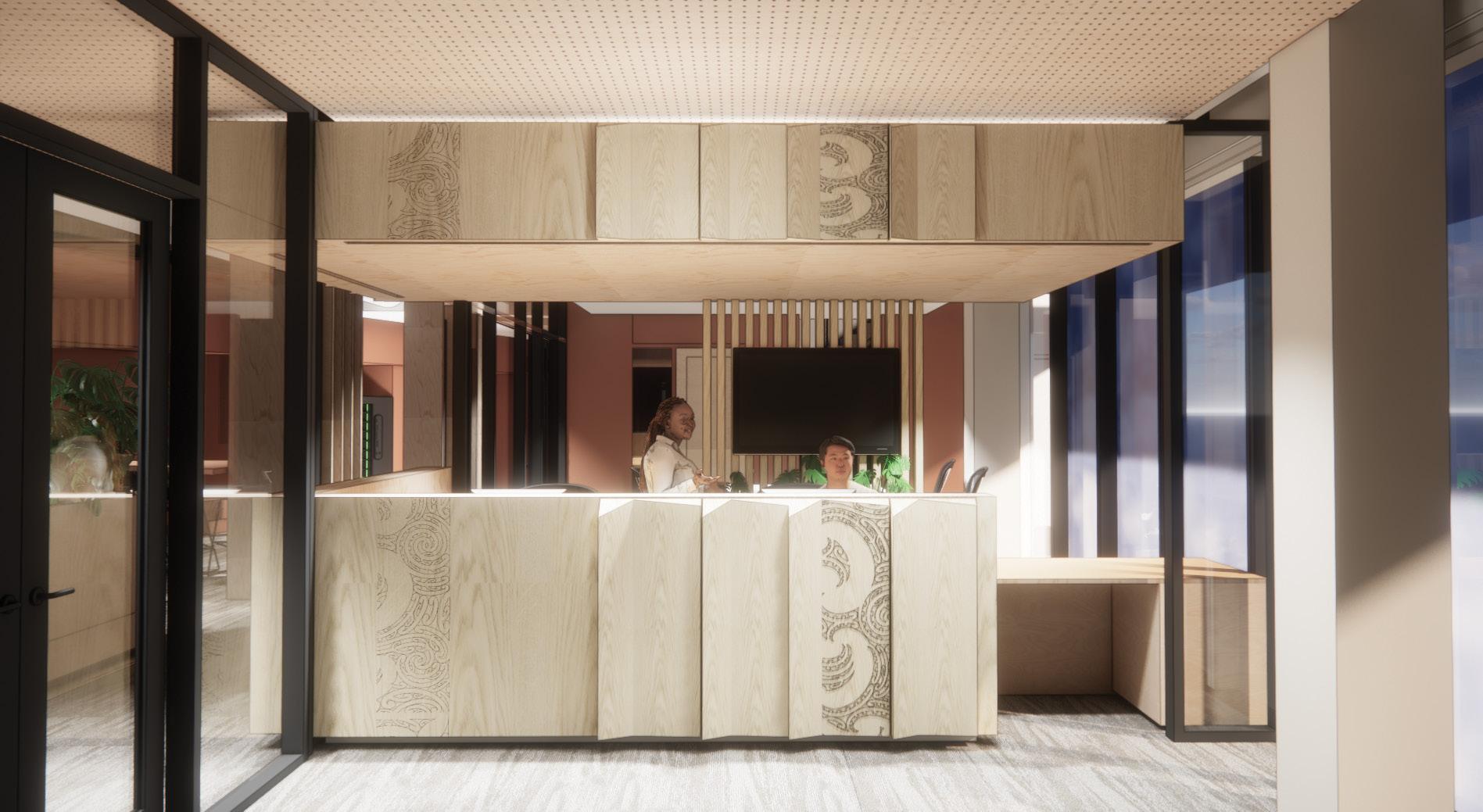
Kowhaiwhai patterns developed by the local iwi artist Fayne Robertson tell the story of the gifted name Tupuārangi. The kowhaiwhai is a traditional Māori pattern that is used in whakairo (carving) and art to enhance storytelling. These are abstracted for each level as shown on the right and used for the wayfinding signage and to enrich touch points.
Kowhaiwhai are often flowing, symmetrical patterns often represent natural elements like rivers, ferns, or growth, symbolizing life, continuity, and the spiritual connection between people and the land (whenua). Enhancing the mana (prestige) of the space. They contribute to the spiritual atmosphere and are integral to the architectural and artistic expression of Māori worldview. Appealing to and enriching International
"For Tupuārangi there was a conscious effort to include features with the building that would allow students to have some control over their environment enhancing their mana and improving their wellbeing."
students and domestic Māori and Pasifika students. Research supports integrating cultural values into the built environment improves student wellbeing, sense of belonging and academic success.
For Tupuārangi we could build on the lessons learned from Tupuānuku including successful cultural design, we wanted to include innovation into the new building, but what would that look like?
Within the industry we are aware that more students come to university/ higher education with pre-diagnosed or undiagnosed neurodivergent needs every year, as a sector we need to look at how our buildings can support these students to be successful in whatever way is meaningful to them.
For Tupuārangi there was a conscious effort to include features with the building that would allow students to have some control over
Locations for the kowhaiwhai, the reception area, windows, structural elements and student corridors.
How can buildings help to support Neurodivergent students to be successful?
"How amazing would it be to normalise neurodivergent needs by providing a campus and accommodation that helps support them to thrive through considered building design that is so integrated no one would even notice."
their environment enhancing their mana and improving their wellbeing.
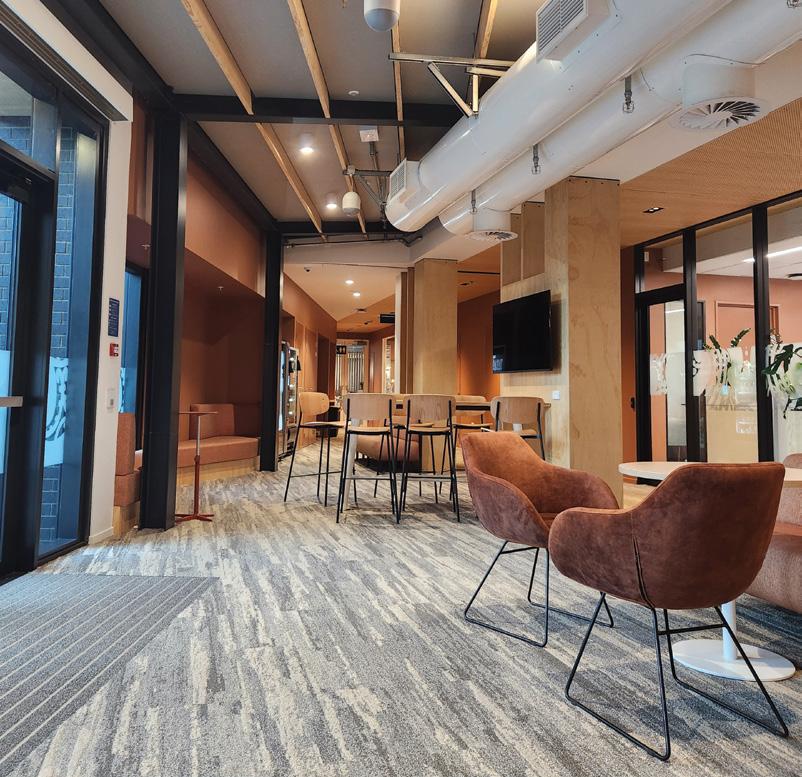
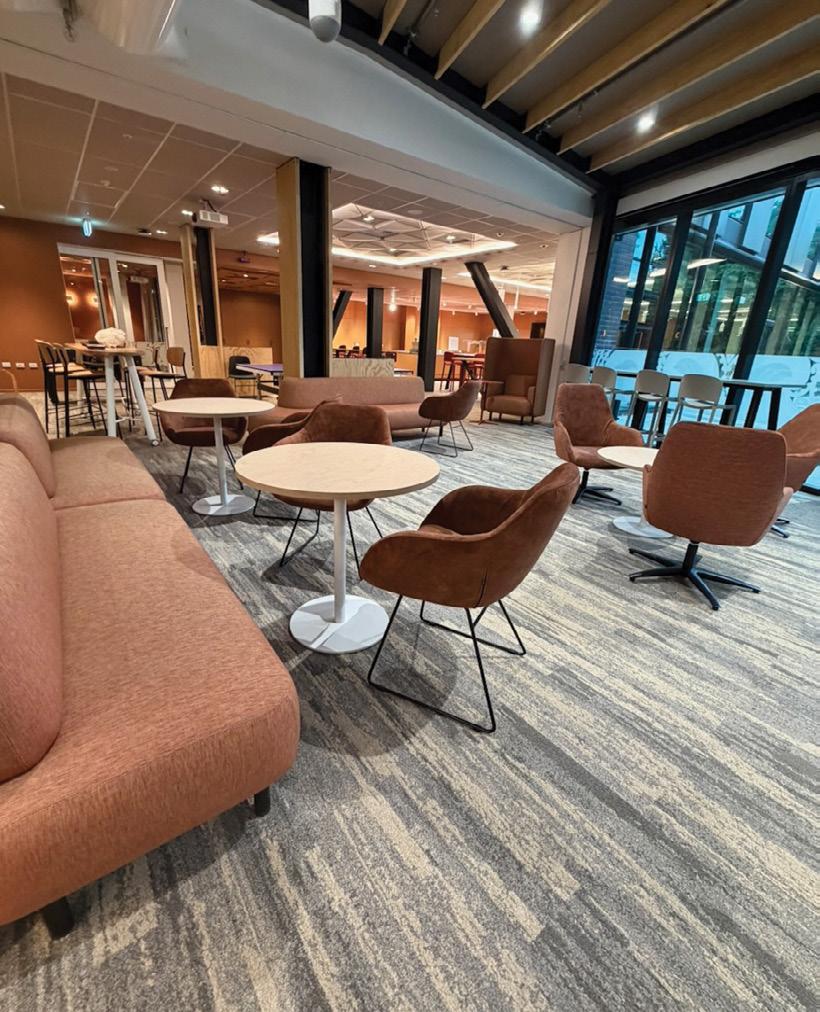
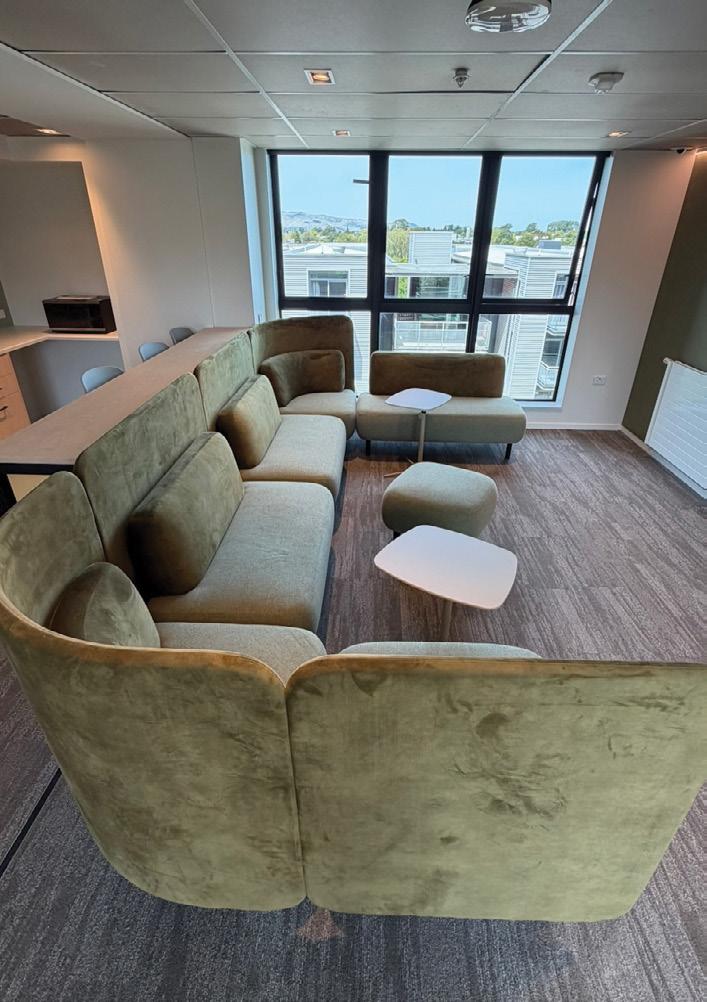
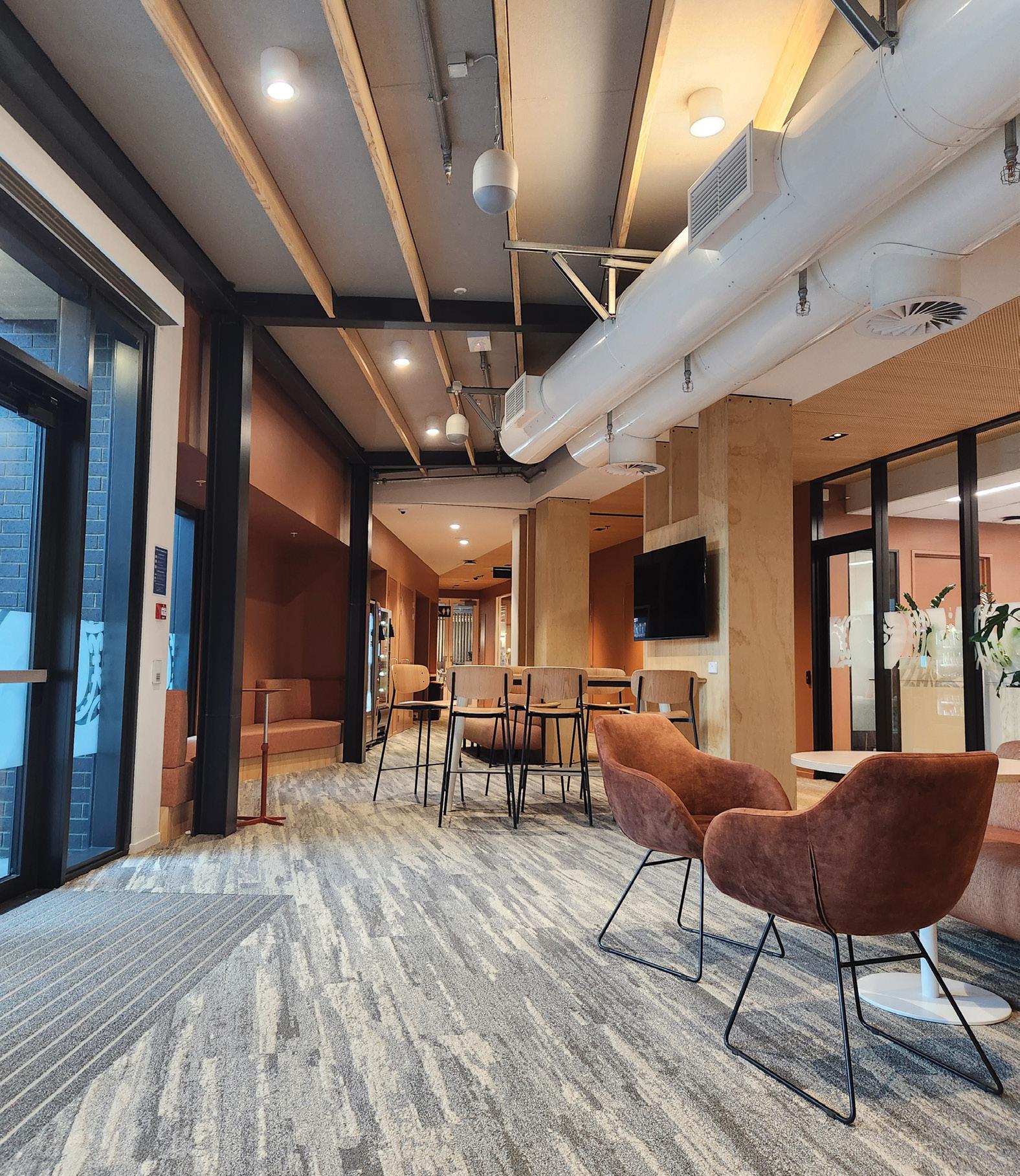
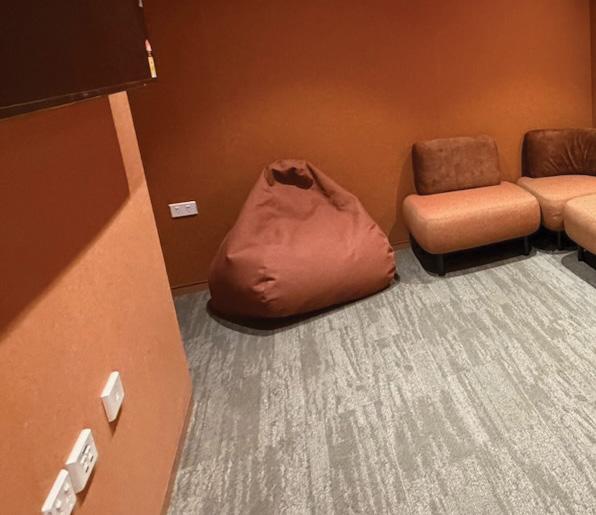
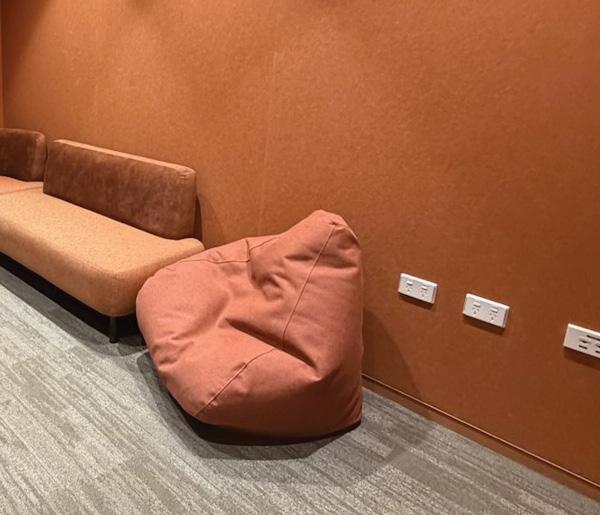
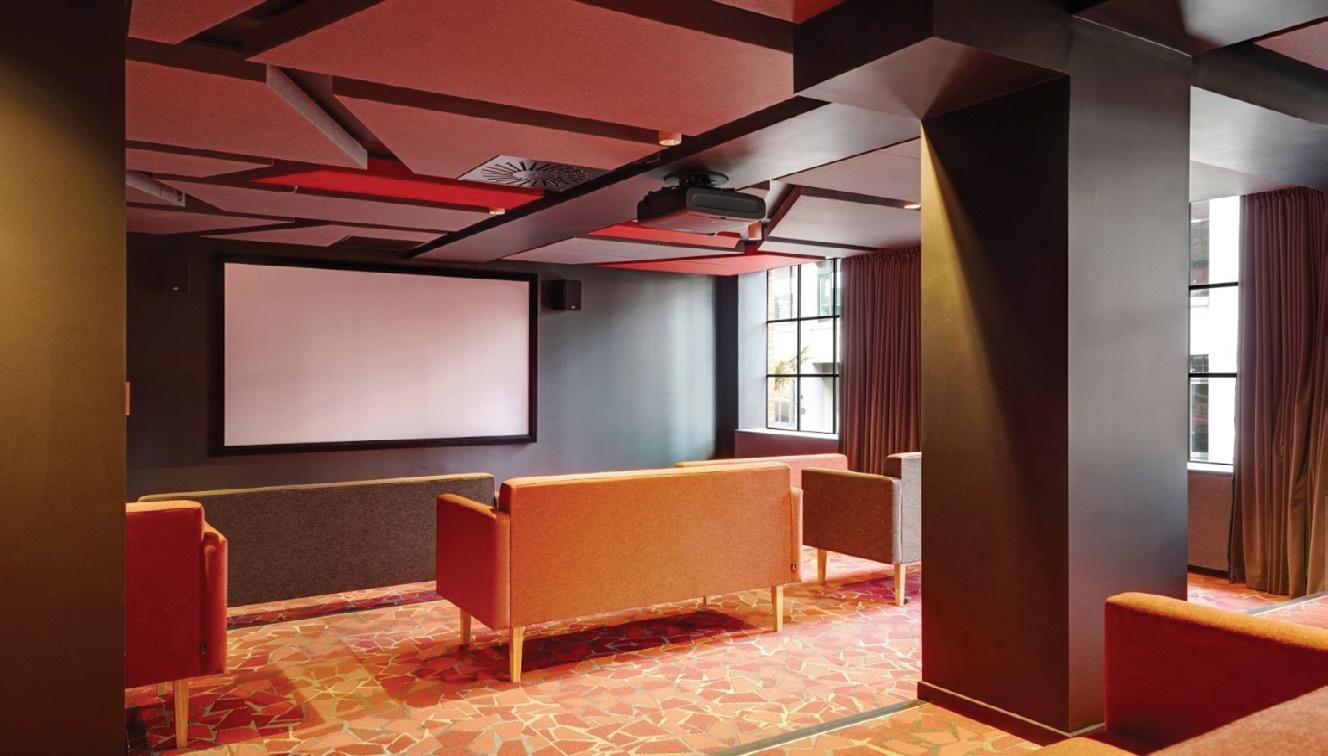
So, what does that look like? Building design is split into active, reflective and calm spaces using a pallet of colours to designate areas and a refined colour palette that uses natural tones to limit high contrast colours that reduce colour ‘noise’. Fabrics with varied textures have been chosen that provide relief and comfort.
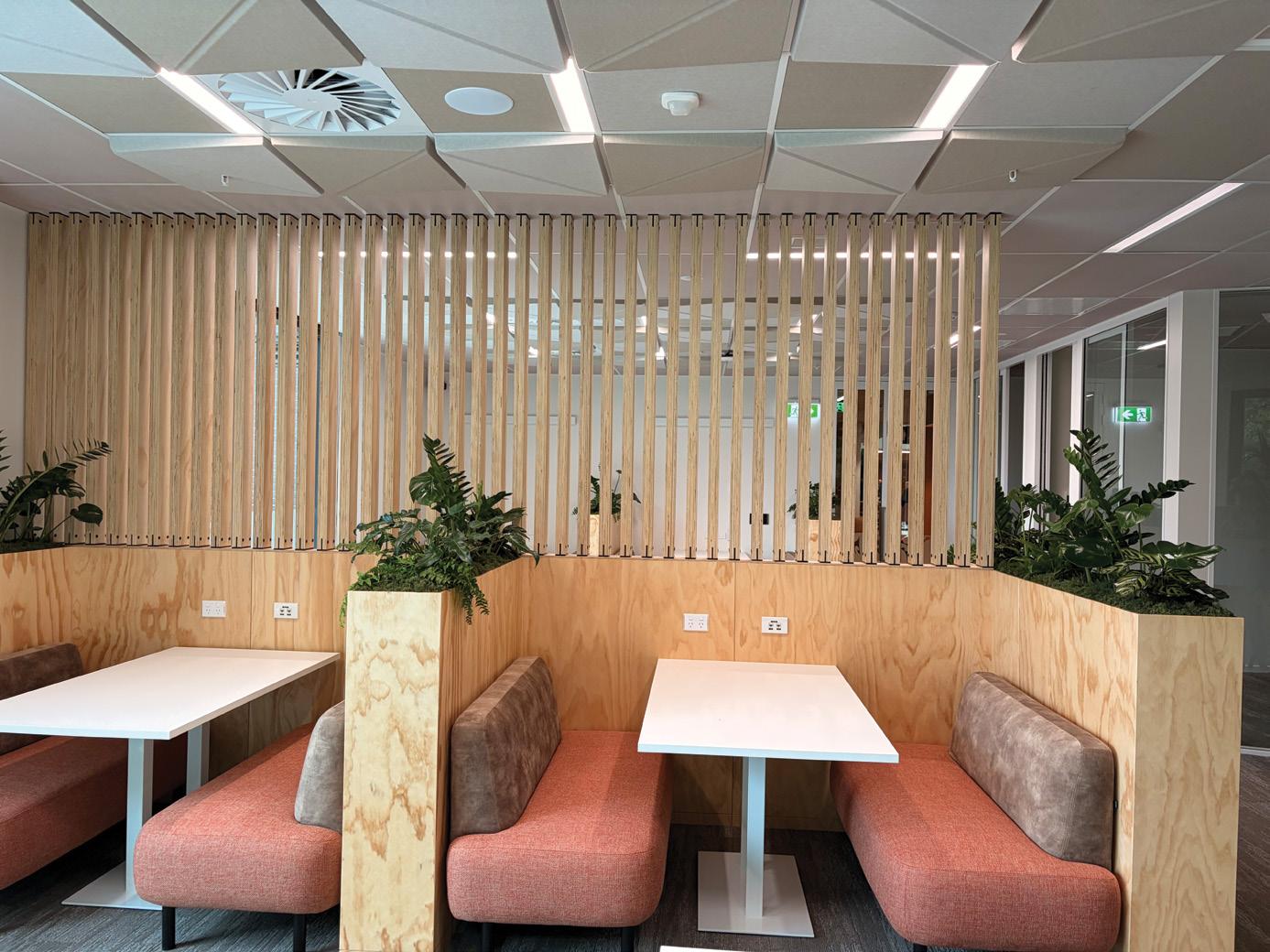
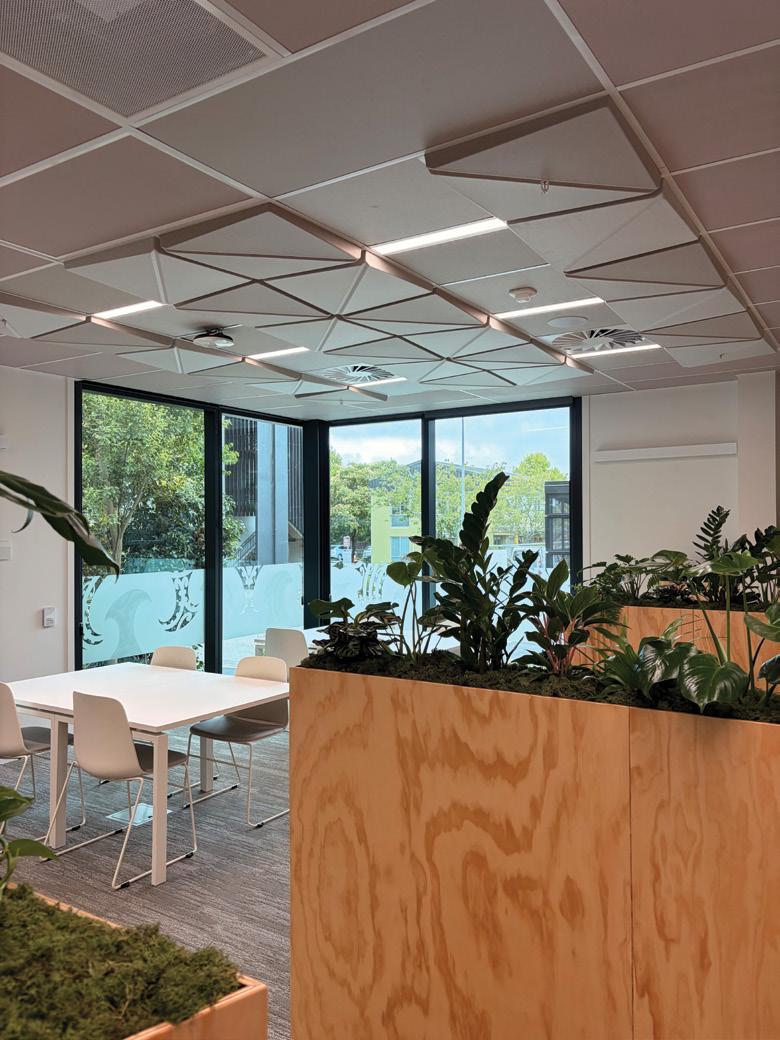
We have also incorporated features to promote a space where all students can feel safe to study. Neurodiverse supportive design features lots of natural light, plants, user controls, spatial layout – noisy versus quiet. Open and connected space of various sizes including nooks for individual study as well as group study.
Neurodivergent individuals often experience intense reactions to sound, ranging from acute anxiety to physical pain, due to sensory processing differences. While some may
Natural colour pallet and soft furnishing – Kāhui room, media room and social space
feel physically overwhelmed by loud noises, others may struggle with auditory processing, making it difficult to focus. Choices have been made to help support neurodivergent students to control their own environment including sound. Each bedroom has higher acoustic insulation than set out in the Building Regulations to dampen sound to provide a quiet space.
The ground floor is designed with multiple sound zones, allowing different music or audio to be played at varying volumes across spaces. This enables students with sensory sensitivities to choose environments that suit their comfort levels. In the future the active speaker system can be used to generate white, pink, brown noise if required.
For events, UniLodge have headsets available for students who are hard of hearing, allowing them to plug directly into the audio system and engage more fully.
While the neurodiverse spectrum is vast, one common concern among many neurodivergent individuals is heightened sensitivity to sensory stimuli, including light, leading to frustration, anxiety, or difficulty concentrating. Bedrooms are fitted with dimmable lighting, giving residents greater control over their personal environment.
The overall design of the ground floor student space brings the gardens into the building through biophilic design to provide a safe, peaceful retreat that supports the health and wellbeing of students and offers amazing views across the gardens, and surrounding areas.
Lighting across shared spaces can be adjusted to dim or brighten as needed. When paired with the sound zoning, this creates options for lower-stimulus areas where students can still feel part of activities without being overwhelmed. During Inclusion Week, UniLodge also adapted one of these spaces into a dedicated sensory room to provide a calm, low-stimulus retreat.
It is always great to see the first cohort of excited students move into a building. They don’t really understand at the time, but they will be the first to build a community,
they will help to shape the culture going forward. During this year we will be seeking feedback from those residents who selfidentify as neurodivergent to ascertain what features they find helpful and what could be considered for future developments.
In summary these features are all part of a broader intent to create flexible, responsive environments that support a wide range of sensory needs and enable all residents to participate in ways that feel comfortable for them. How amazing would it be to normalise neurodivergent needs by providing a campus and accommodation that helps support them to thrive through considered building design that is so integrated no one would even notice. Something to think about and strive for!
Question 4: What is the typical average room size in modern PBSA developments in Australia?
A. 8–10 m²
B. 12–18 m²
C. 20–30 m²
D. 35–50 m²
Answers on page 55
Study centre
APSAA QUICK QUIZ
Celebrating 35 YEARS OF APSAA
1990-2001
1990
31 August 1990
AACUHO (Australasian Associations of College and University Housing Officers)
Inception
KR (Joe) Massingham begins the Association 1990 based on ACUHO-I. Joe saw the need and validity of broad based membership
1992
2nd Conference Bendigo La Trobe University and first non Aussie member and conference attendee comes from PNG
1994
Secretariat established and the conference held at Adelaide, St Mark’s College
1991
32 Universities in Australia with approx. 520,000 enrolled Students (I. Walker) NZ had seven universities, with student accommodation being mainly independent hall models
First conference
UNE Armidale, Wright College, University of New England followed by Bendigo and Griffith (home of next two Presidents). The Knipes begin association with AACUHO by attending the first conference
APSAA QUICK QUIZ
Question 5: Which university has the oldest residential college system in New Zealand?
A. University of Auckland
B. Victoria University of Wellington
C. University of Otago
D. Massey University
Answers on page 55
1993
Conference held in Brisbane, Griffith University, attended by ACUHO-I President (Garry Johnson), plus some Kiwi delegates
1995
Recognition as an ACUHO-I Region and inducted into the ACUHO-I Western District and the annual conference was held at Melbourne, Trinity College. StarRez becomes a sponsor
KR (Joe) Massingham
1996
Conference held in Perth, first International vendor (RMS) and ACUHO-I Presidential visit (Ginny Arthur)
1998
Conference held in Brisbane
Committee member Fran O’Brien passes away unexpectedly, and the committee creates the Fran O’Brien award in her memory
2000
Life Membership awarded to Joe Massingham at the Conference, held in Launceston
2001
First hosted study tour ‘downunder’ (Vic & NSW) for USA members, attendance by US speakers (Maura Cullen). Conference held in Wollongong
1997
Original Mission statement and strategic plan established and first Australian study tour in the USA
Conference held in Bathurst at Charles Sturt University
1999
Conference held in Canberra
Celebrating 35 YEARS OF APSAA
2002-2012
2002
AACUHO Conference goes offshore to Hamilton, New Zealand
An Aussie (David Holmes) first ever elected to ACUHO-I Executive from outside USA/Canada
2006
2004
Inaugural Joe Massingham Service Recognition Award to Wendy Taylor. First conference to be held completely off campus at the Rydges Hotel, Melbourne. StarRez becomes the Silver Sponsor
Conference held on the Gold Coast –Residences – Many Worlds in One!
First USA vendor (Omni Locks) attends AACUHO conference on the Gold Coast. First issue of the SRMJ produced. StarRez becomes Platinum sponsor
Launch of The Australasian Student Residences Management Journal (SRMJ)
2003
Conference held in Adelaide
2005
Inaugural Michael O’Leary Innovation Award presented to Ian Armstrong at the Sydney conference. StarRez becomes Gold Sponsor
2007
Conference in Perth – The Links in the Chain
2008
Conference in Canberra – Across the Great Divide: Relationships, Opportunities and Challenges
2010
Conference in Brisbane – Future Focused: Shifting to 21st Century Thinking
2012
APSAA Conference in Wollongong and NSW study tour
2009
Conference in Torquay (Surf Coast Victoria) – Building a Premier Team: Students, Staff and Support Services
2011
Conference in Wellington, New Zealand and Study Tour of North Island –Relationships & Conversations
Question 6: What is the most common room typology in modern PBSA buildings?
A. Entire 2–3 bedroom apartments leased to families
B. Ensuite rooms within cluster apartments
C. Detached single houses
D. Open dormitory-style sleeping halls
Answers on page 55
APSAA QUICK QUIZ
Celebrating 35 YEARS OF APSAA
2013-2018
University Student Housing Professional Standards 2015
2013
Conference held in Adelaide, and Victorian/ South Australian Study Tour
2014
Conference in Melbourne and Tasmanian and Victorian Study tour
2015
Conference in Brisbane and NSW and Queensland Study tour
Introduction of Association Online Membership Management System and Webpage
AACUHO and University Colleges Australia release join University Student Housing Professional Standards
2016
AACUHO launches a refreshed logo, four new AACUHO Awards are launched
First AACUHO International Staff Exchange Program and introduces an interresidential blood drive competition
25th Anniversary Celebrations at Conference in Sydney
StarRez celebrate 10 years as Platinum sponsor at 2016 conference
2017
Conference in Hobart – Communicate, Collaborate, Celebrate!
Launch of the Excellence Awards
– Excellence in Marketing and Communications, Excellence in Facility Development or Management, Excellence in Student Experience, Excellence in Customer Service
First member from South East Asia joins APSAA
September 2017
First edition of the Student Accommodation Journal
October 2017
AACUHO Became registered as a Public Company Limited by Guarantee under Corporations Act 2001
December 2017
AACUHO changed its name to Asia-Pacific Student Accommodation Association Ltd (APSAA)
2018
APSAA Conference in Gold Coast
First President from a corporate company (Campus Living Villages) – Steve Tucker
APSAA’s first formal Strategic Plan, “L3, Leadership, Learning, Leverage” 2018-2022
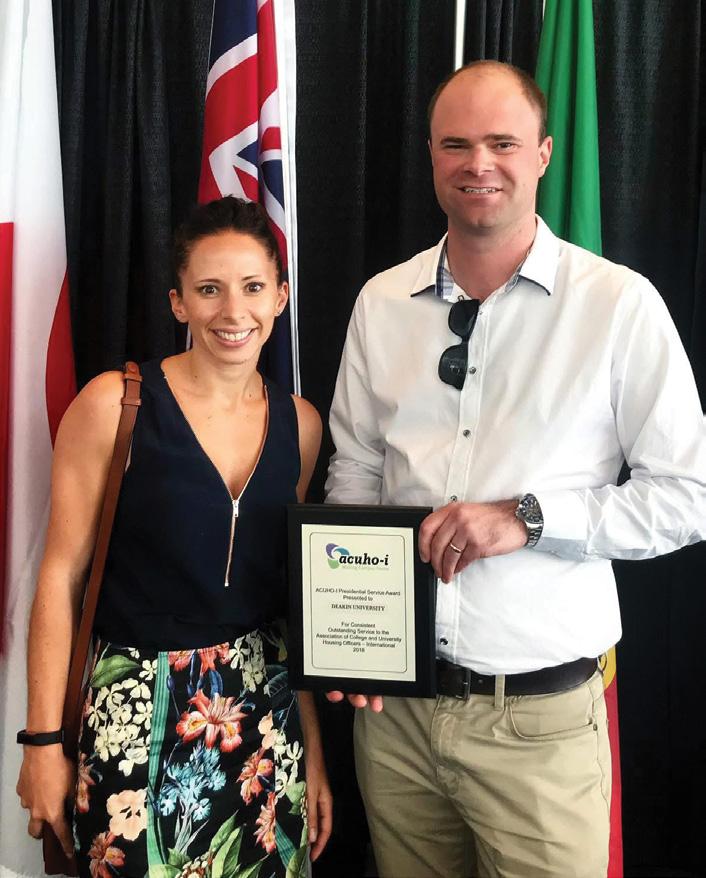
First GHTI at Deakin in Burwood in collaboration with ACUHO-I
May 2018
APSAA Industry Guidelines released replacing professional standards
INDUSTRY GUIDELINES
Celebrating 35 YEARS OF APSAA
2022
of the APSAA COVID-19 Guidelines
2019
APSAA Practicing Professional program (CPD) Launched
APSAA Conference in Melbourne
APSAA celebrates 100 Members, 1000 staff and 100,000 beds
APSAA Hosts first summit in NZ in Auckland
2021
Vice President Jacob Waitere represents APSAA at NZ Parliament for the Government enquiry into Student accommodation
NZ Code of practice is ratified
NZATEAP formally merges with APSAA following 2 years of discussion
APSAA Conference online
November 2021
Release of the updated APSAA COVID-19 Guidelines
APSAA Conference in Sydney –launch of the “4 Values of APSAA”
2024
First Asia Summit held in Singapore
APSAA joined the Expert Reference Group for the creation and delivery of The National Code at the request of the Department
APSAA provides funding support for the pilot program to bring Residential Experience Standard (RES) to Australasia
APSAA Conference in Auckland, New Zealand
The first president from outside of Australia –Jacob Waitere (NZ)
2023
APSAA invited to be the representative of student accommodation on the Action Group against GBV for the Accord
APSAA Conference in Brisbane
APSAA Strategic Plan “Foundations for the Future” released for 2023-2027
First Student Accommodation Essentials (initially referred to as APSAA Bootcamp) in Sydney
APSAA launches new Developing Nations membership category
2025
19-22 May 2025
APSAA Conference in Melbourne –Charting out Future; Reaching for the Stars
Redesign of the Student Accommodation Journal, including new format and front cover
Establishment of the APSAA Regional Branches
APSAA Summits held in NZ, ACT, NSW, SA, VIC, and WA
November 2025
Implementation of the National Higher Education Code to Prevent and Respond to Gender-based Violence
2026
4-7 May 2026
Launch of the revised Sector Guidelines replacing the Industry Guidelines
APSAA Conference in Adelaide –Celebrating 35 years
Celebrating 35 YEARS OF APSAA
APSAA PRESIDENTS
1994-1998
David Holmes
1999-2001
2003-2004
Robyn Roffe
2005-2007
Ian Collins
2009-2011
Simon Scott
2013-2015
Edwina Ellicott
2016-2018
Vincent Wilson 2019-2024
Marion Grey
1990-1994
Joe Massingham
1998-1999
Robyn Roffe
2001-2003
Garry McLaughlin
2004-2005
Todd Yourell
2007-2009
Sean Brito-Babapulle
2011-2013
Colin Marshall
2015-2016
Laura Burge
2018-2019
Steve Tucker
2024-2026
Jacob Waitere
Past Presidents Reflections
Istill remember the moment it really struck me what APSAA (then AACUHO) meant.
We were hosting a group of US delegates in Australia during one of my years as President. Like any good hosts, we had carefully planned the program – site visits, meetings, plenty of opportunities to showcase what we were doing in our residences. But what stayed with me wasn’t what we showed them, it was the conversations. Sitting together, comparing notes, sharing challenges and small wins, it became clear just how universal this work is. Different countries, different systems, but the same fundamental commitment to creating environments where students feel safe, supported, and capable of thriving.
Robyn Nori (Roffe) 1998-1999/2003-2004 Colin Marshall
Being involved as a member, board member and President of the association for over 14 years, was undoubtedly a career professional highlight for me. APSAA gave me far more than I was able to contribute in terms of the enduring connections built with campus housing colleagues across the Asia Pacific region and around the globe.
Stepping forward to take on leadership positions for APSAA was easy – as the experience gained directly related to the work we all do. We are better student accommodation and campus housing professionals because of the community
That experience captured, for me, the essence of APSAA.
I joined the association early in my career while managing student residences at the University of Western Sydney (now WSU). At the time, I was focused on the day-to-day, residents, staff, operations, but APSAA opened up a much bigger world. It connected me to people who were asking the same questions, facing the same challenges, and willing to share what they had learned. Over time, that network became a source of guidance, encouragement and lifelong friendship.
Serving on the Executive for nine years, including two as President, was an honour I always carried with a sense of pride and humility. I never lost sight of the fact that I was representing a community, not just leading it. Opportunities to represent AACUHO at ACUHOi conferences and participate in study
tours across the United States were highlights. They were both inspiring and grounding, showing what was possible at scale, but also reinforcing that our region had its own strengths, identity, and contribution to make.
When I left the sector in 2005, I didn’t leave those experiences behind. The skills, leadership, community building, navigating complexity, and always putting people at the centre of decision-making, have carried through every chapter of my career since.
Looking back over 35 years, APSAA’s impact is undeniable, but for me, its real legacy is more personal. It’s in the people it has connected, the confidence it has built, and the quiet influence it continues to have on how we lead and work.
I feel incredibly proud to have been part of that story.
APSAA creates. I recall at times throughout my work within the wider university, that nobody understood the unique challenges I was facing or the successes my team and I achieved, like my APSAA colleagues.
Being able to readily access critical information, research and tools to be an effective leader across the student residential and broader campus community at my university was a game changer. For my team and I, it meant that campus residential communities had a seat at the table and as a result are now at the forefront of creating vibrant and healthy campus cultures underpinned by respect, diversity and inclusion.
The development of partnerships with aligned campus housing associations around the
world, was a key focus under my leadership and something I was particularly proud of. APSAA soon became an authoritative source in its own right and now positioned as a global leader in the profession.
So too, the partnerships that were forged with the association’s sponsors. Through the support of these businesses and organisations that service university campus housing operations, make annual conferences, events and key initiatives possible.
Happy 35th Birthday APSAA! What a life you’ve lived so far and all the very best for the future.
Colin
Past Presidents Reflections
Edwina Ellicot
Being involved with the Asia Pacific Student Accommodation Association has been one of the most rewarding and influential experiences of my professional career. What began as an opportunity to connect with others working in student accommodation evolved into a deeply meaningful leadership journey that shaped not only my professional development, but also my lifelong friendships and international networks.
APSAA was known as the Australasian Association of College and University Housing Officers.(AACUHO) when I first became involved and the student accommodation sector across Australia and the Asia Pacific was on steep growth trajectory. I remember deciding to nominate for the committee and showing up for my first meeting, tentatively and not knowing what to expect and being warmly welcomed by a passionate and committed group of people. Simon Scott was the President at the time and Colin Marshall was Vice President with Sean Brito-Babapulle serving as previous past President, along with a terrific group of people.
"APSAA’s longevity is a testament to the dedication of its volunteers, leaders and members, and to the genuine sense of purpose that exists within the student accommodation community."
AACUHO created a space where practitioners could come together to share ideas, challenges, innovations and experiences in a way that simply did not exist elsewhere. It fostered collaboration rather than competition and created a strong sense of community amongst people who genuinely cared about the student experience.
Serving as President of AACUHO was both an honour and a privilege. It provided me with opportunities to grow as a leader, contribute strategically to the direction of the association, and advocate for the importance of quality student accommodation and student wellbeing. One of the aspects I valued most was the ability to help create opportunities for emerging leaders within the sector through professional development, mentoring and international engagement.
leadership opportunities, APSAA has helped shape generations of professionals who are committed to enhancing the student experience.
Question
A. Weave Living
B. Scape
C. Unite Students
D. Campus Living Villages
Answers on page 55
APSAA has had a profound impact on the student accommodation industry across the region. Over the past 35 years, it has played a significant role in professionalising the sector and creating stronger connections between institutions, operators and professionals. The association has consistently championed learning, leadership and best practice, while also adapting to significant changes in higher education, student expectations and global challenges.
Importantly, APSAA has always recognised that student accommodation is about far more than buildings and operations. At its heart, it is about creating safe, supportive and inclusive communities where students can thrive academically, socially and personally. Through conferences, networking, benchmarking, training institutes and
For me personally, APSAA also opened doors internationally. My involvement led to opportunities with the Association of College and University Housing Officers –International, ACUHO-I including serving on its Executive Board as Globalisation Director. Serving on the faculty of ACUHO-I’s Roelf Vissers Student Housing Training Institute in South Africa was an extraordinary experience. This was fully immersive on site training delivery where students and faculty stayed on site and learnt from each other. The faculty brought together leaders and students from all over the world to and one that was brought out to Australia as the Global Housing Training Institute. Being a part of the inaugural GHTI in Australia at Deakin University was an honour. The late Vince Wilson and former APSAA President led the charge. I had left the committee at this stage, but Vince tapped me on the shoulder and asked me to serve again.
Reflecting on APSAA reaching its 35th year is both inspiring and humbling. Few associations maintain relevance, connection and passion over such a long period of time. APSAA’s longevity is a testament to the dedication of its volunteers, leaders and members, and to the genuine sense of purpose that exists within the student accommodation community. My congratulations to APSAA on your 35th anniversary.
APSAA QUICK QUIZ
Laura Burge
APSAA has shaped my professional identity in ways that are difficult to separate from the work I do today. When I stepped into the Presidency in 2015–2016, taking over from the legacy left by Edwina Ellicott, I saw it as a responsibility and an opportunity to help define what our sector could become.
At that time, we were moving through a period of maturation. The shift toward professionalisation, including the name change, reflected a growing confidence that student accommodation was a distinct field with its own standards, expertise, and leadership.
Personally, APSAA gave me a network that challenged and extended my thinking. It placed me alongside practitioners who were deeply committed to student experience, often working in very different institutional and cultural contexts across the Asia Pacific. That exposure sharpened my ability to think both strategically and practically. Professionally, it provided a platform to lead, to test ideas, and to contribute to sector-wide change in a way that would not have been possible within a single institution.
My time as Chair of Professional Development from 2018 to 2021 reinforced this. Leading through the uncertainty of COVID was not straightforward. The need for connection, guidance, and shared practice became more urgent during an incredibly difficult period for the sector and the students we serve.
Developing APSAA’s first industry guidelines and guiding the sector through Recommendation 9 following the release of the AHRC Change the Course Report were also defining pieces of work. They required balancing evidence, sector readiness, and the realities of implementation. Those moments pushed APSAA beyond being
a convenor of conversations and state-wide events to becoming a driver of standards and accountability which has continued to this date.
APSAA’s impact across the region has been significant, though not without its challenges. It has created a space for shared learning where previously there was fragmentation. The growth in membership, the increasing engagement in professional development, and the strength of the annual conference all point to a sector that is more connected and more confident. At the same time, there is still work to do in ensuring consistency of practice and in translating knowledge into sustained change on the ground.
Reaching 35 years invites reflection on both legacy and responsibility. APSAA has moved
from a relatively informal network to a more structured and influential association. That evolution has been shaped by many, including my friend and colleague, Vincent Wilson, whose influential leadership played a critical role in building momentum and extending APSAA’s reach.
Whilst my own career path has shifted away from student accommodation, my time with APSAA serves as a reminder that sectorwide progress depends on collective effort, continued engagement with a diversity of voices, a willingness to share practice openly, and a commitment to proactively take the lead in shaping best practice.
Wishing APSAA and its members all the best in celebrating 35 years!
Ijoined the committee of AACUHO in late 2014, and I believe, I was the first representative of a “corporate” to do so, as well as being new to the industry. I was immediately struck by the passion, knowledge and professionalism of my fellow committee members. The five years I spent on the committee/board represented a time of tumultuous change for the industry, emblematic of which was the change in name from AACUHO to APSAA. We had morphed from a small, but passionate community of College and University Housing Officers, to a significant industry association, which encompassed, embraced and served colleges, universities and corporate providers.
The growth of the industry was nothing short of phenomenal, but arguably also inevitable. What wasn’t inevitable was AACUHO rising to meet the challenges and opportunities that this growth presented, and becoming APSAA. This transformational feat was achieved through the extraordinary vision and hard work of a host of individuals, who gave their time freely to make it happen. I was enormously privileged to have served under Edwina, Laura and Vince as Presidents,
Question 8: What is the most common minimum height of a large-scale PBSA building in major Australian cities?
A. 2–4 storeys
B. 5–8 storeys
C. 10–20 storeys
D. 30+ storeys
Answers on page 55
"This transformational feat was achieved through the extraordinary vision and hard work of a host of individuals, who gave their time freely to make it happen."
who expertly guided the association through this period of change. Many other board colleagues over this period gave all that they could, whenever they could, again demonstrating the commitment and passion regularly exemplified by all those engaged in this industry.
These remarkable teams of people brought about many achievements that helped shape the association, too many to mention. A few however, stand out as examples of what has driven APSAA to be the fantastic association it is today. Firstly, an international viewpoint; solidifying partnerships with New Zealand, Malaysia, Singapore, China the US and beyond. Changing the membership structure to reflect bed numbers, allowing the association to grow with the industry it serves.
The production of the first set of industry guidelines to better support the members. The introduction of an industry specific CPD platform to support member development and showcase the professionalism of the industry. The revitalisation of the APSAA journal with greater editorial control. Finally, the scaling up of the annual conferences to become the exceptional centrepiece events they are today. These were not the result of work by external consultants, but by members and colleagues, who gave their time and expertise willingly. These are the people that for me, continue to make APSAA great, and fortunately, the industry remains full of them.
I look forward to catching up with colleagues at this year’s conference and raising a toast to APSAA and absent friends.
Steve Tucker
APSAA QUICK QUIZ
APSAA has been a pivotal part of my journey and career in student accommodation. It has led me to so many wonderful people, provided a network that I can rely on globally and has ensured that innovation and continuous improvement remains a priority for us at Deakin Residential Services. I encourage my team to engage with APSAA as much as possible – whether that is participating in GHTI or Student Accommodation Essentials, attending webinars or connecting with colleagues from around the region to discuss new ideas, concepts, system enhancements, ensuring we remain current and curious in the work we do.
Personally, serving for 9 years on the APSAA Board I have valued the opportunity to mentor others, lead the association through challenging times such as COVID and be a small part of ensuring we have a seat at the table to influence policy and legislation wherever possible.
There are too many people to name, many who have shaped my professional trajectory and many that I’m fortunate to now call friends. APSAA has enhanced the visibility of our profession in the APAC region and put us on the global map. Well done APSAA on 35 years!
Thanks Marion
"APSAA
has enhanced the visibility of our profession in the APAC region and put us on the global map."
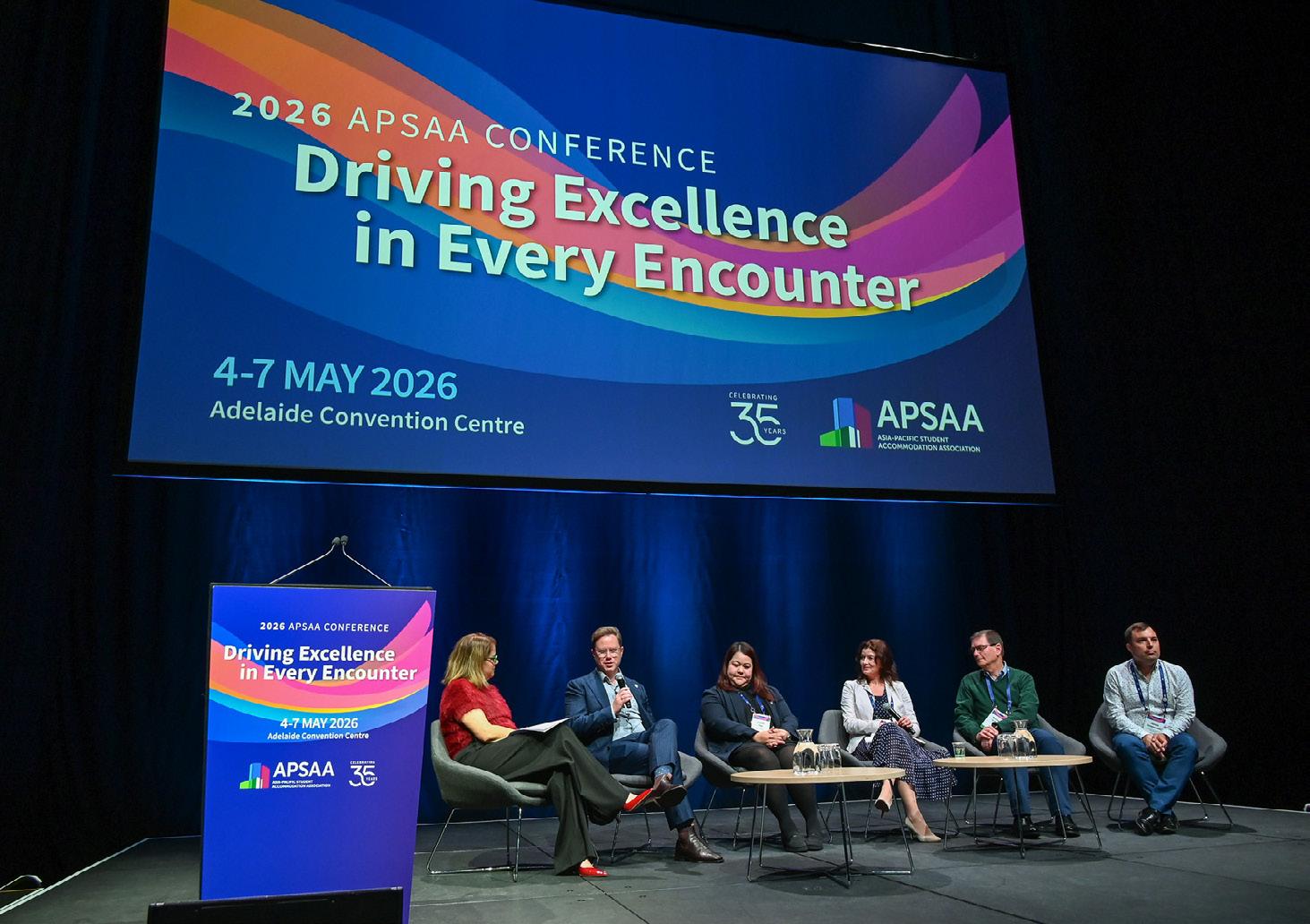
APSAA 2026 Conference Celebrates Excellence in Every Encounter
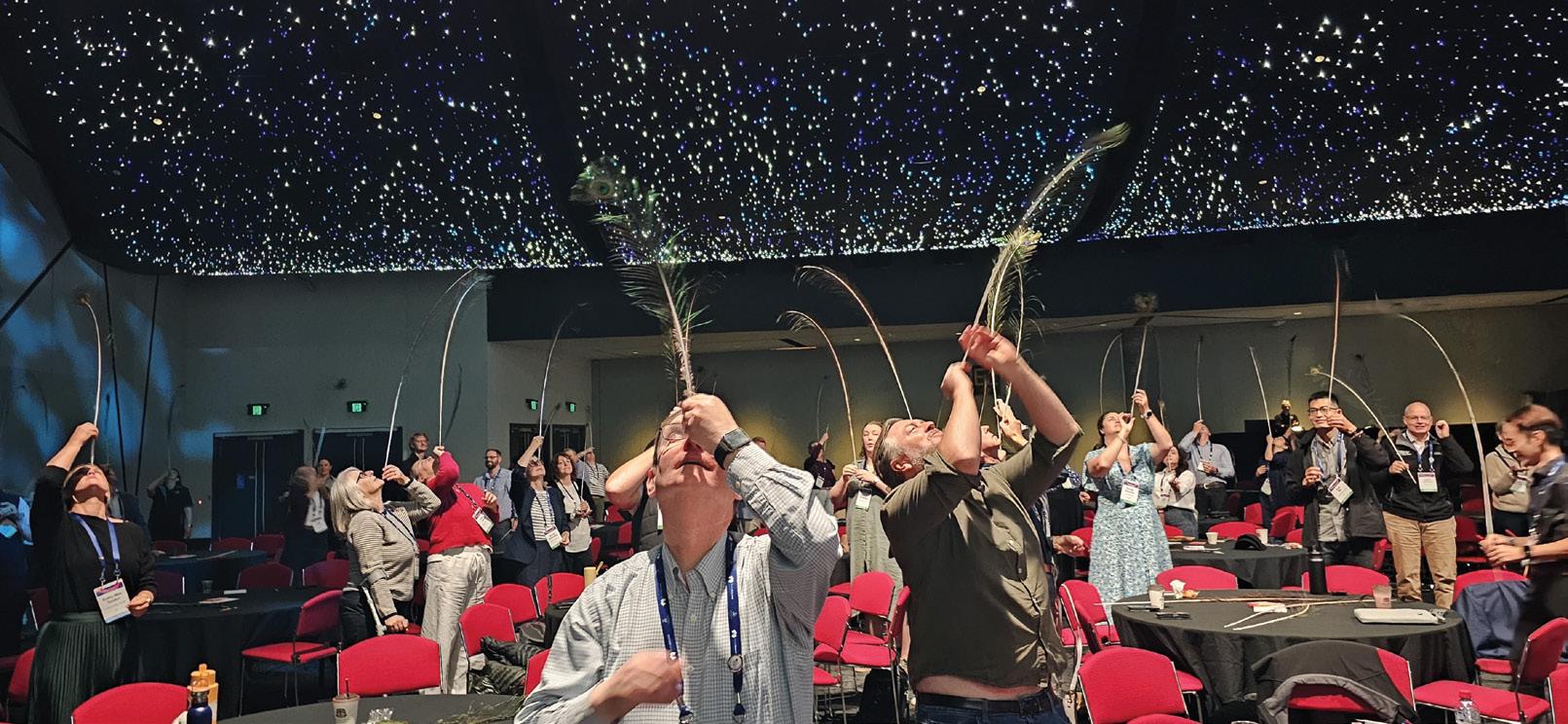
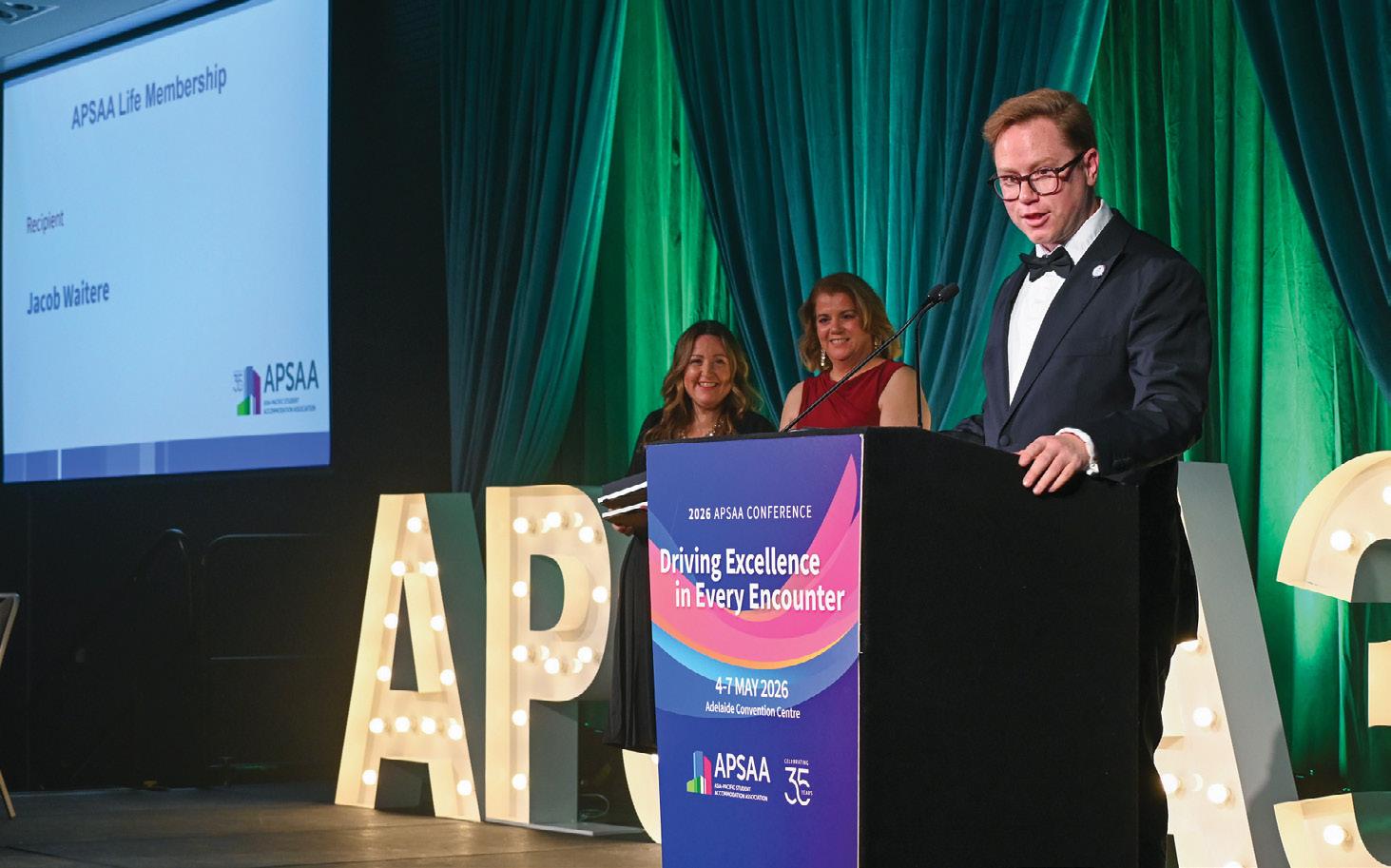
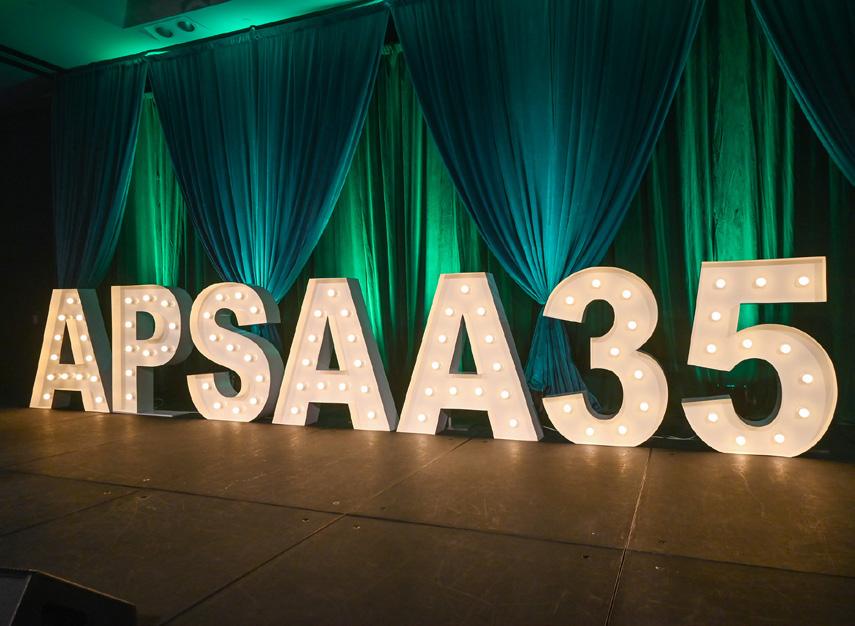
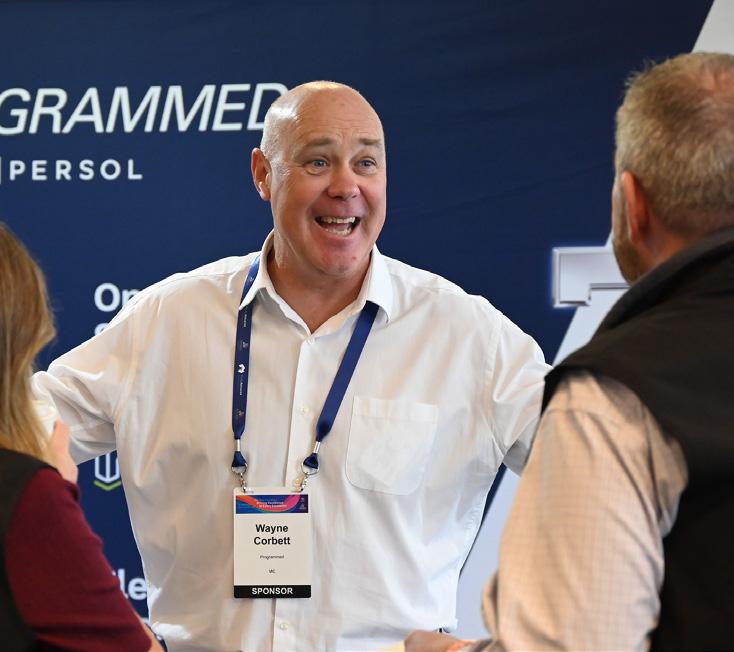
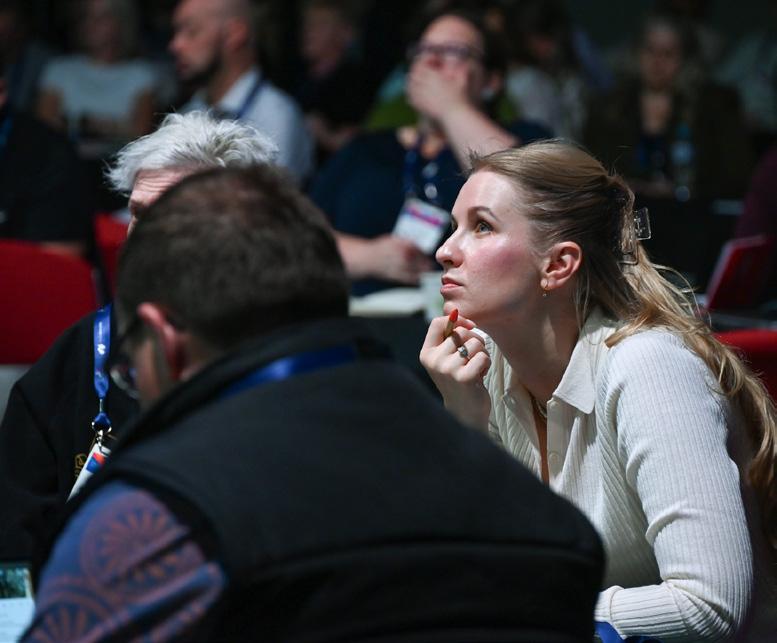
The APSAA 2026 Conference brought together student accommodation professionals from across the Asia-Pacific region and beyond for four days of learning, collaboration, celebration, and connection in Adelaide from 4-7 May 2026.
Centred around the theme, Driving Excellence in Every Encounter, the conference challenged delegates to reflect on the countless interactions that shape the student experience and the role accommodation professionals play in fostering safe, supportive, and thriving communities. Throughout the week, speakers, presenters, and delegates explored what excellence looks like in practice, from frontline resident engagement and wellbeing initiatives through to leadership, innovation, governance, and sector collaboration.
As APSAA continues to celebrate its 35th anniversary year, the conference also provided an opportunity to reflect on the evolution of the sector while exploring the opportunities and challenges that lie ahead. Delegates from Australia, New Zealand, Malaysia, the United Kingdom, the United States, and other regions came together to
share knowledge, strengthen professional networks, and contribute to important conversations shaping the future of student accommodation.
Study Tour and Welcome Reception
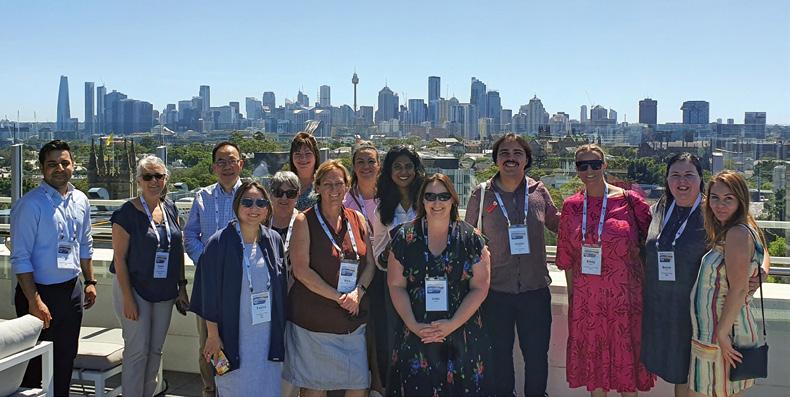
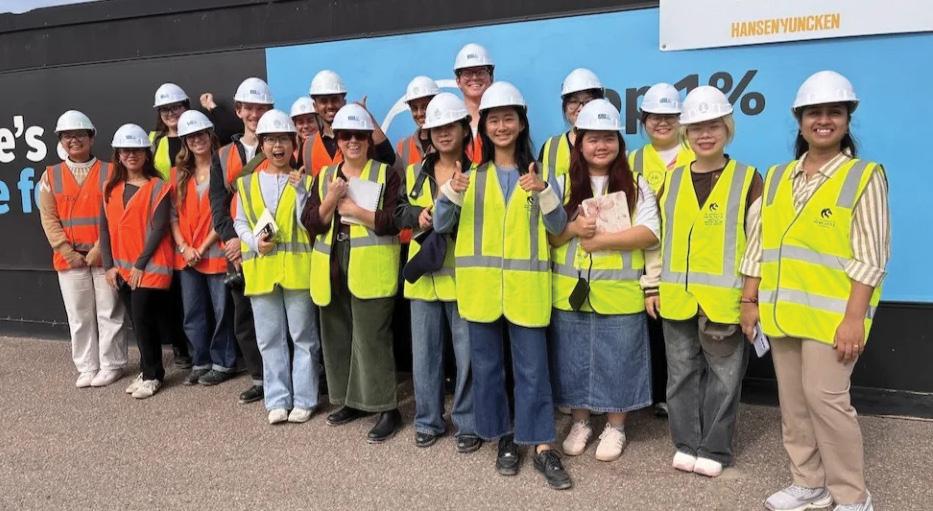
Conference proceedings commenced on Monday with the APSAA Study Tour, offering delegates the opportunity to visit a range of student accommodation communities across Adelaide. The tour provided valuable insight into local operations, facilities, and resident engagement practices while fostering early networking opportunities among attendees.
The evening Welcome Reception, proudly sponsored by Constant, officially opened the conference and set the tone for the days ahead. Delegates reconnected with colleagues, welcomed new members to the APSAA community, and celebrated the collaborative spirit that continues to define the Association.
Learning, Leadership and Shared Experience
Across three days of conference sessions, delegates engaged in a diverse and thoughtprovoking program featuring keynote
presentations, panel discussions, workshops, case studies, and sector updates.
A highlight of the conference was the breadth of perspectives represented throughout the program. Presenters from universities, purpose-built student accommodation providers, industry partners, and professional associations shared practical insights and innovative approaches to supporting students and strengthening residential communities.
Day Two featured the official launch of the APSAA Sector Guidelines, representing an important milestone in the Association’s
Question 9: What was the first university residential college established in New Zealand?
A. Knox College
B. Selwyn College
C. Weir House
D. St Margaret’s College
Answers on page 55
APSAA QUICK QUIZ
ongoing commitment to advancing professional practice across the region.
Delegates also participated in a special panel discussion reflecting on 35 years of student accommodation, providing a unique opportunity to explore how the sector has evolved and to consider the lessons that will help guide its future development.
Updates from international and sector partners, including ACUHO-I, NAAUC and UCA, reinforced the importance of global collaboration and highlighted emerging trends and priorities influencing student accommodation worldwide.
Inspirational Keynote Presentations
The conference featured two keynote speakers whose presentations left a lasting impression on delegates.
Former world number four tennis player and bestselling author Jelena Dokic delivered a powerful and deeply personal presentation centred on resilience, courage, wellbeing, and mental health. Drawing on her own experiences, Jelena challenged delegates to consider the importance of empathy, support, and human connection within the communities they serve.
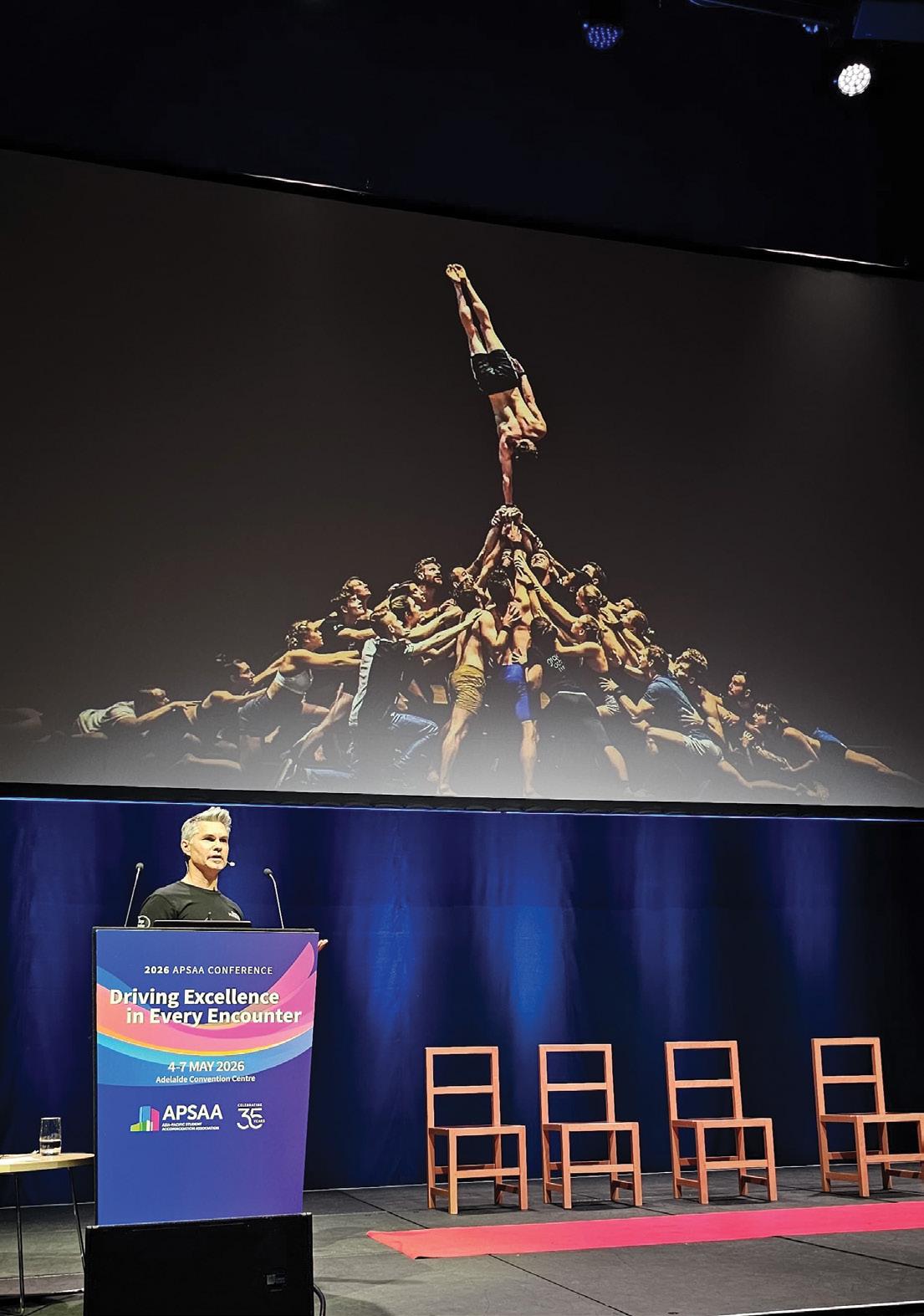
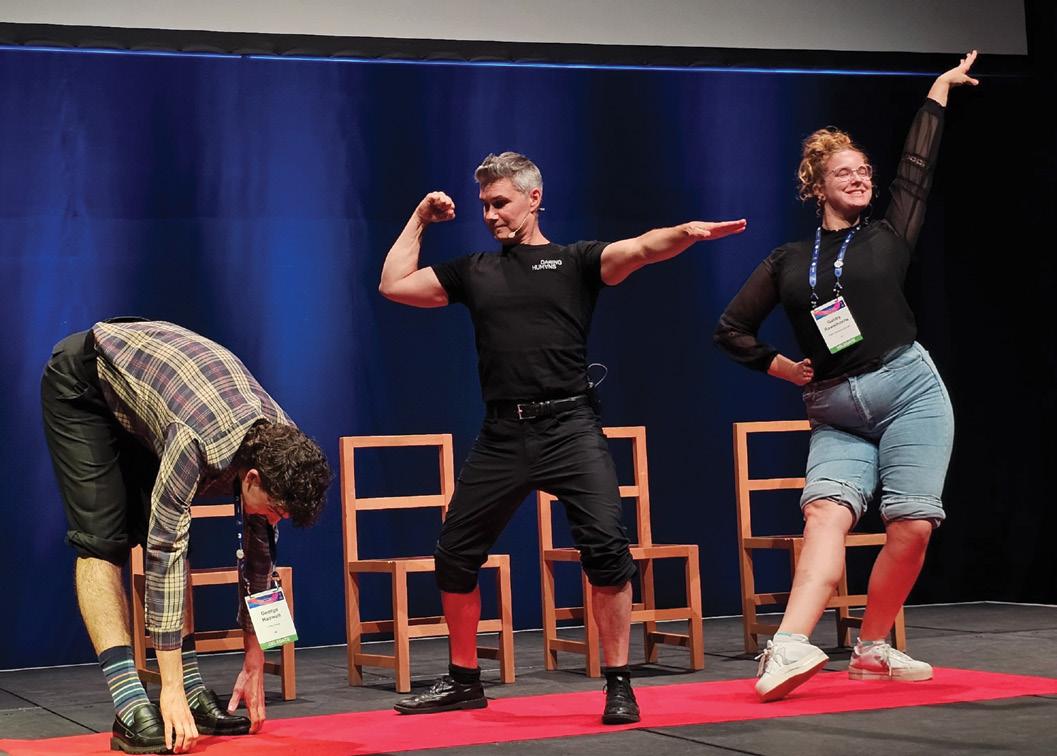
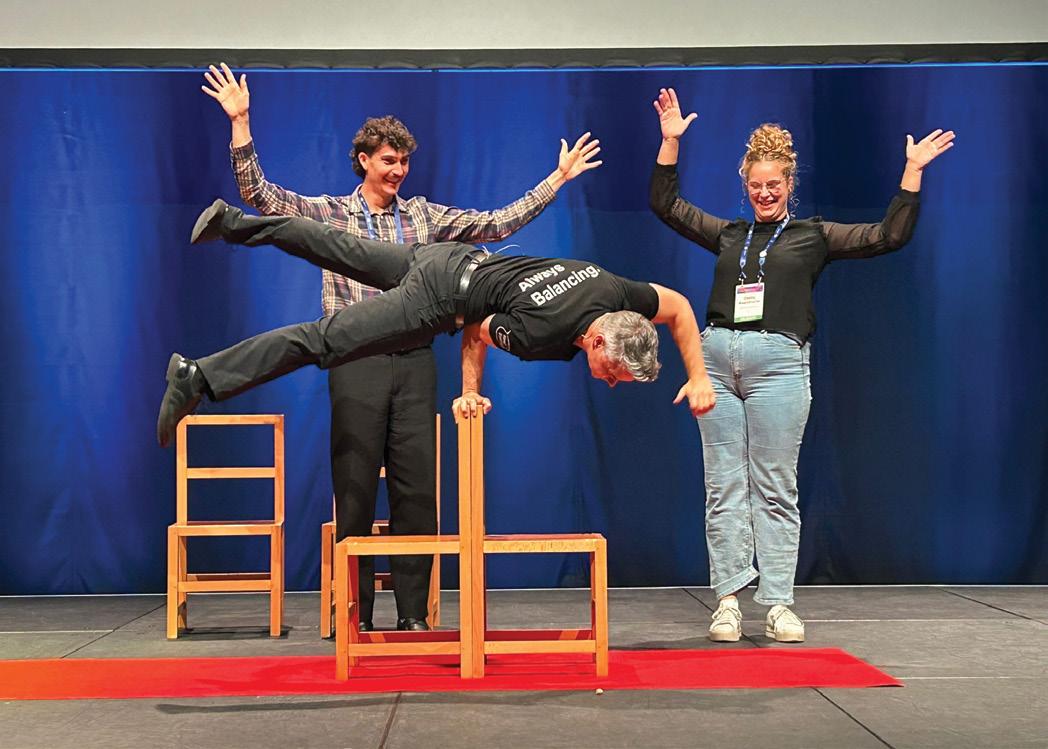
The conference concluded with an energetic and inspiring keynote from Dan Aubin of Daring Humans. Through a presentation that combined practical insights, storytelling, and even a touch of acrobatics, Dan encouraged delegates to think differently about resilience, leadership, strength, and the importance of rebalancing in both personal and professional life.
Together, the keynote presentations reinforced many of the themes that underpin student accommodation: connection, belonging, wellbeing, and the impact individuals can have on the lives of others.
Celebrating Professional Achievement
The conference also provided opportunities to recognise the achievements of APSAA members and celebrate excellence across the sector.
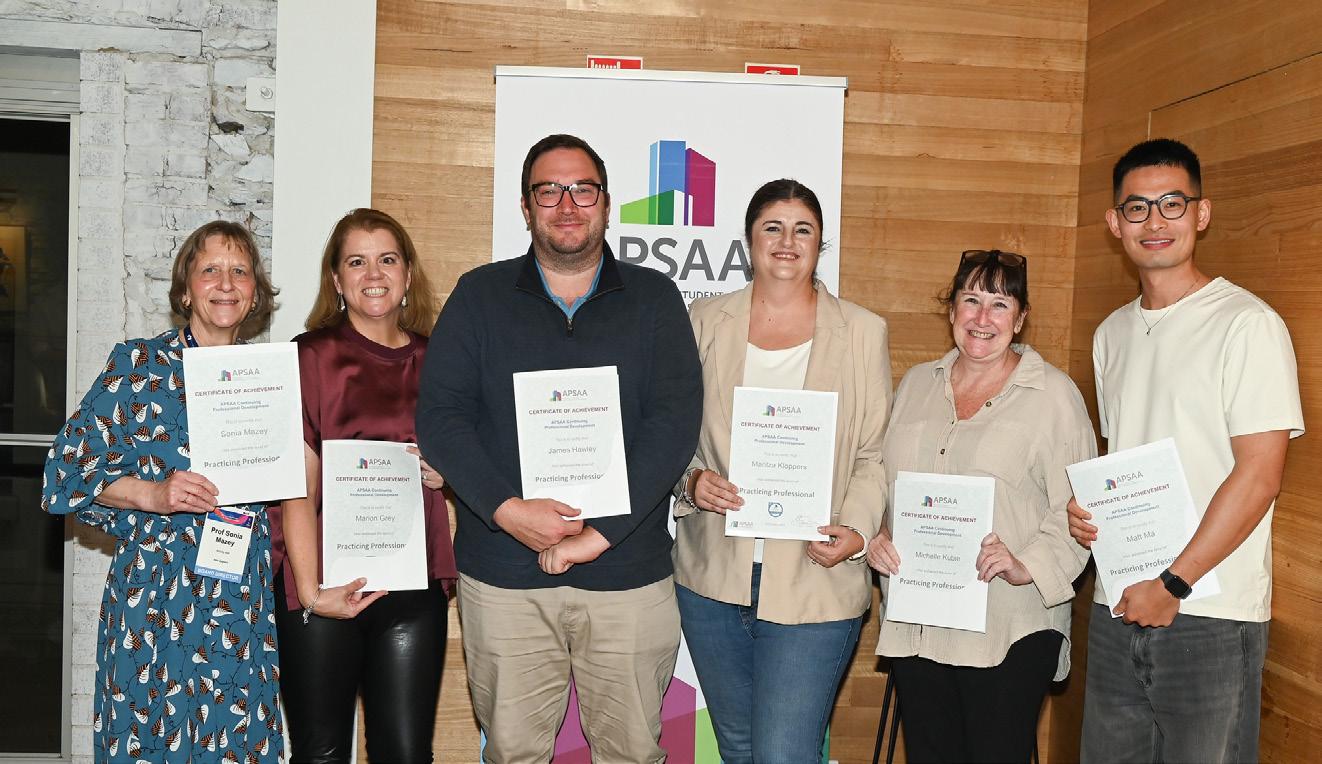
The Informal Networking Dinner, proudly sponsored by Superloop, brought delegates together for an evening of connection and celebration. During the event, members who had achieved APSAA Practicing Professional status through the Continuing Professional Development Program were recognised for their commitment to professional growth and lifelong learning.
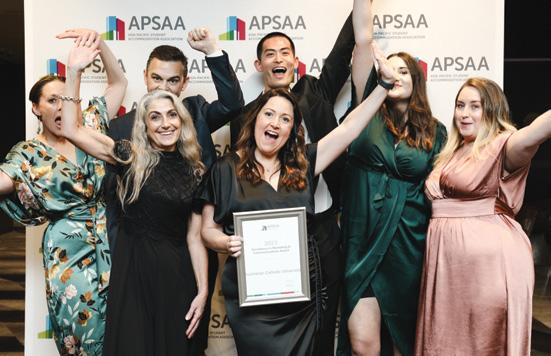
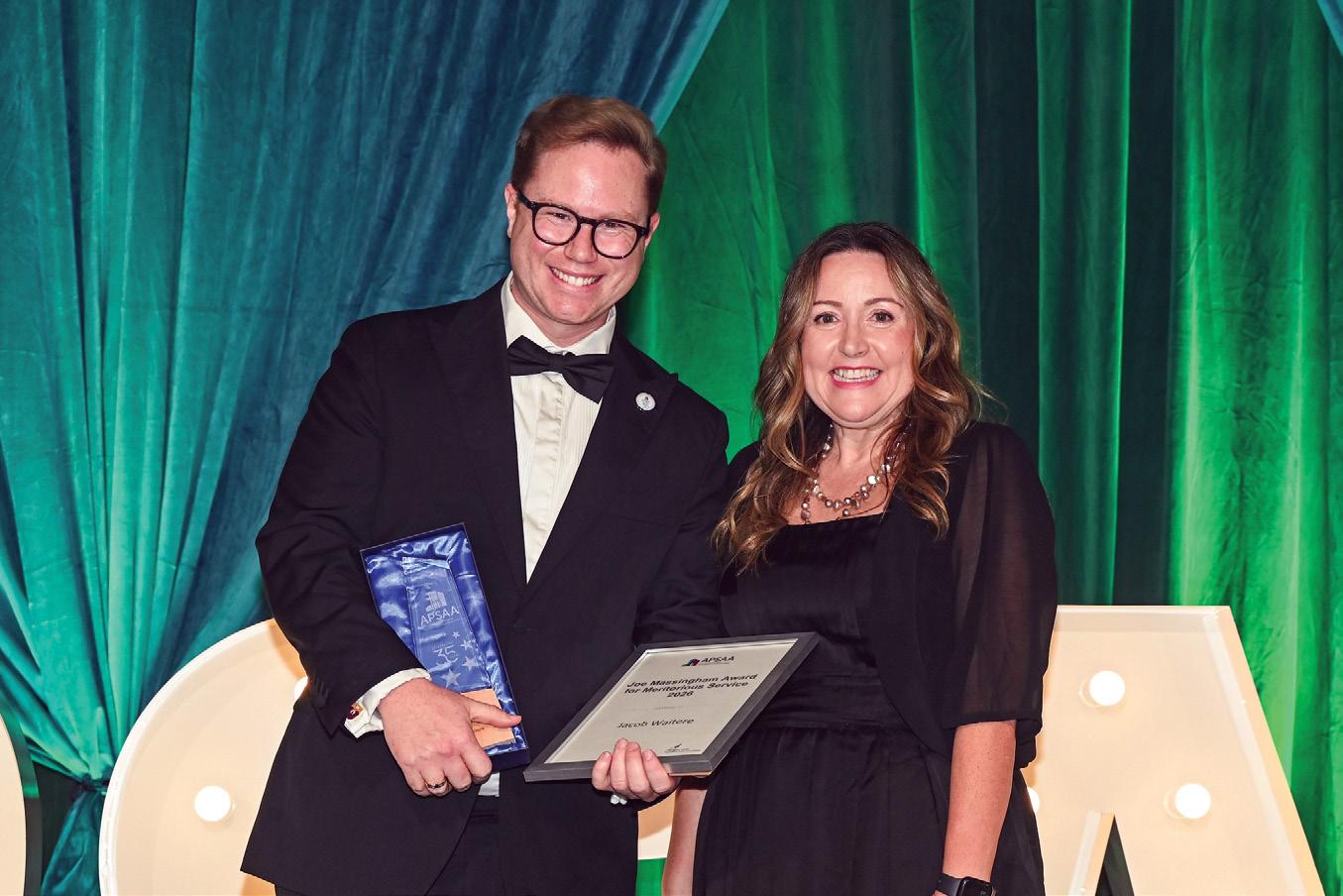
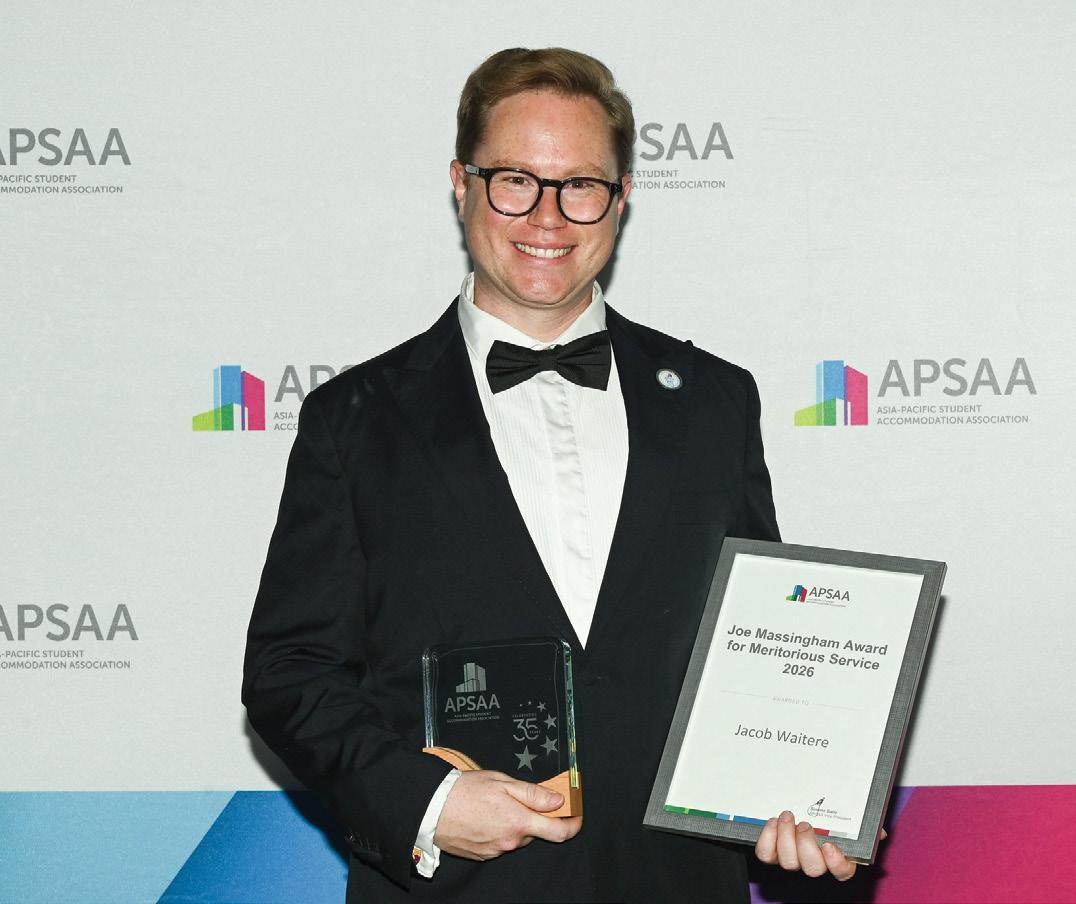
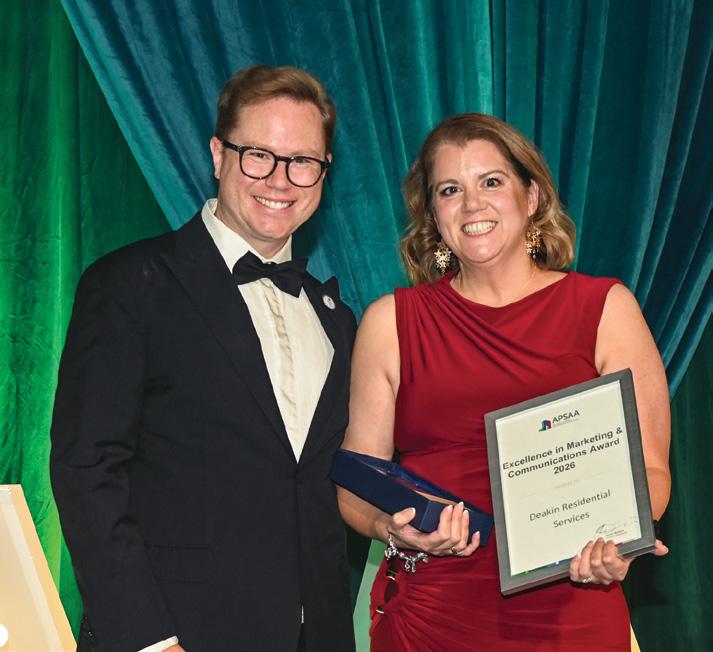
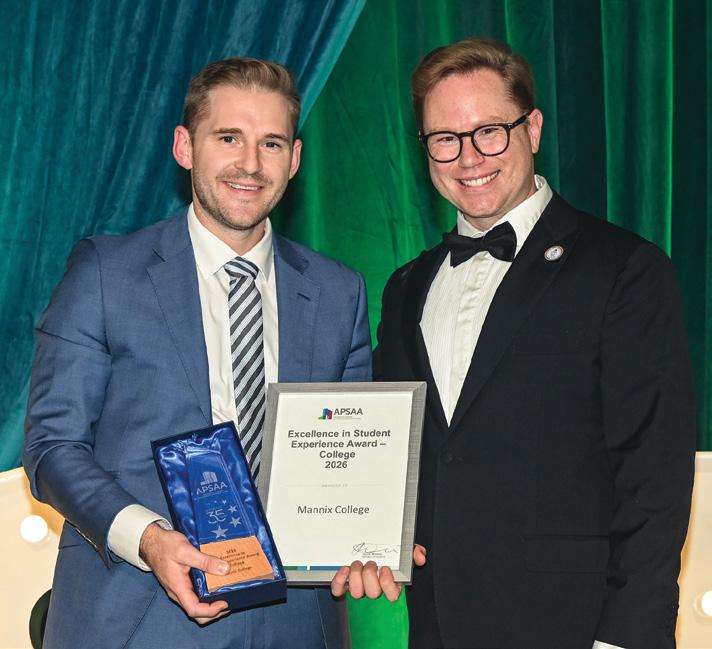
On Wednesday evening, delegates gathered for the APSAA Gala Awards Dinner, proudly sponsored by StarRez. The event celebrated the outstanding contributions, innovation, leadership, and achievements of individuals and organisations across the student accommodation sector. Award recipients and finalists were recognised for the positive impact they continue to make within their communities and across the broader profession.
Partnership and Collaboration
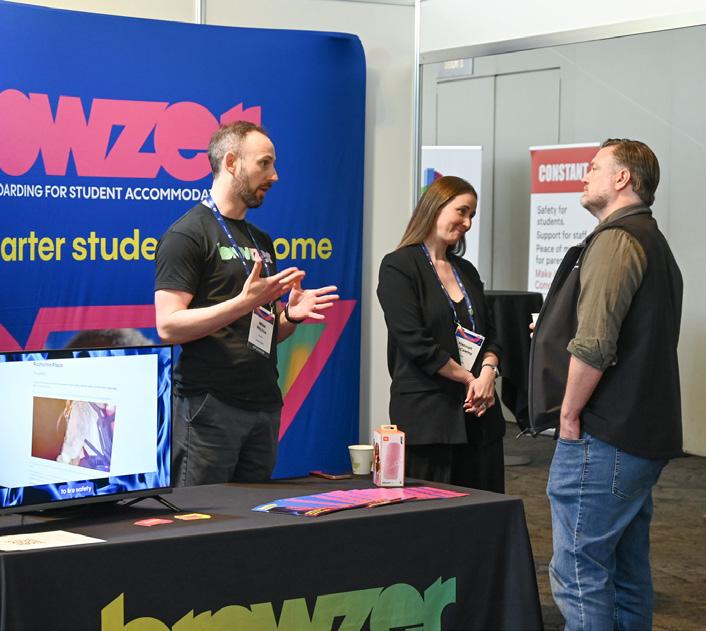
A key feature of APSAA 2026 was the strong support of the Association’s sponsors and exhibitors. Throughout the conference, the exhibition space served as a vibrant hub of activity, facilitating meaningful conversations between delegates and industry partners while showcasing products, services, and innovations supporting the sector.
The continued commitment of APSAA’s partners plays an important role in strengthening the conference experience and supporting the advancement of student accommodation throughout the region.
Looking Ahead
As delegates departed Adelaide, there was a strong sense of optimism about the future of the sector and the role APSAA continues to
play in supporting professional development, knowledge sharing, and community building. The conference theme, Driving Excellence in Every Encounter, resonated throughout the week, serving as a reminder that every interaction presents an opportunity to positively influence the student experience and strengthen our communities.
The APSAA 2026 Conference highlighted the passion, expertise, and dedication that exists across the student accommodation profession. It also demonstrated the strength of a community committed to learning from one another, embracing innovation, and enhancing the student experience.
APSAA extends its sincere thanks to all speakers, delegates, sponsors, exhibitors, volunteers, and partners who contributed to the success of this year’s conference.
We look forward to continuing the celebration of APSAA’s 35th anniversary throughout the year and welcoming the student accommodation community to the Gold Coast for APSAA 2027.
APSAA One Day Study Tour – 2026
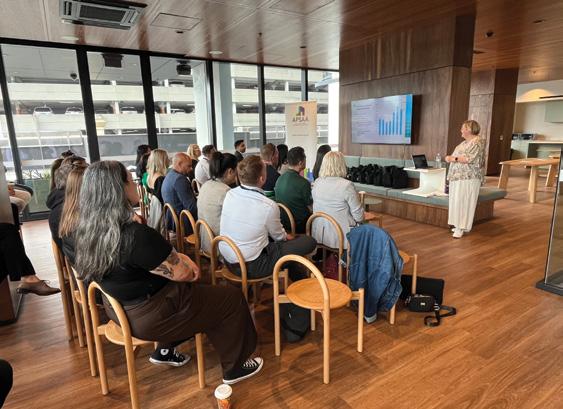
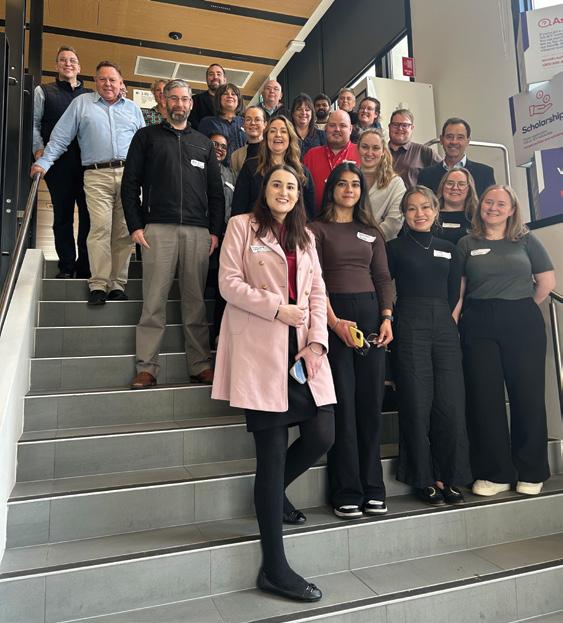
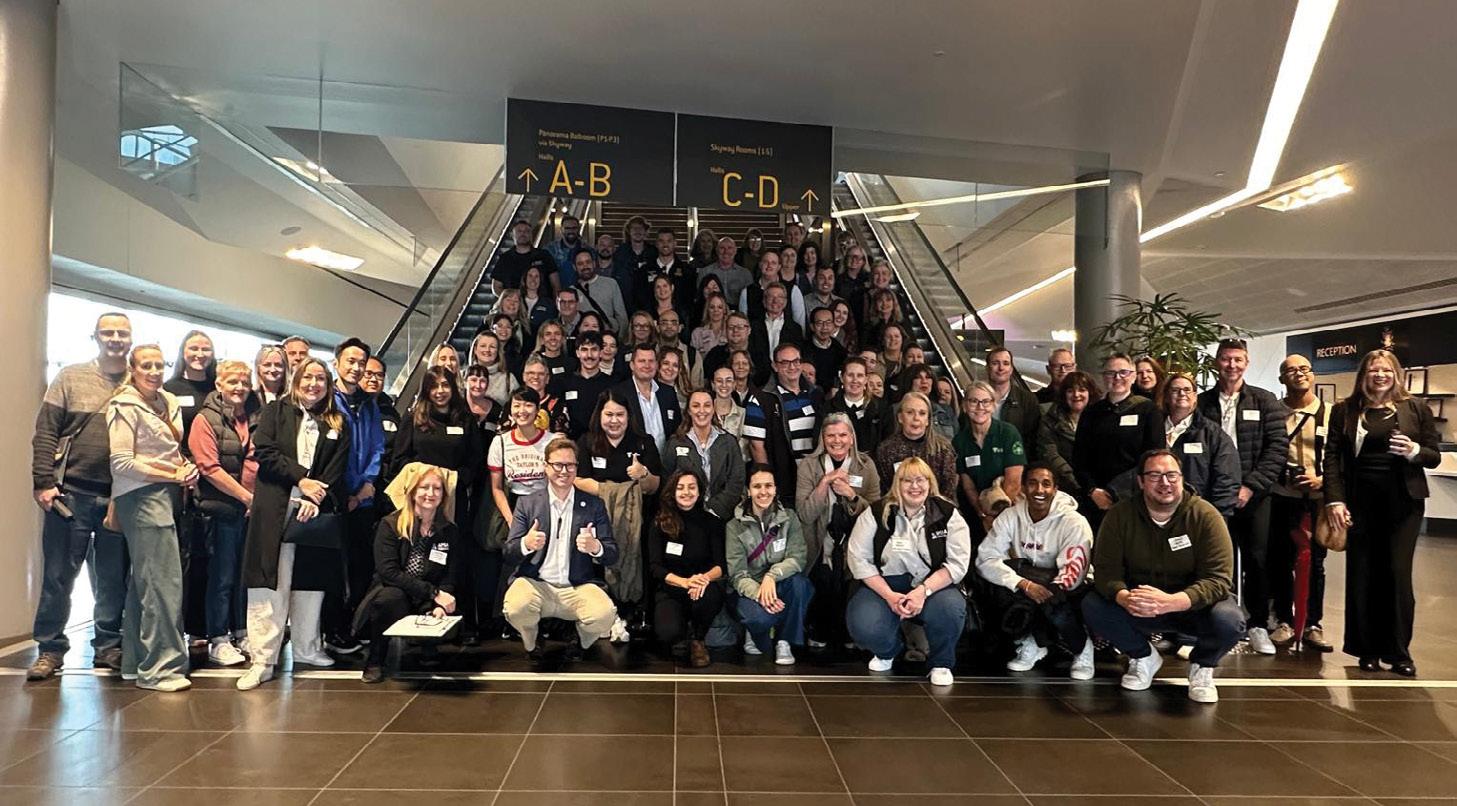
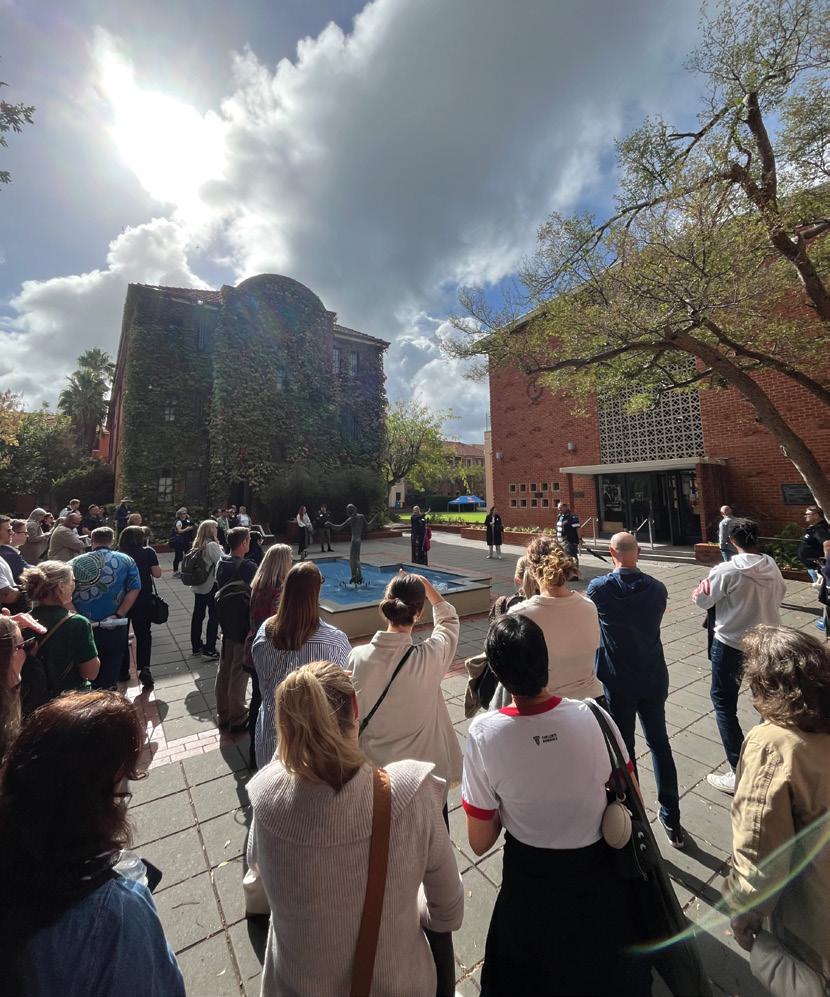
Study tours are a wonderful opportunity to see how other student accommodation providers operate while catching up with colleagues across the industry. Our one-day tour in Adelaide
was a huge success, with around 90 people joining the journey.
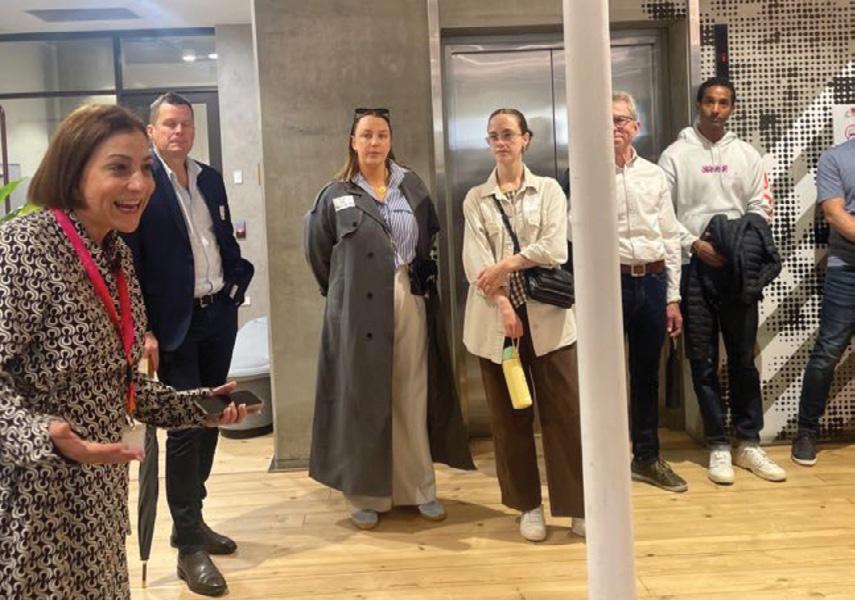
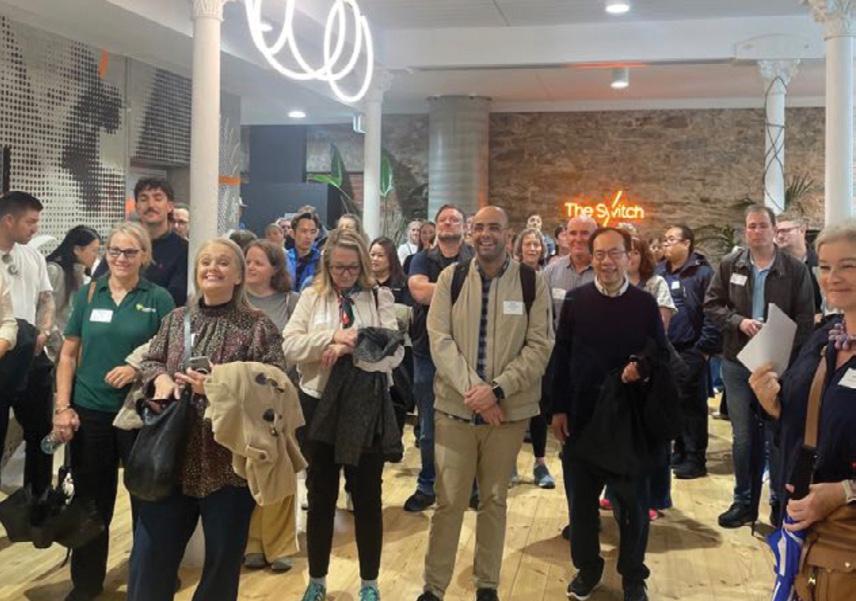
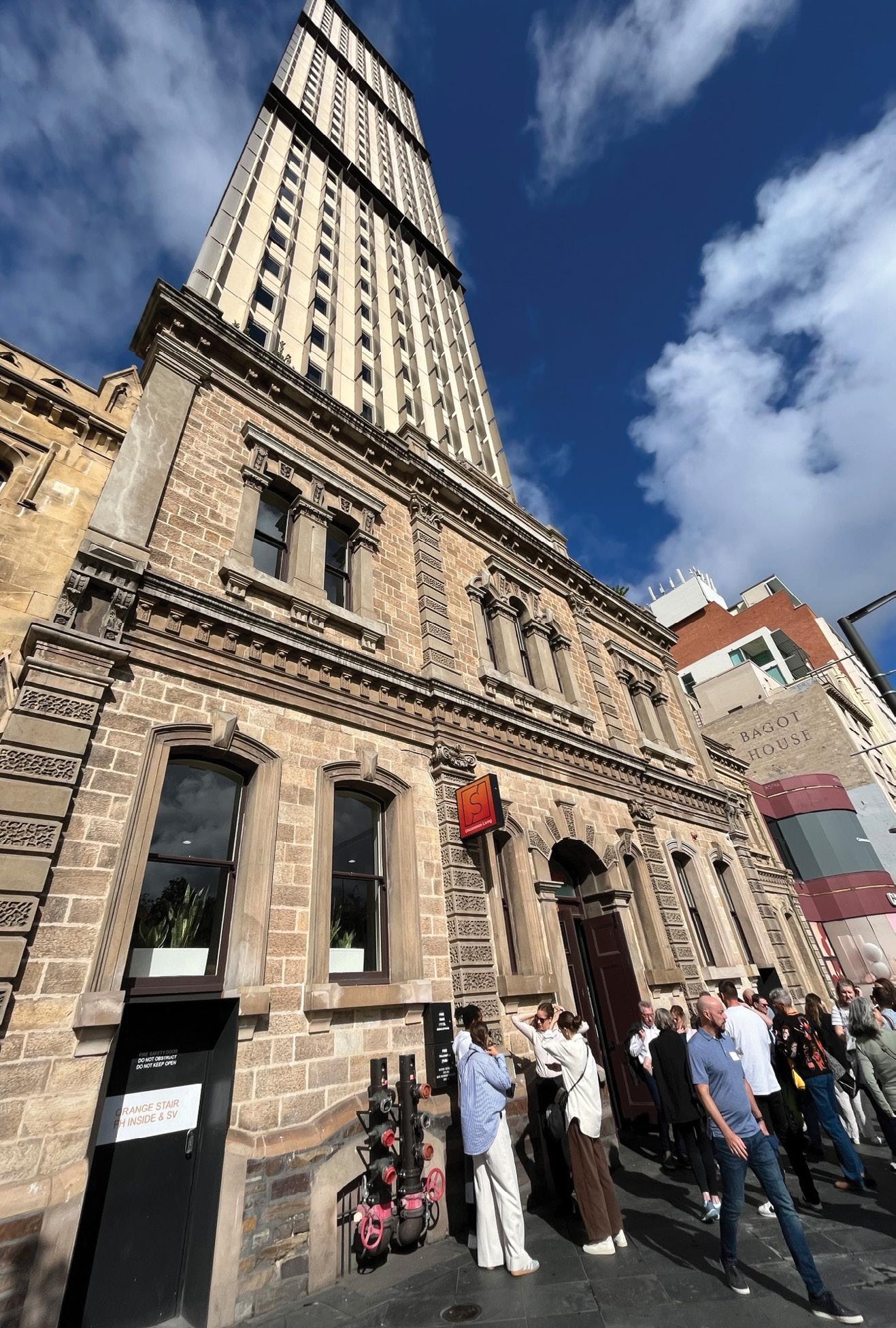
Starting at the convention centre, our first stop was The Switch, a PBSA hub home to nearly 350 residents. It is a stunning example of architecture, blending a modern accommodation tower into a 155-year-old state heritage building. Belinda Henderson showed us around the premium spaces, including a breathtaking 360-degree view of the city from the 34th floor!
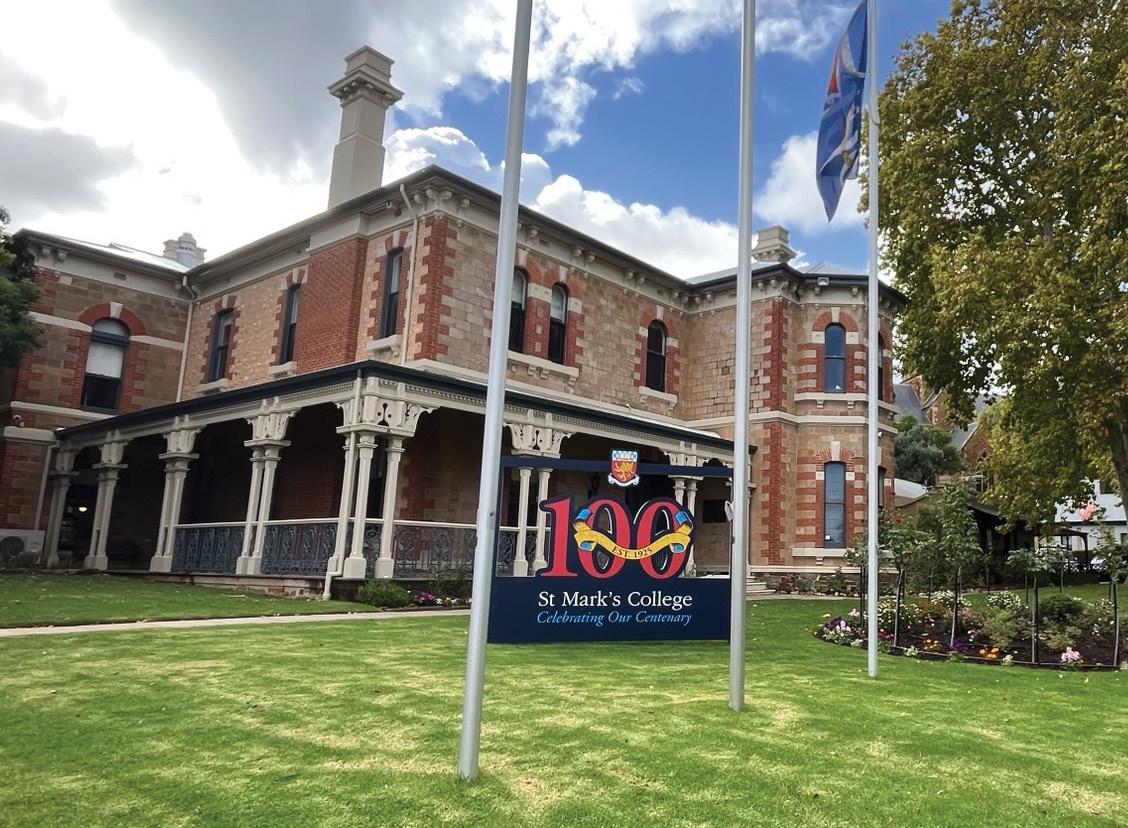
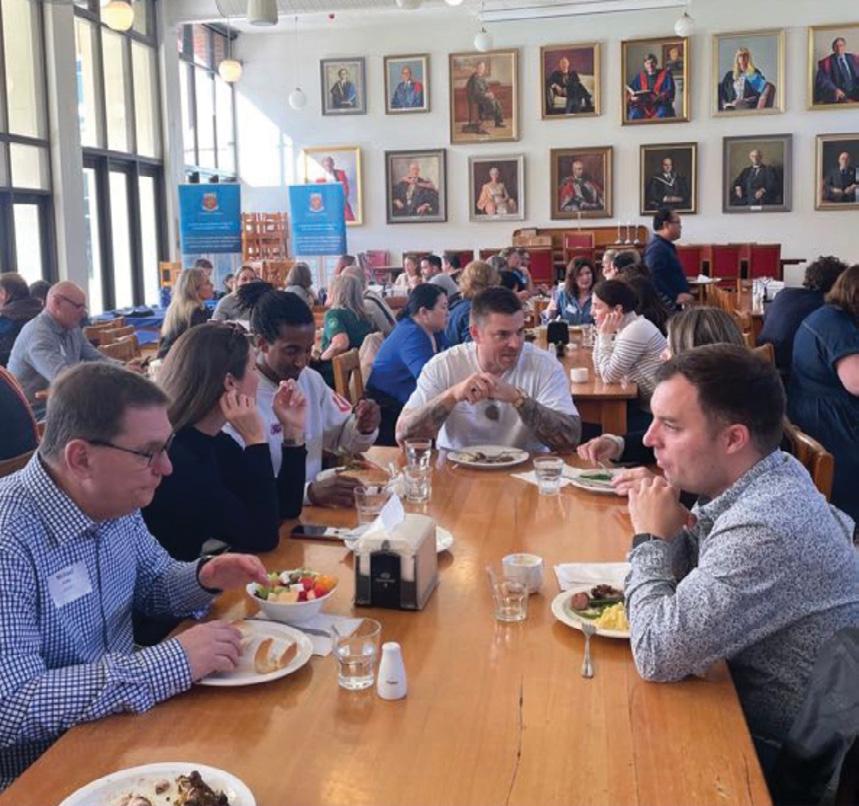
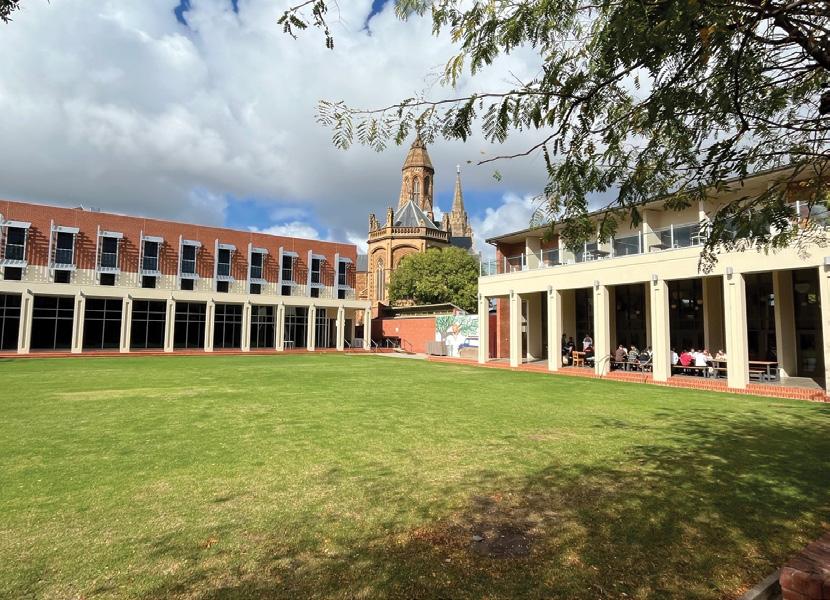
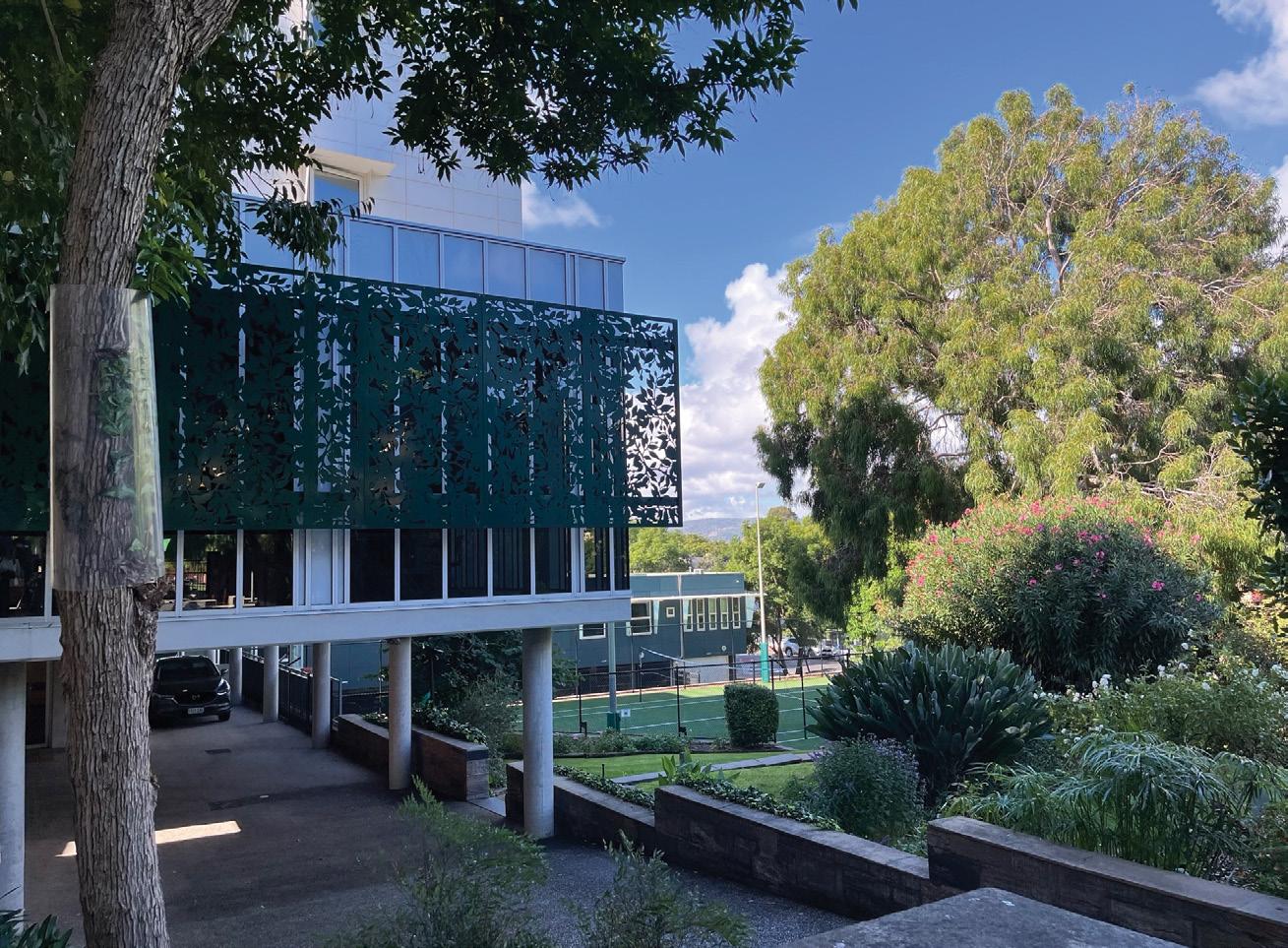
Next, we headed to St Mark’s College. As the oldest university residential college in South Australia, it just celebrated its centenary last year. The staff walked us through the unique support systems they offer residents before guiding us through their buildings and facilities. We even got the full catered experience by sharing lunch with the students in their dining room.
Then, it was on to St Ann’s College, which originally opened for women only before going co-ed in 1973. Fun fact: their mascot is a baboon because you can actually hear the primate calls from the nearby Adelaide Zoo!
The college perfectly balances historic charm (including a room used in the movie RabbitProof Fence) with modern upgrades that support student life.
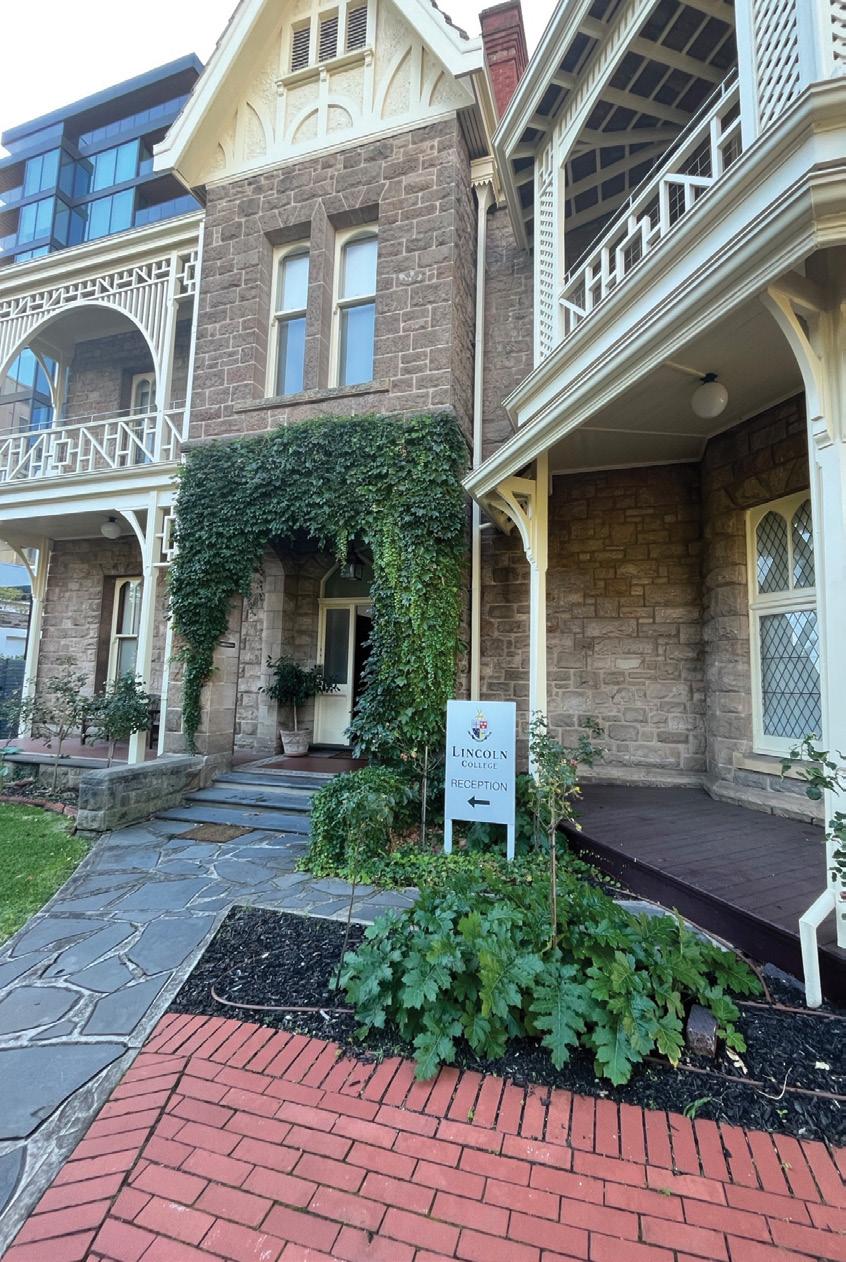
We wrapped up the day at Lincoln College, where Dean Jordan Bell gave a great presentation on implementing and evaluating one of their student program initiatives.
Huge thanks to all the hosts who opened their doors to us. I always love gathering new ideas to bring back to my own team, but what I love most are the connections made throughout the day. Those conversations flow right into the rest of the conference, proving just how invaluable the APSAA community networking really is!
"I always love gathering new ideas to bring back to my own team, but what I love most are the connections made throughout the day."
ANDREA ROHDE 2026 Conference Committee; Professional Development Committee Chair
Celebrating APSAA Individual Awards 2026
ACUHO-I New Professional Award – Australia
Josh Blacklock, University of Newcastle
Josh Blacklock from the University of Newcastle was awarded the Australian recipient of the 2026 Asia-Pacific Student Accommodation Association ACUHO-I New Professional Award, recognising emerging leaders within the student accommodation sector and supporting their attendance at the ACUHO-I Conference in the United States.
As Senior Manager, ResLife Standards within Student Living at the University of Newcastle, Josh leads a broad portfolio spanning community standards and conduct, crisis and critical incident management, governance and compliance, health and wellbeing, and strategic stakeholder engagement. Reporting
to the General Manager, Student Living, he oversees a team responsible for supporting safe, inclusive and trauma-informed residential communities while ensuring compliance with evolving sector obligations, including the National Code to End Gender-Based Violence and Positive Duty requirements.
In his application, Josh highlighted the professional value of attending the ACUHO-I Conference, particularly in relation to restorative practice, student conduct reform and trauma-informed approaches within residential education. He identified the conference as a unique opportunity to engage with international practitioners and scholars working in areas closely aligned to his current work at the University of Newcastle.
Josh also reflected on the importance of contributing Australasian perspectives to the global student housing community, particularly
ACUHO-I New Professional Award – New Zealand
Robbie Morrish, University of Auckland
Robbie Morrish from the University of Auckland was awarded the New Zealand recipient of the 2026 Asia-Pacific Student Accommodation Association ACUHO-I New Professional Award, recognising emerging professionals within the student accommodation sector and supporting attendance at the ACUHO-I Conference in the United States.
Robbie currently works as a Resident Manager within Accommodation Services at the University of Auckland, supporting the operation of one of the largest residential communities in Australasia. His role focuses on leading residential communities while supporting both professional staff and student leaders to foster safe, inclusive and supportive living environments for students.
A significant aspect of Robbie’s role involves leading and developing Resident Advisor teams, including their recruitment, training and ongoing support. He also contributes to operational management, incident response, health and safety processes and collaboration
around how Australian institutions are responding to increasing regulatory complexity, gender-based violence prevention frameworks and evolving student conduct processes.
Importantly, Josh emphasised his commitment to bringing learnings back to the APSAA community through sector discussions, presentations and future contributions to the Student Accommodation Journal. His application demonstrated a strong focus on knowledge sharing and strengthening professional practice across the student accommodation sector.
APSAA congratulates Josh Blacklock on receiving the 2026 ACUHO-I New Professional Award and looks forward to supporting his continued professional contribution to the sector.
with wider university wellbeing and security services.
Beyond his institutional role, Robbie is actively engaged within the broader student accommodation sector through his involvement with the APSAA Professional Development Committee and the APSAA Aotearoa Branch, contributing to initiatives that support professional learning and sector collaboration across the region.
In his application, Robbie highlighted the value of attending the ACUHO-I Conference as an opportunity to learn from international residential education models and student
APSAA Scholarship 2026
Sinead Fisher
Receiving the 2026 AsiaPacific Student Accommodation Association Professional Development Scholarship, Sinead Fisher from the University of Auckland was recognised for her commitment to enhancing the residential student experience and her passion for ongoing professional growth within the student accommodation sector.
As Residential Experience Officer within the University’s Campus Environment Accommodation team, Sinead plays a central role in supporting the development and delivery of programmes that foster student wellbeing, belonging, leadership and community connection across the accommodation portfolio. Her work spans
the coordination of accommodation-wide engagement initiatives, wellbeing campaigns, student leadership development and the recruitment and training of Residential Advisers, while also collaborating closely with residence teams and wider university service divisions.
In her scholarship application, Sinead highlighted her strong interest in how residential experience functions can remain coordinated, sustainable and responsive as accommodation portfolios continue to expand and student expectations evolve. She identified the APSAA Annual Conference as an important opportunity to deepen her understanding of sector practices across the Asia-Pacific region, particularly in the areas of student engagement, wellbeing initiatives and Residential Adviser development.
Sinead also reflected on her own professional journey within the accommodation sector,
progressing from Assistant Administrator through to Residential Experience Officer, demonstrating a strong commitment to continuous learning and career development.
Importantly, Sinead recognised the value of sharing knowledge gained through APSAA professional development opportunities. She outlined her intention to bring practical insights and ideas back to the University of Auckland Accommodation team, while also contributing to wider sector conversations through collaboration, knowledge exchange and future contributions to the Student Accommodation Journal.
APSAA congratulates Sinead Fisher on being awarded the 2026 APSAA Professional Development Scholarship and looks forward to supporting her continued contribution to the student accommodation sector.
support practices, particularly in the areas of residential life programming, student leadership development and wellbeing support within accommodation communities.
Robbie also reflected on the collaborative nature of the APSAA community and the strong focus across Australia and New Zealand on student wellbeing, belonging and community-centred residential practices. He identified the opportunity to share Australasian perspectives with the wider ACUHO-I community while also bringing new ideas and international insights back to APSAA members.
As part of his commitment to the award, Robbie outlined plans to share learnings through the Student Accommodation Journal, APSAA networks and future sector presentations, contributing to the association’s ongoing culture of shared professional learning.
APSAA congratulates Robbie Morrish on receiving the 2026 ACUHO-I New Professional Award and looks forward to his continued contribution to the student accommodation profession across Aotearoa New Zealand and the wider APSAA community.
Question 10: What is the typical occupancy rate target for institutional-grade PBSA assets?
A. 50–60%
B. 65–75%
C. 85–95%
D. 100% year-round
Answers on page 55
APSAA QUICK QUIZ
Fran O’Brien Award for New Professionals
Lachlan Jones, University of Southern Queensland
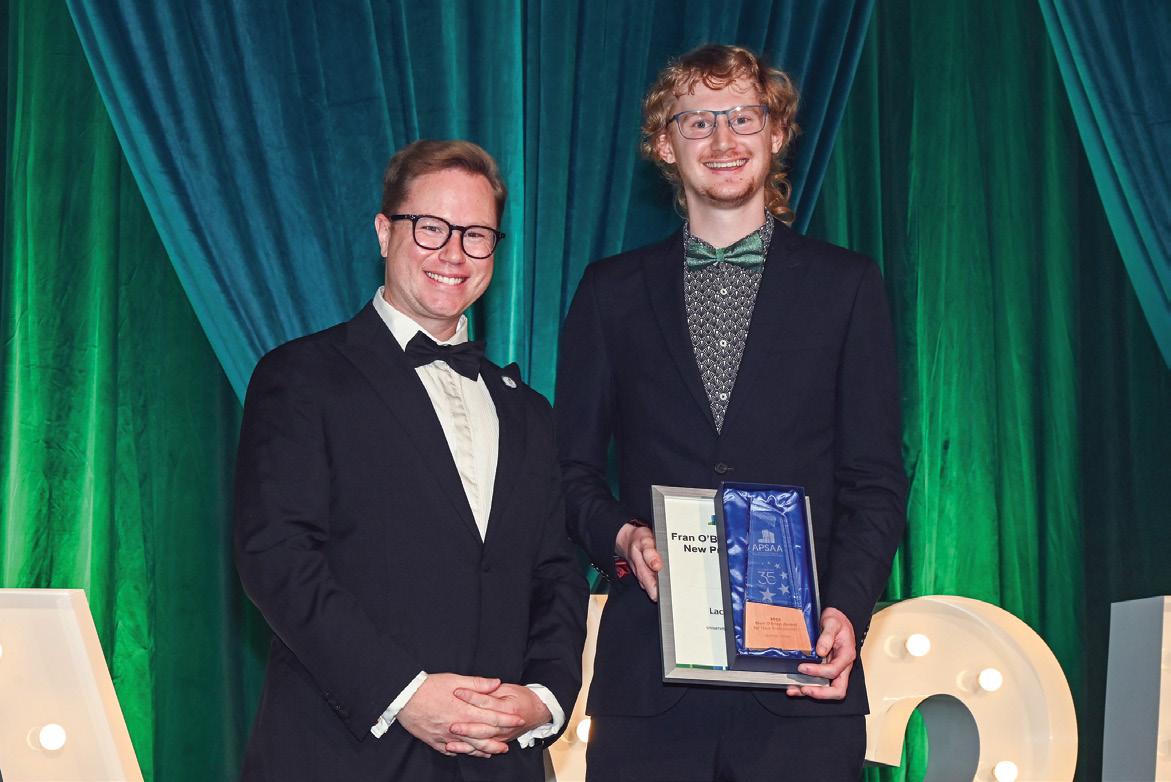
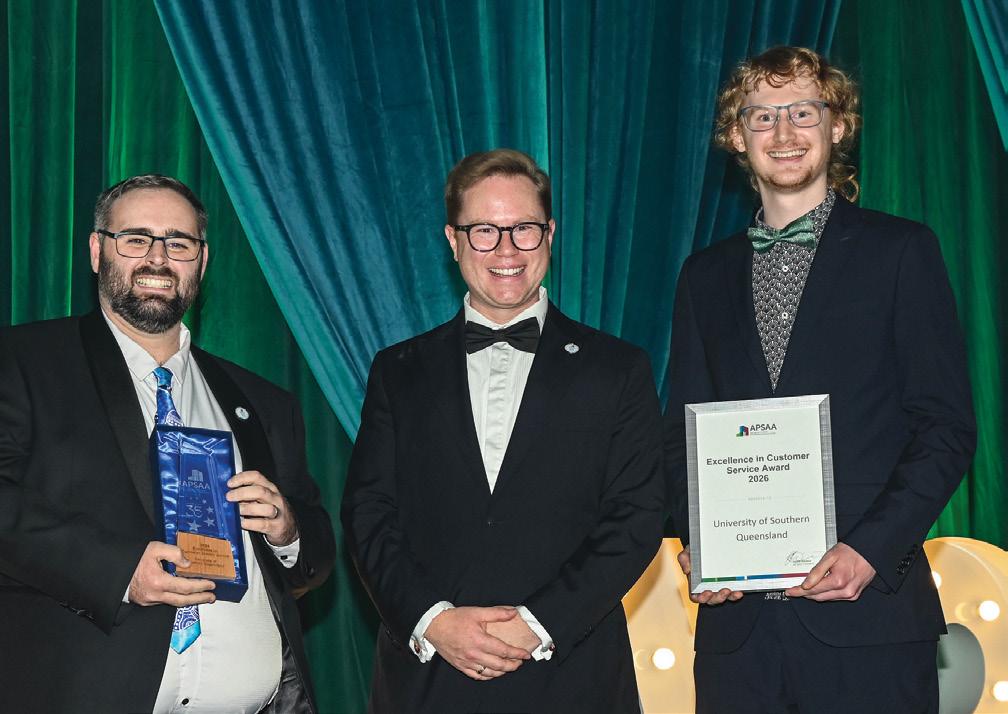
Lachlan Jones from University of Southern Queensland Residential Colleges was awarded the 2025 Asia-Pacific Student Accommodation Association Fran O’Brien Award for New Professionals, recognising his outstanding contribution to innovation, operational improvement and resident experience within the student accommodation sector.
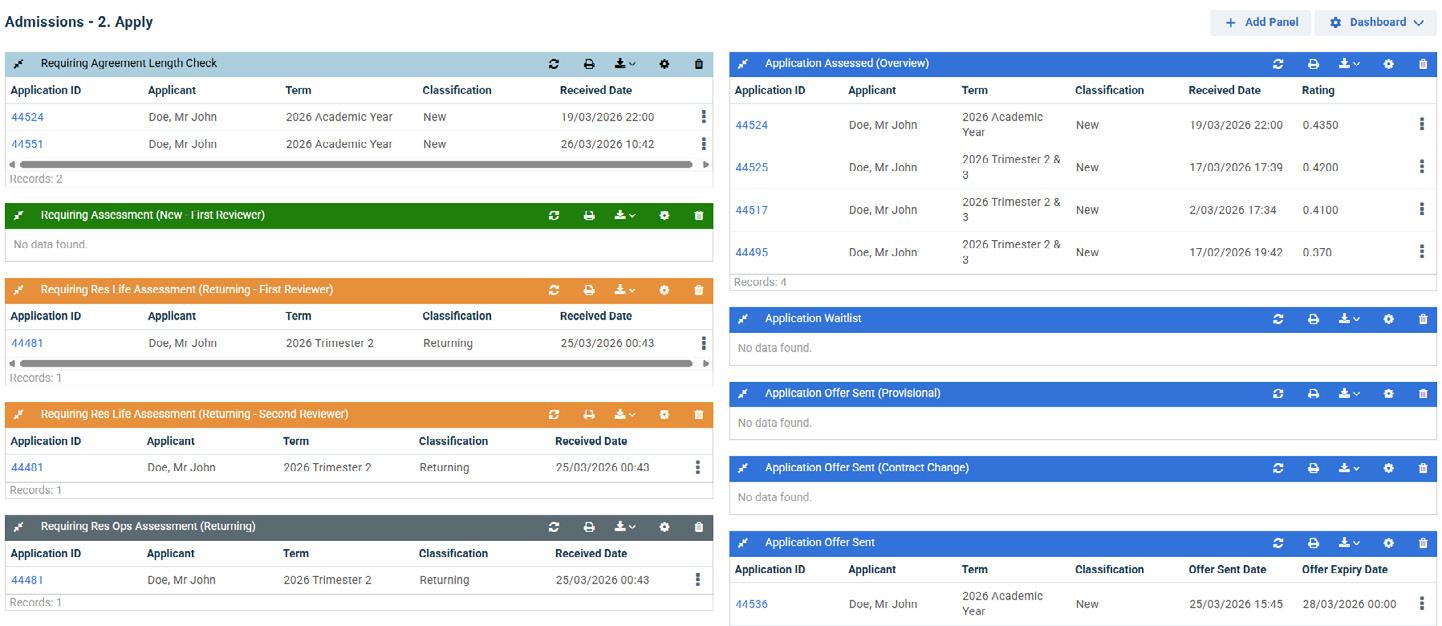
A former resident of UniSQ Residential Colleges himself, Lachlan has progressed through a range of student leadership and professional staff positions before moving into his current role as Residential Admissions Coordinator. Reporting to the Manager (Residential Operations), his role spans the full resident accommodation lifecycle, from applications and admissions through to room changes, departures and occupancy management, while also supporting short-stay bookings, systems improvements, marketing initiatives and resident communications.
Throughout his time within the sector, Lachlan has demonstrated a strong focus on improving operational efficiency while enhancing the resident experience. His application outlined an extensive range of initiatives he has led at UniSQ Residential Colleges, many of which have significantly streamlined processes, reduced administrative burden and improved communication with residents.
Among the key projects delivered were the implementation of Microsoft Teams as a resident communications platform, the redevelopment of the residential admissions process, automation of inspection and
"Throughout his time within the sector, Lachlan has demonstrated a strong focus on improving operational efficiency while enhancing the resident experience."
maintenance workflows, electronic access integration through StarRez, and the transition from paper-based systems to fully digital resident forms and processes. Lachlan also played a key role in the migration of StarRez from on-premises hosting to the cloud and contributed as a subject matter expert in broader systems integration projects.
The measurable outcomes of these initiatives have been significant. Event attendance across the residential community increased by 30–40% following the implementation of Microsoft Teams, while resident engagement with the platform reached exceptionally high levels across the colleges. Maintenance communication workflows also improved substantially, with thousands of automated updates delivered to residents, creating greater transparency and responsiveness in the maintenance process.
Operational efficiencies were further reflected in admissions and access management outcomes. Automated integrations processed more than 9,000 electronic access updates in 2025, significantly reducing manual administration, while the average time for applicants to complete accommodation acceptance processes decreased from more than 15 days in 2023 to just over four days in 2026.
Lachlan’s work has already received wider sector recognition, including being part of the team awarded the 2025 APSAA Excellence Award for Customer Service. He has also actively contributed to sector knowledge sharing through APSAA webinars and professional discussions with colleagues across the industry.
APSAA congratulates Lachlan Jones on receiving the 2025 Fran O’Brien Award for New Professionals and acknowledges his continued commitment to innovation, operational excellence and enhancing the residential experience for students.
Question 11: What is a major driver of PBSA growth in Australia and Asia-Pacific?
A. Declining university enrolments
B. Rising international student numbers
C. Reduced urbanisation
D. Government bans on private housing Answers on page 55
APSAA QUICK QUIZ
Fred Johnson Award for Best Practice & Professional Achievement in Aotearoa
Martin Thomas, Hatch Student Living
Martin Thomas has been a passionate and consistent champion for the student accommodation profession, particularly within the polytechnic and vocational education sector. Since joining APSAA, Martin has brought energy, advocacy, and genuine commitment to ensuring the polytechnic voice is represented and valued within the wider residential community.
He has actively encouraged engagement from other polytechnic providers, helping broaden APSAA’s reach and strengthening connections across the sector. Through his involvement, Martin has helped create greater visibility for the unique opportunities and challenges within polytechnic accommodation environments, while fostering collaboration and shared learning between institutions.
Martin has also contributed significantly through sector leadership and knowledge sharing. He has presented at APSAA summits, openly sharing insights and practice from
the New Zealand polytechnic environment, and has generously hosted campus tours for colleagues to showcase both innovation and operational realities within his accommodation setting. In doing so, he has helped deepen understanding of the unique challenges and opportunities faced by private accommodation providers working alongside educational institutions.
Importantly, Martin has also been a strong advocate for student wellbeing and quality practice within the New Zealand vocational education sector. He has championed conversations and work relating to the NZQA Code of Practice for the Pastoral Care of Tertiary and International Learners, helping ensure that student support, wellbeing, and pastoral care remain central within accommodation operations connected to the polytechnic sector.
Beyond representation, Martin has been an engaged, approachable, and highly supportive contributor to the profession. He consistently gives his time, shares knowledge freely, and contributes to conversations that strengthen the residential experience for students across Australasia. His commitment reflects the spirit of the Fred Johnson Award: leadership through service, advocacy, collaboration, and dedication to advancing the profession for others.
Student Accommodation Journal Writers Award
Elizabeth Kuo-Gollan, Senior Internal Communication Project Advisor, University of Technology Sydney
The 2026 Student Accommodation
Journal Writers Award was presented to “Prevention in Action: A Whole-of-Community Campaign to End Gender-Based Violence at UTS” for its compelling exploration of how a coordinated, institution-wide approach can drive meaningful cultural change.
The article showcases the University of Technology Sydney’s innovative Respect. Now.Always. campaign, demonstrating how student accommodation, student services,
academic faculties, and professional staff can work collaboratively to address one of the most significant challenges facing higher education. Through a combination of education, awareness, engagement, and prevention initiatives, the campaign highlights practical strategies for creating safer and more respectful communities.
The judges were particularly impressed by the article’s relevance to the contemporary student accommodation sector, its evidencebased approach, and its clear demonstration of prevention in action. By sharing both the successes and lessons learned from the campaign, the article provides valuable
A whole-of-community campaign to end gender-based violence at UTS
In a bold and multi-channel effort to create a safer, more respectful campus, UTS has launched a six-month campaign aimed at raising awareness and encouraging action against gender-based violence (GBV). Anchored within the university’s Respect. Now.Always (RNA) program, the campaign reflects a whole-of-community approach that spans digital, physical, and social platforms.
April – May: Awareness in motion
‘Through education, and stopping the social stigmas and norms on what people of certain genders should, and shouldn’t do.’ – student vox pop answer, April 2025.
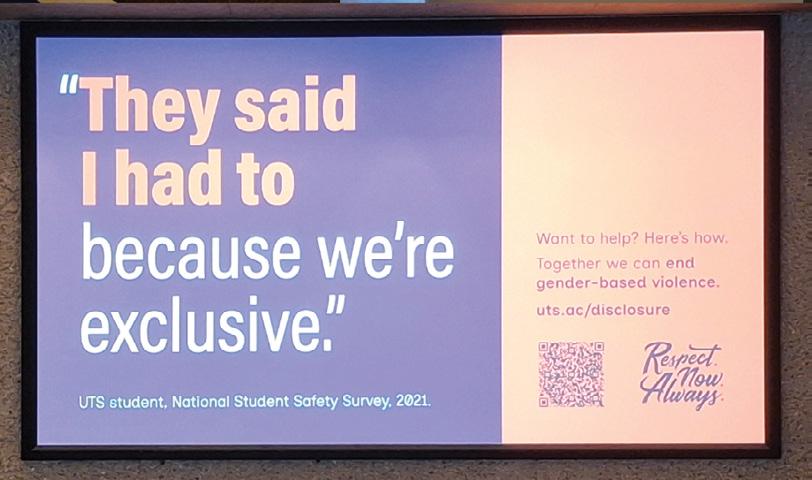
Timed to coincide with Sexual Assault and Awareness Month, the campaign kicked off in April with a series of reels on UTS’s social platforms, Instagram and Facebook. These featured real students and staff answering questions like “What is gender-based violence?” and “What does it mean to stop violence before it starts?” Garnering over 20,000 views and over 200 likes, the post reflected on the gender-based violence crisis and UTS’s zero tolerance approach.
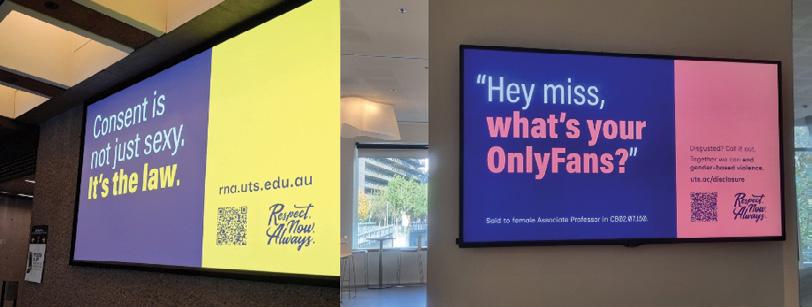
This social content was atomised across vertical campus screens in May, reinforcing our message in high-traffic areas. The campaign aligned with national initiatives such as Our Watch’s #ThisisPrevention campaign and broader cultural conversations such as the annual Walk for WAGEC fundraiser. 2025 was a particularly timely year as one of our student teams, Australian Football Club UTS Bats, walked to honour the life of their teammate Audrey Griffin, a UTS student and athlete, who
insights and practical takeaways for APSAA members seeking to strengthen their own responses to gender-based violence.
At a time when universities and accommodation providers across the region are preparing for increased expectations and regulatory requirements relating to gender-based violence prevention, this article offers an important example of leadership, collaboration, and community engagement.
Congratulations to the team from the University of Technology Sydney on this outstanding contribution to the Student Accommodation Journal.
was killed in the Central Coast at the hands of male violence.
June – July: Screens, stories, and staff voices
The campaign accelerated in June and July with a prominent visual presence across campus screens, including lifts in Building 1, social spaces like The Underground Bar and Gym, and faculty-specific locations.
Turned into hard-hitting, relatable content reflecting lived experiences on campus, content varied by site — some featuring AI themes in Engineering and IT, casual sexism in areas such as the Gym, while others showcased personal stories and scenarios of GBV, such as inappropriate comments in staff kitchens or open Q&A sessions.
Physical assets including postcards and A4 posters were distributed in student and staff areas, including bathrooms and security offices. Reposts and shares from staff on their own LinkedIn and Instagram platforms added authenticity, and created a reach that extended beyond the campus walls.
Amassing over 35,000 impressions and views, one particular academic – Associate Professor Amanda White, OAM – shared her personal experience and ended her powerful post with the campaign’s call to action: “Together we can end gender-based violence.”
August – September: Looping back and looking forward
As we move into the last stage of this campaign, we’re looping back into a campaign first introduced in 2021. Reflecting on our zero-tolerance approach to any forms of gendered violence, posters will be replaced with refreshed materials, and events like Spring Orientation and O’Day leveraged to extend reach.
Key learnings and reflections
• Stakeholder engagement as foundational, not optional: To shape this campaign, we sought feedback from key stakeholders across the university,
including academics, students and professional staff from faculties, the People Unit, the Provost Office, Health, Safety and Wellbeing, and MCU. They provided direct feedback into the campaign’s planning, design and execution.
• Courage and sensitivity: GBV is a confronting topic. While UTS champions open dialogue, not everyone is ready to speak publicly. The campaign’s success relied on volunteers and careful planning.
• Repurposing with purpose: Social content became screen content, which became printed collateral. Interviews were transformed into news articles and disseminated across internal channels— from all-Staff News to faculty newsletters.
• Collaboration is key: The campaign drew on the expertise of faculty and central teams, volunteers, and advocates. External partnerships, such as Our Watch and leveraging external awareness days
such as Sexual Assault and Awareness Month, enriched the campaign’s relevance, credibility and reach.
Looking ahead
With the incoming Code and national prevalence survey, 2026 is looking to be a significant year, with the spotlight on Australian universities and their demonstrated commitment to prevent gender-based violence.
At UTS, via our Respect.Now.Always. program, we’ve been committed to this cause since 2017. As we continue to embed safety and respect into every layer of its community, this year’s ‘Prevention in Action’ campaign stands as a testament to what’s possible when awareness meets action. Whether through engagement with our signature activations, a screen message in a campus lift, or an event collaboration with UTS Housing, every touchpoint reinforces the message that together we can end genderbased violence
91%
Prevention in action: UTS snapshot of students reported satisfaction with ‘information about sexual consent, harassment or assault’ at UTS, marking a 6% increase from the previous year (2024 Student Satisfaction Survey).
77%
of students believe ‘UTS provides a supportive environment for students to call out and/ or report instances of sexual harassment’ (2024 UTS Student Satisfaction Survey).
As of June 2025, 160,000 successful completions of Consent Matters training around navigating healthy relationships and bystander intervention.
Over 16,000 members of our community engage in our event activations each year, participating in dialogue about sexual consent, bystander intervention and support.
Jacob Waitere Awarded APSAA Life Membership and Joe Massingham Award for Meritorious Service
At the 2026 APSAA Conference, the Association was proud to recognise one of the sector’s most respected leaders, Jacob Waitere, with two of its highest honours: Life Membership and the Joe Massingham Award for Meritorious Service.
These awards recognise not only Jacob’s significant contributions to APSAA, but also his enduring impact on the student accommodation profession across Aotearoa New Zealand, the Asia-Pacific region, and internationally.
Life Membership is reserved for individuals whose service, leadership, and influence have left a lasting legacy on the Association and the sector it represents. The Joe Massingham Award for Meritorious Service, named after APSAA’s founder and first Life Member, recognises those who have given exceptional service to the advancement of the Association through their commitment, leadership, and positive professional influence.
Few individuals embody the spirit and intent of these awards more completely than Jacob.
Throughout his career, Jacob has demonstrated an unwavering commitment to enhancing the student accommodation experience and advancing professional practice. His leadership has consistently been driven by a focus on creating safe, supportive, and connected communities for students, while investing in the development of those who work within the sector.
Within APSAA, Jacob’s contribution has been both significant and far-reaching. As Vice President and later President, he provided vision, stability, and leadership during important periods of growth and change for the Association. His leadership strengthened collaboration across the Asia-Pacific region and helped reinforce APSAA’s position as the peak professional body for student accommodation professionals.
"His legacy will continue to be reflected in the strength of the Association, the success of its members, and the future leaders he has helped inspire."
Importantly, Jacob’s focus extended beyond organisational growth. He ensured that people remained at the centre of APSAA’s work, championing the development of emerging leaders and creating opportunities for members to build their skills, knowledge, and networks.
He played a pivotal role in the establishment and growth of both the Student Accommodation Essentials (SEA) program and the Global Housing Training Institute (GHTI), contributing as faculty, mentor, and
advocate. Through these initiatives, and through his support of APSAA’s broader professional development framework, Jacob has helped shape the careers of countless professionals across the region.
His influence has not been confined to APSAA.
On the international stage, Jacob has been a passionate advocate for the Asia-Pacific student accommodation community. Through his involvement with ACUHO-I, including serving as Chair of the Global
Initiatives Network, he has strengthened relationships between housing professionals across New Zealand, Australia, the United Kingdom, South Africa, Canada, and the United States.
His efforts have helped elevate the voice and visibility of the Asia-Pacific region within the global housing profession, fostering collaboration, knowledge sharing, and stronger international connections.
In recognition of these contributions, Jacob was previously awarded the prestigious Roelf Visser Award, one of the highest international honours in university housing, acknowledging his outstanding contribution to the global profession.
While Jacob’s achievements and leadership positions are impressive, those who have
Question 12: Which amenity is now considered standard in modern PBSA developments?
A. Swimming pools only
B. Study spaces and communal lounges
C. Full kitchens in every studio
D. Carparking bay for each student
Answers on page 55
worked alongside him often speak most highly of his character.
Known for his humility, generosity, and willingness to share his knowledge and experience, Jacob has become a trusted mentor and colleague to many across the sector. Whether through formal leadership roles, conference presentations, committee work, or one-on-one conversations, he has consistently invested in others and encouraged them to grow as professionals and leaders.
His influence can be seen not only in the organisations he has helped shape, but in the many people whose careers have benefited from his guidance and support.
As APSAA recognised Jacob with both Life Membership and the Joe Massingham Award
for Meritorious Service, the Association celebrated not only an outstanding record of achievement, but also the lasting impact of an individual who has strengthened the profession at every level.
On behalf of APSAA and the broader student accommodation community, we congratulate Jacob Waitere on these well-deserved honours and thank him for his exceptional leadership, service, and contribution to our profession.
His legacy will continue to be reflected in the strength of the Association, the success of its members, and the future leaders he has helped inspire.
APSAA QUICK QUIZ
Michael O'Leary Award for Innovation
Deakin Residential Services (DRS)
Deakin Residential Services (DRS) is a wholly owned, not-for-profit subsidiary of Deakin University, established to manage Deakin’s on-campus accommodation assets and deliver the residential student experience. DRS is responsible for the strategic leadership, governance, and operational delivery of safe, inclusive, and vibrant residential communities across Deakin’s campuses.
DRS’s purpose is to excel at sustainably delivering residential environments that engage students and support them to thrive. This is underpinned by DRS’s RESPECT community values and a strong organisational focus on quality, value, and safety. The organisation oversees the full residential lifecycle, including student onboarding and induction, residential life and engagement programming, safety and wellbeing initiatives, compliance with institutional and regulatory obligations, operational risk management, and continuous service improvement through innovation.
DRS manages a diverse and complex accommodation portfolio supporting a broad cohort of domestic and international students across multiple campuses and accommodation types.
The organisation leads multidisciplinary teams responsible for residential operations, student engagement and community development, digital communications, finance and compliance, business services and innovation, and wellbeing support. These teams comprise both professional staff with clearly defined reporting structures to ensure consistent service delivery, safety oversight, and risk management across the portfolio. DRS is accountable for significant annual operational budgets covering accommodation
Start your journey
operations, staffing, programming, compliance activities, and digital enablement.
DRS is governed by a Board of Directors appointed by Deakin University, which retains overall governance responsibility and delegates day-to-day management to the Chief Executive Officer, Marion Grey. Organisational accountability is aligned to Deakin’s broader student experience, wellbeing, inclusion, and regulatory compliance strategies.
Key performance indicators include student experience and engagement outcomes, residential safety and wellbeing measures, compliance with the National Code and
University policies, operational efficiency, financial sustainability, and continuous improvement through measurable innovation. In addition to its operational remit, DRS actively contributes to sector development through engagement with APSAA and ACUHO-i, collaboration with peer institutions, and the sharing of scalable, student-centred practice that strengthens residential governance and industry standards.
Details of the Innovation
DRS, in partnership with Browzer (Campus Life), delivered a sector leading innovation by implementing a fully personalised digital induction experience for residents prior to arrival on campus that is supported with an integration to DRS’s StarRez System.
The innovation goes beyond generic orientation by deploying dynamic, modular induction decks tailored to:
• the specific campus a student will reside in,
• the specific residence within that campus, and
• the individual room type the student occupies (e.g. studio, shared apartment, residential college).
The integration with StarRez was a critical component of the innovation, enabling student induction pathways to be automatically generated using confirmed accommodation data such as campus, residence, building, and room type. This removed the need for manual enrolment, cohort segmentation, and duplicate data handling that traditionally characterise induction processes within student housing. This level of contextual personalisation is a first in the APAC region and represents a fundamental shift in induction delivery, ensuring students receive information directly relevant to their physical environment, shared spaces, emergency procedures, building-specific rules and support pathways, thereby reducing confusion and increasing comprehension.
Through this integration, students are automatically assigned tailored induction decks aligned to their specific residential context, ensuring that information about their environment, shared spaces, safety procedures and behavioural expectations is accurate and relevant.
A key component of the innovation is the integration of gender-based violence (GBV) education and respectful relationships content delivered prior to campus arrival. Rather than relying on post arrival workshops or reactive interventions, the platform ensures all students are exposed to consistent, clear expectations about behaviour, consent, reporting pathways, and community standards before they enter the residential environment.
Through the partnership with Browzer, DRS has been able to create content that incorporates:
• campus specific safety information,
• scenario based GBV education aligned to residential contexts,
• knowledge checks to confirm understanding, and
• completion tracking to support institutional oversight.
By combining environmental relevance with behaviour setting education, the innovation reframes induction as a preventative safety and compliance tool, rather than a procedural requirement. Additionally, by integrating personalised content delivery, compliance education and data capture within existing operational systems, DRS repositioned induction as a scalable, efficient and risk-responsive function, rather than an administratively intensive process.
Reception, Adoption and Sustainability
The personalised induction model has been strongly received by both students and staff, with engagement outcomes notably stronger than traditional, static induction approaches. Students demonstrated higher completion and interaction rates when content was aligned to their actual living environment, including their building, room configuration, and shared facilities. Feedback indicates the inductions were perceived as more relevant, easier to understand, and directly applicable to day-to-day residential living.
At the same time, the model provides staff with confidence that students are arriving with an awareness of campus specific safety procedures, an understanding of responsibilities within shared and private spaces, and a foundational knowledge of GBV expectations and reporting pathways. The consistent delivery of GBV content across cohorts enables DRS to demonstrate a proactive and structured approach to student safety and education, supported by analytics that allow completion to be tracked and follow up identified, strengthening governance and duty of care practices.
The solution is sustainable across intake periods, with campus and room specific content easily updated as buildings, policies, or compliance requirements evolve, and scalable across portfolios and institutions. Integral to this sustainability is direct integration with the StarRez system, which was a core objective of the innovation to improve operational efficiency alongside induction quality and compliance outcomes. The integration has eliminated manual student enrolment, removed the need for parallel spreadsheets and tracking
processes, and enabled automated reporting of induction and GBV module completion, improving the accuracy and timeliness of compliance data.
Impact Beyond DRS
This innovation has implications well beyond DRS and contributes to raising standards across the student housing sector.
The introduction of campus and room specific induction content challenges the longstanding assumption that induction must be uniform. It demonstrates that meaningful personalisation is achievable at scale and materially improves understanding, safety, and accountability.
Critically, the early delivery of GBV education supports a preventative approach that aligns strongly with the National Code expectations around student welfare, safety, and appropriate information provision. By ensuring education occurs prior to residential entry, the model reduces institutional risk while promoting safer community formation from the outset.
Michael O'Leary Award for Innovation – continued
The approach has generated sector interest due to its:
• transferability across institutions,
• ability to evidence compliance and engagement, and
• clear alignment to regulatory, ethical, and student wellbeing priorities.
By sharing learnings through APSAA engagement and professional networks, DRS has contributed to broader sector dialogue on how digital innovation can support responsible, student-centred accommodation management.
Achievement of Objectives and Measurement
The innovation achieved its stated objectives of improving induction relevance, strengthening safety education, enabling measurable compliance oversight, and improving operational efficiency.
DRS set out to deliver a more effective induction by providing personalised, context specific content tailored to each student’s campus, residence, building and room type; ensuring consistent delivery of GBV education aligned with institutional and National Code obligations; improving student engagement and comprehension prior to arrival; and enabling reliable reporting on induction completion and understanding.
Success was measured through platform analytics, including completion rates by campus and cohort, engagement with safety and GBV modules, and the timing of completion relative to arrival on campus. These data sets provided DRS with clear evidence of early engagement and compliance, representing a significant improvement on traditional induction approaches that relied on manual tracking and post arrival delivery.
Qualitative feedback from residential and wellbeing staff further confirmed improved student preparedness, reduced need for repeated post arrival explanation of expectations, and clearer understanding of behavioural standards within residences.
The innovation remains embedded as a core component of DRS’s residential lifecycle approach, continuing to deliver measurable
benefits across safety, compliance and student experience. A critical element in achieving and sustaining these outcomes was direct integration with the StarRez system, which was intentionally designed to improve operational efficiency alongside induction quality.
Through this integration, key administrative processes were automated, resulting in:
• elimination of manual student enrolment into induction programs;
• removal of parallel spreadsheets and manual tracking processes;
• automated reporting of induction and GBV module completion; and
• improved accuracy and timeliness of compliance data.
From a governance perspective, DRS can now demonstrate, through system-based evidence,
that required induction content, including GBV education, has been completed prior to arrival on campus. This represents a significant enhancement in assurance against National Code requirements and institutional risk.
Collectively, the integration ensures that objectives relating to efficiency, safety, compliance and student experience are achieved within a single, streamlined operational model. The innovation is distinguished not only by its student experience outcomes, but by its operational design, embedding personalised induction, GBV education and compliance reporting directly into existing systems to reduce administrative burden while increasing institutional assurance.
My Favorite Student Best of Program Award
Greg Scott, Director Accommodation Services, University of Canterbury, New Zealand
First impressions matter – exploring initial international student accommodation encounters
Presented with the support of Tom White, CEO, Residential Experience Standard
Abstract summary:
This workshop was an opportunity for the APSAA Internationalisation Special Interest Group (ISIG) to engage members with a focus on the pre-arrival to first two months period of the international student resident lifecycle.
Research has shown that this period is critical to student wellbeing and success and has the greatest potential for the sector to improve effectiveness towards excellence. It is also recognised that what is good for international students, also enhances the experience of all students.
This session will present initial insights from a range of international sources and provide the opportunity for participants to pool their experiences, exploring how we can individually and collectively respond to the challenges and opportunities.
One of the opportunities identified by the ISIG (a sub-group of the APSAA Research and Knowledge Committee) is to help members gain insights through collective and targeted
primary research on this topic and to develop content that informs our industry guidelines.
Nominated Stream: Student experience and wellbeing.
Target Audience
This workshop is designed for leaders, managers, student support staff and policy advisors from accommodation providers and agencies working with a mix of student residents from diverse cultures.
Learning Outcomes
This workshop session will provide participants with:
Presenter Bio
Question 13: What is the dominant form of student accommodation in New Zealand cities?
A. High-rise PBSA towers only
B. University residential colleges and halls of residence
C. Suburban detached housing owned by universities
D. Capsule hotel-style accommodation
Answers on page 55
Greg Scott has led accommodation portfolio development at the University of Canterbury for the past five years, following a career in education management and teaching, focussed on the international and business education sectors. He was previously the General Manager for Industry Development at NZ crown agency Education New Zealand and education sector lead at NZ Trade and Enterprise. Greg has also held roles in the tertiary sector as a Principal Lecturer in accounting, International Dean and Director of one of NZ’s leading school international colleges.
He is excited by the opportunities to further develop value for the students and the University from a vibrant campus living community and further enhance the
1. Insights from international research on the initial experiences of international student residents,
2. Understanding of possible strategies and initiatives to enhance the initial experiences and wellbeing of international student residents, which will also be transferrable to all residents.
3. The opportunity to discuss how we can collectively collect and pool our insights with international residents for the benefit of APSAA members and their residents.
4. Understand the role and aspirations of the APSAA ISIG with a view to increasing participation in this key area of practice.
experiences of increasing numbers of international students.
Outside of work, Greg is married with three adult young people and enjoys exploring beautiful corners of NZ’s outdoor environment, travelling to experience other cultures, music-making and running as far and fast as possible for someone of his age!
APSAA QUICK QUIZ
Celebrating APSAA Awards of Excellence 2026
Excellence in Facility Development or Management – College Mannix College
Mannix College | Precision at Pace: Transforming 290 Rooms in 7 Weeks
Mannix College has been recognised for delivering a remarkable large-scale refurbishment project that transformed 290 of its 315 student rooms, more than 90 per cent of its residential capacity, within a tightly managed seven-week summer period. Completed on time and under budget, the project modernised a 57-year-old facility without disrupting the academic calendar or displacing students.
on high-impact improvements, Mannix was able to significantly enhance comfort, functionality, and wellbeing while maintaining affordability.
mple 1 During After mple 1 During After
Guided by extensive student consultation, the refurbishment focused on the areas that most directly impact the resident experience, including upgraded study furniture, enhanced lighting, improved acoustics, increased power and USB access, dedicated in-room WiFi, refreshed soft furnishings, and contemporary finishes throughout the building. By prioritising student needs and concentrating investment
The project also demonstrated an innovative approach to facility management and renewal. Through careful project sequencing, strong governance, and the use of an earlycompletion floor as a live pilot environment, the College successfully managed a complex refurbishment at scale within an extremely compressed timeframe.
Beyond its impact on residents, the project provides a practical and transferable model for the student accommodation sector, demonstrating how ageing residential assets can be renewed rapidly, equitably, and cost-effectively. The refurbishment
reinforces Mannix College’s commitment to delivering contemporary, student-centred accommodation while setting a benchmark for future facility renewal projects across the sector.
https://www.youtube.com/watch?v=Ci4QD_gWMo
Excellence in Facility Development or Management – University Taylor's Residence
Taylor’s Residence | Resident-Centred Renewal in a Live Operational Environment
Taylor’s Residence has been recognised for delivering a large-scale refurbishment program that successfully modernised one of Malaysia’s largest purpose-built student accommodation communities while maintaining continuous operations. Home to more than 1,000 students from over 50 nationalities, the residence undertook a RM20 million asset enhancement initiative designed to improve wellbeing, optimise living spaces, and enhance the overall student experience.
Picture Evidence (Before vs After):
Picture Evidence (Before vs After):
Picture Evidence (Before vs After):
Picture Evidence (Before vs After):
Completed within a fully occupied environment, the refurbishment transformed both private and shared spaces through a resident-centred design approach. Guided by student feedback, the project introduced innovative spacesaving solutions, upgraded furniture and storage, improved lighting, enhanced study and social spaces, redesigned communal kitchens, and created new recreational and landscaped areas. The initiative focused on maximising functionality and liveability within the existing building footprint while maintaining affordability for residents.
planning, coordinated resident communication, and phased implementation, Taylor’s Residence maintained an average occupancy of 93 per cent during the refurbishment while achieving 96 per cent resident satisfaction and a Net Promoter Score of +51.
The project also demonstrates a strong model for the wider student accommodation sector. By combining resident-led design, adaptive reuse of existing spaces, enhanced safety systems, and operational resilience, Taylor’s Residence has shown how ageing accommodation assets can be successfully renewed while remaining fully operational. The initiative has strengthened student wellbeing, enhanced community engagement, and contributed to raising expectations for purpose-built student accommodation across the region.
https://www.youtube.com/watch?v=rBaY3tmxyM
Excellence in Marketing & Communications
Deakin Residential Services
Deakin Residential Services | Belong Better: Aligning Digital Expectations with Real-World Residential Experience
Deakin Residential Services (DRS) was recognised for its innovative Belong Better campaign, a comprehensive marketing and communications initiative designed to ensure that what prospective residents see online accurately reflects their lived experience when they arrive on campus.
Developed and delivered in-house by a small team, the campaign reimagined the student journey from initial awareness through to move-in and beyond. By aligning social media content, pre-arrival communications, staff training, and the resident experience framework, DRS created a consistent and authentic narrative focused on community, wellbeing, academic success, leadership, and belonging.
Appendix D: Pre- Arrival Comms Email overhaul:
The campaign placed a strong emphasis on student-generated content, short-form video, and digital storytelling across platforms including Instagram, TikTok, and YouTube. Prospective residents were supported through simplified communications, targeted blogs, interactive Q&A sessions, and a portal-first approach that reduced information overload while increasing confidence and preparedness before arrival.
Our emails now contain links to our latest videos and Instagram reels as we know prospects love seeing real / tangible examples of what life is really like on res. A/B testing across subject lines and send times has also been deployed to refine our approach and support data informed decision making. These changes have seen our open rate grow from 40% to over 65%. Click through rates grew by 2%.
The results were significant. Website traffic exceeded 643,000 users and 1.5 million page views, social media interactions increased by more than 80 per cent, follower growth rose by nearly 37 per cent,
From Suitcase to Setup: Explore How Resis Settle In!
and email open rates increased from approximately 40 per cent to 65 per cent. More than 5,500 first-time accommodation applications were received in the lead-up to Semester 1 2026, while staff reported fewer expectation-related concerns and smoother orientation experiences.
Evidence appendix checklist Appendix A: Videos
Belong Better at Deakin Res | Your Home Away from Home �
Beyond its marketing success, Belong Better demonstrates a highly transferable model for the student accommodation sector. By integrating marketing, communications, operations, and student experience into a single cohesive strategy, Deakin Residential Services has shown how institutions can strengthen trust, improve student preparedness, and create a stronger sense of belonging from the very first interaction.
At Deakin Res, you’re not just finding a place to live, you’re becoming part of a supportive, vibrant community where you truly belong. Belong Better is all about creating meaningful friendships, feeling supported, and making the most of your Deakin. See what our residents have to say about their experiences living on Res. https://youtu.be/pIRn4SEHpLQ
Check out how Baani sets up her space and makes Res feel like home
Better Outcomes | The Power of Living
In our latest video, we shine a light on the unique value that living at Deakin Res long skills to greater confidence and career success. Told through the stories of 4 alumni, the video
at Deakin Res A Journey Full Circle
Cozy Room Series Ft. Burwood Resi Baani
Excellence in Student Experience – College
Mannix College
Mannix College | Connections Across Generations: Mannix Young Hearts
Mannix College was recognised for its innovative Mannix Young Hearts program, an intergenerational initiative designed to address loneliness, foster meaningful connection, and create opportunities for students to contribute beyond the College community.
Developed in partnership with VMCH’s Corpus Christi aged care residence, the program brings together university students and aged care residents through regular visits, shared activities, and special events. Since its launch in September 2024, Young Hearts has engaged more than 100 Mannix students and over 120 VMCH residents through activities including arts and crafts sessions, music performances, storytelling, technology support, themed celebrations, and student-led workshops.
The program was created in response to two interconnected challenges: social isolation among older adults and the sense of disconnection that many students can experience while living away from home. By creating structured opportunities for sustained intergenerational engagement, Mannix has developed a model that delivers benefits for both groups. Residents report increased connection, purpose, and social engagement, while students have developed empathy, confidence, communication skills, and a stronger sense of belonging and contribution.
A key strength of the initiative is its focus on ongoing relationships rather than oneoff volunteering opportunities. Regular engagement has enabled genuine friendships to develop, creating meaningful experiences that have enhanced wellbeing for participants across both communities.
The impact of the program has also extended beyond wellbeing outcomes. In recognition of its success, VMCH committed $20,000 towards a scholarship and internship pathway for Mannix students, creating additional opportunities for professional development and employability. The program was also recognised as a finalist in the 2025 Future of Ageing Awards.
Through Young Hearts, Mannix College has demonstrated how student accommodation can foster purpose, service, and community
connection. By encouraging students to engage meaningfully beyond their immediate environment, the initiative exemplifies the transformative role residential communities can play in shaping compassionate, engaged, and socially connected future leaders.
Question 14: Which region saw the fastest PBSA growth in the 2010s–2020s?
A. North America
B. Europe
C. Asia-Pacific
D. South America
Answers on page 55
MCH.
Reside
Staff volunteering day, making Christmas hampers
Studen
Visibility and Reach
Promotion through social media, video, and publications has increased participation and engagement a organisations
Young Hearts delivers measurable, multi-dimensional impact across wellbeing , engagement, and emplo in consistent, meaningful connections
Residents at the 2024 program launch, held at the VMCH.
Excellence in Student Experience – University
Taylor's Residence
Taylor’s Residence | R!SE Residential Living Program
Taylor’s Residence was recognised for its innovative R!SE Residential Living Program, a comprehensive residential framework that transforms student accommodation into a holistic living and learning environment focused on student wellbeing, development, and success.
Designed around the principles of being Relevant, Inclusive, Supportive and Engaging, the program supports residents through a structured four-stage journey of Integration, Adaptation, Engagement and Empowerment. This intentional progression helps students develop from newcomers adjusting to university life into confident, independent individuals and community leaders.
The impact of the program has been significant. Taylor’s Residence recorded an overall resident satisfaction rate of 96 per cent, with 98 per cent satisfaction in physical wellbeing, 96 per cent in social wellbeing, 95 per cent in emotional wellbeing, and 100 per cent satisfaction in intellectual development initiatives. Mental wellbeing outcomes also improved substantially, with 96 per cent of residents recording healthy wellbeing scores through the Residence’s structured MHI-5 wellbeing monitoring program.
Appendixes & References:
The program is underpinned by four interconnected wellbeing pillars: Physical, Emotional, Social and Intellectual Wellbeing. Through a combination of pastoral support, mental health initiatives, leadership development, academic skills programs, intercultural engagement, and community service opportunities, residents are supported to thrive both personally and academically.
A key strength of the R!SE model is its integration of leadership, sustainability, and community engagement. Residents participate in initiatives such as the LaunchPad service-learning program, which has supported more than 1,350 beneficiaries through community outreach projects, and the REGrow sustainability initiative, which converts food waste into fertiliser for local communities. Recycling programs and social impact partnerships further reinforce the Residence’s commitment to responsible citizenship and social responsibility.
Appendix 1 R!SE Residential Living Program Structure and Journey Overview
The program’s success is reflected in strong operational outcomes, including an 87 per cent resident retention rate and 93 per cent occupancy. By embedding wellbeing, leadership development, academic support, and community engagement into every stage of the residential journey, Taylor’s Residence has created a highly effective model that empowers students to flourish during their university experience and beyond.
Excellence in Sustainable Development Goals
Taylor's Residence
Taylor’s Residence | REGrow Initiative
Taylor’s Residence received the 2026 APSAA Excellence in Sustainable Development Goals Award for REGrow, an innovative studentled sustainability initiative that transforms food waste into valuable community resources while embedding environmental responsibility into everyday residential life.
Developed as part of the Residence’s R!SE Residential Living Program, REGrow was established to address the significant volume of organic waste generated by a community of more than 1,000 residents. Through a structured waste collection and bioconversion system using black soldier fly larvae, food waste that would otherwise be sent to landfill is converted into organic fertiliser and sustainable livestock feed.
Since its launch in September 2025, REGrow has diverted 494.3 kilograms of food waste from landfill, produced 85.2 kilograms of organic fertiliser, generated 57.3 kilograms of larvae biomass, and prevented an estimated 1.23 tonnes of CO₂ emissions. The fertiliser is donated to Orang Asli Indigenous communities to support small-scale farming, while the larvae biomass is distributed to lower-income farmers as a high-protein livestock feed.
Appendixes & References:
The initiative demonstrates a strong commitment to the United Nations Sustainable Development Goals, particularly
Responsible Consumption and Production (SDG 12) and Climate Action (SDG 13), while also contributing to goals relating to education, sustainable communities, reduced inequalities and life on land.
Beyond its environmental outcomes, REGrow serves as a practical leadership and learning platform for residents. Students take ownership of waste collection, monitoring and impact reporting, gaining first-hand experience in sustainability, circular economy principles and community engagement. The initiative achieved a 92 per cent participant satisfaction rate and an NPS of +54, highlighting its positive impact on resident engagement and sustainability awareness.
Appendixes & References:
Appendix 1 Regrow KPI Dashboard
By transforming everyday waste into meaningful environmental and social outcomes, Taylor’s Residence has demonstrated how student accommodation communities can play an active role in advancing sustainability while developing environmentally conscious future leaders.
Appendix 2 REGrow highlight video • REGrow Highlight video: https://www.youtube.com/watch?v=LNdNlQekJR4
REGrow Student Committee donating Fertilizer to the Indigenous Community.
Photo: REGrow Student Committee donating Fertilizer to the Indigenous
c. The Student REGrow photo
Photo 1: Food waste collected
Photo 2: Grinding of the food waste process
Photo 3: The Feeding of Ground Food
The Feeding of Ground Food Waste to Black Soldier Fly Larvae
Excellent in Customer Service
University of Southern Queensland
University of Southern Queensland Residential Colleges | Elevating Residential Admissions Through Student-Centred Design
The University of Southern Queensland (UniSQ) Residential Colleges received the 2026 APSAA Excellence in Customer Service Award for its innovative redesign of the residential admissions experience, creating a more transparent, efficient and studentcentred journey from initial enquiry through to arrival on campus.
The project focused on enhancing both the student-facing admissions experience and the behind-the-scenes administrative processes that support it. Central to the initiative was the consolidation of all admissions activity into a single StarRez platform, enabling a seamless and consistent experience for applicants while significantly improving operational efficiency.
A key feature of the redesign was the introduction of a simplified, personalised admissions pathway. Students now benefit from tailored application processes that only request relevant information, real-time visibility of application progress, automated communications at key stages, and proactive support for incomplete applications. The transition from trimester-based agreements to full academic year contracts also reduced administrative burden while providing students with greater certainty and stability.
To strengthen the transition into residential life, UniSQ enhanced its pre-arrival
APSAA QUICK QUIZ
Question 15: What is the approximate proportion of PBSA demand in Australia driven by international students?
communication strategy through automated information delivery, online induction modules and personalised phone calls from Senior Residential Assistants. These conversations provide incoming residents with an opportunity to ask questions, discuss preferences and establish an early connection with the residential community before arrival.
Operationally, the project delivered significant efficiencies through automation, with more than 6,600 admissions communications generated automatically in 2025. A centralised admissions command centre and real-time dashboard reporting have further streamlined workflows, improved data accuracy and enabled staff to focus on personalised support rather than manual administration.
D.
Answers on page 55
Administrative Service Enablement
The impact of the initiative has been substantial. Average application assessment times decreased from 41 days in 2024 to just 9 days in 2026, while incomplete applications fell from 665 in 2023 to 161 in 2026. Pre-arrival cancellations also reduced significantly, dropping from 92 in 2024 to 34 in 2026, reflecting improved communication, earlier offers and stronger student engagement throughout the admissions process.
By combining thoughtful service design, personalised engagement and innovative use of technology, UniSQ Residential Colleges has transformed the admissions experience, delivering measurable improvements in customer service, student satisfaction and operational performance.
All admissions activity is managed through a centralised Admissions Command Centre built entirely within StarRez (Figure C). This environment integrates engagement, applications, allocations, room changes, and termination requests into a single operational view, with live dashboards providing real-time visibility into the admissions process
Focus on facilities
UniLodge Lorne Street Auckland
UniLodge Lorne Street, opened in 2026, has quickly become one of Auckland’s most significant additions to the student accommodation landscape.
With 758 rooms and 12 room types—from selfcontained studios to four bedroom apartments and heritagefacade rooms—the residence is designed to give students genuine choice and flexibility in how they live.
The community is equally diverse. Open to students at all tertiary levels, the residence currently houses learners aged 18 to 53, creating a vibrant mix of international and domestic residents. This intergenerational environment supports a culture of independence, respect, and shared experience.
The vision for UniLodge Lorne Street is clear: to be Auckland’s premier student accommodation, offering a sophisticated living environment supported by a strong Residential Life Program. The building’s amenities are designed to feel like natural extensions of each resident’s personal space, reinforcing a sense of safety, belonging, and home.
Despite its recent opening, the building has already earned industry recognition. It received a Gold Award in the Master Builders Commercial Project Awards
and has been nominated for three categories in the Property Industry Awards, including sustainability, multiunit residential design, and heritage/adaptive reuse.
UniLodge Lorne Street stands as a model for modern student living—architecturally ambitious, communityminded, and built for the evolving needs of today’s learners.
MARITZA KLOPPERS
New build – University of Newcastle
Newcastle CBD
Time to opening – 10 months
City Campus Student Accommodation – Project Update
Construction Progress Update: Strong Momentum On Site and Student Collaboration Enhancing Design
Construction of the new student accommodation building at the Newcastle City Campus continues to progress positively, supported by favourable dry weather conditions that have enabled steady advancement across multiple work fronts. As structural elements rise and internal systems are installed, the building is now beginning to take a clear and defined shape—an exciting milestone for the project team and the broader University community.
A key highlight has been the continued progress of the concrete structure, with pours now completed up to Level 6. At ground and podium level, significant milestones have also been achieved. The podium and external terrace floor slab have been successfully poured, establishing the base of the building and defining critical shared outdoor spaces.
Preparations are also underway for the next major phase, with the building façade currently in transit from Thailand. Installation is expected to commence in June, marking a significant transition from structural works to the enclosure of the building. The façade installation will dramatically transform the appearance of the project and signal continued momentum toward completion.
Internally, progress on building services remains strong. Installation of in-ceiling infrastructure—including fire systems, electrical, plumbing, and HVAC—is well underway. Works have advanced considerably
on the Ground Floor and are continuing up through Level 2. This early integration of services is critical to maintaining efficiency in later stages of the build and ensures alignment with the final design intent.
Real-World Learning Embedded in Project Delivery
Alongside physical construction progress, the project is also delivering meaningful educational outcomes through an innovative student engagement initiative led by the School of Architecture and Built Environment. Eighteen students are currently participating in an industry-aligned elective, contributing to the design of a key public space within the new student accommodation building footprint.
Students are responding to the site’s cultural significance, industrial heritage,
and environmental conditions to develop concepts for an accessible and contemporary public space. Central to this initiative is the opportunity for participants to gain authentic project experience by working alongside project managers, construction teams, and professional consultants.
Looking Ahead
With structural works progressing well, services installation advancing, and façade installation on the horizon, the project continues to build strong momentum. At the same time, the integration of student experience into the design process adds a unique and valuable dimension—bridging education and industry while contributing directly to the quality and character of the final development.
JESS ROKOBARO
General Manager, Student Living, Academic Division
The University of Newcastle
APSAA Quiz Answers
ANSWERS
Question 1: B. UniLodge
Question 2: B. Government-supported or university-linked halls
Question 3: C. St Paul’s College (1856)
Question 4: B. 12–18 m²
Question 5: C. University of Otago
Question 6: B. Ensuite rooms within
cluster apartments
Question 7: A. Weave Living
Question 8: C. 10–20 storeys
Question 9: A. Knox College (1869)
Question 10: C. 85–95%
Question 11: B. Rising international student numbers
Question 12: B. Study spaces and communal lounges
Question 13: B. University residential colleges and halls of residence