Florida
State Timeline Companion Book
1776
The American Revolution begins. Florida remained faithful to England, serving as a safe haven for loyalist Tories, especially St. Augustine.
1783
Florida’s first newspaper, the Tory-run East-Florida Gazette, begins publishing.
The Treaty of Paris Ends the Revolutionary War and returns Florida to Spain. Most British settlers relocate to England or the Bahamas.
1812
1812–1814
The Patriot War occurs — an attempted rebellion in Spanish Florida aimed at inciting a U.S. annexation of the territory.
1816
General Andrew Jackson enters Florida in pursuit of the Seminoles, culminating in the First Seminole War.
1819
Under the 1819 Adams–Onís Treaty, Spain cedes Florida to the U.S. in exchange for claims to Texas, establishing a new boundary along the Sabine River.
1821
Florida becomes a territory of the U.S., with Andrew Jackson appointed as the first governor.
Florida’s first American newspapers are established: the Florida Gazette in St. Augustine and the Floridian in Pensacola.
1822
On March 20, a congressional act establishes Florida’s state legislature. The first act divided the territory into four counties and established local courts.
On April 17, President James Monroe appoints U.S. Judge William Duval as Florida’s first non-military governor to succeed Andrew Jackson, a position he held until 1834.
1824
Tallahassee is established as Florida’s capital.
1827
Fort King is established, and occupied as a strategic military outpost until its abandonment in 1846.
1830
The first Florida census records a population 34,730 (white 18,395, nonwhite 16,335).
1835
1835–1842
The Second Seminole War broke out in 1835 and ended in 1842 without a formal treaty or capitulation.
1838
Fifty-six commissioners representing Florida’s 20 counties gather at St. Joseph to draft a state constitution in preparation for statehood.
1844
Marion County is established with Fort King as its seat, named in honor of South Carolina’s Revolutionary War hero General Francis Marion and adopting the motto “Kingdom of the Sun.”
1845
Florida gains statehood.
1846
Marion County Engineer David Bruton creates Ocala’s first official plat, replacing Fort King as the county seat with an 80-block grid centered on a public square for the new courthouse.
1847
Florida’s first state seal is adopted.
Marion County establishes its first post office and launches its inaugural newspaper, the Ocala Argus.
1851
The state legislature passes a bill to create two colleges: the West Florida Seminary and the East Florida Seminary. They later became Florida State University and the University of Florida, respectively.
1855
1855–1858
The Third Seminole War occurs, ending with most Seminoles relocating to Indian Territory in present-day Oklahoma.
1861
On January 10, Florida delegates overwhelmingly vote to adopt an Ordinance of Secession, leading to Florida becoming the third state to withdraw from the Union.
Civil War is declared on April 12. Florida joins the Confederacy, primarily supplying beef and salt to the Southern army while serving as a refuge for deserters and maintaining pockets of Union support.
On October 9, Confederate soldiers launch an unsuccessful attack on the Union-held Fort Pickens located on Santa Rosa Island.
1864
On February 20, The Battle of Olustee takes place in Baker County, the largest and bloodiest battle fought in Florida during the Civil War, with Confederate soldiers winning. 1865
The Battle of Natural Bridge takes place near Tallahassee on March 6. Confederate troops, aided by volunteers, prevented Union troops from crossing the Natural Bridge on St. Marks River. The win marked Tallahassee as the only Confederate capital east of the Mississippi not captured by Union forces.
The Civil War ends on May 26. After Governor John Milton committed suicide, Florida fell under federal control.
1867
Howard Academy opens as Ocala’s first school for African American students, established by the Freedmen’s Bureau on land donated by James H. Howard, who also secured textbooks from Ocala High School.
1868
Florida adopts a new federally mandated state constitution under the Reconstruction Acts, regaining congressional representation and creating the Board of Commissioners of State Institutions. This document also authorized poll taxes, which disproportionately disenfranchised African American and poor white voters.
Florida’s second state seal is adopted.
Freedmen led by Thomas B. Ward found Fessenden Academy, a private school for African American students originally named the Union School, which is later renamed for Ferdinand S. Fessenden, a Boston businessman who funds the institution.
1878
Hullam Jones and Phillip Morrell construct the first glass-bottom boat for Silver Springs.
1883
A fire breaks out in downtown Ocala on Thanksgiving Day, destroying numerous businesses and homes; the subsequent rebuilding efforts primarily utilize brick, granite and metal, earning Ocala its nickname “Brick City.”
1884
A new state constitution replaces the 1868 constitution and remains in effect until 1968.
1885
Funded by the state, Thomas Hines Coleman establishes the Florida School for the Deaf and the Blind in St. Augustine, which remains one of the premier institutions for deaf and blind education in the country.
1887
Tampa expands its limits to include Ybor City, the premier cigar-making district founded by Vicente Martinez Ybor.
1888
Temple B’nai Darom, the first Jewish temple in Ocala, is founded by the United Hebrews of Ocala.
1890s
Marti City, an incorporated community in Ocala, emerges as a center for Cuban cigar manufacturing in Central Florida; the settlement is named after José Martí, a Cuban writer and philosopher celebrated for his political activism in favor of Cuban independence from Spain.
1891
Ocala hosts the Florida International and Semi-Tropical Exposition, showcasing the region’s agricultural and industrial potential to the world.
1894
1894–1895
The Great Freeze ruins Florida’s citrus crops with lasting economic impacts. It also prompts railroad baron Henry Flagler to extend rail lines to southern Florida, thanks to Julia Tuttle, the founder of Miami.
1898
Spanish-American War embarkation camps are established in Tampa, Miami, and Jacksonville; following the conflict, many veterans return to Florida to become permanent residents.
1901
The draining of the Everglades begins as a massive engineering project to convert wetlands into productive farmland for the state’s growing agricultural industry.
1908 Ocala National Forest is established.
The Metropolitan Savings Bank opens in Ocala’s central business district, the first African American bank in the area.
1917
During World War I, soldiers, especially aviators, train in Florida to take advantage of the state’s climate and terrain.
1920
Florida’s land boom begins.
1922
WDAE in Tampa begins broadcasting as Florida’s first radio station.
The town of Rosewood, a predominantly African American community, is destroyed, leading to the permanent displacement of its residents.
1923
Florida’s State Livestock Board is created and mandates cattle dipping for ticks.
1924
Silver Springs officially opens to the public, becoming one of Florida’s first major tourist attractions.
1925
The Freedom Tower in Miami is completed in the Mediterranean Revival style; originally the headquarters of The Miami News, the building later serves as a processing center for Cuban refugees and earns the nickname “Ellis Island of the South.”
Florida’s State Library Board is established.
1926
A hurricane strikes Miami, the costly damage ending the land boom and precipitating Florida’s economic downturn before the Great Depression. Coupled with the 1928 Okeechobee hurricane, which caused further devastation, these events led to the establishment of improved building codes and flood control systems.
1927
The State Board of Public Welfare is created in response to Florida’s economic depression.
1928
Tamiami Trail (U.S. Highway 41) opens in southern Florida, connecting Tampa and Miami across the Everglades.
1929
The Mediterranean Citrus fruit fly is discovered in a test grove of grapefruit in Orlando by nursery inspector J.C Goodwin. Major loss of citrus crops spurred an eradication campaign, with state officials enacting a state-wide quarantine and deploying the National Guard.
Bok Tower, originally called Singing Tower, opens on Iron Mountain near Lake Wales. Designed by Milton B. Medary in the Gothic Revival style, the carillon tower was dedicated by President Calvin Coolidge.
1932
“Tarzan the Ape Man” is released; filmed at Silver Springs, the movie was followed by the 1934 sequel “Tarzan and His Mate.”
Construction of the Cross Florida Barge Canal begins with New Deal funding. After decades of intermittent work, the project is officially halted in 1971 due to environmental concerns; in 1998, it is renamed the Marjorie Harris Carr Cross Florida Greenway to honor the activist who led the opposition.
Camp Roosevelt is built as a residential area in Marion County (off Highway 301/441) for the Army Corps of Engineers working on the Cross Florida Ship Canal. When construction pauses from 1936 to 1938, the site is transferred to the WPA and the University of Florida to host adult education classes; by late 1938, the NYA uses the area as a residence for girls enrolled in the Marion County Vocational School.
During World War II, the NYA utilizes the grounds for defense work before the Army Corps of Engineers resumes operations at the site in 1943.
The Florida Park Service is created.
The Works Progress Administration (WPA) and the National Youth Administration (NYA) begins work in Florida.
“Old Folks at Home,” written by composer Stephen Foster, is named the official State Song of Florida.
Rosemere Farm is established as the first Thoroughbred horse farm in Marion County by Carl G. Rose, who also oversaw the construction of Florida’s first asphalt roads.
The Florida Citrus Commission is created.
1937
Amelia Earhart departs from Miami on June 1 for her aroundthe-world flight. She and her navigator, Fred Noonan, disappeared over the Pacific on July 2.
1938
Zora Neale Hurston begins working for the Florida division of the WPA. “Their Eyes Were Watching God” was published the year prior.
1939
The Coca-Cola Bottling Plant is built at 939 N. Magnolia Avenue. Designed by Courtney Stewart of Fort Lauderdale in the Mission/ Spanish Revival style, the building is added to the National Register of Historic Places in 1979.
1940
December
The Banana River Naval Air Station begins operation, which later became the Cape Canaveral Space Center.
1941
The Yearling is filmed in the “Big Scrub” of the Ocala National Forest; though harsh conditions halted initial production, filming resumes in 1945.
1942
During World War II, four German agents land on Ponte Vedra Beach, as part of Operation Pastorius, a failed plot to sabotage the U.S.; they are subsequently apprehended by the FBI.
1946
President Harry S. Truman begins visiting Key West for rest and relaxation. The house he stayed in becomes known as the “Little White House” and is subsequently used by future presidents as well.
The Everglades National Park is established.
1947
Weeki Wachee Springs opens as a tourist attraction, created by Newt Perry, a stunt swimming consultant for movies who trained the underwater models featured in Bruce Mozert’s photographs. He and his wife, Dot, also opened a swimming school in Ocala that remains in operation today.
Florida State University and the University of Florida officially become coeducational, with women enrolling in the fall semester.
1949
Florida’s first television station, WTVJ (NBC) in Miami, begins broadcasting.
Paradise Park, an African American-only resort near Silver Springs, opens; the park officially closes in 1969 following desegregation in Florida.
1953
The first Florida Folk Festival is presented in White Springs.
1955
The Florida Legislature grants permission for the Florida Turnpike to ease travel in response to post-war population growth and tourism.
1956
The Tallahassee bus boycott begins, sparked by two Florida Agricultural and Mechanical University (FAMU) students seeking to desegregate the city’s public transportation. One of the earliest public protests of the Civil Rights Movement, it serves as a catalyst for numerous demonstrations and protests across the state to end racial segregation in public spaces.
Needles, a Thoroughbred from Ocala’s Bonnie Heath Farm, becomes the first Florida-bred horse to win the Kentucky Derby and the Belmont Stakes. Since then, Florida has produced more Kentucky Derby winners than any state except Kentucky.
1957
Central Florida Junior College (CFJC) is established as one of six junior colleges.
The Seminole Tribe of Florida is officially formed as a federally recognized political entity.
1958
Howard Junior College (HJC) is established for African American students; it is renamed Hampton Junior College shortly after opening in honor of Dr. Lee Royal Hampton Sr., Ocala’s first African American dentist and a champion of education.
1959
The Cuban Revolution spurs Cuban immigration to Florida.
1961
On May 5, Alan Shepard is the first American astronaut launched into space from Cape Canaveral Space Center.
1963
Cape Canaveral is renamed Cape Kennedy by President Lyndon Johnson, who also establishes the Kennedy Space Center in Brevard County. The original name was officially restored in 1973.
1964
A civil rights protest on June 18 at the Monson Motor Lodge in St. Augustine, supported by Dr. Martin Luther King Jr. and other prominent leaders, influences lawmakers to vote in favor of the Civil Rights Act of 1964.
1966
CFJC and HJC merge following the passage of the Civil Rights Act of 1964. The institution is renamed Central Florida Community College in 1971 and again in 2010 to the College of Central Florida (CF).
1968
Florida’s state constitution is revised, consolidating entities into more streamlined departments and divisions.
The first statewide teachers’ strike in the U.S. occurs in Florida.
1969
On July 16, Apollo 11 lifts off for the first moon landing mission.
Roxcy Bolton successfully challenges “men only” dining sections in Miami restaurants. As a key figure of the Equal Rights Amendment, she also persuaded meteorologists to stop naming storms exclusively after women, a practice begun in the late 1940s, leading to the introduction of male names in 1978.
The Florida State Archives are created.
1971
On October 1, Walt Disney World opens in Orlando, transforming Florida’s economy and the landscape of Central Florida.
1985
A new state seal is adopted, correcting inaccuracies of the 1868 design.
“Miami Vice,” filmed in Miami, becomes a cultural sensation.
1986
The Space Shuttle Challenger explodes over Cape Canaveral shortly after take-off, tragically halting the NASA shuttle program for several years.
1987
The Appleton Museum of Art opens in Ocala, founded by Arthur I. Appleton.
1988
The Florida Lottery begins operations.
1991
The Florida Marlins in Miami are the state’s first Major League Baseball team.
1992
Hurricane Andrew hits South Florida on August 24, with the town of Homestead suffering the worst damages. At the time, it was the costliest disaster in U.S. history.
Orange Blossom Gardens is officially renamed “The Villages.”
The community originally began as a mobile home park founded by Harold Schwartz and Al Tarrson in the early 1970s.
1995
Ocala receives the All-America City Award from the National Civic League.
2000
Florida is the focus of the presidential election crisis.
2002
Jeb Bush is the first Republican governor to be re-elected.
2016
Molly’s Law is passed in Marion County, establishing an online animal abuser registry to prevent individuals with abuse convictions from adopting or purchasing pets.
2020
The World Equestrian Center (WEC) – Ocala opens.
2026
Ocala native and Olympic gold medalist Erin Jackson is selected by her peers as the female flagbearer for the U.S. during the opening ceremony of the 2026 Winter Olympics.
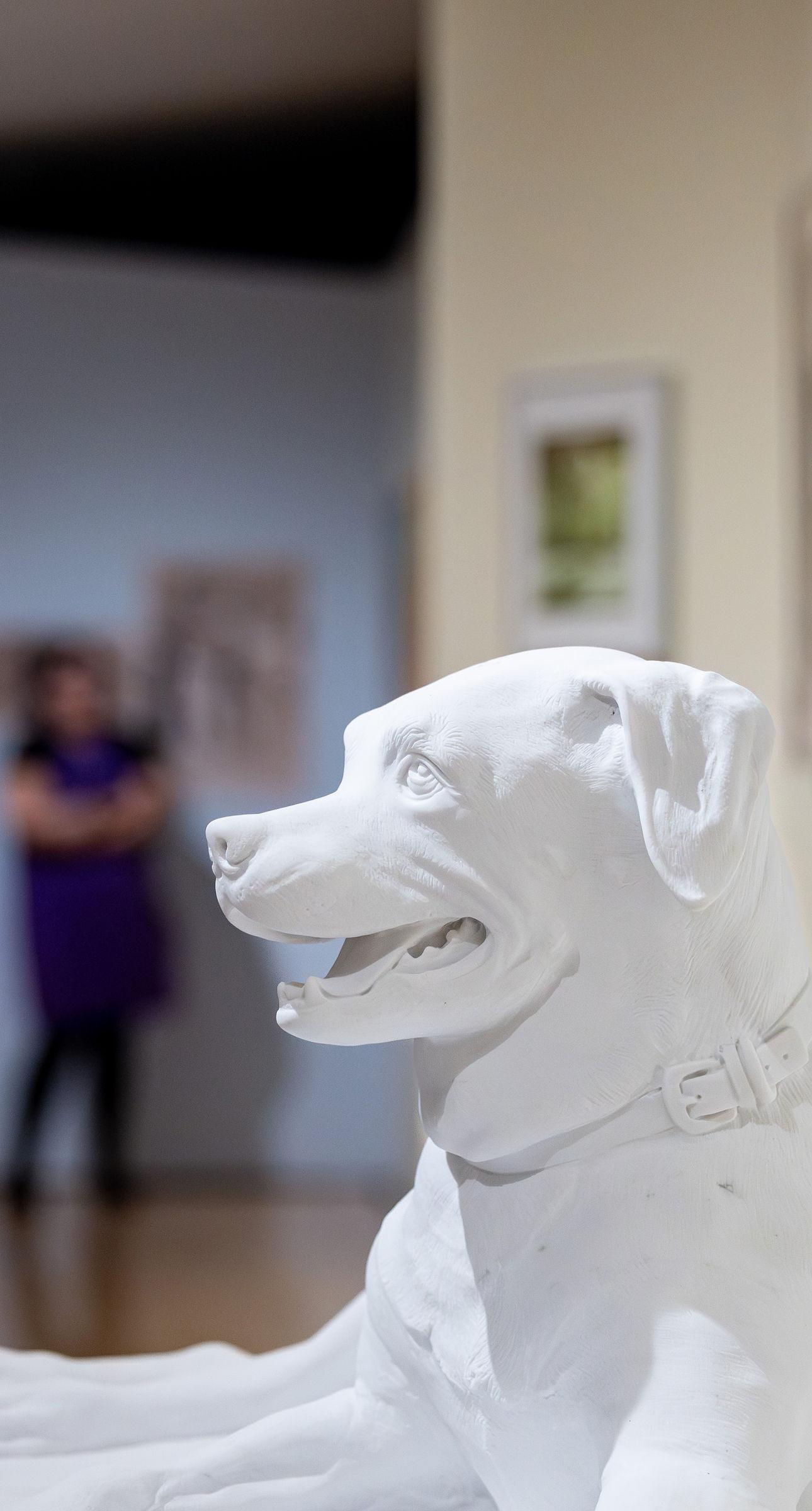
“Ambassador Molly,” 2023, Nilda Maria Comas (American, b. 1953), Carrara marble on granite base, Gift of the SPCA of Ocala Animal Rescue, Photo courtesy of Avera Visuals.
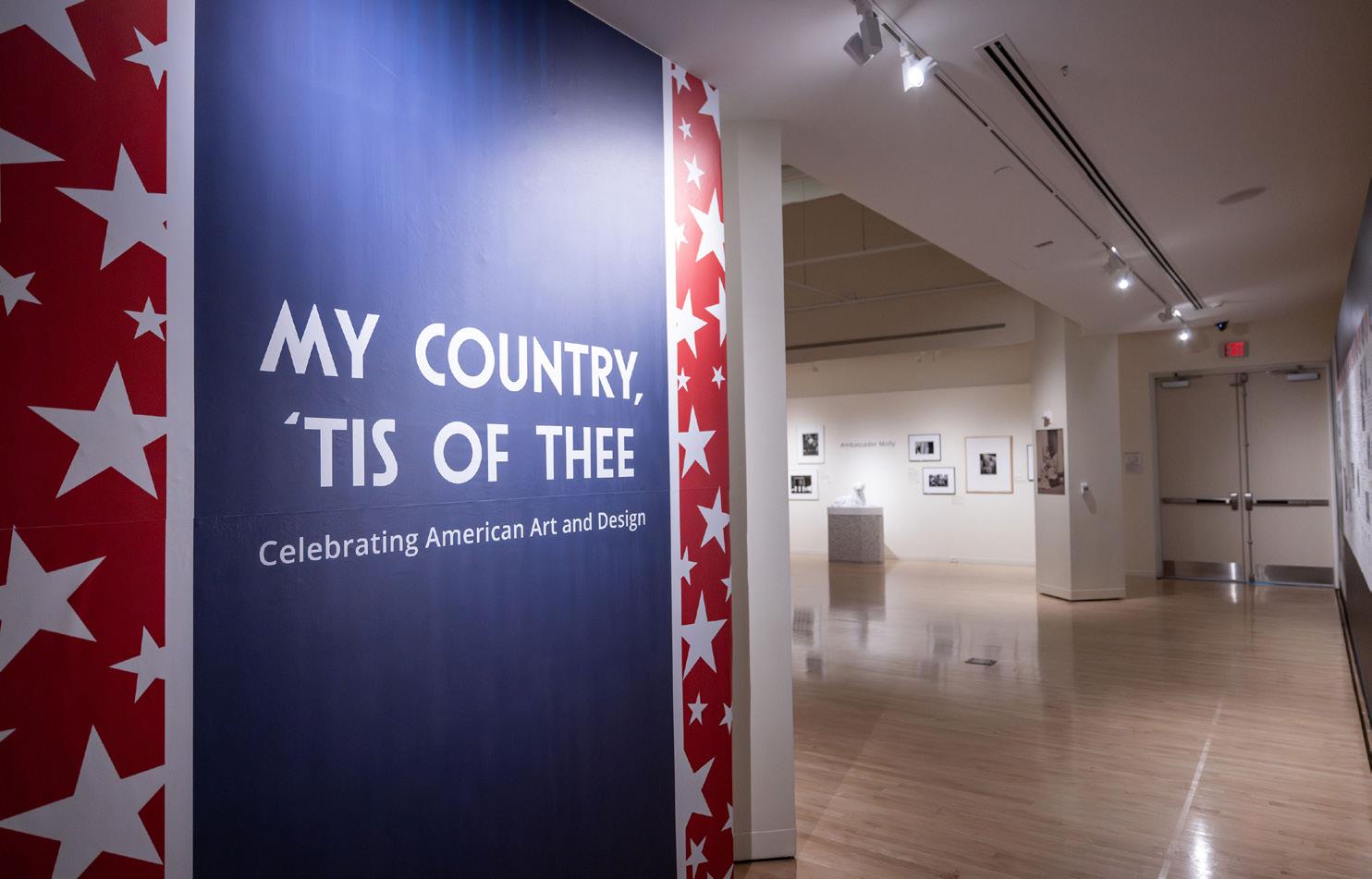
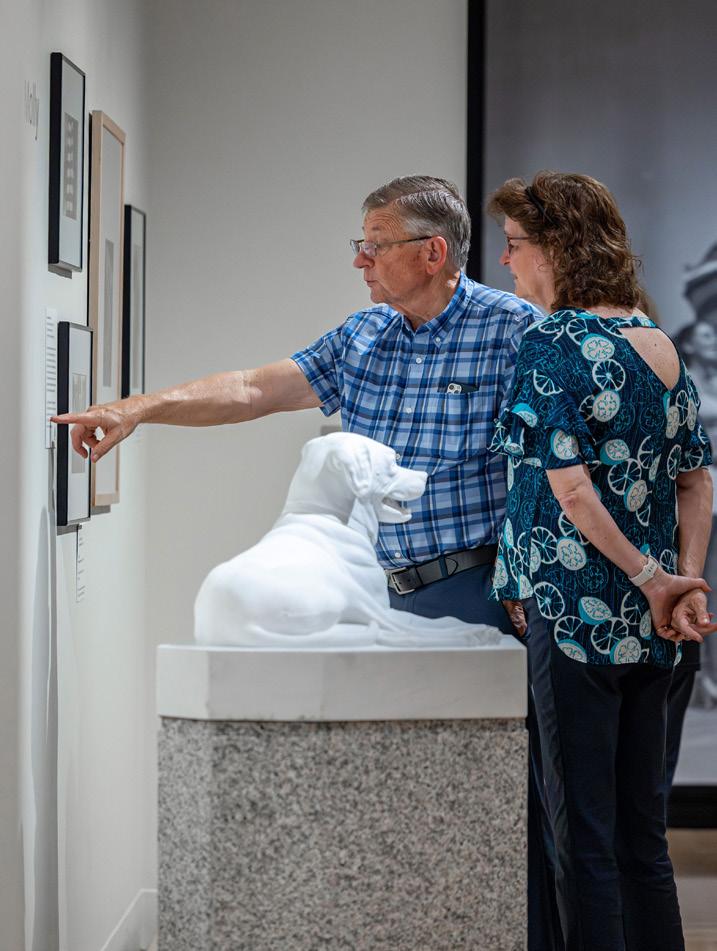
ON VIEW Through September 13, 2026
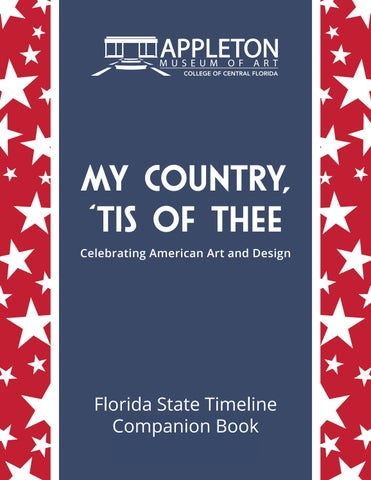
My Country, ’Tis of Thee: Celebrating American Art and Design
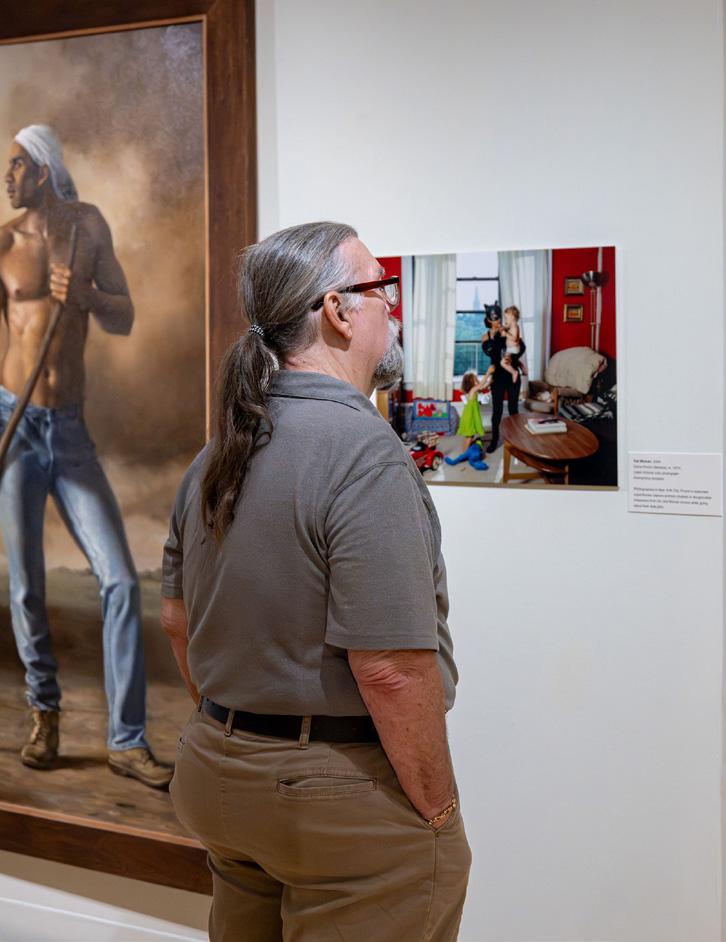
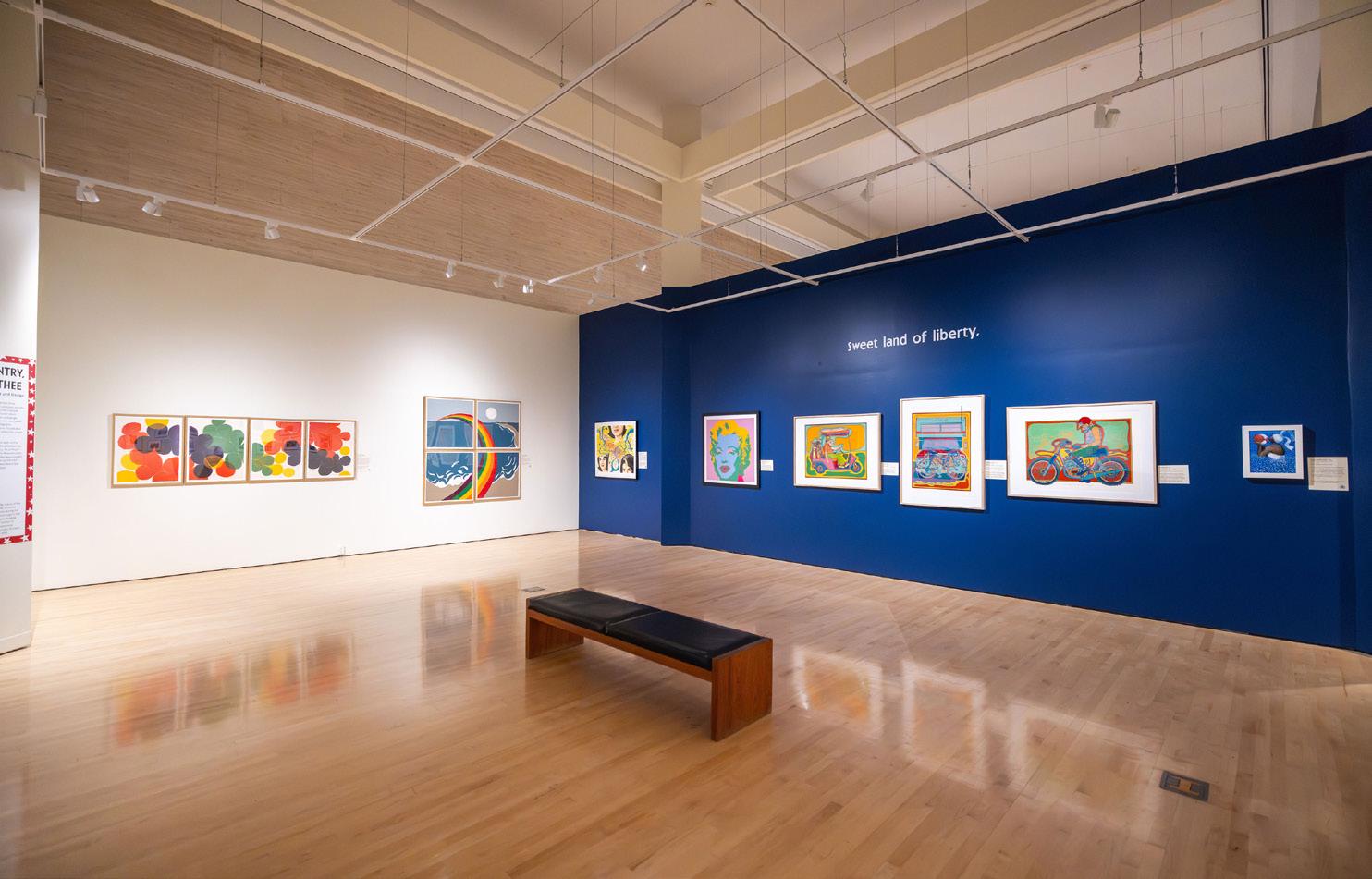
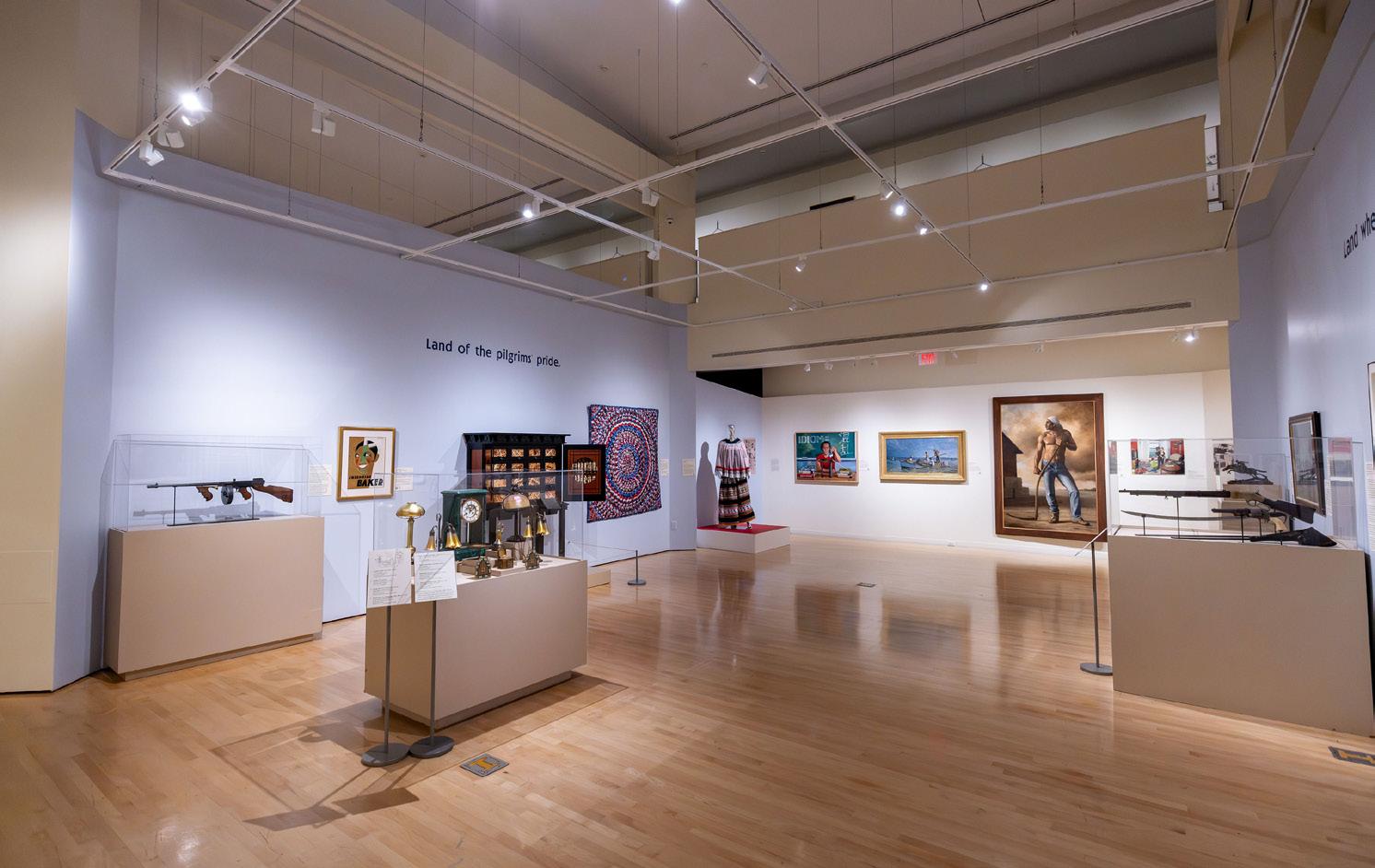
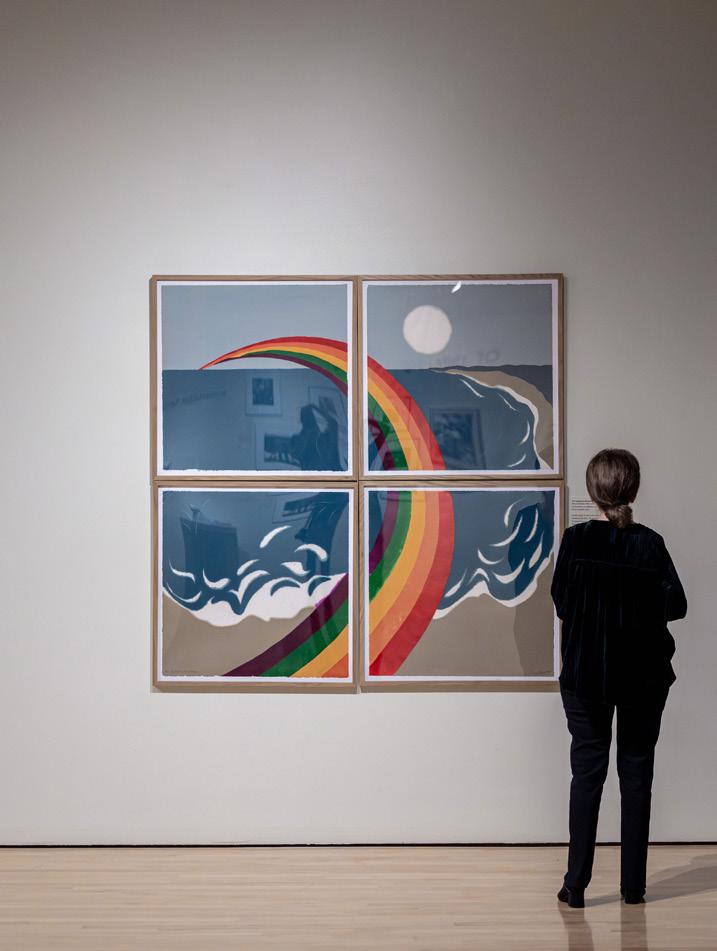
On view now in the Edith-Marie Gallery on the first floor, “My Country, ’Tis of Thee” celebrates more than three centuries of American art and design. Most of the 115 works included in the exhibition are drawn from our permanent collection and range from contemporary furniture to Pop Art to historical photos and documents reflecting Marion County’s own history.
The exhibition is organized in themes inspired by the lyrics of “My Country, ‘Tis of Thee,” written in 1831 by Samuel Francis Smith, who was a student at the Andover Theological Seminary. The song debuted in public on July 4, 1831, at a children’s Independence Day celebration at the Park Street Church in Boston.
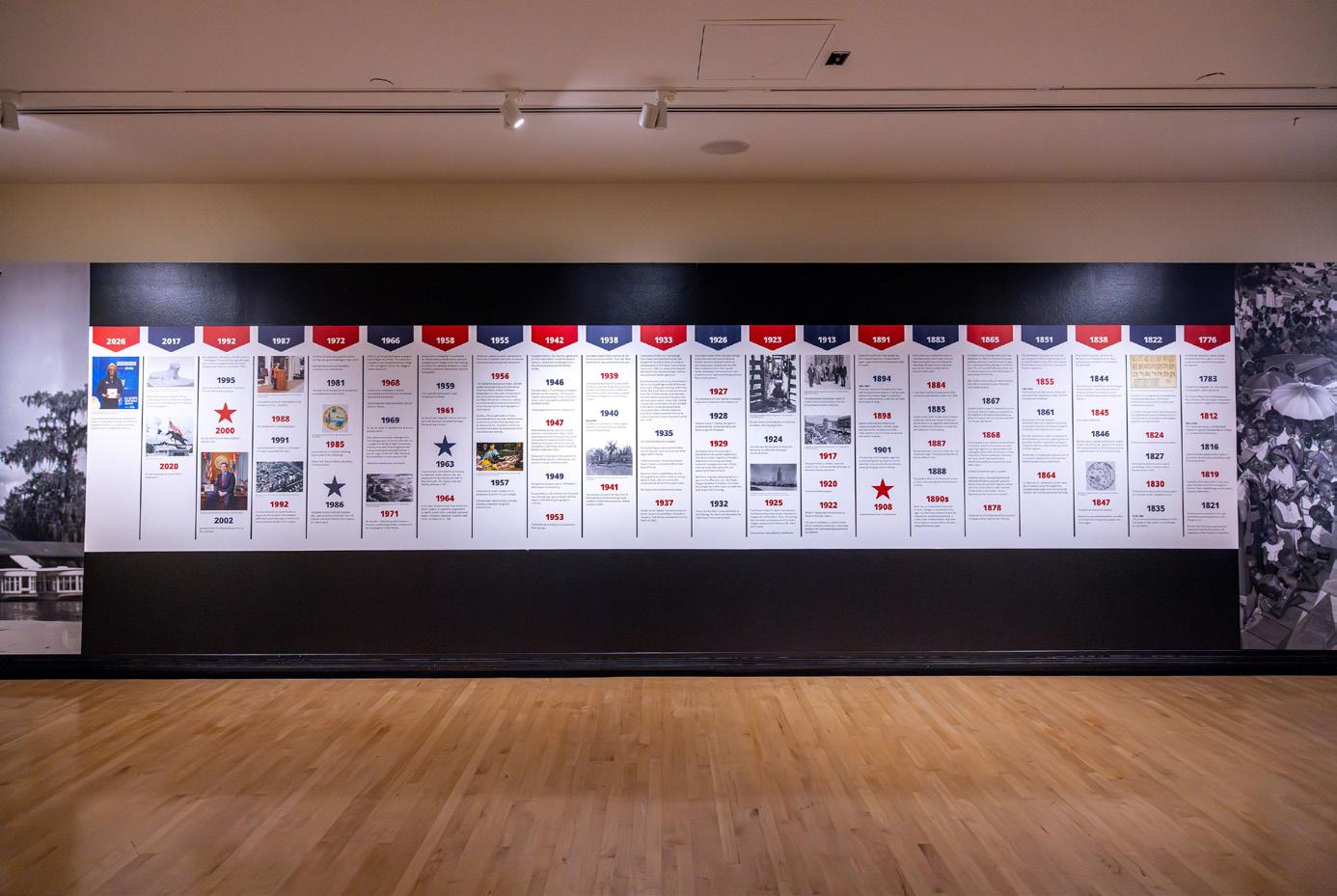
In the first bay, don’t forget to check out the timeline, chronicling the history of the Sunshine State. It begins in 1776 when Florida remained faithful to England as a haven for loyalist Tories during the American Revolution. The timeline continues through to this year, celebrating Ocala native and Olympic gold medalist Erin Jackson, who was selected by her peers as the U.S. flagbearer for the Winter Olympics opening ceremony. From its colonial roots to its modern-day triumphs, Florida’s history is a vital piece of the larger American story.
For more information, visit AppletonMuseum.org or scan the QR code.
My country, ‘tis of thee, Sweet land of liberty, Of thee I sing; Land where my fathers died, Land of the pilgrims’ pride, From every mountainside Let freedom ring!
Photos courtesy of Avera Visuals.
Copyright © 2026 Appleton Museum of Art, College of Central Florida. All rights reserved.
Information and images gathered in part from Florida Memory State Library and Archives of Florida at FloridaMemory.com.
Appleton Museum, Artspace and Store
Tuesday–Saturday, 10 a.m.–5 p.m. | Sunday, noon–5 p.m. 4333 E. Silver Springs Blvd., Ocala, FL 34470-5001 352-291-4455 | AppletonMuseum.org
Follow Us @AppletonMuseum Follow @AppletonMuseum