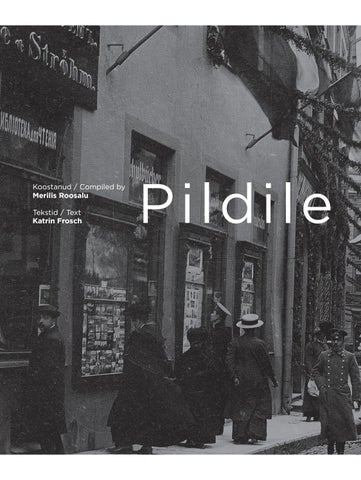
2
Koostanud / Compiled by Merilis Roosalu Tekstid / Text Katrin Frosch
Pildile
3
püütud Captured in pictures
TÄNAPÄEV
Sündmusfotod 1856–1990 Tallinna Linnamuuseumi Fotomuuseumi kogust Event photographs 1856–1990 in the collection of the Tallinn City Museum’s Museum of Photography
Raamatu valmimist on toetanud Eesti Kultuurkapital
Toimetanud / Edited by Mari Karlson Inglise keelde tõlkinud / Translated by Tiina Randviir Kujundanud /Designed by Andres Tali
© Merilis Roosalu, Katrin Frosch ja kirjastus Tänapäev, 2019 Fotode autoriõigused on fotode autoritel. Fotod kuuluvad Tallinna Linnamuuseumi fotokogusse ning säilitatakse Fotomuuseumis. The copyright of the photographs belongs to their authors. They are part of the Tallinn City Museum’s photo collection and are preserved in the Museum of Photography
ISBN 978-9949-85-678-7 www.tnp.ee
Trükitud Tallinna Raamatutrükikojas
5
Saateks
Introduction
Eesti sündmusfotograafia ajaloo mahukaimad kollektsioonid on säilitamisel meie mäluasutustes – arhiivides ja muuseumite fotokogudes, palju fotosid hoitakse tallel autorite ning ajakirjandusväljaannete pildipankades.
The most substantial collections of the history of Estonian event photography are maintained in our memory institutions – in archives and in the photographic collections of museums; many photographs are kept in picture banks of the authors and press publications.
Tallinna Linnamuuseumi Fotomuuseumi fotokogule pandi Tallinna Linnaarhiivis alus tõenäoliselt juba 1911. aastal ning esimeste esemete seas jõudsid sealt just fotod 1937. aastal asutatud Tallinna Linnamuuseumisse. Täna on Fotomuuseumi kogu oma ligi 45 000 museaaliga ühtlasi Linnamuuseumi suurim ja enim kasutamist leidev, andes värvika läbilõike pealinnas toimunud sündmustest. Fotomuuseumil on rõõm neid suurepäraseid ülesvõtteid huvilistega jagada. Oluline on, et teataks: sellised ülesvõtted on tallel ja hoitud, ning et neid ikka ja jälle kasutataks – just nii väärindub pildiline kultuuripärand. Käesolev, 274 ajaloolist fotot sisaldav raamat peegeldab ülevaatlikult Tallinna Linnamuuseumi fotokollektsiooni Tallinnas toimunud sündmustest ajavahemikus 1856–1990. Omaaegse Revali, seejärel Tallinna – noore Eesti Vabariigi, okupatsioonidest räsitud Eesti NSV ning taas vabadusele püüdleva Eesti pealinna – tänavad on palju näinud ja läbi elanud. Fotodelt leiab Tallinna tänavapilti ja tallinlaste elu pikema või lühema aja jooksul mõjutanud sündmused, mis puudutasid korraga paljusid inimesi, olid märgilised või tõid kaasa olulisi tajutavaid muutusi elukorralduses või riigikorras. Selles raamatus on tähtpäevi ja pidustusi, meeleavaldusi ja võimuvahetusi, õnnetusi ja sõdu, kultuuri- ja spordisündmusi ... Valikus on näiteks ülesvõtteid raudteeühenduse algusaegadest Revali ja Peterburi vahel, Vene tsaaririigi võimusümboli, Peeter I mälestusmärgi avamisest (1910) ning mahavõtmisest (1922) Heinaturul ehk Vabaduse väljakul, 1930. aastate plahvatuslikust ehitustegevusest, Teisest maailmasõjast ja selle hävitustööst
The collection of the Tallinn City Museum’s Museum of Photography was probably started at the Tallinn City Archives as early as in 1911, and from there, photographs were among the first items to reach the City Museum, established in 1937. Today, the Museum of Photography collection boasts about 45,000 items, being the largest and most used in the City Museum, at the same time offering a colourful overview of events in the capital city. The Museum of Photography is happy to share these wonderful pictures with interested visitors. It is important to know that such photographs have survived and are looked after, and that they are frequently used; this is the way a pictorial cultural heritage becomes valuable and appreciated. The current book of about 274 historical photos reflects events in Tallinn between 1860 and 1990 on the basis of the photo collection in the Tallinn City Museum. The streets of long-ago Reval, then of Tallinn as the capital of the new Republic of Estonia, then of Soviet Estonia, ravaged by occupations, and finally of Estonia aspiring to independence once again, have seen and experienced a great deal. The photos introduce events that had an impact on Tallinn streets and on the life of the town’s inhabitants over a longer or shorter time, touching on many people at once. Such events were symbolic or brought about significant changes in people’s lives or in state affairs. The book presents anniversaries and festivities, demonstrations and changes of power, misfortunes and wars, cultural and sporting events... For example, the selection includes pictures of the early days of railway traffic between Reval and St Petersburg, the unveiling of the monument to the symbol of the Russian tsarist state,
6
taastumisest ning ümberkorraldustest pealinna tänavatel, samuti ka 1980. aasta olümpiaregatipalavikust ja kümnendi lõpus Tallinnas taas sinimustvalget trikoloori lehvitanud vabaduse tuultest. Oma loominguga on esindatud Eesti fotoajaloo mitmed nimekamad fotograafid. Revali 19. sajandi kuulsaim ja pikaaegseim fotograaf, baltisakslane Charles Borchardt (1834–1892) pildistas tellimustööna terve albumi 1870. aastaks valminud Balti raudtee jaamahoonetest, sh peajaamast Tallinnas. Teine tuntud Revalis ateljee- ja linnavaatefotosid teinud vene päritolu piltnik Ivan Teterin (?–1914) on jäädvustanud mitmeid tähtsündmusi ajast, kui Eesti oli Vene tsaaririigi võimu all. August Ferdinand Vannaselt (1886–1964) on suurepäraseid sündmuspildistusi tsaaririigi viimastest aastakümnetest, näiteks ka Russalka mälestusmärgi avamisest 1902. aastal. Tsaariaja lõpu, Eesti aja alguse ning Eesti Vabadussõja sündmused on ilmekalt pildile jäädvustanud kuulsad fotograafid, vennad Parikased. Oma töö tõttu ajalehtedes Rahvaleht, Esmaspäev, Waba Maa jt on Hans Soosaare (1903–1961), ühe Eesti esimese kutselise fotoreporteri kollektsiooni kogunenud mitu tuhat pildistust Tallinna sündmustest nii Eesti Vabariigi kui ka Teise maailmasõja aegadest kuni 1950. aastateni välja. Ka esimesed nimekad Eesti kunstfotograafid Nikolai Nyländer (1902–1981) ja piktorismi viljelenud Johannes Mülber (1889–1938) on tabanud meeleolukaid hetki või ootamatuid rakursse. Näiteks pildistas Nikolai Nyländer terve seeria 1931. aastal piksetabamuse saanud Oleviste kiriku torni remondist. Ühe ajastu pöördumatut lõppu Tallinna linnapildis märgivad Richard Kirchhofi (1896–?), Rjurik Esopi (1891–1957) ja Georg-Johannes Parikase (1880–1958) dramaatilised fotoseeriad varemetes linnast 1944. aasta märtsipommitamise järel. Eesti pealinna nõukogudeaegset progressi rõhutavate uusehitiste kerkimist ning linna muutumist on
Peter the Great (1910), and taking it down in 1922 on Freedom Square, explosive construction work in the 1930s, World War II and recovering from its destruction and rearrangements in the streets of the capital, also the fever of the 1980 Olympic regatta and the intoxicating sense of freedom at the end of the decade. Prominent photographers of the Estonian history of photography are all represented here. The most famous photographer of 19th century Reval, the Baltic German Charles Borchardt (1834–1892), filled a whole album as a commission with pictures of railway stations, including the main one in Tallinn, of the Baltic Railway, which was completed in 1870. The Russian Ivan Teterin (?–1914), another wellknown photographer in Reval, produced studio pictures and urban views. Among other things, he recorded various significant events at a time when Estonia was ruled by the Russian tsar. Estonian August Ferdinand Vannas (1886– 1964) took excellent photos of the last decades of tsarist power, for example of the unveiling of the Russalka monument in 1902. Events during the demise of the tsarist state, the start of the Estonian era and the War of Independence were vividly captured by the famous brothers-photographers Parikas. Thanks to his work for various newspapers, one of the first professional Estonian photo reporters, Hans Soosaar (1903–1961), amassed a several-thousand strong collection of events in Tallinn in the course of the Republic of Estonia and World War II and then until the 1950s. The first prominent Estonian artistic photographers Nikolai Nyländer (1902–1981) and Johannes Mülber (1889–1938), who cultivated pictorialism, both captured fascinating moments or used unexpected angles. Nikolai Nyländer, for example, took a series of pictures through a whole year during the renovation of St Olaf’s Church tower that was hit by lightning in 1931. The irrevocable end of an era in the streets of Tallinn was recorded in a dramatic series by Richard Kirchhof (1896–?), Rjurik Esop (1891–1957) and Georg-Johannes Parikas (1880–1958) showing the town in ruins after the March bombing raids in 1944.
7
propagandistlikel eesmärkidel jäädvustanud kutselised reporter-piltnikud Georgi Tsvetkov (1921–1995), Vitali Gorbunov (1920–2014), Sergei Sohv (1923–1998). Nõukogude Eesti viimaste aastate fotovalikus on veel ülesvõtteid Tallinna Linnamuuseumi toonastelt fotograafidelt Silver Aavikult (1949), Peeter Kaasikult (1953), Kai Spriidilt ja Viivi Ahonenilt (1953) ning Linnamuuseumi healt kaastöötajalt, koduloolaselt Ado Vaigult (1918–1999). Kultuuriüritusi ning uue vaba Eesti aja ootusest kantud sinimustvalgeid rahvakogunemisi on pildistanud Kunnar Allikvee (1926–2006), Kalju Suur (1928–2013), Harald Leppikson (1933–2005) ning Arvo Iho (1949). Ütleme ka tänusõnad fotopärandi kontekstis pea alati oma loominguga hästi esindatud Tuvastamata Autorile. Et me fotograafist midagi ei tea, on ajalooliste fotode puhul sageli paratamatu. Kui teil, head lugejad, on infot, mis võimaldaks tuvastada raamatus avaldatud fotode Tuvastamata Autorit, palume sellest Tallinna Linnamuuseumi Fotomuuseumile teada anda. See, valikut Tallinna Linnamuuseumi fotokogu 1860.– 1990. aasta sündmusfotosid tutvustav raamat on teine trükis Tallinna Linnamuuseumi sarjast „Tallinna varamu”. Sari on mõeldud Tallinna linnakultuuri ja ajaloo erinevaid tahke muuseumikataloogi tavapärasest formaadist laiemalt avama.
Reporters-photographers Georgi Tsvetkov (1921–1995), Vitali Gorbunov (1920–2014), Sergei Sohv (1923–1998) took pictures of changes during the Soviet era. These mainly included Tallinn, where large-scale construction of apartment blocks emphasised Soviet progress. The selection of events in pictures at the end of Soviet Tallinn include photographs by the then photographers of the Tallinn City Museum Silver Aavik (1949), Peeter Kaasik (1953), Kai Spriit and Viivi Ahonen (1953), and also by the valued collaborator of the City Museum, historian of local lore Ado Vaik (1918– 1999). Cultural events and massive gatherings under blueblack-and-white flags, in expectation of freedom, were photographed by Kunnar Allikvee (1926–2006), Kalju Suur (1928– 2013), Harald Leppikson (1933–2005) and Arvo Iho (1949). We would also like to thank the Unknown Author, almost always well represented in the context of photographic heritage. It is often inevitable that we know very little or nothing at all about the photographer of historical pictures. In case you, dear reader, have some information that would enable us to establish the Unknown Author of the published photos, we kindly ask you to inform the Museum of Photography. The current book, introducing a selection of Tallinn City Museum’s photo collection about events taking place between 1860 and 1990 is the second publication in the Tallinn City Museum series „Tallinn Treasury”. The series aspires to reveal more aspects of culture and history of Tallinn than a usual museum catalogue.
1 8 56–1 899
8
1856–
–1899
9
10
Hans Heinrich Falcki tänav Toompeal 19. sajandi keskpaigas olid Toompea ja all-linn omaette üksused, kus kehtisid eri seadused. Väidetavalt rikkaimal tallinlasel Hans Heinrich Falckil oli aga kinnisvara mõlemal pool ja seepärast soovis Toomgildi oldermann oma maade ühendamiseks praeguselt Paldiski maanteelt üles Toompeale suunduva tänava rajada. Paljud linnaisad ei uskunud, et ta tõesti tänava valmis ehitab, ning seetõttu tegi Falck toonasele linna komandandile ettepaneku kihla vedada: kui tee valmis, rajab komandant teise tee Toompealt all-linna. Falgi tee valmides ehitaski komandant teise, vastassuunas Toompead ja all-linna ühendava tänava – Komandandi tee.1
Hans Heinrich Falck and the street on Toompea In the mid-19th century Toompea and the down-town constituted separate units with their own laws. However, one of the allegedly richest citizens, Hans Heinrich Falck, had property in both places, and in order to join his lands, the alderman of Toom Guild wished to establish a road from today’s Paldiski Road up to Toompea. Many town councillors did not believe that he would actually get the road done, and thus Falck suggested a bet to the town commandant: if he completes the road, the commandant will produce another one from Toompea to down-town. As the Falgi Road was indeed finished, the commandant had to establish another, in the opposite direction, con-
1 8 56–1 899
necting Toompea and the down-town – Komandandi Road.1
Vaade Toompea lossile ja Falgi teele Toompuiestee poolt 1850. aastate II poolel, pärast Falgi tee rajamist 1856. aasta novembris. Tuvastamata autor. Stereofoto, albumiinfoto 8,4 × 17,5 cm. Erna Huseni kollektsioon. Fotomuuseum, TLM F 2102 View of Toompea Castle and Falgi Road from Toompuiestee in the second half of the 1850s, after the Falgi Road was completed in November 1856. Unknown author. Stereograph, Albumen print 8.4 × 17.5 cm. Erna Husen’s collection. Museum of Photography, TLM F 2102
11
12
Tallinna kapituleerumise 150. aastapäeva tähistamine 29. septembril 1710. aastal allkirjastasid Tallinna rae, Rootsi garnisoni ja Vene vägede esindajad kapitulatsiooniakti, mis lõpetas sõjategevuse Eesti territooriumil. 1860. aastal tähistati Tallinnas 150. aasta möödumist Vene tsaaririigile kapituleerumisest ning pidulike sündmuste puhuks kaunistati linna esindushooned. Schmidti & Kochi fotostuudio müüs aastapäevale pühendatud ürituste jäädvustusi, kuid teadaolevalt on fotoseeriast säilinud ainult kaks stereofotot: ehitud Suurgildi ja Kanuti gildi hooned. Seetõttu peetakse esimeseks säilinud sündmusepildiks 1866. aasta fotot saksa laulupeost.2
Marking the 150th anniversary of Tallinn’s capitulation On 29 September 1710 the Tallinn Town Council, the Swedish garrison and representatives of Russian troops signed an act of capitulation that ended the warfare on Estonian territory. In 1860, Tallinn marked the passing of 150 years since capitulating to the Russian tsarist state. For the occasion, the most important buildings were decorated. The Schmidt & Koch photo studio sold recordings of events dedicated to the anniversary, but as far as we know, only two Stereographs have survived of the series: the buildings of the Great Guild and of the Kanuti Guild. Thus the first surviving event recording is considered to be the photo-
1 8 56–1 899
graph of the German song festival in 1866.2
Vaade pidustusteks ehitud Suurgildi hoonele Pikal tänaval. 1860. Tuvastamata autor. Stereofoto, soolapaberfoto 8,4 × 17,8 cm. Erna Huseni kollektsioon. Fotomuuseum, TLM F 2104 View of the Great Guild building in Pikk Street, decorated for festivities. 1860. Unknown author. Stereograph, salted paper print 8.4 × 17.8 cm. Erna Husen’s collection. Museum of Photography, TLM F 2104
13
14 Vaade pidustusteks ehitud Kanuti gildi hoonele Pikal tänaval. 1860. Tuvastamata autor. Stereofoto, soolapaberfoto 8,4 × 17,8 cm. Erna Huseni kollektsioon. Fotomuuseum, TLM F 2103
1 8 56–1 899
View of Kanuti Guild building in Pikk Street, decorated for festivities. 1860. Unknown author. Stereograph, salted paper print 8.4 × 17.8 cm. Erna Husen’s collection. Museum of Photography, TLM F 2103
15
16
Balti Raudtee peajaam Alexander von der Pahleni eestvedamisel asutatud Balti Raudtee Seltsi rajatud raudteeliin Paldiski, Tallinna ja Peterburi vahel avati ametlikult 24. oktoobril 1870. aastal. Balti raudtee peajaam Tallinnas valmis 1871. aasta kevadel ning oli Eesti ainuke I klassi vaksal.3 Paekivifassaadi ja kaarakendega kahekorruselise historitsistliku hoone projekteeris arhitekt Rudolf Otto von Knüpffer. Vanalinna-poolne peasissepääs viis piletikassade ja pagasiruumiga vestibüüli, hoone paremas ja vasakus tiivas paiknesid ootesaalid ja restoran. Foto pärineb Balti raudtee rajamise eest Tallinna aukodanikuks nimetatud Alexander von der Pahlenile kingitud albumist. Tallinna Linnaarhiivi juhataja Küllo Arjakase hinnangul on pildil ilmselt Balti Raudtee Seltsi aktsionärid, raudteevalitsuse ametnikud, rongiülemad, konduktorid ja jaama kordnikud, kuid Pahlenit ennast mitte.4
The main station of the Baltic Railway The railway line between Paldiski, Tallinn and St Petersburg, established by the Baltic Railway Society, initiated by Alexander von der Pahlen, was officially opened on 24 October (5.11 according to the new calendar) 1870. The main station in Tallinn was finished in spring 1871 and was the only first-class station in Estonia4. The two-storey historicist building with a limestone façade and fanlights was designed by architect Rudolf Otto von Knüpffer. The main entrance facing the town led to a vestibule with ticket offices and luggage compartment, whereas the right and left wings accommodated waiting rooms and a restaurant. The photo is taken from the album given to Alexander von der Pahlen who was declared an honorary citizen of Tallinn because he had established the Baltic Railway. According to the head of the Tallinn City Archives, Küllo Arjakas, the -picture probably shows the shareholders of the Baltic Railway Society, employees of the railway board, train commanders,
1 8 56–1 899
ticket-sellers and station police, but von der Pahlen himself is not there5.
Grupipilt Pahleni-nimelise reisi- ja auruveduri taustal vastvalminud Balti raudtee peajaamas 1870. aastate alguses. Charles Borchardt (1834– 1892). Albumiinfoto 23 × 28 cm. Alexander von der Pahlenile kingitud album Balti raudtee vaadetega. Fotomuuseum, TLM F 9962:4 Group picture against the background of a passenger and steam engine called Pahlen in the recently completed Baltic Railway main station in the early 1870s. Charles Borchardt (1834–1892). Albumen print 23 × 28 cm. Album presented to Alexander von der Pahlen with views of the Baltic Railway. Museum of Photography, TLM F 9962:4
17