LestWeForget...
Matia Tuhi Rini Noble, Edward Olsen, John Oscar Smith David Francis Thomas, Alfred Edward Thomas, William Alfred Urwin LanceFrederick Charles Urwin, William Edward Wagener, Wilfred Ernest Wells Benjamin Alexander Awanui Clark, Clark Conrad, Paki Hadfield, Matthew Petewiki Hansen, Frederick Alfred Hurley James Kanara, Wi Rapata Kiri, Ben White, Kenneth Robert
Roll of Honour
Coffin George Henry, Tom Raharuhi, R Shepherd Ben Kaingaroa
Chuck Sunny Povey, J Chuck Rapna, R Oruru-Peria Davis, P Jensen Andrew Martin, John Robb, W Thompson, Ashley Thompson, Vincent Houhora-Waiharara Borovich John Burrows, J Corcoran, John Hoggard Jim Hoggard, Trevor Milich, Alex DFC
Osborne, George Petricevich, Mate Sorich George Steed, G
Kaitaia&District 1914-1918Kaitaia Bell WalterCharles Bishop John Joseph Denny, Charles Benjamin Denny, Richard John Dickin, Henry George Fryer, Robert Hyslop Hill, Reginald Michael McNickle Moses Matthews, Henry Selwyn Negus, Clarence William Richter Basil August Walker, Taylor MangonuiArea Bartley, Walter Campbell, Richard James Coleman, Claude Cecil Harrop, Edwin James Houston, Albert Cyril Houston, Harold Edward Leo, John Leo, Edward Matthew McNamara Henry Cecil Mein George Frederick Coore Penney, George Leslie Rewi, Perenara Tiini, Hopa White, Alexander McGregor Willis William Brian de Laval Kaingaroa Atkinson, Clarence Clifford Corbett, Alfred Sydney Hansen Ivan Roy McKeown James Meenan, Harry Conrad
Wells Henry John Oruru - Peria Hetaraka, Hurae Povey John Thompson, WalterWeber Wilkinson Eric Leslie
Houhora-Waiharara Akast, George Aldred, John Reeves Blucher, Charles Theodore Coulson, Sidney Robert Davis, Richard George Gordon Alexander Duncan Gordon, John Archibald Heath, Patrick Lamb, Alfred James Lingar Albert John Mahoney Frank Daniel
Pukepoto-Ahipara Brass Rata Busby, Tawhai Rapihana, Herewini Waaka Hohepa Waru, Henare Waru, Kopa Takahue Hayward, John Henry O’Donnell, Patrick J Warner William Henry
Herekino-Whangape Adams, James De Andrad, Albert Manual Ford, William Alexander Hodges, Samuel Henry Keay, David Steele Keay, William Robert Passell James Powell, Gerald Massey Powell, VictorIvan Rae, Thomas Handley Ratana,Wiremu Smith, Joseph James Frank Smith Nimrod Bendigo Fred Wikitera, Robert Williamson Frederick Fairburn Fletcher, Thomas Henry Gillott, William Hodgson, Thomas Corless Mardell, Frederick William Parker Joseph VictoriaValley Ramsey, ArthurHarry Stanton, Alfred Littledyke Wallace, Gordon Wallace Leslie TeKao Hare, Heremaia Keepa, Arana Mete Manuera, Hohaia Manuera, Richard Tahu, Ngakapa Taimona Taurere Tepana Te Whai Whakaruru Wiki Waaka Hapimana Aporo
Kaitaia1939-1945
Brien, Harold Brown Thos M Dale, Allan Head, S B Leonard Noel Maaka, Ephram Maria, Hec Werner Garth Werner, Roly Williams Mervyn MangonuiArea August, Jack Cameron, Len
Stephens, Andrew Tahitahi Robert Ujdur Ben Urwin, A F Awanui
Cosson, T Evans, Ivan Fisher Colin Fisher, Harry Fisher, Robin Walters Albert
Pukepoto-Ahipara Allen Robin Brass, Barney Busby, Henry Busby, Leopold
Coleman Simon King, L B Leef, Raroa
Lloyd S Robson, Monty Silva, Wiki Urlich, Joe Takahue White, N Wright N C
Herekino-Whangape
Benton, Douglas Ellis, Richard Gordon, M C B Koha, Leonard Lloyd, Jack Powell, Eric Wi Kuhu V Fairburn
Gardiner Trevor Leslie, John Macpherson, John Macpherson, Peter May, Frank Osborne, Noel
VictoriaValley
Braithwaite, F/O Toby Brockbank, Robbie
Hansard Epa Kitchen, Ernie Stevens, Bobbie
Trigg, F/O Lloyd VC D FC White Leslie TeKao Brown Brown
Harawera, George Heka Ranga
Ihaka, Rewhiti
Kawakawa&District 1914-1918
Eccles, H D Garaway, FD Goodhue C Halliday, A Halliday, J Harrop E J Lee, J Lemon, D Leslie, T Reinhardt C J Stehr O 1939-1945
Ashby, WG
Burns, PC
Burns W Clarke, T Cotterell, H M Cotton, T Davis, J
Dawson E C H Ellis, R Ferguson, J Gilbert K L Girven, JW Going, R C Goodhue, O H Harawene, H Harrison, J JV Marshall, A E Marshall, L S Milner D Owens, L Penney, O E Skudder J S Smeath, G A R N Squire, L A Stanton, R J Studholm, M P Sullivan, J Tarau, C Tautari, G Te Tore J Timperley, C B Tobin, L Wharerau H Wharerau, M Yorke, S H Kerikeri1914-1918 Baker, D Baker, V Faithful C McLeod D J 1939-1945 Callender, D G Grant I Hewitt, B D Raymond, J Shannon, R Strongman, K Studholme M Waha, J Russell1914-1918 Davidson, A Hakaraia H Hooper G Rice, J Rigden, G Rivers, J P Saunders, J H Schmidt, R C Williams, L S DMC
Wood C C 1939-1945 Baker, C Bell C Hakaria B Hakaria, W Hau, WTK Howe, P Kareko, J Matene HW Maunsell, D Parkes, J Rush A G SouthHokianga1914 -1918
Beattie, C C Beattie, PA Bourke PW Bridge H Classen, E Classen, H C Drewett OW Driffel, W Eyes, F Flood FF Iraia, H Keymer, G Lane, A H Leaf, J Leef, G Martin, J Newton, F Norton R A Page, H Ridges, A Taoho I R Turbutt J Tucker R Williams, F Waipuke, W 1939-1945
Baker M C Bolton, E Botica, A L Boyd N H Cassidy, T Clark, TE L Cochrane, A E G Goodwin, B Hauraki, P Iraia, W Johnston, D
Karora A Kelly, Mohi Kelly, M Kereopa, S Leaf, A Leaf, HW Nelson P Pehi D Pokaihau, H Smyth, S Stansell G E Taurere, J Tawhai, J Wharerau Maru Wharerau, Moa Wikaira, J NorthHokianga1914 -1918 Adam, S J Baxter, B E Begg, K H Boreham A Bridge, H Brook, J C De Andred A Donnelly, R E Downes A Downes O Edwards, S Enright, F Ensor, C Faithful, W Fatt, J Groves, S J J Halliwell H Harding, J Harding, W Hodgson H Kendall, K Kjoller, J Lees F Lees, J Mansbridge, S Moka W Moka J Nash, F Nolan, D L Philips E M Philipps, FE Philips, M I Smith H Stancliffe, T Te Whata, P Ward A Waru, K Waru, W Williams, A E Williams, F Williams, HW Wooster, FR Wright G C 1939-1945 Arona, W Baker, M C Bolton E Botica, A L Boyd, N H Campbell K Campbell, P Campbell, R Cassidy, T Chapman H Clark, TE L Cochrane, E A G Curry J Dale, A Goodwin B Hapeta C Harris, C Harris, P Hauraki P Hoani D Holland, W Hotere, J Howard, J Iraia, W Jeffries M Johnson D Karanga, M Karora, A Kelly Mohi Kelly, M Kereopa, S Leaf A Leaf, H (MC) Ling, R Mendis, S Moa, S Nash, A E Nash, J Nelson P Pearson, L R Pehi, D Peita F Peti, S Pokaihau, H






Pomare T Rakena, A Rameka M Ratana, W Read, D D Roberts P Scott, F Smyth G Stansell, G E Taurere, J Tawhai, J Tohu, R Waha Rai D Wharerau, A Wharerau Moa Wharerau, Maru Wikaira, J Whangaroa&County 1914-1918 Bowyer, A O Boyd, James Boyd, M Bramley Armand Cruller, Basil A Downes A Downes O
Epiha Daniel Foley, Henry Gates, Richard Goulton, Charles Hansen, Frederick Hare, Hubert Kingi, Anwha Kingi Tamati Langley Hugh Leslie James Leslie John George McKenzie, David McRae, Malcolm ODonnell, J ODonnell W Saies Alfred Shepherd, Vivian Skinner, Lawrence Snowden, Bertram Snowden, Ivan Snowden, Thomas Teuhu, Hare Vendt L A Wood Newton York, RT
Ode
1939 1945 Bramley, A H Collinson, WC Epiha, Paihana Ferguson J Frear, WG Hape B Heke, James Hemi, R Henare, Thomas Heta Dave Hoey P Hona K C Hughes, D King, Lewis Lane, PeterDenis McKeown, J D Paul W Pawa, Matthew Poata, George Poata, Tai Rogers, H R Schmidt L S Taniwha FM Whitehead, JW Wilkie, I S Yerkovich, Steve
to the fallen
They shall grow not old, as we that are left grow old: Age shall not weary them, nor the years condemn At the going down of the sun and in the morning
We will remember them Laurence Binyon from “For the Fallen”
Anzac Day Services 2026
BROADWOOD–Civil ceremony at AMP Hall 10 00 a m , wreath laying at RSA cemetery, followed by light lunch at AMP Hall
HEREKINO– Civic service at Herekino Memorial Hal 10 30 a m followed by morning tea Please bring a plate
HOREKE– 6 a m Community Service
KAITAIA– Musterat Kaitaia R S A 5 45 a m Dawn service 6 a m Remembrance Park, opposite Kaitaia R S A KAIKOHE–Dawn Service 5 45 a m assemble at New World Carpark march to Kaikohe Memorial Hall
KAWAKAWA– Dawn parade 5 55 a m Assemble at Cenotaph 6 a m Fall in Civil parade 8 45 a m Assemble at the museum, Wynyard Street, Kawakawa 8 55 a m Fall in
KERIKERI–Dawn commemoration at 5 45 a m at the Domain Civic Service –march off at 9 45am at the Domain
KOHUKOHU– 5 45 a m Arch of Remembrance - Dawn Service Parade Fall in at Kohukohu Bowling Club Afterservice, return to Bowling Club for Breakfast and refreshments
MANGONUI –11 a m Civ c Service at the Memorial Instructions for alternate venue forwet weatherwill be notified on Doubtless Bay Notice Board facebook
MITIMITI– 5 30 a m Dawn Service Fall in at Mitimiti Primary Schoo
OKAIHAU– 11 a m Community Service at Okaihau College Hall
OPONONI– 11 a m Community Service at Manea Centre followed by lunch at Opononi Hall RSA members please bring a p ate Refreshments and light entertainment at the RSA
PANGURU– 5 30 a m Dawn Service Fall in at Catholic Church
RAWENE– Community Service at Cemetery 9 a m followed by breakfast at Golf Club
RUSSELL– 6 30 a m Dawn Service at Ngaiotonga Marae, 9 30am Long Beach Cemetary Service, 11 00am Civic Service at Village Green In the event of very wet weathera service will be held at the town hall
TEKAO– Civic serv ce at Potahi Marae, 11 a m
WAIMA– 8 a m Community Service
WHIRINAKI–Dawn Parade 6 a m Whirinaki Cenotaph followed by breakfast at Moria Marae
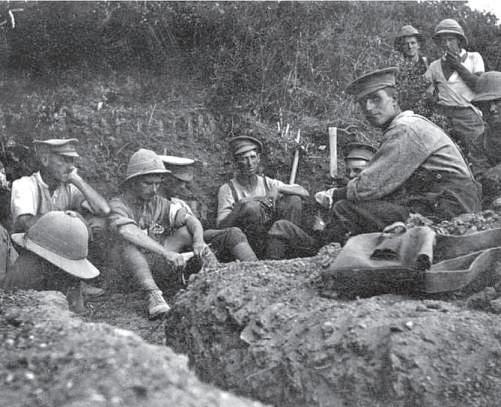
For New Zealand soldiers serving on the Gallipoli Peninsula during the First World War, daily life was defined by hardship, exposure, and deprivation Over the course of the eight-month campaign, troops endured extreme weather, inadequate shelter, scarce resources, and constant threats to their health, making conditions both physically exhausting and mentally draining
During the summer months from June to August, intense heat and choking dust made even basic tasks difficult. In contrast, winter brought freezing winds, heavy rain, and occasional snow, turning trenches into mudfilled channels where soldiers struggled to stay warm and dry. These extreme seasonal changes placed continuous strain on the men’s endurance.
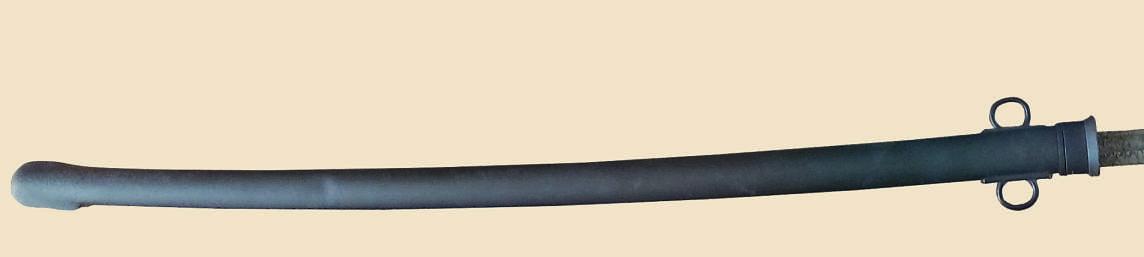
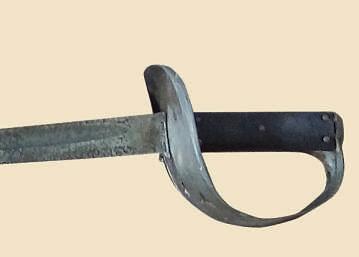
World War I sabre that
Thesabreisa“1908pattern”officer’ssword Theywereneverusedincombat-onlyfor ceremonialoccasions.
Major James McGregor Elmslie was born on 21 August 1876 in Waverley, South Taranaki, and was commanding officer of 2nd Squadron, Wellington Mounted Rifles He served in the Boer War, also known as the South African War, 1899-1902 and then went on to serve in WW1 in Gallipoli, during 1914-1918, where he was killed on Chunuk Bair at 38 years of age
They buried him beside his good friend and fellow combatant, Major Selwyn Chambers from Havelock North
He was the son of Anne Elmslie and the late Peter Elmslie of “Hillside,” Waverley, and husband of Martha Jean Elmslie
During the Boer War, he rescued an Australian soldier under fire At Gallipoli, he was respected as a great leader and was recommended for the Victoria Cross but was unlucky not to be awarded it because General Godley did not approve of awarding the VC to any commissioned officer
James Elmslie and his men were instrumental in taking ‘Table Top, the commanding position below Chunuk Bair, on 6/7 August 1915 They held this post as Colonel Malone led his men upwards to Chunuk Bair the following day
Elmslie and his men moved up to the fierce fighting on Chunuk Bair on the night of 8 August to reinforce the great losses of Colonel Malone’s infantry James was shot through the neck and shoulder on the morning of 9 August as he was running forward to occupy a vacant trench
Picking himself up, he dived into the trench, his men following him His last words were: “I can’t help you much more, boys, but go on, you are doing splendidly”
TRIBUTE:
In the Patea Mail dated 1929, there appeared a tribute to the Late Major James Elmslie
A sterling tribute has been paid by the ex-service comrades of the late Major J Elmslie to the memory of this gallant soldier who made the supreme sacrifice in the Great War
“On Wednesday last, Messrs W A Hurley and T Wilson, of Waitotara, waited on Lieut -Col Foley, MC, who is in charge of the Mounted Rifles camp at Waverly, and asked him to accept on behalf of the regiment a fine silver cup to be competed for annually by the machine gun section, comprising a corporal and two other ranks, who are each to receive miniature cups suitably inscribed, one to be found annually by the regiment and the remainder by Messrs Hurley and Wilson The cup, which is an exceptionally fine specimen of the silversmith’s art, is inscribed as follows: “The Major Elmslie Memorial Challenge Cup, presented by exservice men 2nd Squadron, Waitotara District, for best light automatic gun section, 1929.”









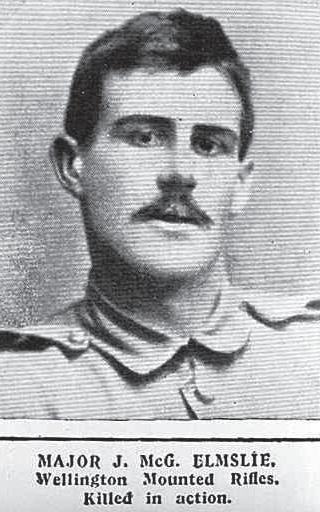
The late Major Elmslie, who had a fine record as a soldier and a man, was beloved by the men who served under him, and who have taken steps to see that his name is kept alive in the regiment. A keen soldier, the late Major Elmslie was one of the first in this country to volunteer for active service when the South African War broke out, proceeding to the front as a private with the 2nd Contingent. After serving through the war, he returned to New Zealand with the rank of sergeant and rejoined his old troop, the Wairoa Mounted Rifles, remaining with it until it was merged into the Queen Alexandra’s Mounted Rifles under the new Territorial scheme Later on, he took command of B Squadron, a position which he held until some 10 months before the outbreak of the Great War Immediately, war was declared Major Elmslie, who had been on the reserve list, volunteered

for active service and left with the main body as officer in command of the 2nd squadron Wellington -MR during the time the squadron was in Egypt
Major Elmslie, with his wonderful knowledge of men and horses, brought his squadron to a high state of efficiency, and no finer body of men than those under him landed on the Gallipoli shores On the peninsula, he rapidly made a name for himself as a leader of men, his work whilst in command of his squadron in the memorable action on “Old No 3 post” being particularly good
Always quiet and unassuming, the late Major Elmslie was implicitly trusted by his men, and it was largely through his outstanding personality that his squadron performed so well; it is only fitting that his memory should be perpetuated as long as the regiment lasts
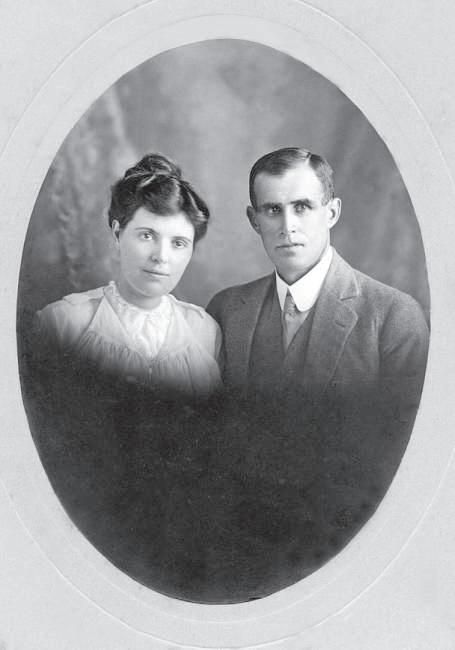
ABOVE:MajorJamesMcGregorElmslie(right)withhiswife MarthaJean“Markie”Elmslie(left) BorninWaverley,South Taranaki,in1876,ElmslieservedintheBoerWarandlatercommandedthe2ndSquadron,WellingtonMountedRiflesduring WWI.Arespectedleader,hewaskilledatChunukBair,Gallipoli, on9August1915,aged38
Photo: Supplied Andrew Honeyfield Sources:
Kem Ormond
Ihave often written about the war horses and the huge part they played in WW1; what I didn’t know until recently was that in Egypt, some of the New Zealand soldiers used bullocks to pull wagons that carried supplies
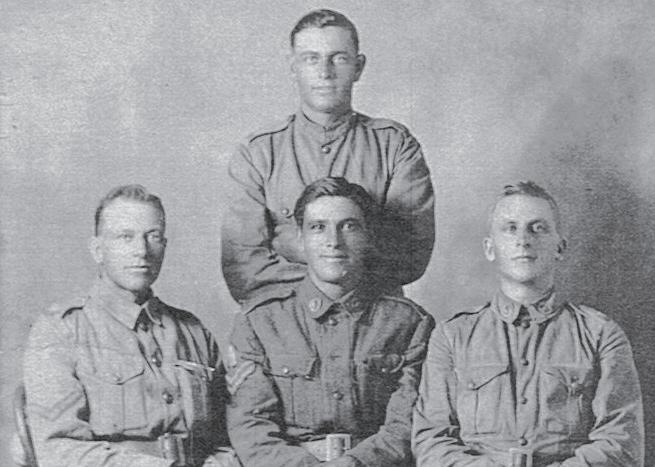
One such soldier was Cecil Gordon Lee, affectionately known as “Togo Lee,” and he was consigned to the Auckland Mounted Rifles Regiment This regiment was established with 26 officers, 523 other ranks and 528 riding horses,74 draught horses and 6 pack horses As mounted infantry, the regiment rode into battle on their horses but were expected to dismount and fight on foot
Lee served from 1914 to 1918 along with his brother Lenard, and on his return, he filed his photos away and never really talked about the war, which was often the case
Lee left the shores of New Zealand at approx 17 or 18 years of age, a fine-looking young man who had a real love of the land, horses, and his family Auckland was where he grew up, and at an early age was an apprentice blacksmith This was a thriving business back then, as mostly draught horses were used in the carrying trade, and they all needed to be shod
Once in Egypt, Lee quickly learned how to deal with minor horse ailments, learned to suture their wounds, file their teeth, and took on the role of Shoeing Smith, as they called it back then
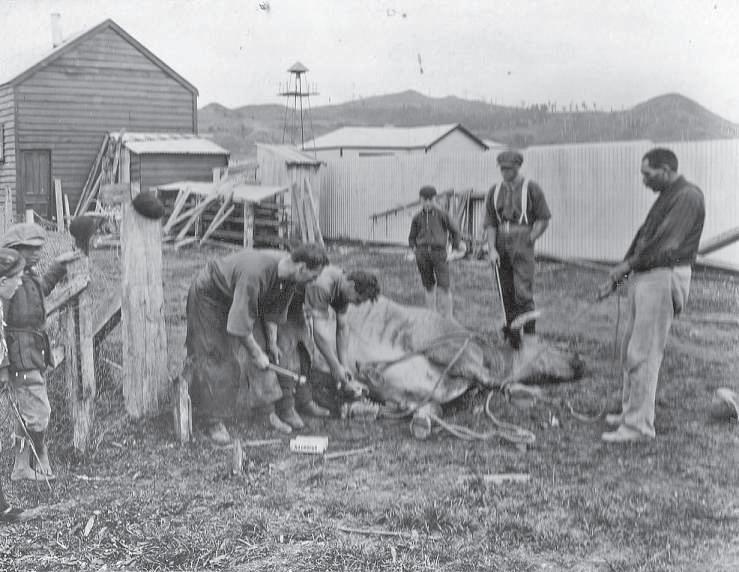
Two photos that may have never been seen before, apart from family members, are of the bullocks the regiment used in Egypt One is of a rider on the back of a bullock, and the other of a bullock being shod Like the horses, they were often working on rough terrain, and they needed shoes made to protect their hooves Not an easy job when it comes to a bullock with split hoofs; their shoes had to be made in two pieces With no bails, nothing in fact to secure the bullock while being shod, it all came down to ropes, energy and good old grit and determination We are talking animals that hadnt really had a lot of human handling, so this was not an easy job, but something Lee relished in He obviously was the man for the job!
With horses being needed for the front, bullocks were the next best thing to move supplies Lee also had his own horse to look after, named Skipper A rather stocky horse with not much of a tail, but strong and powerful Like most horses from the war, Skipper did not return to New Zealand
On his return from the war, Lee took over the farrier business from his former employer, and he trained trotters in his spare time Lee married his wife Lillian, had a son (Gordon) and three daughters (Eileen, Beryl, and Loma) His daughter Beryl became the first woman to be granted an open professional trainer’s licence
Purchasing a 10-and-a-half-acre property in Cambridge, saw a move to that area and established his trotting stables, which regularly turned out winners Auto Prince was the best
horse Lee owned He won five races on end before breaking down, after which he enjoyed some success as a sire Lee was often seen lifting the silver at the trots, and his trusty weather-beaten hat was never far from his side; it was his trademark
Not long after he settled into Cambridge, he purchased a blacksmith’s business from McMillan Bros in Kirkwood Street, which he operated until it was taken over by his son Gordon in 1953
Lee became “the” blacksmith in the area He was highly regarded when it came to shoeing, and it was nothing for him to shoe four draughts every morning before breakfast, so that a team would not be held up to do their days work He made all his own horseshoes and was affectionately known as a man who shod horses because he loved them
Eventually, a new blacksmith’s shop was built in 1953 at the Cambridge trotting track and the blacksmiths were Gordon Lee and his son Ross, who started working for his father in 1974
Ross eventually left his farriering behind to become a paramedic.
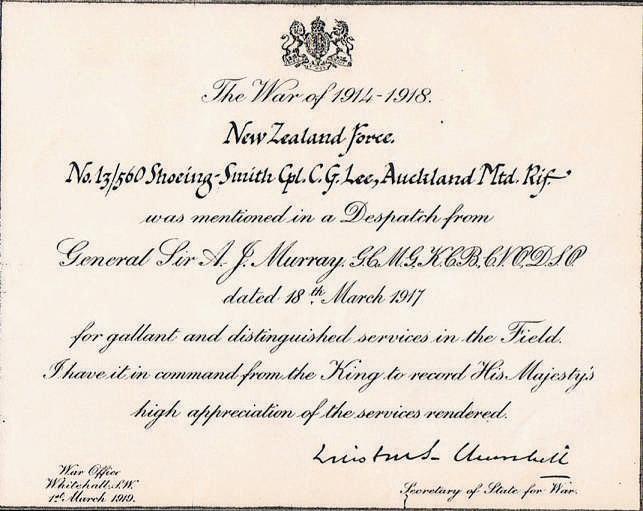
Lee was a man with high principles, hard work was just second nature to him, he loved his family, his horses were his life, and he was a very humble man Among those old photos that had been filed away was a card sent from the war office, one of the lines read, I have it in command from the King to record his Majesty’s high appreciation of the services rendered for your gallant and distinguished services in the field, signed Winston Churchill That says it all
CecilGordonLee,centre,seated.