Inclusivity in Action












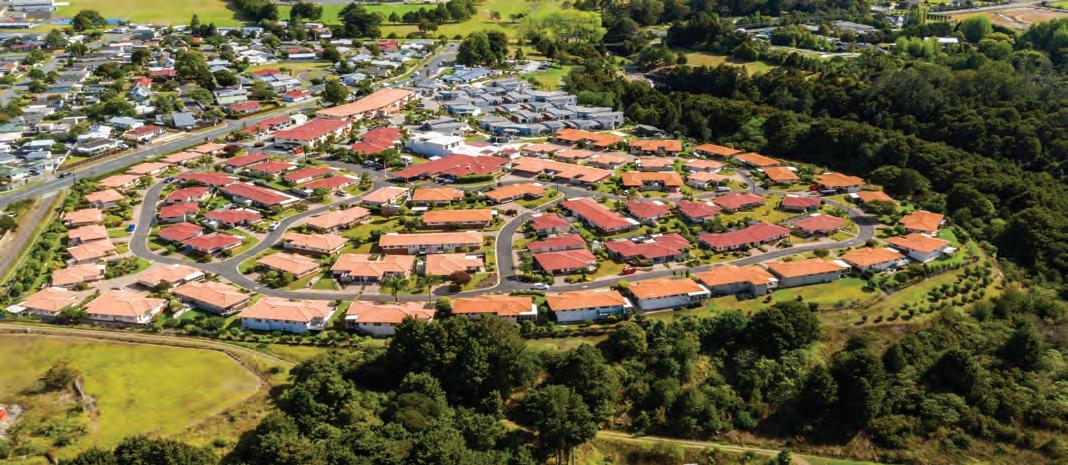
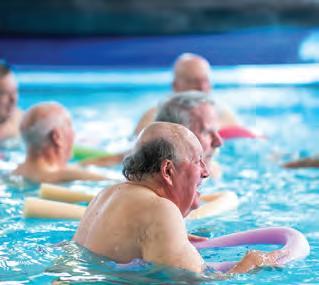
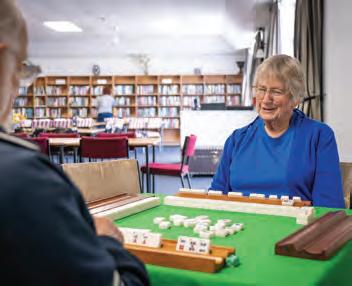
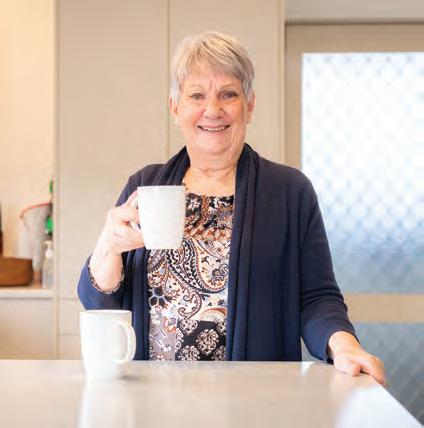
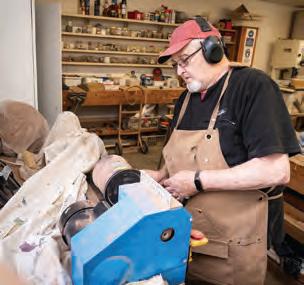
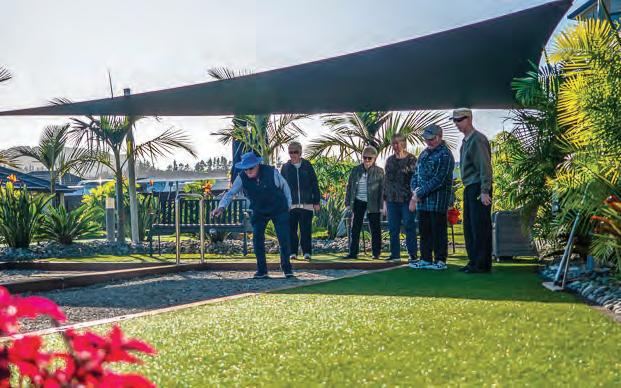
At The Falls Estate, retirement is not about slowing down - it’s about embracing life fully.
Experience the epitome of community living at The Falls Estate Lifestyle Village, where every day is a celebration of vibrant connections and boundless activities. Discover our range of apartments and villas, tailored to your unique needs.
Why wait? Start your new journey with us today, where the entry age is just 65!
94 Boundary Road Tikipunga, Whangarei 09 437 5844
www.fallsestate.co.nz
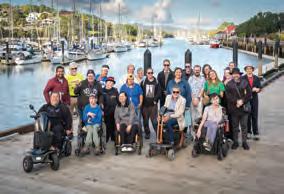































Linking people, families and carers living with a disability to information, advice and support in their community.
Visit www.tiaho.org.nz/support to find out more about what services these organisations provide in Northland.
In Northland, there are a range of organisations providing a Disability Information Advisory Service. These are known as the ‘Northland DIAS Collective’.
Tiaho Trust supports these organisations by helping to improve the access to and utilisation of their information and services in Northland for you and your family/whānau. Tiaho Trust is your first point of contact if you are unsure who to reach out to or have any questions - call us on: 09 430 3406.
The DIAS Collective provides various services about a specific disability, or disability in general, such as:
•Advice and information
•Advocacy
•Community education and awareness
•Support groups and networking
•Home visits
•Access to health professionals
•Referrals and assessments
•Equipment
•Seminars/workshops
•Resources
Together, Tiaho Trust and the DIAS Collective, empower the Northland community by promoting the disabled community as valued citizens who contribute, participate and add to the diversity of New Zealand society.





Your A - Z directory of disability support providers: A Tiaho Trust Project
Arthritis New Zealand www.tiaho.org.nz/arthritis
Your A - Z directory of disability support providers: A Tiaho Trust Project
NorthAble www.tiaho.org.nz/northable
Arthritis New Zealand www.tiaho.org.nz/arthritis
0800 663 463 info@arthritis.org.nz www.arthritis.org.nz
Blind Low Vision NZ
Blind Low Vision NZ
277 Kamo Road, Whangarei (09) 437 1194 0800 243 333 info@blindlowvision.org.nz www.blindlowvision.org.nz www.tiaho.org.nz/blind_foundation
277 Kamo Road, Whangarei (09) 437 1194 0800 243 333 info@blindlowvision.org.nz www.blindlowvision.org.nz www.tiaho.org.nz/blind_foundation
CCS Disability Action www.tiaho.org.nz/ccs
CCS Disability Action www.tiaho.org.nz/ccs
291 Kamo Road, Whangarei PO Box 8035, Kensington, Whangarei (09) 437 1899 0800 227 2255 Northland@ccsDisabilityAction.org.nz www.ccsDisabilityAction.org.nz
291 Kamo Road, Whangarei PO Box 8035, Kensington, Whangarei (09) 437 1899 0800 227 2255 Northland@ccsDisabilityAction.org.nz www.ccsDisabilityAction.org.nz
Headway www.tiaho.org.nz/headway (09) 520 4807 info@headway.org.nz www.headway.org.nz
Headway www.tiaho.org.nz/headway (09) 520 4807 info@headway.org.nz www.headway.org.nz
Huntington’s www.tiaho.org.nz/huntingtons PO Box 80031, Green Bay, Auckland, 0643 (09) 815 9703 0800 432 825 huntingtonsakld@xtra.co.nz www.hdauckland.org
Huntington’s www.tiaho.org.nz/huntingtons PO Box 80031, Green Bay, Auckland, 0643 (09) 815 9703 0800 432 825 huntingtonsakld@xtra.co.nz www.hdauckland.org
Motor Neurone Disease www.tiaho.org.nz/mnda
Key Northland contact 027 269 4904 0800 444 474 support@mnd.org.nz www.mnd.org.nz
Motor Neurone Disease www.tiaho.org.nz/mnda Key Northland contact 027 269 4904 0800 444 474 support@mnd.org.nz www.mnd.org.nz
Dementia Tai Tokerau 0800 663 463 info@arthritis.org.nz www.arthritis.org.nz
Deaf Aotearoa Northland www.tiaho.org.nz/deaf_aotearoa
1A Deveron Street 0800 332 322 Text free 8223 national@deaf.org.nz www.deaf.org.nz Deaf Aotearoa Northland www.tiaho.org.nz/deaf_aotearoa
1A Deveron Street 0800 332 322 Text free 8223 national@deaf.org.nz www.deaf.org.nz
Dementia Tai Tokerau
112 Corks Road, PO Box 7027, Tikipunga, Whangarei 0144 0800 004 001 (09) 438 7771 info@dementiatt.nz www.dementiatt.nz www.tiaho.org.nz/dementiataitokerau
112 Corks Road, PO Box 7027, Tikipunga, Whangarei 0144 0800 004 001 (09) 438 7771 info@dementiatt.nz www.dementiatt.nz www.tiaho.org.nz/dementiataitokerau
Epilepsy Northland www.tiaho.org.nz/epilepsy
Educator- Northland 027 291 6869 0800 374 537 northland@epilepsy.org.nz www.epilepsy.org.nz
Epilepsy Northland www.tiaho.org.nz/epilepsy Educator- Northland 027 291 6869 0800 374 537 northland@epilepsy.org.nz www.epilepsy.org.nz
Multiple Sclerosis Northland
Multiple Sclerosis Northland
www.tiaho.org.nz/ms
www.tiaho.org.nz/ms
Old Town Hall, 71 Bank Street, Whangarei (09) 438 3945 nthlndms@xtra.co.nz www.msnz.co.nz
Old Town Hall, 71 Bank Street, Whangarei (09) 438 3945 nthlndms@xtra.co.nz www.msnz.co.nz
Muscular Dystrophy Assc. NZ www.tiaho.org.nz/muscular
Muscular Dystrophy Assc. NZ www.tiaho.org.nz/muscular
17a Ballarat St, Ellerslie, Auckland 0800 636 787 (09) 415 5682 021 824 018 info@mda.org.nz www.mda.org.nz
17a Ballarat St, Ellerslie, Auckland 0800 636 787 (09) 415 5682 021 824 018 info@mda.org.nz www.mda.org.nz
NorthAble www.tiaho.org.nz/northable
40 John Street, Whangarei 0508 637 200 northable@northable.org.nz www.northable.org.nz
40 John Street, Whangarei 0508 637 200 northable@northable.org.nz www.northable.org.nz
LYNKZ: 0508 637 200 42 John Street, Whangarei
LYNKZ: 0508 637 200 42 John Street, Whangarei
NorthAble (Equipment Plus) www.tiaho.org.nz/northable
NorthAble (Equipment Plus) www.tiaho.org.nz/northable
73 John Street, Whangarei (09) 430 3469 www.equipmentplus.org.nz
73 John Street, Whangarei (09) 430 3469 www.equipmentplus.org.nz
Northland Down Syndrome
Northland Down Syndrome Support Group www.tiaho.org.nz/down_syndrome Kara Rd, RD9 (09) 434 6723 0800 693 724 national.coordinator@nzdsa.org.nz www.nzdsa.org.nz
Support Group www.tiaho.org.nz/down_syndrome
Kara Rd, RD9 (09) 434 6723 0800 693 724 national.coordinator@nzdsa.org.nz www.nzdsa.org.nz
Parkinson’s Northland www.tiaho.org.nz/parkinsons PO Box 11067 Manners St, Wellington 6142 027 268 4973 0800 473 4636 educator.northland@parkinsons.org.nz www.parkinsons.org.nz
Parkinson’s Northland www.tiaho.org.nz/parkinsons PO Box 11067 Manners St, Wellington 6142 027 268 4973 0800 473 4636 educator.northland@parkinsons.org.nz www.parkinsons.org.nz
Parent to Parent Northland www.tiaho.org.nz/parent2parent 027 808 3942 0508 236 236 northland@parent2parent.org.nz www.parent2parent.org.nz
Parent to Parent Northland www.tiaho.org.nz/parent2parent 027 808 3942 0508 236 236 northland@parent2parent.org.nz www.parent2parent.org.nz
Stroke Aotearoa NZ www.tiaho.org.nz/stroke
Whangarei & Districts
Stroke Aotearoa NZ www.tiaho.org.nz/stroke Whangarei & Districts Mid North/Far north 0800STROKE (0800 78 76 53) help@stroke.org.nz www.stroke.org.nz
Mid North/Far north 0800STROKE (0800 78 76 53) help@stroke.org.nz www.stroke.org.nz
Inside WOTSO shared workspace
31 Hannah St, Whangarei 027 445 3553 | 09 430 3406 administrator@tiaho.org.nz www.tiaho.org.nz



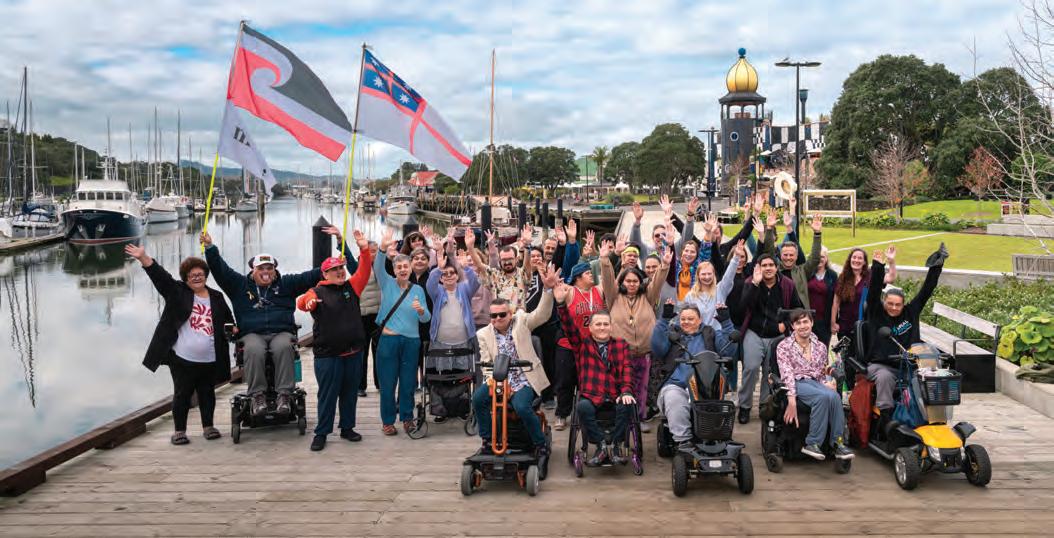
At Tiaho Trust, we believe disability should never be a barrier to living a full and meaningful life.
A s a disabled-led organisation based in Northland, we work alongside tangata whaikaha, wh ā nau and carers to provide information, advocacy, practical support and opportunities for connection.
Whether you need help navigating disability services, understanding funding options, advocating for your rights, finding accessible accommodation, or simply knowing where to start, our team is here to help.
• Information and Advocacy
• D isability Information Advisory Service (DIAS)
• D isability Awareness Training
• A ccessibility Audits and Advice
• A ccessible Accommodation and Respite
• C ommunity Events and Projects
• L eadership and Inclusion Initiatives
E verything we do is guided by the voices and experiences of disabled people.
O ur team delivers disability awareness training to organisations, businesses, students and community groups throughout Northland, helping create more inclusive environments where disabled people can participate and thrive.
We also work closely with local councils, community organisations and service providers to improve accessibility and promote inclusive practices across the region.
A ccessible Accommodation
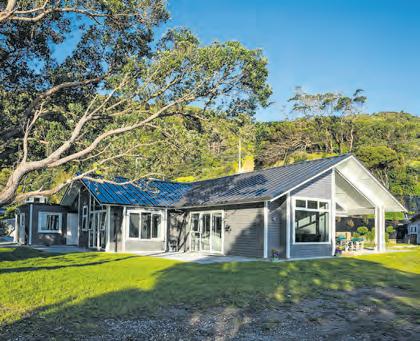
O ne of our newest initiatives is our fully accessible respite and accommodation house.
The house provides a welcoming, accessible environment for local families requiring respite, as well as visitors travelling to Northland. The overwhelming response and subsequent bookings
has highlighted the growing need for accessible tourism and accommodation options throughout New Zealand.
T iaho Trust continues to bring people together through community projects, accessibility initiatives, leadership development and sector collaboration. Through our work with disabled people, wh ā nau, service providers and community organisations, we are helping create a Northland where everyone belongs and everyone can participate.
I f you would like information, support, advocacy, training or advice, we’d love to hear from you.
Contact Tiaho Trust Tiaho Trust Inside WOTSO Shared Workspace, 31 Hannah St, Whangārei
Phone: (09) 430 3406
Email: pip@tiaho.org.nz Web: www.tiaho.org.nz Facebook: @disabilityamatterofperception
Since the last edition of Getting Out There, Tiaho Trust has continued to grow, evolve, and create opportunities for disabled people and wh ā nau across Te Tai Tokerau.
O ne of the most significant milestones has been the launch of our fully accessible respite and accommodation house. Developed following discussions within our Tai Tokerau Enabling Good Lives Leadership Group, the house provides a welcoming space for local families needing respite, while also addressing the shortage of genuinely accessible accommodation for visitors to Northland. Since opening, occupancy has exceeded expectations, demonstrating the strong demand for accessible accommodation and the importance of creating more inclusive tourism opportunities throughout the region.
O ver the past year we have also begun laying foundations for a broader conversation about accessible tourism in Te Tai Tokerau. Northland is renowned for its natural beauty, beaches, walking tracks and visitor experiences, yet accessibility remains a barrier for many travellers. We believe accessibility presents an opportunity not only for disabled people and their wh ā nau, but also for Northland’s tourism sector and economy.
A dvocacy has remained at the heart of our work. Alongside disabled people, wh ā nau and sector partners, Tiaho played an active role during ongoing discussions around disability support funding and the changes introduced by Whaikaha. The strength of community voices helped ensure disability issues remained firmly in the public spotlight and reinforced the importance of meaningful engagement with disabled people when decisions are being made.
This year also marked a fresh chapter for the organisation. We launched a refreshed website to better connect people with information and services, and relocated into a new office space following an unexpected office closure. While the move presented challenges, it has also
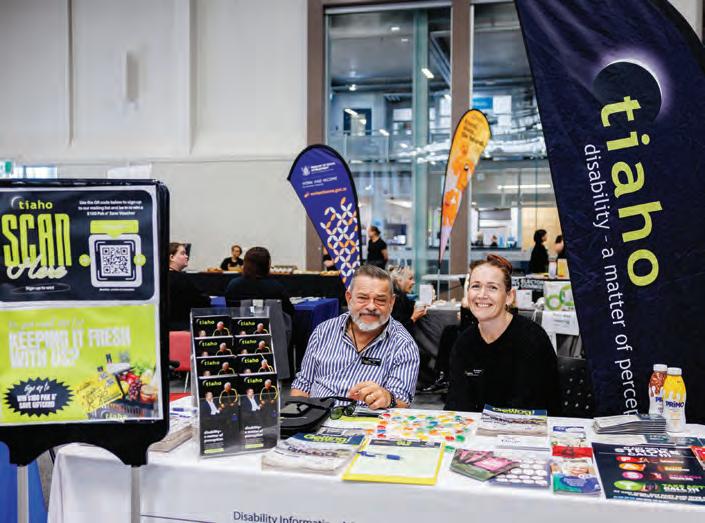
provided a fresh environment from which to continue our work.
Our commitment to accessibility has continued through a range of projects and partnerships. We have worked alongside Whang ā rei District Council on accessibility audits and initiatives aimed at improving access and inclusion throughout our community.
The Tai Tokerau EGL Leadership Group has also continued to go from strength to strength. Despite the loss of dedicated funding, members have remained active, advocating for accessibility, undertaking community projects, conducting audits and creating opportunities for disabled people to connect and lead change. Exciting conversations are underway about the future of the group, and we look forward to sharing more in the months ahead.
E ducation remains a cornerstone of Tiaho’s work. Over the past year, we have continued delivering disability awareness training to hundreds of participants. This
has included a new partnership with Auckland University of Technology (AUT), where nursing students are learning directly from people with lived experience of disability. Through these workshops we continue to challenge assumptions, build understanding, and promote the social model of disability.
B ehind all of this sits one of Tiaho’s most important roles: supporting the Disability Information Advisory Service (DIAS) network. The organisations featured throughout this magazine provide specialist support, information, advocacy and connection to thousands of disabled people and wh ā nau across Te Tai Tokerau. Getting Out There exists to celebrate that collective work, share stories, raise awareness, and help people find the support they need.
A s we look ahead, we remain committed to building a more accessible, inclusive and connected Northland; one conversation, one project and one opportunity at a time.
Arthritis NZ Mateponapona Aotearoa provides information and support for all people with arthritis, including gout arthritis. We also support people with fibromyalgia and lupus, as these conditions have some symptoms that affect the joints.
While there is no cure for arthritis, most people can live fulfilling and productive lives with early intervention, good treatment and self-management tools.
We know that one in every six people has some form of arthritis, or about 850,000 across New Zealand. It is our goal to provide information, advice, and support to everyone with arthritis that is reliable and up-todate. Our website and one-on-one Arthritis Assist lines can help with treatment options and strategies for managing daily life. We also advocate for the needs of the arthritis community and help people to have access to quality healthcare and support services.
Nearly half of all people with arthritis are of working age and experience difficulties in trying to earn a living. They may have problems getting time off work to go to specialist appointments. Workers may have to use up all their sick leave or take leave without pay when coping with
a ‘flare’. Sometimes it’s the physical demands of the work itself (standing or lifting) that are difficult. Or it may be the negative perceptions of work colleagues that add to the stress.
Therefore, flexible hours, modified equipment, and empathetic colleagues and managers who take a positive lead can ensure that workplaces are suitable and welcoming for people with arthritis.
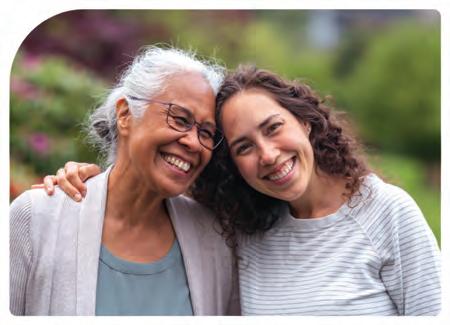
We can help people with arthritis in the workplace navigate these challenges by advocating for them at the government level and providing guidance and advice on how to talk to employers or access other support that might be available.
Anyone of any age who has arthritis can contact Arthritis Assist on 0800 663 463 or info@arthritis.org.nz during business hours. People with arthritis can request a free consultation and/or information pack tailored to their needs, covering understanding their arthritis, treatments, pain management, nutrition, mental health, employment issues, and access to other
support services. This information pack can be posted to your door or emailed.
An active arthritis support group in Whangãrei and water-based exercise classes are run independently at the Aquatic Centre.
www.arthritis.org.nz
our Facebook page




rheumatoid and neuropathy in my feet. People often say, “it’s just arthritis” but they don’t tell you how painful and debilitating it can be. Over the years I’ve learned the importance of being pro-active. I try to manage my arthritis with diet, avoiding acidic food and the nightshade family of vegetables, which helps me immensely.
use code
I also try to keep active within reason, although sometimes the next day my body reminds me, I may have overdone it.
Like many men of my generation, I thought I was six-foot tall and bulletproof.

After cartilage and ligament surgery at 48, I eventually had my first knee replaced at 53, the other, two years later. Followed by shoulder and hip replacements in later years, earning me the nickname, “The Bionic Man.”
DoesnotincludeValuePacks
Validtillmidnight23Dec2025
Thisdiscountcannotbeusedin conjunctionwithanyotheroffer.

One of the most important things I’ve learned is to keep a positive outlook. When you hear other sufferers’ stories, you realise you are not alone and perhaps not doing so badly after all.
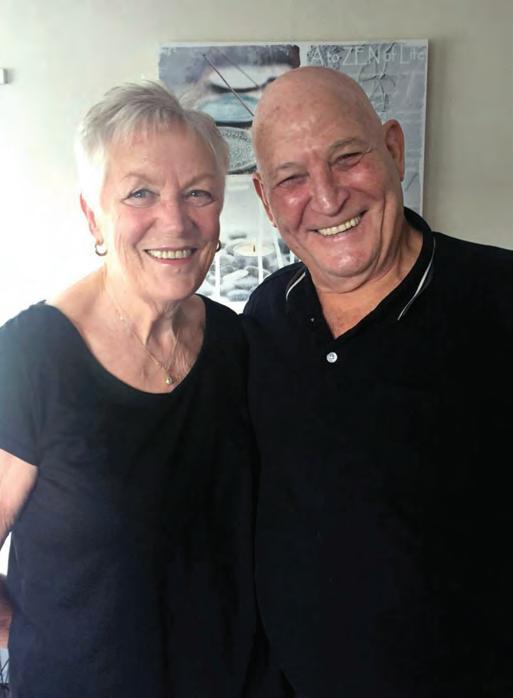
I ’m Steve 85, Valerie’s other half and I have lived with arthritis since I was 48. I have both osteoarthritis and rheumatoid arthritis, mostly from years of
My experiences have helped me support others through assessments, surgery and rehabilitation in our support group. Humour and support can make even the toughest days easier to face.
We both say, never under estimate the power of laughter. A good laugh every day really is wonderful medicine and we have plenty of that at our Whangarei















Blindness and
avinglivedalmost15yearswith a guidedog, Stevesaysthatguidedogs arehislife.


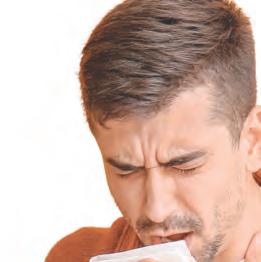
any people believe that sight loss is rare. But anyone can experience blindness, deafblindness, or low vision at any stage of life. It might happen to you or someone you love.
Stevedidn’talways feelthis waythough.He saysheinitially“rebelled” to theideaofgetting aguidedog,due to acceptinghisvisionloss.
When Stevewas 16yearsold,he was diagnosedwithglaucoma.Hesayshedidn’t paymuch attention to ituntilabout15years agowhenhisvision started toget worse.
A s New Zealand’s population gets older, age-related eye conditions are on the rise. That’s why looking after your eye health and making sure support is available when it’s needed matters more than ever.
Agoodfriendofhissuggestedheget aguide dog.It took alot of convincing togetSteve to beopen to theidea. Now hesayshewouldbe “deadinwaterwithout aguidedog”.
At Blind Low Vision NZ we speak up for accessible, inclusive communities. Everyone should be able to move through public spaces, access information, and work towards the life they want without unnecessary barriers.
Steveandhis guidedogshavebeengoing to andfromhisplaceofworkatInland Revenue inWhangāreifor manyyears.Theytravel frequentlyonplanes too.
As an active person, Stevesayshe wantsto beout walking ever ydayuntilhe can’twalk anymore.Hisguidedog, Archie,makesthat possible forhim.
We work to raise awareness, drive change, and make sure people with sight loss have the same opportunities as everyone else.
BeforeArchie, Stevehadtwootherguide dogs, CasperandHadley. Heexplainsthateach guide dogserved adifferentpurposeinthat pointinhislife.
The four most common eye conditions that cause blindness or low vision are:
• Age-related macular degeneration.
• Diabetic retinopathy.
• Glaucoma.
• Cataracts.
Stevedescribeshowhefindsitdifficultin betweenguidedogsandhas to go back to using awhitecane.Thattransitionperiod inbetweencan be toughasheissoused to having aguide dog.Hesays nothing compares to having aguidedog.
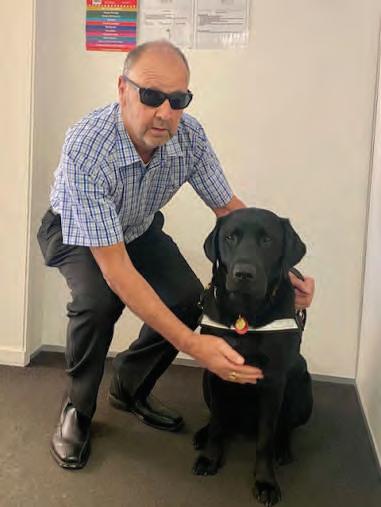
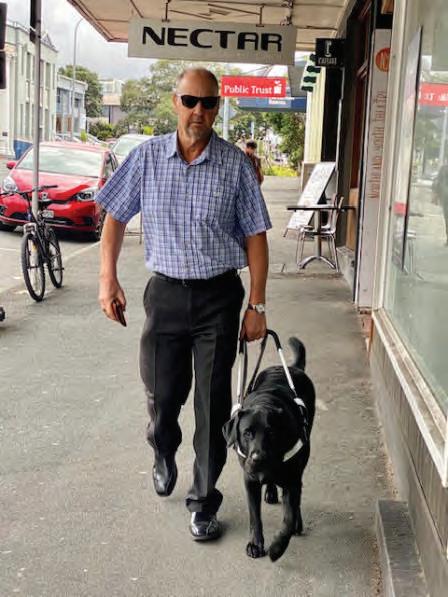
NotonlydoesArchiehelp Steveget around safely.Archiealsogives Steveaconfidence boost. Having aguidedoghaschangedthe person Steveis.Having asenseofsecuritythat Archieprovides himwithallows himtomove throughspaceswith confidence.
Tools to live life your way. Our Library Service offers books and resources in many accessible formats. You can access them using the Blind Low Vision NZ Library skill on Amazon Alexa, the EasyReader app, or by calling our Contact Centre.
Shaqueline Ross
Guide dogsare likefamily,Steve saystheir companionshipand their relationshipishard to explaininwords.
“Idon’t want to bewithoutaguide dog ever” Steveexclaims.
We support people who have reduced vision, even with the best glasses or contact lenses. About three in four people we
• OphthalmicEyeExaminations
StevesaysthatArchieis aver ysocialand playfulpup.
We can also help with:
• Getting around safely and freely.
• Daily Living Skills.
“Whenhehashisharnessonheiswellbehaved,withouthis harness he’sanutter”
• Sport & Leisure.
• CataractExtractionandlensimplant
“For aseriouslyvisuallyimpairedperson, aguidedogislikehaving acar.Puttingthe harnessonisliketurningthe ke yina car, it givesyou mobilityand you canessentially goto most places.The differencebetween having adogandnothaving adogisasbig astheocean.”


• Pter ygiumExcisionplusconjunctivegraft
• Injection forwetagerelatedMacularDegeneration
• Glaucomatreatment • Cataractsurgery



















EyeSpecialists:
Phone:09-9727022
12 Ke nsington Ave,Whangarei
Email :p ceye s@xtra.co.nz
We bsi te :w ww.bit.do/EyeCent re


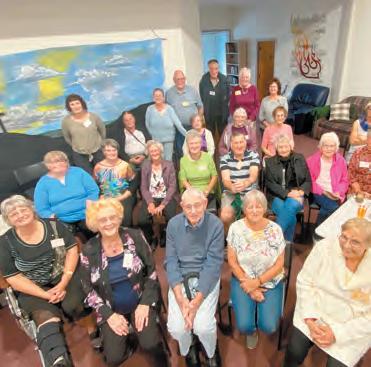
“I Don’t Know What I’d Do Without This Group”
A story of friendship, laughter and finding connection through shared experience.
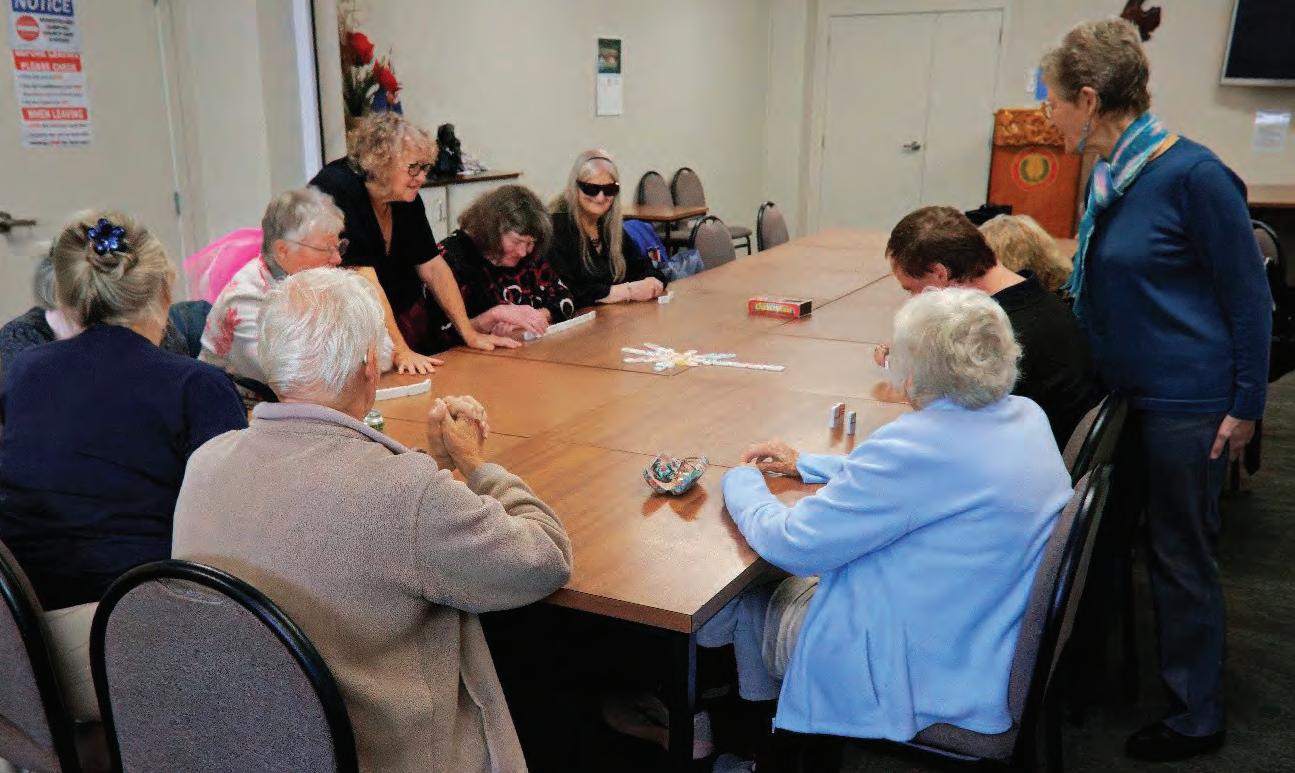
Members attending the Whangārei Games Day group are gathered around a table indoors, playing a game of Chicken Foot. Volunteers stand nearby to provide support and assistance. The atmosphere is social, relaxed and engaging, with members enjoying shared conversation and activities.
Laughter fills the room as someone claims victory in a game of Chicken Foot – earning the prized chocolate fish for the afternoon.
F or the group gathered around the table in Whang ā rei, it’s about far more than winning. It’s friendship, connection and understanding. It’s a place where people living with vision loss can spend time with others who simply “get it”.
“ I was so depressed and sad when I first came here,” says Lexie. “When I saw people with white canes and guide dogs, I asked, ‘How can you be so happy?’
They were so understanding and have helped a lot. I don’t know what I’d do without this group.”
F or decades, support groups connected to Blind Low Vision NZ have helped people connect, share experiences, and feel less alone. Back in the 1990s, staff and volunteers from what was then The Foundation for the Blind began running social gatherings for members and wh ā nau in Whang ā rei. Many still remember George Fiske for his humour, kindness and compassion for the community he supported.
L ater, Dorette Clements, herself a Blind Low Vision NZ member, saw an opportunity to create deeper social connection. With support from dedicated volunteers and Blind Low Vision NZ, the group grew into the welcoming community it is today.
N ow, members gather throughout the year for lunches, games and support meetings that build confidence, friendships and belonging.
S ometimes, something as simple as a shared lunch or friendly conversation can make all the difference.
CCS Disability Action is a disability support and advocacy organisation.
CCS Disability Action Northland covers from Care Reinga to Wellsford. We support disabled people and whãnau of all ages and all impairment types. We partner with disabled people, their families and whãnau to enable them to have choice and control in their lives. Our vision is to see every disabled person and whãnau hauã interwoven into the lives of their whãnau and community.
Our services
Our services include:
• A range of respite options designed to provide a break for families and a positive and rewarding experience for your child.
• Community Support Coordinators who provide advocacy and support to remove any barriers to accessing the quality education of your choice.
• Connecting you with paid and sustainable employment by providing individualised support for potential employees and employers.
• Ongoing vocational support to assist disabled people to participate in training, work, or community activities.
• Providing support, information and options for young people preparing to leave school for further study or employment.
• Working in partnership with disabled people to support them to lead independent lives. We provide community-based support and work with people who would like to move from residential care into their own home.
• A Karanga Maha group who support people of Mãori and Pacific Island descent to engage with their own cultural identities and develop leadership.
• Administering the mobility parking service in Northland, supporting people to park in accessible spaces in the community.
• We also offer a nationwide Library and Information service. This provides a wide range of resources on disability
CCS Disability Action supports disabled people and whānau of all ages and all impairment types.
Our friendly and helpful team work across Te Tai Tokerau and we offer a wide range of free services. Self-referrals are welcome.
Get in touch today 09 437 1899 or 0800 227 2255
Northland@ccsDisabilityAction.org.nz www.ccsDisabilityAction.org.nz
and the wider disability sector. Anyone can use the Information Service free of charge, no matter where they are in New Zealand.
We welcome-self referral and can support you to access the right pathway for the supports you need.
Get in touch
We would love to connect with you.
CCS Disability Action Northland 291 Kamo Road, Whangārei 09 437 1899 or 0800 227 2255 Northland@ccsDisabilityAction.org.nz www.ccsDisabilityAction.org.nz
On a Wednesday morning at the back of the CCS Disability Action Whang ãrei property, two young men are already at work. At The Clothing Sheds and Book Barn (known locally as The Clothing Barn), donated clothes are waiting to be sorted. Ruslan (Rus) and Shannon arrive a little after eight, and the place feels more like itself once they are in it.
Their work is voluntary, and they take it seriously. They also help at the CCS Disability Action office: watering plants, sweeping paths, keeping things tidy. They are, as their Coordinator Jo MatthewsRudolph puts it, almost part of the furniture now.
N either was here a year ago. They arrived separately, referred to CCS Disability Action within months of each other. Each wanted much the same thing: a way into the world.
Rus is 24 and lives in his own flat. For a long time he was, in his words, a bit of a gamer, and not much else. “When I was gaming, I used to be quite antisocial. I didn’t get enough sun. My sleeping patterns were completely out of whack.” Getting back into the workforce had been a long, challenging road.
“Jo, in particular, has helped me find my

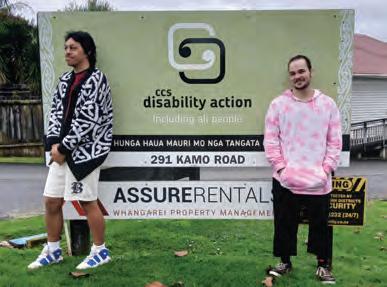
footing,” Rus says. “She introduced me to volunteering at the Clothing Barn. Just to help me get stronger community connections and get myself out of the house.” The impact has been real. “Since I started going, I’ve become more lively, more happy. I feel more human.”
Volunteering led to paid work at Plantpro, a landscaping business connected to one of the managers of the shop. “Now I’ve got community through the voluntary work, and then I’ve got paid work too. That’s basically what I’ve always wanted.”
S hannon is 22 and came to CCS Disability Action a little after Rus. He is hard of hearing and communicates with a mix of NZSL, gesture, writing, and a smile that
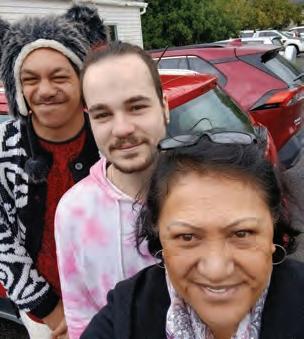
does a lot of the talking for him. Part of his support has been learning to travel independently by public transport. For Shannon, the bus is not a small thing.
“ Shannon has come a long way,” Jo says, describing how he’s come out of his shell and built his self-confidence.
B oth men are at the Clothing Barn on Wednesdays and Fridays, with the place running like clockwork. Somewhere along the way, they became friends — turning up on the same days, working the same shifts, with the easy rhythm of people who genuinely enjoy each other’s company. They are out of the house, building skills and independence, doing mahi that makes them happy.
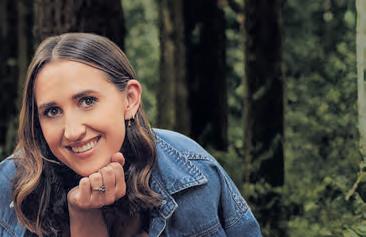


Deaf Aotearoa is the Disabled Persons’ Organisation representing the voice of Deaf people in Aotearoa New Zealand.
Deaf Aotearoa advocates for the Deaf community, engaging with government departments and other agencies to improve access for Deaf people. We are the national service provider for Deaf people and their whãnau. We are the New Zealandrepresentative member organisation of the World Federation of the Deaf (WFD).
Deaf Aotearoa’s services are available from 14 offices nationwide, including Northland. These services include:
Children and Youth
Our First Signs service supports families with Deaf and hard of hearing children aged 0-5 years to develop NZSL and an understanding of being Deaf in Aotearoa, in the comfort of their home with whanau and community. Our Youth service supports families and young people as they develop their Deaf identity.
We support Deaf people aged 16yrs (not in full-time school) and over, in a variety of ways: pre and post-employment, Needs Assessments, 1:1 support, advocacy and representation, service co-ordination, access to assistive equipment and Adult
Community Education (ACE). We also provide a Disability Information Advisory Service (DIAS) to the Deaf community and public with Deaf-related enquiries and support.
Our nationwide interpreter booking agency.
Translation
We work with government departments and other organisations to translate their documents, resources and videos into NZSL.
We support organisations to develop their understanding of the Deaf community and NZSL. We aim to make Aotearoa a
more accessible and inclusive place to be.
Every May, Deaf Aotearoa organises NEW ZEALAND SIGN LANGUAGE WEEK – a celebration of one of the country’s official languages. NZSL Week is a chance for the Deaf community to stand proud as Deaf, and to celebrate their language and culture. It also works to break down barriers, fears and misconceptions. NZSL Week lets Deaf New Zealanders put their hands up and be seen! Our vision for NZSL Week is to increase awareness and understanding of NZSL and the Deaf community, and to empower and strengthen the Deaf community.
Deaf Aotearoa is community focussed and surpluses go back to the Deaf community by way of sponsorships and donations.
Deaf Aotearoa Freetext - 8223
Address 1A Deveron Street, Whangārei
Open Monday to Thursday 9am-4pm and Friday by appointment
For other methods of contact go to our Contact Us page on our website: Contact Us – Deaf Aotearoa
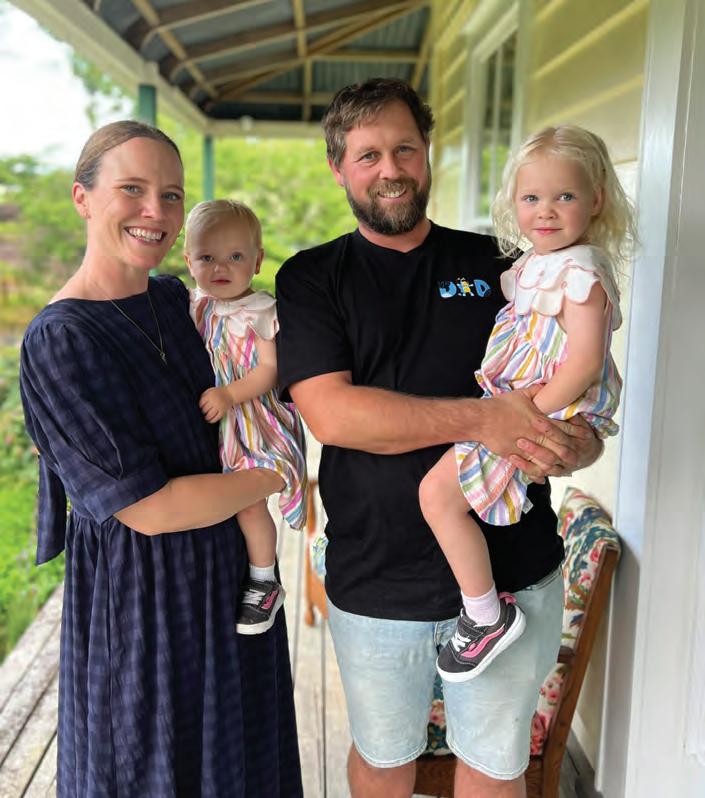
Growing up with a mother who was a teacher for the deaf, signing was a normal part of Katie Wilkinson’s childhood. But little did she know, she would one day need it to communicate with her own daughter.
Mary was born with unilateral hearing loss, meaning she is profoundly deaf in one ear, picked up at her newborn hearing screening. A raft of appointments followed, along with an MRI to see if Mary, now two, would qualify for a c o chlea implant, which she did. However, because her hearing loss is one-sided, it is not funded and, costing upwards of $50,000 and not guaranteed to work, it is not a road the family can currently go down, says Katie.
“Maybe if her speech started to go downhill, but at the moment, she’s a sassy little firecracker so we don’t need it, to be honest.”
Instead, the family embarked on a sign language journey through Deaf Aotearoa’s First Signs (for deaf and hard of hearing aged 0-5).
“ We’ve had access to a sign language teacher Harri (Beryl Harrison) from six months old and she’s been amazing,” says Katie. “My mum was a signed English teacher for the deaf before sign language was an official language, when you’d spell everything with letters, so she has been learning it.”
In fact, as well as the grandparents, partner Matt and four-year-old sister Clara have too.
“Because she’s only two, it’s more about us signing to Mary and her understanding us. We’ll sign baby babble words, like bird, dog, cat, milk...”
Mary recently began attending kindergarten and has no trouble talking to other kids. “She’s got great English and we speak to her in te reo and sign. We’re trying to reignite te reo back into the family after it being lost for many years. She definitely relies on sign to help her in difficult
situations.” She also relies on lip reading and facial expressions.
K atie cites Deaf Aotearoa as being a lifeline for helping their family through what, she says, has been an otherwise lonely road.
“In Northland, they don’t really have all the services they have in Auckland. It’s a whole new world that you’ve got to try and navigate and I would’ve just loved a group to talk to and catch up with.”
That’s why she’s set up Deaf Tamariki Te Tai Tokerau to try to help others who also feel isolated.
“ This year is 20 years since New Zealand Sign Language is an official language and I think it needs to be more widely integrated into everyone’s lives. It’s a daunting prospect for any parent realising they have to figure out a new language in order to communicate. Because it’s like your life is flipped upside-down – you go through a grieving period. It would be so good if our little group could expand and grow to facilitate the potential anxiousness parents have about how a hearing loss might impact their child’s future. In realty, you child’s future is just as bright as any other child’s, you just need access to services to make their future just as bright.”



Every child deserves the best possible start in life, yet recent immunisation data shows Te Tai Tokerau continues to face significant challenges.
Nationally, 82.9% of children were fully immunised by 24 months of age during the October to December 2025 reporting period. In comparison, Te Tai Tokerau's overall coverage was just 65.9%, well below both the national average and the Government's long-term target of 95% coverage.
The regional data also shows that 23.3% of children had at least one vaccination declined, while 10.8% were not fully immunised, highlighting that many whãnau are missing out on the protection vaccines can provide.
It's easy to assume these numbers reflect people's choices, but the reality is often far more complex. Behind every statistic is a family, and behind many missed
vaccinations are barriers such as transport, access to healthcare, cost, health literacy, cultural safety, or the practical challenges of navigating the health system.
Recognising these challenges, Health New Zealand | Te Whatu Ora is working to make immunisations more accessible across Te Tai Tokerau. In addition to vaccinations offered through GPs and participating pharmacies, free community immunisation clinics are held throughout Northland, with regular clinics in Whangãrei, Kaikohe, Kaitaia, Dargaville and other communities. Many clinics offer same-day appointments, while outreach services help bring immunisations closer to whãnau who may face barriers accessing traditional healthcare settings. The clinics also provide an opportunity to check immunisation records, answer questions and support whãnau to catch up on any missed vaccinations.
For disabled people and whãnau of disabled children, these community-based services can make a real difference. Having immunisations available closer to home, with flexible appointment options, helps reduce some of the practical barriers that can prevent people from accessing routine healthcare.
If you have a disability or additional access needs, let your healthcare provider know when making your appointment. They may be able to accommodate requests such as a longer appointment, wheelchairaccessible facilities, accessible parking, Easy Read or large print information, an NZ Sign Language interpreter, a quieter waiting space, or allowing a support person or whãnau member to attend.
Sometimes, improving access starts with one simple question:
"What do you need to make this appointment accessible?"
For many families, a diagnosis of Down syndrome can bring a mix of emotions, questions, and uncertainty. The Northland Down Syndrome Support Group exists to ensure no family has to navigate that journey alone.
The group provides support, information, advocacy, and connection for individuals with Down syndrome and their whãnau across Te Tai Tokerau. At its heart is a strong belief in inclusion, community, and celebrating the abilities and strengths of every person.
“ We want families to know there is support available,” says coordinator Kathryn Sadgrove. “Sometimes just talking to someone who understands can make all the difference.”
The organisation offers non-judgmental support for families at any stage, including those who have recently received a
diagnosis. Families can connect with others who share similar experiences, access practical information and resources, and feel reassured they are not alone.
Regular activities continue to bring members together in fun and meaningful ways. The GreatM8s social group meets fortnightly, while gymnastics sessions remain a popular activity for participants. The group also hosts annual community events including World Down Syndrome Day celebrations and Christmas gatherings, creating opportunities for friendship, connection, and inclusion.
Educational resources remain available for loan to families, schools, and early childhood centres. These include books, reading programmes, and numeracy materials designed to support learning and understanding.
The Northland Down Syndrome Support Group also plays an important role in raising awareness and promoting positive attitudes within the wider community. Through advocacy, education, and visibility, the group works to ensure people with Down syndrome are valued, included, and supported to participate fully in community life.
Families can also stay connected through the group’s active Facebook page, which shares updates, information, events, and community news.
Coordinator: Kathryn Sadgrove
Phone: 021 0814 3744
Landline: 09 434 6723
Freephone: 0800 693 724 (press 3)
Email: ksadgrove@xtra.co.nz














Over the past five years, the Northland Down Syndrome Support Group has shared powerful livedexperience stories through Getting Out There magazine - stories that highlight resilience, inclusion, community, and the unique journeys of people with Down syndrome and their whãnau across Te Tai Tokerau.
From young children beginning their education journey to adults building independence, friendships, and confidence, each story has reflected the importance of connection, opportunity, and support.
Readers have met inspiring tamariki such as Arlo, whose story highlighted the value of inclusive education, music therapy, gymnastics, and strong community networks. Families shared how local support and everyday inclusion helped their children thrive socially, emotionally, and academically.
The magazine has also celebrated adults with Down syndrome embracing independence and community participation. Freedom Harrison’s story showcased the confidence and determination that comes from meaningful
inclusion creates opportunities for people to contribute, grow, and be recognised for their strengths.
Other featured families have shared the realities of navigating diagnosis, medical challenges, and parenting while also celebrating milestones, achievements, and joy. Stories from parents such as Celyn, Miranda, and Zarn demonstrated the strength found within whãnau and the importance of having a community that understands.
Across each article, several themes continued to shine through:
• The importance of belonging and acceptance
• The value of early intervention and inclusive education
• Strong family and whãnau support
• Community activities that build confidence and friendships
• The positive impact of organisations working together
The Northland Down Syndrome Support Group has remained at the centre of many of these journeys, helping families connect with one another while advocating for
While every individual story is unique, together they paint a wider picture of a community that values diversity and celebrates potential. They remind us that inclusion is not simply about access - it is about creating spaces where people feel welcomed, supported, and able to participate fully as themselves.
As the group looks ahead, the stories continue. New families join the community every year, young people continue discovering their strengths and passions, and lifelong friendships keep growing through shared experiences, activities, and support.
At its heart, the message remains simple:



Who we are:
Epilepsy New Zealand is a registered charity, we work to promote the welfare and interests of people living with Epilepsy and to increase public awareness and to provide free, confidential support as there are around 50,000 people that have Epilepsy and the numbers are growing.
Who we work with:
• Individuals
• Family/Whanau
• Community Groups
• Pre-schools, Schools, and educators.
• Workplaces.
• Health Agencies.
• Other professionals.
We train and educate health professionals, schools, community workers and workplaces and help them put plans in places such as Seizure Management plans, Risks, Safety, Triggers. Community awareness and epilepsy seminars and talks.
What we can provide:
• Home visits
• Face to face appointments with clients and their whãnau
• Seizure Management advice and plans to be put in place
• Information on managing anti-seizure medication
• Total Mobility assessment
• Support to appointments
• Advice and referrals for our services
• Anyone can contact us directly
On the 1st Monday of each month we host an online support group via Teams. If you would like to be part of this support group or just want to check it out, contact Reokore via email below and she will email you the link..
Northland Educator Reokore Johnson (Kore) is only a phone call away on 027 291 6869
Freephone 0800 37 45 37
Hours 8.30am – 4.30pm
Monday - Friday
Email northland@epilepsy.org.nz
Web www.epilepsy.org.nz
Northland Educator Reokore Johnson (Kore)


For many people living with epilepsy, the condition can feel invisible to others, but the challenges are very real. Alongside managing seizures, medication, and uncertainty, many people also face stigma, anxiety, and isolation. That’s why the Epilepsy Northland Support Group has become such an important source of connection and support for local families.
The group meets fortnightly on Tuesdays in the upstairs meeting rooms at the Civic Arcade in Whangãrei. Facilitated through Epilepsy New Zealand, the gatherings bring together people living with epilepsy, along with parents, partners, caregivers, and whãnau who are navigating the journey alongside them.
Reokore Johnson, who has worked for Epilepsy NZ for the past four years, says the group provides a safe space where people
can openly share both the highs and the lows of living with epilepsy.
“Support groups reduce loneliness and help people feel safe to share their experiences,” says Reokore. “Because epilepsy is often a hidden neurological condition carrying societal stigma, these groups are essential.”
Meetings are a chance to exchange practical advice around seizure management plans, seizure diaries, medication side effects, and recognising seizure triggers. Just as importantly, they are a place where friendships are formed and people feel genuinely understood.
Members describe the group as a place of laughter, support, and belonging.
“Epilepsy can be isolating, but the group brings us out of the shadows,” one member
shared. “It’s not just about managing seizures; it’s about friendship, laughter, and reclaiming our lives from the stigma.”
Another member said simply: “Knowing you are not alone in your journey and seeing others with similar challenges makes all the difference.”
Families and caregivers also benefit from attending, with many appreciating the opportunity to connect with others who understand the emotional impact epilepsy can have on the whole household.
“ We all have a laugh and a close connection with each other,” another member said. “I feel safe to talk.”
For many in Northland, the support group is more than just a meeting. It’s a community.
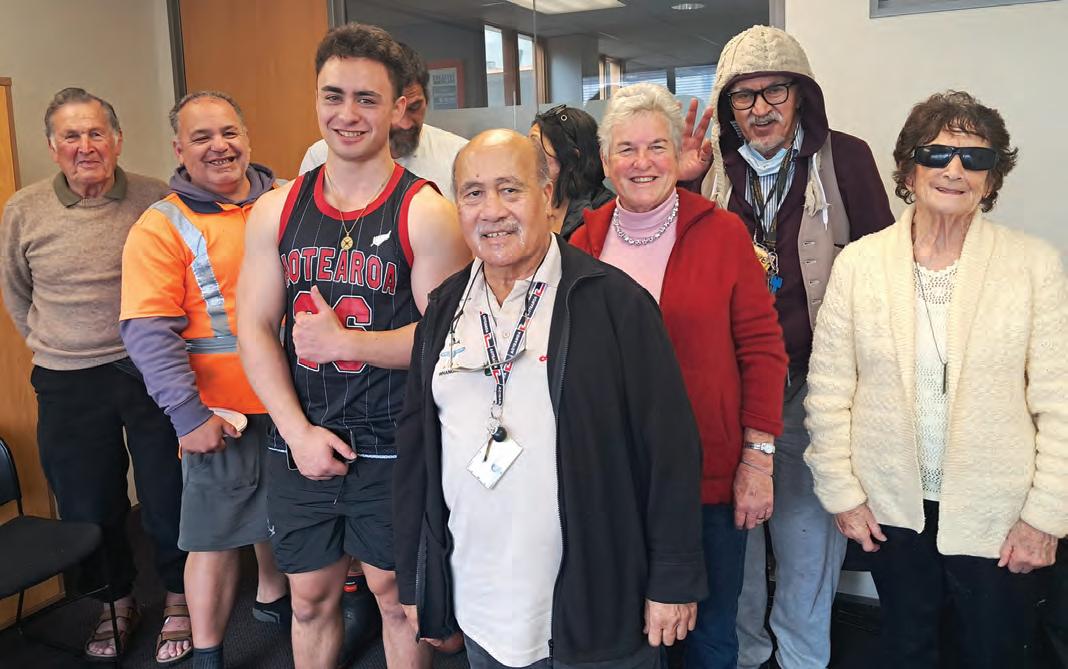
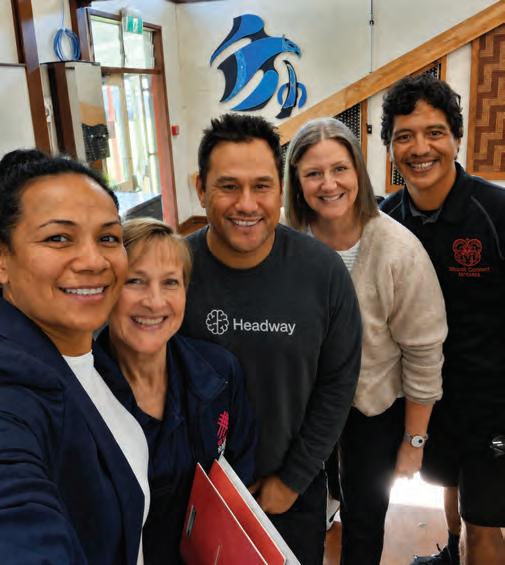
Concussions and brain injuries are really common, and the right knowledge and support lead to better outcomes. At Headway, we connect people impacted by concussion and brain injury with information, education and support.
Headway NZ works with the strong network of organisations already serving Northland communities.
Our services: Information and advice: trusted advice, answers to questions, and connections to the right support in local communities, so no one navigates recovery alone.
This free service is here for individuals and whãnau in Northland impacted by concussion and brain injury, so you don’t have to navigate the journey alone. Please contact our Community Navigators on 09 520 4807 or info@headway.org.nz.
Connect groups: volunteer led monthly peer gatherings that support wellbeing, participation, and belonging. There are four Connect Groups in Northland:
• Dargaville Connect Group 2nd Thursday of the month 10am – 11.30am
• Kerikeri Connect Group 1st Thursday of the month 10am – 11.30am
• K aitaia Connect Group 3rd Thursday of the month 10am – 11.30am
• Whangarei Connect Group 1st Thursday of the month 10am – 11am
To find out more or register a client or community member, check out our website www.headway.org.nz/our-services/ connect-groups.
L earning: learning modules informed by the latest research and lived experience to help people adapt and live well after concussion or brain injury.
Contact us
www.headway.org.nz info@headway.org.nz 09 520 4807
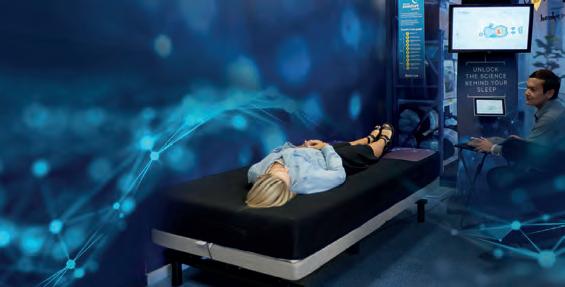
Discover NZ’s only bed matching technology & save up to 50% off your prescribed bed with solutions for:
• Waking up tired • Morning back pain
• Partner disturbance
• Hypoallergenic mattress for allergies
• Hot sleepers & more
Concussion and brain injury affect tens of thousands of New Zealanders every year and remain one of the country’s most significant yet misunderstood health challenges. Headway NZ is changing the way Aotearoa responds, improving outcomes, reducing harm, and ensuring no one faces brain injury alone.
The closure of The Northland Brain Injury Association in 2025 as a result of severe funding challenges has brought change to the region, but support remains available.
Headway NZ is now working alongside local organisations to ensure people know where to turn.
“ While our model is different to what was previously provided,” says PJ Borell, Headway Community Navigator, “our focus remains on information, education, and connection, helping people understand their options and linking them with the right services locally”.
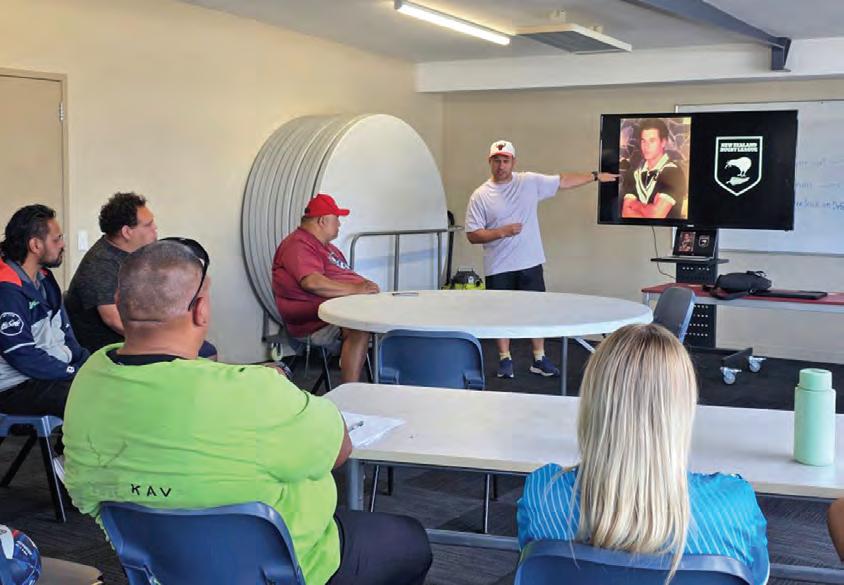
This work is especially important as concussion can happen to anyone, anywhere, and taking the right steps early plays a key role in long-term brain health. Every year, around 50,000 New Zealanders experience a concussion. Falls are the leading cause, followed by sports injuries, motor vehicle accidents, and assaults. Young people aged 15–19 have the highest rates, but no age group is exempt.
Around half of people who sustain a concussion recover naturally within 10 days. However, without timely and appropriate support, many go on to experience ongoing symptoms that can affect learning, work, relationships, and daily life. Aotearoa has world-class rehabilitation services and strong support networks, but early
recognition and action remain the most effective way to protect long-term brain health.
“ We want people to feel confident recognising the signs of concussion and knowing what to do next,” says Stacey Mowbray, Headway Chief Executive. “Stop the activity, seek a medical assessment, rest for the first 24–48 hours, and then gradually return to normal activity. These simple steps can make a real difference.”
A second concussion before full recovery can pose serious risks, including swelling, permanent damage, or even death. Not responding appropriately can also lead to complications and a much longer recovery.
“Concussion can be frightening but knowing what to do makes all the difference,” adds Stacey. “You don’t need to be a medical expert, you just need to recognise when something isn’t right and take those first simple steps. Early action protects long-term brain health, and it’s one of the most powerful ways we can look after ourselves and each other.”
Headway NZ works alongside communities across Northland to help people affected by concussion and brain injury feel informed, supported and connected.
For more information visit www. headway.org.nz, phone 09 520 4807 or email info@headway.org.nz.
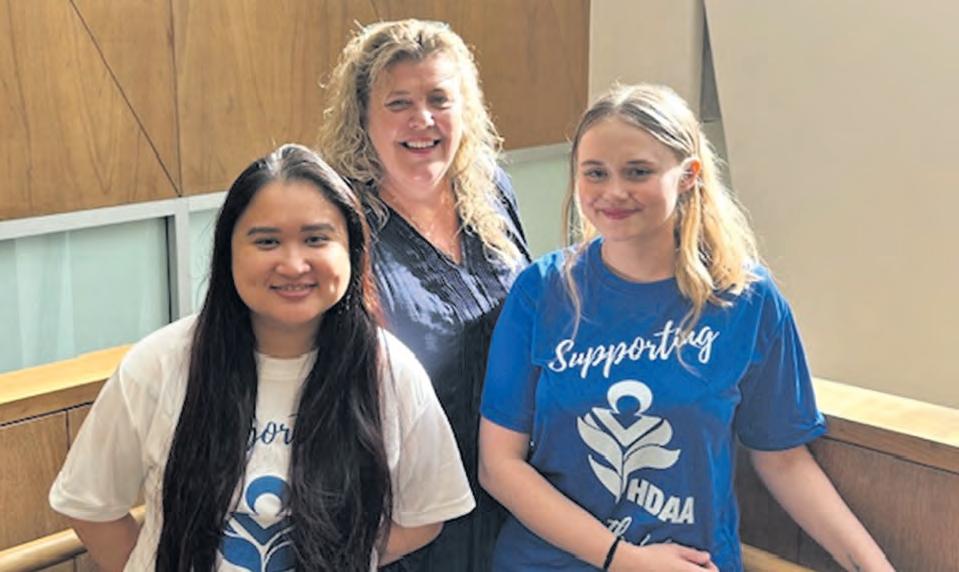
The Huntington’s Disease Association (Auckland) Inc is currently working with over 900 people living with symptoms or at risk of developing symptoms of Huntington’s Disease in the Auckland and Northland regions. Through the hard work and dedication of Nurse Practitioner Jo Dysart, Support Worker Cheenee Mandawe, and Jenna Dysart, they support carers, Whãnau/ family members, GPs, medical specialists, and other agencies in aiding people with Huntington’s.
Our professional staff are Huntington’s Disease (HD) specialists who help families and professionals respond to the unique challenges of HD. The clients of the Individual and Whãnau/Family Services program include the person living with HD, their caregivers, and Whãnau/family members, including those at risk.
The staff provide services which include:
• A ssessing people’s needs through oneto-one consultations
• Educating clients about HD
• Providing information about community services
• Finding sources of support
• Facilitating appropriate referrals and following up
The service can involve setting goals with clients, strategizing, and solutionfocused problem-solving, either working individually with clients or in groups.
For over 30 years, we have been providing information about Huntington’s Disease to those living with HD, their carers, support agencies, and medical professionals. Information ranges from the symptomology of HD to how to manage the symptoms.
Cheenee Mandawe (registered nurse)
Jo Dysart (Nurse Practitioner)
Jenna-Lea Rose (Youth support)
Huntington’s Disease is a hereditary neurodegenerative disorder caused by an expansion in the IT-15, or Huntington’s gene, on chromosome 4. Each child of an affected parent has a 50% chance of developing the disease. Most people with HD develop symptoms in their forties and fifties, although around 10% of patients have onset of symptoms before age 20, and 10% have onset after age 60.
Huntington’s is a genetic disorder. About six in every 100,000 people have HD. It is not discriminatory and can affect both sexes and any race. Primarily, HD affects adults, with symptoms usually appearing between the ages of 35 and 45, but there is Juvenile HD, which appears in children, and late-onset HD in adults in their 60s.
There are three main types of symptoms in Huntington’s Disease: physical symptoms, including involuntary movements and diminished coordination; emotional
symptoms, including depression, irritability, and obsessiveness; and cognitive symptoms, including loss of ability to recall information, loss of attention, and difficulty with decision making.
We are privileged to work alongside clinical experts and DHBs, offering a multidisciplinary team approach to individuals and Whãnau/family affected by HD. Along with this, we have strong links with the Auckland University Centre for Brain Research and our Patron, Sir Richard Faull. We therefore have ongoing updates on clinical research and research to help develop treatments and, one day, a cure.
Web hdauckland.org


For many families living with Huntington’s disease, hope can sometimes feel difficult to hold onto.
Huntington’s disease (HD) is a progressive neurological condition that affects movement, thinking, emotions, and behaviour. Because it is an inherited condition, families often carry not only the challenges of living with symptoms but also the uncertainty of what the future may hold for children, siblings, and future generations.
For decades, treatment options have focused primarily on managing symptoms. While these supports remain incredibly important, recent advances in research are creating genuine excitement throughout the global Huntington’s community.
Scientists around the world are now working on therapies that aim to target the underlying cause of Huntington’s disease rather than simply treating its symptoms. Researchers have developed treatments designed to reduce the harmful mutant huntingtin (mHTT) protein that damages brain cells. Other studies are exploring gene-targeting technologies and medicines that may one day slow, stop, or even prevent disease progression.
One promising area of research involves investigational medicines such as SKY-0515. This once-daily oral treatment is currently being studied in clinical trials and is not yet approved for use. Researchers are investigating whether it can reduce levels of mutant huntingtin (mHTT), the abnormal protein responsible for Huntington’s disease, while also affecting PMS1, a protein
involved in biological processes linked to disease progression. Although it is still early in development, studies such as these represent an important step toward treatments that address the disease itself rather than its symptoms.
O ther research programmes are examining gene-silencing therapies, RNA-based treatments, and approaches aimed at protecting brain cells from damage. Each study contributes valuable knowledge and brings researchers closer to understanding how Huntington’s disease develops and how it may be treated more effectively in the future.
While these treatments are still being tested and are not yet widely available, the pace of research is accelerating. Clinical trials are taking place nationally and internationally, and every year researchers gain a deeper understanding of Huntington’s disease and the pathways that may lead to new therapies.
For families affected by Huntington’s disease, this research represents something powerful: possibility.
Hope does not mean ignoring the realities of living with Huntington’s disease. Many individuals and whãnau continue to face significant challenges every day. Support services, healthcare professionals, carers, and community organisations remain vital in helping people maintain quality of life, independence, and connection.
However, hope reminds us that the story of Huntington’s disease is still being written.
It is also important to recognise the role families play in advancing research. Across NZ and the world, people affected by Huntington’s disease continue to participate in studies, share their experiences, and advocate for greater awareness and investment in research. Their courage and commitment are helping drive progress for future generations.
At Huntington’s Disease Association Auckland and Northland, we see every day the strength, resilience, and determination of individuals and families living with Huntington’s disease. While challenges remain, we are encouraged by the growing momentum in research and by a future that looks increasingly different from the past.
The message for families is simple: you are not alone, and there is reason to be hopeful.
Every discovery, every clinical trial, and every breakthrough brings us one step closer to a future where Huntington’s disease has less impact on the lives of those affected by it.
The journey is not over, but the horizon is brighter than it has been in many years.
If you would like information about current Huntington’s disease research, clinical trials, or support services available in New Zealand, please feel free to contact the Huntington’s Disease Association Auckland and Northland. We are here to support individuals, whãnau, and families at every stage of their journey.
Muscular Dystrophy Northern (MDN) is a small, not-for-profit incorporated society that provides a broad range of services designed to support, advocate for, and inform our members living with Muscular Dystrophy/Neuromuscular Conditions, their families, and carers in the northern region (Kaitaia to Taumarunui).
We are a member-led organisation established by New Zealanders with lived experience of Neuromuscular Conditions and those who support them. Our national entity has been in operation since 1959, and the Northern Branch was established as an Incorporated Society in 1988 to better address the local needs of members. Muscular Dystrophy Northern provides support for more than 60 different Neuromuscular Conditions. These conditions are mainly inherited, affect both males and females of all ages, occur across all ethnic groups, and often more than once in a family. Currently, there are limited treatments available in New Zealand.
Our Vision is to promote and enhance the well-being of people affected by neuromuscular conditions - fostering an inclusive and supportive community. Our work is guided by our values: Sustainable – Toitutanga, Empowering –Whakamanatanga, Proactive – Kõkiritanga,
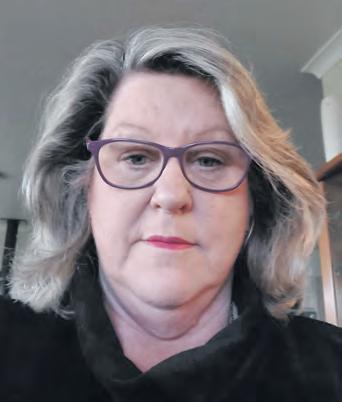
Lynn Williams, Northern Branch Fieldworker for Muscular Dystrophy New Zealand, supports individuals and families affected by neuromuscular conditions across the region.
Connected - Tuhonotanga. Providing an outreach community-based service is important due to the barriers physically disabled people face in accessing transport. These conditions can be devastating to those newly diagnosed and their families and our organisation plays a vital role in providing support and professional advice through our Field Worker Service.
This is provided free to our members, and includes:
• Home-based visits/Zoom meetings
• Support for new diagnosis
• Referrals to appropriate agencies
• Advocacy and support
• Liaising with other services to coordinate client’s needs
• Information and knowledge on neuromuscular conditions
• Facilitating social contact with others
• Attendance at multi-disciplinary clinics
• Annual Family Camps
• Regular newsletters and emails
Fieldworker Northern Branch
Contact
Lynn Williams Phone 021 704 227 Email Lynn@mdn.org.nz
MDANZ National Branch Contact Phone 0800 800 337 (MDN Support) Email info@mda.org.nz Website www.mda.org.nz

all your Mobility &
84D Kerikeri Road, Kerikeri Half way down the service lane beside Repco Ph: 09 407 6701 or 027 4468545
email: kerimobility@yahoo.co.nz www.kerimobility.co.nz
When Joycey Subritzky was pregnant with her second child, she knew something was different.
“She wasn’t moving much in the puku and then was floppy when she came out.”
W Joycey opted not to use pain relief the second time. “I couldn’t feel her moving around much and thought, ‘Nah, if this baby gets all druggied up...”
H years to get a diagnosis. Baby Paige continued to have floppy limbs and at the three-month Plunket appointment, the nurse asked if a neurologist could assess her, which Joycey agreed to. However, she refused the muscle biopsy as she believed Paige wouldn’t be strong enough for the anaesthetic. Meanwhile, she and husband Jason focused on creating a solid routine with Paige each day to help build her strength.
W muscle biopsy and it turned up Congenital Myopathy – a genetic muscle disorder. While slightly different to Muscular Dystrophy, the two are similar in that both cause muscle weakness and are usually present at birth or early infancy.
“It hit me pretty hard,” she recalls. “I didn’t think it was going to be that severe.”





muscle weakness, pain and cramps, it doesn’t stop her in life.
“Physically, it does affect me with sports but I attended the Halberg Games held in Auckland and played badminton and I can swim but I’m just not very strong. It doesn’t stop me, I’ll do it





















In school, I had problems with maths –problem solving is really hard, but English is
I’ve had a really good support system around me and my friends and family and the kids in the Jehovah’s Witness congregations have encouraged me to have a positive attitude.









































































What is motor neurone disease?
Motor neurone disease (MND) is a fatal, rapidly progressing neurodegenerative condition that robs people of their ability to move, speak, swallow and eventually breathe.
What we do
We provide support for families currently affected, helping to make time count by providing tailored support in a meaningful way that answers questions and solves challenges quickly
Here for you
“Thank you so much for your kindness and love to my dear wife and to me. You provided support, expert advice and willing ears throughout the trauma of her illness”.
K – MND NZ client
“I can’t thank you enough for all the help and all the support you gave. You were always so kind and caring with mum and most importantly you listened to what mum had to say which made her feel better”.
B – MND NZ client

short time you’ve known me. Thank you for that effort”.
D – MND NZ client
Our charity was built on the ethos of helping people affected by motor neurone disease – it’s the cornerstone of all that we do. If you or a loved one has motor neurone disease, we’re here for you.
0800 444 474 support@mnd.org.nz www.mnd.org.nz
nzherald.co.nz/subscribe
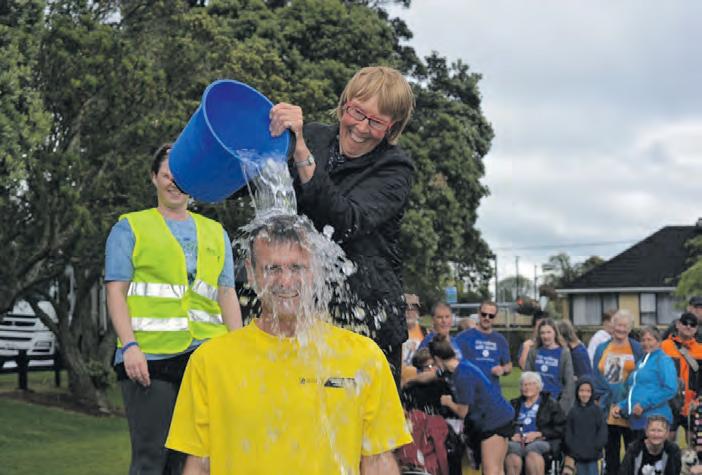
When you’re living with motor neurone disease (MND), time becomes something you can’t take for granted. It’s measured in moments — in movement, in breath, in connection.
At Motor Neurone Disease NZ, our mission is to help people make that time count — not just in days, but in dignity, comfort, and care.
There is currently no cure for MND. As the disease progresses, needs change quickly, and support can’t wait. People living with MND — and their whãnau and carers — deserve help that comes when it matters most.
That’s what MND Action Month is all about. Every June, we ask Aotearoa to stand with the more than 400 New Zealanders living with MND, to raise awareness, spark
kõrero, and take action that makes a real difference.
Whether you’re tipping a bucket or pouring a cuppa, you’re helping shine a light on MND — and on the people behind every diagnosis.
Two key events lead the campaign: Cuppa Tea for MND — Gather, reflect, and raise a cup for someone who matters.
The Ice Bucket Challenge — Tip a bucket, start a conversation, and honour the cold, hard reality of MND.
Every action counts. Every story matters. Join us this June — and help make time count.
Find out more or get involved at mndactionmonth.org.nz
To find out more visit www.mndactionmonth.org.nz.







Northland Multiple Sclerosis Society offers a wide variety of services to people with MS, family/whanau members and carers. The Northland area extends from Wellsford, coast to coast to Cape Reinga.
The service provides information, education and support, encouraging a proactive approach to managing this disease. If you have MS the Society provides for you and your family and/or carers:
• A MS Field Worker who is a NZ Registered Nurse.
• Home visiting service. Support and information to you and your family about your condition or in your role as a caregiver.
• Educates you, your family and other health professionals about MS and related disorders.
• Advocates for you with other support agencies and health professionals and informs you of services available in the community.
• Provides education material and books, both available from the MS office.
• Library Books covering all aspects of MS are available to take out on loan
• Holds monthly support groups for those with MS.
• Offers a free weekly MS exercise class
• Bi-monthly newsletter which includes useful information on research and development of MS and advice on staying well.
Multiple Sclerosis is one of the most common diseases of the central nervous






system. A fatty substance called the myelin sheath covers the fibres of the nervous system. The myelin protects the nerves and helps the messages move between the brain and the rest of the body.
In MS, the myelin sheath covering the nerves in the brain and spinal cord become scarred in scattered patches. This is multiple scarring, or sclerosis. Essentially this distorts or prevents the flow of messages from the brain and the spinal cord to other parts of the body.
The distortions to the messages travelling through the nervous system cause a range of problems for the people with MS.
Although it is important to note that there is no typical set of MS symptoms, the following are common (in varying combinations or severity): Difficulty with legs, arm and hand



movements, numbness and pain, problems with thinking and remembering, blurred or double vision (often only affecting one eye), bladder and bowel problems, loss of balance and co-ordination, fatigue.
At this time the cause of MS is still unknown. However, research suggests it is likely to be a combination of the following: a reaction to a virus, possibly years after infection; exposure to an unknown environmental agent before puberty; an auto-immune reaction in which the body attacks its own tissue for an unknown reason; or a genetic susceptibility to the above triggers.
While MS still cannot be cured, much can be done to help manage the condition. There are MS-specific treatments available. These directly target the immune system. A Neurologist determines whether these are relevant for each person. Generally the person with MS works with their GP on the day to day management of the condition.
Contact Details:
Level 1, Civic Arcade
37 Bank Street, Whangārei 0110
Phone (09) 438 3945
Mobile 027 539 9883
Email nthldms@xtra.co.nz
Web www.msnz.org.nz/ms
Facebook Northland Multiple Sclerosis Society



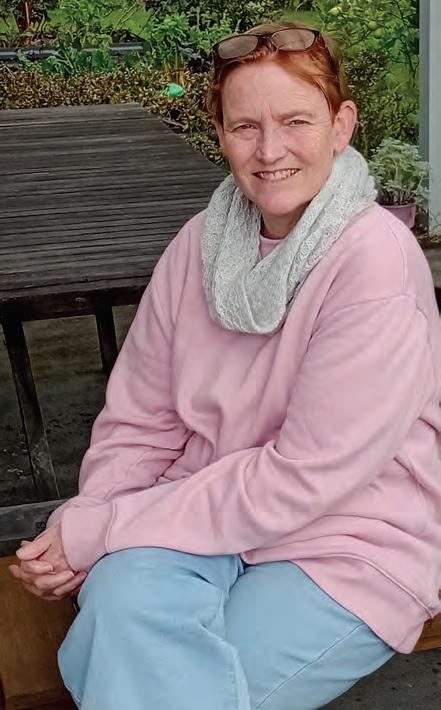
My name is Paula, and I was diagnosed with Multiple Sclerosis (MS) in 2022 at the age of 52. This was a relatively late diagnosis, as most people are diagnosed in their 20s or 30s. Oddly enough, it was very welcome, as I had known that something was “up” for a few years and was relieved to finally have a diagnosis and a treatment pathway forward.
The diagnosis also led me to the local Northland MS Society. I was keen to join the coffee support groups and exercise classes, as well as attend the annual “Scoot the Loop” event at the Town Basin, and help with fundraising and raffle days. I would encourage anyone facing a new health diagnosis to join a local group or society. The fellowship the society has offered me has been amazing. There is also a lot of social capital, or “free information,” to be gained when attending social or fundraising events.
One thing I’ve encountered is my own resistance to being visible in the community as a person with
a disability. Something that helps greatly is the support of my lovely partner. Having someone special by your side when out and about is a huge blessing. For some, this will be a partner or family member. For others, friends or neighbours will fill this role.
Inclusion, to me, means feeling that I can participate in the community without simply being a burden. I am still challenged by aspects of my appearance and walking gait. Using a mobility card when parking our car, and confidently walking with a walking stick or rollator, still requires greater acceptance from me. As a famous Hobbit once said, it is not always easy leaving one’s front door.
We all want to feel useful, I think, while having our support needs acknowledged and met. I do some volunteer shelving at the library where I used to work full time. It’s different, but it feels good to reconnect with work I once loved. I still know the song, even if I now sing it in a minor key.
Ngã Ratonga Tautoko began in 2026 to help rangatahi overcome barriers so they can reengage with education. Funded by the Ministry of Education, Ngã Ratonga Tautoko works with schools, whanau, and the children to build wrap-around support so students can return to education. This service ranges from Whangãrei North and South, and Kaipara North and South.
NorthAble DIAS can assist with providing free information and advice to tangata whaikaha (people with disabilities), their whãnau, caregivers, providers and the public. Information can be accessed in a variety of formats, including in-person at our office, by phone, website or email.
Our facilitation team works with people aged 0–65 who require long-term support due to neurological, learning, intellectual, physical or sensory disabilities. Our facilitators can also support you with finding the next pathway when leaving school, and if you have MSD Very High Needs funding, we can work with you to develop a holistic plan incorporating all aspects of your great life.













Our LYNKZ programme is available to individuals aged between 16–64 who have neurological, learning, intellectual, physical or sensory disabilities. LYNKZ is a community-based service that works with tangata whaikaha to improve their life skills, engage with the wider community and increase confidence. Our main programme operates in Whangãrei from Monday–Thursday.
LYNKZ Outreach is an adapted version of our core LYNKZ programme, designed to bring the same meaningful opportunities and support to communities across Northland. We currently have LYNKZ Outreach running in the Hokianga through Hãuora Hokianga, and at The Good Life Project in Kaitãia. These satellite programmes deliver accessible, community-driven support while upholding the values, impact, and spirit of the main LYNKZ programme.
LYNKZ+ is our newest service, created in 2026 to provide additional pathways for tangata whaikaha within our community. Designed to complement both Ãhei and LYNKZ, the programme offers opportunities for people to continue building confidence, independence, and life skills in a supportive environment. LYNKZ+ focuses on creating inclusive spaces where participants can learn new skills, connect with others, and engage meaningfully within their communities.





EQ+ is Northland’s largest supplier of rehab, agedcare and disability equipment and products that support people in all areas of daily living. We also have a range of hire equipment and great advice. Service is provided throughout the whole of Te Tai Tokerau, with products stocked at Far North Pharmacy in Kaitãia. We also deliver nationwide, so check out the full range on our website at www. equipmentplus.org.nz.
Whangãrei Budgeting Service is dedicated to offering people advice and support with their finances. Our one-on-one service is aimed for people to be able to independently manage their own finances and create a brighter future for themselves and their whãnau. This is a free service and open to all people, with or without disabilities.
NorthAble Matapuna Hauora 40 John St, Whangārei & 22 Normanby Street, Dargaville
NorthAble Equipment Plus: 73 John St, Whangārei Phone 0508 637 200 or 09 430 0988 Email northable@northable.org.nz Website www.northable.org.nz www.equipmentplus.org.nz www.whangareibudgeting.co.nz www.nrt.org.nz








































For some tangata whaikaha in our community, finding opportunities to continue learning new skills, connect with others, or prepare for future employment has not always been easy. While NorthAble already offered valuable programmes through ÃHEI and LYNKZ, there was still a gap for people who did not fit within the age range or were not wanting to join a community participation group.
Seeing this need within our community, NorthAble created LYNKZ+ Tupu Tahi which is a new programme designed to support tangata whaikaha aged 16 to 64 by creating more opportunities to learn, grow, and participate in the community. One of the first projects to come from LYNKZ+ is Rags to Riches, a sewing and creative skills programme currently running in both Dargaville and Whangãrei. Participants begin by sorting donated materials before learning how to transform them into handmade bags and accessories using sewing machines and other creative techniques.
What starts as pieces of fabric quickly becomes something much more meaningful. Alongside learning practical sewing skills, participants are also building confidence, independence, friendships, and a sense of achievement. The programme creates a welcoming and supportive environment





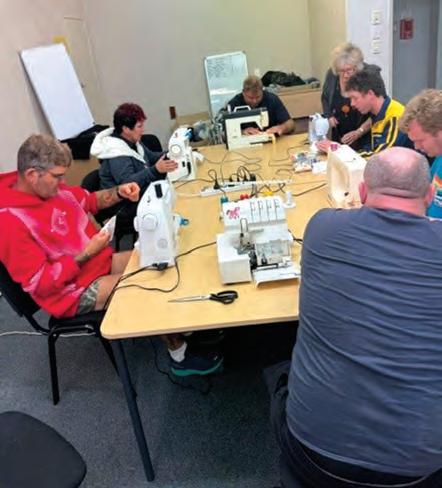
where people can try something new, express creativity, and connect with others in their community. For many, it is not only about sewing but it is about belonging, building confidence, and discovering new possibilities for the future.
LYNKZ+ has already helped expand NorthAble’s reach across Te Tai Tokerau, creating more inclusive opportunities for
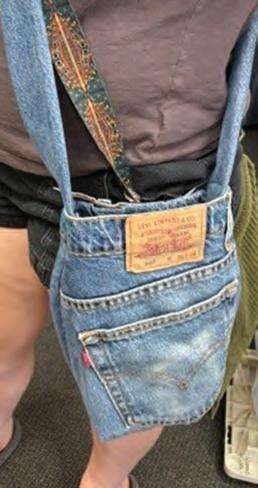
tangata whaikaha who may otherwise have missed out on community participation or skill-building programmes. The Rags to Riches programme currently runs on Wednesdays in Dargaville and Fridays in Whangãrei. Rags to Riches is the first of many projects to come from LYNKZ+. To learn more about LYNKZ+ and what could possibly be the next project, email megan.pitchforth@northable.org.nz or matthew.mabbitt@northable.org.nz.














Every year, hundreds of Te Tai Tokerau Northland whãnau face the unique challenges and joys of caring for disabled, neurodivergent, or healthimpaired family members. With over 40 years in the disability sector, Parent to Parent has become the trusted pandisability organisation for family support pre-and post-diagnosis.
• Tailored information: on any disability or disability-related topic, collated by a team of qualified researchers and information officers with wh ãnau or personal experience of disability.
• Workshops and events: focusing on various community-driven topics—from
wellbeing to anxiety to navigating the health, education, and disability systems. Subscribe to the Northland newsletter for information about upcoming workshops.
• Support groups: held in 12 regions across Aotearoa, they are a place for parents and carers to connect to share information. For up-to-date information on Northland groups, please follow our Northland Facebook page. Or, if you are wanting support to start a new group, we are always there to help.
Our peer-to-peer support model is highly regarded across Aotearoa. We offer two programmes of peer support that are unique to our organisation:
• Support Parent Network: matches wh ãnau members to a trained volunteer Support Parent who has a child or family member with the same or similar disability or health impairment or is experiencing a similar issue.
• Sib Support NZ: offers a range of support options to help siblings thrive in their unique family environment. Events include the biennial

Northland SibVoyage and nationwide SibShops and SibCamps. The programme is run by SibLeaders who have grown up attending SibSupport and have been trained to facilitate for the next generation.
The Regional Coordinator for Te Tai Tokerau Northland is based in the mid north and travels from the Cape to Kaiwaka, east to west to work in individual communities.
Visit our website to learn more and register for a free and confidential service: parent2parent.org.nz
Other support services include: Altogether Autism: providing autismspecific, evidence-based information Care Matters: web-based resources and a freephone service for family carers. Many of our workshops are funded by Care Matters.
The Wilson Home Trust: providing grants to families with children with physical disabilities aged 0-22.
Don Martin - Regional Coordinator
Mobile 027 808 3942
Freephone 0508 236 236
Email northland@parent2parent.org.nz
Website www.parent2parent.org.nz
Facebook www.facebook.com/ parenttoparentnorthland


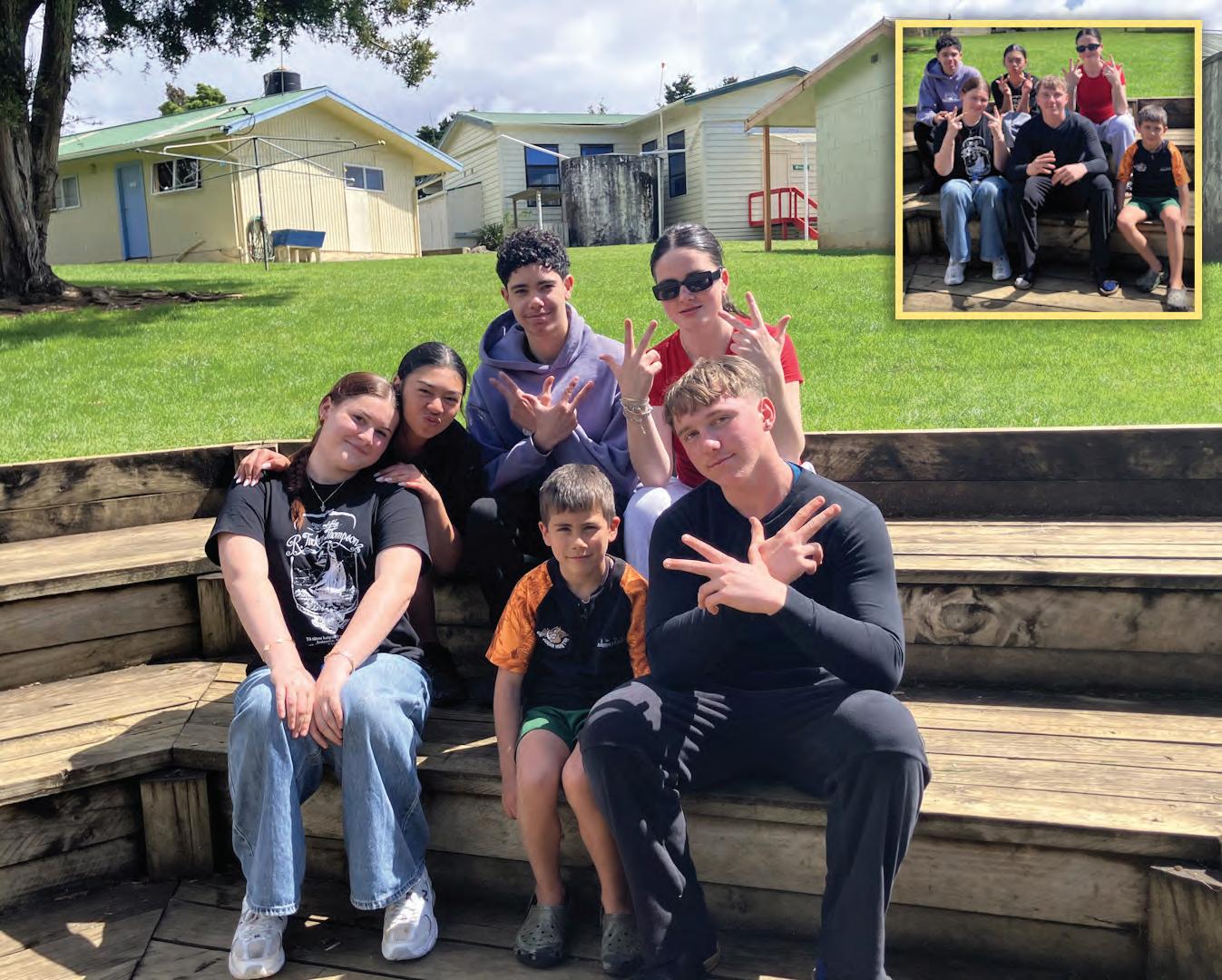
When I heard this year’s theme for Getting Out There was inclusion, my mind went straight to this photo from our Northland SibCamp and how it came about. It left a real impression on me.
The insert at the top right of the main picture is the first photo I took. Then something special happened. The older rangatahi decided that young Kairo should be front and centre in the group. It was a heart-warming moment that came about due to the thought and care of our amazing teenaged siblings. The change in dynamic is visible in their expressions and body
language, leaning in towards Kairo, making a team around him.
Inclusion is not always easy to define, and we often look at the bigger things such as sports and employment. However, it’s often the little, everyday gestures that give children confidence in themselves and have lasting impact as they grow up. Kairo’s mum explained what the photo means to them:
“As Kairos mum, I see him in quiet moments, and I know how often he feels like he’s waiting in the background, especially when all the focus is on his sister who requires a lot of my attention. But when he
came back from that camp and I saw that photo, him right in the middle, surrounded by older kids who chose him, it was like a small miracle.
“In that picture, he isn’t just a little brother to an elder sister with special needs, he is at the centre, embraced, included. And for him, that told him he matters, that he belongs. It gave him this quiet strength, knowing he is seen and loved just as he is. And I know, as he carries that with him, it will give him the confidence to reach out, to be himself, and to know he has a place, always.”
Parkinson’s is the fastest growing neurological condition in the world.
It’s estimated that there are 13,000 New Zealanders living with Parkinson’s and the average age of onset is 59. Parkinson’s is a progressive neurodegenerative condition caused by insufficient quantities of dopamine - a chemical in the brain.
When dopamine levels fall, movements become slow and awkward. The most common physical symptoms are tremor, stiffness, rigidity and slowness of movement. Other symptoms include depression, anxiety or apathy, disturbance of normal sleep, constipation, and trouble swallowing or speaking.
Although there is no cure, support and treatment are available.
We are here to help.
Parkinson’s New Zealand provides high quality information, education and support for all people with Parkinson’s and Parkinson’s Plus conditions living in Aotearoa New Zealand.
This year, Parkinson’s New Zealand is supporting 403 people who have been diagnosed with Parkinson’s or are carepartners in Northland.
To make our service as accessible as possible we offer a variety of options for people. Our Parkinson’s Educators offer home visits, are available by phone and email and can meet online, and our website www.parkinsons.org.nz includes both accessibility and translation features.
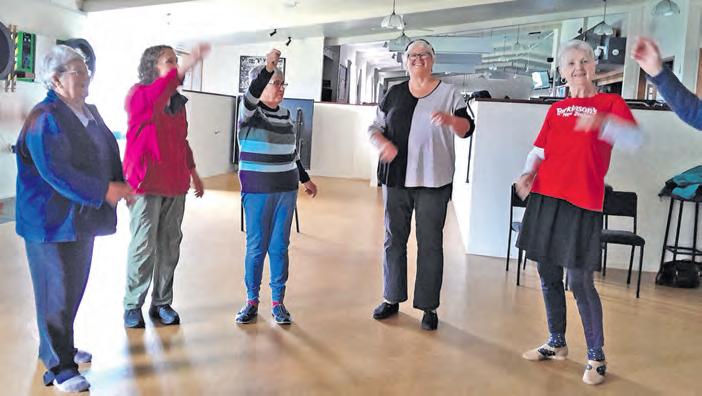






We offer support groups, educational seminars, advocacy and whãnau meetings as well as referrals to other health professionals. Our Parkinson’s Educators provide answers to any questions you or your whãnau may have about Parkinson’s including medication, treatment and support available.
There are various activities available in Northland including social and exercise groups These can include activities such as walking, hydrotherapy, physiotherapy, voice and movement classes, or Counterpunch groups.
Parkinson’s New Zealand is available for information, education and support for whãnau living with Parkinson’s in Northland. If you or someone you know has been diagnosed with Parkinson’s you can get support by registering with us online via our website www.parkinsons.org.nz or calling 0800 473 4636.
Parkinson’s New Zealand charitable trust is reliant on funding from grants, bequests, and donations.
Email info@parkinsons.org.nz
Website www.parkinsons.org.nz




When we gotm arried, we saidi n sick ne ss andi n he alth
MLeonie Bedggood hasn’t let Parkinson’s slow her down much. In fact, the 76-year-old recently returned from a three-week cruise which entailed a ton of walking.
otorNeuroneDisease(MND)is commonly regardedasoneofthe mostchallengingdiseases to livewith. Itis adegenerativedisease,wherethemotor neurones,thenerve cellsthatcontrolvoluntary movementofthemuscles start towasteaway. Whilethisis atragicdisease,Judy,wholives withMND, stillseesthebeautyandpositivity inherlife.
Thisisher stor y.
Judy wasdiagnosedwithMNDinJanuary
She lived an active lifestyle before being diagnosed aged 70. Having farmed all her life and the mother of two active boys, she also held many roles, both as occupations and in the community, and travelled a lot. She only moved from the 260-plus hectare farm into a Kerikeri retirement village two years ago after her husband died.
H around a year before diagnosis with a weakness in one leg. She underwent a successful operation to treat the pinched nerves. However, then her arms began to shake and she noticed brain fog.
“ everybody does it, but it’s not necessarily so. For me, it’s more an internal shaking. Also, I notice I don’t smile as much as I used to –but I’ve still got my good sense of humour.”
L since her diagnosis, which she puts down to the medication she takes – if late taking it, she notices her symptoms flare up.
shenoticed.Judylovesbikeridingonher E-Bike,butnowsheisunable to get herlegs overthebiketogoriding,andthedisease hasprogressedsoquicklysheisnowina wheelchair.She cannotpickthingsup,oropen bottles,andhastroublewithherspeech.Judy saysher conditionhasdeterioratedquickly sinceJanuar y.
Judynow reliesonherhusbandof27years, Bill forsupportandhelpwith basic tasks.Bill hashadmedicaldifficultiesofhisown,buthe
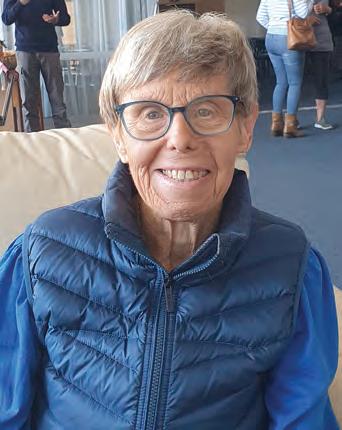
L ifestyle changes Leonie’s had to make include cutting back on some physical activities and she’s looking to buy an air fryer instead of wielding heavy oven trays and fry pans. She also does puzzles to keep her brain active.
Judysayssheis fortunateto havelots of help,hersister-in-lawand cousinvisitonce aweek,andsheonlyhas to askifshe wants anythingdone forher.Butshedoesnotwant to encroachonpeople’s lives,yetsheknowsthey arethereifsheneedsthem.
However, she doesn’t intend on giving up her driver’s licence anytime soon and attends weekly Counterpunch classes at the gym designed specifically for people living with Parkinson’s. Classes include punch bags, frisbees, hula hoops, as well as exercises and activities to stimulate the brain.
BeforeherMNDdiagnosis,Judyloved volunteering at herlocalHospiceShopwhich shedid for11.5years.Judywould cycleinto Whangareifromherhome to workthere. She startedout re-arrangingtheshopand sortingtheinwards goodsandwhenshe was unable to dothat, shemoved to Antiquesand Collectables,whichsheloved.Althoughshe missesherworkandfriendsthere,sheloves to catchupwiththemwhenshe can,describing themas agreat bunchofpeople.
on, we did an awful lot of walking, but I don’t



JudyandBillMcCoid
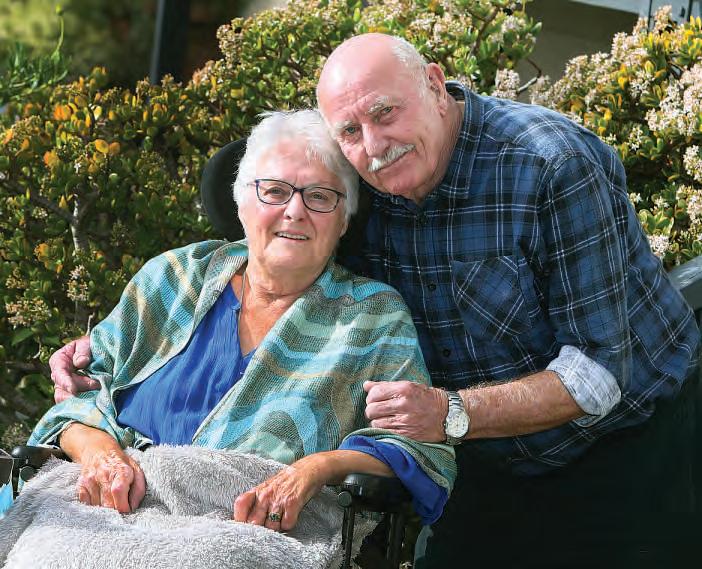



She also attends monthly Parkinson’s meetings and is a member of the Red Tulip group, which help organise activities such as speech therapy for those impacted by voice loss from Parkinson’s.
Judywould tellanyonewhohas recently received adiagnosisofMNDthattheymustbe positive.MNDis adeathsentence,butthereis nopointin gettingupsetaboutsomethingyou cannotfix.
Judyhas afulllifeasabusyGranandwife. Describedas apositiveand can-dopersonwho likes to help others,Judyis anotableexample ofsomeonewhoalwaysseesthelightandlove intheworld,nomatterthesituation.
“Parkinson’s is such a horrible disease to attack people out of nowhere and you can’t do anything about it. There’s no cure for it at this stage, you’ve just got to put up with what happens and get on top of it.”













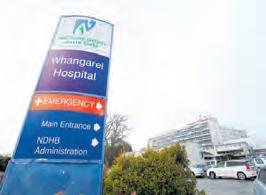




Age Concerns work hard to reduce the harmful effects of elder abuse. World Elder Abuse Awareness Day (15th June) helps to shine light on this often-hidden issue in our communities. We emphasise that anyone can call us at Age Concern Kaitaia & District with a question about the safety of an older person. Even if you are unsure, you have a hunch, or an inkling that something may be amiss with an older person, we wo uld rather you call us sooner, than wait until you have definite proof. The longer elder abuse goes on for, the more harm is caused, and the harder it becomes to untangle the effects on older people and within their family/whānau.
What does Age Concern do to prevent elder abuse and neglect?
Age Concern Kaitaia & District works alongside many other agencies such as health services, needs assessment services, the police, banks, residential care facilities, iwi and other community agencies, to ensure the best possible outcome for older people.
SHow prevvalent is elder abuse?
Age Concern Kaitaia & District offers free, confidential, specialist Elder Abuse Response Services for all of Northland. (Kaipara District, Whangarei District, Mid-North and Far North District) We work with older people and their family/whānau to stop abuse, reduce the damage caused, and increase understanding to keep all family members safe.
troke Aotearoa New Zealand is the national charity dedicated to stroke. Te Ah Tumanako, the flame of hope, connects us and symbolises taking action and advocating for others, ensuring that hope remains alive and thriving in our communities.
• Injuries broken
• Malnourishment
• Poor
Key messages: Spot the Signs!

Elder abuse is harmful.
• Symptoms or confusion
Elder abuse affects our society.
Include older people in decision-making
Increases in the numbers of cases that elder abuse agencies deal with, does not prove that the rate of elder abuse is increasing, but it shows that it is being reported more often. This reinforces why Age Concern keeps raising awareness about elder abuse and neglect. Anyone in any community can contact Age Concern, to talk through signs that query older people/kaumātua’s safety .
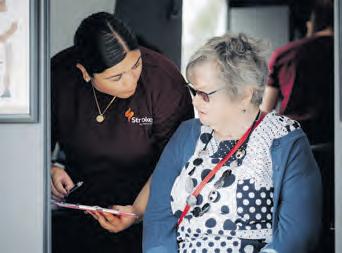
Age Concerns work hard to reduce the harmful effects of elder abuse. World Elder Abuse Awareness Day (15th June) helps to shine light on this often-hidden issue in our communities. We emphasise that anyone can call us at Age Concern Kaitaia & District with a question about the safety of an older person. Even if you are unsure, you have a hunch, or an inkling that something may be amiss with an older person, we would rather you call us sooner, than wait until you have definite proof. The longer elder abuse goes on for, the more harm is caused, and the harder it becomes to untangle the effects on older people and within their family/whānau.
Protect the rights of older people
Signs you might spot include:
• Injuries such as bruises, cuts, or broken bones
• Malnourishment or weight loss
• Poor hygiene
with stroke survivors and whãnau to implement practical solutions for both stroke prevention and support after stroke. We hold hui and workshops based around what people want to learn about, offering information that is useful and practical. We strive to make these events as accessible as possible, by not charging attendees and being conscious of the venue choice. These sessions are advertised on our website and Facebook page and through our contacts from local iwi and Mãori providers.
• Unexplained of money
• Withdrawal or friends
What are the effects of elder abu se?
people to achieve their work goals and confidently re-enter the workforce.
Age Concern Kaitaia & District works alongside many other agencies such as health services, needs assessment services, the police, banks, residential care facilities, iwi and other community agencies, to ensure the best possible outcome for older people
How prevalent is elder abuse?
• Symptoms of anxiety, depression, or confusion
• Unexplained transactions or loss of money
The personal losses associated with abuse can be devastating and include the loss of independence, homes, lifesavings, health, dignity, and security
Increases in the numbers of cases that elder abuse agencies deal with, does not prove that the rate of elder abuse is increasing, but it shows that it is being reported more often. This reinforces why Age Concern keeps raising awareness about elder abuse and neglect
Anyone in any community can contact Age Concern, to talk through signs that query older people/kaumātua’s safety.
A s stroke affects people all over Aotearoa, we make our services accessible to people, no matter where they are based or what challenges they may face. Our Community Stroke Navigators (Kaiãrahi) work all over New Zealand, ensuring each part of the country has a local representative. Community Stroke Navigators are responsible for developing partnerships and stroke education programmes in communities, providing advocacy support, building awareness of our services, and delivering face-to-face support when needed to people and their whãnau affected by stroke.
What are the effects of elder abuse?
The personal losses associated with abuse can be devastating and include the loss of independence, homes, lifesavings, health, dignity, and security
Alongside these services, we recently launched a free helpline 0800 STROKE (0800 78 76 53). No referrals are necessary — anyone can call the helpline, including whãnau and caregivers, no matter where they are based in Aotearoa. It is staffed by our Community Stroke Navigators who can provide stroke information, practical guidance, service navigation, referrals to services including stroke support groups, clubs and community organisations, and other life after stroke support.
These sessions are producing real change. In response to hearing from whãnau who have indicated that people in the health sector need to know more about stroke, we are providing stroke education for kaimahi and kaiawhina in Kaitaia, Kaikohe, and Whangãrei, and anywhere else in Te Tai Tokerau where there is a demand. To request a visit in your community, email help@stroke.org.nz.
• Withdrawal from family members or friends
Elder abuse and neglect can be a significant cause of injury, illness, lost productivity, isolation, and despair. Abuse can reduce a person’s independence by undermining their self-esteem and confidence. Elder abuse damages family and whānau relationships, financial security, and mental and physical health, as well as increasing dependency on health and support agencies which may result in the need for residential care . Elder abuse and neglect have a negative impact on the wellbeing and quality of life of older people. But it also detrimental to the image of ourselves as living in a welcoming and inclusive society. Call Age Concern if you spot the signs of older people being harmed
Similarly, our free Return to Work Service is available for stroke survivors all over Aotearoa who meet the eligibility criteria set by the Ministry of Social Development. This service assists stroke survivors with employment and work-related advice and support, and it has helped hundreds of
Elder abuse and neglect can be a significant cause of injury, illness, lost productivity, isolation, and despair. Abuse can reduce a person’s independence by undermining their self-esteem and confidence. Elder abuse damages family and whānau relationships, financial security, and mental and physical health, as well as increasing dependency on health and support agencies which may result in the need for residential care. Elder abuse and neglect have a negative impact on the wellbeing and quality of life of older people But it also
Call Age Concern


We are dedicated to working closely
Prevent elder abuse and neglect
Age Concerns around the country see the harm elder abuse causes in eleven new cases each working day , so we are committed to raise awareness to prevent elder abuse and neglect. World Elder Abuse Awareness Day is a great opportunity for everyone to learn more about this global concern that affects New Zealanders too.
Prevent elder Age Concerns the harm elder new cases e committed prevent elder Elder Abuse opportunity about this global New Zealanders We encourage signs to contact question, query, inkling about being harmed.
We encourage anyone who spots the signs to contact Age Concern with a question, query, concern, hunch, or inkling about an older person/kaumātua
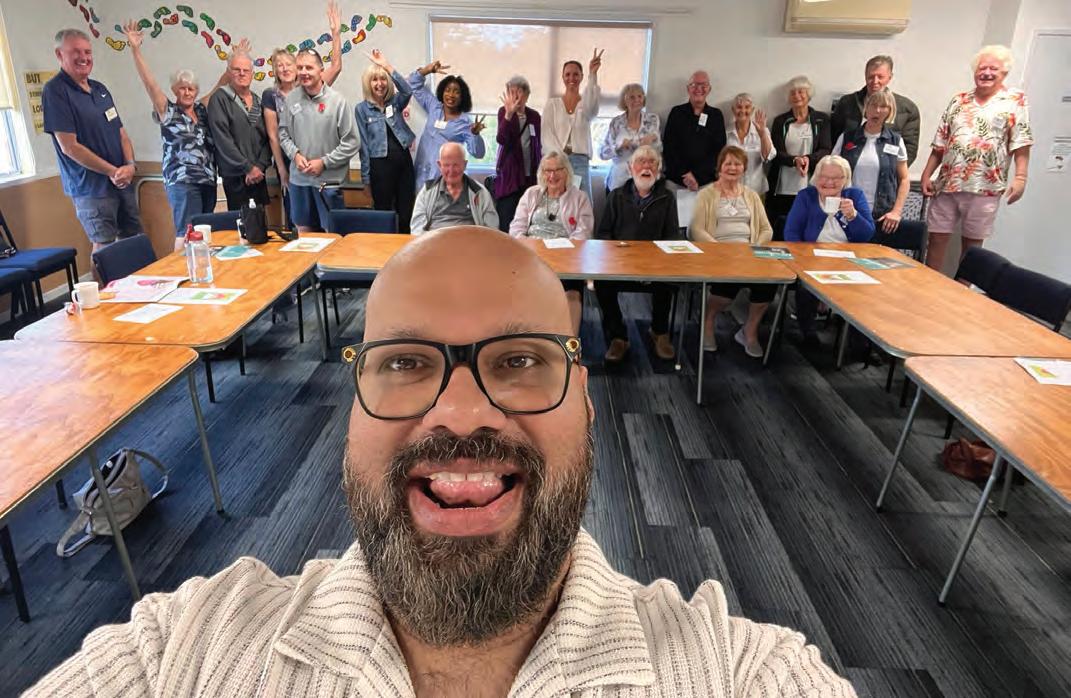
Rodney Aphasia Group are helping stroke survivors with aphasia find their voice again.
Stroke survivors are relearning daily skills lost after stroke thanks to a grant from Stroke Aotearoa which is funding speech therapy courses facilitated by Rodney Aphasia Group.
Rodney Aphasia Group is a non-profit based in Orewa which provides support to over 70 individuals living with aphasia. The courses provide vital speech therapy, self-advocacy and wellbeing tools.
Loraine began experiencing mild aphasia after a stroke in 2024. Soon after she began regularly attending courses with Rodney Aphasia Group.
“ We have found these meetings to be extremely helpful and informative. This group is doing an incredible job for people who would otherwise be without support and contact with fellow sufferers.”
Pam attends with her husband Eric who is a stroke survivor. Initially they struggled to access support and were thrilled to find a group operating locally.
“My husband had a stroke just over 2 years ago, and we found there was a lack of groups to aid in his recovery. The camaraderie within the group is very beneficial, along with the monthly activities. There is good discussion and learning from others within the group who have similar problems & issues.”
Rodney Aphasisa Group co-founder Peter Kingston has met many stroke survivors who have benefited from speech therapy. “It is not only a place to learn how to cope with our disabilities but also to feel supported and enjoy a few laughs, while relearning what the stroke has taken away.”
Annabel Grant has attended courses as a PhD student and praises the group for its holistic approach to support.
“ The ongoing benefits are clear: members develop resilience, discover new strategies for living with aphasia, and maintain social connections that might otherwise be lost. This peer support model creates a positive cycle where experienced members help newcomers while continuing their own journey of adaption. Aphasia affects not just communication but social participation and quality of life. This group addresses these broader impacts in ways that individual therapy alone cannot.”
If you or someone you love has been affected by stroke, you can get free support and guidance from Stroke Aotearoa by emailing help@stroke.org.nz or calling 0800 STROKE (0800 78 76 53). Grants are available for individuals affected by stroke, or community groups providing rehabilitation or prevention activities. Visit www.stroke.org.nz/affected-bystroke/grants for eligibility criteria and application form.
The Northland Disabled Charitable Trust is a non- profit organisation and has been operating the Forget Me Not Adult Day Centre in Tikipunga, Whangarei since 1994. The Centre is a day care service and is available to adults of all ages including those who are young with disabilities, the elderly and frail, those with memory loss, head injuries and/ or other disabilities.
The Centre provides quality day care that enhances the welfare not only of the clients but also of the carers and families who look after their loved ones at home on a 24 hour a day basis.
The Centre has capacity for 40 client visits per day. The Staff are qualified in their respective fields, and are experienced and
caring. Entry criteria is based on you visiting and having a look around to decide if you would like to attend.
There is no huge protocols for attendance other than enjoying and benefiting from attending.
The programme is structured with a variety of activities that provide motivation, education, rehabilitation and fun.
A cooked lunch is provided daily for clients and ‘take home’ meals service is available for clients who require an evening meal. Clients are transported to and from the Centre by the Trust vans.
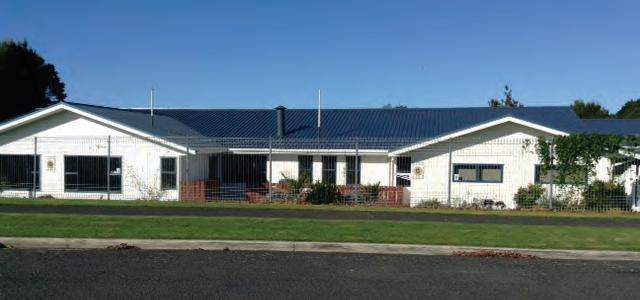


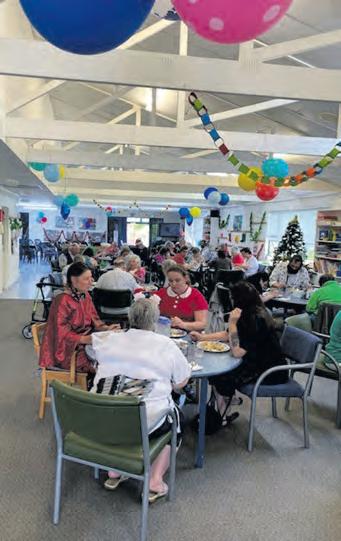
Forget Me Not 110 Boundary Road, Tikipunga WHANGAREI 0112
Phone: 09 4371144 manager@forgetmenot.org.nz www.adultdaycentre.co.nz
To achieve the best quality service to our community the Trust relies heavily on philanthropic funding and sponsorship to keep the service sustainable. At Tikipunga we specialize in all mechanical repairs including; transmissions & general services, WOF, brake and clutch repairs as well as tires. We have the latest technology and diagnostic equipment to diagnose problems in all Japanese and European cars. Come in and see our friendly staff at Tikipunga Automotive today. Here at Tikipunga Automotive, we are dedicated to treating our customers with honesty, respect, and professionalism. We hope that you find what you’re looking for on our website, but please don’t hesitate to contact us, should you require more information, or to book your car in.

Almost forty-one years ago, in 1985, a group of Northlanders with special learning needs, and their carers, proclaiming themselves to be the Northland Special Olympics team represented Taitokerau Northland in athletics and swimming at the inaugural Special Olympics Summer Games in Lower Hutt.
From that handful of athletes, the number has increased to include thriving groups in Kaitaia, Kerikeri, and Dargaville, as well here in Whangarei.
Northland athletes now participate in Athletics Bocce, Equestrian, indoor bowls, swimming and Tenpin bowling.
Here in Whangarei and Dargaville, for our 55 current athletes, training is happening most evenings of the week. We have athletes too, itching to play basketball and football, but we need coaches and helpers.
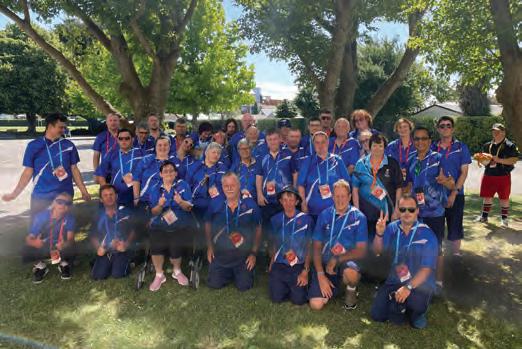

Sporting and recreation opportunities for persons with an Intellectual impairment
Sporting and recreation opportunities for persons with an Intellectual impairment
We are multisport athletics: equestrian, football, indoor bowls, swimming and tenpin bowling
We are multisport athletics: equestrian, football, indoor bowls, swimming and tenpin bowling
Athletes from 8 to 80 years old
Athletes from 8 to 80 years old
Developing self esteem — encouraging initiative
Developing self esteem — encouraging initiative
Activities developed by the athletes, for the athletes
Activities developed by the athletes, for the athletes
Special Olympics Whangarei
Special Olympics Whangarei
For all enquires contact Martin Barrie
For all enquires contact Martin Barrie
Phone: 021 118 2422 – Like us on Facebook.
Phone: 021 118 2422 – Like us on Facebook.

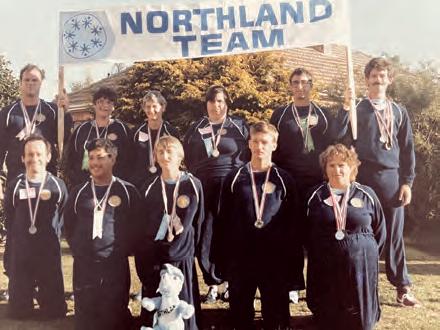
Special Olympics is not only worldwide, it is “person wide”. We aim to exercise not only the body, but also to exercise and empower the whole person, and show them that it’s ultimately up to them to succeed at whatever they choose to do.
So now 40 years on, here in 2027 we’re about to commemorate those early years of development and celebrate our people, their successes, our Whangarei club, and its 40th Anniversary.
David Laird Club Coordinator Special Olympics Whangarei
We need coaches and helpers. Want to climb aboard? Contact Martin on: 021 118 2422


t Driving Miss Daisy Kerikeri / Northland, we believe that transport is about much more than getting from A to B. It’s about maintaining independence, staying connected with the community, and ensuring that people of all ages can continue doing the things that matter most to them.
N ow under new ownership, our dedicated local team is proud to continue providing the caring, door-to-door service that Driving Miss Daisy has become known for throughout New Zealand. With a fabulous team of compassionate and experienced drivers, we are committed to supporting our clients with dignity, kindness, and genuine care.
Whether it’s an appointment around the corner, a day trip to visit family, a regular school run, or a journey across the country, no trip is too short or too far. We understand that every client’s needs are unique, and we tailor our service to suit each individual and their family.
S ome of our clients simply prefer not to drive anymore. Others may be recovering from surgery, managing an injury, living with a disability, or supporting a loved

one who needs a little extra help to remain active and connected to their community.
We provide wheelchair-accessible transport and personalised assistance, ensuring our passengers feel comfortable, respected, and supported every step of the way. We take the time to help clients from their front door to their destination and safely home again, giving families peace of mind that their loved ones are in caring and capable hands.
D riving Miss Daisy Kerikeri / Northland is also an approved provider for both ACC transport services and the Total Mobility Scheme, helping eligible clients access affordable transport when they need it most. We assist with school runs, shopping trips, medical appointments, social outings, community activities, companion driving services, and much more.
O ur goal is simple: to help people remain active, independent, and connected to the people and places they love. Because everyone deserves the opportunity to participate fully in life, regardless of age, ability, or circumstance. As a locally trusted service, our days can fill quickly,
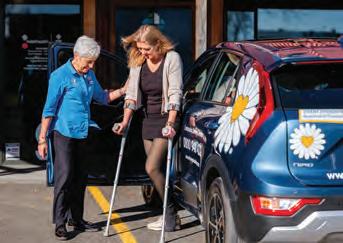
particularly for regular appointments and popular travel times, so we encourage clients and families to book ahead whenever possible to ensure we can accommodate their preferred dates and times.
I f you or someone you care about could benefit from friendly, reliable transport assistance, we’d love to hear from you.
Driving Miss Daisy Kerikeri / Northland –Talk to us about your next journey and ride with a friend.
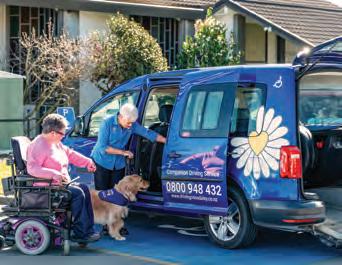
Find out more by visiting our Facebook page or website, email us at kerikerifarnorth@drivingmissdaisy.co.nz, or call our friendly team on 09 407 9889.
Living with a disability can bring extra challenges — but the right support can make a real difference.
At Home Support North, we work alongside people across Northland to provide practical, respectful disability support that helps individuals stay independent, connected and in control of their daily lives.
Our disability support services are personalised, flexible and centred around what matters most to you. Whether you need help for a few hours a week or more regular support, our experienced Support Workers can assist with everyday tasks such as personal care, meal preparation, household support, shopping, transport to appointments and social support. We understand that no two people are the same, so we take the time to get to know you and tailor support to suit your goals, routines and preferences.
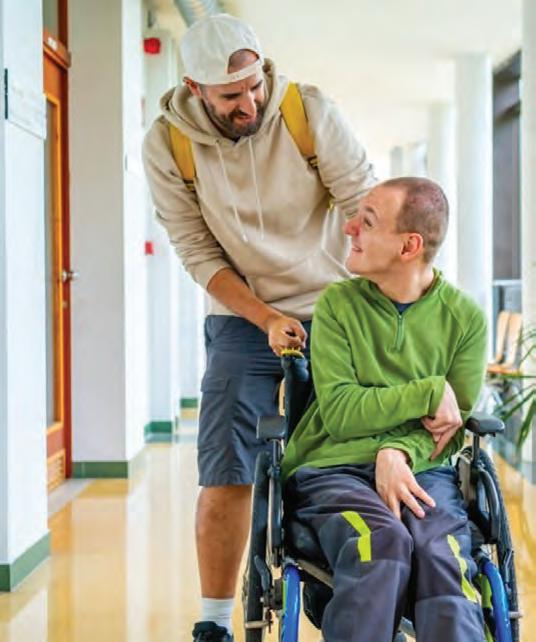
We are here for everyone with a disability, including those accessing services through NorthAble, ACC, or the Ministry of Health. For those using Individualised Funding (IF), we’re here to help you make the most of your funding — giving you choice and control over how, when and by whom your support is provided.
What sets Home Support North apart is our people. Our Support Workers are carefully selected, trained and supported by clinical and coordination teams, including qualified nurses. Just as importantly, they bring kindness, reliability and a genuine commitment to building trusting relationships — because feeling comfortable with the person supporting you really matters
This year, the Papermakers have made fibre their focus. Specifically, the team has been refining their recipes and processes for papers made from plants that grow right here in our back yards: flax, canna, wild ginger, banana palm and agapanthus.
Handmade fibre paper is never quite the same twice. The way a plant is harvested, prepared, cooked, and beaten all affect the final sheet. Getting to know a fibre takes time, patience, and a willingness to experiment — qualities the Papermakers have in abundance. Through careful trial and reflection, the team has been building a deeper understanding of how each plant behaves, and how to coax the best paper from it.
Flax (harakeke) holds a special place in this mahi. As a taonga plant with deep roots in Mãori culture — used for weaving, medicine, and sustenance — it feels particularly meaningful to work with it in a creative context. Tikanaga is honoured when harvesting, taking only what is needed and leaving the rito and adjacent awhi leaves
untouched so the plant continues to thrive. The Papermakers have been experimenting with different preparations to achieve papers with varying textures and strengths. Canna, wild ginger, banana palm and agapanthus each bring their own character: some produce papers with beautiful textures , others with surprising resilience.
This focus on fibre is about more than technique. It's about slowing down, paying attention, and building real expertise — skills that translate well beyond the papermaking studio.
The Papermakers are no strangers to experimenting with unusual materials — but Alex took that spirit further than expected this year.
Alex is one of The Papermill's Papermakers, and he set himself a goal at the start of the year: to make paper from donkey manure. The idea wasn't random — Alex has a close relationship with his aunty,
whom he visits regularly. She has a donkey, Elvis, that Alex adores, and when the idea came to him, his aunty was more than happy to help collect the raw material.
Dung papermaking is an ancient and legitimate craft — herbivore manure is rich in plant fibre that has already been partially broken down, making it good papermaking material. The collected manure was thoroughly rinsed and then boiled, which removed any bacteria. Surprisingly, there was no smell! From there, it went through the same process as any other fibre: beaten into a pulp, formed into sheets, and pressed and dried.
The result? A paper that is, by Alex's own assessment, "not the best" — it's a little crumbly and fragile compared to plant fibre papers. But it works. It is, undeniably, paper. And Alex is absolutely stoked.
Alex's project is a wonderful example of what happens when you give someone a creative environment, genuine support, and the freedom to follow their own curiosity. He identified a goal, sought help from someone
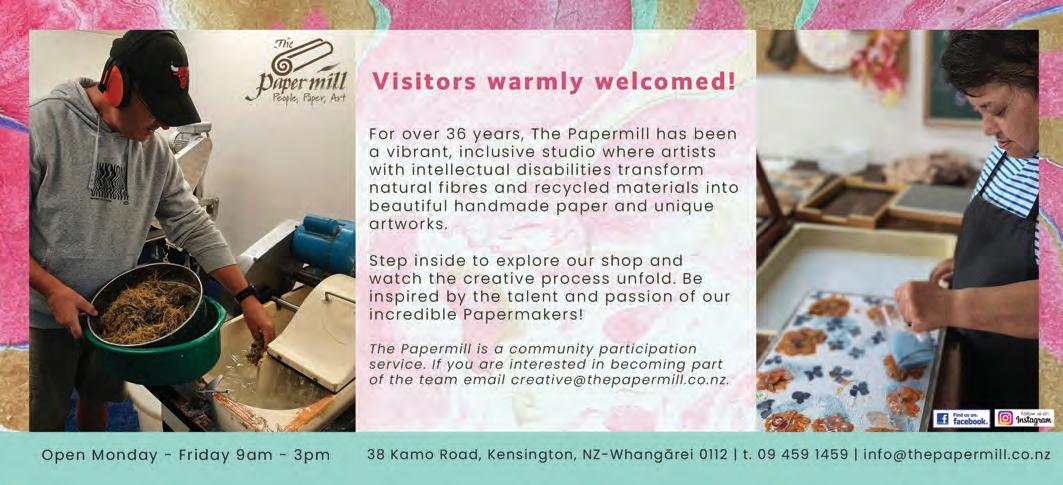
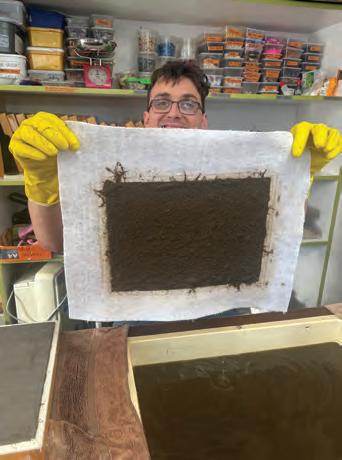
he loves, worked through the process with patience, and saw it through to the end. That's not just papermaking — that's real achievement.
Founded in 1989 by Rhonda RutherfordDunn, The Papermill has long been a sanctuary for artistic expression and personal growth for individuals with intellectual disabilities. Rhonda's
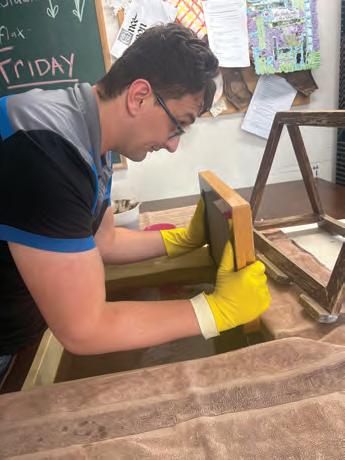
innovative vision established papermaking as a therapeutic medium, empowering participants to build self-esteem and confidence. Today, over 35 years later, The Papermill continues to thrive, fostering a nurturing environment where creativity flourishes, and artwork comes to life.
The Papermill operates as a unique creative space and a small business, following a structured and routine-based philosophy. This approach fosters a strong
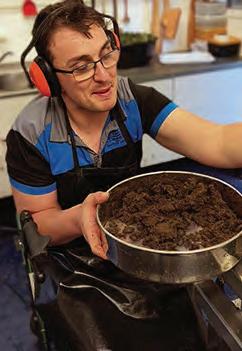
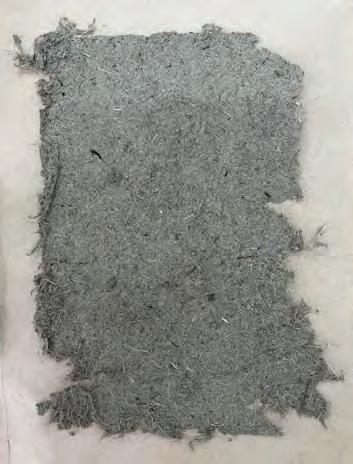
team environment where everyone's contribution is valued and each individual's uniqueness is celebrated. The Papermill's tagline 'People, Paper, Art' perfectly encapsulates our priorities.
Visitors to The Papermill can purchase paper, stationery, and paper art, tour the studios, and interact with the artists at work. Papermaking workshops are available on demand, and group visit bookings are recommended.
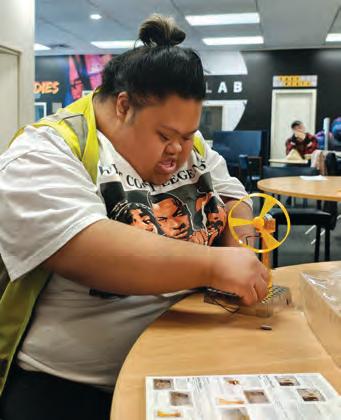
We all want a life that feels like our own. One where we make decisions, follow routines that work for us, and feel like we belong.
But for thousands of disabled New Zealanders, that kind of life isn’t always easy to access.
That’s where we come in.
At Spectrum Care, support starts with the person. Whether it’s at home, in
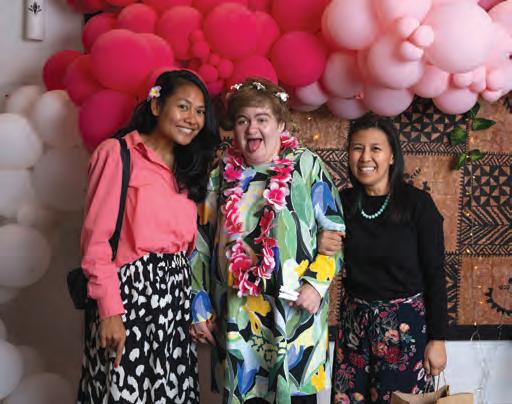
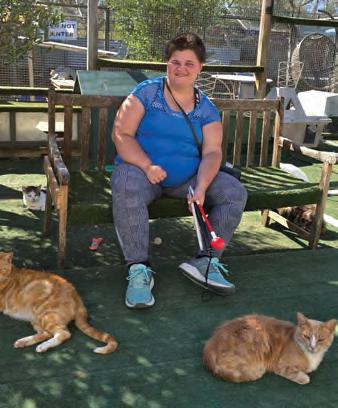
the community, or through health and communication support, everything is shaped around what matters most.
We’re here to listen, adapt, and show up in ways that make a difference. To back identity. To back potential. And to do the mahi in a way that respects individual goals, priorities, and pace.
Because good support doesn’t assume. It asks.
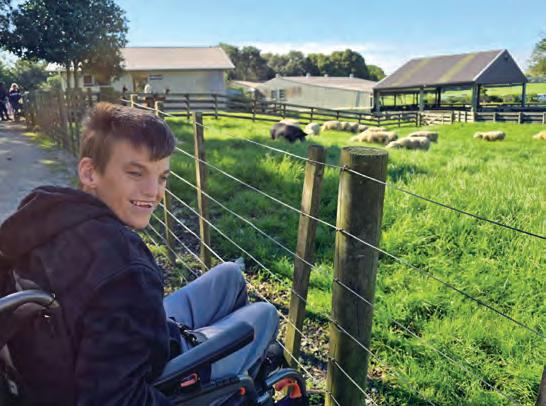
Our Vision
An Aotearoa in which all disabled people have equal opportunity to live good lives.
Our Purpose
To help maximise the potential of the people we support.
Our Values
Mana taurite (Equity) – We treat everyone fairly Whakaute (Dignity) – We honour and respect each other Pae tawhiti (Ambition) – We dream big Ka ora (Sustainability) – We do what’s best
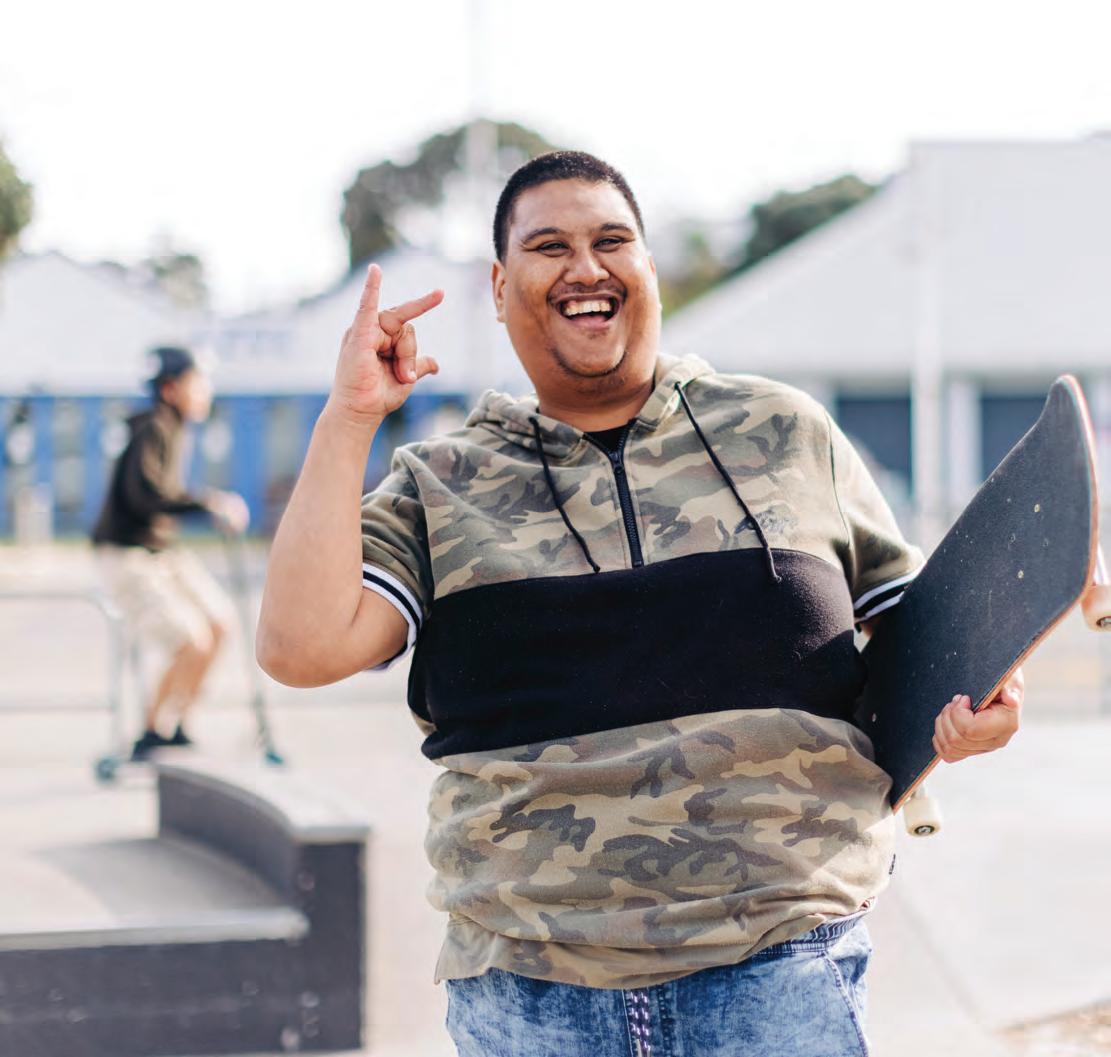
We offer a wide array of flexible support options in the Northland, Auckland, Waikato, Bay of Plenty and Wellington regions, which can be structured to suit each family’s unique needs.
Our aim is to ensure people have choice, control and flexibility in the supports they receive and have the opportunity to co-create their own support options. We also offer a navigator service 0508 NAVIG8 aimed at helping families new to disability support.
Contact us today to find out more spectrumcare.org.nz info@spectrumcare.org.nz 09 634 3790 | 0508 NAVIG8 (0508 628 448)
At tlc4u2, our mission “Together We Care” reflects our dedication to delivering compassionate, collaborative in-home care. We work closely with clients, wh ã nau, and healthcare professionals to ensure every individual receives the highest standard of personalised support.
Proudly serving the Northland, Waikato, and Auckland regions, we offer a wide range of care services – from an hour a week right through to 24/7 support. Whether you are accessing our services privately or funded through ACC or Te Whatu Ora, our experienced team is here to help.
✓ Compassionate, Experienced Team O ur highly trained support workers are not only skilled but truly passionate about making a difference in the lives of those we care for.
✓ Community-Focused
A s a local provider, we’re deeply committed to the wellbeing of
our communities. We actively promote adaptive opportunities and advocate for improved accessible services, facilities and spaces.
If you or a loved one are seeking in-home care delivered with genuine respect and understanding from a team that truly cares, we’re here to help. Get in touch with tlc4u2 today to learn more about our services or to schedule a personalised consultation.
Visit our website or call us now – let’s talk about how we can support you.
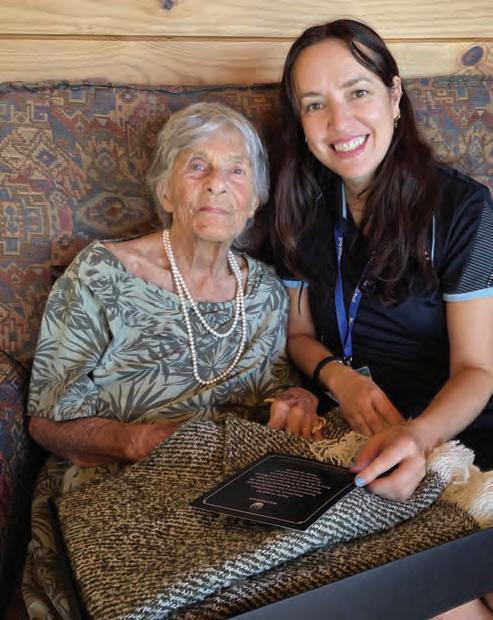
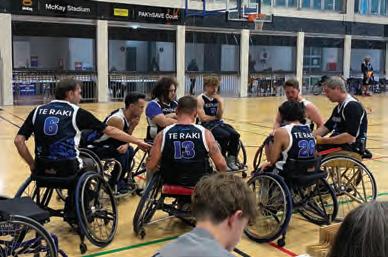
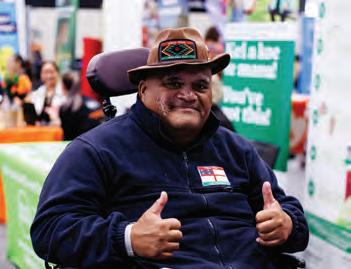
Coastal holiday home providing accessible accommodation and respite care
Located in the picturesque coastal suburb of Auckland, tlc4u2 Resorts Beachlands offers accessible holiday, short stay and/or temporary accommodation options in a modern, spacious and peaceful setting.
The Resort features ten fully accessible bedrooms, which provide our guests and their whã nau with specific spaces that are tailored to meet the needs.
This ensures that guests have the flexibility to create the type of stay and level of support that works for them. We have qualified support staff who can assist you with all your individualised care needs, should that be required.
Whether you are needing a space to recover, accommodation while your housing modification is taking place or looking to have a weekend getaway. Resorts Beachlands can create a package to suit, including accessible transport on request.
Set in the serene environment of Beachlands, our Resort is just a stone’s throw away from beautiful
seaside walkways and accessible ferry services to downtown Auckland.
The local area is bustling with cafes and restaurants, providing plenty of options for exploring.
Looking for a peaceful getaway that is fully accessible and can be tailored to you? Contact tlc4u2 Resorts Beachlands and discover how we can provide you with the ultimate accessible getaway. Visit our website or call us to arrange your stay.
tlc4u2 Resorts Beachlands – Where care meets comfort.
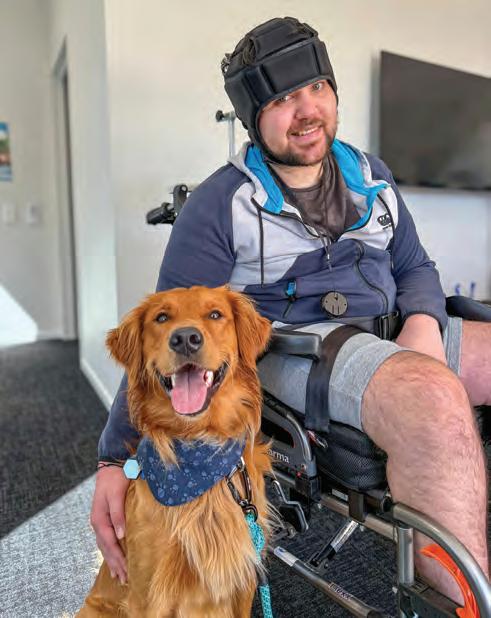
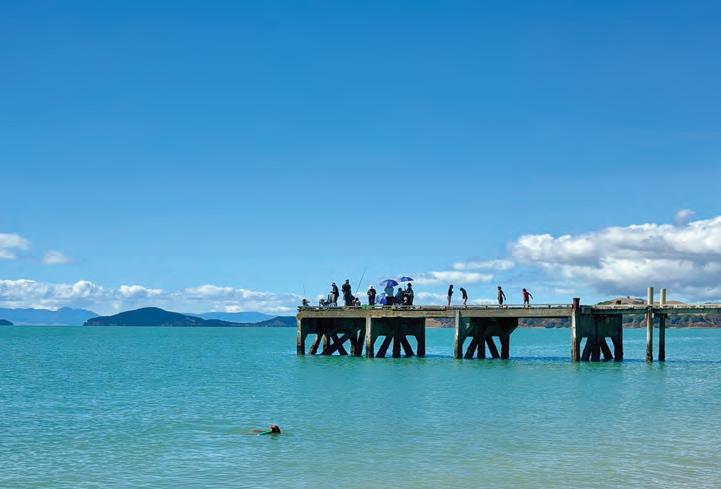
IDEA Services is New Zealand’s largest provider of services for people with intellectual disabilities and their families.
At IDEA Services we will support you to:
• Set goals and achieve them
• Have great experiences and take advantage of opportunities
• Have as much independence as possible balanced with the right support
• Make meaningful connections with others
• Live the life you want
Our Services
The specialist – and sometimes intensive – support we provide for people with intellectual disabilities (including roundthe-clock care) can include the following services:
Supported Living
Through Supported Living we can support you to:
• Manage and learn new daily living skills, such as cooking, cleaning and managing money
• Meet new people and make friends
• Keep in touch with family and friends
• Join community activities (e.g. sports and art)
• Look for a job
• Access other community services, such as the doctors or Work and Income
Living with support – Residential
We provide support for people with intellectual disabilities who require a level of care and want to live in a supportive community.

Support is based on what you need If you live with us you will:
• Have your own bedroom
• Live in a home you share with a few others
• Be encouraged to take part in the running of your home and make decisions with others about what happens there
Specialist Services
Services for people in compulsory care
IDEA services support people with high and complex needs who have committed an offence.


EMPOWERING PEOPLE WITH INTELLECTUAL DISABILITY TO LIVE, LEARN, WORK AND ENJOY LIFE, IN OUR COMMUNITY OF WHANGÃREI.
Residential and Supported Living Services – Enabling Good Lives
Our Team provide support to more than 50 people who live in our community or wanting to transition from home.We also provide support to more than 105 people in 27 residential homes across Northland. Support Workers walk alongside people to plan and set goals, to enable a great life.
At IDEA Services we are all about People. Throughout Te Tai Tokerau we employ more than 230 people to work alongside people that need our support.
If you love people and supporting people to reach their potential, then you should consider working with IDEA Services. Our Support workers are well supported with training and development opportunities that lead to a formal qualification. Contact us on careers.ihc.org.nz

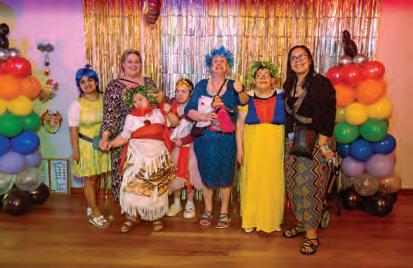
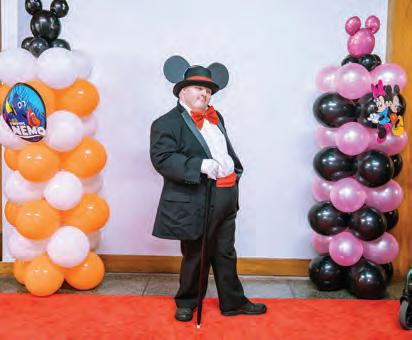
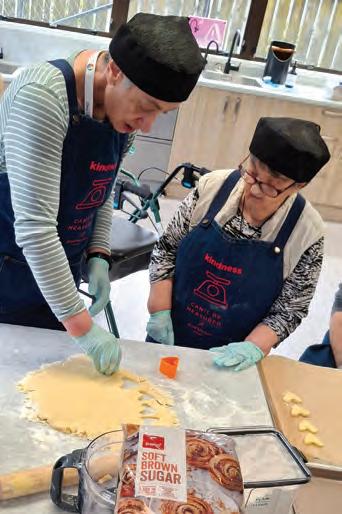
Top: Giving back – we bake each week as part of the Good Bitches Baking programme – baking and donating to those that need a little sweetness in their lives.
Centre: Kapa Haka Festival Orewa 2025
Left: Travelling to Auckland for National Remembrance Day 2025
Bottom Left: Enabling Good Lives – participating in a workshop that provides information on how to make sure you are having a good life
Bottom Right: Disco - Out and about enjoying the EGL Disco
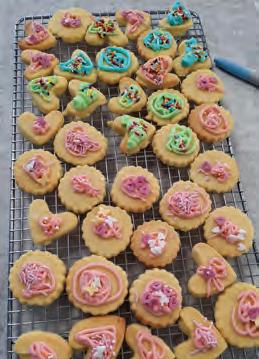
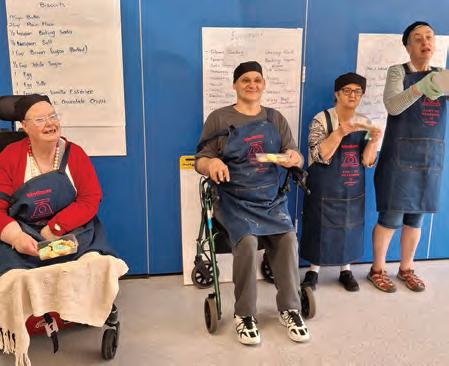
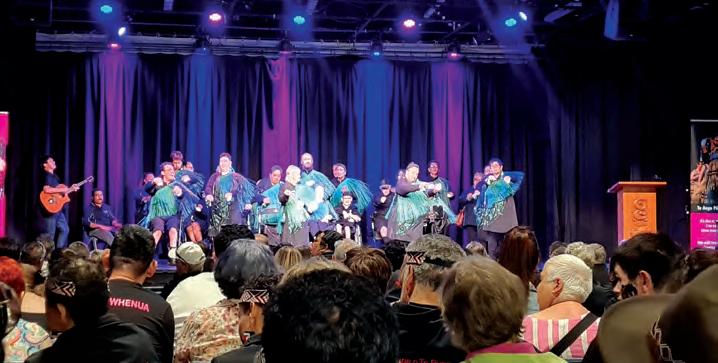
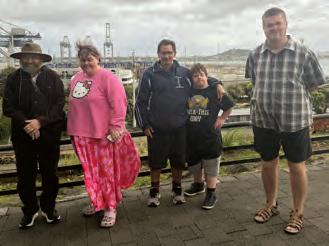
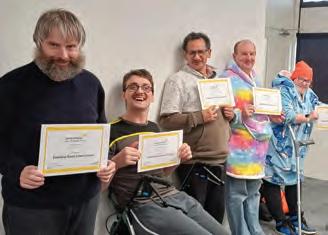
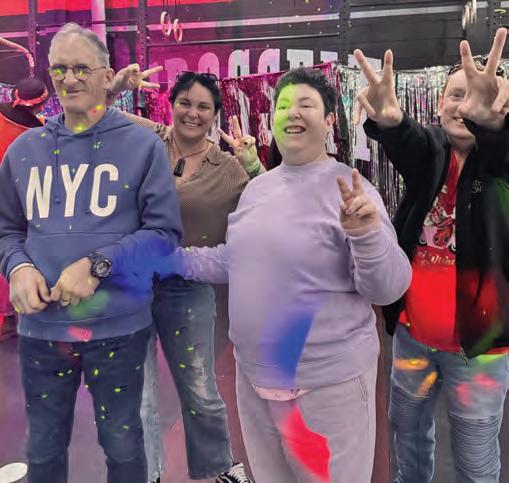
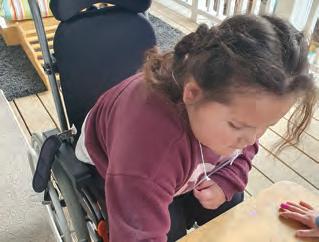
Tucked away in the heart of Whangãrei, Kind Hands Respite Care Cottage is more than just a facility — it’s a lifeline for families navigating the challenges of raising medically fragile children or children with disabilities. Purpose-built with compassion at its core, Kind Hands offers a rare blend of early childhood education and 24/7 respite care, tailored specifically for tamariki under six who require complex medical support.
Kind Hands was born from a deeply personal journey. Founder Sharlene Clements, a seasoned nurse and mother, envisioned a place where children with high health needs could thrive in a nurturing, home-like environment. Inspired by her own experiences and her son’s gentle reminder to always use “kind hands,” Sharlene created a space where families could feel safe, supported, and somewhere that they feel included.
Both Kind Hands cottages are designed to feel just like that — a cottage. Warm, welcoming rooms, safe sleeping spaces, and a team of registered nurses, caregivers, and ECE-qualified teachers ensure that every child receives the care they need, whether they’re oxygendependent, technology-assisted, or undergoing a specific feeding regime.
Kind Hands operates two core services:
• Early Childhood Education (ECE): Weekdays from 8:00am to 5:00pm, blending learning with medical care. Taking up to 22 children per day across both houses.
• Respite Care: Every second weekend from Friday 5:00pm to Monday 8:30am, giving families a muchneeded break. Up to 8 children can be cared for over each 24hr period.
Children at Kind Hands aren’t just cared for — they’re celebrated. The team supports a wide range of needs, from Down Syndrome and Autism to neuromuscular disorders and global developmental delays. Therapies like physiotherapy, occupational therapy, and speech-language sessions are woven into each child’s day, guided by individual care plans.
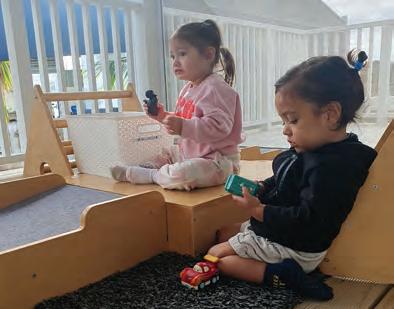
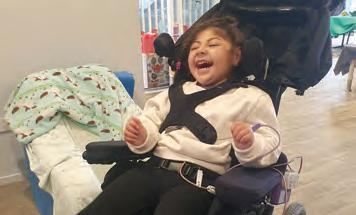
What sets Kind Hands apart is its low child-to-staff ratio, ensuring no child is overlooked. “We stay small so we can stay focused and provide great quality care that the kids deserve” says Sharlene. “Some of our kids are very unwell, and they deserve our full attention. It’s also very important to me that each child at Kind Hands gets to experience the same things as any other child – just because they might have a feeding tube doesn’t mean they can’t play in the sandpit!”
For many families across Northland, Kind Hands is a sanctuary — a place where they can exhale, knowing their child is in expert hands. It’s also a place where children learn, play, and form friendships in an environment that embraces their differences.
As Sharlene puts it, “At this age, children are beautifully accepting. They don’t see differences — they see playmates.”
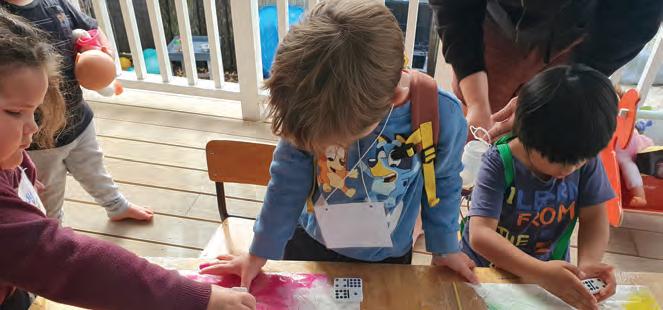





































Life is extremely difficult for many young people. The Miriam Centre works with young people struggling with every life issue.
We support and work with each person to find solutions which are positive, less stressful and constructive for each young person & which will ensure their safety & that they can thrive.
Sometimes there are personal or family or school or peer issues which are distressing and absolutely too hard for them & are overwhelming.
Frequently we support young people with issues of anger, abuse, violence, intimidation and neglect and disempowerment, self harm & every other sign of their distress.
Frequently this labelled as a “mental health condition” when looked out & unpicked are all perfectly understandable behaviours that a result of something they are experiencing or living amongst.
The risk in this is that it is the young person becomes seen as ‘the problem’ when labelled with a ‘disorder’ whilst of course needing help & support to work through the presenting issues.


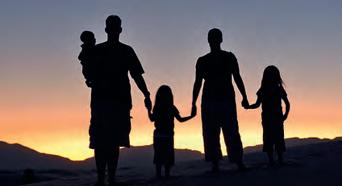
It is the underlying issues... the ‘what is behind’ their behaviours or presentations where the solution lies.
A label of ‘Oppositional Defiance Disorder’ is an obvious example where the label defines the young person as the ‘problem’ when it could just be that it is their courage to fight against the actual problem that is the root cause & holds the solution.
Youth is the growth period where oppositional defiance is absolutely appropriate.
What worries me is that soooo often we as professionals in the mental health field if we focus on the problem we miss what the young person is trying to fight against.
The young person unable to disclose about sexual abuse, other forms of violence, addiction etc within their families...
We really need to always come to each situation with a much more open mind...
“A what is going on here for this young person... What do these behaviours arise from... What are they trying to tell us or to want us to pick up” ?
The most vulnerable will not tell us,until they know they can trust us... Sensibly so because frequently help doesn’t help... we destroy.. quite unintentionally of course. The old adage I was taught many years ago...
“I asked you for help- I didn’t ask you to destroy my whole family”.
For many of our young people but thankfully not all... they are living with drug mis use, particularly meth, crime, violence & many in poverty in their ADULT family members.
Young people who may have been “rescued” removed to “safety” but left bereft, worried & about their siblings, Mum or whoever...
Young people who are feeling desperately alone even when they are not living in destructive families... but particularly so when living within their families who are a real risk.




We can all remember those years of our own lives where loneliness even within our warm wonderful whanau... even those young people need our time & wrap around care...
Some solutions young people see as their only option are terribly permanent & absolutely unnecessary.
“Help” can sometimes be unhelpful if we do not listen & work to empower our young people who frequently have no power & experienced by their adults & the system as difficult & the problem when in our experience the source of the young person’s despair is in the adult society & power of those who probably well meaningly impose their view of “best interests” in a structured mainstream way.
It is beholden on us as adults to look at the whole problem, the underlying as well as the immediate obviously reality & reasons & heal all of these... then & only then can we ensure long term positive change for all of us.
Our worry is that unless we do that our young people believe that their situation is insurmountable & risk destroying themselves.
It is up to us as adults to prove to all our rangatahi Maori & Non Maori there is always a way through.
Our multidisciplinary team of men and women, Maori and Non Maori specialist therapists wrap around the young person, their family or whanau, school or Kura &




our hapori , anyone & who ever are seeking our assistance. In order to ensure we work together our mahi must be in collaboration not a competition & empower everyone to identify, face & address the whole problem & to actually make a long term difference.
The Miriam Centre our team , Kaimahi are from the North & therefore across the whole of our rohe which is Te Taitokerau Northland.
You can contact us at: 22 Mill Road, Whangārei Phone: 09 437 6010 Facsimile: 09 437 6672

































By Lucy Schultz
When I was preparing to start at the University of Auckland, there was plenty of information about choosing papers and finding lecture theatres. What I was less sure about was what support would be available as a student with a disability, and what university life outside my classes would actually look like.
One of the first things I did was register with Student Disability Services (SDS). Every university has its own disability support service, so it's worth finding out what's available before the semester starts. At the University of Auckland, I met with an adviser before classes began to discuss the support that would work for me. Having everything organised early meant I could start the semester focused on learning instead of trying to arrange support once classes were already underway.
For me, that planning made the transition into university much smoother.
The other thing that made a big difference to my University experience was getting involved outside my course.
The University of Auckland has more than 300 student clubs, and one of the clubs I became involved with was the University of Auckland Students with Disabilities in Health Association (UoASDHA). The club runs social events throughout the semester, from build-your-own ramen nights to casual study catch-ups.



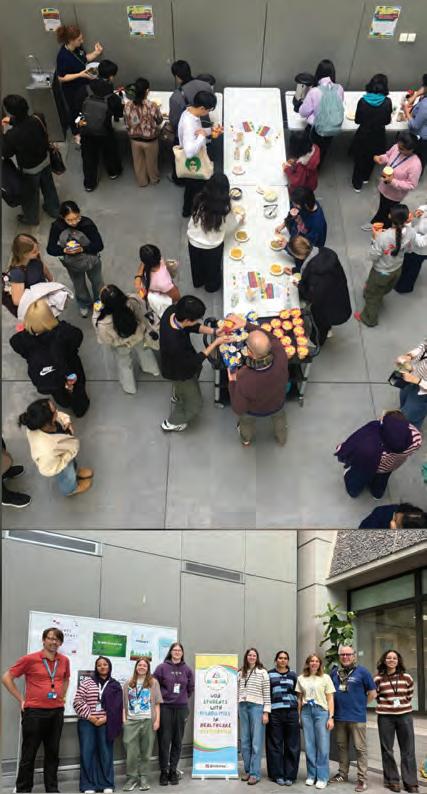







The events are really welcoming and a great way to meet people outside your own classes.
Most tertiary institutions have disability or accessibility services, student associations, clubs, and wellbeing teams, but they all work a little differently. Spending an hour exploring what's available before semester begins can make it much easier to know where to go if you need support.
If you're coming to the University of Auckland specifically, my advice would be to register with SDS early and visit the club stalls during O-Week. Don't be afraid to sign up for something that interests you because there's no obligation to keep attending if it isn't the right fit. Trying something new is often the hardest part, and you might be surprised by what you enjoy.
O f course, I still remember the lectures and some challenging assignments, but I also remember the ramen events and the people I still stop to talk to around campus months later. Those experiences weren't something I expected when I accepted my offer, but they make campus feel like a community rather than just a place to study.
The cost of this service is $140 daily, but you are required to provide your own supports or carers.
Should you wish to share this facility with another friend, caregiver and their client then there will be an additional $15 per person. This could be paid through various sources, such as a person’s Individual Funding Allocations (IF), Very High Needs funding (VHN, or privately. If you don’t have IF, please discuss this with your NASC.
Fully accessible home 3 bedrooms with 4 beds
Fully furnished with TV, kitchenware, linen, washing machine, and dryer
2 bathrooms (one with a wet-area shower)

Equipped with hospital bed, hoist (bring additional slings if you think appropriate), and shower/commode chair.
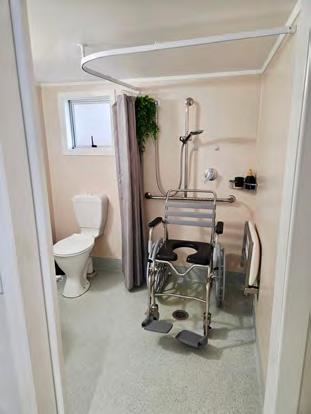
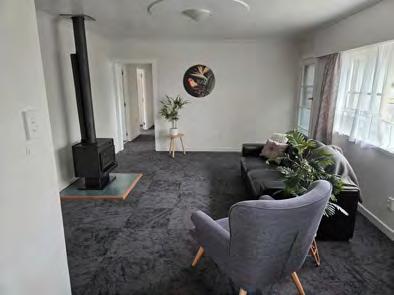
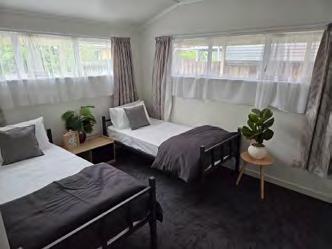

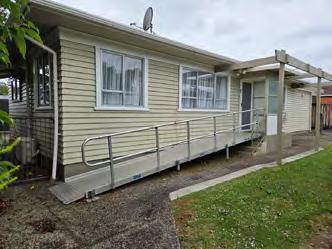
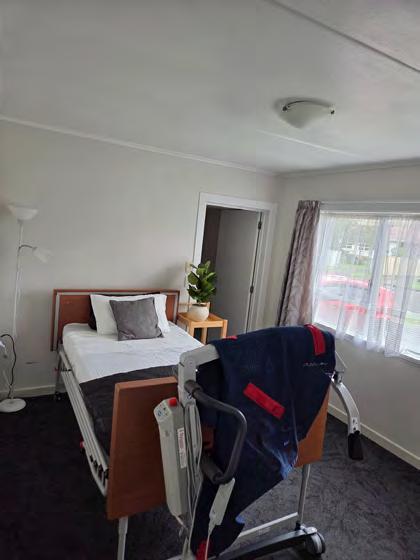
Up to $15,000 available to boost para sport access and future Paralympic pathways
Northland Paralympic legend Cam Leslie has welcomed a national grant programmedesigned to get more disabled people into para sports.
Paralympics New Zealand (PNZ) and Bupa New Zealand have joined forces to launch the PNZ Bupa Inclusive Para Sport Grant.
The fund will support national sports organisations, regional disabili ty sport organisations, sports clubs and community groups to deliver projects that increase participation, create more inclusive sporting environments for disabled New Zealanders and strengthen pathways for future Paralympic talent.
Through the initiative, PNZ and Bupa aim to help disabled people feel supported and empowered to participate in para sport.
The PNZ Bupa Inclusive Para Sport Grant will support individual projects up to a maximum of $15,000 (excluding GST).
The grant programme aims to identify and support future New Zealand representative para athletes by creating pathways into para sport for disabled Kiwis.
Paralympian No 164 Leslie, MNZM, said the grant could open doors for more disabled New Zealanders to discover the benefits of para sport.
“Para sport has played a huge role in my life, providing opportunities, friendships and experiences that I never imagined possible,” Leslie said “ This grant will help more disabled p eople access those same opportuni ties, whether they’re participating for fun, connection and wellbeing, or taking the first steps on a pathway towards highperformance sport and the Paralympic Games.”
Leslie knows how far the sport can take you and hopes the grants will inspire others.
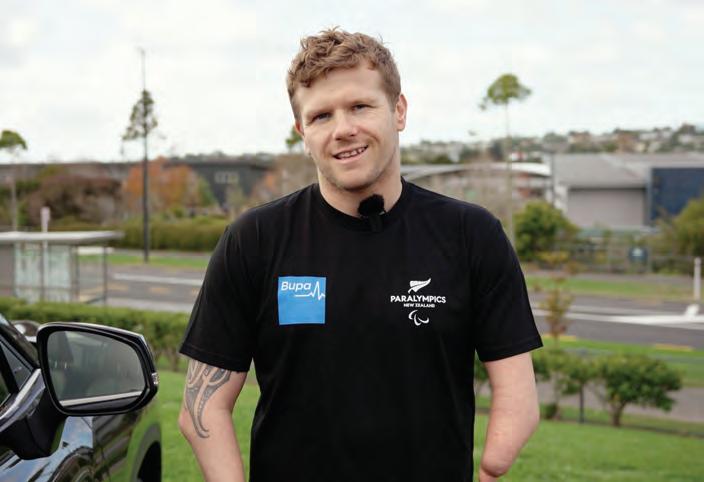
A Paralympic legend, Leslie (Ngãpuhi) has broken world records and won multiple gold medals in swimming, and also excels in wheelchair rugby, where he has represented his country many times.
Born in Whangãrei in 1990, Leslie lives with a quadruple limb de f iciency and first took up swimming at 11.
Despite a tough debut at the 2006 I PC Swimming World Championships, he persevered and became one o f New Zealand’s most decorated Paralympic athletes.
He claimed three consecutive gold medals in the men’s 150m individual medley SM4 at the Beijing 2008, London 2012 and Rio 2016 Paralympic Games, each time breaking world records.
PNZ senior manager of sport and pathways, Kristin Farrell, said para sport can create powerful feelings of connection, confidence and belonging.
“ We want more disabled New Zealanders to have the opportunity to experience the connection, confidence and enjoyment that para sport creates.”
Michael Burgess, Bupa New Zealand’s director of corporate affairs and sustainability, said the pro gramme reflects the company’s global commitment to inclusive sport and healthy communities.
“ We’re excited to see the positive difference this programme will make for individuals, whãnau and communities,” Burgess said.
Applications are open to national sports organisations, national disability sports organisations, regional disability sports organisations, community sport organisations including clubs or associations, and other organisations involved in providing para sport opportunities, disability e ducation and awareness.


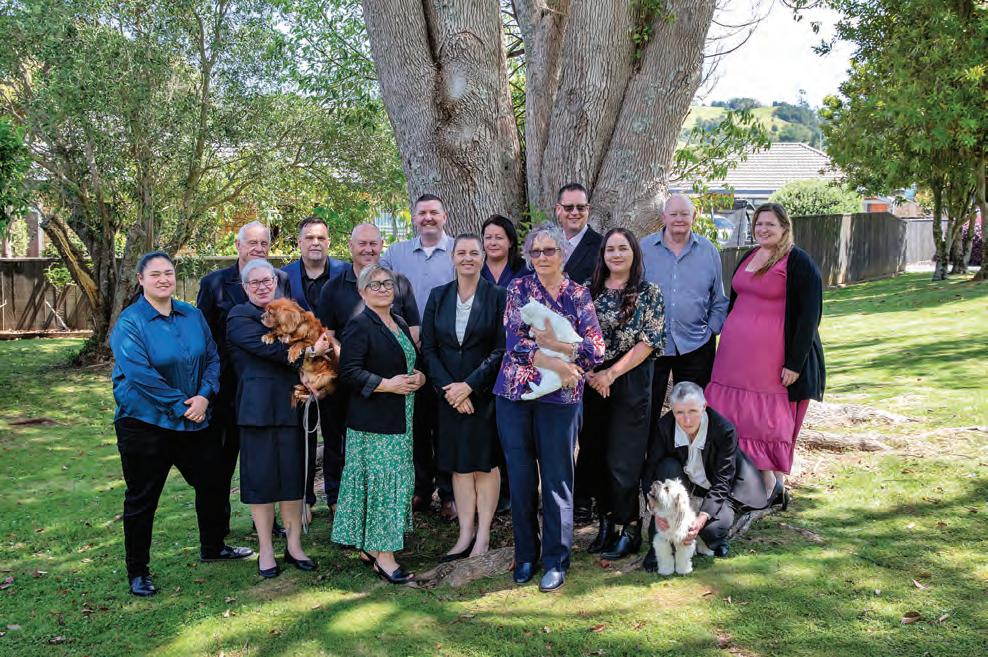

AUGUST 2026
1st -31st Blind and Low Vision PAWGUST Walk or run to raise funds for NZ Guide Dogs www.blindlowvision.org.nz
28th Cancer Society Daffodil Day www.cancer.org.nz
SEPTEMBER 2026
1st - 30th World Alzheimer’s Month www.alzhiemersnorthland.org.nz
1st - 30th Muscular Dystrophy Awareness www.mda.org.nz
1st - 30th Charcot Marie Tooth (CMT) Awareness Month (part of MDA)
7th Duchenne Muscular Dystrophy Awareness Day
14th Alzheimers Memory Walk –Whangarei -Sport Northland Event www.alzhiemersnorthland.org.nz
14th - 19th Multiple Sclerosis Appeal Week www.msnz.org.nz
15th International Myotonic Dystrophy Day
21st World Alzheimers Day www.alzheimers.org.nz
21st – 27th International Week of the Deaf www.deaf.org.nz
23rd United Nations International Day of Sign Languages
30th Limb Girdle Muscular Dystrophy Awareness Day
30th Tiaho Trust/Age Concern Kaitaia Seniors Expo
OCTOBER 2026
1st - 31st Cerebral Palsy Awareness Month “Be Green and Be Seen” 2nd – 8th Arthritis Awareness Week www.arthritis.org.nz
8th World Sight Day
12th - 18th World Mental Health Awareness Week www.mentalhealth.org.nz
12th World Arthritis Day www.arthritis.org.nz
29th World Stroke Day www.stroke.org.nz
NOVEMBER 2026
Date to be announced Walk 2 D’Feet MND www.mnda.org.nz
Date to be announced Scoot the Loop for MS www.msnz.org.nz
23rd Northland MS Society AGM www.msnz.org.nz
DECEMBER 2026
Date to be announced International Day of People with Disabilities - Tiaho Trust celebration (to be confirmed)
10th World Human Rights Day www.amnesty.org.nz
JANUARY 2027
4th World Braille Day www.blindlowvision.org.nz
FEBRUARY 2027
1st – 28th Heart Awareness Month
8th Annual International Epilepsy Day www.epilepsy.org
Date to be announced Ruakaka Surf Day www.tiaho.org.nz
28th Rare Disease Day
MARCH 2027
1st – 31st Neurological Brain Awareness Month
1st – 31st Brain Injury Awareness Month www.brain-injury.org.nz
1st – 31st Hearing Awareness Month
21st World Down Syndrome Awareness Day www.nzdsa.org.nz
End of March Blind Foundation Guide Dog Red Puppy Appeal
26th Epilepsy Awareness “Purple Day” www.purpleday.org
APRIL 2027
2nd World Autism Awareness Day www.autismnz.org.nz
6th Anniversary of NZ Sign Language Act 2006
11th World Parkinson’s Day www.parkinsons.org.nz
MAY 2027
1st May – 31st May Stroke Awareness Month www.stroke.org.nz
3rd – 9th NZ Sign Language Week
1st - 31st Huntington’s Awareness Month www.hdauckland.org.nz
10th World Lupus Day
30th World Multiple Sclerosis Awareness Day www.worldmsday.org
JUNE 2027
1st - 30th MND Awareness Month www.mnda.org.nz
1st -30th Aphasia Awareness Month
20th FSH Dystrophy Day
21st Global ALS/MND Awareness day www.mnda.org.nz
JULY 2027
1st - 31st Disability Pride Month
Arthritis 20+Northland Support Groups
Whangarei – 1st Saturday of the month
Wednesdays Hydrotherapy at the Aquatic Centre
Contact Els 022 6466 495
Dementia Tai Tokerau, Northland Support Groups
Whangarei – 2nd Thursday of the month (10am -11.30)
Onerahi - 1st Tuesday of the month (10am – 11.30)
Bream Bay – 1st Wednesday of the month (10am – 11.30)
Kerikeri - 3rd Wednesday of the month (10am – 11.30)
Kaikohe – 1st Thursday of the month (11am-12.30)
Kaitaia – 2nd Wednesday of the month (10am – 12.00)
Mangawhai – 2nd Wednesday of the month (11am – 12.30)
Dargaville – 2nd Wednesday of the month (10am- 11.30)
Opua - 2nd Thursday (10am- 11.30pm)
(Other areas and groups please contact Dementia Tai Tokerau direct)
Down Syndrome Support Group
Playgym at WAGS (10.45am to 11.45am) on a 3rd Sunday (sometimes bi- monthly)
GreatM8’s mixed disability social group fortnightly (5.30pm –7pm)
Epilepsy Northland Support Group
Whangarei – Every second Tuesday (10am to 12.30)
Whangarei – First Thursday of the month
Mid North/Kerikeri – Fourth Thursday of the month
Parkinson’s Northland Support Groups
Kerikeri – monthly
Kaitaia – Bi-monthly
Whangarei – 1st Friday monthly
Dargaville - 1st Thursday
Waipu - 3rd Friday monthly
And monthly Carer Support Groups in Whangarei
Weekly Exercise Groups:
Walking, Singing/voice training
Hydrotherapy, Movement for PD Whangarei
Weekly Ping-Pong, Speak Up Communication Group fortnightly, Whangarei
Counterpunch (Whangarei and Kerikeri)
Weekly Swim Exercise Group (Kerikeri)
Active Movement Group in water (Kawakawa)
Proactive Parkinson’s Class (Paihia)
Stroke Aotearoa Northland Support Groups
Whangarei - Every Thursday Hydrotherapy classes
Every 3rd Wednesday Stroke Club Young Stroke Survivors Group
Dargaville - 1st Monday of the month Stroke Survivors
Kaitaia – Every Friday Art Therapy
Every Thursday Chat Group