It is a pleasure to welcome you to the latest edition of The Bulletin. It is hard to believe that spring is already upon us, and with it comes a busy and exciting period for the Association.
We are building momentum for a full year of opportunities for members to engage, develop and contribute. Our programme of industry-leading training continues to go from strength to strength, with courses covering Electrical Standards, Wetstock Management, DSEAR, PCR 2014, and our highly regarded threeday Combined Construction, Audit and Inspection Course.
APEA remains committed to delivering exceptional value to members through high-quality training led by experienced industry experts. As the recognised technical authority for our sector, APEA continues to work closely with stakeholders to ensure standards remain robust, practical and fit for purpose. Full details of upcoming courses can be found on our website at www.apea.org.uk.
Behind the scenes, our dedicated administration team and branch committees continue to work tirelessly on behalf of the membership. Our branches are always keen to welcome new volunteers to help plan future events and shape local engagement. If you can spare just a few hours each month
and would like to play a role in shaping both the future of the Association and the wider industry, we would be delighted to hear from you. Please contact us at admin@apea.org.uk and we will arrange for your local branch representative to get in touch.
We are also keen to hear how we can better support you. If there are topics you would like us to explore in more depth, or issues where you feel additional guidance would benefit the industry, please let us know. Member feedback is vital in ensuring we remain relevant, responsive and effective.
Our industry continues to evolve at pace, and the challenges we face are constantly shifting. The recent storms across the UK, bringing unprecedented rainfall, have caused significant disruption to many forecourts, with flooding leading to site damage and infrastructure impacts. While we hope the worst of the winter weather is now behind us, these events serve as a reminder of the importance of resilience, preparedness and shared best practice across our sector.
I look forward to seeing many of you over the coming months and to working together to ensure a strong and progressive year ahead.
Thanks very much.
APEA Business Manager
(contact for all APEA Business and Bulletin advertising, and design)
Christine Joyce
Peershaws, Berewyk Hall Court, White Colne, Essex CO6 2QB
Tel : +44 (0) 345 603 5507
Email: admin@apea.org.uk
Editor
Brian Humm
Mobile: +44 (0) 7507 478533
email: b.humm@outlook.com Find
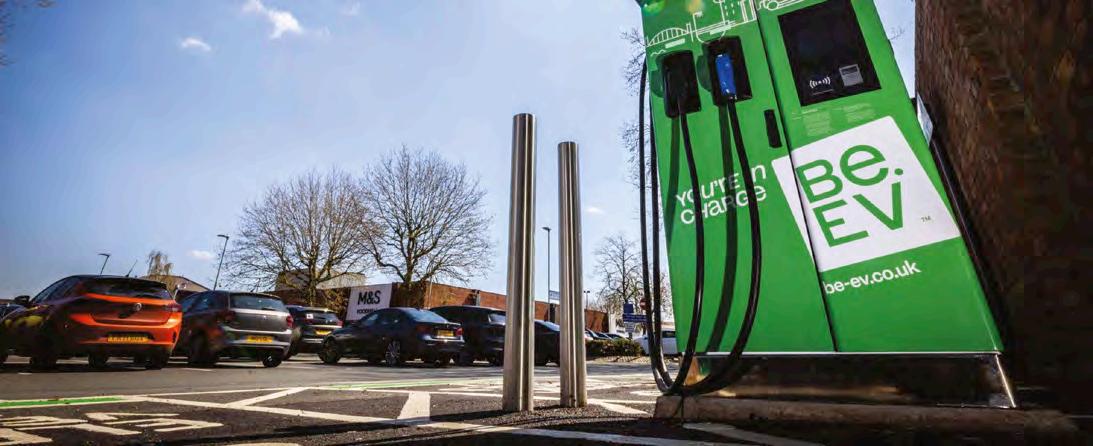
Electric Vehicle
Charging, Forecourt and Retail Specialists
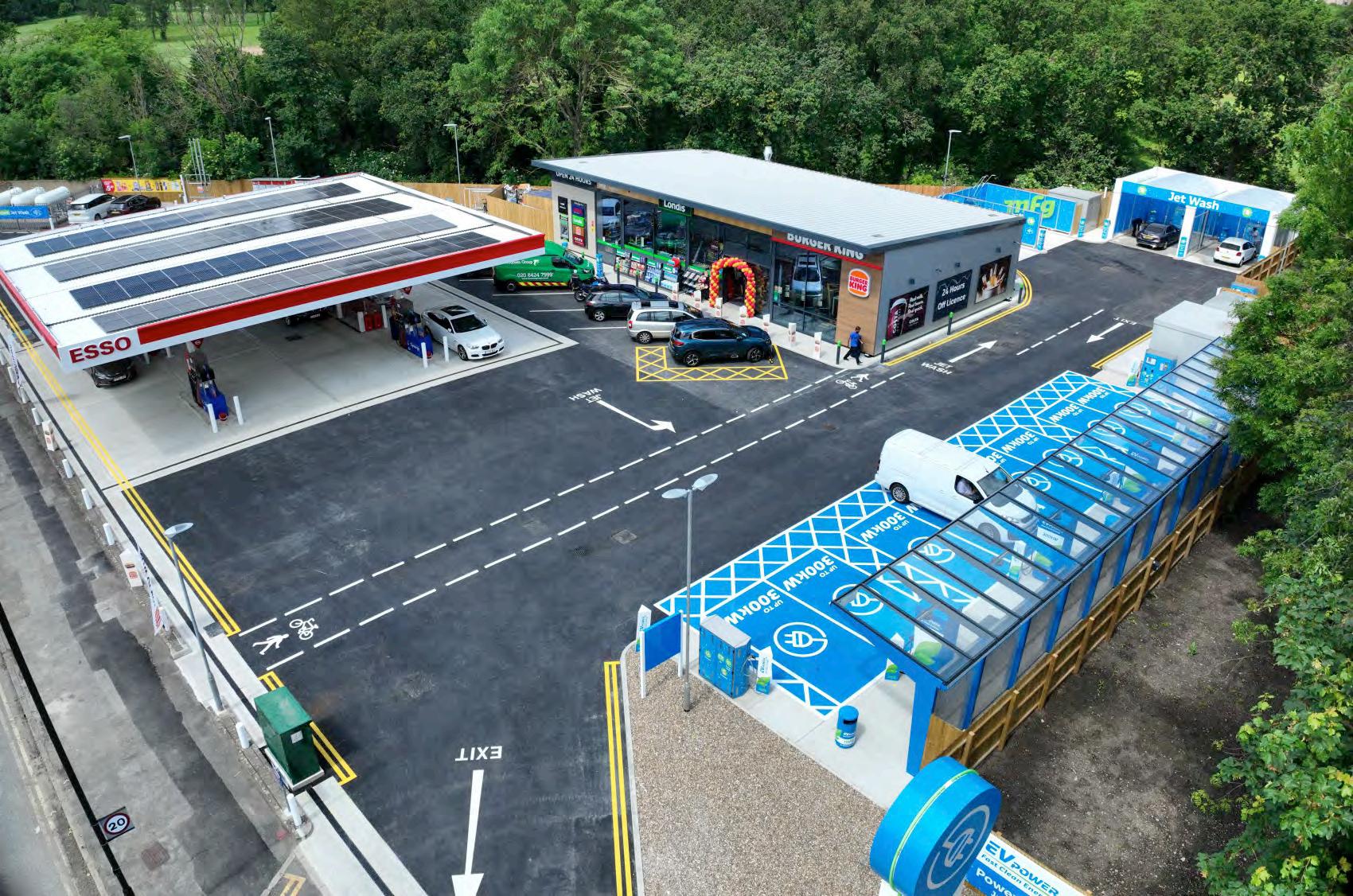
Williams Southern Limited are here to lend a fresh perspective to your construction projects and development plans. Having worked on countless electric vehicle charging, forecourt and retail projects, we’re specialists when it comes to driving developments forward with confidence and innovation.
From early concepts through to full, seamless design and build, we call on our many years of experience to get to the heart of your project and deliver unrivalled results.
Editor’s Report
Brian Humm Editor
Welcome to this edition of the APEA Bulletin. As usual I hope you enjoy the heady mix of articles and news that we have managed to garner together for your entertainment and to boost your knowledge. Thanks to all the members that contributed, it is very much appreciated.
Enforcement of petroleum legislation has been a discussion that I have been having recently with a few colleagues. It saddens me that the level of enforcement and knowledge in the UK petroleum enforcement authorities is somewhat lacking, even with a lot of petroleum inspectors that attend the APEA training courses. Some of the equipment and techniques that have been used, or promoted to be used and accepted, on filling stations, go directly against the excellent guidance that we produce, in conjunction with the Energy Institute, in the Blue Book. The quote that I often hear is that it is guidance only, but it is the best guidance you can get: to go against the guidance you will have to have very good reasons and be able to possibly stand in a court of law to explain if something goes wrong –even a coroners court if, god forbid, a fatality occurs. Remember, the Blue Book is to assist with the design of a filling station and the Red Guide exists to help operators to run a filling station properly; and it is a guide, but if for instance you decide to go against the controls for unattended service and there is an incident, as there was recently with a suicide on a forecourt, if the guidance had not been followed then the court outcome would have been very different! The Health and Safety at Work etc Act 1974 allows for imprisonment if certain criteria are met. Also, consider the possibility of insurance being cancelled if following an incident, you cannot show best practice or due diligence.
The Blue book is there for a reason – the best practice is to follow the guidance and ensure compliance and safe operation. Remember, the APEA has a technical committee that will answer any query that you may have and at no charge – they will apply rational thinking and give the best possible guidance that you can get anywhere.
Rant over! It has been a busy time of year for me already; the Association’s training team has been hard at it already. I have just returned from Jersey, where a 3 day audit training course was presented to the Channel Islands cooperative society. Very well received and the delegates appreciated the input from myself and Jamie Thompson: another success story and there is a short report later on in this edition. Training is very important to the industry – and to that end, following the very sad loss of Tom Daly we now have a new training chairman, previous APEA Chairman Micheal O’Connell - feel free to contact Micheal if you have any training needs. Remember, we can design a course around your requirements.
You will see a news item later on in this edition regarding a Scottish river. A diesel leak had found its way into a river that is famous for Salmon fishing; a major incident that could affect the community for a long time. With the Scottish Environmental Protection Agency (SEPA) now on the case and questions also now being raised in Scotland’s parliament then where could this end? Imagine not following any guidance now! Doesn’t bare thinking about! Our treasurer, Gareth Bourhill, has a vested interest in this as he is not only a keen fisherman but is also heavily involved in the upkeep and protection of the waterways. Once the investigation and remediation is complete, I am sure that Gareth will provide a full and frank report on the whole incident - watch this space.
Moving along, it is March already - where did that go? APEA Live 2026 is fast approaching and why not get in early and book your place now to avoid disappointment; details are further on in this edition.
Finally I would like to thank a few people who have contributed in putting this edition together. Firstly Jamie Thompson and Gareth Bourhill for supplying news items and articles, all the members that submitted copy, and finally, the APEA admin team – Christine, Helen and Natalie, who keep me on my toes and assist in the production of The Bulletin as a whole.
Until next time…
Business Manager
Christine Joyce Business Manager
Welcome to the First Edition of 2026!
We are excited to present the March edition of the APEA Bulletin. The team has been hard at work putting this together, and we are thrilled to share it with you.
We are also pleased to announce the appointment of Michael O’Connell as the new Training Chairman for the APEA. Please join us in welcoming Michael to this important role as we continue to grow and improve the training offerings within the association.
Don’t forget to stay connected with us! You can follow APEA on our social media channels, including LinkedIn, and stay updated on all the latest news, events, and announcements. Visit us at apea.org for more details.
Thank you for being a part of the APEA community!
Share Your News!
We are always looking for press releases and articles for The Bulletin. Please share your news and articles we know our readers will find of interest, please email it to me at admin@apea. org.uk and I will forward it to the editor, Brian Humm to approve. Please send any interesting photos you may have too, and we can consider them for the front cover.
Bulletin advertisers can benefit from submitting multiple press releases and articles for free so if this interests you, please look at how to advertise on page 12
Bulletin - 2026 Advertising
We currently taking bookings for advertising in the 2026 issues of The Bulletin. All current advertisers have been contacted and invited to renew their bookings. If you wish to secure the best position for your advertisement, please email me as soon as possible, as all bookings are on a first come first served basis.
All artwork should be emailed to me by 4th May. More information about advertising can be found on page 12.
2027 Yearbook
I will be starting work on the 2027 Yearbook in July. Instructions on how to be included can be found on page 16. Please make sure your postal address and email is up to date by logging onto
your membership record at www.apea.org.uk.
The website enables you to update your Yearbook profile at any time of the year so you can keep your contact information up to date live on the website. There will be a deadline date of 1 September of each year when I will use this information for the printed version.
Membership information/Your membership account
Please go to your membership account at www.apea.org.uk where you can do the following:
• Download a membership certificate in pdf format
• View previous purchases and invoices
• Change your membership
• Change your email address, contact details and password
• Change your Yearbook entry
• View your downloads
How to report website issues/submit technical queries and general feedback
Competing a contact form is the best way to get in touch. We also like to have a chat so please do not hesitate to phone. Be it help required with purchasing publications or training courses, technical queries, how to use your membership account or issues on the website you need help with you can use the contact form. Please go to the Contact page at https://apea.org.uk/ contact/. Enter your contact details and use the pull-down menu to select the relevant subject and your query will be directed to the correct person.
Training Courses
All training courses can be viewed and booked on the APEA website at www.apea.org.uk. If you are interested in booking a bespoke training course, please email Michael O’Connell, (Chairman of Training Committee) at michaelp.oconnell@dublincity.ie
Online training courses
Please go to the training page on the APEA website at www.apea.org.uk or go to: https://apea.org.uk/pages/training or https://apea.mykademy.com/
New Members
There have been 79 new members joining during October to February details on page 14.
General Assistance
If you need any assistance with general or technical matters, please do not hesitate to contact me at admin@apea.org.uk or call 0345 603 5507.
Christine
Publications Information
Electric Vehicle Charging Installations at Filling Stations
ISBN 978-1-83724-218-4 (paperback)
ISBN 978-1-83724-219-1 (electronic)
Book” (Revised 2024)
ISBN 978 1 78725 449 7
Price for hard copy
APEA Member rate - £75.00
Non APEA Member rate - £150.00
Price for pdf version
Please note the pdf version is licensed to the purchaser only and cannot be shared or printed.
APEA Member rate - £75.00
Non APEA Member rate - £150.00
With the publication of the IET 5th Edition of the Code of Practice for Electric Vehicle Charging Equipment Installation (2023), and the 5th Edition of the APEA/EI “Blue Book” (2024) there have been various further technical developments to help clarify the safety issues that needed to be addressed in this area.
The Association for Petroleum and Explosives Administration (APEA), which represents the major stakeholders in this sector, has again collaborated with the IET in issuing this updated 2nd Edition and joint publication to help provide important updated guidance.
This 2nd Edition supplementary document to The Institution of Engineering and Technology (IET) Code of Practice (COP) for Electric Vehicle Charging Equipment Installation, 5th Edition, addresses those unique issues that will be encountered on UK filling stations. not only for safe use by the public of the EV charging equipment, termed electric vehicle supply equipment (EVSE), and for the persons that work on the filling station, as
Price for hard copy
APEA Member rate - £32.50
Non APEA Member rate - £50.00
Price for pdf version
Please note the pdf version is licensed to the purchaser only and cannot be shared or printed.
APEA Member rate - £32.50
Non APEA Member rate - pdf £50.00
The APEA also publishes the Code of Practice for Ground floor, multi storey and underground car parks
This can be downloaded directly from the APEA website and is available to members at £11.00 and £21.00 to non APEA members.
well as the continued safe storage and dispensing of existing vehicle fuels found on the filling station.
This Supplement has been produced jointly by the IET and the APEA. Considerable technical input has also been provided by the major filling station operators, along with other industry stakeholders in the UK, including the Health and Safety Executive. All the “Blue Book” electrical stakeholders were also approached for comment.
This 2nd edition supplement will exist and be available until the APEA/EI “Blue Book” or the (IET) Code of Practice (COP) for Electric Vehicle Charging Equipment Installation, 5th Edition are next revised and its contents will then be reviewed.
The APEA would certainly encourage all site duty-holders to ensure that those companies and contractors, especially electrical contractors, they consider employing to install EVSE on their filling station ensure that the technical details in this supplementary COP are followed.
If you wish to purchase any of these publications, please go to the APEA website at www.apea.org.uk and click on the “Publications” page. You can select to pay by credit/debit card.
SMARTER SIGNS FOR EV-READY STATIONS
Now you can bridge the gap between fuel and electric vehicle pricing with Bever’s IC-Smart EV integration solution. Seamlessly display kilowatt-hour rates alongside fuel prices using your existing or new LED signs, show real-time charger availability, and manage everything remotely via our cloud-based dashboard. Simple, scalable, and future-proof.
About The Bulletin and how you can submit copy to be included
• The Bulletin is published four times a year with a print run of 2200
• Free issue to APEA members (over 800 members worldwide)
• Has international distribution and readership
• Respected source of industry specific news and information
• Contains relevant articles, news items, press releases and reports from UK and overseas
• Individual, Fellow and Retired members receive one copy each and Corporate members receive 5 copies each per quarter
The editor of The Bulletin, Brian Humm, is always on the look out for new material, so if you have something you want to be included, please email it to the APEA office at admin@apea.org. uk and it will be forwarded to Brian for approval.
Please email the text in Word format and any images as separate high resolution pdf or jpeg files to admin@apea.org.uk.
We are always pleased to receive contributions from our members and it ensures that The Bulletin remains an interesting and informative read.
Priority is given for press releases and articles submitted by Bulletin advertisers to be included.
Bulletin Advertising
If you would like to book advertising in The Bulletin, please email your requirements to admin@apea.org.uk or call the office on 0345 603 5507. Please ensure you send your artwork to admin@apea.org.uk.
Priority is given for press releases and articles submitted by Bulletin advertisers to be included.
Discounts are available for booking in more than one issue, please contact Christine Joyce at admin@apea.org.uk for more information.
Deadline dates for copy and advertising artwork 2026/2027
Please note the deadline date for the March 2026 issue is early due to Christmas and New Year holidays.
Bulletin advertisers that book in 3 or more issues in one year also receive a 50% discount off rates for advertising in the annual Yearbook, see table below.
Includes 25% discount
New Members
December - February
Welcome to our new members
We are delighted to welcome our new members to the Association for Petroleum and Explosives Administration (APEA).
Founded in 1958, the APEA brings together professionals from all areas of the petroleum industry, including regulators, oil companies, equipment suppliers, contractors, and training bodies. What makes us unique is our ability to represent all
Corporate members
Rhianna Matthews
ID Maintenance Ltd
Andy Walker
Dudleys Consulting Engineers Ltd
Erol Erturan
Adept Consulting Engineers Ltd
Tom Marsh
Carmel (UK) Ltd
Owen Rees
Derbyshire County Council
Katy Eyre
Gleneagles Project Services Ltd
N Hammacott
Aspire Electrical Ltd
Rory Hoy
Fermanagh and Omagh District Council
Morten Raaby
Titan Cloud
Darren Watson
Novatec Electrical Services Ltd
sides of the industry and provide a trusted forum for discussion, collaboration, and the development of technical guidance.
Today, with over 800 members worldwide and a strong branch network across the UK, the APEA continues to grow. We look forward to your involvement in this thriving community.
Carl Bigwood
BMS - Bulk Meter Services Limited
Antonino Cellini
Duerr Technik GmbH and Co. KG
Trudy Pocock
Williams Southern Ltd
Sandra Gouveia da Silva
The Channel Islands
Co-Operative Society Limited
Warren Smith
MBH Design Studio Ltd
Stuart Killip
Westmorland and Furness Trading Standards
Phillip Parker
Andel Limited
Rizwan Ahmed
Al Hamad Trading and Contracting Est.
Chris Haritou
ABFAD Limited
Tom Training in Hong Kong.
Hamdan Alsenaani ENOC
Fiona Martin
South Lanarkshire Council
Dean Hawker
Icon Facilities Ltd
Amanda McLean
EnviroClean (Scotland) Ltd
Guy Bickerstaffe
Priceeasy
Daphne Natullo
West Midlands Fire Service
Karamveer singh
G&K Shopfronts & Shutters Ltd
Sharon Cardy
Cornwall Fire and Rescue Service
Stefanie Kraemer
SGB GmbH
Adrian Allman
Worcestershire Regulatory Services
Individual members
Graham Kenyon G Kenyon Technology Ltd
Laurence Booz Ecompex Ltd
Justin Skipper Midas Structural Ltd
Claire Wrathall Staffordshire Trading Standards
Neville Brown B&Nes
Carl Hart Chart Associates Ltd
Christopher Nutter Cn3d Architecture
Conor Daly Peitriliam
Paul Taylor Tna Mechanical Ltd
Andrew Mackenzie Environmental Reclamation Services Ltd
Hendrik van der Velde Bigbrother International
Gavin Alexander Aberdeenshire Council
Natalie Mclean SYFR
Shane Ellerby North Lincolnshire Council
Philip Steenekamp Angstrom Design (Pty) Ltd
Erik Mano Marco Tech - Halock
Leon Rousell MFG
Tom Fletcher Ata Design Limited
Andrew Downey Whittaker And Watt Architects Ltd
Chandra Ramcharran Rubis Guyana Inc.
Dean Taylor Nottinghamshire County Council
Mark Phillips Suresite
Paul Mason Environmental Construction Solutions Ltd
M Heraclides EKO Cyprus Ltd
William Morgan Petro Designs Ltd
Danny Keohane Keohane Consulting Engineers Ltd
Mike Melnyk Retired
Tommie Carr Petrocourt
Nick Jury AJK Services Ltd
Richard Moore Welvent Ltd
Luke Hodson
Lark Technology Group Ltd
Sean Cunningham Corrib Oil UC
Keith Campbell
Keith Campbell
James Munyard Greenergy Flexigrid
Elizabeth Clarke Clarke Construction Services Ltd
Tony Green Redcar And Cleveland Borough Council
Ryan Thorman Fuel Mistake Ltd
Amazing Amos Essex County Council
Koh Eric Zapfventile Fuelling Solutions Sdn Bhd
James Burbidge J3 Electrical Services Limited
Michael Dixon Pro Circuit Electrical Ltd
Nathan Kanthan Aerome Consultants Ltd
Peter Woolmer Petroleum Consultant
Ben Huxtable Bh Electrical Ltd
Uldis Berzins Horizon Technical Ltd
Dolgorsuren Gansukh MPI Consultants
David Millar Armagh City Banbridge and Craigavon Borough Council
Spear Edwin Abowe
Edwin Lance Ltd
David Lomax David Lomax
Robert Tunnicliff
Rob Tunnicliff
2027 APEA Yearbook/Online Directory
How to complete your free entry
Deadline 30th May
In order to ensure that your details are included in the 2027 Yearbook and on the APEA website in the ‘Directory’ section it is essential that you complete your online entry by 30th May. Even if you do not wish to advertise in the Yearbook, to have your contact details and industry sector information included you should complete your entry as detailed below.
Please note I will be contacting enforcing authorities separately to update these details. If you are from an authority please do not complete the instructions below.
1. To start your entry go the APEA website home page at www.apea.org.uk
2. Log on to your membership record and go to ‘My Account’ and then click on ‘Yearbook’ on the left hand side.
If you have never completed an entry you will see figure 1 (opposite). If you completed an entry for the 2026 you will see figure 2 (opposite) which you amend.
3. Create or update your contact details and select the Industry Sector or Industry Sectors that you wish to be listed under.
4. When completed you will see figure 3 (see page 45) and receive a confirmation email. If you do not receive the email the entry has not been completed.
Each member is entitled to one FREE entry in the Petroleum Company Contacts section and one FREE Industry Sector per entry in the Yearbook, (see images above).
Additional Industry Sectors and Trade names are charged at £30 each. Your invoice and receipt will be emailed to you once your entry is complete and uploaded to your account on the website.
What you will see when you go to ‘My Account’
Figure 1
For members that have never created a Yearbook entry the website will display the information, right, when you click on ‘Yearbook’.
Figure 2
For members that have created an entry for the previous issue, the website will display the information, right, when you click on ‘Yearbook’.
Figure 3
Once the entry is complete you will see this page and you will received a confirmation email.
• PFS/POL Installations + Maintenance
• Tank Lining
• Tank Cleaning (Industrial, Forecourts, Commercial & Storage Terminals)
• Tank NDT Inspection + Testing
• Tank Replacement
• PFS/POL Pipework/Repump
• 3D laser Scanning + Tank Volume Calibration
TANKS & PIPEWORKS LTD
R/O Kingslodge, London Road West Kingsdown Kent TN15 6AR 01474 855 587
office@fassuk.com • www.fassuk.com
• 100% of tank internal monitored
• Certified to EN13160.7:2016
• ENMUA 159 Tank inspection by qualified independent tank inspector
• All materials guaranteed resistance to all petroleum products
• 24/7 Leak detection with data logging for fault diagnostics
• Fully patented system
• Guarantee of tank life
• Class 1 leak prevention Rugged for safety & enviromental protection
Articles
When the network goes down, the pumps stop: why connectivity is a forecourt risk
Written for The Bulletin by Evolve Business Group
There was a time when the biggest operational worries on a forecourt were deliveries, maintenance and keeping the site presentable. Those things still matter, but they no longer sit alone at the top of the list. As more sites move towards unmanned or lightly staffed operations, and as more equipment becomes connected and automated, connectivity has quietly become business critical.
For many sites, if the connection fails, trading falters too. In some cases, operators will choose not to trade at all until systems are back. It isn’t because anyone is being overly cautious; instead, it is because so much of the site now depends on a working connection to function safely and reliably.
What do we mean by connectivity?
When we refer to connectivity, we mean the site’s operational connection that keeps critical forecourt systems running. That includes the line into the site, often fibre or broadband, the on-site network equipment, and the secure links that support card payments, monitoring and security.
In simple terms, connectivity is what allows the site to keep trading and provides oversight day to day, not just when there is a problem.
What depends on the connection?
A forecourt today is no longer just pumps and a shop. Even smaller sites rely on a range of connected systems.
Outdoor payment terminals require a secure and consistent connection to process transactions. Wet stock and tank monitoring systems support stock control and regulatory compliance. CCTV and security systems are commonly integrated into the same network environment, and for many operators, functioning CCTV is an operational requirement before pumps are activated, reflecting internal risk controls and insurer expectations.
If the network fails and CCTV goes offline, the site may no longer be operating within its defined safety framework. For unmanned sites, or those with minimal staffing, this can directly influence whether trading continues until systems are restored.
Why faults have a bigger impact than they used to
Connectivity failures occur. The cause may be a local line fault, third-party works, damaged infrastructure, hardware failure on site or a wider outage. The important point is not that faults happen, but what they now mean.
A decade ago, a line issue might have affected reporting while fuel sales continued. Today, the same fault can interrupt payments, remote monitoring and CCTV at the same time - on automated sites, the operational impact is immediate.
The Carrier Reality
For many sites dependent on fixed-line services delivered through the carrier networks, installation and repair can still rely on engineer appointments and external scheduling processes.
The experience is familiar in domestic settings, where appointments move and resolutions can take time. On a forecourt, delays can mean lost trading time and operational disruption.
This is particularly relevant during new site openings, refurbishments or transitions to unmanned operation. Payment systems and CCTV upgrades often depend on connectivity being installed or upgraded to schedule. If that slips, commissioning can slip with it. A site may be ready in every other respect, but unable to trade as intended because the connection is not in place or isn’t sufficiently stable.
The wider cost of downtime
Lost fuel sales are the obvious headline, but the impact extends further. Customers who cannot pay at the pump may leave and not return. Shop transactions fall alongside forecourt throughput. Staff time is diverted into managing faults and
coordinating with suppliers. At unmanned sites, urgent attendance may be required.
Compliance obligations do not pause during outages. Payment security requirements and data protection standards continue to apply. Where monitoring or recording is interrupted, gaps may only become apparent later if an incident is reviewed.
For operators with larger estates, repeated weaknesses in connectivity design represent a structural risk rather than isolated inconvenience.
Building resilience into connectivity
Forecourts are geographically dispersed, expected to trade for extended hours, and often have limited on-site technical support. A short outage during peak trading can have a disproportionate effect.
The discussion therefore needs to move beyond whether a site has broadband, and towards whether it can continue operating if a connection fails.
In practice, resilience involves more than one available route to maintain connectivity, with fallback connections capable of supporting core trading systems. Mobile connectivity can provide an effective secondary option where it is properly integrated and tested.
Different sites have different infrastructure constraints and coverage profiles. Selecting the most suitable solution for each location reduces reliance on a single network path.
Operational oversight also matters. Not all network issues present as a complete outage. Degraded performance or unstable payment authorisations can affect trading before a formal fault is logged. Proactive monitoring and clearly defined support arrangements help address issues before they escalate.
Connectivity as an operational risk
Connectivity was once viewed primarily as a utility cost. That position is increasingly difficult to justify when the network underpins payment processing and site oversight.
Forecourt operators are accustomed to managing operational risk across fuel systems and safety procedures. Connectivity now sits within the same category. It requires structured planning and clear accountability. If connectivity were lost tomorrow morning, could the site continue trading safely and within its defined operational standards?
For many modern forecourts, remaining online is closely linked to keeping the pumps operating.
About Evolve
Evolve is a UK managed networking provider specialising in multi site environments including fuel forecourts, retail, and QSR. The company operates a 24/7 UKbased Network Operations Centre and supports resilient connectivity designed for always-on trading environments. www.evolvebg.co.uk
ATGs don’t measure litres: why tank mapping makes or breaks accuracy
By Alex Boudry, General Manager, PFS Fueltec Ltd.
Automatic Tank Gauging (ATG) systems are now essential to the modern forecourt. Operators, environmental regulators, and wetstock management providers rely heavily on these instruments to understand inventory, detect leaks, and maintain compliance. Yet despite the sophistication of ATG hardware, as a supplier of such equipment we often come across gauges which still deliver unreliable or inconsistent volume readings.
The root cause is rarely a faulty probe – far more often it is poor tank mapping, inaccurate strapping data, or incorrect zero-offset commissioning.
This article outlines how ATGs really work, why tank geometry has such a large influence on accuracy, common sources of error, and practical steps operators can take to improve confidence in their data.
ATGs don’t measure litres – they measure level
A widespread misconception is that ATGs directly ‘measure litres.’
In reality, all ATG’s measure liquid level using an electronic probe, most commonly a magnetostrictive sensor with 0.5 millimetre level precision or better. The gauge then calculates the corresponding fuel volume using a programmed tank chart or strapping table.
Even a perfectly functioning probe cannot produce accurate inventory data if the chart converting height into volume is wrong. When the tank chart is inaccurate, operators will see:
• Unstable or drifting reconciliation
• False leak indications or hidden real losses
• Confusing variance trends
• Incorrect stock readings that drive poor operational decisions
The accuracy of the ATG depends far more on the quality of the tank’s strapping data than on the hardware itself.
Why accuracy matters: inventory, reconciliation and leak detection
Inventory
ATG readings drive fuel ordering, wetstock reporting, POS communications, and automated alarms. Inaccurate data leads directly to over ordering, under ordering, or unnecessary investigations.
Reconciliation
Daily variance analysis is widely used across UK forecourts, often supported by third party wetstock systems. Reconciliation assumes that ATG start and end volumes are correct. When tank charts are wrong, variance appears unpredictable and cannot be trusted.
Leak Detection
ATGs contribute to environmental protection through in tank volumetric testing and statistical wetstock analysis. Poor mapping can create false indications of a leak or, more concerningly, mask a real one.
Tank geometry: simple on paper, messy in reality
Although underground fuel tanks are often illustrated as simple cylinders with dished ends, real installations are rarely perfect. Tanks may be affected by:
• Installation tilt
• Settlement over time
• Relining or repair work
• Multiple compartments
• Deformation
• Missing or incorrect manufacturer data
When commissioning a site, installers often rely only on the safe working capacity data available at the fill point label. For older or undocumented tanks, this can result in charts that bear little resemblance to the true internal volume profile.
The Strapping Chart: the heart of ATG accuracy
The strapping chart defines exactly how the ATG converts level into litres. Most ATG systems can:
1. Generate an internal “best guess” chart using capacity, length, diameter, and end type; or
2. Use a multi point table with actual height versus volume pairs.
The second option is significantly more accurate. The more points provided, the more faithfully the ATG can model the tank’s non linear geometry.
If the chart is wrong, then every downstream process –inventory, alarms, deliveries, reconciliation, and leak detection – will be affected.
Common error sources
1. Probe Datum and Offset Errors
Probes do not sit directly on the tank bottom. Mounting feet, slight angles, or an off centre installation can shift the probe’s true zero point. Manual dipping during commissioning is essential to align the probe’s level with the actual physical level.
2. Temperature Compensation Issues
Fuel expands and contracts with temperature. ATGs can display “observed” or “temperature compensated” volumes. If different systems (ATG, POS, wetstock software) use different bases, reconciliation will show artificial gains or losses.
3. Non linear Tank Geometry
Cylindrical tanks with dished ends do not change volume uniformly with height. Litres per millimetre vary significantly, especially near the top and bottom. Errors therefore appear “random” even when the probe is accurate.
How to get a reliable tank chart
Manufacturer’s Chart
Ideal for newer tanks, but does not account for installation tilt or ageing.
Calculated Charts using free tools based on known tank dimensions
Useful when exact dimensions are known, though still limited by geometric assumptions.
Auto generated Charts from Live Data
Created by analysing dispensing and ATG readings over time (either by the ATG itself or by 3rd party Wetstock Management providers). Accuracy depends on dispenser meter performance and full range data coverage.
Physical 3D Tank Mapping
Laser based internal measurement systems provide the most precise geometry available. There are several specialist fuel contractors who offer this service but it involves a physical process to carry out, and therefore has associated cost and site disruption consequences.
How to verify your ATG is accurate
Practical Field Checks
• Compare ATG level and volume to manual dips.
• Ensure delivery receipts match the ATG’s recorded increase.
• Observe reconciliation over time – stable variance is a good indicator.
Red Flags
• Reconciliation variance that flips from positive to negative depending on fill level.
• Persistent bias or drift after a delivery.
• Significant errors when tanks are high or low.
These symptoms almost always indicate a problem with the tank chart or probe offset rather than a leak.
Conclusion
Modern Automatic Tank Gauges are highly capable instruments, but their accuracy depends entirely on the quality of the tank mapping and commissioning process. Good tank mapping:
• Improves confidence in stock reporting
• Produces stable reconciliation trends
• Enhances leak detection reliability
• Reduces unnecessary investigations into false alarms
A gauge without an accurate tank chart is simply a calculator using the wrong formula. By investing time in proper mapping and commissioning, forecourt operators can dramatically improve performance, regulatory compliance, and peace of mind.
Ensuring safe EV charging installations in mixed fuel fleet depots
The EV-EXBOX team who specialise in the risk assessment of EV charging infrastructure across a wide range of facilities often come across fleet depots that are entering a period of rapid transition.
As operators electrify their fleets, they must integrate EV charging infrastructure into environments often originally designed around diesel and petrol storage and dispensing.
This shift brings clear operational and environmental benefits, but it also introduces new layers of risk - particularly where electrical equipment that is by design not intrinsically safe (ATEX rated) is installed close to diesel and petrol infrastructure such as above or below ground fuel storage tanks, waste oil tanks, tanker delivery areas, vent pipes, and oil water separators.
To overcome these challenges on what are often space constrained locations a well structured risk assessment and a disciplined approach to installation and design of the EV charging infrastructure are essential.
Without them, operators may inadvertently create ignition hazards, violate ATEX zoning requirements, or compromise the safe operation of both EV and ICE vehicles.
This article outlines the key considerations fleet managers should address when planning EV charging infrastructure in mixed fuel depots, drawing on established guidance and practical examples from real world depot layouts.
Depots that store and dispense diesel, petrol, biofuels, or heating oil will have to comply with the 2002 DSEAR (Dangerous Substances & Explosive Atmospheres Regulations).
In the past explosive atmospheres in depot refuelling facilities were mainly associated a risk regarding petroleum spirit. However,
under the 2008 EU CLP Regulation, (European legislation On Classification, Labelling, and Packaging of hazardous chemicals), there are several substances that now meet the criteria for classification as flammable which did not do so in the past.
The change means that, for example, gas oil and light heating oils are classified as flammable liquids
This does not mean that these products are more dangerous than they were prior to the classification, but your insurers might expect you to risk assess them as flammable.
Fuel refuelling and storage areas can be defined as:
“a place in which an explosive atmosphere consisting of a mixture with air of dangerous substances in the form of gas, vapour or mist is not likely to occur in normal operation but, if it does occur, will persist for a short period only.”
From a risk assessment perspective, a depot should not have electrical equipment that is not intrinsically safe within these zone extensions from the tanks and refuelling infrastructure.
This principle applies not only to EV chargers but also to feeder pillars, substations, power cabinets, and even the charging connection point on the vehicle.
When the EV-EXBOX team talk to EV charging infrastructure installers we realise that an understanding of DSEAR and ATEX zones is not always part of their core skill set and we see non ATEX equipment often creeping into hazardous areas.
The confusion often comes from the fact that DSEAR is a goal-based regulation. It tells you what outcomes you must achieve but not the exact distances, layouts, or engineering solutions you must use.
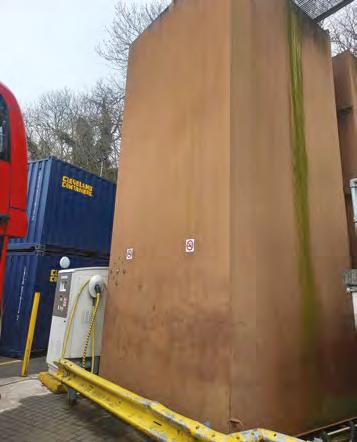
IS YOUR TANK COMING TO THE END OF ITS LIFE?
Breathe new life into ageing tanks with tank lining: our cost-effective alternative to tank replacement
As steel fuel tanks age, moisture and corrosion begin to attack both the interior and exterior surfaces. Over time, rust causes pitting that can compromise the tank, allowing groundwater to enter or worse, fuel to leak into the ground, leading to costly environmental damage.
With many forecourt tanks now over 40 years old, these risks are growing. Without regular cleaning and NDT inspections, the dangers often go unnoticed until it’s too late.
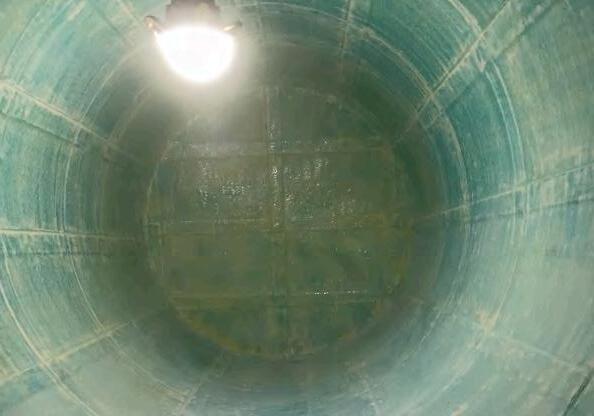
Replacing damaged tanks can be hugely expensive and disruptive, requiring site closures and excavation. That’s why Crown Oil Environmental has partnered with Rafibra to provide a UK-first, world leading tank lining system for our customers, avoiding the need to replace your old or damaged tank.
Why choose tank lining?
• A new 25 year lifespan for existing tanks
• Uses Rafibra®’s cutting-edge technology
• Twin layer single skin system or a 4 or 5 layer system with class 1 leak detection
• Prolongs the working lifespan of tanks and avoids the high cost of tank replacement
• Can be installed in all vessels & cylindrical tanks for any fuel
• Fully patented system with built in leak detection and full bund protection
• Minimal disruption - forecourts stay open while we install the lining
Ready to secure your fuel tank? Get in touch with our specialists today to find out more.
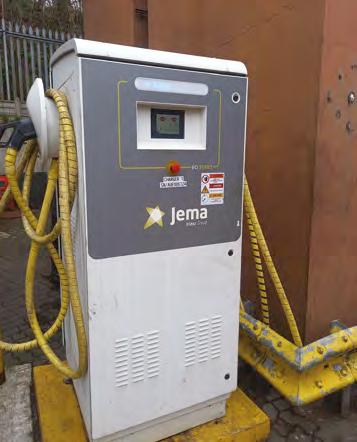
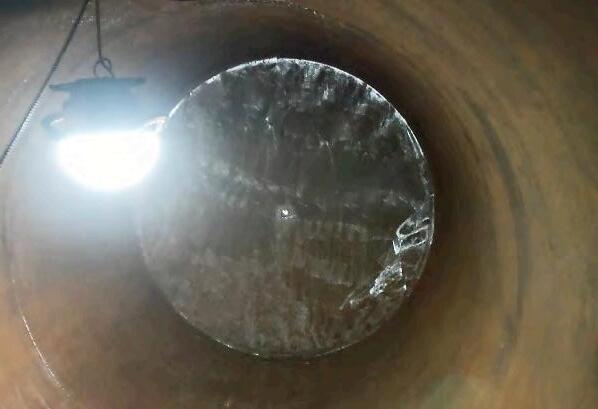
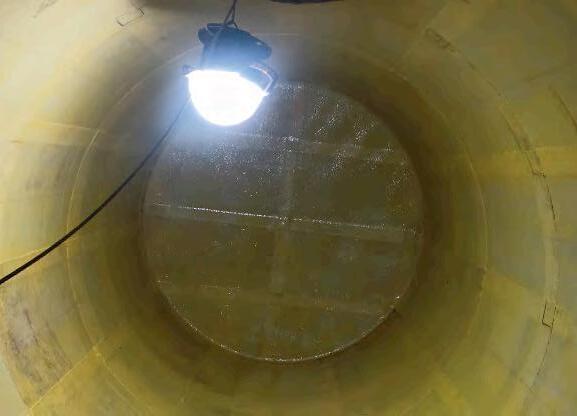
Featured images show our Rafibra twin walled system with chemical resistant black finish >>>
Tank prep down to bare metal
First Rafibra layer
Second Rafibra layer
Chemical resistant black finish
DSEAR does therefore not tell you:
• “EV chargers must be X metres from diesel tanks.”
• “Vent pipes must be Y metres from electrical equipment.”
• “Zone 2 extends exactly Z metres”.
For this information you must look to “technical standards and competent engineering judgement” which should consider the following areas:
Tanker delivery areas - During deliveries, hazardous zones expand significantly. Vapours can accumulate around the tanker stand area, hose connections, and fill points.
Above and below ground fuel storage tanks - These create permanent ATEX zones around vents and tank tops.
Fuel separators and interceptors - These create permanent ATEX zones around vents.
Chamber and access lids to below ground fuel infrastructureThese can release vapours when lids are removed. Vapour tight lids can be safe if they are well maintained and regularly inspected but create an ATEX zone when removed.
Vehicle refuelling areas - The reach of a fully extended fuel hose towards an EV charger or associated charging infrastructure is a critical determinant of safe placement. Likewise, the reach of a fully extended EV charging cable towards an ATEX zone is a critical determinant of safe placement.
Understanding these risks is the foundation of any competent installation strategy.
DSEAR tells you what outcomes you must achieve, and Industry guidance tells you the numbers.
For fuel storage infrastructure including tanks, dispensing equipment, tanker deliveries, vent pipes, and separators the best sources of technical guidance can be found in the following publications:
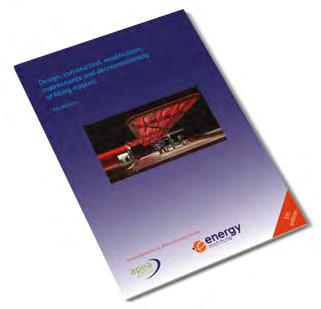
• APEA Blue Book (for filling stations and fuel storage) –“Guidance for Design, Construction, Modification, Maintenance and Decommissioning of Filling Stations” (Blue Book 5th Edition)
• Energy Institute guidance - Guide to Electric Vehicle Charging Installations at Filling Stations, 2nd Edition
• BS EN 60079 series (ATEX zoning)
A further consideration that can be overlooked by depot operators is in the rare event an EV fire occurs; is the EV charging location readily accessible to fire and rescue services?
This is important as fire spread between electric vehicles and between electric vehicles and other flammable and combustible materials can be exceptionally fast.
Whereas historically fire spread between diesel vehicles may take in the region of 10 – 15 minutes vehicle to vehicle fire spread where jetting from an EV battery pack occurs can take less than two minutes.
Anything that prevents the fire and rescue services from being able to tackle the fire easily typically means more vehicles or fire spread on site will occur. This may present a significant risk to business continuity.
In the event something goes wrong with regards to EV charging infrastructure a competent risk assessment may be the first thing you are asked to provide in the event of any ensuing investigation – especially from your insurers.
When the EV-EXBOX team discussed the implications of not having a competent risk assessment in relation to the installation of EV charging infrastructure with one of the world’s biggest insurance brokers this is what they told us:
Q. In the event of a serious incident related to EV charging infrastructure who would be responsible?
A. This is an area where blame could attach to both site owners/ operators as well as the contractors involved in the design and construction of the installation.
If the site owner/operator provides the design brief to the contractor on the positioning of the charging area, then any property losses or physical injury claims arising from the positioning of the charging area would likely rest with them.
However, any changes to that brief made by the contractor could pull them into the claim. If the contractor was responsible for the design of the site, then they would most likely be joining the site owner in any subsequent legal action.
Q. As the operator of an EV charging facility would my insurance policy cover me in the event of a fire?
A. Insurers for the site owners/operators might take the view that positioning an EV charging area close to business-critical areas or combustible materials was negligent, and that the policyholder has failed to mitigate their exposure in doing so.
If the same insurers were not told about the installations, then it is certainly feasible that any claim resulting from the installation could be declined.
Electrifying fleet depots that continue to store and dispense diesel or petrol is entirely achievable - but only with a disciplined approach to risk assessment and installation design.
The presence of flammable liquids, tanker deliveries, venting systems, and refuelling operations creates a complex environment where electrical equipment must be placed with precision and foresight.
If you have installed or are considering installing EV charging infrastructure in your fleet depot and have any questions or concerns please do not hesitate to reach out to the EV-EXBOX Team info@ev-exbox.com www.ev-exbox.com
Managing alarm response and integrity verification in retrofitted double-skin tank systems
The Energy Institute “Blue Book” guidance has, for many years, provided a clear pathway for upgrading ageing single-skin steel underground storage tanks through the installation of doubleskin lining systems with Class 1 continuous monitoring. This approach has significantly enhanced secondary containment and environmental protection across the sector.
As a result, many sites now operate lined tanks monitored via interstitial vacuum or pressure systems designed to provide early warning of containment concerns.
However, as these systems mature in service, the industry is increasingly encountering operational scenarios that merit further technical consideration – particularly in relation to alarm response and integrity verification.
Alarm conditions
–a practical engineering perspective
Class 1 monitoring is designed to detect changes in interstitial conditions such as:
• Vacuum or pressure loss
• Liquid ingress
• Sensor malfunction
When an alarm condition arises, it performs its intended function: alerting operators to a deviation from normal operating parameters.
In practice, the critical engineering challenge is not the alarm itself, but determining:
• The cause of the alarm
• The condition of both primary and secondary containment
• The appropriate verification pathway
The importance of structured alarm investigation
As lined systems age, alarm events may result from a variety of factors, including:
• Minor vacuum instability
• Sensor degradation
• Environmental temperature fluctuation
• Interstitial moisture
• Changes in liner behaviour over time
A structured and documented alarm investigation process is therefore essential.
This should typically include:
• Verification of monitoring equipment functionality
• Confirmation of interstitial condition
• Assessment of vacuum stability
• Review of installation records and historical data
The objective is not simply to silence an alarm, but to confirm containment integrity and restore confidence in system performance.
Integrity verification in mature lined tanks
Retrofitted double-skin lining systems provide secondary containment, but continued compliance relies on ongoing integrity assurance.
As installations extend beyond their early service life, operators and engineers may benefit from:
• Periodic integrity testing of primary containment
• Independent verification where appropriate
• Review of alarm history trends
• Structured maintenance planning
These measures do not replace monitoring – they support it.
Monitoring provides detection.
Verification provides assurance.
Alignment with Blue Book principles
The Blue Book framework emphasises:
• Environmental protection
• Risk reduction
• Ongoing system maintenance
• Proper alarm management
A robust alarm investigation protocol is entirely consistent with those principles.
Ensuring that alarm conditions are technically investigated and properly documented strengthens the compliance position of site operators and enhances confidence in lined tank performance.
Moving forward
As the UK’s installed base of retrofitted double-skin tanks continues to mature, ongoing technical dialogue around:
• Alarm management
• Integrity verification
• Long-term liner performance
• Best-practice investigation pathways
will help ensure the continued effectiveness of this widely adopted risk-reduction strategy.
Constructive industry discussion supports the shared objective of environmental protection and safe operation.
Planned, proactive maintenance: the next step in smarter site operations
By Morten Raaby, General Manager Europe at Titan Cloud
Every fuel and convenience retailer knows this truth: when a site goes down, customers don’t wait around. Whether it’s a dispenser fault, a carwash out of order, or an EV charger offline, every minute lost costs revenue and reputation.
Planned, proactive maintenance is quickly becoming the standard for smarter site operations, giving operators the visibility and control to address issues before they disrupt service and impact revenue. Operational reliability drives customer trust and profitability. That’s why site performance and uptime have become central to every retailer’s strategy.
Most retailers now manage a mix of manned and unmanned locations. Manned sites rely on staff to spot and report issues, while unmanned sites depend entirely on connected systems to detect and resolve problems remotely. In both cases, visibility and quick response make all the difference. Yet many operations still rely on manual tracking or multiple contractor portals –creating blind spots, delays, and extra costs. A unified approach to maintenance can close those gaps.
What’s coming from Titan Cloud
Titan Cloud recently announced plans to acquire Urgent and Techniche EV, two leading maintenance solutions from Techniche Limited. When the acquisition closes, these solutions will become part of Titan’s larger Energy Asset Optimization platform, strengthening how operators manage everything from fuel assets to site equipment and EV infrastructure.
These additions will help operators gain deeper visibility into their assets, streamline maintenance workflows, and bring all maintenance and contractor management into one connected view.
As Titan Cloud CEO Brett Garrett shared, “Urgent strengthens our maintenance capabilities, while Techniche EV advances our long-term vision of an energy-agnostic platform powered by data science and AI.”
Smarter maintenance for every site
With Urgent and Techniche EV soon joining Titan’s platform, operators will be able to manage maintenance across their full network – manned or unmanned – with greater control and confidence. Here’s how these capabilities will support that vision:
1. Complete Asset Visibility:
Operators will gain instant insight into the health and history of every site asset – from dispensers and tank gauges to HVAC systems, car washes, and coffee machines.
• View live status, uptime, and repair trends across your entire network.
• Identify high-cost or recurring issues to guide smarter asset replacement decisions.
• Import or upload asset data in bulk for faster setup and easier management.
2. Proactive, Planned Maintenance:
Instead of waiting for equipment to fail, maintenance can now be planned in advance.
• Automatically schedule recurring inspections, warranty checks, and service tasks.
• Track overdue or failed inspections and the follow-up work needed to close them.
• Reduce unplanned downtime by addressing issues before they disrupt operations.
3. Smarter Warranty Tracking:
Managing warranties manually leads to missed claims and unnecessary costs. Titan’s upcoming maintenance capabilities will eliminate that.
• Link every asset to its warranty details and approved service providers.
• Automatically route covered repairs to warranty vendors, saving large operators up to £500,000 annually.
• Monitor spend on misuse, vandalism, or out-of-scope repairs for a clearer financial picture.
4. Real-Time Contractor Management:
Keeping track of multiple service providers across different regions can be one of the toughest parts of maintenance.
• See who’s on site, what they’re working on, and whether jobs are being completed within SLA.
• Measure contractor performance, response times, and firsttime fix rates.
• Use insights to renegotiate contracts and focus service levels on your most revenue-critical equipment.
5. Simplified Compliance & Reporting:
Many operators already use digital tools for compliance, but they’re often separated from maintenance and testing systems. That disconnect makes it hard to see the full picture or confirm that every task is complete.
• Schedule inspections and link them directly to maintenance and testing needs.
• Keep all records, photos, and reports in one place for quick access when needed.
• Maintain a clear audit trail across every site and asset without switching between systems or tracking down missing files.
Maintenance has moved from a behind-the-scenes function to a key measure of operational strength. When sites run smoothly, customers notice and return. Staying ahead of repairs keeps operations reliable, protects revenue, and saves time and cost over the long term.
Integrating Urgent and Techniche EV into Titan Cloud brings maintenance into full view – alongside fuel, logistics, compliance, and EV operations – giving operators the data to maximise uptime, efficiency, and site revenue.
See what’s next at UNITI Expo 2026
Learn how Titan Cloud’s expanded Energy Asset Optimization platform can bring new efficiency and innovation into your operations.
Connect with our team on-site at Booth 5D34 at UNITI Expo 2026, May 19–21 in Stuttgart, Germany. Contact Us to schedule a conversation or request a demo.
Half Page Trim: 145 x 210 Bleed: 151 x 216 Type: 130 x 185
Half Page Trim: 145 x 210
On
Side
Half Page Trim: 145 x
Bleed: 151 x 216 Type: 130 x 185
Half Page Trim: 145 x 210 Bleed: 151 x 216 Type: 130 x 185
cost efficiency, safety and of our clients’ assets.
cost efficiency, safety and of our clients’ assets.
Focused on improving the performance, cost efficiency, safety and of our clients’ assets.
You can benefit from decades of global sector experience, from our
You can benefit from decades of global sector experience, from our expansion
You can benefit from decades of global sector experience, from our
Retail appraisal, strategy & network expansion
Have bought or divested over 500 sites
Deep experience with sustainability, future fuels & energy savings Early site due diligence and feasibility, prior to engaging expensive
Respected Independent Professional
Deep experience with sustainability, future fuels & energy savings Early site due diligence and feasibility, prior to engaging expensive
Respected Independent Professional
Deep experience with sustainability, future fuels & energy savings Early site due diligence and feasibility, prior to engaging expensive
Managing hundreds of successful planning applicaJons and Planning & management of many EV charging installaJons on
Managing hundreds of successful planning applicaJons and Planning & management of many EV charging installaJons on
Managing hundreds of successful planning applicaJons and Planning & management of many EV charging installaJons on
accredited; designers, consultants, suppliers, contractors and maintenance
accredited; designers, consultants, suppliers, contractors and maintenance
We select, tender, appoint and manage accredited; designers, consultants, suppliers, contractors and maintenance
Providing development assurance and project monitoring for
Providing development assurance and project monitoring for
Providing development assurance and project monitoring for
Providing development assurance and project monitoring for
OperaJonal understanding from managing faciliJes management
OperaJonal understanding from managing faciliJes management
OperaJonal understanding from managing faciliJes management
OperaJonal understanding from managing faciliJes management and maintenance over thousands of sites
A strong focus on delivering safely, safety processes & project
A strong focus on delivering safely, safety processes & project
A strong focus on delivering safely, safety processes & project
Our team is collectively experienced across the whole development & operations life cycle
Our
Our team is collectively experienced across the whole development & operations life cycle
is collectively experienced across the whole development & operations life cycle
team is collectively experienced across the whole development & operations life cycle
A strong focus on delivering safely, safety processes & project
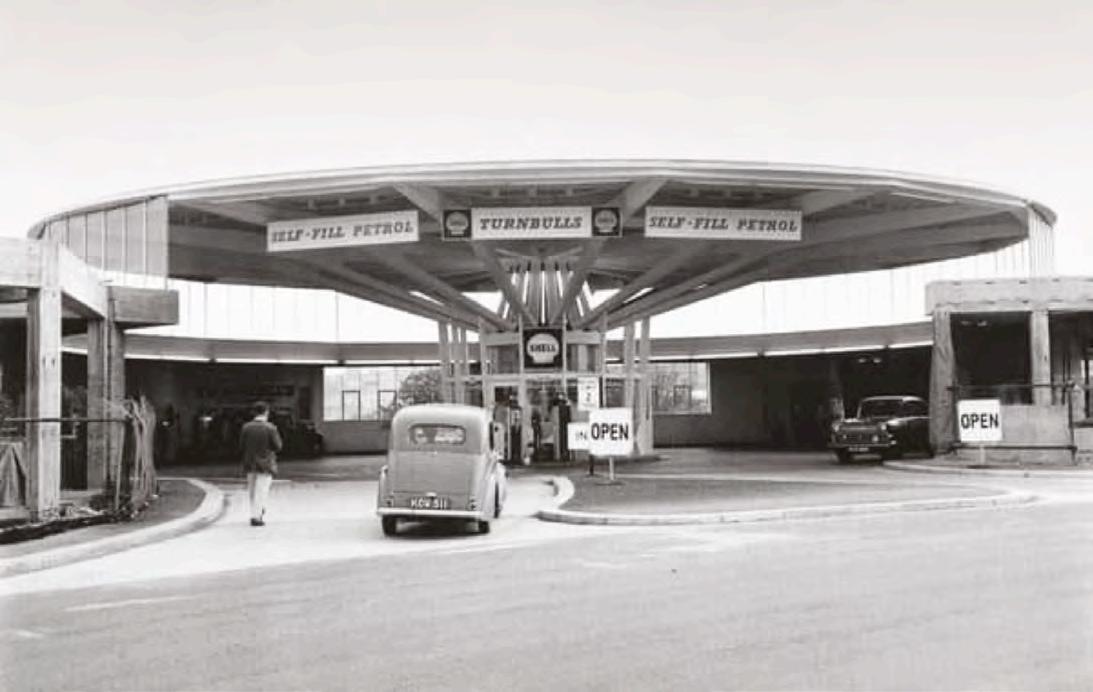
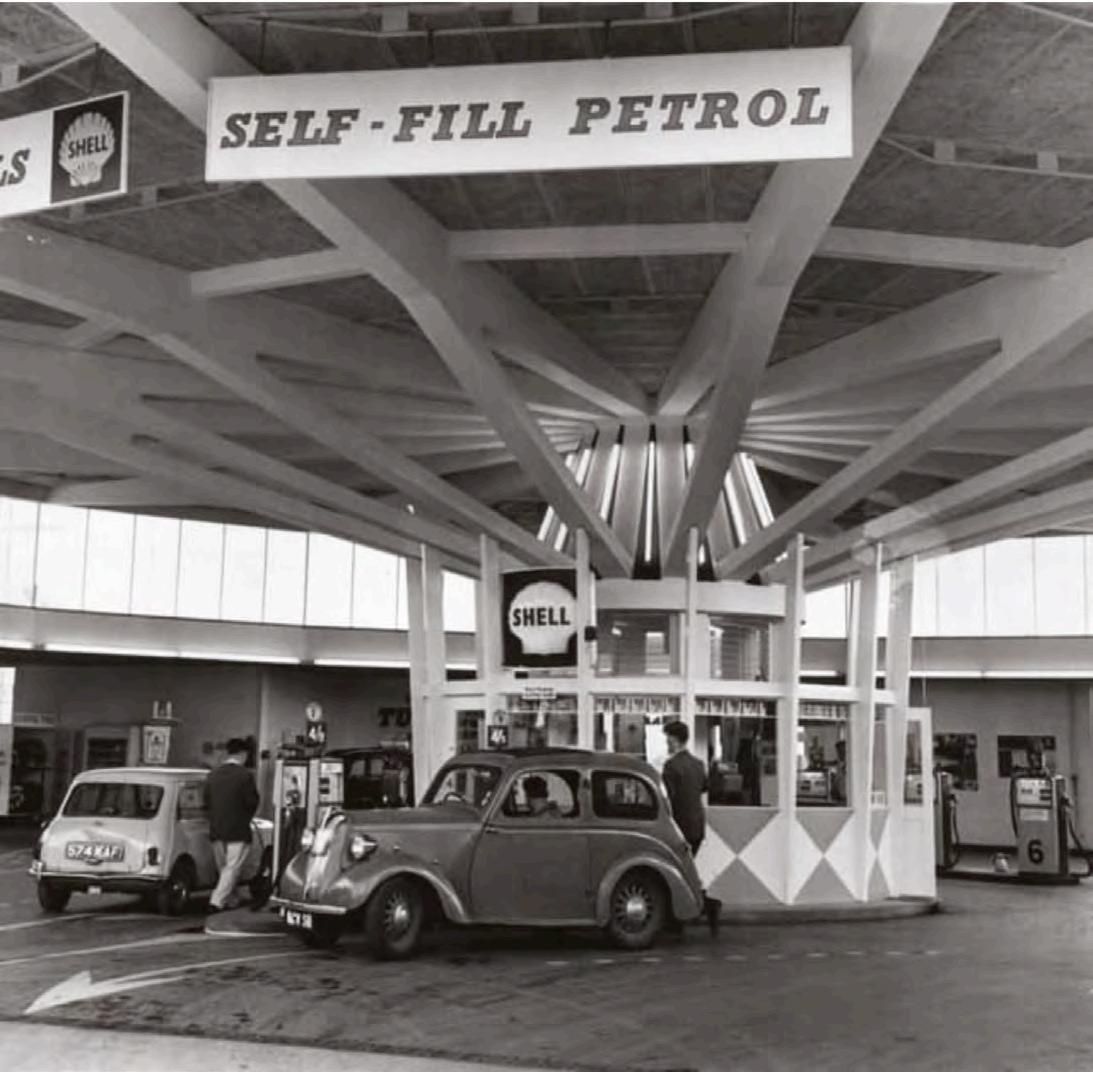
Petroleum History: First self-service petrol station in the United Kingdom
By R Billings Chief inspector of Weights and Measures, City of Plymouth July 1963
For some time, there has been pressure upon local authorities to permit self-service petrol sales to be made from stations in various parts of the country. In the first concept of self-service, it was a question only of coin-operated measuring instruments for the sale of relatively small quantities of’ mixtures of petrol and oil for two-stroke motor vehicles.
During the past few years only a small number of local authorities had approved such installations under the Petroleum (Consolidation) Act, 1928, or, more correctly perhaps, under their Principles or Conditions of licensing premises under Section 1 of that Act. Several rather peculiar situations developed over this offering differing opinion; adjacent local petroleum authorities, for example, hold opposite views. Until 1963 this was the pattern and concept of self-service petrol trading in the United Kingdom.
Earlier this year their came the news that a self-service station was to be opened in Plymouth which was quite unique; it would retail petrol to all types of motorists, and the equipment was of
a Continental manufacture. The local authority concerned had agreed to licence the premises using a full self-service system of a type not previously conceived in this country, and certainly not approved anywhere by any other local petroleum authority. All this proved to be true and at Easter 1963, the first fully co-ordinated, self-service station opened in Plymouth. By this, the concept of self-service was changed from that previously referred to above.
This concept might now be conveniently divided into two distinct solutions. Firstly, there is the new system as installed in Plymouth, employing in this case Swedish equipment, and using conventional-looking “petrol measuring instruments” albeit some of the full blending type. But all instruments have already received approval as to design by the Board of Trade under Section 6 of the Weights and Measures Act, 1904.
The only addition that really shows is a small “signal” button on the side of the unit housing. To each integrating headwork, however, (and these are of the Veeder Root type with
Building with Experience Delivering Excellence...
...we know that great fuel infrastructure is more than pipes and concrete, it’s about having your business running smoothly, securely, and ahead of the curve.
With over 30 years of hands-on experience, we’ve seen the industry evolve, and we’ve evolved with it. That means we don’t just build forecourts; we build long-term success.
INFRASTRUCTURE WORKS
Complete builds and fabric maintenance.
PIPEWORK & DISPENSERS
Installation, renewal, and maintenance of critical fuel systems.
ADBLUE INSTALLATIONS
Efficient, cost-effective bulk AdBlue solutions.
ELECTRIC VEHICLE
CHARGING INFRASTRUCTURE
Integration of modern EV charging solutions.
VALETING SOLUTIONS
Design and build for car wash and jet wash facilities.
QUICK SERVICE RESTAURANTS
Co-located restaurant development for forecourts.
SHOP FITTING
Modern, engaging convenience store fit-outs.
FM WORKS
Rapid response and ongoing maintenance for fuel sites.
mechanical or hydraulic zeroising equipment), there is fitted a small transducer operating so that each pulse of the transmitter occurs with each 1/50 or (.02) of a gallon passing through the instrument.
These pulses are fed to a computer in a central control cabin and as a delivery from the unit is taken, the pulses are at the same time recording on the cabin computer the amount of petrol being delivered.
At the unit, and at termination of delivery, the instrument shows both gallonage delivered and the total price. On the blending pumps (blending is done at the nozzle), two units side by side are employed and seven different grades of petrol can be obtained by personal selection. Whichever one chosen, the selection
is recorded on a system of red coloured lights on the control cabin computer. Thus, the controller is aware of the price to change for a particular blend. On the computer, for each unit, there are three other lights: one amber, one green and one red, immediately above the gallonage computer. When a customer arrives at a unit (there are nine dispensers on the station in Plymouth, including three blenders, and room for seven cars at a time), he or she presses the signal button. This lights up the amber light on the computer and makes a buzzing noise. The controller can select that unit on the broadcast voice system and speak to the customer. All the latter has to do is to speak towards the microphone (speaker arranged over the units) and thereby receiving instructions, if required, on how to operate the unit. The controller then presses the “Start” button on the
LEAK PREVENTION
For a clean and protected environment
100 % safe and continuous leak monitoring of double-walled tanks and pipes at Refineries | Tank farms | Chemical plants | Petrol stations
computer panel and the green light appears. The unit is then activated. As soon as the customer switches on the unit motor, the red light on the control panel comes on. Those two lights remain on all the time the delivery is taken by the customer and, as described above, the gallonage is shown ticking over on the computer.
As soon as delivery is completed and the customer puts off the unit motor switch, the green light on the computer goes off (the red one remaining on) and the unit and the computer’s indications are then “frozen”. The customer, leaving his car by the unit, goes over to the control cabin and pays the controller. The customer then returns to his car and drives away.
At that time, the controller presses a “reset” button on the computer and the gallonage on the computer is removed and shows zero again. The gallonage indicator on the computer shows tens of gallons, gallons, 1/10 gallons and 1/50 gallonsthe latter two, in fact, by decimal indications (i.e. .1 and .02). The gallonage and price indications on the unit remain until the next customer arrives, when the putting on the unit motor switch zeroises the pump’s indicators immediately.
All the contactors from the computer panel from the “start”, “Stop” and. “Re-Set” buttons etc are housed in a room beneath the control cabin on a lower floor. In the cabin there is a main isolating switch, cutting off both power and lighting to every unit. There are also individual power and lighting switches (nine of each) in the Control cabin to facilitate maintenance etc. enabling safe work on each unit. Near the exit from the station, there is also another main isolating switch which will also cut off all power and lighting to all the units.
The topographical features of this site are such that the underground petrol tanks are two floors down and all petrol passes through about 350ft of pipe-line. Due to this large static lift and length of pipeline, a pump house is provided adjacent to the main storage tanks (3 x 5000 gallons). Twelve petrol lines run into the pump house which has twelve pumping units and nine electric motors; in the base of the blending pumping units one motor drives two units (100 octane and regular grades).
The pump house is provided with electric isolating switches for all electric motors and the equipment there is flame-proof.
Return lines from the dispensing units due to hydraulic zeroising equipment in some of them, join lines from the vents of the air separators on the top or the pumping units and return any petrol vapour direct to the storage tank. This ensures atmospheric pressure being maintained in all these return and vent lines. In the pump house, on the pressure side or all petrol lines, there are fitted gate valves and non-return valves. All the petrol lines from the pump house, passing through two floors, are encased in at least four inches of solid concrete. Since the petrol lines have pressure lines at the base of each dispensing unit on the forecourt, there are flitted impact valves in the line. These valves will close if a unit is hit hard or is knocked, and the petrol is then by-passed in the pump house. If a fire develops in the dispensing unit, a fusible link on the impact valve melts and the valve also closes.
Special Principles or Construction and Licence Conditions for this particular station were laid down. These were based on an
analysis of the hazards etc. on this type of installation and the experience gained in the building of it has proved that those are generally adequate.
Prior to the opening of this station, I was privileged to make a visit, with a party of oil company executives to Sweden and Denmark, travelling via Holland and Germany and I visited nine self-service filling stations in Sweden - five, in fact, in Stockholm and four in Malmo. I found this type of installation commonplace there; in both of these cities customers I spoke to said they preferred to help themselves and buy petrol a little cheaper by doing so. The controllers in the cabins always seemed to know exactly what was going on inside, and in no way did there appear to be run untoward difficulty or hazard expected. From enquiries I made of operators and from the Government Explosives Department which I visited in Stockholm no fire or incidents had occurred on any filling stations in Sweden, of which there are some 300 with over 3,000 dispensing units. I saw installations with 18 and 15 units operated by one oontroller and was informed that a four-unit station could sell 2,000 gallons a day and the larger one had sold 9,000 gallons a day. These figures are surprisingly high compared to sales on conventional filling stations in the United Kingdom. Thero are several self-service petrol stations in Denmark and in Holland, so it would seem the spread of this type or installation might be expected in the near future.
It is understood that the opening of similar self-service stations in England is contemplated if approval can be obtained from Local Authorities. This would mean a complete change in the present pattern of petrol refuelling and one it is thought that will attract the younger generation. It is also felt that sales can be considerably increased by self service provided sites are well designed. Most stations in Sweden have small, staggered unit islands, and this or the circular pattern as in Plymouth which seems to offer the most efficient layout.
Doubtless the motorist himself will determine this issue and time experience will only show the success, or otherwise of a new and interesting concept and a bold venture by both developer and the Local Authority.
Historical Note
This article appeared in The Bulletin in July 1963 some 63 years ago and demonstrates some of the concerns that the Petroleum Licensing Authorities had when considering this new phenomena called self-service.
The Association of Petroleum Acts Administration (which was our name then) proved to be a valuable organisation in discussing and coming up with solutions to the public safety concerns the industry was having.
It eventually led to the publication of a code of practise for self-service stations which was published by the APAA all those years ago.
I wonder what the author Mr Billings would have thought about our unattended unmanned stations we operate today?
Jamie Thompson
Active Connect are expert Electrical Contractors specialising in hazardous areas. We provide electrical services for petrol stations, marinas, and fuel depots. Our expertise includes installing electric vehicle charging points in these locations and conducting annual hazardous area electrical installation condition reports for any site storing fuel.
Services
Q Installation of Electric Vehicle Charge Points and EV infrastructure
Q Annual hazardous area electrical installation condition reports
Q Hazardous Area Electrical Installation Condition Reporting
Q Electrical services for petrol stations, marinas and fuel depots
Our clients include: We are accredited by:
POWERING SUCCESS
Interview: APEA looking ahead to UNITI expo 2026
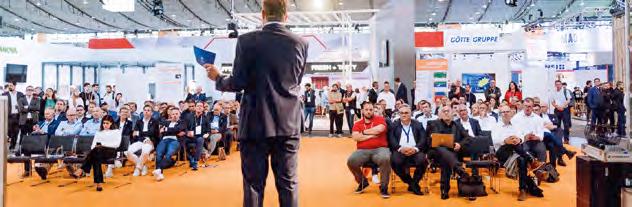
As excitement builds for UNITI expo 2026, we sat down with Ben Boroewitsch, CEO of com-atec and co-organiser of the event, to discuss what attendees can look forward to. Ben, thank you for joining us.
APEA: Can you share what makes UNITI expo 2026 particularly special?
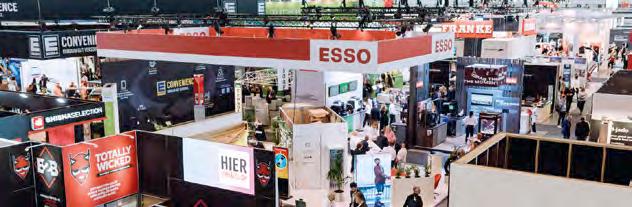
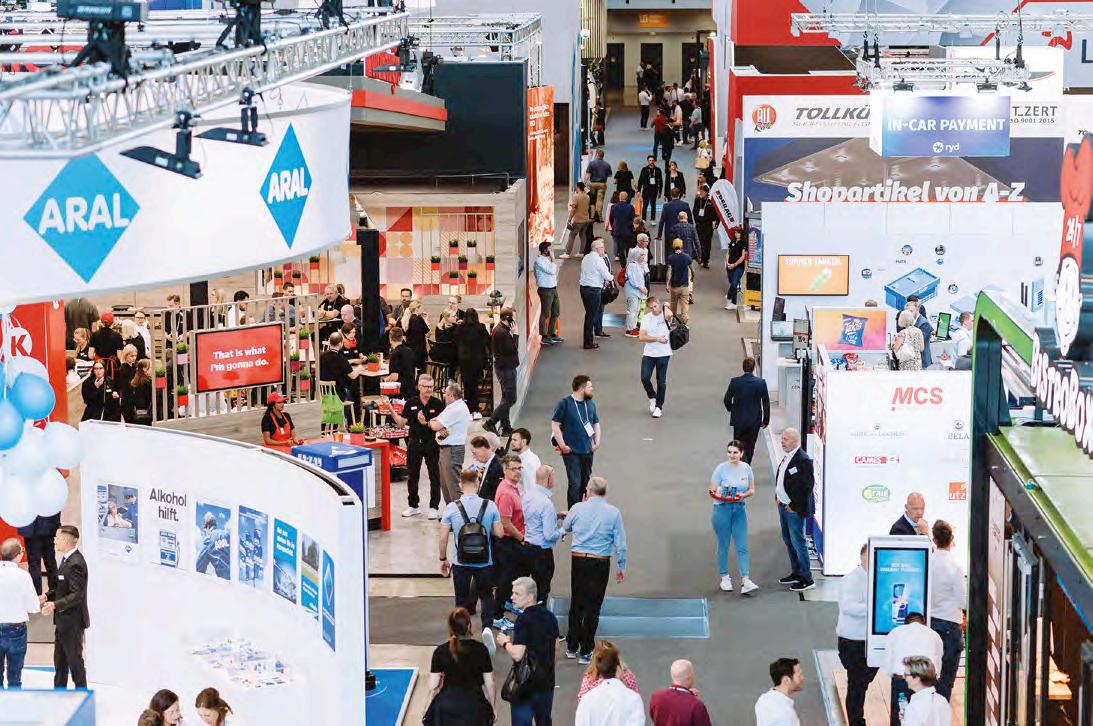
Ben: UNITI expo 2026 will be the largest and most international edition we have ever delivered. With more than 500 exhibitors across 45,000 square metres, the event brings together the full spectrum of our industry – from car wash & car care to shop & convenience, forecourt equipment and alternative fuels. What makes this edition particularly special is the speed at which the market is evolving and how strongly
Ben Boroewitsch
this is reflected at UNITI expo. Visitors will experience a truly comprehensive overview of the industry’s developments, trends and solutions – all in one place, and all at a scale that continues to grow from event to event.
APEA: What are some highlights that attendees should not miss?
Ben: Attendees should definitely visit the Future Mobility Lounge, which showcases forward-looking technologies and energy solutions for tomorrow’s mobility landscape. The expanded conference programme is another highlight –offering expert insights across all major industry topics. And with so many exhibitors presenting new products, solutions and business concepts, we always recommend checking the
Register now for free!
good reasons to visit UNITI expo
With over 500 exhibitors from around 40 countries and over 18,000 participants from 110 countries, UNITI expo is Europe’s leading trade fair for the service station and car wash industries. Here are seven good reasons to visit
Premier insights from leading players in the global market
Get inspired by new concepts and business models
Listen to high profile speakers for free across three forums The most convenient event – a modern complex, direct airport access, free catering and more
Discover the latest innovations from across the world
Make the best decisions based on a complete market overview
Build and strengthen your global network with a single three-day trip 3 6 5 2 7 1
4
Offical media partner:
exhibitor directory in advance and using the digital visitor portal to schedule key meetings. This ensures visitors make the most of their time onsite.
APEA: For those considering attending for the first time, what advice would you give?
Ben: Everything at UNITI expo is designed to be efficient and easy to navigate. Trade visitors can attend the entire conference programme, benefit from free Wi-Fi, and use the visitor portal to plan their visit before arriving in Stuttgart. Catering across the venue is free of charge, making it simple to move between halls and experiences without interruptions. One important piece of advice: book hotel rooms early. With thousands of international visitors expected, accommodation in Stuttgart can fill up quickly. But once onsite, everything is carefully taken care of – visitors can simply arrive and enjoy the event.
APEA: Thank you, and could you give a hint as to the size of UNITI expo? Exhibitors and visitor numbers?
Ben: UNITI expo covers 45,000 square metres of exhibition space – approximately 480,000 square feet – which is the equivalent of more than six football pitches. We expect over 500 exhibitors from around the world, representing all four themed areas: shop & convenience, oil companies & fuel retailers, car wash & car care and technology, payment & logistics. In 2024,
the event welcomed 18,000 attendees from 110 countries, and we anticipate similarly strong – if not higher – international participation for 2026.
APEA: Thank you, where and when is the event taking place?
Ben: UNITI expo 2026 will take place from 19 to 21 May 2026 at Messe Stuttgart, Germany. The venue is directly connected to the airport (a five-minute walk), motorway and local rail network, making arrival exceptionally easy for international visitors.
APEA: Great, so how do the APEA members book/get tickets to attend? And is the event open to anyone?
Ben: Registration is simple: APEA members can secure their free trade visitor ticket directly through the UNITI expo website. Attendance is free of charge for all industry professionals, and once registered, visitors receive full access to the exhibition, all conference sessions, complimentary catering and the entire digital visitor portal. The event is open to anyone from the industry – whether from the UK or abroad – and we warmly welcome APEA members to join us in Stuttgart.
Thank you, Ben. We look forward to seeing the impact UNITI expo 2026 will have on the community and beyond and the report that we publish for our membership in The Bulletin.
• Over 40 years experience in the industry
• Bespoke distribution design & installation
• Fire alarm installation
• Lighting design and installation
• CompEx /UKPIA Trained Engineers
• Nationwide coverage
• Revit/BIM
• Electric Vehicle Charging
• Hydrogen filling stations
• Hazardous area test and inspection
• NICEIC Hazardous area accredited electrical contractor
• Thermal imagery
• Cat 5&6 Data installer
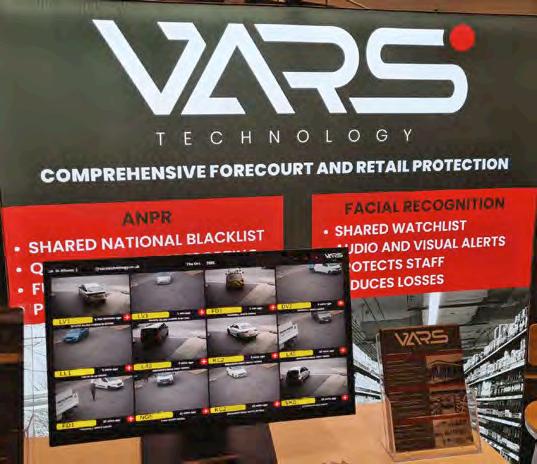
VARS Technology awarded DVLA electronic access to combat drive-offs
Forecourt Protection firm VARS Technology have been received accreditation from the Police Crime Prevention Initiative (Police CPI) to allow digital requests to the DVLA records of registered keepers, specifically for the recovery of fuel costs following drive offs.
Digital access using the DVLA’s Keeper at Date of Event (KADOE) system will significantly reduce the time between a drive off being reported and letters being sent out to drivers, speeding up the recovery process and returning the money owed to forecourt operators more quickly than ever. KADOE will replace the existing, paper-based system for organisations that hold accreditation.
Pursuing the cost of drive offs is an ongoing frustration for many forecourt operators, with figures earlier this year from Forecourt Trader showing that investigations into drive offs were closed with no suspect identified in up to 94% of cases. Freedom of Information requests showed £6.55 million in stolen fuel costs reported to police over the past five years, but with many forecourt operators no longer reporting drive offs, the real figures are much higher. VARS Technology recovers around £3 million in stolen fuel costs annually for fuel retailers.
With a lack of police support, the process of requesting driver details from the DVLA can be time-consuming and frustrating for operators, while recovering the money owed is a further challenge. As a result, growing numbers of forecourt operators are turning to debt recovery specialists like VARS Technology to recover costs on their behalf.
With no current plans for the DVLA to open the KADOE link to forecourt operators, and the extensive accreditation process also making it impractical, working with an accredited partner is the fastest and most efficient way of recovering stolen fuel costs for forecourts.
VARS Technology Director John Garnett said: “We have a great working relationship with the DVLA, and access to KADOE means that we can now return fuel money rightfully owed to petrol stations faster and more efficiently than ever before.
“With 40 current employees the testing and vetting procedure required for accreditation did take some time, but we are delighted to have been awarded it. As well as allowing us to provide a better service to forecourt customers, a streamlined process also provides a smoother process for drivers as they are notified of any charges more quickly.”
Would you like to contribute to our next issue of The Bulletin?
We are always looking for contributions from our members so if you have something to share or think would be of interest to other APEA members, please contact us.
It could be a story or photo of something interesting, new or unusual, a milestone for your company or an employee, we will consider absolutely anything so please help us.
Arson at Hampshire petrol station
A fire has ripped through a petrol station after a man was allegedly seen wielding an axe.
Footage shows cars and a petrol pump engulfed in flames at the BP Garage in Lee-on-the-Solent, Hampshire. Nick Lawrence, who lives opposite the station, said he grew concerned about his safety and that of his home as the fire spread. “The smoke was blowing towards the house, I thought if the whole garage goes up then there’s potential for something to happen to the house and us.”
Hampshire and Isle of Wight Police said a man has since been arrested on suspicion of arson with intent to endanger life following the incident on Thursday.
The force said: “We were called at around 11:15am to a report of a public order incident at the BP Petrol Station on Broom Way. It was reported that a man had been seen on the forecourt with an axe. A fire then began which spread to several vehicles and petrol pumps.
Loch Tay diesel spillage
The Scottish Environment Protection Agency (Sepa) said it had received several reports of contamination in the river Tay on 19 February and residents reported a strong solvent taste in the water and in the air outside the following day.
Scottish Water temporarily provided tankers of drinking water into the network from elsewhere while work was carried out on the local water network.
Stirling Council said at the time that there was evidence of some contamination in Loch Tay which may have travelled downstream into the River Tay.
All restrictions have since been lifted and customers can use their normal water supply for drinking, food preparation, brushing teeth and all other purposes.
A Certas Energy spokesperson said its team had been deployed immediately and had been “continuously working” with Scottish Water, Sepa and police to address the impact of the incident.
“Initial indications, based on the condition in which the site was found, strongly suggested the incident occurred due to an attempted theft,” but it was later confirmed to possibly involving contractors working on the site.
“As further information has been gathered, other possible explanations for the incident have emerged, including those
“Officers attended, along with colleagues from Hampshire & Isle of Wight Fire Service and South-Central Ambulance Service, and a man was located with burn injuries. A man was arrested at the scene on suspicion of arson with intent to endanger life. He has been taken to Queen Alexandra Hospital for treatment to burns and smoke inhalation related injuries.”
No other injuries were reported.
Hampshire & Isle of Wight Fire & Rescue Service said the fire had reached two cars and a pump on the forecourt.
The service said: “Crews from Gosport, Fareham and Cosham were called to attend a fire at a petrol station in Broom Way, Lee-on-the-Solent this morning at just after 11.15am.
“The fire involved two vehicles and a petrol pump stand. Firefighters quickly extinguished the fire using two main jets. The road closure that was in place while emergency services dealt with this incident has now been lifted.”
relating to the activity of third parties working on site at the time of the incident.”
The company has asked for any information about suspicious activity at the site to be shared with the relevant authorities.
Certas Energy has also issued an apology for the “concern and disruption” caused by the incident and set up a compensation fund to support local residents.
“The compensation fund is open to anyone who, in relation to the incident, may have experienced physical damage to property, personal injury, as well as incurred financial loss attributable to these impacts,” the company spokesperson said.
“Individuals who believe they have sustained a loss as a result of this incident can contact LixToll@Davies-group.com.”
Local businesses can access the fund via their insurers.
Sepa said it was continuing to investigate the cause of the pollution.
“As this process is still ongoing it would be inappropriate to comment on further at this time,” a spokesperson said.
A Police Scotland spokesperson said: “Inquiries remain ongoing to establish the exact circumstances surrounding this incident.
“We are continuing to support our partner agencies.”
Fuel Finder UK - Drivers can compare fuel prices at
different petrol
stations - how does it work?
Drivers can now compare the cost of fuel offered by all petrol stations across the UK as part of a government scheme to help people to shop around for the best price.
From Monday, garages and fuel stations must report their prices to third-party apps and websites within 30 minutes.
Chancellor Rachel Reeves said the Fuel Finder Scheme could save the average household £40 a year.
Motoring groups have said that motorists can end up paying 20p per litre more for petrol or diesel depending on where in the country they fill their tank.
The Fuel Finder Scheme will allow “drivers to find the best deals and spur competition as fuel retailers compete for customers,” the Competition and Markets Authority (CMA) said. The UK watchdog recommended the scheme after publishing a number of reports into fuel prices on UK forecourts.
The most recent study found that competition remained “weak” between petrol stations and profit margins for retailers were “persistently high”. The Petrol Retailers Association said the industry was facing higher wage and tax bills, but pump prices were much cheaper than the highs of 2022 and 2023, following Russia’s full-scale invasion of Ukraine which sent oil prices soaring.
The CMA found that retail prices tended to “rise like a rocket but fall like a feather” in response to increases or decreases in the cost of crude oil.
The shared price database policy was first put forward by the Conservatives in 2023 and announced by the Labour government in last year’s Budget.
How it works
Although the government’s Fuel Finder Scheme sources and shares pricing data - as well as forecourt services such as car washes, air pumps, and toilets - there is no specific government app to direct motorists to the cheapest forecourt or garage.
Instead, this open-source data will be used by established apps and websites that already map out and compare pump prices across the UK.
The difference is that previously, sharing price data was voluntary - now all businesses that sell petrol and diesel have to upload their price changes to a government database.
Current comparison apps and websites include PetrolPrices, Waze, My RAC and the AA app, as well as in-car navigation systems and online map services.
Government guidance says drivers who spot a difference between prices advertised on comparison apps and the fuel forecourt should report the discrepancy on its Fuel Finder website.
Petrol is currently 131.91p per litre, which is the lowest price since July 2021, according to the RAC motoring group. A litre of diesel is 140.97p.
RAC head of policy, Simon Williams, said: “As a growing number of the country’s 8,300 forecourts submit their prices on a daily basis, drivers will be able to easily find the cheapest forecourts near them using their favoured app or sat-nav.”
London to expand rapid EV charging with new TotalEnergies deal
Transport for London awards contract for up to 43 ultrafast chargers, supporting the city’s push toward 3,500 rapid charge points by 2030.
Transport for London (TfL) has awarded TotalEnergies a contract to deploy up to 43 rapid and ultrarapid electric vehicle (EV) chargers across the capital. The new infrastructure will offer 100kW and 200kW charging, enabling most drivers to recharge in around 30 minutes.
The charging bays will be installed along key routes used by taxis, freight operators and other highmileage road users, as well as near local high streets. Many of the new locations will be concentrated in south London, including Bromley, Lewisham and Sutton.
This marks the second TfL procurement won by TotalEnergies for new rapid charging sites. Nicolas Garnier, managing director
of TotalEnergies Charging Solutions UK, said: “Through this collaboration, we will leverage our operational expertise as a ChargePoint operator to support the expansion of a reliable, accessible and high-quality charging network for drivers across London.”
Installation of the new charge points is expected to begin at the end of 2027. TotalEnergies will operate the chargers for 20 years at no cost to TfL, which will receive a share of charging revenues and ground rent for use of its land.
As part of TfL’s EV Infrastructure Delivery Programme, these new EV charging bays will contribute to meeting that demand and further expanding London’s charging network.
SYSTEM SYSTEM
Next generation Standalone Outdoor Payment Terminals Featuring Online Authorisation Technology
Reknowned throughout the industry for it’s solid, robust and what many call bullet proof construction.
The System 3M was developed specifically as a fuelcard payment terminal for the truck stop market providing 24-7 automated fuelling.
Communicating with MCS’s custom developed, cloud based Fuel Management Software, transactions and wet stock movements are displayed in real-time and accessible from any web enabled PC, Tablet or Smart Phone.
Peace of Mind...
The 3M is also available with various local account software and tools that can be set-up to accept the fuel cards of your choice. The terminals are fully approved for resale and are ideal for environments such as Forecourts, Truckstops, Airports and Marinas.
MCS Cloud systems monitor your terminal 24 hours a day, 7 days a week. Every event is logged and any problems flagged up via regular status reports. Comprehensive diagnostic tools allow MCS to monitor and make adjustments online. Alternatively ask your engineer to contact MCS with details.
At your fingertips...
The Cloud systems working in association with the terminal offer total control of single or multiple home depot fuelling locations, real-time reports, update and alerts at your finger tips.
Other key features included:
• Online reporting packages - transaction, card provider/ISO and stock reports in various formats including Excel and PDF.
• Online stock management with tank gauges linked directly into terminal and through to the MCS associated cloud software.
• Monitor live transactions against recored dip readings.
• Analyse data across a range of dates, times, ISO numbers and pumps to simplify the reconciliation process.
• Protection from environmental issues - System highlights if stock levels change without a transaction taking place.
Certas Energy expands truck stop network with Watling Street takeover
The project forms part of Certas Energy’s aim to add 10 truck stops in the UK over the next five years.
Certas Energy assumed management of the Watling Street truck stop in St Albans (United Kingdom) this week, marking the first step in a planned nationwide expansion of its truck stop network. The company says the site will reopen the following day after a £350,000 redevelopment designed to upgrade facilities and broaden access to its fuel and service offering.
Situated on the Strategic Road Network, the Watling Street stop serves more than 400 HGVs daily travelling between the M1 and M25, two of Britain’s busiest freight corridors. Certas Energy plans to introduce improved security, refurbished amenities, upgraded
parking areas and new card readers compatible with FuelTapp, its digital fuel card system.
The redevelopment is expected to create 13 new jobs, with further upgrades planned, including Hydrotreated Vegetable Oil pumps, e HGV charging infrastructure, solar power and Spotless Water services.
The project forms part of Certas Energy’s aim to add 10 truck stops nationwide over the next five years, following its acquisition and refurbishment of The Stop at The Hollies. Mike Heaton, Head of Estate Development, said the company intends to bring Watling Street “up to the same high standard” to support drivers who “help keep the country moving.”
Engen modernises national fleet with 30 lower emission trucks
New Euro V vehicles strengthen safety, efficiency and sustainability across the company’s logistics network.
Engen has expanded its national transport fleet with the addition of 30 new lower emission trucks, reinforcing its efforts to deliver safer, more efficient and more sustainable fuel distribution across South Africa. The acquisition is part of the company’s Own Fleet Lifecycle Management Programme, which focuses on operational resilience, enhanced safety and reduced environmental impact.
The new trucks meet Euro V emissions standards and are equipped for both short and long haul distribution. Their advanced engine management systems and fuel efficiency technologies are designed to produce cleaner exhaust output and improve reliability.
Les Moodley, General Manager of Operations, said the investment reflects Engen’s long term commitment to operational excellence.
“Our fleet plays a critical role in ensuring reliable fuel supply across South Africa. This investment future proofs our transport operations through smarter technology, enhanced safety systems and lower emissions,” he said.
A notable feature of the new vehicles is the use of Selective Catalytic Reduction (SCR) systems with AdBlue, significantly reducing nitrogen oxide (NOx) emissions while maintaining optimal engine performance.
The fleet also introduces a comprehensive set of driver assist and risk management technologies, including electronic braking, stability control, traction management and predictive cruise control. Additional AI powered safety systems, such as automatic emergency braking, collision warnings and lane keeping assistance help prevent incidents before they occur.
To enhance visibility and monitoring, Engen has fitted each vehicle with a sophisticated In Vehicle Monitoring System (IVMS) and multiple cameras providing 360 degree views, real time fatigue detection and safety alerts.
The company says the investment underscores a broader commitment to environmental, social and governance (ESG) goals, strengthening safety performance, reducing emissions and supporting national fuel supply reliability.
EG Group exits French market with planned business divestment
Company agrees to sell its operating business to EG On the Move as part of a phased withdrawal from France.
EG Group has announced plans to divest its French operating business to EG On The Move, the company owned by Zuber Issa, marking a significant step in its strategic withdrawal from the French market. The agreement follows a series of transactions aimed at reducing the Group’s footprint in France.
The move builds on EG Group’s earlier divestments, which began with the sale of its Vitry fuel depot completed in December 2025. The company has also signed agreements to sell a number of sites, mainly in the Paris metropolitan area, to property
developers for non fuel commercial use. These asset sales are expected to conclude over the next year.
Russ Colaco, CEO of EG Group, said: “By strategically reshaping our European footprint, we are bringing additional focus to our core markets where we have identified the most attractive organic growth opportunities.”
The latest transaction will be submitted to employees’ representative bodies, in line with French labour regulations. Completion is subject to customary regulatory approvals, with closing anticipated in the second quarter of 2026.
EG Group said the divestment program aligns with its ongoing efforts to streamline operations, focus on core growth markets and reinforce its balance sheet.
Award-winning forecourt protection systems proven to reduce crime, protect operator profitability and make forecourts safer for customers and staff.
VARS ANPR
•Prevents drive-offs before they happen
•Sites are protected from a national blacklist of 100,000 known offenders
VARS Tablet
•Simple and easy reporting for Drive Offs and No Means of Payment
•Highest recovery rates in the industry
VARS FACE
•Staff are alerted to problem individuals as soon as they enter the premises
Solvent Free
Abfad: Where technology meets protection.
At Abfad, innovation isn’t optional, it’s built in. Our plural-component spray technology ensures solvent-free coatings are mixed and applied with computer-controlled precision.
The result: flawless adhesion, uniform coverage, and faster curing.
We invest in advanced systems because performance, safety, and sustainability depend on getting it right the first time.
DHL Freight launches first hydrogen truck pilot in the Netherlands
Eindhoven terminal begins real world hydrogen operations as part of its plan for a fully diesel free fleet by 2026.
DHL Freight has introduced its first hydrogen powered truck into daily operations in Eindhoven, marking a significant milestone in the company’s push toward zero emission road transport. The pilot, launched in January, supports the terminal’s goal of operating a fully diesel free cartage fleet by the end of 2026.
Unlike a controlled test trial, the hydrogen truck is being used in regular pick up and delivery routes, giving DHL Freight firsthand operational data on how hydrogen performs under real commercial conditions. The initiative is part of a broader effort in Eindhoven to test multiple low carbon technologies, including battery electric vehicles and biofuels.
“The hydrogen truck will provide us with important insights for decarbonising our fleet. With rising diesel and electricity prices,
this technology could become an attractive operating solution,” said Ann Schildermans, TBO Manager DHL Freight, who, alongside colleague Cencio Vlijt, led the project from planning to launch.
The pilot relies on close collaboration between several partners. The vehicle is leased through hylane, a Cologne based startup that operates a Transport as a Service model, allowing the company to pay only for kilometres driven. Schuurman Logistics, the longtime carrier partner for the Eindhoven terminal, is responsible for supplying the driver and managing day to day truck operations.
To ensure consistent refuelling, Teal Mobility provides the hydrogen supply infrastructure. The company, a joint venture between Air Liquide and TotalEnergies, is developing a network of hydrogen stations across major European road corridors, supporting scalable adoption of hydrogen powered transport.
HVR Energy, Spanish station operators partner to boost hydrogen refuelling
The agreement aims to accelerate the rollout of renewable hydrogen refuelling infrastructure across the country.
HVR Energy and the Spanish Confederation of Service Station Entrepreneurs (CEEES in Spanish) have signed a Memorandum of Understanding (MoU) to jointly promote the deployment of hydrogen refuelling stations (HRS) across Spain. The collaboration seeks to integrate renewable hydrogen into existing service station networks, supporting a realistic and efficient energy transition.
The agreement includes the involvement of Zoilo Ríos Torre, adviser on New Energies to the president of CEEES, who will act as one of the sector representatives. Under the MoU, the partners will work on implementing technologies such as ACTIVA, HVR Energy’s compact hydrogen station model.
ACTIVA can operate with low electricity consumption (15 kW), supply at 350 and 700 bar, and features a modular structure that enables rapid installation without construction work or disruptions to daily operations.
The collaboration also aligns with national and EU goals for sustainable mobility, positioning renewable hydrogen as a key vector in the decarbonisation of long distance transport and professional fleets. CEEES’ involvement aims to help service station operators evolve their infrastructure and capabilities in line with clean energy demands.
The MoU supports HVR Energy’s roadmap, which includes deploying 75 operational hydrogen stations in Spain by 2030 and creating strategic supply corridors across major logistics routes.
QuikTrip marks milestone with opening of 1,200th store
New Georgia location highlights the retailer’s growing national footprint and ongoing expansion plans.
The new location, situated in Morrow, Georgia, becomes the retailer’s 181st store in the state, underscoring Georgia’s role as one of QuikTrip’s most significant markets.
The company said it plans to continue accelerating its U.S. growth, with more than 80 new stores scheduled to open in 2026. According to QuikTrip, the pipeline reflects “a disciplined growth strategy built on operational consistency, employee retention and strong customer demand.”
The Morrow store features a QT Kitchen, the brand’s foodservice program offering a variety of grab and go meals and
made to order items. The site also includes QuikTrip’s expanded coffee program, which serves 12 varieties including hot and iced lattes.
Robert Smith, QuikTrip’s Atlanta Director of Operations, said the milestone reflects both the company’s history in the region and the strength of its operating model. “Reaching our 1,200th store is a milestone that reflects the strength of our business model – one built on taking care of employees, earning customer trust and showing up consistently for the communities we serve,” he said.
The company continues to expand strategically across new and existing markets as it strengthens its presence in the convenience retail and foodservice segments.
Specialist Forecourt Developers
Established in 1996, McFadden Building & Civil Engineering provide a specialist service in all aspects of forecourt construction. With work carried out nationwide, our high levels of customer satisfaction reflect the company’s success in completing projects on schedule, within budget and above standard.
or
•
•
•
To discuss our services, please contact Rob Slusar, Project Manager on 07500 056 421 or email rob.slusar@ingletonwood.co.uk
Horse Powertrain and Repsol unveil ultra efficient hybrid engine
The new HORSE H12 Concept engine increases vehicle efficiency while reducing fuel consumption by 40%.
Horse Powertrain and Repsol have developed a next generation hybrid engine capable of operating on 100% renewable petrol, marking a significant step in Europe’s efforts to cut transport sector emissions. The new HORSE H12 Concept engine increases vehicle efficiency while reducing fuel consumption by 40%, dropping below 3.3 litres per 100 km under WLTP testing.
According to the companies, a medium sized car equipped with the engine and powered by Repsol’s fully renewable fuel would emit 1.77 tonnes less CO₂ per year than a comparable vehicle using conventional fuel. The engine reaches a maximum thermal efficiency of 44.2%, achieved through advances in
combustion design, a 17:1 compression ratio, next generation EGR technology, an optimised turbocharger and a high energy ignition system. Improved hybrid transmission management and low friction lubricants developed by Repsol further contribute to efficiency gains.
Developed by Horse Technologies in Valladolid and Repsol’s Technology Lab in Madrid, the project has completed its first two prototypes, with a demonstrator vehicle expected in early 2026. Both partners describe the initiative as evidence that European industrial innovation can deliver short term CO₂ reduction solutions alongside electrification and hydrogen technologies.
Repsol supplies renewable diesel at more than 1,500 service stations across Spain and Portugal, making it the largest distributor of renewable fuels in Europe.
Air bp signs fuelling agreement with Airbus for Germany and Spain
The multi year deal covers jet fuel, SAF and operational support.
Air bp has signed a multi year agreement with Airbus to supply conventional jet fuel, sustainable aviation fuel (SAF) and a range of aviation services across key operational hubs in Germany and Spain. The contract supports one of the largest voluntary SAF offtakes by an aircraft manufacturer, strengthening collaborative efforts to reduce lifecycle emissions in aviation.
Under the deal, Air bp will provide fuel and services for Airbus’s commercial aircraft, helicopter and military divisions. The scope includes fuel for flight testing operations, customer delivery flights, internal logistics using the Beluga fleet and the daily employee shuttle route between Toulouse and Hamburg.
Christian Frohn, vice president of Air bp, said: “This is another example of our strategy in action. We are focused on our advantaged markets and building great partnerships like this one with Airbus.”
The agreement also introduces new cooperation in Spain, covering fuel supply, storage and into plane services, along with dedicated account management and regular technical maintenance in Germany.
As the aviation arm of bp, Air bp supplies over 6,800 flights per day across more than 600 locations in 40 countries, serving commercial airlines, military customers, business aviation and airport operators.
BP pauses buybacks to cut debt amid shift in investment strategy
Oil major redirects cash toward balance sheet repair and higher return energy projects.
BP has suspended its $750 million quarterly share buyback program as it moves to reduce debt and reorient investment toward oil and gas projects expected to deliver stronger returns. The decision follows a series of charges totalling around $4 billion on the company’s renewables and biogas portfolio, prompting a strategic rethink ahead of incoming CEO Meg O’Neill’s arrival in April.
The company said the pause in buybacks will free up capital to accelerate balance sheet repair. BP has already trimmed net debt to $22 billion, down from $26 billion in the previous quarter, and reaffirmed its target of reducing the figure to between $14 billion and $18 billion by 2027.
Finance Chief Kate Thomson noted that the company may update investors on the potential resumption of buybacks once
debt goals are achieved, though hitting the target would not automatically trigger a restart.
BP reported fourth quarter net profit of $1.54 billion, up 32% compared with the previous year, supported by stronger oil trading results. The company also highlighted long term potential at its Bumerangue field, which is expected to hold around 8 billion barrels.
While BP’s shares fell about 7% in afternoon trading following the announcement, the company emphasised that the change reflects a shift in capital discipline rather than weakening operational performance.
The pause marks the latest phase in BP’s strategic reset, which began a year ago when the company pivoted back toward hydrocarbons under then CEO Murray Auchincloss after scaling back an earlier push into renewables.
Flogas expands Bio CNG access in Ireland via Circle K partnership
New agreement broadens renewable fuel availability for hauliers and adds eight new trucks through a Virginia International Logistics contract.
Flogas has signed a new multi year partnership with Circle K that expands public access to Bio CNG across Ireland. For the first time, Flogas CNG fuel card holders will be able to refuel at all four Circle K CNG stations, in addition to the company’s existing Bio CNG network.
The partnership, which builds on collaboration between the companies since 2022, means Bio CNG is now available at key sites in Dublin, Tipperary and Limerick. Together, the network provides coverage designed to support hauliers along major logistics corridors and help fleets reduce emissions without disrupting established routes.
Ciaran Gahan, Energy Services Manager of Flogas said, “Our renewed partnership with Circle K is about giving our customers greater flexibility, convenience, and transparency. Customers can use both Flogas and Circle K branded cards, and all transactions will be billed centrally for their CNG usage.”
Flogas has also announced a new contract with long term partner Virginia International Logistics. Under the agreement, eight of the company’s trucks will receive Flogas fuel cards, enabling them to refuel at any Circle K CNG station or Flogas Bio CNG facility.
Fuel card users will have access to centralised billing and detailed sustainability reporting, giving operators transparent data on carbon savings and environmental performance.
TotalEnergies eyes sale of its German EV charging business
About 190 charging sites, including state funded projects, are expected to be sold as the company reverses its expansion plans.
TotalEnergies is eyeing an exit to Germany’s EV charging market, with the buyers seeking process already underway, marking a sharp shift from the strategy it set just three years ago. The company has hired consulting firm Roland Berger to find potential acquirers for its German operations.
The sale package includes roughly 190 charging parks, only a third of which are currently operational, with more than 120 additional locations still in planning or under construction. The documents highlight significant public subsidies attached to the
network, positioning the sale as an opportunity to take over government funded fast charging contracts.
The move comes amid slower than expected growth in Germany’s electric vehicle market. Despite earlier expectations of 15 million EVs on the road by 2030, the country closed 2025 with around two million battery electric vehicles.
Market observers cited by The Pioneer say the pool of potential buyers may be limited due to participation caps in the Deutschlandnetz programme and the risks associated with delayed construction timelines. Other operators, including BayWa, are also reportedly considering divestments.
Nayara eyes potential addition of 300 fuel outlets across India
Private refiner steps up downstream strategy as the country moves to diversify crude sources.
Nayara Energy is preparing to expand its retail footprint with plans to add around 300 new fuel outlets across India this year, as the company seeks to strengthen margins and reinforce its position in the domestic fuel market. The move comes as India gradually reduces its reliance on Russian crude under intensifying geopolitical pressure from Western partners. The push into retail contrasts with the company’s upstream dynamics; Nayara’s Vadinar refinery in Gujarat, India’s second largest single site refinery with a capacity close to 400,000 barrels per day, continues to rely heavily on Russian crude. This stands out as other Indian refiners steadily moderate their intake from Moscow.
The expansion aligns with a wider recalibration in India’s refining sector, where both public and private players are reassessing procurement strategies in response to shifting global diplomacy and the need for greater crude diversification.
The potential retail expansion positions Nayara to capture a greater share of India’s competitive fuel retail market at a time when private players are regaining momentum after years of pricing pressure from state owned oil companies. Meanwhile, broader strategic reviews, including crude sourcing, refinery optimisation and long term projects such as a planned petrochemical upgrade; continue to shape the company’s near term outlook.
YOUR FUEL EQUIPMENT MAINTENANCE PARTNER
• Fully maintained contracts or ‘Pay as you Go’ options
• Legal and compliance testing • Fuel quality testing
• Fully tracked fleet • Real time maintenance software
Former petrol station explodes in Anderlecht
By The Brussels Times with Belga
A two-storey apartment building in Anderlecht, formerly a petrol station, has been declared uninhabitable following a large explosion on Friday evening, according to the Brussels fire brigade.
The explosion occurred around 20:00 in a building on Huetstraat in Anderlecht. Emergency services arrived swiftly, and all 11 residents were examined, with no injuries reported.
According to fire brigade spokesperson Walter Derieuw, the blast originated in the basement of the building. The exact cause remains unclear, but one possibility under examination is that residual fuel vapours from the old storage tanks of the petrol station ignited accidentally.
“We suspect an accumulation of fuel gases from the tanks may have caught fire by accident,” Derieuw explained.
Illustration picture shows firemen cleaning the ambulance of the Brussels fire brigade, Friday 03 April 2020, in Brussels. The measures announced on March 18th by the National Security Council to avoid the spread of the Covid-19 will remain active at least two weeks longer, untill April 19th. BELGA PHOTO POOL NICOLAS MAETERLINCK
The investigation is ongoing, but authorities have confirmed the incident was accidental and involved no external parties.
The building is temporarily uninhabitable due to significant damage, including cracks in its structure. Damage to the pavement in front of the property was also noted.
Global gas prices surge after Qatar halts LNG output following attacks
Production shutdown at QatarEnergy and disruptions in Saudi Arabia fuel sharp rises in gas and oil markets.
QatarEnergy has suspended production of liquefied natural gas (LNG), triggering a sharp increase in gas prices across Europe and Asia. The company confirmed that operations at its Ras Laffan and Mesaieed industrial sites were halted following the attacks, though no casualties were reported.
The announcement prompted immediate market reaction. Benchmark Dutch and British wholesale gas prices climbed nearly 50%, while Asian LNG benchmarks rose close to 39%. The incident adds pressure to already volatile global energy markets, which have been strained by rising geopolitical tensions in the Gulf.
Qatar’s Defence Ministry said two drones targeted energy infrastructure, damaging a water tank at a power plant in Mesaieed and part of a QatarEnergy facility in Ras Laffan.
In Saudi Arabia, the Defence Ministry reported that two drones attempted to strike the Ras Tanura oil refinery, one of the world’s largest processing sites. A small fire broke out after the drones were intercepted, and the facility sustained limited damage. Operations at some refinery units were paused as a precaution, though officials said domestic fuel supply would not be affected.
The attacks coincide with growing disruptions around the Strait of Hormuz, a critical shipping route that handles about a fifth of global seaborne oil and most Qatari gas exports. Tanker congestion and fears of further escalation pushed oil prices to their highest levels since January 2025, with intraday gains of up to 13%.
Calgren opens first public fast fill renewable CNG station in California
The new site provides local fleets with quick fill access to renewable fuel made from nearby dairy operations.
Calgren has opened its first public fast fill renewable compressed natural gas (R CNG) station in Pixley, California. The facility offers fill times as quick as conventional CNG stations, making it suitable for daily operations where quick turnaround is essential.
The renewable fuel supplied at the station is produced through Calgren’s dairy digester network, which captures methane emissions from nearby dairy farms and upgrades the gas into RNG for transportation use. Instead of being released into the atmosphere, the methane is converted into a low carbon fuel that can power vehicles operating across the region.
For Calgren, the opening marks a milestone in its vertically integrated approach to renewable energy. “This station connects
the full circle of what we do,” said Travis Lane, CEO of Calgren. “We produce feed for dairy cows, capture methane that’s traditionally released from dairies, process it into renewable fuel, and put it directly into vehicles – including the trucks that haul our own products.”
The station is open to CNG compatible vehicles, including passenger cars, buses and commercial fleets. Fast fill capability supports return to base operations and scheduled-route fleets that require rapid fuelling while seeking to reduce lifecycle greenhouse gas emissions.
Located alongside Calgren’s integrated renewable energy campus, the facility extends the company’s model of producing low carbon fuels, animal feed and ethanol in one location. The new station offers a practical fuelling option that keeps locally produced energy circulating within the community.
Chilean consortium pushes forward with e-fuel plant
The aim is to demonstrate how Chile’s industrial emerging hydrogen producers could form a fully integrated value chain.
A coalition of Chilean energy and industrial players has taken a significant step toward establishing an e fuel production hub, partnering with German Power to Liquids specialist INERATEC to assess the feasibility of a synthetic fuel plant in the Biobío region.
The initiative, driven by ARAUCO, Abastible, Copec, and Copec Wind Ventures, centres on producing e fuels by combining biogenic CO₂ captured at ARAUCO’s industrial operations with green hydrogen generated locally. The aim is to demonstrate how Chile’s industrial emitters and emerging hydrogen producers could form a fully integrated Power to X value chain.
INERATEC has completed the project’s basic engineering study, contributing its technology for the two step PtL process of syngas production and fuel synthesis. The proposed facility would generate synthetic hydrocarbons for mobility, chemical use and specialty applications, offering a scalable alternative to fossil based fuels.
“Showing how local industrial CO₂ sources could be combined with hydrogen is a crucial step,” said INERATEC co founder and CEO Tim Böltken. He described the Biobío studies as laying the groundwork for commercial e fuel production in one of the world’s most promising hydrogen markets.
The collaboration builds on concepts first explored during Energy Challenge 2023 and later refined under the H2Uppp framework.
UK charge point operator Be.EV selects Titan EV to improve charger reliability and customer experience
Titan EV automates charger maintenance and asset management, increasing uptime and availability through integration with Fuuse
NASHVILLE, Tenn., February 10, 2026 -- Titan Cloud, the leading AI-driven data platform for Energy Asset Optimisation, today announced that UK charge point operator Be.EV has selected Titan EV to automate maintenance and repair workflows, delivering a more reliable charging experience for EV drivers.
The UK’s public charging network continues to expand, with more than 86,000 public EV charging devices installed nationwide as of October 2025, up around 23% year over year, according to UK government data. Be.EV operates a network of ultra-rapid charging hubs at major retail, leisure, and hospitality locations, providing more than 800 public charging bays across the UK, with a significant presence in the North of England.
“We want our systems, tools, and services to be second to none,” said Natalie Kershaw, Senior Digital Programme Manager at Be.EV. “To make every customer journey run smoothly, we need clear visibility into our charging assets, and a more efficient way to keep them maintained and operational. Titan EV gives us the asset tracking, reporting, and maintenance capabilities we need, while integrating directly with Fuuse so data stays synchronised across both platforms.”
To achieve its mission to make EV charging simple, reliable, and accessible to everyone, Be. EV depends on chargers being
online, operational, and ready every time a driver plugs in. As the network grew, maintaining that level of reliability at scale required a dedicated asset and maintenance management system to support continued expansion.
Be.EV selected Titan EV for its industry-specific functionality, the Titan team’s experience in the EV and mobility sector and, importantly, the ability to integrate with Fuuse, Be.EV’s Charge Point Management System (CPMS) and central operating platform.
The integration between Titan EV and Fuuse gives Be.EV full visibility across its charging assets, with a specialist asset maintenance toolset, configurable workflows, and end-to-end operational oversight. By automating processes previously managed manually, Be.EV can identify issues sooner, resolve them faster, and improve charger reliability, uptime, and availability while operating with a more efficient operations team.
Brad Sandys, Head of Partnerships EMEA at Titan Cloud, said: “Be.EV is setting a high standard for charging reliability in the UK, and we’re proud to partner with them at this stage of their growth. With a rapidly expanding portfolio of sites, Be.EV prioritises reliability as it scales its network, delivering consistent charging experiences for drivers and supporting the transition to electric vehicles across the UK. Titan EV gives them the asset visibility and operational control needed to manage their charging infrastructure as they grow.”
Branches Southern Branch
The Southern Branch recently held their AGM and branch meeting online on Tuesday 3rd February 2026.
The meeting was well attended with 40 members joining us to complete the business of the AGM and to welcome Chris Ramshaw as our new branch chairman, and to thank Doreen Pooley and Phil Monger on their retirements from the committee for the incredible contribution they have made over many years.
After the AGM, Clare Scawthorn from the PRA spoke to the meeting and outlined the new PETEL 21 document dealing with the move to digital phone lines and the subsequent effect on the forecourt.
Alex Boudy of PFS Fueltec followed Clare with another interesting presentation titled From Tank to Screen – detailing why good tank mapping makes or breaks ATG accuracy.
Rounding up the morning was Simon Smeeton, Health & Safety officer with Turners (Soham) Ltd whose subject was driver unassisted deliveries or driver-controlled deliveries, which detailed their experiences and the issues surrounding delivering fuel to forecourts.
The Southern Branch committee would like to thank all three presenters who did an excellent job. All the feedback received after the meeting was positive with delegates asking for copies of the presentations and complimenting the speakers on their knowledge and for sharing it in such a helpful way.
Our next meeting will be at the Amberley Museum near Arundel in West Sussex on Thursday 21st May 2026. The topics for the meeting will all revolve around forecourt electrical system, which is very apt considering the museum has an exhibition hall containing a fascinating variety of electrical equipment, ranging from heavy engineering plant for mains supply to small domestic appliances.
Reserve the date now and look out for an invite in due course.
David Sommers
APEA Training
The APEA organise a range of training courses on a variety of topics in line with our objectives:
• The advancement of scientific and technical knowledge.
• The supply and interchange of information.
• Uniformity of standards, interpretation and application.
The courses are designed to satisfy the requirements of those who are new to the areas concerned or wish to become more familiar with particular aspects of Service Station design and enforcement.
Each course in the current list will be based on the Guidance for Design, Construction, Modification, Maintenance and Decommissioning of Filling Stations.
This course has been designed to explain the application of the Petroleum (Consolidation) Regulations 2014 (known as PCR 14)
£330.00 - Non-member price
£280.00 - Member price
2 Day Electrical Installations, An Awareness
24th & 25th March 2026 - Manchester Airport
8th & 9th September 2026 - Swindon
This course is essential for those requiring a greater understanding of electrical systems in a hazardous area and for those that design, audit, install or inspect.
£690.00 - £790.00 - Non-member prices
£590.00 - £690.00 - Member prices
3 Day Petrol Filling Stations –Combined Construction, Audit and Inspection Course
13th - 15th April 2026 - Manchester Airport
8th - 10th June 2026 - Solihull
7th - 9th September 2026 - Stansted Airport
This course has been designed as a refresher course for those returning to Petroleum Inspection or for those seeking a “Fast Track” initial basic training as a petroleum inspector.
This course has been designed to explain the application of the Dangerous Substances & Explosive Atmospheres Regulations 2002 (known as DSEAR)
£330 - Non-member price
£280 - Member price
Wetstock Management
23rd April 2026 - Manchester Airport
17th September 2026 - Stansted Airport
This course is designed to provide a working knowledge of Wetstock Management best practice methods for those who manage service stations.
£330 - Non-member price
£280 - Member price
Explosives and Fireworks
25th September 2026 - Stansted Airport
This course is essential for those involved with explosives and fireworks.
£330 - Non-member Prices
£280 - Member price
NOTE: If there is enough interest in a particular course (not necessarily bespoke) then further dates can be arranged.
All training courses can be booked via the APEA website - https://apea.org.uk/training/ For any assistance or further information, please contact our secretariat at 0345 603 5507
Online Training Courses
The Association for Petroleum & Explosives Administration and Olive Group have partnered to launch a new online training platform, available for purchase by all association members.
APEA’s training platform consists of courses targeting compliance in Petroleum & Explosive Administration including:
● Key Areas of the Filling Station
● The Future of Fuel
● Drainage Principles
● Road Tanker Delivery & Consignor Requirements
● Petroleum (Consolidation) Regulation 2014
● Dangerous Substances and Explosive Atmospheres Regulation 2002
● Preparing for Inspection
● The Red Guide Professionally accredited and supported by advanced technology, these courses deliver consistent, cost-effective training using video, motion graphics, and gamification to boost engagement and retention. Accessible 24/7 on mobile devices, tablets, or smartphones, they can be completed in one session or over time. On completion, delegates gain the essential knowledge to perform duties at petrol filling stations or enforce petroleum legislation effectively.
Bespoke Training Courses
If you cannot attend any courses listed on the APEA training course list above, the APEA can arrange bespoke courses for your staff to be held at your offices. Just email us on admin@apea.org.uk and state which courses interest you, the number of delegates and preferred dates.
If you can provide the venue, refreshments, and lunch for the delegates, discounts on the usual APEA training rates will be included.
If you are not a member, please complete the online membership application on the APEA website before purchasing a training course or a publication to benefit from member discounts.
Training Reports Applegreen Training in Dublin, Ireland
Michael O Connell – Chairman Training Committee
In February, APEA provided a Petrol Filling Stations – Combined Construction, Audit and Inspection Course for Applegreen, in Dublin. The Applegreen attendees ranged from Regional Managers to Managers from Operations, Developments, H&S, Dealer Sites, Commercial Fuels, Car Wash Trading and Facilities Management.
The training course was held in their head offices in Dublin, and covered all the legislative, operational, safety and maintenance requirements associated with fuelling infrastructure and petrol filling stations.
The training course included a desktop Risk Assessment exercise on a fuel station using a number of different scenarios. This was a very useful exercise as it utilised the different areas of expertise of the course attendees alongside the education and information they had received during the training course.
Also, a site visit and inspection at the local Applegreen Ballymount Fuel Station put into practice much of the course content. This Applegreen Fuel Station was a good location for a site visit as it is a very modern site with double skin tanks and pipework; and Class 1 and 3 Leak Detection systems. It also has a separate Truckstop, HVO aboveground tank, EV charging and a large shop/food hall; showcasing all the modern elements of a large Fuel Filling Station.
The course concluded with exams (which thankfully everyone passed!) and the presentation of certificates.
Training in the Channel Islands
Jamie Thompson – Technical Committee Chair
In February, the APEA provided a 3-day Petrol Filling Station course for the Channel Islands Cooperative Society providing training to cover the petrol filling stations operated by the Society in both Jersey and Guernsey.
Fifteen employees attended the course in St Helier and with slightly differing legislation and operation than in the UK the course was adapted to cover these differences.
The trainers received an excellent rection from the delegates who were keen to update their knowledge and adapt their operations to meet modern requirements.
The sites on the islands are remarkably similar to those in the UK with the more modern ones having double wall tanks, Class 1 leak detection, and vapour recovery. The older sites again with single wall tanks and steel pipework.
In Guernsey, the road tankers have not yet to be able to operate stage 1b vapour recovery as they have yet to have the vapour return facilities fitted, and although the modern sites have Stage 1b this it will be able to use this once a new fleet of tankers is operational.
The Coop filling stations have a supermarket attached and operate as in the UK with self-service.
The course includes a site inspection and familiarisation exercise by the delegates who examined the road tanker filling area, venting arrangements, the tank chambers, and the pumps with stage 2 vapour recovery. They also familiarised themselves with the leak detection equipment and the other safety features of this site.