HAPPY 250th BIRTHDAY AMERICA! Welcoming the New Era. Page 4 - 5
Let Freedom Ring: Celebrating the Courage to Build a Better Tomorrow Pages 6 - 7
Local Laughs Pages 8
TRAILBLAZERS
Fred Korematsu: A Japanese American Citizen Who Stood Up For His Civil Rights During World War Ii. Pages 10 - 11
12 14
SWEET & SAVORY
Story Of The Banh Mi: Vietnam’s Super Sandwich That Took On The World Pages 12 - 13
NEWS & EVENTS
Pacific Plans School Of Medicine To Address Central Valley Physician Shortages Page 14 - 15
Data Centers Are Guzzling California’s Water. We Have No Idea How Much. Page 16 - 17
Some California Schools Get Three Times More Funding Than Others. Here’s Why. Page 18 - 19
IN THE COMMUNITY
The USS Lucid: Restoration Work Continues Page 20
Greetings from the Friends of Sacramento Chinatown Square Page 21
ADVERTISERS
Where the Good Times Roll - pg. 9
- pg. 22
THE APA LIVING TODAY
PHONE
916.747.9366
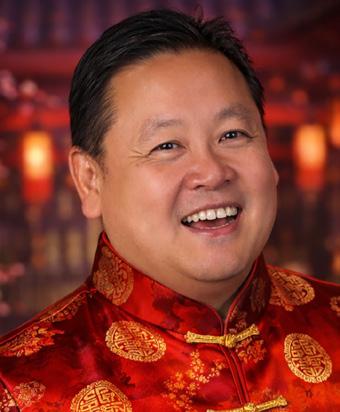
Jim Chong
EMAIL
jtc.legendmaker@gmail.com
l_imada@bggwestllc.com
ONLINE
https://issuu.com/apalivingtoday
EDITOR-IN-CHIEF
Terri Torres
DIRECTOR
Jim Chong
ART DIRECTOR
Layne Imada
GRAPHIC DESIGNER
Layne Imada
Summer Risso
CONTRIBUTING WRITERS & SOURCES
Val Acoba
Zully JF Alvarado
Mafae Yunon-Belasco
Nico Belasco
Jessie Bowen
Linda Claramo
Leslie Edman
Elite Publications
Beverly Engkabo
Ines Ruiz-Huston
Linda Norris
Tanya Parmelee
Anna Sass- HerLife
Carrie Sass - HerLife
Terri Torres
CONTRIBUTING PHOTOGRAPHERS
Tim Ulmer
Jim Chong
Deadline to submit newsworthy information from non-profits, charitable organizations, or other sources is the 19th of each month for the following issue. Submitting information does not guarantee it will be featured.
Submit information to: jtc.legendmaker@gmail.com
Attn: Jim Chong
The APALT is digitally published bi-monthly by the APA Living Today.
APALT does not assume responsibility for the authenticity or accuracy of news materials furnished for publication.
250 Years of Freedom: The Next Chapter Is Ours to Write
This year, America celebrates an extraordinary milestone—250 years of freedom. It is a time to reflect on where we have come from, appreciate the sacrifices that made our freedoms possible, and ask ourselves what role each of us will play in shaping the future.
For two and a half centuries, our nation has been built on the ideals of liberty, opportunity, perseverance, and hope. Those ideals have inspired generations of dreamers, innovators, entrepreneurs, educators, public servants, and everyday citizens to believe that tomorrow can be better than today. Although our country has faced challenges and imperfections throughout its history, the American spirit has always been defined by the willingness to grow, learn, and strive toward something greater.
One of the greatest gifts we have as Americans is the freedom to choose. We have the opportunity to pursue our passions, build businesses, create new technologies, express our ideas, serve our communities, and leave a positive impact on those around us. Every generation has inherited opportunities created by those who came before, and now it is our responsibility to leave an even stronger foundation for those who will follow.
That is also the mission of this publication. We are committed to being more than a source of news and information. We want to serve as a catalyst for the future—a place where ideas are shared, cultures are celebrated, businesses are highlighted, and communities come together. We believe that knowledge inspires action, and action creates progress. Every article, every story, and every connection made through these pages has the potential to inspire someone to make a difference.
As we enter an era shaped by remarkable advances in artificial intelligence, technology, and global communication, our opportunities are greater than ever before. Yet with all these innovations, one truth remains unchanged: our greatest strength has always been people working together. Innovation may change the tools we use, but character, integrity, compassion, and collaboration will always define our success.
Imagine what America could become if more of us chose to build instead of divide, encourage instead of criticize, and inspire instead of discourage. The next 250 years will not be determined by chance—they will be determined by the decisions we make today.
As we celebrate this historic anniversary, let us be grateful for the freedoms we enjoy and committed to using them wisely. Let us create communities that future generations will be proud to inherit and continue building a nation that remains a beacon of hope and opportunity for the world.
The American Dream is not simply something we receive—it is something we create.
The question is not whether the American Dream still exists. The question is: What will you do with your American Dream?
WANT TO ADVERTISE! CHECK OUT OUR RATES!
PREMIUM SPOTS
The opinions expressed by contributing writers and sources are their own and do not reflect the opinions of the newspaper’s owners, editor or staff.
Would you like to submit your event and be featured in the next The APA Living Today Events Calendar?
Email us at: jtc.legendmaker@gmail.com Online: https://issuu.com/apalivingtoday
Next Issue
SEPTEMBER/OCTOBER 2026
Back Cover: $1,300
Front Cover: $1,200
Back Cover: $1,200
Full Page: $1,000 - 9.875˝ x 9.37˝ (no bleed) AD (color) RATE WIDTH / HEIGHT
1/2 page horizontal $600 9.75˝
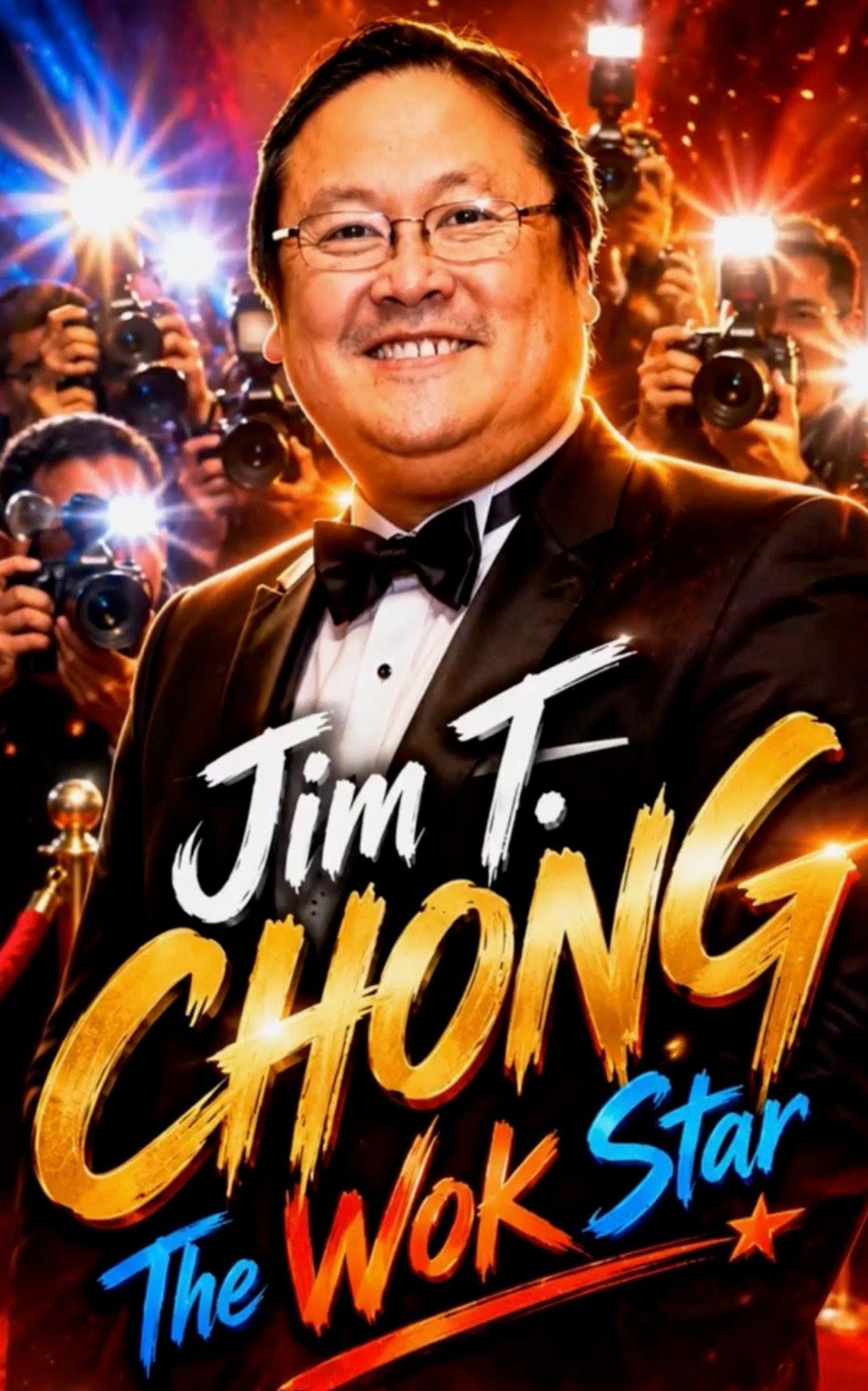
Jim T. Chong
By Jim T. Chong
HAPPY 250th BIRTHDAY AMERICA! Welcoming the New Era
Wok Star · Legend Maker · The AI Asian
Where We Came From — and Where We Are Headed
There’s something powerful about a 250th birthday. It’s not just a number. It’s a moment to stop, look back at the road you’ve traveled, and take stock of how far you’ve come before you decide where you’re going next.
America has done exactly that — survived, adapted, reinvented, and risen — every single generation. And right now, we are standing at one of the most defining crossroads in human history.
From Party Lines to Pocket Computers
Do you remember the old switch phone systems? Those clunky, corded contraptions where an operator physically connected your call by plugging a cable into a board? Or the early days of the rotary phone, when you had to spin each digit and wait for it to return before dialing the next one?
Now think about where we are today. You can video call someone on the other side of the planet in seconds, for free, while standing in a grocery store parking lot. You can dictate a voice message, translate it into another language in real time, and have it delivered before you even get back in your car
The evolution of communication IS the story of civilization. Every time we found a better way to connect — from smoke signals to telegraph, from telegraph to telephone, from telephone to the internet — society leaped forward. And with every leap came a responsibility: learn how to use it well.
That’s the thing they don’t always teach us. The tool matters less than the skill of using it. The best technology in the world means nothing if we don’t know how to effectively communicate with the people around us — with empathy, with clarity, and with intention.
This is the foundation of everything: human connection.
The Storm Is Coming — Are You Ready to Ride It?
Speaking of connection at the highest level — let me introduce you to a concept worth knowing: TheGlobalStorm.com.
Think of a storm. Not the kind that destroys — but the kind that electrifies. The kind that clears the air, recharges the ground, and reshapes the landscape. A global storm of networking, innovation, and community is gathering, and it’s designed to help everyday people plug into something much bigger than themselves.
TheGlobalStorm.com is about bringing together forward-thinkers, side hustlers, entrepreneurs, community builders, and those who simply want more — connecting them with the tools, training, and tribe they need to thrive in this new era. Whether it’s AI, business skills, or simply learning how to level up your communication game, the storm is already forming.
The question isn’t whether it’s coming. The question is whether you’ll be in it — or left watching from the sidelines.
From Caveman to Cyberspace: The Greatest Journey Ever Told
Let’s zoom out for a moment. Way out.
Forty thousand years ago, our ancestors were drawing on cave walls — documenting their world, their hunts, their stories. That was communication. That was technology for its time. From there: the written word, the printing press, the steam engine, electricity, radio, television, the internet, the smartphone.
Every era brought tools that seemed like magic to the generation before them. And every generation had a choice: resist and be left behind, or adapt and lead
We are now entering the age of Artificial Intelligence. And make no mistake — this is not just another tech upgrade. This is the most significant transformation in human capability since the invention of the written word. AI is changing how we work, how we create, how we make decisions, how we heal, how we build, and how we connect.
The caveman used fire to survive. We use AI to design, to automate, to amplify.
The journey from there to here is breathtaking. And the journey from here to what comes next? We haven’t even begun to imagine it fully.
Three Things to Keep in Mind as We Step Into the AI Era
1. Do Not Be Ignorant of AI
Ignorance was never a strategy — and in 2026, it’s especially costly. You don’t need to become a coder or a data scientist. But you do need to understand what AI is, what it can do, and how it’s already reshaping every industry around you. Turn curiosity on. The worst thing you can do is pretend it isn’t happening.
2. Learn and Adapt to What AI Can Do For You
AI is a tool. Like the telephone, like the internet — it works for the people who learn to use it. Start small. Use AI to write a draft, organize your schedule, research a topic, brainstorm ideas, or automate a task that used to eat up your afternoon. Find one area of your life or work where AI can give you back an hour. Then find another. Adaptation is not surrender — it’s survival, and it’s strategy
3. Understand Its Potential and Pre-Plan
The people who win in any new era are the ones who think ahead. What could AI mean for your career in five years? For your business? For your community? For your kids? Start those conversations now. The ones who pre-plan for AI’s potential won’t be scrambling to catch up — they’ll be the ones setting the pace.
Never Forget Where You Came From
As we celebrate America’s 250th birthday — Semiquincentennial, for those keeping score — it’s worth remembering that this nation was built by people who had the audacity to imagine something better and the grit to build it from scratch.
Our immigrant ancestors came with little more than dreams and determination. Many of our communities carved out space, culture, and identity in a country that didn’t always make it easy. We built something real. Something lasting.
Now we stand at a new frontier — not of land, but of human potential.
So here’s a gentle but powerful reminder as we step into this extraordinary new chapter:
“Never forget where you came from... and live your life to where you want it to be.”
The fire of those who came before us is still burning. Let it light your way forward.
Happy 250th Birthday, America. The best is still ahead.
Your Resource to create YOUR story.
For More Information, Contact: JIm T. Chong the Wok Star (JimTChong.com)
PR, Media, Entertainment
Email: jtc.legendmaker@gmail.com
Text / Phone: (279) 999-6363
About the Columnist:
Are you interested in helping us share about your culture or community? We want to hear from you. Contact Jim at (916) 747-9366 or tc.legendmaker@gmail.com
Jim T. Chong - Jim is the Principal of APA Living Today, specializes in Media, PR, and Publicity to help gain Visibility/Influence/Connection, is a National and International best-selling and multibook author, executive speaker, and community leader within multiple communities. He is also a Master Emcee, and digital content creator based in the Sacramento region. He is the founder of TheAIAsian.com and is affiliated with City Wide Entertainment and TheGlobalStorm. com. Follow his work and connect with him at jimtchong.com.
Let Freedom Ring: Celebrating the Courage to Build a Better Tomorrow
By Dr. Jessie Bowen
As America continues its journey through history, the words “Let Freedom Ring” remain more than a patriotic slogan—they serve as a powerful reminder of the courage, sacrifice, and vision required to build a better tomorrow. Freedom is not merely a gift passed down from one generation to another; it is a responsibility that calls each of us to contribute to the growth and success of our families, communities, and nation.
As we celebrate the enduring spirit of freedom, we must remember that every generation has faced its own challenges. From the founding fathers who envisioned a nation built on liberty and opportunity to the countless men and women who defended those ideals through military service, public leadership, education, and community involvement, freedom has always required courage. It has demanded individuals willing to stand for what is right, even when doing so was difficult.
Today, we are called to demonstrate that same courage.
Freedom provides us with opportunities that many people around the world can only dream about. We have the freedom to pursue education, start businesses, worship according to our beliefs, express our ideas, and create a legacy for future generations. Yet freedom without responsibility can lead to complacency. The true measure of freedom is not found in what we receive, but in what we do with the opportunities we have been given.
Building a better tomorrow begins with personal responsibility. Every positive change in society starts with individuals who are willing to take ownership of their lives. Successful communities are built by people who choose to lead rather than follow, serve rather than complain, and contribute rather than consume. Whether as parents, teachers, business owners, mentors, or volunteers, each of us has the ability to influence the future.
One of the greatest freedoms we possess is the freedom to dream. Throughout history, visionaries have transformed society because they dared to imagine something better. They looked beyond current circumstances and saw possibilities. They believed that challenges could be overcome and that progress was possible.
Dreams, however, require action. Vision without action remains merely a wish. The courage to build a better tomorrow comes from taking consistent steps toward meaningful goals, even when obstacles arise. Every successful leader, entrepreneur, educator, athlete, and innovator has encountered setbacks. What separated them from others was their willingness to persevere.
The martial arts have taught this lesson for generations. Students quickly learn that success is not achieved overnight. Progress requires discipline, commitment, patience, and resilience. Every black belt was once a beginner. Every champion experienced failure before achieving victory. These principles extend beyond the training floor into every aspect of life.
The same discipline that develops a martial artist can strengthen families, businesses, churches, and communities. It teaches individuals to remain focused during adversity and to continue moving forward despite challenges. In many ways, freedom itself requires discipline. It requires citizens who are willing to make wise choices and leaders who are committed to serving others.
Faith also plays an important role in building a better tomorrow. Throughout America’s history, faith has provided hope during difficult times and strength during periods of uncertainty. Regardless of one’s specific beliefs, faith encourages us to look beyond present circumstances and trust that our efforts can create positive outcomes.
Scripture reminds us that “Where the Spirit of the Lord is, there is freedom.” True freedom is not simply the absence of restrictions; it is the presence of purpose. It is the ability to live according to principles that uplift others and contribute to the common good. When individuals live with purpose, they become agents of positive change within their communities.
Another essential component of freedom is leadership. Every generation needs leaders who are willing to step forward and make a difference. Leadership is not defined by titles or positions. It is demonstrated through actions. A parent teaching values to a child, a coach mentoring an athlete, a teacher inspiring students, or a community volunteer serving others are all examples of leadership in action.
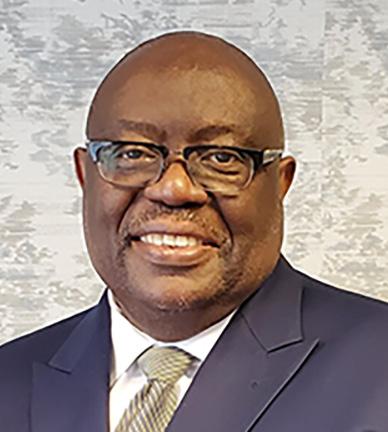
Jessie Bowen
The future of our nation depends upon developing leaders who understand that success is measured not only by personal achievement but also by the positive impact they have on others. The greatest leaders leave behind a legacy of service, integrity, and compassion.
As we reflect upon the blessings of freedom, we should also consider the legacy we are creating. Future generations will inherit the results of the choices we make today. They will benefit from our investments in education, character development, community service, and leadership. They will learn from our example.
The question each of us must answer is simple: What kind of future are we helping to create?
Are we investing in the next generation? Are we encouraging others to pursue their dreams? Are we contributing to solutions rather than focusing on problems? Are we using our freedoms to make a positive difference?
Freedom is one of humanity’s greatest blessings, but it is also one of its greatest responsibilities. It calls us to dream bigger, work harder, serve others, and leave the world better than we found it.
As we celebrate our freedoms and honor those who have sacrificed to preserve them, let us recommit ourselves to building a brighter future. Let us embrace the courage to lead, the discipline to persevere, the faith to believe, and the vision to create positive change.
Let freedom ring—not only in our words, but in our actions. Let it ring in our homes, our workplaces, our communities, and our hearts. Let it inspire us to become better citizens, stronger leaders, and more compassionate neighbors.
Most importantly, let freedom ring as a call to action for all who believe that tomorrow can be better than today.
The future is not something we inherit. It is something we build. And together, we can build a better tomorrow.
About the Author
Dr. Jessie Bowen is an author, publisher, and business coach with over 40 years of experience. As the founder of Elite Publications, he helps individuals turn their message into impact and income.
Thinking About Writing a Book?
Ready to share your story and build your brand? Connect with Elite Publications to write, publish, and market your book.
Visit: www.elitepublications.org
Elite Publications
Dr. Jessie Bowen, Founder Elite Publications & AMAA
Are you ready to write your story? Contact us! For more information, visit www.ElitePublications.org or calI/text (919) 618-8075
BUSINESS COMMUNITY
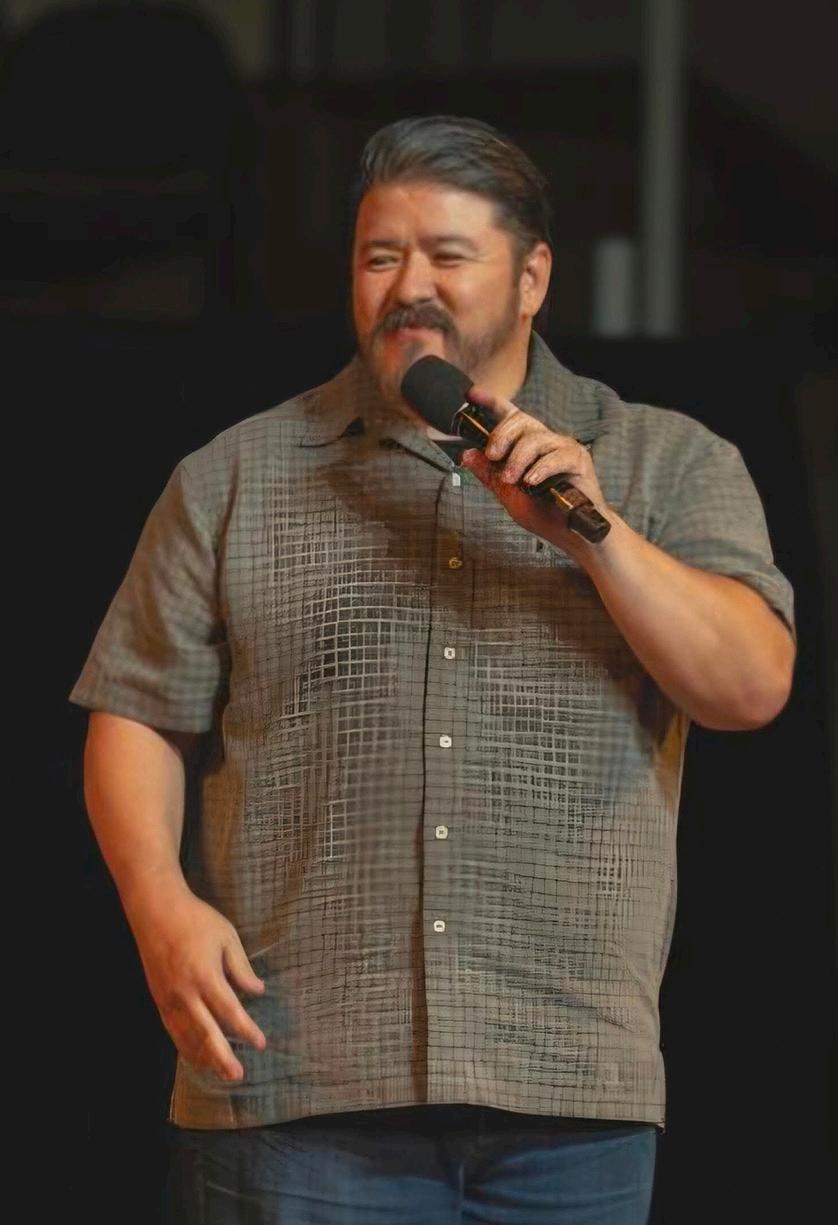
Local Laughs
By Ron McGehee
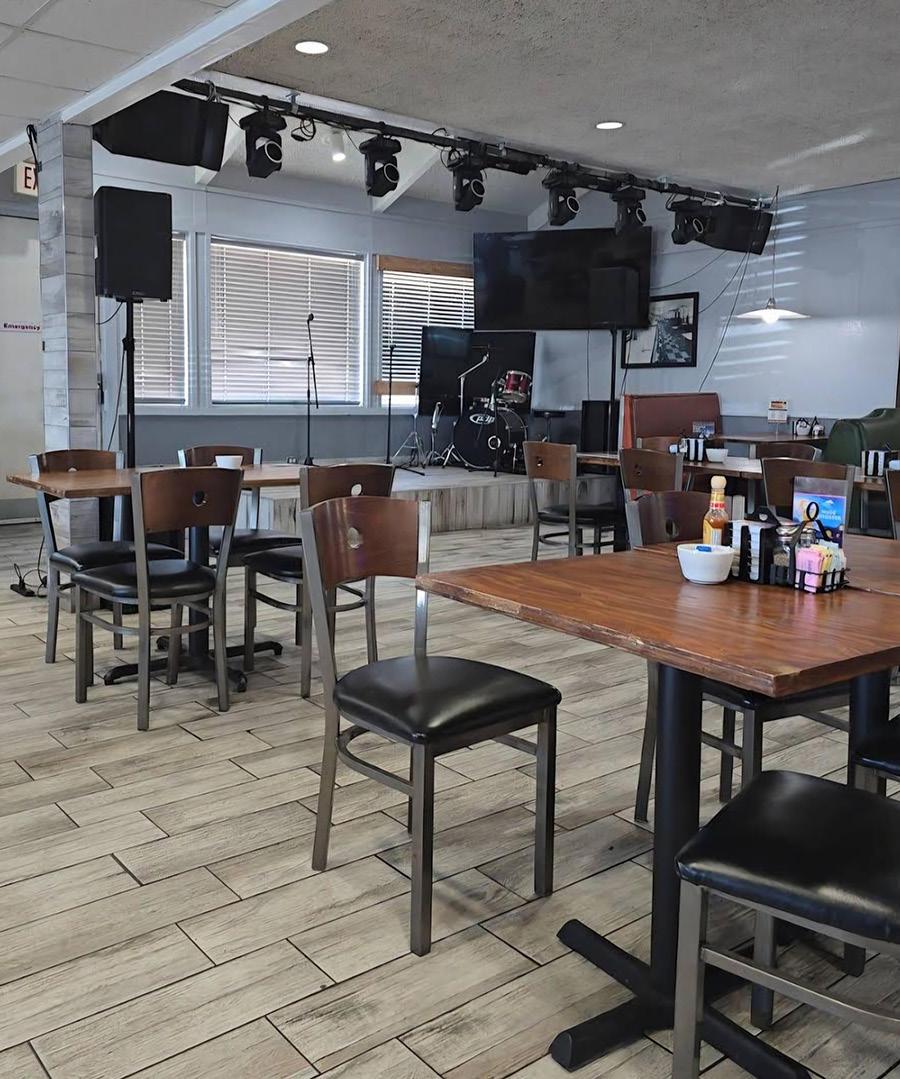
Comedy is always better shared. Even if something extremely embarrassing happened to you. With the right amount of time passing and the right amount of trust in a person, or persons, you are sharing with, that funny thing will become joyful laughter. We know funny comedians are on Netflix, Youtube and many other big streaming platforms. They perform in big cities. In big theatres. And they charge big money to be seen. So if you want to experience comedy, live, which is the best way to experience it, you have to save up. Be selective. And, if you don’t have a “Sugar-Friend” who will cover your costs, you will have big credit card bills.. But what if I told you that comedy is happening all around you. All the time. With really funny people… affordably…
Yes, big named headliners come around to those big theatres and comedy clubs. But there are restaurants, bars, coffee shops, cafes and other businesses that have comedy with big laughs too! The venues are smaller but more intimate. You can watch comedians develop and grow funnier. Their jokes are like clay that is added to, scraped away and molded into beautiful pieces of art everyone can enjoy. And you get to see the Picassos, Rembrandts and Van Goghs before they were famous. Or earless.
You can be the “benefactors” or “patrons” of this new batch of funny artists. With the amount of money it would cost you to see a big named headliner at one of those big theatres, you could see three or four local hilarious comedy shows. Dinner and drinks included. You would be supporting local businesses. Local comedians. And some local parents get their adult struggling artist child out of their house.
Some benefits of laughter include boosting immunity, increasing serotonin and dopamine levels, and decreasing cortisol levels. I guess laughter is the best medicine. But if you broke a bone I would encourage you to go to the E/R first…then after you got your cast, get to the nearest local comedy show stat! *Please note this is an article meant to contain humour and at no time is to be taken seriously when referring to any type of medical advice. If you actually take any medical advice from this article that is on you, and as time passes and the severity of your physical state from actually taking medical advice from this article, hopefully, heals, it will probably be a very funny story you should share with others so that they may, or may not depending on the advice of an actual licensed medical practitioner, benefit from.*
There is a diverse giggle (this is what you call three or more comedians. Like you would say a gaggle of geese.) of comedians performing in the area. They are bringing the funny, ideally, to you. Come on out. Eat some great food. Meet some new friends. Share in the laughs. Local laughs.
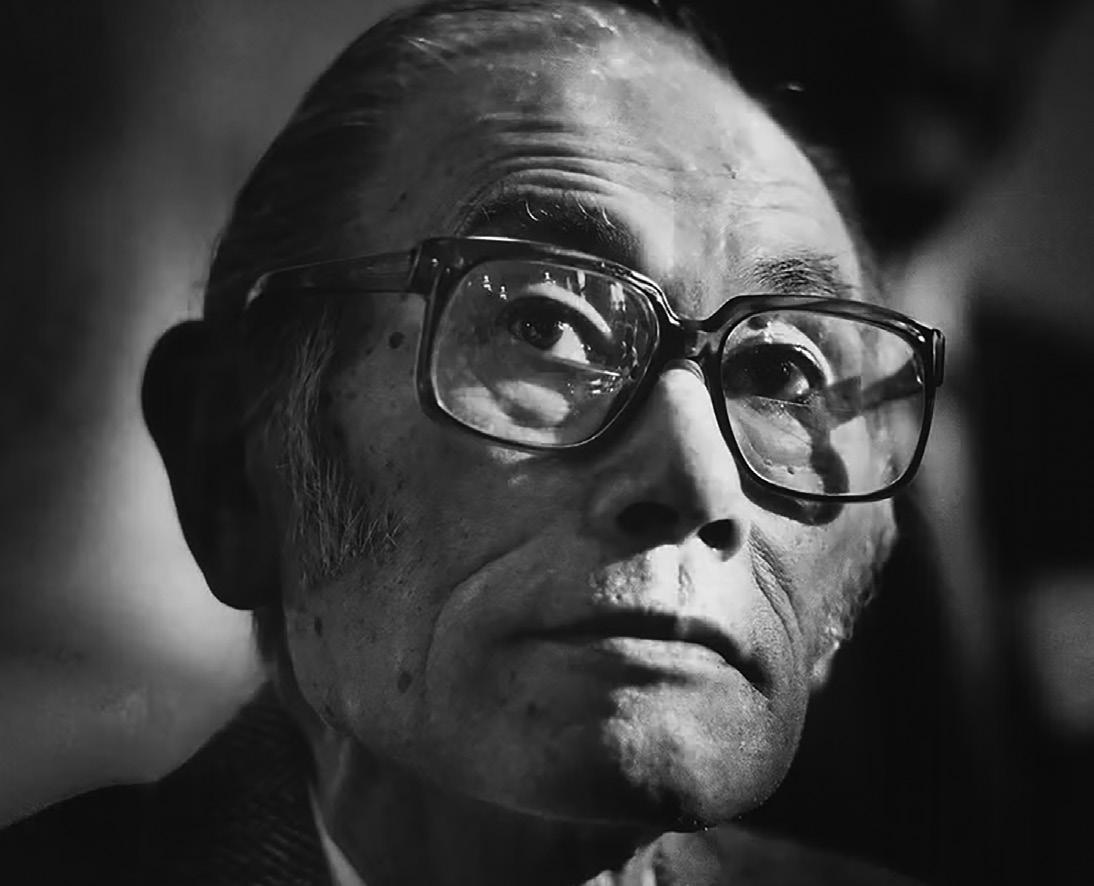
Fred Korematsu A Japanese American citizen who stood up for his civil rights during World War II.
By Biography.com Editors
Updated: May 07, 2024
Fred Korematsu was a Japanese American citizen who stood up for his civil rights during World War II when the government detained him because of his Japanese ancestry.
WHO WAS FRED KOREMATSU?
Fred Korematsu believed that the United States’ decision to send Japanese Americans into internment camps during World War II was racial discrimination and a violation of the Constitution. His case challenging the orders that resulted in his incarceration failed at the Supreme Court in 1944. In 1981, documents were discovered that showed the government had suppressed evidence in its arguments before the court, which led to the vacating of Korematsu’s conviction in 1983. He then advocated for an apology and compensation for surviving internees. Korematsu died in 2005 at the age of 86.
EARLY LIFE
Toyosaburo Korematsu was born in Oakland, California, on January 30, 1919. His parents, Kakusaburo Korematsu and Kotsui Aoki, had immigrated from Japan and owned a plant nursery. He was the third of their four sons. Korematsu was nicknamed “Fred” in school.
KOREMATSU V. UNITED STATES
Following the Japanese attack on Pearl Harbor on December 7, 1941, and the subsequent entry of the United States into World War II, President Franklin D. Roosevelt issued Executive Order 9066 on February 19, 1942. Stating the need for”protection against espionage and against sabotage,” it gave directions “to prescribe military areas in such places and of such extent as he or the appropriate Military Commander may determine, from which any or all persons may be excluded.” This resulted in the detention of around 120,000 people of Japanese ancestry, even those who were U.S. citizens, as the military believed some were likely to aid Japan in the war.
Korematsu, a welder who lived in California, was ordered on May 3, 1942, to
report to an assembly center for relocation to an internment camp. Though his family obeyed the directive, Korematsu did not. He instead adopted a fake identity and even underwent plastic surgery in an attempt to alter his appearance. Despite this, Korematsu was arrested on May 30, 1942, in San Leandro, California. He told authorities he’d planned to move away from California with his girlfriend.
While Korematsu was behind bars, a lawyer from the American Civil Liberties Union asked him to take part in a lawsuit challenging the constitutionality of internment. Korematsu, who faced federal charges for not obeying a military relocation order, agreed. He was sent to an assembly center, which reunited him with his family, as his case began to make its way through the system. At his trial in September 1942, Korematsu, who’d attempted to enlist in the navy, proclaimed his loyalty as a citizen. He was still found guilty and received five years’ probation.
Korematsu appealed his conviction, but it was upheld by a federal appeals court. The case was taken up by the Supreme Court and arguments were held in October 1944. The decision came down on December 18, 1944. In a 6-3 vote, the court ruled that Korematsu’s conviction had been constitutional. The majority decided that the detention of Korematsu and others was not due to race, but rather”real military dangers.” The opinion stated,”We could not reject the finding of the military authorities that it was impossible to bring about an immediate segregation of the disloyal from the loyal.”
One of the three justices in the minority noted that internment was spurred by”the misinformation, half-truths and insinuations that for years have been directed against Japanese-Americans by people with racial and economic prejudices,” and declared he was dissenting from”the legalization of racism.”
INCARCERATION AND RELEASE
Korematsu spent his first months of detention at a horse racing track that served as an assembly center, where he was forced to live in a horse stall. He
Fred Korematsu convicted for defying internment camp orders
TRAILBLAZERS
and his family were next transferred to the Topaz internment camp in Utah. This location was guarded by military police and surrounded by barbed wire. The six adults in his family had to squeeze into two dusty barracks rooms.
Other detainees and Korematsu’s family disapproved of his decision to defy the government order. He later shared,”All of them turned their backs on me at that time because they thought I was a troublemaker.” The girlfriend he’d hoped to marry, an Italian American, broke up with him, in part because she was subjected to police pressure.
In November 1942, Korematsu and other young camp residents were given permission to leave the Utah camp to work. He received indefinite leave from internment in January 1944, though he was not permitted to go back to the West Coast. Korematsu moved to Detroit, Michigan, after the war ended and the camps were shut down.
CONVICTION OVERTURNED AND ACTIVISM
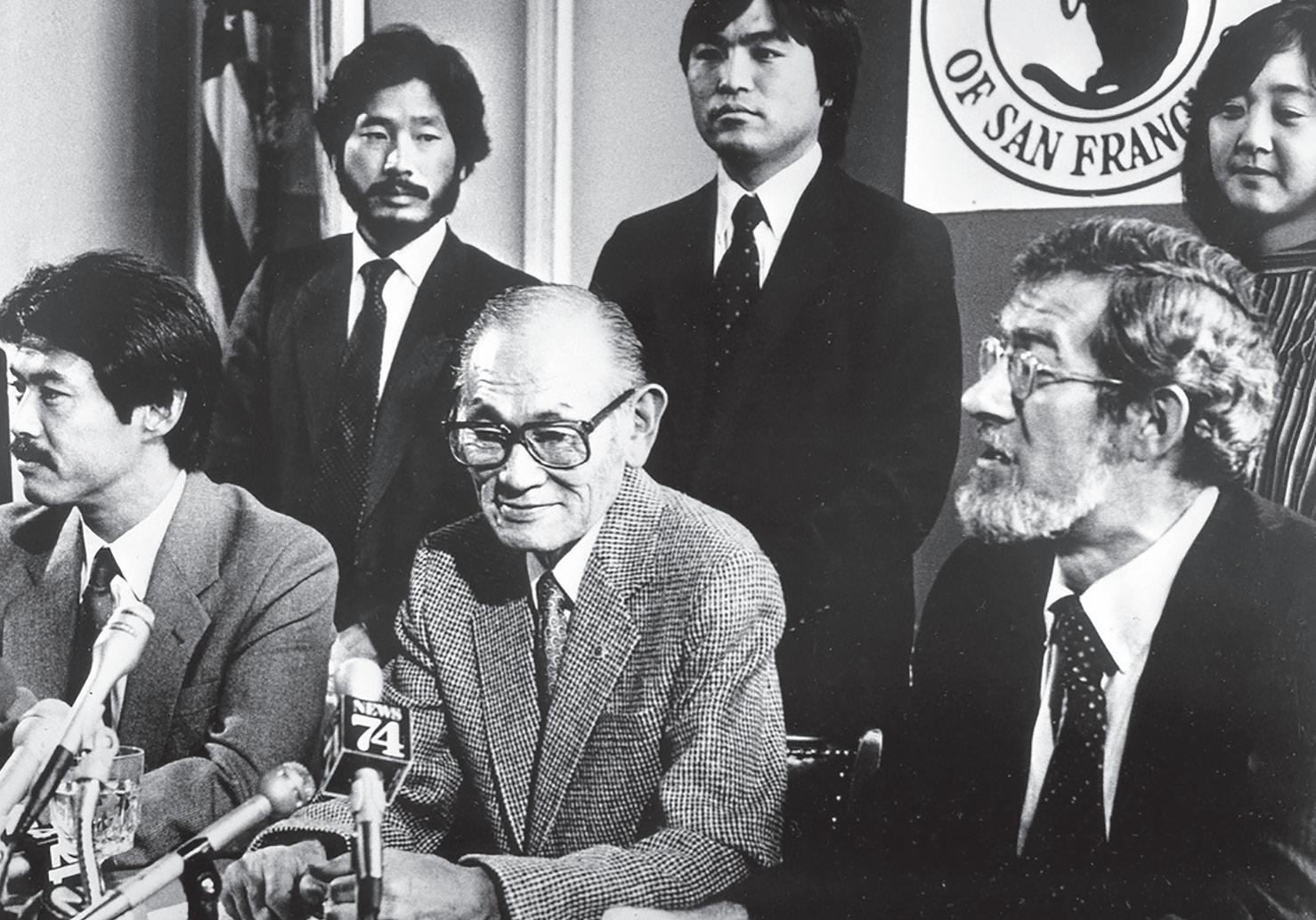
Though Korematsu found work as a draftsman, his conviction hung over him and restricted job opportunities throughout his life. Four decades after his case had been decided, it came to light that the government had suppressed intelligence about the loyalty of Japanese Americans, showing they posed no security threat, in its presentation to the Supreme Court. Arguing that false evidence had deceived the court, a legal team, mostly made up of Japanese American attorneys, petitioned to get Korematsu’s case reopened. On November 10, 1983, when Korematsu was 63, his conviction was overturned by a federal judge.
Korematsu lobbied for a 1988 bill that granted an apology to and compensation for those who’d been subjected to internment. President Bill Clinton awarded Korematsu the Presidential Medal of Freedom in 1998.
In following years, in particular after the terrorist attacks of September 11, 2001, Korematsu tried to bring attention to other potential violations of civil
liberties. He criticized parts of the Patriot Act and submitted a friend-of-thecourt brief with the Supreme Court in support of prisoners held at Guantanamo Bay Naval Station in Cuba.
PERSONAL LIFE
Korematsu married Kathryn Pearson in Michigan in 1946. They moved to California three years later. They had two children, Karen and Ken.
Korematsu’s daughter stated in a 2012 interview that her father “felt responsible for the loss of his Supreme Court case in 1944 in regard to the rest of the Japanese and Japanese Americans that had been incarcerated, and he carried around the weight of that shame for almost 40 years.” Because Korematsu found it too painful to discuss his case with his children, both learned about it in school instead.
DEATH
Korematsu passed away at the age of 86 on March 30, 2005, in Larkspur, California.
LEGACY
The Fred T. Korematsu Institute provides materials to teach younger generations about Japanese American internment. Its executive director is Korematsu’s daughter Karen.
The middle-grade biography Fred Korematsu Speaks Up, the biography Enduring Conviction: Fred Korematsu and His Quest for Justice and the documentary Of Civil Wrongs and Rights: The Fred Korematsu Story share Korematsu’s life.
Multiple states and cities now recognize Korematsu’s birthday as Fred Korematsu Day. It is the first day in the United States named in honor of an Asian American.
Korematsu Coram Nobis Press Conference
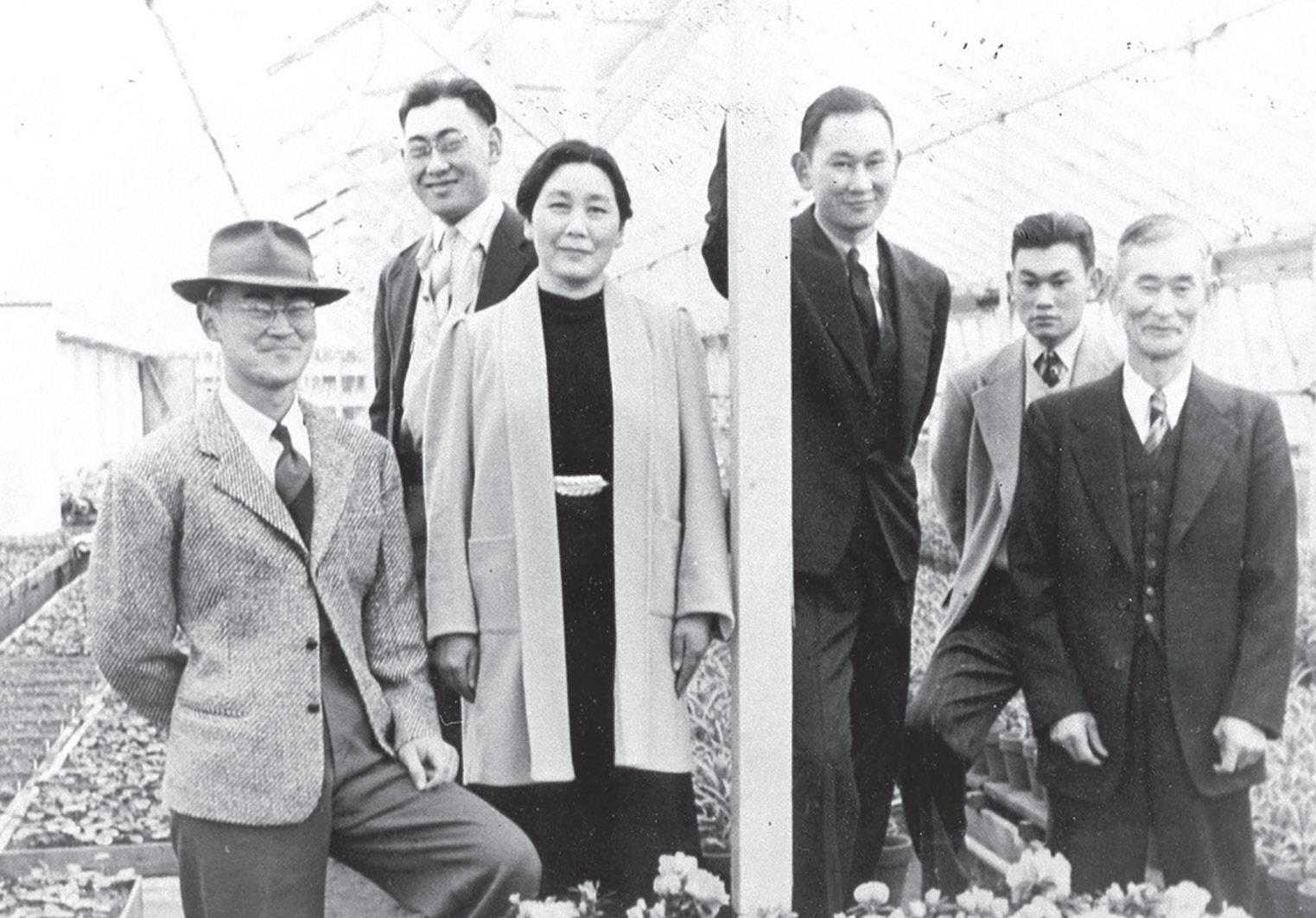
Fred Korematsu and Family
SWEET & Savory
Story of the banh mi: Vietnam’s super sandwich that took on the world
By Alkira Reinfrankin Hong Kong and Bernice Chanin Vancouver
Published: 27 Oct 2019
Eat Drink Asia Podcast | Lifestyle Food & Drink
Introduced to Vietnam by the colonial French, the baguette was later adapted for local tastes. Banh mi is still sold in Vietnam as a cheap snack, but it is now also a hit around the world.
Theign Yie Phan has to stop herself from chowing down a banh mi every day of the week. But it’s hard to resist when you’re the head chef of a restaurant that specialises in the delicious Vietnamese sandwiches.
“It is a good between-service snack. I eat one every other day. It is definitely not something you get sick of,” she says with a laugh, as she stands in front of an array of colourful ingredients ready to be stuffed into a crusty baguette at Le Petit Saigon in Wan Chai.
Along with pho, the noodle soup, banh mi is one of Vietnam’s most famous culinary exports – a French-style bread filled with rich meats and zingy, fresh vegetables and herbs.
“As a sandwich it is well balanced in flavours and textures. There’s the crusty warm bread, the richness of the flavours of the meat, and then the tartness and sourness from the pickles,” says Phan, who is also the head chef of next-door sister restaurant, Le Garcon Saigon.
Cutting open a baguette, Phan begins layering it with thinly sliced pork belly, terrine and Vietnamese sausage, topped off with chicken liver pate and housemade mayonnaise. Next she balances that with slices of fresh cucumber, pickled vegetables, Maggi sauce, coriander, spring onion and chilli – “for punch”.
Phan is not alone in her love of the sandwich. Banh mi has gone from humble beginnings on the streets of Saigon to become a global sensation – mirroring the history of modern Vietnam. So how did a country in Southeast Asia – known for rice and noodle dishes – originate such a Western speciality as a sandwich?
Banh mi date back 130 years to when France colonised Vietnam from the 1880s to 1954. During that period the French forced the Vietnamese to work in slave-like conditions on plantations growing opium and rubber, taxing them heavily.
Culturally the French introduced Catholicism, its national language and architecture. And, of course, food.
Chef Peter Cuong Franklin has researched French cuisine’s influence in Vietnam. He was born in Da Lat, in southern Vietnam, and during the tumult of the Vietnam war (1955-75) was separated from his family and adopted in the United States.
In 1994, he relocated to Hong Kong to work as an investment banker, and later headed to the Thai capital, Bangkok, to attend the Cordon Bleu culinary school. After returning to Hong Kong he opened his own Vietnamese-themed restaurants, Chom Chom, and Viet Kitchen. Then in 2017 he moved to Ho Chi Minh City (formerly Saigon) to open Anan Saigon.
“When the French colonised Vietnam, they needed to eat their own food. So they brought things like wheat to make bread, cheese, coffee, and other products that they would consume every day,” Franklin says.
The Vietnamese were gradually introduced to these French foods, he says, though they were expensive back then. Eventually wheat, and the technique for making baguettes, were imported, and the locals – in particular the ethnic ChineseVietnamese – learned how to make bread.
SWEET & Savory
“They [the Chinese] were hired as chefs and cooked for the French,” Franklin explains. Over time, they came to see that what they were preparing was no longer for the French, but for the locals. “They would modify the bread with more yeast and water to make it lighter, for Vietnamese tastes.”
The French typically ate baguettes spread with chicken liver or goose liver pate, which the Vietnamese found too rich. So they developed their own version.
“The Vietnamese used local pork liver, which is cheaper and easier to make. Most of the time the French ate baguettes with some butter and maybe some mustard [to spread on the charcuterie],” he says.
But in the 1950s, “the Vietnamese came up with the idea of putting these things together into a simple sandwich to be consumed by a lot of people. So I think that’s the early form of the sandwich”.
The flavours of the modern banh mi vary by region in Vietnam. In Hanoi in the north, the fillings are more simple than the “original” found in Ho Chi Minh City in the south, and include high-quality cold cuts. In the central coastal city of Hoi An, the meat used is served warm.
Despite its humble roots, banh mi went on to explode in popularity around the world, especially in countries such as Australia and the United States, where many Vietnamese immigrants fled in the ’70s after the fall of Saigon.
Nowadays, there are more than 1.3 million Vietnamese immigrants living in the US, and their traditional food has been widely embraced by the American mainstream.
“The US is a hub of pop culture, and over the years TV food shows, travel shows, Anthony Bourdain, food blogging and social media” have helped introduce people in the West to this quintessential fusion Vietnamese dish, says Phan.
Despite being Southeast Asian – she was born in Malaysia and grew up in Singapore – it was only when she studied in the US that she was introduced to the Vietnamese street food.
“In America, every university town has a street with lots of food carts, and one of these stores always serves [banh mi]. I remember during the cold winters in Wisconsin, I would walk past and grab a banh mi from one of these stores and walk to class,” she recalls fondly.
Phan believes the wider American population embraced banh mi when it was introduced by Vietnamese immigrants because the ingredients used were “familiar” to the American palate.
“The bread, familiar; the meat, familiar; the vegetables and pickles, familiar. So people were more inclined to try it and maybe that’s why it exploded,” she says. “Everyone loves a good sandwich. And in every culture [with bread] there is some sort of sandwich. So banh mi is very accessible culturally, so that’s why it has become so popular worldwide.”
Given that this portable snack is available at street stalls in Vietnam for US$1, it’s perhaps not surprising that Franklin created a stir when he unveiled the US$100 banh mi two years ago at his Anan Saigon restaurant.
“Part of my mission is to elevate Vietnamese cuisine to a higher level, to get people to rethink what Vietnamese food can be. And banh mi is very popular around the world because it’s healthy and light, and it is flavourful. But one problem we have with the cuisine is that people think it’s great but they think it should be cheap as well … so what I’ve done is done something crazy.”
The Anan Saigon banh mi is replete with truffle mayonnaise, pate, sous vide pork chop, foie gras, coriander, cucumber, basil and mint. If that’s not enough, there are also sweet potato fries dipped in caviar on the side. He says there are curious gastronomes willing to dig deep into their pockets to see what it tastes like.
Back in Hong Kong, Phan at Le Petit Saigon sells about 90 banh mi a day to hungry customers. There are several varieties to choose from, including the traditional banh mi thit (pork), banh mi ga (chicken) and banh mi chay (tofu).
But Phan is not afraid to get creative with her menu. Each month she invites chefs from various restaurants in the group to contribute their own version of banh mi to the menu. This month, Michelin-star chef Palash Mitra from The New Punjab Club created a mouthwatering tandoori chicken tikka banh mi.
But she says the best selling is still the traditional Saigon pork banh mi.
Some tastes change, while others stay the same.
“We have some detractors who think like things like the banh mi or pho, or food in general, should not change. But I’m a believer that food can and should change with the times. You look at Vietnam, it’s modernising very quickly, and I can see change in the past two years I’ve been here.”
Pacific plans School of Medicine to address Central Valley physician shortages
By University of the Pacific Staff
May 28, 2026
University of the Pacific, founded 175 years ago as California’s first college, today unveiled plans to launch a School of Medicine, a transformational initiative to address the severe and growing physician shortages across the Central Valley and other areas facing dangerous health care disparities.
The Pacific School of Medicine will be California’s first M.D.-granting institution outside of the state’s largest population centers in Southern California, the Bay Area and Greater Sacramento.
Located on the university’s historic Stockton Campus, the new School of Medicine will focus on educating a new cadre of doctors for severely underserved areas. The regions located south of the Bay Area and Greater Sacramento and north of Los Angeles— the San Joaquin Valley, southern foothills, Central Coast and Eastern Sierra—all fall below the minimum standards for primary care physicians per capita while California’s largest metropolitan areas—home to the state’s 13 M.D.-granting schools—meet the recommended physician-to-population ratios.
The new School of Medicine will build on Pacific’s existing health care strengths from the Arthur A. Dugoni School of Dentistry, the Thomas J. Long School of Pharmacy and the School of Health Sciences, which prepares new nurses, physician assistants, audiologists, physical therapists and other health care professionals for the workforce.
Pacific will be just the 36th American university to have schools of medicine, dentistry, pharmacy and health sciences.
“We are enormously proud of our tradition of providing top quality educational opportunities for all qualified students—no matter their background or socioeconomic status—and creating hundreds of caring, practice-ready health care professionals each year who are desperately needed in our communities and beyond,” said Pacific President Christopher Callahan.
“The new School of Medicine aligns perfectly with our mission,” the president said. “We are not only ready, willing and able to tackle the dangerous and growing problem of the severe lack of physicians, but we believe it is our duty and responsibility.”
Gov. Gavin Newsom said today’s announcement “will be transformative for generations of Californians to come.”
“This brand-new University of the Pacific medical school opening near the heart of the Central Valley will create a critical pipeline bringing more physicians into our rural communities to serve and expand care for our state’s most vulnerable populations,” the governor said. “Now more than ever, investments like these in our higher education system create opportunities for empowering Californians to give back to their communities and build a healthier future across the Golden State.”
The Board of Regents, university leaders, private and government funders and health industry executives have been working behind-the-scenes for more than a year exploring the feasibility of a Pacific medical school. The Board voted unanimously May 15 to approve the new school.
“Our long history at Pacific is one of innovation,” said Board Chair Mary-Elizabeth Eberhardt. “We were the first college in California, created less than a year after statehood. We were California’s first coeducational institution of higher learning. We created the first conservatory of music west of the Mississippi. And 102 years ago, we moved the university from San Jose to Stockton to become the Central Valley’s first school to confer four-year degrees. But the School of Medicine might be our most important undertaking yet.”
An essential centerpiece of the new School of Medicine at Pacific is a strategic clinical partnership with Dignity Health St. Joseph’s Medical Center. Under the partnership, Dignity Health will place third- and fourth-year medical school students from Pacific in clinical rotations at St. Joseph’s and other hospitals across the region.
David Ziolkowski, president and CEO of Dignity Health St. Joseph’s Medical Center, worked closely with President Callahan to develop the strategic partnership.
Ziolkowski said the two institutions are “deeply committed to our shared values of excellence, inclusion, integrity, collaboration and humankindness, and are aligned in the urgent desire to address the region’s deep physician shortages.”
The physician shortage is worsening as nearly one in four California doctors is now 65 or older. While the state’s two largest population centers—the Bay Area and Southern California—have seen significant population declines over the past six years, the population in medically underserved regions are growing. San Joaquin County, for instance, increased by nearly 50,000 residents—second most in the state.
St. Joseph’s Medical Center, located less than two miles from the Pacific campus, is undergoing a massive expansion that will make it one of the largest hospitals in the state outside of the Bay Area and Southern California. That expansion is expected to be completed by 2030, which also is the scheduled opening of the School of Medicine if accreditation approvals are secured.
A global consulting firm conducting an in-depth feasibility study concluded that $150 million would be needed to create a financially self-sustaining medical school at Pacific.
NEWS & EVENTS
The estimate includes a 100,000-square-foot state-of-the-art medical education complex, simulation labs and other specialized equipment, and operational costs over the first decade.
The university secured more than $25 million from several major donors in advance of today’s announcement, including from Pacific Regent Tony Chan and his wife, former Regent Virginia Chan, both 1977 pharmacy school graduates, and the Stockton-based Cortopassi Family Foundation.
Tony Chan called the medical school “transformational for the future of the university and the health of our communities.”
“I started in this Valley pushing a mop. Because people believed in me, I’m standing here today,” Chan said. “This medical school is how we make sure the next kid mopping floors doesn’t have to leave the Valley to become a doctor. He or she can stay here. Learn here. Serve here.”
With today’s announcement, Pacific launched a public fundraising campaign to support the School of Medicine.
“This is a remarkable opportunity for Pacific to change the trajectory of our region,” said Scott Biedermann ‘05, ‘20, vice president for development and alumni relations. “Opening a medical school is an ambitious undertaking, and its success requires robust community support. We are incredibly grateful to the Chans, the Cortopassis and all who have invested in the school thus far, and we look forward to welcoming more partners in this historic effort.”
Legislators also have been actively pursuing funding for the new School of Medicine.
In the State Capitol, California State Assemblymember Rhodesia Ransom is pushing for a $50 million appropriation to help launch the school.
“California is facing a growing physician shortage, and families in San Joaquin County are already feeling it through longer wait times, fewer primary care options and the need to travel farther for care,” the state lawmaker said. “Pacific has long been a trusted institution in our region, and this new School of Medicine is exactly the kind of long-term investment we need to train homegrown doctors who understand our communities and are prepared to serve them. I am proud to push for state funding to help make this school a reality.”
State Sen. Jerry McNerney, who like Ransom represents San Joaquin County in the Statehouse, also is working on the state funding initiative.
McNerney called the Pacific School of Medicine “a pivotal step” toward “strengthening access to essential health care services in the region, especially in rural and underserved areas.”
In Washington, U.S. Rep. Josh Harder has been battling for federal funding that would cover the costs of the specialized equipment for the medical school.
“The Valley needs more doctors, nurses and health care workers—it’s that simple,” the congressman said. “Bringing the first medical school to the Valley is a huge step forward because it means training more doctors right here in our community. The people caring for Valley families should know this community, understand our challenges and be able to build their lives here, too.”
The School of Medicine also will have a major economic benefit for the region, generating more than $1.3 billion in economic output over the first decade, according to an analysis by the Center for Business and Policy Research at the Eberhardt School of Business.
Pacific will launch a national search this summer for the school’s founding dean.
Provost and Executive Vice President Gretchen Edwalds-Gilbert said the School of Medicine will draw on the many strengths of the university’s nine other schools and colleges and Pacific’s focus on interdisciplinary education and research.
“We have long been a leader in health science education, teaching our students to work across health professions while in training,” the provost said. “The medical program will build on our strengths in teaching and research, allowing us to offer new opportunities to our students and faculty while at the same time better serving the communities of the Central Valley.”
Pacific plans to design clear pathways to the M.D. program from a wide array of pre-med undergraduate degree programs. The university also plans on specialized pre-med tracks in the Pacific Summer High School Institute, a two-week residential program that serves about 1,800 high school students annually.
Over the past half-dozen years, during a time when many American universities have been struggling, Pacific has been on the rise by every measure, enjoying its highest enrollments, fundraising, research, financial strength and academic rankings in its 175-year history.
The Wall Street Journal ranks Pacific at No. 85 among all U.S. colleges and universities, and the university was named one of America’s 75 “Dream Schools” by author Jeff Selingo for exemplifying academic excellence, experiential learning, accessibility, affordability and exceptional student outcomes.
Pacific places a premium on the social mobility of its students.
The Georgetown University Center on Education and the Workforce rated Pacific first in the nation in career earnings among U.S. colleges and universities that have high percentages of Pell Grant recipients. Two of every five Pacific undergraduates receive Pell Grants, a federal program to support college students from low-income households. Half of the current first-year class identify as first-generation college students.
The New York Times ranked Pacific No. 23 in the nation among all colleges and universities—private and public—in economic diversity among students. Pacific is also the highest ranked U.S. university to have both Hispanic-Serving Institution and Asian American and Native American Pacific Islander-Serving Institution designations from the U.S. Department of Education.
The Carnegie Foundation for the Advancement of Teaching and the American Council on Education, in its first-ever measurement of alumni earnings and access to a college education no matter a student’s economic background, placed Pacific in the highest category—Higher Access, Higher Earnings.
“Pacific gave me more than an education,” said Board of Regents Vice Chair Leticia Robles, a 1989 Pacific alumna, a first-generation college graduate and the founder of Pacific Homecare Services, which now serves thousands of families across the region with in-home care for seniors and developmentally disable patients. “It gave me confidence. It gave me purpose. And it taught me that where you come from does not define how far you can go.”
“There are students sitting in classrooms across our region right now who dream of becoming physicians but wonder if there will ever be a place for them,” she said. “Today, Pacific is telling them: There is a place for you here. Your story matters. Your dreams matter. And your future matters.”
Pacific plans to welcome its first medical school cohort in Fall 2030, pending accreditation approval, with the school eventually growing to 400 students by 2037.
Data centers are guzzling California’s water. We have no idea how much.
By Rachel Becker
May
16, 2026
Data center builders don’t tell the public how much water they use, according to a new report — and the industry is encroaching into water-stressed and vulnerable communities.
The report, by the think tank Next10 and researchers at Santa Clara University, finds that planned data centers — the ganglia of artificial intelligence — are spreading to regions reliant on overtapped groundwater and strained surface water, with potentially major effects in the Central and Imperial Valleys.
But, reinforcing previous studies, the researchers found that a patchwork of state, federal and local policies allow data center operators to avoid publicly disclosing their actual water use.
California lawmakers tried to address this last year, but California Gov. Gavin Newsom vetoed the measure. Now, the Legislature is trying again, with bills mandating disclosures about water use and planning.
“We have this huge build out, and we have very little data,” said Irina Raicu, who directs the Internet Ethics program at the Markkula Center for Applied Ethics at Santa Clara University.
Paired with California’s precarious water supplies, Raicu said, “it’s just not a good combination.”
Shaolei Ren, an expert on the environmental impacts of AI at UC Riverside who was not involved in the study, said the findings point to a much broader problem.
“Limited publicly available information about data center water use makes it difficult for communities, water providers, and researchers to have meaningful public discussions and responsibly assess power-water trade-offs,” Ren said in an email.
Murky Water Use
Few environmental impact reports for California’s data centers were publicly available online, the researchers found.
Raicu and a team led by Iris Stewart-Frey, a professor of environmental science and the main author of the study, went looking for the reports, meant to assess and disclose a project’s impacts for both nature and people under the landmark California Environmental Quality Act.
They found almost none. The ones they did find were largely for facilities in the city of Santa Clara.
Through interviews with planning officials, they discovered that projects can slip through with little environmental review if they fall under certain size or water use thresholds, or if they meet a city or county’s criteria for other approval pathways. These include something called ministerial approval, which requires planning agencies to approve a project that meets local zoning and other standards.
Even for data centers that undergo more stringent environmental scrutiny, the researchers found that documentation is rarely available to the public.
In the few cases the planning documents were posted publicly, the information — on the data center’s owner or operator, size, type of cooling system, the amount of water used, whether it’s recycled or potable — was often “missing, contradictory, or vague,” the report said.
The researchers said they contacted water providers in areas where data centers cluster, seeking usage data. None responded.
A Shift To Vulnerable Regions
California’s data centers mostly cluster in the south San Francisco Bay Area and the city of Los Angeles, with smaller concentrations in Sacramento and San Diego.
But the report noted large, planned projects in rural and less affluent regions — like in Santa Clara County’s Gilroy, as well as in the heavily agricultural Imperial Valley.
“They need a bunch of cheap land,” Raicu. “If we’re not careful, they will end up being pitched, very convincingly, to communities that have real needs — without enough attention being paid to the water part.”
Khara Boender, director of state policy for the Data Center Coalition, which has opposed bills mandating more granular water use reporting, said in an email the industry is “committed to being a good neighbor.”
Boender argues that data centers collectively “used significantly less water than other essential industries in 2025, including the agriculture, power, food
and beverage, and semiconductor sectors,” but the coalition offers no data to back that up.
Collective use matters less than local impacts in a state where each community has its own mix of water supplies and strains, according to a previous study published by a team at UC Berkeley.
Whether data centers use a lot or a little water relative to agriculture or other industries, “what matters most is the scale of new local use compared to available local supply,” the Berkeley team concluded earlier this year. “Unfortunately, this picture is clouded by data deficiencies.”
In this week’s report, the Santa Clara University team drilled into those local supplies and community vulnerabilities to anticipated expansion.
“We’re at the brink of this happening in California,” Stewart-Frey, the environmental scientist, said. Her report, she added, isn’t advocating against data centers. But “communities should know what they’re getting themselves into.”
Debates over proposed data centers are erupting in a Kern County desert community with dwindling groundwater and in the hot Imperial Valley drawing from the strained Colorado River.
Monterey Park residents in the San Gabriel Valley successfully opposed one data center project over environmental concerns and inadequate information and secured an upcoming vote on a citywide ban.
In a letter to city officials, a representative for the developer dismissed opponents as “rage-baiting an uninformed mob to pressure your decisionmaking.”
Raicu pushed back. “If those communities are uninformed about the issue — whose fault is that? Who should be informing the people so that you don’t have this kind of pushback, if there is no need for it?”
New Laws V. Big Tech
Last year, Assemblymember Diane Papan, a Democrat from San Mateo, authored a bill requiring data center operators to report estimated or actual water use to their water supplier when seeking or renewing a business license or permit.
Gov. Gavin Newsom vetoed the measure amid industry pressure, saying he was “reluctant to impose rigid reporting requirements about operational details on this sector without understanding the full impact on businesses and the consumers of their technology.”
Now Papan is trying again with two bills. One largely reprises last year’s measure, with additional reporting required to the city and county. The other would bar local governments from approving new or expanded data centers unless the developer discloses information about their water use and plans.
It would also set other requirements — like prohibiting development in overdrafted groundwater basins, like in the San Joaquin Valley, unless state water managers okay it.
“You cannot manage what you have not and cannot measure,” Papan said. “The public likes transparency, and they should.”
Both bills cleared a key legislative chokepoint this week but face staunch opposition from the tech industry and business groups.
“If they run out of water, guess what happens? And they can’t cool their systems — are they going to succeed?” Papan said. “To which I say, help us help you.”
An irrigation ditch runs between farmland, on the right, and a proposed 950,000-square-foot data center, on the left, in Imperial County on March 11, 2026. Photo by Gina Ferazzi, Los Angeles Times via Getty Images
Some California schools get three times more funding than others. Here’s why.
By Carolyn Jones CalMatters
June 17, 2026
At Pinedale Elementary in Fresno, there’s almost no classroom aides, after-school tutors or behavioral counselors. Literacy activities and parent workshops are scarce. Field trips? Almost non-existent. The school survives on one of the lowest per-pupil expenditures in the state: $16,700 a year, nearly $5,000 below the state average.
Less than two miles away, it’s a different story at Kratt Elementary, which is in a different school district. Kratt has almost identical demographics – predominantly low-income and Latino – but gets $25,000 per student and has the amenities to show for it.
And a few hours west in the Bay Area, you’ll find Portola Valley Elementary, which spends almost $46,000 per student annually. It offers music and art classes, mental health counselors, small class sizes and state-of-the-art facilities.
The way California’s school funding works, schools with large numbers of students who are low-income, English learners, homeless or in foster care get extra funding. Schools in wealthy areas get less state funding but make up for it in local property taxes and parent donations. But those in the middle? They get much less money overall.
“When I saw what other schools provide, I was like, what?” said Tania Galeana-King, a mother of three and parent volunteer at Pinedale. “As a parent, it’s really frustrating. I’ve heard of No Child Left Behind, but this is like half the kids left behind.”
Low funding, low test scores
When California adopted the Local Control Funding Formula a little more than a decade ago, the idea was to bring equity to school funding and ensure students with the most needs got more support. But soaring costs, declining enrollment and inflation have led to gaping disparities in school funding.
Those in the wealthiest areas, such as Portola Valley, Menlo Park and other Silicon Valley enclaves, are typically “basic aid” districts, meaning they get most of their funding through local property taxes. Parents chip in the rest, often millions of dollars a year.
School districts that are not basic aid get their money through the state’s Local Control Funding Formula, which includes a base grant plus extra money depending how many students are low-income, English learners, homeless or in foster care. If more than 55% fall into that category, districts get even more money.
That’s why Fresno Unified, where Kratt Elementary is located, gets significantly more money than Pinedale Elementary, which is located in Clovis Unified. Clovis, where just under half the students are considered high-needs, receives little extra funding.
The consequences of the funding disparities are reflected in students’ test scores. At Pinedale, fewer than 30% of students met the state’s English language arts standard last year. Only 23.5% met the math standard. Kratt students scored 5 to 10 percentage points higher on both tests. At Portola Valley, about 85% of students met the standard on both tests.
“I’d say the problem is urgent,” said Michael Johnston, associate superintendent at Clovis Unified, noting the impact on student learning at schools with less funding.
“For many, many years, these kids have not gotten the same resources, and every year that goes by, it gets worse. It’s a group of students we are not treating fairly, and there needs to be a solution.”
Solutions in Sacramento
A bill in the state Senate seeks to fix the problem. Authored by Sen. Dave Cortese, a Democrat from San Jose, Senate Constitutional Amendment 5 would create a reserve account funded by surplus tax revenues in economically flush years. After the state doles out its Proposition 98 money – California’s primary vehicle for funding schools –every year, it would give extra funding to schools that aren’t in basic aid districts. The money would come from the interest generated on the reserve account. As the account grows, the extra funding would grow.
“Over time, we think this bill can certainly stop the bleeding,” said Cortese, whose district includes a dozen basic aid districts. “If we do nothing, the problem is just going to get worse and worse.”
Cortese’s bill would amend the state constitution. If it passes the Legislature, the proposal would appear on the fall ballot.
Gov. Gavin Newsom’s revised budget also attempts to address the problem, providing almost $1 billion more toward school base grants.
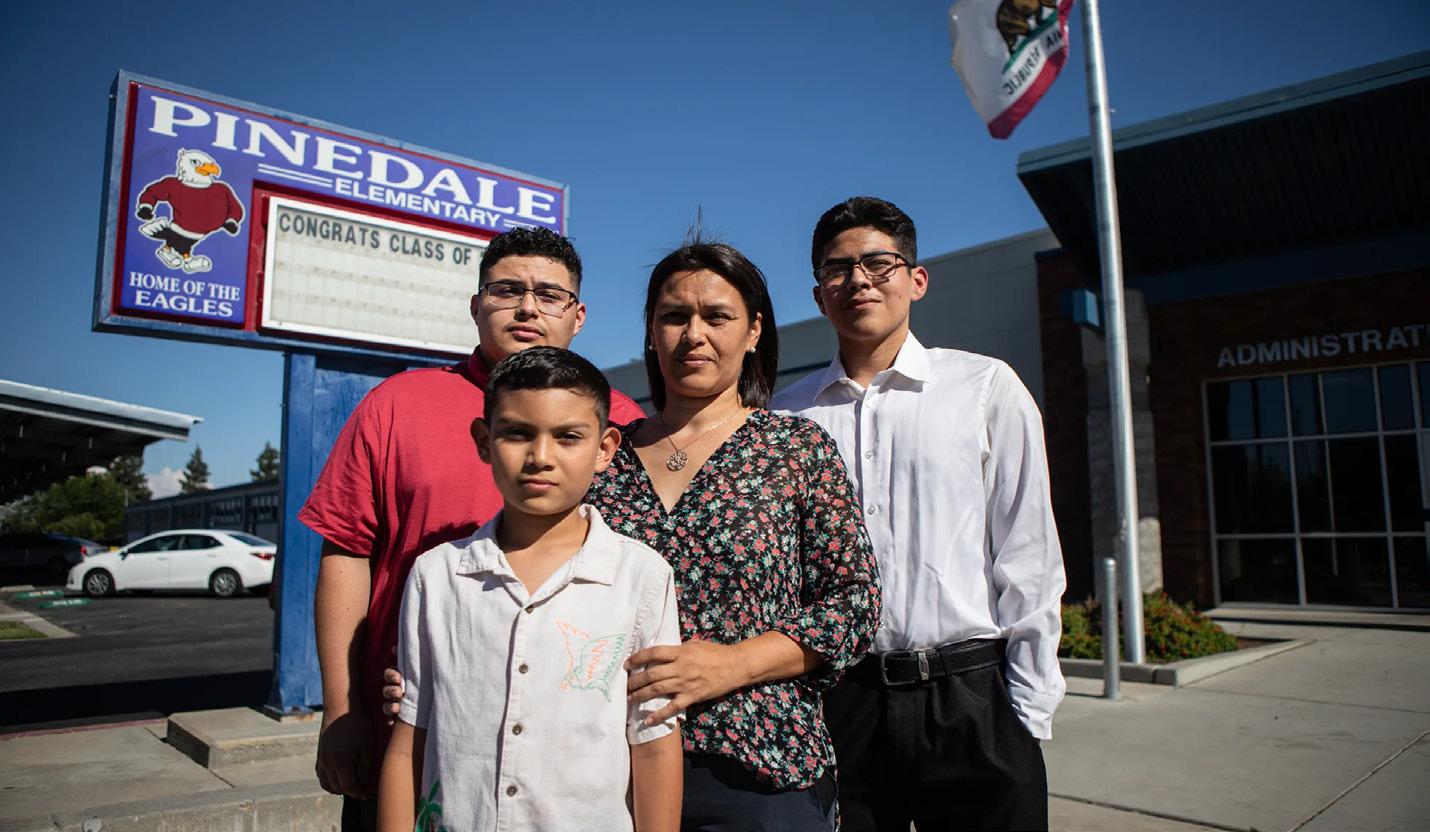
Tania Galeana-King and her three sons at Pinedale Elementary School in Fresno on June 1, 2026. From left, Corvin Galeana, Sheldon King, Tania Galeana-King, and Evan King. Photo by Larry Valenzuela, CalMatters
That’s good news to the Association of California School Administrators. Although the money isn’t enough, it’s a start, said Naj Alikhan, the organization’s spokesman.
“(We) strongly support efforts to raise the base grant,” Alikhan said. “The LCFF base grant is the foundation of school funding in California, and increasing it is one of the most effective ways to provide schools with greater stability, flexibility, and capacity to meet local needs.”
Another bill, put forth by Assemblymember David Alvarez, a Democrat from Chula Vista, would expand school funding for high-needs students, but some worry that it would actually make funding shortfalls worse for some districts. Instead of raising the base grant, the bill would redirect more money to schools with large numbers of highneeds students.
Cutting the basics
David Roth, superintendent of Buckeye Union Elementary School District in El Dorado County, has gathered a cadre of school administrators to oppose Alvarez’s bill and fight for an increase in the base grant.
He’s created a database called Raise the Base, which calculates school districts’ funding disparities over the past 15 years. About 25 parent organizations and 60 small and midsized school districts have signed on to support Roth’s campaign. Among the largest: Clovis Unified, Fremont Unified, San Ramon Valley Unified and Murrieta Valley Unified.
“We support the idea that some student populations need more resources. At the end of the day, we’re all underfunded,” Roth said. “But the base grant has not kept up with escalating costs, and districts are falling further and further behind.”
Buckeye, a K-12 district in the Sierra foothills, receives only $15,100 per student, far below the state average of $21,000. The district has pockets of wealth, but also areas of poverty. Because of low per-pupil funding the district is in jeopardy of losing longstanding programs that serve all students, Roth said.
If base funding doesn’t improve, Roth anticipates cuts to P.E., libraries, counselors and music in the next few years.
“In my mind, these are the basics,” Roth said. “We’re patching things together now with bubblegum and shoestrings, but that can’t last forever. Soon we’ll be unable to fund a reasonable education program.”
‘There’s such a demand’
Pinedale Elementary is in a working-class neighborhood in north Fresno with no sidewalks and a smattering of crime and homelessness. Galeana-King described the area as tough but close-knit. “Everyone looks after each other,” she said.
Galeana-King has been a parent at Pinedale for 15 years – all three of her children attended the school. She volunteers in the classroom and is active in the parent club, which raises a few thousand dollars a year through after-school snack sales, a salsa festival, jog-a-thon and other events.
But it’s not easy raising money in a community where most parents work multiple jobs to make ends meet.
“We have to be understanding,” Galeana-King said. “We want families to participate, but we need to be reasonable. People are struggling.”
Teachers often pay for classroom supplies out of their own pockets, while the parent club pays for things like new chess boards for the chess club and the second-grade field trip to Monterey. But the needs are endless. If the parent club could raise more money, they’d like to provide snacks for the classrooms, new sports equipment, backpacks for students and other amenities.
“I’m incredibly proud to send my kids to Pinedale. It might not always have the most financial resources, but it has a school full of people who deeply care about and love the kids,” she said. “That said, our students and staff urgently need more support.”
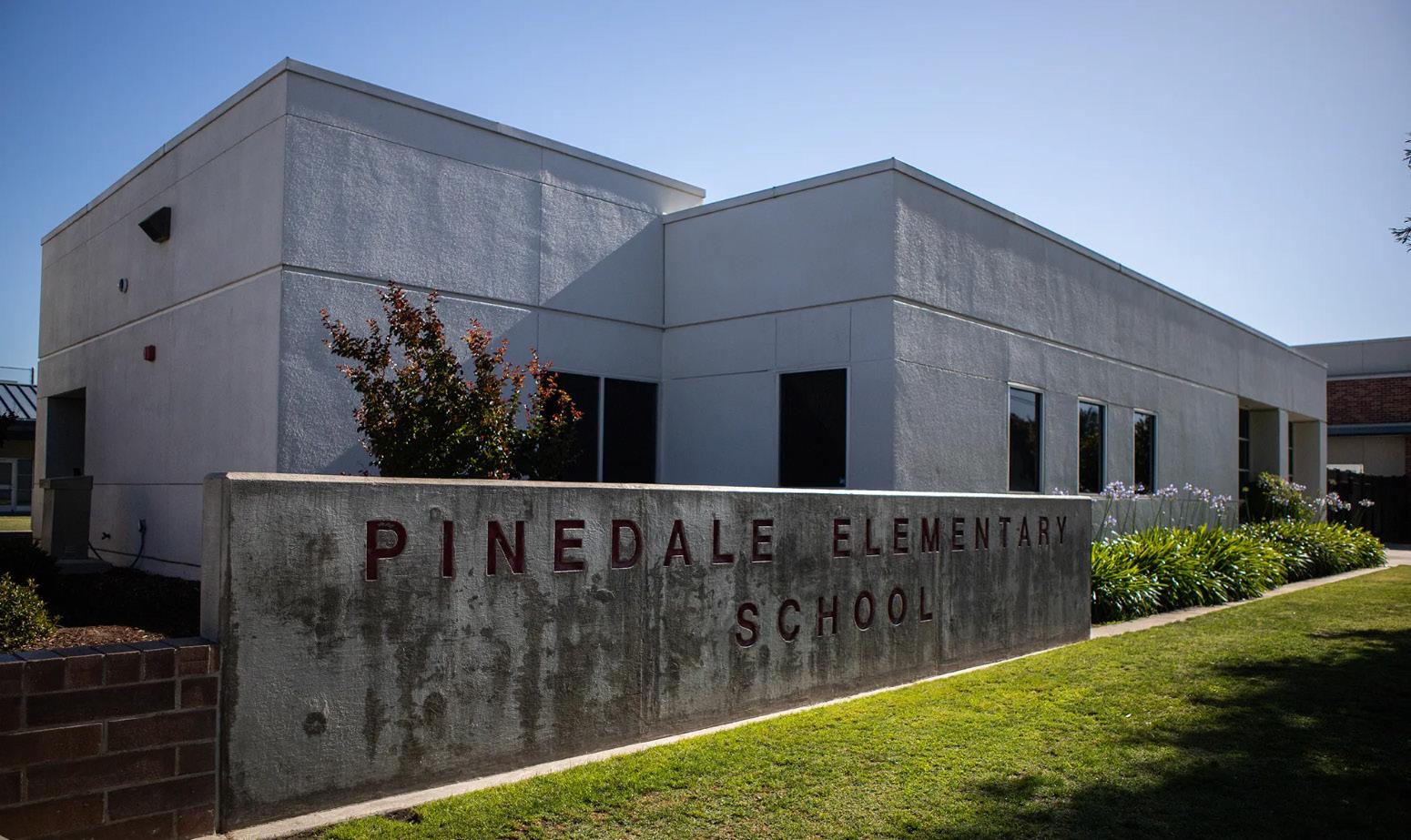
Pinedale Elementary School in Fresno on June 1, 2026. Photo by Larry Valenzuela, CalMatters
Tania Galeana-King at Pinedale Elementary School in Fresno on June 1, 2026. All three of Galeana-King’s sons attended Pinedale Elementary School. Photo by Larry Valenzuela, CalMatters
The USS Lucid: Restoration Work Continues
By Jo Ann Kirby HERLIFE Magazine
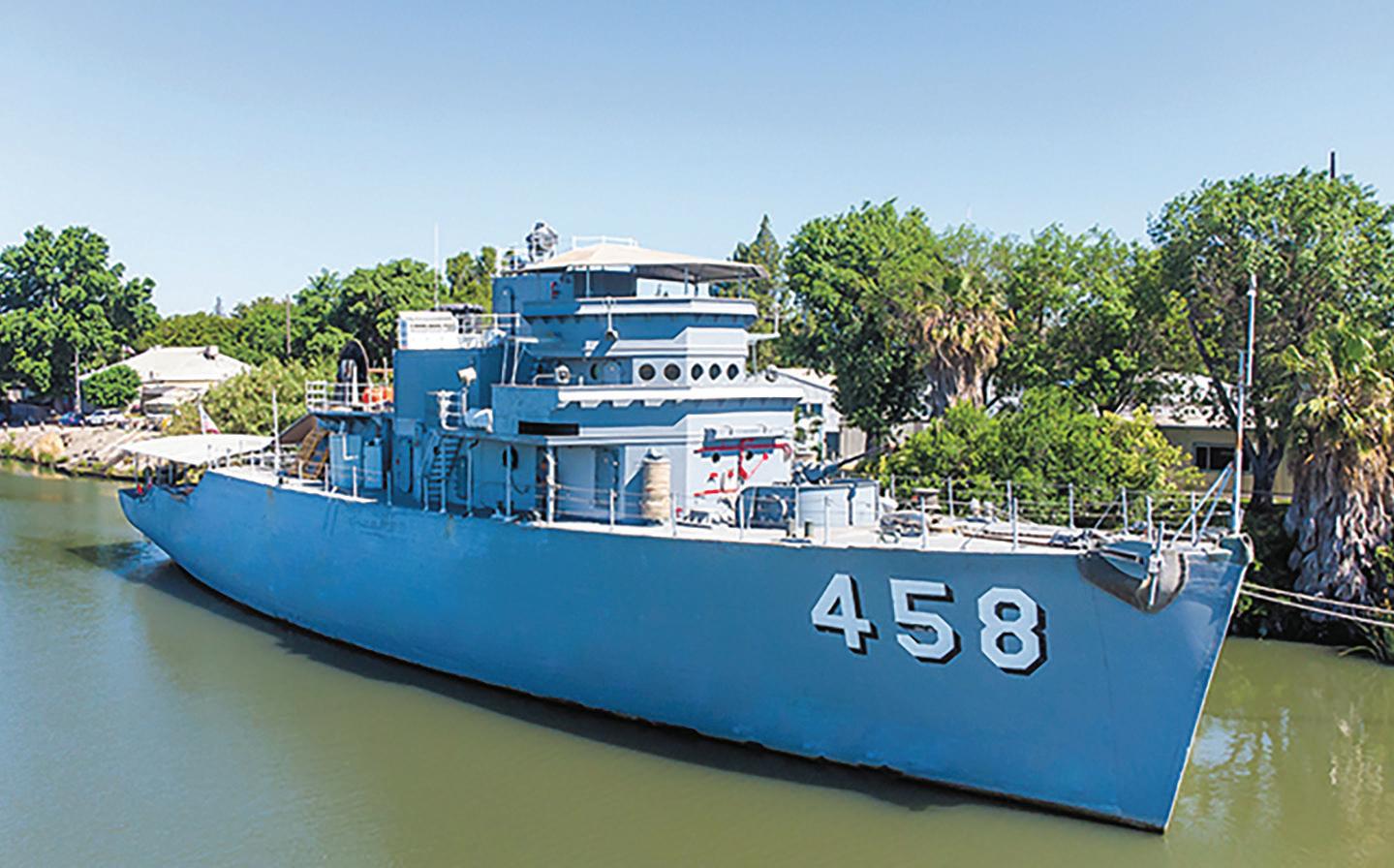
The Stockton Maritime Museum aims to create a permanent museum on Stockton’s downtown waterfront that will provide public access to Stockton’s historical and cultural past. Its prominent feature will be the USS Lucid, which was acquired by the museum in 2010 and moved to Stockton in 2010, where restoration began.
The USS Lucid was one of 101 Aggressive Class minesweepers built in an emergency three-year shipbuilding program in the early 1950s in response to the U.S. Navy’s losses from Soviet high-tech mines during the Korean War. Stockton’s historic Colberg Boat Works was tasked to build three of the USS Lucid’s sister ships. The USS Lucid, which was built in 1953 by Higgins Industries in New Orleans, Louisiana, is the last surviving Aggressive Class minesweeper in the United States.
The Stockton Maritime Museum was awarded a $950,000 Sacramento-San Joaquin Delta Conservancy Grant last year to cover design, architecture, engineering and permitting for the development of its one-and-a-half-acre site on the south shore of Stockton’s historic waterfront. “The restoration work on board Lucid is now approximately 85 percent completed,” David Rajkovich, president of the Stockton Maritime Museum board of directors, said. “All the work is done by San Joaquin Office of Education’s Building Futures Academy students and adult volunteers of the museum.”
San Joaquin Building Futures Academy, or SJBFA, is a public school for students in San Joaquin County who participate in the SJCOE YouthBuild program. SJBFA is a high school dropout credit recovery program that offers grades 9 through 12 and serves youth ages 18 to 24. Academic and construction curriculum are integrated and provide multiple opportunities for hands-on experiences, meaning that students earn credits for their work on the Lucid.
More than a dozen students are working on the Lucid. The students earn valuable experience, taking on restoration tasks such as carpentry, electrical, plumbing and more under the guidance of their instructors and experienced volunteers. John Van Huystee, a museum board advisor, is helping oversee restoration of the Lucid. He has a background as a building contractor and is a vocational instructor at Building Futures Academy. “A lot of life skills are taught, from showing up on time to how to conduct yourself in different situations and surroundings,” John said.
Students come out once or twice a week, depending on their school schedule, to complete work on the ship. There are adult volunteers on board five days a week. Scavenging parts for the ship has taken those involved in the project far and wide! “A group of ten museum volunteers recently returned from Kaohsiung, Taiwan, where we removed approximately 50 tons of minesweeping gear and parts from the Ex-USS Implicit, MSO-455. She was the very last remining sister ship of the USS Lucid to be decommissioned anywhere in the world. An exact twin of Lucid, Implicit served our Navy from 1955 to 1995, then was sold to the Republic of China (Taiwan) Navy, where she served another 30 years as the Yung Yang in Taiwan’s Navy,” David said “We were able to retrieve much-needed gear including sonar consoles, anchors, anchor chain, taft rails, stern minesweep cranes, paravanes and electrical gear.”
The next project is to finish both engine rooms, which are being prepped for sanding, painting and lighting. It will take about two to three months to complete, since the engine rooms are the largest spaces on the ship.
David said the grant enabled the museum to hire an architect and to work through the permitting process. “Once permitting process is complete, we hope to begin construction on our permanent Weber Avenue location,” he said. “Fundraising efforts are under way with private and corporate supporters, as well as additional potential state and local agency funding.”
When completed, Stockton Maritime Museum, with the USS Lucid as its iconic attraction, will benefit the community with educational opportunities for all ages, offering community gathering spaces and highlighting the rich history of the waterfront’s ship-building past. The transformation is noticeable. “I have been on the ship for now 12 years, and I have seen a wreck of a vessel turn into the beautiful maritime piece of history it has become,” John said.
The ship is open to the public twice a year during spring and fall open house events. The next scheduled open house is set for Saturday, October 3, 2026. Additional details will be available as the date draws near. The museum’s website at stocktonhistoricalmaritimemuseum.org has a plethora of information as well as how to volunteer.
“We want to encourage folks in the community to come out to see the beautiful restoration work our students, adult volunteers and donors have helped accomplish thus far,” he said. “And we welcome financial support from the community, as that has been our main source of funding. With all work done by volunteers, we get a lot of work completed from every dollar we raise.”
For now, the USS Lucid is moored near Pixie Woods. “We hope to be able to move to our permanent, downtown waterfront location in another three years,” David said.
USS Lucid. Photo by Jo Ann Kirby, HERLIFE Magazine
Greetings from the Friends of Sacramento Chinatown Square
By Norm Fong Chair, Friends of Sacramento Chinatown Square
As the second quarter of 2026 comes to a close, I would like to share a glimpse of the activities and accomplishments of the Friends of Sacramento Chinatown Square over the past three months.
Before I begin, I would like to extend my sincere appreciation to Mr. Jim T. Chong for the opportunity to share our news with the readers of this publication.
Many of you may recall that our nonprofit organization was established in 2025. Our mission is built upon three guiding principles: Protect the footprint of Sacramento Chinatown Square, Preserve the rich culture, history, and legacy of the Chinese community, and Promote the revitalization of this historic neighborhood. We invite everyone to join us as we continue working toward these important goals.
During April and May, we were pleased to offer several guided tours throughout the Chinatown Square district. These tours coincided with community events held in the plaza adjacent to the Thai restaurant, allowing visitors to experience both the history and the vibrant spirit of the neighborhood.
One of our coalition partners, the Pan Asian Youth Coalition, successfully hosted two well-attended events: a traditional tea-tasting ceremony and a Mahjong competition. These activities celebrated Asian culture while bringing together residents and visitors of all ages.
In addition, we were honored to support the Sun Yat Sen Memorial Building by helping promote its museum and educational exhibits during several community outreach events.
As we move into the final weeks of June, we are excited to announce that two additional local organizations have expressed interest in partnering with the Friends of Sacramento Chinatown Square. Together, we will begin planning a series of daytime and evening markets throughout the summer and fall, creating new opportunities for local businesses, artisans, performers, and the community to gather and celebrate.
Planning has also begun for next year’s Lunar New Year Celebration, which we hope will become one of the signature annual events held within the Chinatown Square district.
Looking ahead, we have several exciting developments on the horizon. In mid-July, we anticipate launching the Friends of Sacramento Chinatown Square website, providing a central resource for news, events, and volunteer opportunities. We also look forward to the grand opening of the 1882 Foundation’s new office in the Imperial Towers at 4th and J Streets, tentatively scheduled for mid-August.
Working in partnership with the City of Sacramento, we will continue advancing the vision for a Legacy Park and a future Tower Monument to honor the Chinese and Japanese pioneers whose lives, businesses, and contributions helped shape this historic neighborhood.
Thank you for your continued encouragement and support. Together, we can preserve the past, celebrate the present, and build a lasting legacy for future generations.