Downloaded from: justpaste.it/eqy08
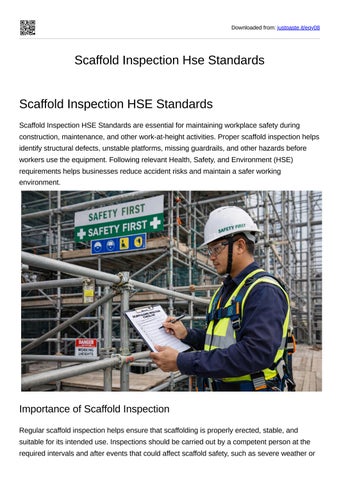
Scaffold Inspection Hse Standards Scaffold Inspection HSE Standards Scaffold Inspection HSE Standards are essential for maintaining workplace safety during construction, maintenance, and other work-at-height activities. Proper scaffold inspection helps identify structural defects, unstable platforms, missing guardrails, and other hazards before workers use the equipment. Following relevant Health, Safety, and Environment (HSE) requirements helps businesses reduce accident risks and maintain a safer working environment.
Importance of Scaffold Inspection Regular scaffold inspection helps ensure that scaffolding is properly erected, stable, and suitable for its intended use. Inspections should be carried out by a competent person at the required intervals and after events that could affect scaffold safety, such as severe weather or
structural alterations. Any unsafe scaffold should be restricted from use until the identified issues have been corrected.
Key Scaffold Inspection Requirements A scaffold inspection should cover the base and foundation, supporting structure, braces, ties, working platforms, access ladders, guardrails, toe boards, and load limits. Inspectors should also check for damaged components, loose connections, uneven surfaces, and obstructions that could create hazards. Inspection findings should be documented, and defects should be addressed before workers are allowed to continue using the scaffold.
HSE Compliance for Work at Height HSE compliance involves following applicable workplace safety regulations, risk assessments, and safe work procedures. Employers should ensure that scaffolds are erected, modified, and dismantled by trained personnel under appropriate supervision. Workers should receive suitable safety training and understand how to identify hazards, use access points correctly, and report unsafe conditions.
Digital Scaffold Inspection and Safety Monitoring Digital scaffold inspection systems can help construction companies record inspection results, assign corrective actions, and monitor safety compliance. Mobile applications allow inspectors to capture photographs, complete checklists, and generate reports directly from the worksite. These digital records can improve communication between supervisors and safety teams while supporting more organised inspection management.
Maintaining Safe Scaffolding Standards Maintaining scaffold safety requires consistent inspections, proper training, suitable equipment, and prompt corrective action. Companies should follow the scaffold inspection frequency and requirements specified by the applicable local regulations and project safety procedures. A structured HSE inspection process helps protect workers, improve accountability, and support safer construction operations.
Scaffold Inspection HSE Standards
Scaffold Inspection HSE Standards play an important role in ensuring safety during construction, industrial maintenance, and work-at-height operations. Scaffolding provides temporary access and support for workers, tools, and materials, so it must be inspected regularly to identify potential hazards. Following appropriate Health, Safety, and Environment (HSE) procedures helps companies maintain safe working conditions, reduce accidents, and meet applicable workplace safety requirements.
Importance of Regular Scaffold Inspection Regular scaffold inspection helps identify structural weaknesses, damaged components, unstable foundations, and unsafe working platforms. A competent person should inspect scaffolding before use and at the intervals required by applicable regulations. Additional inspections may be necessary after alterations, severe weather, impact, or other events that could affect the scaffold's stability. Any scaffold found to be unsafe should be taken out of service until the necessary corrective work has been completed.
Scaffold Inspection Checklist for HSE Compliance A comprehensive scaffold inspection checklist helps safety officers assess important structural and operational requirements. Inspectors should examine the foundation, base plates, sole boards, standards, ledgers, transoms, braces, couplers, and connections. Working platforms should be checked for secure placement, excessive gaps, damage, and suitable load capacity. Guardrails, midrails, toe boards, ladders, and safe access points should also be examined to reduce the risk of falls and falling objects.
Scaffold Foundation and Structural Stability The stability of scaffolding depends on a suitable foundation and properly assembled structural components. The ground should be capable of supporting the intended load without excessive settlement, while base plates and sole boards should be installed where required. Bracing, ties, and connections must be correctly fitted according to the scaffold design and manufacturer's instructions. Inspectors should also check for unauthorised modifications, missing components, and signs of movement that could compromise structural integrity.
Working Platform and Fall Protection Standards Working platforms must provide a stable surface for workers to carry out their tasks safely. Platforms should be properly supported, secured, and suitable for the expected number of workers, tools, and materials. Guardrails, toe boards, and other required fall protection measures should be installed in accordance with applicable standards. Workers should use
designated access routes and avoid climbing scaffold frames or standing on unsuitable objects to gain additional height.
Scaffold Load Capacity and Material Storage Every scaffold should be used within its designed load capacity. Excessive storage of construction materials, heavy equipment, or tools can place unnecessary stress on the structure and increase the risk of failure. HSE inspections should verify that load limits are communicated clearly and that materials are distributed appropriately across the working platform. Unnecessary items should be removed to prevent overcrowding, obstruction, and accidental falls.
Competent Person and Scaffold Inspection Records Scaffold inspections should be performed by a competent person with the appropriate knowledge, training, and experience to recognise hazards. Inspection records should identify the scaffold location, inspection date, findings, defects, and required corrective actions. Records should be accessible to relevant supervisors and safety personnel. Maintaining accurate documentation helps companies monitor inspection schedules, demonstrate safety management, and track whether reported issues have been resolved.
Weather Conditions and Environmental Hazards Weather conditions can affect scaffold safety, particularly during strong winds, heavy rain, lightning, or other severe conditions. Wet platforms may become slippery, while strong winds can affect scaffold stability and the handling of large materials. Safety teams should assess environmental conditions before and during work and suspend activities when conditions become unsafe. Scaffolding should be re-inspected after weather events when its stability or structural integrity may have been affected.
Scaffold Erection, Modification, and Dismantling Safety Scaffold erection, modification, and dismantling require proper planning, trained personnel, and suitable supervision. Workers should follow the approved design, manufacturer's instructions, and established safe work procedures. Unauthorised changes to braces, ties, platforms, or guardrails can compromise the entire structure. Access should be controlled during these activities, and incomplete or unsafe sections should be clearly identified to prevent accidental use.
Risk Assessment and Hazard Identification
A scaffold-related risk assessment helps identify hazards before work begins. Common risks include falls from height, falling objects, structural collapse, contact with electrical hazards, and unsafe access. Safety officers should evaluate the work environment, nearby power lines, ground conditions, pedestrian routes, and the activities being performed around the scaffold. Appropriate control measures should be implemented, communicated to workers, and reviewed whenever site conditions change.
Digital Scaffold Inspection Software Digital scaffold inspection software helps construction companies manage inspection activities through mobile devices and centralised dashboards. Inspectors can complete digital checklists, upload photographs, record defects, and assign corrective actions directly from the worksite. Automated reminders can help supervisors track upcoming inspections, while digital reports make it easier to review compliance activities across multiple projects.
Scaffold Safety Training for Workers Worker training is an important part of scaffold HSE management. Employees should understand safe access procedures, platform load limits, fall prevention measures, and the importance of reporting damaged or missing components. Only appropriately trained and authorised personnel should carry out scaffold erection, modification, and dismantling. Regular toolbox talks and safety briefings can reinforce safe working practices and improve hazard awareness.
HSE Standards and Regulatory Compliance Scaffold inspection requirements vary according to the country, industry, scaffold type, and nature of the work. Companies should identify the applicable workplace safety regulations, construction standards, approved scaffold designs, and manufacturer recommendations before establishing inspection procedures. For projects in Singapore, employers should refer to the relevant Ministry of Manpower requirements and applicable workplace safety legislation. Following the correct local requirements helps ensure that inspection frequency, worker competency, documentation, and fall protection measures are appropriately managed.
Improving Scaffold Inspection Efficiency A structured inspection programme can improve safety performance and reduce delays caused by unidentified defects. Standardised checklists help inspectors follow consistent procedures, while clear reporting channels ensure that hazards reach the responsible supervisors promptly. Companies should review inspection findings regularly to identify
recurring problems, improve maintenance practices, and strengthen safety procedures. Combining competent inspections with effective supervision and corrective action supports safer work-at-height operations.
Conclusion Scaffold Inspection HSE Standards are essential for protecting workers and maintaining safe construction environments. Regular inspections, stable scaffold structures, proper fall protection, load management, competent personnel, and accurate documentation all contribute to effective scaffold safety. By implementing a systematic inspection programme and using digital tools where appropriate, businesses can improve hazard identification, strengthen HSE compliance, and promote a safer workplace. for more details our visit us : Scaffold Inspection HSE Standards | Exiga Software
Contact Us Exiga Software Solutions Pte Ltd 60 Paya Lebar Road, #13-12, Paya Lebar Square, Singapore 409051 +65 6238 3062 +65 6370 7279 +65 8876 6151 sales@exigasoftware.com.sg