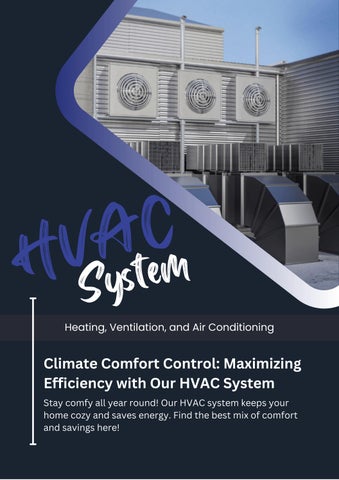
C A V H System Heating, Ventilation, and Air Conditioning
Climate Comfort Control: Maximizing Efficiency with Our HVAC System Stay comfy all year round! Our HVAC system keeps your home cozy and saves energy. Find the best mix of comfort and savings here!
What is HVAC? What is the meaning of HVAC? What parts make up an HVAC system? How does an HVAC system work? What are the various types of HVAC systems? Which HVAC system should I choose for my needs? What makes HVAC different from air conditioning?
What is HVAC?
HVAC system, which represents Warming, Airflow, and Air Conditioning, relates to the technology and systems utilized to manage the indoor environment, including warmth, dampness, and air purity, within structures and vehicles. It's an essential element of contemporary construction and significantly contributes to our convenience, health, and welfare.
www.cca.ky
+1 (345) 525-2663
What is the meaning of HVAC?
It symbolizes a vital system for sustaining a cozy and wholesome indoor atmosphere in diverse structures, encompassing residences, business areas, manufacturing facilities, and beyond. Heating (H): Heating is the component of HVAC that deals with providing warmth or raising the temperature of space during cold weather. Common heating methods include furnaces, boilers, heat pumps, electric heaters, and radiant heating systems. These devices generate and distribute heat throughout a building to maintain a suitable indoor temperature. www.cca.ky
+1 (345) 525-2663
Ventilation (V): Ventilation involves the exchange of indoor and outdoor air to maintain air quality within a space. It helps remove pollutants, odors, excess moisture, and other potentially harmful substances. Ventilation systems typically include fans, ducts, and air exchange mechanisms. Proper ventilation is crucial to ensure a healthy and comfortable environment by circulating fresh air and reducing the concentration of indoor pollutants. Air Conditioning (AC or A/C): Air conditioning focuses on cooling indoor spaces and controlling humidity levels. It is especially crucial during warm weather to uphold a pleasant temperature. Air conditioning systems employ diverse mechanisms to chill and dehumidify air, including refrigeration cycles, enthusiasts, and evaporative chilling. Common AC systems encompass central air conditioning units, divided systems, window units, and movable air conditioners. Integrating heating, ventilation, and air conditioning systems guarantees that buildings stay cozy year-round, regardless of external weather conditions. Properly devised and sustained systems are imperative for energy efficiency, cost-effectiveness, and establishing a salubrious and accommodating indoor milieu for inhabitants. These systems frequently incorporate cutting-edge technologies and automation to improve efficiency, energy consumption, and overall user contentment.
www.cca.ky
+1 (345) 525-2663
What parts make up an HVAC system?
The system is like a smart helper that comforts our indoor spaces by controlling how warm or cool it is, ensuring the air is clean and fresh and not too humid or dry. The system consists of several pivotal constituents operating in unison to accomplish these objectives. 1. Heating Components: Furnace or Heat Pump: The stove ignites fuel (gas or oil) or uses electricity to generate warmth. Conversely, a warm compressor extracts warmth from the outdoor air or ground and transfers it indoors.
www.cca.ky
+1 (345) 525-2663
Heat Exchanger: A stove component transfers warmth from the combustion process to the air circulating throughout the house. Burners: In a gas stove, lighters ignite the fuel to generate warmth. Ignition System: It ignites the burners to start heating. Thermostat: A device that allows users to set and control the desired temperature within the home. 2. Ventilation Components: Air Ducts: A system of vents that circulate air throughout the structure, enabling adequate airflow. Air Filters: These eliminate dirt, irritants, and other substances to uphold satisfactory indoor air quality. Dampers: Used to regulate and control airflow within the ductwork. Air Vents/Registers: These are openings in walls, ceilings, or floors where air enters or exits a room. Exhaust Fans: These help remove stale air and moisture from specific areas like bathrooms and kitchens. 3. Air Conditioning Components: Air Conditioner or Heat Pump: These systems cool indoor air by removing heat from it and transferring it outside (for air conditioners) or reversing the process to provide heating (for heat pumps). Compressor: The compressor pressurizes refrigerant, enabling it to absorb and release heat. Evaporator Coil: It's where the refrigerant absorbs heat from the indoor air, cooling it down. Condenser Coil: This component releases the heat the refrigerant absorbs into the outside air. Refrigerant Lines: Copper lines that connect the various components and carry the refrigerant.
www.cca.ky
+1 (345) 525-2663
4. Controls and Sensors: Thermostat: Controls the system's operation and allows users to set temperature preferences. Humidity Controls: Devices that monitor and control humidity levels within the space. Pressure Sensors: Monitor the pressure of the refrigerant and other critical parameters. 5. Other Components: Expansion Valve: Regulates refrigerant flow into the evaporator coil. Blower Motor: Powers the fan, circling air through the system. Condensate Drain: Removes excess moisture (condensate) produced during the cooling process. Insulation: Ensures energy efficiency by preventing heat loss or gain in the system. All these components work together well-coordinatedly to provide a controlled and comfortable indoor environment in residential, commercial, and industrial spaces. Routine upkeep and appropriate placement are crucial to guarantee that the system operates proficiently and successfully.
www.cca.ky
+1 (345) 525-2663
How does an HVAC system work?
The system helps control how warm or cool a building feels and how humid the air is inside. Here's a step-by-step process of how a system typically works: Air Intake: The process begins with the system drawing air from the indoor environment through air return vents. Filtering: The breeze passes through sieves to eliminate dirt, specks, irritants, and other pollutants, ensuring a fresher breeze. Heating or Cooling: Depending on the preferred temperature setting, the system will either warm or chill the breeze using a boiler (for warming) or a cooling system such as an air conditioner (for chilling).
www.cca.ky
+1 (345) 525-2663
Heat Exchange: The system uses a warmth changer to heat the breeze disseminated throughout the area. Cooling Cycle: If chilling is needed, the system uses a coolant to soak up warmth from the indoor breeze, chilling it. The warm breeze is then expelled outside. Air Circulation: The conditioned air is circulated back into the living or working space through supply vents. Thermostat Control: The system is controlled by a thermostat, which observes the indoor temperature and triggers the heating or cooling components as necessary to sustain the preferred temperature. Humidity Control: It also regulates moisture levels by eliminating surplus dampness in the air through condensation or introducing moisture during arid periods. Ventilation: The system also provides ventilation by bringing fresh outdoor air and circulating it within the space to maintain air quality. Ductwork: The conditioned air is distributed throughout the building via a network of ducts, which carry the air to various rooms. Return Air: The return air is then drawn back into the system through return vents to be conditioned again, completing the cycle. Efficiency Optimization: Modern systems often have energysaving features and technologies to optimize efficiency, such as variable speed fans, programmable thermostats, and energy recovery ventilators. Maintenance: Routine maintenance, encompassing tidying, replacement of filters, and system inspection, guarantees the system functions effectively and upholds a wholesome indoor environment. Understanding how things work step by step can help you understand how a system keeps a building comfortable and the air clean inside.
www.cca.ky
+1 (345) 525-2663
What are the various types of HVAC systems?
The systems are important because they help make indoor spaces comfortable by controlling the warmth, humidity, and air quality. Numerous types of systems exist, each possessing its traits and uses. Here are a few prevalent types: Split Systems: Split System Air Conditioners: These have components inside and outside the building. The indoor unit contains the evaporator coil and air handler, while the outdoor unit contains the compressor and condenser coil. Heat Pump Systems: These systems can provide heating and cooling by reversing the refrigerant cycle.
www.cca.ky
+1 (345) 525-2663
Packaged Systems: All components (heating, cooling, and air handling) are housed in a unit typically installed outside the building. Hybrid Systems: Combine a traditional furnace with a heat pump, providing flexibility and energy efficiency depending on weather conditions. Ductless Mini-Split Systems: Similar to split systems but without ductwork. They consist of an outdoor compressor/condenser and indoor air-handling units. Variable Refrigerant Flow (VRF) Systems: Use a single outdoor unit that connects to multiple indoor units, allowing for individualized temperature control in different zones. Geothermal or Ground Source Heat Pump Systems: Use the earth's constant temperature to heat and cool. Heat is transferred to or from the ground through a ground loop. Radiant Heating and Cooling Systems: Utilize radiant panels (underfloor, ceiling, or wall-mounted) to heat or cool spaces by radiating heat directly to objects and people. Boiler Systems: Heat hot water or steam, commonly used in older buildings. Forced Air Systems: Utilize fans to distribute heated or cooled air through ducts and vents. Evaporative Coolers (Swamp Coolers): Cool air by evaporating water, suitable for dry climates. Solar Systems: Use solar energy to power the system, reducing energy consumption. Window Air Conditioners: Individual units installed in windows to cool specific rooms. Selecting the appropriate HVAC device relies on different aspects, such as the structure's magnitude, weather conditions, objectives for energy efficiency, finances, and distinct warming and cooling necessities. It is crucial to seek advice from HVAC experts to identify the optimal system for a specific environment.
www.cca.ky
+1 (345) 525-2663
Which HVAC system should I choose for my needs?
Consider factors such as climate, building size, insulation, budget, and energy efficiency requirements. Talking to an HVAC expert can help you choose the right heating and cooling system.
www.cca.ky
+1 (345) 525-2663
What makes HVAC different from air conditioning?
HVAC includes things that warm and cool the air and help it move around in buildings. Air conditioning, on the other hand, is just about making the inside air cool. Systems provide a comprehensive solution for controlling the indoor environment, which includes heating, ventilation, and air conditioning capabilities. AC is a subset of HVAC, focusing solely on cooling.
www.cca.ky
+1 (345) 525-2663
In conclusion, investing in a high-quality and efficient system is paramount for ensuring optimal comfort, energy efficiency, and indoor air quality within any residential or commercial space. A well-designed system regulates temperature, effectively manages humidity levels, filters air pollutants, and promotes a healthier living and working environment. Upgrade to our state-of-the-art system today and experience unparalleled comfort, cost savings, and cleaner, fresher air. Trust in our expertise to keep you cool in summer, warm in winter, and breathe easy all year round. Elevate your indoor living with our advanced HVAC solutions. For more information, please visit our website OR Call us, which are mentioned below.
www.cca.ky
+1 (345) 525-2663