AN ANTON MEDIA GROUP SPECIAL
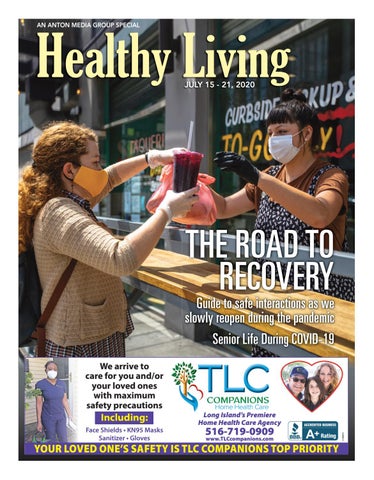
Healthy Living JULY 15 - 21, 2020
THE ROAD TO RECOVERY
Guide to safe interactions as we slowly reopen during the pandemic Senior Life During COVID-19
Face Shields • KN95 Masks Sanitizer • Gloves
Long Island’s Premiere Home Health Care Agency
516-719-0909 www.TLCcompanions.com
YOUR LOVED ONE’S SAFETY IS TLC COMPANIONS TOP PRIORITY
212363 S
Including:
212363 S
We arrive to care for you and/or your loved ones with maximum safety precautions
2A JULY 15 - 21, 2020 • HEALTHY LIVING
FULL RUN
EVERYONE IS PRACTICING SAFETY FIRST. ST. FRANCIS IS THE ONLY ONE THAT’S FIRST IN SAFETY.
St. Francis Hospital has been nationally recognized for the safest care on Long Island. The Leapfrog Group* and CMS agree. We offer the highest-quality and safest care anywhere on our island. We have reinforced our rigorous and comprehensive safety measures, so you can access the care you trust, and achieve the health you deserve. Learn more at StFrancisSafe.org
*This is the 2019 Top General Hospital award Leapfrog bestowed upon SFH. 217129 S
FULL RUN
HEALTHY LIVING • JULY 15 - 21, 2020
3A
Cycling Shortage Pandemic leads to surge in bicycle purchases BY CYNDI ZAWESKI
I
czaweski@antonmediagroup.com
f you’re thinking about buying a bike this summer, take a number. The coronavirus pandemic has led to surge in bicycle sales causing a nationwide shortage for hopeful riders. In March, the phone began ringing off the hook at Syosset’s The Bicycle Planet. The small mom and pop bike shop’s calls are monitored by two or three employees on any given day—in the store’s history, owner Howard Chung couldn’t recall anyone having to leave a voicemail. That was until—semi-ironically—Friday, March 13, around the time New Yorkers were encouraged (and shortly after mandated) to shelter in place to stop the spread of the deadly virus. “At that point, we had already seen
an uptick in sales, but after that, the flood gates just opened in a crazy way,” Chung said. “We were selling as many bikes in March and April as we do during our peak months in June and July. We are usually busy on Saturdays and slow on the weekdays, but it has been like a busy Saturday everyday since March.” For the past four months, the shop receives hundreds of voicemails each day. The boom in sales at The Bicycle Planet paints an accurate representation of what is going on across the country. Americans are turning to a nostalgic form of transport as many major public transportation systems are closed or limited during COVID-19. Those sheltering in place are grabbing their handlebars to enjoy the outdoors and get exercise
while maintaining social distancing practices. April sales for traditional bikes, indoor bikes, parts, helmets and other accessories grew a combined 75 percent to $1 billion compared to last year, according to marketing research company, N.P.D. Group. Typically, April sales fall between $550 and $575 million. It is not just seasoned athletes looking to purchase bicycles. The research shows that family-friendly bikes at approachable price points had the strongest year-over-year sales jump. Lifestyle and leisure bikes, which are more basic adult bicycles sold at prices under $200, grew by 203 percent, while children’s bikes increased by 107 percent for the month, according to N.P.D. Group. By May, there was a
national shortage of bikes and bike parts nationwide. At its peak, The Bicycle Planet was selling a record 30 bikes a day, Chung said. At the shop, which usually has a wide range of stock at different price points, the least expensive option was a $2,300 bike at the time of publication due to lack of inventory nationwide. “There’s literally no bikes, but we are trying,” Chung said. “We don’t like to put people on bikes they don’t need, but people are getting desperate.” Despite the nationwide shortage of bikes, The Bicycle Planet is getting multiple weekly shipments, quantities and sizes will be very limited. The shop is open Wednesday through Sunday for curbside pickup. Visit www.thebicycleplanet.com for current inventory and to order online.
Friends For Life Homecare & Medicaid Consultants Friendsforlifeny.com COVID-19 has made caring for a loved one even more challenging. Here at Friends for Life Homecare, we understand your struggles and commit to stand by your side through these times not only as a homecare agency but also as a resource, advocate and guide. We will continue to lend a hand and our hearts to those who need us. Whatever help you may seek, we will ensure a successful solution for you and your family. Our main priority is keeping the senior community safe, and giving you and your loved one peace of mind.
What we do today, will define what happens tomorrow How you can reach out: We are available 24 hours a day, 7 days a week. We offer same-day or next-day service during this crisis.
(516) 900-1818 OR (516) 761-7834
212346 S
4A JULY 15 - 21, 2020 • HEALTHY LIVING
FULL RUN
Kids And Summer Sports Keeping children safe from coronavirus
BY CYNDI ZAWESKI
czaweski@antonmediagroup.com
A
fter being cooped up inside for months due to the COVID-19 pandemic, adults and children alike are itching to get back to some resemblance of normalcy. It is only natural to crave social interaction, especially when the nice weather practically begs us to spend time outdoors. While much of 2020 was so-called “canceled” due to the outbreak, fun is still in the cards this summer— with safety at the forefront. Parents who want their kids to participate in summer sports and activities this year need to consider what accommodations are being made to keep kids safe and minimize risk for coronavirus transmission and infection, said Dr. Christina Johns, a senior medical advisor for PM Pediatrics, a practicing pediatric emergency physician and a mother. “The details are important,” she said. “Ask yourself: What reasonable
steps can the organizers of the activity and I take to keep my kids as safe as possible?” To navigate this new normal, Johns shared these Dr. Christina Johns tips on keeping your children safe from coronavirus as they begin to play summer sports. Group Sports Anything outside where kids have the ability to maintain space between them and perform individual drills is generally safe, Johns said. Practices should include proper distancing. Kids should wear masks when they can’t keep apart, like in a baseball dugout. Coaches should ask all parents to provide their children with hand sanitizer. Of course, shared water bottles are a big no. Practices should be time-limited and
Dr. Marlene L. Levy
PhD, LCSW, DAIPM
516.944.3885 CLINICAL HYPNOSIS AND PSYCHOTHERAPY
CONTACT:
GET SCREENED
Tomorrow
1-call for app’t: 516-944-3885 2-upload ZOOM app [wait for appt time/date] 3-upload ZELLE app for payment:
Contact us
• Find out how to get a free or low-cost mammogram. • Find out about breast cancer programs in your community.
Use DrMarleneLevy@optonline.net
• Talk to someone who can help.
217207 M
“American Academy of Pain Management”
Indoor Play Spaces Recirculated air is the real challenge, Johns explained. To mitigate this problem, try to spend no more than an hour or two inside any play space. Keep in mind that the smaller the space the less time you should be there. Facilities should also have aggressive and clear protocols on sanitizing equipment, temperature checks and masking.
FOR A
During Covid-1 Coronavirus Pandemic
* Insurance not accepte • Reduced Fees During Pandemic
Backyard Play This is mostly okay, as long as kids don’t cluster for extended periods or do things that allow the close exchange of breath and the respiratory droplets that come with it, Johns said.
Hard Pass Just say no to anything with extended close contact that is also indoors, like basketball or wrestling, is probably not a good idea, at least for now, Johns explained. “Everyone needs to work together to keep kids from getting sick,” Johns said. “That means wearing masks if you can’t social distance, it means teaching kindness and respect for other people’s space. If you can’t opt-in on safety, you have to opt-out on the activity.”
Today
Teletherapy and/or Video ANXIETY • STRESS MANAGEMENT RELAXATION TRAINING • INDIVIUAL & FAMILY ISSUES
PRESIDENT/FACULTY - “The New York Society of Clinical Hypnosis” [NYSCH.ORG] -*NYS Social Work provider for CE credits! DIPLOMATE/FACULTY -
not go on for hours, as the risk of exposure goes up with more time in proximity.
800.877.8077
breast-cancer.adelphi.edu
FULL RUN
HEALTHY LIVING • JULY 15 - 21, 2020
Safe Summer
What activities are safe in the summer of COVID-19? BY ZENOBIA BROWN, MD editorial@antonmediagroup.com
S
Just be careful.
You are at a significantly lower risk of contracting the virus being outside than indoors, where the vast majority of infection has spread because of people being in close proximity. Wind may play a role in potentially limiting the spread of the disease, but may make viral particles travel further distances, which means you should practice social distancing and wear a mask while in public. Here, we look at some popular summertime activities and determine whether they are safe or not.
Barbecues
Barbecues can be done safely. Make sure you answer the following: Who’s going to be there? Are they people you know who practice social distancing? What activities will happen? Eating obviously means you won’t be wearing a mask, but can you distance yourself when you do. Can you enjoy the event’s other activities while wearing a mask? How long are you barbecuing for? Are you just meeting up for an hour or is it a night out after a very long and stressful winter? Will there be drinking? We all know everything relaxes once alcohol is involved. So yes, barbecues can be done safely. Be smart about it.
Pools and pool parties
Pool parties are similar to barbecues. Again, wear a mask and practice social distancing when outside of the pool. There is currently no evidence of COVID-19 transmitting through pool water. So, it’s really the people inside the pool that could be an issue. Pools are great to break up long summer days and
SUMMER STIMULUS EVENT IN PROGRESS ALL HEARING AID MODELS
HEARING HELP IS AN IMPORTANT DECISION
MAKE THE RIGHT CHOICE
SIGNIFICANT PRICE REDUCTIONS
LONG ISLAND HEARING CENTERS YOUR STIMULUS SAVING IS WAITING DON’T MISS OUT! LIMITED SAVINGS CERTIFICATES AVAILABLE
MANUFACTURER’S INCENTIVES
• IMPORTANT NOTICE FROM OUR DIRECTOR • It is still possible to have summer fun while staying safe.
(Photo courtesy of Northwell Health)
heat. Keep your distance, if possible.
Neighborhood walks
Walks are fantastic and very safe. Any physical activity is really important to strengthening your immune system. My family and I have taken advantage and gotten out for walks since the pandemic started. It’s a good way to keep you moving, especially during the nicer weather, and they can improve your cardiovascular health.
Golfing
Golf is another safe activity because it assumes social distancing. Any non-contact activity while being outdoors is going to be safe, as long as you can maintain a distance from those who are also on the course.
Bike riding
Bike riding can be the same as walks, but less predictable because you can quickly go from a very low density area to a space with a group of people. There has been some calls in the media about bike riders creating plumes of the virus. We don’t know if this has any significant impact. Just protect yourself and wear a mask if you’re taking a ride.
Are public restrooms safe? Public restrooms are actually designed to minimize infection and are cleaned pretty regularly. Staying safe while using them is actually up to you. If there’s a line, wear your mask. Also, don’t stand too close to the person in front of you on line. Maintain a sixfoot distance. Try to get in and get out. As always, wash your hands.
Dr. Zenobia Brown is vice president and medical director of population health at Northwell Health. She oversees the clinical programs within Northwell Health Solutions—the health system’s care management arm. For more health and wellness tips, visit northwell.edu/insights.
IF YOU, LOVED ONE, FRIEND OR NEIGHBOR HAVE BEEN WAITING FOR THE RIGHT TIME TO IMPROVE YOUR HEARING WITH HEARING INSTRUMENTS... LOOK NO FURTHER. LONG ISLAND HEARING, ONE OF LI’S MOST POPULAR AND TRUSTED HEARING INSTRUMENT DISPENSARIES, HAS INTRODUCED A MUCH PUBLICIZED
‘HEARING INSTRUMENT STIMULUS PROGRAM’.
WITH BOTH MANUFACTURER’S INCENTIVES AND OUR UNIQUE PURCHASING POWER POSITION, WE ARE PLEASED TO OFFER OUR LONG ISLAND COMMUNITY THIS HISTORIC STIMULUS PROGRAM. THE PROGRAM MAKES PURCHASING HI TECH OR ENTRY LEVEL HEARING INSTRUMENTS MORE ATTRACTIVE AND AFFORDABLE. DURING THIS EVENT 12 MONTH 0% FINANCING IS AVAILABLE*.
URGENT MESSAGE
OUR MOST URGENT MESSAGE FOR YOU TODAY IS ... DON’T WAIT TO TAKE ADVANTAGE OF THIS UNIQUE STIMULUS PROGRAM. LIKE ALL GOOD THINGS, IT WILL NOT LAST FOREVER. THERE IS A LIMIT OF STIMULUS HEARING INSTRUMENTS AVAILABLE. ONCE THEY’RE GONE, THEY’RE GONE. PRICES OF THESE INSTRUMENTS HAVE NOT BEEN THIS FRIENDLY IN YEARS. LONG ISLAND HEARING IS A LOCAL FAMILY OWNED AND OPERATED PRACTICE ESTABLISHED IN 1985. WE OFFER FRIENDLY PROFESSIONAL SERVICE. RATED BY REAL PATIENTS, YOU CAN READ OVER 300+ 5 STAR GOOGLE REVIEW EXPERIENCES.
CALL TODAY, DON’T BE DISAPPOINTED.
*SUBJECT TO CREDIT APPROVAL. SEE SPECIALIST FOR COMPLETE DETAILS.
Need a Hearing Test? Hearing Aid? Repair? Experience • Consistency • Reliability
“Our commitment to you will be life changing SM”
Since 1985
Call Your Nearest Location Today!
Providers for most Insurance Companies • Workman’s Compensation Specialist • Gift Certificates • Walk-Ins Welcome (By Appt. Only) • Guaranteed Best Prices 55 Southern Blvd Inside PrimaryMedical Medical Care County Inside Primary CareofofSuffolk Suffolk County OPEN 6 DAYS • EVENINGS • SATURDAYS
NESCONSET/ SMITHTOWN
374741N071520
ummertime is about spending time with family and friends and enjoying outdoor activities. Getting air and exercise have long-lasting effects on your health and wellbeing, including immense influences on your immunity. So what happens this summer, when we are still stuck in the middle of the COVID-19 pandemic? The crisis has rewired us to constantly be aware of our surroundings and practice safety in all activities. This should be no different. While your summer vacation may have been put on hold, there are still some activities you and your family can do.
5A
631.972.5211
LEVITTOWN 3475 Hempstead Tpke
Between Ave.&&Jerusalem Jerusalem BetweenWantagh Wantagh Ave.
516.735.9191
LONG BEACH All Island Hearing 108 West Park Ave.
Directly acrossthe thestreet street from Library Directly across fromLong LongBeach Beach Library
516.763.EARS (3277)
We Service All Makes and Models • Repair Lab On Premises • OPEN 6 DAYS A WEEK! 217221 M
6A JULY 15 - 21, 2020 • HEALTHY LIVING
FULL RUN
How To Safely Return To The Office Ways employers and employees can avoid a second wave as the economy comes back
BY CYNDI ZAWESKI
czaweski@antonmediagroup.com
A
s Long Island enters Phase 4, many non-essential workers are returning to the office for the first time in months. For some remote workers who have been trying their best to call their living room their office while the TV blared and their children screamed in the background, this is a welcomed change in the scheduled programming. For others, it can be nerve-racking to consider sitting in a cubical after the pandemic’s devastation swept the state.
In this new normal, a regular 9-to-5 workday will not look the same as it did prior to the outbreak. But there are a number of safety protocols in place to keep employers and employees healthy and productive once they’ve returned to the office. During a Northwell Health Facebook Live session held on July 2, the hospital’s Senior Vice President and Chief People Officer Joseph Moscola spoke with Senior Multimedia Producer Rob Hoell to discuss the CDC’s guidelines for safely returning to work. As part of Northwell’s outreach, its staff educates employers on proper safety measures, everything from on-site visits to evaluate an office’s cleaning solutions or desk setup. The hospital even offers the two main types of testing for COVID: the nasal swab that tests for the virus and antibody testing, which indicates a person’s degree of immunity from the virus. “Northwell saw one most amount of COVID patients in the health system during the surge, which gives us a unique opportunity to be able to speak with other employees,” Moscola said. The following are highlights from the CDC’s recommendations as well as advice from Moscola, for both employers and employees:
During a recent Facebook Live, Northwell Health Senior Vice President and Chief People Officer Joseph Moscola and Senior Multimedia Producer Rob Hoell discuss the CDC’s guidelines for safely returning to work and what the health system is doing to ensure the safety of employees. (Photo courtesy of Northwell Health) How is the workplace being cleaned? How often is the workplace being cleaned? Everything from the desks, to the doorknobs and the bathrooms. How is the air filtration system being updated or cleaned? Employers Should Encourage Flexible Schedules Roughly 10,000 of Northwell Health’s staff of 72,000 continues to work remotely during the pandemic. Moscola suggests that employers should call employees working from home to maintain relationships. Northwell for example, surveys its remote workforce regularly and hosts zoom meetings and town halls to listen to its staff and establish trust. The CDC recommends the following: Use technology to promote social distancing (e.g., telework and virtual meetings) Consider policies that encourage flexible sick leave and alternative work schedules. Cancel group events.
DO YOU LOVE COMEDY?
Read some of our exclusive interviews with some of your favorite comedians at What To Ask Your Employer: www.longislandweekly.com “Understand the precautions your company is taking to prevent the spread of COVID-19,” Moscola said. Each industry is different, and may be subject to different guidelines, however, the CDC is clear on certain universal rules. Employers can develop fact sheets to easily distribute this information with employees. Where is the hand sanitizer located in the office? Are cubicles at least six-feet part?
Employers Should Encourage Sick Employees to Stay Home Employees who have symptoms should notify their supervisor and stay home. Employees who are well but who have a sick family member at home
DO YOU LOVE BROADWAY? Read some of our exclusive interviews with
with COVID-19 should notify their supervisor and follow CDC recommended precautions. Identify Where and How Workers Might Be Exposed to COVID-19 at Work Conduct a thorough hazard assessment to determine if workplace hazards are present, or are likely to be present, and determine what type of controls or PPE are needed for specific job duties. Encourage workers to wear a cloth face covering at work if the hazard assessment has determined that they do not require PPE, such as a respirator or medical face mask for protection. Consider Conducting Daily InPerson or Virtual Health Checks Conduct symptoms and temperature screenings before employees enter the building.
If implementing in-person health checks, conduct them safely and respectfully. Employers may use social distancing, barrier or partition controls, or personal protective equipment if possible. Follow guidance from the Equal Employment Opportunity Commission regarding the confidentiality of medical records from health checks. Take Action if an Employee is Suspected or Confirmed to Have COVID-19 Infection Wait 24 hours before cleaning and disinfecting to minimize the potential for other employees being exposed to respiratory droplets. If waiting 24 hours is not feasible, wait as long as possible. During this waiting period, open outside doors and windows to increase air circulation in these areas.
Did You Enter a Change of Address With the Post Office? You still need to call us at 516-403-5120 because newspapers are only forwarded for 2 weeks.
FULL RUN
HEALTHY LIVING • JULY 15 - 21, 2020
7A
What Does The Future Look Like For Assisted Living Facilities? BY CYNDI ZAWESKI
czaweski@antonmediagroupl.com
S
enior assisted living facilities have faced special challenges during the pandemic. Across the state, these care facilities adapted quickly, making many operational challenges due to the sweeping onset of COVID-19. A comprehensive approach towards preventing or minimizing the spread of the virus among residents and staff is the foremost priority, but as New York begins to reopen, assisted living facilities are facing two distinct challenges: resuming in-person contact between residents and their family, and funding. Lisa Newcomb, the Executive Director of Empire State Association of Assisted Living (ESAAL), a nonprofit organization dedicated to strengthening New York State’s assisted living network and promoting the best interests of providers and residents, is working to answer these questions. ESAAL represents more than 300 licensed assisted living residences, adult homes and enriched housing
programs throughout New York State, which are home to more than 30,000 seniors. “One of the things we are working on now is opening up outdoor visitation,” Newcomb said. “We have seniors who have not seen their family members for months. We are getting calls from family members who are advocating to safely be able to conduct outdoor visits. But we have to wait until the New York State Department of Health authorizes that because visitation on-premises is currently not allowed.” State officials are proceeding cautiously because the elderly population, many with underlying health conditions, are considered at high risk for contracting the virus. On June 18, ESAAL released a statement advocating for assisted living and adult care facility residents to be allowed to receive outdoor visits from family members and friends. The organization is working closely with the NYS Department of Health as the agency establishes processes and protocols that must be in place once the visits
are allowed. ESAAL outlined best practices to the Department of Health including wearing face masks, requiring social distancing at all times, requiring scheduled appointments, limiting the number of visitors at a time and ensuring adequate staff supervision to ensure rules are being followed. Until outside visitors can return, residents have been allowed to gather safely in small groups for activities, though large congregations have been restricted. Since the pandemic began in March, senior facilities across the state have implemented new safety protocols on site. Daily screenings, increased sanitizing, additional staff training and temperature checks have become standard practice. Because of these actions, COVID-19 related fatalities at adult care facilities across New York State is currently less than one-third of one percent the fatality rate experienced at nursing homes, according to ESAAL. “Moving forward, these practices will continue,” Newcomb said. “We
will also continue to see telemedicine used more regularly. Before COVID, many residents went out to see their healthcare professionals. That couldn’t happen during the crisis and telehealth was a lifesaver.” Funding for COVID-19 testing at assisted living facilities is another issue ESAAL is tackling as the state begins to reopen. Unlike nursing homes, which receive federal funds to perform staff-testing, most adult care facilities—with some exceptions—must pay for the cost themselves without aid, Newcomb said. Because regular testing is state-mandated, and likely to remain a requirement for the foreseeable future and up until a reliable COVID-19 vaccine is widely available, this economic burden has the potential to cripple adult care facilities. “We are talking thousands of dollars every week with no reimbursement,” Newcomb said. ESAAL is currently calling for state and/or federal dollars to provide support.
THE SALE IS ON 20% OFF THE PURCHASE OF THE DUX® BED NOW THROUGH AUGUST 3RD Now is the perfect time to create your ultimate sleep sanctuary. Enjoy 20% off The DUX® Bed and all DUXIANA® headboards and fine European linens and down including pillows, summer-weight duvets, cashmere throws, allergy control covers and our everpopular DUXIANA® Travel Pillow.
Promotion runs from July 3 - August 3, 2020 only. Visit duxiana.com/summer-sale-2020 for more information. Cannot be combined with any other offers or discounts.
216989 S
DUXIANA MANHASSET 1522 Northern Boulevard 516-869-1700 www.duxiana.com
8A JULY 15 - 21, 2020 • HEALTHY LIVING
FULL RUN
Don’t Forget Preventive Care ANTON MEDIA GROUP STAFF editorial@antonmediagroup.com
M
ost seniors have been taking health precautions these days. Handwashing, wearing a mask when advised to do so, and practicing social distancing help protect us from exposure to COVID-19. But this is no time to lose sight of our overall health. “Health care providers report that many patients are failing to come in for preventive care,” Gregg Balbera, president of Right at Home Nassau Suffolk, said. “This could put them at risk for a host of health conditions, including more serious effects from COVID-19.” Today, most healthcare facilities are ready and prepared to provide routine care. They’re following safety precautions, with frequent disinfection, distancing patients from one another, and requiring masks for patients and staff. Some are using telehealth when an in-person visit isn’t necessary. Here are preventive health steps you shouldn’t skip:
Immunizations
“Some people think immunizations are just for children, but this couldn’t be further from the truth,” Balbera said. “Vaccines protect us from harmful diseases throughout life— and older adults are often at higher risk of contracting these diseases and suffering serious complications from them.” Immunizations that are currently recommended for most older adults: Annual flu vaccine Shingles Pneumonia (pneumococcal disease) Tetanus/diphtheria/pertussis People with certain health problems, immunization histories and lifestyles may need additional vaccines. These might include the measles/mumps/rubella (MMR) shot, vaccinations for hepatitis A and hepatitis B, and for meningococcal disease. People who are planning foreign travel might need other shots, as well. Talk to your doctor well in advance of your trip.
Screenings
Screenings are tests your doctor performs to check for hidden medical conditions. Some require a physical procedure, while others are done with an interview. “Don’t think of screenings as a test you need to pass,” Balbera said. “Instead, consider them as empowering information to help you protect your health.”
Your doctor might recommend screenings for: Hypertension (high blood pressure). The doctor checks your blood pressure with a special cuff that is placed around your upper arm, inflated and then deflated. Early detection of high blood pressure helps prevent heart disease, stroke, kidney problems and more. Cholesterol. A lipid panel is a simple blood test that measures blood fats, and can tell if you need to take steps to lower your cholesterol. This can protect your heart and even your brain.
forward to—but it has a real silver lining because, during the procedure, the doctor may be able to remove small growths that could become cancerous. Prostate cancer. A physical exam or blood test may be recommended for men older than 50. Many prostate cancers are slow-growing; testing and treatment are decisions to be made between a man and his doctor.
Breast cancer. Regular mammograms are recomSome people think immended for women munizations are just for children, but this couldn’t in later middle age until the age when be further from the truth. her doctor says it is —Gregg Balbera, president no longer necessary. of Right at Home Nas This will depend on a sau Suffolk woman’s personal and Diabetes. A simple family health history. blood test can detect elevated blood sugar that indicates a Skin cancer. The doctor examines person has diabetes or prediabetes— the patient’s skin to look for changes elevated blood sugar that can progress in moles or other skin anomalies. to diabetes. Patients are advised to perform regular self-exams, as well. Cancer. Several types of screening can detect cancers at an early, Lung cancer. Depending on a more treatable stage. These include person’s smoking history and age, screenings for: a special X-ray of the lungs may be recommended. Colorectal cancer. A colonoscopy lets the doctor check for cancers Osteoporosis. A short, painless in the large intestine. Colonoscopy procedure called a bone density scan is surely the test fewest of us look determines a person’s bone mass, and
whether treatment is advised to slow bone loss. Vision problems. A dilated eye exam can reveal sight-robbing conditions that are often treatable, such as glaucoma, age-related macular degeneration and diabetic eye disease. Your healthcare team also may recommend screenings for hearing loss, memory problems, depression, smoking or unhealthy alcohol use. They may test for tuberculosis, HIV and hepatitis as well. Oral health screenings also are important.
The next step
Once your doctor has your test results, they will share the information with you. They will recommend steps to take to manage any health problems detected. Most likely, the doctor also will recommend lifestyle changes that have a powerful preventive effect: getting enough exercise, eating a healthy diet, controlling stress and staying mentally active. People on Medicare qualify for an annual wellness visit. “Be sure to make this appointment,” Balbera said. “This is a great time to ask questions about things that concern you and to ask your doctor about recommended health screenings and immunizations. Most of these screenings and shots are free, but ask ahead of time.”
FULL RUN
HEALTHY LIVING • JULY 15 - 21, 2020
9A
Home Safe Home
At-home senior care service outlines COVID safety plan
Q A
BY CYNDI ZAWESKI
O
Now that we are in Phase 4, does that allow you to expand your services again? We are one of the few businesses that has grown during COVID. More people are going back to work now so we are getting more calls. People are asking, ‘I have to go back to work, can you please come take care or my mom or my dad?” At the same time, we have been picking up cases throughout the pandemic, visiting patients who were stuck in rehab facilities, and couldn’t see their families. Some of these facilities were understaffed and overwhelmed, so it was hard. It wasn’t just about patients becoming sick from COVID, they were becoming depressed and isolated. We made sure our patients ate and had someone to talk to—whatever they needed. We are always accessible.
czaweski@antonmediagroup.com
lder adults are especially vulnerable to contracting the deadly COVID-19. Those at the highest risk for severe illness are people 65 or older and people who live in nursing homes or at long-term care facilities, according to the Centers for Disease Control and Prevention. TLC Companions Home Healthcare, with locations in both New York and New Jersey, have been serving elderly patients in their home throughout the pandemic. Its caregivers also visit patients living in assisted senior facilities. Owner Greg Massimi said the company and its employees have adapted quickly to care for some of the most vulnerable in our community. “We have had great success,” Massimi said. “But we’re not letting our guard down. Anton Media Group spoke with Massimi about how at-home senior care has changed due to COVID-19.
Q A
How has COVID-19 impacted the way TLC Companions Home Healthcare visit patients in their homes or at assisted living facilities? We have been making sure that all our caregivers have masks, gloves, hand sanitizer and anything else they need to ensure safety. We have kept our caregivers who visit assisted living facilities
Q A
separate from our at-home caregivers. If caregivers work in a private home, that is where they have remained during the pandemic. If they work in an assisted living community, that is where they have stayed during the pandemic. We don’t want to take a chance.
How have you been supporting your employees during the pandemic? We have gone to great lengths to make sure that our caregivers are provided with the best PPE available. This assures their safety, as well as the safety of our clients. We have been providing hazard pay to our caregivers since the beginning of this pandemic to show our gratitude to our courageous front line workers. Learn more about at-home care at www.lccompanions.com, or by calling 516-719-0909.
WE’RE OPEN FOR BUSINESS!
SUMMER SPECIAL! $99 A DAY!
Small studio. Limited availability. Care Level and Medication Administration not included. New residents only. Must move in by Aug. 31, 2020.
Call ahead to arrange a visit: 516-576-3330. Safety protocols observed.
SOMERSET GARDENS
ASSISTED LIVING • MEMORY CARE 150 SUNNYSIDE BOULEVARD · PLAINVIEW, NY 11803 chelseaseniorliving.com
216995 S
10A JULY 15 - 21, 2020 • HEALTHY LIVING
C
FULL RUN
Pandemic Leads To Increased Alcohol Consumption
OVID-19 has rightfully dominated the news over the past several months. This virus directly affects many organ systems such as the respiratory system, the gastrointestinal tract, the kidneys, the brain and our ability to clot but interestingly, the quarantine and social distancing associated with the pandemic have also led to changes in behavior and health. Overall, social distancing and staying at home has led, in many cases, to decreased exercise activity, weight gain and significantly increased alcohol use. As regards the liver, these behavioral changes are worrisome. Weight gain can lead to fatty liver which over time can lead to liver inflammation, scarring and eventually cirrhosis. These changes associated with weight gain do not happen over the course of weeks and months but rather take years and are reversible with exercise, dieting and weight loss meaning there is hope that the weight gained during the COVID crisis can be shed once we are allowed back out to our previous routines.
THE SPECIALIST David Bernstein, MD
The significant increase in alcohol use is more worrisome. As people cannot go out and are home from work, working from home or unemployed, there is a definite and quantifiable rise in the amount of home alcohol consumption that we are seeing. Whether this increased use is a result of boredom, depression or “internet” cocktail parties, the effects being seen in the medical community are dramatic. We have seen a significant increase in the number of hospital admissions for alcohol withdrawal, complications of alcoholic cirrhosis such as bleeding, confusion and ascites, and acute alcoholic hepatitis. Of
these conditions, alcoholic hepatitis is the most worrisome as it is acute and associated with a poor prognosis. In a sub-segment of people with this condition, survival is less than fifty-fifty, and patients progress to liver failure, bleeding and death. Mostly, these young patients are not candidates for liver transplantation when they initially come to the hospital. Alcoholic hepatitis occurs in about 20 percent of heavy drinkers and occurs in people with significant underlying liver scarring. Therefore, having alcoholic hepatitis means that the person has significant underlying liver disease and is in trouble. Sadly, there appears to be a trend that these admissions are being seen in young people, predominantly men, in their late 20s and early 30s. Many of these young people are being seriously ill and may not survive. We are also seeing an increase in outpatient referrals for abnormal liver tests and functions related to alcohol use. Remember, alcohol use also leads to weight gain. Many of these referrals are in high schoolers and young adults.
The acute effects of alcohol on the liver can be quite serious. Alcohol intoxication can lead to acute liver failure and death. Persistent alcohol use can rapidly lead to alcoholic fatty liver, hepatic inflammation and liver fibrosis, which can take years to reverse. The only treatment is a complete cessation of alcohol intake. Alcohol is used by many to help cope with stress. The past few months have placed all of us under previously unseen levels of stress. We all are looking for ways to cope. Alcohol is also used to help with relaxation and increase social interactions, whether in person or virtual. Hopefully, in the not too distant future, the COVID nightmare will come to an end and we will be able to resume a more normal way of life. Until then, it is incumbent on people practicing social distancing to watch what they eat, continue to exercise and hone and limit alcohol intake. In moderation, alcohol use can be safe. In excess, it can be dangerous and life-threatening.
Care. Comfort. Compassion. New York’s not-for-profit long-term care providers and workforce are as committed as ever to enhancing the lives of seniors across the state. Every day, highly-skilled and compassionate professionals leave their own homes to come to the communities that 40,000 seniors call home. Caring isn’t just what we do – it’s who we are.
Learn more about our long-term care heroes at ltcheroes.org 216988 M
FULL RUN
HEALTHY LIVING • JULY 15 - 21, 2020 11A
How To Boost Your Immune System With Food BY JULIE B. KRAMER, RD
T
editorial@antonmediagroup.com
hroughout the COVID-19 pandemic, I’ve been consistently reminded of this quote by Winston Churchill. We’ve seen an outpouring of support for essential workers, healthcare personnel, and the country at large over the past weeks and months—often with an intensity we haven’t encountered since the September 11, 2001 terror attacks. But while the support for others is touching, I can’t help but think that too few of us are taking our health and importance into consideration. What we eat directly affects our ability to fight off illness. And during a global pandemic, that immune response is just as important to personal health and flattening the curve as social distancing. Here’s why and how, a healthy diet rich in fruits and vegetables can help rev up your immune response: Most illnesses are caused by an immune response to inflammation. Eating a healthy, whole-food diet with a focus on fresh produce is an effective preventative measure against many
long-term illnesses—think diabetes and heart disease—as well as shortterm, acute illnesses like COVID-19. Diets rich in red meat, processed foods, and added sugars have been linked to an increase in inflammation and a weakened immune response. Sugar, specifically, weakens the immune system by starving the gut of beneficial bacteria. And although you may not think of your stomach as an important player in the fight against viruses, an increasing body of research shows that the microbiome—the delicate ecosystem of bacteria in our bodies—is linked to immune system function. In other words, a lack of balance between “good” bacteria and “bad” bacteria is a recipe for sickness. Microbiome imbalance can also be attributed to a diet low in fiber, which most produce, whole grains, beans, and legumes provide plenty of. Lastly, be sure to add plenty of spices: Garlic, ginger, turmeric, cinnamon, clove, and oregano have all been shown to have antimicrobial properties, which can help kill and slow the spread of microorganisms like viruses.
Ideal immune system function relies heavily on vitamins and minerals such as A, C, D, E and Zinc. Here are some of the highest sources of each: Vitamin A
Dark leafy greens Orange sweet potatoes Carrots Squash and pumpkin
Vitamin C
Broccoli Red bell peppers Spinach Oranges
Kale Kiwi Vitamin E Nuts and seeds Leafy greens Broccoli
Zinc
Chicken Pumpkin seeds Whole grains Beans and legumes
Vitamin D
Last but not least, vitamin D is an outlier—it’s mostly created in the body when we are exposed to sunlight. As a result, can be a tough vitamin to get, even under normal circumstances. Throw in an pandemic that has kept us cooped up indoors for weeks and months, and we’re all likely to be a bit deficient.
This is part of a series by Northwell Health Registered Dietitian Julie Kramer on the importance of making nutrition a priority during the COVID-19 pandemic. For more health and wellness tips, visit https://thewell.northwell.edu/?utm_ source=anton_july&utm_medium=partner&utm_campaign=the_well.
Trust Your Face to the Specialists
440 Northern Boulevard Great Neck, New York 11021
(516) 773-4646
630 Park Avenue New York, New York 10065
(212) 570-2500
217090 S
12A JULY 15 - 21, 2020 • HEALTHY LIVING
FULL RUN
Can Coffee Benefit Your Liver? How the magical bean impacts this vital organ
BY DAVID BERNSTEIN
editorial@antonmediagroup.com
A
t this time of year, many people begin to assess their overall health and well-being. Coffee is one of the most popular drinks on our planet. Coffee has been studied and coffee drinking is associated with liver wellness in patients with chronic liver disease. From the health pages to the business sections of the media and social media, coffee is a hot item. A recent study pointed out that coffee drinkers live longer. Coffee is the second most commonly traded commodity in the world behind petroleum and is the world’s most consumed beverage. Coffee had long been popular in the Middle East before it made its way to Europe. Interestingly, the first coffee house in Europe was reported to have been opened in England by a Turkish immigrant in the mid-seventeenth century, some 30 years before the opening of the famed coffee houses in Vienna. Over the centuries, coffee has become a mainstay of our culture with coffee shops, both independent and chain stores located on almost all main streets in America. It is the first beverage many adult Americans drink in the morning. Coffee is consumed not only because of the taste and pleasant aroma, but because of the effect it has on those who drink it. Caffeine, found in most coffees, is a known stimulant. For this reason, it is popular among Americans who use its effects to get more energy for work, to stay awake at night, or sometimes to help reverse the fatigue effects of alcohol. In addition to caffeine, coffee has also been shown to stimulate the production of cortisone and adrenaline, two stimulatory hormones. Coffee has been shown to have numerous medical benefits. It increases the effectiveness of some painkillers and may be helpful in improving symptoms of migraine headaches.
Healthy Living Published by Anton Media Group
Researchers report that drinking coffee decreases the risk of the development of alcoholic cirrhosis by 22 percent. — David Bernstein
Coffee increases gastrointestinal motility and thus may help improve symptoms of constipation, but it can also cause significant diarrhea. It also acts as a diuretic, which leads to frequent urination, and can lead to dehydration. Therefore, dehydrated people should avoid coffee until they adequately rehydrate themselves. Some people claim that coffee increases short-term memory improves asthma symptoms and lessens the likelihood of gallstone formation although these claims have never been proven. Researchers report that drinking coffee decreases the risk of the development of alcoholic cirrhosis by 22 percent. Four cups of coffee per day reduced the risk of alcoholic cirrhosis by 80 percent. Research has also shown that coffee drinking can prevent the development of liver cancer in people with chronic liver disease. There is an inverse association between coffee consumption and liver cancer in people with and
KARL V. ANTON, JR. Publisher, 1984–2000 ANGELA SUSAN ANTON Editor and Publisher FRANK A. VIRGA President IRIS PICONE Vice President of Operations SHARI EGNASKO Director of Sales Administration CYNDI ZAWESKI Editor, Special Sections ROBIN CARTER Director of Production
without a history of liver disease. Overall, an increase in consumption of 2 cups of coffee per day is associated with a 43 percent reduced risk of liver cancer amongst populations who typically consume anything from 1 to over 5 cups per day. These studies did not state or speculate as to how coffee was playing a role, but they did note that this protective effect was not seen in tea drinkers. More than 10 separate studies have come to the same conclusions It should be noted that these findings pertain to black coffee, not all the fancy flavored or high caloric sugar and milk laden products which are so common in our country. While coffee seems protective in this population, the primary approach to the reduction of alcoholic cirrhosis is the avoidance or cessation of heavy alcohol drinking. Drinking coffee, however, does not come without some potential health risks. Too much caffeine can lead to nervousness, anxiety, discoloration
ALEX NUÑEZ Creative Director CATHY BONGIORNO Art Director JOY DIDONATO Director of Circulation LINDA BACCOLI Director of Business Administration ADVERTISING SALES Ally Deane, Sal Massa, Maria Pruyn, Jeryl Sletteland, Glenn Tretter
of the teeth and increased blood pressure. While some people drink to coffee to stay awake, others find that coffee leads to significant insomnia thus creating a cycle of drinking coffee to stay awake and alert during the day but being unable to sleep at night requiring at times the use of sleeping medications. So, what are we to take away from all this information? Certainly, many of us love our coffee and will continue to imbibe regardless of any new information. Perhaps coffee is good for us, perhaps not. To quote Judi Rhys, the chief executive of the British trust, “Liver disease is a silent killer as often there are no symptoms until it’s too late. Coffee is something that is easily accessible to everyone and regularly drinking it—filtered, instant or espresso—may make a difference in preventing and, in some cases, slowing down the progression of liver disease — it is an easy lifestyle choice to make.”
132 East Second Street, Mineola, NY 11501 Phone: 516-747- 8282 • Fax: 516-742-5867 FOR INQUIRIES, CONTACT advertising@antonmediagroup.com, subscribe@antonmediagroup.com, specialsections@antonmediagroup.com
FULL RUN
HEALTHY LIVING • JULY 15 - 21, 2020 13A
You know your FAMILY. We know SENIOR LIVING. Together, we will find the RIGHT PLACE. INDEPENDENT LIVING • ASSISTED LIVING • MEMORY CARE A Place for Mom has helped over a million families find senior living solutions that meet their unique needs. Our Advisors are trusted, local experts who can help you understand your options. Here’s what’s included with our free service:
A dedicated local Advisor
Hand-picked list of communities
Full details and pricing
Help scheduling tours
Move in support
There’s no cost to you! CALL (855) 398-9793 ! We’re paid by our partner communities
Joan Lunden, journalist, former host of Good Morning America and senior living advocate.
14A JULY 15 - 21, 2020 • HEALTHY LIVING
FULL RUN
The Mocktail Movement
Zero-proof cocktails make for refreshing springtime sippers BY CYNDI ZAWESKI
W
czaweski@antonmediagroup.com
armer weather is on the horizon, which means graduation parties, barbecues and bonfires with friends. Most of the time these gatherings are synonymous with sipping cocktails, but a developing trend suggests you might be pouring zero-proof drinks this season. The popularity of the “sober curious” movement is encouraging more people to occasionally skip traditional cocktails, wine and beer in favor of non-alcoholic beverages. This effort to lead a healthier lifestyle has led to the rise of non-alcoholic bars and events popping up across the country, which allow people to socialize without the possibility of suffering a morning-after hangover. The movement is also coming to the home front with emerging brands like Brooklyn Crafted hitting the shelves. Brooklyn Crafted offers a line of low-sugar, non-alcoholic beverages for at-home consumption. Founded in 2017, the company seemed to predict the trend. The global non-alcoholic beverage market is expected to reach a record value of $1.6 billion by 2024, according to a recent report from Zion Market Research. Whole Foods even declared that zero-proof drinks are one of the top-10 food trends for 2020. “We noticed a largely untapped and growing category, specifically within the sugar-free space, which presented Brooklyn Crafted with the opportunity to deliver a line of delicious ginger beers and ale,” Terry Tang, CEO of
Brooklyn Crafted, said. “Not only are Brooklyn Crafted’s Blackberry Ginger Smash beverages zero-proof, but they are also zero-preservative, Ingredients: zero-artificial additives and zero-nonsense. Each time you ½ cup blackberries crack open a bottle of Brooklyn Crafted, you’re guaranteed 1 Tbsp sugar to taste the freshest ingredients sourced from their top ½ lemon, cut into wedges growing regions in the world.” 2 sprigs thyme Brooklyn Crafted offers three product lines: the original 6 oz. Brooklyn Crafted Ginger ginger beer and ale line, a calamansi-ade line and a cinnaBeer Mini in extra spicy mon line. The ginger beers, available in six flavors, such as 6 oz. club soda mango and extra spicy, are made with pure cane sugar and Ice contain unfiltered ginger pieces. Directions: The Calamansi line has five flavors, including ginger and Place blackberries, sugar, lemon pomegranate. Calamansi, a kumquat-mandarin hybrid that wedges and thyme in the bottom originally hails from Southeast Asia, has a distinct citrus of a glass pitcher and muddle. flavor that’s a balance of sweet and tart. The fruit is believed Add Brooklyn Crafted and club to help boost the immune system. The two-product cinnasoda and stir once. Pour to serve. mon line is made with Vietnamese cinnamon. Though the beverages can sipped alone, they also make great mocktail mixers for your next gathering. “These days, even the trendiest of bars are providing zero-proof mocktail options for their guests,” Tang said. “Mocktails are the perfect drink for someone who’s looking to enjoy the same social benefits of being at a bar with peers without any of the alcohol.” Brooklyn Crafted Ginger Beers are made unfiltered ginger. (Photos courtesy of Brooklyn Crafted)
They count on you, Medicare Advantage with Prescription Drug Plans & A Medicaid Advantage Plus Plan $0 or Low Cost Plan Premiums For people with Medicare, Medicare & Medicaid or those who need community based long term care services and supports in the home.
agewellnewyork.com
718-696-0206 TTY/TDD
800-662-1220
AgeWell New York, LLC is a HMO plan with a Medicare and Medicaid contract. Enrollment in AgeWell New York, LLC depends on contract renewal. ATTENTION: If you do not speak English, language assistance services, free of charge, are available to you. Call 1-866-237-3210 (TTY/TDD: 1-800-662-1220). Hours are 7 days a week from 8:00 am to 8:00 pm. Note: From April 1 to September 30, we may use alternate technologies on Weekends and Federal holidays. Assistance services for other languages are also available free of charge at the number above. AgeWell New York complies with applicable Federal civil rights laws and does not discriminate on the basis of races, color, national origin, age, disability, or sex. AgeWell New York cumple con las leyes federales de derechos civiles aplicables y no discrimina por motivos de raza, color, nacionalidad, edad, discapacidad o sexo. AgeWell New York 遵守適用的聯邦民 權 法律規定,不因種族、膚色、民族血統、年齡、殘障或性別而歧視任何人。 H4922_CM4002_M Accepted 09302019
217206 S
So count on us to keep you going.
Call for eligibility and enrollment
FULL RUN
HEALTHY LIVING • JULY 15 - 21, 2020 15A
JULY 15 - 21, 2020 • HEALTHY LIVING
FULL RUN
OUTSTANDING INDIVIDUALS CREATE
OUTSTANDING COMMUNITIES The dedication, compassion, and strength that The Bristal team displays daily is evident – especially to those who choose to call The Bristal home, as well as their families. The happiness and well-being of residents means everything to us, so their heartfelt appreciation is both powerful and motivating. We’re proud to share their sentiments for the outstanding individuals who make The Bristal such a special place.
I am so reliant on you now and so incredibly thankful that we chose The Bristal. We would have a very very hard time managing work, elder care and this virus alone. Thank you!
– Diane B. (family member) For a list of all locations in the tri-state area, visit: THEBRISTAL.COM AN ENGEL BURMAN COMMUNITY
Licensed by the State Department of Health. Eligible for Most Long Term Care Policies.
216716 M