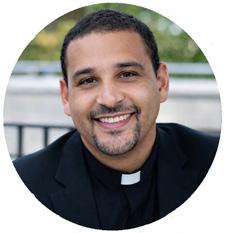
SUFFERING AND THE RESURRECTION by Fr. Elias Morcos
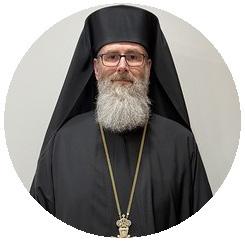
THE MONK, PRAYER, AND HOLY STILLNESS by Met. Ephrem Kyriakos
THE MYRRHBEARERS by Met. Ephrem Kyriakos
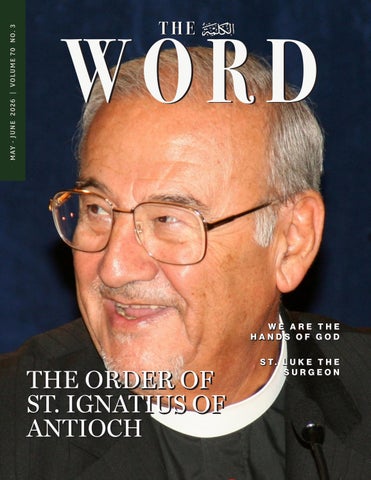
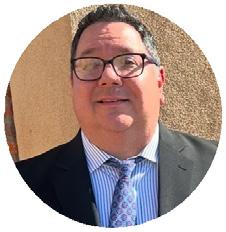
ST. LUKE THE SURGEON by Fr. Michael Shanbour ORTHODOXY by Jaclyn Al-Hanna Ferris WE ARE THE HANDS OF
by Freida Marion Skaff
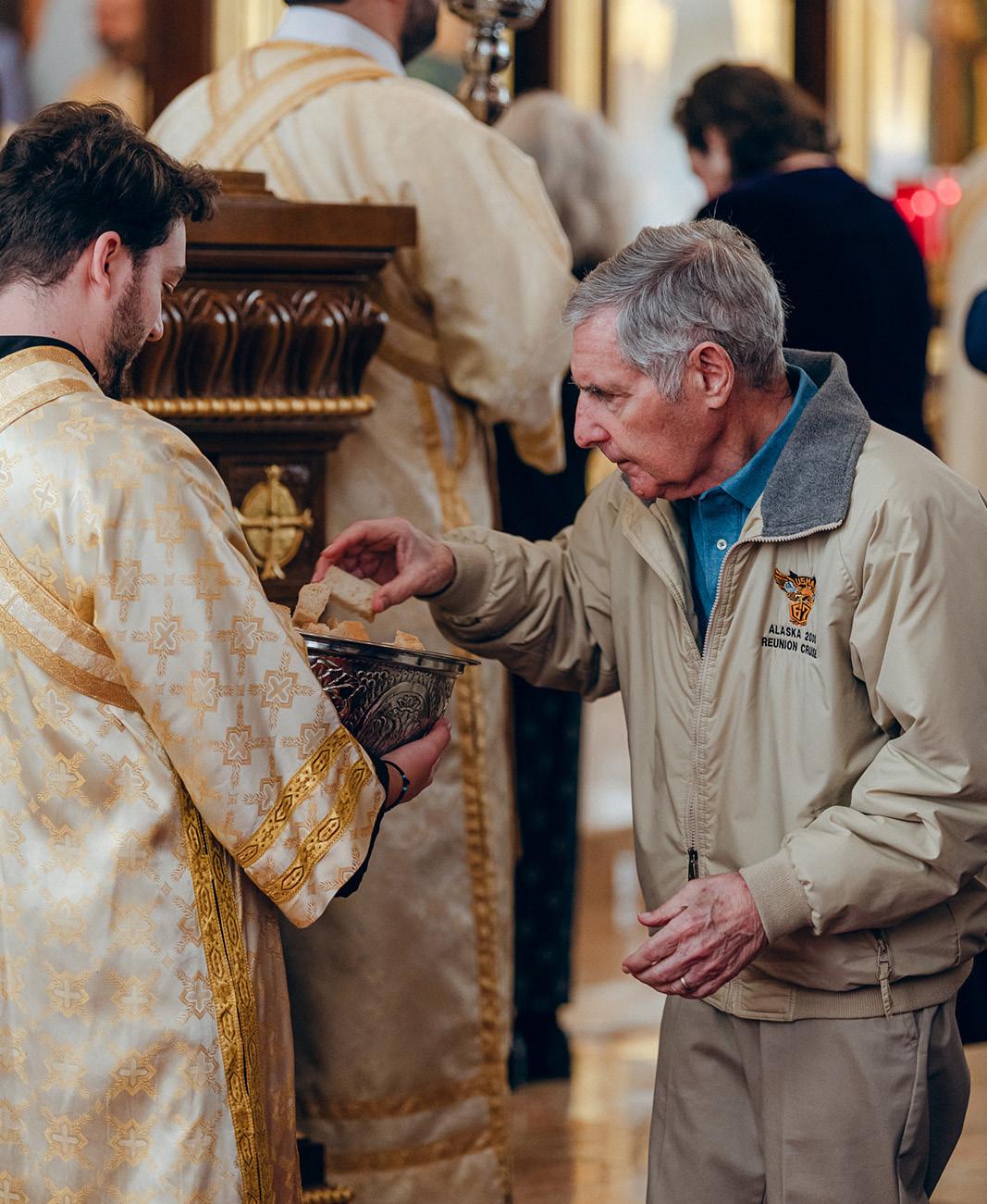
A Half Century of Witness and Love: The Order of ST. IGNATIUS OF ANTIOCH
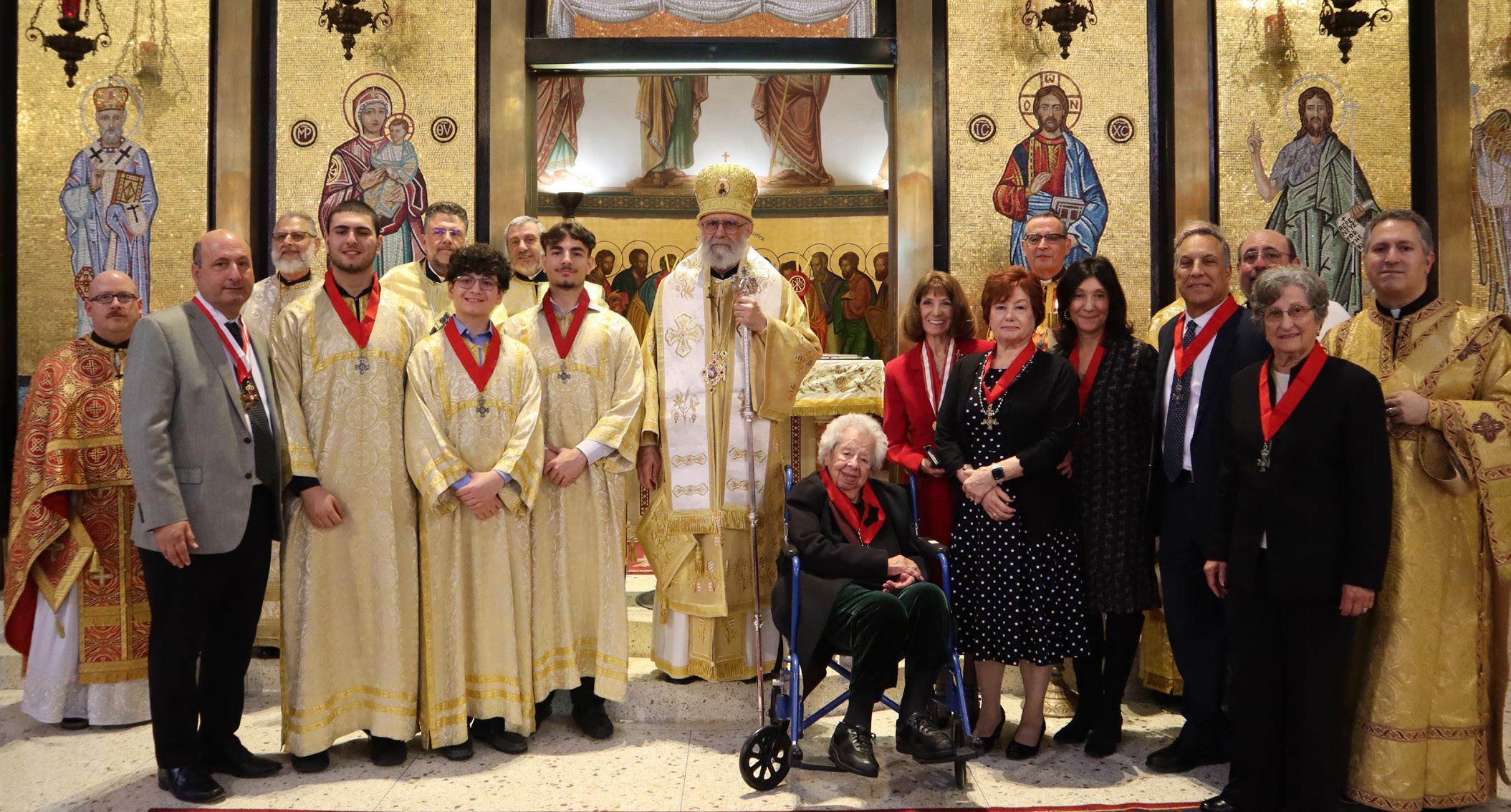
This year marks the 50th anniversary of the Order of St. Ignatius of Antioch, a philanthropic organization of the Antiochian Orthodox Christian Archdiocese of North America.
We celebrate half a century of sacrifice in service to our Archdiocese and beyond. We celebrate 50 years of dedication and hard work by a special group of people. The men and women who are members of the Order not only give support financially, but also devote their time and effort, pouring their hearts into this cause.
So who are these people? And why do we see them invest so much effort in encouraging others to join them?
What began as a vision shaped into reality by Metropolitan Philip Saliba of thrice-blessed memory, grew and flourished like a beautiful flower. And like St. Ignatius of Antioch, the bishop and martyr of the second century who believed in living our Christianity and not merely being called Christians, the Order’s mission
statement clearly defines its purpose. Through unconditional love and generosity, the Order engages every Orthodox Christian in the work of the Archdiocese and the Orthodox Church, embodying the obedience and humility that have characterized its life.
Dr. Ramzi Khairallah, North American Chairman
The Disciples were first called Christians in Antioch. Acts 11:26
The Most Reverend Metropolitan SABA
The Right Reverend Bishop THOMAS
The Right Reverend Bishop ALEXANDER
The Right Reverend Bishop JOHN
The Right Reverend Bishop ANTHONY
The Right Reverend Bishop NICHOLAS
Founded in Arabic as Al Kalimat in 1905 by St. Raphael (Hawaweeny)
Founded in English as The WORD in 1957 by Metropolitan ANTONY (Bashir)
Editor in Chief Bishop JOHN
Assistant Editor John Abud
Design Director Dn. Ephraim Awad
Editorial Office: The WORD
2 Lydia’s Path, Westborough, MA 01581-1841 wordmag@aol.com
Submissions for “Communities in Action” must be approved by the local pastor. Both may be edited for purposes of clarity and space. All submissions emailed and provided as a Microsoft Word text or editable PDF. Please do not embed artwork into the word documents. All art work must be high resolution: at least 300dpi.
ANNUAL SUBSCRIPTION:
U.S.A. and Canada, $40.00 Foreign Countries, $50.00 Single Copies, $3.00 Checks should be made payable to THE ANTIOCHIAN ARCHDIOCESE.
The WORD (USPS626-260) is published in September, November, January, March, and May, by the Antiochian Orthodox Christian Archdiocese of North America at 358 Mountain Road, periodicals postage paid at Englewood, New Jersey 07631-5238 and at additional mailing offices.
Postmaster send address changes to The WORD, 358 Mountain Road, Englewood, NJ 07631-5238
ISSN 0043-7964 www.antiochian.org.
Canada Post Publication Agreement No. 40043404
Return Canada address to American International Mail, STN A – BOX 697, Windsor ON N9A 6N4, Canada
In October 2025, I was fortunate to accompany our dear Metropolitan SABA to Lebanon with members of the Archdiocese’s Board of Trustees to visit parishes, monasteries, and hierarchs of our Antiochian Church, and to participate in the opening session of the Holy Synod. I was struck by how many clergy and bishops eagerly asked questions about the Order and how it operates. That led me to reflect deeply on our experience here in North America, and how important it truly is.
I grew up in Lebanon and was not familiar with the Order until I settled in Syracuse and became a member of St. Elias Church, a relatively small parish in upstate New York. My journey with the Order began about 14 years ago as a member, like the more than 3,000 active members across North America today. At the time, I remember telling my priest when he first approached me that while I supported the cause, I did not want to wear the cross. To me, it felt like showing off my donation to the rest of the congregation. His answer was simple: “You do what your heart tells you to do.”
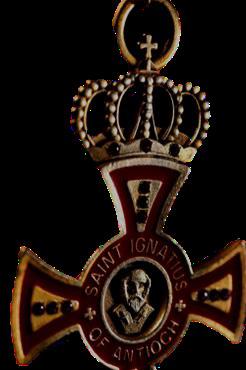
A few months later, an older member of the Order passed away. His fellow members stood by his coffin in solidarity and respect for our departed brother and for his family. In that moment, I realized that I was part of the family of the Order, and that wearing the cross with the red ribbon symbolized our commitment to one another and to the wellbeing of our Church.
As the years passed and as I became more involved in the work of the Order, I came to understand that we wear our crosses not only as a sign of belonging to a beautiful family of dedicated men and women, but also to raise awareness of the cause we support and to invite others to join our family. The proof
of this is simple and clear: in churches where members of the Order do not frequently wear their crosses or are not visible, membership does not grow as it does in parishes where they are worn. Likewise, local chapters that are active in their parishes and surrounding communities naturally attract more members and talent to help do the good work.
A perfect example can be seen in our own church in Syracuse. Over the past year, our chapter has organized three social events and two charity events, benefiting nearly 200 families in our local school district. We distributed food pantry packages valued between $100 and $150 per family. But it wasn’t the amount that mattered, it was the fact that these families felt love and support through our efforts and the warmth of our hearts around Easter and Christmas.
And if you think they were the primary beneficiaries of this generosity, think again. In
reality, it was the members of the Order, Teen SOYO, and other parishioners who donated and participated who benefited the most. Because of these activities, we now have many new inductions, and our small parish will soon reach nearly 30 active members of the Order. People want to be part of a loving family. This is the environment the Order cultivates.
The Order supports many ministries of our Archdiocese, including Teen SOYO, Christian Education, parish development, and missions. In recent years, annual contributions to Archdiocesan ministries have totaled $800,000. Beginning this year, that amount will increase to $1 million. For the first time, we will support Young Adult Ministry (YAM), and other areas, including seminarian education and charitable efforts. This comes in addition to the $500,000 contributed annually toward clergy retirement and youth camp scholarships.
We often say that we want more clergy and greater youth involvement in the Church. The Order actively works to make that possible. By doing so, it safeguards the future and continuity of our Church. Members of the Order see this as a shared responsibility, supporting one another as a true family should.
Over its 50-year history, the Order has contributed more than $50 million to sacred causes, all while maintaining minimal administrative spending thanks to the extraordinary volunteer dedication. More than 90% of membership dues go directly toward the mission, with less than 10% allocated to administrative costs. Such efficiency would not be possible without the sacrifice and commitment of every member.
Pride can be the enemy of love when directed inward. But taking pride in the achievements of others, including fellow members of the Order and the people and organizations they serve, is the right kind of pride: one that builds love and unity so that we may truly become one body in Jesus Christ. In the same spirit, the Order takes pride in all the ministries that serve the Archdiocese under the guidance of our Metropolitan.
The Order is humble, and so are its members. We are not a social club. Our activities radiate outward toward our surrounding communities. Our mission statement speaks of supporting the Archdiocese as well as helping neighbors in need, and these two goals align perfectly. Through the generosity of the Order, the Archdiocese is empowered to support other ministries and serve those in need.
So what do we want from our beloved Order of St. Ignatius? We want it all. We want to support
our Church and our communities, to help wherever we can, and to live our Christian life to the fullest, unafraid of commitment, trusting in our Lord Jesus Christ, and knowing that in Him and through Him we will be saved.
What better way to conclude than with the words of St. Ignatius of Antioch, written as he was eventually led to the Colosseum in Rome to face martyrdom:
“ Let no man’s place, or dignity, or riches puff him up; and let no man’s low condition or poverty abase him. For the chief points are faith towards God, hope towards Christ, the enjoyment of those good things for which we look, and love towards God and our neighbor” (Epistle to the Smyrnaeans, ch. 6).
Rest in God’s Sweet Joy
Fr. Peter Kavanaugh
“Be quiet, for this day is holy; do not be grieved. And all the people went their way to eat and drink … and to make merry” (Neh. 8:11–12)
Ezra steps up onto the wooden platform. A hush sweeps through the crowd. The Israelites had lost their scriptures and forsaken God’s ways. They were gathered this day before their priest, who opened the abandoned book, and read God’s word from beginning to end. Finally, he shuts the book, looks at the people before him, and gives them a job to do, a spiritual discipline, a duty even. “Today is holy. Go and enjoy choice food and sweet drink. The joy of the Lord is your strength.”
We must learn to step out of our trials and disappointments, and up into the Holy Day—to learn how to rest in God’s sweet joy.
“Wherever the Catholic sun doth shine, there’s always laughter and good red wine. At least I’ve always found it so. Benedicamus Domino! ” (Hilaire Belloc).
7 September - October 2025
A historian wrote this ditty, praising the spirit of joy that he found so widespread in Christendom. The honest historians all note it too. Underneath the thin veil of hedonism, the pagan and modern
world alike are really very dark and gloomy. Yet, among Christian people there is a courageous hope and cheer. Behind our fasting and repentance, beneath our dogmas and morals, Christianity is the religion of joy.
I stumbled across an article recently called: “Merry England Was Real Enough … Until the Puritans Ruined It.” With a title like that, you cannot help but read on. The author describes the
history of England and makes an observation: “Merry England was not a myth. They really did use to dance around the maypole, feast all day, and drink beer all night. And not only was it more merry, the merrymaking was actually encouraged by the Church.” While some of the author’s points might raise an eyebrow, his thesis is solid. There is always laughter and good red wine in the Christian world. Merrymaking prevails in every Christian home, and there is nothing the devil prefers more than to smother that joy.
In 1659, the pious Puritans in Massachusetts made it a criminal offense to celebrate Christmas. A fine of 5 shillings was imposed on any Englishman found “observing any such day as Christmas or the like, either by forbearing of labor, feasting, or any other way.” Instead, such popish celebrations were to be days of “fasting and humiliation.” Bah humbug. However far we have moved away from our puritanical roots, we Americans still have a hard time shaking off this attitude. We are good at hedonism. We have every imaginable kind of mind-numbing entertainment and intoxicating venue for escapism. However, we are not so good at wholesome, leisurely, joyful feasting, and we would do well to learn it.
A hidden joy is buried deep within every atom of the universe. Every twig and blade of grass, the birds, streams, and stars all hum with joy. The angels in heaven wonder at God in joy. This same pure joy lies at the heart of our faith too. From where does the joy spring? It springs from knowing God. It is a well that pulls deep from the grandeur and wonder of God. Our place in life is simple: to join in the Great Cosmic Doxology, to stand before God and marvel.
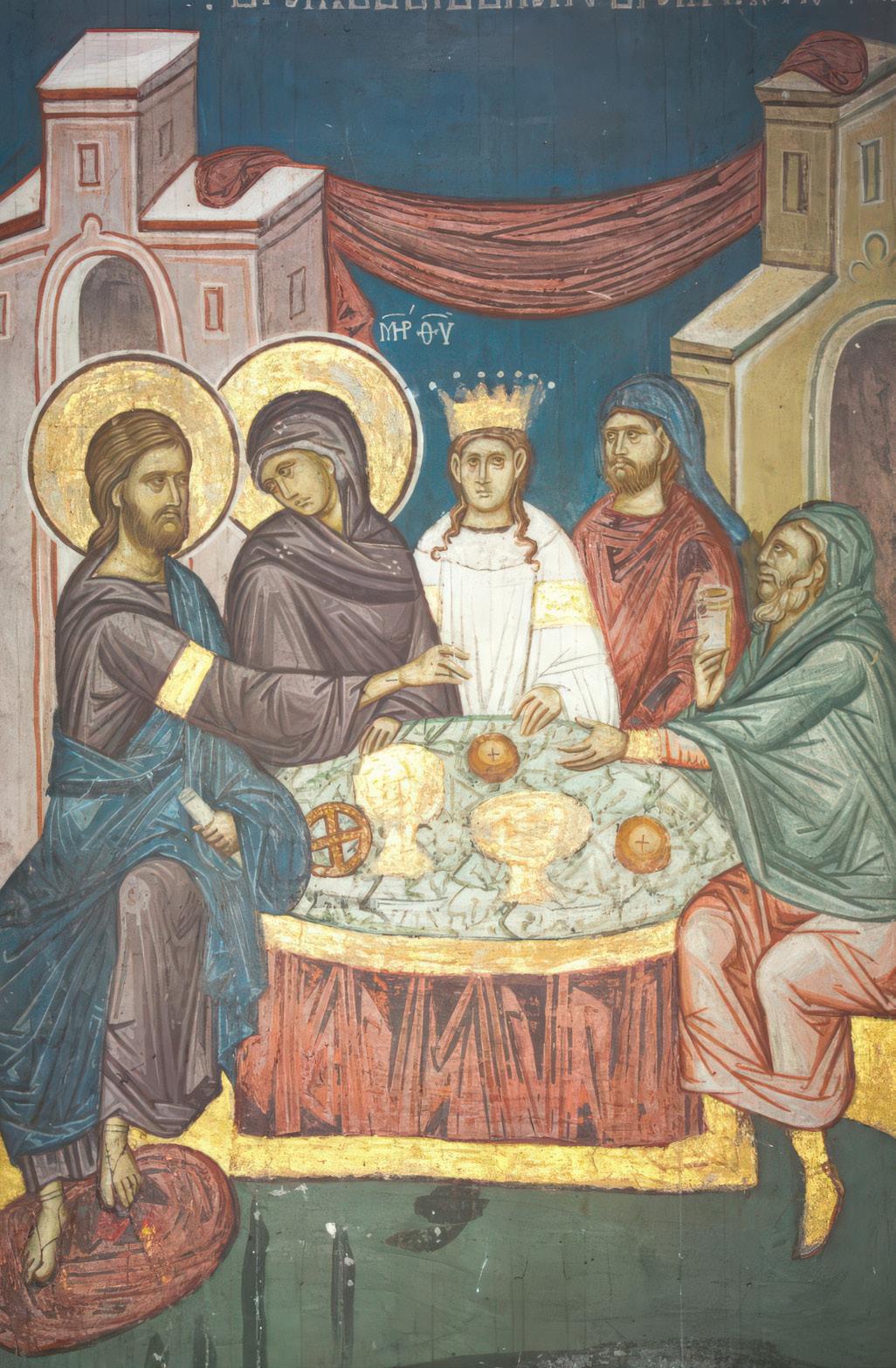
Today, on the second Sunday of Epiphany, Christ reveals this joy in his first public miracle:
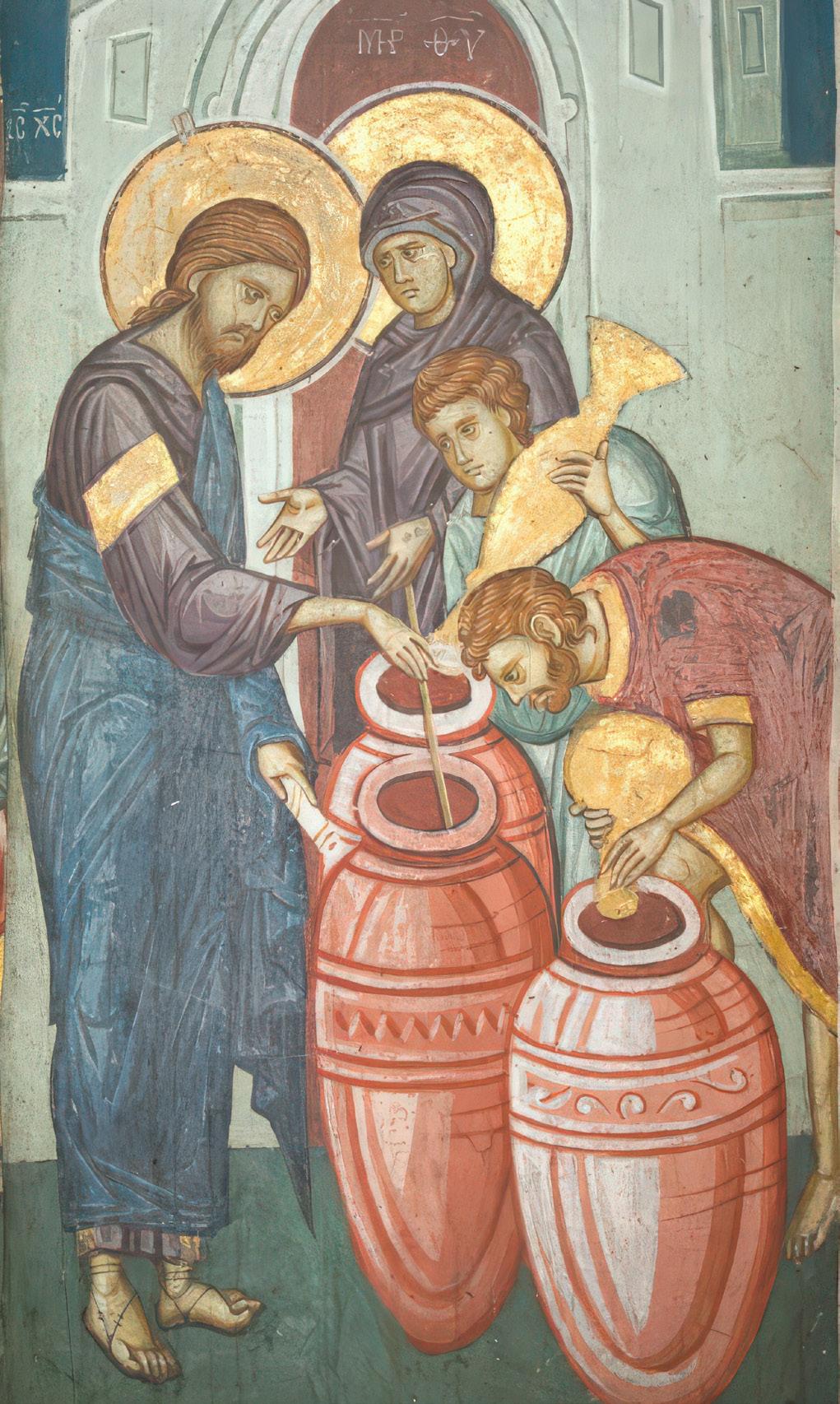
“On the third day there was a wedding in Cana of Galilee, and the mother of Jesus was there. Jesus and his disciples had also been invited to the wedding. When the wine gave out, the mother of Jesus said to him, ‘They have no wine.’ Christ told the servants to fill the jars with water and draw some out for the steward. The Steward tasted his wine and marveled. ‘Everyone serves the good wine first, and then the inferior wine after the guests have become drunk. But you have kept the good wine until now!’” (John 2:1–11).
He takes foul water and turns it into rich wine. What is happening here? Jesus Christ wove
together the universe. He was there when man was fashioned out of clay. He was there on the mountain instructing Moses. He was there with
each and every prophet of olden times, patiently, ardently preparing humanity to ready itself for the incarnation. At last, God became flesh. Heaven came down to earth. Spirit and matter merged into one. After all this, how does he reveal himself? The whole Gospel is summed up at this event. God manifests himself in delicious wine and festive merrymaking.
St. Paul entreats God to fill the Church with “all joy” (Rom. 15:13).
“Rejoice in the Lord always; again I will say, rejoice” (Phil. 4:4).
“A crushed spirit dries up the bones,” the Proverbs relate. “A joyful heart is good medicine” (17:22).
Even in the hard times, we are asked to rejoice: “Count it all joy, my brothers, when you meet trials of various kinds” (James 1:2).
What do we have to rejoice about? If we could only open our eyes to reality, we would be overwhelmed with joy.
High up in heaven, the angels live in a perpetual state of joy. They stand before the throne of God marveling at his power and beauty. “‘Worthy is the Lamb that was slain to receive power, and riches, and wisdom, and strength, and honour, and glory, and blessing … Blessing, and honour, and glory, and power: be unto him that sitteth upon the throne, and unto the Lamb for ever and ever’” (Rev 5:12–13).
They are wrapt up in the joy of it all. Yet, in all that glory, the angels have far less than we do.
The very name of Jesus Christ is enough. At the time when this name is uttered aloud to the cosmos, “every knee should bow, of things in heaven, and things in earth, and things under the earth” (Phil. 2:10). A man or woman who utters the name of Jesus Christ is instantaneously richer than all the kings in the world. Just to breathe his name, “Jesus,” is to be filled up with the splendor of heaven. It is enough.
But we have more. We also drink the Blood of Christ. We eat His Holy Body. We consume Him and take Him into ourselves. This is more than the angels and archangels could ever hope for. We are Χριστόφοροiς, “Christ-bearers.”
Jesus Christ has revealed himself to us today. He is the Holy Day of which Ezra prophesied. The priest’s words to the Israelites were a foreshadowing of the Theophany of Christ, and ring loud and clear for us today, to learn to step out of our trials and disappointments, and up into the Holy Day—to learn how to rest in God’s sweet joy.
IS HOLY.
AND SWEET DRINK.
Be Yourself, American
Fr. John Finley, transcribed excerpt from Fr. Roman Braga speaking in 1995 at St.
Ignatius Antiochian Orthodox Church, Franklin, TN
Orthodoxy is to find Christ in ourselves … You became Orthodox. You didn’t find Orthodoxy individually. If you think that you came just by yourself to Orthodoxy, you are still Protestant. Orthodoxy is the experience of peoples in God, not of individuals.
First of all, you came back to Church, and don’t think that you’re saved without thinking about others. In an organism, as St. Paul says, if you cut off your little finger, the whole organism is suffering. The same thing, salvation is communal; it’s not individual.
And you come to the Orthodox Church in America, not to become Syrians, not to become Romanians, not to become Russians or Bulgarians. Be yourself, American. Otherwise, God doesn’t accept your experience, because you have a tradition, you have a background that is given by God. God made me to be born in the Carpathian Mountains; I cannot be other. For me, Orthodoxy is the experience of the Romanian peoples in the Church. We come into the church, not as isolated individuals; we come with our families, with our nation, with our culture. Sanctify and transfigure your culture. There are many good things in this country. Be good patriots.
Orthodoxy today is accused of being chauvinistic and Nazi and nationalistic. It’s not true. But you cannot be Orthodox without your history. If you study better St. Maximos the Confessor, it’s a very difficult holy father, he thinks that we are in a structure like concentric circles. The first circle (the little one) is the individual, which is a person, not an individual. An individual is something isolated, a person is somebody who lives in community. And
the individual (person) is included in the family. The family is a church. We save our soul in the church and in the family. The family is included in your culture; in your ethnicity, so to say; in your history. And that ethnicity is included in another circle that is the Church, the universal Church. And the last circle or sphere is God. If it doesn’t develop in this structure, we don’t reach God, because God doesn’t need me as an isolated person who is nobody. If I come to God, I come with my family, with my history, with my identity. God wants persons.
Christianity is a very personal religion. When Jesus Christ said if you don’t deny yourself, you are not worthy to follow Me. If you want to follow me, deny yourself, because if you want to save your soul, you will lose it, but if you lose your soul for me and the Gospel, you will save it.
This is not a double standard here.
Here, we are false personalities, because we are not authentic personalities. To be an authentic personality, be yourself. You have an identity behind you, you have a culture behind you, you have a country—you have a place in which God wanted you to be born. And that nation or country in which you are born has a history. You have to come into Orthodoxy with the whole destiny of the American people because they have to find Christ and to be saved. Even if you are a minority, you can be just one person, but you come with the destiny of your people in Orthodoxy. That is Orthodoxy; it’s the experience of peoples in God, not of isolated individuals.
I don’t know if you understand that … be yourself, be an American Orthodox Church, not a Syrian Orthodox Church. It is natural that Orthodoxy in America will become an American Orthodox Church through you, not through me. We are born
in our own countries, we have our own background, our own identity, but you have to come with your own identity, and with the destiny of this country, because there is a goal which this country has to reach. If you read in Prophet Daniel, chapter 10, every nation has an angel; the angel of the Egyptian people, it says there, the angel of the Hebrew people is Michael, the archangel, and so on. Who is the angel of the American people? Well, we have to think about that.
This nation is not just at random; it has a history. And never, never hate the religion that you came from; always to thank God for my Baptist Church, my Evangelical Church that made me understand Orthodoxy and to come back to church. Thank God, because the basics were there, and the fact that you were sincere in that denomination in which you were before, that is important because the Holy Spirit brought you home. Thank God for my Presbyterian Church that made me understand Orthodoxy, and pray for them, and wish for them to find the Church, no matter how many you are. You never are in a minority if you are with the Truth. If you are with the Truth, even if you are one, you are a majority.
So come with the whole American history and the perspective of the salvation of the American people here. And pray for the salvation of the American people of which you are included. So we don’t want you now to borrow things from Russia, or from Romania, or from Syria, or from Greece. No! Be yourself. God wants you to be yourself.
When God said if you save your soul, you will lose it—there are two kinds of personalities here: one is authentic and one is a false personality. Our false identity, or false personality, is that we don’t want to be ourselves; we are something according to TV, or imitating other things here. This world is a huge stage in which we perform, we don’t live, we perform because we want to have a tie like that guy, to have that haircut, and so on … No! If you want to save this false personality, you will lose the other one, you will lose the true personality, you lose your soul.
But if you sacrifice this, to lose what is false in you for the Gospel and Christ, you will save the true personality. So we have to be true, to be ourselves, to have our identity, to come to God following that structure: person, family, ethnic group, Church, God—these concentric spheres or circles. If we don’t develop in this structure, we are not ourselves, we are not even Orthodox.
Addendum
There may be a tendency to interpret these words (1995) from Fr. Roman in the context of a parish of the Evangelical Orthodox Church, which was received into the Antiochian Orthodox Christian Archdiocese of North America in 1987. Many, perhaps even Fr. Roman, were caught up in the excitement of a multitude of former Evangelical/ Protestant Christians becoming Orthodox Christians and, as a result, the implications for
the future development of the Orthodox Church on the North American continent. However, Fr. Roman was saying similar things to the nuns of the Orthodox Monastery of the Transfiguration while he was the assigned priest and spiritual father at the monastery from 1983 to 1988.
To offer a little background, the monastic tradition of the Orthodox Monastery of the Transfiguration in Ellwood City, Pennsylvania, comes from three influential sources: First, with Mother Alexandra, Abbess and founder of the monastery in 1967; second, with Mother Benedicta, the second Abbess of the monastery who came with two other nuns from Romania in 1978 to help Mother Alexandra. What follows is from the article “A Monastic Call to Holiness,” “Life Transfigured” A Journal of Orthodox Nuns, Volume 54 #3, Nativity 2022:
The third major influence on our monastic ethos was Fr. Roman Braga, the brother of Mother Benedicta. He was the spiritual father at our monastery for several years. Fr. Roman encouraged us to have a truly American monastery from various traditions of American Orthodoxy. This is expressed today most openly in our services where we use the music from Greek, Antiochian, Romanian, and Slavic chant traditions as well as new music from contemporary Orthodox composers.
Fr. Roman also made sure that we knew that nuns were not formed by cookie cutters—we are not uniform robots. We are all unique with different strengths and weaknesses. We do not all have the same obediences or pray the same prayer rule. He encouraged us in a simple, yet profound way, to have a daily conversation with God and continue to grow in our love for Christ in all the little things set before us each day.
Suffering AND THE Resurrection
Fr. Elias Morcos
Ihave a friend to whom I am bonded, above all, by this phrase: “Christ is risen.” Each of us has his own personal path in life, a path in which one inevitably encounters suffering, hardships, and perhaps even despair at times. Yet despite this, each of us continues on his path with a kind of hidden hope and concealed inner joy that overcomes every pain and despair, and springs from the midst of pain and despair. When we meet and each senses what is in the other’s heart, we say (whatever the day may be): “Christ is risen.” We repeat it with tears and faith—and that is enough for us to understand the world, so our lives can have meaning, and our sufferings can have meaning, and for our hearts to be filled with joy: “Christ is risen,” and our life is no longer futile and meaningless.
Does the Resurrection have value if we do not give meaning to our lives? People find the tenet of the Cross and the Resurrection strange and outlandish, even though nothing concurs more closely with the reality of human life
than this doctrine: human life, in practice, is entirely crucifixion and resurrection. The Cross is “planted” in the world, overshadowing it with its outstretched arms. It is the great reality we encounter every day. Who among us does not have his own cross to carry upon his shoulders, suffering morning and evening, or piercing his heart unseen by others? Who does not have material worries, illnesses, sorrows, trials, and sins? And what society is free from misery, injustice, hypocrisy, and corruption? Society
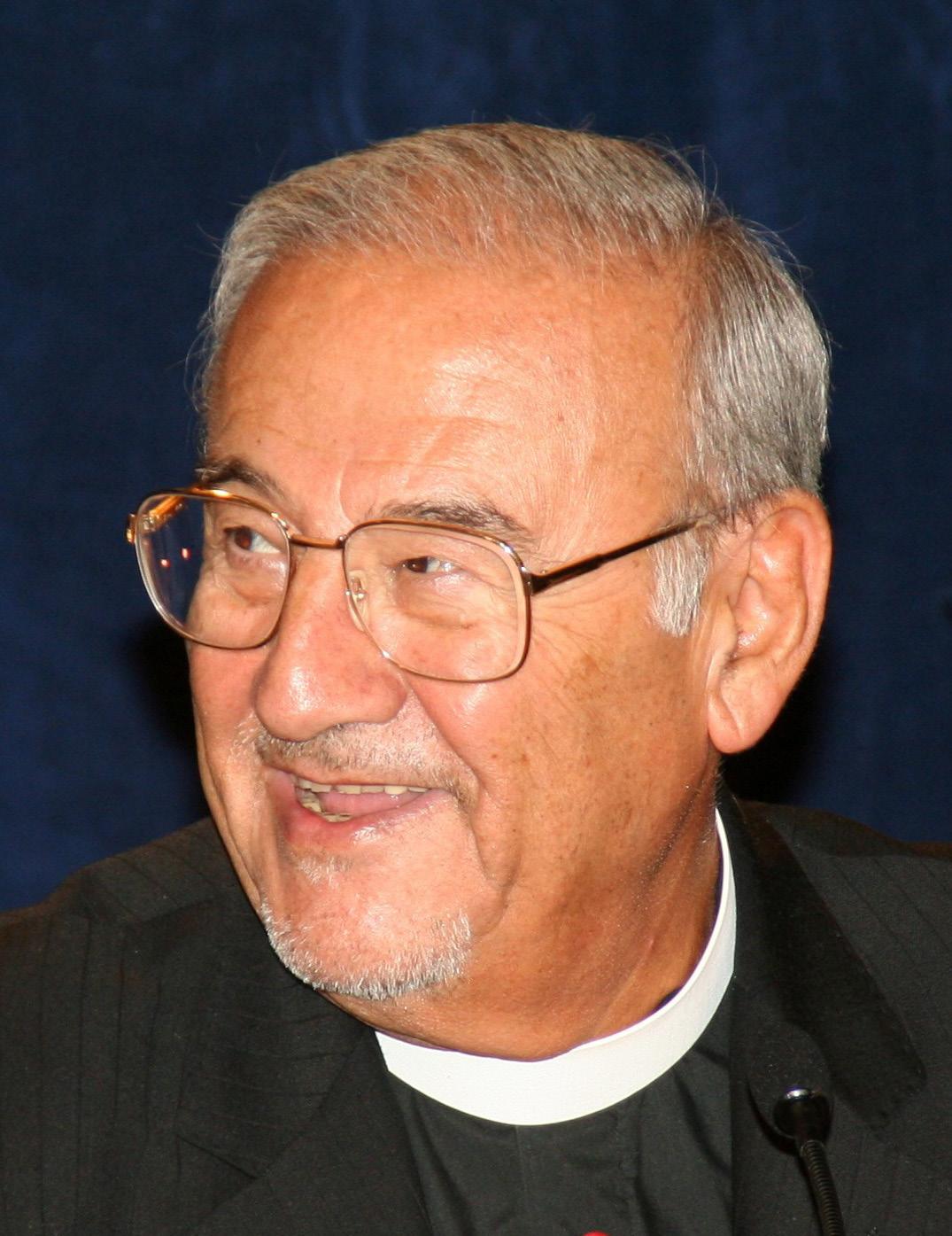
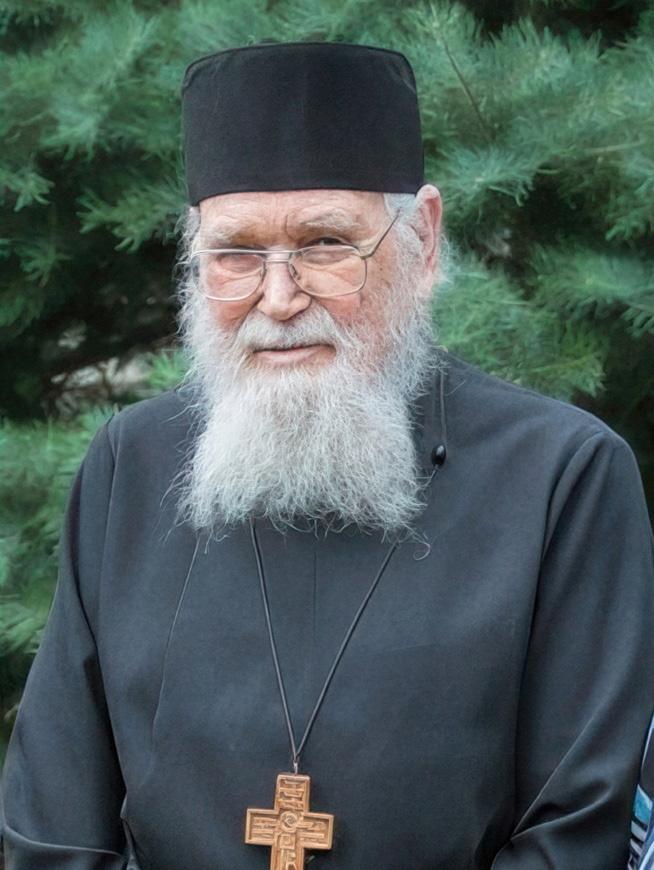
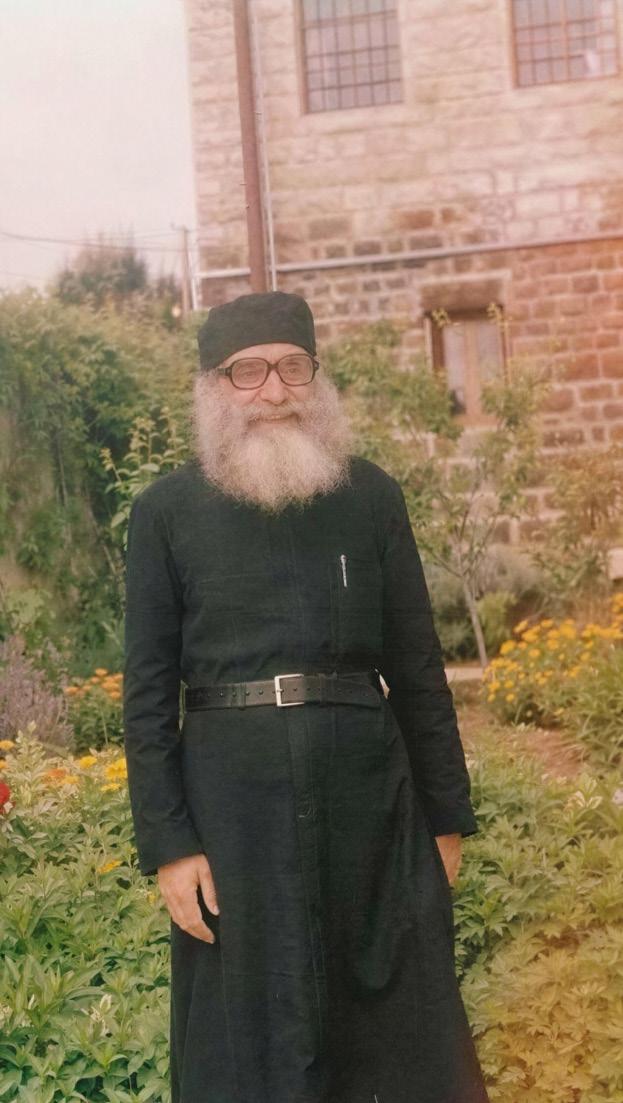
Father Elias Morcos at the Monastery of Saint George in Deir el-Harf.
itself is crucified by corruption. So, the Cross is the primary reality from which there is no way out. Our life’s path must pass through the Cross. Whoever wants to avoid the Cross avoids life itself—he lives on its periphery. Life, therefore, is through the Cross, but only if it is taken as a means and a path to the Resurrection.
The Resurrection is also a great reality and truth in human life. Every person seeks relief and deliverance amidst their suffering and distress. Despite all hardships, even in the worst states of misery and wretchedness, hope always remains present in the heart. But most of the time, instead of finding relief and joy, a person flounders in his worries. Why? Because he does not embrace his pains. Either he evades his problems and responsibilities in cowardice, or he collapses under their weight in despair, or he tries to forget his worries in wine or other means. Relief does not come through cowardice, despair, or forgetfulness, but through confrontation to the very end. What matters most is not the outcome of our deeds and effort. We all feel that the greatness of heroism, for example, lies not in its result but in the heroic act itself. So, when we confront our problems, engage with them irrevocably, and exert all our human and morethan-human capacity to fulfill our familial, social, and personal responsibilities, and we are prepared to sacrifice our comfort, our time, and even our lives for their sake, then, in this full self-sacrifice, we find the truth. In the act of full self-sacrifice itself, with all the self-crucifixion and suffering that comes with it, lies victory and deliverance. In suffering and crucifixion lies the Resurrection … This is something that can be experienced. And when we experience it, we
experience, to some extent, the Resurrection itself, that great truth which alone solves the problems of humanity and the world.
Yet this Resurrection often remains a theory on paper, with no one acting upon it, and each person continues struggling within his inner and outer crosses to no avail. Why? Because we rely only on ourselves, and by ourselves we can do nothing. And when at times we do succeed—in certain blessed moments—we feel that a power from above has been given to us and has acted within us. Do not believe that total, gratuitous self-sacrifice is purely human; it is a divine act granted from above. We receive this gift, this grace, and respond to it because within us there is a spark from above. Were we not created in the image and likeness of God? And has not Christ, who was crucified and arose from the dead, given us the possibility of rising with Him? If we surrender ourselves to this higher power, to this divine grace, and allow it to act within us continually, as we channel our life in self-giving, self-sacrificing, and love, then we actualize the possibility of the Resurrection; in fact, we actualize the Resurrection of Christ within us. Then we carry our cross with joy and thanksgiving in the light of the glorious Resurrection. And as such, life becomes a “new earth and a new heaven,” because through Christ “joy has come to all the world.”
In truth, it is a process of being newly created. How can the human being, corrupt and weighed down by evil and sin, raise himself and the world, sanctify them, and lift them all to the Creator as was the purpose of creation from the beginning? Adam, through his free will, fell along with creation instead of raising it to God. Therefore,
a new act of creation was necessary to save humanity from evil and restore it to God. This act of creation could only be accomplished by God Himself in Jesus Christ. The Church’s teaching on this matter is a light that illuminates what is obscure in our inner feelings and experiences and clarifies for us the reality of our being in God and in Jesus.
The Church believes that the mission which Adam did not fulfill was accomplished by Jesus. He came to restore humanity to God, to purify creation, sanctify it, and bring it back to the Father. To achieve this, He had to overcome three barriers: death, sin, and nature. He overcame human nature, corrupted and distorted by ancestral sin, by incarnating and taking on human nature alongside His divine nature; thus human nature was deified through its union with divine nature in Jesus’ one divine hypostasis (Person).
He overcame sin—the will and tendency for evil rooted in humanity—by suffering and being crucified willingly, thereby tearing up the record of our sins, freeing us from them, and nailing them to the Cross. Finally, He overcame death by dying and then rising from the dead; death no longer has a sting, nor does Hell have victory.
The Church believes that this work of salvation is entirely gratuitous, an act of God’s mercy and boundless love for humanity. God is the one who offers the sacrifice on the Cross, God is the one to whom the sacrifice is offered, and God Himself is the sacrifice offered in Christ—and He is the one who ultimately triumphs over the sacrifice through the Resurrection.
The Church believes that the work of salvation in this awesome mystery of salvation has truly brought about a “new earth and a new heaven,”
not in a figurative sense, but in the real sense of the word. The mystery of Christ’s Cross and Resurrection has freed humanity from old constraints, renewed all creation, and poured into it divine, inexhaustible, life-giving grace, and filled it with glory, light, joy, and holiness in a tangible, spontaneous way. And this new life is the life of the Church, the Body of Christ. And this gift of God is a gift beyond description.
From then on, each of us can live in this new world and drink from these springs of living waters bursting forth within us. Whoever desires this, need only walk the path—the path of total
surrender of one’s will, in faith and worship, to God: “Whoever wants to follow Me must deny himself, take up his cross, and follow Me.” It is the path of dedication and faithfulness to service in the arena of this difficult and painful life; the path of hardships and sufferings voluntarily accepted and embraced, bringing about purification and humility, the path of Golgotha and the Resurrection.
And now, is there anything that can be applied at the practical level? Yes. If you wish, every moment of your life can become of practical value. Just look around you: see the condition of the family, that of school education, the See of Antioch, and that of society in general … Look and choose. Dedicate your life to building a holy Christian family, or to renewing Christian education in your country, or to reviving the See of Antioch—its clergy and institutions— in the way God inspires you (for the thirst for renewal exists), or to combating the tyranny of wealth and exploitation and building a better society. Dedicate your life to something, offer it, spend it entirely in its service. You can see the difficulties, hardships, sufferings, and despair— enter into them, bear them, suffer, and even despair. But continue your path, and keep going until there isn’t any path left for you to take. Then, from where you do not expect, you will find the Resurrection. And when a friend says to you, “Christ is risen,” you will answer like one who truly knows: “Truly, He is risen.”
“We worship your passion, O Christ; show us also Your glorious Resurrection.”
Source: An Nour Magazine , Issue 4, April 1957. Translated from Arabic by Riad Moufarrij, March 2026.
THE MONK, PRAYER, AND HOLY STILLNESS
The monk is one who withdraws from the world in order to be united with all,” teaches John Climacus. This paradox expresses the essence of monastic life: separation from worldly attachments not as rejection of humanity, but as a deeper communion with all through prayer.
From its earliest days, the life of the Church has been rooted in prayer. The first Christians “joined together constantly in prayer” (Acts 1:14), and the Apostle Paul exhorts believers to “pray without ceasing” and to “give thanks in all circumstances”
(1 Thess. 5:16–18). Prayer brings peace to the soul, while the study of Scripture warms and illumines the heart. Together, they form the foundation of spiritual life.
At the center of monastic practice stands the Jesus Prayer: “Lord Jesus Christ, Son of God, have mercy on me, a sinner.” Its authentic practice presupposes humility, repentance, confession, acts of mercy, and love for others. Its ultimate aim, as taught by Seraphim of Sarov, is the acquisition of the Holy Spirit, for without divine grace, nothing can be accomplished.
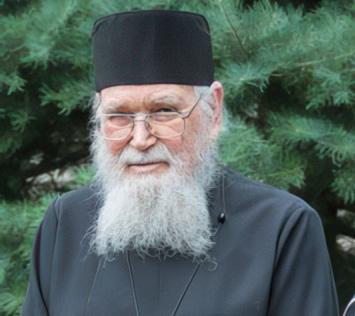
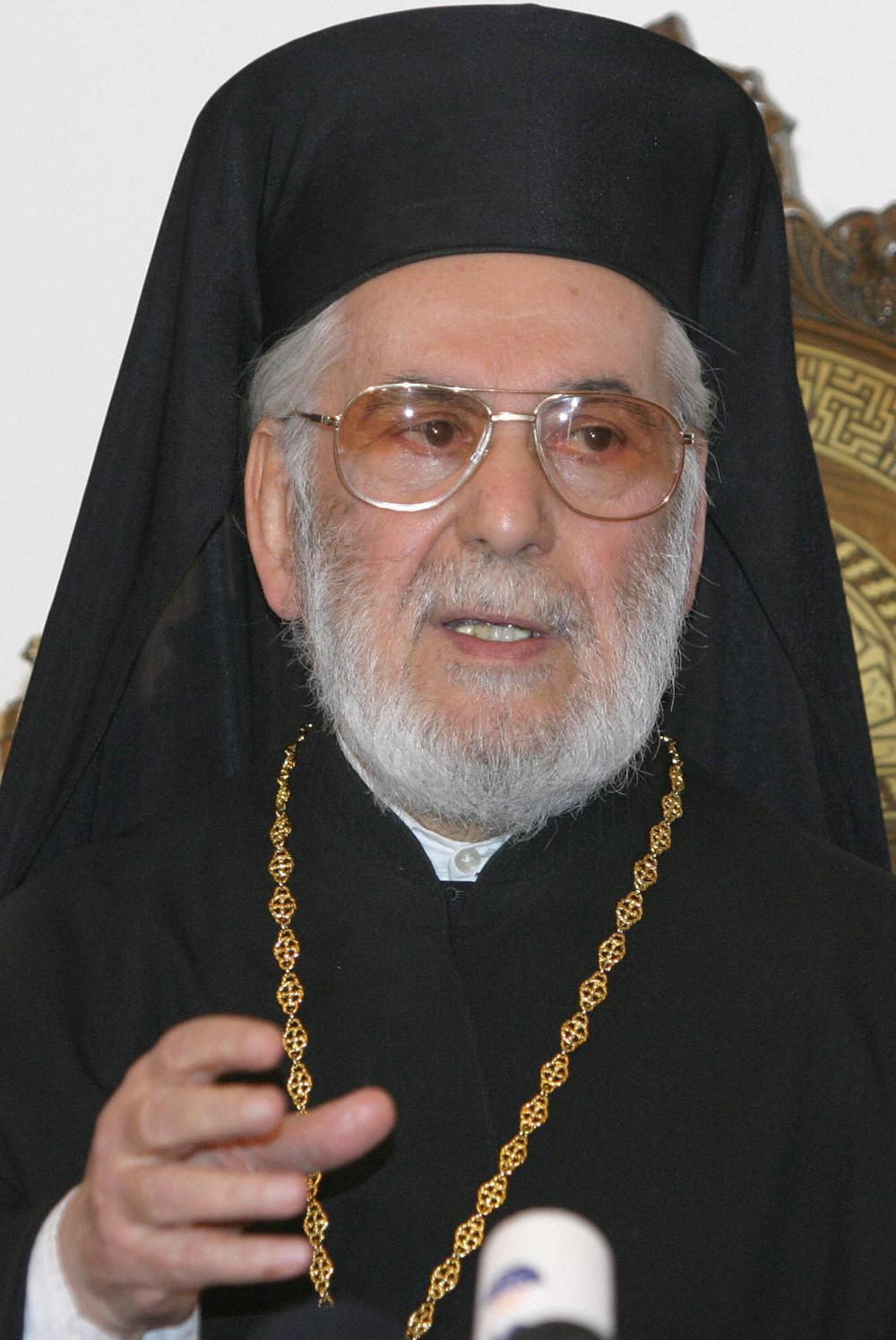
Metropolitan Ephrem Kyriakos of Tripoli, Koura, and dependencies
John Climacus describes prayer as a movement from effort to grace: it begins like rowing a boat through human struggle, but culminates in surrender—like raising a sail to be carried by the wind of the Holy Spirit. In this process, a distinction emerges between verbal prayer and the deeper prayer of the heart. According to Macarius of Egypt, the beginner compels himself toward virtues such as love and humility, even before fully possessing them. Seeing this sincere struggle, God grants true prayer and transforms effort into a living, grace-filled communion.
Such a life requires stillness (hesychia), voluntary poverty, and self-renunciation in obedience to the words of Christ: “Whoever desires to follow Me, let him deny himself, take up his cross, and follow Me” (Mark 8:34). In this stillness, the monk lives continually in the presence of God, and the Jesus Prayer becomes a powerful spiritual weapon, “for there is no weapon more powerful in heaven or on earth,” as John Climacus affirms.
The monk’s ultimate aim is eternal life, understood not merely as moral righteousness, but as perfect union with God. This is revealed in Christ’s encounter with the rich young man (Matt. 19:16–21), where perfection requires total renunciation: “If you wish to be perfect … come, follow Me.” Eternal life, therefore, is to know “the only true God, and Jesus Christ” (John 17:3).
Living in humility and freedom from egocentrism, the monk cultivates inner detachment. Though present in the world, he remains bound to nothing, seeking only divine communion through unceasing prayer and remembrance of God. He fulfills the commandment to love God above all (Matt. 10:37–38), ordering his entire life toward this single aim.
To preserve this inner life, the monk practices vigilance and discernment, avoiding distraction and excessive worldly engagement. His cell becomes a sacred space of encounter, often adorned with icons, where silence deepens prayer and communion with God. Even when he leaves this space, the prayer rope remains in his hand, and prayer continues without interruption.
The monk thus becomes a witness to the Kingdom of God, proclaiming through his life that the world is transient and cannot satisfy the human heart. His existence is a call to repentance, a return to God, and a foretaste of eternal life already present. It is a path marked by purity, humility, simplicity, and poverty.
Even within the communal structure of the monastery, there remains a profound dimension of solitude and inner withdrawal. Monasticism is the radical stripping away of attachments, possessions, recognition, and self-will. It is the path of selfemptying (kenosis) and hiddenness, a life lived without seeking acknowledgment, entirely oriented toward God.
This spiritual vision is beautifully expressed in the prayer of Ephrem the Syrian:
O Lord and Master of my life, take from me the spirit of sloth, despair, lust of power, and idle talk.
But give rather the spirit of chastity, humility, patience, and love to Thy servant.
Yea, O Lord and King, grant me to see my own transgressions, and not to judge my brother, for blessed art Thou unto ages of ages. Amen.
Ultimately, to attain eternal life is to live in communion with the Lord Jesus Christ, a communion that begins now, through prayer, and is fulfilled in the life to come.
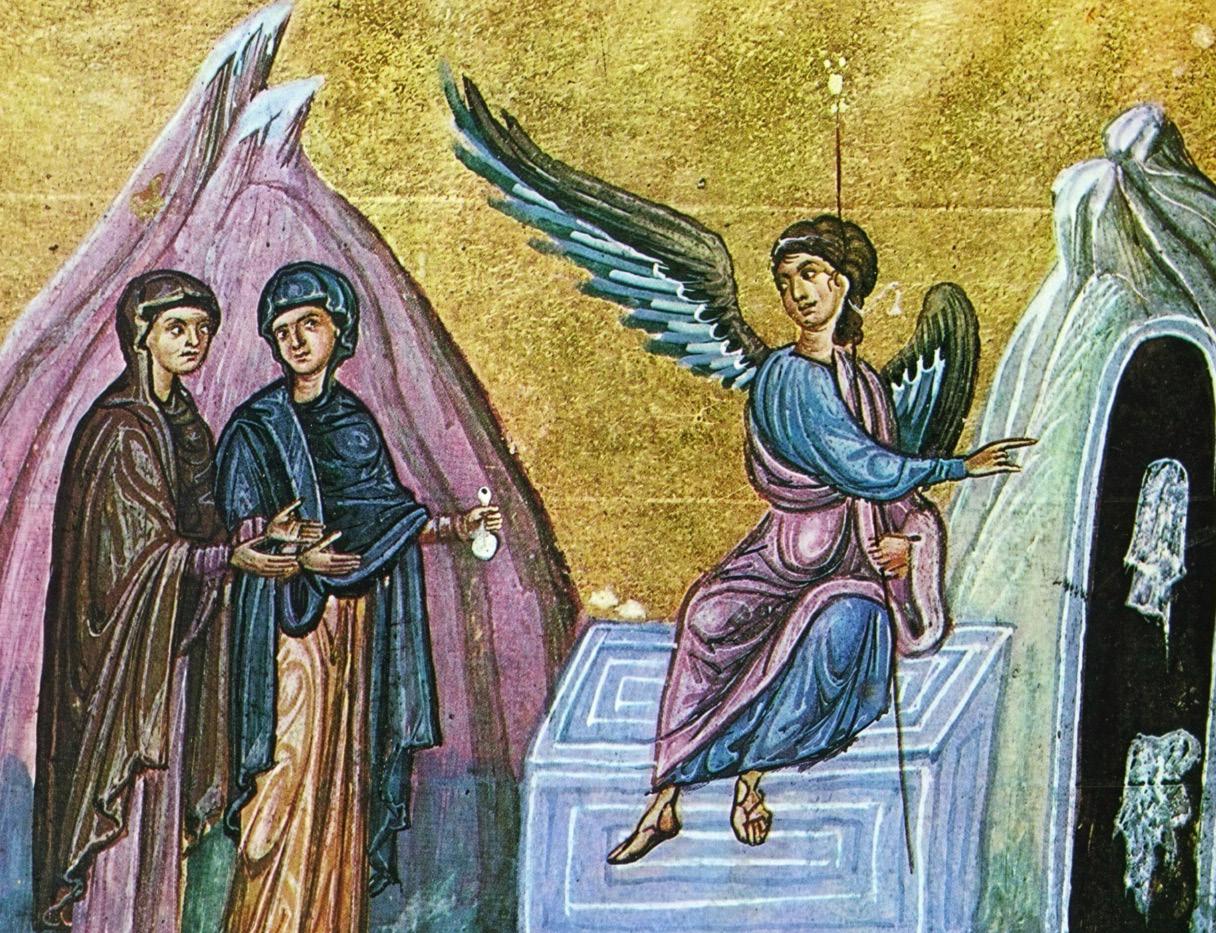
THE MYRRHBEARERS
Metropolitan Ephrem Kyriakos
The Garden of Eden is the place where death entered the world, while the tomb of Christ is the place where life and resurrection entered the world.
Instead of Adam and Eve, we now encounter Nicodemus, Joseph, and the myrrhbearers who carry myrrh to anoint Christ. They stand where once the angel and his flaming sword closed the gates of Paradise to Adam and Eve.
We encounter the angels of the Resurrection proclaiming that because of the Resurrection of Christ, heaven has now been torn open and Paradise made ready to receive man. Hence, our churches’ altars remind us of the tomb of Christ, of His Resurrection, as the flame of the Holy Spirit descends onto the bread, transforming it into the body of the resurrected Christ.
What do the myrrhbearers signify? They are as Eve was to Adam, they are an embodiment of the Church as the bride of Christ. Man and woman at creation represented the union of Christ with His Church: the Church is the bride of Christ. Christ unites Himself with the deified and redeemed humanity. The myrrhbearers represent the Church that was saved by the power of the Holy Spirit. The Feast of the Myrrhbearers reminds us of the mystery of our own union with Christ. It is no longer we who live, but Christ lives in us. Everything in our life becomes an expression of our union of love with Christ.
The myrrh that the myrrhbearers carried becomes the fragrance of the Holy Spirit that inhabits us internally, allowing us to experience a divine life. However, this fragrance is no longer meant for the tomb, but for the living body of Christ, for our members. This is the fragrance of our virtues that our holy fathers call the aroma of the Holy Spirit.
Besides partaking in the Holy Mysteries, reading the Bible daily should rouse within us this divine awareness, the living sensation of the Holy Spirit. All of this so we can live the life of the resurrected Christ, the glorified humanity in Christ. It is only that that we can say: “I have been crucified with Christ; it is no longer I who live, but Christ lives in me” (Gal. 2:20).
Thus, the myrrhbearers—the first of which is St. Mary Magdalene and most importantly the Theotokos, who, according to tradition, was the first to behold the resurrected Christ—are an image of the Church as the bride of the resurrected Christ.
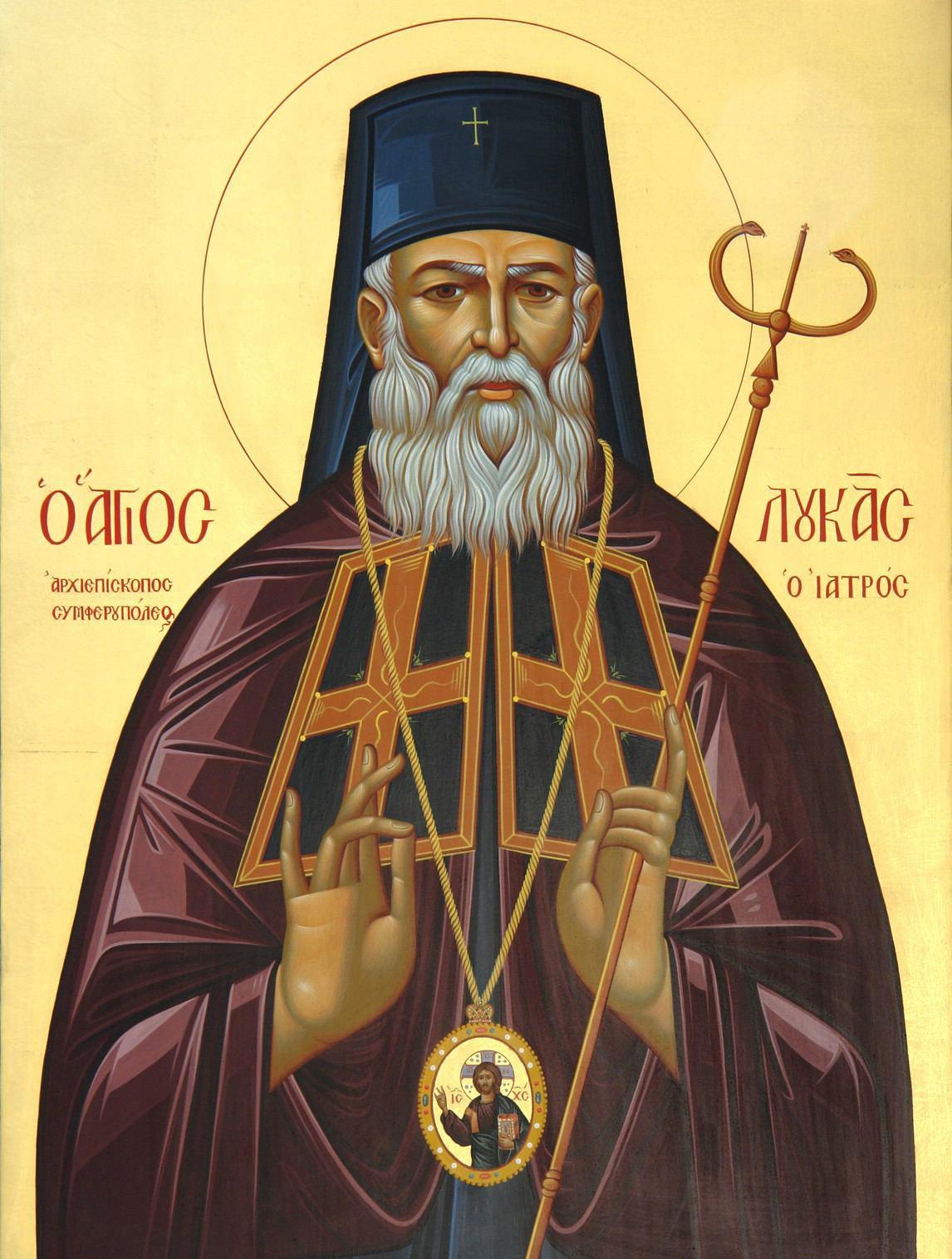
St. Luke the Surgeon: A 19th Century Inspiration
Aboy raised without faith; a man full of faith. A gifted artist who chose the gift of healing. An intellectual whose intellect inspired him to love. A human being energized with inhuman energy. Interested in everything, afraid of nothing. Constantly harassed but never moved. A savior of the suffering, and a great sufferer. Burning with zeal and charged with calm. A doctor and a priest. The best of the world and the best of the Church. A surgeon who became a bishop, a bishop who performed surgeries. This was St. Luke “the Surgeon,” the new confessor under the atheistic Soviet yoke.
Childhood and Change
The boy Valentine Voino-Yassenetsky was born in 1877 to an impoverished family who had once served in the courts of Polish and Lithuanian kings. His father, Felix, was a serious Catholic, but unexpressive about his faith. His mother, Maria, full of good deeds for others and a practicing Orthodox Christian, never entered the door of a church again after she witnessed a petty argument with a priest about how best to share her gift of koliva. Thus, he attested truly, “I did not receive a religious upbringing.”
When his high school principal gifted him with a copy of the New Testament, Valentine came to his first real understanding of the Christian faith. The Scriptures made a great impression on his heart. And although he felt a strong inclination to enter the Petersburg Academy of Arts, he concluded that he “didn’t have the right to deal with something which I was merely fond of,” but was instead obliged to do something that would
Fr. Michael Shanbour
benefit suffering people. His declared objective as a medical student was simply becoming “a village peasant doctor and helping poor people.”
Early Career
At that time, particularly among street beggars, many were inflicted with blindness due to an infection of the cornea (trachoma). After graduation, he received training at the ophthalmological clinic and began operations to restore sight. He did this wherever he could, including his home. His sister commented on how their apartment had become “a temporary eye clinic.” The new doctor’s mother would tend to the patients and feed them.
During the Russo-Japanese war, Valentine was sent to the Far East as supervisor of the surgery department for his detachment. There he met his wife, Anna, a nurse. They eventually had four children. It was said of the parents that they “were very loving with the children. They never punished or said an ugly word to them.”
His early medical career was characterized by surgeries performed non-stop from morning to evening. He treated everyone without distinction, with the exception of militant atheists, whose illness he considered a punishment from God. Later, in Moscow, he began to be recognized as one of the pioneers of the most complex surgeries: “not only on biliary tracts, stomachs and bowels, but also on the heart and brain. He returned sight to many people.”
Turning Points
During this period, the busy doctor began attending the local church more often. 1917 was eventful in more than one way. Anna contracted tuberculosis. Civil war broke out. The family had
moved to Tashkent, where Valentine had become chief doctor of one of the largest hospitals in the city. The fighting raged on for three years. Valentine risked his life to go to the hospital. There were times when he and others served two or three 24hour shifts in a row. There was famine and Anna’s condition worsened. Valentine brought home food (usually celery soup) from the hospital. With his wife sick, he cleaned the house at night. During this time, he narrowly escaped the firing squad.
A man of great faith and virtue, one of Valentine’s colleagues commented: “I never saw him angered, upset, or even bothered. He always spoke calmly and slowly, in a soft voice … Many things displeased him, but he never lost control of himself: he expressed his frustration with the same calm voice.”
After he sat 13 nights by her bedside, Valentine’s wife took her last breath. Despite her great suffering, she had sat up in bed, called for the children, and made the sign of the cross over them bidding them farewell. After some time of grieving, Valentine was led by God to ask his surgical assistant, a childless widow, to raise his children. She agreed.
The doctor had an icon of the Mother of God in his operating room. In 1920 he was ordered to take it down, but adamantly refused, risking his
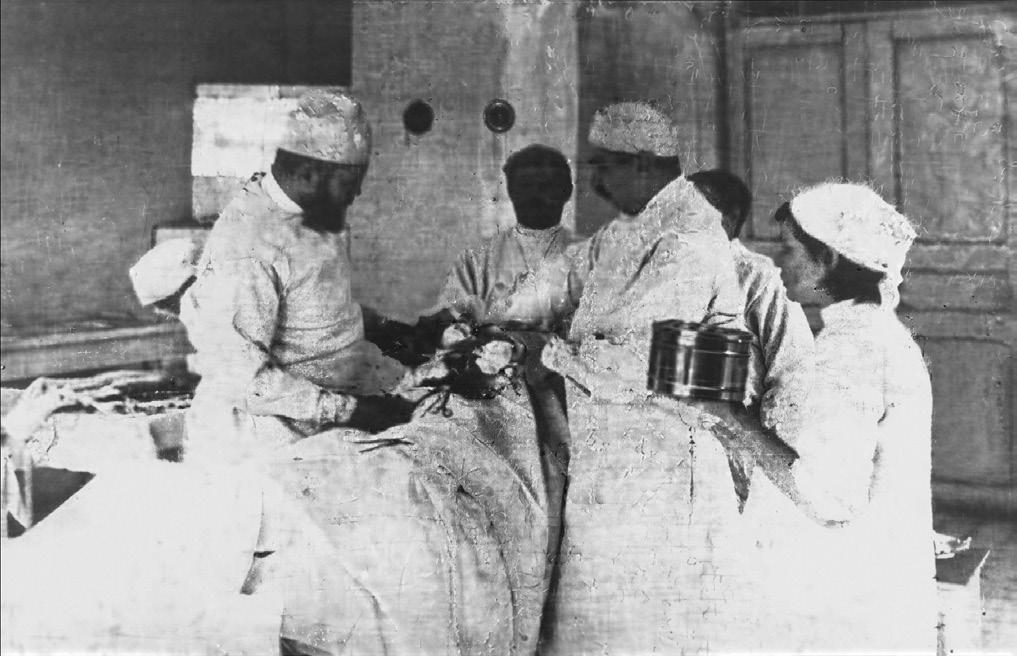
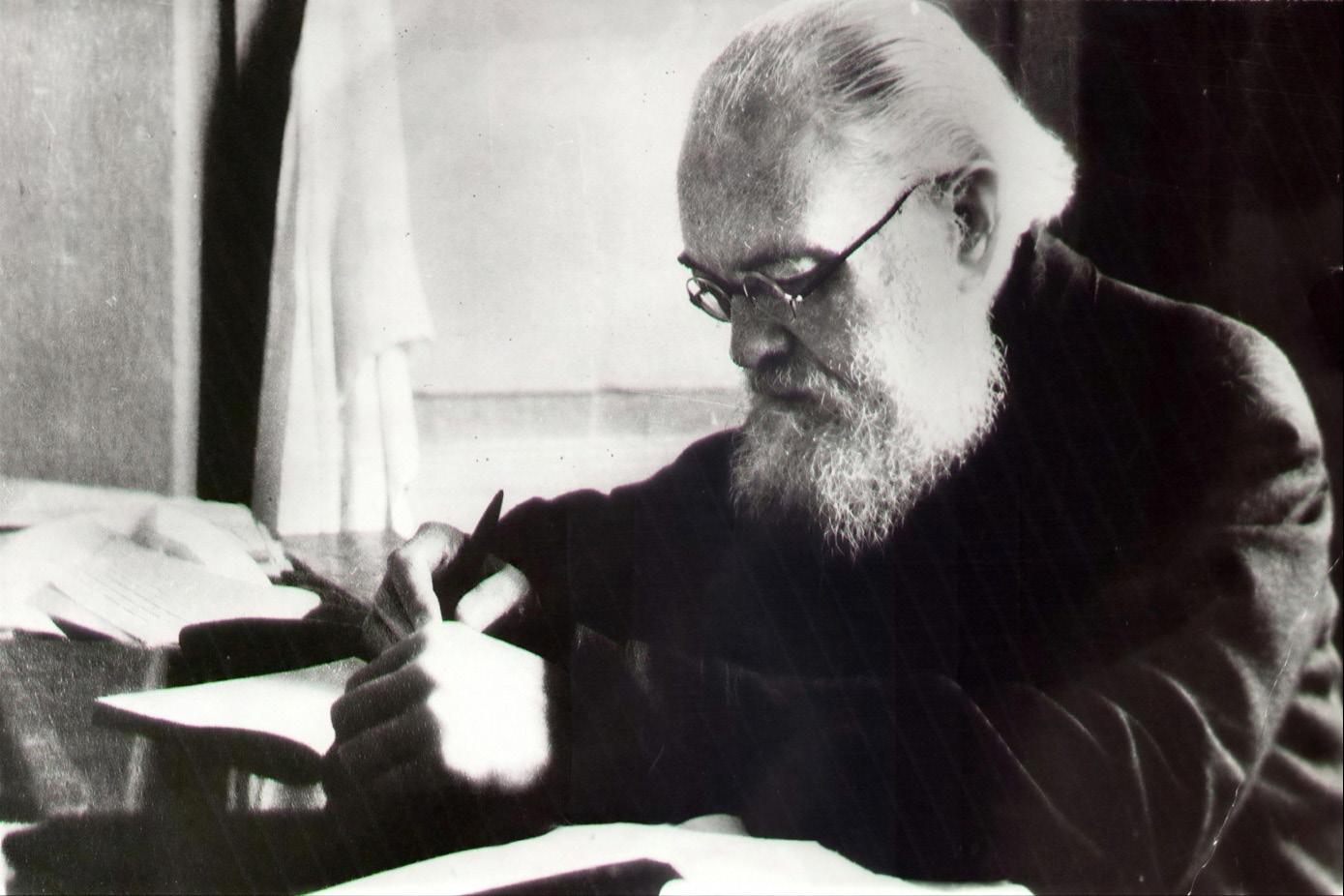
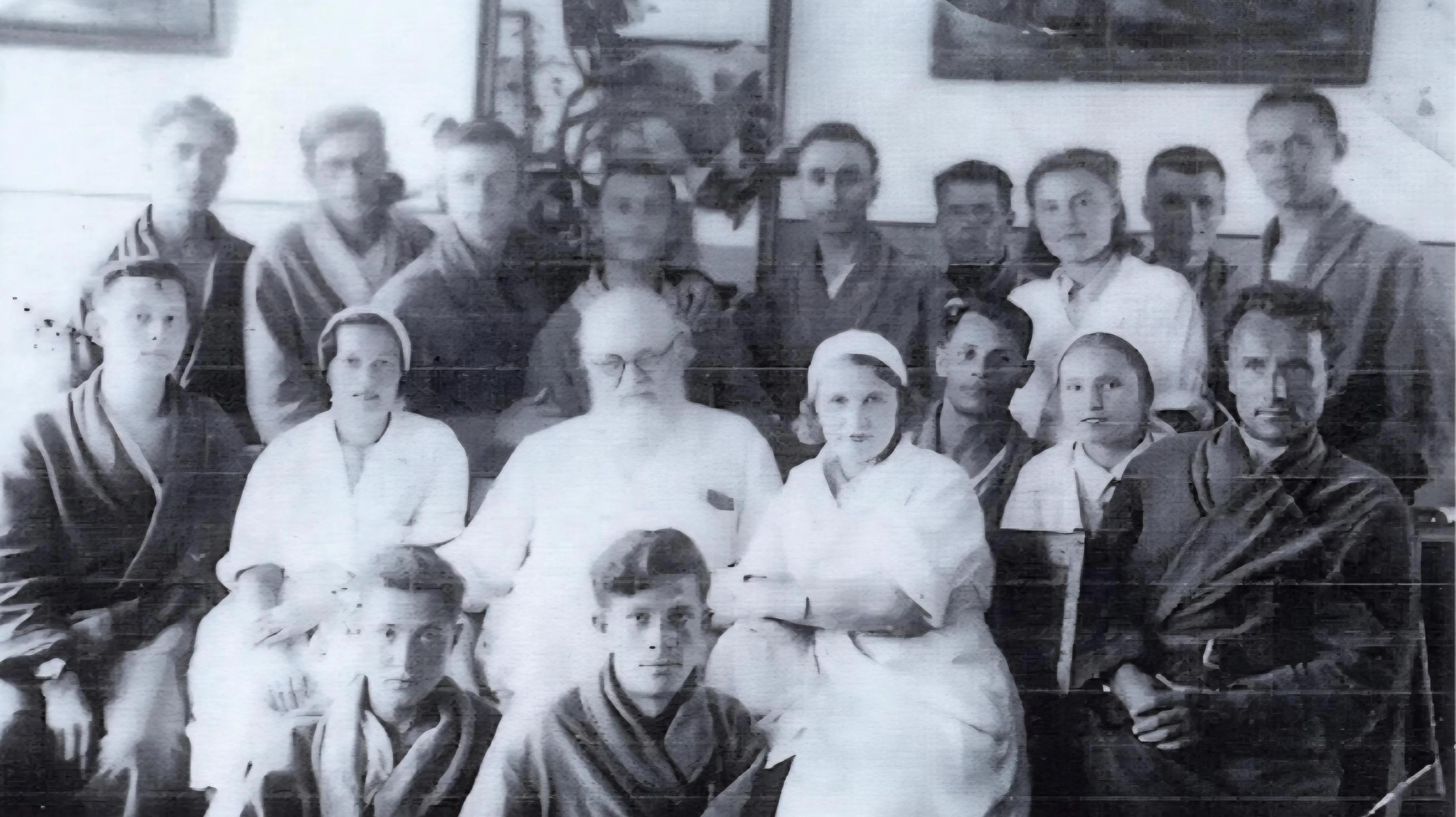
St. Luke (left) performing an operation in Pereslavl-Zalessky hospital.
position and his life. He promptly left the hospital. Soon after, the wife of one of the communist party leaders needed surgery. She insisted that only the doctor and professor Valentine Voino-Yassenetsky operate on her. The icon went back up!
The surgeon was active in parish life in Tashkent, participating in services and theological discussions, sometimes leading conversations on scriptural themes. After giving a talk one evening, the local bishop, Inokenty, took him aside and enthusiastically told him: “Doctor, you must become a priest!” Although it had never occurred to him, he took it as God’s word, echoing to some degree the Theotokos, “Be it as you say, Vladika, I will be a priest if it is pleasing to God!”
He was taken quickly through the lower ranks and into the holy priesthood. He served as a priest for two years, but also as a doctor and scientist, giving lectures in his cassock and cross. He was chief surgeon at Tashkent City Hospital and served at the cathedral on Sundays, having been appointed as head preacher.
Once he was called to testify as an expert witness in the trial of a colleague. When the atheistic prosecutor asked, “Have you seen your God?” the priest and doctor answered: “I have not seen God, Mr. Public Prosecutor. But I have also operated on the brain, and nevertheless I have not seen an intellect in there! And I have never found a conscience in there either!”
Episcopacy and First Exile
Fr. Valentine was a pastor with great zeal for Christ and His Church. His love for God also compelled him to speak out about the most deceptive movement of the time, the so-called
“Living Church.” This Soviet-sympathizing schismatic “church” promoted some seemingly attractive ideas for those of a worldly mind— increasing the authority of priests over bishops, greater responsibility for the laity, rejection of monastic life, and a “freedom” in Church doctrine. A “wolf in sheep’s clothing,” the movement created division and chaos.
When Tashkent’s archbishop disappeared, Fr. Valentine, who was faithful to Patriarch (St.) Tikhon, signaled the alarm bell. Having gathered the clergy to discuss the matter, he was unexpectedly elected to the episcopacy. An exiled bishop in Tashkent tonsured him as a monk with the name Luke (the Apostle) and in May of 1923 he was sent secretly where two bishops could consecrate him.
For the new bishop, the schismatic “alivers,” as he called them, were not a church but a “wild boar.” With love and zeal he wrote to his clergy and flock: “Do not oppose the authorities put over us by God for our sins; humbly obey them. By the power of the apostolic succession given me by our Lord Jesus Christ … I threaten anyone who gives up and joins in prayer with the boar with God’s anger and condemnation.”
The Bolsheviks immediately began seeking a reason for his arrest. Accused of counterrevolutionary activity and espionage, Bishop Luke was put in various prisons. It was at this time he began to notice problems with his heart and the swelling of his legs. During this first exile, he managed to continue his work as a surgeon—free of charge—to the benefit of many. In 1927, he was unexpectedly released from Soviet custody, returning to Tashkent. But he was also retired as bishop and as university chair.
However, Bishop Luke was again arrested in May of 1930 under the false pretense of contributing to the “murder” of a very public figure who had in reality committed suicide. Vladika was harassed and mistreated over a period of a year. During this time, he initiated two hunger strikes, which further deteriorated his health.
In May 1931, he was exiled for three years to the “northern regions” to Arkhangelsk. When transferred from prison to the railroad station, party members dragged him by the beard, spitting in his face. He had difficulty finding housing. The local bishop and doctors treated him poorly. But he was eventually allowed to work in the outpatient clinic.
This second exile ended toward the close of 1933. Vladika had been vindicated regarding the previous false accusations. In Moscow he was offered one of the vacant episcopal sees, but he declined. This
became a great sorrow for him as he later understood it to be a form of disobedience: “Feeling abandoned by the Lord and having lost any good sense … I answered, ‘No, I don’t want the see.’” Yet in 1934, his groundbreaking book Essays on the Surgery of Pyogenic Infections was received with great fanfare by the medical community and with confirmation that it was pleasing to his Lord.
Third Arrest and Exile
In 1937 persecution dramatically intensified. Two officers entered Bishop Luke’s house, throwing icons to the floor and tearing the place apart in their search. Afterwards, one asked, “May I smoke?” And he replied, “You search my wife’s letters, you turned the house upside down—and now you are seeking permission for something? Continue. Do whatever you wish.”
The holy bishop was arrested. He was subjected to a form of torture the Soviets called the “conveyer.” For 13 days and nights—considered the maximum anyone could handle—he endured endless interrogations followed by tortures and beating, without pause or sleep. Frequently, he was taken to the showers to have his head doused with cold water. He was forced to stand in a corner until he collapsed. This torture, designed to bring
a person to madness, was worsened by his hunger strikes. Later, Vladika wrote that during this time he experienced “extreme psychic depression, loss of orientation in space and time, hallucinations, paralysis of my rear neck muscles and severe edema of my legs.” Completely exhausted, he was forced to sign the minutes of the interrogation, which was filled with lies. He later explained that he had been deceived, being told the interrogators would include his actual statements.
Now he was put into prison with others, including some non-believers and at least one Muslim. The bishop confessed his faith openly and refused to take off his cassock: “The cassock will remain with me until death.” Over time he gained the respect of his fellows. Twice a day he knelt down in prayer, facing east. The loud and unruly inmates would suddenly become quiet and reverent, speaking in whispers. When being taken for interrogation, they would ask for his blessing. The bishop distributed the packages he received from home to his cellmates.
News came that Moscow considered the first round of interrogations “insufficient,” and so a second relentless “conveyer” began. However, experiencing heart failure and edema, Vladika Luke was taken to the prison hospital. There, he saved the life of a young criminal by diagnosing him properly and convincing the prison doctor to send him for surgery to his former student.
Other clergy known to Bishop Luke, under pressure, bore false witness against him. Yet the saint neither slandered nor condemned anyone. After several years he was sentenced to a five-year exile in Siberia. A few clergy, who had slandered the saint, were sentenced to the firing squad.
In exile, the surgeon bishop was reluctantly given permission to serve at the hospital, but not with the title of doctor. Rather, the scholar-professor took the vacant positions of “nurse and wash lady.”
During WWII he offered his services to the regional government and treated the wounded soldiers of
the Red Army. His operations, research, and new discoveries in the years that followed increased his fame worldwide, even in the U.S. The exile ended in 1942. He was raised to the rank of archbishop while continuing his work as a surgeon in wartime.
In 1944 Archbishop Luke was transferred to the military hospital in Tambov and became bishop of that see. For the first time in 15 years he was able to preach the Word of God. By his inspiration, but with Soviet resistance, 24 churches were opened by January 1946. A hospital was named after him, and a museum was also dedicated to him. His book Spirit, Soul, Body argued that science and religion were not at odds. Through scriptural and patristic teaching, he showed the heart to be the organ of man’s spiritual perception and communion with God. Fittingly, after his repose when his body was exhumed, his own heart was found to be incorrupt!
St. Luke obediently accepted a transfer to the Crimean See, though both his heart and vision were worsening. He did much to revive and reform church life there. He insisted that priests preach and teach, that services were performed with frequency and piety, that baptisms were done by immersion (not pouring or sprinkling), and that properly instructed Godparents were found. Economic conditions were poor after the war and the archbishop helped everyone and lived frugally, eating one meal per day. Unsurprisingly, the authorities made his efforts difficult.
Archbishop Luke developed a spiritual relationship with Archimandrite Hieromonk Tikhon Bogoslavets, whose spiritual father had been St. Ambrose of Optina. This man, who was driven out of his monastery, was a staretz (holy elder). St. Luke kept him as a constant companion, his confessor and spiritual father.
By 1955, the archbishop was almost blind. He never complained. With assistance, he somehow still served Liturgy, with tears running down his face, as testified by a priest-helper. These liturgies were awe-inspiring.
St. Luke also managed to diagnose gravely ill patients sent to him by the local clinics. In one case, after examining a child he told the parents, “It will not even be 10 days before your child goes to the heavens!” Indeed, this is what happened.
In 1959 a new wave of persecution broke out. In a matter of three years, 10,000 churches were closed or destroyed. All of the archbishop’s correspondences were monitored, church attendance was surveilled and many stopped attending out of fear. St. Luke preached, “You should know and believe that Christ’s small clock is invincible … It fears nothing for it knows and always cherishes Christ’s great words: ‘I will build My Church and the gates of hell shall not prevail against it.’ If so … why should we be confused, anxious, or in grief? There is no reason, no reason. Christ’s little flock, Christ’s true flock, is invulnerable to any propaganda.”
Repose
This new persecution caused great grief in the soul of the archbishop and further deteriorated his body. He would often refuse to eat. He served his last Divine Liturgy on the Lord’s Nativity in 1960, but continued preaching, his last sermon being on Forgiveness Sunday.
St. Luke reposed peacefully on June 11, 1961, the day of All Saints of Russia. On the day of his departure he had commented to his niece, “I wonder if they will let you chant ‘Holy God’ for me?” Indeed, the authorities forbade any funeral
procession or singing. They had been greatly threatened by the bishop in his life and now even in death. They did everything politically possible to stifle the proceedings for this saint of God, but the people ultimately overruled them by the massive force of zeal and love.
At the news of his repose, an endless stream of mourners filed into the cathedral to venerate the archbishop. Despite the authority’s appeal for a quiet and inconspicuous event, the day before the funeral service people were shoulder to shoulder in and around the church.
Attempting to squelch a procession, the atheists provided buses to transport people to the cemetery. But the people would not cooperate and the
procession ensued, with women laying on the streets in front of the hearse when officers tried to divert it to side streets. Instead, it went straight through the main thoroughfare of Simferopol for three and a half hours!
The Holy Synod of the Ukrainian Orthodox Church numbered him among the saints on November 22, 1995. The day his body was exhumed, a strong, freezing wind blew, bending the cemetery trees. But when Archbishop Lazar lifted his relics from the grave, the wind suddenly ceased. At the church, a demon-possessed woman cried out, “Do not torment me! Let me go, St. Luke!” On the third day of the placing of his relics, the church became fragrant and physical healings took place. During his life, miracles occurred both by his medical treatments and by his prayers. Miracles have continued to occur at St. Luke’s grave and by his intercessions.
We close with the words of St. Luke in a sermon preached on January 28, 1951:
You will ask me, “Master, Master! Is it easy to be persecuted?” Yes, yes! It is light, exceptionally light … When I carried the heavy cross of Christ, I did not feel it heavy, and that path was the path of joy, because I … sensed that the Lord Jesus Christ Himself was walking next to me and that He was helping me carry my cross. The burden was heavy, but I remember it as if it were a bright joy … So don’t fear. Proceed with courage. Don’t let the attacks of the devil scare you, preventing you from proceeding on this path. Spit at the devil, chase him away with the Lord’s cross, with His name. Look up high and you will see the Lord Jesus Christ Himself, who will walk with you and Who will make your path easy. Amen.
Orthodoxy: Cultivating a Living Faith
Al-Hanna Ferris of the Antiochian Women
Orthodoxy is not merely something we confess with our lips; it is something we live with our whole lives. The Orthodox faith is not simply learned, it is breathed in, practiced, and slowly formed within us through the rhythm of prayer, worship, and the holy mysteries of the Church. Within this life, orthodoxy (right belief) and orthopraxy (right practice) are inseparable. What we believe shapes how we live, and how we live reveals what we believe. As St. John Chrysostom teaches, “It is not only by believing but by living rightly that we glorify God.”1
I was raised within this sacred life of the Church. The cadence of the Divine Liturgy, the fragrance of incense rising toward heaven, and the silent witness of the icons surrounding us were not unusual to me, they were simply part of life. As a child, I often stood beside my mother in church, watching and imitating what she did: crossing myself, lighting candles, bowing my head in prayer.
At the time, I did not realize that something much deeper was taking place. Faith was being
1 John Chrysostom, “Homilies on Matthew”, Homily 7, in “Nicene and PostNicene Fathers”, First Series, vol. 10, ed. Philip Schaff (New York: Christian Literature Co., 1888), 45.
planted quietly within me. Like a seed placed in fertile soil, it was growing long before I understood what it meant. The Church was already shaping my heart before I could fully articulate my belief.
Orthodoxy does not rush this work. For over two millennia, since the days of the Apostles, the life of the Church has grown patiently through Holy Tradition. Faith is cultivated slowly, like roots stretching deep beneath the soil. St. Basil the Great speaks of this when he describes Holy Tradition as that which the Fathers handed down to us—“not written in books but engraved upon the heart of the Church.”2
Now, as a mother, I find myself standing in another place within that same garden of faith. Even before my daughter was born, she was already participating in this sacred life. She heard the prayers of the Church while still in the womb, surrounded by the same hymns and liturgy that once formed me. Through her churching and Holy Baptism, she entered fully into the life of Christ and His Church.
Watching her grow within the faith has helped me understand what I could not see as a child. I
2 Basil the Great, “On the Holy Spirit” 27.66, trans. David Anderson (Crestwood, NY: St. Vladimir’s Seminary Press, 1980), 91.
Jaclyn
watch her lift her small hand to make the sign of the Cross, kiss an icon with reverence, and whisper prayers she has begun to memorize. In these small moments I realize that faith does not grow by accident. It must be tended carefully, like a delicate vine, nourished through prayer, for example, and daily life in the Church.
What was once entrusted to me is now something I am called to cultivate in another generation.
Recently, on the Sunday of Orthodoxy, the day when the Church celebrates the restoration of the holy icons and the triumph of the true faith, I had the blessing of standing as a sponsor for a newly received family into the Orthodox Church. Listening to the prayers of illumination and witnessing their first steps into the Body of Christ was deeply moving.
In that moment I was reminded that the Orthodox faith is not simply preserved; it is lived and passed on. We are not merely guardians of ancient tradition. We are participants in Christ’s continuing life in the world. As St. Irenaeus wrote, “Where the Church is, there is the Spirit of God, and where the Spirit of God is, there is the Church and all grace.”3
Christ tells us that “a tree is known by its fruit” (Matt. 7:17–20). A faith that is deeply rooted in Christ will naturally bear fruit, not through striving alone, but through abiding in Him. The same waters of baptism that once received me now welcome others into that same life of grace. Orthodoxy is alive. It breathes, sanctifies, and renews.
Christ’s command in the Gospel according to Matthew reminds us of this living mission:
“Go therefore and make disciples of all nations, baptizing them in the name of the Father and of the Son and of the Holy Spirit, teaching them to observe all that I have commanded you; and lo, I am with you always, even unto the end of the age” (Matt. 28:19–20).
Through the Apostles, this sacred commission continues in the life of the Church. We receive their teaching through our bishops and priests, who stand in apostolic succession, faithfully preserving and imparting what Christ delivered to His disciples.
Yet for many of us, especially within our families, this mission unfolds in quiet and ordinary ways. It happens when we bless our children before they sleep, when we light a candle before an icon, when we whisper evening prayers in a tired voice at the
3 Irenaeus of Lyons, “Against Heresies” 3.24.1, in “Ante-Nicene Fathers”, vol. 1, ed. Alexander Roberts and James Donaldson (Buffalo, NY: Christian Literature Co., 1885), 458.
end of the day. These simple acts become living responses to Christ’s command.
Orthodox women play a profound role in this cultivation of faith. We nurture reverence within our homes. We cultivate prayer in the stillness of early mornings and the exhaustion of late nights. We strive to keep peace within our families and remain steadfast when life becomes uncertain.
Much of this work is humble and unseen. Lighting a candle before an icon, preparing our homes for a feast day, teaching a child how to cross herself, these small gestures may seem ordinary, yet they become sacred threads woven into the fabric of the Kingdom of God. As St. Theophan the Recluse reminds us, “The home can become a little Church when it is ruled by prayer and love.”4
Within the Antiochian tradition especially, there is a beautiful continuity between generations of women who have quietly preserved and transmitted the faith. Grandmothers, mothers, and Godmothers have kept the flame of Orthodoxy burning within their homes, often without recognition, yet with profound spiritual influence.
Women in the Church carry a sacred strength. We are often the quiet center of our homes and communities. When we pray, the atmosphere of a home changes. When we forgive, peace is restored. When we remain anchored in Christ, our homes themselves become places of refuge and grace.
The priest prays during the marriage service that husband and wife may be “rooted in faith and love.” This rooting in Christ becomes the foundation upon which an entire household grows in spiritual stability.
4 Theophan the Recluse, “Letters on the Spiritual Life”, trans. Alexey Young (Platina, CA: St. Herman of Alaska Brotherhood, 1992), 54.
The Mother of God, the Most Holy Theotokos and Ever-Virgin Mary, stands as the greatest example of this quiet yet powerful faithfulness. She did not preach sermons or write theological works, yet through her humble obedience she bore the Savior of the world. Her life reminds us that holiness often flourishes in hidden obedience, and that quiet faith can bear eternal fruit.
As I watch my daughter grow within the life of the Church, I am reminded that nurturing her faith is ultimately guiding her toward salvation itself. The prayers of the Church, the beauty of the icons, the rhythm of the liturgical seasons—all of these are shaping the landscape of her soul.
St. Gregory the Theologian once said that to be truly human is to become divine by grace.5 In nurturing faith within our families, we help our children begin that sacred journey.
To every woman walking this path: your hidden labor matters. Every whispered prayer, every act of patience, every quiet sacrifice is a seed planted in God’s garden. Even when the fruit cannot yet be seen, roots are deepening in Christ.
May we remain firmly planted in the holy soil of the Church.
May we embrace the calling to cultivate Christ within our hearts and homes.
And may our lives, like living icons, bear fruit in every season of grace.
For when a woman is rooted in Christ, her home becomes a garden where eternity takes root, and faith blossoms anew in every generation.
5 Gregory the Theologian, “Oration 40: On Holy Baptism” 41, in “Nicene and Post-Nicene Fathers”, Second Series, vol. 7, ed. Philip Schaff and Henry Wace (New York: Christian Literature Co., 1894), 374.
ARCHDIOCESAN OFFICE
ORDAINED
ABDELAHAD, Dn. Christopher to the holy priesthood by Metropolitan SABA on Mar. 7 at St. Elias Church in Austin, TX.
ALDAIOB, Ibrahim to the holy diaconate by Metropolitan SABA on Feb. 15 at Virgin Mary Church in Yonkers, NY.
BOYER, Dn. Isaac to the holy priesthood by Bishop THOMAS on Mar. 15 at St. George Church in Allentown, PA.
HICKS, Paul (Jason) to the holy priesthood by Bishop JOHN on Feb. 15 at St. Patrick Church in Bealeton, VA.
HOWELL, Jacob to the holy diaconate by Bishop THOMAS on Mar. 15 at St. George Church in Allentown, PA.
ANNIVERSARY
SCOTT, V. Rev. Olof, 50th anniversary of ordination to the holy priesthood (Mar. 28, 1976). Fr. Olof served his whole pastorate at St. George Cathedral in Charleston, WV.
With the blessing of Metropolitan SABA
The Antiochian Archdiocese's Department of Sacred Music invites you to the Summer Sacred Music Institute July 8-12, 2026
Antiochian Village Conference & Retreat Center Feast of the Transfiguration and Elevation of the Cross: Transformation, Illumination, Life, Victory and Hope Registration for the Summer SMI and the Youth Music Ministry (YMM) track will be live in May at sacredmusic.antiochian.org
ARCHDIOCESAN OFFICE
Parish Life Conference
THE CULTURE OF COMMUNITY
J���
WE ARE THE HANDS OF GOD:
BECOMING THE ANSWER TO ONE ANOTHER’S
PRAYERS
How a remembered word, the witness of Scripture, and the wisdom of the Fathers call us to renew communities of care in our time.
“ For we are His workmanship, created in Christ Jesus for good works. ”¹
In 1999, I attended a banquet that has remained etched in my heart ever since. The speaker that evening was His Beatitude Patriarch Ignatius IV of Antioch of blessed memory. During his address, he spoke words I have never forgotten:
“We are the hands of God. He uses us to answer prayers.”
Those words have lived quietly within me for many years, shaping how I understand prayer, service, and the life of the Church. They remind me that God’s answers often arrive not only through extraordinary miracles, but through ordinary people moved by grace—through us.
God’s Work Accomplished Through His People
Holy Scripture reveals again and again that God invites us into His work. St. Paul writes, “For we are His workmanship, created in Christ Jesus for good works, which God prepared beforehand that we should walk in them.”¹ We are not
merely recipients of grace; we are participants in it. The account of Cornelius in Acts 10 offers a vivid example. His prayers rise before God, and the answer comes in the form of the apostle Peter, who is sent to him. God responds through a human encounter—a relationship that becomes the channel of divine mercy.² Proverbs teaches us, “Do not withhold good from those to whom it
Freida Marion Skaff
is due, when it is in your power to do it.”³ When we have the ability to help, we may be standing at the very point where someone’s prayer meets God’s provision. St. Paul deepens this mystery when he proclaims that God “is able to do exceedingly abundantly above all that we ask or think, according to the power that works in us.”⁴ Not merely for us, but in us—and through us. St. Basil the Great reminds us that what we possess is entrusted to us for the sake of others, teaching that the bread we keep belongs to the hungry and the cloak in our closet belongs to the one who needs it.⁵ St. John Chrysostom likewise calls us to see Christ in every neighbor, insisting that mercy toward others is the truest expression of our love for Him.⁶
The Community That Formed Us
As I reflect on Patriarch Ignatius’ words, I cannot help but remember the communities of my childhood. In those early years, Orthodox life was not only liturgical but deeply communal. The Church extended beyond the walls of the parish into homes, kitchens, and everyday life. If someone needed help, the community responded. If there was a celebration or a mercy meal, everyone contributed. If a family struggled, no one struggled alone. There were always willing hands—to cook, to watch children, to fix what was broken, and to sit beside someone in grief. These were not organized programs; they were simply the natural expression of life in Christ.
A Changed Landscape
Today, the world feels markedly different. Many of us encounter a growing sense of isolation and disconnection. Technology connects us instantly,
yet relationships can feel thinner. Social pressures and shifting values have altered how we gather and care for one another. Even within our parishes, it is possible to worship side by side and yet remain strangers. Loneliness has become one of the quiet burdens of our age. Holding Patriarch Ignatius’ words in my heart, I began to see this reality not simply as a cultural change but as a pastoral call. If we truly are the hands of God, then the answer to this isolation must come, at least in part, through us.
Discovering a Path Forward
With this conviction, I began praying about how community might be renewed in a tangible way. By the grace of God, that search led me to discover the Inter-Parish Associations Ministry under the Assembly of Canonical Orthodox Bishops. Learning about the Inter-Parish Association (IPA) model felt like encountering a living expression of what Patriarch Ignatius had described years earlier. Here was a framework for Orthodox Christians across jurisdictions to collaborate, support one another, and respond collectively to the needs of their communities. This discovery became more than an idea—it became a calling. With prayer and hope, I have begun exploring the formation of an IPA in my own region, seeking ways to rekindle the spirit of shared care that once defined so many of our communities.
“If you cannot find Christ in the beggar at the church door, you will not find Him in the Chalice.” – St. John Chrysostom⁶
What It Means to Be the Hands of God Today
To live as the hands of God means cultivating attentiveness. It means noticing the quiet struggles around us—the elderly parishioner who longs for conversation, the young family navigating overwhelming responsibilities, and the newcomer searching for belonging. There is also a deeper attentiveness required for those who walk life’s path largely alone—those without the daily companionship of a spouse, the support of nearby family, or the circle of close friendships many take for granted. Their struggles are often quieter, less visible, yet no less real: the silence of an empty home, the absence of someone to share ordinary moments, and the weight of navigating joys and sorrows without a steady companion. To be the hands of God means drawing near to this hidden loneliness with intentional pastoral care—not merely noticing, but responding with presence, companionship, and concrete acts of mercy. This is the work of the whole Body of Christ, expressed not only through clergy but through the faithful themselves, each offering the ministry entrusted to them. Often, being the answer to prayer looks beautifully ordinary: a meal shared, a ride offered, a phone call made, a listening ear given without hurry. The Fathers remind us that acts of mercy are not secondary to the spiritual life; they are integral to it. Through them, Christ becomes visible in our midst.
A Call for Our Time
Our world is hungry for authentic connection. Many carry burdens unseen, longing simply for someone to notice, to listen, and to care. The Church has always held the answer—not in programs alone,
but in the lived reality of Christ’s love expressed through His people. No one should live unseen. No one should struggle alone. No one should leave this life without having known the warmth of Christian love. Patriarch Ignatius’ words still echo: We are the hands of God. May we carry that truth forward—into our parishes, our neighborhoods, and our daily lives. And may we have the courage to respond when God places another’s need before us. For when we become the answer to one another’s prayers, we reveal Christ in our midst, and the Church becomes what she is called to be: a living, breathing communion of grace.
1 Eph. 2:10, Orthodox Study Bible.
2 Acts 10:1–48, Orthodox Study Bible.
3 Prov. 3:27, Orthodox Study Bible.
4 Eph. 3:20, Orthodox Study Bible.
5 St. Basil the Great, Homily on Social Justice, traditional Orthodox citation.
6 St. John Chrysostom, Homily on Matthew 25, traditional Orthodox citation.
An Invitation
“Christianity is not a matter of persuading people of particular ideas, but of inviting them to share in the greatness of Christ. So pray that I may never fall into the trap of impressing people with clever speech, but instead I may learn to speak with humility, desiring only to impress people with Christ himself.”
Ribbon
and the
Cross are An Invitation to Become Part of a Ministry
An Invitation Not Recognition
When you become part of The Order of Saint Ignatius of Antioch, you become part of a ministry. The Order is not a club that you join. It is not a secular status symbol for recognition. The cross and the ribbon that members of The Order wear are an invitation to share with one another in the greatness of Christ by giving in a manner that is unconditional and quiet. Supporting The Order’s projects, Archdiocesan departments and numerous programs as one group, with Christ in our minds and hearts, should be how we invite the world to become part The Order’s ministry.
Initiate the Questions of What and How
When members of The Order wear their ribbon and cross, it encourages others to inquire about The Order and how they can help strengthen its ministry by joining. When people see the red ribbon and the cross that we wear, it begins the conversation to share what The Order does and provides an initial welcome to help expand its ministry. It provides an opportunity to ask, “What does The Order do and how can I help?”
The Order Teaches Us How to Give
The Order Provides A Lesson in Giving
When you give to The Order of Saint Ignatius of Antioch, you are giving in a way we are all called to give – unconditionally. Your gift is not individually recognized. You are not able to designate your gift to a recipient of your choice. You are giving without recognition, without conditions, without direct gratitude from The Order’s recipients. This is the manner in which a “true gift” is made – a gift made in the way Christ directs us.
"The Order is teaching us how to share, the The Order is teaching us how to give, the The Order is teaching us how to sacrifice, and how to reach out for Orthodox and non-Orthodox alike. This is the miracle of The Order of Saint Ignatius of Antioch.”
Eminence Metropolitan Philip of thrice blessed memory, Founder of the Order of St. Ignatius of Antioch
of Antioch The Order of Saint Ignatius of
Let no man's place, or dignity, or riches, puff him up; and let no man's low condition or poverty abase him. For the chief points are faith towards God, hope towards Christ, the enjoyment of those good
- Saint Ignatius of Antioch
- Saint Ignatius
Do You Want to Be a Priest?
A VOCATIONS RETREAT WITH THE ANTIOCHIAN ARCHDIOCESE OF AMERICA
August 20-23, 2026
Antiochian Village Conference and Retreat Center
RETREAT TOPICS INCLUDE:
Welcome Session: Why Are You Here?
Session 1: Do I Have a Vocation? How Do I Nurture It?
Session 2: A Week in the Ministry of a Priest
Session 3: How Do I Keep My Vocation?
Panel Discussion: Best Practices: Sustaining the Priesthood
Panel with Clergy Couples: Balancing Ministry and Life