

Palo Alto High School’s activism magazine
May 2026 Volume 8 Issue 4
The goals of Anthro magazine, Palo Alto High School’s activism-focused journalism publication, are to highlight the impact of local and global activism on the Paly community, serve as a safe place to discuss these issues, and ensure that student voices are heard. Along the way, we hope to promote diversity, inclusion and respect, use respectful language and not engage in or support hate speech or the targeting of individuals.
Dear Readers,
We are excited to present the fourth edition of Anthro magazine this school year! In this edition, we continue to report on advocacy and highlight activists in our community.
Our editorial focuses on the student parking issue at Palo Alto High School. In “Mission: imparkable,” (page 4) we urge the school to take responsibility for the parking situation and address the pattern of overcrowded lots, ticketing and the inadequate permit system.
During this cycle, California’s gubernatorial election has advanced into the primaries. In “Governor candidates debate cost of housing,” (page 9) reporters Alexander Lawson and Richard Klinkner present each candidate’s position on the hot-button issue. With two Republican candidates polling near the top, the race is seemingly stacked against a state with a strong Democratic foothold.
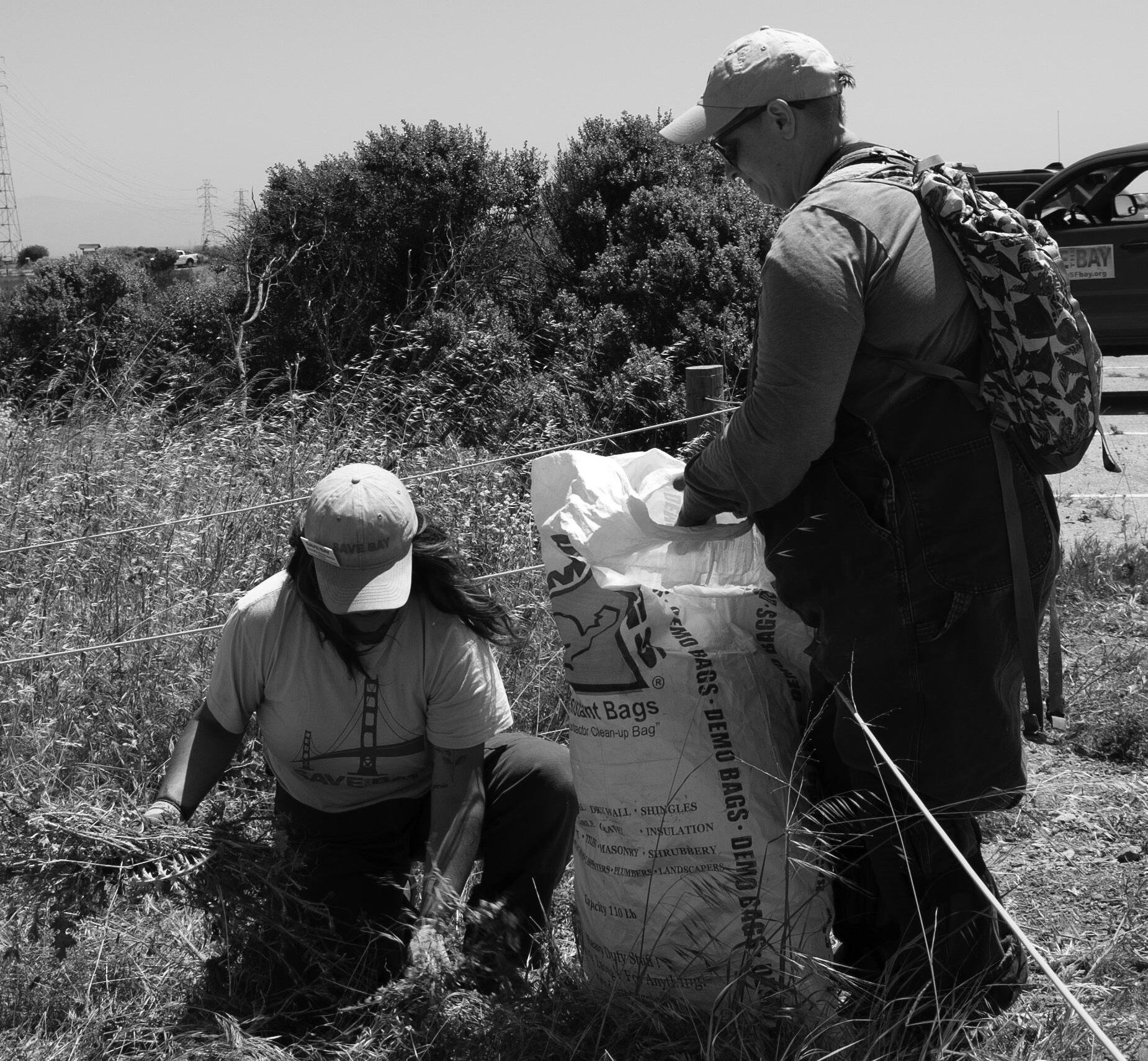
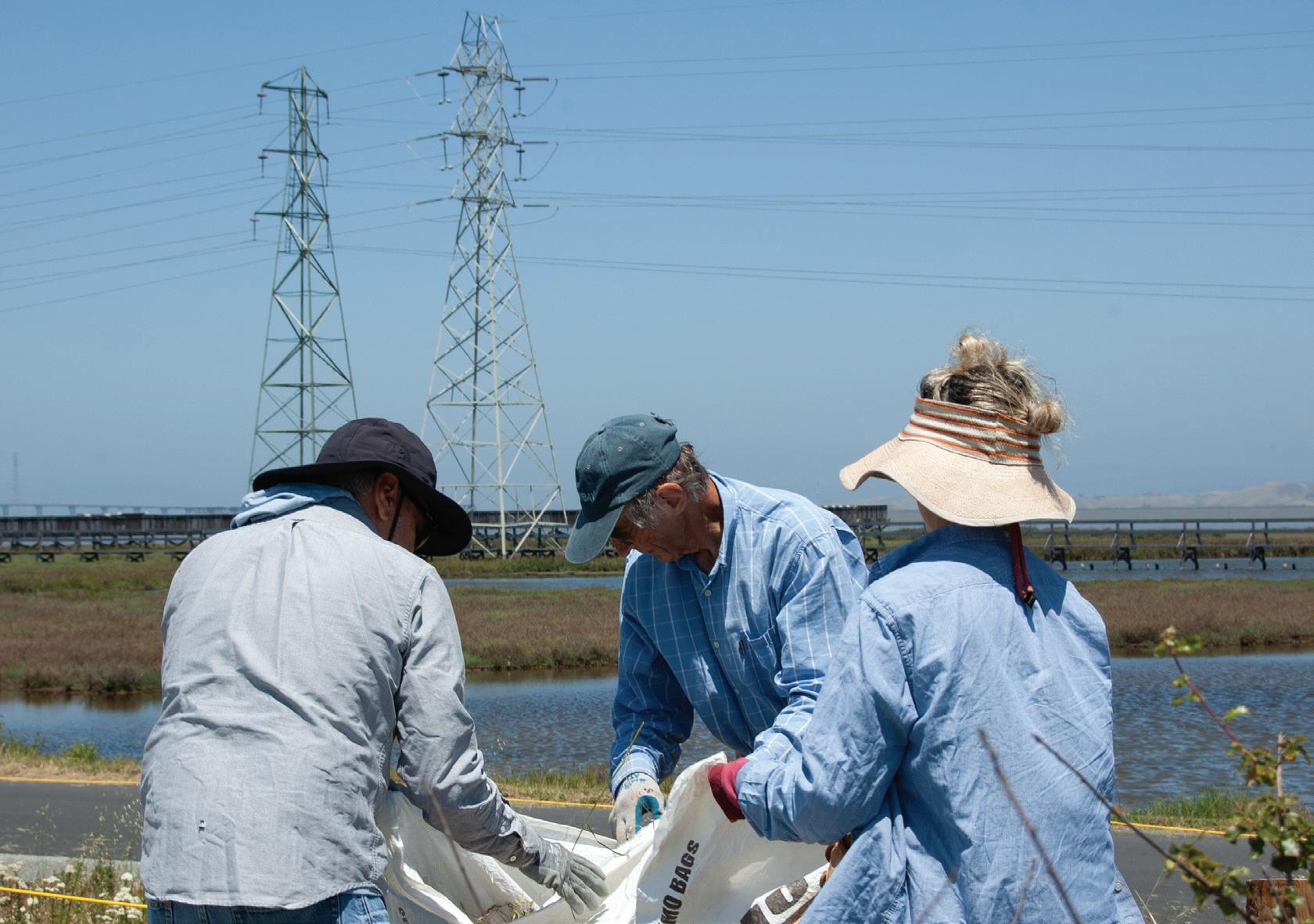
We also continue to recognize activists contributing to the community. Reporter Amily Zhang highlights organization Save The Bay and volunteers picking up trash in the Palo Alto Baylands in a photo essay (page 15). Next, we feature Social Justice Pathway founder Eric Bloom, who is set to retire after 28 years of teaching at Paly. Reporters Jeshurun Wang and Joyce (Leyi) Ma offer a glimpse into Bloom’s years as a teacher as well as his founding of the SJP program in “A career in full Bloom” (page 24).
Finally, reporters Roshan Gautham and Jack Lindauer share opinions on the recently automated military database that signs American men up for the military, discussing the reasoning behind this system’s installation.
We are thankful to our staff for their work and dedication to the production of this issue, and to our readers for your continued support. We hope you enjoy our first edition as editors-in-chief: Anthro Volume 8.4!
– Naomi Espinoza, Chapin Walker and Jeshurun Wang, editors-in-chief
Staff
Editors-in-Chief
Naomi Espinoza
Chapin Walker
Jeshurun Wang
Managing Editors
Joyce (Leyi) Ma
Benji Sandel
Business Manager
Richard Klinkner
Staff Writers
Roshan Gautham
Doreen Hou
Motoko Iwata
Arjun Jindal
Richard Klinkner
Ava Knapp
Alexander Lawson
Jack Lindauer
Mack Reller
Mihika Sridhar
Priya Tamura
Sebastian Tung
Amily Zhang
Photographers
Lucas Arai
Araina Gupta
Artists
Roshan Gautham
Caitlin Ko
Jack Lindauer
Joyce (Leyi) Ma Adviser
Paul Kandell anthromagazine.org

Letters to the Editors
The staff welcomes letters to the editors. We reserve the right to edit all submissions for length, grammar, potential libel, invasion of privacy and obscenity. Send all letters to anthromagazine. paly@gmail.com or to 50 Embarcadero Road, Palo Alto, CA 94301.
Printing & Distribution
Anthro is printed by Folger Graphics in Hayward, California. The Palo Alto Parent Teacher Association mails Anthro to every student’s home. Past issues are available at anthromagazine.org.
Publication Policy
Anthro, a social activism magazine published by students in Palo Alto High School Incubator class, is a designated limited open forum for student expression and discussion of issue of concern to its readership. Anthro is distributed to its readers and the student body at no cost. For more on our policies please visit anthromagazine.org.
Mission: imparkable
Activism News
Governor candidates debate cost of housing
Activism around the world
Never-ending story
Justice on the rise
Protest outside Tesla store
Saving the Bay together
Can I vote? Not yet...
Trump vs. the pope
A career in full Bloom
Ready to fight?


Mission: imparkable Parking permits, stolen spots and an enforcement system that isn’t working
Cars idle between rows, inching forward as students search for spots in Palo Alto High School’s overcrowded parking lot. Drivers loop the area again and again, hoping someone will leave. Others give up and park in the nearby neighborhoods or Town & Country Village across the street — risking a ticket. Despite paying $100 for a single parking permit, many arrive late to class with nowhere to go.
This issue has worsened over time. As more and more students get their driver’s licenses throughout the year, demand increases while available parking has decreased.
According to Paly assistant principal Jerry Berkson, the lack of parking spots worsened this year.
“It [parking problem] has never been this noticeable,” Berkson said. “My guess is that with the enforcement happening less often, the students are willing to roll the dice and take a chance on getting a ticket.”
He attributes part of the problem to inconsistent enforcement. The Palo Alto Police Department, responsible for ticketing, has not been able to regularly monitor the lot, leading more students to park without permits.
Berkson said the school has not oversold permits, but illegal parking disrupts the system.
“The issue is the police department has not been able to come here [Paly] enough,” Berkson said. “We actually should have plenty of spots based on how many permits we’ve sold — we sold a lot less this year than last year. But if there’s no enforcement, students park illegally and take up spots that kids with permits can’t use. Even if they’re parking illegally, there isn’t anyone to enforce it anyway.”
Paly senior Charlotte Barclay said she’s experienced multiple disruptions in class by being asked to re-park her car for being parked illegally.
“When they [Paly administration] called me out, there was nowhere to go with my car,” Barclay said. “They continually called me out more and more times throughout the day until they finally said, ‘It is what it is.’ I felt like a pointless parking rule was valued more than my academics and my learning.”
Barclay’s experience reflects a larger issue with the current parking system, as even students who try to follow the
Art by JOYCE (LEYI) MA
rules are often left without fair or practical options. Students are forced to park in unofficial spaces, admin spots, or choose between risking a ticket or being late to class — inconsistent enforcement undermines trust in the system.
As of now, Berkson said there are no major administrative changes planned to directly address the growing competition for parking. Although the administration did not prioritize upperclassmen when distributing parking permits this year, increasing parking issues may cause that policy to change next year.
“Parking permits are currently first come first serve, but next year, we probably will give priority to upperclassmen with this concern,” Berkson said.
Currently, students try to find other solutions by parking in nearby neighborhoods, which cap parking to two hours. The result means students end up losing valuable class time just to move their cars. Additionally, students get ticketed at Town and Country if enforcement notices their Paly Parking Permit, so they’re forced to remove it from their windshield, and many end up moving their cars to the Paly lots during lunch to avoid further suspicion.
Whether it’s better enforcement or clearer systems for handling violations, students deserve a parking system at Paly that is transparent and allows students to park on campus. Creating a system where paying for a permit actually means something and where following the rules doesn’t put you at a disadvantage is important. To restore fairness, the school should focus on consistent enforcement and clearer permit priorities, ensuring that students who follow the rules are not put at a disadvantage.
One simple solution the school should look into is taking steps to address the issue instead of leaving students to deal with the consequences on their own. One approach would be for Paly administrators or campus supervisors — rather than just PAPD officers — to conduct daily parking checks during the first period of the day by standing at parking lot entrances and asking to see the permit. To prevent traffic, Palo Alto Unified School District could fundraise for automatic machine checkers that would scan cars for their permits, similar to a toll system. Students without permits could face schoolbased consequences such as loss of future parking eligibility. As a result, if there are no spots for those with permits, they will just have to move their cars to a legal spot instead of facing additional warnings.
At the same time, the issue may require a larger conversation between students and administrators. Since parking affects numerous students daily, the school could form a committee through the Associated Student Body or the Principal’s Advisory Committee to gather student feedback and explore realistic solutions. This would allow students most affected by the issue to directly contribute ideas while helping administrators better understand how the current system impacts campus life.
While there is no easy fix, students who paid for permits should not feel punished for following the rules. But until then, the morning routine remains the same: circling the lot, watching the clock, and hoping that a spot opens up.

Text by MACK RELLER
The Palo Alto City Council unanimously voted to keep the Churchill crossing open on May 13.
The decision comes after 3 months of proposals from community members and school board representatives that introduced the idea of shutting down the railroad crossing.
The proposal was considered as a safety precaution in response to the recent suicides that occurred at the crossing.
The city council found that closing the intersection would bring more harm than good.
The council came to the conclusion that the closure would increase traffic in the surrounding area, hurting the ability of emergency responders.
Despite the initiative being rejected, the city council is still actively pursuing other options to better protect tragedies. They are hopeful instead that the program with the Palo Alto Unified School District that employs 24/7 security guards will be renewed.
Junior Charlie Kitchen agreed with the decision, noting that the security guards were effective enough as a safety measure for the crossing.
“I think that it was the right decision that they didn’t close the crossing because they already have 24-hour guards, and closing the intersection would be an inconvenience,” Kitchen said.
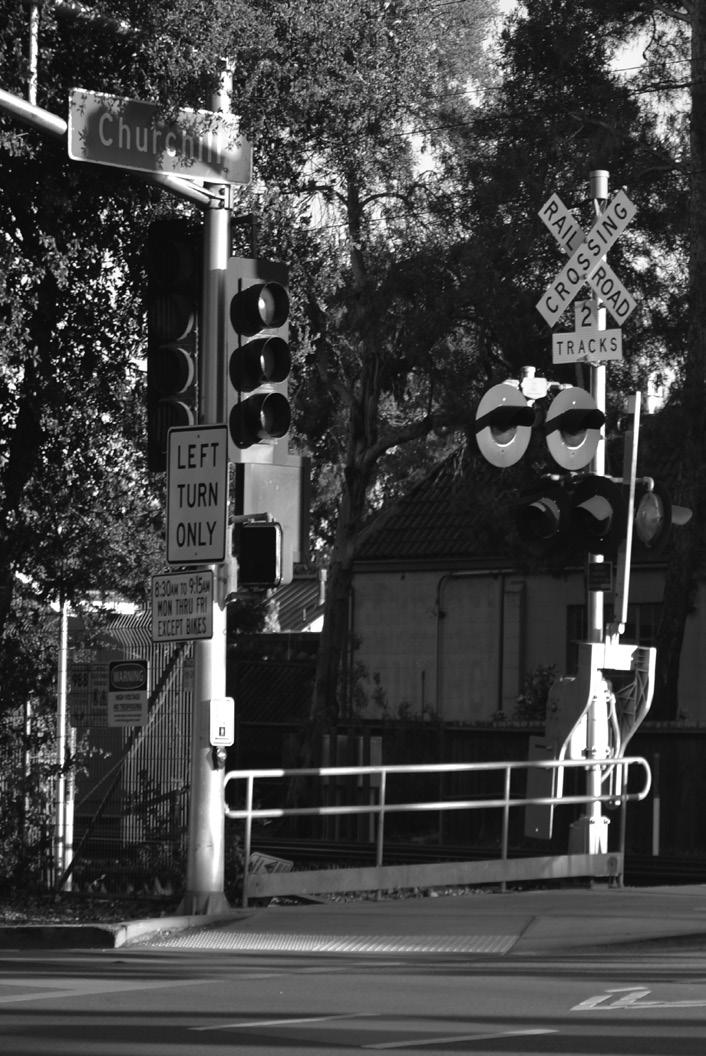
Photo by BENJI SANDEL

Text and photo by ARJUN JINDAL
Palo Alto Unified on May 13, won by jury a wrongful termination suit brought by a former Palo Alto High School robotics coach Kathleen Krier.
Krier alleged that the district discriminated against her, failed to protect her from harassment, and prevented her from diversifying the robotics team. She resigned less than three months into the job after being placed on administrative leave.
According to an article by Palo Alto Online, Krier’s lawsuit alleged that members of the robotics boosters club, a group of parent donors, controlled the team, with club members using their power to exclude and marginalize students. District attorneys countered that Krier voluntarily resigned, noting in a March statement to the Palo Alto Online that “no district administrator or employee ever made a comment she considered sexist or offensive based on sexual orientation.”
BAYLANDS BEAU-
TIFICATION — Volunteers gather at the Palo Alto Baylands earlier this month for a Save The Bay restoration event focused on removing invasive weeds from the wetlands. “We’ve come here a few times and enjoyed it, and we thought this is kind of an opportunity to help preserve a place that we enjoy,” volunteer Danielle Stagner said. (Photo by Amily Zhang)
AMarch 2 emergency ruling by the Supreme Court has halted California’s ability to enforce California Assembly Bill 1955, which prohibits schools from disclosing student gender identities to parents without student consent.
According to Robert Andrade, Palo Alto Unified School District’s civil rights and legal affairs coordinator, school policy remains unchanged as the Ninth Circuit Court of Appeals determines the ruling’s scope, which may include specific exceptions.
“They [the Supreme Court] issued a ruling without knowing the full implications in school districts, and generally the consen-
sus around California is ‘Don’t do anything, don’t do anything, don’t change anything until the Sstate of California tells you what to do,’” Andrade said.
According to the emergency appeal, Mirabelli v. Bonta, two California middle school teachers sued Escondido Union School District “seeking an exemption from their school district’s policies regarding students’ gender.” The district claimed that state law required the adoption of these policies, so state officials were added as defendants and were joined by parents as plaintiffs.
In the appeal, parents argued that the policy violated their parental rights, and teachers argued it infringed upon their religious freedom, which falls under the First and 14th Amendments.
Andrade said that within the context of Mirabelli v. Bonta, parents directed their questions to the school administration.
“It [the ruling] says that the school must disclose to the parents upon request,”
Text by JOYCE (LEYI) MA and PRIYA TAMURA
Andrade said. “It doesn’t say that the teacher has to be the person to disclose.”
Justice Amy Coney Barrett stated in her concurring opinion that California’s nondisclosure policy excludes parents from highly important decisions about their child’s mental health.
“One set of parents learned of their child’s transition at school only after the child attempted suicide,” Barrett stated. “School administrators continued to withhold information about the student’s gender identification.”
Justice Elena Kagan stated in her dissenting opinion that the court acted prematurely without full judicial review.
“Today’s decision shows, not for the first time, how our emergency docket can malfunction,” Kagan stated. “The Court receives scant and, frankly, inadequate briefing about the legal issues in dispute. … In granting emergency relief, the Court cannot even wait for an appellate court to conclude its own process for deciding the identical issue.”
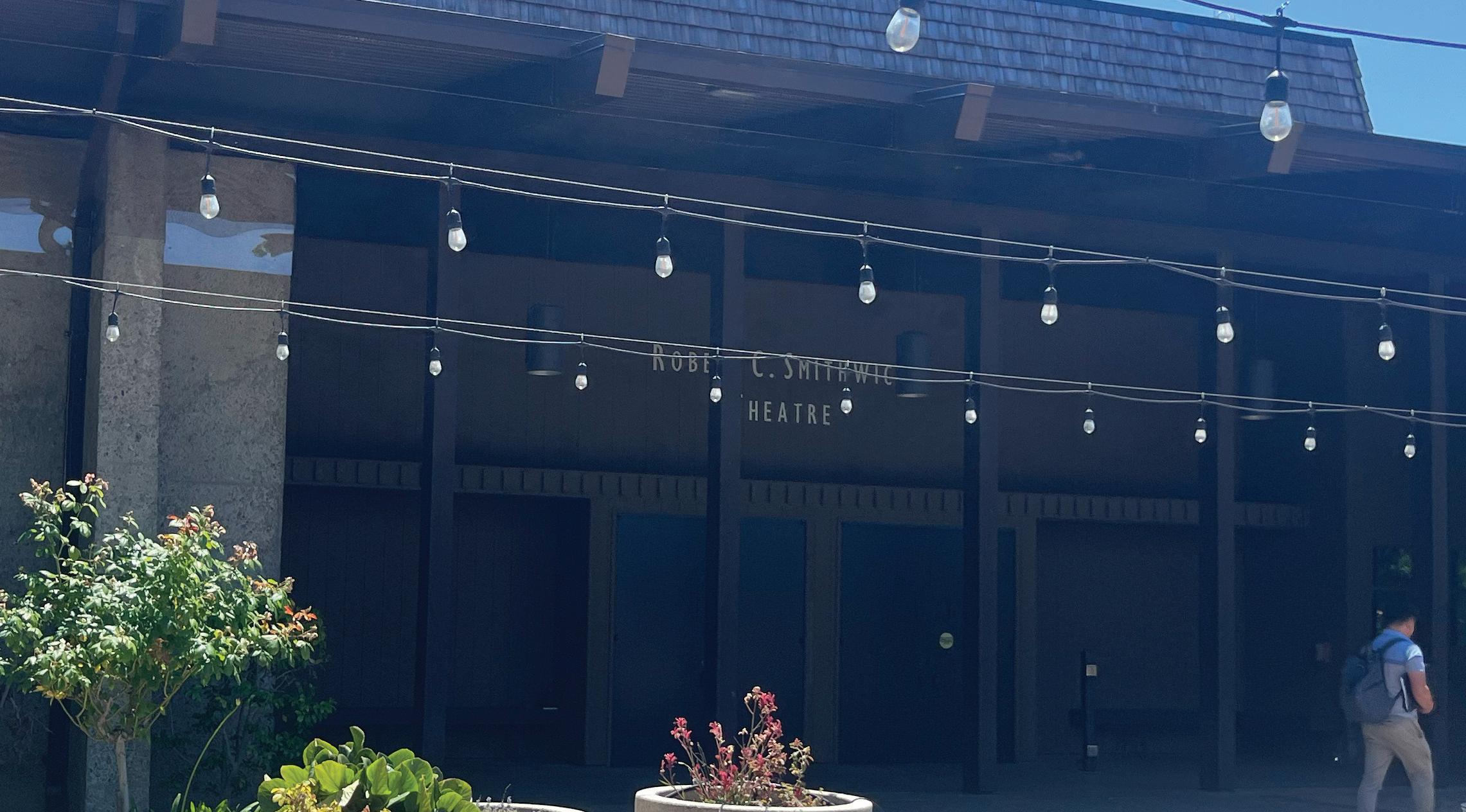
Two years after opening its doors, Palo Alto Middle College will graduate its first senior class Monday, June 1, at Smithwick Theatre at Foothill College.
The 5 p.m. ceremony, celebrating 44 graduating seniors, marks the end of the new high school’s second year.
According to Principal Emily Garrison, around 34% of PAMC graduates will continue taking classes at Foothill College for two years, while the majority of other students will immediately go to four year colleges. The PAMC website states a list of colleges that accepted students in the 2026 graduating class.
“It's a pretty robust list that probably looks very similar to [that of] Paly and Gunn in the terms of the four-year options that are available to our students,” Garrison
said. “The difference [is] that some of our seniors have extensive college credit … already.”
According to Garrison, PAMC takes an unconventional approach to grade 9-12 education: Students fulfill the same graduation requirements as Palo Alto High School and Gunn High School while accruing college credit. Students spend half of each school day in small high school classes, in addition to taking courses at Foothill College.
“Our students have pretty packed schedules, but … they have access to some phenomenal college courses [and] profes-

Palo Alto
Middle College will host its first graduation ceremony at the Smithwick Theatre at Foothill College on June 1. According to Principal Emily Garrison, PAMC students’ access to the college’s resources is valuable socially as well as academically. “Even though we are part of this small high school community, … [students] are part of this much larger college community that allows them to really differentiate and dive deep into their interests.”
sors,” Garrison said. “Even though we are part of this small high school community, … [students] are part of this much larger college community that allows them to really differentiate and dive deep into their interests.”
Garrison said PAMC focuses on pre-college preparation.
“We do a lot of things to help them [students] learn about the college system,” Garrison said. “There's a lot of conversations that are naturally happening here at Middle College about learning to be a successful college student.”
According to Garrison, students choose PAMC for a variety of reasons: the accessible guidance and transitional support attract first-generation college students; Foothill courses, textbooks and other learning materials are free, benefiting students with financial needs and the model allows students to build a permanent transcript of college courses and dive deeper into areas of interest.
“One of our seniors has been very involved in the EMT program here at Foothill College,” Garrison said. “Another student [has] taken a lot of high-level science classes because their goal is to go to med school. … Middle College is a school that's not for every student, but it is a really good option for some students.”
Garrison said. “If this [PAMC] feels like it might be a good fit for you, then I'd hope that you would come explore and learn more about it.”
Text by ALEXANDER LAWSON and RICHARD KLINKNER
As ballots roll into the mailboxes of Californians throughout the state, the urgency for candidates to have their voices heard has grown significantly. On Tuesday, May 5, seven candidates running for the California governor position — two republicans and five democrats — participated in the final debate before the midterm elections, with more substantive arguments than have been seen previously. In this article, Anthro will go over a question regarding afffordable housing asked in the debate with perspectives from all seven candidates.
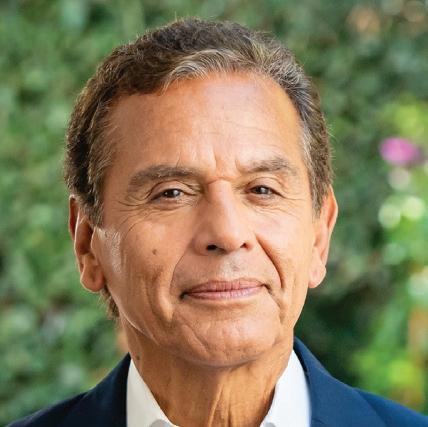
“The first thing we need to do is support down payment assistance. ... when I was mayor, we transformed downtown, built more market-rate, affordable, and homeless housing in eight years, in four years of recession, than in the 12 years before that.”
—
Antonio Villagrosa, Democrat
“We have to shorten permitting times and make them less expensive, for sure. I’m going to close a corporate real estate tax loophole for $22 billion a year. That’s going to go to the cities and counties. And that’s going to make them willing to permit housing and to make it happen.”
— Tom Steyer, Democrat
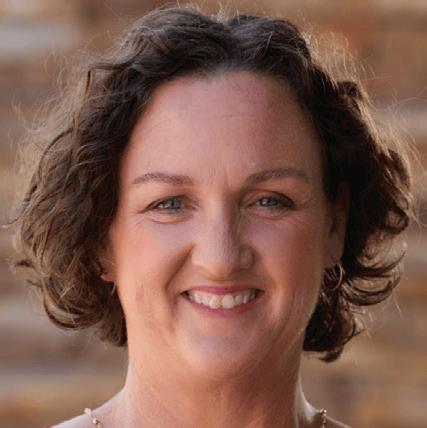
“We have to build enough housing for California to grow our economy, and it’s not enough to just build more. We have to build it less expensively than we are now. Building faster is building cheaper. If we build faster, we can take 10% or 20% off the cost of rent and mortgages.”
— Katie Porter, Democrat

“Right now we have the highest housing costs in the country and the lowest home ownership. ... we’ve got to simplify the regulations that make it so expensive, two or three times more expensive, to build housing compared to other states.”
— Steve Hilton, Republican
“We certainly can’t afford to live here anymore, and solutions like that are exactly why you can’t afford to live here anymore. ... You can’t afford a home in California because the builders cannot afford to build homes because of the excessive regulations in California.”
— Chad Bianco, Republican
“I will make sure that down payment assistance programs are expanded under my watch. ... How about we help you get that last cog in the process of buying a house, the down payment? Then, when you pay a monthly payment, it’s not for rent. It’s to own the home.”
— Xavier Becerra, Democrat
“When we weren’t building housing, we cut permitting times, cut red tape, reduced one-time fees, and got thousands of homes under construction. ... we built interim housing and moved thousands of people indoors. ... we’ve actually gotten housing built.”
—
Matt Mahan, Democrat
Ports in southern Europe, particularly Marseille, have become key staging grounds for the Global Sumud Flotilla — an international civilian effort aimed at challenging the Israeli naval blockade of Gaza. A flotilla is a fleet of small ships, often used for coordinated political or humanitarian missions.
As of April 2026, more than 70 boats have departed from Barcelona and other Mediterranean ports carrying humanitarian aid and activists, according to Transcend

Media Service. The initiative seeks to establish a sustained, nonviolent maritime presence in solidarity with Palestinians.
Spanish and Greek authorities have faced pressure over whether to allow ships to depart, while Israeli officials warned they may intercept vessels attempting to reach Gaza. Meanwhile, European civil society groups have called on the European Union to ensure safe passage and reconsider its agreements with Israel, reflecting divisions within Europe over how to respond.
In January, South Korea saw a major victory in animal rights activism with the collapse of the moon bear bile industry, following years of sustained pressure from both do-
mestic and international groups.
According to World Animal Protection, an Australian based organization that partnered with Green Korea United to end bear bile farming, while a legal ban is an important first step, it does not guarantee the welfare of bears that remain in captivity after sterilization.
“While some of the bears have been relocated to government built or NGO operated sanctuaries, there is a shortage of facilities capable of accommodating the re-
The“Scientists for Peace” movement is gaining traction, advocating for nuclear de-escalation through scientific cooperation.
The group is pushing for the surrender or reduction of highly enriched uranium in exchange for access to medical and civil-

ian energy technologies. Their work blends anti-war advocacy with environmental and scientific concerns.
As major arms control agreements like the New Strategic Arms Reduction Treaty face uncertainty and expiration, these efforts represent a shift towards a kind of activism focused on negotiation rather than protest.

maining rescued bears due to be given up by farmers,” World Animal Protection stated in a public press release.
“Further measures are still needed to ensure that all remaining bears can live out the rest of their lives safely and with dignity.” The movement is also continuing campaigns against the dog meat industry, signaling a broader cultural and legal shift in how animals are treated nationwide.

Hundreds of anti-fascist activists from more than 40 countries gathered in Porto Alegre, Brazil, from March 26 to March 29 for the First International Antifascist Conference.
According to Commitee for the Abolition of Illegitimate Debt, the conference emphasized collaboration across borders, particularly through sharing digital security tools and on-the-ground organizing tactics. Organizers framed this as part of a
broader evolution in activism—from isolated protests to sustained international networks capable of operating under increasing political pressure.
The gathering, sometimes referred to as a “New Red International,” highlighted how movements are prioritizing infrastructure, communication, and resilience in response to tightening restrictions in many countries.
Photo by ARAINA GUPTA
Text by MOTOKO IWATA
The Palo Alto Educators’ Association faces an unusually lengthy negotiation season following changes in district leadership at the Palo Alto Unified School District.
According to PAEA President Tom Culbertson, the union is eager to reach an agreement.
“As far as I know, we [PAEA] haven’t gone this far into the school year without a contract in many years,” Culbertson said. “We’re ready. We’re ready for a contract.”
The last contract expired on July 1, 2025. The PAEA is optimistic that the recent departure of Don Austin as PAUSD superintendent will accelerate the negotiations.
“PAEA is now focused on the opportunity for a ‘cultural reset,’” the PAEA said in a statement. “Our schools thrive when there is a true partnership between the district office, the Board of Education, and the educators in the classroom. We call on the Board to conduct a transparent search for new leadership — someone who prioritizes student well-being, respects the expertise of our staff, and understands that the strength of PAUSD lies in its people, not its policies.”
Daniel Nguyen, the head of negotiations for the PAEA, emphasized that the leadership change at the district improved the tone of the discussions.
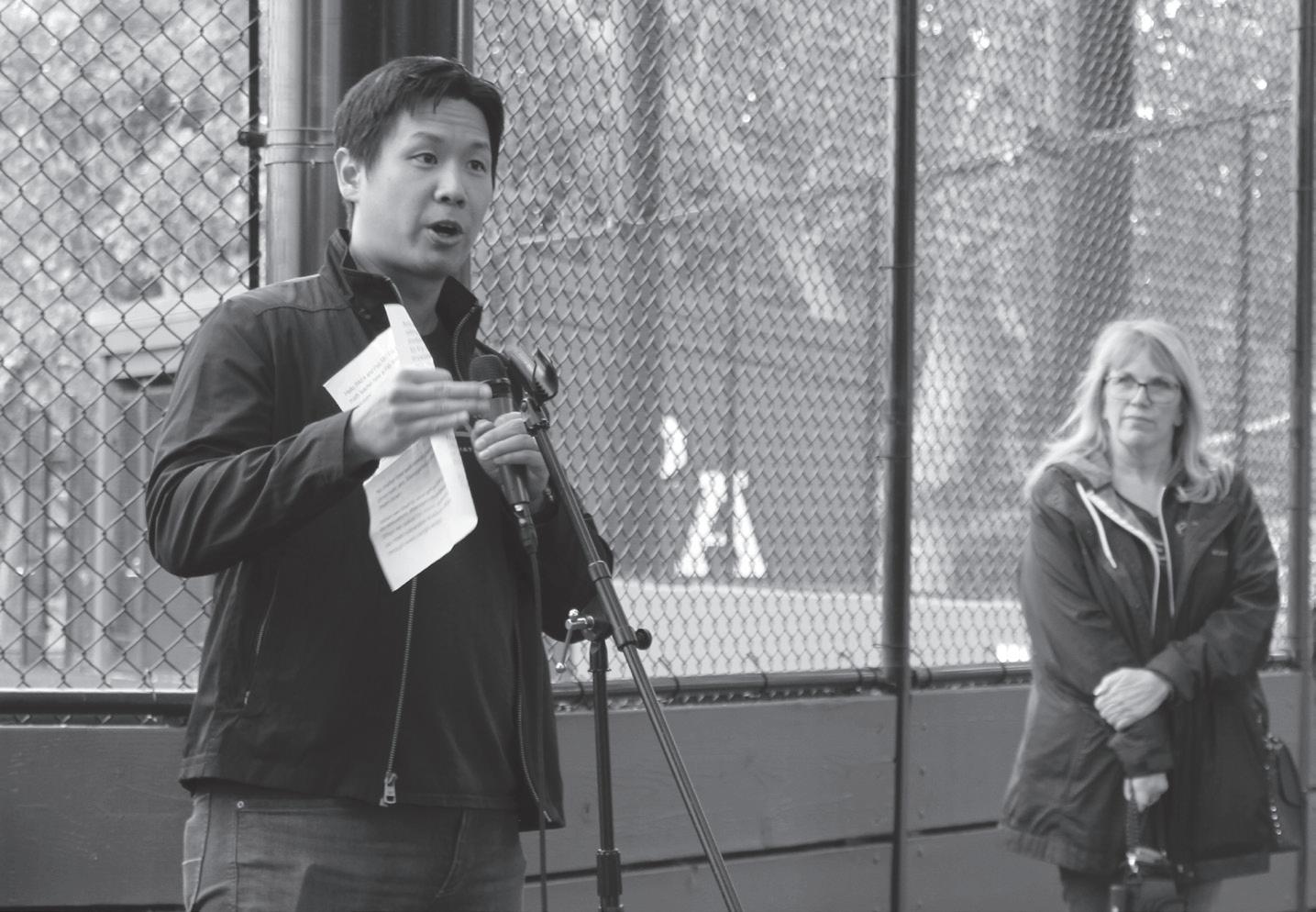
“Under Acting Superintendent Herb Espiritu, the tone and demeanor of how things are run has been a lot more cordial and polite,” Nguyen said. “In terms of substance, we’ve seen movement in some
“Our members are having an awakening, realizing that the district continues to show a pattern of prioritizing profits over students.”
— Daniel Nguyen, PAEA Head of Negotiations
areas on some articles, but again, in terms of compensation benefits, the district is still prioritizing putting money in bank accounts instead of investing in our schools.”
Espiritu did not respond to a request for comment.
Negotiations began in October 2025. Culbertson noted that while the tone of discussions have improved, the pace of progress remains slow.
“I think it [the delay] might be the
result of management disarray because of the change in superintendent,” Culbertson said. “We’ve only recently gotten to what I would call a ‘real talk’ during negotiations at our session on Thursday. We got down to the big issues and really discussed things very frankly with each side. That was really productive, but it’s taken a long time.”
Nguyen said that the PAEA remains frustrated at the slow-moving progress of the talks.
“If we don’t have a contract, we’ll just follow the previous contract,” Nguyen said. “But in terms of morale, in terms of the image of our district, it doesn’t look good when the district doesn’t have a contract for the teachers.”
Culbertson said that the PAEA continues to focus on creating a better environment for the district’s teachers.
“We believe that they [management] have been under-supporting the folks who are on the front lines working with students,” Culbertson said. “We have these great financial resources and it’s time for management to really step up.”
Editor’s Note: To ensure editorial independence and avoid any potential conflict of interest, Anthro Magazine partnered with a team of outside professional journalists to oversee the reporting and editing of this story in place of our regular faculty adviser.
Palo Alto High School’s Social Justice Pathway has over a decade-long history of social activism on campus.
With projects ranging from CSPAN StudentCam to Junk couture — a yearly fashion show made from newspapers, chick enwire and draped fabric — it is a bastion of creativity on campus.
The pathway’s mural “Same moon, same stars,” which celebrates the Cher okee nation is passed by hundreds every day. Now, the pathway will be wel coming two new teachers next year.
Joshua Knowles-Hinrichs, an English 10A and Comedy
KEEPING THINGS
RELEVANT Sebastian Castaneda presents a lesson on Latin America to students. “In the classes that I teach, I always like to make sure that we are keeping things … relevant,” Castaneda said.
Literature teacher at Paly, and Sebastian Castaneda, an Ethnic Studies and history teacher, will join the program as the teachers for the Class of 2029
he believes that civic engagement is an essential part of democracy.
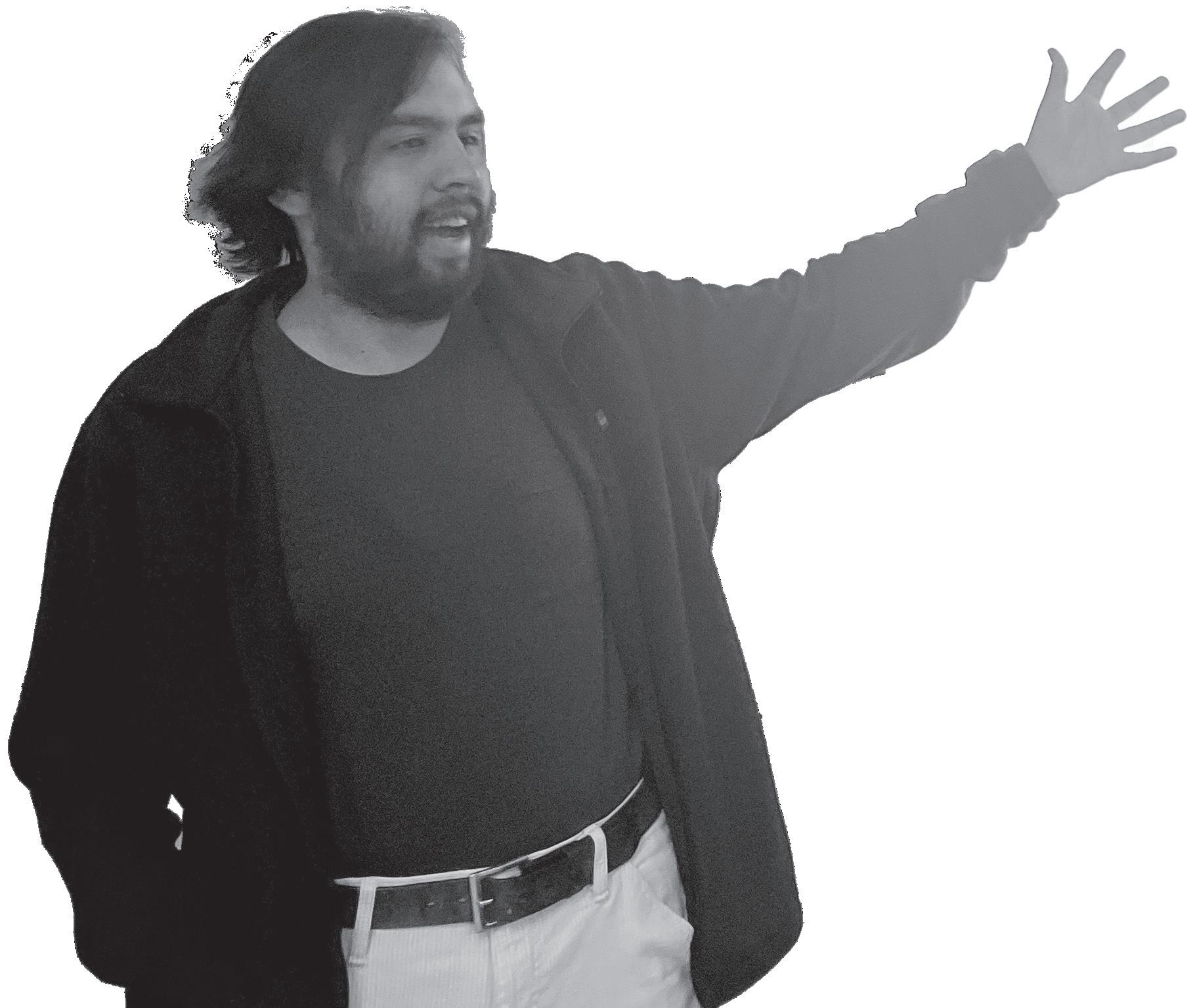
“We definitely need, in the modern day, more people to be actively engaged in politics and governance,”
Knowles-Hinrichs said.
“I want to try and make them [students] or help them see … that engagement is worth it.”
According to Knowles-Hinrichs, before he and Castaneda were selected, they had never met.
“Once we found out that we were both going to be doing SJP next year, the administration set us up with some days where we were able to get substitutes and then just spend the full day together,” Knowles-Hinrichs said. “First getting to know each other, [then] finding out our common interests and our common goals for the program.”
Knowles-Hinrichs said that the close personal relationships teachers build with their students over three years excites him.
“You’re always going to see the students be more successful academically if you also build a relationship with them as

BOOKWORM — Joshua Knowles-Hinrichs reads in his English 10A class. Next year he will join the Social Justice Pathway. “One of the most rewarding parts of my job is all the things that I learned from students and all the ways that they bring in new information [and] connections that I might not have made myself,” Knowles-Hinrichs said.
individual human beings beyond just their goals in terms of grade and your curriculum specifically,” Knowles-Hinrichs said. “The Social Justice Pathway has a lot of that built into the fabric of what it is.”
Knowles-Hinrichs has had a history of being involved with social activism, saying that when he was a high schooler at Henry M. Gunn High School he participated in the Youth in Government program through the YMCA. He currently hosts the Youth Community Service Club in his classroom.
“[It’s] definitely important to me, being involved in the local community and broader political discussions, national ideas about what we want the trajectory of the United States to be and things like that,” Knowles-Hinrichs said.
Knowles-Hinrichs plans to have lessons that build off of Castaneda’s lessons.
“We will have activities that build off of each other or feed into each other from period to period since the SJP periods are back to back,” Knowles-Hinrichs said. “That means more continuity.”
In these lessons, Knowles-Hinrichs expects communication from his students.
“I value communication going both ways,” Knowles-Hinrichs said. “I want to know if students have some kind of challenge, whether that’s with academic contact, with a scheduled thing, whatever they’re comfortable sharing in terms of side influ-
“We definitely need, in the modern day, more people to be actively engaged in politics and governance.”
— Joshua Knowles-Hinrichs, English teacher
ences on their ability to focus.”
Knowles-Hinrichs currently teaches five classes, and will do the same next year.
After one year as a substitute teacher, Castaneda began working in the Palo Alto Unified School District full-time this year. He currently splits his time between Gunn
and Paly.
Castaneda said he hopes to educate students about politics and the injustices of our world — something he was oblivious to in high school.
“SJP serves as a good avenue to try and address those injustices,” Castaneda said. “It could help inspire students as the general goal to help make the world a better place, which I think is my goal as a teacher overall.
Castaneda said he is excited to collaborate with another teacher, a keystone of the SJP program.
“As a new teacher, I’m always … looking for new ways to expand my teaching repertoire,” Castaneda said. “Being able to collaborate is always a plus for me.”
Knowles-Hinrichs said he hopes his students take what they learned from his class and apply their skills in the professional world.
“I hope, and I expect that they’ll all be able to see ways that the experience of social justice directly informs their decision making … going forward professionally, socially, in terms of activism, and their engagement with civic society,” said Knowles-Hinrichs.
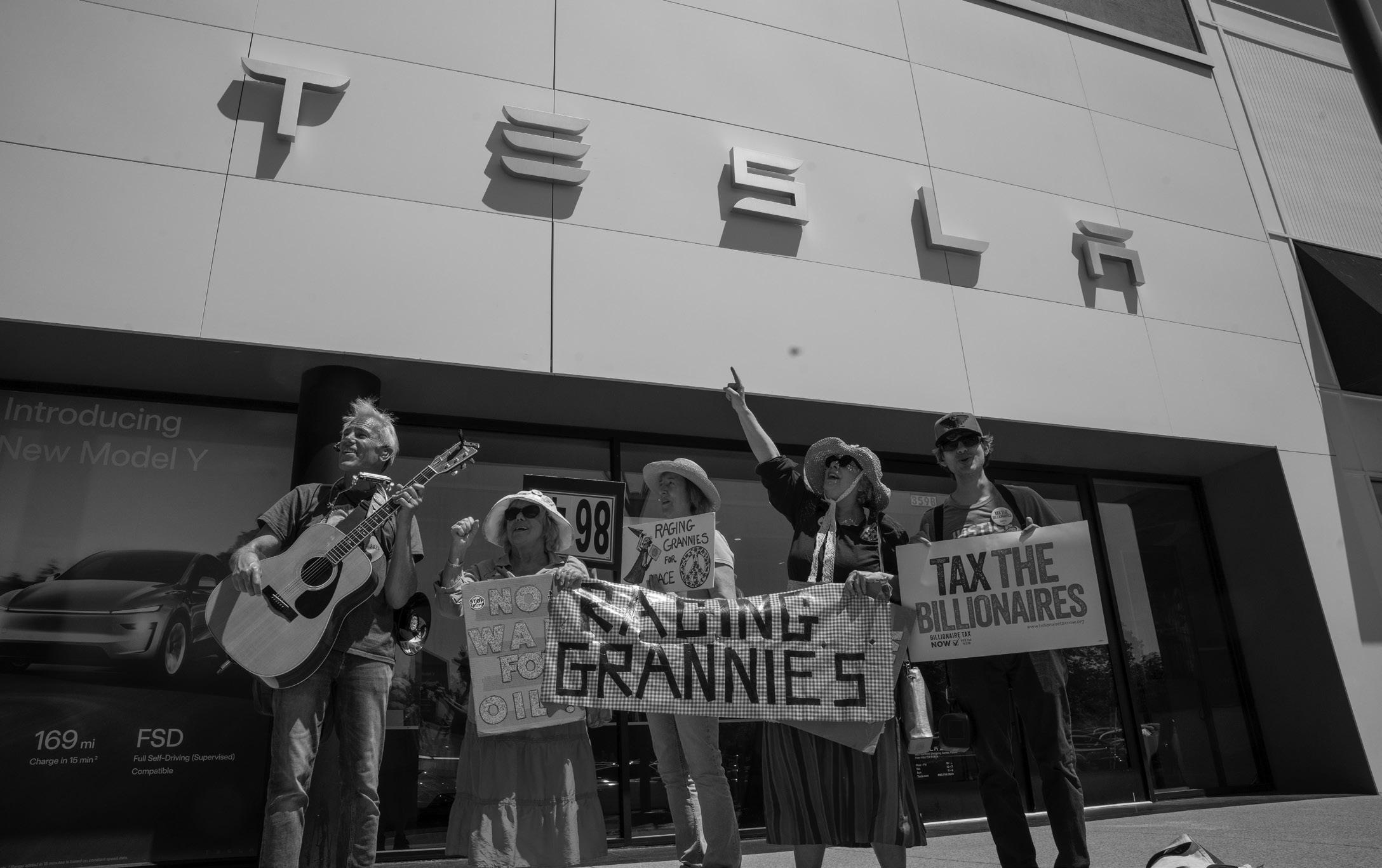
Members of the Wolves and the Raging Grannies, two local activist groups, assemble in the Stanford Shopping Center outside of the Tesla storefront on April 18. The protest responded to actions by the Trump administration and billionaires abusing their powers. Five participants attended the rally.
Protestor Matt Schlegel described how consistent the protests have been throughout 2026.
“This has been going on weekly since about February,” Schlegel said.
Ted Wallace, a Palo Alto resident and member of The Wolves, described feeling a
sense of duty to speak out on the government and how changes in the system may be changing the original values of the US.
“I came out here after the election,” Wallace said. “The current government seems to be taking away the civil rights and the freedom of a country to function as a democracy.”
There is a growing concern that the goals of the government have shifted away from the needs of the citizens and instead towards corporate and military interests, Schlegel said.
According to the National Priorities Project, in 2021, Congress allotted a higher budget to the military than education, health, and transportation combined.
“The federal government... [continues] to take our country to wars and enrich weapons-makers and tech companies and create huge amounts of wealth inequality,” Wallace said.
The choice of the Tesla showroom as a backdrop to the protest was a pointed critique of Tesla CEO Elon Musk’s previous ties to the administration Schlegel described.
“One of our big pushes right now is getting signatures for the [California] Billionaire Tax Act,” Schlegel said. “We’re gonna tax the 200 wealthiest people, 1% a year, it will generate $100 billion, and it will save our healthcare system.”
Schlegel said that taxing the wealthy slightly more, enough money will be generated to help solve some of America’s crises starting in California, such as healthcare.
The protestors added a note of hope for governmental reform, despite the many disappointments listed.
“Hopefully [we see] a restoration of somewhat of a democratic society,” Wallace said. “We’re taking steps in the right direction by ... raising awareness.”
Text and photos by
AMILY ZHANG
Under the midday sun at the Palo Alto Baylands, volunteers hauled bags of invasive weeds toward the back of a red pickup truck while birds skimmed over the wetlands nearby.
Save The Bay volunteers gathered at the Baylands earlier this month to clear invasive plants and restore native habitat as part of the organization’s ongoing restoration efforts around the shoreline. The work supports Save The Bay’s broader mission of protecting wetlands while keeping the space open to wildlife and the community.
“This park is really special,” Restoration Engagement Specialist Daniela Perez Garcia said. “People are always out here either kayaking or biking or walking, and it just shows that it’s such a vital place for people to come and gather and connect and also to just like experience the outdoors.”
Save The Bay has worked with the City of Palo Alto for years, using the Baylands
both as a restoration site and as the home of one of its native plant nurseries. According to Perez Garcia, the organization chose the Baylands for this round of volunteer work after an increase in invasive weeds across the area.
Volunteers spent the morning pulling plants, filling heavy-duty bags and learning about the wetlands around them.
“It’s our small contribution to the planet,” volunteer Alex Stagner said. “I find, in particular, pulling invasive plants is very meditative.”
Volunteer Danielle Stagner said preserving natural spaces is becoming increasingly important as people continue to reshape the environment around them.
“I think it’s the least that humans can do to just help to restore natural habitat,” Stagner said. “Given all the ways that we’ve kind of taken it for granted, and not been such good stewards of the earth, this is a
Perez Garcia said the Baylands reflects decades of environmental change and environmental advocacy. Parts of the area were once landfill sites and yacht club property before later restoration efforts, signatures, and petitions transformed the space into public wetlands.
“Being able to host these programs is also really helpful for us to be able to accomplish our mission of habitat restoration and keep all these spaces really rich in vital habitats for wildlife and for people,” Perez Garcia said.
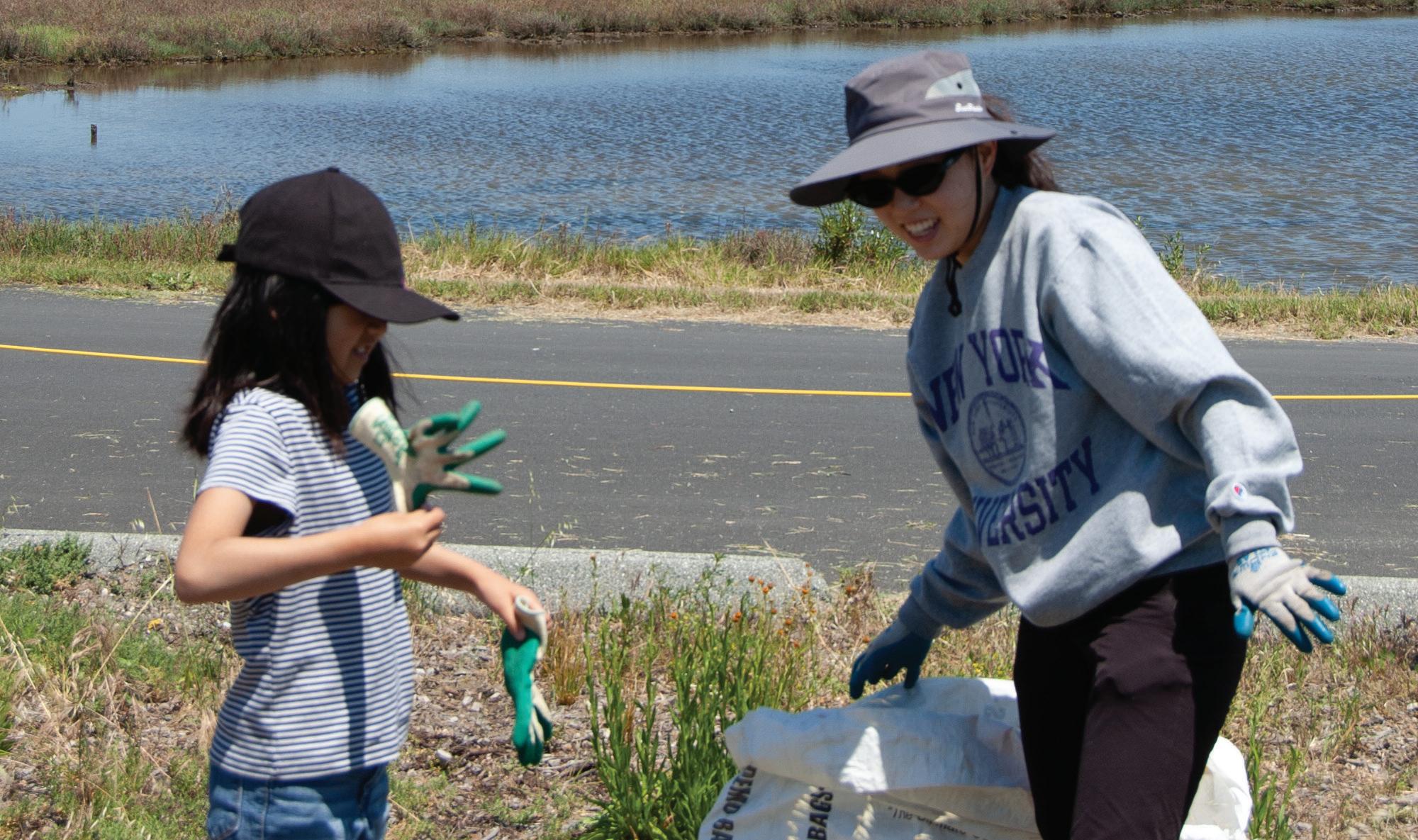
LITTLE RESTORATIONIST — Seven-year-old Zoe removes invasive weeds during the Save The Bay restoration event. Volunteers cleared weeds to help maintain the wetlands. “This is important because then there’s not too many weeds,” Zoe said, “Weeds take the other plants resources and then keeps it for itself and grows and grows and grows.”
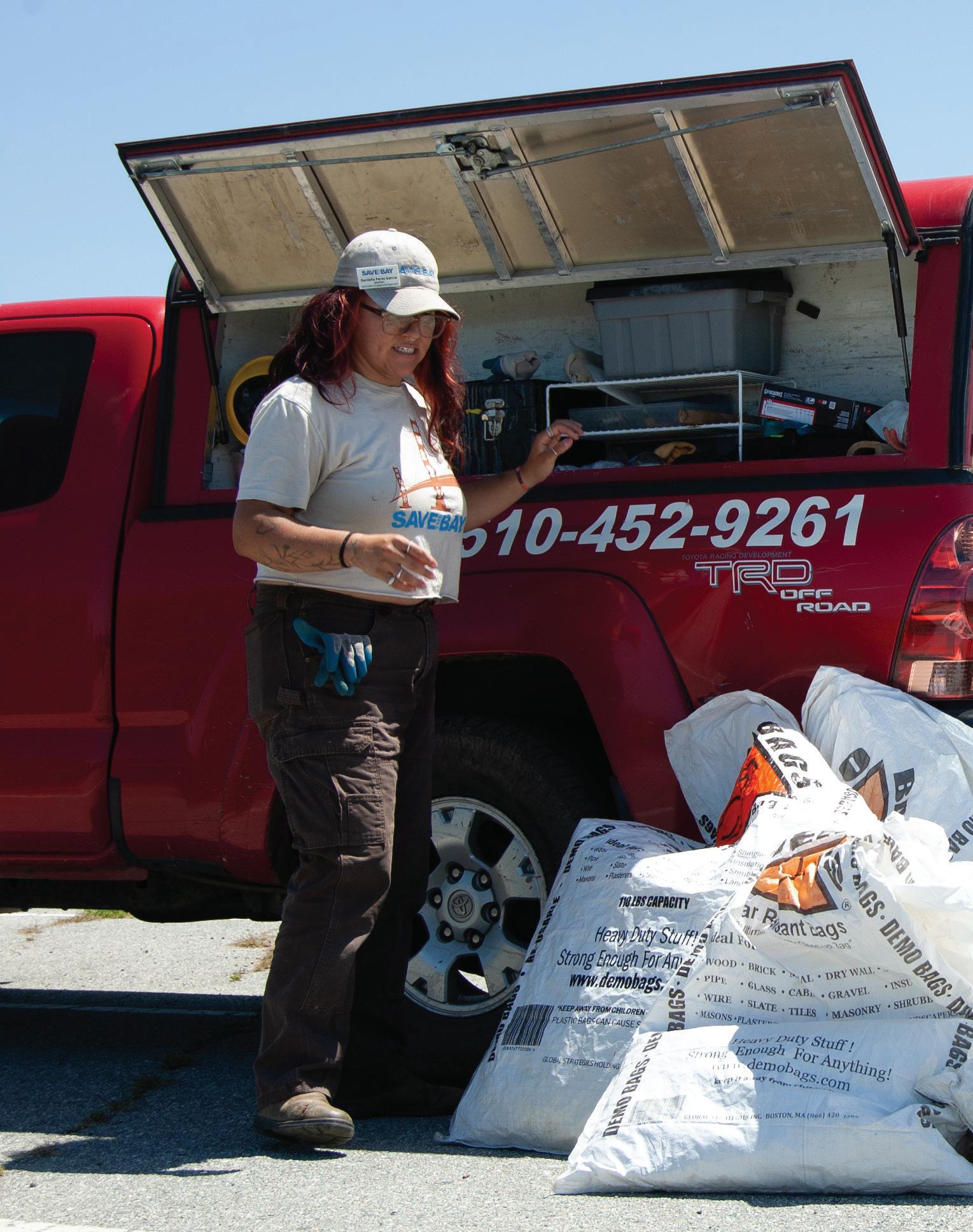
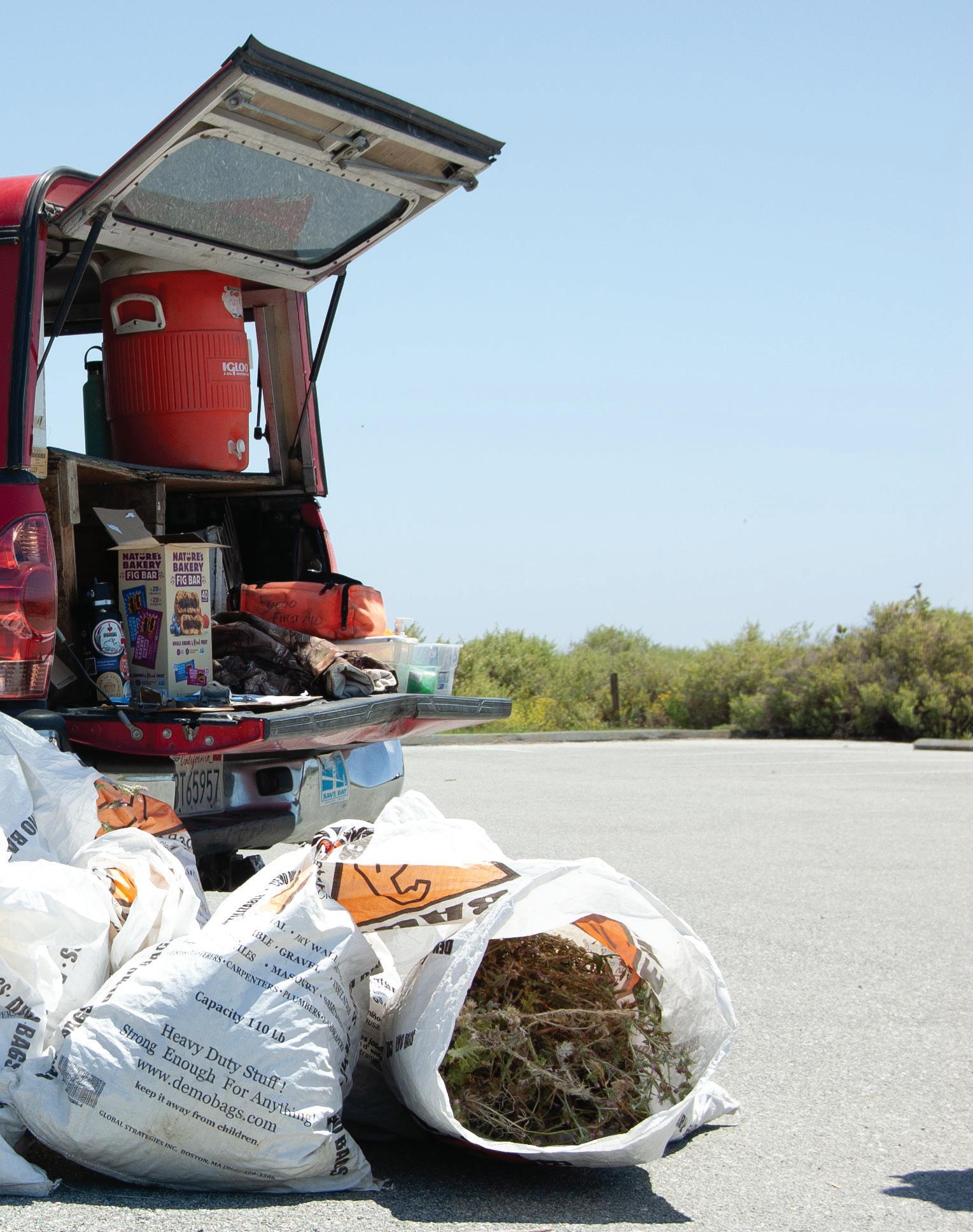
Engagement Specialist Daniela Perez Garcia stands beside bags of invasive weeds collected during a Save The Bay restoration event at the Palo Alto Baylands earlier this month. Volunteers filled dozens of bags throughout the morning as crews worked across the wetlands. “We were seeing a lot of ... invasive weeds coming up and growing in the Palo Alto Baylands area,” Perez Garcia said. “We thought ‘we need to focus a little more of our energy there.’”
SPREADING INFLUENCE — Vote 16
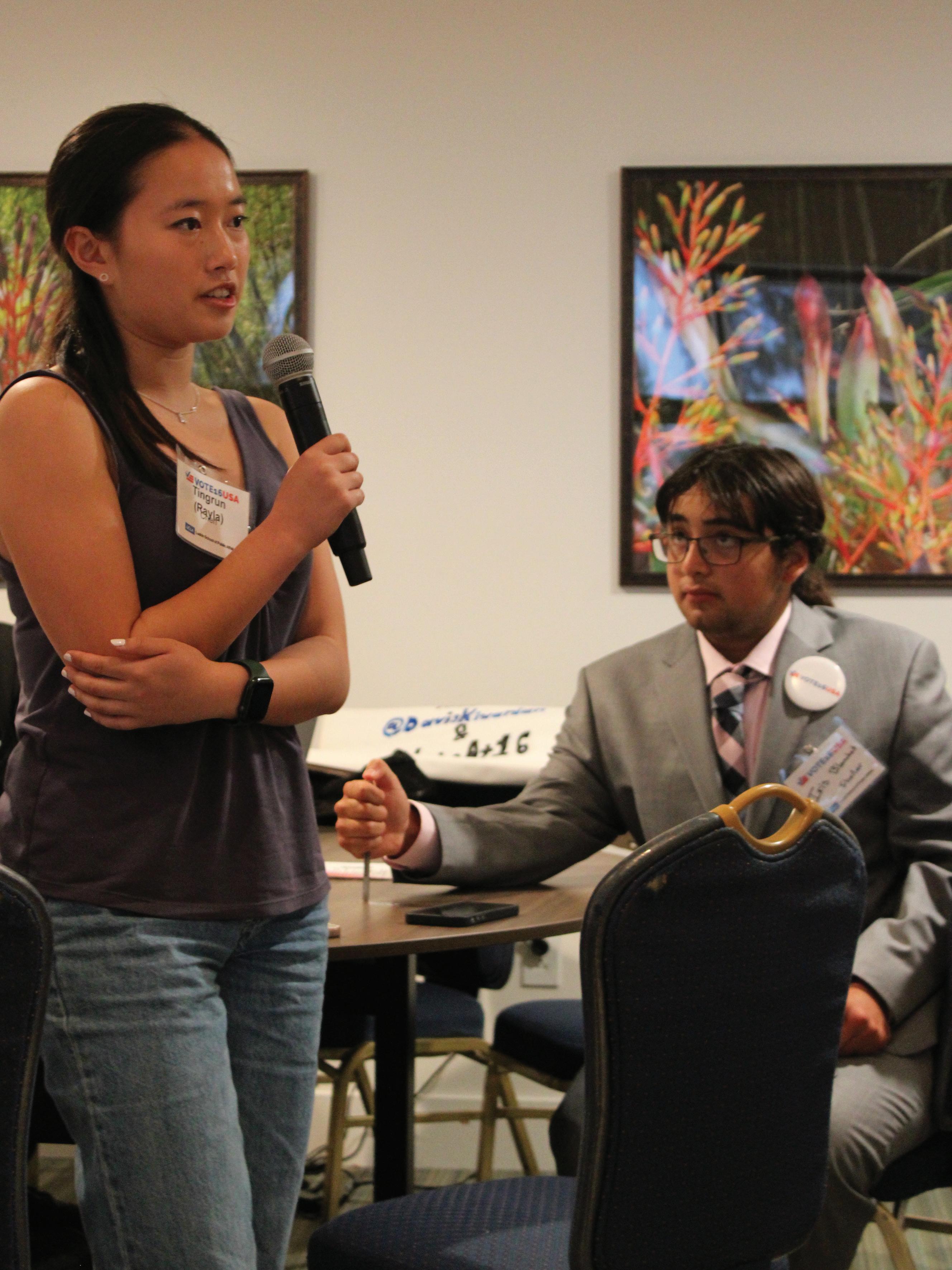
Palo Alto co-president Rayla Chen speaks at the Vote16USA National Convening in August. President and Vote 16 Palo Alto co-founder Iris Blanchet sits in the background. “Vote 16 is an organization that aims to promote civic engagement through lowering the voting age,” Chen said. “It’s really important that civics gets passed ... from generation to generation. (Photo courtesy of LaJuan Allen)
The year was 2025. In the wake of a polarized presidential election, the Vote16 movement — a national push to lower the voting age — was in full swing.
While grassroots movements sprang to life in San Francisco, nearby Bay Area cities like Albany became some of the first in the nation to grant 16-year-olds the right to vote in local elections. And it served as the motivation for Vote 16 Palo Alto — which would let 16-year-olds vote in municipal elections.
That’s when Gunn High School students Iris Blanchet and Rayla Chen stepped in, opening their own chapter of Vote16USA, an offshoot of Generation Citizen, a non-profit organization that focuses on action civics education for middle and high school students in 2015.
They knew the odds were against them. To make Vote 16 a reality, they needed 3,000 signatures. The catch? Both the signature collector and petition signers needed to be 18. Another catch: They needed adult witnesses for every signature.
From September of last year to May of this year, they crisscrossed Palo Alto, knocking on doors and running tables at the No King’s Democracy Fair to gather signatures.
“The main thing we learned was how to navigate the city’s referendum and ballot measure process, as well as what events we should go to to collect signatures, “ Blanchet stated in a separate email with Anthro Magazine.
The ultimate goal for Vote 16 Palo Alto is to amend the city charter to allow 16-yearolds to vote in city elections. (Ironically, students wouldn’t be able to vote in Palo Alto school board elections because of a logistical technicality.)
“In the PAUSD school board, we can’t lower the voting age because it actually incorporates part of Los Altos Hills as well,” Chen said.
also have a lot more meetings coming up with local advocates and local politicians, and so we’re very much looking forward to that.”
In an email with Anthro Magazine, Mahealani Ah Yun, city clerk of Palo Alto said the deadline to submit the petition signatures was Monday, April 13.
“Under California Elections Code procedures, proponents generally have 180 days from receipt of the ballot title and summary to circulate and file signatures,” Ah Yun stated. “In this case, because the 180th day fell on a Sunday, the filing deadline was extended to the next business day.”
Ah Yun added the City Council retains the authority to place measures on the ballot directly by Council action.
Palo Alto City Council Member Julie Lythcott-Haimes said there are people who have the ability to make a thoughtful choice in every generation.
“There are plenty of people in their elder years who are starting to lose their faculties,” Lythcott-Haimes said. “We don’t say there should be some tests to see if they’re worthy of casting a vote, so I think there are plenty of people in this 16 and 17 age group that are eager to participate, hungry to do the work and to be educated on the issues.”
“When the Palo Alto student Climate Coalition comes to speak before city council, they are some of the most informed people we ever hear from on the topic.”
— Julie Lythcott-Haimes, Palo Alto City Council member
In the end, after months of campaigning, Vote 16 Palo Alto got 900 signatures — 30% of their goal.
“We are most proud of the fact that we managed to drive public debate for this issue into the forefront of Palo Alto politics,” Blanchet said. “We were able to meet with many City Council officials who otherwise would not have considered this issue, and we were able to get significant support from public officials in the city.”
Since the effort did not reach the goal by the deadline, they needed to seek alternative ways tto get their proposal on the ballot.
“We still have the option for city council members to vote on it and to put it on the ballot,” Chen said. “The next steps for that to happen really just comes down to connections and networking and really just doing a lot of convincing work. … We
Critics of Vote 16 may doubt if teens possess the maturity to take on the responsibility of voting, but Lythcott-Haimes said a voter’s age is not always an indicator of how informed they are.
“When the Palo Alto student Climate Coalition comes to speak before city council, they are some of the most informed people we ever hear from on the topic,” Lythcott-Haimes said. “It’s a great example of how youth may even know more about an issue, perhaps because the consequences for them are so great … long term.”
According to Palo Alto High School school board representative Dylan Chen, 16 year olds are more than qualified to vote.
“A Politician’s job is to find the best policy or best action,” Dylan Chen said. “The voter’s job is to report your concerns and what you care about to the politician … a 16 year old is perfectly aware of what their concerns are and what they care about.
Lythcott-Haimes said she will “strongly consider” putting Vote 16 on the ballot.
In a separate email with Anthro Magazine, Blanchet said Vote 16 Palo Alto is using tabling to seek new member for this effort.
“Last weekend, I was tabling at the Palo Alto Youth Summit, organized by the youth council,” Rayla Chen said. “...Because there are a lot of graduating seniors, so we’d like some new people to lead the organization in the future.”

16? Students explain the importance of teen voting power
There’s great value in giving 16-years-old the power to vote, according to Palo Alto High School Board representative Dylan Chen.
“Here’s something really simple about politicians,” Chen said. “They may not listen to anything else, but they listen to votes, because votes are the basis and the foundation of any politician’s power, at least in the United States, and when you want to be seen by politicians, when you want your voices to be reflected by politicians, they have to feel your stake in their election.”
A 2021 report by the Emerging Adult Justice Project found that there is more
nuance in the biology of decision-making. The study found that Cold Cognition, the one that takes charge of a person’s planning and abstract reasoning skills, were fully developed at the age of 15.
According to Vote 26 Palo Alto co-founder Rayla Chen, lowering the voting age to 16 would support democracy by building the habit of voting early on, which would increase our country’s voter turnout rate later in life.
“A … specific example is Austria, where voting at 16 has been normalized for so long because it’s ingrained in their system,” Rayla said. “It’s been shown that if you start voting at the age of 16, you’re more likely to become a lifelong voter, and that’s how in democracies like Austria, their voting, their voter turnout rate is high across the board.”
A report by the International Foundation for Electoral Systems, a highly credible, non-partisan, international non-profit organization, found that Austria has 72.32% voter turnout compared to 54.58% in the U.S.
Rayla Chen said that the team at Vote 16 Palo Alto has received support from the community and other Vote16USA chapters, such as Vote 16 Albany and Vote 16 in Maryland.
“It’s been really, really enlightening to learn from those campaigns, and we’re just taking the baby steps to learning how to gather signatures, how to table and how to make these connections that will ultimately help us succeed,” Rayla Chen said.
Dylan Chen said if Vote 16 becomes a reality, it will open doors for the student community to leverage their voice.
“Change is never easy,” Dylan Chen said. “Politics is not a chill place where people hang out and discuss issues and be kind, be friendly to each other and find a solution. … Having that vote will at least make the stakeholders who are in charge of making this change more receptive to student voice, and I think that will at least marginally, if not by a large amount, make change easier.”




Taylor Swift vs. Kanye West. Nicki Minaj vs. Cardi B. Who would have thought the next celebrity feud would be between the Pope and the current president of the United States, Donald Trump?
According to Reuters this feud began on March 31 with Pope Leo

telling journalists that Trump is “looking for an off-ramp” from the Iran war and “a way to decrease the violence.” He also said that the president’s discourse on the people of Iran was “truly unacceptable,” according to CNN. This is one of the few times that the pope has called out a world leader by name.
In the face of these criticisms, on April 12 Trump responded on Truth Social that the pope was “WEAK on Crime, and terrible for Foreign Policy.” He also wrote about how he doesn’t want a pope who thinks it’s alright for Iran to have nuclear weapons and is critical of the U.S. invading Venezuela. The Pope has not commented on the presence of nuclear weapons in Iran, according to PBS.
The Pope later said his remarks were not reflective of him wanting to debate the president, according to CNN. However, the Pope explains that he will stand up for his beliefs and those of the Gospel even if it goes against the U.S.
Eric Bloom, a social sciences teacher at Palo Alto High School, believes that the president’s actions are due to feeling threatened.
“The president doesn’t like anybody to question or try to take a moral standing against him,” Bloom said. “So anybody who comes out against the president, he’ll just lash out at.”
Additionally, Bloom believes that the president doesn’t take the importance of the Vatican to people seriously.
“I think he looks at the papacy as being some kind of antiquated institution that doesn’t have any real meaning to people anymore,” Bloom said. “And I think he’s absolutely wrong.” Bloom said.
This conflicted started nearly a year after the pope was elected. According to CNN, Pope Leo was announced as the
new pope on May 8, 2025. Born Robert Francis Prevost, Pope Leo XIV is the first American pope to sit on the throne of St. Peter. He is from Chicago but has spent years as a missionary in Peru. Later he worked at the Vatican to help appoint bishops around the world.
Donald Trump’s first term as president started in 2016, before being reelected in 2024 and was a New York City businessman before going into politics. According to The White House Historical Association, his current administration pledges to focus on immigration policies and tax reform.
While there may not seem to be an overlap between the audiences of these two people, the truth is, around 60% of Catholics voted for Trump in the most recent election, according to CNN. This is because many Catholics believe that the Republican values more closely align with their religious beliefs, according to The Institute on Religion and Public Life.
Bloom said. “I think a lot of people, at least from what I’ve read, think that going after the pope is sort of a step too far. That he is not political, that he represents an institution that’s hundreds, if not thousands, of years old.”
While this interaction fizzled out after the back-and-forth comments, the impact from it could be lasting, according to Bloom.
“A lot of people ... think that going after the pope is sort of a step too far.”
— Eric Bloom, social sciences teacher
“I think there’s not going to be much of a relationship between the Vatican and the United States for a while, because I think Trump is dismissive of the church, and so the church is just going to keep doing what it does and ignore Donald Trump,” Bloom said.

This makes the comments between the president and the pope all the more concerning to those who believe in the platforms that both people represent.
While many supporters of Trump excuse his behavior, Bloom says this altercation could be the tipping point.
“I think people give the president a lot of leeway in the way that he behaves,”
“There’s not going to be much of a relationship between the Vatican and the United States,”
— Eric Bloom, social sciences teacher
Social Justice Pathway founder is set to retire after 28 years of teaching
Photos by JESHURUN WANG
Text by JESHURUN WANG and JOYCE (LEYI) MA
24 May 2026
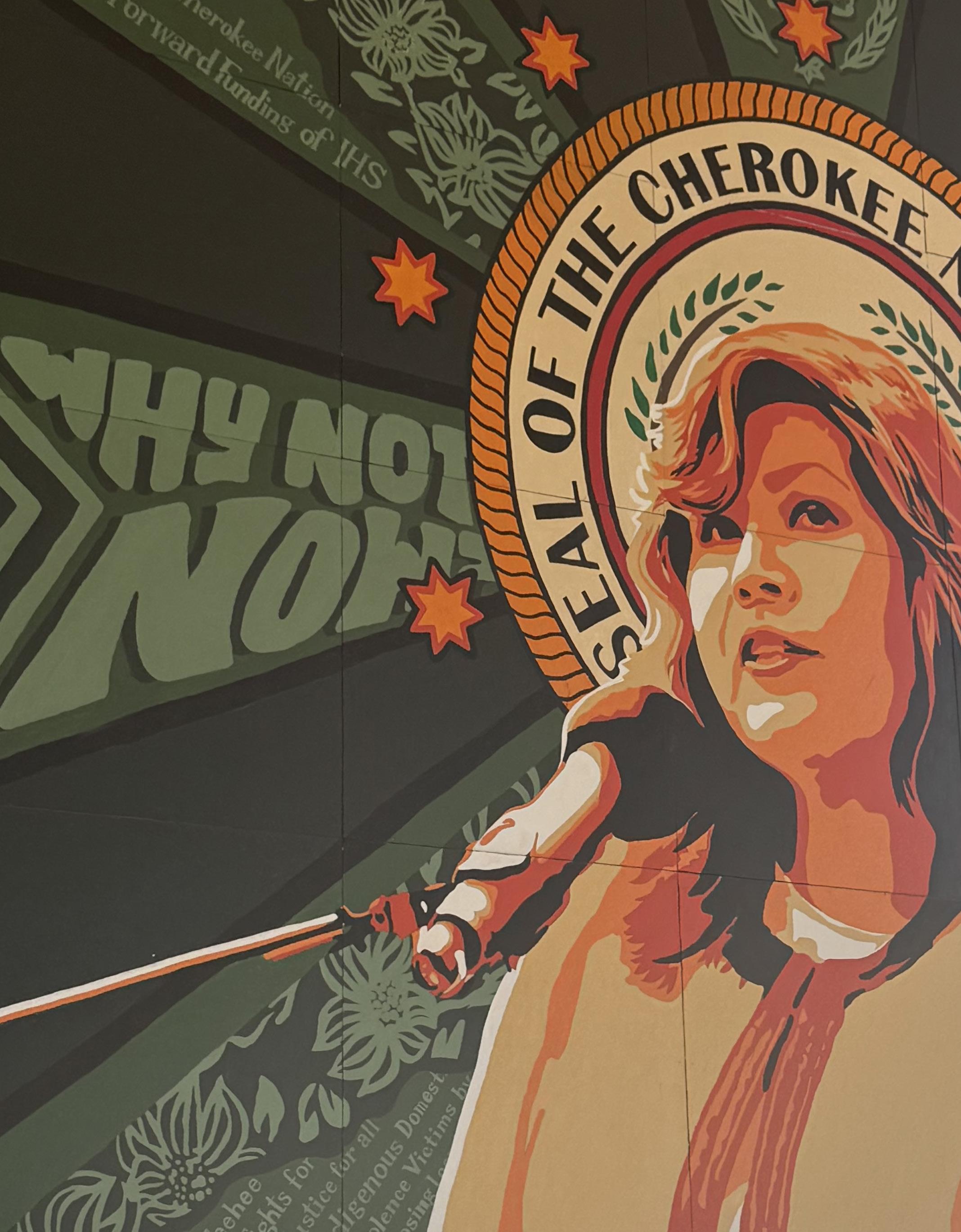
ART WITH A PURPOSE — “Same Moon, Same Stars” mural of Kimberly Teehee, the first representative of the Cherokee Nation delegate to the U.S. House of Representatives, by the 800s building at Palo Alto High School. Social Justice Pathway teacher Eric Bloom said he was inspired by Diego Rivera’s San Francisco mural of Pan America to start the project. “Every single element has meaning, and so then everything you put in it, you need to have a reason to do it,” Bloom said. “That caused this group of students to really sort of think about ‘what it is that we want to say, and how are we going to say it visually.’”
Dressed in a loose Hawaiian shirt and armed with a jovial wit, Eric Bloom — co-founder of the Social Justice Pathway — is known for his big personality and “can-do spirit” on campus. To his friends and colleagues, he’s a “rabble rouser,” the kind of person who always raises his hand during meetings. After 28 years at Palo Alto High School since 1998, Bloom is turning the page to a new chapter in his life by retiring at the end of this school year.
Bloom co-founded the SJP program in 2014, a separate pathway for students interested in social justice. Ever since SJPs founding, it has gained strong support from students, creating opportunities to build three-year-long bonds with one another.
Bloom said he wanted to create the SJP program to break free from the traditional classroom dynamic of a trans actional way grades are given out based on points for assignments.
“We spend a lot of time thinking about the points and how to get the points and what to do with the points,” Bloom said. “The idea of a proj ect-based program is that you’re going to sort of flip that around in the sense that we’ll spend some time talking about ‘How do we figure things out?’ ‘How do we know what’s there?’ and ‘What do we do to find out more information?’”
He feels that this project-based structure, paired with independent research, placed student agency at the forefront of all class ac tivities.
“The research that they [SJP students] did [and] the history that they looked at as they created it [their projects] created these opportunities to find out more information,” Bloom said. “If I taught you how to dig with a shovel, that’s not really very much of a skill, but you can’t make a hole without knowing how to dig.”
Erin Angell, a fellow co-founder for the SJP program with Bloom, said she and Bloom were inspired to create a program that went beyond a simple transcript grade.
was only there as a nudging force, urging students to arrive at conclusions themselves through the learning process.
“It’s just like, how are you going to demonstrate your competency and what do you want to do, so my job was to show them all of these different options and to see how other people are doing things, and then ask them to see what they can do,” Bloom said.
For him, the pinnacle of Bloom’s career is the creation of “Same Moon, Same Stars,” by SJP cohort 7, honoring the Cherokee Nation in 2023.
“[It was about] creating something authentic and [something that] exhibits learning and understanding and subtlety and conveyance and a little bit of protest,” Bloom said. “I think they [students] really felt proud of that accomplishment, and I’m not sure they would have made it as good as they did if they were
“We had this great opportunity that was presented by the district, [that said] ‘Well, why don’t you design a program that’s different’, and it was called the out-of-the-box program,” Angell said. “As teachers, a lot of times you are stuck with whatever the comprehensive high school structure can offer and can flex around. … [But] we did our research, and they [the school board] gave us the thumbs up, and we’ve been trucking ever since.”
Bloom’s program wasn’t without challenges; however, according to him, working with students in a way where all of them had a voice in the classroom. His teaching technique is based on assessing the students based purely on their ability to learn and grow in the class.
Instead of traditionally leading his students by the hand, Bloom
According to Caitlin Drewes, another SJP history teacher at Paly, Bloom’s signature teaching style is to let kids fail over and over until they grasp success through their own learning.
“Eric is such a master teacher,” Drewes said. “He really focuses on letting kids fail, and I don’t mean fail classes, but like, give it a shot. Try it. ‘Oh, it didn’t work. What can you do better? How can we
On top of being a master teacher in the eyes of fellow teachers, Bloom has also proved himself to be a voice for students and fellow staff on important matters in meetings that address social issues
“He’s definitely the rabble-rouser in the meetings,” Drewes said. “He does not let anybody get off the hook for a policy he doesn’t agree with, or an idea that isn’t fully explained.”
Cameron Toland, a former student of the class of 2023 whom Bloom taught for three years, said Bloom’s mentorship challenged her to share her perspective and communicate clearly.
“He would make me defend why I drove less than a mile to school every day rather than walking,” Toland stated. “I learned to better articulate my thoughts and opinions, and was always encouraged by [Bloom] to speak up for myself in and out of the classroom.”
In terms of Bloom’s eventual absence, Angell said his departure will leave a hole at Paly.
“Somebody is going to have to pick up the mantle,” Angell said. “I think it [the school] is going to be a little quieter, I think it’s going to be a little less quirky, and I think it’s going to be a little more polished.”
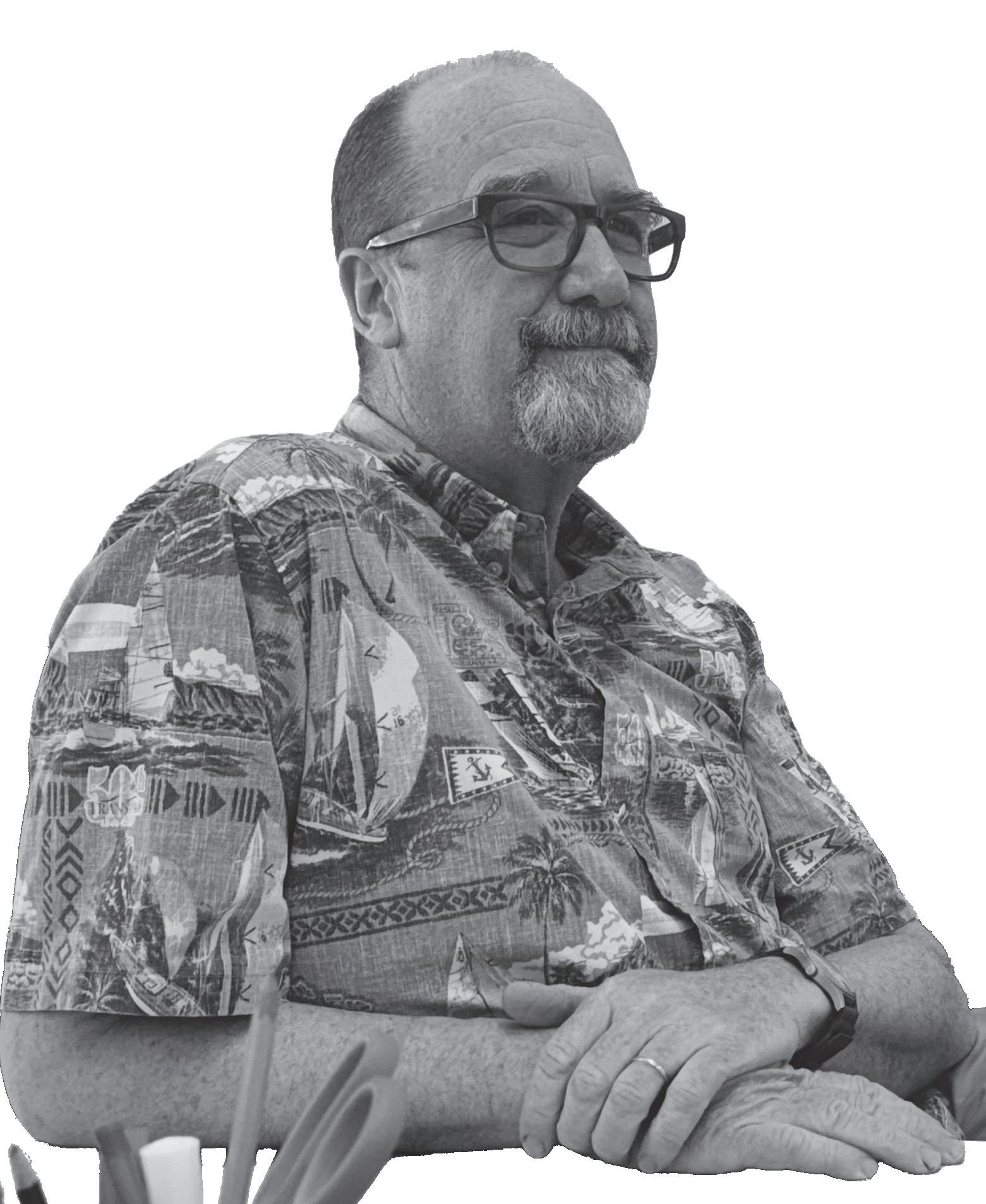
SCOUTING FOR THE FUTURE — Social Justice Pathway co-founder Eric Bloom sits at his desk in room 805. Bloom said his experience both in Boy Scouts and as a teen leader gave him insight into how adults can facilitate teen leadership. “The part about Boy Scouts that makes it so successful … is that it’s so driven by the individual troop,” Bloom said. “It’s [all] up to you.” (Photo by Jeshurun Wang)
Text by ROSHAN GAUTHAM and JACK LINDAUER
Would you be willing to put your name in the draft pool and fight for your nation?
If you’re a male aged 18 to 26, you no longer have a choice.
At least as far as registering for the draft system, even though there is no current draft.
That’s because the National Defense Authorization Act signed by President Donald Trump and passed in December. gives the federal government as of this coming December the power to automatically register qualifying men ages 18 to 26 who have a Social Security number.
With the large number of people this bill will be affecting, we’ve seen very minimal conversations being had about it.
Few Palo Alto High School students we spoke with had even heard about the bill.
How is it possible that such a significant change to our system has not been a popular topic of conversation among high school students, especially because many of them are going to
be entering the age range of 18 to 26 years old very soon?
With such little awareness of the bill, there is no telling how people will react if a war actually starts, given many people would be forced to serve.
In the past, the only way to enter the draft pool was by registering yourself in the selective service.
For instance, during the Vietnam war, there was an active draft and therefore, young men were legally required to enter.
Currently, there is no active draft, yet still young men will be automatically placed into the draft pool, according to CNN.
Is this automatic military registration an unfair use of the government’s power? A clear breach of personal autonomy?.
To be clear, registering for the Selective Service – the pre-draft list of eligible young men – has not been optional. It has been required for


decades. Now, the process is automated.
Currently — and since 1973 — actually serving in the military is voluntary; U.S. military service is an all-volunteer operation.
Although registering is mandatory, actually serving in the military is voluntary. The U.S. has maintained an all-volunteer armed forces since 1973, and a draft would only be activated if specifically authorized by Congress and the president.
Sophomore Mahé Romain Loeuillet, who is currently attending Paly as a part of an exchange year program from France, shared his plans for enrolling in the French military following high school.
“I’m joining the military academy in high school,” Loeuillet said. “I have two years of studying in the military … and after that, I get drafted.”
post office to automatic enrollment be a problem for Americans?
“If you look at US history, the Civil War, there were draft riots,” Foug said. “God forbid that actually happens. … [but] this country has to? brace for that.”
When we first came across the new bill on Instagram, we couldn’t believe it was true.

Palo Alto High School history teacher Stephen Foug, explains the difference in the process since he was 18.
“I remember going down to the post office, and you fill in a little form,” Foug said. “I voluntarily did it as a sense of patriotism. That’s the old system.”
Military service is also a topic of discussion in many other parts of the world outside of the United States.
Serving in the military can cause lasting effects that are harmful not only to the person themself, but also to their family and friends. According to DAV, 10 percent of veterans from the Vietnam War reported experiencing PTSD at some point. Making these life changing decisions requires careful consideration.
Furthermore, the new auto-enrollment of 18-year-olds relies on technology that could be better put to other uses, according to some.
“Those are efforts going in the wrong direction, I’d be more in favor of mandatory voting,” Foug said.
Could this seemingly innocuous shift from personal enrollment at the

Being in high school, we are nearing the age that would be directly affected by this bill.
Also, with multiple wars going on across the world and with political tensions high, we worry a larger war may ensue in which we would be forced to participate.
Wouldn’t you worry about it too?
Right now, there is no draft in action. In passing this bill, however, the government is more ready than ever to activate a draft at a moment’s notice. Could the bill simply have given us a more efficient way of doing something we’ve been doing inefficiently — or could something bigger be coming?

I believe in meeting the student as an individual with humor and deep intelligence, and that empathy is foundational to effective teaching.
Graduating from Stanford University, I taught creative writing at Boston University and afterwards spent several years living and teaching in Rome.
Lessons with Tobi & Friends is a team of educators who understand that modeling kindness, drive, and curiosity is just as important as teaching the fundamentals of grammar and geometry.
This is a team of skilled, passionate, wise educators I’m grateful to call my friends.