ANTHRO
September 2024 Volume 7 Issue 1
Mission Statement
The ultimate goal of Anthro Magazine, Paly’s social activism publication, is to create a platform and forum for students to express their opinions and voices. Social activism is bringing issues into the spotlight to spread awareness and create change in society. On this platform, we will promote unity, diversity, and respect. As a publication, we aim to be inclusive but do not tolerate hate speech of the targeting of individuals. We hope to highlight issues that we see in our community, create a safe place to discuss these issues, and to make sure student voices are heard.
From the Editors
Dear Readers,
We are excited to present you with our first issue of the semester! With this pertinent upcoming election around the corner, Anthro staff endorses Kamala Harris for president in our editorial “Torchbearer for democracy,” recognizing her as a strong advocate for democratic values and leadership in these pivotal times.
Centered on election coverage, Anthro writers aim to tell compelling sto- ries that highlight the voices and movements influencing the 2024 race. Re- porters Mihika Sridhar and Vivian Tang spotlight student reactions to the Sep- tember 10th presidential debate. In “Writing for Democracy”, Marcus Ling and Christopher Choi explore the impacts of a postcard-writing event encouraging voters nationwide to participate in elections. Reporters Faizan Kashmiri and Marcus Ling spotlight the often-overlooked third parties such as the Party for Socialism and Liberation in their feature “Beyond Red and Blue,” broadening the conversation around political choice.
This issue also brings compelling stories on activists in the Palo Alto community. “Reframing Immigration” by Marcus Ling and Lara Dumanli focuses on photographer Mark Tuschman’s work capturing the lives of immigrants to reshape the narrative around them. Finally, “Playing with Pupcycled” by Cailey Quita and William Xue dives into local student activism with a sustainability non-profit organization created by a Paly senior.
As always, Anthro’s opinion section features a diverse array of student voices. In “Democracy on a Tightrope”, Writers Lara Dumanli and Augustus Soedarmono highlight the dangers of the lack of media literacy permeating our society. Faizan Kashmiri provides perspective on combating misogyny in “Drawing on Sideburns.”
Enjoy Anthro Volume 7.1!
-Lara Dumanli and Vivian Lin, editors-in-chief
Ling
Nair Hadrien de Martel

IN THIS ISSUE
Letters to the Editors
The staff welcomes letters to the editors. We reserve the right to edit all submissions for length, grammar, potential libel, invasion of privacy and obscenity. Send all letters to anthromagazine. paly@gmail.com or to 50 Embarcadero Road, Palo Alto, CA 94301.
Printing & Distribution
Anthro is printed by Folger Graphics in Hayward, California.The Palo Alto Parent Teacher Association mails Anthro to every student’s home. Past issues are available at anthromagazine.org.
Publication Policy
Anthro, a social activism magazine published by students in Palo Alto High School Incubator class, is a designated limited open forum for student expression and discussion of issue of concern to its readership. Anthro is distributed to its readers and the student body at no cost. Please visit anthromagazine.org to view our AI policy and ethics policy.
Editorial
Improvment Tutoring Center
Verbatim: Presidential Debate
Destructive Deepfakes
Improvements to the Tutoring Center
Writing for Democracy
Reframing Immigration
A Respectful Approach: DST
Beyond Red and Blue
Playing with Pupcled
Drawing on Sideburns
Democracy on tightrope
Students need more time
Ineffective Recycling


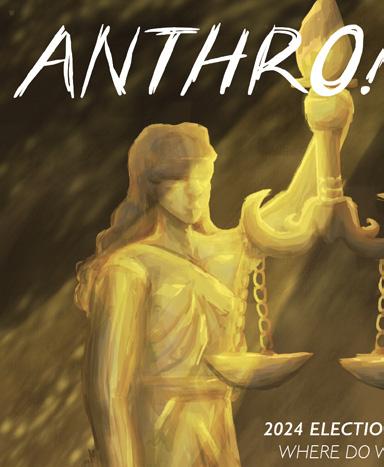
Art by Salem Coyle
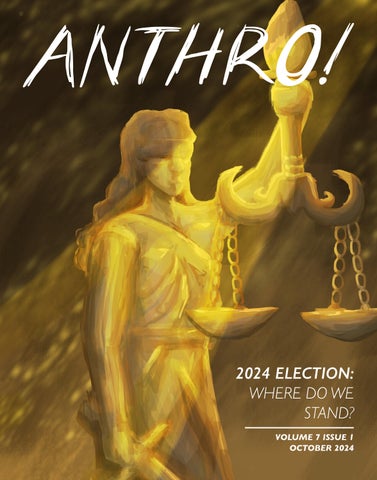
Torchbearer for Democracy
Kamala Harris is the best presidential candidate for 2024 election
Two months ago, our country was in a crisis. The two candidates, Joe Biden and Donald Trump both had tragic flaws. One was a convicted criminal who planned on ending democracy, the other a man who couldn’t keep his thoughts straight. Voters all across America were forced to decide between the lesser of two evils.
Then, in July, Biden decided to step down, giving way to a younger, more capable candidate, Kamala Harris.
Serving as attorney general for six years, senator for four, and now Vice President for almost four years, she has already shown her willingness to fight for the American people.
mental freedoms while bringing together those throughout America who agree that every woman should have the right to make decisions about her own body – not the government,” Harris said.
Harris has also taken a few key stances on immigration. In July of 2024, under the Biden-Harris administration, there was the lowest number of illegal crossings over the border in the past 3 years.
We choose democracy. We choose Kamala Harris.
Contrarily, Trump has shown himself to be a danger to democracy. His incitement of the Jan. 6th attack on the Capitol, the 34 felony counts he faces, and 2 impeachments demonstrate his clear lack of respect for American law.
During the September 10th Presidential Debate, the stark contrast between the two candidates was put on display. Harris advocated for reproductive health care, climate change mitigation policies, and a new system of immigration while Trump made blatantly false statements about Haitian immigrants eating pets, Democrats supporting abortion after birth, and advocated for tax cuts and heavy tariffs.
The debate showed Harris’s ability to keep her cool and stay true to her ideals under pressure, whereas Trump ranted about his crowd sizes.
However, this should not be the focus. Harris in her own right is an excellent candidate, and her policies on key issues are what America needs.
In 2016, Trump purposefully filled the federal judiciary with firm abortion opponents to achieve the overturning of Roe v. Wade and destroyed fundamental civil liberties. Now Harris is looking to restore reproductive rights by vowing to reinstate Roe v. Wade and improving access to abortion.
“I will continue to fight for our funda-
Harris has also promised to bring back the bipartisan border security bill. This bill would have deployed more detection technology and added 1,500 border guards, aiming to close loopholes that are currently being exploited by criminal cartels. However, at Trump’s request, Republicans in the Senate killed the deal because it was bad for his campaign.
Harris has also vowed to invest 8 billion dollars to increase detention center capacity, which is where people are kept during deportation proceedings and has spoken about an earned path to citizenship. Harris recognizes the American immigration system is broken, and she will be a torchbearer for change.
On the other hand, Trump wants to reinstate the travel bans, which ban people from 8 countries, primarily from the Middle East, from traveling to the United States. He has also said he will end birthright citizenship so that children who are born to parents who do not have legal status in the U.S. will not be considered U.S. citizens, directly contradicting the 14th Amendment.
Trump also disregards the climate crisis completely.
“The biggest threat is not global warming, where the ocean’s going to rise one, oneeighth of an inch over the next 400 years,” Trump said.
Not only is the state-
ment completely false, but it also shows how Trump refuses to take this issue seriously. The National Oceanic and Atmospheric Administration estimates that by 2100, the sea level in the U.S. is projected to be 2 feet higher, and Trump has still not made any plans to promote clean air.
As vice president, Harris cast the tie-breaking vote for the 2022 Inflation Reduction Act, which promotes clean energy usage. She even proposed a $10 trillion climate plan in 2020.
Despite Trump saying the economy will be much worse under Harris, independent analysts like Goldman Sachs have forecasted larger economic growth, lower inflation, and more new jobs if Harris were to be elected instead of Trump.
Harris has shown herself to be a strong and capable leader. Her policies on abortion, immigration, the climate crisis, and the economy are what this country needs.

The future of our country is at stake, and
What do we think about the 2024 presidental debate?
Vice President Kamala Harris and former President Donald Trump faced off in their first presidential debate on Sept. 10, sparking opinions on the debate’s outcome and what that entailed for their respective campaigns. Anthro Magazine asked the Palo Alto High School community what their reactions and thoughts were regarding the debate.
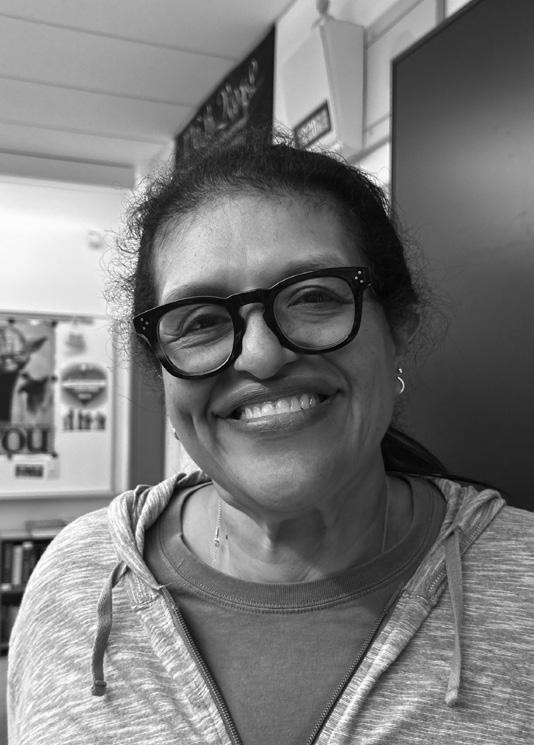
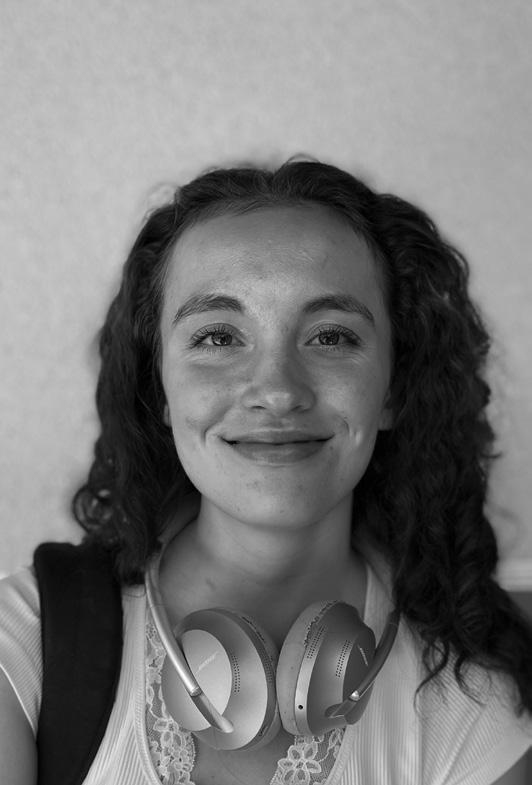
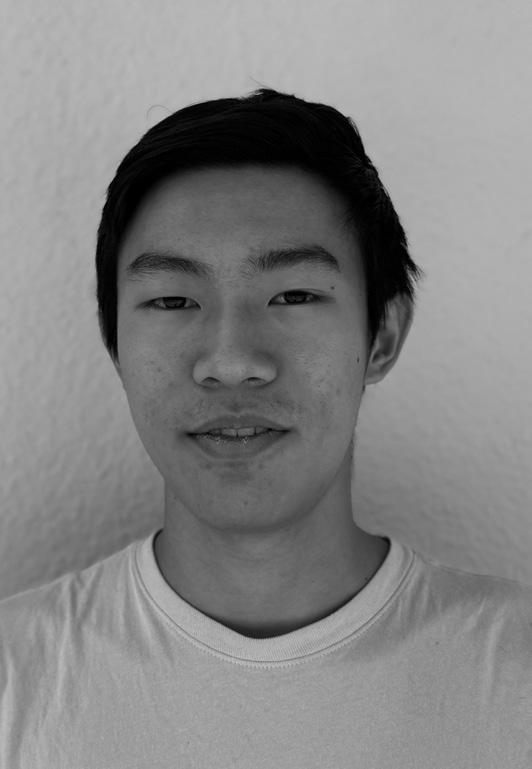
“She [Harris] seemed to be like, ‘I’m gonna do this’, and she came out with her points whether you agree or disagree. She had her point about what she was going to do, and he [Trump] didn’t seem to have that.”
— Katya Villalobos, history teacher
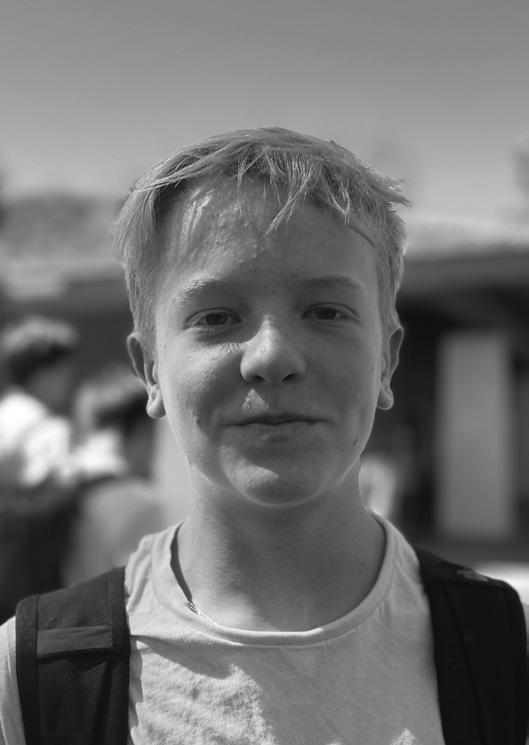
“It was very different from the debate between Trump and Biden from earlier in the year. I think she [Harris] definitely performed better than Biden did while debating Trump, but I guess we’ll have to see what happens.”
— Freya Lyon, 12th grade
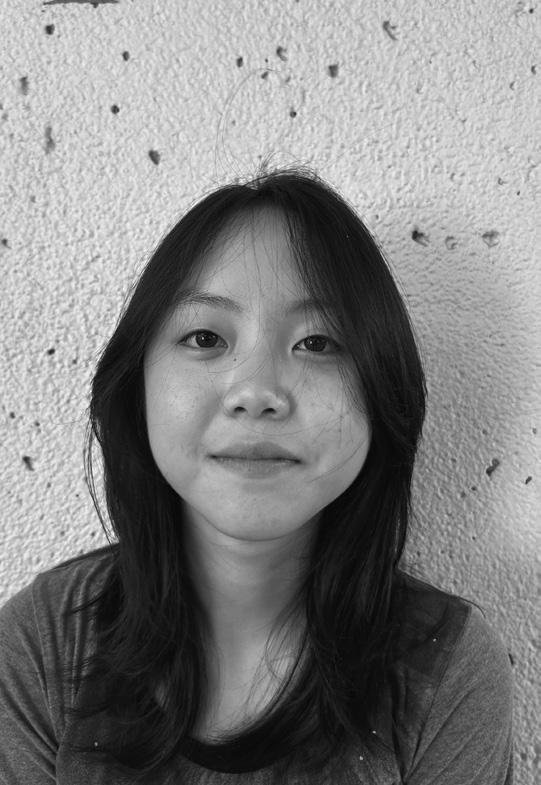
“Well, I think this election is crucial. It was nice that it [the debate] highlighted important issues like immigration, but they [the candidates] sometimes didn’t really answer the questions that well. It seemed like Kamala did better than Trump in that regard.”
— Benson Zhou, 12th Grade

“It was very cool to see the debate. You don’t get to see them too often because it happens every four years—so in the same way, I’m excited to see how the actual election goes.”
— Miles Allen, 10th grade
“They weren’t really answering the questions, and I don’t think either of them had solid answers to any of the questions. It was mostly just Trump insulting Harris, and the topics that they discussed weren’t as solid as I wanted them to be.”
— Xuaner Duan, 10th grade
“I thought it was very interesting because [Trump] just kept going off-topic, and he had to get fact-checked so many times by the moderators.”
— Isabella Grodnitzky, 11th grade
DESTRUCTIVE
San Francisco City Attorney aims to shut down non-consensual
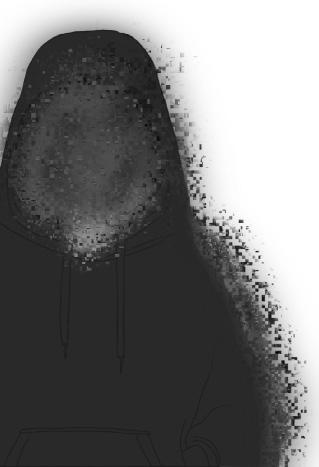
t’s 8 a.m. on a Monday and you pedal furiously on your bike in order to make it to class on time. The sky glistens in the morning light, and by all means it’s a normal day. But as you enter your class, you start seeing other students giving you sideways glances.
-
er students have created nude images of you, using artificial
For you it’s a nightmare,cent high-profile cases acrossed States, have prompted the first case of legal action against companies that
The leader of this charge? San Francisco
City Attorney David Chiu, who on Aug. 15, filed a lawsuit targeting 16 websites using AI to create non-consensual deepfake nudes of people.
The lawsuit seeks to dismantle these sites, which allow users to upload photos of individuals and use AI to de-clothe them.
“Our Chief Deputy City Attorney was reading the news and saw an article about a young woman who had a nonconsensual, deep fake image created of her,” Alex Berret-Shorter, deputy press secretary, told Anthro. “The article talked about how it was really difficult to find out who did it, and there wasn’t much recourse for her. So she [Chief Deputy City Attorney] came back to her team and said ‘can we look into this and see if there’s anything our office can do?’ ”
This incident was what inspired the San Francisco deep fake lawsuit in the first place.
Collectively, the 16 websites the lawsuit targets have amassed over 200 million visits just in the first six months of 2024. The San Francisco City Attorney’s office accuses these websites of violating multiple laws prohibiting the creation and distribution of non-consensual intimate photos.
Notably, one company, Itai Tech, owns 4 of these websites. The website allows users to take any image of the victim, whether it be from their social media or an online website, and with one click it creates a nude image of that person with their real face.
These images have often been used in negative ways. In one notable case at Beverly Hills Middle School, 16 deepfake nude images of eighth-grade girls were circulated among students, causing widespread concern among parents and educators.
Art by CHIARA MARTIN
DEEPFAKES
AI-generated pornography in first-of-its-kind lawsuit
In another case at Westfield High, New Jersey, multiple deepfake nudes of 10th graders were created.
Additionally, the Federal Bureau of Investigation has also warned of an increase in extortion schemes. This is where actors create AI-generated nudes and threaten to release the images unless victims comply with their demands, usually monetarily.
The primary objective of the Attorney’s Office is to shut down these websites completely, which differentiates from previous lawsuits that only retroactively targeted the people who created the images.
The major challenge concerning deepfakes is that anyone can be a victim, no matter what you do since they can be created without any actions from the victim’s part.
“I’m scared of the advancement of AI and how it has the potential to create any video, image, or voice recording, and make you do things you didn’t do,” Paly junior Estelle Dufour said. “You have no way of control.”
Another challenge is that deepfakes are extremely difficult to track down and get rid of due to how quickly they spread.
“Once those images are out there on the internet and circulating, you can’t really reign it back in, and there’s no way to completely get rid of those images once they’re on the internet,” Barrett-Shorter said.
Certainly, deepfake nudes are not an issue to be taken lightly. Currently, RISE, a Paly club devoted to promoting sexual safety and consent culture is working on a consent education for Paly.
“I feel like another danger to bring to light is that this exploitation has become somewhat normalized, as it can be seen as a joke by many students on campus,” RISE president Kennedy Do said. “So as a Paly community, we need to emphasize the severity of this issue and continue to curate a culture where these actions are unacceptable.”
“So as a Paly community, we need to emphasize the severity of this issue and continue to curate a culture where these actions are unacceptable.”
to regulate AI. Instead, they believe AI alignment, the practice of programming AI so that it reflects human values and ideals, can act as a filter to prevent most crimes. For example, Jean-Marc Mommessin, a Stanford AI alignment board member, said he believes the best way to regulate AI deepfakes is with AI alignment.
—Kennedy Do, RISE President
Some states have already taken action to regulate deep fakes. For example, Governor Gavin Newsom recently passed Assembly Bill 2655, which mandates that large online platforms remove or label deceptive AI-generated content related to elections.
“Once those images are out there on the internet and circulating, you can’t really reign it back in, and there’s no way to completely get rid of those images once they’re on the internet.”
—Barett-Shorter, Deputy Press Secretary
However, this bill’s limited scope excludes other cases, including the pending lawsuit completely, requiring prosecutors to attack using already formed laws against these companies.
On the other hand, some people believe legislation alone won’t be enough
“Alignment gets you eighty percent of the way there, and the other twenty percent has got to come from the government,” Mommessin told Anthro.
AI alignment is the process of incorporating human values into AI.
“Ask a chatbot how to build a bomb, and it can respond with a helpful list of instructions or a polite refusal to disclose dangerous information,” wrote Kate Martineau, science writer for IBM Research. “Its response depends on how it was aligned by its creators.”
Therefore, using AI alignment, creators could make it so pornographic deepfakes are impossible to be created.
Still, now students and others stand unprotected, with retroactive action being the only recourse.
For anyone who is a victim of deepfakes, Do urges you to speak out and look for help with people you trust.
“I would encourage students to report it to [the Palo Alto Unified School District’s] Title IX [office] (law that protects students from sex discrimination) or report it to our club, so we can help them combat this issue and spread awareness about how we can stop it,” Do said.
New Tower Learning Center opens for student body use Improvements on Tutoring Center
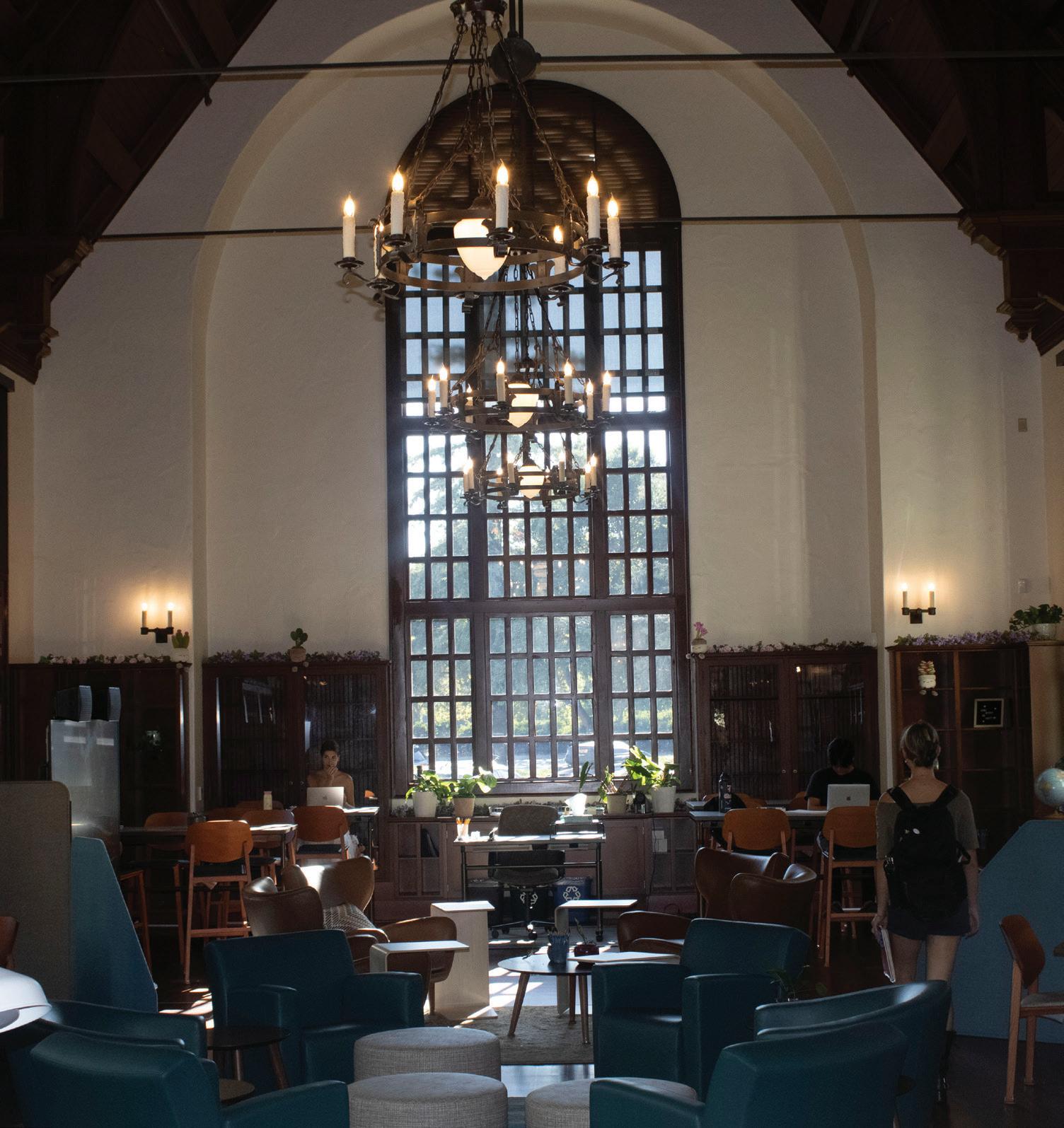
The rustling of papers and clacking of keys fill the air of the repurposed cathedral building, as dispersed student groups discuss their classwork. Floor-to-ceiling windows and elaborately designed chandeliers illuminate the seating area — covering the deep-seated armchairs and standard classroom seats in a soft glow.
At the start of the academic year, Palo Alto High School unveiled a new program with the goal of helping students achieve their academic goals — acting as a replacement for the Tutoring Center and Academic Resource Center, both of which have been retired to make way for the new Tower Learning Center.
Located in the renovated Tower Building, the TLC is intended to create an environment for Paly students to study and learn, providing peer tutoring services and bringing in adult volunteers with that objective in mind. In addition to moving out of the trailers where the Tutoring Center and ARC were located previously, the TLC is also considered an extension of the Paly Wellness program — aiming to expand beyond purely subject-by-subject tutoring services.
According to intervention specialist and math teacher YJ Lee, the goal of the TLC is to provide resources, integrating into the larger network of student support services.
“We want everyone to think of the Tower Learning Center as part of a three tiered system,” Lee said. “You’ve got the Wellness Center, which is focusing on your mental health and your wellness; the nurse, focusing on your physical health; and finally, the Tower Learning Center, where we want to focus on academic health.”
While the ARC and Tutoring Center previously provided mainly peer tutoring services for students who were struggling with individual classes, Lee said the TLC will aim to orient them towards a larger perspective.
“We’re trying to get students to see the bigger picture,” Lee said. “We want to think of peer tutoring as a component of the learning, but we also want to add
other things — if you need help with organizing your notes or making the best use of your time, we want to help with that.”
Despite being a new resource, the TLC is being received positively by teaching staff. Math teacher Sarah Gilmore said the TLC is receiving notable support from the Paly math department, despite the program’s newness.
“The math department is bolstering it [the TLC] quite a bit, because we have a lot of students that either want to go in and showcase how much they know, or are struggling and want a safe space to struggle productively — not unproductively, as they might have been,” Gilmore said.
Students who have visited and studied in the new space have had good ex-
periences as well. According to senior Tony Chung, an early attendee of the TLC, spending time in the new space was worthwhile.
“I really loved being in the Tower Learning Center,” Chung said. “They had all the textbooks that I needed for every class I had. I went there with my friend to study for a physics test, and I think it has a very good environment for you to focus.”
As the TLC finds its footing in its first year of existence, hopefully it can be a valuable resource for students who need a helping hand.
“We’re trying to shift the culture, and just normalize asking for help,” Lee said. “Everyone needs help sometimes — even adults.”



Writing for democracy
Volunteers for local get-outthe-vote operation handwrites
27,000 postcards per month
Amid the quiet hum of papers shuffling and pens scratching, a cozy living room transforms into a workshop of civic engagement every week. Eager volunteers of all ages sit around a cluster of tables, each surface scattered with stickers, writing supplies, and a list of addresses to mail postcards to. The silence is disturbed every couple of minutes by the sound of a bell ringing followed by cheering from everyone, signaling that another 10 postcards have been written.
For the past seven years, Mountain View local Mariya Genzel has been hosting postcard-writing “parties,” where attendees handwrite dozens of letters and postcards to voters all over the country, encouraging them to participate in upcoming elections.
According to Genzel, the initiative has written and delivered nearly 500,000 postcards in total, with the upcoming presidential election leading to a record-high volume of 27,000 postcards delivered per month.
“Your vote is your way to speak up for the things that you consider valuable,” Genzel told Anthro. “It’s the bare minimum that we can do to make change in a democracy. If we don’t vote, how can we expect the government to do what we would like?”
As an immigrant from the Soviet Union, Genzel has been trying to get the local community to recognize the importance of voting in order to get more people to vote. According to the California Secretary of State Shirley Weber, 71.6% of Santa Clara County residents voted in the 2020 presidential election, a number marginally higher than the national average of 66.8%
ing involved in the community, and understanding what you can do for others,” Genzel said. “Immigrants like myself tend to vote at high rates because we understand so much better how important it [voting] is. In many other places, you don’t get that opportunity.”
Genzel said her postcard parties started out small but have grown over the years, experiencing its largest growth during the COVID-19 pandemic.
“During the pandemic, I gathered people who were trying to desperately do something about the Trump administration and all the bad things that were happening in federal and state government,” Genzel said. “They came to my door to pick up a package to write from home. Last I counted, this group consisted of 1200 people, and I was one of the few people [in the country] who organized such an event.”
around the country and for elections beyond just those in the mainstream.
“People don’t realize this but there are thousands of elections every year across the country in different states and on different levels,” Genzel said. “The 2017 Virginia [gubernatorial] election was the first election in which I did this [postcard writing].”
“Your vote is your way to speak up for the things that you consider valuable,”
According to Genzel, the methods that the event uses are always changing — with data and statistics driving the process of determining how to create the largest impact among voters.
—Mariya Genzel
According to Genzel, witnessing the lack of voters at the ballot box during the 2016 presidential election was a primary motivation to start up the postcard writing campaign.
“Being a good citizen is about being involved in the community, and understanding what you can do for others,”
—Mariya Genzel
“Being an election officer on that day was very depressing, and after that, for about a year, I couldn’t do anything,” Genzel said. “When the midterm elections were starting up in 2017, I thought, okay, I’m gonna do something.”
“The postcards we are sending to Pennsylvania and Wisconsin this year are part of a randomized control trial — we’re checking to see whether this particular program of encouraging voting actually works,” Genzel said. “In general, letters and postcards have somewhere between 0.6 to 1.2% effectiveness, and that means that people who receive them, they’re more likely to come out and vote by that percentage.”
Although the percentages may seem low, Genzel said that even seemingly small percentages can have significant effects when tiny margins decide elections.
“Being a good citizen is about be -
Although based in California, the postcards written at these events have a target audience larger than just the local community. Genzel said the postcards are sent to encourage voters
“The most effective method [to increase voting], which is canvassing, only increases voting rates by 5%, so we’re only talking small percentages,” Genzel said. “This sounds very discouraging, but only a small number of votes are required to swing elections these days. Even in Santa Clara County, 11 votes determined the congressional race.”
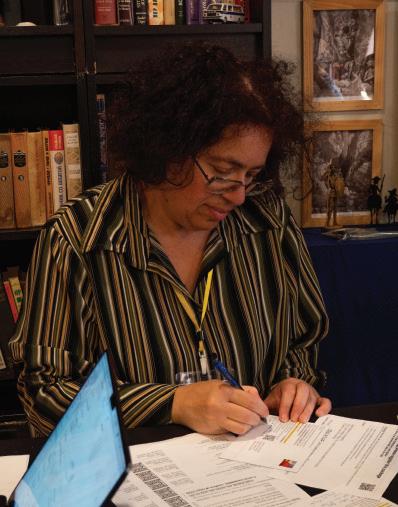
WRITING AWAY Event organizer Mariya Genzel writes postcards to residents in the swing state of Wisconsin telling them to vote in the upcoming 2024 presidential election. Photo by Alexander Lawson
Text by MARCUS LING and LARA DUMANLI
Reframing
Menlo Park photographer advocates for immigrants through storytelling
The camera mirror glares under the hot Californian sun.
With a finger on the shutter button, Mark Tuschman twists the metal cylinder lens, focusing the camera on the subject ahead. Inside his camera roll are pictures of people from all walks of life — farmers, mothers, doctors, children, nurses — but they all share one thing in common: they are immigrants who came from Mexico to America seeking a better life.
Amid busy campaigning from both parties ahead of the 2024 presidential election, narratives surrounding immigration have intensified. Some public figures are advocating for the mass deportations of immigrants and closed border policies. Others, like Menlo Park-based photographer Mark Tuschman, are fighting to reshape the narrative against immigrants.
Tuschman, a grandchild of immigrants himself, observes how growing up with his grandparents sparked an interest in depicting the real narrative behind immigrants. Coming from a Jewish heritage, he was disillusioned with the treatment of immigrants during former President Donald Trump’s administration.
“I was greatly offended in 2018 at the horrible rhetoric of how immigrants were being vilified, and I felt that it was painting a very false narrative,” Tuschman said. “We’re a nation of immigrants, and immigrants have really contributed in so many ways to make our lives all better.”
His book, “Together We Rise”, attempts to dismantle people’s fears of immigrants by showcasing the lives of each individual from their own perspective.

I wanted to give [readers] a sense of real people and real immigrants, what they do, and show that they’re working hard to improve their lives.
not going to change the minds of people who are vehemently anti-immigrant and racist, but I think there is a middle ground of people who might be a little ambiguous.”
“I wanted to give [readers] a sense of real people and real immigrants, what they do, and show that they’re working hard to improve their lives,” Tuschman said. “The book was aimed at people who may have mixed feelings about immigrants. I know I’m

—Mark Tuschman
Wanting to foster a more empathetic outlook of immigrants, Tuschman interviewed farm workers and examined what motivated them to
Immigration
leave behind their homes. In doing so, he looked to spread awareness of the dangers people come from and their efforts to not go back.
“Immigrants risk their lives to come here, fleeing mortal danger at home, trying to build a better life for themselves,” Tuschman said. “One of the first [immigrants] I photographed didn’t want to show her face, so I took a picture with her hands over [her face]. You can see the bandage over her nose, covering the big gap [that formed] when her husband turned violent and bit off her nose.”
Tuschman hopes to use his book to combat rampant
anti-immigration rhetoric by shedding new light on the people behind statistics and mainstream talking points.
“I’ve always used this book as a tool of advert to help create a more compassionate and empathetic understanding of immigrants, deal with some of the polarization that’s so common in our country, and bring a more rational dialog to it,” Tuschman said. “There are a lot of myths that are being propa
but statistically speaking, why would somebody risk their life to come here to commit a crime?”
Tuschman says reforming the immigration system should be a top priority for American policymakers.
Immigrants risk their lives to come here, fleeing mortal danger at home, trying to build a better life for themselves.
—Mark Tuchman
“[The immigration system] definitely needs to be fixed in some humane way, but demonizing immigrants is not the answer,” Tuschman said. “You really need to make the asylum system more humane and efficient. I think there’s been too much attention paid to the border, and not realizing how much immigrants really contribute to our society and how important they are. We really are a country of immigrants where everybody has a story to tell.”
Writing the book and meeting many people of diverse backgrounds in the process has also had lasting impacts on Tuschman.
“I feel very fortunate that I’m doing this kind of work,” Tuschman said. “It really opens your horizons. You get to meet people that you normally wouldn’t socialize with, and you develop relationships with them, and some of them have become very close friends… I met incredible entrepreneurs, legal people, and first-generation immigrant DACA [Deferred Action for Childhood Arrivals Scholarship] recipients, and one of them actually became my Spanish tutor for several years.”
A respectful
Downtown Street Teams provides dignity and support, giving
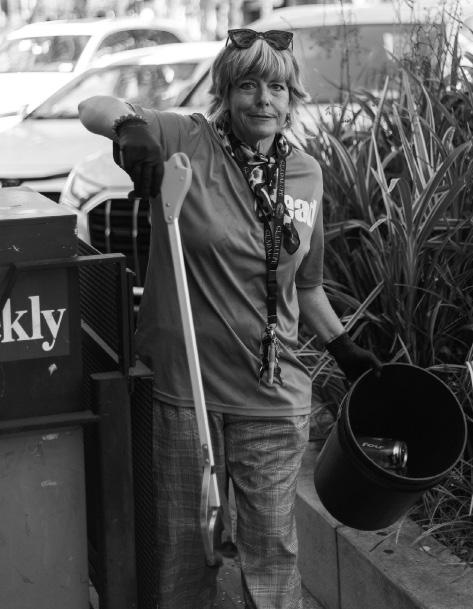
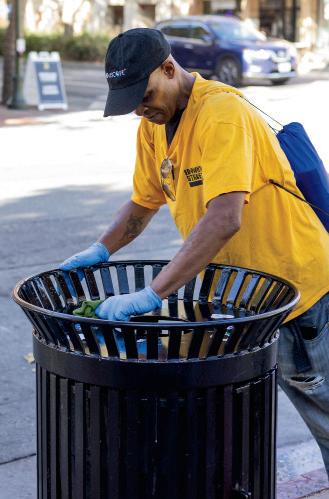
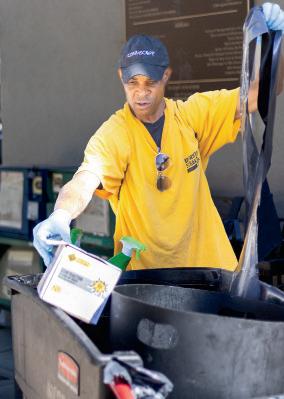
Homelessness can tear everything away from you— your friends, your sense of purpose, and even your sense of dignity. For many unhoused individuals, this is sadly a reality. But since 2005, Downtown Street teams have been rewriting that story. From its roots in Palo Alto, all the way to Sacramento, Downtown Streets Team provides more than just assistance with escaping homelessness— the organization offer a sense of purpose. Through innovative programs recognised by Harvard’s top 50 innovations in American government, Downtown Streets Team blends volunteer work with real training by hosting daily street buetifaction missions, and has lifted almost 2,000 people of homelessness into stable jobs. The heart of DST is its flagship Streets Team volunteer program, which creates opportunities for unhoused and impacted individuals to take part in beautifying their communities through tasks like cleaning streets and parks. As team members, individuals can practice key employment skills such as cooperation, punctuality, and personal responsibility. In return, DST provides case management and helps remove barriers for “team members” such as driver’s licenses or health care. Anthro spoke with a few people in the
How did you get involved with Downtown Streets Team?
“My brother got me involved. My brother was here before I was and he was also trying to get off the streets. At the time, I had just gotten a whole house and everything I had stolen from me, so I was extremely depressed and I wanted to find something that would get me back involved with the community. So it was my brother who got me involved,” Said Athena.
How has DST helped you face your challenges?
Athena: It just gave me something to focus my effort into. They’re helping me with housing too, because I was in a place where there was a lot of drug use. I didn’t want to be around it. It’s like my worst pet peeve,” Said Athena.
approach: DST
unhoused individuals an opportunity to help their community
When did you start with DST?
Wayne: A few years ago... I needed some type of therapy because I had just got out of the hospital, Stanford Hospital, and they weren’t giving therapy. So I just joined DST and I got a picker [to pick up trash]. And God blessed me. So when I started doing this therapy for myself and started healing myself, I was successful at it.
How can Students and Parents support DST?
DST is always looking for support, both monetary and volunteers.
“Volunteer and contribute to the food closet in sustaining food security, raise awareness in your community regarding issues our unhoused community faces, create events where schools or communities do hygiene kit drives/food drives are just some ways to help out “. Dale Calhoun, program director for Palo Alto DST said to Anthro.
Let’s help them repair our communities together, and support organisations like DST, with many non-monetary ways to support the team, there’s no reason we all can’t extend a helping hand.
Beyond Red
Inside
a
third-party presidential campaign
Whenever an election cycle rolls around, millions of people flock to the ballots in hopes of voting for the candidate of their choice. However, as the 2024 presidential election draws closer, however, many are beginning to feel disillusioned by the traditional two party system.
A recent Pew Research Center survey suggested 37% of Americans wish there were more political parties to choose from. That number only climbs higher with young people, with 48% of people aged 18 to 29 saying they are very in favor of more parties.
blue as California is low, and the idea of a third-party candidate carrying the state entirely remains laughable. But this challenge still doesn’t deter people like Nancy Robles, the local chapter leader of the third party Party for Socialism and Liberation. If anything, it encourages her.
“We [PSL] don’t believe that the two-party system is a democracy at all,” Robles said. “We believe that it’s definitely an oligarchy where we get to vote for the next capitalists to be in power.”
“We don’t believe that the two-party system is a democracy at all” — Nancy Robles
California remains a cornerstone Blue state. Since 1992, the state has voted for a Democratic candidate for president every election year, with the last Republican winning being George H. W. Bush in 1988. The chance of any third party winning a significant amount of votes in a state as deeply
Robles, alongside other members of the self-described “revolutionary” PSL, is campaigning for their presidential candidate Claudia De La Cruz and her vice presidential nominee Karina Garcia. PSL was founded in 2004, following the San Francisco chapter of the Workers World Party splitting off. Since then, Robles said it has involved itself with several activist causes.
“We do a lot of local campaigns,” Robles said. “If there’s a local death, a police death, we really hit the streets to make sure that folks know that there’s somebody who’s representing them and who’s willing to fight.”
In her campaign platform, De La Cruz promises to adopt policies that the traditional two-party system would not consider, such as dismantling the “dictatorship of the rich,” working to form a democracy for the “working class,” cutting military spending by upwards of 90%, and
withholding all U.S. aid to Israel.
That last point in particular has been controversially a cornerstone of PSL’s advocacy. Since its formation in the early 2000’s, PSL has been a participant in the A.N.S.W.E.R (Act Now to Stop War and End Racism) Coalition, which originally was formed in opposition to American intervention in the Middle East.
Since the October 7th attacks in Israel, PSL have been advocating for a ceasefire in Gaza. Robles said that the De La Cruz campaign and it’s support for Palestine has been a major reason that PSL has grown.
“Palestine was really the tip of the spear,” Robles said. “I think that for us, Palestine has been huge in getting support.”
Third parties like the PSL hope to use the upcoming election to send a message to the general public that their voice matters, even if they may not align with the mainstream.
“Elections are important, even third-party elections, because they’re a measure of our power,” Robles said. “Once folks see that we are not only like a small third-party candidate who’s just on the ballot for a vanity project, they will look to get more involved [in the party].”
“Elections are important, even third-party elections, because they’re a measure of our power”
— Nancy Robles
In July 2024, the Democratic Party sued the PSL for alleged signature fraud, prompting the PSL to accuse the Democrats of trying to take third parties off the ballot to prevent “spoiling,” or vote-splitting. Though congressional progressives denounced the Democratic National Convention’s decision to not let a representative from
Beyond Blue
Party.
“They [Democrats] are still tied to the system that they’re representing,” Robles said. “The Democratic Party is still tied to war, profit, and corporatism, and none of that goes away because one individual person decides that they want to be really progressive. It’s really about the larger system in place.”
the Free and Equal Elections Foundation. These campaigns are often portrayed as attempts to incite a protest vote, or merely as sideshows for hardline ideologues.
“They’re tired of seeing nothing change”
— Nancy Robles
Although historical precedence exists for candidates running to get protest votes — such as with Theodore Roosevelt in 1912 and Ralph Nader in 2000 — Robles does not see the PSL ticket as a conventional protest vote. Instead, she posits that voting for PSL can be an en-
try point into a broader social movement, one which the party argues can eventually “liberate” the working class from capitalistic exploitations.
“If [voters] think that every four years one of the two parties will win anyway, they’ll continue to operate as they have,” Robles said. “Once the two parties feel that there’s a risk that they might actually lose to another candidate, then I think elections would look very different [...] I don’t think it’s just a protest vote. We should highly encourage people to vote third party.”
That larger system in question — the two-party system — has held hege mony over the United States for over a century. Few independent candi dates have even come close to challenging it. Even the late Ross Perot, the independent candidate who challenged both Bill Clinton and George H. W. Bush in 1992, garnered an im pressive 18% of the national vote but failed to win a sin gle electoral vote. The political par ty he formed af terward, the Re form Party, has failed to have any electoral relevance for the last two de cades.
Every year, nu merous third parties wage campaigns for a long shot at the presidency. De La Cruz herself debat ed against several third-party candi dates at a debate organized by

Robles argues that the bubbling social discontent with the slow pace of change and the seeming rollback of change in some cases is what’s driving people into voting for the
“We’re third party only in the sense that that’s really the only option that we have because we don’t feel that the Democrats nor the Republicans represent us,” Robles said.
“People are voting for Claudia and Karina because they’re tired. They’re tired of always living paycheck to paycheck. They’re tired of seeing nothing change.”
Playing with Pupcycled
How animal-lovers stitched together recycled clothes into dog toys
In a world grappling with waste and sustainability, two high school seniors have turned used clothing into a company for dogs in need, changing how we view upcycling and waste.
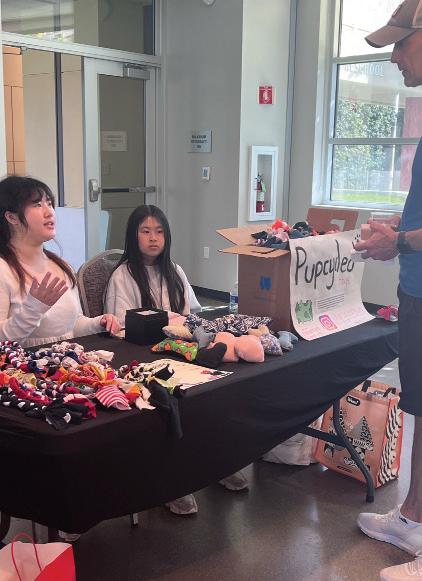
Inspired by the ideas of Goodwill, Salvation Army, and other thrift stores, Palo Alto High School student Sophia Liu and her friend Olivia Liu co-founded Pupcycled this year, a non-profit organization that gives a new life to unwanted fabric by turning it into dog toys.
“We collect clothing that nobody wants and would be otherwise trash, and they’ll donate it to us,” Liu said. “And instead of throwing it away, we’ll turn clothing into dog toys.”
Thanks to their dedicated team, Pupcycled has successfully reduced waste through used donated goods.
With over 450 volunteers spanning four states, Pupcycled takes advantage of all its locations and hosts clothing donation drives.
“We have a team of around 15 people that operates our events and all our social media,” Liu said. “For our volunteers, we have
some recurring volunteers that will just continually show up for events and help, but it’s mostly just the public. We have these events at libraries, and anyone that wants to [come] volunteer can just show up.”
Since starting the organization, Liu has had many things to be proud of.
Despite having a rough start at the begining , the company has created many dog toys donated to organizations like Pets in Need, a local animal shelter in Palo Alto and Redwood City.
“During the first few months, it was really difficult for me and Olivia to produce toys ourselves, but now we’ve made over 1,500 with the help of the community,” Liu said. “I’m really proud of that because it just feels like we’ve come a long way.”
Although Pupcycled has had many recent successes, it has been a challenge to manage with school and other extra-curriculars.
Busy schedules, planning events, and teaching the public how to make these toys were hard tasks.
something easier for the public to understand. And as a student, it’s just kind of busy running these events along with schoolwork.”
Pupcyled’s co-owners had to come up with multiple variations of dog toys before settling on the final designs.
“We’re saving clothes that nobody wants, and we’re also bringing them to somebody that needs them.”
Even though Liu had a passion for sewing and upcycling, not all volunteers were able to get the hang of it as easily as she was.
“It was difficult at first to teach people how to make our toys,” Liu said. “But once we expanded bigger, we had to decide on

– Sophia Liu
According to Liu, the creation process was relatively simple. While creating the toys, they would brainstorm simple designs and attach them to the sewn toys.
One of their most important goals was for their products to be recognizible as dog toys while ensuring they weren’t too complicated to make.
“We did try other designs like animals and flowers, but it was just too complicated,” Liu said. “We wanted to make a lot of toys, so we just had to settle on a bone, which was simple and recognizable as a dog toy.”
Sophia Liu and Olivia Liu do plan on expanding to further locations.
By posting on Pupcycled’s social media accounts and asking different communities, they hope to reach more volunteers interested in upcycling and reducing waste.
“We’re saving clothes that nobody wants, and we’re also bringing them to somebody that needs them,” Liu said.
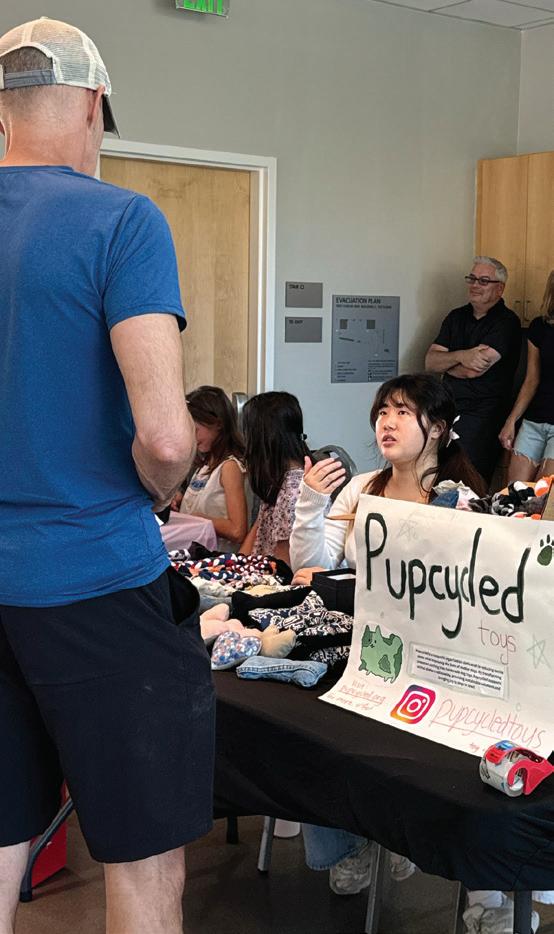
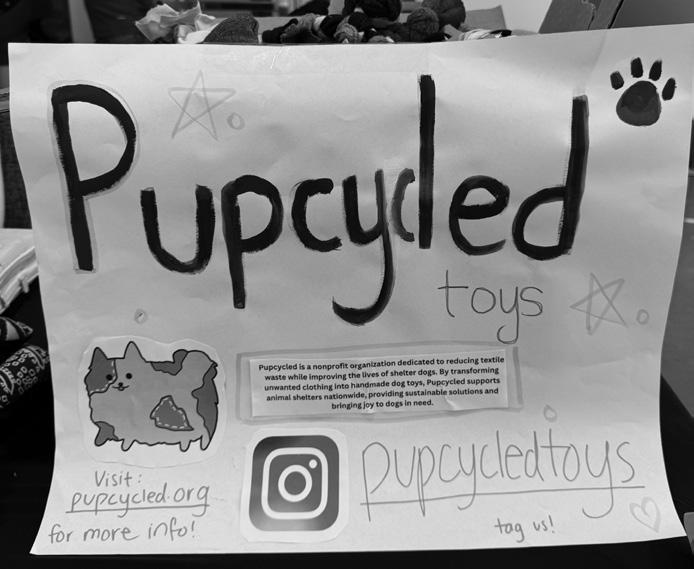
ADVERTISING (TOP RIGHT): Pupcycled showcases their company using a sign, advertising their Instagram, website, and description
FINAL PRODUCTS (BOTTOM LEFT): Variety of the finished sewed and stuffed dog toys. Shapes include bones, hearts, and braided ropes.
If you haven’t watched “The Shining,” a film that Stephen King now admits had “one of the most misogynist characters put on film,” then you probably have heard its iconic soundtrack. But you’d be forgiven if you couldn’t name the composer. Her name is Wendy Carlos. Outside of her prolific career in music, there is something else very special about her.
Wendy Carlos is a transgender woman.
But if you watch old clips of Carlos explaining her method for creating music, you’ll see her prior to transition. In later interviews, she admitted that she was so terrified to be out as a transgender woman, that she would use an eyebrow pencil to draw on her own sideburns and fake facial hair.
When Carlos was forced to live as a man, she superficially committed herself to masculinity in order to ‘fit’ into the social order. For many men, to feel masculine, to feel like they have a spot in the social order, they must draw on their sideburns. Even if it means that others have to pay.
Questions were rated on a one to five scale, with five being “strongly supportive” and one being “not at all supportive.” When asked about their view on the LGBTQ community, 48% of the boys polled rated it as a three or lower. Nearly a quarter of all boys rated their view on the LGBTQ community as explicitly negative, either a two or a one. This is in sharp contrast with girls, with 90% having a somewhat or very supportive opinion of the LGBTQ community.
This isn’t just a local phenomenon. While Paly is a liberal school and not representative of the general population, the gender gap is increasingly well documented nationally.
For many men, to feel masculine, to feel like they have a spot in the social order, they must draw on their sideburns.
Twenty years ago, all the way back in 2004, Verde ran a poll on the political opinions of students. Its age definitely shows, with a teacher referred to the Internet simply as ‘the Net,’ but it was, and still remains, probably the best indicator on the political views of Paly students at the time.
Now, 20 years later, Verde ran a similar poll back in February, again looking to measure the political views of Paly students and their opinions on specific issues. While there was a broader political swing to the center, with both the conservative right and liberal left losing ground, the most eye-catching trend might be the gap between genders.
In September 2023, Teen Vogue shared results of a study by Change Research, outlining the gender gap in political opinion. Thirty percent of men polled identified as a conservative or as a MAGA Republican, with only 15% of women identifying similarly. And while 64% of women identified as either a social progressive or a liberal, only 39% of men identified similarly.
The last few years have seen a remarkable societal reaction against feminism, queerness, and other socially progressive movements, with explicit overtones of misogyny, male chauvinism, and a reinvigorated pride in “toxic masculinity.”
Attacks on the rights of the transgender community, access to abortion and birth control, and on marginalized sexualities, have become increasingly tolerated. It is high time to admit that, indeed, many men are embracing and supportive of reintroduced sexual apartheid.
At the forefront of these crusades? Politicians like J.D Vance, the Republican pick for vice president, proudly proclaims
his support of banning abortion, even in cases of rape and incest. Influencers like Andrew Tate, a man accused of sex trafficking and rape, routinely preach pure chauvinist dribble to a million-man audience. And the Santa Clara chapter of Moms for Liberty, a right-wing organization labeled by the Southern Poverty Law Center as a hate group, is run by a man named Carl Kalauokalani. Kalauokalani is a man who has no children and is, notably, not a mom.
The loud, vocal, and reactionary attacks against women, sexual minorities, and other groups, have been continually excused by apologism. Criticism is not aimed at the males who fall for such social chauvinism, but often against those who dare acknowledge such chauvinism exists.
Complaints about male loneliness, a real and notable phenomenon in the modern age, can become a cudgel against women, with complaints aimed at them for not wanting to be men’s platonic (or sexual) partner. While it’s true that there are deeper root causes for why the backlash has been so strong, the solutions at hand of just ‘saying it kinder’ is not sufficient, and squirts blood into the eyes of those on the frontlines of progressive struggles. It is only through self-criticism of men, by men, can the curse of misogyny be broken. A 2014 study by Exeter University found that the acknowledgement of sexism by men in a social setting led to an increase of men filing complaints about sexism in their workplace.
The historic phenomenon of misogyny is not something that has to continue. We’re in an age now where open, frank discussions about sexism are inevitable. But in order for misogyny to be pierced in the minds of wider society, men need to be allies in the fight against sexism, publicly and in private.
The fight against misogyny is a fight we all have a role in. You don’t need to draw on sideburns to be a man.
Text by FAIZAN KASHMIRI
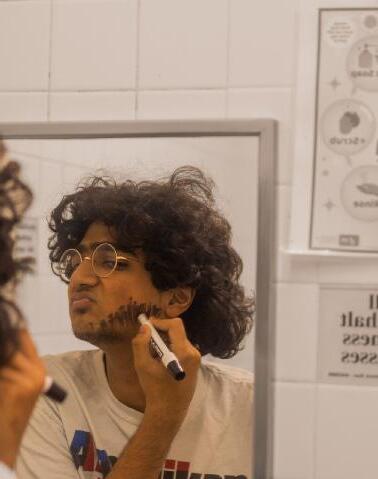
Photo by ALEXANDER LAWSON
Drawing
on sideburns
Men, not ‘society’, need to address their own misogyny
Democracy on
Democracy on
The growing lack of digital media literacy is endangering society
“Imane Khelif’s Father Breaks Silence on the 2024 Olympic Boxing Champion’s Gender Identity -’She Is Transgender, Not a Boy’ Amid Rising Speculation” a now-deleted Facebook post headline reads. In the comments section below, users continue to add to this narrative by saying “Check to see if he/she has ovaries” and “the truth will come out.”
Just as that Facebook user will see, and the millions of other fake news outlets that reported on this story will come to find out, the quote was actually completely fabricated. In fact, the entire story is false—Imane Khelif was born a woman.
But how did it spread this far? How did the Boston Globe, a pulitzer-prize winning paper, publish a false headline stating “Transgender boxer advances”? How did users such as Elon Musk, J.K. Rowling and Logan Paul take to X their thoughts, before ever fact-checking their opinion?
This incident isn’t the first, nor will it be the last.
In our current digital age, as it gets easier and easier to like, comment, and retweet a post on social media, we must be diligent about
our media literacy. According to a Medium survey, the average person spends 2 hours and 24 minutes on social media everyday and checks their phone 159 times a day.
As technology continues to advance at its rapid rate, those statistics will only grow larger and larger, allowing the general population to spend more time on their phone than ever before.
With exposure on our phones growing at an exponential rate, the pertinence of media literacy, the ability to distinguish misinformation, is unchanging, and even so, it continues to add hostility to our already polarizing society.
forms like TikTok, Instagram, X, and so on, especially when it came from political nominees like Trump, who according to the Washington Post made 30,573 false claims exhibited in news outlets and on social media.
With exposure on our phones growing at an exponential rate, the pertinence of media literacy, the ability to distinguish misinformation, is unchanging.
These false claims made by Trump not only was a tactic for his campaign, but instilled fear-mongering between voters especially from opposing parties. Comments like, “If he [Joe Biden] wins [the 2020 election], you’re going to end up with a disaster,” or in his most recent debate with Kamala Harris, “In Springfield they [Haitian immigrants] are eating the dogs. The people [Haitian immigrants] that came in, they are eating the cats.”

Take for example the 2020 election. With Donald Trump running for his second term and Joe Biden looking to win his first, the political divide between the two parties not only grew, but raised concerns for many. According to a 2020 pre-election Pew Research survey, 77% of Americans felt that the country was “more divided” [politically] compared to before.
Much of this could be accredited to the media/news being showcased either from news channels or social media plat-
These claims made by Trump create divide in political parties. An example can be seen through a study done by the Vanderbilt Peabody College of education and human development that found false claims made by high political figures like Trump, made Republicans read Trump’s statements to further amplify their political views while on the other hand, it prompted Democrats to further reject the opposing parties views.
It is important to notice that misinfor-
84%
of surveyed adults said they supported required media literacy education in school
a tightrope a tightrope
The growing lack of digital media literacy is endangering society
mation can come in many different forms, ranging from presidential candidates to simple 30- to 60-second Instagram reels popping up on your page. Even though the source may be of high status and credibility, people should not be afraid to question the validity of a certain statement or belief, otherwise we can get caught in the culture of “fear mongering” one another into a divided democracy.
day’s emerging citizens know how to spot and refute mis/disinformation they encounter [it] online,” McGowan-Kirsch said.
How did users such as Elon Musk, J.K. Rowling and Logan
Paul take to X their thoughts, before ever fact-checking their opinion?
With that in mind, we must educate ourselves through available resources and understanding the new and growing
As McGowan-Kirsch emphasizes the impact that AI will have on the proliferation of misinformation with her unit activity, specified in the paper, used AI images to depict false situations of Former President Trump’s first indictment in 2023.
“With a large number of emerging citizens regularly consuming news on Snapchat, TikTok, Reddit, Twitter, and
ample, adding a clause that focuses on digital mis/disinformation in the Protecting Kids on Social Media Act can be beneficial in raising awareness as our duty in democracy. Furthermore, as PALY students must consider the sources where we receive our information, whether the source is reputable, credible or accurate; by reading the New York Times, the Washington Post or listening to NPR it gives us a well-rounded view on the challenges the world is currently going through.
We must remember that the problem doesn’t stop from the government or political figures, but instead us as citizens of the United States of America. With our democracy hanging onto a tightrope, we must take action in increasing our media literacy by pushing for the enactment of proper legislation and awareness of mis/

55% of students were not moderately confident in their ability to recognize false information
Students need more time
How the state’s instructional minutes requirement is damaging to students
64,800 minutes. 1080 hours. 180 days. That’s the minimum annual requirement for all California high schools’ instructional time, according to state mandates by the California Department of Education, second highest in the United States.
During these long hours, high school students often suffer. They are constantly battling the strive for academic excellence and in turn impairing their physical and mental health.
According to the Journal of Adolescence, there are many “correlations with academic stress” including “teachers having excessively high expectations, difficulty with academic subjects, [and] keeping up with schoolwork.”
Palo Alto High School senior Arun Tamura said he feels the ever-growing pressure from school.
“I have a lot of work in all my classes and on top of that I have college essays to write,” Tamura said. “Plus with my extracurricular activities outside of school, it’s really difficult to find time for everything and I end up staying up late at night trying to finish my work.”
High school is a stepping stone for students to excel in college, with teachers to remind us of the rigor and independence expected in university and using college expectations as an example to justify the abundant workload and exams assigned. However if the workload we receive mirrors the amount in college, shouldn’t the hours spent in school do so as well?
Instead, high school students have to attend scheduled classes for nearly 30 hours a week compared to the average 15 hours of a college student, according to North Central College.
In an article from the New York Times, United States Surgeon General Dr. Vivek Murthy talks about how pushing the values of hustle culture can impact an adolescent’s mental health.
“Young people tell me they feel caught up in hustle culture,” Murthy said. “Not only did many of them say that they were exhausted, but they weren’t sure that [hus-
tle culture] was going to bring them happiness.”
The mandated instructional time requirement is the root of the issue. Instead of schools adapting their schedules to accommodate egregious requirements, states and school boards should be re-evaluating their rules and the effect they have on students’ and their mental health.
David Cohen, a Paly English teacher and author, says making sure students understand and comprehend the material being taught to them is far more important than how many minutes they spend in class.
“It [minimum instructional time requirement] is unnecessary,” Cohen said. “This is a statewide problem that students shouldn’t need to be in school that much. ... Mastery learning is the idea that what you can demonstrate matters way more than how much time you spend learning it or how you get to the point of knowing it.”
We agree with Cohen that the instructional minutes minimum should not be a requirement for schools. Overloading students with these excessive conditions can cause harm to their phycisal and mental health, especially if they are unable to find a worklife balance in college or their career after high school.
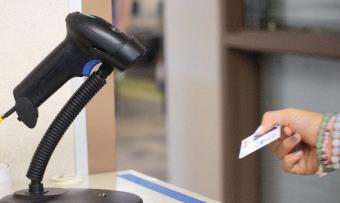
Paly senior Maya Rhajbandari uses the new scanning system to take attendence.
Photo by ANIKA NAIR
It is all trash
Misplaced waste at PALY undermines sustainability efforts
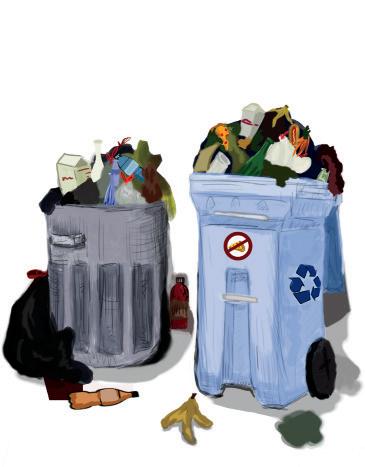
Reduce, reuse, recycle. These three words are engraved into our everyday lives, yet students at Palo Alto High School still fail to differentiate between trash, compost and recycling, creating unnecessary waste.
According to the Palo Alto High School janitor Regina Buckner, despite the colored bins, the students still misplace their trash.
Poor sorting by Paly students is not the only reason for this undue waste. Paly lacks anyone in charge of reducing waste, called zero-waste champions, unlike most other PAUSD schools.
“So, putting one piece of waste into the wrong container may not seem like a big concern, but (when) thousands of people doing it adds up quickly.”
“We don’t separate anything [in the recycling bin], wherever the students put in the trash. That’s what we take in, whatever the most is, that’s where we put it [in the dumpster than get gets picked up],” Buckner said. “It would be a big help if students separated their trash.”
This mix-up isn’t just a hassle for the staff; it also has larger environmental implications. Not recycling leads to increased landfill waste, resource depletion, energy consumption, and pollution and is a major contributor to climate change by increasing greenhouse gas emissions. According to the BBC, recycling has the potential to reduce carbon emissions by the equivalent of about 11 gigatons of carbon dioxide annually.
Micheal Cappello, a Palo Alto Public Works Department’s Zero Waste Initiative representative, the environmental cost of improper waste disposal is significant.
“Because of missorted waste, the contamination created often leads to an inability to divert those items — and all the items they have contained — from the landfill,” Cappello said. “So, putting one piece of waste into the wrong container may not seem like a big concern, but (when) thousands of people doing it adds up quickly.
“Zero Waste Champions work closely with the city’s waste hauler, GreenWaste of Palo Alto,” Capello wrote to Anthro. “They ensure adequate waste stations are established throughout the school, place new and easy-to-understand waste sorting signage with each station, conduct waste audits to see how the schools are doing with sorting their waste, and other zero waste practices.”
Unfortunately, the lack of a ze-
ro-waste champion has been ongoing for serval years.
“It’s been posted and no one jumps at it. Usually the district checks in with me every year we post it,” Berkson said.
“We could use help with recruiting a staff member at Paly to become your Zero Waste Champion, Cappello said. “If you can find a staff member who is passionate about the environment and wants to make a positive impact in your school, please send them our way.”
Many students think that if we as a student body decide to fight for more thoughtful sorting by our fellow students, we can make a difference.
“They just need to take some extra time to think about it,” Groden said.
Activism Around the World
Protesting for fair elections and the end of war
Acording to AP news on Jul 29, Venezuela’s electoral council declared that Nicolás Maduro had won the election with over 51 percent of the vote without releasing the tally sheets from the election, nor con ducting the audits and citizen verification processes required by law. This action sparked protests criticizing not only the election but the corruption that preceded it. Acording to the Guardian, these protests are concentrated in the poorer areas of Venezuela where the opposition party is stronger. This cor ruption includes but is not limited to arrests of opposition members, arbitrary disqualifications of opposition candidates, and restrictions on Venezuelans voting abroad. The Human Rights Watch received credible reports of 24 killings.

OOn Sept 1, thousands of people flooded the streets of major Israeli cities in re sponse to the news that six of the hostages held in Gaza had died. According to The New York Times the protests were put down with skunk spray in Jerusalem and stun grenades in Tel Aviv. The protesters wanted Prime Minister Benjamin Netanyahu to work towards a ceasefire and get the hostages released. There are also protests going on in the West Bank, including one where Aysenur Eygi, an American activist got shot by the IDF. According to The Intercept, this is not the first American killing protesting, two 17-year-old Palestinian Americans were killed in the West Bank early this year and the US has not launched any investigations. According to the Guardian more than 100 members of congress – including leading Democratic party officials Alexandria Ocasio-Cortez and Eric Swalwell – have sent a second letter to Biden demanding a US-led investigation. They requested an investigation into whether this was a homicide and demanded accountability.

n Sept 11, Protestors fought with police outside of the Land Forc es International Land Defence Exposition in Melbourne, Austra lia. The protesters were fighting against the Melbourn police who according to The Guardian brought in 10 million dollars of extra officers from parts of New South Wales. Acording to CNN the protests were organized by pro-Palestinian advocacy groups outside of the convention who denounced the weapons which they say are being used in the ongoing war inside of the Gaza strip. Two dozen police officers were injured and 39 people

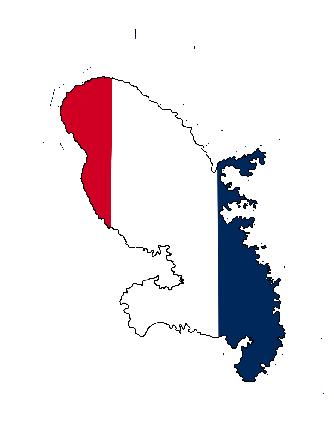
For the first time in 60 years on Sept 22, special anti-riot police have been deployed to Martinique, the French island in the West Indies. According to the Guardian, these troops were deployed to stop violent protests with gunfire injuring at least six police officers and one civilian. The protests were over the high cost of living in Martinique. According to People’s Dispatch, the price to live in Martinique is almost twice the price of mainland europe. The last time these troops were deployed they engaged in violent suppression tactics that left three young people dead. Even more protests and peaceful walkouts have occurred over the deployment of these troops and their violent history.

Go search for
ANTHRO’S ARCHIVES
Palo Alto Unified School District
Palo Alto High School
50 Embarcadero Road
Palo Alto, CA 94301